Micro Men - 720p (2009)
gimpymoo
AI-assisted summary of Micro Men - 720p (2009) — original source. Check the original for full context.
Source published:
Key ideas
- The fierce rivalry between Clive Sinclair and ex-employee Chris Curry drove the 1980s British microcomputer boom, culminating in Acorn securing the landmark BBC Computer Literacy Project contract over Sinclair. (29:21)
- Aggressive cost engineering shaped the UK consumer market, led by Sinclair's sub-£100 ZX80 and ZX81 mail-order machines, which forced Acorn to iterate rapidly from the Atom to the BBC Micro. (21:19)
- By 1984–1985, an over-saturated domestic microcomputer market collapsed under massive unsold inventories of the Acorn Electron and catastrophic hardware delays with the business-targeted Sinclair QL. (68:40)
- As Acorn faced stock suspension and Sinclair bled capital into the Sinclair C5 electric tricycle, commercial pragmatists like Alan Sugar's Amstrad displaced both Cambridge visionaries. (77:53)
Detailed notes
## Background Published on YouTube by channel gimpymoo in July 2013, the video presents the BBC television drama Micro Men (2009). According to the description, the affectionate comic drama dramatizes the British home computer boom of the early 1980s, centering on the fierce market battle between legendary inventor Clive Sinclair and his former employee Chris Curry, founder of Acorn Computers, around the BBC Computer Literacy Project.
## TL;DR The film follows the split between inventor Clive Sinclair and his former colleague Chris Curry, who leaves to co-found Acorn Computers and battle Sinclair for dominance in the emerging home computer market. After Acorn pulls off a last-minute engineering sprint to secure the BBC Computer Literacy Project contract with the BBC Micro, Sinclair hits back with the massive commercial success of the ZX Spectrum, fueling a nationwide boom in gaming and home computing. However, both firms overreach through catastrophic miscalculations—Sinclair with the flawed QL and his Sinclair C5 electric vehicle, and Acorn with massive unsold inventory of the Acorn Electron. Facing financial collapse during the 1985 market crash, the rivals clash in an undignified pub brawl before quietly reconciling over how their amateur pioneering era was overtaken by commercial mass-merchandisers like Amstrad.
## Atmosphere & style The film carries a brisk, affectionately comic, and distinctly British tone, blending kitchen-table eccentricities with the high-stakes anxiety of the emerging technology race. The dynamic between Alexander Armstrong's grandiose, imperious Clive Sinclair and Martin Freeman's grounded, increasingly exasperated Chris Curry creates a sharp tragicomic friction that drives the narrative. Watching it feels like a kinetic, scrappy period piece full of hand-soldered motherboards, tea-stained workshops, and petty ego battles, which gradually darkens into bittersweet pathos as both pioneers watch their visionary dreams unravel under the cold realities of retail commerce.
## Bulletin - [29:21](https://www.youtube.com/watch?v=XXBxV6-zamM&t=1761s) The fierce rivalry between Clive Sinclair and ex-employee Chris Curry drove the 1980s British microcomputer boom, culminating in Acorn securing the landmark BBC Computer Literacy Project contract over Sinclair. - [21:19](https://www.youtube.com/watch?v=XXBxV6-zamM&t=1279s) Aggressive cost engineering shaped the UK consumer market, led by Sinclair's sub-£100 ZX80 and ZX81 mail-order machines, which forced Acorn to iterate rapidly from the Atom to the BBC Micro. - [01:08:40](https://www.youtube.com/watch?v=XXBxV6-zamM&t=4120s) By 1984–1985, an over-saturated domestic microcomputer market collapsed under massive unsold inventories of the Acorn Electron and catastrophic hardware delays with the business-targeted Sinclair QL. - [01:17:53](https://www.youtube.com/watch?v=XXBxV6-zamM&t=4673s) As Acorn faced stock suspension and Sinclair bled capital into the Sinclair C5 electric tricycle, commercial pragmatists like Alan Sugar's Amstrad displaced both Cambridge visionaries.
## Key takeaways - [00:09](https://www.youtube.com/watch?v=XXBxV6-zamM&t=9s) Clive Sinclair's early commercial venture, Sinclair Radionics, collapsed after component failures in the Black Watch and disappointing pocket TV sales consumed nearly £8 million in National Enterprise Board funding. - [06:44](https://www.youtube.com/watch?v=XXBxV6-zamM&t=404s) To evade government oversight from the NEB, Sinclair established Science of Cambridge as a clandestine corporate shell run by Chris Curry. - [12:31](https://www.youtube.com/watch?v=XXBxV6-zamM&t=751s) Disagreements over pursuing microcomputers versus electric vehicles caused Curry to split from Sinclair and co-found Acorn Computers with Hermann Hauser. - [17:53](https://www.youtube.com/watch?v=XXBxV6-zamM&t=1073s) Acorn recruited key Cambridge Processor Group engineers Steve Furber and Roger Wilson to build systems around the MOS Technology 6502 microprocessor. - [24:00](https://www.youtube.com/watch?v=XXBxV6-zamM&t=1440s) Sinclair launched the sub-£100 ZX80 by mail order in 1980, sparking a British price war through aggressive component reduction and membrane keyboards. - [26:16](https://www.youtube.com/watch?v=XXBxV6-zamM&t=1576s) Acorn counter-launched the Atom with full mechanical keys and expanded memory, while Sinclair resolved wobbly 16K RAM expansion packs by publicly suggesting Blu-Tack. - [45:00](https://www.youtube.com/watch?v=XXBxV6-zamM&t=2700s) When the BBC initiated the Computer Literacy Project, Acorn engineers Wilson and Furber built a compliant working prototype within a desperate 72-hour sprint. - [48:40](https://www.youtube.com/watch?v=XXBxV6-zamM&t=2920s) Acorn won the BBC contract after successfully severing an umbilical clock wire minutes before the BBC delegation inspected the prototype, infuriating Sinclair. - [55:13](https://www.youtube.com/watch?v=XXBxV6-zamM&t=3313s) The BBC TV series 'The Computer Programme' and the Department of Industry's 'Micros in Schools' initiative catalyzed an explosive nationwide gaming and home computing boom. - [01:03:11](https://www.youtube.com/watch?v=XXBxV6-zamM&t=3791s) Despite Sinclair Research being valued at £136 million from the ZX Spectrum, Clive Sinclair resented being associated with games like Jet Set Willy and demanded serious technological breakthroughs. - [01:05:00](https://www.youtube.com/watch?v=XXBxV6-zamM&t=3900s) Sinclair's rushed launch of the Sinclair QL suffered from severe hardware flaws, broken Microdrives, and delivery delays, causing corporate adoption to fail. - [01:11:04](https://www.youtube.com/watch?v=XXBxV6-zamM&t=4264s) Curry's overestimation of consumer demand left Acorn with massive unsold Acorn Electron inventory when major retailers cancelled orders after missing the Christmas sales window. - [01:13:11](https://www.youtube.com/watch?v=XXBxV6-zamM&t=4391s) Clive Sinclair siphoned £12 million of company resources into the Sinclair C5 electric tricycle, which was met with public ridicule on UK roads. - [01:16:44](https://www.youtube.com/watch?v=XXBxV6-zamM&t=4604s) Escalating marketing rivalries and derogatory print advertisements culminated in a physical brawl between Sinclair and Curry in a Cambridge pub. - [01:17:57](https://www.youtube.com/watch?v=XXBxV6-zamM&t=4677s) Trading in Acorn shares was suspended and both pioneering Cambridge firms were overtaken by Alan Sugar's Amstrad as the British microcomputer boom came to a close.
## Detailed walkthrough ### [00:09](https://www.youtube.com/watch?v=XXBxV6-zamM&t=9s) The Visionary Inventor and the Fall of Sinclair Radionics
A 1970s television broadcast presents an exuberant portrait of British entrepreneurial ambition, spotlighting individuals who possess absolute faith in the future and refuse to take no for an answer. Among them is Clive Sinclair, introduced as an electronics wizard capable of beating American and Japanese competitors at their own game. Sinclair declares his driving philosophy and bold prediction for personal transport: “I consider it very much my role to foresee the future, for example I anticipate totally automatic personalized cars powered by electricity drawn from internal batteries or the mains, that's a very real goal.” Since the early 1960s, Sinclair’s company, Sinclair Radionics, had made significant technological breakthroughs, from miniature amplifiers and personal radios to the world's first slimline pocket calculator.
Sinclair produced dozens of calculator models before overseas manufacturers flooded the British market with cheaper alternatives. Undeterred, he turned his sights to horology, developing the world's first digital quartz watch—the Sinclair Black Watch. However, the device was plagued by defective components, turning the venture into an unmitigated commercial and technical disaster. Facing imminent financial ruin, Sinclair was forced to surrender equity and operational control to the government's National Enterprise Board (NEB) in exchange for state rescue funds. Alongside NEB representatives, a defiant Sinclair attempts to pivot toward the future, publicizing their joint venture: the world's first pocket television, designed to prove that British innovation can still conquer international markets.
- **Breakthrough Innovations**: Miniature audio amplifiers, personal radios, and the world's first slimline pocket calculator. - **The Black Watch**: Sinclair's venture into digital quartz watches, doomed by component failures that forced government intervention. - **State Intervention**: The National Enterprise Board (NEB) took a substantial stake in Sinclair Radionics to finance future R&D, notably the Microvision pocket TV.
---
[02:38](https://www.youtube.com/watch?v=XXBxV6-zamM&t=158s) Clash with the National Enterprise Board
Inside the boardroom, the reality of state oversight turns hostile. An NEB bureaucrat coldly denies funding for Sinclair’s pet project, the electric vehicle, pointing to the dire state of the company's financial accounts. When Sinclair protests that the vehicle is an authentic breakthrough rather than a mere concept, the official cuts him off bluntly, reminding him that the board is accountable to taxpayers and running a proper commercial business rather than an amusement arcade. The meeting ends with a refusal to allocate another penny to automotive research, dismissed with a patronizing “nothing personal.”
Furious at what he perceives as bureaucratic short-sightedness, Sinclair vents his frustration to Chris Curry in the hallway, asking: “What is the point of funding an invention if you can't stomach the inventor?” Back on the factory and office floor, Sinclair explodes in a rage, berating an engineer over malfunctioning components and yelling that he does not care about technical excuses, only results. Looking around at the terrified staff, he fumes that he is surrounded by sheer incompetence at every level—from senior managers who do not know their heads from their elbows to junior staff who cannot even pick up a telephone.
```mermaid flowchart TD accTitle: Tension Between Sinclair and the NEB accDescr: Diagram illustrating the clash between Clive Sinclair's vision and the National Enterprise Board's financial constraints.
subgraph StateControl["National Enterprise Board (NEB)"] NEB["NEB Bureaucrats"] Taxpayer["Taxpayer Capital & Budget Limits"] end
subgraph SinclairRadionics["Sinclair Radionics"] Clive["Clive Sinclair"] Projects["Pocket TV & Electric Car"] end
Taxpayer -->|"Demands Commercial Return"| NEB NEB -->|"Cancels R&D Funding"| Projects Clive -->|"Demands Freedom to Innovate"| NEB Clive -.->|"Frustration Erupts Over"| Staff["Radionics Engineering Staff"] ```
---
[04:16](https://www.youtube.com/watch?v=XXBxV6-zamM&t=256s) Elegance, Ambition, and Hermann Hauser
At a nearby pub, Sinclair downs drinks with his loyal team, nursing his bitterness over the NEB's penny-pinching bean counters. He complains that technical instruments and hi-fi gear have reached a dead end, and laments watching the pocket calculator market get stolen by Japanese competitors manufacturing cheap plastic goods. Reciting Robert Browning to bolster his team's spirits, he insists: “A man's reach must exceed his grasp, or what's a heaven for?” He lectures his staff that true innovation must always be guided by the distinctive Sinclair aesthetic: practicality, simplicity, and elegance above all else.
Chris Curry interrupts the monologue to introduce a friend, Hermann Hauser. Sinclair initially mistakes Hauser for German, which Hauser quietly corrects to Austrian. When Sinclair reiterates his sermon about elegance, Hauser dryly references the Black Watch, noting that for all its sleek appearance, the watch did not actually work. Curry attempts to smooth over the awkwardness by mentioning that Hauser is currently completing a physics PhD at the Cavendish Laboratory on oxidization. Unimpressed by academia, Sinclair fires back with a condescending slight: “Some of us didn't go to university, did we Chris? We prefer the cut and thrust of the real world.”
- **Sinclair's Design Pillars**: Practicality, simplicity, and above all, elegance. - **Hermann Hauser's Background**: Austrian physicist conducting doctoral research on oxidization at Cambridge's Cavendish Laboratory. - **Sinclair's Distrust of Academia**: Sinclair openly scoffs at university degrees, boasting that real-world commercial experience is superior.
---
[06:44](https://www.youtube.com/watch?v=XXBxV6-zamM&t=404s) The Secret Lifeboat: Science of Cambridge
Shortly after the pub confrontation, Sinclair summons Chris Curry outside for a private meeting in his Rolls-Royce. Describing six months of state control under the NEB as intolerable interference, Sinclair reveals that he has arranged a clandestine exit strategy. He tells Curry that he is being relieved of his duties at Sinclair Radionics, but clarifies that Curry will remain firmly in his employment. Sinclair owns a dormant corporate shell called Science of Cambridge and instructs Curry to set up shop in a rented office on King's Parade to run independent operations under the radar.
Sinclair encourages Curry to raid the Radionics stockroom for surplus calculator chips to fund low-level hobbyist projects. Curry tentatively mentions that he and Hermann Hauser have already been discussing the design of a basic microcomputing kit. Sinclair waves this aside as a mere holding exercise, explicitly laying out Curry's assignment: “What you'll be doing is preparing the ground for me to move in when this Stalinist shibboleth crumbles, as it surely will. You, Chris, will be keeping the flame alive.”
---
[08:25](https://www.youtube.com/watch?v=XXBxV6-zamM&t=505s) Chess and Ambition
At home, Chris Curry and Hermann Hauser sit down over a chessboard. Curry defends Sinclair’s volatile temperament, explaining that despite driving everyone mad, Sinclair has an infectious, unshakeable conviction in his ideas and shows deep personal loyalty to the staff he took on as young men, such as himself and engineer Jim Westwood. For Curry, running the King's Parade venture is a golden opportunity to prove his managerial abilities, and he excitedly anticipates Sinclair's upcoming inspection of their new computing kit.
Hauser listens patiently before using the chessboard to challenge Curry’s subservience. Hauser asks what a pawn really is, answering his own question: “A piece whose only function is to protect the king, to lay down his life if necessary as part of a great plan. But the object of the game, this is to kill the king. Now are you a pawn, Chris, or a bigger piece on the board?” Hauser then declares checkmate, though Curry immediately points out that the board state is nothing of the sort, to which Hauser playfully admits he does not actually know the rules of chess.
---
[10:17](https://www.youtube.com/watch?v=XXBxV6-zamM&t=617s) The MK14 and the Liquidation of Radionics
Sinclair arrives at the sparse King's Parade office to inspect Curry’s handiwork: the Science of Cambridge MK14 microcomputer kit. The device features an unadorned printed circuit board, a CPU, RAM chips, a 5-volt regulator, and an eight-digit LED calculator display. Sinclair inspects the exposed board with disdain, wondering aloud why anyone would want such a primitive contraption at home. Curry enthusiastically explains that hobbyists will buy it to learn machine-code programming and chip architecture, predicting that building kits will cultivate an appetite for fully assembled, more powerful microcomputers.
Sinclair scoffs at Curry’s commercial instincts, remarking: “Hardly going to have IBM quaking in their boots. It's a bloody ugly thing.” He complains about the cheap office furnishings and insists the crude kit does not fit the prestigious Sinclair brand, viewing it strictly as a stopgap until he escapes the NEB's clutches to pursue serious inventions. Meanwhile, disaster strikes Sinclair Radionics. The Microvision pocket television registers dismal sales figures. Faced with mounting losses after pumping nearly £8 million of public funds into Radionics, the NEB refuses further subsidies and calls in the receivers to liquidate and break up the company.
- **MK14 Kit Hardware**: Exposed PCB with a microprocessor, dynamic RAM chips, 5V regulator, keyboard input, and an 8-digit LED display. - **Curry's Computing Vision**: The kit serves as an educational bridge that will create customer demand for fully integrated consumer microcomputers. - **NEB Bailout Total**: Nearly £8,000,000 in public money sank into Sinclair Radionics prior to receivership.
---
[12:31](https://www.youtube.com/watch?v=XXBxV6-zamM&t=751s) The Breakup Dinner
Free from the receivership of Sinclair Radionics, Clive Sinclair hosts a celebratory gathering at his home with his wife Ann and Chris Curry. While the NEB seized Radionics' traditional instrument and calculator divisions, Sinclair managed to retain intellectual rights to his two true obsessions: the pocket television and the electric vehicle. High on optimism, Sinclair outlines plans to pour all his energy and resources into developing authentic Sinclair products. Curry attempts to steer the discussion toward the future, suggesting that Science of Cambridge should pivot to develop a sophisticated, ready-built microcomputer.
Sinclair brushes the suggestion aside as an amusing hobbyist toy, comparing it unfavorably to the Commodore PET and mockingly asking whether Curry’s Austrian friend put him up to it. Curry presses harder, insisting the microcomputer is a viable commercial frontier. When Sinclair flatly refuses funding, Curry pushes Sinclair on his automotive fixation, shouting: “The car? For Christ's sake, Clive, look at the car!” Enraged by the insolence, Sinclair snaps, screaming at Curry to get out of his house.
```mermaid flowchart TD accTitle: Divergence of Sinclair and Curry accDescr: Diagram showing the philosophical split between Clive Sinclair's prestige inventions and Chris Curry's microcomputer focus.
subgraph Split["The Philosophical Break"] Argument["Clash over Microcomputers vs Electric Vehicle"] end
subgraph SinclairPath["Clive Sinclair"] TV["Pocket Microvision TV"] EV["Electric Vehicle Project"] FirmBelief["Authentic Sinclair Innovations"] end
subgraph CurryPath["Chris Curry & Hermann Hauser"] MK14["MK14 Micro Kit Success"] HomePC["Pre-built Home Microcomputers"] NewCo["Independent Cambridge Venture"] end
Argument -->|"Sinclair expels Curry"| SinclairPath Argument -->|"Curry seeks partnership"| CurryPath ```
---
[14:46](https://www.youtube.com/watch?v=XXBxV6-zamM&t=886s) A Fresh Start on King's Parade
The following morning, a shaken Curry confides in Hermann Hauser, horrified that he insulted Sinclair’s sacred electric car and fearing his career is ruined. Hauser offers a different perspective, arguing that the outburst was an act of liberation: Curry tasted independence as an executive and can never go back to being an underling. When Curry asks what he should do next, Hauser mentions that his father wants him to return to Austria to manage the family wine business. However, Hauser prefers staying in Cambridge, has become fascinated by computers, and offers to become Curry's business partner. Curry asks in astonishment if Hauser would truly surrender a family estate for electronics, to which Hauser deadpans: “Have you ever tried Austrian wine, Chris? If you had, you might understand.”
Armed with a £10,000 severance cheque from Sinclair—described as an American-style golden handshake—Curry and Hauser visit a local bank manager to secure enterprise financing. The traditional bank manager finds the prospect of a computer business charmingly eccentric, calling it very science-fictional. After asking which Cambridge college Hauser attended to establish social credentials, the manager happily approves their financial footing. Free from Sinclair's shadow, Curry steps out into Cambridge to launch an independent computer enterprise.
- **Severance Settlement**: Clive Sinclair awards Chris Curry a £10,000 parting settlement. - **Founding Partnership**: Chris Curry and Hermann Hauser join forces to establish a dedicated microcomputer firm in Cambridge. - **Initial Financing**: Cambridge bank manager grants loan approval based largely on Hauser's collegiate pedigree.
[17:53](https://www.youtube.com/watch?v=XXBxV6-zamM&t=1073s) Recruiting the Cambridge Processor Group
Chris Curry and Hermann Hauser tap into Cambridge's most abundant local resource: university talent. They visit the Cambridge Processor Group, a hub of young enthusiasts who build computer systems purely for fun, viewing them as Acorn’s secret weapon. Hauser approaches Steve Furber, while Chris identifies Roger Wilson, noting that Roger spent his entire summer vacation designing and programming an automated cow-feeding system for an agricultural firm in Harrogate.
```mermaid flowchart TD accTitle: Acorn Recruitment of Cambridge Talent accDescr: Diagram showing how Hauser and Curry tapped into the Cambridge Processor Group to recruit key engineers. subgraph AcornFounders["Acorn Founders"] C["Chris Curry"] H["Hermann Hauser"] end
subgraph CPG["Cambridge Processor Group"] SF["Steve Furber"] RW["Roger Wilson"] end
subgraph Engineering["System Development"] ATOM["Acorn Atom & MOS"] end
C -->|"identifies cow-feeder project"| RW H -->|"approaches at university"| SF RW --> ATOM SF --> ATOM ```
Hauser observes high-end commercial workstations costing around £2,000, lamenting how prohibitively expensive computers remain for young engineers. Gathering over tea, the Acorn group discusses hardware architecture and past Sinclair kits, such as the MK14 and the System 2000/3000 Hi-Fi systems that notoriously rarely worked. The team settles on the MOS Technology 6502 microprocessor as the only viable processor. Rather than offering bare-board kits indefinitely, Chris insists on providing a molded keyboard and a built-in assembler. Chris emphasizes that Acorn's products will be led by engineers rather than marketing directives.
---
[21:19](https://www.youtube.com/watch?v=XXBxV6-zamM&t=1279s) Sinclair Computers and the £99 Vision
Clive Sinclair gathers his team to announce a brand-new corporate entity: Sinclair Computers. Clive outlines the foundational philosophy of his career: being first to market and showing consumers what they need before they even realize it. While the MK14 catered to hobbyists and commercial units remained trapped in expensive research laboratories, Clive envisions a machine affordable enough for ordinary households. Dismissing industry forecasts that computer prices might drop to £100 within five years as “poppycock,” he vows to hit that threshold within mere months.
Clive mandates that whatever compromises are necessary, the final machine must retail for the magic sum of £99. “At that price, the man on the Clapham omnibus will want one, even if he has absolutely no idea what to do with it,” Clive declares. He instructs his engineers to beg, borrow, or steal components to meet the target form factor and price point, while across town, Acorn aims to produce an initial run of 8,000 to 10,000 machines with a superior custom programming language.
- Sinclair targets a strict retail price cap of £99 to capture the general public. - Acorn focuses on building a full, robust machine powered by the 6502 processor and an in-house programming language. - Clive sets a tight development timeline of months rather than years to beat all rivals to market.
---
[24:00](https://www.youtube.com/watch?v=XXBxV6-zamM&t=1440s) The Launch of the ZX80
BBC's *The Money Programme* highlights the microchip revolution, profiling Clive Sinclair's nine-month sprint to launch the ZX80 by mail order in March 1980. Weighing just 12 ounces and measuring 9 by 7 inches, the £99 micro connects directly to a domestic television and an ordinary cassette recorder, promising hundreds of future software titles for education and home use.
Back at Acorn, the engineering team dissects a brand-new ZX80 with mixed admiration and scorn. Examining the membrane keyboard and internals, Roger Wilson remarks, “Jesus, it's like trying to read Braille through a pair of gardening gloves.” While they critique its cramped BASIC, limited Z80-derived architecture, and lack of dedicated video hardware, they acknowledge its clever cost-cutting. Chris worries that Clive has cornered the public imagination by breaking the £100 barrier first, but Hermann Hauser reassures him that being second allows them to study Sinclair's hand and counter with superior specs:
> “Look at the positive: Clive is playing his hand first. If he is bluffing, we will know. If he is holding the full house, we will be able to look through the pack and find the three aces with which to beat him.”
---
[26:16](https://www.youtube.com/watch?v=XXBxV6-zamM&t=1576s) Atom vs. ZX80 and the Blu-Tack Fix
Clive Sinclair checks in on Jim Westwood regarding progress on the ZX81 prototype, pressing him to eliminate the notorious screen flicker that occurs during processing cycles. Clive casually inquires whether Jim has been in touch with Chris Curry, remarking that it is a pity Chris is not around to share in the excitement.
```mermaid flowchart LR accTitle: Technical Comparison between Acorn Atom and Sinclair ZX80 accDescr: Block diagram illustrating the memory and hardware advantages of the Acorn Atom over the Sinclair ZX80. subgraph ZX80["Sinclair ZX80 (£99)"] Z_RAM["1K RAM"] Z_ROM["4K ROM"] Z_KEY["Membrane Keyboard"] end
subgraph Atom["Acorn Atom"] A_RAM["2K RAM (expandable)"] A_ROM["8K ROM"] A_KEY["Mechanical Full-Travel Keyboard"] end
Atom -.->|"Doubles memory & adds real keys"| ZX80 ```
Chris promotes the newly launched Acorn Atom to the press, flaunting 2K of RAM, 8K of ROM—double the ZX80's specifications—and a real, integrated keyboard designed to spare typists arthritis. When journalists suggest he is waging a personal vendetta against Sinclair, Chris maintains it is simply a contest of engineering superiority.
Meanwhile, Clive gives an interview warning that the personal computer boom is plagued by "kite flying"—firms announcing unfinished machines they cannot manufacture. When asked by a *Sinclair User* reporter about the ZX80's wobbly external 16K RAM pack attachment that routinely crashes the computer when bumped, Clive blithely offers a quintessential homebrew workaround:
> “We are aware of this issue. Our engineers have looked into it, and I am informed that the use of a piece of Blu-Tack about the size of a runner bean will resolve the problem.”
---
[29:21](https://www.youtube.com/watch?v=XXBxV6-zamM&t=1761s) The BBC Project Emerges
Back at Sinclair headquarters, Clive grows impatient with the lab's pace on the ZX81, demanding absolute secrecy to prevent competitors from stealing their lead. At home, his obsession with work strains his marriage, leaving his wife Ann ignored during family milestones like their sons' school prize-giving.
At Acorn, Chris Curry discovers that the BBC is launching a massive Computer Literacy Project to accompany an upcoming television series, requiring an official microcomputer for on-air demonstrations. Recognizing that this contract amounts to the biggest state-sponsored advertising campaign in history, Chris realizes that whichever company secures the BBC badge will dominate the domestic market. Industry rumors suggest Newbury Laboratories' "NewBrain" is the frontrunner, though Chris believes its architecture is ill-suited to the brief. The phone rings; it is Clive Sinclair, requesting an urgent face-to-face meeting.
- The BBC plans a nationwide television series to make the UK the most computer-literate country in the world. - The broadcaster needs a standardized microcomputer to feature in on-air tutorials and sell into schools. - Early speculation tabs the Newbury NewBrain as the BBC's preferred candidate.
---
[32:10](https://www.youtube.com/watch?v=XXBxV6-zamM&t=1930s) The Transport Café Truce
Clive summons Chris to a gritty roadside transport café, praising its unpretentious, quintessentially British nature while ordering bowls of oxtail soup for them both. After trading barbed pleasantries about market niches and whether Acorn's success will sour under pressure, Clive brings up the BBC contract. Clive condemns the BBC's plan to partner with Newbury as an intolerable breach of its non-commercial public charter, warning that a BBC-branded computer would unfairly distort the free market.
Clive proposes that Acorn and Sinclair join forces to write a joint protest to the BBC demanding an open competition, framing his appeal as an act of solidarity to keep Cambridge at the epicenter of computing:
> “I think we should both write to the BBC making our feelings clear. It is in both our interests that Cambridge remain at the heart of the computer industry.”
Returning to Acorn, Chris dissects the real motive behind Clive’s overture. He explains to Hermann that Clive is not trying to halt the BBC project on principle—he is stalling Newbury to buy time so Sinclair can swoop in and grab the contract himself once an open tender is declared. Knowing that Sinclair winning the contract would extinguish every rival micro maker in Britain, Chris resolves that Acorn cannot assist Clive; instead, Acorn must throw its own hat in the ring.
[35:52](https://www.youtube.com/watch?v=XXBxV6-zamM&t=2152s) Mensa Ambitions and the BBC Spec
At Acorn, Chris Curry and Hermann Hauser review the competitive landscape. While Clive Sinclair is manufacturing computers at a staggering rate—averaging 2,076 per week and 8,996 per month—Curry insists that the Acorn Atom is simply the superior machine. He sums up their strategic contrast cleanly: quantity is Sinclair's strength, but quality belongs to Acorn. All they need to do is persuade the BBC of that fact, even as they suspect Clive will jump at any contract in the offing despite not having a chance.
Meanwhile, Clive Sinclair remains utterly dismissive of the BBC’s technical requirements. Confident that his upcoming hardware will easily dominate, he ignores warnings from his team that the broadcaster's specifications differ substantially from what Sinclair Research is currently developing. Clive has no intention of being dictated to by television producers, famously insisting: “We are the computer experts; they can stick to making *Doctor Who* and *Watch with Mother*.” Confident that Newbury Laboratories’ rival NewBrain project will inevitably collapse, Clive expects the BBC will ultimately come begging to him.
Clive takes the podium as the newly appointed President of British Mensa, championing a society where high intellect is celebrated among peers. Musing with attendees afterward, he lays out his core philosophy of miniaturization—envisioning a future where every book ever written fits onto a chip the size of a sugar cube—while balancing his simultaneous pursuits: the flat-screen portable television, home computers, and personal electric vehicles.
- Sinclair manufacturing output: 2,076 units per week; 8,996 units per month. - Sinclair projects underway: Sinclair Research home computer, flat-screen pocket TV, and personal electric transport (C5). - Clive Sinclair's Mensa philosophy: absolute commitment to miniaturization, efficiency, and convenience.
---
[40:16](https://www.youtube.com/watch?v=XXBxV6-zamM&t=2416s) The Newbury Collapse and the Four-Day Gamble
Chris Curry works the phones to get a hearing with the BBC, only to be hit with a bombshell: Newbury Laboratories has officially pulled out of the project. Returning to his office from the Mensa symposium, Clive receives the exact same intelligence from Nigel Searle. The BBC is suddenly scrambling for alternative proposals from dragon, Oric, Camputers, and Acorn. Incensed to hear Acorn listed as a serious contender, Clive demands to speak directly to Chris Curry, declaring with theatrical indignation: “He’s sharper than a serpent’s tooth!” Even though Nigel assures him that Acorn cannot possibly be ready, Clive resolves to let Curry embarrass himself.
```mermaid flowchart TD accTitle: BBC Micro Contract Race accDescr: Newbury drops out, triggering a race between Sinclair and Acorn for the BBC Computer Literacy Project contract.
subgraph RaceTrigger["Contract Reopened"] A["Newbury NewBrain Fails"] --> B["BBC Solicits Urgent Proposals"] end
subgraph Competitors["Key Competitors"] B --> C["Sinclair Research<br/>(Refuses to follow BBC specs)"] B --> D["Acorn Computers<br/>(Promises prototype in 4 days)"] B --> E["Other Contenders<br/>(Dragon, Oric, Camputers)"] end
subgraph Outcome["Acorn Sprint"] D --> F["Hauser tricks Furber & Wilson<br/>into building prototype"] end ```
Back at Acorn, panic sets in. Curry reveals that the BBC team wants a program on air in the New Year and will be arriving in Cambridge in just four days to inspect a machine. When Hauser asks how on earth they will show a computer that does not yet exist, Curry admits he had his foot stuck in the door and could hardly confess they had nothing ready. Knowing their lead engineers Roger Wilson and Steve Furber will balk at the impossible timetable, Hauser decides to apply some clever psychological manipulation.
He calls Roger Wilson first, asking if the new machine can meet the BBC specification within a week. When Roger declares it impossible, Hauser rings Steve Furber, falsely claiming that Roger thought the task could be done in a few days. Playing on their mutual professional pride, Hauser then calls Roger back, insisting that Steve is utterly confident and ready to pull it off. Hooked by the manufactured rivalry, both engineers agree to show up the following morning.
> “Don't come because the computer I'm trying to sell you doesn't actually exist?” — Chris Curry
---
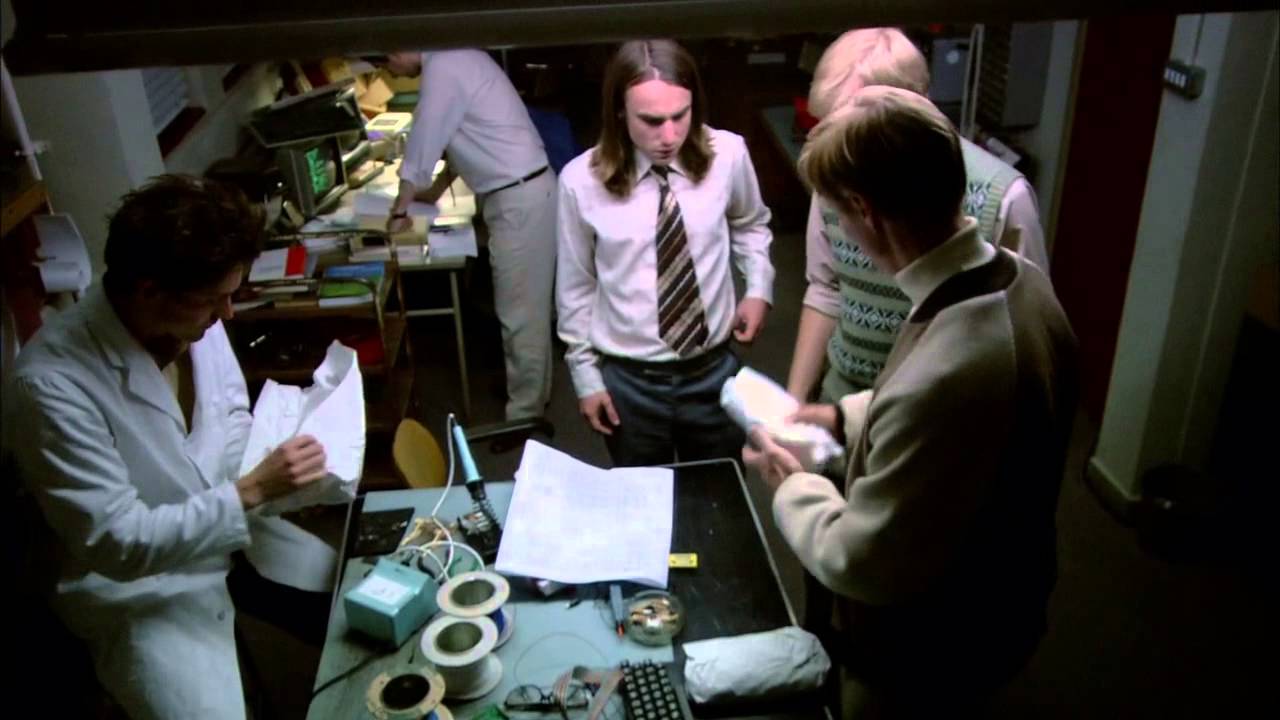
[45:00](https://www.youtube.com/watch?v=XXBxV6-zamM&t=2700s) The 72-Hour Sprint to Friday Morning
On Tuesday morning, Chris Curry lays down the challenge to Roger Wilson and Steve Furber: the BBC delegates will arrive Friday morning, and Acorn must present a fully working prototype that matches the BBC specification to the letter. Offering to keep them supplied with tea, Curry leaves the pair to gut and rebuild their architecture from scratch.
Over the next seventy-two hours, the Acorn workshop descends into round-the-clock chaos. Wilson and Furber pore over schematics, reposition the space bar, strip down board traces, and solder connections by hand. With roughly three thousand hand-wired joints required across the experimental boards, missing a single wire means complete failure. By the early hours of Friday morning, exhaustion sets in as they race against sunrise to bring the machine to life.
---
[48:40](https://www.youtube.com/watch?v=XXBxV6-zamM&t=2920s) The Severed Cord and the Functional Prototype
With minutes remaining before the BBC delegation arrives, the prototype refuses to initialize. Suspecting an intermittent contact failure, Wilson and Furber test line after line in mounting panic. Below in the hallway, Chris Curry meets the arriving BBC officials and desperately stalls for time, guiding them down the wrong corridors and taking them upstairs and downstairs to buy every possible second.
Upstairs, the engineers realize that a wire connecting the development system is using an external clock feed, introducing a fatal timing skew to the internal clock. Steve Furber reaches for the cutters to snip the umbilical wire, but Roger warns him that the connection serves as the board's backup life support. Invoking the metaphor that a newborn’s umbilical cord must be cut for the child to thrive, Furber snips the wire.
Curry pushes the door open to unveil what he breathlessly advertises as their working machine. As the monitors flare into crisp life with the prompt flashing cleanly, the BBC team inspects the unit with visible delight: “Marvelous, let’s see what she can do.”
---
[51:15](https://www.youtube.com/watch?v=XXBxV6-zamM&t=3075s) Sinclair’s Fury and the Spectrum Counter-Attack
At Sinclair Research, Clive waits by the phone, instructing Cynthia that he will take no calls unless they originate from the BBC. When the telephone finally rings, Clive eagerly answers, expecting to be handed the nationwide educational contract. Instead, the BBC informs him that the contract has been officially awarded to Acorn. Clive erupts into a volcanic expletive-laden tirade, slamming down the receiver in utter disbelief.
Shortly after, television news broadcasts the government’s public endorsement. Standing beside the machine, the Minister announces that the BBC Micro will anchor a national initiative placing a computer into every school in Britain. Acorn has already logged double their expected initial orders, sparking national enthusiasm. Watching the broadcast from his office, Clive Sinclair fumes at the sight of the bulky beige unit, scoffing: “This new BBC micro looks like it was invented by a blind Bulgarian bricklayer.”
Refusing to surrender the market to Curry, Clive orders Jim Westwood to fast-track their experimental color project, the ZX Spectrum, despite Jim's protests that the hardware is nowhere near ready for commercial release. Determined to strike head-on, Clive outlines his counter-strategy: - Offer high-resolution graphics, sound, and full eight-color capability. - Provide memory options scaling up to a massive 48K of RAM. - Undercut the BBC Micro by setting the retail price at just £125—half the price of Acorn’s machine. - Open advance mail orders immediately to beat Acorn on volume and price.
> “The next computer has to do everything theirs does and more, and it has to be half the price of theirs.” — Clive Sinclair
---
[55:13](https://www.youtube.com/watch?v=XXBxV6-zamM&t=3313s) The BBC Computer Literacy Broadcast
The BBC's landmark educational television series, *The Computer Programme*, debuts on national television. Presenter Chris Serle and technical expert Ian McNaught-Davis demonstrate how microcomputers are poised to transform British daily life and commercial office work. Showing off the BBC Micro’s text and data capabilities, they explore how paper invoices, bills, and massive filing cabinets will soon give way to electronic processing, while reassuring the home audience that traditional stationery is not disappearing overnight.
Live on air, McNaught-Davis types commands directly into the BBC Micro's keyboard—entering line `20 PRINT "WHAT IS YOUR WORD?"` followed by `30 INPUT WORD$`—illustrating to millions of viewers the fundamentals of manipulating strings, text, and variables on Acorn's flagship computer.
[56:21](https://www.youtube.com/watch?v=XXBxV6-zamM&t=3381s) The British Microcomputer Boom and the Gaming Craze
The United Kingdom finds itself gripped by home computer mania. British television broadcasts demonstrate the fundamentals of programming, highlighting basic commands such as `CLS` ("clear screen") in standard BASIC. Following the Department of Industry's multi-million-pound "Micros in Schools" program, microcomputers have been placed into every secondary school and nearly half of all primary schools across the nation. Observers remark that Britain leads the world in computing adoption, with consumers choosing from brands like the Commodore PET, Apple, Acorn, Tangerine, and the NewBrain.
```mermaid flowchart TD accTitle: The UK Home Computer Boom Dynamics accDescr: Diagram illustrating government school initiatives fueling massive market expansion into gaming and corporate growth.
subgraph Adoption ["Market Drivers"] A["Dept. of Industry Scheme<br/>'Micros in Schools'"] --> B["Widespread Adoption<br/>Every secondary & half of primaries"] end
subgraph Culture ["Consumer Reality"] B --> C["Boom in Home Use"] C --> D["Gaming Sensation<br/>(Manic Miner, Hungry Horace, Chucky Egg)"] end
subgraph Corporate ["Corporate Growth"] B --> E["Acorn Computers<br/>BBC Micro & Electron"] C --> F["Sinclair Research<br/>ZX Spectrum"] E --> G["Turnover exceeds £90M"] F --> H["Hundreds of thousands sold"] end ```
Simultaneously, the gaming phenomenon overtakes the initial promise of home education and domestic utilities. Broadcast surveys reveal that British children log more hours on computers than their peers anywhere else in the world, enthusiastically playing titles like *Manic Miner*, *Hungry Horace*, and *Chucky Egg*. While promoters attempt to frame home computers around an exciting variety of practical applications, ordinary users frankly admit they buy and use them almost exclusively for games.
- Acorn Computers expands from a small enterprise into a multinational company boasting a turnover of more than £90 million over a six-year period. - Sinclair Research sells hundreds of thousands of ZX Spectrum units, firmly establishing itself at the forefront of the mass-market consumer boom.
[59:39](https://www.youtube.com/watch?v=XXBxV6-zamM&t=3579s) Retail Realities and Diverging Corporate Visions
Burgeoning demand strains operational capacity at Acorn. Confronted with endless telephone calls and a pressing need for capital to boost production and payroll, leadership decides to float the company on the stock market. Hermann Hauser pitches the idea enthusiastically to Chris Curry: “A share issue, we float the company. It's computers, it's cutting-edge technology, the City'll love us. Come on, what can go wrong?” On the retail front, high-street store clerks awkwardly explain the rudimentary operation of Sinclair machines to prospective buyers, showing how pressing combinations of keys can change screen border colors, while customers interrupt to demand games for both the Spectrum and the BBC Micro.
```mermaid flowchart LR accTitle: Acorn vs Sinclair Strategic Split accDescr: Comparing the strategic directions of Acorn moving downmarket and Sinclair moving upmarket.
subgraph Acorn ["Acorn Computers"] A1["Float on Stock Market"] --> A2["Acorn Electron"] A2 --> A3["Cut price, go downmarket<br/>Compete directly with Spectrum"] end
subgraph Sinclair ["Sinclair Research"] S1["Spectacular Spectrum Profits"] --> S2["Sinclair QL (Quantum Leap)"] S2 --> S3["Add proper keyboard & MicroDrives<br/>Go upmarket into business"] end ```
Observing the ongoing frenzy, Sinclair feels bitter disgust toward Acorn's institutional support, dismissing their prestige as merely riding government coattails. The two competitors subsequently outline completely inverted corporate pivots: - **Acorn's Downmarket Push:** Chris Curry reveals his strategy to take the capital raised from the share flotation and pour it into the Acorn Electron, a pared-down, cost-reduced BBC Micro designed to battle the ZX Spectrum directly. When Hauser wonders if they are moving downmarket, Curry insists, “The squeeze is on in this industry. In case you didn't notice, there's a rival machine launching every week. We have to keep growing.” - **Sinclair's Upmarket Ambition:** Clive Sinclair decides to pivot in the opposite direction. He introduces the Quantum Leap (QL), intended to be an upmarket, serious business machine complete with a proper keyboard and office-oriented software.
[01:03:11](https://www.youtube.com/watch?v=XXBxV6-zamM&t=3791s) Clive Sinclair's Frustration and His Knighthood
Within Sinclair Research, staff challenge the decision to build the QL. Colleagues note that Sinclair Research is valued at £136 million based on the phenomenal success of the Spectrum, warning that designing a computer from scratch with a brand-new operating system and hardware will take years. Furthermore, retailers like W.H. Smith are clamoring to place an order for 120,000 Spectrums, with Sinclair Microdrives and peripherals already generating massive profits. The team urges him to expand their software branch to capitalize on video games.
Clive erupts at the suggestion, harboring intense resentment for the entertainment market: “Games! Everywhere I go, games! This is what my lifetime of achievement has been reduced to? Clive Sinclair, the man who brought you *Jet Set* fucking *Willy*?!” He laments that players have reached level eight and that developers have even coded a game about him chasing a knighthood, shouting, “This is a serious company, damn it, making serious technological advances!” His tirade is cut short when an aide enters with a letter, prompting an unexpected, humbled announcement: Clive Sinclair has indeed been awarded a knighthood.
- Sinclair values the company at £136 million on the back of the rubber-keyed Spectrum. - W.H. Smith readies an order for 120,000 units, demonstrating the massive retail demand Sinclair is actively trying to steer away from. - Clive announces the QL will be ready for launch in just three months, brushing aside internal technical concerns.
[01:05:00](https://www.youtube.com/watch?v=XXBxV6-zamM&t=3900s) The Launch of the Sinclair QL and Acorn's Overconfidence
Sir Clive Sinclair officially debuts the Sinclair Quantum Leap (QL) at a press conference, hailing it as professional power incarnate, packaged with an innovative built-in Microdrive data storage system, a revolutionary keyboard, and a SuperBASIC operating system. Rather than pricing it in the thousands, he undercuts the market by setting the price at £399. Nigel Searle, Sinclair's head of computing, is invited forward, as Clive makes a fateful pledge: “Let me be the first to say: the future is here, and it's ready to ship in 28 days.”
| Machine Profile | Sinclair QL (Quantum Leap) | Acorn Electron | |:--- |:--- |:--- | | **Intended Market** | Upmarket business and executive offices | Budget consumer and home computing | | **Launch Price** | £399 | Budget-conscious lower tier | | **Key Features** | SuperBASIC, built-in Microdrives, proper keyboard | Stripped-down BBC Micro architecture | | **Fatal Flaw** | Severe delivery delays, unpolished hardware | Mass overproduction just as demand cooled |
Meanwhile, over at Acorn, Chris Curry confirms massive orders for the Acorn Electron, brushing away Hermann Hauser's caution regarding newspaper warnings that the home micro market might have peaked. Curry retorts, “They've just ordered 120,000 computers. Does that sound like it's peaked?” But behind the scenes, operational expenditures are escalating. Sinclair is siphoning millions into side projects, including an electric vehicle project that drains £12 million from company coffers. At the same time, Nigel Searle confronts Clive over the unfulfilled QL orders, warning that Microdrives do not work, memory chips are hanging loose out of the back of the casing, and customers are calling non-stop demanding machines that were promised 28 days after launch—a deadline missed by 60 days.
[01:08:40](https://www.youtube.com/watch?v=XXBxV6-zamM&t=4120s) The 1985 Market Crash and the Emergence of Amstrad
By late 1984 and early 1985, the British microcomputer boom hits a devastating wall of market saturation. As commentators describe, every child who wanted a home computer for Christmas in 1983 received one, and by Christmas 1984, the consumer appetite had completely evaporated. The saturated marketplace, featuring roughly 600 domestic manufacturers, enters a brutal shakeout.
Both Sinclair and Acorn scramble to put on a brave face in televised interviews, touting their respective flagships—the QL and the Electron. However, the commercial reality turns grim: - **Sinclair's QL Flops:** Dogged by severe hardware flaws and extensive delivery delays, the QL completely fails to penetrate the corporate sector and sees its £400 price slashed by 50%. - **Acorn's Electron Disaster:** The school purchasing boom fades, leaving Acorn hopelessly oversupplied with unsold Electrons just as retailers pull back. - **Alan Sugar's Amstrad Arrives:** Alan Sugar steps into the void to target the market, deriding both camps for their academic and ivory-tower approach: “And that's where Amstrad comes in. We are businessmen. We're not made up by a team of ex-graduates who've thrown a few electronic components in a plastic box.”
As 1985 begins, both companies find themselves trapped in a devastating industry collapse, dealing with angry distributors, warehouse surpluses, and catastrophic inventory logjams.
[01:11:04](https://www.youtube.com/watch?v=XXBxV6-zamM&t=4264s) Order Cancellations, Quality Issues, and Advertising Rivalry
The commercial rivalry between Acorn Computers and Sinclair Research reaches a fever pitch just as severe operational crises strike both companies. At Sinclair, Nigel Searle brings grim news regarding the flagship Sinclair QL: customers who have waited up to three months are the fortunate ones, while the machines actually arriving at customer doorsteps simply do not function properly. Despite Nigel's insistence that they cannot keep advertising a non-working machine, Clive Sinclair remains utterly dismissive, maintaining that the public's unwavering faith in him will carry the brand through. Clive orders that faulty units simply be swapped out and refuses to pull back, demanding an aggressive counter-offensive against Chris Curry's competing Acorn Electron. As Clive vehemently declares to Nigel: “If Curry wants to muscle in on the Spectrum market with his ugly tat, then I'll be damned if we don't respond. I'll chop him off at the knees in his own territory.”
Meanwhile, Acorn faces its own catastrophic bottleneck. Chris Curry learns that high-street retail giants are refusing delivery because the long-delayed Electron machines arrived months too late to capitalize on peak retail demand. Hermann Hauser warns Chris that major retailers like Harrods, Asda, and Dixons may follow WHSmith's move to cancel their massive 120,000-unit orders. With parts suppliers aggressively hounding Acorn for payment, Hermann suggests liquidating unsold inventory or trimming their promotional spending. Chris refuses to divert a single penny from their high-profile television campaign, insisting they must maintain parity with corporate giants like IBM and Commodore. The lavish £99 Acorn Electron television commercial broadcasts into homes nationwide, pitching the micro as the machine that shares the BBC BASIC language taught to British school children.
```mermaid flowchart TD accTitle: The Parallel Crises of Sinclair and Acorn accDescr: Diagram illustrating how production and supply chain issues at Sinclair Research and Acorn Computers simultaneously triggered financial panic.
subgraph Sinclair["Sinclair Research"] SQ["Sinclair QL Delays"] --> FQ["Faulty Hardware Shipped"] FQ --> CS["Clive Demands Aggressive TV Ads"] end
subgraph Acorn["Acorn Computers"] ED["Electron Production Delays"] --> OC["Retailers Cancel 120k Orders"] OC --> CC["Chris Refuses to Cut TV Budget"] end
CS --> Cl["Escalating Ad War & Cambridge Pub Confrontation"] CC --> Cl ```
- WHSmith had placed an advance order for 120,000 Acorn Electrons, but cancelled due to delivery missing the critical pre-Christmas retail window. - Harrods, Asda, and Dixons were on the brink of cancelling their inventory orders as well. - The Acorn Electron television campaign promoted the computer at a retail price of £99, emphasizing compatibility with BBC BASIC. - Sinclair QL customers experienced delivery delays of over three months, with initial shipments suffering heavy failure rates.
---
[01:13:11](https://www.youtube.com/watch?v=XXBxV6-zamM&t=4391s) Unsold Stock, The C5 on the Road, and the Attack Ad
The reality of the home computer glut sets in at Acorn's cavernous storage facility, where Chris Curry wanders among towering aisles of boxed, unsold Electrons. His former assistant Valerie visits him, bringing a bite to eat. When Chris asks what she hopes to receive for Christmas, she mentions one of the new compact disc players—provided her partner can locate one in the shops. Chris somberly reflects on his own plight, remarking that all he wants for Christmas is an empty warehouse. The encounter stirs a wistful moment of nostalgia between the two, remembering the tight-knit, modest early days when building computers was still genuinely fun.
Outside, Clive Sinclair takes to the public road to pilot his pet project, the low-slung, open-cockpit Sinclair C5 electric vehicle. His ride is immediately met with hostility and ridicule from ordinary motorists; a frustrated driver pulls up alongside the tiny trike and shouts out the window, mocking Clive's vehicle as a road hazard and telling him to get onto the pavement where pedestrians belong. Back at Acorn, the bitter marketing war escalates into overt hostility. Disregarding standard etiquette, Chris Curry approves a scathing print advertisement directly attacking Sinclair. When his colleague asks whether he is entirely certain he wants to run an advertisement aimed squarely at knocking Sinclair, Chris coldly demands: “Just run it, I want full pages everywhere.”
- Chris Curry's inventory problem is symbolized by full warehouses of unsold Acorn Electron microcomputers sitting idle while audio CD players become the hot consumer tech of the season. - Clive's Sinclair C5 faces real-world road friction, with passing motorists shouting: “Dangerous walking in traffic, keep to the side if I were you! That's the place for pedestrians!” - Acorn authorizes full-page comparative advertisements in major publications directly disparaging Sinclair machines.
---
[01:16:44](https://www.youtube.com/watch?v=XXBxV6-zamM&t=4604s) The Cambridge Pub Brawl
The smoldering personal and commercial animosity between Clive Sinclair and Chris Curry explodes into violence in a local Cambridge pub. Clive, brandishing a copy of Acorn's aggressive newspaper advertisement, stormily enters the establishment and confronts Chris at his table. After angrily tossing the paper down and swearing at Chris over the personal affront, Clive lunges at him, knocking drinks over and sending both men crashing to the carpeted pub floor. Patrons and staff scramble to pull the grappling computer moguls apart, while a furious barman orders Clive to leave the premises immediately.
Dusting himself off while being ejected, Clive snaps, “Someone needs to teach you a lesson!” Chris fires back with years of pent-up resentment, shouting: “That's funny, because everything I learned, I learned from you!” When Clive counters that Chris learned nothing and merely took from him without giving back, Chris lays bare the fundamental tragedy of their split: “We could have been the British IBM, but you wouldn't listen to me when you should have! And now look at us!” The brawl marks the humiliating nadir of their once-visionary partnership, exposing how personal pride and mutual obstinacy ruined their chances of dominating the global computing market together.
---
[01:17:57](https://www.youtube.com/watch?v=XXBxV6-zamM&t=4677s) Market Crash, Public Ridicule, and Impending Layoffs
The physical brawl coincides with the rapid financial unraveling of Britain's home computing industry. Television news broadcasts report that trading in Acorn Microcomputer shares has been abruptly suspended on the London Stock Exchange following rumors of severe financial distress and catastrophic losses in their American expansion efforts. Simultaneously, reports highlight that Sir Clive Sinclair's Sinclair Research is sinking under deep financial strain as the consumer microcomputer boom collapses just as quickly as it had arrived. To add humiliation to financial ruin, regional morning television anchors deliver lighthearted, mocking segments about the “battle of the boffins,” joking about Cambridge eggheads rolling across a pub floor over a commercial squabble.
Inside Acorn's offices, Chris Curry and Hermann Hauser survey the bleak aftermath. Confronted with the morning broadcast, Chris bitterly laments, “It's official, we're a joke.” Hermann attempts to console him, explaining that the entire market has imploded across the board and that Sinclair is suffering the exact same fate. When Hermann asks whether knowing Clive is in the same boat brings any comfort, Chris quietly admits that it does not. Facing the painful duty of laying off their loyal engineering staff, Chris wonders aloud what all their brilliant employees will do next. Hermann remains confident in their resilience, observing: “They are clever people, they'll think of something. Maybe they already have.”
| Company | Immediate Catalyst of Collapse | Public & Commercial Outcome | |:--- |:--- |:--- | | **Acorn Computers** | Severe losses in the American market and massive warehouse overstock of unsold Electrons. | Shares suspended on the Stock Exchange; mass layoffs initiated; business rescued through outside restructuring. | | **Sinclair Research** | Critical QL hardware flaws, delivery delays, and heavy capital diversion into the Sinclair C5. | Severe financial shortfall; home computer line eventually sold off to Amstrad. |
---
[01:19:33](https://www.youtube.com/watch?v=XXBxV6-zamM&t=4773s) Reconciliation in the Pub and the Next Horizon
Months later, Clive Sinclair breaks the silence by leaving a tentative, hesitant telephone message for Chris Curry, suggesting that if Chris is not too busy, they might meet for a drink like old times. Chris accepts, and the two former partners sit quietly across from each other in a pub, having set aside their rancor. Clive openly concedes that the golden era of the home computer boom has passed, remarking that the market now belongs to high-street merchants and opportunistic consumer electronics firms rather than visionary pioneers: “Now it belongs to ghastly barrow boys like this Amstrad fellow.”
Reflecting on their journey, Clive philosophizes that corporate rise and fall is merely part of a larger continuum, maintaining that true British progress has never come from corporate boardrooms, but from eccentric tinkerers: “A quiet chap scuttling off to his shed to work on that idea that he and he alone knows will change the world, that's the British way.” Quoting Robert Browning, Clive recites, “A man's reach must exceed his grasp, or what's a heaven for?” When Chris gently assents, Clive brightens up and reveals that his appetite for inventing the future remains undiminished, casually informing Chris that he has already begun exploring the possibility of building a flying car. Chris smiles in amused resignation, raises his glass with Clive, and toasts to the gentlemen inventors who dared to dream.
- Clive Sinclair refers to Alan Sugar and Amstrad's takeover of the mass home computing sector as the era of "ghastly barrow boys." - Clive summarizes his philosophy of British innovation: “Ultimately the path of the future will always be laid by the amateur.” - The film concludes on Clive Sinclair revealing his next conceptual venture to Chris Curry: a flying car.
## Notable quotes > [01:19:33](https://www.youtube.com/watch?v=XXBxV6-zamM&t=4773s) Ultimately the path of the future will always be laid by the amateur. — Clive Sinclair
> [01:19:33](https://www.youtube.com/watch?v=XXBxV6-zamM&t=4773s) A quiet chap scuttling off to his shed to work on that idea that he and he alone knows will change the world, that's the British way. — Clive Sinclair
> [02:38](https://www.youtube.com/watch?v=XXBxV6-zamM&t=158s) What is the point of funding an invention if you can't stomach the inventor? — Clive Sinclair
> [01:08:40](https://www.youtube.com/watch?v=XXBxV6-zamM&t=4120s) We are businessmen. We're not made up by a team of ex-graduates who've thrown a few electronic components in a plastic box. — Alan Sugar
## Mentioned Acorn Atom, Acorn Computers, Acorn Electron, Alan Sugar, Amstrad, Ann Sinclair, Apple, Asda, BBC, BBC Computer Literacy Project, BBC Micro, British Mensa, Cambridge Processor Group, Camputers, Chris Curry, Chris Serle, Chucky Egg, Clive Sinclair, Commodore PET, Cynthia, Department of Industry, Dixons, Dragon, Harrods, Hermann Hauser, Hungry Horace, IBM, Ian McNaught-Davis, Jet Set Willy, Jim Westwood, London Stock Exchange, Manic Miner, Microvision, MK14, MOS Technology 6502, National Enterprise Board (NEB), NewBrain, Newbury Laboratories, Nigel Searle, Oric, Robert Browning, Roger Wilson, Science of Cambridge, Sinclair Black Watch, Sinclair C5, Sinclair Computers, Sinclair Microdrive, Sinclair QL (Quantum Leap), Sinclair Radionics, Sinclair Research, Steve Furber, SuperBASIC, Tangerine, The Computer Programme, Valerie, W.H. Smith, ZX Spectrum, ZX80, ZX81
## Video description http://www.bbc.co.uk/programmes/b00n5b92
DURATION: 1 HOUR, 20 MINUTES
Affectionately comic drama about the British home computer boom of the early 1980s.
Legendary inventor Clive Sinclair battles it out with ex-employee Chris Curry, founder of Acorn Computers, for dominance in the fledgling market.
The rivalry comes to a head when the BBC announce their Computer Literacy Project, with the stated aim of putting a micro in every school in Britain. When Acorn wins the contract, Sinclair is furious, and determines to outsell the BBC Micro with his ZX Spectrum computer.
Home computing arrives in Britain in a big way, but is the country big enough for both men?
BBC - Please release this on Blue Ray with some nice extras, it is a work of art.
Credits Clive Sinclair Alexander Armstrong Chris Curry Martin Freeman Hermann Hauser Edward Baker-Duly Steve Furber Sam Phillips Roger Wilson Stefan Butler Jim Westwood Colin Carmichael Nigel Searle Derek Ridell Valerie Rhona Croker Cynthia Anne Beth Hayes Ann Sinclair Nicola Harrison Director Saul Metzstein Producer Andrea Cornwell Writer Tony Saint
[Source](https://www.youtube.com/watch?v=XXBxV6-zamM)