Electronic Voting Exposes Sovereign Elections to Scalable Cyber Hacks
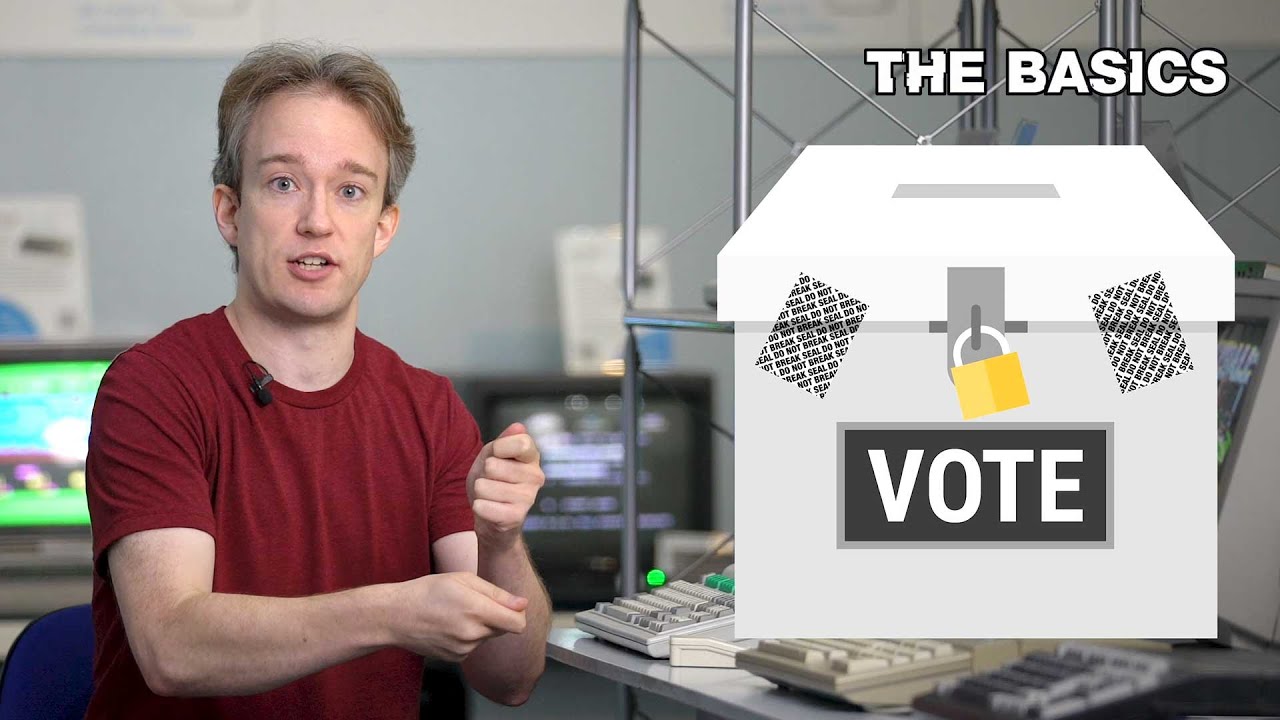
Tom Scott
Digital voting poses an existential threat to national democracy because computing systems cannot reconcile voter secrecy with public auditability while allowing foreign adversaries to manipulate millions of ballots at minimal cost.
AI-assisted summary of Why Electronic Voting Is Still A Bad Idea — original source. Check the original for full context.
Source published:
Key ideas
- Elections require balancing absolute voter anonymity against transparent public trust—two fundamental requirements that work directly against each other and collapse under electronic voting implementations. (0:00)
- Physical paper balloting features a built-in scaling defense: rigging an election manually requires coordinating thousands of conspirators across physical locations, making detection nearly unavoidable. (1:59)
- Remote online voting shifts national election security onto compromised consumer devices, enabling state-sponsored cyber warfare teams to alter millions of votes as cheaply as changing one. (7:50)
- Emerging technologies like blockchains fail to fix electronic voting, as distributed write-only ledgers do nothing to verify the physical input interface between the voter and the terminal. (9:49)
Detailed notes
## Background Published on YouTube by Tom Scott on December 9, 2019, this video revisits the enduring perils of digital elections five years after his previous video on the topic. According to the show notes, the piece explains why electronic voting remains unviable, drawing upon real-world security flaws, hacker demonstrations, and election audit reports.
## TL;DR Tom Scott explains that electronic voting remains fundamentally flawed because democratic elections demand two incompatible requirements: absolute voter anonymity to prevent coercion and transparent, layperson-verifiable trust. While traditional paper voting relies on physical logistics that prevent attacks from scaling covertly, electronic voting machines and internet voting introduce concentrated failure points susceptible to nation-state cyberattacks, undetectable software errors, and asymmetric disinformation. Proposed technological remedies like blockchain or cryptographic receipts fail to fix physical hardware manipulation and alienate non-technical voters. While digital systems may suit low-stakes ballots, Scott warns that physical paper ballots remain essential whenever national outcomes are at stake.
## Atmosphere & style The presentation is lucid, fast-paced, and incisive, pairing Scott's approachable, direct-to-camera delivery with sharp visual diagrams and sobering historical examples. Scott punctuates the technical breakdown with wry humor—such as hackers running Doom on voting machines or counting failures caused by un-scrolled spreadsheets—without trivializing the subject matter. The narrative builds methodically from practical security fundamentals to an urgent, chillingly delivered final warning about protecting democratic integrity while the public still has the power to do so.
## Bulletin - [00:00](https://www.youtube.com/watch?v=LkH2r-sNjQs&t=0s) Elections require balancing absolute voter anonymity against transparent public trust—two fundamental requirements that work directly against each other and collapse under electronic voting implementations. - [01:59](https://www.youtube.com/watch?v=LkH2r-sNjQs&t=119s) Physical paper balloting features a built-in scaling defense: rigging an election manually requires coordinating thousands of conspirators across physical locations, making detection nearly unavoidable. - [07:50](https://www.youtube.com/watch?v=LkH2r-sNjQs&t=470s) Remote online voting shifts national election security onto compromised consumer devices, enabling state-sponsored cyber warfare teams to alter millions of votes as cheaply as changing one. - [09:49](https://www.youtube.com/watch?v=LkH2r-sNjQs&t=589s) Emerging technologies like blockchains fail to fix electronic voting, as distributed write-only ledgers do nothing to verify the physical input interface between the voter and the terminal.
## Key takeaways - [00:00](https://www.youtube.com/watch?v=LkH2r-sNjQs&t=0s) Elections impose two mutually contradictory demands: absolute voter anonymity to prevent coercion or vote-buying, and transparent verifiability so ordinary citizens can trust the tally. - [00:00](https://www.youtube.com/watch?v=LkH2r-sNjQs&t=0s) Paper ballots have centuries of refined procedural defenses where no single person is ever trusted alone, requiring transparent oversight by opposing political observers. - [01:59](https://www.youtube.com/watch?v=LkH2r-sNjQs&t=119s) Physical voting fraud scales poorly; altering enough physical paper ballots to swing an election requires exponentially more time, money, and co-conspirators, drastically raising detection risk. - [03:24](https://www.youtube.com/watch?v=LkH2r-sNjQs&t=204s) Electronic voting machines replace transparent visual oversight with closed-source code and opaque hardware, forcing voters to blindly trust that the machine is not compromised. - [03:24](https://www.youtube.com/watch?v=LkH2r-sNjQs&t=204s) Voting machine vulnerabilities are demonstrated annually at DEFCON, where researchers routinely breach hardware, alter tallies, rewrite interfaces, and run unauthorized software like Doom. - [03:24](https://www.youtube.com/watch?v=LkH2r-sNjQs&t=204s) Transferring digital vote tallies to central counting facilities relies on vulnerable vectors, including physical USB drive swaps and internet transmission subject to interception. - [06:29](https://www.youtube.com/watch?v=LkH2r-sNjQs&t=389s) Central tabulation servers hide subtle software biases and basic human blunders, such as an unscrolled Excel spreadsheet that nearly distorted a Scottish election result. - [06:29](https://www.youtube.com/watch?v=LkH2r-sNjQs&t=389s) Digital elections are vulnerable to asymmetric disinformation: an attacker does not need to compromise the count, but merely seed sufficient doubt about machine integrity to invalidate the result. - [07:50](https://www.youtube.com/watch?v=LkH2r-sNjQs&t=470s) Online voting from home relies on unsecured consumer computers and phones, opening sovereign elections to foreign nation-state botnets and remote cyber manipulation. - [07:50](https://www.youtube.com/watch?v=LkH2r-sNjQs&t=470s) Even pioneering implementations like Estonia's online voting system have been found by independent security audits to carry substantial operational and architectural vulnerabilities. - [09:49](https://www.youtube.com/watch?v=LkH2r-sNjQs&t=589s) Blockchain ledgers cannot solve election security because they only record transactions after the fact and cannot guarantee the integrity of the terminal capturing the voter's choice. - [09:49](https://www.youtube.com/watch?v=LkH2r-sNjQs&t=589s) Receipt-based verification faces an intractable dilemma: plaintext receipts destroy ballot privacy, while cryptographic verification strings are unintelligible to average citizens. - [09:49](https://www.youtube.com/watch?v=LkH2r-sNjQs&t=589s) While electronic voting offers accessibility benefits for low-stakes decisions, paper ballots remain essential whenever the democratic future of a nation is at stake.
## Detailed walkthrough ### [00:00](https://www.youtube.com/watch?v=LkH2r-sNjQs&t=0s) The Contradictory Demands of Elections
Five years after releasing an original video for *Computerphile* on why electronic voting is a terrible idea, Tom Scott notes that he still receives incoming emails asking whether recent advancements have finally solved the core problems. The assumption persists that some clever new scheme must have arrived to make electronic voting viable. Scott’s blunt assessment is that nothing of the sort has occurred: “No, it’s really not.” The foundational obstacle is that elections impose two crucial, conflicting requirements that work directly against each other: anonymity and transparent trust.
```mermaid flowchart LR accTitle: The Two Conflicting Demands of Elections accDescr: Diagram contrasting absolute voter anonymity against transparent public trust.
subgraph Req1 ["Requirement 1"] A["Absolute Anonymity"] --> B["Prevents bribery, threats, and coercion"] B --> C["Ballot cannot be linked to voter"] end
subgraph Req2 ["Requirement 2"] D["Transparent Trust"] --> E["Voter verifies tally is accurate"] E --> F["System must be understood by laypeople"] end
Req1 <-->|"Fundamental Tension"| Req2 ```
Anonymity requires that no one can discover how an individual voted, even after tallies are finalized. Without total privacy, malicious actors can bribe voters or use coercion. In the UK, ballots are discarded if signed or marked with any identifying feature, and election officials actively discourage ballot selfies because voters must be prevented from proving how they cast their vote. Otherwise, campaigns or bad actors could enforce schemes like offering discounts, conditioning party invitations, or threatening retaliation based on proof of vote choice: - Anonymity prevents transactional threats: “$10 off for blue voters!”, “Entry to this party only for yellow voters!”, or “vote red or you’ll regret it.” - Trust requires that voters know their ballot was counted accurately and securely, while ensuring that the public—regardless of technical sophistication—can clearly see that the mechanism is trustworthy. - Paper systems accomplish this through open visibility: physical ballots sit inside sealed boxes, watched by representatives from competing political sides, with tamper-evident transport seals so that no single person is ever trusted alone. As Scott emphasizes: “People can be corrupt, or threatened, or incompetent, or all three at the same time.”
[01:59](https://www.youtube.com/watch?v=LkH2r-sNjQs&t=119s) Why Physical Voting Scales Poorly for Attackers
Physical paper elections are far from flawless. In the UK, voter identity can technically be recovered from ballots if ordered by a court, and unauthorized tracking has occurred outside legal frameworks. Nevertheless, physical ballots possess an indispensable structural defense: physical attacks do not scale. Because paper balloting has been refined over centuries, nearly every variation of fraud has already been attempted, cataloged, and met with physical counter-defenses.
Attempting to rig a paper election requires expanding human intervention across physical space. In a standard UK general election, polling happens across hundreds of locations run by official staff and thousands of volunteers. Tampering with enough ballots to shift a national or local outcome requires recruiting more conspirators, spending excessive amounts of money, and dramatically increasing the risk of detection. While small-scale fraud occurs—such as “granny farming,” where political operatives visit care homes to manipulate vulnerable residents into assigning proxy votes—the effort required to sway large-scale outcomes through manual tampering quickly renders the conspiracy unsustainable: “The more physical votes you need to change, the more people you need to influence, the more time and money it takes, and the less likely it is that your little conspiracy will stay secret.”
[03:24](https://www.youtube.com/watch?v=LkH2r-sNjQs&t=204s) The Flaws of In-Person Voting Machines
When voting moves to electronic voting machines inside polling stations—where voters press physical buttons or tap touchscreens instead of using pen and paper—the foundational trust model disintegrates. In an ideal scenario, voting software would be entirely open-source and subject to public review. In reality, polling hardware relies on closed-source code loaded onto machines via unsecured USB drives. These units frequently sit unattended in storage facilities and have occasionally been discovered lingering on open internet connections for years at a stretch, receiving realistic operational testing only on the day of an actual election.
```mermaid flowchart TD accTitle: Attack Vectors on Electronic Voting Machines accDescr: Flowchart showing vulnerabilities in hardware, transport, and central tabulation.
subgraph PollingStation ["At the Polling Station"] A["Closed-source Machine"] -->|"Tampered USB or OS"| B["Altered Tallies / Ballots"] B --> C["Untrusted Visuals: DEFCON hacks / Doom demo"] end
subgraph Transit ["Data in Transit"] C --> D{"Transit Method"} D -->|"Physical USB"| E["Sleight-of-hand Swap"] D -->|"Internet Upload"| F["Man-in-the-middle Interception"] end
subgraph Central ["Central Count"] E --> G["Central Counting Server"] F --> G G --> H["Hidden Flaws: Software bugs / Spreadsheet errors"] end ```
Even if ideal open-source software could be deployed, everyday voters have no mechanism to verify that the binary running on the hardware matches the approved source. Employing cryptographic checksums merely shifts the point of failure, forcing non-technical voters to blindly trust an abstraction they do not comprehend. Scott points out that at the annual DEFCON Voting Village convention in the United States, independent hackers routinely breach real-world voting terminals, modifying tallies, rewriting ballot interfaces, and in one notable instance, forcing a machine to run the classic first-person shooter *Doom*. Scott summarizes the absurd faith required by this design: “That’s basically what’s happening with an electronic voting machine. You just have something that says: trust me. I’ve counted your vote and I have absolutely not been compromised. Honest.”
Moving machine-collected votes to a central tally introduces further failure points: - Transporting physical machines to the counting center is logistically cumbersome and rarely done. - Transferring tallies via removable USB flash drives leaves elections vulnerable to simple sleight-of-hand drive swapping. - Transmitting totals electronically over the internet introduces direct network attack surfaces and man-in-the-middle vulnerabilities on both ends.
[06:29](https://www.youtube.com/watch?v=LkH2r-sNjQs&t=389s) Central Counting Failures and the Disinformation Risk
Central tabulation systems—whether tallying direct digital submissions or scanning physical paper forms—suffer from identical verification problems, exacerbated by the fact that only a tiny group of technicians ever see the servers. Software inside electronic tabulators can contain subtle, undetectable biases, much like how Volkswagen secretly engineered its engine software to bypass emissions tests for years without detection.
Simple human incompetence also undermines electronic tallying. During a Scottish election trial with electronic voting, an incorrect result was caught in the nick of time only because a keen observer spotted figures that did not make sense; investigators discovered a worker had neglected to scroll all the way across an Excel spreadsheet containing the final data. Crucially, digital systems are uniquely vulnerable to asymmetric reputation attacks: - “To break an electronic election, you don’t actually need to break it: you just need to cast enough doubt on the result.” - An operative can shatter public confidence simply by photographing an unapproved USB drive plugged into an election machine—or even by circulating a doctored image of such an event—an exploit that is far harder to manufacture against transparent, physical ballot containers.
[07:50](https://www.youtube.com/watch?v=LkH2r-sNjQs&t=470s) Remote Online Voting and the Estonian Example
The push to let citizens cast votes remotely from personal smartphones or home computers introduces catastrophic system-level vulnerabilities. While tech-savvy users might keep their personal hardware secure, millions of consumer devices run outdated operating systems or harbor latent botnet malware. Against these consumer vulnerabilities, state-sponsored cyber warfare divisions wield immense leverage: “Find the one hole in the system, and suddenly it costs roughly the same to change one vote as it does to alter millions: and your conspiracy stays very, very small indeed.” Foreign attackers would not even need to set foot inside the country they are destabilizing.
Advocates often counter these warnings by pointing to Estonia, which pioneered internet voting in 2005 across local, national, and European Parliament elections, with over 40% of its electorate (approaching 250,000 citizens) casting digital ballots by 2019 using national smart cards and mobile SIM authentication. However, independent security audits revealed substantial operational and procedural security flaws in Estonia's infrastructure. Its underlying architecture has aged over a decade, leaving it vulnerable to nation-state cyberattacks aimed at either harvesting credentials from compromised personal hardware or breaking trust in the central tabulation servers. Scott notes that whenever these fundamental pitfalls are established, proponents inevitably pivot to the next buzzword: blockchain.
[09:49](https://www.youtube.com/watch?v=LkH2r-sNjQs&t=589s) The Flaws of High-Tech Solutions and the Final Verdict
Proponents often suggest emerging technologies like blockchains to fix electronic voting, but framing a write-only database as a magic bullet completely misunderstands the core vulnerability. Asking the public to place their faith in novel distributed ledgers fails to address the fundamental problem of trusting the underlying software and physical hardware. A blockchain does nothing to change how the voting machine operates at the physical booth; the critical interface between the voter pressing a button and the system recording that intention into the database remains entirely vulnerable to manipulation. Furthermore, attempting to make digital voting verifiable via paper receipts introduces an intractable paradox: if a machine prints a human-readable receipt displaying your vote so you can verify it later, voter anonymity is destroyed; if it instead prints cryptographic hashes or seemingly random strings of numbers, public trust collapses because virtually no ordinary citizen understands how that math works.
Tom Scott acknowledges that electronic voting is not without merit, emphasizing that accessibility is a massive, genuinely vital advantage for many voters. In low-stakes scenarios—such as student council votes, internal committee ballots, or small community decisions—electronic systems are perfectly fine to use. However, the calculus changes completely when the stakes reach an existential scale. Delivering his closing warning with grim finality, Tom Scott insists: “But when the future of nations rests on the result: electronic voting is still a bad idea, and you should still vote against it.” He pauses before adding a chilling parting thought: “While you can.”
- **The blockchain fallacy:** A write-only distributed ledger does not secure the physical interface where a voter inputs their choice into the hardware. - **The verification dilemma:** - *Plaintext receipts:* Enable vote-checking, but completely compromise ballot secrecy and open voters up to coercion or vote-buying. - *Cryptographic / randomized receipts:* Protect secrecy, but alienate ordinary citizens who cannot independently audit or comprehend the underlying cryptography. - **Appropriate use cases:** Electronic voting is acceptable for low-stakes, small-group elections where convenience outweighs existential national security risks.
[10:40](https://www.youtube.com/watch?v=LkH2r-sNjQs&t=640s) Dashlane Password Manager and Digital Security
Transitioning to the video’s sponsorship, Tom Scott offers a candid justification for endorsing Dashlane, joking that the first reason is obvious: they paid him. More earnestly, he notes that anyone technical enough to watch an in-depth breakdown of election cybersecurity to the very end is precisely the kind of person who ought to be using a dedicated password manager. The ideal security practice requires generating lengthy, complex, symbol-laden passwords that are entirely unique across every single app and website. While this prevents credential-stuffing attacks across compromised services, human memory cannot reliably retain dozens of random strings, and manually entering them across devices is an exercise in frustration.
Tom Scott explains how a password manager resolves this friction by bridging robust security with day-to-day usability. As Tom Scott argues: “Being able to use a single master password, or the biometrics on your phone, is great: you’ve got one thing to remember.” He outlines Dashlane’s zero-knowledge cloud architecture, which synchronizes login credentials across operating systems and browsers without ever exposing the unencrypted master passwords to Dashlane's servers.
- **Trial & Offer:** A 30-day free trial of Dashlane Premium is offered at `dashlane.com/tomscott`, with promo code `tomscott` providing a 10% discount. - **Core features:** - Automated password generation, cross-platform autofill, and encrypted cloud synchronization across all devices and browsers. - Zero-knowledge encryption architecture ensuring the host company cannot read user passwords. - Autofill storage for payment details and credit cards to avoid retyping financial data during checkout. - Bundled extras including an integrated virtual private network (VPN) and one gigabyte of secure encrypted storage.
## Notable quotes > [06:29](https://www.youtube.com/watch?v=LkH2r-sNjQs&t=389s) To break an electronic election, you don’t actually need to break it: you just need to cast enough doubt on the result. — Tom Scott
> [01:59](https://www.youtube.com/watch?v=LkH2r-sNjQs&t=119s) The more physical votes you need to change, the more people you need to influence, the more time and money it takes, and the less likely it is that your little conspiracy will stay secret. — Tom Scott
> [07:50](https://www.youtube.com/watch?v=LkH2r-sNjQs&t=470s) Find the one hole in the system, and suddenly it costs roughly the same to change one vote as it does to alter millions: and your conspiracy stays very, very small indeed. — Tom Scott
## Mentioned Tom Scott, Computerphile, DEFCON Voting Village, Doom, Volkswagen, Microsoft Excel, Estonia, Dashlane, Sean Elliott, Tomek, Mooviemakers, Haerther Productions
## Video description We still shouldn't be using electronic voting. Here's why. • Sponsored by Dashlane — for free on your first device @ https://www.dashlane.com/tomscott
MORE BASICS: https://www.youtube.com/playlist?list=PL96C35uN7xGLLeET0dOWaKHkAlPsrkcha
REFERENCES:
Computerphile video: https://www.youtube.com/watch?v=w3_0x6oaDmI
Stories about voter identification happening outside the law: https://www.theguardian.com/notesandqueries/query/0,,-1051,00.html
Voting machines left connected to the internet: https://www.vice.com/en_us/article/3kxzk9/exclusive-critical-us-election-systems-have-been-left-exposed-online-despite-official-denials
Hackers getting voting machines to play Doom: https://www.salon.com/2019/08/14/hackers-can-easily-break-into-voting-machines-used-across-the-u-s-play-doom-nirvana/
"Small, well-funded team backed by a national government": https://www.nytimes.com/2019/07/25/us/politics/russian-hacking-elections.html
Scottish election: https://www.theguardian.com/politics/2007/jun/20/scotland.devolution and http://news.bbc.co.uk/1/hi/scotland/6627657.stm - with the Excel detail on page 50 of https://www.openrightsgroup.org/wp-content/uploads/org_election_report.pdf?page=50
Report on e-voting in Estonia: https://estoniaevoting.org/
Written with Sean Elliott https://twitter.com/SeanMElliott/ Directed by Tomek Graphics by Mooviemakers https://www.mooviemakers.co.uk/ Audio mix by Haerther Productions https://haerther.net/
🟥 MORE FROM TOM: https://www.tomscott.com/ (you can find contact details and social links there too) ❓ LATERAL, free weekly podcast: https://lateralcast.com/ https://youtube.com/lateralcast/ 👥 THE TECHNICAL DIFFICULTIES: https://youtube.com/techdif
[Source](https://www.youtube.com/watch?v=LkH2r-sNjQs)