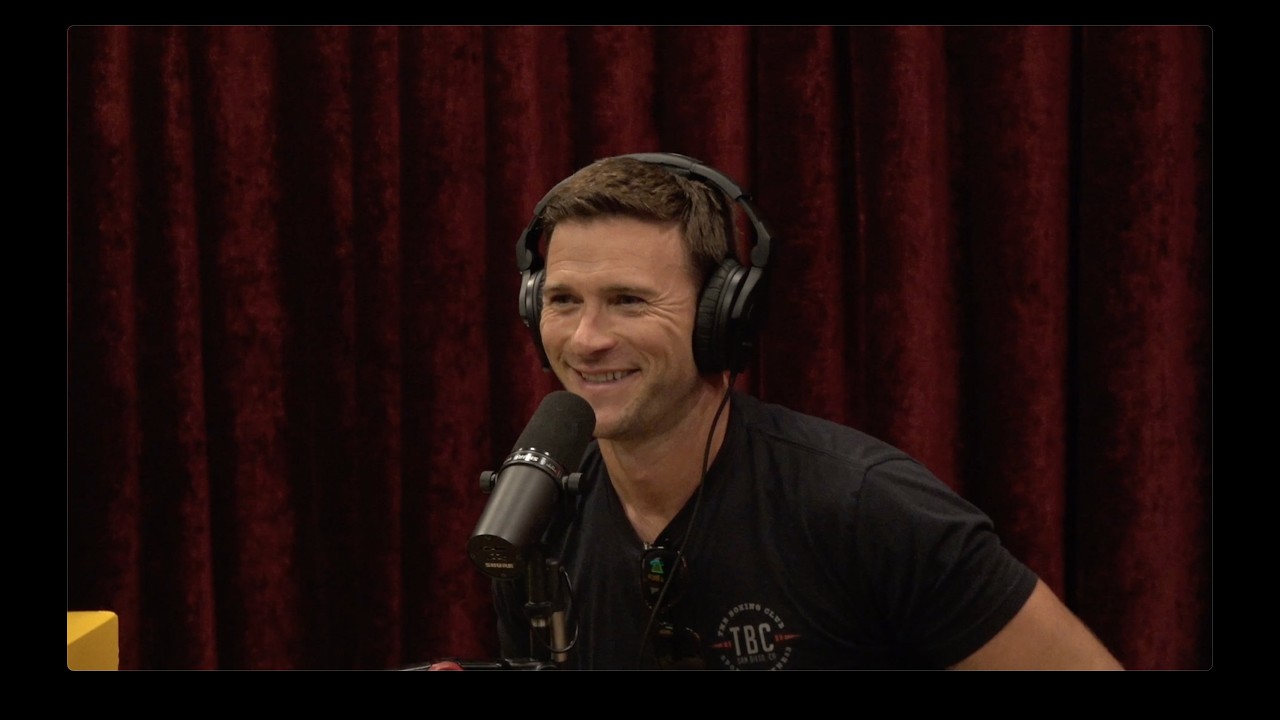
Eastwood Backs North Performance, Attacks FDA on US Food Safety
PowerfulJRE
The American two-party political system artificially manufactures culture wars and toxic food standards to distract citizens while corporate lobbying and government social decay justify mass state surveillance.
## Background
Published on June 26, 2026, by the PowerfulJRE channel on YouTube, this episode of the Joe Rogan Experience features actor and producer Scott Eastwood. The page description notes his roles in films like "Fury," "The Fate of the Furious," and "Outpost," and promotes his newly released movie, "Lucky Strike."
## TL;DR
Host Joe Rogan and guest Scott Eastwood explore a wide range of topics, starting with personalized nutrition, optimal supplement regimens, and the flaws in the American food supply. The conversation transitions into the psychology of modern culture wars, Hollywood dynamics, and Eastwood's experiences growing up under Clint Eastwood's guidance and grinding for decades in the film industry. They also analyze unique wildlife encounters, historical whale discoveries, true-crime heists, the brutal realities of World War II, and recent political conspiracy theories.
## Atmosphere & style
The dialogue feels like a relaxed, authentic locker-room chat between two grounded individuals who share an intense curiosity about human optimization and societal anomalies. It carries an analytical yet casual energy, moving seamlessly from humorous banter about ADHD and Hollywood egos to profound, somber reflections on wartime trauma and ego-shattering psychedelic experiences. The dynamic is deeply collaborative, with both speakers validating each other's work ethic and commitment to maintaining their true selves despite public fame.
## Key takeaways
- [00:01](https://www.youtube.com/watch?v=ZDeqcSgotuw&t=1s) Scott Eastwood introduces North Performance, a subscription-based, pre-packaged premium supplement company started by Stanford doctor Dr. Massi, providing comprehensive daily packets to simplify optimization.
- [03:41](https://www.youtube.com/watch?v=ZDeqcSgotuw&t=221s) Joe Rogan challenges mainstream medical advice on nutrition, advocating for ideal scientific dosages and personalized wellness clinic blood work rather than merely meeting the baseline USDA daily allowances.
- [07:18](https://www.youtube.com/watch?v=ZDeqcSgotuw&t=438s) The conversation highlights severe health risks within the American food supply, citing processed ingredients, synthetic additives, and chemical agents like potassium bromate that are banned across Europe.
- [11:41](https://www.youtube.com/watch?v=ZDeqcSgotuw&t=701s) Rogan and Eastwood discuss corporate lobbying, noting how food conglomerates spend millions to protect toxic processes, and observe the modern alignment of clean eating advocacy with right-wing political movements.
- [19:28](https://www.youtube.com/watch?v=ZDeqcSgotuw&t=1168s) The speakers critique the modern American two-party political landscape, arguing that division is intentionally manufactured to keep people distracted by binary culture wars.
- [44:34](https://www.youtube.com/watch?v=ZDeqcSgotuw&t=2674s) Public and clinical perceptions of psychedelics have shifted from historical stigma to being recognized as tools for business optimization, fueled by books like Michael Pollan's 'How to Change Your Mind' despite ongoing suppression from alcohol and prison lobbies.
- [32:26](https://www.youtube.com/watch?v=ZDeqcSgotuw&t=1946s) The absolute grind required to build a long-term career is emphasized, with Eastwood noting that his status as Clint Eastwood's son actually intensified initial industry skepticism.
- [34:09](https://www.youtube.com/watch?v=ZDeqcSgotuw&t=2049s) Rogan discusses how training in Brazilian Jiu-Jitsu builds humility and strips away personal ego by continuously exposing a practitioner's physical vulnerabilities.
- [01:32:30](https://www.youtube.com/watch?v=ZDeqcSgotuw&t=5550s) Eastwood outlines the liberating experience of playing a villain onscreen for director Guy Ritchie in 'Wrath of Man', contrasted against his rejection of extreme method acting which can damage an actor's sanity.
- [01:35:08](https://www.youtube.com/watch?v=ZDeqcSgotuw&t=5708s) The negative impacts of early child stardom on frontal cortex and emotional development are explored, emphasizing how growing up away from Los Angeles preserves normalcy.
- [01:42:38](https://www.youtube.com/watch?v=ZDeqcSgotuw&t=6158s) The conversation covers the shifting film industry, describing how production has driven working actors entirely out of California to location hubs like Atlanta and Italy.
- [01:48:55](https://www.youtube.com/watch?v=ZDeqcSgotuw&t=6535s) Guy Ritchie's chaotic and unique filmmaking style is detailed, where scripts are rewritten in real-time and lines are fed to actors using radios on set.
- [02:09:52](https://www.youtube.com/watch?v=ZDeqcSgotuw&t=7792s) The speakers reflect on historical narratives, including Norman Ohler's research on the German military's extensive distribution of methamphetamine to front-line troops during World War II.
- [02:15:52](https://www.youtube.com/watch?v=ZDeqcSgotuw&t=8152s) Rogan and Eastwood break down the security failures and investigative inconsistencies surrounding high-profile political assassination attempts and conspiracies.
- [02:01:50](https://www.youtube.com/watch?v=ZDeqcSgotuw&t=7310s) Eastwood promotes his upcoming World War II feature film, 'Lucky Strike', emphasizing how the gravity of portraying historical veterans carries an intense psychological weight.
## Detailed walkthrough
### [00:01](https://www.youtube.com/watch?v=ZDeqcSgotuw&t=1s) Pre-Packaged Supplements and the Pursuit of Optimization
Joe Rogan welcomes his guest back into the "hot seat" and notices a product box brought into the studio. The guest introduces it as North Performance, a premium supplement company started by a Stanford doctor named Dr. Massi. The guest explains that he is heavily investing and gaining ownership in the venture. The product is designed as a single daily pre-packaged satchel, or "pre-pack," containing a massive volume of over 70 vitamins and ingredients—including amino acids, creatine, and NMN—specifically targeted at individuals looking to excel in athletic training. Rogan expresses his strong preference for pre-packaged supplements because he "doesn't like to think," mentioning that he currently takes similar "men's ultra packs" from Pure Encapsulations alongside a wide array of other daily supplements. Rogan clarifies to the audience that this conversation is not a traditional paid advertisement, emphasizing that he discusses "cool stuff" purely based on personal interest and that any formal ad must always pass his personal approval.
To inspect the product further, Rogan unboxes it using a specialized skinner knife from the Montana Knife Company, joking that it is "good for cutting elk." Upon opening the package, Rogan is surprised to discover that the product is a large volume of powder rather than pills, jokingly warning that "dry scooping" it would cause someone to "choke to death." However, the sheer volume of the powder reassures Rogan of its efficacy, noting that crushing his own massive daily stack of pills would yield a similar amount. The guest explains the logic behind the powder: you simply mix it into a large glass of water, bypassing the frustrating and tedious routine of managing dozens of individual vitamin bottles and constantly forgetting to reorder them when they run out.
* **Product Origin:** Ingredients are sourced internationally from Japan, America, and Switzerland.
* **Key Ingredients Mentioned:** Creatine, amino acids, NMN, and NAD.
* **Testing Standards:** The guest confirms that the product undergoes rigorous third-party testing. It was originally formulated by a wealthy 55-year-old adventure athlete who wanted the absolute highest-quality formulation regardless of production cost.
* **Business Model:** North Performance is a newly launching subscription-based service delivered directly to customers' homes monthly.
---
[03:41](https://www.youtube.com/watch?v=ZDeqcSgotuw&t=221s) Challenging Standard Medical Advice on Nutrition
The conversation shifts to personal health habits, with the guest explaining that he cycles in and out of different regimens but maintains absolute "non-negotiables," which include fish oil, vitamin D, NMN or NAD, and glutathione. Rogan strongly validates the benefits of glutathione, noting that the liposomal form offers much higher bioavailability. Rogan then criticizes conventional doctors who dismiss supplement use. He recalls a past personal physician who smugly claimed that a balanced diet is all anyone needs and that extra vitamins are simply "peed out." Rogan observes the irony of the situation, noting that the doctor had zero muscle mass, a prominent pot belly, and "looked like shit" despite being roughly the same age Rogan is now.
Rogan argues that mainstream medicine often fails to understand health optimization. He insists that meeting the basic daily allowances outlined by federal guidelines like the USDA is completely different from finding the ideal scientific dosages to maximize vitality. Navigating this landscape independently is highly complicated, requiring deep online research into the specific benefits and potential toxicity of markers like vitamin D. Because of this complexity, Rogan strongly recommends working with a specialized wellness clinic. He shares his own success utilizing a clinic called Ways to Well, which analyzes comprehensive blood work to manufacture personalized, encapsulated daily vitamin packs custom-tailored to exactly what a patient's body requires.
---
[05:36](https://www.youtube.com/watch?v=ZDeqcSgotuw&t=336s) Genetics, Regional Diets, and the Blue Zones
The guest expresses an interest in undergoing comprehensive blood and metabolic testing, noting that some practitioners claim an individual's blood type or genetic ancestry should dictate their ideal diet. Rogan ponders how much of that philosophy is "voodoo" versus hard science, but concedes that it makes evolutionary sense based on regional heritage. He draws a direct parallel to alcohol metabolism, highlighting how Native Americans historically suffered severe consequences from alcohol because their societies evolved without it, leaving them genetically unequipped to metabolize it efficiently. Similarly, Rogan posits that if an individual's ancestors survived predominantly on meat, their bodies are likely highly optimized for a carnivorous diet, whereas others might be better adapted to specific ancient grains.
The guest brings up the "Blue Zones," pointing out that these long-lived populations typically consume a variation of the Mediterranean diet, which is highly diverse. They do not rely solely on red meat, but rather incorporate a balanced mix of fish, occasional red meat, and wine. However, both speakers agree that the dietary components are only part of the equation, as Blue Zone longevity is deeply tied to a lifestyle centered around a clear sense of purpose, constant physical activity, and tight-knit community integration.
---
[07:18](https://www.youtube.com/watch?v=ZDeqcSgotuw&t=438s) The Toxic Reality of the American Food Supply
Rogan asserts that the primary factor saving Blue Zone populations is remarkably simple: "they're just eating real food." He laments that the vast majority of the modern American diet—despite tasting delicious—is essentially "garbage" and actual "poison." He contrasts a healthy meal of grilled chicken, avocado, a fresh salad, and sparkling water with a heavily processed Jack in the Box double cheeseburger with bacon and fries, which the guest terms "delicious poison." The guest shares a common observation from a recent trip to Europe: despite maintaining a healthy diet in both places, his body felt significantly better while eating overseas.
Rogan explains that the American food supply is fundamentally altered by harmful compounds, preservatives, and processing methods that are absent in Europe. He references a viral clip by an online creator named Danny Dore (`@denny_dure`), who meticulously breaks down the differences in food production. In the clip, Dore explains that American bread is treated as a structurally dead, ultra-processed commodity designed purely for shelf stability. The grain is stripped of its fiber-rich bran and germ, artificially enriched with a synthetic folic acid that a large portion of the population cannot properly metabolize, bleached with chlorine gas, and puffed up using potassium bromate—a known carcinogen banned across Europe, the UK, and China. Finally, the wheat is heavily sprayed with glyphosate right before harvest as a drying agent, resulting in severe gut damage, inflammation, and bloating that people wrongfully blame on natural gluten.
* **Gluten as a Scapegoat:** The structural issue with American wheat is not the inherent gluten, but the chemical alterations, bleaching, bromation, and heavy glyphosate exposure.
* **The Dairy Disconnect:** The guest recalls visiting an artisanal cheese factory in Italy to understand why European dairy did not trigger his lactose sensitivity. The cheesemakers explained that their traditional morning production process takes four to six hours, which naturally extracts the lactose, whereas American industrial manufacturing rushes the product straight to market without it.
* **Raw Milk vs. Pasteurization:** Rogan recalls a French doctor friend in California who would literally smuggle raw cheese into America in 2003 because raw dairy was illegal. Rogan advocates for the superior nutritional profile, enzymes, healthy fats, and calcium found in raw milk, noting that commercial homogenized and pasteurized milk is artificially deadened to sit on store shelves for months. Real raw milk, by comparison, begins to spoil naturally within a few days.
---
[11:41](https://www.youtube.com/watch?v=ZDeqcSgotuw&t=701s) Corporate Lobbying and the Political Divide Over Health
The discussion turns to the underlying economic drivers of the American food crisis. The guest notes that the systemic poisoning of the food supply stems from pure corporate greed aimed at maximizing shelf life. Rogan points out that massive food conglomerates have built their entire multi-billion-dollar business models around these toxic chemical processes, making any transition toward healthier standards incredibly expensive. He cites Robert F. Kennedy Jr.'s high-profile battle against major food companies regarding artificial dyes in children's cereals. When confronted, corporate executives claimed removing the dyes would ruin their businesses, despite the fact that they already manufacture clean, dye-free versions of the exact same cereals for the Canadian market where those chemicals are strictly banned.
Rather than absorbing the costs to reformulate their products for American citizens, these corporations protect their profits by pouring millions of dollars into high-powered lobbyists. These lobbyists systematically infiltrate and influence regulatory bodies like the FDA, ensuring that toxic ingredients remain legal. Rogan contrasts this corporate-driven reality with the lifestyle in places like Italy, where people eat authentic pasta and leave the meal feeling energized rather than feeling like they "got shot with a tranquilizer dart."
Rogan deeply regrets how basic human health and nutrition have become polarized along rigid political ideologies. He notes that during his childhood, clean eating was a hallmark of left-wing counterculture; his hippie parents shopped exclusively at health food stores for organic goods and whole wheat to avoid synthetic chemicals. Today, because prominent modern health reform movements have become closely aligned with political figures like Donald Trump and RFK Jr., many individuals on the political left reflexively reject organic food advocacy, mislabeling it as a "right-wing, anti-science" position. Rogan declares that this partisan "brainwashing" prevents critical thinking, causing the United States to rank among the "sickest, fattest" nations on Earth despite possessing unprecedented national wealth. The guest agrees, concluding that tribal groupthink and echo chambers have completely eroded the public's ability to evaluate vital issues on their independent merits.
[14:42](https://www.youtube.com/watch?v=ZDeqcSgotuw&t=882s) Detachment from Ideas and the Illusion of Political Division
The conversation opens with a reflection on open-mindedness and the importance of looking at both sides of an issue. The speakers emphasize that true open-mindedness requires a person to recognize that they are not their ideas. Connecting oneself too closely to an ideology is dangerous, with one speaker warning, "you can't be married to your ideas because they'll [ __ ] you over every time." It is vital to remain flexible enough to admit when an opponent is right, even if you otherwise dislike them.
The dialogue shifts toward a deeper skepticism of the political landscape, suggesting that political division is intentionally manufactured to control the populace. Without the "illusion of choice" provided by the red and blue teams, people would realize they have no real say despite paying high taxes, and the "pitchforks would come out." Instead, a higher group representing big money benefits from keeping ordinary people at each other's throats through culture wars involving topics like Pride Month or Black Lives Matter.
- One speaker jokes about historical political distractions, noting that right after Bill Clinton got caught with Monica Lewinsky, "they started bombing like right afterwards" as a "good move to distract people."
- The political system is described as a game where politicians "pretend that we want to fix the homeless problem" or "pretend we want you to have health care," while many are actually "sociopaths, completely devoid of any feelings."
[18:24](https://www.youtube.com/watch?v=ZDeqcSgotuw&t=1104s) Sponsor Break: Blue Chew Gold
The host delivers a commercial break for Blue Chew, promoting their new product, Blue Chew Gold, which combines four ingredients into one tablet designed to increase blood flow and boost arousal fast.
- Listeners are offered a promotional deal: buying two months of Blue Chew Gold yields a third month free using the promo code **Rogan**.
- The promotion includes an additional **10% off** and free overnight shipping on the first order.
[19:28](https://www.youtube.com/watch?v=ZDeqcSgotuw&t=1168s) The Private Jet Epiphany and the Extremes of Culture Wars
One speaker shares an anecdote about a wealthy, successful friend who flew him out on a private jet. Despite his immense billionaire status, the friend was getting worked up over a trans-related issue in the news. The speaker challenged him from a "30,000 ft level," asking why he was letting a mere idea or "a sound that's coming out of someone's mouth" affect his life when it has no impact on his day-to-day reality on a private jet. They agree that while cultural issues are real, division has always been an "Art of War" tool used by dictators throughout history.
The conversation flows into a critique of how the American two-party system forces people into binary extremes, eliminating any pragmatic middle ground. If you support the Second Amendment, you are instantly "lumped in with white nationalists" or "Christian nationalists that think that the 10 Commandments should be in every school." Conversely, those on the left are expected to accept strict ideological stances unconditionally, though the speakers note society is starting to push back against trans women competing in women's sports.
- The speaker argues that changing public bathroom policies inadvertently gave "psychopathic perverts... a Willy Wonka golden ticket" just by wearing a dress.
- A guest half-jokingly suggests, "I think we should just be able to hunt them," referring to real perverts and child molesters, stating he would lose zero sleep over it.
- Criticism is aimed at certain academic circles attempting to rebrand pedophiles as "minor attracted persons," which the host describes as "empathy falling into chaos."
[24:16](https://www.youtube.com/watch?v=ZDeqcSgotuw&t=1456s) Mass Migration, Culture Clashes, and Government Control
The speakers voice concerns over the breakdown of culture, referencing grooming gangs in the UK that were ignored by authorities due to a fear of being labeled racist or Islamophobic. They argue that while America is meant to be a true melting pot where anyone can practice any religion safely, certain groups aim to take over cities and enforce their own values. They point to Dearborn, Michigan, where a newly elected Muslim mayor moved to ban pride flags, demonstrating how a culture can push Sharia law and grossly deteriorate women's rights once they gain political control.
This pattern of ignoring the chaos of mass migration leads the host to question if governments secretly desire society to deteriorate. By allowing social decay, authorities can justify implementing mass surveillance, increasing police presence, and restricting freedoms. In England, the host points out, people are now being arrested for social media posts at a rate higher than "Russia and China combined." He attributes this vulnerability partly to the lack of a Second Amendment, joking that when things go sideways without firearms, citizens are left saying, "Grandpa's got a bird gun. Let's go get Grandpa's bird gun."
- The host credits Dearborn, Michigan as a real-world example discussed previously with comedian Tim Dillon regarding the clash between liberal expectations and traditional religious governance.
- The host asserts that a fundamental flaw in the current system is allowing localized jurisdictions to override overarching national rights, such as freedom of expression and dress.
[27:45](https://www.youtube.com/watch?v=ZDeqcSgotuw&t=1665s) Teaching How to Think vs. Turning 40
The guest praises the host's platform, describing the podcast as a modern "encyclopedia of different type of people" that can be used alongside tools like ChatGPT to easily access expert information on a massive variety of subjects. The host agrees but emphasizes a deeper systemic issue: education focuses too much on feeding children information rather than "teaching them how to think correctly from the time they're young." Instead of exciting kids with tasks and stimulating their minds, society grooms them merely to become workers.
Reflecting on the nature of work and mindset, the guest shares a personal milestone. Having turned 40 in March, he decided to take a full year off after keeping his head down and living out of a suitcase from movie set to movie set for 20 years. He anticipated the break would grant him a fresh perspective on the next decade of his life, but confesses with a laugh that the sudden lack of work actually made him more depressed.
- The guest reached his 40th birthday in March and took a hiatus spanning roughly age 39 to 40.
- He summarizes his previous 20 years of career intensity as being purely "head down" and moving constantly from project to project.
[29:41](https://www.youtube.com/watch?v=ZDeqcSgotuw&t=1781s) The Gift of Creation and Finding Your Passion
The conversation begins with a reflection on how staying busy can ward off depression, provided that one is busy doing what they love. Being able to earn a living doing what you love is described as "a real gift." Whether it is beekeeping or carpentry, those who find their passion are incredibly fortunate. The speakers emphasize that people should focus on creating rather than taking, noting that creators are exponentially happier because they give something new to society. Even a plumber fixing pipes is fulfilling a purposeful act of creation.
The speaker suggests that this method of exploratory, passionate thinking should be integrated into schools. Rather than forcing history and mathematics down students' throats, schools should provide tools that generate excitement and show young people that learning can be genuinely interesting. Without this, many grow up feeling like cogs in a wheel, forced into an unfavorable economy and retreating to video games for stimulation. By age 35, many find themselves stuck simply because they were never instructed to seek out what truly interests them, whether that be working as a car mechanic or pursuing any other trade. Culturally, too much value is placed on becoming rich quickly, whereas getting good enough at something you love will naturally produce money.
[32:26](https://www.youtube.com/watch?v=ZDeqcSgotuw&t=1946s) The Quick-Fix Culture vs. The Grind
The speakers lament that modern youth culture, heavily influenced by TikTok, expects immediate results and relies on quick fixes like Ozempic rather than dieting, or scams and cryptocurrency to get rich quick. This stands in stark contrast to career paths that demand years of dedicated hustle. To illustrate, the host points to the acting career of his guest, noting that despite being Clint Eastwood's son, he had to grind for years to prove his acting ability before people took him seriously. The guest laughs, adding that having a famous father actually "made it worse" because of the immediate skepticism it brought.
- The guest spent 14 to 20 years hustling and putting in the work before achieving widespread recognition.
- In comedy clubs, stand-up comics generally agree that a comedian isn't truly a comic until they have put in 10 years of work.
- While Malcolm Gladwell's 10,000-hour rule is brought up, the host questions its strict validity, arguing that the intention behind the practice matters more than the raw time spent.
[34:09](https://www.youtube.com/watch?v=ZDeqcSgotuw&t=2049s) Intention, Ego, and Humility in Jiu-Jitsu
Using Brazilian Jiu-Jitsu as a primary example of skill development, the host explains that while volume matters, correct and systematic drilling of fundamentals—like understanding leverage points, escapes, and positioning—is far superior to simply rolling hard with people. True growth requires enthusiasm and a willingness to look at oneself objectively. However, a player's ego often holds them back because they fear getting tapped out or humiliated, leading them to play a tight, protective game that stalls their progress. If people realized upfront how long it takes to earn a black belt, many would quit out of intimidation.
The guest shares that doing jiu-jitsu strips away your ego, forcing you to realize that no matter your level, there are always a thousand guys who can easily choke you out, leading to the humbling realization: "I kind of am a pussy." The host laughs and agrees, noting that his work with the UFC constantly surrounds him with dozens of fighters who could easily kill him, and there are higher levels of fighters who could kill them in turn. He references the unpredictable hierarchy of the sport, noting how Ilia Topuria knocked out Max Holloway, yet Justin Gaethje has beaten Topuria. This constant display of elite skill serves as a healthy cure for personal delusion. Ultimately, young people must fall in love with the path of continuous daily improvement rather than just the final results, as managing success is a secondary challenge to the growth experienced along the journey.
[37:21](https://www.youtube.com/watch?v=ZDeqcSgotuw&t=2241s) Codes of Honor and Presidential Musings
The conversation shifts toward the breakdown of morals and codes of conduct in modern society. The guest notes that young people are not taught the value of keeping promises and fulfilling their word, resulting in a "sue-happy" culture where people do whatever they want. He credits his own strict value system to his father, who firmly believed that "all you have in this life is your word." This prompts the host to ask why the guest's father never ran for president, asserting he would have won. The guest explains that his father served as the mayor of Carmel and hated the political landscape so much he swore "never [ __ ] again."
- The speakers joke that if the guest's father had run for president, the guest would have ended up like Don Jr., trapped in a box, tied up in crypto schemes, and widely hated while making billions.
- They discuss Ronald Reagan's presidency, noting that the public welcomed him because he was "good at acting."
- The host points out that part of being the president is playing a formal leader, a role actors are naturally suited for. He suggests Josh Brolin—who previously played George W. Bush—would "kill it" as president because of his commanding voice.
- They mention that there were attempts to get Dwayne "The Rock" Johnson to run. While he is a social media wizard, he ultimately told the host "fuck this," proving he was too smart to actually run.
- The host humorously proposes a physical competition for presidential candidates, alongside a requirement that anyone wanting to be president must ingest 7 grams of mushrooms in a dark room filmed with night-vision cameras to see how they "handle God."
[40:41](https://www.youtube.com/watch?v=ZDeqcSgotuw&t=2441s) The Shift in Psychedelic Consciousness
The discussion transitions into a deep reflection on the mind-expanding benefits of psychedelics. The guest shares his life-changing experience with 5-MeO-DMT, describing the terrifying initial sensation of feeling like he had killed himself, followed by a profound rebirth. Coming back from the trip felt like seeing the grass, the sun, and the wind for the very first time. He admits he bawled for 45 minutes in the arms of his buddy's girlfriend on the couch. The host jokingly cuts in to imagine the friend getting uncomfortable after five seconds, wondering, "Why you hugging my girlfriend, bro?"
The host explains that 5-MeO-DMT completely shatters the ego, leaving a person with a powerful feeling of being part of everything in the universe simultaneously, with no single destination. He notes that even prominent right-wing individuals he knows have tried it and undergone total lifestyle transformations, admitting they are no longer the people they used to be. The experience reveals that everything everywhere is connected in a "giant soup of energy and vibration." This realization made the guest feel a deep sadness for rigid thinkers who live in pain and refuse to try something that could help them. The host reflects on how public perception has radically shifted over his lifetime due to the internet; once viewed as a foolish pursuit for crazy people, psychedelics are now commonly discussed by highly successful business adults looking to enrich their perspective, experience ego death, and connect to God.
[44:34](https://www.youtube.com/watch?v=ZDeqcSgotuw&t=2674s) The Shift in Psychedelic Perception and Corporate Suppressions
The conversation opens with a reflection on how public perception surrounding psychedelics has transformed dramatically. Early on, stories floated around the internet about mushrooms helping individuals quit heroin, alongside the enduring influence of Terence McKenna's insights into DMT, LSD, and other substances. The real turning point came with the advent of YouTube and podcasts, which allowed respected figures like journalist Michael Pollan to share their research openly. Pollan's book *How to Change Your Mind* served as a massive catalyst, signaling that rational, educated people are finally free to discuss these substances without losing their credibility.
The dialogue then pivots to the historical and corporate forces working against drug normalization. The speakers address the notorious role of the alcohol lobby, noting that while they haven't aggressively targeted psychedelics yet, they have heavily suppressed marijuana legalization. The data proves that in regions where cannabis is legal, measurable alcohol intake drops, directly hitting the alcohol industry's profits. Worse still is the corporate influence of prison lobbies and prison guard unions. These organizations spend millions lobbying to keep marijuana laws on the books purely to maintain their business model, which one speaker flatly describes as "keeping people in cages."
- A recent Gallup poll shows that roughly 70% of Americans believe marijuana should be legal in general.
- When factoring in support for either medical or recreational use, that approval number jumps to 88% or 89%, leaving only about 11% who want it entirely illegal.
---
[47:04](https://www.youtube.com/watch?v=ZDeqcSgotuw&t=2824s) The Complexities of Legalization and the Impact on Developing Brains
When discussing the radical concept of legalizing all drugs, the speakers acknowledge it is a tough sell that could "lose some people" to heavy addiction. While both agree they wouldn't personally seek out heroin, fentanyl, or methamphetamine if they became available over the counter, they admit certain vulnerable individuals would. One speaker shares a personal aversion to marijuana, explaining that it often induces intense fear and paranoia, making them feel "psycho-somatic" or prone to schizophrenia. The other speaker finds value in that very panic, quoting comedian Joey Diaz's advice to "go meet the devil." They argue that confronting the terrifying things lurking in the corners of your mind provides vital perspective once the high wears off.
However, both conversationalists align strictly against regular adolescent drug and alcohol use. They emphasize that using substances heavily around the age of 14 or 15 severely derails crucial frontal cortex and general brain development. While some people "get away with it," it acts as a massive life sabotage for many others. They criticize the American Protestant culture's rigid, "don't do this or you're going to die" scare tactics, noting that it usually backfires by provoking rebellious teenagers to do the exact opposite out of spite. They compare this to Europe's more integrated approach, where children are eased into alcohol via moderate habits like sharing a glass of wine at dinner.
> "If you're getting high all the time when you're 14 years old, it's going to [ __ ] your head up. Yeah. It's not good for you... Wherever you would be is not where you are. You might be still a very high intellect still very smart. You would have been smarter."
---
[52:00](https://www.youtube.com/watch?v=ZDeqcSgotuw&t=3120s) Prohibition vs. Regulation and the Truth About MDMA
Weighing the pros and cons of full legalization for adults over 25, the speakers argue that while some fragile individuals might ruin their lives, legalization strips trillions of dollars away from organized crime and violent Mexican drug cartels. Under current prohibition frameworks, citizens are forced to buy from dangerous criminals just as they did during the alcohol prohibition era. Legalization allows the state to monitor quality control, eliminate laced products, and divert substantial corporate profits toward rehabilitation and treatment facilities.
The talk shifts to MDMA, which has been historically used in couples therapy and heavily researched by organizations like MAPS (Multidisciplinary Association for Psychedelic Studies) to treat military veterans suffering from severe PTSD. The drug's capacity to induce immense empathy and compassion allows individuals to drop deeply ingrained trauma. They debunk the old internet myth that ecstasy literally punches physical holes in the human brain, laughing it off as a dramatic, overblown anti-drug scare campaign.
- Perplexity search reveals that MDMA does not create physical gaps or holes in brain tissue, though high or repeated doses can damage serotonin neurons and alter brain signaling.
- The "holes in the brain" myth stemmed from old anti-drug campaigns showcasing brain scans that actually displayed areas of reduced activity or reduced marker binding.
---
[56:30](https://www.youtube.com/watch?v=ZDeqcSgotuw&t=3390s) Moderation, Social Loneliness, and Touring with Dave Chappelle
The conversation rounds out with a shared philosophy that moderation is the true key to a fulfilling life. They push back against absolute extremists like carnivore advocate Dr. Paul Saladino, who advises people to never drink. They argue that completely removing the ability to laugh, let loose, and have a glass of wine with friends creates a rigid social barrier. Loneliness and isolation are scientifically proven to kill people faster than smoking cigarettes, making the joy of a lighthearted, "tipsy" night out with friends genuinely therapeutic.
To close out the segment, a hilarious and practical anecdote is shared about touring with comedian Dave Chappelle. Chappelle's secret weapon for surviving grueling comedy tours while drinking and "talking [ __ ]" late into the night involves aggressive morning hydration and medical therapy. He routinely sets up rooms where up to eight friends sit together hooked up to IV bags filled with vitamins and massive doses of glutathione to flush out the toxins. They conclude that maintaining this balance prevents someone from becoming a "boring person" who goes home at 8:00 PM, while still respecting the moments when you simply have to call it a night.
- Social isolation and feeling lonely is statistically deadlier and causes people to die younger than regular cigarette smoking.
- Dave Chappelle uses morning vitamin and glutathione IV bags to combat the physical toll of alcohol consumption on the road.
[59:03](https://www.youtube.com/watch?v=ZDeqcSgotuw&t=3543s) Non-Negotiable Habits and the ADHD "Superpower"
The conversation centers on the delicate balance between having strict self-discipline and knowing when to "cut loose." For some, consistency with health routines fluctuates like being on or off a boat, but there are certain baseline habits that should remain entirely non-negotiable. Specifically, maintaining strict nutrition and regular exercise are foundational pillars. A proper routine must include hitting weights, getting adequate cardio, stretching, and securing good sleep. Working out is deeply tied to mental health; a grueling training session can completely clear the mind, making a person feel free and easygoing.
This mental relief prompts a brief tangent into ADHD, which both speakers realize they share. They jokingly reflect that almost everyone who is exceptionally skilled at what they do seems to have it, half-jesting that it functions less like a disorder and more like a "superpower." While dyslexia often goes hand-in-hand with ADHD, only one of the speakers experiences it, describing how their brain physically "jumps" across the text instead of tracking cleanly from left to right. Reading under those conditions requires intense focus to establish a rhythm; otherwise, the mental strain quickly leads to frustration and exhaustion, causing them to fall asleep.
- Non-negotiable daily habits: nutrition, exercise, cardio, weight lifting, stretching, and sleep.
- Dyslexia presentation: the brain struggles with left-to-right tracking, causing the eyes to jump across text and creating rapid mental fatigue.
---
[01:01:12](https://www.youtube.com/watch?v=ZDeqcSgotuw&t=3672s) The Reality of ADHD Focus and the Histamine Connection
The speakers marvel at how dyslexia can disrupt reading comprehension regardless of how critical the information is—humorously imagining a scenario where someone receives a letter announcing they won a $5 billion lottery but literally cannot read the page to figure out if they actually owe the money instead. They note how modern schools have evolved to offer mandatory accommodations, extra test-taking time, and specialized reading tools, contrasting it with older generations who "got kind of boned" by the lack of support. Shifting gears to recent medical theories circulating online, they look at a potential biological link between ADHD symptoms and bodily histamine levels. They pull up information on a popular internet trend where people co-administer Zyrtec (an allergy medication) and Pepcid AC (an acid reflux medication) to create a dual histamine receptor blockade across the blood vessels, airways, and skin.
Despite these medical theories, the speakers argue that standard definitions of ADHD often miss how the condition actually manifests in real life. While people with ADHD are notoriously scatterbrained and easily distracted by mundane tasks, they possess an intense hyper-focus that activates when they are genuinely interested in a subject. When hooked by a passion, whether it is playing golf or a creative project, an individual can completely lock in for "12 hours and forget to eat."
---
[01:03:40](https://www.youtube.com/watch?v=ZDeqcSgotuw&t=3820s) Performing Under Pressure and the WWII Generation
The discussion shifts to how different people react when the proverbial squeeze is applied. While some individuals fold entirely under pressure, others excel and lean directly into the tension. This capacity to execute under high stakes is what enables actors to deliver intense emotional scenes and bring themselves to tears on command while a crew of 200 people stares directly at them. This resilience is often born out of necessity; lacking a financial safety net or a backup plan forces a person to perform. Whether someone is a lawyer commanding a courtroom or a creative on a set, keeping your composure and executing when it matters most is a vital, developed skill. Modern society, however, lacks the constant life-or-death pressure checks that ancestral human populations faced daily, such as spotting an enemy village sneaking over a hill and rushing back to camp to grab bows and arrows.
This deficit of modern pressure ties directly into an upcoming World War II film titled *Lucky Strike*. The generation that fought that war was forged in an era of literal survival. One speaker shares an anecdote from his father, who was just 12 years old during the war, recalling how whole families would crowd around the radio in "pins and needles" silence because they were genuinely terrified for their lives, even at home in America. They agree with the classic cyclical adage that hard men create easy times, and easy times create soft conditions, concluding that modern society desperately needs a return to that tougher, historical breed of character.
- *Lucky Strike*: A World War II feature film releasing the following day.
- Ancestral pressure: Historic human survival relied on immediate, high-stakes physical threats, which tested and calibrated the human stress response system.
---
[01:06:28](https://www.youtube.com/watch?v=ZDeqcSgotuw&t=3988s) Toxic Masculinity vs. Strength and the Humility of Danger
The speakers strongly push back against the modern critique of "toxic masculinity," arguing that the phrase is frequently misused to mischaracterize what is actually just straightforward criminal behavior. True masculine behavior is inherently protective and reliable; it belongs to the accountable person you can call at 2:00 in the morning when your car breaks down on the side of the road. Society fundamentally relies on strong people, and strength should be actively cultivated and channeled through discipline rather than pathologized. To achieve this, men should train in martial arts, as it simultaneously builds confidence, instills a deep sense of humility, and exposes personal vulnerability. Without a calibrated understanding of physical danger, people become dangerously delusional—exemplified by drunk individuals who aggressively start bar fights without realizing how easily a trained fighter could cause them to bounce their head off the concrete.
Experiencing real fear is a mandatory prerequisite for personal growth, yet modern society prioritizes sedentary comfort, entertainment, and relaxation, which correlates directly with the ongoing mental health crisis. One speaker shares that he found his own boundaries through surfing big waves starting between the ages of 8 and 10. Navigating life-or-death ocean swells forces a person to push through absolute terror, resulting in an unmatched state of mental clarity and "zen with nature" once they successfully reach the other side.
---
[01:09:20](https://www.youtube.com/watch?v=ZDeqcSgotuw&t=4160s) Shark Encounters and the Fatal Tale of Tommy Woodward
When asked if his decades in the ocean ever led to any dangerous shark encounters, the surfer notes that while he has seen them, it was never in an aggressive manner, claiming that experienced surfers develop an intuitive understanding of animal behavior. The producer, Jamie, pulls up a recent news broadcast showing great white sharks stalking completely oblivious paddleboarders from directly behind. The speakers chuckle at the footage, noting that shark populations might not actually be increasing; rather, the proliferation of high-definition drone cameras has simply made them visible. They note that shark activity does seem highly concentrated in regions like Northern California and Australia, jokingly adding that Australian sharks and crocodiles just seem explicitly angrier than everywhere else.
This discussion reminds them of a wild, darkly comedic true story out of Orange, Texas, involving a man named Tommy Woodward. In 2015, Woodward became the first person killed by an alligator in the state of Texas since 1836. While drinking with friends at a marina, Woodward decided to dive into Adams Bayou despite explicit "No Swimming" signs and verbal warnings from bystanders who pointed out a massive alligator lurking near the dock. In an ultimate display of drunken, tragic bravado, his final words before jumping into the water and immediately screaming for help were, "fuck that gator." The speakers laugh at the sheer absurdity of the quote, noting it stands as the ultimate, albeit tragic, example of why human beings need a healthy dose of humility when facing nature.
- Historical fact: Tommy Woodward's death in 2015 was the first recorded fatal alligator attack in Texas since 1836.
- Last words: Woodward famously shouted "fuck that gator" before diving into Adams Bayou.
[01:12:56](https://www.youtube.com/watch?v=ZDeqcSgotuw&t=4376s) Alligators and Pythons in the Everglades
The speakers discuss the terrifying reality of wildlife in Florida, particularly the sheer density of alligators in the Everglades. One of the speakers recalls a trip from a couple of years back where he went alligator hunting at a ranch. Expecting the experience to be akin to hunting elk—where hunters must spot the animals from afar, listen for calls, and trek over ridges to find them—he was shocked to find alligators absolutely everywhere. The real danger, they note, is the sheer volume of hidden predators lurking just out of sight.
The conversation shifts to a video, presumably filmed in Brazil, showing a man's tent pitched right along a shoreline crowded with an overwhelming number of alligators or caimans. The speakers react with horror as they spot dozens of reflective eyes glowing in the darkness. They marvel at how large and hungry the animals must be, joking that a person would have to be crazy to camp there. The speaker adds that while he never saw a python during his Florida trip, the locals confirmed that 15-foot-long pythons, as thick as a football player's thigh, are routinely spotted slithering across the roads.
- The speaker compares alligator hunting to glassing for elk over a ridge.
- The video mentioned features dozens of glowing alligator eyes right next to a camper's tent.
- Local drivers in Florida report routinely seeing pythons measuring up to 15 feet in length crossing roads.
[01:14:52](https://www.youtube.com/watch?v=ZDeqcSgotuw&t=4492s) Surviving Shark Attacks and Bull Shark Populations
The group debates whether they would rather face predators on land or in the water. One speaker declares he would "way rather be in the water with sharks" because clear visibility allows you to keep an eye on them, whereas the murky waters of a swamp or bayou offer zero visibility. Another speaker counters that being in the water with a shark leaves you entirely vulnerable and unable to move quickly, whereas being on land provides the advantage of distance and weapons. They discuss the widely shared survival advice to "bop them on the nose" or punch an incoming shark to deter it rather than screaming and flailing. They highlight a real-world article about a Hawaiian surfer who saved his life by doing exactly that.
The conversation naturally moves toward bull sharks, which are notorious in Florida and the Keys. One speaker mentions a video of fishermen targeting tunas from a high bridge, utilizing a specialized gaff system on a long line to haul their catch up. However, their fish are repeatedly torn to shreds by bull sharks before reaching the top. The speakers emphasize that bull sharks are uniquely dangerous compared to other species; while great whites or tiger sharks often bite once out of confusion—mistaking a human for a seal—and then swim away, bull sharks are hyper-aggressive and will keep attacking continuously, with one speaker comparing them to pitbulls or chihuahuas.
- A Hawaiian surfer reportedly saved his life by punching a shark in the face.
- Fishermen in the Keys use a long-line gaff system to fish from high bridges.
- Bull sharks are highly overpopulated in Florida, leading to daily fishing efforts to reduce their numbers.
[01:17:23](https://www.youtube.com/watch?v=ZDeqcSgotuw&t=4643s) The Real-Life Inspiration Behind *Jaws*
The discussion takes a historical turn when a speaker points out that bull sharks were the true inspiration behind the iconic movie *Jaws*. The original story stems from a series of shark attacks that occurred in a freshwater river system in New Jersey during a deadly summer heatwave and concurrent polio epidemic. Because thousands of people fled to seaside resorts on the Jersey Shore to escape the heat, the shark encountered numerous swimmers. Bull sharks are unique because they are one of the few shark species capable of thriving in freshwater environments, and individuals have been found as far north as Illinois by traveling up river systems.
The speakers share a laugh over the fact that a 40th-anniversary screening of *Jaws* was held in that exact New Jersey bay, with audience members watching the film while floating in the water—a setup they jokingly label as "natural selection." They recall an episode of the television show *River Monsters*, hosted by British biologist Jeremy Wade, where he investigated how far up freshwater rivers these aggressive bull sharks can travel, contrasting them with species like great whites that are strictly bound to saltwater migration patterns.
- The events that inspired *Jaws* involved four fatalities and one critical injury during a historic U.S. heatwave and polio epidemic.
- Bull sharks have been documented as far inland as Illinois via river networks.
- *River Monsters* host Jeremy Wade is identified as an educated British biologist who dedicated an episode to freshwater bull sharks.
[01:19:45](https://www.youtube.com/watch?v=ZDeqcSgotuw&t=4785s) Megalodons and the Human Lifespan
The topic of massive sea predators transitions into prehistoric times as a speaker shares that his daughter became deeply obsessed with Megalodons. This prompted them to research the ancient creatures and buy a real Megalodon tooth online. They chuckle at the conspiracy theorists who insist Megalodons are still hiding in the deep ocean, but they appreciate the terrifying reality that a "shark the size of a whale" once existed. When asked if he would still surf if Megalodons were around, one speaker admits he probably would, reasoning that getting swallowed whole while doing something you love is not a bad way to go compared to spending the final 5 to 7 years of a long life suffering from cancer in a hospital bed.
This leads to a philosophical tangent about longevity and science. While one speaker notes that the human instinct to stay alive is incredibly powerful, another brings up a laboratory study where scientists successfully reverted 60-year-old human skin cells back to a 20-year-old state. Despite the exciting medical potential to optimize health, they wonder if the most beautiful aspect of life is actually the fact that it is finite, expressing skepticism about the desire to live forever.
- The speaker's daughter bought a authentic Megalodon tooth online during her obsession with the prehistoric shark.
- Laboratory researchers have successfully rejuvenated 60-year-old human skin cells to age 20 in a controlled environment.
- The speakers debate the beauty of a finite lifespan versus the modern obsession with living forever.
[01:21:54](https://www.youtube.com/watch?v=ZDeqcSgotuw&t=4914s) Escape Plans for the Movie *White Whale Fall*
The conversation wraps up with the introduction of a bizarre new movie trailer starring Josh Brolin, titled *White Whale Fall*. The film's premise involves a scuba diver who gets swallowed by an 80-foot sperm whale and spends the remaining 85 to 95 minutes of the movie trying to survive inside the whale's body with less than an hour of oxygen. The speakers jokingly debate whether this sounds like an awesome concept or the dumbest movie ever greenlit by Hollywood executives looking for the next *Jaws*.
The group hilariously maps out their own survival strategies if they were trapped inside a whale with a knife and a scuba tank. One speaker suggests cutting up the whale's tongue and throat to force it to throw you up, arguing that any animal would instinctively try to get rid of something biting its tongue. They look up a diagram of sperm whale anatomy on screen to figure out the best exit point. While one speaker jokes about escaping through the blowhole or traveling down to the intestines, the main consensus is that trying to carve your way out through the heavy blubber, neck muscles, or rib cage would take too long, and the stomach acids would kill you before you could ever break free.
- The upcoming movie *White Whale Fall* stars Josh Brolin as a diver trapped inside an 80-foot sperm whale.
- The protagonist of the film has a limited timeline of under an hour of oxygen in his scuba tank.
- The speakers analyze an on-screen anatomy chart of a sperm whale to evaluate potential escape routes.
[01:25:21](https://www.youtube.com/watch?v=ZDeqcSgotuw&t=5121s) Whales, History, and a Century-Old Harpoon
The conversation opens with a graphic, humorous debate about escaping the belly of a whale, with suggestions of digging out through the bottom of the jaw. The speakers wonder how a movie with such a bizarre premise got greenlit, joking that some "crazy person" authorized it, but note that it stars Josh Brolin and is based on a popular *New York Times* bestselling novel. This leads into an incredible, real-world piece of trivia: whalers recently discovered a living whale that carried a harpoon fragment dating back to the 1800s.
Pulling up the specific news article from 2007, they read that native Alaskan whalers near Barrow, Alaska, made a remarkable discovery when they harvested a 50-foot bowhead whale. Embedded deeply within the thick blubber of its neck was a metal fragment from a late 19th-century bomb lance—an explosive harpoon patented in 1879 and manufactured in the late 1880s. Because the whale survived the initial attack and lived for well over a century with the artifact safely lodged inside, biologists were able to conclusively prove that bowhead whales can live from 100 to over 200 years.
- **Discovery Date:** 2007
- **Location:** Near Barrow, Alaska by Native Alaskan whalers
- **Whale Metrics:** 50-foot bowhead whale
- **Artifact Details:** Metal fragment of a late 19th-century patented bomb lance (explosive harpoon) manufactured in the late 1880s
- **Biological Impact:** Helped prove bowhead whales can live between 100 and 200+ years
---
[01:26:59](https://www.youtube.com/watch?v=ZDeqcSgotuw&t=5219s) Logistics of Historical Whaling and Icelandic Delicacies
A question arises regarding the geography of the whale attack: was the whale shot near Massachusetts—where the device was manufactured—or did the hunters travel all the way to Alaska with the weapon? The speakers deduce that while East Coast manufacturing hubs like New Bedford, Massachusetts, produced the top-tier technology of the era, the equipment was routinely shipped across the country. They discuss how 19th-century trade networks utilized trains and boats to move supplies, comparing it to how the U.S. Army in California received firearms from eastern factories during the 1800s.
One speaker reminisces about shooting the World War II film *Flags of Our Fathers* in Iceland roughly 20 years prior. He remarks on how differently the whaling trade is viewed internationally compared to the American sentiment of "how dare you." In places like Iceland, whaling was Historically woven into survival due to an extreme scarcity of natural resources. The conversation takes a humorous turn as they recall Anthony Bourdain's take on a traditional Icelandic delicacy: fermented shark. Bourdain explicitly described it as the "single most [fucking] disgusting thing" he had ever eaten, despite locals loving it as a prized delicacy.
- **Historical Shipping Window:** Researchers estimate the whale was struck between 1885 and 1895 based on the narrow window of the bomb lance's popularity.
- **Scientific Verification:** Biologists estimate whale age by examining the cloudiness of the lens of the whale's eyes.
- **Population Recovery:** Bowhead whales were hunted near extinction at the turn of the century but bounced back after demand for whalebone corsets plummeted.
---
[01:30:03](https://www.youtube.com/watch?v=ZDeqcSgotuw&t=5403s) Corsets, Cattle Processing, and Painless Slaughter
The discovery that bowhead whales were primarily slaughtered to provide structural boning for women's corsets sparks disbelief and dark humor. The speakers mock the historical absurdity, imagining the confused whales asking, "Are they eating us?" only to find out, "No, these chicks, they just want to suck their waist in tight." They marvel at the flexible utility of whalebone and transition into a discussion about modern animal processing efficiency. One speaker shares his experience visiting a buddy's cattle processing plant in California, expressing genuine fascination at how "super efficient" the operation was, utilizing absolutely everything from the hides and hooves down to specific organs used to patch hearts in human medical operations.
The talk shifts to the ethics of meat consumption. They agree that knowing a targeted animal is completely and ethically harvested brings peace of mind, emphasizing that sourcing grass-fed meat from an ethical, pasture-raised ranch connection is ideal. The speaker praises the gentle, painless slaughter method used at his friend's plant, describing it as a quick, humane process that instantly "shuts the lights off" before bleeding the cattle out, comparing it directly to the iconic air-bolt gun scene from *No Country for Old Men*.
---
[01:32:30](https://www.youtube.com/watch?v=ZDeqcSgotuw&t=5550s) Javier Bardem and the Psychology of Playing Evil
The mention of the air-bolt gun naturally steers the conversation toward Javier Bardem's legendary performance as Anton Chigurh in *No Country for Old Men*. The speakers gush over his performance, labeling it "one of the single best performances I've ever seen" because of how chillingly believable he was, particularly during the high-tension coin-flip scene. They laugh about his weird haircut but praise his total commitment to capturing a genuine "darkness in his eyes." They note his ongoing knack for playing terrifying psychos, citing his unsettling presence in the trailer for the *Cape Fear* project.
This prompts a deeper question about the acting craft: is it difficult for a naturally nice actor to step into the shoes of a villain? The guest reflects on playing a bad guy for director Guy Ritchie in the movie *Wrath of Man*. He describes the experience as surprisingly "liberating" and fun, as it allowed him to safely revel in dark, impulse-driven thinking that ordinary people immediately suppress. However, he admits he prefers to do it selectively because he had to perform horrific actions onscreen, such as killing a child to tie up loose ends.
---
[01:35:08](https://www.youtube.com/watch?v=ZDeqcSgotuw&t=5708s) The Price of Method Acting and Stunted Fame
When asked if he has to constantly maintain evil or greedy thoughts on set, the actor explains that while he manifests those intense emotions during a scene, he treats acting strictly as a job. He explicitly distances himself from "crazy psychos" who let their minds become distorted by a role, rejecting the extreme method acting where someone might "pretend you're Abraham Lincoln for 6 months." He notes that while he respects the genius of Daniel Day-Lewis, that extreme level of greatness often exacts a heavy price on one's sanity. He credits his own grounded nature to his father's blue-collar acting advice: "leave it at the door, man."
The dialogue wraps up with a critique of actors who take themselves too seriously or lose their identity to Hollywood. The speakers exchange stories about notorious method actors—like Jim Carrey struggling after playing Andy Kaufman, Jared Leto sending dead rats and birds to castmates while playing the Joker, and Shia LaBeouf going down rabbit holes. They attribute this psychological frailty to the dangerous cocktail of early fame stunting a person's emotional growth before their frontal cortex fully develops. The guest notes that working normal, "shitty jobs" as a valet and a barback gave him a vital understanding of the real world, concluding that child stardom is a "real crime" because almost nobody makes it out normal—with rare exceptions like Leonardo DiCaprio.
[01:39:16](https://www.youtube.com/watch?v=ZDeqcSgotuw&t=5956s) Child Stardom and the Curse of Fame
The conversation touches on the rare exceptions of child actors who managed to keep their lives together, with the speakers noting that a certain iconic actor had disciplined, good people around him and a solid sense of the world. A joke is cracked about how having twenty-year-old girlfriends on a yacht makes it easy to stay happy, prompting a brief laugh about what they could possibly even talk about—"maybe less talking," one quipped. They contrast stable figures like Jodie Foster with the tragic trajectories of Britney Spears or Corey Feldman, noting how devastating it is when young stars lose their minds as they age.
The host recalls having Macaulay Culkin on the show, describing him as a very smart and interesting guy who nevertheless struggles because he realizes he was "robbed of a normal childhood" after becoming famous so young from *Home Alone*. The guest praises his own father for doing a phenomenal job of protecting his children from that environment by keeping them completely private. They didn’t live in Los Angeles; instead, they grew up in Carmel to ensure they had as normal of a childhood as possible and could actually learn how the world works.
* Famous child stars discussed: Jodie Foster, Britney Spears, Corey Feldman, and Macaulay Culkin.
* The guest's father purposely raised his family outside of Hollywood to preserve their normalcy.
---
[01:41:00](https://www.youtube.com/watch?v=ZDeqcSgotuw&t=6060s) Growing Up in Carmel and the Wealthy Elite
The host notes that Carmel is a beautiful place to grow up, which prompts the guest to share a local saying about the town: "a newlywed and nearly dead." They laugh over the dark accuracy of the phrase, explaining that people either go there to get married or they "go there to die." While the guest appreciates its beauty, he admits it is a little too slow for his taste and complains about the incredibly annoying homeowners associations.
They banter about the tyrannical nature of neighborhood old people who have nothing better to do than police the exact shades of paint on a fence, joking about busybodies screaming, "This is off-white. This is not white. Your fence is the wrong color." The host points out that wealthy, elderly people love to segregate themselves into high-priced communities where they don't have to deal with parties. The guest agrees, calling rich old people "the most entitled" because they are so used to ordering everyone else around in life, though they both concede that the California coast up there remains stunningly beautiful, despite being packed with great white sharks.
* Carmel-by-the-Sea local idiom: "A newlywed and nearly dead."
* The guest and host bond over their mutual dislike for controlling Homeowners Associations (HOAs).
* Geographic features of the California coast mentioned: Great white sharks are highly prevalent in the waters nearby.
---
[01:42:38](https://www.youtube.com/watch?v=ZDeqcSgotuw&t=6158s) The Death of Hollywood and the Insecurity of Actors
The discussion shifts to the unmatched geographical variation of California, spanning deserts, beaches, and mountains, which historically drew people west during the Gold Rush and later fueled the birth of the movie industry in LA. However, the guest expresses deep sadness that the industry has completely driven production out of the state. Even TV shows are barely filmed there anymore, making it entirely pointless for a working actor to live in Los Angeles. The guest notes that he essentially "lives on the road" now, traveling constantly between places like Atlanta and Italy to shoot movies.
The guest confesses that he doesn't have many friends within the film industry because "actors like sometimes aren't my people," explaining that he hates intellectualizing the craft or constantly talking about acting. The host attributes the toxic behavior of many actors to the fact that they are constantly coddled on set by people bringing them bagels and coffee, which builds up a bizarre sense of entitlement. The guest agrees, observing that deep insecurity in Hollywood is frequently masked by a false, ego-driven bravado, when in reality they just need to show up to set and shut up.
* The guest notes he has only worked on perhaps one film project in Los Angeles for a single week, with the rest being shot on location.
* Filming locations explicitly mentioned: Atlanta, Italy.
* The host and guest critique the "self-important" ecosystem of movie sets that ruins actors' perceptions of reality.
---
[01:45:41](https://www.youtube.com/watch?v=ZDeqcSgotuw&t=6341s) Industry Bad Behavior and the Reality of Celebrity
The guest shares a recent firsthand experience of shocking, unaccountable behavior in the film industry without naming the individual responsible. He details a situation where a director took a massive financial investment for a project, decided in the middle of pre-production that they simply didn't want to work with another attached person anymore, and walked away. When told they needed to return the investor's money because it was simply the black-and-white, right thing to do, the director flatly refused. The host points out that such a blatant breach is a great way to get sued, marveling at how such wild, unpredictable behavior is tolerated in show business but would never fly in any other industry.
They agree that many people chase stardom specifically because they want the license to behave poorly and order others around. The guest insists that anyone who thinks they want to be famous is deeply mistaken: "Rich is better." He notes that while the creative endeavor of moving an audience to tears or laughter is beautiful, the underbelly of fame is incredibly ugly. He considers himself lucky to have grown up seeing the illusion of celebrity firsthand through his legendary father, realizing early on that the glitz and glamour was total nonsense. His dad never worshiped fame, viewing the craft through a simple, blue-collar lens of "put your boots on, go to work."
* An unnamed director abandoned a film in pre-production and refused to pay back the investor's money.
* The guest summarizes his view on celebrity: "You don't want to be famous. Rich is better."
---
[01:48:55](https://www.youtube.com/watch?v=ZDeqcSgotuw&t=6535s) The Mechanics of Film and Directing Styles
The guest admits he hesitated to get into acting initially because of his father's massive legacy, noting that his true passion lies more in the holistic art of storytelling rather than just being an actor. He has transitioned heavily into producing and explicitly states his desire to direct, joking that it would be nice to finally "show up with my own clothes to work." He breaks down film as a fundamentally director-driven medium where a movie is actually reinvented three separate times: first during script development, second during the physical shoot, and third inside the editing room.
Though he has directed in a collaborative producer capacity, the guest reveals he hasn't put his name on a project as the sole director yet because he hasn't found the perfect material to schlep around. He notes that he doesn't write because he lacks the discipline to sit still, preferring instead to brainstorm, pitch ideas, and collaborate with a writing partner. The host points out that working with elite filmmakers like Guy Ritchie has given the guest a front-row seat to high-level cinematic discipline. The guest agrees, highlighting Guy Ritchie's chaotic style where he will review a script, immediately throw it out the window on set, and rewrite the movie in real time from a blacked-out trailer using a radio to feed lines to the actors.
The segment wraps up with a humorous contrast between Ritchie's fluid style and the strict efficiency of the guest's father. The host recounts a famous Hollywood anecdote where Matt Damon was working with Clint Eastwood and begged for a second take on a scene. Clint flatly refused, telling him "No, we got it," and sarcastically adding that they could do it again if Damon wanted to waste everyone's time, prompting Damon to immediately back down.
* The guest breaks down the three stages of filmmaking: script development, shooting, and editing.
* Guy Ritchie's directing methodology involves rewriting scenes in real-time and feeding adjustments to actors via radio from a trailer.
* Verbatim quote from Clint Eastwood to Matt Damon: "No, we got it."
[01:53:15](https://www.youtube.com/watch?v=ZDeqcSgotuw&t=6795s) The Benchmark of British Crime: Guy Ritchie and the Lee Murray Heist
The speakers share their immense appreciation for filmmaker Guy Ritchie, noting that "whatever Guy Ritchie's process is, it works" because his movies and shows are all-time favorites. From the very beginning of his career with *Lock, Stock and Two Smoking Barrels* and *Snatch*, Ritchie established himself as the ultimate benchmark for the British crime genre. They observe that whenever anyone thinks of British crime drama, his name is instantly what comes to mind.
To illustrate just how thoroughly Ritchie has locked down this genre, one of the speakers brings up the mind-blowing, real-life story of Lee Murray. Murray was a high-level UFC street fighter in London—a "full-on psycho" and "gangster" who once got stabbed in the heart during a street fight and was caught on video hitting mitts in the gym just six weeks later. Murray went on to mastermind the largest peacetime cash robbery in world history. Executed like a high-tech Hollywood film reminiscent of *Heat*, the robbers wore full body armor and masks, stealing a staggering 53 million pounds ($92 million) in 2006. The crime was so massive that they actually had to leave over 150 million pounds behind simply because they ran out of room in their transport vehicles.
Following an international manhunt, Murray fled to Morocco to exploit his dual British-Moroccan citizenship, given that Morocco lacked an extradition treaty with the UK. He was eventually arrested at a shopping mall in Rabat in June 2006. A Moroccan appeals court later extended his initial 10-year sentence to 25 years for kidnapping, armed robbery, and forming a criminal gang. The speakers marvel at the sheer absurdity of a world-class MMA fighter doubling as a high-level bank robber. They note that the public consensus was immediately, "that guy's got to be a Guy Ritchie movie." While rumors swirled about Ritchie tackling the Murray heist—with the hosts jokingly casting Jason Statham as the perfect fit despite Statham lacking Murray's full head of hair—Ritchie instead directed a separate true-crime docu-series called *Diamond Heist*. The conversation transitions smoothly as they rave about Ritchie's recent television work, particularly *The Gentlemen* (referred to as Mob Land), which they describe as feeling like a spectacular seven-hour movie.
* **Total Stolen Cash:** £53 million ($92 million total), with only about £21 million ever recovered.
* **Left Behind:** £150 million abandoned due to lack of space in the getaway vehicles.
* **Lee Murray's Current Status:** Still imprisoned in Morocco serving a 25-year sentence.
---
[01:58:26](https://www.youtube.com/watch?v=ZDeqcSgotuw&t=7106s) Directing Legends and the Terrors of Deep-Sea and Space Exploration
When asked about favorite directors they have worked with, the guest lists iconic Hollywood figures, starting with Oliver Stone, describing the experience of working with him as akin to "sitting with the devil." They also give high praise to George Tillman Jr., recalling his great work directing *Men of Honor* with Cuba Gooding Jr., and David Ayer. Ayer is described as an incredibly interesting, tough director with a dark past who uniquely lived underwater on a submarine for two years. The hosts joke that you have to have "some screws loose" to do that, asserting that spending two years underwater would "f*** you up for 200 years" by squashing that part of your brain for too long.
This mention of submarines naturally triggers a darker tangent about modern deep-sea exploration, specifically the tragic explosion of the Titan submersible (referred to as "the tin can they just exploded"). They recoil at the horrific reality of the passengers being "liquefied instantaneously by the pressure of the ocean," though they muse it might be a quicker way to go than being attacked by a shark. However, they agree they would hate to go out that way because the public will just talk about you like a "billionaire idiot" who got into a stupid tin can when you could have been using your wealth to drink margaritas on a beach. This prompts a mention of James Cameron, who famously holds the world record for solo piloting a vehicle to the deepest depths of the Mariana Trench.
The speakers admit they feel the exact same terror and aversion toward space. Despite being a big fan of Elon Musk, the guest states they have absolutely no desire to go to Mars or space, content to stay right on Earth. The host agrees but admits they would love to experience Earth's orbit just once to witness the "overview effect." They explain how astronauts look down at our fragile planet and experience a profound realization that tribal conflicts and world wars are completely stupid when we are all isolated together in the cosmos. Sadly, they reflect on the cyclical math of human history, noting that world wars seem destined to repeat themselves, a realization they find deeply disturbing.
---
[02:01:50](https://www.youtube.com/watch?v=ZDeqcSgotuw&t=7310s) The Gravity of World War II and Honoring 107-Year-Old Heroes
The host steers the conversation back to the craft of acting, asking what kind of research and preparation is required to accurately portray historical figures in period pieces. The guest explains that after spending 20 years making various war movies, they have had the profound privilege of talking to numerous veterans. They note the distinct "pain in their eyes" when these men recount their experiences, which forces an actor to carry the immense psychological weight of what these heroes endured. They reflect on how the entire geopolitical landscape of Europe—and the fact that France doesn't speak German today—is directly owed to the sacrifices of the World War II generation.
The guest shares a deeply emotional anecdote from a recent promotional event at the Washington Archives in D.C., where they met 107-year-old Colonel Herbert Irving Stern. Despite his extreme age, Stern was shockingly clear-headed. When the guest held his hand, the gravity of what the veteran had survived swept over them. Stern had been a battalion commander who won a Silver Star Medal at the Battle of the Bulge. Even more remarkably, in April 1945, Stern and his men discovered and liberated a concentration camp in Germany containing 3,000 Jewish women, providing them immediate relief before destroying the facility.
When Colonel Stern watched the guest's film and told them "we got it right," the guest was brought to tears and completely shook by the encounter. The hosts calculate that the war took place roughly 84 years ago when Stern was just a young man in his 20s or 30s. They marvel at how a person's entire 107-year existence can be defined by an event that happened over eight decades prior, back when their only source of information was radio broadcasts and newspapers.
The guest concludes by explaining that playing these roles comes with a heavy personal cost. To authentically portray a soldier witnessing atrocities or losing a best friend, an actor must "lend your own emotion and own grief" and actively relive it. The conversation ends on a somber note about human nature. Facing these historical realities makes them incredibly grateful for modern comforts, yet deeply disturbed by humanity's ongoing capacity for evil, noting that even right now, somewhere in the world, people are still actively committing atrocities.
* **Veteran Name:** Colonel Herbert Irving Stern, 107 years old.
* **Historical Accolades:** Awarded the Silver Star Medal for actions during the Battle of the Bulge.
* **Historical Event:** Liberated a concentration camp of 3,000 Jewish women in April 1945.
[02:07:35](https://www.youtube.com/watch?v=ZDeqcSgotuw&t=7655s) The Thin Veneer of Civilization and the Brutality of War
The conversation turns to a sobering reflection on the dark side of human nature and how quickly societal norms can disintegrate. The speakers discuss how "civilization's a very thin veneer" that remains highly vulnerable, pointing out that most well-fed and well-rested people live in a state of delusion regarding how precarious our existence truly is. Basic biological needs dictate this fragility; taking away water for a mere 72 hours results in death, begging the question of how fast humans will turn savage and fight each other when stripped of necessity. This realization of the human condition is an inescapable reality when making historical films. Ultimately, history is less about peaceful eras and more a chronological record of wars, conquests, and invasions driven by greed and resources.
World War II remains endlessly fascinating because, unlike modern conflicts, it presents an absolute lack of ambiguity between right and wrong. The world formed a genuine coalition to confront and fight the terrifying, explicit evil of Nazi Germany's extermination of innocent people. This moral clarity contrasts sharply with the Vietnam War, where troops and civilians constantly questioned the underlying political motivations and wondered, "why are we here?" World War II stands in most people's eyes as the last truly "just war"—one that absolutely needed to be fought.
- The speakers note that removing water for 72 hours results in human death, triggering rapid survival instincts.
- Historical focus is dominated by kings, conquests, resource allocation, and greed.
- World War II is distinct from conflicts like the Vietnam War due to its clear-cut morality of saving people from explicit evil.
---
[02:09:52](https://www.youtube.com/watch?v=ZDeqcSgotuw&t=7792s) Methamphetamine and the Speed of the Blitzkrieg
A lesser-known, chaotic layer of World War II history is introduced: the massive role of methamphetamines in Nazi military strategy. Referencing Norman Ohler’s book *Blitzed*, the speakers marvel at how the rapid three-day Blitzkrieg through Luxembourg, the Netherlands, and Poland was heavily fueled by drugs. The German military distributed roughly 35 million doses of methamphetamine, intentionally giving the heaviest supply to front-line troops and tank crews.
The strategic intent was to keep these soldiers heavily altered and awake, driving continuously for three days straight while destroying everything in their path. The stark contrast in military readiness is noted with dark humor: while the German forces were operating on massive amounts of stimulants, the French forces they encountered were casually drinking wine and trying to relax, leading to a swift, devastating rout. The speakers emphasize that these horrifying events did not happen that long ago in the grand scheme of history.
- **Book Reference:** *Blitzed* by Norman Ohler details the drug integration in the German military.
- **Drug Statistics:** Approximately 35 million doses of meth were distributed early in the war.
- **Strategic Impact:** Tank operators and front-line soldiers were given the highest doses to sustain a continuous three-day assault.
---
[02:10:52](https://www.youtube.com/watch?v=ZDeqcSgotuw&t=7852s) German-American Spies and Modern Brainwashing
The discussion shifts to a surprising historical fact uncovered during film research: the existence of thousands of German-Americans who left their established lives in the United States to return to Germany and fight for the Nazi regime. Because these individuals possessed deep familiarity with American culture and spoke perfect English, they were ideally suited to become dangerous wartime spies. The speakers express total disbelief that anyone would give up life in America to fight for Germany, calling it a unique, extreme form of brainwashing.
This historical manipulation prompts a discussion on modern-day government brainwashing tactics and conspiracy theories, specifically citing historical projects like MK-Ultra. The speakers note how terrifyingly easy it is for an organization to find a vulnerable individual, slowly coax them into a completely different persona, and give them a highly destructive purpose or direction. They argue that these psychological operations did not simply vanish after the 1960s.
- **Historical Event:** Thousands of German-Americans returned to Europe to serve as spies and soldiers for Germany.
- **Psychological Operations:** The conversation highlights historical precedents like MK-Ultra as evidence of systemic psychological conditioning.
---
[02:12:57](https://www.youtube.com/watch?v=ZDeqcSgotuw&t=7977s) The Charlie Kirk Shooting and Conspiracy Theories
The conversation pivots sharply into a detailed, highly speculative breakdown of a high-profile assassination attempt involving Charlie Kirk and an assailant identified as Tyler Robinson, while heavily drawing parallels to the Thomas Matthew Crooks shooting of Donald Trump. The speakers express deep skepticism regarding the official government narratives of these events. Regarding the Robinson case, they highlight anomalies such as a professionally scrubbed apartment completely devoid of silverware, missing hard drives, a lack of a social media footprint, and the possession of multiple cell phones, which they note is highly unusual for a 20-year-old.
The mechanics of the shooting itself are heavily debated. Rumors about Robinson dismantling a large rifle to fit it into a backpack and reassembling it on a roof are dismissed as logistically impossible for an untrained marksman. Taking apart a rifle—including the barrel, stock, and scope—and putting it back together screws up the alignment, meaning the weapon would have to be resighted on a range to be accurate at a distance of 140 yards. One speaker shares a personal hunting anecdote where a simple fall caused a rifle's accuracy to drift by six inches at 100 yards, proving how sensitive firearm optics are. The stressful timeline, rumors of the shooter relaxing at a frozen yogurt shop or a Dairy Queen shortly around the timeline of the event, and the eventual sudden closure of that specific fast-food branch add to their suspicion.
- **Assailant Details:** Tyler Robinson allegedly had no social media profile, had multiple cell phones, and left behind an apartment cleared of computers and utensils.
- **Ballistics & Distance:** The shooting took place at a distance of roughly 140 yards; the firearm discussed was a large rifle round, though discrepancies about the wound size are noted.
- **Legal Status:** An update from June 12th indicates that a formal plea has not yet been entered, and prosecutors intend to seek the death penalty.
- **Alternative Theories:** The speakers mention media figures like Tucker Carlson speculating on international involvement, pointing to conflicting evidence regarding the shooter's stance on foreign policy.
[02:21:50](https://www.youtube.com/watch?v=ZDeqcSgotuw&t=8510s) Scrubbed Homes and Fact-Checking the Narrative
The conversation centers around allegations brought forward by Eli Crane, who claimed to have received information stating that Thomas Crooks's house had been completely scrubbed, cleaned, and even stripped of its silverware before investigative units could arrive on the scene. Crane entered the article containing these explosive allegations into the official record. From there, the "professionally scrubbed and no silverware" talking points spread rapidly across internet blogs, forums, X posts, and various podcasts.
However, official pushback paints a different story. When Crane explicitly questioned Pennsylvania State Commissioner Colonel Christopher Paris about whether the home was found extremely clean or missing silverware, Paris responded that he had been given no such details in his briefings. The speakers express appreciation for this process of self-correction, noting that it is "super important" to fact-check yourself in real time. They lament how easily people begin regurgitating their own preferred narratives, emphasizes the need to stop and admit when one might be wrong.
- **Primary Residence Confusion:** The speakers pause to look up records, trying to parse whether Crooks lived in his own separate apartment or at his parents' single-family home, concluding that the home was his primary residence of record.
- **Crime Scene Details:** Following the assassination attempt, federal agents and bomb squads cordoned off and searched the house and surrounding streets, ultimately reporting that they discovered bomb-making materials inside.
[02:23:18](https://www.youtube.com/watch?v=ZDeqcSgotuw&t=8598s) Conspiracies, Mind Control, and the Secret Service Roof Controversy
The discovery of bomb-making materials prompts the speakers to wonder what Crooks was thinking. They question if he genuinely believed he would manage to jump off the roof and escape unnoticed, especially with snipers deployed all over the place. This leads to a darker speculation: the speakers wonder if someone talked him into the act by convincing him they had an escape plan. This floats the "scary" possibility of mind control, which they tie back to a discussion about toxicology examinations. They note that many people were deeply concerned by how quickly Crooks was cremated, arguing that a thorough toxicology report might have revealed psychiatric medications or substances like LSD, raising questions about whether lingering government "mind control experiments" are still active.
The discussion shifts to other strange anomalies surrounding the investigation, such as metadata connecting a phone from the DC/Virginia area—near where FBI offices are located—to Crooks's house multiple times. While acknowledging it is "probably nothing" and that nobody can definitively say whose phone it was, the speakers find the entire situation "weird." They strongly dismiss the "real dummies" who claim the entire assassination attempt was staged. They laugh at how mathematically absurd it sounds to think someone could purposely nick Donald Trump's ear with a bullet from that distance, noting that an operator would easily blow half his head off instead of pulling off a "performative" stunt.
- **Victims of the Shooting:** The speakers emphasize that real people were caught in the crossfire; one man died, another was badly shot, and two others are currently suing the government for negligence due to permanent injuries.
- **The Sloped Roof Excuse:** The speakers mock the former head of the Secret Service for claiming they couldn't place personnel on the roof because the slope was too steep. They point out that the roof the snipers actually used was even steeper, making the excuse sound so nonsensical that "it was almost like it was set up so that that kid could get up on that roof and take a shot."
[02:26:14](https://www.youtube.com/watch?v=ZDeqcSgotuw&t=8774s) "How Bad Do You Want to Be Batman?" and Hollywood Normalcy
Reflecting on the shooting, the speakers agree that the "powers that be" are always pulling strings, especially when someone refuses to play by the rules or "kiss the ring." One speaker notes that Hollywood operates on the exact same principles of forced compliance. He references a poignant question often thrown around in the industry: "How bad do you want to be Batman?" To this, the response is clear: if it costs a person their soul, it is better to pass on the opportunity.
The host commends his guest, actor Scott Eastwood, for achieving a healthy balance between his life and his work relationships. The host jokes that whenever he introduces Eastwood to people, they are shocked to discover he is Clint Eastwood's son because he is "the normalest guy that's a movie star." Eastwood modestly replies that while they are few and far between, there are other great, regular people in the industry. The host agrees, pointing out that Matt Damon and Ben Affleck are also "super normal" regular guys who have managed to preserve their true selves despite the intense pressures of fame.
- **Closing Exchange:** Eastwood thanks the host for a gift of vitamins from a brand called North Performance, prompting a joke from the host: "Tell me what's up. If they suck, I'm going to tell you that too."
- **Project Promotion:** Eastwood plugs his upcoming movie, *Lucky Strike*, which is releasing the following day. The host notes the beautiful timing of the release, aligning with a celebration of veterans and a 250-year milestone, before congratulating Eastwood and signing off from the broadcast.
## Notable quotes
> [14:42](https://www.youtube.com/watch?v=ZDeqcSgotuw&t=882s) you can't be married to your ideas because they'll [ __ ] you over every time
> [19:28](https://www.youtube.com/watch?v=ZDeqcSgotuw&t=1168s) empathy falling into chaos — Joe Rogan
> [27:45](https://www.youtube.com/watch?v=ZDeqcSgotuw&t=1665s) teaching them how to think correctly from the time they're young — Joe Rogan
> [37:21](https://www.youtube.com/watch?v=ZDeqcSgotuw&t=2241s) all you have in this life is your word — Clint Eastwood
> [37:21](https://www.youtube.com/watch?v=ZDeqcSgotuw&t=2241s) never [ __ ] again — Clint Eastwood
> [47:04](https://www.youtube.com/watch?v=ZDeqcSgotuw&t=2824s) If you're getting high all the time when you're 14 years old, it's going to [ __ ] your head up. Yeah. It's not good for you... Wherever you would be is not where you are. You might be still a very high intellect still very smart. You would have been smarter.
> [01:11:10](https://www.youtube.com/watch?v=ZDeqcSgotuw&t=4270s) fuck that gator — Tommy Woodward
> [01:41:05](https://www.youtube.com/watch?v=ZDeqcSgotuw&t=6065s) a newlywed and nearly dead — Scott Eastwood
> [01:36:00](https://www.youtube.com/watch?v=ZDeqcSgotuw&t=5760s) leave it at the door, man
> [01:48:55](https://www.youtube.com/watch?v=ZDeqcSgotuw&t=6535s) No, we got it. — Clint Eastwood
> [01:58:26](https://www.youtube.com/watch?v=ZDeqcSgotuw&t=7106s) sitting with the devil — Scott Eastwood
> [02:01:50](https://www.youtube.com/watch?v=ZDeqcSgotuw&t=7310s) we got it right — Colonel Herbert Irving Stern
> [02:26:14](https://www.youtube.com/watch?v=ZDeqcSgotuw&t=8774s) How bad do you want to be Batman?
> [02:26:14](https://www.youtube.com/watch?v=ZDeqcSgotuw&t=8774s) Tell me what's up. If they suck, I'm going to tell you that too. — Joe Rogan
## Mentioned
Joe Rogan, Scott Eastwood, North Performance, Dr. Massi, Pure Encapsulations, Montana Knife Company, USDA, Ways to Well, Jack in the Box, Danny Dore, Robert F. Kennedy Jr., FDA, Donald Trump, Bill Clinton, Monica Lewinsky, Blue Chew, Blue Chew Gold, Tim Dillon, ChatGPT, Clint Eastwood, Malcolm Gladwell, UFC, Ilia Topuria, Max Holloway, Justin Gaethje, Josh Brolin, George W. Bush, Dwayne "The Rock" Johnson, Ronald Reagan, Michael Pollan, Terence McKenna, Gallup, Joey Diaz, MAPS, Dr. Paul Saladino, Dave Chappelle, Zyrtec, Pepcid AC, Lucky Strike, Tommy Woodward, Jamie, Jeremy Wade, River Monsters, Jaws, White Whale Fall, Anthony Bourdain, Flags of Our Fathers, Javier Bardem, No Country for Old Men, Anton Chigurh, Cape Fear, Guy Ritchie, Wrath of Man, Daniel Day-Lewis, Jim Carrey, Andy Kaufman, Jared Leto, Shia LaBeouf, Leonardo DiCaprio, Jodie Foster, Britney Spears, Corey Feldman, Macaulay Culkin, Home Alone, Carmel-by-the-Sea, Atlanta, Italy, Los Angeles, Matt Damon, Ben Affleck, Lee Murray, Jason Statham, Oliver Stone, George Tillman Jr., Cuba Gooding Jr., David Ayer, James Cameron, Elon Musk, Colonel Herbert Irving Stern, Norman Ohler, Charlie Kirk, Tyler Robinson, Thomas Matthew Crooks, Tucker Carlson, Eli Crane, Colonel Christopher Paris, Fandango, Roadside Attractions, Perplexity, BlueChew, ZipRecruiter, Fury, The Fate of the Furious, Outpost, Lock, Stock and Two Smoking Barrels, Snatch, Heat, Diamond Heist, The Gentlemen, Men of Honor, Titan, Blitzed, MK-Ultra
伊斯特伍德力挺North Performance,就美国食品安全抨击FDA
美国两党政治体制人为制造文化战争和有害的食品标准以分散民众注意力,而企业游说与政府社会衰退则为大规模国家监控提供了借口。
主持人 Joe Rogan 与嘉宾 Scott Eastwood 探讨了广泛的话题,从个性化营养、最佳补充剂方案以及美国食品供应的缺陷切入。对话随后延伸至现代文化战争的心理机制、好莱坞动态,以及 Eastwood 在 Clint Eastwood 的指导下成长并在电影行业打拼数十年的经历。他们还探讨了独特的野生动物遭遇、历史上的鲸鱼发现、真实犯罪劫案、二战的残酷现实以及近期的政治阴谋论。
Scott Eastwood 介绍了由斯坦福医生 Dr. Massi 创立的订阅制补剂品牌 North Performance;Joe Rogan 则指出常规 USDA 膳食推荐标准难以满足真正的机能优化,主张通过专业诊所验血来定制营养补充方案。 (0:01)
对话深入探讨了美国食品供应中的健康隐患,指出超加工食品、溴酸钾与草甘膦等在欧洲被禁用的成分正严重损害人体健康,而食品巨头则斥资数百万美元游说监管机构以维护其商业利益。 (7:18)
两位嘉宾批判了美国二元对立的双党政治体系,认为现代文化战争是人为制造出来的注意力转移工具,甚至导致清洁饮食等基础健康主张被贴上党派标签并高度政治化。 (14:42)
讨论指出迷幻剂正逐步摆脱历史污名,以 5-MeO-DMT 为代表的物质以及迈克尔·波伦的著作推动了公众认知的转变,使其被重新视作用于商业赋能、认知提升及心理创伤治疗的工具。 (44:34)
Reading summary
Host Joe Rogan and actor Scott Eastwood argue that modern institutional frameworks—spanning corporate healthcare, hyper-partisan politics, and Hollywood celebrity culture—foster superficial shortcuts and engineered polarization, which individuals must actively resist through disciplined physical training, ideological detachment, and grounded craft.
Health Optimization and Corporate Food Influence (3:41)
Rogan and Eastwood challenge conventional medical advice, arguing that standard USDA nutritional baselines fail to achieve physiological vitality. Eastwood details his foundational health regimen—including fish oil, vitamin D, NMN or NAD, and glutathione—while Rogan recommends specialized wellness clinics, such as Ways to Well, which tailor dosages using comprehensive blood panels. They observe that optimal nutrition varies across ancestral genetic lines, noting that longevity in Blue Zones stems as much from purposeful activity and community integration as from a varied Mediterranean diet.
Both speakers trace modern chronic health issues to systemic corporate influence within the American food industry. Rogan points to Robert F. Kennedy Jr.'s public disputes with food conglomerates over synthetic food dyes, noting that manufacturers sell clean versions of the same cereals in Canada while lobbying the FDA to protect shelf-stable, chemical formulations in the United States.
Manufactured Political Polarization and Narrative Skepticism (14:42)
The discussion warns against identifying too closely with political ideologies, with Rogan and Eastwood asserting that intense partisan division is largely manufactured by financial elites to keep the public distracted with culture wars. Eastwood shares an anecdote regarding a billionaire acquaintance preoccupied with transgender headlines despite the issue having zero impact on his life, illustrating how media narratives push citizens into rigid, binary stances that discard common-sense compromises.
They contend that institutional self-preservation frequently drives regulatory policy, noting how alcohol and private prison lobbies have historically spent millions opposing cannabis reform to protect commercial profits and prison occupancy. Furthermore, they emphasize the vital discipline of self-correction when consuming news, citing how online rumors claiming Thomas Crooks's house was professionally scrubbed and stripped of silverware spread rapidly before being refuted during official legislative testimony by Pennsylvania State Police Commissioner Christopher Paris.
Discipline, Ego Reduction, and Physical Resilience (34:09)
Critiquing modern culture's reliance on quick fixes—such as get-rich-quick schemes, TikTok trends, and weight-loss drugs—the speakers maintain that meaningful competence requires decades of unglamorous effort. Eastwood notes that despite his family background, establishing credibility as an actor required 14 to 20 years of continuous work, mirroring the decade of preparation typically required to master stand-up comedy.
Rogan and Eastwood identify martial arts, specifically Brazilian Jiu-Jitsu, and extreme environments like big-wave surfing as essential vehicles for personal humility. Facing superior fighters or dangerous ocean swells forces practitioners to confront fear directly, dismantling the protective ego and mitigating the entitlement fostered by modern, sedentary comforts.
Hollywood Entitlement, Method Acting, and Preserving Normalcy (95:08)
Eastwood critiques the self-indulgence common in show business, contrasting radical method acting—which he warns can destabilize an actor's mental health—with his father Clint Eastwood's practical approach of treating performance strictly as a job to be left on set. Both speakers observe that early fame frequently stunts emotional development, noting that growing up outside Los Angeles in Carmel and working regular service jobs provided Scott with essential boundaries.
They also address the changing business mechanics of Hollywood, lamenting the departure of film and television production from California to hubs like Atlanta and Europe due to costs. Eastwood highlights the demands of historical storytelling, recalling his interactions with World War II veterans like 107-year-old Colonel Herbert Irving Stern to illustrate the moral clarity and existential gravity that contemporary productions bear the responsibility to honor accurately.
While Rogan and Eastwood champion hard work, physical discipline, and critical detachment from institutional narratives, their broader conversation balances grounded professional experience with casual speculations regarding government mind-control programs, prehistoric predators, and off-label medical protocols that remain outside rigorous scientific consensus.
## Background
该视频由 YouTube 频道 PowerfulJRE 于 2026 年 6 月 26 日发布。视频内容为知名播客《Joe Rogan Experience》第 2519 期,受访嘉宾为演员兼制片人斯科特·伊斯特伍德(Scott Eastwood),他在节目中宣传了即将于 6 月 26 日上映的新电影《好运来袭》(Lucky Strike)。
## TL;DR
斯科特·伊斯特伍德做客演播室,与乔·罗根畅谈了从日常营养补剂、欧美食品工业黑幕到两党政治操纵与极端意识形态等诸多广泛议题。两人深入交流了柔术训练带来的自负消解、直面恐惧的心理修行,以及 5-MeO-DMT 带来的意识觉醒与人生体验。伊斯特伍德还分享了自己在名导父亲克林特·伊斯特伍德熏陶下的务实职场观、二战题材新片《好运来袭》的幕后历练,并与罗根一同探讨了好莱坞名利场的浮华虚妄以及围绕当代重大事件与枪击案的种种深层疑云。
## Atmosphere & style
整场对话气氛松弛而热烈,既有老友重聚时无拘无束的调侃打趣,也不乏对人性底色、生命有限性与战争残酷性的严肃审视。两人在片场轶事、荒诞逃生脑洞与底层打工回忆中频繁爆笑碰撞,而一旦切入二战老兵的历史创伤或政治阴谋时,语调又会骤然变得凝重且极具共情。观众不仅能感受到两位硬汉对话间拳拳到肉的直率与清醒,也能体会到一种在名利场浮华之外难得保有的朴素真诚与生命思索。
## Bulletin
- [00:01](https://www.youtube.com/watch?v=ZDeqcSgotuw&t=1s) 斯科特·伊斯特伍德深度入股综合营养补剂品牌 North Performance,主打涵盖70余种高活性成分且含有 NMN、必需氨基酸与肌酸的单日独立大剂量粉剂,尝试重塑传统药片补剂繁琐的服用形态。
- [10:22](https://www.youtube.com/watch?v=ZDeqcSgotuw&t=622s) 乔·罗根与伊斯特伍德直指美国现代食品工业的系统性弊病:为了延长货架期,小麦脱去胚芽并添加致癌物溴酸钾与难代谢的合成叶酸,配合草甘膦滥用与高度均质化巴氏杀菌,不仅破坏食物天然活性酶,还导致大众将腹胀脑雾误归咎于单纯的“麸质过敏”。
- [14:21](https://www.youtube.com/watch?v=ZDeqcSgotuw&t=861s) 两人深入抨击两党政治极化制造的“选择幻象”,认为文化战争(如性别与身份政治争端)被既得利益阶层用作转移公众对财富与权力垄断注意力的“分而治之”工具。
- [01:44:14](https://www.youtube.com/watch?v=ZDeqcSgotuw&t=6254s) 斯科特·伊斯特伍德反思好莱坞特权文化与制作外流危机,指出明星在众星捧月下易产生自大与深层不安全感,而他依托父亲克林特·伊斯特伍德言传身教的蓝领职人道德,选择保持抽离与清醒。
- [02:22:51](https://www.youtube.com/watch?v=ZDeqcSgotuw&t=8571s) 针对特朗普巴特勒未遂暗杀案,罗根从弹道学角度提出技术质疑,强调未经现场试射校准的拆解拼装长枪绝无可能在140码外实现精准远距离射击,彻底驳斥了“暗杀演戏摆拍”的荒谬说法。
## Key takeaways
- [02:00](https://www.youtube.com/watch?v=ZDeqcSgotuw&t=120s) 日常极简抗衰与健康体系:斯科特将深海鱼油、维生素D、NMN/NAD+及脂质体谷胱甘肽列为不可妥协的核心补剂组合,以提供细胞修复、抗炎与强效肝脏抗氧化支持。
- [04:18](https://www.youtube.com/watch?v=ZDeqcSgotuw&t=258s) 官方推荐摄入量(RDA)与精准医疗:RDA 标准仅能防范基础营养匮乏疾病,若要追求机能巅峰,应借助全面精密血液检测来定制个性化营养干预方案。
- [08:47](https://www.youtube.com/watch?v=ZDeqcSgotuw&t=527s) 欧美食品加工的本质鸿沟:欧洲传统奶酪经慢工制作自然去除大部分乳糖,而美国通过草甘膦脱水、化学漂白与添加剂维系长效货架期,使食物异化为诱发慢性炎症的工业超加工产物。
- [11:41](https://www.youtube.com/watch?v=ZDeqcSgotuw&t=701s) 健康议题的政党绑架:食品巨头通过资本游说深度俘获监管机构(FDA),而天然有机饮食传统上由左翼倡导,如今却因政客涉足而荒诞地被贴上右翼标签并沦为党派争斗筹码。
- [14:21](https://www.youtube.com/watch?v=ZDeqcSgotuw&t=861s) 认知解耦与批判性思维:心理健康与理性的关键在于将自我认同与具体观点剥离,时刻警惕政治回音室,敢于承认对立立场中合乎常识的事实。
- [22:04](https://www.youtube.com/watch?v=ZDeqcSgotuw&t=1324s) 极端意识形态对公共空间的侵蚀:无视生理差异与潜在心理变态掠夺者的激进性别自决政策,正在对女性体育竞技的公平性与更衣室等公共安全边界造成实质伤害。
- [29:07](https://www.youtube.com/watch?v=ZDeqcSgotuw&t=1747s) 行动是摆脱存在危机的良药:斯科特在40岁停工休整时陷入抑郁,意识到唯有主动投身具体劳动与社会价值创造,才能打破索取者的虚无与焦虑。
- [35:33](https://www.youtube.com/watch?v=ZDeqcSgotuw&t=2133s) 巴西柔术的自负消融哲学:在垫子上直面强中更有强手的残酷现实,能迫使个体放下自满、直视自身脆弱,将注意力由追求浮名转向专注打磨手艺的长期过程。
- [37:18](https://www.youtube.com/watch?v=ZDeqcSgotuw&t=2238s) 恪守诺言与远离政治泥潭:克林特·伊斯特伍德的从政与处世经验证明,政坛充斥着虚伪与肮脏,一个人一生立足的根本资产在于是否能恪守自己的言行承诺。
- [40:01](https://www.youtube.com/watch?v=ZDeqcSgotuw&t=2401s) 5-MeO-DMT 与自负消亡:极致的致幻体验能打破僵化陈旧的意识壁垒,让人感受到与万物能量紧密相连的崇高状态,促使人重构对世界的认知与心理疗愈。
- [44:32](https://www.youtube.com/watch?v=ZDeqcSgotuw&t=2672s) 禁毒利益链与监管合法化悖论:全面严厉禁绝毒品催生了万亿美元规模的跨国贩毒集团与暴利的私人监狱游说产业;相较之下,正规化监管、检测纯度并征税反哺康复或许是更现实的理性出路。
- [55:31](https://www.youtube.com/watch?v=ZDeqcSgotuw&t=3331s) 反毒宣传中的科学迷思:针对 MDMA 的医学检测澄清了其在脑部扫描中“烧出物理空洞”的谣言,但频繁超量滥用对血清素受体活性的实质神经毒性依然不可轻视。
- [01:02:58](https://www.youtube.com/watch?v=ZDeqcSgotuw&t=3778s) 直面恐惧与抗压执行力:在没有退路的极限高压下(如片场聚焦或远洋冲浪),真正优秀的执行者不会逃避崩溃,而是通过专注与无畏激发出更高级别的执行潜能。
- [01:04:58](https://www.youtube.com/watch?v=ZDeqcSgotuw&t=3898s) 二战一代的坚韧精神与健全男性气概:二战先烈的牺牲奠定了现代文明基石,真正的男性特质是基于责任担当、养家糊口与危难时提供保护的稳定力量,而非街头施暴犯罪。
- [01:19:45](https://www.youtube.com/watch?v=ZDeqcSgotuw&t=4785s) 生命有限性带来的崇高价值:追求机能巅峰并不等同于盲目追求永生;生命的重量与崇高美感恰恰源自其终有一死的必然结局。
- [01:50:23](https://www.youtube.com/watch?v=ZDeqcSgotuw&t=6623s) 导演的电影媒介与两种工作流对比:电影最终取决于导演的意志,盖·里奇注重在现场根据直觉推翻既定剧本实时雕琢,而克林特·伊斯特伍德则奉行前期周密准备、现场极简高效的“一条过”理念。
- [02:07:27](https://www.youtube.com/watch?v=ZDeqcSgotuw&t=7647s) 文明外衣的极端脆弱:人类社会秩序经不起失去基本生活物资(如72小时断水)的冲击;二战纳粹闪电战初期消耗了3500万剂脱氧麻黄碱(冰毒),揭示了战争狂热背后的生化与精神操控真相。
- [02:22:51](https://www.youtube.com/watch?v=ZDeqcSgotuw&t=8571s) 特朗普巴特勒未遂刺杀案的弹道逻辑破绽:远距离大威力射击若击中人体必有显著创口;一个缺乏远距离实战射击经验的年轻人,绝无法在未试射归零的情况下依靠屋顶现场拼装长枪完成精准射杀,暗杀演戏论在物理上纯属无稽之谈。
## Detailed walkthrough
### [00:01](https://www.youtube.com/watch?v=ZDeqcSgotuw&t=1s) 演播室重聚与神秘的补剂包裹
斯科特·伊斯特伍德(Scott Eastwood)再次做客演播室,乔·罗根(Joe Rogan)热情相迎,打趣称赞这位老友依然是那个容光焕发的“英俊家伙”。入座未久,桌上一只引人注目的包裹便引起了罗根的注意。斯科特透露,这是来自全天然补剂品牌 North Performance 的综合营养包,原料严选自日本、美国与瑞士,由一位毕业于斯坦福大学的医生马西博士(Dr. Massi)共同创立。斯科特不仅是该产品的忠实拥趸,如今也深度参与到了公司的股权投资中。该产品主打单日独立小包装,将训练者每日所需的所有核心补剂一网打尽。
罗根对此表现出浓厚兴趣,坦言自己平时代谢补充全靠 Pure Encapsulations 的男性综合营养包,因为他“最讨厌费脑子去挑挑拣拣”。斯科特随即递过包装,罗根掏出随身携带的 Montana Knife Company 剥皮猎刀利落地划开纸箱。罗根在镜头前特别澄清这并非节目植入广告,纯粹是因为东西过硬才在节目上分享,并强调任何进入节目的赞助都必须经过他本人的严苛把关。
- **品牌与研发背景**:North Performance 由斯坦福医学专家马西博士联合创立,斯科特·伊斯特伍德深度入股。
- **原料溯源**:核心成分采购自日本、美国以及瑞士三地。
- **便携理念**:采用单日独立预包装设计(Pre-pack),主打省心、高效的“一包搞定”方案。
### [02:00](https://www.youtube.com/watch?v=ZDeqcSgotuw&t=120s) 超大剂量粉剂与极简主义的日常抗衰清单
当包装盒被彻底打开,映入眼帘的不是传统药丸,而是分量惊人的单包粉剂。罗根捧着沉甸甸的包装袋大呼震撼,甚至开玩笑警告观众千万别尝试“干吞粉末”(Dry scooping),否则绝对会被呛到窒息。斯科特解释道,为了确保临床有效剂量,袋中容纳了超过70种高活性营养素,包括完整的必需氨基酸谱、肌酸以及前沿抗衰成分 NMN;如果把罗根平日服用的所有药片碾碎,基本上也是同样的体积。用户只需将其倒入大杯水中摇匀饮用,彻底告别了过去桌上摆满几十个药瓶、动辄断货漏服的繁琐日常。
谈及创立初衷,斯科特分享了合伙人的故事:这位身家丰厚、现年55岁却依然保持高强度探险运动的挚友,最初纯粹是出于对极限体能优化的个人追求,不计成本地搜罗全球顶尖原料为自己调配,随后才意识到这在市场上具有巨大的商业价值。该产品经由权威第三方检测,即将以按月订阅制正式上线。聊到个人常备的极简补剂组合时,斯科特列出了四样“不可妥协”的核心项:深海鱼油、维生素D、NMN/NAD+,以及谷胱甘肽(Glutathione)。斯科特特别提到,自己的父亲克林特·伊斯特伍德(Clint Eastwood)一生都对谷胱甘肽推崇备至,罗根也点头赞同,指出脂质体(Liposomal)形态的谷胱甘肽在生物利用度上有着不可替代的抗氧化优势。
```mermaid
flowchart TD
accTitle: 斯科特·伊斯特伍德日常核心补剂体系
accDescr: 展示斯科特·伊斯特伍德每日坚持服用的四种核心营养素及其主要健康功效。
subgraph DailySupplements["核心基础补剂体系"]
A["深海鱼油<br/>(Fish Oil)"] --> E["心血管健康与抗炎"]
B["维生素D<br/>(Vitamin D)"] --> F["骨骼、激素与免疫支持"]
C["NMN / NAD+"] --> G["细胞修复与延缓衰老"]
D["谷胱甘肽<br/>(Glutathione / 脂质体)"] --> H["强效肝脏排毒与细胞抗氧化"]
end
```
### [04:18](https://www.youtube.com/watch?v=ZDeqcSgotuw&t=258s) 庸医误区、血液定制营养与血型饮食谜团
针对补剂与健康管理,罗根毫不留情地批判了传统医生的陈旧观念。他回忆起自己早年遇到的全科医生曾告诫他“只要饮食均衡即可,补剂最终不过是排出昂贵的尿液”。罗根讽刺道:“我看着他大腹便便、毫无肌肉线条的样子,心想你把自己搞成这副鬼样子,凭什么来指导我什么是健康饮食?”罗根强调,官方制定的每日推荐摄入量(RDA)仅仅是为了防止营养不良引发的疾病,而要达到身体机能的最优巅峰状态,必须基于前沿生物学机制来寻找最佳摄入剂量。他强烈建议大众走进专业的健康诊所(如他常去的 Ways2Well),通过精密血液检测来量身定制精准配比的胶囊包。
斯科特对此深以为然,并表示自己正打算尝试基于血型与基因特征的针对性检测。针对坊间盛行的“血型决定饮食”理论,罗根持谨慎怀疑态度,但他承认人类在遗传代谢层面的确存在巨大地理差异。例如,历史上缺乏烈酒酿造传统的美洲原住民群体,在酒精代谢酶系统上明显处于劣势;同理,祖辈世世代代依赖狩猎与红肉生存的族群,其消化系统自然更适应高肉类饮食,而来自农耕文明的人群则对特定谷物有更好的耐受度。罗根认为,尽管存在这些演化特异性,人体底层对纯净优质蛋白质、氨基酸、微量元素的需求依然是普适相通的。
### [06:49](https://www.youtube.com/watch?v=ZDeqcSgotuw&t=409s) 蓝区长寿密码与欧美食品工业的残酷真相
话题顺理成章地延伸到了全球著名的“长寿蓝区”(Blue Zones)。斯科特指出,地中海沿岸长寿人群的食谱丰富多元:他们并不避讳红肉,摄入大量优质海鱼,同时也适度饮用葡萄酒,更重要的是生活方式中融入了清晰的生活目标、密集的社区温情与日常活动。罗根直指问题的真正核心:蓝区居民最关键的秘密不是排斥某种宏量营养素,而是“他们吃的是真正的食物(Real Food)”。
两人严厉抨击了美国本土被高度加工食品统治的饮食环境。罗根对比道,享用一份简单的烤鸡胸、牛油果配沙拉与气泡水是对身体的滋养,而在快餐店吞下一份裹满酱汁的 Jack in the Box 双层培根芝士堡与油炸薯条无异于慢性服毒。刚从欧洲度假归来的斯科特深有感触地感叹,自己在欧美两地都保持着相当干净自律的饮食习惯,但一踏上欧洲大陆,整个人的身体状态和肠胃舒适度却呈现出质的飞跃。罗根对此附和称每个旅欧的美国人都有同感,这完全归咎于美国现代农业对草甘膦(Glyphosate)除草剂、面粉溴化物添加剂以及大量防腐剂的滥用,加之乳制品工业化加工方式的截然不同,使得原本应当天然的食物变成了侵蚀健康的工业产物。
### [08:47](https://www.youtube.com/watch?v=ZDeqcSgotuw&t=527s) 欧洲与美国的奶制品差异及生乳的营养价值
乔·罗根(Joe Rogan)与斯科特·伊斯特伍德(Scott Eastwood)探讨了为何欧洲的乳制品更容易被消化。斯科特提到自己在意大利参观奶酪工坊的经历,他曾询问工坊人员为什么自己的肠胃能轻松耐受欧洲奶酪,但在美国吃奶酪却会感到不适。对方解释道,传统工艺每天清晨需要耗费四到六个小时精心制作奶酪,这个过程自然去除了大部分乳糖;相比之下,美国工业化生产往往是“匆忙搅拌成型就出厂销售”。随后罗根回忆起自己在 2003 年买房的往事,原房主是一位来自法国的医生,甚至私自将法国奶酪“走私”回加州,因为当时未经杀菌的生乳奶酪在加州属于违法进口品。
罗根指出,未经高温杀菌的生乳保留了天然活性酶与有益生物成分,富含易吸收的钙质、蛋白质和天然乳脂。然而,现代工业化对牛奶进行均质化和超高温巴氏杀菌,制造出的牛奶可以在货架上存放数月,这让罗根直言“你的身体会纳闷‘这到底是什么东西’”。他分享自己的日常习惯:生乳周六买回家,到了周三或周四就会开始发酸变质,而这恰恰证明了食物具有活性与生命力。
- 斯科特在意大利奶酪工坊得知,传统奶酪通过数小时的晨间慢工制作,能够自然析出乳糖。
- 罗根 2003 年在加州购房时认识的法国医生朋友,曾因生乳奶酪未消灭天然微生物菌群、被定为非法进口而铤而走险私运入境。
- 传统生乳保质期仅数日,而超市工业化牛奶通过均质化和巴氏杀菌可存放数月,虽然延长了保质期,却破坏了天然酶与营养结构。
---
### [10:22](https://www.youtube.com/watch?v=ZDeqcSgotuw&t=622s) 美国工业化小麦与面包的“科技与狠活”
罗根向斯科特展示并播放了博主 Danny Dure(Instagram 账号 `@denny_dure`)制作的一段视频,深入剖析了美式面包令人腹胀不适的根本原因。视频揭示,许多美国人以为自己是对“麸质”(Gluten)过敏,但去欧洲旅行时吃面食却毫无问题。根本症结在于美国对谷物长达两百年的工业化改造:为了延长保质期,小麦的麦麸与胚芽被剥离,去除了关键的纤维和营养,使面粉成为“死营养”物质;为了弥补营养缺失,工厂添加了大多数人体难以代谢的人工合成叶酸,从而引发疲劳、焦虑和慢性炎症。
更为严重的是化学添加剂的滥用。为了使面包外观洁白,面粉经过氯气漂白;为了提高膨胀发酵效果,生产商加入了致癌物溴酸钾(Potassium Bromate)——这一成分在欧洲、英国乃至中国均已被明令禁止。在农田端,为了加快收割节奏并强行干燥小麦,种植者在收获前大面积喷洒草甘膦(Glyphosate),彻底扰乱人体内分泌并破坏肠道屏障。罗根与斯科特一致认为,公众腹胀、脑雾和精力不济的真正元凶是“超加工、化学改良、漂白加溴且浸泡了草甘膦”的工业产物,而麸质仅仅沦为了替罪羊。
```mermaid
flowchart TD
accTitle: 美国工业小麦加工链路与健康影响
accDescr: 流程图展示从小麦收割前喷洒草甘膦到面粉加工添加化学物,最终导致健康问题的完整链条。
subgraph Farm ["田间种植与催熟"]
A["收割前喷洒草甘膦"] --> B["强行干燥小麦/破坏土壤生态"]
end
subgraph Factory ["工业深加工"]
B --> C["剔除麦麸与胚芽<br/>延长货架期但营养丧失"]
C --> D["添加合成叶酸<br/>多数人群代谢困难"]
D --> E["氯气漂白面粉<br/>添加致癌物溴酸钾助发"]
end
subgraph Health ["人体健康后果"]
E --> F["肠道微生态受损<br/>内分泌紊乱与慢性炎症"]
F --> G["脑雾、疲劳、严重腹胀<br/>麸质沦为替罪羊"]
end
```
- 溴酸钾(Potassium Bromate)属于致癌添加剂,在欧洲多国、英国和中国被禁用,但在美国食品工业中仍合法存在。
- 视频创作者 Danny Dure 指出,大量美国人无法有效代谢面粉中强行强化的合成叶酸(Folic Acid),容易出现多动、焦虑与疲乏。
- 在意大利吃传统面条与披萨不会产生美式饮食后的“镇静剂针击感”(Tranquilizer Dart Effect),身体依然轻盈有活力。
---
### [11:41](https://www.youtube.com/watch?v=ZDeqcSgotuw&t=701s) 资本游说、制度俘获与健康议题的政治化
斯科特感叹食品工业所做的一切不过是为了延长货架期而产生的“纯粹贪婪”,罗根则点明这本质上是食品巨头的既定商业模式。整个产业的生产线、供应链全建立在此类工艺之上,任何工艺改革都意味着高昂成本。罗根以小罗伯特·F·肯尼迪(Robert F. Kennedy Jr.)要求禁止在儿童麦片中添加有害人工食用色素为例:大型食品企业曾辩称全面禁用色素会摧毁业务,但肯尼迪当场反驳,指出这些公司为加拿大市场生产的同款麦片早已完全不含人工色素,只是颜色没有美国本土版本那样鲜艳夺目而已。为了保住巨额利润,巨头们雇佣大批游说集团渗透美国食品药品监督管理局(FDA),通过制度保护劣质产品继续流通。
罗根进一步探讨了为何健康饮食议题在美国被荒诞地政治化。在他童年时期,崇尚有机食品、全麦面包和远离化学添加剂通常是嬉皮士与左翼群体的标签;然而当下由于特朗普(Donald Trump)与肯尼迪的健康主张,健康食品倡议反而被部分左翼扣上了“右翼反科学”的帽子而遭到排斥。罗根批评这种盲从派系的群体思维极其荒谬,导致美国作为全球最富有的国家,国民却饱受肥胖与各类慢性病的折磨。
- 食品企业为加拿大市场生产的儿童麦片不含人工合成色素,证明企业具备安全生产能力,却仅在美国市场保留高风险着色剂。
- 食品巨头利用深厚的政治游说和监管俘获,使有害添加剂长期合法化,逃避配方升级成本。
- 过去由左翼倡导的远离超加工与有机天然饮食,如今因政党极化而沦为党派争执的工具。
---
### [14:21](https://www.youtube.com/watch?v=ZDeqcSgotuw&t=861s) 群体思维、认知解耦与“分而治之”的政治游戏
斯科特指出,盲目认同政治回音室的群体思维(Groupthink)扼杀了公众的批判性思维,人们应当就事论事地评估每一个议题,认识到“两方观点可能各自包含部分真理”。罗根深表赞同,强调真正的开放包容需要将自我认同与个人的具体观点剥离开来(“你并不是你的想法,想法仅仅是思维的产物”)。一旦将自我价值捆绑在意识形态上,人就会彻底失去理智;相反,成熟的心态必须承认“即便我极其讨厌某个人,但他在这件事上是完全正确的”。
斯科特进一步提出了更加深刻的制度批判:两党对立与身份政治在很大程度上是统治阶层刻意制造的控制工具——即经典的“分而治之”(Divide and Conquer)。如果民众没有被分裂成红蓝两大阵营争吵不休,公众的愤怒就会直接指向真正攫取国家财富的既得利益集团;而围绕黑人的命也是命(BLM)、骄傲月等文化议题的炒作,正是为了转移大众对深层权力结构的视线。罗根对此表示认同,并援引历史细节指出,比尔·克林顿(Bill Clinton)当年爆出莫妮卡·莱温斯基(Monica Lewinsky)丑闻后几乎立刻下令发动军事空袭以转移新闻焦点。统治精英玩弄的是一套精密的舆论注意力游戏,而普通选民却天真地以为政治只是在为了价值观而投票。
- 保持心理健康的认知原则:保持认知灵活性,不要与特定意识形态紧密绑定,敢于承认对立阵营在某些具体事实上的正确性。
- 斯科特提出“无分歧,便有草叉”的观点,认为两党政治制造了选择的幻象,掩盖了幕后资本对权力和财富的实际垄断。
- 罗根以克林顿借助海外军事行动迅速对冲白宫性丑闻为例,佐证大众注意力经常被政治精英通过重大事件刻意操纵。
### [17:37](https://www.youtube.com/watch?v=ZDeqcSgotuw&t=1057s) 政治话术与政客的“恶魔本质”
对话伊始,乔·罗根(Joe Rogan)毫不留情地揭露了当今政治生态的虚伪面具。在他看来,许多政客所玩弄的不过是一场“假装我们在乎”的表演游戏——假装关心流民危机,假装致力于让民众享有医疗保障,实则内心毫无波澜。罗根言辞激烈地指出,这群人中有相当大一部分本质上就是“反社会者与恶魔”,他们对手中决策给普通人带来的毁灭性灾难完全麻木不仁,根本不在乎普通家庭失去住房或小商户破产破产倒闭。这些政客唯一在意的就是自己的仕途与权力阶梯,一心只想往上爬,直到成为“这个国家的土皇帝”。
尽管政坛充斥着利欲熏心的投机分子,罗根也承认政界依然存在极少数真正怀揣良知的好人,而正是这批凤毛麟角的人,才让普通大众在冰冷的政治现实中勉强保留了一丝慰藉与希望。
---
### [19:28](https://www.youtube.com/watch?v=ZDeqcSgotuw&t=1168s) 私人飞机上的文化战争争论:被操纵的对立情绪
斯科特·伊斯特伍德(Scott Eastwood)分享了他当天飞抵录音室路上的一段真实经历。他的一位极其富有、事业极其成功的亿万富翁朋友开着私人飞机载他前来,然而在飞行途中,这位身家显赫的朋友却因为网络上的某些跨性别议题而情绪激动、大发雷霆。斯科特对此感到非常费解,当场反问朋友:“你为什么会为了这种事动怒?从三万英尺的高空往下看,你不过是在为某个人嘴里发出的某种声音或观点而大动肝火,你为什么偏要让它影响你的心智?”
罗根对此深表认同并进一步剖析:对于一个正坐在私人豪华飞机上的超级富豪来说,跨性别争议根本没有对其实际生活造成半点实质影响,但他却选择将精力全神贯注于此。斯科特感慨,世界上有成千上万真正有价值、值得探讨的大事,把宝贵的时间消耗在这种虚耗精力的文化战争中,实在令人匪夷所思。罗根指出,挑动这种情绪自古以来就是统治者与政客屡试不爽的利器,正如《孙子兵法》中借力分化对手的策略一样,制造文化撕裂从来都是转移焦点、操纵大众的经典手段。
```mermaid
flowchart TD
accTitle: 文化战争情绪操纵机制
accDescr: 展示政治权力如何通过制造文化议题撕裂公众注意力
subgraph 操纵源头
A["统治阶层 / 政治精英"] --> B["挑动文化与身份议题"]
end
subgraph 传播与放大
B --> C["两极化议题发酵<br/>(如跨性别争端/意识形态对立)"]
C --> D["公众产生强烈情绪共振<br/>(脱离现实生活实际影响)"]
end
subgraph 最终结果
D --> E["社会陷入非黑即白对立"]
E --> F["掩盖经济民生与权力核心矛盾"]
end
```
---
### [20:34](https://www.youtube.com/watch?v=ZDeqcSgotuw&t=1234s) 两党制的非黑即白:被标签化的中道与常识
罗根剖析了美国政治体制中两党制所带来的深层弊端。这种体制将极其复杂的社会政治光谱简单粗暴地简化为“非黑即白、非善即恶”的二元对立,彻底挤压了温和、理性、讲求实用主义的中间群体的生存空间。在当前的舆论环境下,一个人似乎只能非此即彼地被站队,任何基于常识的独立思考都会被扣上极端的政治帽子。
如果你偏向右翼,哪怕仅仅是主张“我认为宪法第二修正案很重要,面对持枪恶徒时警察不可能随叫随到,民众应当拥有自卫能力”,你就会立刻被扣上“极右翼阴谋论者”的标签,甚至被硬生生与那些在大型宗教集会上大讲方言、主张把十诫强行挂进每所学校、排斥其他一切信仰的极端基督教民族主义者混为一谈。罗根感叹,现实中有无数自卫和致害的手段,维护基本常识根本不需要与狂热极端主义绑定,但两党极化的叙事机制却逼迫每个人对号入座。
- **二元对立的陷阱**:政治语境消灭了温和理性的折中空间,强行将大众划分为“绝对的好人与坏人”。
- **常识被污名化**:仅仅支持合法持枪自卫,就会被迅速归类为白人民族主义或宗教狂热分子同伙。
---
### [22:04](https://www.youtube.com/watch?v=ZDeqcSgotuw&t=1324s) 极端意识形态的漏洞与对女性空间的侵蚀
罗根转向对左翼极端政治正确现象的批判。在左翼意识形态的高压下,社会一度被要求无条件服从“跨性别女性就是女人”的教条。但随着生理男性在多项女子体育赛事中大包大揽冠军头衔,越来越多的常识派开始反弹,不得不面对残酷的事实:“那明明就是一个生理男性在和女性同场竞技”。
更严峻的问题在于公共空间与女性安全边界的彻底沦丧。罗根直言,极端的性别自决政策无视了社会上一直存在的最危险群体——反社会心理变态者与性侵掠夺者。过往社会严防死守、让女性避之不及的偷窥狂与变态者,如今似乎得到了一张“威利·旺卡的金色入场券”——只要套上一条裙子、自称是女性,便能畅通无阻地进入女厕所和女性更衣室。罗根嘲讽道,那些因为潜入女厕而被多次捕获的80岁老变态看到如今的政策,恐怕都要捶胸顿足感叹自己“生不逢时、错过了好时代”。
斯科特对此表现出极大的愤怒,直接表示对于那些真正的恋童癖和性犯罪掠夺者,“我认为我们应该被允许直接追猎他们,我绝不会为此损失一秒钟的睡眠”。罗根同样认为,这类人群的精神结构已经彻底崩坏,指望通过教化治愈他们完全是天方夜谭。
---
### [23:35](https://www.youtube.com/watch?v=ZDeqcSgotuw&t=1415s) 失控的同理心、MAPs与文化融合的治理危机
两人的讨论延伸至当代西方学术界与社会管理中出现的“同理心泛滥至失控”现象。罗根提到,某些激进学术圈甚至试图将恋童癖重新包装为所谓的“未成年人吸引者”(Minor-Attracted Persons,简称 MAPs),以此洗白罪恶;而在英国,面对令人发指的集团性侵案件(Rape Gangs),官方和执法部门由于极度畏惧被扣上“种族主义者”或“伊斯兰恐惧症”的帽子,竟然长期选择视而不见、任由罪恶滋生。
罗根指出,多元宗教与文化本应是美国立国的基石,任何人都应享有信仰佛教、浸信会或伊斯兰教并在私人领域虔诚祷告的绝对自由。但现实的危险在于,某些保守封闭的极端文化并不满足于和平共处,而是试图通过人口与选票接管城市政权并改写世俗法律。他援引了此前与喜剧演员蒂姆·狄龙(Tim Dillon)聊到的密歇根州迪尔伯恩(Dearborn)案例:当地白人左翼自由派热情拥抱多元化、选出了全美首个全穆斯林市议会与市长,然而新政府上任后的第一批重大举措之一,就是在市政公共设施上全面禁止悬挂代表性少数群体的骄傲旗(Pride Flag)。
罗根强调,任何宗教信仰都不应凌驾于世俗基本宪法权利之上。当一种文化试图在公域推行严重剥夺女性权利、要求女性全面遮蔽身体、强推传统宗教法则(如沙里亚法)的体制时,社会必须予以坚决遏制。现代城市必须保障无论男女皆可自由穿着、自由信仰、免于受迫害的普适权利。而像英国等欧洲国家由于无节制的无序大规模移民,忽视了由此带来的社会失序与文化冲突,这甚至让人不得不怀疑:政客们是否在有意纵容社会秩序恶化到崩溃边缘,以便随后顺理成章地出台严苛法令来集中控制民众。
- **同理心失控的极端体现**:激进学术界尝试用“MAPs”学术词汇为恋童癖去污名化;英国执法系统因政治正确恐惧对特定犯罪退让。
- **多元包容与世俗法则的冲突**:密歇根州迪尔伯恩市在由穆斯林群体执政后,迅速立法禁止市政悬挂骄傲旗,揭示了自由派多元主义与保守宗教教条之间的内在悖论。
- **治理层面的深层质疑**:面对移民潮带来的社会秩序滑坡与女性权益倒退,政府的消极作为被质疑意在为未来进一步扩张国家机器管制权制造借口。
### [26:40](https://www.youtube.com/watch?v=ZDeqcSgotuw&t=1600s) 监控社会、言论审查与宪法第二修正案
乔·罗根与斯科特·伊斯特伍德探讨了现代社会中无处不在的监控网络与执法扩张。罗根特别提到,在英国,警察的大规模监控和上街巡逻已成常态,甚至有人仅仅因为在社交媒体上发布言论就遭到逮捕,其严苛程度甚至被拿来与一些极权国家对比。伊斯特伍德感叹,这种对权力的攫取如今甚至不再掩饰,而是“明目张胆地在光天化日之下进行”。
谈及公众面对体制压迫的无力感时,罗根直言不讳地指出,缺乏类似美国宪法第二修正案(持枪权)的保障是很多地方陷入被动的重要原因。他半开玩笑地调侃那些失去武装权利的民众一旦面对局势失控将毫无退路:“难道大家要拿着铁锹聚在一起吗?还是说‘爷爷有把打鸟的猎枪,咱们去把爷爷的猎枪拿来’?”两人相视大笑,罗根戏谑道靠一把猎枪可挡不住开进城镇的警察。笑声过后,罗根神情转为严肃,坦言当下的左右极化让社会走出困境变得异常艰难,只能寄希望于理智的人群最终占据上风。
### [27:45](https://www.youtube.com/watch?v=ZDeqcSgotuw&t=1665s) 播客知识库与现代教育的弊端:灌输信息还是教会思考
伊斯特伍德由衷称赞罗根的节目,认为罗根扮演了极其关键的公共角色。他将播客比作一部“活人百科全书”——如今人们甚至可以询问 ChatGPT 某个复杂话题,AI 可能会建议“听听罗根和该领域顶级专家聊的两小时对谈”。这种长形式交流打破了枯燥的信息获取门槛,极大地开阔了大众的视野。
罗根对此保持谦逊,但他指出当前社会的根本危机在于基础教育的失败。学校往往把大量精力浪费在死记硬背的信息灌输上,却从来没有真正教会孩子们“如何正确地思考”。罗根强调,教育应当激发年轻人尝试新事物的兴奋感,让他们体会到专注完成一项任务带来的纯粹成就感,而非仅仅被驯化成流水线上的标准劳工。
- **长音频对谈的优势**:相比于单向阅读枯燥文本,深度对话能更立体、生动地激发思维。
- **教育机制的异化**:现行体制更倾向于将学生“培养为劳动力”(groomed to becoming workers),而非培养独立思考与探索激情的个体。
### [29:07](https://www.youtube.com/watch?v=ZDeqcSgotuw&t=1747s) 斯科特·伊斯特伍德的40岁休假危机:创造者与索取者
斯科特·伊斯特伍德分享了一段坦诚的个人心路。他在今年三月迎来了40岁生日,此前连续二十年他都在低头拼命拍戏,提着行李箱在不同的剧组间辗转奔波。因此,他在39岁到40岁这一年决定停下脚步休整,试图从全局审视生活、规划下一个十年。然而出乎意料的是,彻底闲下来的他反而陷入了更深的抑郁与茫然,忍不住质问自己:“这到底是搞什么鬼?”
这段低谷让他意识到,人必须保持行动,必须“起床去干实事”。罗根赞同道,忙碌是一件好事,尤其是“忙于自己热爱的事业,这本身就是一份不可多得的天赐之礼”。无论是养蜂还是木工,只要全情投入,人生就会充实。伊斯特伍德深有感触地引述他在另一档播客中听到的观点:世界上只有“创造者”和“索取者”,当你主动去创造、去为社会提供价值(即使只是修好一段管道的管道工)时,你获得幸福感的概率会呈指数级增长。
```mermaid
flowchart TD
accTitle: 创造者与索取者的心理状态对比
accDescr: 展示索取停滞与主动创造对个人心理状态带来的不同反馈路径
subgraph TakerPath ["停滞与索取心态"]
A["停止行动 / 迷茫休整"] --> B["丧失目标感与日常刺激"]
B --> C["陷入抑郁与虚无"]
end
subgraph CreatorPath ["积极创造路径"]
D["从事热爱的事物 / 解决具体问题"] --> E["输出社会价值与劳动成果"]
E --> F["获得深层成就感与充实感"]
end
```
### [30:50](https://www.youtube.com/watch?v=ZDeqcSgotuw&t=1850s) 摆脱齿轮命运:培养热情而非追求暴富
罗根进一步剖析了普通工薪阶层的精神困境。在现实中,很多人觉得经济低迷,只能随波逐流找份糊口的工作,下班回家后为了排解厌恶感便沉迷于电子游戏等即时刺激,转眼到了35岁却猛然发现自己卡在平庸中动弹不得。导致这一切的根源,是教育从未引导他们去发掘自己真正热衷的领域——无论是当一名汽车修理工,还是从事任何技术工种,只要找到内心热爱的支点,就能避免沦为机械运转的螺丝钉。
伊斯特伍德补充说,现代文化存在一个巨大的误区,即过度鼓吹“迅速发财”。罗根表示赞同并指出,社会导向本末倒置了,真正的逻辑应当是:“先在自己热爱的事情上做到极致,财富自然会随之而来。”
- **社会时钟的陷阱**:在缺乏热情的岗位上机械打卡,下班通过短视娱乐麻痹神经,极易在步入中年后产生严重的存在主义危机。
- **价值的衍生性**:金钱应当是精湛技艺与深度热情的副产品,而非一开始就盲目追逐的单一指标。
### [32:26](https://www.youtube.com/watch?v=ZDeqcSgotuw&t=1946s) 快餐文化下的十年磨一剑:意图、练习与柔术中的克制自尊
谈及当下的年轻一代,罗根感叹“TikTok脑”(TikTok mind)和速成文化正在蔓延。人们想要立竿见影的效果:不想节食运动就去打 Ozempic(诺和泰)减肥,幻想着通过加密货币或各种投机骗局一夜暴富。然而真正的职业生涯从来没有捷径。罗根以伊斯特伍德的演艺生涯为例,外界总以为作为克林特·伊斯特伍德的儿子能走捷径,但斯科特苦笑着直言“这反而让事情变得更糟了”,因为顶着星二代的光环,他必须付出比常人多得多的硬功夫去打磨演技,熬过长达十几二十年的底层拼搏才真正被行业认可。
罗根联想到脱口秀圈内的共识:一个演员不熬上十年,根本算不上真正的喜剧人。谈到著名的“一万小时定律”时,两人展开了更细致的辨析:
- **时间 vs 意图**:单纯在健身房混时间(mailing it in)毫无意义,时间的投入固然重要,但每一次训练时注入的“专注意图”(intention)才是决定上限的关键。
- **巴西柔术的隐喻**:以柔术训练为例,如果只是缺乏思考地与对手死磕蛮力,进步微乎其微;真正的飞跃来自于系统性拆解技术细节、理解力学杠杆与逃脱时机。
- **克服自尊心(Ego)**:许多人在练习柔术时害怕被降服拍垫认输,自尊心作祟让他们只敢用保守防守的打法,不敢尝试新技术,最终彻底锁死了自己的成长空间。若想掌握一门技艺,就必须放下虚荣,带着客观与热情接纳漫长的磨砺。
### [35:33](https://www.youtube.com/watch?v=ZDeqcSgotuw&t=2133s) 柔术消解自负与专注过程的修行
Scott Eastwood 与 Joe Rogan 探讨了练习巴西柔术(Jiu-Jitsu)对心智的磨砺。Eastwood 感叹,在柔术垫子上,个人的自负(ego)会被彻底剥离。无论你自认为练到了什么水平,永远有上千个比你强的人能轻易将你绞杀,这让人清醒地意识到自己其实并没有想象中那么强悍。Rogan 对此深有同感,打趣道因为自己在 UFC 工作,每个周末周围都围绕着几十个能轻松杀死他的人;而不可思议的是,还有更强的格斗家能打败这些人——比如 Ilia Topuria KO 了 Max Holloway,而 Justin Gaethje 又是顶级狠角色。层外有层、天外有天,这种体验能让人保持谦逊,彻底告别自欺欺人。
两人进一步将这种格斗哲学引申到整个人生与职业追求上。Rogan 强调,现在的年轻人必须学会专注于“过程”(the path),而不能仅仅盯着结果。真正的成长与卓越,来自于长期坚持在这条道路上,倾注每一分努力去打磨手艺、提升自己。如果只是为了追求金钱和名气——比如写书只想着卖一百万册,或者做音乐只盯着商业收益——往往走不远;正确的态度是拼尽全力写出人类读过的最伟大的文学作品。当专注投入到过程本身,成功自会水到渠成,那时再去学习如何驾驭成功也不迟。
```mermaid
flowchart TD
accTitle: 柔术磨砺与专注过程的心态进阶
accDescr: 展示从自负被打破到专注过程并最终收获长远成功的思维转变路径。
subgraph MindsetBreakdown["打破妄念"]
A["练习柔术 / 面对强者"] --> B["自负剥离,意识到天外有天"]
B --> C["保持谦逊与清醒,拒绝自欺欺人"]
end
subgraph GrowthPath["专注过程"]
C --> D["深耕过程 (The Path)"]
D --> E["日复一日打磨技艺,追求极致作品"]
E --> F["成功水到渠成并学会驾驭成就"]
end
```
### [37:18](https://www.youtube.com/watch?v=ZDeqcSgotuw&t=2238s) 恪守诺言的处世信条与政治的荒诞秀
Eastwood 表达了对当下年轻一代道德与准则缺失的担忧。在这个充斥着赚快钱、动辄诉讼和“管他呢,我想怎样就怎样”的功利文化下,老一辈人坚守的行为规范正在流失。他提到父亲 Clint Eastwood(克林特·伊斯特伍德)给他的言传身教:在这个世界上,一个人真正拥有的只有自己的诺言("All you have in this life is your word"),一旦答应了某件事,就必须到场兑现并负责到底。
两人的话题随后转到了 Clint Eastwood 涉足政治的经历。Rogan 认为以 Clint Eastwood 的声望当年完全应该去竞选总统,而且绝对能赢。Eastwood 笑着解释父亲当年仅担任过加州卡梅尔(Carmel-by-the-Sea)的市长,随后便发誓“再也不碰政治了”,因为政治圈实在太肮脏。Eastwood 还调侃,要是父亲当年真的当了总统,自己恐怕就会变成 Don Jr.(小唐纳德·特朗普)那样的众矢之的,卷入各种加密货币骗局,平白无故被全世界讨厌。
Rogan 总结道,美国总统在某种程度上其实就是一个“角色”,要求举止庄重、谈吐正式,因此出色的演员在这方面往往游刃有余,就像当年的 Ronald Reagan(罗纳德·里根)一样。他甚至笑称 Josh Brolin(乔什·布洛林)的声音与气场非常适合演总统——他曾在传记电影《W.》中饰演过乔治·W·布什。谈到外界曾鼓动 Dwayne "The Rock" Johnson(道恩·强森)竞选总统,Rogan 透露强森私下曾对他说过“去他的吧”("Fuck this"),认为强森精通社交媒体,是个聪明人,绝不会真正跳进政治泥潭;不过 Rogan 也打趣道,如果真选个巨无霸职业摔角手当总统,至少在和其他国家元首较量时能把所有人都揍个遍。
### [40:01](https://www.youtube.com/watch?v=ZDeqcSgotuw&t=2401s) 迷幻体验:5-MeO-DMT 带来的自负消亡与万物相连
围绕如何选拔国家领导人,两人展开了一段天马行空的狂想。Eastwood 建议除了智力考验外,候选人必须通过体能与格斗对抗测试;Rogan 则提出更激进的设想:所有竞选总统的人都必须在装有红外夜视相机的黑屋里服下 7 克致幻蘑菇,让全人类看看他们如何“面对上帝”("handle God"),以此打破他们顽固不化的思维模式。
这场关于意识觉醒的讨论引出了 Eastwood 亲身尝试 5-MeO-DMT 的震撼体验。他回忆道,吸入药物的那一瞬间感觉自己彻底死去了,而重返现实的瞬间,宛如初生婴儿第一次看清世界——第一次看到青草、感受到阳光、拂过微风。强烈的震撼让他伏在好友女友的怀里足足痛哭流涕了 45 分钟。Rogan 忍不住拿他开玩笑,调侃 Eastwood 这个大帅哥靠在别人女友怀里哭了 45 分钟,好友坐在一旁恐怕没过 5 秒钟就浑身不自在了。
笑闹过后,两人认真剖析了迷幻药带来的“自负消亡”(ego death)。Rogan 指出:
- 在 5-MeO-DMT 的极致状态下,个体不再有具体的执念或目的地,你会真切地感受到自己与宇宙中的每一个分子完全相连。
- 整个宇宙就是一碗由能量与振动交织而成的“浓汤”,万物之间毫无空隙。
- Rogan 认识的几位知名右翼政界人物在体验过之后,整个人彻底改变,直言过去的自己已经不复存在。
Eastwood 感慨,想到许多人一辈子都因思维僵化而陷入痛苦、却永远无法体会这种疗愈力量,内心便觉得十分惋惜。Rogan 回忆道,自己年轻时谈起致幻蘑菇,主流社会总把使用者当作疯子或傻瓜;而由于互联网在 2000 年代初的兴起与普及,正面探讨扩展意识、追求精神觉醒与连接神性的声音逐渐汇聚,如今包括许多成功的商业人士在内,大众对迷幻剂的态度已经发生了根本性的转变。
### [44:32](https://www.youtube.com/watch?v=ZDeqcSgotuw&t=2672s) 迷幻药认知的转变与阻碍大麻合法的利益集团
Joe Rogan 谈到迷幻药公众认知的根本性转折:最初人们只是在私下分享亲身经历,讲述致幻蘑菇如何帮助他们戒掉海洛因等烈性毒品;随后已故思想家特伦斯·麦肯纳(Terence McKenna)关于 DMT、LSD 等迷幻体验的理论开始广泛流传。随着 YouTube 与播客的兴起,像迈克尔·波伦(Michael Pollan)这样极具声望的严肃记者出版了《如何改变你的心智》(*How to Change Your Mind*),彻底将迷幻药带入主流公共视野。如今,理性、受过良好教育的人群能够公开讨论这些物质,这种观念演变带来了巨大的希望。
Scott Eastwood 追问酒精游说集团是否曾在历史上打压大麻、甚至延伸到迷幻药。Joe Rogan 指出,酒精行业在合法化大麻推行后遭受了可量化的经济损失,因为合法大麻的普及直接导致了酒精消费量的显著下降。然而,更黑暗的阻力来自私人监狱产业与狱警工会等游说集团——囚禁公民已成为暴利产业,他们竭力游说保留相关法案,只为了能以非暴力罪名继续将人关进铁笼。
```mermaid
flowchart TD
accTitle: 阻碍大麻合法化的核心利益链条
accDescr: 展示酒精游说集团与私人监狱产业如何出于经济动机阻碍大麻合法化
subgraph CommercialInterests["商业利益冲突"]
A["合法大麻推行"] --> B["饮酒量出现可量化下降"]
B --> C["酒精游说集团反对合法化"]
end
subgraph PrisonLobbies["监管与收监利益链"]
D["监狱看守工会 / 监狱游说集团"] --> E["游说保留大麻定罪法规"]
E --> F["维持非暴力犯罪关押率"]
F --> G["保障监禁产业巨额利润"]
end
```
- 根据 Gallup 民调数据,约 70% 的美国人认为大麻应该全面合法化;若将仅支持医用或休闲合法化的人群合并计算,这一支持率高达 88% 到 89%,仅有约 11% 的人主张彻底非法。
### [47:47](https://www.youtube.com/watch?v=ZDeqcSgotuw&t=2867s) 个人体验差异与面对内心的恐惧
Scott Eastwood 坦言大麻从未适合过自己。每次尝试都会让他陷入极度的焦虑与偏执,甚至一度怀疑自己是否有精神分裂的潜在倾向。他解释称大麻虽然没有扭曲现实,却会让大脑对现实中无法掌控的事情过度恐慌;相比之下,致幻蘑菇迫使人直面现实生活中的具体困境,他反而觉得更具建设性。
Joe Rogan 笑着表示自己恰恰享受这种感觉,甚至打趣说他最喜欢的是“药效褪去后的释怀感”。他引用喜剧演员乔伊·迪亚兹(Joey Diaz)的名言“去见见魔鬼”("Go meet the devil")来阐述:人在日常生活中必须戴上眼罩埋头前行,无法时刻承受世上所有的危险与厄运;而大麻会猛然撕开伪装,质问你“角落里你最害怕的东西到底是什么”,直面这种恐慌并随后冷静下来,能让人重新审视并校准看待世界的视角。
### [49:17](https://www.youtube.com/watch?v=ZDeqcSgotuw&t=2957s) 青少年大脑发育与滥用酒精毒品的代价
两人严肃探讨了大脑前额叶皮层发育成熟前的实质风险,特别是大麻对年轻男性的神经毒性。Joe Rogan 强调,无论致病机理是否直接诱发精神分裂,在 14 岁左右大脑发育的关键期频繁吸食大麻都会造成不可逆的脑部损害。人的思维能力是身为人类的核心操作系统,绝不应该仅仅因为上数学课无聊、图一时嘻嘻哈哈就葬送一生的心智潜力。
同样的规则也适用于酒精。对于十几岁每周喝得烂醉四五次的年轻人,即便天资聪颖、成年后依然能保持高智商,长期酗酒也会永久性削弱其大脑原本能达到的巅峰上限。两人反思了美国清教徒式的说教文化——严厉禁止与恐吓往往适得其反,反而会激起叛逆心理,让年轻人产生“你越不让我做,我一出家门就偏要去吸强效可卡因”的对抗倾向;相比之下,欧洲文化往往允许青少年在家庭餐桌上浅尝少许红酒,脱敏且不过度神圣化禁忌,反而减少了报复性酗酒。
### [51:58](https://www.youtube.com/watch?v=ZDeqcSgotuw&t=3118s) 全面合法化悖论:黑市犯罪与监管收税的抉择
重新审视“是否应该将所有毒品全面合法化”这一议题,Joe Rogan 坦言这是一个复杂的两难困境。一方面,如果街角药店能直接买到海洛因或冰毒,即便理智的成年人不会主动购买,也必然会导致一部分生活失意的人陷入药物深渊。但另一方面,严苛的禁毒政策与当年的“禁酒令”如出一辙——人们对改变心智状态的需求永远存在,全面禁止只会将万亿美元规模的庞大产业拱手让给墨西哥贩毒集团与有组织犯罪。
Joe Rogan 提出,与其通过犯罪化来壮大嗜血的贩毒网络,更理性的路径是通过合法监管将其纳入国家轨道:彻底阻断非法走私渠道,并从合法销售的巨额利润中提取可观比例,全额投入到成瘾治疗与康复体系中。Scott Eastwood 亦补充指出,合法监管还能在纯度与质量控制上建立屏障,避免黑市掺毒造成的灾难性伤亡。
### [53:08](https://www.youtube.com/watch?v=ZDeqcSgotuw&t=3188s) 物质合法化探讨与摇头丸(MDMA)的“脑部穿孔”谣言
乔·罗根与斯科特·伊斯特伍德延续了关于物质管制的讨论。罗根指出,尽管酒精完全合法,但许多人选择滴酒不沾,因为他们讨厌宿醉的糟糕感、失态的言行以及随之而来的悔意。然而,酒精的普及也让另一些人沦为严重的酗酒者,每晚泡在酒吧摧毁生活,最终因肝硬化或肝衰竭丧命。罗根直言,现实世界就是如此残酷,"你不可能给整个世界套上防撞角(nerf the world)";同样地,即便可卡因或海洛因合法化,也会出现类似的分化。尽管向美国公众推销“可卡因、海洛因和冰毒全部合法”极其困难,但在罗根看来,正规监管与监测至少能确保成分纯净,从长远来看可能对社会整体更有益。
话锋转到危害相对较小的物质上,罗根提到了 MDMA(摇头丸)。虽然 MDMA 致死率极低,但仍存在滥用和成瘾风险。罗根提到早期反毒宣传中所谓“MDMA 会在大脑里烧出洞”的说法完全是一派胡言,并当场让工作人员用 Perplexity 搜索引擎求证。伊斯特伍德则补充道,MDMA 最初进入大众视野其实是作为伴侣心理治疗(couples therapy)的催化剂。
- **监管与自由的权衡**:酒精的普遍合法性证明,即使物质对身体有害且存在严重成瘾者,完全禁绝也是不切实际的。
- **MDMA 的起源背景**:在被归为违禁毒品之前,MDMA 曾被心理治疗界广泛探索用于促进人际沟通与伴侣治疗。
---
### [55:31](https://www.youtube.com/watch?v=ZDeqcSgotuw&t=3331s) MAPS 研究、PTSD 治疗与神经损伤的科学真相
在讨论中,罗根深入介绍了迷幻药多学科研究协会(MAPS)的前沿工作。MAPS 长期致力于将 MDMA 引入针对退伍军人创伤后应激障碍(PTSD)的临床治疗中。罗根解释道,MDMA 能够极大程度地激发同理心(empathy)与慈悲心,让人暂时卸下脑海中长期紧绷的心理防线和创伤防御机制,从而直面并疗愈心理顽疾。
```mermaid
flowchart TD
accTitle: MDMA脑穿孔谣言与科学真相对比
accDescr: 对比反毒宣传中的脑穿孔误导与现代医学扫描检测出的实际神经机制
subgraph Myth["反毒宣传误读"]
A["脑部扫描影像"] --> B["显示局部暗区/低反应区"]
B --> C["宣传描述为'大脑被烧出物理空洞'"]
end
subgraph Science["现代医学科学事实"]
D["Perplexity与医学验证"] --> E["不存在实体组织空洞"]
E --> F["高频大剂量可能损伤血清素神经元"]
F --> G["降低神经元活性与受体结合率"]
end
```
通过查询 Perplexity 的医学解释,罗根澄清了所谓的“脑部穿孔”真相:MDMA 绝不会在脑部扫描中留下肉眼可见的物理孔洞。这一流言源自早期反毒机构对脑扫描图像的夸大解读——那些所谓的“孔洞”实际上只是某些区域神经活动减弱或特定标志物结合率降低的显示区域,并非真正的脑组织缺损。不过罗根也坦言,高剂量或频繁滥用确实会损害血清素神经元并改变大脑信号传递,“活性降低和受体结合受阻”本身依然是不可轻视的神经损伤。
- **MAPS 的研究重点**:利用 MDMA 诱导的共情与情感开放状态,协助患有顽固性 PTSD 的退伍军人重构创伤记忆。
- **破除“脑穿孔”迷思**:早期宣传将 SPECT 脑扫描中的低血流或低代谢区域刻意渲染为“空洞”,虽然夸大其词,但长期滥用对血清素系统的神经毒性确实客观存在。
---
### [56:30](https://www.youtube.com/watch?v=ZDeqcSgotuw&t=3390s) 凡事适度:社交欢聚的健康价值与 Dave Chappelle 的输液解酒法
斯科特·伊斯特伍德强调,面对任何物质与生活方式,核心都在于“适度”(moderation)。他提到自己虽然很认同一些专家的理念,比如提倡纯肉饮食(Carnivore Diet)的保罗·萨拉迪诺医生(Dr. Paul Saladino),但他反对极端的绝对戒酒论。伊斯特伍德认为,偶尔和朋友喝杯红酒、开怀大笑是人生至关重要的乐趣;若为了追求极端自律而彻底割裂社交,反而得不偿失。罗根对此深表赞同,并指出孤独感对健康的摧毁力甚至超过了吸烟,孤独的人预期寿命更短,而情绪愉悦本身就是一剂良药——“感觉良好对身体有益,和兄弟们微醺碰杯、大声倾诉‘我爱你,兄弟’,这种快乐对人的身心是极好的滋养。”
谈到宿醉后的补救措施,伊斯特伍德分享了自己的恢复三部曲:及时补充电解质、大量饮水以及进桑拿房暴汗排毒。罗根则分享了自己当年与传奇喜剧演员戴夫·查普尔(Dave Chappelle)一同巡演时学到的绝招:打静脉注射(IV)。演出结束后,查普尔第二天清晨总会安排护士上门打大号的谷胱甘肽(glutathione)与维生素输液袋来对抗酒精损伤。罗根回忆,当时七八个人常常聚在一个房间里,人手挂着输液袋一边吊水一边插科打诨。对于喜剧演员而言,在酒桌上与朋友肆意调侃、捕捉社会荒诞之处正是灵感的温床,如果为了严格作息每晚八点就赶回家睡觉,生活会变得极其乏味,艺术创作也会失去灵魂。
- **极端自律 vs. 社交平衡**:过度的健康教条会剥夺社交乐趣;长期的孤独和心理压抑对人体的实质伤害远超偶尔饮酒。
- **查普尔式巡演解酒秘方**:巡演期间晨间静脉注射谷胱甘肽与高剂量复合维生素,加速肝脏解毒并抵抗酒精氧化应激。
- **艺术创作的代价与回报**:深夜与朋友小酌、天马行空的交谈往往是顶尖喜剧灵感的核心来源。
---
### [58:54](https://www.youtube.com/watch?v=ZDeqcSgotuw&t=3534s) 运动健身调节心智、多动症(ADHD)与阅读障碍(Dyslexia)体验
尽管推崇尽兴与放松,伊斯特伍德也强调自律的界限。他深知“几点必须收场以保证次日六点起床”,而在其日常生活中,有两件事是绝对不可妥协的底线——“营养与运动”。罗根也对此产生共鸣,补充指出力量训练、有氧、拉伸以及优质睡眠是保持状态的硬指标。伊斯特伍德透露,他坚持高强度锻炼不仅是为了身体外在的健康,更主要是为了“脖子以上的大脑”。只要经过一番酣畅淋漓的苦练,他一整天的心态都会变得松弛、平静且无比自在。
这一话题自然引出了两人的注意力缺陷多动障碍(ADHD)特质。伊斯特伍德笑称任何领域有所成就的人几乎都带有 ADHD 倾向,甚至可以视其为一种“超级能力”。随后伊斯特伍德自曝还患有阅读障碍(Dyslexia):
```
正常视线扫描: [从左至右] ──> 单词A ──> 单词B ──> 单词C ──> 单词D
阅读障碍体验: [视线跳跃] ──> 单词A ──跳跃──> 单词D ──漏行──> 疲劳/睡意
```
伊斯特伍德详细描述了阅读障碍患者眼中的世界:常人阅读是从左至右平滑流动,而他的大脑在注视文本时视线会不受控制地前后跳跃。他必须调动极度集中的精力才能建立阅读节奏,若一旦分心或环境嘈杂,眼睛不断跳行会导致大脑迅速超载疲倦,随之产生强烈的挫败感并昏昏欲睡。未患有阅读障碍的罗根对此感到十分好奇,开玩笑打趣道:“要是你刚中了大奖,信件上写着‘恭喜斯科特赢得50亿美元’,你也会大脑短路跳字,误以为自己倒欠了50亿美元吗?”引得两人哈哈大笑。
- **不可妥协的健康基准**:伊斯特伍德将营养与健身视为每日不可动摇的底线,借此平复神经系统、抵消 ADHD 带来的焦虑与浮躁。
- **ADHD 视角的积极转化**:两人皆认同轻度 ADHD 赋予的超专注与跳跃思维是许多创意工作者的天然优势。
- **阅读障碍的感官机制**:并非看不清字迹,而是视觉追踪与大脑文字处理存在跳跃失调,需消耗海量认知资源才能维系专注,极易诱发精神疲惫。
### [01:01:40](https://www.youtube.com/watch?v=ZDeqcSgotuw&t=3700s) 阅读障碍的学校支持与组胺与 ADHD 的潜在关联
斯科特·伊斯特伍德提到,在他成长的年代,学校对阅读障碍(Dyslexia)根本没有任何优待或特殊关照,而如今几乎成了学校的标配——被诊断为阅读障碍的学生能获得更充裕的考试和阅读时间,配备专门辅导的老师,还有各种辅助工具。相比之下,他觉得自己当年“真是被坑惨了”。
乔·罗根随即提到自己在网上频繁看到的一个奇特医学话题:人体内的组胺(Histamine)水平与 ADHD(注意力缺陷多动障碍)症状之间的潜在联系。罗根在后台屏幕上调出了相关研究,提到有人正尝试同时服用抗过敏药仙特明(Zyrtec,阻断 H1 受体)和抗酸药法莫替丁(Pepcid AC,阻断 H2 受体),借此形成双重组胺受体阻断机制,以减轻血管、呼吸道及皮肤的充血和过敏反应,进而观察是否对神经症状有影响。
- **成长经历差异**:过去学校对阅读障碍缺乏辅助政策,如今学生享有延长考试时长、专人辅导与工具辅助。
- **药物组合传言**:部分群体将抗过敏药 Zyrtec(阻断 H1)与胃酸反流药 Pepcid AC(阻断 H2)联合使用,探讨组胺阻断对注意力问题的潜在影响。
---
### [01:02:58](https://www.youtube.com/watch?v=ZDeqcSgotuw&t=3778s) 专注力与抗压执行力:在没有退路中磨砺成型
罗根对于现代泛滥的 ADHD 标签提出了自己的看法。他认为很多人容易分心并不意味着真的患有注意力障碍;他身边被诊断为 ADHD 的朋友,一旦碰上真正感兴趣的事情——不管是打高尔夫还是其他爱好——瞬间就能进入极度专注的“闭关状态”,一口气干上十二个小时连饭都忘了吃。人们往往把对不感兴趣事物的不专注误归为疾病。
斯科特对此深有共鸣,并补充道,人在被逼到极限、承受巨大压力时,往往只有两种结果:“要么出类拔萃,要么彻底崩溃”("they either excel or they fold")。而他通常属于越有压力表现越好的那一类,这也是他能胜任演员工作的原因——在片场面对两百多号工作人员的注视,立刻要调动情绪哭出来,这种“被死死挤压”的高压感反而激发了他的潜能。罗根指出,这也是因为斯科特没有退路,父亲克林特·伊斯特伍德并不会直接替他铺路,逼得他只能依靠过硬的临场执行力杀出一条血路;无论当演员还是律师,在关键时刻顶住压力完成任务,都是一项必须通过直面不适才能锻炼出来的稀缺核心能力。
```mermaid
flowchart LR
accTitle: 压力应对与执行力模型
accDescr: 展示面对外界压力时逃避与直面两种选择所带来的截然不同的心理与职业结果。
subgraph Pressure["外部高压环境 (如镜头聚焦 / 无退路法庭)"]
P["高压场景"]
end
subgraph Responses["应对模式"]
P --> Fold["回避不适 / 溃败 (Fold)"]
P --> Excel["直面挤压 / 爆发 (Excel)"]
end
subgraph Outcomes["长期结果"]
Fold --> Weak["丧失压力应对机制\n无法在关键时刻执行"]
Excel --> Locked["磨练出深度专注\n关键时刻稳定发挥 (斯科特/演员特质)"]
end
```
---
### [01:04:58](https://www.youtube.com/watch?v=ZDeqcSgotuw&t=3898s) 二战一代的坚韧、男性特质与武术的降维打击
斯科特顺势提到了自己即将上映的二战新片《火线突围》(*Lucky Strike*)。他回想起父亲曾讲过的往事:二战爆发时克林特·伊斯特伍德只有十二岁,全家人围坐在收音机旁收听战况,屋里安静得“掉根针都能听得见”,整个美国本土都笼罩在对未知命运的巨大恐惧之中。正是那种生死攸关的残酷淬炼,塑造了整整一代坚不可摧的“老派硬汉”。
罗根对此感触颇深,重申了“艰难的时代造就强悍的人,安逸的时代造就软弱的人”的历史周期,并严厉批评了时下对“有毒男子气概”(Toxic Masculinity)的滥用。罗根直言,打架斗殴、强奸抢劫是纯粹的犯罪行为,而真正的男性特质是保护性的——是把事情办好、养家糊口、凌晨两点朋友抛锚在路边能立刻赶去帮忙的可靠担当。为了让力量找到正向出口,罗根强烈主张男人都应练习武术:格斗能让人直面自己的脆弱与谦逊,避免在街头斗殴中因为无知而被人一拳打碎脑袋;过度追求舒适和久坐不动的现代生活方式,正是当代心理健康危机的关键诱因。
- **二战家庭记忆**:克林特·伊斯特伍德 12 岁时全家在收音机前屏息倾听战事,那一代人在生死存亡的压力下淬炼出罕见的心理韧性。
- **男性特质的界定**:将犯罪暴力与具有保护性、行动力和可靠性的健全男性特质明确区分。
- **武术的心理价值**:带来谦逊感与对暴力的真实认知,消除对自身实力的狂妄幻想。
---
### [01:08:27](https://www.youtube.com/watch?v=ZDeqcSgotuw&t=4107s) 冲浪中的极限恐惧与内心的极致平静
斯科特非常认同直面恐惧对心智的重塑作用。除了练习武术,对他而言最深刻的恐惧试炼来自冲浪。他在八到十岁时便开始冲浪,最初面对海浪会感到害怕,后来遭遇比房间还大的巨浪时更会产生命悬一线的恐惧。但正是迎着滔天巨浪冲过去并成功穿越到另一端的那种体验,会带来无与伦比的安宁与禅意,让人在突破极限后感到无比幸福与通透。
罗根打趣地问他在冲浪时有没有碰到过鲨鱼,坦言自己要是踩着一块泡沫板在海里看到鲨鱼绝对会吓疯("I'm on a Styrofoam [f***ing board]")。斯科特则笑着表示,他在海上确实见过鲨鱼,但大多距离较远,或者是在船上看到,又或者是能判断出它们并不具备直接攻击性,因此并没有发生真正生死一线的惊魂瞬间。
### [01:09:47](https://www.youtube.com/watch?v=ZDeqcSgotuw&t=4187s) 鲨鱼目击频发与直面猛兽的直觉
Joe Rogan 和 Scott Eastwood 围绕冲浪者与海洋掠食者的微妙关系展开讨论。Scott 作为一个长期冲浪的人,笑着调侃冲浪者在水里待久了,往往能培养出一种敏锐的直觉,能够察觉哪些鲨鱼是真的具有威胁、准备发动袭击。此时,Jamie 在屏幕上调出了一段 ABC 新闻的画面:上周有几只大白鲨正悄悄跟踪几名桨板冲浪者(paddle boarders),而那几名当事人浑然不知背后水面上露出的硕大背鳍。Joe 感到不可思议,甚至一度怀疑这又是 AI 生成的伪造视频。Scott 则认为,如今新闻里频繁报道鲨鱼目击,倒不一定是海里的鲨鱼数量暴增,而是现代技术普及所致——海边到处都是放飞无人机和拿手机拍摄的人,隐藏在水面下的活动更容易被捕捉到。
尽管如此,Joe 指出某些特定区域的人类活动水域确实出现了鲨鱼激增的现象,比如北加州以及澳大利亚。两人打趣说澳大利亚的海洋生物似乎天然带着一股“暴脾气”,不仅鲨鱼凶猛,当地的咸水鳄鱼更是能把人撕得粉碎。
---
### [01:10:55](https://www.youtube.com/watch?v=ZDeqcSgotuw&t=4255s) 德州短吻鳄致命袭击与“去他的鳄鱼”
谈到爬行动物的凶暴,Joe 分享了一桩令人啼笑皆非却结局惨烈的德克萨斯州真实事件。一名叫 Tommy Woodward 的男子在德州奥兰治(Orange, Texas)的码头与朋友饮酒狂欢,随后执意要跳进亚当斯河口(Adams Bayou)游泳。当时周围人明确警告他水里刚发现了一条巨大的短吻鳄,朋友甚至指着码头附近的水面提醒他。然而醉醺醺的 Tommy 留下了人生最后一句话——"Fuck that gator"(去他的鳄鱼),随即脱掉上衣和钱包纵身跃入水中。结果,他刚入水就立刻绝望地大声呼救,但为时已晚,当场被鳄鱼拖入水中咬死。
Joe 感慨道,这是自 1836 年以来德州首例记录在案的鳄鱼致死事件,甚至调侃这句临终遗言堪称“最德州的行为之一”。但面对自然界顶顶级掠食者,人类最欠缺的就是敬畏之心。Jamie 随即在网上查到了这起发生于 2015 年的新闻报道,新闻标题直白写着《男子嘲讽短吻鳄后跳水身亡》,文章里为了避免爆粗甚至用“Blank that gator”作了遮蔽处理。从气势汹汹地爆粗口跳水到“秒速求救”,其中的戏剧性与悲剧色彩令两人唏嘘不已。
- **死者姓名**:Tommy Woodward
- **事发地点**:德克萨斯州奥兰治的亚当斯河口(Adams Bayou, Orange, Texas)
- **历史记录**:自 1836 年以来德克萨斯州首起致命短吻鳄袭击
- **事发时间**:2015 年 7 月
---
### [01:13:01](https://www.youtube.com/watch?v=ZDeqcSgotuw&t=4381s) 佛罗里达短吻鳄泛滥与巴西帐篷恐怖夜
Joe 随后回忆起自己几年前在佛罗里达大沼泽地(Everglades)的一座牧场参与猎鳄的经历。原本他以为狩猎短吻鳄会像在落基山脉猎麋鹿(elk)一样充满挑战——需要漫山遍野搜寻、拿着双筒望远镜侦察、模仿鸣叫声等待回应。然而现实却极其荒诞且令人毛骨悚然:水塘和泥地里到处都是鳄鱼,有的活蹦乱跳,有的在互相争斗咬死,根本不需要找。这种遍地都是凶兽的压迫感让他深刻体会到这些史前“活恐龙”的数量之庞大。
```mermaid
flowchart TD
accTitle: 佛罗里达大沼泽地生态威胁对比
accDescr: 对比短吻鳄极高密度的分布与巨型缅甸蟒对陆地生态的隐秘威胁
subgraph Gators ["短吻鳄威胁(高可见度)"]
A["大沼泽地水系/牧场"] --> B["极高密度繁殖与分布"]
B --> C["肉眼随处可见、极具攻击性"]
end
subgraph Pythons ["缅甸蟒威胁(隐蔽入侵)"]
D["外来物种入侵"] --> E["体型长达15英尺/大腿粗细"]
E --> F["横穿公路与潜伏湿地"]
end
```
Jamie 在屏幕上展示了一段在巴西野外拍摄的骇人视频:一名露营者在夜间将帐篷搭在了水边,当手电筒光芒扫向黑夜中的水面和泥滩时,黑暗中整整齐齐反射出数十双发光的鳄鱼眼睛,光是水里的眼睛就有十多对,岸边还趴着五条巨鳄。Joe 惊呼这简直是送命行为,并联想到佛罗里达州同样严峻的物种危机——除了遮天蔽日的鳄鱼,还有大量入侵的巨型缅甸蟒蛇,很多司机在夜间公路上能亲眼看到长达 15 英尺、粗如橄榄球运动员大腿的外来巨蟒横穿马路。
---
### [01:14:52](https://www.youtube.com/watch?v=ZDeqcSgotuw&t=4492s) 鲨鱼自卫技巧与《大白鲨》背后的牛鲨原型
谈到遭遇野兽的自救方式,Scott 和 Joe 产生了轻微的分歧。Scott 坦言自己宁可下水面对鲨鱼,也不愿意被困在鳄鱼遍布的泥泞沼泽里,因为在清澈的水中至少还能看清周围的环境,而且如果在水中遭遇鲨鱼正面逼近,用力击打或触碰鲨鱼敏感的鼻尖(bop them on the nose)往往能触发其防御反射而掉头离开。Joe 虽然听说过夏威夷冲浪客靠重拳击打鲨鱼面部保命的新闻,但他坚决表示自己更愿意留在陆地上——在陆地上人类行动自如,可以爬树、拉开距离甚至可以使用枪械,而在水里人类行动迟缓,面对顶级掠食者极其无助。
两人的话题随后转到凶狠的牛鲨(Bull shark)身上。不同于大白鲨等常常因为误判人类为海豹而“试探性咬一口”后离去的习性,牛鲨性情暴烈,如同斗牛犬或吉娃娃一般会反复发起无休止的撕咬。Joe 描述了佛罗里达群岛(Florida Keys)桥钓爱好者的惨痛经历:人们在距离水面极高的长桥上利用搭钩(gaff)费力吊起金枪鱼,但在拉出水面之前,鱼身往往就被成群结队的牛鲨直接撕成两半。如今当地甚至开辟了专门钓牛鲨的产业来控制过度膨胀的种群。
最后,Joe 提到了著名惊悚电影《大白鲨》(Jaws)的真实历史灵感:大众通常以为《大白鲨》取材于海洋大白鲨,但其现实原型其实是 1916 年发生在新泽西州淡水溪流(拉威河等地)的一系列著名鲨鱼袭人事件。牛鲨是极少数能在淡水中自如生存并维持高渗透压平衡的奇异鲨鱼,那一历史事件在炎炎夏日造成了 4 人死亡、1 人重伤,彻底改变了公众对淡水水域安全的认知。
### [01:18:00](https://www.youtube.com/watch?v=ZDeqcSgotuw&t=4680s) 淡水恶霸:公牛鲨与《河中巨怪》的溯流奇观
对话从历史上著名的新泽西海滩鲨鱼袭击事件切入。当时美国正爆发小儿麻痹症(脊髓灰质炎)疫情,成千上万的民众为了避险涌向新泽西海岸的度假胜地,结果却在内陆淡水水域接连遭遇鲨鱼袭击。乔·罗根提到,后来有人在当年的海湾里举办了《大白鲨》(Jaws)40周年露天放映会,观众居然全都泡在水里看电影,他忍不住调侃这简直就是“自然选择”在现场筛选。历史上关于当年行凶的究竟是大白鲨还是公牛鲨一直存在争论,因为那是在淡水河道中,而公牛鲨是已知少数能够自如适应淡水且极具攻击性的鲨鱼,人们甚至曾在最北端的伊利诺伊州内陆河流中发现过它们的身影。
两人随即聊到了著名野外钓鱼纪录片《河中巨怪》(River Monsters)。罗根起初记不清主持人的名字,只记得那是个满头白发、气质温文尔雅且带着浓重外国口音的专业学者,而非传统意义上的美国乡下钓客。斯科特随后核实了这位主持人是英国生物学家杰里米·韦德(Jeremy Wade)。韦德曾在节目中专门追踪过游入内陆淡水河流的公牛鲨。罗根指出,与大白鲨等绝大多数必须生活在高盐度海水中的鲨鱼不同,公牛鲨拥有特殊的渗透压调节机制,能沿河逆流深入陆地数百英里;而现代科研通过打标签追踪技术,也发现大白鲨的游弋与迁徙范围远超过去人类基于水温预测的固定海域,其活动轨迹遍布全球。
- **1916年新泽西鲨鱼袭击事件背景**:因小儿麻痹症流行引发的海滨避险潮促成了人类与水下掠食者的致命相遇,也成为小说及电影《大白鲨》的原型灵感。
- **公牛鲨淡水渗透适应**:公牛鲨具备在淡水中长期存活的能力,沿密西西比河水系最远曾游至内陆伊利诺伊州。
- **《河中巨怪》(River Monsters)**:由英国生物学家杰里米·韦德主持,深入探索全球各类淡水巨兽与极端捕捞案例。
---
### [01:19:45](https://www.youtube.com/watch?v=ZDeqcSgotuw&t=4785s) 巨齿鲨假说与衰老重置:生命有限才具美感
罗根谈起自己的女儿曾对史前巨兽巨齿鲨(Megalodon)极度着迷,两人还在网上购买了一枚巨大的巨齿鲨牙齿化石。网上总有各种纪录片与阴谋论者坚信深海中依然残存着这种如同鲸鱼般庞大的超级掠食者。罗根笑称如果海里真有巨齿鲨游弋,斯科特是否还敢去冲浪。斯科特半开玩笑地表示自己可能还是会下水,毕竟被这种怪物一口吞噬“死在自己热爱的事情上,好歹也是个壮烈的传奇故事”。罗根则笑着反驳,被整只吞下后在漆黑黏腻的胃里慢慢窒息和被胃酸消化,对旁人来说是个故事,对当事人来说可不是什么好受的死法。
```mermaid
flowchart TD
accTitle: 两种人生终局与生命哲学的抉择
accDescr: 对比突发野外横祸与漫长衰老病痛,引出对生物科技延寿与生命有限性的哲学思考。
subgraph Endings["人生终局设想"]
A["骤然遭遇巨兽袭击<br/>(如冲浪遭遇鲨鱼吞食)"]
B["漫长衰老与卧病在床<br/>(5至7年忍受癌症与病痛折磨)"]
end
subgraph TechVsPhilosophy["科技进展与生命认知"]
C["求生本能与回春科技<br/>(60岁皮肤细胞重置回20岁)"]
D["有限性哲学认知<br/>(生命因有限而具备崇高美感)"]
end
A -->|"瞬间终结 vs 痛苦煎熬"| B
B -->|"寄希望于前沿医疗"| C
C -->|"对盲目永生的反思"| D
```
这番打趣随即演变成关于死亡与生命长度的哲学探讨。斯科特提出一个现实困境:究竟是健康活完一生后突然被鲨鱼干掉好,还是最后五到七年缠绵病榻、饱受癌症和衰老折磨更可怕?罗根坦言人类的求生本能根深蒂固,哪怕自己活到100岁躺在床上奄奄一息,内心恐怕仍在盼望明天会出现能返老还童的特效药。他提到最近看到的一项前沿生物学实验——科学家在实验室中成功将60岁的人类皮肤细胞年轻化重置回20岁的状态。斯科特虽然认可追求健康与机能最优化,但对于“永生”保持怀疑,他感慨道:“生命最美好的地方,难道不正是因为它是有限的吗?”如果剥离了死亡这一不可避免的终点,生命的重量与意义或许也会随之瓦解。
---
### [01:21:54](https://www.youtube.com/watch?v=ZDeqcSgotuw&t=4914s) 吞入巨鲸之腹:好莱坞生存惊悚片与荒诞逃生指南
斯科特提到了最近引起讨论的一部概念惊悚片预告(提及乔什·布洛林参演或类似的深海惊悚题材):一名水肺潜水员在潜水时意外被一头巨型抹香鲸整个人吞入腹中,整部电影耗时85到95分钟,讲述潜水员在气瓶氧气逐渐耗尽的密闭绝境中如何从鲸鱼体内脱困。罗根听后忍俊不禁,狂笑称这种剧本“要么是天才级的神作,要么就是影史最愚蠢的烂片”。两人惟妙惟肖地模仿好莱坞制片人忽悠演员的嘴脸:“斯科特!这是我们的大项目!赶紧开绿灯!这就是我们的《大白鲨》!”
随后两人开始一本正经地研究“潜水员被鲸鱼吞下后如何用潜水刀逃生”的生理学现实:
- **骨骼与脂肪屏障**:一头体长80英尺(约24米)的抹香鲸体型犹如一辆大客车,外部包裹着极厚的鲸脂层(blubber),内部有庞大密集的胸廓肋骨,单凭一把潜水刀根本不可能在不到一小时的氧气耗尽前生生剖开侧壁。
- **刺激反射催吐方案**:罗根认为唯一的生路是用刀在鲸鱼口腔或舌部疯狂劈刺切割,就像人喉咙里卡了异物会狂呕一样,激起鲸鱼剧烈的呕吐反射,把潜水员重新喷吐回海水中;同时把刀刺入肌肉作为锚点借力向前攀爬,防止滑入消化道深处。
- **荒诞的解剖图推演**:斯科特查看抹香鲸解剖图时开玩笑提议能不能顺着肠道一路向后爬到括约肌排泄口钻出去。罗根断然否决,直呼“看在上帝的份上绝对不要走肠道”,那不仅行程过于漫长,而且排泄道极其幽闭,还没摸到出口人就已经缺氧憋死,唯一的求生通道只能是“原路返回”。
### [01:25:15](https://www.youtube.com/watch?v=ZDeqcSgotuw&t=5115s) 破腹求生与体内留有百年鱼叉的弓头鲸
谈话从对“被鲸鱼吞下后如何求生”的荒诞推想继续展开。乔·罗根(Joe Rogan)和斯科特·伊斯特伍德(Scott Eastwood)调侃道,在鲸鱼肚子里你得面对高强度的胃酸腐蚀,所以必须在被彻底咽下去的同时立刻动手,顺着鲸鱼下颚拼命往外切,才可能有一线生机。两人顺势聊到改编自《纽约时报》畅销小说、由乔什·布洛林(Josh Brolin)参演的灾难求生电影,感叹不知究竟是哪个疯狂的制片人给这种脑洞大开的项目开了绿灯。
随后话题转入真实的鲸鱼生存奇迹。罗根提到,几年前曾有人发现过一头体内插着19世纪老式鱼叉却依然健在的鲸鱼。两人通过查询资料核实,这起事件发生在2007年:阿拉斯加巴罗(Barrow)附近的土著捕鲸者捕获了一头长达50英尺(约15米)的弓头鲸,令人震惊的是,其颈部深处厚厚的鲸脂中嵌着一枚19世纪晚期的“爆炸性长矛”(bomb lance)金属碎片。经考证,该专利于1879年在马萨诸塞州新贝德福德注册,并在1880年代末生产制造。这表明该鲸鱼在挨了一发致命攻击后,硬是带着体内的弹片在北极冰海中游弋了上百年,成为弓头鲸寿命可达100甚至200岁以上的有力佐证。
- **发现年份**:2007年由阿拉斯加巴罗土著捕鲸者发现。
- **目标物种**:一头体长约50英尺的弓头鲸(Bowhead Whale)。
- **致命武器**:来自马萨诸塞州新贝德福德的爆炸性长矛(Bomb Lance),专利申请于1879年,制造于1880年代末。
- **推算中弹时间**:研究人员根据专利淘汰周期推断其受伤时间在1885至1895年之间,当时鲸鱼已存活超一个世纪。
```mermaid
flowchart TD
accTitle: 弓头鲸百年存活判定逻辑
accDescr: 展示从阿拉斯加发现捕鲸弹片到推导鲸鱼寿命的分析流程。
subgraph 发现与出处
A["2007年阿拉斯加捕获50英尺弓头鲸"] --> B["颈部鲸脂内发现金属弹片"]
B --> C["确认为1879年专利爆炸长矛"]
C --> D["出产自马萨诸塞州新贝德福德"]
end
subgraph 科学推论
D --> E["1880年代制造并在1890年前迅速耗尽"]
E --> F["判定鲸鱼在1885至1895年间中弹"]
F --> G["证明弓头鲸寿命可达100至200岁以上"]
end
```
### [01:27:53](https://www.youtube.com/watch?v=ZDeqcSgotuw&t=5273s) 冰岛捕鲸文化、发酵鲨鱼肉与束身胸衣的捕鲸史
关于捕鲸工具如何从美国东海岸运到阿拉斯加,两人推测可能通过铁路与船舶转运,或由远洋捕鲸船跨洋贸易。伊斯特伍德忆及大约20年前去冰岛拍摄克林特·伊斯特伍德执导的二战电影《父辈的旗帜》(Flags of Our Fathers)时的经历。他直言,冰岛当地人对捕鲸的态度与美国本土截然不同,在当地捕鲸是非常正常的生活方式;因为在物资极其匮乏的严酷极地环境中,“捕鲸就是为了活命”,每个人画道德界限的标准本就不尽相同。罗根对此深表赞同,提到捕鲸在冰岛菜单上理所当然,并谈起安东尼·波登(Anthony Bourdain)曾告诉过他的冰岛发酵鲨鱼肉(Hákarl)——被波登评价为“这辈子吃过最恶心、最难以下咽的东西”,但在当地却是不折不扣的传统珍馐。
随后,两人的注意力回到了弓头鲸险些灭绝的历史根源上。资料显示,世纪之交时弓头鲸之所以遭到近乎灭顶之灾,最大的催化剂竟是维多利亚时代女性对“鲸骨束身胸衣”(whalebone corsets)的狂热追捧。罗根难以置信地感叹,鲸鱼在海里大概怎么也想不到,人类疯狂追杀它们竟然不是为了充饥,而仅仅是因为“女人想把腰束得细细的,男人觉得那样性感”。后来正是由于这种胸衣退出了流行舞台,弓头鲸种群才得以在绝境中反弹复苏。
- **拍摄经历**:伊斯特伍德约20年前在冰岛拍摄二战题材电影《父辈的旗帜》(Flags of Our Fathers)。
- **极地风味**:冰岛传统发酵鲨鱼肉(Hákarl),被已故名厨安东尼·波登称为“最恶心的食物”。
- **生态反弹**:弓头鲸因用于支撑胸衣的“鲸须/鲸骨”需求骤降,才从灭绝边缘侥幸逃生。
### [01:30:55](https://www.youtube.com/watch?v=ZDeqcSgotuw&t=5455s) 牧场全牲利用与哈维尔·巴登的“纯粹反派”魅力
由鲸鱼的全面利用,伊斯特伍德联想到自己曾参观加州朋友开办的肉牛屠宰加工厂。他惊叹于现代工厂对牛只各部位极致的利用效率:从蹄子到外皮,乃至将特定的心脏组织小心取下并置于冰上,送往医疗机构作为心脏修补手术的材料,“几乎没有一点浪费”。罗根也强调,如果必须食用肉类,从践行道德放牧、牧草喂养且采用全牲利用的优质牧场获取食物是最好的方式。伊斯特伍德补充说,那个加工厂对待屠宰的态度十分肃穆而平静,他们秉持“夺取生命是自然循环一部分”的敬畏心,使用气动击昏枪瞬间击穿头部,牛在毫秒之间“熄灯”倒下,完全没有漫长而痛苦的挣扎。
这番关于气动击昏枪的描述,立刻让两人同时联想到了电影《老无所依》(No Country for Old Men)。罗根和伊斯特伍德盛赞哈维尔·巴登(Javier Bardem)在片中饰演的冷血杀手安东·齐格(Anton Chigurh)是影史上最震撼人心的反派表演之一。罗根感慨,巴登那诡异的发型加上深邃冰冷的眼神,将一个毫无同理心的精神病态者诠释得令人脊背发凉——尤其是逼迫杂货铺老板抛硬币决定生死的经典桥段,让人百分之百相信他随时会扣动扳机。巴登身上的这种纯粹阴暗特质在新作《恐怖角》(Cape Fear)中同样扑面而来,甚至单看预告片就让人感到强烈的不适与压迫感。在由衷钦佩巴登演技的同时,伊斯特伍德话锋一转,抛出疑问:对于自身也塑造过负面角色的演员而言,进入反派那种病态的精神世界究竟有多困难?
### [01:33:46](https://www.youtube.com/watch?v=ZDeqcSgotuw&t=5626s) 饰演反派的心理释放与父亲克林特的演戏哲学
乔·罗根提到,扮演反派或者二战题材这种跨时代的硬汉角色,通常面临着完全不同的挑战。鉴于斯科特·伊斯特伍德平时为人随和友善,罗根好奇他在扮演坏人时是否会感到吃力。斯科特坦言,自己在盖·里奇(Guy Ritchie)执导的电影《人之怒》(Wrath of Man)中出演了反派,这对他来说是一次极致且特别的体验。他发现扮演坏人其实有一种反常的释放感和趣味,因为在镜头前你可以做现实中绝不能做的事,任由某些平时被压抑的冲动宣泄出来。在日常生活中,人们脑海中偶尔会闪过一些荒谬甚至暴力的念头,随后会自责“我为什么会这么想,我绝不可能平白无故上去给别人一拳”;但在戏里,演员却可以在一定程度上沉浸并放任这种扭曲的思维方式。
斯科特表示,虽然这种体验很爽,但他并不热衷于长期接演反派,未来接这类角色会非常谨慎。不过盖·里奇是顶级导演,只要是他执导的戏,斯科特愿意做任何尝试。在《人之怒》中,斯科特饰演的角色甚至残酷地开枪杀害了一个孩子,负责干尽所有脏活。罗根看着剧照感叹斯科特在戏里眼神完全变了,整个人透着一股纯粹的凶狠与邪恶。斯科特回忆说,那个角色被极端贪婪所驱使,他在准备场景时会不断给自己心理暗示,调动出“我现在就要把想要的东西通通抢过来”的贪婪与掠夺欲。
谈到进入角色的程度,斯科特强调演戏归根结底是一份工作,自己绝不会成为那种任由角色扭曲心智的偏执演员。罗根提到了像丹尼尔·戴-刘易斯(Daniel Day-Lewis)那样为了演林肯可以整整六个月活在角色里的极致方法派演员,认为想要登峰造极往往需要以牺牲部分理智为代价。斯科特则分享了他父亲克林特·伊斯特伍德(Clint Eastwood)的务实理念:父亲从未走过那种走火入魔的路线,父亲的信条是“这就是一份工作。去上班,全力以赴,把基本功做扎实,把台词和功课准备得一清二楚,带点有意思的灵感去现场,但一离开片场就把它留在门外”。斯科特认为很多艺术家的心智容易受到行业极端氛围的侵蚀,但他时刻提醒自己:演戏只是在讲故事,自己很感恩能以此为生,但这份工作绝不能定义自己的全部,演员必须在戏外保有其他的追求和生活支柱。
- 合作导演与作品:盖·里奇执导的动作犯罪电影《人之怒》(*Wrath of Man*)。
- 角色心理状态:沉浸于极端的“贪婪”(Greed)与掠夺冲动,并在此基础上建立角色的杀意。
- 父亲克林特·伊斯特伍德的职场准则:按时上班打卡、做好万全准备、保持专业输出,下班后彻底抽离角色。
---
### [01:37:44](https://www.youtube.com/watch?v=ZDeqcSgotuw&t=5864s) 体验派演技的危险与童星成名的心理创伤
罗根与斯科特进一步探讨了许多演员在杀青后难以抽离角色的心理障碍。罗根提到金·凯瑞(Jim Carrey)在拍摄传记片《月亮上的男人》(*Man on the Moon*)饰演安迪·考夫曼(Andy Kaufman)后遭遇的严重精神危机,当时金·凯瑞入戏极深,无论戏里戏外全程以考夫曼的身份生活,逼得剧组工作人员苦不堪言,直呼“哥们儿你得冷静点”。罗根还提到了杰瑞德·莱托(Jared Leto)在饰演小丑(Joker)时四处给同剧组演员寄死老鼠和死鸟的极端行径,以及希亚·拉博夫(Shia LaBeouf)等演员屡屡深陷角色心理黑洞而无法自拔的例子。
斯科特指出,这种现象很大程度上与大脑前额叶发育成熟前是否建立了对现实世界的正确认知有关。一个人如果过早成名,成长轨迹往往会被严重扭曲。斯科特回忆自己年轻时做过泊车员、酒吧杂工等各种不起眼的脏活累活,正是这些打工经历让他真切明白了现实社会的真实运转法则。如果年少成名,在缺乏生活磨砺的情况下被聚光灯捧上神坛,心智成熟度极易停滞。两人一致认为,让年幼的孩子成为职业演员是极其残酷的事情,极少有童星能在成年后保持心理健康。
在盘点成功脱颖而出的特例时,斯科特提到了莱昂纳多·迪卡普里奥(Leonardo DiCaprio)。尽管莱昂纳多也是童星出身且极早成名,但他周围有优秀清醒的人守护引导,自身具备极强的自律性,对现实世界有着非常务实的理解。罗根开玩笑调侃道,莱昂纳多总是找二十岁出头的年轻模特做女友、常年在游艇上度假,这种生活想不开心都难。此外,两人也提到了朱迪·福斯特(Jodie Foster),认为她是少数幼年出道却依然理智健全、没有精神崩溃的典范;而对比之下,布兰妮·斯皮尔斯(Britney Spears)或科里·费尔德曼(Corey Feldman)等童星在成年后都经历了惨烈的心理崩溃与人生挣扎。
- 演员极端体验派案例:
- 金·凯瑞在《月亮上的男人》中全天候代入安迪·考夫曼。
- 杰瑞德·莱托为小丑角色寄送死物道具。
- 希亚·拉博夫深陷角色无法抽离。
- 斯科特早年从事的底层工作:汽车泊车员(Valet)、酒吧杂工(Bar back)。
- 罕见保持健全心智的早年成名代表:莱昂纳多·迪卡普里奥、朱迪·福斯特。
---
### [01:40:33](https://www.youtube.com/watch?v=ZDeqcSgotuw&t=6033s) 在卡梅尔的隐秘成长岁月与令人厌烦的业主委员会
罗根谈到曾作客节目的麦考利·卡尔金(Macaulay Culkin),称赞他聪明又善良,但卡尔金内心始终在与过去搏斗,因为他在拍摄《小鬼当家》(*Home Alone*)时年纪太小,童星身份实质上剥夺了他拥有正常童年的权利。斯科特对此深有感触,并由衷感激父亲克林特·伊斯特伍德对家庭的严密保护。克林特当年坚决不让家人定居在洛杉矶或好莱坞名利场,而是把家安在加州的卡梅尔(Carmel-by-the-Sea)。在父亲的坚持下,斯科特的童年尽量维持在普通人的生活轨道上,必须脚踏实地去理解真实社会的运行规则。
```mermaid
flowchart TD
accTitle: Child Stardom vs Grounded Upbringing
accDescr: Comparison between early fame traps and Clint Eastwood's protective upbringing in Carmel.
subgraph Trap["过早成名的陷阱"]
A["幼年爆红"] --> B["前额叶成熟前脱离现实"]
B --> C["缺乏底层工作与人际磨练"]
C --> D["名气消退后丧失自我认同"]
end
subgraph Protection["克林特的保护模式"]
E["远离好莱坞 (定居卡梅尔)"] --> F["严密保护隐私与家庭正常化"]
F --> G["底层杂工历练 (泊车员/酒吧杂工)"]
G --> H["健全心智与健康的职业抽离感"]
end
```
聊到卡梅尔时,罗根和斯科特都承认那里风景秀丽,是个极其优美宁静的地方,但当地也有句广为人知的俗语——“新婚与等死之地”(Newlywed and nearly dead)。卡梅尔的生活节奏对于年轻人而言慢得令人发慌,许多人要么在那里办婚礼度蜜月,要么就是在那里安度晚年直到去世。
不仅如此,斯科特还吐槽了卡梅尔极度令人头疼的业主委员会(HOA)。罗根心领神会地讽刺这些组织整天拿着鸡毛当令箭,对邻居的院子指手画脚,诸如“你的栅栏颜色不对、院墙涂的是米白而不是纯白、你在院子里乱挖土不合规矩”等荒唐规矩层出不穷。斯科特无奈地表示,有些退休老人无所事事,将全部精力都投入到控制和干预整个社区的日常琐事中,这种千篇一律的微观控制狂作风让人感到既荒谬又疲惫。
- 地理背景:加利福尼亚州卡梅尔小镇(克林特·伊斯特伍德曾在此担任市长,当地环境静谧优美)。
- 当地俗谚:"Newlywed and nearly dead"(形容小镇居民结构以度蜜月的新婚夫妇和退休养老的老人为主)。
- 业主委员会(HOA)槽点:过度管控房屋涂装颜色、院落修整及施工细节。
### [01:41:57](https://www.youtube.com/watch?v=ZDeqcSgotuw&t=6117s) 加州风光、卡梅尔的富豪老人与西进历史
乔·罗根与斯科特·伊斯特伍德聊起了加州蒙特雷半岛的卡梅尔小镇(Carmel-by-the-Sea)。斯科特指出,很多老年人喜欢扎堆住在那里,因为周围都是同龄老人会让他们觉得安心,而且他们打心底里讨厌喧闹的派对。小镇极高昂的房地产价格自然形成了一道门槛,筛选出了一群极其富有的退休老人。罗根带着讽刺意味调侃道,这群有钱的老头老太太简直是“最有趣的一群人”——他们不仅极其自视甚高,而且因为大半辈子都在发号施令,走到哪里都觉得有权力对别人的生活指手画脚。
尽管居民群体有着独特的优越感,罗根依然感叹卡梅尔那片海岸线美得惊人,不过那里的海域也是大白鲨出没的温床。谈话随后扩展到对加州整体地理风貌的赞叹:在这个单一州域内,同时汇集了广袤的沙漠、绵延的海岸线与雄伟的雪山,拥有全球少见的自然多样性。斯科特联想到美国历史上的“西进运动”(Westward Expansion)与淘金热,当时的拓荒者们正是被这片充满声望与机遇的西海岸土地所深深吸引,前赴后继地向西涌入。
### [01:43:02](https://www.youtube.com/watch?v=ZDeqcSgotuw&t=6182s) 好莱坞制作外流与“居无定所”的片场生涯
两人随后将目光转向加州经济与文化的支柱——洛杉矶的电影工业,但话题很快转为惋惜。罗根直言,如今加州高昂的成本和苛刻的环境几乎将影视制作彻底赶了出去,甚至连电视剧制作都所剩无几。当罗根询问斯科特是否还长居加州时,斯科特坦言自己现在基本上处于“四海为家”的状态。作为一名演员,他常年在亚特兰大、意大利等地辗转拍戏,在他的职业生涯里,几乎只有一部片子曾在洛杉矶拍摄过大约一周,其余所有项目都在加州以外的地区完成。
罗根批评当地政策让从业者步履维艰,十分愚蠢。斯科特对此感到由衷的伤感,因为好莱坞电影工业本质上是加州乃至全美孕育出的文化瑰宝,如今却亲眼看着这项曾定义加州的标志性产业在本土被彻底拆解、流失殆尽。
- 加州影视制作外流严重,即便在洛杉矶本地,剧集和电影的实地拍摄也已十分罕见。
- 斯科特目前的常态是“住在路上”,跟随项目奔波于亚特兰大、欧洲(如意大利)等具备更优税收政策与制作条件的片场。
### [01:44:14](https://www.youtube.com/watch?v=ZDeqcSgotuw&t=6254s) 演员的膨胀与不安全感:被伺候惯了的特权意识
当罗根问起斯科特是否还在加州留有圈内好友时,斯科特坦承自己的朋友大多不是电影行业的人。他直率地表示:“演员有时候真不是我的同类。”他极其反感把表演过度玄学化或智识化,更不愿在私底下整天高谈阔论表演技巧。对他来说,演戏是一份热爱的工作,但绝不代表他人生的全部。
罗根对此深有同感,指出好莱坞部分演员有着极其严重的自大心理。这种膨胀在某种程度上也是畸形环境滋养出来的:他们在片场被众星捧月,从咖啡、百吉饼到各种细枝末节都有专人伺候,久而久之便产生了一种“全世界都欠他们”的特权错觉。斯科特进一步分析指出,这种不可一世的傲慢背后,往往掩盖着极度脆弱的不安全感;许多演员依靠虚假的硬汉姿态和膨胀的自尊来伪装自己,甚至忘记了这本质上只是一份工作,需要的是“老老实实来片场闭嘴干活”。
```mermaid
flowchart TD
accTitle: 演员特权意识与不安全感形成机制
accDescr: 展示片场极度伺候与心理投射导致演员自大与不安全感掩盖的过程
subgraph Environment ["片场环境与造星机制"]
A["众星捧月待遇<br/>(咖啡餐点端到手边)"] --> B["外部关注度极度过载"]
end
subgraph Psychology ["心理异化过程"]
B --> C["滋生特权错觉<br/>(认为全世界理应顺从)"]
C --> D["深层心理不安全感"]
D --> E["伪装虚假自信与爆棚自尊"]
end
subgraph Result ["职场表现"]
E --> F["过度自恋、耍大牌、丧失职业敬畏"]
end
```
### [01:46:16](https://www.youtube.com/watch?v=ZDeqcSgotuw&t=6376s) 荒唐的行业问责制与临阵变卦的导演事件
谈及行业的职业素养,斯科特对好莱坞内部缺乏基本问责制感到不可思议。他分享了一段近期亲历的荒谬事件:一部新片已经进入前期制作并投入了大笔前期资金,然而该项目的核心导演却突然宣布不愿再与另一位主创合作,随后单方面撂挑子弃盘。
面对这种违约行为,斯科特出面要求对方将投资人垫付的前期开发资金全额退还,这是最基本的道德底线,但对方竟理直气壮地回绝道:“我才不退。”罗根听闻后指出,这种行为在商业上极容易引火烧身并惹上官司。斯科特感慨道,好莱坞充斥着在任何其他成熟行业都绝对无法容忍的荒谬行径,很多人渴望成为大牌明星或权威,纯粹是为了能够毫无顾忌地发号施令、任性妄为。
- 前期开发资金在影视筹备中常用于剧本打磨、前期选角及勘景,单方面弃盘却拒绝返还资金违背了基本的商业契约。
- 圈内部分人对权力的追求,往往演变为对剧组工作人员的控制欲与无端的情绪化行为。
### [01:47:48](https://www.youtube.com/watch?v=ZDeqcSgotuw&t=6468s) 成名与暴富的诱惑:克林特·伊斯特伍德的踏实家风
针对娱乐圈对名利的盲目崇拜,斯科特直言人们总误以为自己渴望成名,但事实完全相反:“人们以为自己想出名,其实你根本不想出名。有钱要好得多。”他热爱讲故事,喜欢通过创作给观众带来欢笑或泪水的情感触动,但成名附带的丑恶名利场却令人作呕。
斯科特认为自己非常幸运,因为他在成长过程中早早看穿了成名的虚妄。他的父亲克林特·伊斯特伍德(Clint Eastwood)作为影史上最伟大的超级巨星之一,在家中却仅仅是一个普通父亲。老伊斯特伍德一生从不沉迷于虚名或特权崇拜,奉行的始终是“穿上靴子,去干活,伙计”的朴素蓝领职业道德。这种家庭熏陶让斯科特从一开始就对好莱坞的浮华保持着天然的免疫力。
### [01:49:00](https://www.youtube.com/watch?v=ZDeqcSgotuw&t=6540s) 电影是导演的艺术:从演员到制片与执导的探索
在演艺道路的选择上,斯科特承认父亲的巨大声望曾让他产生过犹豫,但他对视听叙事的渴望最终占了上风。如今的他已不再满足于单纯做一名演员,而是逐步涉足制片,并积极筹备亲自拿起导筒执导电影。他还幽默地开玩笑道,当导演至少有一个实在的好处——可以穿着自己的私服去片场上班,而不用任由服装组摆弄。
更为核心的原因在于,斯科特深刻认识到“电影终究是属于导演的媒介,而非演员的媒介”。一部电影的诞生远不止镜头前的拍摄,它需要在剧本开发、现场调度以及后期剪辑中经历三次蜕变。虽然斯科特此前以创意制片人的身份深度参与过部分执导工作,但他一直在耐心等待一部真正能让自己全心投入的好剧本,才会正式挂上导演之名。当被问及是否亲自撰写剧本时,斯科特坦言自己并不擅长写作,但他发自内心地认同编剧与剧本才是整个影视工业最不可替代的脊梁。
```mermaid
flowchart LR
accTitle: 电影作为导演媒介的三重创造阶段
accDescr: 展示电影从剧本开发、现场实拍到后期剪辑的三次诞生流程
A["第一重创造:<br/>剧本与前期开发"] --> B["第二重创造:<br/>片场实拍与调度"]
B --> C["第三重创造:<br/>后期剪辑与定剪"]
```
### [01:50:23](https://www.youtube.com/watch?v=ZDeqcSgotuw&t=6623s) 创作的协作模式与盖·里奇的“现场即兴雕琢”
斯科特·伊斯特伍德坦言,将脑海中的想法转化为纸面剧本需要极强的专注与定力,而他自己并不擅长也不喜欢长时间坐着写字。但他极为享受头脑风暴与内容讨论的过程,比如探讨角色的台词、行动逻辑以及故事的发展方向。乔·罗根建议他寻找一位合拍且富有创意的编剧搭档共同开发剧本,这样既能获得令自己兴奋的素材,未来还可以亲自掌镜执导。斯科特曾与盖·里奇等多位顶尖导演合作,亲身体验过电影行业最高水平的专业素养与制作流程。
谈及导演风格时,斯科特透露盖·里奇的工作方式独树一帜且极具冲击力。演员即便在开拍前背熟了剧本,到了片场盖·里奇也很可能直接把原剧本推翻,现场重新下达指令:“你说这个,你做那个,你去那边。”这种极度依赖现场反应的模式并非人人都能适应,许多演员甚至因顶不住压力而崩溃,但斯科特非常享受这种充满热度和变数的创作节奏。盖·里奇在片场往往身兼数职,他会根据已经拍摄好的镜头,实时在脑中构建和修改整部电影。他甚至会躲进一辆全黑的拖车里,像普通观众一样通过监视器审视全片,随后用对讲机向现场演员传达具体微调:“这么说这句词”、“按这个方式再来一遍”。
```mermaid
flowchart TD
accTitle: 盖·里奇与克林特·伊斯特伍德导演风格对比
accDescr: 流程图展示了盖·里奇的实时动态修改工作流与克林特·伊斯特伍德的极简高效工作流。
subgraph GuyRitchie["盖·里奇(动态实时雕琢)"]
A["现场推翻既定剧本"] --> B["实时口述全新台词与调度"]
B --> C["黑幕拖车内以观众视角监看"]
C --> D["无线对讲即时微调重拍"]
end
subgraph ClintEastwood["克林特·伊斯特伍德(极简高效推进)"]
E["精确遵照剧本与规划"] --> F["追求现场自然流露"]
F --> G["通常仅拍摄一两条(满意即过)"]
G --> H["拒绝无意义重拍与时间浪费"]
end
```
### [01:52:43](https://www.youtube.com/watch?v=ZDeqcSgotuw&t=6763s) 克林特·伊斯特伍德的“一条过”与马特·达蒙的片场轶事
与盖·里奇完全相反,斯科特的父亲克林特·伊斯特伍德在片场奉行极致的简约与高效。罗根提到了一则流传甚广的片场轶事:马特·达蒙在与克林特合作时,完成了一条表现不错的拍摄,但由于此前为了角色准备良久,达蒙希望能再保一条。克林特直接回绝道:“不用,已经过了。”当达蒙坚持请求再试一次时,克林特冷冷地回应:“好吧,如果你真想浪费大家的时间,那就随你。”达蒙顿时吓得连连摆手,表示自己完全服从安排。
两位主持人都对盖·里奇的作品赞叹不已,认为其独特的导演方式塑造了无与伦比的荧幕质感。从处女作《两杆大烟枪》(Lock, Stock and Two Smoking Barrels)到《偷拐抢骗》(Snatch),盖·里奇几乎以一己之力树立了现代英国犯罪电影的黄金标杆。
### [01:53:50](https://www.youtube.com/watch?v=ZDeqcSgotuw&t=6830s) 英国格斗悍将李·穆雷与史上最大现金劫案
谈及英国犯罪传奇,罗根引申出了前 UFC 综合格斗名将李·穆雷(Lee Murray)的真实经历。穆雷不仅是当年伦敦街头声名狼藉的狠角色,也是技术精湛的职业格斗家,曾登上 UFC 擂台并战胜过对手。他骨子里充斥着纯粹的亡命之徒作风:在一次街头斗殴中,穆雷的心脏被利刃刺穿,然而仅仅六周之后,他就已经奇迹般重返拳馆疯狂打靶训练。
2006 年,穆雷策划并参与了英国肯特郡的塞库里塔斯押运金库特大武装抢劫案(Securitas depot robbery),这也是世界和平时期涉案金额最大的现金劫案:
- 劫匪团队身着高科技防弹装甲、头戴假面伪装,作案手法与好莱坞电影《盗火线》(Heat)如出一辙。
- 当晚共劫走 5300 万英镑(约合 9200 万美元)现金,甚至因为运输车辆空间不足,不得不将超过 1.5 亿英镑的现金遗留在现场。
- 案件发生后,截至目前仅有约 2100 万英镑被追回,仍有超过 3000 万英镑下落不明。
- 拥有英国与摩洛哥双重国籍的穆雷利用两国间无引渡条约的漏洞潜逃至摩洛哥。
- 经过国际刑警的跨国追捕,穆雷于 2006 年 6 月在拉巴特的一家购物中心被摩洛哥警方抓获。
- 穆雷在摩洛哥被以组建犯罪集团、绑架和武装抢劫等罪名起诉,初审被判处 10 年监禁,随后在上诉审理中刑期被延长至 25 年。
### [01:56:37](https://www.youtube.com/watch?v=ZDeqcSgotuw&t=6997s) 电影选角设想与斯科特合作过的传奇名导
罗根指出,李·穆雷这种融合了世界级综合格斗与好莱坞大片式世纪劫案的离奇人生,天生就属于盖·里奇的电影题材。坊间一直盛传有人想将其拍成剧情长片,尽管此前流媒体推出过相关真实犯罪纪录片,但由盖·里奇执导的长片仍备受影迷期待。两人一致认为杰森·斯坦森是饰演穆雷的绝佳人选,除了发量不同之外,斯坦森强悍的气质与英国硬汉背景几乎能完美复刻本尊。
在罗根问及合作过的导演中最欣赏谁时,斯科特毫不犹豫地提到了盖·里奇,紧接着还提到了奥利弗·斯通(Oliver Stone)。斯科特打趣形容与这位以严苛、深刻著称的传奇导演共事宛如“与魔鬼坐在一起”,压迫感十足但极其标志性。此外,斯科特还盛赞了曾执导《怒海潜将》(Men of Honor)的非裔名导小乔治·蒂尔曼(George Tillman Jr.),对其出色的叙事功底与控场能力深表敬意。
### [01:58:51](https://www.youtube.com/watch?v=ZDeqcSgotuw&t=7131s) 大卫·阿耶的潜艇经历与深海幽闭恐惧
斯科特·伊斯特伍德回忆起曾合作过的电影导演,特别提到了大卫·阿耶(David Ayer)。他指出阿耶性格极其坚韧,过去有着十分硬核且灰暗的经历——阿耶年轻时曾在海军潜艇上服役,在水下生活了整整两年。斯科特直言,能在水下潜艇里憋上两年的人多少有点“脑子螺丝松了”,因为那种幽闭环境会让人发疯,拼命想要逃离。乔·罗根赞同道,长年压抑大脑应对幽闭的能力会彻底摧毁一个人,潜艇待两年带来的心理创伤可能得两百年才能缓过来,而他自己最多只能忍受一个小时。
```mermaid
flowchart TD
accTitle: 深海探索的双重极端
accDescr: 对比商业观光潜水器的灾难与专业深海探险的记录
subgraph Disaster["商业观光灾难"]
A["泰坦号潜水器故障"] --> B["数千米海底瞬间内爆"]
B --> C["乘客瞬间液化 / 成为公众笑柄"]
end
subgraph Record["专业极限挑战"]
D["詹姆斯·卡梅隆自主研发"] --> E["单人驾驶深潜器"]
E --> F["成功潜入马里亚纳海沟底"]
end
```
这种对幽闭环境的抗拒让两人联想到了深潜悲剧。斯科特提到在看到近期“泰坦号”潜水器发生内爆的新闻后,自己这辈子都绝不可能坐进潜艇里。罗根分析道,从电脑模拟还原来看,那些人在极高水压下瞬间就被液化,死得毫无知觉,从死法上来说甚至比被鲨鱼撕咬要痛快得多;但斯科特反驳指出,这种死法最大的悲哀在于死后还会被世人当成傻瓜议论——“一个坐进蠢铁罐里的亿万富翁白痴”。罗根调侃说,多少普通人只想要他们财富的一小部分去海滩喝玛格丽特,这些富豪却花大钱钻进铁罐、透过狭小的窗户看深海。然而,真正令他们震撼的是大导詹姆斯·卡梅隆(James Cameron)的壮举,他独自一人驾驶单人深潜器潜入了马里亚纳海沟最深处,创下了人类极限深潜的纪录。
- 大卫·阿耶在转入电影编剧和导演前,曾在美国海军“波士顿号”(USS Boston)核潜艇上服役约两年。
- 两人谈论的“内爆铁罐”指2023年6月“泰坦号”(Titan)深潜器在探访泰坦尼克号残骸途中发生的灾难性内爆。
- 詹姆斯·卡梅隆于2012年独自驾驶“深海挑战者号”(Deepsea Challenger)潜入马里亚纳海沟近11,000米深的挑战者深渊。
---
### [02:00:38](https://www.youtube.com/watch?v=ZDeqcSgotuw&t=7238s) 太空探索、“总观效应”与人类的战争循环
谈及极限探索,斯科特表示自己对太空也怀有同样的态度。尽管他是埃隆·马斯克(Elon Musk)的忠实粉丝,但对飞往火星或进入太空毫无兴趣,更愿意安安稳稳待在地球上。罗根则表示,如果能够进入近地轨道俯瞰一次地球,那绝对是不可思议的体验。宇航员们经常提到的“总观效应”(Overview effect)正是源于此:当你身处高空凝视这颗孤零零又脆弱的星球时,会瞬间顿悟人类其实是一个休戚与共的整体,那些部落纷争与流血冲突是何其荒谬与愚蠢。
这种领悟让两人不禁联想到残酷的现实。斯科特感叹,人类似乎永远都在原地踏步、重复同样的循环,世界大战的阴云总是挥之不去;从概率和历史周期来看,毁灭性的大规模冲突似乎迟早会再次发生。罗根也面色凝重地指出,放眼当下的世界局势,其实局部冲突已经在步步升级,仿佛战争的苗头正在重新上演,这种人类自相残杀的倾向令人深感不安。
- “总观效应”(Overview effect):指宇航员从太空俯瞰地球时所产生的一种认知转变,意识到地球在宇宙中的渺小脆弱、国家边界的虚幻,以及全人类命运相连的本质。
- 斯科特表达了对现实世界周而复始陷入战争死循环的悲观,认为历史的数学概率预示着毁灭性冲突仍可能再度爆发。
---
### [02:01:50](https://www.youtube.com/watch?v=ZDeqcSgotuw&t=7310s) 演绎二战先烈、拜会107岁老兵与面对人性至恶
谈到在战争年代戏中塑造角色,罗根询问斯科特如何去把握那个时代军人的言行举止与真实神态。斯科特解释道,虽然大多数亲历者已经离世,但得益于过去二十年里参演过多部战争影片,他得以结识大量老兵并倾听他们的亲身经历。当看着那些老人讲述往事时眼底流露出的痛苦,演员会深刻体会到他们背负的重量,以及他们为拯救世界所付出的巨大代价——欧洲乃至全人类没有在纳粹铁蹄下沦丧,正是因为那一代英雄的牺牲。演好这些角色不仅是一项演出任务,更是一份沉甸甸的历史责任。
几天前在华盛顿特区国家档案馆的一次宣传活动中,斯科特有幸握住了全美健在的最年长二战老兵之一——107岁的赫伯特·欧文·斯特恩上校(Colonel Herbert Irving Stern)的手。老人思维惊人地清晰,他在二战突出部战役中荣获银星勋章,并在1945年4月率部解放了一座关押着3,000名犹太妇女的集中营。老上校在看完电影后紧紧握着斯科特的手,肯定他们“把历史演对了”,这让斯科特瞬间泪流满面、深受震撼。一个84年前在二十多岁时经历的惨烈事件,至今依然深刻定义着这位百岁老人的一生。
```mermaid
flowchart LR
accTitle: 战争演员的心理与情感投入
accDescr: 演员将自身悲痛投射到历史角色的情感沉浸流程
A["倾听幸存老兵讲述 / 查阅史料"] --> B["背负历史重量与使命感"]
B --> C["借调个人生活中的悲痛记忆"]
C --> D["在银幕上重现战友牺牲与集中营惨状"]
D --> E["引发对人性至恶的反思与对现实的感恩"]
```
罗根随后指出,演员扮演这些战士必须在心理上承担极高的代价,强迫自己进入直面惨烈创伤的内心世界。斯科特坦言,这确实是一场耗费心神的情感煎熬:演员必须将自己人生中的痛苦与悲伤“借调”给角色,逼迫自己去切身体会身旁挚友中弹身亡的绝望,或是目睹集中营中那些形同枯槁、只剩皮包骨的囚犯所受的折磨。这种沉浸不仅让人对当下的和平生活满怀感激,更残酷地揭示了人类深不见底的“行恶能力”——直到今天,这种野蛮与残酷依然存在于世间。
- 赫伯特·欧文·斯特恩(Herbert Irving Stern,107岁):二战营长,因在突出部战役(Battle of the Bulge)中的英勇表现被授予银星勋章(Silver Star)。
- 1945年4月,斯特恩及其部队在横穿德国时发现并解放了一座关押着3,000名犹太妇女的纳粹集中营,随即实施救济并摧毁了该设施。
- 斯科特强调表演战争片需要付出真实的心理成本("comes with a cost"),通过反刍自身的哀伤去还原历史的惨痛。
### [02:07:27](https://www.youtube.com/watch?v=ZDeqcSgotuw&t=7647s) 文明的脆弱外衣与二战的“冰毒闪电战”
斯科特·伊斯特伍德(Scott Eastwood)与乔·罗根(Joe Rogan)谈及人性深处的野蛮与残暴。两人感慨人类文明其实只是一层“极度脆弱的薄皮”——只要剥夺人类72小时的饮用水,生存本能就会立刻撕碎社会秩序,人们会为了基本生存需求自相残杀。罗根指出,当今大多数生活优渥、衣食无忧且休息充分的现代人完全生活在一种幻觉中,根本没有意识到人类存续的社会结构有多么摇摇欲坠。人类历史本质上就是一部战争、征服与入侵的掠夺史,围绕着贪婪与资源争夺展开。
斯科特认为,二战之所以至今仍让大众如此着迷,是因为在这场战争中,善恶界限毫无模糊地带。纳粹德国的残暴屠杀与灭绝无辜生命令人毛骨悚然,促使全世界组成同盟国联手对抗纯粹的邪恶;这与越战那种让人不断质问“我们为何在此”、深陷政治算计泥潭的战争有着本质区别。罗根补充道,大众普遍将二战视作人类“最后一场正义的战争”,但这场战争之所以极度疯狂,不仅是因为对抗邪恶之徒,更是因为纳粹军人是一帮“吸食了冰毒的恶魔”。
罗根提到了作家诺曼·奥勒(Norman Ohler)所著的《亢奋:纳粹的毒品狂欢》(*Blitzed: Drugs in the Third Reich*)。书中披露,在闪电战初期横扫卢森堡、荷兰和波兰的短短几天内,德军全靠大剂量发放脱氧麻黄碱(甲基苯丙胺/冰毒制剂 Pervitin)维持战斗力,累计配发了约3500万剂毒品。最前线的装甲兵和先头部队被投喂了最高剂量的冰毒,坦克兵得以连续三天三夜不眠不休驱车狂飙、疯狂杀戮,而当时驻防的法军还在悠闲地喝着红酒,防线瞬间崩溃。
- **文明脆弱极限**:人体断水72小时即面临死亡,丧失基本生活物资会迅速诱发自相残杀。
- **历史本质**:人类通史的核心议题就是国王更迭、土地入侵、资源掠夺与征服战争。
- **《Blitzed》核心数据**:闪电战初期德军消耗了约3500万剂冰毒,前线装甲兵被超量供给以保持数天不眠不休的冲锋状态。
---
### [02:10:50](https://www.youtube.com/watch?v=ZDeqcSgotuw&t=7850s) 回归纳粹的德裔美国人与现代洗脑操控
斯科特分享了他在参演战争电影时获知的惊人历史切片:二战爆发前,许多德裔美国人已经在美国安家立业、融入当地社会,然而战争爆发后,竟有成千上万的德裔美国人选择变卖或放弃美国的生活,毅然返回德国加入纳粹军队参战。因为他们精通英语、深谙美国本土文化与社会运作方式,许多人在战时被训练成针对盟军的高级间谍。罗根对此大为震惊并讽刺道:“你居然放弃美国跑回德国打仗?你难道不知道这里的条件更好吗?”这种放弃优渥生活去为狂热政权卖命的行径,展现出一种极度深入骨髓的思想灌输与洗脑。
这场历史讨论迅速引申到了现代的心理控制与阴谋论。斯科特提到政府层面的思想灌输机制,例如臭名昭著的中央情报局“MK-Ultra”计划——寻找容易受操纵的人并将其驯化成替罪羊(patsy),促使他们替幕后黑手执行暗杀等绝密任务。罗根对此表示赞同,指出只要在社会上挑选心智脆弱、边缘化的人,施加定向的情感拉拢与思想塑造,赋予其某种崇高的“人生目标与方向”,就能逐步将其改造为完全不同的人格工具,且这种暗中操弄的手段从未在20世纪60年代后终止过。
```mermaid
flowchart LR
accTitle: 目标转化与暗中操控路径
accDescr: 展现从物色脆弱个体到实施极端行为的操控闭环
subgraph Phase1 ["个体甄选与接触"]
A["物色社会边缘与心智脆弱目标"] --> B["建立心理联结与情感灌输"]
end
subgraph Phase2 ["心理重塑与引导"]
B --> C["赋予崇高使命与极端行动方向"]
C --> D["彻底改造人格并下达暗杀指令"]
end
subgraph Phase3 ["现场执行与痕迹抹除"]
D --> E["极端任务执行"]
E --> F["专业团队彻底抹除背景痕迹"]
end
```
- **德裔回流间谍**:数千名在美国拥有稳定生活的德裔公民在二战爆发后回国效忠纳粹,凭借语言和文化优势充当渗透间谍。
- **MK-Ultra式诱导**:利用心理漏洞长期灌输极端理念,将边缘个体逐步塑造成可执行致命暗杀行动的傀儡。
---
### [02:12:51](https://www.youtube.com/watch?v=ZDeqcSgotuw&t=7971s) 特朗普未遂刺杀案的武器疑云与现场疑点
罗根进而将话题转向唐纳德·特朗普(Donald Trump)宾夕法尼亚州巴特勒集会未遂刺杀案中的枪手托马斯·马修·克鲁克斯(Thomas Matthew Crooks)。罗根直言,这个年轻枪手极大概率是某种势力操纵调教的产物,因为其案发后的痕迹干净得极不正常。执法部门搜查其公寓时发现,整间屋子被极其专业地彻底清空打扫过,连餐具都被收走,所有的电脑和硬盘全部消失无踪;一名年仅20岁的年轻人不仅没有任何主流社交媒体账号,还持有好几部手机,处处透露着诡异。
针对案发过程,斯科特询问公众和保守派人士广泛讨论的疑点。罗根从资深射击和狩猎爱好者的专业角度,详细拆解了官方说法在枪械物理逻辑上的破绽:
- **背包与拆解组装的谎言**:有传言称枪手将长枪拆解放入双肩包带上屋顶,随后在屋顶重新组装。但长枪一旦拆卸了光学瞄准镜、枪管或枪托再重新拼合,其校准基准(Zero)必然彻底偏移。
- **未校准射击的荒谬**:罗根分享自身狩猎经验,有一次他在野外摔了一跤导致步枪磕碰,随后带回靶场用固定枪座进行免手震测试,结果在100码距离上射击弹着点竟然直接偏移了整整6英寸;拆解重新装配的瞄准镜绝不可能保证精准度。一个毫无远距离射击实战经验、并非神枪手的20岁年轻人,根本不可能在未试射校准的情况下,仅凭组装枪就在约140码开外精准命中目标。
- **通信与行踪疑云**:枪手生前与其密友之间那些关于暗杀准备的短信措辞极其生硬,风格高度疑似由人工智能(AI)批量生成。
- **现场协同猜测**:外界不仅流传枪手在案发20分钟后神态自若现身冻酸奶店的录像监控,还有大量分析质疑现场观众席中是否有人通过特定肢体动作给屋顶枪手打信号;虽然罗根认为人群乱动多属巧合与无端揣测,但整场暗杀企图背后暴露出的安保与逻辑黑洞令人极其不适。
### [02:16:16](https://www.youtube.com/watch?v=ZDeqcSgotuw&t=8176s) 枪击案伤口疑点与现场动作推测
两人围绕一起涉枪袭击事件展开深入探讨。他们首先反驳了网络上对现场人群动作的过度解读:在拥挤的人群中,如果某人在特定时刻抬了下手或低头看了一下手表,紧接着就有人中枪,很多人会捕风捉影地将这些无意识的动作认定为给枪手发暗号,但这种推论纯属小题大做。
随后,讨论转向了受害者颈部伤口的生理特征与枪弹口径之间的矛盾。据称行凶所用的是大威力的.30-06 步枪弹,这种子弹通常用于猎杀体型庞大的麋鹿。Joe Rogan 直言,如果被.30-06 步枪击中颈部,按常理绝对应该有一个巨大的穿透性出射创口(Exit wound),甚至可能直接轰掉半边脖子。然而,现场视频从后方拍摄的画面显示根本没有任何出射创口,子弹就像进入颈部后凭空停住了一样,入口伤看起来也非常小,这在弹道创伤学上显得极不合理。
- 人群中偶然的看表或挥手动作常被阴谋论过度引申为向狙击手发信号。
-.30-06 猎枪弹破坏力巨大,常理下击中颈部会形成严重的贯通创口并撕裂大块组织,但现场受害者未见明显出射伤。
---
### [02:17:23](https://www.youtube.com/watch?v=ZDeqcSgotuw&t=8243s) 嫌疑人行踪争议与司法程序的拖延
话题转到了枪手在案发前后的怪异行径上。据报道,嫌疑人曾去过 Dairy Queen(冰雪皇后),但具体是哪一家、什么时间去的却扑朔迷离;更诡异的是,官方怀疑他去过的那家门店在几周后竟然关门倒闭了。Joe 调侃道,凶手难道在行凶前还要去买一杯暴风雪(Blizzard)来补充咖啡因吗?
此外,案件本身的法律进展也引发了极大质疑。截至当年 6 月 12 日的听证会更新,嫌犯依然没有正式进行认罪答辩(Enter a plea)。如果嫌犯被定罪,检方打算寻求死刑,但令人不解的是,自 9 月案发以来过去了这么久,为什么连初步的认罪答辩程序都没有完成?检方还在公开场合谈论现场找到的弹片,引来辩方的抗议。外界至今没有听到凶手在法庭上公开发声,其家庭内部究竟是他自首还是家人举报也存在前后不一的说辞。
- 嫌疑人被曝案发前后到访 Dairy Queen,但具体分店不明,且相关门店随后异常关闭。
- 司法审讯进展缓慢,案发数月后嫌疑人仍未进行正式认罪答辩,检方已透露将寻求死刑。
- 控辩双方因检方公开披露弹片物证细节而产生程序争执。
---
### [02:18:52](https://www.youtube.com/watch?v=ZDeqcSgotuw&t=8332s) 动机疑云与媒体公信力崩塌
公众和各界对袭击背后的真正动机各执一词。Tucker Carlson 甚至公开宣称幕后黑手可能是以色列,但这种说法旋即引来广泛质疑。有消息指称受害者在私信中对以色列持批评态度,并扬言要退出支持以色列的相关业务;但与此同时,又有一封流传出的长信显示其向内塔尼亚胡(Netanyahu)表达了对以色列的坚定支持,让外界根本无从辨别真伪。
另一套官方流传的叙事则称,嫌疑人是因为极端意识形态——因恋上一位跨性别者而对受害者的立场怀恨在心从而痛下杀手。对于这类说辞,两人表现出极度怀疑。Scott Eastwood 感慨,年轻一代现在对主流媒体抱有更强的不信任感;Joe 则补充道,这已经不仅仅是媒体失信的问题,更是政府官方叙事的破产。案发现场在几天之内就被匆忙重新铺设柏油覆盖,销毁了潜在的现场勘查痕迹。
```mermaid
flowchart TD
accTitle: 刺杀动机舆论分歧流程图
accDescr: 展示针对袭击事件动机的各方说法与疑点
A["袭击案官方/民间说法"] --> B["意识形态报复说"]
A --> C["地缘政治/以色列干预说"]
A --> D["现场与物证处置争议"]
B --> B1["官方流传:因跨性别立场引发的私人仇恨"]
C --> C1["信件与私信立场矛盾:批以 vs 挺以信件"]
D --> D1["案发现场数日内被迅速铺路覆盖"]
D --> D2["凶手作案枪械运输与组装在物理上存疑"]
```
- 媒体报道的枪手动机被归咎于情感与跨性别争议,但细节令人生疑。
- 涉外政治猜测(如与内塔尼亚胡的书信与私人言论矛盾)加剧了舆论混乱。
- 案发现场在案发后极短时间内即被铺平掩盖,导致关键物证调查难以公开透明。
---
### [02:20:16](https://www.youtube.com/watch?v=ZDeqcSgotuw&t=8416s) 枪手托马斯·克鲁克斯与现场技术可行性质疑
随着讨论深入,话题自然延展到了前总统遇刺案的枪手托马斯·克鲁克斯(Thomas Crooks)身上。官方在克鲁克斯被击毙后几天内就迅速将其遗体火化,既没有向公众公布详尽的毒理学检查结果(Toxicology report),也没有说明他是否服用了某种强效的精神类药物。这种急于火化的做法彻底掐断了后续深入独立病理检验的可能。
谈及武器的携带与组装,Joe Rogan 凭借对枪械的了解,对官方通报的技术细节嗤之以鼻。据称枪手带着枪穿过楼梯井爬上屋顶,但监控画面中根本看不出大枪的轮廓。官方后来推测枪管可能被拆解藏在裤腿里或塞在背包中。Joe 严词痛斥这种说法根本站不住脚("Fuck off"):一个毫无专业背景、在肾上腺素狂飙且高度紧张的年轻人,绝不可能在屋顶现场把一支拆解的步枪迅速组装起来,还能保证如此高精度的射击;更不用说行凶后还要拆枪、跳下屋顶并在树林里重新组装。
- 官方通报称凶手可能将步枪拆解随身隐藏并在屋顶组装,但高压环境下非专业人员组装步枪难以保持精准归零。
- 特勤与狙击手密布的高压现场下,枪手试图通过跳楼逃脱的设想脱离现实。
- 托马斯·克鲁克斯遗体在几天内被草草火化,毒理学检测报告至今成谜。
---
### [02:21:45](https://www.youtube.com/watch?v=ZDeqcSgotuw&t=8505s) 事实核查、洗劫传言与心智控制假说
Scott Eastwood 和 Joe 对网络流传的细节进行了现场事实核查。例如曾有传闻称,众议员伊莱·克兰(Eli Crane)在 2024 年 7 月 24 日的美国众议院国土安全委员会听证会上指称,在调查人员赶到前,克鲁克斯的住所已经被彻底“专业级清理”,甚至连银制餐具都被搬空。但随后宾夕法尼亚州警察专员克里斯托弗·帕里斯上校(Christopher Paris)证实,其收到的简报中并无餐具失踪或极端清洁的记录。随后澄清克鲁克斯是与父母住在独栋住宅,并非网传的独立单身公寓。警方和防爆小组还在其住所搜出了制造炸弹的原料。
围绕枪手为何会做出自杀式刺杀行动,两人展开了对“心智控制(Mind control)”的推测。在遍布狙击手的情况下,枪手几乎在开火瞬间就会被击毙,但他为何会认为自己能活着离开屋顶?Joe 怀疑凶手很可能是被某些幕后势力洗脑、诱导,并被虚假承诺能安全脱身;甚至可能被秘密投喂了致幻剂(如 LSD)或其他精神控制药物。早期情报机构(如 MKUltra 等项目)曾频繁利用药物测试心智控制,而遗体的火速火化与毒理学报告的缺失,让这种“现代版心智控制实验”的怀疑更具阴谋论色彩。
- 听证会事实核查证明,关于住所被“专业洗劫且银器被盗”的说法属于网络放大的不实传言。
- 执法部门在其与父母同住的房屋内起获了爆炸物制作材料。
- 枪手孤注一掷的行为模式引发了关于是否受到外界药物诱导或心智控制实验影响的猜测。
### [02:24:17](https://www.youtube.com/watch?v=ZDeqcSgotuw&t=8657s) 特朗普遇刺案的疑点与阴谋论
乔·罗根(Joe Rogan)与斯科特·伊斯特伍德(Scott Eastwood)谈论了针对唐纳德·特朗普(Donald Trump)的未遂暗杀事件及其背后错综复杂的疑点。罗根提到,有元数据(metadata)显示,曾有一部手机在华盛顿特区周边、弗吉尼亚州联邦调查局(FBI)办公室所在区域,与枪手的住所之间来回穿梭多次。虽然官方声称无法确定那部手机归谁所有,但伊斯特伍德对此深表怀疑,直言以现在的技术手段,只要真想查,完全有能力查出机主是谁。他们还顺带提及枪手曾出现在贝莱德(BlackRock)广告中的诡异巧合。罗根推测,在大选前显然有很多人希望特朗普消失,最可能的情况是幕后黑手找了一个年轻人去充当枪手,尽管那名枪手未能得逞,但子弹与目标近在咫尺,场面极其惊悚。
随后两人驳斥了网上声称“暗杀纯属摆拍”的荒谬阴谋论。罗根毫不客气地称持这种观点的人是“彻头彻尾的蠢蛋”,因为在远距离射击中,没有任何神枪手能够精准到仅靠开枪去“擦破一个人的耳朵”,稍有毫厘之差就会把半个脑袋打飞,没有任何人会冒着这种必死风险去演戏。更何况现场发生了惨重的人员伤亡:一名无辜观众当场身亡,另一人受重伤,还有伤者因严重致残正在起诉政府疏忽失职。罗根进一步质疑了特勤局当时的拙劣借口——特勤局女性局长曾辩称未在枪手所在屋顶布置人员是因为“屋顶斜度太陡”,然而现场反狙击手所在建筑的屋顶坡度甚至比那个屋顶更陡。这种荒唐的借口让人不得不怀疑,整个防线部署仿佛是故意留出空档,让那名年轻人能够爬上屋顶开枪。
```mermaid
flowchart TD
accTitle: 特朗普未遂暗杀案疑点链条
accDescr: 罗根与伊斯特伍德讨论的暗杀疑点与事实驳斥
subgraph Anomalies ["现场疑点与反常现象"]
A["手机元数据: 穿梭于FBI附近与枪手住所"]
B["特勤局借口: 声称枪手屋顶坡度太陡未设防"]
C["现场矛盾: 反狙击手所在屋顶坡度其实更陡"]
end
subgraph Rebuttal ["对摆拍论的反驳事实"]
D["远距离射击误差无法控制在仅擦伤耳朵"]
E["现场造成观众1人遇难、多人重伤致残"]
end
Anomalies --> F["推论: 疑似有幕后势力操控或故意放水"]
Rebuttal --> G["驳斥: 绝无可能为事先安排的摆拍演戏"]
```
- 现场疑点包括一部频繁往返于弗吉尼亚 FBI 区域与枪手住所之间的神秘手机,以及特勤局对涉事屋顶布防的矛盾说辞。
- 遇刺事件中现场观众确有伤亡,一名观众遇难,另有人重伤致残,目前已有受害者因政府安保失职提起了诉讼。
---
### [02:26:14](https://www.youtube.com/watch?v=ZDeqcSgotuw&t=8774s) 好莱坞的权力游戏与“做正常人”的清醒
面对暗杀事件背后错综复杂的谜团,伊斯特伍德感慨道,这显然是有“幕后掌权者”(powers that be)在暗中操纵牵线。他指出,如果不遵循这些势力的规则、不肯向他们“亲吻戒指”效忠,就会遭到排挤;而好莱坞的名利场也如出一辙,充斥着要求艺人屈服妥协的潜规则。面对这种局面,必须有底线和骨气去拒绝。伊斯特伍德引用了一句玩笑般的拷问:“你到底有多想演蝙蝠侠(Batman)?”并坦言,如果拿下角色需要出卖自己的灵魂,那宁可选择放弃。
罗根对伊斯特伍德的处世哲学大加赞赏,称赞他在事业与个人生活之间找到了极佳的平衡。罗根感慨,伊斯特伍德虽然顶着克林特·伊斯特伍德(Clint Eastwood)之子的光环,自己也是知名电影明星,但每一次把他介绍给旁人时,大家都会惊讶于他居然是如此接地气、完全没有明星架子的“最普通的正常人”。伊斯特伍德则表示,好莱坞圈子里其实也有其他保持清醒的优秀人才,尽管凤毛麟角。罗根随即补充举例称,马特·达蒙(Matt Damon)和本·阿弗莱克(Ben Affleck)也是难得的大牌常人,在名利场的巨大压力下依旧保留了原本真实的自我,这在演艺圈殊为不易。
- 好莱坞名利场潜规则被两人形象地比喻为“亲吻戒指”或“你到底有多想演蝙蝠侠”的灵魂拷问。
- 罗根肯定了斯科特·伊斯特伍德、马特·达蒙和本·阿弗莱克在名利场中依然能够保持真实、谦逊与正常人心态的品质。
---
### [02:27:37](https://www.youtube.com/watch?v=ZDeqcSgotuw&t=8857s) 尾声:保健品礼物与新片《好运来袭》
对谈临近尾声,话题转向了轻松的日常互动与新作宣传。伊斯特伍德感谢罗根赠送的保健品,罗根笑着表示自己一定会亲自试吃并告知使用反馈,开玩笑说要是效果不好也会直言不讳地吐槽,并念出了该品牌的名字——North Performance。随后,罗根再次为伊斯特伍德主演的新电影《好运来袭》(Lucky Strike)进行宣传,提醒观众该片即将于次日正式上映。适逢向退伍军人致敬的特殊时期,罗根向伊斯特伍德表达了真挚的祝贺与祝福,并在向全场听众道别后,伴随片尾音乐为本期节目画上了圆满句号。
- 斯科特·伊斯特伍德的新电影《好运来袭》(*Lucky Strike*)于节目播出次日公映,片中蕴含致敬退伍军人的主题。
- 罗根在节目最后提到了名为 North Performance 的运动表现/维生素补充剂品牌。
## Notable quotes
> [00:01](https://www.youtube.com/watch?v=ZDeqcSgotuw&t=1s) 最讨厌费脑子去挑挑拣拣 — Joe Rogan
> [04:18](https://www.youtube.com/watch?v=ZDeqcSgotuw&t=258s) 我看着他大腹便便、毫无肌肉线条的样子,心想你把自己搞成这副鬼样子,凭什么来指导我什么是健康饮食? — Joe Rogan
> [06:49](https://www.youtube.com/watch?v=ZDeqcSgotuw&t=409s) 他们吃的是真正的食物(Real Food) — Joe Rogan
> [08:47](https://www.youtube.com/watch?v=ZDeqcSgotuw&t=527s) 你的身体会纳闷‘这到底是什么东西’ — Joe Rogan
> [14:21](https://www.youtube.com/watch?v=ZDeqcSgotuw&t=861s) 你并不是你的想法,想法仅仅是思维的产物 — Joe Rogan
> [17:37](https://www.youtube.com/watch?v=ZDeqcSgotuw&t=1057s) 这个国家的土皇帝 — Joe Rogan
> [19:28](https://www.youtube.com/watch?v=ZDeqcSgotuw&t=1168s) 你为什么会为了这种事动怒?从三万英尺的高空往下看,你不过是在为某个人嘴里发出的某种声音或观点而大动肝火,你为什么偏要让它影响你的心智? — Scott Eastwood
> [22:04](https://www.youtube.com/watch?v=ZDeqcSgotuw&t=1324s) 我认为我们应该被允许直接追猎他们,我绝不会为此损失一秒钟的睡眠 — Scott Eastwood
> [37:18](https://www.youtube.com/watch?v=ZDeqcSgotuw&t=2238s) All you have in this life is your word — Clint Eastwood
> [53:08](https://www.youtube.com/watch?v=ZDeqcSgotuw&t=3188s) 你不可能给整个世界套上防撞角(nerf the world) — Joe Rogan
> [01:02:58](https://www.youtube.com/watch?v=ZDeqcSgotuw&t=3778s) they either excel or they fold — Scott Eastwood
> [01:10:55](https://www.youtube.com/watch?v=ZDeqcSgotuw&t=4255s) Fuck that gator — Tommy Woodward
> [01:19:45](https://www.youtube.com/watch?v=ZDeqcSgotuw&t=4785s) 生命最美好的地方,难道不正是因为它是有限的吗? — Scott Eastwood
> [01:52:43](https://www.youtube.com/watch?v=ZDeqcSgotuw&t=6763s) 好吧,如果你真想浪费大家的时间,那就随你。 — Clint Eastwood
> [02:26:14](https://www.youtube.com/watch?v=ZDeqcSgotuw&t=8774s) 你到底有多想演蝙蝠侠(Batman)? — Scott Eastwood
## Mentioned
Joe Rogan, Scott Eastwood, Clint Eastwood, North Performance, Dr. Massi, Pure Encapsulations, Montana Knife Company, Ways2Well, Danny Dure, Robert F. Kennedy Jr., Donald Trump, Bill Clinton, Monica Lewinsky, Tim Dillon, Josh Brolin, Ronald Reagan, Dwayne 'The Rock' Johnson, Terence McKenna, Michael Pollan, Joey Diaz, Dave Chappelle, Dr. Paul Saladino, Jeremy Wade, Anthony Bourdain, Javier Bardem, Guy Ritchie, Daniel Day-Lewis, Jim Carrey, Jared Leto, Shia LaBeouf, Leonardo DiCaprio, Jodie Foster, Macaulay Culkin, Lee Murray, David Ayer, James Cameron, Elon Musk, Colonel Herbert Irving Stern, Norman Ohler, Thomas Matthew Crooks, Eli Crane, Christopher Paris, Tucker Carlson, Benjamin Netanyahu, Matt Damon, Ben Affleck, Lucky Strike, Wrath of Man, No Country for Old Men, Flags of Our Fathers, Jaws, River Monsters
## Video description
Scott Eastwood is an actor and producer known for his roles in films including “Fury,” “The Fate of the Furious,” and “Outpost.” His new film, “Lucky Strike,” will be released June 26.
https://youtu.be/vtEnjikCXyA
https://www.fandango.com/lucky-strike-2026-246022/movie-overview
https://www.roadsideattractions.com/filmography/luckystrike
Perplexity: Download the app or ask Perplexity anything at https://pplx.ai/rogan.
Use code ROGAN at https://BlueChew.com to get 10% OFF + Free Overnight Shipping on your first order.
Try ZipRecruiter FOR FREE at https://ziprecruiter.com/rogan
[Source](https://www.youtube.com/watch?v=ZDeqcSgotuw)
Source quotes
[0:01] Joe Rogan: 最讨厌费脑子去挑挑拣拣
[4:18] Joe Rogan: 我看着他大腹便便、毫无肌肉线条的样子,心想你把自己搞成这副鬼样子,凭什么来指导我什么是健康饮食?
[6:49] Joe Rogan: 他们吃的是真正的食物(Real Food)
[8:47] Joe Rogan: 你的身体会纳闷‘这到底是什么东西’
[14:21] Joe Rogan: 你并不是你的想法,想法仅仅是思维的产物
[17:37] Joe Rogan: 这个国家的土皇帝
[19:28] Scott Eastwood: 你为什么会为了这种事动怒?从三万英尺的高空往下看,你不过是在为某个人嘴里发出的某种声音或观点而大动肝火,你为什么偏要让它影响你的心智?
[22:04] Scott Eastwood: 我认为我们应该被允许直接追猎他们,我绝不会为此损失一秒钟的睡眠
[37:18] Clint Eastwood: All you have in this life is your word
[53:08] Joe Rogan: 你不可能给整个世界套上防撞角(nerf the world)
[62:58] Scott Eastwood: they either excel or they fold
[70:55] Tommy Woodward: Fuck that gator
[79:45] Scott Eastwood: 生命最美好的地方,难道不正是因为它是有限的吗?
[112:43] Clint Eastwood: 好吧,如果你真想浪费大家的时间,那就随你。
[146:14] Scott Eastwood: 你到底有多想演蝙蝠侠(Batman)?
Source quotes
[14:42] you can't be married to your ideas because they'll [ __ ] you over every time
[19:28] Joe Rogan: empathy falling into chaos
[27:45] Joe Rogan: teaching them how to think correctly from the time they're young
[37:21] Clint Eastwood: all you have in this life is your word
[37:21] Clint Eastwood: never [ __ ] again
[47:04] If you're getting high all the time when you're 14 years old, it's going to [ __ ] your head up. Yeah. It's not good for you... Wherever you would be is not where you are. You might be still a very high intellect still very smart. You would have been smarter.
[71:10] Tommy Woodward: fuck that gator
[101:05] Scott Eastwood: a newlywed and nearly dead
[96:00] leave it at the door, man
[108:55] Clint Eastwood: No, we got it.
[118:26] Scott Eastwood: sitting with the devil
[121:50] Colonel Herbert Irving Stern: we got it right
[146:14] How bad do you want to be Batman?
[146:14] Joe Rogan: Tell me what's up. If they suck, I'm going to tell you that too.
Original transcript
[0:01] Joe Rogan podcast, check it out.
[0:03] >> The Joe Rogan experience.
[0:06] >> TRAIN BY DAY, JOE ROGAN PODCAST BY
[0:08] NIGHT. ALL DAY.
[0:12] >> KIDDIE, GOOD TO SEE YOU, BROTHER. What's
[0:14] happening?
[0:15] >> You know,
[0:16] back in the seat, back in the hot seat.
[0:18] >> Looking good, dude. Look at you, you
[0:19] handsome bastard. What's this box?
[0:22] >> This is
[0:23] the best supplements on the planet
[0:25] sourced from Japan,
[0:28] America, and Switzerland.
[0:30] North Performance,
[0:31] Dr. Massi. Do you know him? He's a
[0:33] Stanford doc.
[0:35] He started the company. I'm involved.
[0:37] I'm I'm getting, you know, heavily
[0:38] involved in the ownership of it. And I'm
[0:41] excited about it. It's a one you take it
[0:43] a day, like one satchel. It's got all
[0:45] the all the [ __ ] you need.
[0:46] >> Oh, so it's like a pre-pack?
[0:48] >> It's a pre-pack.
[0:49] >> Ooh, I like pre-packs.
[0:50] >> You got one and done.
[0:51] >> I don't like to think.
[0:52] >> Exactly.
[0:52] >> pre-pack.
[0:53] >> Yep.
[0:54] >> Yeah, I like the I take Pures now. I
[0:56] take
[0:58] Pure Encapsulations. They have those
[1:00] little men's ultra packs or whatever
[1:02] it's called.
[1:03] >> Yep.
[1:03] >> I take those every day with a bunch of
[1:05] other [ __ ]
[1:05] >> Yep.
[1:06] >> I'll try your stuff, though.
[1:07] >> Okay. Check it out.
[1:08] >> So, what's so special about these
[1:09] vitamins?
[1:10] >> You know, it's just it's more for the
[1:12] person who's like wants to excel in
[1:14] training. So, it's got all the amino
[1:17] acids, your creatines, your MNM.
[1:19] >> one supplement?
[1:20] >> It's big. You'll see. That's the
[1:22] >> Pull pull that [ __ ] out. Let's go.
[1:25] >> baby.
[1:26] >> By the way, this is not an ad. I mean, I
[1:28] guess it is for Scott, but it's like
[1:30] >> Well, I I need to
[1:30] >> We didn't know you were I know you're
[1:31] involved in your AG.
[1:32] >> I know, but I just want people to know
[1:33] that like
[1:34] >> Yeah.
[1:35] >> I talk about cool [ __ ] regardless of
[1:37] whether or not it's an ad.
[1:39] And if something's going to be an ad, I
[1:40] have to approve it.
[1:42] >> Ooh, look at you.
[1:42] >> You need a knife?
[1:44] >> Yeah, let's bust it out.
[1:45] >> Montana Knife Company, son. There you
[1:47] go. That.
[1:48] Good for cutting elk.
[1:49] >> That's a skinner, boy.
[1:50] >> Okay.
[1:51] >> Look at that sucker.
[1:52] >> Shave that dog, teach it to hunt.
[1:54] >> The best knives.
[1:56] Okay.
[1:58] All right, supplements.
[2:01] So, how long have you been involved in
[2:04] the whole supplement thing? Like, have
[2:05] you always taken them? Oh, it's all in
[2:07] powder?
[2:08] >> Yep.
[2:08] >> Wow. Bro, try dry scooping that. You're
[2:12] going to choke to death. That's That's a
[2:14] lot of powder. That, I believe, okay.
[2:16] Now, at least I'm more convinced cuz
[2:19] there's a lot of volume here.
[2:21] >> Yep.
[2:21] >> Obviously, there's a lot of stuff like
[2:23] if you took every vitamin that I take
[2:25] every day and you busted them up and put
[2:26] them into a powder form, it would be
[2:27] like this.
[2:28] >> Exactly. So, it's 70 plus vitamins in
[2:31] there. And that's the biggest thing,
[2:32] right? Like, efficacy and quantity. You
[2:35] need the right amount.
[2:36] >> just mix this with water? Is that how
[2:38] you do it?
[2:38] >> Yep. Mix it with a big water and then
[2:40] you just don't have to think about it
[2:41] cuz I was doing so many a day
[2:44] >> Right.
[2:44] >> as you probably are.
[2:45] >> Yeah.
[2:45] >> It's like, oh, dude.
[2:46] >> Yeah.
[2:47] >> I ran out of that one. Oh, I got to
[2:48] order that.
[2:49] >> So, you're involved in this company. Did
[2:50] you guys ever send this stuff out for
[2:52] third-party testing? Do you ever do
[2:53] that?
[2:53] >> It's totally third-party tested. So, my
[2:55] my very wealthy buddy started it. He did
[2:58] it essentially for himself. He was like,
[3:00] I want the best of the best. He's like,
[3:02] 55, but he's an adventure athlete. And
[3:04] he's like, I want the best of the best.
[3:06] I don't care what it costs. And then
[3:08] he's like, wait a sec. I think I can
[3:10] make a business out of this.
[3:11] So, that's where we're at.
[3:13] >> Yeah. Okay, so for people at home,
[3:14] what's the name of the company again?
[3:15] >> North Performance.
[3:17] >> North Performance. And is there a
[3:18] website they can go to?
[3:19] >> Yep. It's We're just launching it. It's
[3:21] going to be on subscription-based. Come
[3:23] to your house every month. Don't have to
[3:24] think about it.
[3:25] >> Ooh, I like not thinking.
[3:26] >> Yep.
[3:27] >> You got me. Got me hooked [laughter]
[3:28] already, son.
[3:29] All the things. Volume, so I'm I'm
[3:32] believing in it. You know,
[3:34] >> Yep.
[3:34] >> when I know if you're you're a very
[3:35] reputable and ethical guy. You know, if
[3:38] you're involved in something, it's going
[3:39] to be legit, anyway. So, that's cool to
[3:41] know. How long have you been taking
[3:42] supplements? Have you been
[3:44] a vitamin guy forever?
[3:45] >> Yeah, you know, I cycle in and out like
[3:47] anything.
[3:49] I I My my non-negotiables typically are
[3:53] fish oil,
[3:54] um vitamin D,
[3:57] um I take, you know, MNN or NAD,
[4:01] >> Mhm.
[4:02] >> uh and then glutathione. My dad was
[4:04] always a massive glutathione guy.
[4:06] >> Yeah, there's a lot of real health
[4:07] benefits to glu- glutathione. Espe- I
[4:10] think especially liposomal glutathione,
[4:13] which is I think more
[4:14] bio-bioavailable.
[4:16] >> Yeah. Yeah. Yeah.
[4:17] >> That's awesome, dude. Good for you. I I
[4:20] think every And don't listen to your
[4:22] doctor. If you have a doctor like I had,
[4:24] my doctor said, "All you need is a
[4:25] balanced diet. Most of those vitamins
[4:27] you're just going to pee out." And I
[4:28] looked at him like, "Dude, you look like
[4:29] shit." You [laughter] look I didn't say
[4:32] it, but I'm trying to be nice. You had a
[4:34] pot belly. Like, this is crazy. You have
[4:36] zero muscle.
[4:37] >> Yeah. Yeah.
[4:38] >> And you're telling me about balanced
[4:39] diets. Like, this is bananas, dude. And
[4:41] now that I look back on it, he was
[4:44] probably how old I am now.
[4:46] You know, and he looked like [ __ ]
[4:48] There's a lot of doctors that don't
[4:50] understand that if you want to optimize
[4:52] your health, it's not about what the
[4:55] 100% of the you know, you F- USDA or
[4:58] whatever it is, the the requirements.
[5:00] Like, there's real science on what the
[5:03] right doses are, and you can find it.
[5:05] It's just complicated. You got to go
[5:06] online, and you got to go, "What's the
[5:08] optimum dose of vitamin D? Are there
[5:10] dangers of going above vitamin D? Are
[5:12] there benefits of having a high level of
[5:13] vitamin D?"
[5:14] >> Sure.
[5:15] >> Like, if you really want to do it right,
[5:17] you should work with a wellness clinic
[5:18] and have someone go over your blood
[5:20] work. Fortunately, we have Ways to Well
[5:21] in Town, so I do it with them.
[5:22] >> Yeah.
[5:23] >> They go over your blood work. They'll
[5:24] actually make you a vitamin that's
[5:27] designed specifically for what your body
[5:29] needs. They'll encapsulate it all in
[5:31] pill form, tell you how many to take a
[5:32] day, and they'll send you like a bag of
[5:34] vitamins. It's amazing.
[5:36] >> Yeah, I've been actually I've been
[5:36] actually thinking about doing that test
[5:38] cuz
[5:39] there's certain doctors that'll tell you
[5:41] your sort of your blood type will
[5:43] dictate what you should be eating.
[5:45] >> Mhm.
[5:46] >> And I've never really got that done. Or
[5:49] no, and I know certain people just are
[5:51] like this is a game changer.
[5:53] >> how much of that is voodoo.
[5:55] >> It might be
[5:56] >> You know. It kind of makes sense though
[5:58] if your ancestors came from a specific
[6:00] part of the world. You know what I mean?
[6:03] >> Yeah.
[6:03] >> Like we know that's the case with
[6:05] alcohol. Like people whose ancestors
[6:07] came from a society. Yeah. Well,
[6:09] societies that didn't normally drink
[6:11] alcohol like particularly Native
[6:12] Americans had a really hard time with it
[6:14] cuz they just weren't built to
[6:15] metabolize alcohol. They didn't have it
[6:17] as a part of their world. And I guess if
[6:19] you're in a
[6:20] part of the world where your ancestors
[6:22] ate mostly meat. I bet your diet should
[6:25] probably be mostly meat. I bet it fits
[6:27] right in there.
[6:28] >> Yeah.
[6:28] >> you come from a place where they ate a
[6:29] lot of specific kinds of grains like I
[6:32] would I would wonder like
[6:34] how much of that stuff is real. Like
[6:37] blood type versus what food you should
[6:38] eat. Cuz everybody should What everybody
[6:40] needs proteins, amino acids, vitamins,
[6:43] you know, and all that stuff you get
[6:45] from fruits and vegetables and meat and
[6:47] food and fish and eggs.
[6:49] >> I mean if you're if you're looking at
[6:51] the blue zone, right?
[6:52] >> Yeah.
[6:53] >> They essentially have a variety of a
[6:57] Mediterranean diet. It's a kind of a
[6:58] variety of everything. They don't just
[7:00] eat red meat, but they eat a lot of
[7:02] fish, but they do eat red meat and they
[7:03] do drink wine.
[7:04] And they sort of have this diet that is
[7:07] kind of a bunch of everything. And
[7:11] you know, there's a bunch of other
[7:12] factors as well. You know, purpose,
[7:14] >> physical activity,
[7:15] >> physical activity, community,
[7:17] >> I think a a big one with all these blue
[7:19] zone people is they're just eating real
[7:21] food.
[7:22] >> Yeah.
[7:23] >> That's the real problem. What What
[7:24] people need to truly get into their head
[7:27] is the majority of the American diet as
[7:29] delicious as it tastes is like
[7:32] >> garbage.
[7:33] >> It's bad for you. It's actually bad for
[7:36] you. It's not good for you. Real food is
[7:38] good for you. If you go and you have a
[7:41] grilled chicken and some avocado and a
[7:45] nice salad and a glass of sparkling
[7:47] water, that's actually really good for
[7:50] you. Whereas versus if you go and have a
[7:52] [ __ ]
[7:54] Jack in the Box double cheeseburger with
[7:56] bacon and whatever sauce and eat the
[7:58] fries, like that's poison.
[8:01] >> It's delicious poison.
[8:02] >> Now, I will say, I just got
[8:03] [clears throat] back from Europe.
[8:05] My body there feels so much better. And
[8:08] I eat pretty healthy, okay? I eat
[8:10] healthy here and I eat pretty healthy
[8:11] there.
[8:12] >> Yeah, everybody has the same story.
[8:13] >> So, what's going on?
[8:15] >> It's our food. Our food is bad. It's
[8:17] There's a guy who broke it down.
[8:19] Remember that dude with the cowboy hat,
[8:20] Jamie?
[8:21] Remember that cat who's really good at
[8:23] breaking down nutrition facts?
[8:25] He broke down what
[8:27] >> the gluten is. The glyphosate, right?
[8:28] The just
[8:29] >> bromine, there's a bunch of the other
[8:30] compounds, there's a bunch of
[8:31] preservatives. All that stuff is, again,
[8:34] bad for you. And And all these people
[8:36] that live in like Italy and live in
[8:37] these Mediterranean diet places, what
[8:39] are they eating? They're eating food,
[8:41] actual food.
[8:42] >> Yep.
[8:42] >> Real food.
[8:43] >> But, it's not just It's not just that.
[8:45] It's like the way the dairy's processed,
[8:47] right? So, you know, and I I actually
[8:49] went to a cheese factory in Italy a
[8:51] couple times ago in Europe. And I asked,
[8:53] I said, "Why can my stomach tolerate
[8:55] this and not in America?" And they're
[8:57] like, "Well, first off, we the process
[8:59] of making this cheese is like 4th to 6
[9:02] hours in the morning every day, and it
[9:05] gets the lactose out. Whereas, we just
[9:08] slap it in and send it out, you know?
[9:10] And it's like that's not worth it.
[9:13] >> cheese. You know, I had a
[9:15] This I bought a house from this guy who
[9:17] was from France, really cool guy. He was
[9:19] a doctor, very interesting dude.
[9:21] I got to know him, got became friends
[9:23] with him. And he's he would smuggle
[9:26] cheese back from France because it was
[9:28] literally illegal to have that cheese.
[9:31] This is California, 2003.
[9:34] >> Oh, really?
[9:34] >> Illegal to bring that cheese into
[9:36] America cuz it was raw. It hadn't been
[9:39] all the biology in it hadn't been
[9:41] killed.
[9:42] >> Okay.
[9:42] >> So like when we're drinking raw milk,
[9:45] what you're getting is all the enzymes,
[9:47] you're getting it and people can say,
[9:49] "Oh, you are you a baby cow? You should
[9:52] be" like it's really good nutrition. Raw
[9:55] milk is good nutrition. There's calcium
[9:58] and protein and fats, milk fat, it's
[10:00] good for you. It tastes good when you
[10:02] drink. If you're drinking a glass of
[10:04] homogenized pasteurized milk, your
[10:06] body's like, "What is this?"
[10:09] >> Yeah.
[10:09] >> Like this is milk that can just sit on
[10:11] the shelf for months? That's crazy. If
[10:13] you get raw milk, I get it on a
[10:15] Saturday, by Wednesday or Thursday it
[10:17] gets a little sketch.
[10:18] >> Oh, yeah.
[10:18] >> It starts stinking. That's the That's
[10:20] the cat. So this dude, listen to the
[10:22] Listen to what he says.
[10:23] He's So he's talking to this guy.
[10:25] >> I've been gluten-free
[10:25] >> This guy's talking about how he's eating
[10:27] bread over in Europe.
[10:29] >> In America,
[10:31] can't eat it.
[10:32] >> That's because in America, what we call
[10:34] bread can't even be considered food in
[10:36] parts of Europe. See here in America,
[10:38] it's not so much the gluten as what
[10:39] we've done to the grain. About 200 years
[10:41] ago, we started stripping the bran and
[10:42] germ or the fiber and nutrients to make
[10:44] flour shelf stable, also nutritionally
[10:46] dead. Because the nutrients were gone,
[10:48] we enriched it with folic acid, which a
[10:50] large majority of the population can't
[10:52] even metabolize. Therefore, many people
[10:53] experience fatigue, anxiety,
[10:55] hyperactivity, and inflammation. But
[10:57] then the bread wasn't white enough, so
[10:58] they bleached it with chlorine gas. Then
[10:59] the bread didn't rise enough, so they
[11:01] added a carcinogen called potassium
[11:02] bromate, which is banned in several
[11:04] countries like Europe, the UK, and even
[11:06] China. Then we wanted to ramp up
[11:07] production, so we started using
[11:08] glyphosate to dry out the wheat before
[11:10] harvest, causing endocrine disruption
[11:12] and damaging your gut. So now you're
[11:13] bloated, brain fog, tired, and blame
[11:15] gluten, but gluten is just the
[11:17] scapegoat. The real issue is
[11:18] ultra-processed, chemically altered,
[11:20] bleached, bromated, fake vitamin-filled
[11:21] wheat soaked in glyphosate. This isn't
[11:23] bread. This is.
[11:25] >> Uh I need to get
[11:26] >> Shout out to this guy. His name is Danny
[11:28] Dore. Uh
[11:30] Danny d e n n y _ d u r e on Instagram.
[11:33] It's got to
[11:34] >> [ __ ] with the audio there cuz that song
[11:36] will
[11:36] >> Oh yeah, yeah, yeah, the [ __ ] yeah. So
[11:38] what I get from that? And I have seen
[11:39] this actually. Damn it.
[11:41] >> It's just essentially pure greed to keep
[11:44] bread shelf stable for longer.
[11:46] >> Well, it's their business model, right?
[11:48] So their business is set up on shelf
[11:50] stable stuff that And the problem is it
[11:52] was it was green-lit, right? So the
[11:54] problem is whatever year they started
[11:56] doing that, they built their entire
[11:58] business on doing it that way. So this
[12:00] was the argument when RFK Jr. came in
[12:03] and said you have to stop using these
[12:04] dyes for children cereals.
[12:06] >> Yeah.
[12:07] >> And they were saying they were saying
[12:08] this is going to ruin our business. And
[12:10] he was like, you already make the same
[12:13] kind that we're asking you to make for
[12:14] Canada because Canada doesn't allow them
[12:16] to use the dyes. The same cereal they
[12:19] make in the United States and it looks
[12:21] not as good cuz it doesn't have the
[12:23] juicy, delicious, bright, vibrant dyes
[12:25] that give you [ __ ] cancer.
[12:27] >> Yeah.
[12:27] >> But the reality is it's just their
[12:29] business model. They're set up to do it
[12:31] a certain way and to change would be
[12:33] very expensive. So what do they do? They
[12:35] [ __ ] hire lobbyists. They hire
[12:38] lobbyists, they get their guys into the
[12:40] FDA, they get their guys into this
[12:42] organization, that organization, and
[12:43] they make sure that they're protected.
[12:45] And then we keep eating dog [ __ ] and we
[12:48] keep getting poisoned. And you go to
[12:50] Italy and you have a spaghetti and you
[12:52] feel great. You know, you don't feel
[12:54] like you got shot with a tranquilizer
[12:55] dart. You know, it's kind of amazing.
[12:58] >> And there's a dart in your neck, man.
[12:59] >> about it so many times you go over there
[13:00] and you're like, why am I living the way
[13:02] I live?
[13:02] >> Yeah.
[13:03] >> These people are just hanging out,
[13:04] having a good time, having a cigarette,
[13:05] laughing.
[13:06] >> That shouldn't even be a thing we're
[13:08] arguing about. I don't even understand.
[13:10] It's just like that gets lumped into
[13:11] that. It's like, no, that's for the
[13:13] betterment of society.
[13:15] >> Yeah.
[13:16] >> What?
[13:17] Like why is that a thing?
[13:19] >> Yeah, we live in a weird world, man. A
[13:20] world that doesn't completely make
[13:22] sense. And then on top of it, it gets
[13:25] connected to political ideologies. So it
[13:27] used to be that the people on the left
[13:28] were really concerned about healthy
[13:30] food. Like when I was a kid, we used to
[13:33] go to the health food store. My My
[13:36] parents were hippies, and they would buy
[13:37] like whole wheat bread, and you know,
[13:40] like they would try to buy like organic
[13:42] food. Like the
[13:43] And that was the thing on the left.
[13:45] Avoid chemicals, avoid processed foods.
[13:49] And because this it's all these
[13:51] movements are connected with Trump and
[13:53] RFK Jr., there's so many people that are
[13:55] rejecting something that's beneficial to
[13:57] everybody because somehow or another
[13:59] they they have this connected to some
[14:02] right-wing anti-science position. Like
[14:05] God, you guys are getting brainwashed.
[14:07] We We should all be eating organic food.
[14:10] That should be the only food. We've
[14:12] We've We're not doing that, okay? And
[14:14] it's one of the reasons why we're some
[14:15] of the sickest, fattest [ __ ] people
[14:17] on Earth, while also being the most
[14:20] wealthy country.
[14:21] >> Yeah, uh group think is like a crazy
[14:23] thing. It's a
[14:25] It's
[14:26] It's It's kind of It's really sad
[14:28] because people aren't really actually
[14:29] thinking critically about each subject.
[14:32] They're just jumping onto something
[14:35] they're they've been told, or is in
[14:37] their echo chamber, or whatever. You
[14:39] know what I mean? I like to think no
[14:41] matter what issue it is, I'm like,
[14:42] "Okay, well, let's evaluate that. Let's
[14:44] kind of look at both sides. Maybe
[14:45] there's like And maybe there's some in
[14:47] between." That's
[14:48] Both things can be true.
[14:50] >> Yes, for sure. And that's a problem if
[14:53] you if there's something that's accurate
[14:55] that the other side is saying, and
[14:56] you're rejecting that because it doesn't
[14:58] align with your political ideology,
[15:00] that's bad for everybody. Like I think
[15:02] the group think that we have to all
[15:04] really align with is the group think of
[15:06] being open-minded. Being like true
[15:09] actually open-minded and willing to
[15:11] accept different ideas, and also
[15:15] recognize that you are not your ideas.
[15:18] Your ideas are just thoughts. Do not
[15:21] connect yourself with them.
[15:22] >> Yeah.
[15:22] >> You are you. And if you really want to
[15:25] have a stable you, you want to be proud
[15:28] of what you are, you should be
[15:29] completely detached to ideas.
[15:32] >> Yeah.
[15:32] >> You should know which ones are accurate
[15:34] and which ones aren't based on
[15:36] information, based on the reality of
[15:38] whatever whatever we're talking about,
[15:40] whatever subject matter is. But the
[15:42] reality is like you can't be married to
[15:44] your ideas because they'll [ __ ] you.
[15:47] They'll [ __ ] you over every time. It's
[15:49] like it's not
[15:50] >> going to work.
[15:51] >> Yeah.
[15:51] >> You have to be flexible and you have to
[15:53] be willing to say, "Even though I hate
[15:55] this guy, he's right about that." It's
[15:57] very important.
[15:58] >> it's okay to be wrong.
[15:59] >> Yeah, even though I think this guy's a
[16:00] piece of [ __ ] when he say he lies about
[16:02] a lot of things, but that thing that
[16:03] he's saying is actually true.
[16:05] >> Well, here's an even to go even a little
[16:07] more maybe an unpopular or some people
[16:11] don't talk about is
[16:14] they divide,
[16:16] in my opinion,
[16:20] to control. If you don't have division,
[16:23] that's when the pitchforks come out. If
[16:25] you don't have the illusion of choice
[16:27] and a team,
[16:29] that's when
[16:31] you're like, "Well, [ __ ] that. They're
[16:32] taking our money. They're We're paying
[16:33] all these taxes. We're doing these
[16:34] things. And we actually don't have a
[16:35] choice."
[16:36] >> Right.
[16:37] >> Maybe that's the reason it's, you know,
[16:40] there's these teams, red and blue.
[16:42] And it's actually just one higher group
[16:45] that are actually making decisions, the
[16:47] big money.
[16:48] >> Yeah, well, well, for sure they benefit
[16:49] from people being at each
[16:50] [clears throat] other's throats. They
[16:51] benefit from culture war stuff. They
[16:53] they benefit from people arguing over
[16:55] whatever it is, pride month or whatever
[16:57] it is.
[16:58] >> Black Lives Matter.
[16:59] >> They they benefit
[16:59] >> Rile rile people up and then people are
[17:01] thinking about this and this instead of
[17:04] hey, like this is actually going on.
[17:06] They're not talking about that.
[17:07] >> Yeah. I mean, look, every time there's I
[17:10] mean, when Clinton got caught with
[17:11] Monica Lewinsky, they started bombing
[17:12] like right afterwards.
[17:14] >> [laughter]
[17:15] >> That's the real power, right?
[17:16] >> That's what they do. It's a good move.
[17:18] It's a good move to distract people. Cuz
[17:20] otherwise that that shit's going to stay
[17:21] in the news cycle until something big
[17:23] happens. So, you got to make something
[17:24] big happen.
[17:25] >> Yep.
[17:25] >> Yeah, it's a We're We're involved in a
[17:28] game and we don't think it's a game. We
[17:30] think that what we're doing is trying to
[17:32] make the world a better place and vote
[17:33] for people that have similar values.
[17:35] That's not the game they're playing. The
[17:37] game they're playing is let's pretend
[17:39] that we care. Let's pretend that we want
[17:42] to fix the homeless problem. Let's
[17:44] pretend we want you to have health care.
[17:47] Let's pretend. But meanwhile, they're
[17:50] a good percentage of them are demons.
[17:52] They're They're just sociopaths,
[17:54] completely devoid of any feelings of
[17:57] what the consequences of their action
[17:59] are going to have on people's
[18:01] livelihoods, losing their homes, losing
[18:03] their businesses. They don't give a
[18:05] [ __ ] They care about their own career
[18:08] and they want to keep on trucking till
[18:09] they become the king of the country. And
[18:11] that's what they're trying to do and
[18:12] that's a giant pile of these [ __ ]
[18:13] demons. There's a lot of them out there
[18:15] that think like that. And then there's
[18:18] there's real good people that get
[18:19] involved in politics as well and
[18:21] boy, we need them to make us feel
[18:23] better.
[18:24] This episode is brought to you by Blue
[18:26] Chew, the number one brand for better
[18:29] sex. Blue Chew just dropped something
[18:32] crazy, Blue Chew Gold. Blue Chew has
[18:35] made it easy for 5 million men to get
[18:38] hard, but now they made it easier to get
[18:40] horny, too. Blue Chew Gold gets your
[18:44] brain and body on the same page fast.
[18:47] Other options just help blood flow, but
[18:49] Gold combines four ingredients into one
[18:52] tablet that works fast. Two ingredients
[18:55] increase blood flow and two boost
[18:58] arousal and intimacy. So, for a good
[19:01] time, go to bluechew.com.
[19:05] And we've got a special deal for our
[19:07] listeners right now. When you buy 2
[19:09] months of Blue Chew Gold, you get the
[19:11] third free with promo code Rogan. You
[19:14] also receive an additional 10% off plus
[19:17] free overnight shipping on your first
[19:19] order. Visit bluechew.com for more
[19:22] details and important safety
[19:24] information. Blue Chew is number one for
[19:27] a reason.
[19:28] >> No, it was we were actually talking
[19:29] about it. My buddy gave me a lift here
[19:32] today on his plane and he's a very
[19:34] wealthy, successful guy, but he was
[19:36] getting riled up about
[19:38] some trans thing and an issue and I and
[19:41] I was like, why do you think you get
[19:42] riled up about it? I was like, do you
[19:44] think that
[19:45] maybe that's just a cause for division
[19:48] and that like what you know, like if you
[19:50] get upset about a sound out of someone's
[19:53] mouth when you think about it, it's kind
[19:55] of like from a 30,000 ft level, it's
[19:57] like you're getting riled up about an
[20:00] idea about a sound that's coming out of
[20:02] someone's mouth.
[20:03] >> Right.
[20:04] >> Like you're letting that affect you?
[20:05] >> Right, and it's not affecting your real
[20:07] life.
[20:08] But you're choosing to focus on that.
[20:10] And it is an issue, but is it an issue
[20:12] that's of paramount importance in your
[20:15] life when you're on your own private jet
[20:16] flying somewhere?
[20:17] >> I was I was I couldn't thinking about
[20:19] like I was thinking about I was like,
[20:20] you're this you know, especially
[20:21] billionaire and you're upset about that
[20:24] and I go, you're wasting your time
[20:26] thinking about that instead of a million
[20:29] other things we could talk about or
[20:31] think about?
[20:31] >> Yeah.
[20:32] >> interesting.
[20:33] >> Well, it's
[20:34] I mean, it's always been a tool. As much
[20:36] as we like to say, "No, these are real
[20:37] issues that we face. We really have a
[20:38] real cultural issue that we have to I
[20:41] get it. That's true." But however, you
[20:43] have to recognize that that tool has
[20:44] always been used by dictators, by
[20:47] >> Art of war.
[20:48] >> Right. I mean, it's the from the
[20:49] beginning.
[20:49] >> Yeah, and it's important and it's one of
[20:51] the beautiful things about our country
[20:53] uh is that we have two parties. So, it's
[20:55] so easy to do cuz it's just good guys
[20:58] and bad guys. There's no good guys, bad
[21:00] guys
[21:01] >> in between.
[21:01] >> pretty reasonable guys that are
[21:02] pragmatic, we know how to kill folks. I
[21:04] like them. Let's go to the
[21:06] >> [laughter]
[21:06] >> Let's go to the
[21:08] >> Let's go to the discipline side. But no,
[21:10] it's like you you can only be on the
[21:11] right or on the left. And if you're on
[21:13] the right, you get lumped into these
[21:16] crazy people that, you know, have these
[21:18] big Jesus rallies and they talk in
[21:20] tongues and you get lumped in with white
[21:22] nationalists. You get wiped in lumped in
[21:25] with Christian nationalists that think
[21:27] that the 10 Commandments should be in
[21:28] every school and no one should be able
[21:30] to practice any other religion as a
[21:32] Christian Christian country. There's
[21:33] people that really believe pushing that.
[21:35] That you get lumped in with them, too.
[21:37] When you just like, "Hey, I think the
[21:38] Second Amendment's important." You know,
[21:40] like, "Oh, you must be a far-right wing
[21:42] conspiracy theorist." Like, "Oh, come
[21:44] on."
[21:45] Like, you can't always count on the
[21:47] cops, you know? You you should be able
[21:49] to protect yourself cuz bad people have
[21:50] guns. It's that simple. It doesn't mean
[21:52] you're going to use them all the time.
[21:54] Like, this is crazy. You could kill
[21:55] people with a variety of different
[21:57] methods. You know, you don't you don't
[22:00] need to lump everything into right and
[22:02] left, but people do.
[22:04] They do because they're being told to.
[22:06] You know, if you're on the left, you
[22:07] have to accept, you know, trans women
[22:09] are women. You have to There's a whole
[22:10] bunch of Like, they're kind of moving
[22:11] away from that now in a big way. They're
[22:14] moving away from the competitive thing.
[22:16] Like, with trans women competing in
[22:17] school athletics and cuz it's like after
[22:21] a certain amount of [ __ ]
[22:22] championships, you know, you just got to
[22:24] go, "Hey,
[22:24] >> Come on, guys.
[22:25] >> that's a guy."
[22:26] >> That's a guy
[22:27] >> [laughter]
[22:28] >> fighting women.
[22:29] >> Be sweet. Those people have always
[22:30] exist, but also you're letting them into
[22:31] the women's room and now you get a
[22:33] pervert who just say they're trans and
[22:35] then go in the women's room, too. Like,
[22:36] you didn't think about this.
[22:37] >> Yeah.
[22:38] >> The fact that they never factored in the
[22:41] one segment of society that has always
[22:44] been the the most hated and the the most
[22:48] like looked out like make sure that they
[22:50] don't come near you,
[22:51] psychopathic perverts.
[22:53] Like, psychopathic perverts that prey on
[22:55] men. Guys that want to go in women's
[22:57] bathrooms. Guys that want to like grab
[22:59] women after bars. Those guys have always
[23:02] been terrifying.
[23:03] >> Yeah.
[23:04] >> And we just gave them a Willy Wonka
[23:05] golden ticket. Just wear a dress.
[23:07] Like imagine you're a [ __ ] old school
[23:09] pervert and you're 80 years old. You're
[23:11] like, "Fuck, I missed the boat."
[23:13] >> Yeah.
[23:13] >> Yeah, you've been in and out of jail for
[23:15] doing all kinds of
[23:16] >> [laughter]
[23:16] >> creepy [ __ ]
[23:18] Pretending you're a woman.
[23:19] >> I think we should just be able to hunt
[23:21] hunt them.
[23:23] Like for real. I would lose zero sleep.
[23:26] >> Real perverts, yeah.
[23:27] >> Like the thing is like
[23:28] >> child molesters? People like
[23:30] >> No problem. Just let's go hunt them.
[23:31] >> Well, they're broken and I don't know
[23:33] how you could ever think you're going to
[23:34] fix them. And then there's this weird
[23:36] trend where in some academic circles,
[23:39] they're trying to label them as minor
[23:41] attracted persons.
[23:44] Which is just so this thing of just
[23:46] empathy falling into chaos. Like you
[23:49] have so much empathy that you're willing
[23:51] to ignore, you know, all kinds of Like
[23:54] what's going on in the UK with the rape
[23:55] gangs? They're willing to ignore it
[23:57] because they don't want to be seem
[23:59] deemed as being racist. They don't want
[24:01] to be deemed as being Islamophobic.
[24:03] Like, okay.
[24:04] >> Yeah. That that is that breakdown of uh
[24:07] culture and because of,
[24:10] you know, some very extreme groups
[24:13] is pretty scary.
[24:14] >> It's scary.
[24:15] >> It's super scary.
[24:16] >> It's scary because it [clears throat]
[24:17] can happen anywhere in the world. It can
[24:19] happen in America, too. And if you think
[24:21] it can't, you're nuts. And the beautiful
[24:23] thing about America is you're supposed
[24:25] to be able to practice any religion you
[24:27] want. You're supposed to be able to be a
[24:29] Buddhist.
[24:30] >> You're supposed to be able to be a
[24:31] Baptist. No one should care. And we
[24:33] should all be able to get along. It
[24:34] should be a true melting pot. But
[24:36] there's other organizations that have
[24:39] different plans, and their plans are to
[24:41] take over cities. Their plans are to
[24:43] take over cities and change the laws.
[24:45] And we were talking about with Tim
[24:47] Dillon what happened with Dearborn,
[24:48] Michigan. All these like liberal people
[24:51] like, "Yeah, we love Muslims. Everyone's
[24:52] amazing." So they got a Muslim mayor,
[24:54] and the first thing he did is like no
[24:55] more pride flags. This shit's illegal.
[24:57] Cuz
[24:58] what he would like is Sharia law. Like
[25:00] that if you ask the majority of
[25:02] practicing Muslims like worldwide, how
[25:04] many of them would like Sharia law? And
[25:07] it's it's a it's not a small amount. You
[25:09] know, that's their religion. That's what
[25:11] they But the problem with that is like
[25:12] you can't push that on other people. If
[25:14] you want to have your mosque and you
[25:16] want to pray five times a day,
[25:17] wonderful. You should be able to do that
[25:18] 100%. Everybody should appreciate the
[25:20] fact that there's also also different
[25:21] ways of uh
[25:23] worshipping God.
[25:25] Great. I don't know who's right. But as
[25:27] soon as a culture starts taking over and
[25:31] putting in values that first of all
[25:34] grossly
[25:36] Yeah, grossly deteriorate women's
[25:37] rights. Grossly.
[25:38] >> That's bad. That's when it falls apart
[25:40] completely.
[25:40] >> Well, and that's their culture. And you
[25:42] have to understand that that's they've
[25:43] accepted. When they're wearing those
[25:45] traditional head garbs and body
[25:47] coverings, that's their culture. And
[25:49] they want women to dress like that. And
[25:52] you know, we have to stop that from
[25:55] spreading. Like you should be able to do
[25:57] it if you want to. But the idea that you
[25:59] can take over a town or take over a
[26:00] city, that's a flaw in our system.
[26:03] Because
[26:05] every city should have the the same sort
[26:07] of national rights. Every city should
[26:10] have the rights that we have where you
[26:12] can wear whatever you want to wear,
[26:15] practice whatever religion you want to
[26:17] practice, and you shouldn't be
[26:18] persecuted one way or the other.
[26:20] >> Yeah.
[26:21] >> But when you get a country like England,
[26:23] it just lets them in.
[26:25] Mass migration. And then you're ignoring
[26:27] the chaos that comes with it.
[26:30] That's not good. And that makes you
[26:31] wonder like are they wanting the society
[26:34] to deteriorate to the point where they
[26:36] can say, "Hey, we're going to make new
[26:38] laws to protect you." Because
[26:40] >> Mhm.
[26:41] >> you need to protect so you have mass
[26:43] surveillance everywhere, more police on
[26:45] the streets, more people getting
[26:46] arrested.
[26:47] And in England, you know, they're also
[26:49] getting arrested for social media posts.
[26:51] >> I've I've been I've been hearing about
[26:52] that. Yeah.
[26:52] >> Oh, it's not more than China, more than
[26:55] Russia, more than Russia and China
[26:56] combined.
[26:57] >> Yeah. It seems It seems as if, you know,
[27:00] the the grab for power is is just, you
[27:03] know, done in plain sight now.
[27:04] >> Yeah. And I hate to say this, but they
[27:06] don't have the second amendment.
[27:08] It's part of the problem.
[27:10] Part of the problem is you're not armed.
[27:12] So, like, when [ __ ] goes sideways,
[27:14] you don't have a lot of options, you
[27:16] know? And what are you going to do?
[27:17] We'll all get together with shovels?
[27:20] What are you going to do?
[27:21] Grandpa's got a bird gun. Let's go get
[27:23] Grandpa's bird gun. [laughter]
[27:25] [ __ ] what are we doing?
[27:27] >> Get Grandpa's [snorts] bird gun.
[27:29] >> That's the way to keep the police out of
[27:30] your town.
[27:31] >> [laughter]
[27:33] >> Yeah.
[27:34] Yeah, it's uh it's not good. I think
[27:37] hopefully there's enough sensible people
[27:39] where we're going to come out on the
[27:40] other end of this, but it's going to be
[27:42] real hard with this right right versus
[27:44] left [ __ ]
[27:45] >> well, but, you know,
[27:47] you know, not to like toot your own horn
[27:48] here, but voices like yours are really
[27:50] important because you examine a lot of
[27:53] different people, and you've pulled in
[27:55] like almost I was thinking about the
[27:56] other day, like an encyclopedia
[27:59] of different type of people and
[28:01] different types of subject matter where
[28:03] you can type it in a chat GPT and I'll
[28:05] say, "Can you tell me about this thing
[28:08] that, you know,
[28:09] and then they'll Oh, would you want to
[28:10] hear a 2-hour podcast that Joe did about
[28:12] it with the expert of such and such?"
[28:15] And that's pretty cool because then it
[28:17] expands people's minds. It's much easier
[28:20] than having to,
[28:21] you know, go and and read about
[28:23] something. You're like, "Oh, that's an
[28:24] interesting point."
[28:25] >> Well, if it gets people stimulated,
[28:27] that's great. But, the reality is we
[28:29] should be teaching people to think
[28:31] correctly from the time they're young,
[28:33] and I think we're spending way too much
[28:34] time giving them information and not
[28:36] teaching them how to think correctly.
[28:38] >> Yeah.
[28:38] >> And not also, like,
[28:40] um
[28:41] you know,
[28:43] giving them something that excites them,
[28:45] and giving them something that they they
[28:48] can understand why it's important to be
[28:50] interested in something. Like why it can
[28:52] benefit you, how it can stimulate you.
[28:55] Try new things out. Like, oh, this is
[28:56] exciting. I feel better. I like feel
[28:58] good. Like people like tasks. They like
[29:00] that. And we should be taught that from
[29:02] the time we're young. Instead, we're
[29:03] we're just basically groomed to becoming
[29:06] workers.
[29:07] >> You know, it's interesting is I So, I
[29:09] turned 40 in March and I decided I was
[29:11] going to take the year off. And so,
[29:14] essentially 39 to 40, right?
[29:16] Because I've been working head down for
[29:18] 20 years. Hadn't looked up. We've been
[29:19] living out of a suitcase, movie to movie
[29:21] to movie to movie, you know, blah blah
[29:22] blah blah blah.
[29:24] And I thought it would make me it would
[29:27] give me better perspective. It would
[29:28] maybe whatever,
[29:30] you know, where's then where am I going
[29:32] in the next 10 years? It's kind of my
[29:33] thinking.
[29:34] Uh
[29:36] and I actually got more depressed.
[29:39] >> [laughter]
[29:41] >> I was like, wait, what the [ __ ]
[29:42] [clears throat] is going on? I feel more
[29:44] depressed. And it kind of just goes back
[29:46] to
[29:47] just stay busy. Get up and do [ __ ]
[29:50] >> Well, the thing is you're busy, but
[29:51] you're busy doing what you love. And
[29:54] that is a gift. That's a real gift. And
[29:57] we're both very fortunate in that
[29:59] regard. And anybody who's listening to
[30:00] this that actually does what they love,
[30:01] whatever it is, beekeeping, carpentry.
[30:04] If you're doing what you love,
[30:06] you're so lucky.
[30:07] >> Create. Go out and create. Don't take.
[30:09] >> Yeah.
[30:10] >> Be a creator in in anything. Like, if
[30:12] you're a plumber or whatever, you know,
[30:13] fix someone's pipes.
[30:14] >> Yeah.
[30:15] >> Have a purpose and create. Don't take.
[30:18] Oh, there's takers and there's creators,
[30:20] you know? It's like I was actually
[30:21] listening to a podcast and guy said that
[30:22] and I was like, yep, that's it. If you
[30:25] create, you're exponentially happier, I
[30:28] think. Cuz you're
[30:29] you're giving society something it
[30:31] didn't
[30:32] >> to the people that are interacting with
[30:34] you with whatever you're doing. Yeah,
[30:36] and that's good for you, for sure. And I
[30:38] think um unfortunately,
[30:41] I Look, I don't want a the
[30:43] responsibility be the guy who gives
[30:45] everybody curious things to think about.
[30:47] I just
[30:48] >> the only I mean, you're not the only
[30:49] person.
[30:49] >> No, of course.
[30:50] But I I really think that this kind of
[30:53] thinking, the kind of thinking that lets
[30:55] you explore things and get you
[30:56] interested in things should be in
[30:58] schools.
[30:59] Instead of just forcing [ __ ] history
[31:01] down their throats and math down their
[31:02] throats, give people the tools to be
[31:06] excited about things. Show them cool
[31:08] [ __ ] So so cool [ __ ] where they realize
[31:10] like, "Oh, learning about things is
[31:11] actually really interesting." You know,
[31:14] it just has to be something you're
[31:15] interested in and then they'll realize
[31:17] like, "Oh, I can get good at stuff. I
[31:19] can pursue something instead of just
[31:21] being a cog in the wheel like most
[31:24] people feel." Most people feel like [ __ ]
[31:26] the economy sucks. I just got to get a
[31:28] job and then
[31:29] then you just get home and you just want
[31:30] to play video games or do something to
[31:32] stimulate yourself because you hate
[31:33] jobs. And then next thing you know,
[31:35] you're 35 and you don't know what the
[31:37] [ __ ] you're doing and you're stuck, you
[31:39] know, and that's a lot of people. A lot
[31:41] of people listening to this right now.
[31:43] And it's cuz they were never instructed
[31:45] how to think about things. They were
[31:47] never instructed
[31:48] to try to find something that you're
[31:50] actually interested in.
[31:51] >> Get the job. Go do the thing. Go do the
[31:53] thing. Go do the thing. Yeah.
[31:54] >> Whatever it is, man. Be in a [ __ ] car
[31:56] mechanic. Whatever whatever thing you're
[31:57] interested in. There's got to be a
[31:59] thing. You just got to find that [ __ ]
[32:01] >> good at anything. And that will produce
[32:03] money. It's like it the the I also part
[32:06] of the problem is culturally I think we
[32:10] we place too much value in like becoming
[32:13] rich and oh, you got to do this. And
[32:15] it's like, "No, no, no. Hold on. Don't
[32:17] miss the point.
[32:18] Get good at something in
[32:20] you'll that you love and then that will
[32:23] produce If you get good enough at
[32:24] anything, you'll make money out of it.
[32:26] >> For sure, but the problem is like with
[32:28] kids,
[32:29] it's everything today they want it fast,
[32:31] really fast. They want Ozempic, right?
[32:34] They don't want to go on a diet. They
[32:35] want
[32:36] get, you know, whatever it is.
[32:39] Fill in the blank with whatever thing
[32:41] that they want to get really fast with
[32:42] scams, crypto, anything where they're
[32:45] going to get rich quick. You know,
[32:46] whatever they got to do to get rich
[32:47] quick. Because it's like this this Tik
[32:49] Tok mind culture where people just want
[32:52] that easy quick fix in a pill instead of
[32:54] doing the work.
[32:56] When you think about a job or going down
[32:58] a career path like acting for instance,
[33:01] like what you did. First of all, you did
[33:03] it, you would think, oh, great. Clint
[33:06] Eastwood's his dad. He'll help him.
[33:09] >> I made it worse.
[33:10] >> [laughter]
[33:11] >> People are like, no, dude.
[33:13] >> But you had to prove that you were a
[33:14] really good actor for like a long time
[33:16] before people go, oh, yeah, Scott's
[33:17] actually really good.
[33:19] >> [laughter]
[33:19] >> Because it's always going to be your
[33:21] Clint Eastwood's kid.
[33:22] >> Oh, yeah.
[33:23] >> You know, and then he didn't [ __ ]
[33:24] help you. But like your grind was I know
[33:27] you. Your grind was years and years and
[33:29] years and years and years and years of
[33:31] just [ __ ] hustling and and putting in
[33:33] the work. Most people see that and they
[33:34] go,
[33:35] >> Wait, how long is it going to take?
[33:37] What?
[33:38] >> 14 years? 20 years? What?
[33:41] >> Like when we talk to comics, that's a
[33:42] big big thing that comes up in comedy
[33:44] clubs. Like most comedians say a comic
[33:46] isn't even really a comic till 10 years.
[33:48] >> 10,000 hour rule, right? I mean,
[33:50] >> I don't know if that's real.
[33:51] >> No.
[33:52] >> There's something to that. There's
[33:53] something to reps, for sure. But I think
[33:55] intention as is as important as what the
[33:59] hours are, you know, just the amount of
[34:01] time.
[34:01] >> Yeah. Like if you're just mailing it in
[34:03] in the gym, it's [snorts] not the same
[34:04] as
[34:05] >> Yeah.
[34:06] >> to build this or get really good at
[34:08] that.
[34:09] >> Yeah, 100% especially skills related
[34:11] things.
[34:12] >> Yeah.
[34:12] >> Like jujitsu is a perfect example that
[34:14] jujitsu
[34:16] 100% you get better the more you do it,
[34:18] but 1,000% if you drill correctly and
[34:22] you have like mastery of the
[34:24] fundamentals of the techniques like you
[34:25] really truly understand like leverage
[34:27] points, where you're supposed to be,
[34:28] when it's secured, when it's not, when a
[34:31] there's an escape, when there's no
[34:32] escape. If you don't understand that,
[34:34] you're just rolling around and just like
[34:36] resisting hard with people. And you'll
[34:39] get somewhere, but you won't get nearly
[34:41] as far as you would get with focused,
[34:44] really systematic breaking down of
[34:46] techniques. So, it's like the 10,000
[34:48] hour thing is it's there's something to
[34:51] it. The more you do it, the better
[34:52] you'll get. But really, it's the
[34:53] intention that you put into each and
[34:55] everything you do. That is as if not
[34:58] more important than the time. Like it's
[35:01] amount of it's about it's about
[35:02] enthusiasm. It's about enthusiasm and
[35:05] your willingness to like look at it as
[35:08] objectively as possible.
[35:10] You know, especially if you're like with
[35:11] jiu-jitsu is a thing it's like your
[35:13] ego's involved cuz you don't want to get
[35:14] tapped out and you don't want to get
[35:16] humiliated. And so, you don't want to
[35:17] try things, so you keep a a tight game,
[35:20] and you never grow. And it's your ego
[35:22] actually holds you back by that. And
[35:25] that but telling people that it's going
[35:27] to take that long if you knew how long
[35:29] it would take to get to black belt,
[35:30] you're like, "Oh god, it's too much
[35:32] work."
[35:33] >> Well, also I think the thing you you
[35:34] realize, you know, as your ego gets
[35:36] stripped from you doing jiu-jitsu is
[35:39] that you realize, you know, like don't
[35:42] matter what level I'm at, there's always
[35:44] going to be
[35:45] 1,000 more guys above that level that
[35:48] will still choke me out. And you're
[35:50] going to you realize how much
[35:51] how like you're like, "No, I kind of am
[35:54] a pussy." You're like, "I'm not, you
[35:56] know, I'm not as tough as I you know,
[35:59] you know now." You really know.
[36:01] >> Well, I really know because I work for
[36:03] the UFC.
[36:04] >> [laughter]
[36:04] >> Yeah, you know. It's like
[36:06] I'm we're always around like every
[36:07] weekend dozens of guys who can kill me.
[36:09] >> Yeah.
[36:10] >> And then there's people that can kill
[36:11] them, which is crazy. It's like there's
[36:13] levels to levels, you know? When a guy
[36:16] like Ilia Topuria knocks out Max
[36:18] Holloway, you're like, "Whoa." And then
[36:20] Justin Gaethje beats up Ilia Topuria,
[36:22] you're like, "Whoa." It's like there's
[36:24] so many guys out there. You you have to
[36:26] be humble. And it's good for you. It's
[36:29] good for you to not be delusional.
[36:31] >> Yeah.
[36:31] >> But what my point was for young people
[36:35] they have to get interested in the path.
[36:37] It can't be just the results. And the
[36:39] path is really where you grow and you
[36:41] you become something special in life.
[36:44] You have to be on that path for a long
[36:46] ass time and try to keep getting better
[36:48] at it with every
[36:50] every day. Every every effort you put
[36:52] into it, do it whatever the [ __ ] you're
[36:53] doing, do it to try to get better at
[36:55] that thing. And eventually success will
[36:57] come.
[36:58] You're going to have to manage that
[36:59] success. You're going to chase it.
[37:00] You're going to have to figure things
[37:01] out. But the most important thing should
[37:02] always be the path.
[37:04] >> Mhm.
[37:05] That's true.
[37:05] >> Yeah, I think that's in everything and
[37:07] anything you do. If you're making music,
[37:09] if you're writing books, it can't be I'm
[37:11] going to sell a million copies. It's got
[37:12] to be I need to [ __ ] make this the
[37:15] greatest literature that's ever been
[37:18] read.
[37:18] >> But I think I I also think we need to
[37:21] push
[37:23] because of this whole like quick money
[37:25] and and and thing,
[37:27] the the morals and codes people have
[37:30] are not taught enough
[37:33] to young people. You know, do the right
[37:35] thing. When you say you're going to do
[37:36] something, be there. When you make a
[37:38] promise, do it, complete it. Don't just
[37:42] you know, people just are so sue-happy
[37:44] and this culture of of you know, oh
[37:47] whatever, [ __ ] them, we can just do
[37:48] whatever we want. It's like that's
[37:51] [ __ ] terrible behavior to put out to
[37:54] young people. You know, you
[37:56] >> Yeah.
[37:56] >> You've got to have a code and a value
[37:59] system. That's what my dad I mean he was
[38:01] so you know, you make a promise, that's
[38:04] all you have in this life is your word.
[38:06] So it's like you got to do something.
[38:08] You got to like
[38:09] >> Your dad should have been president. Why
[38:10] didn't he run for president? He
[38:11] >> Cuz he did cuz he did politics.
[38:13] >> He would have [ __ ] won. I know he was
[38:14] the mayor of Carmel.
[38:15] >> Yeah. And then he said, never [ __ ]
[38:18] again. Yeah, it's because he realized
[38:20] it's people like what
[38:21] >> He would have been a fun president,
[38:22] though.
[38:23] >> [laughter]
[38:24] >> Yeah.
[38:25] >> He would have been, you know.
[38:26] >> Yeah. I don't know if I would have liked
[38:27] it, though. Then it would have been like
[38:28] everyone
[38:29] >> No, you had
[38:29] >> Everyone would have come after me for no
[38:31] reason.
[38:31] >> Bro, you would have been Don Jr.
[38:33] >> [laughter]
[38:35] >> Oh, Jesus.
[38:37] >> Would have been in the box.
[38:39] >> up into some crypto scheme.
[38:41] >> [laughter]
[38:41] >> Everybody would hate you.
[38:43] >> Making billions.
[38:45] >> Yeah. Geez Louise.
[38:47] Yeah. [clears throat]
[38:48] Yeah, politics are dirty.
[38:49] >> I wouldn't have done it either if I was
[38:51] him.
[38:51] >> But, you know, like when Ronald Reagan
[38:52] ran, a lot of people like, "Finally.
[38:55] Finally, a guy who like is good at
[38:57] acting."
[38:59] >> [laughter]
[39:01] >> I mean, that's kind of what the
[39:02] president is. It's a role.
[39:03] >> Oh, yeah.
[39:04] >> Part of it is a role.
[39:06] Like you're playing a leader. And the
[39:08] way you behave is like you have to It's
[39:09] very formal. The way you communicate is
[39:11] very formal.
[39:12] >> Yeah.
[39:13] >> You know? And actors are going to be
[39:14] better at that.
[39:15] You know? Like Josh Brolin, that guy
[39:17] could be the president. 100%.
[39:21] That dude could kill it as the
[39:22] president. He's got the voice.
[39:23] >> got the voice, yeah.
[39:24] >> Didn't he play a president in the George
[39:25] Bush movie? Yes. That's right, he played
[39:28] Bush. Yeah, he could be president.
[39:30] You know?
[39:31] >> [laughter]
[39:32] >> I know they tried to get The Rock to
[39:33] run.
[39:33] >> Yeah. Yeah, I think he was thinking
[39:35] about it.
[39:35] >> Yeah, not much. He told me like, "Fuck
[39:38] this."
[39:38] >> Yeah. [laughter] Or maybe he was just
[39:39] hyping it up. He was kind of He was
[39:41] toying with He was like, "Yeah, I'm
[39:42] going to do it. I'm going to do it."
[39:43] >> very smart with social media. He's He's
[39:46] a wizard at that stuff, but I think he's
[39:48] too smart to run for president.
[39:50] >> Yeah, you don't know how many people
[39:51] hate
[39:51] >> like
[39:52] get that giant ass pro wrestler. Get
[39:54] that guy. He should be our president.
[39:56] >> [laughter]
[39:56] >> At least we know that our president
[39:58] could [ __ ] up all the other presidents.
[40:00] That would be nice.
[40:01] >> No, that's what I'd like to see. I'd
[40:02] like to see some sort of version. It's
[40:04] like, "Okay, great. You got to be smart
[40:06] enough, but you also have to maybe do
[40:08] some sort of like fight or some sort of
[40:12] >> Yeah.
[40:12] >> physical like competition. Because you
[40:15] can't just be You know, you got to be
[40:17] athletic, you got to be you know, that
[40:19] would be cool.
[40:20] >> It's a great show anyways.
[40:22] We should really make them do about 7 g
[40:24] of mushrooms. Anybody wants to be
[40:27] president. You do 7 g of mushrooms, we
[40:29] film it, we we do it in a dark room with
[40:32] infrared cameras or you know, night
[40:34] vision cameras.
[40:35] >> Freak out.
[40:36] >> Yeah, yeah, we want to know how well you
[40:38] handle God.
[40:39] >> But also expand your mind a little bit.
[40:42] Don't be so rigid in your ways, right?
[40:44] >> Yeah, well, also I think a lot of those
[40:45] people would benefit from a psychedelic
[40:47] experience cuz it would just make them
[40:48] realize that like there's a lot more to
[40:50] the world than you can see right in
[40:52] front of your face and you don't think
[40:53] that until you have it and then you have
[40:55] it and you'll never think any
[40:56] differently again. You're always going
[40:58] to be like, okay. There's a part of this
[41:00] that's not real. There's a part
[41:01] >> Oh, no, I did I trust me, I did the I
[41:04] did 5 MEO. And it was I mean, that was
[41:07] some life-changing stuff.
[41:09] >> Well, you feel like you're dead when you
[41:10] take that stuff, right? That's the first
[41:11] thing you think like, oh my God, I
[41:12] killed myself. Yeah. Like I'm not around
[41:14] anymore.
[41:14] >> Yeah, and and and
[41:17] I think what was the most powerful thing
[41:18] was
[41:19] when you come back, it's it felt like
[41:21] seeing the world for the very first time
[41:23] again. Like first time you saw grass,
[41:26] the first time you saw the sun, the
[41:28] first time you felt the wind. I mean, I
[41:31] I cried, I bawled for 45 minutes in my
[41:35] buddy's girlfriend's arms after I did
[41:36] it. And I was like,
[41:38] I'm just so
[41:39] >> got uncomfortable after about 5 seconds
[41:41] of this guy.
[41:43] >> They're like, okay.
[41:43] >> on the couch.
[41:45] Why you hugging my girlfriend, bro?
[41:46] >> [laughter]
[41:50] >> You handsome bastard.
[41:51] >> [laughter]
[41:52] >> Get off of her.
[41:55] >> But it was powerful and
[41:56] >> Well, your your ego is completely
[41:59] shattered after that stuff and you
[42:00] probably weren't even thinking of who
[42:02] you're hugging. You just want to hug a
[42:03] human. And it's the the feeling of it is
[42:06] so like you're a part of everything in
[42:08] the universe and there is no there's no
[42:12] like particular destination. It doesn't
[42:15] exist. You're a part of everything all
[42:17] at once. It's a very strange feeling.
[42:20] And no one ever is ever done it and go,
[42:22] "Ah, I didn't think it was that big a
[42:23] deal." Like everybody who does is like,
[42:25] "Wow."
[42:26] >> Yeah.
[42:27] >> Like I've known I know a few
[42:29] uh
[42:30] prominent right-wing people
[42:32] that have done it. They have completely
[42:35] changed their life.
[42:36] >> Yeah.
[42:36] >> A couple of them don't even talk about
[42:38] it, so I don't want to mention any
[42:38] names, but then they want to talk to me
[42:40] about it.
[42:41] And they're like, "Yeah, so I'm
[42:43] I'm a different person now. Like whoever
[42:45] I used to be, I'm not that guy anymore."
[42:47] Like that's that's cuz once you know,
[42:50] once you know that you really are a part
[42:52] of the whole universe and it's like all
[42:54] the molecules, everything everywhere is
[42:57] connected. There is no space. There's no
[42:59] space between anything. Everything is
[43:01] filled with something.
[43:02] >> Yeah.
[43:02] >> It's all a soup. It's a giant soup of
[43:05] energy and vibration and
[43:08] >> It kind of made kind of actually made me
[43:10] sad for the people who will never try it
[43:13] and are so dealing with so much pain or
[43:15] dealing with such a rigid thinking or or
[43:18] whatever it is
[43:20] that it could help them.
[43:22] And I was like, "Oh man, that that is
[43:24] sad."
[43:25] >> The rigid thinking is a big one. It's
[43:27] interesting that it's becoming much more
[43:29] accepted to talk about. You know, I I
[43:32] see
[43:33] like grown adults who are very
[43:35] successful, who run businesses, and they
[43:38] talk about psychedelics. And uh when I
[43:40] was young
[43:42] when people talked about magic mushrooms
[43:44] or anything like that, it was always
[43:46] like you were a fool. You were a crazy
[43:48] person who wanted to like trip and see
[43:50] things that weren't there. It was never
[43:51] like you were trying to expand your
[43:53] consciousness and you were trying to
[43:56] you just enrich your experience in life
[43:59] and and have a better perspective and
[44:01] ego death and all those things that
[44:02] people are trying to do and be more
[44:04] connected to God.
[44:05] But now it's commonly discussed. I It
[44:08] comes up all the time. So, the public's
[44:10] perception on this has really radically
[44:13] shifted in my lifetime. And I think
[44:16] it's because of the internet. I think
[44:19] it's really It really started to change
[44:21] where I heard I heard people talking
[44:22] about it in the early 2000s.
[44:25] And it was um even before social media
[44:28] because there was a bunch of articles
[44:29] that were written and a bunch of people
[44:30] were talking about positive psychedelic
[44:32] experiences and people were talking
[44:34] about how it helped them to quit heroin.
[44:35] And people were talking about all these
[44:37] different things that were connected to
[44:39] mushrooms in particular, but then
[44:41] all the Terence McKenna stuff that he
[44:43] was talking about uh DMT and um LSD and
[44:47] a bunch of different psychedelics that
[44:49] have helped him. And so, all this stuff
[44:51] started getting out there and then
[44:53] YouTube. And with YouTube and with
[44:56] podcast, then people really started
[44:58] hearing about it from people like
[44:59] Michael Pollan. And you're like, "Whoa,
[45:01] Michael Pollan is a very respected
[45:03] journalist. Like, what is he talking
[45:04] about? He's running wrote a book about
[45:06] psychedelics called Change Your Mind?
[45:08] Like, what?"
[45:09] And so, it's now where rational,
[45:12] intelligent, educated people are free to
[45:15] talk about it and they often do. And so,
[45:17] that's just alone gives me
[45:20] hope because I feel like that's a that's
[45:22] a big change in how people view
[45:24] something.
[45:25] >> Well, was it um [clears throat] and I
[45:26] don't I don't exactly know the history,
[45:28] but I I've heard
[45:30] uh
[45:31] was there alcohol lobbyists that were
[45:34] trying to kind of suppress, you know,
[45:36] weed use this I mean
[45:38] >> The alcohol lobby has
[45:40] >> Did they did they also go to
[45:41] psychedelics as well where they
[45:42] >> They haven't yet. No. Um well, I'm I'm
[45:45] sure they are leaning in the direction
[45:47] of it not being legalized, but the the
[45:49] problem with alcohol and marijuana is
[45:52] that places that do have uh legal
[45:55] marijuana, you see a diminished alcohol
[45:57] intake.
[45:58] >> Sure.
[45:59] >> The the diminished alcohol intake is
[46:00] measurable. It's like they cost them
[46:02] money.
[46:02] >> Yep.
[46:03] >> It's real.
[46:04] You also have the darker thing, which is
[46:05] prison lobbies.
[46:07] >> Uh is that
[46:08] >> Explain.
[46:08] >> Yeah, they lobby uh prison guards
[46:11] unions. They lobby. There's a bunch of
[46:13] people that lobby to make marijuana laws
[46:15] keep them on the books so that they can
[46:17] keep locking people up.
[46:18] >> Sure, cuz that's a massive business,
[46:19] right?
[46:20] >> Yeah, their business is peop- keeping
[46:21] people in cages, which is really [ __ ]
[46:23] crazy.
[46:24] >> Yeah, that's pretty messed
[46:24] >> It's really crazy that someone is who's
[46:26] in the business of locking people up can
[46:29] actually lobby to make sure more people
[46:31] get locked up.
[46:32] >> That's I mean that's
[46:33] >> locked up for something that no
[46:35] >> Nonviolent crime?
[46:36] >> Yeah, and especially marijuana. Like
[46:37] most Americans don't think that you uh
[46:41] that it should be illegal. It's a It's a
[46:43] large number. It's like more than 70% I
[46:46] think. Like what was the What's What
[46:48] amount of Americans think that marijuana
[46:52] should be legal? Let's see if there's a
[46:53] poll. Put that into Perplexity. See what
[46:56] the the universe says. I would say it's
[46:57] about 67% of Americans think marijuana
[47:01] should be legalized.
[47:02] >> Legalized.
[47:03] >> Yeah.
[47:04] >> What do you think about it? What do you
[47:04] think about all drugs being legal?
[47:07] >> It's a tough argument because for sure
[47:09] you're going to lose some people.
[47:11] >> Mhm.
[47:11] >> If you make all drugs legal, look, if
[47:13] they made drugs legal right now, I'm not
[47:15] going to go buy heroin. I'm not buying
[47:17] fentanyl. All right? I'm not I'm not
[47:19] into meth. I'm not interested. If I
[47:21] could go to the pharmacy and pick up
[47:22] meth, I'm not going to pick it up, but
[47:24] some people will. 70% 70% of Americans
[47:27] say marijuana should be legal in general
[47:29] according to recent Gallup poll. If you
[47:31] include people who support either
[47:32] medical or recreational legalization,
[47:34] it's 88 to 89%.
[47:37] Uh US adults say marijuana should be
[47:39] legal in at least some form with only
[47:41] about 11% wanting it to be completely
[47:43] illegal. And those people need to try
[47:46] it.
[47:46] >> [laughter]
[47:47] >> So look, I'm actually pot [snorts] never
[47:50] agreed well with me. And I think I have
[47:52] uh
[47:53] I always I get a little scared and
[47:54] paranoid sometimes where it I was like,
[47:56] maybe I have
[47:58] like a propensity to like some sort of
[48:00] schizophrenia or something. I was like,
[48:02] "Ooh, I don't This isn't I was like, "I
[48:04] don't like this. This made me kind of go
[48:06] skyco-schematic and
[48:07] >> So, did it just make you scared or did
[48:09] it like distort reality for you in a way
[48:12] that was
[48:13] >> No, I don't I don't I don't know if it
[48:14] distorted reality. It just got my brain
[48:17] you know, it got my brain so
[48:20] freaked out about
[48:22] things that were out of my control.
[48:24] >> That's the part I like.
[48:26] >> Now I can see why because [laughter]
[48:27] like, you know, mushrooms
[48:30] they make you face some things that
[48:31] you're going on in your life.
[48:32] >> Yeah.
[48:33] >> And I think that's healthy.
[48:35] I don't know. Pot just never agreed with
[48:36] me.
[48:37] >> I think what I like [clears throat]
[48:38] about it is when it wears off.
[48:41] I like
[48:42] >> [laughter]
[48:43] >> I like that fear. I I like like Joey
[48:45] Diaz says, "Go meet the devil."
[48:48] I think there's some there's some
[48:50] benefit to freaking out cuz then it
[48:53] calms down and you have more
[48:54] perspective. But I think what's going on
[48:56] is
[48:57] you really can't think about all the
[48:58] threats of the world and all the
[49:00] problems in the world and all the things
[49:01] that can go wrong in your life. You
[49:02] can't think about those on a regular
[49:03] basis. You got to kind of put your
[49:05] blinders on and keep on trucking. And
[49:06] then marijuana's like, "What's that in
[49:08] the corner of the room that you're
[49:10] scared of?"
[49:11] AND YOU'RE LIKE,
[49:12] >> [screaming]
[49:14] [laughter]
[49:14] >> BUT I WILL SAY, AS YOU KNOW, important
[49:17] like before the the frontal cortex is
[49:20] like fully developed because there is
[49:22] some danger for young men specifically.
[49:25] >> Yes.
[49:25] >> Right?
[49:26] >> Yes.
[49:26] >> And and schizophrenia and like, you
[49:28] know, some stuff that can come if you're
[49:30] not I think it's with anything, right?
[49:31] >> Yeah, I don't know what causes
[49:32] schizophrenia, but it's really bad for
[49:34] brain development for especially young
[49:36] people that smoke regularly. It's not
[49:39] good for you. It's just not good for
[49:40] you.
[49:41] And um I know that's hard for people to
[49:43] hear cuz they want to get high. Just
[49:45] trust me. If you're getting high all the
[49:47] time when you're 14 years old, it's
[49:49] going to [ __ ] your head up. Yeah. It's
[49:50] not good for you. It's just not good for
[49:52] your brain development. It's one of the
[49:54] most important things about you as a
[49:56] human being is your ability to think
[49:58] well. It's very important.
[50:00] >> 100% it's your operating system. Don't
[50:02] don't screw it up before it has a time
[50:03] to like
[50:04] >> And just for heehees and hahas because
[50:06] you're bored in math class you want to
[50:07] get high all the time?
[50:09] >> [laughter]
[50:09] >> You know I mean people have done it and
[50:10] got away with it and they're okay, but a
[50:12] lot of people have not. And you you
[50:14] don't want to sabotage your whole life
[50:16] just cuz everybody you know is getting
[50:18] high. It's just not worth it. And that
[50:20] also goes with alcohol.
[50:22] There's young people that are like 14,
[50:24] 15 years old that are getting drunk four
[50:25] or five times a week. Like don't do it,
[50:27] man. I'm telling you it is [ __ ] bad
[50:29] for the development of your brain.
[50:31] Whatever you Look, maybe you have a very
[50:33] high potential. Maybe your brain maybe
[50:35] you're always going to be smart and
[50:36] you're going to be fine, but I guarantee
[50:38] you where if you're getting drunk all
[50:39] the time and getting high all the time,
[50:41] wherever you would be is not where you
[50:43] are. You might be still a very high
[50:45] intellect still very smart. You would
[50:47] have been smarter. Your brain would have
[50:48] functioned better. You would have
[50:50] probably had a better perspective.
[50:52] It's not good for you.
[50:53] >> Yeah.
[50:53] >> And you know, we glamorize it for kids.
[50:57] Like the kids at parties drinking,
[50:59] having a good time. It's [ __ ] bad for
[51:01] you. Don't do it.
[51:02] >> yeah, wait.
[51:02] >> But you can't you also can't tell them
[51:05] don't drink because if you tell them
[51:06] don't drink they just want to drink. You
[51:08] just got to kind of inform
[51:10] [clears throat] them.
[51:10] >> your Europe tends to have like a better
[51:13] it seems as a whole. I'm sure they have
[51:15] their problems too, but it seems like
[51:17] yeah, you know, they ease into it,
[51:19] right? Have a little like less is more
[51:22] without like with anything actually less
[51:24] is more.
[51:25] >> Yeah.
[51:26] >> It's not forbidden. So you can have a
[51:28] glass of wine with your family when
[51:30] you're 11, 12 years old. You know, it's
[51:31] not it's not that big a deal.
[51:33] >> That Protestant culture we have is is
[51:35] very rigid and it's very like don't do
[51:37] this or you're going to die and it's
[51:39] like
[51:39] >> drug addicts and hoes
[51:42] >> [laughter]
[51:42] >> because people just want to not listen
[51:44] to their parents. They just want to do
[51:46] something that's [ __ ] like whatever
[51:48] you're doing, I'm doing the opposite cuz
[51:50] you are [ __ ] annoying and you've been
[51:52] the bane of my existence. As soon as I
[51:54] get out of this house, I'm smoking
[51:55] crack.
[51:56] >> [ __ ] you, dad. You don't know what
[51:57] you're talking about.
[51:58] >> So to get back to your question, um the
[52:00] problem with legalization is you're
[52:02] going to have a bunch of people that do
[52:03] drugs that wouldn't do drugs normally
[52:05] because it's legal.
[52:06] >> But what about what about when you're of
[52:08] age? Like I don't know, call it 25.
[52:09] >> Yeah, but even then, you're going to
[52:11] have a bunch of people that don't like
[52:12] their life and just decide to go to the
[52:14] corner store and pick up some heroin.
[52:17] However,
[52:19] what you're not going to do is empower
[52:22] the drug cartels and organized crime and
[52:24] that's what we're doing now. So in one
[52:27] way or another, people are going to get
[52:29] drugs. So how are they going to get
[52:31] drugs during prohibition? Well, they're
[52:32] going to get drugs from criminals.
[52:33] That's what they've always done. That's
[52:34] what they did during the alcohol
[52:35] prohibition.
[52:37] It's what people do. And when you've got
[52:39] a multi-billion dollar industry, maybe
[52:41] trillion dollar industry, right next
[52:43] door to us, which is Mexico, and they're
[52:45] just bringing it through, bringing it
[52:47] through. Like what are we doing? We
[52:49] empowering them or would you rather have
[52:52] it legal and have a substantial portion
[52:55] of those profits, block out everything
[52:57] that comes in illegally, have a
[52:58] substantial amount of those profits put
[53:00] to rehabilitation and treatment.
[53:02] >> Mhm.
[53:03] >> Yeah, I was also I was also thinking
[53:04] from a like a quality perspective, too,
[53:06] right? Like you're like, "Hey, that's
[53:08] cool. We get it. People are going to do
[53:10] this, but we're going to monitor it and
[53:12] make sure it is what it says it is."
[53:15] >> Yeah.
[53:16] Look, alcohol's legal. There's a lot of
[53:17] people that don't drink. They don't like
[53:19] it. They don't like the way it makes
[53:20] them feel. They don't like the way it
[53:21] makes them act. They say stupid things.
[53:23] They feel like [ __ ] in the morning. They
[53:25] don't drink.
[53:26] That will be the same with cocaine. That
[53:28] will be the same with heroin. However,
[53:29] there's some people that are alcoholics.
[53:31] And alcohol is legal and it's everywhere
[53:33] and these people will hit bars and get
[53:34] [ __ ] up every night and their life is
[53:36] going to be a mess. They're going to die
[53:37] of liver poisoning. That's normal, too.
[53:39] It's It's unfortunate, but you can't
[53:41] nerf the world.
[53:42] >> Yeah. Yeah, you got to you got to like
[53:44] trust a little bit that
[53:45] >> Yeah, it would be really hard to sell to
[53:48] America that um cocaine, heroin, and
[53:51] meth are now all legal. It'll be really
[53:54] hard to sell to them.
[53:55] >> Yeah. But I think
[53:56] >> ultimately
[53:58] it'd probably be better for us.
[54:00] >> these other things that
[54:01] >> Those are less
[54:02] troublesome, you know, not a lot of
[54:04] people are dying from MDMA, but the
[54:06] people definitely abuse it. They
[54:07] definitely get addicted to it. They're
[54:08] doing it all the time.
[54:10] Apparently that whole thing about making
[54:11] holes in your brain is [ __ ]
[54:13] >> Oh, really?
[54:14] >> Yeah.
[54:14] >> That was a campaign?
[54:16] >> Oh, [clears throat] I think it was
[54:16] probably just some internet horse [ __ ]
[54:18] Let's Let's find out what it does MDMA
[54:21] does. Does MDMA cause holes in your
[54:24] brain? Put that in there.
[54:26] See what Perplexity has to say. I think
[54:28] they've proven that that's not the case.
[54:29] >> couples therapy, right? I mean that was
[54:31] the the impetus of the whole thing.
[54:33] >> This episode is brought to you by
[54:34] ZipRecruiter. When you hire a landscaper
[54:37] to create your perfect outdoor oasis,
[54:39] you want someone who cares. That's true
[54:42] for every role you hire for, and luckily
[54:45] it just got easier to find that thanks
[54:48] to ZipRecruiter. Try it for free at
[54:51] ziprecruiter.com/rogan.
[54:54] Longtime listeners, you might already
[54:56] know that ZipRecruiter uses powerful
[54:58] matching technology to find qualified
[55:01] candidates fast. But now they also have
[55:04] a new feature that shows you candidates
[55:06] who are interested in your role first.
[55:09] You can even hear why in their own
[55:11] words. Find candidates who really want
[55:14] your job on ZipRecruiter. Four to five
[55:17] employers who post on ZipRecruiter get a
[55:20] quality candidate within the first day.
[55:22] Try it for free at
[55:25] ziprecruiter.com/rogan.
[55:27] That's ziprecruiter.com/rogan.
[55:31] Meet your match at ZipRecruiter. Well, I
[55:34] know they do use it for couples therapy,
[55:36] but it's also really good for um
[55:38] soldiers with PTSD, and that's what MAPS
[55:41] has done with their studies. That's the
[55:43] big focus of their studies is PTSD with
[55:46] uh
[55:46] >> Yep.
[55:47] >> MDMA. There's something about MDMA's,
[55:49] the empathy that it gives you, the
[55:51] compassion it gives you. It lets you
[55:52] drop a lot of things that are in your
[55:54] head. No, MDMA does not literally punch
[55:56] holes in the brain that would show up as
[55:58] empty gaps on a scan. But a high or
[56:00] repeated doses can get damage serotonin
[56:03] neurons and alter brain signaling,
[56:06] especially with heavy use.
[56:08] So, the holes Where did the holes idea
[56:09] come from? Anti-drug companies
[56:12] popularized dramatic brain scan images
[56:14] that were described as showing holes,
[56:16] but these were actually areas of reduced
[56:17] activity or reduced binding of certain
[56:20] markers, not physical gaps in brain
[56:22] tissue. Still, that sounds bad.
[56:25] Reduced activity, reduced binding of
[56:27] certain markers, that sounds terrible.
[56:30] >> I chalk up all this is like
[56:33] moderation to everything.
[56:35] >> Yeah.
[56:35] >> Less of everything. It's like
[56:37] I disagree with some people that I
[56:39] really trust, you know, you know, um
[56:42] what's his name? Dr. Paul Saladino? Is
[56:45] it Paul?
[56:45] >> The carnivore doctor?
[56:46] >> Yeah. I really like most of what he
[56:48] says, but he's like, "Don't drink." And
[56:50] it's like, it's like, "Well,
[56:52] maybe if also it's maybe it's pretty
[56:55] nice to have a glass of wine. It's nice
[56:57] to laugh with friends. And it's nice
[56:59] like that's important, too, in life. And
[57:01] I think balance
[57:03] we can you tip the scale one way if
[57:05] you're totally extreme, and then you're
[57:07] just like the social life and you're you
[57:08] know, you can't, you know, go out and
[57:10] like, you know, really enjoy yourself
[57:13] for a second.
[57:13] >> Yeah. Moderation.
[57:15] >> Moderation.
[57:15] >> And you're absolutely right about social
[57:18] life being loneliness kills people
[57:20] quicker than anything else.
[57:22] >> 100%.
[57:22] >> Yeah. People that are lonely, they have
[57:25] uh they die younger than people who
[57:26] smoke cigarettes.
[57:28] >> Isn't that crazy?
[57:28] >> Yeah. It's bad for you.
[57:30] >> Yeah.
[57:30] >> It's Being lonely is actually bad for
[57:32] you. Feeling bad is bad for you. I mean,
[57:34] it seems like it should be, right? It's
[57:35] bad. Feels bad. Probably bad for you.
[57:37] [laughter]
[57:37] Feeling good is good for you. So, a
[57:39] little tipsy with your friends, you're
[57:40] laughing, "Bah, I love you. I love you,
[57:42] too, bro." It's great. It's great. It's
[57:44] great for people.
[57:45] >> Yeah, you're going to feel like [ __ ]
[57:46] Take your electrolytes. Take your Take
[57:48] your electrolytes, drink a lot of water,
[57:50] get in the [ __ ] sauna.
[57:52] >> Yeah.
[57:52] >> Yeah, don't do it every day.
[57:53] >> Don't do it every day.
[57:54] >> Yeah. Yeah.
[57:55] >> [laughter]
[57:55] >> Get an IV.
[57:56] >> Yeah.
[57:57] >> Dave Chappelle taught me that trick.
[57:59] When I was touring with Dave, all he
[58:00] would do is like after shows, they would
[58:02] just get IVs. He would get vitamin IVs
[58:05] in the morning. They They would get it
[58:06] all the time. To big bags of glutathione
[58:09] to deal with the alcohol.
[58:11] >> [laughter]
[58:11] >> Yep. Yep.
[58:12] >> Uh you'd go into like Dave would have a
[58:14] room. You'd go into the room and there'd
[58:16] be like eight of us there all hooked up
[58:18] to IV bags, talking [ __ ] It was fun.
[58:21] >> That sounds good.
[58:22] >> But it's smart. Like that's how you
[58:23] counteract the fact that look, he takes
[58:26] a lot of There's a lot of benefit,
[58:27] particularly for his job, right? Like
[58:29] Dave's job is being silly and pointing
[58:32] out ridiculous aspects of our society.
[58:35] What better way to do that than to be
[58:37] talking [ __ ] with your friends with a
[58:39] couple drinks in you.
[58:40] >> Imagine all the things you would have
[58:41] missed.
[58:42] >> Yeah.
[58:42] >> That wouldn't have and been in your
[58:44] comedy, that wouldn't have been in your
[58:46] life. And you You've just I got to go
[58:48] home now. It's 8:00. I got to go home.
[58:51] You're like, "Well, that's
[58:52] >> Exactly. [clears throat]
[58:53] >> You become a boring person, too.
[58:54] >> But there's also balance. Sometimes you
[58:56] have to realize like, "Oh, I've done
[58:57] this dance before. I got to get up at
[58:59] 6:00."
[58:59] >> Yeah.
[59:00] >> See you guys.
[59:00] >> Yep.
[59:01] >> There's good to that, too. It's like you
[59:03] have dis- you have to have discipline,
[59:04] but you also have to have the ability to
[59:05] cut loose. And it's hard. It's hard to
[59:07] balance those things out. You know, like
[59:09] what you're saying about vitamins, like
[59:10] I'm get off the boat, I'm on the boat,
[59:12] you know? Yeah. Like that. It's like
[59:14] there's some things that should be
[59:15] non-negotiable. And for me, there's two.
[59:18] There's nutrition and exercise. Those
[59:20] are non-negotiables. All the other
[59:22] things I'll [ __ ] around with in terms of
[59:24] like
[59:24] >> bonus, right? Yeah. Bonus rounds. You
[59:27] have to get cardio, you have to hit
[59:29] weights, you got to stretch, you got to
[59:31] get good sleep.
[59:32] >> Yeah, I have to do the workout stuff
[59:34] just for my brain. The like above the
[59:36] body stuff, it's great to keep the body
[59:38] healthy and I'm very aware of that and
[59:39] I'm I think about that as well, but for
[59:41] me it's my brain. When I have a nice
[59:44] good hard workout day, I'm so easy
[59:46] going, I'm so free.
[59:48] >> Do you have ADHD?
[59:49] >> Oh, yeah, for sure.
[59:50] >> Okay, same.
[59:50] >> I think everybody does.
[59:52] Anybody [laughter] that's any good at
[59:53] anything has it.
[59:54] >> Every ADHD guy thinks everyone has ADHD.
[59:56] >> it's I think it's a superpower.
[59:58] >> No, I do, too. I always tell people and
[60:00] and you're probably dyslexic.
[60:02] >> No, not dyslexic. Yeah.
[60:03] >> Okay, cuz that goes hand in hand. Quite
[60:06] often, yeah. And and
[60:08] >> Are you dyslexic?
[60:09] >> I'm dyslexic.
[60:10] >> And now so explain [clears throat] to me
[60:11] what you see when you like see text.
[60:14] >> I jump.
[60:15] >> Oh.
[60:15] >> I jump. So, you know, you need to go
[60:17] left to right.
[60:18] >> Uh-huh.
[60:19] >> My brain starts and then jumps and then
[60:22] it goes to kind of skip
[60:23] >> of the subject matter? Like if you're
[60:24] think if you're reading about something
[60:26] really interesting, does it do the same
[60:27] thing?
[60:28] >> Yeah, and now it just takes intense
[60:31] focus for me to read and once I get in a
[60:34] good rhythm, I can get going. I can
[60:36] train my brain to read better.
[60:39] >> Mhm.
[60:39] >> But
[60:41] when I'm not focused or and there's
[60:43] other things going on, I
[60:45] jump and then my brain has a really
[60:47] tough time so I get tired very easily
[60:50] and then it's like oh, and I get you
[60:51] know, I get a little frustrated, tired
[60:53] and then I fall asleep.
[60:54] >> Mhm.
[60:55] >> Like that.
[60:56] >> I do fall asleep if I try to read at
[60:57] night, but [clears throat] um I don't
[60:59] have a hard time reading. So, I don't
[61:00] have the dyslexic thing. But I I've had
[61:03] friends that have it and I don't
[61:04] understand. I'm like so you see it,
[61:07] right? And you're going through it, but
[61:09] what is going on with your brain where
[61:10] it's making you jump back and forth?
[61:12] >> know. I think it's just losing focus. I
[61:14] don't I don't know.
[61:15] >> And regardless of the like it could be
[61:16] the most important thing you've ever
[61:18] read.
[61:19] You know, like what if you just like won
[61:21] the lottery? You got a piece of paper in
[61:22] the mail and it says Scott, you just won
[61:25] $5 billion
[61:26] >> [laughter]
[61:26] >> and you're like, wait a minute, do I owe
[61:28] $5 billion? What does that say? I can't
[61:29] read this. Read this for me.
[61:30] >> Yeah. No, I don't Yeah, it's just I
[61:33] don't know if it's about it's about the
[61:35] >> Text messages are cool.
[61:37] >> Yeah, I mean all it's all it just it's
[61:40] harder. And now, you know, like when I
[61:43] grew up
[61:44] they didn't give any sort of special
[61:46] treatment to that. Now, it's almost
[61:48] mandatory in schools.
[61:50] >> Right.
[61:50] >> dyslexic, they give you more time for
[61:52] test taking, they give you more time for
[61:54] reading, they they have, you know,
[61:55] >> Mhm.
[61:56] >> uh teachers that will help with the
[61:58] dyslexia. There's tools you can you can
[62:00] use now.
[62:00] >> Yeah.
[62:02] Yeah.
[62:02] >> So, I got kind of boned.
[62:03] >> I want to check something
[62:04] [clears throat] here cuz this is
[62:05] something weird.
[62:06] Could be related.
[62:07] Uh I've been seeing this a lot online
[62:09] and I'm very curious about this.
[62:11] Uh people are saying there's a link
[62:13] between ADHD
[62:15] symptoms, I guess we'll call it,
[62:17] >> Mhm.
[62:17] >> and histamine levels in your body.
[62:20] And
[62:21] I brought this up on the screen. It's
[62:22] not on shown for everybody, but there's
[62:25] something that pops up about it. There
[62:26] is some studies to it.
[62:28] And what I've been seeing is this link
[62:29] people are taking
[62:31] Zyrtec and Pepcid AC together,
[62:33] which creates some sort of
[62:36] histamine receptor blocking.
[62:38] >> Huh, [snorts] interesting.
[62:40] >> is where I'm like, I don't know.
[62:41] >> It blocks histamine receptors located in
[62:42] the blood vessels, airway and skin and
[62:44] reducing allergic responses, sinus
[62:47] congestion. So, they're saying that it's
[62:49] it's a reaction to histamines?
[62:51] >> That's that's like that's the mixture of
[62:53] Zyrtec. Zyrtec's more like allergies,
[62:54] everyone's into that. [clears throat]
[62:55] Pepcid AC is like acid and you know,
[62:57] acid reflux.
[62:58] >> there's different things that they're
[63:00] talking about when they're saying ADHD.
[63:02] Like I could see people being easily
[63:03] distracted, but when I say ADHD, the
[63:07] people that I know that have it, usually
[63:09] there's one or two things in their life
[63:11] that they can really [ __ ] focus on.
[63:14] You know, whether it's playing golf or
[63:15] whatever it is, a thing that you do
[63:17] where you could just focus on that. But
[63:19] other stuff you're just scatterbrained
[63:21] and you can't and they'll say oh you
[63:22] have ADHD. You know, or you know, you're
[63:25] thinking a million things at once you
[63:26] can't focus.
[63:28] That's what they always call ADHD but
[63:30] everyone I know that has that it's
[63:32] always whether or not they're interested
[63:34] in the thing.
[63:35] >> Sure.
[63:35] >> As soon as they find the thing they're
[63:37] interested in they can lock in for
[63:38] [ __ ] 12 hours and forget to eat.
[63:40] >> Well, you know how some with some people
[63:42] when pressure Sorry to cut you off. Uh
[63:45] when like you squeeze people they either
[63:47] excel or they fold.
[63:49] >> Right.
[63:50] >> When you squeeze typically I excel.
[63:52] So I don't know if where that comes from
[63:55] but when you put the pressure on I mean
[63:57] that's why maybe you know, I can do the
[63:59] job I do and it's like there's 200
[64:00] people looking at you and
[64:01] >> Right. Ready to
[64:02] >> an emotional scene and you got to bring
[64:05] yourself to tears or it's emotional and
[64:06] it's like you squeeze.
[64:09] Some people are good at it.
[64:10] >> Yeah, but it's also you had to be good
[64:12] at it because you didn't have a backup
[64:14] plan.
[64:15] You know, that's also part of it. It's
[64:17] like you you know, your dad wasn't going
[64:19] to help you out. You really were out
[64:21] there like if you want to make it in
[64:23] anything you have to be able to perform.
[64:25] Like no matter what it is. If you're a
[64:27] lawyer, when you're in court you have to
[64:28] perform. You have to you have to be able
[64:30] to like keep your [ __ ] together and
[64:32] execute. That's your job relies on that.
[64:35] And if you're a focused person you
[64:36] recognize that and you work hard to make
[64:38] sure that you focus
[64:40] and [clears throat] that you can execute
[64:41] when when it's important. It's like
[64:43] people that avoid things that make them
[64:46] uncomfortable they never develop that
[64:47] skill and that's very unfortunate
[64:49] because it's one of the most important
[64:51] skills you could ever have with anything
[64:52] is being able to
[64:53] focus and being able to perform under
[64:56] pressure. It's very important.
[64:57] >> Yeah.
[64:58] >> And we're missing that in life. You
[65:00] know, we don't have these life or death
[65:01] moments like that our ancestors had all
[65:03] the time where some [ __ ] villagers
[65:05] are sneaking up over the hill and you
[65:07] spot them and you run back to the
[65:08] [ __ ] camp and you grab the bows and
[65:10] arrows and you
[65:11] go to war. Like we don't have that. So,
[65:13] we don't have like
[65:15] like a constant checking of whether or
[65:17] not your pressure system is functional.
[65:20] >> Yeah, I mean, to bring it to this movie
[65:23] that I've got coming out tomorrow,
[65:25] it's a World War II movie.
[65:28] Lucky Strike, I'll say the name, plug
[65:29] it.
[65:31] That generation of men
[65:33] >> [clears throat]
[65:33] >> had that, right? Because they, I mean,
[65:37] World War II, I talked to my dad about
[65:38] it. What it was like, he was only like
[65:41] 12 years old when World War II was going
[65:42] on. But, he says he remembers listening
[65:45] to the radio and everyone in the family
[65:48] listening, like you could hear pins and
[65:49] needles
[65:50] because it was we didn't know what was
[65:53] going to happen. I mean, people were
[65:54] scared for their life, even back home in
[65:58] America. They didn't know what was going
[65:59] to happen. And that, I think, is why
[66:03] that generation of men and women are
[66:05] just from a different breed.
[66:07] >> Yeah.
[66:08] >> You know, and you know, you you've said
[66:09] it before on your podcast. It's like,
[66:11] the the hard hard men, you know, create
[66:14] easier times, easier times create
[66:16] and it's like the cycle that we're in
[66:17] and it's
[66:18] >> Mhm.
[66:19] >> It's
[66:20] Yeah, I don't know. It's
[66:22] I don't know, I think we need a little
[66:23] bit of that. We need a little hard
[66:25] harder men.
[66:25] >> 100%. Well, we need to stop using this
[66:29] term toxic masculinity. No, there's
[66:31] criminal behavior. Like, toxic
[66:33] masculinity is a guy who beats people up
[66:35] and robs people and rapes. That's toxic
[66:37] man. That's criminal behavior.
[66:38] >> Yep.
[66:38] >> Okay, masculine behavior is not it's
[66:40] protective. Masculine behavior is a guy
[66:43] who gets things done, provides for his
[66:45] family, takes care of people. You can
[66:47] call him at 2:00 in the morning cuz you
[66:49] need a favor. You're stuck on the side
[66:50] of the road. Like,
[66:51] >> Yep.
[66:52] >> all that [ __ ] is important. Strong
[66:54] people are good. It's It's good to have
[66:56] strong people. Like, and this idea that
[66:58] somehow or another strength is bad for
[67:00] society is like really crazy.
[67:02] >> No, that's
[67:02] >> It's like, no, it's the strength needs
[67:04] to be channeled correctly. And that's
[67:06] why I think we have to encourage more
[67:08] people to exercise and I would say for
[67:10] men you should at least try martial
[67:12] arts.
[67:13] >> 100%.
[67:14] >> It's so good for your brain. It's so
[67:15] good for your confidence. It's so good
[67:17] for your humility. And you're also your
[67:20] understanding of like your
[67:22] vulnerability. Cuz so many people are
[67:24] [ __ ] delusional. I've seen so many
[67:25] drunk people that don't know how to
[67:27] fight start fights and you're like, do
[67:29] you want to die? Are you trying to die?
[67:32] Cuz you're you're going to you're going
[67:33] to run into some [ __ ] guy who knows
[67:36] how to fight and he's going to hit you
[67:37] in the face and you're going to bounce
[67:38] your head off the [ __ ] concrete.
[67:39] You're going to die.
[67:40] >> Yep.
[67:41] >> So stop. Stop doing this. But that
[67:44] delusional comes from not being around
[67:47] violence all the time. Yeah.
[67:49] >> Not sharpened.
[67:49] >> Sharpened.
[67:50] >> Yeah.
[67:50] >> Yep.
[67:51] >> Having experience.
[67:52] >> [clears throat]
[67:53] >> Knowing what it actually is. And it's
[67:55] dangerous and you should you should do
[67:57] some dangerous things in your life. It's
[67:58] probably good for you. It's good to
[68:00] experience a little bit of fear. It's
[68:02] good to be nervous. It's like
[68:04] >> Yeah.
[68:04] >> You got to grow and we are
[68:07] we're in a society where people just
[68:08] want relaxation. They want comfort. They
[68:11] want entertainment and they just want to
[68:13] be sedentary and that is [ __ ]
[68:15] terrible for our mental health.
[68:17] Coincidentally, we're in a mental health
[68:19] crisis where a giant percentage of
[68:21] people who
[68:22] act that way who are sedentary and
[68:24] overweight and not taking care of
[68:25] themselves are mentally ill.
[68:27] >> You said something that was interesting.
[68:28] The the being scared. Being really
[68:30] scared and pushing through that thing,
[68:32] whatever it is.
[68:33] >> Yeah.
[68:33] >> For me when I you know, it was it's been
[68:35] martial arts but it's also been surfing.
[68:37] >> Oh, yeah.
[68:38] >> And you know, being scared for your life
[68:40] on big days and going through that and
[68:42] getting to the other side, you've never
[68:44] been calmer. You've never been more zen
[68:47] with nature and clear in your mind about
[68:51] and and happy because you've
[68:53] accomplished something. You pushed your
[68:55] boundaries. You kept pushing them and
[68:56] pushing them and pushing them.
[68:57] >> How old were you when you started
[68:59] surfing?
[69:00] >> I was young. Uh uh
[69:02] 8 10.
[69:03] >> Oh, wow.
[69:04] >> Yeah. Yeah. yeah. mean, you know, where
[69:05] it was like and and, you know, at first
[69:07] it's, you know, these waves scare you.
[69:09] And then it's, you know, the you know,
[69:11] bigger than the room scare you. And and
[69:13] you go through these
[69:15] and they kind of could be almost you
[69:16] feel like life and death experience if
[69:18] you
[69:19] you know, if you push if you're pushing
[69:20] yourself.
[69:20] >> Have you ever had a shark situation?
[69:23] >> I've seen sharks, but never in a way
[69:26] that's um that's been like, "Oh my god."
[69:29] >> If I saw a shark, that would be oh my
[69:31] god. I'm on a Styrofoam [ __ ]
[69:35] >> Yeah.
[69:36] Yeah, well, well, there's a there's a
[69:37] difference between between
[69:39] you know, seeing a shark
[69:41] further away or seeing a shark on a boat
[69:44] or seeing a shark you know isn't going
[69:46] to hurt you.
[69:47] >> What are you talking about? You have a
[69:48] conversation with the shark? Bro, we're
[69:50] cool, right?
[69:52] >> look, [laughter] you spend you spend as
[69:53] much time in the water
[69:55] You spend as much time in the water
[69:57] [snorts] as as, you know, surfer have
[69:59] done it their whole life. You you you
[70:00] kind of understand what what sharks are
[70:03] going to hurt you.
[70:03] >> What's going on here, Jamie?
[70:04] >> Great whites stalking paddle boarders
[70:06] last week.
[70:06] >> Oh, great.
[70:09] >> [laughter]
[70:09] >> Oh, good lord. Do they even know it's
[70:11] happening?
[70:11] >> not appear that way.
[70:13] >> Oh my god, how do they not see that fin?
[70:15] >> Yeah. Not looking behind them.
[70:16] >> Oh my god, they didn't even see it.
[70:19] That's You sure this isn't AI? Oh, it's
[70:20] ABC News.
[70:21] >> going around the
[70:22] >> Wow.
[70:23] >> But I don't I don't actually don't think
[70:24] there's any more sharks. I think there's
[70:26] just more cameras.
[70:28] You know, there's just more people with
[70:30] drones and cameras seeing them.
[70:32] >> Well, there has been heightened shark
[70:34] activity in some places where people
[70:36] are, for sure. I think particularly in
[70:38] um
[70:39] northern California.
[70:41] >> Also Australia, too.
[70:42] >> Yeah, well, Australia has a lot of them,
[70:44] man. They they seem to be angry over
[70:46] there, too.
[70:47] >> [laughter]
[70:47] >> Like their sharks are angry.
[70:50] >> for political reason or something.
[70:51] >> [ __ ] their crocodiles are angry. They
[70:53] [ __ ] people up.
[70:55] I was uh reading reading about this guy
[70:57] who was the first guy to die in an
[71:00] alligator attack in Texas since 1830
[71:04] something
[71:06] and the story is I don't know if this is
[71:08] true Jamie pull this up and see if it's
[71:10] true. The guy's name supposedly rest in
[71:14] peace Tommy Tommy Woodward. He was
[71:16] drinking with some friends in a marina
[71:18] in Orange, Texas when he decided to swim
[71:21] in Adams Bayou. People warned him about
[71:23] a massive alligator been seen in the
[71:25] water. His friend pointed out near the
[71:28] dock and his response was [ __ ] that
[71:31] gator. That was the last thing he said.
[71:34] And then they killed the gator killed
[71:35] him. He was the first guy killed from an
[71:37] alligator in Texas since 1836.
[71:42] Yeah, you don't swim in the Bayou. If
[71:43] there's a Bayou that is one of the most
[71:45] Texas [ __ ] things that anybody's ever
[71:47] said. [ __ ] that gator right before he
[71:49] died.
[71:51] He's probably drunk as [ __ ]
[71:53] Drunk as [ __ ] He jumped in the water
[71:57] [ __ ] that gator is a wild thing to say
[71:59] before the gator eats you and that's you
[72:01] know humility. You got to have a little
[72:03] humility Tommy.
[72:05] Tommy don't say [ __ ] that gator.
[72:07] Here it is. Man mocks alligator jumps in
[72:08] water and is killed.
[72:10] >> [laughter]
[72:11] >> Oh this is recent. No no it's 2015.
[72:15] So what is the story what does it say?
[72:18] Does it say he said [ __ ] that gator in
[72:20] this article?
[72:21] >> [laughter]
[72:23] >> So there's a sign that's posted it says
[72:25] no swimming alligators and
[72:28] oh yeah it said it he removed his shirt
[72:30] removed his billfold someone shouted a
[72:32] warning and he said blank that gator
[72:34] blank the alligators. [ __ ]
[72:37] he said [ __ ] why did they say blank? Why
[72:39] didn't they just write F dash dash dash
[72:42] jumped in the water and almost
[72:44] immediately yelled for help.
[72:50] >> doesn't flex any of the F-words or that.
[72:51] >> Right. Right, right, right. Yeah.
[72:55] >> [laughter]
[72:56] >> Immediately yelling for help is crazy.
[72:59] >> Yeah.
[73:00] No bueno.
[73:01] >> Yeah. I was in Florida a couple years
[73:03] back. Uh we went alligator hunting and
[73:06] uh they're everywhere. Like it's kind of
[73:09] disconcerting. We were in the Everglades
[73:12] like in the there's a ranch where you
[73:14] can go hunt alligators. It is uh
[73:16] they're everywhere.
[73:18] It's It's not hard to find them. They're
[73:19] [ __ ] all over the place. Like it's
[73:21] How many of them are there that you
[73:22] don't see is the real question. It's a
[73:25] weird feeling cuz I thought like it
[73:27] would be like hunting elk. Like you got
[73:29] to go find them. Like we'd be glassing
[73:31] for them. Where's the elk? Go over the
[73:33] next ridge. Do you hear anything?
[73:34] Somebody [clears throat] make a call. Do
[73:36] you hear that out there?
[73:37] >> No, no, no. No, no, no. There's this
[73:38] one. Oh, there's one. Oh, there's one.
[73:40] Oh, here's one. Or here's a dead one.
[73:42] Here's one one another alligator killed.
[73:45] They're [ __ ] Look at this.
[73:46] >> No, thanks. Dinosaurs, man.
[73:47] >> Where's this? This is guy's tent?
[73:49] >> Yeah.
[73:50] >> Oh, got Bro, run.
[73:51] >> Yeah, get that video off. What is wrong
[73:54] with you?
[73:54] >> this. Isn't this in like Brazil?
[73:56] >> I think so, yeah.
[73:56] >> Like this is in Brazil. I think this guy
[73:59] >> Oh, [ __ ] all that. Look at all the eyes.
[74:02] >> [gasps]
[74:03] >> Oh, I didn't see that.
[74:04] >> Yeah, that was what I was trying to get
[74:05] to.
[74:06] >> Oh my
[74:08] god. That's terrifying.
[74:09] >> seven, eight, nine, 10, 11, 12, 13, 14,
[74:09] >> So they must all come out of the water
[74:11] at night and this dude put his tent
[74:13] there.
[74:15] >> plus the five on the shore.
[74:16] >> Oh my god, dude. That is insane. That's
[74:20] insane. And you know they're all hungry.
[74:21] If there's that many of them, how many
[74:23] deer can they eat, you know?
[74:25] >> either.
[74:25] >> They're not small at all, dude. They're
[74:27] all could eat you.
[74:28] >> big
[74:28] >> [ __ ] all that. But the weird feeling
[74:31] about Florida being there was the just
[74:33] the sheer numbers of them. And then
[74:35] knowing how many pythons there are. And
[74:37] you I didn't see any pythons. But I I
[74:39] go, "How many Do you guys see pythons?"
[74:40] They go, "Bro, like occasionally you'll
[74:42] be just driving you'll see something
[74:44] making its way across the road and it's
[74:45] 15 ft long."
[74:47] >> No. Thank you, no gracias.
[74:49] >> Thick like a [ __ ] football player's
[74:51] thigh.
[74:52] >> I don't I don't mess with that. See, I
[74:53] don't I'm I would way rather be in the
[74:55] water with sharks.
[74:57] Cuz at least you can you can you know,
[74:59] you can open your eyes. You can see
[75:01] >> climb a tree if you're out in the woods.
[75:04] >> But in the bayou, I don't know, man.
[75:05] It's a swamp. It's
[75:08] >> Yeah, don't go in the water water there.
[75:10] >> Yeah.
[75:10] >> But outside of the water, I would way
[75:12] rather be on ground.
[75:13] >> you're like if you have, you know,
[75:15] distance and you have
[75:16] >> a gun. You have a lot of things. When
[75:19] you're in the water with a shark, you're
[75:20] [ __ ] man. You can barely move.
[75:22] >> can actually if you if you they're
[75:24] really deterrent by if you touch their
[75:25] nose. So, if they're coming at you and
[75:27] you poke them, hit their nose, they're
[75:29] usually going to turn.
[75:31] >> For real?
[75:31] >> Yeah.
[75:32] >> Have you done this?
[75:33] >> No. How do you get so close?
[75:34] >> No, I'm done.
[75:35] >> I don't I'm not going to do
[75:36] >> they come after you, don't flip your
[75:37] legs and scream and flail. Get
[75:39] underwater and
[75:40] and bop them.
[75:41] >> Yep.
[75:41] >> Bop them on the nose.
[75:42] >> Bop them.
[75:43] >> I've heard that before. I've heard punch
[75:44] them.
[75:45] >> I'm like, what are you talking about?
[75:47] >> [laughter]
[75:47] >> Yeah, here it says, "Bop the nose. How
[75:49] punching a shark in the face saved this
[75:51] Hawaiian surfer."
[75:53] >> I mean, look, it's not good either way.
[75:55] You don't want to be in the water with
[75:56] an angry shark.
[75:57] >> Well, in Florida, um they don't have as
[75:59] many shark problems, but they do have
[76:01] bull sharks. And I was watching this
[76:03] video, there's these guys that go
[76:05] fishing. I guess it's the Keys, and they
[76:08] go off of this giant bridge, and it's
[76:10] like real far to the water. So, they
[76:12] have to have this like gaff system where
[76:14] they drop a line down, and they gaff the
[76:15] fish enough to pull it up. They're
[76:17] catching these tunas, and they never get
[76:19] them to the
[76:20] to the to the bridge. They're just
[76:21] getting destroyed by sharks. There's
[76:23] sharks all over the place down there.
[76:25] >> Yeah, bull sharks are real dangerous
[76:26] because they
[76:27] >> [clears throat]
[76:27] >> they'll keep attacking, whereas a lot of
[76:29] sharks bite out of, you know,
[76:31] misconfusion, right? They're they sort
[76:33] of think you're a seal or something, and
[76:34] they didn't know, and then they bite and
[76:36] they're like, "Ah, okay." Bull sharks,
[76:38] they'll just keep coming.
[76:40] They're like little chihuahuas.
[76:42] >> Like pitbulls. Yeah.
[76:43] >> Yeah.
[76:44] Yeah, [ __ ] those things. They catch them
[76:46] a lot now. What is going on with this
[76:47] guy?
[76:49] >> Bull sharks eating a tuna?
[76:50] >> Oh, really?
[76:51] >> [laughter]
[76:52] >> I thought this was the video, but there
[76:53] was actually no views on that, so maybe
[76:55] not.
[76:56] >> Uh well, this guy's actually in the
[76:57] water. The guys that I've seen Is this
[76:59] in the Keys as well?
[77:01] >> big shark circling. I thought it was
[77:02] going to be a little more exciting than
[77:03] this.
[77:04] >> Oh man, imagine you're pulling a fish
[77:06] in, you see a shark.
[77:08] You're like, you just take it. Take the
[77:09] fish. Jesus Christ. But there's a lot of
[77:11] guys that they pulled them in, they're
[77:13] cut in half, you know.
[77:14] >> Oh, yeah.
[77:14] >> So, you can they bull shark fish down
[77:16] there now. You can catch bull sharks
[77:18] every day. They're trying to reduce the
[77:20] population cuz apparently it's a very
[77:21] high population.
[77:22] >> Mhm.
[77:23] >> Do you know bull sharks are the reason
[77:24] why Jaws was made? Do you know the the
[77:26] original story behind Jaws?
[77:28] >> No, I didn't know that.
[77:28] >> The inspiration was actually uh bull
[77:31] shark attacks in fresh water on a river
[77:34] in New Jersey.
[77:35] So, bull sharks are one of the weird
[77:37] sharks that can live in fresh water.
[77:40] >> Yeah, right.
[77:41] >> Is this the the thing?
[77:43] >> Yeah, so this is the They caught that
[77:46] bull shark and they killed I think two
[77:48] people, right?
[77:52] Series of shark attacks.
[77:54] >> [clears throat]
[77:54] >> Four people were killed and one
[77:56] critically injured. Incidents occurred
[77:58] during a deadly summer heatwave and
[78:00] polio epidemic in the United States that
[78:02] drove thousands of people to seaside
[78:03] resorts in the Jersey Shore.
[78:06] So, uh they think it's a bull shark. It
[78:08] says there's been a debate, but it's in
[78:10] fresh water. It's not going to be
[78:12] >> did a a 40th anniversary Jaws screening
[78:14] in that bay and people sat in the water
[78:16] to watch the movie.
[78:17] >> [laughter]
[78:19] >> Also, natural selection.
[78:22] >> It's a great way to watch it.
[78:23] >> they've found bull sharks as far north
[78:26] as Illinois.
[78:27] >> Oh, yeah. Up the river system.
[78:28] >> Yeah, they make their way up the river.
[78:30] >> That's scary.
[78:31] >> That's crazy. It's the most aggressive
[78:33] shark and they found them in fresh
[78:35] water. I think that dude
[78:38] that used to have that show River
[78:39] Monsters. You remember that guy?
[78:40] >> Oh yeah, I remember the show.
[78:41] >> Yeah, the guy who just caught fish all
[78:43] the time like the craziest
[78:46] >> No, he wasn't a redneck. He was actually
[78:48] like a educated guy with a foreign
[78:50] accent.
[78:51] >> Where was he from?
[78:51] >> River Monsters, huh?
[78:52] >> Yeah. I mean I remember the show. I just
[78:54] don't I don't know if I ever watched it.
[78:55] I just remember seeing it. What's it?
[78:58] >> Manny from like the the
[79:00] >> The River Monsters guy. The guy with the
[79:02] gray hair.
[79:03] >> Oh.
[79:04] >> He was a
[79:04] >> right.
[79:05] >> fisherman.
[79:05] >> Jeremy Wade's his name.
[79:06] >> That's his name. Yeah, where's he from?
[79:08] He's not from America, right?
[79:10] >> British.
[79:10] >> There you go.
[79:11] >> biologist.
[79:11] >> Yeah, British biologist. I think he did
[79:14] an episode on the bull sharks. I think
[79:16] there was one of those where they were
[79:18] trying to catch them in fresh water.
[79:19] They realized like these things they go
[79:21] way up the rivers.
[79:22] >> Yeah.
[79:23] >> Way and they can live in fresh water
[79:24] unlike all the regular sharks.
[79:26] >> Yeah.
[79:26] >> I think. [snorts]
[79:27] >> Yeah.
[79:28] >> Maybe some of them can. But I think most
[79:29] of them have to be in salt water like
[79:31] great whites, stuff like that. They have
[79:33] to be in salt
[79:33] >> But they do find I mean they've tagged
[79:34] great whites and they're they'll go
[79:35] around the world. I mean you think they
[79:37] would have they thought you know
[79:38] historically that they stayed in certain
[79:40] temperature of waters and certain
[79:42] migrating patterns but they're they've
[79:44] found them all over.
[79:45] >> Yeah, my daughter got really into
[79:47] Megalodons at one point in time so we
[79:49] really started like researching
[79:50] Megalodons. She got a Megalodon tooth
[79:53] >> Yeah, you know what I mean for the
[79:55] >> Oh, no, we didn't go We just got one
[79:57] online. But you you start watching
[79:59] documentaries on Megalodons and you
[80:01] know, and then there's the people that
[80:02] think the Megalodons might still be out
[80:04] there.
[80:05] >> And you're like okay. [laughter]
[80:06] >> Probably not but either way like the
[80:08] fact that that thing actually exists.
[80:11] Shark the size of a whale.
[80:13] >> Just out there [ __ ] everything up.
[80:15] >> Yep.
[80:15] >> Like you you wouldn't be surfing if
[80:17] there was Megalodons, would you?
[80:20] >> I probably still would. I mean I I mean
[80:21] I don't I don't know. I mean
[80:24] It's not a bad way to die I guess.
[80:27] >> Swallow you whole, son. Swallow you
[80:29] whole. You have to get You'll suffocate
[80:30] and get digested.
[80:32] >> Yeah, out there doing something you
[80:33] love.
[80:33] >> Yeah.
[80:34] >> You know, that's a good story.
[80:35] >> I guess, for other people.
[80:37] >> I mean, it'd be pretty quick. You know,
[80:39] what's worse? What's worse? You live
[80:42] this crazy long life and you're in bed
[80:45] for the last 5 to 7 years of your life
[80:48] and you're hurting and you're like
[80:49] dealing with cancer or this, that, or
[80:51] you just bam, get hit by a shark?
[80:53] >> I don't know. I think kind of.
[80:55] >> Yeah.
[80:56] >> I could see it, I guess, but still. The
[80:59] instinct to stay alive is so strong.
[81:01] >> Yeah.
[81:02] >> When I'm 100 years old and I'm in my
[81:04] bed, I'm like, "Maybe they're going to
[81:05] have a new drug that's going to bring me
[81:06] back to life."
[81:08] Yeah.
[81:09] >> They probably will be able to do that,
[81:10] too. We're just going to get real weird.
[81:12] >> If they really can take old people, like
[81:14] I was watching this video where they
[81:16] were talking about human skin cells, and
[81:18] at least in a lab, they've been able to
[81:21] take human skin cells and take like
[81:23] 60-year-old skin cells and make them 20
[81:25] again.
[81:26] >> Yeah.
[81:27] >> That's going to be really weird.
[81:29] >> Well, I just don't Here's the thing,
[81:30] like I'm all about living the best
[81:33] version of your life, being as healthy
[81:35] as you can.
[81:38] Maybe not for like whatever you get,
[81:40] like being optimal.
[81:42] But isn't kind of the most beautiful
[81:44] thing about life is that it is finite?
[81:47] >> Yeah.
[81:47] >> And then it's like people say, "Oh, I'm
[81:48] going to live forever." It's like
[81:49] they're going to It's like I don't know
[81:50] if I want to live forever.
[81:52] >> Yeah. No, there's something to that,
[81:53] man.
[81:54] >> Have you seen this trailer for this
[81:55] movie called White Whale Fall? Actually,
[81:58] Josh Brolin happens to be in it.
[81:59] Mentioned him earlier.
[82:00] >> What happens?
[82:00] >> This guy gets
[82:02] eaten by a whale.
[82:03] >> No way.
[82:04] >> It's in the trailer, so it's not a
[82:05] spoiler.
[82:06] And it's about him surviving
[82:07] >> Is it real?
[82:08] >> She's I don't believe so. He's falling
[82:10] through that thing's mouth.
[82:11] >> is stuck in the whale's mouth?
[82:13] >> Oh.
[82:13] >> Yeah, the whale eats him while he's
[82:14] scuba diving.
[82:15] >> Oh, Jesus.
[82:16] >> And then the rest of the movie is about
[82:18] >> Getting out?
[82:18] >> Getting out, I guess.
[82:19] >> Well, how long does he stay inside the
[82:21] whale's body?
[82:22] >> It's a real complex plot.
[82:24] >> He's 85 to 95 minutes inside with his
[82:27] tank inside the whale's body. This is
[82:29] bananas, dude.
[82:30] >> joking.
[82:31] >> Oh my god, and it just keeps swallowing
[82:33] him?
[82:33] >> Yeah, I mean, that's what the movie's
[82:34] about.
[82:34] >> Oh god [laughter] damn it.
[82:36] >> Is that real? Is that a new movie?
[82:37] >> real movie.
[82:38] >> yeah. Movie comes
[82:39] >> Oh my god.
[82:40] >> I saw the trailer recently and I was
[82:41] just just made me think of it when you
[82:42] were talking about it.
[82:43] >> It might be awesome or the dumbest movie
[82:44] that's ever been made. I can't decide.
[82:46] >> Yeah, I don't know how I feel.
[82:48] >> What do you do if you have a knife? Do
[82:49] you try to carve your way out?
[82:50] >> Of the whale?
[82:51] >> Yeah.
[82:52] >> You have to do it.
[82:52] >> You have to have a knife, yeah. You
[82:53] would
[82:54] >> But how much time would it take you to
[82:55] carve your way out of a whale?
[82:56] Forever.
[82:58] >> [laughter]
[82:58] >> You're going to run out of air. If you
[82:59] have the scuba tank and you have a
[83:01] knife, do you really think you can get
[83:02] through a whale and
[83:04] >> ooh, I don't know about that blubber.
[83:05] >> How long does it take to gut a fish?
[83:06] But it's not a fish. It's It's It's a
[83:08] [ __ ] bus.
[83:10] >> Okay, you're going to use You're very
[83:11] motivated.
[83:12] >> That's true. That's true. But you got to
[83:14] get through rib cages.
[83:15] >> I don't know if that's um a thick enough
[83:17] plot to have a whole movie.
[83:19] >> [laughter]
[83:20] >> And they get you with the script. Scott!
[83:23] >> This is the big one.
[83:25] >> Green light, now.
[83:26] >> This is it. This [laughter] is our Jaws.
[83:28] >> Oh god, the the business sometimes just
[83:31] Oh, it's so bad.
[83:32] >> would it take you to carve your way out
[83:33] of a whale?
[83:35] >> 80-ft sperm whale and he's got less than
[83:37] an hour of oxygen.
[83:38] >> Oh.
[83:39] >> So, that's your guy to tell
[83:40] >> I don't know if that's enough time. I
[83:41] don't know if that's enough time.
[83:42] [laughter]
[83:43] >> You don't got to crawl crawl through 80
[83:44] ft.
[83:45] >> I think if you kept cutting it up, it
[83:47] might throw up.
[83:48] If you kept cutting the inside of his
[83:51] tongue, just kept slashing it all that,
[83:53] he might just throw you up.
[83:54] >> up, but yeah.
[83:55] >> Yeah, he might recognize there's
[83:56] something wrong.
[83:57] Like you would. Like if something was If
[83:59] you put something in your mouth and
[84:00] started biting your tongue, you'd be
[84:01] like
[84:03] You'd try to get rid of it. I would
[84:04] imagine the whale would do that, too.
[84:05] I'd just start [ __ ] up his tongue.
[84:07] >> There you go.
[84:08] >> Also, to keep you from getting digested,
[84:10] just stab him and just pull yourself
[84:12] forward.
[84:13] >> I'm glad you have You have an exit plan.
[84:15] You've got a plan.
[84:16] >> You're not going to cut your way out. I
[84:18] just think there's too much bone. I
[84:20] don't think you're going to make through
[84:21] it through that bone. Unless you go
[84:22] through
[84:24] I don't even know where you would go.
[84:26] Like the neck. I could figure out how to
[84:28] get through on an elk. I'll go that way.
[84:31] I would go where the holes are. There's
[84:33] holes back here where the you know the
[84:35] guts are and there's holes up here, you
[84:37] know, like where you'd shoot them if
[84:38] you're shooting a frontal.
[84:40] >> They're not going to cast you in this
[84:41] movie. They're you're like oh, he's
[84:42] getting out too quick.
[84:43] >> I don't think I'm getting out quick. I
[84:44] think I'm dying of no air. I don't think
[84:46] I'm going to make it.
[84:47] >> Let's look at the anatomy of a sperm
[84:48] whale here. You're going to be
[84:50] You're going to be somewhere around
[84:51] here.
[84:51] >> See, I want to get out through the neck.
[84:53] See right there? That's where I want to
[84:54] get out. But all that stuff if you
[84:58] Yeah, but you're not It's going to take
[84:59] too long for you to get through all
[85:01] those
[85:01] >> No, you go right to the sphincter and
[85:03] just like, you know, open the little
[85:04] blow hole.
[85:05] >> Yeah, just convince him to digest
[85:07] quickly. No, there's too much traveling,
[85:10] okay? You're going to want to You're
[85:11] going to want to go through where you
[85:12] came in.
[85:13] >> You don't want to go through the
[85:14] intestines, I'll pray to God.
[85:15] >> No, and also you're dealing with acids.
[85:17] They're going to burn and I think you
[85:19] want to cut through the front.
[85:21] So I think as he's swallowing you, you
[85:23] got to dig in and you got to make your
[85:25] way through the bottom of his jaw. You
[85:28] got to start cutting and maybe you get
[85:29] out.
[85:30] >> But what greenlit this movie? So we need
[85:33] to find out.
[85:34] >> Yeah.
[85:35] >> Some crazy person.
[85:36] >> Maybe it's really good.
[85:37] >> [laughter]
[85:38] >> Josh Brolin's in it. It probably kills.
[85:39] >> actually came from a pretty popular well
[85:42] like New York Times best selling novel.
[85:43] >> Oh my god. Sounds like a pretty good
[85:45] story.
[85:46] They made a movie out of it.
[85:47] >> There was a whale they spotted fairly
[85:50] recently [snorts]
[85:51] that had a harpoon in it from the 1800s.
[85:54] >> Oh, wow.
[85:55] >> Yeah.
[85:56] >> That's alive?
[85:57] >> Yeah. It was alive. Yeah, and it had
[86:00] this harpoon embedded in it. See if we
[86:02] can find that story.
[86:03] >> That's a wild
[86:04] >> Might be some Instagram horse [ __ ]
[86:06] >> Oh, okay.
[86:06] >> 2007, but
[86:07] >> Yeah, fairly recently.
[86:09] I remember that. They they found this
[86:12] whale and they recognized that the
[86:14] harpoon was from the 1800s. Yeah, 2007.
[86:17] Native Alaskan whalers near Barrow,
[86:20] Alaska made a remarkable discovery of
[86:22] 50-ft bowhead whale found with a metal
[86:24] fragment of a late 19th century bomb
[86:26] lance, an explosive harpoon embedded in
[86:29] its neck.
[86:31] The artifact traced to New Bedford,
[86:34] Massachusetts, the explosive harpoon was
[86:36] patented in 1879 and manufactured in the
[86:39] late 1880s.
[86:42] So, the whale's age by survival
[86:44] surviving the initial attack,
[86:46] whale lived for over a century with the
[86:48] metal tip lodged safely in its neck
[86:50] thick blubber. Uh the extraordinary
[86:53] survival story helped biologists prove
[86:54] that bowhead whales can live for 100 to
[86:58] over 200 years.
[86:59] >> Did the whale get shot near
[87:00] Massachusetts or did they travel
[87:03] to Alaska with that
[87:05] device?
[87:06] >> That's a good question.
[87:08] Well, they were probably whaling in
[87:10] Massachusetts a lot, so they probably
[87:13] like made good tech, like East Coast
[87:16] manufacturing,
[87:17] and then they probably shipped it off to
[87:19] Alaska. There's not as many people up
[87:21] there.
[87:22] So, they probably didn't have as much
[87:24] manufacturing.
[87:25] >> So, they shipped it off to Alaska in the
[87:27] 1870s? They shipped it out there?
[87:29] >> They would ship things by train. They
[87:31] would ship things by train and boats
[87:32] into the Yeah, I mean, they always had
[87:34] that. They always had trade. You know,
[87:36] you could always ship things. Not easy,
[87:39] but if you wanted to get guns, like say
[87:41] if there was a
[87:42] you know, if the army was in California
[87:45] in the 1800s, they had to get guns and
[87:47] they would get the guns shipped to them.
[87:49] >> Yeah, yeah.
[87:49] >> They would either carry the guns with
[87:50] them as they made their way across the
[87:51] country or they could get them shipped
[87:52] to them.
[87:53] >> Yeah, I went to um
[87:55] I shot a movie in Iceland. Oh god, 20 It
[87:58] feels like 20 year I think it was 20
[87:59] years ago. Um
[88:00] >> What was it?
[88:01] >> Uh the movie?
[88:02] >> Yeah.
[88:02] >> It was called It was Flags of Our
[88:03] Fathers. And it was also World War II.
[88:06] And, you know,
[88:08] the
[88:09] whaling sort of trade was
[88:12] it's it's not wasn't looked at
[88:15] in the same way I think Americans like
[88:18] look at whaling that like oh my god how
[88:20] dare you.
[88:21] >> They look at it's normal.
[88:22] >> Yeah, it's it was really interesting.
[88:24] >> to stay alive.
[88:25] >> Yeah, and it's like where where do you
[88:27] draw the line? It's everyone's got this
[88:29] like oh you can't kill this but I can
[88:31] have my
[88:32] >> Listen dude, if you go to Iceland
[88:34] whaling is on the menu.
[88:36] >> Yeah.
[88:36] >> Cuz you need to stay alive. Like
[88:38] especially way back in the day
[88:39] >> Oh yeah.
[88:40] >> there was not a lot of resources in
[88:42] Iceland.
[88:42] >> Mhm.
[88:43] >> You know. They have a fermented shark
[88:46] dish in Iceland that there it's very
[88:48] popular that Bourdain told me was the
[88:50] single most [ __ ] disgusting thing
[88:52] he's ever eaten.
[88:53] >> Really?
[88:53] >> And it's a delicacy. Like they all love
[88:55] it. See if you can find this fermented
[88:57] shark thing that they eat.
[88:58] >> I will
[88:59] >> What we got?
[89:00] >> [clears throat]
[89:00] >> That whale was
[89:02] interesting question kind of like what I
[89:04] asked. It's a it was even older. There's
[89:06] like another problem is that that device
[89:08] would have been used up by 1890 it says
[89:11] cuz they were very popular.
[89:12] >> Oh.
[89:12] >> So I don't know how
[89:14] specifically it would have gotten in
[89:15] that whale.
[89:16] >> Interesting. It says what you don't know
[89:19] is if some Yankee whaler had a harpoon
[89:21] made in 1830 traded to an Inuit and then
[89:24] the Inuit or his offspring used it 40
[89:26] years later.
[89:27] But because the bomb lance was patented
[89:29] and stocks were used up quickly
[89:32] Box Dose and his colleagues identified a
[89:36] narrow window which they believe the
[89:37] whale was shot somewhere between 1885
[89:40] and 1895. Biologists in Alaska will now
[89:43] try to verify the estimate by examining
[89:45] the lens of the whale's eyes. Woah.
[89:48] Whales generally become cloudy their
[89:50] eyes become cloudy as they age.
[89:52] Found only in Arctic waters the bowhead
[89:54] was in danger of being hunted to
[89:56] extinction at the turn of the century
[89:57] but bounced back after demand for
[89:59] whalebone whalebone corsets plummeted.
[90:03] Holy [ __ ] dude.
[90:06] That was it? Whalebone corsets were
[90:09] killing all the Imagine the whales.
[90:11] They're like, "Why are they killing us?
[90:12] Are they eating us?" Like, "No, these
[90:14] chicks, they just want to suck their
[90:15] waist in tight. Guys think that's hot."
[90:18] >> Like, "What? No, no, they can't be
[90:19] serious, right?"
[90:20] >> That's what they made them out of?
[90:21] >> Yeah.
[90:22] >> Oh, wow. So, it had like spines
[90:25] >> Mhm.
[90:25] >> from the whale bones.
[90:27] What?
[90:29] So, that's what it looked like? Like a
[90:30] cord They turn into like a almost like a
[90:33] like strap?
[90:34] >> Whalebone.
[90:35] >> That's whalebone?
[90:37] >> This is a strange
[90:39] >> What? Imagine having to figure that out.
[90:41] Why wouldn't they just use wood?
[90:43] >> Steel boning versus synthetic whalebone.
[90:45] >> They probably ate the whales and then
[90:47] they were like, "Oh, look, there's
[90:48] excess bone we can use."
[90:49] >> Yeah, I guess they probably just had the
[90:51] bone and realized it was kind of
[90:52] flexible.
[90:53] >> Well, no, these whalebones weren't even
[90:54] made from bone at all.
[90:55] >> I went to a I went to my buddy's uh
[90:58] cattle processing plant in California
[91:01] and they use everything.
[91:04] >> Really?
[91:06] >> everything.
[91:07] They use
[91:09] the
[91:10] uh
[91:11] uh part of the heart, I believe. Oh,
[91:14] it's it's an organ, I can't remember.
[91:15] They use it uh in medical operations.
[91:18] They pull it out and then they send it
[91:21] on ice. They use it for some patching of
[91:24] the heart thing. I mean, down to
[91:27] everything. Hooves, everything.
[91:28] >> Wow.
[91:29] >> And it's it's actually like fascinating
[91:31] to see. You're like, "Oh, this is super
[91:33] efficient." This uses for a lot of
[91:36] different applications. For hide, for
[91:38] for all kinds of stuff.
[91:39] >> Which makes sense because it's all
[91:40] valuable. Why would you not use it all?
[91:42] And it makes people feel better if you
[91:44] know that the whale's being completely
[91:45] harvested. Like, every
[91:46] >> Completely.
[91:47] >> Everything is used.
[91:49] >> Yep.
[91:49] >> That's awesome. Yeah, I mean,
[91:51] we we If you have a connection, that's
[91:53] really the best way to get food. If you
[91:55] have a connection with a really good
[91:56] ranch and they're real ethical and it's
[91:58] all grass-fed meat and the animals are
[92:00] raised on a pasture like they're
[92:02] supposed to be.
[92:03] >> the way they slaughtered them at this
[92:04] place was super It was really gentle.
[92:07] They And that was their whole thing.
[92:08] It's like
[92:09] we're taking a soul, but this is part of
[92:12] life, right? Life eats life. And the way
[92:15] they did it was really painless. And it
[92:17] was just boom boom and then it was super
[92:19] well
[92:20] >> Country for Old Men style?
[92:21] >> With the Oh, with the air bullet thing.
[92:24] >> through the head.
[92:25] >> goes right to the
[92:26] >> Apparently that just shuts the lights
[92:27] off.
[92:27] >> Shuts the lights off quick and then they
[92:29] bleed them out.
[92:30] >> How How badass was that [ __ ] in
[92:32] that movie?
[92:32] >> Javier? Oh my god.
[92:33] >> Javier was so good. He's such a good It
[92:37] might have been one of the single best
[92:38] performances I've ever seen in a movie.
[92:40] >> Yeah.
[92:41] >> Because you believed him.
[92:43] >> Yeah.
[92:43] >> You believed him. When he's making that
[92:45] dude flip that quarter?
[92:47] >> Oof.
[92:47] >> You know?
[92:48] >> He's I mean, he gives you the chills.
[92:50] >> Oh, yeah.
[92:51] >> That hair That weird haircut.
[92:53] >> Yeah, weird haircut.
[92:54] And it But it's just the commitment to
[92:57] being a psycho. Like that dude's got
[92:59] some darkness in his eyes.
[93:01] >> Mhm.
[93:01] >> That might Yeah.
[93:03] >> [laughter]
[93:03] >> I get that weird haircut.
[93:05] >> Crazy haircut.
[93:07] >> God, he just
[93:08] >> Javier is a bad [ __ ] dude. His
[93:11] There's something about his bad guys
[93:13] that are Like this Cape Fear role that
[93:15] he's in now.
[93:16] >> Mhm. I haven't seen it yet.
[93:17] >> I haven't seen it either, but the
[93:18] [ __ ] trailer made me uncomfortable.
[93:20] Just seeing him in the trailer. Yeah,
[93:21] he's a good creep. He He plays a real
[93:24] good psycho.
[93:25] >> Yeah.
[93:26] >> You know, there's some dudes where
[93:27] you're like, I believe it. And some guys
[93:30] you're like, come on, man. You're a nice
[93:31] guy.
[93:32] >> [laughter]
[93:35] >> Also, the original Cape Fear, I mean,
[93:36] Robert De Niro in the original Cape
[93:38] Fear, man.
[93:38] >> You've played bad guys. Do you have a
[93:40] problem playing bad guys? Is it hard for
[93:43] you to get into it? Like what is more
[93:44] challenging for you?
[93:46] Like to play a bad guy or to play a like
[93:49] the World War II thing, you got to play
[93:50] someone from a different era, which I
[93:52] would imagine has its own challenges.
[93:54] But is it a hard for you cuz you're so
[93:55] nice. Like do you have a Would you have
[93:57] a Do you have a hard time when you play
[93:58] bad guys?
[93:59] >> Uh well, I got to do it for Guy Ritchie,
[94:01] which was like, you know, the ultimate,
[94:02] right?
[94:03] >> Yeah. He rules.
[94:04] >> Yeah, and uh Wrath of Man, and it was
[94:06] actually kind of liberating, kind of
[94:08] fun.
[94:09] You could sort of
[94:12] do things you're not supposed to. You
[94:14] know, you could like act out on your
[94:16] impulses a little bit. Uh you know, you
[94:18] think of something [ __ ] up in your
[94:19] head, and you're like, "Why would I Why
[94:20] did I think that? I'm I I'm not going to
[94:22] punch that person in the face. Why did I
[94:24] think that?"
[94:25] >> You kind of like
[94:27] >> [snorts]
[94:27] >> you know, to a like a lesser extent, you
[94:29] obviously aren't doing everything, but
[94:31] you you could kind of like revel in your
[94:33] own
[94:35] like messed up thinking.
[94:36] >> Mhm.
[94:37] >> Um but I don't I don't love doing it, to
[94:39] be honest. I think
[94:41] uh I think I want to do it very
[94:44] selectively. Like I mean, for Guy
[94:45] Ritchie, I'll do anything, right? He's I
[94:47] think he's one of the best best best.
[94:49] >> Ever. Look at you.
[94:50] >> Yeah.
[94:51] And so, you know, I was I got to I had
[94:52] to kill a kid there, and I was I had to
[94:54] just do the dirty work and get it done.
[94:56] >> Even look evil there. Like something's
[94:58] something's different.
[94:59] >> Yeah.
[94:59] >> Look at your face. Doesn't even look
[95:01] like you.
[95:01] >> [laughter]
[95:02] >> Okay. You look evil. You look like
[95:04] legitimately evil.
[95:05] >> Yeah. Yeah, it's loose I was tying up
[95:07] loose ends there.
[95:08] >> Is it um when you're doing that, when
[95:10] you're playing an evil guy, are you
[95:11] thinking evil?
[95:13] >> A little. I'm Look, I mean, at the end
[95:16] of the day, it's a job. I treat it I
[95:17] treat it as [clears throat] a job. I'm
[95:19] not one of these crazy psychos that like
[95:22] like let things become distorted in your
[95:25] mind.
[95:25] >> Or you pretend you're Abraham Lincoln
[95:27] for 6 months.
[95:28] >> I mean, yeah. I mean, I believe him.
[95:30] >> Daniel Day-Lewis, I believe him.
[95:32] >> him. So, I don't know. Maybe you know,
[95:33] maybe I You know, if you want to be the
[95:35] best, I think it comes with a price.
[95:37] And that price is
[95:39] >> sanity.
[95:40] >> Yeah.
[95:40] >> bit of sanity.
[95:41] >> Uh-huh.
[95:42] >> to give it up.
[95:43] >> My dad was never like that. He was like,
[95:46] "It's a job. Like, go to work, do the
[95:48] best you can, put in the reps, make sure
[95:50] you're you know your [ __ ] and you come
[95:52] prepared, and you have some something
[95:53] interesting, but like leave it at the
[95:55] door, man.
[95:55] >> Yeah.
[95:56] >> You know, you see people like their
[95:57] minds get twisted and
[95:59] you know, we deal in
[96:00] with artists, right? Artists are
[96:03] they can be special sometimes.
[96:05] >> Yeah, and they take themselves very
[96:06] seriously.
[96:07] >> Yeah.
[96:07] >> Um but there's also a certain amount of
[96:11] you have to be thinking about how that
[96:13] character would think, right? If you're
[96:15] really going to pull it off. And you
[96:16] really did pull it off. So, you had to
[96:18] be having some evil thoughts.
[96:19] >> Yeah. Yeah. Yeah, I had some Yeah, I had
[96:21] some dark
[96:21] >> to talk to you about that.
[96:22] >> it was a greedy role.
[96:25] >> Yeah.
[96:25] >> And I was like I kind of let the greed
[96:27] take over.
[96:28] >> Mhm.
[96:29] >> Which is a little which is a little
[96:31] scary.
[96:31] >> So, do you have to think like a greedy
[96:33] guy before the like like when you're
[96:35] getting ready for a scene, like how do
[96:37] you get your head in that space?
[96:39] >> Yeah, a lot of a lot of manifesting sort
[96:42] of those thoughts and emotions. Like
[96:44] what I [ __ ] do. I want to [ __ ]
[96:45] take whatever I [ __ ] I want right now.
[96:47] You know, so you sort of you know, you
[96:50] you play that, but then you got to let
[96:53] it go. Like the end of the day, man, you
[96:55] got to let it go.
[96:56] >> Right.
[96:57] >> to be like, all right, cool. That was
[96:58] that was that thing. And then
[97:00] >> It's got to be slippery, right?
[97:02] >> I think it can be if you don't have
[97:06] if you value this career too preciously
[97:11] and you don't realize, "Hey, we're
[97:12] telling stories.
[97:14] It's fun. I'm so grateful I've gotten to
[97:16] do it.
[97:18] Uh but it doesn't define me. It might
[97:20] have made me,
[97:22] but it's not going to break me.
[97:24] >> Right.
[97:24] >> I have other interests and other things
[97:26] and I know there's other important [ __ ]
[97:28] out there that I could do in this life.
[97:30] I think you have to have
[97:32] that level of thinking because if you
[97:35] think this is everything and I mean,
[97:38] it's too extreme. It's like extreme what
[97:39] we're talking about before. It it can
[97:41] get to
[97:43] it's not healthy.
[97:44] >> Mhm. A a of people have problems after
[97:47] roles are done. Like apparently Jim
[97:48] Carrey really struggled after he played
[97:50] Andy Kaufman.
[97:52] Cuz
[97:53] >> Yeah.
[97:53] >> Yeah, I'd like to talk to him about that
[97:54] because it seems like he got
[97:57] from all accounts that people that
[97:59] worked with him on the film like he got
[98:01] so into that character that he was like
[98:03] being Andy Kaufman all the time.
[98:05] >> Yeah, we heard a lot of accounts like it
[98:07] was it was like they were like, "Dude,
[98:08] you got to chill. You got to
[98:10] >> [laughter]
[98:11] >> You got to chill."
[98:13] I mean, I've worked with some that are
[98:15] that have taken it to the level.
[98:16] >> said Jared Leto did that when he was
[98:18] playing the Joker. The people like, "Hey
[98:19] man, stop. Stop sending me dead birds,
[98:23] rats, you dead rats."
[98:25] >> Uh Shia LaBeouf, I mean
[98:28] >> Yeah.
[98:28] >> LaBeouf LaBeouf?
[98:29] >> I don't know.
[98:30] >> get corrected.
[98:31] >> Sorry, Shia.
[98:31] >> Shia.
[98:32] >> But yeah, there's a lot of those guys
[98:33] they they they go into that rabbit hole
[98:36] and they can't crawl out.
[98:38] >> It's just uh I think just having Also,
[98:40] it's like frontal cortex being defined
[98:42] right? Like you get famous too early
[98:45] when you did you know, I was I worked as
[98:47] a valet. I worked as a bar bag. I
[98:49] freaking did all these shitty jobs that
[98:52] you know, you kind of like, "Oh, now I
[98:54] understand like how the real world
[98:55] operates." You get famous too early, you
[98:57] get stunted in your growth.
[98:59] >> Mhm.
[99:00] >> And I truly believe that.
[99:01] >> I think so, too.
[99:02] >> And
[99:02] >> it's a real crime when they do it to
[99:04] little kids.
[99:04] >> It's
[99:05] 100%.
[99:07] >> make it out normal.
[99:08] >> No.
[99:08] >> I never met one.
[99:10] I've I've met some people Leo Leo made
[99:12] it out.
[99:13] >> Yeah.
[99:13] >> Yeah, I mean he he he was a child actor.
[99:15] >> That's right.
[99:16] >> he had good people around him. He had
[99:18] you know, he he's disciplined and he
[99:21] um yeah, he's got a good like sense of
[99:24] the world.
[99:25] >> That's good.
[99:26] >> Yeah.
[99:26] >> But he always has like 20-year-old
[99:27] girlfriends. It's easy to be happy.
[99:29] >> [laughter]
[99:32] >> Isn't that everything?
[99:33] >> on a yacht with 20-year-olds.
[99:35] >> I don't understand like what do they
[99:36] even talk about? But at the end of the
[99:38] day
[99:39] >> Maybe less talking.
[99:40] >> there's very few Well, he did really he
[99:42] really was famous on You were pretty
[99:43] young though.
[99:44] >> Yeah, real young.
[99:44] >> He might be the only one. But I mean I
[99:46] guess Jodie Foster she seems pretty put
[99:48] together. She doesn't seem like she's
[99:50] lost her [ __ ] marbles. But then you
[99:52] see the Britney Spears of the world and
[99:54] these other people and you go, "Oh man,
[99:56] I don't think that was really good for
[99:57] them." You know?
[99:59] >> Yeah, there's I think also
[100:00] >> Corey Feldman. You see these people that
[100:02] were like huge movie stars when they're
[100:03] young and as they're getting older it's
[100:05] like I don't think they're doing good.
[100:08] I think their head's all [ __ ] up.
[100:10] >> Yeah, well when you place too much value
[100:11] on that [snorts] too and then it goes
[100:13] away and where where's your identity?
[100:16] >> I had Macaulay Culkin in here and he was
[100:17] very interesting.
[100:19] Um, very nice guy. Like very smart guy,
[100:21] interesting guy, but he struggles. You
[100:23] know, it's like he realizes he
[100:27] was sort of robbed of a normal
[100:28] childhood.
[100:29] >> Yeah.
[100:29] >> Became famous as a little kid, man. Home
[100:32] Alone, he was little.
[100:33] >> Yeah. My dad I mean, kudos to my dad cuz
[100:36] he he did really good job of
[100:38] protecting us from that. And and very
[100:41] private. We didn't live in LA, didn't
[100:43] live you know, we we lived in Carmel. We
[100:46] were It was a very
[100:48] you know, as normal as it could be.
[100:51] But in the sense that it he was like,
[100:53] "No, that's you know, you just you need
[100:56] to be a a normal child and learn how the
[100:59] world works."
[101:00] >> Carmel's beautiful, man.
[101:01] >> It is.
[101:02] >> Nice place to grow up.
[101:03] >> Yeah.
[101:05] They say they say a newlywed and nearly
[101:07] dead.
[101:08] >> Right? That's what it is.
[101:09] >> Cuz it's like
[101:10] >> People get married there and then they
[101:11] [ __ ] go there to die.
[101:12] >> Yeah.
[101:13] >> It's so true.
[101:14] >> Yeah.
[101:15] It's a little slow for me, but it's
[101:16] beautiful. I I do I do appreciate it. I
[101:19] have annoying homeowners associations.
[101:21] >> Oh, yeah. Come on.
[101:23] >> I bet they like, "You were out there
[101:24] digging and you doing
[101:26] No what you're supposed to do."
[101:27] >> "This is off-white. This is not white.
[101:31] Your fence is the wrong color."
[101:34] >> Yeah.
[101:35] >> [ __ ] get a life.
[101:36] >> Well, old people love to control their
[101:38] their neighborhood. They they get
[101:40] horrible on those homeowners
[101:42] associations. Old people who are really
[101:44] into controlling the neighborhood like
[101:48] >> I'm like so bored with that story. I'm
[101:49] like, "God, you can you just be
[101:51] different? Can you just
[101:53] >> [laughter]
[101:53] >> surprise me with something else, you
[101:55] know?"
[101:55] >> Yeah. And old people like to live around
[101:57] other old people, too. Makes them feel
[101:59] comfortable. They don't want to be
[102:00] around parties, you know?
[102:01] >> Yeah.
[102:02] >> So, that's why Carmel like calls out to
[102:03] them. And if you keep the real estate
[102:05] price high, great. Now you got old
[102:07] people living around old
[102:08] >> rich people.
[102:09] >> Yeah.
[102:10] The most fun.
[102:12] >> [laughter]
[102:13] >> They're the most fun.
[102:14] >> They're the most fun.
[102:16] >> Yeah. The
[102:17] >> Yeah.
[102:17] >> They're the most entitled. Yeah. The
[102:19] most they think they could tell you the
[102:21] most what to do cuz they used to telling
[102:22] everybody what to do.
[102:25] But still, Carmel, [ __ ] beautiful.
[102:27] Beautiful part of the country.
[102:28] >> Yeah.
[102:29] >> That coast, oh my god. And also, sharks
[102:32] out there. A lot of great whites.
[102:34] They're all over the place up there.
[102:36] >> Yeah.
[102:37] >> Yeah.
[102:38] But it's uh California, man, is one of
[102:40] the most beautiful places on Earth. It
[102:42] has so much variation. There's so many
[102:45] you got deserts, you got the beach, you
[102:47] got mountains, you got you got
[102:48] everything all in this one beautiful
[102:50] state.
[102:51] >> Yeah, everyone was I mean, even in the
[102:53] the like development of our country, I
[102:55] was like everyone was going out west
[102:56] because it was so
[102:58] prestigious. And it was like, "Oh, the
[103:00] gold rush and getting out west."
[103:02] >> And then California, really LA, it was
[103:05] the movie industry.
[103:06] That's really what made
[103:07] >> of sad now because it's
[103:09] they've completely driven it out. I
[103:12] mean, there you still have TV shows.
[103:13] Yeah.
[103:15] >> Barely have TV shows.
[103:16] >> Barely.
[103:17] >> Barely.
[103:18] >> It's brutal. It's brutal with the
[103:19] >> still live there?
[103:20] >> No.
[103:21] >> You live out here now?
[103:22] >> Yeah, I'm
[103:23] I kind of I tell people I live on the
[103:24] road
[103:26] cuz that's essentially where I am. You
[103:28] know, I was I was
[103:30] Atlanta, I was here, I was there, I was
[103:33] Italy making a movie.
[103:34] >> Well, that's the thing about film,
[103:35] right? Like they're never It's How many
[103:37] films get filmed in Los Angeles these
[103:39] days? It's not Don't even beneficial to
[103:41] live there.
[103:41] >> I have never I don't think I've ever
[103:42] worked on Maybe I've worked on one film,
[103:45] but it was for a week, and it was we
[103:47] shot the rest of it somewhere else.
[103:49] Yeah.
[103:50] >> They make it so hard for people now.
[103:52] It's so stupid.
[103:53] >> Yeah, it's rough. It's rough. It's It's
[103:55] a sad because
[103:56] uh
[103:58] film is, you know, inherently
[104:01] like Hollywood is is inherently
[104:03] something that we've produced out of
[104:06] California, out of America, and
[104:08] it's like to see that uh
[104:10] just get completely blown up.
[104:12] >> I know.
[104:14] >> Uh Do you have friends still live back
[104:15] there?
[104:16] >> Oh, yeah. Yeah, yeah, yeah. Tons of
[104:18] California friends and
[104:20] you know, it I Look, I I was never I
[104:23] don't have a lot of industry friends.
[104:28] I had I do have some, but actors like
[104:31] sometimes aren't my people.
[104:33] >> [laughter]
[104:34] >> They're just not.
[104:36] >> Right.
[104:36] >> I just I don't know. Like the
[104:38] I don't want to intellectualize about
[104:39] it. I don't want to talk about acting.
[104:41] You know what I mean? Like it's like
[104:42] That's like cool. It's something I do,
[104:43] but it doesn't define me. You know?
[104:46] >> Well, some of them are just they're so
[104:48] self-important.
[104:49] >> Yeah.
[104:49] >> And it's, you know, you're it's not even
[104:51] almost not their fault, almost, cuz
[104:54] they're getting their asses kissed all
[104:55] the time. They're on sets, and people
[104:57] are trying to get them bagels and
[104:58] coffee, and everyone's always catering
[105:00] to them. So, they they start feeling
[105:01] like they deserve that from the world.
[105:04] >> Yeah. Yeah.
[105:04] >> It just gets real weird.
[105:06] >> It gets weird. There's a lot of deep
[105:08] insecurity in that industry, right? It's
[105:10] right masked by um
[105:14] masked by like false security, right?
[105:16] Like it's like I'm I'm the man. I'm
[105:18] tougher. I'm
[105:19] I'm this thing. You build this ego up,
[105:22] and you're like
[105:22] >> Yeah.
[105:23] >> Uh dude, like we're just still a job
[105:25] here. Can you get to set and shut the
[105:27] [ __ ] up?
[105:28] >> It's just the attention that you get,
[105:30] you know, you get so much attention from
[105:31] the world that you start thinking you're
[105:32] important.
[105:34] And, you know, natural natural for human
[105:36] beings, but especially even more natural
[105:38] for people that pretend to be someone
[105:40] else for a living.
[105:41] >> No, and and and like some of the
[105:42] accountability, man, in the industry is
[105:44] unbelievable. Like I I you know, I just
[105:48] worked with somebody that I think was
[105:49] just
[105:51] without saying any names, but you know,
[105:53] just
[105:55] Maybe you know, people just get like too
[105:57] famous for too long, but they think the
[105:58] world owes them something and then when
[106:00] it comes to like doing the right thing,
[106:03] you're like, "Dude, you got to just
[106:05] It's black and white. Do the right
[106:07] thing. Don't be a piece of shit." You
[106:10] You can't do that. That's unacceptable
[106:13] behavior. And they're like, "Fuck that.
[106:14] I can do whatever." And you're just
[106:15] like, "What, dude?"
[106:16] >> What are you talking about exactly?
[106:18] You could [laughter] You could say a
[106:19] name and then we'll edit it out. You
[106:21] want to do that?
[106:22] >> Well, yeah, I just, you know,
[106:23] we started working on a on a film with
[106:26] with a director and and they decided,
[106:29] you know, after we'd spent a bunch of
[106:30] money that
[106:31] they just didn't
[106:33] feel like they wanted to work with this
[106:34] other person and and didn't want to do
[106:36] the do the job, do the thing. And so, I
[106:39] was like, "Okay, well, you need to pay
[106:41] that money back now to that person who
[106:43] invested in you."
[106:45] And they're like, "I'm not going to do
[106:46] that." And it's like, "Well,
[106:48] yeah, you do. Yeah, you do. That's the
[106:50] right thing to do."
[106:51] >> So, they decided they didn't want to
[106:52] work with another person and
[106:54] >> Yeah, they didn't want to work with
[106:55] another person after we like started
[106:57] pre-production on the film.
[106:58] >> So, they trying to get the person kicked
[106:59] off the the movie or were they leaving?
[107:02] >> left and they just They're It was their
[107:04] their directorial, their story, their
[107:06] thing. And it was just like,
[107:07] "Bro, you You took money from somebody."
[107:10] >> That's also a good way to get sued. That
[107:12] seems like a person can get sued pretty
[107:14] easy for that.
[107:16] >> Yeah, but it's just It's like It's just
[107:17] the the bigger
[107:19] the bigger thing is just
[107:21] I've seen some behavior in this business
[107:23] that is shocking. That would not go
[107:27] in other industries. But for some
[107:29] reason, because they're actors.
[107:31] >> right?
[107:31] >> Yeah, you're like, "What, dude?"
[107:33] >> There's also a thing There's a thing
[107:34] that some people want to be a star so
[107:36] they can behave like that. They want to
[107:38] be a star so they can order people
[107:39] around or just do whatever the [ __ ] they
[107:41] want to do and just be unpredictable and
[107:43] wild. Like they they actually enjoy that
[107:45] aspect of being famous.
[107:47] >> Yeah, I I to be honest, I never I really
[107:49] didn't
[107:51] People
[107:52] People think they want to be famous. You
[107:54] don't want to be famous.
[107:55] You don't want to be famous. Rich.
[107:57] >> Yeah.
[107:58] >> Rich is better.
[107:59] >> Rich is better. But to be
[108:01] like that goal is so twisted. It's not
[108:05] like I love telling stories and when
[108:08] we're doing a creative endeavor and you
[108:10] move people, whether you'll make them
[108:11] laugh, make them cry, whatever.
[108:14] But
[108:15] the whole other side of that is like
[108:17] this really ugly. And it's
[108:19] I think I was lucky in some ways cuz I
[108:21] got to see it growing up and got to see
[108:23] like how it's [ __ ]
[108:26] Um
[108:26] >> Right. When your dad's one of the most
[108:28] famous movie stars of all time and he's
[108:30] just your dad.
[108:31] >> Yeah.
[108:31] >> You go, "Oh, this is bullshit."
[108:33] >> It's [ __ ]
[108:33] >> Yeah, complete [ __ ]
[108:35] >> your dad is not like a guy who gives
[108:36] into that stuff either.
[108:38] >> Yeah.
[108:39] >> He's not a guy who worships that kind of
[108:41] fame or is not interested in that at
[108:44] all.
[108:44] >> Not at all. He's just a
[108:46] Put your boots on, go to work, man.
[108:48] It happens to be in an a creative
[108:50] endeavor, which is really cool.
[108:52] And gets to use that, you know, use that
[108:53] muscle, but
[108:55] >> Did you hesitate at all about getting
[108:57] into acting because your dad was so
[108:59] famous in it?
[109:00] >> Sure. I think I was always like
[109:03] I think I was always like, "Hey, I love
[109:05] telling stories. I love watching movies.
[109:07] I love this." I don't know if exactly I
[109:10] wanted to ever
[109:11] be like just an actor. It wasn't like,
[109:14] "Oh, that's my
[109:15] >> But you love that thing.
[109:16] >> I love the storytelling of it and I was
[109:19] like a conduit in. I'm doing other other
[109:21] things in film now, producing and I do
[109:23] want to direct. Um
[109:26] It'd be nice to like show up with my own
[109:27] clothes to work.
[109:29] >> [laughter]
[109:30] >> Wear this, wear that here.
[109:32] Um
[109:33] But also film's a director's medium.
[109:35] It's not really an actor's medium. You
[109:36] need actors, it's part of the deal, but
[109:39] the making of a film goes way beyond the
[109:41] filming of a film.
[109:42] You know, there's a film made in in
[109:45] script and development, there's a film
[109:46] made while you're shooting it and
[109:48] there's a film made in editing.
[109:50] >> Have you ever directed anything before?
[109:51] >> Mhm.
[109:52] >> [clears throat]
[109:52] >> I've, you know, I've
[109:54] done
[109:55] in in a creative capacity where I've
[109:58] been a producer, I've
[110:00] you know
[110:01] had hand in directing.
[110:03] >> Mhm.
[110:04] >> But not like hey, that's my that's my
[110:06] name on the on the thing and I'm super
[110:07] proud of it. I I just haven't found the
[110:09] right material
[110:10] to go out and to go out and kind of
[110:12] schlepp around.
[110:13] >> Do you write?
[110:14] >> No.
[110:15] >> No?
[110:15] >> And I I I it's a backbone of the
[110:18] industry.
[110:19] >> Right.
[110:20] Yeah, if you could write your own thing.
[110:22] >> Yeah.
[110:23] I don't know how I like when like the
[110:25] discipline to do it of like for what you
[110:27] do is
[110:29] um it's it's tough, you know, like you
[110:31] have to
[110:33] thought to paper, it's
[110:35] >> Mhm.
[110:35] That doesn't interest you?
[110:38] >> It it does in a sense. I just don't like
[110:41] sitting.
[110:43] >> [laughter]
[110:44] >> You know what I mean? I I I am really
[110:46] good at collaborating and talking about
[110:48] material and saying, "What about this?
[110:50] What if he said this? What if he did
[110:51] this? What about this? What if we go
[110:52] this way?"
[110:53] So I think writing a film
[110:54] [clears throat]
[110:54] >> writing partner, yeah. Yeah, maybe you
[110:56] have a writing partner, someone who you
[110:58] drive with that's creative and you guys
[111:00] can get together and you could come up
[111:02] with your own idea. That way you have
[111:04] like material that it's exciting for you
[111:06] and you could direct that.
[111:08] Cuz I would imagine if you're you've
[111:10] been working with guys like Guy Ritchie
[111:11] and all these directors you work with.
[111:13] You've got a chance to see the the
[111:16] discipline in the the highest level.
[111:18] Like you get to see those guys do it.
[111:20] You know, you get to see how they piece
[111:21] it together. Must be fascinating.
[111:23] >> It is. And everyone has a different uh
[111:26] different way of going about it. Like
[111:27] Guy Guy Ritchie, here's the thing about
[111:29] Guy Ritchie. You learn the script, then
[111:32] you show up and he's just like throws it
[111:35] out the window and goes, "You say this,
[111:37] you do that, you do this." And then
[111:39] you're like
[111:40] "Okay." And so if you're not It doesn't
[111:41] work for everybody. Some people can't
[111:43] handle that heat. I love it. I'm like,
[111:45] "This is awesome. Let's do Let's What is
[111:47] it? Okay, let's go."
[111:49] >> So meaning he wants you to improvise? He
[111:51] wants you to talk like a real person?
[111:53] >> It's not necessarily that it's it's
[111:54] improvising. It's more he's seeing the
[111:58] movie. He's wearing multiple hats. So
[112:00] he's seeing the movie what he's already
[112:01] shot and then he's like, "I actually
[112:03] don't want that scene. I want him to say
[112:05] this and this." He kind of like is
[112:07] molding the movie
[112:08] >> In real time.
[112:09] >> In real time. And then what he'll do is
[112:10] he'll go back to his trailer. They have
[112:13] like a blacked-out trailer and they'll
[112:15] watch the movie and he'll
[112:18] they'll they'll radio in
[112:20] and say, "Hey, say it like this or do it
[112:22] like this or do you know, do it one more
[112:24] time." So he's kind of like watching the
[112:26] movie as a as an audience member.
[112:30] It's really interesting.
[112:31] >> Is he the only one you know that does it
[112:32] that way?
[112:33] >> Yes, 100%. You And then you have guys
[112:35] like my dad who would never do that.
[112:38] They would They wouldn't even They're
[112:39] just They are like right there just
[112:42] going, "Okay."
[112:43] >> Have you heard Matt Damon's story?
[112:45] >> Uh I'm which one?
[112:46] >> Matt Damon was working with your dad and
[112:48] he did a take and uh and he liked it but
[112:52] he wanted to do it again. He's like,
[112:53] "Can we do it again?" Clint's like, "No,
[112:54] we got it."
[112:55] >> Yeah.
[112:55] >> He's like, "But I've been [ __ ]
[112:57] working forever on this
[112:59] >> thing."
[112:59] >> I want to I want one more go at it. He's
[113:01] like, "We got it."
[113:02] >> Yeah. And he probably said something
[113:03] like, "Well, if you want to waste
[113:04] everyone's time, sure."
[113:06] >> [laughter]
[113:09] >> And then Matt's like, "No, no, no, no,
[113:10] no. We're good. We're good. We're good.
[113:12] We're good."
[113:13] Oh, so funny.
[113:15] >> Yeah.
[113:15] >> It's so funny. Yeah, it um
[113:18] whatever Guy Ritchie's process is, it
[113:21] works. Cuz his [ __ ] shows, his movies
[113:24] are
[113:25] some of my all-time favorites.
[113:26] >> Yeah.
[113:26] >> Right from the beginning, right from
[113:28] Lock, Stock and Two Smoking Barrels and
[113:30] Snatch. Holy [ __ ] his movies are so
[113:33] good.
[113:34] And he really did such a fantastic job
[113:36] of
[113:38] almost like uh
[113:40] he's like the benchmark for that genre
[113:44] of like British crime genre.
[113:46] >> Yes.
[113:46] >> That's him.
[113:47] >> That's him.
[113:48] >> That's the You think of British crime
[113:49] drama, oh, Guy Ritchie.
[113:50] >> Yep.
[113:50] >> Guy Ritchie movie. Like there's this
[113:52] dude, his name is Lee Murray. Lee Murray
[113:55] he was a UFC fighter.
[113:57] Uh he was famous in London in England uh
[113:59] for being like a street fighter and this
[114:01] like crazy guy who's fighting in MMA at
[114:04] a really high level. Like won in the
[114:05] UFC. And then was a part of the biggest
[114:09] armed robbery in the history of the UK.
[114:12] >> No way.
[114:13] >> Oh, yeah, yeah, yeah. This guy was a
[114:14] full-on psycho.
[114:16] >> He was a gangster.
[114:16] >> Oh, full gangster. He was such a
[114:18] gangster that he got stabbed in the
[114:20] heart in a street fight.
[114:22] And they made a video of him hitting
[114:23] mitts 6 weeks later. 6 weeks later he's
[114:26] back in the gym. Pop, pop, pop. Pop,
[114:27] pop, pop. It It's He was a crazy person.
[114:30] I got to see him fight in real life. He
[114:32] actually knocked out a friend of mine.
[114:33] But so he got he got arrested
[114:35] >> for this crime.
[114:36] >> Oh, yeah, yeah.
[114:37] >> Oh, he's still in jail? He's still in
[114:38] jail?
[114:38] >> He's still in jail. He'll be in jail for
[114:39] probably the rest of his life. They
[114:41] stole an enormous amount of money and
[114:42] they did it like in a very high-tech
[114:45] like like like the movie Heat. Like that
[114:48] crazy. Like they had full masks on,
[114:51] armored
[114:52] [ __ ] body armor, the whole deal.
[114:54] >> Yep.
[114:55] >> And
[114:56] how much did they steal?
[114:57] >> Um 53 million pounds, which is 92
[115:01] million dollars.
[115:02] >> The biggest I think it's the biggest
[115:04] armed robbery in Britain's history.
[115:06] >> they Did they hurt They hurt people
[115:07] doing it?
[115:08] >> They didn't hug them. They didn't
[115:10] [laughter] help them. I don't know if
[115:11] they killed anybody.
[115:11] >> No, I mean I was just wondering like if
[115:13] >> The largest peacetime cash robbery in
[115:15] world history. Wow. So, it's worth 92
[115:18] million dollars.
[115:19] >> Damn.
[115:20] >> 53 million pounds back then.
[115:22] So, that was in 2006. So, this is after
[115:25] he had been in the UFC. So, I you know,
[115:28] I would call this fight in the UFC. I
[115:29] was doing commentary back then.
[115:31] >> Uh
[115:32] >> Wow.
[115:32] >> They left over 150 million behind. 150
[115:35] million pounds because they ran out of
[115:37] room in their transport vehicles. Holy
[115:39] [ __ ]
[115:40] >> How did they get caught?
[115:41] >> Only about 21 million pounds of the
[115:43] stolen cash has ever been recovered. So,
[115:46] somebody made away with more than 30
[115:48] million pounds. So, he flew to Morocco.
[115:50] Murray and several associates fled to
[115:52] Morocco because he held dual
[115:55] British-Moroccan citizenship and Morocco
[115:57] did not have an extradition treaty with
[115:59] the UK. He evaded British authorities.
[116:02] Moroccan police arrested Murray in June
[116:04] of 2006 in a shopping mall in Rabat
[116:07] following an international manhunt.
[116:10] Instead of being extradited, he was
[116:12] tried in Morocco after initially being
[116:15] sentenced to 10 years. Moroccan appeals
[116:17] court extended his sentence to 25 years
[116:20] in prison for his role in forming a
[116:21] criminal gang, kidnapping, and armed
[116:24] robbery. So, like when this guy got
[116:27] arrested and when everyone heard the
[116:28] story, everybody was saying that guy's
[116:30] got to be a Guy Ritchie movie.
[116:32] >> Yeah.
[116:32] >> Like that's that's how much Guy Ritchie
[116:35] has like locked down that genre.
[116:37] >> 100%.
[116:37] >> Yep.
[116:37] >> And I think there was some talk.
[116:40] Is there talk about Guy Ritchie doing a
[116:42] movie on the Lee Murray heist?
[116:45] >> Well, something came out in
[116:47] [ __ ]
[116:48] Chasing Lightning?
[116:51] It came out already. No, no, no, no. He
[116:52] didn't make that, but uh something came
[116:54] out. It's like a mini-series about it.
[116:56] >> Oh, about the heist? At crime.
[116:57] >> But has Guy Ritchie been connected to a
[116:59] movie about it? Cuz I know a bunch of
[117:01] people are talking about it saying like
[117:02] it has to be a Guy Ritchie movie. Like
[117:04] if you're going to really capture who
[117:05] this guy was, like he was a real nut,
[117:08] like a real like world-class fighter.
[117:11] >> Who who would play him? Like give me the
[117:13] cuz I don't know what he looks like.
[117:14] >> Jason Statham could probably nail it.
[117:16] >> Okay, well then there it is.
[117:17] >> He's perfect. Cast already. I mean, he
[117:19] doesn't have the hair for it, but cuz
[117:21] Lee Murray had a full head of hair, but
[117:23] it doesn't matter.
[117:23] >> Cuz it's been a rumor for a long time,
[117:25] but he instead did a true crime
[117:27] docu-series called Diamond Heist
[117:29] instead, which is like a similar story,
[117:31] but it's not the same story at all.
[117:32] >> Oh, okay.
[117:34] The story itself is so bananas. It's
[117:36] just the fact that this guy was this
[117:38] world-class MMA fighter who was also a
[117:42] robber, like a high-level
[117:44] >> Yeah.
[117:44] >> bank robber.
[117:45] >> I mean, you don't steal like $90 million
[117:48] without
[117:49] >> Do they have footage of that robbery?
[117:51] Is there video footage of it? I feel
[117:53] like there's security footage of it and
[117:54] they look nuts.
[117:56] Well, I mean, it looks like a movie.
[117:58] Like, you know, they have
[117:59] >> It might be.
[117:59] >> [ __ ] masks on, everything, the whole
[118:01] deal.
[118:03] It's just
[118:04] that
[118:05] when you think about that kind of a guy
[118:07] and that kind of a story, I mean, that
[118:08] is right up Guy Ritchie's alley. He's
[118:11] like that show Mob Land.
[118:12] >> God, that show is so good.
[118:13] >> It's good.
[118:14] >> It's good.
[118:15] >> good.
[118:15] >> It's good.
[118:16] >> It's so good. It's so like It's like a
[118:19] movie that's like 7 hours long or
[118:21] however many episodes there are.
[118:23] >> It's great. It really is great.
[118:26] >> Who is your Who is your Do you have a
[118:27] favorite guy that you've worked with?
[118:29] >> He's He's got to be I mean, he's
[118:31] Yeah, if if him
[118:34] Uh, I got to you know, I got to work
[118:36] with Oliver Stone.
[118:37] >> Oh, that's awesome.
[118:38] >> Which is like, you know,
[118:40] like sitting with the devil.
[118:42] >> [laughter]
[118:44] >> Iconic.
[118:46] >> Uh George Tillman Jr. is a great
[118:48] director. I don't know if you remember
[118:49] that movie Men of Honor.
[118:51] >> Yes.
[118:51] >> Remember with Cuba Gooding Jr. I was
[118:53] there. Sure. He's a great director.
[118:56] There's a lot of there's I've I've
[118:58] gotten to you know work with some really
[118:59] cool David Ayer is really interesting.
[119:01] That guy is a tough. He I don't know if
[119:04] you know his story but he was
[119:06] He's had a really dark past but he he
[119:08] was essentially he lived on a submarine
[119:11] for like 2 years like underwater.
[119:12] >> Woah.
[119:13] >> Yeah, he's I'm like you got some screws
[119:16] loose if you lived on a submarine for 2
[119:17] years.
[119:18] >> Underwater for 2 years will [ __ ] you up
[119:20] for 200 years.
[119:22] >> I know. I'm like I'm just thinking about
[119:24] getting how how claustrophobic you could
[119:25] get like I got to get out of this
[119:27] [ __ ] thing. Get me out.
[119:28] >> You're squashing that part of your brain
[119:30] way too long.
[119:31] >> Yeah.
[119:32] >> I could do that for an hour.
[119:34] >> I don't even know if I [laughter] want I
[119:35] don't even know if I want to get in a
[119:36] submarine after I watched the um
[119:38] the tin can they just exploded.
[119:40] >> Oh, those people.
[119:41] >> Oh.
[119:42] >> Yeah.
[119:42] >> I was like oh, that's not wise.
[119:44] >> Dude, when you watch the recreations of
[119:46] what must have happened to them they
[119:47] were just liquefied instantaneously by
[119:49] the pressure of the ocean. That'd be a
[119:51] good way to go.
[119:52] Maybe better than a shark. Quick. Cuz
[119:54] it's like that.
[119:54] >> Yeah, but then people are talking about
[119:55] you like you're an idiot. Like you got
[119:57] in that stupid tin can.
[119:58] >> You're a billionaire idiot. Even worse.
[120:00] >> I can't go down like that.
[120:01] >> Think about all these [ __ ] people
[120:02] that would love to have a just a piece
[120:04] of your money so they could go have a
[120:05] margarita on the beach somewhere.
[120:07] >> I'm going to go to a tin can. It's going
[120:08] to be great.
[120:09] >> to go to the bottom of the ocean tell
[120:11] everybody. I look through a tiny window.
[120:13] [ __ ] [laughter] you.
[120:15] Well, I had you know a conversation with
[120:16] Cameron and Cameron went James Cameron
[120:20] went to the bottom of the [ __ ] ocean
[120:22] by himself.
[120:24] >> No. No, that's not. There's so much so
[120:26] much wrong with that. I'd be like
[120:28] >> of the Mariana Trench, right? Like I
[120:30] think he's the he holds the world record
[120:32] for like single piloted submarine
[120:35] vehicle the the deepest depths like
[120:38] >> No. And I also I feel the same way about
[120:40] space.
[120:41] You know, I'm like I'm a big Musk fan
[120:43] but I don't have any desire bro to go to
[120:46] Mars or go to space.
[120:47] >> out there, bro.
[120:48] >> Have fun. You do that.
[120:49] >> Yeah.
[120:50] >> Okay?
[120:51] I'm all good here on this planet.
[120:54] >> It must be awesome to be just
[120:56] I would like to be in Earth's orbit
[120:57] once, just to look down.
[120:59] >> I bet it's nice to see the like the the
[121:01] the whole Earth. Like that would be
[121:02] cool.
[121:03] >> they say you have that experience. Like
[121:05] all these different astronauts have
[121:06] talked about it. It's the overview
[121:08] effect. That you when you're above Earth
[121:11] looking down on it, it just you like,
[121:13] "Oh my god, we're so fragile. It's all
[121:14] just us together. We have to stop. We
[121:16] have to stop all this like you have this
[121:19] realization of what we really are and
[121:20] what we're really doing and how stupid
[121:22] tribal conflicts are and
[121:24] >> Like what world I mean, yeah, world
[121:26] world
[121:27] world war.
[121:28] >> Yeah.
[121:28] >> This this
[121:30] we just keep we just keep repeating the
[121:31] same cycle. It's sad, actually. It's
[121:33] it's
[121:34] It's sad cuz eventually it'll probably
[121:37] happen again. A world war. I mean,
[121:39] that's the like if you look at the math,
[121:41] >> It's kind of happening right now.
[121:43] >> It's like, "What's going on, man? Are we
[121:45] going to keep doing this?" I guess
[121:47] that's what we're doing.
[121:48] >> Yeah, it's very disturbing.
[121:50] When you're playing um
[121:52] a character
[121:53] in a period piece like that, what what
[121:56] do you have to do in terms of like make
[121:59] sure you're behaving like they behaved
[122:01] and talking like they talked? Like Did
[122:03] you have to watch film of those old
[122:05] people and
[122:07] >> Yeah, you you you talk to a lot of
[122:08] people. In this case, this this movie um
[122:12] you know, was about
[122:14] Jeez,
[122:15] the guys are all you know, most all
[122:18] passed away at this point. But I luckily
[122:20] got um
[122:22] got to meet a lot of veterans because
[122:23] I've done 20 years of doing a few war
[122:26] movies. So I've gotten to meet these
[122:28] folks and talk to them and hear their
[122:31] stories,
[122:32] see like sometimes the pain in their
[122:34] eyes when they tell these stories and
[122:36] you realize
[122:37] >> [clears throat]
[122:38] >> you realize the gravity
[122:40] of what they're carrying and what they
[122:42] did for the world. There's so many
[122:44] heroes in World War II. You know, so
[122:45] many people that did so many things that
[122:48] affect like our way of life. I mean, and
[122:50] affect a lot of the world's way of life.
[122:51] I mean,
[122:52] all of France and most of Europe isn't
[122:54] speaking German because of what
[122:56] happened.
[122:57] And um so you carry like that weight
[123:00] with you.
[123:02] Um it's it it can be if it's a real if
[123:04] it's, you know,
[123:06] you know the person, you can watch tape
[123:08] on them, then you get a you get that
[123:09] like luxury. But if you don't, then you
[123:13] know, it's just I think it's about
[123:14] carrying that weight and just
[123:17] trying to be as true as you can to that.
[123:20] It's it it comes with a cost doing doing
[123:22] these movies because not only you go and
[123:24] and make them, but then you go and
[123:25] promote them.
[123:27] And you meet these people. I met one of
[123:29] the oldest living veterans the other
[123:30] night at
[123:32] at the Washington Archives in D.C. 107
[123:35] years old.
[123:35] >> Whoa.
[123:36] >> Colonel Stern.
[123:37] And
[123:39] got to hold his hand.
[123:40] You know, and and really quite
[123:42] clear-still headed like you mean he like
[123:44] shockingly. When he spoke to me, I was
[123:47] like, "Oh my gosh." But you could feel
[123:49] that generation that you could feel that
[123:53] what he had been through. And he had
[123:54] been he was he was actually at the
[123:56] Battle of the Bulge.
[123:57] >> Whoa.
[123:57] >> And you're like, "Oh." And then to him
[123:59] have him tell us like we got it right.
[124:01] And that's what it like, you know, like
[124:03] brought me to tears. I was like I was
[124:05] like kind of like I was shook.
[124:07] But so moments like that, it comes, you
[124:09] know, it's like, "Wow, this is this is a
[124:11] great responsibility to tell this
[124:13] story."
[124:14] >> I can imagine having a conversation with
[124:16] a 107-year-old guy who's been through
[124:19] war and the war was what? How many years
[124:21] ago?
[124:22] >> 1942.
[124:23] >> What is that?
[124:25] How many years ago is that?
[124:26] >> Um so he would probably would have been
[124:27] 20. Yeah, so right, he would have been
[124:29] like
[124:30] >> 84? Yeah. So 84 years ago.
[124:33] >> Yep.
[124:34] >> And it's still the most probably
[124:37] impactful thing that ever happened in
[124:39] his life. Imagine that. Imagine you're
[124:41] 107 years old and your life is kind of
[124:44] defined
[124:45] by something that happened 84 years ago.
[124:48] >> Yeah.
[124:50] >> [sighs]
[124:50] >> Yeah, it's it's it's it's wild what they
[124:52] went through.
[124:53] >> Wild.
[124:54] >> Wild. And imagine, I mean, if they're
[124:55] like, "Hey, pack up, Joe, Scott. Like,
[124:57] we're we're going to wherever it is,
[125:00] like I don't know. I wherever we're
[125:03] going right now. And we're going to have
[125:06] to kill people."
[125:07] >> And imagine the information you're
[125:08] getting. What are you getting? Like,
[125:09] newspaper articles and a radio
[125:11] broadcast?
[125:12] >> Yeah.
[125:13] >> Um what do you the show?
[125:14] >> him, the guy you met.
[125:16] >> A battalion commander during World War
[125:17] II, Stern his name was uh Senator
[125:21] Radcliffe.
[125:22] >> No.
[125:22] >> Uh what is his name? Herbert Irving
[125:24] Stern. That's his name.
[125:26] Um
[125:27] So, it says a battalion commander during
[125:29] World War II, Stern was awarded the
[125:30] Silver Star Medal during the Battle of
[125:32] the Bulge for his actions. In April
[125:34] 1945, while driving through Germany,
[125:37] Stern and his men discovered a
[125:39] concentration camp with 3,000 Jewish
[125:41] women. They liberated the camp providing
[125:43] immediate relief to the prisoners and
[125:45] destroyed the facility.
[125:46] >> Wow.
[125:47] >> Isn't that amazing? Like, we have to
[125:48] celebrate these people, you know? Like,
[125:51] it's
[125:51] >> Can you imagine you're overseas? You're
[125:54] you're you're a kid. It's 1945 and you
[125:57] you liberate a a camp of 3,000 Jewish
[126:01] women that are being imprisoned.
[126:03] >> Yeah, it gives me chills just thinking
[126:04] about it.
[126:05] >> Holy [ __ ] man.
[126:06] >> Yeah, he would have been like, yeah, 35
[126:08] years old, 34 years old.
[126:11] >> You imagine we could see what that guy's
[126:13] seen?
[126:14] >> I mean, I I don't know if we want to. I
[126:15] mean, that would
[126:17] change your whole change your whole
[126:19] world like look on the world, man. I
[126:21] mean
[126:21] >> But you have to think that way, right?
[126:23] When you're when you're playing these
[126:24] guys, you have to almost put yourself in
[126:27] their head. How hard is that? Like, what
[126:29] is that like?
[126:29] >> It just it comes with like I said, it
[126:31] comes with a cost.
[126:33] You You go through an emotional journey.
[126:37] You
[126:38] You pay a price. You have to
[126:42] lend your
[126:43] own emotion and own grief,
[126:46] whatever that is in your life, and you
[126:47] have to kind of relive some of that. And
[126:50] it's It's part of, you know, going
[126:52] through what it would have been like to
[126:53] to see some of these atrocities, to see
[126:56] what it's like to lose your best friend
[126:58] right beside you, to lose people that
[127:00] are, you know, to see a concentration
[127:02] camp full of women that have, you know,
[127:04] probably skin and bones, and
[127:07] Like it's just, you know, makes you just
[127:09] so It makes me so grateful for what we
[127:11] have and where we're at.
[127:14] >> And it's also it's the human's capacity
[127:16] for evil.
[127:18] When you're faced with it like that,
[127:20] it's it's so disturbing that people are
[127:22] capable of doing things like that, and
[127:24] that they still are. That they're still
[127:25] I mean, to this day, right right now,
[127:27] somewhere in the world, there's human
[127:28] beings committing atrocities and killing
[127:30] people.
[127:31] >> I know. It's um Yeah, it's brutal.
[127:35] It's brutal to think how savage we can
[127:37] become. Like
[127:38] It It's And it's crazy cuz like you
[127:40] think about it, it's like we're not far
[127:42] off.
[127:43] You take water away for 72 hours, and
[127:47] we're dead.
[127:48] >> Yeah.
[127:48] >> So, how quickly do we turn savage
[127:51] fighting each other if we don't have
[127:54] basic needs?
[127:55] >> Oh, yeah. The civilization's a very thin
[127:57] veneer.
[127:58] >> Yeah.
[127:59] >> It's very thin.
[128:00] And it's very vulnerable. And I I think
[128:03] most people are delusional and they're
[128:05] very well fed, very well fed and rested,
[128:08] and they don't have any idea
[128:11] how precarious this thing that we exist
[128:13] in is. I think when you're I I would
[128:15] imagine when you're doing a World War II
[128:17] film or something like that, like you're
[128:18] forced to
[128:19] realize, you're forced to encounter that
[128:22] reality of the human condition. That
[128:24] sometimes I mean, throughout history,
[128:27] that's kind of the defining moments of
[128:29] our past.
[128:30] When you think about the history of the
[128:32] world, really you're talking about the
[128:33] history of war.
[128:35] You're talking about the history of war
[128:36] and conquests, invasions and conquests.
[128:38] It's like the most of what we talk about
[128:40] when we talk about history.
[128:42] You know, we talk about the various wars
[128:44] and what happened what was the result
[128:46] and who was the king and who did this.
[128:49] >> What was it over? Greed, resources. This
[128:52] war was is really I think I think why
[128:54] it's so fascinating, why World War is
[128:56] still so fascinating is because
[128:59] there is no ambiguity between
[129:03] right and wrong in that war, really.
[129:04] Right. What they were doing in Nazi
[129:07] Germany
[129:08] was terrifying. You know, they were
[129:11] exterminating innocent people.
[129:13] And we came together as a world, you
[129:16] know, a coalition and fought that evil.
[129:20] And that is very different than a war
[129:22] like Vietnam where we're like, why are
[129:24] we here? You know, you're questioning
[129:27] what
[129:28] what is this just a politically
[129:29] motivated thing? No, this was like this
[129:31] was to save people.
[129:34] And that is that's very different.
[129:37] >> Yeah, we think of that as our last great
[129:39] war. That is the the World War II in
[129:42] most people's eyes is the last just war.
[129:45] >> Yeah.
[129:45] >> You know, we think it it it's like
[129:47] that's the one that needed to be done
[129:48] cuz it wasn't just evil people, it was
[129:50] evil people on meth.
[129:52] Which is really crazy when you when we I
[129:54] didn't know that until like a decade or
[129:57] two ago.
[129:58] >> Yeah.
[129:58] >> That they were all on meth. And then we
[130:00] had Norman Ohler, he wrote um
[130:03] uh
[130:04] >> Blitzed?
[130:04] >> How do I say his last name? Ohler.
[130:06] >> Ohler, yeah.
[130:06] >> Ohler. Uh he wrote this book Blitzed and
[130:09] it's all about the Blitzkrieg when they
[130:11] went through Luxembourg, the
[130:13] Netherlands, and Poland in like 3 days.
[130:16] >> Yeah.
[130:16] >> And it was all meth. They just gave them
[130:18] meth.
[130:19] >> Yeah, that was in the beginning of the
[130:20] war, right? Yeah.
[130:20] >> They had like 35 million doses of meth?
[130:23] >> That's nuts, man. That is nuts.
[130:26] [laughter]
[130:26] >> And they gave the guys at the front of
[130:28] the lines the most meth?
[130:29] >> [snorts]
[130:30] >> The guys in the tanks, like you guys get
[130:31] the most meth. They wanted them just
[130:33] messed up.
[130:34] >> up.
[130:34] >> Just driving for 3 days killing
[130:36] everybody they see. And then when they
[130:38] ran into the people in France, they were
[130:39] all drinking wine. So like they're all
[130:41] chilling and have like uh they got just
[130:43] kept [ __ ] up, man.
[130:45] >> Yep.
[130:45] >> It's just it's not that long ago.
[130:48] That's what's really scary.
[130:50] >> It is. It's super scary. Also what's um
[130:52] what was crazy about um this movie and
[130:54] and uh you know, it's I learn something
[130:56] new every time I do a a war movie.
[130:59] Um I didn't realize there were German
[131:03] Americans living in America. Like live
[131:06] had a life here.
[131:08] And when the war kicked off, there was a
[131:09] lot of them that went back to Germany
[131:12] and fought for Germany.
[131:14] >> Whoa.
[131:15] >> Can you imagine that?
[131:16] >> How many?
[131:17] >> Like like thousands.
[131:19] >> Whoa.
[131:20] >> They went back and like, you know, and
[131:23] then they were spies and they were they
[131:25] a lot of them spoke English, a lot of
[131:27] had the American culture, you know, they
[131:29] understood and they became like spies.
[131:32] And it was like
[131:33] can you imagine doing that?
[131:35] >> [ __ ]
[131:37] [ __ ]
[131:38] >> Yeah.
[131:39] >> Imagine giving up on America to go back
[131:41] to fight for Germany.
[131:43] >> [sighs]
[131:44] >> What?
[131:45] >> [laughter]
[131:46] >> Like hey hey hey hey settle down.
[131:48] >> Hold on. Hold the phone.
[131:49] >> Don't you know this spot is better?
[131:51] >> [laughter]
[131:52] >> You should be fighting for this, you
[131:54] [ __ ] dumbass.
[131:55] >> Yeah.
[131:56] >> Yeah.
[131:57] The people that are willing to do that
[132:00] that's a
[132:01] that's a different kind of brainwashing.
[132:04] >> Yeah. I mean
[132:05] um you know, makes me think about some
[132:07] of the brainwashing we have nowadays.
[132:10] Like and you kind of think like oh like
[132:13] you know, there's a lot of conspiracy
[132:14] theory stuff and I'm not I'm not
[132:17] a lot, but
[132:19] I do see
[132:21] and we were talking about it today. It's
[132:22] like
[132:23] how strong is the government to like
[132:25] brainwash, you know, the MK Ultra stuff,
[132:26] like the stuff where it's like you get
[132:29] like a patsy or get someone to do
[132:30] something that you want them to do, kill
[132:33] somebody, whatever.
[132:34] >> Yeah.
[132:35] >> That's like really terrifying.
[132:37] >> Yeah, that's really
[132:37] >> you're your own thoughts and emotions,
[132:39] but
[132:40] >> Also, if you find someone who's
[132:41] vulnerable, you can
[132:44] coax them slowly but surely into
[132:46] becoming a different person. You give
[132:48] them a purpose, you give them a
[132:50] direction.
[132:51] >> Yeah.
[132:51] >> You can I mean, they've done it before.
[132:53] It's not They didn't stop doing it in
[132:54] the 1960s. That guy who tried to shoot
[132:57] Trump, he was probably a product of
[132:59] that.
[132:59] >> Yeah.
[133:00] >> If I had to guess, by some organization.
[133:02] I'm not saying it's the American
[133:04] intelligence agencies, but someone
[133:05] talked that young kid into getting on
[133:08] that roof and trying to shoot Trump.
[133:10] Someone, you know, someone
[133:13] gave him direction. Someone.
[133:16] It just
[133:17] His background is too squeaky clean
[133:19] after it's over. They professionally
[133:21] scrubbed his apartment. His apartment
[133:24] was professionally scrubbed. There was
[133:26] no silverware in his apartment when they
[133:28] went to examine it. All of his hard
[133:30] drives were gone, all of his computers
[133:31] were gone.
[133:32] He had more than one cell phone, which
[133:34] is very odd for a 20-year-old kid, and
[133:36] had no social media profile. The whole
[133:38] thing was [ __ ]
[133:39] >> Can you explain to me the the
[133:42] the theories going on with like the
[133:43] Charlie Kirk of it all? Cuz I know
[133:45] there's I've heard a lot of like stuff
[133:47] and a lot of smart people that I like
[133:49] respect like there's something going on
[133:51] with that that we don't know the full
[133:54] >> Well, there's something going on with
[133:55] the guy being able to climb on top of
[133:58] that roof with a gun, dismantle it, put
[134:01] it back together again, and then
[134:03] dismantle it again and put it back
[134:04] together it again. Like the whole thing
[134:07] makes no sense. They they think they
[134:08] have footage of him in a backpack. So,
[134:11] but a backpack doesn't carry a gun. And
[134:13] so, the the excuse was, "Oh, he
[134:14] dismantled the gun then reconnected it."
[134:16] Well,
[134:18] that doesn't fly. So, the problem with
[134:19] that is anybody who knows anything about
[134:21] guns knows that you take a scope off a
[134:23] gun, you take the barrel off the gun,
[134:25] you take the stock off the gun, you take
[134:26] you got to put it all back together
[134:27] again, you might not be on anymore. So,
[134:30] you're going to have to you're going to
[134:32] have to sight that gun in, right? And if
[134:34] you sight that gun in, you you going to
[134:36] want to have targets to to practice on.
[134:38] You're not just going to take a 140-yard
[134:40] shot or whatever it was where he shot
[134:42] Charlie Kirk not knowing if your sight
[134:44] is on cuz
[134:46] you I I was hunting once and I fell with
[134:49] my rifle.
[134:51] And we went back to the range to test it
[134:53] and it was off on a So, when you're
[134:56] shooting on a block, so you're not
[134:58] moving at all. All you're doing is
[134:59] pulling the trigger. So, it's just
[135:01] to make sure that the gun is on. It was
[135:03] off by 6 in at 100 yd just by moving
[135:06] from a fall.
[135:08] You know? And so, you have to check that
[135:10] and then you have to sight the gun back
[135:11] in.
[135:12] You take a You just take the scope off
[135:16] and then you put it back on and screw it
[135:17] back together again, there's no
[135:19] guarantee that that thing's going to be
[135:20] accurate.
[135:22] And this kid's not like a marksman. He's
[135:25] He's not like he's got a ton of
[135:26] experience shooting people and shooting
[135:28] at a distance. The whole thing is it's
[135:31] gro- The whole thing sounds gross. The
[135:33] text messages between him and his
[135:35] boyfriend or whatever it is where the
[135:37] you know, he's saying how he did it or
[135:39] he's going to do it they seem like AI
[135:41] made them. It seems crazy. And then
[135:44] there's also the fact that there was
[135:45] footage of him in a yogurt shop. Is that
[135:48] verified the footage that was in a
[135:49] yogurt shop that was like 20 minutes
[135:50] later?
[135:52] The guy The guy's just chilling at a
[135:53] some [ __ ] frozen yogurt store.
[135:56] That seems weird. What about the stuff
[135:58] with like the
[136:00] the people that were like right around
[136:02] the shooting and stuff and like is there
[136:03] like some weird
[136:04] >> Well, there's There's lot of people that
[136:05] think that some of that someone some of
[136:07] them were signaling for the shot to
[136:09] happen at a certain time. That's a lot
[136:11] of
[136:12] >> [ __ ]
[136:12] >> Seems like speculation to me because,
[136:14] you know, people move around all the
[136:16] time. People are in the crowd. If If I
[136:18] was standing there and I went like this
[136:20] and at that moment someone got shot.
[136:22] >> Okay. Now we're Now we're making a
[136:24] mountain out of a molehill.
[136:25] >> Yeah. Or if you look at your watch at a
[136:26] certain point that and that person gets
[136:28] shot. Like a lot of movements going on.
[136:31] You could attribute that movement to
[136:32] someone signaling.
[136:34] To me, what's weird is the actual wound
[136:37] itself. So,
[136:40] a .30-06
[136:42] Well, it doesn't It's not a big enough
[136:44] hole. .30-06 is a big rifle round. And
[136:48] to shoot a guy in the neck with a
[136:50] .30-06, you would expect
[136:53] First of all, you'd expect an exit
[136:54] wound. And there's no exit wound. It
[136:56] just goes in and it looks like a smaller
[136:58] hole. It doesn't look like the kind of
[137:00] hole that I would expect from a large
[137:02] rifle round. I would expect it to just
[137:06] blow a giant chunk of his neck right
[137:08] off.
[137:10] That's a That's a round that you would
[137:11] shoot an elk with.
[137:13] It's a big round.
[137:15] And then there's a video footage of him
[137:16] from the back and it doesn't look like
[137:19] there's an exit. There's no exit. So, it
[137:21] just goes in his neck and stops?
[137:23] >> The details about him being at a Dairy
[137:24] Queen are very weird. It seems like he
[137:26] was at a Dairy Queen, but they don't
[137:28] know which one and the one they thought
[137:29] he was at closed down weirdly a couple
[137:31] weeks afterwards.
[137:32] >> Okay, but he was There is footage of him
[137:34] at a Dairy Queen.
[137:35] >> just which one it was and when it was.
[137:37] >> Okay. Either way, after you shoot
[137:40] Charlie Kirk, do you really go to a
[137:42] [ __ ] Dairy Queen like this?
[137:43] >> It was before, they're saying, too.
[137:44] >> Oh, maybe that's why they did it. Right
[137:46] before you go to shoot Charlie Kirk, you
[137:48] want to give him them Blizzards. You
[137:49] know them Blizzards got a lot of
[137:50] caffeine in it.
[137:51] Um I think it's also weird that we
[137:54] haven't heard him talk. He hasn't taken
[137:56] the stand. Um there's discrepancies
[137:59] between whether or not his family turned
[138:01] him in or whether or not he said he
[138:03] confessed to his family.
[138:05] You know, I don't know what they're
[138:06] saying now.
[138:07] >> He hasn't even There is an update as of
[138:09] June 12th and a hearing in and this
[138:12] article it says there hasn't been a plea
[138:13] entered yet.
[138:14] >> That's crazy. Prosecutors intend to seek
[138:17] the death penalty if Robinson is
[138:18] convicted. He has not yet entered a
[138:20] plea. How is that happened in September?
[138:24] How is he not yet entered a plea?
[138:26] >> know. Is that like
[138:28] >> This is they're going over details about
[138:30] >> keep you in limbo.
[138:31] >> The the prosecution going
[138:34] on public talking about the
[138:36] the bullet fragment found and the
[138:39] defense is saying they shouldn't have
[138:40] done that. There's a whole back and
[138:41] forth about that.
[138:42] >> Hmm.
[138:44] >> I don't know. I don't I don't pretend to
[138:45] know, but it just feels like there's a
[138:47] lot of stuff. I'm sure like you said,
[138:48] there's some [ __ ] where people are
[138:50] going to go, "Ah, look at the receipt,
[138:51] look." And you're like, "Okay, come on."
[138:52] >> Tucker Carlson was just talking about it
[138:54] and he thinks that Israel killed him. He
[138:56] thinks Israel killed Charlie Kirk and
[138:57] then a lot of people saying that's
[138:58] ridiculous and then how many people are
[139:00] getting paid by Israel to run cover and
[139:03] how many people are
[139:05] just saying that Israel did it without
[139:07] real evidence. I don't know.
[139:08] Um but
[139:10] he was critical of Israel apparently in
[139:12] text messages and saying that he was
[139:14] going to get out of the Israel
[139:15] supporting business.
[139:16] >> Hmm.
[139:17] >> I don't know what that means. You know,
[139:18] I don't
[139:19] >> Okay.
[139:19] >> Because apparently there was also a long
[139:21] letter that he wrote to Netanyahu is
[139:23] expressing his support for Israel and so
[139:26] is that real? I don't know.
[139:27] >> It's so hard these days to just un dis
[139:30] Like nothing is 100% real.
[139:31] >> Yeah.
[139:33] >> If you If it's a major news story
[139:34] involving anything significant, at least
[139:37] some of it's [ __ ]
[139:39] >> Yeah.
[139:39] >> So we're all just sitting here
[139:41] wondering, did this kid really shoot
[139:43] Charlie Kirk because of his position on
[139:45] trans people? Is that really what we're
[139:47] supposed to believe? He was in love with
[139:49] a trans man or a trans woman rather and
[139:51] so he shot Charlie Kirk because of that.
[139:53] Really?
[139:53] >> Do you think like a younger people
[139:55] though have like a bigger distrust in
[139:57] the media I feel like now. I feel like
[139:59] that's it's like changing so it's maybe
[140:01] for the best.
[140:02] >> Yeah, for sure. But I mean this isn't
[140:04] even the media. This is the government.
[140:05] You know, this is the official position.
[140:07] Like they paved over the the crime scene
[140:09] like within days afterwards.
[140:13] >> That's weird.
[140:13] >> Yeah, but there's a lot of weird [ __ ]
[140:15] man.
[140:16] The Thomas Crooks thing they they
[140:18] cremated him within days after he was
[140:20] killed.
[140:21] You know, where's the toxicology
[140:22] examination? Where's the Where's the
[140:24] results? I want to know what kind of
[140:25] psych medication this [ __ ] kid was
[140:27] on. Like what was he doing? Like
[140:29] what was happening? Why did he shoot at
[140:31] the president? Why did he kill people in
[140:32] the crowd? Like what the [ __ ] is going
[140:35] on? And you know, we don't ever get
[140:37] told.
[140:39] You know, this Tyler Robbins thing is a
[140:40] weird one, man. It's weird.
[140:43] Just the gun itself alone. I've heard
[140:45] varying depictions. Getting on that
[140:47] [ __ ] roof with a gun, going through
[140:49] the stairwell with the gun. He doesn't
[140:51] have the gun. So did he get the gun up
[140:52] there already? So they're saying it's in
[140:54] the backpack. No, it's not. Doesn't fit
[140:56] in the backpack. Well, maybe the the
[140:57] stock maybe the barrel's in his legs. He
[140:59] taped it to his pants. [ __ ] off.
[141:02] [ __ ] off. You can't put a gun back
[141:03] together again and make it that
[141:04] accurate. So I don't believe that. And
[141:06] then he took it apart and then jumped
[141:08] off the roof with it and then put it
[141:11] back together again in the woods. Is
[141:12] that what they're saying?
[141:13] I don't know if that's exactly what
[141:15] they're That's some version of it, but
[141:17] any version of it where this guy under a
[141:20] high stress high adrenaline situation
[141:22] taking apart a gun and putting it back
[141:23] together again. [ __ ] off.
[141:26] [ __ ] off. Like I don't believe that.
[141:28] >> Yeah, especially someone untrained, like
[141:30] not a
[141:31] >> And he jumped off the roof afterwards
[141:32] and then escaped. Like okay.
[141:34] >> The thing with
[141:35] which one is this? This is the the first
[141:38] shooting, [clears throat] the
[141:38] professionally scrubbed apartment.
[141:40] That's a weird detail that doesn't seem
[141:42] to have
[141:44] accuracy.
[141:45] >> It says right here July 24th, 2024 House
[141:48] Homeland Security Committee hearing Rep.
[141:50] Eli Crane said he had received
[141:52] information that Crooks house was
[141:53] scrubbed, cleaned, and even silverware
[141:56] removed before investigative units
[141:58] arrived. Crane entered the article
[142:00] making the allegation into record and
[142:02] from there professionally scrubbed and
[142:04] no silverware talking points spread
[142:06] through blogs, forums, X posts, and
[142:08] podcasts.
[142:09] What officials have said.
[142:11] When Crane asked Pennsylvania State
[142:13] Commissioner Colonel Christopher Paris
[142:16] whether the home had been extremely
[142:17] clean or missing silverware, Paris
[142:19] replied that he had not been given any
[142:22] such details in his briefings.
[142:24] >> But see this is what I like though. It
[142:25] says he lived with his parents. This is
[142:27] what I like though. You're you're fact
[142:28] checking yourself and I think this is
[142:31] super important because people start
[142:33] no matter what we're talking about,
[142:34] people start regurgitating their own
[142:36] narrative and it's like no, no, hold on.
[142:38] I could be wrong and let's fact check.
[142:40] Maybe maybe I'm wrong, maybe I'm not
[142:42] wrong.
[142:42] >> So he was living with his his primary
[142:44] residence, it says was his parents
[142:46] single family home. Did he have his own
[142:47] apartment? He had a separate apartment.
[142:49] >> He didn't.
[142:51] >> It said he didn't? But it says primary
[142:53] residence.
[142:54] >> Well, I mean that's that's what you call
[142:55] it.
[142:56] >> But it says not in his own separate
[142:58] apartment. Does that mean he didn't have
[142:59] a separate apartment?
[143:00] >> I did he have his own apartment or
[143:02] whatever. What about the apartment of
[143:03] record?
[143:04] >> Oh, I see. I see. So it gave you that
[143:05] response.
[143:06] >> Right.
[143:06] >> Uh the house and surrounding streets
[143:08] were searched and cordoned off by
[143:09] federal agents and bomb squads after the
[143:11] assassination attempt.
[143:13] And investigators reported finding
[143:15] bomb-making materials there. Oh boy. So
[143:18] in case it didn't work out with the gun,
[143:19] he had a bomb.
[143:22] Did he think he was going to make it off
[143:23] the roof? I wonder what he thought.
[143:25] Thought he'd shoot the president and
[143:26] just
[143:27] jump away. No one's going to notice.
[143:29] Like they've got snipers all over the
[143:31] place.
[143:32] They took that guy out the moment he
[143:33] shot him. I wonder if someone talked him
[143:35] into doing it and convinced him that
[143:38] they had a way to get him out of there.
[143:39] >> Yeah, see that's the scary thing, right?
[143:41] The mind control like like you said.
[143:44] You know.
[143:45] >> Especially if they're giving him drugs.
[143:46] That's my point about the toxicology
[143:48] examination. So, a a lot of people were
[143:50] very concerned they cremated him right
[143:51] away because if you got a hold of the
[143:54] toxicology examination and you found out
[143:56] that there were some drugs in there that
[143:58] they give people to influence them like
[144:00] maybe they maybe had LSD in his system.
[144:02] Maybe he had something else in his some
[144:04] other psychiatric medications in his
[144:05] system that you would say, "Well, why
[144:07] was he given this?" You know, is is this
[144:10] something that we've done when we're
[144:11] working on mind control experiments?
[144:12] Have we given people these things?
[144:14] >> Yeah.
[144:15] >> Are we still doing that?
[144:17] There's also metadata that connected a
[144:18] phone from uh DC to his house from like
[144:22] Virginia outside the FBI area where
[144:25] where the FBI offices are back and forth
[144:27] to this guy's house multiple times.
[144:30] >> Wow.
[144:30] >> Metadata from a phone. They can't say
[144:32] whose phone. Who knows?
[144:34] Probably nothing. Or
[144:36] >> Don't they know? I mean
[144:37] >> also in a BlackRock commercial.
[144:38] >> If you want to find out whose phone that
[144:39] is
[144:40] they got like people can find out whose
[144:42] phone that is.
[144:43] >> Right.
[144:43] >> Yeah, it's all weird.
[144:45] >> Yeah.
[144:45] >> It's not I mean
[144:47] Look, there's probably a lot of people
[144:48] before the election that wanted Trump
[144:50] dead.
[144:51] Fill in the blank. Who you think it
[144:52] might be? But most likely somebody got a
[144:56] kid to try to do it.
[144:58] >> Yeah, that's
[144:59] >> And he didn't pull it off.
[145:00] But he came close.
[145:01] >> Scary, man.
[145:02] >> And then there's the real dummies who
[145:03] think it's staged, which is so crazy.
[145:06] >> Oh, that I've heard that. I was hearing
[145:08] that near
[145:09] >> him nick his ear with a bullet.
[145:12] >> Do you know how dumb that sounds?
[145:13] >> [laughter]
[145:13] >> Do you have no idea about shooting
[145:15] things at distance? There's no way you
[145:17] can
[145:18] >> performative so we can I'm like, "What?"
[145:21] >> a [ __ ] chance in hell that you can
[145:22] nick someone's ear with a bullet at that
[145:24] distance and be that accurate. You can
[145:26] easily blow half their [ __ ] head off,
[145:29] you know?
[145:29] >> And and like what? So, like they're
[145:31] going to take that risk to put on that
[145:33] performative and what happens if they're
[145:34] not
[145:35] >> killed the people behind them.
[145:36] >> Yeah, or cuz someone got shot, right?
[145:38] >> One guy died. At least one person died.
[145:40] Another guy got shot really badly. And
[145:41] two other people I think are suing now.
[145:43] They're suing the government for
[145:44] negligence
[145:46] because of that shooting. Yeah, because
[145:48] they're permanently injured cuz they got
[145:49] shot.
[145:50] >> Wow.
[145:51] >> Yeah. And the whole the [ __ ] the
[145:53] whole thing where the lady who was the
[145:54] head of the Secret Service was saying
[145:56] that they couldn't put anybody on that
[145:57] roof cuz the slope was too steep.
[146:00] Like, what?
[146:01] And that didn't even make sense because
[146:02] this the slope of the building where the
[146:05] snipers were on was steeper. Made no
[146:07] sense.
[146:08] So, it's almost like it was set up so
[146:10] that that kid could get up on that roof
[146:12] and take a shot.
[146:14] >> I mean, look, it seems like the powers
[146:16] that be
[146:17] are pulling some strings. That's all I'm
[146:19] saying.
[146:19] >> Always.
[146:20] >> You know what I mean? They're pulling
[146:21] strings. And if you're not playing by
[146:23] their rules, if you're not kissing the
[146:25] ring I mean, Hollywood is the same way.
[146:28] You know what I mean? Hollywood is like
[146:29] there's a lot of that [ __ ]
[146:31] >> There's a lot of that [ __ ]
[146:32] >> of that like kiss the ring and things
[146:34] where you're like, "Nah, I ain't going
[146:36] to do that." You know? I ain't You know?
[146:39] It's like, "Nah."
[146:40] >> Yeah.
[146:40] >> You let you know? It's like it like you
[146:41] said, "How bad do you want TO BE
[146:42] BATMAN?"
[146:43] >> [laughter]
[146:46] >> "HOW BAD DO YOU WANT TO BE BATMAN?" UH
[146:48] if it costs me my soul, maybe I'm maybe
[146:51] I'm good.
[146:51] >> Yeah.
[146:52] >> Well, good for you, dude. Good for you.
[146:54] You've you've you've achieved a nice
[146:56] balance in your life and work
[146:57] relationship, and I think that's very
[146:59] important. You know? And like I always
[147:01] tell people like, he's like the
[147:02] normalest guy. He's like the normalest
[147:04] guy that's a movie star. Like that I
[147:06] know like every time I'm like I've
[147:08] introduced you to people, they're like,
[147:09] "Who's he?" Or you know, "That's Scott
[147:11] Eastwood." I'm like, "What?"
[147:12] "That's Clint Eastwood's son?" It's like
[147:15] like he should he's so normal.
[147:17] >> There's a lot of other normal people,
[147:18] though. There's some great ones.
[147:19] >> Oh, yeah.
[147:19] >> You know? Like there's some great ones,
[147:21] but they're few and far between.
[147:22] >> Dude, Matt Damon and Ben Affleck are
[147:24] [ __ ] super normal.
[147:25] >> Yeah.
[147:25] >> They're like regular guys when you talk
[147:27] to them. They're they manage to keep
[147:29] their as hard as it is
[147:30] >> Yeah.
[147:31] >> keep whoever it is that's them, they
[147:33] they're still that.
[147:34] >> Yeah.
[147:34] >> So, kudos to them. Kudos to you.
[147:37] >> And thanks for these vitamins.
[147:38] >> Yeah,
[147:39] I'm going to take them. I'll tell you
[147:40] what's up. Tell me what's up. They suck.
[147:42] I'm going to tell you that too. I'm sure
[147:43] [laughter] they're great. I'm just
[147:44] kidding.
[147:46] North Performance. That's what it's
[147:47] called.
[147:48] And your movie one more time. Lucky
[147:50] Strike out tomorrow. Out tomorrow.
[147:53] Beautiful. All right. Perfect timing.
[147:54] 250 years. Celebrate the our veterans.
[147:58] Yes. Um good luck with that. Thank you.
[148:01] Congratulations on everything.
[148:03] All right. Bye everybody.
[148:09] >> [music]