Pulling Power from the Sky: The Story of Makani [Feature Film]
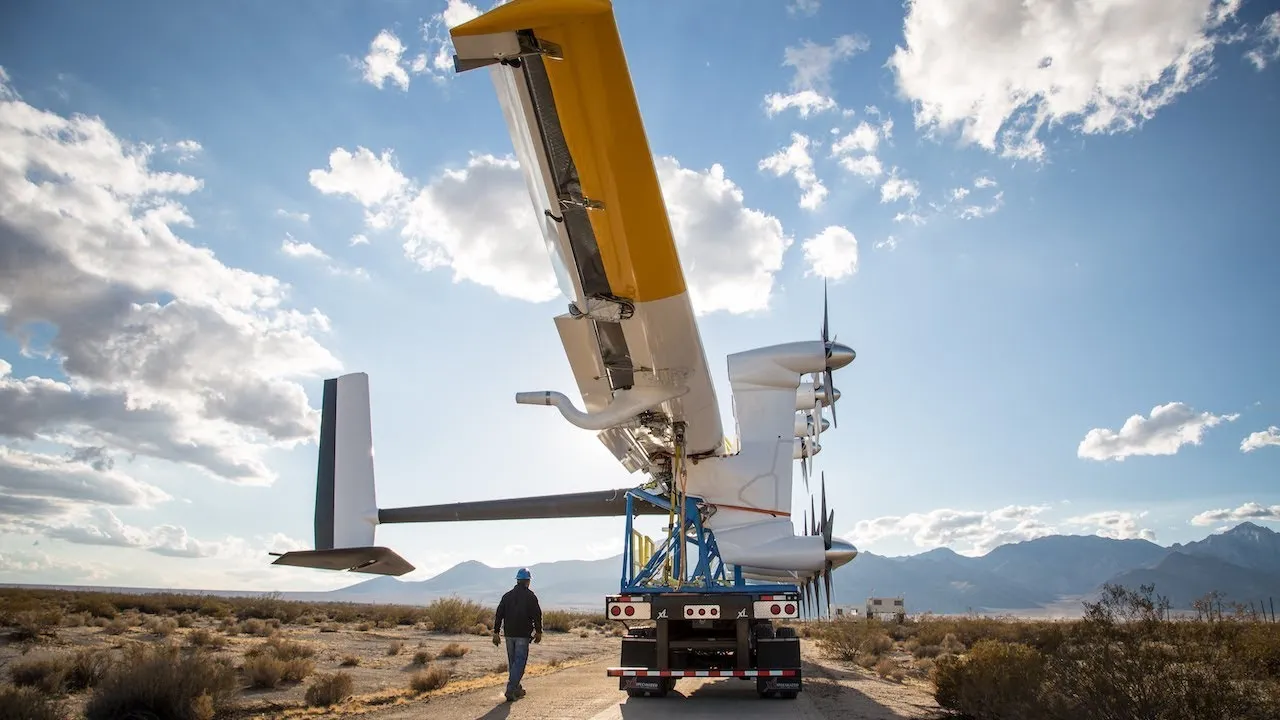
Pulling Power from the Sky: The Story of Makani [Feature Film] — X, The Moonshot Factory

X, The Moonshot Factory

AI-assisted summary of Pulling Power from the Sky: The Story of Makani [Feature Film] — original source. Check the original for full context.

Source published:

Key ideas

  • Makani spent 13 years developing utility-scale airborne wind turbines, aiming to cut structural material by roughly 90% and cost from 20 cents to 3–4 cents per kilowatt-hour by replacing steel towers with tethered crosswind airfoils. (2:16)
  • After scaling from the 20 kW Wing 7 prototype to the 600 kW M600 within Google X, the program demonstrated full autonomous flight cycles including vertical hover, crosswind generation, and robotic perch recovery. (70:25)
  • Faced with plummeting land-based wind turbine costs, Makani pivoted offshore to deploy the M600 from a floating spar buoy in Norway, achieving crosswind generation over the North Sea before a trans-out crash in rough swells. (74:58)
  • Despite proving crosswind flight physics and offshore feasibility, Makani shut down after spinning out from Alphabet when it could not secure commercial capital to fund multi-thousand-hour reliability testing. (98:41)

Detailed notes

## Background Published on YouTube by X, The Moonshot Factory on September 10, 2020, this feature film documents the thirteen-year journey of Makani, an eclectic team of scientists, artists, pilots, and engineers. According to the page description, the film provides an intimate portrait of the team's quest to design and build autonomous kites capable of efficiently harvesting wind power, featuring testing footage across California, Hawai’i, and Norway.

## TL;DR Founded in 2006 to drastically lower renewable energy costs, Makani sought to eliminate heavy turbine towers by harnessing high-altitude wind with tethered wings operating in continuous crosswind loops. The project evolved from simple soft foils and lightweight prototypes into the 20-kilowatt Wing 7, before scaling under Alphabet's X into the utility-class 600-kilowatt M600 system tested at China Lake and Parker Ranch. Facing changing onshore wind market economics, the team adapted their technology for deepwater offshore deployment on a floating spar buoy in the North Sea off Norway. While the team achieved historic autonomous flight milestones, persistent operational risks, an offshore crash, and immense commercial capital hurdles led to the project's closure after thirteen years.

## Atmosphere & style The film strikes a deeply earnest, bittersweet, and technologically reverent tone, capturing both the chaotic grit of prototype fabrication and the quiet poetry of flight. Viewers are immersed in the emotional volatility of hardware development—from the anxious exhaustion of grounded test windows and the shock of catastrophic airframe breakups to the euphoric beauty of a carbon-fiber wing looping over open ocean waters. Underneath the technical post-mortems sits a poignant, reflective spirit marked by personal loss, ecological urgency, and an enduring pride in daring to pursue an audacious moonshot.

## Bulletin - [02:16](https://www.youtube.com/watch?v=qd_hEja6bzE&t=136s) Makani spent 13 years developing utility-scale airborne wind turbines, aiming to cut structural material by roughly 90% and cost from 20 cents to 3–4 cents per kilowatt-hour by replacing steel towers with tethered crosswind airfoils. - [01:10:25](https://www.youtube.com/watch?v=qd_hEja6bzE&t=4225s) After scaling from the 20 kW Wing 7 prototype to the 600 kW M600 within Google X, the program demonstrated full autonomous flight cycles including vertical hover, crosswind generation, and robotic perch recovery. - [01:14:58](https://www.youtube.com/watch?v=qd_hEja6bzE&t=4498s) Faced with plummeting land-based wind turbine costs, Makani pivoted offshore to deploy the M600 from a floating spar buoy in Norway, achieving crosswind generation over the North Sea before a trans-out crash in rough swells. - [01:38:41](https://www.youtube.com/watch?v=qd_hEja6bzE&t=5921s) Despite proving crosswind flight physics and offshore feasibility, Makani shut down after spinning out from Alphabet when it could not secure commercial capital to fund multi-thousand-hour reliability testing.

## Key takeaways - [02:16](https://www.youtube.com/watch?v=qd_hEja6bzE&t=136s) Miles Loyd's 1980 crosswind aerodynamic theory showed that tethered airfoils sweeping across the wind harness far more power than stationary turbines while eliminating heavy ground towers. - [08:38](https://www.youtube.com/watch?v=qd_hEja6bzE&t=518s) Makani transitioned from commercial soft kites to rigid carbon-fiber airframes after early modeling proved rigid wings offered superior aerodynamic efficiency despite severe crash risks. - [14:20](https://www.youtube.com/watch?v=qd_hEja6bzE&t=860s) The 20 kW Wing 7 demonstrator proved the feasibility of autonomous vertical hover launch, tensioned crosswind loops, and perch docking. - [26:42](https://www.youtube.com/watch?v=qd_hEja6bzE&t=1602s) Scaling 30x to the 600 kW M600 inside Google X drastically increased vehicle mass, tether line tension (peaking at 60–80 kN), and transition complexity. - [32:19](https://www.youtube.com/watch?v=qd_hEja6bzE&t=1939s) To bypass severe delays in robotic ground station fabrication, engineers built 'Containerhenge' from stacked shipping containers to execute static 500-meter tether launches. - [54:32](https://www.youtube.com/watch?v=qd_hEja6bzE&t=3272s) Energy kites operate without trim or steady-state equilibrium, combining glider-like high aspect ratios with continuous fighter-jet turning dynamics under tether tension. - [48:43](https://www.youtube.com/watch?v=qd_hEja6bzE&t=2923s) 'Trans-out'—decelerating high-speed crosswind loops back into a stable hover—proved to be the most technically hazardous flight control challenge across all airframe generations. - [01:10:25](https://www.youtube.com/watch?v=qd_hEja6bzE&t=4225s) Testing at Parker Ranch in Hawai'i validated full-cycle autonomous flight and robotic perching off a rotating ground station. - [01:14:58](https://www.youtube.com/watch?v=qd_hEja6bzE&t=4498s) Rapid cost drops in conventional onshore wind forced Makani to pivot to deepwater offshore floating spar buoys in Norway, where traditional wind turbines are cost-prohibitive. - [01:31:14](https://www.youtube.com/watch?v=qd_hEja6bzE&t=5474s) The North Sea demonstration achieved offshore launch and autonomous crosswind loops from a floating spar buoy, but dynamic buoy drift and tether slack led to an in-flight control divergence and water impact during trans-out. - [01:38:41](https://www.youtube.com/watch?v=qd_hEja6bzE&t=5921s) Makani's commercial closure reflected the daunting moonshot capital gap: commercial viability demanded years of continuous runtime and multi-thousand-hour MTBF that private venture markets refused to fund. - [01:38:41](https://www.youtube.com/watch?v=qd_hEja6bzE&t=5921s) Engineers compared Makani's trajectory to the 1940s Smith-Putnam wind turbine, demonstrating that pioneering energy architectures can validate foundational engineering long before the market conditions align.

## Detailed walkthrough ### [00:08](https://www.youtube.com/watch?v=qd_hEja6bzE&t=8s) The Audacity of Harnessing Wind with Kites

The endeavor to extract wind power using tethered wings demanded unprecedented engineering achievements across multiple disciplines simultaneously. As one team member explains, “It was heroic on a structural mechanics front. It was heroic on a materials science front. It was heroic on a power electronics front. It was heroic on an aerodynamics front. It was heroic on the control systems front.” The venture was a series of world firsts rather than standard aerospace engineering. Facing climate change as the defining problem of our time, the engineers were galvanized by the sheer audacity of trying to build something so open-ended.

```mermaid flowchart TD accTitle: Wind turbine tower versus Makani energy kite concept accDescr: Diagram contrasting conventional heavy wind turbines with Makani's lightweight tethered kite wing concept.

subgraph Traditional["Traditional Wind Turbine"] T1["Heavy Steel Tower & Foundation"] --> T2["Fixed Swept Area"] T2 --> T3["Expensive Scaling to Reach Better Wind"] end

subgraph Makani["Makani Energy Kite Concept"] M1["Lightweight Tethered Airfoil"] --> M2["Sweeps Large Crosswind Area"] M2 --> M3["Generators Onboard Free Wing"] M3 --> M4["90% Less Material at Lower Cost"] end ```

The team’s initial flight logbooks reflected both the ambition and the brutal trial-and-error nature of the early work. After tallying a modest milestone of five minutes of autonomous flight, the tally also stood at “four dead kites.” Instead of designing incremental improvements to standard wind turbines, Makani was fundamentally asking what the most optimal system possible would look like to extract wind energy, and then attempting to build that from the ground up.

[02:16](https://www.youtube.com/watch?v=qd_hEja6bzE&t=136s) Origins, Economics, and the Physics of Crosswind Flight

In late 2006, the narrator joined Makani Power as the company archivist to chronicle the mission. Earlier that year, a group of engineers and avid kiteboarders began experimenting with airfoils. Their time on the water had given them a visceral understanding of wind energy, leading them to ask whether heavy steel turbine towers could be discarded in favor of a lightweight, tethered airfoil.

The economic backdrop of 2006 made the concept intensely appealing. Before the boom in hydraulic fracturing made natural gas cheap, wind energy sat at roughly 20 cents per kilowatt-hour. A back-of-the-napkin calculation convinced Makani's founders they could generate electricity for three to four cents per kilowatt-hour—or even cheaper if things broke their way.

The foundational physics originated in a 1980 paper by Miles Loyd. Loyd demonstrated that a kite flying dynamically across the wind sweeps a far greater cross-sectional area of sky and generates substantially more power per unit of time than a turbine locked in a single spot.

- **Miles Loyd's 1980 principle**: A tethered wing flying crosswind acts like the tip of a giant wind turbine blade, but without the physical tower holding it up. - **Sailboat dynamics**: Just as a sailboat redirects wind to create forward drive and sideways heel, a crosswind kite redirects airflow into forward motion, pulling against its tether to turn onboard generators. - **Material savings**: By replacing the structural steel tower with a high-strength tether and using a lightweight aerodynamic wing with onboard rotors, the system aimed to access stronger, higher-altitude winds while using roughly 90% less material.

[08:38](https://www.youtube.com/watch?v=qd_hEja6bzE&t=518s) Soft Kites to Rigid Wings: The 2.6-Second Crash

Makani began testing with commercial soft kites—essentially large kiteboarding kites—generating electricity on the ground through a mechanical winch. This setup allowed cheap, rapid iteration, embracing the rule that “you can only learn so much from simulations. At some point, you just really have to interact with reality.” Analytical models, however, soon indicated that rigid wings would yield far higher energy generation efficiency.

Pivoting away from their rapid prototyping ethos, the team spent nine full months designing and constructing a complex, carbon-fiber rigid wing based almost entirely on simulations. Because they only built a single prototype, they had zero margin for error. After tethering it for safety checks in Santa Cruz, they initiated flight:

> “Two point six seconds of flight.”

The nine-month carbon-fiber prototype slammed into the earth and splintered. The crash was a crushing blow, but it delivered a crucial lesson about the dangers of over-relying on simulations without real-world feedback.

```mermaid flowchart LR accTitle: Evolution of early Makani kite architectures accDescr: Three early prototyping stages from soft kites to the overbuilt carbon wing, leading to the Wing 6 breakthrough.

A["Soft Kites & Ground Winch<br>(Fast iteration, low efficiency)"] --> B["First Rigid Carbon Wing<br>(9 months to build; crashed in 2.6s)"] B --> C["Hackable Rigid Wing 6<br>(Styrofoam, tape, guy wires)"] C --> D["Successful Hover & Crosswind Transitions"] ```

[10:42](https://www.youtube.com/watch?v=qd_hEja6bzE&t=642s) Wing 6 and the Culture of the Shop

Anticipating that the expensive carbon prototype might fail, part of the team had simultaneously assembled a cheap, bare-bones backup wing. The day after the nine-month carbon kite shattered, they took this cheap wing to the field, and it flew steady loops. That immediate success validated the rigid crosswind concept and led directly to Wing 6: an unglamorous, hacky aircraft cobbled together from styrofoam, guy wires, and tape. Wing 6 was specifically designed to tackle the hardest aerodynamic problem yet: launching vertically in a hover, pitching forward into autonomous crosswind power-generation loops, and transitioning back to a hover for recovery. Against its awkward looks, Wing 6 nailed the transitions cleanly.

The technical breakthrough was rooted in the unique shop culture at Makani, where long hours were set to blasting music and shared coffee:

> “My name is Tommaso Romanelli, I want to work here.”

- **Munho**: A master craftsman from Korea who had previously constructed and flown his own experimental composite airplanes before joining Makani. - **Tommaso Romanelli**: An Italian engineer and fabricator who heard about Makani's fight against climate change, flew to San Francisco, attended language school to learn English (where he met his future wife, Anita, who also joined Makani), and arrived at the door demanding a job. - **Shop environment**: Tommaso worked with disposable blue nitrile gloves covered in handwritten Sharpie notes, scribbling down slang, song lyrics, and English idioms—such as asking his colleagues, “Professor what's another name for pirate treasure?”—blending mechanical craft and human connection.

[14:20](https://www.youtube.com/watch?v=qd_hEja6bzE&t=860s) Building Wing 7 and Scaling Beyond Quick Iterations

After years of rapid iteration with inexpensive materials, Makani reached a configuration that proved the basic physics of airborne wind energy. Translating the abstract concept of combating climate change into a tangible machine brought the team closer together, creating deep bonds that went far beyond mere colleagues. To transition from a scrappy proof-of-concept into a commercial-grade product, the team needed to build an airframe capable of handling substantial operational stresses. This led to Wing 7, a rigid airframe designed to mount rotors and onboard generators to execute hover launch, crosswind power generation, and landing, with a rated output of 20 kilowatts.

```mermaid flowchart TD accTitle: Wing 7 Key Subsystems and Flight Roles accDescr: Diagram showing how Wing 7 components support launch, flight, and power generation.

subgraph Airframe ["Wing 7 Carbon Airframe"] CF["Carbon Fiber Structure"] Rotors["Onboard Rotors & Generators (20 kW)"] end

subgraph TetherSys ["Ground Connection"] Teth["Tether Line"] Constraints["Safety Constraint Line (Early Tests)"] end

subgraph Ops ["Operational Roles"] Hov["Quadcopter Hover Launch & Land"] Cross["Crosswind Loops (Power Generation)"] end

CF --- Rotors Rotors --> Hov Rotors --> Cross Teth --- CF Constraints -.->|"Initial Envelope Expansion"| CF ```

Building Wing 7 meant revisiting carbon fiber construction—a high-stakes, expensive, and time-intensive manufacturing method the team had avoided ever since destroying their first carbon prototype in a crash. Backed by fixed-term funding from the U.S. Department of Energy and Google.org, as well as extensive empirical flight data, they committed to carbon composites to withstand higher flight loads. Before allowing the wing to fly untethered in open airspace, the team took extreme precautions by testing it under safety constraint lines to verify that the control software and mechanical subsystems functioned harmoniously. Controlling a rigid aerodynamic craft acting simultaneously as a tethered kite and an autonomous quadcopter presented dynamics no aerospace engineers had ever previously resolved.

- Wing 7 was engineered to produce 20 kilowatts of electrical power while proving every commercial flight mode. - Funding was secured from Google.org and the U.S. Department of Energy (ARPA-E). - Runway assembly was celebrated as a milestone: “Historic? This is the first first ever assembly on the runway.” - Engineers treated the first untethered outing with dry reverence: “Wing 7, may you return to the ground in one piece.”

---

[16:10](https://www.youtube.com/watch?v=qd_hEja6bzE&t=970s) The First Free Flight and "Trans Out"

Eventually, safety constraints could yield no further actionable engineering data, forcing the team to commit to free flight. Because an errant tethered wing could sweep across the ground within seconds, the crew maintained strict emergency protocols, assigning safety cover positions behind vehicles and testing emergency stop routines. With six-meter-per-second winds confirmed and launch lines burned through, Wing 7 lifted into an autonomous hover ten meters above a support fire truck before pivoting forward into tensioned crosswind loops.

```mermaid flowchart LR accTitle: Wing 7 Flight Profile accDescr: Linear flow of the early Wing 7 test flight envelope.

Launch["Hover Launch (Quadcopter)"] --> Tension["Tension Line & Accelerate"] Tension --> Crosswind["Crosswind Loops (Power Generation)"] Crosswind --> TransOut["Trans Out (Crosswind to Hover)"] TransOut --> Landing["Glide Landing (Tether Release)"] ```

The flight proved aerodynamically chaotic as the tether continuously changed load angles. The most critical controls hurdle was "Trans Out"—transitioning the high-speed craft out of crosswind figure-eights back into a stationary hover. In early flight runs, once Trans Out succeeded, the ground crew released the tether completely, pitching the wing downward into an unpowered glide landing on the runway grass.

> “It looks like an airplane. It's not an airplane. It's an airplane with a string that changes directions constantly. Nothing's ever still nothing's ever steady.”

> “I think it takes one part bravery and one part blind optimism to keep your prototype in the air when your flight looks this bad.”

---

[19:25](https://www.youtube.com/watch?v=qd_hEja6bzE&t=1165s) Field Cadence, "Flangry" Engineers, and the Loss of Corwin Hardham

Field operations quickly settled into a grueling cycle governed by unpredictable weather and tight daylight windows. The team found themselves stranded on dry lake beds and airfields either waiting for dead calms to pick up or battening down equipment when winds blew past operating limits. Long, exhausting setup times and natural wildlife encounters—such as mistaking a harmless gopher for a baby rattlesnake—punctuated long days of troubleshooting overheated motors and rewriting flight controller code.

```mermaid flowchart LR accTitle: Field Testing Iteration Loop accDescr: Cycle of testing, hardware failures, and software iterations.

Setup["Rig Field Site"] --> Launch["Flight Test"] Launch --> Failure["Component Breakdown / Overheating"] Failure --> Analysis["Diagnose Weak Points"] Analysis --> Patch["Patch Code & Swap Motors"] Patch --> Setup ```

To describe the specific tension that gripped the engineering team when technical setbacks or calm weather kept the wing grounded for weeks, they coined the term "flangry"—an anxious hunger for flight testing and forward momentum. Progress was steady but incremental, until tragedy struck the team: Corwin Hardham, Makani's CEO and co-founder, passed away suddenly and unexpectedly. Hardham had served as the cultural and operational bedrock of the company, doing everything from setting attainable technical milestones to baking fresh bread and making lunch for the crew. Propelled by his memory, the team resolved to push the technology forward without hesitation.

> “Around this time, we coined the term flangry, which is how we'd feel when we hadn't flown in a long time. This kind of anxious hunger for progress.”

> “It had always been clear that Corwin was driven to make Makani succeed as a part of the way he cared for people and the environment.”

---

[22:12](https://www.youtube.com/watch?v=qd_hEja6bzE&t=1332s) Conquering "All Modes" and Autonomous Perching

Honoring Corwin Hardham’s vision meant tackling the ultimate systems engineering hurdle: demonstrating "All Modes" in a single automated flight cycle. Up to this point, the kite had been developed to fly independently of the ground station, while landings required unlatching the tether for manual glide recoveries. The complete commercial concept required a specialized robotic ground perch to physically catch the incoming kite vertically, manage high-speed winching across every flight regime, and route electrical current bi-directionally along the tether.

```mermaid flowchart LR accTitle: Autonomous Perch All Modes Cycle accDescr: Complete loop of autonomous perch takeoff, crosswind loops, and perch recovery.

PerchHold["Perched on Ground Station"] --> AutoLaunch["Vertical Hover Launch"] AutoLaunch --> TransIn["Trans In: Accelerate to Tension"] TransIn --> Generating["Crosswind Power Loops (5-6 kN)"] Generating --> TransOut["Trans Out: Decelerate to Hover"] TransOut --> AutoPerch["Vertical Docking onto Ground Station"] AutoPerch --> PerchHold ```

Combining the airborne kite and the dynamic ground station created an intricate control problem. On test day, the flight priorities were starkly prioritized: avoiding a crash was goal number one, followed by automated perch takeoff and landing, executing crosswind in the middle, and finally, generating power. During the flight, Wing 7 smoothly executed "Trans In," reeled out into full crosswind generation pulling line tensions between 5,000 and 6,000 Newtons, initiated "Trans Out" despite sharp roll maneuvers, and backed itself onto the perch needles to lock down successfully. The team celebrated this world-first achievement with plans for extended endurance testing.

- The ground station managed three vital roles: serving as a mechanical perch, controlling tether deployment and tension, and transferring electrical power to and from the grid. - Tension readings held steady at 5,000 to 6,000 Newtons through the circular flight path before retrieval. - Ground crews were ecstatic after autonomous docking: “Yes! Sick! Next we're flying for 10 hours, 10 hours of awesome.” - One engineer reflected on the milestone: “Working on something hard for a long time as part of a team and watching it work exactly as you'd intended it to is as good as it gets.”

---

[26:42](https://www.youtube.com/watch?v=qd_hEja6bzE&t=1602s) Joining Google X and Scaling to the 600-Kilowatt Kite

Proving the multi-mode autonomous flight cycle confirmed that airborne wind was technically feasible, shifting Makani’s focus to long-duration endurance runs. Pushing the prototype toward ten continuous operational hours uncovered critical real-world failure modes—such as motor thermal limits and complex differential aerodynamic drag behaviors—that simulations failed to capture. However, Makani's leadership knew that a 20-kilowatt platform was merely a technology demonstrator. Generating utility-scale power to meaningfully replace fossil fuels demanded a machine thirty times larger.

```mermaid flowchart LR accTitle: Scale Comparison Between Wing 7 and Commercial Prototype accDescr: Scale jump from the 20 kW Wing 7 demonstrator to the 600 kW utility system.

subgraph W7 ["Wing 7 Demonstrator"] W7P["20 kW Rated Power"] W7S["Subscale Testbed"] end

subgraph W600 ["Utility-Scale Moonshot"] W600P["600 kW Rated Power"] W600S["~300 U.S. Homes Powered"] W600X["Integrated into Google X"] end

W7 -->|"Scale Factor: 30x"| W600 ```

To build a full-scale machine, Makani joined Google X (the moonshot factory), securing the capital and engineering infrastructure necessary to construct a 600-kilowatt airborne wind turbine capable of powering roughly 300 homes. The team spent over a year working through grueling design challenges for the massive composite airframe and high-voltage power electronics. Transitioning between flight modes became exponentially more dangerous as the mass, wingspan, and tether line forces jumped by orders of magnitude, turning routine design obstacles into towering engineering barriers.

> “At X we would have the resources we needed to scale up to a utility sized kite that would get us closer to expanding access to renewable energy for billions of people around the globe.”

> “I don't know if hurdle is the right word when the hurdle is three meters high it's not a hurdle anymore, but we kept on going at it.”

[29:57](https://www.youtube.com/watch?v=qd_hEja6bzE&t=1797s) Continuous Integration and Ground Station Roadblocks

Transitioning from the small-scale Wing 7 to Makani's first utility-scale energy kite felt surreal to the crew standing beneath it. Visually, the new airframe appeared identical to Wing 7, only enormous, making the team members look miniature beside it. Rather than waiting for a fully realized aircraft before beginning flight tests, the team adopted an aggressive, incremental strategy. The earliest iterations were tested without flaps, aileron servos, a tail, or an empennage. The team took to the field with what was admittedly the wrong wing, the wrong motors, and an incomplete ground power system, trusting that anything sufficiently representative would yield vital operational knowledge.

```mermaid flowchart TD accTitle: Incremental Kite Development and Testing Bottleneck accDescr: Flowchart illustrating the year and a half of continuous hardware integration leading to ground station redesign and the Containerhenge workaround.

subgraph Integration ["Iterative Kite Testing (1.5 Years)"] A["Incomplete Wing Assembly"] --> B["Integrate Flight Motors"] B --> C["Install New Ground Inverter"] C --> D["Hover Testing Under Constraints"] end

subgraph Bottleneck ["Ground Station Failure"] D --> E{"Assess Scaled-Up Ground Station"} E -->|"Multiple Failures"| F["Full Redesign Needed (1 Year Delay)"] end

subgraph Workaround ["Parallel Fast-Track"] F --> G["Design Next-Gen Ground Station"] F --> H["Build 'Containerhenge' Perch"] H --> I["Immediate Crosswind Flight at China Lake"] end ```

For a year and a half, Makani maintained a continuous loop of integration and tethered hover tests. Whenever upgraded hardware arrived, engineers swapped components and returned immediately to the test pad: when long-awaited flight-grade motors were delivered, the crew spent two weeks retrofitting them before resuming testing; when upgraded ground inverters arrived, they were dropped into the loop. Reflecting on this grueling phase, the team recognized that attempting a traditional aerospace waterfall rollout would have doomed the initiative: “I think if you had tried to complete the system and then put it together, there was no way you would get it to go.”

By the end of this integration campaign, the kite was hovering reliably on constraints, but the ground station presented an existential roadblock. Multiple severe mechanical and electrical issues emerged on the scaled-up ground winch and perch system. A proper redesign and rebuild of the ground station would consume the better part of a year—time the program did not possess. Funders, internal milestones, and the urgency of the climate mission demanded that the team prove crosswind power generation immediately rather than spend twelve months refining ground support hardware.

- The first iteration tested lacked fundamental flight control surfaces, including aileron servos, flaps, and a tail empennage. - Continuous hover and integration cycles spanned roughly 18 months before crosswind testing was attempted. - Redesigning the full automated ground station threatened to delay the flight program by nearly a year.

---

[32:19](https://www.youtube.com/watch?v=qd_hEja6bzE&t=1939s) Team Jargon and the Birth of Containerhenge

To keep morale high and streamline daily operations, the Makani crew developed an idiosyncratic internal vocabulary. Hardware, safety protocols, and maneuvers were frequently named after the colleagues who conceived them. When the company found itself employing four different men named Jeff, the roster was parsed into Geoff, Rocket Jeff, Laser Jeff, and Just Jeff. When Rocket Jeff engineered an electronics enclosure for the M600 kite, it was permanently christened the "rocket box." Even when the component malfunctioned in the field, the crew regarded it fondly simply because everyone loved Rocket. Similarly, an automated maneuver that stepped the tethered kite safely to the right so personnel could walk across the flight pad was officially dubbed "the Nicholas," named after the engineer who devised and coded the routine.

Faced with a stalled ground station development timeline, the team applied this same improvisational mindset to build a rapid workaround: "Containerhenge." Rather than waiting on a motorized winch drum and gimbal system, engineers stacked standard steel shipping containers into two side-by-side towers. This static remote perch held the kite aloft at the full 500-meter tether length, completely bypassing the complex reeling and tensioning mechanics required for spooling the tether in and out during launch.

Containerhenge was engineered with pragmatic, low-cost modifications: - **Perch Pegs:** Specialized load-bearing pegs were retrofitted onto the kite to distribute the wing's resting weight evenly across the two container stacks. - **Platform Netting:** Heavy-duty nets were secured across the top surfaces of the containers, giving ground crews a visual reference for wing alignment while generating friction to keep the kite from being dragged forward by the tension of the 500-meter tether. - **Tail Spike and Arrestor Cables:** To prevent the tall kite from pitching forward off the perch before motor thrust engaged, a tail spike was added to catch across two tensioned cables strung across the central gap between the container stacks.

---

[34:04](https://www.youtube.com/watch?v=qd_hEja6bzE&t=2044s) SN2, the Birdcage, and Existential Stakes

With Containerhenge standing, the operational focus shifted from the Serial Number 1 (SN1) hover test rig to Serial Number 2 (SN2), Makani's first fully crosswind-capable kite. While SN1 spent a year enduring constrained hover flights, SN2 was finalized inside the "Birdcage"—Makani's hangar and assembly facility—where engineers conducted spinning motor checkouts. Rolling SN2 out of the Birdcage marked the penultimate milestone before packing the flight program for China Lake, a sprawling military test range in the California desert large enough to accommodate full-circle crosswind flight at maximum tether extension.

The transition was shadowed by extreme organizational pressure. Before leadership would authorize the logistical move to the desert, SN2 was required to complete 16 cumulative hours of hover testing to prove its mechanical and avionics reliability. Makani was operating under a strict year-end deadline: if the team failed to relocate to China Lake and demonstrate autonomous crosswind flight before the calendar ran out, the project faced drastic budget reductions or outright cancellation by parent company Alphabet.

Early in SN2's 16-hour qualification regime, unexpected technical gremlins surfaced. Most alarming was an unforeseen structural resonance: when the wing's eight electric motors spun up to specific operating frequencies, the motor pylons began vibrating violently. Control engineers scrambled to damp out the oscillation through software, resorting to a blunt approach: “Ah, we just lower gains. We just keep lowering gains.”

- SN1 was dedicated exclusively to hover envelope expansion, while SN2 was built to withstand the aerodynamic forces of crosswind loops. - China Lake provided the vast restricted airspace needed to fly an energy kite tethered to a 500-meter line without civilian aviation interference. - The project faced potential termination if crosswind flight was not demonstrated before the end of the year.

---

[36:05](https://www.youtube.com/watch?v=qd_hEja6bzE&t=2165s) Debugging Motor Faults and Calculating Risk

As SN2 neared the final hours of its mandatory 16-hour hover qualification, the flight line descended into an exhausting game of troubleshooting. During one tethered hover, an abrupt motor controller fault caused the kite to lose lift instantly and drop hard onto its safety constraints. Ground cameras caught the sudden fall as crew members called out the drop in shock. Engineers traced and patched the fault, only to encounter an entirely different failure on the very next test: the starboard bottom outboard (SBO) motor refused to spin up at launch.

The SBO motor anomaly remained unexplained, presenting the leadership team with a difficult tactical dilemma. The 16-hour hover requirement had technically been satisfied late on a Friday, but the aircraft harbored a persistent, undiagnosed intermittent bug. Canceling the desert deployment would allow thorough bench testing in the Birdcage, but would forfeit the scheduled range reservation at China Lake and ensure missing the year-end crosswind milestone. Conversely, deploying with a known glitch risked crashing Makani's only crosswind airframe during its maiden launch.

Inside the team, engineers debated the fine balance between flight test caution and the necessity of real-world operational tempo. Ultimately, leadership decided to proceed with the logistics convoy while holding the wing back for last-minute bench checks if needed. The overarching philosophy favored bold operational testing over ground paralysis: “Like your chances of learning, which is, was, always really our objective, are higher if you assume the risk and fly.”

- A sudden motor controller fault caused an uncommanded drop onto pad constraints during hover trials. - The starboard bottom outboard (SBO) motor experienced intermittent ignition failures of unknown origin right before deployment. - Range reservations, logistical commitments, and existential deadlines prompted the team to accept the residual motor risk and ship to China Lake.

---

[39:15](https://www.youtube.com/watch?v=qd_hEja6bzE&t=2355s) Operations at China Lake and the Perch Mishap

Arriving at the desert expanse of China Lake, the crew was greeted by blistering sun, rugged dry lakebeds, and high spirits. Initial shakedown flights went smoothly; an initial flight lasting one hour and ten minutes, paired with a subsequent short hop, fulfilled the 75 minutes of baseline hovering required before transitioning to the heavy tether. Despite erratic winds blowing from unideal directions, the flight controllers maintained stable hover authority. The crew celebrated under the desert sun, trading jokes about their developing farmer tans and marveling at the crane operators maneuvering heavy hardware across the pad.

```mermaid flowchart LR accTitle: Unconstrained Flight Sequence and Emergency Wing Save accDescr: Sequence diagram tracing the perch repair, Containerhenge launch, tether failure, and manual emergency landing.

subgraph LaunchPrep ["Pad Prep & Field Repair"] A["Perch Peg Collapses Overnight"] --> B["Rivet Trailing Edge in Field"] B --> C["Hoist to Containerhenge Perch"] end

subgraph Flight ["Launch & Transition"] C --> D["Unconstrained Launch"] D --> E["Ascend to 11m Above Perch"] E --> F["Transition into Crosswind Loop"] end

subgraph Recovery ["Emergency Recovery"] F --> G{"Tether Break!"} G --> H["Pilot Declares 'Wing Save'"] H --> I["Manual Rudder & Flare Control"] I --> J["Belly Landing with 4 Pylons Intact"] end ```

The mood shifted abruptly the following morning. The kite—spanning the wingspan of a small transport aircraft—had been hoisted onto the Containerhenge perch the night before, awaiting only routine mechanical pre-flight checks before flying unconstrained without safety ropes for the first time. Overnight, shifting winds had caused the kite to settle awkwardly on the perch. The localized load crushed one of the perch pegs, driving the airframe downward and splitting the composite trailing edge of the wing.

The damage threatened to halt the campaign. Performing a standard composite wet-layup repair and waiting for structural epoxy to cure would exhaust the test window, prompting an engineer to state plainly: “To fix this, is to fly next year.” Unwilling to forfeit their shot at crosswind flight, the team executed an expedient field repair. Technicians replaced the crushed perch-peg tip, aligned the torn composite skin, and blind-riveted the trailing edge together directly on the pad.

- Flight crews completed a 1-hour-and-10-minute shakedown flight in desert winds to certify flight systems for the heavy tether. - The kite airframe was comparable in span to a commercial airliner, flying without tethers or tethers limited by safety cranes for the first time. - Overnight movement cracked the trailing edge of the carbon wing, prompting an emergency field fix using rivets rather than structural composite curing.

---

[42:14](https://www.youtube.com/watch?v=qd_hEja6bzE&t=2534s) The First Unconstrained Crosswind Flight and Tether Break

Launching off Containerhenge presented razor-thin margins of error. The kite sat perched atop rigid steel shipping containers that offered zero forgiving clearance: any wind gust pushing the aircraft sideways during liftoff risked smashing the wing against the structures. Furthermore, because Containerhenge was fixed in place, successful departure required the desert wind to align precisely with the launch axis. As telemetry ticked past eleven meters of altitude, the flight controller confirmed that the port perch peg was light, the bridle cleared, and the kite ascended smoothly into the sky.

The aircraft pushed forward into "trans-in"—the high-risk transition phase where the kite pitches down from a stationary vertical hover, builds airspeed, and enters high-speed circular crosswind loops. To the cheers of the control room, the kite carved through the air and began its turn, with flight controllers confirming: “Crosswind normal, we're in crosswind.” For a brief few seconds, Makani had achieved utility-scale airborne crosswind flight.

Disaster struck instantly afterward. The tether snapped, severing the physical and electrical connection between the kite and the ground: > “We lost the tether, we lost the tether, lost the tether.”

With ground power and tether tension gone, the automated crosswind control loop collapsed. A human pilot instantly engaged manual override, calling out “Wing save!” over the radio net to execute emergency unpowered glide protocols. Flight controllers tracked telemetry through secondary radio links, calling out headings, aggressive left-rudder inputs, and flare commands as the glide path degraded. Fighting to clear the ground infrastructure and orient the wing into the wind, the pilot flared just above the desert floor, guiding the multimillion-dollar prototype into an emergency belly landing. The kite skidded across the dirt with all four motor pylons intact. Though the tether had failed, the crew celebrated the wing save as a monumental partial victory: the kite had survived launch, flown crosswind, and proved that its airframe could be manually recovered from a catastrophic mid-air disconnect.

- The kite successfully launched unconstrained, climbed past 11 meters, and initiated autonomous transition into crosswind loops. - A sudden tether failure severed kite power and structural line tension seconds after crosswind entry. - The manual "wing save" protocol allowed pilots to glide the aircraft away from Containerhenge and land flat in the desert with the pylons and wing structure largely intact. - The deployment verified testing between two competing tether architectures: a solid carbon fiber core design versus a multi-strand carbon core.

[45:35](https://www.youtube.com/watch?v=qd_hEja6bzE&t=2735s) Stranded Core Tether and the First Crosswind Loop

Although the lighter solid-core tether had shown promise in laboratory testing, it failed immediately in the field before Makani could execute a single crosswind loop. While the failure provided valuable empirical data, the team understood that failed experiments would not keep the program alive; they had to demonstrate crosswind flight to guarantee continued backing. Fortunately, an alternative stranded-core tether was already prepared. After patching the damaged trailing edge of the wing and spooling out the stranded-core line, the ground crew prepared for another attempt despite an unpromising wind forecast. Facing marginal breeze conditions, the crew debated whether to hold back or commit. Acknowledging their nervousness—yet recognizing the fleeting window of opportunity—they decided to push forward.

The launch team initiated throttle, calling out wind speeds climbing through seven and nine meters per second as the kite lifted into ascend mode. Control callouts tracked every critical parameter as motor gains ramped, the tail cleared the ground perch, and the vehicle threaded the narrow clearance corridor above the safety nets. Reaching an altitude of 21 meters, the kite stabilized in full-length hover, translated to the target azimuth, and accelerated into "trans-in" along the spherical tether boundary. Slipping smoothly into crosswind flight under 30 kilonewtons of line tension, the wing traced circular paths across the sky, with the detwist mechanism tracking the rotations. As the kite swept past nine o'clock and completed its very first loop, someone over the radio exclaimed, “Happy New Year everybody.” Reaching top speeds of 35 meters per second and climbing over the loop apex at 30 meters per second, observers noted that tether current appeared to reverse—the earliest tangible sign that the airborne turbine was generating electrical power back down the line.

- Solid-core tether failed prior to completing the first crosswind loop; replaced immediately with the backup stranded-core tether. - Launch occurred in light winds (forecast showed little wind until late in the day), ascending to hover at 21 meters altitude. - Tether line tension reached 30 to 31 kN at bottom of loop, peaking between 60 and 80 kN over the top. - Flight speeds during circular loops ranged between 30 and 35 meters per second.

```mermaid flowchart TD accTitle: Makani Flight Regimes and Transitions accDescr: Flowchart illustrating the primary flight states from launch through crosswind power generation, perch landing, and emergency autoglide.

subgraph Launch["Launch Phase"] A["Ground Perch"] --> B["Vertical Hover & Ascend"] B --> C["Hover Full Length at Azimuth"] end

subgraph Crosswind["Power Generation Cycle"] C -->|"Accel & Trans-In"| D["Crosswind Flight (Loops)"] D -->|"Circular Aerodynamic Orbit"| D end

subgraph Recovery["Recovery & Landing"] D -->|"Trans-Out (Deceleration & Turn)"| E["Hover Translation"] E -->|"Descend"| F["Perch Capture & Latch"] D -.->|"Emergency MV Loss / Tether Cut"| G["Deadstick Autoglide Landing"] end ```

---

[48:43](https://www.youtube.com/watch?v=qd_hEja6bzE&t=2923s) Trans-Out Dynamics and the Control Law Dilemma

Successfully entering crosswind flight solved only half the aerodynamic problem; the vehicle still had to safely exit crosswind and return to a stationary hover. While both pure hover and pure crosswind flight were well understood, the transition between them—termed "trans-out"—represented uncharted territory. In crosswind, the kite behaved like a high-speed glider flying circular tracks while extracting energy from the wind. Transitioning out required shedding that kinetic energy almost instantly, transforming the craft from a passive aerodynamic generator into an active, power-consuming multi-rotor hover platform while simultaneously completing a directional turn.

During early trans-out testing, the kite pitched violently backwards as high winds pushed it downwind. The craft began descending at an alarming rate, rolling up to 50 degrees in gusts measuring 10 meters per second. Control room monitors watched the telemetry plummet from 60 meters down toward 30 meters, prompting exclamations of terror as the sagging tether hit the ground. The kite autonomously arrested its plunge just 20 meters above the desert floor. Reviewing the telemetry, engineers realized the physics of the tethered kite defied classical aerospace design assumptions: “From a control laws perspective you can't just be a traditional control law designer here and apply the same old airplane feedback that you do anywhere else.” The machine was fundamentally different, demanding entirely new control algorithms designed to handle coupled aerodynamic, mechanical, and tether dynamics.

- Hovering and circular crosswind flight were mature concepts, but simultaneous deceleration, vehicle rotation, and mode-switching during trans-out were unprecedented. - During an uncontrolled sink event after trans-out, roll angles reached 35 to 50 degrees under 10 m/s winds from 60 degrees. - Vehicle descended rapidly to 20 meters above ground level with the tether touching the dirt before the flight controller recovered hover stability.

---

[50:54](https://www.youtube.com/watch?v=qd_hEja6bzE&t=3054s) Broken Tailspikes and Emergency Autoglide Landings

Landing operations presented severe physical constraints. The desert test site was optimized for a specific prevailing wind corridor; whenever the wind shifted off-axis, the kite had to fight crosswinds while descending into a narrow footprint bordered by heavy shipping containers. In one recovery attempt, turbulent gusts induced unstable roll oscillations from -10 to -14 degrees as the pilot tried to hover into position. During the approach, an unexpected mechanical failure struck: the tailspike—the critical structural element required to dock and latch onto the ground perch—sheared off completely. Without it, any perch touchdown would result in the nose pitching directly forward into a destructive faceplant.

Faced with a compromised vehicle, the team elected to climb back into ascend mode, throttle up, and transition once again into crosswind flight to climb to safe release altitude. After banking through a series of left-hand circular turns past six, nine, and twelve o'clock, the command was issued at two o'clock to sever the tether. With release confirmed, the kite entered autoglide mode at an altitude of 270 meters. Johnny piloted the unpowered aircraft on manual deadstick approach, coordinating rudder adjustments to keep the wings level through 40, 30, and 20 meters before initiating a landing flare at seven meters. The kite touched down smoothly on the desert floor, prompting an enthusiastic reaction from mission control: “Johnny that was f*ing fantastic.” Demonstrating successful unpowered glide recovery was a monumental achievement for airborne wind energy and proved decisive in convincing X to extend funding.

- Landing approach corridor was constrained by large metal shipping containers and sensitive to shifting wind vectors. - Shearing of the tailspike eliminated the possibility of a normal perch landing, forcing the team to re-climb to 270 meters for an intentional release. - Successful unpowered deadstick autoglide touchdown proved the kite could survive complete tether disconnection or power failure. - Flight proved Makani could control an airborne structure the size of a commercial wind turbine blade, securing continued support from X.

---

[54:32](https://www.youtube.com/watch?v=qd_hEja6bzE&t=3272s) The Iterative Flight Cycle: Glider Body, Fighter Jet Turns

With continued funding secured, the Makani engineering team settled into an intensive iterative development rhythm: fly, pull the telemetry logs, identify discrepancies between reality and simulation, refine the software and physical flight parameters, and return to the flight line. Early data showed that the physical kite did not track designated flight paths with the precision modeled in software, and its nose angle relative to the incoming wind vector exhibited minor offsets. By testing corrections in simulation before validating them in live flights, the team methodically smoothed vehicle behavior. Pre-flight morning briefings combined rigorous procedural rehearsals, hardware checks, and long waits for ideal wind windows, targeting two-hour continuous flight profiles culminating in perch landings.

The aerodynamic reality of the Makani platform created an extreme challenge for control theory. Normal aircraft fly straight toward a waypoint or trim out to an equilibrium state where flight sensors can collect baseline measurements. The energy kite, by contrast, operated in perpetual dynamic instability: constantly rolling, accelerating, pulling high-g turns, and changing velocity along its circular trajectory. As one engineer described the machine’s contradictory physical nature: “I can't think of vehicles that fly like this. We're shaped like a glider. We're making turns like a fighter jet. It's an unusual machine.” Despite having no steady-state flight condition to anchor their algorithms, the controls team steadily improved the smoothness of crosswind power loops and trans-in/trans-out transitions.

- Development cycle operated on an iterative loop: flight data collection, simulation reconciliation, control adjustments, and live re-testing. - Crosswind flight never reaches an equilibrium or trim state, requiring constant high-rate maneuvering, variable airspeed, and continuous acceleration. - Vehicle geometry balanced high-aspect-ratio glider aerodynamics with high-agility fighter aircraft turn dynamics on a high-tension line.

---

[58:18](https://www.youtube.com/watch?v=qd_hEja6bzE&t=3498s) Ground Power Trip, BMX Wheel Touchdown, and Redefining Success

During an otherwise promising endurance flight, an unexpected electrical fault abruptly interrupted testing. A rapid surge of onboard power generation back-fed into the ground station grid, overwhelming the ground power equipment and triggering a uninterruptible power supply (UPS) alarm. Interpreting the sudden spike as a fault, the ground generator automatically shut down power transmission up the tether, causing an immediate loss of motor voltage (MV) on the wing. With no propulsion available to maintain flight on the tether, the crew immediately triggered the tether release at 98 meters while traveling 33 meters per second.

The kite glided down rapidly through 40 meters at 21 meters per second, touching down on the dirt and pitching forward into the ground. While the unpowered touchdown crumpled the forward nose assembly, the lightweight landing gear absorbed the brunt of the kinetic energy, successfully saving the composite tail surfaces and primary wing box from catastrophic destruction. Reviewing the wreckage, the landing gear's mechanical engineer noted the extreme design trade-offs involved: “I mean, we are trying to land something that weighs as much as a car on two BMX wheels.” While the landing was far from pristine, the team recognized that taking enough kinetic energy out of the crash to preserve critical structures represented real success. The team resolved the electrical protection issue on the ground and repaired the wing, but manufacturing lead times forced them to wait months for a replacement tether before flying again on the one-year anniversary of their first crosswind loops.

- An onboard electrical generation surge overloaded the ground power system, triggering protective shutdowns that cut high-voltage power to the kite motors. - Kite was released from the tether at 98 meters altitude while traveling at 33 m/s, touching down at 21 m/s. - Custom landing gear utilized two BMX bicycle wheels designed for a very narrow landing window, carrying an aircraft weighing as much as an automobile. - Landing gear designer had explicitly assigned only a 60% probability of success to the narrow-envelope landing system. - Structural sacrifice of the nose and landing gear successfully prevented total roll-over and protected the tail assembly and main wing. - Ground power protection systems and airframe repairs were resolved, though tether replacement took several months to fabricate and deliver.

[01:01:20](https://www.youtube.com/watch?v=qd_hEja6bzE&t=3680s) RPX-08 Success and the Long Game of Moonshot Technology

The team endures the grinding cycle familiar to experimental flight testing: setting up hardware, waiting on the weather, packing everything back down, and starting all over again in hopes that “the wind gods come today.” Flight test RPX-08—jokingly dubbed “take three... or like two point five”—finally gets its window. As the kite descends toward the perch, operators carefully guide the touchdown in tense real-time callouts: five meters, four, three, starboard wingtip close, down to one meter, tailspike aligning, sliding slightly to port, and finally settling securely on the ground.

```mermaid flowchart LR accTitle: RPX-08 to RPX-09 Flight Progression accDescr: Sequence showing setup, successful flight RPX-08, and the mid-air breakup of RPX-09 leading to root cause analysis. subgraph S1["Flight RPX-08"] A["Setup & Weather Holds"] --> B["Successful All-Modes Test"] B --> C["Safe Touchdown on Perch"] end subgraph S2["Flight RPX-09 Incident"] C --> D["RPX-09 Flight Launch"] D --> E["In-Flight Breakup & Crash"] E --> F["Root-Cause Flight Data Analysis"] end ```

The flight caps a watershed year. The engineering milestones have systematically eliminated the early doubts that dog ambitious hardware ventures: - The team dismantled criticisms like “they're flying but they're not making any power” or “they have a machine, but they're not flying yet.” - They proved the core product works: generating utility power reliably, completing repeated flights, and recovering gracefully from flight errors. - Yet building entirely new physical architecture remains a grueling commercial challenge: “And so to accumulate the adequate degree of experience and reliability and be able to demonstrate to investors that the system will have a long term solid performance and economic value, that's really hard to do.” - After waiting five months between tests, the safe landing of RPX-08 leaves the flight line energized, setting high expectations for the next test with lighthearted optimism: “It'll be fine. It'll be just fine.”

---

[01:04:07](https://www.youtube.com/watch?v=qd_hEja6bzE&t=3847s) The RPX-09 Breakup: Disproportionate Solutions in Flight Control

The mood shatters during flight test RPX-09. Over the comms, an engineer calls out in shock as the kite bounces violently onto the tether and disintegrates: “Oh sh* bouncing onto the tether, kite just broke into many pieces.” The crash immediately triggers safety protocols, including the emergency checklist titled *Makani M600 Electrical Safety After a Hard Landing*, while ground crews survey the debris field where the impact marks and tether rest.

```mermaid flowchart TD accTitle: RPX-09 Failure Analysis and Resolution accDescr: Root cause analysis diagram mapping kite breakup back to rudder ineffectiveness and software control fixes. A["RPX-09 Mid-Air Breakup"] --> B["Analyze Flight Telemetry Data"] B --> C["Identify Physical Deficit: Rudder Ineffective"] C --> D["Aero Redesign: Enlarge Rudder Surface"] B --> E["Controls Finding: Software Mismatch"] E --> F["Controls Fix: A Few Lines of Code"] D & F --> G["High-Confidence Fixes Prevent Recurrence"] ```

The post-crash investigation highlights the vital difference between pure computer simulations and physical testing: - Flight telemetry revealed that the aerodynamic rudder was significantly less effective in actual flight conditions than aerodynamic models had predicted. - Without real-world flight data, the team would have spent years operating inside flawed simulations without recognizing that control authority was deficient under specific dynamic states. - The control team notes a fundamental law of guidance and control engineering: “One thing I've learned in Controls is that the size of the solution is often unrelated to the size of the problem.” - While the failure resulted in the total destruction of the airframe, the engineering fixes were tight and manageable: enlarging the rudder surface area and modifying a few critical lines of control code to handle edge-case flight states.

---

[01:05:26](https://www.youtube.com/watch?v=qd_hEja6bzE&t=3926s) Moving Beyond Containerhenge: Ground Station Testing

The RPX-09 crash serves as an operational checkpoint. For months, the team had relied on “Containerhenge”—a provisional test rig fashioned out of stacked shipping containers—while the permanent ground station was being designed and manufactured. With the new ground station hardware finally assembled, Makani splits its focus: one branch of the team diagnoses the mid-air breakup, while the flight operations team begins hover qualification testing on the new ground station before shipping the entire system to a high-wind site at Parker Ranch on Hawai’i.

```mermaid flowchart LR accTitle: Pre-Hawai'i Ground Station Validation accDescr: Sequence showing ground station tether hover tests leading into packaging for Parker Ranch deployment. subgraph Station["Ground Station Validation"] A["Retire 'Containerhenge' Rig"] --> B["Test New Automated Ground Station"] B --> C["Constrained Hover Off Ground Peg"] end subgraph Deployment["Deployment Gate"] C --> D["Risk Tradeoff on Legacy Airframe"] D --> E["Final Hardware Schedule Window"] E --> F["Ship Complete System to Hawai'i"] end ```

The pressure during this final testing window is intense: - Testing at Alameda is constrained by poor wind and tight project timelines: “This is the last week of testing, hopefully, before we go to Parker Ranch. There's no more tests on the schedule after that.” - The team executes delicate hover liftoffs directly from the ground station panel peg, backing out and returning toward the perch. - Operators confront a high-stakes trade-off: an error during ground station hover could destroy both the ground station mechanism and the sole operational legacy airframe, stalling flight tests until a risky new kite can be prepped. - Team members embrace the existential drive of the mission to push through anxiety: “We gotta, we gotta move here. We got to save the freakin world.” - The operational mindset balances caution with courage: “If there was no fear of failure, I don't think it would be worth doing so I probably wouldn't be doing it.”

---

[01:07:24](https://www.youtube.com/watch?v=qd_hEja6bzE&t=4044s) Parker Ranch, Hawai’i: Blending Futuristic Flight with Cultural Stewardship

Makani ships the complete system to the Island of Hawaiʻi, establishing a flight facility on Parker Ranch grassland near an active gravel quarry. The site balances exceptional wind resources with low exposure to air traffic, populated settlements, and livestock. Before beginning flight operations, the team joins local community leaders in a traditional Hawaiian blessing ceremony to consecrate the site and honor the connection to the land.

The partnership reflects a shared alignment on clean energy: - Hawai’i’s ambitious renewable energy goals make the island an ideal living laboratory for utility-scale clean technology. - The team equips the system’s electrical ground infrastructure, retrofitting power inverters with high-capacity energy dump systems to ensure safety margins during sudden load rejections. - The crew approaches mainland technology testing with humility: “As a technology company coming from the mainland we knew that testing our kite in Hawai'i was an extreme privilege, and we felt a sense of responsibility to do it right and to do it safely and to respect the people and the place.” - Observers marvel at the visual contrast of an ultra-modern carbon-fiber energy kite and white robotic ground station operating amidst vast, rolling tropical pastureland. - The ultimate goal for the flight campaign is defined not by novelty, but by routine reliability: “Well, not a couple of loops. We want to do so many loops that it becomes really really boring.”

---

[01:10:25](https://www.youtube.com/watch?v=qd_hEja6bzE&t=4225s) All-Modes Flight Off the Robotic Ground Station

The Parker Ranch deployment marks the critical moment of the entire program: flying the M600 kite across all flight regimes while mechanically tethered to the robotic ground station. When Makani had first demonstrated all modes on the earlier Wing 7 prototype, coordinating the autonomous airframe with ground mechanics had proved exceptionally difficult. Coupling the much larger M600 to the rotating ground station carries immense financial and operational stakes, requiring an intricate sequence where the ground station arm rotates 90 degrees while the tether swings through a constrained operational corridor.

```mermaid flowchart TD accTitle: M600 All-Modes Flight Sequence accDescr: Step-by-step telemetry states during the M600 crosswind and perch cycle off the ground station. A["Vertical Hover Ascent"] --> B["Tether Engaged in Levelwind"] B --> C["Tether Payout Under Tension"] C --> D["Acceleration Phase (Accel)"] D --> E["Transition-In (Trans-In)"] E --> F["Full Crosswind Normal Loops"] F --> G["Transition-Out (Trans-Out)"] G --> H["Hover Retrieval & Perch Landing"] ```

After six months without flight tests, mission operations commands the sequence over live flight loops: - **Ascent & Payout:** The kite enters vertical hover, the conductive tether engages the automated levelwind mechanism, and payout begins with steady tension on the line. - **Transition-In & Crosswind:** Telemetry confirms rapid acceleration; the kite completes “trans-in,” locked tightly inside its flight corridor, and initiates circular crosswind loops generating high power with automated detwist tracking active. - **Flight Scale:** Observers are stunned by the sheer physical scale of the M600 sweeping across the sky: “Makani so far has brought kite energy up at a scale that no one has done before. And it is something very impressive to see such a big kite flying so low from the ground.” - **Transition-Out & Recovery:** The kite navigates slight overspeed warnings, enters crosswind prep trans-out, stabilizes in hover with payouts matched, engages the gain ramps, and brings the airframe safely to the perch. - Completing the full flight cycle reaffirms the Moonshot vision: “Seeing the kite fly loops, it's like that's the antidote to any sort of malaise. Go watch that kite fly loops and you will believe that this whole thing will be possible.”

[01:14:58](https://www.youtube.com/watch?v=qd_hEja6bzE&t=4498s) The Strategic Pivot: Racing Offshore to Deepwater Wind

Autonomous crosswind flight without human intervention had finally been accomplished, but celebration was tempered by a shifting commercial landscape. Over the decade Makani spent honing its kite technology, conventional onshore wind turbines had advanced rapidly in scale and efficiency, eliminating the kite’s economic cost advantage on land. The onshore market opportunity had diminished, leaving stranded offshore wind resources over deep water as the clearest remaining frontier. Rather than proceeding in a comfortable sequence, the team committed to an 18-month sprint to prove the system could operate offshore from a floating platform, betting the future of the company on marine deployment before they had even finished validating ground station flight dynamics in Hawai'i or ensuring flight controls could reliably prevent another mid-air breakup.

The decision to tackle deepwater offshore while still confronting existential mechanical and control problems was driven by speed and the pressing threat of climate change. A methodical, one-variable-at-a-time engineering approach would have taken years that the venture simply did not have. As one team member explained regarding the compressed timeline: “It's because we didn't have enough time to do it methodically one thing at a time.” Deploying a kite from a floating buoy had to be initiated immediately because of the lengthy design cycles required. Another engineer emphasized the global stakes: “Having a low cost variable renewable resource that can be deployed deep deepwater would be of tremendous advantage to help solve that problem.”

- While fixed-bottom offshore wind turbines require shallow water near the coast, deepwater wind represents an enormous untapped energy reserve with strong, consistent winds. - Conventional deepwater wind turbines depend on massive, prohibitively expensive floating substructures to keep towering steel masts upright. - Eliminating the heavy tower allows airborne wind kites to operate from comparatively small, lightweight floating spar buoys at significantly lower capital and installation costs.

```mermaid flowchart TD accTitle: Offshore Wind Technical Comparison accDescr: Diagram contrasting traditional floating offshore wind turbines with Makani's lightweight spar buoy kite system in deep water.

subgraph Conventional["Traditional Offshore Wind"] T1["Massive Heavy Turbine & Tower"] --> T2["Huge Floating Substructure"] T2 --> T3["High Capital & Mooring Costs"] end

subgraph Makani["Makani Airborne Wind"] K1["Lightweight Energy Kite"] --> K2["Compact Floating Spar Buoy"] K2 --> K3["Low Material Mass & Cheaper Mooring"] end ```

[01:17:30](https://www.youtube.com/watch?v=qd_hEja6bzE&t=4650s) Destination Norway: Offshore Engineering in Haugesund and Stavanger

Kite deployment in deep water promised direct access to vast coastlines located right beside dense coastal populations, unlocking clean energy for hundreds of millions of people. Seeking an ideal environment for marine testing, Makani headed to the maritime hub around Stavanger and Haugesund, Norway. The team immediately felt at home with the local maritime culture, which brought centuries of offshore experience and comfort with unpredictable ocean conditions. Describing the region's relationship with daring marine ventures, a team member observed: “Like they're in the business of doing strange things in the ocean.”

The Norwegian operation was designed to adapt Makani’s existing onshore hardware as directly as possible, compressing ground equipment onto a floating barge and spar setup. Yet operating in the North Sea introduced severe operational constraints. On land, a faulty part or sensor could be swapped out in the shop; offshore, even reaching the base station spar in rough seas or foul weather was hazardous, and once the vessel cast off, any unaddressed failure threatened to halt the entire campaign. As the team ticked off the countdown on the shop whiteboard—between 26 and 33 days until flight—they completed dry-run checks on the kite, tested spinning motors, and prepared the communication links across the untested sea-surface cable.

[01:20:21](https://www.youtube.com/watch?v=qd_hEja6bzE&t=4821s) Havdrage 1 and the Sleipnir Lift: Preparing for Tow-Out

The offshore floating spar was christened *Havdrage 1*, playing on a Norwegian double meaning: *drage* translates to both “kite” and “dragon.” With the tow-out date just two days away, the culmination of 18 months of design and fabrication came down to a high-stakes crane lift. Working alongside the heavy lift vessel *Sleipnir*, the crew hoisted the kite and mounted it onto its perch on the floating structure. Normally, deepwater offshore engineering programs require many years of iterative design; Makani had compressed the entire offshore spar integration into a breakneck year and a half.

Reflecting on the sheer audacity of the schedule, an engineer remarked: “A plan was laid out that looked, I would say, bordering on impossible.” Standing beside the newly mounted kite, team leaders offered heartfelt thanks to members like Crystal, Alan, and Luis, who were handing over the physical hardware they had built and tuned, trusting that every component would endure the harsh marine elements. The collective effort across multiple engineering disciplines turned a speculative vision into steel, composites, and carbon resting over the water. As one team member summarized the shared relief and unity: “All these teams working together have put together something that we individually might have thought, 'this is impossible'.”

[01:22:20](https://www.youtube.com/watch?v=qd_hEja6bzE&t=4940s) Going Independent with Shell: Connecting the Sea Surface Cable

The offshore campaign coincided with a pivotal organizational transition. Makani had spun out from Alphabet's X to become an independent commercial company, partnering with Shell to demonstrate kite viability in the offshore environment where its value proposition was greatest. Only six months after their first autonomous crosswind flight on a land ground station in Hawai'i, the crew was positioned on the other side of the world attempting to replicate the feat from an unanchored, moving buoy. A single seasonal testing window remained: after spending the spring flying in Hawai'i, the crew had only a few weeks of Norwegian summer before North Sea conditions would become too violent to fly.

The dynamics of landing on an ocean buoy introduced unprecedented control challenges that pure analytical equations could no longer address. The kite needed to land autonomously on a base station platform swaying, rolling, and heaving on ocean waves, requiring complex dynamic computer simulations. Past 8:00 p.m. on a quiet Sunday evening with mirror-flat seas, technicians made the mechanical and electrical connections for the sea-surface umbilical cable. The moment of truth arrived as the team powered up the system remotely to verify communications, pull the first dynamic measurements of buoy movement, and confirm GPS tracking, celebrating when telemetry responded cleanly without any blown circuits.

[01:24:35](https://www.youtube.com/watch?v=qd_hEja6bzE&t=5075s) Flight Day in the North Sea: Morning Boat Commute and Game Time

Flight day began with a scenic 15-minute boat commute across Norwegian waters at sunrise—a stark aesthetic contrast to the dusty desert runs of China Lake or the grassy volcanic slopes of Parker Ranch. The weather forecast called for a steady, building breeze, creating favorable conditions for launch. The team tempered expectations by defining baseline milestones: simply launching off the floating perch and gathering real telemetry on how the kite tracked the rolling spar from a few meters away would validate the hydrodynamic simulations and yield invaluable engineering data.

While simulations predicted that vertical launch, tether reel-out, trans-in, and crosswind flight would proceed smoothly, returning to the moving perch remained the most perilous phase of the mission: “The biggest challenge in the test will be of course to land.” Nine time zones away in Alameda, California, dozens of Makani engineers gathered at the company's headquarters around midnight with pizza and breakfast to watch the live video feed. Out on the water, the flight operators settled into their stations, counted down to game time, dialed the throttle setting just beneath 0.8, and called out that all systems looked ready for flight.

- Commuting by marine vessel to an offshore spar buoy marked the culmination of a decade-long testing journey that previously spanned desert test sites and island ranches. - Launching from the floating spar provided the first real-world verification of Makani’s coupled aerodynamic and hydrodynamic computer simulations. - Crosswind flight and hover operations were fully monitored in real time across the Atlantic via secure telemetry feeds linking the North Sea barge to Makani headquarters in California.

[01:26:47](https://www.youtube.com/watch?v=qd_hEja6bzE&t=5207s) Aborted Landing and Perch Realignment

During operations offshore, the flight crew monitors the kite's return to the floating perch. As gain ramps smoothly and the kite dips slightly before stabilizing, tension reads steady at 9 kN. Suddenly, the telemetry flags a problem: the levelwind elevation angle misreports at roughly 39 to 40 degrees, throwing off the automated recovery path. The operator cross-checks visual cues from the perch, confirming the kite remains aloft, and opts to descend manually while monitoring critical clearance milestones: payout steps drop steadily from 1.5 meters to 1 meter, the bridles clear, and the hooks clear at 50 centimeters.

```mermaid flowchart TD accTitle: Perch Recovery Sequence and Failure Mode accDescr: Steps showing the descent toward the perch hooks followed by the levelwind angle mismatch and sawtooth skip. subgraph Descent["Controlled Approach"] A["Elevation Angle Anomaly (39°-40°)"] --> B["Manual Payout Down to 50 cm"] B --> C["Bridles & Hooks Clear Perch"] end subgraph LatchAttempt["Perch Engagement"] C --> D["Starboard Hook Enters Tooth"] D --> E["Port Hook Approaches"] E --> F{"Tooth Engagement"} F -->|"Skips Sawteeth"| G["Emergency Gain Ramp Down / E-Stop Prep"] F -->|"Hold & Inspect"| H["Identify Fault & Recalibrate"] end ```

As the ground station sensors fluctuate near proximity thresholds, the starboard hook reaches the alignment teeth, but descending onto the perch causes the assembly to slip: “It just skipped a bunch of teeth, is it... did we gain ramp?” The operators confirm the gain ramp is down, consider an emergency stop on the ground station winch, verify that the starboard hook is holding in the sawtooth bracket, and pause the descent. The engineering crew quickly identifies the sensor fault, corrects the mechanical alignment, and prepares the platform for a fresh offshore launch.

[01:28:36](https://www.youtube.com/watch?v=qd_hEja6bzE&t=5316s) Successful Offshore Launch into the North Sea

With the sensor recalibrated and engagement sensors reading properly at zero elevation angle, the winch brake is disengaged. Payout accelerates smoothly, the elevation angle stabilizes at nine degrees, and GPS tracking reconciles across ground station instruments. Passing 100 meters altitude and roughly 300 meters of tether payout, the ground station maintains clean azimuth tracking without gate alarms. Operators initiate the hover-acceleration sequence, pitching the kite forward into the flight playbook with throttle above 0.8:

```mermaid flowchart LR accTitle: Offshore Flight Transition Sequence accDescr: Stages of the offshore launch from winch payout to full crosswind flight. subgraph Payout["Winch & Ascend"] A["Zero Elevation / Brake Release"] --> B["Payout Past 300m / Alt 100m"] end subgraph Transition["Playbook Injection"] B --> C["Throttle > 0.8 & Pitch Forward"] C --> D["Return to Tethersphere"] end subgraph Crosswind["Power Generation"] D --> E["Aero Angles at 90°"] E --> F["Crosswind Loops in North Sea"] end ```

The kite transitions cleanly back into the tethersphere, the detwist mechanism tracks properly, and the craft initiates broad crosswind loops over the water with wind conditions steady at 9.7 m/s. Observing the buoy reacting to tether loads and the wing banking gracefully through three o'clock, the crew revels in achieving something unprecedented: “Can you guys believe that, we're flying crosswind in the North Sea?! So cool.”

Reflecting on the scene, team members note how mature technologies like standard horizontal-axis wind turbines appear natural only because decades of incremental refinement stripped away unnecessary complexity: - One team member cites Antoine de Saint-Exupéry’s design philosophy: “You know, a machine achieves perfection not when there's nothing left to add, but when there is nothing left to remove.” - Another engineer invokes the Chinese idiom *hèng kōng chū shì* (横空出世), describing an entity appearing out of nowhere: “It's like something you feel that it's never been there, but it just emerges suddenly. At first, you don't know what it would do. But once you see it, you know, take off and function you say, Ah! Like this is something that it's born to do.” - Flying high above the water shifts spatial perspective, making the open sea look deceptively compact when viewed from distant chase vessels.

[01:31:14](https://www.youtube.com/watch?v=qd_hEja6bzE&t=5474s) Crosswind Trans-out and Loss of the M600

After an hour of stable crosswind figure-eights, changing weather conditions force the team to plan an egress. The flight crew spots rising swells that threaten the safety limits for offshore crew transfer vessels, and the southwest wind begins dying down. To stay ahead of the weather, flight operations schedules the transition out of crosswind (trans-out) for 1:30, initiating prep at the apogee of the subsequent loop.

The kite initiates crosswind prep trans-out from high in the window. As it drops towards hover, the tether dynamics alter drastically against the moving buoy base: - The floating buoy sits noticeably displaced under dynamic marine currents. - Roll angle begins diverging rapidly, climbing past 30 to 40 degrees. - Ground station operators scramble as control authority decays: tether pitch hits 100, hover pilot commands back-pitch to minus 70, elevation angle plummets toward six degrees, and throttle maxes out. - With instability escalating and the kite unable to arrest its descent, flight directors command: “E-stop everything.”

The kite hits the water, failing to recover to hover or return to the perch. While the loss of the airframe stings, leadership underscores the experimental imperative. Executive Charlie stresses that staying tethered to shore out of fear would be far more damaging: “The kite landed in the ocean, it did not come back and land on the perch, which on the surface of it, sure, OK, yes, that's a failure. But I can tell you, what would be an even bigger failure. It would be failure to launch.” The team will spend a year analyzing the telemetry data, noting that the crash resolved crucial unknowns about hover recovery dynamics at sea.

[01:34:19](https://www.youtube.com/watch?v=qd_hEja6bzE&t=5659s) Aftermath, Octoberkite, and Hawaii Testing

Inspecting the wreckage at dock, technicians note how the airframe broke apart, pointing out that the mass balance tube remained attached solely by the internal wing harness wiring—composed of power-over-fiber lines and heavy copper conductors. The emotional toll of seeing months of hand-crafted composite work destroyed is palpable across the shop floor. When asked how it feels to build machines that end up crashing, one engineer replies: “You trying to make me cry right now? You know what, I was really ecstatic to see the kite fly. And I watched it for the whole hour that it flew crosswind. And that was amazing. Like, who can say that they were a part of achieving something so beautiful, you know? And heart wrenching at the same time.”

The flight analysis exposes a fundamental control limitation during hover:

| Flight Condition | Required State | Failure Mechanism Encountered | |:--- |:--- |:--- | | **Hover Stance** | Horizontal tether angle & sustained tension | High elevation angle & slack line near ground station | | **Buoy Coupling** | Predictable anchor coordinate | Marine displacement drifting beneath kite trajectory | | **Recovery Strategy** | Aerodynamic control authority | Insufficient yaw/roll authority once kite drifts overhead |

Parallel to the offshore operation, a rapid sprint called "Octoberkite" had been working on a re-winged airframe: - Designed as a 3-month project to conclude by October, intended for deployment by early 2021. - Kept the advanced internal avionics, actuators, and motor controllers while transferring them to a larger carbon-fiber wing structure to boost wing area, lift, and power generation. - Back in California, engineers loaded flight data into the simulator, revised controller algorithms, and transitioned operations to the Parker Ranch test site in Hawaiʻi for the fall and winter to test control fixes before returning to Norway.

[01:38:41](https://www.youtube.com/watch?v=qd_hEja6bzE&t=5921s) Financial Headwinds and the Legacy of Radical Innovation

Flight operations in Hawaiʻi proceed in smooth trade-wind conditions, testing new ascend modes, gain ramps, and improved tether engagement loops. Yet outside the test field, Makani faces a severe existential roadblock. Having spun out of Alphabet's moonshot factory (X), the venture is tasked with securing external capital to fund development: - Offshore operations in deep water proved kites could fly from floating spar buoys where conventional fixed-bottom turbines cannot go. - Designing, manufacturing, and deploying the scaled Octoberkite alongside recurring North Sea test charters requires massive capital reserves. - Commercial viability demands years of continuous runtime to prove multi-thousand-hour mean time between failures (MTBF). - After thirteen years of uninterrupted engineering, the team is unable to find the private investment needed to finance the long runway toward commercial deployment: “After 13 years of setting goals, meeting them and setting new goals, the end of our path was suddenly glaringly in front of us.”

Reflecting on the historical arc of renewable power, team members recall the 1940s Smith-Putnam wind turbine—an engineering triumph that proved electricity could be generated at utility scale, only to be shut down and mothballed for 30 years because coal was 50 percent cheaper at the time. Makani's engineers maintain that airborne wind systems represent the ultimate structural endgame for wind capture by eliminating hundreds of tons of steel and concrete tower mass: “It is significantly less mass. And you don't have all this extra stuff to just harness the power.” Despite the commercial halt, the team takes pride in proving the physics of deep-water airborne generation, arguing that civilization requires audacious leaps for future generations even when initial economics outpace the market.

[01:41:42](https://www.youtube.com/watch?v=qd_hEja6bzE&t=6102s) The Audacity to Tackle the Hardest Problems

Reflecting on the deeper purpose behind the project, team members articulate why undertaking such high-risk technical challenges matters far beyond the engineering itself. There is a generational responsibility: society needs audacious pursuits so younger generations have figures of real technical courage to inspire them. As one team member explains, “You have to be audacious so that children have astronauts to look up to and heroic engineers and they get to see people working on things that are hard and see the struggle.” More urgently, the imperative is ecological and existential: “But I also think we have to do it for our children because we owe them a planet that works and the timelines are getting shorter and the level of effort is not getting any less.”

The outside perception of Makani often assumed an operation backed by massive corporate headcount, but the reality was far more concentrated and intimate. A team member notes that people frequently assumed Makani employed hundreds of staff given the scale and visibility of the hardware, observing, “And if you really look to it we're only a few tens of people doing all the good work that led to those crazy experiments.” At its heart, the core activity maintained a sense of wonder—flying a kite to advance renewable energy and leave behind a kinder world. When asked whether the team ever achieved the aerospace engineering holy grail of making flight testing routine and boring, the response is bittersweet: “I think not. Sadly, but also like very joyfully not. It was never boring.”

The closing narration sums up the thirteen-year odyssey of Makani. Over more than a decade of attempting to pull utility-scale energy from high-altitude winds, lives unfolded in parallel with the technology: teammates grew older, babies were born, and the broader energy landscape shifted while the team stayed laser-focused on their singular mission. While the project did not reach commercial deployment, the journey redefined the boundaries of what is technically achievable. When confronting climate change, waiting for safe, incremental, or guaranteed solutions is insufficient. As the narrator concludes: “We have to risk the chance that we will fail because that is the only way we can possibly succeed.”

- **Scale of the core team:** Only a few dozen people designed, built, and operated the full-scale energy kite systems and offshore testing campaigns. - **Duration:** 13 years spent developing airborne wind energy technology from early small-scale prototypes to utility-scale tethered flight. - **Philosophy of moonshots:** Pushing past conventional thinking requires plunging into problems that seem impossible and accepting the inherent risk of public failure.

---

[01:49:36](https://www.youtube.com/watch?v=qd_hEja6bzE&t=6576s) Post-Credits: Sweeping the Desert

In a brief, tongue-in-cheek post-credits scene, a team member is filmed methodically sweeping the vast, dusty ground at the desert flight test site with a push broom. Looking out over the arid expanse and broom in hand, they wryly summarize the absurdity of the chore: “Sweeping the desert. An endless but noble task.”

Pondering what this ritual signifies in the grand lineage of the project, they muse out loud to the camera crew about dedicating the moment to subsequent generations of hardware: “For the future energy kites... I don't think this is really a poem... so much as the beginning of a novel. Or maybe a dramatic speech.” The deadpan moment captures the self-deprecating humor and unglamorous grit that underpinned daily life at the Makani test sites.

## Notable quotes > [01:04:07](https://www.youtube.com/watch?v=qd_hEja6bzE&t=3847s) One thing I've learned in Controls is that the size of the solution is often unrelated to the size of the problem.

> [01:41:42](https://www.youtube.com/watch?v=qd_hEja6bzE&t=6102s) You have to be audacious so that children have astronauts to look up to and heroic engineers and they get to see people working on things that are hard and see the struggle.

> [22:12](https://www.youtube.com/watch?v=qd_hEja6bzE&t=1332s) Working on something hard for a long time as part of a team and watching it work exactly as you'd intended it to is as good as it gets.

> [01:41:42](https://www.youtube.com/watch?v=qd_hEja6bzE&t=6102s) We have to risk the chance that we will fail because that is the only way we can possibly succeed.

> [01:05:26](https://www.youtube.com/watch?v=qd_hEja6bzE&t=3926s) If there was no fear of failure, I don't think it would be worth doing so I probably wouldn't be doing it.

## Mentioned Makani, Miles Loyd, Santa Cruz, Wing 6, Munho, Tommaso Romanelli, Anita, Wing 7, Google.org, U.S. Department of Energy, ARPA-E, Corwin Hardham, Google X, Alphabet, Containerhenge, Rocket Jeff, Nicholas, SN1, SN2, Birdcage, China Lake, M600, Johnny, RPX-08, RPX-09, Alameda, Parker Ranch, Hawai’i, Haugesund, Stavanger, Norway, North Sea, Havdrage 1, Sleipnir, Shell, Octoberkite, Crystal, Alan, Luis, Charlie, Antoine de Saint-Exupéry, Smith-Putnam wind turbine

## Video description "Pulling Power From the Sky: The Story of Makani" chronicles the thirteen-year quest of an eclectic band of scientists, artists, sailors, pilots, and engineers as they team up to design and build kites that can efficiently harness energy from the wind. Created by members of the Makani team, and featuring beautiful footage from test sites in Hawai’i, California, and Norway, this film provides an intimate portrait of the team and spirit.

For more information about Makani, please see The Energy Kite, available at x.company/projects/makani

[Source](https://www.youtube.com/watch?v=qd_hEja6bzE)

中文简报

从空中汲取电力:Makani的故事 [纪录长片] Makani成立于2006年,旨在大幅降低可再生能源成本,试图通过系留机翼在连续侧风回路中运行来利用高空风能,从而摒弃沉重的涡轮风机塔筒。该项目从早期的简易软体机翼和轻型原型机逐步发展为20千瓦的Wing 7,随后在Alphabet旗下的X实验室升级为实用级600千瓦M600系统,并在中国湖和帕克牧场进行了测试。面对陆上风电市场经济格局的变化,该团队调整了技术路线,将其应用于挪威近海北海浮式柱状浮标的深水海上部署。尽管团队取得了具有历史意义的自主飞行里程碑,但持续存在的操作风险、一次海上坠毁事故以及巨大的商业资本障碍,最终导致该项目在历时十三年后终止。 Makani历时13年开发公用事业级空中风力发电机,旨在通过用系留式侧风机翼替代钢结构塔筒,削减约90%的结构材料,并将成本从每千瓦时20美分降至3至4美分。 (2:16) 在Google X内部将技术从20千瓦的Wing 7原型机扩展到600千瓦的M600后,该项目展示了包括垂直悬停、侧风发电以及机械泊位回收在内的完整自主飞行循环。 (70:25) 面对陆上风电成本骤降的局面,Makani转向海上,在挪威利用浮式柱状浮标部署M600,并在北海上空实现了侧风发电,但随后在恶劣海况中发生退出过渡坠毁。 (74:58) 尽管证明了侧风飞行的物理原理和海上可行性,但Makani在从Alphabet拆分后,因无法获得商业资本来资助数千小时的可靠性测试而最终关闭。 (98:41)

Reading summary

Makani sought to replace conventional wind turbines with autonomous, tethered energy kites that swept high-altitude crosswinds with 90 percent less material. While thirteen years of development proved the aerodynamic physics and demonstrated automated power generation on land and offshore, rapid cost declines in traditional wind and heavy capital demands ultimately brought the moonshot to an end. Aerodynamic Principles and Shifting Wind Economics (2:16) Grounded in Miles Loyd’s 1980 paper, Makani's design eliminated heavy steel towers by flying a tethered rigid wing across the wind path, acting like the tip of an enormous turbine blade to sweep vast cross-sectional areas of sky. In 2006, when wind energy hovered around 20 cents per kilowatt-hour, back-of-the-napkin calculations led founders to project generation costs of three to four cents per kilowatt-hour by substituting structural steel with high-strength tether lines and onboard generators. Over the decade Makani spent engineering the platform, however, the commercial landscape transformed. Conventional onshore wind scaled in efficiency and natural gas expanded, sharply reducing terrestrial electricity prices and eliminating the kite's projected onshore cost advantage. This economic shift eliminated the land-based market opportunity, forcing the company to pivot toward offshore deepwater environments where fixed-bottom turbines cannot easily deploy. Empirical Prototyping Versus Simulation Limits (8:38) The project’s engineering evolution demonstrated the perils of over-relying on digital models without real-world feedback. After spending nine months building a complex carbon-fiber prototype based almost entirely on simulations, the wing crashed 2.6 seconds into its Santa Cruz test flight. The setback prompted a return to cheap, rapid hardware iteration, epitomized by Wing 6—a hacky testbed made of styrofoam, guy wires, and tape that successfully proved autonomous vertical hover, transition into crosswind loops, and hover recoveries. This preference for empirical iteration carried over to the utility-scale 600-kilowatt M600 kite under Google X. When custom ground-station manufacturing lagged by a year, engineers improvised "Containerhenge," stacking shipping containers to test full-length 500-meter tether flight in the California desert. Real flights consistently exposed discrepancies invisible in software: during flight RPX-09, the kite broke apart in mid-air because physical rudder effectiveness was substantially lower than aerodynamic simulations had assumed, a deficit corrected with physical data and targeted flight software adjustments. Flight Control Dynamics Across Disparate Regimes (54:32) Makani’s aircraft required unprecedented control algorithms because it combined contradictory physical behaviors: shaped aerodynamically like a glider, it sustained high-g turns and rapid accelerations akin to a fighter jet. Unlike traditional aircraft that settle into equilibrium states to take flight measurements, the kite operated in perpetual dynamic instability, tracing high-speed circles under 30 kilonewtons of tether tension. The most acute aerodynamic challenge was "trans-out"—transitioning the craft out of high-speed energy-extracting crosswind loops into a stationary hover. In early trials, shedding that kinetic energy while fighting shifting crosswinds caused the kite to roll up to 50 degrees and drop precipitously, once plunging from 60 meters down to 20 meters above the desert floor before recovering. The system demonstrated that traditional aerospace trim routines were unsuited for an aircraft mechanically constrained by a line whose tension and angle varied continuously. Offshore Deployment and Commercial Viability Limits (74:58) In an 18-month sprint to reach stranded deepwater wind resources, Makani partnered with Shell to mount an M600 kite onto *Havdrage 1*, a floating spar buoy off Norway. Operating in the North Sea introduced complex hydrodynamics: the autonomous flight controller had to execute hover launches and recoveries onto a narrow perch that swayed, rolled, and heaved with ocean currents. Makani achieved a breakthrough by flying autonomous crosswind figure-eights off the floating buoy in 9.7-meter-per-second winds, proving airborne marine feasibility. However, returning to the moving perch remained unresolved; during egress in building swells, shifting buoy coordinates and degraded control authority caused the kite to crash into the sea. Spun out from Alphabet, Makani faced severe capital shortages. Proving utility-grade commercial viability required thousands of hours of mean time between failures (MTBF) and continuous offshore test charters. Unable to secure the private investment required for that capital-intensive runway, Makani closed after 13 years of operations, drawing internal parallels to the 1940s Smith-Putnam turbine that demonstrated feasibility decades before economic conditions allowed commercial adoption. Makani validated the fundamental physics of tethered wind energy and demonstrated autonomous flight regimes across land and sea, but its dissolution highlights how deep-tech hardware faces fragile commercial timelines when surrounding energy markets evolve faster than an unproven technology can mature.

精炼阅读摘要

本项目记录了Makani团队在长达十三年中研发系留能源风筝以颠覆传统风力发电的工程历程;该团队成功论证了机载风能的物理可行性并实现了全自主飞行,但面对陆上传统风电成本的急剧下降以及深海商业化验证所需的庞大资本门槛,项目最终遗憾终止。 物理原理与摆脱钢塔的颠覆构想 (2:16) Makani的技术核心源自Miles Loyd于1980年发表的空气动力学论文。Loyd指出,在空中进行跨风向高速盘旋的系留机翼所扫过的空域横截面积,远大于固定在单一点位上的传统发电机叶片,能够以极高的单位时间效率捕获风能。其力学逻辑类似于帆船迎风航行时将气流重定向为驱动力,风筝通过拉扯系缆带动装载在翼面上的小型发电机运转。创始人团队早在2006年便计算出,通过淘汰重型钢结构塔架与混凝土基座、改用轻量化碳纤维机翼与高强度导电系缆,理论上可节省高达90%的结构材料,并有望将当时每度20美分的风电成本压缩至3到4美分。 从极简原型到全模式自主起降突破 (22:12) 在技术路径探索初期,团队依靠商业软体风筝与地面绞盘进行低成本快速试错,随后为了追求更高气动效率转向刚性硬翼。在经历首架耗时九个月制造的碳纤维机翼仅试飞2.6秒即坠毁的惨痛教训后,工程师利用泡沫塑料、胶带和拉索拼装出简易机翼Wing 6,成功验证了垂直悬停、前倾加速进入横风盘旋、再过渡回悬停的控制逻辑。在此基础上研发的20千瓦级全碳纤维原型机Wing 7,彻底攻克了名为“Trans In”与“Trans Out”的高动态非线性飞行控制难关。即便中途遭遇首席执行官Corwin Hardham意外离世的重大打击,团队依然推进完成了包含自动化地面停泊架在内的“全模式”自主飞行动作,实测拉力达到5000至6000牛顿。 M600公用事业规模化与仿真鸿沟 (26:42) 为验证可供约300户家庭用电的600千瓦商业可行性,Makani并入Alphabet旗下X登月工厂,制造出翼展达小型客机规模的M600风筝。受限于全自动地面站机械系统的交付延误,团队在加州China Lake沙漠靶场搭建了由集装箱堆叠而成的简易支架“Containerhenge”展开测试。在严酷的试飞周期中,团队经历了实心系缆断裂后的手动紧急滑翔着陆、电机共振故障以及RPX-09号风筝空中解体的重大事故。事故遥测数据揭示出计算机空气动力学仿真与现实的巨大脱节:实测中方向舵的气动控制力矩大幅低于模拟值。控制团队仅通过修改数行控制算法并扩大尾舵面积便解决了失控隐患,随后在夏威夷Parker Ranch实现了M600依托全新电动转盘地面站的全流程全自主飞行。 战略转向深海浮动平台与北海坠海折戟 (74:58) 当陆上风筝技术趋于成熟时,陆上传统风力发电的平准化度电成本已大幅降低,Makani原有的陆上经济优势被吞噬殆尽。面对这一行业格局变动,团队在尚未完全固化陆上飞行控制边界的情况下,决定联合壳牌石油(Shell)展开为期18个月的高风险冲刺,将技术迁往挪威北海的深水浮式圆筒浮标系统“Havdrage 1”。深海风况与涌浪带来了极端的控制变量:浮标随着海流与波浪持续发生摇摆与位移,导致系缆空间坐标处于动态不稳定状态。在北海海域风速9.7米/秒的环境中,M600成功完成了长达一小时的跨风向八字形发电盘旋,但在执行向悬停过渡的“Trans Out”撤离程序时,浮标漂移导致系缆松弛并引发滚转角失控发散,飞机最终失速坠海损毁。 商业长跑壁垒与激进工程创新的遗产 (98:41) 北海失利暴露出风筝在浮动基座上方悬停时缺乏足够的航向与滚转控制裕度。虽然团队紧急研发了代号为“Octoberkite”的新型气动布局方案,并在夏威夷继续改进系缆动力学,但Makani作为从X脱离的独立实体已难以维系。空中风电要达到商业实用化标准,必须在严苛的海洋环境下连续稳定运行数千小时以证明其平均无故障时间(MTBF),这需要数以亿计的持续资本投入。面对商业化验证周期的漫长跑道与私有资本的撤离,这项历时十三年的激进工程探索被迫画上句号。团队将该历程比作1940年代的Smith-Putnam风机:虽受制于时代经济现实而封存,却为人类利用高空风能留下了不可替代的工程范式与先驱数据。 Makani证明了利用系留机翼在远离陆地的深水洋面上捕获风能的物理可行性,但受阻于移动浮动平台悬停控制的极端复杂性,以及未能跨越证明千小时级可靠性所需的高昂资本鸿沟;该项目最终留下的不仅是全部开源的技术遗产,更是工程界应对气候变化危机时甘冒失败风险的探索样本。

Detailed notes — zh

## Background 本片由 Alphabet 旗下的 Moonshot 工厂 X 于 2020 年 9 月 10 日在 YouTube 平台发布。影片全长近两小时,记录了一支由科学家、艺术家、水手、飞行员和工程师组成的多元团队,在夏威夷、加利福尼亚和挪威等地历时十三年,设计并制造高效捕获高空风能的能源风筝的真实历程。 ## TL;DR 面对严峻的气候危机,Makani 团队基于第一性原理抛弃传统风电机组的沉重塔架,致力于开发机载发电的轻量化系留机翼。十三年间,团队经历了从软体风筝、翼展堪比波音 737 的 M600 碳纤维原型机到公用事业级系统的演进,攻克了垂直悬停起飞、横风盘旋发电以及极高难度的对接回收等飞控难题。在陆上风电成本大幅下降后,团队将战略重心转向深远海,并成功在挪威北海的浮动单筒平台上完成海上跨风发电实测。尽管因高昂的研发成本与商业化变现周期过长而在脱离 X 后遗憾关停,Makani 依然为机载风能领域留下了突破传统极限的硬核工程遗产与宝贵数据。 ## Atmosphere & style 全片洋溢着浓厚硬核工程浪漫主义与探索魄力,镜头穿梭于黄沙漫天的加州沙漠、绿意盎然的夏威夷牧场与波涛汹涌的北海大洋之间,极富视觉张力与现场临场感。叙事节奏紧凑而诚恳,既有控制室里倒计时读秒、惊险挽救断缆特情时的屏息压迫感,也有车间重金属音乐与咖啡香气交织下的造物纯粹感。面对联合创始人猝逝、空中坠机解体与最终商业化停摆的冰冷现实,团队成员在哽咽与自嘲中流露出的不是懊悔,而是“明知不可为而为之”的英雄主义与对后代地球环境的深情担当,观看体验既荡气回肠又令人唏嘘深思。 ## Bulletin - [02:16](https://www.youtube.com/watch?v=qd_hEja6bzE&t=136s) Makani 历时 13 年开发系留机翼能源风筝,基于 Miles Loyd 的横风物理学理论,旨在摆脱传统风机笨重钢制塔架的束缚,以极轻量化的机体截击更大风能空域。 - [26:42](https://www.youtube.com/watch?v=qd_hEja6bzE&t=1602s) 团队实现了从 20 kW 原型机 Wing 7 到 600 kW 公用事业级 M600 系统的跨越,验证了机载发电、垂直悬停起降与高速横风回环的全模式自主飞行。 - [01:14:58](https://www.youtube.com/watch?v=qd_hEja6bzE&t=4498s) 因传统陆上风电成本大幅下降,Makani 战略转向深远海浮动风电,并在挪威北海完成了浮动立柱平台(Havdrage 1)上的全系统发射与横风发电测试。 - [01:38:41](https://www.youtube.com/watch?v=qd_hEja6bzE&t=5921s) 在脱离 Alphabet 旗下 X 实验室独立后,项目因长周期硬科技的高昂研发与外场测试成本遭遇商业严冬,最终在未能筹集到足够后续资金的情况下终止运营。 ## Key takeaways - [02:16](https://www.youtube.com/watch?v=qd_hEja6bzE&t=136s) 横风发电的第一性原理源自 Miles Loyd 1980 年的理论:快速横向切风盘旋的机翼扫风面积远大于固定截面,能够以极少材料消耗实现高效能量捕获。 - [08:38](https://www.youtube.com/watch?v=qd_hEja6bzE&t=518s) 早期纯计算机仿真打造的昂贵碳纤维刚性风筝首飞仅 2.6 秒便坠毁,促使团队确立了以泡沫等廉价材料快速试错的敏捷原型开发哲学(Wing 6)。 - [14:20](https://www.youtube.com/watch?v=qd_hEja6bzE&t=860s) Wing 7 原型机成功实现了 20 kW 发电能力,并完整跑通了从自主悬停起飞、横风盘旋发电到自主对接地面栖架降落的“全模式”闭环控制。 - [26:42](https://www.youtube.com/watch?v=qd_hEja6bzE&t=1602s) 在 Google X 支持下启动的 M600 项目将功率提升 30 倍至 600 kW,但尺度效应导致推力-阻力耦合剧烈恶化,飞控难度呈指数级增加。 - [31:40](https://www.youtube.com/watch?v=qd_hEja6bzE&t=1900s) 面对新地面站推倒重来的进度危机,团队搭建了双层海运集装箱构成的临时发射架“Containerhenge”,确保在全长系缆下提前推进侧风飞行验证。 - [47:43](https://www.youtube.com/watch?v=qd_hEja6bzE&t=2863s) 在中国湖的沙漠极限测试中,团队验证了传统飞机动力学控制律不适用于系留风筝,必须针对时刻处于剧烈机动加速的异构系统重构底层控制律。 - [01:04:07](https://www.youtube.com/watch?v=qd_hEja6bzE&t=3847s) RPX-09 空中解体事故暴露出物理方向舵气动响应不足,团队证明控制工程中看似毁灭性的破坏往往能通过调整舵面和精炼代码得到根治。 - [01:10:25](https://www.youtube.com/watch?v=qd_hEja6bzE&t=4225s) 在夏威夷帕克牧场测试期间,团队成功实现了 M600 空中风筝与多自由度地面站机械臂的首次完全自主联动飞行与回环发电。 - [01:14:58](https://www.youtube.com/watch?v=qd_hEja6bzE&t=4498s) 陆上传统风机度电成本的急剧下跌削弱了风筝的陆地优势,促使 Makani 全面押注传统深水浮式平台难以涉足的深远海风能场景。 - [01:28:36](https://www.youtube.com/watch?v=qd_hEja6bzE&t=5316s) 在挪威北海海试中,立柱浮标“Havdrage 1”与风筝构成的强耦合多体动力学系统成功完成了发射与逆风横风发电盘旋,但最终在恶劣海况的悬停过渡阶段失控坠海。 - [01:33:28](https://www.youtube.com/watch?v=qd_hEja6bzE&t=5608s) 尽管北海海试遭遇坠海挫折,工程负责人依然将其定性为宝贵探索,并迅速启动保留成熟航电、换装更大机翼以成倍提升功率的“十月风筝”(Octoberkite)计划。 - [01:38:41](https://www.youtube.com/watch?v=qd_hEja6bzE&t=5921s) 独立后的 Makani 终因高昂的深海测试开销和极端严苛的长期可靠性验证周期,在商业资本寒冬中耗尽了时间与资金储备。 - [01:41:42](https://www.youtube.com/watch?v=qd_hEja6bzE&t=6102s) 整个项目仅由数十人核心团队支撑运转,他们攻克了空中风能的前沿技术边界,为应对气候变化展示了不惧失败、敢于挑战不可能的硬核工程勇气。 ## Detailed walkthrough ### [00:08](https://www.youtube.com/watch?v=qd_hEja6bzE&t=8s) 气候危机、工程魄力与风筝发电的设想 工程团队在复盘 Makani 早期探索时坦言,这一项目在各个工程维度上都是极其艰难的挑战:在结构力学、材料科学、电力电子、空气动力学以及控制系统等各个技术前端,全都属于“英雄主义式”的开创性工作,“在任何一个方向上都绝非易事,而且在每一个前端都是世界首创”。面对日益严峻的气候变化危机,团队怀着工程师解决重大问题的使命感投身其中。气候危机过于庞大,不可能靠单一的想法来化解,必须依赖全球范围内多元思想的交融与尝试。工程师直言:“你永远不知道自己是否会成功,但有一点是肯定的:如果你不去尝试,就绝对不可能成功。” 在早期测试中,挫折是家常便饭——团队曾记录下“完成 5 分钟自主飞行,但坠毁了 4 架风筝”的惨烈战况。Makani 的核心愿景非常纯粹:他们没有盲目遵循传统风力涡轮机的路线,而是从第一性原理出发,思考“如果要从风中提取能量,我们能制造的最佳系统到底是什么?”从而试图打造出终极的能量捕获系统。 ```mermaid flowchart LR accTitle: 从传统风机到风筝发电的理念演进 accDescr: 对比传统风机高昂沉重的塔架与轻量化系留机翼在空气动力学上的本质区别。 subgraph Turbine["传统风机模式"] A["笨重昂贵的钢制塔架"] --> B["叶片扫风截面有限"] B --> C["高建造成本 / 运输受限"] end subgraph Makani["Makani 模式"] D["轻量化系留机翼 (风筝)"] --> E["高速横风大范围盘旋"] E --> F["更少材料 / 更低度电成本"] end ``` ### [02:16](https://www.youtube.com/watch?v=qd_hEja6bzE&t=136s) Makani 的诞生与横风发电物理学原理 2006 年底,公司档案管理员正式加入 Makani Power。当年早些时候,一群风筝冲浪爱好者与工程师开始探索利用风筝采集风能。风筝冲浪带给他们对风力磅礴能量的直观体验,使他们萌生出用“轻量化系留机翼(tethered airfoil)”取代传统风电机组笨重钢制塔架的想法。当时,自主飞行的风筝在工程史上从未实现过,每次测试都游走于“有史以来最棒的飞行”与“最大的灾难”之间,哪怕是感恩节这样的假期,团队也依然在试验场连轴转。 在商业逻辑上,2006 年水力压裂革命尚未全面铺开,天然气尚未变得极度廉价,而当时的风电成本高达 20 美分/度(kWh)。团队在餐巾纸上推演后确信,如果 Makani 模式成功,有望将发电成本降至 3 到 4 美分/度。 这一构想背后的物理学基础来源于 Miles Loyd 于 1980 年发表的经典论文。Loyd 指出,风筝在空中扫过的空域面积远大于固定式风机,单位时间内捕获的能量也更高: - **受风面积与功率上限**:传统风力发电机通过减慢风速并将其动能转化为电能,其输出受限于叶片扫过的圆形截面;要想获得更多电力,就必须造出更庞大、造价更昂贵的塔架与叶片。 - **顺风与横风(Crosswind)的区别**:风筝若仅仅顺风漂浮,无法产生太大功率;必须像帆船横风航行一样切风飞行。 - **力的分解与动力转化**:帆船在横风移动时,风流绕过风帆产生两个分力——一个使船身倾斜,另一个推动船只向前。风机叶片同理,产生推向塔架的力和推动叶片旋转的切向力。 - **解脱束缚的叶片**:横风风筝本质上就是把叶片从笨重塔架上“解放”出来的机翼。它用高强度系留绳(tether)承受拉力,依靠尾翼进行姿态控制,机载或地面发电机则将前向推力转化为电能,从而以极少的材料消耗覆盖巨大的迎风空域。 ### [08:38](https://www.youtube.com/watch?v=qd_hEja6bzE&t=518s) 软体风筝的敏捷迭代与首架刚性碳纤维机翼的“2.6秒”惨败 Makani 最初采用的是软体风筝(类似于风筝冲浪风筝),并将发电机安装在地面,通过绞盘(winch)收放做功发电。这种架构原型制作速度极快、系统简洁,能够实现高频度的“迭代-测试”循环,让团队能迅速与真实物理世界互动。然而,随着团队仿真与理论分析能力的提升,他们发现“刚性机翼(rigid wing)”架构的理论潜力和效率上限要高得多。 刚性机翼带来了一个严峻问题:如何让它起飞升空?团队初期走了一个极端,耗时整整 9 个月,完全依据高保真计算机仿真打造了一架极其复杂的单座刚性碳纤维风筝。由于没有通过实物进行渐进式互动验证,复杂的硬质风筝容错率为零。在圣克鲁斯(Santa Cruz)附近的一根安全绳约束下进行了数月悬停调试后,团队终于迎来了正式试飞: - 该原型机仅仅在空中飞行了 **2.6 秒** 就失控坠地碎成碎片。 - 这场粉碎性坠毁给沉浸在理论模型中的团队带来了当头一棒。正如工程师在复盘所言:“全凭仿真去打造极其复杂的系统,问题在于它没有与现实世界互动;只要一个人犯下一个错误,整台设备就会彻底损毁。那绝不是一种优秀的原型开发方式,也不是取得进展的良策。” ### [10:42](https://www.youtube.com/watch?v=qd_hEja6bzE&t=642s) 敏捷试飞的胜利:Wing 6 与悬停转横风突破 幸运的是,在耗时 9 个月的碳纤维风筝接近完工时,团队内一部分人已经预见到了风险,悄然启动了一个低成本、专注于快速迭代的小型风筝测试项目。在第一架昂贵风筝坠毁的第二天,团队拉出了这架廉价风筝进行试飞,风筝成功在空中完成了连续绕圈盘旋(looping)。 汲取教训后,团队迅速打造了代号为 **Wing 6** 的下一代原型机。这架风筝外观极其简陋粗糙,机身主要由泡沫塑料(styrofoam)制成,四处缠绕着张紧线(guy wires)和胶带。此时团队已确立了“机载发电(onboard power generation)”的刚性风筝技术路线。Wing 6 的核心使命是攻克飞控中最致命的操作难关: 1. **自主悬停起飞**(Hover to launch); 2. **平稳过渡切换到横风盘旋发电模式**(Transition to crosswind flight); 3. **完成发电任务后平稳过渡返回悬停并降落**。 试飞中,这架“其貌不扬”的简陋机翼精准完成了从垂直悬停到高速切风盘旋的平滑过渡,并成功切回降落。低成本、快速试错的原型开发哲学得到了彻底印证。 ```mermaid flowchart TD accTitle: Wing 6 关键飞控工况验证流程 accDescr: Wing 6 验证的从垂直悬停起飞到横风盘旋发电并安全返回的核心飞行模式转换。 subgraph Launch["起飞阶段"] A["垂直悬停起飞 (Hover Launch)"] end subgraph Transition["模态转换"] B["由悬停姿态切入高速横向气流"] end subgraph PowerGen["发电作业"] C["横风高速盘旋截击风能 (Crosswind Flight)"] end subgraph Recovery["回收阶段"] D["由横风模式平稳过渡返回悬停"] E["降落回收"] end A --> B B --> C C --> D D --> E ``` ### [13:09](https://www.youtube.com/watch?v=qd_hEja6bzE&t=789s) 创客车间文化与多元工程团队的融合 Makani 的灵魂始终根植于其充满活力的制造车间(Shop)。在这里,咖啡香气四溢,重金属音乐轰鸣,工程师与艺术家的界限、同事与挚友的界限变得模糊,大家在亲自动手敲打、布线与修理中发明全新的技术语言。 团队吸纳了背景各异的奇才: - **Munho**:来自韩国的顶级复合材料工艺大师。在加入 Makani 之前,他就已经独立设计、制造并试飞过多架属于自己原创构型的实验性复合材料飞行器。 - **Tommaso Romanelli**:一位手艺精湛的意大利制造技师与机械工程师。当他听闻 Makani 试图用风筝抗击全球气候变暖时,毅然变卖所有行李远赴旧金山。他先进入语言学校苦读英语(并在那里结识了未来的妻子 Anita,后者随后也加入了 Makani),学会基本英语交流后,直接敲开 Makani 工厂大门自我介绍:“我叫 Tommaso Romanelli,我想在这里工作。” - 在车间里,Tommaso 每天工作戴的蓝色橡胶手套上总是用粗油性标记笔(Sharpie)写满了密密麻麻的英文单词、俚语和流行歌词碎片,一边打磨零件一边向同事请教含义;而对所有人而言,亲手打造硬件(hardware)本身就是一种超越国界的通用语言。 ### [14:20](https://www.youtube.com/watch?v=qd_hEja6bzE&t=860s) 碳纤维风筝 Wing 7 的诞生与测试起步 在经历了多次廉价材料的原型快速迭代后,团队终于锁定了切实可行的设计方案。对抗气候变化这一原本看不见的宏大目标,逐渐化为了团队手中可触可感的实体,将一群科学家、工程师与艺术家凝聚成了一家人。为了迈向商业化产品,团队必须建造一台坚固的工业级原型机——Wing 7。该机型在刚性机身结构上搭载了旋翼和发电机,不仅要实现垂直起飞和降落,还要产生 20 千瓦(20 kW)的电力,并验证商业运营所需的全部飞行模式。 为了承受机载发电机带来的额外重量以及更高的飞行载荷,团队不得不冒险投入时间与资金,重新启用碳纤维制造机身。自上一架碳纤维原型机坠毁以来,团队很久不敢再冒此险,但这次他们拥有了详实的实际飞行数据作为支撑,并成功获得了美国能源部(DOE)以及 Google.org 的定向资助。在跑道现场完成首次组装时,团队既兴奋又紧张,有人半开玩笑地喊道:“这肯定能成,太容易了。我是不是刚把它立了个 flag?” ```mermaid flowchart LR accTitle: Wing 7 系统测试演进流程 accDescr: 展示 Wing 7 从初期的系留安全限制线测试到完全无约束飞行的演化路径。 subgraph Phase1["安全约束验证阶段"] A["系留安全约束线测试"] --> B["多子系统协同联调"] end subgraph Phase2["全自主飞行阶段"] B --> C["自主悬停 (Auto Hover)"] C --> D["侧风回旋发电 (Crosswind)"] D --> E["切出悬停并滑翔着陆"] end ``` - **发电目标**:Wing 7 的设计额定功率为 20 kW,旨在全面验证商业级能源风筝的整套飞行模式。 - **复合动力学**:Wing 7 既像四旋翼飞行器一样垂直起降,又具备系留缆绳带来的高动态约束,本质上是一台通过线缆与地面锚定且受拉力制约的刚性飞行机器人。 - **前期约束测试**:为了确保所有子系统安全协同,初期测试全部在安全限位线(safety constraint line)下谨慎推进,直到该模式无法提供更多新数据。 --- ### [16:10](https://www.youtube.com/watch?v=qd_hEja6bzE&t=970s) 首飞挑战:从侧风回旋到切出悬停(Trans-Out) 当安全约束线下的潜力被挖掘殆尽,团队迎来了决定性的真实放飞之日。由于风筝一旦失控朝人群冲来,现场人员只有短短几秒的反应时间,发射前全员做好了防冲击隐蔽预案。在一连串紧张的检查中,现场口令接连下达:“风况检查,绿色,风速 6 米/秒;信号指示灯检查,绿色;数据采集启动;急停就绪;试飞开始。”操作员执行热切断指令(burn)释放限制,风筝随即在消防车上方 10 米处进入自主悬停模式。 ```mermaid flowchart TD accTitle: Wing 7 早期飞行与回收剖面 accDescr: 描述 Wing 7 试飞过程中的关键控制状态转换与初始着陆方式。 Start["发射释放 (Burn Release)"] --> Hover["自主悬停 (Auto Hover)"] Hover --> TransIn["切入侧风 (Trans-In)"] TransIn --> Loop["侧风圆周回旋发电 (Loops)"] Loop --> TransOut["切出侧风 (Trans-Out)"] TransOut --> Release["释放系留缆绳 (Tether Release)"] Release --> Glide["俯冲滑翔着陆 (Glide Landing)"] ``` 系缆张力迅速拉紧,风筝如同一架被绳索牵引且航向剧烈变化的飞机,没有任何一刻处于静止。正如机组人员所感慨的:“我认为,当你的飞行姿态看起来如此糟糕时,还能咬牙让原型机继续留在空中,这需要一分勇气加上一分盲目的乐观。”尽管空中姿态有些颠簸,Wing 7 不仅成功飞出了第一批闭环圆周轨迹,还完成了整个控制系统中最棘手的动作之一——从侧风回旋中切出并恢复为悬停状态(Trans-Out)。在早期的测试中,完成 Trans-Out 后,团队会主动切断系缆,让风筝前倾俯冲滑翔着陆,最终机体完好无损地降落。 --- ### [19:25](https://www.youtube.com/watch?v=qd_hEja6bzE&t=1165s) 外场试飞的泥泞日常与 Corwin 之死 将原型机转化为实物的过程绝非一蹴而就。在外场测试中,团队直面真实风况的捉弄:有时风平浪静,大家只能枯坐着苦等起风;有时狂风大作,又超出了测试安全窗口。外场工作节奏极度紧绷,团队必须赶在日落前完成复杂的设备搭设、调试与起飞,整个团队的目标高度统一:“发射,起飞。”日常工作中夹杂着加州外场的特有插曲,例如在草丛里辨别地松鼠(gopher)与响尾蛇(rattler)的虚惊一场,大家靠着各种无厘头的队内仪式、对微小突破的庆祝以及大量的黑咖啡熬过漫长工时。 长期待在野外排除故障、更换烧毁的电机和优化控制算法的过程中,团队发明了一个新词“Flangry”(飞行饥渴症),用来形容太久未能放飞时那种混合着焦虑与饥饿感的迫切心态。就在节奏逐步正规化、各项挑战稳步突破之际,Makani 的联合创始人兼首席执行官 Corwin 意外离世。Corwin 不仅招募并塑造了整个团队,还经常在营地亲手为大家烤面包、拌沙拉,并精心制定难度适中的研发里程碑。他的离开给团队带来了沉重打击,但所有人都不需要犹豫下一步该怎么走——因为全力促成 Makani 的成功,正是 Corwin 关爱他人与守护地球环境的核心追求。 --- ### [22:12](https://www.youtube.com/watch?v=qd_hEja6bzE&t=1332s) 全模式合体:天基机器人与地基机器人的芭蕾 带着对 Corwin 的怀念,团队发起了迄今为止最艰巨的飞行挑战:“全模式测试”(All Modes)。这意味着风筝必须自主从地面站栖架(perch)垂直起飞、切入侧风(Trans-In)、高速回旋发电、从侧风中切出(Trans-Out),最后在半空中精准对接并自主停靠回地面站栖架。将两个高度复杂的机器人(空中的风筝与地面的栖架基站)通过高张力线缆完全耦合,并在飞行过程中实现电力双向传输,在能源风筝领域从未有人做到过。 地面站肩负着三大核心任务: 1. **飞行栖架**:充当风筝起飞前与降落后的物理停泊支架。 2. **线缆管理**:在各个飞行模式转换间动态收放和调控高张力系缆。 3. **电网耦合**:将系缆与地面电力系统连通,实现电能进出风筝的双向流通。 现场控制室里,工程师们紧张地监测着各项参数。当口令报出“Trans in……进入侧风……张力 5000、6000……Trans out……系缆进港……已停泊锁死!”时,全场爆发出欢呼。这一整套复杂的“控制芭蕾”完全按照设计预期顺利运转。正如一位队员在庆祝时由衷感叹:“作为团队的一员在某件极难的事情上倾注心血,然后亲眼看着它完全按照你的设想运转,这感觉真是无与伦比。” > “作为团队的一员在某件极难的事情上倾注心血,然后亲眼看着它完全按照你的设想运转,这感觉真是无与伦比。”(“Working on something hard for a long time as part of a team and watching it work exactly as you'd intended it to is as good as it gets.” —— Makani 团队成员) --- ### [26:42](https://www.youtube.com/watch?v=qd_hEja6bzE&t=1602s) 进军公用事业级:并入 Google X 与 600 kW 跨越 完成全模式贯通后,团队的目标转向积累飞行小时数,计划挑战连续滞空 10 小时,以此验证系统可靠性并排查隐蔽缺陷。然而,尽管 Wing 7 证明了全自主能源风筝的可行性,20 kW 的输出功率对于扭转全球气候危机而言依然杯水车薪。要产生具有实质意义的清洁能源影响力,团队必须实现跨越式升级,建造真正的公用事业级(utility-scale)大型风筝系统,而这需要更庞大的资金与技术支持。 这一远景获得了 Google X(现为 X,Alphabet 旗下的 Moonshot 工厂)的全力支持。加入 Google X 之后,Makani 正式启动了 600 千瓦(600 kW)系统研发计划,该机型的发电能力足以供应大约 300 户美国家庭的用电需求。从 20 kW 到 600 kW 是一个巨大的物理尺度跃升,团队在全新设计阶段遭遇了重重阻碍。正如有工程师所描述的那样:“我不知道用‘跨栏’这个词合不合适,当栏架足足有三米高时,它已经算不上是跨栏了,但我们依然死磕到底。”新机型的巨大翼展和复杂受力,再次将团队推向了未知的工程极限。 - **跨越式规模升级**:系统功率从 Wing 7 的 20 kW 直接跳升至 600 kW,增幅达 30 倍。 - **目标服务规模**:单台 600 kW 商业化风筝旨在为约 300 户普通家庭提供稳定清洁电能。 - **技术跃迁痛点**:全尺寸机型在悬停向侧风转换(hover-to-flight)以及侧风回归悬停(flight-to-hover)的瞬态受力剧增,伴随着严重的推力与阻力控制耦合难题,工程难度呈现指数级上升。 ### [29:57](https://www.youtube.com/watch?v=qd_hEja6bzE&t=1797s) 渐进集成与测试:全尺寸机翼 M600 的雏形 团队在装配与调试全新巨型风筝时感叹其庞大体量,机翼看起来就像是早期的 Wing 7,只是尺寸被放大了数倍。面对如此复杂的系统,Makani 并没有选择等待所有零部件全部制造完毕后才开始测试,而是采取了极其激进的“持续集成与测试”策略。最早被拉去外场测试的原型机甚至连襟翼(flaps)和副翼伺服舵机(aileron servos)都没有配备,尾翼与尾翼面(empennage)也完全缺失,安装的是错误的翼面、不匹配的电动机以及地面临时搭建的电源系统。 ```mermaid flowchart LR accTitle: 渐进集成与飞行测试迭代流程 accDescr: 展示从不完整硬件逐步替换关键部件直至全尺寸悬停验证的测试循环。 subgraph Hardware["硬件逐步就位"] A["早期简易机体<br/>(无副翼舵机/无尾翼)"] --> B["替换优质电机<br/>(耗时数周切换)"] B --> C["换装新型地面逆变器"] end subgraph Integration["持续迭代验证"] C --> D["持续集成与约束悬停<br/>(历时约一年半)"] D --> E["准备开展侧风飞行测试"] end ``` 这种“一边造一边测”的节奏持续了一年半的时间。每当有准备就绪的新部件运达,团队便立即将其整合进系统:新电动机到货后,团队花费两周时间在机翼上完成更换,随后立刻出外场试飞;下一次测试时,地面端又换上了全新的逆变器。尽管整个过程漫长而曲折,但工程团队深知这是唯一可行的路径。正如一位工程师总结的那样:“我认为如果尝试把整个系统全部造完再拼在一起,根本不可能让它跑起来。”(“I think if you had tried to complete the system and then put it together, there was no way you would get it to go.”) - **初始测试机状态**:无襟翼、无副翼伺服、无完整尾翼/尾翼面,采用临时搭配的电动机与地面电源。 - **集成测试周期**:耗时约一年半进行持续硬件集成与系留约束下的悬停(hovering under constraints)飞行验证。 --- ### [31:40](https://www.youtube.com/watch?v=qd_hEja6bzE&t=1900s) 地面站困境与应急产物:“集装箱巨石阵”(Containerhenge) 经过一年半的整合与悬停测试,团队的第一台公用事业级(utility-scale)能源风筝终于准备好迈向侧风飞行(crosswind flight)。然而,按比例放大的全新地面站(Ground Station)却暴露了大量严重缺陷,不得不推倒重来。重新设计并制造一套全新的地面站需要大半年的时间,但 Makani 根本没有这个时间窗口——团队自身、投资方乃至迫在眉睫的气候危机,都无法再容忍等待一整年才去获取侧风飞行的数据。 ```mermaid flowchart TD accTitle: Containerhenge 结构与功能 accDescr: 双层集装箱平台与防坠落、防滑移设计的结构关系。 subgraph Containerhenge["Containerhenge (集装箱巨石阵)"] direction TB C1["两摞大型海运集装箱<br/>(双支撑平台)"] N1["顶端防滑安全网<br/>(目视对齐/防止滑脱)"] K1["跨跨度双悬索<br/>(卡住尾翼尖刺)"] end subgraph KiteMod["风筝机体临时改装"] direction TB P1["安装栖架钉 (Perch Pegs)<br/>(分散载荷至集装箱)"] T1["加装尾翼尖刺 (Tail Spike)<br/>(防止机头俯冲倾覆)"] end P1 -.->|"落座支撑"| C1 P1 -.->|"阻挡500米重缆拉力"| N1 T1 -.->|"钩挂防倾"| K1 ``` 为了打破僵局,团队兵分两路:一组人从零开始重新设计下一代地面站,另一组人则用双层海运集装箱在极短时间内搭建出了一个粗糙但极其管用的临时发射降落栖架——“集装箱巨石阵”(Containerhenge)。这一简易设计允许风筝在500米系缆全长下直接起飞与降落,暂时绕开了复杂的系缆收放卷扬机构。机翼上额外加装了“栖架钉”(perch pegs)以分摊承重,顶部铺设防护网以目视对齐并防止沉重系缆拖拽机翼滑移,集装箱间隙还拉起了两根钢索,用来钩住风筝尾部的尖刺(tail spike),彻底防止机身向前俯冲倾翻。 - **团队文化趣事与暗号俚语**: - 当时团队里有多名员工叫杰夫,于是大家分别称呼他们为 Geoff、Rocket Jeff、Laser Jeff 和 Just Jeff。 - Rocket Jeff 为 M600 制作的航电箱被戏称为“火箭箱”(Rocket Box);即便它偶有故障,大家也对其充满好感。 - 一种让风筝向右移动以便人员在地面安全走动的预定操作,被命名为“Nicholas”,因为该动作与控制代码正是由 Nicholas 编写的。 --- ### [34:04](https://www.youtube.com/watch?v=qd_hEja6bzE&t=2044s) 移师中国湖前的波折:16小时悬停验证与电机故障 按计划,完成基础验证后,团队将换装具备真正侧风飞行能力的 2 号机(Serial Number 2, SN2),并将其部署至加利福尼亚州沙漠深处的中国湖(China Lake)测试基地,利用全长系缆进行无约束试飞。然而在动身前往沙漠之前,SN2 必须完成连续 16 个小时的悬停测试以证明硬件可靠性。团队面临着极大的外部政治与资金压力:如果无法在当年年底前进入中国湖并完成侧风飞行,整个项目将面临大幅削减预算甚至被彻底注销关闭的灭顶之灾。 在最后的悬停冲刺阶段,问题频繁爆发如同“打地鼠”: - **挂架谐振(Pylon Oscillation)**:当电动机运转到特定工况时,机翼的电动机挂架会产生强烈的共振抖动。控制团队无奈只能不断降低控制增益(gains)来压制振荡。 - **电机控制器突发故障**:在约束悬停中,控制器故障导致动力骤降,风筝直接重重砸在安全系绳上。 - **右舷底部外侧电机不转**:紧随其后的测试中,右舷底部外侧(Starboard Bottom Outboard, SBO)电机莫名停止运转,原因不明。 距离预定的沙漠搬迁只剩最后一个周末,虽然累计悬停时间勉强凑够了 16 个小时,但电机未解之谜依然悬在头顶。现场负责人决定:“搬迁按原计划推进,因为已经有那么多人和进度时间表投入进去了。”(“The move is going forward as is because so many people are committed to it and schedule time is committed to it.”)团队决定冒险把风筝拉进沙漠,在现场进行排查并准备强行起飞。 --- ### [38:07](https://www.youtube.com/watch?v=qd_hEja6bzE&t=2287s) 中国湖实测与发射前的绝境修复 团队抵达壮美辽阔的中国湖沙漠试验场。飞行测试中的风险评估是一道永恒的算术题:每次飞行都要权衡“风筝坠毁的损失”与“获取宝贵真实数据的机会”。正如团队工程师所权衡的:“承担风险可能意味着你什么都没学到,因为风筝在进入侧风前就坠毁了;但只要你承担风险去飞,你学到东西的概率总是更高的。”(“Like your chances of learning, which is, was, always really our objective, are higher if you assume the risk and fly.”) 现场连日推进测试,先是完成了 1 小时 10 分钟的长时悬停,随后与当日其他测试凑足了 1 小时 15 分钟,即便风向不对风筝依然稳定工作。正当团队将风筝吊装上集装箱巨石阵、准备在次日迎击具有里程碑意义的首次“脱离安全绳约束、全尺寸(翼展堪比波音 737)”侧风试飞时,意外在清晨降临:风筝在一夜之间发生了偏移,重量压塌了其中一个栖架钉,直接将机翼后缘(trailing edge)撕裂破损。 - **最后通牒式的抉择**:若按照正规航天标准返厂修复后缘复合材料,今年的窗口将彻底关闭。工程师坦言:“如果现在去按部就班地修它,就得等明年才能飞了。”(“To fix this, is to fly next year.”) - **应急维修方案**:团队当机立断更换了被压碎的栖架钉末端,并现场拿出铆钉直接贯穿铆接裂损的机翼薄壁,强行将后缘重新封闭缝合。 --- ### [42:26](https://www.youtube.com/watch?v=qd_hEja6bzE&t=2546s) 首次跨入侧风区:断缆事故与手动挽救 在极度紧张的倒计时中,M600 SN2 从集装箱巨石阵顶部拔地而起。集装箱钢铁构架异常坚硬,一旦风向不稳发生擦碰就是毁灭性打击。机翼离架,高度迅速抬升至 11 米,系统切入爬升过渡段(transition-in),机头下俯推进,飞行姿态完全符合预期。 ```mermaid flowchart TD accTitle: 首次侧风测试中的突发断缆与应急返航 accDescr: 记录从正常切入侧风到系缆断裂,再到地面手动操控滑翔迫降的事件序列。 subgraph Normal["正常飞行阶段"] A["集装箱巨石阵起飞<br/>(上升至11米)"] --> B["切入过渡段 (Trans-in)<br/>俯冲加速爬升"] B --> C["成功进入侧风区<br/>(Crosswind normal)"] end subgraph Emergency["突发险情与挽救"] C --> D["系缆突发断裂<br/>('We lost the tether!')"] D --> E["释放剩余缆绳 / 启动保机程序 (Wing Save)"] E --> F["地面目视遥控大坡度转向<br/>(右转对正 / 左舵微调)"] F --> G["成功拉平接地 (Flare)<br/>机翼四挂架完好生还"] end ``` 然而,就在测控室内刚刚高呼“侧风正常,我们进入侧风飞行了!”(“Crosswind normal, we're in crosswind.”)的瞬间,剧烈的异常毫无预兆地降临:“我们失去了系缆!系缆断了!”(“We lost the tether, we lost the tether, lost the tether.”)。失去地面牵拉的巨型风筝瞬间成为一架没有动力的重型滑翔机。 操作席立刻触发风筝保护程序(Wing Save),地面指挥与飞手在无线电中高喊指令:“系缆已脱开!”“向右转!”“向左打满方向舵!”在失去牵引力的情况下,飞手拼尽全力迎风调整滑翔航道,并在触地最后一瞬执行拉平防冲撞(flare)。虽然系缆在刚进入侧风循环时就发生断裂,但四组电动机挂架与核心机体被完好无损地抢救了下来。面对这起意外,团队将其定义为一次“部分成功”的严峻试炼——为配合不同工况,他们早前研发了实心碳纤维芯与多股碳纤维绞线两种新型系缆,而真正的技术真相与深层缺陷,正是需要靠这类真实的极端挫折才会彻底暴露出来。 - **起飞数据节点**:左舷栖架钉离架脱扣,悬停上升爬升至 11 米高度后切入过渡转弯。 - **遇险应急响应**:确认断缆后,飞手远程控制风筝在大迎角下连续进行应急转向与平飞接地,最终奇迹般保全了机翼与全部 4 组挂架。 - **系缆配置背景**:此前团队为大尺寸机型专门研制了两种技术路径的全新系缆(单根实心碳纤维芯 vs 多股碳纤维线芯绞合构型)。 ### [45:35](https://www.youtube.com/watch?v=qd_hEja6bzE&t=2735s) 更换多股系缆与跨风飞行前的艰难抉择 在先前的测试中,实体线芯(solid core)由于自重更轻且在实验室环境下表现优异而被团队率先采用;然而在真实飞行中,风筝尚未完成首个跨风回环(crosswind loop),这根系缆就宣告失效。团队意识到,发现理论设计在现实中碰壁固然是一堂宝贵的工程课,但这并不能确保项目能获得继续支持的许可,他们必须切实飞出跨风轨迹。所幸备用的多股绞合线芯系缆(stranded core tether)已经就绪,工程师们紧急修补了机翼后缘,重新铺展系缆,准备再次迎风起飞。 起飞前的风况预测极为微弱,气象数据显示风速很小,团队仅有微小的概率能在爬升过程中或在午后晚些时候捕捉到合适的风速。控制室内弥漫着担忧与期待交织的情绪:有人发问究竟是起飞还是畏惧撤退,团队成员坦率承认心怀恐惧,但一致认为机遇稍纵即逝,必须放手一搏。油门随之推上,操作人员在控制室紧盯不断跳动的风速数值(5、6、7、7.9 米/秒),各子系统进入起飞程序。 - 实心系缆在进入跨风飞行前即告损坏,团队迅速切换为多股绞合系缆。 - 升空时地面风力微弱,升空后各系统状态接连报出:“增益斜坡完成(gain ramp complete)”、“右舷升起(starboard side up)”、“穿越间隙(shooting the gap)”。 - 风筝在高度 17 米持续爬升,油门设定在 0.5,并在高度 21 米进入全长悬停状态(hover full length)。 ```mermaid flowchart LR accTitle: Makani Flight Mode Progression accDescr: 展现从全长悬停到跨风做功再到悬停脱离的状态机流转过程 subgraph Launch["发射与切入阶段"] A["全长悬停<br>(Hover Full Length)"] --> B["加速转场<br>(Accel / Trans-in)"] B --> C["跨风飞行做功<br>(Crosswind Normal)"] end subgraph Recovery["回收与过渡阶段"] C --> D["脱离跨风过渡<br>(Trans-out)"] D --> E["自动/人工悬停降落<br>(Hover / Auto)"] end ``` --- ### [47:43](https://www.youtube.com/watch?v=qd_hEja6bzE&t=2863s) 首个跨风回路的突破与惊心动魄的转场脱出 随着风筝平移至预定方位角,飞行控制系统依次切入加速(accel)和切入过渡(trans-in)模式。机体精准贴合在系缆球形活动包线(tethersphere)上,成功进入跨风飞行状态,缆绳张力瞬时达到 30 千牛顿。解扭装置(detwist)稳定跟动,风筝顺畅扫过 3 点钟、6 点钟与 9 点钟方位;在顶点时系缆张力攀升至 60 至 80 千牛顿,风筝以最低 35 米/秒、顶点 30 米/秒的速度完成了一连串回环。监测仪表甚至捕捉到系缆电流出现反向,暗示机载涡轮可能已在空中成功实现了发电做功。 然而,如何从高能跨风状态平稳脱出(trans-out)构成了全新的控制难题。传统飞机与悬停无人机的动力学模型相对成熟,但从像无动力滑翔机那样借风画圈、产生电力的跨风状态,急剧转变为主动耗电悬停、强行制动刹车并配合偏航转弯,这两组物理矛盾在狭窄空间内极难兼顾。在脱出跨风模式时,风筝大角度仰头后仰(pitch back),机体在下风侧剧烈晃动,滚转角一度失控甩至 35 度、40 度乃至 50 度,机身在下坠中呼啸逼近地面。 在高度跌至 60 米、30 米乃至 20 米的惊险瞬间,缆绳几乎擦碰地面,飞行控制系统在生死边缘完成自稳修正,将机体从坠毁边缘拉回。这次死里逃生促使飞控团队深刻反思:“From a control laws perspective you can't just be a traditional control law designer here and apply the same old airplane feedback that you do anywhere else. This machine is different and it demands different sorts of behavior.”(飞控团队成员总结道)。传统的飞机反馈控制律在系缆风筝的异构动力学面前完全失效,机身所遭遇的一切异常都必须从底层控制律中彻底重构。 - 跨风回环时缆绳拉力波动在 30 至 80 千牛顿之间,飞行速度在 30 至 35 米/秒以上。 - 转场脱出(trans-out)阶段因风向夹角与强下风位移,机身发生最高 50 度的极限滚转。 - 最终系统在仅距地面 20 米的生死线完成拉平修正,避免了直接触地坠毁。 --- ### [50:54](https://www.youtube.com/watch?v=qd_hEja6bzE&t=3054s) 恶劣风向下的着陆困局与突发尾椎故障 除了空中气动耦合的严峻挑战,测试场地固定的地面硬件朝向更放大了降落风险。如果实际风向偏离预设航向,风筝在悬停降落时就必须持续对抗侧风,强行在巨大的金属集装箱缝隙之间寻觅降落窗口,时刻提防不可预期的剧烈阵风。操作人员在控制台实时监控机身滚转数据的剧烈波动,从负 10 度一度恶化到负 14 度,不得不暂停程序等待阵风平息。 就在准备落向停机支架(perch)的关头,监控画面突然显示用于机身固定与对准的关键结构件——尾椎(tailspike)断裂脱落。这一突发机械损伤直接改变了降落预案:失去尾椎意味着机体无法正常卡入支架锁死,强行着陆将导致机头直接撞地摔毁(faceplant)。飞控手当机立断切入人工控制重新调整位置,随后切回自动控制模式,在 36 米高度果断推满油门复飞爬升,重新进入跨风回旋。 为了安全回收失去着陆硬件的风筝,团队做出了在空中主动脱钩并执行无动力滑翔迫降的决定。在风筝画弧至 2 点钟方位时,控制员果断下达释放系缆指令(release is true),机载自动滑翔模式(autoglide)瞬时启动。现场操作手通过方向舵微调平衡,风筝从 270 米高度平稳切入下滑道,在 40 米、30 米、20 米高度逐级报出高度,并在最后 10 米精确拉平机头(flare),最终由飞控手稳稳将风筝滑翔降落在荒漠跑道上。 - 场地着陆点夹在大型集装箱之间,风向偏移迫使机体持续顶风抗偏。 - 尾椎结构件在着陆悬停阶段意外折断,迫使团队放弃原定支架回收方案。 - 在 270 米空高切断缆绳转入自由滑翔,依靠自动滑翔程序与方向舵手动修正完成无动力迫降。 --- ### [54:15](https://www.youtube.com/watch?v=qd_hEja6bzE&t=3255s) 跨风里程碑的确立与“仿真-实测”迭代闭环 这次成功在跨风模式与应急滑翔中的受控表现,标志着团队完成了长达十年的技术夙愿:他们终于让一架尺度堪比风力发电机叶片的巨型风筝,在天际线画出了气势磅礴的连贯回环。尽管暴露出的瑕疵依然繁多,但这标志着机载风能(Airborne Wind Energy)领域迈出了史无前例的关键一步。凭借这一扎实的实验证据,Alphabet 旗下的 X 创新实验室正式拍板,批准向 Makani 项目继续注资。 欢庆过后,工程团队迅速回归理性,将实飞获取的海量遥测数据与数学模型进行细致对齐。实飞数据显示风筝并未完全贴合理论轨迹航线,机头相对于风向的攻角也存在微小偏差。针对这些缺陷,团队在仿真环境中测试新的补偿算法,并在紧接着的下一个飞行窗口投入实物验证。清晨的地勤例会上,各系统反复推演流程——起吊安装部件、静候风起、展开全要素合练,目标直指在持续两小时的飞行循环后平稳落回停机支架。 在跨风运行的动态分析中,飞控专家直言这种飞行器的物理本质极其特殊:“Our flight vehicle never reaches a steady state in crosswind. It's always turning, it's always accelerating. It's always changing speeds, it's always changing directions. Nothing ever calms down.”(工程师深刻描述道)。传统航空器通常依赖平稳的巡航状态建立静平衡并开展气动测量,而 Makani 的机体外观虽如修长的滑翔机,机动方式却宛如时刻处在剧烈机动中的战斗机,无休止的过载与角加速度让控制系统的稳定度构建极其苛刻。 - 验证了与工业级风电叶片同等物理尺度的风筝在强风中连续划圈受控飞行的可行性。 - 获得了母公司 X 对项目的持续立项与资源倾斜。 - 建立了“遥测复盘—仿真打补丁—实飞再检验”的快速闭环,针对航迹跟踪与偏航攻角持续迭代。 --- ### [58:18](https://www.youtube.com/watch?v=qd_hEja6bzE&t=3498s) 地面电气故障、滑翔硬着陆与起落架设计辩护 随着飞行时长不断拉长、转场过渡日趋顺滑,系统在深水区遭遇了全新的电气危机。在一次高功率跨风发电测试中,机载监控系统突发警报,不间断电源(UPS)发出刺耳蜂鸣,紧接着机载动力电机电压(motor voltage)全盘归零。事故的根源在于风筝在跨风飞行中瞬时发电功率发生剧烈浪涌(rapid upswing),瞬时回灌的电能直接冲垮过载了地面配电系统,致使地面的主发电机出于自我保护机制强行切断了风筝的供电回路。 面对空中动力骤失,飞控室只能紧急下达“释放缆绳滑翔迫降”的指令。风筝在 98 米高度以 33 米/秒的初始航速脱钩切入滑翔,以 21 米/秒的速度俯冲接地。然而这一次,风筝降落时机头未能充分拉起,整个鼻锥重重砸入荒漠地面,扬起一片尘土。虽然外观呈现狼狈的“面部贴地(faceplant)”,但结构检查却显示起落架的安装胶接面完好无损,吸收了巨大撞击动能,成功保全了后机身与极为脆弱的尾翼表面。 在针对硬着陆的损毁评估中,操纵手对机体在无动力滑翔下的气动操纵性给予了高度赞赏,直言风筝在真实迫降中的操控宽容度比仿真模型还要出色,在极端特情下为飞控手提供了宝贵的安全余量。负责起落架设计的工程师则对这套方案进行了客观而生动的辩解: > “I designed the landing gear and I think I very explicitly gave it a 60 percent probability of success if we landed it in the criteria that it was designed for, which is a very narrow box. I mean, we are trying to land something that weighs as much as a car on two BMX wheels. So there is—that is every bit as crazy as it sounds.” 正如工程师们所说,工程领域的成功从来不是非黑即白的二元论;起落架在形变溃缩中吸收了绝大部分冲击能量,防止了机体整体翻滚倒扣,保住了高价值的碳纤维机尾。在跨风首飞迎来一周年之际,团队全面修复了地面电力保护控制逻辑并加固了机体,然而由于高性能多股复合系缆需要数月之久的漫长制造周期,所有人不得不重新在加州试验场的风口耐受等待。 - 地面电力中断诱因:机载发电功率瞬间剧增冲垮地面电网,触发总保护跳闸。 - 起落架结构特性:机身自重堪比家用轿车,却仅依靠两只 BMX 自行车规格的小轮提供滑行支撑。 - 损管成效评估:起落架溃缩吸能阻止了整机翻滚,保护了造价高昂的复合材料垂尾与平尾完好。 - 硬件恢复周期:地面电力系统与机身修补迅速完成,但全新系缆的供应链订制周期耗时长达数月。 ### [01:01:20](https://www.youtube.com/watch?v=qd_hEja6bzE&t=3680s) 验证发电能力与 RPX-08 的降落成功 在漫长的准备过程中,团队经历了数天的调试、等待风力条件、打包收起设备并重新开始的循环。随着 RPX-08 测试展开,Makani 在这一年取得了前所未有的突破,过去外界常有的质疑——比如“他们虽然在飞但发不出电”或“造出了机器却飞不起来”——都已成为历史。系统不仅验证了可以稳定发电与重复飞行,还证明了在出现错误时能安全复原。然而,从零开始创造一项全新的技术并在缺乏前人经验的情况下建立长久可靠性,向投资者证明系统具备长期的经济效益与稳定表现,依然充满挑战。 在 RPX-08 的降落过程中,地面团队精准倒数着高度:“五米、四、三”,右翼尖极度贴近地面,最后尾钉对齐并顺利停靠在架子上。经历了长达五个月的漫长等待,团队终于圆满完成了这次飞行,士气大振,并随即准备迎接代号为 RPX-09 的下一次测试。 - 一名团队成员回顾全年的突破时指出:“We've demonstrated that the product works, that we can make power, that we can do it reliably, that we can fly over and over again, that we can have mistakes and recover gracefully. It was a huge year.” - 谈及从零打造技术并证明其商业潜力的艰难,团队成员直言:“And so to accumulate the adequate degree of experience and reliability and be able to demonstrate to investors that the system will have a long term solid performance and economic value, that's really hard to do.” ### [01:04:07](https://www.youtube.com/watch?v=qd_hEja6bzE&t=3847s) RPX-09 空中解体与控制系统的微小解法 在接下来的 RPX-09 试飞中,突发意外降临:风筝在空中失控并剧烈弹跳到系留缆绳(tether)上,整架机体瞬间空中解体碎成数块。现场团队立即调出“M600 硬着陆后电气安全应急流程图”,通过飞行数据详细排查事故原因,确认实际响应是否与理论模型相符。数据表明,垂直方向的方向舵(rudder)控制效果远未达到设计预期;如果不是真实的飞行数据暴露了这一缺陷,团队可能会在看似完备的模拟模型中空耗数年。 令人惊叹的是,尽管事故表面极其惨烈,最终的根治手段却非常精炼。控制工程中的一个核心经验在于,问题的破坏力大小往往与解决方案的复杂程度无关,有时只需要修改几行代码来增加特性,或是稍稍放大舵面尺寸,就能彻底杜绝此类隐患。 - 控制工程师在复盘此次坠机时总结道:“One thing I've learned in Controls is that the size of the solution is often unrelated to the size of the problem.” - 另一名工程师强调了从现场飞验中获取真相的价值:“Our rudder wasn't as effective as we thought it was. And we would have gone down a path of years of simulation and thought it was good, unless we got flight data to show, oh look, when it does this, we're not getting the response we thought we were.” ```mermaid flowchart TD accTitle: RPX-09 Failure and Fix accDescr: Flowchart showing the diagnosis and resolution of the RPX-09 rudder control issue subgraph Failure["事故排查"] A["RPX-09 撞缆空中解体"] --> B["核查 M600 电气安全"] B --> C["对比实测飞行数据与模型"] end subgraph Diagnosis["问题定位"] C --> D["发现方向舵气动响应不足"] D --> E["确认纯模拟无法暴露该盲区"] end subgraph Solution["修复方案"] E --> F["几行代码更新控制逻辑"] E --> G["调整与加大物理舵面尺寸"] end ``` ### [01:05:26](https://www.youtube.com/watch?v=qd_hEja6bzE&t=3926s) 新一代地面站测试与夏威夷帕克牧场前夕 坠机迫使团队停下脚步,重新审视技术进展与未来的待办事项。此前使用的“集装箱巨石阵”(Containerhenge)一直只是临时过渡方案,此时全新升级的地面站已制造完毕并进入测试阶段。一部分团队成员继续深入调查空中解体的根本原因,另一部分成员则在新地面站上展开悬停测试,为即将转移至风力更强劲的夏威夷帕克牧场(Parker Ranch)进行“全模式飞行”(all modes flight)做准备。 进入最后一周的加州本地测试,团队面临严峻的硬件约束:他们只能使用一台旧风筝进行高风险测试,若在与新地面站的对接中损坏,将导致测试进度严重停滞。尽管在各种保护约束下反复进行微小的悬停调试显得极为繁琐枯燥,但团队成员都憋着一股劲,渴望尽快重返开阔的横风发电飞行。 - 在被问及面对失败风险的紧迫感时,工程师坚定地表示:“If there was no fear of failure, I don't think it would be worth doing so I probably wouldn't be doing it.” - 团队对紧迫的时间表充满决意:“I want like, let's get it, let's get it going. We gotta, we gotta move here. We got to save the freakin world.” ### [01:07:24](https://www.youtube.com/watch?v=qd_hEja6bzE&t=4044s) 落地夏威夷帕克牧场与文化祈福 作为来自加州大陆的技术团队,Makani 来到夏威夷大岛的帕克牧场(Parker Ranch)建立全新测试基地。这里长久以来一直是可持续能源探索的前沿阵地,拥有得天独厚的稳定强风资源。为了将潜在危险降到最低,选址位于采石场附近的牧场空地,远离居民区、航空航线和牲畜活动区域。 在正式展开飞行前,当地长者为项目举行了庄严的传统土地祈福仪式,团队全员受邀融入仪式之中。团队深知夏威夷居民对土地守护(stewardship)的重视,始终对这片土地抱持敬畏之心,通过积极的社区沟通解答疑虑,以实际行动表达对这处测试环境的感恩与尊重。在广袤起伏的绿色草场中,洁白的地面站与科技感十足的风筝宛如未来工业与自然景观的融合体。 - 当地仪式长者在聚会中对团队寄语:“We will be surrounded by many many that we may not be able to see, but their presence will be here.” - 负责能源背景的团队成员感慨道:“I know that Hawaii has really viewed itself as a laboratory for how to find more sustainable and renewable energy because the people of Hawai'i take their stewardship of the land very seriously. I think we just owe them a big thank you for letting us test there.” ### [01:10:25](https://www.youtube.com/watch?v=qd_hEja6bzE&t=4225s) M600 首次陆空全系统横风飞行成功 在此前的 RPX 阶段,虽然实现了多次“第一”,但当时缺乏与真正地面站的深度联动。将 M600 这一“空中机器人”与地面复杂的机械臂“地面机器人”结合在一起,在放开全部系留缆绳的工况下运行,是一场豪赌——一旦地面站无法顺利配合,风筝与缆绳都可能毁于一旦。正式飞行的前一天,团队进行了干跑预演(dry run),确认地面站转动 90 度并引导系留缆绳安全通过指定几何区域。 飞行当天,地面站指挥席依次下达指令:“进入上升阶段(ascend)”、“排缆器咬合缆绳(levelwind)”、“开始放缆(pay out)”、“开始加速(accel)”、“过渡切入(trans-in)”、“进入正常横风模式(crosswind normal)”。伴随着解扭系统(detwist tracking)的稳定工作,重达数吨的庞大机翼在空中以惊人的低空盘旋画出一个又一个闭合圆环,随后顺畅执行悬停过渡切出(hover transout)并在指令下平稳停靠。整整十年的代码调试、夜以继日的数据排查与碳纤维打磨,在此刻汇聚成全系统联调的成功,彻底打消了外界对空中风能可行性的怀疑。 - 目睹风筝自主绕圈发电的壮丽场景,现场团队成员激动地评价道:“Seeing the kite fly loops, it's like that's the antidote to any sort of malaise. Go watch that kite fly loops and you will believe that this whole thing will be possible.” - 面对整个系统协调运转的里程碑,成员感叹:“Makani so far has brought kite energy up at a scale that no one has done before. And it is something very impressive to see such a big kite flying so low from the ground.” ### [01:14:58](https://www.youtube.com/watch?v=qd_hEja6bzE&t=4498s) 战略转向:陆上优势的丧失与押注深海风能 在完成自主侧风飞行、脱离人为干预操纵的重大突破后,团队还没来得及好好庆祝,就必须直面一个严峻的现实:这些进展已经不够了。在 Makani 潜心打磨技术的十年间,传统陆上大型风力涡轮机的技术与成本控制突飞猛进,风筝发电在陆地上的度电成本优势已被大幅削弱。然而,广袤未开发的深远海风能资源仍为风筝系统留出了一条巨大的生存通道。团队早已敏锐预见到了这一点,并决定孤注一掷将未来押在海上。甚至在尚未完全确认飞行控制系统能否彻底防止下一次空中解体、尚未完全验证全新地面站飞行可靠性之前,他们便开启了一场为期 18 个月的生死时速冲刺,试图向世界证明该系统同样能够在深海环境中稳定工作。 为了迅速将系统迁移到漂浮在海面上的浮筒上,团队在夏威夷顶着巨大风险进行高频次的密集飞行测试。传统工程开发通常按部就班分步验证,但面对气候危机的紧迫时限和资金窗口,Makani 别无选择,只能将多个并行的技术难题同时推向极限。正如团队工程师所直言:“It's not because we're being naive about how engineering is done. It's because we didn't have enough time to do it methodically one thing at a time.”(这不是因为我们对工程开发规律天真无知,而是因为我们没有足够的时间按部就班地一件一件去解决。) ```mermaid flowchart TD accTitle: Makani战略转向流程图 accDescr: 展示从陆上风能成本优势缩水到全面押注深远海浮动风电的决策路径 subgraph LandTurbines["陆上竞争格局突变"] L1["传统风机技术飞速迭代"] --> L2["陆上风筝成本优势被大幅压缩"] end subgraph DeepwaterOpportunity["深远海战略机遇"] D1["绝大多数近海浅水资源饱和"] --> D2["深远海水域风力极强且更稳定"] D2 --> D3["传统深水漂浮平台造价高昂"] end subgraph MakaniPivot["Makani 18个月极限攻关"] M1["放弃逐项顺序串行验证"] --> M2["夏威夷同步攻克飞控与地面站"] M2 --> M3["直接将系统迁移至深海浮筒平台"] end L2 --> MakaniPivot D3 --> MakaniPivot ``` - 传统近海风机主要固定安装于浅水区海床上,但水深一旦增加,固定式地基在经济和技术上便不再可行。 - 深海水域虽然拥有极其强劲且稳定的风能资源,但若使用传统风力发电机,需要建造庞大昂贵的海上浮动平台与吊装设施。 - Makani 能量风筝摆脱了沉重的高耸塔筒与机舱,只需支撑一个尺寸小得多的浮动平台,显著降低了深远海水域的建造成本与安装门槛。 --- ### [01:17:30](https://www.youtube.com/watch?v=qd_hEja6bzE&t=4650s) 挪威选址与跨国备战:奔赴海洋工程圣地 进入深水区必须寻找兼具适宜海况与深厚海洋工程经验的测试基地,挪威西海岸的斯塔万格(Stavanger)与海于格松(Haugesund)成为了终极目的地。这里不仅濒临深海,而且整片区域浸润在深厚的海工传统中,当地技术人员长年习惯于“在大海里捣鼓各种前所未见的奇异物件”,这种乐于拥抱不确定性与工程风险的文化氛围与 Makani 的探索气质高度契合。团队在极度受限的软硬件条件下,最大程度利用现有的陆上测试资产,将原本在地面站的设备紧凑地重组并搬运到海上驳船与浮筒基座上。 随着位于海于格松现场白板上的倒计时不断缩短为两到三周,工程师们在海边组装起轻盈优美的高科技结构时,无不为这项技术的潜在规模而心潮澎湃。放眼全球,绝大多数人口稠密的大都市都邻近深水海岸线,这种深海部署能力意味着未来能为数以亿计的人口提供源源不断的清洁能源。然而,海上环境的严酷程度远远超出陆地——海底电缆与水面通讯缆尚未经过实机通讯考验,设备一旦拖离码头进入大洋,哪怕出现一个微小的接触不良或机械卡滞,工程师就很难再像在陆地上那样随时维修排障。 - 白板上的出海倒计时显示仅剩 26 至 33 天。 - 海上风暴、风浪导致的登岛/登浮筒困难极具人身安全风险,任何关键操作都必须精简人手并严格依序进行。 - 团队在现场反复强调,一旦驳船解缆启航,“很多事情一旦脱离海岸就无法再进行修复”,必须在码头完成彻底的干跑演练(Dry run)。 --- ### [01:20:21](https://www.youtube.com/watch?v=qd_hEja6bzE&t=4821s) 立柱浮筒“海龙号”与出海拖曳倒计时 测试所采用的立柱式单筒浮标被正式命名为“Havdrage 1”,在挪威语中,“Drage”同时包含“风筝”(Kite)与“恶龙”(Dragon)的双重含义。在准备出海拖曳(Tow-out)的前两天,挪威岸边基地迎来了至关重要的吊装节点。巨大的工程吊船 Sleipnir 耸立在背景中,团队必须将重型装备精准吊运并落位在浮筒面板上。通常情况下,大型深远海风能示范项目的研发与论证往往长达数年,而 Makani 团队在过去的 18 个月内,以近乎“边缘触碰不可能”的速度强行完成了跨洋准备,其方案在最严苛的同行眼中也仅是“在一切顺利的前提下勉强可行”。 当重型吊装顺利完成后,整个团队的士气达到了高潮。负责风筝本体制造与调试的工程师(包括 Crystal、Alan 和 Luis 等)在码头完成了最后交接。大家深刻意识到,正是不同学科背景成员的同心协力,才将每个人原本认为绝无可能实现的工程奇迹变成了现实。在出海拖曳正式下达启动指令的时刻,曾经如同天方夜谭的浮动深海飞翔,终于真切地摆在众人眼前。 - 挪威语“Havdrage”的命名融合了风筝在海上飞翔与海中巨龙起伏的意象。 - 整个深水试验准备工作在仅仅 18 个月内密集落地,跳过了许多传统海工长达数年的预备流程。 - 现场主管在吊装成功后向核心硬件与装配组表达了敬意与感谢,大家深知交接完成后,剩下的考验就完全落在了风筝自身的软件与自控系统上。 --- ### [01:22:20](https://www.youtube.com/watch?v=qd_hEja6bzE&t=4940s) 独立出 X 公司:孤注一掷的深水海试 这一刻距离 Makani 在夏威夷首次完成地面站自主侧风起降才仅仅过去半年。在短短六个月内,团队跨越了半个地球,从火山脚下的稳固地面转战到北海大洋上颠簸的浮动基座。促使团队如此疯狂加速的核心动力依然是生死攸关的技术里程碑与资金压力:在这一年早些时候,Makani 正式剥离出 Alphabet 旗下的前沿创新实验室 X,成为一家完全独立运营的公司,并拉来了传统能源巨头壳牌(Shell)作为海上测试的重要合作伙伴。为了向投资者与工业界证明该技术的长远商业价值,他们必须在影响力最大的应用场景——深海——证明其可行性。 在夏威夷经历了一整春的高强度试飞后,挪威转瞬即逝的夏季仅剩下短短几周时间。秋季风暴来临后海况会迅速恶化至超出风筝的安全测试阈值,这意味着团队全年在北海大概只有一次宝贵的发射窗口。而漂浮在海面上的立柱浮标仅依靠海底单根缆绳锚泊,受波浪冲击其六自由度晃荡极其复杂,早已无法依靠简单的数学公式进行解析推导,必须依赖全新构建的全系统数字仿真来实时补偿浮筒运动,以指导风筝进行毫米级的精确降落。周日晚间 8 点过后,机械与电气电缆完成了物理接驳,现场屏息以待地通电测试浮标姿态、运动测量以及 GPS 的数据链路反馈。 - Makani 于当年脱离 X 实验室独立,联合壳牌(Shell)合作验证深远海风筝发电系统。 - 挪威夏季短促,进入初秋后海况恶化窗口期极短,团队实际上面临“一击定乾坤”的发射压力。 - 浮筒漂浮系统在洋流与海浪作用下的复杂运动,是全球首次在能量风筝领域尝试构建的全耦合多体动力学模拟场景。 --- ### [01:24:35](https://www.youtube.com/watch?v=qd_hEja6bzE&t=5075s) 晨曦启航:全维仿真与最大挑战“回收着陆” 测试当天清晨,挪威海面罕见地风平浪静,天际泛起绚丽的晨曦。团队成员登上海上交通船,前往距离岸边约 15 分钟航程的 Havdrage 1 浮筒。相比于过去在加州中国湖(China Lake)干涸湖床或夏威夷帕克牧场(Parker Ranch)扬尘公路上的通勤,乘船劈波斩浪去“放风筝”给工程师们带来了前所未有的魔幻现实感。 在前往现场的路上,技术负责人对测试的成功界限给出了极为务实的定义:任何能够完成实际发射离台的测试都算得上重大胜利。只要能获取风筝在脱离立柱浮标数米距离内、如何与浮标运动动态交互并跟踪浮标位姿的实测数据,就已经给仿真模型提供了无可替代的一手校准材料;至于后续的展开卷扬(Reel out)、悬停过渡(Trans-in)以及侧风回旋,团队基于仿真已有充分把握,而整个任务链条中最险象环生的终极鬼门关始终是:在涌浪起伏的浮动平台上重新回收捕获风筝并稳定着陆。 当挪威现场的天气预报显示风力正按照预期缓慢增强、风筝已调整到最佳起飞迎风角度时,大洋彼岸加州阿拉米达(Alameda)总部的工程师们也在午夜时分纷纷带着披萨和咖啡自发涌入控制室。现场操作员沉稳地将油门指令推至 0.8 刻度线下方,通向深海能源新纪元的试飞正式进入秒级倒计时。 - 试验成功的层级被明确划分:只要实现起飞发射并测得浮标运动交互数据就算“一级成功”,完成侧风飞行为“卓越”,而浮动甲板着陆被公认为“最严酷的核心挑战”。 - 试飞时间恰逢加州阿拉米达后方基地的午夜与凌晨,团队工程师全员熬夜在线协同监控。 - 最终检查完成,浮筒端油门推杆被精准推至接近 0.8,整套深海自主飞行控制链路进入读秒状态。 ### [01:26:47](https://www.youtube.com/watch?v=qd_hEja6bzE&t=5207s) 挪威海上的回收惊魂与传感器故障排查 在挪威近海的浮标测试中,团队正尝试引导风筝完成着陆对接。增益爬升完成,风筝虽然出现小幅下坠,但很快稳住了姿态。然而控制室内突然传来了刺眼的告警:排线机构(levelwind)的系留绳仰角传感器读数出现严重异常,直接跳到了 40 度和 39 度。操控员一边紧盯着屏幕上的异样数据,一边通过目视确认风筝实际上仍悬停在停泊支架(perch)的正上方。 为了避免更大的风险,地面操控员决定继续进行降落操作,逐步释放并收紧系留绳:从 1.5 米到 1 米,缰绳(bridles)顺利通过导向轮;降至 50 厘米时,接近传感器出现预期的负值读数。风筝向着支架缓缓下降,右舷卡钩已落入锯齿槽内。但就在机身继续下沉、左舷钩就位的一瞬间,意外发生了——卡钩猛烈地跳过了数个锯齿。“见鬼……它刚刚跳过了一堆齿,是增益爬升的问题吗?”控制室立即采取行动,降低增益并准备紧急制动(E-stop)地面站,在确认右舷卡钩卡在锯齿槽后稳住了局面。团队随即迅速排查并修复了这一传感器故障,争分夺秒地准备下一次发射。 - 排线机构系留绳仰角读数异常飙升至 39° 至 40°,而实际目测风筝仍位于支架上方。 - 进场回收阶段的放绳量依次降至 1.5 米、1 米、50 厘米,最终右舷卡钩虽入槽但发生严重跳齿。 --- ### [01:28:36](https://www.youtube.com/watch?v=qd_hEja6bzE&t=5316s) 逆风翱翔北海与“横空出世”的震撼 故障排除完毕后,发射指令再次下达。随着绞盘释放,系留绳仰角稳定在 9 度,绞盘速度不断上升。GPS 数据一致性表现极佳,风筝高度攀升至 100 米,放绳距离跨越约 300 米,地面站的方位角跟踪稳定自如。操控团队随即开启侧风监控(Crosswind monitor),油门推过 0.8,机组在空中加速俯冲切入顺风航线。防扭器(detwist)顺畅跟随,整个回转动作平滑地切入系留飞行包线。 在 9.7 米/秒的稳定风速下,这架碳纤维风筝在挪威北海的浮标上空画出壮丽的“8”字盘旋,气动角度完美贴合。目睹风筝在汹涌的大洋上空呼啸掠过,队员们情不自禁地欢呼:“你们敢信吗?我们正在北海做跨风横风飞行!太酷了!”一位团队成员引用设计哲学感叹,一台机器达到完美的标志,不是再也加不进任何东西,而是再也没有多余的东西可以拿掉,就像常规水平轴风力发电机也是经历了漫长的技术进化。另一位成员用中文成语由衷感慨:“那个词叫‘横空出世’。就像一种你从未见过的事物突然拔地而起。刚开始你不知道它能做什么,但只要你亲眼看到它升空并运转起来,你就会惊叹——这就是它天生该做的事情。” ```mermaid flowchart TD accTitle: 北海海上浮标发射与切入侧风循环流程 accDescr: 展示从释放绞盘到逆风盘旋发电的关键操作与状态流转 subgraph Launch["垂直起飞与爬升"] A["解除绞盘锁定<br/>(Win release)"] --> B["加速爬升至 100 米<br/>(系留绳释放 ~300 米)"] B --> C["启动侧风监控<br/>(Crosswind monitor ON)"] end subgraph Transition["转换加速阶段"] C --> D["推油门至 0.8 以上<br/>机头俯冲加速"] D --> E["防扭器跟随<br/>平滑切入系留球包线"] end subgraph Crosswind["逆风发电盘旋"] E --> F["风速 9.7 m/s 下稳定盘旋"] F --> G["气动攻角稳定 90 度<br/>浮标基座动态随动"] end ``` --- ### [01:31:14](https://www.youtube.com/watch?v=qd_hEja6bzE&t=5474s) 海况突变与切出悬停中的灾难性失控 在风筝平稳巡航近一小时后,海面气象开始急剧恶化。海上浮标受涌浪冲击摆动加剧,由于风浪增大,现场已逼近人员海上转运(personnel transfer)的安全极限。面对不断增强的风浪,团队决定在下午 1:30 提前退出侧风飞行(prep transout),指令定在风筝飞至下一个盘旋圈顶峰时执行切出。 风筝自高空向下滑翔准备转入悬停,但由于浮标基座在大浪中发生了明显的位移偏转,风筝在过渡过程中姿态突发剧烈发散。控制室内的气氛骤然降至冰点:“罗比(Robbie),滚转角是多少?”“30——40度,正在发散!”系留绳拉力骤增,机头向后仰起达到负 70 度,系留绳俯仰角飙到 99 至 100,系留绳仰角被强行压低至仅剩 6 度,发动机油门虽然已全开推满,却完全无法抵御下坠趋势。在一连串惊呼与绝望的催促声中,风筝彻底失去控制跌落洋面,控制台果断下达了最高指令:“紧急停止所有设备(E-stop everything)。” - 转入悬停初期,浮标基座在恶劣海况中产生了较大的位置漂移。 - 姿态发散过程中滚转角达到 30° 至 40°,系留绳俯仰角逼近 100,仰角骤跌至 6°。 - 动力系统满油门输出仍未能改出下坠,最终坠入北海。 --- ### [01:33:28](https://www.youtube.com/watch?v=qd_hEja6bzE&t=5608s) 坠海代价:是“值得的风筝”还是心碎的学费? 坠机发生后,团队迅速启动应急检查单,并前往与负责人查理(Charlie)会合。虽然风筝最终未能重返支架停靠,但查理依然展现出了异乎寻常的乐观与干劲。查理指出:“风筝掉进了海里,没有按预期返回停泊支架,表面上看这确实是一次失败。但我可以告诉你们,比这更严重的失败是‘不敢发射’。”在他看来,团队为了这次飞行所积累的实测数据,足够消化和学习至少一整年,这次坠海彻底击碎了未知的迷雾:“牺牲一架风筝值得吗?绝对完全值得。” 但在生产车间和一线工程师之间,沉重与复杂的情绪难以掩盖。打捞上来的残骸令人触目惊心——整个机翼骨架撕裂,最终仅凭包裹着光纤与铜线的翼部线束,勉强挂住配重管。当被问及“辛辛苦苦制造出来的东西最终被撞碎是什么感受”时,一位亲历制造的团队成员动情地反问:“你是想现在把我弄哭吗?”她坦言,虽然眼睁睁看着自己亲手打造的心血粉碎令人心碎,但目睹它在逆风中翱翔了一整小时的震撼,是极少有人能够拥有的壮丽体验。工程团队复盘指出,风筝在悬停时极度依赖系留绳的张力和特定角度(理想状态接近水平),而一旦风筝高度过高或与地面站距离过近,控制系统就极易陷入无法挽回的漂移。 > “牺牲一架风筝值得吗?绝对完全值得。” —— 查理(Charlie) --- ### [01:36:50](https://www.youtube.com/watch?v=qd_hEja6bzE&t=5810s) “十月风筝”计划与夏威夷的改进试飞 北海之行虽然以坠海告终,但在深海海域放飞能量风筝本身,已经证明了在以往只有极少数风电机组涉足的深水区开辟新能源的可能性。回到陆地后,团队不仅没有停歇,反而兵分两路推进:一方面全面启动模拟器,复盘北海实测数据并针对性重构控制算法;另一方面,启动了代号为“十月风筝”(Octoberkite)的极速攻坚计划。 “十月风筝”是一个为期三个月的密集再设计项目,目标是在 2021 年初交付全新机型。其核心设计理念非常类似于航空领域的“换翼工程”(re-wing):将原有风筝内部极其精密、成熟的航空电子和动力核心原封不动地保留,移植到一套全新设计、更大面积的碳纤维机翼上,从而直接提升升力并成倍增加发电功率。在“十月风筝”制造期间,外场飞行测试团队重新回到夏威夷基地,利用现有的 M600 验证机配合温和的东北信风,对重构后的控制器进行密集试飞验证,为来年夏季重返挪威做好准备。 - **十月风筝(Octoberkite)核心策略**:保留既有核心航电与传动架构,重新设计更大展弦比/面积的碳纤维翼面,实现高性价比的功率提升。 - **夏威夷测试重点**:在 10 到 11 点风向转为东北风、风速约 15-18 节的信风窗口中,高频次试飞验证全新的悬停与姿态控制律。 --- ### [01:38:41](https://www.youtube.com/watch?v=qd_hEja6bzE&t=5921s) 商业严冬、历史镜鉴与冒险的勇气 尽管海上测试取得了关键工程突破,更有新一代风筝蓄势待发,但 Makani 却面临着致命的现实危机:自脱离 Alphabet 旗下“X”(前 Google X 登月工厂)成为独立实体后,团队始终未能筹集到支撑下一阶段研发所需的巨额投资。研发一架全新的风筝造价高昂,奔赴挪威开展海上实测的开销更是天文数字,即便这一切都完成了,还需要数年时间去死磕系统的极端可靠性。这支团队攻克了利用风筝汲取高空风能的种种技术奇迹,却倒在了一条过于漫长、风险巨大的商业化之路上。在长达 13 年不断树立目标、达成里程碑的征程后,终点突然无比冰冷地横亘在所有人眼前。 站在历史的交汇点上,团队回溯了 20 世纪 40 年代现代风力发电的开拓先驱:当年人们第一次尝试让风车发电而不是抽水,那是一项极其成功的大型工程壮举,但由于其发电成本比当时的煤电高出了约 50%,整个技术路线直接被冰封搁置了整整 30 年。然而,这绝不代表高空风能是徒劳的探索。正如团队成员所言,如果放眼未来 60 年,当控制系统完全攻克、可靠性彻底解决、成本完全压低时,能量风筝所具备的“以极小结构质量获取同等功率”的物理优势,必将成为比庞大陆基风力发电机更诱人的能源方案。正如一位团队成员深情总结的:面对未知的能源未来,人类必须保持无畏与大胆,因为我们肩负着对下一代的承诺。 > “风筝掉进了海里,没有按预期返回停泊支架,表面上看这确实是一次失败。但我可以告诉你们,比这更严重的失败是‘不敢发射’。” —— 查理(Charlie) > “我认为我们必须保持大胆无畏,因为我们有下一代,这在两层意义上都是真实的。” —— Makani 工程师 ### [01:41:42](https://www.youtube.com/watch?v=qd_hEja6bzE&t=6102s) 大胆无畏的使命:为了下一代与宜居的地球 团队成员在片尾深情反思了投身这项事业的根本动力。他们谈到,人类必须保持大胆无畏(audacious),这样孩子们才能拥有值得仰望的宇航员和英雄般的工程师,才能亲眼目睹有人在为了极其艰难的目标而奋斗并经历磨砺。更重要的是,这也是对下一代不可推卸的责任:人类必须留给后代一个运转良好、生机盎然的地球。面对日益迫切的气候危机,留给人类的时间正在不断缩短,而所需要的努力程度丝毫未减。 外界常常产生一种错觉,认为 Makani 是一家拥有数百名员工的大型公司,因为他们所做的事情实在太过惊人。但实际上,整个团队从始至终只有区区数十人,正是这群数量有限的核心成员承担了所有极其繁重的工作,完成了那些看似不可思议的疯狂实验。他们所做的事情既纯粹又宏大——在天空中放风筝本身是一件令人身心愉悦的趣事,但这同时也是在全力推动可再生能源的发展,努力“对这个世界更友善一点点”。 - 成员道出了坚持这项硬核工程的核心缘由:“You have to be audacious so that children have astronauts to look up to and heroic engineers and they get to see people working on things that are hard and see the struggle.” - 谈及面对气候变化的责任与紧迫感,团队强调:“But I also think we have to do it for our children because we owe them a planet that works and the timelines are getting shorter and the level of effort is not getting any less.” - 针对外界对公司规模的误解,团队指出:“And if you really look to it we're only a few tens of people doing all the good work that led to those crazy experiments.” - 工程师们笑称,他们从未实现把飞行或测试变得“枯燥无趣”的目标,回想起来虽有些遗憾,但更多的则是一种淋漓尽致的快乐,因为这项工程从来就与平庸无缘。 ### [01:42:37](https://www.youtube.com/watch?v=qd_hEja6bzE&t=6157s) 十三年的探索:在不可能的挑战中重塑认知 在这场长达十三年的漫长探索中,Makani 全力以赴,试图通过风筝将高空风能转化为可用电力。在这十三年里,团队成员一同成长成熟,迎来了新生婴儿的降生,周围的世界日新月异,而他们始终专注于这项希望能为世界带来改变的崇高事业。他们将一个前所未有的构想推向了技术所能承载的最远边界。 虽然最终并没有完全达成最初设定的所有目标,但这趟旅程让团队学会了打破传统思维模式的桎梏,攻克了无数庞大复杂的难题,并彻底重新定义了“何为可能”。在应对全球气候变化这场硬仗中,人类承担不起在场外观望的代价,更不能干坐着等待百分之百稳妥的解决方案凭空出现;唯一的生路就是毫不犹豫地扑向那些看似完全不可能解决的宏大难题,并敢于承担失败的风险,因为唯有直面失败,才有可能赢得最终的成功。 - 叙述者回顾了这漫长的岁月与不变的初心:“We spent 13 years fighting to harness energy from the wind with kites. Our team grew up. Babies were born, and the world changed around us as we remained focused on an effort we hoped would make a difference.” - 针对十三年创新的价值与超越传统思维的收获,团队总结道:“While we didn't achieve everything we set out to do, we learned to move beyond conventional thinking, Solve massive problems and redefine our notions of what is possible.” - 面临气候危机,团队总结了科技探索最核心的信条:“We have to risk the chance that we will fail because that is the only way we can possibly succeed.” ```mermaid flowchart TD accTitle: Makani 探索历程与精神内核 accDescr: 展示 Makani 13 年创新历程如何从构想走向突破,并提炼出应对气候变化的核心哲学。 subgraph Mission["初心与历程 (13年)"] A["大胆构想:用风筝捕获高空风能"] --> B["极简团队:数十人攻坚尖端工程"] B --> C["跨越周期:伴随人生历程推向极限"] end subgraph Impact["突破与启示"] C --> D["打破常规思维,重塑对可能性的认知"] D --> E["面对气候变化:不能等待现成方案"] E --> F["敢于直面失败风险,才能赢得真正成功"] end ``` ### [01:49:36](https://www.youtube.com/watch?v=qd_hEja6bzE&t=6576s) 尾声:荒漠中的清扫者 影片在一段略带幽默而充满诗意的幕后花絮中落下帷幕。在烈日下清扫荒漠试验场地的团队成员手持扫帚,面对无垠的沙地打趣道,在沙漠里扫地真是一项“永无止境却无比崇高的任务”(Sweeping the desert. An endless but noble task)。旁人打趣着附和说,写在备忘录里给“未来的能源风筝”看的这些文字,与其说是一首诗,倒不如说更像是一部宏大长篇小说的开篇,抑或是一段极具戏剧张力的台词。在轻松自嘲与浪漫情怀的交织中,Makani 充满探索精神的传奇篇章缓缓落幕。 ## Notable quotes > [08:38](https://www.youtube.com/watch?v=qd_hEja6bzE&t=518s) 全凭仿真去打造极其复杂的系统,问题在于它没有与现实世界互动;只要一个人犯下一个错误,整台设备就会彻底损毁。那绝不是一种优秀的原型开发方式,也不是取得进展的良策。 — 工程师 > [01:33:28](https://www.youtube.com/watch?v=qd_hEja6bzE&t=5608s) 风筝掉进了海里,没有按预期返回停泊支架,表面上看这确实是一次失败。但我可以告诉你们,比这更严重的失败是‘不敢发射’。 — 查理(Charlie) ## Mentioned Makani, Makani Power, X, The Moonshot Factory, Google X, Google.org, 壳牌(Shell), 美国能源部(DOE), Miles Loyd, Corwin, Munho, Tommaso Romanelli, Anita, 查理(Charlie), Geoff, Rocket Jeff, Laser Jeff, Just Jeff, Nicholas, Wing 6, Wing 7, M600, RPX-08, RPX-09, Havdrage 1, 十月风筝(Octoberkite), Containerhenge(集装箱巨石阵), 中国湖(China Lake), 帕克牧场(Parker Ranch), 海于格松(Haugesund), 斯塔万格(Stavanger), 夏威夷, 阿拉米达(Alameda) ## Video description "Pulling Power From the Sky: The Story of Makani" chronicles the thirteen-year quest of an eclectic band of scientists, artists, sailors, pilots, and engineers as they team up to design and build kites that can efficiently harness energy from the wind. Created by members of the Makani team, and featuring beautiful footage from test sites in Hawai’i, California, and Norway, this film provides an intimate portrait of the team and spirit. For more information about Makani, please see The Energy Kite, available at x.company/projects/makani [Source](https://www.youtube.com/watch?v=qd_hEja6bzE)

Source quotes

[8:38] 工程师: 全凭仿真去打造极其复杂的系统,问题在于它没有与现实世界互动;只要一个人犯下一个错误,整台设备就会彻底损毁。那绝不是一种优秀的原型开发方式,也不是取得进展的良策。 [93:28] 查理(Charlie): 风筝掉进了海里,没有按预期返回停泊支架,表面上看这确实是一次失败。但我可以告诉你们,比这更严重的失败是‘不敢发射’。

Source quotes

[64:07] One thing I've learned in Controls is that the size of the solution is often unrelated to the size of the problem. [101:42] You have to be audacious so that children have astronauts to look up to and heroic engineers and they get to see people working on things that are hard and see the struggle. [22:12] Working on something hard for a long time as part of a team and watching it work exactly as you'd intended it to is as good as it gets. [101:42] We have to risk the chance that we will fail because that is the only way we can possibly succeed. [65:26] If there was no fear of failure, I don't think it would be worth doing so I probably wouldn't be doing it.

Original transcript

[0:08] It was heroic on a structural mechanics front. It was heroic on a materials science front. [0:13] It was heroic on a power electronics front. It was heroic on an aerodynamics front. [0:17] It was heroic on the control systems front. [0:20] It was not a walk in the park on any vector, and it was world firsts on every single front. [0:48] Today, our challenge is climate change. We cannot turn away from it. [0:52] I absolutely believe that we can do something about it. That's what engineers are good at, solving problems. [0:57] And this is a big one. [1:02] You very rarely work on something so open ended. [1:06] People believed in the audacity of it, in the individuals and their capacity. [1:14] All right it's you: now. [1:20] You never know if you're going to succeed, but one thing for sure, if you don't try, you're not going to succeed. [1:29] It's not like one single idea that's going to solve global warming. [1:33] It's too big of a problem to be solved by one thing. It's gonna be the combination of multiple ideas from multiple people all over the world. [1:40] We've got five minutes of autonomous flight down. [1:43] Is that... really? [1:49] And we've got four dead kites. [1:52] Yes, very dead. [1:56] I guess I'd like to think about Makani is, we're taking wind turbines. [1:59] And we're thinking about what is the best possible system we can build instead of a wind turbine that extracts wind energy,. [2:05] What is the most optimal system. And then we're trying to build that. [2:16] In late 2006, I joined Makani power as the company archivist. [2:21] Earlier that year, a team of engineers and kiteboarders had begun experimenting with how to harness wind energy using kites. [2:29] Kiteboarding gave them a visceral understanding of the power available in the wind, and they wondered. [2:35] If they could replace the heavy steel towers of wind turbines with a lightweight, tethered airfoil. [2:41] If the idea worked, it could revolutionize wind power. So I set out to document every part of the process. [2:52] Andrea. Hi, Andrea. What's the date, Andrea? [2:55] It's the 22nd. [2:58] Yeah. What's day is today? [2:59] Thanksgiving. [3:02] Ah, where would you rather be than here? [3:07] We wanted to use the simplicity and beauty of kites to make wind power cheaper and more accessible for billions of people. [3:14] But teaching a kite to fly itself, to fly autonomously, hadn't been done before. [3:20] And I recorded each test as if it would be the best flight we ever had. Or as if it would be the biggest disaster. [3:28] Sometimes it was neither. Sometimes it was both. [4:05] I don't know how that overflew... that was doing loops around the trailer. [4:11] Was it sucking the bridle in? [4:14] That's one of the things. [4:15] Yep, carbon fiber broke. Oh, wow. Well, it wasn't meant to go back. There's a stop. [4:26] Yeah, I didn't think that was possible. What? It just did. [4:29] Well, I thought you were going for 360. [4:32] Well, I mean... [4:36] Kites are actually a technology that we as humanity of had for centuries, right, we've just never applied it to generating power. [4:44] Makani. His project is a little bit unique in aerospace. There are plenty of airplanes. There are not many airplanes tied to the ground with a giant tether. [4:53] We have over 100 years of history in aviation—when the Wright brothers first started to fly, until now, we've been able to do so much more things in aviation. [5:02] We have jets and propellers and airplanes with wings of all sorts of configurations on planes. [5:07] And we've been to the moon, but we have never in that whole time tried to develop. [5:12] This type of aeronautics and the aerodynamics that happen in this type of kited flight. [5:18] We're trying to solve humanity's one of humanity's biggest problems,. [5:22] Which is how will we sustainably generate energy in this new world where energy usage will only go up from here. [5:31] Nothing good will come easy in the energy space. [5:35] That's a big challenge, and and that gets me out of bed every day to think that we're trying to solve a problem like that. [5:42] There's a lot of different ways to make power. You know, you put hamsters on treadmills or solar panels on everything. [5:48] The real question is, what's it going to cost you and how much energy is it going to give me? [5:53] So when we started Makani in 2006, we hadn't yet really had the fracking boom that was just starting. [5:59] So natural gas wasn't terrifyingly cheap as it is today. And wind energy was at 20 cents a kilowatt hour, which is super high. [6:06] And we were able to convince ourselves on a napkin that we could produce electricity with something that looked like Makani. [6:11] For three or four cents per kilowatt hour. And if we got lucky a little bit cheaper, maybe. [6:16] The physics that convinced us kites were a good way to generate electricity came from a paper written in 1980 by Miles Lloyd. [6:24] Lloyd's idea was that a kite could fly across a greater area of the sky and generate more power in a unit of time than a wind turbine fixed in place. [6:34] Wind turbines produce power by slowing the wind down and converting its speed into energy. [6:40] There's a certain amount of power available in a given area of wind. [6:44] Wind turbines produce close to the maximum possible power from the wind in the area the blades sweep through. [6:51] To make more power they need to grab more wind, which means getting bigger and more expensive to build. Kites can expand this limit. [6:59] But a kite flying downwind doesn't make much power. To maximize power production, kites, like wind turbine blades, have to move across the wind. [7:09] This is the same way a sailboat works. [7:11] A sailboat moving across the wind redirects the wind around the sail and creates two forces. [7:17] One force leans the boat over. The other force pushes the boat forward. [7:22] Only the forward push moves the sailboat along. The blades on a wind turbine work the same way,. [7:28] Redirecting the wind and creating one force that pushes on the tower and another that pushes the blades forward. [7:34] The forward push of the blades turns a generator to make power. A crosswind kite is like freeing a blade from the tower. [7:41] A freed blade, now a wing, can grab more wind, making more power than it could while stuck on a tower. [7:47] We need a tether to handle the force that was pushing on the tower, and a tail to control it, and generators to turn that forward push into power. [7:56] And now we have a crosswind kite that can grab more wind and make more power for the same sized wing with less materials, [8:03] enabling access to wind energy in more places at lower cost. [8:07] We had a long way to go before kites would be sophisticated enough to bring the cost of wind power down. [8:13] One kite good. Two kites better. [8:17] But each experiment was a step forward and no ideas were off the table. [8:21] Okay, can someone come give me a hug? [8:27] What's the problem we were trying to solve was serious, but it helped if we didn't take ourselves too seriously. [8:38] The place Makani started was with soft kites, with essentially kite surfing kites and with generation on the ground, using a winch. [8:46] And this is actually a great architecture in many ways. It's very quick to prototype. [8:50] It's a very simple system. So it's possible to iterate and test, iterate and test and iterate and test. [8:56] In the realm of innovation this is key because you can only learn so much from simulations. [9:00] At some point, you just really have to interact with reality. [9:03] After a while of looking at these soft kite systems and developing up the simulation capability and analytical capability within the company,. [9:11] we found that the promise of rigid wings of a rigid wing architecture was much higher. [9:16] This leaves a big problem, though, of how do you get the thing in the air? [9:20] We... Started by building actually what was a very complex wing and was almost the exact opposite. [9:26] of the very quick iterate-and-test that's possible with the soft kites. [9:31] We went ahead and built fully off of simulation, a very complex system. [9:35] The problem with this is that there's no interaction with reality. So all it takes is one mistake by one person to lose a device like that. [9:42] That's not a great way to prototype. That's not a great way to make progress. [9:46] It took us nine months to build our first rigid kite, and we only made one. [9:50] For a team used to flying an exploding soft kites, having only one prototype felt like not just a bold step. It seemed reckless. [9:58] For a couple of months, we hovered it under a safety constraint line out near Santa Cruz, until we felt like we were ready. [10:28] Two point six seconds of flight. [10:36] As the nine month kite splintered, we were humbled by how much we had to learn. [10:42] The failure of our first carbon kite hit everyone hard. But a few folks on the team had been prepared for a setback like this. [10:49] So at about the time that we were getting near, finishing this first very complex rigid wing prototype, we started a much simpler, faster test program. [10:59] Okay, I guess we're ready. [11:01] Focused on iterative testing. [11:03] That was high! Bam! [11:08] The day after we crashed the nine month kite, we tested the cheap one and it flew. [11:13] Watching the kite loop successfully. We knew we were on the right path to learn all the things we'd need to know to harness wind power using very few materials. [11:28] I should be frowning right now. [11:31] What are you doing instead? [11:33] I mean, it's kind of funny. [11:36] So, is that part totally intact? everything's perfect. Yeah, nothing. Nothing on this group. So awesome. [11:44] OK, let's do voltage check on constraint release. [11:47] The next prototype we built was wing six, which was itself a little homely, a little hacky, held together by guy wires and tape and made of styrofoam. [12:04] We had committed to a rigid kite design with onboard power generation. [12:11] And wing 6 was built to help us work out some of the trickiest flight maneuvers we had to learn to control. [12:16] Hovering to launch and then transitioning to crosswind flight, the kind of flight that would generate power. [12:34] Ohh! Nice. Bring it down. Frickin awesome. All right, here we go. [12:45] As ugly as the kite was, the transitions from hover to crosswind and back had worked. Pulling together a prototype to test quickly and cheaply had paid off. [12:53] Awesome! [13:09] The heart of Makani was always evident in the shop where coffee was shared, music blasted. Things were created and fixed. [13:17] The lines between engineer and artist, between friend and colleague, were blurred. [13:22] As we invented new technology from scratch we also needed to develop a common language. [13:27] Munho who was a master craftsman, originally from Korea, who had made and flown experimental composite aircrafts of his own designs before coming to Makani. [13:36] Tommaso as an incredible fabricator and engineer who had heard about how we were trying to solve climate change using kites [13:43] and risked everything to travel from Italy to San Francisco. He enrolled in language school, where it would turn out that he met his future wife, [13:52] Anita, who also eventually worked at Makani, and learned enough English to knock on our front door and say,. [13:58] My name is Tommaso Romanelli, I want to work here. [14:02] At the end of each day in the shop Tommaso's blue gloves would be covered in Sharpie, scraps of song lyrics and slang he'd heard and worked to understand. [14:10] Professor what's another name for pirate treasure? [14:17] Working on hardware was another kind of language. [14:20] Translating the invisible idea of fighting climate change into something we could see and feel. Bringing us hope. Bringing us together. [14:28] Tommaso and Anita weren't the only couple in Makani's history, or the only set of forever friends. [14:34] We started out building a kite, and along the way we'd begun to build a family. [14:45] We'd been iterating quickly with cheap materials and we'd arrived at a design that worked. [14:50] It was time to build a robust prototype that could scale into a product. [14:54] With rotors and generators mounted on a rigid airframe to launch, generate power and land, wing 7 [15:00] would generate 20 kilowatts and would demonstrate all the modes of flight needed for commercial operation. [15:06] Historic? This is the first first ever assembly on the runway. [15:09] It's just going to work. So easy. Did I just jinx it? [15:13] To support onboard generators and higher flight loads. [15:16] We had to risk the time, effort and expense of building the new kite out of carbon fiber, something we hadn't dared to do since the crash of our first carbon prototype. [15:26] But this time we had real world data to inform our design, and we'd secured fixed term funding from the U.S. Department of Energy and Google.org. [15:35] Even with more data and adequate funding, we proceeded cautiously, flying the kite under a safety constraint line [15:41] to make sure all its subsystems were ready to work together. No one had ever controlled an aero device like this before. [15:56] A rigid airframe with the extra dynamics of being tethered to the ground, that would fly like a quadcopter and then as a kite. [16:03] Wing 7, may you return to the ground in one piece. [16:10] But the day came where we couldn't learn any more with the kite safely tied into constraints. We had to fly it for real. [16:18] If the wing were to start coming towards us, we'd only have a few seconds to react. [16:22] Does everyone have a plan for where they got something to get behind? Last flap check. [16:28] Flaps look good. [16:30] Pilot to pilot hover mode. [16:33] Pilot hover. [16:38] Wind check. [16:39] Green, six meters per second. [16:41] Stoplight check. [16:43] Green. [16:44] Starting data acquisition. E-stop ready? Ready. Pilot ready? Ready. Begin test. [17:00] OK, burn. [17:02] Confirmed. [17:03] Burning. [17:16] Ten meters above the fire truck. [17:18] Auto. [17:21] Auto hover. Accel one. Accel two. [17:31] Tension, tension. [17:33] It looks like an airplane. It's not an airplane. It's an airplane with a string that changes directions constantly. Nothing's ever still nothing's ever steady. [17:44] Uh, it's a little ugly but OK. Still good. Someone watching the time, right, Erik? [17:55] I think it takes one part bravery and one part blind optimism to keep your prototype in the air when your flight looks this bad. [18:03] But we managed to hold on and not only fly our first loops, but perform our first transition out of crosswind and back to hover. [18:16] This maneuver called Trans Out was one of the trickiest controls challenges our system required. [18:36] For our first flights after Trans-out, we would release the tether and pitch the kite forward into a glide landing. [18:42] Later, as part of our quest to make the whole system automatic the plan was to have the kite land vertically on a ground station. [18:49] We still have a wing. [19:05] We'd successfully flown and safely landed wing 7. [19:09] The effort we'd put into iteration and testing had paid off and we had a working carbon fiber kite that we could control. [19:17] This felt amazing, but we had plenty to learn about how to fly gracefully and effectively generate power. [19:25] I can tell you it wasn't an overnight success. [19:42] We were trying to extract power from the wind. And that's what we get closer to when we when testing, is like the actual wind. [19:49] The physical world where our technology had to work well. So sometimes the challenges were it was not windy enough and we were sitting there waiting for wind. [19:58] And sometimes it was too windy. Being with a small team of people, a group of people who maybe we just got lucky or, [20:06] or we have selective memory but like, generally they got along pretty well. [20:11] And you have a ton of work to do because you have to set up this thing. [20:15] You have only so many hours before the sun sets and your opportunity for testing is over or your test day is over. [20:20] There's like one unified goal for everyone, which is like, let's launch, let's fly. [20:26] No, I was really hoping there weren't any snakes here. [20:29] It's a gopher. It's not a rattler. [20:30] Let's check... Let me just make sure... [20:32] Oh f* I Google searched baby rattles. [20:36] Flight testing was like an itch that we had to scratch. [20:40] Our team was motivated broadly by climate change. [20:42] But in the everyday we got by with silly rituals, celebrations of small success and lots of coffee. [20:51] Around this time, we coined the term flangry, which is how we'd feel when we hadn't flown in a long time. [20:56] This kind of anxious hunger for progress. [21:03] As we put hours in the field, things broke, motors overheated. [21:07] The controller was always being improved, but everything that failed taught us which parts of the system was weak. [21:14] We fixed it. We moved on. It was tedious, but we inched forward making real progress. [21:25] Then just in the middle of our cadence of setting goals, meeting them and setting even harder goals, [21:31] Corwin, our CEO and one of the founders of Makani died suddenly and unexpectedly. [21:39] He had hired most of our team and shaped it. [21:41] He had baked us bread and made us salad and laid out milestones that were just the right level of difficulty to keep us steadily moving forward. [21:51] We didn't have to ask ourselves what Corwin would want us to do next. [21:56] It had always been clear that Corwin was driven to make Makani succeed [21:59] as a part of the way he cared for people and the environment. [22:12] With Corwin's death heavy on our hearts, we began preparing for our next big flight goal, [22:16] All Modes. The kite would launch transition into crosswind fly loops, [22:29] Transition out of crosswind to land back on the perch, coupling one complex robot to another [22:37] and generating power in between was something no other kite team had ever accomplished. [22:43] The new ground station would have three main jobs. It would serve as a perch for the kite between flights. [22:49] It would manage the tether during each flight mode and it would connect the tether to a ground power system allowing electricity to flow to and from the kite. [22:58] We'd spent six years learning how to control a kite independently from a perch. [23:03] So teaching our sky robot to interact with the ground robot would take a little time. [23:22] We reached a point where we had eliminated all the risk from launching and perching on the ground station. [23:27] We needed to test all of the modes of flight together in order to learn more about how to improve the system. [23:33] We'd been pushing this challenge down the road for years as we solved other hard but not as complex problems, and we couldn't punt it any further. [23:42] Getting the kite and ground station to perform a complicated controls ballet together was possible in theory, but we had to test it. [23:48] Goal number one, not crash. Goal number two, take off and land on the perch autonomously. [23:57] Fly crosswind in the middle. Goal, number three, not crash, Goal number four make power. [24:37] Trans in. Looks good. [24:44] That's crosswind. Still look good. [24:45] What are tensions? [24:52] A few more loops like that... 5000, 6000. Everything's looking good to me. [25:00] It also looks like it's flying... [25:02] So now it's trying to go higher, this is the highest it's going to get. [25:10] That is barely flying. [25:13] And it's going to come down. [25:14] It looks good. Oh, it's very close. [25:22] Trans out. That's a lot of roll. [25:30] Things look good here. Everything's green. [25:33] Things look great everywhere out here. [25:35] So you want to bring it closer before you slow it too much. [25:38] Yeah, but not we're not even there yet. [25:41] I can see the tether now, it looks low. Looks good to me. [25:44] It does look in... It's parked. [25:51] Yes! Sick! Next we're flying for 10 hours, 10 hours of awesome. Yeah, 10 hours of awesome. [25:58] Working on something hard for a long time as part of a team and watching it work exactly as you'd intended it to is as good as it gets. [26:11] I think that was amazing. I'm really happy with the results. [26:16] I wish we would do it again. But there's no reason to today, let's just celebrate. [26:19] It just kind of reminds us and reminds me of this, like, how freaking awesome what we're doing is. [26:27] I love my job. [26:42] Now that we'd proven it was possible to get the kite and ground station to work together, we went on to get flight hours. [26:48] Accumulating hours in the air would teach us about the reliability of our system [26:53] and would help us uncover bugs that we could refine in our future commercial kite. [27:03] I think we're going to go for 10 hours. You know what a gopher is? [27:09] The more we flew, the more we learned. [27:11] We're gonna go for 10 hours. We're gonna go for 10 hours. [27:15] Sometimes we achieve what we attempt. [27:20] Flight testing took a tremendous amount of effort, but that effort led us to better designs. [27:25] Troubleshooting, swapping components in the field and managing the ensuing operational and risk decisions took time, [27:32] but we gained information from the real world that we couldn't have learned through models and simulations alone. [27:43] So that means... That's a differential... [27:45] Sometimes, yes, sometimes it'll be thrust and drag and sometimes it'll be... Both.. [27:47] You're in such deep drag already that both of them are still drag. Okay so sometimes it will even be thrust and drag... [27:56] Even though wing 7 could perform all of the modes of flight a commercial system needed, [28:01] we were going to have to generate a lot more than 20 kilowatts to make a meaningful impact on climate change. [28:11] We needed to build a bigger kite and we needed new investment to make that possible. [28:21] We found the visionary support we were looking for at Google X, [28:25] a newly formed home for ambitious moonshot projects that aimed to use technology to solve big world problems. [28:34] At X we would have the resources we needed to scale up to a utility sized kite that [28:38] Would get us closer to expanding access to renewable energy for billions of people around the globe. [28:45] So we plan to build a 600 kilowatt system. [28:47] That's enough to power about 300 U.S. homes. [28:51] We've spent a lot of time in the prototyping stages in inventing the best device we can. [28:56] And now it's time to scale up and start building utility scale devices that can make a real difference in the world. [29:02] Makani decided to take a big step from the 20 kilowatt wing seven to the 600 kilowatt. [29:08] And so we were designing and building it for probably about a year. [29:13] Like most things in life, it's the transitions that are the hard things. [29:18] So going from hover to flight, going from flight to hover. [29:21] You know, I think a lot of the last year was sort of lots of little efforts going on and it was hard to see it was all going to come together. [29:29] So this was the building year, and the growing year. [29:33] When I got here, we were we were really focusing on design. [29:38] And we ran into so many hurdles. [29:40] I don't know if hurdle is the right word when the hurdle is three meters high it's not a hurdle anymore, but we kept on going at it. [29:54] So I'm a little worried that this whole thing is just gonna pull down. [29:57] You know. OK, let's see what else do I need to do here to make this look really pretty. [30:21] Doesn't this look crazy? It looks just like wing 7, only giant! [30:25] No, we're smaller. You guys are all the same height. [30:30] We started testing with a pretty small subset of what would make the whole system, [30:35] Like the first case that we tested, hadn't didn't have any flaps or any servos for the ailerons. [30:42] I think it didn't have a tail. Definitely did have an empennage. [30:45] So we had the wrong wing, the wrong motors, the wrong power system on the ground. [30:50] But yet everything was similar enough that we knew we would start learning by going out and testing it. [30:55] And so for a whole year there was this cadence of integrate the next new system that's ready. [31:01] So the new motors, that we knew were the good motors came. [31:04] We would spend a couple of weeks switching them and then go back out to test test with new moters. [31:09] The next time we'd go out, we had a new inverter on the ground. [31:14] And that took a while. That was like a year and a half of continuous integration and testing. [31:18] But I don't think it could have gone any faster. [31:20] I think if you had tried to complete the system and then put it together, there was no way you would get it to go. [31:40] After a year and a half integrating new hardware and hovering under constraints with our first utility scale kite, [31:46] We were ready to test the kite in crosswind. But, we'd found multiple issues with the new scaled up ground station. [31:54] We would have to send the ground station back to the drawing board. [31:57] That kind of design and fabrication would take the better part of a year. [32:00] And we didn't have the time. [32:03] Our team, our funders and the climate, none of them could wait another year to learn everything that crosswind flight would teach us. [32:10] While one team split off to begin designing, the next ground station... [32:13] This faces out. The gsg is like so. [32:15] So another team created Containerhenge. [32:19] A break for a sec. [32:21] One of the things that made Makani fun on the daily was the vocabulary we coined. [32:26] Objects, procedures, people were adopted and became part of the team. [32:31] At one point, we had a lot of employees named Jeff. [32:33] So we had Geoff, Rocket Jeff, Laser Jeff and Just Jeff. [32:38] Then Rocket Jeff made a box full of electronics for the M600 and we started calling it the rocket box. [32:45] Even when the rocket box wasn't working, which happened, we still had good feelings about it [32:50] Because it was named after Rocket. And everybody loved Rocket. [32:54] There was a special move we'd do to the right to make it safe for people to walk around. [32:58] And we called that the Nicholas because Nicholas thought of it and wrote the code. [33:04] Anyway. So Containerhenge was one of those things with a special name. [33:09] Containerhenge was the quick and dirty solution to our ground station woes. [33:13] Made of two stacks of shipping containers, it was a remote perch that would allow the kite to launch and land at full tether length, [33:20] Temporarily eliminating the need for the complex hardware that would manage the tether as it reeled in or out. [33:25] We retrofitted the kite with perch pegs to spread the wings load across two stacks of shipping containers. [33:30] Nets on top of each platform made it easy to eyeball the kite's position on the perch [33:34] And helped prevent the kite from sliding forward with the tug of a heavy 500 meter tether. [33:40] To keep the kite from pitching forward on the perch we attached a tail spike that would catch on [33:45] Two cables spanning the gap between the two stacks of containers. [33:49] In relatively short order we'd created an uncomplicated ground station that would get us to crosswind faster. [33:56] The next step was putting it together with our crosswind-worthy kite, SN2. [34:04] So we spent the last year hovering serial number one. [34:10] Right now, as we speak, Paula is spinning motors on serial #2 in the Birdcage, [34:18] Which means our crosswind worthy wing is about to roll out of the Birdcage [34:23] And we're about to switch over to hovering that one, which is one of the last steps in the process of moving to China Lake. [34:33] We're going to lift that beautiful new wing over there. [34:38] We're going to hover it for the first time. It's all going to work. [34:41] And then we'll do that a few more times and go to China Lake. [34:44] China Lake was a remote test site in the desert where we would be able to fly the kite at full tether legth for the first time. [34:52] Before we moved there we needed to hover the new kite for 16 hours to ensure its hardware was reliable enough for crosswind. [34:59] But early into our hover regime, we started uncovering bugs. [35:04] Finding and solving bugs wasn't new, but this time it was different. [35:09] If we didn't move to China Lake and fly Crosswind by the end of the year, [35:12] We could face a dramatic scaling back of support for our project or even outright cancelation. [35:17] Runaway Bunny? Oh, just one of his stories. [35:21] Then there were some new oscillations of the pylons. [35:23] The kite would basically resonate when the motors turned a certain way. [35:35] Do you want me to do the one we had today? [35:46] I don't even know if this one could possibly be real. But that's what it looks like from the footage. [35:51] And then what do you do? [35:52] Ah, we just lower gains. We just keep lowering gains. [35:58] Just as we neared completion of our 16 hours of hover [36:01] we were suddenly playing whack a mole with motor issues. [36:05] First a motor controller fault caused the kite to drop on constraints. [36:11] Something just stopped, stopped and fell. [36:13] That's a drop. That is a drop. [36:18] We solved that problem. [36:19] But in the next test, the starboard bottom outboard, SBO, motor didn't spin [36:24] And it wasn't clear why. [36:25] Stop. The starboard bottom outboard, is not spinning. [36:29] I didn't like calling what happened failure. [36:32] We all have to own the system. If it falls out of the sky, those quibbly details are...! [36:41] 16 hours was just enough. So it was working on the last leg of the day, on Friday. [36:49] We had to decide whether to delay further or accept the risk and head to China Lake. [37:18] It's like the Metrodome when you come out. [37:22] Did you decide anything? What about going to China Like, though? [37:34] Well, I don't know if I'm allowed to say it. [37:35] We're going forward with the move, besides possibly the wing, because we might want to debug this. [37:43] The move is going forward as is because so many people are committed to it and schedule time is committed to it. [37:49] So we'll pack everything up, move, take the wing to the bird cage to do any debugging if that's the case, if we need to. [37:55] And then move the wing maybe later than it was scheduled to move. [38:07] We had an unresolved motor bug, but we decided to risk it and move to the desert to fly crosswind. [38:13] This sort of calculations like this kind of risk assessment before launch were a huge part of flight testing. [38:20] Every single flight we were assuming some risk and going into the calculation of how much of a big deal is this? [38:27] And is it worth the possibility that we lose a kite, or that we delay the test. [38:31] Is what we're going to learn about everything else worth taking this one risk? [38:38] If you assume the risk, there's a chance you learn very little because you crash before you actually get to crosswind or some bad deal. [38:48] But you're gonna learn something. [38:50] Like your chances of learning, which is, was, always really our objective, are higher if you assume the risk and fly. [39:15] We have to do it the other way, also, because you're... you have to put the bolt in here. [39:24] The farmer tan? I bet it's epic right now. Whoa! Yeah! [39:59] That was an hour and 10 minute flight. [40:01] With the other flight today gets us our hour fifteen, we need to go to heavy tether test tomorrow morning. [40:07] So we're gonna lower the wing, put it on the trailer for the night. [40:11] Possibly do a little bit of heavy tether set up for tomorrow. [40:16] Great work, everybody. Yeah. Right. Great day! [40:20] Yeah, China Lake's awesome. It's really beautiful. [40:24] We hovered. It all worked even with wind coming from the wrong direction. [40:30] Yeah, I feel like we're like two tests away from flying crosswind. [40:34] Makani. Teamwork. [40:36] Everyone, you know, picking up their own individual grain of sand towards a common goal. Are you recording right now? [40:43] Oh, f*. [40:46] Ooh is that one going to squeeze through? Oh don't try and go at the same time. [40:56] Oh no, they almost had it there. This guy is like pulling, they're getting some guys under it, pushing. [41:01] See, he's the crane operator. That's their Ken. [41:15] Tomorrow, for the first time, we will fly a 737 sized kite without the safety harness. [41:24] So it's a big day. [41:31] Don't get too excited, too bullish. [41:35] We'd lifted the coat to the perch the night before, and the only thing remaining between us and crosswind was a routine mechanical check. [41:43] But overnight, the kite had shifted, collapsing onto one of its perch pegs and splitting the trailing edge of the wing. [41:50] We needed to demonstrate crosswind flight before the year's end, and a true repair would take time we didn't have. [42:05] To fix this, is to fly next year. [42:07] It's true. [42:09] We had to go for it. We replaced the crush tip of the perch peg and use rivets to quickly seal the wing. [42:14] Everybody ready? Two, three, five, six, seven. [42:16] You're in ascend. Gain is ramping. Pitching back. [42:26] There's only one moment of launch. [42:38] It gets really intense around that point in time and space when we're finally taking off. Port peg's light. Alititude is eleven meters. [42:51] Launching and landing from Containerhenge was challenging because it's made out of big metal objects that can damage the kite, [42:57] If the kite were to hit them and because it's in a particular direction, so it requires that the wind be blowing that direction consistently. [43:15] Our simulation got us a long way, but some things you'd never anticipate until you actually fly. [43:22] The first time we did everything, we didn't quite know what could go wrong. [43:27] We had some ideas, but those first flights are all about learning the shortcomings that only the real world can show you. [43:40] We had checked everything we could check. We had simulated everything we could simulate. [43:44] But, you know, you you always wonder, like, is there something you didn't consider or... Something's going to work differently. [44:08] We're in trans-in. We're in trans-in. [44:10] Pitching forward. Climbing. Looks great, it looks great looks good. [44:15] I still see it, it's making the turn. Crosswind normal, we're in crosswind. [44:26] We lost the tether, we lost the tether, lost the tether. [44:31] Released. [44:34] Wing save. [44:35] Tether's clear. [44:35] Turning right. [44:37] Just a little bit, not too much. [44:39] Tell me when to start. That is good. Keep a right turn coming. [44:43] Start your turn, left turn. [44:44] All the way left, left, left, rudder, left, rudder. [44:47] We still have good comms. Keep it coming. [44:48] I don't think we're making the radial. I'm going to turn into the wind... If I can. [44:50] Start your flare. We still have four pylons, you guys. [45:20] We'd flown unconstrained and brought the kite down safely. [45:23] So in our minds, the first flight had been a partial success. [45:27] When we scaled up the kite, we had designed two kinds of new tethers. [45:31] One with a solid carbon fiber core and one with multiple carbon strands. [45:35] The solid core was lighter. And it had performed well in lab tests. [45:39] So we'd flown with it first. But in the real world, it failed before we'd made our first crosswind loop. [45:46] Learning that it didn't work as well as we'd hoped was a valuable lesson. [45:50] But not a lesson that would guarantee the continuation of the project. We still had to fly crosswind. [45:59] Luckily, the stranded core tether was ready and waiting to test. [46:02] So we fixed the trailing edge of the wing, spooled out the new tether and got ready to fly again. [46:24] The forecast is not very much wind at all. Small chance we catch it on the way up. [46:33] Probably also later in the day. [46:35] Shall we? Or are we afraid? [46:38] Oh, we are definitely afraid. But we also have an opportunity. [46:47] I kinda think we should do it. We should do it. Okay, let's do it. [46:51] It's 20 to and that's the right number. [46:53] Ready? Throttling up... and watching the wind. Five, six, seven, seven, nine. [47:03] We're in ascend. Gain is ramping. [47:07] Motors are alive, tail's clear. There goes the noose. [47:11] Oooh. Okay on the nets. [47:12] Gain ramp is completes. Starboard side's up. [47:15] Okay shooting the gap. Threading the needle. [47:23] Altitude is 17 we're in ascend. [47:25] Hoh it's cool to look out the window, okay, throttle is point five. [47:30] Altitude is 21. We're in hover full length, we're in hover full length, [47:37] We're waiting we're going to translate to the correct azimuth. [47:43] We're in accel. [47:45] We're in trans-in. We're in trans-in. [47:48] Oh, looks good, looks very good. Looks very good we're right on the tethersphere. [47:54] We're in crosswind, we're in crosswind. [47:55] 30 kilonewtons. [47:59] Looks good, oh looks awesome. [48:02] Detwist is following. We're at three o'clock. [48:06] Making the bottom. Clear on the bottom. [48:07] We're at six o'clock. Climbing. Nine o'clock. Now it's nine o'clock. [48:17] Tension's 31. Top tension was about sixty... eighty. [48:23] And that's our first loop. Happy New Year everyobdy. [48:27] OK. That was top. Bottom speed our lowest speed was 35. [48:33] We finished our second loop. 30 meters per second over the top. [48:36] Tether current did reverse, I think. Does that mean we just generated? Maybe. [48:43] Once we got into crosswind, we still needed to get out of it. [48:47] Hover is well understood and crosswind flight is well understood. [48:50] But the transition between them isn't. In crosswind flight we're flying circles. [48:54] The kite is flying like a like a glider on a string. And then transition out... we need to basically stop the kite. [49:00] We go from having a situation where the wind is pushing the kite along and generating power [49:05] To one where we have to stop the kite and use power to hover. [49:10] And we also have to do this while making the turn. [49:12] So it turns out these are hard to do simultaneously. [49:44] It's going for it. It's going for it. We're in hover transout. [49:46] We're in hover transout. Whoo-hoo very pitched back. [49:51] Working downwind. Looks okay looks stable. [49:53] It's coming down fast. Do you want to give it tension command. [49:55] Max pitch back. Roll is 35... 40 degrees. Pilot hover. Pitching back. [50:01] Roll is 50. Wind is ten meters per second, from sixty degrees. [50:09] Going to auto. [50:15] F* 60 meters. F* Here we go... Thirty meters, here we go. Holy s*. [50:20] Tether's on the ground, it just corrected. Twenty meters it got it. [50:23] Oh my goodness. What's my mode? Wow, that was... [50:29] When we saw ourselves falling towards the ground and almost hitting the ground after transout we thought, are we doing this to ourselves? [50:36] Is it just a control law problem? All of these mysteries were there to be found in the data. [50:40] From a control laws perspective you can't just be a traditional control law designer here and [50:45] Apply the same old airplane feedback that you do anywhere else. [50:48] This machine is different and it demands different sorts of behavior. [50:54] The test site was set up for wind blowing in a particular direction, [50:57] If the wind was blowing in a different direction, we had to fight that wind as we, like, landed in this particular spot. [51:03] Getting the kite to land between these like big metal containers, hoping that there wasn't a big gust at that moment. [51:11] Roll is minus 10, not... it's recovering. [51:14] Roll looks pretty good. Now it's getting worse minus 12, 14. [51:19] It's recovering. Rolling. Recovering. I might wait out this gust. [51:38] Roll is recovering. Tailspike's gone. You're in ascend. [51:40] Tailspike is gone. [51:41] Ooh that changes things. [51:51] So we can land on the perch, it's just going to do a faceplant. [51:53] You're sure it's gone. [52:22] Okay, I'm going to get it over the perch and I'm going to go back into auto. [52:27] Auto. Okay you're in descend. You're in ascend. You're in ascend. [52:32] Altitude is thirty six and climbing. We're in accel, we're in accel. We'rein accel full throttle, full throttle. [52:46] Yeah, throttle up. We're in transin. We're in transin. [52:49] It's looking good. It looks good. [52:50] We're coming off the sphere, but it still looks good. It looks great. [52:53] It looks really great. We're in crosswind normal. [52:57] Did I force that? We are clear of the wedge. You did but it's okay. [53:00] Diving. Diving. It does not look so good. It's a tight circle, but... looks good. [53:04] Clear on the bottom. That was a wonky circle but it's recovered. [53:06] We're at six o'clock. Okay at two o'clock we're releasing. [53:13] Everybody ready? Left turns. [53:16] There's nine o'clock. Ten o'cock. Eleven o'clock. Twelve o'clock. [53:27] OK, ready? One o'clock. Releasing. Two o'clock. [53:31] Release is true. Autoglide is on. [53:36] Left rudder, a little bit of left rudder. [53:38] Altitude is 270. Right rudder, right rudder. [53:41] Neutral. Forty meters. Forty. Thirty. Twenty meters, [53:52] Make sure you're level, level your wings, start your flare start your flare. [53:56] Ten, nine, eight, seven. Start your flare. Five. [53:59] Johnny that was f*ing fantastic. Pilot hover throttle down. [54:15] It's one thing to make the simulation fly better. [54:17] It's a whole other thing to see the actual kite behave. [54:20] We'd finally done the thing we'd been dreaming of for a decade. [54:23] We'd swept broad loops across the sky with a kite the scale of a wind turbine blade. [54:29] There were certainly things to improve, [54:32] but we'd achieved a world's first for airborne wind energy and X had agreed to continue support for the project. [54:52] So we were we were just ecstatic when the time flew for the first time and it flew pretty good. [54:58] That was like a major milestone. [55:00] But after our first flight, then we got back to the office and we looked at all of the data and we saw things that could be improved. [55:07] For example, we saw that the kite wasn't tracking the intended flight path perfectly or, you know, [55:13] The angle of the nose with respect to the wind wasn't quite what we wanted. [55:18] So we thought about how we can fix this. And we came up with some ideas. [55:22] We tested them in simulation. Then we went to the next flight test and checked how our ideas worked in reality. [55:27] And through this iterative process, we were able to make it better and better. [55:31] We're going to lift the thing. And then first we going to put all the things on the thing and then lift it and then wait for wind. [55:40] And we're also going to do a lot of rehearsing this morning. [55:42] And then we're going to fly in this direction hopefully for two hours. We want to land on the perch, that's the main goal. [55:51] What'd I miss? We're having a meeting. Let's do it. [56:23] There's nine o'clock. Looks good. Very high top of the loop. [57:12] We began a steady cycle of flying, reviewing data, making changes based on what we learned and flying again. [57:18] We flew from there and ended up there. [57:24] Even if we weren't tied to a tether, this would be hard. [57:27] Our flight vehicle never reaches a steady state in crosswind. It's always turning, it's always accelerating. [57:33] It's always changing speeds, it's always changing directions. Nothing ever calms down. [57:39] From a controls perspective. It's a very daunting task because we never have the opportunity to sort of center ourselves, [57:45] Get the kite steady, establish an equilibrium and do science. [57:50] Everything's always changing. Everything's always accelerating. Everything's changing direction. [57:56] I can't think of vehicles that fly like this. We're shaped like a glider. [58:02] We're making turns like a fighter jet. It's an unusual machine. [58:06] Our flights got longer, our loops and transitions got smoother, and we were learning how to make power. [58:13] But, no one expected things to work perfectly. [58:18] Beep beep... Oh sh— what just happened. We got a UPS alarm. [58:22] We're still flying. We're still flying. I don't know what this is. [58:25] Keep going. Moters are... Oh we lost MV (motor voltage). [58:28] So release, right? Oh, we did? We lost MV. Yeah, release. Release. Oh f*. [58:32] Alright, here we go. OK. You're at 98 meters, 33 meters per second. [58:38] Forty meters, 21 meters a second. [58:41] A rapid upswing on onboard generation had flooded the ground power system, [58:45] Giving the generator on the ground the signal to shut off power to the kite. [58:48] Here we are. Welcome to earth. Okay. Bit of a faceplant, but... welcome to earth. [58:55] We didn't relish having to glide land, but the test had revealed an issue we hadn't foreseen. [59:01] And once it was fixed, the whole system would be more robust. [59:05] I was very tense at the beginning of that flight, but then it looked pretty good, [59:10] And then it didn't look as good. But I don't know. I think we learned a lot today. [59:15] Can you just describe a little bit... What was a memorable moment from today? [59:23] Probably the part where I had to release and try and fly it. It flies surprisingly better than the sim. [59:31] So that's a plus, you know, if you're going to find something out in an emergency, it's nice to know it works better than it's supposed to. [59:38] We'd already shown it was possible to glide land the kite, but this time the kite's nose had pitched forward into the desert floor. [59:45] Even so, the landing gear seemed to have protected the kite from serious harm. [59:52] The bond on the mount is really good. It's so interesting how this crumpled. [59:57] Yeah, I designed the landing gear and I think I very explicitly gave it a 60 percent probability of [60:02] Success if we landed it in the criteria that it was designed for, which is a very narrow box. [60:08] I mean, we are trying to land something that weighs as much as a car on two BMX wheels. [60:13] So there is—that is every bit as crazy as it sounds. [60:17] Not having to make a new tail surface is nice. [60:24] Consider this case closed. [60:25] Obviously, you did not meet the entire success of having only four rotors in the landing gear to replace. [60:32] Success is a very grey thing to define. I mean, not everything... Very few things are binary. [60:39] Did it take enough energy out that it prevented an entire roll over? [60:43] And did we at least save smashing the tail? I would call that some level of success. [60:50] Today is the one year anniversary of flying crosswind. [60:55] It's very nice bond line, whoever did it. I guess it was a team effort. [61:08] We fixed the ground power issue and we fixed the kite, but we'd waited months for a new tether. [61:13] And even though our hardware was ready, we still had to wait for the wind to cooperate. [61:19] What are we here to do today, Luis? [61:20] Oh, you know what we've been doing over the last couple days, setting up and waiting, [61:25] And taking it back down again and starting over again. [61:31] Hopefully the wind gods come today, right? [61:35] We're going to fly! [61:37] RPX08 take three... or like two point five... [61:46] There are sentences about Makani this year that absolutely could not have been possible last year. [61:51] I mean, you can't say any more, "they're flying but they're not making any power," or, "they have a machine, but they're not flying yet.". [61:57] All of these have gone away. Right. [61:59] We've demonstrated that the product works, that we can make power, that we can do it reliably, that we can fly over and over again, [62:06] That we can have mistakes and recover gracefully. It was a huge year. [62:11] But what we're trying to do at Makani is to create a whole new technology from nothing. [62:16] And so to accumulate the adequate degree of experience and reliability [62:22] And be able to demonstrate to investors that the system will have a long term solid performance and economic value, that's really hard to do. [62:30] It takes a while and you have to have determination and stick-with-it-ness to get through those challenges. [62:44] Whoahohoho. Here we go, get ready. We're coming in. Five meters, four, three. [62:54] Starboard wingtip is very close. It's down, we're one meter... [62:59] OK tailspike's in the right... Sliding to port... Sliding... [63:02] Okay looks like we're down. [63:04] It's awesome, I mean we've been waiting for this for like, five months... When was our last... [63:10] RPX OH-WAIT. We've waited a long time for this. And we got it. [63:18] We waited just the right amount of time. [63:19] We flew and now we're down and we're ready for oh-nine. What rhymes with oh-nine? [63:27] It'll be fine. It'll be just fine. [63:28] It looks great up there. [64:07] Oh sh* bouncing onto the tether, kite just broke into many pieces. [64:11] Oh. Ho-ly sh-*. [64:17] Flowchart. Makani M600 electrical safety after a hard landing. [64:23] People are digging into flight data to say, OK, does this match what we expected? [64:27] No. Do we need to change the model or change the actual kite. [64:30] Should I do a reenactment? Yeah. [64:34] Our rudder wasn't as effective as we thought it was. [64:36] And we would have gone down a path of years of simulation and thought it was good, unless we got flight data to show, oh look, [64:43] When it does this, we're not getting the response we thought we were. We therefore need to make it bigger. [64:47] I think RPX-09 is an example where the results are dramatic but the solution is small. [64:52] So even though the kite exploded, we were able to look at it, see what happened, make some fixes and have confidence that it wouldn't happen again. [64:59] One thing I've learned in Controls is that the size of the solution is often unrelated to the size of the problem. [65:08] What's pretty interesting, as you can see, the original impact. [65:12] You can see where the tether is now. And so it must have like bounced. [65:17] An extremely dramatic problem, the solution might only be a few lines of code to implement some simple features. [65:26] Crashing the kite was an opportunity for us to step back and see how far we'd come and how much we still had to do. [65:32] Containerhenge had always been a temporary fix while we redesigned the ground station. [65:38] Now our new and improved ground station was ready to test. [65:41] So while part of the team investigated the cause of the kite's mid-air breakup, [65:45] We began hovering off of the new ground station in preparation for all modes flight at a new, windier test site in Hawai'i. [65:52] This is the last week of testing, hopefully, before we go to Parker Ranch. [65:57] There's no more tests on the schedule after that. [65:58] So this week is our last chance to test the hardware modifications we've been working so hard for the last few months. [66:05] Just so you know, the wind is not good right now. So we're not spoofing it. [66:09] We were moving a lot more quickly than we had when we tested our first ground station almost two years earlier. [66:15] But hovering under constraints again seemed painfully tedious, and we were eager to get back to crosswind. [66:21] We did operate on the panel today, which was so cool, like we took off from the peg in the middle of the panel, up, out, back in, coming down, getting close but not quite there yet. [66:31] That kite and that ground station could break each other. [66:36] Plus, we need that old kite to test or we're going to be kinda s.o.l. for a while [66:41] Until we get another new kite that would be riskier to test with. [66:45] I want like, let's get it, let's get it going. We gotta, we gotta move here. [66:48] We got to save the freakin world. [66:50] That's what's going to happen tomorrow. [66:52] If there was no fear of failure, I don't think it would be worth doing so I probably wouldn't be doing it. [66:57] Position controls really good. Everything's really smooth. Things are working out pretty well. [67:03] I'm feeling like they've pretty much done all the risk reduction that can be done here. [67:08] And it's time to be strong and courageous to take the next big step. [67:24] It's a pretty exciting time for Makani right now. [67:26] We've got so many things that are just about to happen. [67:30] We're just about to have our first flight at our new test site in Hawai'i. [67:37] We are fitting the—retrofitting these inverters here with energy dump system. For extra safety. [67:50] Hawai'i has been on the forefront of looking for ways to find more sustainable solutions to power production for a long time. [67:59] And that combined with the really great wind resource and the fact that we had tested there [68:05] Early in our development made it a really compelling place for us to return to with our full system that would include our ground station and the kite put together for the first time. [68:19] So in a very traditional way, we will prepare this site. [68:25] We're all gathered here not only to be witness to this ceremony, but each and every one of you will have an important part in this. [68:34] We will be surrounded by many many that we may not be able to see, but their presence will be here. [68:47] As a technology company coming from the mainland we knew that testing our kite in Hawai'i was an extreme privilege, [68:54] And we felt a sense of responsibility to do it right and to do it safely and to respect the people and the place. [69:01] We found a test site on ranch land near a gravel quarry. [69:05] It was a place that would pose very little risk to people and planes and animals. [69:10] Just doing a work. I'm doing a business here. Everything's working. [69:13] And we continued to do outreach to the community to make sure they knew what we were doing and could tell us if they had any concerns. [69:21] I really want to see it fly a couple of loops. [69:25] Well, not a couple of loops. We want to do so many loops that it becomes really really boring. [69:38] As a career, I've always worked in energy, and [69:41] I know that Hawaii has really viewed itself as a laboratory for how to find more sustainable and renewable energy [69:47] Because the people of Hawai'i take their stewardship of the land very seriously. [69:52] I think we just owe them a big thank you for letting us test there. [70:02] This is how future green technology should be. [70:05] You know, it's a vast grassland with some hilly terrains. [70:10] And then you stare—in the middle of the terrain, there's a white spot and then you look closer it's the ground station and the kite is there. [70:18] It's a of a combination of nature beauty with futuristic technology. I think it's awesome. [70:25] In the RPX program we had a ton of firsts. [70:29] It still didn't represent complete functionality of the system because the ground station wasn't there. [70:34] When we first flew all modes with wing seven we'd been scared of how our sky robot would get along with our robot on the ground. [70:42] Putting the M600 together with a ground station was just as nerve wracking. [70:46] We had to hover a kite at full tether length to find out if the ground station could really perform all the operations needed to support crosswind flight. [70:54] If it didn't work we risked losing the kite and tether. [70:58] We did the dry run yesterday. [71:00] Our ground station, the big scary robot, does like a carefully choreographed maneuver, [71:05] Which, like part of the ground station, rotates by 90 degrees and the tether has to swing through a certain region of it. [71:11] So today we fly crosswind for the first time off ground station. [71:17] This is our first flight what, in about six months or something. [71:19] So return to flight is a major goal. And landing successfully, safely on the perch. [71:25] No matter how confident we get in the improvements we've made, to flight modes that have already been demonstrated, [71:31] Doing something for the first time is going to teach us a lot. [71:33] And so the testing program that we have going on right now is going to give me a lot of data that is going to be super valuable. All modes is gonna be huge. [71:42] Flying all modes with the M600 with something we'd built up to for a decade. [71:47] Every bug we'd squashed, every late night we'd spent combing through data, every line of code we'd changed, [71:54] Every carbon bond we'd prepped and every bolt we'd tightened was in service of this moment, combining the whole system. [72:02] We never know what's going to happen when we go fly, especially, you know, you go unconstrained and there's no easy out, right? [72:09] But we've proven that we can have things go wrong during crosswind flight, and it's kind of allowed us to move more quickly and take some extra risk. [72:17] But it's also part of the part of the game. Right. [72:19] Like we do that we know that each time we go up, there's a possibility that it happens [72:23] And we prepare by having extra hardware to replace the pieces that are likely to break. [72:33] You're in ascend. Tether engaged in the levelwind. [72:44] Pay out. Everything's nominal. Ready? [72:53] Looking good. Ready. Accel. You're in accel. I see acceleration. [73:02] Tether's tight the whole time. Looks great. Looking good. [73:05] You're in trans-in, looking great. You're in crosswind normal. [73:10] Detwist tracking, looks good, making the bottom. [73:15] Still in the box. Small azimuth slew, it worked. [73:17] Makani so far has brought kite energy up at a scale that no one has done before. [73:24] And it is something very impressive to see such a big kite flying so low from the ground. [73:29] Seeing the whole system working together really makes you think, like, this is possible. [73:36] This technology might have some future. [73:44] We just keep setting goals and meeting them. [73:47] There is no reason to believe that we can't keep doing that. [73:50] Seeing the kite fly loops, it's like that's the antidote to any sort of malaise. [73:58] Go watch that kite fly loops and you will believe that this whole thing will be possible. [74:10] We're overspeeding a little right now. [74:19] Okay, you're still in crosswind prep transout. Hover transout. [74:24] Okay, throttle above point four. Payout fifteen. Gain ramp complete. [74:46] GS02 E-stop. Log on wing save. Yes. Woohoo good job. [74:54] It was like coming in to be into being all on its own. [74:58] That's how I felt. It's a good day. [75:06] Going, detwist tracking. Yeah. [75:09] We were flying crosswind. We were doing it autonomously without human intervention. [75:15] But it wasn't enough. [75:17] In the decade we'd spent honing our technology, wind turbines had advanced to the point where kites were no longer a cheaper source of power on land. [75:26] Our onshore advantage had diminished. [75:29] But there was still an enormous opportunity for kites to expand access to stranded wind resources offshore. [75:35] We had seen this coming and we'd already bet our future on offshore. [75:40] Before we'd confirmed that our flight controls could prevent another mid-air breakup of the kite, [75:45] And before we demonstrated flight from the new ground station, [75:48] We had begun an 18 month sprint to show that our system would work in deepwater offshore. [75:54] We raced through flight after flight in Hawai'i to demonstrate enough reliability to quickly transition our system to a buoy floating in the ocean. [76:03] In order to make the Makani technology successful, you had to demonstrate all of these things. [76:07] So you can stagger them in time, but then it's gonna take longer, or you can try to solve them all at the same time, which is what we were trying to do. [76:15] It's not because we're being naive about how engineering is done. [76:20] It's because we didn't have enough time to do it methodically one thing at a time. [76:25] If Makani's technology was going to succeed, [76:28] Was gonna be able to effectively, efficiently harness energy from the wind in a cost effective way in offshore geographies, [76:36] We had to fly off of a floating buoy. We couldn't delay that. [76:39] That was going to take a long time to develop and to do, so we could get started right away, [76:43] Even though we were still in parallel solving other existential problems, or nothing— [76:48] I was going to say, or delay. [76:50] But we couldn't delay because because then the problem were working on solving was one that had to be solved immediately. [76:59] If you look at any of the research that's been coming out about the immediacy of the problem regarding climate change, [77:06] It just becomes clear that we need as many good solutions as we possibly can. [77:10] Having a low cost variable renewable resource that can be deployed deep deepwater would be of tremendous advantage to help solve that problem. [77:18] So, I mean, I think it's an avenue for a lot of impact. [77:30] Most offshore wind turbines are installed in shallow water where they can be fixed to the seabed. [77:35] But there is a lot of strong and steady wind over deep water. [77:39] To reach that wind turbines need massive floating platforms that are expensive to build and install. [77:45] Without a huge tower, kites can get away with a much smaller floating platform, which means they are easier and cheaper to install in deep water. [77:53] It's just the sea surface cable that's untested comms wise. [77:56] Because we're asking to go to, you know, the spinning motors if we have to check comms. [78:00] A lot of things has to happen, in the right order, with very little people. [78:04] But it's cool that we're talking about that today. So it's coming together. It's real. It's not a dream anymore. [78:10] We're going to Norway and it's going to be just a matter of weeks... [78:13] Now... What, like twenty six to thirty three days, according to the whiteboard behind me. [78:17] Seeing this beautiful lightweight structure, it almost makes my mind explode with possibilities. [78:22] I look at that and I see all the deepwater coastlines that are near population centers and you [78:27] Really fundamentally see something that can scale and that can bring renewable energy to so many people. [78:34] I mean, hundreds of millions of people. [78:36] It becomes immediately clear to you when you go to Norway and you go to Stavanger and the Haugesund area, [78:42] It's unavoidable to to realize that this is a place where people do things in the ocean. [78:47] Like they're in the business of doing strange things in the ocean. [78:50] And so it really felt like this is the place for us. [78:54] I think the Norwegian people have a really great cultural fit with Makani and what we're doing. [79:01] People are comfortable with a little bit of risk, with a lot of uncertainty. [79:05] We really constrained ourselves to work with the technology and the existing stuff that Makani had. [79:13] We've been able to basically take our onshore testing and move it offshore. [79:19] We've pushed it together a little bit more and put it on a barge. [79:24] Yeah, we're like showing up and it feels like a fully fledged test site where it's mostly things we totally know about, just in a different place. [79:32] Which is really cool. But there's been a big, big effort to get this ready. [79:37] Generally, doing things offshore at sea is just harder, the environment's way harsher. [79:43] There's a whole slew of things that once we sort of cast off from shore, you can't really fix. [79:49] So if one of those things goes wrong, then you're sort of between a rock and a hard place. [79:54] Getting to the spar that our base station's sitting on and our kite is at is hard and could be dangerous in high seas or bad weather. [80:03] Joy. It's good to find it now. Yes. [80:08] I'm just really happy to see it. [80:10] And obviously a lot of people have been putting in a ton of effort to get there. [80:14] It's just kind of shocking that we're there and might see something really cool happen in a couple weeks. [80:21] The spar buoy is called Havdrage one. [80:24] Drage means kite and it also means dragon. [80:28] So it kind of has this double meaning that I really like. [80:31] We're two days until tow out. We've been preparing for 18 months. [80:35] There's a lot of work done in that as the last nine months or a year, of course, [80:39] But a lot in the last two weeks since we're out here just to do the final checks on all the system, dry run the kite. [80:44] And now, finally, all systems are go. [80:47] People know their role, and we're going to lift and put it on the panel. [80:49] So we're going to show the whole world that, hey, we have a kite ready to fly in Norway. [80:56] Normally, deepwater offshore wind programs take many, many years to develop. [81:01] Over the last 18 months. All these steps came together. [81:05] A plan was laid out that looked, I would say, bordering on impossible. [81:11] Barely, barely feasible—if everything went well. [81:18] Behind me is Sleipnir. We are two days until tow out. And the lift went beautifully. [81:26] The whole team at Makani, once we kind of wrapped our mind around the fact we were going to try to do this and everybody started pulling together... [81:37] The whole is greater than the sum of all the parts. [81:40] All these teams working together have put together something that we individually might have thought, "this is impossible". [81:47] For some of us, like, Crystal and Alan and Luis, you guys just are like handing off the kite and now hoping that everything you touched works. [81:53] So thank you guys. [81:55] Just getting to this point, how big of an accomplishment this is. So first, like, thank you, guys. This is amazing. [82:01] Offshore seemed like a fantasy not that long ago. But it is very real today. [82:07] The tow-out has been been set in motion. [82:20] Only half a year had passed since our first crosswind flight from the ground station in Hawai'i. [82:25] And now we were halfway around the world getting ready to fly crosswind from a moving base station floating in the ocean. [82:31] We were used to pushing hard to pull off increasingly complex feats of engineering. [82:36] And this time we had surprised even ourselves. [82:39] Most of the deadlines we'd sprinted towards over the years were driven by meeting technical milestones that would make it clear our technology was worth funding. [82:47] This time was no different. [82:49] We'd left X earlier in the year to become an independent company, and we'd partnered with Shell to test our kite offshore. [82:56] To guarantee a future for our technology we needed to demonstrate that it would work in an environment where it could have the most impact. [83:04] After a full spring of flight testing in Hawai'i, there were only a few weeks of summer left in Norway. [83:09] And we knew we would probably only get one shot to fly offshore before the sea state would be too rough to test our kite. [83:16] We're not just launching and landing now. [83:18] We've got a buoy... It's a floating foundation just tethered to the seabed with one little cable. [83:24] It has to know exactly how that buoy is moving in order to be able to land. [83:28] So it's too complex to be analyzed using only math and simple expressions. [83:32] We need a full simulation. Well, the first time anybody has done something like that. [83:36] I've never seen a buoy like that move the way we're gonna make it move. [83:41] Soon we'll have a moment of truth. [83:43] The cable has been connected mechanically, and I believe they're working on connecting it electrically. [83:50] So let me see, it's like. It's past 8:00 p.m. on Sunday. [83:57] We're hoping very much we can turn on the kite and make sure that everybody still talks to us, [84:03] Get our first measurements of the buoy motion and the gps performance. [84:17] Our power should be coming up. Yay. So far, nothing's broken. [84:23] Good day to hook up the sea surface cable. I've never seen so little wind, it's all working. [84:35] We're going to work. We're going to fly a kite. [84:38] The spar is probably 15 minutes away. Just a normal routine, but at sea. [84:44] And we're just commenting on the commute. [84:46] This is a different commute than we had either in China Lake, or Parker Ranch. [84:49] But it's pretty cool to commute by boat like that, in the morning. It's a beautiful sunrise. [84:55] I think a successful test is any test that actually launches. [84:59] I think just seeing how the launching dynamics work compared to our simulation is a huge step forward. [85:06] Seeing how the kite interacts with the buoy as the buoy moves and the kite tries to track it even just a few meters away... [85:13] Will be super valuable data. That's that's the first level of success. [85:18] Everything past that is gravy. [85:19] You know, our simulations show that launching is is not that hard. [85:23] So that will probably go fine. [85:25] Reeling out will probably go fine. [85:27] Trans-in will go fine. Crosswind'll go fine. [85:29] The biggest challenge in the test will be of course to land. [85:32] We're gonna fly. Wind's supposed to come from there. [85:36] Kite's in the right position, ready for it and it could happen. [85:41] The forecast was for like a nice building breeze. [85:45] The thing that's amazing to me about making things real is that is what you learn that you can't imagine. [85:50] That's always that healthy voice that tells you, are you sure you've looked at everything? [85:56] Are you sure you... It's gonna work? [85:58] Tomorrow we're flying in Norway. [86:02] And it's early morning Alameda time, so we expect the masses of very excited engineers to show up at midnight with pizza and breakfast to see the flight. [86:27] What time is it? Game time. That's right. Grr. [86:40] Okay, I'm going to get the throttle right below point 8. [86:44] Oh god. Ready? Looking good here. [86:47] Going, Gain is ramping, gain ramp is complete. The kite is dropping a little, but it caught itself. [86:54] Beautiful. Beautiful. No saturations, tension is nine. [86:59] Levelwind elevation angle is bad. 40 degrees, I see. What?! [87:05] So I read elevation angle of thirty nine. What'd it look like visually? It looks like we're still above the perch. [87:12] So I'm going to try to land, okay, we can talk about this. Seven... [87:16] The tether elevation angle wasn't reading correctly. [87:19] Elevation angle is still bad. Continuing. Four. I think we're just high enough. [87:27] One point five meter payout. One meter payout. Bridles made it over. [87:37] Hooks are over. 50 centimeter payout. [87:40] Watch for the prox sensor, It's probably gonna go negative a little, remember? Yeah. [87:45] We're over the perch. Yeah. Descend. Starboard hook's in the tooth. [87:49] Comin' down. Port hook's down. [88:00] Ohhhh.... sh* It just skipped a bunch of teeth, is it... did we gain ramp? [88:02] Yeah. Gain ramp is down. Okay. Hold on. Let's go down. [88:07] I can e-stop the ground station if he wants to... [88:11] Is the starboard hook in this the sawtooths? It is. Okay. [88:16] We found the error, fixed it, and prepared to launch again. [88:36] Okay. You're at zero elevation angle you're in pay out and engagement sensor says engaged. Releasing the winch. [88:43] Winch velocity is increasing. Clear. [88:46] Elevation angle is stable—nine. There she goes. [88:49] Looking good. G.P.S. agreement improved greatly. Altitude's 100, payout crossing 300-ish. [88:57] Azimuth well behaved on the ground station. No gates. Crosswind monitor is on. [89:04] Good to go. Continue when ready. Throttle above point eight. OK here's accel. [89:09] Inverters look good. Hover accel. Back into playbook. Pitch forward. Looks beautiful. Perfect. [89:15] Detwist following. Crosswind normal. That was a nice gradual return to the tethersphere. [89:23] All right. Detwist looking good. Whew. We're making the turn. Aero angles look super. [89:28] Three o'clock. Super. Wind is 9.7. Oh, look at that buoy go. [89:33] Azi error looking good. Aero angle's looking great. 90. [89:36] Can you guys believe that, we're flying crosswind in the North Sea?! So cool. [89:43] You know, a machine achieves perfection not when there's nothing left to add, [89:46] But when there is nothing left to remove. [89:48] Like a standard horizontal axis wind turbine just looks very natural because its design has evolved to the state of near perfection. [89:57] But it wasn't always that way. It was at one point a radically new technology that was kind of like Makani is now. [90:14] The word I have is like, you know, it's like 'heng kong chu shi'. [90:18] It's like it's like something you feel that it's never been there, but it just emerges suddenly. [90:25] At first, you don't know what it would do. [90:28] But once you see it, you know, take off and function you say, Ah! [90:32] Like this is something that it's born to do. It makes me feel the ocean is smaller than it is. [90:39] But because... Just because we're looking at it from such a long distance away. [91:14] Kite looks healthy.Yeah, it looks perfectly boring out here. [91:16] We're getting right up to the limit of our personnel transfer. [91:17] Oh, is the sea building? Yeah, the wind is holding steady, the sea's building a bit... [91:20] Which, the wind swell? It looks like the south west is dying. [91:21] The wind, they're worried about the wind. [91:23] Ok. We'll transout at 1:30. Yeah, that sounds good. [91:26] Perfect. Not the next loop, the next one at the top we'll go to prep transout. [91:31] Sounds good. [91:37] OK. Ready for prep transout. Ready here. Kite looks healthy. [91:40] There it is. Crosswind prep transout. We're pretty high, coming down. [92:16] No saturations. The buoy looks already... [92:24] It's still quite a bit displaced. [92:25] Rolling. Robbie, what's the roll angle? Increasing tension. It's 30—40. [92:30] It's diverging. Pilot hover. Yes, pitching back. Minus seventy. Tether pitch is 100. Whoa throttle's all the way up. [92:36] Oh sh*. Tether pitch is 99. Six degrees elevation angle. *. [92:43] Oh c'mon c'mon c'mon. [92:51] E-stop everything. OK. I don't know what happened, it went unstable. [93:00] Can you guys do the checklist, I'm going to go get with Charlie. Yes. [93:28] Well, we had a pretty good day. Didn't quite stick the landing the second time. [93:33] We will be crunching data and learning from this test flight for a year at least. [93:38] The kite landed in the ocean, it did not come back and land on the perch, which on the surface of it, sure, OK, yes, that's a failure. [93:45] But I can tell you, what would be an even bigger failure. It would be failure to launch. [93:49] We needed to get moving and we needed the goal of a flight to learn what we need to know as we design the next version of our kite and as we iterate. [93:59] All those things that we were scared of, we now understand better. [94:03] And all those things that we didn't yet know about, are now at the front of our mind. [94:07] Was it worth a kite? Absolutely it was worth a kite. [94:19] I'm still confused and surprised by Charlie's enthusiasm. [94:24] He sent a couple of e-mails and he's up there, but... [94:27] He's still up there. I've seen this, but... It's not nice to see. No, no, it's not. [94:33] The wing harness alone, which is just pof (power over fiber) and copper is what's holding the mass—what held the mass balance tube on. [95:09] Do you have feelings about building stuff up just to get it crashed? [95:14] You trying to make me cry right now? You know what, I was really ecstatic to see the kite fly. [95:23] And I watched it for the whole hour that it flew crosswind. [95:29] And that was amazing. Like, who can say that they were a part of achieving something so beautiful, you know? [95:36] And heart wrenching at the same time. [95:39] When our kite is hovering, in order to maintain the right angle, we need to have the tether be at an appropriate angle... [95:46] Ideally horizontal. And there has to be enough tension. [95:49] But if the kite is too high or if it's too close to the ground station, we can start to drift. [95:54] And we we didn't have a very good way to recover from that. [95:58] Many people worked super hard to get this thing ready. [96:03] And yesterday we flew our big great flight and we finished with a big finale and... [96:12] Now we're starting again, I guess. We demonstrated that kites could operate in deep water where only a handful of wind turbines had ever been tested. [96:22] Our test in Norway hadn't gone perfectly, but it had shown us what was possible and on an incredibly short timeline. [96:31] Watching the kite fly over the open ocean, it wasn't hard to imagine kites flying in concert around the world, powering coastal population centers with cheap renewable energy. [96:42] It felt like we were really getting close to something that could make a difference. [96:50] Meanwhile, another part of the team was already sprinting towards another milestone to redesign the kite in a way that would produce more power. [96:57] It was a three month project. It was called Octoberkite because the end of the project was October. [97:02] Take our, ah, the innards, which are really quite impressive and awesome, and then just transform them into the new kite. [97:08] So the analogy I would use is it's basically like a re-wing of a design, which is, I think, a pretty standard thing in aerospace. [97:14] So we're just going to take it all and just transfer it to new a new piece of carbon. [97:19] So that's the idea. [97:22] The Octoberkite team came up with a simple design that would increase wing area for greater lift and more power production. [97:30] It would be ready by early 2021, and in the meantime, we would keep learning with the M600. [97:36] When we got home from Norway, we took the lessons we learned there and we fired up the simulator, [97:41] Started thinking of ideas and began implementing fixes for the what we observed in Norway. And then the next step was to fly again and test those changes. [98:01] That looks legitimately good, Robbie. The butter, some sugary jam, on good bread. [98:08] Robbie either fasts or just goes for it. [98:12] Feast or famine. [98:14] I'm in his camp, that's how I roll, too. [98:17] The wind forecast shows... Actually, both wind forecasts show wind going northeast around like ten or eleven o'clock. [98:25] It's kind of ideal. It's not a super strong tradewind pattern. [98:27] Like two weeks ago, where it was blowing 15-18. [98:30] We would spend the fall and winter flying in Hawai'i and testing improvements to the controller before returning to [98:36] Norway the next summer when the weather would allow us to go out to sea again. [98:41] So I think nobody really knows, first of all, if it's practical to have an energy kite and the right way to do it. [98:49] And so there's a lot of questions that need to be answered. And some of them are super interesting to me. [98:54] And the goal of the company is to prove that the technology can be developed and that it would makes sense to do it. [99:02] So I think our mission right now is to to prove that we can do that. [99:07] You're in ascend. Gain ramped. Tether engaged. [99:15] We'd flown offshore and we had a promising new kite design. [99:19] But in the years since we'd left X, we'd failed to find the investment we needed to carry our technology forward. [99:25] Designing and building a new kite would be expensive, and so would another test campaign in Norway. [99:30] And then after that, we'd have to spend years dialing in the reliability of our system. We felt like we'd solved the miracles that were needed to make power from kites. [99:41] But what we were doing was still experimental, and still risky. [99:44] And the road to commercial viability was proving too long. [99:48] After 13 years of setting goals, meeting them and setting new goals, the end of our path was suddenly glaringly in front of us. [100:20] So these people in the 1940s came up with a design like maybe windmills don't just have to pump water. [100:28] Maybe they can make electricity. And they gave it an honest shot. It was like a big engineering project and it was successful. [100:34] It made power, but ultimately it was shut down because the price of electricity from this [100:38] Pioneering wind turbine in the 40s was like, oh, something like 50 percent more than the price of coal at that time. [100:47] And so it was shelved for something like 30 years. It's it's phenomenal to me. [100:51] At the terminus of this technology. [100:53] When all is said and done 60 years from now, we've worked out all that we need to do to be able to control the system, we've worked out all the ways we can bring the cost down. [101:04] We've got all the reliability. It is a more compelling value proposition. [101:10] It's significantly less mass. And you don't have all this extra stuff to just harness the power. [101:18] This level of innovation. I really haven't encountered it anywhere else. It is important to try new things. [101:26] And sometimes it's a radical new thing. You know, it does take a lot of courage. [101:32] It's the value of exploration. You don't know what's going to come out of it. [101:37] I think we have to be audacious because we have children and I mean it really in two ways. [101:42] You have to be audacious so that children have astronauts to look up to and heroic engineers and they get to see people working on things that are hard and see the struggle. [101:53] But I also think we have to do it for our children because we owe them a planet that works and the timelines are getting shorter and the level of effort is not getting any less. [102:02] I feel like sometimes people think of Makani as a company of many hundreds of people because we do such amazing things. [102:08] And if you really look to it we're only a few tens of people doing all the good work that led to those crazy experiments. [102:16] We were flying a kite. And it was delightful, [102:18] but it was also for helping advance renewable energy. Just... Being a little bit kinder to the world. [102:24] Did we succeed in making flight boring or testing boring? [102:30] I think not. Sadly, but also like very joyfully not. It was never boring. [102:37] We spent 13 years fighting to harness energy from the wind with kites. [102:42] Our team grew up. [102:43] Babies were born, and the world changed around us as we remained focused on an effort we hoped would make a difference. [102:50] We took an idea and carried it as far as we possibly could. [102:57] While we didn't achieve everything we set out to do, we learned to move beyond conventional thinking, [103:03] Solve massive problems and redefine our notions of what is possible. [103:10] When it comes to climate change, we can't afford to stand on the sidelines and we can't wait for a sure-fire solution to come along. [103:19] We have to plunge into solving problems that seem impossible. [103:25] We have to risk the chance that we will fail because that is the only way we can possibly succeed. [109:36] Sweeping the desert. An endless but noble task. [109:45] For the future energy kites... I don't think this is really a poem... so much as the beginning of a novel. [109:52] Or maybe a dramatic speech.