Partisan Anger Germs Mutate on Web to Hijack Minds, CGP Grey Warns
CGP Grey
Opposing ideological factions form symbiotic relationships that keep outrage alive, as anger disables critical evaluation to ensure weaponized caricatures outcompete boring facts.
AI-assisted summary of Can You Watch This Without Getting Angry? — original source. Check the original for full context.
Source published:
Key ideas
- Ideas function epidemiologically as thought germs that spread across host minds via the senses, relying on emotional vulnerabilities to bypass critical thinking and compel sharing. (0:00)
- The Internet serves as an evolutionary catalyst for thought germs, where continuous sharing and user modifications optimize memes and outrage content for maximum virality at the expense of nuance. (1:45)
- Opposing outrage narratives frequently form symbiotic relationships, avoiding rapid burnout by perpetually provoking each other and compelling neutral observers into binary camps. (3:01)
- Polarized communities segregate into echo chambers that construct perfectly maddening totems of the opposition, necessitating deliberate mental hygiene to resist viral emotional exploitation. (4:53)
Detailed notes
## Background Published by educational creator CGP Grey on YouTube on March 10, 2015, this video explores the mechanics behind viral online outrage. The video's description references Jonah A. Berger and Katherine L. Milkman's academic paper 'What Makes Online Content Viral?' alongside acknowledgments to the channel's Patreon supporters.
## TL;DR The video conceptualizes ideas as living 'thought germs' that rely on human minds to reproduce, likening social media to an infectious environment where users sneeze thoughts into each other's faces. While positive emotions like awe propagate effectively, anger is the ultimate viral vector because it bypasses cognitive immune systems and forces reflex sharing. As these thoughts mutate on the internet, rival ideas form symbiotic alliances of perpetual outrage that split populations into warring camps. Ultimately, polarized groups retreat into echo chambers to construct enraging totems of their opponents, prompting a concluding plea for viewers to practice basic mental hygiene.
## Atmosphere & style The presentation carries CGP Grey's trademark blend of dry, clinical detachment, crisp pacing, and sharp wit. It feels like an engaging, slightly unsettling epidemiological briefing where familiar online behavior is reframed as a parasitic infection. The tone begins playfully with analogies about cat pictures and sneezes, before steadily building into a sobering, illuminating diagnosis of modern political polarization and echo chambers.
## Bulletin - [00:00](https://www.youtube.com/watch?v=rE3j_RHkqJc&t=0s) Ideas function epidemiologically as thought germs that spread across host minds via the senses, relying on emotional vulnerabilities to bypass critical thinking and compel sharing. - [01:45](https://www.youtube.com/watch?v=rE3j_RHkqJc&t=105s) The Internet serves as an evolutionary catalyst for thought germs, where continuous sharing and user modifications optimize memes and outrage content for maximum virality at the expense of nuance. - [03:01](https://www.youtube.com/watch?v=rE3j_RHkqJc&t=181s) Opposing outrage narratives frequently form symbiotic relationships, avoiding rapid burnout by perpetually provoking each other and compelling neutral observers into binary camps. - [04:53](https://www.youtube.com/watch?v=rE3j_RHkqJc&t=293s) Polarized communities segregate into echo chambers that construct perfectly maddening totems of the opposition, necessitating deliberate mental hygiene to resist viral emotional exploitation.
## Key takeaways - [00:00](https://www.youtube.com/watch?v=rE3j_RHkqJc&t=0s) Ideas can be modeled biologically as living germs competing for scarce cognitive space in human brains. - [00:00](https://www.youtube.com/watch?v=rE3j_RHkqJc&t=0s) Logging onto social media mirrors entering a room of people violently sneezing into one another's faces with airborne thought germs. - [00:00](https://www.youtube.com/watch?v=rE3j_RHkqJc&t=0s) Sadness transmits poorly across social networks, awe spreads effectively, and anger provides the ultimate propagation advantage. - [00:00](https://www.youtube.com/watch?v=rE3j_RHkqJc&t=0s) Anger actively bypasses human mental immune systems, compelling individuals to reflexively share triggering material. - [01:45](https://www.youtube.com/watch?v=rE3j_RHkqJc&t=105s) Just as transatlantic aviation accelerated biological disease vectors, the Internet provided an unprecedented superhighway for intellectual pathogens. - [01:45](https://www.youtube.com/watch?v=rE3j_RHkqJc&t=105s) Thought germs mutate through user-generated modifications, Photoshop edits, and tweaked captions as they spread from host to host. - [01:45](https://www.youtube.com/watch?v=rE3j_RHkqJc&t=105s) Inflammatory and aggravating mutations routinely outcompete boring or nuanced facts in the digital ecosystem. - [01:45](https://www.youtube.com/watch?v=rE3j_RHkqJc&t=105s) Highly infectious thought germs often face sudden burnout once an entire population agrees and conversation dwindles. - [03:01](https://www.youtube.com/watch?v=rE3j_RHkqJc&t=181s) Rival ideas avoid extinction by forming symbiotic alliances where ongoing friction keeps both concepts continuously active. - [03:01](https://www.youtube.com/watch?v=rE3j_RHkqJc&t=181s) From the perspective of anger germs, hostile political tribes act like a mutually beneficial field of flowers and flock of butterflies. - [03:01](https://www.youtube.com/watch?v=rE3j_RHkqJc&t=181s) Binary 'with us or against us' framing systematically eliminates moderate ground, feeding recruits into both opposing camps simultaneously. - [04:53](https://www.youtube.com/watch?v=rE3j_RHkqJc&t=293s) Network analysis reveals polarized online factions rarely communicate directly, choosing instead to talk internally about their opponents. - [04:53](https://www.youtube.com/watch?v=rE3j_RHkqJc&t=293s) Isolated subcultures iteratively assemble exaggerated, hyper-enraging totems of their ideological enemies. - [04:53](https://www.youtube.com/watch?v=rE3j_RHkqJc&t=293s) Concepts that have circulated through millions of agitated minds evolve to exploit human psychological vulnerabilities rather than deliver truth. - [04:53](https://www.youtube.com/watch?v=rE3j_RHkqJc&t=293s) Maintaining cognitive autonomy requires practicing mental hygiene and remaining deeply skeptical of highly viral outrage.
## Detailed walkthrough ### [00:00](https://www.youtube.com/watch?v=rE3j_RHkqJc&t=0s) Thought Germs and Emotional Weak Points
Within any human mind, an endless assortment of mental material jostles for scarce cognitive real estate. Cat photos, serious news dispatches, foundational belief systems, funny GIFs, educational lectures, and not-so-educational distractions all compete for attention, and the inventory of human thinking is strictly limited. Because an unthought idea simply ceases to exist, ideas can be understood through a biological lens as entities that behave like living germs. When an individual hears a joke and repeats it to someone else, the joke acts like an infectious organism utilizing a host to reproduce. Where a physical influenza virus spreads from snot to mouth through a sneeze, an infectious thought enters through the ear via spoken words. By this logic, logging into social media is the direct equivalent of standing in a room full of people violently sneezing into each other's faces; every status update or tweet is an airborne globule attempting to lodge itself in a host brain long enough to persuade the user to smash the share button and sneeze it across their entire social circle. In this epidemiological framework, a hilarious, perfectly captioned cat picture is nothing less than a super-flu.
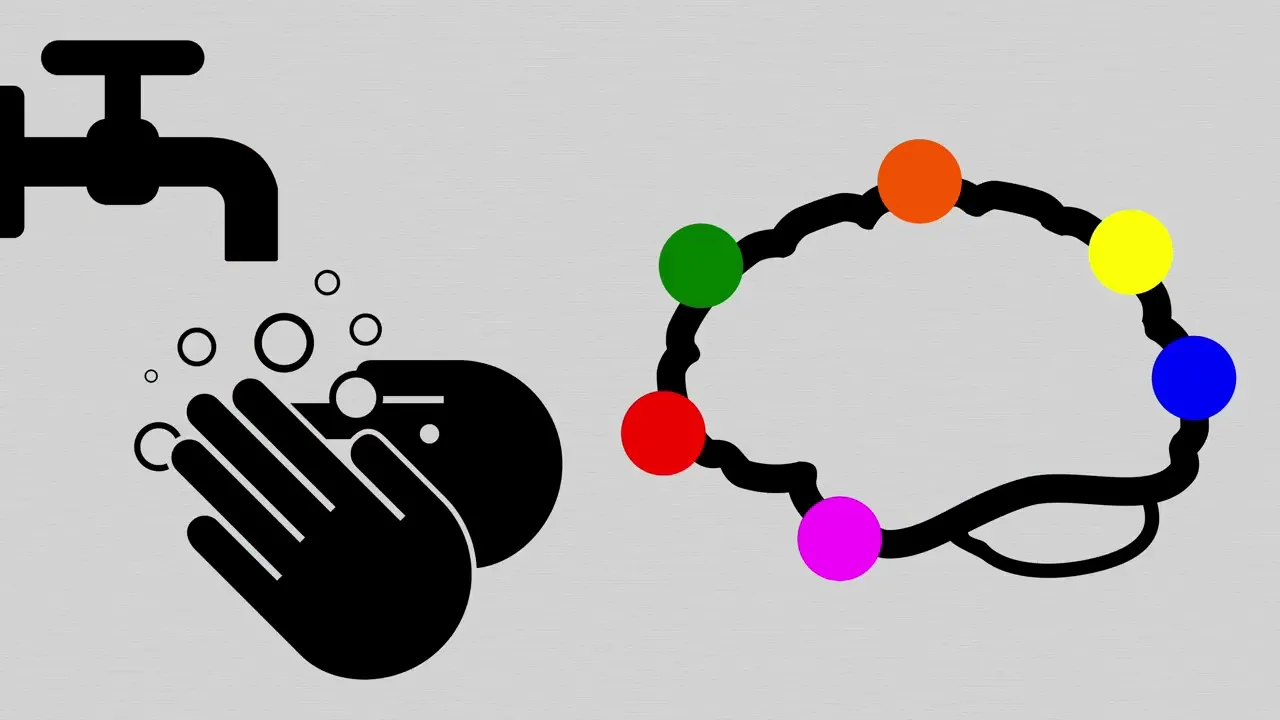
Just as physical pathogens search for vulnerabilities in an immune system, cognitive pathogens target the primary weak points of human cognition: emotions. When ideas press emotional buttons, hosts share them at measurably higher rates. Not all emotions function equally in transmission; sadness rarely travels far, whereas awe proves remarkably potent. Content mills intentionally design weaponized thought germs that leverage awe, deploying clickbait headlines such as "7 whatevers that will blow your mind" or "The Shocking Secret behind... this thing." Yet no emotional trigger is more virulent than pure fury. As CGP Grey observes, “Anger, bypasses your mental immune system, and compels you to share it.” Because anger disables critical evaluation, recognizing these mental vulnerabilities becomes an essential part of basic intellectual hygiene—the psychological equivalent of learning how to wash one's hands.
- Thought germs depend on host brains for survival: “A thought without a brain to think it, dies.” - Physical sneezes transmit flu germs via snot through the mouth; social media posts transmit thought germs via words and images through the senses. - Sadness acts as a poor transmission vector, awe functions effectively, and anger provides the ultimate competitive advantage for propagation.
[01:45](https://www.youtube.com/watch?v=rE3j_RHkqJc&t=105s) Mutation, Evolution, and Meme Super-Stardom
While biological pathogens received an unprecedented evolutionary boost from the invention of transatlantic aviation, intellectual germs experienced that exact qualitative leap through the creation of the Internet. The overwhelming majority of photographs taken every day—such as the endless sea of unshared baby and cat snapshots uploaded online—die swift, quiet deaths without spreading to a secondary host. However, when an amusing image enters the digital bloodstream, it gains the ability to leap effortlessly from mind to mind. Along the transmission route, host brains do not merely relay the thought germ intact; they intermittently mutate it through image modifications, humorous edits, and tweaked captions.
Most of these random alterations are clumsy or uninspired, but occasionally a modification enhances the humor, making subsequent hosts far more inclined to pass it along. This increased transmission invites further rounds of variation, enabling a humble pet picture to achieve transient, hours-long global brain domination. As CGP Grey points out, “The Internet, with its unparalleled ability to share and randomly change thought germs can't help but help make them stronger.” For harmless jokes, this hyper-charged evolutionary environment is entertaining. When applied to outrage-inducing ideas, however, the evolutionary pressure becomes toxic. Angry thought germs mutate to become progressively more aggravating, aggressive, and inflammatory, easily outcompeting and drowning out rival viewpoints that may be completely accurate but far too boring to incite a reflexive share.
```mermaid flowchart TD accTitle: Evolutionary Cycle of a Thought Germ accDescr: Diagram showing how thought germs spread, mutate on the internet, and either burn out or achieve widespread virality.
subgraph Transmission["Infection & Spread"] A["Original Thought Germ<br>(Image, Joke, or Outrage)"] --> B["Host Brain Adopts Thought"] B --> C["Host Shares Across Network"] end
subgraph Mutation["Evolutionary Pressure"] C --> D["Random Mutations<br>(Tweaked Captions, Edits)"] D --> E{"Mutated Impact"} E -->|"Boring / Ineffective"| F["Fails to Spread<br>(Germ Dies Out)"] E -->|"More Enraging or Funnier"| G["Higher Virality<br>(Global Domination)"] end
G --> C ```
- Transatlantic air travel accelerated germ spread in the physical world; the Internet provided the identical superhighway for mental germs. - Mutation happens when users alter content with Photoshops or adjusted captions before sharing it forward. - Distorted, inflammatory variants consistently out-compete accurate, nuanced, and boring facts because heightened outrage drives sharing behavior. - Highly contagious thought germs frequently suffer from rapid burnout, sweeping through available populations so fast that their entire cultural life cycle plays out within a single week.
[03:01](https://www.youtube.com/watch?v=rE3j_RHkqJc&t=181s) Symbiotic Anger Germs and Polarization
Pathogens that burn through a population too quickly face eventual extinction when consensus is reached, because once everyone in a community agrees, conversation naturally dwindles and minds move on. To survive, certain ideas avoid burnout by latching onto an ideological rival. When an opposing thought germ enters the arena, an endless argument erupts, keeping both concepts active indefinitely. As disputes grow louder, their heightened visibility draws in previously uninvolved spectators, turning even the most trivial internet forum or solemn national conversation into an explosive, sky-spanning double rage storm. Under the surface, these hostile concepts are not actually locked in mortal combat; they have entered an evolutionary alliance. As CGP Grey explains, “Thought germs on opposite sides of an argument can be symbiotic.” By provoking one another, they guarantee mutual survival, retaining residency inside human minds far longer than either could on its own.
A key evolutionary adaptation utilized by these symbiotic outrage vectors is the binary framing of "you're with us or against us." This divisive tactic corners neutral observers, forcing them to abandon nuance and take a side, which simultaneously feeds and swells the opposing faction. While human partisans genuinely believe they are fighting an apocalyptic war to the bitter end, the parasitic anger germs view the battlefield entirely differently: one political tribe is a field of flowers, and the opposing tribe is a swarm of butterflies. Planting more partisan flowers inevitably breeds more butterflies, which in turn pollinate more partisan flowers. Whenever an intractable conflict cleanly bisects an entire population, defies resolution, and pulls in even the most neutral individuals, it is not evidence of an impossible ideological impasse, but rather a demonstration of a perfectly balanced, ecologically stable pair of symbiotic outrage germs feeding on each other.
- Total consensus leads to conversational exhaustion and the eventual death of the thought germ. - Active disagreement provides the ongoing fuel that keeps ideas lodged in host brains over extended durations. - Partisan conflict operates as a mutualistic relationship: “Because though the participants think they're involved in a fiery battle to the death from the anger germs' perspective one side is a field of flowers and the other a flock of butterflies.” - The "with us or against us" rule destroys moderate ground, driving recruits into both camps simultaneously.
[04:53](https://www.youtube.com/watch?v=rE3j_RHkqJc&t=293s) Echo Chambers, Enraging Totems, and Mental Hygiene
As hostile coalitions expand, their day-to-day engagement undergoes a depressing structural shift: the rival camps rarely communicate with one another directly. Instead, network analysis of digital interactions demonstrates that each faction retreats into a quasi-isolated informational territory. Inside these separate silos, members spend the vast majority of their energy talking to themselves about how infuriating the other group is. As these closed subcultures become dedicated incubators for ideas concerning the opposition, accuracy is cast aside in favor of sheer emotional intensity. The fastest-spreading depictions are never the nuanced realities of the opposing camp, but rather the most provocative caricatures imaginable. Through repeated retellings and viral mutations, each community inevitably builds an artificial totem of the enemy designed specifically to maximize outrage. As CGP Grey remarks, “A group almost can't help but construct a totem of the other so enraging they talk about it all the time -- which, now that you know how thought germs grow, is exactly what make the totem always perfectly maddening.”
Recognizing these dynamics is not meant to imply that all human argumentation is futile, that digital interconnectedness lacks value, or that people should surrender the desire to persuade others on vital matters. Intellectual concepts of every stripe will always sweep across cultures and recede. However, staying rational requires recognizing how ideas exploit visceral emotional weaknesses to facilitate their own replication, evolving into ever more virulent strains as thousands of hosts randomly tweak and sharpen them. To protect one's cognitive autonomy, an individual must remain deeply skeptical of ideas that have circulated through vast crowds of agitated brains, especially when those ideas strike directly at personal emotional vulnerabilities. CGP Grey concludes with a simple plea for individual intellectual care: “It's your brain -- be hygienic with it.”
- Network mapping reveals that polarized internet factions primarily talk internally about their opponents rather than directly debating them. - Insular online communities breed exaggerated totemic representations of the outside group that are engineered by evolutionary selection to be as maddening as possible. - Ideas that pass through millions of minds become optimized for virality and emotional exploitation rather than truth or nuance. - Practicing mental hygiene means viewing emotionally charged, highly circulated ideas with deep caution and safeguarding one's brain against reflexive outrage.
## Notable quotes > [03:01](https://www.youtube.com/watch?v=rE3j_RHkqJc&t=181s) Thought germs on opposite sides of an argument can be symbiotic. — CGP Grey
> [00:00](https://www.youtube.com/watch?v=rE3j_RHkqJc&t=0s) Anger, bypasses your mental immune system, and compels you to share it. — CGP Grey
> [01:45](https://www.youtube.com/watch?v=rE3j_RHkqJc&t=105s) The Internet, with its unparalleled ability to share and randomly change thought germs can't help but help make them stronger. — CGP Grey
> [00:00](https://www.youtube.com/watch?v=rE3j_RHkqJc&t=0s) A thought without a brain to think it, dies. — CGP Grey
> [04:53](https://www.youtube.com/watch?v=rE3j_RHkqJc&t=293s) It's your brain -- be hygienic with it. — CGP Grey
## Mentioned CGP Grey, Jonah A. Berger, Katherine L. Milkman, What Makes Online Content Viral?, Broke for Free, Patreon, YouTube
## Video description CGP Grey on Patreon: https://www.patreon.com/cgpgrey
"What Makes Online Content Viral?" By Jonah A. Berger & Katherine L. Milkman http://papers.ssrn.com/sol3/papers.cfm?abstract_id=1528077
Special Thank You to My Bonnie Bees:
Tyler Morris, Marvin Sponaugle, Rolf Røsand, PervertedThomas, rictic, Ian, Saki Comandao, Edward DeLany, Jake Stolhandske, Ron Bowes, TÛmas ¡rni JÛnasson, Mikko , Derek Bonner, Derek Jackson, Iain Flockton, Jim , Sokhom Chhim, Finn Kelly, Christine Dˆnszelmann, Orbit_Junkie , Stephen Chen, Borislav Slavov, Jessie , Mark Elders, Eren Polat, Veronica Peshterianu, Daniel Heeb, Ernesto Jimenez, Paul Tomblin, Travis Wichert, Andrew Bailey, Teddy , Ruud Hermans, Alex Morales, Ryan E Manning, Linh , Erik Parasiuk, Rhys Parry, Arian Flores, Maarten van der Blij, Eric Stangeland, Sam Kokin, Kevin Anderson, Gustavo Jimenez, Thomas Petersen, Kyle Bloom, Osric Lord-Williams, Myke Hurley, David , Ryan Nielsen, Esteban Santana Santana, Terry Steiner, Dag Viggo Lok¯en, Tristan Watts-Willis, John Rogers, Edward Adams, Ryan , Kevin , Nicolae Berbece, Leon , Alexander Kosenkov, Daniel Slater, Sunny Yin, Sigurur SnÊr EirÌksson, Maxime Zielony, Anders , ken mcfarlane, AUFFRAY Clement, Aaron , Bill Wolf, Himesh Sheth, Thomas Weir, Caswal Parker, Brandon Callender, Pierre Perrott, Mr.Z , Timothy Moran, Peter Lomax, ÿrjan Sollie, Emil , Kelsey Wainwright, Richard Harrison, Ali Moeeny, Lachlan Holmes , John Bevan, Dan Hiel, Callas , John Lee, Tijmen van Dien, ShiroiYami , Owen Degen, Tobias Gies, Alex Schuldberg, Ryan Constantin, Bear , Lars , Jacob Ostling, Guillaume PERRIN, John Waltmans, Solon Carter, Joel Wunderle, Rescla , GhostDivision , Andrew Proue, David Lombardo, Tor Henrik Lehne, David Palomares, Cas EliÎns, paul everitt, Karl Johan Stensland Dy, Freddi H√∏rlyck, Keng , Ian N Riopel, Ilan , Elizabeth Keathley, Juan Villagrana, Israel Armando, Panot , John Buchan, Jarred Filmer, Mark Tauno Flink Ellis, Christian Cooper, Chris Woodall, Michael Little, Philipp Lee, Jonathan Wilcox, Ben Brisson, Jennifer Richardson, Rustam Anvarov
Music by Broke for Free. http://brokeforfree.com/
[Source](https://www.youtube.com/watch?v=rE3j_RHkqJc)