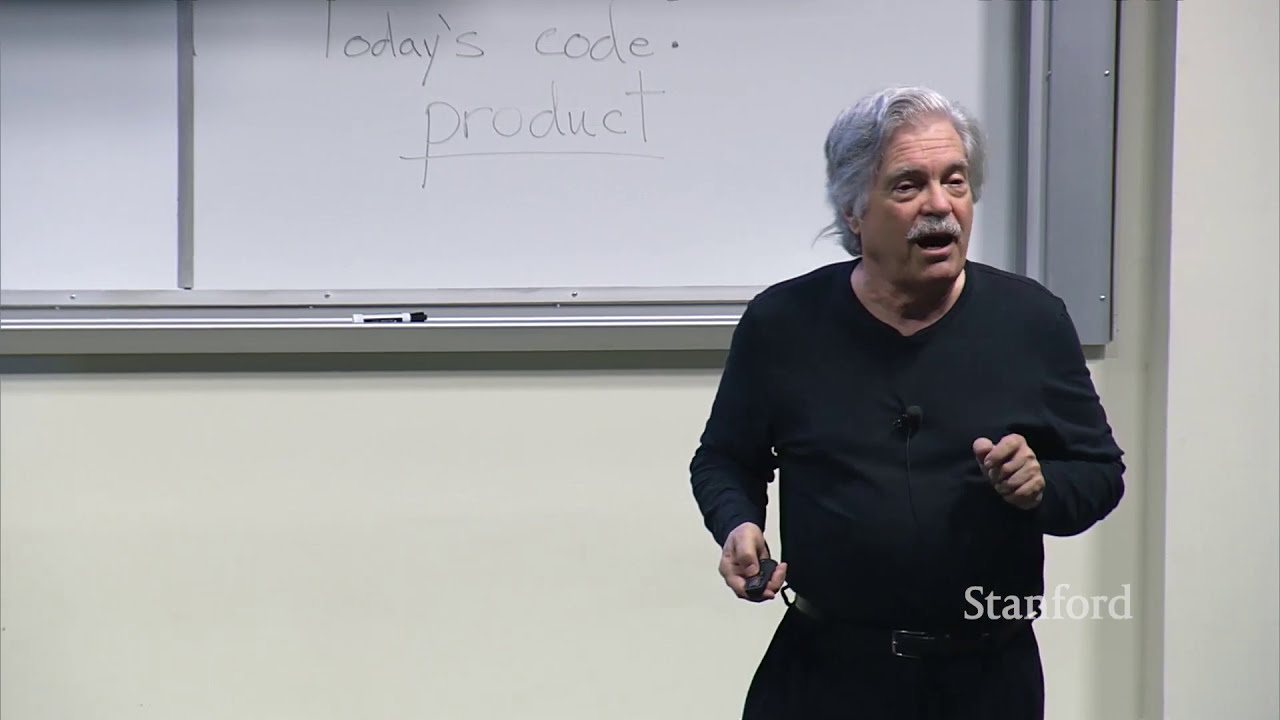
Alan Kay argues that contextual worldview is worth roughly 80 IQ points, illustrating that modern individuals with ordinary IQs solve problems that stumped ancient geniuses because they inherit centuries of scientific infrastructure. (0:11)
Only a fraction of Xerox PARC innovations successfully transferred to commercial computing: while laser printing, Ethernet, and PostScript reached near-complete adoption, modern operating systems discarded fundamental concepts like persistent object workspaces, dynamic inter-process linking, and native collaboration. (16:21)
Human biology traps perception inside a predictive 'waking dream' through mechanisms like retinal blind spots and size constancy, meaning people cannot learn to truly see until they acknowledge their innate perceptual blindness. (27:31)
Kay warns founders against building technological amplifiers for genetically hardwired impulses like tribal revenge and short-term cravings, cautioning that pairing Paleolithic brains with modern informational tools creates the digital equivalent of cave dwellers armed with nuclear weapons. (42:47)
Detailed notes
## Background
Published on YouTube by Stanford Online on May 30, 2017, as part of Stanford's CS183F Startup School, this lecture features personal computing pioneer Alan Kay delivering the second part of his series on inventing the future. According to the page description, Kay—who envisioned laptops and graphical user interfaces years before their commercial realization through his work at Xerox PARC, Apple, HP, and Disney—explores the development of computational tools designed to improve the human mind.
## TL;DR
Alan Kay argues that historical context and visionary funding models matter far more than raw IQ, demonstrating through rescued Smalltalk-78 systems how Xerox PARC created dynamic, active media architectures that modern operating systems and the web largely abandoned. Distributing physical 'Reality Kits' to the audience, Kay conducts optical experiments to prove that human perception is an invented waking dream dominated by biological blind spots and genetically hardwired impulses. He cautions startup founders against building technological amplifiers that exploit primitive cravings for quick commercial profit, characterizing addictive platforms as informational weapons wielded by Paleolithic minds. Ultimately, Kay calls on the audience to reject the stagnant compromises of modern computing and actively wake up rather than adapting to an intellectually impoverished status quo.
## Atmosphere & style
The lecture carries an urgent, intellectually bracing energy, blending Kay's dry professorial wit with searing critiques of contemporary Silicon Valley. Armed with hands-on props, salvaged software demos, and blunt historical analogies, Kay moves from playful scolding of the audience to profound philosophical lamentation over computing's lost potential. Watching it feels like a provocative masterclass from an elder statesman who refuses to indulge modern complacency, leaving listeners with an unsettling challenge to examine their own perceptual and cultural blind spots.
## Bulletin
- [00:11](https://www.youtube.com/watch?v=1e8VZlPBx_0&t=11s) Alan Kay argues that contextual worldview is worth roughly 80 IQ points, illustrating that modern individuals with ordinary IQs solve problems that stumped ancient geniuses because they inherit centuries of scientific infrastructure.
- [16:21](https://www.youtube.com/watch?v=1e8VZlPBx_0&t=981s) Only a fraction of Xerox PARC innovations successfully transferred to commercial computing: while laser printing, Ethernet, and PostScript reached near-complete adoption, modern operating systems discarded fundamental concepts like persistent object workspaces, dynamic inter-process linking, and native collaboration.
- [27:31](https://www.youtube.com/watch?v=1e8VZlPBx_0&t=1651s) Human biology traps perception inside a predictive 'waking dream' through mechanisms like retinal blind spots and size constancy, meaning people cannot learn to truly see until they acknowledge their innate perceptual blindness.
- [42:47](https://www.youtube.com/watch?v=1e8VZlPBx_0&t=2567s) Kay warns founders against building technological amplifiers for genetically hardwired impulses like tribal revenge and short-term cravings, cautioning that pairing Paleolithic brains with modern informational tools creates the digital equivalent of cave dwellers armed with nuclear weapons.
## Key takeaways
- [00:11](https://www.youtube.com/watch?v=1e8VZlPBx_0&t=11s) Inventing the future requires projecting a perspective decades forward and bringing it back, rather than incrementally crawling out of the present.
- [00:11](https://www.youtube.com/watch?v=1e8VZlPBx_0&t=11s) Context outweighs raw intelligence, functioning as an 80 IQ point multiplier that enables ordinary minds in the right era to surpass the greatest thinkers of antiquity.
- [03:30](https://www.youtube.com/watch?v=1e8VZlPBx_0&t=210s) The quality of groundbreaking research correlates directly with the quality of funders who award trust and resources in advance rather than rewarding past accomplishments.
- [08:50](https://www.youtube.com/watch?v=1e8VZlPBx_0&t=530s) Smalltalk-78 was built as an active media environment modeled on the ARPANET, where all components are independent virtual computers rather than isolated, static application silos.
- [13:46](https://www.youtube.com/watch?v=1e8VZlPBx_0&t=826s) Modern web browsers and operating systems represent major architectural regressions by forcing users into siloed apps and non-executable, passive media formats.
- [16:21](https://www.youtube.com/watch?v=1e8VZlPBx_0&t=981s) PARC breakthroughs succeeded in the commercial market only when the industry had no pre-existing misconceptions about how to implement them, as seen in Ethernet and PostScript.
- [19:25](https://www.youtube.com/watch?v=1e8VZlPBx_0&t=1165s) Current mobile devices and tablets prioritize low-effort finger consumption over high-throughput knowledge work, abandoning the integrated tool use envisioned for the Dynabook.
- [24:00](https://www.youtube.com/watch?v=1e8VZlPBx_0&t=1440s) Reality acts as a low-pass filter that severely attenuates new ideas, requiring innovators to start with enormous concepts so that meaningful substance survives.
- [27:31](https://www.youtube.com/watch?v=1e8VZlPBx_0&t=1651s) The human brain compensates for physiological visual flaws by fabricating seamless perceptions, meaning waking consciousness operates largely as a predictive hallucination.
- [30:57](https://www.youtube.com/watch?v=1e8VZlPBx_0&t=1857s) Belief systems override direct sensory evidence—such as retinal projections of size—to preserve perceived stability, trapping individuals within private constructed realities.
- [35:23](https://www.youtube.com/watch?v=1e8VZlPBx_0&t=2123s) Cultural ruts constrain thinking within unexamined planes of consensus, treating truly orthogonal ideas as insane until a systemic paradigm shift occurs.
- [42:47](https://www.youtube.com/watch?v=1e8VZlPBx_0&t=2567s) Genetically hardwired human universals (such as revenge, gossip, and tribalism) are easily exploited by tech products, whereas vital cultural inventions (like science, literacy, and law) require rigorous, unnatural training.
- [48:16](https://www.youtube.com/watch?v=1e8VZlPBx_0&t=2896s) Unchecked modern media and social platforms act as informational weapons that empower Paleolithic cognitive machinery without providing the education needed to manage them safely.
- [52:08](https://www.youtube.com/watch?v=1e8VZlPBx_0&t=3128s) Mainstream operating systems still fail to implement the real-time screen-sharing and interactive collaboration demonstrated by Douglas Engelbart in 1968.
- [52:08](https://www.youtube.com/watch?v=1e8VZlPBx_0&t=3128s) Biological evolution and market competition merely fit organisms to a specific niche rather than optimizing for excellence; adapting uncritically to an impoverished environment guarantees mediocre results.
- [55:43](https://www.youtube.com/watch?v=1e8VZlPBx_0&t=3343s) The primary duty of the next generation of technologists is to resist adapting to today's weak computing environment and actively work to overturn its compromises.
## Detailed walkthrough
### [00:11](https://www.youtube.com/watch?v=1e8VZlPBx_0&t=11s) Bringing the Future Back and the Trap of Raw IQ
Alan Kay opens by reflecting on his shifting title for the class, noting that rather than trying to crawl forward from a confusing present that merely masquerades as reality, the real goal is to go out into the future and bring it back. Acknowledging that he failed to cover everything planned for the prior lecture, Kay vents playfully about the rigid time constraints of the classroom format: “And finally, I decided **** it I'm going to do both of these talks again without an audience to do them to their natural length.” He points out that online audiences are not bound to fifty-minute hours and jokingly takes the audience to task over their lack of engagement: out of everyone listening, he received only three emails, and only one of them was interesting. As he puts it, “That means that either or both of my talk isn't interesting, or you're not interesting, or both. So try and, at least, disabuse me of the latter.”
To illustrate why intellect alone is insufficient, Kay presents the contrast between Leonardo da Vinci and Henry Ford. Leonardo was undeniably brilliant, yet if a person with twice Leonardo's IQ were born in 10,000 BC, they would accomplish virtually nothing before being burned at the stake. Even in the Renaissance, Leonardo could not invent a functioning motor for any of his vehicles because the surrounding foundation simply did not exist. By contrast, Henry Ford—possessing nowhere near Leonardo's raw intellect—built industrial processes that turned out millions of automobiles priced at $800 each. The difference was not genetic genius, but historical context: Ford was born into the nineteenth century, inheriting centuries of accumulated knowledge kickstarted by seventeenth-century figures like Isaac Newton, who radically transformed human worldview from the Middle Ages into science and mathematics.
Kay numbers his foundational rule as "zeroth" because context precedes everything else: “Context or point of view is worth 80 IQ points.” A modern individual with an ordinary IQ of 110 or 120 who understands calculus can effortlessly solve problems that completely stumped Archimedes and the greatest minds of antiquity.
```mermaid
flowchart LR
accTitle: The Context Multiplier
accDescr: Diagram contrasting raw IQ trapped in antiquity against modest IQ empowered by modern context.
subgraph AncientContext["Wrong Context (e.g., 10,000 BC)"]
A["Genius IQ (Leonardo da Vinci)"] --> B["Zero Infrastructure / Math"]
B --> C["Negligible Progress"]
end
subgraph ModernContext["Right Context (17th–20th Century)"]
D["Modest IQ (Calculus / Industrialization)"] --> E["Accumulated Scientific Context"]
E --> F["Mass Production & Computation"]
end
```
[03:30](https://www.youtube.com/watch?v=1e8VZlPBx_0&t=210s) Context, Good Funders, and the History of Computing Systems
Expanding on his hierarchy of intellect, Kay delivers a sharp aphorism: “knowledge is silver, context is gold. And, IQ is just lead.” Raw IQ acts as a lead weight because clever people fall into the trap of believing that being the smartest person in the room makes them self-sufficient. Even if someone were the smartest person in a room holding the 100 brightest people on Earth, that individual would still be outmatched by the other 99 collaborating together. He reminds the programmers in the audience of Tony Hoare’s classic aphorism about the traps of excessive cleverness: “Tony Hoare, really great guy, was here at Stanford for awhile Turing winner, said debugging is harder than programming so don't use all your cleverness to write the program.”
Kay presents his second major principle: “the goodness of the results correlates most strongly with the goodness of the funders.” Transformative breakthroughs across computer science did not happen because researchers decades ago were inherently smarter than today's engineers; every generation possesses equally smart people. The difference lies in funding models that grant radical trust up front. Conventional institutions hand out accolades forty years later to people in their sixties and seventies, whereas visionary funders hand out the equivalent of gold medals in advance, accepting that 70% will inevitably turn to lead because the grants are awarded before results exist.
He then rapidly chronicles the physical breakthroughs that laid the groundwork for personal interactive computing, noting how the pursuit of the "better" or "perfect" frequently sabotages what is genuinely required:
- **Bendix G-15 (mid-1950s):** Built by Harry Huskey (who passed away past the age of 100), an early small-scale machine with personal qualities.
- **LINC (Laboratory Instrument Computer):** Wesley Clark's design, which Kay considers the first true personal computer. Clark famously excelled at the extremes, having also designed the building-sized TX-2 computer on which Ivan Sutherland built Sketchpad.
- **FLEX machine:** Built by Kay and Ed Cheadle, an early desktop computer that anticipated modern personal computer forms.
- **The Dynabook (1968):** Kay’s conceptual leap sparked after encountering Seymour Papert’s work with children and computers, driven not simply by the hardware idea of a slate or tablet, but by a romantic conviction of what computing could do to empower a child’s mind.
Bringing such concepts into reality requires projecting a glimmer thirty or more years out, seeing if it makes sense in that distant era, and then dragging it back into the present. To test the software thirty years ahead of its time, researchers built hardware supercomputers to simulate future environments five to eight years early, creating entirely new trillion-dollar industries rather than chasing incremental billions.
[08:50](https://www.youtube.com/watch?v=1e8VZlPBx_0&t=530s) Smalltalk-78 Resurrected: Objects, Projects, and Active Media
Moving into practical demonstrations of Xerox PARC’s output, Kay showcases a restored Smalltalk-78 system running on a simulated Dorado—the powerful, portrait-to-landscape successor to the Xerox Alto featuring a display larger than XVGA. The screen displays high-resolution bitmap graphics achieved using the Floyd–Steinberg error-diffusion dithering algorithm developed in the 1970s by Robert Floyd and Louis Steinberg, working partly at PARC. Kay reveals that this historical software was salvaged from a literal garbage dump: Xerox discarded most of the original disk packs detailing PARC's breakthroughs, but a handful were rescued, including a pack containing the 1978 Smalltalk environment that was demonstrated to Steve Jobs during his historic visit to PARC in 1979.
Kay clarifies that Smalltalk was constructed as a pure object system fundamentally modeled on the architecture of the ARPANET/internet: “Because the idea was to have one-to-one correspondence between the idea of little logical computers. Which is what we called objects that could send messages around and make an entire system.” Because every component is an independent, interacting virtual machine, the traditional concept of an isolated "application" disappears entirely:
- **Direct Manipulation & Gestures:** The user interface directly manipulates objects; markup and text formatting occur in-place using character and gesture recognizers inherited from the GRAIL system (such as drawing a flick to auto-generate a clean arrow or using gesture strokes to control text justification).
- **Persistent Project Workspaces:** Instead of launching and quitting siloed programs and endlessly copying-and-pasting across rigid boundaries, Smalltalk-78 organizes user activities into distinct "Projects." Each project acts as an infinite, persistent desktop holding live objects, documents, and tools tailored to an ongoing task. Kay laments that Apple failed to understand or adopt this workflow model, leaving modern operating systems stuck in rigid, app-centric silos.
- **Active, Embeddable Media:** Kay demonstrates an article written in 1975 by a 13-year-old girl for *Creative Computing* magazine. Rather than being static desktop publishing text, the document contains live, executable Smalltalk code blocks right inside the text flow. The reader or author can type commands to draw, manipulate, and rotate graphical boxes interactively, illustrating an architecture where media is fundamentally active and dynamic rather than passive text.
[13:46](https://www.youtube.com/watch?v=1e8VZlPBx_0&t=826s) The Flaws of the Web and Live Object-Oriented Interactivity
Alan Kay criticizes the architecture of the modern web and browsers, pointing out that even when reading an article about a programming language like Logo, users cannot execute Logo code inside the page. He stresses that the system is running on a computer, yet web design completely ignores this foundational power:
> “If you look at it closely, you'll see the web design and the web browser are two of the worst things ever done in computing.”
To illustrate what real computing systems should do, Kay demonstrates an interactive Smalltalk animation system running on an Alto environment. He shows an animation of a bouncing ball that lacks squashing when it hits the ground. In an ordinary, rigid software system without an explicit squash feature, a user would be stuck. However, because everything is built out of live, relational objects, the user can inspect the interface of the bouncing ball, locate the `current frame` property, and bring up an independent painting window.
By using a gesture recognizer, Kay draws a line directly between the painting window and the animation interface, creating a dynamic link where the painter's picture becomes the animation's current frame. Once latched together, the animation resumes running while the user paints the ball in real time. Kay emphasizes that this style of interaction directly echoes Ivan Sutherland’s Sketchpad, asking why modern software cannot do this today. When systems provide unlimited live objects, capabilities far beyond commercial tools like PowerPoint emerge naturally, allowing users to sequence entire desktop environments as dynamic "projects."
```mermaid
flowchart LR
accTitle: Live Object Linking Architecture
accDescr: Connecting a painter window directly to an active animation frame using gesture recognition.
subgraph Painter ["Painter Window"]
P_Img["Painter Picture"]
end
subgraph Link ["Dynamic Gesture Binding"]
G_Line["Gesture Recognized Line"]
end
[16:21](https://www.youtube.com/watch?v=1e8VZlPBx_0&t=981s) How Much Xerox PARC Innovation Actually Escaped
Kay directly addresses a question from Sam Altman regarding how much of the work done at Xerox PARC made it into the commercial world. He walks through the major PARC breakthroughs, assigning rough percentages to what survived commercialization:
- **The Alto Architecture (~50%):** Half made it out. Xerox PARC attempted to convince Intel and Motorola to adopt microcode architectures suited for executing high-level languages efficiently with on-the-fly modifications, but Intel showed zero interest in modern programming paradigms.
- **The Graphical User Interface (GUI) (~70%):** The idea of an "unlimited desktop" full of interrelated dynamic projects was discarded because vendors insisted on packaging and selling isolated, monolithic applications.
- **Desktop Publishing (~70%):** Hampered by the same application-silo restrictions.
- **Programming Methodology (~10%):** The vast majority failed to transfer.
- **Laser Printer (~90%):** Highly successful commercial transition.
- **PostScript (100%):** Fully realized because its PARC creators, Chuck Geschke and John Warnock, founded Adobe and commercialized it precisely as intended.
- **Ethernet (100%):** Succeeded completely because there was no competing standard.
- **Internet (100%):** Total adoption due to the lack of competing alternatives.
- **Peer-to-Peer and Client-Server (~50%):** Only partially realized.
Kay summarizes the root cause of these disparities:
> “And so one way of looking at this is, what came out most successfully were the things for which people already out there didn't think they already knew how to do it.”
Because industry programmers already thought they understood how to program, resistance to the Smalltalk object model and architecture was absolute. Intel, in particular, lacked interest in computing software, with Andy Grove originally opposing the very idea of putting a CPU on a chip.
---
[19:25](https://www.youtube.com/watch?v=1e8VZlPBx_0&t=1165s) The Dynabook, Missing Tools, and Software Architecture
Turning to mobile hardware, Kay evaluates the Dynabook's legacy, rating its survival rate at only 10%. He criticizes modern tablets, targeting Steve Jobs and early Apple decisions around the iPad:
> “All he was doing was selling sugar water to babies.”
Kay explains that two-year-olds and ninety-two-year-olds use bare fingers, but everyone in between uses tools to manipulate media. When Steve Jobs sent Kay the original iPad for feedback, Kay immediately used a capacitive stylus and a ruler in an Autodesk drawing application. While the underlying touch screen’s centroid-calculation hardware was exceptionally accurate and linear, Apple omitted any stylus storage or keyboard integration until years later with the iPad Pro. Referring to Douglas Engelbart’s demonstrations and tablet research from the mid-1960s, Kay emphasizes that neither a pure stylus interface nor a pure touch screen is sufficient for high-volume work—a hardware keyboard is mandatory for high-throughput text entry.
Kay mocks the notion that computing should be simplified to zero learning curve. Engelbart anticipated that people would spend 6 to 8 hours daily at a workstation and designed high-throughput interfaces accordingly. Kay points out the absurdity of modern knowledge workers spending their entire workday using interfaces meant for casual 2-second interactions, comparing it to poorly designed building architecture:
> “So what you guys are doing is using your computers for 6 to 8 hours a day and using interfaces that are made for a couple of seconds a day.”
He also touches on the lost potential of distributed computing architectures. Smalltalk was conceptualized as a software internet where every object is an isolated, message-passing computer that can migrate transparently across local memory or wide-area network links. He references Gerald Popek's work at UCLA on the LOCUS distributed operating system (built on Unix and documented in an MIT Press book) as an essential roadmap for addressing internet scaling through migrating objects.
---
[24:00](https://www.youtube.com/watch?v=1e8VZlPBx_0&t=1440s) Principle 21: Reality as a Low-Pass Filter and the Reality Kit
Kay lays out Principle 21 of innovation:
> “Reality is a low-pass filter.”
Because the surrounding world acts as a low-pass filter that strips out high-frequency nuance, one must start with radical, enormous ideas so that whatever survives the filter remains significant. If an innovator works on a mediocre or bad idea, the filter attenuates it down to a "dial tone."
To prove that the intrinsic merit of an idea does not guarantee adoption, Kay references John Dessauer's book from the 1960s about the birth of the Xerox copier. Prior to its massive success, Xerox offered full licensing rights to IBM. IBM turned it down after hiring consultants who concluded there was zero market for plain-paper copiers—failing to see that people did not make copies simply because current technology was inadequate. Kay notes that he could write his own book titled *Our Years with Xerox, the Trillions Nobody Wanted*.
Kay then distributes physical "Reality Kits" to the audience to demonstrate human perceptual limitations. After scolding latecomers and tossing out additional kits, he instructs everyone to lay the card down, close their right eye, fixate on the printed plus sign (`+`) with their left eye, and slowly draw the paper inward until the adjacent shape lands squarely in the eye's physiological blind spot and vanishes.
[27:31](https://www.youtube.com/watch?v=1e8VZlPBx_0&t=1651s) The Blind Spot and Waking Dreams
Alan Kay guides the audience through a hands-on visual experiment where an object placed in the visual field completely vanishes. When asking the audience what they see in place of the missing dot, attendees report seeing empty black space or continuous text, which Kay points out is an impossible contradiction: the dot physically disappears because of eye anatomy, yet the brain refuses to acknowledge a void. Kay explains that the human eye is notoriously poorly engineered because blood vessels run directly in front of light-detecting photoreceptor cells, requiring the brain to constantly filter them out. The optic nerve creates a literal gap with zero light-sensitive cells, away from the high-acuity fovea. Squids, Kay jokes, received a far superior design if one is arguing theology with a creationist.
```mermaid
flowchart TD
accTitle: Visual Perception and Brain Reconstruction
accDescr: Light hits a flawed retina, enters the blind spot where no cells exist, and the brain invents data to maintain a seamless waking dream.
subgraph Eye["Flawed Biology of the Eye"]
A["Incoming Light"] --> B["Blood Vessels in Front of Detectors"]
B --> C["Retinal Blind Spot<br>(Optic Nerve Exit / No Receptors)"]
end
subgraph Brain["Neural Hallucination"]
C --> D["Sensory Absence"]
D --> E["Belief System & Predictive Processing"]
E --> F["Fabricated Visual Fill-in<br>('The Waking Dream')"]
end
```
Kay introduces Principle 22: humans have a physical blind spot, and the brain simply invents content to patch the hole. This process of visual filling-in is identical to how the brain constructs hallucinations during sleep, revealing that human beings are effectively dreaming during waking hours as well. This leads directly to Principle 23 and Kay's core philosophical premise on perception:
> “And a powerful idea about that is number 23 is that we can't learn to see until we realize and admit that we are blind.”
Most people navigate life believing they perceive raw reality, creating massive global misunderstanding. Reiterating Principle 0, Kay reminds the students that experiencing an idea through multiple perspectives provides an intellectual lift equivalent to gaining 80 IQ points.
[30:57](https://www.youtube.com/watch?v=1e8VZlPBx_0&t=1857s) Poker Chips, Size Constancy, and the Mind's Eye
Moving to the next physical kit item, Kay instructs everyone to pry loose their plastic poker chips and hold them up with one chip roughly twice as far away as the other. Optically and mathematically, the farther chip subtends half the visual angle, meaning its image on the physical retina is half the size of the near chip—a geometric truth René Descartes confirmed centuries ago by peeling back the retina of an ox eye to test whether biological lenses follow the laws of glass optics. Yet when looking at the chips, they appear virtually identical in size.
Kay explains that sensory inputs from the retina are routed into roughly a dozen brain centers, which run cognitive processes atop neural biological hardware. Before a human consciously recognizes an object, sensory data is passed through their embedded belief system. Because the brain holds the hard-coded belief that two identical poker chips (or quarters, or oranges) do not change their physical dimensions in space, it overrides raw retinal data to preserve perceived stability. Kay notes that trained artists must break this perceptual shortcut—known as size constancy—by holding out a rigid arm and physically measuring relative proportions with a pencil, discovering that someone sitting across the room has a head appearing half the size of a person sitting nearby.
```mermaid
flowchart LR
accTitle: Size Constancy Perception Pathway
accDescr: Physical stimuli enter retinal projection and are filtered through the belief system to produce the perceived conscious illusion.
A["Raw Physical Geometry<br>(Distant Chip Subtends Half Angle)"] --> B["Retinal Hardware Input"]
B --> C["Belief Processing<br>('Chips are identical')"]
C --> D["Mind's Eye Projection<br>(Size Constancy Illusion)"]
```
From this, Kay delivers Principle 24:
> “The mind's eye is different than our sensory eye.”
Because people conflate what the mind constructs with what is physically out there, they construct a naive common sense based entirely on how things seem. Every individual lives inside a sealed "private universe" composed of personal waking dreams; when two people clash in an argument, it is not logic colliding, but conflicting constructed universes. Kay wryly connects this cognitive trap to Kellyanne Conway's phrase "alternative facts" (transcribed as "Alternate Truths"), emphasizing that genuine science is difficult precisely because a scientist must systematically bypass the perceptual distortions the brain manufactures.
[35:23](https://www.youtube.com/watch?v=1e8VZlPBx_0&t=2123s) Escaping the Pink Plane: Cultural Ruts and Shifting Paradigms
To model how belief systems crystallize, Kay uses the metaphor of rainwater carving gullies into dirt. What begins as a random droplet dislodging a crumb of soil gradually becomes a rut that channels more water, eventually cutting an inescapable canyon like the Grand Canyon. If you are born into that canyon, everything around you is pink stone; you crawl like an ant along a pink plane, completely unaware of the color pink because you have never known anything else, just as a fish has no awareness of water.
Within this mental plane, people can think logically, navigate obstacles, and make minor progress—yet all of it remains trapped within their unexamined pink assumptions. When someone occasionally has an unconventional "blue thought," cultural institutions like schools, universities (even Stanford), churches, temples, and mosques step in to crush the anomaly, treating anything outside normal consensus as insane. Breaking free requires a rare, disorienting shock—often arriving during a solitary moment like a morning run or taking a shower:
> “Holy ****. There's a blue world. Blue world that orthogonal to the one I'm in.”
Kay draws a historical parallel to the Scientific Revolution: moving from medieval thought through Newton to modern science was not an incremental step along the pink plane, but a jump onto a completely orthogonal blue plane. The same leap drove the early ARPA computer pioneers. When they abandoned centralized mainframes to invent personal interactive computing and modern networking, their contemporaries in the computing establishment regarded them as literally insane because the concept did not exist on the prevailing mainframe plane.
- Albert Einstein experienced this conceptual leap at age five while recovering from measles, when his father handed him a magnetic pocket compass. The invisible force aligning the needle convinced Einstein that there was something deeply hidden beneath superficial reality, permanently altering his perspective.
- For over one hundred thousand years, traditional hunter-gatherer cultures survived without realizing they possessed an arbitrary worldview; they assumed their culture was absolute reality, leading them to wage war when encountering differing versions of existence.
- The human genetic baseline defaults to this insular tribal mechanism, requiring humanity to deliberately invent the meta-concept of an "outlook."
[40:06](https://www.youtube.com/watch?v=1e8VZlPBx_0&t=2406s) Media as Invisible Environments and the Shepard Table Illusion
Kay extends this environmental conditioning by citing Marshall McLuhan (transcribed as "Asher Mccluen"), who examined what happens when humans invent transformative technologies like writing and mass media. Just as an infant born anywhere in the world will naturally absorb the French language, habits, and cultural outlook if raised in France, technologies act as pervasive cognitive environments that quietly reshape the human mind.
Kay challenges the audience to consider the psychological impact of living 24/7 in an environment saturated with violent media. The core danger of violent media is not that children receive direct commands to shoot people, but rather that constant exposure alters the baseline of reality:
> “Because what environments do is to take things and normalize them, they make them into part of reality and make things thinkable.”
Concluding this segment, Kay asks the students to unhook the final flap of their lecture kits to reveal a printed tabletop visual illusion (Roger Shepard's "Turning the Tables"). Before the audience begins manipulating the paper cutouts to measure and verify the shapes, Kay challenges their sensory conviction by asserting that the two tabletop surfaces, despite appearing wildly divergent in width and length, are identical parallelograms.
[41:45](https://www.youtube.com/watch?v=1e8VZlPBx_0&t=2505s) Optical Illusions and the Natural State of Humanity
Alan Kay demonstrates a perceptual illusion using a plastic overlay to show that visual perception routinely deceives our conscious judgment. Despite demonstrating the illusion hundreds of times, he notes that he still cannot see the reality without physically placing the plastic guide over the shapes to reveal their identical dimensions. He explains that this cognitive gap illustrates a deeper truth about human psychology: the illusion is not flawed, but rather human perception itself is inherently detached from objective reality. He traces this specific optical experiment back to Roger Shepard at Stanford University, whose book is filled with similar demonstrations of how human mental apparatus constructs reality.
Kay emphasizes that being out of touch with actual phenomena is the baseline human condition. As he warns the students: “If you remember nothing else from this course, remember that the natural state of humanity is to be crazy.” In his definition, craziness is simply lacking accurate internal models for what is actually happening in the outside world. Society merely draws an arbitrary boundary line around certain extreme behaviors to label them pathological, while taking for granted that our everyday perceptions are fundamentally distorted.
[42:47](https://www.youtube.com/watch?v=1e8VZlPBx_0&t=2567s) Human Universals versus Cultural Inventions
Kay discusses the findings of anthropologists who, over the course of roughly 120 years, studied several thousand traditional societies to identify traits present in every single culture without exception. If even one society out of thousands lacked a specific characteristic, that trait was disqualified. The remaining set represents "human universals"—traits embedded directly into our genetic makeup. Referring to Donald Brown’s work on human universals, Kay mentions how impressed he was that Sam Altman reads every book suggested to him, joking that reading quickly is the mark of a good person. Kay frames the relationship between biology and society by noting that genetics supplies the hardwired desires and precursors, while culture merely fills in the local parameters.
```mermaid
flowchart TD
accTitle: Human Universals Versus Inventions
accDescr: Diagram contrasting genetically hardwired traits with difficult-to-learn cultural inventions.
subgraph Genetic["Genetically Hardwired Universals (What We Crave)"]
G1["Oral language & stories"]
G2["Vendetta & revenge"]
G3["Differences over similarities"]
G4["News (recycled categories)"]
end
subgraph Inventions["Difficult Cultural Inventions (What We Need)"]
I1["Reading, writing & math"]
I2["Legal systems & democracy"]
I3["Similarities over differences"]
I4["Science & representations"]
end
Genetic -->|"Technological amplifiers make fortunes"| Commercial["Commercial Products / Exploitation"]
Inventions -->|"Requires deliberate education"| Civilization["Advancement of Civilization"]
```
Contrasted against these hardwired traits are the inventions that arose only recently and are not universal to all cultures:
- **Agriculture and Progress:** Agriculture was invented only about 12,000 years ago out of hundreds of thousands of years of human existence. Animals and humans have countless genes evolved to cope with hardship, but the very concept of *progress* had to be invented in the 18th century. For almost all human history, individuals died in the exact same material world they were born into, requiring only coping mechanisms rather than an active desire to reshape the environment.
- **Literacy and Science:** While oral language is innate, reading and writing are artificial inventions. Similarly, while humans gravitate naturally toward stories, superstition, religion, and magic, the representational systems of science must be painstakingly learned.
- **The Nature of News:** News is immediately accessible because it never introduces a new conceptual category; it merely reports another instance of a war, a fire, a murder, or an act of kindness. Because human minds dislike the friction of learning a new category—which can take years, as in the case of calculus—the media caters strictly to existing cognitive patterns.
- **Differences versus Similarities:** Human instincts focus on differences rather than similarities, a habit Kay blames for why web browsers and programming languages degrade over time. By contrast, prioritizing similarities over differences underpins modern ideas like equal rights and democracy.
- **Revenge versus Law:** Video games and Hollywood blockbusters obsessively exploit the narrative trope of personal revenge when a system fails, yet legal frameworks were invented precisely to prevent multi-generational family vendettas.
Addressing the startup founders in the room, Kay delivers a cynical blueprint for easy commercial success: “And for people in this class who are trying to make money by being entrepreneurs, just make a technological amplifier for any of these things that we crave, genetically.” Because these innate desires were scarce in ancestral environments, amplifying them acts like a legal narcotic. As Kay bluntly summarizes: “And, make something that will make people worse, and they'll buy the hell out of it.” The things humanity actually needs to survive, by contrast, are unnatural, difficult to teach, and lack genetic scaffolding.
[48:16](https://www.youtube.com/watch?v=1e8VZlPBx_0&t=2896s) Invisible Systems and Informational Nuclear Weapons
Kay pivots to the modern condition, observing that humans are no longer born into isolated local villages or traditional tribes. Instead, 21st-century people are embedded in an enormous cosmos, an interconnected planet, millions of social systems comprising billions of people, and an all-encompassing technological infrastructure. He illustrates how recent this reality is by pointing out that scientific medicine largely emerged after World War II, well within his own lifetime; prior to antibiotics, going to a doctor was practically quackery. Human beings are simultaneously surrounded by vast societal systems and driven by complex cognitive, psychological systems within themselves. These intertwined, invisible systems define the modern era, yet people remain ill-equipped to comprehend them.
Kay defines the central modern tragedy as a dangerous mismatch between human capability and technology:
- **Civilization does not transmit itself automatically:** The discovery of a breakthrough idea does not inherently pass into the minds of the next generation; it requires intentional, systemic redesign of educational structures.
- **Paleolithic brains with modern tools:** The primitive, 100,000-year-old genetic machinery remains fully active underneath modern culture, reacting impulsively to contemporary stimuli like television, video games, and Facebook.
- **Informational weapons:** Because engineering tools is far easier than reforming education, modern society is handing godlike powers to primitive minds. Kay warns: “And so what we've got is the informational equivalent of cave people with nuclear weapons, but now they're informational weapons.”
- **Existential risk to society:** These informational weapons are potentially more dangerous than physical bombs because they renormalize human attitudes and degrade rational belief systems, threatening to bring down civilization and plunge humanity back into the Stone Age.
Kay pleads with entrepreneurs to resist exploiting human vulnerabilities, urging them not to build companies that prey on the parts of human nature that people are powerless to resist.
[52:08](https://www.youtube.com/watch?v=1e8VZlPBx_0&t=3128s) Engelbart's Collaborative Computing versus the Stagnation of Modern OSs
Reflecting on the original vision of ARPA researchers in the 1960s, Kay explains that pioneers like Douglas Engelbart designed computing systems specifically to elevate human intelligence and help humanity solve complex problems. Engelbart operated on the fundamental premise that nearly all consequential work in the adult world is performed by adults collaborating with one another. Consequently, his 1968 "Mother of All Demos" made collaboration the core primitive of computing.
Yet Kay points out a stunning regression in contemporary technology: despite running modern operating systems like macOS, Windows, or Linux, not a single one includes the foundational capability Engelbart demonstrated in 1968—the ability to seamlessly share any screen content with another person, let them interact with it in real time, and talk simultaneously. Tools like Skype fail to achieve this unified environment because true collaboration requires deep, native operating system integration. Modern platforms remain trapped in architectural paradigms that predate 1965, failing even to reach the standards developed at Xerox PARC for inter-process coordination. Because these systems are pervasive, users lack perspective and mistake outdated compromises for how computers are supposed to work.
Kay challenges the widespread assumption in the tech industry that market competition acts as a Darwinian process that inevitably selects for the best ideas:
- **Darwinian processes do not optimize:** Drawing on his background in molecular biology, Kay emphasizes that biological evolution merely adapts an organism to survive within a specific niche; it does not produce optimal solutions.
- **Degraded environments produce mundane results:** If the computing environment becomes intellectually impoverished and undemanding, evolution within that market produces trivial software rather than groundbreaking tools.
- **Loss of prior breakthroughs:** Breakthroughs like Ivan Sutherland's Sketchpad or early WYSIWYG concepts are forgotten because current developers no longer consider them important.
- **The regression of modern web interfaces:** Describing his recent experience typing answers into Quora, Kay vents his frustration at being forced to write in an opaque text box where the final layout remains invisible until submission. He lambasts this return to a pre-1970s batch-style mode of interaction, calling it an absurd regression for modern computing media.
[55:43](https://www.youtube.com/watch?v=1e8VZlPBx_0&t=3343s) Breaking Out of the Soup and Resisting the Weak Environment
Alan Kay delivers an impassioned closing charge to the audience, lamenting that complacency has settled over the computing field. He points out that virtually nobody challenges or protests the current state of technology anymore, except for “old fogies like me, because I know it can be better.” Addressing the students and creators directly, he insists that their duty is not passive deference or superficial agreement. Instead, they must discover for themselves that things can be vastly superior to what currently exists. As Alan Kay emphasizes to the room, “Your job is not to agree with me, your job is to wake up.”
To escape the intellectual rut, Kay argues that one must actively learn to criticize and dismantle whatever feels ordinary or standard, calling this critical stance “the only way out of the soup.” Human biology naturally drives people to conform and adapt effortlessly to their immediate surroundings, but Kay warns that succumbing to this instinct is disastrous when the surrounding culture is deficient. Striving merely to absorb and reproduce today’s mediocre technological landscape guarantees stagnation: “You have to go against your genetic impulses to try and learn the environment around you, it's the most natural thing we have. But it's not going to help, because the environment is weak. And if you learn the environment, you're going to be weak.” With that final provocation, Kay concludes the lecture to immediate applause from the audience.
- **The duty of the next generation:** Rather than accepting the status quo or simply echoing senior pioneers, practitioners must awaken and actively search for ways to transcend today's limits.
- **Overcoming evolutionary adaptation:** Adapting uncritically to an intellectually weak environment ensures that one’s own thinking and creations will remain equally weak.
## Notable quotes
> [00:11](https://www.youtube.com/watch?v=1e8VZlPBx_0&t=11s) Context or point of view is worth 80 IQ points. — Alan Kay
> [13:46](https://www.youtube.com/watch?v=1e8VZlPBx_0&t=826s) If you look at it closely, you'll see the web design and the web browser are two of the worst things ever done in computing. — Alan Kay
> [03:30](https://www.youtube.com/watch?v=1e8VZlPBx_0&t=210s) The goodness of the results correlates most strongly with the goodness of the funders. — Alan Kay
> [41:45](https://www.youtube.com/watch?v=1e8VZlPBx_0&t=2505s) If you remember nothing else from this course, remember that the natural state of humanity is to be crazy. — Alan Kay
> [55:43](https://www.youtube.com/watch?v=1e8VZlPBx_0&t=3343s) Your job is not to agree with me, your job is to wake up. — Alan Kay
> [24:00](https://www.youtube.com/watch?v=1e8VZlPBx_0&t=1440s) Reality is a low-pass filter. — Alan Kay
## Mentioned
Alan Kay, Leonardo da Vinci, Henry Ford, Isaac Newton, Tony Hoare, Harry Huskey, Wesley Clark, Ivan Sutherland, Ed Cheadle, Seymour Papert, Robert Floyd, Louis Steinberg, Steve Jobs, Sam Altman, Chuck Geschke, John Warnock, Andy Grove, Douglas Engelbart, Gerald Popek, John Dessauer, René Descartes, Kellyanne Conway, Albert Einstein, Marshall McLuhan, Roger Shepard, Donald Brown, Bendix G-15, LINC, TX-2, Sketchpad, FLEX machine, Dynabook, Smalltalk, Smalltalk-78, Dorado, Xerox Alto, GRAIL, Creative Computing, Logo, LOCUS, PostScript, Ethernet, iPad, Quora, Skype, Stanford University, Xerox PARC, Apple, Intel, Motorola, Adobe, IBM, ARPA, UCLA, Facebook
## Video description
One of the pioneers of personal computing, Alan Kay thought of laptops and graphical interfaces years before they were realized. At XeroxPARC, Apple, HP and Disney, he has developed tools for improving the mind. This is part two of his lecture.
Computer pioneer Alan Kay argues that transformative invention requires historical context and radical funding rather than raw intellect, warning that modern computing has regressed by commercializing trivial, genetically habituated tools instead of pursuing foundational interactive architectures.
Context, Funding, and the Limits of IQ (0:11)
Kay states that raw intellect is overvalued in technological progress, asserting that context or point of view is worth 80 IQ points while 'IQ is just lead.' To demonstrate this, he contrasts Leonardo da Vinci, whose intellect was stranded by the absence of scientific and industrial infrastructure, with Henry Ford, who could mass-produce vehicles by inheriting centuries of accumulated mathematics and manufacturing advances. He points out that an ordinary modern mind equipped with calculus can solve problems that completely defeated ancient thinkers like Archimedes.
The Lost Interactive Architectures of Xerox PARC (8:50)
Kay reviews the fate of Xerox PARC innovations, estimating that while technologies like Ethernet, PostScript, and the laser printer transferred nearly completely, foundational programming paradigms transferred at only roughly 10%. He explains that industries adopt ideas when they do not already believe they know the answer; because programmers assumed they understood software development, they resisted Smalltalk's dynamic, message-passing object model and persistent workspaces. Modern operating systems and web browsers, according to Kay, discarded live relational media in favor of siloed, monolithic applications.
Perceptual Blindness and the Low-Pass Filter (24:00)
Through visual experiments involving physiological blind spots and size constancy, Kay argues that human perception is an internal fabrication rather than direct access to reality. He notes that the brain routinely invents information to fill biological sensory gaps and overrides raw optical geometry, creating private waking dreams. In technological innovation, he frames reality as a low-pass filter that strips out nuance; therefore, creators must start with radical concepts so that whatever survives the cultural filter remains consequential.
Commercial Exploitation of Paleolithic Traits (42:47)
Drawing on anthropological research on human universals, Kay contrasts hardwired genetic traits like oral storytelling, news consumption, and revenge with recent, artificial inventions like reading, mathematics, science, and legal systems. He observes that commercial startups often generate fortunes by creating technological amplifiers for innate cravings, which he warns effectively act like legal narcotics. Because tools advance faster than educational institutions can adapt, Kay cautions that modern society is placing the equivalent of informational nuclear weapons into the hands of primitive minds.
Collaborative Computing and Environmental Stagnation (52:08)
Kay challenges the assumption that tech markets operate as Darwinian optimizers, noting that biological evolution merely adapts organisms to survive within a given niche rather than producing ideal designs. He argues that modern platforms like macOS, Windows, and Linux have regressed by failing to integrate the native, real-time collaborative capabilities demonstrated by Douglas Engelbart in 1968. Adapting uncritically to an intellectually weak environment ensures that future software systems remain trivial and constrained.
Kay concludes that technologists must actively critique and resist standard industry practices rather than adapting to a mediocre consensus, urging the next generation to break out of inherited cultural assumptions and independently recover computing's lost potential.
精炼阅读摘要
Alan Kay 在斯坦福 CS183F 课程中论证,决定创造力的核心在于承载认知与基础设施的“情境”(Context)而非单纯的智商;现代计算与商业文化因过度迎合人类原始生物基因并筑起封闭的应用孤岛,丢失了 20 世纪 60 至 70 年代以动态交互与协作为核心的计算愿景,造成了严重的技术停滞与认知退化。
情境倍增效应与预先信任的资助模式 (0:11)
Kay 提出其奠基性的“第零定律”:情境或视角等同于 80 点 IQ(智商)。他以列奥纳多·达·芬奇与亨利·福特对比说明:达·芬奇具有绝顶天资,但若置身公元前一万年将一事无成,即便在文艺复兴时期也因缺乏基础工业体系而无法制造出引擎;福特的个人智力远逊于达·芬奇,却依托 17 世纪牛顿等人开创的现代科学与数百年积累,建立起年产数百万辆 800 美元汽车的流水线。如今掌握微积分的普通人,能轻易解决阿基米德等古代先贤完全无法应对的问题。Kay 强调,“知识如银,情境如金,而智商只是铅块”,单打独斗的高智商个体无法抗衡协作群体,且过度依赖聪明往往会让人陷入托尼·霍尔(Tony Hoare)所警告的调试陷阱。
此外,Kay 认为突破性科研成果直接取决于资助者的优劣。计算机科学史上的革命性突破并非源自过去的工程师比今天更聪明,而是源自愿意“预先颁发金牌”的资助机制。传统机构往往向六七十岁的人追授迟到四十年的荣誉,而远见卓识的资助者在成果诞生前便给予极高信任,即使深知其中 70% 的项目最终会以失败告终。真正的技术飞跃需要将目光投向三十年之后,并通过建造硬件超级计算机提前模拟未来的软硬件环境。
动态对象系统与计算架构的商业化遗失 (8:50)
围绕施乐帕克研究中心(Xerox PARC)的技术转化,Kay 指出其核心创新在商业化过程中遭遇了严重截断。Smalltalk-78 系统以纯对象架构为核心,本质上是 ARPANET 架构的微缩映射——每个对象都是独立的逻辑计算机,通过消息传递交互,消除了传统孤立“应用程序”(App)的割裂。在 Smalltalk 中,用户活动被组织为持久的“项目”(Projects)工作区,并在文档中嵌入可执行代码;用户还可以通过手势识别直接将绘图窗口动态链接到底层动画帧,实现如同伊凡·苏泽兰(Ivan Sutherland)Sketchpad 那样的即时交互。
然而商业市场大幅抛弃了这一深层理念。Kay 评估称,帕克的以太网、PostScript 均实现了 100% 转化,但 Alto 架构仅转化约 50%,图形用户界面与桌面出版约 70%,而编程方法论仅流出约 10%,Dynabook 设想的完整形态更是仅保留约 10%。现代软件和 Web 浏览器退化为单向呈现或割裂的应用沙盒,限制了用户即时修改与互联的能力。针对初代 iPad,Kay 批评苹果忽视了恩格尔巴特关于高通量工作界面的研究,省略了手写笔与实体键盘,将面向每日 6 至 8 小时深度创造的工具降维成了适合极短时间浅层消费的界面。
认知盲区、“清醒的梦”与正交思维跃迁 (27:31)
Kay 借助现场分发的“现实工具包”(Reality Kit)展示了人类感知与客观事实之间的脱节。人类视网膜由于血管分布在感光细胞前侧且视神经穿出处缺乏感光细胞,存在天然生理盲点;但当特定物体落在盲点消失时,大脑会通过预测处理自动填补空缺,编织出连续且虚假的现实画面。同样,根据笛卡尔确认的光学定律,两倍距离处的筹码在视网膜上的成像尺寸减半,但大脑受内置信念驱动产生“大小恒常性”错觉,强行将两者识别为等大。Kay 据此提出原则 22 至 24:人类的大脑在清醒时依然处于“做梦”状态,心智之眼完全不同于感觉器官,只有承认自身认知上的“盲目”,才可能真正学会观察。
Kay 借用雨水在泥地上冲刷出大峡谷的隐喻,阐明人类思维极易陷入由既有文化构筑的“粉色平面”;个体在其中依照既定逻辑思考,却对自身所处的思维牢笼一无所知。突破这一框架不能依靠平面内的渐进改良,而必须实现向正交“蓝色世界”的思想跃迁——如同科学革命打破中世纪思维,或早期 ARPA 先驱抛弃大型机中心架构转向个人交互计算。
人类本能共性、商业利用与“信息核武器” (42:47)
结合人类学关于“人类共性”的研究,Kay 区分了生物基因固化的原始渴望与文明后天发明的认知工具。基因演化赋予了人类对口述故事、复仇报复、关注群体差异、以及消费重复性热点新闻的天然嗜好;而阅读、书写、微积分、代表制民主、科学逻辑以及法治等概念,则是缺乏基因支持、必须经过艰难教育才能掌握的文化发明。
Kay 直言,初创企业追求暴利的捷径在于打造技术放大器,去迎合并放大人类原始基因中难以抗拒的欲望,做“让人变得更糟的产品”。当今社会将具有上万年历史的旧石器时代大脑直接暴露在高度复杂、无形的技术与媒体系统中。若教育系统无法同步实现结构性重塑,现代技术便等同于向穴居人发放“信息核武器”;这种武器通过潜移默化重构现实基准与破坏理性信念系统,对文明存续构成的潜在威胁甚至超越实体炸弹。
市场达尔文主义的局限与突破平庸环境的呼吁 (52:08)
Kay 批判了科技产业界信奉的“自由市场必然优选出最佳技术”的迷思。从分子生物学视角来看,达尔文演化机制仅确保生物适应特定生态位以求生存,并不自动导向最优设计;一旦技术环境整体智力标准弱化、需求层次降低,市场演化出的只会是平庸无奇的琐碎软件,甚至导致历史性突破被遗忘。例如,早在 1968 年恩格尔巴特“所有演示之母”中就已实现的操作系统级屏幕无缝共享、实时交互与协同对话能力,至今在 macOS、Windows 或 Linux 等主流平台中仍未被原生集成。
Kay 提醒年轻一代,人类生物本能会驱使个体毫不费力地顺应与模仿周围环境,但在一个标准低下的技术环境中,完全适应环境只会导致自身的平庸与弱化。摆脱智力泥潭的唯一途径,是主动培养对现有标准的审视与批判能力,拒绝将暂时的技术妥协误认为事物应有的终极形态。
Kay 总结认为,技术探索者的首要职责不是对前辈观点盲从附和,也不是顺应行业的平庸现状,而是要“彻底觉醒”,认清生理盲点与文化环境构建的认知幻觉,抵制迎合人类原始缺陷的浅层商业诱惑,从本质上批判现有工具,重新夺回利用计算扩展人类心智潜能的主动权。
Detailed notes — zh
## Background
该视频由 YouTube 频道 Stanford Online 于 2017 年 5 月 30 日发布,内容为斯坦福大学 CS183F 创业学校(Startup School)的系列讲座之一。作为个人计算领域的先驱,图灵奖得主阿兰·凯(Alan Kay)在施乐 PARC、苹果、惠普和迪士尼等机构开发了众多拓展人类心智的工具,本场讲座为其主题演讲《如何发明未来》的第二部分。
## TL;DR
阿兰·凯在讲座中提出“走向未来再带回当下”的核心创新逻辑,强调语境与视角的价值远胜过个人智商,并带领全场通过生理盲点与视错觉实验揭示大脑凭空脑补、自以为是的认知缺陷。他现场展示了 1978 年 Smalltalk 系统超前的纯对象哲学与动态交互工作区,尖锐抨击了当代操作系统、单体 App 以及 Web 浏览器的退化。最后,他系统剖析了基因内置本能与后天文明发明的对抗,警告创业者切勿利用技术去放大人类原始劣根性来牟利,并呼吁年轻一代拒绝被平庸的现实环境所同化,清醒地去创造真正拓展心智的计算未来。
## Atmosphere & style
整场讲座弥漫着一种技术黄金时代先驱特有的锋芒与恨铁不成钢的焦灼感。阿兰·凯语气辛辣幽默,毫无学术做作,不仅多次爆粗口抨击现代主流软件的退化,还用实验教具直接让台下自命不凡的名校学生体验认知的失控。现场氛围在哄堂大笑与冷酷的警醒之间不断切换,既像是一场揭露技术倒退的“痛击现实课”,又充满了一位亲手参与过历史的智者对后辈能否打破平庸、唤醒认知的深沉期许。
## Bulletin
- [01:34](https://www.youtube.com/watch?v=1e8VZlPBx_0&t=94s) Alan Kay 提出了著名的“第零法则”:语境或视角抵得上 80 点智商;知识是白银,语境是黄金,而纯粹的智商仅是容易让人陷入复杂泥潭的铅块负重。
- [08:50](https://www.youtube.com/watch?v=1e8VZlPBx_0&t=530s) 现场复活的 1978 年 Smalltalk-78 系统展现了纯对象网络架构与无限项目桌面理念,颠覆了当代商业操作系统中割裂的单体 App、剪贴板机制以及缺乏图灵完备交互的 Web 浏览器设计。
- [24:00](https://www.youtube.com/watch?v=1e8VZlPBx_0&t=1440s) 提出“现实是一枚低通滤波器”,高频的创新细节与前瞻洞见在市场传播中会被严重衰减,技术传播的阻力主要发生在外界自以为早已掌握的领域(如编程范式仅流出约 10%)。
- [46:54](https://www.youtube.com/watch?v=1e8VZlPBx_0&t=2814s) 警告科技从业者在商业上迎合人类基因本能(如八卦、即时刺激、部落世仇)本质是在兜售技术毒药,而文明的真正进步依赖于反本能的后天发明(如科学表征、抽象范畴与法治)。
## Key takeaways
- [00:11](https://www.youtube.com/watch?v=1e8VZlPBx_0&t=11s) 创新的关键不是从现状线性微调,而是应当跳向 30 年后的未来,再把未来的构想带回当下实现原型。
- [01:34](https://www.youtube.com/watch?v=1e8VZlPBx_0&t=94s) 语境决定成就的高度:达芬奇因缺乏科学语境未能造成工业引擎,而亨利·福特借助 19 世纪的工业语境造出数百万辆汽车;语境的价值远超个人智商。
- [05:28](https://www.youtube.com/watch?v=1e8VZlPBx_0&t=328s) 卓越的研究资助机制是在研究人员做出成果前就给予全额支持与信任,并预先承担其中 70% 的探索最终可能沦为废铅的风险。
- [08:50](https://www.youtube.com/watch?v=1e8VZlPBx_0&t=530s) Smalltalk 构想的面向对象本质上是软件层面的互联网,各对象皆为通过收发消息通信的微型逻辑计算机,根本不存在孤立应用程序的壁垒。
- [13:46](https://www.youtube.com/watch?v=1e8VZlPBx_0&t=826s) 现代操作系统与 Web 浏览器的设计出现倒退,未能提供图灵完备的原生动态计算环境与全对象互联能力,退化成了割裂的单体 App 和剪贴板拼凑机制。
- [16:21](https://www.youtube.com/watch?v=1e8VZlPBx_0&t=981s) 施乐 PARC 的思想流失率显示:外界自认为未掌握的技术(如以太网、PostScript)被完整吸纳,而在外界自以为懂的领域(如编程思想),遭遇了最顽固的保守阻力。
- [19:27](https://www.youtube.com/watch?v=1e8VZlPBx_0&t=1167s) 专业工具需要严肃的精度与输入介质,抛弃全键盘与手写笔的高速输入支持是对人机交互历史实验结论的忽视。
- [24:00](https://www.youtube.com/watch?v=1e8VZlPBx_0&t=1440s) 现实作为低通滤波器会过滤掉大部分激进创新,因此构想必须庞大到极致,层层衰减后才能在现实中勉强保留下变革的火种。
- [27:31](https://www.youtube.com/watch?v=1e8VZlPBx_0&t=1651s) 人眼存在生理盲点且血管位于感光细胞前方,大脑在清醒状态下无时无刻不在利用先验信念自动脑补画面,构筑主观的“清醒梦境”。
- [30:54](https://www.youtube.com/watch?v=1e8VZlPBx_0&t=1854s) 人类的“心智之眼”严重压制并扭曲了“感官之眼”,大小恒常性错觉揭示出人们其实生活在由主观信念塑造的“私人宇宙”中。
- [35:23](https://www.youtube.com/watch?v=1e8VZlPBx_0&t=2123s) 思维如同在粉色峡谷中爬行的蚂蚁,常态机制会抹杀异常;ARPA 的突破在于彻底跳出现有体系,发现与旧维度垂直正交的蓝色新世界。
- [39:02](https://www.youtube.com/watch?v=1e8VZlPBx_0&t=2342s) 环境与媒介的核心力量在于潜移默化地将事物“正常化”,使人们误将文化与媒介预设当作唯一的客观现实。
- [41:45](https://www.youtube.com/watch?v=1e8VZlPBx_0&t=2505s) 人类的自然状态是缺乏映射外部世界正确模型的“疯狂”状态,感官直觉极易在谢泼德桌面等几何错觉前失效。
- [42:47](https://www.youtube.com/watch?v=1e8VZlPBx_0&t=2567s) 人类普适性由基因预设驱动,而真正推动现代文明演进的“进步”、“抽象范畴”与“法治”等要素,全是极其脆弱且反本能的后天发明。
- [46:54](https://www.youtube.com/watch?v=1e8VZlPBx_0&t=2814s) 迎合基因原始欲望的商业产品极易变成暴利的合法技术毒药,现代教育若无法帮助后代建立抽象模型,人类将沦为手握信息核武器的穴居人。
- [50:46](https://www.youtube.com/watch?v=1e8VZlPBx_0&t=3046s) 主流操作系统(Mac、Windows、Linux)停留在 1965 年前的陈旧架构,生物演化机制在狭隘品味的环境下只会筛选出越来越平庸的技术解决方案。
- [55:43](https://www.youtube.com/watch?v=1e8VZlPBx_0&t=3343s) 年轻一代的核心职责不是顺应或盲从权威,而是要从理所当然的常态中清醒过来,违抗被动适应平庸环境的基因天性。
## Detailed walkthrough
### [00:11](https://www.youtube.com/watch?v=1e8VZlPBx_0&t=11s) 走向未来再带回来:超越当下与课堂时间限制
Alan Kay 登台后谈到自己不断修改本堂课的标题,但核心思想始终不变:不要试图从令人困惑、把当下误当作全部现实的现状往前挪步,而是应当“走到遥远的未来,再把它带回当下”(go out to the future and bring it back)。由于上周留下了海量未讲完的内容,本周的内容更加庞大。他甚至忍不住爆了句粗口,表示自己决定在课后录制一版没有现场观众的完整讲座,将其还原至最自然的长度,因为这些视频的最终宿命是在线传播,而线上的观众并不受大学课堂 50 分钟课时的限制。
随后他展示了自己的邮箱地址,并调侃起斯坦福的选课学生与线上听众:“在所有收听讲座和在教室里的人当中,我只收到了三封邮件,其中只有一封有点意思。这意味着要么是我的演讲无趣,要么是你们这群人无趣,或者两者皆是。所以请尽量至少打消我后一种念头。”
```mermaid
flowchart LR
accTitle: 从未来带回现在的创新逻辑
accDescr: 对比传统递增式改进与 Alan Kay 提出的走向未来再带回来的创新方法。
subgraph Conventional["传统递增思维"]
P1["困惑的现状 (Present)"] -->|"局部微调/步履维艰"| P2["线性推导的明天"]
end
subgraph FutureFirst["未来回溯思维"]
F1["跳向未来 (30年后的图景)"] -->|"带回当下构建超级计算机/原型"| F2["创造全新产业 (数万亿美元规模)"]
end
```
---
### [01:34](https://www.youtube.com/watch?v=1e8VZlPBx_0&t=94s) 第零法则:语境胜过智商,IQ 仅是一块铅锤
Alan Kay 拿达芬奇(Leonardo da Vinci)开场做思想实验。达芬奇智商极高,如果一个人拥有相当于达芬奇两倍的智商,考进斯坦福会易如反掌;但如果这个人出生在公元前 10,000 年,那他能取得什么成就?答案是“零、一无所获”,可能还没施展就被绑在火刑柱上烧死了。反观亨利·福特(Henry Ford),其智商远不及达芬奇,达芬奇一生没能为他的任何车辆构想发明出哪怕一台可用的引擎,而福特却能整合工业流程,以每辆 800 美元左右的价格制造并售出数以百万计的汽车。福特之所以胜出,并非因为智力,而是因为他生在正确的世纪(19 世纪积累的科学技术),达芬奇则生错了时代。
这种将世界从黑暗中彻底解放出来的认知背景,最典型的代表是 17 世纪的艾萨克·牛顿(Isaac Newton)。正是牛顿等人彻底重塑了人类的世界观与语境。Alan Kay 由此提出了所谓的“第零法则”(The Zeroth Rule):
> “语境或视角抵得上 80 点智商。”(Context or point of view is worth 80 IQ points.)
如果你身处现代科学和数学的语境中,一个智商 110 到 120、掌握了微积分的普通人,在实际能力上就可以做到阿基米德等古代顶尖天才穷其一生也无法做到的事情。Kay 将这一关系提炼为精辟的对照格言:**知识是白银,语境是黄金,而智商只是铅**。智商往往会变成背在身上的铅块负重。许多名校学生在以往的小圈子里习惯了做最聪明的人,但哪怕你在一个聚集了全球前 100 名顶级天才的房间里拔得头筹,你的个人智力依然敌不过另外 99 个人协同合作的力量。
在这段讨论中,Kay 强调了过度自恃聪明的危险:
- 图灵奖得主托尼·霍尔(Tony Hoare)曾指出:“调试代码比编写代码困难得多,所以写程序时千万别把你的聪明才智挥霍殆尽。”(Debugging is harder than programming so don't use all your cleverness to write the program.)
- 很多程序员因过于自负地卖弄技巧写出复杂代码,最终陷入无法调试的泥潭。
---
### [05:28](https://www.youtube.com/watch?v=1e8VZlPBx_0&t=328s) 出资者的品质与个人计算机的早期探索
Alan Kay 回顾了上一讲的法则之二:研发成果的优劣,最强相关的是资助者的优劣。历史的差异并不在于过去的先驱比现在的年轻人更聪明,而在于语境以及肯全力支持这种语境的资助者。
他形象地对比道,现在的学术与工业界往往是在研究人员六七十岁、完成开创性工作 40 年后才颁发一枚金牌;然而真正优秀的资助者(如当年的 ARPA 负责人)是在成果出现之前就把金牌提前发放给你。优秀的资助者心里非常清楚:“这些金牌中有 70% 最终会变成废铅,因为他们在你拿出成果之前就已经把支持交付到你手中了。”
在回顾人机交互的发展史时,他快速盘点了早期的几座关键里程碑:
- 伊万·萨瑟兰(Ivan Sutherland)在林肯实验室不仅打造了早期的图形系统 Sketchpad,还在数十年前就发明了头戴式虚拟现实(VR)设备。
- 兰德公司的 GRAIL 系统实现了人类最早的优质笔势交互。
- 恩格尔巴特(Doug Engelbart)的协作超文本系统。
- 早期个人计算设备的探索:Harry Huskey 在 50 年代中期打造的小型机 Bendix G-15(Kay 赞誉 Harry 刚过百岁高龄离世,是一位了不起的前辈);Wes Clark 研发的 LINC 计算机(Kay 心中真正意义上的第一台个人计算机,Clark 同样也是支撑 Sketchpad 运行的巨型机 TX-2 的设计者,善于兼顾极宏大与极微小);以及 Alan Kay 与 Ed Cheadle 共同打造的 FLEX 机器。
- 1968 年 Kay 萌生出 Dynabook 概念,其震撼之处并不在于它是一台平板电脑,而在于他受西摩尔·派珀特(Seymour Papert)启发后认识到“这是孩子们需要的计算机”,这项构想以一种近乎浪漫的宿命感彻底俘获了他。
Kay 再次告诫大家,“更好”和“完美”往往是“真正所需之物”的敌人;研发必须划定不可妥协的功能阈值,否则只会在局部的微小变动上浪费生命,分不清好坏。
---
### [08:50](https://www.youtube.com/watch?v=1e8VZlPBx_0&t=530s) 从垃圾场抢救的 1978 年 Smalltalk 系统与纯对象哲学
为了说明施乐帕洛阿尔托研究中心(Xerox PARC)当年是如何通过“将未来带回当下、构建超级计算环境来预研未来软件”的,Kay 现场展示了他们从历史垃圾中抢救复活的 1978 年 Smalltalk 系统。
这套系统的载体是一台名为 Dorado 的计算机(Alto 的继任机型),具备比 XVGA 还要大的屏幕。屏幕图像采用鲍勃·弗洛伊德(Bob Floyd)与斯坦伯格在 70 年代发明的抖动算法(Floyd-Steinberg dithering),在当时全世界只有极少数机器能显示这种单像素仅 1 比特的细腻黑白图像。令人唏嘘的是,施乐当年曾把研究中心的大量磁盘包直接扔进了垃圾场,许多珍贵记录永远遗失了。万幸的是少数磁盘被抢救了回来,其中一个装有数百个文件的磁盘包完整保存了 1978 年的 Smalltalk 系统——这正是 1979 年史蒂夫·乔布斯(Steve Jobs)造访 PARC 时所见到的核心原型技术。
```mermaid
flowchart TD
accTitle: Smalltalk 纯面向对象与去应用化架构
accDescr: 展示 Smalltalk 纯面向对象系统如何像互联网一样由自治节点通信构成,完全打破传统独立 App 的壁垒。
subgraph InternetModel["类互联网架构 (Internet-like Architecture)"]
Node1["微型逻辑计算机 (对象 A)"]
Node2["微型逻辑计算机 (对象 B)"]
Node3["微型逻辑计算机 (对象 C)"]
Node1 <-->|"传递消息 (Send Messages)"| Node2
Node2 <-->|"传递消息 (Send Messages)"| Node3
Node3 <-->|"传递消息 (Send Messages)"| Node1
end
subgraph WorkspaceModel["统一工作区哲学 (Projects as Desktops)"]
Workspace["持久化项目空间 (Project Workspace)"]
ObjMix["任意对象自由混编:富文本 / 位图手绘 / 动态可执行代码"]
Workspace --- ObjMix
end
InternetModel --> WorkspaceModel
```
Kay 强调,Smalltalk-78 是一套纯粹的面向对象系统,其底色与互联网高度一致:
- 在 Smalltalk 中,每个对象本质上都是一台“微型逻辑计算机”(little logical computers),它们通过收发消息来构筑整个数字世界。
- 这与今天人们所理解的“面向对象编程”截然不同。其核心推论是:**系统中根本不存在孤立的“应用程序”(Applications)概念**。用户可以根据需要随心所欲地组合与匹配各种对象。
---
### [11:30](https://www.youtube.com/watch?v=1e8VZlPBx_0&t=690s) 超越当代操作系统的设计:项目工作区与原生动态性
Kay 在现场演示了 Smalltalk-78 运行时的交互界面。屏幕上展现的是一个在现代人看来依旧超前的集成化环境:
- 用户界面直接依托于对象本身构建。屏幕上不仅有重叠窗口(Overlapping windows)、图标以及如今被称为“富文本”(Rich Text)的排版,还内置了如同 GRAIL 一样的字符手势识别器。Kay 在屏幕上一幅自己 45 年前绘制的位图画作旁画了一个简单的记号,系统立刻识别出意图并自动生成了一个规整的箭头符号;甚至文本的对齐排版也能用手势即时指挥。
- 系统的组织单元被称为“项目”(Projects),每个项目相当于一个永久驻留、跨越时间持续存在的工作区桌面。
Kay 尖锐地批评了当今主流商业操作系统(如 macOS 和 Windows)的退化:
> “想想这与今天的用户界面相比吧:在今天的系统里,你使用的是一个无法满足你所有需求的独立应用程序,你不停地启动和关闭程序,费劲地在它们之间复制和粘贴;而在这里,你拥有的只是一个个工作空间,每个项目都对应一张无限延展的书桌。”(Now think about this compared to the user interface today, where you use an application that doesn't have every feature that you want. And you start and stop applications, and try and cut and paste between them. Here what you have is just working spaces, an unlimited desk for every project that you have.)
Kay 透露,他们当年曾试图极力向苹果公司推销这种以工作流为中心的“项目桌面”理念,但苹果最终没有采纳,而是走向了割裂的单体 App 和剪贴板机制。
在演示的最后,Kay 点开了一个由一名 13 岁小女孩在 1975 年为杂志《Creative Computing》撰写文章时留下的项目文档。文档不仅具备桌面出版的排版外观,更令人惊叹的是任何对象都能嵌入其中:小女孩在文章内部直接编写代码,代码在文档内被原地执行,实时驱动着图形方块旋转与移动。面对这种早在 1978 年就已实现的动态交互文档,Kay 感慨地调侃道:“要是维基百科当年哪怕稍微想一想这种机制该有多好。”
### [13:46](https://www.youtube.com/watch?v=1e8VZlPBx_0&t=826s) Web 的失策与动态对象系统的演示
Alan Kay 批评了现代 Web 和浏览器的本质缺陷。他指出,当你打开一篇介绍 Logo 语言的维基百科条目时,你根本无法在页面里直接运行 Logo 代码:这明明是在一台功能完备的计算机上,却完全失去了计算的本质。在痛斥现代设计时,Alan Kay 尖锐地评价道:“If you look at it closely, you'll see the web design and the web browser are two of the worst things ever done in computing.”(如果你仔细审视,就会发现 Web 设计和 Web 浏览器是计算机领域做过的最糟糕的两件事。)因为它们根本没有考虑到用户其实是置身于一台图灵完备的计算机之上。
```mermaid
flowchart LR
accTitle: Live Animation Object Binding Flow
accDescr: Demonstrates how Alan Kay links the painter object to the running animation frame via gesture.
subgraph UI["界面动态绑定"]
direction TB
A["绘图窗口 (Painter Window)"]
B["弹跳球动画 (Bouncing Animation)"]
A -.->|"手势画线连接 (Gesture)"| B
end
subgraph Execution["运行时更新"]
C["设置属性: painter.picture = animation.currentFrame"]
D["动画持续运行中实时修改并重绘画面"]
UI --> C --> D
end
```
随后,Alan Kay 现场演示了一个高度动态的 Smalltalk 系统原型。画面中有一个弹跳球,但在撞击地面时并没有压扁(Squash)的形变效果:
- 在普通软件中,如果系统没有预置该功能,用户就无能为力;但在这里,所有对象都可以相互关联。
- 他单步调试到需要修改的特定帧,调出弹跳球对象的属性检查界面,找到 `current frame`(当前帧)字段。
- 他打开一个绘画窗口(Painting window),用手势识别器(Gesture recognizer)在两扇窗口之间画了一条连线,弹出一个小输入框来定义两者关系。
- 他写下规则:让绘画窗口的画布直接映射为弹跳动画的当前帧。
- 绑定完成后,动画恢复全速播放,而 Alan Kay 可以在弹跳球运动的同时直接对它下笔涂鸦,画面实时更新生效。
这种实时交互与 1963 年 Ivan Sutherland 开发的 Sketchpad 一脉相承。在 Smalltalk 中,这种能力完全来自于“无限制的对象”(Unlimited objects)思想。它原生超越了 PowerPoint,用户只需要把被称为“项目”(Projects)的多个独立桌面按顺序串联即可切换播放。
### [16:21](https://www.youtube.com/watch?v=1e8VZlPBx_0&t=981s) PARC 思想流失率盘点与计算架构的遭遇
针对 Sam Altman 此前提出的问题——“施乐 PARC 的构想究竟有多少真正流传到了外界?”,Alan Kay 逐一列举了各项技术的转移比例,并指出了背后的深层原因:
| 技术 / 构想 | 流出外界的比例 | 未完全流出的原因与背景说明 |
|:--- |:--- |:--- |
| **Alto 电脑理念** | 约 50% | 动态可重构的底层架构被主流硬件厂商拒绝 |
| **图形用户界面 (GUI)** | 约 70% | 失去了无限桌面(Unlimited desktop)与全对象互联能力;沦为彼此割裂的“应用程序” |
| **桌面出版 (DTP)** | 约 70% | 同样受限于商业软件捆绑和功能割裂的限制 |
| **编程方式 (Smalltalk 范式)** | 仅约 10% | 遭遇行业最大阻力;外界程序员自以为“懂编程”,拒绝接受全新范式 |
| **激光打印机** | 约 90% | 技术相对完整地转移至工业界 |
| **PostScript** | 100% | PARC 研发者 Chuck Geschke 和 John Warnock 离职创立 Adobe 自主推向市场 |
| **以太网 (Ethernet)** | 100% | 市场上没有同类竞争对手,标准直接确立 |
| **P2P 与 C/S 架构** | 约 50% | 缺乏真正的对象网络迁移与统一分布式模型 |
| **互联网协议 (Internet)** | 100% | 革命性方案,且外界没有成熟的替代竞品 |
外界接受度最高的技术,恰恰是那些外界自认为“还不知道该怎么做”的领域(如以太网、互联网、PostScript)。而在人们以为自己早已掌握的领域(例如编程方法),遭遇的守旧阻力最大。
此外,三项至关重要的构想几乎遭遇灭顶之灾:
- **Alto 芯片架构:** Alto 允许高效运行极高层次语言,并支持运行时即时修改代码(On the fly)。PARC 曾试图说服 Intel 和 Motorola 采用这种微架构,但被断然拒绝。当时的 Intel 对计算机和编程一无所知也不想学,甚至连做 CPU 都是被推着走的;Andy Grove 最初甚至极力反对 Intel 研发微处理器芯片。
- **对象网络与对象迁移(Migrating Objects):** Smalltalk 本质上是一个用软件构筑的“互联网”,其中的每个对象都是封装自足的实体,通过消息传递(Messaging)通信。对象可以映射到物理网络中并在节点间任意迁移,这完美解决了从微型设备到全球网络的尺度缩放问题。PARC 访问学者 Gerald Popek(Jerry)后来在 UCLA 基于 Unix 研发了 LOCUS 系统,相关思想记录在 MIT 出版社的专著中,指明了网络真正扩展性的方向,但在商业主流中流出率为 0。
- **Dynabook 理念:** 仅有 10% 的构想落地。
### [19:27](https://www.youtube.com/watch?v=1e8VZlPBx_0&t=1167s) 对 iPad、触控交互与工具设计的批判
当台下有人提问为什么说 Dynabook 只实现了 10%,以及触控笔和键盘为何如此关键时,Alan Kay 对当代移动设备的设计哲学展开了猛烈批评。他指出,两岁幼儿和九十二岁老人确实只用手指乱点,但所有严肃处理媒介与创作的人,都需要精确的专业工具。Steve Jobs 彻底抛弃手写笔的做法,在 Alan Kay 看来是在开倒车:
> “All he was doing was selling sugar water to babies. He was not selling something, for instance that any artist can draw on.”(他所做的一切不过是在向婴儿兜售糖水,而不是在销售任何艺术家都可以用来绘画的严肃工具。)
Steve Jobs 曾把初代 iPad 送给 Alan Kay 征求意见。Kay 拿到设备后,立刻买了一支电容触控笔,在 Autodesk 绘图软件中用直尺测试划线。结果显示,尽管 iPad 底层需要从面积巨大的手指接触面中计算几何中心(Centroid),算法极其繁杂,但其触控传感器的线性度和精度其实非常优秀。硬件能力本已完备,苹果却没有设计任何放置或收纳触控笔的地方,直到多年后的 iPad Pro 才重新补上。
Kay 强调,早在 50 年前的 1960 年代中期,他就研究过平板系统,历史实验早已证明:
- 纯触笔系统根本无法胜任完整的日常工作。
- 哪怕是 Douglas Engelbart 的系统,虽然能用和弦键完成一切文字录入,但依然保留了全键盘,因为大量、高速的文本输入绝对离不开键盘。
Engelbart 当年曾预言:“人们未来每天会在电脑前工作 6 到 8 个小时”,当时引来同行的一片嘲笑。如今预言成真,但现状却滑稽透顶:大家每天在电脑前坐 6 到 8 小时,使用的却是为了“每天只摸几秒钟的用户”所设计的极简幼稚界面。Kay 讽刺这就像他们上课所在的斯坦福大楼一样荒谬——进门就是楼梯,没有指示地图,阴暗得像个地牢,而在这种毫无设计感的地方根本培养不出真正懂人机交互与软件设计的人。
### [24:00](https://www.youtube.com/watch?v=1e8VZlPBx_0&t=1440s) 现实是一枚低通滤波器与盲点实验
Alan Kay 总结了第 21 条原则:“Reality is a low pass filter.”(现实是一枚低通滤波器。)正因为现实环境会无情过滤掉高频的创新细节与前瞻洞见,你必须从一个庞大到极致(Enormous)的构想出发;只有这样,当面对那些根本不理解该构想的大众与市场时,经过层层衰减后才能勉强保留下一小部分火种。如果你一开始就做平庸甚至糟糕的想法,现实的低通滤波器最终只会留给你一段空洞的忙音。
为了阐明“一个想法本身的优劣,与它能否被采纳几乎毫无关系”,Kay 展示了一本 1960 年代由施乐高管 John Dessauer 撰写的书籍(当时 PARC 尚未成立)。书中记录了施乐复印机早期推广的艰难历史:
- 当时复印技术曾向多家巨头推销,IBM 咨询顾问在评估后断然拒绝购买施乐复印机的完整专利授权。
- IBM 给出的理由是:“普通纸复印根本没有市场需求,因为大众平时根本不复印文件。”而事实是,当时根本没有好用的复印机,人们才不复印。
- Kay 自嘲道,自己完全可以写一本类似的书,书名就叫《我们在施乐的岁月:无人想要的数万亿美元》(Our Years with Xerox, the Trillions Nobody Wanted)。
随后,Alan Kay 让现场学生拿出事先分发的“现实工具包”(Reality kit)。他指挥大家撕开封条,遮住右眼,左眼死死盯住卡片上的加号(`+`),然后将卡片缓慢向眼前移动。随着距离拉近,视网膜生理盲点导致视场中的特定黑点瞬间从视觉中彻底消失,借此现场演示人类生理机制是如何直接无视眼前的客观现实的。
### [27:31](https://www.youtube.com/watch?v=1e8VZlPBx_0&t=1651s) 生理盲点与大脑的“脑补”机制
Alan Kay 带领全场学生进行了一项视觉盲点实验,确认大家是否看到视野中的圆点消失。他半开玩笑地提醒在场者不要不懂装懂,并指出:“特别是做计算机科学的人,每天都应该做一次这个实验。”当圆点移至盲点消失后,Kay 询问学生原本圆点所在的位置变成了什么。有人回答“什么都没有”,也有人回答“看到了文字”或“黑色背景”。Kay 解释道,这正是大脑的神奇之处:圆点消失后,大脑并没有留下一片虚无,而是自动用周围的背景或文字把空缺给“填补”了上去。
```mermaid
flowchart TD
accTitle: 人眼盲点与大脑脑补机制
accDescr: 展示光线进入人眼后盲点产生以及大脑填补缺失图像的过程
subgraph EyeStructure["人眼生理缺陷"]
A["外界光线输入"] --> B["视网膜感光细胞"]
C["视网膜前方血管与神经纤维"] -.->|"遮挡光线需要过滤"| B
B --> D["视神经汇聚盲点<br/>(无感光细胞)"]
B --> E["中央凹 Fovea<br/>(高敏锐视觉区)"]
end
subgraph BrainProcess["大脑处理"]
D --> F["视野信息缺失区"]
F --> G["大脑自动化机制:<br/>凭空脑补周边背景与文本"]
end
```
Kay 顺势剖析了人眼极其糟糕的演化构造。若拿生理构造来跟神创论者辩论,人眼就是反驳上帝存在的最好证据:“因为如果真有上帝,那他给了乌贼一双绝妙的眼睛,却给了我们一双劣质的眼睛。”人类眼球的血管竟然长在感光细胞的前方,以至于大脑不得不时刻做额外的图像滤波,把这些血管阴影给过滤掉。当视线逐渐移近,图像落在视神经穿出眼球、完全没有感光细胞的区域时,物体就彻底消失了。由此,Kay 提出了第 22 条原则:“我们的眼睛里存在盲点,而大脑会凭空编造东西去填补它。”大脑这种清醒状态下的“编造”与做梦无异——多数人以为自己只在夜间做梦,但事实上人类大脑无时无刻不在构建清醒梦境。
- **原则 22**:我们的眼中有盲点,而大脑会凭空捏造内容来填补空缺。
- **原则 23**:在我们意识到并承认自己是盲目的之前,我们无法学会真正去“看”。
- Kay 强调,世上绝大多数麻烦的根源就在于“大多数人根本不明白自己是盲目的,因为他们自以为能看得清清楚楚”。
- **第 0 原则的重申**:尽可能从多种维度和方式去体验观念具有巨大价值;换言之,“视角(观点)能值 80 点智商”,切莫因为某件事看起来对就信以为真,而这也正是数学思维容易让人陷入误区的陷阱所在。
---
### [30:54](https://www.youtube.com/watch?v=1e8VZlPBx_0&t=1854s) 筹码实验、大小恒常性与主观信念的“私人宇宙”
Kay 让大家把实验包里的两枚扑克筹码取出来,要求一只手拿着一枚,让其中一枚距离眼睛的距离大约是另一枚的两倍。在视网膜的几何投影上,距离远一倍的筹码所张开的视角减半,成像面积本应只有一半大;勒内·笛卡尔(René Descartes)当年甚至曾剥开牛眼球的后部,验证过生物晶状体与玻璃透镜遵循同样的几何光学规律。然而,学生实际主观感知到的两枚筹码大小却几乎完全一致。Kay 调侃道,既然筹码已经归大家所有,回去之后可以拿尺子固定住,“好好用科学方法把这破玩意儿研究个透(science the shit out of it)”。
```mermaid
flowchart LR
accTitle: 视网膜信息与信念系统的结合
accDescr: 视网膜投射至大脑并被信念系统修正为最终感知
R["视网膜物理成像<br/>(远端筹码尺寸减半)"] --> M["投射至大脑约12个区域"]
M --> B["硬件:脑细胞<br/>进程:信念系统 Belief System"]
B --> D["实时信念运行版本:<br/>白日梦 (The Dream)"]
D --> O["修正后的主观意识:<br/>'这两样东西明明一样大'<br/>(大小恒常性 Size Constancy)"]
```
Kay 用计算机体系结构打比方:脑细胞是硬件底层,其上运行着各式各样的进程。其中一套核心进程就是我们的“信念系统”,任何视觉刺激在被我们意识到之前,都必须先穿过这个信念系统,进入信念系统的实时运行版本——也就是 Kay 所谓的“白日梦(The Dream)”。大脑深植着“这些筹码尺寸相同”的信念,这一先验信念与视网膜传来的物理信号强行结合,就产生了心理学上的“大小恒常性(Size Constancy)”错觉。Kay 询问在场懂画画的学生,指出任何学画画的人首先必须认识到自己的肉眼是不可信的,必须伸直手臂、用铅笔去机械测量透视比例,否则在潜意识信念干预下,远处人物的头部画出来就会严重失真。
- **原则 24**:“心智之眼(Mind's Eye)不同于我们的感官之眼(Sensory Eye)”,人类的所作所为完全是受心智之眼支配的。
- 绝大多数人终其一生都不知道这两双眼睛的区别,因为他们把事物表面呈现的模样直接当成真实世界,并以此构建出浅薄的“常识”。Kay 直言:“这就是为什么人类通常无法真正思考。如果你陷在这种机制里,你是无法思考的。”
- Kay 指出,“信念”的另一个称谓是“私人宇宙(Private Universe)”,每个人都拥有专属于自己的私人宇宙。当两个自认为理智的人爆发不可调和的争论时,本质上是双方信念系统的直接碰撞;我们的清醒梦是高度私密化的,正如凯莉安·康威(Kellyanne Conway)提出的所谓“替代性事实(Alternative Facts)”,大脑天生就在制造这些荒唐玩意儿,正因如此,“当一个科学家才极其艰难,因为科学家必须绕过大脑抛出的所有这些狗屁垃圾(all of this crap)”。
---
### [35:23](https://www.youtube.com/watch?v=1e8VZlPBx_0&t=2123s) 粉色世界、直角跳跃与 ARPA 的计算革命
Kay 建立了一个直观的地貌模型来解释思维信念的形成:地表上微不足道的几滴雨水冲刷掉几颗泥屑,便会形成一道极细的微小水沟;而水沟的导流效率高于周边,使得后续雨水不断沿着它汇聚冲刷,最终演变成不可逆转的峡谷。“最初完全是随机的,它原本可以走向任何其他方向”,但随着时间推移,它却固化出了整个认知世界。Kay 用大峡谷的视觉冲击作比喻:身处其中全是一片令人窒息的粉色岩壁,唯有下意识抬头仰望,才能看到头顶那仅有的一线蓝天;然而人类的劣根性在于“我们从不抬头看,我们只懂平视远眺”。
```mermaid
flowchart TD
accTitle: 认知粉色平面向蓝色正交平面的跃迁
accDescr: 展示从传统局限认知跃迁至全新正交范式的过程
subgraph PinkPlane["粉色平面 (固有认知体系)"]
A["思维如同平原上爬行的蚂蚁"]
B["遇到障碍 -> 绕过障碍 -> 仍处粉色体系"]
C["环境规范化:学校/宗教将异常想法抹杀"]
A --> B
B --> C
end
subgraph BlueWorld["蓝色世界 (正交新范式)"]
D["偶然灵光一闪 (跑步/洗澡/晨起)"]
E["发现与原世界正交的蓝色世界"]
F["意识到存在无数个平行 Context"]
end
C -->|"突破常识限制"| D
D --> E
E --> F
```
他将人类在现有体系中的思考比作在粉色平原上爬行的蚂蚁:遇到障碍、绕过障碍、取得所谓的前进,但其所触及的一切本质上全都是“粉色”的;因为从未见过其他颜色,蚂蚁甚至压根意识不到自己处于粉色之中,恰如“鱼不知水”。偶尔有人脑中冒出一个反叛的“蓝色念头”,学校、斯坦福大学、教堂、犹太会堂或清真寺等社会体制就会迅速降临将其击碎,因为体制会将偏离常态视作疯狂。然而,某天当你在晨跑、清晨醒来或冲澡时,脑海中突然爆发出一声“卧槽(Holy shit)”:你发现了一个与现有粉色平原完全垂直(正交)的“蓝色世界”。一旦迈入这个全新世界,你便会豁然开朗,意识到世界是由无数个“上下文环境(Context)”构成的。从文艺复兴到牛顿开创现代科学,正是从粉色平面跳跃到蓝色平面的历程。
> “这就是 ARPA 在计算机领域所做的事情。它摆脱了大型机——一种完全截然不同的思考方式——走向了我们今天的世界,尽管在那之前根本没有一个人想过这种模式。当我们最初做这件事的时候,在计算机领域的同行眼中,这简直跟字面意义上的疯子没两样。” —— Alan Kay
Kay 紧接着提到实验板上的小指南针,指出某些非凡人物极早就意识到了隐藏在表象背后的深层世界。阿尔伯特·爱因斯坦(Albert Einstein)五岁患麻疹卧床休养时,父亲送给他一枚小指南针。爱因斯坦晚年回忆称,这枚指南针是他童年记忆中感触最深的东西;他没有把指南针的转动视作理所当然,而是困惑于指针究竟如何知道该往哪里指——既然看不见任何牵引物,背后必定存在着某种深层次隐藏的物理实在。正是这种怀疑常识的视角彻底重塑了爱因斯坦的思维方式。
---
### [39:02](https://www.youtube.com/watch?v=1e8VZlPBx_0&t=2342s) 文化环境、媒介即现实与桌子透视错觉
Kay 阐述道,人类婴儿绝不是降生在虚无之中,而是降生在既定的“文化”里。在过去十万余年的漫长历史中,绝大多数人类生活在传统的狩猎采集部落中。这类传统文化最大的盲区在于他们意识不到自己身处某种特定视角(Outlook)内部:“传统文化以为自己身处‘客观现实’之中,因此他们对别人眼中的现实版本会产生极其强烈的敌意,甚至不惜发动战争。”现代人基因里依然根植着这种原始认知机制。同样一个婴儿,生在特定地域由法国文化抚养长大,就会全盘接受法式的思维方式、语言和世界观。
由此 Kay 引入了马歇尔·麦克卢汉(Marshall McLuhan)的核心思考:如果书籍与文字被发明出来,把“书写媒介”视作一个像法国那样的抚育环境,这对人类文明意味着什么?进而,如果现代电子媒介构成了 24 小时全天候包围的生态环境,又意味着什么?Kay 指出,其危险性不在于媒体直接教唆孩子去杀人,而是孩子们在长期的环境浸泡下,把暴力和杀戮视为了“正常常态”。
> “因为环境的作用是把事物泛化并使其正常化(normalize them),环境将它们化为现实的一部分,使之变得‘可以被想象’。” —— Alan Kay
Kay 让学生解开实验材料的最后一个折叠活页,露出一张印有两张不同角度桌面的纸板。在学生动手摆弄测量工具之前,Kay 直接向全场抛出了一个违背肉眼直觉的定论:画上两张看起来长宽比例完全迥异的桌面,其物理几何形状和大小其实完全是一模一样的。
- **传统文化的认知缺陷**:混淆了“自身视角”与“客观现实”,视异质世界观为生存威胁。
- **环境与媒介的本质机制**:媒介不直接发号施令,而是通过“正常化(Normalization)”潜移默化地重塑人类心智对现实的定义与边界。
### [41:45](https://www.youtube.com/watch?v=1e8VZlPBx_0&t=2505s) 人类的“疯狂”本性与视错觉模型
演讲者正在展示一个关于视觉错觉的演示(使用塑料片比对桌面大小等经典错觉)。他坦言自己做过成百上千次这个实验,但眼睛仍然会被骗,根本看不出来两块图形其实完全一样大,直到把塑料比对工具移过去才能证实。台下爆发出一阵笑声后,演讲者严肃地指出,这并不意味着实验很疯狂,而是我们人类本身就是“疯狂”的。正如他强调的:“If you remember nothing else from this course, remember that the natural state of humanity is to be crazy. Because crazy is not having good models in our mind for what's going on out there. We just draw the line at certain kinds of crazy, but we are actually crazy.”(如果这门课你什么都没记住,请记住:人类的自然状态就是疯狂。因为所谓疯狂,就是我们脑中没有良好的模型来映射外部世界的真相。我们只是在某些特定类型的疯狂上划清了界限,但实际上我们全都是疯癫的)。
这项著名的认知心理学错觉最早正是由斯坦福大学的罗杰·谢泼德(Roger Shepard,即著名的“谢泼德桌面错觉”发明者)提出的,他的著作中充满了这类揭示感知缺陷的案例。
### [42:47](https://www.youtube.com/watch?v=1e8VZlPBx_0&t=2567s) 人类普适性与文化后天发明的对抗
在梳理完认知缺陷后,演讲者转向了过去 120 年间人类学家的系统研究。学者们调查了数千个传统文化,试图寻找“无一例外”存在于所有人类社会中的核心特征。只要几千个文化中有哪怕一个文化不具备某种特质,该特质就会从清单中剔除。最终留下的特质被称为“人类普适性”(Human Universals),其本质几乎全由基因决定。演讲者随手展示了一本相关的经典著作,并打趣坐在台下的萨姆·阿尔特曼(Sam Altman):他与萨姆成为好友后,发现自己只要提到一本书,下次见面时萨姆必定已经读完了,这就是评判一个人优秀与否的标准。
人类的基本运作机制是“基因驱动文化”:基因赋予了原始的驱力和欲望,而文化只是填补其中的具体参数。然而,真正决定文明进步的,恰恰是那些**并不存在于所有文化中、必须经过后天发明**的事物。例如农业,虽然概念并不复杂,但在人类数十万年的历史中,直到约 1.2 万年前才被发明出来,这对当年的狩猎采集部落而言极难理解。同样地,“进步”(Progress)的概念直到 18 世纪才被真正发明。在此之前的漫长岁月里,绝大多数人类从生到死所面对的世界毫无变化,基因赋予我们的能力仅仅是像其他动物一样“应对”(cope)苦难与生存,而非主动改造世界让其变得更好。
```mermaid
flowchart LR
accTitle: 基因天性与后天发明对比
accDescr: 展示人类基因内置的原初本能与必须后天艰难发明的理性系统之间的对照关系
subgraph GENETIC["基因预设 / 本能渴求(人类普遍性)"]
G1["口头语言 / 部落社交"]
G2["故事、迷信、巫术"]
G3["即时新闻与刺激"]
G4["快思考 / 找差异"]
G5["世仇报复 / 私刑惩戒"]
end
subgraph INVENTED["后天发明 / 真正所需(文明与理性)"]
I1["书写与深度阅读"]
I2["科学表征系统"]
I3["抽象范畴思维"]
I4["慢思考 / 洞察共性"]
I5["法治体制 / 宪政民主"]
end
GENETIC -.->|"容易商业化放大 (技术毒药)"| MKT["市场狂热 / 依赖"]
INVENTED -.->|"需长期教育训练 (反本能)"| CIV["文明延续与突破"]
```
- **新闻与范畴思维**:大众痴迷新闻,因为新闻从不引入新的认知范畴(category),报道的永远是哪里的森林大火、战争、凶杀或善举,无需费脑建立新模型。而人类天生厌恶学习新范畴,比如掌握微积分往往需要数年,因此新闻媒体绝不会把版面留给微积分。
- **差异与共性**:人类本能关注“差异”而非“共性”,这也是许多编程语言和 Web 浏览器逐渐退化变糟的原因。注重“共性优于差异”是一种现代高级思维,与人权和平等、民主体系息息相关。
- **复仇本能与法治**:流行文化中最受欢迎的电影和游戏绝大多数是个人复仇题材,人们热衷于“体制腐败、英雄打破法律快意恩仇”的桥段;然而人类建立现代法治系统的初衷,正是为了终结长达千百年的部落世仇与血亲复仇。
### [46:54](https://www.youtube.com/watch?v=1e8VZlPBx_0&t=2814s) 创业者的道德抉择:迎合基因缺陷还是满足真实需求?
面对基因天性与理性发明的割裂,演讲者给在场的斯坦福创业学生划清了商业本质:凡是迎合人类基因原始欲望的一侧,本质上全都是“合法的毒品”。对于只想赚钱的创业者而言,只要给人类基因渴望的任何东西做一个“技术放大器”——不管是打猎采集式的获取感、社交圈子、口头闲聊、听故事还是打听八卦——产品就会大获成功。
演讲者甚至讽刺道:“Just get this book, right, Sam? And, make something that will make people worse, and they'll buy the hell out of it.”(只要买下这本书,是吧萨姆?然后做个让人们变得更糟糕的东西,他们就会疯狂掏钱购买)。原因在于,在人类数万年的演化史上,这些欲望所对应的资源始终处于匮乏状态,因此我们没有任何天然的生理节制机制;而另一侧人类真正“需要”的现代能力,因为缺乏基因底色,学习起来痛苦且缓慢。
进入 21 世纪,人类面对的不再是熟人社会,而是规模极其庞大且交织在一起的隐形系统:包含数十亿人的复杂社会网络、始于二战后的现代科学医学体系(在抗生素发明前医学几乎等同于江湖骗术),以及深邃的认知与心理系统。这些系统错综复杂且往往不可见,但人类的文明成果并不会通过遗传自动传递给下一代新生儿,必须依靠教育系统进行艰苦的重塑。
### [50:46](https://www.youtube.com/watch?v=1e8VZlPBx_0&t=3046s) информационной 核武器与停滞的计算环境
演讲者对于现代科技与人性的失衡表达了深刻的忧虑。现代技术的发展速度远比改造教育系统容易得多,其结果是:人类变成了“手握核武器的原始穴居人”,只是这次手中的武器变成了信息武器。信息武器潜移默化地重塑人类的认知、态度和信念,极易摧毁文明基石,让人类退行回石器时代。
这一现状背叛了 1960 年代 ARPA 研究先驱们的初衷。道格·恩格尔巴特(Doug Engelbart)等人构想计算技术,是为了创造让人类摆脱困境的新工具与新媒介,坚信成人群体最重要的工作是通过协作完成的。然而审视当下的计算环境,现状令人沮丧:
- **操作系统的全面倒退**:Mac、Windows、Linux 这三大当今主流操作系统,全都是 1965 年以前的陈旧理念,连 1970 年代施乐帕洛阿尔托研究中心(Xerox PARC)达到的进程协作高度都未曾企及。恩格尔巴特在 1968 年著名的“所有演示之母”中展示的——系统底层原生支持将屏幕上的任何内容即时共享给任何人、双方同时双向交互与协作的能力——在如今的任何主流操作系统底层都不存在(Skype 等上层应用也无法真正达成这一体验)。
- **达尔文机制的误解**:许多计算机从业者误以为达尔文演化过程是在进行“最优优化”,具有分子生物学背景的演讲者反驳指出,生物演化仅仅是去适应特定环境中的生态位(niche);当计算环境本身的品味越来越狭隘、越来越平庸时,演化机制筛选出来的东西也只会变得愈发平庸无奇。
- **所见即所得(WYSIWYG)在网络上的失落**:像萨姆·阿尔特曼看到伊凡·苏泽兰(Ivan Sutherland)1963 年的 Sketchpad 时会惊叹“为什么今天反而做不到了”,原因在于行业根本不再认为这些核心价值重要。演讲者提到自己最近在 Quora 上打字回答问题,操作界面竟然还要在小输入框里码字、点击按钮后才能预览最终排版,这退化到了 1970 年代以前的体验。他毫不客气地爆粗口抨击道:“Come on, this is bullshit.”,引得全场哄堂大笑。
### [55:43](https://www.youtube.com/watch?v=1e8VZlPBx_0&t=3343s) 走出平庸的泥潭:批判常态与对抗本能
阿兰·凯(Alan Kay)在演讲的尾声向台下的学生和创业者们发出了振聋发聩的呼吁。他感慨道,如今面对技术和计算环境的现状,除了像他这样的“老古董”之外,几乎没有人在发出抗议,而他之所以抗议,是因为他亲眼见证并深知这一切本可以做得更好。他明确指出,台下年轻一代的职责绝不是盲从或附和他个人的观点,而是要真正清醒过来,去发现事物原本可以达到的更高境界。
阿兰·凯直言不讳地告诫大家:“Your job is not to agree with me, your job is to wake up.”(你们的任务不是来赞同我,你们的任务是醒过来。)他强调,摆脱当前这种平庸泥潭的唯一途径,就是学会批判那些表面上看起来习以为常、理所当然的“常态”。
紧接着,他从人类演化与心理机制的角度剖析了打破平庸的巨大难度。顺应并吸收周围的环境是人类最根深蒂固的基因本能,但如果大家仅仅去适应环境,结果将是灾难性的。阿兰·凯用极其严厉的话语总结道:“And if you learn the environment, you're going to be weak.”(如果你只是去学习顺应这个环境,你也会变得软弱无力。)唯有主动违抗这种被动适应的本能,拒绝被平庸的环境所同化,才有可能真正创造出颠覆性的未来。演讲在他铿锵有力的结语中落下帷幕,全场报以热烈的掌声。
- **老一代的抗议与反思**:只有经历过黄金时代的技术先驱仍在抗议,因为他们知道计算机系统与人机交互本应拥有远超当下的可能性与优雅度。
- **走出困境的唯一法则**:必须找到方法去审视并批判那些看似“正常”的现存技术框架与思维范式。
- **对抗基因的顺应本能**:被动适应与学习当下羸弱的技术环境只会让人同样陷入平庸与软弱,真正的突破要求创造者违抗这一天性。
## Notable quotes
> [55:43](https://www.youtube.com/watch?v=1e8VZlPBx_0&t=3343s) Your job is not to agree with me, your job is to wake up. — Alan Kay
> [13:46](https://www.youtube.com/watch?v=1e8VZlPBx_0&t=826s) If you look at it closely, you'll see the web design and the web browser are two of the worst things ever done in computing. — Alan Kay
## Mentioned
Alan Kay, Leonardo da Vinci, Henry Ford, Isaac Newton, Tony Hoare, Ivan Sutherland, Harry Huskey, Wes Clark, Ed Cheadle, Seymour Papert, Steve Jobs, Bob Floyd, Chuck Geschke, John Warnock, Andy Grove, Gerald Popek, Douglas Engelbart, John Dessauer, Roger Shepard, Sam Altman, Kellyanne Conway, Albert Einstein, Marshall McLuhan, Xerox PARC, Stanford University, Apple, Adobe, Intel, Motorola, IBM, Autodesk, Smalltalk, Sketchpad, GRAIL, Bendix G-15, LINC, TX-2, FLEX, Dynabook, Alto, Dorado, PostScript, Ethernet, LOCUS, iPad, iPad Pro, Quora, Creative Computing
## Video description
One of the pioneers of personal computing, Alan Kay thought of laptops and graphical interfaces years before they were realized. At XeroxPARC, Apple, HP and Disney, he has developed tools for improving the mind. This is part two of his lecture.
[Source](https://www.youtube.com/watch?v=1e8VZlPBx_0)
Source quotes
[55:43] Alan Kay: Your job is not to agree with me, your job is to wake up.
[13:46] Alan Kay: If you look at it closely, you'll see the web design and the web browser are two of the worst things ever done in computing.
Source quotes
[0:11] Alan Kay: Context or point of view is worth 80 IQ points.
[13:46] Alan Kay: If you look at it closely, you'll see the web design and the web browser are two of the worst things ever done in computing.
[3:30] Alan Kay: The goodness of the results correlates most strongly with the goodness of the funders.
[41:45] Alan Kay: If you remember nothing else from this course, remember that the natural state of humanity is to be crazy.
[55:43] Alan Kay: Your job is not to agree with me, your job is to wake up.
[24:00] Alan Kay: Reality is a low-pass filter.
Original transcript
[0:11] So I kept on rewriting the title.
[0:14] This is not a bad title for this class.
[0:17] Another way of looking at it is instead
of trying to move forward from here,
[0:22] where everything is confusing, and
the present looks like reality.
[0:26] We want to go out to the future and
bring it back.
[0:32] And we talked about some process and
methods,
[0:35] today we're going to talk about
a few of the gazillion things.
[0:40] Of course I didn't get done last
week which made this week even more.
[0:45] And finally, I decided **** it
I'm going to do both of these
[0:50] talks again without an audience to
do them to their natural length.
[0:55] Because the destiny for
this is being online and
[0:58] online people are not
confined to 50 minute hours.
[1:02] I'm sure Sam was all for that, great.
[1:05] So again, here's my email address.
[1:10] Now, of all the people who are tuned
into this talk and in the classroom,
[1:14] I got three emails.
[1:17] One of which was interesting.
[1:21] That means that either or
[1:24] both of my talk isn't interesting,
or you're not interesting, or both.
[1:30] So try and, at least,
disabuse me of the latter.
[1:34] Okay, to start off with,
here's Leonardo, pretty smart guy.
[1:41] Imagine if you were born
with twice Leonardo's IQ.
[1:45] Think of how easy it would
be to get into Stanford.
[1:49] Maybe you do have twice Leonardo's IQ.
[1:51] But suppose you were born with
twice Leonardo's IQ in 10,000 BC.
[1:56] How far are you going to get?
[2:00] Zero, zip, right?
[2:02] Before they burn you at the stake,
or whatever they did back then.
[2:07] Yeah, so here's a guy with nowhere
near Leonardo's IQ, Henry Ford.
[2:14] And whereas Leonardo could
not invent a single motor for
[2:19] any of his vehicles, think about that.
[2:23] So he was smart, but he wasn't that smart.
[2:26] Henry Ford was able to put together
processes that allowed him to make
[2:31] millions and millions of cars for
about, sell them for $800 a piece.
[2:37] And the difference between the two was
that Ford was born into the right century,
[2:41] and Leonardo was born
into the wrong century.
[2:44] And so the knowledge that had
accumulated in the 19th century made
[2:50] much more difference than
any level of smartness.
[2:55] And where did that knowledge come from,
[2:57] it came might as well pick Newton
if you're going to pick anybody.
[3:03] It came because the context was
changed from the Middle Ages and
[3:07] the Renaissance to something completely
different in the 17th century.
[3:11] And Newton made the biggest
change of anybody.
[3:15] And so we can call that
change a change in outlook.
[3:19] We can call it a change in context, world
view, point of view, whatever you want.
[3:26] So when I'm numbering rules for you I
decided to go back and start with zero.
[3:31] So the zeroth rule here,
probably the most important one is
[3:36] to make progress here,
let me move this guy off.
[3:40] Context or
point of view is worth 80 IQ points.
[3:44] If you've got the context of science and
math, you're a gazillion of times smarter,
[3:53] effectively, than the smartest
people of antiquity like Archimedes.
[3:58] A person who learns calculus
with an IQ of 110 or
[4:02] 120 can do things that the greatest
geniuses of the past can't do.
[4:07] Okay, so we can sum that up by saying
[4:11] knowledge is silver, context is gold.
[4:16] And, IQ is just lead.
[4:19] It's a lead weight on you.
[4:21] Biggest problem with most people
who are at your level and
[4:26] going to the next level is you're always
[4:30] the smartest people in your classroom or
room at home.
[4:35] But that only means you're the smartest
person amongst 30 or a 100.
[4:40] And if you happened to be in a room that
had the 100 smartest people in the world.
[4:45] And you were the smartest
person in that room,
[4:48] you're still not as smart as
the other 99 working together.
[4:54] So being clever doesn't do it.
[4:58] And this is the simplest
snare is the IQ snare.
[5:00] Tony Hoare, really great guy,
was here at Stanford for
[5:04] awhile Turing winner, said debugging
is harder than programming so
[5:08] don't use all your cleverness
to write the program.
[5:12] Anybody recognize this?
[5:14] Anybody write programs here?
[5:16] Let me see hands.
[5:17] Yeah, so
[5:18] people are so clever writing the program
they forget that debugging is harder.
[5:22] And that's true about anything.
[5:24] So that's principle number one,
we had zero.
[5:28] And then here's a summary
of what I showed you.
[5:32] And the number 2 one at the top there
is that the goodness of the results
[5:36] correlates most strongly with
the goodness of the funders.
[5:39] This is the simplest way
of summing up the past.
[5:43] because you have to realize the difference
in the past wasn't that the people were
[5:47] smarter back then, we weren't
smarter than the smart people today.
[5:52] Every generation has really smart people.
[5:55] The difference in whether
you get enormous results or
[5:59] not, is in this context idea and
the funders that support it.
[6:04] One of the ways of thinking about them is,
[6:07] as opposed to getting gold medals like a
bunch of us have gotten in our sixties and
[6:12] seventies, 40 years
after you did the deeds.
[6:15] Good funders give out the gold
models ahead of time.
[6:18] Knowing that 70% of them
are going to turn to lead,
[6:22] because the funders give it out
before you've gotten the results.
[6:27] So this will be a slide
that you can use later on,
[6:30] it's basically what I said last time.
[6:33] Now last time we looked at four systems.
[6:37] Sketchpad, we didn't really look
at the Engelbart system, but
[6:41] it's easy to find out about online.
[6:43] We looked at the first really
good gesture system, GRAIL.
[6:47] And we saw that Ivan Sutherland, again,
[6:50] invented VR a long,
long before it ever came to use.
[6:55] And I really rushed past
personal computers.
[7:00] The first thing that was kind
of like a personal computer,
[7:04] it was kind of cute, was
Henry Husky's Bend XG 15 in the mid-50s.
[7:09] So this was really early.
[7:11] Harry just left us a few
years over the age of 100.
[7:16] Really wonderful guy.
[7:18] Here's my vote for the first real personal
computer called the LINC by Wes Clark.
[7:23] Wes Clark also did the building size
computer that Sketchpad was done on.
[7:27] So he liked to work both large and small.
[7:30] Here's one I did with Ed Cheadle.
[7:34] Looks kind of modern.
[7:37] And an idea I had in 1968,
[7:41] which struck me really deeply,
not because it was a tablet, but
[7:46] because it was a thing
that children needed.
[7:50] And I'd learned from Seymour Papert what
children could actually do with computers.
[7:55] And that seized me in a romantic fashion.
[8:00] And we looked at this idea of better and
[8:02] perfect are the enemy Of
what is actually needed.
[8:06] In other words, you have to draw
thresholds in order to know where you
[8:09] are or else you're just
measuring local variations.
[8:12] You don't know whether they're good or
bad.
[8:15] And the last thing we did on Tuesday
was looking at this process of
[8:20] taking a glimmer of an idea out 30 or
more years,
[8:24] to see if it makes more sense 30
years from now than it seems to now.
[8:29] And if it does, you bring it back.
[8:31] Simulate it by making super computers
that allow you to do the software.
[8:38] And then five or eight years later,
[8:40] you've got something that
will revolutionize the world.
[8:43] This is where the trillions
rather than billions
[8:48] comes in because you create an industry.
[8:50] And last time,
[8:52] I didn't get a chance to show you kind of
just one of the examples of what PARC did.
[8:58] So I thought I'd do it today.
[9:00] And this is a self-portrait, because
now I have extracted stuff from a demo.
[9:08] But this is a system we brought back
to life from 1978, so you get a chance.
[9:14] And this is a self-portrait.
[9:16] So this is the successor to
the Alto called the Dorado.
[9:21] So it had now bigger than XVGA screen
rather than the portrait model.
[9:29] And this dithering technique was
invented at the same time in
[9:34] the 70s by Bob Floyd and Steinberg,
and partly done at PARC.
[9:40] So this is what a typical image on only
a few computers in the world looked like,
[9:45] back then, one bit per point.
[9:49] And where do we get this system from?
[9:52] Well, here's the Xerox dump.
[9:55] And if you closely there, there's a disk
pack, actually we got Xerox through out.
[10:01] Most of the disk packs of the work
that was done at Xerox PARC,
[10:05] few of them got rescued.
[10:08] Here it is, few hundred files on there.
[10:11] One of them happened to be most
of a system that we did in 1978.
[10:17] And it's of partial interest
because the next year,
[10:21] it was the stuff that Steve Jobs got
shown doing his famous visit to.
[10:27] So you have a little flavor here.
[10:28] Now what we did is we
brought this back to life.
[10:32] And it was relatively easy because
the system is called Smalltalk.
[10:37] Smalltalk-78 is a pure object system,
and so it resembles the internet.
[10:45] This is an internet self-portrait and it's
just as a good a self-portrait, Smalltalk.
[10:50] Because the idea was to have one-to-one
[10:53] correspondence between the idea
of little logical computers.
[10:58] Which is what we called objects
that could send messages around and
[11:04] make an entire system.
[11:08] And so it's a little different than from
what you think object-oriented programming
[11:13] is today.
[11:16] One of the consequences is that there
are no actual applications because
[11:20] you can mix and
match objects as you choose.
[11:24] Here we see something
that is vaguely familiar.
[11:27] I thought I turned that off.
[11:30] Okay, so
this is a typical screen back then, and
[11:34] it ran on the Alto there,
the portable note taker, and the Dorado.
[11:39] Here's a bitmap painting I did 45 years
ago that we found and stuck in here.
[11:45] See the user interface is with the object
itself, and here I'm marking it up.
[11:51] And it has a character recognizer,
gesture recognizer like GRAIL did.
[11:57] There it's recognizing I want an arrow and
making one.
[12:00] The overlapping windows, the icons.
[12:06] What would be called Rich Text today.
[12:09] And you can see the gesture recognizer
is being used to tell it how to justify.
[12:14] And this system is organized
in terms of projects.
[12:18] So each project you can think of in
today's terms as a separate desktop,
[12:22] they persist over time.
[12:24] Now think about this compared
to the user interface today,
[12:27] where you use an application that doesn't
have every feature that you want.
[12:33] And you start and stop applications,
and try and cut and paste between them.
[12:38] Here what you have is just working spaces,
an unlimited desk for
[12:43] every project that you have.
[12:44] You can have as many, they persist over
time because this is a workflow idea.
[12:51] We couldn't get Apple to adopt this idea.
[12:55] And so these are kind of
thumbnails of each one of them.
[13:00] We can go into one of them.
[13:02] Here's a little thing done
by a 13-year old girl,
[13:06] writing an article for
Creative Computing back in 1975.
[13:11] And so you can see it's sort
of like desktop publishing.
[13:18] But in fact,
any object can be used in here.
[13:22] And so for example, if we look here,
she's telling about how she
[13:27] used the program and
how she's typing in there.
[13:32] She's typing in code, and it's being
executed to with the box and turn the box,
[13:36] and so forth.
[13:37] All right, get the idea?
[13:40] So, it'd be nice if Wikipedia had
even thought about this, right?
[13:46] Because imagine,
you go to the article on logo, guess what?
[13:50] You can't execute logo code in there.
[13:52] Why?
It's on a computer.
[13:54] What didn't they get about computing?
[13:56] Well, pretty much everything.
[13:58] If you look at it closely,
you'll see the web design and
[14:03] the web browser are two of the worst
things ever done in computing.
[14:07] Because they failed to take account of the
fact that you're actually on a computer.
[14:11] Okay, another example here
is an animation system.
[14:18] You notice that ball is
not squashing there.
[14:24] And it would look better if
the ball squashed when it hit.
[14:28] So if this were normal system and
it didn't have that feature, we'd be done.
[14:32] But we can relate objects to each other.
[14:36] So here we're single stepping to get
to that frame that we'd like to change.
[14:42] We're looking at the interface
of this bouncing guy, and
[14:46] we're seeing, yeah,
there's a thing called current frame.
[14:49] That's what this thing is.
[14:51] And here's our painting window.
[14:53] And let's look at its interface.
[14:58] And here's something that allows
me to set the picture in there.
[15:03] And I want to connect
the two windows together, so
[15:05] I use the gesture recognizer
to draw a line between them.
[15:08] It gives me a little place to
explain how I'd like to relate them.
[15:13] And I save all the painter's picture,
[15:16] wants to be the bouncing
animation's current frame.
[15:23] Okay, everybody get what's going on here?
[15:27] So I say, okay, go ahead and do that, and
[15:29] now it's latched onto
that thing that's there.
[15:31] Now we can start the animation going
again, but while it's going, I can paint.
[15:37] Look carefully and you'll see that the
thing is being painted while it's running.
[15:43] Won't you like to be
able to do that today?
[15:45] And just think about, why not?
[15:47] This is like sketch pad, right?
[15:52] Except a few years later.
[15:54] Yeah, this is completely natural.
[15:56] It's what you get very, very easily
if you just have unlimited objects.
[16:02] So in this Particular thing gives you
automatically something much more
[16:07] powerful in PowerPoint,
because all you have to do is sequence
[16:11] these things called projects for
the desktops.
[16:13] That's what I'm doing here.
[16:14] I'm just moving from one to another.
[16:17] So that's an example of
what happened at Parc,
[16:21] and if we go back to the screen
of the various inventions there.
[16:25] We can look at this now I'm
answering Sam's question.
[16:30] Well how much of the alto idea
actually made it out of Xerox parc.
[16:37] Well about half.
[16:39] We'll see that see what
the other half is in a second.
[16:42] How about the GUI?
[16:43] Well about 70%,
because you notice the GUI didn't
[16:47] come out as something that has
this unlimited desktop idea.
[16:53] Even today, 30 some odd years after
this nobody has put it in there.
[16:58] It's ridiculous.
[17:00] But it has to do with people wanting to
have application and sell applications.
[17:08] Even though most applications won't
do all the things that you need.
[17:12] How about desktop publishing about 70% for
the same reason.
[17:15] The way we did programming,
only about 10% has come out.
[17:18] And I won't go into all the differences,
but I think you've seen some of them.
[17:22] Laser printer about 90%.
[17:25] Postscript 100%, and
that's partly because the guys
[17:30] who did this at Parc formed Adobe,
Geschke and Warnock.
[17:36] And so they sold, in their company,
[17:39] how they thought you should
be able to do printing.
[17:43] A 100% of the Ethernet,
there was no competitor.
[17:47] About 50% of peer to peer and
client server, we'll see why in a second.
[17:53] 100% of the Internet.
[17:54] Again, there was no competitor for
it, there was no.
[17:56] And so one way of looking at this is,
what came out?
[18:03] Most successfully were the things for
[18:05] which people already out there didn't
think they already knew how to do it.
[18:10] So everybody knew how to program, and so
[18:12] the biggest resistance was
on how we did programming.
[18:15] That just didn't make it.
[18:17] Now here's three things I've mentioned
before, because none of them made it.
[18:22] But one of them was, hey the architecture
of the Alto was revolutionary and
[18:27] it allowed you to run very high
level languages very efficiently.
[18:31] And to make changes on the fly.
[18:33] And we tried with Intel and
Motorola to get them to
[18:38] adopt these architectures for
the chip and zero.
[18:43] Intel especially at the time,
didn't know anything about computing,
[18:46] didn't know anything about programming and
didn't want to learn.
[18:50] They had to be dragged kicking and
screaming even to do CPUs.
[18:54] Andy Grove for instance was against
the first CPU on a chip that Intel did.
[19:02] The idea of the Dynabook
didn't make it out.
[19:06] Think about it,
[19:07] when did the iPad decide to put
the styles in the keyboard in the iPad?
[19:12] Right the iPad Pro.
[19:13] Why couldn't they do it?
[19:16] What was their problem?
[19:23] So 10% of that idea came out.
[19:25] Now here's an interesting
idea to think about.
[19:27] Here we've got the Internet
[19:32] of machines connected together and
if your programming language happens to be
[19:37] a software Internet like small talk was,
then you can map the objects
[19:44] into the network and
you can migrate the objects around.
[19:49] Each object is self contained,
they do messaging.
[19:51] The messaging is either done internally or
it goes out on the Internet.
[19:56] And so you have a solution for all the
different scalings of computing that you
[20:00] have, whether it's a small device.
[20:02] Yes?
[20:03] >> So why do you say only 10%
of the Dynabook, what's so
[20:06] important about the stylus and keyboard?
[20:08] >> Well so here's the thing,
2 year old use this and
[20:13] 92 year old use this, and everybody
else uses tools for dealing with media.
[20:20] So Steve decided not to do styluses.
[20:24] He completely went away.
[20:26] All he was doing was selling
sugar water to babies.
[20:29] He was not selling something, for
instance that any artist can draw on.
[20:34] And when I first, and he sent me the first
iPad for my comments on the thing,
[20:39] and the first thing I did was to go
out and get a capacitive stylus and
[20:44] draw lines with a rule on
I guess it was Autodesk,
[20:49] one of the Autodesk software
that was pretty good.
[20:51] And I determined that the touch
sensitivity on the iPad was
[20:55] fabulous despite the fact
that it's done in a very,
[20:59] very complex way because it has to
find centroids from wide things on it,
[21:05] but it was done extremely well and
I got very linear results on it.
[21:10] And so it was there to do, but there was
no place to put the stylus on the iPad.
[21:15] And long, long ago,
remember I showed you a tablet
[21:20] system from the mid 60s, 50 years ago.
[21:24] So we had a perfect chance to decide
[21:29] by experiment whether a purely stylus
driven system was actually enough to do
[21:34] the work that you want to do and
the answer is no.
[21:36] Similarly with angle bar,
you could do every
[21:40] piece of text entry without using the
keyboard but they have the keyboard there.
[21:44] Because you just can't
do it fast enough for
[21:48] being able to put in large amount of text,
you need to have a keyboard.
[21:52] This is-
>> [INAUDIBLE]
[21:56] >> Well, so
[21:57] here's the thing that Engelbart said.
[21:59] Well, why do you have
to learn your system?
[22:04] Back then he said, well people
are going to use their computers for
[22:06] 6 to 8 hours a day and
they laughed at him.
[22:10] So what you guys are doing,
[SOUND] is using your computers for
[22:15] 6 to 8 hours a day and
using interfaces that are made for
[22:20] a couple of seconds a day.
[22:22] That if that is the most
ridiculous thing you've ever,
[22:25] it's a bout ridiculous as this building.
[22:27] >> [LAUGH]
>> You think about it as a user interface,
[22:32] right?
[22:33] Come in the door and
there's a stairway and there's no map.
[22:36] And where am I, where can I go?
[22:38] And Jesus, this looks like a dungeon.
[22:41] >> [LAUGH]
>> And remember,
[22:44] computer-human interface is part of
what you're supposed to learn about and
[22:49] you can't do it in a dump like this.
[22:51] >> [LAUGH]
>> You have to have some sense of
[22:54] design around.
[22:55] And I'm not sure you can do software
[22:57] without having some
sense of design around.
[23:01] So how could,
I won't make any really rude remarks.
[23:08] But-
>> [LAUGH]
[23:09] >> And just to use up time I don't have,
[23:16] I should point out that some of this
migrating object idea was done at Parc,
[23:22] a really great follow up was
done by a visitor to Parc Jerry.
[23:28] Who was at UCLA, went back to UCLA,
and did a fabulous system,
[23:32] using Unix as the base,
called LOCUS, L-O-C-U-S.
[23:36] And if you're interested in
looking at a future that will
[23:40] at some point actually happen,
you can get that book from MIT Press.
[23:45] And particularly the first
couple of chapters of that book
[23:49] outline what the issues are for
dealing with real scaling on the Internet.
[23:53] I won't go further than that, so zero.
[24:00] So the principle 21 reality
is a low pass filter.
[24:07] You have to have enormous ideas in order,
so
[24:10] that people not understanding
them will retain something.
[24:15] You don't want to have the low pass
filter give you back a dial tone.
[24:20] That happens, because most
ideas are mediocre down to bad,
[24:25] even by people who have good ideas.
[24:27] Those are the ones that
you don't want to work on.
[24:31] Because if you're successful on them,
they're still going to get peeled at.
[24:38] So here's a book, I put this slide up
here for Sam, because Sam reads books.
[24:44] >> [LAUGH]
>> You people probably don't.
[24:49] But this is not a book about Xerox PARC,
Sam.
[24:53] This is a book by an executive
at Xerox written in the 60s,
[24:58] before PARC, about trying to
get the Xerox machine adopted.
[25:05] And this was after Xerox had
been the fastest growing, but
[25:09] one of the companies that turned
down the complete rights for
[25:13] a licensing fee to
the Xerox machine was IBM.
[25:18] That story is in this book.
[25:21] And IBM's consultant said,
well this isn't going to work,
[25:26] because there's no market for
plain paper copying.
[25:30] Because people are not copying.
[25:31] Well of course,
it wasn't good copier back then.
[25:34] And so I could write a book, Our Years
with Xerox, the Trillions Nobody Wanted.
[25:40] I didn't have time to make a picture
that looks like John Dessauer.
[25:49] So it doesn't matter, and I'm going to
try and explain to you in the time I
[25:53] have left, why the goodness of
an idea is almost irrelevant.
[26:01] Now, for the reality kit.
[26:02] Get out your reality kit.
[26:05] And we're going to deal with the top.
[26:09] So just break the seal,
and just open up the,
[26:17] Thing and this will work best if you put
it down on your thing like this, but,
[26:23] And look at the instructions for
[26:28] people online, Did you get a reality kit?
[26:37] Okay, everybody got one?
[26:40] What happened?
[26:42] Where were you?
[26:50] Hey, you know what?
[26:50] You guys must've been late.
[26:51] >> [INAUDIBLE]
>> Take them, hand them out to.
[26:57] Anybody else?
[26:59] Okay, you're killing me guys.
[27:04] Okay, so cover your right eye.
[27:07] Look at the + with your left eye and
then slowly move the thing in.
[27:14] Keeping focused on the plus
until something happens.
[27:18] Slowly moves, slow.
[27:19] Slow as in the word slow.
[27:23] Who's seeing something?
[27:27] What do you see?
[27:28] >> Disappears on the blind spot.
[27:31] >> Disappears on the blind,
is everybody seeing that?
[27:33] Don't say yes if you're not.
[27:35] >> [COUGH]
>> This is a good thing for everybody,
[27:39] particularly in computing
to do once a day.
[27:47] All right.
[27:48] Okay, so now let me ask you.
[27:53] What do you see, where the dot was?
[27:55] Nothing?
[27:56] >> [INAUDIBLE]
>> You see text?
[28:02] How can that be?
[28:03] >> [CROSSTALK]
[28:15] >> Black.
[28:17] >> That's what I expect.
[28:19] >> Okay, so here's what's happening here.
[28:22] You see something like this, right?
[28:28] So what's happening is inside your eye
there is, I wonder if I go to laser.
[28:34] Over here is where the blood
vessels come through.
[28:36] So we have a very badly designed eye.
[28:39] If you're arguing with a creationist this
is a good argument against God here.
[28:42] >> [LAUGH]
>> Because if there was a God,
[28:47] he gave squids a great eye and
he gave us a bad one.
[28:52] Our eye happens to have the blood vessels
in front of the light detecting cells.
[28:58] And so our brain has to
filter out all of those also.
[29:03] And over here is where most of your
acuity is in an area called the fovea.
[29:09] And, So when the thing is further away,
you get something like this.
[29:15] And when you move in at some point the dot
[29:20] gets over where there are no
light sensitive cells at all.
[29:23] And you can't see it anymore.
[29:25] And as my friend over here said,
somehow the brain
[29:31] fills it in and
we'll look at that in a second.
[29:37] So principle number 22,
[29:38] is we have a blind spot in our eyes that
our brain makes up stuff to fill in.
[29:43] It's just making it up.
[29:45] Think about this, because
[29:48] what's the other case where your brain
makes up stuff that you think is real?
[29:55] A dream?
[29:57] Most people think they
only dream at night, but
[29:59] in fact human brains are set up so
that we actually dream.
[30:02] Did you get one of these?
[30:08] So in the old days we'd throw chalk
at you but there is no chalk.
[30:11] >> [LAUGH]
>> Okay.
[30:16] And a powerful idea about that
is number 23 is that we can't
[30:20] learn to see until we realize and
admit that we are blind.
[30:23] And the biggest problem with
most human beings is they
[30:27] don't understand that they are blind,
because they think they can see.
[30:31] This leads to much of
the trouble in the world.
[30:34] And the powerful idea about that
is the 0th one again is it makes
[30:39] huge difference if ideas are experienced
in as many ways as possible.
[30:42] In other words, perspective point
of view is worth 80 IQ points.
[30:47] Just because something seems to be right,
and
[30:49] this is why math is
a danger about thinking.
[30:54] Okay, let's go to the poker chips now.
[30:57] Pry them loose.
[31:05] Okay, and what you're going to
do is hold them up like this, so
[31:09] one is about twice as
far away as the other.
[31:16] Like that.
[31:19] Okay, you'll see something like this,
right?
[31:25] On your retina is actually
something like this.
[31:29] Think about it, if it's twice as far
away it's subtending half the angle and
[31:35] therefore it should show up as half size.
[31:37] But it doesn't show up as half size,
and we can stick these guys on a ruler.
[31:42] Since these poker chips are now yours,
you can take it back and
[31:45] really, science the **** out of it.
[31:47] >> [LAUGH]
>> Here's what we should see,
[31:50] that's what's on our retina.
[31:52] Descartes by the way, got an axis and
peel the back of it off to see whether
[32:00] a biological lenses actually active
like glass lenses and they do.
[32:08] And here's what's going on.
[32:10] So the stuff that's on your
retina gets mapped into
[32:14] about 12 different places in your brain.
[32:17] Your brain is active.
[32:19] If you think about this in computer terms,
[32:23] [INAUDIBLE].
[32:27] In computer terms, the cells in your
brain are like the hardware and
[32:33] there are processes going on.
[32:36] And one set of processes are all the ones
that have to do with our belief system.
[32:43] And before we recognize something, it
goes through our belief system, and then
[32:50] it goes into the real-time version of our
belief system, which is called The Dream.
[32:55] So we have beliefs in the dream and
[32:58] our beliefs are, damn it,
these things are the same size.
[33:02] By the way you can do this with oranges,
with quarters,
[33:08] Anything where you know they're
the same size, do the same thing and.
[33:14] So the result of Information
from the actual world combined
[33:19] with your beliefs, you wind up with this.
[33:24] And anybody here who's
an artist who can draw?
[33:30] Okay, you must know this illusion then,
right?
[33:33] It's called size constancy.
[33:35] And it's why, One of the things that you
learned, I mean, can you actually draw?
[33:44] >> [INAUDIBLE]
>> Yeah.
[33:47] Don't you erase here?
[33:49] You can draw, right?
[33:50] So if you can actually draw,
first thing you realize is
[33:54] you can't see what's going on,
and so you start measuring.
[33:58] Hold your arm rigid,
you measure it off, so I can measure.
[34:02] Sam's head is that high and wow,
[34:04] it's only half size compared to
this guy who's closer to me.
[34:09] It doesn't look like it to me,
[34:11] it looks like it's almost the same
size because heads are the same.
[34:15] Got it?
[34:18] So the principle 24.
[34:21] The mind's eye is different
than our sensory eye.
[34:27] And we do things according
to the mind's eye.
[34:29] And most people who have
ever lived on this planet
[34:32] don't know that there
are two different eyes.
[34:35] Because they take the world as it seems.
[34:38] They build up a common sense
from the world as it seems.
[34:40] This is why human beings
generally cannot think.
[34:44] You can't think if
you're doing this stuff.
[34:46] So another term for
beliefs is a private universe.
[34:49] We each have one of our very own.
[34:51] If you've ever argued with somebody you
thought was reasonable up to that point,
[34:56] what's happening is your beliefs
are conflicting with their beliefs.
[35:04] Our waking dreams are private.
[35:06] I love this phrase, this is a new phrase,
Alternate Truths, Kelly Ann Conway.
[35:12] That's what is going on.
[35:13] So you can see why being
a scientist is tough.
[35:16] A scientist has to get around all of
this crap that our brain is throwing up.
[35:23] Okay, so
a quick easy model is how random this is,
[35:27] is a little bit of rain water on dirt,
dislodges a few crumbs of dirt,
[35:33] and a little gully happens and the gully
is more efficient at routing water,
[35:39] so things start happening just
where things start happening.
[35:45] Originally, you get something like this,
completely random,
[35:50] it could've gone any way.
[35:52] And you can make a whole world out of it.
[35:54] Here's a world that's completely pink,
[35:56] if you've ever been in the Grand Canyon,
it is just almost overwhelming.
[36:01] If you look up,
you have to remember to look up.
[36:04] There's a little bit of blue sky up above.
[36:08] And the problem with human beings
was we don't look up, we look out.
[36:16] So, here's an example.
[36:18] That's pretty washed out,
but that's a pink plain, and
[36:22] our thoughts are like
ants crawling over it.
[36:25] We can think about things.
[36:27] We can make progress.
[36:28] We can run into an obstacle.
[36:29] We can get around the obstacle,
and so forth.
[36:32] But everything we're doing here is pink,
except we don't know it's
[36:36] pink because we've never been
in anything else but pink.
[36:38] So this is like a fish not
knowing it's in water.
[36:42] It's always been in water.
[36:46] Every once in a while,
you might have little outlaw thought,
[36:50] little blue thought.
[36:51] But you've been to school,
you're going to Stanford.
[36:56] You go to church, temple,
synagogue, mosque, whatever it is.
[37:04] Because our beliefs project out.
[37:07] And when we see something
that isn't normal,
[37:10] normal is actually the same as crazy.
[37:14] Smash.
[37:16] But maybe you're out for a run,
you're just waking up in the morning,
[37:21] you're taking a shower, and
all of a sudden, you get a holy ****.
[37:28] Holy ****.
[37:30] There's a blue world.
[37:32] Blue world that orthogonal
to the one I'm in.
[37:36] Once you're in that blue world, you
realize, there's probably a lot of them.
[37:41] Can you see each one
of these as a context?
[37:44] Can you see that what happened
from the renaissance by Newton
[37:49] to our modern age was going from
a pink plane to a blue plane, right?
[37:55] This is what ARPA did with computing.
[37:56] It went from mainframes, a completely
different way of thinking about things,
[38:02] to the world we have today despite the
fact that nobody had thought of it at all.
[38:07] It was considered literally
crazy by our colleagues in
[38:12] computing when we were doing it, okay?
[38:15] So you just leave the compass on there.
[38:17] It's for you to remember that some
people get to this really early.
[38:22] Einstein was five, he was recovering
from having the measles I think.
[38:27] His father brought him a little
compass for him to play with, and
[38:32] Einstein remembered later in life,
he said,
[38:35] this made the most impression of
me of anything in my childhood.
[38:40] Because the way he looked at it,
[38:42] there must be something
deeply hidden behind things.
[38:46] He didn't take it as it came,
[38:48] because he was worrying about how
does the needle know where to go.
[38:53] There's nothing visible about it,
and yet it is doing this.
[38:57] And that changed Einstein's complete
way of thinking about things.
[39:02] Okay, so when a baby is born, when we
are born, we're not born into nothing.
[39:06] We're born into a culture.
[39:09] Most cultures over the last hundred
[39:12] plus thousands of years were traditional
cultures, hunting and gathering cultures.
[39:18] And traditional cultures don't know that
they are inside a particular outlook.
[39:24] Traditional cultures
think they're in reality.
[39:28] And so they react incredibly strongly
[39:31] to other people's versions of
reality to the point of war.
[39:37] And may people,
[39:38] this is what our genes give rise to in
many people today including in our country
[39:43] are born into this pretty natural
way of looking at things.
[39:48] We had to invent the idea of outlook,
and well, here's another one.
[39:53] So if you happen to be born here,
you can have the same baby and
[39:58] bring it up here, the baby will grow into
being French, French in its outlook,
[40:03] French in language, and so forth.
[40:06] Here's a big idea.
[40:07] What happens when books got invented?
[40:10] So a guy by the name of Asher Mccluen
asked the question, what are books?
[40:15] What is writing as an environment?
[40:19] If you thought of writing as
being brought up in France,
[40:22] what would that actually
mean to the human race?
[40:26] Turns out its profound.
[40:28] Take a look at it if you're interested.
[40:33] You also ask,
what is media as an environment?
[40:35] So for example,
what is this is an environment 24/7?
[40:47] Think about it.
[40:49] Not that the kids are being
told to shoot people.
[40:52] But the problem is,
they're seeing shooting people as normal.
[40:58] Because what environments do is to
take things and normalize them,
[41:02] they make them into part of reality and
make things thinkable.
[41:06] They don't say what to do, and
of course, media that we have today is
[41:11] doing exactly the same thing,
and most people don't realize.
[41:18] Okay, so unhook the last flap here.
[41:27] There's a little Desktop here, tabletop.
[41:32] So look at the picture there first,
and before you start experimenting,
[41:37] let me make an assertion that the tops of
the tables are exactly the same shapes.
[41:45] I've been doing this hundreds of times and
I can't see it,
[41:49] but if I take my plastic thing and
move it over there.
[42:02] No, it isn't crazy, we are crazy.
[42:04] >> [LAUGH]
>> If you remember nothing else from this
[42:09] course, remember that the natural
state of humanity is to be crazy.
[42:14] Because crazy is not having good models in
our mind for what's going on out there.
[42:20] We just draw the line at certain kinds
of crazy, but we are actually crazy.
[42:26] So this is a really good one, isn't it?
[42:29] Happens to have been first done here at
Stanford, this guy is Roger Sheppard.
[42:33] And that his book, it's full of these.
[42:38] Okay so, Good, last couple of,
[42:43] got a, yeah, I think I'll get through.
[42:47] So anthropologists over
the last 120 years or
[42:51] so, studied several thousand
traditional cultures and
[42:56] wrote down properties of these
cultures that were never absent.
[43:04] So, if a single culture out of
several thousand did not have a trait,
[43:10] Then that trait was removed.
[43:13] So all of these traits are thought
of as human universals.
[43:17] Virtually all of them are genetic.
[43:21] And, Here's a book.
[43:25] You know books are actually useful.
[43:27] This is another good one to read.
[43:29] >> This is a great book.
[43:30] >> This is, yeah.
[43:37] I became very friendly with Sam, and I
noticed that I could not mention a book to
[43:41] him that he would not have
read the next time I saw him.
[43:44] That's how you know he's a good guy.
[43:47] >> [LAUGH]
>> Okay,
[43:48] so the basic idea here is
genetics drives culture.
[43:52] Genetics has the precursors, the desires,
and culture fills in the parameters.
[44:01] So you can think of these,
they're all category names.
[44:06] And once that list was made,
people got interested in
[44:11] things that were not in every culture,
and this is a partial list of those.
[44:22] So agriculture had to be invented.
[44:23] It was a pretty easy invention but, it
was only invented about 12,000 years ago,
[44:29] out of several hundred thousand
years of us being on the planet.
[44:32] So initially,
it was a hard thing for hunting and
[44:35] gathering people to think about.
[44:39] Like every animal we have zillions of
genes to help us cope with things.
[44:44] We can deal with hardship
like every animal incredibly.
[44:49] But the idea of progress
had to be invented.
[44:51] It's really an invention
of the 18th century.
[44:55] And the reason is, is that for
almost all of human existence,
[44:58] people died in the same world
that they were born into.
[45:03] Almost nothing happened.
[45:06] And so, what you had to do,
to get from birth to death was to cope.
[45:11] It's only been recently that the idea of,
no, we could shape the world to be better.
[45:17] That's a new idea,
these are all powerful ideas.
[45:20] Oral language versus writing and reading,
[45:23] the differences are profound,
stories, superstition, religion, and
[45:28] magic versus the representation
systems of science, News.
[45:35] Remember news,
never introduces a new category, right?
[45:40] What you hear about is,
it's this forest fire, it's that war,
[45:45] it's this murder, it's this kind deed.
[45:49] This is why news can happen so quickly.
[45:52] And that's what our mind craves, what we
hate is categories because it can take us
[45:56] a couple of year to learn a category.
[45:57] That's why you never hear
any news about calculus,
[46:00] takes a couple of years to learn it,
and there aren't enough people.
[46:06] Fast thinking verses slow thinking.
[46:11] Differences over similarities,
[46:13] this is one of the reasons why
most programming languages go bad.
[46:17] Web browser went bad.
[46:20] Whereas, a modern way of thinking about
things is similarities over differences.
[46:25] Emphasizes similarities.
[46:27] It has many things to do also
with equal rights and democracy.
[46:31] Vendetta and revenge.
[46:32] Those are the favorite movies, and the
favorite video games are revenge games.
[46:38] Personal revenge games,
where the system has gone bad, and
[46:41] somebody has to break
the law to put things right.
[46:44] We just love that trope.
[46:47] But in fact,
the whole legal system was setup and
[46:50] we're doing avoid thousand
year feuds in Vendettas.
[46:54] Okay, so we can think of this side,
we have things that human beings want.
[47:00] And simple way of thinking about them is,
[47:03] every single one of them on
this side is illegal drug.
[47:06] And for people in this class who
are trying to make money by being
[47:09] entrepreneurs, just make
a technological amplifier for
[47:13] any of these things that we crave,
genetically.
[47:17] Look at the things that are there,
[47:20] hunting and gathering, social, language.
[47:26] Like the telephone.
[47:29] Stories, news, theater,
all of those things.
[47:34] That's your list.
[47:36] Just get this book, right, Sam?
[47:38] And, make something that will make people
worse, and they'll buy the hell out of it.
[47:44] Because we don't have any natural, all of
these things are in shortage in the world
[47:50] that human beings have been into
except for a couple hundred years ago.
[47:56] Over here, we have things a human beings
need and you can't really see, but
[48:01] these are terribly difficult to learn.
[48:04] Because they're not particularly
genetically prepared for.
[48:07] They had to be They had to be invented,
okay.
[48:16] So last shot here, 21st century
going on into the 22nd century.
[48:23] Hey, we're not born into France,
or traditional society anymore.
[48:27] We're born into a universe
that is unbelievably large.
[48:32] A planet that most people don't
even realize we're on yet.
[48:37] Not just our social system of a few
hundred people that we know, but
[48:42] millions of social systems,
and billions of people.
[48:48] A technological system that is
starting to touch everybody in many,
[48:52] many different ways.
[48:56] For instance, modern medicine really
dates from only World War II.
[49:00] That's a long time ago for you folks,
but it's within my lifetime.
[49:06] I was born before World War II.
[49:09] And before World War II,
[49:10] you simply did not get antibiotics
when you had an infection.
[49:14] Was that soon,
doctoring was almost quackery.
[49:20] Much of scientific medicine has
happened in the last 50 or 60 years.
[49:26] And then we have the system of our mind.
[49:30] There's not just social, but
psychological, cognitive, and so forth.
[49:35] So we can sum up this world that
we're born into in this century
[49:40] as the systems we live in and
the systems we are.
[49:43] Think about that,
the difference between that and
[49:47] what most people think that they want.
[49:50] These are the systems we have
to learn about and deal with.
[49:55] And these systems are not separate,
I've mentioned them separately but
[49:59] they're all intertwined with each other,
they're all invisible.
[50:08] Okay, and
I'll just leave you with this last slide.
[50:13] So we found out about
all of these systems.
[50:15] They were invisible until
a few hundred years ago, and
[50:18] some of them invisible
until a few years ago.
[50:21] And the human tragedy is in two parts.
[50:25] Part of it is just finding out
something in our civilization,
[50:31] doesn't automatically transmit it to
people born into the civilization, right?
[50:37] The educational system has to be
changed in order to reflect this stuff.
[50:42] And the composite picture here
is that part of our brain,
[50:46] the genetic part of our brain,
even overlaid with this stuff,
[50:50] still has these reactions, and
ways of thinking about things or
[50:55] not thinking about things that go
back a hundred thousand years.
[51:01] So I think with things like
television to look at,
[51:06] things like video games to look at,
things like Facebook to look at, if you're
[51:11] going to go out and make a company that is
going to appeal to people, try to do it
[51:18] without appealing to the parts of their
nature, that they're helpless in front of.
[51:26] Because one of the things that those of
us who helped invent the technologies
[51:31] of today are quite worried about now,
is that the technology is so
[51:37] much easier to invent than it is
to change the educational system.
[51:43] And so what we've got is
the informational equivalent of cave
[51:47] people with nuclear weapons, but
now they're informational weapons.
[51:53] And in many ways, I think these
weapons are more dangerous because by
[51:58] renormalizing human attitudes and
human beliefs could very easily bring
[52:03] down our civilization and
put us back into the Stone Age.
[52:08] The talk on Tuesday, maybe a little
thicker today, but the whole impetus
[52:13] behind the ARPA research and
inventions of these things.
[52:21] And particularly,
people like Engelbart was to try
[52:26] to invent new tools and
[52:30] new media for humanity to get
itself out of its problems.
[52:35] And Engelbart, for example,
said almost everything important
[52:40] that has consequence in the adult world
is done by adults working together.
[52:47] And so this is why his system
was collaborative from the,
[52:50] so here's an interesting thing.
[52:52] So here's a Mac, some people have Linux,
some people have Windows on it.
[52:58] Here's the interesting thing.
[53:00] Not a single one of the main operating
systems today has built into it
[53:05] the thing that Englebart showed in 1968,
which is the intrinsic
[53:09] ability to share any content that
you're looking at with anybody else,
[53:15] to the point of allowing them to interact
with it and to talk back and forth, right?
[53:20] Skype, it doesn't do it.
[53:24] So this a thing that is at
an operating system level.
[53:26] It's not a trivial thing to do.
[53:28] It is possible to do, but not a single
operating system use today does it.
[53:33] And so the ability to actually work
collaboratively on content is been held
[53:40] back by notions of operating
systems that go back pre-1965.
[53:47] All three operating systems we have today
that are the main ones are old, old ideas.
[53:53] They don't even get to where Park was,
[53:56] the notion of how processes can
coordinate with each other.
[54:00] And there are many, many other of
these things, because these operating
[54:04] systems are rather similar to each other,
and because they're pervasive.
[54:08] Unless you use your reality kit, you're
going to think that they're normal and,
[54:14] therefore, that's the way
things should be.
[54:17] Many people, in computing,
have a misplaced notion of
[54:20] Darwinian process, Like most people.
[54:26] Most people think Darwinian
processes optimize.
[54:30] That is absolutely not the truth.
[54:32] One of my degrees in molecular biology,
and I can tell you,
[54:36] any biologist would say,
they're absolutely not optimized.
[54:39] The whole point of Darwinian processes is
[54:43] to fit into some niche
in some environment.
[54:48] And if that environment isn't the right
kind of environment, the processes of
[54:52] evolution is not going to give you
something that's very interesting.
[54:56] That is the way it works.
[54:58] And as computing gets less and
less interesting, its way of accepting and
[55:04] rejecting things gets more and
more mundane.
[55:08] So this is why some of these early
systems, like Sam looks at sketchpads and
[55:12] said, why aren't they doing it today?
[55:14] Well, because nobody even thinks
about that that's important.
[55:17] Nobody even thinks of doing
Wiziwig on the web, on web media.
[55:25] I just typed in some answers to Cora, and
[55:29] I was in a regime that was pre-70s.
[55:33] I was typing into a little window.
[55:36] I couldn't see what it was going to
look like until I clicked the button.
[55:40] Come on, this is ****.
[55:41] >> [LAUGH]
>> But
[55:43] nobody is protesting except old fogies
like me, because I know it can be better.
[55:48] You need to find out that it can
be better, that is your job.
[55:52] Your job is not to agree with me,
your job is to wake up.
[55:57] Find ways of criticizing
the stuff that seems normal.
[56:00] That is the only way out of the soup.
[56:04] You have to go against your
genetic impulses to try and
[56:07] learn the environment around you,
it's the most natural thing we have.
[56:11] But it's not going to help,
because the environment is weak.
[56:15] And if you learn the environment,
you're going to be weak.
[56:19] >> All right, thank you very much.
[56:20] >> [APPLAUSE]