Josh Kaufman Debunks 10,000-Hour Rule With 20-Hour Practice Method
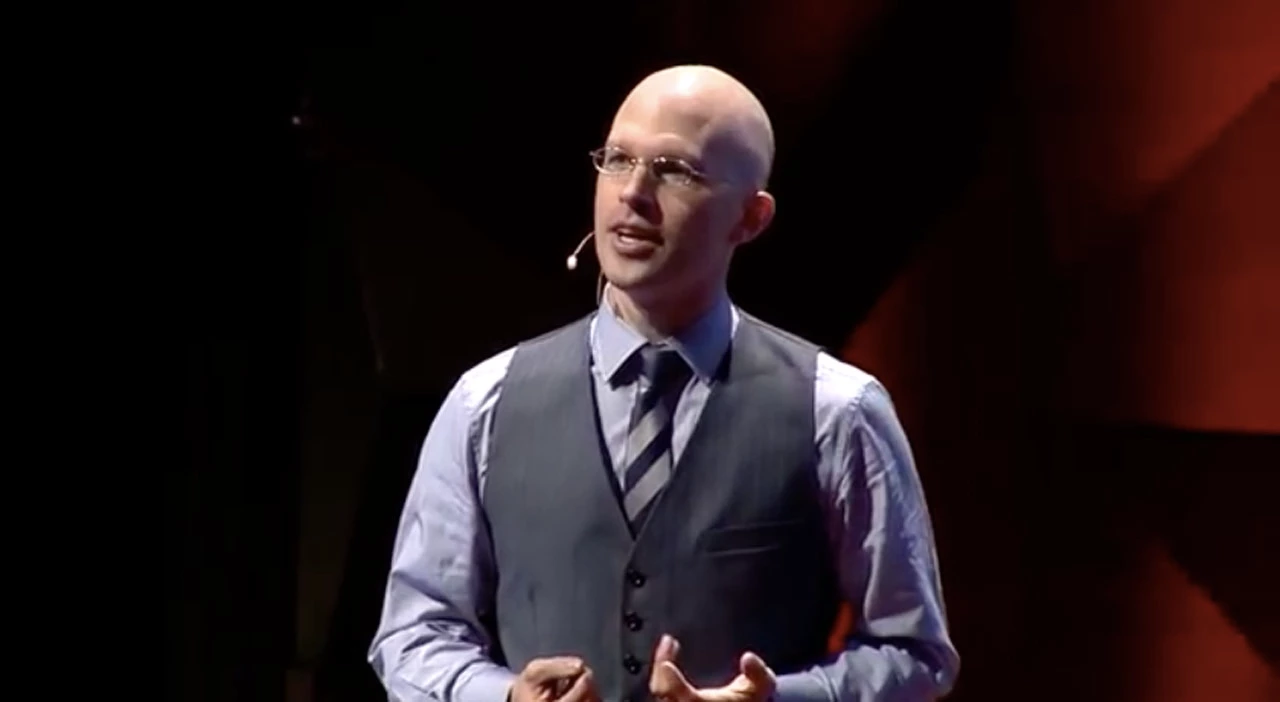
TEDx Talks
Acquiring functional competence requires only 20 hours of focused practice because the primary barrier to learning is the emotional dread of feeling stupid rather than intellectual ability.
AI-assisted summary of The first 20 hours -- how to learn anything | Josh Kaufman | TEDxCSU — original source. Check the original for full context.
Source published:
Key ideas
- The widely cited 10,000-hour rule, popularized by Malcolm Gladwell from Dr. K. Anders Ericsson's research, applies strictly to elite performers reaching world-class mastery in ultra-competitive fields, not to basic skill acquisition. (3:03)
- Cognitive psychology research shows that moving from total incompetence to reasonable proficiency requires approximately 20 hours of focused, deliberate practice—about 45 minutes a day for a month. (6:28)
- Rapid skill acquisition relies on a four-step framework: deconstructing skills into core components, learning enough to self-correct, removing practice distractions, and pre-committing to a 20-hour minimum. (9:25)
- The primary barrier to acquiring new skills is emotional rather than intellectual, stemming from the initial fear and discomfort of feeling incompetent. (17:56)
Detailed notes
## Background Published on YouTube by TEDx Talks on March 14, 2013, this presentation features author Josh Kaufman speaking at TEDxCSU. According to the video description, Kaufman—known for 'The Personal MBA' and 'The First 20 Hours'—specializes in helping people master practical knowledge, sharing how the birth of his first child inspired a systematic approach to rapid skill acquisition.
## TL;DR After the birth of his daughter severely restricted his free time, Josh Kaufman set out to investigate how long it truly takes to acquire a new skill. He debunks the widely misunderstood '10,000-hour rule,' clarifying that Dr. K. Anders Ericsson's original research applies only to elite performance in hyper-competitive fields rather than baseline competence. Drawing on cognitive psychology, Kaufman introduces a four-step framework—deconstructing the skill, learning enough to self-correct, removing practice barriers, and pre-committing to 20 hours—to conquer the initial frustration barrier. He demonstrates the method live on stage by playing an entertaining electric ukulele medley of popular four-chord songs, illustrating that just 20 hours of focused, deliberate practice can move anyone from gross incompetence to functional ability.
## Atmosphere & style The presentation is energetic, self-deprecating, and highly engaging, balancing intellectual myth-busting with relatable humor about new parenthood and procrastination. Kaufman establishes an easy, conversational rapport with the audience before shifting into a structured instructional breakdown. The emotional arc transitions from feelings of overwhelmed despair to an empowering, celebratory payoff when he plugs in an electric ukulele and delivers a surprisingly musical, crowd-pleasing performance.
## Bulletin - [03:03](https://www.youtube.com/watch?v=5MgBikgcWnY&t=183s) The widely cited 10,000-hour rule, popularized by Malcolm Gladwell from Dr. K. Anders Ericsson's research, applies strictly to elite performers reaching world-class mastery in ultra-competitive fields, not to basic skill acquisition. - [06:28](https://www.youtube.com/watch?v=5MgBikgcWnY&t=388s) Cognitive psychology research shows that moving from total incompetence to reasonable proficiency requires approximately 20 hours of focused, deliberate practice—about 45 minutes a day for a month. - [09:25](https://www.youtube.com/watch?v=5MgBikgcWnY&t=565s) Rapid skill acquisition relies on a four-step framework: deconstructing skills into core components, learning enough to self-correct, removing practice distractions, and pre-committing to a 20-hour minimum. - [17:56](https://www.youtube.com/watch?v=5MgBikgcWnY&t=1076s) The primary barrier to acquiring new skills is emotional rather than intellectual, stemming from the initial fear and discomfort of feeling incompetent.
## Key takeaways - [00:00](https://www.youtube.com/watch?v=5MgBikgcWnY&t=0s) The arrival of his first child and the resulting loss of free time prompted Josh Kaufman to investigate how long it genuinely takes to acquire a new skill. - [03:03](https://www.youtube.com/watch?v=5MgBikgcWnY&t=183s) A societal 'game of telephone' distorted Dr. K. Anders Ericsson's research on elite performers into the false belief that basic learning requires 10,000 hours. - [03:03](https://www.youtube.com/watch?v=5MgBikgcWnY&t=183s) Ten thousand hours equals five years of full-time work, an unrealistic benchmark that discourages everyday learners from starting new pursuits. - [06:28](https://www.youtube.com/watch?v=5MgBikgcWnY&t=388s) The cognitive learning curve demonstrates that practice yields dramatic, disproportionate performance gains in its earliest stages before leveling into a plateau. - [06:28](https://www.youtube.com/watch?v=5MgBikgcWnY&t=388s) Investing 20 hours of focused, deliberate practice is sufficient to transition from gross incompetence to functional competence across most skills. - [09:25](https://www.youtube.com/watch?v=5MgBikgcWnY&t=565s) Deconstructing a skill into component sub-skills allows learners to identify and practice the critical elements necessary to achieve their specific target outcome. - [09:25](https://www.youtube.com/watch?v=5MgBikgcWnY&t=565s) Learners should reference only three to five instructional resources to avoid using theoretical research as a form of procrastination. - [09:25](https://www.youtube.com/watch?v=5MgBikgcWnY&t=565s) Removing environmental distractions and technological temptations is essential for sustaining focused practice sessions. - [09:25](https://www.youtube.com/watch?v=5MgBikgcWnY&t=565s) Pre-committing to practice for at least 20 hours enables learners to push through the initial 'frustration barrier' where incompetence feels uncomfortable. - [12:35](https://www.youtube.com/watch?v=5MgBikgcWnY&t=755s) By applying the Pareto principle to the ukulele, Kaufman identified that just four core chords (G, D, Em, and C) underpin the majority of popular songs from the last fifty years. - [15:49](https://www.youtube.com/watch?v=5MgBikgcWnY&t=949s) Kaufman demonstrated his 20-hour method live on stage by playing a multi-song pop medley on an electric ukulele. - [17:56](https://www.youtube.com/watch?v=5MgBikgcWnY&t=1076s) The primary obstacle preventing people from learning new things is the emotional dread of feeling foolish, not a lack of cognitive ability.
## Detailed walkthrough ### [00:00](https://www.youtube.com/watch?v=5MgBikgcWnY&t=0s) Parenthood and the Disappearing Free Time
Two years prior, Josh Kaufman's life was completely transformed when he and his wife, Kelsey, welcomed their daughter, Lela, into the world. Becoming a parent is an astonishing shift: overnight, an individual's priorities rearrange so rapidly that it becomes genuinely difficult to process. In addition to the emotional shift, there is an overwhelming practical learning curve—illustrated humorously by Kaufman showing a slide of a questionable outfit he had chosen for his baby girl, noting that even infant Lela clearly knew it was a terrible wardrobe decision.
The chaos was amplified because both Josh and Kelsey are work-from-home entrepreneurs. Kelsey creates online courses for yoga teachers, while Josh works as an author. Juggling an infant alongside two home businesses meant days filled with nonstop demands and mounting fatigue. Around the eighth week, intense sleep deprivation set in, prompting Kaufman to experience a realization shared by exhausted parents across generations and around the globe. As Kaufman put it, reflecting on that overwhelming moment: “I am never going to have free time ever again.” While an audience member shouted that this was true, Kaufman noted that while not technically accurate, it felt undeniably real at the time.
This realization proved deeply disconcerting because Kaufman's greatest passion in life is diving into unfamiliar subjects, tinkering through trial and error, and acquiring new skills. Being a self-described geek who refused to abandon personal growth, he sought an answer to a fundamental question: how long does it actually take to acquire a brand-new skill?
[03:03](https://www.youtube.com/watch?v=5MgBikgcWnY&t=183s) Debunking the 10,000-Hour Rule
Turning to bookstores, libraries, and online research, Kaufman repeatedly ran into a single discouraging answer: mastering or learning anything requires 10,000 hours. The realization that 10,000 hours equates to working a full-time job for five solid years struck him as overwhelming, prompting an internal scream of despair because he had no such time available. Yet everyday human experience contradicts this figure, as most people learn functional skills without spending half a decade practicing them full-time.
Digging deeper into the cognitive psychology literature, Kaufman uncovered the root of the misconception. The concept originated with Dr. K. Anders Ericsson, a professor at Florida State University who studied elite performers at the pinnacle of their fields, including world-class musicians, Olympic athletes, and chess grandmasters. Ericsson discovered that reaching the absolute summit of these ultra-competitive arenas requires deliberate practice, and top performers amass roughly 10,000 hours of focused training.
In 2007, author Malcolm Gladwell popularized this finding in his bestselling book *Outliers: The Story of Success*. The book topped bestseller lists for three consecutive months, embedding the phrase firmly into popular culture. However, a widespread societal game of telephone distorted Ericsson's narrow finding into an inaccurate blanket rule about general skill acquisition.
```mermaid flowchart TD accTitle: The Telephone Game of the 10,000-Hour Rule accDescr: Flowchart tracing how Dr. Ericsson's original research on elite performance was distorted through Malcolm Gladwell's book into a false myth about basic skill learning.
subgraph Research["Scientific Finding"] A["10,000 hours to reach the top of an ultra-competitive field<br>(Dr. K. Anders Ericsson)"] end
subgraph Telephone["The Distortions"] B["10,000 hours to become an expert at something"] C["10,000 hours to become good at something"] D["10,000 hours to learn something"] end
A -->|"Popularized by Outliers"| B B -->|"Oversimplified"| C C -->|"Distorted"| D ```
As Kaufman explained when debunking the cultural myth: “So this message, it takes 10,000 hours to reach the top of an ultra competitive field, became, it takes 10,000 hours to become an expert at something, which became, it takes 10,000 hours to become good at something, which became, it takes 10,000 hours to learn something.”
- The originator of the research is Dr. K. Anders Ericsson, professor at Florida State University. - Malcolm Gladwell published *Outliers: The Story of Success* in 2007, staying at the top of bestseller lists for three consecutive months. - 10,000 hours represents roughly 40 hours a week for five years, an amount of time that applies only to elite, world-class mastery in ultra-competitive domains, not basic learning.
[06:28](https://www.youtube.com/watch?v=5MgBikgcWnY&t=388s) The Reality of the Learning Curve: The 20-Hour Threshold
Investigating cognitive psychology studies at the Colorado State University (CSU) library stacks, Kaufman examined how researchers actually measure skill acquisition. When scientists study either motor or mental skills, they assess tasks with easily quantifiable completion times. Initially, subjects take a very long time to complete a novel task because they are inexperienced and perform poorly. However, with just a minimal amount of practice, task times plummet dramatically, demonstrating that early practice yields rapid, highly efficient gains.
When the axes are inverted to reflect everyday goals—plotting skill level ("how good you are") against practice time rather than completion speed—the result is the classic S-shaped learning curve. At the very beginning of the curve, a learner is, as Kaufman described it, “grossly incompetent and you know it.” But within the earliest stages of practice, competence accelerates rapidly before eventually leveling off into a plateau where incremental improvements demand far greater time investments.
Kaufman set out to identify exactly how much time is needed to move from gross incompetence to being reasonably good. The research revealed that reaching that point takes just 20 hours of focused, deliberate practice. Investing 20 hours equates to roughly 45 minutes a day for about a month, even allowing for a few skipped days. With that small investment, a learner can make dramatic progress in almost anything, from studying a foreign language to drawing or even juggling flaming chainsaws.
[09:25](https://www.youtube.com/watch?v=5MgBikgcWnY&t=565s) The Four Steps of Rapid Skill Acquisition
Achieving rapid improvement in 20 hours cannot happen through aimless messing around; it requires structured, deliberate practice. Kaufman breaks down the system of rapid skill acquisition into four foundational steps:
```mermaid flowchart LR accTitle: The Four Steps of Rapid Skill Acquisition accDescr: A step-by-step diagram showing the four core components of Josh Kaufman's 20-hour learning method.
S1["1. Deconstruct<br>the Skill"] S2["2. Learn Enough<br>to Self-Correct"] S3["3. Remove Barriers<br>to Practice"] S4["4. Practice for at<br>Least 20 Hours"]
S1 --> S2 S2 --> S3 S3 --> S4 ```
1. **Deconstruct the skill**: Most pursuits that people treat as single skills are bundles of sub-skills. Learners must determine their exact target outcome and break the overarching skill down into its component parts. By identifying and practicing the critical sub-skills that lead directly to the desired result, learners optimize their early progress in the shortest possible timeframe.
2. **Learn enough to self-correct**: Gather three to five instructional resources—whether books, DVDs, or courses. Crucially, research must not become a cover for procrastination. Kaufman confessed that he often caught himself gathering twenty books and declaring he would start programming only after finishing every single one. Instead, learners should consume just enough information to recognize errors and make self-corrections while practicing.
3. **Remove barriers to practice**: Eliminate environmental obstacles and distractions that compete for attention, such as television and internet browsing. Applying a small dose of willpower to clear the practice space ensures that sitting down to practice actually happens.
4. **Practice for at least 20 hours**: Every new skill features a "frustration barrier"—the painful initial period of feeling foolish and incapable. As Kaufman observed: “And feeling stupid is a barrier to us actually sitting down and doing the work.” Pre-committing to complete a full 20 hours of practice ensures that learners push past that initial awkwardness long enough to realize genuine progress.
[12:35](https://www.youtube.com/watch?v=5MgBikgcWnY&t=755s) Testing the 20-Hour Theory on the Ukulele
To move from theory to practical demonstration, Josh Kaufman shares his personal desire to play the ukulele, an interest originally sparked by watching Jake Shimabukuro's famous TED Talk. Shimabukuro's jaw-dropping mastery made him look like a "ukulele god," convincing Kaufman that it was an instrument worth tackling. He decided to put his hypothesis to the test: dedicate exactly 20 hours to practicing the ukulele and observe how far it could take him.
As with any new endeavor, the first barrier was securing the necessary gear. Kaufman has an assistant hand him an instrument on stage, revealing with a grin that it is not merely a standard ukulele, but an electric one requiring a cord. The initial hours of learning were spent surmounting basic logistical hurdles: the ukulele did not come with strings attached, forcing him to research how to string and tune it properly before real practice could even commence.
When exploring how to actually play songs, Kaufman initially encountered intimidating chord books containing hundreds of complex chords. Looking closer at actual music, however, he realized the Pareto principle applied here as well: songs rely on a tiny subset of core techniques repeated continuously. In fact, most popular songs require only four, or at most five, fundamental chords. During this research phase, he discovered the famous four-chord pop song medley by the comedy rock group The Axis of Awesome. Their routine demonstrated that the vast majority of pop hits over the past five decades rely on a simple progression of just four chords: G, D, Em, and C. Kaufman realized that if he learned those four shapes, he could effectively play thousands of songs.
```mermaid flowchart TD accTitle: Kaufman's 20-Hour Ukulele Learning Path accDescr: Step-by-step breakdown of how Josh Kaufman deconstructed ukulele practice within 20 hours.
subgraph Preparation["Phase 1: Setup & Deconstruction"] A["Acquire Electric Ukulele"] --> B["String & Tune Instrument"] B --> C["Filter Out 100s of Book Chords"] end
subgraph CoreSkills["Phase 2: High-Impact Practice"] C --> D["Isolate 4 Chords: G, D, Em, C"] D --> E["Practice Axis of Awesome Medley"] end
subgraph Milestone["Phase 3: Real Performance"] E --> F["Live TEDx Performance (Hour 20)"] end ```
- Jake Shimabukuro's viral TED performance served as the direct inspiration for Kaufman choosing the instrument. - The four universal pop chords Kaufman isolated are G major, D major, E minor (Em), and C major.
---
[15:49](https://www.youtube.com/watch?v=5MgBikgcWnY&t=949s) The Four-Chord Pop Medley Performance
Kaufman puts his 20 hours of practice on display by performing a continuous medley on his electric ukulele, shifting through five decades of popular radio anthems using only the G, D, Em, and C chord progression:
1. Journey — *Don't Stop Believin'* ("Just a small town girl, living in a lonely world...") 2. Adele — *Someone Like You* ("I heard that you settled down, that you found a girl...") 3. Celine Dion — *My Heart Will Go On* ("Every night in my dreams, I see you, I feel you...") 4. Jason Mraz — *I'm Yours* ("I won't hesitate no more, no more...") 5. The Black Eyed Peas — *Where Is the Love?* ("'Cause you were amazing, we did amazing things...") 6. The Calling — *Wherever You Will Go* ("If I could, then I would, I'd go wherever you will...") 7. Elton John — *Can You Feel the Love Tonight* 8. U2 — *With or Without You* ("I can't live with or without you...") 9. The Beatles — *Let It Be* ("When I find myself in times of trouble, mother Mary comes to me...") 10. Red Hot Chili Peppers — *Under the Bridge* ("Sometimes I feel like I don't have partner...") 11. Bob Marley — *No Woman, No Cry* 12. Men at Work — *Down Under* ("I come from a land down under...") 13. Banjo Paterson / Australian Folk — *Waltzing Matilda* ("Once a jolly swagman camped by a billabong...") 14. Carly Rae Jepsen — *Call Me Maybe* ("Hey, I just met you, and this is crazy, but here's my number...") 15. Psy — *Gangnam Style* ("Hey sexy lady, op, op, op, op, oppan gangnam style...") 16. Andrea Bocelli / Sarah Brightman — *Time to Say Goodbye* 17. Semisonic — *Closing Time* ("Closing time, every new beginning comes from some other beginning's end...")
The rapid stylistic shifts between stadium rock, tearful pop ballads, 90s alternative anthems, and viral dance tracks elicit laughter and enthusiastic applause from the audience throughout the performance.
---
[17:56](https://www.youtube.com/watch?v=5MgBikgcWnY&t=1076s) Overcoming the Emotional Barrier to Learning
Concluding his medley to massive applause, Kaufman shares a reveal: finishing that on-stage song marked his exact twentieth cumulative hour of ukulele practice. The performance demonstrates that 20 focused hours can take a novice from zero ability to capable, entertaining execution.
He summarizes the single biggest hurdle preventing people from acquiring skills: it is rarely a lack of intellectual capability, but rather the emotional discomfort of being a beginner. As Kaufman emphasizes: “The major barrier to learn something new is not intellectual, it's not the process of you learning a bunch of little tips or tricks or things. The major barrier's emotional. We're scared. Feeling stupid doesn't feel good, in the beginning of learning anything new you feel really stupid.”
Once a learner pushes past that initial emotional friction and commits to deliberate practice, rapid progress is inevitable. Kaufman closes by challenging the audience to identify whatever subject excites them—whether it is learning a foreign language, cooking, or drawing—and simply invest the first 20 hours to get good enough.
## Notable quotes > [17:56](https://www.youtube.com/watch?v=5MgBikgcWnY&t=1076s) The major barrier to learn something new is not intellectual, it's not the process of you learning a bunch of little tips or tricks or things. The major barrier's emotional. — Josh Kaufman
## Mentioned Josh Kaufman, Kelsey Kaufman, Lela, Dr. K. Anders Ericsson, Florida State University, Malcolm Gladwell, Outliers: The Story of Success, Colorado State University, Jake Shimabukuro, TED, The Axis of Awesome, Journey, Adele, Celine Dion, Jason Mraz, The Black Eyed Peas, The Calling, Elton John, U2, The Beatles, Red Hot Chili Peppers, Bob Marley, Men at Work, Banjo Paterson, Carly Rae Jepsen, Psy, Andrea Bocelli, Sarah Brightman, Semisonic
## Video description Never miss a talk! SUBSCRIBE to the TEDx channel: http://bit.ly/1FAg8hB
Josh Kaufman is the author of the #1 international bestseller, 'The Personal MBA: Master the Art of Business', as well as the upcoming book 'The First 20 Hours: Mastering the Toughest Part of Learning Anything.' Josh specializes in teaching people from all walks of life how to master practical knowledge and skills. In his talk, he shares how having his first child inspired him to approach learning in a whole new way.
In the spirit of ideas worth spreading, TEDx is a program of local, self-organized events that bring people together to share a TED-like experience. At a TEDx event, TEDTalks video and live speakers combine to spark deep discussion and connection in a small group. These local, self-organized events are branded TEDx, where x = independently organized TED event. The TED Conference provides general guidance for the TEDx program, but individual TEDx events are self-organized.* (*Subject to certain rules and regulations)
[Source](https://www.youtube.com/watch?v=5MgBikgcWnY)