Haidt Urges Universities to Choose Between Truth and Social Justice
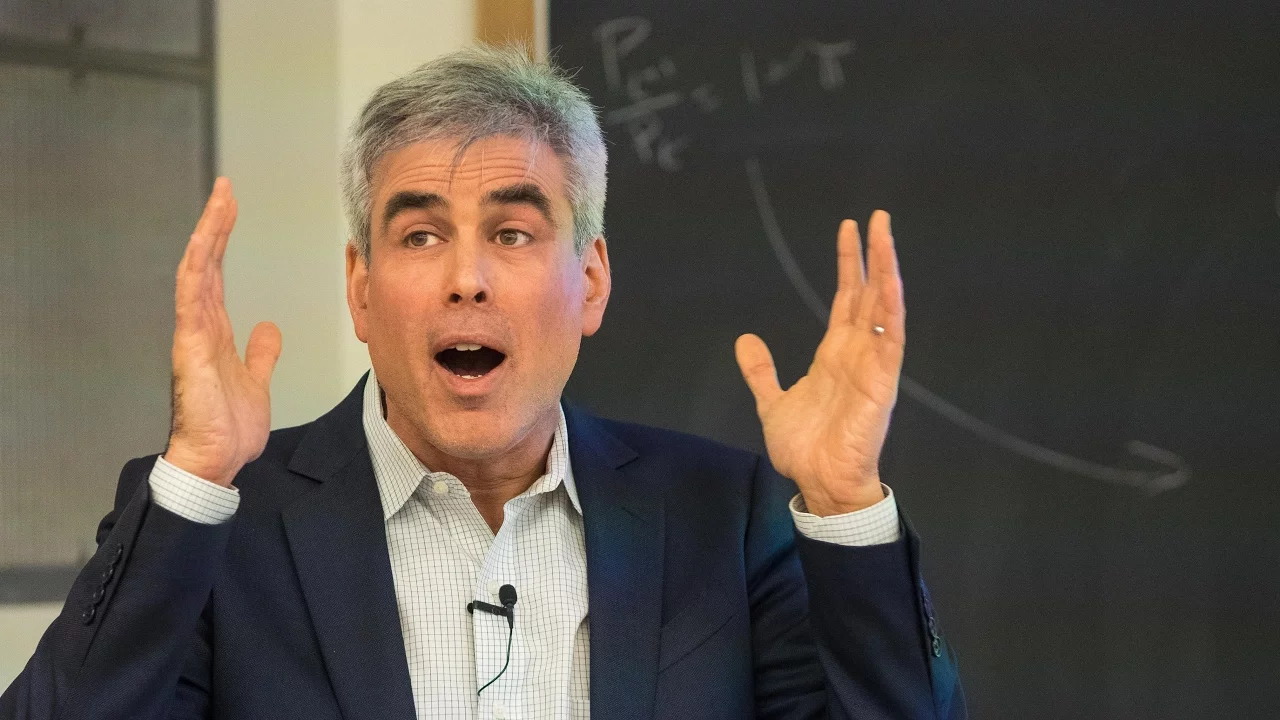
"Two incompatible sacred values in American universities" Jon Haidt, Hayek Lecture Series — Duke University Department of Political Science

Duke University Department of Political Science

Universities must formally separate between truth and social justice because enforcing equal group outcomes corrupts scientific inquiry and compels institutions into discriminatory treatment.

AI-assisted summary of "Two incompatible sacred values in American universities" Jon Haidt, Hayek Lecture Series — original source. Check the original for full context.

Source published:

Key ideas

  • Universities face a fundamental institutional conflict between pursuing objective truth through viewpoint diversity and pursuing social justice activism, as an institution cannot maintain two competing primary ends (teloi). (6:10)
  • Political diversity in higher education has collapsed since the 1990s, with left-to-right faculty ratios rising from 2:1 to 5:1 overall, and reaching between 17:1 and 60:1 across humanities and social sciences. (16:24)
  • Campuses are shifting from traditional dignity cultures to victimhood cultures, promoting intellectual fragility and safety culture over antifragile psychological resilience. (27:35)
  • Haidt differentiates opposing disparate treatment (which is true justice based on equity theory) from mandating equal group outcomes (which ignores behavioral and preference differences and enforces artificial quotas through injustice). (55:51)

Detailed notes

## Background Published on YouTube by the Duke University Department of Political Science on October 15, 2016, this video documents a Hayek Lecture delivered by Professor Jonathan Haidt. According to the event description, Haidt examines how American universities face escalating internal conflicts because they attempt to pursue two fundamentally incompatible primary goals: truth and social justice. He challenges the assumption that disparate group outcomes inherently signify injustice and introduces his initiative, Heterodox Academy, to champion viewpoint diversity in higher education.

## TL;DR Social psychologist Jonathan Haidt argues that modern American universities face an existential identity crisis by attempting to balance two incompatible teloi: the Millian pursuit of objective truth and the Marxian pursuit of activist social justice. He explains how the collapse of ideological viewpoint diversity across faculties has crippled institutionalized disconfirmation, fostering an antifragility-stifling safety culture and a victimhood moral framework that punishes dissent. Through empirical examples—including STEM gender representation, disparate discipline policies, and institutional controversies—Haidt shows how mandating equal demographic outcomes often violates basic equity and distorts scientific truth. Consequently, he urges universities to make their core purpose explicit, advocating for the adoption of the Chicago Principles on Free Expression and structural viewpoint diversity.

## Atmosphere & style The lecture carries an urgent, intellectually rigorous energy, pairing methodical social science data with engaging humor and accessible philosophical analogies. Haidt speaks with calm, diagnostic clarity, commanding the lecture hall with thought experiments that draw frequent knowing chuckles and focused engagement from the student and faculty audience. The tone shifts smoothly from sobering warnings about institutional dogmatism and speech suppression toward an empowering, constructive call to intellectual resilience and open academic debate.

## Bulletin - [06:10](https://www.youtube.com/watch?v=Gatn5ameRr8&t=370s) Universities face a fundamental institutional conflict between pursuing objective truth through viewpoint diversity and pursuing social justice activism, as an institution cannot maintain two competing primary ends (teloi). - [16:24](https://www.youtube.com/watch?v=Gatn5ameRr8&t=984s) Political diversity in higher education has collapsed since the 1990s, with left-to-right faculty ratios rising from 2:1 to 5:1 overall, and reaching between 17:1 and 60:1 across humanities and social sciences. - [27:35](https://www.youtube.com/watch?v=Gatn5ameRr8&t=1655s) Campuses are shifting from traditional dignity cultures to victimhood cultures, promoting intellectual fragility and safety culture over antifragile psychological resilience. - [55:51](https://www.youtube.com/watch?v=Gatn5ameRr8&t=3351s) Haidt differentiates opposing disparate treatment (which is true justice based on equity theory) from mandating equal group outcomes (which ignores behavioral and preference differences and enforces artificial quotas through injustice).

## Key takeaways - [01:31](https://www.youtube.com/watch?v=Gatn5ameRr8&t=91s) John Stuart Mill's truth-seeking model of open debate and Karl Marx's activism model of social change represent two incompatible visions of higher education. - [06:10](https://www.youtube.com/watch?v=Gatn5ameRr8&t=370s) Aristotle's concept of 'telos' dictates that an institution must prioritize one overriding purpose; attempting to simultaneously serve truth and social justice corrupts scholarship. - [10:12](https://www.youtube.com/watch?v=Gatn5ameRr8&t=612s) Just as commercial funding from the sugar industry corrupted dietary health science in the 1960s, ideological social justice activism risks producing distorted, harmful academic research. - [13:08](https://www.youtube.com/watch?v=Gatn5ameRr8&t=788s) Human reasoning is inherently motivated ('Can I believe it?' vs. 'Must I believe it?'), making peer review and institutionalized disconfirmation essential for scientific validity. - [16:24](https://www.youtube.com/watch?v=Gatn5ameRr8&t=984s) The near-total disappearance of conservative faculty in social sciences eliminates peer disconfirmation and fosters self-censorship among professors and students. - [22:16](https://www.youtube.com/watch?v=Gatn5ameRr8&t=1336s) Human ultra-sociality unites groups around sacred entities; in humanities departments, the concept of the victim has largely displaced truth as the primary sacred object. - [27:35](https://www.youtube.com/watch?v=Gatn5ameRr8&t=1655s) Campuses have transitioned from dignity cultures to victimhood cultures that encourage high sensitivity to minor slights and reliance on administrative authorities to enforce speech bans. - [34:01](https://www.youtube.com/watch?v=Gatn5ameRr8&t=2041s) Safety culture and helicopter parenting counteract childhood antifragility, leaving graduates fragile, litigious, and ill-prepared for competitive workplace environments. - [40:41](https://www.youtube.com/watch?v=Gatn5ameRr8&t=2441s) Lawrence Summers' forced resignation at Harvard illustrates how raising empirical hypotheses about gender disparities can trigger academic defenestration when sacred orthodoxies are breached. - [51:15](https://www.youtube.com/watch?v=Gatn5ameRr8&t=3075s) Empirical studies, such as Williams and Ceci's hiring experiment and prenatal brain research, demonstrate that STEM disparities stem largely from occupational preferences rather than systemic institutional sexism. - [55:51](https://www.youtube.com/watch?v=Gatn5ameRr8&t=3351s) Equity theory shows people demand proportionality between inputs and outcomes; social justice that mandates equal group outcomes regardless of behavioral inputs produces active injustice. - [01:00:01](https://www.youtube.com/watch?v=Gatn5ameRr8&t=3601s) Federal directives targeting racial discipline disparities in schools incentivize unjust disciplinary quotas, punishing well-behaved students while excusing disruptive behaviors. - [01:01:59](https://www.youtube.com/watch?v=Gatn5ameRr8&t=3719s) American higher education is dividing into activist universities like Brown and truth-seeking institutions adhering to the Chicago Principles on Free Expression. - [01:03:50](https://www.youtube.com/watch?v=Gatn5ameRr8&t=3830s) Universities should adopt the Chicago Principles, enforce non-obstruction policies against deplatforming, and actively promote ideological viewpoint diversity through platforms like Heterodox Academy.

## Detailed walkthrough ### [00:02](https://www.youtube.com/watch?v=Gatn5ameRr8&t=2s) A Strange Political Era and the Psychology of Conflict

Jonathan Haidt opens by reflecting on how extraordinarily strange 2016 feels across the globe. Between the violence in Syria and Iraq rippling into European politics and an unprecedented presidential race in the United States, observers on both the political right and left feel an impending sense of apocalypse if their opponents prevail. The general dissatisfaction is so pronounced that Haidt jokes many citizens are planning to write in protest candidates like “giant meteor.”

Yet, for a moral psychologist, this climate provides an unparalleled window into human nature. These deep societal divisions are not driven by pure malice; rather, they are propelled by individuals convinced they are fighting the good fight for their vision of the good. While Haidt frequently examines American political polarization, his focus here is on the university itself—an institution rocked by political upheaval across major campuses nationwide since the previous fall.

[01:31](https://www.youtube.com/watch?v=Gatn5ameRr8&t=91s) Mill vs. Marx: Two Visions of Intellectual Life

To examine higher education through the lens of moral psychology, Haidt contrasts two thinkers writing from London in the 1840s: John Stuart Mill and Karl Marx. Despite sharing a narrow demographic and geographic background, their philosophies point toward fundamentally different purposes for intellectual work.

```mermaid flowchart TD accTitle: Mill versus Marx Models of the University accDescr: Diagram contrasting John Stuart Mill's truth-seeking model with Karl Marx's world-changing activist model.

subgraph Millian["Millian University Model"] M1["Acknowledge Cognitive Bias"] --> M2["Foster Viewpoint Diversity"] M2 --> M3["Mutual Challenge & Debate"] M3 --> M4["Discovery of Truth"] end

subgraph Marxist["Marxist University Model"] X1["Analyze Material Conditions"] --> X2["Frustration with Academic Talk"] X2 --> X3["Direct Action & Activism"] X3 --> X4["Changing the World"] end ```

In *On Liberty*, Mill demonstrated acute awareness of human fallibility, bias, and the necessity of disagreement to sharpen human understanding. Haidt cites Mill’s well-known observation:

> “He who knows only his own side of the case knows little of that. His reasons may be good, and no one may have been able to refute them. But if he is equally unable to refute the reasons on the opposite side, if he does not so much as know what they are, he has no ground for preferring either opinion.”

A university modeled on Mill centers on viewpoint diversity, institutionalized dissent, and rigorous debate as the only reliable path toward truth.

Karl Marx, on the other hand, famously voiced impatience with detached philosophical inquiry in his *Theses on Feuerbach*:

> “The philosophers have only interpreted the world in various ways; the point is to change it.”

A university founded on Marxist principles views contemplation as insufficient, subordinating academic inquiry to direct political action and social change. Haidt frames this distinction as the core dilemma facing modern academia: is the university's ultimate job discovering truth through debate, or directly reforming society?

[03:43](https://www.youtube.com/watch?v=Gatn5ameRr8&t=223s) From *Lux et Veritas* to Social Justice

Reflecting on his personal journey, Haidt recalls matriculating at Yale in 1981, where the historic motto *Lux et Veritas* (“Light and Truth”) was carved directly in stone above the entrance to Old Campus. As an undergraduate philosophy major, Haidt felt inducted into a lineage reaching past medieval foundations like Oxford and Cambridge all the way back to Plato’s Academy. Though Yale tilted decidedly leftward politically—as did Haidt himself—it preserved a vibrant culture of debate, intellectual play, and mutual contestation.

Beginning in the 1990s, however, Haidt observed a tectonic shift away from truth-seeking toward activism. Across university life, beginning with identity-focused departments (such as gender, race, and ethnic studies) and spreading across the broader humanities, social justice became the central institutional priority. While praising many resulting reforms—including diversifying the faculty, broadening the literary canon, and shifting historical scholarship toward ordinary, oppressed people rather than exclusively monarchs and statesmen—Haidt argues that this shift fundamentally realigned the university's core mission, culminating in the widespread campus tensions seen in 2015 and 2016.

[06:10](https://www.youtube.com/watch?v=Gatn5ameRr8&t=370s) The Aristotelian Telos and Interdependent Excellence

Haidt argues that while individual scholars can pursue both truth and activism in their personal lives, an institution cannot serve two masters. A university must possess a single ultimate purpose, forcing a choice between truth and social justice. Because these two commitments inevitably clash, Haidt proposes an institutional schism where schools explicitly declare and advertise their primary mission so prospective students can make an informed choice.

Drawing on Aristotle, Haidt introduces the concept of *telos*—the inherent end, function, or purpose of an object, role, or institution: - **A Knife:** Telos is to cut cleanly; a dull knife fails its telos. - **A Physician / Medicine:** Telos is health; a doctor who fails to heal patients fails as a physician. - **A Judge:** Telos is justice. - **A Business:** Telos is creating value (producing necessary goods and services sustainably while generating profit). - **A Scholar:** Telos is the discovery and transmission of truth. - **Social Justice Activism:** Telos is equality (spanning racial justice, gender parity, LGBT rights, and environmental protection).

In a healthy division of labor, these distinct domains assist one another through their respective expertise. For example, modern businesses develop software and services that save researchers immense time and make them better scholars. Reciprocally, scholarly research aids commerce and medicine. Similarly, social justice activists perform a vital function when pointing out that medical practitioners offer disparate treatment recommendations across racial lines without medical justification. In doing so, activists not only advance racial equality, but also help physicians align with their own telos of healing. Haidt emphasizes that these constructive interactions function smoothly only as long as each institution remains anchored to its own primary telos rather than adopting another's.

[10:12](https://www.youtube.com/watch?v=Gatn5ameRr8&t=612s) The Corruption of Telos: Profit, Sugar, and Social Justice

Drawing on cases from the business ethics course he teaches at NYU Stern, Jonathan Haidt examines what happens when the primary purpose—the *telos*—of one field is injected into another. When commerce and business incentives rub up against professions like medicine, law, and academic research, individuals frequently become corrupted: doctors begin viewing patients as profit centers and calculating how to bill for more procedures rather than prioritizing healing. A dramatic historical example of this corruption surfaced in a *New York Times* report revealing that widespread beliefs about dietary fat were manipulated in the 1960s by the Sugar Research Foundation. The industry group paid off Harvard scientists to conduct a literature review using curated, pre-selected studies designed to absolve sugar and cast fat as the primary dietary villain.

This betrayal of the scholar’s telos led federal regulators to establish a food pyramid heavy on starches and sugars and low on fat—guidance that was scientifically backward. As Haidt explains, dietary fat induces satiety and does not produce large insulin spikes, whereas refined carbohydrates and sugars drive insulin reactions and fat storage. The resulting institutional error helped spark an explosion of obesity in the United States, an epidemic that disproportionately harmed Black women. Thus, by abandoning truth for an external goal, the researchers produced downstream real-world harms, including racial inequality. Haidt warns that injecting social justice into scholarship carries the exact same structural risk: while advancing racial equality may feel morally superior to pursuing financial profit, displacing truth as the university's telos corrupts research and can yield disastrous unintended consequences for the very groups scholars aim to assist.

> “When everybody is thinking about how to improve racial equality rather than their telos, that is corruption.”

```mermaid flowchart TD accTitle: The Corruption of Academic Telos accDescr: Flowchart illustrating how outside teloi like profit or social justice displace truth and lead to harmful real-world outcomes.

subgraph Displacement["Displacement of Telos"] A["External Goal Injected<br/>(Profit or Social Justice)"] --> B["Scholars Abandon Truth Telos"] B --> C["Curated or Motivated Research"] end

subgraph InstitutionalImpact["Institutional & Societal Impact"] C --> D["Institutional Adoption<br/>(e.g., Flawed Dietary Guidelines)"] D --> E["Counterproductive Real-World Harm<br/>(e.g., Obesity Epidemic)"] end ```

[13:08](https://www.youtube.com/watch?v=Gatn5ameRr8&t=788s) The Psychology of Motivated Reasoning

Haidt explains that allowing any motive other than truth to guide scholarship is uniquely dangerous because human cognition is inherently prone to motivated reasoning. Humans do not process ideas like dispassionate judges weighing evidence equally on both sides; rather, thinking begins with a visceral preference or feeling about whether one wants to believe or doubt a claim. When individuals encounter an idea they like, they ask, *"Can I believe it?"* and immediately halt their search as soon as they find a single supporting data point. Conversely, when confronted with an unwelcome idea, they instinctively ask, *"Must I believe it?"* and scrutinize the claim relentlessly to locate any flaw that justifies rejecting it.

To illustrate this mechanism, Haidt highlights two psychological experiments. In the first, psychology students were asked to critique an article presented as being from the journal *Science* that linked caffeine consumption to breast cancer. Female coffee drinkers attacked the study with fierce methodological skepticism—criticizing sample sizes and demanding missing controls—because they desperately wanted to avoid believing the conclusion. In another perception experiment, subjects were shown an ambiguous figure that could be read as either the capital letter "B" or the number "13." Participants promised a nickel whenever a letter flashed on the screen saw a "B," while those paid for numbers genuinely saw a "13." Nobody hallucinated an arbitrary shape like an "L" or a fish, but wherever ambiguity permitted interpretation, subjects effortlessly perceived the outcome that served their self-interest.

> “Human reasoning is motivated; we're not very good at objective, careful, balanced reasoning.”

- In evaluation tasks, human brains rarely balance evidence neutrally; they search only until finding justification for their preferred conclusion. - In perception studies with monetary incentives, visual interpretation of ambiguous stimuli (such as a figure that could be "B" or "13") shifts automatically to match the payout condition. - Because scholars are rarely indifferent to their own theories or political convictions, politically motivated research almost invariably finds the evidence it sets out to find.

[16:24](https://www.youtube.com/watch?v=Gatn5ameRr8&t=984s) Institutionalized Disconfirmation and the Political Shift in Academia

Because individual researchers rarely perceive their own biases, scholarship undertaken to advance a political agenda almost inevitably succeeds in confirming it. When politically pleasing falsehoods are published within a sympathetic field, they become virtually impossible to eradicate; even if formally retracted within a subdiscipline, they migrate across departmental borders and persist in citations for decades. Haidt points out that the true genius of science does not lie in the superior rationality of individual scientists, but in an ecosystem of institutionalized disconfirmation—a critical community where scholars actively challenge, critique, and weed out each other's biased conclusions.

That corrective system, however, has broken down due to a rapid collapse in political diversity among American faculty. Up until the mid-1990s, the left-to-right ratio in the professoriate hovered around 2:1. But as the Greatest Generation and the Silent Generation retired, replaced by Baby Boomers and Generation X, the ratio across higher education climbed to 5:1—a figure that includes conservative-leaning professional schools such as dentistry, engineering, and agriculture. Within the social sciences and humanities, recent data from Mitchell Langbert and colleagues reveals political imbalances ranging between 17:1 and 60:1, with psychology shifting from roughly 4:1 in 1996 to 17:1 in 2016. Haidt emphasizes that modern undergraduates are exposed to less viewpoint diversity than any student body since 18th-century sectarian divinity schools, leaving left-leaning orthodoxies fiercely held but intellectually fragile and weakly justified.

> “There's only one major protection against motivated scholarship, and that is institutionalized disconfirmation.”

- The professoriate's left-to-right political ratio remained relatively stable at roughly 2:1 through the mid-1990s before shifting abruptly between 1995 and 2010. - While the overall university ratio stands around 5:1, core academic departments in the humanities and social sciences display ideological imbalances ranging from 17:1 to as high as 60:1. - In psychology, historical data showed a 4:1 ratio favoring Democrats in 1960 (Kennedy over Nixon) and remaining roughly 4:1 through 1996, before surging to 17:1 by 2016. - The disappearance of conservative and dissenting viewpoints removes the peer skepticism required to check motivated reasoning, leaving students unable to defend the rationales behind their core beliefs.

[19:54](https://www.youtube.com/watch?v=Gatn5ameRr8&t=1194s) Intellectual Fragility and Fear in the Classroom

Reflecting on John Stuart Mill’s warnings about untested convictions, Haidt points out that when ideas are never challenged, people lose the ability to truly know or defend what they believe. In American university classrooms, this problem is exacerbated by social media and an overwhelming social pressure where students are constantly walking on eggshells. Traveling across the country, Haidt hears undergraduate students privately admit that during seminars, no one dares to push back when someone makes a claim:

> “Students are complaining in private that in their seminar classes someone says something and nobody dares to disagree there's just not the kind of give-and-take and argument people are afraid they're afraid they'll be crucified on social media they're afraid they say mostly of each other not so much the professors as each other but the point is students are walking on eggshells...”

This pervasive climate produces an acute intellectual fragility. Because students are unaccustomed to defending their core positions against genuine disagreement, sudden intellectual challenges can feel catastrophic:

> “Students now say that if you challenge a core conviction it's you have invalidated my existence and that's a form of violence and so we can't allow that we can't allow a speaker on campus who might do that.”

For faculty members, the environment has grown equally fraught. Academics increasingly suffer from a misallocation of effort, chasing trendy topics while traditional fields—such as military and political history—experience precipitous declines in enrollment and instruction. Fear of student complaints has led instructors across the ideological spectrum to preemptively censor themselves:

> “Professors all over the country are changing their teaching because they were afraid of the students.”

- Instructors pull provocative videos and reading assignments to avoid being summoned before an Equal Opportunity Commission or Title IX office, an administrative ordeal that can consume weeks or months. - Undergraduates in 2016 are exposed to far less challenging or provocative curriculum material than students were even in 2014.

---

[22:16](https://www.youtube.com/watch?v=Gatn5ameRr8&t=1336s) Sacredness, Ultra-Sociality, and Group Cohesion

Haidt links motivated reasoning and ideological orthodoxy to an evolutionary mechanism: the psychology of the sacred. Among all living species, large-scale cooperation among millions of individuals is extraordinarily rare. Eusocial insects like bees and termites achieve mass coordination through biological kinship—they are all sisters sharing the same genetic interest. Humans, however, are the sole species capable of building complex cities (such as Babylon or Tenochtitlan) alongside millions of unrelated individuals.

Archaeological evidence indicates that early human civilizations consistently begin with temples. Haidt argues that humanity evolved a unique psychology of sacredness: by circling around a shared moral center, humans establish deep social trust and group cohesion. Drawing directly on the sociological work of Émile Durkheim, Haidt notes how collective religious rituals produce shared moral power:

> “Durkheim used that metaphor too he said that social rituals generates social electricity and then the group can function as one they can work together they can fight against other groups that's our great trick and we do this all the time...”

```mermaid flowchart TD accTitle: The Durkheimian Process of Social Electricity accDescr: Diagram illustrating how shared circling around sacred objects creates group solidarity and collective action. A["Unrelated Human Individuals"] --> B["Circling Around a Shared Sacred Object or Idea"] B --> C["Generation of 'Social Electricity' (Durkheim)"] C --> D["Intra-Group Trust & Unified Action"] D --> E["Polarization Against Competing Out-Groups"] ```

This phenomenon is not limited to traditional religion; modern secular symbols, such as national flags in times of war, are elevated to sacred status so that people willingly sacrifice their lives for the group.

---

[24:22](https://www.youtube.com/watch?v=Gatn5ameRr8&t=1462s) The Elevation of the Sacred Victim on Campus

Historically, universities symbolically held *Veritas* (truth) at the center of their academic crests and missions, as depicted in Raphael’s *The School of Athens*. However, Haidt argues that since the 1990s, the humanities and qualitative social sciences have substituted a different central object of reverence:

> “My argument is that what has been happening since the 1990s is there's been a change the most sacred thing at a university is the victim not in all departments not in the sciences but in the social science and especially the humanities the victim is the most sacred thing.”

Traditional campus controversies initially revolved around six recognized categories of historical disadvantage: - Race - Gender - Lesbian, gay, bisexual, and transgender (LGBT) identities - Latinos - Native Americans - Disability status

Between 2014 and 2016, campus moral passion accelerated dramatically with the addition of new sacred categories and movements: - **Muslim identities:** Critique of Islamic beliefs or practices became treated as immediate bigotry. - **Transgender identity:** Transgender issues moved rapidly from marginal awareness to the forefront of campus debates. - **Black Lives Matter:** Spurred by viral video footage of killings of unarmed black men starting in 2014, the movement brought immense moral energy into academic spaces.

When an entity is treated as sacred, any perceived slight triggers intense outrage. Just as conservatives view stepping on an American flag or defacing a Bible as intolerable sacrilege, campus orthodoxy treats any perceived disrespect toward sacred victim identities as an unforgivable offense. This moral dynamic fosters severe Manichaean polarization: members of the in-group assume their own motives are pure and benevolent even when they make errors, while attributing exclusively malicious intent to anyone on the other side.

---

[27:35](https://www.youtube.com/watch?v=Gatn5ameRr8&t=1655s) From Honor and Dignity Cultures to Victimhood Culture

To explain the sudden proliferation of trigger warnings and debates over microaggressions, Haidt cites a landmark sociological analysis by Bradley Campbell and Jason Manning. Their work outlines the historical shifts in moral frameworks:

1. **Honor Culture:** Prevalent in early American and European history, an honor culture demands that individuals defend their reputation directly without appealing to external legal authorities. A gentleman cannot accept an insult or a stain upon his name; he must issue a challenge, a norm that sustained dueling until the practice became obsolete in the 19th century. 2. **Dignity Culture:** Emerged alongside modern commercial societies, establishing that an individual's intrinsic worth exists independently of public opinion. Under a dignity culture, having "thick skin" is viewed as a virtue, and children are raised on classic maxims like "sticks and stones may break my bones, but words will never hurt me." 3. **Victimhood Culture:** The newly emerging moral culture on university campuses, where moral status is derived from belonging to an aggrieved group, and minor offenses are elevated into severe grievances handled by third-party institutional authorities.

[29:18](https://www.youtube.com/watch?v=Gatn5ameRr8&t=1758s) The Rise of Victimhood Culture and Moral Dependency

Jonathan Haidt contrasts the traditional adage of childhood resilience—"sticks and stones may break my bones, but words will never harm me"—with the cultural shift currently unfolding on American university campuses. While Haidt acknowledges that words genuinely can hurt, the historic goal of moral socialization was to train children to develop a thick skin, brush off insults, and avoid escalating every perceived offense, warning that responding to every slight is a recipe for a life of misery. Citing sociologists Bradley Campbell and Jason Manning, Haidt argues that college campuses have undergone a profound transition into a "culture of victimhood." Combining the heightened sensitivity to slights found in traditional honor cultures with an institutional reliance on third parties, this culture discourages students from resolving grievances directly among themselves. Instead, aggrieved parties immediately appeal to administrative, bureaucratic authorities—such as deans, provosts, or university presidents—to mete out formal punishment against the offender.

```mermaid flowchart TD accTitle: Transition from Honor and Dignity to Victimhood Culture accDescr: Diagram contrasting how slights are resolved across Dignity, Honor, and Victimhood cultures.

subgraph Dignity["Dignity Culture"] D1["Personal slight or insult"] --> D2["'Sticks and stones...'"] D2 --> D3["Brush it off / Ignore it"] end

subgraph Honor["Honor Culture"] H1["Personal slight or insult"] --> H2["High sensitivity to slight"] H2 --> H3["Direct personal retaliation / Duel"] end

subgraph Victimhood["Victimhood Culture"] V1["Slight or perceived offense"] --> V2["High sensitivity to slight"] V2 --> V3["Emphasize oppression & marginalization"] V3 --> V4["Appeal to administrative authority to punish offender"] end ```

In a victimhood culture, social status is no longer gained by demonstrating personal strength or endurance, but by highlighting one's oppression and social marginalization. Crucially, Haidt points out that individuals can also acquire substantial status by aggressively pursuing anyone accused of marginalizing members of a protected class. He illustrates this dynamic with an incident at Emory University in early 2016, where students discovered chalk slogans reading "Trump 2016" written two to three dozen times across campus walkways. Rather than simply using paper towels or water to erase the chalk, groups of frightened students claimed they feared for their lives and marched en masse to the university president's office to demand administrative intervention. Although the president initially signaled deep sympathy, international media—including the British tabloid *The Daily Mail*—widely ridiculed the university. Haidt warns that such moral dependency creates a Manichaean worldview dividing the campus into inherently good or evil groups, locking students into perpetual grievance, mutual fear, and constant self-censorship.

- In a victimhood culture, status is achieved through public displays of marginalization and by aggressively policing offenses committed against victim groups. - The Emory University "Trump 2016" chalk controversy resulted in widespread national and international mockery of college students perceived as excessively fragile. - Jonathan Haidt warns that teaching this framework trains students in a Manichaean worldview: “Students are learning a Manichaean view of the world: good versus evil.” - The resulting atmosphere forces students to walk on eggshells and encourages calls for safety culture, safe spaces, and trigger warnings against opposing ideas. - As an example of institutionalized moral dependency, Haidt cites the September 2016 presidential debate at Hofstra University, where administrative warning signs cautioned students that Donald Trump’s presence might trigger trauma regarding sexual violence and directed them to five separate support resources.

---

[34:01](https://www.youtube.com/watch?v=Gatn5ameRr8&t=2041s) Antifragility, Bubble-Wrap Parenting, and the Disadvantage of Safety Culture

To explain why this protective environment fundamentally harms young people, Haidt introduces the concept of "antifragility," a principle he explored in *The Happiness Hypothesis* and which author Nassim Nicholas Taleb formalized in his book *Antifragile*. Drawing on Friedrich Nietzsche’s maxim and ancient philosophical wisdom—such as the teachings of Mencius (Mengzi), who observed that heaven exercises the sinews, bones, and minds of those chosen for great responsibility through suffering and obstacles—Haidt emphasizes that human beings are structurally designed to benefit from stressors. Unlike resilience, which merely means absorbing an impact without shattering, antifragile systems—such as human bone density and the adaptive immune system—actively require stress, resistance, bacteria, and parasites to mature and grow stronger. Depriving children of unsupervised play and genuine adversity undercuts their psychological and social development in the exact same manner that excessive antibacterial hygiene weakens an immune system.

Haidt traces the emergence of safety culture back to shifts in American parenting during the 1980s, when a national crime wave paired with the rise of 24-hour cable television stoked disproportionate fears for children's physical safety. This culture escalated into the intense "helicopter parenting" of the 1990s, virtually eliminating unsupervised childhood time where kids historically learned to negotiate disagreements, handle playground arguments, and recover from social friction on their own. This hovering dynamic has now crept into higher education and even the corporate world, with corporate recruiters reporting instances of parents calling companies after their adult children were denied jobs. Haidt warns that cultivating an identity centered around fragility and victimhood leaves graduates uniquely ill-equipped for post-collegiate life. In an ironic twist, he notes that straight white male students—who are frequently criticized in these environments and offered no administrative shelters—endure an experience of unbuffered critique that closely mirrors the real-world conditions of an actual job, while those enveloped by safety culture are left completely unprepared for professional life.

- Antifragility distinguishes systems that grow stronger from strain and shocks from those that merely resist breaking: “He describes antifragility as systems that increase in capability, resiliency, robustness as a result of mistakes, faults, attacks, or failures.” - The human immune system requires early childhood exposure to bacteria, dirt, and parasites; eliminating exposure through over-sterilization damages its ability to function. - Helicopter parenting in the 1980s and 1990s replaced unsupervised social play with constant parental intervention, delaying emotional and social maturity. - Jonathan Haidt identifies the unintended consequence of campus identity politics on professional readiness: “Straight white men have four years of preparation for a job, whereas anybody who grasps that identity has four years of dis-preparation.” - Corporate executives and recruiters at business schools like NYU Stern express increasing hesitation to hire graduates conditioned by safety culture, out of concern that they will be litigious, fragile, and unable to manage workplace conflict.

[039:00] Blasphemy Laws and the Legacy of Thomas Jefferson

Jonathan Haidt warns that an overprotective "safety culture" on campus is fundamentally debilitating, urging students to either run away from it or actively challenge it: “Again, safety culture is debilitating; if you see signs of it here at Duke, run like hell, or better yet, argue against it.” However, mounting such an argument has become extraordinarily difficult due to the rise of campus "blasphemy laws." Reflecting on his sixteen years teaching at the University of Virginia—a school he jokingly apologizes for praising in front of a Duke audience—Haidt recalls the foundational words of Thomas Jefferson inscribed across the Charlottesville grounds:

> “This institution will be based on the illimitable freedom of the human mind. For here we are not afraid to follow truth wherever it may lead, nor to tolerate any error so long as reason is left free to combat it.”

```mermaid flowchart TD accTitle: Truth University versus Social Justice University accDescr: Comparison showing how open inquiry relies on institutionalized disconfirmation while social justice campuses enforce blasphemy taboos. subgraph TU["Truth University (Jeffersonian Model)"] A["Illimitable Freedom of the Mind"] --> B["Institutionalized Disconfirmation"] B --> C["Error Combated by Open Reason"] end subgraph SJU["Social Justice University"] D["Sacred Dogmas Established"] --> E["Campus Blasphemy Taboos"] E --> F["Severe Penalties & Cancellation"] end ```

Jefferson's vision embodies institutionalized disconfirmation, the foundational principle of a true university where no speech is outlawed as heresy because erroneous assertions will simply be answered and refuted through rational debate. In contrast, an institution oriented around social justice establishes unwritten but rigidly enforced blasphemy laws. Anyone publicly challenging sacred tenets faces severe backlash, including cancellation or professional ruin.

- Haidt identifies core dogmatic assertions operating as unchallengeable blasphemy laws on campus: - Racism and sexism are endemic to all institutions. - Disadvantaged groups or victims play zero role in their current socioeconomic circumstances. - Observed disparities cannot be attributed to intrinsic differences in ability or interest between groups. - Affirmative action policies are unequivocally good, and expanding them further is always better.

---

[040:41] The Defenestration of Lawrence Summers at Harvard

To illustrate how blasphemy taboos derail honest academic inquiry, Haidt examines the persistent underrepresentation of women on STEM faculties. In 2004, Harvard University convened a closed-door, off-the-record conference with no press presence to candidly examine why universities struggled to increase female faculty in science, technology, and engineering. The organizers asked Harvard president and prominent economist Lawrence Summers to share his analysis. Summers presented a talk that became the center of a national scandal, leading to widespread mischaracterization that he had claimed women were not as smart as men.

Haidt encourages the audience to read the transcript of Summers’ speech directly, calling it a textbook model of careful social science reasoning that analyzes multiple competing hypotheses. Summers outlined three potential contributing factors: direct discrimination, differing career preferences and time commitments, and statistical variation in quantitative aptitude. Summers highlighted that while the average IQ scores of men and women are identical, the male distribution exhibits a larger standard deviation. Because the bell curve for men is wider, men are statistically overrepresented at both extreme tails—both four standard deviations above and four standard deviations below the mean. Because elite tenure-track positions in disciplines like chemistry at Harvard draw exclusively from the very top fraction of one percent of the distribution, small differences in variance at the extreme tails produce noticeable demographic imbalances in applicant pools.

Instead of meeting this statistical hypothesis with empirical counterarguments, campus activists and media figures expressed fierce outrage, culminating in Summers’ forced resignation from the presidency. Haidt calls the incident a permanent stain on the integrity of Harvard and social scientists nationwide who failed to defend basic statistical reasoning:

> “Now he is a published guy who made a lot of enemies, it's not just this, but the fact that he was ultimately out because of this is such a black mark, I think, not just on Harvard, but on all social scientists who did not stand up for him, because this is just such simple, obvious, straightforward, and quality social science thinking to raise that as a possibility, because he committed blasphemy.”

Summers effectively violated three campus taboos at once: he suggested institutional sexism was not the sole cause of disparity, raised factors connected to female population distributions, and pointed to cognitive variance at the extreme upper tail.

---

[043:56] The Bipartisan Poverty Working Group and Academic Blind Spots

Haidt shares an anecdote from his own policy work to demonstrate how ideological taboos prevent academics from solving real-world crises. Childhood poverty remains one of America's most devastating problems, heavily concentrated among Black, Latino, and Native American communities. Because of his reputation as an independent, non-partisan social psychologist, Haidt was invited to co-chair an elite working group of the nation’s top poverty researchers drawn equally from the political left and right.

```mermaid flowchart LR accTitle: Bipartisan Poverty Compromise Architecture accDescr: Left-leaning and right-leaning priorities combined into a single consensus model addressing poverty. subgraph Left["Left Priorities"] L1["Economic Disparities"] L2["Resource Access"] L3["Systemic Barriers"] end subgraph Right["Right Priorities"] R1["Family Structure"] R2["Work Requirements"] R3["Cultural Factors"] end Left --> Consensus["Bipartisan Consensus Report"] Right --> Consensus Consensus --> Action["Viable Policy: Combining Marriage Stability & Family Planning Access"] ```

The team’s initial effort to find consensus on general income inequality failed, but they discovered universal passion for alleviating child poverty and preventing its intergenerational transmission. Meeting over the course of a year, researchers from both ideological camps laid out their perspectives: the left stressed economic forces, wages, and systemic barriers, while the right emphasized culture, personal agency, and family stability. Haidt points out that both camps were fundamentally right: solving deep poverty requires addressing economic resources and family structure simultaneously.

Reaching a final consensus required both sides to sacrifice sacred cows: scholars on the left had to formally endorse findings that stable marriage is a paramount driver of child wellbeing, while conservative scholars had to explicitly support state-subsidized birth control access (a concession tucked into footnotes to navigate internal pushback). Haidt notes that this breakthrough report could never have originated inside a contemporary university sociology department. Virtually every conservative scholar on the panel worked at external think tanks because conservative researchers have been virtually shut out of university faculty positions. In a pure academic setting, examining family structure or personal agency would be immediately vetoed as heretical victim-blaming:

> “What happens at Social Justice University is they say one-third of the tools, nope, nope, you cannot use them; if you touch it, we shoot you.”

---

[046:45] Disparities and Systemic Sexism: Silicon Valley vs. Graduate Education

Haidt transitions to the core statistical error promoted across universities today: inferring intentional or systemic bias exclusively from disparate outcomes. He presents a slide detailing recent workforce demographics across top Silicon Valley tech companies:

| Sector / Field | Percentage Women | Percentage Men | |:--- |:--- |:--- | | **Silicon Valley Non-Tech Roles** | ~50% | ~50% | | **Silicon Valley Tech Roles** | 15% – 17% | 83% – 85% | | **PhD Recipients: Engineering** | ~25% | ~75% | | **PhD Recipients: Business** | ~45% | ~55% | | **PhD Recipients: Humanities, Education, Life Sciences** | Majority (>50%) | Minority (<50%) |

Pointing to the Silicon Valley tech gap, Haidt polls the Duke hall, asking attendees to raise their hands if they consider the imbalance proof of institutional or systemic sexism. When almost no hands go up, Haidt acts surprised by the audience's hesitation:

> “What, are you... you must be a bunch of right-wing libertarians, I can't believe it! I can't believe it, because... you know me, I've shown this in a few schools and a lot of hands go up, and this is the definition of institutional or systemic sexism typically: a gender disparity.”

Haidt then displays nationwide data on doctorate awards from the prior year. In engineering, men earned roughly 75 percent of doctorates, tapering down to 55 percent in business. When he asks again whether this breakdown reflects systemic sexism, only a few audience members raise their hands.

Haidt displays the remaining academic fields to complete the picture. In almost all other major disciplines—including the humanities, social sciences, life sciences, and education—women dramatically outnumber men. Haidt emphasizes that since the 1990s, women have earned the solid majority of all undergraduate degrees, master’s degrees, and doctorates across the United States. While women continue to excel across higher education, male educational performance has experienced a persistent, multi-decade decline. Interpreting disparities solely as proof of discrimination falls apart when viewed against these broader trends.

[48:44](https://www.youtube.com/watch?v=Gatn5ameRr8&t=2924s) Gender Preferences and the STEM Disparity

Looking at higher education trends, Jonathan Haidt points out that women dominate the academy in terms of degrees awarded, particularly in the lower half of the income distribution, but they tend to pursue PhDs in different fields than men. While some attribute these disparities to systemic sexism, Haidt argues they reflect well-documented biological differences rooted in prenatal development. All fetuses begin with female anatomical defaults; when a Y chromosome is present, it triggers a cascade of events leading to a pulse of prenatal testosterone. This hormonal shift alters both genitalia and brain development, making the male brain less attuned to empathizing and emotional sensitivity, and more inclined toward systemizing. As a comprehensive review in *Psychological Bulletin* found, this developmental divergence leads boys to show greater interest in interacting with things, while girls show a greater preference for people—a difference that directly influences later occupational choices.

```mermaid flowchart TD accTitle: Biological and Interest Differences in STEM Choices accDescr: Flowchart illustrating how prenatal biology influences cognitive traits, high school career preferences, and graduate degree choices.

subgraph Biology ["Biological Development"] A["Y Chromosome Triggers Prenatal Testosterone"] --> B["Systemizing Focus<br/>(Interest in Things)"] C["Female Baseline Development"] --> D["Empathizing Focus<br/>(Interest in People)"] end

subgraph Preferences ["High School Career Interests (Raytheon STEM Index)"] B --> E["High Interest in Technology & Engineering"] D --> F["High Interest in General Science & Life Sciences"] end

subgraph Outcomes ["Academic Outcomes"] E --> G["Disparities in Engineering & Tech PhDs"] F --> H["Parity in General Sciences / Dominance in Other PhDs"] end ```

To demonstrate how these preferences manifest early, Haidt cites data from the *U.S. News* Raytheon STEM Index tracking high school students' career aspirations from 2000 to 2014. When asked generally if they want to enter “science,” high school girls and boys track almost identically, with female interest rising steadily over the period. However, when students are asked specifically about technology or engineering, the gap widens dramatically: high school boys express overwhelmingly higher interest, and the gap continues to increase despite extensive societal efforts to encourage girls into those fields. Haidt challenges the assumption that any deviation from gender parity represents structural injustice, asking: “At what point do you say until women are 50% of everything it's sexism is that really a logical conclusion?”

- In the *U.S. News* Raytheon STEM Index data (2000–2014), general interest in science was virtually indistinguishable between boys and girls. - Career interest in technology and engineering among high school boys remained several times higher than among girls, with no closure of the gap despite increased outreach initiatives.

---

[51:15](https://www.youtube.com/watch?v=Gatn5ameRr8&t=3075s) Correlation, Causation, and the Williams & Ceci Experiment

Haidt identifies a fundamental intellectual failing currently undermining the social sciences: ignoring the rule that correlation does not equal causation. Every researcher recognizes this flaw in other contexts, from the spurious correlation between rising autism rates and organic food sales to the correlation between sexual frequency and higher income, where a third variable—extraversion and openness to experience—drives both. Yet, when confronted with demographic disparities, social justice advocates immediately infer intentional or structural harm. At what Haidt calls “Social Justice U,” students are taught that underrepresentation inherently proves systemic discrimination. Haidt pauses the lecture and leads the entire Duke auditorium in a call-and-response chant: “One, two, three: Correlation does not imply causation!”

```mermaid flowchart LR accTitle: Spurious Correlation vs Third Variable Explanation accDescr: Diagram contrasting simplistic causal attribution with third-variable explanations using Haidt's examples.

subgraph Fallacy ["Simplistic Assumption"] A1["Demographic Disparity"] -->|"Assumed Direct Cause"| B1["Systemic Discrimination"] end

subgraph Reality ["Multivariate Reality"] A2["Individual Traits / Free Choices"] --> B2["Career Preferences"] A2 --> C2["Disparate Demographic Outcomes"] end ```

Haidt stresses that he is not denying the reality of racism, sexism, or the indignities that minority students experience on campus. However, an outcome disparity should serve merely as an invitation to investigate underlying causes, not as proof of systemic malfeasance. The most rigorous way to evaluate hiring discrimination is through randomized experiments. Haidt points to a landmark study by Wendy Williams and Stephen Ceci at Cornell University, who sent identical, highly qualified resumes for open tenure-track STEM positions to faculty search committees across the country, varying only the applicant's gender. The results showed a significant hiring bias—but it favored female candidates over male candidates by a two-to-one margin. Because university faculty lean overwhelmingly left and are eager to achieve gender equality, STEM departments have become structurally pro-diversity. Confronting the common narrative, Haidt states:

> “To then say that the disparity is shows that the STEM fields are systemically sexist gets it exactly backwards they're systemically anti-sexist.”

He then leads the audience in a second unison chant: “Disparate outcomes do not imply disparate treatment.”

---

[55:51](https://www.youtube.com/watch?v=Gatn5ameRr8&t=3351s) Equity Theory and the Two Meanings of Social Justice

Turning to the philosophical and psychological roots of justice, Haidt explains equity theory. In any social relationship, from roommates to professional colleagues, humans intuitively calculate the ratio between inputs and outputs. If two people contribute equal inputs, justice demands equal outcomes. However, if one person works harder than another while both receive the same reward, people perceive it as deeply unfair. To illustrate motivated bias in fairness assessments, Haidt asks the Duke audience for a show of hands on who feels they do more than their fair share of chores, cooking, and cleaning in their living situations; nearly the entire room raises their hands, while only a brave few admit to doing less.

```mermaid flowchart TD accTitle: Two Dimensions of Social Justice accDescr: Diagram illustrating how social justice splits into disparate treatment, which aligns with equity theory, and disparate outcomes, which departs from it.

subgraph Justice ["Concept of Justice"] E["Equity Theory: Ratio of Inputs to Outcomes"] end

subgraph Dimensions ["Two Approaches to Social Justice"] D1["Disparate Treatment Focus<br/>(Opposing Bias Based on Identity)"] D2["Disparate Outcomes Focus<br/>(Mandating Equal Results for Groups)"] end

Justice --- D1 D1 -.->|"Proper Subset of Justice"| J1["Universally Supported Fairness"] D2 -.->|"Outside Proper Justice"| J2["Violates Equity Theory When Inputs Differ"] ```

Haidt argues that social justice currently encompasses two distinct ideas with opposing moral implications: 1. **Opposing Disparate Treatment**: This focus opposes discriminating against individuals because of race, gender, or sexual orientation. Haidt considers this a genuine, essential subset of justice that everyone should support: “If people are treated differently because they are black or gay or female that is wrong that is an outrage that should stop somebody should stop it.” 2. **Mandating Disparate Outcomes**: This focus insists that every field and institution must achieve proportional group representation regardless of differences in individual choices, preferences, or inputs.

When social justice shifts from eradicating unfair treatment to enforcing equal group outcomes, it leaves the framework of justice entirely and runs headlong into conflict with truth. False accusations of systemic racism or sexism are rewarded as virtuous behavior on modern campuses, but they obscure the real third-variable mechanisms driving human choices.

[58:37](https://www.youtube.com/watch?v=Gatn5ameRr8&t=3517s) The Thought Experiment: Gender Disparities in School Discipline

Jonathan Haidt sets up an illustrative scenario to examine the logic behind demanding equal outcomes. He asks the audience to imagine a scenario from 2006 under President George W. Bush, where the Department of Education begins aggressively prosecuting Title IX offenses. In this hypothetical situation, federal officials observe that boys across the country are disciplined, suspended, and expelled at dramatically higher rates than girls—often reaching ratios of ten to one or worse. Treating this disparity as evidence of anti-male discrimination, the Bush administration orders schools to eliminate gender disparities in disciplinary actions under threat of federal penalty.

Haidt walks through the inevitable perverse incentives of such a mandate: because girls are statistically much better behaved, schools would be forced to severely punish girls for minor infractions while actively ignoring non-violent misconduct by boys simply to balance the ledger. He points out the biological and sociological realities: boys have vastly higher rates of externalizing behavior disorders, commit more violent offenses, earn lower grades, and violate rules at rates far higher than girls. When he asks the audience to raise their hands if forcing identical suspension rates between boys and girls would represent fairness or justice, not a single person raises their hand. Haidt remarks that no one agrees “because that is an abomination of justice.”

[01:00:01](https://www.youtube.com/watch?v=Gatn5ameRr8&t=3601s) Equal Treatment vs. Equal Outcomes: The Disparate Discipline Policy

Haidt immediately reveals that the 2006 Bush example was entirely fabricated—yet points out that an identical framework was implemented in real life under the Obama administration. In 2014, the Department of Education’s Office for Civil Rights observed marked racial disparities in school discipline rates and issued an official Dear Colleague letter warning schools to eliminate these discrepancies under the Civil Rights Act. As a direct consequence, school districts—such as Minneapolis Public Schools—devised policies intentionally making it far harder to suspend students of color while cracking down on white and Asian students to force the statistical outcomes to match.

Haidt notes that elevated behavioral violation rates among Black and Latino boys are not fabricated; they mirror broader crime metrics outside school and correlate strongly with known socioeconomic headwinds, such as growing up in households without stable father figures. Equalizing disciplinary outcomes regardless of individual infractions, he contends, perverts the very definition of justice. Demanding fairness in the form of equal treatment is morally sound, but demanding identical outcomes irrespective of behavior inevitably necessitates active injustice:

> “And that's why I say that when social justice as I see it, as we practice in this country, when social justice demands equal treatment, it is justice, it is right, it is good; and when it demands equal outcomes without concern for inputs or differences, it is unjust, and the only way to achieve those equal outcomes is through injustice.”

He observes that if contemporary advocates would abandon the dogmatic demand for equal outcomes, conflicts between scholarship and social justice would dissipate, but doing so would require committing ideological heresy against their sacred values.

[01:01:59](https://www.youtube.com/watch?v=Gatn5ameRr8&t=3719s) The Institutional Schism: Brown University vs. the University of Chicago

Because pursuing truth and pursuing equal outcomes are fundamentally incompatible as a university's ultimate purpose (*telos*), Haidt argues that higher education must undergo a formal institutional split. He points out that this schism is already unfolding publicly. At Brown University, President Christina Paxson reaffirmed a bedrock commitment to social justice, prompting faculty to write public letters celebrating the chance to unite around a social justice agenda. Haidt highlights that Brown’s faculty ratio in the humanities and social sciences stands at 60 liberals for every conservative, making it the most left-skewed major university in the country, backed by plans to invest $100 million into diversity and inclusion initiatives.

On the other end of the spectrum stands the University of Chicago, which issued a firm stance clarifying that university classrooms are not intellectual "safe spaces." Haidt reminds the audience that this institutional differentiation is not novel: American higher education originally spun off from Christian divinity schools. Institutions like Wheaton College explicitly state their *telos* right on their homepage as "For Christ and His Kingdom," serving students who want an education rooted in Christian values. Haidt proposes that American academia should formalize a similar division today:

```mermaid flowchart TD accTitle: University Institutional Telos Divergence accDescr: A diagram showing the historical and modern institutional schisms in American higher education based on core telos.

subgraph Historical["Historical Separation"] A["Historic Divinity Foundations"] --> B["Christian Faith Telos<br>(e.g., Wheaton College)"] A --> C["Research & Truth Telos"] end

subgraph Modern["Modern Institutional Schism"] C --> D["Social Justice Telos<br>(e.g., Brown University)"] C --> E["Truth / Millian Inquiry Telos<br>(e.g., University of Chicago)"] end ```

- **Wheaton College Model**: Serves students desiring an explicit religious grounding ("For Christ and His Kingdom"). - **Brown University Model**: Accommodates students and faculty aligned around a social justice telos, supported by massive institutional investments in diversity initiatives and a 60:1 left-leaning faculty skew. - **University of Chicago Model**: Rejects intellectual protectionism and commits the institution to viewpoint challenge and open inquiry.

[01:03:50](https://www.youtube.com/watch?v=Gatn5ameRr8&t=3830s) The Duke Straw Poll and the Heterodox Academy Solution

To gauge how the room views this institutional divide, Haidt conducts an informal poll of the Duke audience: - **Serving Jesus Christ**: 4 hands - **Social Justice**: 1 hand - **Truth**: Overwhelming majority of the auditorium

Acknowledging that the room might not represent the broader campus political climate, Haidt challenges Duke students and faculty to actively safeguard their university's truth-seeking mission. He directs attendees to HeterodoxAcademy.org, a collaborative initiative of university professors founded to restore ideological viewpoint diversity to academic research and higher education.

Haidt outlines three concrete governance objectives that students can introduce via student government resolutions: 1. Formally adopt the **Chicago Principles on Free Expression**. 2. Establish a clear, enforced **non-obstruction policy** for public demonstrations so protesters cannot prevent others from speaking or listening. 3. Explicitly incorporate **viewpoint diversity** alongside other forms of diversity within official university documentation and hiring priorities.

Haidt concludes his lecture by returning to John Stuart Mill's classical vision of intellectual life, emphasizing that uncovering objective truth must precede any meaningful pursuit of justice:

> “And I'm thrilled that you have all identified or most of you have identified with John Stuart Mill's view in which the point of university is to understand the world, because only if you commit to truth, I believe, can you actually achieve justice.”

## Notable quotes > [16:24](https://www.youtube.com/watch?v=Gatn5ameRr8&t=984s) There's only one major protection against motivated scholarship, and that is institutionalized disconfirmation. — Jonathan Haidt

> [10:12](https://www.youtube.com/watch?v=Gatn5ameRr8&t=612s) When everybody is thinking about how to improve racial equality rather than their telos, that is corruption. — Jonathan Haidt

> [13:08](https://www.youtube.com/watch?v=Gatn5ameRr8&t=788s) Human reasoning is motivated; we're not very good at objective, careful, balanced reasoning. — Jonathan Haidt

> [29:18](https://www.youtube.com/watch?v=Gatn5ameRr8&t=1758s) Students are learning a Manichaean view of the world: good versus evil. — Jonathan Haidt

## Mentioned Jonathan Haidt, John Stuart Mill, Karl Marx, Aristotle, Sugar Research Foundation, The New York Times, Mitchell Langbert, Émile Durkheim, Bradley Campbell, Jason Manning, Nassim Nicholas Taleb, Friedrich Nietzsche, Mencius, Thomas Jefferson, Duke University, Yale University, University of Virginia, NYU Stern School of Business, Emory University, Hofstra University, The Daily Mail, Black Lives Matter, On Liberty, Theses on Feuerbach, Antifragile, The Happiness Hypothesis, The School of Athens, Lawrence Summers, Harvard University, Silicon Valley, Psychological Bulletin, U.S. News, Raytheon STEM Index, Wendy Williams, Stephen Ceci, Cornell University, George W. Bush, Barack Obama, Department of Education, Office for Civil Rights, Dear Colleague letter, Minneapolis Public Schools, Brown University, Christina Paxson, University of Chicago, Chicago Principles on Free Expression, Wheaton College, HeterodoxAcademy.org

## Video description On October 6, 2016, Professor Jonathan Haidt gave a Hayek Lecture at Duke. The event was co-sponsored by the programs in the History of Political Economy (HOPE), Philosophy, Politics, & Economics (PPE), and American Values and Institutions (AVI). The event was open to the public, but also served as a guest lecture in Professor Jonathan Anomaly’s PPE course. Professor Haidt argues that conflicts arise at many American universities today because they are pursuing two potentially incompatible goals: truth and social justice. While Haidt thinks both goals are important, he maintains that they can come into conflict. According to some versions of social justice, whenever we observe a disparity of outcomes between races, genders, or other groups, we should infer that injustice has been done. Haidt challenges this view of social justice and shows how it sometimes leads to violations of truth, and even justice. Haidt concludes that universities should be free to pursue whatever goals – truth or social justice – they want, but that they should make it clear which of these two goals is their “telos” – their highest purpose. He ends with a discussion of his initiative, HeterodoxAcademy.org, to bring more viewpoint diversity to universities in order to improve research and learning.

Subscribe to our YouTube Channel for more! Follow us at https://twitter.com/dukepolisci Like us at https://facebook.com/dukepolisci Follow us at https://instagram.com/dukepolisci

Produced by Shaun King, Duke University Department of Political Science Multimedia Specialist

[Source](https://www.youtube.com/watch?v=Gatn5ameRr8)

中文简报

海特呼吁大学在真理与社会正义之间做出抉择 大学必须在真理与社会正义之间做出正式区分,因为强求各群体结果均等会败坏科学探索,并迫使机构采取歧视性待遇。 社会心理学家乔纳森·海特(Jonathan Haidt)认为,现代美国大学正面临一场生存性的身份危机,原因在于它们试图平衡两个无法兼容的终极目标(teloi):密尔式的追求客观真理与马克思式的激进社会正义。他解释称,教职员工意识形态观点多样性的崩溃削弱了制度化的证伪机制,助长了扼杀反脆弱性的“安全文化”,以及惩罚异见的受害者道德框架。通过包括STEM领域的性别代表性、有差异的纪律政策以及机构争议在内的经验实证,海特展示了强制要求人口学结果均等往往违背基本公平并扭曲科学真理。因此,他敦促各大学明确其核心宗旨,呼吁采纳《芝加哥言论自由原则》并在结构上保障观点的多样性。 大学在通过观点多样性追求客观真理与推行社会正义行动主义之间面临根本性的制度冲突,因为一个机构无法维系两个相互竞争的首要终极目标(teloi)。 (6:10) 自1990年代以来,高等教育领域的政治多样性急剧萎缩,左右翼教职员工的比例总体上从2:1上升至5:1,在人文与社会科学领域更是达到了17:1至60:1之间。 (16:24) 大学校园正在从传统的尊严文化转向受害者文化,推崇智识上的脆弱性与安全文化,而非反脆弱的心理韧性。 (27:35) 海特区分了反对差别对待(基于公平理论的真正正义)与强求群体结果均等(忽视行为和偏好差异,并通过不公手段推行人为配额)。 (55:51)

Reading summary

Social psychologist Jonathan Haidt argues that American universities cannot simultaneously serve truth-seeking and social justice activism, as an institution can possess only one ultimate purpose (telos). When political activism displaces open debate and viewpoint diversity, academic research becomes corrupted by motivated reasoning and enforced ideological taboos. Institutional Telos: Truth versus World Reforming (6:10) Drawing on Aristotle's concept of telos—the inherent function or primary purpose of an institution—Haidt contrasts John Stuart Mill's pursuit of truth through viewpoint diversity with Karl Marx's call to subordinate academic inquiry to social reform. While individual scholars can pursue both aims in their private lives, Haidt contends an institution must prioritize one. When an external telos is introduced into scholarship, research becomes corrupted, just as medical research was warped in the 1960s when Harvard scientists, funded by the Sugar Research Foundation, promoted fat as the primary dietary villain to absolve sugar, later contributing to nationwide obesity crises. Motivated Reasoning and Vanishing Political Diversity (16:24) Haidt explains that human cognition is inherently prone to motivated reasoning, instinctively asking 'Can I believe it?' for preferred ideas and 'Must I believe it?' for unwelcome claims. Objective truth relies not on the isolated rationality of individuals, but on an ecosystem of institutionalized disconfirmation, where peers systematically challenge each other's biases. However, Haidt points to data showing this corrective mechanism has fractured: the left-to-right political ratio in the American professoriate shifted from roughly 2:1 prior to the mid-1990s to approximately 5:1 overall, reaching between 17:1 and 60:1 within core social sciences and humanities departments. Victimhood Culture, Fragility, and Blasphemy Taboos (29:18) Citing sociologists Bradley Campbell and Jason Manning, Haidt identifies a transition from dignity cultures—which encourage resilience and 'thick skin'—to victimhood cultures, where moral status stems from perceived marginalization and grievances are outsourced to administrative authorities. Rooted in overprotective 'helicopter parenting' that denies young people the stress necessary for psychological antifragility, this environment fosters severe self-censorship. Haidt asserts that campuses increasingly enforce rigid blasphemy taboos against challenging progressive orthodoxy, pointing to the defenestration of former Harvard President Lawrence Summers after Summers raised standard statistical distribution hypotheses regarding gender variance in elite STEM fields. Equal Treatment versus Mandated Equal Outcomes (55:51) Haidt distinguishes between opposing disparate treatment—a genuine subset of justice that opposes discrimination against individuals—and mandating equal group outcomes, which he argues directly violates equity theory and truth. He contends that demographic disparities do not automatically prove systemic bias, citing prenatal biological influences on occupational preferences (systemizing versus empathizing) and a Cornell audit study by Wendy Williams and Stephen Ceci that found a 2:1 hiring preference for female applicants over male applicants in STEM faculty searches. Imposing equal statistical outcomes irrespective of behavior or choices requires active injustice, which Haidt illustrates using the Obama administration's 2014 school discipline guidelines. To resolve this ideological impasse, Haidt advocates a formal institutional schism in higher education: activist universities (such as Brown University, with a 60:1 left-leaning faculty skew) should explicitly advertise a social justice telos, while research-focused institutions (such as the University of Chicago) must recommit to truth-seeking. Through initiatives like Heterodox Academy, Haidt urges universities to formally adopt the Chicago Principles on Free Expression, implement enforceable non-obstruction policies against protest disruptions, and institutionalize viewpoint diversity in governance and hiring.

精炼阅读摘要

社会心理学家乔纳森·海特(Jonathan Haidt)认为,现代大学面临着在“追求真理”与“追求社会正义”这两种根本不相容的终极目标(Telos)之间的抉择;若将社会正义置于首位并强求结果平等,将破坏学术研究的纠错机制,进而损害高等教育的根基。 两种智识传统与大学的终极目的 (1:31) 海特通过约翰·斯图亚特·密尔(John Stuart Mill)与卡尔·马克思(Karl Marx)的对照切入现代学术危机。密尔在《论自由》中强调人类认识的局限性,主张唯有通过制度化的异见和观点多样性才能逼近真理;马克思则在《关于费尔巴哈的提纲》中主张哲学不应止步于解释世界,核心在于改变世界。海特借用亚里士多德的“目的论”(Telos)指出,任何专业机构只能拥有一个核心目标:刀的功能是切割,医生的目标是治愈,而学者的目标应当是发现与传授真理。 海特分析称,如同商业利润动机渗入医学会导致过度治疗、1960年代糖业研究协会赞助哈佛学者炮制片面研究从而误导美国联邦饮食指南一样,任何外部目标喧宾夺主都会引发系统性腐败。海特认为,将追求社会正义强加为大学的首要目的,同样会迫使学者放弃客观探索,进而产生适得其反的实际社会危害。 动机性推理与反驳机制的瓦解 (13:08) 人类天生具备“动机性推理”心理偏向:在面对合意结论时,人只会发问“我能相信吗”并在找到单项证据后立即停止求证;面对不合意观点时,则会以“我必须相信吗”苛刻审视。海特引述实验指出,无论是女咖啡饮用者对咖啡致癌论文的苛刻挑剔,还是受金钱刺激的被试把模糊图形视作“B”而非“13”,均证明个人无法摆脱自身立场的偏误。因此,科学的真正力量不在于个别科学家的理性,而在于学者相互质疑、证伪的“制度化反驳”生态。 然而,美国学界的政治失衡正在摧毁这种纠错基础。海特引述米切尔·朗伯特(Mitchell Langbert)等人的统计指出,美国教授队伍的左倾与右倾比例从1990年代中期的约2:1攀升至约5:1,在人文与社会科学的核心院系甚至达到17:1至60:1,心理学领域更由1996年的4:1骤增至2016年的17:1。海特认为,保守派与不同政见的消失使得学术界丧失了制衡动机性推理的同行质疑机制,令学生与学者缺乏面对严谨反驳的能力,思想变得极为脆弱。 神圣受害者崇拜与受害者文化兴起 (22:16) 海特从进化心理学角度指出,人类具有围绕“神圣事物”凝聚群体的心理机制,埃米尔·涂尔干(Émile Durkheim)将其称作产生社会凝聚力的仪式。自1990年代以来,校园逐步将“受害者身份”(涵盖种族、性别、性少数群体及后续的跨性别与“黑人的命也是命”运动)提升为不可侵犯的神圣图腾。任何对教条的质疑都会被当成异端亵渎,激发起非黑即白的摩尼教式敌意,诱发对持异议者的网络围剿与行政投诉。 援引社会学家布拉德利·坎贝尔(Bradley Campbell)与杰森·曼宁(Jason Manning)的理论,海特指出校园文化正在从依靠个体坚韧的“尊严文化”倒退为高度敏感且极度依赖行政惩罚的“受害者文化”。学生不仅将轻微冒犯上升为严重危机,还常因害怕冒犯他人而在课堂上噤若寒蝉。海特警告,这种环境配合过度的家庭保护,剥夺了年轻人的“反脆弱性”(Antifragility),使其步入真实职场后难以应对正常的摩擦与冲突。 禁忌法则、劳伦斯·萨默斯与学术盲区 海特认为,托马斯·杰斐逊(Thomas Jefferson)提倡的“人类心灵无限自由”在当今大学已被不容挑战的禁忌法则取代。这些禁忌包括断言歧视是所有机构不平等的唯一根源、否认群体内在兴趣与能力偏好存在统计差异等。海特以哈佛大学前校长劳伦斯·萨默斯(Lawrence Summers)2004年的发言为例:萨默斯仅因提出了男性在智商正态分布极值区方差更大的统计学假说,来探讨理工科女性教职不足的多元原因,便遭到激烈谴责并最终辞职,海特视其为社会科学家未能捍卫基本统计学推理的污点。 在政策实践中,海特结合自己联合主持跨党派儿童贫困工作组的经历指出,意识形态审查正严重阻碍现实问题的解决。该工作组最终形成报告,既包含左翼看重的经济援助,也纳入右翼强调的家庭结构与婚姻稳定性;但海特指出,此类兼顾文化和家庭因素的研究若放在当代大学社会学系,往往会因触碰“指责受害者”的禁忌而被直接封杀,导致解决贫困的关键工具被主动剥夺。 混淆相关与因果:平等待遇与结果平等的冲突 (51:15) 海特批评校园内盛行的一种逻辑谬误:直接将群体比例差异等同于系统性歧视。尽管从1990年代起女性在本科、硕士及绝大多数博士学位上已占据稳固多数,但工程学与技术领域的男多女少常被归咎于性别歧视。海特引述《心理学公报》(Psychological Bulletin)及雷神公司STEM指数指出,产前激素差异与早年兴趣分化(男性偏好与“事物”互动,女性偏好与“人”互动)才是造成选择差异的关键,而温迪·威廉姆斯(Wendy Williams)和斯蒂芬·切齐(Stephen Ceci)的简历实验更证明,美国STEM教职招聘事实上对女性候选人存在2:1的系统性优待。 海特借用公平理论(Equity Theory)澄清了社会正义的两种含义:一种是反对因种族或性别歧视个体的“差别对待”(Disparate Treatment),这是应当支持的正义子集;另一种是不论个体的投入、行为与偏好差异,强制推行群体配额的“差别结果”(Disparate Outcomes)。海特以2014年美国教育部民权办公室要求消除不同种族男童受处分比例差异为例指出,一旦强行抹平结果,学校就不得不严惩轻微违规的弱相关群体以凑平数据,这种抛弃事实与投入考量的做法是对正义的扭曲。 由于追求真理与强求结果平等的社会正义在根本上无法兼容,海特主张美国高等教育走向制度分化:布朗大学等院校可明确以社会正义为导向,而芝加哥大学等则应坚守追求真理的密尔传统。他呼吁师生通过“异端学院”(Heterodox Academy)推广《芝加哥言论自由原则》、设立禁止阻碍抗议政策以及将观点多样性制度化,以确保学术探索不被意识形态教条所吞噬。

Detailed notes — zh

## Background 本讲座由杜克大学政治学系(Duke University Department of Political Science)于 2016 年 10 月 15 日发布在 YouTube 平台上。页面简介显示,这是乔纳森·海特(Jonathan Haidt)教授在杜克大学哈耶克系列讲座(Hayek Lecture Series)上的公开演讲,探讨当代美国大学在同时追求“真理”与“社会正义”这两大潜在冲突目标时所引发的制度性困境与应对方案。 ## TL;DR 海特教授运用亚里士多德的“目的论”(Telos)与道德心理学视角,指出大学的最高使命必须在“真理”与“社会正义”之间作出根本抉择,而无法两者兼顾。随着学术界意识形态极端单一化以及“受害者文化”的兴起,追求结果平等的社会正义诉求正在侵蚀基于动机性推理与制度化纠错的求真机制。海特通过两性学科选择、惩戒政策等案例论证“差异结果不等于差异对待”,呼吁大学坦率分流,并通过推行《芝加哥原则》和观点多样性来挽救大学的核心学术生态。 ## Atmosphere & style 整场讲座兼具学术沉思的深刻性与直击现实的锐利感,海特以温和而坚定的语调,将严谨的社会科学理论与生动的思想实验熔于一炉。现场气氛在智识交锋与幽默调侃中不断升温,从引述古希腊哲学到与杜克大学听众的即兴举手互动,形成了一种在危机警示与理性自省之间游刃有余的智性共鸣。 ## Bulletin - [03:43](https://www.youtube.com/watch?v=Gatn5ameRr8&t=223s) 乔纳森·海特主张大学无法同时追求“求真”(Truth)与“社会正义”(Social Justice)两个最高宗旨(Telos),各大高校必须明确分流并二选一。 - [17:23](https://www.youtube.com/watch?v=Gatn5ameRr8&t=1043s) 全美高校人文社科教授队伍的政治立场自1990年代起严重左倾,左右翼学者比例已从过去的 2:1 飙升至 17:1 乃至 60:1,导致学术界自我纠错机制瓦解。 - [27:35](https://www.youtube.com/watch?v=Gatn5ameRr8&t=1655s) 校园道德文化正由“尊严文化”向“受害者文化”转变,细微冒犯被定性为系统性压迫并频繁诉诸行政干预,导致师生产生道德依附与严重的自我审查。 - [53:55](https://www.youtube.com/watch?v=Gatn5ameRr8&t=3235s) 海特澄清“差异结果不等于差异对待”,将统计差距生硬等同于歧视违反了社科基本逻辑,并呼吁高校采纳《芝加哥原则》以捍卫观点多样性。 ## Key takeaways - [01:31](https://www.youtube.com/watch?v=Gatn5ameRr8&t=91s) 当代大学理念存在约翰·斯图尔特·密尔(通过针锋相对的交锋逼近真理)与卡尔·马克思(重点在于改造世界)两条截然对立的思想传统。 - [06:44](https://www.youtube.com/watch?v=Gatn5ameRr8&t=404s) 依据亚里士多德的目的论(Telos),各个专业领域有其固有的终极宗旨;当社会正义等外在目标取代求真成为学术目的时,就会引发系统性腐败。 - [13:03](https://www.youtube.com/watch?v=Gatn5ameRr8&t=783s) 人类认知普遍受动机性推理支配,科学客观性依赖的是学术共同体内部制度化的反证与批判,而非个体的超常理性。 - [19:54](https://www.youtube.com/watch?v=Gatn5ameRr8&t=1194s) 教授队伍意识形态单质化造成寒蝉效应,学生对被公开声讨感到恐惧,核心信念遭遇挑战被泛化为对存在的“暴力”。 - [24:22](https://www.youtube.com/watch?v=Gatn5ameRr8&t=1462s) 大学的神圣核心从传统的“真理”转向了以种族、性别、LGBT等六大边缘群体为代表的“受害者”。 - [27:35](https://www.youtube.com/watch?v=Gatn5ameRr8&t=1655s) 校园正从推崇理性自持与“厚脸皮”的尊严文化,滑向高度关注地位等级、对轻微冒犯极度敏感且依赖官方惩处的“受害者文化”。 - [34:01](https://www.youtube.com/watch?v=Gatn5ameRr8&t=2041s) 安全空间与触发警告剥夺了学生经受挫折锻炼心理抗挫力的机会,削弱了人类固有的心理“反脆弱性”。 - [39:00](https://www.youtube.com/watch?v=Gatn5ameRr8&t=2340s) 社会正义大学确立了不容置疑的“亵渎法”,排斥探讨任何涉及能力正态分布差异、家庭结构等维度的复杂成因(如劳伦斯·萨默斯争议)。 - [51:15](https://www.youtube.com/watch?v=Gatn5ameRr8&t=3075s) 社会科学的核心常识是“相关不等于因果”,但在社会正义语境下,群体间的代表性差距被普遍错误地直接等同于系统性歧视。 - [56:10](https://www.youtube.com/watch?v=Gatn5ameRr8&t=3370s) 依据社会心理学的公平理论,社会正义在要求同等待遇时属于真正正义,但若强求均等结果而不顾输入端差异,其实现手段必然制造新的不公。 - [01:02:02](https://www.youtube.com/watch?v=Gatn5ameRr8&t=3722s) 布朗大学(全面拥抱社会正义)与芝加哥大学(坚守学术求真与言论自由)代表了当代高校分流的两种截然不同的战略路线。 - [01:04:40](https://www.youtube.com/watch?v=Gatn5ameRr8&t=3880s) 海特通过异端学院倡议呼吁学生推动高校采纳《芝加哥原则》与反阻碍抗议政策,坚信唯有致力于真理才能真正实现正义。 ## Detailed walkthrough ### [00:02](https://www.youtube.com/watch?v=Gatn5ameRr8&t=2s) 2016年的动荡与道德心理学的视角 乔纳森·海特(Jonathan Haidt)在杜克大学的演讲开篇指出,2016年对全人类而言是一个极其诡异的年份。叙利亚和伊拉克境内爆发的惨烈暴力,深刻冲击并重塑了欧洲的政治局势,引发了一系列前所未见的突发事态;而在美国国内,正在进行的总统大选季也呈现出无人预料到的魔幻局面。政治光谱的左翼与右翼阵营普遍陷入极度焦虑,深信只要对方赢得选举,世界末日便将降临。这种绝望甚至促使全美许多选民在选票上填写恶搞的第三方候选人,例如“巨型陨石”(Giant Meteor)。 海特指出,尽管人类正经历一段混乱动荡的时期,但对道德心理学研究者来说,这却是一个绝佳的黄金时代。世界各地与美国内部爆发的撕裂与冲突,绝大多数并非源自纯粹的恶意,而是由那些坚信自己是在追求崇高善意、是在打一场正义之战的人们所驱动的。海特认为,道德心理学几乎能够解释当今世界发生的一切政治与社会纷争。尽管他在其他场合多探讨道德心理学对全美政治局势的启示,但在杜克大学的这场讲座中,他决定将这一工具聚焦于大学本身——尤其是自上一学年秋季(2015年秋)以来,全美顶尖高校内部爆发的剧烈动荡、校园冲突与政治分歧。 海特指出,理解当下的危机需要重新审视人们对大学本质的根本预设: “Moral psychology can help explain almost all the conflicts I would say all the conflicts that we are having around the world and around the country.”(“道德心理学能够帮助解释几乎所有的冲突——我想说,甚至是我们在世界各地和全美各地所经历的所有冲突。”) --- ### [01:31](https://www.youtube.com/watch?v=Gatn5ameRr8&t=91s) 密尔与马克思:大学理念的两种截然对立的传统 为了阐明审视大学的两种根本路径,海特引述了19世纪40年代生活在伦敦的两位著名思想家。尽管两人身处同一时代、同属狭窄的欧洲思想背景,他们对知识生活的设想却有着天壤之别,而这种对立至今仍在当代校园中激荡。 第一位是约翰·斯图尔特·密尔(John Stuart Mill)。密尔在《论自由》(*On Liberty*)中深刻洞察了人性的脆弱、盲区与偏见,指出了人类思维常常伴随的荒谬性,进而论证了人们为何必须依靠彼此的碰撞来纠正偏颇。密尔写道:“只了解自己一方立场的人,对这种立场实际上所知甚少。他的论据可能非常充分,也没有人能够反驳;但如果他同样无法反驳对立立场的论据,甚至根本不知道那些论据是什么,他就没有任何依据偏向任何一种观点。”基于密尔原则构建的大学,必然将追求真理置于最高地位,全力保障观点多样性(viewpoint diversity),鼓励辩论与挑战的文化,并坚信唯有通过针锋相对的交锋,众人才能共同逼近真理。 与之形成鲜明对照的是卡尔·马克思(Karl Marx)在相近时期写下的传世名言:“哲学家们只是用不同的方式解释世界,而问题在于改变世界。”海特指出,这句话充分宣泄了马克思对学院派学者们无休止纠缠于概念细微差异的不耐烦,他呼吁的是革命与彻底的行动。如果按照马克思式的思想进路来建设大学,其制度风貌和目标将与密尔式的大学截然不同。这向当代大学提出了一个根本性抉择:大学究竟应当是一个通过公开辩论追求真理的场所,还是一个最终致力于改造世界的基地? 海特在对比两派路径时总结道: “The philosophers have only interpreted the world in various ways the point is to change it.”(“哲学家们只是用不同的方式解释世界,而问题在于改变世界。”) --- ### [03:43](https://www.youtube.com/watch?v=Gatn5ameRr8&t=223s) 耶鲁的真理校训与1990年代以来的社会正义转向 回忆起自己于1981年进入耶鲁大学攻读哲学的经历,海特谈到,当时耶鲁老校区正门上方用石头镌刻着校训“光明与真理”(*Lux et Veritas*)。那时的他深切感受到自己加入了一座拥有深厚历史传统的殿堂,其血脉可一路追溯至牛津、剑桥等中世纪学府,乃至2500年前柏拉图建立的雅典学园。作为哲学系学生,在研讨会与辩论中与他人思想交锋、借此磨砺认知,让他找到了毕生的学术归宿。尽管当年的耶鲁绝非完美,教师群体和他自己都明显政治偏左,但整个学校拥有极为活跃的辩论氛围,参与其中充满智性乐趣。 然而海特观察到,自1990年代起,镌刻在大学无形门楣上的誓词开始发生质变,大学逐步将“变革”本身奉为圭臬。这种变革并非泛泛的变动,而是以“社会正义”(Social Justice)为核心指针。这一思潮起初萌芽于女性研究、种族研究及各类族裔研究系所,随后迅速席卷了整个人文学科。海特强调,1990年代带来的诸多转变原本具有积极意义: - 教师队伍的多元化是值得肯定的进步; - 研究领域不再局限于帝王将相与政治领袖,转向平民大众与受压迫群体的苦难与历史; - 本科生的阅读书单与学术经典范畴得到了实质性的拓宽。 但海特进一步指出,正是1990年代种下的这批机制性种子,在历经多年发酵后演化为今日全美高校面临的严峻危机,并在近年迎来了急剧激化的爆发期。 海特针对大学的战略定位提出了核心判断: “In my talk I'm going to argue that no university can pursue both individuals can in their own lives but a university needs to have a central mission and has to be either truth or social justice it can't it can't be both.”(“在我的演讲中,我将论证没有任何一所大学能够同时追求这两者;个人在自己的生活中或许可以兼顾,但一所大学必须有一个核心使命,它要么是真理,要么是社会正义,绝不可能两者兼得。”) 因此海特呼吁全美大学走向“明确的分流”(schism):各大高校享有充分自由去选择自身道路,但必须在“真理”与“社会正义”之间作出明确二选一的声明并对外公示,从而让学生能自主决定进入何种性质的高校就读。 --- ### [06:44](https://www.youtube.com/watch?v=Gatn5ameRr8&t=404s) 亚里士多德的“目的”(Telos)与专业分工的良性互动 为了从哲学层面奠定这一主张的基础,海特引入了古希腊哲学、尤其是亚里士多德伦理学中的核心范畴——“目的”(Telos)。所谓“Telos”,指的是事物存在的根本终极目的或特定宗旨。希腊人常以此来评估功能:刀的目的在于切割,如果一把刀无法锋利切割,它就不是一把好刀;同理,各行各业均有其特定的 Telos: - **医学(医生)**:终极目的是“健康”(Health)。无法治愈患者、带来健康的医生不是好医生。 - **司法(法官/律师)**:终极目的是“正义”(Justice)。无法主持正义的法官是不合格的法官。 - **商业**:海特指出,虽然人们通常认为商业的目的是利润,但自己在商学院任教后认识到,商业更深刻的 Telos 在于“创造价值”(Create Value),即提供人们所需的商品与服务;当然,若商人创造了社会价值却无法维持盈利,同样在商业意义上是不合格的。 - **学术(学者)**:终极目的在于揭示“真理”(Truth)。 - **社会正义机构**:其终极目的在于实现平等。在当今美国语境下,最核心的诉求是“种族平等”(Racial Equality),同时广泛涵盖性别平等、LGBTQ+ 权益及环境正义等诸多议题。 ```mermaid flowchart TD accTitle: 各专业领域的终极目的 (Telos) 与互动网络 accDescr: 图表展示了学术、医学、司法、商业和社会正义五个领域各自的终极目的,以及它们通过专业分工实现相互促进的良性互动模式。 subgraph Professions ["核心专业领域及其终极目的 (Telos)"] direction TB A["学者 (Scholarship)<br>Telos: 真理 (Truth)"] B["医学 (Medicine)<br>Telos: 健康 (Health)"] C["司法 (Law & Courts)<br>Telos: 正义 (Justice)"] D["商业 (Business)<br>Telos: 创造价值与利润"] E["社会正义 (Social Justice)<br>Telos: 平等 (Equality)"] end D -->|"提供软硬件与文献检索服务"| A E -->|"揭示医疗诊断中的种族偏见"| B E -->|"指出学者忽视的边缘群体领域"| A B & C & A -->|"提供专业支撑与稳定环境"| D ``` 海特强调,当社会中的各个领域恪守自身的 Telos 时,这种基于劳动分工的协作将形成极为健康的良性互动。商业通过开发出色的工具帮助学者提升研究效率,而医学、司法与学术界也以各自的专业卓越回馈商业。社会正义维权者同样扮演着至关重要的监督角色:例如,当维权人士指出黑人与白人患者在获得昂贵医疗方案上存在不公对待时,这种无合理医学依据的差别待遇不仅侵犯了平等原则,更直接破坏了医学自身的 Telos——因为医生未能最大程度地实现患者的“健康”;同样,当社会正义人士提醒学者注意过去研究中存在的盲点或方法谬误时,他们实际上是在帮助学者更好地逼近真理。海特认为,只要各领域各司其职,坚守自身独一无二的目的,彼此之间就能形成积极互补的生态。 海特在界定亚里士多德目的论时阐明: “The telos is the end purpose or goal of an object or a thing.”(“目的是一个客体或事物的终极目的或目标。”) ### [10:12](https://www.youtube.com/watch?v=Gatn5ameRr8&t=612s) 终极目的(Telos)的扭曲:从利益驱动到社会正义的入侵 当一个领域的终极目的(telos)强行植入另一个领域时,往往会带来灾难性的腐败。乔纳森·海特(Jonathan Haidt)指出,他在纽约大学(NYU)讲授商业伦理课时,经常探讨商业与教授、研究人员、医生、律师等专业群体产生交集时引发的伦理困境——当这些人不再追求其专业固有的终极目的,转而追逐利润时,腐败便应运而生。在美国,越来越多的医生将行医变成纯粹的商业运作,把病患视作“利润中心”(profit centers),一心盘算如何多开账单,这直接背离了医学治疗的根本宗旨。 一个极具破坏性且影响深远的历史案例是《纽约时报》近期曝光的糖业丑闻。几代美国人从小被灌输“脂肪有害健康、必须少吃脂肪”的观念,然而这背后根本没有可靠的科学证据支持。在1960年代,糖业研究基金会(Sugar Research Foundation)直接出资收买哈佛大学的科学家撰写文献综述,并明确指定哪些研究可以被纳入。这种拿钱办事、按资方喜好筛选文献的做法严重背离了学者的终极目的。该研究促成美国政府制定出将大量淀粉置于底层、极力限制脂肪的“食物金字塔”指南。海特强调,这种科学错误颠倒了因果:真正让人发胖的是会剧烈刺激胰岛素分泌的淀粉和糖,而非能快速带来饱腹感的脂肪。这一伪科学政策导致美国肥胖率爆炸式增长,且黑人女性受害尤甚,其肥胖率飙升幅度居所有群体之首。 海特由此警示,将社会正义(social justice)的终极目的强行植入其他领域,同样会产生类似的腐蚀效果。尽管追求种族平等等崇高目标听起来远比逐利更有道德吸引力,但当人人都在考虑如何促进种族平等而非坚守各自领域的根本宗旨时,就会引发同样性质的腐败,甚至对受助群体自身造成灾难性的后果。海特直言:“当每个人都在考虑如何改善种族平等,而不是追求自己的终极目的时,那就是腐败。”(“When everybody is thinking about how to improve racial equality rather than their telos, that is corruption.”) ```mermaid flowchart TD accTitle: 终极目的被外在目标替代导致的腐败机制 accDescr: 展示学术或专业原本应以真理或治愈为目的,但当利润或社会正义等外在目标侵入时,导致政策扭曲并产生负面社会后果。 subgraph 原生目标["各专业固有的终极目的(Telos)"] T1["医学:治疗与病人福祉"] T2["学术:探索真理与客观研究"] end subgraph 侵入目标["外来目标的侵入与异化"] M1["追逐利润<br/>(例:糖业资助哈佛学者作假)"] M2["社会正义意识形态<br/>(政治正确优先于事实)"] end subgraph 灾难后果["不良社会与学术后果"] C1["制定错误的食物金字塔指南"] C2["全美肥胖率暴增<br/>(弱势群体/黑人女性受害最深)"] C3["学术界失去纠错能力与公信力"] end T1 -.->|"被替换"| M1 T2 -.->|"被替换"| M2 M1 --> C1 C1 --> C2 M2 --> C3 ``` --- ### [13:03](https://www.youtube.com/watch?v=Gatn5ameRr8&t=783s) 动机性推理与科学自我纠错机制的坍塌 除了追求真理之外,任何其他动机都会对学术研究造成严重损害,其根源在于人类思维本质上受“动机性推理”(motivated reasoning)的支配。人类天生不擅长进行客观、审慎、平衡的理性分析。面对任何命题时,人的大脑并不是把正反两方的证据放在天平上客观称重,而是从直觉偏好出发——先想要相信或怀疑某件事,继而向大脑下达指令去搜寻符合预期的证据;一旦找到哪怕一条支撑证据,便宣布结论成立并停止搜索。 海特通过两项经典心理学实验生动展示了这种机制: 1. **咖啡因与乳腺癌实验**:心理学实验中的受试者阅读一篇看似来自顶尖期刊《Science》、声称“咖啡因摄入与乳腺癌相关”的论文并对其进行评审。结果显示,只有女性咖啡饮用者极力挑剔该研究,批评其样本量太小、未控制混淆变量等。因为她们主观上极度不愿接受该结论,其思维逻辑是“我必须相信它吗?”,从而千方百计寻找破绽予以否定。 2. **模糊图形识别实验**:受试者在屏幕前识别闪现的刺激物,如果识别出字母可获得5美分,识别出数字也能获得相应奖励。面对一个介于字母“B”与数字“13”之间的模糊图形,被设定为找字母的人看到的是“B”,而找数字的人看到的则是“13”。这证明只要存在解释空间,人类就会看到自己想看到的东西。 这种心理机制对学术界的影响是致命的:学者往往对自己提出的观点或符合自身政治立场的主张抱有强烈的认同欲望,导致“为了支持政治议程而开展的学术研究几乎总能成功获得支持”(“Scholarship to support a political agenda almost always succeeds in supporting it.”)。学者在研究过程中极少会意识到自己的偏见。一旦某种迎合多数学者政治偏好的错误结论被发表,就极难被撤回,反而在跨学科传播中作为“令人愉悦的谎言”长期存续数十年。 科学赖以维系客观性的唯一防线是“制度化的反证与批判机制”(institutionalized disconfirmation)。科学的伟大之处并不在于单个科学家具备超常的理性,而在于科学共同体内部能够互相挑错、严格检验彼此的研究成果。然而,海特指出,这一赖以生存的纠错机制自1990年代起开始走向瓦解。 --- ### [17:23](https://www.youtube.com/watch?v=Gatn5ameRr8&t=1043s) 教授群体的意识形态单一化及其教育后果 科学制度化反证机制失效的根源,在于美国大学教授群体的政治光谱在过去二十年间发生了剧烈失衡。代表性调查数据显示: - 1990年代中期之前,全美大学教授队伍中左翼与右翼的比例仅约为 2:1。 - 1960年美国心理学教授中,投票支持肯尼迪对尼克松的比例约为 4:1,这一比例一直平稳维持到1996年左右。 - 1990年代中期至2010年成为关键转折期。随着二战前后的“最伟大一代”(Greatest Generation)和“沉默一代”(Silent Generation)相继退休,婴儿潮一代与X世代接管学术界,教授队伍迅速左倾。 - 全美综合左倾比例上升至 5:1,而这一统计还包含了牙医学院、工程学院和农学院等相对中立的专业领域。 - 在人文与社会科学领域,这种失衡尤为严重。各学科院系的左右比例在 17:1 到 60:1 不等。米切尔·朗伯特(Mitchell Langbert)2016年发表的最新数据显示,心理学领域的左右比例已飙升至 17:1。 海特直言,社会上极少有人意识到大学教授群体在过去二十年间经历了何等剧烈的单质化演变。当代本科生所接触到的政治多样性,跌落到了美国建国以来的历史最低点——甚至比除18世纪神学院时期之外的任何现代研究型大学时期都要更加同质化。这种飞速转变给大学环境和学生心智带来了深远的负面影响: > “学生们所面临的后果在于,符合左翼政治偏好的正统观点,比十年或二十年前更受到坚定不移的信奉,然而支持这些观点的论据却变得极其薄弱——人们根本不知道自己为何持有这些信念。” > —— 乔纳森·海特(Jonathan Haidt) - **核心数据对比**: - 1990年代中期前全美大学教授左右派比例:约 2:1 - 2010年代人文社会科学领域左右派比例:17:1 至 60:1 - 心理学领域(2016年最新数据):17:1 - **主要影响**:学术界内部丧失了持不同政见者的互相纠错与质疑,导致迎合主流政治立场的错误研究无法被及时剔除,学生的思维能力亦因缺乏思想碰撞而弱化。 ### [19:54](https://www.youtube.com/watch?v=Gatn5ameRr8&t=1194s) 校园思想正统化对学生与教师的寒蝉效应 在约翰·斯图尔特·密尔(John Stuart Mill)的经典论述中,如果一个人从未接触过持相反观点的人,或者自己的想法从未受到挑战,他就根本无法真正理解自己所坚信的东西。当前美国大学正是陷入了这种缺乏思想交锋的困境。学生们在课堂讨论中变得如履薄冰。这不仅仅是政治平衡失调导致的,社交媒体的兴起也是推手之一。全美各地的学生私下都在抱怨:在研讨课上,一旦有人抛出一个观点,根本没人敢公开发表反对意见,课堂完全丧失了原有的思想交锋与辩论。学生们害怕在社交媒体上被“公开处决”;他们最害怕的往往不是教授,而是彼此。这种环境直接导致学生在智识上变得极度脆弱。由于从未被迫为自己的观点辩护,一旦核心信念遭遇挑战,他们会感到这等同于某种形式的暴力。 对于大学教授群体而言,政治正统化带来的后果同样深远且破坏性极大。学界精力出现严重错配,大批学者涌入当下的时髦热门课题,而像军事史甚至传统政治史的教学与研究则出现了断崖式下滑。与此同时,学术严谨度下降,对异议的恐惧与对学生的畏惧正在蔓延。尽管大部分教授自身也身处左翼阵营,但他们却越来越频繁地因莫须有的种族歧视或性别歧视指控被举报调查。为了避免被学生告上平等就业机会委员会(Equal Opportunity Commission)并陷入长达数周或数月的煎熬审查,全美各地的教授们纷纷撤下教学视频与争议性阅读材料。与2014年相比,2016年的美国本科生在课堂上接触到的具有挑战性和启发性的教学材料已经大幅减少。 > “Students now say that if you challenge a core conviction it's you have invalidated my existence and that's a form of violence and so we can't allow that.” —— Jonathan Haidt - 缺乏反方观点使得学生丧失真正认识与检验自身观点的机会。 - 学生在课堂上如履薄冰,主要源于对同伴评价及社交媒体公开声讨的恐惧。 - 核心信念受挑战被部分学生定性为“否定我的存在(invalidated my existence)”与“暴力行为”,进而成为封杀校外演讲者的理由。 - 教授因害怕触碰学生敏感神经并招致长效行政审查,普遍开始对教学大纲实行自我审查,删减刺激性、启发性内容。 --- ### [22:16](https://www.youtube.com/watch?v=Gatn5ameRr8&t=1336s) 神圣性心理学与群体凝聚的演化机制 政治正统化之所以极具危险性,是因为它激活了人类根深蒂固的“神圣性心理学”(psychology of sacredness)。在整个生物界中,能够实现超大规模群体合作的物种极度罕见。蜜蜂与白蚁能够协同数以百万计的个体筑巢劳作,其底层逻辑在于基因层面的高度同质性——它们彼此都是具有亲缘关系的姐妹。然而,人类是地球上唯一一个非亲属个体之间能够实现超大规模协作的物种。无论是古巴比伦还是特诺奇蒂特兰(Tenochtitlan),考古记录显示,人类文明的起点无一例外都始于神庙。人类在演化过程中发展出了一种独特的宗教性与神圣性心理:一旦一群人围绕某个客体“环绕(circle around)”,该客体就会被赋予神圣性,从而在此基础上建立起群体内部的互信。 社会学家埃米尔·涂尔干(Émile Durkheim)曾指出,社会仪式就像导线在磁场中运动产生电流一样,能够产生“社会电能(social electricity)”。穆斯林在麦加环绕克尔白(Kaaba)巡游的仪式正是这种心理机制的典型体现。通过环绕神圣客体,整个群体得以凝结为一个功能统一的有机体,共同协作或抵御外部群体。这种围绕神圣之物的行为并不局限于神灵本身;在战争时期,国旗会成为神圣的象征,士兵围绕它凝聚,甚至愿意为彼此牺牲生命。在传统的大学理念中,正如拉斐尔名画《雅典学院》所展现的,或者刻在校徽上的校训那样,全校师生共同环绕的神圣核心本应是“真理”(Veritas)。 ```mermaid flowchart TD accTitle: 涂尔干社会电能与神圣性心理机制 accDescr: 展现人类如何通过环绕神圣客体产生社会电能并促成大规模非亲属协作的演化路径 subgraph Evolution["演化机制"] A["非亲属大规模协作需互信基础"] --> B["演化出神圣性心理学"] end subgraph Ritual["仪式与聚焦"] B --> C["群体围绕特定客体凝聚 / 环绕"] C --> D["客体被神圣化 (如神庙、克尔白、国旗、真理)"] end subgraph Outcome["社会效应"] D --> E["激发涂尔干式'社会电能' (Social Electricity)"] E --> F["群体形成单一有机体并提升协作信任"] end ``` > “Durkheim used that metaphor too, he said that social rituals generates social electricity and then the group can function as one they can work together they can fight against other groups that's our great trick.” —— Jonathan Haidt - 人类是唯一无需依靠生物亲缘关系便能实现大规模群体协作的物种。 - 考古学证据表明,人类早期文明的发展始终与神庙等神圣聚集场所紧密交织。 - 涂尔干理论强调:社会仪式通过环绕神圣对象激发出“社会电能”,使群体如同单一整体般运作。 - 传统大学的最高神圣价值为“真理”(Veritas),是全体学者围绕探究的核心。 --- ### [24:22](https://www.youtube.com/watch?v=Gatn5ameRr8&t=1462s) 从“真理”转向“受害者”:大学神圣核心的剧变 自1990年代以来,大学的神圣核心发生了根本性转变——在理工科之外的社会科学与人文学科中,“受害者”(the victim)取代了“真理”,成为校园内最不可侵犯的神圣对象。从1990年代起,校园里逐渐确立了六个传统的受害者群体,大部分剧烈的政治冲突均围绕种族、性别和LGBT这“三大”核心议题爆发,另外三个群体则是拉丁裔、美洲原住民及残障人士。然而,在2014至2016短短两年间,校园文化经历了一场急剧的激进化变革。穆斯林被正式纳入神圣群体之列,任何对伊斯兰教或穆斯林的批评都被视为不可逾越的禁忌;跨性别议题从过去的边缘地带一跃成为校园政治的最前线;而伴随2014年以来非裔遭警察枪击事件视频的广泛传播,“黑人的命也是命”(Black Lives Matter)运动带来了巨大的道德激情,彻底重塑了大学生活。 识别一个对象是否被赋予神圣性的标志,在于群体对任何微小的触碰或冒犯是否会爆发出极度不成比例的剧烈反应。在右翼保守派眼中,国旗和《圣经》是神圣不可侵犯的,任何在艺术创作中将其置于地面或涂抹的行为都会被直接扣上“亵渎”与“叛国”的罪名;在左翼群体中,民权领袖如马丁·路德·金(Martin Luther King Jr.)同样享有崇高的神圣地位。当群体围绕各自的神圣对象凝聚并激发道德电流时,必然会导致严重的极化效应:“我们”这一方站在天使的一边,动机纯洁无瑕,即便偶然犯错也是出于善意;而“他们”那一方动机邪恶至极,哪怕碰巧说对了某件事,也因其居心叵测而不值一提。 > “The most sacred thing at a university is the victim, not in all departments not in the sciences but in the social science and especially the humanities the victim is the most sacred thing.” —— Jonathan Haidt - 1990年代建立的六大传统受害者群体:种族、性别、LGBT、拉丁裔、美洲原住民、残障人士。 - 2014至2016年间新晋升为前线神圣议题的领域:穆斯林议题、跨性别议题、BLM反种族歧视运动。 - 神圣性的外在检验标准:对极其细微的冒犯(affront)产生爆发式的道德愤怒。 - 极化效应导致道德二元论:己方的动机永远纯洁,敌方的任何言行皆被归咎于邪恶动机。 --- ### [27:35](https://www.youtube.com/watch?v=Gatn5ameRr8&t=1655s) 道德文化的演变:从荣誉文化、尊严文化到受害者文化 要理解近年来美国大学校园的新道德生态,核心钥匙在于社会学家布拉德利·坎贝尔(Bradley Campbell)与杰森·曼宁(Jason Manning)所提出的道德文化转型理论。两位学者在2014年左右关注到部分大学校园中频繁出现“微侵犯”(microaggressions)讨论,进而深入剖析了人类道德文化的宏观演变脉络: 1. **荣誉文化(Honor Culture)**:常见于早期传统社会(包括18世纪末之前的美国)。在此类文化中,个人的声誉与荣誉至高无上。人们排斥依赖法律或外部官方权威来解决冲突,因为诉诸第三方被视为降低自身身份的软弱表现。绅士无法容忍名誉受到任何哪怕微小的公开玷污,一旦遭遇侮辱,必须通过公开对抗或决斗(dueling)迫使对方退让,否则就会丧失荣誉地位。 2. **尊严文化(Dignity Culture)**:随着19世纪商业体系的发展、社会规模的扩大与多元化,动辄发起决斗的行为逐渐被视作荒唐可笑而遭到淘汰,取而代之的是尊严文化。在尊严文化中,个人的内在价值与尊严独立于他人的评价而客观存在;公众声誉的重要性相对降低,拥有“厚脸皮(thick skin)”、不轻易被言语冒犯反而成为一种受人称赞的美德。父母甚至会教育孩子俗语“棍棒与石头能砸断骨头,但言语伤不到我分毫”(sticks and stones may break my bones, but words will never hurt me)。 3. **受害者文化(Victimhood Culture)**:当前校园中正在兴起的新形态,它结合了荣誉文化的极端敏感性与对外部权威介入的高度依赖,从而在微侵犯等议题上展现出完全不同的道德追责逻辑。 | 道德文化类型 | 核心价值来源 | 对细微言语冒犯的反应 | 解决冲突的途径 | |:--- |:--- |:--- |:--- | | **荣誉文化 (Honor Culture)** | 外部公众声誉与评价 | 极度敏感,视冒犯为对名誉的玷污 | 拒绝依赖官方权威,通过个人直接对抗或决斗迫使对方退让 | | **尊严文化 (Dignity Culture)** | 内在固有的客观尊严 | 相对钝感,推崇“厚脸皮”与情绪自持 | 诉诸法律正当程序,或对非实质性的言语冒犯一笑了之 | | **受害者文化 (Victimhood Culture)** | 受害者身份与道德弱势地位 | 极度敏感(如微侵犯机制) | 高度依赖第三方官方机构(如行政审查、委员会)进行惩戒 | > “In a dignity culture dignity exists independently of what others think so a culture of dignity is one in which public reputation is less important it's even commendable to have thick skin.” —— Jonathan Haidt ### [29:18](https://www.youtube.com/watch?v=Gatn5ameRr8&t=1758s) 受害者文化的兴起与道德依附 小时候人们常听一句谚语:“棍棒与石头能打碎我的骨头,但言语绝伤不到我。”(Sticks and stones may break my bones, but words will never harm me.)Jonathan Haidt 指出,现实中言语当然会伤人,但过去的教育理想是教会孩子“拍拍灰尘走开”(brush it off):如果别人每一次侮辱你都要回应,你就是个傻瓜,注定一生痛苦。然而,社会学家 Bradley Campbell 与 Jason Manning 指出,美国大学校园正在经历一场深刻的转变,转向了一种全新的“受害者文化”(victimhood culture)。 ```mermaid flowchart TD accTitle: 受害者文化的运作机制 accDescr: 展示从言语冒犯到道德依附的校园受害者文化链条 subgraph S1["触发与归因"] A["遭遇轻微或无意的冒犯"] --> B["将自身置于受压迫/受边缘化地位"] end subgraph S2["求助与动员"] B --> C["诉诸官僚权威介入 (校长/院长惩处)"] B --> D["第三方通过积极出警攻击冒害者以获取地位"] end subgraph S3["最终后果"] C --> E["形成道德依附 (Moral Dependency)"] D --> E E --> F["个体抗逆力弱化与全员恐慌自审查"] end ``` 在受害者文化中,人们对微小的轻视极度敏感,像荣誉文化一样难以容忍任何侮辱(哪怕是无意的),但反应方式截然不同:当事人并不自己出面解决,而是立即向权威报告,搬出大学校长、院长或年长的官僚机构来惩处对方。在这种文化里,个体不再强调自身力量,而是强调自己受到的压迫与社会边缘化。此外,非受害者群体也能通过积极讨伐“冒犯受害者的人”来获取道德地位。 Jonathan Haidt 举例道,在埃默里大学(Emory University),有人在校园地面上用粉笔写了二三十处“Trump 2016”,学生们并未拿海绵擦掉,而是陷入恐慌,宣称“感到生命受到威胁”,并成群结队向校长抗议施压。校长最初表示同情,随后引来英国《每日邮报》(Daily Mail)以及全美和全球媒体的嘲讽,最后不得不退让强调言论自由。Haidt 直言,这便是典型的“道德依附”(moral dependency): > “In such a culture you don’t emphasize your strength; rather the aggrieved emphasize their oppression and their social marginalization.” - 受害者文化的核心特征是关注地位,并对轻微冒犯高度敏感。 - 获得地位的途径包括宣称自身受害,或者“替其他受害者出头”,通过激进攻击异见者来赚取道德资本。 - 埃默里大学粉笔事件成为全美甚至全球嘲笑当代大学生态度脆弱的典型案例。 --- ### [31:57](https://www.youtube.com/watch?v=Gatn5ameRr8&t=1917s) 摩尼教式二元世界观与安全文化的蔓延 当受害者文化渗透进大学教学后,学生开始被灌输一种严格的“摩尼教式”(Manichaean)世界观:世界被极端地划分为绝对的善与恶,存在“好的种族与坏的种族”、“好的性别与坏的性别”。这种非黑即白的划分导致了永无休止的冲突与委屈诉求,因为地位竞争正是建立在受害与对抗之上。校园里人人都如履薄冰、自我审查,生怕说错一句话就被定性为施害者。 这种紧张氛围催生了对“安全文化”(safety culture)的极端诉求。大学校园原本是极度安全的环境,但当下却充斥着“言语、观念和演讲者会否定某人存在”的恐慌。于是,安全空间(safe spaces)、触发警告(trigger warnings)等防御机制层出不穷。例如两周前霍夫斯特拉大学(Hofstra University)举办川普与希拉里的大选辩论,学校竟在入场处设立“触发警告”告示,称辩论内容可能触发性侵犯等创伤,并罗列了五个求助心理支持机构的联系方式。Haidt 强调,这种看似保护的做法实际上剥夺了学生面对现实的能力,加剧了道德依赖。 > “There can never be peace in a victimhood culture; there is eternal conflict and grievance, because that's what the struggle for status is all about.” --- ### [34:01](https://www.youtube.com/watch?v=Gatn5ameRr8&t=2041s) 反脆弱性与被过度保护的下一代 为了阐明安全文化的危害,Jonathan Haidt 引入了他在《象与骑马人》(The Happiness Hypothesis)中总结的第七大真理——人类具有“反脆弱性”(antifragility)。尼采名言“杀不死我的,使我更强大”正是这一特性的写照;孟子亦曾提出千古名句:“天将降大任于斯人也,必先苦其心志,劳其筋骨,饿其体肤,空乏其身,行拂乱其所为,所以动心忍性,曾益其所不能。” Nassim Nicholas Taleb 在其著作《反脆弱》(Antifragile)中深入界定了该概念:反脆弱系统不同于单纯受到打击而不破损的“韧性”(resilient),而是指在遭遇错误、攻击和失败时反而能提升能力与抗挫力(robustness)的系统。 骨骼需要重力刺激才能坚固,否则在失重状态下会骨质疏松;免疫系统需要接触成千上万种细菌和寄生虫才能健全,如果过度使用抗菌湿巾保护孩子,免疫系统就会被彻底废掉。同理,儿童的心理成长也必须经历风雨。然而自 1980 年代起,伴随着真实存在的犯罪潮以及 24 小时有线电视新闻的恐惧放大,美国家长开始用“气泡膜”(bubble wrap)将孩子包裹起来;到了 1990 年代,“直升机父母”(helicopter parenting)全面流行,孩子们彻底失去了自主玩耍和无人监管的时光,失去了在游乐场通过争吵学会解决冲突的机会,甚至大学毕业求职被拒后还会出现父母替孩子致电雇主抗议的荒唐现象。 > “Systems that increase in capability, resiliency, robustness as a result of mistakes, faults, attacks, or failures.” - **反脆弱性(Antifragile)与韧性(Resilient)的区别**:韧性能抵御外力且不破裂,但不会变得更强;反脆弱则能在压力和冲击下进化得更为强韧。 - **生理学类比**:骨骼缺乏负重锻炼会变脆;免疫系统缺乏细菌刺激无法成熟。 - **育儿转折点**:1980 年代恐慌与 1990 年代直升机育儿剥夺了未成年人的独立成长空间。 --- ### [37:33](https://www.youtube.com/watch?v=Gatn5ameRr8&t=2253s) 安全文化的恶果与职场脱节 当霍夫斯特拉大学在举办全美瞩目的总统辩论时,不去鼓励学生坐在前排见证历史,反而像老母鸡护雏一样提供五个心理援助热线,这种安全文化彻底走向了软弱与瘫痪。Jonathan Haidt 指出,越是深度沉溺于“我是受害者、我是边缘弱势群体”这一核心身份认同的人,内心往往越积攒怨恨,离开大学这个人为制造的“安全气泡”后越难以生存立足。 讽刺的是,在这种扭曲的生态中,唯一能够被迫变得更强大、更能适应真实社会的群体,反而是那些被排斥在保护网之外的“异性恋白人男性”(straight white men)。在四年大学里,他们不断被指责为“恶人”,没有任何专属的支持机构与特殊呵护。而这种“频繁受到批评、得不到特殊照顾”的处境,恰恰就是真实职场(a job)的残酷常态。因此,白人男性反而无意中完成了为期四年的职业适应训练,而那些全盘接受弱者身份认同的学生则经历了长达四年的“去适应化”(dis-preparation)。纽约大学斯特恩商学院(Stern School of Business)的企业家与雇主纷纷向 Haidt 表明隐忧:他们越来越不敢雇用这些脆弱且动辄诉诸法律威胁的大学毕业生。 > “Who gets stronger from this? Straight white men. Straight white men are the only beneficiaries here, because for four years they're told, 'You're the bad guys, you're the evil ones,' and there are no resources to support you in particular. What does that sound like? Frequent criticism and no special support. What does that sound like? A job.” ### [039:00] 安全文化之害与社会正义大学的“亵渎法” 谈及校园内的过度保护风气,Jonathan Haidt 认为这种将学生脆弱化的环境危害极大。他向台下的杜克大学师生直言:“安全文化具有极强的削弱性;如果你在杜克大学看到它的迹象,赶紧逃得远远的,或者更好的是——站出来反驳它。”然而,站出来反驳往往极具风险,因为以“社会正义”为主导的大学往往设立了严格的禁忌,即第 5 点特征:“亵渎法”(blasphemy laws)的存在。 Haidt 回顾了自己在弗吉尼亚大学(University of Virginia)长达 16 年的任教经历。校园各处镌刻着创始人 Thomas Jefferson 的名言:“本机构将建立在人类理智的无限自由之上;在这里,我们不惧追随真理至其所往,亦能包容任何谬误,只要理性仍被允许自由与之抗辩。”Haidt 指出,这代表了大学的根本立足点——“制度化的证伪机制”(institutionalized disconfirmation),在真正的真理导向大学里绝不设立亵渎法,任何观点都可以发表,若存在错误自有理性将其驳倒。反观“社会正义大学”,则充斥着心照不宣且神圣不可侵犯的教条: - 种族主义和性别歧视在社会中普遍且根深蒂固(endemic)。 - 受害者对其所处的处境不承担任何责任(绝不可归咎于受害者)。 - 群体之间绝不存在能力或兴趣上的固有差异。 - 平权法案(Affirmative Action)绝对正确,且推行力度越大越好。 在当今绝大多数美国大学中,只要有人敢于公开对上述任何一条提出质疑,就会遭遇极其严厉的道德审判与惩戒。 ### [040:41] 劳伦斯·萨默斯与女性在 STEM 领域的争议 Haidt 强调,社会上确实存在大量种族与性别不平等现象,学者需要科学地探究背后的真正成因。以长期以来女性在 STEM(科学、技术、工程、数学)教授群体中代表性不足为例,哈佛大学在 2004 年前后曾召开过一场闭门会议,闭门且谢绝媒体正是为了让大家畅所欲言。时任哈佛校长、著名经济学家 Lawrence Summers 受邀发表演讲,探讨为何难以提升理工科女性教授的比例。 公众舆论普遍误传 Summers 断言“女性不如男性聪明”,但 Haidt 驳斥了这一说法,敦促大家去网上阅读讲稿全文:“它堪称细致社会科学思维的典范。”Summers 并没有断言单一原因,而是提出了三种潜在假设:一是歧视;二是工作时间偏好与生活平衡;三是智商分布的标准差差异。男女在平均智商(均值)上并无差异,但男性的正态分布曲线更平坦、方差更大。这意味着在均值两侧的极端区间——智商极低与极高的区域,男性的占比均高于女性。大量测量定量技能的研究证实了这一统计特征的存在。在向顶尖学府申请顶尖教职时,人才库恰恰抽样自正态分布顶端前四个标准差之内的极端人群。 ```mermaid flowchart TD accTitle: Summers' Multiple Causality Hypotheses accDescr: Three causal factors proposed by Lawrence Summers for gender disparity in STEM faculty Issue["STEM领域顶尖教授席位<br/>女性代表性不足"] --> Factors["Summers提出的三类潜在假说"] subgraph Hypotheses ["多元因果模型"] Factors --> H1["假说一:职场歧视与偏见"] Factors --> H2["假说二:家庭与工作时间偏好"] Factors --> H3["假说三:定量能力分布的标准差差异<br/>(男性在+4标准差极端高分段占比更高)"] end Hypotheses --> Blasphemy["触犯正义大学的亵渎法"] Blasphemy --> Backlash["引发全国性道德抗议并被迫辞职"] ``` 然而,提出这种符合社会科学严密统计逻辑的假说引发了全美范围的口诛笔伐,Summers 最终被迫辞去哈佛校长职务。Haidt 批评道,这不仅是哈佛的污点,更是未能挺身为他辩护的全体社会科学家的耻辱,因为 Summers 仅仅探讨了一种可能性,就触犯了“不承认全是歧视之过”、“涉嫌责备受害者”以及“提及能力差异”三项亵渎禁令。 ### [043:53] 贫困研究跨党派共识与被封禁的研究工具 Haidt 继而以自身主持全美顶尖贫困学者的合作项目为例,进一步阐述学术界自我审查的危害。贫困问题对儿童、尤其是非裔、美洲原住民和拉丁裔家庭的儿童影响深远。作为无党派中立学者,Haidt 牵头组织了一个汇聚左右两翼顶尖贫困研究专家的委员会。虽然他们未能在整体经济不平等上达成一致,却迅速在“阻断儿童贫困代际传递”上找到了契合点。 在这个长达一年多的闭门研讨中,左派学者主张聚焦劳动力市场与结构性经济政策,右派学者则主张聚焦家庭结构、单亲问题与婚姻破裂。最终他们发现双方都是正确的——贫困兼具经济根源与家庭根源。该团队最终达成了一份极具建设性的共识报告: - 左派学者首次跨越心理障碍,承认核心家庭与婚姻对防止贫困至关重要。 - 右派学者则作出妥协,同意在报告附注中含蓄地推荐普及避孕措施。 Haidt 直言,这种跨党派的突破若放在大学院系内部完全不可能实现。与会的保守派学者除了少数人(如 NYU 的一位学者)外,绝大多数只能在智库任职,因为保守派学者很难在大学中获得教职。如果在大学社会学系进行该项研究,涉及家庭结构和行为责任的变量会直接被扣上“责备受害者”的帽子而遭到封杀。Haidt 形象地比喻道:社会科学面对的是会思考、会移动的复杂客体,无法进行单纯的受控实验,本就需要极为丰富的分析工具箱,“但社会正义大学却宣布:‘这里面三分之一的工具,不准用!碰一下就崩了你。’” ### [046:45] 硅谷与博士学位的性别差异:现场的认知测试 Haidt 接着展示了一项至关重要的统计思维盲区:只要社会正义议题介入,人们往往就会丢弃基本的因果推断逻辑,直接将“结果差异”等同于“存在歧视”。他展示了硅谷各大科技公司的最新性别构成数据图表:在非技术岗位上,女性占比约为 50%;但在核心技术岗位上,女性平均仅占 15% 到 17%。 Haidt 随即向杜克大学的听众发问:“看着这张图表,举手告诉我,你们是否在其中看到了制度性或系统性性别歧视的证据?”出乎他意料的是,现场几乎无人举手。Haidt 半开玩笑地调侃道:“你们难道全是一帮右翼自由意志主义者吗?我真不敢相信。”因为在以往其他大学的演讲中,只要展示这张图表,立刻会有大量学生举手,因为在正义导向的叙事里,“性别比例失衡”本身即被生搬硬套地定义为系统性歧视。 随后,Haidt 展示了全美各学科博士学位授予的性别分布图。在工科领域,男性占比高达约 75%,商科约为 55%;在被问及这里是否存在系统性歧视时,台下仅有极少数人犹犹豫豫地示意。紧接着展现的反向数据表明,在人文学科、生命科学、社会科学等其他大多数主流领域,女性博士的比例早已大幅压倒男性。从 20 世纪 90 年代起,全美本科、硕士到博士学位的大多数均由女性获得,女性的学业表现全面提升,反倒是男性的学业表现正在不断滑落。这种跨学科的广泛差异,充分说明单一维度的歧视论根本无法解释复杂的分流现象。 ### [48:44](https://www.youtube.com/watch?v=Gatn5ameRr8&t=2924s) 性别差异、产前睾酮与职业兴趣偏好 Jonathan Haidt 谈到了高校学位获取的现状,指出女性在获得学位方面已经占据主导地位,尤其是在受教育程度较低、收入处于后半段的人群中,这种性别差异更为明显。然而,男性与女性在攻读博士学位(PhD)的专业领域上展现出显著分野。针对这种学科选择的分歧,Haidt 提出了两种可能的解释:这可能是由于系统性性别歧视所致,也可能反映了一种具有相当科学确信度的生物学事实——即产前睾酮(prenatal testosterone)对大脑发育的影响。 在母体子宫中,人类胚胎起初都呈现女性形态发育;如果存在 Y 染色体,就会触发一系列连锁反应,释放出一股睾酮脉冲。这股睾酮不仅将外生殖器塑造成男性模式,也将大脑重塑为男性模式。在这一大脑转变过程中,个体在同理心、情绪识别和人际敏感度方面的能力相对降低,而在系统化思维(systemizing)方面则更为出色。其外在表现为:男孩更喜欢玩物体或机械工具,而女孩则更偏好与人互动。发表在《Psychological Bulletin》上的一篇重要综述为这种偏好差异提供了大量证据,并且这种差异直接延续到了职业兴趣的选择上。 引用《美国新闻与世界报道》(U.S. News)与雷神公司联合发布的 STEM 指数(U.S. News/Raytheon STEM Index)数据,Haidt 深入剖析了高中生的职业意向: - **整体科学领域**:从 2000 年到 2014 年,表示未来想从事“科学”(science)职业的高中女生比例持续攀升,其趋势线与男生几乎完全重合,表明男女在广泛的科学兴趣上没有差异。 - **技术领域(Technology)**:当被明确问及是否愿意进入科技领域时,高中男生的意愿线是女生的数倍之多;尽管全社会不断加大力度鼓励女性投身科技,但男女之间的兴趣鸿沟却在进一步拉大。 - **工程领域(Engineering)**:意向差距更为惊人,高中男生表现出极其强烈的工程职业意愿,而高中女生表达此意愿的人数则寥寥无几。 Haidt 质问,面对这些图表数据,女性已经拿下了绝大部分的博士学位,并且积极进入科学领域,只是各自选择了不同的科学分支。如果坚持认为“除非女性在所有领域都达到 50%,否则就是性别歧视”,这种结论在逻辑上是否真的站得住脚? ```mermaid flowchart TD accTitle: 性别差异与学科选择因果路径 accDescr: 展示产前睾酮对大脑倾向的影响以及其如何反映在职业选择上 subgraph Bio ["生物发育机制"] A["胚胎初始状态"] --> B{"是否存在 Y 染色体?"} B -- 是 --> C["睾酮脉冲"] C --> D["大脑系统化倾向提升<br/>(偏向物体/机械)"] B -- 否 --> E["维持默认模式<br/>(偏向情绪/人际)"] end subgraph Career ["职业偏好表现 (STEM 指数)"] D --> F["工程与技术领域兴趣极高"] E --> G["整体科学领域平分秋色<br/>但在具体学科产生分野"] end ``` --- ### [51:15](https://www.youtube.com/watch?v=Gatn5ameRr8&t=3075s) 相关不等于因果:社会科学的基石与认知盲区 Haidt 指出,社会科学领域存在一个极其深刻的核心问题:每一位身处社科系的人都知道“相关不等于因果”(correlation does not imply causation)。社科学者对这条原则烂熟于心,乃至在鸡尾酒会上听到非社科人士发言时会忍不住当场纠正,甚至连做梦时都会在梦境里反驳对方。 为了展现将相关性直接附会为因果关系的荒谬性,Haidt 展示了两个生动的例子: 1. **自闭症与有机食品**:自 1990 年代以来,自闭症的诊断率直线上升,与此同时,有机食品的销售额也以相似的轨迹激增。面对这种关联,人们绝不可能荒唐地得出“吃有机食品会导致自闭症”或“自闭症患者专门买有机食品导致销量上升”的结论,社科学者很清楚这只是单纯的数据巧合或存在复杂背景变量。 2. **性生活频率与收入水平**:搜索“More buck for your bang”会发现一项数据表明“性生活更频繁的人收入最高”。但没有人会天真地认为在恋爱中多过性生活就会让薪水上涨;社会科学家会立刻寻找第三变量(third variable)——例如“外向性”(extraversion)和“经验开放性”(openness to experience),这两种人格特质较高的人往往既有更多的性生活,也更容易赚取更多金钱。 然而荒诞之处在于,一旦在现实中遇到群体间的差距(disparity),许多人便立刻将严谨的社科常识抛之脑后,直接断定差距就是因果关系。如果某位女性没有被录用,大家仅凭“性别与录用结果之间存在相关”这一表象,就断言其因果机制必然是歧视(无论是个人层面的偏见还是系统性歧视)。 Haidt 犀利地讽刺道:“在‘社会正义大学’(Social Justice U),他们教你:如果一个群体的代表性不足,这就证明、或者至少强烈表明存在针对该群体的系统性或结构性歧视——这就是你在社会正义大学学到的东西。但这完全是错误的,彻头彻尾的错误。” “而在‘真理大学’(Truth U),我们教导你:相关不等于因果。”随后,Haidt 带领全场听众齐声高呼:“一、二、三——相关不等于因果!”他呼吁学生们牢记这句话,并在日后遇到教授违反逻辑时当面指出来。 --- ### [53:55](https://www.youtube.com/watch?v=Gatn5ameRr8&t=3235s) 差异结果不等于差异对待:康奈尔招聘实验 Haidt 澄清,他绝不是要否认现实中存在种族主义和性别歧视,也绝不否认女性以及非裔美国人日常所遭受的屈辱。他在阅读自己学生的亲身经历时深有感触,并不认为现状完美无缺。然而,单凭结果存在差距就断言系统在各个层面都有问题是错误的;差距应当是一个“邀请”,邀请人们更仔细、更客观地进行深入调查,排查第三变量。 要想真正检验因果关系,最强有力的工具是受控实验。Haidt 举出了康奈尔大学心理学家 Wendy Williams 和 Stephen Ceci 进行的著名实验: - **实验设计**:研究人员制作了大量学术成就与科研生产力完全等同的虚构求职简历,将其投递给全美大学 STEM 领域的教授与评审委员会,以观察谁更容易入围面试名单(shortlist)。 - **实验结果**:偏见确实存在,但其偏向与大众的指控恰恰相反。由于大学教师普遍偏向左翼,全校上下自 1990 年代起就致力于推动性别平等、极力希望吸纳女性进入科学领域,招聘委员会反而显著优先选择女性求职者。 Haidt 评价道,女学者在申请时拥有优势本身可以理解,但若据此宣称 STEM 领域存在“系统性性别歧视”,则是彻底把事实搞反了——这些院系在制度和意愿上实际上是“系统性反性别歧视”(systemically anti-sexist)的。 针对那些动辄将差距扣上社会不公帽子的言论,Haidt 让全场观众起立再次齐声复述核心警句:“差异结果不等于差异对待(Disparate outcomes do not imply disparate treatment)。”他强调,在学术界,虚假的指控已沦为一种低成本的“美德绑架”(virtue signaling),随意指责别人种族主义或性别歧视被误当成一种正义之举,这种风气必须扭转。 --- ### [56:10](https://www.youtube.com/watch?v=Gatn5ameRr8&t=3370s) 公平理论与社会正义的双重面向 在剖析“何为正义”时,Haidt 引入了社会心理学中的核心理论——**公平理论(equity theory)**。公平理论指出,人类在社会交往中会本能地追踪彼此的“投入产出比”: $$\frac{\text{产出 (Outcomes)}}{\text{投入 (Inputs)}}$$ 他以大学合租公寓(group house)为例说明:室友们会暗自盘算自己的付出与所得;如果室友 Mary 得到的比例更高,大家就会感到不公与愤怒。“平等”(equality)只是公平的一种特殊形态:唯有在所有人的“投入”完全相等时,“结果”的平等才顺理成章。当被问及“是否觉得自己承担了过多的打扫与采购等公共事务”时,现场绝大多数学生都举手认同,生动地证明了人在涉及自身投入时普遍存在自利偏差与动机性推理(motivated reasoning)。 ```mermaid flowchart LR accTitle: 公平理论投入产出比模型 accDescr: 展示投入与产出之间的比例关系如何决定公平感 subgraph EquityModel ["公平理论 (Equity Theory)"] A["个体 A 的投入 (Inputs)"] --> R1["比例 A: 产出 / 投入"] B["个体 A 的产出 (Outcomes)"] --> R1 C["个体 B 的投入 (Inputs)"] --> R2["比例 B: 产出 / 投入"] D["个体 B 的产出 (Outcomes)"] --> R2 R1 <-->|"比较是否平衡"| R2 end ``` 基于此,Haidt 拆解了“社会正义”概念内部的深刻裂痕: 1. **反对差异对待(Disparate Treatment)**:聚焦于个体是否因其黑人、同性恋或女性的身份而遭受不平等待遇。Haidt 直言:“如果人们仅仅因为是黑人、同性恋或女性而受到不同对待,那是错误的,是令人愤慨的,必须被制止。”这一面向完全契合古典正义理论,是所有人应当共同支持的真正正义。 2. **强求均等结果(Disparate Outcomes)**:然而在当下,社会正义运动的核心诉求已经转移到了消除群体间的结果差距上。当社会正义将目标定为“强制实现所有群体获得均等结果”时,它便彻底脱离了基于投入产出比的公平理论基石。 Haidt 总结指出,追求结果均等的社会正义已经越出了传统正义概念的边界,它一部分属于正义,另一部分则根本游离于正义之外,这正是高校乃至整个社会在该议题上陷入剧烈价值冲突的根源所在。 ### [58:37](https://www.youtube.com/watch?v=Gatn5ameRr8&t=3517s) 思想实验:惩罚率的性别差异与结果平等之荒谬 乔纳森·海特(Jonathan Haidt)首先给在场观众讲了一个假设性的案例:2006年乔治·W·布什政府执政时期,教育部开始严厉起诉《教育法修正案第九条》(Title IX)的违规行为。部门官员注意到,全美公立学校中男生被惩戒、停学和开除的频率远高于女生,差距悬殊,比例往往高达十比一甚至更高。如果布什政府认定这是不可接受的不公和对第九条的违规,强制要求学校必须消除惩罚中的性别差距,学校会怎么做?为了抹平差距,学校只能对女生严加管束——女生只要有一点点做得不对就立即停学,因为女生平时表现普遍比男生规范得多;反之,男生只要犯的不是暴力罪行,学校就只能睁一只眼闭一只眼,只为了强行把男女惩戒率的数据差距拉平。 海特指出,从行为科学已知的事实来看,男生出现行为问题和外化障碍(externalizing disorders)的比例远高于女生,暴力犯罪更多,平均学业成绩也不如女生,其违纪率本来就远在女生之上。海特当场向观众发问:如果目标仅仅是让男女停学率一模一样,这算不算公平?算不算正义?他要求觉得公平的人举手,现场没有一个人举手。海特随即指出:“因为那是对正义的亵渎。”接着他峰回路转地幽默揭晓:谢天谢地,这整件事全是他编造出来的,历史上并没有发生针对男生的这道禁令。 ```mermaid flowchart TD accTitle: 假想与现实中的纪律处分政策对比 accDescr: 对比海特虚构的布什政府性别平准政策与2014年奥巴马政府实际推行的种族平准政策 subgraph Hypothetical["虚构案例:性别配额"] H1["发现差距:男生停学率是女生10倍以上"] --> H2["行政干预:Title IX 强行要求抹平男女差距"] H2 --> H3["荒谬后果:对女生轻微违纪严惩,对男生严重违纪纵容"] end subgraph Reality["现实案例:2014年种族平准政策"] R1["发现差距:黑人/拉美裔学生惩戒率显著偏高"] --> R2["行政干预:教育部发《致同行信》威胁调查起诉"] R2 --> R3["现实后果:明尼阿波利斯等学区人为限制处分,牺牲程序正义"] end ``` ### [01:00:07](https://www.youtube.com/watch?v=Gatn5ameRr8&t=3607s) 现实照进荒谬:2014年教育部政策与社会正义的歧途 海特话锋一转指出,虽然性别维度的荒诞故事是虚构的,但完全相同的逻辑却在现实中真实上演了。2014年,奥巴马政府教育部民权办公室(Office for Civil Rights)注意到全美学校的处分率存在巨大的种族差距。依据《民权法案》,教育部发出了一封恶名昭彰的《致同行信》(Dear Colleague letter),警告各公立学校必须消除违纪惩处中的种族悬殊,否则联邦政府将启动调查和追责。例如明尼阿波利斯公立学校(Minneapolis Public Schools)的主管便随即推出方案,设立极其严苛的门槛以阻止学校对有色人种学生停学,同时试图加大对白人和亚裔学生的处分力度,以求在统计报表上强行达成均等。 海特指出,黑人和拉美裔年轻人的违纪率客观偏高,这不仅能从校外对应的犯罪率中反映出来,也是因为大量男孩在缺乏婚姻纽带、男性在家庭中频繁更迭的环境中成长,不可避免地伴随更多行为问题。无视输入端差异而强行要求处分结果均等,从程序和道义上讲完全是对公正的践踏。海特在这里给出了关于社会正义的核心论断:“当社会正义要求同等待遇时,它是正义,是正确的,是美好的;但当它不顾输入端或个体差异而强行要求结果均等时,它就是非正义的,而实现这些均等结果的唯一手段就是制造不公。”(“...when social justice demands equal treatment it is justice it is right it is good and when it demands equal outcomes without concern for inputs or differences it is unjust and the only way to achieve those equal outcomes is through injustice.”)如果社会正义只追求同等待遇,它与求真的冲突大半都会消解,但由于现代社会正义意识形态将结果平等视作不可冒犯的信条,任何指出客观差异的人都会被扣上亵渎的罪名。 ### [01:02:02](https://www.youtube.com/watch?v=Gatn5ameRr8&t=3722s) 两大理念的分道扬镳:布朗大学与芝加哥大学的分裂前沿 由于“真理”(Truth)与“结果均等式社会正义”(Social Justice)无法兼得作为大学唯一的最高宗旨(*telos*),海特指出,美国高等教育正在走向大分裂,各校必须做出选择。这一分裂实际上已经拉开序幕: - **布朗大学(Brown University)选择成为“社会正义”的领头羊**:校长克里斯蒂娜·帕克森(Christina Paxson)致信全校,公开宣称布朗对社会正义抱有基石般的承诺;教职工在校报上发文热烈呼应,称“我们赞同围绕社会正义这一大学议程团结起来”——大家围绕着这唯一的崇高价值(sacred value)抱团。海特援引刚公布的数据指出,布朗人文与社科领域的教授左右政治派别比例高达惊人的 60:1,是全美顶尖学府中立场最偏左的学校。布朗还计划砸下1亿美元专项资金用于多元化与包容性(diversity and inclusion),这完全是他们自主选择的发展道路。 - **芝加哥大学(University of Chicago)则坚守“求真”路线**:芝加哥大学发出公开声明,公开表明学术探索没有安全空间(safe space)。尽管教务长在给新生的信中措辞略显笨拙——把结社自由层面的安全空间也一并回绝——但其核心意图非常明确:芝加哥大学的课堂绝不是让人免于不同思想碰撞的避难所。 海特认为,这种基于终极目标的分裂在历史上早有先例。美国的大多数私立高校最早都是神学院,但在历史演变中,惠顿学院(Wheaton College)等院校在官网上明确以“为了基督与祂的国度”为立校之本,而另一批学校则走向了世俗求真。既然极右翼或宗教保守派有像惠顿学院这样的归宿,极左或社会正义派可以去布朗大学,那么理应也为不属于这两极的师生保留坚守学术探索的大学。 海特当场对杜克大学的听众发起举手表决: - 认为杜克大学的最高宗旨应当是“侍奉耶稣基督”的:现场有 4 人举手; - 认为杜克大学的最高宗旨应当是“社会正义”的:仅有 1 人举手; - 认为杜克大学的最高宗旨应当是“真理”的:全场绝大多数人举手赞同。 尽管现场有人开玩笑说不应该把问题简化为非此即彼的“三分法”(trichotomy),但现场压倒性的投票趋势已经清晰呈现了主流意向。 ### [01:04:40](https://www.youtube.com/watch?v=Gatn5ameRr8&t=3880s) 异端学院倡议与杜克大学的践行路径 面对杜克大学师生对“真理”这一宗旨的倾向,海特呼吁大家不能止步于表态,而应付诸实际行动。他介绍了自己与其他学者共同创办的组织——**异端学院(Heterodox Academy)**,该平台致力于在大学校园中重塑观点多样性(viewpoint diversity)。 ```mermaid flowchart LR accTitle: 异端大学决议案三大支柱 accDescr: 学生自治会推动杜克成为异端大学需采纳的三条具体行动准则 A["杜克学生决议案"] --> B["采纳芝加哥言论自由原则<br/>(Chicago Principles)"] A --> C["确立明确的反阻碍抗议政策<br/>(Non-Obstruction Policy)"] A --> D["将观点多样性纳入制度文本<br/>(Viewpoint Diversity)"] ``` 海特建议杜克学生向学生自治会提出决议,推动杜克正式成为一所“异端大学”(Heterodox University)。该决议包含三项极具可操作性的主张: 1. **采纳《芝加哥原则》(Chicago Principles)**:促请校方管理层正式签署并推行这一保护言论自由的标准准则; 2. **制定严格的“反阻碍抗议政策”(non-obstruction policy)**:明确保障抗议者的表达权,但坚决禁止以围堵、干扰或恐吓手段剥夺他人演讲或倾听的权利; 3. **将“观点多样性”纳入校方所有官方文本与多元化倡议**:在高校所有关于多元化的章程、招聘宣传及政策指导中,必须明确将不同思想与观点的多样性并入其中。 海特在演讲尾声总结道,关于知识分子使命的两种截然不同的思考方式,已经激辩了一两百年,并最终演化出两种截然对立的高校定位模式。他欣慰地看到现场绝大多数人站在了约翰·斯图尔特·密尔(John Stuart Mill)的一边——认同大学的核心意义在于求知并理解世界。在全场热烈的掌声中,海特留下了整场讲座最有分量的结语:“因为我相信,唯有当你坚定不移地致力于真理,你才有可能真正实现正义。”(“...because only if you commit to truth I believe can you actually achieve justice.”) ## Notable quotes > [01:04:40](https://www.youtube.com/watch?v=Gatn5ameRr8&t=3880s) ...because only if you commit to truth I believe can you actually achieve justice. — Jonathan Haidt > [01:00:07](https://www.youtube.com/watch?v=Gatn5ameRr8&t=3607s) ...when social justice demands equal treatment it is justice it is right it is good and when it demands equal outcomes without concern for inputs or differences it is unjust and the only way to achieve those equal outcomes is through injustice. — Jonathan Haidt > [10:12](https://www.youtube.com/watch?v=Gatn5ameRr8&t=612s) When everybody is thinking about how to improve racial equality rather than their telos, that is corruption. — Jonathan Haidt > [03:43](https://www.youtube.com/watch?v=Gatn5ameRr8&t=223s) In my talk I'm going to argue that no university can pursue both individuals can in their own lives but a university needs to have a central mission and has to be either truth or social justice it can't it can't be both. — Jonathan Haidt > [00:02](https://www.youtube.com/watch?v=Gatn5ameRr8&t=2s) Moral psychology can help explain almost all the conflicts I would say all the conflicts that we are having around the world and around the country. — Jonathan Haidt > [06:44](https://www.youtube.com/watch?v=Gatn5ameRr8&t=404s) The telos is the end purpose or goal of an object or a thing. — Jonathan Haidt > [31:57](https://www.youtube.com/watch?v=Gatn5ameRr8&t=1917s) There can never be peace in a victimhood culture; there is eternal conflict and grievance, because that's what the struggle for status is all about. — Jonathan Haidt > [27:35](https://www.youtube.com/watch?v=Gatn5ameRr8&t=1655s) In a dignity culture dignity exists independently of what others think so a culture of dignity is one in which public reputation is less important it's even commendable to have thick skin. — Jonathan Haidt ## Mentioned Jonathan Haidt, John Stuart Mill, Karl Marx, Aristotle, Émile Durkheim, Bradley Campbell, Jason Manning, Nassim Nicholas Taleb, Lawrence Summers, Thomas Jefferson, Christina Paxson, Wendy Williams, Stephen Ceci, Mitchell Langbert, Duke University, Yale University, Harvard University, New York University, University of Virginia, Emory University, Hofstra University, Brown University, University of Chicago, Wheaton College, Cornell University, Heterodox Academy, Sugar Research Foundation, Black Lives Matter, On Liberty, The Happiness Hypothesis, Antifragile, Psychological Bulletin, Title IX, Civil Rights Act ## Video description On October 6, 2016, Professor Jonathan Haidt gave a Hayek Lecture at Duke. The event was co-sponsored by the programs in the History of Political Economy (HOPE), Philosophy, Politics, & Economics (PPE), and American Values and Institutions (AVI). The event was open to the public, but also served as a guest lecture in Professor Jonathan Anomaly’s PPE course. Professor Haidt argues that conflicts arise at many American universities today because they are pursuing two potentially incompatible goals: truth and social justice. While Haidt thinks both goals are important, he maintains that they can come into conflict. According to some versions of social justice, whenever we observe a disparity of outcomes between races, genders, or other groups, we should infer that injustice has been done. Haidt challenges this view of social justice and shows how it sometimes leads to violations of truth, and even justice. Haidt concludes that universities should be free to pursue whatever goals – truth or social justice – they want, but that they should make it clear which of these two goals is their “telos” – their highest purpose. He ends with a discussion of his initiative, HeterodoxAcademy.org, to bring more viewpoint diversity to universities in order to improve research and learning. Subscribe to our YouTube Channel for more! Follow us at https://twitter.com/dukepolisci Like us at https://facebook.com/dukepolisci Follow us at https://instagram.com/dukepolisci Produced by Shaun King, Duke University Department of Political Science Multimedia Specialist [Source](https://www.youtube.com/watch?v=Gatn5ameRr8)

Source quotes

[64:40] Jonathan Haidt: ...because only if you commit to truth I believe can you actually achieve justice. [60:07] Jonathan Haidt: ...when social justice demands equal treatment it is justice it is right it is good and when it demands equal outcomes without concern for inputs or differences it is unjust and the only way to achieve those equal outcomes is through injustice. [10:12] Jonathan Haidt: When everybody is thinking about how to improve racial equality rather than their telos, that is corruption. [3:43] Jonathan Haidt: In my talk I'm going to argue that no university can pursue both individuals can in their own lives but a university needs to have a central mission and has to be either truth or social justice it can't it can't be both. [0:02] Jonathan Haidt: Moral psychology can help explain almost all the conflicts I would say all the conflicts that we are having around the world and around the country. [6:44] Jonathan Haidt: The telos is the end purpose or goal of an object or a thing. [31:57] Jonathan Haidt: There can never be peace in a victimhood culture; there is eternal conflict and grievance, because that's what the struggle for status is all about. [27:35] Jonathan Haidt: In a dignity culture dignity exists independently of what others think so a culture of dignity is one in which public reputation is less important it's even commendable to have thick skin.

Source quotes

[16:24] Jonathan Haidt: There's only one major protection against motivated scholarship, and that is institutionalized disconfirmation. [10:12] Jonathan Haidt: When everybody is thinking about how to improve racial equality rather than their telos, that is corruption. [13:08] Jonathan Haidt: Human reasoning is motivated; we're not very good at objective, careful, balanced reasoning. [29:18] Jonathan Haidt: Students are learning a Manichaean view of the world: good versus evil.

Original transcript

[0:02] well thanks so much Bruce and thanks to [0:04] all of you for that warm warm welcome so [0:07] 2016 is a very very strange year it [0:10] feels very strange around the world [0:12] extraordinary violence in Syria and Iraq [0:15] driving political events in Europe novel [0:20] events the likes of which nobody [0:21] expected of course in the United States [0:24] our political season is producing [0:26] something that nobody ever expected many [0:30] people on both right and left feel that [0:32] the apocalypse is coming if the other [0:35] side wins in fact things are so bad that [0:37] many people around the country are going [0:39] to be writing in third party candidates [0:41] such as giant meteor now it's a very [0:47] strange time for Humanity but it is a [0:50] wonderful time to be studying moral [0:52] psychology because all of these [0:54] conflicts all of this division this is [0:56] all driven mostly driven by people who [0:59] think that they are pursuing the good [1:01] they are fighting what they think is the [1:02] good fight moral psychology can help [1:04] explain almost all the conflicts I would [1:06] say all the conflicts that we are having [1:08] around the world and around the country [1:09] in other talks I apply moral psychology [1:12] to the American situation but today what [1:14] I want to do here here with you at Duke [1:16] is to apply it to the University this is [1:18] the institution that we are in [1:20] extraordinary turmoil began last fall on [1:23] universities around the campus and [1:25] there's been obviously turmoil and [1:26] political conflict on this campus as [1:28] well as at most of our top schools now [1:31] what I'd like to do is look at [1:33] universities from the perspective of [1:35] moral psychology and I'm going to show [1:39] you two different ways of looking at a [1:41] university I'm going to open with two [1:43] quotations from dead dead white men [1:46] writing in London in the 1840s so a very [1:50] very narrow range of human thought here [1:52] but extraordinarily far apart and what [1:54] they said is resonating and playing out [1:56] today so John Stuart Mill in on Liberty [2:00] John Stuart Mill is so wise about human [2:04] frailties foibles biases the the [2:07] awfulness of our thinking in many cases [2:10] and how it is that we we need each other [2:12] to think better too [2:13] correct our our thinking so as he wrote [2:16] he who knows only his own side of the [2:18] case knows little of that his reasons [2:20] may be good and no one may have been [2:22] able to refute them but if he is equally [2:25] unable to refute the reasons on the [2:26] opposite side if he does not so much as [2:28] know what they are [2:29] he has no ground for preferring either [2:32] opinion now contrast that or think of [2:36] university based on million or Mills [2:39] principles and it's going to clearly be [2:41] one that strives to represent diverse [2:43] views it's going to reach out for [2:45] viewpoint diversity and encourage a [2:47] culture of debate and challenge and only [2:49] in that way can we find truth together [2:51] on the other hand Karl Marx writing [2:55] right around the same time this is a [2:57] quote that I've heard a lot and when I [2:59] googled it [2:59] what I found the exact words that [3:01] they're pretty similar he wrote the [3:03] philosophers have only interpreted the [3:05] world in various ways the point is to [3:08] change it now you can hear his [3:11] frustration with the professors the [3:13] academics who will talk endlessly about [3:16] this or that distinction and he's saying [3:18] no we need a revolution we need to [3:20] change and so if we imagine a university [3:23] based on a more Marxist approach to [3:25] intellectual life it's going to look [3:26] extremely different now what kind of [3:30] university do do you want do you want [3:33] one focused on finding truth through [3:35] debate or one focused ultimately on [3:36] changing the world and I'll ask you to [3:38] vote at the end of this talk when I [3:43] arrived at Yale in 1981 it this is what [3:46] it said over the gate over the main gate [3:47] to to the old campus Lux at Veritas it's [3:50] written right there [3:51] in stone Veritas truth I was inducted [3:55] into an institution with a long sense of [3:57] tradition going back clearly to the [4:00] medieval universities like Oxford and [4:01] Cambridge and going back all the way to [4:03] Plato's Academy 2,500 years before it [4:07] was really thrilling to feel that I was [4:08] joining a fraternity especially as a [4:10] philosophy major you really feel that [4:12] that link back to the Academy and the [4:15] debates and the symposium and the ways [4:17] that that these early philosophers would [4:19] argue and in that way improve each [4:21] other's thinking [4:23] Yale did not live up to its mission [4:25] perfectly no institution does [4:27] the faculty clearly leaned to the left I [4:29] leaned to the left but it had a very [4:33] very active culture of debate and [4:35] argumentation and it was so much fun [4:36] I've made my home in the Academy ever [4:39] since but beginning in the 1990s I [4:42] believe universities began to change [4:45] what was written over their doorway [4:47] began to change and I think they began [4:49] to adopt change itself as more of the [4:53] motto the mantra and not just any change [4:56] not just change for the sake of change [4:57] but social justice particularly social [4:59] justice becomes much more important in [5:01] the life of universities I believe in [5:03] the 1990s first of course from the the [5:06] very studies departments the Gender [5:07] Studies race studies all the different [5:11] different ethnic studies departments and [5:13] areas but then also the humanities more [5:16] broadly now let me make clear that many [5:19] of the changes these brought about by [5:22] these forces 1990s were for the good to [5:25] the extent that the faculty became [5:27] diversified that's all to the good [5:29] to the extent that the areas studied you [5:32] know why study just the the leaders and [5:34] the kings and the presidents why not [5:36] study the common people the people who [5:39] are oppressed so the the to extent that [5:42] this was broadening what we study [5:44] broadening the people studying [5:46] broadening the Canon that [5:47] undergrads read the books that they read [5:49] this is all to the good I'm very happy [5:51] about those changes but I think this set [5:54] in motion in the 90s a set of changes [5:56] that are resonating today and that can [5:58] help explain what happened last fall all [6:00] around the country and the very rapid [6:02] transformation that's occurring this [6:04] year and last year now okay so in my [6:10] talk I'm going to argue that no [6:13] university can pursue both individuals [6:15] can in their own lives but a university [6:17] needs to have a central mission and has [6:20] to be either truth or social justice it [6:22] can't it can't be both and so I'm going [6:25] to argue that we need a schism we need [6:27] our universities to clearly declare [6:28] which way you going you can go either [6:30] way it's free country you got to go one [6:32] way the other you have to be explicit [6:33] about it advertise that and then [6:35] students can choose which kind of [6:37] university to go to so here's why I [6:39] believe that such a radical course [6:41] radical separation is actually needed so [6:44] in my talk I'm going to make eight [6:45] points now the first is the topic of [6:49] Talos so Talos is a very important word [6:53] in in ancient Greek very important in [6:55] the philosophy of Aristotle in [6:56] particular the Talos is the end purpose [6:59] or goal of an object or a thing so you [7:02] know the Greeks they'd sit around say [7:03] well what is the Talos of a knife the [7:05] tailless of a knife is to cut and [7:07] therefore if this knife does not cut [7:09] well it is not a good knife [7:10] so what's the tailless of a physician [7:13] but we can ask that about any profession [7:15] what is the Talos of a doctor or a [7:17] scholar or a judge or a lawyer and I [7:21] think it's pretty clear the Talos of [7:23] medicine is health and if a physician [7:25] does not bring about health and his [7:27] patients then he is no good physician if [7:30] a if a judge does not deliver justice [7:32] then she is no good judge now there are [7:36] other professions these here are not [7:38] closed guilds like the ones on top but [7:41] they certainly strive for some sort of a [7:43] purpose business we might say the [7:45] purpose of business is profit well now [7:47] that I teach in a business school I have [7:48] a bit more of a nuanced view that the [7:50] purpose of business is ultimately to [7:52] create value to create some sort of good [7:54] or service that people need so you [7:56] create value but of course a businessman [7:58] who creates value for others and doesn't [8:00] make any money for him or herself is not [8:02] a very good business person so we can [8:05] speak of that as the talos and there are [8:07] many people who join organizations that [8:09] work for social justice and I think the [8:11] tailless of social justice I'm recording [8:13] it here is racial equality because [8:14] that's the most passionate one in this [8:16] country at this time but that is meant [8:18] to include gender equality LGBT rights [8:21] environmental issues of the whole set of [8:23] issues that are pursued by by social [8:26] justice activists now these different [8:30] fields interact they each have their own [8:33] excellence their own expertise and as [8:35] they go about their business they make [8:37] life better for others so it's very easy [8:39] to see this that business helps us all [8:42] you cannot be a doctor scholar lawyer or [8:44] judge without relying on hundreds or [8:46] thousands of businesses to do your job [8:48] so here are three of my favorite [8:49] companies because boy do they save me [8:51] time boy do they make me a better [8:53] scholar I could not imagine [8:54] doing my work you know as I did in grad [8:56] school without these companies so the [8:58] these companies helped me achieve my [9:01] Talos and of course all these other [9:06] fields return the favor [9:08] obviously businesses rely on doctors to [9:10] keep their costs low on research of all [9:12] sorts especially in the sciences and on [9:15] justice and lawyers and judges so each [9:18] field helps the other to be excellent by [9:21] using its own excellence we can say the [9:24] same thing about social justice when [9:26] social justice activists point out that [9:29] black and white patients are not treated [9:31] the same that maybe black patients are [9:33] not recommended as much for an expensive [9:35] treatment whatever it is if doctors are [9:38] treating people differently based on [9:39] their category for no good medical [9:41] reason it's not just a violation of [9:43] racial equality it's also a violation of [9:45] their Telos they're not healing as well [9:46] as they could so social justice [9:48] activists hold people's feet to the fire [9:50] they find discrepancies they point them [9:53] out they help scholars do better work [9:54] here the areas you're not studying here [9:56] so you've been studying it wrong so [9:57] again each field pursuing its own Talos [10:00] helps others achieve their so that's [10:02] great that's constructive interaction [10:04] you might just call it the division of [10:06] labor and of course the other fields [10:10] return the favor and help justice social [10:12] justice activists to be effective but [10:14] there's another kind of interaction this [10:16] is what really concerns me it happens it [10:19] happens often that one field injects its [10:23] talos into another so I teach a business [10:26] ethics course at NYU and a lot of our [10:29] cases are cases whatever business rubs [10:31] up against professors researchers [10:34] doctors lawyers you know what's going to [10:36] happen people get corrupted and they [10:39] stop pursuing their Talos they start [10:41] pursuing profit doctors increasingly in [10:43] this country are running businesses are [10:46] looking at patients as profit centers [10:47] and are thinking how can i bill for more [10:50] now this is a direct violation of their [10:51] talos this is corruption the most [10:55] dramatic case I've seen recently with [10:56] with the really historical effects is [10:59] this one a couple weeks ago in the New [11:01] York Times we learned that you know you [11:04] were all raised thinking that fat was [11:05] bad for you right you're all when you're [11:07] kids you were [11:08] told cut out the fat well that was never [11:10] true there was never good evidence for [11:11] that the reason why you were taught that [11:13] is because in the 1960s there was a [11:16] research a trade group the sugar [11:19] Research Foundation yeah you know I'm [11:21] sure they were full of very careful [11:22] researchers and they they basically [11:25] bribed or paid they bought some Harvard [11:28] scientists to write a review they didn't [11:31] just say here please write review and [11:32] said well here are the studies we want [11:33] you to review now that is such a [11:35] violation of the scholars talos to do a [11:37] lit review where you say you tell me [11:39] which studies you your industry wants to [11:40] review will write favorably done give us [11:42] the money that is such corruption and [11:44] that led to the government adopting [11:47] policies saying the food pyramid have [11:49] lots of starches and only a little bit [11:52] of fat which is exactly backwards fat [11:54] isn't bad for you fat isn't even [11:55] fattening starches and sugars are what's [11:57] fattening they create a big insulin [11:58] reaction then you store the fat but if [12:00] you eat fat you get full quickly and you [12:02] don't eat that much so fat was never [12:04] fattening [12:04] it was never bad for you complete myth [12:06] led to explosion of there other factors [12:08] but this error this scientific error is [12:11] one of the reasons why we had an [12:13] explosion of obesity in the United [12:15] States and it especially affected black [12:18] women black woman's obesity rates shot [12:21] up more than any other group so even [12:23] racial injustice racial inequalities [12:24] came about because these three scholars [12:27] betrayed their talos so that is a [12:31] destructive interaction and I'd like to [12:33] argue now is that the same thing can [12:36] happen when social justice injects its [12:39] talos into other fields when everybody [12:43] is thinking about how to improve racial [12:45] equality rather than their talos that is [12:49] corruption now you may not think that [12:51] it's as bad it doesn't seem as bad it [12:53] seems good compared to profit as your [12:55] motive but as I'll show it can lead to [12:57] disastrous consequences especially for [13:00] the very people you're trying to help [13:03] so that's tailless now the reason the [13:08] reason why any other motive other than [13:10] say truth is bad for scholarship is [13:13] because reasoning is very very heavily [13:16] motivated so this is the major [13:18] psychological point I want to make to [13:19] you today human reasoning is [13:22] motivated we're not very good at [13:23] objective careful balanced reasoning [13:25] when we evaluate a proposition anything [13:28] that that that is good for you that [13:31] Obama was born in Hawaii or Indonesia [13:35] wherever any proposition you evaluate it [13:37] we don't say what's the evidence on one [13:40] side what's the evidence on the other [13:42] which one we don't do that their brains [13:44] are not set up to do that we start with [13:46] a feeling we want to believe X or we [13:48] want to doubt X we ask can I believe it [13:51] I want to believe this can I believe it [13:52] and then we send our reasoning off on a [13:54] search to find evidence if we find one [13:57] piece of evidence we can stop because [13:59] we're now if someone holds us [14:01] accountable is it why do you think that [14:02] you pull out the piece of evidence you [14:04] say here this is why so this is what the [14:06] research shows we have motivated [14:09] reasoning let me show it to you in [14:11] action so in one study subjects come [14:14] into the lab they're in a psychology [14:16] course they're learning about [14:17] experimental methods and they're given a [14:19] study it looks like it's from the [14:21] journal Science and it shows that [14:22] caffeine consumption is associated [14:25] associated with breast cancer and your [14:28] job is to evaluate the study and just [14:31] critique it it does it look like a [14:32] well-done study so who do you think [14:34] finds a lot of flaws in that study [14:37] coffee drinkers yeah coffee drinkers [14:40] hate it right all coffee drinkers female [14:44] coffee drinkers are asking must i Paula [14:47] I don't want to believe this must I [14:49] believe it and so they look really [14:51] critically and they can pick it apart [14:53] the sample size is too small they didn't [14:56] control for this or that or age or [14:58] whatever they really don't want to [15:00] believe it and they don't have to they [15:02] don't have to let me show you another [15:04] study sub just come into the lab they [15:06] sit in front of a computer and they're [15:08] told [15:08] lots of stuff is going to flash up on [15:10] the screen if you press this button [15:11] within half a second of seeing a letter [15:15] then you get a nickel added to your [15:17] account and so lots of stuff flashes up [15:19] you press the button okay what what was [15:21] that what did I put up anyways get okay [15:24] so so if you were paid to spot letters [15:28] you saw that as a B but half the people [15:30] were told you get a nickel every time [15:32] there's a number and they see it as a 13 [15:35] so note that nobody is crazy nobody [15:38] there is ambiguity nobody sees it as an [15:40] L or a fish or something it's you know [15:43] it's either a B or a 13 and as long as [15:45] there's ambiguity we see what we want to [15:47] see can I believe that's a letter yes [15:49] click so this is the way our minds work [15:51] we see what we want to see now this has [15:53] enormous implications for scholarship [15:54] because in scholarship sometimes maybe [15:57] we really don't know and really have no [15:59] opinion but usually we have an idea we [16:01] want to believe it if only because it's [16:03] our idea or maybe we want to believe it [16:04] because it supports our politics [16:06] whatever we're not indifferent to [16:08] anything or whatever we are indifferent [16:11] to very few things in the world whatever [16:13] you say that so if you if you start by [16:17] wanting to believe one side of something [16:18] you're going to find evidence for it and [16:21] you're generally going to conclude that [16:23] that it's true [16:24] so scholarship to support a political [16:26] agenda almost always succeeds in [16:28] supporting it the scholar as she goes [16:30] along rarely if ever believes that she [16:32] was biased this is just the fact this is [16:33] what my research is uncovered a [16:36] motivated scholarship often propagates [16:38] pleasing falsehoods once something is [16:41] published that is politically pleasing [16:42] to the majority of scholars it's almost [16:44] impossible to recall it because it'll [16:47] get cited not you know you can sort of [16:48] issue a retraction within your field but [16:49] it's going to spread fields and it'll [16:51] it'll live for decades as a falsehood [16:54] there's only one major protection [16:56] against motivated scholarship and that [16:58] is institutionalized disconfirmation [17:02] that means if you participate in an [17:04] institution that institutionalizes [17:07] critique and dis confirmation then the [17:09] bad ideas the bad research gets caught [17:11] and and filtered out and that's the way [17:13] the Academy's supposed to work this is [17:14] the genius of science it's not the [17:16] scientist is so rational [17:18] it's that science is a community of [17:19] scholars that critique each other's work [17:21] that's great and it used to work but it [17:23] stopped working in the 90s here's the [17:25] data so this is a representative sample [17:27] data of American professors all over the [17:29] country and as late as as late as the [17:33] mid 1990s this is people on the Left [17:36] left or far left this is right or far [17:38] right these are moderates as late as the [17:40] 1990s the left/right ratio in the [17:42] Academy was only two to one just two to [17:44] one left to right but after about 15 [17:47] years this is the transformative peer [17:49] period mid-90s to about 2010 we have a [17:51] radical change in the American [17:53] professorial as the baby as the the [17:55] greatest generation and Silent [17:57] Generation they retire replaced by baby [17:59] boomers and gen-x [18:00] almost everybody is on the left because [18:02] even this five to one this is everybody [18:04] this includes the professors in the [18:06] dental school and the engineering school [18:07] in the agriculture school if you focus [18:10] just on the humanities and Social [18:11] Sciences it's well varies we do study [18:15] just came out between seventeen to one [18:16] and 62 one depends on the department so [18:19] here's my department here's psychology I [18:21] published a paper on this problem with [18:23] some of my colleagues we found every bit [18:25] of data we could on the politics of [18:26] American psychology professors so in [18:28] 1960 it was four to one voting Kennedy [18:31] over Nixon and then they were asked to [18:34] recall who did they vote for previously [18:35] so about two to one so in 1960 [18:37] professors were mostly Democrats not [18:39] surprising as late as 1996 it was the [18:43] same about four to one but look at what [18:46] happens by every measure afterwards [18:48] whether you look at where you are left [18:50] right or who you voted for it shoots up [18:52] and the data just came out last week a [18:54] new paper by Lang Bert Mitchell Lambert [18:59] is 17 to 1 for this year so it's [19:03] skyrocketing up very few people [19:05] understand this there are a few people [19:06] in this country know just how radically [19:09] the professorial has changed in the last [19:11] 20 years and what this means is that you [19:13] undergrads here you are exposed to less [19:16] political diversity than ever before in [19:18] the history of this country except maybe [19:20] for the 18th century when they were [19:21] divinity schools but since they became [19:23] research universities that has never [19:24] been as homogeneous as politically [19:27] homogeneous and professorial as we have [19:28] this year and it's all very very recent [19:31] this is not a slow change it's a very [19:33] rapid change with profound consequences [19:36] for everything that happens at the [19:37] university now what are those [19:41] consequences for students I think those [19:42] consequences are that Orthodox view is [19:45] whatever is politically pleasing to the [19:47] left become much more strongly held now [19:49] than they were 10 or 20 years ago but [19:51] much less weakly supported people don't [19:53] know the reasons for their beliefs [19:54] because they've never been challenged [19:56] nobody dares challenge them and this was [19:58] Mills concern that if you're not even [20:00] exposed to anybody who believes the [20:01] opposite [20:02] can't know what you think you know [20:05] secondly students walk on eggshells in [20:08] class discussions and this isn't only [20:09] the problem of the shifting balance this [20:12] is also social media but what I'm [20:13] finding as I speak around the country [20:15] students are complaining and private [20:17] that in their seminar classes someone [20:18] says something and nobody dares to [20:20] disagree there's just not the kind of [20:22] give-and-take and argument people are [20:23] afraid they're afraid they'll be [20:24] crucified on social media they're afraid [20:26] they say mostly of each other not so [20:28] much the professors as each other but [20:30] the point is students are walking on [20:31] eggshells and that means in your classes [20:33] I hope it's better here at Duke but what [20:35] I'm seeing around the country is in [20:36] classes students are much more afraid to [20:38] speak up and disagree than they were 10 [20:39] or 20 years ago they're walking on [20:41] eggshells many become intellectually [20:44] fragile I'll talk about fragility in a [20:46] few minutes because if you've never had [20:49] to defend your ideas and then suddenly [20:51] you're challenged then it feels like a [20:53] phrase that some uses you have [20:54] invalidated my existence students now [20:57] say that if you challenge a core [20:59] conviction it's you have invalidated my [21:01] existence and that's a form of violence [21:04] and so we can't allow that [21:06] we can't allow a speaker on campus who [21:08] might do that the consequences for [21:12] faculty are almost as profound certainly [21:14] there's a misallocation of effort as [21:15] many people flood into the trendy topics [21:17] I read recently almost nobody that [21:19] almost nobody is studying or teaching or [21:22] there's a huge decline in teaching [21:23] military history and even political [21:24] history everybody's focused on the [21:26] trendy topics so Mis allocation of [21:29] effort loss of rigor fear of dissent and [21:31] fear of students the professor's are [21:33] increasingly afraid of students [21:34] everybody is on the Left but they're [21:36] increasingly being hauled up for some [21:37] charge of racism or sexism and they [21:39] don't know why but professors all over [21:41] the country are pulling videos pulling [21:43] material they're not presenting things [21:45] that might be provocative because what [21:47] if a student feels somehow victimized by [21:50] hearing that they take you in front of [21:52] the Equal Opportunity Commission it [21:53] takes weeks or months is horrible so you [21:56] again you are being exposed to far less [21:58] provocative which I can't know that for [21:59] sure about Duke but nationally [22:01] undergrads are being exposed to far less [22:02] provocative material in 2016 than they [22:05] were even in 2014 just the last two [22:08] years professors all over the country [22:10] are changing their teaching because they [22:11] were afraid of the students [22:16] so that's motivated reasoning and the [22:18] reason why political orthodoxy becomes [22:21] so dangerous you get all this strange [22:22] stuff happening is because political [22:24] orthodoxy then Renken orthodoxy [22:26] activates psychology of sacredness so I [22:30] study morality and the origins of [22:32] morality I'm very interested in [22:34] cooperation the origins of cooperation [22:36] there are almost no species on earth [22:38] that are able to cooperate in large [22:40] groups bees are great at it of course [22:43] their trick is that they're all sisters [22:45] they're all in the same boat genetically [22:46] this is a termite mound in Australia [22:49] again same trick so nature discovered [22:52] this way of creating ultra social [22:53] species where millions can work together [22:56] to build something huge there's only one [22:59] species on earth that can do it without [23:01] being siblings and that's humans so this [23:03] is Babylon and this is a this is [23:06] Tenochtitlan and what we find in the [23:09] archaeological record is that wherever [23:11] wherever there is civilization it starts [23:14] with temples or at least the record [23:15] begins with temples and the reason I [23:19] believe we always start with temples is [23:21] that humanity's great trick our [23:23] evolutionary trick over the last million [23:24] or so years half million or so years I'd [23:26] say is we evolved a psychology of [23:29] sacredness we evolved to be religious [23:31] and that means if we circle around [23:33] something we then make that thing sacred [23:36] and then we can trust each other so this [23:38] is straight from Emile Durkheim I take [23:39] the straight from Emile Durkheim the [23:41] sociologist I think one of the greatest [23:42] social scientists ever and so these are [23:45] Muslims circling the Kaaba in Mecca and [23:47] as they circle you know if you take a if [23:49] you take a wire and you move it through [23:51] a magnetic field you generate [23:52] electricity the capacity to do work a [23:55] polarity and Durkheim used that metaphor [23:58] to he said that social rituals generates [24:01] social electricity and then the group [24:03] can function as one they can work [24:05] together they can fight against other [24:07] groups that's our great trick and we do [24:10] this all the time it's not just not just [24:11] a gods and and manifestations of God so [24:14] the flag the flag becomes sacred [24:16] especially during war time soldiers [24:18] circle around it and then they will risk [24:20] their lives for each other so what is [24:22] sacred at a university I mean what do we [24:26] circle around [24:27] is a Rafael's School of Athens what are [24:29] they what are they trying to do there [24:30] well obviously I mean it's right there [24:32] on the crest Veritas that's right isn't [24:34] that that's what's sacred at a [24:36] university right that's the most [24:38] important thing for us right we circle [24:40] around that but my argument is that what [24:43] has been happening since the 1990s is [24:45] there's been a change the most sacred [24:48] thing at a university is the victim not [24:51] in all departments not in the sciences [24:53] but in the social science and especially [24:54] the humanities the victim is the most [24:56] sacred thing now you can see this [25:00] especially here there are six groups of [25:02] victims traditionally since the 90s so [25:04] most went whenever there are big [25:06] political blow ups and controversies [25:08] they tend to be around around race [25:10] issues gender issues or LGBT issues [25:12] those are the big three there are three [25:14] other groups that are sacred to but [25:15] there just seems to be less controversy [25:16] around Latinos Native Americans and [25:18] disability status they all matter but [25:20] but these are I believe the six sacred [25:22] groups since I joined the Academy in the [25:24] in the night in the 90s now the last two [25:29] years have been so extraordinary again [25:32] studying moral psychology it's like I go [25:33] back and forth between my god the world [25:35] is going to hell and I'm scared out of [25:36] my mind [25:37] to saying oh my god this is so [25:38] unbelievably interesting I can't believe [25:40] that moral psychology helps us [25:41] understand everything so the last two [25:43] years has been extraordinary because [25:44] there's been a revolution just in two [25:46] years we've added a seventh group so now [25:47] Muslims and many it depends on the [25:49] school but at some schools Muslims are [25:51] now in the sacred category so any [25:52] criticism of Islam or Muslims is [25:54] equivalent to is what can't be done [25:58] transgender issues have rocketed from [26:00] from obscurity a couple years ago to the [26:03] frontline of campus politics now and of [26:06] course black lives matter since we all [26:07] saw those horrible videos beginning 2014 [26:10] of unarmed black men being killed so [26:13] there's a huge amount of moral passion [26:15] and it comes onto campus and it is [26:17] transforming the life of the university [26:19] you know you're in the presence of [26:21] sacredness when any little thing any [26:25] little affront or insult elicits a huge [26:28] reaction so if somebody on campus were [26:31] to use an American flag or a Bible in an [26:33] art project maybe they put it on the [26:34] floor [26:35] maybe they mix it with something do you [26:37] think that would be okay well you know [26:39] it happens but for people on the right [26:41] very easy to see this for conservatives [26:42] the flag and the Bible are sacred [26:44] any little thing is blasphemy is is [26:47] treason those are sacred objects you can [26:51] also see it on the left obviously civil [26:52] rights leaders Martin Luther King is a [26:54] hero well so each side has their sacred [26:58] objects people images ideas and again [27:01] this is just normal human group ashiness [27:04] this is what groups do but as you circle [27:07] it on your sacred objects on your team [27:09] and you generate this electricity you [27:13] get a polarizing effect so that our side [27:15] is on the side of the angels our motives [27:18] are good our motives are pure even if [27:20] we're wrong about things here and there [27:21] we meant well where the good people they [27:24] their motives are so evil even if they [27:27] ever were accidentally right it doesn't [27:28] matter because their intentions are so [27:31] bad and the the clearest expression of [27:35] this what this has given us this [27:36] polarizing has given us what some [27:39] sociologists call victimhood culture [27:41] this is the key to understanding the new [27:43] moral culture on campus just in the last [27:46] few years so these two sociologists [27:48] Bradley Campbell and Jason Manning wrote [27:49] this wonderful essay two years ago they [27:53] were what they were trying to understand [27:55] they started hearing about [27:56] microaggressions and they were wondering [27:58] why why do some campuses talk about [28:00] microaggressions and why only some [28:02] campuses and this is two years ago [28:04] before most of us had ever heard the [28:05] term and their analysis is that there's [28:09] a long term change cultures change their [28:11] moral culture changes and many cultures [28:13] including American culture long ago had [28:16] elements of an honor culture in an honor [28:18] culture people will often shun reliance [28:21] on law or any other authority even when [28:24] available [28:25] they refuse to lower their standing by [28:27] depending on another to handle their [28:29] affairs so in an honor culture a [28:30] gentleman cannot tolerate any stain upon [28:34] his honor and if you insult me in any [28:37] public forum even in a small way I have [28:41] to challenge you and get you to back [28:42] down or I lose honor and that's why you [28:43] get dueling so all the way up until the [28:45] end of the 18th century in America we [28:47] have dueling now gradually as our [28:50] commercial system changes as we get more [28:52] big more diverse [28:54] challenging people to duels begins to [28:56] look kind of stupid in the 19th century [28:58] and it fades out and it's replaced they [29:01] say by what is they call a dignity [29:03] culture in a dignity culture dignity [29:05] exists independently of what others [29:07] think so a culture of dignity is one in [29:09] which public reputation is less [29:11] important it's even commendable to have [29:13] thick skin parents might even teach [29:16] children some version of sticks and [29:18] stones may break my bones but words will [29:21] never harm me something I heard a lot [29:22] growing up [29:23] now obviously words do hurt it's not you [29:25] know we all know that words hurt but the [29:27] ideal is to say is to teach kids brush [29:30] it off if you if you want to respond to [29:32] every insult you're a fool and you're [29:34] destined for a life of miseries just [29:35] toughen up brush it off forget it but [29:40] what man in Campbell say has been [29:43] happening especially and it happens [29:45] first on campuses the United States is [29:47] the transition to a victimhood culture a [29:50] culture of victimhood is one [29:51] characterized by concern with status and [29:53] sensitivity to slight so just like an [29:54] honor culture any little thing can can [29:57] cause it you have to react so people are [30:00] intolerant of insults even if [30:01] unintentional as in an honor culture but [30:04] here they react differently they don't [30:06] deal with themselves they bring it to [30:08] the attention of the authorities if [30:10] something happens you don't deal with [30:12] yourself you report it you get the [30:15] president University the Dean somebody [30:17] some older persons some bureaucratic [30:19] Authority you bring them in to punish [30:21] the person who did this in such a [30:25] culture you don't emphasize your [30:27] strength rather the aggrieved emphasize [30:28] their oppression and their social [30:30] marginalization they also point out that [30:31] the only way to gain status is not just [30:33] to be a victim but to stand up for other [30:35] victims and so even if you're not in a [30:38] victim class you can gain status by [30:39] aggressively pursuing those who you [30:42] think have marginalized members of the [30:43] victim class so for example at Emory [30:47] back in I think January February when [30:49] somebody wrote Trump 2016 not just once [30:51] but maybe 20 or 30 times people wrote [30:54] Trump on campus overnight what do you [30:55] think happened ooh you think those tough [30:57] Emory students got out their sweat [30:59] sponges and paper towels and erased it [31:01] hell no they were scared they were [31:05] panicked they said they were fearing for [31:06] their lives [31:07] and they and they went on mass they [31:10] gathered and then they went to the [31:11] president they demanded that the [31:12] president of the university take action [31:14] can you imagine someone writing that [31:16] during the election year so this is [31:19] moral dependency the president at first [31:21] was very sympathetic and then when the [31:23] whole world mocked him he kind of backed [31:25] off and said you know okay we have to [31:27] you know let people have free speech but [31:29] you know it so the British tabloid the [31:31] Daily Mail students freaked out because [31:33] someone Trump's chops Trump slogans so [31:36] the whole world is laughing at Emory [31:37] University and basically the laughing at [31:39] American college students and this is [31:41] not just the whole world it's most of [31:42] America too is laughing at the stories [31:44] they read about fragile college students [31:45] not you guys you guys I'm sure are [31:47] tougher you came to this lecture many of [31:49] you are in the PPE program I don't mean [31:51] you but the students at many other [31:54] schools and the reason why this is so [31:57] terrible for the students themselves is [32:00] that once victimhood culture gets onto [32:03] your campus and once it gets into the [32:06] teaching students are literally [32:09] literally taught to see people as [32:12] members of good or bad groups there's [32:16] the good race and the bad race the good [32:18] gender and the bad gender good bad [32:20] students are learning a Manichaean view [32:24] of the world [32:24] good versus evil this means that there [32:29] is eternal conflict and grievance there [32:31] can never be peace in a victimhood [32:32] culture there is eternal conflict [32:33] ingredients because that's what the [32:35] struggle for status is all about [32:37] students are walking on eggshells in a [32:40] victimhood culture everyone is afraid [32:41] everyone is self censoring and that's [32:44] what leads them to implement or to [32:46] demand safety culture the whole idea the [32:49] very idea that a college campus is full [32:51] of danger these are unbelievably safe [32:54] places but the idea that words ideas and [32:59] speakers could invalidate someone's [33:02] existence is so threatening we need [33:04] protections we need safe spaces we need [33:07] trigger warnings the net effect is that [33:12] the very people you're trying to help [33:14] are rendered weaker and they become [33:17] moral dependence they become morally [33:20] dependent [33:21] let me give you an example two weeks ago [33:23] when there were that we have the Trump [33:25] Clinton debate at Hofstra University and [33:27] for the students of Hofstra students [33:29] coming in it was a sign trigger warning [33:31] because Donald Trump is there so you [33:34] know he's triggering you know the so the [33:39] event conducted may contain triggers [33:41] sexual violence sexual assault if you [33:43] feel triggered please know there are [33:46] resources to support you and it lists [33:49] five different organizations that you [33:51] can go to for support if you feel upset [33:54] by Donald Trump now this is textbook [33:58] case of moral dependency so the reason [34:01] why this is so bad for students is [34:02] because of the other big psychological [34:04] idea I want to share with you which is [34:05] antifragility my first book the [34:08] happiness hypothesis it was about ten [34:10] great truths insights from around the [34:13] world and across the millennia truth [34:15] number seven is that people are anti [34:18] fragile so as Friedrich Nietzsche put it [34:20] what doesn't kill me makes me stronger [34:21] and there's a lot of research it's not [34:23] always true there is PTSD there are some [34:25] things that can damage you but for the [34:27] most part it's true it's a great truth [34:30] because it was noticed by many many wise [34:33] people in different cultures monks ooh [34:35] or benches said when heaven is about to [34:38] confer a great responsibility on any man [34:40] it will exercise his mind with suffering [34:42] subject his sinews and bones to hard [34:45] work and place obstacles in the paths of [34:47] his deeds so as to stimulate his mind [34:50] hardened his nature and improve wherever [34:53] he is incompetent you cannot be a great [34:56] man or woman unless you have suffered [34:58] faced adversity been banged around [35:00] failed and come back gotten back up 50 [35:04] 100 500 times that's the only way to [35:07] greatness there's a wonderful book by [35:11] Nassim Taleb called anti fragile this is [35:13] the key idea until AB I talking about [35:15] this you know he wishes he could find a [35:16] better word but there isn't one so he [35:18] made this word anti fragile but it's [35:20] exactly right and he describes anti [35:22] fragility as systems that increase in [35:24] capability resiliency robustness as a [35:27] result of mistakes false attacks attacks [35:30] or failures and he's very clear to say [35:32] this is not resilience if something is [35:34] resilient [35:34] that means you can beat on it and it [35:36] won't break but it doesn't get stronger [35:37] no he means things that actually get [35:39] better and so the examples that he gives [35:41] that anyone can see so bone is this way [35:44] bone will toughen in hardened to the [35:46] extent that it's needed and so if you [35:47] take it easy on your bones if you don't [35:49] work them if you if you're in [35:51] weightlessness for months they get [35:52] weaker and weaker and weaker and then [35:54] when you experience weight they'll break [35:55] the immune system is the same way it is [35:58] expecting experience if you if you raise [36:02] your kids and you use a lot of [36:03] antibacterial wipes you are crippling [36:05] their immune system because the human [36:06] immune system can't reach adulthood [36:08] unless it experiences millions and [36:11] billions of kinds of bacteria hookworm [36:14] all sorts of parasites that it's [36:16] expecting that it learns from so the [36:17] immune system will be crippled if you [36:19] protect your kids and of course children [36:21] children be crippled if you protect them [36:23] so the as we wrap our kids in bubble [36:26] wrap and this is what we began doing so [36:28] American parenting changed in the 1980s [36:31] for a variety of historical reasons in [36:33] the 1980s we began massively protecting [36:36] our kids now it's true there was a crime [36:37] wave that began so it wasn't imaginary [36:40] and it was amplified by the arrival in [36:42] 1980 of cable TV so we were afraid [36:45] afraid for our children unnecessarily it [36:48] turns out but we really sort of threw [36:51] the blanket of protection over them [36:53] beginning of the 1980s and it wasn't [36:55] just as infants so helicopter parenting [36:57] really takes off in the 1990s kids are [36:59] raised for a variety of reasons parents [37:01] are always there helping wait here you [37:02] know you need a band-aid did you [37:04] remember this so kids are not they're [37:06] not having unsupervised time [37:07] unsupervised time used to be a feature [37:09] of childhood every child spent a lot of [37:11] time unsupervised every day they work it [37:13] out they'd have fights in the playground [37:14] some would call them stupid [37:15] they'd fight but these are the [37:16] experiences that make you grow up and of [37:19] course now it goes all the way through [37:21] college I occasionally hear from [37:22] business people tell me that when they [37:24] turn someone down for a job it has [37:25] happened that their parents the kid's [37:27] parents call them so what do you think [37:33] happened how did it happen that when [37:35] Hofstra University has the great honor [37:37] to host the first debate how on earth [37:40] did it happen that Hofstra rather than [37:42] saying to its students hurray [37:44] goes in the front row how did it happen [37:47] that they came swooping in [37:48] saying now kids you know if you're upset [37:51] here's five numbers you can call we're [37:53] here to help this is not helping because [37:56] safety culture is debilitating it is [37:59] crippling it is a terrible terrible [38:01] thing those who embrace it those who [38:03] embrace as an identity my identity is [38:06] that I am a victim I am a member of a [38:07] marginalized or oppressed group I'm not [38:10] denying that there's oppression I'm [38:11] saying if the more you foster that as [38:13] your core identity the weaker you get [38:16] the more anger you get the less likely [38:18] you are to thrive after leaving the [38:20] bubble of safety who gets stronger from [38:22] this straight white men straight white [38:24] men are the only beneficiaries here [38:25] because for four years they're told [38:26] you're the bad guys you're the evil ones [38:28] and they're no resource to support you [38:29] in particular what does that sound like [38:31] frequent criticism and no special [38:33] support what does that sound like a job [38:37] right that's what a job is okay so [38:39] straight white men straight white men [38:42] have four years of preparation for a job [38:43] whereas anybody who grasps that identity [38:46] has four years of dis preparation or [38:49] whatever you might say and as I've been [38:51] giving these talks and I talk with [38:53] people and I meet business people at [38:55] Stern and they say what is going on I [38:57] mean what I don't want to hire these [38:58] kids I mean they're going to sue they're [39:00] going to cry like what I don't want [39:02] these kids from the safety culture so [39:05] again safety culture is debilitating if [39:07] you see signs of it here at Duke run [39:09] like hell [39:10] or better yet argue against it now you [39:16] might have some trouble arguing against [39:17] it because point number five is the [39:19] presence of blasphemy laws so I talked [39:25] for 16 years at the University of [39:26] Virginia a wonderful school I'm sorry [39:28] she's not supposed to say that here am i [39:29] it's a it's a school not too far away [39:34] and on many parts of grounds are these [39:40] words from Thomas Jefferson this [39:42] institution will be based on the [39:43] illimitable freedom of the human mind [39:45] for here we are not afraid to follow [39:47] truth wherever it may lead nor to [39:49] tolerate any error so long as reason is [39:52] left free to combat it he's basically [39:54] pointing to institutionalized [39:56] disconfirmation that's the point of [39:58] university so he's saying there will be [40:01] no blasphemy laws at UV you can say [40:04] anything you want and people will simply [40:05] argue it down if you're wrong but at a [40:08] social justice university there are many [40:10] blasphemy laws I just listed a few off [40:12] the top of my head racism and sexism are [40:14] endemic victims play no role in arriving [40:16] at their current state no difference of [40:18] ability or interest and affirmative [40:19] action is good and more is better [40:21] so most universities if you disagree [40:23] with any of these publicly you can [40:25] expect a very severe response now how [40:29] why does this matter there are lots of [40:32] problems that we want to figure out that [40:34] lots of things we want to think of there [40:35] are lots of racial inequalities there [40:37] lots of gender inequalities we need to [40:38] understand what's going on right so a [40:41] long-standing problem is that women are [40:43] underrepresented on the Faculty of stem [40:45] department science technology [40:47] engineering so what should we do well at [40:49] Harvard back in 2004 I think it was they [40:53] had a conference on this was a [40:54] closed-door conference no public no [40:56] press to really air ideas they invited [40:59] the president of the university who's an [41:01] economist Lawrence Summers and asked him [41:05] to give his thoughts he's the president [41:06] of a major university does he have any [41:08] thoughts on why we can't get the numbers [41:10] up in our stem departments the numbers [41:11] of women and so he gives a talk and you [41:14] can find it online and well okay many [41:19] people think that he said that women [41:21] aren't as smart as men and that's not at [41:23] all what he said in fact I urge you to [41:25] google Lawrence Summers women in stem [41:28] and if you read it's not that long [41:30] it is a model of careful social science [41:32] thinking social sciences teach you to [41:35] think about multiple forms of causality [41:36] it's hard to know what's what and what [41:39] he does is he comes in and he says my [41:42] guess is that there are many causes and [41:43] he lists three one of them is [41:45] discrimination but he says well as one [41:47] them you know one of the three causes [41:49] could be could be that there is a [41:52] difference in the standard deviation of [41:54] IQ scores he doesn't say that men are [41:58] smarter because they're not the IQ is [42:00] the same but the spread is different so [42:03] that at four standard deviations above [42:04] the mean they're going to be more men so [42:06] this is statistically what he's talking [42:08] about the IQ scores for women in the [42:10] United States the same mean but the the [42:12] standard deviation is is larger for [42:15] males and so if we look for standard [42:17] deviations above or below there are more [42:19] men there are more men at the very top [42:21] and the very bottom there's a lot of [42:23] research showing that this is the case [42:24] on measures of quantitative skills there [42:28] are some studies that suggest that maybe [42:30] it's lower in other countries maybe it's [42:31] changing over time so this could be [42:33] something that will change eventually [42:34] but the point is that for recent history [42:37] for many decades this has been true this [42:39] is the population of people we're [42:40] sampling from who are applying for jobs [42:42] as professors of chemistry at Harvard [42:45] it's going to come from the top so that [42:46] could be one of the three reasons that's [42:50] what he said one of the three yes [42:52] discrimination but also maybe that's [42:55] what economists do they draw graphs they [42:57] you know figure out things from [42:58] that's what they do what happens do [43:00] people argue back with him that I don't [43:02] know maybe somebody argued then but the [43:03] point is there was such outrage outraged [43:06] not just at Harvard but around the [43:07] country that ultimately he was forced to [43:09] resign now he he is a published guy who [43:13] made a lot of enemies it's not just this [43:15] but the fact that he was ultimate out [43:17] because of this is such a black mark I [43:20] think not just on Harvard but on all [43:22] social scientists who did not stand up [43:24] for him because this is just such simple [43:25] obvious straightforward and quality [43:27] social science thinking to raise that as [43:29] a possibility because he committed [43:30] blasphemy and in fact he violated three [43:32] of those four rules he said he wasn't [43:34] denying but he's just saying maybe the [43:36] reason isn't just sexism maybe there's [43:38] other reasons and he's blaming the [43:40] victim he's saying has something to do [43:42] with women that you can't do that and he [43:44] said and and of course he's saying well [43:45] maybe it's not an average difference but [43:47] maybe the top end so again blasphemy [43:49] committed three forms of blasphemy with [43:51] that simple argument and that's why he [43:53] got fired here's one other example so [43:56] poverty in America affects children [43:59] especially and especially children from [44:01] black Native American and Latino [44:03] families one of our biggest problems one [44:06] that most undergraduates are concerned [44:07] about one that most professors are [44:08] concerned about so by a long process I [44:12] ended up because I non-partisan on not [44:15] on the left or the right I write about [44:16] this stuff I ended up chairing a group [44:20] of America's top poverty scholars from [44:23] the left and the right [44:24] we'd come together to try to reach [44:27] consensus about inequality we failed but [44:30] in those first meeting that first [44:31] meeting we discovered that we all were [44:33] very concerned about child poverty the [44:35] transmission of poverty and so can we [44:38] get together as a bipartisan group and [44:40] and stand and make some recommendations [44:42] based on the based on the research and [44:44] the answer was yes and it was [44:46] fascinating we worked together for a [44:48] little over a year and right off the bat [44:50] the left wanted to focus on those three [44:52] causes the right wanted to focus on [44:53] those three causes and the thing is [44:56] they're all correct both sides are right [44:59] it is economic and it is familial both [45:03] sides are right you need all of it to do [45:05] it and after a year we come up with what [45:06] I think is the best analysis of American [45:08] poverty in the last 30 30 years and and [45:12] I think the only will add well the best [45:15] plan out there I believe for actually [45:16] addressing it because it was sight we [45:19] got everybody to agree and we even got [45:21] was amazing we got the right we got the [45:23] the people on the left to actually agree [45:25] that marriage is actually really really [45:26] important for understanding poverty and [45:28] inequality and we got the we got the [45:31] right to actually agree to recommend [45:33] birth control now you have to look in [45:35] the footnote and read between the lines [45:36] but it was really hard to get people to [45:38] agree to violate their sacred values and [45:40] people were really worried about what [45:42] their colleagues were going to say but [45:43] they did it and so we came up with a [45:45] consensus report it was really thrilling [45:48] to do now what would have happened if we [45:51] had done this at a university there are [45:54] well they're one guy one conservative [45:56] was from University there's one at NYU [45:58] but all the other conservatives were at [46:00] think-tanks because they can't get jobs [46:02] at universities so if this had happened [46:04] just within sociology departments or [46:07] economics to economics is different but [46:09] had it happened just university we could [46:11] not have considered those those are [46:12] blasphemy you can't blame the victim so [46:14] we would have knocked though [46:15] now the situation is this social science [46:18] is really really hard you're dealing [46:20] with situations which you can't usually [46:22] run true experiments and you're always [46:24] dealing with multi causality about about [46:27] things that think and move it's really [46:29] hard stuff you need a lot of tools what [46:32] happens at social justice university is [46:34] they say one-third of the tools nope [46:37] nope you cannot use them if you touch it [46:41] we shoot you and now here's the most [46:45] important statistical tool that you need [46:48] to understand and that is universally [46:50] understood except when social justice [46:52] comes into play so here's a graph this [46:55] is very recent data on the gender [46:58] breakdown of jobs in Silicon Valley so [47:00] here's some of the top Silicon Valley [47:01] companies and as you see in green in the [47:04] non tech jobs women are about 50% of the [47:07] workforce in Silicon Valley but in the [47:09] tech jobs it's below 20% you know [47:11] averaging around 15 17 % so look at that [47:14] look at that graph and tell me do you [47:17] see evidence in that graph of [47:20] institutional or systemic sexism raise [47:24] your hand if you see evidence of [47:26] institutional or systemic sexism please [47:28] raise your hand high right now anyone [47:32] what do you you must be a bunch of [47:34] right-wing libertarian I can't believe [47:37] it I can't believe because it cooks know [47:39] me I've given I've shown this in a few [47:40] schools and a lot of hands go up and [47:42] this is the definition of institutional [47:44] or systemic sexism typically a gender [47:48] disparity okay so my next demonstration [47:50] is going to flub because all right here [47:52] does so this is the gender gap in PhDs [47:55] last year so if you look at everybody in [47:57] America earned a PhD the distribution is [48:00] this in engineering it was about [48:02] seventy-five percent men and then down [48:04] to business about whatever that is 55 [48:07] percent men so alright raise your hand [48:10] if you see institutional sexism or [48:12] systemic sexism here okay no hands well [48:15] good couple okay couple hands okay [48:17] actually bout some people sort of [48:19] signaling to me because you all right so [48:22] at other schools I've been at a lot of [48:24] hands go up for this and that's look at [48:26] the other fields so these are the other [48:28] other major fields [48:29] and in the other fields women dominate [48:31] as they have for I've since the 90s [48:34] women of course earn the vast well women [48:37] earn the majority of undergraduate [48:38] degrees master's degrees and PhDs in [48:40] this country women are doing very well [48:42] in school [48:43] men's performance going down and down [48:44] especially the less educated the bottom [48:46] half of the income distribution so women [48:49] dominate the Academy at the level of [48:51] degrees and they are getting different [48:55] they're getting PhDs in different fields [48:57] than men now maybe this is systemic [49:00] sexism or maybe it reflects something [49:02] that we know with I think a fair degree [49:04] of confidence now which is that prenatal [49:06] testosterone when it when it goes into [49:10] the uterus or was generated I'm sorry we [49:12] all start off as girls in utero and then [49:14] if there's a Y chromosome that triggers [49:16] a cascade of events that lead to a [49:18] little pulse of testosterone which [49:19] changes the genitalia to the male [49:21] pattern and changes the brain to the [49:22] male pattern and as part of that [49:24] transition from female to male [49:26] brains become less good at empathizing [49:29] reading emotion being sensitive and more [49:32] good more good or better at at [49:35] systemising is that is the one but it [49:38] what comes out is that boys are more [49:40] interested in playing with things and [49:41] and girls more with people and this goes [49:44] on to occupational choices so a major [49:46] review in sight bowl found a lot of [49:48] evidence for this and you can see it in [49:50] high school students preferences for [49:52] careers so this is a data from the US [49:54] News Raytheon stem index and what this [49:56] shows so when students are high school [49:58] students are asked what do you want to [50:00] go into as an adult what field you want [50:01] to go into so this is line for women who [50:04] say science and you can see that numbers [50:06] actually been going up from 2000 to 2014 [50:08] and actually this is the line for men [50:10] here the line for men and women are [50:12] basically indistinguishable if you just [50:13] say science so that's great women's [50:16] interest in science has has been rising [50:18] but if so that's that's these lines here [50:22] but if we look at specifically tech do [50:25] you want to go into a technology the [50:28] line for boys in high school is much [50:30] higher several many times higher than [50:32] the line for girls and actions that and [50:33] the gap is increasing at we are [50:35] increasing we're efforts to encourage [50:36] women that's great but it's not having [50:38] any effect and if you look at [50:40] engineering it's even more stark so if [50:42] you look at tech now [50:43] and engineering high school boys really [50:45] really want to do it and very few high [50:47] school girls say that they want to do [50:49] that now maybe you can argue that that [50:51] is a kind of sexism maybe you can push [50:53] it back further but at a certain point [50:55] at a certain point I think you have to [50:57] look at this graph and say women are [50:59] getting most of the PhDs [51:00] women are going into the sciences but [51:01] they're electing different sciences and [51:03] at what point do you say until women are [51:06] 50% of everything it's sexism is that [51:10] really a logical conclusion so the [51:15] deeper problem here and the reason why [51:16] I'm so concerned about this my I'm [51:18] spending so much time on this is that [51:20] there's a really really deep problem in [51:22] the social sciences which is that every [51:25] one of us everyone in every social [51:27] science department knows that [51:28] correlation does not imply causation we [51:31] know this so deeply that and we never [51:34] let each other get away with it if [51:35] you're at a cocktail party and somebody [51:37] is not a social scientist says something [51:39] you know we can't stop ourselves like [51:40] well but correlation doesn't apply [51:42] across it and if we're dreaming and [51:43] something in my dreamed I mean I correct [51:45] them in my dreams like we all know this [51:47] so here's a graph so autism as autism [51:51] has been going up since the 90s [51:53] so has organic food sales [51:56] what do you think do you think that [51:59] autism is caused by organic food or do [52:03] you think that it's autistic people who [52:05] buy organic food and that's why they go [52:07] up which is it and if you're social [52:09] scientist yet probably neither it's just [52:12] a correlation there's a lot of ways to [52:14] explain that here's another one I just [52:16] found from googling more buck for your [52:18] bank people have more sex make the most [52:20] money so what do you think do you think [52:22] that if you're currently in a [52:23] relationship and you have more sex your [52:25] income will go up do you think that's [52:27] the way it works of course not there's a [52:29] third variable so a social scientists [52:31] would instantly say what's the third [52:33] variable the third variable is [52:34] extraversion and opens to experience [52:36] people who have that trait have more sex [52:39] and make more money okay third we know [52:42] this we all know this but suddenly you [52:45] present people with a disparity and they [52:48] all say oh my god causation the fact [52:53] that that person is a woman is why she [52:55] wasn't hired all we have is a [52:57] correlation between gender and outcomes [52:59] but we impute causation and we know the [53:02] causation is discrimination could be [53:05] individual or it could be systemic [53:07] but it's discrimination so at social [53:09] justice you they teach you that if a [53:12] group is underrepresented it proves or [53:14] at least strongly suggests that there is [53:16] systemic or structural discrimination [53:17] against that group that is what you [53:19] learn at SJ u now this is wrong this is [53:24] just flat-out wrong there's no defense [53:25] so I shouldn't say there's no defense [53:27] I'm sure someone will have a defense and [53:28] it but I believe this is wrong and [53:32] that's I'm coming to that [53:34] at truth University we teach you that [53:38] correlation does not imply causation in [53:41] fact this is such an important lesson I [53:42] want you all to say it out loud with me [53:44] right now what I'll say once you three [53:45] and stage like one two three correlation [53:48] does not imply causation thank so please [53:52] remember that and spout that back to [53:53] professors when they violate them now I [53:55] do not want to deny that there is racism [53:57] in sexist I do not want to deny the [53:59] indignities that women and especially [54:01] African Americans feel I read the [54:02] stories from my students I'm not saying [54:04] everything is fine but what I'm saying [54:06] is to simply argue that a disparity [54:08] shows systemic [54:10] anything is wrong it's an invitation to [54:13] look more closely by all means look more [54:16] closely we need social justice activists [54:18] to commit themselves to look more [54:19] closely that's great that's necessary [54:20] and sometimes they find it but you have [54:24] to look for third variables and you have [54:25] to ultimately the most powerful test is [54:27] an experiment spera mental manipulation [54:29] and so one was done will Williams in CC [54:33] at Cornell they made up all kinds of [54:35] resumes that showed equivalent levels of [54:37] research success and productivity they [54:39] sent them out to faculty in STEM fields [54:40] and they looked figured and they found [54:42] who was in who was selected shortlisted [54:45] for an interview and what do you think [54:47] happened yes there was bias which way do [54:50] you think it went everybody is on the [54:53] left everybody is really concerned about [54:56] getting women into science everybody's [54:58] really concerned about gender inequality [55:00] racial inequality so of course these [55:02] professors would prefer to bring the [55:03] woman in they've been trying since the [55:05] 90s to equalize things so of course if [55:07] you're applying and you're a woman of [55:09] course you have an advantage and I'm not [55:10] saying that's wrong [55:11] that's I understand that that's fine but [55:13] to then say that the disparity is shows [55:16] that the STEM fields are systemically [55:18] sexist gets it exactly backwards they're [55:20] systemically anti-sexist and so the next [55:25] time anyone especially one of your [55:27] professors tells you that some disparity [55:30] shows shows a violation of social [55:33] justice what I want you to say is [55:35] disparate outcomes do not imply [55:37] disparate treatment on the count of [55:40] three please say it loud with me right [55:42] now one two three disparate how it comes [55:46] do not imply disparate treatment okay [55:50] thank you okay [55:51] so again it is an invitation it is [55:54] invitation to get to work and to look [55:56] but you know false accusations are bad [55:58] things and in our society an academic [56:00] society false accusations of racism [56:02] sexism or virtues signaling people do it [56:04] all the time because it's a good thing [56:06] to accuse people of racism and sexism [56:08] but I think that's wrong [56:10] so my last major point on justice so [56:14] what is justice the basic psychology of [56:16] justice the main theory that helps us [56:18] understand justice is called equity [56:19] theory and it's a very simple [56:22] proposition it's that we all [56:24] keep track in our social relationships [56:26] and think about your living situation if [56:28] you have roommates or group house we all [56:30] keep track and so what's the ratio of my [56:33] inputs how much work am i doing and then [56:35] what am I getting out of it [56:37] that's a ratio and if Mary is getting [56:40] more if her ratio is higher that's [56:43] upsetting so we keep track of each [56:46] other's ratios and equality is a very [56:50] important kind of fairness equality is a [56:53] special case if our inputs are all equal [56:56] well then of course of course our [56:58] outcomes should be equal so if the [57:01] bottom line holds and of course the top [57:03] line points okay but what about the case [57:08] where you're doing more work than Mary [57:11] and Mary is doing more work than Bob but [57:14] yet your outcomes are all the same now [57:17] in a family we can tolerate that but [57:19] those of you who have roommates we live [57:20] in a group house what percentage of you [57:22] think that you do more than your fair [57:24] share of the work and the cleaning and [57:25] the grocery buying raise your hand if [57:26] you think you do more than your fair [57:28] share okay [57:29] and raise your hand if you think you do [57:30] less than your fair share okay a few all [57:33] right so but it in general people think [57:35] that people are biased they do motivated [57:37] reasoning they think they do more than [57:38] their Fisher now I've read a lot of [57:43] definitions of social justice it's very [57:44] hard to understand exactly what the [57:45] definition of social justice is but I [57:47] think there two parts to it so social [57:49] justice activists are very focused on [57:52] disparate treatment of individuals and [57:54] that is a subtype of justice that is [57:57] good everybody should agree that that is [57:59] that is a thing to focus on if people [58:01] are treated differently because they are [58:03] black or gay or female that is wrong [58:06] that is an outrage that should stop [58:08] somebody should stop it but there's [58:12] another part of social justice social [58:14] justice as I experience it as I hear it [58:16] as I read about it it is not mostly [58:19] about disparate treatment is mostly [58:20] about disparate outcomes and when social [58:23] justice is focused on achieving equal [58:26] outcomes for all groups then it's no [58:29] longer a subset of justice part of it is [58:32] just as part of it is outside of justice [58:35] and if you want to understand why we [58:37] work [58:37] through an example so in 2006 under [58:41] george w bush the is the department of [58:43] education began prosecuting title nine [58:45] offenses and so one thing that they [58:48] noticed is that in public schools around [58:50] the country boys are disciplined [58:52] expelled and suspended more often than [58:55] girls and the ratios are gigantic [58:56] I mean it's often ten to one or more and [58:58] so the Bush administration thought this [59:01] is unfair this is a violation of title [59:03] nine you can't be discriminated against [59:05] schools in this against boys in this way [59:07] and so they told schools that they must [59:09] eliminate gender disparities and [59:11] punishment and so what did schools do [59:14] well what are they going to do they have [59:16] to now crackdown on the girls if a girl [59:18] does anything wrong because girls are so [59:19] much better behaved than boys so if a [59:21] girl does anything wrong we have to [59:22] suspend her and if a boy does anything [59:24] that isn't violent we have to look the [59:26] other way because we got it we gotta [59:28] we've got our narrow that gap so think [59:31] about that we know that boys have many [59:34] more behavior problems and girls they [59:36] have many more externalizing disorders [59:38] they commit more violent crimes they [59:39] don't get as their grades aren't as good [59:41] we know that boys violation rate is way [59:43] way above the girls and so if the goal [59:47] is to make the suspension rates the same [59:48] is that fair is that justice raise your [59:52] hand if you think that is a fair or just [59:54] goal raise your hand high okay nobody [59:57] because that is an abomination of [59:59] justice now thank God [60:01] this didn't happen I made up the whole [60:02] story okay that did not happen but but [60:07] what did happen is this [60:09] in 2014 the Obama administration [60:12] Department of Education Office of Civil [60:14] Rights noticed that punishment rates are [60:18] very disparate by race this is true and [60:21] so Civil Rights Act prohibits such [60:24] discrimination and they tell schools [60:26] that they must eliminate the disparities [60:27] they send one of your infamous Dear [60:29] Colleague letters warning schools you [60:31] better even the rates out or we're [60:33] coming after you and so the Minneapolis [60:37] Public Schools the administrator the [60:40] head of the public school comes up with [60:42] a new plan that's going to make it much [60:44] more difficult to spend children of [60:46] color and of course they're going to try [60:49] to crack down on the white and Asian [60:50] kids because they got to get though [60:51] rates equal so what do you think we know [60:54] that the black Latino violation rate is [60:55] higher not just from the corresponding [60:57] crime rates outside of school but just [61:00] from the fact that boy is raised without [61:02] marriage boys raised with men cycling [61:04] through the home have many more behavior [61:06] problems so we know that the rates are [61:07] different and if the goal is to equalize [61:11] the rates of punishment is that fair [61:13] raise your hand if you think that would [61:15] be fair so this is an abomination from [61:19] the point of view of fairness for [61:20] justice to do that and that's why I say [61:24] that when social justice as I see it as [61:27] we practice in this country when social [61:29] justice demands equal treatment it is [61:32] justice it is right it is good and when [61:35] it demands equal outcomes without [61:37] concern for inputs or differences it is [61:40] unjust and the only way to achieve those [61:43] equal outcomes is through injustice if [61:47] it would simply do this then most of the [61:50] conflicts with truth would go away we [61:51] wouldn't need the schism but that would [61:53] involve committing blasphemy so don't [61:55] hold your breath okay so that's the bulk [61:59] of my presentation the the implication [62:02] then is that these two are incompatible [62:04] as the taylors of a university each must [62:07] choose one fortunately the schism is [62:09] under way Brown University has [62:11] volunteered to lead it Christina Paxson [62:13] had wrote to the faculty saying the [62:15] brown is a bedrock commitment to social [62:17] justice the faculty wrote back in the [62:19] newspaper [62:20] we applaud the call to unite around a [62:23] university agenda of social justice [62:24] unite around it [62:25] circle around our sacred value that's [62:28] what holds us together so Brown we just [62:30] found out last week the left/right ratio [62:32] in the human in the humanities and [62:33] social sciences sixty to one it is the [62:35] most left-leaning school of the major [62:37] schools in the country sixty to one [62:38] left/right ratio at Brown so Brown fine [62:41] let them do it they're going to spend a [62:42] hundred million dollars on diversity and [62:45] inclusion that's their choice it's their [62:47] is their money it's their donors money [62:48] whatever they're going to spend a lot of [62:50] money on diversity inclusion that [62:51] they're so they're going that way [62:52] Chicago has declared the opposite so [62:54] University Chicago sent a rather [62:56] clumsily worded letter it's foolish for [62:58] them to say we don't allow safe spaces [63:00] there's a right of association but what [63:03] the Dean of Faculty Dean of Students [63:04] meant [63:05] was classrooms at Chicago are not safe [63:07] spaces that's what he was trying to say [63:09] so so they're going to leave the Schism [63:13] and I think what I'm calling for is not [63:15] actually very radical because it's [63:16] already happened so these schools they [63:18] used to be divinity schools and we still [63:21] have schools that devote themselves to [63:23] Jesus Christ so here's Wheaton College [63:24] and they say right there on the website [63:25] for Christ and his kingdom that's their [63:27] Talos if you go to that school our [63:30] mission is to serve Jesus Christ now [63:32] you'll take English course in history [63:34] courses of course but are there clear [63:36] our Talos is to serve Jesus Christ [63:38] so we've already had a schism where some [63:41] schools they were all they were all [63:43] Christian schools originally some went [63:45] to Christ some went towards truth we've [63:46] already had that schism all I'm saying [63:48] is let's have one more we need one more [63:50] we already have a place for people on [63:52] the religious right they can go there [63:53] people on the far left social justice [63:55] left they can go to they can go to brown [63:57] but shouldn't we have shouldn't we have [63:59] some schools for people or not on the [64:01] far right or far left and so that's my [64:02] question for you for for Duke well I [64:05] guess I have a hint at which what you're [64:06] going to vote already but which way do [64:09] you want to go raise your hand if you [64:10] think Dukes talos should be serving [64:12] Jesus Christ raise your hand okay [64:15] we actually have four okay raise your [64:17] hand if you think that gee Dukes Tilos [64:19] talos should be social justice raise [64:21] your hand high one okay and raise your [64:25] hand if you think it should be truth all [64:27] right okay well sorry got a little heads [64:31] there answer rejecting all day huh I [64:33] mean trichotomy 'he's no i know that [64:35] some of you would reject it but it's i [64:37] think we have a clearer show of [64:38] sentiment okay [64:40] so that's my point about schism what can [64:42] Duke do to affirm its Talos if well I [64:45] don't know if this is representative of [64:47] the campus I imagine not but if this [64:48] were what could you do I urge you all to [64:50] go to header Knox Academy org it's an [64:53] organization that I founded with some [64:55] other professors trying to restore [64:57] diversity of opinion viewpoint diversity [65:00] on campus that's our goal so go there we [65:02] have a lot of projects one is for [65:04] students to introduce into student [65:06] government a resolution calling for Duke [65:08] to become a heterodox University all it [65:11] means is you ask the administration to [65:13] adopt the Chicago principles of free [65:15] expression you want there to be a clear [65:17] non obstruction policy for protest [65:19] of course people can protest but never [65:20] in a way that stops others from speaking [65:22] or here that's intimidation and third [65:24] you want the university to include [65:26] viewpoint diversity in all of its stuff [65:28] and all of its writing about that's it [65:29] would you support that put it up for a [65:32] vote let Duke talk about it and and see [65:35] what comes of it so in conclusion there [65:38] are two very different ways of thinking [65:39] about intellectual life that go back 150 [65:42] 200 years they've led to two very [65:44] different ways of thinking about [65:45] universities and I'm thrilled that you [65:49] have all identified or most of you have [65:50] identified with John Stuart Mill's view [65:52] in which the point of university is to [65:54] understand the world because only if you [65:57] commit to truth I believe can you [65:59] actually achieve justice thank you [66:21] you