Hearne Distorts Medieval Record Behind 300-Year Tiffany Name Myth
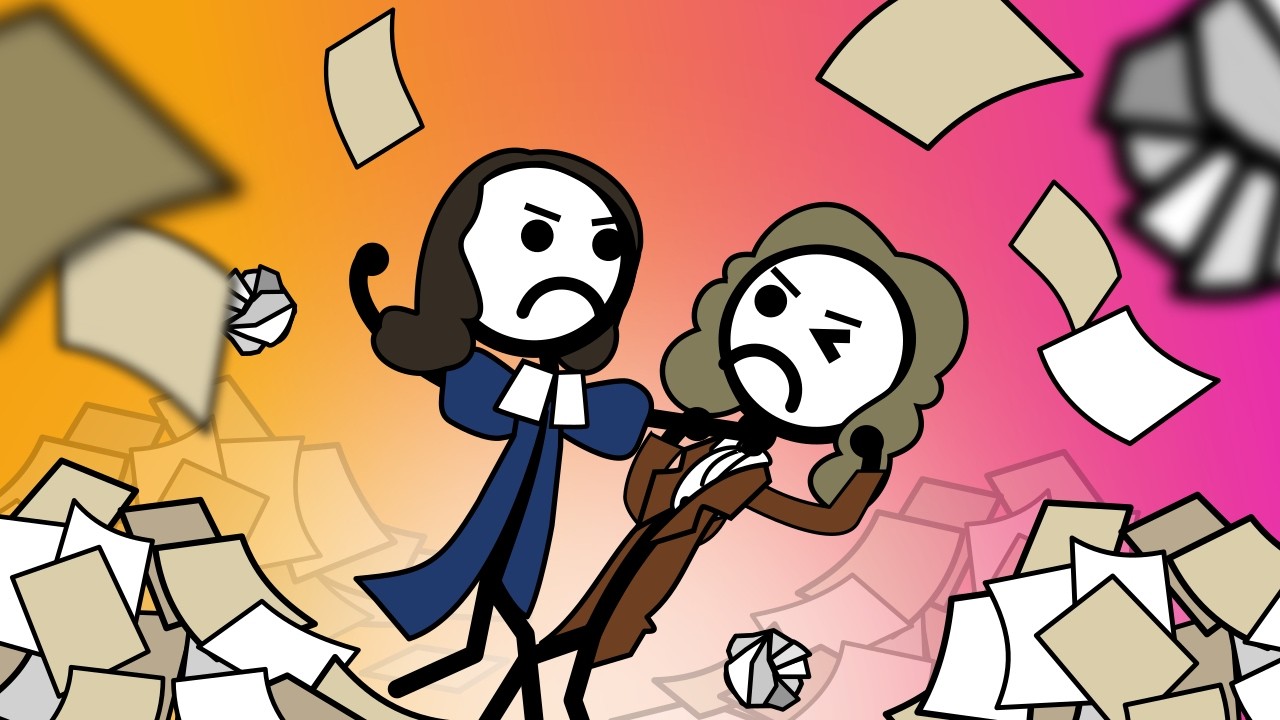
Alexander Pope Wrote a 35-Page Takedown of a Historian — CGP Grey

CGP Grey

Centuries of academic citations treating Tiffany as a medieval English name trace back to an inaccurate 1722 footnote by Thomas Hearne, who altered 14th-century records documenting a woman legally named Theophania.

AI-assisted summary of Alexander Pope Wrote a 35-Page Takedown of a Historian — original source. Check the original for full context.

Source published:

Key ideas

  • CGP Grey's six-month investigation into whether the name Tiffany was used in medieval verse revealed that modern citations relied entirely on an unverified 18th-century footnote. (0:01)
  • The source was traced to antiquarian Thomas Hearne's flawed 1722 edition of the medieval Scottish chronicle Scotichronicon, which arbitrarily inserted a modern English family rhyme into the Latin text. (7:25)
  • Hearne's uncritical habit of archiving trivial rhymes earned him the wrath of satirist Alexander Pope, who lampooned Hearne as the character 'Wormius' and penned a 35-page takedown of his historical blunders. (8:56)
  • Historical records completely disproved the poem's facts: the real 14th-century figure was Thomas Coningsby, whose captive bride from Brittany was named Theophania rather than Tiffany, exposing centuries of circular academic citations. (15:29)

Detailed notes

## Background Published on YouTube by CGP Grey on September 9, 2021, this video chronicles an obsessive research rabbit hole stemming from his work on the history of the name Tiffany. The video description credits his Patreon supporters, known as the 'bonnie bees,' and directs viewers to related videos including 'The Tale of Tiffany.'

## TL;DR While attempting to verify whether the name Tiffany was genuinely used in the Middle Ages, CGP Grey embarked on a multi-month quest to find the primary source of an obscure rhyming couplet. His investigation traced a chain of citations backwards through 19th-century antiquarian books to a 1722 edition of the medieval Scottish chronicle *Scotichronicon*, edited by the eccentric collector Thomas Hearne. Along the way, Grey uncovered an intense 18th-century intellectual feud between Hearne and the renowned satirist Alexander Pope, who composed a scathing 35-page takedown exposing Hearne's rampant scholarly blunders. Ultimately, digging into real genealogical records revealed that the poem's facts were entirely mangled and proved nothing about the medieval use of 'Tiffany,' exposing how centuries of scholars had blindly copied a flawed footnote without checking the source.

## Atmosphere & style The presentation is wry, obsessive, and darkly comedic, capturing the peculiar madness of tumbling headfirst into an academic rabbit hole. Grey narrates with escalating exasperation, transforming dry library footwork and dusty Latin folios into a gripping intellectual detective story. It feels intimately confessional and isolating as he realizes he is consumed by centuries-old squabbles no living person cares about, culminating in a cathartic burst of righteous indignation before settling into an earnest reflection on the value of venturing off the beaten path.

## Bulletin - [00:01](https://www.youtube.com/watch?v=qEV9qoup2mQ&t=1s) CGP Grey's six-month investigation into whether the name Tiffany was used in medieval verse revealed that modern citations relied entirely on an unverified 18th-century footnote. - [07:25](https://www.youtube.com/watch?v=qEV9qoup2mQ&t=445s) The source was traced to antiquarian Thomas Hearne's flawed 1722 edition of the medieval Scottish chronicle Scotichronicon, which arbitrarily inserted a modern English family rhyme into the Latin text. - [08:56](https://www.youtube.com/watch?v=qEV9qoup2mQ&t=536s) Hearne's uncritical habit of archiving trivial rhymes earned him the wrath of satirist Alexander Pope, who lampooned Hearne as the character 'Wormius' and penned a 35-page takedown of his historical blunders. - [15:29](https://www.youtube.com/watch?v=qEV9qoup2mQ&t=929s) Historical records completely disproved the poem's facts: the real 14th-century figure was Thomas Coningsby, whose captive bride from Brittany was named Theophania rather than Tiffany, exposing centuries of circular academic citations.

## Key takeaways - [01:24](https://www.youtube.com/watch?v=qEV9qoup2mQ&t=84s) Modern claims asserting that the name Tiffany was medieval often cited an undated, context-free rhyming joke rather than verifiable contemporary records. - [01:24](https://www.youtube.com/watch?v=qEV9qoup2mQ&t=84s) The verse appeared in Nelson Otis Tiffany's genealogical book The Tiffanys of America, where a footnote launched a multi-source chain of bibliographic backtracking. - [03:30](https://www.youtube.com/watch?v=qEV9qoup2mQ&t=210s) Tracing citations through Richmondshire antiquarian guides and Augustin Thierry's French history led back to an 18th-century Latin edition of the Scotichronicon. - [05:08](https://www.youtube.com/watch?v=qEV9qoup2mQ&t=308s) The Scotichronicon is a foundational medieval Scottish chronicle initiated by John of Fordun and Walter Bower that notably contains early written mentions of Robin Hood. - [07:25](https://www.youtube.com/watch?v=qEV9qoup2mQ&t=445s) The Tiffany verse was completely absent from genuine medieval manuscripts, appearing only as an editorial footnote inserted into the 1722 printing by editor Thomas Hearne. - [07:25](https://www.youtube.com/watch?v=qEV9qoup2mQ&t=445s) Hearne attributed the poem to an ancient Coningsby family parchment kept 'charily,' but provided zero verification or chronological dating for the manuscript. - [08:56](https://www.youtube.com/watch?v=qEV9qoup2mQ&t=536s) Alexander Pope attacked Hearne in an exhaustive 35-page letter that weaponized pedantry to expose Hearne's chronological impossibilities and obsession with useless trivia. - [11:23](https://www.youtube.com/watch?v=qEV9qoup2mQ&t=683s) The Pope–Hearne feud escalated into literature, with Pope caricaturing Hearne as the pedant Wormius after Hearne privately criticized Pope's scholarship. - [12:42](https://www.youtube.com/watch?v=qEV9qoup2mQ&t=762s) Nineteenth-century historian John Horace Round had already condemned Hearne for careless scholarship, noting Hearne had even misspelled Coningsby as 'Cognisby.' - [14:51](https://www.youtube.com/watch?v=qEV9qoup2mQ&t=891s) Hearne's Scotichronicon edition is considered non-canonical by modern medieval scholars because he arbitrarily excised substantial portions of the text and padded the layout with oversized type. - [15:29](https://www.youtube.com/watch?v=qEV9qoup2mQ&t=929s) Fourteenth-century records reveal that William Coningsby married Beatrice, while his son Thomas brought back a Breton bride whose legal name was Theophania, not Tiffany. - [15:29](https://www.youtube.com/watch?v=qEV9qoup2mQ&t=929s) Generations of academics perpetuated the myth by copying Hearne's footnote without checking the original text, stripping the name Tiffany of its actual 18th-century context. - [18:11](https://www.youtube.com/watch?v=qEV9qoup2mQ&t=1091s) Conducting deep, algorithm-defying historical investigations requires direct patron support, for which Grey established the 'Bonnie Bees' while strictly excluding financially dependent students.

## Detailed walkthrough ### [00:01](https://www.youtube.com/watch?v=qEV9qoup2mQ&t=1s) The Medieval Tiffany Trap and the Maddening Poem

After completing a companion video exploring the surprising history of the name Tiffany, CGP Grey invites viewers behind the scenes into a research rabbit hole that spiraled completely out of control. It all started innocently enough when he read several articles asserting that the name Tiffany was ancient and perhaps medieval. Thinking it would make for a cute, simple video, he decided to check the citations rather than taking the claims at face value. To his frustration, the cited sources rarely included the spelling "Tiffany" at all, offering instead archaic Latinate and Germanic precursors like *Theophania* or *Theophanu*. While it was theoretically possible medieval women used "Tiff" as a casual pet name, Grey found that assumption far too convenient. As Grey explained his skepticism, “To me it looked like the sort of Lady Godiva story where later writers say a thing happened but there's no evidence from the time that it did, because it's a fairy tale.”

Fearing the entire project was built on historical mythmaking, Grey nearly binned the video altogether. Genuine medieval instances of "Tiffany" eventually surfaced to rescue the main project, but not before an obscure piece of rhyming verse thoroughly derailed him. Determined not to let countless obsessive hours vanish into nothing, he set out to recount the bizarre saga of tracking down that single stubborn poem.

[01:24](https://www.youtube.com/watch?v=qEV9qoup2mQ&t=84s) The Mystery Verse and *The Tiffanys of America*

The poem in question was brief, but it kept surfacing in contemporary writings as supposed proof that Tiffany was medieval. Crucially, none of these modern references ever provided an author, a date, or an original publication context, making it impossible to anchor to any historical timeline. Adding to the irritation, the verse was clearly framed as a period joke. Grey tracked down an 1859 history book featuring the poem accompanied by an odd, French-style humorous illustration, yet the punchline remained completely inscrutable: was the joke about the dog, or something else entirely?

Just as Grey resolved to abandon the search and move on, a parcel arrived containing a copy of *The Tiffanys of America*, an obscure genealogical tome he had ordered weeks earlier. The book, authored by Nelson Otis Tiffany, turned out to be roughly ninety percent a dry registry of Americans named Tiffany, illustrated with hilariously blurry photographs. Its front matter contained an overt acknowledgment thanking jewelry magnate Charles Lewis Tiffany for financing the publication with his "liberal contributions of money," immediately followed by an unvarnished claim that the Tiffany family crest was the "most beautiful thing of its kind we have ever seen" and two solid pages of shameless genealogical flattery. Yet wedged directly between those sections sat the exact same Brittany Tiffany poem—still completely undated, but this time accompanied by a footnote pointing back to another source. At that moment, Grey gave up all restraint and made a solemn vow: “I would find the primary source of this Brittany Tiffany poem. No matter the time. No matter the cost.”

[03:30](https://www.youtube.com/watch?v=qEV9qoup2mQ&t=210s) The Footnote Trail: Richmondshire and Augustin Thierry

The footnote in *The Tiffanys of America* directed Grey to an antiquarian volume titled *Richmondshire, its Ancient Lords and Edifices: A Concise Guide to the Localities of Interest to the Tourist and Antiquary; With Short Notices of Memorable Men*. When the ordered volume finally arrived, an antique folding map dramatically tumbled out of the pages. Upon finding the poem inside, Grey noticed that a previous reader had already marked the passage in pencil and jotted down a note below it, suggesting someone else had once walked this exact same research trail.

```mermaid flowchart TD accTitle: The Tiffany Poem Footnote Trail accDescr: Diagram tracing the chain of bibliographic citations followed by CGP Grey from modern genealogies back to 18th-century antiquarian disputes. subgraph Modern["Modern Sources"] A["Modern Articles / 1859 Book"] --> B["The Tiffanys of America<br/>(Nelson Otis Tiffany)"] end subgraph Antiquarian["19th-Century Antiquarian Trail"] B --> C["Richmondshire, its Ancient Lords and Edifices"] C --> D["History of the Conquest of England<br/>(Augustin Thierry)"] end subgraph Medieval["18th-Century & Medieval Editions"] D --> E["1722 Scotichronicon Footnote<br/>(Edited by Thomas Hearne)"] E --> F["Alleged Ancient Coningsby Parchment<br/>(Lost / Unverified)"] E -.-> G["Alexander Pope's 35-Page Letter<br/>(Takedown of Hearne)"] end ```

The *Richmondshire* guide attributed the verse to a certain "M. Thierry." To avoid spending exorbitant sums buying yet another rare volume, Grey visited his local library to track Thierry down in person. The search proved tricky for two distinct reasons: - The prefix "M." was not a first initial, but the traditional French abbreviation for *Monsieur*, pointing to historian Augustin Thierry and his work *History of the Conquest of England by the Normans*. - The library itself predated the modern Dewey Decimal System, organizing its collection through quirky seventeenth-century classification schemes that tucked specific English histories behind architectural features like miniature book elevators.

When Grey finally pulled Thierry's *History of the Conquest of England* from the shelf and flipped to the verse, he discovered it was still not the primary source. Thierry's own footnote pointed back even further to a Latin work: *Hearne, Praefatio ad Johan. de Fordun, Scotichronicon*.

[05:08](https://www.youtube.com/watch?v=qEV9qoup2mQ&t=308s) The Scotichronicon and the Hunt for the 1722 Edition

The *Scotichronicon* is a monumental chronicle of Scottish history initiated in the 1300s by John of Fordun, a priest from Aberdeen, and later expanded by Walter Bower, an abbot of Inchcolm. Together, their goal was to chronicle the entire history of Scotland from their contemporary era all the way back to the biblical Book of Genesis. The chronicle is also known for containing one of the earliest surviving literary references to Robin Hood, albeit from an elitist perspective that looked down on the outlaw and his lower-class fans.

Grey ventured deep into the library's dimly lit Scottish history stacks—navigating by smartphone flashlight—and retrieved a massive copy of the *Scotichronicon* with handwritten marginalia, which had not been checked out since 1995. Turning to the cited page 172, the poem was nowhere to be found. After laboriously skimming through page after crinkly Latin page, he came up completely empty-handed.

As it turned out, he had been examining the wrong edition: a 1759 printing (marked MDCCLIX). Searching further at one of the world's premier research libraries with hundreds of millions of volumes, Grey located an earlier edition published in 1722 (MDCCXXII). This earlier printing was significantly more compact and set in comically oversized type. On page 170 of that 1722 edition, he finally found the printed text: "Brittany Tiffany A-N-Y." For a fleeting moment, Grey believed he had secured an ironclad primary source dating the name Tiffany directly to the 1400s.

[07:25](https://www.youtube.com/watch?v=qEV9qoup2mQ&t=445s) The Coningsby Mystery and Editor Thomas Hearne

That celebration collapsed under basic linguistic scrutiny. The *Scotichronicon* chroniclers wrote exclusively in Latin, whereas the Brittany Tiffany poem was written in recognizably modern English. The poem was not part of the medieval Scottish chronicle at all; it was merely an editorial footnote inserted into the 1722 printing by its editor, who noted that the lines had been "charily preserved" upon an ancient piece of parchment belonging to the noble Coningsby family.

The archaic term "charily" indicated that the parchment had been kept cautiously or warily, but provided zero concrete data on its true age. Grey sank hours into scouring Coningsby family archives and estate records with no success. Resigning himself to the reality that viewers would inevitably flood his inbox with genealogical tips and ancient family heirlooms, he turned his attention to the editor behind the footnote: a scholar Latinized as "Tho. Hearnius."

Unmasking the Latin moniker led to Thomas Hearne, an antiquarian who had worked at the Bodleian Library at Oxford University in the early eighteenth century, prolific in publishing printed transcriptions of medieval manuscripts. Finding out why an editor chose to print a specific footnote three centuries ago seemed like an impossible dead end. Then, an online search turned up the collected correspondence of Hearne's renowned contemporary, Alexander Pope, containing a sprawling 35-page letter focused squarely on Hearne.

[08:56](https://www.youtube.com/watch?v=qEV9qoup2mQ&t=536s) Alexander Pope's 35-Page Catty Masterpiece

Pope's massive letter opens with what initially reads like polite deference toward Hearne's tireless historical industry, explicitly mentioning the Brittany Tiffany verse alongside other poems in Hearne's collections. However, the tone quickly reveals itself to be deeply patronizing. Pope notes that Hearne accumulated such an overwhelming hoard of miscellany that recounting it all would waste the reader's time. He remarks that while Hearne intended to perform a public service by rescuing neglected writings from oblivion, he spent his energy preserving absurd, thoroughly useless ditties—specifically singling out Brittany Tiffany.

The letter soon abandons polite praise entirely. Adopting a theatrical posture of reluctance, Pope spends page after page systematically cataloging and eviscerating every single blunder, misattribution, and chronological error Hearne ever committed in his published works. Laying out Hearne's sloppy scholarship, Pope dryly points out a chronological impossibility: Hearne claimed an author wrote about studying at Canterbury College in the year 1274, even though the college itself was not founded until 1363. As Grey paraphrased Pope's devastating critique: “Therefore, this man must have either lived 89 years before he was born or written of a place many years before it was built.”

- Pope claimed Hearne possessed an endless appetite for archiving trivial rhyming verse that served no discernible scholarly purpose. - The letter weaponized meticulous, passive-aggressive pedantry to make Hearne look thoroughly incompetent as a serious historian. - Pope's barbed commentary reflected an era of ferocious literary feuds, demonstrating that the pursuit of the Tiffany poem had unwittingly crossed paths with one of the sharpest satirists in English history.

[11:23](https://www.youtube.com/watch?v=qEV9qoup2mQ&t=683s) The Pope–Hearne Feud and the 35-Page Takedown

While attempting to navigate the tangled provenance of the poem, Grey discovers that he could have bypassed a massive research dead-end had he noticed a footnote at the bottom of Thomas Hearne’s Wikipedia page sooner. Renowned poet Alexander Pope—ranked just below William Shakespeare and the King James Bible among the most quoted writers in English—had engaged in a vicious intellectual rivalry with Hearne, dismissing Hearne's life's work as completely unappealing and "monkish." Hearne fired back in his private diaries, grumbling that Pope entirely lacked genuine scholarship. Pope retaliated by creating a pedantic, know-nothing character named Wormius based directly on Hearne for one of his works, prompting Hearne to sneer right back.

Digging into this eighteenth-century feud revealed an online research brick wall: entering `+Hearne +Wormius` into Google yielded exactly one single result—the Wikipedia page itself. Refusing to trust an unverified internet claim, Grey tracked down the cited offline book source. Since it was unavailable at the local library, he purchased a physical copy, waited for it to arrive, and verified the story: Pope really did caricature Hearne as Wormius. Even worse, Pope refused to let the grudge go; even after Hearne's death, Pope went so far as to publish an astonishing 35-page takedown eviscerating the deceased antiquarian.

```mermaid flowchart LR accTitle: The Feud Between Alexander Pope and Thomas Hearne accDescr: Diagram tracing the escalating public attacks between Alexander Pope and Thomas Hearne.

subgraph S1["Initial Clashes"] direction TB A["Pope dismisses Hearne's work<br>as unappealing and 'monkish'"] --> B["Hearne writes in diary that<br>Pope lacks true scholarship"] end

subgraph S2["Escalation & Retaliation"] direction TB B --> C["Pope bases the pedantic character<br>'Wormius' on Hearne"] C --> D["Hearne attacks Pope's work in response"] D --> E["Pope writes 35-page takedown<br>even after Hearne's death"] end ```

[12:42](https://www.youtube.com/watch?v=qEV9qoup2mQ&t=762s) The Isolation of Research and Discovering John Horace Round

Grey reflects on how absurdly narrow and lonely his research rabbit hole had become. He was not merely researching the broader history of the name Tiffany, nor just hunting the primary source of an obscure poem spelling it "Tiffany" with an A-N-Y—he was deep into a tangent tracking the schoolboy-level bickering of two men dead for hundreds of years. As Grey observes: “The number of people willing to listen for months on end to updates about not even the very broad topic of the origin of the name Tiffany, not even of the exact original source of one poem that mentions the name Tiffany A-N-Y, but of two dead dude's schoolboy-level squabbles that are tangentially related to Tiffany is zero.”

A glimmer of solidarity appeared when Grey stumbled across nineteenth-century historian John Horace Round, who delivered a blistering critique of Hearne. Round lambasted Hearne for failing to interrogate document dates, ignoring internal textual evidence, conducting superficial examinations, and polluting historical chronologies for subsequent generations. To make matters worse, Hearne had actually misspelled the poem's family surname twice (rendering it as "Cognisby"), explaining why Grey's earlier searches through family records had come up completely blank. Thrilled to find someone who shared his intense frustration, Grey wanted to reach out, note that Round had even translated parts of the Domesday Book (Grey’s starting point), and grab coffee—only to realize upon checking the publication date that Round had died nearly a century earlier, leaving Grey as “Grey 'No Mates'” once more.

- Months of work went into an isolated sub-thread that formed only a tiny fraction of the broader Tiffany project. - Grey spent half a year feeling like the only living person who cared about untangling these documents. - Hearne’s sloppy surname spelling of Coningsby as "Cognisby" single-handedly blocked access to valid genealogical trails.

[14:51](https://www.youtube.com/watch?v=qEV9qoup2mQ&t=891s) Deconstructing Hearne's Edition of the Scotichronicon

Through this journey, Grey came to understand two critical truths regarding Thomas Hearne. First, while his contemporaries polite described him as an "antiquarian" (a term Grey initially assumed was merely archaic for "historian"), the word was effectively eighteenth-century code for an uncritical hoarder. Hearne obsessively accumulated every scrap of old paper he could get his hands on, but lacked the analytical rigor to evaluate, categorize, or curate what he found.

Second, Hearne’s published edition of the medieval Scottish chronicle *Scotichronicon*—the foundational provenance to which all modern secondary sources pointed back regarding the poem—was actively worse than useless. Beyond containing footnotes of highly dubious value, Hearne had arbitrarily excised significant portions of the actual text, compensating for the omissions by printing his edition in an oversized typeface. His edition is completely non-canonical among modern medieval scholars, turning what seemed like an authoritative source into an editorial disaster.

[15:29](https://www.youtube.com/watch?v=qEV9qoup2mQ&t=929s) Tracking Down the Historical Coningsbys and Theophania

Turning finally to actual genealogical and historical records, Grey investigated whether the poem's central figure was ever a real person. The poem opens: *"William from Britany, wife Tiffany."* Historical reality shattered the poem entirely: - **William Coningsby**: A real fourteenth-century Englishman living in England (not Brittany), married to a woman named **Beatrice**, not Tiffany. - **Thomas Coningsby**: William and Beatrice’s son, who genuinely did campaign in Brittany alongside Edward the Black Prince. - **The Prisoner Bargain**: Thomas was captured as a prisoner of war, and his Breton captor granted his freedom on the condition that Thomas marry his daughter. - **The Bride's True Name**: Thomas did bring a wife out of Brittany, but primary legal paperwork reveals her actual name was **Theophania**, not Tiffany.

The vernacular form "Tiffany" was only attached to her hundreds of years later. In sheer exasperation, Grey shouts: “GOD DAMN YOU, HEARNE! Everything is wrong! And the poem is evidence of nothing useful at all.”

The ultimate working theory emerges: Hearne was personally acquainted with the Coningsby family, saw or heard about an old family rhyme, and when editing the *Scotichronicon*, a passing mention of the family prompted him to insert his half-remembered, inaccurate verse into a footnote. Subsequent generations of academics engaged in an unchecked copy-paste citation chain, citing the footnote without reading the original text, stripping the name "Tiffany" of its actual eighteenth-century context. The investigation established only that the spelling "Tiffany" existed in the 1700s—a trivial fact already known from the start—meaning six months of grueling research ultimately led nowhere.

```mermaid flowchart TD accTitle: The Chain of Citation Error from History to Modern Research accDescr: Flowchart illustrating how historical reality was distorted through Thomas Hearne's footnote into modern academic citations.

subgraph ActualHistory["14th-Century Historical Reality"] W["William Coningsby of England<br>(Wife: Beatrice)"] T["Son: Thomas Coningsby<br>Fights in Brittany"] Captive["Thomas taken captive;<br>marries captor's daughter"] Theo["Her official legal name:<br>Theophania (not Tiffany)"]

W -.-> T --> Captive --> Theo end

subgraph HearneError["18th-Century Distortion"] Rhyme["Distorted family poem alters<br>names, generation, and geography"] HearneFootnote["Thomas Hearne inserts poem into<br>non-canonical Scotichronicon footnote"]

Theo -.-> Rhyme --> HearneFootnote end

subgraph ModernResult["Modern Academic Echo Chamber"] Chain["Generations of academics copy footnote<br>without verifying original manuscript context"] Grey["Grey spends six months tracking poem,<br>learning only that 'Tiffany' existed by the 1700s"]

HearneFootnote --> Chain --> Grey end ```

[18:11](https://www.youtube.com/watch?v=qEV9qoup2mQ&t=1091s) Post-Video Reflection and the Bonnie Bees

After the main narrative concludes, Grey speaks directly to the audience from the metaphorical "Forest of All Knowledge." He notes that while some topics present clear, pre-cut pathways, others force a researcher off-trail through brambles and dead-ends where they risk getting completely lost. Grey describes his responsibility to his audience: “To turn something that is unmarked, into something that's slightly marked. Perhaps something that's been completed with trusses to get you over the dangerous and difficult parts.”

He acknowledges that pouring six months of obsessive labor into a failed lead makes no commercial sense under the incentives of YouTube algorithms, but he creates these deeply researched explorations because he cherishes that depth as a viewer. To make this sustainable without relying on the erratic whims of platform metrics, Grey announces a name for his direct supporters: the **Bonnie Bees**. He sets a strict personal ground rule for anyone considering joining his Patreon: supporters must be financially independent adults, explicitly barring students. As Grey emphasizes: “I want people to work on themselves and work on their own lives before they try to help me out. I will be fine. Make sure you're good first.” Direct patron support ensures he can continue crafting obsessively detailed historical investigations for viewers who value the craft.

## Notable quotes > [18:11](https://www.youtube.com/watch?v=qEV9qoup2mQ&t=1091s) I want people to work on themselves and work on their own lives before they try to help me out. — CGP Grey

## Mentioned Alexander Pope, Augustin Thierry, Bodleian Library, Canterbury College, Charles Lewis Tiffany, CGP Grey, Coningsby family, Domesday Book, Edward the Black Prince, History of the Conquest of England by the Normans, John Horace Round, John of Fordun, Nelson Otis Tiffany, Patreon, Richmondshire, its Ancient Lords and Edifices, Robin Hood, Scotichronicon, The Tiffanys of America, Thomas Coningsby, Thomas Hearne, Walter Bower, William Coningsby, William Shakespeare, Wormius

## Video description Videos like this are only possible with your help, consider becoming a bonnie bee today! https://www.patreon.com/cgpgrey

Related Videos

💖 The Tale of Tiffany 💖 https://www.youtube.com/watch?v=9LMr5XTgeyI

Physical Characteristics of The Tiffanys: https://www.youtube.com/watch?v=ZhCAbDeLgTw

Brief History of the Royal Family: https://www.youtube.com/watch?v=jNgP6d9HraI

Discussion on Cortex Episode out of Time -- Rio Heist: https://www.youtube.com/watch?v=BcI3Gn59J8A

The first time: https://www.youtube.com/watch?v=Ex74x_gqTU0

Bonnie Bees

Ben Delo, Bob Kunz, Bobby, Nevin Spoljaric, Donal Botkin, BN-12, Andrew Bereza, Rebecca Wortham, Richard Jenkins, Marco Arment, Phil Gardner, Martin, Steven Grimm, Colin Millions, emptymachine, George Lin, Jason Lewandowski, Saki Comandao, David Tyler, iulus, Jordan Earls, Nick Fish, Nick Gibson, Tyler Bryant, Xueqi, Oliver Steele, Kermit Norlund, rictic, Alex Simonides, Tim Stumbaugh, Nicholas Welna, Christopher Mutchler, Derek Bonner, Mikko, Orbit_Junkie, Tómas Árni Jónasson, Bear, chrysilis, David Palomares, Drago175, Emil, Esteban Santana Santana, Freddi Hørlyck, John Rogers, Peter Lomax, Rhys Parry, ShiroiYami, Tristan Watts-Willis, Veronica Peshterianu, Dag Viggo Lokøen, John Lee, Maxime Zielony, Elizabeth Keathley, Birdstryke, AUFFRAY Clement

Music

David Rees: http://www.davidreesmusic.com

[Source](https://www.youtube.com/watch?v=qEV9qoup2mQ)

中文简报

赫恩篡改中世纪记录 酿成“蒂芙尼”得名三百年谬误 数百年来将“蒂芙尼(Tiffany)”视为中世纪英格兰名字的学术引用,追根溯源竟来自托马斯·赫恩在1722年写下的一条失真注脚;他擅自篡改了一位法定名为狄奥法尼亚(Theophania)的女性的14世纪记载。 为了核实“蒂芙尼(Tiffany)”一名在中世纪是否确有使用,CGP Grey历时数月展开探寻,试图找出一段冷门押韵对句的原始出处。顺着19世纪古物研究文献的引用链条一路倒推,他的调查最终指向了1722年出版的中世纪苏格兰编年史《苏格兰编年史》(Scotichronicon),该版本由古怪的收藏家托马斯·赫恩(Thomas Hearne)编校。在此过程中,Grey还揭开了一段18世纪的学术恩怨:著名讽刺作家亚历山大·蒲柏(Alexander Pope)曾撰写长达35页的严厉抨击之作,直指赫恩泛滥成灾的学术错漏。最终,在深入查阅真实家谱记录后发现,该诗文所载事实完全被篡改,根本无法证明“蒂芙尼”在中世纪的实际使用,同时也揭示了数百年来学者们如何在未查验一手文献的情况下盲目转引一条充满谬误的注脚。 CGP Grey针对中世纪诗歌中是否出现过“蒂芙尼(Tiffany)”这一名字展开了为期六个月的调查,结果发现现代学术引用完全依赖于一条未经验证的18世纪注脚。 (0:01) 该出处可追溯至古物学家托马斯·赫恩于1722年编校的一部漏洞百出的中世纪苏格兰编年史《苏格兰编年史》(Scotichronicon),他擅自将一首现代英语家族押韵诗插入了拉丁文正文中。 (7:25) 赫恩未经审辨便盲目辑录琐碎韵文的习惯招致了讽刺作家亚历山大·蒲柏的强烈抨击,蒲柏不仅将赫恩戏拟为虚构人物“沃米乌斯(Wormius)”,还专门撰写了长达35页的批驳文章揭发其历史学错误。 (8:56) 历史记录完全推翻了该诗所载的事实:真实的14世纪人物为托马斯·科宁斯比(Thomas Coningsby),其俘虏的布列塔尼新娘名为狄奥法尼亚(Theophania)而非蒂芙尼,这揭露了学术界长达数百年的同义反复式循环引用。 (15:29)

Reading summary

CGP Grey's investigation into an obscure poem frequently cited as proof that the name "Tiffany" existed in medieval England reveals that modern scholarship relied on an unverified, inaccurate eighteenth-century footnote by antiquarian Thomas Hearne. The Degenerative Bibliographic Citation Trail (3:30) Modern articles and genealogical works frequently cited a brief rhyming verse—opening with "William from Britany, wife Tiffany"—as proof of the medieval use of the name Tiffany, yet consistently omitted dates, authors, and origins. The verse resurfaced in Nelson Otis Tiffany’s 1880s genealogical volume, The Tiffanys of America, a work largely financed through contributions by jewelry magnate Charles Lewis Tiffany and accompanied by fulsome genealogical praise. A footnote in this volume pointed back to an antiquarian tourist guide titled Richmondshire, its Ancient Lords and Edifices, which in turn attributed the lines to French historian Augustin Thierry’s History of the Conquest of England by the Normans. Following Thierry’s citations back through historical library collections, Grey traced the origin further back to a 1722 edition of the Scotichronicon—a fourteenth-century Scottish chronicle compiled by John of Fordun and Walter Bower. Each intermediate nineteenth-century author had cited the preceding text without verifying the original context, creating an unchecked copy-paste chain that detached the verse from its actual publication history. Thomas Hearne’s Editorial Distortions (7:25) Upon locating the 1722 printing (MDCCXXII) of the Scotichronicon, Grey observed that the poem was entirely absent from the medieval Latin text. Instead, it was an editorial footnote in recognizably modern English inserted by eighteenth-century antiquarian Thomas Hearne. Hearne asserted only that the text had been "charily preserved" upon an ancient piece of parchment belonging to the noble Coningsby family, offering no verifiable timeline or provenance. Hearne functioned less as an analytical historian than as an uncritical collector who hoarded neglected papers without evaluating their reliability. His version of the Scotichronicon proved completely non-canonical among modern medieval scholars, as he had arbitrarily cut extensive passages of the original manuscript and set the remainder in oversized type to conceal the omissions. Contemporary and Retrospective Takedowns of Hearne (8:56) Hearne’s intellectual shortcomings were widely recognized in his own era. Renowned satirist Alexander Pope engaged in a protracted literary feud with Hearne, dismissing his work as unappealingly "monkish" and caricaturing him as the pedantic know-nothing "Wormius." Pope even authored a scathing 35-page letter attacking Hearne's scholarship. In it, Pope singled out the Brittany Tiffany verse as an absurd, useless piece of trivia and systematically exposed Hearne's chronological blunders—such as Hearne claiming an author studied at Canterbury College in 1274, fully 89 years before the institution was founded in 1363. In the nineteenth century, historian John Horace Round delivered a matching critique of Hearne, condemning his failure to evaluate document dates, his reliance on superficial examinations, and his corruption of historical chronologies. Round also pointed out that Hearne had repeatedly misspelled the Coningsby surname as "Cognisby," which had blocked later researchers from properly cross-referencing records. Historical Reality Behind the Coningsby Rhyme (15:29) Archival and legal records completely dismantled the factual claims of the poem printed by Hearne. The real William Coningsby was a fourteenth-century Englishman who lived in England rather than Brittany, and was married to a woman named Beatrice, not Tiffany. It was their son, Thomas Coningsby, who campaigned in Brittany alongside Edward the Black Prince and was taken prisoner of war. To secure his release, Thomas agreed to marry his Breton captor’s daughter. Primary legal documentation confirms that her actual name was Theophania, not Tiffany. The rhyme preserved by Hearne was a distorted, half-remembered family anecdote that altered names, geography, and generations. The appearance of the spelling "Tiffany" within the footnote proved nothing beyond its existence in the 1700s, turning six months of research into a bibliographic dead end. Grey concludes that while pursuing such isolated scholarly tangents is economically irrational under platform algorithms, independent funding from adult supporters allows him to map these historical dead-ends. The investigation illustrates how uncritical citation practices can canonize an eighteenth-century editorial blunder as medieval fact.

精炼阅读摘要

创作者 CGP Grey 通过耗时六个月的文献考据,复盘了一首常被现代学者用作“Tiffany”为中世纪名字证据的押韵短诗,揭示出这首诗实为 18 世纪学者 Thomas Hearne 随手塞入的错误注脚,并最终引发了诗人 Alexander Pope 的激烈论战。 追溯断裂的引文锁链 (1:24) Grey 最初旨在查证“Tiffany”这一名字的中世纪起源,却遭遇大量缺乏同时代拼写证据的二次引用。很多现代著述反复引用一首未标明日期的幽默短诗,宣称其为中世纪文本。Grey 在由 Nelson Otis Tiffany 撰写、珠宝商 Charles Lewis Tiffany 资助的 19 世纪家谱《The Tiffanys of America》中找到了相同的诗句,其注脚指向地方志《Richmondshire, its Ancient Lords and Edifices》,后者又指向法国历史学家 Augustin Thierry 的《诺曼征服英格兰史》(History of the Conquest of England by the Normans)。 古籍错位与虚假源头 (5:08) Thierry 的引注将追索链条推向了 14 世纪苏格兰编年史《苏格兰编年史》(Scotichronicon)。Grey 在研究型图书馆查阅该书 1759 年版本无果后,终于在其 1722 年版本的第 170 页找到了包含“Brittany Tiffany A-N-Y”字样的印刷内容。然而,编年史正文全为拉丁文,该诗却用现代英语写成,实为 18 世纪编辑 Thomas Hearne 自行加入的注脚。Hearne 声称诗句来源于 Coningsby 家族“谨慎保存”的一片古老羊皮纸,但并未给出该羊皮纸的确切年代。 教条学究与波普的批判 (8:56) Hearne 曾任职于牛津大学博德利图书馆,表面上是一位成果丰硕的金石学家(antiquarian),但实质上缺乏批判性辨析与分类能力。著名诗人 Alexander Pope 对 Hearne 的学术水准极度蔑视,不仅在作品中塑造了名为 Wormius 的迂腐学者形象来讽刺他,还在 Hearne 去世后撰写了一篇长达 35 页的长信。Pope 在信中指责 Hearne 痴迷于收集无用的打油诗,并列举了其多处硬伤,例如 Hearne 曾声称某作者在 1274 年就读于坎特伯雷学院,而该学院实际直到 1363 年才建立。 历史真相的彻底崩塌 (12:42) 19 世纪历史学家 John Horace Round 也曾批评 Hearne 忽视文献年代并拼错家族姓氏(将 Coningsby 误写为 Cognisby),从而阻碍了研究者的检索。当 Grey 最终核对真实的 14 世纪档案时,发现诗歌内容完全失实:诗中描写的 William Coningsby 生活在英格兰而非布列塔尼,其妻子名叫 Beatrice;其子 Thomas 虽在布列塔尼参战并娶了俘虏者的女儿为妻,但官方法律档案显示该女子的原名为拉丁化的 Theophania。所谓“Tiffany”仅是数百年后被附会的民间俗称,整首诗无法为中世纪名字考证提供任何有效证据。 这项历时半年的调查表明,几代学者在未经交叉核对原始文本的情况下层层复制注脚,制造了学术回音室;Grey 最终仅证实该拼写在 18 世纪确实存在,这一结论与研究起点毫无二致。

Detailed notes — zh

## Background 该视频由知名创作者 CGP Grey 于 2021 年 9 月 9 日发布在 YouTube 平台。视频简介主要感谢了通过 Patreon 提供资助的“邦尼蜜蜂”(Bonnie Bee)会员,并附上了关于“Tiffany”名字考据与英国王室史等相关视频的链接。 ## TL;DR CGP Grey 本想制作一期轻松探讨“Tiffany(蒂凡尼)”这一名字历史渊源的短片,却在溯源一首宣称证明其中世纪起源的打油诗时陷入了长达半年的考据泥潭。他一路追踪跨越百年的二手引用、家谱与古籍善本,最终顺藤摸瓜找到了 18 世纪学者托马斯·赫恩(Thomas Hearne)编订的《苏格兰编年史》,并挖出著名诗人亚历山大·蒲柏(Alexander Pope)当年撰写 35 页长信对赫恩极尽讽刺的文人恩怨。经过严密的史料比对,Grey 崩溃地发现整首打油诗的人物、年代和地名全是赫恩胡乱塞进注脚的错误杜撰,后世学者却未经核实盲目互相抄引,让他耗费数月的执着最终撞上了一场啼笑皆非的学术乌龙。 ## Atmosphere & style 全片充斥着一种兼具冷面幽默、狂躁抓狂与纯粹学术执念的荒诞氛围,犹如一部学者视角的惊悚侦探喜剧。Grey 操着他标志性的标志性语调,从最初的好奇逐步滑向被文献死胡同折磨至心态崩溃的边缘,在镜头前撕心裂肺地对几百年前的古人破口大骂。整期内容既有跨越数百年文人相互阴阳怪气的辛辣喜感,又在片尾流露出一种在知识荒原中孤军奋战后的真挚与释怀。 ## Bulletin - [00:01](https://www.youtube.com/watch?v=qEV9qoup2mQ&t=1s) CGP Grey 为考证流行读物中“Tiffany”源自中世纪的一首打油诗,展开长达半年的跨世纪文献逆向追溯,最终证明其为 18 世纪编者的伪作与笔误。 - [06:41](https://www.youtube.com/watch?v=qEV9qoup2mQ&t=401s) 溯源链条从现代家谱一直回溯到 1722 年托马斯·赫恩编订的《苏格兰编年史》,发现赫恩在注释中塞入来源不明且充满事实错误的私货诗歌。 - [08:29](https://www.youtube.com/watch?v=qEV9qoup2mQ&t=509s) 文豪亚历山大·蒲柏曾撰写长达 35 页的公开信痛斥赫恩的学术硬伤,历史学家朗德亦指出赫恩拼错家族姓氏并严重污染了历史年代学。 - [14:50](https://www.youtube.com/watch?v=qEV9qoup2mQ&t=890s) 历史真实人物实为生活在 14 世纪英格兰的威廉之子托马斯,其妻原名为希腊语源的 Theophania,拼写为“-ANY”的 Tiffany 纯属后人强行附会。 ## Key takeaways - [00:01](https://www.youtube.com/watch?v=qEV9qoup2mQ&t=1s) 现代科普常将“Tiffany”视为古老中世纪名字,但引用的古代文献通常只有 Theophania 等形式,所谓日常昵称缺乏当时实据。 - [00:01](https://www.youtube.com/watch?v=qEV9qoup2mQ&t=1s) 一首关于“布列塔尼的蒂凡尼”的无年代、无作者打油诗频繁被现代读物引为铁证,成为考证历史上最早“-ANY”拼写的核心悬案。 - [02:23](https://www.youtube.com/watch?v=qEV9qoup2mQ&t=143s) 由蒂芙尼珠宝创始人赞助出版的《美洲蒂凡尼家族史》收录了该诗,并提供脚注引向了地方志专著《里奇蒙郡,其古老的领主与建筑》。 - [04:11](https://www.youtube.com/watch?v=qEV9qoup2mQ&t=251s) 地方志中的线索指向法国历史学家奥古斯丁·梯厄里的著作,而梯厄里又将其归引至托马斯·赫恩编订的《苏格兰编年史》前言。 - [06:41](https://www.youtube.com/watch?v=qEV9qoup2mQ&t=401s) Grey 在排除 1759 年重印版后查阅 1722 年初版本,发现这首现代英语诗歌并非中世纪拉丁文正文,而是赫恩擅自插入的个人注脚。 - [08:29](https://www.youtube.com/watch?v=qEV9qoup2mQ&t=509s) 赫恩声称诗歌来自康宁斯比家族档案,但学者蒲柏当时便在一封长达 35 页的公开信中极尽挖苦,列举该诗毫无史料价值并逐条批判赫恩的考据硬伤。 - [11:23](https://www.youtube.com/watch?v=qEV9qoup2mQ&t=683s) 蒲柏与赫恩在历史上爆发过长期笔战,蒲柏甚至在讽刺诗剧《愚人志》中以赫恩为原型塑造了愚昧学究角色“沃米乌斯”。 - [12:42](https://www.youtube.com/watch?v=qEV9qoup2mQ&t=762s) 近代史学家朗德同样猛烈炮轰赫恩审查敷衍、无视内部证据,赫恩甚至两次拼错康宁斯比家族姓氏,直接导致后人检索失灵并污染历史时间线。 - [14:50](https://www.youtube.com/watch?v=qEV9qoup2mQ&t=890s) 赫恩在当时被称作“古物收藏家”,实质上是缺乏文本甄别分类能力的文献囤积狂,其整理的《苏格兰史志》甚至因私删原文而不被学界认可。 - [14:50](https://www.youtube.com/watch?v=qEV9qoup2mQ&t=890s) 历史考证显示诗中信息全盘皆伪:威廉并非来自布列塔尼,其妻名为 Beatrice;真正娶战俘之女的是其子托马斯,且该女子法律原名确为 Theophania。 - [14:50](https://www.youtube.com/watch?v=qEV9qoup2mQ&t=890s) 整场追查揭示了学术界数百年来不经核实、“复制粘贴脚注”形成的巨大乌龙,历经数月最终仅证明了 18 世纪存在该拼写这一已知共识。 - [18:11](https://www.youtube.com/watch?v=qEV9qoup2mQ&t=1091s) Grey 将深度考据比作在“全知森林”中为人开辟路径,并设立严格的经济自足门槛(坚决不收在校生赞助)来接纳名为“邦尼蜜蜂”的赞助者支持。 ## Detailed walkthrough ### [00:01](https://www.youtube.com/watch?v=qEV9qoup2mQ&t=1s) 缘起:Tiffany 名字溯源与一首毫无头绪的打油诗 Grey 从自己的幕后制作经历娓娓道来。这一切的开端,源于他此前读过的几篇科普文章,文中声称“Tiffany”(蒂凡尼)这个名字非常古老,甚至可以追溯到中世纪。过去那个天真的 Grey 曾以为这会是一期既可爱又轻松的短视频选题;正如 Grey 感慨的那样:“如果我当时就此打住,事情本可以很简单,可我偏不,偏要去查那些文章的原始出处。”然而一查才发现,那些被引用的文献里根本没有现代意义上的“Tiffany”,只有像 Theophania 甚至更古老的 Theophanu 这样的远古名字。在 Grey 看来,那些宣称中世纪贵妇平时互称“小蒂夫”(Tiff)的说法未免太过于自作聪明,听起来就像戈黛娃夫人(Lady Godiva)裸体骑马的民间传说一样,全是后世文人附会杜撰、缺乏当时实据的神话。就在这个视频选题濒临被扔进废纸篓之际,一些货真价实的中世纪 Tiffany 记录终于出现挽救了项目,但在那之前,Grey 已经被一首该死的小诗折磨得快要发疯。 这首关于“布列塔尼的蒂凡尼”(Brittany Tiffany)的小诗频繁出现在现代各种普及读物中,被视作该名字源自中世纪的铁证,却从未标明写作年代,也没有作者署名,让人根本无法将其锚定在历史时间线上。更令 Grey 恼火的是,这首诗似乎还是个笑话——例如在 1859 年的一本历史读物中,它旁边甚至配了一幅古怪的法式幽默插画,但现代人读起来完全摸不着头脑,根本不知道笑点究竟是在狗的名字上还是别处。面对这种莫名其妙的荒谬感,Grey 在视频里抓狂地质问:“笑点到底在哪儿?!”对于致力于寻找历史上最早那个拼作“T-I-F-F-A-N-Y”的人而言,这首小诗就像一个避不开的幽灵线索:它明明就在眼前,拼写完全一致,极有可能就是现存最早的记录,却因为缺乏源头而让人无法落锤定论。 ### [02:23](https://www.youtube.com/watch?v=qEV9qoup2mQ&t=143s) 顺藤摸瓜:从金主赞助的家谱到二手古籍里的藏宝图 Grey 本已心力交瘁打算放弃这首诗,不料几周前订购的一本大部头古籍寄到了家门口——《美洲蒂凡尼家族史》(*The Tiffany's of America*)。这本原本寄希望于为视频提供核心材料的书,拆开后却发现百分之九十的内容纯粹是全美所有名叫 Tiffany 的人名流水账,配着糊成一团的黑白照片。该书作者是纳尔逊·奥蒂斯·蒂凡尼(Nelson Otis Tiffany),并在开篇郑重感谢了蒂芙尼珠宝创始人查尔斯·路易斯·蒂芙尼(Charles Lewis Tiffany),直言不讳地盛赞对方为本书出版提供了“慷慨的金钱资助”。紧随其后的是毫无遮拦的家族吹捧,不仅将蒂凡尼家族纹章奉为“同类作品中所见过的最美之物”,还附带了两整页登峰造极的肉麻溢美之词。然而,就在这两段肉麻文字之间,那首噩梦般的打油诗再次赫然出现。不同的是,这次作者虽然依旧没给日期,却破天荒留了一条引文脚注,指向了另一本书:《里奇蒙郡,其古老的领主与建筑》(*Richmondshire, its Ancient Lords and Edifices*)。 Grey 当场心理防线失守,发誓无论是穷尽时间还是不惜工本,也必须顺着这条线索揪出这首布列塔尼小诗的最初源头。可正如他所言,当你向神明立下这种誓言,命运便会趁机捉弄你,让整个追寻过程变得尽可能痛苦。他立刻下单买来了这本全名长达数十个单词的珍本:《里奇蒙郡,其古老的领主与建筑:为观光客与古物研究者提供的名胜简明指南;附著名人物简记》。书刚一打开,里面竟滑出了一张泛黄的手绘古地图。在确认了地图上没有画着藏宝标记的“X”之后,Grey 翻开内页找到了那首诗,发现前任书主竟然已经在那里用铅笔做了标注并写下了笔记,显然曾有人踏上过与他完全相同的求索之路。这本书里的脚注将诗歌来源指向了一位名叫“M. Thierry”的作者。 ### [04:11](https://www.youtube.com/watch?v=qEV9qoup2mQ&t=251s) 踏破铁鞋:古老图书馆与《苏格兰编年史》 收藏珍本古籍的开销极度高昂,Grey 于是转战当地那座建立时间早于“杜威十进制图书分类法”的古老图书馆。这种古建图书馆虽极具古典探索情趣,但在查找资料时却是一场灾难——读者一旦误入了按17世纪古怪逻辑归类的书库,就很容易被困在“英格兰专区”与“仅限英格兰区”的迷宫里四处碰壁。Grey 后来才明白,所谓“M. Thierry”并不是名字缩写为 M,而是法语里的“先生”(Monsieur),对应的是法国历史学家奥古斯丁·梯厄里(Augustin Thierry)及其著作《诺曼征服英格兰史》(*History of the Conquest of England by the Normans*)。好不容易在小书梯后方找到这本书并翻到那一页,Grey 却失望地发现这依然不是原始文献:梯厄里在此处又加上了脚注,指向了另一本令人头大的拉丁文巨著——托马斯·赫恩(Thomas Hearne)为约翰·福尔顿(John of Fordun)所作的《苏格兰编年史》(*Scotichronicon*)撰写的前言。 根据记录,《苏格兰编年史》是14世纪由阿伯丁的一位神父开篇、并在其死后由因奇科姆修道院院长续写的一部雄心勃勃的苏格兰史诗,试图将苏格兰的源流一路倒推回创世纪。这部书也是西方历史上最早提及罗宾汉的文献之一,不过古代作者对这位绿林好汉及其盲从信徒的态度相当鄙夷,直指其受底层平民追捧的荒唐。Grey 摸黑打着手机手电筒钻进苏格兰历史书库,借出了这本上一次外借记录停留在1995年的《编年史》。然而,根据梯厄里提供的页码翻到第172页,整张脆硬泛黄的拉丁文书页上空无一物。Grey 只能硬着头皮,在一片晦涩的拉丁文中一页接一页地机械翻阅排查,结果一无所获。 ```mermaid flowchart TD accTitle: 文献溯源引用链条 accDescr: 展示CGP Grey追查Tiffany诗歌原始出处时所经历的一环扣一环的文献引用路径 subgraph Step1["现代流行读物与家谱"] A["现代文章 / 1859年历史趣闻"] -->|"无日期无作者"| B["《美洲蒂凡尼家族史》\n(1901)"] end subgraph Step2["地方志与历史专著"] B -->|"脚注引用"| C["《里奇蒙郡古建筑指南》\n(朗斯代尔著)"] C -->|"标记作者为 M. Thierry"| D["奥古斯丁·梯厄里\n《诺曼征服英格兰史》"] end subgraph Step3["中世纪史料整理"] D -->|"引注文献"| E["托马斯·赫恩编订版\n《苏格兰编年史》(1722)"] E -->|"编者赫恩声称源自"| F["康宁斯比家族古老文书\n(未解之谜)"] end ``` ### [06:41](https://www.youtube.com/watch?v=qEV9qoup2mQ&t=401s) 1722年版本现形与拉丁文背后的编者加料 经过进一步核对,Grey 意识到自己借错了版本——手头这本是1759年印刷的,而要找到正确的内容,必须调阅收藏于世界级大型图书馆中的1722年初版本。几经周折找到1722年版后,画风突变:这本书开本更小,正文字号却巨大得滑稽,仿佛当年编者为了硬凑厚度而故意撑大版面。翻到第170页,奇迹出现了:诗歌赫然在列,里面清清楚楚地拼写着“Tiffany”。那一瞬间 Grey 狂喜不已,以为自己终于抓到了第一手源头,成功将这一拼写锁定在了15世纪。 然而狂喜只维持了几秒,冷水便迎头浇下:中世纪的修士们是用古典拉丁文著书立说的,而眼前这首诗用的却是带有早期现代痕迹的英语。这首诗根本就不是《苏格兰编年史》正文的一部分,而是1722年该书出版时,编者在注释里擅自塞进去的私货。不仅如此,编者还在按语里写道,这首诗是“谨慎地保存在康宁斯比(Coningsby)家族的古老文件之中”。追寻到这里,线索彻底坠入迷雾:康宁斯比家族的文献浩如烟海且难觅踪迹。Grey 无奈打趣道,未来恐怕会有某个康宁斯比家族的远房后裔捧着圣物匣亲自找上门来,届时自己还得拿去送检做放射性碳定年。 ### [08:29](https://www.youtube.com/watch?v=qEV9qoup2mQ&t=509s) 结怨三百年:亚历山大·蒲柏长达35页的毒舌声讨书 追查康宁斯比家族无果后,唯一的突破口只剩下1722年版《苏格兰编年史》的编者“Tho. Hearnius”——即牛津大学博德利图书馆(Bodleian Library)的古物学者托马斯·赫恩(Thomas Hearne)。赫恩在18世纪初以极高的频率整理出版了大量中世纪古籍。Grey 原本以为弄清一个300年前的学者为何要在注释里插科打诨无异于大海捞针,但谷歌检索却出人意料地将他引向了英国著名诗人亚历山大·蒲柏(Alexander Pope)的书信集。作为同时代的名人,蒲柏写下了一封长达35页、专门针对托马斯·赫恩的公开长信。 这封信的开篇读起来冠冕堂皇,仿佛是一位狂热崇拜者的奉承之作,但往后读却令人背脊发凉。信中恰好提到了这首布列塔尼小诗:蒲柏语带讥讽地写道,赫恩收集的历史文件、尤其是古代诗歌实在太多了,多到要是逐一列举就是在浪费读者的时间;蒲柏假意称赞赫恩试图保留一切历史碎片的初衷是想“造福公众”,紧接着便辛辣地罗列了一堆彻头彻尾对任何人都没有丝毫用处的垃圾打油诗,其中就包括这首“布列塔尼的蒂凡尼”。 紧接着,蒲柏露出了毒舌的真面目。Grey 敏锐地捕捉到了信中充满反讽意味的冷酷字眼。在这篇长达35页的声讨檄文中,蒲柏几乎将赫恩生平出版的所有作品中出现的每一处笔误、年代倒错和考据失误都翻了个底朝天,并用最极尽挖苦的方式逐条公开行刑。比如在抓到赫恩的一处年代硬伤时,蒲柏便极尽讽刺地挖苦道:“你说此人在1274年曾求学于坎特伯雷学院并写下了见闻,可我不得不遗憾地告知阁下,那所学院直到1363年才告落成;因此,这位先生要么是在自己出生前89年就已在世,要么就是在一个地方建成许多年以前就已经为它著书立说了。”正如 Grey 总结的那样,Alexander Pope 展现了十八世纪文人撕破脸皮时登峰造极的阴阳怪气,而这封令人叹为观止的公开处刑信,也彻底剥开了赫恩学术注释背后的荒诞闹剧。 - 《美洲蒂凡尼家族史》出版于1901年前后,作者纳尔逊·奥蒂斯·蒂凡尼,出资人为著名珠宝巨头查尔斯·路易斯·蒂芙尼。 - 引导 Grey 追溯至梯厄里著作的二手地方志文献全称为《里奇蒙郡,其古老的领主与建筑:为观光客与古物研究者提供的名胜简明指南;附著名人物简记》(*Richmondshire, Its Ancient Lords and Edifices: A Concise Guide to the Localities of Interest to the Tourist and Antiquary; With Short Notices of Memorable Men*)。 - 梯厄里参考的版本为托马斯·赫恩于1722年(印本标注罗马数字 MDCCXXII)在牛津校订出版的《苏格兰编年史》,而非图书馆里藏有的1759年(MDCCLIX)版本。 ### [11:23](https://www.youtube.com/watch?v=qEV9qoup2mQ&t=683s) 亚历山大·蒲柏与托马斯·赫恩的历史级笔战 Grey 发现自己本可以跳过一长串繁琐调查,前提是他早点注意到托马斯·赫恩(Thomas Hearne)维基百科词条底部的记载:英国著名诗人亚历山大·蒲柏(Alexander Pope)曾在此留名,直斥赫恩毕生的学术心血“索然无味且充斥着修道士式的陈腐(unappealing and monkish)”。作为英语文学中引用率仅次于莎士比亚和《圣经》的文豪,蒲柏遭到了赫恩的激烈反击——赫恩在日记中大肆抱怨蒲柏缺乏真正的学者素养。作为报复,蒲柏在自己的戏剧作品中专门以赫恩为原型塑造了一个角色“沃米乌斯(Wormius)”,将其刻画成一个一无所知却自命不凡、咬文嚼字的学究(know-nothing know-it-all pedant)。赫恩随即再次回击。这场文人之间火药味十足的“撕逼(delicious beef)”成了枯燥文献阅读中唯一的乐趣。 为了核实这桩八卦,Grey 在 Google 中检索关键词,令人啼笑皆非的是,全网居然只搜出一条结果,那就是维基百科词条本身。Grey 吐槽道:“难道没有被互联网收录的信息就等于不存在吗?”由于当地图书馆没有维基词条引注的那本书,他特意自费订购。实体书到手翻阅后,确认了赫恩与沃米乌斯之间的恩怨确凿无误。即便在赫恩离世后,蒲柏依然耿耿于怀,甚至写下了一篇长达 35 页的讨伐檄文痛骂死者,执念之深令 Grey 叹为观止。 - 亚历山大·蒲柏在英语引用榜上仅排在莎士比亚与《圣经》之后。 - 蒲柏在讽刺诗剧《愚人志》(The Dunciad)中将赫恩丑化为愚钝书蠹“Wormius”。 - Google 搜索 `+Hearne +Wormius` 仅返回 1 条结果,倒逼 Grey 购买纸质文献以追溯脚注真实性。 --- ### [12:42](https://www.youtube.com/watch?v=qEV9qoup2mQ&t=762s) 孤军奋战与跨越百年的知音错位 深入到这个阶段,研究方向已经彻底跑偏。Grey 意识到自己陷入了荒诞的孤独境地:世界上根本没有任何人愿意连续数月听他汇报进度——大家既不在乎“蒂芙尼(Tiffany)”这个名字的宏观起源,也不在乎那首拼写为“-ANY”的古诗出处,更绝不可能有兴趣去听两个死去了几百年的老学究之间小学生水平的幼稚骂战。 就在极度绝望之际,一线曙光出现。Grey 读到了历史学家约翰·霍勒斯·朗德(John Horace Round)对赫恩的另一番猛烈炮轰。朗德在著作中痛斥赫恩从来不质疑文献年代、直接无视文本内部证据、审查敷衍了事,其发表的错误年代彻底污染了后续所有人的历史时间线。更离谱的是,赫恩甚至把那首诗里的家族姓氏给拼错了整整两次,这也完美解释了为什么 Grey 之前检索“Cognisby 家族档案”时一无所获。 同仇敌忾的仇恨让 Grey 大为振奋,他甚至惊喜地发现朗德曾翻译过《末日审判书》(Domesday Book)的部分篇章——那正是 Grey 在启动蒂芙尼溯源项目第一天查阅的第一手材料。Grey 激动地想找朗德的电话号码约他喝咖啡倾诉,结果猛然发现该著作的初版年代:朗德已经去世整整一百年了。Grey 再次沦落为没有同伴的孤家寡人,独自在庞杂的研究死胡同里耗费了整整半年光阴。 ```mermaid flowchart TD accTitle: 追查赫恩文献错误演变流程 accDescr: 展示Grey从维基八卦顺藤摸瓜到发现赫恩污染文献历史的逻辑路径 subgraph Conflict ["文人私怨"] A["亚历山大·蒲柏<br/>(讽刺赫恩为 Wormius)"] <--> B["托马斯·赫恩<br/>(回击蒲柏缺乏学识)"] end subgraph Verification ["查证波折"] B --> C["全网仅1条搜索结果<br/>(维基引注缺失)"] C --> D["自费购买实体藏书<br/>(证实恶搞角色确凿)"] end subgraph AcademicBurn ["学术打脸"] D --> E["J. H. 朗德的历史批判"] E --> F["赫恩拼错家族姓氏两次"] E --> G["未核实年代污染时间线"] E --> H["追查发现朗德已逝世百年"] end ``` - 赫恩在文献记录中两次将康宁斯比(Coningsby)家族的姓氏拼错,误导后人检索。 - 朗德是权威历史学家兼《末日审判书》的部分翻译者,但早在一一个世纪前便已离世。 - Grey 为求证一段不会出现在正片里的旁支细节,独自在书海中闭门耗时六个月。 --- ### [14:50](https://www.youtube.com/watch?v=qEV9qoup2mQ&t=890s) 彻头彻尾的文献乌龙:真相揭晓与心态崩溃 随着调查彻底收口,Grey 厘清了关于赫恩的两个核心事实:其一,同代人称赫恩为“古物收藏家(antiquarian)”,在现代人听来像是古代历史学家,但本质上就是古代社会对“囤积狂(hoarder)”的美称——赫恩狂热搜集所有历史残页,却完全没有归类辨析的能力;其二,赫恩整理出版的《苏格兰史志》(Scotichronicon)不仅毫无学术价值,他甚至为了让大字号排版好看而私自删去了海量原文,根本不被学界视为权威典籍。 最终,Grey 将目光投向源头:诗中那位来自布列塔尼、拼作“-ANY”的蒂芙尼,在真实历史上究竟存不存在?现实给了他沉重一击: 1. 诗中声称“来自布列塔尼的威廉,妻子名叫蒂芙尼(William from Britany, wife Tiffany)”。 2. 历史上的威廉·康宁斯比(William Coningsby)生活在 14 世纪的英格兰而非布列塔尼,其法定妻子名叫 Beatrice。 3. 威廉的儿子托马斯·康宁斯比(Thomas Coningsby)随黑太子爱德华出征布列塔尼并沦为战俘,敌方将领提出只要托马斯娶其女儿便可释放他。 4. 托马斯确实迎娶了敌将之女并带回英国,然而查阅当年的法律档案发现,该女子的真实名字是古希腊语演变来的“西奥法妮亚(Theophania)”! “蒂芙尼”这个名字是几百年后的后人强行附会上去的,整首诗在年代、人物、婚姻关系以及地名上没有任何一处是正确的。Grey 在录音棚中情绪彻底失控破防:“GOD DAMN YOU, HEARNE! Everything is wrong!(去你妈的赫恩!全都错了!)” 整场跨越百年的学术乌龙至此完全闭环:赫恩因私交结识了康宁斯比家族,对他们的祖传旧纸堆产生了病态兴趣;在非正统版《苏格兰史志》中看到该家族的名字时,赫恩凭着模糊记忆或主观臆造在页下随手加了这条满纸荒谬的注脚;随后数百年间,学术界陷入了不加考证便互相“复制粘贴脚注”的学术怪圈,导致“Tiffany 是 14 世纪名字”的错误论据被代代相传。历经千辛万苦,Grey 证明的唯一结论是:18 世纪确实有人使用 Tiffany 这个名字——而这恰恰是整个项目在第一天就毫无争议的共识。数月光阴换来的只是一场空无一物的徒劳。 --- ### [18:11](https://www.youtube.com/watch?v=qEV9qoup2mQ&t=1091s) 知识森林的开拓者与致谢“邦尼蜜蜂” 在正片结束的黑屏之后,Grey 卸下防备,向一直守候到片尾的观众表达了由衷的感谢与心声。他比喻道,制作视频有时像是在“全知森林(Forest of All Knowledge)”中跋涉,有些路径已被前人清晰标出,但有时脚下根本没有路,随时可能彻底迷失。而创作者的天职,就是把荒芜未勘的地带踏出痕迹,架设起桥梁与桁架,带领后人安然穿过险滩。 Grey 坦言,这类动辄耗时半年、工作量惊人的深度考据视频,从商业模式和 YouTube 推荐算法的角度来看完全是不合格的赔本买卖。支撑他熬过这半年彻骨孤独的,正是深知屏幕前有一小群同样热爱硬核冷门考据的死忠观众。Grey 表示:“The capricious winds of the YouTube gods can not be relied upon. But people willing to back projects directly that they really like, it means so much.(YouTube 算法之神的变幻莫测绝不可信赖,但那些愿意为了自己由衷喜爱的内容直接掏钱赞助的人,意义重于千钧。)” 多年来他一直反感给频道粉丝起社群昵称,但现在他正式将赞助者接纳为团队伙伴,称他们为“邦尼蜜蜂(Bonnie Bee)”。在开放赞助通道的同时,Grey 提出了一条极其严苛且独特的原则门槛: - 赞助者必须在经济上能够完全独立自足。 - 坚决拒收在校学生的赞助,明确要求年轻人必须先顾好自身学业与生活再谈支持他人。 - Grey 承诺自己会长期坚守在这个创作领域,呼吁观众在确保自身财务健康的前提下再加入赞助阵营。 ## Notable quotes > [11:23](https://www.youtube.com/watch?v=qEV9qoup2mQ&t=683s) 难道没有被互联网收录的信息就等于不存在吗? — CGP Grey ## Mentioned CGP Grey, Alexander Pope, Thomas Hearne, John Horace Round, Nelson Otis Tiffany, Charles Lewis Tiffany, Augustin Thierry, John of Fordun, William Coningsby, Thomas Coningsby, Theophania, 《美洲蒂凡尼家族史》, 《里奇蒙郡,其古老的领主与建筑》, 《诺曼征服英格兰史》, 《苏格兰编年史》, 《愚人志》, 《末日审判书》, 牛津大学博德利图书馆, YouTube, Patreon ## Video description Videos like this are only possible with your help, consider becoming a bonnie bee today! https://www.patreon.com/cgpgrey ## Related Videos 💖 The Tale of Tiffany 💖 https://www.youtube.com/watch?v=9LMr5XTgeyI Physical Characteristics of The Tiffanys: https://www.youtube.com/watch?v=ZhCAbDeLgTw Brief History of the Royal Family: https://www.youtube.com/watch?v=jNgP6d9HraI Discussion on Cortex Episode out of Time -- Rio Heist: https://www.youtube.com/watch?v=BcI3Gn59J8A The first time: https://www.youtube.com/watch?v=Ex74x_gqTU0 ## Bonnie Bees Ben Delo, Bob Kunz, Bobby, Nevin Spoljaric, Donal Botkin, BN-12, Andrew Bereza, Rebecca Wortham, Richard Jenkins, Marco Arment, Phil Gardner, Martin, Steven Grimm, Colin Millions, emptymachine, George Lin, Jason Lewandowski, Saki Comandao, David Tyler, iulus, Jordan Earls, Nick Fish, Nick Gibson, Tyler Bryant, Xueqi, Oliver Steele, Kermit Norlund, rictic, Alex Simonides, Tim Stumbaugh, Nicholas Welna, Christopher Mutchler, Derek Bonner, Mikko, Orbit_Junkie, Tómas Árni Jónasson, Bear, chrysilis, David Palomares, Drago175, Emil, Esteban Santana Santana, Freddi Hørlyck, John Rogers, Peter Lomax, Rhys Parry, ShiroiYami, Tristan Watts-Willis, Veronica Peshterianu, Dag Viggo Lokøen, John Lee, Maxime Zielony, Elizabeth Keathley, Birdstryke, AUFFRAY Clement ## Music David Rees: http://www.davidreesmusic.com [Source](https://www.youtube.com/watch?v=qEV9qoup2mQ)

Source quotes

[11:23] CGP Grey: 难道没有被互联网收录的信息就等于不存在吗?

Source quotes

[18:11] CGP Grey: I want people to work on themselves and work on their own lives before they try to help me out.

Original transcript

[0:01] Tada! [0:02] It's a video about Tiffany! I hope you like it. [0:05] Psst. Hey, hey. [0:07] Would you like to know more? [0:08] Okay great. So listen, I need to tell you about this poem. [0:11] Come with me behind the scenes where I've been working on this for... [0:15] I don't even know how long. [0:17] Take a seat. [0:18] Get comfortable. [0:18] It all began with these articles I read saying [0:20] the name Tiffany is very old, maybe medieval. [0:23] What a cute and easy video, Past-Grey thought, [0:26] and it could have been [0:27] :: it could have been :: [0:28] if I'd just left things alone, [0:30] but no, I wanted to read the article sources, which [0:33] turned out didn't often contain the name Tiffany at all, [0:36] but rather the ye-olden-name Theophania, [0:38] or the super-old Theophanu. [0:40] And like, maybe these medieval ladies called themselves Tiff, [0:43] but that's just a bit too cute, isn't it? [0:46] To me it looked like the sort of Lady Godiva story where later writers [0:49] say a thing happened but there's no evidence from the time that it did, [0:53] because it's a fairy tale. [0:54] The kind history is full of once you go looking. [0:57] [whispering] Don't go looking. [0:58] So for a while the Tiffany video teetered on the edge of getting binned, [1:01] but it turned out my Lady Godiva suspicious were wrong [1:03] when some medieval Tiffany's did turn up to save the project. [1:06] But the poem happened before that. [1:09] And listen, I need to tell you about it, otherwise, [1:12] I might just explode trying to contain all the excruciating details [1:16] and number of obsessive hours poured into this f-- poem. [1:20] And I can't let it all have been for nothing. [1:23] Okay, ready? No? Too bad. [1:25] Here's the poem. [1:26] [clears throat] Ahem. [1:34] It's okay. That's it. [1:35] But what isn't okay is that this poem popped up in modern writings [1:39] implying it's proof that Tiffany is maybe medieval, [1:42] but never with the poem's date or an author attached. [1:45] Making it impossible to pin to a timeline. [1:48] Which made the poem annoying. [1:50] Doubly so because it's supposed to be a joke. [1:53] Like here it is in this 1859 history book [1:56] with this weird French style humorous illustration. [1:59] But, I don't get it? [2:00] Is it the name of the dog? [2:01] [irately] What's the joke?! [2:02] If you get it, please leave a comment. I just... I need to know. [2:05] Anyway, when you're reading about a topic, [2:07] this the sort of thing that happens a lot. [2:09] There's some detail you keep stumbling over and over [2:12] and it could be the critical clue. [2:14] I'm looking for the earliest Tiffany A-N-Y. [2:16] There's a Tiffany A-N-Y right here. [2:18] Maybe the very first if I could just pin the poem to its proper place, but no. [2:23] I had just resolved to give up on this poem when [2:26] The Tiffany's of America arrived at my door, [2:28] which I had ordered... weeks ago? [2:30] To hopefully help with the main Tiffany video. [2:33] But it was just 90% a literal list of people named [2:36] Tiffany in America with hilariously unclear photos. [2:40] The book was written by Nelson Otis Tiffany [2:42] and thanks Charles Lewis Tiffany for making the book possible [2:45] with his "liberal contributions of money." [2:48] I love how explicit that is. [2:49] Then, totally unrelated, there follows a description [2:51] of how the Tiffany family crest is the [2:53] "most beautiful thing of its kind we have ever seen." [2:56] And then two pages of the densest family flattery ever put in print. [3:00] But in between those two sections, to mock me, [3:04] the poem appeared again. [3:05] Without a date... but with a footnote path the follow. [3:09] This is the moment I broke. [3:11] And swore to the gods above and below [3:14] I would find the primary source of this Brittany Tiffany poem. [3:18] No matter the time. [3:19] No matter the cost. [3:21] And when you give that to the gods, [3:23] they of course played a joke upon Grey, [3:26] making his pursuit of this poem as painful as possible. [3:29] Here's what happened. [3:30] The Tiffany's of America got the poem from [3:33] Richmondshire, its Ancient Lords and Edifices, [3:35] Which I ordered and when it arrived, found the full title to be [3:45] I opened it and out fell an old map! [3:47] Which is a thrilling moment, no matter what's mapped on the map. [3:50] After checking for spots marked X, [3:51] back to the book to find the poem, [3:53] which had a pencil highlight mark and a note below. [3:56] It seems whoever owned this book before me [3:58] was also on their own poetic Tiffany journey. [4:00] Maybe it was Nelson Otis Tiffany... I don't know. [4:02] So Richmondshire, Its Ancient Lords and Edifices: A Concise Guide to the Localities of Interest to the Tourist and Antiquary; With Short Notices of Memorable Men [4:08] lists the poem as from the author M. Thierry. [4:10] Now buying old rare books gets expensive real fast. [4:13] So I headed down to my local library to try and track M. Thierry down, [4:17] which took a while because [4:19] 1) I didn't know then but I do know now that 'M' is an old abbreviation for Mister [4:23] and the author referenced was Mr. Augustin Thierry [4:26] and his book the History of the Conquest of England by the Normans. [4:30] And 2) my library pre-dates the Dewey Decimal System, [4:33] which makes every book search [4:34] an adventure through 17th century organizational idiosyncrasity. [4:38] Which is delightful when you're browsing. [4:40] But infuriating when you're in the wrong section about England [4:43] and you can't find the book you're looking for, [4:46] because you should be in the England only section. [4:48] But not here, behind the little book elevator. [4:50] Anyway, Thierry's book was on the shelf. [4:52] I grabbed it, sat down with it, and flipped through the pages to find the poem. [4:55] and that History of the Conquest of England by the Normans [4:58] isn't the primary source either, pointing to [5:01] [with difficulty] Hearne, Praefatio ad Johan. de Fordun, Scotichronicon. [5:06] [with a sigh] Okay, what's the Scotichronicon? [5:09] According to Wikipedia, it's a history book of Scotland [5:12] started in the 1300s by a priest in Aberdeen [5:15] and continued after his death by an abbot in Inchcolm. [5:17] These historians worked to cover the history of Scotland [5:20] from their present day back to the literal genesis. [5:23] A rather epic undertaking deserving the epic name the Scotchinomicron [sic]. [5:28] Fun fact! This book is one of the earliest references to Robin Hood. [5:31] Though the authors take a rather... hmmm more dim view [5:34] of The Hood and his hoi polloi fans than most modern interpretations. [5:38] According to them, [5:48] Interesting. [5:48] But I didn't come to the library to track down the earliest reference to Robin Hood. [5:52] :: It's the Piers Plowman poem by the way. :: [5:54] I here to find the Scotchichromicon [sic] [5:56] in the Scotland history section, which is in the dark. [5:59] Sure glad my phone has a flashlight. [6:03] There it is... the Scotcheranomicon [sic]. [6:06] Oh, look all these hand written notes. [6:09] Last time this was checked out was 1995. [6:12] Alas there was no poem on page 172 [6:15] But maybe that page number was for a different edition, [6:18] so there was nothing to do but start flipping and skimming, [6:22] flipping and skimming, over and over, [6:24] and over and over and over and over, [6:28] through every single crinkly page [6:31] to find the Brittany Tiffany poem nowhere. [6:35] Maybe the poem was among those pages and I just missed it. [6:38] I mean... the book is in Latin. [6:41] It turned out... not. [6:42] I didn't know it at the time but I did have the wrong edition, [6:45] but in an unexpected way. [6:47] This one printed in MDCCLIX. [6:50] But if you were to search further, [6:52] say at the largest library in the world with 200 million volumes, [6:57] you could find an earlier edition printed in MDCCXXII. [7:02] Which was both much smaller and with hilariously large font. [7:06] Like the author was trying to puff up the book. [7:08] But in this one, on page 170, there she was! Brittany Tiffany A-N-Y. [7:14] I was thrilled to have found truly medieval evidence of Tiffany. [7:18] I had the primary source! I could pin the poem to the 1400s! [7:24] Or so I thought. [7:25] Until I remembered that that these guys wrote in Latin, [7:29] and this poem is in modernish English. [7:32] How could that be? [7:33] Well, it's because this poem isn't in the Scotchichronicon [sic] at all. [7:37] It's a footnote added by the editor of this 1722 edition. [7:41] And it's also not the primary source, the editor adding, [7:51] Charily? [7:52] That's an old word that means "cautious or warily." That's weird. [7:57] And ancient. How ancient? [7:59] Fast forward past much time spent searching [8:01] Coningsby family records, without luck. [8:03] Though, of course, now that I'm talking about this I know [8:05] some long descendant of the Coningsby clan will show up at my door [8:08] with a reliquary box and the poem inside, [8:10] which I'll need to send off for some radiocarbon dating. [8:13] And I also know that every example of an old Tiffany A-N-Y [8:16] will be sent to my door forever more, [8:18] But that's Future-Grey's problem. [8:20] For Current-Grey [8:21] :: well now Past-Grey at the time of writing and research :: [8:23] the one path the gods had directed before me, [8:26] I wish I had not followed through. [8:28] Who is Theo [sic] Hearnius, the editor? [8:31] Well, to find out, step one is to find his non-Latinized name. [8:34] Thomas Hearne. [8:35] Thomas Hearne was... ehh... well we'll get to that. [8:38] But he worked at the Bodleian Library at Oxford in the early 1700s [8:41] and published lots of editions of medieval texts, [8:44] Scottochromicon [sic] among them. [8:45] Now trying to find more information about [8:47] why someone wrote a footnote 300 years ago seemed hopeless, [8:51] but Google, against all odds, [8:53] turned up the collected letters of Alexander Pope. [8:55] A contemporary of Hearne's in England, [8:57] who wrote a 35-page letter about Hearne that begins [9:18] Which at first sounds like, "Wow, what a fan!" [9:20] And this 35-page letter by Alexander Pope [9:23] happens to mention the Brittany Tiffany poem, [9:25] though in a context that seems, off? [9:28] Saying Hearne had so many not just historical documents, [9:32] but poems in particular, [9:34] that it would waste your time to tell you about all of them. [9:37] Pope then says Hearne wanted to be useful by saving them all, [9:40] but then lists several clearly-useful-to-no-one-ever poems, [9:44] including Brittany Tiffany. [9:45] It's just sort of weird, and I would have left it at that, [9:48] :: should have left it at that :: [9:49] but then this passage caught my eye, [10:03] That's a very "I don't love drama" sentence from Pope, isn't it? [10:15] Pope then goes on to fill his 35-page letter with nothing but corrections [10:21] for every mistake Hearne ever made in all of his work in this infuriating [10:29] kind of way. [10:30] Some observations on his writing indeed. [10:32] Hearne gets a date wrong, and Pope says, [10:44] You say this man in 1274 studied at Canterbury College and he wrote about it. [10:48] But I'm afraid to tell you the college was not built until 1363. [10:53] Therefore, this man must have either lived 89 years before he was born [10:57] or written of a place many years before it was built. [11:12] Mee-yow! [11:14] Alexander Pope, it turns out, is the human who coined the phrase [11:20] Of course, only after reading the entire letter, [11:23] did I realize I could have skipped it had I first seen [11:25] Pope hanging out on the bottom of Hearne's Wikipedia page [11:28] calling Hearne's life work unappealing and monkish. [11:32] Hearne complained into his diary that Alexander Pope, [11:34] one of the most quoted authors in the English language, [11:37] just below Shakespeare and the Bible, lacked scholarship. [11:40] Alexander Pope, in turn created a character for one of his plays [11:44] based on Hearne named Wormius, [11:46] a know-nothing know-it-all pedant. [11:48] Hearne shot back saying Pope's play was [11:54] This delicious beef was the only highlight of my readings, [11:58] so I needed to know more. [12:00] But putting plus Hearne plus Wormius into Google returned [12:03] exactly one result, [12:04] the Wikipedia page itself, which is super sus. [12:07] I mean, does information even exist if it's not on the Internet? [12:11] Oh right, of course. [12:12] So I had to check the listed footnote, which wasn't at the library. [12:15] So I ordered the book. [12:16] It arrived, I opened it, I read it, and the Hearne-Wormius thing checks out. [12:19] Amazing! [12:20] But even after that, Alexander Pope just couldn't let it go for some reason, [12:25] and after Hearne's death, he wrote, [12:40] Alex... geez! [12:42] Uhh so as you can see, we've traveled down many paths here. [12:46] And at this point I really needed a friend to talk to about this in my life. [12:51] The number of people willing to listen for months on end [12:54] to updates about not even the very broad topic of the origin of the name Tiffany, [12:59] :: Remember? That's where we started. :: [13:00] not even of the exact original source of one poem that mentions the name Tiffany A-N-Y, [13:06] but of two dead dude's schoolboy-level squabbles that are tangentially related to Tiffany [13:12] is zero. [13:13] But then there was hope. [13:15] I can't even remember how I found it now, [13:17] but I came across another Hearne Burn [13:19] via historian John Horace Round in his [13:25] Complaining about Hearne's lack of document date questioning, [13:29] ignoring of internal evidence, and superficial examinations, [13:32] leading to publishing more wrong dates polluting the timeline for everyone. [13:37] Oh! And Hearne also got the poem's surname spelling wrong... twice. [13:42] Which is why nothing turned up for 'Cognisby family records' earlier. [13:46] Oooph! [13:47] At this point, Hearne having cost me so much time [13:50] and feeling so thoroughly alone in the world, [13:51] I was excited to find in John Horace Round [13:53] a friend to phone and complain with over coffee. [13:56] As it happens, he even translated part of the Domesday Book, [13:58] which was the very first source I checked [14:00] when starting the Tiffany project so long ago. [14:03] We were going to have loads to talk about! [14:05] While searching for his digits, I realized [14:07] in my excitement, I had missed the original publication date of his work. [14:11] Round had died a hundred years ago. [14:12] And I was back to being Grey "No Mates"... as usual. [14:15] Okay so look, this side path I've been carving out [14:19] to even be able to talk about the Brittany Tiffany poem [14:23] is only a tiny tiny part of all of the explorations that had to happen [14:30] to make the main Tiffany video. [14:32] I've been here, alone for... oh gods! [14:35] [dazedly] Half a year as the only one alive who cares about any of this. [14:41] This script is so long now. Will anyone make it this far? [14:46] [with emotion] Is anyone here? [14:48] [sighs] [14:50] Okay, snap out of it. [14:51] Now in my journeys, I had learned two things about Hearne. [14:55] First, his contemporaries referred to him as an 'antiquarian,' [14:58] which in my head translated as old-timey for 'historian' [15:01] but was actually old-timey code for 'hoarder.' [15:03] Hearne loved collecting every historic document he could find, [15:07] but was not very good at sorting them out. [15:09] The second thing was that Hearne's edition of the Scottronomicon [sic] [15:12] from which all sources pointed back to as the providence of the poem [15:15] is worse than useless. [15:17] As not only are his contributions of dubious value, [15:20] but he also took it upon himself to cut out a lot, [15:23] which explains why his edition was printed in giant font. [15:26] This is not considered canonical. [15:29] And this should have been the end of it, [15:31] but there was still something left to try pin to the timeline. [15:35] Was this Tiffany A-N-Y a real person and when did she live? [15:40] Okay, I know. [15:40] In retrospect, it seems obvious I should have started here. [15:43] Painfully obvious. [15:45] But you only know at the end what is the fastest way from the beginning. [15:50] Now surely, I thought, at least tracking down genealogical records [15:53] of the family the poem mentioned everything would check out. [15:57] Right? Wrong. [15:58] So as a reminder, the poem starts with William from Britany, wife Tiffany. [16:02] William Coningsby was a real person in the 1300s in England, not Brittany. [16:07] And his wife was Beatrice, not Tiffany. [16:10] They had a son, Thomas Coningsby, who did go to Brittany, [16:13] with the Black Prince (who was alive at the time) to battle. [16:15] And Thomas, while fighting, became a prisoner of war. [16:18] However, his captor agreed to let Thomas go if he would marry his daughter, Tiffany. [16:23] Which he did. [16:23] And it was Thomas who came out of Brittany with his wife Tiffany. [16:27] Except not, because if you look up her paperwork, [16:30] [shouting] her name is actually Theophania! [16:31] She's only called Tiffany hundreds of years later! [16:33] [shouting continues] So the poem isn't right about anything! [16:36] [voice breaking] GOD DAMN YOU, HEARNE! [16:38] Everything is wrong! [16:39] [wildly] And the poem is evidence of nothing useful at all. [16:43] [sigh] I'm sorry. It's just... it's been a lot. [16:47] So here's the final working theory. [16:49] Hearne knew the Coningsby family who either told him of the poem, [16:53] or perhaps he spotted it himself, [16:54] expressed an outsized interest in their collection of old papers, [16:58] as he was wont to do, [17:00] but either way, when editing his edition of the Scotichronicon, [17:03] and it mentioned the family, that triggered his memory, [17:06] and he added in his footnote, [17:08] wrong as he saw it or wrong as he remembered it. [17:11] That note in his non-canonical edition, through pure bad luck, [17:15] got swept up in the paper-writing footnote copy-paste game [17:18] where no one checks the original and the context that the name 'Tiffany' [17:23] is not actually in the original book got lost. [17:27] At least now the timeline is complete, [17:30] but all this work has shown is that [17:32] in the 1700s the name Tiffany A-N-Y existed, [17:36] which was not in question at all at the beginning. [17:40] For the gods' capricious tormenting pleasure alone, [17:43] this path went absolutely nowhere, [17:46] provided nothing of value, [17:48] and drained many hours of my sadly finite life. [17:52] Uhh... thanks for listening? [17:55] I guess I just really needed to get out all of this frustration [17:59] to tell you the story of tracking down a poem [18:02] that didn't even make it into the main video. [18:05] [deflatedly] The end. [18:11] Hello. [18:13] Thank you for making it to not just the end of the video, but [18:17] after the end of the video. [18:19] Welcome. [18:20] Well, that ended up being quite a journey over the past half a year. [18:26] Sometimes in making a video, [18:29] the path through the Forest of All Knowledge is clearly marked out. [18:33] Other times, you have something much more difficult to try to get through. [18:41] [chuckling] Oh, don't step on the... whoa! [18:45] And occasionally, there's almost nothing, [18:50] and you're in danger of getting quite lost. [18:54] But this is the job. [18:56] To turn something that is unmarked, [18:59] into something that's slightly marked. [19:02] Perhaps something that's been completed with trusses [19:06] to get you over the dangerous and difficult parts. [19:09] Some of the videos I make take unreasonably long amounts of time [19:14] and unreasonably large amounts of effort. [19:17] Things that are frankly not very good business sense [19:22] from a YouTube algorithm sort of way but, [19:25] I know that, as a viewer, [19:28] I love it when people make those sorts of videos. [19:30] And, I imagine if you're still watching, [19:33] you're one of the people who likes those kinds videos as well. [19:36] I've resisted for years coming up with a name [19:40] for the people who support the channel. [19:41] I've never really liked that stuff but [19:43] I've changed my thoughts on that because [19:45] I realize that they really are part of the team now. [19:49] And, I know how this is going to sound, but I really mean it. [19:53] The past six months I have definitely felt [19:59] very alone at times working on this, [20:02] but one of the things that has helped me push on [20:06] with a crazy project like this [20:09] is knowing that there are a lot of people [20:12] who really care about these videos. [20:15] The capricious winds of the YouTube gods can not be relied upon. [20:20] But people willing to back projects directly that they really like, [20:24] it means so much. [20:27] These videos aren't for everyone. [20:30] They're for you. [20:31] So if you would like to become a Bonnie Bee and help support the creation of future videos, [20:36] which will also get you access to some of the behind the scenes of how the videos are made, [20:41] I just have one requirement first. [20:43] You must be financially self supporting, [20:46] so, no students in particular. [20:48] I want people to work on themselves [20:52] and work on their own lives before they try to help me out. [20:56] I will be fine. [20:57] Make sure you're good first. [20:59] And, I plan on doing this for a long time. [21:03] I have been doing this for a long time. [21:05] I'll be here later. [21:06] So, as long as you're set there. [21:09] If you would like to join, you can click here. [21:12] And, thank you so much. [21:14] I'll see you in the next video.