Netscape Opens Mozilla Code to Fight Microsoft Before AOL Takeover
Netscape Mozilla Documentary 1998 - 2000 ProJect Code Rush  - creative common licence — znoopy2k

znoopy2k

Netscape's decision to open-source its browser failed to counter Microsoft's desktop monopoly, forcing an AOL buyout as revenues collapsed and engineers burned out before shipping a finished replacement.

AI-assisted summary of Netscape Mozilla Documentary 1998 - 2000 ProJect Code Rush - creative common licence — original source. Check the original for full context.

Source published:

Key ideas

  • Faced with Microsoft bundling Internet Explorer into Windows, Netscape made the unprecedented move to open-source its flagship browser codebase under the project name Mozilla on March 31, 1998. (1:57)
  • Netscape's standalone browser revenue collapsed from 50% of corporate turnover to 0% in just 18 months, while the division continued to cost approximately $30 million annually to maintain. (37:43)
  • America Online acquired Netscape in a deal announced at $4.2 billion that swelled to roughly $10 billion upon closing in spring 1999 as Netscape stock surged from $20 to around $172 per share. (48:29)
  • A federal antitrust judge formally ruled in late 1999 that Microsoft operated an illegal monopoly, even as Netscape struggled to ship a functional consumer browser from the open-source Mozilla codebase more than 18 months post-release. (54:34)

Detailed notes

## Background Published on YouTube by znoopy2k on July 15, 2009, this video presents Code Rush, a 2000 PBS documentary chronicling the frantic work culture of Silicon Valley during the height of the dot-com era. The film follows Netscape engineers as they pursue a groundbreaking strategy to save their embattled company by releasing the proprietary source code for their web browser to the public under the open-source Mozilla project.

## TL;DR Facing an existential threat from Microsoft's desktop monopoly, Netscape bets its corporate survival on releasing its proprietary browser codebase to the public under the Mozilla project by a strict March 31, 1998 deadline. The documentary tracks engineers and build managers through punishing shifts, cubicle living, and last-minute legal hurdles as they push the source code live to rally global developer contributions. Despite pulling off the technical release and attracting young volunteer prodigies, Netscape watches its browser revenues collapse to zero, accelerating internal restructuring and engineering burnout. The saga concludes with America Online acquiring Netscape for billions of dollars, generating massive paper wealth while disillusioned veteran engineers walk away just as federal antitrust authorities rule against Microsoft.

## Atmosphere & style The film carries a gritty, cinéma vérité intensity, immersing the viewer in the fluorescent-lit claustrophobia, sleeping-bag-under-the-desk exhaustion, and high-stakes pressure of late-1990s startup culture. It balances technical minutiae with an intimate, melancholic emotional arc, contrasting the caffeinated idealism of hacker purists against the relentless machinery of corporate monetization. Watching it feels raw and unvarnished, capturing the disorienting gold rush atmosphere where engineers sacrifice health and family life inside an intoxicating, monastery-like technological boom.

## Bulletin - [01:57](https://www.youtube.com/watch?v=u404SLJj7ig&t=117s) Faced with Microsoft bundling Internet Explorer into Windows, Netscape made the unprecedented move to open-source its flagship browser codebase under the project name Mozilla on March 31, 1998. - [37:43](https://www.youtube.com/watch?v=u404SLJj7ig&t=2263s) Netscape's standalone browser revenue collapsed from 50% of corporate turnover to 0% in just 18 months, while the division continued to cost approximately $30 million annually to maintain. - [48:29](https://www.youtube.com/watch?v=u404SLJj7ig&t=2909s) America Online acquired Netscape in a deal announced at $4.2 billion that swelled to roughly $10 billion upon closing in spring 1999 as Netscape stock surged from $20 to around $172 per share. - [54:34](https://www.youtube.com/watch?v=u404SLJj7ig&t=3274s) A federal antitrust judge formally ruled in late 1999 that Microsoft operated an illegal monopoly, even as Netscape struggled to ship a functional consumer browser from the open-source Mozilla codebase more than 18 months post-release.

## Key takeaways - [00:17](https://www.youtube.com/watch?v=u404SLJj7ig&t=17s) Silicon Valley at the peak of the dot-com boom operated like a high-stakes gold rush, where software engineers wielded outsized cultural and economic influence. - [01:57](https://www.youtube.com/watch?v=u404SLJj7ig&t=117s) Netscape gambled its survival on open-sourcing its browser code to establish Mozilla as a community-driven web standard while driving enterprise server sales. - [03:11](https://www.youtube.com/watch?v=u404SLJj7ig&t=191s) Preparing Mozilla for public release required auditing 2 to 2.5 million lines of code to eliminate proprietary third-party liabilities under an unforgiving public deadline. - [06:06](https://www.youtube.com/watch?v=u404SLJj7ig&t=366s) Engineering culture imposed extreme physical demands, with developers working round-the-clock shifts and sleeping under cubicle desks to resolve blocking bugs. - [09:06](https://www.youtube.com/watch?v=u404SLJj7ig&t=546s) The dot-com programming workforce drew heavily from a generational cohort immersed since childhood in computer logic, mathematics, and early coding. - [14:36](https://www.youtube.com/watch?v=u404SLJj7ig&t=876s) Microsoft's aggressive bundling of Internet Explorer directly triggered federal antitrust scrutiny and Senate hearings regarding monopolistic foreclosure of distribution channels. - [22:24](https://www.youtube.com/watch?v=u404SLJj7ig&t=1344s) A last-minute Apple intellectual property conflict forced an overnight clean-room rewrite hours before the scheduled public release of the Mozilla codebase. - [24:07](https://www.youtube.com/watch?v=u404SLJj7ig&t=1447s) On March 31, 1998, Netscape published the Communicator source code to mozilla.org, instantly creating an open public software asset. - [27:25](https://www.youtube.com/watch?v=u404SLJj7ig&t=1645s) The open-source model mobilized global outside contributors, including high school student Stuart Parmenter, who rewrote core rendering components remotely. - [30:26](https://www.youtube.com/watch?v=u404SLJj7ig&t=1826s) Financial analysts remained skeptical of the free-software strategy, demanding proof that open-sourcing client code could yield a sustainable corporate business model. - [34:29](https://www.youtube.com/watch?v=u404SLJj7ig&t=2069s) Stock option grants fueled intense labor mobility across Silicon Valley, minting dozens of new millionaires daily while leading some engineers to view equity as a lottery ticket. - [41:24](https://www.youtube.com/watch?v=u404SLJj7ig&t=2484s) Netscape agreed to a buyout by America Online, sparking deep cultural friction among engineers who viewed AOL as an unsophisticated marketing-driven service. - [45:02](https://www.youtube.com/watch?v=u404SLJj7ig&t=2702s) Key technical leaders, including Jamie Zawinski and Tara Hernandez, departed Netscape citing extreme burnout, corporate disillusionment, and the heavy personal toll of startup life. - [51:57](https://www.youtube.com/watch?v=u404SLJj7ig&t=3117s) Industry observers expressed growing alarm that the rapid commercialization and corporate consolidation of the internet risked turning an open digital frontier into broadcast television.

## Detailed walkthrough ### [00:17](https://www.youtube.com/watch?v=u404SLJj7ig&t=17s) The Silicon Valley Gold Rush and the Power of Code

People travel from all over the world seeking the mythical Silicon Valley experience, touching down with a single suitcase in hand before steering south down Highway 101. Instead of a futuristic wonderland, they are greeted by an unremarkable landscape of concrete freeways, generic office parks, and strip malls that look identical to any other place they have ever lived, leaving them to wonder why they came in the first place. Yet beneath that mundane exterior lies the invisible engine driving modern civilization. Code is described as the foundational lifeblood of modern society, turning computers into the central medium through which human culture operates.

Technology has evolved into an object of near-religious reverence, inspiring awe both for the machines themselves and for the small cadre of engineers who build them. The environment mirrors historical manias like the California Gold Rush or early 1920s Hollywood. A tiny group of software architects wields disproportionate influence over the future, quietly defining how the rest of humanity will navigate an increasingly digitized, computer-mediated existence.

```mermaid flowchart LR accTitle: Netscape Open Source Strategy accDescr: The cycle of releasing Mozilla source code to outside developers to counter Microsoft. subgraph Netscape ["Netscape Engineering"] A["Auditing & Bug Fixing<br/>2.5M Lines of Code"] --> B["Continuous Integration<br/>Tara Hernandez Builds"] B --> C["March 31 Release<br/>Mozilla Source Code"] end subgraph Community ["Open Source Community"] C --> D["Outside Hackers<br/>Community Patches"] D --> E["Browser Improvements<br/>Industry Standard"] end E -.->|"Rebuild Netscape Fortunes"| A ```

[01:57](https://www.youtube.com/watch?v=u404SLJj7ig&t=117s) Netscape’s Radical Gamble: Giving Away Mozilla

Just three years after a band of Netscape Communications engineers transformed computing by creating the browser that made surfing the World Wide Web accessible, the company faces an existential crisis. Microsoft, the software colossus, has leveraged its desktop monopoly to drive Netscape into the ground. Facing imminent ruin, Netscape’s leadership opts for a breathtakingly radical gamble: giving away the proprietary recipe of its core browser to outside programmers for free.

By publicly releasing the source code under the project name Mozilla, Netscape hopes external software developers will rally around the software, contribute improvements, and establish Mozilla as the universal internet standard. If successful, this open-source offensive will revitalize the company's sagging fortunes and funnel users toward its companion commercial server products. For the engineering team charged with pulling off this pivot, the directive marks the start of a grueling, year-long struggle to remake the software and rescue their company.

[03:11](https://www.youtube.com/watch?v=u404SLJj7ig&t=191s) The March 31 Deadline and the Engineering Roster

With the public launch date of March 31 looming only weeks away, internal panic begins to mount. Netscape previously promised the world it would deliver Netscape Communicator’s source code on that exact date, yet the sheer volume of unfinished work makes the timeline appear impossible. The team gathers in tense meetings, staring each other down to identify where their assumptions fell apart and trying to determine how to rectify their miscalculations before time runs out.

``` NETSCAPE CORE TEAM +------------------------------------------------+ | Michael Toy - Engineering Project Lead | | Jim Roskind - Software Security/Standards| | Jamie Zawinski - Open-Source Evangelist | | Tara Hernandez - Build / Release Manager | | Scott Collins - Late-Night Troubleshooter | +------------------------------------------------+ ```

Michael Toy, one of Netscape’s earliest employees, is appointed to lead the team readying Mozilla for the public release. Toy maintains a self-deprecating humor about the crushing pressure and the looming corporate giant in Redmond. As Toy puts it: “We're probably doomed, we're probably going to fail, Microsoft is probably going to squish us like a bug anyway, but just because we're doomed it doesn't mean you know we can't get up in the morning and do work.” Toy jokes that to his young children, who know only the office’s nerf dart guns, giant bouncing balls, and complimentary soda, their dad essentially works at Disneyland, even if his actual days consist of sitting through depressing meetings and wading through endless email.

Jim Roskind, an authority on software security, is brought in to impose rigorous engineering discipline, describing the schedule as an intense hybrid of a marathon and an all-out sprint where stopping to walk guarantees failure. At the same time, open-source evangelist Jamie Zawinski (jwz) attempts to rally outside hackers, hoping the broader programming counterculture will embrace the free-software ideology and contribute code to Netscape's cause. Before that can happen, the team faces the staggering task of manually auditing between two and two-and-a-half million lines of code, reviewing individual sections twice to ensure no proprietary or third-party liabilities slip through.

[06:06](https://www.youtube.com/watch?v=u404SLJj7ig&t=366s) Build Crashes, Cubicle Living, and the Nightmare of Debugging

The engineering floor operates in a state of continuous triage managed by build manager Tara Hernandez. She monitors automated dashboards where green builds signify stability, only to watch waves of incoming code check-ins crash the compiler and bring company-wide development to an abrupt halt. When catastrophic breakages occur, the burden falls on veteran programmers like Scott Collins, who stays awake through punishing 60-hour shifts to debug erratic code paths.

Collins has transformed his cubicle into a self-contained living module, outfitting it with a couch, an under-desk mattress, drawings from his children, and direct control over the overhead light switches. Reflecting on the sleepless nature of the job, Collins contrasts tech with standard corporate vocations: “Selling real estate you sell to people, the people are asleep at night, when they go to sleep you have to stop selling real estate, computers never sleep.”

Tracking and resolving thousands of subtle software bugs becomes an exercise in frustration. A single unresolved bug in a developer's queue can prevent the entire application from compiling, jeopardizing the hard launch date. Debugging complex software is compared to baking a massive, multi-ingredient recipe: - If twenty people build a physical car, a supervisor can stand forty feet back and clearly see if someone failed to attach a wheel. - In software, forty developers dump hundreds of thousands of discrete code fragments onto a disk, making individual defects impossible to detect by visual inspection alone. - Like finding a batch of bad flour or misshapen chocolate chips only after a cake has been baked and tasted, engineers cannot verify functionality until the entire multi-million-line codebase is compiled together. - Since Netscape's founding, Mozilla's codebase has expanded thirty-fold, requiring an excruciating search to pinpoint precisely which line of code broke the build while the project clock ticks down.

[09:06](https://www.youtube.com/watch?v=u404SLJj7ig&t=546s) The Techie Mindset and Growing Up with Code

Those who master software describe programming as a blend of alchemy, wizardry, and elite athletics. Just as legendary baseball batters often cannot articulate the subconscious instincts that allow them to strike a fastball, top-tier software engineers frequently struggle to explain their innate capacity to navigate complex computer systems. Within Netscape, this talent is tied to growing up "techie"—being immersed in computers, logic puzzles, and structural games like Erector sets and Legos long before reaching adulthood.

Jim Roskind recalls spending much of his childhood between ages 6 and 17 seeking refuge from an intimidating outside world by immersing himself in mathematics and problem-solving, finding that working through abstract puzzles elicited the exact same mental sensations required for high-stakes programming.

This culture also fosters generational tech families. One engineer recounts having a mother who serves as a high-ranking director at Sun Microsystems and jokes about the internal Netscape shorthand for user-friendliness: - Software usability across the industry is traditionally benchmarked against the question, “Can my mom use it?” - At Netscape, an engineer jokes that the standard breaks down because “My mom can write optimizing compilers.” - Having earned $50 an hour writing computer code by the age of 12, engineers view the Silicon Valley dot-com boom as a distinctive youth culture powered by young programmers willing to lay their entire personal lives on the line for software.

[11:24](https://www.youtube.com/watch?v=u404SLJj7ig&t=684s) The Modern Village and Silicon Valley Monasticism

Silicon Valley engineering culture demands total immersion, requiring what observers describe as a round-the-clock, 365-day-a-year life commitment. Engineers throw themselves entirely into high-stakes ventures with zero institutional stability, giving rise to a poignant contradiction: as one commentator puts it, “there's no stability here so it's very kind of a weird um irony that the very people who are inventing the future can't see their own future.” The work environment resembles a cloistered fraternity or an insular guild. A narrator notes, “this is a monklike existence there are very few women in these societies these are male societies they are secret societies they function very much like the Masons or some street gang.”

Inside the Netscape offices, this intense dynamic produces a blend of exhaustion, high stress, and dry, teasing camaraderie. In one meeting room, an engineer arrives late and is instantly accosted with mock outrage: “Did you not receive a mail saying if you have a source P1 bug you will be in here at 1:30?” When he sheepishly replies that he thought the meeting was at 2:30, a colleague snaps, “Now you're evil and stupid.” The engineer jokingly deflects, claiming he was merely operating in a different time zone. Because staff spend virtually all their waking hours at their desks, the workplace inevitably supplants external civic life, with one speaker observing, “all we have left to hold on to really is the workplace i mean it is the modern village.” It is the single space where people understand each other's histories, tolerate bad humor, and spontaneously invite colleagues out for late-night meals to blow off steam.

- Engineers endure a 24/7/365 lifestyle with little separation between personal and professional life. - Social interactions revolve almost exclusively around workplace relationships and shared deadlines. - The insular camaraderie mirrors an ancient trade guild or village community where colleagues rely on familiar routines and dark humor to survive stress.

---

[13:06](https://www.youtube.com/watch?v=u404SLJj7ig&t=786s) Herding Cats: The Hunt for Jeff Weinstein

At an all-hands status meeting, management attempts to shift the organization into crisis mode. The leadership makes clear that the casual pace of previous weeks is over: “the purpose of this meeting is to make sure that as a company we are incredibly focused on getting the bug count to zero uh we've been moderately focused up until now we need to be deadly focused from here on in.” However, the browser team immediately hits a wall because a critical contributor, Jeff Weinstein, is absent. He failed to check in over the weekend, neglected to answer emails, and let his phone ring out unanswered, with internal tracking systems merely suggesting he is somewhere on campus.

Managing software developers under extreme pressure is likened to an impossible balancing act: “The old saying is that trying to manage programmers is like trying to herd cats you know you you want them to be cats i mean if you like cats I mean because you want what's unique about that creature but they really don't all like to go in the same direction.” In less than four years, Netscape exploded from a tiny startup into an enterprise of over 2,000 employees spread across sprawling facilities. Locating a single programmer turns into an absurd physical scavenger hunt. Tara and a colleague comb the cubicles searching for Weinstein, declaring they are ready to “take a hit out on him” because critical work on the Macintosh platform is stalled waiting for his data. A staffer jokes that anyone wandering the floor should deliver a simple message to Weinstein when found: panic, run around, and warn everyone that the Mac build is completely doomed.

```mermaid flowchart TD accTitle: Bug Triage Bottleneck accDescr: Workflow showing how unassigned bug triage stalls until Jeff Weinstein is located. subgraph Management ["Management Directive"] M1["Status Meeting: Mandate Zero Bugs"] --> M2["Identify P1 Blocker Bugs"] end subgraph Bottleneck ["The Missing Engineer"] M2 --> B1["Jeff Weinstein Absent / Unreachable"] B1 --> B2["Macintosh Platform Stalled on Data"] B2 --> B3["Floor-by-Floor Search Across 2,000-Person Campus"] end subgraph Resolution ["Bug Resolution"] B3 --> R1["Weinstein Located at Desk"] R1 --> R2["Overnight Coding Marathon"] R2 --> R3["Critical Bug Count to Zero"] end ```

---

[14:36](https://www.youtube.com/watch?v=u404SLJj7ig&t=876s) David vs. Goliath: Netscape and Microsoft on Capitol Hill

Netscape's existential crisis traces directly back to Bill Gates and Microsoft. Recognizing Netscape Navigator as a foundational threat to Windows and his broader computing empire, Gates acted aggressively by bundling Internet Explorer directly into the Windows operating system at no charge. Netscape alleges that Microsoft systematically deployed coercive, exclusionary contracts to lock PC manufacturers into Internet Explorer and strangle Netscape's distribution channels.

The battle spills onto Capitol Hill, where the Senate Judiciary Committee convenes hearings to examine antitrust abuses in the software industry. Netscape CEO Jim Barksdale testifies directly opposite Bill Gates, striking a respectful yet firm posture: “And certainly nobody here on this panel is a greater admire of Mr gates or his company than I am but we do ask that Microsoft be held accountable for some of their actions actions that intimidate PC manufacturers to use their products and exclusionary practices that prevent them from using my products.” Gates mounts a staunch defense of unchecked market forces, arguing: “Not all companies succeed some failed to embrace change this is the way technology and the free market works.” He asserts that Silicon Valley's meteoric rise was achieved through unfettered innovation and the human desire to learn and excel, not government interference.

Thousands of miles away in Mountain View, engineers ignore the political drama and grind through sleepless shifts to hit the Mozilla public release deadline. Engineering leadership scoffs at academic theories of software methodology, recalling a visit from Harvard business academics who attempted to map Netscape's development against standard textbook doctrines: “A while ago some people from Harvard came and said 'Well how do you develop software we're writing a book.' And I talked about all the things that I thought were really important and they were just it felt to me like they were shaking their heads going 'Oh gee he doesn't know about principal 7 and oh he doesn't know about principal 22.' And in some ways they're right i really haven't got a clue right i really like to heir on the side of every day we wake up in the morning and say based on what I know today what's the best way to get to to where where we all want to go.” With more than two million lines of source code, leaders emphasize that no single team has time to inspect every line; they must act pragmatically on immediate daily realities.

- Microsoft leveraged OS dominance by giving away Internet Explorer for free and restricting original equipment manufacturer (OEM) channel access to rivals. - Jim Barksdale testified before the United States Senate, arguing that Microsoft's licensing tactics crossed antitrust boundaries. - Bill Gates defended Microsoft by framing corporate displacement as the natural outcome of a free market where companies that fail to adapt fall behind. - Netscape's internal engineering process prioritized iterative, pragmatic firefighting over formalized academic software development models.

---

[16:52](https://www.youtube.com/watch?v=u404SLJj7ig&t=1012s) Closing the Final Bugs and Achieving "Zorros"

With the March 31 open-source deadline only days away, the browser team finally tracks down Jeff Weinstein at his desk. As an expert in Netscape’s most arcane and convoluted subsystems, Weinstein is designated the most wanted man in the building, saddled with a list of blocking bugs that must be cleared before the code base can be packaged. Weinstein hunkers down for an all-night coding session, methodically closing issues one after another. By late evening—between 9:00 and 11:00 p.m.—he finishes the bulk of his assignments ahead of schedule, setting off relief across the team.

The milestone triggers informal celebrations among the exhausted staff. Engineers playfully chant Wayne’s World homage lines of “we're not worthy!” while congratulating their peers on performing the impossible under extreme time pressure. A single, stubborn bug remains before the 3:30 cutoff, but the overwhelming majority of critical blockers have been squashed down to minor, cosmetic defects. The team rallies around an engineering catchphrase coined by manager Michael Toy: “Zorros”—representing a practical zero-bug state where software is not technically flawless, but sufficiently polished and functional to ship to the public without catastrophic failure.

---

[18:28](https://www.youtube.com/watch?v=u404SLJj7ig&t=1108s) The Build Test and the PR Battle with Forrester

The development sprint moves to its ultimate practical test: verifying whether an outside developer, using clean hardware disconnected from internal development trees, can successfully compile Mozilla using the public build scripts. A spare monitor is hauled into a cubicle to simulate an external programmer's clean environment. An engineer notes that he expected the compilation room to look like a regimented, Soviet-style facility with hundreds of terminals in rows, to which another laughs that Netscape is nowhere near that organized.

```mermaid flowchart LR accTitle: External Mozilla Source Build Pipeline accDescr: Step-by-step compilation test proving external developers can compile Mozilla. A["Raw Source Code Archive"] --> B["Build Scripts Executed"] B --> C["Automated Module Compilation"] C --> D["Single Config Adjustment"] D --> E["Executable Mozilla Browser"] ```

The build scripts parse the modules and compile the source without major hitch, requiring only one minor configuration tweak. When the freshly compiled browser launches on screen, the engineers cheer, remarking that if an unassisted third party can get the browser to build on the first attempt, any software developer across the world will be able to do it.

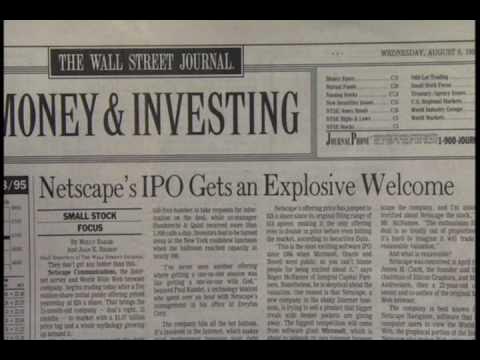
While engineers celebrate the technical breakthrough, Netscape’s public relations team battles skepticism in the marketplace. Public relations representative Maggie Young dials industry research firm Forrester Research to brief key analysts Stan Dolberg and Eric Brown ahead of the release. The contrast with Netscape's history is stark: - During its historic initial public offering in August 1995, Netscape stock was priced at $28 per share and rocketed to $72 within minutes, setting a Wall Street benchmark as the most explosive IPO of its era. - Less than three years later, the public narrative has dramatically shifted from triumphant pioneer to struggling underdog.

On the analyst conference call, the reception is chilly and unconvinced. An analyst bluntly challenges the messaging, noting that the rationale sounds murky: “either I'm brain dead or it takes a lot of effort to communicate and so I'm concerned that while you all know what it means I'm I'm not confident that it's coming across to the press.” The PR team argues that releasing the code fundamentally alters the competitive landscape: “by opening up the source code we basically extend our developer community from those folks that are inside of Netscape to hundreds of thousands of developers outside of Netscape so you it's no longer Netscape versus Microsoft it's Netscape and all the Netscape you know virtual community.” Despite their insistence, tech analysts voice prevailing market skepticism that giving away the browser's crown jewels can halt Microsoft's relentless advance across the web ecosystem.

[22:24](https://www.youtube.com/watch?v=u404SLJj7ig&t=1344s) The Apple Patent Snag and Scott Collins' Replacement Code

With the source release deadline hanging over the team, the process appears deceptively tranquil until a critical legal roadblock emerges. Netscape discovers that Mozilla contains a small piece of proprietary code belonging to Apple that has not been approved for public release under their open-source license. As an engineer explains, “They just can't quite get themselves comfortable with the patent grant or with whatever we tried to do to fix it for them.” The response from Apple's legal counsel is blunt: “Gee, I don't know that we get enough protection.” Netscape staff attempt to escalate immediately; Marc Andreessen tries reaching Apple directly, leaving messages and remarking, “The problem is I can't get phone—there's no one at the Apple switchboard so I'm having a hard time getting phone numbers for people.”

```mermaid flowchart TD accTitle: Apple Code Escalation and Resolution accDescr: Sequence diagram showing how Netscape engineers resolved the unapproved Apple code block before release.

subgraph Problem["Licensing Barrier"] A["Apple legal refuses patent terms"] --> B["Unlicensed Apple code cannot ship"] end

subgraph ParallelTracks["Parallel Solutions"] B --> C["Marc Andreessen escalates to Apple"] B --> D["Scott Collins pulled in to write clean replacement class"] end

subgraph Resolution["Ship Authorization"] C --> E["Apple gives late permission"] D --> E E --> F["Source cleared for 10:00 AM release"] end ```

To prevent the entire release from derailing, engineer Scott Collins is summoned late into the night to code a clean-room replacement from scratch. Working exhaustively through the early morning, Collins views the task as a grueling final obstacle, stating, “It's my last bug. When I complete this bug I will be allowed to rest.” He works through the night:

> “So I stayed up until about 5:40 this morning writing this replacement class, cause it made my life a living hell. I got it basically running, it's all running, it's all really good, and thank heavens we got permission from Apple to ship the regular source.”

- Netscape faces an emergency because Apple has not authorized a proprietary component under Mozilla's public license. - Marc Andreessen scrambles late at night to locate executives via Apple's switchboard. - Scott Collins spends the night writing an alternative implementation, finishing at 5:40 AM just before word arrives that Apple has granted permission.

---

[24:07](https://www.youtube.com/watch?v=u404SLJj7ig&t=1447s) March 31 Deadline: Staging the Release

The morning of March 31, 1998, brings immense tension and organized media chaos across Netscape’s offices. Public relations prepares the team for a major media circus, arranging photo opportunities and notifying engineers that television crews will film the release. Inside the offices, developers joke nervously about the impending spectacle, suggesting management simply “hire actors to do this.” An engineer compares the brutal deadline culture to extreme survival motivation:

> “One way to learn to run a marathon is put a person out 26 miles into the desert and say, you know, that there's this bomb on your back that's going to go off in a certain length of time if you don't get into the town. Well, that'll motivate you to get in, but there's a certain chance that you'll be blown up.”

As the company conference call convenes to announce the availability of the Netscape Communicator 5.0 developer source code on mozilla.org, staff run back and forth between building wings and floors trying to locate target build archives. Software delivery at this intensity is described as pure pragmatism: “They don't have a theoretical framework to write software; they're just writing it. It's just like hitting the baseball: if their code gets a home run, nobody's asking questions... nobody cares why it works.”

At five minutes to ten, technical friction spikes when the machine directing the FTP transfer fails to respond to the push commands. After troubleshooting the directories and scripts, the files click into place across all major supported platforms: “Mac's there, Unix is there, Windows is there. We're done, we're done, it's up!” Jamie Zawinski walks into the packed press conference, deadpanning to the room that they had changed their minds:

> “Since Jamie is here, I'm told that means that we have now pushed the source out on the net, is that correct?” > “Actually, we decided not to. It was just a stupid idea.”

- Netscape formally announces the developer release of Communicator 5.0 source code on mozilla.org on March 31, 1998. - The release push encounters last-minute FTP server connection issues minutes before 10:00 AM. - Complete tarballs and binary files are verified simultaneously for Macintosh, Unix, and Windows platforms.

---

[27:25](https://www.youtube.com/watch?v=u404SLJj7ig&t=1645s) Pavlov and the Global Contributor Network

Following the initial release, the code is downloaded tens of thousands of times within hours, yet raw downloads offer no assurance that outside developers will submit meaningful fixes. Netscape relies heavily on a loose, worldwide coalition of volunteer hackers who contribute for the craft rather than pay. Among the most vital is a programmer known on IRC as “Pavlov” (Stuart Parmenter). A Netscape developer notes the immense reliance on his unpaid work: “He's Pavlov or Pav or Pav sleeping or Pav tired up too late, and without him I think we'd be, you know, months behind.”

The film cuts to rural Georgia to visit sixteen-year-old Stuart working in his home bedroom, dubbed “the cave.” His parents recall the surreal experience of software executives calling their household from major metropolitan areas, wanting to take their son to business lunches in Atlanta, entirely unaware that the engineer collaborating with them was a high school student:

> “It is flabbergasting to think that your child has done something for this worldwide company instead of his homework.”

Stuart reflects on diving into Netscape’s vast, tangled codebase to build the rendering subsystems: “I went and looked back at the older code, and I was really frightened by how incredibly messy and just awful the code looked. It would have taken you, you know, years to try and figure out what it was doing. So we basically did it from scratch. Pretty much I'm providing the code that makes the browser show everything faster and more efficiently than it used to.” His mother describes his total absorption at the terminal: “His keyboarding is almost just like talking... it's just totally unconscious almost, just a part of how he communicates.” Netscape leadership admits the entire business model is unproven, acknowledging that whether a corporation can survive by depending on outside volunteers to compete against an entrenched rival remains to be seen.

- Outside contributors communicate primarily through IRC and mailing lists under handles like “Pavlov.” - Stuart Parmenter rewrites core rendering code from his bedroom in rural Georgia at age sixteen. - Netscape veterans admit the original code base had become so convoluted that external volunteers chose to rewrite entire components from scratch.

---

[30:26](https://www.youtube.com/watch?v=u404SLJj7ig&t=1826s) Wall Street Skepticism and the Post-Release Grunt Work

While open-source advocates celebrate the ideological victory, Wall Street views the move through a colder lens. David Readerman, an investment analyst covering Netscape for a San Francisco investment bank, tracks the strategy for investors caught up in the internet stock boom. Readerman explains that stock prices are a referendum on concrete financial output:

> “The market is really kind of a voting machine. It's voting yes, I believe that vision statement; yes, I believe that's going to result in product sales; yes, that's going to drive earnings up, and you know, stocks should trade accordingly... Behind the vision and the slideware, there's a real, sustainable business model that can deliver earnings. And so I'm in a show-me mode for Netscape.”

For the engineering team inside the company, releasing the source brings no release from tension; instead, the workload multiplies. Developers realize they now must manage outside patch submissions, triage bugs, and keep shipping commercial products under the same relentless pace. One engineer laments, “Now my job will be three times as hard as it was yesterday, and was already ten times harder than it needed to be, right? Did I just work really hard to ship the company jewels out of the building and it's going to just end us dying and rolling in poison and misery?” The morning after the release, there is zero down time: “The day after the stuff goes out, you really don't get a letup. There is then this sort of day-in, day-out go to work, turn on the computer, code.”

- Wall Street analysts maintain a “show-me” stance regarding whether giving away browser source code can yield sustainable corporate earnings. - Engineers describe shipping the codebase as sending the “company jewels out of the building” without resolving internal survival pressures. - Rather than celebrating, developers immediately face an avalanche of new integration bugs and public code reviews.

---

[31:45](https://www.youtube.com/watch?v=u404SLJj7ig&t=1905s) The Human Toll of the Silicon Valley Treadmill

The grueling pace takes a visible physical and emotional toll on Netscape’s workforce. Tara Hernandez recounts a recent doctor visit: “My doctor said, interestingly enough, that I work too much, and that if I went to work today after my appointment, he would personally kill me.” Confronting the punishing tech culture, she shares her exit plan:

> “I have an agreement with myself that by the time I'm 35, I'm either going to be a high school teacher or a bartender, but something—anything other than a position in a high-tech industry. Otherwise, I'll probably die by the time I'm 40.”

Older engineers observe the unrelenting nature of Silicon Valley life, noting how easily one gets trapped on the treadmill where software demands force out family life, outside knowledge, and rest. Mike Toy recalls the steep personal cost during his tenure:

> “Christopher was born right after I started at Netscape, and I basically missed the first two years of his life because of the intensity. I'd work till about seven or 8:00, come home, eat dinner, put the kids to bed, and then go back to work or work from home until two or three in the morning. And I was like the dad zombie.”

His wife recalls waiting hours past promised arrival times as candles burned down, worrying he had run off the road, resigning herself to the fact that if a full day passed without contact, he was simply trapped at his desk. Seeking escape from the valley's monoculture, engineer Jim Roskind maintains a virtual commute from Michigan, returning only once every two weeks. He explains that leaving California was necessary to find genuine community, put roots down, and escape the crushing cycle, remarking on the cultural contrast between Silicon Valley and the Midwest: “There's quite a time change here. It's something like 12:01 in the morning, and there it's 1954.”

- Tara Hernandez resolves to leave technology by age thirty-five for teaching or bartending to avoid burning out completely. - Mike Toy recounts becoming a “dad zombie,” missing the first two years of his newborn son’s life due to sixteen-hour workdays. - Remote engineers like Jim Roskind commute from Michigan to distance their family lives from the exhausting Silicon Valley ecosystem.

[34:29](https://www.youtube.com/watch?v=u404SLJj7ig&t=2069s) Silicon Valley Churn, Life Sacrifices, and the Stock Option Lottery

Working in Silicon Valley tech culture stands in sharp contrast to traditional American employment. While older generations spent "30 years and out" at a single car factory, engineers in the Valley constantly jump from startup to startup, accumulating ten or more jobs across their resumes. One engineer reflects on how these moves often coincide with peak personal life upheaval, joking about telling a spouse, “Baby due in two months; I'm changing jobs now, dear.” For many, being in the center of the storm—where everything is constantly shifting, breaking, and rebuilding—is an addictive thrill they cannot imagine walking away from.

```mermaid flowchart LR accTitle: The Silicon Valley Startup Reward Cycle accDescr: Diagram illustrating how personal sacrifices and heavy hours feed into startup options, leading to either an acquisition windfall or worthless paper. subgraph Grind["Personal Investment"] A["60-80+ Hr Workweeks"] --> B["Sacrificed Personal Life<br/>(No kids, lost youth)"] end subgraph Equity["Financial Mechanism"] B --> C["Stock Options Granted<br/>(1-2 Years' Salary Equiv.)"] end subgraph Outcomes["The Startup Gamble"] C -->|"1 in 20 succeed"| D["Jackpot Windfall<br/>(64 millionaires/day)"] C -->|"19 in 20 fail"| E["Worthless Paper<br/>('Stupid Tax')"] end ```

Yet the intense pace exacts a severe toll on private life. Engineers confess to working grueling hours for the remote shot at financial independence while watching youth slip away childless, aware that once a portion of life is gone, it can never be retrieved. Across the nation, millions of workers write software in the fastest-growing and highest-paying mass sector in U.S. economic history. While elite athletes and movie stars earn fortunes, no industry employing millions has ever commanded such aggregate wages.

On Wall Street trading desks, tech tickers reflect the everyday obsession of Silicon Valley engineers and managers, where by one estimate sixty-four new millionaires are minted daily. Companies dangle options granting the right to purchase shares in the future at present prices—typically a grant equivalent to one or two years of salary. Early employees fortunate enough to cash out earn the moniker "Mosillionaires." But others view the entire framework with deep cynicism. Jamie Zawinski rejects the romanticization of tech compensation outright, arguing: “Stock options are a con; it's a carrot they dangle. It's like, ‘Oh, well, you know, if you give up your one and only youth, maybe someday you'll make money,’ right? It's—I've known so many people who gambled on the startup lottery and got nothing, you know? It's just like a lottery ticket; it's a stupid tax. I happen to win that particular lottery.”

- Millions of Americans make their living directly from writing software, making it the highest-paying mass industry in U.S. history. - An estimated 64 new millionaires are created every day in Silicon Valley during the late-1990s boom. - Typical startup option packages grant employees the equivalent of one to two years' salary in stock purchase rights. - Early Netscape employees who struck it rich on the company's initial public offering are known locally as "Mosillionaires."

---

[37:43](https://www.youtube.com/watch?v=u404SLJj7ig&t=2263s) The Collapse of Browser Revenue and Internal Mozilla Reorganization

Following Microsoft's aggressive push into the browser market, Netscape's stock enters a prolonged downward spiral, rendering employee options virtually worthless throughout 1998. The commercial core of the business has collapsed in real time. Eighteen months earlier, half of Netscape's revenue came from browser licensing sales; by late 1998, that revenue stream is down to zero. Even though Netscape builds web servers and enterprise software, the public and Wall Street regard it strictly as a browser company locked in a losing war against Microsoft. Observers openly question whether the company can endure, with analysts declaring, “I don't think that Netscape long-term can survive as an independent company.”

```mermaid flowchart TD accTitle: Netscape Revenue and Browser Division Crisis accDescr: Flowchart showing how Microsoft's free bundling wiped out Netscape's browser sales, leading to reorganization and source-tree dependency chaos. subgraph Crisis["Market Shock"] M["Microsoft bundles IE free into Windows"] --> R["Browser revenue drops from 50% to 0% in 18 months"] end subgraph OperationalStrain["Division Under Pressure"] R --> D["Browser division costs $30M/yr with near-zero return"] D --> Reorg["Reorganized twice in under 12 months"] end subgraph TechnicalDebt["Source Tree Friction"] Reorg --> S["Integrating outside Mozilla code"] S --> F["File collisions: Java & browser files colliding in identical directories"] end ```

The browser division—which burns nearly $30 million annually while generating practically nothing—is thrown into its second major corporate reorganization in less than twelve months. Inside engineering, opening up the codebase via Mozilla only compounds daily stress. Developers clash over incompatible directory structures, conflicting project build files, and Java components colliding in the same paths between the legacy Netscape tree and the new Mozilla source tree. Leadership attempts to reassure the ranks, acknowledging that nineteen out of twenty tech startups collapse, but newer hires never expected their seats at high-profile Netscape to evaporate in one to five years.

- Just 18 months prior, browser sales accounted for 50% of Netscape's total company revenues; by late 1998, browser sales generate 0%. - Operating the browser engineering division costs Netscape roughly $30 million per year. - The browser division is reorganized twice in under a single year as management scrambles to adjust to zero browser revenue.

---

[39:52](https://www.youtube.com/watch?v=u404SLJj7ig&t=2392s) Antitrust Allegations and the Dilution of Startup Culture

Throughout Silicon Valley, conversations center on Microsoft’s tactics. The prevailing belief across the tech community is that Microsoft used predatory, illegal methods rather than superior engineering to strip market share from Netscape. In a culture rooted in meritocracy and egalitarian competition, the realization that market dominance was won outside the boundaries of pure code deeply infuriates engineers. These grievances culminate in the U.S. Department of Justice filing formal antitrust charges against Microsoft for anti-competitive and exclusionary practices aimed at preserving its desktop operating system monopoly and extending it into internet software.

Even setting aside Microsoft's assault, Netscape has become a victim of its own ballooning headcount and an increasingly tangled, brittle codebase. It struggles to retain the agility and fire of its early startup days. As software companies scale up, their underlying nature shifts from restless invention to process-driven revenue extraction. Big companies treat technological breakthroughs as unacceptably risky bets, opting instead to wait for small ventures to take the initial risks before buying them out and wringing profits from their work.

- The U.S. Department of Justice formally charges Microsoft with anti-competitive and exclusionary practices to protect its Windows OS monopoly and capture the browser market. - Netscape suffers from internal bloat, code complexity, and shifting corporate priorities that choke off the vitality of its initial startup culture.

---

[41:24](https://www.youtube.com/watch?v=u404SLJj7ig&t=2484s) The AOL Acquisition: Cynicism, Soul-Searching, and the Open-Source Future

CEO Jim Barksdale abruptly moves up Netscape's all-hands meeting by a week, summoning the entire workforce to the Flint Center immediately after announcing quarterly financial numbers. Standing before an anxious auditorium, Barksdale reveals that as of 1:30 that morning, Netscape concluded negotiations and agreed to be acquired by Steve Case’s America Online (AOL), based in Dulles, Virginia. For many engineers, the announcement is a gut punch. Only months earlier, Netscape developers routinely mocked AOL's proprietary online service as training wheels for tech illiterates—deriding it with jokes like “Congratulations, Skippy, you've got mail!” Valley insiders widely sneered at Steve Case as a mere "soap salesman" because of his background at Procter & Gamble, only to find themselves bought out by that very salesman.

```mermaid flowchart TD accTitle: Aftermath of the AOL Acquisition accDescr: Breakdown of reactions and structural consequences following the buyout of Netscape by AOL. A["1:30 AM Agreement:<br/>AOL acquires Netscape"] --> B["Employee Reactions"] A --> C["Strategic Guarantees"]

B --> B1["Culture Shock:<br/>'Soap salesman' bought the pioneers"] B --> B2["Departures:<br/>Veterans cash out or reject corporate marketing focus"] B --> B3["Retention Strain:<br/>AOL corporate rules vs. Netscape ways"]

C --> C1["Mozilla.org Safety:<br/>Public license prevents code clawback"] C --> C2["Steve Case Reassurance:<br/>Explicit email support for open source"] ```

National press coverage immediately questions whether Netscape “lived fast, died young, and left a tired corpse,” speculating whether AOL can retain any of Netscape's critical technical talent. The deal delivers a substantial financial windfall for shareholders and allows vested employees to finally cash out, leading many to plan their immediate exits rather than submit to the "AOL way." Others choose to leave because Netscape’s trajectory has shifted from cutting-edge technical craftsmanship toward marketing, portal traffic, and ad delivery.

Yet within the open-source community, the acquisition sparks fears that AOL will dismantle Mozilla. Jamie Zawinski posts a worst-case scenario analysis to mozilla.org, reassuring developers that because the source code was already released to the public under an open license, it irrevocably belongs to the community and cannot be locked away by corporate parents. A few days later, Steve Case emails Zawinski directly to endorse the Mozilla project, promising that AOL views open source as a fundamental asset of the acquisition and intends to let it thrive. Reflecting on the chaos and his pending exit from the company, Zawinski shrugs off the upheaval as the inevitable tax of startup life: “AOL's focus and Netscape's growing focus has been marketing and advertising and all that stuff, and that's not nearly as interesting to someone who's sort of a techno-fetishist. You know, I'm switching jobs, I'm selling my house, I'm moving, switching towns. That's life for startup land.”

- The merger agreement between Netscape Communications and America Online (AOL) concludes at 1:30 AM prior to the emergency Flint Center all-hands meeting. - AOL CEO Steve Case personally emails Jamie Zawinski to confirm that AOL supports mozilla.org and intends to maintain Netscape's open-source commitments. - The acquisition triggers executive and engineering turnover as staff reject AOL's corporate culture and marketing-driven portal priorities in favor of new startup ventures.

[45:02](https://www.youtube.com/watch?v=u404SLJj7ig&t=2702s) Departures: Tara Hernandez and Jamie Zawinski

A farewell gathering is held for Tara Hernandez, celebrating her trajectory from engineer to management. A colleague recalls how Tara approached him a year and a half prior, saying she wanted to manage so badly she could taste it, only to confess a week into the role, “Why did you ever let me do this?” Despite the initial shock, she proved herself to be one of the company's finest, earning a toast as Netscape’s release team manager. Tara leaves Netscape to join an e-commerce startup, walking away from a surge in the value of her Netscape stock options in the hope of securing an even larger payout at the new venture.

Jamie Zawinski also decides to walk away, voicing deep disillusionment over the AOL acquisition. He observes that regardless of how AOL chooses to direct the business, the authentic Netscape is gone: “It’s not Netscape anymore, that part’s over, and you know, that’s really sad. I wish Netscape could have gone it on their own.” Frustrated by what he sees as an absence of genuine commitment to open-source development, Zawinski resigns from Netscape exactly one year after the day he helped release Mozilla source code to the public. Reflecting on the romanticized depiction of programming culture, he quips about the film *Hackers*, observing that while he wishes software life involved roller-skating in spandex and battling villains, real engineering is simply sitting inside an office typing all day.

[46:28](https://www.youtube.com/watch?v=u404SLJj7ig&t=2788s) Counting the Cost: Jim Roskind and Michael Toy

Jim Roskind walks through a serene residential neighborhood, describing it as an essential escape from the high-stress jungle of the tech industry after living out west for four or five years. Following his promotion to Netscape’s highest engineering rank, Roskind reflects on the compulsive drive behind late-night programming sprints. After staying at the office until 4:00 AM on a non-deadline evening, he describes software development as an adrenaline rush and an addiction where engineers relentlessly chase perfection, pushed ever harder by immediate feedback loops.

Meanwhile, Michael Toy works on building an outdoor wooden playhouse with a planned front porch and flowers. Looking back on the gold-rush mentality of the dot-com era, Toy admits he went to Netscape because its core purpose was to cash in on the internet and get rich, but confesses the lifestyle exacted a severe toll on his personal life. His wife notes that Michael eventually hit a wall of total burnout where the cost simply grew too high. Toy offers a direct warning to those enticed by easy money: “If people would look at this and say, ‘Oh hey, this is a cool thing, I’m going to start a startup and get rich quick,’ you know, I would just have to say you need to count the cost, because you can’t ever retrieve the time that’s lost.” Having achieved financial independence as Netscape employee number six, Toy retires shortly after Mozilla’s public release.

[48:29](https://www.youtube.com/watch?v=u404SLJj7ig&t=2909s) Silicon Valley Churn and the AOL Windfall

In the culture of Silicon Valley, remaining at a single company for more than three years prompts peers to wonder what is wrong with you or why you cannot find another post. Programmers typically change jobs every two years, behaving much like worker ants dispatched toward an objective: as the unit marches toward its goal, ants continually drop out while new ones enlist, until an entirely different group completes the mission. Scott Collins, continuing his commute between Michigan and Netscape, reflects on this transient landscape alongside the sheer financial frenzy surrounding the company.

```mermaid flowchart LR accTitle: Netscape Acquisition Valuation Surge accDescr: Growth of Netscape's valuation from the initial merger announcement to deal completion. A["Merger Announcement<br/>($4.2 Billion Valuation)"] -->|"Stock Appreciation<br/>(Value more than doubles)"| B["Merger Closes (Spring 1999)<br/>($10 Billion Valuation)"] B --> C["$5B - $6B in New Wealth Created"] B --> D["Jim Barksdale Swaps Shares<br/>(>$500 Million AOL Stock)"] ```

When the merger deal with AOL closes in the spring of 1999, Netscape's stock value has more than doubled from the initial announcement. As Collins points out, with shares leaping from $20 to around $172, “It’s hard to be depressed about the amount of work you have to do when every other cube holds a millionaire.” A financial analyst notes that Netscape hitched its fortunes to AOL with exquisite timing, seeing an implied valuation of roughly $4.2 billion swell to $10 billion by completion, creating $5 to $6 billion in fresh net worth. While other executives sold shares during the final year, CEO Jim Barksdale purchased more, ultimately swapping his stake for upwards of half a billion dollars in AOL stock.

[50:38](https://www.youtube.com/watch?v=u404SLJj7ig&t=3038s) Fresh Blood: Stuart Parmenter (Pavlov) Arrives

Even as veterans depart, new hopefuls head west to Silicon Valley to seek their fortunes. Stuart Parmenter (known online as "Pavlov") arrives with his father from 4,000 miles away for an engineering interview at Netscape. His father acknowledges the emotional distance but observes that Silicon Valley offers an environment where his son's distinct talents fit right in, surrounding him with people he can truly relate to. During the technical discussion, Stuart states his primary objective plainly: he wants to optimize the Unix build until it runs faster than the Windows version. Netscape hires Stuart, who chooses to postpone college to work directly on the codebase, participating in what investors herald as the single greatest legal accumulation of wealth in human history.

[51:57](https://www.youtube.com/watch?v=u404SLJj7ig&t=3117s) The Changing Landscape and the Sorcerer’s Apprentice

Investment banker David Ruderman inspects a newly constructed data center packed with dense bundles of cable and optical fiber, establishing the core trading and communications infrastructure for a major merchant bank. Ruderman operates on the conviction that the internet will reshape every aspect of commerce, positioning his firm to finance the enterprises driving that transformation. Standing on a street corner, he points out a physical bank branch and a Gap store undergoing renovation, questioning why companies invest in brick-and-mortar storefronts when commerce is inexorably shifting online.

Veteran engineers reflect on the breathtaking pace of this revolution. In the early days, HTML and the World Wide Web were completely unknown to the general public; suddenly, point-and-click software placed the full power of the internet into everyone's hands. One engineer compares the emergence of the web to *Fantasia*, where Mickey Mouse reads the sorcerer's open spellbook atop the mountain and unleashes forces he cannot comprehend or control: > “We’re at the beginning of an industry, and who knows where that industry is going to go. This could all turn into television again. It could be controlled by a small number of companies who decide what we see and hear, and there’s a lot of precedent for that.”

The engineer notes that while he is laying down railroad tracks as speeding trains roar past, it would be a tragic legacy if the true outcome of Netscape and the internet revolution was merely forcing human beings to perform under crushing pressure at ever more exhausting speeds. He points out that Netscape was born, peaked, and overtaken within a brief four-year span.

[54:34](https://www.youtube.com/watch?v=u404SLJj7ig&t=3274s) Epilogue: The Millennium Closes

By late 1999, the open-source community and the broader public are still waiting for Netscape’s first browser based on the Mozilla source code, more than a year and a half after the original release of the recipe. Concurrently, landmark events reshape the technology sector:

- In the Department of Justice’s antitrust trial, the presiding federal judge determines that Microsoft operates as an unlawful monopoly that stifles industry innovation. - AOL prepares to enter the new millennium by orchestrating an even larger corporate acquisition. - Wall Street investors funnel unprecedented capital into tech equities, driving trading to heights of extreme volatility.

As internet connectivity embeds itself across the globe, legions of software engineers continue working late into the night, racing against time to write the code that will power the digital world.

## Notable quotes > [48:29](https://www.youtube.com/watch?v=u404SLJj7ig&t=2909s) It’s hard to be depressed about the amount of work you have to do when every other cube holds a millionaire. — Scott Collins

## Mentioned Netscape Communications, Netscape Communicator, Netscape Navigator, Mozilla, mozilla.org, Microsoft, Internet Explorer, Windows, Apple, Sun Microsystems, America Online (AOL), Forrester Research, United States Senate Judiciary Committee, U.S. Department of Justice, Michael Toy, Jim Roskind, Jamie Zawinski, Tara Hernandez, Scott Collins, Jeff Weinstein, Jim Barksdale, Bill Gates, Marc Andreessen, Maggie Young, Stan Dolberg, Eric Brown, Stuart Parmenter, David Readerman, Steve Case, David Ruderman, Procter & Gamble, Flint Center

## Video description Code Rush, produced in 2000 and broadcast on PBS, is an inside look at living and working in Silicon Valley at the height of the dot-com era. The film follows a group of Netscape engineers as they pursue at that time a revolutionary venture to save their company - giving away the software recipe for Netscape's browser in exchange for integrating improvements created by outside software developers. The copyright to the film is now available under Creative common licence vers. 3 for interested viewers to download and use. In the future the original footage from which this film was made will be accessible under the same terms.

Please visit : www.clickmovement.org/coderush

[Source](https://www.youtube.com/watch?v=u404SLJj7ig)

中文简报

网景在被AOL收购前开源Mozilla代码以对抗微软 网景将浏览器开源的决定未能遏制微软的桌面垄断,在收入崩盘且工程师尚未交付成熟替代产品便身心俱疲的情况下,公司被迫接受AOL的收购。 面对微软桌面垄断带来的生存威胁,网景将公司的存亡押注在1998年3月31日这一严格截止日期前,通过Mozilla项目向公众开放其专有浏览器代码库。纪录片记录了工程师和构建经理们经历残酷的轮班、以工位为家的生活以及最后一刻的法律障碍,全力推动源代码上线,以吸引全球开发者的贡献。尽管成功完成了技术层面的发布并吸引了年轻的天才志愿者,但网景眼看着自身的浏览器收入归零,加速了内部重组与工程师的倦怠。这段传奇最终以美国在线以数十亿美元收购网景告终,该交易创造了巨额账面财富,但就在联邦反垄断机构判定微软违规之际,心灰意冷的技术老兵们却选择离开。 面对微软将Internet Explorer捆绑进Windows的做法,网景在1998年3月31日采取了前所未有的举措,以Mozilla为项目代号将其旗舰浏览器的代码库开源。 (1:57) 网景独立的浏览器收入在短短18个月内从占公司营业额的50%暴跌至0%,而该部门每年仍需消耗约3000万美元的维护成本。 (37:43) 美国在线收购网景的交易在宣布时估值为42亿美元,但随着网景股价从20美元飙升至约172美元,到1999年春季完成交易时其总值已膨胀至约100亿美元。 (48:29) 一名联邦反垄断法官在1999年末正式裁定微软存在非法垄断行为,而此时在Mozilla代码库开源18个多月后,网景仍难以据此推出一款可用的消费级浏览器。 (54:34)

Reading summary

The documentary *Project Code Rush* chronicles Netscape's high-stakes gamble to open-source its web browser through the Mozilla project as Microsoft's desktop monopoly wiped out its core revenue model. The account highlights how the unrelenting pressures of the late-1990s tech boom forced engineers into severe personal sacrifices while navigating ideological divides, corporate acquisitions, and the unpredictable dynamics of open-source development. The Open-Source Gambit Against Microsoft (1:57) In 1998, Netscape faced an existential crisis when Microsoft bundled Internet Explorer directly into the Windows operating system at no charge. Within eighteen months, browser licensing dropped from generating 50% of Netscape's total revenue to zero, even as the browser engineering division continued to burn roughly $30 million annually. While CEO Jim Barksdale testified before the U.S. Senate regarding Microsoft's anti-competitive practices—spurring a Department of Justice antitrust lawsuit that eventually determined Microsoft operated as an unlawful monopoly—Netscape chose a radical survival strategy. Management opted to give away the proprietary recipe of its core browser for free under the project name Mozilla. The engineering objective was to publicly release between two and two-and-a-half million lines of audited source code on March 31, 1998. Netscape hoped that external developers worldwide would rally around the code, contribute rapid improvements, and establish Mozilla as the universal web standard, thereby neutralizing Microsoft's desktop stranglehold and channeling traffic toward Netscape's commercial server software. Monastic Workplace Culture and Extreme Personal Sacrifices (11:24) Meeting the public open-source deadline laid bare an engineering culture characterized by total immersion and acute personal strain. Observers described the insular environment as a monklike guild where the workplace supplanted outside civic life. To resolve build-crashing bugs, veteran developers like Scott Collins turned cubicles into living modules with under-desk mattresses to endure punishing shifts, observing that unlike real estate buyers, computers never sleep. Engineering project lead Michael Toy admitted to becoming a 'dad zombie,' missing the first two years of his child's life due to sixteen-hour days. This intense commitment was fueled by the Silicon Valley startup lottery, which reportedly minted sixty-four new millionaires daily through stock option grants. Yet veteran open-source advocate Jamie Zawinski dismissed options as a predatory 'stupid tax' designed to extract employees' youth in exchange for longshot odds. The relentless pace drove key contributors to plan early exits; build manager Tara Hernandez resolved to leave high tech by age thirty-five following medical warnings about severe overwork, while security authority Jim Roskind maintained a remote commute from Michigan to preserve family stability away from the Valley's monoculture. The Complex Reality of Open-Source Collaboration (27:25) Rather than providing an immediate fix, releasing the codebase multiplied internal operational burdens. Hours before the scheduled launch, Netscape ran into an unapproved proprietary Apple component, forcing Collins to spend an all-night sprint writing a clean-room replacement class before Apple granted last-minute clearance. Once published, the code was downloaded tens of thousands of times, but internal teams discovered that outside downloads did not automatically yield functional patches. Netscape's bloated, legacy code proved so convoluted that external volunteers frequently had to discard old structures and rewrite systems from scratch. Netscape grew heavily reliant on unpaid outside hackers, most notably a sixteen-year-old student from Georgia named Stuart Parmenter (IRC handle 'Pavlov'), who rewrote the browser's core rendering engine from his bedroom. Meanwhile, Wall Street analysts remained in a skeptical 'show-me mode,' questioning how giving away the company's crown jewels could generate corporate earnings, while inside the company, developers battled file collisions and architectural incompatibilities between legacy Netscape systems and the newly released Mozilla trees. Corporate Buyout, Windfalls, and Cultural Dissolution (41:24) Netscape's commercial erosion culminated in late 1998 when leadership announced a buyout by America Online (AOL). The merger triggered immediate culture shock among technical staff, who had long derided AOL as a walled garden for novice users and mocked CEO Steve Case as an outsider salesman. Although fears arose that AOL would shutter Mozilla, Zawinski clarified that the public license legally protected the code from being clawed back, and Case personally emailed mozilla.org confirming continued corporate support. Financially, the timing proved lucrative: by the time the merger closed in spring 1999, Netscape's valuation surged from $4.2 billion to $10 billion, with share prices jumping from $20 to approximately $172. The transaction generated billions in paper wealth, minting cubicle millionaires and yielding Barksdale over $500 million in AOL stock. However, the corporate shift toward marketing, ad delivery, and portal traffic alienated the engineering core. Key figures including Hernandez and Zawinski resigned, with Zawinski stepping down exactly one year after Mozilla's initial release, lamenting that the pioneering Netscape identity had been permanently extinguished. By late 1999, more than eighteen months after the public source release, Netscape had still not shipped a production browser based on Mozilla. Although Netscape was rapidly overtaken and absorbed within a five-year lifecycle, its defensive pivot to open source succeeded in outlasting the company itself, establishing an independent community code repository that permanently shaped modern web architecture.

精炼阅读摘要

纪录片《Code Rush》聚焦网景公司(Netscape)在1998至2000年间面对微软垄断围剿时的生死抉择,展现了其将核心浏览器代码开源为Mozilla项目的战略突围,并揭示了繁荣表象下硅谷工程师所承受的残酷身心代价与资本浪潮的无常。 破釜沉舟的开源豪赌与交付攻坚 (1:57) 1998年,面对微软利用Windows操作系统优势免费捆绑Internet Explorer并限制OEM渠道的分发围剿,网景核心浏览器业务陷入生存危机。公司管理层决定采取一项激进举措:在3月31日将核心产品Netscape Communicator的源代码免费公开发布,启动Mozilla开源项目,试图借助全球外部开发者的协同改进,将软件确立为通用行业标准。为此,以Michael Toy、Jim Roskind、Jamie Zawinski及Tara Hernandez等人为首的工程团队,必须在数周内手动审查清理200万至250万行代码,以规避第三方专利风险并消除阻碍软件编译的系统性缺陷。在代码交付前夜,团队在解决调度脱节之余突遭Apple专有代码许可受阻的法律危机,工程师Scott Collins通宵重写替代模块至清晨,最终在最后一刻取得授权,于当天上午10点前完成了三大平台源码的准时推送。 然而,开放源码并未带来立竿见影的转机。尽管包括16岁独立程序员Stuart Parmenter在内的外部黑客自发展开渲染引擎的底层重构,但华尔街分析师对这种放弃知识产权的策略能否转化为可持续营收普遍持观望态度。对内部开发者而言,源码发布意味着工作负担成倍激增,他们不仅要在日常开发中应对外部补丁与更为复杂的集成Bug,还必须承受“将公司皇冠上的宝石拱手送出”却前途未卜的巨大心理压力。 极限研发下的修道院生活与身心透支 (11:24) 网景的研发楼层呈现出一种高度闭塞、全年无休(24/7/365)的“修道院”式生态。软件工程的排错过程如同在搅拌完成的巨型蛋糕中寻找变质面粉,单一错误即可导致整个构建崩溃,迫使核心工程师采取极端的作息方式。工程师Scott Collins将工位改造成自给自足的生活单元,在工位沙发与床垫上连续值守60小时排查代码故障,并直言计算机永不睡眠的属性剥夺了工程师停歇的权利;构建经理Tara Hernandez长期应对编译故障带来的崩溃警报,在接到医生发出再过度透支即面临生命危险的警告后,决意在35岁前转行以避免在科技高压中早逝。 这种缺乏制度性稳定的环境给员工个人生活带来了沉重损伤。工程主管Michael Toy坦言,高强度的加班使自己错过了新生儿子头两年的成长,沦为靠咖啡支撑的“僵尸父亲”,家庭长期处于失联与担忧之中。为寻求真实的社区生活与健康距离,技术专家Jim Roskind甚至选择将家庭安置在密歇根州并维持两周一次的远程通勤。观察者指出,正是这群亲手构建数字化未来的极客群体,因完全沉溺于代码与项目生死战,反而失去了掌控自身生活与看清个人未来的能力。 核心营收归零与期权神话的破灭 (37:43) 微软的免费捆绑策略在商业层面对网景造成了毁灭性打击。在短短18个月内,浏览器软件许可销售从占据网景总收入的50%骤降至0%,而该工程部门每年仍需消耗近3000万美元研发预算,导致浏览器团队在不到一年内被迫经历两次重大组织重组。尽管网景极客坚信技术实力至上,并对微软通过商业捆绑与排他性协议掠夺市场份额深感愤慨,促使美国司法部正式对其发起反垄断诉讼,但网景自身也陷入了人员膨胀与代码臃肿的组织困境。 与外界对硅谷“每天诞生64位百万富翁”的狂热崇拜形成鲜明反差的是,网景股价的持续受挫导致员工期权在1998年内普遍缩水。早期员工虽因IPO获得“Mosillionaire”称号,但Zawinski等人公开抨击股票期权不过是资本诱骗技术人员牺牲唯一青春的“愚蠢税”,指出绝大多数创业赌局最终以一无所获告终。公司逐步从崇尚技术创新的初创团队,演变为疲于应付收入考核与流程管控的沉重机器。 AOL巨额收购背后的文化决裂与开源演进 (41:24) 1998年底,首席执行官Jim Barksdale在紧急全员大会上宣布,网景已正式达成协议被America Online(AOL)收购。该消息在技术团队内部引发了剧烈的文化震荡:网景工程师曾长期嘲讽AOL服务是给技术外行使用的封闭工具,并将AOL首席执行官Steve Case蔑称为“肥皂推销员”,如今却沦为被收购方。出于对企业走向门户营销和广告流量模式的失望,核心人员相继离职,Tara Hernandez转投电子商务企业,而Zawinski在开源一周年当天愤然辞职,认定最初那个专注于纯粹技术的网景已经不复存在。 不过,公开许可协议确立的法律框架确保了Mozilla代码库无法被收购方私有化封锁,Case亦致信承诺支持开源项目的独立性。随着1999年春季合并正式闭合,受互联网资本狂潮推动,网景的交易隐含价值从最初宣布的42亿美元飙升至100亿美元,创造了数十亿美元的新增财富,Barksdale换取的AOL股票价值超过5亿美元。在此期间,如Stuart Parmenter等年轻一代黑客毅然推迟大学学业全职加盟,继续在被资本重塑的代码世界中寻求位置。 截至1999年底,尽管联邦法官判定微软实施非法垄断并扼杀行业创新,但基于Mozilla开源代码的商业版浏览器历经一年半仍未能推向市场。网景在四年内由登顶走向被收购的兴衰史表明,在资本与垄断巨头的双重夹击下,单靠技术理想主义和开源实验难以迅速扭转商业败局;正如老牌工程师所警示,数字化浪潮在加速社会运转的同时,若仅将人类拖入无休止的高压透支,并由少数垄断巨头掌控信息通路,技术革命最初所承诺的自由与解放便将面临严峻的退化。

Detailed notes — zh

## Background 本片由 YouTube 频道 znoopy2k 于 2009 年 7 月 15 日发布,其原始作品为 2000 年在 PBS 播出的纪录片《Code Rush》(以知识共享许可协议分发)。影片深入记录了互联网泡沫顶峰时期的硅谷生活,跟拍了网景(Netscape)工程师团队在生死存亡之际,试图通过激进开源其浏览器源代码(Mozilla)来拯救公司的全过程。 ## TL;DR 面对微软利用 Windows 捆绑 IE 浏览器的倾轧围剿,网景(Netscape)做出了向全球公开其核心浏览器源代码的豪赌,代号为 Mozilla。影片记录了工程师团队在极度压缩的“3月31日”死线前,排查数百万行代码中的严重缺陷、化解苹果公司法律授权危机并最终成功发布源码的全过程。然而,开源带来的免费化彻底重创了公司直接营收,伴随着巨大的技术整合泥潭与高管离心,网景最终在 1998 年底被 AOL 巨额收购,早期黑客与核心员工也在这场财富狂欢与身心透支的巨大张力中走向了各自分流的人生结局。 ## Atmosphere & style 整部纪录片弥漫着浓厚的世纪之交极客特有的黑色幽默与末日悲壮感,既有冲刺死线时敲击键盘的窒息高压,又有身处代码迷宫与办公室“村落”中的荒诞自嘲。镜头平实而冷峻地在灯火通明的深夜隔间、家庭破裂的边缘与华尔街资本狂欢之间来回切换,真实刻画了发明未来的技术信徒被自身创造的技术车轮所异化的身心耗竭感。观众在观看时能切身体会到那种肾上腺素飙升与深深无力感交织的情感弧线——理想主义的开源梦在商业巨擘和资本机器面前被寸寸碾碎,却又在历史深处留下了改变世界的不可逆印记。 ## Bulletin - [01:57](https://www.youtube.com/watch?v=u404SLJj7ig&t=117s) 面对微软捆绑 IE 的绞杀,网景于 1998 年 3 月 31 日正式向全球开放 Netscape Communicator 的核心源代码(代号 Mozilla),试图借开源社区之力重夺互联网底层标准。 - [03:37:40](https://www.youtube.com/watch?v=u404SLJj7ig&t=13060s) 开源导致占网景原本一半营收的浏览器直接收入归零,浏览器部门每年耗费近 3000 万美元,最终在 1998 年底迫使公司以 42 亿美元(交易完成时飙升至 100 亿美元)出售给 AOL。 - [27:25](https://www.youtube.com/watch?v=u404SLJj7ig&t=1645s) 早期开源展现出全球黑客的高效协作潜力,佐治亚州 16 岁天才少年 Pavlov(Stuart Parmenter)等外部贡献者几乎从零重写并优化了浏览器的核心渲染引擎。 - [03:35:43](https://www.youtube.com/watch?v=u404SLJj7ig&t=12943s) 伴随高薪期权神话的是身心耗竭的工程师群体,Jamie Zawinski 针砭期权为“笨蛋税”,核心员工在通宵加班与家庭破裂边缘徘徊,随着 AOL 入主引发了黑客文化的严重反弹与离职潮。 ## Key takeaways - [00:17](https://www.youtube.com/watch?v=u404SLJj7ig&t=17s) 代码成为现代社会运转的底层血液,硅谷软件工程师如同昔日淘金客般定义着未来人类生活的形态。 - [01:57](https://www.youtube.com/watch?v=u404SLJj7ig&t=117s) 网景的 Mozilla 计划是一场激进的断腕豪赌,企图利用免费源代码重塑工业标准并反哺企业级商业软件。 - [03:10](https://www.youtube.com/watch?v=u404SLJj7ig&t=190s) 项目管理中的“331 死线”展现了典型的极限赶工文化,团队在预感失败的悲壮氛围中依靠极速冲刺维持工程进度。 - [07:30](https://www.youtube.com/watch?v=u404SLJj7ig&t=450s) 大规模软件协同如同“烘焙配方”排查,200 余万行庞大代码库的调试演变为充满直觉与混沌的黑客“炼金术”。 - [11:24](https://www.youtube.com/watch?v=u404SLJj7ig&t=684s) 高强度的全天候工作让工程师在硅谷形成封闭如“现代修道院”的社交圈,发明未来的人却无法看清自身未来。 - [13:05](https://www.youtube.com/watch?v=u404SLJj7ig&t=785s) 程序员崇尚个性与自主,四年来急剧扩张至 2000 人的网景在微积分式排障中面临“管理赶猫”式的组织失控。 - [14:36](https://www.youtube.com/watch?v=u404SLJj7ig&t=876s) 在华盛顿反垄断听证会指控微软不正当竞争的同时,加州一线工程师只能抛弃教条理论,践行“ZoroS(足够完美)”的务实交付法则。 - [18:28](https://www.youtube.com/watch?v=u404SLJj7ig&t=1108s) 通过邀请外部人员进行独立构建的“盲测”,网景成功验证了 Mozilla 源代码脱离内网环境后在全球开发者机器上的可用性。 - [22:24](https://www.youtube.com/watch?v=u404SLJj7ig&t=1344s) 在克服与苹果公司的专利代码纠纷后,Communicator 5.0 源码于 1998 年 3 月 31 日正式开放下载,开启历史性开源实践。 - [29:47](https://www.youtube.com/watch?v=u404SLJj7ig&t=1787s) 华尔街与分析界对网景开源抱持冷酷怀疑,普遍认为纯粹的开源愿景缺乏可兑现的盈利模式以抵御微软的全面压制。 - [03:35:43](https://www.youtube.com/watch?v=u404SLJj7ig&t=12943s) 硅谷的期权暴富狂热掩盖了残酷代价,Jamie Zawinski 等黑客直指股票期权是剥削年轻人青春的彩票与胡萝卜。 - [03:37:40](https://www.youtube.com/watch?v=u404SLJj7ig&t=13060s) 浏览器核心营收归零与开源/专有分支架构冲突,让网景陷入运营失血与技术泥潭,导致公司在短短四年内被收购并终结独立历史。 - [03:41:24](https://www.youtube.com/watch?v=u404SLJj7ig&t=13284s) AOL 宣布并购后引发了硅谷纯粹极客文化与传统营销导向大企业的剧烈碰撞,促使 Jamie Zawinski、Michael Toy 等核心黑客先后离职退场。 - [53:10](https://www.youtube.com/watch?v=u404SLJj7ig&t=3190s) 网景释放出互联网革命的强大“魔法”,但也留下了技术垄断重演、狂躁劳作节奏与初创企业生命周期极度压缩的沉重反思。 ## Detailed walkthrough ### [00:17](https://www.youtube.com/watch?v=u404SLJj7ig&t=17s) 硅谷神话与代码的本质 怀揣着对“硅谷体验”无限向往的人们,常常提着一只行李箱走出机场,驾车沿着 101 号公路一路向南。他们满心期盼着亲眼目睹那个在传闻中如雷贯耳的科技圣殿,然而迎面而来的却只有冰冷的高速公路、千篇一律的企业办公园区以及毫无特色的连排购物中心(strip malls)。眼前的一切与他们以往走过的任何普通城镇毫无二致,这让许多初来乍到者陷入茫然:自己究竟来到了哪里?又到底是为了什么奔赴此地? 支撑起这座无形帝国并赋予其真正意义的,正是隐藏在屏幕背后的计算机代码。代码是让计算机运转的最底层要素,它已然成为当今人类文化有机体中流淌的血液,驱动着世间万物的运转。在当今社会,技术已经蜕变为大众顶礼膜拜的“神祇”,人们对技术本身充满敬畏,更对创造这些技术的工程师们奉若神明。 这种狂热在某种程度上重现了昔日加利福尼亚淘金热的狂潮,亦如 20 世纪 20 年代的好莱坞拓荒期,软件被视作一片崭新的边疆。极少数掌控着代码钥匙的工程师,正在定义着人类未来的生活形态。正如纪录片中对这一时代浪潮的精辟总结:“This very small set of people is really defining what our world's going to be like. I mean, you know, the computer becoming ubiquitous and the way we interact with the world more and more mediated through the computer is this very small group of people defining what that world's going to be like.” --- ### [01:57](https://www.youtube.com/watch?v=u404SLJj7ig&t=117s) 绝地求生:Netscape 的激进开源豪赌 仅仅不到三年前,网景公司(Netscape Communications)的一小群工程师开发出了让普通人能够轻松浏览互联网的软件,彻底改变了个人计算的格局并拉开了互联网时代的序幕。然而在拍摄当下的这一天,网景却已陷入生死存亡的至暗时刻——面对软件巨擘微软(Microsoft)裹挟着操作系统的倾轧围剿,网景几乎被逼到了破产的悬崖边缘。为了抵御这个行业巨人的绞杀,网景董事会与管理层不得不做出一项近乎疯狂的断腕抉择:彻底公开其核心产品浏览器的全部底层源代码。 这项计划的代号为 Mozilla。源代码是实现网页浏览的核心秘方,网景选择将其向全世界的外部开发者完全公开。管理层的设想是,如果 Mozilla 能被全球的软件工程师广泛接纳与二次开发,网景的技术代码就将重新成为互联网的工业标准,进而带动用户回流至公司的其他商业级软件与服务器产品,力挽狂澜拯救摇摇欲坠的财政状况。在接下来的一年时间里,网景大楼内的工程团队将彻底颠覆自己的生活节奏,他们要在极度匮乏的时间里重构 Mozilla,与强大的竞争对手殊死一搏。 ```mermaid flowchart TD accTitle: Netscape Mozilla 开源自救策略流程图 accDescr: 展示网景公司通过将浏览器源代码开源为 Mozilla,借助外部黑客改进代码,形成互联网行业标准并带动商业产品回流的生存策略闭环。 subgraph Defense ["微软残酷竞争与危机"] MS["微软捆绑打压<br/>市场份额暴跌"] --> Crisis["网景面临覆灭危机"] end subgraph Strategy ["激进策略:开放核心资产"] Crisis --> FreeCode["开源浏览器源代码<br/>代号: Mozilla"] FreeCode --> Hackers["全球外部黑客社区<br/>协同修复与改进代码"] end subgraph Outcome ["商业反哺与复兴期望"] Hackers --> Std["确立互联网底层工业标准"] Std --> Users["吸引海量用户回流"] Users --> Products["带动商业软件销售<br/>挽救公司命运"] end ``` --- ### [03:10](https://www.youtube.com/watch?v=u404SLJj7ig&t=190s) 3月31日生死线与团队核心人物 在网景内部的作战会议室里,空气凝固得令人窒息。团队目前面临的核心危机十分直接:按照对外宣布的交付日期,既定工作根本不可能如期完成。为了理清开发进度究竟落后了多远,项目主管们不得不将所有人召集在同一间屋子里,大眼瞪小眼地确认残酷的现实。团队此前曾向公众承诺将于 3 月 31 日正式发布 Netscape Communicator 的源代码,距离这个被戏称为“331”的生死大限只剩下短短几个星期,这堪称网景创办以来最激进、最不切实际的时间表之一。一位项目经理在会上自嘲而无奈地宣布:“Now we've now timed out on my imaginary allotted time.” 负责领导这支突击队将 Mozilla 推向公开发布的是 Michael Toy,他是网景最早期的初创员工之一。面对微软庞大的体量与眼前的重重困境,Michael Toy 展现出一种硅谷老兵特有的悲壮与黑色幽默:“We're probably doomed. We're probably going to fail. Microsoft is probably going to squish us like a bug anyway, but just because we're doomed, it doesn't mean, you know, we can't get up in the morning and do work.” Michael Toy 在平日里是个性格随和的父亲,他常对孩子们调侃自己的日常工作其实就是坐在会议室里犯抑郁,或者机械地阅读一封又一封邮件。但在他的孩子们眼中,父亲工作的地方简直就是全世界最棒的天堂——那里有可以随便玩的玩具枪、巨型充气球,还有喝不完的免费苏打水,在他们看来爸爸就像是在迪士尼乐园上班一样。 为了把控工程进度,团队引入了软件安全专家 Jim Roskind,由他负责执行最严苛的工程规范与精度把控。Michael Toy 将眼下的冲刺比作一场不能停歇的极速马拉松:最艰难的并非爆发力,而是在整场长跑中始终保持极高强度的狂奔,因为每个人都深知一旦慢下来变成步行,就绝对无法按时抵达终点。Jim Roskind 深刻感受到了这种全员被推向极限的窒息感,他直言不讳地指出:“Imagine if you had a project where you felt doom was imminent, all the different players wondering are they pushed beyond their level, can they think of a way of running faster, can anyone help them? So that, that's a lot of tension and anxiety over making the schedule.” --- ### [05:26](https://www.youtube.com/watch?v=u404SLJj7ig&t=326s) 黑客布道者、代码看门人与通宵守护者 为了让这场开源豪赌产生实际效果,开源布道师 Jamie Zawinski(社区著名的 jwz)肩负起了向外部开发者社区布道、号召全球黑客共同投身网景代码建设的重任。Jamie Zawinski 坦言,开源运动是在试图彻底改写既有的软件商业规则,而那些信仰自由软件的人唯一的共同特质在于:他们骨子里全都是痴迷于敲代码的纯粹黑客。团队期盼能借此激活这群绝顶聪明的人,从中汇聚智慧让所有人收益,尽管他也耸耸肩苦笑着表示“也许吧,谁知道呢”。摆在眼前的残酷物理现实是:整个浏览器拥有 200 万到 250 万行浩瀚的代码库,每一个细微角落都必须被极其谨慎地排查一遍,甚至在很多情况下需要反复审查两次。 负责守护代码集成命脉的是发布工程师 Tara Hernandez。伴随着数百名工程师日夜兼程向 Mozilla 提交全新的补丁与重构代码,Tara 必须确保任何人的提交都不会导致整个系统构建崩溃(Build Crash)。她指着监控屏幕上的状态展示系统,绿色的标记代表构建通过、一切安好。然而,就在屏幕上大量密集代码瞬间合入的一刹那,系统轰然报错,整个构建链路瞬间全线崩溃。 面对随时可能导致整体进度瘫痪的恶性系统崩溃,资深代码编写专家 Scott Collins 成了深夜里最后的定海神针。当摄制组在深夜走近他的工位时,他已经连续在公司高强度工作了大约 60 个小时。Scott Collins 倚着椅子,平静地对比起写代码与传统行业的巨大差异:“Writing software is different from, selling real estate. Selling real estate, you sell to people. The people are asleep at night. When they go to sleep, you have to stop selling real estate. Computers never sleep.” 为了对抗这种无休止的战斗,Scott 将自己的办公隔间打造得极具生活气息。相比其他人的格子间,他的工位配置堪称奢华:一张舒适的软沙发,沙发底下藏着随时可以抽出来就地躺平的小床垫,隔板上挂满了孩子们充满童趣的画作,甚至连头顶的光源开关都能由他随意掌控。他指着这些装备开玩笑说,如果妻子真的爱他,就该由着他在公司安家落户。 --- ### [07:30](https://www.youtube.com/watch?v=u404SLJj7ig&t=450s) 烘焙隐喻、黑客炼金术与极客基因 距离交付日越近,代码中潜藏的缺陷(Bugs)便越像梦魇般不断浮出水面。大量尚未被认领或处理的 Bug 堆积如山,一位核心工程师 Jeff Weinstein 名下就挂着多达 13 个尚未修复的严重缺陷。在软件工程中,庞大代码丛林里哪怕隐藏着一个不起眼的低级错误,都足以让所有人的努力化为泡影,甚至直接葬送既定的发布日程,团队不得不通过寻呼机紧急呼叫 Jeff 赶回工位排查。 工程师们用生动的比喻剖析了大规模软件工程的复杂性与残酷性: - **流水线装车比喻**:如果是 20 个人在一起组装一辆汽车,管理者只要退后 40 英尺站着看,一眼就能看出来哪个工人漏装了车轮;但在 40 个人协同写软件时,所有人都将数以万计的代码细节提交在磁盘里,外人根本无法用肉眼看出这些代码碎片是否运转正常,唯有把所有人的代码拼装成一个庞大的整体之后,才能发现整个软件到底能不能跑起来。 - **烘焙配方隐喻**:软件开发就像烤制一批巧克力饼干。有人负责磨面粉,颗粒大小必须分毫不差;有人负责制作巧克力碎片,尺寸也必须极其精准。如果没人尝过成品,根本不会知道面粉究竟有没有变质;可一旦把做好的饼干分发出去,大家都皱着眉头说“这味道不对”,此时在数以百万计的原料细节中,排查出究竟是谁磨的面粉有问题、谁导致了恶果,将是一场耗费心力的折磨。而时钟正无情地一秒秒流逝,交付死线悬于头顶,这种压力令人窒息。 自网景公司创立以来,Mozilla 包含的代码量已经疯狂膨胀了整整 30 倍。在如此体量的系统中编程与调试,早已跨越了单纯的工业规范,变成了一种在精密科学与混沌艺术之间走钢丝的微妙平衡。工程师们在描述自己的工作时,往往将其视作某种神秘的“炼金术”或“巫术”。正如顶级棒球手自己往往也解释不清楚为什么能准确击中球一样,最顶尖的程序员有时也说不清自己为何拥有化腐朽为神奇的代码直觉。 团队探讨起顶尖程序员的共同特质,大家一致认为核心在于“从小接受科技熏陶”(raised techie)。在网景的核心团队里,所有工程师在童年时期身边就环绕着计算机,在心智成熟前便已经浸润在技术世界中。回忆起成长岁月,有工程师提到自己从 6 岁到 17 岁的整个童年充满了与周遭环境格格不入的噩梦与恐惧,而破解复杂的数学难题成了唯一的精神避难所。小时候搭建拼装玩具(Erector sets)和乐高积木(Lego)的乐趣,在成年后顺理成章地演化为在虚拟世界中用软件构建精密的高楼大厦。 这种极客血脉甚至在家庭中世代延续。一位工程师自豪地讲述自己的母亲也是业内一流的技术极客,在科技巨头 Sun Microsystems 担任核心部门总监。在网景内部,评估一款软件是否容易上手,工程师们常常会立一个通用标准:“我妈能不能用得来?”但面对这个提问,这位工程师却能得意地反驳:“It's like, oh yeah, my mom can use it. My mom can write optimizing compilers.” 他在 12 岁时就已经靠帮别人编写计算机程序赚取每小时 50 美元的巨额报酬。当世人不断追问未来究竟该从事何种职业时,他们的答案只有一个:成为一名计算机程序员。而正是这种敢于押上整个人生、将全副心力彻底投入虚拟边疆的疯狂执念,造就了硅谷独一无二且永远不知疲倦的青年黑客文化。 ### [11:24](https://www.youtube.com/watch?v=u404SLJj7ig&t=684s) 现代修道院:硅谷工程师的狂热与隔绝生活 硅谷工程师的生活方式展现出一种近乎宗教般的严苛与奉献。在这群人中,全情投入意味着“每周 7 天、每天 24 小时、全年 365 天”的全天候工作状态。他们将自己彻底投掷到一份前途未卜的工作中,即便随时可能失去饭碗,也没有任何所谓的职业稳定性可言。这种状态形成了一种巨大的反讽:“发明未来的人,却无法看清自己的未来。”这种生活甚至被形容为苦行僧式的修道院生活——在这些男性主导的封闭圈子里,几乎看不到女性的身影,其运作形态更像是一个共济会分会,或是某种街头帮派。 在 Netscape 的日常中,由于高强度的加班,大部分工程师的全部社交都不可避免地完全围绕工作展开。办公室不仅是打卡上班的地方,更成了员工们赖以寄托的“现代村落”。同事们熟知彼此的过去,对彼此糟糕的冷笑话一笑了之,在缺乏外部归属感的现实中,公司内部提供了一种罕见的亲密与连续性。工程师们在工位间互相打趣,为排查 JavaScript 与 Java 的线程调用故障焦头烂额,下班后则结伴去吃点东西、“做做蠢事”,以苦中作乐的方式对抗无休止的代码压力。 ```mermaid flowchart LR accTitle: 硅谷极客的生活生态 accDescr: 展现工程师在极度封闭、高压工作下形成的现代村落式社交闭环。 subgraph WorkLife["工作压力"] A["24/7/365 全天候投入"] --> B["高不确定性与无稳定性"] end subgraph Culture["亚文化特征"] B --> C["苦行僧式男性主导圈子"] C --> D["工作场所即'现代村落'"] end subgraph Coping["应对机制"] D --> E["内部自嘲与紧密联结"] end ``` - 核心矛盾:身处创造互联网未来的最前沿,技术人员却无从知晓自身工作何时会终结。 - 文化特征:高度隔绝、男性为主导、类似帮派或秘密社团般的凝聚力与封闭性。 --- ### [13:05](https://www.youtube.com/watch?v=u404SLJj7ig&t=785s) “如同赶猫”:管理程序员与寻找失踪的 Jeff Weinstein 随着项目进入白热化阶段,管理层召开紧急动员会。会议的主旨不是苛责员工,而是要求全公司保持极度专注,彻底将 Bug 计数清零。团队此前一直处于“适度专注”的状态,但面对迫在眉睫的死线,他们必须进入“致命专注”(deadly focused)的冲刺状态。然而,技术团队的独特性往往让管理变得异常艰难,正所谓“管理程序员就像在赶一群猫”——你固然欣赏猫的独特性与灵气,但它们绝不会乖乖听从指挥走向同一个方向。 在不到四年的时间里,Netscape 从最初的几个人急剧膨胀为超过 2000 人的庞大组织,在迷宫般的办公区里找到特定的程序员甚至成了团队必须克服的日常障碍。此时,Mac 版本的开发工作因为缺少底层数据而面临崩溃,急需关键工程师 Jeff Weinstein 的支持。然而 Weinstein 整个周末都没有提交代码,不回邮件,也不接电话。负责推进进度的同事在工位区奔走搜寻,情绪焦灼到开玩笑说要“买凶干掉他”,并在走廊里互相打趣:“你应当走到公司每个人面前,大喊‘我们要完蛋了’。” - 组织膨胀:Netscape 在四年内由创业微团队扩张至 2000 多人,跨部门协作沟通成本激增。 - 管理隐喻:程序员群体极度崇尚自主与个性,常规的企业自上而下管理往往面临“赶猫”困境。 --- ### [14:36](https://www.youtube.com/watch?v=u404SLJj7ig&t=876s) 巨头阴影:国会听证会与微积分式代码管理 ```mermaid flowchart TD accTitle: 商业战线与技术战线双重受压 accDescr: 展示 Netscape 在面对微软反垄断竞争的同时,技术人员依靠务实主义赶工发布 Mozilla。 subgraph Senate["华盛顿国会听证会"] MS["微软 (Bill Gates)<br/>免费捆绑 IE 浏览器"] NS_CEO["Netscape CEO (Jim Barksdale)<br/>指控排他性不正当竞争"] MS -.->|"反垄断审查与指控"| NS_CEO end subgraph Valley["加州山景城工程现场"] Eng["底层工程师团队"] Goal["追赶 3月31日 开源死线<br/>消灭 200万行 代码中的严重缺陷"] Eng -->|"不眠不休排查"| Goal end ``` Netscape 面临的根本危机源自微软及其掌门人比尔·盖茨。盖茨将网景浏览器视为对 Windows 帝国计算霸权的直接威胁,随即迅速反击,不仅将 Internet Explorer 彻底免费,还被指控利用操作系统垄断优势实施排他性商业手段。在华盛顿特区的参议院反垄断听证会上,Netscape 首席执行官吉姆·巴克斯代尔(Jim Barksdale)当面陈词,直指微软威逼 PC 厂商、剥夺网景市场空间的行为。比尔·盖茨则以自由市场与技术创新为由抗辩:“软件行业的成功不是由政府监管驱动的,而是由自由以及人类学习、创新和超越的基本愿望驱动的。”(“The software industry's success has not been driven by government regulation but by freedom and the basic human desire to learn to innovate and to excel.”) 而在数千英里外的加州,Netscape 的工程师们无暇顾及国会山的政客辩论,只能日以继夜地与代码赛跑。谈及工程方法,团队负责人嘲讽了哈佛学者撰写的软件工程教科书——那些所谓的“原则 7”或“原则 22”在真实的工程绝境中毫无意义。没有人有时间把整整 200 万行源代码通读一遍来确保零缺陷,现实的生存法则仅仅是:“每天早上醒来,根据当天所掌握的信息,做出通往目标的最佳决策。” - 商业诉讼核心:微软通过排他性协议迫使 PC 制造厂商(OEM)预装 IE 并封杀 Netscape 浏览器。 - 研发规模与现实:面对超过 200 万行高度复杂的代码库,团队放弃教条式工程学理论,转向极度务实的渐进式故障清零策略。 --- ### [16:52](https://www.youtube.com/watch?v=u404SLJj7ig&t=1012s) 攻坚最后一公里与“ZoroS”式清零 随着 3 月 31 日开源截止日期仅剩数天,团队终于在工位上堵到了精通最晦涩底层代码的 Jeff Weinstein。Weinstein 被打趣为“全公司最受通缉的男人”,但他随即默默坐下,有条不紊地逐一关闭缺陷清单。他原本打算通宵达旦解决问题,但令人欣喜的是,在当晚大约 9 点到 11 点之间,他就把积压的严重 Bug 彻底扫清。 当最顽固的缺陷被攻破时,办公室里爆发了热烈的掌声与庆祝。尽管代码里还残留着一些恼人而微不足道的小问题,但毁灭性的阻碍已被清除。工程师迈克尔·托伊(Michael Toy)为此创造了一个充满黑客哲学的词汇——“ZoroS”:它并不代表代码绝对完美,而是“足够完美”(not quite perfect, but perfect enough)。在硅谷的生存战中,这种务实的“零严重缺陷”已足以成为走向战场的通行证。 - 关键人物:Jeff Weinstein,承载了浏览器核心代码中最晦涩难题的攻坚任务。 - “ZoroS”概念:由工程师 Michael Toy 提出,定义为“虽然不够完美,但已足够完美”(zero bug zaroos),代表着可以对外发布的质量平衡点。 --- ### [18:28](https://www.youtube.com/watch?v=u404SLJj7ig&t=1108s) 外来编译者的盲测:代码能跑起来吗? 为了验证即将向全世界公开发布的源代码是否真正可用,Netscape 安排了一场极具戏剧性的“盲测”:邀请一名完全不熟悉内部架构的外部人员,在全新的空机器上尝试独立编译 Mozilla 代码库。如果连外来开发者都无法顺利将其构建出来,Netscape 极有可能在 3 月 31 日彻底失信于全球社区。 受邀而来的外来测试者原本以为会看到数百人像“苏维埃阅兵”一样井然有序地排队编译的宏大场面,但现实中团队的组织却显得随性甚至混乱。整个构建体系由一套脚本驱动,将各个模块拼装编译为 Mozilla。在经历了一次极其微小的调试修正后,外来者成功完成了构建,并在屏幕上顺利弹出了浏览器的“About”信息框,现场随即响起热烈欢呼。这一里程碑意味着,外界任何一个独立开发者同样可以在自己的电脑上让 Mozilla 运行起来。 - 核心测试:验证完全脱离 Netscape 内网环境和内部知识的第三方是否能一键编译通过。 - 结果:通过对脚本的一处微调,外部人员顺利编译成功并打开了浏览器界面,消除了开源发布的重大隐患。 --- ### [19:57](https://www.youtube.com/watch?v=u404SLJj7ig&t=1197s) 从华尔街狂欢到媒体审判:3月31日开源前夕的公关对决 技术准备就绪后,公关团队开始紧锣密鼓地向主流分析机构与科技媒体沟通,试图解释 3 月 31 日释放源代码的划时代意义。回顾三年前,Netscape 创造了华尔街历史上最轰动的 IPO:股票以每股 28 美元发行,在几分钟内飙升至 72 美元,被狂热的投资者追捧至不可思议的天价。然而,在微软 IE 的凌厉攻势下,不到三年后的今天,外界对 Netscape 的叙事态度发生了急转直下的变化。 在与 Forrester 等分析机构分析师的电话沟通中,公关人员 Maggie Young 极力阐述开源的战略意义:开放源代码将使研发社区从 Netscape 内部的几百人瞬间扩大到全球数十万开发者,将战局从“Netscape 对抗微软”转变为“网景虚拟社区联合对抗微软”。然而,分析师给出的反馈却极为冷酷:行业普遍认为,无论怎样包装这个“开源”概念,媒体与市场都已经深信 Netscape 根本无法在浏览器正面战场上与微软继续竞争。 - 历史反差:1995 年 IPO 时的世纪狂热(发行价 28 美元,几分钟涨至 72 美元)对比 1998 年开源前夕分析界的普遍唱衰。 - 战略设想与公关困局:Netscape 试图通过开放源代码撬动全球数十万外部开发者的力量重构战线,但分析师直言这一宏大叙事难以打动早已对网景丧失信心的媒体舆论。 ### [22:24](https://www.youtube.com/watch?v=u404SLJj7ig&t=1344s) 苹果代码危机与发布前夕的午夜通宵 在即将向全世界公开浏览器源代码的前夜,团队本以为一切进展比预期顺利,但软件开发过程中必然会遭遇意外的“坎坷”。团队突然遭遇了一场严重的法律阻碍:Mozilla 源代码中包含一小段来自苹果公司(Apple)的代码,但苹果方面的法务团队迟迟不愿就专利许可协议让步。一位工程师无奈地转述苹果律师的原话:“天哪,我不知道我们是否得到了足够的保护。”(“Gee I don't know that we get enough protection.”)此时苹果总机无人接听,马克·安德森(Marc Andreessen)不得不亲自在电话线上四处寻找联系人进行高层紧急沟通(escalation)。 为了保证第二天上午 Mozilla 能按期向全球发布,网景工程师斯科特·柯林斯(Scott Collins)被紧急调派去编写一段全新的代码,用来彻底替换苹果的代码。在争分夺秒的压力下,柯林斯通宵工作到清晨 5 点 40 分,硬是自己写出了替代类。他疲惫不堪地回忆道,正是因为这成了他的“地狱”,他发誓修复完这最后一个 Bug 才能休息:“这是我最后一个 Bug,搞定它我就可以休息了。”(“It's my last bug when I complete this bug I will be allowed to rest.”)然而令人啼笑皆非的是,就在他刚刚把替代代码写完并确保正常运行后,苹果方面终于在清晨点头放行,允许网景直接分发原版源代码。 与此同时,公关团队也在紧张地规划当天上午的发布仪式。根据计划,资深黑客杰米·扎温斯基(Jamie Zawinski)将在上午 10 点左右正式把数据推送到服务器,现场还将有各路媒体和电视镜头进行实况转播。 ```mermaid flowchart TD accTitle: 源代码发布流程 accDescr: 展示网景在发布前夜遭遇苹果代码法律障碍并最终解决直至发布的流程 subgraph Crisis ["代码合规危机"] A["检查即将开源的代码"] --> B{"苹果代码未获公开授权"} B -->|"法务未放行"| C["马克·安德森紧急联络苹果高层"] B -->|"备用方案"| D["斯科特·柯林斯通宵编写替代类"] end subgraph Resolution ["清晨解套"] C --> E["苹果最终同意授权"] D --> E end subgraph Launch ["全球正式发布"] E --> F["杰米·扎温斯基执行 FTP 推送"] F --> G["Communicator 5.0 源码上线 mozilla.org"] end ``` --- ### [24:42](https://www.youtube.com/watch?v=u404SLJj7ig&t=1482s) 最后一分钟的惊魂与源码正式上线 网景将这次发布比作一场带着倒计时炸弹的极限马拉松:这就好比把一个人扔到 26 英里外的荒漠里,并在他背后绑上定时炸弹,只要不能按时跑回镇上就会被炸得粉碎。虽然这足以激发所有潜力,但也伴随着被彻底炸飞的风险。1998 年 3 月 31 日上午 9 点 55 分,距离正式发布仅剩 5 分钟,电话会议室里已经挤满了全球媒体与分析师,官方正式宣布 Netscape Communicator 5.0 的第一版开发者源代码即将在 mozilla.org 开放下载。 然而在操作终端前,关键时刻却出现了网络故障。负责控制 FTP 数据推送的服务器突然毫无响应,工程师们手心捏汗、反复核对脚本和路径。就在最后一刻,服务器连接恢复,文件成功就位——Mac、Unix、Windows 三大平台的代码包完整上线。整个办公室爆发出热烈的掌声与欢呼。 当杰米·扎温斯基走进会议室时,面对管理层“是不是已经将源码推送到网上”的询问,他开玩笑地答道:“其实我们决定不发了,这完全是个愚蠢的念头。”(“Actually we decided not to... it was just a stupid idea.”)全场在一阵哄堂大笑与掌声中卸下了连日来的巨大压力。 --- ### [27:25](https://www.youtube.com/watch?v=u404SLJj7ig&t=1645s) 来自佐治亚乡村的 16 岁天才贡献者 开源代码发布后的短短几个小时内,源码被全球开发者下载了数万次。然而单纯的下载量并不等于能挽救网景的颓势,网景急需的是全球黑客真正参与进来贡献高质量代码。在众多跨洋而来的无偿贡献者中,一位来自佐治亚州乡村的少年脱颖而出。他在 IRC 聊天室里以“Pavlov”为名(真名斯图尔特·帕门特,Stuart Parmenter),网景工程师直言:“如果没有他,我们的进度大概要落后好几个月。”(“Without him I think we'd be you know months behind.”) 帕门特的父母对这一切感到既惊叹又不可思议。由于儿子长期关在被称为“洞穴”(The Cave)的房间里闭门敲代码,甚至有来自纽约的程序员专程飞到亚特兰大想和他面谈,对方到场后才震惊地发现这位核心技术协作者竟然只有 16 岁。面对旧浏览器混乱且臃肿的遗留代码,帕门特毫不留情地指出: > “我回头看了看老代码,它那极其混乱、糟糕的模样真的把我吓到了。要是想搞清楚它到底在干嘛,得花上好几年,所以我们基本上是从零重写的。”(“I went and looked back at the older code and I was really frightened by how incredibly messy and just awful the code looked.”) 这位高中生几乎是以打字如说话般的天赋,从零重构了浏览器的渲染引擎模块,大幅提升了页面加载与显示的效率。 --- ### [29:47](https://www.youtube.com/watch?v=u404SLJj7ig&t=1787s) 华尔街的冷眼旁观:商业模式的致命问号 尽管开源在互联网技术史上曾创造过辉煌,但一家商业上市公司彻底公开自己的核心产品商业壁垒,在商业逻辑上依然充满了巨大的不确定性。网景管理层寄希望于依靠全球成千上万名义务贡献者的智力资源,来抗衡微软这个庞然大物,但资本市场对此持极为谨慎的怀疑态度。 旧金山投资银行分析师戴维·里德曼(David Readerman)密切注视着网景这步险棋。他指出市场就像一台投票机,投资者只认同能够转化为盈利的实际业绩: > “我理解网景为什么试图这么做,但他们仍需向我证明,在这套愿景和宣传幻灯片的背后,存在一个真正能够带来盈利的可持续商业模式。”(“I understand why Netscape's trying to do it, but I think they still have to show me that behind the vision and the slideware, there's a real sustainable business model that can deliver earnings.”) - **免费模式的悖论**:没有一家公司有能力雇佣如此海量的开发者,但如何将免费的智力成果转化为公司的营业额依然没有现成答案。 - **华尔街的态度**:分析师明确表示对网景进入了“观望验证模式”(show mode),纯粹的开源理想主义无法直接兑现为股价增长。 --- ### [31:21](https://www.youtube.com/watch?v=u404SLJj7ig&t=1881s) 永无止境的跑步机:硅谷高压下的身心透支与家庭代价 代码发出的狂欢过后,工程师们立刻迎来了更加严酷的现实。有人自嘲地感慨:我们拼死拼活把公司的“镇店之宝”拱手送出门外,难道只是为了在毒药和痛苦中慢性死亡吗?次日清晨,无休止的编码、Bug 修复和进度追逐重新铺面而来。 软件构建经理塔拉·埃尔南德斯(Tara Hernandez)在就医后苦笑着转述医生的警告:“有意思的是,我的医生说我工作实在太多了;如果我看完门诊今天还去上班,他会亲手杀了我。”(“My doctor said interestingly enough that I work too much, and then if I went to work today after my appointment he would personally kill me.”)为了逃离这种窒息的高压生活,她甚至暗自发誓:35 岁时要么去当高中老师,要么去当酒吧调酒师,无论做什么都绝不再碰高科技行业,否则自己很可能活不过 40 岁。 另一位资深员工则将硅谷的生活比喻为无法停下的旋转“跑步机”,只要置身其中,就会被软件迭代的速度裹挟着永恒奔跑,不得不将外界的生活全盘隔离。这种高强度的代价直接侵蚀了家庭: - **错过的童年**:有工程师坦言,孩子刚出生他就进入了网景,因为长期工作到深夜两三点,他彻底错过了儿子人生最初的两整年,整个人像个“僵尸父亲”(dad zombie)。 - **消失的丈夫**:妻子回忆称,丈夫常常打电话说“我正在回家的路上”,但两三个小时后依然不见踪影,准备好的烛光晚餐早已燃尽。如果整整 24 小时杳无音讯,大家唯一的去向就是回网景工位上找人。 - **物理与心理的逃离**:为了寻回生活的真实感,有的工程师选择将家安在遥远的密歇根州,每隔两周在加州与密歇根之间进行一次“虚拟通勤”,只为了在远离硅谷快节奏的慢生活社区里扎根生活。 ### [03:34:29](https://www.youtube.com/watch?v=u404SLJj7ig&t=12869s) 硅谷的跳槽文化与个人生活的取舍 在硅谷,职业生涯的节奏与传统产业截然不同。片中有人谈起一位同事的履历,大家花了整整45分钟听他讲述一段又一段从一家公司跳到另一家公司的经历,居然先后换了超过十份工作。令人惊叹的是,这些跳槽往往发生在个人生活压力最大的节点,比如孩子还有两个月就要出生时,他却对妻子说自己要换工作了。这种看似疯狂的举动源于硅谷工程师对“变化”的执着,身处风暴中心、看着新技术涌现并将碎片拼凑成现实的快感几乎令人上瘾:“It's really exciting, it's almost addictive. I wouldn't want to leave it, that's for sure.”(这真的非常令人兴奋,几乎让人上瘾。我绝不想离开这种状态,那是肯定的。) 然而,这种无休止的高强度工作也伴随着巨大的个人代价。一位工程师坦言,虽然拼命工作换来了获得高额回报的可能,但代价是自己的人生正在悄然溜走。他感叹自己至今还没有孩子,回首过去,人生的一大部分时光已经永远牺牲在代码和项目之中:“The disadvantage: my life's moving on, I don't have any children yet. You realize there's a certain amount of my life that I'm sacrificing and I'm going to look back and a portion of this life is gone.”(坏处是:我的生活在继续往前走,我还没有孩子。你会意识到自己正在牺牲人生中的一部分,日后回望,那段岁月已经一去不复返了。) ### [03:35:43](https://www.youtube.com/watch?v=u404SLJj7ig&t=12943s) 淘金热潮:暴富期权与“笨蛋税”的争论 在美国,有数百万人直接靠软件行业维生,这是当时经济中增长最快的群体,也是同等规模行业中整体收入最高的人群,甚至超过了影视和体育产业。在华尔街交易员的眼中,写代码的程序员同样拥有中头奖(jackpot)的机会,硅谷的工程师和管理层也极度关注股市的波动。当时有统计称,在 dot-com 时代的硅谷,平均每天诞生64位百万富翁。员工加入创业公司时拿到的股票期权,赋予了他们未来以低价购入股票的权利,价值常常相当于一到两年的年薪;而在那些爆火的互联网公司,一夜暴富的潜力极高,早期员工甚至被称为“莫兹百万富翁”(Mozillionaires)。 但早期 Netscape 黑客 Jamie Zawinski(jwz)却对此嗤之以鼻,毫不留情地揭露了期权神话背后的残酷现实。他认为股票期权本质上就是挂在驴子眼前的胡萝卜,公司用它来骗取年轻人的青春:“Stock options are a con. It's a carrot they dangle. It's like, 'Oh, well, you know, if you give up your one and only youth, maybe someday you'll make money, right?'”(股票期权就是个骗局。它是他们挂在眼前的胡萝卜。就好像在说:‘噢,只要你放弃你仅有一次的青春,也许有一天你就能赚大钱,对吧?’)jwz 指出,他见过太多人在初创公司的彩票游戏中倾家荡产、一无所获,期权就像彩票一样是对穷人征收的“笨蛋税”,而自己不过是碰巧中了彩票而已。 ### [03:37:40](https://www.youtube.com/watch?v=u404SLJj7ig&t=13060s) 商业困境:免费重创营收与代码架构混乱 自从微软宣布全力进军互联网并将 Internet Explorer 与 Windows 捆绑后,Netscape 的股价便一路阴跌,到了1998年,Netscape 员工手中的期权已经基本形同废纸。雪上加霜的是,在短短一年半之前,公司还有一半的营收来自浏览器销售,而如今由于将浏览器开源并免费赠送,这项核心产品的直接收入变成了零。很少有企业能够在核心主力产品营收归零后,在12个月内成功换血。尽管 Netscape 还在销售服务器等其他企业级互联网软件,但公众和市场始终将它看作一家在与微软的决战中节节败退的浏览器公司。 与此同时,Mozilla 开源项目带来的代码整合难题让浏览器团队陷入了巨大的技术沼泽。浏览器部门每年耗费公司近3000万美元的运营成本,却几乎不产生任何收入,并在不到一年之内迎来了第二次架构重组。工程师们在混乱的代码目录结构前焦头烂额:由于要同时兼顾原有的专有代码与新的开源代码树,Java 运行所需的某些文件必须同时来自两个不同的分支却要放在同一个目录下,编译工程文件根本无法同时支持两种配置,团队陷入了进退两难的技术泥潭。 ```mermaid flowchart TD accTitle: Netscape 1998 Crisis accDescr: 描述 Netscape 在 1998 年面临的外部市场挤压与内部代码及营收危机 subgraph External ["外部危机"] MS["微软捆绑 IE 免费竞争"] --> Drop["Netscape 股价暴跌 / 期权变废纸"] MS --> LossRev["浏览器销售收入归零"] end subgraph Internal ["内部技术与组织危机"] LossRev --> Reorg["年耗资3000万美元的浏览器部门年内两次重组"] OpenSrc["Mozilla 开源外部代码集成"] --> CodeConflict["代码目录冲突(专有分支 vs 开源分支)"] CodeConflict --> Slowdown["开发进度受阻、工程架构混乱"] end ``` ### [03:39:37](https://www.youtube.com/watch?v=u404SLJj7ig&t=13177s) 司法反垄断诉讼与大公司的创新僵局 在硅谷,每个人都在议论微软是否使用了非法或不公平的手段夺取了 Netscape 的市场份额。硅谷的核心精神是机会均等与唯才是举(egalitarianism),而微软凭借 Windows 操作系统的垄断地位强推浏览器,而非纯粹依靠代码质量来赢得市场,彻底激怒了整个技术圈。美国司法部随后正式对微软发起反垄断诉讼,指控其采取反竞争和排他性手段维护 PC 操作系统垄断,并企图将这种垄断延伸至互联网浏览器市场。 然而,Netscape 的困境并不全由微软造成,它自身也沦为了组织膨胀和代码复杂度失控的牺牲品。Jamie Zawinski 深刻地剖析了大企业的创新悖论:当一家公司超过一定规模后,它就变成了一台追求稳妥利润的机器,而创新由于风险过高往往被大公司抛弃。谈到微软时,jwz 尖锐地指出:“Microsoft actually doesn't do very much. They buy companies. They wait until someone has done something interesting and then they acquire them and then they milk it for its worth.”(微软实际上没做什么开创性的事。他们收购公司。他们等到有人做出了有趣的东西,然后把对方买下来,再榨干其所有价值。)他补充道,这并不是单独针对微软,因为绝大多数大公司都是靠这种常规商业手段运转的。 ### [03:41:24](https://www.youtube.com/watch?v=u404SLJj7ig&t=13284s) 晴天霹雳:AOL 宣布收购 Netscape 1998年深秋,Netscape CEO Jim Barksdale 突然将全员大会提前了一周,召集所有人前往弗林特中心(Flint Center)。在刚公布完季度财报后,Barksdale 走上台,向台下毫不知情的员工们宣布了一个重磅决定:“Well, in case you hadn't read the newspapers, we have, as of 1:30 this morning, concluded negotiations and agreed to sell our company to AOL of Dulles, Virginia.”(如果你们还没看报纸的话——截至今天凌晨1点30分,我们已经结束谈判,同意将公司出售给弗吉尼亚州杜勒斯的美国在线 AOL。) 对于这群心怀技术理想的工程师而言,这无异于一场噩梦。在半年前,Netscape 的技术人员还在公开嘲讽 AOL 的技术粗糙落后,将其贬为“给白痴用的服务”,甚至编段子嘲笑 AOL 标志性的提示音:“恭喜你啊 Skippy,你有新邮件了!”整个硅谷几乎没有人看得起 AOL,Netscape 内部更是因为 AOL 董事长 Steve Case 曾在宝洁(Procter & Gamble)工作过,而私下嘲讽他是“卖肥皂的推销员”,结果现在这个“肥皂推销员”却把 Netscape 买了下来。媒体刊出的报道更是辛辣地评论道:“Netscape live fast, die young, and left a tired corpse.”(Netscape 活得绚烂,死得年轻,留下了一具疲惫的尸体。) ### [03:43:14](https://www.youtube.com/watch?v=u404SLJj7ig&t=13394s) 文化碰撞、开源自留地与工程师的离职潮 收购带来的不仅是文化冲突,还有开源阵营的恐慌。自由软件社区普遍认为 AOL 的入主意味着 Mozilla 的终结。为了稳定军心,Jamie Zawinski 在 mozilla.org 上发布了一篇文章,罗列了最坏的情况,并向外界解释:即便一切都搞砸了,情况也不会彻底失控,因为 Netscape 已经将代码开源,代码现在属于整个社区。几天后,Steve Case 亲自给 jwz 发来电子邮件,承诺支持开源并表示这正是 AOL 收购 Netscape 的原因之一。 尽管收购让部分持有股票的员工获得了套现的机会,但也引发了全国媒体对 Netscape 核心人才流失的担忧。AOL 的人员开始进驻 Netscape 并试图灌输所谓“AOL 的做事方式”,这遭到了硅谷工程师的强烈反弹。追求纯粹技术理想的黑客们难以适应向营销和广告转型的企业方向,离职大潮悄然开启。一些工程师收拾行囊,卖掉房子离开湾区,正如片中一位选择离开的工程师所言:“AOL's focus and Netscape's growing focus has been marketing and advertising and all that stuff, and that's not nearly as interesting to someone who's sort of a techno-fetishist.”(AOL 的重心以及 Netscape 越来越偏向的重点,都是营销和广告那一套,而对于一个技术狂热者来说,那些东西一点意思都没有。)他们选择重新投身到下一场初创公司的风暴中去。 ### [45:02](https://www.youtube.com/watch?v=u404SLJj7ig&t=2702s) 人事变动与理想破灭:Tara 与 Jamie 的离职 在 Netscape(网景)内部,团队成员的流动与心态变化愈发明显。同事回忆起大约一年半前,Tara 跑来找他说:“我非常非常想做一名主管,想得都快尝出滋味来了(I want to be a manager so bad that I can taste it)。”于是管理层同意了她的请求,让她升任为主管。然而仅仅过了一周,Tara 就后悔地找回来说:“你们当初为什么要答应让我当主管?”尽管如此,Tara 最终证明了自己,成为了网景最出色的发布团队主管(Release Team Manager)之一。不久后,Tara 选择离开网景加盟一家电子商务初创公司;虽然她因此错过了网景股票期权随后的大幅暴涨,但她寄希望于能在新公司获得更丰厚的回报。 与此同时,部分工程师对公司的发展方向感到心灰意冷。Jamie 看着被 AOL 收购后的局面,直言无论 AOL 接下来如何运作网景的业务,“那都已经不再是以前的网景了,那个时代已经结束了,这真的很令人伤感;我真希望网景能凭自己的力量走下去”。因为对网景缺乏对开源开发的真正承诺感到沮丧,Jamie 在距离他亲手推动 Mozilla 开源整整一年的那一天,提交了辞呈。谈及黑客与程序员的形象,Jamie 笑着感慨道:“我觉得电影《黑客》(Hackers)真的很棒,我真希望我们的生活也能像电影里那样,穿着紧身连体衣踩着轮滑四处滑行、打击反派坏人;但现实并非如此,现实就是你一整天都坐在一个小房间里疯狂敲键盘。” ### [46:49](https://www.youtube.com/watch?v=u404SLJj7ig&t=2809s) 加班成瘾、财富淘金热与 Michael Toy 的离职退场 留在公司的工程师依然在承受巨大的工作压力。Jim Roskind 晋升到了网景工程序列的最高职级。在接受采访时,他透露前一天晚上自己一直加班到了凌晨四点,而当时甚至并不是处在最关键的项目攻坚冲刺期。Jim 将这种疯狂的工作状态比作某种瘾症或肾上腺素的激增:“你不断追求完美,不断往前推,而当你看到成果时,你得到的反馈会促使你推得更猛。” 然而,硅谷狂热的财富追求正在对许多家庭造成难以挽回的伤害。网景第 6 号员工 Michael Toy 此时在远离硅谷“丛林”的地方购置了房产,享受着带有前廊和小花园的宁静生活。他反思道,这里充斥着对物质财富的巨大渴望,就像当年的“淘金热”一样,而他当初去网景也同样是为了靠互联网发大财。但这种无休止的加班与压力给他的婚姻带来了极其沉重的打击,如果不是信仰与家庭的支撑,他们根本无法挺过来。妻子直言 Michael 已经彻底筋疲力尽,走到了人生的一个极限并告诉自己不能再这样下去了。Michael 给那些渴望加入初创公司一夜暴富的人敲响了警钟:“如果你看到这些觉得‘这太酷了,我也要去搞初创公司迅速发财’,我只能对你说:你必须算清代价,因为失去的时间你永远也无法挽回(You need to count the cost because you can't retrieve the time that's lost)。”在 Mozilla 发布后不久,Michael 实现了财务自由,正式从网景退休。 - 程序员的流动法则:在当时的硅谷,如果一个人在同一家公司待超过三年,周围的人就会怀疑他是不是出了什么问题、为什么跳不了槽;程序员普遍每隔两年左右就会换一次工作。 - “工蚁”隐喻:员工被比喻为工蚁,当一个团队派出工蚁去执行一项任务时,路上不断有蚂蚁离开,也有新蚂蚁加入;等到最终抵达目标时,整个团队可能已经完全换了一批人。 - 异地通勤的坚守:工程师 Scott Collins 此时依然坚持从密歇根州长途通勤到网景总部上班。 ```mermaid flowchart TD accTitle: 硅谷极客的生活抉择与代价 accDescr: 展现网景工程师在高强度工作与金钱诱惑下走向的不同人生轨迹 subgraph Cost["现实代价"] A["高强度加班 / 肾上腺素成瘾"] --> B["家庭与婚姻关系承受重压"] A --> C["身心彻底耗竭 (Burnout)"] end subgraph Divergence["不同的人生抉择"] B --> D["Michael Toy: 计算代价,实现财务独立后退隐"] C --> E["Jamie: 厌倦非开源理念,坚决辞职"] A --> F["Jim Roskind: 升任最高工程师,继续追求完美"] end ``` ### [49:11](https://www.youtube.com/watch?v=u404SLJj7ig&t=2951s) AOL 世纪并购落地:纸面富贵与天价股票 1999 年春,网景与 AOL 的并购交易正式完成。此时团队内部面临着极大的按期交付产品的压力,但这种焦虑被股票市场不可思议的疯涨所冲淡。此前网景股价低迷时每股只有 20 美元左右,而随着并购临近,股价一路飙升到了 172 美元。正如员工所言,走在办公区里,几乎隔一个工位就能看到一个新诞生的百万富翁,在这样的金钱刺激下,大家很难真正对繁重的工作感到沮丧。 投资专家指出,网景管理层通过这笔交易找到了最理想的“联姻”对象,搭上了 AOL 的快车。当并购交易最初宣布时,隐含的估值约为 42 亿美元;而到交易最终正式完成时,该交易的总价值已经飙升到了 100 亿美元。相当于在短短几个月内凭空创造了 50 到 60 亿美元的净资产,网景股东获得了极其丰厚的回报。与许多在网景最后一年套现股票的高管不同,首席执行官 Jim Barksdale 选择逆势增持;在合并完成后,他将自己的股份置换成了价值超过 5 亿美元的 AOL 股票。 ### [50:38](https://www.youtube.com/watch?v=u404SLJj7ig&t=3038s) 新血注入与资本狂飙:淘金客的代际更迭 财富的造神神话不断吸引着更年轻的一代西行淘金。一位年轻的开发者 Pavlov 离家 4000 英里来到硅谷网景接受面试。他的父母虽然对孩子远行感到担忧,但坦言这里正是技术蓬勃发展的地方,聚集着能与他真正交流的同行。在面试中,面对管理层询问其未来几年的目标时,Pavlov 直截了当地回答:“我目前的目标就是让 Unix 版本的浏览器比 Windows 版本跑得更快;只要我们搞定这个,接下来的事再看,但这就是我现在的目标。”最终 Pavlov 被网景录取,并决定推迟进入大学的时间,投身这场狂热的互联网大潮。 投资银行家 David Rütderman 也跳槽到了一家新的投资银行,参与这场被投资人称为“人类历史上最大规模的合法财富创造”。他展示了正在铺设大量光缆与数据中心的交易室基础设施,毫不掩饰资本的野心:“我们的观点是,互联网将改变一切,而我们就是要去为那些立志成为变革推动者的公司提供资金。”面对街头传统的实体银行网点与正在装修的 Gap 服装店,他断言两三年后这一切实体商业都可能不复存在,因为网上银行与电子商务正在彻底颠覆现实规则。 ### [53:10](https://www.youtube.com/watch?v=u404SLJj7ig&t=3190s) 技术的狂欢与终局反思 回望网景引领的互联网爆发,工程师们陷入了深刻的哲学思考。当他们最初入行时,大众甚至不知道什么是 HTML、什么是万维网;而网景通过简单的“点击”将沉睡多年的互联网力量交给了普通大众。有人将这种现象比作迪士尼动画片《幻想曲》(Fantasia)里的小巫师米奇:米奇站在山顶翻看魔法书,念动咒语施展魔法,虽然自己根本不知道底层究竟是怎么运作的,但强大的魔法力量一旦被释放出来,就会彻底失控并不受制约地狂奔。 但伴随这种颠覆而来的,是对技术垄断与生活异化的警惕: - 垄断的历史重演:工程师指出,互联网这个全新行业完全可能重蹈当年电视业的覆辙,最终被极少数大公司垄断并掌控人类看到与听到的一切。 - 速度与压力的异化:如果网景和互联网留给后世的遗产,仅仅是逼迫所有人以更快、更狂躁的节奏和更大的压力去拼命劳作,那将是一个极其悲哀的结局。 - 极其短暂的生命周期:正如一位受访者直白评价的那样:“网景诞生到走向消亡,我不想用‘死亡’这个词,他们不会喜欢这个词,但它基本上就是在四年之内诞生并被彻底超越;这未免也太快了。” 1999 年底,在 Mozilla 源代码公开一年多之后,公众依然在苦苦等待网景的第一款真正意义上的开源浏览器。与此同时,美国司法部对微软反垄断案的法官正式裁定微软构成了非法垄断并扼杀创新。迈入新千年的 AOL 开启了规模更为庞大的并购,科技股在狂热与剧烈震荡中持续交易。然而不可逆转的是,互联网已经不可阻挡地渗透进人类日常生活的每一个角落;成千上万的程序员们依然在深夜的灯火中敲击着代码,在高速运转的技术车轮下通宵达旦地奔跑。 ## Notable quotes > [14:36](https://www.youtube.com/watch?v=u404SLJj7ig&t=876s) The software industry's success has not been driven by government regulation but by freedom and the basic human desire to learn to innovate and to excel. — Bill Gates > [46:49](https://www.youtube.com/watch?v=u404SLJj7ig&t=2809s) You need to count the cost because you can't retrieve the time that's lost. — Michael Toy > [35:43](https://www.youtube.com/watch?v=u404SLJj7ig&t=2143s) Stock options are a con. It's a carrot they dangle. It's like, 'Oh, well, you know, if you give up your one and only youth, maybe someday you'll make money, right? — Jamie Zawinski > [05:26](https://www.youtube.com/watch?v=u404SLJj7ig&t=326s) Writing software is different from, selling real estate. Selling real estate, you sell to people. The people are asleep at night. When they go to sleep, you have to stop selling real estate. Computers never sleep. — Scott Collins > [03:10](https://www.youtube.com/watch?v=u404SLJj7ig&t=190s) We're probably doomed. We're probably going to fail. Microsoft is probably going to squish us like a bug anyway, but just because we're doomed, it doesn't mean, you know, we can't get up in the morning and do work. — Michael Toy > [39:37](https://www.youtube.com/watch?v=u404SLJj7ig&t=2377s) Microsoft actually doesn't do very much. They buy companies. They wait until someone has done something interesting and then they acquire them and then they milk it for its worth. — Jamie Zawinski > [29:47](https://www.youtube.com/watch?v=u404SLJj7ig&t=1787s) I understand why Netscape's trying to do it, but I think they still have to show me that behind the vision and the slideware, there's a real sustainable business model that can deliver earnings. — David Readerman > [43:14](https://www.youtube.com/watch?v=u404SLJj7ig&t=2594s) AOL's focus and Netscape's growing focus has been marketing and advertising and all that stuff, and that's not nearly as interesting to someone who's sort of a techno-fetishist. ## Mentioned Netscape, Mozilla, Microsoft, Internet Explorer, Windows, AOL, Apple, Sun Microsystems, Forrester, Michael Toy, Jim Roskind, Jamie Zawinski, Tara Hernandez, Scott Collins, Jeff Weinstein, Jim Barksdale, Bill Gates, Marc Andreessen, Stuart Parmenter, David Readerman, Steve Case, Netscape Communicator, JavaScript, Java, Unix, Gap ## Video description Code Rush, produced in 2000 and broadcast on PBS, is an inside look at living and working in Silicon Valley at the height of the dot-com era. The film follows a group of Netscape engineers as they pursue at that time a revolutionary venture to save their company - giving away the software recipe for Netscape's browser in exchange for integrating improvements created by outside software developers. The copyright to the film is now available under Creative common licence vers. 3 for interested viewers to download and use. In the future the original footage from which this film was made will be accessible under the same terms. Please visit : www.clickmovement.org/coderush [Source](https://www.youtube.com/watch?v=u404SLJj7ig)

Source quotes

[14:36] Bill Gates: The software industry's success has not been driven by government regulation but by freedom and the basic human desire to learn to innovate and to excel. [46:49] Michael Toy: You need to count the cost because you can't retrieve the time that's lost. [35:43] Jamie Zawinski: Stock options are a con. It's a carrot they dangle. It's like, 'Oh, well, you know, if you give up your one and only youth, maybe someday you'll make money, right? [5:26] Scott Collins: Writing software is different from, selling real estate. Selling real estate, you sell to people. The people are asleep at night. When they go to sleep, you have to stop selling real estate. Computers never sleep. [3:10] Michael Toy: We're probably doomed. We're probably going to fail. Microsoft is probably going to squish us like a bug anyway, but just because we're doomed, it doesn't mean, you know, we can't get up in the morning and do work. [39:37] Jamie Zawinski: Microsoft actually doesn't do very much. They buy companies. They wait until someone has done something interesting and then they acquire them and then they milk it for its worth. [29:47] David Readerman: I understand why Netscape's trying to do it, but I think they still have to show me that behind the vision and the slideware, there's a real sustainable business model that can deliver earnings. [43:14] AOL's focus and Netscape's growing focus has been marketing and advertising and all that stuff, and that's not nearly as interesting to someone who's sort of a techno-fetishist.

Source quotes

[48:29] Scott Collins: It’s hard to be depressed about the amount of work you have to do when every other cube holds a millionaire.

Original transcript

[0:17] i talked to lots of people who come here [0:20] looking for the Silicon Valley [0:21] experience they arrive with one suitcase [0:23] in hand and they head south on the 101 [0:27] hoping to see it this place they've [0:28] heard about and it's freeways and it's [0:33] office parks and it's strip malls and it [0:38] looks like every place they've ever been [0:40] they end up wondering where have they [0:41] come why did they come here what was it [0:43] that brought them [0:45] [Music] [0:47] code itself is the underlying thing that [0:50] makes computers work why is it important [0:52] to the world because it's the blood of [0:56] the organism that's our culture now it's [0:58] it it it makes everything go [1:01] you know technology has become the god [1:03] of our society now i mean I think that [1:05] people stand in awe of it and the and [1:07] stand in awe of the people that make it [1:13] and you can even sh it if you want to [1:18] there's a sense that software is a kind [1:21] of new frontier you know it's the old [1:23] gold rush metaphor the California gold [1:25] rush all over again it's the kind of [1:27] Hollywood of the 20s this very small set [1:32] of people is really defining what our [1:35] world's going to be like i mean you know [1:38] the computer becoming ubiquitous and the [1:41] way we interact with the world more and [1:42] more mediated through the [1:44] computer is this very small group of [1:47] people defining what that world's going [1:50] to be like [1:57] less than 3 years ago a small team of [2:00] engineers at Netscape Communications [2:02] created software that made surfing the [2:04] internet easy and in the process changed [2:07] the face of [2:08] computing on this day however the [2:11] company is in big trouble driven to the [2:13] ground by its rival and software [2:15] colossus [2:16] Microsoft only a radical strategy will [2:19] help save it let's hear a little moell [2:26] [Applause] [2:28] netscape is giving away its source code [2:30] to programmers outside the company the [2:34] source code is the secret formula for [2:35] browsing the [2:37] web the code is named Mozilla and if [2:40] widely adapted it will make Netscape's [2:42] code the internet standard drawing users [2:45] to its other products and restoring the [2:47] company's sagging fortunes our story [2:50] focuses on a team of engineers who will [2:52] come together in this building over the [2:55] course of the next year they will turn [2:57] their lives inside out to create Mozilla [2:59] and battle a giant competitor to save [3:01] their company and shape the future of [3:05] [Music] [3:11] computing right now we have a problem [3:13] the work looks like it can't possibly be [3:15] done for the date we announced [3:19] so we're just trying [3:21] to drill down on how dumb we [3:26] are and sometimes the only way to do [3:29] that is to get everybody in a room is [3:31] stare each other in the eyes we said [3:33] we're giving you Netscape Communicator [3:34] on 331 so if we're not giving them [3:37] Netscape Communicator on 331 we need a [3:39] way to address anything about it right [3:40] now and we're working to rectify the [3:41] goal is to get Mozilla to developers by [3:43] March 31st a few short weeks from now it [3:47] is one of the most ambitious schedules [3:48] in the company's history it's a joke i [3:50] think we've been very explicit about it [3:52] when you make a mistake correct it as [3:53] soon as you can that's all you can do [3:55] now we've now timed out on my imaginary [3:57] aotted time [3:59] michael Toy one of Netscape's first [4:01] employees heads the team that will [4:03] prepare Mozilla for public release [4:08] we're probably doomed we're probably [4:10] going to fail microsoft is probably [4:11] going to squish us like a bug anyway but [4:13] just cuz we're doomed it doesn't mean [4:15] you know we can't get up in the morning [4:17] and do work all [4:21] rise the honorable Michael Toy presiding [4:26] honorable i mean I'm pretty flip with my [4:28] kids about what I do what do you do at [4:29] workday oh I don't know i I sit in [4:31] meetings and I feel depressed and I read [4:33] email oh oh you got me well they think [4:36] my office is the greatest place in the [4:38] world though it's like oh we going to [4:40] your office oh yay yippee i love going [4:42] to your office cuz they you know they [4:43] play with the guns and there's free soda [4:46] and there's the giant balls basically I [4:49] work at Disneyland as far as they're [4:50] concerned i talk about marathon versus [4:53] sprint the hard part is to run with [4:55] significant intensity the whole way [4:57] knowing that if you ever stop start [4:59] walking you're not going to make it and [5:01] just keep the end in sight and know that [5:03] there's this urgency jim Ruskin an [5:06] expert on software security is brought [5:08] in to enforce rigorous standards of [5:10] engineering precision imagine if you had [5:12] a project where you felt doom was [5:14] imminent all the different players [5:16] wondering are they pushed beyond their [5:18] level can they think of a way of running [5:19] faster can anyone help them so that [5:22] that's a lot of tension and anxiety over [5:24] making the schedule [5:26] jamie Zawinsky free source code [5:28] evangelist will enlist outside [5:30] developers to Netscape's cause the free [5:33] source thing is is trying to change the [5:35] rules right there are people who have [5:37] the free software religion the one thing [5:40] they have in common is they're all [5:41] hackers you know they [5:43] all you know like writing code so hoping [5:46] to tap into all of those smart people [5:48] and and get something from it you know [5:50] so that everyone benefits yeah [5:52] maybe i don't know [5:56] we're talking about 2 million 2 and a [5:57] half million lines of code and every one [5:59] of them has to be gone over carefully [6:01] and in some cases twice [6:06] okay I think we're ready with hundreds [6:08] of engineers converging on Mozilla with [6:10] new code to enable its release Tara [6:12] Hernandez makes sure that their changes [6:14] do not crash Mozilla and bring [6:16] everyone's work to a halt this is how we [6:18] keep track of all the changes that are [6:20] going in green is [6:23] good a lot of changes going in right [6:25] here and wham the build's all died okay [6:28] all right bye no no no no [6:34] we're doomed [6:35] some of the worst crashes are reserved [6:37] for Scott Collins a veteran codewriter [6:40] who stands by for late night [6:41] troubleshooting now the moment you've [6:43] all been waiting for when one of our [6:44] lucky videos qualifies i've been here [6:46] for about uh I don't know 60 hours or so [6:50] writing software is different from um [6:53] selling real estate selling real estate [6:55] you sell to people the people are asleep [6:57] at night when they go to sleep you have [6:59] to stop selling real estate computers [7:01] never sleep [7:03] we're in the finals we're going to win [7:04] $10,000 you can see my cube is decked [7:07] out a little bit better than other [7:10] people's i have a nice couch little [7:13] mattress on under there i can sleep in [7:15] artwork from my children i have control [7:17] of the light switches this is what I'd [7:19] like to get if my wife truly loved me [7:21] she'd let me have [7:23] one life is good [7:31] okay okay all right um there are a ton [7:35] of bugs on here that people just aren't [7:37] doing anything about to give away its [7:40] code Netscape's engineers must make [7:42] thousands of bug fixes often minute [7:44] changes that will allow the code to be [7:46] used by outside developers [7:48] jeff Weinstein has 1 2 3 4 5 6 7 8 9 10 [7:53] 11 12 13 one bug hidden in the mass of [7:57] code can stop everyone else's work and [7:59] threaten the ship date i need someone to [8:02] page Jeff Weinstein and get him to call [8:04] 2024 even a team of 20 people building a [8:07] car it's easy to step back 40 ft and [8:09] look and go "Hold it that guy's not [8:11] putting on the wheel." You have 40 [8:13] programmers working they all come to you [8:15] with code a gigantic morass of little [8:17] details piled up on a disc usually you [8:20] can't even see the pieces whether [8:21] they're doing it correctly you have to [8:22] assemble it into the hole and then see [8:24] if the hole works and then you're not [8:25] even sure who gave you the bad bits [8:31] that would be bad let's go downstairs [8:33] come on you know you talk about a recipe [8:35] who gave you the bad flour someone went [8:37] out to grind flour and they had to all [8:39] be exactly the right size chunks of [8:41] flour someone else made chocolate chips [8:42] they all had to be the right size chunks [8:44] you can't figure it out until you put it [8:46] all together you hand it out and people [8:47] go "I don't like the way this tastes." [8:50] Okay and now you have to wonder with all [8:52] these details coming together which was [8:55] the problem who's causing the problem [8:57] how can you fix it you've got the ship [8:59] on a certain time and now you have all [9:01] these people you have the clock ticking [9:03] it gets pretty intense since Netscape [9:06] began the amount of code making up [9:08] Mozilla has increased by a factor of 30 [9:11] the job of programming and debugging it [9:13] rests upon a precarious balance of [9:15] science and art 20 minutes we'll see [9:17] what does it say right now they uh talk [9:20] about what they do as if it was a kind [9:22] of alchemy a kind of wizardry it does [9:25] remind me of athletics in that way you [9:28] know why is someone a good baseball [9:29] hitter often the the hitters themselves [9:32] can't really explain it and often the [9:34] best software people cannot themselves [9:37] understand why they're so good at it but [9:40] I think what makes a great programmer is [9:43] being raised techie in my particular [9:44] team in Netscape I think we all grew up [9:46] techy we all grew up with with computers [9:49] around us somewhere so that we were [9:52] exposed to them before we [9:54] became adults if any of us are really [9:57] adults jim's the most grown-up of us [10:02] a lot of my childhood from roughly age 6 [10:04] to age 17 was around here life was just [10:07] a nightmare this is a very very scary [10:09] place the two school wasn't too bad uh [10:12] but it meant that get to work on puzzles [10:15] and [10:17] problems all of the puzzling is math and [10:20] that puzzling is the exact same feeling [10:22] the exact same problem that you go [10:24] through when you're [10:25] programming when I was young you'd be [10:27] building with erector sets and Lego now [10:31] the structures that you build are in [10:33] software my mom is a first class geek [10:36] too and so I have a the unique [10:38] experience of being able to talk shop [10:40] with my mom because she's a director of [10:43] really important stuff at [10:47] Sun and Netscape one of the code words [10:49] for is the average person going to be [10:51] able to use the software is well can my [10:52] mom use [10:54] it it's like oh yeah my mom can use it [10:56] my mom can write optimizing [11:01] compilers by the time I was 12 years old [11:03] I was making 50 bucks an hour [11:04] programming computers people say what [11:07] what should I be should I should I grow [11:09] up to be a you know I say computer [11:11] programmer [11:15] [Music] [11:16] the thing about that makes it a youth [11:19] culture is one's capacity to throw one's [11:21] entire life on the line with these [11:24] firms entire life commitment meaning [11:28] 24/7 365 work commitment [11:33] throwing yourself into a thing where you [11:35] don't know if that job is going to be [11:37] around soon there's no stability here so [11:40] it's very kind of a weird [11:42] um irony that the very people who are [11:44] inventing the future can't see their own [11:46] future [11:48] this is a monklike existence there are [11:50] very few women in these societies these [11:52] are male societies they are secret [11:54] societies they function very much like [11:57] the Masons or some street gang [12:02] evil people evil evil evil man what why [12:06] am I an evil did you Did you not receive [12:08] a mail saying if you have a source [12:09] please be one bug you will be in here at [12:11] 1:30 i thought it was 2:30 [12:14] now you're evil and stupid you know what [12:16] i'm actually just in a different time [12:17] zone i thought stupidity was an excuse [12:19] though a lot of people at Netscape don't [12:22] get out much because they're at work all [12:24] the time but most people's social [12:26] interaction I would expect is is [12:27] revolves around work just because so [12:30] many people spend so much of their time [12:31] at work hey Chris it's Tara i mean how [12:34] much do you love me they've been saying [12:35] the issue good what do you know about [12:37] like the threading stuff calls and [12:39] JavaScript and Java been talking to you [12:42] all we have left to hold on to really is [12:44] the workplace i mean it is the modern [12:45] village [12:47] people get to know your history they [12:50] shrug at your bad jokes [12:53] there's a kind of familiarity that uh [12:56] and continuity that we don't have [12:57] elsewhere paul we're going to go out in [13:00] a while and get something to eat and uh [13:03] do stupid things you interested sure [13:05] sure right okay purpose of this meeting [13:07] is not to beat up people uh the purpose [13:09] of this meeting is to make sure that as [13:11] a company we are incredibly focused on [13:13] getting the bug count to zero uh we've [13:16] been moderately focused up until now we [13:18] need to be deadly focused from here on [13:21] in okay uh Jeff Weinstein is he in this [13:25] room he is not in this room he is not in [13:28] this room did not check in this weekend [13:31] he did not check in this weekend he did [13:33] not answer his mail and he hasn't [13:34] answered his phone yet either he has [13:36] locator shows he's with the rest of the [13:37] colonists [13:40] the old saying is that trying to manage [13:42] programmers is like trying to herd cats [13:44] you know you you want them to be cats i [13:46] mean if you like cats I mean because you [13:48] want what's unique about that creature [13:50] but they really don't all like to go in [13:53] the same direction where the hell does [13:54] Weinstein sit in less than four years [13:57] Netscape has grown from a handful of [13:59] people to over 2,000 and sometimes [14:01] locating a programmer becomes yet [14:03] another obstacle for the browser team to [14:05] overcome i'd say he's not in there that [14:07] would be my guess straight out he's not [14:10] there [14:12] when's the last time he was in here this [14:14] afternoon [14:16] okay he's got Tar and I are ready to [14:18] take a hit out on him okay well if you [14:21] see him when he comes back tell him to [14:23] panic and run around and and we're like [14:25] doomed on Mac right now doomed the [14:28] person who's working on Mac is like [14:29] waiting for data right you should go [14:31] around every person in the company [14:33] saying doomed [14:36] netscape's predicament has much to do [14:38] with this man Bill Gates whose company [14:41] Microsoft has made him the richest and [14:43] arguably the most powerful man in the [14:45] world [14:47] all right if we could have order we'd [14:48] like to begin viewing Netscape's browser [14:51] as a potential threat to his computing [14:53] empire Gates has moved swiftly making [14:55] his own browser free and Netscape claims [14:59] also engaging in unfair business [15:00] practices to take away its customers but [15:04] we need to explore today whether you and [15:05] your company have crossed the line or on [15:08] the other hand whether this is just the [15:11] carping of disgruntled rivals netscape [15:13] CEO Jim Barksdale argues his company's [15:16] case before the Senate and certainly [15:18] nobody here on this panel is a greater [15:19] admire of Mr gates or his company than I [15:22] am but we do ask that Microsoft be held [15:24] accountable for some of their actions [15:26] actions that intimidate PCOM [15:28] manufacturers to use their products and [15:31] exclusionary practices that prevent them [15:33] from using my products not all companies [15:35] succeed some failed to embrace change [15:39] this is the way technology and the free [15:41] market works the software industry [15:44] success has not been driven by [15:47] government regulation but by freedom and [15:50] the basic human desire to learn to [15:52] innovate and to excel meanwhile [15:55] thousands of miles away Netscape [15:57] programmers continue working around the [15:59] clock in a race to meet Mozilla's [16:00] release date these guys they tend to [16:03] work very consistently so they'll just [16:05] keep working until it's done they won't [16:06] stop they don't need food they don't [16:08] need sleep they don't need anything okay [16:10] they say they take pay but [16:14] a while ago some people from Harvard [16:16] came and said "Well how do you develop [16:17] software we're writing a book." And I [16:19] talked about all the things that I [16:20] thought were really important and they [16:21] were just it felt to me like they were [16:23] shaking their heads going "Oh gee he [16:24] doesn't know about principal 7 and oh he [16:26] doesn't know about principal 22." And in [16:28] some ways they're right i really haven't [16:30] got a clue right i really like to heir [16:32] on the side of every day we wake up in [16:34] the morning and say based on what I know [16:36] today what's the best way to get to to [16:39] where where we all want to go i [16:42] personally or me and you three of us do [16:44] not have time to read all 2 million [16:46] lines of source code to see that there [16:48] are no remaining problems [16:52] we're going over here zeroing in on Jeff [16:54] Weinstein [16:56] with March 31st only days away the team [16:59] can't proceed until Jeff Weinstein an [17:02] expert on some of Netscape's most arcane [17:04] code finds time to complete the bug [17:06] fixes on his list how you doing okay all [17:09] right well you're officially the most [17:11] ded individual in the company sir [17:17] uh this one I can close same with this [17:20] one yeah a bunch of these hopefully I'll [17:24] get most of it done tonight his goal he [17:27] was just going to stay all night and he [17:28] was going to get it all done the good [17:29] news is actually I think by about I'm [17:32] not sure if it was 9 or 11:00 at night [17:34] he actually was completely done [17:40] reaching a critical milestone is cause [17:42] for celebration [17:43] [Applause] [17:47] i have one bug left and it's the really [17:50] really hard one but I will make I kill [17:52] you close before 3:30 i will close [17:54] before 3:30 you'll be good the bug count [17:56] is small there are some bugs that are [17:59] not currently closed but most of them [18:00] are like piddly little annoying things [18:02] that some of it's stuck we're not worthy [18:05] we're not worthy [18:07] [Applause] [18:09] i'll praise the uh the mighty ones [18:10] there's just been a tremendous pile of [18:13] people working really hard this week to [18:14] do the impossible [18:18] there's this magic phrase that Michael [18:20] Toy invented which is ZoroS um which is [18:23] it's not quite perfect but it's perfect [18:25] enough you know zero bug zaroos we got a [18:28] spare monitor upstairs in cube right uh [18:30] yes I do have a spare monitor this is [18:32] the first big test will an outsider [18:35] actually be able to make Mozilla work if [18:38] not Netscape stands a good chance of [18:40] missing its March 31st deadline i [18:42] thought this was going to be a huge [18:43] thing i thought it was going to be like [18:44] 100 200 people here like all in rows [18:46] like with Soviet style [18:49] compiling we're nowhere near that [18:51] organized [18:53] all right looks like it's all there here [18:55] we go [18:57] wow all good it's pretty simple how [19:00] stuff's built it's just there's a set of [19:01] scripts that are set up to say exactly [19:04] what to compile and then they all get [19:05] lobbed together into Mozilla hopefully [19:10] here it is yeah if you get it to work [19:13] then it means anybody can get it to work [19:14] that's true [19:23] [Applause] [19:28] hey man [19:31] and look it has an about Look it's so [19:33] cute [19:38] that was pretty yeah it's No I don't [19:40] think it's working well go to the waiver [19:45] shot the food [19:50] it's actually going really well i didn't [19:51] think we'd actually get somebody to [19:52] build this quickly and we had to do one [19:54] small adjustment and it worked [19:57] with the source almost ready to ship [19:59] Netscape must explain the significance [20:01] of Mozilla to the press basically what [20:04] we want to do is we want to give them a [20:05] little bit of the history and then we [20:08] want to go into what's actually going to [20:10] happen tomorrow the other important [20:12] takeaway then too from this is that this [20:15] is a really [20:16] exciting cool thing [20:20] good afternoon Forester hi Stan Dolberg [20:22] and uh Eric Brown please one second [20:28] choice mail for Stan Dolberg i'll [20:30] transfer you now good afternoon Forester [20:34] hi this is Maggie Young calling from [20:35] Netscape and I have a scheduled [20:37] conference call with Stan Dolberg and [20:38] Eric Brown and I just got Stan's [20:41] voicemail netscape hopes the press will [20:43] greet Mozilla with the same enthusiasm [20:45] it had for the company in its early days [20:48] at 11:00 a.m this morning Netscape stock [20:50] went public and Wall Street went bonkers [20:53] initially offered at a price of $28 a [20:55] share Netscape shot up to 72 within [20:58] minutes the stock is bid up at [21:00] extraordinary levels in the first couple [21:03] of really days and weeks of its [21:05] introduction it is the biggest initial [21:08] public offering in basically Wall Street [21:11] history [21:16] good afternoon Forester [21:19] hi this is Josh today less than three [21:21] years after its record-breaking IPO [21:23] however Netscape's story generates a [21:26] different response are you there um as [21:28] you know tomorrow is March 31st yep so [21:31] that means um source code will be made [21:34] available to the developer community and [21:35] we thought we would just um catch you up [21:37] to speed and walk you through that and [21:39] see if you had some questions either I'm [21:41] brain dead or it takes a lot of effort [21:44] to communicate and so I'm concerned that [21:48] while you all know what it means I'm I'm [21:52] not confident that it's coming across to [21:55] the press right i think those are good [21:58] points by opening up the source code we [22:00] basically extend our developer community [22:02] from those folks that are inside of [22:03] Netscape to hundreds of thousands of [22:05] developers outside of Netscape so you [22:07] it's no longer Netscape versus Microsoft [22:09] it's Netscape and all the Netscape you [22:12] know virtual community i think there is [22:15] a belief that Netscape doesn't have a [22:18] position to continue to compete with [22:21] Microsoft in the browser front and that [22:24] in essence you've given up on the [22:26] browser [22:31] position this was a lot more smooth than [22:34] I had originally anticipated really [22:37] uh I'm still waiting for the major bump [22:40] in the road that's going to happen [22:41] sometime between now and tomorrow [22:42] afternoon in software development [22:45] there's always a bump in the road we [22:47] just want to hear the Apple story i'm [22:48] sure you do they [22:50] just can't quite get themselves [22:53] comfortable with the patent grant or [22:55] with whatever we tried to do to fix it [22:57] for them what so the last thing back out [23:00] of their lawyer was gee I don't know [23:02] that we get enough protection mozilla [23:04] has a small piece of code from Apple [23:06] that has not been cleared for public [23:08] license okay we have to escalate [23:12] hi this is Mark Andre i called a few [23:14] minutes ago my wife and left a message [23:16] um I we're trying to get The problem is [23:18] I can't get phone there's no one at the [23:19] Apple switchboard so I'm having a hard [23:20] time getting phone numbers for people [23:22] awesome check it you checked it in hold [23:25] on 62 of course [23:35] in order to ship Mozilla the next [23:36] morning Scott Collins is called in to [23:39] replace Apple's code with his own [23:40] invention and theoretically we believe [23:42] this is possible it's my last bug when I [23:46] complete this bug I will be allowed to [23:49] rest [23:51] so I stayed up until about 5:40 uh this [23:54] morning writing this replacement class [23:56] cuz it made my life a living hell i got [23:59] it basically running it's all running [24:01] it's all really good and thank heavens [24:03] we got permission from Apple to ship the [24:05] regular source it's my understanding [24:07] that Jamie is going to be the person [24:09] that's going to be pushing the bits up [24:11] to the website at around 10:00 is that [24:13] correct that's what I think okay and [24:16] we're going to be staging some different [24:18] photo opportunities for the press at [24:19] that time there'll be television cameras [24:22] you know hire actors to do [24:25] this i was just telling you to be on TV [24:28] come on we're not going to Amanda you're [24:30] on TV now tv for 3 months [24:35] anyone is going to cop [24:42] one way to learn to run a marathon is [24:44] put a person out 26 miles into the [24:47] desert and say you know that there's [24:49] this bomb on your back that's going to [24:50] go off in a certain length of time if [24:52] you don't get into the town well that'll [24:54] motivate you to get in but there's a [24:55] certain chance that you'll be blown up [24:57] what time is this yeah it's uh 5 to 10 [25:01] so we're going to be late hurry up [25:04] welcome everybody to the conference call [25:06] thanks for joining us this morning today [25:08] uh Netscape announced that the first [25:10] developer release of its communicator [25:12] 5.0 source code is available for [25:14] download from the mosilla.org website [25:19] and you know where TAR is right it's [25:22] second floor yeah it's the first floor [25:24] um like way on the other side and then [25:26] today on the end of March as we [25:27] announced we are pushing the code out to [25:29] the web as they say and we're delighted [25:31] to be part of it and we're very excited [25:32] to see what happens the good news is the [25:35] marathoner is now coming into town with [25:37] that bomb on his back and it looks like [25:38] he's going to make it [25:44] this is the moment of truth they don't [25:47] have a theoretical framework to write [25:49] software they're just writing it hi here [25:51] we go [25:54] last night was a saga it's just like [25:56] hitting the baseball if their code gets [25:59] a home run nobody's asking questions [26:01] well this doesn't make sense or why do [26:03] you do that why does it work nobody [26:04] cares why it works [26:08] you're not nurse any [26:15] [Laughter] [26:20] um [26:22] It's not connecting to the uh the [26:24] machine that that controls the FTP push [26:27] is like not answering is it loaded it's [26:29] blast not blast oh so yeah maybe not to [26:33] uh that bin yeah [26:36] okay yay it's soup mac's there unix is [26:39] there windows is there we're done we're [26:40] done it's up [26:42] [Music] [26:43] [Applause] [26:53] since Since Jamie is here I'm told that [26:57] means that we have now pushed the source [27:00] out on the net is that correct actually [27:02] we decided not to [27:05] any funny it was just a stupid idea [27:11] that's our story and we're stupid too [27:22] [Applause] [27:25] for a moment everyone at Netscape takes [27:28] a breather i think it's going to work [27:30] out in the first hours of its release [27:33] the source code is downloaded thousands [27:35] of times but the number of downloads is [27:38] no guarantee that Netscape will receive [27:40] enough valuable contributions to help [27:42] the company reverse its [27:47] slide he's known as Pavlov to me he's [27:49] Pavlov at Pavlov.net on IRC he's Pavlov [27:52] or Pav or um Pav sleeping or Pav tired [27:56] up too late and um without him I think [27:59] we'd be you know months behind [28:01] netscape's notoriety draws codew writers [28:03] from around the world willing to work on [28:05] Mozilla without pay one such contributor [28:08] comes from rural [28:12] Georgia i have been amazed over the last [28:14] two or three years when especially his [28:16] mother would come tell me well so and so [28:18] called from uh maybe New York or and [28:20] they were coming to Atlanta and they [28:21] wanted to talk to Stuart or see him and [28:23] they were going to go down and have [28:24] lunch well I'd say you know who is this [28:26] person from New York and and then all of [28:28] a sudden well he's been working with [28:30] Stuart on uh some programming issues for [28:32] a year or so and he wanted to come down [28:34] and meet said well did you tell him [28:36] you're only uh 16 i I had no idea um and [28:40] that's great that's that's a wonderful [28:42] thing because he's he's contributing [28:44] he's it doesn't matter that he's young [28:47] we're in the place we call the cave we [28:50] just shut the door um and this is where [28:52] he does whatever he does it is [28:56] flabbergasting to think that your child [28:58] has done something for [29:00] this worldwide company um instead of his [29:04] homework i went and looked back at the [29:06] old the older code and I I was really [29:09] frightened by how incredibly messy and [29:12] just awful the code looked it would have [29:14] taken you you know years to try and [29:16] figure out what it was doing so we [29:18] basically did it from scratch [29:22] pretty much I'm providing the code that [29:24] makes the browser show everything faster [29:26] and uh more efficiently than it used to [29:29] his keyboarding is almost just like [29:32] talking it's just um an expression uh he [29:36] can express himself that way and it's [29:39] it's just totally um unconscious almost [29:43] um just a part of how he communicates [29:47] in the past free code contributions [29:49] helped build the internet how a [29:51] commercial enterprise will benefit from [29:53] free code remains a big question well [29:56] it's certainly my hope that the enormous [29:58] amount of of of new people that no one [30:01] company could afford to have working on [30:02] any product uh now contributing to the [30:05] Netscape Navigator communicator will [30:08] make a significant difference in the [30:09] improvement of the product uh how that [30:12] works against any competitor uh remains [30:15] to be seen [30:26] morning morning thank you david Rderman [30:28] an analyst for a San Francisco [30:30] investment bank closely monitors [30:32] Netscape's radical plan for investors [30:34] eager to participate in the internet [30:36] stock boom [30:38] the the market is really kind of a [30:39] voting machine it's voting yes I believe [30:42] that vision statement yes I believe [30:44] that's going to result in product sales [30:46] yes that's going to drive earnings up [30:48] and and you know stocks should trade [30:50] accordingly the financial benefits to [30:52] Netscape of giving away its source code [30:54] are hard to measure i understand why [30:57] Netscape's trying to do it but I think [30:58] they still have to show me um that um [31:02] behind the vision and the slideware um [31:05] there's a real uh sustainable business [31:08] model that can deliver earnings um and [31:11] uh and so I'm in a show mode for [31:14] netscale and a quarter for 25,000 CBTs [31:21] now my job will be three times as hard [31:23] as it was yesterday and was already 10 [31:24] times harder than it needed to be right [31:27] did I just work really hard to ship the [31:29] company jewels out of the building and [31:31] it's going to just end us dying and [31:34] rolling in poison and misery the day [31:36] after the stuff goes out you really [31:37] don't get a letup there is then this [31:39] sort of day in day out go to work turn [31:42] on the computer code [31:45] that's Tara [31:50] tara yeah what's your doctor say Tara uh [31:53] my doctor said interestingly enough that [31:56] I work too much [32:00] and then if I went to work today after [32:02] my appointment he would personally kill [32:04] me i have a uh agreement with myself [32:07] that by the time I'm 35 I'm either going [32:10] to be a high school teacher or a [32:11] bartender but something anything other [32:13] than a position in a high-tech industry [32:16] otherwise I'll probably die by the time [32:17] I'm 40 [32:26] you know now that I'm an old guy I've [32:27] kind of been around the block a couple [32:28] times and you can go [32:30] from [32:31] realizing this just never stops does it [32:34] and that being really [32:36] depressing because you feel like I'm on [32:38] I'm on I said I was never going to be on [32:40] the treadmill and here I am i'm on the [32:42] treadmill i'm going to be running like [32:43] this forever [32:45] because they're good at software they [32:47] need to keep pace and as a result [32:50] keeping pace means to shut a lot of [32:52] other things out they just don't have [32:54] time to read time to hear about the [32:56] world they don't have much time for [32:58] their families but when you're in a [32:59] situation where you really have a lot of [33:02] work to do and no time to do it you know [33:05] you you pick what you want some people [33:07] pick wanting to have a family some [33:09] people pick wanting to get some software [33:11] done christopher was born right after I [33:15] started at Netscape and uh I basically [33:18] missed the first 2 years of his life [33:20] because of the intensity i'd work till [33:22] about 7 or 8:00 come home eat dinner put [33:25] the kids to bed and then go back to work [33:28] or work from home until 2 or 3 in the [33:30] morning and I was like the dad zombie he [33:33] would call and say "I'm on my way home." [33:34] And then it would be 2 or 3 hours and [33:37] you know the romantic dinner candles had [33:39] burned down and I was thinking he was [33:41] dead by the side of the road so you know [33:43] if 24 hours goes by and I don't hear [33:45] from him I pretty much know where to [33:48] find them [33:50] i live in Michigan and I commute virtual [33:53] so it's quite a long commute i don't [33:56] make it every day i only make it about [33:58] every two weeks or so but [34:00] um there's quite a time change here it's [34:04] something like 12:01 in the morning and [34:08] there it's 1954 [34:13] [Music] [34:15] the motivation for moving back here is I [34:18] wanted to get into a community put roots [34:21] down and and you know feel settled and [34:26] uh life is just different out there it [34:29] it really is i mean here people like [34:31] work at a car factory or whatever and [34:34] they're 30 years and out if you want to [34:37] go over there sure that's fine by me we [34:39] spent like 45 minutes talking about all [34:42] like his whole story from job to job to [34:43] job to job and I thought it was pretty [34:45] cool [34:47] yeah he he had like over [34:50] bro how many is that over like 10 or [34:52] something jobs he seemed to do it a lot [34:55] during particularly peak uh stressful [34:57] times like you know baby due in two [34:59] months i'm changing jobs now dear I like [35:01] when everything's changing that makes it [35:03] exciting that's why I do it it's [35:06] something to be in the storm in the in [35:08] the right in the middle of it and seeing [35:11] everything new happening and putting it [35:12] all together it's really exciting it's [35:14] almost addictive i I wouldn't want to [35:17] leave it that's for sure [35:20] at times it's a clear sacrifice of [35:22] elements of your personal life [35:26] i have to work very hard but I have the [35:28] chance of being rewarded for my efforts [35:30] the disadvantage my life's moving on i [35:33] don't have any children yet you realize [35:35] there's a certain amount of my life that [35:37] I'm sacrificing and I'm going to look [35:38] back and a portion of this life is gone [35:43] in the US we have at least several [35:45] million people directly making a living [35:47] from from software and it's the fastest [35:50] growing group of people in the economy [35:52] and it's certainly in aggregate the [35:55] highest paying field of its size i mean [35:58] yeah you've got baseball you've got [36:00] Hollywood but you know when you really [36:02] think of a group that has millions of [36:04] people in it these are the highest wages [36:06] anybody's ever seen in the United States [36:10] i hear you [36:13] [Music] [36:14] the opportunity to to win big uh uh for [36:17] code writers is is very real in fact uh [36:21] that um if you will jackpot uh [36:24] opportunity is reflected here on a Wall [36:26] Street trading desk and I find that a [36:29] lot of the uh engineers and and managers [36:32] from Silicon Valley are very attuned to [36:34] what goes on on these trading floors um [36:37] daily by one account 64 millionaires are [36:41] created daily in Silicon Valley where [36:43] any technology worker can strike it rich [36:45] overnight you join a company and they [36:48] give you some stock options which [36:50] basically says rather than just giving [36:52] you stock they give you the right to buy [36:54] the stock in the future at the current [36:57] price you might get stock [37:01] uh in the order of you know maybe a [37:04] year's salary or two years salary [37:06] typically worth of options in some of [37:08] these real booming companies uh out [37:10] there on the internet the potential for [37:13] becoming a millionaire or doing very [37:14] well is very very high the people who [37:16] are very very early they call them [37:18] mosillionaires stock options are a con [37:21] um it's it's it's a carrot they dangle [37:23] it's like oh well you know if you if you [37:25] give up your one and only youth maybe [37:27] someday you'll make money right it's um [37:30] I've known so many people who who who [37:32] gambled on the startup lottery and got [37:34] nothing you know it's it's it's just [37:35] like a lottery ticket it's a stupid tax [37:38] um I happen to win that particular [37:40] lottery from the day Microsoft announced [37:43] its aggressive commitment to the [37:45] internet however Netscape stock has been [37:47] in a steady decline and throughout most [37:49] of 1998 Netscape options are essentially [37:53] worthless [37:54] a year and a half ago half of our [37:56] revenue came from browser sales today [37:58] none of it does well any business person [38:00] out there knows that that's a huge [38:02] challenge i mean let me take your number [38:03] one selling product away from and you [38:05] replace that within a period of 12 [38:06] months or so not many people want to do [38:08] that even though the company sells other [38:10] internet products the marketplace views [38:12] Netscape as a browser company in a [38:14] losing battle with Microsoft [38:18] greg this John Barksdale with Netscape [38:21] Communications how are you it's clear [38:23] that Netscape doesn't have enough pieces [38:25] to threaten Microsoft all right Greg i [38:29] don't think that Netscape long-term can [38:31] survive as an independent company [38:36] while Mozilla tries to recapture the [38:38] early glory days of the company [38:41] integrating code from the outside means [38:44] more work for everyone on the browser [38:46] team apparently I must have done it [38:47] backwards from what you told me or I [38:49] don't know what okay this is bad and we [38:53] want to take the old free tree and use [38:55] it as a subsection and we want to build [38:57] this interesting tree around it no [38:59] that's not what we want to do we have NS [39:00] and NS prove at the top right it's [39:02] either a project file for this or a [39:03] project file for that it can't be a [39:04] project file for both we don't have a [39:06] plan for doing both so right now I have [39:09] some files that have to come from here [39:10] for Java in the single directory and [39:12] some files that have to come from here [39:13] in the same directory the same directory [39:15] tell me how I do [39:19] that that's the problem the browser [39:22] division which costs the company almost [39:24] $30 million a year to operate and [39:26] contributes few revenues to the company [39:28] is reorganized in the fall for the [39:30] second time in less than a year do we [39:32] know do we have all the answers no we're [39:34] going to try and learn what we can from [39:35] seeing the people who've done this well [39:37] when I joined a startup I knew that 19 [39:39] out of 20 fail when an employee comes to [39:42] work at Netscape today he doesn't have [39:44] the perception that there's a 19 out of [39:46] 20 chance that this job is not going to [39:47] be in place 1 to 5 years from now [39:52] if you live here it is the ubiquitous [39:55] conversation to believe that Microsoft [39:58] has used either a illegal or just unfair [40:01] methods to take market share from [40:03] Netscape and if the heart and soul of [40:06] this industry is opportunity is [40:09] egalitarianism Microsoft having achieved [40:13] its market share on anything other than [40:16] the backs of its code um really [40:20] riles everybody up the Justice [40:23] Department has charged Microsoft with [40:25] engaging in [40:27] anti-competitive and exclusionary [40:29] practices designed to maintain its [40:31] monopoly in personal computer operating [40:34] systems and attempting to extend that [40:36] monopoly to internet browser software [40:39] regardless of its case against Microsoft [40:41] Netscape has become a victim of its [40:43] increasing size and the growing [40:45] complexities of its code the company [40:47] struggles to maintain the vitality it [40:49] enjoyed as a startup click on it or [40:51] anything when a company gets to be above [40:52] a certain size it's just a process it's [40:54] it's a a mechanism for making money and [40:57] innovation is like one possible way of [40:59] doing that but it's a risky way so [41:01] company big companies don't do that um [41:03] Microsoft actually doesn't do very much [41:05] they buy companies they wait until [41:07] someone has done something interesting [41:08] and then they acquire them and then they [41:09] milk it for its worth and I mean I don't [41:11] mean to pick on Microsoft because lots [41:12] of companies do that it's just a normal [41:14] way of doing business [41:17] [Music] [41:24] we're on our way over to the Flint [41:25] Center now we're going to have an all [41:27] hands meeting jim Barksdale has moved up [41:30] the all hands meeting by roughly about a [41:31] week we've just announced quarterly [41:33] results and now this major change in [41:35] direction [41:40] well in case you hadn't read the [41:42] newspapers [41:46] uh we have uh as of 1:30 this morning [41:53] uh concluded negotiations and [41:55] agreed to sell our company to AOL of [42:00] Delos Virginia [42:07] i can't imagine that day when they [42:09] announced the merger that they weren't [42:11] like oh I don't believe this you know [42:13] sort of what sort of a nightmare [42:15] scenario although you know the worst one [42:17] would have been Microsoft buying us I [42:18] guess you know then they would have you [42:21] know you'd have seen like this this flow [42:22] of cars out of Netscape 6 months ago [42:25] they were insulting AOL's technology you [42:27] know it was a service for idiots [42:30] congratulations Skippy you've got mail [42:32] Netscape was not unusual [42:34] in the way they felt about AOL in [42:36] Silicon Valley i mean it's very clear [42:39] that nobody had any respect for the [42:40] company one of them at Netscape called [42:43] Steve Case a soap salesman because they [42:45] used to work at Proctor and [42:47] Gamble the soap salesman bought [42:49] them the quote that came out of this [42:52] article was uh Netscape u something [42:55] along the lines of live fast died young [42:58] and left a tired corpse and uh I don't [43:01] know that I agree with that [43:03] um I don't think Netscape's done yet [43:05] they bought us because they like us they [43:07] like what we do and they don't want to [43:09] disturb that formula so their plan is to [43:12] not damage us in any way there had been [43:15] a lot of uh a lot of speculation out on [43:17] the net you know in the free software [43:18] community like oh well this is it you [43:20] know it's all over now aol is just going [43:22] to screw everything up so I wrote this [43:24] thing that I put on the mole.org site [43:25] that laid out the worst case scenario [43:27] like well okay even if everything goes [43:31] wrong it's still not as bad as you're [43:33] saying it is because the the nature of [43:35] what Netscape did meant that the code [43:37] belongs to the community now few days [43:40] later I got email from Steve Case saying [43:43] we think what you're doing is a great [43:44] thing and it's part of the reason we [43:45] bought the company and we plan to keep [43:46] it going that way so um as far as [43:49] mole.org and Netscape and AOL's [43:51] contribution to the open- source [43:55] movement goes he says it's going to [43:56] continue [43:58] the merger with AOL creates a windfall [44:00] for shareholders that will give Netscape [44:02] employees the chance to cash out and [44:04] move on causing speculation in the [44:07] national media about AOL's ability to [44:09] retain Netscape's key people [44:12] and already I hear you know AOL people [44:14] have come at Netscape and said you know [44:16] this is the AOL way well it's not going [44:18] to work at Netscape there's got to be [44:20] the Netscape way with help from AOL i [44:23] suspect some of them will leave you know [44:24] they don't want to be part of AOL some [44:27] people just like the startup mentality [44:29] and those that want to uh sort of be [44:31] part of a juggernaut are going to stay [44:32] and be part of the juggernaut i've been [44:34] at Netscape for three and a half years [44:36] and it feels like forever um AOL's focus [44:40] and Netscape's growing focus has been [44:42] marketing and advertising and all that [44:44] stuff and that's not nearly as [44:48] interesting to someone who's sort of a [44:49] techno fetishist uh you know I'm [44:52] switching jobs i'm selling my house i'm [44:53] moving switching towns uh that's life [44:57] for for uh for startup land [45:01] i'm still young and stupid as I like to [45:02] put it so I can get away with doing [45:04] stuff like that year and a half ago so [45:08] Tara comes to me she says "I want to be [45:10] a manager so bad that I can taste it." [45:13] So we finally said "All right you get to [45:15] be a [45:16] manager." And like within a week she [45:20] said "Why did you ever let me do [45:24] this?" And Tara has turned out to be [45:27] like one of the Netscape's greatest [45:29] managers so here's to Tara the release [45:32] team manager [45:34] tara leaves Netscape for an e-commerce [45:37] startup missing out on a big jump in the [45:39] value of her stock options in hopes of a [45:41] bigger payout at her new company [45:53] of how AOL runs the Netscape business [45:57] it's not Netscape anymore that part's [45:59] over and you know that's really sad i I [46:02] wish Netscape could have gone it on [46:03] their own frustrated by what he [46:05] perceives as a lack of commitment to [46:07] open- source development Jaime quits [46:09] Netscape one year to the day he helped [46:11] give away Mozilla the movie Hackers I [46:14] think is just a great movie um I I wish [46:17] our lives were like that i wish we were [46:18] roller skating around in spandex and and [46:20] fighting bad guys but you know it's it's [46:22] not it's it's sitting in a room and [46:24] typing all day [46:28] this was what I was trying to escape [46:30] this this life I knew I did not want to [46:33] live [46:33] [Music] [46:35] here i've been out here now about four [46:37] or 5 years this is a nice place this is [46:41] this is escape from the jungle [46:49] jim Rosskund is promoted to Netscape's [46:51] highest engineering [46:53] rank last night I was here at 4 in the [46:55] morning and this isn't even in the [46:57] middle of a critical push but it's [46:59] almost like an addiction an adrenaline [47:01] rusher you're going for perfection a [47:03] pushing and then as you see the results [47:06] you get the feedback to push harder [47:12] you know I I really shouldn't comment on [47:14] this since I'm just as foolish as [47:15] everyone else but I'll just go ahead and [47:16] do it while admitting that I'm foolish [47:18] is there's just a tremendous quest for [47:19] material wealth here it's like the gold [47:22] rush all over again and this is going to [47:24] be the the playhouse and then this will [47:27] be like a front porch with maybe little [47:28] flowers and stuff so it'll be like a [47:30] cute little house i went to Netskate [47:32] because it's main purpose was to [47:33] generate cash based on this this [47:35] internet thing that's like what we're [47:37] going to do we're going to we're going [47:38] to get rich it just took a heavy toll on [47:41] our marriage and if it wasn't for God's [47:43] grace we wouldn't have made it why the [47:47] way I use God's gifts [47:50] michael burned out michael came to a [47:53] place where he where in his own life [47:55] where he said "The cost is too great i'm [47:57] not going to do it anymore." [48:00] If people would look at this and say "Oh [48:02] hey this this is a cool thing i'm going [48:04] to start a startup and get rich quick." [48:06] You know I would just have to say you [48:08] need to count the cost because you can't [48:10] ever retrieve the time that's lost [48:14] michael Toy Netscape employee number six [48:17] achieved his goal of financial [48:18] independence and retired from Netscape [48:20] shortly after Mozilla's release [48:29] in the valley if you've stayed someplace [48:31] longer than about 3 years people wonder [48:34] what's going on why can't you get [48:35] another job what's wrong with you uh if [48:37] you're a programmer you pretty much [48:38] change jobs about every 2 years or so [48:42] it's like ants worker ants they send a [48:44] group out to do something as that group [48:46] approaches the task that they're going [48:48] to do some ants leave more ants come on [48:51] uh by the time it gets to the target it [48:53] could be a totally different set of ants [48:54] i think as we distribute the set of work [48:57] that we're doing and more and more in [48:59] the information [49:00] age it'll be more like that [49:03] scott Collins continues to commute to [49:05] Netscape from Michigan [49:09] [Applause] [49:11] there's a lot of pressure right now to [49:13] complete our product on time uh sort of [49:16] weighed in with the ridiculous [49:19] acrobatics the stock is doing we were a [49:22] $20 company at as of this moment our [49:24] stock is like $172 [49:27] so it's hard to be depressed about the [49:29] amount of work you have to do when every [49:32] other cube holds a millionaire [49:35] when the deal with AOL closes in the [49:37] spring of 1999 the value of Netscape [49:40] stock more than doubled since the [49:41] merger's announcement [49:44] netscape married right uh they they [49:46] hitched their fortunes to AOL when the [49:49] transaction was announced uh the implied [49:52] valuation was about 4.2 2 billion when [49:55] the transaction was completed the [49:58] transaction was valued at 10 billion so [50:00] in effect about five or six billion [50:03] dollars of net worth was created so I [50:07] think it was the very clever deal making [50:10] of Netscape management that kept them in [50:13] the game uh much longer and Netscape [50:16] shareholders benefited quite [50:17] considerably [50:20] [Applause] [50:24] while many executives sold their stock [50:26] during Netscape's final year Barksdale [50:28] bought more and after the merger he [50:30] swapped his shares for more than a half [50:32] a billion dollars of AOL [50:38] stock another young man comes west to [50:41] seek his fortune on technologies new [50:43] frontier i'm a little bit nervous going [50:45] into this interview um because I'm not [50:48] entirely sure what to expect [50:50] it's a long way away 4,000 miles so a [50:54] long way for your child to be but this [50:58] is a place where there's a lot going on [51:02] that he's very interested in and I think [51:04] has some talents in this area and uh I [51:07] really think that may this may [51:09] be kind of home for him as far as being [51:13] able to work with people that he can [51:16] actually talk to [51:25] hey see you again good to see you what I [51:28] want to know is what you want to do i [51:31] mean what your goals are for the next [51:32] couple of years my my goal right now is [51:35] I want to see the Unix version faster [51:37] than the Windows [51:38] version once we pull that off then you [51:42] know we'll see but that that's my goal [51:44] okay cool pavlov is hired by Netscape he [51:48] postpones going to college [51:52] taking part in what one investor has [51:54] called the largest legal creation of [51:56] wealth in the history of the planet [51:57] david Rderman moves to a new investment [52:03] bank here's the data center uh lot of [52:06] lot of cable a lot of fiber these can be [52:09] sort of you know internet connections [52:12] they can be our trading lines our phone [52:14] lines uh you know we're laying the [52:16] infrastructure to basically uh build a [52:20] major merchant bank our view is that the [52:23] internet changes everything and we're [52:25] going to uh finance the companies that [52:27] want to be the agents of that [52:31] [Music] [52:35] change look at this intersection we've [52:38] got we've got a bank here in 2 years you [52:41] know this may not be here why not why [52:44] not bank [52:46] online gap's website is is one of the [52:50] most successful commerce websites on the [52:55] market i don't even know why Gap's [52:57] renovating this store why aren't they [52:59] investing more in their [53:02] website i don't know what this [53:04] intersection may look like 2 years from [53:08] now when I started people didn't know [53:10] what HTML was what the worldwide web was [53:12] and all of a sudden the power of the [53:14] internet that had been there for years [53:15] was available to everybody in an easy [53:18] way point and click the universal [53:19] language it's like uh Fantasia when [53:22] Mickey is standing over the the book [53:24] that's open on the mountain and he's [53:25] looking in to see what to do and he does [53:27] something he doesn't really know what he [53:28] does but it makes something happen and [53:30] of course that thing gets out of control [53:31] and keeps going you don't know why it [53:32] works you don't know how it works you [53:34] just push a button and it works we're at [53:36] the beginning of an industry and and who [53:38] knows where that industry is going to go [53:40] this could all turn into television [53:41] again it could be controlled by a small [53:43] number of of of uh of companies who who [53:46] decide what we see and hear and there's [53:48] a lot of precedent for that [53:51] i'm just laying down the tracks and [53:53] there are these trains zooming by me and [53:55] there's no way I'd want to say that it's [53:57] a bad thing to have these trains fly by [54:00] be a horrible legacy if ended ended up [54:02] being the legacy of of you know Netscape [54:05] and the internet [54:07] uh that you know that we could all [54:09] like do what we're doing only under much [54:12] more intense pressure and much faster [54:17] everything has to change faster [54:18] obviously you know look at Netscape it [54:20] was born and died i don't want to use [54:22] the word died they wouldn't like that [54:23] word but it basically was born and [54:25] overtaken within 4 years that's pretty [54:28] fast I think cuz they must think it's [54:31] very fast near the end of 1999 the [54:34] public still awaits Netscape's first [54:36] open-source browser more than a year [54:38] after Mozilla was released the judge in [54:41] the Justice Department's antitrust trial [54:43] rules that Microsoft is a monopoly that [54:45] stifles innovation aol begins the [54:48] millennium with a new even larger [54:49] acquisition and investors continue [54:52] buying technology stocks which trade [54:54] with increasing volatility [54:57] still as the internet finds its way into [54:59] every corner of daily life so too will [55:02] legions of programmers and their code [55:04] working fast and late into the [55:09] [Music] [55:21] night heat heat [55:23] [Music] [55:50] [Applause] [55:54] [Music] [56:07] over