E-Bikes Match Motorcycle Speeds as Hospital Data Reveals Equal Trauma
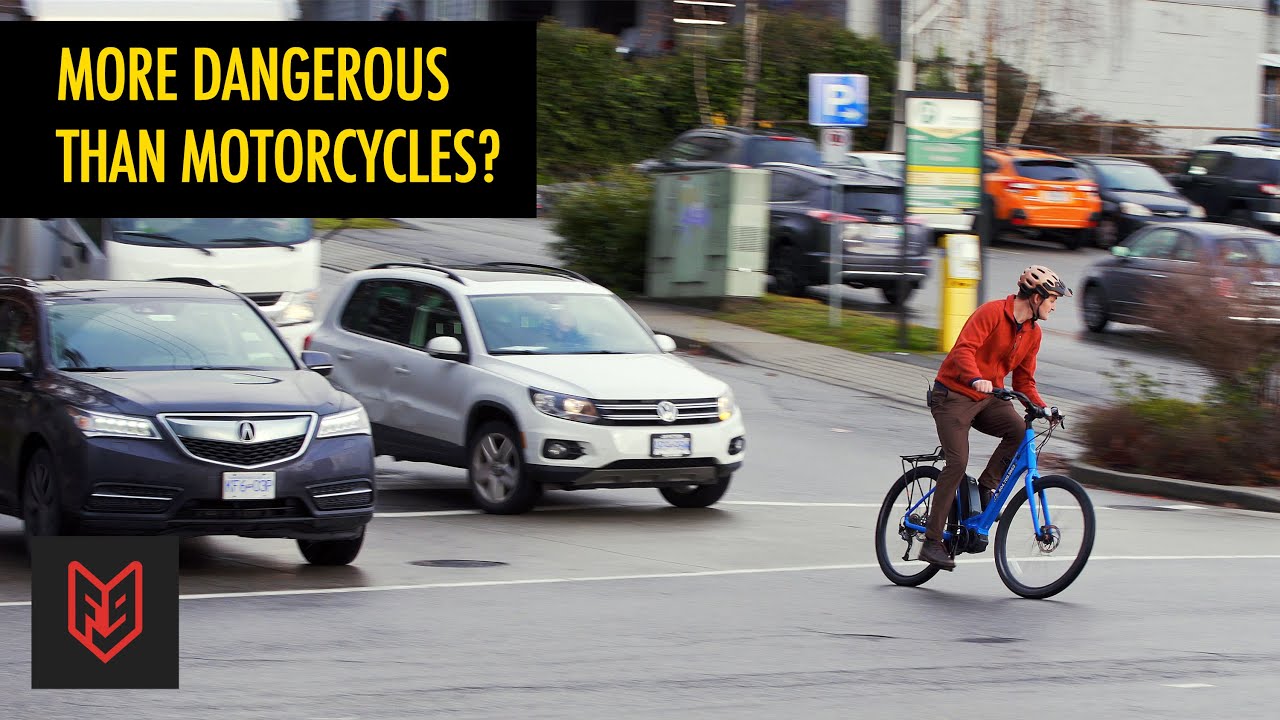
Why Electric Bikes are More Dangerous than Motorcycles — FortNine

FortNine

Unlicensed e-bike commuters match motorized traffic speeds without protective armor or onboard safety tech, producing injury and hospitalization rates that rival traditional motorcycling.

AI-assisted summary of Why Electric Bikes are More Dangerous than Motorcycles — original source. Check the original for full context.

Source published:

Key ideas

  • Urban commute telemetry shows negligible speed differences between platforms: Ryan recorded a top speed of 64 km/h and an average of 29 km/h on a motorcycle, compared to 60.5 km/h top speed and 28.3 km/h average on an e-bike. (0:01)
  • Crash data reveals e-bike accidents mirror motorcycle trauma rather than standard bicycle scrapes, with US e-bike crashes being 2.8 times more likely to require hospital admission and 3.3 times more likely to hit pedestrians than pedal cycles. (2:18)
  • UK accident statistics show 1,789 motorcyclists and 1,036 pedal cyclists killed or seriously injured (KSI) per billion vehicle miles, indicating that two-wheeled transit operates in a distinctively high-risk tier. (2:18)
  • Unlike motorcycles, which require graduated licensing, formal training, ABS, and DOT-certified components, e-bikes offer instant motorized speed to untrained operators without any licensing or mechanical safety mandates. (3:59)

Detailed notes

## Background Published on YouTube by the motorcycle channel FortNine on January 17, 2021, this video examines the hidden hazards of electric bicycles. The channel's description notes that while e-bikes offer speed and convenience with minimal effort, their actual injury rates place them far closer to motorcycles than conventional pedal bikes.

## TL;DR Host Ryan F9 conducts an empirical comparison between a city motorcycle commute and an electric bicycle ride over the identical route, discovering nearly identical top and average commuting speeds. Despite facing equivalent road velocities and selective inattention from car drivers, e-bike riders lack protective gear standards, active safety systems like ABS, and the graduated licensing required of motorcyclists. Drawing on international accident statistics and hospital admission rates, the video illustrates that e-bike trauma mirrors motorcycle crashes. Rather than demanding new regulatory bans, the video calls out the cultural double standard that demonizes motorcyclists while uncritically praising e-bike riders navigating identical risks.

## Atmosphere & style The presentation is punchy, sardonic, and analytically sharp, driven by Ryan F9's signature dry wit and vivid metaphors. It moves seamlessly between dynamic on-the-road telemetry demonstrations and methodical, data-backed teardowns of commuter double standards. The viewing experience feels both entertaining and sobering, cutting through suburban virtue-signaling with an unflinching examination of kinetic energy and road vulnerability.

## Bulletin - [00:01](https://www.youtube.com/watch?v=wM8Xli2KTzI&t=1s) Urban commute telemetry shows negligible speed differences between platforms: Ryan recorded a top speed of 64 km/h and an average of 29 km/h on a motorcycle, compared to 60.5 km/h top speed and 28.3 km/h average on an e-bike. - [02:18](https://www.youtube.com/watch?v=wM8Xli2KTzI&t=138s) Crash data reveals e-bike accidents mirror motorcycle trauma rather than standard bicycle scrapes, with US e-bike crashes being 2.8 times more likely to require hospital admission and 3.3 times more likely to hit pedestrians than pedal cycles. - [02:18](https://www.youtube.com/watch?v=wM8Xli2KTzI&t=138s) UK accident statistics show 1,789 motorcyclists and 1,036 pedal cyclists killed or seriously injured (KSI) per billion vehicle miles, indicating that two-wheeled transit operates in a distinctively high-risk tier. - [03:59](https://www.youtube.com/watch?v=wM8Xli2KTzI&t=239s) Unlike motorcycles, which require graduated licensing, formal training, ABS, and DOT-certified components, e-bikes offer instant motorized speed to untrained operators without any licensing or mechanical safety mandates.

## Key takeaways - [00:01](https://www.youtube.com/watch?v=wM8Xli2KTzI&t=1s) A cultural double standard praises bicycle commuters for health and environmental virtue while stigmatizing motorcyclists as reckless, despite sharing the same roadways. - [00:01](https://www.youtube.com/watch?v=wM8Xli2KTzI&t=1s) Telemetry over an identical urban commute route proves e-bikes match motorcycles closely in both top speed and average speed. - [00:01](https://www.youtube.com/watch?v=wM8Xli2KTzI&t=1s) Unlike motorcycles that command lane presence, e-bikes struggle to keep pace with speed limits, making them vulnerable to dangerous roadside dynamics and close passes. - [01:02](https://www.youtube.com/watch?v=wM8Xli2KTzI&t=62s) A severe gear double standard exists: motorcyclists wear abrasion-resistant fabrics, CE-rated armor, and full-face helmets, whereas e-bikers travel at similar speeds wearing casual clothes and half-shell helmets. - [01:02](https://www.youtube.com/watch?v=wM8Xli2KTzI&t=62s) Emergency room reports indicate that injuries sustained from e-bike crashes align with motorcycle trauma patterns rather than typical pedal cycle injuries. - [02:18](https://www.youtube.com/watch?v=wM8Xli2KTzI&t=138s) Driver selective attention is primed primarily for cars, leading motorists to look through narrow motorcycles and overlook roadside bicycles even more severely. - [02:18](https://www.youtube.com/watch?v=wM8Xli2KTzI&t=138s) UK road safety data records 1,789 motorcyclist KSI incidents per billion vehicle miles, with pedal cyclists representing the closest comparable commuter group at 1,036 KSI. - [02:18](https://www.youtube.com/watch?v=wM8Xli2KTzI&t=138s) US public health metrics demonstrate that e-bike riders face 2.8 times the hospitalization rate and 3.3 times the pedestrian collision rate of traditional pedal cyclists. - [02:18](https://www.youtube.com/watch?v=wM8Xli2KTzI&t=138s) Cross-analyzing international data indicates that e-bikes present an overall danger level comparable to, or exceeding, motorcycles. - [03:59](https://www.youtube.com/watch?v=wM8Xli2KTzI&t=239s) Motorcycles incorporate mandated active safety features such as ABS, traction control, turn signals, mirrors, and DOT-certified tires, which e-bikes generally lack. - [03:59](https://www.youtube.com/watch?v=wM8Xli2KTzI&t=239s) Traditional pedal bicycles feature an organic learning curve where speed scales with physical fitness and handling skill, whereas e-bikes grant instant speed regardless of pilot ability. - [03:59](https://www.youtube.com/watch?v=wM8Xli2KTzI&t=239s) Lack of training and regulation on e-bikes fosters dangerous commuter behaviors, such as distracted riding, running red lights, and riding unilluminated at night. - [05:30](https://www.youtube.com/watch?v=wM8Xli2KTzI&t=330s) Rather than advocating for new bureaucratic restrictions or gear mandates on e-bikes, FortNine argues for dismantling the cultural hypocrisy surrounding two-wheeled risk. - [05:30](https://www.youtube.com/watch?v=wM8Xli2KTzI&t=330s) Commuters comfortable with the genuine physical risks of high-speed e-biking should consider motorcycles for their superior visibility, lane presence, and safety equipment.

## Detailed walkthrough ### [00:01](https://www.youtube.com/watch?v=wM8Xli2KTzI&t=1s) The Commuting Illusion and Speed Parity

The discourse surrounding two-wheeled transportation is saturated with a stark cultural double standard. When an urban commuter announces they ride a bicycle, society showers them with immediate virtue-signaling praise: admiring their commitment to fresh air, physical exercise, and removing one more car from gridlocked roadways. Conversely, announcing that one commutes via motorcycle invites immediate horror and grim cautionary tales about a relative who works as a paramedic peeling "donorcycles" off the asphalt. To test whether this massive disparity in public perception reflects physical reality, Ryan F9 compares his typical city commute across identical streets and identical traffic conditions using both platforms.

The telemetry reveals that the velocity gap between motorized traffic and an electric bicycle is practically nonexistent in urban centers. On a standard motorcycle run, Ryan records a top speed of 64 km/h and an average speed of 29 km/h. On the exact same commuter route aboard an electric bicycle, his top speed reaches 60.5 km/h, with an average speed settling at 28.3 km/h. The critical difference is not the velocity itself, but vehicle presence and lane authority; while the motorcycle occupies the flow of traffic, the e-bike struggles to fully match the speed limit, leaving it exposed to hostile roadside dynamics. As Ryan points out: “Basically the same ride on the same roads and the same traffic, only the e-bike never quite keeps up to traffic so it gets whizzed more often than a public urinal.”

- **Motorcycle Commute Telemetry**: 64 km/h top speed, 29.0 km/h average speed. - **Electric Bike Commute Telemetry**: 60.5 km/h top speed, 28.3 km/h average speed.

[01:02](https://www.youtube.com/watch?v=wM8Xli2KTzI&t=62s) Gear Double Standards and Trauma Realities

The disparity between motorcycling and e-biking becomes glaring when examining rider protection. For a motorcycle commute, standard protective gear is rigorously engineered and certified: jeans woven with Kevlar to resist abrasion on surfaces harsher than an internet forum, internal armor carrying CE certifications to attenuate blunt force transmission to under 18 kilonewtons, high-visibility jackets, boots, and gloves calibrated to catch peripheral light, and full-face helmets certified against the latest translational and rotational brain injury criteria.

Preparing for an electric bicycle ride, however, entails little more than stretchy casual pants, an open half-shell bicycle helmet, and a dose of optimism. Ryan acknowledges that suiting up in motorcycle-grade ballistic apparel to pedal a bicycle presents serious ergonomic drawbacks, yet highlights the cognitive dissonance in safety regulations when physical speeds are equivalent. As Ryan argues: “I'll be the first to admit that a suit of armor on an e-bike is as impractical as chainmail underwear, you gotta be able to move, but that doesn't change the fact that our safety standards are double standards.” This disparity is underscored by emergency room data, where medical trauma reports confirm that injuries sustained in e-bike accidents bear little resemblance to traditional pedal cycling scrapes and instead mirror the violent trauma patterns seen in motorcycle crashes.

[02:18](https://www.youtube.com/watch?v=wM8Xli2KTzI&t=138s) Selective Attention and Hospitalization Data

```mermaid flowchart TD accTitle: Two-Wheeled Commuter Risk Comparison accDescr: Flowchart illustrating car driver selective attention and injury/hospitalization rates between motorcycles, pedal cycles, and e-bikes. subgraph Attention["Driver Perception Bias"] A["Driver looks both ways"] --> B["Selective attention: Looking only for cars"] B --> C["Misses narrow motorcycles in-lane"] B --> D["Completely overlooks bicycles on road shoulders"] end subgraph Stats["UK & US Risk Metrics"] E["Motorcycle KSI Rate:<br/>1,789 per billion vehicle miles"] F["Pedal Cycle KSI Rate:<br/>1,036 per billion vehicle miles"] G["E-Bike Trauma Escalation:<br/>2.8x hospitalization rate vs. pedal bikes<br/>3.3x pedestrian strike rate vs. pedal bikes"] F --> G G -.->|"Cross-analysis implies"| E end ```

The physical vulnerability of two-wheeled road users is compounded by human sensory limitations. When automobile drivers look both directions at an intersection, their cognitive processing is primed exclusively to identify multi-ton vehicles. Because of this selective attention, drivers routinely look straight through motorcycles traveling down open traffic lanes, but they overlook bicycles tucked onto road shoulders even more frequently. Personal experience echoes this trend: Ryan notes that despite decades on the road, he has never been struck while riding a motorcycle, but has been hit twice while riding a bicycle.

To move beyond personal anecdotes, official accident statistics provide a clear look at comparative risk. In the United Kingdom, where two-wheeled commuting is deeply ingrained, 1,789 motorcyclists are killed or seriously injured (KSI) per billion vehicle miles traveled. The only other commuter demographic operating in that statistical stratosphere is pedal cyclists, who suffer 1,036 KSI incidents per billion vehicle miles. When overlaying American public health data, e-bikes dramatically heighten that baseline risk: e-bike crashes are 2.8 times more likely to require inpatient hospital admission than standard pedal bike accidents, and e-bike riders are 3.3 times more likely to collide with pedestrians. While acknowledging the statistical limits of cross-analyzing separate national registries, Ryan notes the grim reality emerging internationally—such as in Israel, where electric bikes triggered a public health crisis resulting in 16 fatalities in a single year. As Ryan synthesizes: “Cross-analyzing those data sets suggests that e-bikes are at least comparable to motorcycles in danger, if not worse.”

- **UK Road Safety Metric**: 1,789 motorcyclists killed or seriously injured (KSI) per billion vehicle miles. - **UK Bicycle Baseline**: 1,036 pedal cyclists KSI per billion vehicle miles. - **US Hospitalization Multiplier**: E-bike collisions are 2.8 times more likely to necessitate hospital admission than pedal cycle crashes. - **Pedestrian Strike Risk**: E-bikes are 3.3 times more likely to hit pedestrians compared to non-electric pedal bikes.

[03:59](https://www.youtube.com/watch?v=wM8Xli2KTzI&t=239s) Regulatory Safeguards versus Skill Gaps

A standard street-legal motorcycle represents a heavily regulated ecosystem of mechanical fail-safes and legal prerequisites. Motorcycles come factory-equipped with anti-lock braking systems (ABS), traction control, Department of Transportation (DOT) certified tires, running lights, high beams, turn indicators, rearview mirrors, environmental instrument clusters, and horns. Most crucially, piloting a motorcycle requires graduated licensing, forcing riders through several stages of formal training that frequently stretch over two years before full road privileges are granted.

| Operational Feature | Street Motorcycle | Electric Commuter Bicycle | |:--- |:--- |:--- | | **Active Safety Tech** | ABS, Traction Control, DOT Tires | Rim/Disc Brakes, Unrated Bike Tires | | **Signaling & Lighting** | Headlight, High Beams, Fog Lights, Indicators, Horn | Basic Bike Lights, Bell (often aftermarket/optional) | | **Licensing Pipeline** | Multi-stage graduated license, testing, mandatory courses | None | | **Skill Bottleneck** | Mechanical throttle controlled by licensed operator | Leg strength bypassed; instant motorized acceleration | | **Observed Misuse** | High-speed weekend runs (isolated track/canyons) | Distracted riding, running red lights, sidewalk riding |

On an acoustic bicycle, a rider's physical output acts as an organic governor; braking efficiency, balance, and spatial awareness evolve naturally as leg strength develops. Electric powertrains eliminate that organic learning curve entirely, delivering instantaneous motorized velocity to operators who lack the motor skills or situational judgment to manage it safely. As Ryan observes: “The problem with e-bikes is that any geriatric or pre-pubescent pilot can hop on and hit 30 immediately—the speed they wouldn't be able to pedal to and often lack the sense for.” This dynamic produces reckless commuter behavior, including riding while looking at mobile phones, ignoring traffic signals, riding unilluminated at night, carrying unbelted passengers, and darting unexpectedly across multi-lane traffic. While extreme outliers exist in both camps—such as sportbike riders hitting 200 km/h on weekends or mountain bikers hucking 20-foot kickers—the daily commuter environment presents a direct, dangerous parallel.

[05:30](https://www.youtube.com/watch?v=wM8Xli2KTzI&t=330s) Commuting Equivalency and the Culture of Risk

Despite the statistical perils and operational skill deficits plaguing the e-bike community, Ryan strongly rejects the idea of imposing bureaucracy, state-issued licenses, or mandated gear laws onto electric bicycles, refusing to contribute to the modern world's reputation as a "no fun generation." Instead, the objective is to dismantle the cultural hypocrisy that stigmatizes motorcyclists as reckless daredevils while framing electric cycling as a consequence-free, harmless pursuit.

Because electric commuting operates at near-identical traffic speeds, exposes riders to distracted motorists, and delivers comparable trauma patterns upon impact, it demands the same level of calculated risk awareness as hopping on an engine-driven motorcycle. Riders who are comfortable managing the genuine hazards of modern e-bike transit should logically consider whether a motorcycle might serve their needs with better passive safety tech, better visibility, and proper protective equipment. Ryan delivers a closing appeal directly to cycling advocates: “I just want to say to anyone comfortable with the idea of commuting on an e-bike, you could consider a motorcycle; if not, at least you know the risks involved with your choice, so can stop pestering us about ours.”

## Notable quotes > [03:59](https://www.youtube.com/watch?v=wM8Xli2KTzI&t=239s) The problem with e-bikes is that any geriatric or pre-pubescent pilot can hop on and hit 30 immediately—the speed they wouldn't be able to pedal to and often lack the sense for. — Ryan F9

> [01:02](https://www.youtube.com/watch?v=wM8Xli2KTzI&t=62s) I'll be the first to admit that a suit of armor on an e-bike is as impractical as chainmail underwear, you gotta be able to move, but that doesn't change the fact that our safety standards are double standards. — Ryan F9

## Mentioned FortNine, Ryan F9, United Kingdom, United States, Israel, Department of Transportation, Riders Share, Amazon

## Video description More fun, more speed and less effort. E-bikes seem like a no-brainer. But not so fast. These innocent little electric bicycles are a lot closer to motorcycles than pedal bikes when it comes to injury rates.

GEAR BREAKDOWN Cable & Chain Locks : https://frt9.co/5q70nz First Aid Kits : https://frt9.co/431uib Hi-Viz Vests : https://frt9.co/5mcvfu

Support us by shopping motorcycle gear with this link: https://frt9.co/aeu0mn

Or anything with this Amazon link: https://frt9.co/30l4bi

Bike in the shop? Traveling? Rent your next ride with Riders Share: https://riders-share.com/welcome/fortnine

Connect with us: http://facebook.com/fortnine http://instagram.com/fortnine http://twitter.com/fortninecanada

[Source](https://www.youtube.com/watch?v=wM8Xli2KTzI)

中文简报

电动自行车车速逼近摩托车,医院数据显示二者外伤程度相当 无驾照的电动自行车通勤者在没有护具或车载安全技术的情况下,达到了机动车流的速度,导致的受伤率和住院率已逼近传统摩托车。 主持人Ryan F9在相同路线上对城市摩托车通勤和电动自行车骑行进行了实证对比,发现两者的最高速度和平均通勤速度几乎完全相同。尽管面临相同的道路车速以及汽车司机的选择性疏忽,电动自行车骑手却缺乏护具标准、防抱死制动系统(ABS)等主动安全系统,也不需要像摩托车手那样接受阶梯式驾照考核。结合国际事故统计数据和医院收治率,该视频说明电动自行车的外伤情况与摩托车事故高度相似。视频并未要求出台新的监管禁令,而是指出了这种文化上的双重标准:在面对完全相同的风险时,摩托车手被妖魔化,而电动自行车骑手却受到毫无批判的赞赏。 城市通勤遥测数据显示两种出行方式的速度差异微乎其微:Ryan记录的摩托车最高时速为64公里、平均时速为29公里,而电动自行车的最高时速为60.5公里、平均时速为28.3公里。 (0:01) 事故数据显示,电动自行车事故造成的伤害更接近摩托车创伤,而非普通自行车的轻微擦伤;在美国,电动自行车事故需要住院治疗的可能性是脚踏自行车的2.8倍,撞击行人的可能性是其3.3倍。 (2:18) 英国事故统计显示,每10亿车英里中就有1,789名摩托车手和1,036名脚踏自行车骑手死亡或重伤(KSI),这表明两轮交通工具处于明显的高危级别。 (2:18) 与摩托车需要阶梯式驾照、正规培训、ABS以及DOT认证零部件不同,电动自行车让未经培训的操作人员无需任何驾照或机械安全强制要求即可获得瞬间的机动速度。 (3:59)

Reading summary

FortNine's Ryan F9 contends that electric commuter bicycles carry risks comparable to or exceeding those of street motorcycles, driven by equivalent urban velocities, severe protective gear disparities, driver inattention, and an absence of formal rider training. Urban Speed Parity and Traffic Positioning (0:01) Public perception draws a sharp divide between the virtuous pedal commuter and the reckless motorcyclist, but telemetry on identical urban routes reveals virtually no difference in operational speed. Ryan recorded a top speed of 64 km/h and an average of 29 km/h on a motorcycle, compared to a 60.5 km/h top speed and a 28.3 km/h average on an electric bicycle. While the velocities are practically matched, the critical hazard lies in lane authority. Motorcycles integrate directly into traffic lanes, whereas e-bikes struggle to sustain full speed limits and remain confined to hostile road shoulders, exposing riders to frequent close passes from larger vehicles. Protective Gear Disparities and Trauma Realities (1:02) Motorcycle commuting relies on engineered, standardized protection: Kevlar-woven abrasion-resistant jeans, certified armor attenuating blunt impacts below 18 kilonewtons, high-visibility garments, and full-face helmets certified against translational and rotational force. Conversely, electric bicycle transit is typically conducted in casual clothing and minimalist, open half-shell helmets. Ryan acknowledges that heavy ballistic gear is ergonomically impractical for pedaling, but emphasizes the regulatory double standard. Hospital emergency room data confirms that injuries sustained in e-bike collisions deviate sharply from minor pedal cycling abrasions, instead mirroring the severe, violent trauma patterns characteristic of motorcycle crashes. Cognitive Bias and Comparative Casualty Rates (2:18) Automobile drivers exhibit selective attention at intersections, scanning primarily for multi-ton vehicles while overlooking narrow motorcycles and road-shoulder cyclists. While Ryan reports never being struck on a motorcycle across decades of riding, he has been hit twice while riding a bicycle. Broader safety metrics reinforce this vulnerability. In the United Kingdom, 1,789 motorcyclists and 1,036 pedal cyclists are killed or seriously injured (KSI) per billion vehicle miles traveled. When overlaying American public health data, e-bike crashes are 2.8 times more likely to require inpatient hospital admission than standard pedal bike accidents, and e-bike riders are 3.3 times more likely to strike pedestrians. In international registries such as Israel, e-bike incidents generated 16 fatalities within a single year, suggesting overall risk levels rivaling motorcycles. Mechanical Safeguards and Licensing Requirements (3:59) Street motorcycles are heavily regulated platforms equipped with mandatory active safety technologies—including anti-lock braking systems (ABS), traction control, Department of Transportation (DOT) certified tires, mirrors, horns, and comprehensive lighting. Riders must also clear graduated licensing systems, frequently involving two years of mandatory training and evaluation. By contrast, electric bicycles lack mandated active safety equipment and bypass the natural physical governor of leg strength. Because untrained riders can achieve motorized acceleration of roughly 30 km/h instantly without developed balance or road judgment, Ryan notes a prevalence of dangerous operational habits, such as riding on sidewalks, running red lights, carrying unbelted passengers, and operating while distracted by mobile phones. Ryan explicitly rejects implementing bureaucratic licensing or mandated gear laws for electric bicycles, warning against over-regulation. Instead, he calls on urban commuters to abandon the cultural double standard that stigmatizes motorcyclists, arguing that those comfortable with the physical realities of e-bike transit should acknowledge the true hazards involved or consider motorcycles for their superior visibility and safety equipment.

精炼阅读摘要

FortNine主持人Ryan F9指出,公众对双轮通勤存在明显的文化双重标准:倡导环保的电动自行车普遍受到赞誉,而摩托车则被污名化为高危载具;然而通勤遥测与多国事故数据显示,电动自行车在实际道路中的危险程度并不亚于摩托车。 通勤速度趋同与道路掌控力缺失 (0:01) Ryan在相同路线与交通条件下对比了摩托车与电动自行车的实际通勤表现。遥测记录显示两者的速度差异极小:摩托车通勤的最高车速为64 km/h,平均车速为29 km/h;而在同一路线上骑行电动自行车,最高车速达到60.5 km/h,平均车速为28.3 km/h。两者最关键的差异并非绝对速度,而是路权与道路存在感。摩托车能够作为完整交通单元融入主车流,而电动自行车的动力难以持续跟上道路限速,被迫退缩到道路边缘,频繁承受机动车近距离超越所带来的安全隐患。 防护装备标准割裂与重症创伤趋同 (1:02) 两类载具在安全护具的要求上存在严重割裂。摩托车骑手通常配备经过认证的专用装备,包括耐磨Kevlar织物、将钝力传导限制在18千牛以下的CE认证内置护具,以及经过旋转力与平移脑损伤认证的全盔;相比之下,电动自行车骑手通常仅着休闲便服并佩戴简易半盔。Ryan承认要求电动自行车骑手穿着重型防摔服在人体工程学上不切实际,但指出面对相似的物理速度,这种安全标准存在脱节。急诊室临床数据证实,电动自行车事故导致的伤害并非脚踏自行车的轻度擦伤,而是高度呈现出与摩托车车祸类似的暴力创伤形态。 驾驶员选择性忽视与事故住院率激增 (2:18) 汽车驾驶员在交叉路口的视觉处理普遍存在选择性注意偏差,其认知机制主要搜寻大体量汽车,容易忽略车道内的摩托车,而对于道路边缘的自行车更常视而不见。Ryan提及自己骑行摩托车数十年从未发生碰撞,骑行自行车却两度被撞。官方安全数据进一步印证了这一风险:英国统计表明,摩托车骑手每10亿英里行程的伤亡或重伤(KSI)为1,789人,普通自行车亦高达1,036人;美国公共卫生数据则显示,电动自行车事故的住院率是普通自行车的2.8倍,撞击行人的几率达普通自行车的3.3倍。结合以色列单年发生16起电动自行车致死事故,Ryan推论跨数据集分析表明电动自行车的危险性已等同甚至超过摩托车。 主动安全系统缺失与操作技能断层 (3:59) 合规街车具备完整的机械冗余与安全技术,包括ABS防抱死系统、牵引力控制、DOT认证轮胎、转向灯和后视镜,且骑手必须通过可能耗时两年的分级驾照培训与考核。反观电动自行车,通常只配备未评级轮胎和基础车灯车铃,缺乏任何法定培训门槛。传统人力自行车的体能要求本是骑手的天然调节机制,使其在建立肌力的过程中逐步掌握操控平衡与路况预判;电动马达绕过了这一学习曲线,使缺乏经验与风险意识的骑手能够瞬间达到高速,进而引发边骑车边看手机、闯红灯、夜间无灯骑行、逆行及违规载人等危险行为。 Ryan明确反对对电动自行车强制施加繁重的行政牌照或装备管制,其核心诉求是打破交通文化中的道德双标。鉴于电动自行车在通勤速度、视野隐患及创伤后果上与摩托车高度一致,通勤者应当认清其真实物理风险;既然能够接受电动自行车的安全代价,便无需对摩托车过度恐惧,甚至可将拥有更完善主动安全系统的摩托车视为合理替代方案。

Detailed notes — zh

## Background 该视频由知名摩托车频道 FortNine 于 2021 年 1 月 17 日发布在 YouTube 平台上。视频简介指出,电动自行车虽然看似有趣、省力且轻快,但这种人畜无害的小车在实际致伤率上与摩托车的接近程度,远高于其与传统脚踏自行车的距离。 ## TL;DR 视频通过对比摩托车与电动自行车在城市通勤中的真实速度,打破了大众对自行车的浪漫化幻想与对摩托车的妖魔化偏见,指出电动自行车在最高时速(60.5 km/h vs 64 km/h)与均速上几乎与摩托车无异。接着从护具标准、视觉盲区与医学统计三方面展开论证:电动自行车的碰撞创伤模式更接近机动车,其事故住院率是普通自行车的 2.8 倍,却缺乏凯夫拉与 CE 认证等重型防护装备。最后,视频强调摩托车普遍拥有 ABS、专业灯光与严苛驾照考核,而电动自行车打破了由体能构筑的安全门槛,让缺乏技能与安全意识的骑手轻易达到危险车速并滋生乱象,其日常通勤的致命风险毫不亚于摩托车。 ## Atmosphere & style 全片充斥着主讲人标志性的辛辣讽刺与英式冷幽默,开场以戏剧化的社会偏见对话迅速勾起观众共鸣,叙事节奏紧凑而充满张力。主讲人通过“锁子甲内裤”、“被超车频率堪比公厕小便池”等极其生动荒诞的比喻,将枯燥的医学创伤与交通伤亡统计讲得既具视觉冲击力又发人深省。整部片子在轻松幽默的外壳下包裹着严肃理性的安全反思,给习惯于对摩托车“指手画脚”的公众带来了一记清醒的现实重锤。 ## Bulletin - [00:01](https://www.youtube.com/watch?v=wM8Xli2KTzI&t=1s) 实际城市通勤数据显示,电动自行车的速度(最高 60.5 km/h,均速 28.3 km/h)已极度逼近摩托车(最高 64 km/h,均速 29 km/h),但因动力受限无法融入车流,极易处于频繁被超车的危险态势中。 - [01:02](https://www.youtube.com/watch?v=wM8Xli2KTzI&t=62s) 医学研究指出,电动自行车碰撞造成的创伤模式脱离了普通人力车范畴,高度贴近摩托车事故,其事故住院率是普通自行车的 2.8 倍,撞击行人的概率更是后者的 3.3 倍。 - [02:18](https://www.youtube.com/watch?v=wM8Xli2KTzI&t=138s) 在道路伤亡数据上,英国每十亿车英里有 1,789 名摩托车手与 1,036 名自行车骑手重伤或死亡,两轮出行的危险性远超四轮汽车。 - [03:59](https://www.youtube.com/watch?v=wM8Xli2KTzI&t=239s) 电动自行车打破了体力对骑行速度的天然限制,缺乏驾照与专业驾驶培训的门槛让骑手在缺乏制动掌控力和路况意识的情况下高速行驶,加剧了道路违规与事故隐患。 ## Key takeaways - [00:01](https://www.youtube.com/watch?v=wM8Xli2KTzI&t=1s) 社会大众对两轮通勤存在双重标准:普通人往往赞赏自行车通勤的环保健康,却普遍将摩托车骑士妖魔化为“器官捐献者”。 - [00:01](https://www.youtube.com/watch?v=wM8Xli2KTzI&t=1s) 实测通勤数据显示,电动自行车的平均时速(28.3 km/h)和最高时速(60.5 km/h)与摩托车(29 km/h 与 64 km/h)几乎毫无实质差距。 - [00:01](https://www.youtube.com/watch?v=wM8Xli2KTzI&t=1s) 由于电动自行车无法完全跟上机动车流的节奏,导致骑手在路边频繁被汽车贴身超车,面临严峻的安全威胁。 - [01:02](https://www.youtube.com/watch?v=wM8Xli2KTzI&t=62s) 装备防护存在严重脱节:摩托车手普遍配备凯夫拉内衬、CE 认证护具和专业认证头盔,而电动自行车骑手通常仅穿普通衣物并佩戴简易半盔。 - [01:02](https://www.youtube.com/watch?v=wM8Xli2KTzI&t=62s) 最新创伤医学研究明确表明,电动自行车相关的事故创伤与普通脚踏自行车截然不同,反而与摩托车碰撞创伤模式高度一致。 - [02:18](https://www.youtube.com/watch?v=wM8Xli2KTzI&t=138s) 汽车司机的“选择性注意”视觉机制导致其在路上搜寻的主要是汽车,这使小型两轮车(尤其是贴边骑行的自行车与电动车)更容易被完全忽视。 - [02:18](https://www.youtube.com/watch?v=wM8Xli2KTzI&t=138s) 英国交通伤亡数据显示,每十亿车英里出行中摩托车致死或重伤达 1,789 人,人力自行车达 1,036 人,两者同属高危梯队。 - [02:18](https://www.youtube.com/watch?v=wM8Xli2KTzI&t=138s) 美国医学统计表明,电动自行车的送医住院率是人力自行车的 2.8 倍,且碰撞行人的几率是普通自行车的 3.3 倍。 - [03:59](https://www.youtube.com/watch?v=wM8Xli2KTzI&t=239s) 现代摩托车配备了 ABS、牵引力控制和完善的灯光系统,且骑手须通过严格的多阶段驾照培训,具备更全面的主动安全与避险能力。 - [03:59](https://www.youtube.com/watch?v=wM8Xli2KTzI&t=239s) 人力自行车受制于骑手的腿部体能,而电动自行车使缺乏控制力和路况经验的老人和未成年人也能轻松飙到高速,打破了天然的物理安全护城河。 - [03:59](https://www.youtube.com/watch?v=wM8Xli2KTzI&t=239s) 电动自行车通勤中充斥着看手机、闯红灯、夜间不开灯及违规载人等行为,使得日常通勤场景下的危险性丝毫不逊于摩托车。 - [03:59](https://www.youtube.com/watch?v=wM8Xli2KTzI&t=239s) 视频总结指出,接受电动自行车通勤的人其实已经承担了与摩托车相当的风险,因此公众不应再对摩托车骑士的选择进行偏见化指责。 ## Detailed walkthrough ### [00:01](https://www.youtube.com/watch?v=wM8Xli2KTzI&t=1s) 骑行通勤的社会偏见与速度真相 视频开场通过一段生动的对比讽刺了大众对待自行车与摩托车的双重标准。当有人说“我是个自行车骑手”时,旁人会赞叹道:“噢,我真该去试试,呼吸新鲜空气,路上还能少一辆车,真为你高兴!”然而当你说“我是个摩托车骑士”时,对方立刻大惊失色:“噢,我绝不会干那个,我舅舅是个急救员,整天把你们这些‘器官捐献车’从柏油路上刮下来。”但实际的通勤数据却击碎了这种浪漫化与妖魔化的反差。主讲人对比了自己骑摩托车与骑电动自行车(E-bike)的同一段城市通勤路线:在被大众戏称为“自杀式”的摩托车通勤中,最高时速达到 64 km/h,平均时速为 29 km/h;而在电动自行车通勤中,最高时速达到了 60.5 km/h,平均时速为 28.3 km/h。 这完全是在相同的道路、相同的车流中进行的基本相同的骑行。唯一的关键区别在于,电动自行车的动力特性让它永远无法完全跟上机动车流的节奏,导致它在路边被其他车辆呼啸擦过的频率极其频繁——主讲人形象地调侃道,它被超车刷过的次数“比公厕小便池被光顾得还频繁”(gets whizzed more often than a public urinal)。除了这种速度脱节之外,电动自行车还潜藏着另外三大致命危险。 - 摩托车城市通勤数据:最高时速 64 km/h,平均时速 29 km/h。 - 电动自行车城市通勤数据:最高时速 60.5 km/h,平均时速 28.3 km/h。 - 核心矛盾:速度极度接近摩托车,但因动力储备与限速无法融入车流,极易处于被动受让与被超车的危险态势中。 --- ### [01:02](https://www.youtube.com/watch?v=wM8Xli2KTzI&t=62s) 装备护具的双重标准与创伤医学对比 主讲人展示了两套截然相反的通勤防护装备。骑摩托车时,他全副武装:牛仔裤带有凯夫拉(Kevlar)内衬,能够承受比互联网论坛喷子还要粗糙磨损的地面摩擦;护具获得 CE 认证,能确保传递到身体上的钝力低于 18 千牛(kN);夹克、手套和骑行靴的反光条“反射出犹如一千个太阳的光芒”;头盔则通过了最新的脑部与头部创伤评估标准,能够有效防御旋转冲击和线形冲击。然而转到电动自行车时,装备画风突变:“一条弹力裤、半盔,再加上美好的祝愿。” 虽然主讲人坦言在电动自行车上套一套重型骑行铠甲就像“锁子甲内裤”(chainmail underwear)一样荒谬不实用,毕竟骑车必须保持身体活动自如,但这掩盖不了安全认知上的荒谬双标。正如主讲人援引最新医学研究所指出的: > “I'll be the first to admit that a suit of armor on an e-bike is as impractical as chainmail underwear, you gotta be able to move, but that doesn't change the fact that our safety standards are double standards, especially considering current medical research which notes that ebike related trauma is dissimilar to pedal bike injuries more closely resembling the patterns of motorcycle crashes.” > (“我会第一个承认在电动自行车上穿一套铠甲就像锁子甲内裤一样不切实际,你总得活动自如;但那改变不了我们的安全标准其实是双重标准的事实,尤其是考虑到当前的医学研究指出,电动自行车相关的创伤与普通人力自行车截然不同,反而更接近摩托车事故的创伤模式。”) ```mermaid flowchart TD accTitle: 骑行装备与实际创伤对比图 accDescr: 对比摩托车与电动自行车在装备标准与实际创伤医学表现上的脱节情况 subgraph MOTO["摩托车通勤"] M1["高规格防护装备<br>(凯夫拉内衬 + CE护具 + 严苛认证头盔)"] M2["机动车级碰撞创伤"] M1 -->|针对抵御| M2 end subgraph EBIKE["电动自行车通勤"] E1["极低规格防护装备<br>(弹力裤 + 普通半盔 + 幸运祝愿)"] E2["医学研究证实的创伤模式<br>(更接近摩托车碰撞,脱离人力车范畴)"] E1 -.->|"防护严重不足"| E2 end ``` --- ### [02:18](https://www.youtube.com/watch?v=wM8Xli2KTzI&t=138s) 视觉盲区与真实事故伤亡大数据 在道路视觉机制上,汽车司机在左右观察时,大脑里搜寻的其实只有“汽车”。这种选择性注意(Selective attention)意味着司机在路上极容易直接无视摩托车,而对于缩在路边的小型自行车,司机的忽视程度只会更严重。主讲人以亲身经历说明:他骑摩托车从没被撞过,但骑自行车却已经被汽车撞过两次。为了避免单纯个案带来的偏差,主讲人拿出了具体的大规模道路交通统计数据。 在拥有浓厚两轮通勤文化的英国,每十亿车英里(billion vehicle miles)的出行距离中,有 1,789 名摩托车手死亡或重伤;在整个路网中,唯一能与这个伤亡体量处于同一梯队的,就是自行车的 1,036 人。而结合美国关于电动自行车的医学统计来看,电动自行车的致伤烈度大幅飙升:其事故送医住院率是普通人力自行车的 2.8 倍,撞击行人的概率更是普通自行车的 3.3 倍。交叉分析这些数据表明,电动自行车的危险性即便不比摩托车严重,也至少处于旗鼓相当的危险水平。视频中还插入了国际新闻报道:在以色列等地区,电动自行车的普及已引发严重交通隐患,短短一年内便造成了 16 起死亡事故。 - 英国每十亿车英里重伤/死亡人数:摩托车 1,789 人;人力自行车 1,036 人。 - 美国数据对比:电动自行车事故导致住院的概率是人力自行车的 2.8 倍。 - 行人碰撞风险:电动自行车撞击行人的概率是普通自行车的 3.3 倍。 - 现状局限:由于电动自行车发展历程较短,目前缺乏更长期的直接对比数据,但交叉分析已足以揭示其高度危险性。 --- ### [03:59](https://www.youtube.com/watch?v=wM8Xli2KTzI&t=239s) 操控技术门槛、违法乱象与通勤反思 最后一项决定性差异在于驾驶门槛与车辆的主动安全配置。现代摩托车普遍配备 ABS 防抱死系统、牵引力控制系统(Traction Control)、DOT 认证轮胎、尾灯、大灯、远光灯、雾灯、转向灯、后视镜、天气预警仪表等,且更重要的是骑乘者必须持有摩托车驾照——这意味着骑手要完成耗时可能长达两年的多阶段强制性专业培训。反观普通自行车,虽然也需要操控技巧,但能够制约车速、刹车与平衡进度的天然屏障是骑手本人的腿部力量与体能积累。 电动自行车彻底打破了这种由体力构建的安全护城河。任何一个上了年纪的老人或者发育未全的少年,跨上电动自行车就能立即飙到 30 km/h 甚至更高,而他们完全缺乏与这个速度相匹配的制动掌控力、平衡反应与路况判断意识。这种低门槛导致了街头大量的危险行为:一边骑车一边看手机、闯红灯、不戴头盔、夜间不开灯、违法载人、随意非法转向以及突然窜入主路车流。主讲人澄清道,周末在赛道开到 200 km/h 的摩托车手固然极度危险,那些在山地飞跃 20 英尺跳台的电动山地狂人也很激进,但对比极端娱乐用途没有意义(好比把苹果和橙子搅成大杂烩)。通勤才是这两者最真实的平行对照——因为电动自行车在日常通勤中的行为特征、事故危险度,都与摩托车惊人地吻合。 面对这种现状,主讲人并不提倡给电动自行车强制推行驾照、驾训和重型护具,以免让社会变成一个“无趣的一代人”(no fun generation)。他最后直言: > “I just want to say to anyone comfortable with the idea of commuting on an e-bike, you could consider a motorcycle, if not at least you know the risks involved with your choice, so can stop pestering us about ours.” > (“我只是想对任何能坦然接受骑电动自行车通勤的人说,你大可以考虑一下摩托车;就算不考虑,至少你现在清楚了自己选择所伴随的风险,所以别再对我们的选择指手画脚、喋喋不休了。”) ## Mentioned FortNine, 电动自行车, 摩托车, 凯夫拉, CE 认证, ABS 防抱死系统, 牵引力控制系统, DOT 认证, Riders Share, 英国, 美国, 以色列 ## Video description More fun, more speed and less effort. E-bikes seem like a no-brainer. But not so fast. These innocent little electric bicycles are a lot closer to motorcycles than pedal bikes when it comes to injury rates. GEAR BREAKDOWN Cable & Chain Locks : https://frt9.co/5q70nz First Aid Kits : https://frt9.co/431uib Hi-Viz Vests : https://frt9.co/5mcvfu Support us by shopping motorcycle gear with this link: https://frt9.co/aeu0mn Or anything with this Amazon link: https://frt9.co/30l4bi Bike in the shop? Traveling? Rent your next ride with Riders Share: https://riders-share.com/welcome/fortnine Connect with us: http://facebook.com/fortnine http://instagram.com/fortnine http://twitter.com/fortninecanada [Source](https://www.youtube.com/watch?v=wM8Xli2KTzI)

Source quotes

[3:59] Ryan F9: The problem with e-bikes is that any geriatric or pre-pubescent pilot can hop on and hit 30 immediately—the speed they wouldn't be able to pedal to and often lack the sense for. [1:02] Ryan F9: I'll be the first to admit that a suit of armor on an e-bike is as impractical as chainmail underwear, you gotta be able to move, but that doesn't change the fact that our safety standards are double standards.

Original transcript

[0:01] hello i'm a cyclist [0:03] oh i should really do that and fresh air [0:05] one less car on the road [0:07] good for you hello i'm a motorcyclist [0:11] oh i'd never do that my uncle's a [0:14] paramedic [0:15] scrapes you donor cycles off the [0:16] pavement [0:22] [Music] [0:26] so here's my suicidal commute on a [0:29] motorcycle [0:30] the top speed hit is 64 and average 29 [0:34] kilometers per hour [0:35] and here's my commute on an e-bike the [0:38] top speed hit [0:39] is 60.5 and i average 28.3 kilometers [0:43] per hour [0:45] basically the same ride on the same [0:47] roads and the same traffic [0:48] only the e-bike never quite keeps up to [0:51] traffic so it gets [0:52] whizzed more often than a public urinal [0:55] that and three [0:56] other dangers [0:59] [Music] [1:02] this is how i dress for motorcycling my [1:05] jeans are kevlar lined [1:07] to slide on surfaces more abrasive than [1:10] an internet forum [1:11] my armor is ce rated to transmit less [1:14] than 18 kilonewtons of blunt force [1:17] my jacket gloves and boots reflect the [1:19] light of 1000 suns [1:21] my helmet clears the latest brain and [1:23] head injury criteria for rotational [1:25] and translational impacts wow [1:28] this is how i gear up for e-biking [1:31] stretchy pants [1:32] half a helmet and happy thoughts i'll be [1:36] the first to admit that a suit of armor [1:38] on an e-bike [1:39] is as impractical as chainmail underwear [1:42] you gotta be able to move [1:43] but that doesn't change the fact that [1:45] our safety standards are double [1:47] standards [1:48] especially considering current medical [1:51] research which notes that ebike related [1:53] trauma is dissimilar to pedal bike [1:55] injuries more closely resembling the [1:57] patterns [1:58] of motorcycle crashes [2:13] [Music] [2:18] when car drivers look both ways [2:22] they're looking for cars [2:26] selective attention means it's common to [2:28] look right through [2:29] a motorcycle on the road but even more [2:32] common to miss a tiny bicycle beside [2:34] the road [2:36] [Music] [2:40] she didn't see us because they're [2:42] looking for cars they're not really [2:43] looking for you right [2:44] i've never been hit on my motorcycle but [2:47] i've been hit [2:47] twice on my bicycle anecdotal evidence [2:51] is only evidence of an anecdote so let's [2:53] look at real numbers starting with the [2:55] uk [2:57] since they have a culture of commuting [2:58] on two wheels [3:01] 1789 motorcyclists are killed or [3:03] seriously injured per billion vehicle [3:06] miles [3:06] the only other road user in that league [3:09] is [3:09] pedal cyclists 1036 per billion vehicle [3:13] miles [3:14] but we know in america that e-bike [3:16] accidents are 2.8 [3:18] times more likely to require [3:19] hospitalization than pedal bikes [3:21] and 3.3 times more likely to smoke a [3:24] pedestrian [3:25] [Music] [3:27] cross-analyzing those data sets suggests [3:29] that e-bikes are at least [3:31] comparable to motorcycles in danger if [3:33] not worse [3:35] i know i know crossing data is a faux [3:37] pas i'd love to cite a more direct [3:39] comparison but [3:41] it doesn't exist e-bikes are just too [3:44] young [3:45] it's become a deadly plague electric [3:47] bicycles on the streets of israel [3:49] ending up in so many accidents 16 deaths [3:53] already this year [3:59] abs traction control dot [4:03] tires tail light headlight [4:06] high beams fog lights indicators [4:09] mirrors weather warning instruments and [4:11] most importantly [4:14] see all this requires a motorcycle [4:16] license to operate meaning i must [4:18] complete [4:18] several stages of mandatory training [4:20] often spanning two years [4:22] bicycles can also be handled skillfully [4:25] but the only thing regulating the [4:27] progress of your braking and balance [4:29] is your own leg strength the problem [4:32] with [4:33] e-bikes is that any geriatric or [4:35] pre-pubescent pilot can hop on and hit [4:38] 30 immediately [4:39] the speed they wouldn't be able to pedal [4:41] to and often lack the sense for [4:44] cyclists using their phones crossing at [4:47] red lights [4:47] without helmets in the dark with no [4:50] lights [4:50] carrying passengers making illegal turns [4:53] and jumping [4:54] in front of traffic now don't get me [4:56] wrong i know a bunch of [4:58] motorcyclists who spend their weekends [5:00] at 200 kilometers an hour [5:02] undoubtedly riskier i also know electric [5:05] cyclopaths hucking 20-foot kickers in [5:07] the mountains but there's no sense [5:08] comparing the dangers of recreational [5:10] use [5:11] because that smells like an apple and [5:13] orange in parfait [5:15] commuting is the potent parallel because [5:18] e-bike transit is soaring in popularity [5:21] because it's so analogous to motorcycle [5:23] commuting in behavior [5:25] and as we now know in danger [5:30] so what e-bike licenses [5:33] training mandatory gear no [5:36] we have enough reputation as a no fun [5:39] generation as it is [5:40] i just want to say to anyone comfortable [5:42] with the idea of commuting on an e-bike [5:44] you could consider a motorcycle if not [5:47] at least you know the risks involved [5:49] with your choice [5:50] so can stop pestering us about ours [5:53] thanks for watching [6:08] [Music] [6:17] oh