Friedman Urges Negative Income Tax to Break 100% Welfare Trap
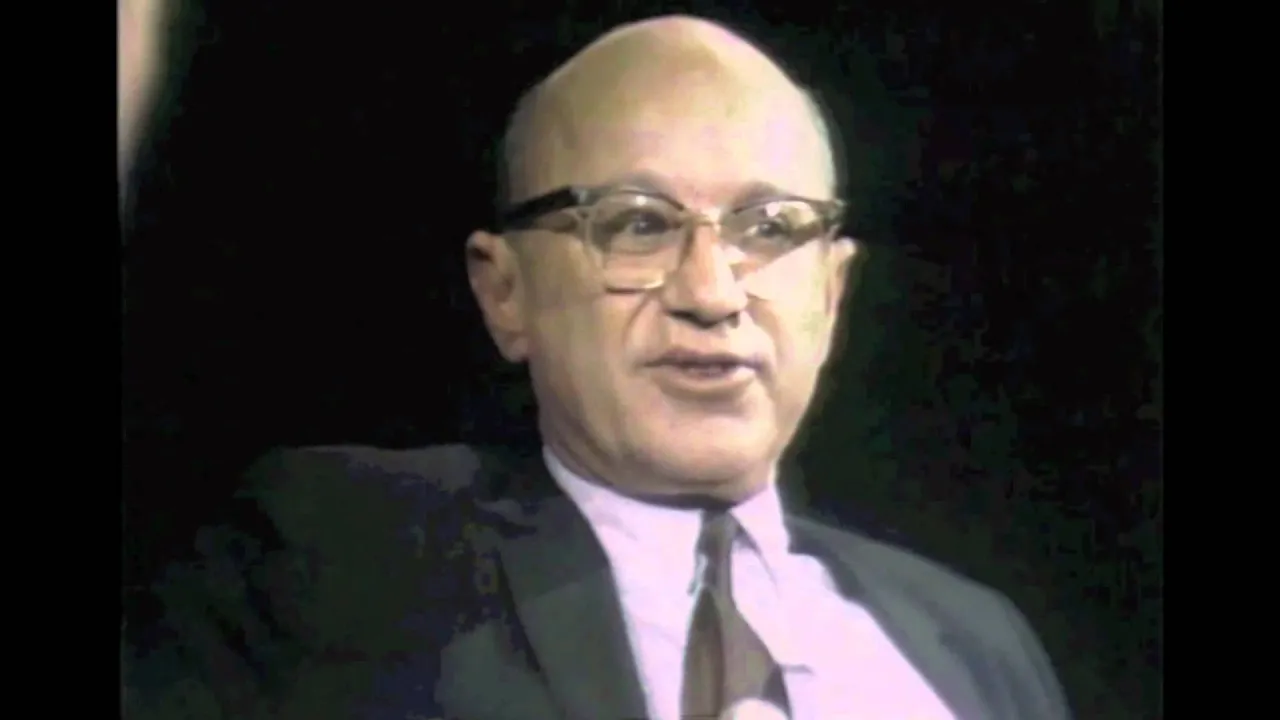
Milton Friedman - The Negative Income Tax — LibertyPen

LibertyPen

Replacing bureaucratic welfare with a uniform negative income tax eliminates the 100% marginal tax penalty on earnings that locks recipients into permanent dependency.

AI-assisted summary of Milton Friedman - The Negative Income Tax — original source. Check the original for full context.

Source published:

Key ideas

  • Milton Friedman outlines the negative income tax, using an example where a family of four receives an income floor of $1,500 at zero earnings and retains a 50% subsidy on negative taxable income up to a $3,000 break-even point. (0:14)
  • Existing relief programs create an effective 100% marginal tax rate by reducing benefits dollar-for-dollar against outside earnings, trapping recipients on welfare even during periods of broad economic prosperity. (3:38)
  • Friedman argues that welfare caseworkers act primarily as intrusive state investigators rather than helpers, and that direct cash assistance combined with private charity would deliver far more effective support. (10:35)
  • To prevent welfare abuse and financial mismanagement, negative tax payments would be dispersed periodically through payroll supplements and estimated quarterly filings rather than as an annual lump sum. (6:25)

Detailed notes

## Background Published by LibertyPen on YouTube on May 11, 2012, this clip originates from a 1968 episode of 'Firing Line with William F. Buckley Jr.' According to the page description, Milton Friedman explains his negative income tax proposal, arguing it would save taxpayers the 72 percent of the contemporary welfare budget consumed by bureaucratic administration.

## TL;DR Milton Friedman outlines his proposal for a negative income tax, arguing that directly distributing cash through the existing tax apparatus is far superior to paternalistic welfare programs. Using a concrete 50% subsidy example, he explains how the model guarantees an income floor while maintaining the incentive to work, eliminating the 100% marginal tax rate trap inherent in traditional relief. Host William F. Buckley Jr. questions how the plan would handle the 'disorganized poor' and resist democratic political pressures to continually bid up benefit floors. Friedman counters that existing welfare turns caseworkers into invasive police spies, while a rules-based negative income tax fosters personal responsibility and frees private charity to handle special hardship cases.

## Atmosphere & style The exchange embodies the quintessential mid-century intellectual duel: crisp, polite, articulate, and deeply substantive. William F. Buckley Jr. probes with his trademark arch, languid skepticism, challenging Friedman with realistic edge cases and behavioral hurdles, while Friedman responds with rapid-fire, cheerful clarity, grounding his economic theory in pragmatic math and sharp humor. Watching the dialogue feels like observing an engaging chess match between two formidable conservative thinkers, blending rigorous policy debate with witty, respectful rapport.

## Bulletin - [00:14](https://www.youtube.com/watch?v=xtpgkX588nM&t=14s) Milton Friedman outlines the negative income tax, using an example where a family of four receives an income floor of $1,500 at zero earnings and retains a 50% subsidy on negative taxable income up to a $3,000 break-even point. - [03:38](https://www.youtube.com/watch?v=xtpgkX588nM&t=218s) Existing relief programs create an effective 100% marginal tax rate by reducing benefits dollar-for-dollar against outside earnings, trapping recipients on welfare even during periods of broad economic prosperity. - [10:35](https://www.youtube.com/watch?v=xtpgkX588nM&t=635s) Friedman argues that welfare caseworkers act primarily as intrusive state investigators rather than helpers, and that direct cash assistance combined with private charity would deliver far more effective support. - [06:25](https://www.youtube.com/watch?v=xtpgkX588nM&t=385s) To prevent welfare abuse and financial mismanagement, negative tax payments would be dispersed periodically through payroll supplements and estimated quarterly filings rather than as an annual lump sum.

## Key takeaways - [00:14](https://www.youtube.com/watch?v=xtpgkX588nM&t=14s) The core objective of the negative income tax is to alleviate poverty through cash transfers governed by uniform tax law, rather than paternalistic administrative handouts. - [00:14](https://www.youtube.com/watch?v=xtpgkX588nM&t=14s) Under Friedman's 50% negative tax model for a family of four with a $3,000 exemption, zero earnings yield $1,500 in aid, while $2,000 in earnings yields $500 in aid for a total disposable income of $2,500. - [03:38](https://www.youtube.com/watch?v=xtpgkX588nM&t=218s) Conventional 'gap-filling' guaranteed-income plans completely destroy the incentive to work because every dollar earned by the recipient reduces government assistance by a dollar. - [03:38](https://www.youtube.com/watch?v=xtpgkX588nM&t=218s) Reforming welfare by allowing current recipients alone to keep half their earnings would cause unacceptable inequity by paying former welfare recipients more than non-recipients doing the exact same work. - [06:25](https://www.youtube.com/watch?v=xtpgkX588nM&t=385s) The negative income tax addresses concerns about irresponsible lump-sum spending by operating through regular payroll supplements for workers and quarterly estimated filings for zero-income individuals. - [06:25](https://www.youtube.com/watch?v=xtpgkX588nM&t=385s) In-kind welfare assistance—such as caseworkers paying rent or grocers directly—is economically naive because recipients routinely barter unwanted goods on underground markets. - [10:35](https://www.youtube.com/watch?v=xtpgkX588nM&t=635s) The existing casework system perverts social work by forcing caseworkers into the role of intrusive policemen and spies who monitor personal lives to enforce eligibility rules. - [10:35](https://www.youtube.com/watch?v=xtpgkX588nM&t=635s) Government welfare bureaucracy has largely displaced private charity, which is far better suited to provide compassionate, individualized attention for special hardship cases. - [12:55](https://www.youtube.com/watch?v=xtpgkX588nM&t=775s) Welfare rolls have skyrocketed during times of unprecedented economic prosperity because the current system functions as a trap that requires an immediate jump to a high-paying job to escape. - [12:55](https://www.youtube.com/watch?v=xtpgkX588nM&t=775s) A negative income tax provides a smooth graduation path out of poverty by ensuring that any modest earnings leave the family financially better off.

## Detailed walkthrough ### [00:14](https://www.youtube.com/watch?v=xtpgkX588nM&t=14s) The Mechanics and Philosophy of the Negative Income Tax

William F. Buckley Jr. opens the discussion by challenging Milton Friedman with a core libertarian paradox: if positive government intervention consistently worsens the very problems it aims to solve, wouldn't Friedman’s negative income tax simply create a larger contingent of indolent, unemployed individuals than existing or ideal programs? Acknowledging that the concept is widely misunderstood, Friedman begins by defining its basic moral and structural purpose: “The proposal for a negative income tax is a proposal to help poor people by giving them money which is what they need rather than as now by requiring them to come before a governmental official detail all their assets and their liabilities and be told that you may spend X dollar on rent, Y dollar on food, etc., and then be given a handout.”

Friedman argues that the tax system should treat the poor under the identical rule of law applied to the affluent, through parallel tax filings rather than paternalistic oversight. In a playful exchange about exemptions for a hypothetical family of four, Buckley quips that Friedman’s own grown children are no longer useful as tax deductions, and Friedman laments with dry humor that adult children never tithe their parents' earnings, observing that in modern times, parental subsidies flow persistently in the opposite direction.

Friedman then lays out the baseline arithmetic using standard exemptions for a family of four: - **Exemption Level / Break-Even Point:** Under current tax law, a family of four receives an exemption of $3,000, paying zero tax at an income of $3,000. - **Positive Tax:** An income of $4,000 creates a positive taxable income of $1,000, on which tax is assessed. - **Negative Tax Calculation:** An income of $2,000 results in a *negative* taxable income of -$1,000 ($2,000 minus the $3,000 exemption). - **The Negative Rate (50%):** Friedman suggests a 50% subsidy rate as the highest feasible percentage. Applied to -$1,000, the government provides a $500 subsidy, bringing total disposable income to $2,500. - **Zero Income Floor:** A family with zero earnings has a negative taxable income of -$3,000. At a 50% rate, they receive a baseline cash benefit of $1,500, guaranteeing that no family of four has less than $1,500 to consume.

```mermaid flowchart TD accTitle: Negative Income Tax Calculation Flow accDescr: Diagram illustrating how earnings convert to net income via a 50 percent negative income tax rate up to the break-even threshold.

subgraph Inputs["Family Earnings"] E0["Zero Income: $0"] E2["Partial Earnings: $2,000"] E3["Break-Even: $3,000"] end

subgraph Calculation["Taxable Income vs. $3,000 Exemption"] T0["-$3,000 Taxable"] T2["-$1,000 Taxable"] T3["$0 Taxable"] end

subgraph Outcome["Net Cash Benefit & Disposable Income (50% Rate)"] O0["+$1,500 Subsidy (Total: $1,500)"] O2["+$500 Subsidy (Total: $2,500)"] O3["$0 Subsidy / $0 Tax (Total: $3,000)"] end

E0 --> T0 --> O0 E2 --> T2 --> O2 E3 --> T3 --> O3 ```

---

[03:38](https://www.youtube.com/watch?v=xtpgkX588nM&t=218s) Incentives, "Gap-Filling," and the 100% Welfare Trap

Friedman underscores a vital distinction between his proposal and standard guaranteed-income plans. In common "gap-filling" schemes, the government establishes a poverty line—such as $3,000—and pays whatever amount is necessary to bridge the gap. Friedman argues that gap-filling ruins any incentive to work because every dollar earned merely cancels out a dollar of aid. While a 50% negative income tax also blunts incentives when viewed in the abstract, society is not starting on a clean slate. Existing relief programs—such as Aid to Dependent Children (ADC)—impose an effective 100% marginal tax rate: if an honest recipient earns $100, her welfare benefit is immediately cut by $100.

Buckley pushes back, asking why the welfare system could not simply be reformed from within by allowing recipients to keep half of their earnings without instituting Friedman’s radical overhaul. Friedman counters that modifying welfare this way introduces deep inequities. If two individuals hold the same job for the exact same wage, but one was previously on relief and the other was not, the former welfare recipient would walk away with a higher net income than the non-recipient. Friedman insists that such blatant favoritism would never be tolerated: “The virtue of an income tax arrangement is precisely that it treats everybody the same way.”

---

[06:25](https://www.youtube.com/watch?v=xtpgkX588nM&t=385s) The "Disorganized Poor," Fraud, and Paternalistic Bureaucracy

Buckley shifts the critique to human nature and behavioral realities. While some of the poor are honest victims of circumstance—such as a Black migrant arriving in New York from the South without marketable skills—Buckley estimates that roughly 50% constitute the "disorganized poor": individuals paralyzed by lack of motivation or neurotic impediments. Buckley asks what happens when an irresponsible recipient takes an entire lump-sum negative tax payment, blows it at the racetrack by January 2nd, and then shows up with four starving children demanding relief.

Friedman clarifies that the negative income tax would mirror positive tax collection mechanisms rather than distributing an annual windfall: - Employed low earners would have their paychecks supplemented on a regular weekly or biweekly basis at the source, just as positive withholding works. - Individuals with zero earnings would file an advance quarterly estimate—identical to standard estimated tax returns for self-employed professionals—yielding periodic weekly or monthly checks.

Buckley mentions New York welfare practices, where caseworkers intervene directly by paying landlords and grocers to ensure families receive basic necessities like Shredded Wheat rather than alcohol or marijuana. Friedman dismisses in-kind relief as patronizing and economically naive, noting that commodities are readily bartered on the underground market: “Let's not underestimate the ingenuity of the poor people in converting what they get from the relief worker to what they want.”

Buckley persists, noting that thoughtful critics believe unmotivated individuals need customized, paternalistic case management rather than uniform cash distributions. Friedman counters that while many distressed individuals do require guidance, the current welfare apparatus is structurally incapable of delivering it, transforming social work into a dispiriting administrative burden.

[10:35](https://www.youtube.com/watch?v=xtpgkX588nM&t=635s) Social Workers as Policemen vs. Private Charity

Milton Friedman argues that the current casework system fundamentally perverts the role of the social worker, turning someone meant to assist into an enforcement agent. In his view, a welfare caseworker is not genuinely positioned to help a relief recipient; rather, “he is a policeman and a spy he has to keep tabs on them to be sure he gets the money right.” William F. Buckley Jr. pushes back, noting that one could make a similar claim about a school teacher. Friedman quickly accepts the comparison, remarking that he would gladly reduce the extent to which school teachers act as civil servants and instead introduce more competition into schooling. Buckley presses further, asking whether it is truly spying in a “perfidious sense” when a caseworker simply checks on basic child welfare—such as ensuring four young babies have been fed in the last 36 hours or received their required inoculations. Buckley suggests this kind of casework is an act of patronage or *in loco parentis* rather than malicious intrusion.

Friedman clarifies that routine health checks were not the kind of spying he had in mind. Instead, he explains that he was pointing to invasive surveillance practices, such as “standing outside a woman's apartment at 3:00 in the morning to make sure she is not entertaining a man who might be charged with support for the children.” While Buckley dismisses these midnight stakeouts as mere operational abuses, Friedman retorts that the structural design of the welfare program inherently fosters such violations: “you have a system which stimulates abuse.”

Addressing Buckley’s concern regarding who will look after the “disorganized poor” if caseworkers are removed, Friedman presents a three-part rebuttal: - The current bureaucracy does not effectively manage basic welfare and medical checks anyway. - The overwhelming majority of poor families already possess the motivation to care for their own children if given direct financial resources, which strengthens their personal responsibility rather than undermining it. - Relieving the state of the bulk burden of income maintenance would free up private charitable organizations to do what they do best: provide tailored, compassionate, and individualized care for special hardship cases.

As Friedman concludes, “The welfare the governmental welfare programs have destroyed private charity,” because civil service bureaucracies are structurally incapable of delivering genuine, individualized care.

```mermaid flowchart TD accTitle: Direct Relief vs Negative Income Tax with Private Charity accDescr: Diagram contrasting government casework surveillance with negative income tax and private charity.

subgraph Bureaucracy["Current Welfare System"] A["State Bureaucracy"] -->|"Administers Cash & Checks Rules"| B["Caseworker as Policeman / Spy"] B -->|"Midnight Stakeouts & Micromanagement"| C["Disorganized Poor Trapped"] end

subgraph NITModel["Friedman's Alternative Model"] D["Negative Income Tax"] -->|"Automatic Floor / Cash"| E["Family Responsibility & Incentive"] F["Private Charity"] -->|"Individualized Attention"| G["Special Hardship Cases"] end ```

[12:55](https://www.youtube.com/watch?v=xtpgkX588nM&t=775s) Democratic Politics and the Welfare Trap

Buckley shifts the critique to political realism, drawing a parallel to Friedman’s own past critiques of Keynesian fiscal policy—specifically that democratic governments find it politically impossible to raise taxes during economic booms. Buckley asks whether the “Friedman plan” faces a similar political flaw: in a democracy, politicians would face irresistible pressure to steadily bid up the minimum guaranteed income floor to the point where it would displace the discriminating, voluntary role intended for private charity.

Friedman counters by invoking a standard political maxim: “As you know in politics you can't win an election without a candidate you can't beat a candidate without another candidate and the situation now is the same we're comparing alternatives.” Rather than assessing the negative income tax against an impossible ideal, policy makers must ask which system is more prone to political expansion and dysfunction. To Friedman, the existing framework has already failed that test catastrophically: “Look at what's been happening in a period of unprecedented prosperity and affluence the number of people on the welfare rolls skyrocketing.”

The core reason the welfare rolls swell during good economic times, Friedman asserts, is that the current apparatus functions as an inescapable poverty trap: - Once an individual enters the existing welfare program, the state makes it virtually impossible to leave, because earning outside income triggers an abrupt dollar-for-dollar loss of benefits. - To exit the rolls under the current system, a recipient cannot simply earn a modest income; they must immediately secure a high-paying job, which discourages minor or part-time work. - Under a negative income tax, beneficiaries retain a smooth financial incentive to transition off state support at their own pace: “They can earn an extra $100 or an extra $200 and be better off.”

## Notable quotes > [03:38](https://www.youtube.com/watch?v=xtpgkX588nM&t=218s) The virtue of an income tax arrangement is precisely that it treats everybody the same way. — Milton Friedman

> [06:25](https://www.youtube.com/watch?v=xtpgkX588nM&t=385s) Let's not underestimate the ingenuity of the poor people in converting what they get from the relief worker to what they want. — Milton Friedman

## Mentioned Milton Friedman, William F. Buckley Jr., Firing Line, Aid to Dependent Children (ADC), John Maynard Keynes, LibertyPen

## Video description In this 1968 interview, Milton Friedman explained the negative income tax, a proposal that at minimum would save taxpayers the 72 percent of our current welfare budget spent on administration. http://www.LibertyPen.com

Source: Firing Line with William F Buckley Jr. Buy It : http://www.amazon.com/Firing-Line-William-Buckley-Jr/dp/B004SQFQL0/ref=sr_1_2?ie=UTF8&qid=1336999966&sr=8-2

[Source](https://www.youtube.com/watch?v=xtpgkX588nM)

中文简报

弗里德曼呼吁推行负所得税以打破100%福利陷阱 以统一的负所得税取代官僚式福利,可消除将受助者锁定在永久依赖中的100%劳动所得边际税惩罚。 米尔顿·弗里德曼概述了他关于负所得税的构想,认为通过现有税收机制直接发放现金,远优于家长制式的福利项目。他以50%的补贴为例,解释了该模式如何在保障最低收入底线的同时维持工作动力,从而消除传统救济固有的100%边际税率陷阱。主持人小威廉·F·巴克利质询该方案将如何应对“缺乏自理能力的贫困人口”,以及如何抵御民主政治中不断推高福利底线的压力。弗里德曼反驳称,现行福利制度让社工变成了侵入性的警察式密探,而基于规则的负所得税则能培养个人责任感,并让民间慈善机构能够腾出手来处理特殊的困难案例。 米尔顿·弗里德曼概述了负所得税,并举例说明:一个四口之家在零收入时可获得1,500美元的保底收入,并在达到3,000美元的收支平衡点之前,对其负应税收入保留50%的补贴。 (0:14) 现行救济项目会根据受助者的额外收入等额扣减福利,造成事实上的100%边际税率,即使在经济普遍繁荣的时期也会让受助者陷入福利依赖的陷阱。 (3:38) 弗里德曼认为,福利社工的主要角色是侵入性的政府调查员而非帮扶者,直接发放现金救助并辅以民间慈善,将会提供有效得多的支持。 (10:35) 为防止福利滥用和财务管理不善,负所得税的给付将通过工资补贴和季度预估申报定期发放,而非一次性按年发放。 (6:25)

Reading summary

Economist Milton Friedman proposes replacing paternalistic welfare programs with a negative income tax, arguing that providing cash through the standard tax apparatus preserves work incentives and treats the poor equally under the rule of law. Mechanics and Math of the Negative Income Tax (0:14) Friedman outlines the negative income tax as an extension of the existing tax code using standard exemptions. For a family of four, an exemption level of $3,000 serves as the break-even threshold where no tax is owed. Income above $3,000 generates positive taxable income, while earnings below that line create negative taxable income. Applying a proposed 50% subsidy rate, a family earning $2,000 has a negative taxable balance of -$1,000 and receives a $500 subsidy, yielding $2,500 in disposable income. A family reporting zero earnings incurs a -$3,000 balance and receives a $1,500 baseline cash benefit. To avoid lump-sum misuse, Friedman specifies that payments would be distributed through regular weekly or biweekly paycheck supplements for workers, or periodic distributions based on advance quarterly estimates for those with zero earnings. Preserving Work Incentives versus the Welfare Trap (3:38) Friedman contrasts his formula with standard guaranteed-income and "gap-filling" programs, which establish a poverty line and pay whatever is required to close the difference. He asserts that gap-filling completely eliminates the incentive to work because every dollar earned reduces assistance by the same amount. Traditional relief programs like Aid to Dependent Children (ADC) impose an effective 100% marginal tax rate, forcing recipients to find high-paying jobs immediately rather than easing into the labor force. Responding to William F. Buckley Jr.'s suggestion to simply let welfare recipients keep 50% of their earnings under the existing system, Friedman contends that doing so creates unfair disparities. If two people earn the same wage at the same job, allowing former relief recipients to retain extra aid while denying it to non-recipients constitutes favoritism. Under a uniform negative income tax, all citizens are governed by the same tax schedule. Cash versus Caseworker Paternalism and Surveillance (6:25) Buckley questions whether cash transfers can help the "disorganized poor," suggesting that roughly half of recipients suffer from motivational or behavioral issues that require caseworker oversight, such as direct payments for rent and food. Friedman dismisses in-kind relief as patronizing and ineffective, noting that recipients routinely barter allocated commodities on underground markets to purchase what they actually want. Furthermore, Friedman argues that the current system transforms social workers into "policemen and spies" tasked with monitoring compliance and conducting invasive surveillance, such as late-night stakeouts to verify whether an adult male lives in the household. In Friedman's view, the vast majority of poor families manage their own households when given money directly. Relieving the civil service bureaucracy of income maintenance would allow private charitable organizations to supply individualized care to exceptional hardship cases. Political Feasibility in Democratic Systems (12:55) Addressing Buckley's concern that democratic politicians would inevitably bid up the cash benefit floor beyond sustainable levels, Friedman emphasizes that policies must be weighed against actual alternatives rather than idealized models. He points out that under the existing welfare framework, rolls have skyrocketed even during periods of unprecedented economic prosperity. Friedman attributes this swelling of the rolls to the structural design of existing welfare, which punishes recipients who attempt to leave through modest or part-time work. By contrast, a negative income tax guarantees that earning an extra $100 or $200 always leaves a household with greater net income, ensuring an automatic incentive to transition off state support. Friedman maintains that replacing bureaucratic relief with an automatic negative income tax establishes clear work incentives, curbs intrusive state surveillance, and revitalizes private charity for unique hardship cases, though Buckley questions whether democratic politics can resist bidding up the income floor.

精炼阅读摘要

米尔顿·弗里德曼(Milton Friedman)主张以负所得税取代现行官僚化的福利体系,通过统一的税收机制直接向低收入者发放现金,以消除福利陷阱并保护受助者的经济激励与个人尊严。 负所得税的运行机制与基准测算 (0:14) 弗里德曼指出,负所得税的核心逻辑是让穷人与富人遵循同一套税收法律规则,以申报现金补贴代替向官员详尽交代资产负债与接受支出监管的家长式流程。以典型的四口之家为例,在现行税法规定的3,000美元免税额度下,若收入为3,000美元则不缴税;若收入达到4,000美元,则超出免税额的1,000美元需缴纳正所得税。当家庭收入低于3,000美元时,则产生负的应税所得;若收入为2,000美元,负应税所得为-1,000美元。 弗里德曼建议采取50%作为最高可行补贴税率。在此方案下,-1,000美元的负应税所得将获得政府提供的500美元现金补贴,使该家庭的可支配总收入达到2,500美元;若该家庭完全没有收入,其负应税所得为-3,000美元,将获得1,500美元的基准现金补贴。这一机制确保了该四口之家至少拥有1,500美元的基本消费底线,同时避免了传统救济所带来的繁文缛节与人身依附。 边际税率对比与福利陷阱的成因 (3:38) 弗里德曼着重区分了负所得税与常见的“补足缺口”式保障收入方案。在一般的补足方案中,政府设定贫困线(如3,000美元)并全额填补差额,导致受助人每赚取1美元就会被扣除1美元救济,彻底抹杀了劳动意愿。弗里德曼承认50%的负税率在理论上仍会对工作动机产生一定抑制,但现行的救济项目(如受抚养儿童援助ADC)实际上面临着高达100%的有效边际税率,迫使诚实劳动者陷入赚取100美元即损失100美元福利的极端困境。 针对威廉·F·巴克利(William F. Buckley Jr.)提出为何不在现有救济系统内部直接允许保留一半所得的疑问,弗里德曼回应称,这种做法会导致极大的不公。若两名劳动者从事相同工作并获得相同工资,仅因其中一人此前属于救济对象而享有更高净收入,这种特权将无法被社会接受。弗里德曼坚持认为,税收制度的根本优势在于对所有人一视同仁,从而在制度层面维护公平竞争与工作动力。 现金发放流程与实物救助的弊端 (6:25) 针对巴克利关于缺乏自制力的“混乱贫困群体”可能在年初将一次性款项挥霍一空的担忧,弗里德曼阐明负所得税与正所得税的征管流程高度对称。低收入受薪雇员的补贴将在每周或双周的薪资发放环节按源扣缴直接补充;零收入人员则需按季度提交预估税申报表,从而以周或月为周期定期领取现金,而非获得年终单笔巨额款项。 对于地方福利部门由社工直接向房东或杂货商付款以提供实物救济的做法,弗里德曼批评这种家长式干预不仅傲慢,而且在经济学上极为天真。他指出受助人具备极高的地下交易灵活性,实物商品会被迅速转卖以换取其真正想要的事物。同时,将社会工作变为对受助者个人开销的微观行政监管,不仅无法从根本上解决贫困问题,反而背离了社会服务的初衷。 社工职能异化与民间慈善的回归 (10:35) 弗里德曼认为,现行的个案管理体制严重扭曲了社会工作者的角色,使其沦为监视受助者的“警察与间谍”。社工不得不频繁核查受助人行踪与资产,甚至在凌晨三点蹲守在受助妇女公寓门外,调查是否存在可能承担抚养责任的男性,这种由制度结构滋生的侵入性监视完全偏离了正常的儿童福利或医疗检查。面对巴克利认为这类极端行为仅是个别执行偏差的辩解,弗里德曼强调现行体系结构注定会刺激滥权。 针对取消官方社工后弱势群体无人照料的疑虑,弗里德曼给出了三点反驳:现存官僚机构本身并未有效履行基本监护职责;绝大多数贫困家庭在获得直接资金支持后具备照料子女的动力,直接赋权有助于巩固个人责任;将大范围的收入维持工作从政府职能中剥离后,将有效释放民间慈善组织的力量,使其集中为具有特殊困难的个案提供量身定制、充满关怀的专业帮助。弗里德曼直言,正是庞大的政府福利体系摧毁了原有的民间慈善活力。 民主政治博弈与膨胀机制的比较 (12:55) 针对巴克利提出民主体制下的政客会迫于选票压力不断竞相推高负所得税底线、最终挤出民间慈善的质疑,弗里德曼强调政策选择必须在现实替代方案之间进行权衡。他指出,现行福利制度在经济前所未有繁荣的时期依然出现了受助人数激增的反常现象,证明旧体系在防范政治失控与福利扩张上已经彻底失败。 弗里德曼分析称,现行救济制度之所以演变成无法逃脱的贫困陷阱,是因为个人一旦进入该体系便难以退出,任何外部收入都会导致福利的骤然削减,受助人必须立刻找到一份极高薪资的工作才能脱离救济,这扼杀了其从事兼职或起步工作的意愿。相反,负所得税为受助者提供了平滑过渡的经济动机,受助人即使仅增加一两百美元收入也能切实改善自身经济处境,从而能够按照自身节奏逐步自立并退出政府救助。 弗里德曼认为负所得税以客观规则取代了行政官僚的家长式审查,在保障基本生活底线的同时保留了自立的边际动力。然而,该计划在民主政治中是否真能抵挡选票驱动下的底线竞相抬高,以及民间慈善是否能完全承接复杂个案的救助职能,在辩论中仍属于面临现实权衡的核心疑问。

Detailed notes — zh

## Background 该视频由 YouTube 频道 LibertyPen 于 2012 年 5 月 11 日发布。内容源自 1968 年威廉·F·巴克利(William F. Buckley Jr.)主持的政论节目《火线》(Firing Line),米尔顿·弗里德曼(Milton Friedman)在访谈中阐释了其提出的“负所得税”(Negative Income Tax)构想,指出该方案至少能为纳税人省去现有福利预算中高达 72% 的行政管理支出。 ## TL;DR 弗里德曼在节目中系统拆解了负所得税的运作机制:通过设定免税额与最高 50% 的负税率,直接向低收入与零收入家庭发放反向现金补贴,从而提供底线保障并一视同仁地对待所有公民。他严厉抨击现行福利制度事实上背负着 100% 的边际税率,导致穷人一旦打工挣钱救济金便遭等额扣除,沦为制造懒汉与贫困的制度陷阱。此外,弗里德曼指出实物救济与侵入式行政监管不仅效率低下、将社工异化为“窥探者”,还扼杀了民间慈善的生存空间;而负所得税能将政府从繁重的大众收入维持包袱中解脱出来,保留劳动改善生活的正向激励并让受助者获得平滑脱贫的可能。 ## Atmosphere & style 整场对谈呈现出极具时代质感的智性交锋与思辨张力。巴克利言辞犀利、直逼痛点,不断从实际执行困难、人性缺陷以及民主政治拉票等现实维度抛出刁钻质问;弗里德曼则展现出大师级的清晰逻辑与从容气度,以算术拆解与生动幽默的现实案例见招拆招。两人在针锋相对的辩驳中兼具绅士风度与冷峻理性,观感犹如置身一场没有官僚辞令、直击公共政策软肋的高水准思想辩论。 ## Bulletin - [00:14](https://www.youtube.com/watch?v=xtpgkX588nM&t=14s) 米尔顿·弗里德曼提出以“负所得税”(NIT)替代传统福利体系,主张对低于法定免税额的家庭按固定比例发放反向现金补贴,以四口之家为例提供1,500美元的基础消费底线保障。 - [03:38](https://www.youtube.com/watch?v=xtpgkX588nM&t=218s) 现行福利制度(如AFDC)实质上强加了高达100%的边际税率,受助者每通过劳动多赚100美元就会被等额扣除100美元救济金,直接摧毁了劳动自立的经济激励。 - [06:17](https://www.youtube.com/watch?v=xtpgkX588nM&t=377s) 弗里德曼主张放弃实物救济与侵入式社工监管,改由税收系统自动化发放周期性现金补贴,认为实物配给不仅易在黑市变现,还让社工沦为监视穷人的行政官僚。 - [11:59](https://www.youtube.com/watch?v=xtpgkX588nM&t=719s) 负所得税将政府职能严格限定在普及性基础收入保障,旨在打破“越救济越贫困”的福利陷阱,同时为具备高度灵活性与精准度的民间私人慈善腾出空间。 ## Key takeaways - [00:14](https://www.youtube.com/watch?v=xtpgkX588nM&t=14s) 负所得税的核心逻辑是直接向低收入群体提供现金支持,穷人与富人同样申报所得税,遵循完全一致和平行的税收核算机制。 - [00:14](https://www.youtube.com/watch?v=xtpgkX588nM&t=14s) 以四口之家3,000美元免税额及50%负税率为例,零收入家庭可领1,500美元补贴,而年入2,000美元家庭可支配总额达2,500美元,确保基础底线与工作增益并存。 - [03:38](https://www.youtube.com/watch?v=xtpgkX588nM&t=218s) 直接补足3,000美元收支平衡点的“填补差额”方案具有破坏性,因为它消除了多劳多得的差额,彻底抹杀了外出工作的动力。 - [03:38](https://www.youtube.com/watch?v=xtpgkX588nM&t=218s) 现行救济制度对增量劳动收入实行等额扣减,其100%边际惩罚税率是制造长久贫困与福利依赖的制度根源。 - [03:38](https://www.youtube.com/watch?v=xtpgkX588nM&t=218s) 针对福利受助者单设50%收入留存豁免会导致同工不同酬的制度性不公,负所得税的不可替代性在于其对同等收入国民一视同仁的普惠法治原则。 - [06:17](https://www.youtube.com/watch?v=xtpgkX588nM&t=377s) 负所得税按周或按月以工资补贴或税局预估支票形式周期性发放,而非单次全额付给,从而在机制上规避一次性挥霍的风险。 - [06:17](https://www.youtube.com/watch?v=xtpgkX588nM&t=377s) 家长制式的实物配给(如发放麦片、代缴房租)无法真正管制消费,受助者很容易通过黑市倒手变现,直接发放现金才是更高效的救济途径。 - [10:35](https://www.youtube.com/watch?v=xtpgkX588nM&t=635s) 繁重琐碎的资产清查与财务合规审核严重异化了社工职责,使其被迫扮演盯防欺诈的“警察与间谍”,丧失了提供实质帮扶的可能。 - [10:35](https://www.youtube.com/watch?v=xtpgkX588nM&t=635s) 现行救济模式中对受助家庭私生活的侵入式监控(如夜间蹲守)是体制性滥权的产物,而非单纯的执行个案缺陷。 - [11:59](https://www.youtube.com/watch?v=xtpgkX588nM&t=719s) 负所得税将政府从庞杂的普惠性收入维持行政中解放出来,促使民间私人慈善重新发挥因人施策、精准灵活的救助优势。 - [12:55](https://www.youtube.com/watch?v=xtpgkX588nM&t=775s) 针对民主体制下政客竞相提高补贴底线的疑虑,弗里德曼认为现行福利制度在此类政治膨胀和受助人数飙升方面危害更甚。 - [12:55](https://www.youtube.com/watch?v=xtpgkX588nM&t=775s) 传统救济要求受助人必须一次性找到高薪工作才值得脱离救济,而负所得税构建了一条允许多劳多得、循序渐进退出救济的平滑通道。 ## Detailed walkthrough ### [00:14](https://www.youtube.com/watch?v=xtpgkX588nM&t=14s) 负所得税的核心构想与运作机制 威廉·F·巴克利(William F. Buckley Jr.)开门见山地向米尔顿·弗里德曼(Milton Friedman)发问:如果说政府的主动干预往往适得其反、加剧所要解决的困境,那么弗里德曼提出的“负所得税”(Negative Income Tax)是否可能创造出一个比现有甚至理想福利制度下更为庞大的懒汉与失业群体?鉴于该主张经常遭受误解,巴克利请弗里德曼先清晰阐述其设计原理。弗里德曼解释称,负所得税的初衷是直接给穷人提供他们真正需要的东西——金钱,而不是像现行体制那样,逼迫他们站在政府官员面前,盘点交代每一项资产和负债,接受官员指令某部分钱只能花在房租上、另一部分只能买食物,最终以施舍的方式领取救济。负所得税的本质在于一视同仁:穷人与富人同样申报所得税,遵循完全平行的税收逻辑。 弗里德曼以典型的四口之家为例进行了算术拆解。在当时的税法下,一个四口之家享有 3,000 美元的免税额。席间弗里德曼幽默地拿自己的家庭打趣,巴克利调侃道弗里德曼的孩子长大后就无法再作为抵扣项,也不会拿出一成收入供养父母;弗里德曼笑着附和,当今时代的父母往往在持续补贴成年子女,而非相反。言归正传,若一个四口之家的年收入为 3,000 美元,免税额同样是 3,000 美元,应纳税额为零;若年收入达 4,000 美元,正应税所得为 1,000 美元,必须依法缴税。同样的算术逻辑推导至低收入情境:若年收入仅有 2,000 美元,其应税所得即为负 1,000 美元($-1,000)。所谓负所得税,便是对这一负值设定税率,按比例向当事人发放反向补贴。 弗里德曼提出,实践中最为可行的最高负税率是 50%。按照该税率计算: - 年收入为 2,000 美元的四口之家,负应税所得为 1,000 美元,按 50% 可获得 500 美元补贴,其最终可支配总收入达到 2,500 美元。 - 零收入的家庭,其负应税所得为整整 3,000 美元,按 50% 负税率可拿到 1,500 美元。 - 这意味着,全美任何一个四口之家的年度基础消费底线都绝不会低于 1,500 美元。 ```mermaid flowchart TD accTitle: 负所得税计算机制流程图 accDescr: 展示四口之家在不同收入水平下如何通过免税额与负税率计算最终可支配所得。 subgraph Inputs["申报与免税基准"] A["申报年收入"] B["四口之家法定免税额: $3,000"] end subgraph Calculation["应税所得与税率核算"] C{"年收入 - 免税额"} D["正应税所得 (如 $4,000 - $3,000 = $1,000)"] E["收支平衡点 (如 $3,000 - $3,000 = $0)"] F["负应税所得 (如 $2,000 - $3,000 = -$1,000)"] end subgraph Outputs["最终税务与可支配结果"] G["正常缴纳正个人所得税"] H["不缴税亦不领补贴"] I["按 50% 负税率补贴: 领回 $500<br/>最终可支配所得: $2,500"] J["零收入负所得 -$3,000: 领回 $1,500<br/>最终底线保障: $1,500"] end A --> C B --> C C -->|收入大于 $3,000| D C -->|收入等于 $3,000| E C -->|收入小于 $3,000| F D --> G E --> H F -->|年收入 $2,000| I F -->|年收入 $0| J ``` - 弗里德曼开宗明义地界定核心宗旨:“The proposal for a negative income tax is a proposal to help poor people by giving them money which is what they need rather than as now by requiring them to come before a governmental official detail all their assets and their liabilities and be told that you may spend X dollar on rent Y dollar on food etc. and then be given a handout.”(负所得税的提议是通过给予穷人金钱来帮助他们——这才是他们所需要的,而不是像现在这样要求他们来到政府官员面前,详述他们所有的资产和负债,被告知你可以花 X 美元交房租、Y 美元买食物等等,然后获得一份施舍。) ### [03:38](https://www.youtube.com/watch?v=xtpgkX588nM&t=218s) 消除 100% 边际税率陷阱与保障工作激励 弗里德曼急切强调的一点是:尽管负所得税方案提供了 1,500 美元的最低收入保证,但这笔金额与 3,000 美元的收支平衡点(Break-even Point)并不相等。这一区分至关重要。当时社会上流传着许多冠以“保证收入”之名的“填补差额”(Gap-filling)方案,主张将底线直接设在 3,000 美元,只要家庭收入低于该水平,政府便补齐差额。弗里德曼严正指出,这种填补差额的做法是毁灭性的,因为它将人们外出工作谋生的动力彻底扼杀殆尽——既然无论工不工作收入都是 3,000 美元,谁还会愿意去工作? 虽然 50% 的负所得税率在理论上也会在一定程度上削弱工作积极性,但现实政策并非从零起步。当时的现行福利制度(包括直接救济和“受抚养儿童援助”项目,即 AFDC)事实上背负着高达 100% 的边际税率。弗里德曼以 AFDC 项目中常见的单身母亲为例:如果一位依靠救济金生活的母亲诚实外出找了一份工作并挣得 100 美元,她的福利金就会被等额扣减 100 美元。弗里德曼痛斥,这种现行体制正是不断制造贫困人口的根源。 巴克利随即质问,难道非要引入弗里德曼这套颠覆性的替代方案不可?只需对现有福利系统略作修改,例如允许救济领受者保留其收入的 50% 不就能解决激励问题?弗里德曼坚决反驳了这种改良路线,直斥其会导致荒谬的制度不公。假若按照巴克利的设想,两个人在同一家单位做着同样的工作、拿着同样的薪水,仅仅因为其中一人此前领取过救济而另一人没有,救济领受者最终的总收入就会高于从未领过救济的守法劳动者。这种对本应一视同仁的群体实行差异化对待的做法彻底丧失了公平性,没有任何人会长期容忍这种歧视。负所得税无可替代的优势就在于其普遍性与公正性:凡是收入同为 2,000 美元的四口之家,法律一律平等对待,绝不存在人为划分身份带来的扭曲。 - 弗里德曼对 100% 边际税率的危害提出了尖锐警告:“Our present welfare programs, our present direct relief and Aid to Dependent Children programs, in effect have 100% tax rate because if a family on relief... takes a job and earns $100 and she's honest, she is required to have her relief payment reduced by $100.”(我们现行的福利计划、现行的直接救济和受抚养儿童援助计划,实际上实行的是 100% 的税率,因为如果一个领取救济的家庭……找到一份工作赚了 100 美元,只要她诚实申报,她的救济金就会被扣减 100 美元。) - 针对制度普惠与法治原则,弗里德曼强调:“The virtue of an income tax arrangement is precisely that it treats everybody the same way.”(所得税安排的优点恰恰在于它对每个人都一视同仁。) ### [06:17](https://www.youtube.com/watch?v=xtpgkX588nM&t=377s) 发放周期、穷人的选择权与个案社工模式的局限 巴克利随后提出更为现实的疑虑。他指出,依据经验,贫困人口大体可分为两类:一类是受外部环境所害的贫困者(例如刚从南方农村迁往纽约、渴望工作却缺乏流通技能的非裔美国人);另一类则约占贫穷人口的 50%,被称为“缺乏组织的贫困人口”(Disorganized Poor),他们由于彻底丧失动机或受到神经官能症式的心理阻碍,行为完全脱离常轨。巴克利发问道,若将所有人等同视之,面对一个在 1 月 2 日就把全年的 3,000 美元(或负所得税补贴)全砸在赛马场上挥霍一空、然后带着四个挨饿的孩子向社区求救的极端案例,负所得税该如何应对? 弗里德曼澄清,负所得税在操作流程上绝不会一次性发放全年现金,而是完全平行于正所得税的征管模式: - 对于有工作但收入低于免税额的人群,其负所得税直接以“工资补贴”(Supplement)形式体现在常规薪水支票中,按周或按月发放。 - 对于没有工作、收入为零的极端贫困者,他们则像无工薪但需按季度预缴所得税的自雇或资本收益群体一样,需向税务局申报年度收入预估(如预估为零),审核后按周或按月定期收到税局寄来的补贴支票,而非一次性付给大笔款项。 弗里德曼坦承,即便按周期发放,也难免有极少数人将钱财挥霍于酗酒或赌马,但这绝非负所得税特有的问题,现有福利体系同样堵不住漏洞。巴克利举例称,纽约的社工机构不仅直接向房东支付租金,有时甚至直接代付杂货店账单,给受助人送去定量的全麦麦片(Shredded Wheat),防止他们拿去换大麻(Pot)。弗里德曼对这种家长制式的实物管制不以为然,他指出只要理解自由市场的运作原理,就必须承认实物救济根本锁不住消费用途:被送进家门的全麦麦片转手就会被穷人拿到黑市或隔壁折价变现,低估穷人规避管制的机敏与创造力是愚蠢的。这种行政干预除了滋生巨大的官僚浪费外毫无益处,不如直接发放现金让受助者自行支配。 巴克利最后引述许多同样信奉自由理念的批评者观点指出,在充分就业的社会中,那些因动机匮乏而抗拒就业的贫困者,正是需要被当成具有独特问题的鲜活个体去对待,这恰恰证明了保留个案管理社工(Case Worker)和行政干预的必要性。弗里德曼对此表示,很多人的确需要个别指导与关照,但在现行的官僚体系下他们根本得不到实质帮助——当今的福利社工已被繁琐无意义的资产审查、财务核实和管制流程填满,沦为令人生厌的记账员,这也是导致社工职业声誉和吸引力极其低下的根本原因。 - 弗里德曼驳斥以实物控制穷人消费的空想:“Let's not underestimate the ingenuity of the poor people in converting what they get from the relief worker to what they want.”(千万不要低估穷人把从救济人员那里得到的物资转化为自己想要的东西的机敏才智。) - 弗里德曼力主现金发放的效率价值:“They would be far better off if we just gave them the money and let them spend it.”(如果我们直接给他们钱让他们去消费,他们的境况会好得多。) ### [10:35](https://www.youtube.com/watch?v=xtpgkX588nM&t=635s) 福利社工的角色冲突:救助者还是“窥探者”? 米尔顿·弗里德曼(Milton Friedman)指出,现行的救济制度把个案社工(case worker)置于极其尴尬的境地,使其无法真正帮助救济对象,反而变成了防范受助者的“警察与间谍”;社工必须时时刻刻监控他们,以确保救助资金没有发错。威廉·F·巴克利(William F. Buckley Jr.)反驳称,这就像学校教师一样,教师在某种程度上也履行类似监督职责。弗里德曼则回应说,他同样希望削弱学校教师作为公职雇员的垄断程度,在教育体系中引入更多竞争。巴克利进一步追问,社工登门核实情况难道真的带有背信弃义的间谍色彩吗?比如核实四个婴儿在过去 36 小时内是否吃饱了饭、是否接种了疫苗,这种关怀行为难道不是一种善意的监护(patronage)或替代父母职责(loco parentis)吗? 弗里德曼明确澄清,他所批评的“间谍行为”绝不是指照料儿童这类善行,而是指现行福利制度催生的荒谬监控现象:社工必须在凌晨三点蹲守在单身母亲的公寓门外,监视屋内是否留宿了可能被要求承担抚养费的男性(即所谓“屋里有男人”规则)。巴克利认为这只是少数执行层面的滥权行为,但弗里德曼坚决指出,这种制度本身就在持续诱发滥用。巴克利坚持辩称,即便抛开这些极端个案,现实中也必须有人代表社会介入那些生活陷入混乱的赤贫家庭(disorganized poor),过问疫苗接种、饮食起居等基本家庭事务。弗里德曼就此总结道: > “You have a system which stimulates abuse.”(弗里德曼指出现行制度本身就会诱发体制性滥权。) ```mermaid flowchart TD accTitle: 现行福利监管与负所得税模式对比 accDescr: 对比传统社工监控模式与负所得税体系下民间慈善的职能分工 subgraph Current["现行福利制度模式"] A["官僚机构社工"] -->|"侵入式监控(如凌晨蹲守)"| B["受助家庭"] A -->|"惩罚性扣减/盘查"| B end subgraph NIT["负所得税与民间慈善模式"] C["负所得税 (NIT)"] -->|"自动化提供基础收入保障"| D["贫困家庭(自主分配)"] E["民间慈善团体"] -->|"提供个性化关怀与特殊救助"| D end ``` --- ### [11:59](https://www.youtube.com/watch?v=xtpgkX588nM&t=719s) 负所得税解放民间慈善与恢复个人责任 针对巴克利关于“赤贫家庭缺乏自理能力”的顾虑,弗里德曼做出了层次分明的三点反驳。首先,现行官僚体制根本没有做好此类基础保障工作;其次,绝大多数受助人群并非完全丧失理智,一旦直接给予他们现金补助,就能激发其自我管理的动机,从而强化他们的个人与家庭责任感;第三,任何制度下都无法完全杜绝极端特例和困境个案。弗里德曼认为,负所得税最大的优点就在于它将政府从繁重的“维持大众基础收入”(mass Income Maintenance)这一行政包袱中彻底解放出来。 弗里德曼强调,当政府负责兜底基础收入后,民间私人慈善组织便能重新发挥其不可替代的独特职能——深入细微地为真正需要特殊照护的人提供因人而异的关怀。弗里德曼直言,政府公务员绝不可能把这种个别化的关照工作做好。私人慈善向来最大的优势在于其高度灵活性与精准度,能够针对具体受困个人的具体难题施以援手,而过度膨胀的政府官僚福利计划恰恰侵蚀并摧毁了民间慈善的生存土壤。关于政府社工的局限性与民间慈善的价值,弗里德曼强调: > “I don't believe governmental civil servants can perform that function well. I believe the great virtue of private charity has always been that it was able to be individualized and it was able to go to the particular person. The welfare, the governmental welfare programs have destroyed private charity.”(弗里德曼主张政府公务员无法做好个性化救助,而政府福利体制正在摧毁善于因人施策的民间慈善。) --- ### [12:55](https://www.youtube.com/watch?v=xtpgkX588nM&t=775s) 政治激励困境与走出福利陷阱的渐进通道 巴克利从政治运作现实提出了尖锐质疑。他援引弗里德曼对凯恩斯主义财政政策的经典批评——在政治上,即使在经济繁荣时期也很难推行加税政策;同理,一旦负所得税方案在民主政治体制中落地,政客们为了拉选票,极有可能竞相提高法定的最低保障收入底线,直到保障标准被抬得过高,反而挤占甚至取代了民间慈善的补充空间。对此,弗里德曼回应了一句政治常识:“在政治中,若没有候选人你就无法赢得选举,没有另一个候选人你也击败不了现任候选人。”他表示,任何方案的选择本质上都是不同选项之间的现实比选,核心在于哪一种体制更容易滑向这种膨胀危险。 弗里德曼指出,事实证明现行的福利制度早已陷入了这种政治膨胀的泥潭。在一个空前繁荣和富裕的时代,依赖福利救济的人数却在火箭般飙升。其根源在于现行体制制造了严重的“福利陷阱”:穷人一旦进入救济系统,就几乎不可能主动脱身。受助人必须立刻找到一份薪水非常高的工作才值得退出福利;如果仅仅靠打零工赚取微薄收入,救济金就会被一比一地扣减,这导致受助人根本没有循序渐进改善生活的动力。而负所得税提供了一条允许逐步脱贫的平滑通道,即便多赚 100 美元或 200 美元,受助人手头的总收入依然会切实增加,从而真正保留了劳动改善生活的激励。面对现行福利制度的深层弊端,弗里德曼反问道: > “Look at what's been happening: in a period of unprecedented prosperity and affluence, the number of people on the welfare roll skyrocketing. Why? Because once they get on, we make it almost impossible for them to get off.”(弗里德曼指出,在前所未有的繁荣与富足时期福利领取人数却急剧攀升,正是因为现行制度让受助人一旦陷入便极难脱身。) - 现行福利制度与负所得税的激励机制差异: - **现行制度(贫困陷阱)**:边际惩罚税率接近 100%,赚取少量收入即面临救济金全额取消,穷人无法“平滑过渡”,必须找到高薪工作才敢离开福利救济。 - **负所得税方案(平滑退出)**:保留工作正向收益,受助人额外赚取 100 美元或 200 美元时,总净收入依然递增,形成了鼓励勤勉脱贫的正向激励。 ## Notable quotes > [03:38](https://www.youtube.com/watch?v=xtpgkX588nM&t=218s) Our present welfare programs, our present direct relief and Aid to Dependent Children programs, in effect have 100% tax rate because if a family on relief... takes a job and earns $100 and she's honest, she is required to have her relief payment reduced by $100. — 米尔顿·弗里德曼 > [11:59](https://www.youtube.com/watch?v=xtpgkX588nM&t=719s) I don't believe governmental civil servants can perform that function well. I believe the great virtue of private charity has always been that it was able to be individualized and it was able to go to the particular person. The welfare, the governmental welfare programs have destroyed private charity. — 米尔顿·弗里德曼 > [06:17](https://www.youtube.com/watch?v=xtpgkX588nM&t=377s) Let's not underestimate the ingenuity of the poor people in converting what they get from the relief worker to what they want. — 米尔顿·弗里德曼 > [03:38](https://www.youtube.com/watch?v=xtpgkX588nM&t=218s) The virtue of an income tax arrangement is precisely that it treats everybody the same way. — 米尔顿·弗里德曼 > [12:55](https://www.youtube.com/watch?v=xtpgkX588nM&t=775s) Look at what's been happening: in a period of unprecedented prosperity and affluence, the number of people on the welfare roll skyrocketing. Why? Because once they get on, we make it almost impossible for them to get off. — 米尔顿·弗里德曼 ## Mentioned 米尔顿·弗里德曼, 威廉·F·巴克利, 受抚养儿童援助, Firing Line, LibertyPen, 凯恩斯主义 ## Video description In this 1968 interview, Milton Friedman explained the negative income tax, a proposal that at minimum would save taxpayers the 72 percent of our current welfare budget spent on administration. http://www.LibertyPen.com Source: Firing Line with William F Buckley Jr. Buy It : http://www.amazon.com/Firing-Line-William-Buckley-Jr/dp/B004SQFQL0/ref=sr_1_2?ie=UTF8&qid=1336999966&sr=8-2 [Source](https://www.youtube.com/watch?v=xtpgkX588nM)

Source quotes

[3:38] 米尔顿·弗里德曼: Our present welfare programs, our present direct relief and Aid to Dependent Children programs, in effect have 100% tax rate because if a family on relief... takes a job and earns $100 and she's honest, she is required to have her relief payment reduced by $100. [11:59] 米尔顿·弗里德曼: I don't believe governmental civil servants can perform that function well. I believe the great virtue of private charity has always been that it was able to be individualized and it was able to go to the particular person. The welfare, the governmental welfare programs have destroyed private charity. [6:17] 米尔顿·弗里德曼: Let's not underestimate the ingenuity of the poor people in converting what they get from the relief worker to what they want. [3:38] 米尔顿·弗里德曼: The virtue of an income tax arrangement is precisely that it treats everybody the same way. [12:55] 米尔顿·弗里德曼: Look at what's been happening: in a period of unprecedented prosperity and affluence, the number of people on the welfare roll skyrocketing. Why? Because once they get on, we make it almost impossible for them to get off.

Source quotes

[3:38] Milton Friedman: The virtue of an income tax arrangement is precisely that it treats everybody the same way. [6:25] Milton Friedman: Let's not underestimate the ingenuity of the poor people in converting what they get from the relief worker to what they want.

Original transcript

[0:14] if it's true that positive action by [0:17] government is a mistake in as much as it [0:20] tends to exacerbate [0:24] situations that it set out to cure uh [0:27] wouldn't it follow that your proposal [0:29] for a negative income tax might actually [0:32] create a larger class of indolent and uh [0:37] and [0:38] unemployed than existing programs or [0:41] certainly than ideal programs but first [0:42] of all you better you'd better uh [0:44] explain your negative income tax because [0:47] it's it's frequently misunderstood yes [0:49] it certainly is the [0:51] uh the proposal for a negative income [0:54] tax is a proposal to help poor people by [0:58] giving them money which is what they [1:00] need rather than as Now by requiring [1:03] them to come before a governmental [1:04] official detail all their assets and [1:06] their liabilities and be told that you [1:08] may spend X Dollar on rent y Dollar on [1:11] food Etc and then be given a handout the [1:14] idea of the negative income tax is to [1:16] treat people who are poor in the same [1:18] way as we treat people who are rich both [1:21] groups would have to file income tax [1:22] returns and both groups would be treated [1:25] in parallel way under current law if you [1:28] or I file an income tax return and we [1:30] have let's [1:32] say I were a family of four head of a [1:34] family of four to take a simple kid in [1:36] fact you do well I am but as it happens [1:38] my children are growing up and they're [1:39] not very good as no no good to me [1:41] anymore as income tax [1:43] deductions uh that's one of the troubles [1:45] with you kids growing up your parents [1:47] lose you as a deduction and you you [1:50] don't tithe their [1:51] earnings no I'm afraid I don't tie the [1:54] earnings and I'm afraid in the modern [1:55] day the parents continue to contribute [1:57] to the children instead of the other way [1:58] around [2:00] but under uh if I were still a family [2:02] head of a family of four I would be [2:04] entitled to an exemption of $3,000 [2:07] without paying a tax that is if I had an [2:09] income of 3,000 I would have an [2:11] exemption of 3,000 I would pay no tax if [2:14] I had an income of [2:15] $4,000 I would have a positive taxable [2:18] income of $1,000 I would be required to [2:21] pay a tax on that, suppose I have an [2:24] income of [2:25] 2,000 then by the same arithmetic I have [2:28] a negative taxable income of $1,000 [2:31] minus $1,000 is my taxable income the [2:34] idea of the negative income tax is to [2:37] apply a tax rate to that minus a th000 [2:41] and give a man a subsidy in proportion [2:44] to it for example the highest rate it [2:47] seems to me at all feasible to use would [2:49] be 50% and it makes it simple for [2:51] arithmetic let's suppose a rate we 50% [2:55] then if I had an income of 2,000 with a [2:58] family of four I would be entitled to [3:00] receive half of that thousand back that [3:04] is I would get back $500 and end up with [3:07] an income of [3:08] $2,500 available to me if I had zero [3:12] income if I had no income at all then I [3:14] would have a negative taxable income of [3:17] minus [3:18] $3,000 I would be entitled to receive [3:20] half of that or [3:22] $1,500 and in this way this program [3:26] would say nobody in the country no [3:28] family of four in the country shall have [3:30] a smaller amount than $1,500 available [3:33] for it for its purposes of consumption [3:36] that would be the negative income tax [3:38] now the point that I think it's urgent [3:39] to stress to avoid [3:41] misunderstanding is that while there's a [3:43] guaranteed [3:45] income a minimum guarantee of [3:48] $1,500 that income is not equal to the [3:51] break even point the point at which you [3:54] pay no taxes of 3,000 this difference is [3:57] essential because there are other propos [3:59] proposals which have been made under the [4:01] name of guaranteed income which would [4:03] say let's set a level like 3,000 then if [4:07] a family has less than that will make up [4:09] the difference now the trouble with such [4:12] Gap filling programs with a program [4:14] which says if you have less than 3,000 [4:16] will make up the difference is that you [4:18] destroy the incentive of people to earn [4:20] anything why should anybody go to work [4:22] and earn anything now under a 50% rate [4:25] you also weaken their incentive and if [4:27] you were starting from scratch you might [4:30] be adding to the problem but you're not [4:32] starting from scratch our present [4:34] welfare programs our present direct [4:36] relief and Aid to dependent children [4:38] programs in effect have 100% tax rate [4:41] because if a family on relief if let's [4:44] say a woman as currently is mostly the [4:46] case under AG dependent children if a [4:49] woman who is on relief takes a job and [4:51] earns $100 and she's honest she is [4:55] required to have her relief payment [4:56] reduced by $100 that's one of the ways [4:59] in which we been producing poor people [5:02] yes but it would be easy enough to [5:03] modify that system uh without invoking [5:07] your revolutionary substitute not at all [5:09] impossible how well well you say because [5:12] it's politically difficult no no no no [5:13] no never mind the political difficulty [5:15] that's how would you modify it well uh [5:17] presumably by permitting her to keep one [5:20] half of that but then look at what [5:21] happens let's suppose you go that route [5:24] now I have two people both of whom are [5:27] working at the same job both of whom [5:30] have the same wage but one of them [5:32] before he had that job or she had that [5:35] job was on relief and the other was not [5:37] the person on relief ends up with a [5:39] higher income than the person who is not [5:41] under the existing system under your [5:42] plan no under your plan if you were in [5:45] fact haven't Advanced the plan yet [5:46] because no no under under the plan you [5:48] mentioned yeah under a plan where you [5:50] said well now four people on relief if [5:52] they get a job will let them keep half [5:54] their earnings the effect of that is to [5:56] treat people who ought to be treated the [5:58] same differently it's thorough [5:59] inequitable and I think nobody would [6:02] stand for it very long the virtue of an [6:04] income tax Arrangement is precisely that [6:07] it treats everybody the same way anybody [6:09] whose income is [6:11] $2,000 with a family of four gets [6:13] treated exactly the same way and there's [6:15] none of this unfortunate discrimination [6:17] among people well I I see that point and [6:20] it certainly is a a logical extension of [6:22] the whole idea of ruled by law but um in [6:25] fact don't we know from the evidence of [6:28] our of our senses [6:30] that the poor really are divided into uh [6:33] two [6:34] categories there there are there are the [6:36] the poor who are are victimized by [6:39] circumstances let's say a negro who [6:42] leaves the South arrives in New York and [6:46] finds that he is not in command of any [6:48] negotiable skill though he is anxious to [6:50] work that's one category but the the [6:52] other category and it is uh generally [6:55] estimated that this would make up for [6:57] about 50% or or the So-Cal disorganized [6:59] poor the people [7:01] who are poor because they are completely [7:06] unmotivated and because there is some [7:08] sort of a a neurotic block that keeps [7:10] them from acting uh in the way that [7:12] under if you deal with universals you [7:14] would expect them to act now you say or [7:17] do you say they should be treated alike [7:20] what do you got to do with a poor person [7:21] who having consumed his [7:23] $33,000 or or or whatever it comes un it [7:26] comes up to under the negative income [7:27] tax spends all of that on uh the races [7:31] and then turns to the community and says [7:33] uh this is the 2nd of January and I have [7:36] consumed my years uh income now [7:39] meanwhile I have four children well in [7:41] the first place the negative income tax [7:43] wouldn't work along those lines it would [7:44] we payment I would treat the negative [7:47] payments exactly the same way as you [7:48] treat the positive income tax what we do [7:51] now is that person who works uh files a [7:55] files an exemption allowance and then [7:58] gets his tax deducted at source from his [8:01] wage in the same way for a person who [8:03] works under a negative income tax he [8:06] would end up having his wages [8:08] supplemented if he works but his [8:10] earnings are less than the exemption he [8:13] would end up getting his negative income [8:15] tax paycheck the same way so he'd get it [8:18] weekly in the second those who do not [8:20] work if there are those who are not work [8:22] that's the one I'm talking about are in [8:23] the same position as those who do not [8:26] work but have a positive income they are [8:28] required to file you and I are required [8:30] to file an advanced estimate of income [8:33] and to pay our taxes quarterly similarly [8:36] on the negative side if you had people [8:38] with low incomes they would file an [8:40] advanced estimate of their annual such [8:42] as zero zero in which case it would be [8:45] calculated out that they were entitled [8:47] to receive so many dollars a week or a [8:49] month and they would get it in weekly or [8:51] monthly payments now suppose you did all [8:53] that there undoubtedly would still be [8:56] some people who were dissipated on booze [8:58] or on the races there are now is there [9:01] any doubt whatsoever that people on [9:03] relief are able to find ways of getting [9:05] around I know you may not be aware I [9:07] don't know how it works in Chicago but [9:09] for instance in New York there there are [9:11] direct payments by some of the welfare [9:13] agencies to uh uh to houses to to [9:16] landlords that kind of business and and [9:18] occasionally it goes so far the [9:19] discretion of the case worker direct [9:21] payments to grossers so that x amount of [9:24] shredded wheat instead of x amount of [9:25] pot is delivered oh I understand but but [9:28] you and I understand the free market and [9:31] that Shredded Wheat once delivered [9:32] doesn't have to stay in the home to [9:33] which it's delivered let's not [9:35] underestimate the Ingenuity of the poor [9:37] people in converting that's right in [9:39] converting what they get from the relief [9:41] worker to what they want that's true but [9:42] I think and that's just wasteful they [9:45] would be far better off if we just gave [9:46] them the money and let them spend it no [9:48] but it seems to me that some are very [9:49] intelligent critics of your proposal who [9:52] are as as wedded as as you to the same [9:54] ideals of of freedom and so on do do [9:56] make the point that um in a full [9:59] Employment Society when you have people [10:02] who resist employment because they are [10:04] under motivated precisely what they then [10:06] need is to be treated not as members of [10:09] a equal category but as individuals with [10:12] individual problems and that precisely [10:15] what therefore is needed is the [10:17] administration of welfare well but let's [10:19] take that argument I think there's a [10:21] great deal to the fact that many people [10:22] do need this but it's obvious that under [10:24] present Arrangements they don't get it [10:26] the welfare worker today is not really [10:29] someone who is able this is why welfare [10:31] work is such an unattractive occupation [10:33] because a welfare worker is not in a [10:35] position to help the relief recipient he [10:37] is a polican and a spy he has to keep [10:40] tabs on them to be sure he gets the [10:41] money right well so as a school teacher [10:43] you can say that about a school teacher [10:45] but yes I would like to reduce the [10:46] extent to which the school teachers are [10:48] public servants and make them bring more [10:51] competition in the schools too yeah but [10:53] but do you consider it a spy in that [10:56] rather perfidious sense if you actually [10:58] look into to find out whether or not [11:00] let's say the four babies have been fed [11:03] in the last 36 hours or whether they've [11:04] been inoculated uh that isn't what I was [11:07] referring to well I I would assume not I [11:09] would assume not but there therefore the [11:11] kind of spying that goes with casew [11:13] workking uh is is is is an act really of [11:17] patronage isn't it that is to say no no [11:20] the kind of local parent no no the kind [11:22] of spying I was thinking of was like it [11:24] was standing outside a woman's apartment [11:27] at 3:00 in the morning to make sure she [11:29] is not entertaining a man who might be [11:32] who might be charged with support for [11:33] the children or these are abuses these [11:35] are abuses making sure that the but [11:37] they're mostly abuses you have a system [11:40] which which which stimulates abuse [11:42] aren't you evading the point let me go [11:44] back to abuse absent the abuses you [11:46] still got a situation in which somebody [11:49] has got to concern himself over the [11:51] administration of the family by somebody [11:54] who's a member of the disorganized poor [11:56] as I say Elementary things like have [11:58] they had their vaccination let me let me [11:59] take that let me go to that point as I I [12:02] would say first at the present time [12:04] we're not doing it in the second place [12:07] for a great large fraction of the people [12:09] who are being helped they have the every [12:11] incentive to do it themselves if we give [12:13] them the money we will strengthen their [12:15] responsibility third under any system [12:18] you're going to have hardship cases [12:19] you're going to have the special [12:20] problems you're going to have the people [12:21] you talk about one of the great virtues [12:23] of the negative income tax in my opinion [12:26] is that by taking off the mass burden of [12:29] Income Maintenance it would make it [12:31] possible for private charitable [12:33] organizations to do a useful function of [12:37] just the kind of thing you're talking [12:38] about I don't believe governmental civil [12:40] servants can perform that function well [12:43] well I believe the great virtue of [12:44] private charity has always been that it [12:46] was able to be individualized and it was [12:49] able to go to the particular person the [12:51] welfare the governmental welfare [12:53] programs have destroyed private charity [12:55] yes but then then of course the question [12:57] arises uh as a political matter just as [13:01] for instance you have written that one [13:03] of the weaknesses of Keynesian fiscal [13:05] policy is is political you know it's [13:07] hard to tax even in times of prosperity [13:10] but uh assuming that one were to launch [13:12] the Freedman plan uh isn't it likely uh [13:15] in a democratic politics that you would [13:18] end up increasing that lower level of [13:21] guarantee to such a point as an effect [13:24] to preempt uh the ad hoc uh uh uh uh [13:29] supplements that would normally be given [13:31] by your private discriminating charity [13:32] as you know in politics you can't win an [13:35] election without a candidate you can't [13:37] beat a candidate without another [13:39] candidate and the situation now is the [13:41] same we're comparing Alternatives the [13:44] question is of various Alternatives [13:46] which is more subject to this danger and [13:48] it seems to me experience suggests that [13:51] our present welfare programs are clearly [13:54] very much subject to this danger look at [13:56] what's been happening in a period of [13:58] unprecedented prosperity and affluence [14:01] the number of people on the welfare Road [14:03] skyrocketing why because once they get [14:06] on we make it almost impossible for them [14:09] to get off in order for somebody who [14:11] gets on to get off he or she has to be [14:14] able to have a really good job because [14:16] to earn a little bit get off gradually [14:19] now doesn't pay under a negative income [14:22] tax you would have people give people [14:24] give the poor people a possibility of [14:26] getting off gradually they can earn an [14:28] extra $100 or an extra $200 and be [14:31] better off