Purdue Pharma, Drugmakers Fuel Opioid Epidemic With False Claims
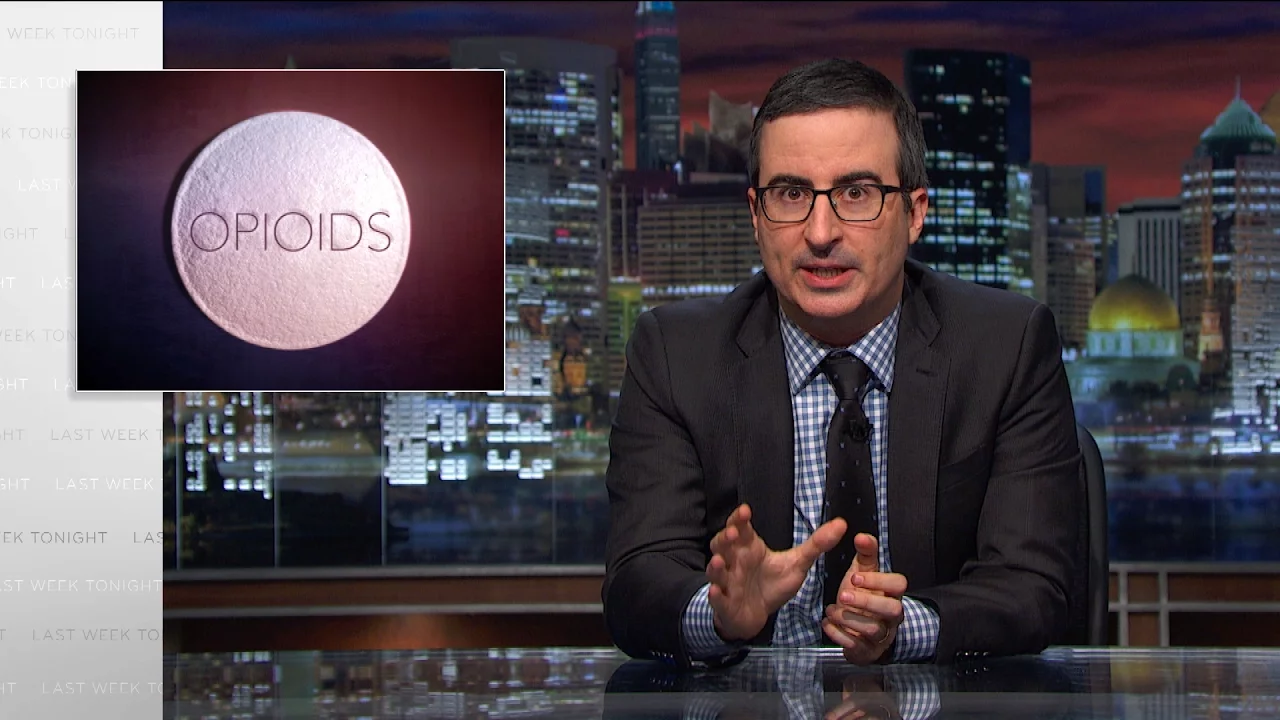
Opioids: Last Week Tonight with John Oliver (HBO) — LastWeekTonight

LastWeekTonight

Deceptive marketing and false safety claims by pharmaceutical companies created a massive prescription pipeline that directly drove America's deadly opioid and heroin epidemic.

AI-assisted summary of Opioids: Last Week Tonight with John Oliver (HBO) — original source. Check the original for full context.

Source published:

Key ideas

  • By 2015, an estimated 2.6 million Americans suffered from opioid addiction, with prescription painkillers driving a pipeline that led roughly 75% of modern heroin users to transition from pills. (0:04)
  • American doctors write nearly 250 million opioid prescriptions annually, enough to supply every U.S. adult with their own bottle of pills. (2:46)
  • Purdue Pharma and other drug manufacturers downplayed addiction risks using flimsy citations and fabricated medical concepts like 'pseudo-addiction' to expand opioid prescribing into chronic outpatient conditions. (7:24)
  • Federal crackdowns yielded major penalties—including a $634 million guilty plea for Purdue Pharma and a $444 million settlement for Cephalon—while first responders now carry overdose-reversal drugs like naloxone as essential everyday equipment. (12:50)

Detailed notes

## Background Published on YouTube by the official Last Week Tonight channel on October 24, 2016, this segment features host John Oliver discussing the roots and scale of the American opioid crisis. The video description notes that Oliver investigates the extent and underlying causes behind the nation's epidemic of opioid addiction.

## TL;DR John Oliver traces the modern opioid crisis back to the aggressive overprescribing of prescription painkillers like OxyContin, which was fueled by misleading pharmaceutical marketing and manufactured concepts like 'pseudo-addiction.' Because prescription opioids are chemically similar to heroin and pills became prohibitively expensive or restricted, roughly 75% of modern heroin users initially transitioned from legal medications, driving tens of thousands of fatal overdoses every year. Oliver details the legal reckonings faced by companies such as Purdue Pharma, Cephalon, and Insys for deceptive off-label promotion and fraudulent insurance practices. He concludes that addressing the tragedy demands caution in medical prescribing alongside massive investments in non-opioid pain therapies, evidence-based rehabilitation, and widespread distribution of naloxone.

## Atmosphere & style The presentation blends John Oliver's signature rapid-fire, biting satire with gut-wrenching investigative journalism, alternating between absurd pop-culture analogies and horrifying real-world tragedy. Viewers are guided through an emotional arc that starts with dark comedic amusement—highlighted by ridiculous promotional artifacts like a vintage OxyContin plush gorilla—before settling into stark outrage over corporate greed and widespread devastation. The pacing is urgent, sharp, and indignant, leaving the audience unsettled by how commercial opportunism systematically dismantled American public health.

## Bulletin - [00:04](https://www.youtube.com/watch?v=5pdPrQFjo2o&t=4s) By 2015, an estimated 2.6 million Americans suffered from opioid addiction, with prescription painkillers driving a pipeline that led roughly 75% of modern heroin users to transition from pills. - [02:46](https://www.youtube.com/watch?v=5pdPrQFjo2o&t=166s) American doctors write nearly 250 million opioid prescriptions annually, enough to supply every U.S. adult with their own bottle of pills. - [07:24](https://www.youtube.com/watch?v=5pdPrQFjo2o&t=444s) Purdue Pharma and other drug manufacturers downplayed addiction risks using flimsy citations and fabricated medical concepts like 'pseudo-addiction' to expand opioid prescribing into chronic outpatient conditions. - [12:50](https://www.youtube.com/watch?v=5pdPrQFjo2o&t=770s) Federal crackdowns yielded major penalties—including a $634 million guilty plea for Purdue Pharma and a $444 million settlement for Cephalon—while first responders now carry overdose-reversal drugs like naloxone as essential everyday equipment.

## Key takeaways - [00:04](https://www.youtube.com/watch?v=5pdPrQFjo2o&t=4s) The American opioid epidemic claimed nearly 30,000 overdose deaths annually by 2015 and impacted communities across all geographic regions. - [02:46](https://www.youtube.com/watch?v=5pdPrQFjo2o&t=166s) Roughly 75% of modern heroin users initially started their addiction with prescription opioids before transitioning to street drugs due to lower costs. - [02:46](https://www.youtube.com/watch?v=5pdPrQFjo2o&t=166s) U.S. doctors dispense roughly 250 million opioid prescriptions per year, flooding communities and driving desperate patients toward self-harm and doctor shopping to maintain their supply. - [04:57](https://www.youtube.com/watch?v=5pdPrQFjo2o&t=297s) In the early 1990s, medical 'opiophobia' was countered by public health efforts that mistakenly labeled the addictive potential of narcotic painkillers as a myth. - [07:24](https://www.youtube.com/watch?v=5pdPrQFjo2o&t=444s) Purdue Pharma aggressively marketed OxyContin for common chronic conditions, disarming skeptical physicians with claims that fewer than 1% of patients become addicted. - [07:24](https://www.youtube.com/watch?v=5pdPrQFjo2o&t=444s) The industry's 'less than 1%' addiction claim relied on a single un-peer-reviewed, five-sentence letter to the editor from 1980 rather than rigorous clinical trials. - [10:45](https://www.youtube.com/watch?v=5pdPrQFjo2o&t=645s) Pharmaceutical messaging popularized 'pseudo-addiction,' defining drug-seeking behavior as undertreated pain that required higher doses rather than intervention. - [10:45](https://www.youtube.com/watch?v=5pdPrQFjo2o&t=645s) By 2000, OxyContin prescriptions reached roughly 6 million per year, outselling Viagra despite catastrophic patient outcomes and multiple deaths among Purdue's own promotional testimonial subjects. - [12:50](https://www.youtube.com/watch?v=5pdPrQFjo2o&t=770s) Purdue Pharma pleaded guilty to criminal charges and paid $634 million in fines in 2007 for misleading doctors, regulators, and the public. - [12:50](https://www.youtube.com/watch?v=5pdPrQFjo2o&t=770s) Other manufacturers faced intense scrutiny, including Cephalon's $444 million settlement and federal investigations into Insys Therapeutics for misleading insurers to authorize fentanyl spray for non-cancer patients. - [15:08](https://www.youtube.com/watch?v=5pdPrQFjo2o&t=908s) The CDC introduced 'start low and go slow' prescribing guidelines, but rural healthcare shortages and lack of insurance coverage hinder access to alternative therapies like physical therapy. - [15:08](https://www.youtube.com/watch?v=5pdPrQFjo2o&t=908s) Pharmaceutical firms have monetized the crisis's side effects, running national ad campaigns for opioid-induced constipation treatments. - [17:28](https://www.youtube.com/watch?v=5pdPrQFjo2o&t=1048s) Managing the ongoing epidemic requires funding long-term treatment and equipping first responders with naloxone, which many fire departments now deploy more often than fire hoses.

## Detailed walkthrough ### [00:04](https://www.youtube.com/watch?v=5pdPrQFjo2o&t=4s) A New Kind of Drug Crisis

John Oliver opens the discussion by acknowledging that talking about drugs risks sounding like a patronizing middle school health teacher. He plays an archival educational film warning against escapism and kicking off a downward spiral with "the Bennies, the reefers, the pot needle"—joking that nobody has seen a "pot needle" since, proving the film's unexpected effectiveness. However, America has entered a far more insidious and deadly crisis that spares virtually no one, as illustrated by a local news report about a dog named Charlie who had to be rushed to the veterinarian after swallowing a discarded bag of heroin tossed over the fence at a Doggy Daycare. Garrett Bishop, operator of the Bark and Play daycare where the incident occurred, highlighted the community-wide severity of the issue, explaining: “This whole heroin problem around here is is ridiculous you know we find needles we find everything around here and it it's it's getting to the point to where I can't let my employees go outside.”

The epidemic has grown staggering in scale. By 2015, an estimated 2.6 million Americans were addicted to opioids, which were linked to nearly 30,000 fatal overdoses annually in the United States. Despite its pervasive nature, public figures often struggle to comprehend how it manifests in picturesque communities. Oliver highlights remarks from Donald Trump during a campaign stop in New Hampshire, where Trump recounted being told heroin was the region's top problem: “Up in New Hampshire they said the biggest single problem they have up here is heroin and I said how does heroin work with these beautiful lakes and trees and all of the beautiful it doesn't.” Oliver counters that heroin does not care about scenery: unlike a weak cell phone network, heroin boasts full geographic coverage.

- By 2015, an estimated 2.6 million Americans suffered from opioid addiction. - Opioids accounted for nearly 30,000 overdose deaths annually across the United States.

---

[02:46](https://www.youtube.com/watch?v=5pdPrQFjo2o&t=166s) The Pipeline from Prescription Painkillers to Heroin

The principal driver of the modern opioid epidemic stems not from street narcotics, but from legal prescription painkillers like OxyContin, Vicodin, and Percocet—which function as chemical cousins to heroin. Roughly 75% of modern heroin users began their drug use with prescription opioids, having received them either recreationally or through legitimate medical prescriptions. In news interview clips, recovering users unanimously raise their hands when asked if they transitioned from pills to heroin because street heroin was vastly cheaper. Several individuals recount inflicting extreme physical harm on themselves just to secure fresh prescriptions from their doctors, including deliberately smashing wrists with baseball bats, having teeth pulled, or punching a wooden post. As one man explained: “One time I was hurting so bad that I ended up punching a 4x4 and breaking all three of these fingers and this bone to get pain meds from my doctor.”

The ripple effects have overwhelmed communities across the nation, making addiction and fatal overdoses an inescapable reality for millions of families. In Huntington, West Virginia, a single five-hour span saw 28 separate overdoses. Behind this catastrophe lies the sheer volume of drugs dispensed by medical providers. American doctors write nearly 250 million opioid prescriptions annually—a quantity sufficient to give every adult in the country their own personal bottle of pills with surplus remaining. These bottles inevitably circulate far beyond medical necessity, finding their way into the hands of dependent patients, diverted street markets, and bored adolescents.

```mermaid flowchart TD accTitle: The Opioid Crisis Pathway accDescr: Flowchart illustrating how pharmaceutical marketing and widespread prescriptions led patients from medical treatment to opioid dependence and street heroin.

subgraph MedicalSystem ["Medical Prescribing"] A["Severe Chronic or Acute Pain"] --> B["Prescription Opioids<br>(OxyContin, Vicodin, Percocet)"] B --> C["250M Prescriptions / Year<br>(Enough for every U.S. adult)"] end

subgraph Dependence ["Tolerance & Dependence"] C --> D["Physical Dependence & Tolerance"] D --> E["Extreme Measures for Pills<br>(Self-harm, Doctor Shopping)"] end

subgraph IllicitMarket ["Shift to Street Narcotics"] E -->|"Pills Too Costly or Cut Off"| F["Cheaper Street Heroin"] F --> G["Surging Overdose Deaths<br>(~30,000 / year)"] end ```

- Roughly 75% of heroin users initially started their addiction with prescription opioids. - In Huntington, West Virginia, emergency services recorded 28 overdoses within a single five-hour window. - Nearly 250 million opioid prescriptions are written every year in the United States.

---

[04:57](https://www.youtube.com/watch?v=5pdPrQFjo2o&t=297s) Opiophobia, Pain Advocacy, and the Myth of Non-Addiction

The current saturation of pills contrasts sharply with medical attitudes in the early 1990s. At that time, doctors suffered from what was termed "opiophobia"—an excessive hesitation to prescribe narcotics due to fears that even minimal exposure would turn patients into addicts. This caution went so far that patients suffering from severe terminal illnesses, including stage IV cancer, were often left to endure excruciating pain without adequate relief. In response, pain management advocates and government health officials campaigned to dismantle common misconceptions surrounding pain management.

However, during this well-intentioned push, health officials inadvertently spread a fatal inaccuracy. Oliver plays a vintage news broadcast in which Department of Health and Human Services Secretary Dr. Louis Sullivan enumerated common medical fallacies: “Sullivan talked about myths that pain builds character—myth; he said that infants don't feel pain—another myth; that elderly patients have a higher tolerance for pain, or that painkillers are addictive—all myths.” While dispelling the bizarre historical notion that infants do not feel pain was necessary, labeling the addictive potential of narcotic painkillers a "myth" was dangerously wrong.

The pharmaceutical industry seized upon this redefinition to capture an enormous new commercial market. Confining opioid distribution strictly to cancer patients and post-surgical recovery offered limited revenue, as palliative end-of-life care is an inherently narrow customer base. To maximize profits, drug companies sought to normalize prescribing potent narcotics for widespread, long-term conditions like arthritis, joint issues, and lower back pain.

---

[07:24](https://www.youtube.com/watch?v=5pdPrQFjo2o&t=444s) Purdue Pharma, Marketing OxyContin, and "Pseudo-Addiction"

The aggressive commercial expansion of opioids was spearheaded by Purdue Pharma following the 1996 release of its blockbuster drug, OxyContin. Purdue marketed the medication directly to physicians using an unprecedented promotional campaign that included swag like branded fishing hats, swing music compilation CDs featuring the slogan "Swing in the right direction with OxyContin," and stuffed plush gorillas. Oliver presents an actual vintage OxyContin plush gorilla on set, naming it "Harold" and joking: “Purdue, this is the perfect choice of mascot, because much like a gorilla, OxyContin might seem appealing, but if you're not careful, it will tear your life apart.”

Purdue also produced and distributed slick promotional videos like *I Got My Life Back*, presenting testimonials of patients who credited the medication with restoring their work productivity and letting them play with their grandchildren. Crucially, Purdue sought to disarm skeptical physicians by dramatically downplaying the likelihood of dependency, with company promotional materials asserting: “Less than 1% of patients taking opioids actually become addicted.”

This definitive "less than 1%" statistic was not derived from rigorous clinical trials. Instead, it originated from a single, five-sentence, un-peer-reviewed letter to the editor published in 1980 in the *New England Journal of Medicine*, which had looked exclusively at monitored, short-term narcotic administration in hospitalized settings. When prescribing doctors began observing clear signs of severe addiction among everyday outpatient users, Purdue was prepared with a convenient explanation. Enlisting compensated physicians like Dr. Alan Spanos, the company popularized the fabricated diagnosis of "pseudo-addiction," arguing that patients displaying compulsive drug-seeking behaviors were not actually addicted, but simply undertreated for their pain.

[10:45](https://www.youtube.com/watch?v=5pdPrQFjo2o&t=645s) The Myth of "Pseudo-Addiction" and OxyContin's Explosion

In an effort to explain away troubling signs of substance abuse, pharmaceutical messaging coined the term "pseudo-addiction." As an instructional video explained, pseudo-addiction was defined as relief-seeking behavior that merely looked like drug addiction because a patient was desperately pursuing pain relief. John Oliver mocks this absurd semantic shield, comparing it to Chipotle inventing a condition called "pseudo-diarrhea" where "it looks a lot like diarrhea, but it's not diarrhea, and the cure may actually be more tacos." Purdue Pharma’s overarching message of a quick, painless fix was intensely appealing to primary care physicians, who often only had 15 minutes to evaluate and treat a patient. Consequently, by the year 2000, doctors were writing nearly six million OxyContin prescriptions per year, and the drug’s sales surpassed even Viagra—a drug that Oliver points out had the undeniable marketing advantage of being pitched by 1990s political icon Bob Dole.

```mermaid flowchart TD accTitle: Marketing and Fallout of OxyContin accDescr: Diagram tracing Purdue's promotional messaging to mass adoption and tragic patient outcomes.

subgraph PROMO["Pharma Marketing Machine"] A["15-Minute Primary Care Visits"] --> C["Mass Prescribing Boom"] B["'Pseudo-Addiction' Theory"] --> C C --> D["6M Annual OxyContin Prescriptions (Year 2000)"] end

subgraph IMPACT["Human & Real-World Cost"] D --> E["Outsold Viagra"] D --> F["Widespread Addiction & Overdoses"] F --> G["Patients Lose Houses, Cars & Lives"] end ```

Evidence rapidly mounted that OxyContin was profoundly dangerous, with news headlines declaring "OxyContin abuse is increasing" and labeling it a "plague"—or as Oliver quips, what Purdue would likely brand a "pseudo-plague." Even the patients selected by Purdue to star in their promotional video *I Got My Life Back* were devastated by the drug: a subsequent investigation revealed that two of the seven featured patients died as active opioid abusers. Another featured grandmother ended up losing virtually everything to her addiction. Describing her spiral, she explained: “I lost my house. Oh yeah, I've lost cars, I've lost, I lost a lot. A lot. I've lost a lot to keep behind taking that drug.” She noted that had she not lost her medical insurance, she would still be picking up bottles from her mailbox and would likely be dead. Oliver reflects on the bitter, staggering irony of her survival: “Losing her health insurance might have saved her life.”

- By 2000, doctors wrote roughly 6 million prescriptions for OxyContin annually, topping sales figures for Viagra. - Two out of seven featured patients from Purdue Pharma’s promotional tape *I Got My Life Back* died as active opioid abusers.

---

[12:50](https://www.youtube.com/watch?v=5pdPrQFjo2o&t=770s) Industry Reckoning: Purdue, Cephalon, and Insys

Purdue Pharma eventually faced legal consequences in 2007, pleading guilty to criminal charges and paying $634 million in fines for misleading the public, doctors, and regulators about the drug's risk of addiction. Oliver emphasizes how egregious the conduct had to be to merit that fine, noting that corporate marketing usually gets enormous leeway—which is why Dunkin' Donuts hasn't been sued over the slogan "America Runs on Dunkin'," even though "their real slogan should be: Sometimes you can't find a Starbucks."

Purdue was far from the only pharmaceutical company employing predatory tactics. Cephalon paid a $444 million settlement for the off-label marketing of its drugs, while Insys Therapeutics came under intense federal investigation for its marketing of Subsys, a sublingual spray containing fentanyl—an opioid up to 100 times more potent than morphine. Approved strictly for cancer patients suffering from breakthrough pain, Insys actively pushed the drug for non-cancer patients.

To overcome insurance hurdles, Insys employees actively deceived insurance adjusters who required cancer diagnoses for authorization. In an interview, an ex-employee recalled how representatives handled authorization calls when asked if a patient had cancer: > “They would always ask, ‘Does the patient have cancer?’ ‘Uh-huh.’ That’s what we would say.... I would just say, ‘Uh-huh.’... Well, that’s what they did think, um, but I wasn't blatantly saying yes.”

Oliver mocks the absurdity of claiming "uh-huh" isn't an affirmative response, pointing out that looking up the phrase on Thesaurus.com brings up "yes" as the very first synonym, alongside "absolutely," "definitely," "unquestionably," and "yep." While Purdue and Cephalon’s parent companies claimed these unethical practices were relics of the past, Insys denied wrongdoing and declined to respond to *Last Week Tonight*'s inquiries—failing to offer even a "nuh-uh."

- **Purdue Pharma:** Paid $634 million in 2007 fines for misleading regulators, doctors, and patients. - **Cephalon:** Paid a $444 million settlement for off-label promotion. - **Insys Therapeutics:** Investigated for fraudulently pushing Subsys, a fentanyl-based spray up to 100 times stronger than morphine, for non-cancer use.

---

[15:08](https://www.youtube.com/watch?v=5pdPrQFjo2o&t=908s) The Prescribing Dilemma and the Search for Alternatives

Turning toward solutions, Oliver emphasizes that opioids remain uniquely effective tools for severe acute pain, meaning society cannot ban them outright; instead, medical professionals must exercise extreme caution. In 2016, the CDC released voluntary guidelines encouraging physicians to explore non-opioid treatments first and, when opioids are necessary, to prescribe the lowest effective dose for a limited duration—a protocol dubbed "start low and go slow." Oliver remarks that the phrase sounds remarkably like creepy high school advice about intimacy: “Dude, start low, go slow, and afterwards take her to Friendly's. Chicks love root beer floats, dude.”

A major barrier to these guidelines is healthcare inequality. While public health officials recommend physical therapy, acupuncture, and mindfulness meditation, rural communities frequently lack access to these services, and insurance providers often refuse to cover them. As Oliver argues, alternative therapies should be at least as accessible in rural regions as Waffle Houses, which "like heroin, are both hazardous to your health and dangerously addictive."

Meanwhile, the pharmaceutical industry shows little sign of retreating from opioid profits; instead, companies have monetized the drugs' widespread side effects. Oliver highlights a high-profile Super Bowl commercial advertising medication for opioid-induced constipation (OIC), depicting a suffering man enviously watching a dog defecate outside. As Oliver points out, you know a class of drugs is unbelievably powerful when patients tolerate a side effect that leaves them “jealous of a dog's butthole.”

---

[17:28](https://www.youtube.com/watch?v=5pdPrQFjo2o&t=1048s) Harm Reduction, Naloxone, and Accountability

Preventing future addiction is only half the battle; substantial resources must be directed toward the millions of people currently living with opioid dependence. This demands serious investments in evidence-based rehabilitation and widespread distribution of naloxone (commonly known as Narcan), the nasal spray that reverses potentially fatal overdoses.

The everyday reliance on naloxone has transformed first responders. In an interview clip from a firehouse, a firefighter explains how central the medication has become to their daily operations: > “From the Chief down, we tend to have more overdoses than we do fires, so it's a piece of equipment that we can't go without now, just like we have the hose.”

Oliver jokes that using nasal spray instead of fire hoses might complicate the aesthetic of hunky firefighter charity calendars, but the underlying reality is grim and urgent. Addressing the crisis requires an expensive, multifaceted, long-term commitment because no single treatment fits every patient, and alternative pain methods will not work for everyone.

In closing, Oliver targets the pharmaceutical executives who ignited the epidemic by peddling pain solutions with false promises of safety and convenience. While they may not be the sole cause of the epidemic, Oliver concludes by answering whether they bear significant responsibility for the tragedy: > “If you were to ask me if they bear significant blame for reckless, greedy behavior which contributed to this massive public health crisis, I might not say yes exactly, but I would definitely say: uh-huh.”

## Mentioned Alan Spanos, Bob Dole, Cephalon, Charlie, Chipotle, Donald Trump, Dunkin' Donuts, Friendly's, Garrett Bishop, I Got My Life Back, Insys Therapeutics, John Oliver, Louis Sullivan, Naloxone, New England Journal of Medicine, OxyContin, Percocet, Purdue Pharma, Subsys, Thesaurus.com, U.S. Centers for Disease Control and Prevention (CDC), U.S. Department of Health and Human Services, Viagra, Vicodin, Waffle House

## Video description John Oliver discusses the extent and root of the nation’s epidemic of opioid addiction.

Connect with Last Week Tonight online... Subscribe to the Last Week Tonight YouTube channel for more almost news as it almost happens: www.youtube.com/user/LastWeekTonight

Find Last Week Tonight on Facebook like your mom would: http://Facebook.com/LastWeekTonight

Follow us on Twitter for news about jokes and jokes about news: http://Twitter.com/LastWeekTonight

Visit our official site for all that other stuff at once: http://www.hbo.com/lastweektonight

[Source](https://www.youtube.com/watch?v=5pdPrQFjo2o)

中文简报

普渡制药等药企借虚假宣传推波助澜阿片类药物危机 制药公司的欺骗性营销和虚假安全性断言催生了大规模处方渠道,直接引发了美国致命的阿片类药物和海洛因危机。 约翰·奥利弗追溯了现代阿片类药物危机,指出其根源在于奥施康定等处方止痛药被过度滥用,而这正是由误导性的医药营销以及虚构的“伪成瘾”等概念所推动。由于处方阿片类药物在化学成分上与海洛因相似,且在药片价格变得令人难以承受或受到管制后,现代约75%的海洛因吸食者最初都是从合法处方药转向毒品的,从而导致每年数万人因药物过量致死。奥利弗详细阐述了普渡制药、Cephalon和Insys等公司因欺骗性的超说明书推广及欺诈性保险操作而面临的法律问责。他总结道,要应对这场悲剧,既需要医生在开具处方时保持谨慎,也需要对非阿片类疼痛疗法、循证康复治疗以及纳洛酮的广泛普及进行大规模投入。 截至2015年,估计有260万美国人饱受阿片类药物成瘾困扰,处方止痛药形成的管道导致现代约75%的海洛因吸食者是从药片转向海洛因的。 (0:04) 美国医生每年开出近2.5亿张阿片类药物处方,足以让每位美国成年人都分到一整瓶药。 (2:46) 普渡制药等制药商利用牵强的引用文献和虚构的“伪成瘾”等医学概念淡化成瘾风险,从而将阿片类药物处方的适用范围扩大至慢性门诊疾病。 (7:24) 联邦层面的打击带来了巨额处罚——包括普渡制药认罪并支付6.34亿美元,以及Cephalon达成4.44亿美元的和解——与此同时,急救人员现已将纳洛酮等过量逆转药物作为日常必备装备随身携带。 (12:50)

Reading summary

John Oliver argues that the American opioid epidemic was largely sparked by pharmaceutical companies that aggressively marketed prescription narcotics under deceptive claims of safety, creating an addiction pipeline that transitioned millions of patients to illicit street drugs. Prescription Pills as an Addiction Pipeline (2:46) By 2015, an estimated 2.6 million Americans were addicted to opioids, with the drug class contributing to nearly 30,000 fatal overdoses annually. Unlike past narcotics crises, the modern epidemic was driven predominantly by legal pain medications like OxyContin, Vicodin, and Percocet. U.S. healthcare providers were dispensing nearly 250 million opioid prescriptions each year—enough to supply every adult in the country with their own bottle. This surplus created widespread physical dependency. Approximately 75% of modern heroin users began by taking prescription painkillers, often transitioning to street narcotics because heroin was dramatically cheaper. Dependent patients frequently resorted to extreme measures to maintain their prescriptions, including self-inflicted injuries like breaking their own bones, while local communities were overwhelmed by surges in overdoses, such as Huntington, West Virginia, recording 28 overdoses in a five-hour window. Misinformation and Aggressive Industry Marketing (7:24) The prescription boom overturned earlier medical caution, known as 'opiophobia,' which had previously left severe and terminal cancer pain undertreated. While public health officials attempted to correct this by encouraging better pain management, they also erroneously dismissed the addictive risks of painkillers as a myth. Pharmaceutical manufacturers leveraged this opening to market narcotics for common, chronic ailments such as arthritis and lower back pain. Purdue Pharma led the commercial push with OxyContin beginning in 1996, promoting claims that 'less than 1%' of patients became addicted. This figure originated not from clinical trials, but from an un-peer-reviewed, five-sentence letter to the editor published in 1980 that examined monitored hospital settings. When patients showed classic symptoms of addiction, Purdue promoted the industry-fabricated concept of 'pseudo-addiction,' arguing that drug-seeking behavior merely indicated undertreated pain requiring higher dosages. By 2000, doctors wrote six million OxyContin prescriptions annually, surpassing sales of Viagra. Corporate Accountability and Fraudulent Practices (12:50) Mounting addiction and overdose rates prompted federal enforcement actions against several drug manufacturers. Purdue Pharma pleaded guilty to criminal charges in 2007 and paid $634 million in fines for misleading regulators, physicians, and patients about the drug's habit-forming risks. Similarly, Cephalon paid a $444 million settlement to resolve allegations of off-label promotion. Other companies engaged in direct deception of insurance providers. Insys Therapeutics faced federal investigation for aggressively marketing Subsys, an oral spray form of fentanyl up to 100 times stronger than morphine. Although Subsys was strictly approved for cancer breakthrough pain, Insys representatives systematically gave deceptive affirmations, answering 'uh-huh' when insurance adjusters asked if non-cancer patients carried a cancer diagnosis. Treatment Disparities and Harm Reduction Interventions (15:08) Because opioids remain clinically necessary for acute, severe pain, public health responses focus on reforming prescribing practices rather than an outright ban. In 2016, the CDC released guidelines advising doctors to explore non-opioid treatments and use the lowest effective dose for limited durations. However, alternatives such as physical therapy, acupuncture, and meditation are frequently inaccessible in rural areas and routinely uncovered by insurance plans, leaving low-cost pills as the default option. Addressing the crisis also requires expanding harm reduction and treatment for the millions already addicted. Emergency responders increasingly rely on naloxone (Narcan) to reverse fatal overdoses, with some fire departments reporting responding to more overdose calls than structure fires. Oliver stresses that reversing the crisis demands significant, long-term public funding for addiction management and realistic alternatives to narcotic pain management. Oliver concludes that while pharmaceutical executives may not be the sole cause of the opioid crisis, their profit-driven deception and minimization of addiction risks bear profound responsibility for creating a nationwide public health disaster that requires extensive, sustained resources to repair.

精炼阅读摘要

John Oliver指出,美国毁灭性的阿片类药物危机并非源自街头非法毒品泛滥,而是由制药企业为牟取暴利,系统性淡化成瘾风险并向医疗体系过度渗透所诱发的公共卫生灾难。 处方药泛滥与走向海洛因的致命链条 (2:46) 现代阿片类药物危机的规模触目惊心。截至2015年,全美估计有260万人患有阿片类药物成瘾,每年导致近3万人死于药物过量。美国医疗系统每年开出近2.5亿张阿片类药物处方,这一数量足以确保每位美国成年人都分得一整瓶药片。这种过度供给导致药物严重外流,在西弗吉尼亚州亨廷顿市,急救部门甚至记录过在短短5小时内接连发生28起药物过量的极端事件。 更为严峻的是,合法处方药已成为非法毒品成瘾的主要温床。约75%的现代海洛因吸食者最初接触的正是OxyContin、Vicodin和Percocet等处方止痛药。由于这些药物与海洛因在化学结构上高度相似,大量患者在建立耐药性与药物依赖后,因处方停发或药片价格过于昂贵,被迫转向价格极其廉价的街头海洛因。许多患者为了继续从医生手中骗取处方,甚至不惜蓄意用球棒砸断手腕或击打木桩自残。 医学观念扭曲与“伪成瘾”伪科学话语 (4:57) 这场危机的形成伴随着长达数十年的医疗观念转向。20世纪90年代初,医学界曾普遍存在所谓的“阿片恐惧症”(opiophobia),因过度担忧药物成瘾,甚至使晚期癌症患者得不到基础的镇痛治疗。然而,在消除这一偏见的过程中,公共卫生体系矫枉过正。前美国卫生与公共服务部部长Louis Sullivan甚至在公开宣传中将“止痛药具有成瘾性”错误地归类为医学谬误,这为制药商将强效麻醉剂从终末期姑息治疗扩展至慢性腰痛、关节炎等庞大普通人群打开了大门。 普渡制药(Purdue Pharma)于1996年推出OxyContin后,发动了空前的营销攻势,甚至直接向医生宣称该药成瘾率“低于1%”。该断言实际仅源自1980年《新英格兰医学杂志》上一封仅五句话、未经同行评议且针对住院受控短期环境的读者来信。当门诊患者开始表现出强迫性求药和成瘾症状时,普渡制药赞助的医生又创造出“伪成瘾”(pseudo-addiction)概念,诡辩称患者的异常举动只是疼痛未被充分缓解的表现,反而敦促医生进一步加大处方剂量。 药企欺诈营销与惨痛的现实代价 (12:50) 在普渡制药极力推崇快速、无痛的宣传下,面对单次接诊仅有15分钟的基层全科医生,OxyContin迅速实现爆炸性普及。到2000年,医生每年开出近600万张OxyContin处方,其销售额甚至超过了伟哥。然而,代价是毁灭性的:普渡制药早期宣传片《I Got My Life Back》中所展示的7位典型康复患者中,调查证实有2人最终死于阿片类药物滥用,其他患者也因成瘾倾家荡产、失去房产与生计。 随后的司法追责揭露了行业性的系统欺诈。2007年,普渡制药因误导公众、医生和监管机构就成瘾风险认罪,被判处6.34亿美元罚款;Cephalon因超适应症营销支付了4.44亿美元和解金;Insys Therapeutics则因欺诈性推销效力高达吗啡100倍的芬太尼舌下喷雾Subsys而面临联邦调查,其员工甚至在医保核保电话中通过含糊答复欺瞒审核,将仅批准用于癌症突破性疼痛的药物推广给普通患者。与此同时,药企还通过开发针对阿片类引起的便秘(OIC)药物,继续从这一依赖链条中榨取衍生利润。 处方监管困境、疗法差距与减害行动 (15:08) 遏制危机并不意味着可以简单地一刀切禁用阿片类药物,因为其在急性重度镇痛中仍具有不可替代的临床价值。美国疾控中心(CDC)在2016年发布了自愿性指导方针,建议医生优先尝试非阿片类疗法,并在必须使用阿片类药物时遵循“低剂量开始、缓慢推进”的原则。然而,推行非药物治疗面临严重的医疗资源分配不公,针灸、物理治疗和正念疗法等手段在农村社区往往极度匮乏,且难以获得医疗保险的报销支持。 在预防增量的同时,救治现存数百万依赖者成为减害政策的焦点。过量逆转药物纳洛酮(Naloxone/Narcan)的普及已成为一线急救人员不可或缺的生命防线。在诸多重灾区社区,消防员随身携带纳洛酮处置药物过量的频率甚至已大幅超过扑救火灾的日常勤务。应对这场多维危机需要昂贵且长期的循证康复投入,单一手段无法解决所有复杂的疼痛与成瘾问题。 Oliver总结强调,解决阿片类药物危机没有立竿见影的单一捷径,需要医疗减害、替代疗法普及与严格监管的长期协同;尽管制药行业的高管并非造成这起悲剧的唯一推手,但他们出于商业贪婪、以虚假安全承诺推动强效麻醉剂滥用的行径,无疑对这场波及全美的公共卫生灾难负有不可推卸的重大责任。

Detailed notes — zh

## Background 该视频由《约翰·奥利弗上周今夜秀》(LastWeekTonight)于2016年10月24日发布在YouTube平台上。根据页面官方简介,本期节目深入探讨了席卷全美的阿片类药物成瘾危机的泛滥规模及其深层根源。 ## TL;DR 节目全面剖析了全美阿片类药物成瘾危机的严峻现实,指出约75%的海洛因成瘾者最初都始于合法的处方止痛药。约翰·奥利弗系统揭露了普渡制药(Purdue Pharma)、Cephalon及Insys等制药巨头如何通过伪造安全数据、捏造“假性成瘾”概念并欺骗医保体系,将高危阿片类药物滥用于日常慢性疼痛。面对深重的成瘾潮与药物过量死亡,药企甚至将衍生副作用开辟为暴利新赛道。全片呼吁社会摆脱对“速效无痛”捷径的幻想,全力普及一线急救药物纳洛酮(Naloxone),建立长期系统的戒毒医疗支持,并对推波助澜的无良药企进行严厉问责。 ## Atmosphere & style 全片充斥着约翰·奥利弗标志性的辛辣讽刺与严肃新闻调查风格,在荒诞幽默与触目惊心的悲剧现实之间自如切换。解说前一秒还在用快餐连锁店的段子调侃药企的诡辩,后一秒便展示戒毒者为骗取处方蓄意砸断指骨的震撼自白,形成极具张力的情感反差。随着制药公司欺诈手段与监管漏洞的层层揭露,叙事语调从幽默解构逐渐升温为对资本贪婪草菅人命的强烈道德谴责,令观者在捧腹之余感受到深深的窒息与沉痛。 ## Bulletin - [00:04](https://www.youtube.com/watch?v=5pdPrQFjo2o&t=4s) 全美阿片类药物成瘾危机规模惊人:截至2015年已有约260万人成瘾,每年致死近3万人,约75%的海洛因吸食者最初接触的都是合法的处方止痛药。 - [04:57](https://www.youtube.com/watch?v=5pdPrQFjo2o&t=297s) 普渡制药等药企曾展开欺诈性过度营销,用无临床依据的“成瘾率低于1%”及自创的“伪成瘾”说辞误导医生,导致奥施康定年处方量一度暴增至近600万张。 - [12:50](https://www.youtube.com/watch?v=5pdPrQFjo2o&t=770s) 制药行业乱象屡遭重罚:普渡制药于2007年认罪并被判罚6.34亿美元,Cephalon支付4.44亿美元和解金,而Insys药业则被曝涉嫌以含糊答复骗取医保报销强推芬太尼喷雾。 - [17:28](https://www.youtube.com/watch?v=5pdPrQFjo2o&t=1048s) 阿片类药物引发的过量危机已严重改变基层急救生态,纳洛酮鼻喷剂在多地消防局成为与水龙带同等重要的标配,出动处理过量呼救的频率甚至超过火警。 ## Key takeaways - [00:04](https://www.youtube.com/watch?v=5pdPrQFjo2o&t=4s) 美国的阿片类药物成瘾危机已渗透到全社会各个角落,截至2015年成瘾人数达260万,每年造成近3万人因用药过量死亡。 - [02:46](https://www.youtube.com/watch?v=5pdPrQFjo2o&t=166s) 街头海洛因危机的根源是合法处方止痛药,约75%的海洛因吸食者最初因就医治疗或遵医嘱服药而产生药物依赖。 - [02:46](https://www.youtube.com/watch?v=5pdPrQFjo2o&t=166s) 全美每年开出的阿片类药物处方接近2.5亿张,极端成瘾患者甚至通过蓄意自残骨折或拔牙来向医生骗取新处方。 - [04:57](https://www.youtube.com/watch?v=5pdPrQFjo2o&t=297s) 1990年代初医学界存在“阿片恐惧症”,导致重度及终末期疼痛患者无法获得合理镇痛,这一痛点随后被制药巨头利用并变质。 - [04:57](https://www.youtube.com/watch?v=5pdPrQFjo2o&t=297s) 为谋求巨额利润,制药巨头将阿片类药物的适用场景从癌症晚期剧痛强行扩大至关节炎、腰痛等常见慢性病。 - [04:57](https://www.youtube.com/watch?v=5pdPrQFjo2o&t=297s) 普渡制药等药企向公众和医界宣称成瘾率“低于1%”,该结论仅源自一封未经同行评审的极短期住院观察读者来信。 - [10:45](https://www.youtube.com/watch?v=5pdPrQFjo2o&t=645s) 普渡制药炮制了“假性成瘾”概念,将患者出现的成瘾表象诡辩为疼痛未缓解的信号,诱导医生开出更高剂量的处方。 - [10:45](https://www.youtube.com/watch?v=5pdPrQFjo2o&t=645s) 普渡制药早期宣传片《我找回了生活》中的7名受访患者中,后续有2人死于阿片类成瘾,亦有患者因依赖药物而倾家荡产。 - [12:50](https://www.youtube.com/watch?v=5pdPrQFjo2o&t=770s) 2007年普渡制药因误导性宣传被判罚6.34亿美元,Cephalon亦因超适应症营销支付4.44亿美元和解金。 - [12:50](https://www.youtube.com/watch?v=5pdPrQFjo2o&t=770s) Insys药业涉嫌向非癌症患者强推药效极强的芬太尼喷雾,并教唆客服在医保核查时使用含糊答复“Uh-huh”蒙混过关以骗取报销。 - [15:08](https://www.youtube.com/watch?v=5pdPrQFjo2o&t=908s) CDC虽推行“低剂量起步、缓慢加量”指南,但物理治疗等非药物替代方案在偏远及低收入地区面临严重的资源匮乏与医保不报销困境。 - [15:08](https://www.youtube.com/watch?v=5pdPrQFjo2o&t=908s) 药企在阿片类药物带来的副作用上继续谋利,斥巨资在超级碗等平台投放治疗“阿片类药物引起的便秘”药物广告,形成庞大产业闭环。 - [17:28](https://www.youtube.com/watch?v=5pdPrQFjo2o&t=1048s) 基层消防等急救部门日常出动处理用药过量的次数已全面超越火警,过量逆转药物纳洛酮已成为一线救援人员不可或缺的标配装备。 - [17:28](https://www.youtube.com/watch?v=5pdPrQFjo2o&t=1048s) 化解阿片类危机不存在简单快速的捷径,既需要社会长期系统性投入多元戒断方案,也必须对药企的肆意贪婪进行严肃追责。 ## Detailed walkthrough ### [00:04](https://www.youtube.com/watch?v=5pdPrQFjo2o&t=4s) 美国的鸦片类药物成瘾危机 约翰·奥利弗(John Oliver)以老式校园禁毒宣传片幽默开场——那些短片把吸毒归咎于缺乏责任感、错误选择与寻求刺激,甚至警告青少年提防荒唐的“大麻针”(pot needle)。然而,现实中的美国正深陷一场远比宣传片恐怖的药物成瘾风暴,其泛滥程度甚至波及宠物。在宾夕法尼亚州的一家狗狗日托中心(Bark and Play),一只名叫查莉(Charlie)的宠物狗在院子里误食了翻墙扔进来的整整一包海洛因,不得不被紧急送医洗胃。日托中心负责人加勒特·毕晓普(Garrett Bishop)直言,周边到处都是丢弃的针头,治安极度恶化,“已经到了我不敢让员工去室外的地步”。 这并非偶然事件,而是全美阿片类药物(包含海洛因与处方止痛药)危机的一个缩影。截至2015年,全美估计有260万人对阿片类药物成瘾,每年导致近3万人因用药过量死亡。该危机的覆盖面突破了传统认知——时任总统候选人唐纳德·特朗普(Donald Trump)曾在新罕布什尔州集会上惊叹,无法理解在风景秀丽的湖泊与树林间竟充斥着海洛因。奥利弗对此吐槽道:“海洛因基本上无处不在,因为它是海洛因;它又不是手机信号,海洛因可是全覆盖的。” - 截至2015年,美国约有260万人患有阿片类药物成瘾症。 - 阿片类药物每年在全美导致近3万人用药过量死亡。 - 西弗吉尼亚州亨廷顿(Huntington)及周边地区曾在短短5小时内发生28起用药过量事件。 ### [02:46](https://www.youtube.com/watch?v=5pdPrQFjo2o&t=166s) 处方止痛药:海洛因危机的源头 这场海洛因泛滥潮最致命的源头,其实是合法的处方止痛药。奥斯康定(OxyContin)、维柯丁(Vicodin)与波寇瑟(Percocet)等药物在化学结构上是海洛因的“近亲”。统计数据显示,约75%的海洛因吸食者最初接触的都是处方阿片类药物。许多人起初是出于娱乐体验,或是严格遵照医嘱服药,但成瘾一旦形成便彻底失控。在一段访谈记录中,受访戒毒者全员表示自己是从处方药转向了更便宜的海洛因。 一旦药物断供并出现戒断反应,患者为了从医生那里重新开出处方,往往会对自己施加极端的肉体伤害。一名戒毒者回忆,为了拿到止痛药,他曾一拳打在4x4木方上,故意打断自己三根手指和手骨,且重复干过好几次;其他人则通过拔牙、甚至让人用球棒砸断手腕的方式骗取处方。更惊人的是医生的开方数量:全美每年开出的阿片类药物处方接近2.5亿张,足以让美国每一位成年人人都分到一整瓶药片。大量流入民间的药片被成瘾者、甚至无所事事的青少年滥用。 - 约75%的海洛因吸食者是从医生开具的处方止痛药开始走向成瘾的。 - 全美每年开出近2.5亿张阿片类药物处方,人均占有量极其惊人。 ```mermaid flowchart TD accTitle: 阿片类药物成瘾发展路径 accDescr: 展示患者从最初就医使用处方药最终滑向廉价街头海洛因的恶性循环路径。 subgraph MedicalStage["医疗用药阶段"] A["因病就医或意外伤害"] --> B["遵医嘱服用处方阿片类药物<br/>(OxyContin / Vicodin / Percocet)"] B --> C["产生严重生理与心理依赖"] end subgraph AbuseStage["滥用与自残阶段"] C --> D["耐药性增加 / 处方量受限"] D --> E["极端骗药行为<br/>(自残骨折、恶意拔牙)"] end subgraph StreetStage["转入黑市阶段"] E --> F["处方药价格昂贵 / 供给中断"] F --> G["转向廉价街头海洛因<br/>(约75%用户转化率)"] end ``` ### [04:57](https://www.youtube.com/watch?v=5pdPrQFjo2o&t=297s) 从“阿片恐惧症”到过度营销的致命转折 回溯历史,医学界在1990年代初对开具阿片类药物怀有极深的戒心,这种现象当时被称为“阿片恐惧症”(opiophobia)。医生们担心哪怕极小剂量的阿片类药物都会让患者成瘾,导致许多癌症晚期患者和术后重症患者在得不到有效镇痛的情况下忍受剧痛。疼痛管理倡导者试图纠正这一偏见,但美国卫生部长路易斯·沙利文(Louis Sullivan)在当时的官方报告中用力过猛,将“止痛药会上瘾”与“婴儿感受不到疼痛”、“老年人耐受力更强”并列,一概打成荒谬的“伪科学与神话”。 ```mermaid flowchart LR accTitle: 止痛药推广演进逻辑 accDescr: 展现从合理的癌症终末期镇痛需求演化为药企向常见慢病全面推销阿片类药物的转变历程。 A["1990年代初:阿片恐惧症<br/>(晚期癌痛患者被拒开药)"] --> B["医学界呼吁重视疼痛管理"] B --> C["制药行业介入并主导话语权"] C --> D["拓展至关节炎、腰痛等常见慢性病<br/>(以扩大市场规模)"] ``` 关于疼痛治疗的专业探讨迅速被制药巨头把持。由于临终关怀市场的容量狭窄、利润有限,制药公司开始大肆宣扬阿片类药物不仅可用于癌症或术后急性剧痛,还应广泛用于关节炎、背痛等各类慢性疼痛。在这场推广浪潮中,声量最大的是普渡制药(Purdue Pharma)。普渡于1996年推出了重磅产品奥斯康定,并通过庞大的营销攻势向医生推销,赠送渔夫帽、印有“随着奥斯康定转向正确方向”的摇摆乐CD,以及印有药名的填充玩偶大猩猩。普渡还拍摄了名为《重获新生》(*I Got My Life Back*)的励志宣传片,借患者之口宣扬吃了奥斯康定后不仅工作效率提高,还能陪伴孙辈。 更严重的是,普渡在推广材料中公然向公众和医生保证:“服用阿片类药物的患者中,成瘾比例低于1%。”(“Less than 1% of patients taking opioids actually become addicted.”)调查显示,这一所谓科学结论并非来自严谨的双盲临床试验,而是摘取自《新英格兰医学杂志》(NEJM)上一封未经同行评审的读者来信摘要,且该信件仅讨论了住院患者的极短期用药。即便后续医生发现大量患者出现药物上瘾迹象,普渡制药及其雇佣的专家(如艾伦·斯帕诺斯医生,Dr. Alan Spanos)早已准备好了一套诡辩话术——他们创造出了一个极具误导性的新概念:“伪成瘾”(pseudo-addiction)。 ### [10:45](https://www.youtube.com/watch?v=5pdPrQFjo2o&t=645s) “假性成瘾”概念与奥施康定的恶果蔓延 普渡制药(Purdue Pharma)在推广奥施康定(OxyContin)时,甚至提出了一个荒谬且极其有利可图的医学术语:“假性成瘾”(pseudo-addiction)。一段培训视频显示,讲师将患者表现出的成瘾行为轻描淡写地解释为:患者看起来像吸毒者,只是因为他们在追求止痛,“假性成瘾是被误认为是药物成瘾的缓解寻求行为”(“Pseudo-addiction is relief-seeking behavior mistaken as drug addiction”)。约翰·奥利弗(John Oliver)对此极尽讽刺,调侃这就像快餐连锁店 Chipotle 宣称有一种“假性腹泻”——虽然看起来很像腹泻,但根本不是腹泻,其治疗方法实际上是吃更多肉卷。这种“快速、轻松解决疼痛”的说辞对于只有 15 分钟看诊时间的全科医生极具吸引力。到 2000 年,医生每年开出近 600 万张奥施康定处方,其销量甚至超过了由 90 年代政坛当红人物鲍勃·多尔(Bob Dole)代言的伟哥(Viagra)。 然而,残酷的现实迅速戳破了谎言。媒体上充斥着滥用成瘾甚至将其称为“瘟疫”的头条新闻。就连当年出演普渡制药宣传片《我找回了生活》(I Got My Life Back)的患者也未能幸免:后来的调查发现,片中 7 名受访者里有 2 人死于阿片类药物成瘾,而此前在片中露面的祖母级患者也彻底染上毒瘾,几乎倾家荡产。她在镜头前悲伤地表示自己失去了房子、车子和一切。她直言,若不是后来失去了医疗保险导致断药,她每个月去邮箱拿一瓶药,恐怕早就死于药物过量了。奥利弗对此感慨道,失去医保竟然救了她的命,这种讽刺深重到足以把歌手艾拉妮丝·莫莉塞特(Alanis Morissette)直接蒸发成一团水汽。 - 处方量爆发:到 2000 年,奥施康定年处方量达到近 600 万张,销售额超越伟哥。 - 宣传片明星的下场:普渡制药宣传片中的 7 名患者中,有 2 人因药物滥用死亡,片中的老妇人因倾家荡产和失去医保被迫断药才侥幸活命。 --- ### [12:50](https://www.youtube.com/watch?v=5pdPrQFjo2o&t=770s) 制药巨头的诉讼罚款与行业黑幕(Cephalon 与 Insys) 普渡制药的恶劣行径最终引来了法律制裁。2007 年,该公司及其高管因对公众撒谎和误导性营销,在重大诉讼中认罪并被判处 6.34 亿美元的巨额罚金。奥利弗调侃道,如果一家公司因为虚假广告被罚了 6 亿多美元,那事情绝对非常严重,毕竟广告营销的容忍度一向很大——否则唐恩都乐(Dunkin' Donuts)早就该因为那句“美国靠 Dunkin' 运转”而被起诉了,因为大家心知肚明其实际含义是“有时候你就是找不到星巴克”。但无良推广绝不仅限于普渡一家:制药公司 Cephalon 曾因过度营销药物支付了 4.44 亿美元的和解金;而 Insys 药业更因推广一种含有芬太尼(fentanyl,药效比吗啡强 100 倍)的药物而遭到调查。 Insys 的芬太尼喷雾原本仅被批准用于癌症患者的爆发痛,但该公司涉嫌不仅向非癌症患者强推该药,还教唆员工欺骗保险公司以骗取报销。一名 Insys 前员工在采访中揭露了他们规避保险核查的阴险招数:如果直截了当地告诉保险公司患者没得癌症,报销就会自动被拒。因此,当保险审核员反复询问“患者是否有癌症”时,客服人员既不回答“No”,也不说“Yes”,而是意味深长地发出“嗯哼”(uh-huh)的声音。员工辩称这不算明目张胆地撒谎,但奥利弗驳斥道,在词典网站上查“uh-huh”,第一个跳出来的同义词就是“Yes”。事后,普渡和 Cephalon 的所有者声称这些营销乱象已成过去,而 Insys 则全面否认不当行为,甚至对节目组的问询不置一词。 ```mermaid flowchart TD accTitle: Insys Insurance Deception Process accDescr: 流程图展示了 Insys 公司员工如何通过模糊应答诱导保险公司通过非适应症用药报销审批。 subgraph Step1["常规合规核查流程"] A["保险公司询问:<br>'患者是否有癌症?'"] --> B{"如实回答 '否'"} B --> C["保险自动拒付"] end subgraph Step2["Insys 话务员操纵手法"] A --> D["给出模糊应答:<br>'嗯哼 (Uh-huh)'"] D --> E["保险审核员默认为 '是'"] E --> F["非适应症高危阿片类处方<br>成功通过报销审核"] end ``` - 普渡制药罚金:2007 年因误导性营销向联邦及公众支付 6.34 亿美元罚金。 - Cephalon 和解金:因违规超适应症营销药物支付 4.44 亿美元。 - Insys 欺诈手段:将比吗啡强 100 倍的芬太尼药物推广给非癌症患者,客服用“Uh-huh”冒充肯定答复套取医保报销。 --- ### [15:08](https://www.youtube.com/watch?v=5pdPrQFjo2o&t=908s) 减害准则的局限、医疗鸿沟与“便秘”商机 面对积重难返的危机,核心议题逐渐从“过去做错了什么”转向“现在该怎么办”。阿片类药物对于重度急性疼痛依然不可或缺,完全禁用并不现实,因此关键在于严格规范处方。美国疾控中心(CDC)发布了自愿性指南,建议医生优先考虑非阿片类疗法,即便必须使用阿片类,也应遵循“从低剂量开始、缓慢加量”(start low and go slow)的原则。然而,替代疗法在现实中面临严重的阶级与地域鸿沟:在许多偏远和农村地区,物理治疗(Physical Therapy)或正念冥想等资源极度匮乏,且医保往往不予报销。奥利弗指出,在这些贫困地区,找到合规替代疗法的难度甚至比找一家华夫饼屋(Waffle House)还要高得多。 与此同时,制药行业显然不打算放弃这块暴利市场。不仅阿片类药物销量居高不下,药企甚至开始做起“产业链衍生”买卖——大肆推销专门治疗“阿片类药物引起的便秘”(Opioid-Induced Constipation, OIC)的药物。当年超级碗(Super Bowl)上甚至播放了一则相关广告,画面极具荒诞感:一位饱受便秘折磨的患者神情痛苦地盯着一条正在路边痛快排便的狗。奥利弗吐槽道,这些止痛药的药效得多强,才能让人忍受一种“连狗的肛门都羡慕”的副作用;而这类天价超级碗广告的出现,充分证明阿片类药物及其衍生产品仍然是一门庞大且毫无退潮迹象的超级生意。 - CDC 建议原则:针对阿片类药物开具提出“start low and go slow”(低剂量起步,缓慢推进)。 - 替代治疗困局:农村及低收入地区缺乏物理治疗与心理辅导资源,保险覆盖极为有限。 - 超级碗商业广告:药企重金投放针对阿片类引起的便秘(OIC)的新药广告,凸显阿片类产业生态的稳固。 --- ### [17:28](https://www.youtube.com/watch?v=5pdPrQFjo2o&t=1048s) 纳洛酮救治现状与全社会的系统性应对 应对阿片类危机不仅需要遏制新的成瘾,更需要拯救数以百万计的现有成瘾者。这不仅意味着加大对成瘾治疗项目的财政投入,还需要向一线急救人员全面普及过量逆转药物——纳洛酮(Naloxone,常用鼻喷剂形式)。俄亥俄州里士满高地(Richmond Heights)消防局的采访画面揭示了现实的严峻:从局长到普通消防员,全员都接受过纳洛酮的使用培训且均在实战中使用过。一名消防员直言:“从局长到一线人员,我们接到的药物过量呼救往往比火灾还要多,所以它成了我们离不开的装备,就像我们的水龙带一样”(“From the Chief down, we tend to have more overdoses than we do fire fires, so it's a piece of equipment that we can't go without now, just like we have the hose”)。 奥利弗最后总结道,解决这场危机绝不存在简单、廉价或快速的捷径。不同的成瘾者需要不同的戒断治疗方案,不同的疼痛患者也需要因人而异的纾解方式,这需要全社会进行前所未有的长期系统性投资。而对于普渡制药等用“快速、低成本、无痛”谎言将整个国家推进深渊的制药公司,公众有绝对的理由保持愤怒。在节目的尾声,奥利弗以极具讽刺意味的方式呼应了 Insys 的丑闻:如果有人问他,药企的贪婪与肆无忌惮是否应当为这场严重的公共健康危机承担重大责任,他不会直接给出明确的“Yes”,但他一定会斩钉截铁地回答一声:“嗯哼(Uh-huh)”。 - 一线急救日常:基层消防部门出动处理阿片类过量呼救的频率已经全面超越火警。 - 核心救命工具:纳洛酮鼻喷雾已成为与消防水龙带同等地位的必配救援工具。 - 应对方案:必须建立长期的综合戒毒治疗体系,同时对制药行业推波助澜的贪婪行径进行彻底清算。 ## Notable quotes > [00:04](https://www.youtube.com/watch?v=5pdPrQFjo2o&t=4s) 海洛因基本上无处不在,因为它是海洛因;它又不是手机信号,海洛因可是全覆盖的。 — 约翰·奥利弗(John Oliver) ## Mentioned 约翰·奥利弗(John Oliver), 唐纳德·特朗普(Donald Trump), 加勒特·毕晓普(Garrett Bishop), 路易斯·沙利文(Louis Sullivan), 艾伦·斯帕诺斯(Dr. Alan Spanos), 鲍勃·多尔(Bob Dole), 艾拉妮丝·莫莉塞特(Alanis Morissette), 普渡制药(Purdue Pharma), Cephalon, Insys 药业(Insys Therapeutics), 美国疾病控制与预防中心(CDC), Bark and Play, Chipotle, 唐恩都乐(Dunkin' Donuts), 星巴克(Starbucks), 华夫饼屋(Waffle House), 奥斯康定/奥施康定(OxyContin), 维柯丁(Vicodin), 波寇瑟(Percocet), 海洛因(Heroin), 芬太尼(Fentanyl), 伟哥(Viagra), 纳洛酮(Naloxone), 新英格兰医学杂志(NEJM), 《重获新生》(I Got My Life Back), 超级碗(Super Bowl) ## Video description John Oliver discusses the extent and root of the nation’s epidemic of opioid addiction. Connect with Last Week Tonight online... Subscribe to the Last Week Tonight YouTube channel for more almost news as it almost happens: www.youtube.com/user/LastWeekTonight Find Last Week Tonight on Facebook like your mom would: http://Facebook.com/LastWeekTonight Follow us on Twitter for news about jokes and jokes about news: http://Twitter.com/LastWeekTonight Visit our official site for all that other stuff at once: http://www.hbo.com/lastweektonight [Source](https://www.youtube.com/watch?v=5pdPrQFjo2o)

Source quotes

[0:04] 约翰·奥利弗(John Oliver): 海洛因基本上无处不在,因为它是海洛因;它又不是手机信号,海洛因可是全覆盖的。

Original transcript

[0:04] I would like to talk to you about drugs [0:06] and I know I know I already sound like a [0:09] middle school health teacher about to [0:11] show you a video like this the pattern [0:14] is generally the same take a lack of [0:16] responsibility the inability to make [0:19] right choices add to it ignorance and [0:21] indifference and top it off with a [0:23] desire for escapism and kicks the sum [0:26] total is then conceivably found in the [0:28] Benny's the Reaper the pot needle yes [0:32] the pot needle now now now you may laugh [0:36] but that film worked think about it when [0:37] was the last time that you saw a pot [0:39] needle exactly [0:42] exactly but unfortunately America is now [0:45] in the midst of a new drug crisis and it [0:47] seems that no one is safe from it Laura [0:50] Charlie's owner who asked us not to use [0:52] her last name says Charlie had to be [0:54] rushed to the vet you can't see the [0:56] suspect throw the drugs over the fence [0:58] in the video but that's Charlie and what [1:01] she's eating is a full bag of heroin you [1:03] can't process the fact that your dog ate [1:06] heroin yeah and if she can't process it [1:09] imagine how it must have felt for her [1:11] dog when it kicked in who's a good boy I [1:14] I'm a good boy I'm a really good boy I'm [1:18] the best [1:22] boy but but here's the thing even that [1:26] light-hearted local news story had some [1:28] chilling context [1:30] Garrett Bishop runs the bark and play [1:32] where it happened he says it highlights [1:34] a much bigger problem this whole heroin [1:37] problem around here is is ridiculous you [1:39] know we find needles we find everything [1:41] around here and it it's it's getting to [1:43] the point to where I can't let my [1:44] employees go outside okay that is [1:48] terrifying although honestly rampant [1:49] Heron abuse near a Doggy Daycare Center [1:52] is the first case that McGruff the crime [1:54] dog is actually qualified to solve but [1:57] the thing is that that is symptomatic of [1:59] the fact that America is facing an [2:00] epidemic of addiction to opioids like [2:02] heroin and prescription painkillers as [2:05] of 2015 an estimated 2.6 million [2:08] Americans were addicted to them and [2:10] they're now involved in almost 30,000 [2:12] overdose deaths a year in the US and the [2:15] prevalence of this problem astonishes [2:17] some people just listen to Donald Trump [2:19] up in New Hampshire they said the [2:21] biggest single problem they have up here [2:24] is heroin and I said how does heroin [2:27] work with these beautiful lakes and [2:29] trees and all of the beautiful it [2:31] doesn't yeah it does though it does [2:35] heroin Works basically everywhere [2:37] because it's heroin it's not a cell [2:40] phone heroin has full [2:43] coverage so so tonight we're going to [2:46] look at one of the major causes of this [2:48] crisis prescription pencils which are [2:51] chemical cousins of heroin around 75% of [2:54] heroin users started with a prescription [2:57] opioids drugs like Oxycontin uh vicadin [3:00] and Percocet which some take [3:01] recreationally and others take as [3:03] prescribed by a doctor but however it [3:05] starts it can get out of hand fast so [3:09] how many if we start from this side have [3:11] Mo moved from prescription drugs to [3:15] heroin [3:17] everybody so much more cheaper once [3:19] people became dependent on painkillers [3:21] they said they do almost anything to get [3:24] them one time I I was hurting so bad [3:27] that I ended up punching a 4x4 and [3:28] breaking all three these fingers and [3:30] this bone to get pain meds from my [3:32] doctor I did that several times so you'd [3:34] hurt yourself in order to go to the [3:36] doctor teeth pulled out of my head for [3:39] prescriptions at the time that's how my [3:41] get a prescription I've been with like [3:43] groups of people where they've taken [3:44] like bats to their wrists easily I mean [3:48] how many people do know someone that's [3:50] died of overdose [3:52] from everybody this is happening [3:56] everywhere the odds are right now you [3:58] probably know someone who is struggling [4:00] or who has died from an opioid addiction [4:03] some towns have been devastated just two [4:05] months ago in and around Huntington West [4:07] Virginia 28 overdoses occurred in one 5H [4:10] hour span and given their risks it's [4:13] kind of amazing how freely doctors have [4:16] prescribed them because there are a lot [4:18] in circulation we have currently nearly [4:21] 250 million prescriptions for opioids [4:24] written every year that's enough for [4:27] every adult in America to have a b of [4:29] pills and then some holy and those [4:33] bottles aren't necessarily sitting on a [4:35] shelf unused like that bottle of wine [4:37] that you are saving for a special [4:38] occasion that now serves as a reminder [4:40] that you haven't had a single event in [4:42] four years that was deserving of getting [4:44] fancy [4:46] drunk no the these these pills are [4:49] getting used or falling into the hands [4:51] of others from from those who are [4:52] already addicted to just Bard teenagers [4:56] so how has this happened because [4:57] interestingly as recently as the the [4:59] early '90s doctors were excessively wary [5:02] of prescribing opioids back then there [5:05] was a thing called opiophobia a lot of [5:07] Health Care Professionals did not want [5:09] to prescribe opiates at all because they [5:11] thought you give the slightest amount [5:13] you turn your patients into addicts and [5:15] so even people with uh stage four cancer [5:18] weren't being given opius they were left [5:20] to suffer yes opiophobia which is not to [5:23] be confused with Oprah phobia which is [5:25] the irrational fear of screaming talk [5:27] show host giving you a brand new Pontiac [5:29] sedan Oprah I can't afford the taxes on [5:32] this you haven't thought it [5:34] through now obviously that level of [5:38] undertreating pain was a huge problem in [5:40] itself and to their credit Pain Care [5:42] Advocates work to dispel some dangerous [5:45] myths but in doing so they made a key [5:48] mistake as you will see right at the end [5:50] of this clip today the federal [5:52] government said in a report that about [5:53] half of all surgery patients suffer [5:55] needlessly because doctors in hospitals [5:57] don't pay enough attention to Pain Care [5:59] kill her health secretary Lewis Sullivan [6:01] talked about myths that pain builds [6:04] character myth he said that infants [6:06] don't feel pain another myth that [6:08] elderly patients have a higher tolerance [6:10] for pain or that painkillers are [6:12] addictive all myths okay okay okay first [6:17] of course babies feel pain how the did [6:20] we ever think [6:21] otherwise but more importantly the fact [6:23] that painkillers are addictive was not a [6:26] myth it's like a book of Greek mythology [6:28] featuring the story of Zeus Copus edus [6:31] and Yanni come on that last one is very [6:35] real and it cannot be [6:38] dismissed and look a nuanced discussion [6:40] between the medical community about the [6:42] complexities of pain treatment is [6:44] clearly important the problem is that [6:46] discussion became dominated by the [6:48] pharmaceutical industry who started [6:50] amplifying the message that opioids [6:52] should not just be used for acute pain [6:54] like that from cancer or surgery but for [6:56] all sorts of pain like arthritis and [6:59] backaches which makes sense as a motive [7:02] coming from the farma industry end of [7:04] life Pain Care is a narrow business it's [7:07] hard to make a lot of money off of a [7:09] product exclusively marketed to people [7:11] who are close to death honestly I don't [7:13] know how Fox News even does it I have no [7:15] idea it's a mystery volume I guess but I [7:19] I don't [7:20] know and and within the farmer industry [7:24] the loudest voice was Purdue in 1996 [7:26] they released the Blockbuster drug [7:28] oxycon in and they marketed it to [7:30] doctors aggressively giving out swag [7:32] like fishing hats uh swing music CDs [7:35] bearing the slogan swing in the right [7:37] direction with [7:39] Oxycontin and oxy branded stuffed plush [7:42] toys and if you think we didn't get hold [7:44] of one of those you have clearly never [7:46] watched this show before because yes [7:48] here he is and yes he is my new best [7:51] friend and yes his name is Harold and [7:54] I've got to say pdue this is the perfect [7:57] choice of mascot because much like a [7:59] gorilla Oxycontin might seem appealing [8:01] but if you're not careful it will tear [8:03] your life apart won't you Harold [8:07] yes he [8:08] will Purdue also distributed [8:11] inspirational videos like I got my life [8:13] Back featuring seven patients whose [8:15] lives were turned around by the magic of [8:18] Oxycontin since I've been on this new [8:20] pain medication I have not missed one [8:22] day of work and my boss really [8:24] appreciates that Lauren is there every [8:26] day so I'm able to be very productive [8:29] and one of the things that's really dear [8:30] to my heart and uh which I'm especially [8:33] um excited about is just the fact that [8:35] I'm able to spend time with my [8:37] grandchildren it's amazing just to be [8:39] able to keep up with them and not have [8:41] to uh always constantly tell them [8:43] grandma can't play now grandma can't do [8:45] this Grandma's hurting Grandma's back [8:47] hurts that's genuinely sweet and it's [8:49] also a powerful message although I will [8:51] note it makes time with your grandkids [8:54] more fun could apply to literally any [8:56] drug hey kids uh Grandpa's going to take [8:59] you to the park I'm going to I'm going [9:01] to take you on the swings I'm going to [9:02] push you real high and then we're going [9:04] to stay up all night and I'm going to [9:05] come up with inventions and you're going [9:06] to write them down and you're going to [9:07] write them down fast we're having [9:09] quality [9:11] time and it it wasn't just it wasn't [9:15] just uplifting stories other Purdue [9:18] videos sought to reassure patients who [9:20] might have been nervous about taking [9:21] such a strong drug less than 1% of [9:25] patients taking opioids actually become [9:28] addicted [9:29] less than 1% and I know it may seem like [9:33] they are pulling that number out of [9:34] their ass but they actually pulled it [9:37] out of the letters to the editor section [9:39] of the New England Journal of Medicine [9:41] seriously this is it that paragraph is [9:44] the whole thing it wasn't peer-reviewed [9:47] and it was only about short-term use of [9:48] opioids in hospitals but it became the [9:51] main source for that 1% claim and [9:53] letters pages are not a solid source for [9:56] information just this month a [9:58] Pennsylvania newspaper published a [10:00] letter featuring a man's question about [10:02] Hillary Clinton's Fitness for office uh [10:05] because and I quote what if that time of [10:07] the month comes to which the obvious [10:10] answer is one she's [10:13] 68 and two you maybe just a little [10:17] bit but but but even if doctors started [10:23] noticing that a a lot more than 1% of [10:25] their patients were getting addicted [10:28] Purdue had a answer what if they're not [10:32] because they had doctors on their [10:33] payroll like Alan Spanos who were happy [10:35] to explain the helpful New Concept of [10:38] pseudo addiction I'll let him tell you [10:40] about it pseudo addiction is when a [10:45] patient is looking like a drug addict [10:49] because they're pursuing pain relief so [10:52] pseudo addiction is relief seeking [10:55] Behavior mistaken as drug addiction wow [10:59] wow that is so convenient that is like [11:02] Chipotle going have you heard of this [11:04] fascinating new thing called pseudo [11:06] diarrhea it it looks a lot like diarrhea [11:10] but it's not diarrhea and the Cure may [11:12] actually be more [11:14] taros and pad's overall message of a [11:17] quick easy cure for pain was very [11:20] appealing especially for primary care [11:22] doctors who might only have 15 minutes [11:23] to treat a patient so it is no wonder [11:25] that by the year 2000 doctors were [11:27] writing nearly six million Oxycontin [11:30] prescriptions per year and its sales [11:32] were more than even Viagra and remember [11:35] that was a drug that had the distinct [11:37] advantage of being sold by Bob Dole the [11:40] red hot late 90s it [11:43] boy however evidence started piling up [11:46] that it was far riskier than promised [11:48] with headlines like Oxycontin abuse is [11:50] increasing and oxycontin abuse called a [11:53] plague or as I'm sure pdue would call it [11:55] a pseudo plague and and even the stars [11:58] of pados I got my lifeback video were [12:00] not immune from this trend because a [12:02] later investigation discovered two out [12:04] of the seven of them died as active [12:07] opioid abusers and that grandmother you [12:09] saw earlier became addicted and nearly [12:11] lost everything I lost my [12:14] house oh yeah I've lost cars I've lost I [12:18] lost a lot a [12:21] lot I I've lost a lot to keep [12:24] um behind taking that drug when I did [12:27] lose my D mhm [12:29] had I not lost my medical insurance well [12:31] as I said if I was to go to the mailbox [12:33] once a month and I would find a bottle [12:35] of oxycotton in it I'd probably still be [12:37] on it and I'd probably be dead think [12:39] about that losing her health insurance [12:42] might have saved her life that is an [12:44] irony so deep it would vaporize Al Laris [12:47] morette into a cloud of steam [12:50] Now by now I'm guessing you are pretty [12:53] angry at Purdue so you may be glad to [12:55] hear that in 2007 they admitted some [12:57] responsibility in a lawsuit so big it [13:00] actually led to the evening news good [13:02] evening the maker of a hugely popular [13:05] painkiller has some pain of its own [13:07] tonight the company and its top officers [13:09] will pay $634 million in fines for lying [13:12] to the public wow you know they [13:16] up if they had to pay over $600 million [13:18] for misleading marketing because you get [13:20] a lot of leeway on that that's why [13:23] Dunkin Donuts has not yet been sued for [13:24] saying America runs on Duncan when we [13:27] all know their real slogan should be [13:29] sometimes you can't find a Starbucks and [13:32] look it wasn't just pdue pushing the [13:34] envelope sephon paid a $444 million [13:37] settlement for overmarking drugs and [13:39] insys has been investigating for some of [13:41] its practices surrounding a drug they [13:42] made containing fentanyl an opioid which [13:45] can be a hundred times more powerful [13:47] than morphine their drug is only [13:49] approved for cancer patients but in is [13:51] accused of not just pushing it for [13:53] non-cancer patients but even helping [13:55] convince insurance companies to pay for [13:57] it and to do that according to one [13:59] ex-employee they used a particularly [14:01] Shady technique if you don't have cancer [14:04] and breakthrough cancer pain no [14:06] insurance company is going to pay for [14:07] this medication so if you call up and [14:10] you tell them that the patient doesn't [14:12] have cancer it's automatically denied so [14:15] instead what were you doing they would [14:16] always ask does the patient have cancer [14:18] uhhuh that's what we would say so you do [14:21] uhhuh you would say yes but I'm not [14:22] saying yes right I would just say uh-huh [14:26] isn't that a yes well that's what they [14:28] did think um but I wasn't blatantly [14:31] saying yes oh my God except everybody [14:35] knows aha means yes if you go to [14:39] thesaurus.com and type in aha literally [14:42] the first word that comes up is yes [14:45] followed by options such as absolutely [14:48] definitely unquestionably and [14:52] yep look and at this point I I should [14:55] say that Purdue and seon's uh owner told [14:58] us that those practices were in the past [14:59] and insis has denied wrongdoing and [15:02] didn't respond to any of our questions [15:04] not even with a [15:06] nuh-uh but at a certain point the [15:08] question has to become less what did we [15:10] do wrong and more what do we do now [15:13] because these drugs are still the most [15:14] effective solution for certain types of [15:16] pain and many patients need them so we [15:18] can't get rid of them but we have to be [15:21] much more careful about how they're [15:23] prescribed and to their credit the CDC [15:25] issued voluntary guidelines this year [15:27] suggesting doctors use on opioid [15:29] therapies when possible and if and when [15:31] one is needed to start patients with a [15:33] lower dose and a shorter Supply a [15:35] technique that they call start low and [15:38] go slow which does sound good but also [15:40] sounds like how your creepiest high [15:42] school friends described Conor Lingus [15:45] dude start low go slow and afterwards [15:50] take her to friendlies chicks love root [15:52] beer fls dude they love them dude low [15:55] and slow low and slow dude low andow [15:59] SL look and what while all that sounds [16:02] great unfortunately not all areas of the [16:04] country have access to alternative pain [16:07] treatments it's easy to say use some [16:09] non-opioid alternative but in a lot of [16:11] rural areas patients don't have access [16:14] to things like physical therapy and [16:16] mindfulness meditation and insurance [16:18] companies won't pay for it and that is a [16:20] big problem because even in a rural area [16:23] alternative pain treatments should be at [16:25] least as easy to find as Waffle Houses [16:27] which like heroin are both hazardous to [16:29] your health and dangerously addictive [16:32] and and to put it mildly it does not [16:34] seem that the pharmaceutical industry is [16:36] expecting any major reversals in opioid [16:38] sales anytime soon in fact they are now [16:40] marketing extra drugs to fight one of [16:42] opioid side effects [16:46] [Music] [16:53] constipation if you need an opioid to [16:56] manage your chronic pain you may be so [16:58] so [16:59] constipated it feels like everyone can [17:01] go except [17:04] you you know painkillers are powerful if [17:07] people use them despite the sound the [17:09] side effect being jealous of a dog's [17:12] butthole and that commercial aired [17:15] during the Super Bowl this year which [17:17] means a it is a big business and B I can [17:20] only assume there was a reverse [17:21] commercial during the Puppy Bowl [17:23] featuring a jealous dog and a [17:25] man but we cannot just [17:29] to prevent future addicts we're going to [17:31] need to do more to help the millions [17:32] that already exist which means more [17:34] investment in treatment programs as well [17:36] as increasing the availability of drugs [17:38] like Nolo nxone are commonly used in a [17:41] nasal spray to rescue people from [17:43] overdoses because as this Firehouse [17:45] makes clear it is a tool that they use [17:47] with depressing frequency so every [17:50] single firefighter in the r fire [17:51] department knows how to use this has [17:53] been drain on this has used it and has [17:55] used it yes uh from the chief down we [17:58] tend to have more overdoses than we do [18:02] fir fires so it's a piece of equipment [18:04] that we can't go without now just like [18:07] we have the hose it's true firefighters [18:10] might be more likely to use a nasal [18:12] spray than a hose which is really going [18:14] to up those hot firefighter [18:16] calendars because something about an [18:19] overdose reversing nasal spray isn't [18:21] quite as sexy it's still sexy but just [18:24] not quite as sexy it is still sexy [18:26] though just not quite but still and [18:28] that's not the point the point is there [18:31] is no one simple answer here not all [18:33] opioid addicts will respond to the same [18:35] treatment and not all people in pain [18:37] will find relief from alternative [18:39] therapies this is going to take a [18:40] massive effort and a significant [18:43] investment it won't be cheap it won't be [18:45] quick and it won't be easy and it is [18:47] hard not to be angry at the drug [18:49] companies like Padu whose promise of [18:51] cheap quick easy Pain Solutions help put [18:54] us in this mess because while [18:57] they may not be solely responsible if [18:59] you were to ask me if they bear [19:01] significant blame for reckless greedy [19:03] Behavior which contributed to this [19:05] massive Public Health crisis I might not [19:07] say yes exactly but I would definitely [19:10] say [19:21] uhhuh