Doom Mod MyHouse.WAD Conceals Joint Obituary for Deceased Partners
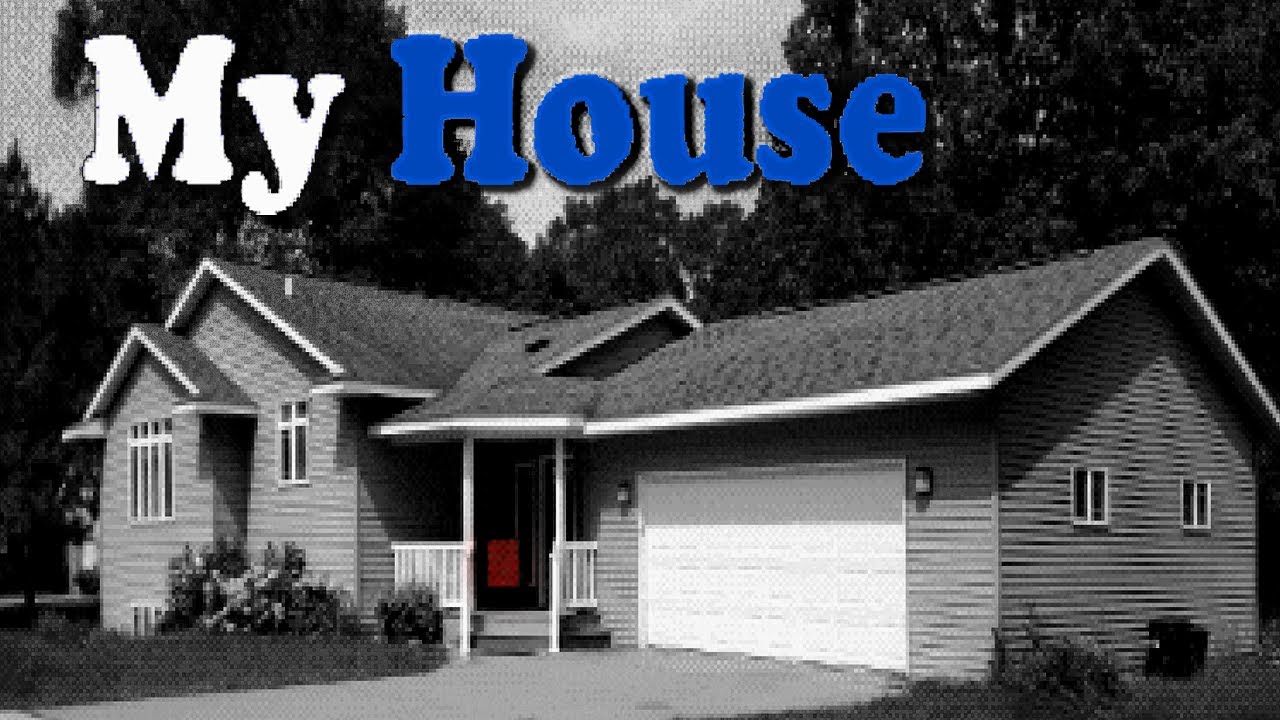
Power Pak
Decoding the map's impossible architecture and hidden forum archives reveals that the psychological horror project is an elaborate romantic tribute to two partners who died on the same day.
AI-assisted summary of MyHouse.WAD - Inside Doom's Most Terrifying Mod — original source. Check the original for full context.
Source published:
Key ideas
- Uploaded to Doomworld in March 2023 under the guise of a modest tribute map, MyHouse.WAD conceals a 66 MB GZDoom mod featuring non-Euclidean geometry, psychological horror, and an alternate-reality game. (0:12)
- The mod directly adapts structural and thematic elements from Mark Z. Danielewski's novel House of Leaves, utilizing shifting domestic layouts, infinite concrete labyrinths, and multi-layered metafictional authorship. (19:17)
- Community ARG investigation revealed that an in-game QR code links to an obituary showing both purported author Steve Nelson and his friend Thomas Allred died on the exact same day in August 2022, recontextualizing the horror experience as an elaborate romantic tribute. (85:34)
- Across multiple branching paths and endings, progression hinges on collecting 16 artifacts tracked across portrait frames while navigating surreal environments ranging from Jared Pike-style bathhouses to the Backrooms. (44:44)
Detailed notes
## Background Published on YouTube by Power Pak on May 11, 2023, this documentary-style analysis delves into the mysterious Doom mod 'myhouse.wad'. According to the video's description, it examines a map uploaded to the Doomworld forums by an unknown user, hiding vast, surreal secrets deep inside its unassuming walls.
## TL;DR The video chronicles a comprehensive multi-part expedition through 'MyHouse.WAD', a seemingly simple domestic Doom II tribute map that rapidly unravels into an intricate, non-Euclidean psychological horror labyrinth. Power Pak breaks down the technical wizardry, mirrored alternate dimensions, and pervasive influences from Mark Z. Danielewski's novel 'House of Leaves' and modern liminal horror. Integrating the collaborative discoveries of the Doomworld community, the essay navigates the mod's multiple endings, hidden mechanics, and external Google Drive files. In doing so, it ultimately uncovers a deeply personal alternate reality game (ARG) memorializing the tragic love and shared lives of Steve Nelson and Thomas Allred.
## Atmosphere & style The presentation is haunting, contemplative, and methodical, weaving retro gaming nostalgia together with escalating psychological dread. Power Pak guides the viewer with an engrossed, low-key cadence, puncturing moments of genuine unease with dry wit and grounded vulnerability. As the investigation moves from eerie technical source-port anomalies to an emotionally raw confrontation with grief and trauma, the narrative arc transforms from a spine-chilling mystery into a poignant, bittersweet meditation on loss.
## Bulletin - [00:12](https://www.youtube.com/watch?v=5wAo54DHDY0&t=12s) Uploaded to Doomworld in March 2023 under the guise of a modest tribute map, MyHouse.WAD conceals a 66 MB GZDoom mod featuring non-Euclidean geometry, psychological horror, and an alternate-reality game. - [19:17](https://www.youtube.com/watch?v=5wAo54DHDY0&t=1157s) The mod directly adapts structural and thematic elements from Mark Z. Danielewski's novel House of Leaves, utilizing shifting domestic layouts, infinite concrete labyrinths, and multi-layered metafictional authorship. - [01:25:34](https://www.youtube.com/watch?v=5wAo54DHDY0&t=5134s) Community ARG investigation revealed that an in-game QR code links to an obituary showing both purported author Steve Nelson and his friend Thomas Allred died on the exact same day in August 2022, recontextualizing the horror experience as an elaborate romantic tribute. - [44:44](https://www.youtube.com/watch?v=5wAo54DHDY0&t=2684s) Across multiple branching paths and endings, progression hinges on collecting 16 artifacts tracked across portrait frames while navigating surreal environments ranging from Jared Pike-style bathhouses to the Backrooms.
## Key takeaways - [00:12](https://www.youtube.com/watch?v=5wAo54DHDY0&t=12s) The project was posted to Doomworld by user Veddgo as a simple tribute map, but the 66 MB file size and GZDoom requirement immediately signaled unprecedented architectural complexity. - [03:20](https://www.youtube.com/watch?v=5wAo54DHDY0&t=200s) Initial playthroughs mimic standard domestic 'Doomcute' mapping before reality subtly distorts via impossible room-over-room geometry, vanishing doors, and functional mirrors. - [17:24](https://www.youtube.com/watch?v=5wAo54DHDY0&t=1044s) Clearing early iterations of the map loops players directly into Doom II MAP02 (Underhalls), creating the illusion of a standard retro level while masking deeper secrets. - [19:17](https://www.youtube.com/watch?v=5wAo54DHDY0&t=1157s) An accompanying Google Drive journal formats the word 'house' in blue, establishing an overt homage to Mark Z. Danielewski's novel House of Leaves. - [28:18](https://www.youtube.com/watch?v=5wAo54DHDY0&t=1698s) Entering the master bathroom mirror transports the player to a reversed world featuring backward monster audio, altered weapon animations from Smooth Doom, and a decaying daycare. - [36:13](https://www.youtube.com/watch?v=5wAo54DHDY0&t=2173s) Environmental plumbing puzzles trigger a whole-house flood, granting passage to an expansive white-tiled bathhouse inspired by digital artist Jared Pike. - [47:50](https://www.youtube.com/watch?v=5wAo54DHDY0&t=2870s) Typing 'noclip' in the console punishes conventional cheating by exiling the player to a non-Euclidean recreation of the Backrooms hunted by an invincible entity. - [49:46](https://www.youtube.com/watch?v=5wAo54DHDY0&t=2986s) Allowing the death screen to linger introduces an unannounced purgatory house mechanic where retrieving a pill bottle allows a single mid-game resurrection. - [55:17](https://www.youtube.com/watch?v=5wAo54DHDY0&t=3317s) Placing the lost book on the library shelf opens the pitch-black Navidson Hallway, transforming the arcade shooter into non-combat atmospheric dread using subtle architecture and silence. - [01:03:46](https://www.youtube.com/watch?v=5wAo54DHDY0&t=3826s) Achieving the true narrative path requires hunting down 16 personal artifacts contextualized by journal entries detailing grief, childhood memories, and sleep paralysis. - [01:15:44](https://www.youtube.com/watch?v=5wAo54DHDY0&t=4544s) Ending 2 presents an artificial beach that falls apart into an eternal void, reflecting journal writings on eternity as psychological torture. - [01:21:56](https://www.youtube.com/watch?v=5wAo54DHDY0&t=4916s) Surviving a climactic gas station battle unlocks the true ending, where the beach becomes a sunlit sanctuary accompanied by the player's rescued dog. - [01:25:34](https://www.youtube.com/watch?v=5wAo54DHDY0&t=5134s) A decoded backyard QR code uncovers Steve Nelson's obituary, revealing shared dates, locations, and high school history that reframe the map as a profound tribute between romantic partners. - [01:35:30](https://www.youtube.com/watch?v=5wAo54DHDY0&t=5730s) The mod honors Doom's 30th anniversary by manipulating core engine conventions—such as linedef triggers, camera height, and weapon sound subversion—to deliver modern psychological horror.
## Detailed walkthrough ### [00:12](https://www.youtube.com/watch?v=5wAo54DHDY0&t=12s) The Forum Post and the Mysterious PK3 File
On March 3rd, a Doomworld user named Veddgo made a poignant post on the forums announcing the release of a tribute map crafted for *Doom II*, entitled `myhouse.wad`. In the post, Veddgo recounted a personal tragedy:
> “Last August, I lost a good childhood friend of mine and took it pretty hard. When I was visiting my hometown for his funeral, I connected with his parents, who shared with me some of his old belongings. Among them was a copy of an old map of his backed up on a 3.5-inch floppy from high school. Thomas and I were into amateur Doom mapping in the early 2000s, but I had never seen this map of his prior to uncovering it on one of the floppy discs. As a way of paying tribute to him and all the great memories we had together, I took the plunge and installed Doom Builder in order to polish up his map and add a few modern amenities just for convenience's sake.”
Veddgo went on to describe the map as having an unassuming 10-minute runtime, noting that “making maps of your house was all the rage back in the day” and that sharing it felt like a fitting memorial. However, beneath this nostalgic presentation lay immediate technical anomalies. Players following the provided Google Drive link discovered that downloading the mod did not yield a standard WAD file; instead, they received `myhouse.pk3`. While PK3 is a common, ZIP-compressed format used in modern source ports like GZDoom to organize directory structures cleanly, this specific file was roughly 66 megabytes. That is four times larger than the combined file sizes of the original *Doom* and *Doom II* put together, hinting that the seemingly tiny suburban tribute concealed an enormous volume of hidden assets.
- **Author**: Doomworld user Veddgo - **Tribute Dedication**: Dedicated to late childhood friend Thomas ("Tom") - **Source Medium**: A 3.5-inch floppy disk recovered from Thomas's parents - **Format Discrepancy**: Announced as `myhouse.wad`, distributed as `myhouse.pk3` - **File Size**: 66 MB (exceeding original *Doom* + *Doom II* combined by 4x) - **Engine Requirement**: GZDoom source port
---
[03:20](https://www.youtube.com/watch?v=5wAo54DHDY0&t=200s) Expedition 1: The Anatomy of an "Impossible" House
The narrator boots up the mod on Ultra-Violence difficulty (“because frankly, I have an ego”) and immediately encounters an uncharacteristically long load time before spawning. The classic *Doom II* MAP01 track, Bobby Prince's "Running from Evil"—frequently hailed as the unofficial national anthem of custom Doom WADs—welcomes the player. The initial layout represents a charming example of "Doomcute," an affectionate community term for real-world domestic architecture rendered using the chunky geometry and stock textures of the vintage Doom engine. The house features a spacious front yard, an exterior porch, wooden siding, a two-car garage, and interior spaces furnished with a living room TV, a tiny PlayStation 1 console, and a fully equipped kitchen.
```mermaid flowchart TD accTitle: Exploration Flow of the Initial House accDescr: Navigation through the upstairs rooms down to the impossible lower level and red keycard.
subgraph Upstairs ["Ground / Upper Floor"] Yard["Front Yard & Garage"] --> Hall["Main Hallway & Living Room"] Hall --> BedUp["Upper Bedroom (En-Suite)"] BedUp --> YellowCard["Yellow Keycard Pickup"] Hall --> Util["Utility Room (Red Key Door)"] end
subgraph Downstairs ["Basement Level"] Hall --> Stairs["Staircase Down"] Stairs --> GameRoom["Games Room (Directly under Upper Room)"] GameRoom --> BathDown["Basement Bathroom (Yellow Door)"] BathDown --> RedCard["Red Keycard Pickup"] end
YellowCard -.->|"Unlocks"| BathDown RedCard -.->|"Intended for"| Util ```
While navigating the upper floor, the player recovers the yellow keycard from a monster closet inside an en-suite bathroom. However, as the player journeys downstairs into a recreation games room, the geometry commits a structural heresy: the games room sits directly beneath the floor of the room above it.
In the classic Doom engine, map data is processed strictly as a two-dimensional sector plane extruded into pseudo-3D space; two rooms cannot natively occupy the same horizontal X/Y coordinates at different elevations. While the modern GZDoom source port allows for visual tricks and room-over-room wizardry, seeing vertical stacking executed so seamlessly within what purported to be an innocent, amateur tribute signals an uncanny level of technical mastery hiding in plain sight:
> “The innocuous map recreating a house suddenly shows serious skill with its tools, yet it does it so casually as you may not even notice.”
Continuing through the basement past a boiler room, home office, and storage areas, the player reaches a yellow-keyed bathroom. Inside the shower stall lurks a demon guarding the red keycard. Ammo is strictly rationed on Ultra-Violence, forcing the narrator to conserve shells by punching Pinky demons with bare fists. Peering through an exterior window from the lower level reveals a Soul Sphere (a +100 health power-up) balanced outside on a vent or bin—a detail that went entirely unnoticed during the initial approach from the front yard.
---
[07:09](https://www.youtube.com/watch?v=5wAo54DHDY0&t=429s) The Loop and the Shifting Architecture
Ascending back upstairs with the red keycard, the player unlocks the utility room to claim the blue keycard, ostensibly meant to open the front exit gate and conclude the map. Intrigued by the Soul Sphere spotted from the basement window, the narrator circles back to the exterior to retrieve it before leaving. Upon rounding the corner to the bin, the Soul Sphere has vanished. Looking back toward the house windows, an eerie sight emerges: monsters are roaming inside the house again. Suddenly, without player intervention, the level's music track abruptly restarts from the beginning.
The house appears to have reset, but close inspection reveals subtle, unsettling alterations:
- The standard plastic keycards have been replaced by demonic skull keys. - Heavy Chaingunners have spawned into rooms that previously held only low-tier enemies. - Interior mirrors now reflect the environment with fully functional, dynamic accuracy. - The cupboard in the utility room that once held the blue keycard has transformed into a narrow, unmapped staircase ascending into an attic.
```mermaid flowchart LR accTitle: Reality Distortion Progression accDescr: The state shifts that trap the player inside the warped house.
A["House Reset<br/>(Music Restarts)"] --> B["Attic Appears<br/>(Blue Skull Key)"] B --> C["Front Doors Vanish<br/>(Player Trapped)"] C --> D["Impossible Liminal Spaces<br/>(Fireplace Room & Negative House)"] ```
After climbing into the unannounced attic to retrieve the blue skull key, the narrator heads back toward the front entrance to escape, only to find the exterior doors have completely vanished. Solid walls have sealed the exits, trapping the player inside:
> “The doors are gone. I'm not locked inside; I am trapped inside.”
A new closet door opens into an unnatural, impossible corridor that violates both engine geometry and Euclidean reality, leading into an alien room warmed by a fireplace, furnished with bizarre decor, and containing a single interactive can of Pepsi. Stepping outside another threshold leads to a nightmarish, inverted "negative" duplicate of the house where colors are reversed and a lone milkshake rests on a table. The background rendition of "Running from Evil" begins to warp, its pitch and pacing subtly degrading as the house's stability decays.
---
[10:38](https://www.youtube.com/watch?v=5wAo54DHDY0&t=638s) Burned Remnants and the Concrete Labyrinth
Returning through the warped corridors to the primary house, the narrator finds the original doorways permanently erased. Near the threshold where the front entrance used to be, a strange hum draws attention to a movable bookcase. Shoving it aside reveals a hidden chamber containing cat litter trays and an electrical circuit breaker.
Tripping the breaker causes the reality of the map to violently shatter:
- The house is engulfed in pitch-black darkness, thick smoke, and an apocalyptic ambient rumble. - Bizarre, non-standard custom monsters—deviating sharply from the stock *Doom* roster—swarm the ground floor. - Agonized, disembodied human screams echo from the upper floor. - Ascending the stairs reveals a charred, fire-gutted wasteland open to an angry, blood-red sky. - Three symbolic, non-combat items are scattered among the wreckage: an old journal/diary, a burned-out photograph frame, and a scorched teddy bear.
Pulling up the automap interface yields only void; the map feature is completely disabled, indicating the player is now entirely untethered from normal coordinates. The automap kill-counter in the corner reveals an impossibly large tally of monsters remaining, alongside a single registered secret—confirming that the bizarre, sprawling architectural changes witnessed so far do not even register as secrets within the map's internal logic.
Descending the stairs once more, the scorched wood gives way entirely to cold, brutalist concrete. Outside the windows, all color drains away into a bleak, monochrome gray. Entering the boiler room where a door previously led to the garage, the player steps through into an endlessly sprawling, subterranean labyrinth made of rough stone. The winding halls form an unsettling architectural echo: their layout subtly mirrors the floor plan of the house itself, endlessly recurring at shifting, distorted scales. Deep within these silent, monolithic stone halls, the narrator encounters an anomalous dog. Unlike the hostile fauna of the mod, this animal bounds up excitedly, barks without attacking, and sits quietly at the player's side—a solitary, gentle presence within the suffocating labyrinth.
[14:27](https://www.youtube.com/watch?v=5wAo54DHDY0&t=867s) The Concrete Jungle, the Impossible Sky, and the Airport Gate
The navigation of this strange environment devolves into an ordeal through a maze composed of one-way doors and illogical non-Euclidean geometry. Finding a plasma gun offers a brief moment of relief, yet the player remains profoundly disoriented. Driven by overwhelming curiosity, they fling themselves off a ledge into the pitch-black abyss between the towering buildings, plummeting until they finally hit the bottom.
What follows is dead silence. At the base lies an eerie sequence of architecture: a silent staircase, a locked door set deep into a recessed passageway, and a mirror that reflects the exact same staircase back at the player. Stepping through reveals an open sky—except the sky itself can actually be walked on as if it were solid ground. Despite the existence of walls, there is no viable route forward, forcing a retreat back through the doors and down the stairs into the brutalist "concrete jungle."
After spending extensive time working along precarious ledges, grappling with spatial layouts that defy physical logic, and repeatedly falling into open pits, a new path finally emerges. Ascending upward, the player stumbles into an airport terminal. Checking the flight departures reveals that the gate's status is listed as cancelled, yet the boarding bridge is physically right there. The player presses forward into the cabin, fighting through monsters inside the aircraft to reach the rear exit.
```mermaid flowchart TD accTitle: Abyss to Airport Terminal Progression accDescr: Flowchart showing the sequence of strange locations from the concrete canyon down to the airport and plane.
subgraph AbyssAndSky["The Underworld"] A["Abyss Between Buildings"] --> B["Mirror & Locked Door Passage"] B --> C["Walkable Sky Void"] end
subgraph ConcreteJungle["The Maze"] C --> D["Return to Concrete Jungle"] D --> E["Precarious Ledges & Illogical Halls"] end
subgraph Escape["The Terminal"] E --> F["Airport Departure Gate (Cancelled)"] F --> G["Combat Aboard the Plane"] end ```
---
[17:24](https://www.youtube.com/watch?v=5wAo54DHDY0&t=1044s) The Overgrown House, Underhalls, and Ending 1
Emerging from the back of the airplane does not return the player to the familiar map. Instead, the house has decayed into an abandoned ruin overtaken by creeping vegetation and plants. The entire structure is hollow, empty, and heavy with sadness. A strange sense of loss lingers underneath the player's movements amidst this domestic decay.
The front doors have returned to their frames. Hesitating briefly, the player steps through and hits the exit trigger. Upon clearing the level, the intermission screen displays a noticeably low kill percentage before loading straight into *Underhalls*—the iconic MAP02 of *Doom II*. It appears to simply be the standard base game resuming its intended progression, perfectly matching the original forum poster's claim that the upload was merely a single map.
The player is urged to treat this interlude as a fun cooldown: play through the map, grab the super shotgun, and push through to the normal exit switch. Yet, when expecting the exit to load MAP03 (*The Gantlet*), the mod springs its trap. A victory screen suddenly cuts in with a blunt realization:
> “Congratulations on beating ending one. You haven't even seen half of what's here.”
---
[19:17](https://www.youtube.com/watch?v=5wAo54DHDY0&t=1157s) Chapter ii – Intermission: Steve Nelson's Drive and *House of Leaves*
Venturing deeper into the mod requires investigating the accompanying Google Drive files credited to one "Steve Nelson." The drive contains supplementary materials, most notably an open journal text document that expands upon the original Doomworld forum post. In this journal, Steve writes of his deep grief over his childhood friend's death and mentions receiving the unfinished map from the friend's parents following the funeral.
One striking visual choice jumps out immediately on the page: a single word highlighted entirely in blue font: **house**.
This formatting is an unmistakable homage to Mark Z. Danielewski’s seminal 2000 novel, *House of Leaves*. The narrator admits he is no academic expert on the book—a labyrinthine, ergodic work that fans have dissected for decades—having coincidentally finished reading it only two days before the *MyHouse.wad* thread appeared online.
The structural parallels between the mod and the novel are extensive: - **The Navidson Connection:** The "Navidson Realty" sign encountered outside the house mirrors the central narrative of the book, *The Navidson Record*, where photojournalist Will Navidson discovers his home is an impossible quarter of an inch larger on the inside than on the outside, before it spawns an expansive, pitch-black labyrinth extending for miles. - **Layered Authorship:** In the book, the *Navidson Record* is a manuscript written by an eccentric blind hermit named Zampanò; after Zampanò dies, his scattered notes are found and reconstructed by Johnny Truant, who descends into severe paranoia and madness. Steve Nelson plays the Johnny Truant role here, obsessively assembling his deceased friend's work. - **The Typographic Tell:** Every single instance of the word "house" in Danielewski's novel is printed in blue ink, regardless of context, lending an uncanny, unsettling weight to an ordinary noun—a convention Steve Nelson directly reproduces in his digital journal.
---
[22:56](https://www.youtube.com/watch?v=5wAo54DHDY0&t=1376s) The Dream Journal and Tom's Obituary
The journal details Steve’s escalating obsession between August 2022 and the mod's launch in March 2023. As the months pass, Steve suffers from severe sleep deprivation, memory lapses, and fugue states where he discovers complex sections of the map built without any recollection of making them. There is even a frantic entry noting that the wrong file was uploaded to the forums against his intention.
A particularly telling entry—struck through with a line in the document—describes a vivid nightmare that heavily foreshadows the game's actual environments:
> “I had the strangest dream last night about my childhood friend who recently passed away. We were playing Legos in his basement like we used to do as kids, and when I turned around he was gone. The house was empty and silent; everything was so quiet and still. I started to smell smoke and hear screams from upstairs. I ran upstairs and when I got there the house was just a burned frame; smoke was getting thicker and thicker and I could barely see or breathe. I searched for my friend, but I couldn't find him anywhere. I couldn't see anything. I started to panic and then found myself outside in the fog. I was alone, but I could hear low growls in the distance.”
The Google Drive also contains an image folder holding a newspaper clipping: an obituary for Steve's friend, Tom. The clipping provides a tender, melancholic glimpse into Tom's life before his untimely passing at age 35 inside his home—noting that he had recently reconnected with his high school crush and loved spoiling his pet cat.
---
[25:03](https://www.youtube.com/watch?v=5wAo54DHDY0&t=1503s) Chapter iii – Expedition 2: Looping Underhalls and the Smooth Doom Secret
Expedition 2 is an amalgamation of multiple exploratory runs and save files undertaken without using external walkthroughs or community guides. The primary goal is organic discovery.
This independent testing immediately reveals the ingenious structural loop designed by the author. Players are actually intended to play through *Underhalls* after finishing the first iteration of the house. Whatever health, armor, and weapons the player secures in MAP02—most crucially, the devastating **super shotgun**—carry over when the game loops the player straight back into the front yard of the house. This extra arsenal is virtually mandatory to survive the encounters ahead. Alternatively, speedrunners can sequence-break by grabbing the blue key and exiting straight to *Underhalls* immediately, bypassing the second house entirely.
Subtle architectural and mechanical oddities start revealing themselves to a watchful eye: - **The Basement Window Paradox:** When inspecting the exterior of the house from the outside, the basement has no windows whatsoever. Once the player walks downstairs into the interior, however, windows abruptly appear on the wall, taunting the player with an unreachable Soul Sphere resting on the lawn outside. Stepping back outside causes the windows to vanish once again. - **The "Smooth Doom" Weapon Tell:** Upon crossing into the altered second house during the initial expedition, the player character's weapon sprites silently change. The standard 1994 *Doom II* weapon animations are seamlessly swapped out for the higher-fidelity, multi-frame animations of the popular *Smooth Doom* mod.
> “The weapons have changed. They're still the same, but they've changed from original Doom's weapons to higher-fidelity versions from Smooth Doom, adding more animation frames than one originally had in 1994.”
This animation change is permanent; once triggered, it persists across save files and carry-overs, including the return loop from *Underhalls*. It operates as an ingenious piece of psychological subversion: an unsettling change that the player senses subconsciously long before they actively identify it.
Armed with the super shotgun from the *Underhalls* loop, the player clears out the monsters in the second house, collects the blue keycard, navigates the impossible hallway to retrieve the Pepsi and the milkshake, and returns to the living room. The house has now transformed into the true anchor point of the entire mod, serving as the central hub from which all future deviations will spring.
[28:18](https://www.youtube.com/watch?v=5wAo54DHDY0&t=1698s) Cheats, Journal Warnings, and the Mirror World
Attempting to bypass the intended progression reveals that the game is actively monitoring the player's choices and trying to steer them away from catastrophic mistakes. The journal had already hinted at this by crossing out the dream of the house fire, but the game engine itself offers much more explicit pushback through classic cheat codes. Entering god mode (`iddqd`) triggers a message, but typing it again to toggle it off delivers a blunt decree: “there is no good outcome from a house fire.” Stepping through the burned-out doorway permanently locks the playthrough onto the grim ending seen previously. Conversely, turning god mode on displays a cryptic clue: “my reflection winked at me I covered the mirror in the Attic just to be safe.”
Following this clue up to the attic—a room that may or may not physically exist—reveals a draped mirror. While the glass does not reflect the player, it clearly shows an object that does not exist in the physical room: a glowing blue Christmas bauble. This directly mirrors another journal entry recounting a bizarre dream about shaving in front of a bathroom mirror, watching the reflection wink, throwing a razor into the unbroken glass, and crawling straight through the pane into a tunnel before winking back. After enduring a deliberately jarring Discord notification chime baked directly into the map’s sound design to toy with the player's real-world senses, the player investigates the bathrooms. Climbing atop the sink in one upstairs bathroom allows Doomguy to press straight through the glass pane into the mirror world.
```mermaid flowchart TD accTitle: Mirror World and Daycare Transition Path accDescr: Flowchart illustrating the path through the mirror world into the mirrored attic, daycare, and courtyard.
subgraph MirrorWorld["The Mirrored Reality"] Sink["Bathroom Mirror Sink"] --> MirrorHouse["Mirrored House\n(Reversed demon audio)"] MirrorHouse -->|"Front Doors"| Underhalls["Mirrored Underhalls (Doom II Map 02)\n(Loses all weapons)"] MirrorHouse -->|"Attic Stairs"| MirroredAttic["Mirrored Attic"] end
subgraph Discoveries["Attic & Daycare Realm"] MirroredAttic --> BlueBauble["Blue Christmas Bauble & Baby Bottle"] MirroredAttic --> Daycare["Rundown Daycare\n(Fog, car, house downstairs layout)"] Daycare --> Closets["Closet Wall Punch -> Berserk Pack"] Closets --> DaycareBoss["Masked Attacker Ambush\n(Drops Gate Key)"] end
Underhalls -.->|"Returns stripped"| MirrorHouse ```
The mirror house is an inverted reality where the entire floor plan is flipped and repopulated with demons whose vocalizations and combat audio are played backwards. Even more disorienting is that the front doors are fully intact and functional. Walking outside transports the player to a mirrored recreation of Underhalls (Doom II's MAP02), populated by inverted monsters; clearing it brings the player back to the mirrored house with a brand-new musical arrangement, though doing so strips away every weapon collected so far. Skipping that detour and heading straight to the mirrored attic allows the player to grab the blue bauble seen through the looking glass, alongside a baby crib containing a bottle—an addition absent from the standard house that strikes an immediately somber chord.
[32:22](https://www.youtube.com/watch?v=5wAo54DHDY0&t=1942s) The Rundown Daycare and the Ambush
Leaving the mirrored attic drops the player into a children's daycare, an environment that feels profoundly uncomfortable. The cheerful, brightly colored play space has fallen into neglect and disrepair, surrounded outside by thick, suffocating fog and a solitary parked car. While scanning the perimeter, the narrator notes: “I thought I saw someone in the fog at one point but I look at my footage now and there's no one here.” The discomfort deepens upon realizing the daycare's interior geometry is an exact match for the downstairs layout of the house.
Navigating the space requires some environmental puzzle-solving. A berserk pack sits tantalizingly out of reach on a high shelf, accessible only by slipping into a closet and punching a cracked section of wall hidden behind the open door. Scattered across the daycare are interactive relics: a baseball, a box of crayons, and an ominous clown costume hung inside a cupboard that cannot be collected. When attempting to backtrack to the entrance, the exit simply ceases to exist. Turning around triggers an ambush by an aggressive, high-health humanoid stalker who swings violently at close range until brought down with heavy shotgun fire. The slain attacker drops a gate key, providing the only route of escape from the fog-choked yard.
[34:44](https://www.youtube.com/watch?v=5wAo54DHDY0&t=2084s) The Google Drive Clues and the Overflowing Bathtub
Context for these architectural anomalies is found in the Google Drive archive linked in the original forum post. The "photos" folder contains real-world reference pictures of the author's late friend's house: the kitchen, the living room, and the game room featuring the secret doorway concealed behind a bookshelf. Most unnerving of all is a photograph depicting what appears to be the real-life counterpart to the impossible hallway.
Back in the virtual house, wandering around and pressing the use key on random fixtures leads to accidentally activating the kitchen faucet. Turning on faucets across both the standard house and its negative/mirrored counterpart steadily pumps water directly into the ensuite bathroom tub upstairs. The objective seems whimsical at first—raising the water level high enough to retrieve a small yellow rubber duck bobbing on the surface. However, collecting the duck during a Discord livestream with friends unleashed an unexpected horror: the plumbing abruptly ruptures, submerging the entire two-story house in deep water.
[36:13](https://www.youtube.com/watch?v=5wAo54DHDY0&t=2173s) The Flooded House and the Jared Pike Bathhouse
Navigating the completely flooded residence feels sickening. Doom’s trademark snappy, lightning-fast movement mechanics are replaced by sluggish underwater physics as the player wades through the submerged rooms. With nothing left to interact with inside the drowned house, swimming outward leads through a portal into an austere, monolithic bathhouse constructed entirely of white and pastel tiles.
The architecture directly evokes the liminal, sterile pool environments popularized by digital artist Jared Pike. While dropping down holes or off ledges here merely plunges the player back into the sky room containing the endless staircase, true progression lies inside the bathhouse itself—which once again secretly replicates the layout of the primary house. Slipping into a locker room reveals a non-Euclidean maze of endless tiled corridors, bathroom stalls, and communal showers that defy physical geometry. Escaping this spatial trap requires doubling back on oneself at a specific junction within the labyrinth, eventually emerging onto an enormous indoor swimming pool.
```mermaid flowchart TD accTitle: Bathhouse to Garage Progression Flow accDescr: Diagram tracing player progression from the Jared Pike bathhouse through the underwater maze, garage bridge, and maze.
subgraph BathhouseComplex["Bathhouse & Submerged Pool"] Bathhouse["Jared Pike Bathhouse\n(House layout)"] --> NonEuclidMaze["Non-Euclidean Shower Maze\n(Double-back puzzle)"] NonEuclidMaze --> PoolRoom["Giant Indoor Pool\n(Hostile fish & D20 die)"] PoolRoom --> PoolFloor["Missing Tile -> Underwater Labyrinth"] end
subgraph UnderwaterMaze["Oxygen Mechanics"] PoolFloor --> OxygenMaze["Timed Drowning Maze"] OxygenMaze --> TrueGrate["Air Grate (Breath)"] OxygenMaze --> FalseGrate["Trap Grate (Lethal)"] TrueGrate --> GarageVoid["The Garage Void"] end
subgraph UpperAbyss["Abyss Crossing & Progression"] GarageVoid --> Bridge["Narrow Abyss Bridge\n(Homing projectile snipers)"] Bridge -->|"Cross successfully"| UnburnedMaze["Unburned Outdoor Maze\n(Cerberus evasion)"] Bridge -.->|"Fall"| SkyRoom["Sky Room Reset"] UnburnedMaze --> Airport["Liminal Airport Terminal"] end ```
[38:48](https://www.youtube.com/watch?v=5wAo54DHDY0&t=2328s) The Fish Pool, Underwater Grate Maze, and Oxygen Mechanics
The massive pool contains an aggressive aquatic monster and a 20-sided die (D20) resting near the water. While it is possible to pump ammunition into the water to kill the creature from the dry pool deck before grabbing the die, conservation of ammo is vital. Grabbing the D20 is only the first step: hidden beneath the surface, a missing floor tile opens up into a subterranean, water-filled labyrinth.
This section introduces full-fledged swimming and oxygen management mechanics right inside the classic Doom engine. As the breath meter ticks down toward fatal drowning, navigating the flooded pipes becomes a race against time. The player must distinguish between genuine life-saving air grates and deceptive trap grates designed to kill them. Power Pak expresses genuine awe at this technical feat:
> “And sorry, can we take a step back and see that we have swimming and oxygen mechanics in Doom? In Doom? This is absolutely crazy, but only half as crazy as this.”
Surfacing through the proper escape shaft reveals "the garage"—a colossal, dark void crisscrossed by narrow bridges where snipers unleash homing projectiles across massive distances. Slipping or falling off these narrow pathways drops the player straight back down into the endless staircase sky room.
[40:06](https://www.youtube.com/watch?v=5wAo54DHDY0&t=2406s) The Unburned Maze, Google Drive Sketches, and the Airport
Successfully crossing the treacherous bridge leads back to the outdoor hedge maze, marking a critical narrative turning point: reaching this zone without triggering the destructive house fire confirms genuine forward progress on a better route. Navigating the labyrinth while evading the lethal Cerberus yields several key items: - A decorative pumpkin tucked away in the brush. - A secluded doghouse containing a throwable frisbee. - A can of cat tuna sitting atop a high railing, reachable only via a precise strafe-run off an upper ledge (an action that inevitably alerts the barking Cerberus). A sentimental nod in the journal explains: “kitties love tuna. Tom always spoiled his kitten rotten.”
The Google Drive sketchbook contains three disturbing drawings mentioned in the journal entries: one of the house itself, one of the multi-headed Cerberus displaying far more heads than normal, and a final sketch of a blue key that seems to conceal an unsettling secondary shape within its linework.
Passing through the maze exit brings the player into a deserted, liminal airport terminal. The terminal features a functioning metal detector that sounds an alarm and awards a slight health bonus, a car parked out front in the gloom, and an airport gift shop where interacting with a display rack t-shirt instantly grants 200% mega-armor.
[42:25](https://www.youtube.com/watch?v=5wAo54DHDY0&t=2545s) The Airport Terminal and the Moving-Out House
Continuing through the bizarre airport terminal, there appears to be little of note on the upper level or around the baggage conveyor, which proves too cramped to squeeze inside. Checking the restrooms reveals that the men’s room is impeccably spotless—frankly the cleanest public gent’s room imaginable. Just outside the women's restroom, however, sits an empty prescription pill bottle marked with a note that a refill is needed. After gathering the necessary firepower throughout the area, the bottle becomes a full container of pills granting the status of "feeling fine," which in turn causes the adjoining restroom to become accessible and fine as well.
Taking a broader look at the terminal's floor plan yields a disorienting realization: the airport terminal is architecturally identical to the house itself. The interior of the airplane remains unchanged, containing nothing new even within its compact lavatories. Taking the plunge and leaping out of the aircraft transports the player back to the residence, but its state has shifted once again. Rather than appearing charred, ruined, and abandoned, the home now looks as if the resident has simply packed up belongings and moved out. It stands completely empty and somewhat melancholic, yet no longer dilapidated, giving a distinct sense of emotional progress. Stepping through the front gate, however, triggers the exact same loop as before: the screen cuts to Navidson Realty and boots straight into Doom II's Underhalls, prompting another cycle.
- The empty pill bottle found outside the ladies' room requires a refill before granting the "feeling fine" status. - The airport terminal's layout mirrors the domestic floor plan of the suburban home. - Leaping from the airplane leads to an empty, "moved-out" version of the house rather than the charred ruins seen previously.
[44:44](https://www.youtube.com/watch?v=5wAo54DHDY0&t=2684s) Expedition 3: The Doomworld Pioneers and the 16 Items
Recognizing the limits of aimless solo exploration, the journey turns to community knowledge. Rather than spoiling the experience with a sterile walkthrough from the Doom Wiki, the investigation follows the original Doomworld forum thread chronologically from its inception. When the map first dropped on March 3rd, it went largely unnoticed as an unassuming tribute until March 7th, when forum members finally grasped the true scale of what was hidden within. Power Pak reflects on this collective breakthrough: “I followed the whole thread of discovery that all the users on Doom World undertook together when they were finding out about this map for themselves when the reality of this innocent sounding level finally hit.” Crucial troubleshooting assistance also came from a community member who pointed out incorrect tone-mapping settings in GZDoom, restoring visual clarity to the mod's darkest corridors.
This third expedition establishes the underlying mechanic governing true progression: collecting specific artifacts scattered across realities. While the burned-out house contains items, they do not register toward progression. The portrait in the master bedroom tracks collected items, displaying eight slots in the primary world and a mirrored portrait with another eight slots in the mirror realm, demanding a grand total of sixteen items. Prior solo runs were stalled by missing just two specific collectibles: a wedding ring and a bottle of wine. Retrieving the wedding ring requires stepping onto a specific isolated black tile in the floating garage section to summon airborne enemies, followed by an exacting leap of faith across a void to a floating platform and a harrowing run back into the brutalist maze. The wine bottle, by contrast, had simply gone unnoticed on a counter in the mirror world's kitchen.
```mermaid flowchart TD accTitle: Item Collection and Progression Tracking accDescr: Diagram illustrating the two separate 8-item portraits across the normal and mirror worlds required for true map progression.
subgraph NormalRealm["Normal World"] A["Normal House"] --> B["Normal Portrait Frame"] B --> C["8 Normal Artifacts<br/>(e.g., Pill Bottle, Milkshake)"] end
subgraph MirrorRealm["Mirror World"] D["Mirror House"] --> E["Mirror Portrait Frame"] E --> F["8 Mirror Artifacts<br/>(e.g., Wedding Ring, Wine Bottle)"] end
C --> G["Grand Total: 16 Items Required"] F --> G ```
- Mod release date: March 3, 2023; thread engagement and secret hunting exploded around March 7, 2023. - The progression system requires tracking 16 total artifacts split evenly across two 8-item portraits in the normal and mirror realities. - Items gathered inside the burned-down variant of the house do not increment the portrait counters. - The elusive wedding ring requires triggering monster spawns on a lone black tile in the floating garage void and surviving a high-stakes leap of faith.
[47:50](https://www.youtube.com/watch?v=5wAo54DHDY0&t=2870s) Noclipping into the Backrooms
Attempting to bypass the intended geometry using classic cheat codes yields immediate, deliberate retaliation from the map author. Typing the standard "noclip" command to bypass locked doors or wander past map boundaries triggers an ominous console warning before abruptly casting the player into a full recreation of the Backrooms. Power Pak admits: “I can't believe I never thought to use no clip until I saw that Doom World thread.” The area features sprawling, monotone beige corridors, buzzing fluorescent lights, and completely disorienting non-Euclidean geometry that loops infinitely on itself.
Navigating this expanse is agonizingly tense because the player is relentlessly hunted by an invincible entity stalking the hallways. Scattered across the carpeted maze are incidental props such as discarded computer monitors and pinned wall posters, but locating the genuine exit requires precise community-documented navigation. Taking the proper exit returns the player to the bottom of the staircase beyond the recessed locked door in the basement. Curiously, clipping out of bounds within the mirrored Underhalls transports the player to a separate mirror-world variant of the Backrooms—an inescapable iteration where no functional exit could be found.
- Noclipping out of bounds anywhere on the map immediately teleports the player into the liminal Backrooms maze. - An indestructible entity actively pursues the player throughout the repeating beige corridors. - An exit sequence documented on Doomworld returns the player directly to the bottom of the basement stairs behind the recessed door. - The mirrored version of Underhalls possesses its own distinct Backrooms pocket dimension from which escape seems impossible.
[49:46](https://www.youtube.com/watch?v=5wAo54DHDY0&t=2986s) Dying Without Reloading: The Revival Sequence
A player's instinct upon dying in Doom is almost universally to hit the quick-load key immediately, but exercising patience after death reveals an astonishing hidden mechanic. Allowing the death camera to linger without input triggers an unprompted, surreal sequence that transports the player's consciousness into a silent, dreamlike twilight version of the suburban home.
Wandering through this purgatorial iteration of the house eventually allows the player to locate another prescription pill bottle. Picking up this item revives the player right where they fell in the active game world, functioning as a single-use resurrection mechanic. Power Pak notes the ambiguity of the mechanic: “You can do this a single time to revive where you stand I don't know if this serves some kind of purpose the pill bottle being there makes me wonder but I have no clue myself.”
```mermaid flowchart LR accTitle: Death and Revival Loop accDescr: Flowchart showing the sequence of events when dying without reloading immediately. A["Player Dies"] --> B["Do NOT Quick-Load"] B --> C["Teleport to Liminal House Purgatory"] C --> D["Locate Pill Bottle"] D --> E["One-Time Resurrection at Death Point"] ```
- Withholding quick-load after death transitions the player into an eerie dream-state variant of the house. - Collecting the pill bottle within this death realm resurrects the player once per run at the exact coordinates of their demise.
[52:16](https://www.youtube.com/watch?v=5wAo54DHDY0&t=3136s) Maze Exploits, the Megasphere, and the Static Screens
Returning to the brutalist concrete maze exposes several structural exploits and one-time pathways that punish careless navigation. A hidden shortcut entrance to the maze can be utilized exactly once; attempting to access it a second time finds it permanently sealed. Navigating the perimeter of the brutalist labyrinth reveals that its towering outer walls sit closer to the boundaries of the oversized domestic architecture than they initially appear, presenting opportunities for daring players to sprint and leap across the void.
Leaping from specific perimeter ledges allows the player to land within enlarged, out-of-scale rooms of the house. One such drop rewards the player with a Megasphere, instantly providing maximum health and armor, though departing this cache requires dropping down an infinite staircase. Because entryways such as the secret shortcut and the floating garage access can only be crossed a single time, route planning must be calculated carefully. Pulling off an even more demanding platforming leap across the chasm accesses an isolated chamber; doing so causes every television set across every realm—the base house, the mirror house, and the hospital—to switch on simultaneously, broadcasting eerie, flickering static across empty rooms. Regarding the emotional impact of the anomaly, Power Pak observes: “I have no idea if this means or does something but it makes me feel very small for some reason.”
- The brutalist maze contains shortcut doors and garage access points that permanently seal shut after a single use. - Leaping off specific maze ramparts into the surrounding macro-void grants access to giant-scale house rooms, including an alcove containing a Megasphere. - Completing a difficult platforming jump activates all television screens across the normal house, mirror house, and hospital, leaving them buzzing with static.
[55:17](https://www.youtube.com/watch?v=5wAo54DHDY0&t=3317s) The Navidson Hallway
The emotional climax of the third expedition occurs upon returning the lost book to its rightful place on the bookshelf. Placing the book strips away all background ambient drones, plunging the environment into an unnatural, suffocating silence. A narrow, pitch-black doorway opens directly into the impossible architecture of concrete and absolute darkness—an overt, harrowing recreation of the five-and-a-half-minute hallway from Mark Z. Danielewski’s novel *House of Leaves*. Power Pak describes the psychological dread of entering the threshold: “Silence overwhelms you as you step into the impossible space of concrete and darkness after the near constant noise and drones of exploring this house this utter vacuum fills my stomach with Dread.”
Presented almost entirely without voiceover commentary, the exploration of the Navidson Hallway is an agonizing descent through an impenetrable, pitch-black labyrinth constructed of raw, cold ashlar and concrete. The player's flashlight barely pierces the gloom, illuminating endless descending stairwells, yawning subterranean chasms, and architectural formations that twist logic. Even though direct combat is absent, subtle audio cues, shifting geometry, and distant structural groans instill relentless terror. Reflecting on the harrowing trek upon finally making it back to the entrance, Power Pak concludes: “It manages to inspire anxiety using only its strange architecture and occasional little prodding insinuations that I'm not alone in this house... To execute this Labyrinth here in Doom is nothing short of genius I think.” Even with this trial conquered, the automap still displays one elusive, undiscovered secret.
- Returning the book silences the entire soundscape and opens the Navidson Hallway. - The sequence draws inspiration from the shifting, windowless labyrinth in *House of Leaves*. - The hallway relies purely on darkness, spatial distortion, and minimal acoustic cues to create tension without active enemy combat.
[01:03:46](https://www.youtube.com/watch?v=5wAo54DHDY0&t=3826s) Expedition 4: Deconstructing the Artifacts and Memories
With the mechanics understood and the hidden areas charted, the fourth expedition begins with the explicit goal of completing the map properly while uncovering its fragmented narrative. Steve’s accompanying journal entries suggest that the impossible spaces of the house represent emotional baggage, personal trauma, and half-remembered biographical artifacts rather than random surrealism. The environment may stretch into infinite voids, but it never feels empty; it is saturated with human memory.
The sequence begins anew at the moment the interior doors vanish from the initial house layout. Entering the newly revealed side rooms yields the vintage can of Pepsi followed by the milkshake. Notably, neither beverage appears anywhere in Steve's supplementary archival photographs. However, the distinct retro interior design of the Pepsi room—steeped in 1970s and 1980s decor, paired with an antique Pepsi logo—implies an intimate childhood memory. It evokes the nostalgic scenario of a young child answering their mother's question about what they want to drink with the colloquial phrase, "I want pop." The adjacent milkshake room appears to represent an equally sentimental snapshot of youth, setting the emotional tone for the definitive final run.
- Expedition 4 shifts focus toward synthesizing the gameplay puzzles with the psychological narrative hinted at in Steve's journal. - Power Pak notes: “This house may be bigger on the inside but it feels far from empty.” - The retro aesthetics of the Pepsi room point toward preserved memories of childhood from the late 1970s or 1980s.
[01:04:52](https://www.youtube.com/watch?v=5wAo54DHDY0&t=3892s) The Attic Mirror and the Daycare Dream
Power Pak scrutinizes the visual aesthetic of the mod's altered rooms, considering whether the stylized color choices represent an actual in-universe remodeling or psychological trauma. In the developer’s shared pictures folder, the house clearly underwent structural renovations. The intense or monochrome palettes might simply reflect prior decor, or perhaps depict an altered state because a traumatic incident forced renovations, turning the space into an unpleasant memory. Analyzing cryptic found text like *"the kid needs a milkshake,"* Power Pak observes that it sounds far more like a detached phrase exchanged between estranged parents than the words of a child.
Returning to the mod's mechanics, the attic mirror is uncovered to establish access to the Mirror World via the bathroom. After clearing out all the Mirror World enemies just to be thorough, Power Pak collects the wine bottle (accompanied by the caption *"drunk buddy,"* linking back to Tom and Steve's shared photograph) and a bauble referenced in an entry of semi-conscious journal babble. The critical find in this sector, however, is the baby bottle resting inside a crib, which directly ties into a harrowing journal entry describing an escalating nightmare:
> “I lay in bed too afraid to move when I heard a faint ghostly cry coming from the attic. I had heard this sound before but this time it was louder and more insistent. I got out of bed and slowly crept up the stairs to the attic, my heart pounding so hard I thought it would burst. As I entered the attic I noticed a trail of children's toys leading out the window. I followed the trail feeling a strange compulsion to do so. The trail led me to an abandoned daycare center near the edge of town. I stayed back afraid to enter, but I couldn't help but feel drawn to the place. I knew something was waiting for me inside, something dark and dangerous. I took a deep breath and stepped inside. The place was dark and silent, but as I walked around I noticed the walls were covered in eerie drawings of children and babies. Then I heard the sound of a baby crying again coming from the back of the room. I followed the sound, and when I reached the back of the room I saw a crib with a stillborn baby inside. I felt a chill run down my spine as I realized what was haunting me: the stillborn baby was the one in the attic. I backed away slowly, my heart pounding in my ears. I knew I had to leave this place and I quickly ran out the door, never looking back.”
Inside the daycare area, Power Pak recovers a baseball autographed by J.J. Hardy and a box of crayons, noting that the accompanying flavor text—mentioning adult coloring books—feels entirely nonsensical. J.J. Hardy is an authentic professional baseball player drafted in 2001 who played for roughly two decades across three US franchises, making his name useless for pinpointing an exact year or location. A classroom blackboard marked with "1984" raises more questions: either someone got their dates mixed up, or the daycare maintained bizarrely advanced literacy standards for toddlers. After picking up the stuffed bear Snugs and blowing away an apparition of Shrek with no clear plot justification, it is time to return to the residence to flood the plumbing.
- Daycare collectibles: Baby bottle (inside the crib), baseball autographed by J.J. Hardy, box of crayons, and the stuffed animal Snugs. - Environmental oddities: A chalkboard reading "1984" and an inexplicable encounter with Shrek.
---
[01:08:01](https://www.youtube.com/watch?v=5wAo54DHDY0&t=4081s) The Bathhouse Caves and the Floating Garage
Power Pak turns on the sinks back at the house to flood the layout and manifest the waterhouse, a sequence paired with another diary entry describing sleep paralysis and aquatic terror:
> “I was dreaming about taking a nice hot bath. I felt myself sinking deeper and deeper into the warm water until I couldn't breathe. I tried to scream, but no sound escaped my lips. I was drowning in my own bathtub. Suddenly I felt a jolt as if I had been pulled out of the water. When I opened my eyes I found myself in a subterranean cave illuminated by a faint, eerie blue light. I could feel a chill in the air and I could hear the echoing of demons in the distance. I tried to scream, but my voice was muffled by the darkness of the cave. I felt a chill run down my spine as I realized I was being hunted by something unseen. I heard the scraping of claws on the rocks and felt the ground shaking beneath me.”
This subterranean nightmare materializes as the flooded bathhouse maze. Before navigating through to the swimming pool filled with bloodfish, Power Pak raids a specific locker in the corridor to claim a hidden ammo backpack, an upgrade that proves crucial for the high-capacity ammunition requirements ahead.
```mermaid flowchart TD accTitle: Waterhouse and Bathhouse Progression accDescr: Sequence of actions taken to clear the bathhouse, pool, and floating garage to claim the wedding ring.
subgraph Bathhouse ["Flooded Underbelly"] A["Activate House Sinks"] --> B["Enter Bathhouse Maze"] B --> C["Loot Secret Corridor Locker (Backpack)"] C --> D["Navigate to Pool with Bloodfish"] end
subgraph Garage ["Floating Platform Challenge"] D --> E["Fish with Explosives for D20"] E --> F["Enter Floating Garage Area"] F --> G["Dodge / Trigger Ambush Lines"] G --> H["Retrieve Wedding Ring Item"] end ```
After using explosives to go "boom fishing" for a twenty-sided die (D20)—a nod suggesting Tom, Steve, or both engaged in juvenile tabletop campaigns—the route opens toward an impossible floating garage. Surviving multiple platforming attempts to claim the wedding ring, Power Pak accidentally slips past the enemy tripwire entirely, only to turn around and trigger the spawn line out of pure pity before leaving. While the journal never mentions a suspended garage or an explicit marriage ceremony, an emotional entry dated Valentine’s Day provides heavy contextual weight:
> “Happy Valentine's Day to the only person I ever loved. For a short time you brought a little happiness to this painful existence called life. I hope we can be together again one day. In the meantime I'll keep looking, looking for that other someone who can be the ray of light in my life that you turned out to be.”
Reacting to the bitter melancholy of the text, Power Pak remarks, “Boy, Steve's had it rough through the years.”
---
[01:10:04](https://www.youtube.com/watch?v=5wAo54DHDY0&t=4204s) The Brutalist Maze and Airport Transit
Moving deep into the expansive brutalist maze, Power Pak searches for meaning within the surreal props, theorizing that the hostile dog patrolling the enlarged maze corridors may embody Tom’s childhood cynophobia, perhaps explaining why he eventually adopted a cat instead. Aside from the dog, there is little new insight to glean from the stray frisbee, the cat food, or the pumpkin. A notable map interaction is highlighted: the chamber concealing the plasma rifle remains sealed unless the player specifically grabbed the blue key back in the original version of the house, a design trap that easily catches players hunting for the Soul Sphere.
Power Pak also draws attention to a bizarre, passive entity lurking within a series of yellowed rooms strongly reminiscent of the Backrooms' Skin-Stealers, an enemy that cannot be harmed. Attempting to unplug the television in the TV room yields no new environmental shifts. After dropping down into the darkness and emerging through the stairs back inside the baseline house, all normal-world items have been gathered. However, two artifacts remain missing from the Mirror World frames.
Power Pak travels through the secret underground tunnel toward the airport terminal, noting the creeping presence of psychological collapse embedded in the architecture. Interestingly, the empty pill bottle discovered between the airport and hospital acts strictly as a narrative connector or red herring; it never slots into the wall frames and is not required for completion. In the terminal restroom, an unusual visual glitch can be manipulated: standing in a precise spot causes dynamic blood splatters to coat every surface except the doorway entrance.
Boarding the aircraft triggers a terrifying aviation nightmare recorded in the journal:
> “I was on an airplane and I was the only passenger. I looked out the window to see the ground below and noticed that the terrain was unfamiliar. I had no idea where I was or where I was going. Suddenly the plane started to shake violently and I heard a loud noise coming from the engine. In the distance I could see a huge storm cloud coming towards me. I tried to communicate with the pilot, but I couldn't hear him over the sound of the engine. The plane began to dive and suddenly I felt a huge jolt. I looked out the window again and saw that the plane was heading for some kind of structure. I closed my eyes and felt the plane crash. I felt the impact and heard the screams and cries from the people around me. I then woke up, my heart pounding and my body drenched in sweat.”
Upon surviving the crash, the player is dropped back into the central residence. Everything appears normal, but the wall painting of flowers has transformed into a bizarre new composition, and the front doors have unlocked. Escaping through the front yard is now technically an option, but turning back now would abandon the mystery: “Why would we do that when we can take this rabbit hole as far as we can go?”
---
[01:13:07](https://www.youtube.com/watch?v=5wAo54DHDY0&t=4387s) The Highway, Gas Station, and the Mirrored Road
The unlocked perimeter fence opens onto an endless asphalt road cutting through pitch darkness. Moving along the asphalt, a crashed vehicle marks the turnout for an isolated, brightly lit American gas station. The background music echoes with eerie familiarity, prompting Power Pak to remark, “This music too reminds me of a brawl I had once.”
Inside the gas station convenience mart, Power Pak picks up the final missing collectible: an Atari 2600 joystick controller. The exterior features an illuminated signboard and a deserted bus shelter. Following a trail of wet blood across the linoleum leads into an interior doorway, which disorientingly warps the player right back into the familiar house bathroom. Power Pak groans at the sudden spatial loop: “Oh God, please don't tell me that store was the house again.”
```mermaid flowchart LR accTitle: Gas Station and Mirrored Road Loop accDescr: Spatial transitions between the baseline highway, the gas station, and its mirrored counterpart.
subgraph NormalHighway ["Baseline Dimension"] A["Open Perimeter Fence"] --> B["Long Winding Road"] B --> C["Crashed Car Turnout"] C --> D["Gas Station Convenience Store"] D -->|"Loot Atari 2600 Joystick"| E["Follow Blood Trail to Backroom"] end
subgraph ReturnLoop ["Dimensional Loop"] E -->|"Instant Warp"| F["House Bathroom"] F --> G["Inspect Updated Mirror Painting"] end
subgraph MirrorHighway ["Mirror Realm"] G --> H["Exit Through Mirrored Fence"] H --> I["Follow Small Torch (Car Missing)"] I --> J["Mirrored Gas Station"] J --> K["Loot Rocket Launcher in Storeroom"] end ```
Securing the Atari controller officially completes the item collection, causing the Mirror World's master painting to display an altered image. Stepping outside through the mirrored yard, the perimeter fence unlatches in the exact reversed position. The return journey down the dark highway is easy to bungle because the landscape geometry is inverted. The crashed car that marked the original station entrance is gone, replaced solely by a tiny, flickering handheld torch resting on the ground.
Pushing through to the mirrored gas station, the atmosphere changes drastically. Investigating the back storage room rewards the player with a rocket launcher, prompting immediate anxiety: “Why am I being given a rocket launcher?” Heavy crime-scene tape cordons off the rest of the market interior and blocks the path back to the residential bathroom, forcing the player forward toward whatever ambush awaits.
[01:15:44](https://www.youtube.com/watch?v=5wAo54DHDY0&t=4544s) The Campfire, the Tree Carving, and Ending 2
Standing out near the roadside sign, smoke is visible rising above the tree line. Tucked away between the trees sits a small campsite. While players can physically walk out to this exact geographic spot in the regular, mundane version of the map, nothing is actually there. In this altered reality, however, a tree near the campsite bears a carved inscription reading `S + A`. The moment the player investigates and steps forward, the ground suddenly drops away.
Panic sets in as the player plummets into the dark void, realizing there is no path back. Down below, an eerie sight emerges: a serene, empty shore under an unmoving sky. Text suddenly prompts: "Congratulations on achieving Ending 2." As Power Pak remarks on the sudden shock of this abrupt conclusion, “No really, this is an ending; you might have some questions, but fortunately there's another dream to tell you about.”
```mermaid flowchart TD accTitle: Expedition 4 Endings and Secrets Path accDescr: Diagram illustrating the choice between Ending 2, the True Ending, and the QR code secret in MyHouse.WAD.
subgraph Choice["Backyard Gate Unlocked"] Camp["Woods Campsite / Tree Carving 'S + A'"] Burn["Burn the House Down Anyway"] end
subgraph Paths["Consequences"] FakeBeach["Fall into the Void\nEnding 2: The Fake Beach"] Chase["Flee Shadowy Arch-vile\nFight to Gas Station"] BurnRun["Brutalist Maze & Airport\nOpen Fence in Ruined House"] end
subgraph Outcomes["Final Resolutions"] TrueEnd["Ending 3: The True Beach\n(Real Peace + Rescued Dog)"] QRCode["Scannable QR Code\nSteve Nelson's Obituary"] end
Camp -->|"Step into pit"| FakeBeach Camp -->|"Escape the shadow"| Chase Chase --> TrueEnd Burn --> BurnRun BurnRun --> QRCode ```
[01:17:18](https://www.youtube.com/watch?v=5wAo54DHDY0&t=4638s) Journal Entry (February 26th, 2023): The Illusion of Eternity
To explain the unsettling nature of Ending 2, Power Pak reads an entry dated February 26th, 2023, from the author's journal found in the Google Drive. The author begins by admitting that the boundaries between reality and creation have completely dissolved: they can no longer distinguish which parts of the map were made by their deceased friend, which parts they created themselves, or what the map has generated on its own. The author is no longer afraid of the map generating itself, noting that it needs them just as much as they need it.
The author then recounts a lucid dream about standing on a peaceful beach, watching gentle waves caress the sand while seagulls circled overhead. But when they attempted to dip their toes into the water, they discovered there was no water and no ocean at all—it was entirely an illusion. The entire scene was merely a one-act play, leaving them stranded like a damned fool who believed in something greater. Stepping past the set dressing, they found themselves peering into complete oblivion at the end of time itself, devoid of joy, misery, or sadness.
The dream shifted into a terrifying philosophical meditation on eternity. While religious men preach that the afterlife lasts forever, the author wonders how anyone could possibly retain their sanity for an infinite duration. In the void, days turn into months, years, centuries, and millions of years, trapped with the exact same thoughts, obsessively chewing over life's regrets and mistakes. The author envisions another version of themselves—the one that winked back in the mirror—sitting contentedly on a real beach, finding solace in the fact that life is finite, there is no afterlife, and genuine happiness must be actively earned. As the journal entry concludes, Power Pak summarizes the driving ethos of the journey: “Happiness has to be fought for.”
[01:19:22](https://www.youtube.com/watch?v=5wAo54DHDY0&t=4762s) The Shadowy Arch-vile and the Final Road
To earn that genuine resolution, the player must fight for their happy ending rather than falling into the fake beach. Once the gate to the campsite is open, a shadowy, pitch-black Arch-vile manifests. This entity is essentially invincible; while it can be briefly stunned, standing your ground is futile—the only viable option is to run and never stop. The shadowy creature pursues the player relentlessly, even teleporting into the mirror house where it immediately begins resurrecting all the slaughtered monsters.
The player has to sprint out of the mirror world back into the regular house. This baseline house has now been repopulated with high-tier demons, including standard Arch-viles. Power Pak manages to take them down by peeking around doorframes to break line of sight during their ignition attacks, sheepishly acknowledging that using the BFG would have been far safer. Looking out the front door reveals that the exterior yard has devolved into complete chaos. Before abandoning the premises, a quick detour to the attic mirror reveals an ominous sight: the shadowy Arch-vile is now standing on the other side of the glass, directly occupying the exact position where the spinning Christmas bauble had previously rested.
To survive breaking out into the front yard, the strategy is to run a quick lap around the perimeter of the house to trigger infighting among the demons and scavenge supplies without getting bogged down in combat. The ultimate goal is to break out onto the paved highway once more. This road journey connects directly to another dream recorded in the supplementary files: the author describes crashing their car into a tree in the woods, hobbling through the trees on an agonizing, bleeding leg toward the beacon of a lonely, deserted gas station, only to be rescued at the last moment by an arriving taxi driver that rushes them to a hospital—waking up in a cold sweat, unsure whether to feel relief or disappointment.
[01:21:56](https://www.youtube.com/watch?v=5wAo54DHDY0&t=4916s) The Gas Station Showdown and the True Ending
The final battle of the mod takes place at the lonely gas station along the highway. The structure is completely besieged by monsters swarming from every angle, commanded by a Spider Mastermind perched menacingly on the courtyard rooftop. Surviving the encounter requires ducking behind the pump islands, managing heavy ammunition, and dodging continuous high-caliber fire. Midway through the chaotic shootout, Power Pak even steps away for an exhausted, comedic pause to collect himself before finishing off the horde.
Pushing past the burning wreckage of the gas station unlocks the True Ending (Ending 3). The player steps through into a sunlit paradise: the beach is no longer a cardboard facade or an infinite void of oblivion, but a genuine sanctuary. If the player took the care to rescue the friendly dog trapped in the brutalist maze earlier in the run, the dog appears here as well, happily resting on the sand by the player's side. With the nightmare finally conquered, the player is left to soak in the tranquil ocean vista, confident that every trial has been conquered.
[01:24:26](https://www.youtube.com/watch?v=5wAo54DHDY0&t=5066s) The Alternate Burnt Path and the QR Code Secret
Despite the definitive peace of the true ending, an alternate sequence of actions yields one final hidden discovery. If the player gathers all the prerequisite items to unlock the backyard passage but deliberately chooses to burn the house down instead, a whole new sequence of backtracking unfolds:
- The player must fight through the smoking, incinerated ruins of the house. - They must navigate the warped, concrete brutalist maze once again. - They must cross the surreal airport terminal—which now has no plane waiting at the gate—and drop straight through the empty void back into the charred skeleton of the residence. - Finally, leaving the ruins and circling around to the backyard gate allows the player to open the fence.
Tucked into this ruined corner of the map is an in-game QR code. Power Pak notes that their phone camera initially failed to scan the texture, but dedicated members of the Doomworld forum successfully reconstructed and decoded the image into a functioning web link. The URL leads directly back to the original Google Drive folder, opening a previously unlisted, high-resolution obituary photograph.
[01:25:34](https://www.youtube.com/watch?v=5wAo54DHDY0&t=5134s) Steve Nelson's Obituary and the Truth Behind "S + A"
The hidden document is an obituary for a man named Steve Nelson. Astonishingly, Steve's recorded date of death is August 3rd, 2022—the exact same calendar day that Tom passed away. This shocking revelation destabilizes the entire premise of the project's authorship. Power Pak ponders whether Steve’s lingering spirit constructed the WAD from beyond the grave or whether it serves as a metatextual statement on the death of the author:
> "Does it mean that Steven's spirit made this Doom map as his last connection to the outside world? Is this meant to be some metatextual statement on the death of the author? I don't have a so definitive answer, and I'm not sure one really exists for me, but this does open up some interesting rabbit holes."
Rereading the journal with this revelation in mind casts every entry in a radically different light. Throughout the text, the writer rarely uses personal names, referring almost exclusively to "my friend" or "my childhood friend." It is not until the February 2023 entries that "Thomas" is finally named out loud as the person who started the map on the original floppy disk. Steve is never named once anywhere in the journal, strongly suggesting that Steve himself was the primary author documenting his spiral.
Furthermore, the journal makes emotional references to "the love of their life" who is no longer with them. The obituary states that Steve Nelson is survived only by immediate relatives and does not list a surviving spouse. A closer examination of the details connects the two men together:
- The initials carved into the tree outside the campsite, `S + A`, align perfectly with **S**teve Nelson and Thomas **A**llred. - Both men attended the exact same high school and were married to their high school sweethearts. - Thomas Allred's obituary similarly mentions no surviving spouse. - Both men share an identical celebration of life and joint funeral service scheduled for the exact same date, time, and location.
As Power Pak concludes, the mod is not merely an homage to a lost buddy, but an elaborate, grief-stricken romantic tribute between partners who passed away on the exact same day. While the obituaries use euphemistic language—stating Steven "passed away" while Thomas "died in his home"—the project acts as an emotional monument. Subtle autobiographical clues pepper the entire experience: the hospital sequence echoes Steve's life, as he lost his father prior to his own death, tied together by thematic motifs like discarded pill bottles and mentions of his mother having three different surnames over her lifetime.
[01:29:13](https://www.youtube.com/watch?v=5wAo54DHDY0&t=5353s) Interpreting the Mod: Love, Loss, and Trauma
The narrator reflects on the implications of the obituary found within the mod's supplementary files, noting that its details hint at a difficult upbringing for the boy. While the level is filled with surreal set-pieces that could symbolize various real-world events or memories, the narrator chooses to emphasize a specific, poignant line from the accompanying journal: "For a short time, you brought a little happiness to this painful existence called life." To the narrator, this sentence unlocks the core meaning of the experience. It reads as a tribute to a deeply troubled life that was briefly illuminated by love, crafted from beyond the grave by a grieving partner's cursed soul.
At the same time, the project embraces ambiguity. The narrative is deliberately vague, opaque, and confusing, which the narrator argues is central to how it portrays the disorienting, fractured nature of trauma. Viewers and players are encouraged to load up the mod, explore its hidden rooms, examine the documentation, and arrive at their own conclusions: - The airport sequence could represent Tom returning home to Illinois. - The appearance of a frisbee might evoke Stephen’s fondness for frisbee golf. - Ultimately, the story hinges on the mundane yet intimate act of sharing a house on a floppy disk—raising the question of what two people bring into a shared physical and emotional space when one moves in with the other.
As the narrator quips with dry humor: “If I had a dollar for every time a horror game revealed itself to be a gay love story at the end, I'd have $2, and my local bakery still wouldn't accept them for a sausage roll.”
---
[01:30:28](https://www.youtube.com/watch?v=5wAo54DHDY0&t=5428s) The Mystery of Veddge and the DoomWorld ARG
Turning to the real-world framing of the mod, the narrator discusses the Doomworld forum account belonging to the user Veddge. Remarkably, Veddge is an authentic user profile registered back in 2004, which fell inactive around 2006 before suddenly resurfacing in September 2022 to post about this project. Every post and update made by the account aligns seamlessly with the timeline documented in the journal, with dates matching up across platforms.
```mermaid flowchart TD accTitle: Veddge Account Timeline and Community Reaction accDescr: Chronology of the Veddge forum account on Doomworld and the community investigation into the author's identity.
subgraph Timeline ["Veddge Forum Activity"] A["2004: Account created on Doomworld"] --> B["2006: Account goes dormant"] B --> C["Sept 2022: Account reactivates"] C --> D["Posts mirror mod journal dates perfectly"] end
subgraph Community ["Doomworld Forum Reaction"] E["Community searches anagrams & metadata"] F["Theories emerge on author identities"] G["Narrator focuses on the gameplay experience"] end
Timeline --> Community ```
Throughout the entire rollout, the poster never broke character. While the Doomworld community engaged in significant debate, searching for clues, anagrams, and metadata to uncover the author's true identity, the narrator declines to chase those threads: “Either the creators come forward or they don't; what matters to me is the time I had playing this.”
What stood out most was the sheer impact of the work itself. Entering 2023, the narrator never expected one of their favorite gaming experiences of the year to be a *Doom* map. Playing `MyHouse.wad` felt like having an intoxicating spell cast over them, obsessively driving them to uncover every secret. Despite having a core loop of just 10 minutes, the map demands hours of exploration and days of lingering contemplation regarding its narrative and game design.
---
[01:32:04](https://www.youtube.com/watch?v=5wAo54DHDY0&t=5524s) Subverting the Mechanics and Language of Classic Doom
The narrator notes that extensive technical breakdowns already exist in the Doomworld thread by longtime modding veterans, but highlights how masterfully the mod functions as authentic *Doom* horror rather than just a generic horror game forced into an old engine. Every layer of its terror relies directly on the established rules of *Doom* (1993) and *Doom II*: - Traversing labyrinthine layouts and solving mazes. - Crossing invisible linedefs to trigger map changes and open hidden passages. - Circling back through earlier architecture to collect colored keys, or in this case, manipulating the environment so doors materialize where walls used to be.
Because these mechanics speak the native language of *Doom*, twisting them generates an overwhelming sense of uncanny dread. The mod strips away the player's hardwired expectations of safety.
A notable nuance lies in the Google Drive files: alongside the complex `.pk3` package sits the actual, raw `myhouse.wad`. Running this standard WAD presents a stripped-down, mundane version of the house with no supernatural phenomena, where finishing the house simply sends the player to *Doom II*'s MAP02 (*Underhalls*), followed by MAP03 (*The Gantlet*). However, a crucial technical discrepancy separates the two formats:
| Format / Version | Player Camera Height | Level Progression | Environmental Tone | |:--- |:--- |:--- |:--- | | **Standard `myhouse.wad`** | Default *Doom* marine height | House $\rightarrow$ *Underhalls* $\rightarrow$ *The Gantlet* | Vanilla, completely normal | | **Complete `.pk3` mod** | Modded taller perspective | House $\rightarrow$ Glitched, escalating loops | Unsettling, subtly distorted |
In the `.pk3`, the camera is placed higher, aligning the viewpoint with realistic human eye levels relative to household furniture. Yet when the player enters *Underhalls* at this altered height, the familiar layout feels subtly, deeply wrong to veteran players who have run the level hundreds of times. Even the iconic, comforting sound effect of a standard *Doom* door opening is subverted, producing profound alienation inside an engine that players have relied on as safe and predictable for decades.
---
[01:35:30](https://www.youtube.com/watch?v=5wAo54DHDY0&t=5730s) Internet Culture, Liminal Spaces, and 30 Years of Doom Modding
The mod incorporates widespread modern internet phenomena, ranging from the Backrooms and the broader liminal space movement to an unexpected cameo by Shrek. While some players might roll their eyes at these inclusions, the narrator argues that their presence is deliberate and clever: “It's a small piece of personal expression, not unlike someone putting Shrek inside their horror work.”
```mermaid flowchart LR accTitle: Internet Aesthetics and Doom Modding Convergence accDescr: How modern online internet subcultures converge with classic Doom modding traditions.
subgraph ModernAesthetics ["Modern Digital Subcultures"] A["Liminal Spaces"] B["The Backrooms"] C["Shrek Internet Memes"] end
subgraph DoomCulture ["Classic Modding Traditions"] D["Engine adaptation"] E["Personal inside jokes"] F["Custom mapping tricks"] end
subgraph Synthesis ["MyHouse.pk3"] G["Atmospheric psychological horror"] H["Breaks fourth wall to acknowledge the author"] end
ModernAesthetics --> Synthesis DoomCulture --> Synthesis ```
Online horror communities continually iterate on collective concepts like the Backrooms across games, digital art, and video. Concurrently, *Doom* authors have placed obscure, out-of-place inside jokes and personal artifacts into custom levels for decades. Seeing Shrek instantly shatters immersion, reminding the player that this environment is an artificial, authored construction—forcing them to think directly about the creator behind the screen.
More than anything, the project serves as a monumental celebration of *Doom*'s longevity on its 30th anniversary: - Across three decades of radical shifts in gaming technology, internet culture, and world events, the *Doom* modding scene has persisted uninterrupted. - The engine effortlessly slips on modern online aesthetics like a glove without losing its identity. - The map demonstrates that *Doom* can pivot from a frantic arcade shooter to an avant-garde psychological horror piece, proving that the game is truly eternal.
---
[01:38:09](https://www.youtube.com/watch?v=5wAo54DHDY0&t=5889s) The "231" Clue and Creator Reflections
The narrator examines one final, elusive detail found within the text of the mod's journal: three isolated numbers highlighted in red—**2**, **3**, and **1**. The numbers do not clearly correlate to the entries they accompany, nor do they function as an obvious in-game puzzle code.
Curious, the narrator searched the web for "Doom 231" and discovered track #231 on the website OverClocked Re-Mix (OC ReMix): a track titled *"Doomed"* by artist Rimco. Because OC ReMix catalogs its submissions sequentially by number, the narrator found it remarkable that track 231 happened to be an arrangement of *Doom*'s classic track, "Sign of Evil." The narrator speculates that this melancholy track may have served as a creative spark for the level design, concluding fondly: “Even if I'm wrong and it wasn't that big an inspiration, it's a nice song anyway; really makes me feel happy.”
Transitioning into the credits, the narrator reflects candidly on the arduous production process of the video itself: - The video suffered multiple delays because the narrator was dealing with ongoing poor health, made worse by playing through the unsettling, claustrophobic map repeatedly. - Illness struck again during production, slowing down editing. - To build the video's custom ambient audio, the narrator took original *Doom* music tracks, stretched their waveforms, and layered different iterations over one another. - The narrator wraps up by expressing gratitude for the community's patience and offering special thanks to their Patreon supporters for backing the project through its setbacks.
[01:40:10](https://www.youtube.com/watch?v=5wAo54DHDY0&t=6010s) Q&A: Reading *House of Leaves* and Ergodic Literature
Transitioning into the viewer questions, Power Pak addresses an inquiry regarding his personal experience with Mark Z. Danielewski’s novel *House of Leaves* and whether he approached reading it in any particular way. He expresses immense admiration for the work, noting how unusual it is for him to immediately want to re-read a book right after finishing it. Explaining his personal reading method, he reveals that he chose to tackle the entire core narrative first—finishing the main text of *The Navidson Record* before turning to the appendices, making an odd exception only for the Pelican Poems for reasons he cannot quite explain. Because he initially took the words on the page entirely at face value without external appendix context, he is eager to return to the novel to see how his understanding of the narrative shifts now that the background material has been digested.
Power Pak offers an earnest recommendation for anyone in the audience to pick up the novel for themselves, reassuring prospective readers that its intimidating reputation does not reflect how accessible it actually feels once begun. As Power Pak puts it: “Despite its reputation, it's quite an approachable book and you can get in the swing of its layout and style very naturally.” While he admits it took him two attempts to finish, he clarifies that this was simply due to his poor choice of reading it while traveling. Given that the physical text demands constant flipping, rotating, and cross-referencing between pages, it is not suited for transit and is far better experienced in the comfort of one's own home.
To conclude, Power Pak points viewers toward an insightful video essay by the channel Cloud Cuckoo Country covering *House of Leaves* and the wider genre of ergodic literature. He highlights this video as a virtually spoiler-free primer for newcomers, noting that it inspired him to order several other ergodic novels mentioned in the piece. After promising to link the essay in the video description, Power Pak closes the video with a final expression of gratitude to the viewers before signing off.
- **Reading Order Strategy:** Read the entirety of *The Navidson Record* straight through first, leaving the appendices until the conclusion, save for an impromptu detour into the Pelican Poems. - **Reading Environment Advice:** Strongly discourages attempting to read *House of Leaves* while traveling due to the physical ergonomics of rotating, turning, and flipping through the labyrinthine formatting; reading at home is recommended. - **Resource Recommendation:** Points viewers to Cloud Cuckoo Country's overview of ergodic literature as an ideal spoiler-free introduction to the genre and related works.
## Notable quotes > [01:17:18](https://www.youtube.com/watch?v=5wAo54DHDY0&t=4638s) Happiness has to be fought for. — Power Pak
## Mentioned Arch-vile, Atari 2600, Bobby Prince, Cloud Cuckoo Country, Discord, Doom (1993), Doom II, Doomworld, Google Drive, GZDoom, House of Leaves, J.J. Hardy, Jared Pike, Johnny Truant, Mark Z. Danielewski, MyHouse.WAD, Navidson Realty, OC ReMix, Patreon, Pelican Poems, Pepsi, PlayStation 1, Power Pak, Rimco, Running from Evil, Shrek, Sign of Evil, Smooth Doom, Spider Mastermind, Steve Nelson, The Backrooms, The Gantlet, The Navidson Record, Thomas Allred, Underhalls, Veddgo, Will Navidson, Zampanò
## Video description A map uploaded by an unknown user, with secrets hidden deep inside its walls...
Doomworld Link - https://www.doomworld.com/forum/topic/134292-myhousewad/
Support me on Patreon - https://www.patreon.com/powerpak Donate to my Ko-Fi - https://ko-fi.com/powerpak Follow me on BlueSky - https://bsky.app/profile/jackwnicholls.bsky.social
-- @supereyepatchwolf0's "Horror in Impossible Places: Liminal Spaces and The Backrooms" - https://www.youtube.com/watch?v=gp-2M_3HwFU -- "Doomed" by Rimco on OCRemix - https://ocremix.org/remix/OCR00231 -- @CloudCuckooCountry's "Ergodic Literature: The Weirdest Book Genre" - https://www.youtube.com/watch?v=tKX90LbnYd4
Chapters: 00:00:00 Introduction 00:03:06 i - Expedition 1 00:19:17 ii - Intermission 00:24:55 iii - Expedition 2 00:44:37 iv - Expedition 3 00:56:05 v? _____________ 01:03:46 v - Expedition 4 01:30:21 vi - Conclusion 01:39:25 Credits and Q/A 01:41:57 The Truth Behind The Mystery
ATTRIBUTION:
Old Film Leader Clip - https://www.videvo.net/video/old-film-leader/4028/
Film Rewind Clip - https://www.videvo.net/video/film-rewind/4025/
JJ Hardy Photo - By Keith Allison on Flickr - Originally posted to Flickr as "J.J. Hardy", CC BY-SA 2.0, https://commons.wikimedia.org/w/index.php?curid=14821678
my house / in the middle of my doom / my house...
[Source](https://www.youtube.com/watch?v=5wAo54DHDY0)