Faulty Offsets Let JPMorgan and Disney Mask Real Emissions
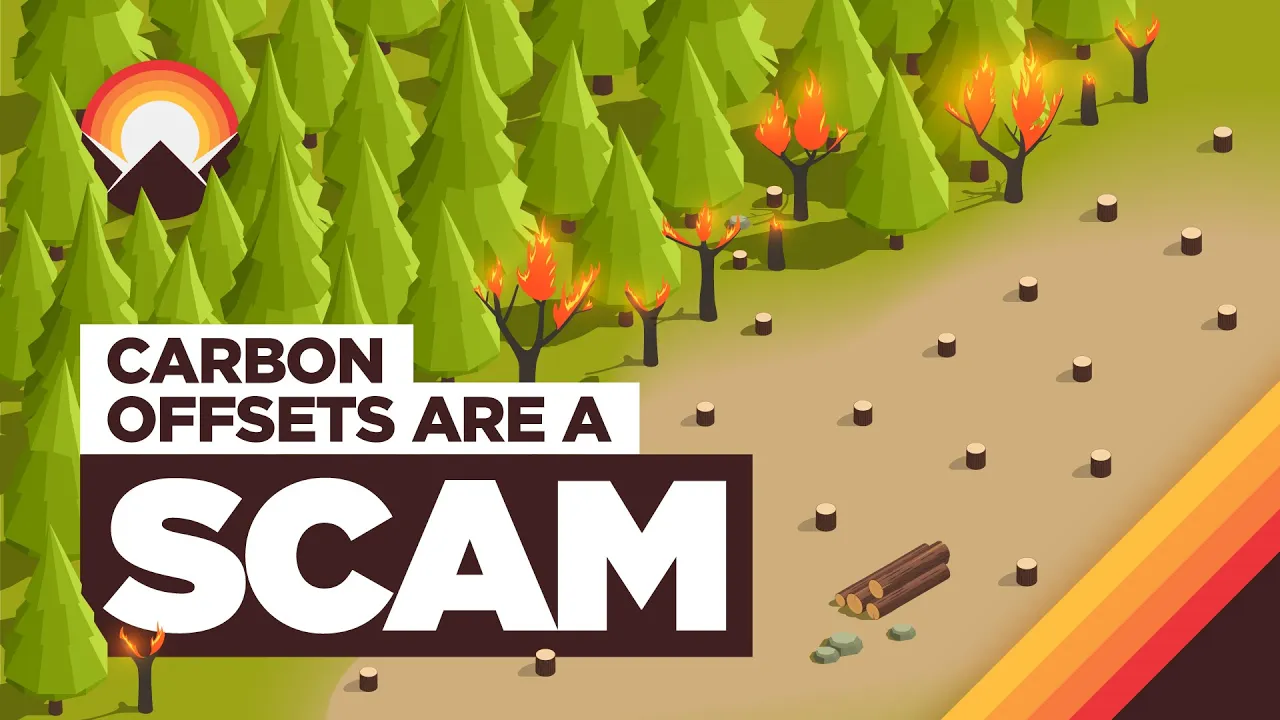
The Carbon Offset Problem — Wendover Productions

Wendover Productions

Cheap, unverified carbon credits license corporate emissions that would not otherwise occur, meaning flawed offset accounting drives a net increase in global greenhouse gases.

AI-assisted summary of The Carbon Offset Problem — original source. Check the original for full context.

Source published:

Key ideas

  • Forest offset projects routinely sell phantom credits generated against counterfactual baselines, including already-protected preserves like Hawk Mountain and decades-old municipal watersheds. (1:25)
  • Independent analysis of California's cap-and-trade system found that overgeneralized ecological 'supersections' resulted in 53 of 65 evaluated Improved Forest Management projects over-allocating credits by an average of 29.4%. (4:24)
  • Field research into improved cookstove distribution in India showed an actual firewood reduction of only 15%—statistically insignificant compared to the 67% reduction projected in laboratory water boiling tests—due to the behavioral phenomenon of stove stacking. (12:33)
  • Because offsets function as modern sin taxes that greenlight real-world emissions, any offset achieving less than 100% of its claimed drawdown results in a net atmospheric increase in greenhouse gases. (19:00)

Detailed notes

## Background Published on YouTube by Wendover Productions on June 3, 2022, the video was written by Sam Denby and Tristan Purdy. The video's description provides promotional links for a Nebula and CuriosityStream subscription bundle, production credits, and academic and investigative references detailing forestry baselines, corporate ESG claims, and cookstove offset programs.

## TL;DR The video investigates the structural breakdown of the voluntary and regulatory carbon offset industry, demonstrating how popular climate solutions often deliver negligible atmospheric benefits. Through case studies ranging from Pennsylvania's Hawk Mountain Sanctuary to California's cap-and-trade system and international reserves, it illustrates how developers systematically manipulate counterfactual baselines to generate phantom credits. It then explores improved cookstove initiatives in India, revealing how laboratory metrics collapse in the real world due to behavioral dynamics like stove stacking. Ultimately, the piece argues that the offset marketplace operates as a modern sin tax that actively encourages high-emissions behavior while funneling capital toward the cheapest, least verifiable paper reductions.

## Atmosphere & style The presentation is analytical, sobering, and sharply investigative, marked by Sam Denby's signature measured cadence and crisp, data-driven narration. Visually supported by structured diagrams and clear geospatial context, the narrative begins with an aura of pragmatic environmental optimism before systematically peeling back layers of corporate greenwashing and flawed accounting. Watching it feels like a methodical intellectual audit that progressively transforms well-meaning conservation concepts into an unsettling critique of perverse economic incentives.

## Bulletin - [01:25](https://www.youtube.com/watch?v=AW3gaelBypY&t=85s) Forest offset projects routinely sell phantom credits generated against counterfactual baselines, including already-protected preserves like Hawk Mountain and decades-old municipal watersheds. - [04:24](https://www.youtube.com/watch?v=AW3gaelBypY&t=264s) Independent analysis of California's cap-and-trade system found that overgeneralized ecological 'supersections' resulted in 53 of 65 evaluated Improved Forest Management projects over-allocating credits by an average of 29.4%. - [12:33](https://www.youtube.com/watch?v=AW3gaelBypY&t=753s) Field research into improved cookstove distribution in India showed an actual firewood reduction of only 15%—statistically insignificant compared to the 67% reduction projected in laboratory water boiling tests—due to the behavioral phenomenon of stove stacking. - [19:00](https://www.youtube.com/watch?v=AW3gaelBypY&t=1140s) Because offsets function as modern sin taxes that greenlight real-world emissions, any offset achieving less than 100% of its claimed drawdown results in a net atmospheric increase in greenhouse gases.

## Key takeaways - [01:25](https://www.youtube.com/watch?v=AW3gaelBypY&t=85s) Major corporations like JPMorgan Chase and Disney buy cheap carbon offsets to claim net-zero or corporate travel neutrality while financing very little actual carbon reduction. - [01:25](https://www.youtube.com/watch?v=AW3gaelBypY&t=85s) Forest carbon offsets rely on counterfactual baselines of hypothetical deforestation that are easily manipulated to monetize land already protected for decades. - [04:24](https://www.youtube.com/watch?v=AW3gaelBypY&t=264s) California's regulatory cap-and-trade program structurally over-credits forestry projects by blending high-density coastal forests with dry interior regions into single regional baselines. - [06:33](https://www.youtube.com/watch?v=AW3gaelBypY&t=393s) International forest offset initiatives frequently fail over time due to illegal extraction, military logging, and state-level policy reversals, as seen in Brazil, Cambodia, and Indonesia. - [07:49](https://www.youtube.com/watch?v=AW3gaelBypY&t=469s) Every legitimate offset must fulfill the carbon offsetting triangle: permanence, leakage prevention, and verifiable additionality. - [09:31](https://www.youtube.com/watch?v=AW3gaelBypY&t=571s) Around 3 billion people globally rely on three-stone fires operating at only 10% thermal efficiency, driving 25% of global black carbon emissions and massive social burdens. - [12:33](https://www.youtube.com/watch?v=AW3gaelBypY&t=753s) Improved cookstoves offer substantial developmental and health co-benefits on paper, cutting wood-gathering times and indoor smoke exposure. - [12:33](https://www.youtube.com/watch?v=AW3gaelBypY&t=753s) Real-world stove stacking and suppressed demand undermine cookstove offset calculations, rendering actual carbon savings far lower than laboratory models assume. - [16:25](https://www.youtube.com/watch?v=AW3gaelBypY&t=985s) Certification standards create a split between cheap, unverified lab tests (like the UN CDM Water Boiling Test) and rigorous, costly real-world testing (like the Gold Standard Kitchen Performance Test). - [16:25](https://www.youtube.com/watch?v=AW3gaelBypY&t=985s) Because buyers cannot easily differentiate credit quality, market competition penalizes rigorous accounting and drives a race to the bottom favoring the cheapest, least verifiable credits. - [19:00](https://www.youtube.com/watch?v=AW3gaelBypY&t=1140s) Carbon offsets create a severe moral hazard: by alleviating consumer and corporate guilt to enable high-emission behavior, compromised credits accelerate net emissions instead of reducing them.

## Detailed walkthrough ### [00:00](https://www.youtube.com/watch?v=AW3gaelBypY&t=0s) The Illusion of Hawk Mountain Sanctuary

In the summer of 2018, an eclectic coalition had cause to celebrate: western Pennsylvania birders, ornithologists, biologists, field-tripping schoolteachers, Appalachian range romantics, and trail-loving hikers. The Nature Conservancy, one of the nation's premier environmental non-governmental organizations, partnered with the Hawk Mountain Sanctuary to safeguard 2,380 acres of wooded bird habitat located roughly 80 miles (130 kilometers) outside Philadelphia. In isolation, preserving an area the size of a modest ski resort barely moved the needle, but the project was designed to carry global significance. To finance the preserve's long-term protection, The Nature Conservancy partnered with Blue Source to market and sell carbon credits.

Major institutions jumped at the opportunity. In an effort to counter its carbon footprint, JPMorgan Chase acquired more than 96,000 credits from the project. Everyday consumers bought into the initiative as well, paying just $15 per ton to offset their summer flights and road trips. On paper, Hawk Mountain represented an ideal, pragmatic climate initiative: it protected critical wildlife habitat, preserved local recreation, and gave climate-conscious individuals and firms a straightforward mechanism to address their environmental impact. Yet, as investigative reporting soon uncovered, the entire enterprise was built upon a fragile foundation. As the narrator explains:

> “The only problem was, as one intrepid investigative journalist would expose, it was all built on, at best, a massive oversimplification, and at worst, one big green lie.”

- **Preserve Size:** 2,380 acres of woodland. - **Location:** Approximately 80 miles (130 km) outside Philadelphia, Pennsylvania. - **Key Corporate Buyer:** JPMorgan Chase (purchased over 96,000 credits). - **Retail Price:** $15 per ton of carbon for individual buyers.

---

[01:25](https://www.youtube.com/watch?v=AW3gaelBypY&t=85s) The Flawed Baseline and Cheap Green Screens

Forest carbon offset mechanisms fundamentally rely on a counterfactual calculation: the volume of carbon stored in a preserved forest is weighed against the hypothetical deforestation that would have taken place had nobody intervened. Establishing this baseline determines the entire economic viability of the project and dictates exactly how many saleable credits can be generated. At Hawk Mountain, the baseline submitted in 2018 to the American Carbon Registry assumed that, without intervention, the woodland faced immediate, aggressive commercial clear-cutting and high-grading.

There was just one critical flaw: Hawk Mountain was already a protected nature reserve. Established in the 1930s after the land was purchased by pioneering conservationist and birder Rosalie Edge, the Hawk Mountain Sanctuary Association had carefully managed and defended the acreage for nearly nine decades. Contemporary preserve staff openly acknowledged that the forest faced no active threat of timber harvesting. Because the trees were never going to be felled, no additional carbon dioxide was actually prevented from entering the atmosphere. Nevertheless, these phantom reductions enabled institutions to market net-zero milestones on the cheap. As the narrator highlights:

> “Carbon credits provide major companies an incredibly cheap green screen to hide behind while their faulty offsets continually under-deliver.”

JPMorgan Chase—the single largest institutional financier of fossil fuels globally between 2016 and 2020—pointed to investments like Hawk Mountain to claim it had offset 100% of its corporate travel emissions.

```mermaid flowchart TD accTitle: The Mechanics of Counterfactual Offset Baselines accDescr: Diagram showing how a hypothetical baseline creates artificial carbon credits for already-protected forests.

subgraph Baseline["Hypothetical Project Baseline"] A["Assumed Threat:<br/>Aggressive Clear-Cutting & High-Grading"] B["Paper Offset Generation:<br/>Difference Between Threat & Conservation"] end

subgraph Reality["On-the-Ground Reality"] C["Historic Protection:<br/>Preserved Since 1930s (Rosalie Edge)"] D["Zero Net Carbon Saved:<br/>Forest Was Never Under Actual Threat"] end

subgraph Outcome["Corporate Outcome"] E["Meaningless Carbon Credits:<br/>JPMorgan Chase Offsets Travel Emissions"] end

A --> B C --> D B -.->|"Justifies"| E D -.->|"Invalidates"| E ```

---

[03:03](https://www.youtube.com/watch?v=AW3gaelBypY&t=183s) Paper Deforestation Across the Northeast

The phantom baseline strategy practiced at Hawk Mountain is far from an isolated incident. Just down the road in Bethlehem, Pennsylvania, The Nature Conservancy brokered a 2011 agreement covering 22,000 acres of municipal watershed forest. Chevrolet originally bought credits from the tract, followed in 2014 by The Walt Disney Company, which agreed to fund the forest's preservation through 2022. The deal allowed Disney to burnish its public reputation as an industry leader in climate action. However, the credits were generated by assuming the watershed was under imminent threat of extensive logging—even though the city of Bethlehem had harvested only 0.4% of the acreage across the prior two decades in order to safeguard municipal drinking water.

Similar transactions repeated across the region: - **Albany, New York (2019):** Carbon credits were minted and sold from municipal watershed lands that had not seen commercial logging in decades. - **Pennsylvania Ridges (2019):** The Nature Conservancy established a commercial offset scheme on a vast tract of woodland that the organization itself had purchased and protected back in 1999. - **Disney's Acquisition:** Despite the absence of any real logging threat, Disney acquired 180,000 credits from the Pennsylvania Ridges parcel to cancel out its real-world corporate emissions.

---

[04:24](https://www.youtube.com/watch?v=AW3gaelBypY&t=264s) Systemic Over-Crediting in California's Cap-and-Trade

These regulatory blind spots are not confined to voluntary East Coast markets; they are deeply baked into mandatory government frameworks. California's cap-and-trade program allows regulated heavy industrial polluters to buy forest offset credits instead of directly lowering their smokestack emissions. Of the 193 million total carbon offsets issued within the California system, 156 million stem from forestry projects. Within that forestry pool, 131 million are designated as Improved Forest Management (IFM) credits. IFM schemes award carbon credits when a landowner agrees to implement harvesting best practices that maximize carbon storage for a rolling 100-year commitment.

To award IFM credits, regulators compare a property's carbon density to a regional "common practice" baseline, which estimates the average carbon storage capacity for that forest type. However, California delineated these reference zones using vast, ecologically diverse "supersections." For instance, a dense, moisture-rich forest in Northern California composed primarily of tanoak and Douglas fir (project parcel ACR 189) was assigned to the Southern Cascade supersection. This massive regulatory zone encompasses three distinct sub-regions, including dry, sparse inland ecosystems with far lower natural carbon density. By blending lush coastal ecosystems with parched interior woods, the state created an artificially depressed baseline. An independent evaluation by the nonprofit research organization CarbonPlan revealed that ACR 189 was over-credited by roughly 50%. This was part of a widespread pattern:

> “And while this example sits on the upper end of over-allocation by the state, their research showed that of the 65 IFM projects they studied, 53 had over-allocated, leading to an over-crediting percentage of 29.4%.”

By relying on overgeneralized regional boundaries, California's flagship climate market created tens of millions of phantom credits that actively undermined the state's decarbonization targets.

---

[06:33](https://www.youtube.com/watch?v=AW3gaelBypY&t=393s) International Project Collapses: Brazil, Cambodia, and Indonesia

Outside the United States, forest-protection offset projects have suffered from catastrophic oversight failures, illegal extraction, and state-backed exploitation:

- **The Paiter Suruí in Brazil:** The Paiter Suruí indigenous tribe made history by becoming the first indigenous group to market forest conservation credits, selling them prominently to FIFA to offset the 2014 World Cup. Only a year later, prospectors discovered diamonds on the protected reserve; wildcat miners and loggers flooded the territory, clear-cutting wide swaths of jungle and rendering the already-sold offsets worthless. - **Oddar Meanchey in Cambodia:** An offset initiative was launched when canopy cover stood at 88%. Subsequent satellite investigations conducted by ProPublica and Descartes Labs revealed that forest cover had plummeted to 46% due to state-sanctioned industrial logging, military encampments, and illegal clearing for agriculture. - **Rimba Raya / Peatlands in Indonesia:** Credits were marketed on the promise of shielding pristine forest from being converted into commercial acacia plantations. However, investigative reporting by *Nikkei Asia* revealed that the Indonesian government had already enacted an official moratorium banning plantation development in that specific area. Further scrutiny found that the project sold roughly three times more carbon credits than it could ever sequester in practice.

In project after project across the globe, project managers take in substantial upfront revenue, while the long-term ecological commitments deteriorate.

---

[07:49](https://www.youtube.com/watch?v=AW3gaelBypY&t=469s) The Carbon Offsetting Triangle

The fundamental breakdown across international and domestic forest carbon markets stems from a failure to satisfy the three mandatory criteria of integrity—known as the "carbon offsetting triangle":

1. **Permanence:** A legitimate offset must keep carbon stored away from the atmosphere permanently, or account for realistic rates of forest loss. This requires project developers to accurately forecast wildfire risks, disease outbreaks, temperature spikes from climate change, and illegal logging in remote areas where enforcement is virtually nonexistent. 2. **Leakage:** Interventions must ensure that preserving one tract of woodland does not merely displace commercial logging or agricultural expansion into neighboring areas just outside the project boundary, beyond the reach of roads or state oversight. 3. **Additionality:** The developer must prove conclusively that the forest would have been destroyed had the carbon project not intervened. Additionality is an inherently speculative exercise; as demonstrated by The Nature Conservancy, it is easily manipulated to monetize land that had already been permanently conserved decades earlier.

Addressing these three requirements demands continuous, rigorous, on-the-ground monitoring and independent carbon accounting. Yet in an offset market prioritizing speed, minimal friction, and low prices per ton, thorough auditing is frequently bypassed. The narrator outlines the hypothetical conditions required for offsets to deliver on their promise:

> “Theoretically, though, if an offset scheme can verifiably determine a baseline, verifiably account for or assure permanence, verifiably account for or prevent leakage, and verifiably prove additionality, then it might actually work.”

Spurred by these recurring failures, climate innovators have turned their attention toward alternative offset methodologies designed to sidestep the vulnerabilities of forest conservation.

[09:31](https://www.youtube.com/watch?v=AW3gaelBypY&t=571s) Traditional Three-Stone Fires and the Promise of Improved Cookstoves

In the dry, rocky landscape of the Koppal district in Karnataka, India, roughly 1.4 million residents make their living primarily by cultivating groundnuts and grains. In this region, an astonishing 99 percent of the population depends on traditional cookstoves. In practice, this almost always means cooking over a three-stone fire: a simple trio of rocks set on the ground to elevate a pot above an open blaze fueled by wood, coal, animal dung, or other gathered biomass. Koppal is hardly an anomaly; globally, 3 billion people rely on similar open fires and rudimentary hearths. While these traditional setups have the singular advantage of being built and fueled entirely from whatever combustible material lies nearby, their thermal efficiency is abysmal. Only about 10 percent of the heat generated actually reaches the cooking pot—a stark contrast to the roughly 75 percent thermal efficiency achieved by a modern electric stovetop.

```mermaid flowchart TD accTitle: Environmental and Social Toll of Traditional Cookstoves accDescr: Diagram illustrating how the low thermal efficiency of three-stone fires leads to high fuel demand, environmental degradation, and severe social and health burdens.

subgraph Fire["Three-Stone Fire Mechanics"] A["Low Thermal Efficiency (10%)"] --> B["High Wood Consumption (5–12 kg/day)"] end

subgraph Impacts["Consequences"] B --> C["25% of Global Black Carbon Emissions"] B --> D["Time Burden (18 hrs/week gathering wood)"] B --> E["Indoor Air Pollution (2 packs of cigarettes/day)"] end

D --> F["Educational Disadvantage for Women & Girls"] E --> G["4.3M Premature Deaths Globally/Year"] ```

Because of this extreme inefficiency, an average household using an open fire burns between 11 and 26 pounds (5 to 12 kilograms) of firewood every single day. This daily combustion drives approximately 25 percent of global emissions of black carbon, a particularly harmful atmospheric pollutant. Most families rely on three-stone fires out of pure economic necessity, lacking the income or the electrical and gas infrastructure required for modern alternatives. This opened the door for an intermediate technological intervention: the improved cookstove (ICS). These engineered biomass stoves boost thermal efficiency to around 20 or 30 percent, cutting the household fuel requirement significantly. Transitioning a single family from an open fire to an improved cookstove is estimated to eliminate between 1.5 and 4 tons of carbon dioxide equivalent per year—roughly matching the entire annual carbon footprint of an individual in these communities, or the emissions generated by flying between New York and Singapore five times.

- **Target population:** 1.4 million residents in Karnataka's Koppal district, with 99% using biomass fires; globally, 3 billion people cook with traditional setups. - **Thermal efficiency:** Traditional three-stone fires operate at around 10% efficiency, compared to 20–30% for improved cookstoves and 75% for modern electric stoves. - **Daily fuel burn:** Households burn between 11 and 26 pounds (5 to 12 kg) of wood daily on traditional setups, contributing to roughly 25% of global black carbon emissions. - **Emission reductions:** A household switch to an improved cookstove theoretically averts 1.5 to 4 metric tons of carbon emissions annually. - **Economics of adoption:** An improved cookstove costs approximately 1,400 rupees—equivalent to a full week's wages for a local Koppal resident, but only about $18 USD.

[12:33](https://www.youtube.com/watch?v=AW3gaelBypY&t=753s) The Co-Benefits and the Flawed Reality of Stove Stacking

The economics of improved cookstoves positioned them as an ideal candidate for voluntary carbon markets. At just 1,400 Indian rupees (roughly $18 USD), an improved cookstove represents an entire week's income for a resident of the Koppal district, making widespread organic adoption impossible without subsidies. Yet for Western corporations and carbon-conscious consumers seeking cheap offsets, $18 is pocket change. Consequently, non-governmental organizations stepped in to finance distributions using offset sales. In Koppal alone, organizers distributed 43,000 stoves to 21,500 families, funded by selling 43,215 tons of carbon offsets annually across a 10-year period. Beyond straightforward carbon metrics, improved stoves offered an enticing suite of social and developmental "co-benefits." Gathering wood for traditional open hearths takes an average of 18 hours per week, an arduous chore that disproportionately burdens women and girls and pulls them away from schooling. An improved stove trims wood-gathering requirements to around five hours per week, offering a direct mechanism to help close gender disparities in education. Furthermore, inhaling the smoke of an indoor open fire is hazardous—equivalent to smoking two packs of cigarettes every day—contributing to the 4.3 million annual premature deaths linked globally to household air pollution. Improved stoves promised local manufacturing jobs, lower deforestation rates, and cleaner indoor air, quickly turning the intervention into a darling of international development circles. As Sam Denby explains:

> “The math was simpler, the additionality was indisputable, the co-benefits were myriad, and the costs were low; these programs had the potential to finally offer carbon-conscious companies and consumers a truly verifiable way to actually offset their impact on the world, so long as theory translated into reality.”

```mermaid flowchart LR accTitle: Laboratory Assumptions Versus Field Realities in Cookstove Programs accDescr: Flowchart contrasting the theoretical laboratory model of clean cookstoves with the behavioral reality of stove stacking and suppressed demand.

subgraph Theory["Theoretical Model"] T1["Laboratory Water Boiling Test"] --> T2["10% to 30% Efficiency Gain"] T2 --> T3["Predicted 67% Wood Reduction"] T3 --> T4["Offset Credits Sold"] end

subgraph Reality["Observed Field Reality"] R1["Real-World Deployment"] --> R2["Stove Stacking & Suppressed Demand"] R2 --> R3["Actual Decline: Only 15% (3.6 vs 4.2 kg/day)"] R3 --> R4["Statistically Insignificant Carbon Savings"] end ```

The theoretical perfection collapsed when researchers evaluated the actual interventions in the Koppal district. In a field study, hundreds of local households were divided into two groups: an active cohort that received the improved cookstoves immediately, and a control cohort that had to wait a year. Offsets had been calculated and pre-sold on the laboratory expectation that jumping from 10 to 30 percent thermal efficiency would drive a 67 percent reduction in daily firewood use. The field data revealed a far different outcome. While control households burned an average of 9.3 pounds (4.2 kilograms) of wood per day, households with the new improved stoves still burned 7.9 pounds (3.6 kilograms) daily. That translated to a meager 15 percent drop in wood use—a margin so slim that the researchers could not establish it as statistically significant. Hundreds of thousands of offset credits had been marketed and purchased at premium prices under the belief that real emissions were disappearing, but the savings were largely an illusion caused by a human behavioral factor known as "stove stacking." Almost half of the households never abandoned their traditional hearths; instead, they ran the new stove alongside their three-stone fire to cook multiple dishes at once and save time. Additionally, because the new stoves made cooking easier, they unlocked "suppressed demand," prompting families to cook more frequently and undermining projected fuel savings.

- **Koppal carbon deal:** 43,000 improved stoves were distributed to 21,500 families in exchange for the sale of 43,215 tons of carbon offsets per year over 10 years. - **Time savings:** Wood gathering dropped from an average of 18 hours per week down to 5 hours per week under full adoption. - **Health toll:** Traditional indoor cooking exposes users to smoke equivalent to smoking two packs of cigarettes daily, contributing to 4.3 million premature deaths worldwide each year from indoor air pollution. - **Laboratory expectation vs. field reality:** Laboratory models promised a 67% cut in firewood usage; field tracking observed an actual drop of just 15% (from 9.3 lbs/4.2 kg to 7.9 lbs/3.6 kg per day), which was statistically insignificant.

[16:25](https://www.youtube.com/watch?v=AW3gaelBypY&t=985s) Testing Methodologies and the Race to the Bottom in Carbon Markets

The Koppal failure exposed a systemic flaw in how international carbon offset programs are designed and certified. Under the United Nations Clean Development Mechanism (CDM), certified cookstove projects are not obligated to conduct extensive, post-deployment field testing to prove sustained fuel reductions. Instead, project developers are permitted to rely on controlled laboratory protocols—primarily the standard Water Boiling Test, which measures the amount of fuel required to bring a specific volume of water to a boil under optimized, artificial conditions. While cheap, fast, and easy to run, laboratory tests ignore the messiness of human domestic life, such as stove stacking, pot sizing, wind conditions, and cooking habits. Conversely, rigorous independent standards like the Gold Standard mandate Kitchen Performance Tests (KPTs), which track actual fuel consumption inside real homes among genuine users over several consecutive days.

```mermaid flowchart TD accTitle: Certification Approaches and Carbon Market Dynamics accDescr: Flowchart showing how certification stringency drives program costs and how market consumer behavior prefers cheaper, less rigorous offset credits.

subgraph Certification["Certification Methodologies"] A["UN Clean Development Mechanism"] -->|Relies on| B["Water Boiling Tests (Lab-based, Cheap, Easy)"] C["Gold Standard"] -->|Mandates| D["Kitchen Performance Tests (Real-world, Expensive, Slow)"] end

subgraph MarketDivergence["Market Economics"] B --> E["Lower Overhead & Cheaper Credits"] D --> F["High Measurement Overhead & Expensive Credits"] end

subgraph ConsumerChoice["Buyer Incentive"] E --> G["High Sales Volume (Market Dominance)"] F --> H["Low Sales Volume (Struggles to Compete)"] end ```

The division between laboratory benchmarks and real-world kitchen audits reveals a fundamental tension in voluntary carbon accounting: whether it is worthwhile to inflate monitoring costs to guarantee scientific accuracy. Kitchen Performance Tests add substantial operational overhead and complexity, costs that must ultimately be passed along to credit buyers in the form of higher prices per metric ton offset. While high-integrity verification methods deliver far higher confidence that a carbon reduction actually occurred, they risk pricing programs out of a fiercely competitive voluntary market. As Sam Denby observes:

> “The public overwhelmingly has neither the ability nor the desire to analyze the particulars of individual carbon offsetting programs so the cheapest option presented to them almost always wins but that cheapest option is the one with the greatest uncertainty over whether it will actually work it’s the one with the greatest potential for the numbers to be fudged by nefarious players looking to turn a profit.”

Rather than rewarding genuine performance, the offset market incentivizes a race to the bottom. Forest protection schemes—which carry notorious additionality and leakage problems—remain the cheapest offsets to generate and therefore dominate the voluntary market's total volume. Conversely, high-permanence and easily verified solutions like Direct Air Capture (DAC), which use specialized industrial plants to extract carbon dioxide straight from ambient air, cost orders of magnitude more per ton and remain commercially negligible. Because the average corporate buyer or individual consumer cannot distinguish between high-integrity and low-integrity credits, price dictates purchasing behavior. If a buyer is presented with a $10 credit versus a $15 credit, they routinely choose the $10 option, indifferent to the underlying methodology. This market dynamic structurally favors overestimated impacts and paper accounting, because developers face zero commercial incentive to discover that their projects averted fewer emissions than promised. As Sam Denby summarizes:

> “If people are given the opportunity to turn a profit by fudging the numbers people are going to turn a profit by fudging the numbers.”

- **Verification protocols compared:** - *Water Boiling Tests (WBT):* Standard for the UN Clean Development Mechanism; fast, low-cost laboratory procedures that assume optimal human behavior and fuel wood savings. - *Kitchen Performance Tests (KPT):* Required by rigorous registries like Gold Standard; measures real-world in-situ fuel use over multiple days, accounting for real domestic variations. - **Cost vs. integrity tradeoff:** Increasing monitoring rigor and field testing drives up overhead, forcing credit prices higher and depressing sales against cheaper, unverified alternatives. - **Structural market bias:** Carbon markets systematically punish accurate measurement, leading to widespread overstatement of offsets while virtually no market player ever understates avoided emissions.

[19:00](https://www.youtube.com/watch?v=AW3gaelBypY&t=1140s) The Sin Tax Dilemma and the Race to the Bottom

The fundamental crisis of the carbon offset market is structural: the system actively incentivizes bad behavior by directing the vast bulk of capital toward the cheapest, least verifiable, and most easily exploited initiatives. Sam Denby cautions that this is not an instance where perfection should be considered the enemy of the good. Instead, carbon offsets operate functionally as a modern sin tax. Consumers and corporations purchase them to alleviate the cognitive dissonance of engaging in carbon-intensive, climate-accelerating actions. Because an offset enables behavior that otherwise might not happen—such as a passenger choosing to book a transatlantic flight because they can soothe their environmental conscience with a single click at checkout—the offset must be 100% effective just to break even.

```mermaid flowchart TD accTitle: The Carbon Offset Moral Hazard Loop accDescr: Flowchart illustrating how flawed carbon offsets lead to net-positive carbon emissions.

subgraph Consumer["Consumer Decision"] A["Desire to take high-emission action"] --> B["Option to buy cheap carbon offset"] B --> C["Cognitive dissonance relieved"] C --> D["Emissions released (e.g., transatlantic flight)"] end

subgraph Market["Offset Reality"] B -.-> E["Funds cheap, unverified project"] E --> F{"Offset fully effective?"} F -->|"No: Overstated or flawed (e.g., 90% real)"| G["Net increase in atmospheric carbon"] F -->|"Yes: Exactly 100% real"| H["Net-neutral carbon"] end ```

If that offset is even slightly compromised—achieving only 90% of its claimed reduction, relying on marginally overstated baseline math, or being undercut because families cook slightly more food due to the convenience of their newly distributed cookstoves—the global environment ends up worse off than if the offset had never been sold at all. Any behavioral economist recognizes that offering offsets leads individuals and institutions to emit more than they would have in an offset-free world. While honest, rigorous, and verifiable programs with genuine co-benefits do exist, the voluntary market does not reward them. Instead, it drives a race to the bottom where bad projects undercut good ones. As Denby summarizes: “The market incentivizes a race to the bottom; the market incentivizes the scenario where carbon offsetting as a cohesive phenomenon has genuine potential to accelerate our march towards climate catastrophe.”

- **The moral hazard calculation**: Because offsets license actual emissions that otherwise might have been avoided, any offset delivering less than 100% of its promised drawdown produces a net increase in global atmospheric greenhouse gases. - **Systemic unanswerability**: Accurately measuring real emissions reductions from a single project is already notoriously complex; determining whether the entire voluntary offset sector is a net positive or net negative on a global scale is practically impossible. - **The incentive trap**: The voluntary marketplace naturally funnels corporate money to the lowest cost-per-ton providers, systematically favoring loosely monitored paper reductions over expensive, durable, and genuinely additive climate projects.

---

[21:06](https://www.youtube.com/watch?v=AW3gaelBypY&t=1266s) Documenting Climate Crises on Nebula and CuriosityStream

Discussing climate policy often sounds dry on paper, but Denby reflects that watching these planetary shifts unfold in real time is as fascinating as it is terrifying. Over the years, this fascination spurred him to produce two high-budget on-location documentaries exploring front-line climate disasters: one investigating the Marshall Islands, which is projected to become the first country rendered entirely uninhabitable by rising sea levels, and another exploring the Colorado River basin, where demand in the American Southwest regularly outstrips natural supply, pushing the region toward an imminent water catastrophe.

Both documentaries were funded directly through Nebula, the creator-owned streaming service built to provide an independent home for premium video projects. In addition to housing early, ad-free versions of regular Wendover Productions releases and Nebula Plus bonus content, the platform airs episodes of the travel competition series *Jet Lag: The Game* an entire week before they hit YouTube. Denby highlights a promotional bundle that pairs a full Nebula subscription with CuriosityStream’s catalog of non-fiction programming and documentaries—such as *Engineering the Future*—for $14.79 a year. As Denby notes to close the video: “Signing up for the best deal in streaming gives you the best possible viewing experience of the creators you already know and love, gets you access to a huge catalog of new content you'll probably love too, and it even helps support this channel.”

- **On-location climate reporting**: Documentaries produced for Nebula cover existential environmental tipping points, including Pacific sea level rise threatening the Marshall Islands and chronic overuse depleting the Colorado River. - **Creator-led platform perks**: Nebula offers early, sponsor-free access to Wendover videos, Nebula Plus bonus content, Nebula Originals, and advance releases of *Jet Lag: The Game*. - **CuriosityStream bundle pricing**: Viewers can obtain access to both CuriosityStream and Nebula through an annual bundle promotion discounted to $14.79 per year.

## Notable quotes > [19:00](https://www.youtube.com/watch?v=AW3gaelBypY&t=1140s) The market incentivizes a race to the bottom; the market incentivizes the scenario where carbon offsetting as a cohesive phenomenon has genuine potential to accelerate our march towards climate catastrophe. — Sam Denby

> [01:25](https://www.youtube.com/watch?v=AW3gaelBypY&t=85s) Carbon credits provide major companies an incredibly cheap green screen to hide behind while their faulty offsets continually under-deliver.

> [16:25](https://www.youtube.com/watch?v=AW3gaelBypY&t=985s) If people are given the opportunity to turn a profit by fudging the numbers people are going to turn a profit by fudging the numbers. — Sam Denby

## Mentioned Hawk Mountain Sanctuary, The Nature Conservancy, Blue Source, JPMorgan Chase, American Carbon Registry, Rosalie Edge, Chevrolet, The Walt Disney Company, CarbonPlan, Paiter Suruí, FIFA, ProPublica, Descartes Labs, Rimba Raya, Nikkei Asia, United Nations Clean Development Mechanism, Gold Standard, Sam Denby, Nebula, CuriosityStream, Wendover Productions, Jet Lag: The Game

## Video description Sign up for the Nebula/CuriosityStream bundle deal for only $14.79 a year here: http://CuriosityStream.com/Wendover

Watch Extremities at http://youtube.com/extremities

Buy a Wendover Productions t-shirt: https://standard.tv/collections/wendover-productions/products/wendover-productions-shirt

Subscribe to Half as Interesting (The other channel from Wendover Productions): https://www.youtube.com/halfasinteresting

Youtube: http://www.YouTube.com/WendoverProductions Instagram: http://Instagram.com/sam.from.wendover Twitter: http://www.Twitter.com/WendoverPro Sponsorship Enquiries: wendover@standard.tv Other emails: sam@wendover.productions Reddit: http://Reddit.com/r/WendoverProductions

Writing by Sam Denby and Tristan Purdy Editing by Alexander Williard Animation led by Josh Sherrington Sound by Graham Haerther Thumbnail by Simon Buckmaster

References [1] https://www.hawkmountain.org/news/special-projects/help-the-climate-and-the-mountain [2] https://www.bluesource.com/demo/hawk-mountain/  [3] https://www.forbes.com/sites/davidrvetter/2020/03/18/jpmorgan-chase-tops-dirty-list-of-35-fossil-fuel-funding-banks/?sh=57850e165dfe [4] https://www.jpmorganchase.com/content/dam/jpmc/jpmorgan-chase-and-co/documents/jpmc-cr-esg-report-2019.pdf [5] https://gspp.berkeley.edu/assets/uploads/research/pdf/Haya-ER09-001-Measuring_emissions_against_an_alternative_future.pdf [6] https://web.archive.org/web/20211102043731/http://apps.who.int/iris/bitstream/handle/10665/204717/9789241565233_eng.pdf;jsessionid=84BFF76A06408DC1638440E76A746C3D?sequence=1  [7] https://eco-act.com/carbon-credits/cleaner-cookstoves-low-carbon-economy/  [8] https://depts.washington.edu/airqual/Marshall_66.pdf  [9] https://blogs.worldbank.org/energy/understanding-cookstove-and-fuel-stacking-achieve-sdg7  [10] https://mediamanager.sei.org/documents/Publications/Climate/sei-wp-2013-01-cookstoves-carbon-markets.pdf  [11] https://royalsocietypublishing.org/doi/10.1098/rsfs.2019.0065 [12] https://app.hubspot.com/documents/3298623/view/251152947?accessId=fd91dd

[Source](https://www.youtube.com/watch?v=AW3gaelBypY)

中文简报

缺陷碳抵消让摩根大通和迪士尼得以掩盖真实排放 廉价且未经核实的碳信用额度为企业原本不会产生的排放提供了许可,这意味着存在缺陷的抵消核算导致全球温室气体净增加。 该视频调查了自愿及合规碳抵消行业的结构性崩溃,展示了流行的气候解决方案往往只能带来微不足道的大气效益。通过宾夕法尼亚州霍克山保护区、加州总量控制与交易体系以及国际保护区等案例,视频阐述了开发商如何系统性地操纵反事实基准来制造虚假信用额度。随后探讨了印度的改良炉灶项目,揭示了由于炉灶混用等行为动态,实验室指标在现实中完全失效。视频最终认为,抵消市场运作机制犹如现代“罪恶税”,在主动鼓励高排放行为的同时,将资本引向最廉价、最难以核实的账面减排。 森林碳抵消项目经常利用反事实基准出售虚假信用额度,其中包括霍克山等本已受保护的保护区以及拥有数十年历史的市政集水区。 (1:25) 针对加州总量控制与交易体系的独立分析发现,过于宽泛的生态“超级分区”导致所评估的65个改良森林管理项目中,有53个超额分配了信用额度,平均超额达29.4%。 (4:24) 对印度改良炉灶推广的实地研究表明,由于炉灶混用这一行为现象,实际柴火消耗仅减少了15%——与实验室烧水测试所预测的67%减幅相比在统计学上并不显著。 (12:33) 由于碳抵消充当了为现实排放开绿灯的现代“罪恶税”,任何未能100%达到其宣称吸收量的抵消,都会导致大气中温室气体的净增加。 (19:00)

Reading summary

According to Wendover Productions' analysis presented by Sam Denby, carbon offset markets are structurally compromised because financial incentives favor cheap, poorly verified projects, generating phantom credits that allow polluters to license real-world emissions without achieving promised environmental gains. Phantom Baselines in Forest Preservation (1:25) Forest carbon offset programs fundamentally depend on counterfactual calculations, awarding credits by comparing preserved acreage against hypothetical deforestation baselines. In practice, project developers frequently monetize land facing no genuine logging threat. At Pennsylvania's Hawk Mountain Sanctuary, The Nature Conservancy partnered with Blue Source to market credits based on an assumed threat of clear-cutting. However, the 2,380-acre preserve had been permanently protected by a conservation association since the 1930s, meaning no additional carbon was averted. These phantom reductions nevertheless allowed institutional buyers like JPMorgan Chase to purchase over 96,000 credits to claim it had offset 100% of its corporate travel emissions. This paper-reduction pattern recurred across the American Northeast. In Bethlehem, Pennsylvania, municipal watershed lands with a two-decade commercial harvest rate of just 0.4% were modeled as facing imminent clear-cutting, generating credits purchased by Chevrolet and The Walt Disney Company. Disney subsequently acquired 180,000 credits from the Pennsylvania Ridges parcel, an area The Nature Conservancy had already purchased and conserved two decades earlier in 1999. Regulatory Over-Crediting and Permanence Failures (4:24) Methodological flaws also compromise mandatory regulatory programs and international initiatives. Within California's cap-and-trade system, heavy polluters can meet emissions targets using Improved Forest Management credits. Regulators benchmarked carbon density using expansive ecological 'supersections' that grouped dense coastal forests with arid interior woods. Research by CarbonPlan established that 53 of 65 analyzed projects were over-allocated due to these depressed baselines, resulting in an average over-crediting rate of 29.4% across the state's flagship market. Internationally, offset initiatives frequently collapse due to unaddressed leakage and impermanence. In Brazil, an offset project run by the Paiter Suruí and sold to FIFA was invalidated when wildcat miners and loggers invaded the reserve following a diamond discovery. In Cambodia's Oddar Meanchey preserve, satellite assessments showed forest canopy dropped from 88% to 46% due to state-sanctioned industrial logging and military encampments. Similarly, Indonesia's Rimba Raya peatland project sold credits to prevent palm oil plantation conversion on land already protected by an official government moratorium, marketing roughly three times the volume of carbon it could physically store. Behavioral Realities in Clean Cookstove Programs (9:31) To bypass the baseline vulnerabilities of forestry, developers turned to intermediate technical interventions like improved cookstoves (ICS). In India's Koppal district, where 99% of residents rely on traditional three-stone biomass fires, organizers distributed 43,000 engineered stoves funded by selling 43,215 tons of carbon offsets annually. Traditional open fires operate at roughly 10% thermal efficiency and generate 25% of global black carbon emissions. Developers calculated and pre-sold offset credits assuming the new stoves would boost efficiency to 30% and reduce firewood usage by 67%. Controlled field evaluations revealed that actual wood consumption dropped by only 15%—from 4.2 kilograms to 3.6 kilograms daily—a change researchers determined was statistically insignificant. The shortfall stemmed from 'stove stacking,' in which nearly half of households continued running three-stone fires alongside the new stoves to prepare multiple dishes simultaneously. The reduced cooking effort also stimulated 'suppressed demand,' leading families to cook more frequently and negating projected emission drawdowns. Market Incentives and the Moral Hazard Loop (16:25) Offset verification rules drive a market-wide race to the bottom. Under the United Nations Clean Development Mechanism, developers can certify cookstove programs using brief, inexpensive laboratory Water Boiling Tests rather than costly, multi-day Kitchen Performance Tests in real homes. Because institutional and retail buyers consistently select the lowest price per ton, cheaper unverified credits push rigorously audited, high-permanence alternatives like Direct Air Capture out of the voluntary market. Project managers face zero commercial incentive to discover that actual emissions reductions fell short of laboratory projections. Denby argues this market dynamic creates a dangerous moral hazard. Because offsets function as a modern sin tax that eases cognitive dissonance, they encourage consumers and companies to proceed with carbon-intensive actions, such as air travel. If an offset project is even marginally compromised or over-credited, the transaction produces a net increase in global atmospheric emissions compared to a scenario where no offset had been sold at all. Wendover Productions concludes that while legitimate, meticulously monitored carbon projects are technically possible, the voluntary marketplace structurally favors inaccurate, low-cost paper accounting over measurable permanence. Because flawed offsets actively license real-world fossil fuel emissions, the systemic inability to enforce additionality and permanence risks accelerating climate degradation rather than curbing it.

精炼阅读摘要

Wendover Productions 指出,当前的自愿性碳抵消市场充斥着虚构的减排基线、监管套利与无法落地的实验室假设;廉价且未经严格核验的抵消额度不仅未能真正减少温室气体,反而为企业排放提供了廉价掩护,甚至可能加速气候恶化。 林业项目的虚构基线与纸面减排 (1:25) 森林碳抵消严重依赖于反事实假设,即通过假定若无干预森林将遭受何种程度的砍伐来计算减排量。然而在实践中,许多项目将早已受到永久保护的土地包装为减排资产。例如宾夕法尼亚州的 Hawk Mountain 保护区自 20 世纪 30 年代起即由 Rosalie Edge 建立并受严格保护,其林木并无砍伐威胁,但自然保护协会(The Nature Conservancy)与 Blue Source 却提交了面临商业皆伐的基准线,向 JPMorgan Chase 销售了超过 9.6 万个抵消额度。该机构在 2016 至 2020 年间为全球最大的化石燃料资助方,却借此宣称实现了差旅净零排放。类似的“纸面砍伐”现象在宾夕法尼亚州 Bethlehem、纽约州 Albany 及 Pennsylvania Ridges 频频上演,沃尔特迪士尼(The Walt Disney Company)等巨头均购入了此类虚构额度。 强制市场与国际项目的系统性失效 (4:24) 此类漏洞同样渗透到了政府强制监管体系与国际护林项目中。在加州总量管制与交易体系(Cap-and-Trade)中,林业改良管理(IFM)发放的 1.31 亿个额度依赖于宽泛的“超级分区”基准线。加州将北部高密度的林地与干旱内陆森林混合划区,人为压低了参照基准。非营利研究机构 CarbonPlan 评估发现,在其抽检的 65 个 IFM 项目中有 53 个存在过度配额,导致整体过度发放达 29.4%。在国际层面,跨国项目同样频遭重创:巴西 Paiter Suruí 部落向国际足联(FIFA)出售抵消额度后,林地因钻石开采被采伐;柬埔寨 Oddar Meanchey 项目林冠覆盖率从 88% 骤降至 46%;印度尼西亚 Rimba Raya 项目则在政府早已颁布禁令禁止转为种植园的土地上售出超出实际封存量约三倍的信用额度。森林项目普遍未能满足持久性(Permanence)、泄漏性(Leakage)与额外性(Additionality)构成的核心要求。 清洁炉灶的理论模型与现实行为脱节 (9:31) 为规避林业风险,部分市场转向了改善型生物质炉灶(ICS)。全球约有 30 亿人依赖热效率仅约 10% 的传统“三石灶”做饭,导致巨量黑碳排放与严重室内空气污染。在印度卡纳塔克邦的 Koppal 地区,机构通过出售 10 年期每年 43,215 吨的碳抵消额度,向 21,500 户家庭分发了 43,000 台炉灶,理论上实验室测试预测可提高热效率至 20% 到 30%,减少 67% 的柴火消耗并释放显著的健康与社会协同效益。但田野跟踪研究表明,干预组每天的木柴消耗量仅从 4.2 公斤微降至 3.6 公斤,降幅仅为 15% 且在统计学上不显著。出现这一偏差的主因是“炉灶叠加”(Stove Stacking),即家庭为了省时选择新旧炉灶并行使用,同时更便捷的做饭条件也激发了“被压抑的需求”,导致燃料总消耗并未出现预期下降。 市场逆向淘汰与道德风险危机 (16:25) 碳抵消市场陷入了劣币驱逐良币的结构性困境。联合国清洁发展机制(CDM)允许项目采用低成本的实验室“水沸腾测试”(Water Boiling Test),而更严苛的 Gold Standard 则要求在真实家庭中进行多日“厨房表现测试”(Kitchen Performance Test)。由于详尽核验会显著推高项目开销,导致额度单价上升,消费者与企业往往倾向于购买最便宜的选择。这导致漏洞百出的林业项目占据交易主流,而高成本、高持久性的直接空气捕集(DAC)等技术难以匹敌。解说员 Sam Denby 警告,抵消机制在功能上已沦为现代“赎罪券”(Sin Tax),它缓解了高排放行为的认知失调并纵容了额外排放;若抵消额度的实际减排效率哪怕仅有 90%,最终进入大气层的碳排放量也会比完全不存在碳抵消市场时更高,从而加剧气候危机。 当前自愿碳抵消体系存在根本性激励偏差,缺乏对真实减排成果的商业奖励机制。如何建立能严格测算全生命周期额外性与持久性、同时遏制企业凭借低成本虚假额度规避直接减排责任的核查架构,仍是尚未解决的核心挑战。

Detailed notes — zh

## Background 本视频由知名科普频道 Wendover Productions 于 2022 年 6 月 3 日发布在 YouTube 平台上。视频由 Sam Denby 和 Tristan Purdy 共同撰写,旨在深入揭露碳抵消市场的内在缺陷与机制漏洞,并在视频简介中附上了涵盖学术论文、调查报道与项目档案等数十项权威参考资料及 Nebula/CuriosityStream 的推广链接。 ## TL;DR 视频通过详实的案例与数据,系统性揭露了全球碳抵消(Carbon Offset)行业如何沦为企业漂绿和自我安慰的工具。作者首先以宾夕法尼亚州鹰山保护区及加州总量管制体系为例,指出森林碳汇项目普遍通过虚构毁灭性“基准线”来超额签发毫无实际减排效果的空气信用;随后以印度科珀尔县的改良炉灶项目为例,揭示了即便理论逻辑完美的减排方案,在现实中也会因“叠灶”等复杂人类行为而大幅偏离预期。最终,由于市场缺乏严苛核查动力且充斥着低价劣币驱逐良币的现象,碳抵消机制反而演变成一种通过缓解消费者道德焦虑来刺激更多实际碳排放的危险陷阱。 ## Atmosphere & style 整部影片呈现出一种 Wendover Productions 标志性的严谨调查与冷静剖析风格,语调沉稳、克制却直击要害。随着摩根大通、迪士尼等巨头自欺欺人的“碳中和”账目以及学术对照实验的数据被层层剥开,观众的心情会从最初对创新环保方案的好奇,逐渐转变为对行业系统性荒谬的幻灭与警醒。Sam Denby 精准犀利的论述搭配节奏明快的图表动效,带来了一种观看高水准非虚构调查报道的凝重感与智力冲击感。 ## Bulletin - [00:00](https://www.youtube.com/watch?v=AW3gaelBypY&t=0s) 大自然保护协会与鹰山保护区等机构合作出售的森林碳信用被曝严重造假,其基准线虚构了激进皆伐威胁,但该地块实为受到近百年严密保护的鸟类栖息地,摩根大通借此购买逾9.6万个额度粉饰自身差旅排放。 - [04:24](https://www.youtube.com/watch?v=AW3gaelBypY&t=264s) 研究机构CarbonPlan调查加州总量管制与交易机制发现,由于采用粗放的区域碳储量平均值拉低基准线,抽样的65个改良森林管理项目中多达53个存在过度核发,系统性虚高比例达29.4%。 - [14:14](https://www.youtube.com/watch?v=AW3gaelBypY&t=854s) 印度科珀尔县改良炉灶项目实地对照试验显示,受“叠灶”混合使用影响,实际节柴率仅约15%且不具统计学显著性,远低于理论模型预测的67%降幅,导致签发的大量碳信用严重脱离现实。 - [19:00](https://www.youtube.com/watch?v=AW3gaelBypY&t=1140s) 碳抵消市场存在严重的劣币驱逐良币现象与道德风险:廉价、难核查的劣质项目占据主导,而低效的抵消额度消除消费者的负罪感,反而极具刺激更多净排放的危险反作用。 ## Key takeaways - [00:00](https://www.youtube.com/watch?v=AW3gaelBypY&t=0s) 森林碳抵消项目的基准线机制极易被操纵,开发商通过夸大“假设未受保护时的砍伐程度”凭空制造并不存在的减排量。 - [00:00](https://www.youtube.com/watch?v=AW3gaelBypY&t=0s) 鹰山保护区自1930年代起便受到严格保护,根本不存在被采伐风险,向企业出售的碳抵消额度毫无实际减排价值。 - [03:03](https://www.youtube.com/watch?v=AW3gaelBypY&t=183s) 贝斯莱赫姆市政水源林和宾夕法尼亚山脊等长期受保护的林地被反复包装为碳抵消项目,售予迪士尼和雪佛兰等大企业充当减排先锋门面。 - [04:24](https://www.youtube.com/watch?v=AW3gaelBypY&t=264s) 加州法定的改良森林管理(IFM)抵消体系因粗糙的大区平均值基准线设计,导致湿润茂密地块被系统性过度核发近三成额度。 - [06:33](https://www.youtube.com/watch?v=AW3gaelBypY&t=393s) 巴西、柬埔寨和印尼的国际森林碳抵消项目因采矿淘金、特许伐木及政策冲突频繁破灭,凸显森林碳汇长期维系的脆弱性。 - [06:33](https://www.youtube.com/watch?v=AW3gaelBypY&t=393s) 有效的碳抵消机制必须同时满足“不可能三角”:永久性(长期固碳)、防泄漏(避免伐木需求转移)与额外性(证明无资金则必遭破坏)。 - [09:31](https://www.youtube.com/watch?v=AW3gaelBypY&t=571s) 改良炉灶方案因成本低廉且具备减少女性劳作与改善室内空气污染等丰富协同效益,曾被寄予厚望成为森林项目的替代方案。 - [14:14](https://www.youtube.com/watch?v=AW3gaelBypY&t=854s) 科珀尔县实地监测戳破了改良炉灶的理论降幅神话,近半数家庭存在“叠灶”并行使用现象,实际减排远未达标。 - [16:25](https://www.youtube.com/watch?v=AW3gaelBypY&t=985s) 认证标准在廉价简易的“烧水测试”与繁琐高昂的“厨房性能测试”之间权衡,过度向低成本妥协导致虚报减排量普遍化。 - [16:25](https://www.youtube.com/watch?v=AW3gaelBypY&t=985s) 碳市场遵循低价优先法则,买方缺乏核查动力,导致高质量的直接空气捕集技术难以推广,引发劣币驱逐良币的逐底竞争。 - [19:00](https://www.youtube.com/watch?v=AW3gaelBypY&t=1140s) 碳抵消演变为一种缓解认知失调的现代“赎罪券”,一旦抵消有效性不足100%,反而会诱发更多高排放行为并推高全球净排放。 ## Detailed walkthrough ### [00:00](https://www.youtube.com/watch?v=AW3gaelBypY&t=0s) 鹰山保护区与虚假的基准线 2018 年夏天,宾夕法尼亚州西部的观鸟者、鸟类学家、生物学家、学校教师、阿巴拉契亚山脉爱好者以及徒步客们迎来了一个看似值得庆祝的时刻。全美最大的环保非政府组织之一大自然保护协会(The Nature Conservancy)与鹰山保护区(Hawk Mountain Sanctuary)达成合作,计划保护这片位于费城郊外约 80 英里(130 公里)、占地 2,380 英亩的林地鸟类栖息地。从全局来看,保护一个相当于小型滑雪小镇大小的区域并不能真正扭转大局,但这项交易却被赋予了全球性的气候意义:为了资助该保护区,大自然保护协会与碳资产开发商 Bluesource 合作开始出售碳信用额(carbon credits)。摩根大通(JPMorgan Chase)为了抵消自身碳排放,一口气购买了超过 9.6 万个碳信用额;普通消费者也只需支付每吨 15 美元,就能为自己的暑期旅行赎买碳排放的内疚感。整个项目看起来务实而完美,但正如一位调查记者随后揭露的那样,“在最好情况下,这完全建立在巨大的过度简化之上;在最坏情况下,它就是一个巨大的绿色谎言”(“it was all built on at best a massive oversimplification and at worst one big green lie”)。 森林碳抵消项目的核心机制,是在“受保护森林的固碳量”与“假设未被保护而导致的毁林量”之间进行对比。因此,设定一个假设的“基准线”(baseline)直接决定了整个项目能凭空制造并出售多少碳信用。卖给摩根大通和消费者的这些碳抵消额度,问题恰恰出在基准线上。根据 2018 年提交给美国碳注册平台(American Carbon Registry)的项目规划文件,其基准线假设:如果没有外部资金介入保护,该森林将遭到激进的“皆伐”(clear cutting)和“拔大毛式砍伐”(high grading)。然而现实极其荒谬——鹰山保护区自 1930 年代由观鸟狂热者罗莎莉·埃奇(Rosalie Edge)购入土地并成立鹰山保护区协会以来,近一个世纪里一直受到极其严密的管理和保护。这里的树木根本没有被砍伐的危险,保护区现任员工也公开承认了这一点。既然森林本来就安全,根本不需要被“拯救”,也就谈不上避免了任何二氧化碳进入大气,所谓的碳信用自然毫无实际减排价值。 这种廉价却毫无意义的碳信用,成了大型企业极佳的“遮羞布”。摩根大通在 2016 年至 2020 年间是对全球石油和天然气行业投资金额最高的银行,却能够堂而皇之地宣称自己通过鹰山等项目完全抵消了全公司的差旅碳排放。碳信用为大企业提供了一面成本极低的“绿幕”用于掩饰污染,而实际的减排成效却近乎于零。 - 鹰山保护区面积:2,380 英亩(距费城约 80 英里 / 130 公里) - 摩根大通购买量:超过 96,000 个碳信用额 - 散客购买单价:每吨 15 美元 - 历史保护背景:自 1930 年代起即作为鸟类保护区受到持续看护 --- ### [03:03](https://www.youtube.com/watch?v=AW3gaelBypY&t=183s) 蔓延的虚假抵消:从宾夕法尼亚到迪士尼 基准线造假并非鹰山独有。就在离鹰山不远的宾夕法尼亚州贝斯莱赫姆(Bethlehem),大自然保护协会于 2011 年促成了一项涉及 22,000 英亩森林的保护交易并建立了抵消市场。雪佛兰(Chevrolet)率先入局,随后迪士尼(Disney)在 2014 年接盘并承诺资助该区域保护直至 2022 年。该项目让迪士尼一跃成为行业领先的“减排先锋”,但实际减排贡献微乎其微——项目基准线再次谎称该地面临严重的砍伐危机。而事实是,该森林是贝斯莱赫姆的市政水源地,在过去二十年间,当地因深知森林对水源的重要性,实际砍伐面积仅占集水区总面积的 0.4% 左右。 类似的戏码接连上演:2019 年,纽约州奥尔巴尼(Albany)将数十年未曾砍伐过的水源保护林包装成碳抵消额度挂牌出售;在被称为“宾夕法尼亚山脊”(Pennsylvania Ridges)的林区,大自然保护协会早于 1999 年就已购入并永久保护了该地块,却依然在 2019 年将其包装成碳汇项目上市。迪士尼对此逻辑缺陷不知情或毫不在意,再次从该项目中购买了 18 万个碳信用额。此类毫无意义的碳抵消在全美各地不断蔓延,让碳交易市场的初衷沦为泡影。 ```mermaid flowchart TD accTitle: 虚假基准线碳抵消运作逻辑 accDescr: 展示现有林地如何通过夸大砍伐威胁被包装为虚假碳信用并售予企业的流程 subgraph Baseline["基准线造假阶段"] A["受保护的既有林地<br>(如鹰山保护区 / 市政水源林)"] B["虚构毁灭性基准线<br>(假设将遭受激进皆伐/砍伐)"] A --> B end subgraph Crediting["额度生成与交易"] C["凭空包装出巨量<br>碳抵消信用 (Credits)"] D["企业买家出资认购<br>(摩根大通 / 迪士尼 / 雪佛兰)"] B --> C C --> D end subgraph Reality["最终实际后果"] E["企业宣告实现‘碳中和’/抵消差旅"] F["大气未减少任何排放<br>实际减排收益为零"] D --> E D --> F end ``` --- ### [04:24](https://www.youtube.com/watch?v=AW3gaelBypY&t=264s) 加州总量管制与交易机制中的系统性高估 这种漏洞不仅限于东海岸和大自然保护协会的自愿碳市场,甚至已经渗透进加利福尼亚州法定的“总量管制与交易”(Cap-and-Trade)系统。加州允许排放大户通过购买森林碳抵消额度来代替真实的减排削减。在加州售出的 1.93 亿个碳抵消额度中,有 1.56 亿个来自森林项目;其中又有 1.31 亿个属于“改良森林管理”(Improved Forest Management, IFM)项目。IFM 的原理是通过实施最佳林业管理实践以保持最大的碳储存能力,承诺项目地块在未来一个世纪内仅进行最低限度的采伐。 定量评估 IFM 产生额度的前提,是设定一个区域性的“常规操作基准”(common practice baseline)。加州将全州森林按树种和林木密度划分为若干大区并计算出各自的平均碳储量,但这套粗放的平均值体系成了漏洞的源头。以加州北部代号为 ACR 189 的地块为例,该区域相对湿润、植被茂密,主要由高大密集的棕柄石栎(tanoak)和花旗松(Douglas fir)构成。但在加州系统里,它被划入了范围极大的“南喀斯喀特超级分区”(Southern Cascade supersection)。研究机构 CarbonPlan 指出,该超级分区包含了三个生态截然不同的亚区,其中两个内陆区域气候显著干燥、树木稀疏、固碳能力低。加州监管机构用包含干旱稀疏内陆数据的混合平均值,来作为湿润茂密地块的基准,直接导致该地块的初始碳储量基准被严重人为拉低。CarbonPlan 利用更精确的树种分布数据复核后发现,州政府对 ACR 189 地块的碳信用额度高估了整整 50%。 更惊人的是,ACR 189 并非极端个例。CarbonPlan 调查了加州体系内的 65 个 IFM 项目,发现其中 53 个存在过度核发,整体过度核发比例高达 29.4%。加州粗糙的分类机制无意中制造了大量水分极大的空气额度,悄然破坏了州政府自身的减排目标。 - 加州碳抵消总销量:1.93 亿个额度 - 森林项目碳抵消量:1.56 亿个(占绝大多数) - 改良森林管理(IFM)额度:1.31 亿个 - 抽样调查结果:65 个 IFM 项目中有 53 个被过度核发,系统性过度核发率达 29.4% --- ### [06:33](https://www.youtube.com/watch?v=AW3gaelBypY&t=393s) 国际乱象与碳抵消“不可能三角” 森林碳抵消项目的失效是一个全球性顽疾,无数国际项目在吸金之后迅速崩盘: - **巴西**:苏鲁伊族(Paiter Suruí)曾创造历史,成为首个通过保护自身森林出售碳信用的原住民部落,其买家包括 2014 年巴西世界杯的主办方国际足联(FIFA)。然而仅一年后,保护区内被发现蕴藏钻石,投机淘金者迅速涌入将森林破坏殆尽,此前售出的所有碳信用瞬间变为废纸。 - **柬埔寨**:某保护区在森林覆盖率达 88% 时对外兜售碳汇,但 ProPublica 与 Descartes Labs 的独立卫星遥感分析表明,由于政府特许伐木和外来人口涌入,森林覆盖率已暴跌至 46%,毁林速度远超项目承诺。 - **印度尼西亚**:一处原本要改造为金合欢(acacia)人工种植园的林地被包装为碳抵消项目出售,但印尼政府此前早已出台禁令暂缓该区域的种植园开发。《日经亚洲》(Nikkei Asia)调查发现,该项目售出的碳信用额度是其潜在实际减排能力的整整三倍。 视频指出,森林碳项目往往在前端快速收割资金,随后却无法兑现长达数十年的承诺。一个在理论上真正有效的碳信用机制,必须同时满足“碳抵消三角”(carbon offsetting triangle)的三个核心要素: 1. **永久性(Permanence)**:必须确保固碳状态长期维持,并充分考虑未来因非法采伐、森林野火以及气候变暖导致的生态系统崩溃风险。 2. **防泄漏(Leakage prevention)**:必须确保该区域保护后,伐木需求不会简单“泄漏”转移到监管缺位或没有公路的偏远林区进行更野蛮的皆伐。 3. **额外性(Additionality)**:必须无可辩驳地证明“若无该项目资金,森林砍伐必然发生”。这一指标极其主观且充满灰色地带,才使得大自然保护协会能够堂而皇之地在自己早已永久买下的地块上兜售所谓的新增保护信用。 维持这个“三角”运转的基石是严密的动态监测与核算,但在一个追求“低单价与快速变现”的市场中,长期监测耗时耗资,因而被普遍弃置。这导致造假与失效不仅局限于林业,更蔓延至整个碳抵消产业。理论上,“如果一个抵消方案能够切实确定基准线、切实核算或保证永久性、切实核算或防止泄漏,并切实证明额外性,那么它才可能真正奏效”(“theoretically though if an offset scheme can verifiably determine a baseline verifiably account for or assure permanence verifiably account for or prevent leakage and verifiably prove additionality then it might actually work”)。正是在这些严苛的现实制约下,部分初衷良好的从业者开始探索更加先进、更具可行性的碳抵消新路径。 ### [09:31](https://www.youtube.com/watch?v=AW3gaelBypY&t=571s) 改良炉灶方案的兴起与理论潜力 在寻找森林保护项目之外的碳抵消替代方案时,一个极具前景的方向来自一个看似微小却非常具体的环节:做饭炉灶。以印度卡纳塔克邦(Karnataka)的科珀尔县(Koppal district)为例,约 140 万人口散居在这片干旱多石的土地上,主要依靠种植花生和粮食为生。在这片区域中,高达 99% 的居民依赖传统炉灶烹饪,通常是用三块石头架起一口锅,燃烧木柴、煤炭、牛粪或其他生物质燃料(即“三石灶”,three-stone fire)。放眼全球,有大约 30 亿人依赖这类传统炉灶维生。这种原始炉灶虽然材料唾手可得,但热效率极低,锅具实际吸收的热量仅占产生热量的 10%,而典型的家用电磁炉热效率高达 75%。极低的热效率导致每个依赖三石灶的家庭每天需要烧掉 11 到 26 磅(约 5 到 12 公斤)的木柴,全球约 25% 的黑碳排放(一种危害巨大的污染物)都源自这种烹饪方式。 由于贫困和基础设施匮乏,这些家庭无法用上燃气灶或电炉,因此出现了一种过渡方案——“改良炉灶”(Improved Cookstove)。这种设备仍使用生物质燃料,但通过优化结构将热效率提升到 20% 至 30%,大幅减少了燃料消耗。理论估算显示,一户家庭若从三石灶改用改良炉灶,每年可减少 1.5 到 4 吨碳排放。这个数字相当惊人,相当于当地一人全年的碳足迹,或者等同于一个人在纽约与新加坡之间往返飞行五次所产生的碳排放。 然而,改良炉灶对当地居民而言价格不菲。一台改良炉灶售价约 1400 卢比,相当于科珀尔县普通居民一周的收入。但折合为美元后,1400 卢比仅约 18 美元。对于想要抵消多次长途飞行碳足迹的发达国家消费者而言,18 美元微不足道。这使改良炉灶替换项目成为了通过碳信用进行融资的绝佳标的:一方面,部分买家愿意为环境效益支付远超其成本的资金;另一方面,其背后的测算逻辑看似简单直接——热效率越高,燃料消耗和排放就越低。全球非政府组织(NGO)随即展开行动,例如在科珀尔县,项目方向 21,500 个家庭分发了 43,000 台改良炉灶,交换条件是在未来十年内,项目组织方每年通过碳市场出售 43,215 吨碳抵消额度。 ### [12:33](https://www.youtube.com/watch?v=AW3gaelBypY&t=753s) 炉灶替换的“协同效益”与市场热捧 让改良炉灶碳抵消项目从“理论上不错”跃升为“近乎完美”的,是其附带的大量协同效益(co-benefits)。传统炉灶需要耗费巨量木柴,居民平均每周要花 18 个小时捡柴,而研究表明这项繁重的劳动绝大多数由妇女和女童承担。捡柴占用了大量本可用于教育的时间,而改良炉灶每周只需约 5 个小时捡柴,因此该项目被认为有助于缩小贫困地区的教育性别差距。 此外,传统烹饪多在室内进行,三石灶产生的浓烟相当于让使用者每天吸入两包香烟。全球每年约有 430 万人因室内空气污染过早死亡,改良炉灶虽无法完全消除烟雾,但能显著减少烟气吸入,降低死亡风险。同时,这类项目还能在当地创造制造与维修炉灶的就业岗位,并缓解周边森林的不可持续采伐。面对频频暴雷、收效甚微的森林保护碳抵消项目,改良炉灶方案迅速获得了国际社会的广泛推崇。 > “The math was simpler, the additionality was indisputable, the co-benefits were myriad, and the costs were low.”(它的计算更简单,额外性无可争辩,协同效益数不胜数,而且成本十分低廉。) 从联合国到希拉里·克林顿(Hillary Clinton),各方都将其赞誉为碳抵消领域的下一次重大创新。它似乎终于为有环保意识的企业和消费者提供了一条经得起核查的减排路径——但前提是,理论必须能够照进现实。 ### [14:14](https://www.youtube.com/watch?v=AW3gaelBypY&t=854s) 科珀尔实验的破灭与“叠灶”现象 为了检验项目的实际成效,研究人员在科珀尔县对数百个家庭展开了对照试验:一半家庭立即获得改良炉灶,另一半家庭作为对照组等待一年后再发放。研究人员长期追踪记录了各家庭的实际木柴消耗量。按照热效率从 10% 提升至 30% 的理论模型,碳抵消额度是建立在木柴消耗将减少 67% 的假设之上的。 然而,真实的监测结果令人大跌眼镜:使用改良炉灶的家庭平均每日消耗 7.9 磅(约 3.6 公斤)木柴,而依然使用三石灶的对照组每日消耗 9.3 磅(约 4.2 公斤)木柴。改良炉灶实际上仅仅带来了 15% 的木柴消耗降幅,在统计学上甚至无法被认定为具有显著差异。这意味着基于纸面测算而售出的数十万份碳信用实际上存在严重缺陷,那些为了更具实效的减排项目而支付溢价的企业和个人,购买的只是空气。 ```mermaid flowchart TD accTitle: 改良炉灶理论与实际减排效果对比 accDescr: 对比改良炉灶在实验室理论测算下的67%减排,与科珀尔实地测试中仅有15%且不具统计学显著性的真实降幅。 subgraph Theory["理论模型(实验室估算)"] T1["热效率从 10% 提升至 30%"] --> T2["预计木柴消耗减少 67%"] T2 --> T3["据此签发并出售大量碳信用"] end subgraph Reality["实地检验(科珀尔县实验)"] R1["改良炉灶组:3.6 kg/天"] R2["对照三石灶组:4.2 kg/天"] R1 & R2 --> R3["实际降幅仅约 15%"] R3 --> R4["未达统计学显著差异 / 碳信用超额虚发"] end ``` 这种巨大落差的根源在于:现实中村民的行为完全没有按照项目设计者的乐观设想进行。近半数受试家庭并没有彻底抛弃传统炉灶,而是将改良炉灶与三石灶同时混合使用。这种现象在学术界非常普遍,甚至拥有一个专属术语——“叠灶”(stove stacking)。受访者表示,“叠灶”是为了节省时间,炉眼越多做饭越快。若想解决叠灶问题,项目方就必须给每户家庭配备更多改良炉灶;但随着炉灶数量增加,第三台炉灶的使用频率必然不如第一台,边际减排效益递减,从而大幅推高了每吨碳抵消的实际成本。此外,改良炉灶让做饭变得更容易,而传统炉灶用户此前往往存在受抑制的烹饪需求(suppressed demand),做饭门槛降低反而刺激了烹饪频次,使真实的碳减排核算变得异常复杂。 ### [16:25](https://www.youtube.com/watch?v=AW3gaelBypY&t=985s) 认证标准的妥协与“劣币驱逐良币”的碳市场 面对复杂的现实环境,碳抵消机制的认证标准却出现了分裂。联合国清洁发展机制(CDM, Clean Development Mechanism)认证的改良炉灶项目,并不强制要求在实地测试炉灶的实际节柴量;项目设计者可以直接采用实验室的“烧水测试”(Water Boiling Test),仅测算不同炉灶烧开一定量的水需要多少木柴——这正是导致科珀尔县项目假设全面崩溃的源头。相比之下,黄金标准(Gold Standard)等独立认证机构则要求进行实地的“厨房性能测试”(Kitchen Performance Test),由真实用户在项目所在地连续数天记录实际木柴消耗量。 然而,行业内对于是否应全面推行更严苛的测试标准存在分歧。烧水测试快速、廉价且简单,而厨房性能测试耗时长、费用高且极其繁琐,增加的审核成本最终都会转嫁给碳信用的买家。这就引发了一个深层的市场抉择:为了更高的准确度而提高成本,到底值不值得?如果提高核查门槛会导致碳信用价格过高、销量减少,市场是否还愿意为此买单? 事实证明,当前的碳市场给出的答案是否定的。在现实利益驱动下,精确度最低、漏洞最多的森林保护项目因其极低的成本占据了碳抵消市场的大半江山;而理论上数据最确凿、直接利用复杂机械从空气中抽离二氧化碳的“直接空气捕集”(Direct Air Capture)技术,由于成本极高,目前几乎无法实现商业化规模运作。碳市场中的买家依然遵循着最朴素的消费逻辑:如果某个项目抵消一吨碳只需 10 美元,而另一个需要 15 美元,他们没有任何动力去选更贵的。普通公众既无能力也无意愿去深究每一个碳抵消项目背后的技术细节,便宜的选项总能胜出。但最便宜的选项往往意味着最糟糕的真实减排效果,也为投机分子留出了通过虚报数字牟取暴利的巨大空间。 > “If people are given the opportunity to turn a profit by fudging the numbers, people are going to turn a profit by fudging the numbers.”(只要有机会通过篡改捏造数据来牟利,人们就一定会通过篡改捏造数据来牟利。) 整个行业充斥着碳减排量被夸大的丑闻,却从未见过哪一个项目的减排效果被保守低估,而当前的碳市场机制正在纵容并放大这种扭曲。 ### [19:00](https://www.youtube.com/watch?v=AW3gaelBypY&t=1140s) 碳抵消机制的道德风险与市场逆向淘汰 碳抵消机制并不是所谓的“不要让完美成为优秀的敌人”,而是演变成了一种变相的“赎罪券”(sin tax)。个人和企业购买碳抵消项目,本质上是为了缓解因做出加剧气候变化行为而产生的认知失调。例如,一名旅客如果因为结账时勾选了“碳抵消”选项、自认为中和了碳排放,从而心安理得地决定搭乘跨大西洋航班,那么该碳抵消项目必须达到 100% 的有效性才能确保不造成净危害。只要它的抵消效果只有 90%,或者其减排潜力哪怕被轻微夸大了一点点,抑或是发展中国家的家庭因为新型节能炉灶使用方便而比预期稍微多做了一点饭,整个环境不仅没有改善,反而会因为碳抵消的存在而变得更加恶化。 任何行为经济学家都会认同,碳抵消的出现确实导致了部分个人或企业排放出比没有该选项时更多的温室气体。正因如此,这项被包装为解决全球碳排放创新方案的机制,实际上蕴含着极其高昂的反作用风险。正如 Sam Denby 尖锐指出的那样:“Therefore, carbon offsetting, a practice presented as an innovative solution to the world's carbon problem, has an extremely high risk of actually raising emissions.” 尽管整个市场上并非所有项目都是骗局——确实存在由真正致力于改善世界的人士所管理、具备可核查减排量与切实环境副效益的优质项目——但现行的碳交易市场逻辑并不奖励这些优秀项目。市场真正鼓励的是更低成本、最难核查且最容易钻空子的项目,从而引发了一场“逐底竞争”(race to the bottom)。当资本大量涌向这些劣质抵消额度时,碳抵消作为一种整体现象,反而极具加速人类迈向气候灾难的危险潜力。 ```mermaid flowchart TD accTitle: 碳抵消心理与排放反弹逻辑 accDescr: 展示碳抵消如何通过缓解认知失调引发额外排放,并在抵消额度虚高时导致环境净恶化 subgraph PsychologicalMechanism ["心理与行为机制"] A["高碳排放行为<br>(如搭乘跨大西洋航班)"] --> B["产生认知失调与负罪感"] B --> C["购买廉价碳抵消额度"] C --> D["负罪感消除<br>(刺激更多高排放消费)"] end subgraph MarketReality ["市场现实与环境后果"] D --> E{"碳抵消项目质量"} E -->|"效果达不到 100%<br>或减排量被高估"| F["实际减排量 < 增量排放量"] E -->|"逐底竞争:劣币驱逐良币"| G["资金流向廉价/不可核查项目"] F --> H["环境净排放增加<br>加速气候危机"] G --> H end ``` - **认知失调机制**:消费者和跨国企业通过购买碳信用消除心理负担,进而合理化原本可能会避免的高碳排放消费与商业决策。 - **逐底竞争的诱因**:核查严密、真正实现永久固碳的优质项目成本高昂,而买方倾向于寻找最便宜的合规凭证,导致资本大量流向高估减排潜力的廉价项目。 - **全行业核算的不可行性**:由于单体碳抵消项目的核算本身就极其复杂且充满假设,要在全行业范围内精准衡量碳抵消究竟减少了还是增加了全球净排放,几乎是一件无法完成的任务。 --- ### [21:06](https://www.youtube.com/watch?v=AW3gaelBypY&t=1266s) 气候纪录片创作与 Nebula / CuriosityStream 合作推荐 谈论气候政策不仅关乎冷冰冰的数字与模型,它同样是一门深刻且引人入胜的课题。全球变暖正在以极快的速度重塑世界,而亲眼见证这一过程是震撼人心的。为了深入探讨气候危机带来的深远影响,Sam Denby 在创作者流媒体平台 Nebula 的资金支持下,前往两地实地拍摄并制作了高规格纪录片:一部聚焦于马绍尔群岛(预计将成为全球首个因海平面上升而不再适合人类居住的国家),另一部则深入探查科罗拉多河(美国西南部的生命线,由于每年用水量远超自然补给量,正面临迫在眉睫的严重水危机)。 这些高预算作品能够落地,离不开流媒体服务 Nebula 订阅用户的支持。作为由创作者共同搭建的内容平台,Nebula 不仅提供无广告、提前上线的常规视频,还推出了独家的高清长片及原创内容,比如新频道《Jet Lag: The Game》就会提前一周在 Nebula 播出。为了回馈观众,Nebula 与纪实类流媒体平台 CuriosityStream 达成了长期捆绑合作,用户只需极低的价格即可同时畅享两大平台的精彩内容。 - **实地拍摄项目**:纪录片分别记录了马绍尔群岛的海平面上升危机以及美国西南部科罗拉多河的水资源枯竭灾难。 - **平台联合优惠**:通过专用链接(curiositystream.com/wendover)注册,用户可以仅需每年 14.79 美元的限时特价,同时获取 CuriosityStream 与 Nebula 的双平台会员服务。 - **CuriosityStream 资源**:该平台拥有庞大的非虚构剧集和科学纪录片库,包括探讨前沿技术的优质剧集《Engineering the Future》。 ## Notable quotes > [19:00](https://www.youtube.com/watch?v=AW3gaelBypY&t=1140s) carbon offsetting, a practice presented as an innovative solution to the world's carbon problem, has an extremely high risk of actually raising emissions. — Sam Denby > [16:25](https://www.youtube.com/watch?v=AW3gaelBypY&t=985s) If people are given the opportunity to turn a profit by fudging the numbers, people are going to turn a profit by fudging the numbers. ## Mentioned 大自然保护协会 (The Nature Conservancy), 鹰山保护区 (Hawk Mountain Sanctuary), Bluesource, 摩根大通 (JPMorgan Chase), 美国碳注册平台 (American Carbon Registry), 罗莎莉·埃奇 (Rosalie Edge), 雪佛兰 (Chevrolet), 迪士尼 (Disney), CarbonPlan, 苏鲁伊族 (Paiter Suruí), 国际足联 (FIFA), ProPublica, Descartes Labs, 日经亚洲 (Nikkei Asia), 希拉里·克林顿 (Hillary Clinton), 联合国清洁发展机制 (Clean Development Mechanism, CDM), 黄金标准 (Gold Standard), Sam Denby, Nebula, CuriosityStream, Jet Lag: The Game, Engineering the Future ## Video description Sign up for the Nebula/CuriosityStream bundle deal for only $14.79 a year here: http://CuriosityStream.com/Wendover Watch Extremities at http://youtube.com/extremities Buy a Wendover Productions t-shirt: https://standard.tv/collections/wendover-productions/products/wendover-productions-shirt Subscribe to Half as Interesting (The other channel from Wendover Productions): https://www.youtube.com/halfasinteresting Youtube: http://www.YouTube.com/WendoverProductions Instagram: http://Instagram.com/sam.from.wendover Twitter: http://www.Twitter.com/WendoverPro Sponsorship Enquiries: wendover@standard.tv Other emails: sam@wendover.productions Reddit: http://Reddit.com/r/WendoverProductions Writing by Sam Denby and Tristan Purdy Editing by Alexander Williard Animation led by Josh Sherrington Sound by Graham Haerther Thumbnail by Simon Buckmaster References [1] https://www.hawkmountain.org/news/special-projects/help-the-climate-and-the-mountain [2] https://www.bluesource.com/demo/hawk-mountain/  [3] https://www.forbes.com/sites/davidrvetter/2020/03/18/jpmorgan-chase-tops-dirty-list-of-35-fossil-fuel-funding-banks/?sh=57850e165dfe [4] https://www.jpmorganchase.com/content/dam/jpmc/jpmorgan-chase-and-co/documents/jpmc-cr-esg-report-2019.pdf [5] https://gspp.berkeley.edu/assets/uploads/research/pdf/Haya-ER09-001-Measuring_emissions_against_an_alternative_future.pdf [6] https://web.archive.org/web/20211102043731/http://apps.who.int/iris/bitstream/handle/10665/204717/9789241565233_eng.pdf;jsessionid=84BFF76A06408DC1638440E76A746C3D?sequence=1  [7] https://eco-act.com/carbon-credits/cleaner-cookstoves-low-carbon-economy/  [8] https://depts.washington.edu/airqual/Marshall_66.pdf  [9] https://blogs.worldbank.org/energy/understanding-cookstove-and-fuel-stacking-achieve-sdg7  [10] https://mediamanager.sei.org/documents/Publications/Climate/sei-wp-2013-01-cookstoves-carbon-markets.pdf  [11] https://royalsocietypublishing.org/doi/10.1098/rsfs.2019.0065 [12] https://app.hubspot.com/documents/3298623/view/251152947?accessId=fd91dd [Source](https://www.youtube.com/watch?v=AW3gaelBypY)

Source quotes

[19:00] Sam Denby: carbon offsetting, a practice presented as an innovative solution to the world's carbon problem, has an extremely high risk of actually raising emissions. [16:25] If people are given the opportunity to turn a profit by fudging the numbers, people are going to turn a profit by fudging the numbers.

Source quotes

[19:00] Sam Denby: The market incentivizes a race to the bottom; the market incentivizes the scenario where carbon offsetting as a cohesive phenomenon has genuine potential to accelerate our march towards climate catastrophe. [1:25] Carbon credits provide major companies an incredibly cheap green screen to hide behind while their faulty offsets continually under-deliver. [16:25] Sam Denby: If people are given the opportunity to turn a profit by fudging the numbers people are going to turn a profit by fudging the numbers.

Original transcript

[0:00] [Music] [0:00] in the summer of 2018 western [0:02] pennsylvania birders ornithologists [0:04] biologists field tripping teachers [0:07] appalachian range romantics and trail [0:09] loving hikers all had reason to [0:11] celebrate the nature conservancy one of [0:13] the nation's largest environmental ngos [0:15] had partnered with the hawk mountain [0:17] sanctuary to preserve these 2 380 acres [0:20] of wooded bird habitat some 80 miles or [0:22] 130 kilometers outside of philadelphia [0:25] in the grand scheme of things the move [0:27] wasn't anything major [0:28] by itself a massive environmental [0:30] organization preserving an area the size [0:32] of a small ski town didn't move the [0:35] needle but the deal was bigger than [0:37] local interests alone the benefits were [0:40] global to fund the preserve's protection [0:42] the nature conservancy partner with [0:44] bluesource began selling carbon credits [0:46] and in an effort to offset emissions [0:48] jpmorgan chase purchased over 96 000 of [0:51] them it wasn't just corporations buying [0:53] in either at just 15 a ton individuals [0:56] bought credits to account for their [0:58] summer vacations too while smalling [1:00] scale hawk mountain seemed a perfect [1:03] project a pragmatic effort that saved [1:05] important habitat and refuge for local [1:07] birds and people and provided means for [1:09] the environmentally conscious to address [1:10] their own impact on the planet the only [1:13] problem was as one intrepid [1:14] investigative journalist would expose it [1:17] was all built on at best a massive [1:19] oversimplification and at worst [1:21] one big green lie [1:25] at the simplest level forest carbon [1:26] offset projects work by comparing the [1:28] amount of forest preserved versus the [1:30] assumed deforestation had it not been [1:32] saved this means that calculating a [1:34] hypothetical baseline really informs the [1:37] entire project and how many credits they [1:39] can actually sell and here lies the [1:41] issue all the carbon offsets sold to [1:43] jpmorgan chase and guilt-ridden [1:45] individuals alike were calculated [1:47] against a faulty baseline [1:50] this is the project's planning document [1:52] submitted in 2018 to the american carbon [1:54] registry and this is the baseline the [1:56] projects built upon that if it weren't [1:58] for intervention the forest would be [1:59] subject to aggressive clear cutting and [2:01] high grading the problem was [2:04] hawk mountain preserve as its name would [2:06] suggest was already a preserve [2:09] since the 1930s after lane was purchased [2:11] by avid birder rosalie edge and the hawk [2:14] mountain sanctuary association was set [2:15] up this area has been closely looked [2:17] after managed and protected the forest [2:20] didn't need saving it wasn't under [2:22] threat a fact worn out by the preserve's [2:24] history and its own contemporary staff [2:26] saying as much of course if the forest [2:28] wasn't under threat then there wasn't [2:30] much carbon dioxide here to save from [2:32] entering the atmosphere and thus there [2:34] wasn't many real carbon offsets it's [2:37] these very carbon offsets cheap for the [2:39] buyer but ultimately meaningless that [2:41] allow corporations like jpmorgan chase [2:43] the very institution that invested more [2:45] money in oil and gas than any other bank [2:47] from 2016 to 2020 to make claims like [2:50] this that they offset all company travel [2:52] through projects like hawk mountain [2:54] carbon credits provide major companies [2:57] an incredibly cheap green screen to hide [2:59] behind while their faulty offsets [3:01] continually under deliver and this is [3:03] hardly a problem unique to a bird [3:05] sanctuary in pennsylvania not far down [3:08] the road from hawk mountain is bethlehem [3:10] pennsylvania here the nature conservancy [3:12] brokered a deal to protect 22 000 acres [3:14] and establish an offset market in 2011. [3:17] first it was chevrolet that bought into [3:19] the project but in 2014 it was disney [3:22] who agreed to fund the area's protection [3:24] through 2022. while the project helped [3:26] disney establish itself as an [3:27] industry-leading offsetter it did little [3:29] to actually offset carbon emissions as [3:31] the baseline again assumed the area was [3:33] threatened by aggressive harvesting in [3:36] reality though recognizing the [3:37] importance of the forest to their [3:39] municipal water bethlehem had only [3:41] actually harvested about 0.4 percent of [3:44] the watershed's acreage in the prior two [3:45] decades the same thing happened here in [3:48] albany new york where offsets from [3:50] watershed forests that hadn't been [3:51] harvested in decades went up for sale in [3:53] 2019 and here too in a swath of forest [3:56] known as pennsylvania ridges where the [3:58] nature conservancy began selling carbon [4:00] credits in 2019 even though the [4:02] institution itself had purchased the [4:04] land in 1999 and preserved it ever since [4:07] uninformed of or undeterred by the [4:09] faulty logic disney bought 180 000 [4:12] credits from the project [4:14] across all of these meaningless offsets [4:17] actively undercut their own mission and [4:18] these issues extend well beyond the east [4:20] coast and well outside of the nature [4:23] conservancy's purview [4:24] california's cap and trade program uses [4:26] forest carbon projects so that heavy [4:28] emitters can purchase offsets rather [4:30] than lower emissions and this program [4:32] too has holes of the 193 million carbon [4:35] offsets sold in the state 156 million [4:38] are force credits and of those 156 [4:40] million 131 million are called improved [4:43] forest management credits or ifms [4:46] these ifms provide credits by [4:48] implementing best practices to maintain [4:50] maximum carbon storage basically they [4:52] commit the project area to minimal [4:54] harvesting for the next century now in [4:56] order to quantify the amount of credits [4:58] each project produces like with [5:00] voluntary programs there needs to be a [5:02] baseline or an average common practice [5:04] to judge the ifm against california [5:07] calculates this common practice number [5:09] by breaking forests into regions [5:11] generally informed by tree species and [5:13] forest density each region in turn has [5:16] an average carbon carrying capacity and [5:18] it's these averages that are the problem [5:20] take this wealth of forest here in [5:22] northern california it's relatively wet [5:25] it's heavily wooded it's composed [5:26] primarily of large dense tanolac and [5:28] douglas fir and according to the state [5:30] it sits in the southern cascade [5:32] supersection because this supersection [5:34] is so large it encompasses according to [5:36] carbon plans research three sub-regions [5:39] of different ecological makeups where [5:41] the two inland regions are relatively [5:43] drier more sparse and able to store less [5:46] carbon therefore when creating a [5:48] baseline for this project plot acr 189 [5:51] the state used an average informed by [5:53] data that doesn't represent the local [5:54] environment and thus is artificially low [5:58] in their own analysis which used more [6:00] accurate and specific tree species data [6:02] carbon plan estimated that the section [6:04] was over crediting acr 189 by 50 [6:08] and while this example sits on the upper [6:09] end of over allocation by the state [6:11] their research showed that of the 65 ifm [6:14] projects they studied 53 had over [6:17] allocated leading to an over crediting [6:19] percentage of 29.4 [6:23] by using such broad force [6:24] classifications california's program had [6:27] unintentionally created meaningless [6:28] carbon credits that quietly undercut [6:30] their own emissions goals and this issue [6:33] isn't confined to national borders [6:35] either around the world project upon [6:38] project is failing to live up to [6:40] expectations in brazil the pietro surai [6:43] made history by becoming the first [6:45] indigenous tribe to sell credits to [6:46] protect their own forest most visibly to [6:49] fifa in 2014 to offset emissions from [6:51] that year's world cup the next year [6:54] however diamonds were found in the [6:55] protected land and the forest was [6:57] quickly ripped to shreds by those [6:58] looking for a quick profit rendering the [7:01] already sold credits meaningless [7:03] in a protected area of cambodia that [7:05] sold credits as forest coverage sat at [7:06] 88 [7:08] independence analysis by propublica and [7:09] descartes labs found that coverage had [7:11] since dropped to 46 percent as [7:13] state-sanctioned logging and population [7:15] influx accelerated deforestation far [7:18] faster than the project promised in [7:20] indonesia carbon offsets were sold to [7:22] protect a span of forest for conversion [7:24] into acadia plantations despite the fact [7:26] that the government had placed a [7:27] moratorium on plantation development in [7:30] the area [7:31] among myriad other issues nikkei asia [7:33] found that three times more carbon was [7:35] sold as credits than the project was [7:37] likely to actually offset [7:39] time and time and time again projects [7:42] are making their money up front and then [7:44] failing to live up to the long-term [7:45] promise that encompasses the entirety of [7:47] their value these forest projects fail [7:50] to address all three vertices of the [7:52] carbon offsetting triangle the trio [7:54] factors that make for theoretically [7:56] effective crediting it makes intuitive [7:58] sense for example that a proper carbon [8:00] offset must be permanent or that the [8:02] rate of decline must be accounted for [8:04] what makes this difficult though is [8:06] monitoring illegal harvesting in remote [8:08] areas or projecting future fire losses [8:11] or anticipating what climbing [8:12] temperatures will do to the ecological [8:14] makeup of a forest the project also [8:16] needs to ensure that the carbon they [8:17] sequester isn't just leading to [8:19] increased emissions elsewhere that the [8:21] co2 isn't leaking out it's one thing to [8:24] protect a swath of forest in the [8:25] developing world but it's another to [8:27] ensure that that doesn't lead to more [8:29] aggressive clear cutting elsewhere [8:30] beyond the reach of state authorities or [8:32] even roads [8:33] finally and perhaps of most difficulty [8:36] it's crucial for an offset project to [8:38] prove that the force protection wouldn't [8:39] have happened otherwise a naturally [8:42] speculative effort with so many shades [8:44] of grey that the nature conservancy for [8:46] example can justify an offsetting [8:47] project on property that they themselves [8:49] had already preserved at the core of [8:52] this triangle though and largely the [8:54] reason it isn't heated at every turn is [8:56] the need for dogged monitoring and [8:58] accounting two management mechanisms in [9:00] a field defined by price points and [9:02] expedience that require time and money [9:05] and therefore plague offsetting projects [9:07] well beyond forestry [9:09] theoretically though if an offset scheme [9:11] can verifiably determine a baseline [9:13] verifiably account for or assure [9:15] permanence verifiably account for or [9:17] prevent leakage and verifiably prove [9:20] additionality then it might actually [9:22] work [9:23] under these constraints well-intentioned [9:25] actors have aimed to innovate more [9:27] advanced more effective systems of [9:29] carbon offsetting perhaps the most [9:31] promising of these alternatives stems [9:33] from one surprisingly specific process [9:37] this is the kopel district of india's [9:39] karnataka state roughly 1.4 million [9:42] people are spread across its dry rocky [9:44] landscape making a living largely by [9:46] growing ground nuts and grains of this [9:49] population [9:50] 99 [9:51] rely on traditional cook stoves more [9:54] often than not that means they're using [9:55] three stone fires where trio of rocks is [9:58] used to elevate a pot over a fire fueled [10:00] by wood coal dung or other biomass fuels [10:03] the kobel district is in good company [10:06] globally 3 billion of us rely on similar [10:09] traditional stoves for cooking they can [10:11] be built and fueled simply by gathering [10:13] what exists around us but the advantages [10:15] pretty much end there the thermal [10:18] efficiency of three stone fires as in [10:20] the percent of heat created that [10:22] actually makes it to the pot is just 10 [10:24] percent that's colossally low especially [10:27] compared to the 75 thermal efficiency of [10:30] the typical electric stovetop therefore [10:32] the average household that cooks on a [10:34] three stone fire uses between 11 and 26 [10:37] pounds or 5 and 12 kilograms of wood per [10:40] day burning such a quantity of wood [10:42] every single day clearly has a sizeable [10:44] environmental impact in fact some 25 of [10:48] global black carbon emissions a damaging [10:50] pollutant stems from this style of [10:52] cooking of course those using three [10:54] stone fires do so out of necessity they [10:57] either can't afford or don't have the [10:58] infrastructure to support gas or [11:00] electric stoves but there is an [11:02] intermediate alternative it's called the [11:05] improved cook stove essentially this is [11:08] a catch-all term to describe biomass [11:10] field stoves with higher thermal [11:11] efficiency often around 20 or 30 percent [11:14] with higher thermal efficiency the fuel [11:16] need is lower and so a household [11:18] switching from a three stone fire to an [11:20] improved cook stove is estimated to [11:21] eliminate between one and a half and [11:23] four tons of carbon emissions per year [11:25] this is a hefty amount roughly [11:27] equivalent to the average annual carbon [11:29] footprint of a whole person in one of [11:30] these households or to flying between [11:32] new york and singapore five times so [11:35] replacing these with these would go a [11:37] long way to reducing emissions but the [11:39] problem is that improved cook stoves are [11:41] expensive their 1400 rupee cost is [11:44] equivalent to a week of income for the [11:46] average copal district resident however [11:49] 1400 rupee is only 18 american dollars a [11:52] minuscule amount to pay to offset such [11:54] an amount of flying for example [11:56] therefore cookstove replacement was a [11:59] prime candidate for financing through [12:01] carbon credits a perfect solution where [12:03] certain individuals value an action [12:05] above its cost simply for its [12:07] environmental benefits on top of that [12:10] the math was simpler the higher the [12:11] thermal efficiency the lower the [12:13] emission should be [12:14] having identified that ngos globally [12:17] started distributing improved cook [12:18] stoves to households reliant on the [12:20] three stone fire including the copal [12:22] district where 43 000 stows were [12:24] distributed to 21.5 000 families in [12:26] exchange for the organizer selling 43 [12:29] 215 tons of carbon offsets per year for [12:31] a decade [12:33] now what takes the system of cook stove [12:35] replacement carbon offsetting from [12:36] theoretically good to great is its [12:38] myriad co-benefits the advantages [12:41] stretch beyond just environmental to [12:43] start with gathering those huge [12:45] quantities of wood to fuel traditional [12:47] stoves takes time an average of 18 hours [12:49] a week in fact researchers have found [12:51] that overwhelmingly the task of [12:54] gathering wood for cooking is left to [12:55] women and girls and it takes time that [12:57] would often otherwise be spent on [12:59] education for example therefore the use [13:02] of improved cook stoves which require an [13:04] average of only five hours of wood [13:05] gathering per week could help close the [13:07] education gender gap observed in many [13:09] poorer regions [13:11] on top of that cooking is typically [13:12] completed inside one's house so the [13:15] smoke inhaled by users of traditional [13:16] cook stoves is equivalent to smoking two [13:19] packs of cigarettes a day [13:21] improved cook stoves do not eliminate [13:23] smoke but they do lessen it so their [13:25] distribution works to eliminate some of [13:27] the 4.3 million annual premature deaths [13:29] attributable to household air pollution [13:32] improved cook so programs can also [13:33] create local jobs manufacturing and [13:35] maintaining stoves they can reduce [13:37] unsustainable local deforestation the [13:39] co-benefits stretch on and on and so [13:41] it's no wonder why in the face of [13:43] compounding stories of disastrously [13:45] ineffective forest protection programs [13:47] cook stove replacement was heralded by [13:49] everyone from the united nations to [13:50] hillary clinton as the next big [13:52] innovation in carbon offsetting the math [13:55] was simpler the additionality was [13:57] indisputable the co-benefits were myriad [13:59] and the costs were low these programs [14:01] had the potential to finally offer [14:03] carbon conscious companies and consumers [14:06] a truly verifiable way to actually [14:08] offset their impact on the world so long [14:11] as theory translated into reality [14:14] to test their program's effectiveness [14:16] researchers put hundreds of households [14:18] in the cobalt district into a test group [14:20] half were given the improved cook stoves [14:22] immediately and half had to wait a year [14:23] to act as the control group the [14:25] researchers then tracked the various [14:27] households wood consumption to see how [14:28] well it lined up with the predicted [14:30] decline with stoves increasing from 10 [14:32] to 30 percent thermal efficiency offsets [14:34] were sold based on a theoretical 67 [14:37] reduction in wood consumption what the [14:39] researchers found was that when actually [14:41] used on the ground in the copal district [14:43] the improved cook stove households [14:45] averaged 7.9 pounds or 3.6 kilograms in [14:48] daily wood consumption however crucially [14:51] the control group used 9.3 pounds or 4.2 [14:55] kilograms [14:56] improved cook stoves only led to a 15 [14:59] decline in wood consumption so little [15:01] that it couldn't even be considered [15:03] statistically significant by the study [15:05] that's to say according to these results [15:08] hundreds of thousands of faulty carbon [15:11] credits were sold to individuals and [15:13] companies who believed they were [15:14] genuinely eliminating carbon from the [15:16] atmosphere individuals who paid a [15:18] premium over the forest protection [15:20] alternative to finance the purportedly [15:22] more effective form of carbon offsetting [15:24] what happened on the ground is that [15:26] individuals actions didn't conform to [15:28] the optimistic beliefs of the program's [15:29] designers almost half of the subject [15:32] households didn't exclusively use the [15:34] improved cook stoves they kept using [15:35] their three stone fires simultaneously [15:38] this is a phenomenon so common that it [15:40] has a dedicated term stove stacking and [15:42] a whole subset of research into its [15:44] causes [15:45] broadly stove stackers say they do so [15:47] because it saves time the more burners [15:49] the better that means the main solution [15:52] to stove stacking is giving each [15:53] household more stoves but less carbon is [15:55] going to be offset by the third stove as [15:57] opposed to the first given less frequent [15:59] use so achieving the more verifiable [16:02] version of a cook stove replacement [16:03] program comes with additional cost per [16:06] ton offset [16:07] another core co-benefit of improved cook [16:09] stoves is that they make cooking easier [16:11] but unsurprisingly making cooking easier [16:14] often means people cook more there is [16:17] almost always suppressed demand among [16:18] traditional cook stove users and so this [16:21] makes accounting for the carbon saved by [16:22] the switch all the more difficult [16:25] given this difficulty not all programs [16:27] confront real world conditions in their [16:29] design [16:30] united nations clean development [16:31] mechanisms certified cook stove [16:33] replacement programs are not required to [16:35] test the stoves and the extent of their [16:36] fuel savings in the field program [16:39] designers can base their math off [16:40] laboratory tests the tests that led to [16:42] the failed assumptions of the copal [16:43] district program such as measuring how [16:45] much wood is necessary with each stove [16:47] type to boil a given unit of water [16:49] alternate independent certifiers such as [16:51] the gold standard require real-world [16:53] kitchen performance tests measuring [16:55] actual wood consumption in the actual [16:57] project location by actual users over a [16:59] span of days but not all experts agree [17:02] that the more stringent path is the [17:04] correct one [17:05] water boiling tests are quick cheap and [17:07] easy kitchen performance tests are slow [17:10] expensive and complicated that cost has [17:13] to be passed on to the ultimate [17:14] purchaser of carbon credits and so this [17:16] opens up a broader more subjective [17:18] question is it really worth it to [17:20] increase cost to increase accuracy [17:23] many cookstove replacement programs [17:25] including those based on less precise [17:27] water boiling tests are genuinely [17:29] effective but more of the kitchen [17:32] performance test-based versions are [17:34] effective [17:35] so is it worth increasing cost is it [17:37] worth risking fewer carbon credits sold [17:40] to be more confident that those credits [17:42] are actually effective [17:44] right now the market seems to say [17:47] no [17:48] the least accurate type of carbon [17:50] offsetting programs forest protection [17:52] programs are generally the lowest cost [17:54] and hold a majority of the carbon [17:55] offsetting market [17:57] meanwhile the theoretically most [17:59] accurate type of carbon offsetting [18:00] direct air capture where complex [18:02] machinery literally sucks carbon out of [18:04] the air is the most expensive and barely [18:07] exists at commercial scale [18:09] consumers in the carbon market are [18:10] making their purchasing decisions as [18:12] they always do if it costs 10 to offset [18:15] a ton of carbon through one program and [18:17] 15 through another why would they pick [18:20] the latter [18:21] the public overwhelmingly has neither [18:23] the ability nor the desire to analyze [18:25] the particulars of individual carbon [18:27] offsetting programs so the cheapest [18:29] option presented to them almost always [18:31] wins but that cheapest option is the one [18:34] with the greatest uncertainty over [18:35] whether it will actually work it's the [18:37] one with the greatest potential for the [18:39] numbers to be fudged by nefarious [18:41] players looking to turn a profit all the [18:43] stories are about projects where the [18:44] carbon offset was overstated none are [18:47] about carbon offset being understated if [18:50] people are given the opportunity to turn [18:52] a profit by fudging the numbers people [18:54] are going to turn a profit by fudging [18:56] the numbers [18:58] not only is the market enabling this [19:00] action it's incentivizing it by [19:02] funneling the vast majority of money [19:04] into the cheapest least verifiable most [19:07] exploitable projects and this isn't one [19:09] of those situations where perfect is the [19:11] enemy of good carbon offsets are a form [19:14] of syntax individuals and companies buy [19:17] them to alleviate the cognitive [19:18] dissonance that stems from doing [19:20] something that accelerates climate [19:22] change therefore if a person decides to [19:24] take that transatlantic flight because [19:26] they can negate their emissions concerns [19:28] simply by checking the offset box at [19:29] checkout that offset has to be 100 [19:32] effective to not do harm if that offset [19:35] is just 90 effective if the offsetting [19:38] potential is just slightly overstated if [19:40] families cook just slightly more than [19:42] expected due to the convenience of their [19:44] new and improved cook stoves the [19:46] environment is in a worse place than [19:48] where it started due to carbon offsets [19:52] any behavioral economist would agree [19:53] that carbon offsetting does lead to at [19:55] least some individuals or companies [19:56] emitting more than they would if it [19:58] wasn't an option so this scenario is not [20:01] a fantasy [20:02] therefore carbon offsetting a practice [20:05] presented as an innovative solution to [20:06] the world's carbon problem has an [20:09] extremely high risk of actually raising [20:12] emissions [20:14] whether it does that is an entirely [20:16] different unanswerable question given [20:18] the complexity of just accounting for [20:20] the carbon offset by an individual [20:22] program entering that industry wide [20:24] would be entirely impossible but the [20:27] potential is there [20:29] it's not that every carbon offset [20:30] program is a scam there are plenty of [20:33] extremely well-managed programs run by [20:35] people genuinely trying to make the [20:36] world better that have truly verifiable [20:39] offsetting impact and truly advantageous [20:41] co-benefits carbon can be truly offset [20:45] but that's not what the market [20:47] incentivizes the market incentivizes the [20:51] scam the market incentivizes a race to [20:54] the bottom the market incentivizes the [20:56] scenario where carbon offsetting as a [20:58] cohesive phenomenon has genuine [21:01] potential to accelerate our march [21:03] towards climate catastrophe [21:06] if you've made it to the end of this [21:08] video you've clearly realized that [21:09] believe it or not talking climate policy [21:11] can actually be interesting the world is [21:13] changing faster than ever and as [21:15] catastrophic as that is it's also [21:17] fascinating to watch unfold in real time [21:20] i've certainly realized that over the [21:21] years especially as i produced two [21:23] documentaries about the subject one [21:25] profiling the marshall islands the [21:26] country that's expected to be the first [21:27] to become uninhabitable due to sea level [21:29] rise and another looking at the colorado [21:31] river the primary water source for the [21:33] american southwest which uses more water [21:35] than the environment provides each year [21:37] putting the region on the path towards [21:38] an imminent water shortage disaster each [21:40] of these projects was produced on [21:42] location with a rather big budget thanks [21:44] to the funding provided by nebula and by [21:46] extension all the nebula viewers so you [21:48] can watch both of these over there of [21:50] course nebula is the streaming site that [21:52] i and a bunch of other smart creators [21:53] started to act as the best possible home [21:55] to the stuff we make we post our regular [21:57] videos over there early and ad free [21:59] exclusive videos we call nebula plus and [22:01] high budget nebula originals we also [22:03] release videos from our new channel jet [22:05] lag the game an entire week early on [22:07] nebula most of the channels with the [22:09] highest audience overlap with wendover [22:11] are also on the platform so chances are [22:13] you already watch plenty of nebula [22:15] creators but what makes this the best [22:17] deal in streaming is that you can get [22:18] two streaming sites for less than the [22:20] price of one signing up via [22:22] curiositystream.comwendover bundles the [22:24] two platforms together for just 14.79 [22:27] a year with the current sale price and [22:29] of course that also means you get access [22:30] to all of curiositystream's great [22:32] library of non-fiction shows and [22:34] documentaries like their fantastic show [22:36] engineering the future signing up for [22:38] the best deal in streaming gives you the [22:39] best possible viewing experience of the [22:41] creators you already know and love gets [22:43] you access to a huge catalog of new [22:44] content you'll probably love too and it [22:46] even helps support this channel so click [22:48] the button on screen or head over to [22:50] curiositystream.comwendover to sign up [22:52] for the bundle deal today