The Voting System That Gives You Two Votes
The Voting System That Gives You Two Votes — CGP Grey

CGP Grey

AI-assisted summary of The Voting System That Gives You Two Votes — original source. Check the original for full context.

Source published:

Key ideas

  • First Past the Post can produce extreme distortions, demonstrated when party Tuatara captured 100% of council seats with only 49% of the popular vote, leaving the 51% majority unrepresented. (0:01)
  • Mixed Member Proportional (MMP) representation resolves representational disparity by doubling council seats and providing each voter with two distinct votes. (1:03)
  • Compensatory top-up seats are filled from pre-ranked party lists to ensure the overall legislative chamber matches the island-wide party vote distribution. (2:27)
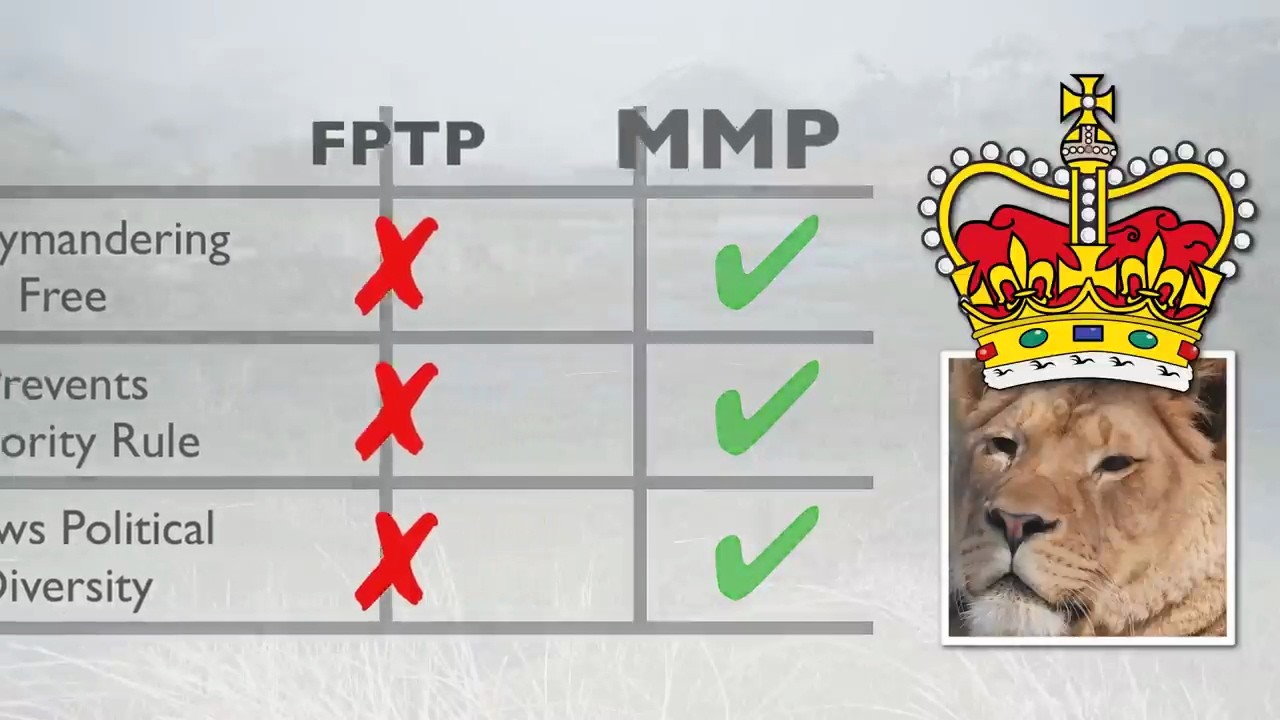
  • While MMP formalizes party control over candidate list rankings, it largely neutralizes gerrymandering, prevents minority rule, and removes tactical voting penalties against smaller parties. (2:27)

Detailed notes

## Background Published on YouTube by educational creator CGP Grey on September 26, 2011, this video explains an alternative electoral model through an animal fable. The video description directs viewers to support the channel via Patreon and shares an external link to a Stephen Fry video featuring a Kakapo.

## TL;DR Using Queen Lion's animal kingdom as an allegory, the video illustrates how the First Past the Post voting system can result in severe minority rule, where a party with 49% of the vote sweeps 100% of the Jungle Council seats while 51% of voters get no representation. A citizen named Kiwi proposes Mixed Member Proportional representation (MMP), which doubles council seats and gives every citizen two votes: one for a local candidate and one for a political party. By using top-up seats from ranked party lists to balance the council according to the party vote, MMP ensures proportional representation, neutralizes gerrymandering, and eliminates the need for tactical voting, despite granting party leaders more leverage over candidate selection.

## Atmosphere & style The presentation is brisk, clear, and analytical, characterized by CGP Grey's trademark rapid-fire narration and minimalist, illustrative storytelling. By framing complex political science concepts within an accessible fable of rival island animals, the piece transforms dry institutional mechanics into an engaging and logical problem-solving puzzle. The tone remains lucid and pragmatic throughout, moving from the palpable frustration of systemic unfairness to the rational satisfaction of a balanced democratic solution.

## Bulletin - [00:01](https://www.youtube.com/watch?v=QT0I-sdoSXU&t=1s) First Past the Post can produce extreme distortions, demonstrated when party Tuatara captured 100% of council seats with only 49% of the popular vote, leaving the 51% majority unrepresented. - [01:03](https://www.youtube.com/watch?v=QT0I-sdoSXU&t=63s) Mixed Member Proportional (MMP) representation resolves representational disparity by doubling council seats and providing each voter with two distinct votes. - [02:27](https://www.youtube.com/watch?v=QT0I-sdoSXU&t=147s) Compensatory top-up seats are filled from pre-ranked party lists to ensure the overall legislative chamber matches the island-wide party vote distribution. - [02:27](https://www.youtube.com/watch?v=QT0I-sdoSXU&t=147s) While MMP formalizes party control over candidate list rankings, it largely neutralizes gerrymandering, prevents minority rule, and removes tactical voting penalties against smaller parties.

## Key takeaways - [00:01](https://www.youtube.com/watch?v=QT0I-sdoSXU&t=1s) Queen Lion's animal kingdom experiences widespread dissatisfaction with its newly implemented democratic council due to the flaws of First Past the Post voting. - [00:01](https://www.youtube.com/watch?v=QT0I-sdoSXU&t=1s) Under First Past the Post, party Tuatara wins 100% of the Jungle Council seats despite winning only 49% of the popular vote. - [00:01](https://www.youtube.com/watch?v=QT0I-sdoSXU&t=1s) Voters firmly oppose redrawing range boundaries or sacrificing local representation, creating a dilemma for electoral reform. - [01:03](https://www.youtube.com/watch?v=QT0I-sdoSXU&t=63s) Kiwi proposes Mixed Member Proportional (MMP) representation, which keeps local boundaries intact while doubling the total number of council seats. - [01:03](https://www.youtube.com/watch?v=QT0I-sdoSXU&t=63s) Under MMP, each citizen receives two votes: one for a local candidate and one for a political party. - [01:03](https://www.youtube.com/watch?v=QT0I-sdoSXU&t=63s) The first vote operates like the traditional local plurality race, directly electing local district representatives. - [01:46](https://www.youtube.com/watch?v=QT0I-sdoSXU&t=106s) The second vote tallies island-wide party preference to reveal the true popular support of each political party. - [01:46](https://www.youtube.com/watch?v=QT0I-sdoSXU&t=106s) The newly added seats serve as compensatory top-up seats, distributed sequentially to underrepresented parties until the council matches overall party vote shares. - [01:46](https://www.youtube.com/watch?v=QT0I-sdoSXU&t=106s) Minor parties like Kakapo obtain council representation through party list seats even if they fail to win local single-member districts. - [02:27](https://www.youtube.com/watch?v=QT0I-sdoSXU&t=147s) Compensatory seats are awarded to individuals based on an internal, ordered candidate list published by each party before election day. - [02:27](https://www.youtube.com/watch?v=QT0I-sdoSXU&t=147s) MMP officially embeds political parties into the electoral structure, granting party leaders strong leverage over candidates via list rankings. - [02:27](https://www.youtube.com/watch?v=QT0I-sdoSXU&t=147s) MMP significantly reduces wasted votes, mostly eliminates the impact of gerrymandering, and safeguards the legislature against minority rule. - [02:27](https://www.youtube.com/watch?v=QT0I-sdoSXU&t=147s) Because every party vote directly influences the final seat allocation, citizens can vote sincerely for minor parties without worrying about the spoiler effect or tactical voting.

## Detailed walkthrough ### [00:01](https://www.youtube.com/watch?v=QT0I-sdoSXU&t=1s) The Flaws of First Past the Post in the Animal Kingdom

Queen Lion of the animal kingdom wants to improve her democracy after recently allowing citizens to elect representatives to the Jungle Council that governs the realm. However, she quickly notices widespread dissatisfaction among her subjects regarding the current voting system. A look at an election on one of the kingdom's small islands illustrates why the frustration is so severe. The island features three political parties: two dominant ones named Kea and Tuatara, and a much smaller third party named Kakapo.

On election day under the old system, citizens cast a single vote for a local candidate representing the specific range in which they live. Across the island, the election yields an average result of 49% for Tuatara, 48% for Kea, and 3% for Kakapo. Because the election relies on First Past the Post—where the candidate with the most votes in each range wins outright—Tuatara sweeps every single local race. Consequently, Tuatara gains control over 100% of the seats on the Jungle Council despite winning less than half of the popular vote. CGP Grey underscores the heart of the failure: “The majority of them, the 51% who voted for other parties, get no representation on the council at all.” Queen Lion recognizes the unfairness of this outcome, yet fixing it poses a dilemma: the animals value having local representation and firmly oppose redrawing their range boundaries.

- **Parties involved:** Kea (major), Tuatara (major), and Kakapo (minor third party). - **Popular vote share:** Tuatara 49%, Kea 48%, Kakapo 3%. - **First Past the Post outcome:** Tuatara takes 100% of the council seats because they won a plurality in each individual range. - **The problem:** 51% of the voters backed other parties but were left entirely unrepresented.

---

[01:03](https://www.youtube.com/watch?v=QT0I-sdoSXU&t=63s) Introducing Mixed Member Proportional Representation

A citizen named Kiwi steps forward with a proposal that resolves Queen Lion’s dilemma without disrupting range boundaries or abolishing local accountability. The proposed solution is Mixed Member Proportional representation, or MMP. As CGP Grey explains, “The idea is called Mixed Member Proportional or MMP and it makes two changes: the number of seats on the council is doubled and each citizen gets two votes, not one.”

When voting begins under MMP, Kiwi's initial step feels identical to the previous system. He receives a ballot listing the local candidates contesting his range and casts his first vote for an individual candidate, with the seat awarded to whoever wins a plurality. At this stage, the outcome mirrors the old system: Tuatara wins all the local seats, leaving more than half the electorate without a voice. However, the balance shifts dramatically once the second vote and the newly created extra seats come into play.

```mermaid flowchart TD accTitle: Mixed Member Proportional Ballot Process accDescr: Diagram showing how a voter casts two votes to determine local representatives and council-wide proportionality.

subgraph Ballots["Two Votes per Citizen"] V1["Vote 1: Local Candidate<br>(Single-member plurality)"] V2["Vote 2: Party List<br>(Council-wide preference)"] end

subgraph Assembly["Jungle Council (Doubled Seats)"] LS["Local District Seats<br>(Won directly by plurality)"] PS["Top-Up / List Seats<br>(Allocated to restore proportionality)"] end

V1 --> LS V2 --> PS LS -.->|"Disproportionate initial makeup"| PS ```

---

[01:46](https://www.youtube.com/watch?v=QT0I-sdoSXU&t=106s) Balancing the Jungle Council with List Seats

Kiwi casts his crucial second vote for his favorite political party rather than an individual local candidate. Once these party votes are tallied island-wide, they establish the true percentage of support each political party commands among the population, immediately laying bare the disproportionate makeup of the initial council. To rectify this disparity, representatives from underrepresented parties are awarded the newly doubled council seats one by one until the council reflects the true party vote distribution.

Because Tuatara started out heavily over-represented while Kea received zero seats despite winning nearly half the vote, Kea is assigned the first vacant seat. Seats continue to be awarded to Kea until both Tuatara and Kea are slightly over-represented relative to the smallest party, Kakapo. Kakapo is then awarded the final seat. Describing the end result, CGP Grey notes, “Now, the jungle council represents, as close as possible, the actual preferences of the citizens – which is a huge improvement over the old, first past the post method.”

- **Vote tallying:** The second vote reveals true party support across the whole island. - **Step-by-step restoration:** Parties receive compensatory "top-up" seats one by one based on who is most underrepresented. - **Final distribution:** Kea receives seats until Kakapo's proportional share demands the final seat, ensuring minor parties gain earned representation.

---

[02:27](https://www.youtube.com/watch?v=QT0I-sdoSXU&t=147s) Party Lists, Strategic Voting, and Final Adoption

A critical procedural question naturally follows: who selects the specific individuals that fill these compensatory party seats? Under MMP, each political party drafts an ordered list of preferred candidates prior to election day. If a party earns one compensatory seat, the candidate at the top of their list joins the council; if they secure two seats, the top two are seated, and so on. CGP Grey points out the systemic trade-off of this mechanism: “This makes MMP a bit different from other voting methods in that it makes political parties an official part of the way the election works.” This structure introduces a noticeable drawback: party leaders gain heightened leverage over politicians, as they can reward loyalty or punish dissent by shifting candidate rankings up or down the list.

Despite this risk, Queen Lion finds several compelling advantages in MMP. Because fewer votes are wasted, the system effectively neutralizes gerrymandering and safeguards against minority rule. Crucially, it liberates voters from tactical voting dilemmas in their party choice. In local range contests, citizens are often forced to vote defensively; for instance, Kakapo supporters may dislike Tuatara, tolerate Kea, and realize their own local candidate stands no chance of winning. Consequently, many Kakapo supporters vote for Kea locally to keep Tuatara out. But with the party vote, strategic voting becomes obsolete because every vote directly determines party seat totals. CGP Grey observes, “So citizens are free to vote for smaller parties they like knowing that every vote counts.” Convinced by its fairness and capacity to foster genuine political diversity, Queen Lion adopts MMP across the realm, transforming the Jungle Council into an authentic reflection of the citizenry's will.

- **Party list mechanics:** Parties rank candidates internally before the election; seats are awarded sequentially down the list. - **Drawback:** Party leadership holds greater control over politicians through list placement manipulation. - **Key benefits:** - Dramatically reduces wasted votes. - Mostly eliminates gerrymandering. - Prevents minority rule. - Encourages political diversity by enabling third-party support without spoiler effects.

## Notable quotes > [02:27](https://www.youtube.com/watch?v=QT0I-sdoSXU&t=147s) Citizens are free to vote for smaller parties they like knowing that every vote counts. — CGP Grey

## Mentioned CGP Grey, Stephen Fry, Queen Lion, Kiwi, Jungle Council, Kea, Tuatara, Kakapo, First Past the Post, Mixed Member Proportional (MMP)

## Video description Help support videos like this: https://www.patreon.com/cgpgrey

Also, if you've never need a Kakapo before you must watch this Stephen Fry video: http://www.youtube.com/watch?v=9T1vfsHYiKY

[Source](https://www.youtube.com/watch?v=QT0I-sdoSXU)

中文简报

赋予选民两票的选举制度 该视频以狮子女王统治的动物王国为喻,阐释了“简单多数制”(领先者当选制)如何导致严重的少数统治:获得49%选票的政党囊括了丛林议会的全部席位,而占51%的多数选民却毫无代表席位。一位名为Kiwi的公民提出了“联立制”(MMP),该制度将议会席位翻倍,并赋予每位选民两票:一票投给本地候选人,另一票投给政党。联立制通过政党排名的补充席位使议会与政党票比例保持一致,从而确保了比例代表制,化解了不公正划分选区的影响,并消除了策略性投票的必要性,尽管这也使政党领导层在候选人选拔上拥有了更大的影响力。 简单多数制可能导致极端的偏差,例如Tuatara党仅凭49%的普选票就包揽了100%的议会席位,导致占51%的多数派完全没有代表。 (0:01) 联立制(MMP)通过将议会席位翻倍并赋予每位选民两张不同的选票,解决了代表性失衡的问题。 (1:03) 补偿性补充席位由预先排名的政党名单产生,以确保立法机构的整体构成与全岛政党得票分布相符。 (2:27) 尽管联立制正式确立了政党对候选人名单排序的控制权,但它基本抵消了选区划分不公的影响,防止了少数统治,并消除了对小党进行策略性投票的惩罚。 (2:27)

Reading summary

CGP Grey illustrates that First Past the Post voting can disenfranchise a majority of the electorate, presenting Mixed Member Proportional (MMP) representation as a solution that preserves local representation while ensuring council-wide proportionality. The Representational Failure of First Past the Post (0:01) In an animal kingdom case study, Queen Lion discovers widespread dissatisfaction with local elections under First Past the Post. On one island, three parties contest local ranges: Tuatara wins 49% of the overall vote, Kea secures 48%, and Kakapo takes 3%. Because Tuatara edges out a plurality in each individual district, it captures 100% of the Jungle Council seats despite winning less than half of the popular vote. As CGP Grey highlights, the resulting system leaves the 51% of citizens who backed other parties with zero council representation. Addressing this inequity creates a governance dilemma because voters value having a local representative and strongly oppose redrawing their range boundaries. Restoring Balance Through a Two-Vote Mechanism (1:03) To resolve the impasse without changing boundaries, a citizen named Kiwi introduces Mixed Member Proportional representation. Under MMP, the total number of council seats is doubled, and each voter receives two separate votes instead of one. The first vote functions like the traditional system: citizens select a local candidate, and the candidate with the most votes in each range wins directly, which initially leaves Tuatara holding all local seats. The second vote allows citizens to choose their preferred political party council-wide. Officials tally these island-wide party votes to calculate each party's true proportion of popular support. Underrepresented parties are then awarded the extra compensatory seats one by one. In this scenario, Kea receives sequential top-up seats until the council's composition requires Kakapo to receive the final seat, aligning council representation closely with the voters' actual preferences. Party List Dynamics and Strategic Freedom (2:27) Compensatory seats under MMP are filled using pre-determined, ordered candidate lists established by each political party prior to election day. CGP Grey identifies a key structural trade-off: making parties an official component of the electoral mechanism gives party leadership significant control over politicians, as leaders can reward loyalty or punish dissent by shifting candidate rankings up or down the list. Despite this drawback, the system delivers critical democratic benefits. MMP largely eliminates gerrymandering and prevents minority rule by reducing wasted votes. It also eliminates the need for tactical voting on the party ballot; while Kakapo supporters might feel forced to vote defensively for Kea in local races to block Tuatara, their party vote directly counts toward the overall seat distribution, encouraging genuine political diversity. Recognizing that Mixed Member Proportional representation safeguards local accountability while preventing minority rule and wasted votes, Queen Lion adopts the system kingdom-wide, accepting increased party leadership leverage in exchange for an assembly that accurately reflects voter intent.

精炼阅读摘要

CGP Grey 通过动物王国的选举寓言阐释指出,传统的单一选区简单多数制(First Past the Post)极易造成少数派统治与多数选民代表权缺失;而联立制(Mixed Member Proportional,简称 MMP)通过实行“双票制”并增设政党补偿席位,在不改变现有选区边界的前提下,实现了议会席位与实际得票比例的对称。 简单多数制下的代表性失衡与选区困局 (0:01) 在动物王国的丛林议会(Jungle Council)选举中,狮子女王(Queen Lion)发现原有的选举制度引发了广泛不满。以王国中的一座小岛为例,岛上存在三个政党:两大主导党派 Kea 和 Tuatara,以及规模较小的第三党 Kakapo。在原有的简单多数制规则下,选民只能在各自所在的选区为一名本地候选人投出一票,每个选区中获得相对多数票的候选人直接胜出。 全岛的最终平均得票率为 Tuatara 49%、Kea 48%、Kakapo 3%。然而,由于 Tuatara 在每一个选区均以微弱优势拔得头筹,导致该党包揽了丛林议会 100% 的全部席位。CGP Grey 强调,这意味着岛上占 51% 的绝大多数选民因支持其他政党而在议会中彻底失去了代表权。由于居民珍视本地代表性且坚决反对重新划分选区边界,狮子女王陷入了如何在保留地方代表的同时消除不公的治理难题。 联立制双票流程与补偿席位修正机制 (1:03) 为打破僵局,公民 Kiwi 提出了联立制(MMP)方案。CGP Grey 解释称,MMP 的核心变革在于将议会席位总数增加一倍,并赋予每位选民两张选票。第一张选票用于选民所在选区的地方候选人,依旧按照简单多数制决出胜负。在第一阶段,Tuatara 依然凭借各选区的微弱优势赢下全部地方席位,初始结果与旧制度无异。 关键转变出现在第二张选票上。选民在第二票中直接选择自己支持的政党,全岛汇总后的第二票数据直接反映了各党派在全体公民中的真实支持率分布。为了纠正地方选举造成的代表性失衡,议会将新设立的额外席位作为“补充席位”(top-up seats),逐一分配给代表名额严重不足的政党。由于 Kea 获得了近半数普选票却未获任何地方席位,系统优先向 Kea 补充席位;随后,获得 3% 选票的 Kakapo 也获得了应得的最终席位。CGP Grey 指出,这一机制最终使议会席位构成最大程度贴近了公民的真实意愿。 政党名单的权力集中与选民投票自由 (2:27) 在 MMP 制度的具体落实中,补偿席位的具体人选由各政党在选举前内部拟定的排位名单决定。若政党赢得一个补偿席位,名单第一位候选人即可入职议会,依此类推。CGP Grey 指出这一机制的系统性代价:它将政党正式确立为选举运作的法定组成部分,使政党领袖掌握了极大的话语权,领导层可以通过调整候选人在名单上的顺位来奖惩党内成员或压制异见。 尽管存在上述弊端,狮子女王依然认可 MMP 的显著制度优势。该机制大幅减少了无效废票,有效防范了杰利蝾螈(gerrymandering,选区划分不公)与少数派统治。更关键的是,它彻底终结了选民在政党选择上的“策略性投票”困境。在传统地方选举中,Kakapo 的支持者为防止讨厌的 Tuatara 当选,往往不得不违心改投相对可以接受的 Kea;而在 MMP 下,第二票直接决定政党总席位,选民可以毫无顾虑地投票给自己真正支持的小党。鉴于其能促进真正的政治多样性,狮子女王最终在全境推行了联立制。 MMP 制度通过结合选区直选席位与政党比例名单,在不牺牲地方选区代表性的同时,系统性解决了简单多数制造成的赢者通吃与代表性扭曲。尽管该制度在一定程度上强化了政党高层对议员人选的控制权,但它消除了第三方候选人面临的“搅局者效应”,确保了议席分配能客观映射选民的多元偏好。

Detailed notes — zh

## Background 该视频由知名科普频道 CGP Grey 于 2011 年 9 月 26 日发布在 YouTube 平台。视频简介呼吁观众在 Patreon 上支持其创作,并附带推荐了一段由 Stephen Fry 介绍鸮鹦鹉(Kakapo)的趣味视频链接。 ## TL;DR 视频通过一个以动物王国为背景的寓言故事,深刻揭示了传统简单多数制(FPTP)导致赢家通吃、席位失衡及选民代表缺失的致命弊端。为兼顾民众对本地代表的诉求与整体代表的公平性,几维鸟提出了“联立制”(MMP)方案:将议会总席位翻倍,并赋予每位选民两张选票,第一张选出本地代表,第二张投给心仪政党以按比例追加席位来平衡偏差。尽管该制度赋予了政党高层通过候选人名单掌控成员的潜在权力,但它几乎根除了不公正选区划分与少数人统治,让选民无需再委曲求全进行策略性投票,真正实现了议会对多元民意的忠实反映。 ## Atmosphere & style 整部作品延续了 CGP Grey 标志性的极简动效与轻快、理性的叙事风格,将枯燥复杂的选举制度拆解得清晰易懂且极具趣味。讲述者以冷静睿智的旁白引领观众,借助几维鸟、喙头蜥与啄羊鹦鹉等生动角色构建政治推演,情绪层层递进,从最初面对制度失衡的无奈与荒谬,逐渐转向逻辑解题时的豁然开朗。整体视听体验既幽默风趣又充满思辨深度,让观众在轻松愉悦的寓言氛围中直观领悟选举民主背后的精妙博弈。 ## Bulletin - [00:01](https://www.youtube.com/watch?v=QT0I-sdoSXU&t=1s) 简单多数制(FPTP)在典型选区结构下极易引发赢家通吃:得票率仅 49% 的政党可借由各选区微弱相对多数横扫 100% 席位,导致占 51% 的多数选民意愿完全落空。 - [01:12](https://www.youtube.com/watch?v=QT0I-sdoSXU&t=72s) 联立制(MMP)通过将议会席位翻倍并赋予选民两张选票,既保留了选民珍视的本地选区代表,又利用第二张政党选票按比例追加席位,使整体席位分布贴合真实民意。 - [02:27](https://www.youtube.com/watch?v=QT0I-sdoSXU&t=147s) MMP 正式将政党名单机制嵌入选举流程,虽使政党高层可通过名单顺位强化党纪控制,但也大幅削弱了杰利蝾螈与策略性投票对小党的打压。 ## Key takeaways - [00:01](https://www.youtube.com/watch?v=QT0I-sdoSXU&t=1s) 在简单多数制(FPTP)下,由于只由各选区得票最多者胜出,即便政党在全岛得票率不足半数(如 49%),只要在各选区均维持相对多数,就能囊括 100% 议会席位。 - [00:45](https://www.youtube.com/watch?v=QT0I-sdoSXU&t=45s) 选区代表制中选民极其珍视本地代表权并抗拒重划选区,制度改革面临既要纠正代表失衡、又不能触动既有选区边界的双重约束。 - [01:12](https://www.youtube.com/watch?v=QT0I-sdoSXU&t=72s) 联立制(MMP)的核心解决方案是将议会总席位翻倍,并让每位公民同时拥有两张选票:一张投本地候选人,一张投政党。 - [01:22](https://www.youtube.com/watch?v=QT0I-sdoSXU&t=82s) 第一张本地选票依然遵循简单多数决,旨在选出代表各选区利益的本地代表,确保基层代言人不脱节。 - [01:38](https://www.youtube.com/watch?v=QT0I-sdoSXU&t=98s) 第二张选票按全域统计各政党的真实民意支持率,作为校正议会席位比例的基准标尺。 - [01:55](https://www.youtube.com/watch?v=QT0I-sdoSXU&t=115s) 议会扩增的额外席位会优先分配给在本地选区中代表性被严重低估的政党,逐一追加直至总席位比例与政党得票率尽可能一致。 - [02:27](https://www.youtube.com/watch?v=QT0I-sdoSXU&t=147s) 政党按预先拟定的政党名单(Party List)由上至下分配额外席位,此举将政党组织正式嵌入选举机制,增强了党内高层通过名单排位奖惩议员的权力。 - [03:02](https://www.youtube.com/watch?v=QT0I-sdoSXU&t=182s) MMP 大幅减少了选票浪费,从机制上根除了通过不公选区划分(杰利蝾螈)来实现少数人统治的漏洞。 - [03:24](https://www.youtube.com/watch?v=QT0I-sdoSXU&t=204s) 在 MMP 制度下,选民无需为了阻止最讨厌的政党而在政党票上被迫弃保(策略性投票),小党选民可以放心地将政党票投给真正支持的较小政党。 ## Detailed walkthrough ### [00:01](https://www.youtube.com/watch?v=QT0I-sdoSXU&t=1s) 狮子女王的民主困境与简单多数制(FPTP)的弊端 动物王国的狮子女王(Queen Lion)正致力于完善王国的民主制度。不久前,她批准公民选举代表组成管理王国的“丛林议会”(Jungle Council)。然而,女王很快察觉到民众对现行的投票制度极为不满。为了探寻根源,镜头转向了王国中一座典型的小岛:岛上共有三个政党,分别是两个主流大党“喙头蜥党”(Tuatara)与“啄羊鹦鹉党”(Kea),以及一个规模较小的第三党“鸮鹦鹉党”(Kakapo)。 在选举日当天,岛上的每位公民各自投出一票,选出代表自己所在选区(range)的本地候选人。全岛平均得票率统计显示,喙头蜥党获得了 49% 的选票,啄羊鹦鹉党紧随其后获得 48%,而鸮鹦鹉党则分得 3%。这场选举采用的是经典的“领先者当选制”(First Past the Post,即简单多数制),规则极为简单粗暴——得票最多的候选人直接胜出。然而致命的问题在于,喙头蜥党在每一个单独的选区中都刚好拿下了相对多数的选票,结果他们横扫全岛,直接攫取了丛林议会中 100% 的席位。讲述者一针见血地指出:“其中占多数的 51% 投票给其他政党的选民,在议会中完全没有得到任何代表。” 这种赢家通吃的局面在狮子女王看来显然极不公正,但如何修复却成了一道难题。岛上的选民非常珍视拥有属于自己本地代表的权利,坚决不同意重新划定选区边界。正当女王一筹莫展之际,岛上的一位普通公民——几维鸟(Kiwi)带来了一个精妙的提案,既能保留本地代表机制并不触动现有选区边界,又能从根本上扭转代表性失衡的弊端。 - 岛上三大党派全岛支持率:喙头蜥党 49%、啄羊鹦鹉党 48%、鸮鹦鹉党 3%。 - 简单多数制下的分配结果:得票率仅 49% 的喙头蜥党赢下全部选区,独占议会 100% 席位。 - 选民诉求底线:渴望公平代表,但坚决保留本地选区代表且不重划选区边界。 --- ### [01:12](https://www.youtube.com/watch?v=QT0I-sdoSXU&t=72s) 联立制(MMP)的运作机制:两张选票与席位平衡 几维鸟提出的解决方案名为“联立制”(Mixed Member Proportional,简称 MMP)。该机制的核心调整极为明确:将丛林议会的总席位数直接翻倍,同时赋予每位公民两张选票而非原有的一张。在新的选举日,几维鸟的第一张选票与以往没有任何区别,选票上列出的是争夺本地选区席位的候选人名单,几维鸟挑选其中一位,依旧由得票最多者胜出。如果流程仅止于此,体制并未发生任何改善——喙头蜥党再次横扫所有本地选区,半数以上的公民依旧处于没有代表发声的窘境。 改变发生在关键的“第二张选票”与议会扩增的额外席位上。几维鸟将第二张选票投给自己最支持的政党。全岛汇总所有第二张选票后,便能清晰展现出各政党在全体公民心目中的实际支持率百分比,从而直观暴露出此前仅靠本地选区选举形成的议会究竟有多失衡。为了纠正这种代表性倾斜,系统开始逐一向议会追加政党席位,使总席位比例向政党得票率靠拢。在本地席位中被严重过度代表的是喙头蜥党,而受到最严重低估的则是啄羊鹦鹉党,因此啄羊鹦鹉党分得了第一个补充席位。追加席位的工作持续进行,直到啄羊鹦鹉党和喙头蜥党都处于代表充足的状态,最后一个席位便顺理成章地拨给了处于代表不足的鸮鹦鹉党。讲述者强调:“此时,丛林议会已经尽可能地贴合了公民的真实偏好,这相比旧有的领先者当选制是一个巨大的飞跃。” ```mermaid flowchart TD accTitle: 联立制(MMP)双票与席位分配流程 accDescr: 展示选民如何投出本地选票和政党选票,并最终通过政党比例追加席位平衡议会。 subgraph 投票阶段 V1["第一张票:本地候选人"] V2["第二张票:心仪政党"] end subgraph 本地选区席位 R1["简单多数决 (FPTP)"] R2["产生各选区优胜代表<br/>(喙头蜥党席卷所有选区)"] end subgraph 比例平衡阶段 P1["统计全岛政党得票率"] P2["对比议会现有席位与民意偏差"] P3["逐一从政党名单追加额外席位"] end FINAL["最终议会:席位严格契合选民政党偏好"] V1 --> R1 --> R2 V2 --> P1 --> P2 R2 --> P2 P2 --> P3 --> FINAL ``` --- ### [02:27](https://www.youtube.com/watch?v=QT0I-sdoSXU&t=147s) 政党名单的权力机制与消除不公的多重优势 随着额外席位的引入,一个必然引发好奇的议题浮出水面:究竟由谁来决定将这些新增席位分给政党内部的哪些具体成员?在 MMP 机制下,各政党在选举前就会预先拟定一份候选人优先次序名单(Party List)。如果政党在按比例分配中仅获得一个额外席位,名单排在首位的人选直接进入议会;若分得两个席位,则按顺序录取前两名,以此类推。这种安排使 MMP 与其他投票制度大不相同,它将政党组织正式嵌入了选举运转机制之中。这带来了一个潜在的弊端:党派高层获得了掌控党内成员的更大权力,他们可以通过调整成员在政党名单上的顺位排位,来奖励听话的成员或惩罚违背党派意志的行为。 尽管名单机制存在政党集权的隐患,但它为狮子女王带来的制度红利却远大于缺陷。由于选票浪费现象大幅减少,MMP 几乎根除了不公正的选区划分(Gerrymandering,杰利蝾螈),并从制度层面阻止了“少数人统治”(Minority Rule)。更重要的是,它鼓励了政治多样性,赋予了公民真正自由的选择权。这种选民心理的变化尤为引人深思:在 MMP 制度下,本地代表选举的得票率往往与政党选票截然不同,这是因为本地选举存在残酷的“策略性投票”(Strategic Voting)。例如,鸮鹦鹉党的支持者极其厌恶喙头蜥党,但尚能容忍啄羊鹦鹉党;明知本党在本地选区胜算渺茫,为避免喙头蜥党胜出,许多鸮鹦鹉党选民会策略性地把本地票改投给啄羊鹦鹉党。但在投第二张政党选票时,这种委曲求全的策略便毫无必要,因为政党得票越多,在议会中获得的最终代表就越多。讲述者指出:“因此,公民可以自由地将选票投给他们喜欢的较小政党,因为他们深知每一张选票都至关重要。”狮子女王在全面审视各方案后,毅然决定在王国推行 MMP 制度,丛林议会自此破天荒地真正成为了选民意愿的忠实倒影。 - 政党名单运作方式:各党在选前按优先顺序排定人选,额外席位自名单顶部向下顺次录取。 - 潜在机制弊端:党派领袖可通过调整名单位次奖惩党内成员,对议员个人的控制力大幅增强。 - 核心制度优势:消除选票浪费、基本终结不公选区划分、杜绝少数统治、消除第三党选民的“弃保/策略性投票”负担。 ## Notable quotes > [02:27](https://www.youtube.com/watch?v=QT0I-sdoSXU&t=147s) 公民可以自由地将选票投给他们喜欢的较小政党,因为他们深知每一张选票都至关重要。 — 讲述者 ## Mentioned CGP Grey, Stephen Fry, Lion (狮子女王), Kiwi (几维鸟), Tuatara (喙头蜥党), Kea (啄羊鹦鹉党), Kakapo (鸮鹦鹉党), First Past the Post (简单多数制), Mixed Member Proportional (联立制), Gerrymandering (杰利蝾螈/不公正选区划分), Strategic Voting (策略性投票) ## Video description Help support videos like this: https://www.patreon.com/cgpgrey Also, if you've never need a Kakapo before you must watch this Stephen Fry video: http://www.youtube.com/watch?v=9T1vfsHYiKY [Source](https://www.youtube.com/watch?v=QT0I-sdoSXU)

Source quotes

[2:27] 讲述者: 公民可以自由地将选票投给他们喜欢的较小政党,因为他们深知每一张选票都至关重要。

Source quotes

[2:27] CGP Grey: Citizens are free to vote for smaller parties they like knowing that every vote counts.

Original transcript

[0:01] Queen Lion of the animal kingdom is looking to improve her democracy. She recently allowed [0:05] citizens to elect representatives to the Jungle Council which governs the kingdom. [0:09] However, she recognizes that her citizens are not happy with the voting system. Let’s [0:13] watch an election on one of the small islands of her Kingdom to see why: [0:17] On this island there are three political parties: the two big ones: Kea and Tuatara, and a small [0:22] third party, Kakapo. [0:24] On election day, the citizens each cast one vote for a local candidate they want to represent [0:28] the range they live in. The results are as follows: [0:31] With the average across the island that Tuatara gets 49%, Kea gets 48% and Kakapo gets 3%. [0:36] The election is run using First Past the Post, meaning that candidate with the most votes [0:41] wins. Because Tuatara got the most votes in each range, they get to control 100% of the [0:46] seats on the council. [0:47] And this is why so many citizens are unhappy. The majority of them, the 51% who voted for [0:52] other parties, get no representation on the council at all. [0:55] This seems unfair to Queen Lion but she’s not sure how to fix it. The citizens like [0:59] having local representatives and don’t want to change the range boundaries. [1:03] But luckily Kiwi, one of the citizens of this island, has a suggestion for Queen Lion on [1:07] how she can make the system better while keeping local representation and leaving the ranges [1:11] as they are. [1:12] The idea is called Mixed Member Proportional or MMP and it makes two changes: the number [1:18] of seats on the council is doubled and each citizen gets two votes, not one. [1:22] Here’s how it works: [1:24] At first, election day for Kiwi is just the same as before. [1:27] He gets a list of candidates running to represent his local range on the council. Kiwi picks [1:31] one and the winner will be the candidate with the most votes. [1:34] So far the system is no better – Tuatara again wins all the local elections and still [1:39] more than half of the citizens don’t have any representation. But here’s how Kiwi’s [1:43] second vote – and those extra seats on the council – fix this. [1:46] Kiwi uses his second vote to pick his favorite political party. [1:49] These second votes are tallied up and show the percentage of support that each of the [1:53] political parties has among the citizens as a whole and reveals how imbalanced the council [1:57] is so far. [1:57] To fix this imbalance, members of the political parties are added, one at a time, to make [2:02] the council more proportional. [2:04] Tuatara is the most over-represented and Kea the most underrepresented, so Kea gets the [2:08] first empty seat. [2:10] This continues, adding one Kea at a time until both Turatara and Kea are over-represented [2:15] and Kakapo is under-represented, so they get the final seat. [2:18] Now, the jungle council represents, as close as possible, the actual preferences of the [2:22] citizens – which is a huge improvement over the old, first past the post method. [2:27] There is, however, one interesting question that should arise at this point: [2:31] Exactly who decides which members of the parties get those extra seats? [2:34] The way it works is that, before the election, the political parties make a list of their [2:38] favorite candidates in the order that they want them to get on the council. [2:41] So, if there is only get one extra seat, the name at the top of their list is chosen. If [2:46] they get two seats, the first two are chosen, and so on. [2:48] This makes MMP a bit different from other voting methods in that it makes political [2:53] parties an official part of the way the election works. [2:56] This may give the party leaders greater control over their members because they can reward [2:59] or punish their actions by changing their placement on the party list. [3:03] While this may be a disadvantage of MMP there are a number of other benefits that Queen [3:07] Lion, in particular, likes. [3:09] Because fewer votes are wasted, it mostly Eliminates Gerrymandering and prevents minority [3:13] rule. [3:14] It also gives more choice to the citizens by encouraging political diversity. [3:18] This point is worth expanding on. [3:20] Notice how, with MMP, the percentage of votes for the local representatives isn’t the [3:24] same as for the parties. This is because in the local elections, citizens have to vote [3:28] strategically. [3:29] For example, Kakapo voters don’t like Tuatara at all, but they can tolerate Kea. Since there [3:35] are so few Kakapo voters they know that their candidate doesn’t have a chance of winning [3:38] the local election, so it’s really a race between the two big parties. Thus many of [3:43] the Kakapo will vote Kea in the hope that he might win and be their representative. [3:48] However, when it comes to voting for their favorite political party, this strategy doesn’t [3:51] matter. The more votes a party gets the more representatives it has on the council. [3:55] So citizens are free to vote for smaller parties they like like knowing that every vote counts. [4:00] Queen Lion reviews her options and decides to switch her Kingdom to MMP. Now, for the [4:05] first time, the Jungle Council is a true reflection of what her citizens want.