Veritasium Deploys Clickbait to Drive Algorithmic Reach on YouTube
Clickbait is Unreasonably Effective — Veritasium

Veritasium

Packaging optimization directly commands platform impressions, creating a necessary revenue flywheel that funds high-budget science communication.

AI-assisted summary of Clickbait is Unreasonably Effective — original source. Check the original for full context.

Source published:

Key ideas

  • YouTube's shift from a subscription feed to an engagement-driven recommendation engine made high-converting titles and thumbnails essential to secure platform impressions. (1:38)
  • Derek Muller distinguishes between benign attention-seeking packaging ('legitbait') and deceptive practices ('clicktraps') that artificially widen the curiosity gap without delivering a truthful payoff. (3:14)
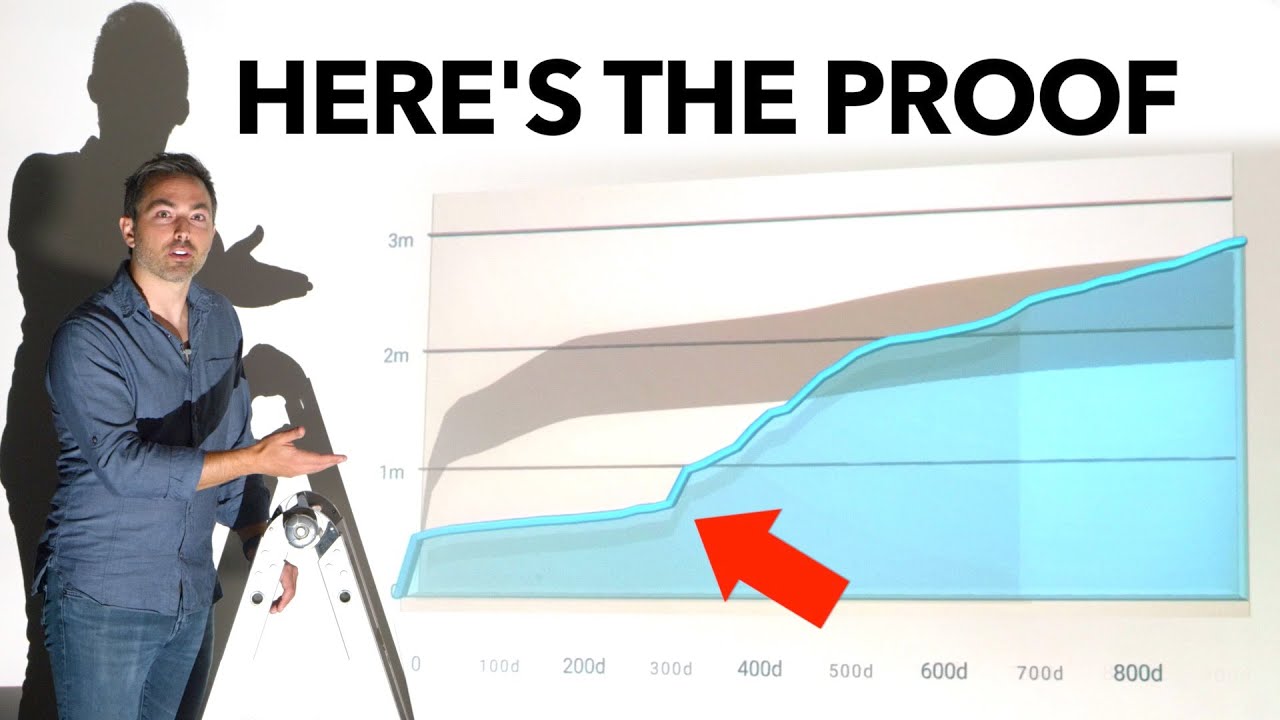
  • Dynamic title and thumbnail swaps directly trigger algorithmic impression increases, creating a distinct 'double-hump' view curve for optimized uploads. (9:47)
  • Retitling back-catalog uploads with clearer, concrete phrasing revived dormant videos, adding millions of views without altering original video assets. (15:57)

Detailed notes

## Background Published on YouTube by science communicator Derek Muller on the channel Veritasium on August 17, 2021, this video examines how titles and thumbnails fundamentally dictate the success or failure of online content. The video description highlights the critical role of packaging in audience reach alongside a promotional offer for KiwiCo.

## TL;DR Derek Muller breaks down the mechanics and evolutionary necessity of clickbait, chronicling YouTube's transition from a subscriber-based feed into an engagement-driven recommendation engine. He distinguishes between manipulative, misleading 'clicktraps' and truthful, curiosity-sparking 'legitbait,' illustrating how minor phrasing and thumbnail tweaks can revive dormant uploads or propel videos to tens of millions of views. Featuring practical testing insights and commentary from top creators like MrBeast, Derek argues that packaging is an empirical science that serves an educational mission. Ultimately, maximizing audience reach through optimized packaging creates a self-funding flywheel that finances broadcast-quality science journalism without dumbing down the underlying concepts.

## Atmosphere & style The presentation strikes an earnest, self-effacing, and intellectually rigorous tone, blending transparent behind-the-scenes revelations with data-driven media theory. Derek begins with humorous admissions of his own past packaging blunders before transitioning into an analytical masterclass that feels like an insider industry debrief. Casual, bantering interactions with guests like MrBeast inject lighthearted pragmatism into Derek's philosophical overthinking, giving the viewer a candid look into the competitive, metric-obsessed mechanics of modern content creation.

## Bulletin - [01:38](https://www.youtube.com/watch?v=S2xHZPH5Sng&t=98s) YouTube's shift from a subscription feed to an engagement-driven recommendation engine made high-converting titles and thumbnails essential to secure platform impressions. - [03:14](https://www.youtube.com/watch?v=S2xHZPH5Sng&t=194s) Derek Muller distinguishes between benign attention-seeking packaging ('legitbait') and deceptive practices ('clicktraps') that artificially widen the curiosity gap without delivering a truthful payoff. - [09:47](https://www.youtube.com/watch?v=S2xHZPH5Sng&t=587s) Dynamic title and thumbnail swaps directly trigger algorithmic impression increases, creating a distinct 'double-hump' view curve for optimized uploads. - [15:57](https://www.youtube.com/watch?v=S2xHZPH5Sng&t=957s) Retitling back-catalog uploads with clearer, concrete phrasing revived dormant videos, adding millions of views without altering original video assets.

## Key takeaways - [00:00](https://www.youtube.com/watch?v=S2xHZPH5Sng&t=0s) Academic framing can severely undercut native reach on YouTube, as demonstrated by the original Magnus effect basketball video underperforming until re-uploaded under simpler titles. - [01:38](https://www.youtube.com/watch?v=S2xHZPH5Sng&t=98s) YouTube evolved away from a podcast-like subscription feed model to Reddit-style algorithmic discovery to maximize watch time and reduce reliance on off-site referral traffic. - [03:14](https://www.youtube.com/watch?v=S2xHZPH5Sng&t=194s) Packaging content exists on a two-axis spectrum measuring sensationalism against withheld information, separating truthful 'legitbait' from deceptive 'clicktraps' and the unclicked 'dead zone.' - [05:41](https://www.youtube.com/watch?v=S2xHZPH5Sng&t=341s) Maximum engagement on social platforms naturally clusters against the boundaries of community acceptability, functioning like natural selection where attention-grabbing packaging is systematically favored. - [07:18](https://www.youtube.com/watch?v=S2xHZPH5Sng&t=438s) A video's success relies equally on retention and click-through rate, because YouTube's finite interface requires high CTR before awarding broader impression volume. - [07:18](https://www.youtube.com/watch?v=S2xHZPH5Sng&t=438s) Real-time creator analytics triggered an operational arms race of active split-testing, where simple packaging modifications can multiply lifetime views by an order of magnitude. - [09:47](https://www.youtube.com/watch?v=S2xHZPH5Sng&t=587s) Prominent creators including MrBeast rely on empirical testing rather than intuition, regularly preparing multiple thumbnail variants to swap when initial launches underperform. - [11:47](https://www.youtube.com/watch?v=S2xHZPH5Sng&t=707s) Accessible packaging serves a public educational purpose by drawing uninitiated viewers into complex STEM subjects that esoteric academic titles would otherwise filter out. - [11:47](https://www.youtube.com/watch?v=S2xHZPH5Sng&t=707s) Maximizing view velocity sustains the financial model required to fund broadcast-level documentary production values, specialized consultants, and complex field experiments. - [14:10](https://www.youtube.com/watch?v=S2xHZPH5Sng&t=850s) Veritasium approaches title and thumbnail selection as an empirical science, utilizing dedicated specialists and pre-launch A/B audience testing across platforms. - [15:57](https://www.youtube.com/watch?v=S2xHZPH5Sng&t=957s) Reviving catalog uploads through clearer, more direct titles demonstrates that optimal packaging often clarifies core subjects rather than relying on hyperbole. - [15:57](https://www.youtube.com/watch?v=S2xHZPH5Sng&t=957s) A self-reinforcing flywheel connects reach to educational quality, where increased viewership generates the resources needed to improve the research, locations, and visuals of future releases.

## Detailed walkthrough ### [00:00](https://www.youtube.com/watch?v=S2xHZPH5Sng&t=0s) The Basketball Drop and the Packaging Dilemma

Derek Muller admits that despite his long career as a science communicator, he has historically been terrible at making clickbait. For years, his most successful video featured a basketball dropped from the top of a dam with backspin, demonstrating how the ball catches the air, shoots outward like a rocket, and travels vastly farther than anyone would intuitively expect. While the clip became an international sensation embedded on hundreds of mainstream news websites—generating 16.3 million views in its very first week—almost none of that viewership actually occurred on YouTube itself. The problem came down entirely to packaging: Derek had given the upload an unenticing thumbnail and the dry, academic title “Strange Applications of the Magnus Effect.”

The packaging was so poorly suited to YouTube that Derek jokes he became an internal case study at the company for what not to do. The mistake became undeniable when an unauthorized channel ripped the video, re-uploaded it with the straightforward, punchy title “Basketball Dropped From Dam,” and quickly accumulated tens of millions of views on the platform. Although the incident led YouTube to grant Derek access to Content ID—allowing him to claim ad revenue from re-uploads of his work—he still struggled with packaging. To understand modern thumbnail craft, Derek consults a prominent creator who demonstrates the exaggerated facial expressions required for contemporary thumbnails. The guest reveals that he maintains a vast archive of facial reactions, explaining: “I probably have like 500 of these just saved and we can just Photoshop my face on my face.”

- The original Magnus effect basketball video gained 16.3 million external views during week one, yet stagnated natively on YouTube. - “Now, I believe within YouTube, I'm used as an example of how not to package your video,” Derek reflects. - The simple re-upload title “Basketball Dropped From Dam” outperformed the original academic phrasing by tens of millions of views.

[01:38](https://www.youtube.com/watch?v=S2xHZPH5Sng&t=98s) The Algorithmic Shift: From Subscriptions to the Rabbit Hole

When Veritasium launched a decade earlier, packaging and clickbait were far less critical because the subscriber feed drove the vast majority of traffic. Videos originally gained traction off-site through viral sharing on platforms like Reddit or Facebook. Once a video went viral and attracted subscribers, the channel's subsequent uploads were delivered directly to those users' subscription feeds, creating a self-sustaining positive feedback loop that prompted YouTube to recommend the content more broadly.

Over time, YouTube discovered that relying strictly on subscriber feeds degraded user engagement, yielding fewer overall clicks and significantly lower watch time. Furthermore, relying on third-party platforms for discovery posed an existential business risk, as external networks could throttle traffic at any time. To transform YouTube into an independent destination, engineers redesigned the recommendation system to function less like a podcast player—where users only hear what they subscribe to—and more like Reddit, where high engagement elevates content to everyone. The platform's objective shifted toward drawing viewers in and keeping them inside an hours-long rabbit hole.

```mermaid flowchart TD accTitle: YouTube Platform Shift accDescr: Diagram illustrating YouTube's transition from an external-reliant subscriber model to an engagement-driven destination engine.

subgraph OldModel["Old Model: Subscription Feed"] A["External Viral Hit (Reddit / Facebook)"] --> B["New Subscribers"] B --> C["Views via Sub Feed"] C --> D["YouTube Amplifies to More Users"] D --> B end

subgraph NewModel["Current Model: Engagement Destination"] E["Algorithmic Recommendations"] --> F["Click-Through & Retention"] F --> G["Extended Watch Sessions"] G --> H["Continuous Rabbit Hole"] H --> E end ```

Derek emphasizes the platform competition underlying this change: “The ultimate resource is people's time and attention, and every platform is trying to capture as much of it as possible.” By diminishing the weight of raw subscriber counts in favor of real-time viewer interest, YouTube inevitably made high-converting titles and thumbnails essential for survival.

[03:14](https://www.youtube.com/watch?v=S2xHZPH5Sng&t=194s) Deconstructing Clickbait: Legitbait, Clicktraps, and the Dead Zone

A core paradox of online media is that audiences universally claim to despise clickbait, yet it dominates internet culture. Derek attributes this disconnect to conflicting definitions of the word itself. Standard search engine results offer a neutral definition (Type I clickbait): digital content designed primarily to attract attention and encourage users to click a link. Derek notes that under this broad description, any creator trying to get their work seen is practicing Type I clickbait, and there is nothing inherently unethical about it.

The colloquial, pejorative understanding (Type II clickbait) is far more manipulative. “Wikipedia says, ‘A defining characteristic of clickbait is that it is sensationalized or misleading,’” Derek notes, highlighting the deliberate use of teasers to exploit the “curiosity gap”—offering just enough intrigue to make a viewer desperate for an answer without providing any payoff upfront. Examples from tabloid sites illustrate this extreme: *“Nine out of 10 Americans are completely wrong about this mind blowing fact”* and *“Someone gave some kids some scissors. Here's what happened next.”*

To clarify the spectrum, Derek maps titles across two axes: how misleading or sensationalized they are versus how heavily they withhold information. Type II clickbait occupies the top-right corner of high sensationalism and large curiosity gaps, while the opposite extreme is the “dead zone”—content so literal and unsensational that nobody clicks, precisely where Derek’s original “Strange Applications of the Magnus Effect” resided. To separate the honest pursuit of attention from deceptive trickery, Derek adopts YouTuber Brady Haran’s term “legitbait” for truthful, enticing packaging, while reserving terms like “clicktrap,” “clicktrick,” “linktrap,” or “dupechute” for deceitful Type II abuse.

- Type I clickbait simply seeks attention; Type II relies on deception or deliberate information withholding. - Brady Haran coined “legitbait” to describe engaging titles that remain truthful to the material. - Alternative proposed labels for abusive Type II clickbait include clicktraps, clicktricks, linktraps, and dupechutes.

[05:41](https://www.youtube.com/watch?v=S2xHZPH5Sng&t=341s) The Evolutionary Reality of Click-Through Rates

Because any given video can be framed in dozens or hundreds of accurate ways, finding the right presentation is an exercise in exploration. A video about flying in a reduced-gravity aircraft could legitimately be packaged as *“How does a zero-G plane work?”*, *“I went on a plane that does parabolic trajectories,”* or *“What happens to fire on a zero-G plane?”* The most compelling packaging inevitably skirts the boundary of sensationalism. Derek references a framework popularized by the channel Smarter Every Day, which demonstrates that on social media platforms, peak audience engagement consistently clusters directly against the boundary of acceptable community norms.

The boundary between legitimate intrigue and deceptive clickbait is subjective; what strikes one viewer as an exciting preview might strike another as manipulative bait. Regardless of individual tastes, the mathematical reality of YouTube makes attention-grabbing design unavoidable. Derek's creator guest summarizes the baseline rule: “You can't get 10 million views unless 10 million people click on the video.”

Derek compares this dynamic directly to natural selection: traits that succeed are preserved and amplified across the ecosystem. Viewers may threaten to unsubscribe when confronted with dramatic packaging, but aggregate viewing patterns consistently reward it. “If you don't begrudge the giraffe its long neck so it can reach the highest leaves, can you begrudge a YouTuber the red arrow that allows them to reach further audiences?” Derek asks.

[07:18](https://www.youtube.com/watch?v=S2xHZPH5Sng&t=438s) Real-Time Metrics and the 38-Character Turnaround

Success on modern YouTube hinges on two central metrics: watch time and click-through rate (CTR)—the percentage of impressions that result in an actual view. Derek admits that early in his career, he believed his sole obligation was to produce high-quality videos, treating titles and thumbnails as simple administrative labels. Over time, he realized that packaging represents at least half of the total workload. Because YouTube has strictly finite interface space to distribute among virtually infinite content choices, high viewer retention alone cannot rescue a video if nobody clicks on it from the homepage. A superior title and thumbnail do not merely improve conversion; they convince the algorithm to award the video orders of magnitude more impressions.

This pressure intensified when YouTube rolled out real-time analytics displaying views, CTR, and impressions within the creator dashboard, sparking an operational arms race. Creators now routinely launch videos with multiple pre-rendered thumbnail options, actively monitoring early performance and swapping visual assets until they identify the highest-converting combination.

Derek illustrates this phenomenon through his 2020 documentary on planetary defense. Derek felt it was one of the best productions he had ever created, titling it *“Asteroids: Earth's Biggest Threat”* after a quote by Stephen Hawking. Despite glowing feedback from viewers who watched it, early CTR was disastrous: within 24 hours, the video ranked 9th out of his last 10 uploads, pacing for a mediocre 1.5 million lifetime views. Derek tested alternative titles such as *“Asteroid Impact: What Are Our Chances?”* and *“Asteroid Impact: What Could We Do?”*, but performance remained flat. On the third day post-launch, Derek swapped the thumbnail and changed the title to *“These Are the Asteroids to Worry About.”* The video surged immediately, transforming from one of his worst-performing releases into his top video of the period, eventually surpassing 14 million views. “Nothing about the video changed, just that one image and 38 characters,” Derek observes.

- YouTube success requires balancing total watch time with click-through rate (impressions converted to views). - Real-time dashboard analytics pushed creators into active A/B testing and rapid packaging swaps during video launches. - The asteroid video initially ranked 9th out of Derek's previous 10 uploads under Stephen Hawking's quote framing. - Retitling the asteroid video to a specific 38-character phrase multiplied its reach, pushing it to 14 million views without modifying a single second of the underlying footage.

[09:47](https://www.youtube.com/watch?v=S2xHZPH5Sng&t=587s) Swapping Thumbnails, the View Curve, and Talking with MrBeast

Changing a video's packaging is not about tricking loyal subscribers into watching the same upload twice; it directly informs the platform's recommendation engine. By lifting the click-through rate, creators persuade the algorithm to serve higher volumes of impressions across the platform. In recent Veritasium uploads, this dynamic produces a signature double-hump view curve: an initial spike right after publication, an inevitable plateau or dip, and then a distinct secondary surge the moment an optimized title and thumbnail combination unlocks algorithmic reach. Derek Muller monitors real-time graphs after every swap, searching for that unmistakable inflection point:

> “The whole point is to get YouTube to show the title and thumbnail to more people.”

This reactive split-testing approach is common practice among top-tier creators. In a discussion with Jimmy Donaldson (MrBeast), Jimmy explains that even the biggest channels cannot reliably forecast audience behavior from intuition alone. Instead, MrBeast routinely prepares two or three distinct thumbnail variants for every concept and swaps them out dynamically if initial metrics underperform:

> “I mean, you could know if you just were an almighty being that could just predict what people would be interested in, but you know, usually... Like, you can do hide and seek. You don't really know if like you hiding in a tree and then someone walking below you is a good thumbnail. Or if you hiding a trash can and them walking in front of you. So, you know, just do both and then see which one interests people a little bit more.”

When Derek compliments Jimmy's innate sense for high-performing packaging, Jimmy laughs off the modesty:

> “I mean, no one gets 40 million views a video.”

```mermaid flowchart TD accTitle: Impression Bump Lifecycle accDescr: Flowchart showing how thumbnail updates drive YouTube impressions and secondary view surges.

subgraph Launch ["Initial Upload"] A["Publish Video"] --> B["Initial Subscriber Spike"] B --> C["View Velocity Dips"] end

subgraph Optimization ["Packaging Iteration"] C --> D["Monitor Real-Time Graph"] D --> E["Swap Title & Thumbnail"] E --> F{"CTR Increases?"} end

subgraph Outcome ["Algorithmic Scale"] F -->|Yes| G["Algorithm Increases Impressions"] G --> H["Second View Bump (Winner)"] F -->|No| I["Test Alternate Assets"] I --> D end ```

[11:47](https://www.youtube.com/watch?v=S2xHZPH5Sng&t=707s) The Educational Case for Type I Clickbait

While critics dismiss view-chasing as vanity or greed, Derek argues that optimizing packaging serves an essential educational mission. Using straightforward, academic terminology actively works against mass public education. For example, titling a video "The Collatz Conjecture" guarantees that only viewers who already know the mathematical conjecture—along with diehard channel fans—will ever click. In contrast, framing it as "The Simplest Math Problem No One Can Solve" presents an accessible hook that anyone can appreciate, drawing in an uninitiated audience and exposing millions of everyday people to advanced mathematics for the very first time:

> “So if my aim is to increase the level of knowledge in the world by the maximum amount possible, this is the way to do it.”

The second motivation is funding uncompromising production values. Derek aims to produce broadcast-caliber science documentaries featuring on-location expert interviews, high-risk physical experiments, bespoke physical props, high-end 3D animations, rigorous independent fact-checking, and specialized academic consultants. To keep that ambitious scale financially viable, the channel requires massive view counts. Derek references Patreon CEO Jack Conte’s philosophy regarding content creation and audience reach:

> “The idea is know what you're passionate about, what you won't compromise on and that stuff goes in the box. All the rest, like what paper it's wrapped in, that's the packaging.”

[14:10](https://www.youtube.com/watch?v=S2xHZPH5Sng&t=850s) The Scientific Method of Thumbnail Design

Wrestling with sensationalized titles raises philosophical tensions for a channel dedicated to scientific truth. Derek admits to agonizing over exact semantic honesty when framing high-stakes scenarios—wondering aloud whether a "risking my life" title requires a 9%, 13%, or 50% statistical probability of death. Jimmy Donaldson openly laughs at Derek’s paralysis by analysis:

> “I love how he always overthinks things.”

> “He was the same way two years ago when he asked me all this stuff. I was like, 'Dude, just do whatever makes the most sense.'”

Rather than trusting personal intuition, Derek treats packaging as an empirical engineering problem: identifying which faithful representation of a video's core concept attracts the highest proportion of general viewers. To solve this, Derek expanded his production staff with dedicated packaging specialists and instituted systematic A/B testing on Patreon and Twitter prior to video release:

> “Varitasium titles and thumbnails have gotten better, not because I'm better at it, but because of my team and our testing.”

Empirical results repeatedly overturn creative instincts: - Removing a single adjective—changing "The Surprising Secret of Synchronization" to "The Secret of Synchronization"—produced an immediate 10% lift in audience performance. - Title matchups that Derek assumed were total toss-ups frequently saw Patreon supporters heavily favor one option by wide margins.

[15:57](https://www.youtube.com/watch?v=S2xHZPH5Sng&t=957s) Rescuing the Back Catalog and the Flywheel of Quality

Applying real-time analytics to older library uploads revealed that retitling can revive dormant videos years after their debut. Often, superior packaging proves far clearer, simpler, and more accurate than original academic or esoteric titles: - *"Why the Neutron is the Hero of Nuclear Physics"* was retitled to *"Why Einstein Thought Nuclear Weapons Impossible"*, making the historical core immediately legible and triggering a sudden, vertical surge in views. - *"Strange Applications of the Magnus Effect"* was rebranded to the concrete description *"Backspin Basketball Flies Off Dam"*, generating an estimated 10 million additional views. - Anti-clickbait changes proved equally effective: the abstract query *"Are Negative Ions Good For You?"* was updated to the direct consumer question *"Do Salt Lamps Work?"*, pulling in 1.5 million extra views.

Derek insists that packaging optimization has never constrained his willingness to tackle dense, abstract topics. Recent deep dives cover Gödel's incompleteness theorems, general relativity, Penrose tilings, the logistic map, Newton's method for calculating $\pi$, and the one-way speed of light. Mastering packaging fuels a self-reinforcing flywheel:

> “There is a symbiotic relationship between views and video quality. The more views we get, the more people, locations, props and equipment and research we can invest in. This makes the next video better than the last.”

[18:17](https://www.youtube.com/watch?v=S2xHZPH5Sng&t=1097s) KiwiCo Sponsorship

Derek highlights KiwiCo, a long-term partner of the channel that produces hands-on STEAM (Science, Technology, Engineering, Art, and Math) project crates designed for learners of all age groups, ranging from newborns to adults: - KiwiCo offers eight separate subscription lines tailored to specific developmental age tiers. - Every crate includes all necessary tools, raw materials, and components inside the box, alongside an educational companion magazine detailing the underlying scientific concepts. - Derek showcases a domino-stacking machine he recently assembled alongside his children, highlighting how hands-on physical building models the ideal educational experience:

> “By doing something yourself and having fun, it's how education should be.”

- Viewers can redeem a 50% discount on their first month of any crate line at `kiwico.com/veritasium50`.

[19:14](https://www.youtube.com/watch?v=S2xHZPH5Sng&t=1154s) KiwiCo Sponsorship and Sign-Off

Derek Muller wraps up the video by completing his promotional offer for the sponsor, KiwiCo, letting viewers know that they can receive 50% off their first month of any subscription crate. He notes that he will place the promotional link directly in the video description below. Closing out the episode on a warm note of appreciation, Derek says: “So I wanna thank KiwiCo for sponsoring Veritasium, and I wanna thank you for watching.”

- **Sponsor Offer:** 50% off the first month of any KiwiCo crate subscription via the link provided in the description.

## Notable quotes > [05:41](https://www.youtube.com/watch?v=S2xHZPH5Sng&t=341s) If you don't begrudge the giraffe its long neck so it can reach the highest leaves, can you begrudge a YouTuber the red arrow that allows them to reach further audiences? — Derek Muller

> [01:38](https://www.youtube.com/watch?v=S2xHZPH5Sng&t=98s) The ultimate resource is people's time and attention, and every platform is trying to capture as much of it as possible. — Derek Muller

> [15:57](https://www.youtube.com/watch?v=S2xHZPH5Sng&t=957s) There is a symbiotic relationship between views and video quality. The more views we get, the more people, locations, props and equipment and research we can invest in. — Derek Muller

> [11:47](https://www.youtube.com/watch?v=S2xHZPH5Sng&t=707s) The idea is know what you're passionate about, what you won't compromise on and that stuff goes in the box. All the rest, like what paper it's wrapped in, that's the packaging. — Jack Conte

## Mentioned Derek Muller, Veritasium, YouTube, Reddit, Facebook, Brady Haran, Smarter Every Day, Stephen Hawking, Jimmy Donaldson (MrBeast), Jack Conte, Patreon, Twitter, KiwiCo, Albert Einstein, Kurt Gödel, Roger Penrose, Isaac Newton, Content ID

## Video description The title and thumbnail play a huge role in a video's success or failure. Check out http://kiwico.com/Veritasium50 for 50% off your first month of any subscription!

▀▀▀▀▀▀▀▀▀▀▀▀▀▀▀▀▀▀▀▀▀▀▀▀▀▀ Special thanks to Patreon supporters: Alvaro Naranjo, Burt Humburg, Blake Byers, Dumky, Mike Tung, Evgeny Skvortsov, Meekay, Ismail Öncü Usta, Paul Peijzel, Crated Comments, Anna, Mac Malkawi, Michael Schneider, Oleksii Leonov, Jim Osmun, Tyson McDowell, Ludovic Robillard, Jim buckmaster, fanime96, Juan Benet, Ruslan Khroma, Robert Blum, Richard Sundvall, Lee Redden, Vincent, Marinus Kuivenhoven, Alfred Wallace, Arjun Chakroborty, Joar Wandborg, Clayton Greenwell, Pindex, Michael Krugman, Cy 'kkm' K'Nelson, Sam Lutfi, Ron Neal

▀▀▀▀▀▀▀▀▀▀▀▀▀▀▀▀▀▀▀▀▀▀▀▀▀▀ Written by Derek Muller Animation by Ivy Tello Filmed by Derek Muller and Emily Zhang Additional video supplied by Getty Images Produced by Derek Muller, Emily Zhang and Petr Lebedev

[Source](https://www.youtube.com/watch?v=S2xHZPH5Sng)

中文简报

Veritasium利用“标题党”策略提升YouTube算法推荐曝光 优化包装策略直接掌控平台曝光量,形成维系高成本科普制作所必需的收益飞轮。 Derek Muller深入剖析了“标题党”机制及其在演变过程中的必要性,回顾了YouTube从基于订阅的动态流向互动驱动型推荐引擎的转型历程。他将具有误导性和欺骗性的“点击陷阱”(clicktrap)与真实且能激发好奇心的“良性标题党”(legitbait)区分开来,展示了微调措辞和缩略图如何让沉寂的旧视频重获新生,或推动视频斩获数千万播放量。结合实操测试经验以及MrBeast等头部创作者的见解,Derek认为包装是一门服务于教育使命的经验科学。归根结底,通过优化包装来最大化受众覆盖面,能构建起一个自给自足的资金飞轮,在不弱化底层科学概念的前提下,为广播级水准的科学报道提供资金支持。 YouTube从订阅流向互动驱动型推荐引擎的转变,使得高转化率的标题和缩略图成为获取平台曝光展示的关键。 (1:38) Derek Muller将良性吸引眼球的包装(即“良性标题党”)与欺骗性手段(即“点击陷阱”)区分开来,后者人为拉大好奇心缺口,却无法提供真实的相应内容。 (3:14) 动态更换标题和缩略图可直接触发算法给予更多曝光,从而让经过优化的视频呈现出明显的“双峰”播放量曲线。 (9:47) 采用更清晰、更具体的措辞重新命名以往的库存视频,可在不更改原始视频资产的情况下让沉寂视频重新火起来,斩获数百万新增播放量。 (15:57)

Reading summary

Veritasium's Derek Muller argues that aggressive packaging and click-through optimization are algorithmic necessities on YouTube that directly enable, rather than compromise, high-budget science communication. The Platform Shift Toward Algorithmic Engagement (1:38) Early YouTube discovery relied heavily on off-platform viral spikes across networks like Reddit and Facebook feeding into personal subscription feeds. Over time, YouTube determined that subscriber feeds yielded lower overall watch time and engagement. To mitigate platform risk and maximize session lengths, engineers revamped the recommendation architecture to surface high-converting videos directly to general users, shifting the platform toward an attention-capturing discovery engine. Muller notes that in this environment, user retention alone cannot compensate for poor initial presentation. Because interface real estate is strictly limited, a video that fails to attract clicks from the homepage will not be distributed widely, regardless of its underlying production quality. Defining Legitbait Versus Deceptive Clicktraps (3:14) Muller categorizes clickbait into two distinct frameworks. Type I clickbait simply represents an honest effort to design digital packaging that attracts viewers. In contrast, colloquial Type II clickbait leverages sensationalism or deliberate omission to exploit the curiosity gap without a genuine payoff. Muller adopts creator Brady Haran's term "legitbait" to describe truthful, compelling packaging that accurately represents the content, distinguishing it from deceptive practices labeled as clicktraps or dupechutes. Finding effective packaging inevitably pushes creators toward the boundary of acceptable sensationalism. Muller draws an evolutionary analogy to natural selection: while individual viewers frequently express disdain for hyperbolic framing, aggregate platform data consistently selects for and rewards high-converting titles and thumbnails. Empirical Packaging and Algorithmic Impressions (7:18) Title and thumbnail adjustments serve primarily to trigger broader algorithmic distribution rather than entice previous viewers to re-watch. In conversation with Jimmy Donaldson (MrBeast), Muller notes that creator intuition often fails to predict audience response, prompting top channels to prepare multiple visual assets and systematically test them. Lift in click-through rate directly prompts YouTube's recommendation engine to distribute impressions more aggressively, creating a distinct secondary surge on the view curve. Muller highlights his 2020 documentary on planetary defense, initially titled "Asteroids: Earth's Biggest Threat" after a Stephen Hawking quote. Despite high viewer retention, early click-through rates placed it 9th out of his last 10 uploads. Swapping the thumbnail and retitling it to the 38-character phrase "These Are the Asteroids to Worry About" immediately reversed the trajectory, pushing it past 14 million views without changing a frame of footage. Educational Utility and the Quality Flywheel (11:47) Optimizing titles serves an essential public education objective by lowering entry barriers for complex subjects. Titling a video "The Collatz Conjecture" restricts appeal exclusively to those already familiar with the mathematical problem, whereas "The Simplest Math Problem No One Can Solve" introduces advanced mathematics to general audiences. Adopting Patreon CEO Jack Conte's philosophy, Muller separates non-negotiable content substance from flexible packaging. Empirical testing across social channels and Patreon demonstrated that clear, direct phrasing consistently outperforms dense academic labels, both on new releases and older catalog items. Rebranding "Strange Applications of the Magnus Effect" to "Backspin Basketball Flies Off Dam" generated an estimated 10 million additional views. According to Muller, maximizing total viewership drives a self-reinforcing flywheel, generating the financial resources required to fund bespoke props, travel, academic consultants, and high-fidelity animations. Muller concludes that empirical packaging optimization does not force creators to dumb down their subject matter, having successfully applied the model to abstract topics like Gödel's incompleteness theorems and general relativity. The remaining challenge lies in balancing rigorous semantic honesty against the mathematical imperatives of platform distribution.

精炼阅读摘要

Veritasium 创作者 Derek Muller 指出,在算法推荐主导的现代视频生态中,优化标题和封面等“点击诱导”(Clickbait)策略并非简单的哗众取宠,而是优质内容突破分发壁垒、实现科普教育效益最大化的必要演化手段。他主张将不违背事实的吸引性包装定义为“合法诱导”,并将其视为一种依靠数据反馈持续优化的实证工程。 推荐算法转向与点击率的演化压力 (1:38) 在 YouTube 早期,平台流量主要由订阅源和外部平台(如 Reddit、Facebook)的病毒式传播驱动。然而,过度依赖订阅和第三方外链不仅限制了总体观看时长,还对平台的独立发展构成了商业风险。为了将用户长时间留在平台内,推荐系统进行了根本性重构:弱化粉丝订阅量,转而依据用户的实时兴趣、点击率(CTR)和观看时长分发内容,以此构建连续的“信息兔子洞”。 在这种注意力竞争格局下,内容的包装成为决定其生死存亡的关键门槛。Derek Muller 将这种生态比作自然选择:即使受众口头上声称反感耸动包装,但平台的群体点击行为却持续强化了这一特征。正如长颈鹿演化出长颈是为了获取高处的树叶,视频创作者采用更醒目的视觉与文案包装,也是为了在有限的推荐版位中争取算法曝光与生存空间。 界定点击诱导:信息盲区与合法包装 (3:14) 公众对“点击诱导”的抵触源于概念层面的混淆。Derek 将其划分为两类:第一类(Type I)是广义上旨在引起注意并吸引点击的数字化包装,任何希望作品被看到的创作者都在践行这一手段,其本身并无道德瑕疵;第二类(Type II)则是贬义的操纵性手法,即通过夸大事实、耸人听闻或刻意隐瞒关键信息来制造“好奇心鸿沟”,且内容往往无法兑现前置承诺。 针对这种区分,Derek 引入了创作者 Brady Haran 提出的概念“合法诱导”(legitbait),用来指代那些表述极具吸引力但内容诚实守信的包装,而将误导性的欺诈手法称为“点击陷阱”(clicktrap)或“欺诈链接”(dupechute)。与之相对的则是完全不加修饰、用词晦涩的“死区”(dead zone)——例如将篮球从大坝旋转下坠的实验冠以“马格努斯效应的奇特应用”,导致视频虽然在外部新闻网站获得 1630 万次嵌入播放,但在 YouTube 站内却极度缺乏原生点击。 封面测试的实证工程与算法反馈效应 (7:18) 现代视频制作不仅取决于正片质量,更依赖于对标题和封面的实证测试。随着创作者后台提供实时的展现量与点击率数据,包装优化演变为一场精细的 A/B 测试竞争。顶级创作者如 MrBeast(Jimmy Donaldson)强调,观众兴趣无法单纯依靠直觉进行预测,通常需要预备多套视觉方案,并在发布后根据初期数据迅速替换。 包装的改动并非为了诱导已有订阅者重复点击,而是向算法提供正向反馈以换取更高级别的推荐流量。在 Veritasium 的实践中,针对小行星防御纪录片的包装迭代展现了这一效应:该视频最初采用史蒂芬·霍金名言相关的标题,24 小时内表现平平;但在更换封面并将标题调整为 38 个字符的描述后,算法展现量激增,推动其播放量从预估的 150 万最终突破 1400 万。类似方法同样激活了其频道的历史库存视频,证实了包装对长尾流量的决定性影响。 普及深奥科学与高规格制作的良性飞轮 (11:47) Derek 认为,使用具有吸引力的通俗文案是履行大众科学教育使命的核心路径。若采用学院式的标题(如“科拉茨猜想”),受众将被局限在已有数学背景的圈子内;而将其重构为“无人能解的最简单数学题”,则能激发普通大众的好奇心,让数百万人首次接触高深数学概念。这契合了 Patreon 首席执行官 Jack Conte 的理念:盒子里装的是不可妥协的核心内容,包装纸则负责扩大外围触达。 此外,巨大的播放量构成了支撑高质量科学纪实作品的商业基石。Veritasium 制作涉及高风险实地实验、定制道具、专家访谈及三维动画,需要庞大的资金支持。更具穿透力的包装带来了更高的流量与收入,进而使团队有能力投入更深度的物理、数学专题(如哥德尔不完备定理、广义相对论及光速测量),形成了播放量与制作质量相互促进的良性飞轮。 Derek Muller 总结认为,精心包装是避免优质科学内容沦入无人问津“死区”的有效手段,其本质是在不牺牲科学严谨性的前提下降低大众的认知门槛;然而,创作者在追求算法推荐与点击转化的同时,仍需在引发受众好奇心与维持语义真实性之间保持持续的审慎与权衡。

Detailed notes — zh

## Background 该视频由知名科普频道 Veritasium(创作者 Derek Muller)于 2021 年 8 月 17 日发布在 YouTube 平台。视频简介指出,标题与封面缩略图对一期视频的成败起着至关重要的决定性作用,并附带了赞助商 KiwiCo 的折扣推广信息与赞助者鸣谢名单。 ## TL;DR Derek Muller 通过回顾自己当年因学术化标题导致马格努斯效应实验视频在站内推荐折戟的惨痛教训,深入探讨了 YouTube 算法从订阅流转向推荐流的历史演变。他将引流包装细分为货不对板的“点击陷阱(Clicktrap)”与诚实传达核心魅力的“实料诱饵(Legitbait)”,并强调制作标题与缩略图至少占据了内容创作一半的工作量。视频中还连线了顶流创作者 MrBeast,展示如何借助实时数据监控与 A/B 测试科学优化包装。Derek 最终论证,追求高点击率不仅是为了将深奥的科学知识最大化普及给大众,更是为高规格影视化纪录片的制作成本提供了可持续的正向反哺。 ## Atmosphere & style 全片洋溢着 Derek 标志性的理智、严谨与坦诚自省,开篇以幽默自嘲的失败案例打破了观众对顶流科普频道的神秘感。随着他与 MrBeast 展开轻松热烈、甚至带点调侃的对话,视频在硬核数据推演与生动实战经验之间自如切换。整体节奏紧凑且充满思辨张力,既有创作者直面算法军备竞赛时的道德焦虑与现实妥协,又有一种将运营难题转化为严谨科学实验来破解的释然与通透感。 ## Bulletin - [01:38](https://www.youtube.com/watch?v=S2xHZPH5Sng&t=98s) YouTube 平台机制已从早期由订阅驱动转向由算法推荐与用户注意力主导,封面与标题直接决定视频能否突破初始流量池。 - [03:14](https://www.youtube.com/watch?v=S2xHZPH5Sng&t=194s) 标题党应细分为提供真实干货的“I 类标题党(Legitbait)”与恶意隐瞒误导的“II 类点击陷阱(Clicktrap)”,二者有本质差异。 - [06:36](https://www.youtube.com/watch?v=S2xHZPH5Sng&t=396s) 高点击率(CTR)能促使算法分配指数级展示曝光,微调 38 个字符和一张封面即可让原本低迷的视频最终突破 1400 万次播放。 - [11:47](https://www.youtube.com/watch?v=S2xHZPH5Sng&t=707s) 优质的包装并非降低科学格调,而是通过扩大受众基数与商业收益,反哺更高规格、高成本的硬核科普影视化制作。 ## Key takeaways - [00:00](https://www.youtube.com/watch?v=S2xHZPH5Sng&t=0s) Derek 早期因《马格努斯效应的奇特应用》标题过于学究而惨遭平台推荐忽视,反被第三方简单直接的重命名搬运斩获数千万播放。 - [01:38](https://www.youtube.com/watch?v=S2xHZPH5Sng&t=98s) YouTube 为了摆脱外部导流依赖并将用户留在平台内,大幅削弱了订阅流权重,全面转向算法驱动的注意力经济。 - [03:14](https://www.youtube.com/watch?v=S2xHZPH5Sng&t=194s) Derek 将合法吸引眼球但兑现干货的内容定义为“Legitbait”,以区别于货不对板、耸人听闻的虚假点击陷阱(Clicktrap)。 - [06:36](https://www.youtube.com/watch?v=S2xHZPH5Sng&t=396s) YouTube 视频传播成功的两大底层引擎是完播时长(Watch Time)与点击率(CTR),其中封面与标题至少决定了一半的成败。 - [06:36](https://www.youtube.com/watch?v=S2xHZPH5Sng&t=396s) 关于小行星科普视频的实测显示,仅靠调整封面和更换更具悬念的 38 字符标题,便让首日垫底的视频爆发至超 1400 万次观看。 - [09:47](https://www.youtube.com/watch?v=S2xHZPH5Sng&t=587s) 创作者发布后更换标题与缩略图并非欺骗老观众,而是为了利用后台实时数据流测试出能激发算法分配二次爆发(Second Bump)的组合。 - [09:47](https://www.youtube.com/watch?v=S2xHZPH5Sng&t=587s) 即便是顶流创作者 MrBeast 也无法完全凭主观直觉预知哪张封面更吸睛,必须依赖准备多套备选方案进行敏捷迭代测试。 - [11:47](https://www.youtube.com/watch?v=S2xHZPH5Sng&t=707s) 对于科普作者而言,通俗易懂且吸睛的包装是将深奥课题(如考拉兹猜想)普及至全人类知识库最大化的必要手段。 - [11:47](https://www.youtube.com/watch?v=S2xHZPH5Sng&t=707s) 硬核科学影像需要全球实拍、复杂实验装置与学术交叉核查,高点击率带来的庞大播放是支撑高昂制作成本的经济基石。 - [11:47](https://www.youtube.com/watch?v=S2xHZPH5Sng&t=707s) 借鉴 Jack Conte 的“包装盒理论”,视频内部严谨深奥的干货是不可妥协的内核,而外部的标题缩略图则是可灵活优化的包装纸。 - [14:10](https://www.youtube.com/watch?v=S2xHZPH5Sng&t=850s) Derek 团队将标题封面优化视作严谨的科学实验,通过社群 A/B 测试精准剔除冗余修饰词并唤醒旧视频的千万级长尾流量。 - [14:10](https://www.youtube.com/watch?v=S2xHZPH5Sng&t=850s) 在平台算法驱动下追求极致包装不仅没有让 Veritasium 走向低智化,反而为继续制作广义相对论、哥德尔不完备定理等硬核主题提供了良性循环。 ## Detailed walkthrough ### [00:00](https://www.youtube.com/watch?v=S2xHZPH5Sng&t=0s) 惨痛教训:马格努斯效应与标题封面的灾难 Derek Muller 开门见山地自嘲道:“Can I tell you something I'm bad at? I am terrible at making clickbait.”(我能告诉你一件我很不擅长的事吗?我极度不擅长做标题党/引流内容)。直到两年前,他频道上最火爆的视频是一个科学实验:从大坝上扔下一个带有回旋(backspin)的篮球,篮球受到空气动力学作用像火箭一样向前飞跃出极远距离。这支视频被全网数百家主流新闻网站疯狂嵌入报道,在发布的第一周内就席卷了 1630 万次播放。然而令人尴尬的是,这 1630 万次播放几乎没有一次是发生在 YouTube 平台内部的。 造成这一惨案的原因完全在于包装:Derek 给它选了一张平淡无奇的封面,并起了一个极其学究气的标题——《马格努斯效应的奇特应用》(Strange Applications of the Magnus Effect)。Derek 直言,在 YouTube 官方内部,他的这个案例甚至被当成了“千万不要这样包装视频”的反面教材。更具讽刺意味的是,随后有人将他的视频原封不动搬运上传,换上了一个直白吸引人的标题《大坝上扔下的篮球》(Basketball Dropped From Dam)。仅仅几周内,这个搬运视频就在 YouTube 上疯狂斩获了数千万播放。这件事带来的唯一好处是让 YouTube 终于给 Derek 开通了 Content ID 系统权限,使他能从别人的侵权搬运中获得分成收益,但这并未改变他不会做标题党的事实。为了弄清如何做爆款包装,Derek 在本期视频中请来了一位顶流专家(MrBeast / Jimmy Donaldson),向他请教制造封面的秘诀。 ```mermaid flowchart TD accTitle: Basketball Video Packaging Comparison accDescr: Comparison between Derek's original academic title and the re-uploader's viral packaging subgraph Derek["Derek 原版包装"] A1["标题:Strange Applications of the Magnus Effect"] --> B1["枯燥平淡的封面"] B1 --> C1["站内几乎零算法推荐<br/>依靠站外外链获得 1630 万播放"] end subgraph Pirated["搬运者包装"] A2["标题:Basketball Dropped From Dam"] --> B2["直观刺激的画面"] B2 --> C2["引爆 YouTube 站内推荐<br/>几周内突破数千万播放"] end ``` - 实验现象:带回旋的篮球从水坝落下时产生马格努斯效应,滑翔轨迹远超常人预期。 - 首周数据:外媒广泛转载获 1630 万浏览量,但站内自然流量接近于零。 - MrBeast 的封面拍摄诀窍:在镜头前摆出一连串标志性的夸张“反应脸”(Reaction Face),平时存下 500 多张精选表情素材,后期制作时直接把脸换上去即可。 --- ### [01:38](https://www.youtube.com/watch?v=S2xHZPH5Sng&t=98s) 平台演进:从订阅制到注意力黑洞 大约十年前 Derek 刚入驻平台时,标题党远没有今天这么重要。在早期生态中,“订阅人数”(Subscribers)决定了一切,因为大部分流量都来自于用户的“订阅流”(Subscription Feed)。那时视频走红通常源于在 Reddit 或 Facebook 等外部社区引爆,而非依赖 YouTube 自身的算法推荐。当外部引流带来大批新订阅者后,下一次发布视频就会从这群忠实拥趸那里获得极高的基准播放,YouTube 紧接着会将视频推送给更多人,形成一个订阅驱动的正向反馈闭环。 然而 YouTube 很快意识到这种模式对平台的长远发展不利。官方测试发现,如果只给用户展示所订阅频道的更新,反而会导致点击量下降、观看时长缩短,以及全站参与度萎缩。此外,单纯仰赖外部社交平台给病毒式内容导流蕴含巨大风险,一旦第三方平台切断流量接口,YouTube 就会陷入被动。平台必须将自身打造成一个独立的“目的地”(Destination):吸引用户主动打开 YouTube,在首页一眼看中感兴趣的内容,点击观看并停留,最终彻底沉沦在算法的“兔子洞”里数小时而无法自拔。全网各大平台的核心争夺点是人类最宝贵的稀缺资源——时间和注意力。为了把平台打造成终极娱乐目的地,YouTube 大幅弱化了订阅机制的权重,使其不再像只收听固定节目的播客客户端,而是演进成类似于 Reddit 的机制:最具互动与吸引力的内容才能脱颖而出。这一重大转向,直接推高了“标题与封面”(Clickbait)的战略地位。 --- ### [03:14](https://www.youtube.com/watch?v=S2xHZPH5Sng&t=194s) 重新定义 Clickbait:Legitbait 与欺骗陷阱的分野 关于 Clickbait 存在一个普遍悖论:所有人嘴上都声称深恶痛绝,但它却无处不在。Derek 指出,争议的根源在于大家对 Clickbait 的定义存在严重分歧。在谷歌上搜索,首要定义仅指“互联网上旨在吸引注意、促使用户点击特定网页链接的内容”;Derek 将其归类为“I 类标题党”(Type I Clickbait)。这种做法完全合理,因为创作者如果不去争取眼球、不吸引点击,本身就是失职。 但大众更常指的是带有贬义的“II 类标题党”(Type II Clickbait)。维基百科将其核心特征定义为“耸人听闻或误导性”(sensationalized or misleading),通过刻意隐瞒关键事实来兜售“好奇心差距”(Curiosity Gap)——给你恰好能勾起好奇心的诱饵,却故意不满足你的好奇,点进去往往是毫无价值或货不对板的劣质内容。例如新闻网站常见的“十分之九的美国人在这个惊人事实上全错了”或“有人给了这群小孩一把剪刀,接下来发生的事绝了”。 | 类型分类 | 表现特征与命名 | 信息差与夸大程度 | 典型案例 | |:--- |:--- |:--- |:--- | | **死区 (Dead Zone)** | 极度平铺直叙、枯燥沉闷,毫无吸引力 | 无误导,但缺少必要信息与悬念吸引点 | 《马格努斯效应的奇特应用》 | | **I 类 Clickbait (Legitbait)** | 真实合法诱饵,兼顾趣味、悬念与内容兑现 | 适度制造好奇心,内容诚实有干货 | 《零重力飞机是如何工作的?》《零重力下的火焰会怎样?》 | | **II 类 Clickbait (Clicktrap)** | 恶意点击陷阱/误导欺骗 (Linktrap / Dupechute) | 极度夸大其词、蓄意隐瞒关键信息、内容注水 | “有人给了小孩一把剪刀,接下来发生的事绝了” | Derek 认为,I 类与 II 类有着本质区别,甚至不该混为一谈。他的 YouTuber 好友 Brady Haran 提出了一个极其贴切的词——**“Legitbait”**(合法/实料诱饵):它听起来确实抓人眼球,但其展示的内容货真价实。相对地,II 类标题党更应该被称为点击陷阱(Clicktrap)、点击诡计(Clicktrick)或欺诈滑槽(Dupechute)。Derek 引用了 Smarter Every Day 频道制作的信息图指出:在社交网络上,越靠近规则边缘的内容,所能榨取的互动率往往越高。但每个用户心中对标题党的感知边界是模糊各异的,一人眼中的 Legitbait 可能是另一人眼中的欺诈陷阱。然而在点击率至上的推荐系统下,各种形式的引流包装已成不可逆转的宿命。 --- ### [06:36](https://www.youtube.com/watch?v=S2xHZPH5Sng&t=396s) 算法军备竞赛:38 个字符改写 1400 万播放 标题和封面究竟有多关键?MrBeast 在受访中给出了最直接的论断:“You can't get 10 million views unless 10 million people click on the video. So, I mean, it's literally that simple. They don't click on it, they don't watch it.”(除非有一千万人点击视频,否则你不可能获得一千万播放。事情就是这么简单直接:如果他们不点进来,他们就根本看不到内容)。Derek 借用进化论生动解释了这一现象:长颈鹿进化出长脖子是为了吃到最高的树叶,没人会因此指责它;同理,创作者为了触及更广泛的受众而在封面上加上醒目的红箭头,也是一种适者生存的进化策略。 YouTube 创作成功的底层逻辑由两大核心指标主导:**观看时长(Watch Time)**与**点击率(CTR,Click-Through Rate)**。点击率等于封面和标题被点击的次数除以展示曝光次数(Impressions)。Derek 坦言自己过去总天真地认为创作者的任务只是拍好视频并配上一个老实的主题说明;现在他深刻领悟到,“制作标题和封面至少占了全部工作的一半”。因为 YouTube 的展示版面是极其有限的,要在浩瀚的视频库中抢夺曝光,仅有完播率还不够,唯有极高点击率的包装才能向算法证明该内容值得被分配更多曝光。随着 YouTube 后台开放了精准的实时数据追踪,创作者之间爆发了一场激烈的“A/B 测试军备竞赛”——无数人发布视频后立刻守在后台,准备好五六套封面标题随时轮换,死磕最高点击率。 Derek 分享了发生在他身上的真实转折案例: - **初始发布:** 他倾注心血制作了一期关于小行星的硬核科普视频,并引用斯蒂芬·霍金名言起名为《小行星:地球最大的威胁》(Asteroids: Earth's Biggest Threat)。观众好评如潮,称其为频道最强作品之一。 - **惨遭滑铁卢:** 首日播放排在他近期 10 个视频中的倒数第二(第 9 名),按趋势全网最终预计只能勉强达到 150 万播放。 - **挽救测试:** 他随后轮番尝试更换为《小行星撞击:我们的几率有多大?》(Asteroid Impact: What Are Our Chances?)和《小行星撞击:我们能做些什么?》(Asteroid Impact: What Could We Do?),但依然反响平平。 - **逆风翻盘:** 上线第三天,他将标题改为《这些是真正需要担忧的小行星》(These Are the Asteroids to Worry About),并同步更换封面。视频数据随即呈垂直火箭式爆发,直接跃升为他频道表现最佳的视频之一,最终累计突破 1400 万次观看。正如 Derek 总结所言:视频本身的每一帧内容都毫无改动,仅仅因为换了一张图片和短短 38 个字符,就彻底改写了一部作品的命运。 ### [09:47](https://www.youtube.com/watch?v=S2xHZPH5Sng&t=587s) 为什么创作者会更换标题与缩略图:算法曝光与实时数据流 Derek Muller 解释道,更换标题和缩略图并非试图欺骗观众或诱导大家重复点击同一支视频,而是为了争取 YouTube 算法的青睐。优化的包装能让视频的传播规模扩大到原本的近 10 倍。尽管这类包装存在“好奇心差距”(curiosity gap),但谁也无法在有限的标题字数内讲完整个深奥的概念。创作者修改包装的真正驱动力在于点击率(CTR),因为系统的展示量(impressions)高度取决于 CTR 的表现。 在 Veritasium 近期的视频播放趋势中,常常出现一种规律性的“双峰曲线”:视频发布之初会迎来第一波观看峰值,随后开始回落;而在 Derek 摸索出更具吸引力的标题与缩略图并进行更换后,曲线会迎来第二波显著的反弹。他会盯着 YouTube 后台的实时数据流图表:有时数据毫无波澜,有时甚至变得更糟,但偶尔会观察到观看量迎来极其明显的拉升——那一刻就意味着找到了制胜的组合。 这种持续迭代包装的策略早已是顶级创作者的标配。即便是全球顶尖的 YouTuber MrBeast,事前也无法准确断定哪张缩略图能打赢。MrBeast 在对话中直言,他通常会预先准备两到三张缩略图,一旦视频发布后的走势未达预期,团队就会直接轮换测试:“‘cause the thing is like, you don't really know.”(因为事实就是,你根本不可能真的知道)。MrBeast 举例说,在做捉迷藏视频时,你根本无法预先判断“躲在树上、下方有人走过”和“躲在垃圾桶里、有人从正面走过”哪种画面更能激发好奇心,唯一的办法就是把两者都做出来投放测试,看大众到底对哪一个买账。Derek 笑着承认 MrBeast 的直觉远超常人,MrBeast 则打趣回应:毕竟没人能随随便便每支视频都拿下 4000 万播放量。 ```mermaid flowchart TD accTitle: 标题与缩略图更换带来的播放量反馈机制 accDescr: 展示创作者更换标题与缩略图后,如何通过点击率影响算法曝光并产生二次观看峰值。 A["视频发布并获得初始峰值"] --> B["播放量出现自然回落 (Dip)"] B --> C["测试并更换新标题与缩略图"] C --> D{"监控实时数据流图表"} D -->|点击率未改善或恶化| E["继续迭代或换回原方案"] D -->|点击率显著提升| F["算法分配更多展示量 (Impressions)"] F --> G["迎来第二波播放峰值 (Second Bump)"] ``` --- ### [11:47](https://www.youtube.com/watch?v=S2xHZPH5Sng&t=707s) 科普创作者拥抱“第一类点击诱饵”的两大根本原因 面对外界关于追逐播放量是否单纯为了“金钱与名声”的质疑,Derek Muller 阐明了教育类频道运用优质“第一类点击诱饵”(Type I Clickbait)的深层逻辑: 1. **最大化全球科学知识的普及范围**:以介绍“考拉兹猜想”(Collatz conjecture)的视频为例,如果直接使用术语作为标题,绝大多数未曾听过该猜想的普通人只会觉得标题晦涩无趣,只有极少数铁粉或数学极客才会点击;而将其命名为《无人能解的最简数学题》(*The Simplest Math Problem No One Can Solve*),不仅向大众清晰传达了视频的核心魅力,更成功吸引了海量从未接触过该概念的普通观众。更优的 CTR 驱使 YouTube 推荐给更多人,从而真正达成科普的终极目标。正如 Derek Muller 强调的那样:“So if my aim is to increase the level of knowledge in the world by the maximum amount possible, this is the way to do it.”(所以,如果我的目标是将这个世界的知识总量尽可能提高到极致,这就是实现它的方法。) 2. **支撑高规格科学纪录片的制作成本与品质**:Veritasium 绝不想沦为低成本的随手日常 Vlog,其使命是在 YouTube 上打造足以让传统电视台纪录片相形见绌的高水准科学影像。这背后需要奔赴世界各地拜访顶级学者、现场实拍严谨实验、雇佣道具师搭建复杂装置、制作顶尖视觉动效,甚至聘请多位专业学术顾问进行双重、三重交叉事实核查。要让这种耗资巨大的影视化创作可持续运转,视频就必须获取海量的曝光和播放量。 Patreon 联合创始人兼 CEO Jack Conte 曾提出著名的“包装盒理论”:创作者必须分清什么是自己的内核追求与绝不妥协的底线,那些内容属于“装在盒子里的东西”;至于外面包裹的包装纸是什么花色,则是可以灵活调整的“包装”(packaging)。Derek 指出,深度视频内容是他的核心,标题与缩略图只是随时愿意根据市场反馈调整的包装纸。 --- ### [14:10](https://www.youtube.com/watch?v=S2xHZPH5Sng&t=850s) 用科学方法解决包装问题:测试数据击碎主观直觉 对于一个致力于传播科学求真精神的频道而言,游走在绝对真实的边缘试探往往会引发道德焦虑。Derek 坦言自己经常陷入过度思虑,例如制作“冒着生命危险做某事”的选题时,他会纠结死亡概率究竟要达到百分之多少(比如 50% 还是 13%)才不算夸大其词。MrBeast 在一旁大笑调侃 Derek 两年前就一直在纠结这些细节:“He's like, is my life risked enough where I can put I risked my life?”(他就像是在纠结,我的生命危险程度到底够不够让我写下‘我冒着生命危险’?)并直截了当地建议他放下包袱,选择最具常理常识、能引起共鸣的方式即可。 Derek 随后意识到,他完全不必依赖自己并不敏锐的主观直觉,因为优化标题与缩略图本身就是一个严谨的“科学问题”——即探究哪一种对视频内容的准确呈现方式,能够在公众群体中激发最高比例的点击。为此,他组建了专门的研究团队,利用 Twitter 和 Patreon 等社群作为测试场,对大量备选标题与缩略图进行严格的 A/B 测试: - **去除干扰修饰词**:在一期关于同步现象的视频中,标题删去看似吸引人的修饰词“Surprising”(令人惊讶的),精简为《同步的秘密》(*The Secret of Synchronization*),播放表现反而提升了 10%。 - **老视频重获新生**: - 原标题《为什么中子是核物理的英雄》(*Why the Neutron is the Hero of Nuclear Physics*)语义模糊,改为《为什么爱因斯坦认为核武器不可能造出来》(*Why Einstein Thought Nuclear Weapons Impossible*)后,表述更准确清晰,观看曲线迅速迎来巨幅爆发。 - 原标题《马格努斯效应的奇特应用》(*Strange Applications of the Magnus Effect*)改名为直观具体的《回旋篮球从大坝飞下》(*Backspin Basketball Flies Off Dam*),直接为视频额外斩获了约 1000 万次观看。 - 即使是“反向点击诱饵”(Anti-clickbait)也成效惊人:原本名为《负离子对人体有益吗?》(*Are Negative Ions Good For You?*)——一个几乎无人会主动搜索的冷门问题,在直接更名为家喻户晓的《盐灯真的有用吗?》(*Do Salt Lamps Work?*)后,播放量直接猛增了 150 万次。 Derek 总结道,算法反向倒逼他提升了表达的清晰度与准确性,迫使团队在 50 个字符与单张画面的极小空间内提炼出最核心的叙事张力。对于那些担心追逐点击会导致选题浅薄化的观众,Derek 指出频道在过去一两年里依然攻克了诸多极为硬核艰深的主题(如哥德尔不完备定理、广义相对论、彭罗斯瓷砖、逻辑斯蒂映射、牛顿求π法、单向光速测量等)。高水准包装带来的庞大流量与视频质量之间构成了正向共生循环——播放量越高,能投入于科研核查、人员设备与实地拍摄的资金就越充裕,最终产出更高水准的作品。 --- ### [18:17](https://www.youtube.com/watch?v=S2xHZPH5Sng&t=1097s) 赞助商插播:KiwiCo 科学动手套件 视频进入赞助环节,Derek 介绍了长期支持频道的品牌 KiwiCo。KiwiCo 致力于为各个年龄段的孩子(甚至包括成人)提供寓教于乐的动手实践项目(Crates),旗下拥有覆盖从新生儿到不同成长阶段的 8 条订阅产品线。 - **开箱即用的家庭探索**:所有组装与实验所需的材料都已完备收录在盒中,免去了家长额外跑商店采购零件的麻烦。Derek 提到自己最近和孩子们一起拼装了一台多米诺骨牌机械装置,过程极具趣味,甚至可能为他未来的爆款视频带来创意灵感。 - **STEAM 综合教育**:套件通过趣味玩耍向孩子们灌输科学、技术、工程、艺术和数学(STEAM)的底层逻辑,每套项目均配有一本深入拓展相关原理解释的杂志。观众可以通过专属链接获取首月订阅的半价优惠。 ### [19:14](https://www.youtube.com/watch?v=S2xHZPH5Sng&t=1154s) 赞助致谢与结尾寄语 在视频的尾声,Derek Muller 向观众说明了赞助商 KiwiCo 的专属优惠活动。观众只要通过视频描述栏中的专属链接进入,便能在首月购买任何类型的科学手工盒(crate)时享受五折的半价优惠。Derek 特别提到自己会将链接放置在视频下方的简介中,方便感兴趣的观众随时点击访问。 最后,Derek Muller 为整期视频收尾,真诚地对品牌伙伴与长期陪伴频道的支持者表达了感激。Derek 说道:“So I wanna thank KiwiCo for sponsoring Veritasium, and I wanna thank you for watching.”(所以我想感谢 KiwiCo 对 Veritasium 的赞助,也十分感谢各位的收看。) - 优惠福利:订阅 KiwiCo 任何款式的科学手作盒首月可享受 50% 折扣(半价优惠)。 - 访问方式:相关专属链接已放置在视频下方的简介栏中。 ## Notable quotes > [06:36](https://www.youtube.com/watch?v=S2xHZPH5Sng&t=396s) 制作标题和封面至少占了全部工作的一半 — Derek Muller > [06:36](https://www.youtube.com/watch?v=S2xHZPH5Sng&t=396s) You can't get 10 million views unless 10 million people click on the video. So, I mean, it's literally that simple. They don't click on it, they don't watch it. — MrBeast ## Mentioned Derek Muller, Veritasium, MrBeast, Jimmy Donaldson, YouTube, Reddit, Facebook, Brady Haran, Smarter Every Day, 斯蒂芬·霍金, Jack Conte, Patreon, Twitter, 爱因斯坦, KiwiCo ## Video description The title and thumbnail play a huge role in a video's success or failure. Check out http://kiwico.com/Veritasium50 for 50% off your first month of any subscription! ▀▀▀▀▀▀▀▀▀▀▀▀▀▀▀▀▀▀▀▀▀▀▀▀▀▀ Special thanks to Patreon supporters: Alvaro Naranjo, Burt Humburg, Blake Byers, Dumky, Mike Tung, Evgeny Skvortsov, Meekay, Ismail Öncü Usta, Paul Peijzel, Crated Comments, Anna, Mac Malkawi, Michael Schneider, Oleksii Leonov, Jim Osmun, Tyson McDowell, Ludovic Robillard, Jim buckmaster, fanime96, Juan Benet, Ruslan Khroma, Robert Blum, Richard Sundvall, Lee Redden, Vincent, Marinus Kuivenhoven, Alfred Wallace, Arjun Chakroborty, Joar Wandborg, Clayton Greenwell, Pindex, Michael Krugman, Cy 'kkm' K'Nelson, Sam Lutfi, Ron Neal ▀▀▀▀▀▀▀▀▀▀▀▀▀▀▀▀▀▀▀▀▀▀▀▀▀▀ Written by Derek Muller Animation by Ivy Tello Filmed by Derek Muller and Emily Zhang Additional video supplied by Getty Images Produced by Derek Muller, Emily Zhang and Petr Lebedev [Source](https://www.youtube.com/watch?v=S2xHZPH5Sng)

Source quotes

[6:36] Derek Muller: 制作标题和封面至少占了全部工作的一半 [6:36] MrBeast: You can't get 10 million views unless 10 million people click on the video. So, I mean, it's literally that simple. They don't click on it, they don't watch it.

Source quotes

[5:41] Derek Muller: If you don't begrudge the giraffe its long neck so it can reach the highest leaves, can you begrudge a YouTuber the red arrow that allows them to reach further audiences? [1:38] Derek Muller: The ultimate resource is people's time and attention, and every platform is trying to capture as much of it as possible. [15:57] Derek Muller: There is a symbiotic relationship between views and video quality. The more views we get, the more people, locations, props and equipment and research we can invest in. [11:47] Jack Conte: The idea is know what you're passionate about, what you won't compromise on and that stuff goes in the box. All the rest, like what paper it's wrapped in, that's the packaging.

Original transcript

[0:00] - Can I tell you something I'm bad at? [0:02] I am terrible at making clickbait. [0:05] Up until two years ago, [0:06] my most popular video was about a basketball [0:09] being dropped from a dam with a bit of backspin. [0:12] It takes off like a rocket and shoots out [0:14] way further than you'd expect. [0:16] This video was embedded [0:18] on literally hundreds of news websites. [0:20] And in its first week, it got 16.3 million views, [0:25] but almost none of those views came on the YouTube platform. [0:29] Why? [0:30] Because I gave it this thumbnail [0:32] and I called it "Strange Applications of the Magnus Effect." [0:37] This video is sponsored by KiwiCo. [0:39] More about them at the end of the show. [0:42] Now, I believe within YouTube, [0:43] I'm used as an example of how not to package your video. [0:47] As if to demonstrate just how bad [0:48] a title and thumbnail this is, [0:50] someone else re-uploaded the video with the clever title, [0:53] "Basketball Dropped From Dam." [0:55] And within a few weeks, that video had received [0:58] tens of millions of views on YouTube. [1:01] This is when YouTube gave me access to ContentID. [1:03] That's the system that allows you to earn revenue [1:05] when someone else re-uploads your videos, which was good, [1:08] but I still wasn't very good at clickbait. [1:11] So for this video, I called in an expert. [1:14] I wanted to see your reaction face. [1:16] Can you give me like a reaction face? [1:17] Like what's a good thumbnail face? [1:19] - Oh, I got you. [1:20] This is a thumbnail face. [1:22] (Derek laughs) [1:24] I have like 10, I go through the motions of like... [1:28] (Derek laughs) [1:30] And then we just take the best one, [1:31] I probably have like 500 of these just saved [1:33] and we can just Photoshop my face on my face. [1:36] That way, I don't have to do it anymore. [1:38] - When I started on this platform, some 10 years ago, [1:41] clickbait was less important. [1:43] Subscribers were what mattered, [1:45] because most of the views came from the sub feed. [1:47] And videos went viral usually [1:49] by getting a lot of attention elsewhere, [1:51] like on Reddit or Facebook, [1:53] not due to the YouTube algorithm. [1:54] But once you had a big video and people subscribed, [1:57] well, then your next video would likely get a lot of views [2:00] from those subscribers. [2:01] So YouTube would take that popular video [2:03] and share it with more people. [2:04] And so you'd get more subscribers [2:06] in a positive feedback loop. [2:09] But soon, YouTube realized that this did not create [2:12] the best experience for the viewer. [2:14] They discovered that showing people only videos [2:17] from channels they were subscribed to led to fewer clicks, [2:20] less watch time and less engagement [2:22] with the site as a whole. [2:24] Plus, they knew that relying on other platforms [2:26] to drive traffic to viral hits was risky, [2:28] since those other platforms might disable [2:30] the traffic at any time. [2:32] So they needed to make YouTube a destination in itself. [2:35] They wanted people to come to YouTube, [2:38] see videos that interested them, [2:39] click on at least one of them and watch it for a while. [2:42] Ideally get sucked down the YouTube rabbit hole [2:45] and spend hours on the site without even noticing it. [2:48] The ultimate resource is people's time [2:50] and attention, and every platform [2:52] is trying to capture as much of it as possible. [2:56] So, to make YouTube this go-to destination, [2:58] they had decrease the importance of subscribers, [3:01] make it less like a podcast app [3:03] where you only get the shows you're subscribed to, [3:05] and more like Reddit, [3:06] where stuff with the most engagement rises to the top. [3:10] But that necessarily meant increasing [3:12] the importance of clickbait. [3:14] Now, there seems to be a paradox when it comes to clickbait. [3:17] People almost universally claim to hate it, [3:21] but you also see it everywhere. [3:23] So why is this? [3:25] Well, one of the problems is we don't all agree [3:27] on the definition of clickbait. [3:29] When I google it, the top definition is, [3:31] on the internet, content whose main purpose [3:34] is to attract attention and encourage visitors [3:36] to click on a link to a particular webpage. [3:39] We could call this type I clickbait, [3:42] and there doesn't seem to be anything wrong with it. [3:44] I mean, if you didn't try to attract attention [3:46] and get people to click on your links, [3:48] then you wouldn't really be doing your job. [3:50] But there is a second definition. [3:52] One that I think more people ascribe to, [3:54] which is something such as a headline designed [3:57] to make readers want to click on a hyperlink, [3:59] especially when the link leads to content [4:01] of dubious value or interest. [4:04] Wikipedia says, "A defining characteristic of clickbait [4:07] is that it is sensationalized or misleading." [4:09] And it also talks about teasers [4:11] that intentionally withhold information [4:13] to exploit the "curiosity gap." [4:15] They give you enough information to make you curious, [4:18] but not enough to satisfy that curiosity. [4:21] Here are two actual titles from a news website. [4:25] Nine out of 10 Americans are completely wrong [4:27] about this mind blowing fact. [4:30] And someone gave some kids some scissors. [4:32] Here's what happened next. [4:34] I think we can all agree that these are examples [4:36] of bad type II clickbait. [4:39] Now, imagine a clickbait space where on one axis, [4:42] you have how misleading or sensationalized it is. [4:45] And on the other, how much information [4:47] is intentionally withheld to create a curiosity gap. [4:50] Well, then these two titles fall in the top right corner. [4:54] And these are the zones of type II clickbait. [4:57] At the other extreme, [4:58] you have things that are so unsensationalized as to be dull. [5:02] You could call this the dead zone. [5:05] Now, here is where you would find [5:07] "Strange applications of the Magnus Effect." [5:10] I mean, I didn't tell you what the applications were. [5:13] Now, in the middle is where you would find type I clickbait. [5:17] But honestly, I think type I and type II clickbait [5:20] are so different, that we shouldn't even use [5:22] the same word for them. [5:23] Instead of type I clickbait, [5:25] my friend and YouTuber, Brady Heron suggested legitbait. [5:29] I mean, it might sound enticing, but it is legit. [5:33] Instead of type II clickbait, [5:34] we could use clicktrap, clicktrick, linktrap or dupechute. [5:40] What's important to recognize is that for any given video, [5:43] there is no one true title and thumbnail. [5:47] Each video could have hundreds or thousands [5:49] of different legitbait titles. [5:51] For example, how does a zero-G plane work? [5:55] I went on a plane that does parabolic trajectories. [5:58] What happens to fire on a zero-G plane? [6:01] Now, the most enticing titles and thumbnails [6:04] are found close to type II clickbait. [6:07] I'm reminded of the infographic by smarter every day, [6:09] showing that on social media, [6:11] the greatest engagement occurs close to the boundary [6:13] of what's allowable. [6:14] But remember that everyone's definition of clickbait [6:17] is different, and everyone's perceptions [6:19] of words and images are different. [6:20] So these are not clear boundaries. [6:22] They're actually kind of fuzzy. [6:25] What for one person might be legitbait, [6:27] for someone else, could be a clicktrap. [6:30] What's clear is that on a site [6:32] where click-through rate is important, [6:33] clickbait of all types is inevitable. [6:36] How important to a video's success [6:38] is the title and thumbnail? [6:40] - Very important. Of course. [6:41] If they don't click on the video, [6:42] they don't watch it. [6:43] You can't get 10 million views [6:45] unless 10 million people click on the video. [6:48] So, I mean, it's literally that simple. [6:50] They don't click on it, they don't watch it. [6:52] - So, why is clickbait everywhere? [6:55] Well, because it works. [6:57] More enticing thumbnails get more clicks. [6:59] Despite some people's claims [7:01] that they won't click or they'll unsub, [7:03] it's just like evolution. [7:04] Whatever survives, multiplies and traits become amplified. [7:09] If you don't begrudge the giraffe its long neck [7:11] so it can reach the highest leaves, [7:13] can you begrudge a YouTuber the red arrow [7:16] that allows them to reach further audiences? [7:18] I talked about this in my video two years ago. [7:21] To be successful as a YouTuber, [7:22] you need to optimize two things, [7:24] watch time and the click-through rate of your videos. [7:27] That's the number of times [7:28] the title and thumbnail are clicked, [7:29] divided by the total number of times they're shown. [7:32] That's the number of impressions. [7:34] Now at the time, [7:34] this was something of a revelation for me [7:37] because I always thought my job was to make great videos. [7:39] And then a title and thumbnail [7:41] that adequately represented what the video was about. [7:43] But now I've realized that making the title and thumbnail [7:46] is at least half the job. [7:49] This is not just because better titles and thumbnails [7:51] get you more clicks, [7:52] but because better titles and thumbnails [7:54] will get you way more impressions. [7:57] YouTube has limited real estate [7:59] with which to show you virtually infinite content. [8:02] And so it's not enough to make a good video [8:04] even if people watch all of it, [8:06] you also have to make a title and thumbnail [8:08] that gets clicked, especially in competition [8:10] with other really good titles and thumbnails. [8:12] That's the only way you can expect YouTube [8:14] to give you more impressions. [8:16] Now, the big development since my last video on this [8:19] is YouTube introduced real-time metrics [8:21] like views, impressions and click-through rate. [8:24] Now, I suggested this would create an arms race. [8:26] So what you can bet will happen [8:28] is that creators will launch a video [8:30] and then they'll be sitting there [8:31] with all these different variants of thumbnails [8:33] and they'll be swapping them out [8:35] and looking at what that does to click-through rate [8:38] and then going with the one [8:39] that leads to the greatest click-through rate. [8:42] And this is basically what has happened. [8:45] Let me give you my favorite example. [8:47] Last year, I made a video about asteroids, [8:50] which I thought was really good. [8:51] I called it "Asteroids: Earth's Biggest Threat," [8:54] which is something Stephen Hawking said. [8:56] And people were very positive about the video. [8:58] They thought it was maybe one of my best, [9:01] but the performance was well below average. [9:03] In its first day, asteroids was ranked ninth [9:06] out of my previous 10 videos. [9:09] It was probably on target [9:10] for about one and a half million views. [9:13] So I tried different titles and thumbnails [9:15] like, "Asteroid Impact: What Are Our Chances?" [9:18] Or "Asteroid Impact: What Could We Do?" [9:20] But none of these changes got much traction. [9:23] And then on day three after launch, [9:25] I changed the title and thumbnail [9:27] to "These Are the Asteroids to Worry About." [9:30] And immediately the video started doing better. [9:33] It quickly shot up from almost my worst performing video [9:36] to my best. [9:38] It now has 14 million views. [9:42] Nothing about the video changed, [9:43] just that one image and 38 characters. [9:47] But because of that, the video has reached [9:49] nearly 10 times as many people as it otherwise would have. [9:52] And the title and thumbnail accurately describe [9:55] what the video is about. [9:56] I mean, sure, there's a curiosity gap, [9:58] but you couldn't explain the whole concept [10:00] in the length of the title. [10:02] So if you see a YouTuber changing titles and thumbnails, [10:05] this is why. [10:07] Because that effort can be rewarded many times over. [10:10] I've seen people objecting to this practice [10:12] because they think the creator [10:13] is trying to dupe their audience, [10:14] get them to click on the same video more than once, [10:16] but that's not it. [10:18] The whole point is to get YouTube [10:20] to show the title and thumbnail to more people. [10:22] We're trying to increase the number of impressions, [10:25] which is heavily dependent on the click-through rate. [10:28] Now, a lot of my recent videos have this typical view curve. [10:32] There's an initial spike after I release the video [10:34] and then a dip, and then a second bump [10:37] after I have figured out a better title and thumbnail. [10:40] I change the title and thumbnail [10:41] and I watch the real time view graph. [10:44] What I'm looking for is a noticeable bump in views. [10:47] Sometimes there's no change, sometimes it gets worse, [10:51] but on occasions, when you see something like this, [10:53] well then, you know you've found a winner. [10:56] This is something all the big YouTubers are doing. [10:58] Not even Mr. Beast knows exactly [11:00] which thumbnail will work best beforehand. [11:02] Have you ever changed a title and thumbnail [11:05] and then the video did better? [11:06] - Oh, of course. [11:07] So everybody, I usually make like two or three thumbnails, [11:10] and then if it's not doing as well as I want, [11:12] we usually just swap 'em out and see if it does better. [11:15] 'cause the thing is like, you don't really know. [11:17] I mean, you could know if you just were an almighty being [11:21] that could just predict what people would be interested in, [11:23] but you know, usually... [11:25] Like, you can do hide and seek. [11:26] You don't really know if like you hiding in a tree [11:28] and then someone walking below you is a good thumbnail. [11:30] Or if you hiding a trash can and them walking in front of you. [11:33] So, you know, just do both [11:34] and then see which one interests people a little bit more. [11:37] - I feel the same way, [11:38] but I do feel like you have a better sense [11:40] of this than like most people. [11:42] - Of course. [11:42] I mean, no one gets 40 million views a video. [11:45] (both laughing) [11:47] - But what is the point in getting more views? [11:50] If you're cynical, [11:51] you might say it's all about money and fame. [11:53] And while there are certainly financial incentives [11:56] to getting more views, that's not why I do it. [11:58] As an educational YouTuber, [12:00] I think there are two very good reasons [12:02] for using excellent type I clickbait [12:04] over more straightforward packaging. [12:07] To understand the first reason, [12:08] let's consider two different possible titles [12:10] for my most recent video. [12:12] I called it "The Simplest Math Problem No One Can Solve," [12:16] but it's a video about the Collatz conjecture. [12:18] So perhaps a more straightforward title [12:20] would have been simply to call it that. [12:22] The problem is, if I publish a video [12:24] called the Collatz conjecture, [12:26] the most likely people to click on it [12:28] are those who already know what the Collatz conjecture is. [12:31] And the vast majority of people will never have heard of it. [12:34] So for them, the title is meaningless [12:37] and only the very curious [12:39] or those who really like Veritasium would click. [12:41] In contrast, calling it "The Simplest Math Problem [12:44] No One Can Solve," conveys more information [12:46] about the video to everyone. [12:48] And this means more people can click on it, [12:50] most of whom will never have heard [12:52] of the Collatz conjecture. [12:53] So I get to teach them something new. [12:55] And since the video has a higher click-through rate, [12:58] YouTube shows it to even more people. [13:01] So if my aim is to increase the level of knowledge [13:04] in the world by the maximum amount possible, [13:06] this is the way to do it. [13:09] The second reason we need to optimize titles and thumbnails [13:12] is to support the major goal of this channel. [13:14] We are trying to make the best science films [13:17] on every topic we tackle. [13:19] That means traveling to meet experts in film experiments, [13:22] hiring people to build props, [13:24] make spectacular animations, research and fact check. [13:28] We hire expert consultants [13:30] to double and triple check our work. [13:32] I don't wanna make vlogs. [13:34] I wanna make science documentaries on YouTube [13:36] that put broadcast to shame. [13:38] And to make this possible and sustainable, [13:40] the videos have to get views and lots of them. [13:43] And to do that, we have to make [13:44] the best titles and thumbnails we can. [13:47] YouTuber and Patreon CEO, Jack Conte [13:49] has talked about adjusting your packaging. [13:52] The idea is know what you're passionate about, [13:54] what you won't compromise on [13:56] and that stuff goes in the box. [13:58] All the rest, like what paper it's wrapped in, [14:00] that's the packaging. [14:02] So the video is my focus and the title and thumbnail [14:04] are the packaging that I'm happy to adjust, [14:07] so I can make the type of videos that are important to me. [14:10] Now, is it ironic that a channel whose whole purpose [14:12] is to promote a true seeking mindset [14:14] has to experiment at the edge of what is truthful [14:17] in order to fulfill that purpose? [14:18] It is something that I often worry about. [14:21] You know, when I did like risking my life to do X, [14:24] it's like, well, what probability of death [14:26] does there have to be for you to risk your life? [14:28] Like 50%? [14:29] - I love how he always overthinks things. [14:32] (laughs) That's funny. [14:33] He's like, is my life risked enough [14:36] where I can put I risked my life? [14:38] I only had a 9% chance of dying [14:40] and I need at least a 13% chance. [14:42] You're so funny. [14:43] He was the same way two years ago [14:44] when he asked me all this stuff. [14:46] I was like, "Dude, just do whatever makes the most sense. [14:49] - Yeah, I mean, obviously I feel like my instincts [14:52] are not good. [14:53] But what I realized [14:54] is that I don't have to trust my instincts. [14:57] This problem of getting the best title and thumbnail, [15:01] well, it's a scientific problem. [15:03] We're just asking which accurate representation of the video [15:06] will get the most clicks from a general audience. [15:09] And that's a problem we can use [15:10] the scientific method to solve. [15:12] So I've hired a couple of really bright people [15:14] and we spend a lot of time brainstorming [15:16] and making titles and thumbnails and testing them out. [15:19] For example, on Twitter and Patreon. [15:21] Varitasium titles and thumbnails have gotten better, [15:24] not because I'm better at it, [15:25] but because of my team and our testing. [15:28] If you have ideas about how we could do it better, [15:30] please get in touch. [15:32] The results have often contradicted what I expected. [15:34] I mean, this video seemed to perform 10% better [15:37] when we excluded the word surprising from the title. [15:40] So it became simply The Secret of Synchronization. [15:44] I thought these two titles were basically a toss up, [15:47] but Patreon had a strong preference for one over the other. [15:51] What's interesting about this research [15:52] is that the more clickable titles and thumbnails [15:55] often better represent the content of the video. [15:57] Let me give you some examples. [15:59] One thing I didn't expect when YouTube brought in [16:01] the real time analytics tools [16:03] and allowed title and thumbnail changes [16:04] to affect impressions, [16:06] was that it would also work for older videos. [16:09] So here is an old video that I originally entitled, [16:12] "Why the Neutron is the Hero of Nuclear Physics." [16:15] In hindsight, it's a weird, kinda meaningless title. [16:18] So I changed it to, "Why Einstein Thought [16:21] Nuclear Weapons Impossible." [16:23] It's clearer, more accurate. [16:25] And this is what happened to views after the change. [16:30] I changed "Strange Applications of the Magnus Effect" [16:33] to "Backspin Basketball Flies Off Dam." [16:36] Again, more accurate. [16:37] And the video is now being watched on YouTube. [16:40] Probably 10 million more views [16:42] than it otherwise would have had. [16:44] Even anti-clickbait has proven effective. [16:47] Here's a video I originally titled, [16:49] "Are Negative Ions Good For You?" [16:51] Which is a question nobody asked ever. [16:55] Now, I changed it to, "Do Salt Lamps Work?" [17:00] Seriously. [17:01] And here's the result: [17:04] One and a half million more views. [17:07] I think looking at these examples, [17:09] you could easily make the case [17:10] that YouTube has made me better at what I do. [17:13] It has improved the clarity and accuracy [17:16] of my titles and thumbnails. It's helped me figure out [17:18] what is interesting to my audience [17:19] and how to encapsulate that in a single image [17:22] and fewer than 50 characters. [17:24] For those of you who worry that a focus [17:26] on titles and thumbnails will prevent me [17:27] from picking challenging science topics, [17:30] well, I simply ask you to look at the videos [17:33] from the last year or two, [17:34] like the ones on Gödel's incompleteness theorem, [17:36] general relativity, Penrose tilings, [17:38] the logistic map, Newton's method of calculating Pi, [17:41] the one way speed of light. [17:43] Good titles and thumbnails make it possible [17:45] to tackle these topics and to reach more people [17:48] who have heard of them before. [17:50] There is a symbiotic relationship [17:52] between views and video quality. [17:55] The more views we get, the more people, [17:56] locations, props and equipment [17:59] and research we can invest in. [18:01] This makes the next video better than the last. [18:04] If we can be good at titles and thumbnails, [18:06] the ultimate outcome is better videos. [18:09] That is something I think you and I both want. [18:17] Hey, this video is sponsored by KiwiCo, [18:20] a long time supporter of the channel. [18:22] Now KiwiCo makes awesome hands on projects for kids, [18:24] including big kids like me. [18:26] They have eight subscription lines [18:27] targeted at different age groups, [18:29] all the way down to newborns. [18:31] What I love about KiwiCo crates [18:32] is that they make learning fun [18:33] and something to look forward to. [18:35] I mean, when I pull out a crate, [18:36] my kids just jump at the chance to make it with me. [18:39] And all the materials you need come right in the box. [18:42] So there's no need to run to the store. [18:43] You just open it up and go. [18:45] My kids and I just built this domino machine, [18:48] which, who knows, might be inspiration for a viral video. [18:52] Now, the big idea is that while playing and having fun, [18:55] kids learn about STEAM concepts. [18:57] That is science, technology, engineering, art and math. [19:00] And in addition to the project, [19:02] there's a magazine with a lot of additional information. [19:04] So I think this is the best way to learn. [19:06] By doing something yourself and having fun, [19:09] it's how education should be. [19:11] So if you wanna try it out, [19:12] go to Kiwico.com/veritasium50, [19:14] and you'll get 50% off your first month of any crate. [19:17] I will put that link down in the description. [19:19] So I wanna thank KiwiCo for sponsoring Veritasium, [19:22] and I wanna thank you for watching.