Farbrausch Wins The Party 2000 With 64-Kilobyte Procedural Demo
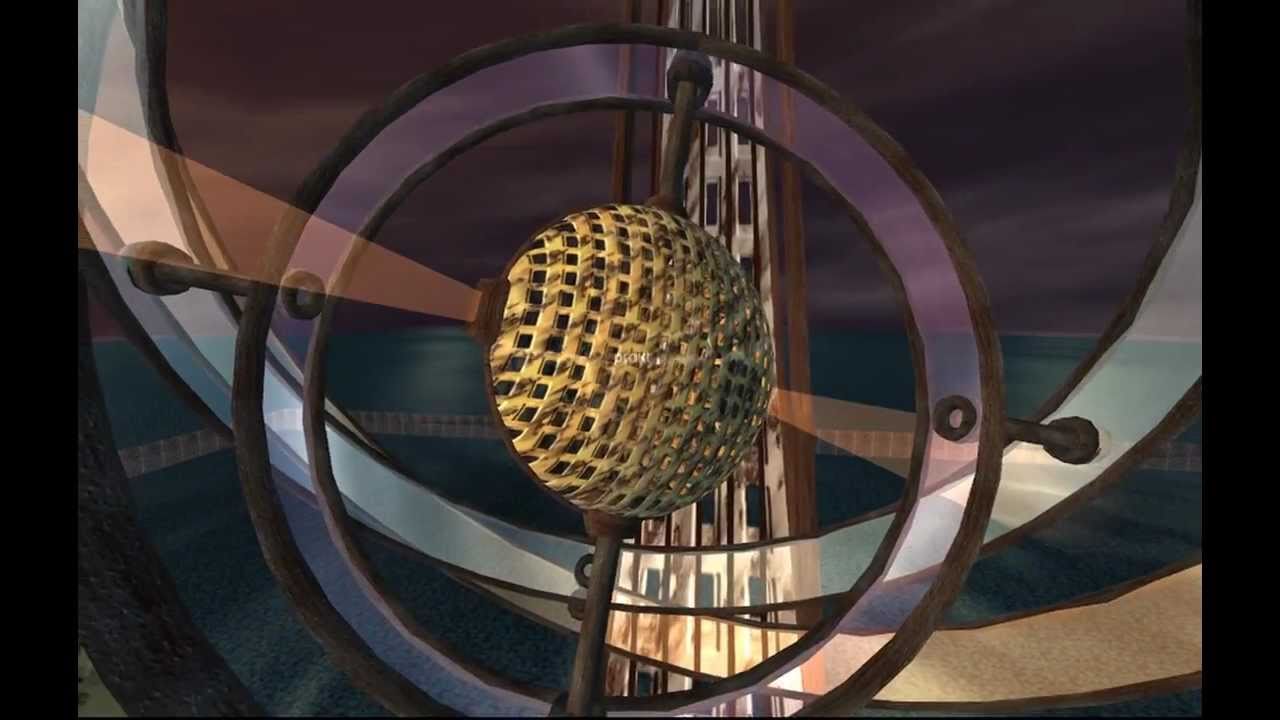
Demoscene High-Quality Videos (Annikras)
Synthesizing geometry, textures, and polyphonic audio entirely at runtime enables full-length 3D multimedia productions to operate within strict 64-kilobyte binary constraints.
AI-assisted summary of fr-08: .the .product by farbrausch | 64k intro (2000) (720p HQ demoscene demo) — original source. Check the original for full context.
Source published:
Key ideas
- Farbrausch's 64-kilobyte production 'fr-08: .the .product' achieved 1st place in the PC 64k intro competition at The Party 2000. (0:04)
- The entire 11-minute presentation—including all 3D geometry, textures, lighting, and synthesizer audio—is generated procedurally in real time under a strict 65,536-byte file limit. (2:57)
- Key architecture roles included Chaos developing the core procedural engine and werkkzeug toolset, Fiver2 overseeing choreography and design, KB coding the real-time audio synthesizer, and Ryg supervising executable compression. (0:04)
- The production became a landmark demoscene breakthrough, pioneering the widespread adoption of procedural operator graphs and editing pipelines in real-time multimedia. (6:39)
Detailed notes
## Background Published on YouTube by the channel Demoscene High-Quality Videos (Annikras) on June 26, 2011, this video showcases Farbrausch's landmark 64k intro *fr-08: .the .product*. The description highlights its first-place win in the PC 64k competition at The Party 2000, noting how Farbrausch's ability to generate such extensive content within a 64-kilobyte limit sparked the uploader's deep fascination with the demoscene, alongside production credits for team members Chaos, Fiver2, KB, Doj, Yoda, and Ryg.
## TL;DR The video documents the competitive showing of *fr-08: .the .product*, demonstrating how an entire 11-minute audiovisual experience—encompassing 3D architecture, dynamic lighting, procedural textures, and an electronic soundtrack—runs entirely from an executable under 65,536 bytes. Without any spoken dialogue, the production relies on KB's synthesized music tightly synchronized with Fiver2's choreography and Chaos's procedural engine. Across several distinct thematic sequences, the intro shifts from abstract geometry to detailed sci-fi environments before culminating in an intricate climax and outro. Real-time applause and cheers from the live audience punctuate major visual set pieces, underscoring the production's technical and creative impact at The Party 2000.
## Atmosphere & style Watching the recording carries the electric, communal energy of a packed demoparty hall, where the absence of spoken narration allows the driving electronic soundtrack to dictate the emotional tempo. The experience alternates between hypnotic, fluid procedural fly-throughs and sharp, dynamic crescendos that prompt spontaneous roars of applause from the spectators. It feels both technically awe-inspiring and nostalgic, capturing a genuine moment of demoscene history where technical constraints fueled extraordinary creative ambition.
## Bulletin - [00:04](https://www.youtube.com/watch?v=Y3n3c_8Nn2Y&t=4s) Farbrausch's 64-kilobyte production 'fr-08: .the .product' achieved 1st place in the PC 64k intro competition at The Party 2000. - [02:57](https://www.youtube.com/watch?v=Y3n3c_8Nn2Y&t=177s) The entire 11-minute presentation—including all 3D geometry, textures, lighting, and synthesizer audio—is generated procedurally in real time under a strict 65,536-byte file limit. - [00:04](https://www.youtube.com/watch?v=Y3n3c_8Nn2Y&t=4s) Key architecture roles included Chaos developing the core procedural engine and werkkzeug toolset, Fiver2 overseeing choreography and design, KB coding the real-time audio synthesizer, and Ryg supervising executable compression. - [06:39](https://www.youtube.com/watch?v=Y3n3c_8Nn2Y&t=399s) The production became a landmark demoscene breakthrough, pioneering the widespread adoption of procedural operator graphs and editing pipelines in real-time multimedia.
## Key takeaways - [00:04](https://www.youtube.com/watch?v=Y3n3c_8Nn2Y&t=4s) Farbrausch's 'fr-08: .the .product' was presented competitively at The Party 2000, winning first place in the PC 64k intro competition. - [00:04](https://www.youtube.com/watch?v=Y3n3c_8Nn2Y&t=4s) The entire demo fits within a standalone 64-kilobyte executable, bypassing pre-rendered assets and audio samples entirely. - [00:04](https://www.youtube.com/watch?v=Y3n3c_8Nn2Y&t=4s) Main engine programming and the procedural generator pipeline ('werkkzeug') were engineered by Chaos. - [00:04](https://www.youtube.com/watch?v=Y3n3c_8Nn2Y&t=4s) Creative concept, 3D modeling, visual design, and camera choreography were authored by Fiver2. - [00:04](https://www.youtube.com/watch?v=Y3n3c_8Nn2Y&t=4s) KB developed the custom audio engine and software synthesizer, generating dynamic electronic music without relying on sampled audio files. - [00:04](https://www.youtube.com/watch?v=Y3n3c_8Nn2Y&t=4s) The video recording preserves the genuine party hall atmosphere, with spontaneous cheering and applause highlighting key technical set pieces. - [01:06](https://www.youtube.com/watch?v=Y3n3c_8Nn2Y&t=66s) Visual textures and 3D geometry are computed on the fly through mathematical operators and filtering chains rather than static bitmap stores. - [01:06](https://www.youtube.com/watch?v=Y3n3c_8Nn2Y&t=66s) Additional tool code and quality assurance were contributed by Doj to maintain stable serialization across editing utilities. - [01:06](https://www.youtube.com/watch?v=Y3n3c_8Nn2Y&t=66s) Yoda provided supplementary demo code to expand rendering capabilities and choreography integration. - [02:57](https://www.youtube.com/watch?v=Y3n3c_8Nn2Y&t=177s) Advanced executable packing and compression techniques supervised by Ryg allowed code, timelines, and audio definitions to fit under 65,536 bytes. - [02:57](https://www.youtube.com/watch?v=Y3n3c_8Nn2Y&t=177s) Extended architectural fly-throughs shift dynamically between abstract mathematical structures and dense industrial sci-fi environments. - [06:39](https://www.youtube.com/watch?v=Y3n3c_8Nn2Y&t=399s) A high-intensity audiovisual climax prompts enthusiastic ovation from the audience before winding down into the credits. - [06:39](https://www.youtube.com/watch?v=Y3n3c_8Nn2Y&t=399s) The release fundamentally influenced demoscene history by proving the viability of complex procedural content generation pipelines in constrained environments.
## Detailed walkthrough ### [00:04](https://www.youtube.com/watch?v=Y3n3c_8Nn2Y&t=4s) Opening and Initial Presentation
The presentation begins with the opening bars of the synthesized soundtrack for Farbrausch's seminal 64-kilobyte intro, *fr-08:.the.product*, recorded during its competitive showing at The Party 2000. As the opening movement establishes its rhythm and procedural visuals materialize on screen, the party hall audience immediately responds with a spontaneous burst of cheers and clapping, quickly settling back into the music before another round of enthusiastic applause erupts as the intro transitions into its early visual sequences. The video captures the live demoparty atmosphere where spectators react in real time to the technical feat of generating complete 3D environments, textures, and music purely out of executable code under the strict 64-kilobyte limit.
Because the source audio contains no spoken commentary or voiceover, the presentation relies entirely on the integrated audio track composed and programmed by KB alongside the ambient reactions of the live audience. The early progression highlights the synchronized marriage of procedural graphics and audio programming, where every beat and bass drop aligns with camera cuts, geometry deformation, and lighting cues generated dynamically by the engine.
- **Production:** *fr-08:.the.product* by Farbrausch (released at The Party 2000, placing 1st in the PC 64k competition). - **Core Engine & Tools:** Main demo and tool code developed by Chaos, providing the procedural generator pipeline (`werkkzeug`). - **Direction & Content:** Concept, graphics, 3D assets, design, content, and choreography by Fiver2. - **Audio & Sound System:** Audio programming, music synthesizer, and additional demo code by KB.
```mermaid flowchart TD accTitle: Procedural Architecture of fr-08 the product accDescr: Pipeline diagram illustrating how code, content, audio synthesis, and compression fit inside a 64k executable.
subgraph ContentCreation["Content & Choreography"] F2["Fiver2: Concept, 3D & Design"] KB_M["KB: Sound Design & Composition"] end
subgraph EngineCode["Codebase & Tooling"] C["Chaos: Main Engine & Werkkzeug Tool"] D["Doj: Tool Code & QA"] Y["Yoda: Additional Demo Code"] KB_C["KB: Audio Engine Code"] end
subgraph AssemblyCompression["Build & Delivery"] R["Ryg: Compression Architecture"] BIN["64 KB Standalone Executable"] end
ContentCreation --> EngineCode EngineCode --> AssemblyCompression ```
[01:06](https://www.youtube.com/watch?v=Y3n3c_8Nn2Y&t=66s) Procedural Evolution and Mid-Intro Showcase
The demo transitions into more intricate visual arrangements as the soundtrack deepens into steady electronic grooves. Textures and geometric structures are synthesized on the fly from basic mathematical operators and filtering chains rather than pre-rendered video or static bitmap files. The music drives the choreography forward, escalating the intensity of the scene changes while showcasing lighting passes, dynamic volumetric fog, and reflective surfaces engineered to operate within constrained system memory.
As the piece reaches an elaborate set piece, the demoparty audience reacts with renewed applause, acknowledging the visual complexity and precision timing achieved without standard multimedia storage. The scene choreography by Fiver2 works hand-in-hand with Chaos’s playback routines to sustain visual interest across extended tracking shots and architectural fly-throughs.
- **Audio Programming:** Custom software synthesizer code executed in real time by KB to generate rich polyphonic pads, drums, and bass lines without sampled audio files. - **Additional Tool Code & Quality Assurance:** Contributed by Doj to ensure stability and smooth asset serialization across the editing tools. - **Additional Demo Code:** Implemented by Yoda to expand rendering features and choreography hooks.
[02:57](https://www.youtube.com/watch?v=Y3n3c_8Nn2Y&t=177s) Extended Thematic Sequences and Dynamic Shifts
The middle segment of the intro moves through expansive architectural environments and evolving visual themes, marked by rhythmic electronic sequences that build tension over several minutes. The audio programming maintains a balance between ambient electronic textures and driving rhythms, shifting moods across successive set pieces while procedural models morph and render in real time.
The sustained musical progression carries the viewer through multiple stylistic changes, ranging from abstract procedural patterns to structured industrial and sci-fi interior architecture. Towards the end of this stretch, another sustained wave of audience applause breaks out, reflecting the crowd's recognition of the intro’s technical density and choreography endurance.
- **Compression Technology:** Supervised by Ryg, utilizing specialized packing and executable compression techniques to fit code, procedural instructions, scene choreographies, and audio definitions into under 65,536 bytes. - **Real-Time Generation:** All geometry, normal maps, texture animations, and camera timelines are calculated at runtime from procedural operator graphs.
[06:39](https://www.youtube.com/watch?v=Y3n3c_8Nn2Y&t=399s) Climax, Audience Ovation, and Outro Sequence
Entering its final movements, the demo unleashes its most elaborate combinations of lighting, post-processing, and multi-layered electronic music. The presentation builds toward a high-energy crescendo that prompts back-to-back applause and cheering from the audience in the hall as the climactic sequences conclude and transition into the extended outro and credits.
The concluding sequence lets the ambient electronic soundtrack play out as the final demo elements wrap up. The sustained playback brings the demonstration to its full 11-minute duration, cementing the production's landmark status in demoscene history and demonstrating the possibilities of early-2000s procedural multimedia generation.
- **Competition Result:** Awarded 1st place in the PC 64k intro competition at The Party 2000. - **Historical Impact:** Widely regarded as a breakthrough demonstration that popularized procedural texture generation and the farbrausch `werkkzeug` toolset across the international demoscene community.
## Mentioned Farbrausch, fr-08: .the .product, The Party 2000, Chaos, Fiver2, KB, Doj, Yoda, Ryg, werkkzeug, Pouet
## Video description 1st place in pc 64k compo at The Party 2000
When this demo came out I was so impressed by what Farbrausch was able to produce within 64kbyte of filesize, that from that point on my interest grew by alot for the whole demoscene. Before this I only watched demos unregularly.
fr-08: .the .product by farbrausch From Readme: main demo and tool code, making it all possible: Chaos Concept, graphics, 3D, design, content and choreography: Fiver2 Audio programming, music, additional demo code: KB [th] Additional tool code, quality assurance: Doj Additional demo code: Yoda [fb] compression technology supervisor: Ryg [fg]
Pouet: http://pouet.net/prod.php?which=1221
[Source](https://www.youtube.com/watch?v=Y3n3c_8Nn2Y)