Metrologists Count Silicon Atoms to End Reliance on Drifting Kilogram
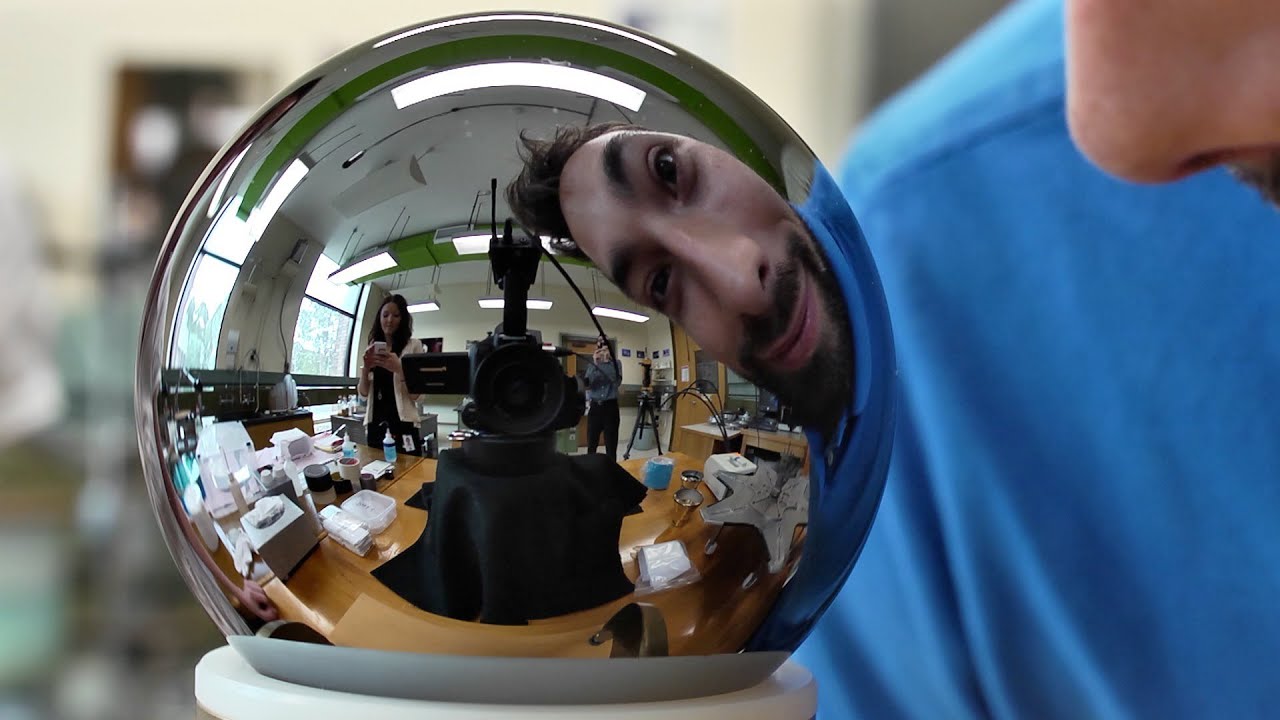
World's Roundest Object! — Veritasium

Veritasium

Because the platinum prototype kilogram loses mass stability over time, researchers are calculating the atom count of a pure silicon sphere to fix Avogadro's constant and decouple mass measurement from physical artifacts.

AI-assisted summary of World's Roundest Object! — original source. Check the original for full context.

Source published:

Key ideas

  • The international standard for mass, the International Prototype Kilogram ('Big K'), has drifted from its official replicas by up to roughly 50 micrograms over several decades, threatening SI units that rely on it. (3:39)
  • The Avogadro Project developed a near-perfect one-kilogram sphere made from a single crystal of silicon-28 containing approximately 2.15 × 10²⁵ atoms to redefine the kilogram in terms of a fundamental constant. (7:04)
  • Achieving extreme geometric precision, if the silicon sphere were enlarged to the size of Earth, the deviation between its highest peak and lowest valley would measure only about 14 meters. (0:00)
  • Metrologists are cross-checking the Avogadro Project's atom-counting approach with the Watt Balance (Planck's constant) method, aiming for agreement within 20 micrograms before officially retiring physical mass artifacts. (9:37)

Detailed notes

## Background Published on YouTube by Derek Muller on the Veritasium channel on March 25, 2013, this video explores the creation of the world's roundest object to solve measurement's longest-running challenge: redefining the kilogram. The channel's description details how the International Prototype Kilogram has drifted over time and introduces the Avogadro Project's silicon-28 sphere as a way to replace a physical artifact with an invariant fundamental constant.

## TL;DR Historically defined by a physical platinum-iridium cylinder dubbed 'Big K,' the kilogram has faced a critical stability issue because the original artifact and its official copies have drifted in mass over decades. To break the dependency on a perishable object, the international Avogadro Project crafted the world's roundest object—a nearly flawless single crystal of silicon-28 containing roughly 2.15 × 10²⁵ atoms. By measuring the sphere's diameter with laser interferometry and applying silicon's known crystal lattice spacing, metrologists can calculate its exact atom count to fix Avogadro's constant, re-anchoring the kilogram to universal physics alongside the parallel Watt Balance effort.

## Atmosphere & style The presentation blends breathless, tactile wonder with Derek Muller's accessible, investigative curiosity. Donning protective gloves to gingerly handle an atomically polished, multimillion-euro artifact establishes an immediate sense of reverence and tension that smoothly transitions into vivid historical storytelling about the French Revolution and Lavoisier. The tone feels simultaneously high-tech and historically grounded, balancing microscopic engineering precision with playful, conversational wit.

## Bulletin - [03:39](https://www.youtube.com/watch?v=ZMByI4s-D-Y&t=219s) The international standard for mass, the International Prototype Kilogram ('Big K'), has drifted from its official replicas by up to roughly 50 micrograms over several decades, threatening SI units that rely on it. - [07:04](https://www.youtube.com/watch?v=ZMByI4s-D-Y&t=424s) The Avogadro Project developed a near-perfect one-kilogram sphere made from a single crystal of silicon-28 containing approximately 2.15 × 10²⁵ atoms to redefine the kilogram in terms of a fundamental constant. - [00:00](https://www.youtube.com/watch?v=ZMByI4s-D-Y&t=0s) Achieving extreme geometric precision, if the silicon sphere were enlarged to the size of Earth, the deviation between its highest peak and lowest valley would measure only about 14 meters. - [09:37](https://www.youtube.com/watch?v=ZMByI4s-D-Y&t=577s) Metrologists are cross-checking the Avogadro Project's atom-counting approach with the Watt Balance (Planck's constant) method, aiming for agreement within 20 micrograms before officially retiring physical mass artifacts.

## Key takeaways - [00:00](https://www.youtube.com/watch?v=ZMByI4s-D-Y&t=0s) The silicon-28 sphere is considered the roundest object in the world, with peak-to-valley surface variations equivalent to just 14 meters if scaled to the size of Earth. - [01:31](https://www.youtube.com/watch?v=ZMByI4s-D-Y&t=91s) The kilogram originally began in 1793 as the 'grave'—defined as the mass of one liter of water at freezing—before revolutionary politics and egalitarian sentiment led to its rebranding. - [01:31](https://www.youtube.com/watch?v=ZMByI4s-D-Y&t=91s) Because the revolutionary government found the 'gramme' too small for practical trade, they reverted to the mass of the grave under the name 'kilogram', leaving it as the only SI base unit with a metric prefix. - [01:31](https://www.youtube.com/watch?v=ZMByI4s-D-Y&t=91s) In 1799, the standard was cast into the pure platinum Kilogramme des Archives, shifting mass metrology from an environmental definition (a liter of water) to a physical artifact. - [03:39](https://www.youtube.com/watch?v=ZMByI4s-D-Y&t=219s) The 1889 International Prototype Kilogram (IPK) made of platinum-iridium diverged over time from both its official national copies and its identical sister cylinders in the same vault. - [03:39](https://www.youtube.com/watch?v=ZMByI4s-D-Y&t=219s) Physical drift in the IPK affects the broader metric and imperial systems, as multiple SI base units, derived units like Newtons and Watts, and the US pound are all legally defined using the kilogram. - [07:04](https://www.youtube.com/watch?v=ZMByI4s-D-Y&t=424s) Unlike Big K, the silicon sphere is not intended to serve as a perpetual mass artifact, but rather as an instrument to precisely count atoms and establish an exact value for Avogadro's constant. - [07:04](https://www.youtube.com/watch?v=ZMByI4s-D-Y&t=424s) Using an ultra-pure crystal of silicon-28 enables metrologists to infer the total atom count directly from laser interferometry diameter measurements and known atomic lattice spacing. - [09:37](https://www.youtube.com/watch?v=ZMByI4s-D-Y&t=577s) The Avogadro Project works alongside the Watt Balance, requiring both independent physical methods to reach agreement within 20 micrograms to officially redefine the kilogram. - [09:37](https://www.youtube.com/watch?v=ZMByI4s-D-Y&t=577s) Measurements show that 18th-century French scientists calibrated the original 1799 platinum kilogram artifact to within 25 milligrams of modern water-density measurements, an error equivalent to a single grain of rice. - [09:37](https://www.youtube.com/watch?v=ZMByI4s-D-Y&t=577s) Antoine Lavoisier linked the beginning and end of the kilogram's story by helping establish the original mass standard in 1793 and first identifying silicon as an element in 1787.

## Detailed walkthrough ### [00:00](https://www.youtube.com/watch?v=ZMByI4s-D-Y&t=0s) Holding the World's Roundest Object

Derek Muller is handed an extraordinarily smooth, reflective sphere after promising extreme care. Wearing protective gloves, he is warned that the object is slippery before taking hold of it. He remarks that aside from its creators, he is one of only a handful of people ever permitted to hold this one-kilogram sphere made entirely of silicon-28 atoms, which contains roughly $2.15 \times 10^{25}$ atoms.

While the raw material alone cost approximately one million Euros, the meticulous sculpting and polishing required to create it make the finished object essentially priceless. It is celebrated as the roundest object in the world. To illustrate its staggering uniformity, Derek explains a scale comparison: if the sphere were enlarged to the size of planet Earth, the difference between its highest mountain and its lowest valley would be only about 14 meters.

```mermaid flowchart LR accTitle: Earth scale comparison of the silicon sphere accDescr: Diagram showing that if the silicon sphere were scaled up to the size of Earth, the deviation would be only 14 meters. A["Silicon Sphere<br/>(1 kg, ~93.6 mm)"] -->|"Scale up to Earth size"| B["Hypothetical Earth-sized Sphere"] B --> C["Max Peak-to-Valley Deviation:<br/>Only ~14 meters"] ```

[01:31](https://www.youtube.com/watch?v=ZMByI4s-D-Y&t=91s) The French Revolution and the Origins of the Kilogram

The question of why anyone would invest millions of Euros and thousands of hours creating such a sphere traces back to the history of the metric system. In 1793, a French commission including the chemist and aristocrat Antoine Lavoisier created a mass standard named the *grave* (derived from the Latin *gravitas*, meaning weight), defined as the mass of one cubic decimeter (one liter) of water at the melting point of ice.

However, during the French Revolution, the name *grave* fell out of favor because it sounded dangerously close to *graf*, the noble title of count or earl. Under the revolutionary cry of equality for all, no unit could be perceived as "nobler" than the others. Lavoisier himself was guillotined—not for his revolutionary scientific achievements, but because of his role as a royal tax collector. The republican government initially replaced the *grave* with the *gramme* (one-thousandth of a *grave*), but soon realized that a gram was far too small for everyday commercial measurements. They therefore returned to the mass of the *grave* while renaming it the "kilogram" (a thousand grams). Consequently, the kilogram became the only base unit in the International System of Units (SI) to carry a metric prefix in its name.

- In 1799, the standard was refined to the mass of one liter of water at 4 °C, the temperature where water is densest. - Because liquid water makes an impractical physical reference, a solid pure platinum cylinder was cast to match that mass, christened the *Kilogramme des Archives*. - At that precise moment, the standard transitioned from an environmental definition (a volume of water) to a physical artifact: the artifact itself was, by definition, the kilogram.

[03:39](https://www.youtube.com/watch?v=ZMByI4s-D-Y&t=219s) Big K and the Divergence Problem

In 1889, the standard received an upgrade: a cylinder composed of 90% platinum and 10% iridium alloy, which was much harder and more durable than pure platinum. Known formally as the International Prototype Kilogram (IPK) and affectionately as "Le Grand K" or "Big K," this golf-ball-sized cylinder became the sole object in the universe with a mass of exactly one kilogram by definition. Big K is kept under three concentric glass bell jars inside a climate-controlled vault locked by three independent keys, deep in the basement of the International Bureau of Weights and Measures (BIPM) in Sèvres on the outskirts of Paris.

To disseminate the standard globally, 40 official copies were manufactured alongside Big K, carefully calibrated against it to record their minute offsets, and distributed to nations around the world. However, when these replicas were reunited with Big K for an official comparison in 1948, scientists discovered that their masses had drifted apart over time. Big K had even diverged from the six identical "sister" cylinders stored in the very same safe.

A subsequent weigh-in 40 years later revealed that the masses had diverged further—by up to roughly 50 micrograms, which is approximately the mass of a human fingerprint. Because the cylinders were meticulously cleaned before being measured, surface dirt was not responsible; unknown physical processes, such as outgassing or microscopic surface reactions, had altered the masses. Derek highlights the absurdity and danger of having a fundamental unit that drifts:

> “One thing is for certain, the mass of a platinum-iridium cylinder is not stable over time. And this is a big problem. You can't have a unit which changes its value.”

This instability threatens far more than mass measurements: four of the seven base SI units directly depend on the kilogram, as do derived units such as Newtons, Joules, Volts, and Watts. Derek also points out that non-metric countries like the United States, Liberia, and Burma are not immune: the avoirdupois pound is legally defined in terms of the metric system as exactly 0.45359237 kilograms.

```mermaid flowchart TD accTitle: Dependencies on the Kilogram accDescr: Flowchart illustrating how SI base units and derived units depend on the kilogram. subgraph MassStandard ["Physical Standard Artifact"] IPK["International Prototype Kilogram<br/>('Big K')"] end

subgraph BaseUnits ["Affected SI Base Units"] M["Ampere (A)<br/>Mole (mol)<br/>Candela (cd)"] end

subgraph DerivedUnits ["Derived SI Units"] D["Newton (N)<br/>Joule (J)<br/>Volt (V)<br/>Watt (W)"] end

subgraph ImperialUnits ["Imperial Measurement"] LB["US Avoirdupois Pound<br/>(0.45359237 kg)"] end

IPK --> BaseUnits IPK --> DerivedUnits IPK --> ImperialUnits ```

[07:04](https://www.youtube.com/watch?v=ZMByI4s-D-Y&t=424s) The Avogadro Project: Counting Atoms to Define Mass

To remove the dependence on a perishable metal artifact, researchers turned to the silicon sphere through the international Avogadro Project. Derek questions the researcher about how replacing one artifact with another solves the problem:

> “Here you have a physical object and it's beautiful but you know it's still a physical object. You're trying to get away from that.”

The researcher clarifies the fundamental difference:

> “We're trying to get away from the physical object but what we're doing with this particular object is counting how many atoms are in there.”

Because the sphere is grown as an ultra-pure single crystal of silicon-28—completely free of voids, dislocations, or other isotopes—scientists can calculate the precise number of atoms inside it rather than manually counting them. A sphere was chosen because its geometry is fully described by a single parameter: diameter.

The manufacturing process starts with an oversized silicon sphere about two millimeters larger than the target dimension. Technicians then polish and grind it down through progressively finer abrasive stages. The researcher describes this delicate finishing stage:

> “It's actually massaging atoms. You're down at that level of trying to control the shape of an object down at the atomic level.”

Once shaped, the sphere is placed inside an optical cavity where laser interferometry measures the gap between the cavity walls and both sides of the sphere to determine its diameter with extraordinary precision. From the diameter, scientists compute its exact volume. Knowing the exact lattice spacing between silicon atoms in the crystal lattice allows them to calculate the total atom count ($2.15 \times 10^{25}$ atoms).

This calculation reverses the historic relationship between the kilogram and Avogadro's constant. Historically, Avogadro's constant was defined by the kilogram (the number of atoms in 12 grams of carbon-12). By establishing the exact number of atoms in a one-kilogram silicon crystal, scientists can instead fix the value of Avogadro's constant to an exact number, allowing the kilogram to be defined purely by a fundamental constant rather than any physical object. If the spheres were ever damaged or lost, the definition would remain completely intact.

```mermaid flowchart LR accTitle: Avogadro Project Redefinition Logic accDescr: Sequence showing how optical cavity measurements lead from silicon sphere diameter to a conceptual definition of the kilogram. A["Measure Diameter<br/>via Optical Laser Interferometry"] --> B["Compute Volume of Sphere"] B --> C["Combine with Silicon Lattice Spacing"] C --> D["Calculate Exact Atom Count<br/>(~2.15 × 10²⁵ atoms)"] D --> E["Fix Avogadro's Constant (N_A)"] E --> F["Redefine the Kilogram as an Invariant Constant"] ```

[09:37](https://www.youtube.com/watch?v=ZMByI4s-D-Y&t=577s) The Race to Redefine the Kilogram

The Avogadro Project is not the only effort underway; it works in parallel with the Watt Balance (later known as the Kibble balance), which aims to redefine the kilogram by fixing Planck's constant ($h$) using electromagnetic force measurements. These two independent approaches act as mutual checks. Metrologists require both methods to demonstrate agreement and compress their uncertainties down to around 20 micrograms before officially redefining the kilogram (which they hope to achieve as early as 2014).

Derek reflects on the historical precision of the original metric pioneers. When evaluating the mass of one liter of water at 4 °C today, it measures approximately 999.975 grams. While that means the 1799 platinum cylinder was technically slightly heavier than its water specification, the 18th-century French scientists managed to hit their target to within 25 milligrams—a margin of error equivalent to a single grain of rice—achieved over 200 years ago without modern technology.

In a final historical full circle, Derek points out that Antoine Lavoisier, who originally helped define the *grave* in 1793, was also the scientist who first identified silicon as an element in 1787. Lavoisier was therefore intimately involved in the kilogram's journey from beginning to end—or as Derek quips, "from cradle to grave."

## Notable quotes > [03:39](https://www.youtube.com/watch?v=ZMByI4s-D-Y&t=219s) One thing is for certain, the mass of a platinum-iridium cylinder is not stable over time. And this is a big problem. You can't have a unit which changes its value. — Derek Muller

## Mentioned Derek Muller, Veritasium, Antoine Lavoisier, Katie Green, Dr. David Farrant, CSIRO, National Measurement Institute, Nessy Hill, Kevin MacLeod, International Prototype Kilogram, Kilogramme des Archives, International Bureau of Weights and Measures, Avogadro Project, Watt Balance, Gravity Probe B

## Video description The world's roundest object helps solve the longest running problem in measurement -- how to define the kilogram. Support Veritasium on Patreon: http://bit.ly/VePatreon

A kilogram isn't what it used to be. Literally. The original name for it was the 'grave', proposed in 1793 but it fell victim to the French Revolution like its creator, Lavoisier. So begins the tale of the most unusual SI unit. The kilogram is the only base unit with a prefix in its name, and the only one still defined by a physical artifact, the international prototype kilogram or IPK.

But the problem with this definition has long been apparent. The IPK doesn't seem to maintain its mass compared to 40 similar cylinders minted at the same time. The goal is therefore to eliminate the kilogram's dependence on a physical object. Two main approaches are being considered to achieve this end: the Avogadro Project and the Watt Balance.

The Avogadro project aims to redefine Avogadro's constant (currently defined by the kilogram -- the number of atoms in 12 g of carbon-12) and reverse the relationship so that the kilogram is precisely specified by Avogadro's constant. This method required creating the most perfect sphere on Earth. It is made out of a single crystal of silicon 28 atoms. By carefully measuring the diameter, the volume can be precisely specified. Since the atom spacing of silicon is well known, the number of atoms in a sphere can be accurately calculated. This allows for a very precise determination of Avogadro's constant.

Special thanks to Katie Green, Dr. David Farrant, the CSIRO, and the National Measurment Institute for their help. Thanks also to Nessy Hill for filming and reviewing earlier drafts of this video.

There is debate as to whether this is truly the roundest object ever created. The Gravity Probe-B rotors are also spherical with very low tolerances such that they may in fact be rounder.

Music by Kevin McLeod (incompetech.com) Decision, Danse Macabre, Scissors

[Source](https://www.youtube.com/watch?v=ZMByI4s-D-Y)

中文简报

计量学家通过清点硅原子摆脱对漂移千克原器的依赖 由于铂制千克原器随时间推移失去了质量稳定性,研究人员正在计算纯硅球的原子数量以确定阿伏伽德罗常数,从而使质量测量脱离实体人工制品。 千克在历史上由被称为“大K”的铂铱合金圆柱体定义,但由于原器及其官方复制品在数十年间发生了质量漂移,千克面临着严峻的稳定性问题。为摆脱对易受损实物的依赖,国际阿伏伽德罗计划制造了世界上最圆的物体——一个近乎无缺陷的单晶硅-28球体,其中约含有2.15 × 10²⁵个原子。通过激光干涉测量该球体的直径并利用已知的硅晶格间距,计量学家能够计算出其精确的原子数量以固定阿伏伽德罗常数,并与并行的瓦特天平方案一起,将千克重新锚定于普适的物理定律。 国际质量基准“国际千克原器”(“大K”)在数十年间与其官方复制品的质量偏差高达约50微克,危及了依赖该基准的国际单位制单位。 (3:39) 阿伏伽德罗计划研制了一个由硅-28单晶制成、近乎完美的1千克球体,内含约2.15 × 10²⁵个原子,旨在利用基本常数重新定义千克。 (7:04) 该硅球达到了极高的几何精度,若将其放大到地球大小,其最高峰与最低谷之间的落差仅约14米。 (0:00) 计量学家正在将阿伏伽德罗计划的原子计数法与瓦特天平(普朗克常数)法进行交叉比对,力争在正式停用实物质量原器前将两者的偏差控制在20微克以内。 (9:37)

Reading summary

To solve the measurement crisis caused by the drifting mass of the physical International Prototype Kilogram, the Avogadro Project created the world's roundest silicon-28 sphere to redefine the unit of mass using an invariant fundamental constant. The Evolution from Environmental Standard to Physical Artifact (1:31) The metric system originated in 1793 when a French commission, including Antoine Lavoisier, established the mass of one liter of melting-point water as the standard, named the *grave*. During the French Revolution, the term was discarded because it sounded like the noble title *graf*, and the unit was rebranded as the kilogram. In 1799, the reference was updated to water at its densest temperature of 4 °C and materialized into a solid platinum cylinder called the *Kilogramme des Archives*, fixing the definition to an artificial object rather than a natural phenomenon. Artifact Instability and the Metric Divergence Crisis (3:39) In 1889, the standard became the International Prototype Kilogram ('Big K'), a cylinder cast from 90% platinum and 10% iridium stored in a triple-locked vault at the International Bureau of Weights and Measures. When Big K was compared against its official national copies and identical sister cylinders in 1948 and again 40 years later, researchers discovered the replicas had drifted apart in mass by up to approximately 50 micrograms—roughly equivalent to a fingerprint. Because microscopic reactions or outgassing alter physical metal standards, reliance on Big K threatened the broader measurement system. Four of the seven base SI units, as well as derived units including newtons, joules, volts, and watts, depend directly on the kilogram. Non-metric measures are similarly vulnerable, as the United States avoirdupois pound is legally pegged to exactly 0.45359237 kilograms. Counting Silicon-28 Atoms via the Avogadro Project (7:04) The Avogadro Project resolved this instability by crafting a nearly flawless one-kilogram sphere made of pure silicon-28, consisting of approximately 2.15 × 10²⁵ atoms. If scaled to the size of Earth, the sphere's highest peak and lowest valley would vary by only about 14 meters. A spherical geometry allows precise characterization using a single parameter: its diameter, measured inside an optical cavity via laser interferometry. Combined with precise measurements of silicon crystal lattice spacing, the volume calculation yields the exact number of atoms within the sphere. Rather than using the kilogram to calculate Avogadro's constant, this process fixes Avogadro's constant directly. Consequently, the mass of the kilogram can be conceptually tied to a fixed universal constant, ensuring that the standard survives even if the physical spheres are damaged or destroyed. Independent Verification and Historical Symmetry (9:37) The silicon sphere project ran in parallel with the Watt balance (later the Kibble balance), which aims to redefine the mass standard through Planck's constant using electromagnetic force measurements. International metrologists required both independent approaches to align and reduce their mutual uncertainties to roughly 20 micrograms before enacting an official redefinition. Derek Muller notes historical symmetry in this transition: Antoine Lavoisier, who helped define the original water-based standard in 1793 before his execution during the French Revolution, also first identified silicon as an element in 1787, linking him to both the origin and modern culmination of the kilogram standard. By transitioning the kilogram from a perishable platinum-iridium artifact to an invariant standard tied to fundamental constants, metrology eliminates physical drift across all dependent units, fulfilling the original metric ideal through modern atomic precision.

精炼阅读摘要

Derek Muller在节目中展示了耗资巨大、由超纯硅-28打造的“世界上最圆的物体”,阐明了国际度量衡界如何试图通过精确测算微观晶体内的原子数量以锁定阿伏伽德罗常数,从而彻底终结国际千克原器随时间发生质量漂移所引发的计量危机。 革命洗礼与千克实物基准的起源 (1:31) 1793年,法国化学家安托万·拉瓦锡(Antoine Lavoisier)参与的委员会将质量标准命名为“grave”(源自拉丁语重量),定义为1立方分米冰融点水的质量。但在法国大革命时期,“grave”因发音贴近贵族封号伯爵(graf)而遭到废除。处决了拉瓦锡的革命政府起初采用更具平等色彩的“克”(gramme),但因克作为商用单位过于微小,当局随后恢复了原有的质量规模并将其重命名为“千克”,这使千克成为国际单位制(SI)中唯一带有词头的基本单位。1799年,该标准进一步修正为4 °C密度最大状态下的1升水质量;然而液态水难以作为稳定参考物,科学家随后铸造了纯铂圆柱体“档案千克”(Kilogramme des Archives),使质量基准正式从环境自然定义转向人造实物本身。 “大K”的质量漂移与计量学危机 (3:39) 1889年,质量基准升级为由90%铂和10%铱合金制成的“国际千克原器”(IPK,俗称“Le Grand K”或“Big K”),锁在巴黎国际度量衡局(BIPM)地下深处的受控保险库内。为了向全球推广,官方制作了40个副本分发给各国。但在1948年以及40年后的周期性比对中,科学家发现这些副本与大K的质量随着时间推移发生了偏离,甚至大K与其在同一保险箱中存放的六个姐妹原器之间也出现了分歧,最大差异达到了约50微克(约等于一枚人类指纹的质量)。由于测量前均经过严格清洁,质量差异被归咎于微观脱气或表面化学反应等未知物理机制。Derek Muller指出,这种基准实物的不稳定性构成了重大威胁,因为安培、摩尔、坎德拉等基本单位以及牛顿、焦耳、伏特、瓦特等导出单位均直接或间接依赖于千克;甚至连法律上定义为0.45359237千克的美国常衡磅等非公制单位也会遭受波及。 阿伏伽德罗计划:以原子计数重构质量 (7:04) 为摆脱对易变金属原型的依赖,国际阿伏伽德罗计划制造了极高精度的硅-28球体。若将该球体等比放大至地球大小,其最高峰与最低谷的落差仅有约14米。选用球体的原因在于其几何形态只需直径一个参数即可完整定义。球体由无任何空洞或晶格错位的纯硅-28单晶打磨而成,仅原料成本就达约100万欧元,技师在最后的精加工阶段需要深入原子层面进行研磨塑形。完成加工后,科学家通过光学腔利用激光干涉精确测定其直径与体积,再结合已知的晶格间距,准确推算出球体内包含的硅原子总数(约2.15×10²⁵个)。这项研究颠倒了千克与阿伏伽德罗常数之间的历史关系:过去是依靠千克来测量碳-12中的原子数量,而该项目则通过锁定单晶球体内的原子数将阿伏伽德罗常数固定为绝对数值,使得千克的定义不再依赖任何具体实物,即使物理球体损毁,其科学定义依然保持完好。 双轨核验机制与跨越世纪的历史巧合 (9:37) 阿伏伽德罗计划与另一项基于电磁力固定普朗克常数(h)的瓦特天平(即基布尔天平)研究并行推进,两者互为独立校验手段。计量学家要求这两种方法在相互印证并将不确定度压缩到20微克左右后,才正式实施对千克的重新定义(在拍摄时预期最早于2014年完成)。回顾历史,Derek Muller赞叹了早期度量衡先驱的高超水准:现代测量显示4 °C下1升水的质量约为999.975克,这意味着1799年铸造的纯铂圆柱体虽然略重于其水标准规格,但18世纪的科学家在缺乏现代仪器的条件下,将误差控制在了约25毫克以内,仅相当于一粒米的质量。更富戏剧性的是,最初在1793年协助确立“grave”标准的拉瓦锡,早在1787年就首次将硅确认为化学元素,冥冥中参与了千克从诞生到依靠硅球实现科学重生的完整历程。 制造世界上最圆的硅球并非为了用更完美的人造物体取代旧有圆柱体,而是以此作为精密测算微观原子的桥梁。阿伏伽德罗计划与瓦特天平的最终目标,是将千克从易受环境侵蚀的宏观合金原器中解放出来,彻底扎根于普适不变的自然基本常数。

Detailed notes — zh

## Background 该视频由科普频道 Veritasium 于 2013 年 3 月 25 日发布于 YouTube 平台。视频简介指出,这个世界上最圆的物体有助于解决度量衡领域最长久的难题——如何重新定义“千克”,并简述了千克从物理实物走向常数定义的历史背景。 ## TL;DR 视频围绕一个价值百万欧元、由纯硅-28制成的超精密球体展开,介绍了其在重新定义质量单位“千克”中所扮演的关键角色。由于深锁于巴黎的“国际千克原器”(大K)随时间推移出现了约50微克的质量漂移,科学家们发起“阿伏伽德罗计划”,通过测量这个世界上最圆球体的体积并计算其内部精确的原子数量,来锁定阿伏伽德罗常数,从而将千克从不稳定的物理实物升华为宇宙通用的物理常数。 ## Atmosphere & style 视频整体呈现出一种充满敬畏、探索与历史厚重感的叙事风格。主持人 Derek Muller 在亲手触摸无价硅球时流露出由衷的惊叹,配合生动的科学比喻(如将硅球放大至地球大小其起伏仅14米),让观众直观感受到极致工艺的震撼。同时,视频将严谨的现代计量物理学与法国大革命时期拉瓦锡的悲剧命运交织在一起,既有对科学先驱的深切缅怀,又带有一种跨越两百年的历史宿命感与诗意闭环。 ## Bulletin - [00:00](https://www.youtube.com/watch?v=ZMByI4s-D-Y&t=0s) 科学家制造出世界上最圆的物体——一个由纯硅-28制成的1千克球体,若将其放大到地球大小,其表面最高峰与最低谷的起伏仅有约14米,旨在通过精确计算原子数量来重新定义“千克”。 - [03:04](https://www.youtube.com/watch?v=ZMByI4s-D-Y&t=184s) 现行的国际千克原器“大K”(Le Grand K)自1889年确立以来,与世界各国的复制品之间已产生了约50微克(相当于一枚指纹的重量)的质量漂移,暴露出实物基准不稳定的根本缺陷。 - [08:39](https://www.youtube.com/watch?v=ZMByI4s-D-Y&t=519s) “阿伏伽德罗计划”通过超精密激光测量硅-28球体的体积与晶格间距,从而精确测定阿伏伽德罗常数,将千克从巴黎地下室的“金属块”升华为全宇宙通用的纯粹抽象概念。 - [10:28](https://www.youtube.com/watch?v=ZMByI4s-D-Y&t=628s) 历史巧合的是,最初在1787年预言“硅”元素存在的化学家拉瓦锡,正是1793年千克前身“grave”定义的奠基人,他在两百多年后以这种方式完成了千克定义的历史闭环。 ## Key takeaways - [00:00](https://www.youtube.com/watch?v=ZMByI4s-D-Y&t=0s) 世界上最圆的物体是一个由纯硅-28单晶制成的球体,重恰好为1千克,包含约 2.15 * 10^25 个原子,其原材料成本高达100万欧元。 - [00:00](https://www.youtube.com/watch?v=ZMByI4s-D-Y&t=0s) 该硅球的圆度极高,如果将其等比例放大到地球大小,其表面最高点与最低点的落差仅有约14米。 - [01:31](https://www.youtube.com/watch?v=ZMByI4s-D-Y&t=91s) 质量单位“千克”最初在1793年被命名为“grave”,定义为1升冰水的重量,但因其名称与贵族头衔相似,在法国大革命期间被废除。 - [01:31](https://www.youtube.com/watch?v=ZMByI4s-D-Y&t=91s) 著名化学家拉瓦锡因其旧制度下的贵族税吏身份被送上断头台,未能见证他参与奠定的度量衡系统的后续演变。 - [01:31](https://www.youtube.com/watch?v=ZMByI4s-D-Y&t=91s) 为了规避贵族色彩,法国政府将质量基准改为“克”,但因太轻不实用,最终折中采用“千克”,使其成为国际单位制中唯一带有数量级前缀的基本单位。 - [03:04](https://www.youtube.com/watch?v=ZMByI4s-D-Y&t=184s) 1889年制定的国际千克原器“大K”(Le Grand K)是一个由90%铂和10%铱组成的圆柱体,是现代国际单位制中最后一个完全依赖人造物理实物定义的基本单位。 - [03:04](https://www.youtube.com/watch?v=ZMByI4s-D-Y&t=184s) 跨越百年的称重比对显示,大K与分发给各国的官方副本之间出现了约50微克的质量漂移,引发了基础科学界对基准波动的焦虑。 - [07:04](https://www.youtube.com/watch?v=ZMByI4s-D-Y&t=424s) “阿伏伽德罗计划”利用前苏联离心技术提纯出纯度超99.99%的硅-28,排除了其他同位素和晶格缺陷,以实现原子数量的精确计算。 - [07:04](https://www.youtube.com/watch?v=ZMByI4s-D-Y&t=424s) 硅球的打磨工艺达到了分子级,技师通过长达数百小时的渐进研磨,在原子尺度上控制物体的宏观几何形状,被形容为“给原子做按摩”。 - [07:04](https://www.youtube.com/watch?v=ZMByI4s-D-Y&t=424s) 测量硅球直径时,科学家将其置于精密光学腔中,利用激光干涉测量球体表面与腔壁的微小间隙,从而精确推算出体积。 - [08:39](https://www.youtube.com/watch?v=ZMByI4s-D-Y&t=519s) 阿伏伽德罗计划旨在颠覆传统逻辑:不再用千克定义阿伏伽德罗常数,而是先精确测定该常数,再将1千克定义为特定数量硅-28原子的质量总和。 - [08:39](https://www.youtube.com/watch?v=ZMByI4s-D-Y&t=519s) 与阿伏伽德罗计划并行的另一条路线是“瓦特天平”,它通过电磁力与机械力的平衡来锁定普朗克常数,两条路线互为参照验证。 - [10:28](https://www.youtube.com/watch?v=ZMByI4s-D-Y&t=628s) 现代高精度复测表明,1799年制作的实物档案千克与理论上1升纯水在4摄氏度时的质量仅相差25毫克(约一粒大米的重量),展现了200多年前工匠惊人的手工精度。 - [10:28](https://www.youtube.com/watch?v=ZMByI4s-D-Y&t=628s) 1787年首次预言“硅”元素存在的拉瓦锡,在两百多年后其预言的元素成为了重新定义千克的关键钥匙,完成了从“摇篮到墓地”的历史宿命闭环。 ## Detailed walkthrough ### [00:00](https://www.youtube.com/watch?v=ZMByI4s-D-Y&t=0s) 亲手触摸世上最圆的物体 在极其严格的防滑叮嘱与庄重承诺下,主持人 Derek Muller 戴上手套,小心翼翼地捧起了一个闪烁着冷冽光泽的球体。这是一个重恰好为 1 千克的纯硅-28(Silicon-28)原子球体,内部包含约 $2.15 \times 10^{25}$ 个硅原子。Derek 感叹道,除了极少数制造它的科学家之外,全球只有极少数人曾有幸亲自捧起这个物体。单是制造它所消耗的高纯度硅同位素原材料,成本就高达 100 万欧元;而经过极高精度的打磨塑形之后,这颗球体已然成为无价之宝。 ```mermaid flowchart TD accTitle: 硅球与地球的平整度对比 accDescr: 对比硅-28球体与地球表面如果按同比例缩放后的起伏差异 subgraph Comparison["极限圆度对比"] A["硅-28 完美球体"] -->|"等比例放大至"| B["地球大小 (直径约 12,742 km)"] B --> C["最高山峰至最深海沟起伏仅约 14 米"] end ``` 面对“凭什么断言它是世界上最圆物体”的疑问,研究人员给出了一个令人震撼的比喻:如果把这颗硅球放大到地球那么大,其表面最高山峰与最深山谷之间的落差,仅仅只有约 14 米左右。这种不可思议的极致光滑度与对称性,彻底击碎了自然界中任何天然星体或人工制品的几何精度极限。然而,花费百万欧元与数千工时的科研心血去追求这样一个近乎神迹的球体,其背后指向的并非虚荣,而是整个公制度量衡体系中最古老、最根本的顽疾——如何重新定义“千克”(Kilogram)。 - 该球体由单一稳定同位素硅-28(Silicon-28)制成,原子总数约为 $2.15 \times 10^{25}$ 个。 - 制造所用的高纯度硅原料价值 100 万欧元,雕琢成型后因其不可替代性被视为无价之宝。 - Derek Muller 在触碰这颗球体时由衷惊呼:“It feels absolutely incredible. Wow, that is amazing.”(这感觉太不可思议了。哇,简直太惊人了。) - 当谈及其圆度时,Derek Muller 指出:“If this were the Earth then the highest mountain to the lowest valley would be... about 14m apart.”(如果它是地球,那么最高峰到最深峡谷的起伏距离……只有大约 14 米。) --- ### [01:31](https://www.youtube.com/watch?v=ZMByI4s-D-Y&t=91s) 从“grave”到千克:大革命与断头台 要理解硅球的诞生,历史必须倒退回 18 世纪末的法国。公制度量衡中质量的基本单位,最初的名字并不是千克,而是法语中的“grave”(源自拉丁语 *gravitas*,意为重量)。1793 年,包括著名化学家兼贵族安托万·拉瓦锡(Antoine Lavoisier)在内的度量衡委员会,将 1 grave 定义为冰融化温度下 1 立方分米(即 1 升)冰水的重量。然而,这一命名恰逢法国大革命的高潮期,其发音与贵族头衔“伯爵”(德语 Graf / 法语对应领主)高度相似。在大革命高呼人人平等的浪潮中,人们绝不容许一个计量单位听起来比其他单位更加“高贵尊崇”。 命运在这里展示了其残酷而讽刺的一面:拉瓦锡并未因为奠定了人类历史上最伟大的计量系统而获赦,反而因其旧制度下包税官(税吏)的贵族身份被送上了断头台。掌权的新共和政府认为 1 grave 作为日常质量单位实在太大,于是转而采用“克”(gramme),即 1 grave 的千分之一。但日常商贸实践迅速证明“克”又太轻、极不实用。执政者不得已又回到了原本 grave 的质量大小,但既然政治上无法恢复旧名,他们便折中拼凑出了“千克”(kilogram,即 1000 个克)。这也造就了一个延续至今的计量学怪胎:在国际单位制(SI)的七个基本单位中,千克是唯一一个名称中自带有数量级前缀(kilo-)的基本单位。 - 1793 年法国委员会原初定义的质量基准“grave”源于拉丁语中的重量词根。 - 拉瓦锡因旧王朝包税官身份遭大革命革命法庭处决,其科学贡献未能挽救其生命。 - 为了规避贵族色彩,质量基准在极短时间内从 grave 改为 gramme,最终再妥协定名为 kilogram。 - Derek Muller 对这一命名历史作出了精炼的总结:“And that is why out of the seven base SI units, the kilogram is the only one to have a prefix in its name.”(这就是为什么在国际单位制的七个基本单位中,千克是唯一一个名字里带有前缀的单位。) --- ### [03:04](https://www.youtube.com/watch?v=ZMByI4s-D-Y&t=184s) 国际千克原器“大K”与质量漂移之谜 1799 年,千克的科学定义得到了微调,被确定为 1 升水在密度最大的温度——摄氏 4 度时的质量。但水本身具有易挥发、受气压影响大等特性,绝非可靠的永久实物基准。为此,当时的法国科学家精工制作了一尊纯铂金属圆柱体,使其质量恰好等于这 1 升 4 摄氏度水的质量,并将其定名为“档案千克”(Kilogram of the Archives)。从那一刻起,质量的定义完成了关键性的异化:千克不再依赖于某一特定体积的水,这个纯铂圆柱体本身在定义上就成为了“千克”。 90 年后的 1889 年,国际度量衡大会对千克实物进行了升级,改用硬度更高、更抗磨损的铂铱合金(90% 铂、10% 铱)制成圆柱体。这个圆柱体被正式命名为“国际千克原器”(International Prototype Kilogram),在科学界常被亲切地称作“大K”(Le Grand K / Big K)。时至今日,大K依然深锁于巴黎郊外的国际度量衡局(BIPM)地下深处,被罩在三层同心玻璃钟罩下,置于受控恒温恒湿的保险库中,需由三把分别保管的独立钥匙同时开启才能接触到。大K是全宇宙中唯一一个质量绝对等于严格 1 千克的东西,因为按照法规,“它本身就是千克”。 ```mermaid flowchart LR accTitle: 千克物理实物定义的演变 accDescr: 展示从水到档案千克,再到铂铱合金国际千克原器的演变历程 subgraph Evolution["千克定义的历史演进"] W["1 升 4℃ 纯水 (1799)"] -->|"实物化替代"| A["档案千克 (纯铂圆柱体, 1799)"] A -->|"材料硬度升级"| K["国际千克原器 Le Grand K (铂铱合金, 1889)"] K -->|"分发对比"| R["40 个国家基准副本 (记录初始偏差)"] end ``` 然而,物理实物注定要对抗熵增与环境变化。1889 年制作大K时,工匠同时铸造了 40 个成分相同的官方副本,记录其与大K的微小质量初始偏差后,分发给世界各国作为国家基准。1948 年,这些副本被运回巴黎进行半个世纪以来的首次校准称重,危机随之爆发:尽管材质完全相同、储存条件基本一致,这些圆柱体的质量却彼此漂移分化;甚至连与大K并排放置在同一保险库内的六个“姐妹副本”,质量也偏离了大K。到了 1988 年再次召集称重时,这种漂移已经拉大到了近 50 微克(相当于一枚人类指纹的重量)。即便称重前均执行了极其严格的化学清洗,质量漂移依然存在。由于国际单位制中牛顿、焦耳、伏特、瓦特等导出单位以及四门基本单位全都锚定在千克之上,基准的不可控波动引发了基础科学界的普遍焦虑。 - 大K由 90% 铂和 10% 铱组成,直径与高约为 39 毫米,保存在巴黎国际度量衡局地下三层保险库中。 - 大K是现代国际单位制中最后一个完全依赖人造物理实物(artifact)定义的基本单位。 - 1948 年与 1988 年的两次国际比对证实,所有铂铱副件与大K之间的相对漂移量已达约 50 微克。 - 面对美国、利比里亚和缅甸等仍在使用英制常衡磅的国家,Derek Muller 讽刺道,美制常衡磅早已在法律上被直接定义为精确的 0.45359237 千克,因此同样难逃大K漂移的宿命。 - 谈及物理原器的根本缺陷,Derek Muller 直言:“One this is for certain, the mass of a platinum-iridium cylinder is not stable over time.”(有一点是完全可以肯定的,那就是铂铱合金圆柱体的质量并不会随着时间保持稳定。) --- ### [07:04](https://www.youtube.com/watch?v=ZMByI4s-D-Y&t=424s) 阿伏伽德罗计划:在原子层面打磨完美晶体 为了终结度量衡对单个脆弱人造实物的依赖,“阿伏伽德罗计划”(Avogadro Project)应运而生,而这颗极致光滑的硅球正是该计划的核心支柱。面对 Derek Muller 提出“既然想摆脱物理实物,为何又制造了另一个物理实物”的疑问,来自澳大利亚国家计量研究院(NMI)及联邦科学与工业研究组织(CSIRO)的专家解释道,这个球体并非未来的千克实物替代品,而是用来“数原子”的物理桥梁。 自然界的天然硅包含硅-28、硅-29 和硅-30 三种同位素,原子质量各不相同。为了达成精准计算,科研人员利用前苏联遗留的高速离心提纯技术,将原料分离至纯度高达 99.99% 以上的纯同位素硅-28。在此基础上生长的硅晶体没有任何位错、孔洞或晶格缺陷,是一块结构近乎理想的单晶体。之所以将其雕刻为球体,是因为球体具有极其纯粹的数学性质:只要通过超精密激光干涉仪测量其直径,就能精确反推出它的整体三维几何体积。在制作工艺上,技师先车削出一个直径大约大出 2 毫米的超限粗胚,随后使用极细的研磨剂进行长达数百小时的分子级渐进研磨。专家将其形容为“在原子层面上给原子做按摩”,以原子级的一点点剥离来迫近绝对的球形。 ```mermaid flowchart TD accTitle: 硅球制造与测量流程 accDescr: 展示从超限硅胚到激光测量的精密工艺全流程 subgraph Manufacturing["硅球打磨与测径流程"] Raw["超限粗胚 (直径超出设计约 2mm)"] --> Grind["超细研磨剂分子级打磨 (按摩原子)"] Grind --> Sph["极致圆度硅-28球体"] Sph --> Laser["激光干涉腔测量系统"] Laser --> Gap["激光自两侧照射并精准测量微小间隙"] Gap --> Calc["算出绝对直径与三维几何体积"] end ``` - 硅球之所以选用硅-28 单晶,是因为其微观晶体结构中没有空穴、位错与杂质同位素,晶格常数已达到极高精度。 - 加工是从直径富余 2 毫米的粗胚开始研磨,控制尺度逼近单原子层。 - 测量直径时,球体被安置在一个精密光学光学腔的中心,利用激光干涉从两侧照射并测量球体表面到腔壁的微小间隙,从而解算出直径。 - 参与研磨的专家在描绘抛光精度时形象地说道:“It's actually massaging atoms. You're down at that level of trying to control the shape of an object down at the atomic level.”(这实际上是在给原子做按摩。你是在那个微观层面上,试图在原子尺度去控制物体的宏观几何形状。) --- ### [08:39](https://www.youtube.com/watch?v=ZMByI4s-D-Y&t=519s) 颠覆常数:从实物定义到概念定义 制造出世界上最完美的球体后,计量的逻辑链条便实现了彻底的逆转。在既往的度量衡框架中,阿伏伽德罗常数($N_A$)依赖于千克来定义:它是 12 克碳-12 所包含的原子数目。阿伏伽德罗计划的目标是把这个逻辑关系彻底调转。由于单晶硅的晶格间距(即原子之间的晶格常数)已经通过 X 射线干涉法测定到了极高的精度,一旦激光测量出球体的绝对体积,就能直接用数学算式计算出球体内包含的硅-28 原子总数(精确到约 $2.15 \times 10^{25}$ 个)。 由此,科学家可以通过这一颗颗近乎完美的硅球,以前所未有的极低不确定度将阿伏伽德罗常数的数值钉死在一个确定的精确数字上。常数一旦锁定,千克便反过来被定义为“特定精确数量的硅-28 原子的质量总和”。在这套体系下,哪怕世界上所有的硅球都被打碎、磨损或遗失,人类依然能够在任何一间高规格物理实验室中依据这一定义重新复现 1 千克。千克终于从巴黎地下室那个可变质的“金属块”,升华为了全宇宙通用的纯粹抽象概念。 ```mermaid flowchart LR accTitle: 重新定义千克的双轨逻辑 accDescr: 展示阿伏伽德罗计划与瓦特天平两条路径如何共同重新定义千克 subgraph PathA["阿伏伽德罗计划 (Avogadro Project)"] D["激光干涉测直径"] --> V["确定球体微观体积"] V --> Lat["结合已知硅晶格间距"] Lat --> Count["计算球内硅原子精确总数"] Count --> FixNA["锁定阿伏伽德罗常数 (NA)"] end subgraph PathB["瓦特天平路径 (Watt Balance)"] Elec["电磁力与机械力平衡"] --> FixH["锁定普朗克常数 (h)"] end FixNA --> Target{"两者交叉比对"} FixH --> Target Target -->|"不确定度降至约 20 微克"| Redefine["正式废除大K实物定义<br>千克转变为基于基础物理常数的永恒概念"] ``` 除了阿伏伽德罗计划,国际计量界当时并行的另一条主力竞争路线是“瓦特天平”(Watt Balance,后更名为基布尔天平/Kibble Balance)。瓦特天平利用电磁力与机械重力的平衡,旨在将千克与微观物理学的核心常数——普朗克常数($h$)直接挂钩。这两种方法在物理机制上完全独立,却互为参照验证。国际计量委员会要求,只有当阿伏伽德罗计划与瓦特天平的测量结果达成高度吻合,且将综合不确定度压缩到 20 微克(优于大K数十年的漂移幅度)以内时,全球度量衡体系才会正式修改千克的官方定义。 - 现行逻辑:千克定义质量基准 $\rightarrow$ 决定 12g 碳-12 的原子数 $\rightarrow$ 测定阿伏伽德罗常数。 - 重构逻辑:测定硅球原子数 $\rightarrow$ 固定阿伏伽德罗常数 $\rightarrow$ 将 1 千克重新定义为固定数量(约 $2.15 \times 10^{25}$ 个)硅-28 原子的质量。 - 瓦特天平作为互补方案,通过锁定普朗克常数来反推千克,在 2014 年左右被视作推动重定义的主要领跑者。 - 当 Derek 询问专家是否希望官方千克定义变为“$2.15 \times 10^{25}$ 个硅-28 原子的质量”,并追问这是否会发生时,专家明确回答:“There's a likelihood, a high likelihood that it's going to happen.”(很有可能,这非常有可能会发生。) --- ### [10:28](https://www.youtube.com/watch?v=ZMByI4s-D-Y&t=628s) 跨越两百年的精度与拉瓦锡的宿命闭环 在视频的尾声,Derek Muller 对公制历史展开了一次回望。既然最初千克的理想蓝图是“摄氏 4 度(水密度最大时)的 1 升纯水”,那么两百年前科学家的实际工艺表现究竟如何?现代超精密测量显示,在将近 4 摄氏度时,1 升纯水的实际质量为 999.975 克。换句话说,当年 1799 年制作的实物档案千克,比理论上的 1 升纯水仅仅重了约 0.025 克(25 毫克)。 这种误差大约仅仅相当于“一粒生大米”的重量。Derek 惊叹于早在 214 年前,在没有任何现代电子传感器、激光干涉仪和数控机床的简陋工业条件下,先驱学者们凭借简单的天平与纯手工研磨,竟然能将人造原器的误差收敛在一粒大米的级别之内,这无疑是人类度量衡历史上的机械奇迹。 ```mermaid flowchart LR accTitle: 拉瓦锡贯穿千克定义的历史闭环 accDescr: 展示拉瓦锡在1787年预言硅元素并在1793年定义千克,最终两百年后硅元素成为重新定义千克的基石 subgraph Closure["拉瓦锡的历史宿命闭环"] L1["1787 年: 拉瓦锡首次构想并预言'硅'作为一种新元素"] --> L2["1793 年: 拉瓦锡主导制定 grave 质量标准 (千克雏形)"] L2 --> End["200 多年后: 硅-28 超纯球体取代实物原器,重塑千克"] end ``` 更耐人寻味的是历史深处宿命般的因果回响。今天制造这颗世上最圆球体,需要跨越多个大洲的国际科研机构深度协作;但在化学史上,最初于 1787 年提出“硅”(Silicon)是一种未知独立化学元素的人,正是拉瓦锡本人。拉瓦锡在 1787 年构想了硅,在 1793 年奠定了千克的前身 grave 并为此献出了生命;而在两百多年后,人类摆脱实物原器、最终拯救千克纯粹性的关键钥匙,恰恰就是拉瓦锡当年所预言的这种硅元素。这位被送上断头台的科学巨匠,以一种跨越两个多世纪的奇妙方式,将其科学遗产深深烙印在千克从诞生直至重生的全过程之中。 - 现代高精度复测证明,1 升 4 摄氏度的纯水质量实测为 999.975 克,与 1799 年档案千克的偏差仅为 25 毫克。 - 25 毫克的微小偏差在宏观上仅仅相当于一粒普通大米的质量,彰显了 18 世纪末法国工匠与科学家的惊人造诣。 - 1787 年,拉瓦锡在正式发表的化学命名法中首次将硅构想为一种基础化学元素。 - 视频结尾,Derek Muller 用充满双关语的感慨总结了拉瓦锡传奇的一生:“So he's been involved in the definition of a kilogram from start to finish or from cradle to grave.”(因此,从始至终,或者说从摇篮到墓地——从初生到‘grave’重量基准——他一直都参与在千克的定义之中。) ## Notable quotes > [03:04](https://www.youtube.com/watch?v=ZMByI4s-D-Y&t=184s) One this is for certain, the mass of a platinum-iridium cylinder is not stable over time. — Derek Muller ## Mentioned Derek Muller, Veritasium, 安托万·拉瓦锡 (Antoine Lavoisier), 国际千克原器 (Le Grand K / IPK), 国际度量衡局 (BIPM), 阿伏伽德罗计划 (Avogadro Project), 瓦特天平 (Watt Balance), 基布尔天平 (Kibble Balance), 澳大利亚联邦科学与工业研究组织 (CSIRO), 澳大利亚国家计量研究院 (NMI), 档案千克 (Kilogram of the Archives), 重力探针B (Gravity Probe-B), Katie Green, Dr. David Farrant, Nessy Hill, Kevin MacLeod ## Video description The world's roundest object helps solve the longest running problem in measurement -- how to define the kilogram. Support Veritasium on Patreon: http://bit.ly/VePatreon A kilogram isn't what it used to be. Literally. The original name for it was the 'grave', proposed in 1793 but it fell victim to the French Revolution like its creator, Lavoisier. So begins the tale of the most unusual SI unit. The kilogram is the only base unit with a prefix in its name, and the only one still defined by a physical artifact, the international prototype kilogram or IPK. But the problem with this definition has long been apparent. The IPK doesn't seem to maintain its mass compared to 40 similar cylinders minted at the same time. The goal is therefore to eliminate the kilogram's dependence on a physical object. Two main approaches are being considered to achieve this end: the Avogadro Project and the Watt Balance. The Avogadro project aims to redefine Avogadro's constant (currently defined by the kilogram -- the number of atoms in 12 g of carbon-12) and reverse the relationship so that the kilogram is precisely specified by Avogadro's constant. This method required creating the most perfect sphere on Earth. It is made out of a single crystal of silicon 28 atoms. By carefully measuring the diameter, the volume can be precisely specified. Since the atom spacing of silicon is well known, the number of atoms in a sphere can be accurately calculated. This allows for a very precise determination of Avogadro's constant. Special thanks to Katie Green, Dr. David Farrant, the CSIRO, and the National Measurment Institute for their help. Thanks also to Nessy Hill for filming and reviewing earlier drafts of this video. There is debate as to whether this is truly the roundest object ever created. The Gravity Probe-B rotors are also spherical with very low tolerances such that they may in fact be rounder. Music by Kevin McLeod (incompetech.com) Decision, Danse Macabre, Scissors [Source](https://www.youtube.com/watch?v=ZMByI4s-D-Y)

Source quotes

[3:04] Derek Muller: One this is for certain, the mass of a platinum-iridium cylinder is not stable over time.

Source quotes

[3:39] Derek Muller: One thing is for certain, the mass of a platinum-iridium cylinder is not stable over time. And this is a big problem. You can't have a unit which changes its value.

Original transcript

[0:00] Can I hold it? [0:02] Only if you promise to be really, really careful. [0:05] I promise I will be so incredibly careful. I will be incredibly careful with it. I promise. [0:13] So, it's slippery, be careful. Alright, are we ready? [0:22] I'm about to touch a 1kg sphere of silicon-28 atoms. There are about 2.15x10^25 of them. [0:36] It feels absolutely incredible. Wow, that is amazing. [0:41] Besides its creators, I am one of only a handful of people ever to hold this sphere. [0:47] The raw material used to make it was worth 1 million Euros but now that it has been so [0:52] precisely sculpted -- [0:53] How much is that worth? [0:56] It's priceless. ... This you are looking at now is the roundest object in the world. [1:02] How can you say for sure it's the roundest object? I mean the Earth is pretty round, [1:07] isn't it? If this was the Earth... [1:09] If this were the Earth then the highest mountain to the lowest valley would be... about 14m [1:16] apart. [1:18] That is shocking. That is shockingly round. [1:22] But why would you invest one million Euros and thousands of man-hours perfecting a pure, [1:28] polished silicon sphere? [1:31] Well the answer is grave. Or rather 'grave' as it would have been pronounced in the original [1:37] French. [1:38] You see the grave was the original name for the base unit of mass in the metric system, [1:43] which became the Systeme International d'unites or SI units. In 1793, a commision which included [1:49] notable scientist and aristocrat Antoine Lavoisier, defined the base unit of mass as the weight [1:56] of a cubic decimeter of water at the melting temperature of ice -- essentially just a litre [2:01] of ice water. The name grave came from the Latin gravitas, meaning weight. [2:07] But it wasn't to last. It sounded too similar to the aristocratic title 'graf' -- which [2:12] is the equivalent of an earl or a count. And with the French revolution in full swing with [2:17] the rallying cry of equality for all, you couldn't exactly have one unit nobler than [2:23] the others. At this Lavoisier lost his head, literally, not because he helped devise one [2:29] of the greatest systems of measurement of all time, but because he was collecting taxes [2:33] as a nobleman. [2:35] So things really were grave. [2:37] The new republican government believed a grave would be too big for the things they wanted [2:41] to measure anyway and and so they settled on the gramme, which was just a thousandth [2:45] of the grave. [2:47] But soon they realized that a gram was too small and so they returned to the grave, but [2:51] since they couldn't call it that, they invented the kilogram -- a thousand grams. And that [2:57] is why out of the seven base SI units, the kilogram is the only one to have a prefix [3:03] in its name. [3:04] In 1799 the kilogram definition was refined to be the mass of a litre of water at 4 degrees [3:10] Celcius -- the temperature at which it is densest. But water itself is obviously not [3:16] the most sensible thing to use as a mass standard. So a pure platinum cylinder was created to [3:22] have the same mass as the water definition and it was declared Kilogram of the Archives. [3:29] Now it's important to note at this point the kilogram is no longer tied to the mass of [3:33] a volume of water -- the kilogram of the archives is by definition THE kilogram. [3:39] 90 years later, in 1889 the kilogram was upgraded to a platinum-iridium alloy cylinder. Now [3:46] it was much harder than the original but was otherwise basically identical. And to this [3:51] day, it remains the definition of the kilogram. It is officially called the International [3:58] Prototype Kilogram, though it's affectionately known as Le Grand K -- or Big K. Oh, and it's [4:05] about this big... [4:06] It is the only thing in the entire universe with a mass of exactly one kilogram because [4:13] it IS the kilogram. It is also the only SI unit that is still defined by a physical object. [4:20] It sits under three bell jars, next to six sister kilograms, in a climate-controlled [4:26] vault locked by three independently controlled keys, in the basement of the International [4:31] Bureau of Weights and Measures on the outskirts of Paris. [4:35] Now if you were able to break into the vault and tamper with Big K, you would be changing [4:40] the definition of the kilogram, a definition on which many of our measurements rely, and [4:45] so you would throw the world into chaos! Well no, not actually-- but how would anyone ever [4:52] know if the mass of Big K changed? [4:56] Well when it was first created, 40 identical replicas were also made. Well they weren't [5:01] quite identical - they had a mass which was slightly different to Big K but those offsets [5:06] were recorded. Now these replicas were sent out to countries around the world to serve [5:11] as their national standards. [5:12] In 1948 the kilograms were reunited for a weigh-in. And this is when the problems started. [5:20] Because even though all the cylinders were made of the same alloy and stored under virtually [5:24] the same conditions, their masses had diverged over time. The mass of Big K wasn't even the [5:31] same as the six sister cylinders stored with it. And to make matters worse when they were [5:36] brought together again forty years later, their masses had further diverged, up to about [5:41] 50 micrograms - that's about the weight of a fingerprint. But fingerprints were not the [5:47] culprits since the kilograms were carefully washed before their weigh-ins. [5:51] So some physical process must have actually changed the mass of the cylinders, but how [5:57] that exactly works remains a matter of speculation. One this is for certain, the mass of a platinum-iridium [6:04] cylinder is not stable over time. And this is a big problem. You can't have a unit which [6:10] changes its value. And the fallout isn't limited to measurements [6:13] of mass since of the seven base SI units, four of them depend on the mass of the kilogram, [6:20] not to mention all the derived units like Newtons, Joules, Volts and Watts. [6:25] At this point those of you in countries that have not adopted the metric system--yes I'm [6:29] speaking to you Liberia, Burma, and the US--you may be feeling rather smug that your unit [6:35] of mass, the avoirdupois pound, is no longer defined by a physical object. No, instead [6:42] it is defined as precisely 0.45359237 [6:48] kilograms. Sucked in. [6:52] So clearly something needs to be done to eliminate the kilogram's dependence on a physical object [6:58] and this is where the silicon sphere comes in, but how exactly does that help? [7:04] Here you have a physical object and it's beautiful but you know it's still a physical object. [7:09] You're trying to get away from that. We're trying to get away from the physical [7:11] object but what we're doing with this particular object is counting how many atoms are in there. [7:19] You can't actually count how many are in there can you? [7:22] You can't count how many are in there but you can calculate how many are in there because [7:26] this material is silicon, there's no voids or dislocations. [7:30] So this is like a perfect crystal of silicon. That's right. [7:34] Not only is it pure silicon, it contains only one isotope of silicon, silicon-28, and that [7:40] explains why the original material was so expensive. [7:43] And why a sphere? Well, a sphere is a pretty simple object. [7:49] If you know the diameter of the sphere you can characterise the entire dimension of the [7:54] object. Well that explains why the sphere has to be [7:56] the roundest object ever created, but how do you actually make something that round? [8:02] We actually start with an oversized sphere. So it was about two millimetres larger in [8:08] diameter and then we just grind it progressively finer and finer using abrasive. It's actually [8:16] massaging atoms. You're down at that level of trying to control the shape of an object [8:21] down at the atomic level. But making the sphere is only half the battle, [8:25] then you need to accurately measure its diameter. The diameter is actually measured via a laser. [8:31] So you're actually measuring having the sphere in the centre of a cavity and a laser is hitting [8:37] both sides and you're actually measuring the gap. [8:39] By knowing the diameter you can determine its volume. And since the atom spacing in [8:44] silicon is known to high precision, you can the calculate how many atoms make up the sphere. [8:49] This allows you to redefine Avogadro's constant. At the moment, Avogadro's constant is defined [8:55] based on the kilogram. It is equal to the number of atoms in twelve grams of carbon [9:01] 12. But using this approach, the number of silicon atoms in the sphere would be used [9:05] to fix Avogadro's constant, which would then define the kilogram. [9:10] So even if the silicon spheres were lost or damaged, it would have no effect on the definition [9:15] of the kilogram because it would be defined not by a physical object but by a concept. [9:20] You would like to see the official definition of the kilogram say "a kilogram is the mass [9:26] of 2.15x10^25 silicon-28 atoms" Yes. [9:30] Is it - is it going to happen? There's a likelihood, a high likelihood that [9:37] it's going to happen. But there is another approach to redefining [9:39] the kilogram which involves fixing Planck's constant and it's done using something called [9:45] a Watt Balance. These two approaches are complimentary. Each one provides a check on the other, and [9:52] if they show good agreement and are able to bring their uncertainties down to about twenty [9:56] micrograms they may redefine the kilogram as early as 2014. And then the kilogram finally [10:03] will be an unchanging unit, no longer defined by a physical object in the basement vault [10:09] of some place in Paris. Now if the kilogram was originally intended [10:29] to be the mass of a litre of water at its densest temperature then how well did we do? [10:36] Well if you look at a litre of water at nearly four degrees Celcius it has a mass of 999.975 [10:43] grams. So I guess you could look at this two ways. On the one hand you could say the kilogram [10:50] is slightly heavier than it should be, but on the other hand 214 years ago, scientists [10:57] were able to create an artifact that was correct within the margin of error of a grain of rice. [11:04] Now that is truly remarkable. Now if you want to hear more about the Watt Balance, let me [11:09] know in the comments and I will see what I can do. It does seem to be the frontrunner [11:14] in terms of redefining the kilogram, so we will have to wait and see what happens. One [11:20] last thing, I should point out that it took an international collaboration of scientists [11:24] to create the silicon sphere but don't you think that the scientist who originally conceived [11:29] of silicon as an element should receive some of the credit. Well in 1787, that was none [11:34] other than Antoine Lavoisier. So he's been involved in the definition of a kilogram from [11:39] start to finish or from cradle to grave.