Shellenberger Urges Nuclear Pivot as Germany’s Carbon Emissions Rise
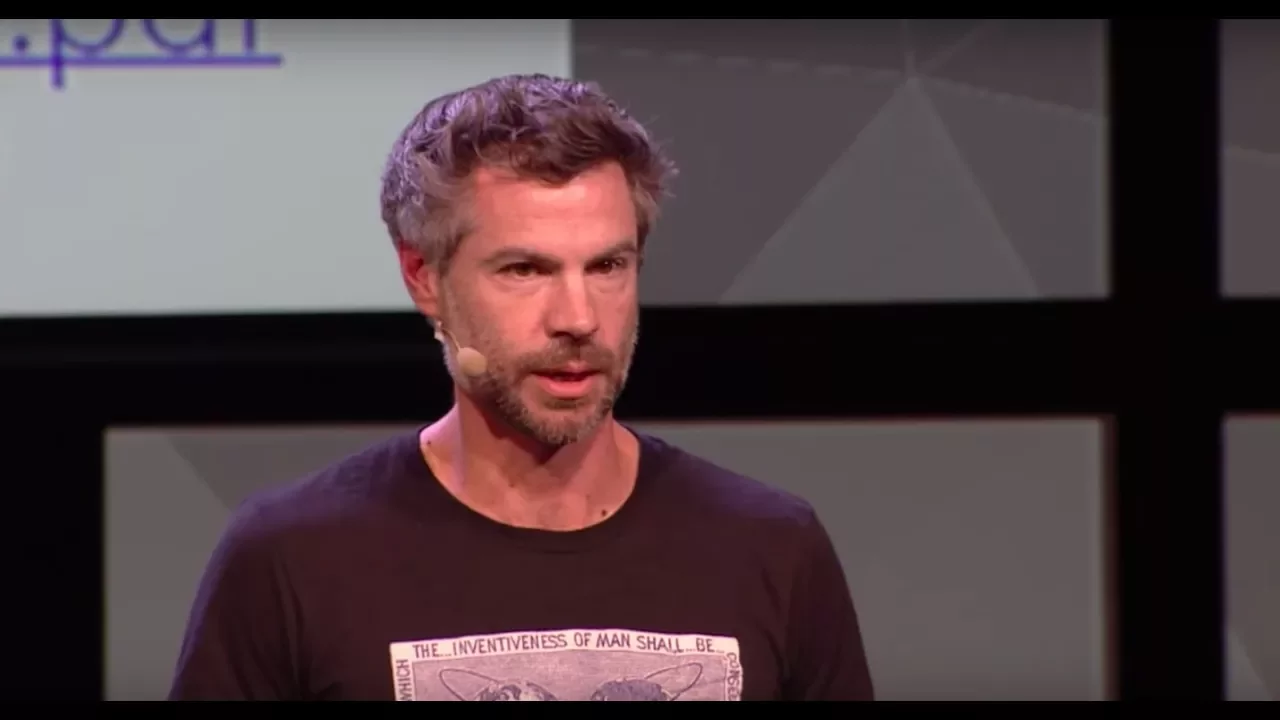
TEDx Talks
Closing nuclear reactors increased German carbon emissions and doubled power prices compared to France, demonstrating that variable renewables cannot achieve deep decarbonization without nuclear baseload.
AI-assisted summary of Why I changed my mind about nuclear power | Michael Shellenberger | TEDxBerlin — original source. Check the original for full context.
Source published:
Key ideas
- According to the IPCC, nuclear power generates four times fewer lifecycle carbon emissions than solar energy, while providing consistent baseload electricity independent of weather. (2:03)
- Germany's electricity prices have surged roughly 50% over a decade to fund its Energiewende, yet retail power remains twice as expensive as in nuclear-reliant France, which generates 93% clean electricity compared to Germany's 46%. (4:02)
- Economist Leon Hirth's research shows that renewable energy experiences rapid value deflation as grid penetration rises, with wind losing 40% of its economic value at 30% penetration and solar dropping 50% in value at just 15% penetration. (8:14)
- United Nations assessments confirm that the 1986 Chernobyl disaster resulted in 28 acute radiation deaths and approximately 15 subsequent thyroid cancer fatalities, with zero detectable increases in birth defects, hereditary damage, or broader cancer rates. (11:58)
- Per unit of electricity generated, solar power creates roughly 300 times more toxic waste—including lead, cadmium, and chromium—than nuclear power, which completely contains and stores its byproducts on site. (17:54)
Detailed notes
## Background Published on YouTube by TEDx Talks on November 17, 2017, this presentation features Michael Shellenberger speaking at TEDxBerlin. According to the description, Shellenberger is an author, co-founder of the Breakthrough Institute, and ecomodernist who argues that cheap energy, human prosperity, and nuclear power are essential to achieving genuine environmental progress.
## TL;DR Shellenberger recounts his intellectual shift from a pacifist anti-nuclear activist and renewable advocate to a vocal proponent of nuclear power after confronting the physical limits and economic value collapse of intermittent wind and solar. Analyzing Germany's clean energy transition, he shows how closing nuclear plants doubled retail electricity prices and increased carbon emissions compared to France's low-carbon nuclear fleet. He contrasts widespread public panic with peer-reviewed scientific data regarding radiation, Chernobyl, and Fukushima, illustrating that nuclear energy is statistically the safest method to generate reliable electricity. Concluding that solar installations generate hundreds of times more toxic waste per unit of energy produced, Shellenberger argues that deep decarbonization and wilderness conservation require expanding nuclear power.
## Atmosphere & style The presentation is measured, earnest, and intellectually provocative, balancing personal confessions about anti-nuclear upbringing with rigorous scientific charts. Shellenberger speaks with quiet, unhurried conviction, creating an atmosphere of reasoned heresy as he dismantles long-held environmental dogmas before an attentive audience. The emotional arc moves steadily from youthful idealism and disillusionment with renewable intermittency to grounded clarity, offering listeners a challenging yet reassuring re-examination of radiation and modern technology.
## Bulletin - [02:03](https://www.youtube.com/watch?v=ciStnd9Y2ak&t=123s) According to the IPCC, nuclear power generates four times fewer lifecycle carbon emissions than solar energy, while providing consistent baseload electricity independent of weather. - [04:02](https://www.youtube.com/watch?v=ciStnd9Y2ak&t=242s) Germany's electricity prices have surged roughly 50% over a decade to fund its Energiewende, yet retail power remains twice as expensive as in nuclear-reliant France, which generates 93% clean electricity compared to Germany's 46%. - [08:14](https://www.youtube.com/watch?v=ciStnd9Y2ak&t=494s) Economist Leon Hirth's research shows that renewable energy experiences rapid value deflation as grid penetration rises, with wind losing 40% of its economic value at 30% penetration and solar dropping 50% in value at just 15% penetration. - [11:58](https://www.youtube.com/watch?v=ciStnd9Y2ak&t=718s) United Nations assessments confirm that the 1986 Chernobyl disaster resulted in 28 acute radiation deaths and approximately 15 subsequent thyroid cancer fatalities, with zero detectable increases in birth defects, hereditary damage, or broader cancer rates. - [17:54](https://www.youtube.com/watch?v=ciStnd9Y2ak&t=1074s) Per unit of electricity generated, solar power creates roughly 300 times more toxic waste—including lead, cadmium, and chromium—than nuclear power, which completely contains and stores its byproducts on site.
## Key takeaways - [00:06](https://www.youtube.com/watch?v=ciStnd9Y2ak&t=6s) Urbanization concentrates human populations and spares wild landscapes, allowing ecosystems to regenerate while requiring dense, reliable power grids. - [02:03](https://www.youtube.com/watch?v=ciStnd9Y2ak&t=123s) Variable renewables like wind and solar suffer from low capacity factors between 10% and 30%, making them vulnerable to weather patterns and overgeneration issues. - [04:02](https://www.youtube.com/watch?v=ciStnd9Y2ak&t=242s) Grid-scale battery storage remains functionally inadequate, illustrated by California possessing only 23 minutes of battery capacity even if every vehicle battery was commandeered. - [04:02](https://www.youtube.com/watch?v=ciStnd9Y2ak&t=242s) Germany's carbon emissions have risen since 2009 because premature closures of zero-emission nuclear plants offset gains made from transitioning away from coal. - [08:14](https://www.youtube.com/watch?v=ciStnd9Y2ak&t=494s) Peak historical deployment studies published in Science show that nuclear rollouts added far more clean electricity per capita than wind and solar combined over comparable ten-year periods. - [10:05](https://www.youtube.com/watch?v=ciStnd9Y2ak&t=605s) Natural background radiation accounts for approximately 99.7% of cumulative human exposure, while all nuclear accidents and atomic bomb tests represent only 0.3%. - [14:25](https://www.youtube.com/watch?v=ciStnd9Y2ak&t=865s) The Fukushima disaster caused zero direct fatalities from radiation, whereas the Japanese government's panicked evacuation of vulnerable patients led to roughly 1,500 avoidable deaths. - [16:03](https://www.youtube.com/watch?v=ciStnd9Y2ak&t=963s) Peer-reviewed analyses in The Lancet identify nuclear power as the safest method of electricity generation, having prevented an estimated 1.8 million air pollution-related deaths globally. - [17:54](https://www.youtube.com/watch?v=ciStnd9Y2ak&t=1074s) Civilian nuclear programs have historically acted as a deterrent against weapons proliferation by tying technological access to strict non-proliferation treaty commitments. - [17:54](https://www.youtube.com/watch?v=ciStnd9Y2ak&t=1074s) If Germany had maintained its operational nuclear fleet instead of phasing it out, its carbon emissions would be approximately 43% lower today.
## Detailed walkthrough ### [00:06](https://www.youtube.com/watch?v=ciStnd9Y2ak&t=6s) From Peace Activism to Clean Energy Advocacy
Raised by hippie parents in the early 1970s, Michael Shellenberger grew up admiring cultural and ecological pioneers like Stewart Brand, one of the original counterculture figures who helped launch the modern environmental movement in the 1960s and 1970s. As a boy, Shellenberger fondly recalls playing cooperative games created by Brand as a peaceful antidote to the Vietnam War. Shellenberger comes from a long line of Mennonites—historic Christian pacifists—and every August his family marked the anniversary of the United States atomic bombings of Hiroshima and Nagasaki by lighting candles and floating them on small boats across Bittersweet Park. Following high school and throughout his college years, his commitment to peace and social justice led him to organize delegations to Central America, traveling to Guatemala and Nicaragua to support local agricultural cooperatives and pursue citizen diplomacy.
Through his travels across small communities worldwide, Shellenberger observed a consistent reality among rural populations: contrary to pastoral romanticism, young people generally do not want to remain trapped in remote villages spending their lives chopping and hauling firewood. Instead, they migrate to cities in search of education, employment, and modern opportunity. Shellenberger realized that urbanization is remarkably beneficial for the natural world because concentrating human populations spares wild landscapes, allowing ecosystems to regenerate and preserving critical habitats for endangered wildlife, such as the mountain gorillas of Central Africa. However, living vertically in dense cities like Hong Kong requires immense amounts of power to run elevators, infrastructure, and urban systems.
“And so the big challenge of our time is, how do you get plentiful reliable electricity and energy without destroying the climate?” Shellenberger argues. Starting out as a committed anti-nuclear activist, he originally turned his attention to renewable energy, helping co-found the Apollo Alliance—a coalition between labor unions and environmentalists—in the early 2000s to advocate for massive clean-tech public investments. The group’s vision gained mainstream traction when President Barack Obama took office and directed roughly $150 billion toward scaling up wind, solar, and electric vehicles to bring their costs down.
- **Childhood influences**: Stewart Brand's counterculture games, Mennonite pacifism, and annual August candle-boat memorials for the victims of the atomic bombs. - **Urbanization benefits**: Sparing land allows nature to rebound and protects endangered species like the Central African mountain gorilla. - **Apollo Alliance**: A coalition uniting labor unions and environmentalists to direct government investment into wind, solar, and electric cars, later adopted on a $150 billion scale by the Obama administration.
---
[02:03](https://www.youtube.com/watch?v=ciStnd9Y2ak&t=123s) The Apollo Alliance and Stewart Brand's Provocation
While investments succeeded in making solar panels, wind turbines, and electric vehicles significantly cheaper, Shellenberger and his colleagues quickly ran into fundamental technical hurdles. Solar and wind facilities generate power only 10% to 30% of the time, leaving grid systems hostage to unpredictable weather patterns. Furthermore, during periods of peak generation, renewables frequently produce surplus electricity that cannot be utilized. Despite intense media hype surrounding batteries—and substantial venture capital pouring out of Silicon Valley into storage startups—economical, large-scale battery storage did not exist on the grid, leaving grid operators struggling to manage intermittency.
Around 2005, while Shellenberger was grappling with these integration bottlenecks, Stewart Brand issued a public call for environmentalists to reconsider nuclear energy. The statement sent shockwaves through the green movement. Brand had been one of the earliest champions of solar energy in the United States, even advising the governor of California on renewable policies during the late 1960s and 1970s. Brand pointed out that despite decades of effort, solar generated less than 0.5% of global electricity and wind supplied roughly 2%, while the overwhelming majority of low-carbon electricity came from nuclear power and hydroelectric dams.
Brand also highlighted data from the Intergovernmental Panel on Climate Change (IPCC) demonstrating that nuclear power is exceptionally clean over its entire lifecycle. “And he said, ‘Look, despite what you might think, according to the intergovernmental panel on climate change, nuclear actually produces four times less carbon emissions than solar does.’” Because of this, the IPCC’s reports concluded that achieving deep emissions cuts requires an expanded rollout of renewables, nuclear energy, and carbon capture and storage (CCS).
```mermaid flowchart TD accTitle: Clean Energy System Realities accDescr: Diagram contrasting the low capacity factor and storage limits of wind and solar against the baseload capabilities of nuclear power.
subgraph Variable_Renewables["Variable Renewables (Wind & Solar)"] A["Weather Dependence\n(10-30% Capacity Factor)"] B["Periodic Overgeneration\n& Curtailment"] C["Severe Battery Storage Limits\n(23 min grid storage in CA)"] A --> B --> C end
subgraph Grid_Impact["System & Environmental Consequences"] D["Grid Value Deflation\n(Hirth Effect)"] E["Fossil Backup Required\n(Coal & Gas reliance)"] C --> D B --> E end
subgraph IPCC_Low_Carbon["Clean Baseload Alternative"] F["Nuclear Power\n(4x lower lifecycle CO2 than solar)"] F --> G["Deep Decarbonization\n(Consistent 24/7 power)"] end ```
---
[04:02](https://www.youtube.com/watch?v=ciStnd9Y2ak&t=242s) Germany's Energiewende Reality Check
Shellenberger examines Germany’s energy transition (*Energiewende*) as a primary test case. The German electrical sector historically relied heavily on fossil fuels: coal accounted for 40% of electricity, natural gas provided 12%, nuclear supplied 13%, wind generated 12%, and solar contributed roughly 6%. To transition the entire power sector—and subsequently electrify transportation—Germany would have to build out renewable capacity far beyond 100%, approaching 150% or more of current electrical capacity.
Despite vast financial commitments, real-world meteorological realities have proven stubborn. In 2016, Germany expanded its installed solar capacity by 4%, yet its total electricity output from solar dropped by 3% simply because it was less sunny. When Shellenberger asks energy specialists to explain this paradox, many are baffled. The wind sector suffered the exact same issue that year: Germany installed 11% more wind turbines, yet wind generation dropped by 2% due to low wind speeds. Germany’s official target aims to raise solar capacity by 50%—from 40 gigawatts to 60 gigawatts by 2030—yet in an overcast year like 2016, that would still yield only about 9% of the nation's total electricity.
The common assumption that surplus renewable power can simply be banked in batteries collapses under the math. When Shellenberger's research team analyzed California’s grid, they discovered that total existing battery capacity equated to a mere 23 minutes of electricity storage—and that required commandeering every single battery installed in every car and truck in the state, rendering vehicles unusable for transportation. Germany faces a nearly identical constraint.
Meanwhile, retail electricity prices in Germany jumped roughly 50% over a ten-year span to fund the rollout. “Today, German electricity is about 2 times more expensive than electricity is in France,” Shellenberger notes. While consumers might view high rates as a necessary sacrifice to combat global warming, the climate results tell a sobering story: France generates 93% of its electricity from zero-carbon sources (predominantly nuclear and hydro), whereas Germany generates only 46%.
“And here's the real shocking thing: German carbon emissions have actually been going up since 2009,” Shellenberger emphasizes. The historical reduction in German emissions following 1990 was primarily the result of shutting down dilapidated, inefficient East German coal plants after reunification, rather than new green technology. When Germany began shutting down its zero-emission nuclear plants, the emissions cuts that should have been achieved by switching coal to lower-carbon natural gas were erased, causing overall emissions to rise instead.
| Country | Clean Electricity Share | Average Retail Price Comparison | Primary Low-Carbon Sources | Recent Emissions Trend | |:--- |:--- |:--- |:--- |:--- | | **France** | 93% | Baseline (approx. half of German rates) | Nuclear and Hydroelectric | Low, stable emissions | | **Germany** | 46% | ~2x more expensive than France | Wind, Solar, Biomass | Emissions rising since 2009 |
---
[08:14](https://www.youtube.com/watch?v=ciStnd9Y2ak&t=494s) The Value Collapse and Deployment Speeds
Beyond weather dependence and price inflation, renewables face an inherent economic constraint identified by German energy economist Leon Hirth. Hirth demonstrated that as intermittent generation supplies a larger share of the power pool, its economic value drops precipitously because surges of power flood the market when it is already oversupplied. Wind power loses 40% of its economic value once it reaches 30% of total electrical generation. Solar collapses even faster: its economic value declines by 50% once it reaches just 15% grid penetration.
Advocates often counter that solar panels can be installed on rooftops in a single afternoon, whereas commercial nuclear stations require five to ten years to build. Shellenberger counters this by pointing to a peer-reviewed study published in the journal *Science*, co-authored by climate scientist James Hansen. Hansen's team examined historical ten-year periods of peak deployment for both technologies across both Germany and the United States. They discovered that nuclear rollouts added far more clean electricity per capita to electrical grids than wind and solar combined. Nuclear projects deliver enormous, continuous blocks of high-density clean power that dwarf the effective net yield of decentralized renewables.
Recognizing these hard empirical numbers forced Shellenberger to reconsider his lifelong opposition to nuclear energy, though he acknowledges the intense emotional barriers that come with that shift. “I can imagine what you're thinking because it's what I was sort of thinking, I was like, ‘Well this sounds like I now have to really reconsider my attitudes around nuclear power, but then what about Chernobyl? What about Fukushima? What about all the nuclear waste?’” Addressing those safety fears directly is the necessary next step in re-evaluating the atom.
- **Economic value drop (Leon Hirth)**: Wind value drops 40% at 30% penetration; solar value falls by half at only 15% penetration due to market saturation during peak generation. - **Deployment speed (Hansen et al. in *Science*)**: Peak historical 10-year nuclear builds added substantially more clean electricity to grids than the fastest 10-year solar and wind rollouts in either Germany or the United States. - **The psychological hurdle**: Even after understanding the clean energy data, public acceptance stalls on fears of disasters like Chernobyl and Fukushima, alongside the unresolved politics of nuclear waste storage.
[10:05](https://www.youtube.com/watch?v=ciStnd9Y2ak&t=605s) Changing Minds and the Reality of Radiation
Michael Shellenberger observes that he was not alone in shifting his perspective on nuclear energy; several prominent figures have undergone a similar evolution. Most influential among them was British newspaper columnist George Monbiot, who published a striking piece in the aftermath of Fukushima reviewing scientific research on radiation. Monbiot openly admitted: “The anti-nuclear movement to which I once belonged has misled the world about the impacts of radiation on human health.” Monbiot's reporting drew directly on scientists who studied major nuclear accidents, such as Professor Gerry Thomas, an independent pathologist at Imperial College London who established the Chernobyl Tissue Bank. Shellenberger sought permission to use Thomas’s lecture slides, noting he jokingly promised to feature her photo if she let him borrow the material.
Thomas's research highlights counterintuitive facts regarding radiation exposure. While many instinctively assume natural radiation must be benign—comparable to natural foods or hot springs—Thomas emphasizes that natural ionizing radiation carries the exact same potential health risks as artificial radiation. Furthermore, humanity's cumulative exposure to ionizing radiation from Chernobyl, Fukushima, and all atmospheric atomic bomb testing from the 1960s and 1970s accounts for just 0.3% of total lifetime exposure. The overwhelming majority of radiation humans receive originates naturally from the Earth, the atmosphere, and the very materials used to construct surrounding buildings.
```mermaid flowchart TD accTitle: Radiation Sources and Human Exposure accDescr: Diagram breaking down human ionizing radiation exposure between natural background and nuclear events.
subgraph Sources["Total Ionizing Radiation Exposure"] direction TB Nat["Natural Background Radiation (~99.7%)<br>• Earth & atmospheric cosmic rays<br>• Surrounding building materials & granite"] Acc["Nuclear Events & Weapons Testing (0.3%)<br>• Atmospheric bomb testing (1960s-1970s)<br>• Chernobyl & Fukushima accidents"] end
Nat --> Context["Baseline Health Context"] Acc --> Context ```
[11:58](https://www.youtube.com/watch?v=ciStnd9Y2ak&t=718s) The Scientific Facts of Chernobyl
Chernobyl was the defining disaster that originally convinced Shellenberger to become an anti-nuclear activist. Addressing the scale of the disaster, Shellenberger remarks: “Chernobyl is the worst nuclear accident we've ever had, and I think some people say it's the worst we could ever have.” The Soviet plant lacked a containment dome, caught fire, and cast radiation across the surrounding territory. However, comprehensive United Nations scientific assessments conducted by hundreds of independent university researchers worldwide have established actual casualty figures that contrast sharply with popular myth.
The actual biological toll established by the United Nations includes: - 28 direct fatalities among first responders and operators from acute radiation syndrome (ARS). - 15 deaths from thyroid cancer over the ensuing 25-year period among those exposed as children. Shellenberger notes that thyroid cancer, while frightening, is among the most treatable cancers via surgical removal and synthetic thyroxine; the few deaths occurred largely in remote rural populations lacking access to standard medical care. - An estimated total of 160 potential deaths out of roughly 16,000 documented thyroid cancer cases over lifetime spans, meaning individuals will succumb in old age rather than immediately. - No measurable scientific evidence of elevated thyroid cancer outside Belarus, Ukraine, and Russia. - No detectable increase in birth defects, hereditary malformations, infant mortality, or adverse pregnancy outcomes. - No evidence of genetic damage or broader increases in non-thyroid cancer incidence—even among emergency liquidators who extinguished the blaze and carried out the cleanup operations.
Shellenberger urges skeptics to consult the primary scientific literature directly, noting that reading these rigorous findings was the crucial turning point in changing his own mind.
[14:25](https://www.youtube.com/watch?v=ciStnd9Y2ak&t=865s) Fukushima and the Panic-Driven Evacuation
Fukushima stands as the second worst nuclear accident in human history, but because radiation releases were far smaller than Chernobyl, there were zero direct deaths attributable to radiation exposure. Instead, the disaster's primary human toll resulted directly from an ill-conceived, panicked mandatory evacuation executed by the Japanese government. Shellenberger contends that authorities violated established disaster response protocols: “You're supposed to shelter in place.” Moving frail patients out of hospitals and nursing homes resulted in approximately 1,500 avoidable deaths, while actually exposing those individuals to more open-air radiation than if they had stayed indoors. This evacuation tragedy occurred in the shadow of a tsunami that drowned 15,000 to 20,000 people almost instantly.
Future elevations in thyroid cancer rates around Fukushima are considered highly unlikely by health authorities; the true lasting damage has been severe psychological stress and pervasive dread of invisible contamination. Shellenberger references a study monitoring Parisian schoolchildren traveling to Fukushima with personal dosimeters. The sensors registered distinct spikes in radiation when students passed through airport security checkpoints, boarded high-altitude commercial flights to Tokyo, and visited the granite-rich French Embassy in Tokyo. While the town of Tomioka fell directly within the radioactive plume path, dosimeter spikes there remained negligible blips compared to the routine exposure sustained passing through basic airport security scanners.
[16:03](https://www.youtube.com/watch?v=ciStnd9Y2ak&t=963s) Comparative Health Risks and the Safety Record
Putting radiation exposure in perspective reveals massive distortions in public perception. Statistical mortality risk rises by 2.8% simply from living in a modern major city like London, Berlin, or New York due to particulate air pollution, and increases by 1.7% from living with an active tobacco smoker. By contrast, an emergency cleanup worker at Chernobyl exposed to a hefty dose of 250 millisieverts faced only a 1.0% increase in mortality risk, while an exposure of 100 millisieverts correlates to a 0.4% increase. Shellenberger points out that the natural background radiation in his home state of Colorado reaches approximately 9 millisieverts per year due to the high granite content in the Rocky Mountains—identical to what the 6 million residents living in the broader region surrounding Chernobyl receive today.
Despite published empirical data, public misconceptions remain extraordinary: - In Russian surveys, only 8% of the public could accurately identify the realistic death toll from Chernobyl. - Exactly 0% of survey respondents accurately answered the death toll from radiation at Fukushima. - Ambient particulate air pollution causes an estimated 7 million premature deaths worldwide each year, with epidemiological evidence linking it to cardiorespiratory harm strengthening constantly.
Shellenberger cites findings published in *The Lancet* validating that nuclear energy ranks as the safest method of electricity generation per unit of energy produced. Shellenberger notes that reviewing this comparative safety data led climate scientist James Hansen to an unexpected conclusion: “Nuclear power has actually saved 1.8 million lives.”
[17:54](https://www.youtube.com/watch?v=ciStnd9Y2ak&t=1074s) Waste Realities, Weapons Proliferation, and Germany's Path
Addressing public anxiety regarding radioactive waste, Shellenberger highlights a central difference between nuclear energy and other power sources: nuclear energy is the only form of electricity generation that fully contains, bottles, and accounts for all of its waste products on site rather than dispersing byproducts into the biosphere. By comparison, renewable alternatives carry their own significant toxic legacies. Outside of European Union regulatory frameworks, there are virtually no industrial plans or infrastructure to recycle decommissioned solar panels, meaning they are bound for standard waste streams and landfills. Because solar installations require significantly more physical raw materials per unit of energy produced than dense nuclear fuel, deploying enough panels to generate equivalent electrical output produces 300 times more toxic waste—containing heavy metals like lead, chromium, and cadmium—than nuclear power.
Turning to weapons proliferation, Shellenberger states that his lifelong pacifism would compel him to oppose nuclear power if it elevated the risk of war, but historical evidence suggests the opposite. For over fifty years, international non-proliferation treaties have strictly conditioned civilian nuclear power access on nations renouncing nuclear weapons development: - South Korea accepted these non-proliferation terms in exchange for civilian nuclear technology and possesses nuclear power without nuclear arms. - North Korea was denied access to civilian nuclear technology, subsequently pursued weapons covertly, tested nuclear devices, and developed ballistic missiles capable of striking regional neighbors and California.
Shellenberger challenges audience members concerned about global warming to confront real-world climate trade-offs, emphasizing: “If Germany hadn't closed its nuclear plants, its emissions would be 43% lower than it is today.” To conclude, he shares a quote from musician and activist Sting, who likewise reversed his past stance: “If you're going to tackle global warming, nuclear is the only way you can create massive amounts of power.”
[20:18](https://www.youtube.com/watch?v=ciStnd9Y2ak&t=1218s) Concluding Remarks and Audience Applause
Michael Shellenberger brings his address to a close, expressing his sincere gratitude to the audience for their time and open-minded attention throughout his presentation. Concluding his case on energy and environmental progress, he says simply, “Thank you very much.”
Acknowledging the attendees at TEDxBerlin who listened to his journey of rethinking nuclear energy, he adds, “I appreciate you all listening.” His final remarks are met with applause from the audience as he steps off the stage.
## Notable quotes > [17:54](https://www.youtube.com/watch?v=ciStnd9Y2ak&t=1074s) If Germany hadn't closed its nuclear plants, its emissions would be 43% lower than it is today. — Michael Shellenberger
> [17:54](https://www.youtube.com/watch?v=ciStnd9Y2ak&t=1074s) If you're going to tackle global warming, nuclear is the only way you can create massive amounts of power. — Sting
> [10:05](https://www.youtube.com/watch?v=ciStnd9Y2ak&t=605s) The anti-nuclear movement to which I once belonged has misled the world about the impacts of radiation on human health. — George Monbiot
## Mentioned Michael Shellenberger, Stewart Brand, Barack Obama, Leon Hirth, James Hansen, George Monbiot, Gerry Thomas, Sting, Breakthrough Institute, Apollo Alliance, Intergovernmental Panel on Climate Change (IPCC), Imperial College London, Chernobyl Tissue Bank, United Nations, Science, The Lancet, Chernobyl, Fukushima, Energiewende
## Video description For more information on Michael Shellenberger, please visit www.tedxberlin.de. Michael Shellenberger is co-founder and Senior Fellow at the Breakthrough Institute, where he was president from 2003 to 2015, and a co-author of the Ecomodernist Manifesto. Over the last decade, Michael and his colleagues have constructed a new paradigm that views prosperity, cheap energy and nuclear power as the keys to environmental progress. A book he co-wrote (with Ted Nordhaus) in 2007, Break Through: From the Death of Environmentalism to the Politics of Possibility, was called by Wired magazine “the best thing to happen to environmentalism since Rachel Carson’s Silent Spring,” while Time Magazine called him a “hero of the environment.” In the 1990s, he helped protect the last signi cant groves of old-growth redwoods still in private hands and bring about labor improvements to Nike factories in Asia. This talk was given at a TEDx event using the TED conference format but independently organized by a local community. Learn more at https://www.ted.com/tedx
[Source](https://www.youtube.com/watch?v=ciStnd9Y2ak)