Crash Course - The SMIDSY
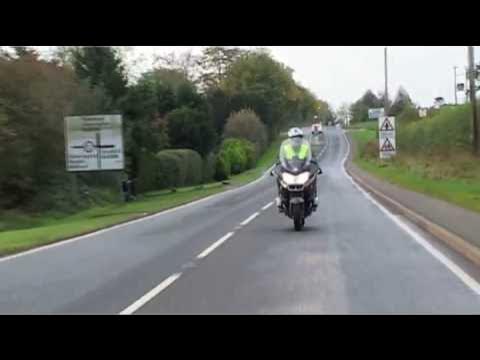
lbtv
AI-assisted summary of Crash Course - The SMIDSY — original source. Check the original for full context.
Source published:
Key ideas
- SMIDSY ('Sorry mate, I didn't see you') collisions are driven primarily by two optical traps: looming, where a motorcycle expands explosively in the driver's visual field only at the final second, and camouflage, where fragmented bike outlines blend into complex backgrounds. (2:08)
- Standard car driver junction scanning relies on a quick check routine that lasts merely two seconds, making it statistically unlikely for drivers to detect narrow objects lacking lateral displacement. (3:53)
- The SIAM (SMIDSY Identification and Avoidance Manoeuvre) uses a positive weaving motion across the lane after a mirror or shoulder check to introduce lateral movement and break camouflage. (4:42)
- Industry commentary calls for systemic reforms, noting that car collisions are the leading cause of motorcycle crashes and that both driver licensing and Compulsory Basic Training (CBT) fail to sufficiently address junction detection. (6:22)
Detailed notes
## Background Published on YouTube by lbtv on December 18, 2008, "Crash Course - The SMIDSY" serves as the pilot episode for a proposed mini-series on motorcycle safety. The channel notes that these collisions are easily preventable if riders are trained to recognize visual warning signs, adding that the producers were seeking external funding to expand the project for web TV and broadcast.
## TL;DR Advanced riding instructor Duncan McKillop analyzes the perceptual mechanics behind common junction collisions known as SMIDSYs ("Sorry mate, I didn't see you"). He explains how optical looming and visual camouflage cause narrow, fragmented motorcycles to disappear within a driver's rapid two-second junction scan. To resolve this, McKillop demonstrates the SIAM (SMIDSY Identification and Avoidance Manoeuvre), teaching riders to monitor background movement behind waiting cars and execute a deliberate weave to stand out. The program concludes with recommendations for systemic updates to car driver testing and basic rider training to address the leading cause of motorcycle collisions.
## Atmosphere & style The presentation maintains a calm, analytical, and educational tone, replacing typical road-rage antagonism toward car drivers with clear perceptual science. Duncan McKillop speaks with the steady, measured cadence of an expert instructor who has survived these crashes himself, using ground-level demonstrations in open spaces to clearly illustrate optical geometry. The atmosphere feels practical, grounded, and empowering, turning complex visual theory into actionable roadcraft designed to save lives.
## Bulletin - [02:08](https://www.youtube.com/watch?v=eqQBubilSXU&t=128s) SMIDSY ('Sorry mate, I didn't see you') collisions are driven primarily by two optical traps: looming, where a motorcycle expands explosively in the driver's visual field only at the final second, and camouflage, where fragmented bike outlines blend into complex backgrounds. - [03:53](https://www.youtube.com/watch?v=eqQBubilSXU&t=233s) Standard car driver junction scanning relies on a quick check routine that lasts merely two seconds, making it statistically unlikely for drivers to detect narrow objects lacking lateral displacement. - [04:42](https://www.youtube.com/watch?v=eqQBubilSXU&t=282s) The SIAM (SMIDSY Identification and Avoidance Manoeuvre) uses a positive weaving motion across the lane after a mirror or shoulder check to introduce lateral movement and break camouflage. - [06:22](https://www.youtube.com/watch?v=eqQBubilSXU&t=382s) Industry commentary calls for systemic reforms, noting that car collisions are the leading cause of motorcycle crashes and that both driver licensing and Compulsory Basic Training (CBT) fail to sufficiently address junction detection.
## Key takeaways - [00:00](https://www.youtube.com/watch?v=eqQBubilSXU&t=0s) The Crash Course series focuses on perceptual and visual accident causation rather than basic motorcycle handling skills. - [00:45](https://www.youtube.com/watch?v=eqQBubilSXU&t=45s) SMIDSY crashes are rarely caused by malicious or careless motorists; typical drivers have safe driving records but succumb to physiological visual limitations. - [02:08](https://www.youtube.com/watch?v=eqQBubilSXU&t=128s) Looming prevents accurate distance and speed estimation because an oncoming motorcycle occupies a minimal visual angle until it rapidly expands directly in front of the driver. - [02:30](https://www.youtube.com/watch?v=eqQBubilSXU&t=150s) Sudden visual expansion close to the junction often startles drivers into panic braking directly across the motorcyclist's path. - [02:55](https://www.youtube.com/watch?v=eqQBubilSXU&t=175s) Unlike cars with broad, uniform color panels, motorcycles have fragmented profiles consisting of indicators, forks, and mudguards that blend into cluttered road backdrops. - [03:25](https://www.youtube.com/watch?v=eqQBubilSXU&t=205s) Hi-vis gear can inadvertently increase visual fragmentation against intricate urban or roadside backgrounds. - [03:53](https://www.youtube.com/watch?v=eqQBubilSXU&t=233s) Drivers scanning a junction perform an average two-second routine (right, left, right), leaving insufficient time to detect stationary visual targets. - [04:28](https://www.youtube.com/watch?v=eqQBubilSXU&t=268s) Because drivers spend very little time looking, riders must assume total responsibility for making themselves visually conspicuous. - [05:05](https://www.youtube.com/watch?v=eqQBubilSXU&t=305s) A stationary background behind a waiting car indicates the motorcycle is on a direct collision course with zero perceived lateral motion. - [05:35](https://www.youtube.com/watch?v=eqQBubilSXU&t=335s) Executing the SIAM weave creates artificial lateral displacement, breaking the motorcycle free from background clutter and triggering driver hazard recognition. - [04:42](https://www.youtube.com/watch?v=eqQBubilSXU&t=282s) Riders must check their mirrors or perform a shoulder check before initiating the SIAM weave to ensure they are not being overtaken. - [06:22](https://www.youtube.com/watch?v=eqQBubilSXU&t=382s) Car-motorcycle collisions represent the single largest cause of motorcycling accidents on the road. - [06:45](https://www.youtube.com/watch?v=eqQBubilSXU&t=405s) Current motorcycle Compulsory Basic Training (CBT) and standard motorist licensing tests inadequately train road users on junction perception traps.
## Detailed walkthrough ### [00:00](https://www.youtube.com/watch?v=eqQBubilSXU&t=0s) Introduction to Crash Course and the SMIDSY
Advanced riding instructor Duncan McKillop opens the pilot episode by framing the core mission of the series: it is not intended to teach basic riding skills, but rather to break down the complex visual and perceptual causes behind collisions so riders can identify and avoid them before they happen. McKillop notes that during his extensive career as an instructor and researcher into motorcycle accident causation, he has experienced this specific collision firsthand: “In that time I myself have suffered two SMIDSY type crashes and let me tell you they hurt a lot and they don't do your motorbike much good either.”
The presentation introduces Dennis, who represents the everyday car driver. McKillop points out that motorcyclists often develop an adversarial view of motorists, but explains that Dennis is an ordinary person who has driven safely for years without ever being involved in an accident. However, in this classic junction scenario, Dennis pulls out straight into the path of an approaching motorcycle and utters the phrase that gives the crash its famous nickname: "Sorry mate, I didn't see you" (SMIDSY).
[02:08](https://www.youtube.com/watch?v=eqQBubilSXU&t=128s) The Perceptual Traps: Looming and Camouflage
McKillop breaks down the two primary optical phenomena that prevent drivers from seeing an oncoming motorcycle: looming and camouflage. Demonstrating in an open car park, McKillop shows how an oncoming bike occupies a tiny footprint in a motorist's visual field for most of its approach. Because frontal perspective lacks lateral displacement, the motorcycle remains deceptively small for a long stretch of road before expanding explosively in the driver's vision at the final second. This sudden, violent visual expansion startles the driver, triggering panic braking directly across the rider's path.
```mermaid flowchart TD accTitle: Optical Challenges in Motorcycle Detection accDescr: Flowchart detailing how looming and camouflage contribute to SMIDSY junction crashes.
subgraph LoomingEffect["The Looming Problem"] A["Small visual angle at distance"] --> B["Negligible perceived size growth"] B --> C["Sudden exponential expansion close up"] C --> D["Driver startled / panic braking"] end
subgraph CamouflageEffect["The Camouflage Problem"] E["Car: solid outline & wide color slabs"] F["Motorcycle: fragmented components & high-viz breakup"] E -.->|Contrast| F F --> G["Blends into complex roadside background"] G --> H["Fails to trigger driver hazard recognition"] end
D --> I["SMIDSY Collision at Junction"] H --> I ```
The second factor is visual camouflage caused by the structural differences between cars and motorcycles. While a car features massive, uniform blocks of color, bold rectangular profiles, and prominent enclosures like radiator grilles and wide windscreens, a motorcycle is composed of fragmented visual components. Indicators, mudguards, exposed silver fork legs, and varied mechanical parts break up its silhouette. McKillop points out that even hi-vis clothing can inadvertently fragment the rider's profile against an intricate, cluttered background: “What that means out on the road is that where we've got a bitty and complex background, a bitty and complex motorcycle can just blend in.” If the motorcycle remains stationary within the driver's visual field without lateral motion, it camouflages entirely.
- Car profile characteristics: Broad expanses of uniform color, large windshields, bold frontal grilles, and distinct geometric boundaries. - Motorcycle profile characteristics: Fragmented parts (colored mudguards, orange indicators, metallic fork stanchions) that disrupt continuous outlines. - Human eye limitation: An object with no relative lateral movement that blends with a complex backdrop cannot be reliably detected.
[03:53](https://www.youtube.com/watch?v=eqQBubilSXU&t=233s) Driver Scanning Limitations and Dennis's Junction Routine
McKillop explores what happens inside the driver's vehicle as Dennis approaches a junction. Relying on basic pedestrian training, Dennis recalls the Green Cross Code approach: look right, look left, and look right again before committing to enter the flow of traffic. Dennis quickly looks right to identify potential hazards, turns left to check the opposite lane, and then returns his gaze to the right to cross-check what he observed during the initial glance.
The critical issue is time. The entire scanning process takes merely two short seconds, which is insufficient to detect a narrow object approaching along a straight line without obvious lateral movement. Because standard scanning takes so little time, McKillop stresses that riders cannot depend on drivers to spot them: “Because a driver takes so little time to look for hazards, it's our responsibility to make sure that we stand out as strongly as possible.”
[04:42](https://www.youtube.com/watch?v=eqQBubilSXU&t=282s) The SIAM Manoeuvre: Background Movement and Detection
To counteract both camouflage and looming, McKillop introduces the SIAM (SMIDSY Identification and Avoidance Manoeuvre). When approaching an intersection where a vehicle is positioned to pull out, the rider first verifies rear safety using mirrors or a life-saver shoulder check to ensure they are not being overtaken. The rider then executes a positive, deliberate weaving motion across the lane.
Walking the road on foot to demonstrate the underlying optical geometry, McKillop explains the exact cue riders must use: relative background movement behind the waiting car. If the background scenery appears stationary behind the vehicle as the rider approaches, the motorcycle is locked on a direct collision vector and is entirely stationary from the driver's perspective. In that situation, a SMIDSY is imminent. Conversely, if trees, signs, or buildings are visibly sweeping across behind the vehicle, the car driver perceives lateral movement against the scenery, making the bike far easier to track. McKillop summarizes the dynamic: “If the background isn't moving behind the car, we must perform the SIAM manoeuvre; the strong weaving motion breaks us clear of the background and makes us much easier to see.”
```mermaid flowchart LR accTitle: The SIAM Decision Flow accDescr: Step-by-step decision process for riders approaching a junction.
A["Approach junction with waiting car"] --> B{"Is background moving behind car?"} B -- Yes --> C["Lateral motion present; SMIDSY risk low"] B -- No --> D["Collision bearing detected"] D --> E["Mirror / shoulder check for overtaking vehicles"] E --> F["Execute SIAM positive weaving manoeuvre"] F --> G["Break clear of background clutter & alert driver"] ```
[06:22](https://www.youtube.com/watch?v=eqQBubilSXU&t=382s) Systemic Training Reform and Closing Advice
An expert commentary highlights the broader systemic changes required to reduce motorcycle collisions with cars, which represent the largest single cause of motorcycling accidents. The speaker identifies two urgent training reforms: first, modifying driver licensing and testing standards to actively teach car drivers how to search for motorcycles, and second, fundamentally updating compulsory basic training (CBT) for motorcyclists. As the speaker emphasizes: “The solution to lowering motorcycle accidents with regards to collisions with cars, which is the greatest cause of motorcycling accident, is to improve car driver training.” The expert adds that “the present CBT training does not address that sufficiently” when preparing young riders to handle junction collisions.
Duncan McKillop closes the episode by reminding riders that the pain of an accident is fully preventable if one understands the visual traps of looming and camouflage. Urging riders to make the SIAM weave an active part of their defensive riding toolkit, McKillop leaves the viewer with a direct challenge: “Why not go out and practice it? It might save your life.”
## Notable quotes > [03:53](https://www.youtube.com/watch?v=eqQBubilSXU&t=233s) Because a driver takes so little time to look for hazards, it's our responsibility to make sure that we stand out as strongly as possible. — Duncan McKillop
> [04:42](https://www.youtube.com/watch?v=eqQBubilSXU&t=282s) If the background isn't moving behind the car, we must perform the SIAM manoeuvre; the strong weaving motion breaks us clear of the background and makes us much easier to see. — Duncan McKillop
> [06:22](https://www.youtube.com/watch?v=eqQBubilSXU&t=382s) The solution to lowering motorcycle accidents with regards to collisions with cars, which is the greatest cause of motorcycling accident, is to improve car driver training. — Expert commentator
> [02:08](https://www.youtube.com/watch?v=eqQBubilSXU&t=128s) Where we've got a bitty and complex background, a bitty and complex motorcycle can just blend in. — Duncan McKillop
## Mentioned Crash Course, The SMIDSY, Duncan McKillop, Dennis, Green Cross Code, SIAM, CBT
## Video description The SMIDSY, a pilot episode in a mini series of Motorcycle Safety videos. This accident is easily avoidable, in order to understand why they occur, riders need to be trained to spot tell-tale signs and know how to deal with these situations.
The producers are now seeking external funding to produce further videos for web TV and broadcast.
For more info email crashcourse@lbtv.co.uk
[Source](https://www.youtube.com/watch?v=eqQBubilSXU)