How to Enjoy the End of the World
How to Enjoy the End of the World — Sid Smith

Sid Smith

AI-assisted summary of How to Enjoy the End of the World — original source. Check the original for full context.

Source published:

Key ideas

  • Human civilization operates as a non-equilibrium dissipative structure sustained by high energy return on investment (EROI), which has fallen precipitously from 100:1 in the early fossil era toward the critical energy cliff. (4:08)
  • Modern industrial agriculture runs at an unsustainable EROI of approximately 0.1, burning roughly 10 calories of fossil fuel to deliver 1 calorie of edible food through fragile, petrochemically dependent crops. (40:18)
  • Technological substitutes like grid batteries and hydrogen face severe thermodynamic limits, with storage overhead inflating dispatchable renewable electricity costs tenfold and transport electrification constrained by global lithium reserves. (36:52)
  • Financial growth has decoupled into paper accounting fictions while the real material economy contracts, making systemic collapse an ongoing ecological necessity to avert terminal climate tipping points. (45:17)

Detailed notes

## Background This lecture was published on YouTube by Dr. Sid Smith on April 24, 2019. Originally delivered on March 26, 2019, at Virginia Tech for the Greens at Virginia Tech, the presentation examines civilizational collapse and has since been expanded into an ongoing monthly video series of the same title.

## TL;DR Dr. Sid Smith argues that human civilizations function as dissipative thermodynamic structures whose survival depends entirely on net energy surplus, or Energy Return on Investment (EROI). Because modern industrial society relies on depleting fossil energy that alternative sources like wind, solar, and nuclear cannot realistically replicate at scale, civilizational collapse is already actively underway rather than a speculative future threat. Furthermore, continuing industrial expansion risks catastrophic ecological collapse and runaway climate tipping points, meaning physical limits will inevitably force a massive contraction in societal complexity and population. Drawing on C. S. Holling's adaptive cycle, Smith concludes that the release phase of collapse should be embraced rather than feared, as it frees rigidly locked energy to rebuild resilient, localized communities and authentic human agency.

## Atmosphere & style The presentation carries the dense, uncompromising momentum of a masterclass, with Dr. Smith delivering complex thermodynamic, historical, and ecological concepts at a brisk, lecture-hall pace. Despite confronting harrowing realities of resource depletion, ecological overshoot, and population decline, the tone remains clinically detached from despair, rejecting both techno-optimist illusions and paralyzing panic. The emotional arc transitions from sober scientific dissection to a cathartic, clear-eyed optimism, leaving listeners feeling as though a profound, uncomfortable truth has finally been spoken aloud to clear the path for grounded renewal.

## Bulletin - [04:08](https://www.youtube.com/watch?v=5WPB2u8EzL8&t=248s) Human civilization operates as a non-equilibrium dissipative structure sustained by high energy return on investment (EROI), which has fallen precipitously from 100:1 in the early fossil era toward the critical energy cliff. - [40:18](https://www.youtube.com/watch?v=5WPB2u8EzL8&t=2418s) Modern industrial agriculture runs at an unsustainable EROI of approximately 0.1, burning roughly 10 calories of fossil fuel to deliver 1 calorie of edible food through fragile, petrochemically dependent crops. - [36:52](https://www.youtube.com/watch?v=5WPB2u8EzL8&t=2212s) Technological substitutes like grid batteries and hydrogen face severe thermodynamic limits, with storage overhead inflating dispatchable renewable electricity costs tenfold and transport electrification constrained by global lithium reserves. - [45:17](https://www.youtube.com/watch?v=5WPB2u8EzL8&t=2717s) Financial growth has decoupled into paper accounting fictions while the real material economy contracts, making systemic collapse an ongoing ecological necessity to avert terminal climate tipping points.

## Key takeaways - [04:08](https://www.youtube.com/watch?v=5WPB2u8EzL8&t=248s) Civilizations are dissipative structures governed by thermodynamics, requiring an ongoing throughput of useful energy (exergy) to preserve internal complexity against entropy. - [07:27](https://www.youtube.com/watch?v=5WPB2u8EzL8&t=447s) As demonstrated by Conway's Game of Life, emergent systemic complexity generated by deterministic rules becomes hypersensitive and fragile to external disruptions as it scales. - [13:36](https://www.youtube.com/watch?v=5WPB2u8EzL8&t=816s) Ecological succession naturally drives systems toward climax states optimized for maximum biomass per energy unit, trading resilience for acute systemic fragility. - [15:41](https://www.youtube.com/watch?v=5WPB2u8EzL8&t=941s) Societal complexity historically tracks Energy Return on Investment (EROI), advancing from hunter-gatherer baselines (1-2:1) and agrarian empires (~4:1) to fossil-fueled industrialization exceeding 100:1. - [22:18](https://www.youtube.com/watch?v=5WPB2u8EzL8&t=1338s) Modern living standards stem from the physical work of invisible 'energy slaves' embedded in fossil fuels rather than human cleverness alone, with one gallon of gasoline matching weeks of human manual labor. - [24:19](https://www.youtube.com/watch?v=5WPB2u8EzL8&t=1459s) Net usable energy declines non-linearly along the 'energy cliff'; dipping below an EROI of 20:1 forces societies to divert massive shares of their gross energy merely into energy procurement. - [27:44](https://www.youtube.com/watch?v=5WPB2u8EzL8&t=1664s) Fracking and unconventional hydrocarbons have accrued over $250 billion in debt without aggregate profitability, acting as high-cost, ecologically damaging stopgaps. - [30:08](https://www.youtube.com/watch?v=5WPB2u8EzL8&t=1808s) Jevons Paradox undermines conservation gains by demonstrating that increased resource efficiency lowers costs and accelerates overall consumption in the absence of strict rationing. - [34:00](https://www.youtube.com/watch?v=5WPB2u8EzL8&t=2040s) Electrifying commercial heavy freight and aviation is constrained by physics, because battery weight scales with gross vehicle mass multiplied by range, rapidly cannibalizing cargo capacity. - [41:45](https://www.youtube.com/watch?v=5WPB2u8EzL8&t=2505s) Green Revolution high-yield cultivars trade natural genetic resilience and root depth for human-edible calories, leaving food production completely reliant on fossil fuel fertilizers, pesticides, and diesel-pumped irrigation. - [47:12](https://www.youtube.com/watch?v=5WPB2u8EzL8&t=2832s) Financial indicators like GDP and equity valuations increasingly reflect paper accounting fictions and debt expansion rather than real physical economic productivity. - [52:25](https://www.youtube.com/watch?v=5WPB2u8EzL8&t=3145s) Ongoing civilizational continuity under current hydrocarbon consumption threatens to surpass climatic tipping points within a decade, risking irreversible ecological collapse and near-term extinction. - [58:04](https://www.youtube.com/watch?v=5WPB2u8EzL8&t=3484s) Under C. S. Holling's adaptive cycle, civilizational collapse corresponds to the 'release' phase, breaking apart rigid, over-accumulated structures to liberate resources for localized reorganization and renewed human agency.

## Detailed walkthrough ### [00:00](https://www.youtube.com/watch?v=5WPB2u8EzL8&t=0s) Introduction and Warning Labels

Ryan Weesdock, chair of the Greens at Virginia Tech, opens the evening by introducing Dr. Sid Smith, a visiting assistant professor of mathematics at Hampden-Sydney College, promising the audience that they are going to be fascinated by what he has to share. Taking the lectern, Dr. Smith jokes that his presentations do not normally require warning labels, but this talk demands two upfront caveats. First, he has an enormous amount of material to cover within a strict one-hour timeframe, meaning he must stick closely to his written remarks: “I have a tremendous amount I want to tell you and I mean to do it in an hour so I'm gonna stick pretty close to my written remarks and you may feel at times as though you're trying to drink from a fire hose.”

His second warning concerns the emotional weight of the subject matter. He cautions that the topics addressed may provoke anxiety, comparing the heads-up to a physician warning a patient that an upcoming procedure might cause discomfort in order to help head off the panic reaction. Dr. Smith clarifies that his goal is neither to instill dread nor leave the audience feeling defeated, but rather to cultivate genuine optimism regarding what lies ahead: “My purpose in fact is to have you leave here feeling optimistic about the dawn of a new human future but we can't get to the dawn until we've gone through the dark night and it doesn't help us at all if we go chasing after the fading light of the day that's coming to an end.”

[01:45](https://www.youtube.com/watch?v=5WPB2u8EzL8&t=105s) Prophecies of Doom and the Reality of Collapse

Launching into the talk, Dr. Smith invokes the political humorist Frank Reed, who observed that a leper is happiest when he understands why his fingers are falling off. While noting that his own encounters with adversity have not been quite so gruesome, Smith argues that understanding the underlying causes of catastrophe brings a form of clarity. If people are genuinely going to “enjoy the end of the world,” they must seek the clearest possible insights into what has happened, what is happening, and what is about to happen. However, an immediate obstacle presents itself: humanity has been predicting its own demise for virtually all of recorded history, making apocalyptic theories oversaturated and commonplace.

Many observers take comfort in this endless catalog of false alarms, reasoning that because past doomsayers were consistently mistaken and humanity is still standing, society can safely assume tomorrow will take care of itself. Smith firmly rejects this complacency, emphasizing that while individual prognostications may miss the mark, systemic collapse is the historical norm rather than an anomaly: “In fact it always does arrive every great and small civilization before our own has ended one way or another and some of those endings were abrupt and terrifying.” Today, society is bombarded by competing narratives of collapse—from Malthusians and millenarians to climate scientists and economic commentators. Rather than getting bogged down in localized debates, Smith proposes pulling the camera back in a dramatic cinematic “dolly zoom,” keeping collapse sharply in focus while widening the analytical lens to examine universal principles and natural analogs that govern civilizations.

[04:08](https://www.youtube.com/watch?v=5WPB2u8EzL8&t=248s) Dissipative Structures, Exergy, and the Puzzle of Complexity

To build a foundational model of civilization, Dr. Smith categorizes civilizations within the broader scientific concept of *dissipative structures*. This category encompasses an extraordinary range of phenomena: biological organisms such as human beings, collective social structures like ant hills and corporations, astronomical bodies like the Sun, and natural disturbances like forest fires and hurricanes. Every dissipative structure depends entirely upon a continuous flow of useful energy to maintain its internal organization and stability—a state of dynamic self-maintenance known as homeostasis.

```mermaid flowchart LR accTitle: Exergy Flow in Dissipative Structures accDescr: Useful energy enters a system to maintain homeostasis, and is dissipated into diffuse heat. subgraph Input["Available Energy"] EX["Exergy<br/>(Useful work potential)"] end subgraph System["Dissipative Structure"] DS["Homeostatic Organization<br/>(Organisms, fires, civilizations)"] end subgraph Output["Degraded Energy"] H["Entropy / Diffuse Heat<br/>(No longer usable)"] end EX -->|"Drives self-maintenance"| DS DS -->|"Dissipation"| H ```

Energy that is available to perform work within a dissipative structure is termed *exergy*. When a fire ignites, it consumes fuel at the maximum possible rate until the supply is exhausted, at which point the structure of the fire dissolves. Although the first law of thermodynamics dictates that energy is never created or destroyed, the energy released as diffuse ambient heat cannot be re-gathered: the total energy persists, but the exergy is gone. On the grandest scale, the entire universe began with the Big Bang as an explosive emergence of pure exergy that has spent fourteen billion years expanding, cooling, and dissipating toward an ultimate heat death devoid of any available exergy.

This introduces what appears to be a fundamental paradox regarding complexity: - The second law of thermodynamics establishes that within a closed system, entropy always increases, meaning order never spontaneously emerges from disorder (broken glass cannot un-shatter, ashes cannot un-burn, and Humpty Dumpty cannot be put back together). - Dissipative structures, however, spontaneously generate intricate complexity and internal order. - This localized ordering occurs strictly because energy is channeled and constrained by underlying rules—in purely physical systems, these are the fundamental laws of physics and chemistry. - As Dr. Smith summarizes the mechanism: “Rules give us complexity.”

[07:27](https://www.youtube.com/watch?v=5WPB2u8EzL8&t=447s) Conway's Game of Life and the Fragility of Systems

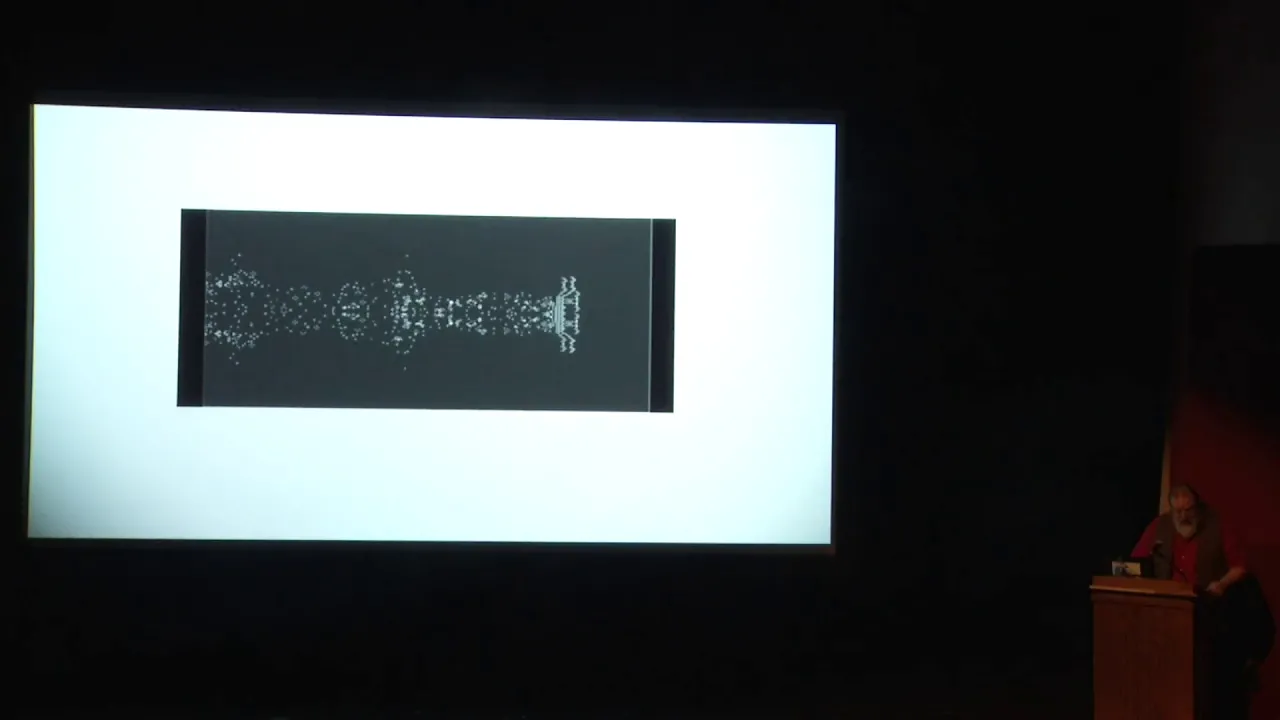
To demonstrate how elementary rules generate spontaneous, lifelike complexity, Dr. Smith introduces mathematician John Conway’s 1970 invention, the Game of Life—a foundational cellular automaton operating on an infinite square grid. In its simplest formulation, cells on the grid are either alive (colored) or dead (empty), governed by a handful of basic deterministic rules evaluated each turn: - A dead cell with exactly three living neighbors becomes alive on the next turn. - A living cell with two or three living neighbors survives. - A living cell with fewer than two neighbors dies of isolation, and one with more than three dies of overpopulation.

Smith shows an example of a self-sustaining configuration known as a “walker” (or glider), which shifts across the grid every four turns while endlessly regenerating its exact shape. He points out that Conway's Game of Life is itself a genuine dissipative structure: updating the board and evaluating cell states requires computational calculations that consume exergy in the form of electricity running through computer circuits. While most initial configurations quickly die out or settle into static loops, randomized boards occasionally produce astonishingly complex behavior—patterns that grow, move, maintain their integrity, or even spawn secondary structures. It has even been proven that an entire programmable computer can be constructed within the rules of the Game of Life.

However, this emergent complexity carries steep energetic costs and vulnerabilities. Because computational demands scale with the size and variability of the active pattern, an expanding structure draws increasing amounts of electrical exergy and dissipates corresponding amounts of heat. Furthermore, these intricate structures are hyper-sensitive to external shocks: “Introduce a few live cells in the midst of such a pattern and it will usually fall into pieces consumed as if by a destroying fire of random” disruption, illustrating the profound fragility inherent to highly complex dissipative systems.

[10:58](https://www.youtube.com/watch?v=5WPB2u8EzL8&t=658s) The Fragility and Mortality of Dissipative Structures

Reviewing the fundamental principles of dissipative structures, Sid Smith reiterates that they all consume exergy (useful energy) and transform it into less useful energy (primarily heat), and they all generate complexity as a self-organizing emergent property driven by how inherent rules channel energy flows. To these, he adds a third principle: mortality. Considering the entire universe as a dissipative structure, it too will eventually suffer heat death, leaving no remaining structure or complexity. Consequently, “no dissipative structure is immortal.”

```mermaid flowchart TD accTitle: Vulnerabilities of Dissipative Structures accDescr: Diagram illustrating how energy variations, external shocks, and internal maintenance costs lead to complexity collapse.

subgraph Hazards ["Vulnerabilities & Drivers"] E1["Energy Flux Fluctuations\n(Fuel dries up or varies)"] E2["External Crises\n(Match in the wind / cascade failures)"] E3["Accumulated Metabolic Costs\n(Maintenance overhead of complexity)"] end

Hazards --> Strain["Loss of Homeostasis\n& Structural Fragility"] Strain --> Collapse["Complexity Collapse"] Collapse --> Renewal["Emergence Anew\n(If post-collapse exergy remains)"] ```

The first threat to any dissipative structure is a variation in energy flux; drying up entirely ends the system, while wild fluctuations can shatter the homeostasis of complex systems. External environments present a second danger—like a match caught in the wind—inflicting crises that threaten balance. As complexity multiplies, so do the varieties of possible crises, increasing the likelihood that a failure in one subsystem cascades into catastrophic failure across others. Even when protected from external shocks and granted steady fuel, a dissipative structure cannot endure indefinitely because natural thermodynamic processes are strictly irreversible: “the same processes that bring a dissipative structure into being must continue because energy must continue to flow, introducing new complexities.” Because every incremental layer of complexity demands its own ongoing metabolic maintenance cost, these accumulated costs eventually outstrip the energy base, culminating in an inevitable complexity collapse.

[13:36](https://www.youtube.com/watch?v=5WPB2u8EzL8&t=816s) Odum’s Succession and Ecosystem Collapse

Turning to the biological realm, Smith references Eugene Odum, author of the first American ecology textbook, who mapped this cycle in ecosystems under the concept of ecological succession. Odum defined succession through three core characteristics: it is an orderly community development process, it results from the community modifying its physical environment, and it culminates in a homeostatic ecosystem that achieves maximum biomass and symbiotic function per unit of energy flow. Smith stresses that “nature always optimizes,” directing self-organization toward maximizing organic structure and diversity within prevailing physical limits and energy inputs.

```mermaid flowchart LR accTitle: Eugene Odum Ecological Succession Cycle accDescr: The life cycle of an ecosystem from community development to peak optimization, fragility, and collapse.

A["Orderly Community\nDevelopment"] --> B["Environmental\nModification"] B --> C["Mature Homeostatic State\n(Max biomass & symbiosis)"] C --> D["Extreme Fragility\n(Vulnerable to minor shocks)"] D --> E["System Failure & Collapse"] E -.->|"Evolutionary renewal\nacross time"| A ```

Once homeostasis is reached, the ecosystem is mature, but that very optimization sows the seeds of its ruin. Intricate specializations render the system fragile; a slight climatic shift, a fire, or the arrival of a disruptive parasitic or invasive species turns those tailored adaptations into fatal systemic liabilities. Taking the long view, Smith maintains this failure is not a tragedy but rather “an essential component of the evolutionary process,” accounting for the richness of terrestrial life across epochs. Furthermore, this succession occurs without centralized coordination: no organism governs the ecosystem. Each organism acts strictly according to its immediate nature, yielding a tightly interwoven fabric where each depends on the whole—meaning when the overarching system abruptly fails, individual organisms predominantly perish.

- Eugene Odum established ecological succession as an orderly development culminating in optimized biomass per unit of energy flow. - High specialization produces ecosystem fragility, where minor perturbations trigger systemic unraveling. - Lack of centralized direction means individual components remain fully exposed when systemic collapse occurs.

[15:41](https://www.youtube.com/watch?v=5WPB2u8EzL8&t=941s) Energy Return on Investment (EROI) and Hunter-Gatherers

Shifting the lens from natural ecosystems to human civilization as a dissipative structure, Smith observes that despite humanity creating sophisticated cultural artifacts dating back at least 50,000 years, true civilization only appeared about 20,000 years ago. Prehistoric humans and wild animals inhabit a precarious energetic reality where nearly all procured energy must be expended merely to capture the next meal. This dynamic is governed by Energy Return on Investment (EROI)—the ratio between total energy acquired and the energy expended to obtain it.

For living organisms, EROI hovers tightly between 1 and 2. An EROI below 1 means imminent starvation, while approaching 2 leaves a slight energy surplus for somatic growth and developmental complexity. For hunter-gatherer bands, an EROI between 1 and 2 permitted kinship maintenance, reproduction, and the crafting of basic tools or ornaments, but kept social complexity flat. Because no surplus existed to support non-food-producing hierarchies, hunter-gatherer bands featured no intermediate levels of authority between the lowest and highest ranked members, minimal labor specialization, and severely limited outside interactions.

[17:10](https://www.youtube.com/watch?v=5WPB2u8EzL8&t=1030s) The Agricultural Revolution and Imperial Rise

Around 12,000 years ago, the domestication of plants and animals triggered a profound transformation, elevating human EROI sufficiently to unlock an explosion of social complexity. Human population expanded rapidly alongside this shift, illustrating Smith's observation that “population seems to always closely track energy return on investment.” Agricultural settlements learned to process and store food surpluses, freeing up energy to construct permanent dwellings, craft sophisticated tools, and support specialized roles decoupled from primary food production.

```mermaid flowchart TD accTitle: Agricultural Expansion and Imperial Dynamics accDescr: Flowchart tracing the shift from farming settlements to empires, diminishing returns, and subsequent collapse.

subgraph Farming ["Agricultural Surplus"] F1["Domestication of Plants & Animals"] --> F2["EROI Rises up to ~4"] F2 --> F3["Surplus Food Stored & Tradable Goods"] end

subgraph ImperialExpansion ["Imperial Conquest"] F3 --> I1["Vulnerability to Raiding"] I1 --> I2["Centralized Conquest & Annexation"] I2 --> I3["Windfall EROI Boost via Plunder & Tribute"] end

subgraph Degradation ["Diminishing Returns & Collapse"] I3 --> D1["Garrisoning Costs & Stretched Supply Lines"] D1 --> D2["Diminishing Returns & Falling EROI"] D2 --> D3["Excessive Taxation of Soil & Vassals"] D3 --> D4["Resource Exhaustion & Complete Collapse"] end ```

As agricultural methods improved and higher-yielding cultivars and livestock were bred, EROI climbed toward roughly 4. This surplus allowed communities to amass embodied energy via stored food and trade goods. However, this success introduced two vulnerabilities: local overexploitation leading to diminishing agricultural yields (lowering EROI), and the reality that stored wealth made settlements irresistible targets for outside raiders. These dynamics catalyzed the leap to agrarian empires, which expanded through military conquest:

- Conquering neighboring societies supplied an immediate windfall to the conqueror’s EROI through the direct plunder of accumulated food and assets. - Subjugated populations provided ongoing tribute and taxes, allowing empires to sustain multi-tiered administrative, military, religious, and economic sectors. - Societal stratification expanded dramatically, increasing the number of intermediaries between the elite and commoners while introducing formal diplomacy and cultural exchange.

[19:39](https://www.youtube.com/watch?v=5WPB2u8EzL8&t=1179s) Imperial Overreach, the Roman Collapse, and Fossil Energy

Despite their scale, ancient empires consistently succumbed to thermodynamic traps. Once conquered territories were looted, maintaining garrisons and administrative bureaucracy drained massive reserves of surplus energy. Distant military campaigns stretched logistical supply lines thin, setting off diminishing returns that drove down imperial EROI. To offset falling net energy while maintaining systemic homeostasis, imperial centers increased levies on vassals, overtaxing crops and degrading soil fertility until the fragile empire collapsed from internal exhaustion or external attack.

Smith highlights the Roman Empire as the paramount case study, noting that “they were very, very good at being an empire and were able to hold off collapse for a long time, but ultimately every step they took to avoid collapse ensured that when the collapse occurred, it would be complete.” Rome extracted every possible drop of energy from its agrarian soil and human laborers. Consequently, when the Western Empire disintegrated under frontier invasions, the collapse in political stability, social complexity, and population was absolute, plunging the region into a Dark Age that lasted nearly 500 years because no viable base of fertile topsoil, harvestable forests, or coherent social structures remained to mount a recovery.

Following the fall of Rome, innovations in energy capture remained modest for over a millennium. Even maritime developments like the wind-harnessed mechanical power that drove the Dutch Empire in the 16th century failed to push EROI much beyond 5. The true rupture came in the 18th century with the invention of the heat engine paired with fossil fuels. Coal and petroleum delivered unprecedented EROIs reaching up to 100-to-1. This nearly limitless energy source fueled exponential growth: by the year 2000, global per capita energy consumption had quadrupled, even as the overall human population multiplied more than sevenfold, yielding today’s fully integrated, highly complex industrial global economy.

[22:18](https://www.youtube.com/watch?v=5WPB2u8EzL8&t=1338s) Energy Slaves and the Foundation of Modern Civilization

Sid Smith emphasizes that modern society functions through networks of trade and information flows where the connectivity within and between groups reaches unprecedented complexity. However, this hyper-connected global civilization does not run merely on human effort or human intellect. To contextualize per-capita energy consumption, Smith points to human physical limits: a healthy adult working an eight-hour day can sustain around 75 watts of labor, yielding roughly 600 watt-hours (0.6 kilowatt-hours). Even if someone commanded ten laborers working full-time, their combined output would amount to only 6 kilowatt-hours—substantially less energy than what is contained in a single gallon of gasoline burned in an ordinary automobile engine.

A single gallon of fuel effortlessly propels a car 30 miles in 30 minutes, a feat that would require pushing a vehicle for days with dozens of helpers. Consequently, the average American consumer relies directly and indirectly on a massive energy footprint equal to hundreds of physical laborers working around the clock. Smith observes that modern society labors under a self-flattering illusion about why it exists: “It's an almost universal conceit, you know, that our present level of social complexity is largely owing to our cleverness.” While the accumulation of technical and scientific knowledge through the 18th century set the stage, it was the staggering excess energy provided by fossil fuels—yielding early energy returns of 50:1 to 100:1—that enabled the explosion of population, industry, and economic growth after 1800. This massive energy surplus allowed the vast majority of the population to move away from primary energy gathering and subsistence agriculture into specialized social, technical, and professional niches, accelerating societal innovation by orders of magnitude.

- A healthy adult sustains roughly 75 watts over an 8-hour workday (~600 Wh or 0.6 kWh). - 10 full-time laborers yield ~6 kWh per day, less work than is extracted from a single gallon of gasoline. - The average American directly and indirectly uses the daily labor equivalent of hundreds of "energy slaves." - Fossil fuels originally provided an Energy Return on Investment (EROI) between 50:1 and 100:1, freeing populations to pursue non-agricultural specializations.

---

[24:19](https://www.youtube.com/watch?v=5WPB2u8EzL8&t=1459s) Falling Off the Energy Cliff (EROI and Metabolic Costs)

Global industrial civilization now faces structural crises because it was built specifically for massive, high-volume energy flows, while remaining fossil fuel deposits are becoming increasingly costly and energetic to extract. Furthermore, there are no direct substitutes that offer comparable energy returns, non-energy resources (arable land, clean water, and critical minerals) are dwindling, and the ecological foundation required for any future low-energy civilization is degrading. Smith illustrates this trajectory using the concept of the "energy cliff." An Energy Return on Investment (EROI) of 100:1 means that 99% of captured energy is net surplus available for social pursuits outside of energy production. At an EROI of 20:1, 95% remains usable—a negligible real-world difference. However, below 20:1, the cliff drops steeply: an EROI of 5:1 leaves only 80% of net energy available, meaning a full 20% of societal energy must be reinvested solely into securing more energy.

```mermaid flowchart TD accTitle: The Energy Cliff accDescr: Shows the declining net energy surplus available to society as EROI ratios fall from 100 to 1 down to 5 to 1.

subgraph HighSurplus["High Net Energy Surplus"] E100["EROI 100:1<br/>99% Net Energy Available"] E20["EROI 20:1<br/>95% Net Energy Available"] E100 -->|"Negligible practical loss"| E20 end

subgraph TheCliff["The Energy Cliff"] E10["EROI 10:1<br/>90% Net Energy Available"] E5["EROI 5:1<br/>80% Net Energy Available"] E20 -->|"Steep drop-off begins"| E10 E10 -->|"Rapid loss of surplus"| E5 end ```

When oil was first tapped, its EROI was around 100:1. Over time, physical and institutional overhead—such as paving road networks, building distribution channels, and maintaining complex supply chains—introduced metabolic drag, lowering the return to roughly 30:1. As the highest-quality, easily accessible fields were depleted, drilling shifted to smaller, deeper, and lower-grade deposits, dropping conventional oil's average EROI to 20:1 by the start of the 21st century, with newly exploited conventional wells yielding 10:1 or less.

Unconventional sources (such as tar sands and tight oil) yield an EROI of 5:1 or lower and suffer from far steeper depletion curves. Biomass has proven to be an energetic bust that threatens vital food supplies, while wind and solar—though competitive at the generation busbar—drop to barely above 1:1 once full grid-scale battery storage is accounted for. This drop poses an existential danger: established civilizations bear heavy fixed metabolic costs—existing infrastructure must be continually repaired, institutions funded, and populations fed, housed, and clothed. As Smith warns, “A decline of 5% can mean the difference between meeting these costs with enough left over for further development, or not meeting these costs, which means the civilization must cannibalize its reserves and fragility and eventually collapse ensues.”

---

[27:44](https://www.youtube.com/watch?v=5WPB2u8EzL8&t=1664s) Four Failed Paths: Accelerating Extraction, Fracking, and Climate Reality

When confronting the energy cliff, society typically considers four hypothetical solutions: exploit fossil fuels faster to offset declining percentages, use energy more efficiently, simplify socioeconomic structures to reduce demand, or develop alternative energy sources. Smith argues that every single one of these avenues is effectively blocked.

Attempting to accelerate conventional extraction is physically and economically unviable: global conventional crude production peaked roughly a decade earlier (around the mid-2000s), and U.S. conventional oil peaked around 1970. Drilling more aggressively cannot increase flow rates in depleted reservoirs enough to pay back the immense capital cost of new drilling rigs and refining infrastructure. Expanding coal extraction carries devastating ecological consequences aside from climate change, and coal reserves face their own eventual peak. Fracked shale oil and gas fail to provide a genuine thermodynamic or economic rescue; despite a massive quarter-trillion-dollar investment boom, the industry operates on low EROI and persistent financial losses. As Smith points out: “There's a 250 billion dollar investment in oil shale and gas fracking for these pipelines are being built for, none of these companies has ever made any money, that's just huge debt anyway, and they have a devastating ecological cost.”

Finally, burning remaining hydrocarbons at an accelerated pace guarantees catastrophic climate destabilization:

> “Continuing to release greenhouse gases at our present rate, let alone an accelerating rate, puts the planet on track to cross climate tipping points, possibly within a decade, that will probably result in near-term global extinction of most life, including us.”

Relying on technological fixes like Carbon Capture and Sequestration (CCS) or negative emissions technologies is unrealistic, as they remain largely unproven at scale and would impose an energetic penalty heavy enough to drop societal EROI down to 1:1 or below.

---

[30:08](https://www.youtube.com/watch?v=5WPB2u8EzL8&t=1808s) The Efficiency Myth, Jevons Paradox, and Primary Energy Sources

Turning to efficiency as a solution encounters immediate theoretical and physical roadblocks. While modern industrial equipment has become significantly more efficient—Smith compares his truck getting 20 miles per gallon to his father's older truck that managed only 12 mpg, alongside widespread adoption of home insulation and LED lighting—efficiency gains do not reduce overall consumption. Under Jevons Paradox, an established principle of resource economics, increasing the efficiency of a resource lowers its effective cost, which paradoxically accelerates its aggregate use in the absence of strict rationing.

Furthermore, technological efficiency is governed by the law of diminishing returns. As anthropologist Joseph Tainter demonstrated in his work on complex societies, early breakthroughs are low-hanging fruit secured by lone inventors like Thomas Edison or Nikola Tesla. Today, achieving incremental gains requires massive, heavily funded corporate or institutional research teams, demanding an ever-larger energetic and economic investment for diminishing thermodynamic returns. Because societies cannot simply re-engineer their systems to consume less energy without deliberately unwinding the very complexity that sustains them—a process that systems resist—attention turns to alternative energy sources.

Smith clarifies the physical reality of our energy landscape: there are only four genuine primary energy sources on Earth: solar, tidal, nuclear, and geothermal. Fossil fuels are not an independent source of energy at all, but rather concentrated chemical energy carriers: “Fossil fuel is an energy carrier, basically a big battery that the Sun charged up over hundreds of millions of years, and which we've now drained.” Because that ancient solar battery takes millions of years of geological processing to recharge, it is entirely non-renewable on human timescales. Meanwhile, tapping alternatives at global scales remains heavily constrained; geothermal energy faces severe unresolved engineering barriers that prevent widespread economic exploitation, and tidal power presents its own harsh logistical limits.

[33:17](https://www.youtube.com/watch?v=5WPB2u8EzL8&t=1997s) Nuclear Power: High Costs, Subsidies, and Elusive Fusion

Sid Smith turns to nuclear energy, noting that while gravitational energy from the Earth, Moon, and Sun has largely gone unexploited, mass-energy equivalence has faced serious practical barriers. In principle, nuclear fission appears ideal for producing virtually unlimited electricity at manageable costs. However, quoting an old aphorism, Smith remarks that “in theory there's no difference between theory and practice, but in practice there is.” The massive financial burdens of constructing and decommissioning plants, combined with catastrophic operational risks, have meant that “no nuclear plant has ever stood on its own economically it has always had to rely on subsidies especially indemnities and inevitably the disasters occur.” As a result, few nations are actively building new plants, and most existing facilities will decommission within a few decades, hopefully in a controlled manner. Nuclear fusion theoretically avoids these pitfalls, but Smith wryly dismisses it, noting that the technology has been promised as just a few years away ever since he was in high school forty years ago.

- Fission nuclear energy suffers from severe capital costs for construction and decommissioning. - Economic viability depends heavily on government indemnities and subsidies rather than market returns. - Fusion energy remains perpetually out of reach despite decades of optimistic timelines.

---

[34:18](https://www.youtube.com/watch?v=5WPB2u8EzL8&t=2058s) The Bottlenecks of Electrifying Transportation

Moving through renewable alternatives, Smith identifies wind, photovoltaics, and biomass as distinct manifestations of solar energy. Crucially, only biomass can yield liquid fuels and complex hydrocarbons like plastics, highlighting our civilizational vulnerability. Liquid fuels cannot simply be swapped out for electricity, because their energy density and practical utility are unmatched. A single six-pound gallon of gasoline inside an inexpensive plastic container can propel a one-ton automobile thirty miles in thirty minutes. By contrast, delivering an equivalent amount of electricity into an electric vehicle significantly inflates the overall cost, largely driven by heavy battery packs that cost thousands of dollars and wear out every few years.

```mermaid flowchart TD accTitle: Limits of Transportation Electrification accDescr: Flowchart illustrating the constraints of batteries in light vs heavy transport.

subgraph EV_Constraints["Battery Realities"] A["Chemical Battery Storage"] --> B["Heavy Gross Weight"] A --> C["Resource-Limited Lithium"] end

subgraph Applications["Sector Feasibility"] B --> D["Passenger Cars: Solvable, but High Upfront & Replacement Cost"] B --> E["Long-Haul Freight & Shipping: Intractable Payload Penalty"] C --> F["Global Auto Fleet: Single-Generation Replacement Capacity"] end ```

The resource and engineering bottlenecks become even more severe when scaled globally. Earth's known lithium reserves are sufficient to replace the existing worldwide fleet of passenger automobiles roughly once before depletion, and the element is exceptionally expensive to recycle. Furthermore, battery weight scales with gross vehicle weight multiplied by range:

> “The weight of batteries needed in a vehicle is a function of the gross weight of the vehicle times the distance it has to travel before recharging for your car it's a solvable problem for freight the problem is not tractable for long distances because the further freight has to be carried carried the heavier the batteries that have to be carried along with it which leaves less and less room for the freight.”

This physical reality rules out battery-powered long-haul trucking and shipping, guaranteeing that short-haul transport costs will surge. Converting heavy rail to direct overhead catenary wiring presents a different dilemma: while Europe and Japan have electrified significant trackage, retrofitting the United States' 140,000 miles of rail remains prohibitively expensive.

- Liquid fuels possess convenience and volumetric energy density that electricity cannot easily replicate. - Existing global lithium reserves are estimated to cover only a single generational replacement of the world vehicle fleet. - Long-haul battery-powered freight faces diminishing returns because battery mass cannibalizes cargo capacity. - The United States possesses roughly 140,000 miles of railroad track that lack an affordable electrification plan.

---

[36:54](https://www.youtube.com/watch?v=5WPB2u8EzL8&t=2214s) The Illusions of Hydrogen and Biomass

Smith examines alternative chemical carriers, focusing first on hydrogen. Produced via electrolysis from water, hydrogen can theoretically be transported and burned cleanly, emitting only water vapor. Yet hydrogen is merely an energy carrier, not a primary energy source. Converting solar electricity into hydrogen fuel and finally into mechanical motion operates at a dismal round-trip efficiency of approximately 30%. Because hydrogen molecules are tiny and light, containment, storage, and transport present severe mechanical challenges and high explosion risks, prompting Smith to invoke the historical memory of the Hindenburg airship. Transitioning to a hydrogen-based transport network would make mobility roughly an order of magnitude more expensive than relying on liquid fossil fuels.

Achieving such a shift would require a colossal scale-up: the rate of electricity generated from wind and solar would need to jump by at least a factor of 150 solely to power transportation, all while constructing a completely new distribution network. Turning to biomass, Smith describes it as essentially non-viable due to an Energy Return on Investment (EROI) hovering around 1:1. Meeting current transportation fuel needs via biofuels would consume more than three-quarters of all agricultural land, leaving society with an impossible ultimatum between fueling trucks or feeding humans: “food trucks pick one.”

- The end-to-end solar-to-hydrogen efficiency cycle yields roughly 30% overall efficiency. - Transporting hydrogen requires massive infrastructure overhauls due to high leakage rates and severe flammability. - Electrifying or hydrogenating transportation demands at least a 150-fold expansion in wind and solar output. - Biomass energy possesses an EROI near 1:1 and would require diverting over 75% of agricultural land to fuel production.

---

[38:52](https://www.youtube.com/watch?v=5WPB2u8EzL8&t=2332s) Grid Intermittency and the Myth of Cheap Renewables

Addressing advocates of the Green New Deal, Smith explains that transitioning the electric grid away from fossil fuels involves harsh economic tradeoffs. Contemporary civilization relies on an uninterrupted electrical grid delivering power 24/7 on demand. However, wind and solar are fundamentally intermittent and non-dispatchable. To run a modern grid solely on renewables, installed generating capacity must drastically exceed average demand, coupled with massive grid-scale storage systems to smooth out supply when the sun is down or the wind is calm.

Studies show that adding required storage and redundant generation increases the delivered cost per watt of dispatchable electricity by an entire order of magnitude. Smith encourages the audience to calculate their combined monthly energy expenditures—covering home electricity, heating gas, and automotive gasoline—and simply append a zero to the figure:

> “Now put a zero on the end of it that's your new household budget for energy but it's actually worse than that because embodied energy is in everything we buy.”

- Intermittent renewable power requires extensive overbuilding of generation capacity and large-scale storage. - Storage and balancing infrastructure push the cost per watt of dispatchable renewable power up by roughly 10x. - Household energy budgets would face steep cost inflation under a 100% renewable grid.

---

[40:18](https://www.youtube.com/watch?v=5WPB2u8EzL8&t=2418s) Embodied Fossil Energy: The 10-to-1 Food Ratio

The economic penalty of high-cost energy spreads into every sector of modern life through embodied energy. To illustrate, Smith traces the supply chain of an ordinary box of cornflakes: field cultivation, planting, harvesting, chemical processing, packaging, transit, retail display, and the final trip to a kitchen pantry. Every stage demands continuous energy inputs, at least half of which stem directly from liquid petroleum fuels. In modern industrial agriculture, producing and delivering a single calorie of food requires roughly ten calories of fossil fuel energy.

```mermaid flowchart LR accTitle: Fossil Fuel Inputs in Modern Food Production accDescr: Diagram showing the 10 to 1 ratio of fossil energy input required to deliver one calorie of edible food.

FossilInput["10 Calories of Fossil Energy (Fertilizer, Diesel, Processing, Transport)"] --> FoodSystem["Industrial Food System"] FoodSystem --> EdibleOutput["1 Calorie of Consumable Food (EROI = 1/10)"] ```

Because 90% of the energy in food comes from external inputs rather than the food crop itself, attempting to substitute renewable energy at current consumption rates would cause food prices to skyrocket out of reach for ordinary citizens. This dynamic applies equally to housing, apparel, and basic goods. Smith concludes that when analysts warn there is no replacement for fossil fuels, they mean there are no direct replacements capable of preserving our current industrial civilization, because the energy extraction model that generated it is hitting a wall.

- Industrial agriculture operates at an EROI of approximately 0.1 (10 units of fossil energy required for 1 unit of food energy). - Over half of the energy consumed across the food supply chain derives from liquid hydrocarbons. - Replacing fossil fuels with higher-cost alternatives would make everyday consumer staples, including basic food, unaffordable.

---

[41:45](https://www.youtube.com/watch?v=5WPB2u8EzL8&t=2505s) Agriculture's Trap: Fragile Crops and the Friction of De-Complexifying

Smith asks whether society can de-complexify and return to lower per-capita energy consumption—perhaps living like it was 1899—without triggering systemic collapse. Returning to the cornflakes analogy, he explains that modern crops bear little resemblance to those grown forty years ago. The Green Revolution systematically altered crop genetics so plants direct metabolic resources into yield rather than survival:

> “The corn kernels of today's corn are plump than full of sugar and there's many more ears per acre of corn to achieve this the plant uses less of its photosynthetic energy on developing roots on being disease and pest resistant being drought resistant and so on and directing it instead to the fruiting parts the benefit is that the plants produce more human edible food the cost is that without fossil fuel derived fertilizer irrigation pesticides and herbicides the plant isn't a viable food crop it can't stand on its own.”

Stripping away fossil fertilizers, herbicides, and diesel-pumped irrigation would force farmers back to hardy ancestral strains, resulting in steep yield drops and catastrophic famines, even across affluent countries. While small-scale regenerative and localized agriculture offers a sustainable long-term model, implementing it requires reversing decades of rural-to-urban migration. Reflecting on his personal experience running a modest five-acre homestead for ten years, Smith emphasizes that farming without machinery and chemicals is grueling and cannot simply be picked up on the fly:

> “How many of you know how to farm successfully on a small scale with your own hands and the help of a few animals from machinery I don't but I've learned from living on five acres and by onlys last ten years that it's not something you just pick up it's viscerally challenging to forge a living out of the land without engines and chemicals in a like manner getting people out of their private steel chariots...”

- Green Revolution high-yield crops trade natural hardiness, deep roots, and pest resistance for edible output. - Eliminating petrochemical inputs without systemic collapse is impossible under existing seed varieties and population levels. - Regenerative micro-farming demands extensive practical skills and labor that modern urbanized populations lack.

[44:21](https://www.youtube.com/watch?v=5WPB2u8EzL8&t=2661s) The Climax Stage of Civilization

Addressing the practical hurdles of radical localization, Sid Smith explains that truly living locally requires overhauling every urban, suburban, and rural community while upending existing distribution and transportation networks. Everyday people simply do not possess the skills or habits required to sustain such a lifestyle, nor can they be persuaded to undertake it voluntarily. Consequently, these structural shifts cannot happen before the energy needed to build them is entirely spent—and that energetic surplus is effectively already exhausted.

Human civilization operates just like a natural ecosystem, meaning it cannot be deliberately micro-managed, disciplined, or reversed by its individual constituents. Smith describes it as a wildwood rather than a carefully manicured walled garden. Because complex systems follow irreversible thermodynamics, the only realistic stance is to recognize that modern industrial society has already surpassed its climax state and is currently descending along the entropy loop.

Smith frames this civilizational trajectory bluntly: > “Our only alternative is to accept that we have already seen the climax stage of this civilization we're now headed back down the entropy entropy loop.”

---

[45:17](https://www.youtube.com/watch?v=5WPB2u8EzL8&t=2717s) The Material Economy versus the Financial Economy

Shifting toward the core topic of the talk—learning how to enjoy this trajectory—Smith tackles two inevitable objections from the audience: how we can be certain collapse will occur, and when it will happen. His answer addresses both simultaneously: collapse is not a speculative future event, but a process actively underway with definitive supporting evidence. To understand why, one must dismantle the common semantic confusion surrounding the word *economy*, which carelessly conflates two separate structures: the material (or real) economy and the financial economy.

```mermaid flowchart TD accTitle: Real Economy vs Financial Economy accDescr: Diagram illustrating the material economy based on energy versus the financial accounting system.

subgraph Mat["The Material (Real) Economy"] E["Energy Inputs<br>(Raw fuel, electricity)"] --> B["Embodied Energy<br>(Raw materials, lumber, iron ore)"] B --> P["Physical Production<br>(Finished goods, machinery, transport)"] end

subgraph Fin["The Financial System (Accounting)"] direction TB M["Medium of Exchange"] R["Risk Mitigation & Rational Pricing"] C["Capitalization & Liquidity<br>(Funding infrastructure)"] end

Fin -.->|"Tracks, facilitates & provisions"| Mat ```

The material economy encompasses the production, circulation, and consumption of physical energy, whether in raw form (electricity and fuels) or as embodied energy embedded within mined materials, lumber, agricultural feedstocks, industrial equipment, and finished consumer goods. Conversely, the financial economy operates purely as an accounting and record-keeping overlay designed to manage and lubricate these physical flows. In a healthy, balanced state, the financial system mirrors real energetic output and provides useful functions: a reliable medium of exchange, rational price discovery, risk management, and the provision of capital liquidity to construct the physical assets—such as roads and factories—needed to expand energy throughput.

As Smith clarifies regarding the convergence of timing and evidence: > “The answer to both questions is the collapse is already underway and the evidence that this is so is conclusive.”

---

[47:12](https://www.youtube.com/watch?v=5WPB2u8EzL8&t=2832s) Financialization and the Mirage of Wealth Disparity

When an advanced society enters systemic decline, its underlying energy base deteriorates, leaving the real economy incapable of sustaining physical growth. Despite this stagnation, financial institutions continue pumping liquidity into circulation. Because this capital cannot create genuine productive capacity, it generates a universal hallmark of collapse: the financialization of growth. Financial wealth surges into speculative bubbles while real, energy-backed wages wither. Each recurring cycle of boom and bust triggers a ratchet effect that widens the gap between the paper-wealthy and the rest of society without genuine economic expansion.

Smith notes that while wages for 90% of Americans have declined since 2008, the stock market tripled in value over the same timeframe, exposing a deep fracture between finance and material reality. He takes aim at common leftist interpretations that treat extreme wealth purely as hoarded consumer purchasing power. The astronomical earnings of figures like Jeff Bezos—pulling in roughly $150,000 per minute—do not correspond to proportional consumption of physical resources; Bezos cannot physically eat a million hamburgers a day or drive a million miles. His wealth represents social control and power rather than direct material extraction. Circulating internet memes that suggest world hunger could be solved overnight simply by seizing billionaire portfolios miss the fundamental distinction between physical resources and monetary abstractions.

Reflecting on this misconception, Smith argues: > “Well I'm not against the revolution but it's a mistake to think that will solve world hunger with make-believe monopoly money and that's what it is.”

- In wealthy nations, real physical economic output entered permanent, accelerating contraction between roughly 1970 and 1990. - Developing powers like China and India temporarily offset this decline through coal-powered industrialization to satisfy Western debt-driven consumerism. - Developing economies have now peaked as well, succumbing to the identical structural disease of debt and financialization.

---

[49:25](https://www.youtube.com/watch?v=5WPB2u8EzL8&t=2965s) Fictional GDP and the Jenga Tower Economy

To mask physical stagnation, governments resorted to financial sleight of hand. When structural fissures surfaced in the 1970s and culminated in the financial crash of 2007–2008, states manipulated Gross Domestic Product (GDP) metrics to fabricate the illusion of growth. Smith points out absurd accounting devices such as imputed rent—wherein the statistical office invents a hypothetical rent payment that outright homeowners theoretically pay to themselves and tallies it into national output, entirely disconnected from real-world energy or production.

```mermaid flowchart TD accTitle: The Jenga Tower of Financialization accDescr: Cycle of negative interest rates, exploding unpayable debt, and the eventual relief of systemic collapse.

subgraph Base["Material Reality"] A["Shrinking Real Economy<br>(Falling EROI & Energy Throughput)"] end

subgraph FinancialGame["The Financial Shell Game"] B["Zero & Negative Interest Rates<br>(Free money for banks)"] C["Exploding Public & Private Debt<br>(Unpayable future claims)"] D["Fictional Metrics<br>(Imputed rent, inflated GDP)"] end

subgraph Outcome["The Collapse"] E["Total Obligations reach ~400% of reported GDP"] F["Systemic Deleveraging & Collapse<br>(The Jenga Tower Falls)"] end

A --> B B --> C C --> D D --> E E --> F ```

Central banks introduced negative real interest rates, essentially distributing free cash to private lenders to maintain the appearance of solvency. This policy sparked an explosion of public and private debt—obligations that represent claims on future physical production that a declining material economy cannot fulfill. Taking into account mortgage balances, student loans, household credit, government debt, and entitlement programs like Social Security and Medicare, total American liabilities approach 400% of official annual GDP, and an even higher ratio against the physical economy.

Smith likens this unsustainable structure to a game of Jenga, where blocks are extracted from the foundation to build an increasingly precarious tower. Watching it wobble produces agony, and its inevitable collapse brings a release of built-up dread.

Capturing the peculiar emotional shift this perspective brings, Smith observes: > “When the deleveraging of the financial economy hits and the final collapse ensues those of us who thought about it are gonna breathe a huge sigh of relief just like the Jenga stack coming down and the sooner it happens the greater will be our celebration because what if it didn't happen?”

---

[52:25](https://www.youtube.com/watch?v=5WPB2u8EzL8&t=3145s) The Nightmare of Continuity and Dispelling Delusion

The prospect of financial collapse should be welcomed, Smith contends, because the alternative—industrial civilization persisting on its current trajectory—would guarantee planetary ecocide. Current ecological data shows systemic unraveling taking place at an alarming speed. Terrestrial vertebrates have lost an average of 60% of their numbers since 1970, an instantaneous wipeout in evolutionary timescales. Insect populations have plunged by at least 45%, destabilizing base-level food webs and pollination networks. Meanwhile, topsoils face systemic destruction, clean water tables are vanishing in densely populated territories, and basic industrial ores and accessible fossil fuels are reaching permanent scarcity.

Even setting aside global warming, resource depletion alone would bring down industrial civilization; however, climate science makes the timeline immediate and absolute. Smith asserts that human civilization has roughly a decade to end fossil fuel usage or lock in a minimum of 4°C of warming above pre-industrial averages by 2040 or 2080 at the latest. At that threshold, autonomous planetary feedback loops will dominate, driving temperatures up by as much as 10°C regardless of human behavior. Such heating would eliminate agriculture, eradicate most existing biodiversity, and likely bring about human extinction, leaving behind an impoverished biosphere unable to support complex societies for millennia. Technology, renewable energy, and geoengineering proposals are dismissed as self-serving fantasies.

Smith delivers a severe assessment of what civilizational survival would actually entail: > “If this civilization were to continue another 20 years it would mean omnicide it's fortunate indeed that it cannot.”

- Vertebrate populations have declined on average by 60% since 1970. - Monoculture farming methods have degraded roughly one-third of global agricultural acreage, putting all arable land at risk of exhaustion before the century ends. - Dispensing with technological fixes and naive optimism is the essential first step toward accepting the collapse of industrial civilization and finding peace within it.

[55:45](https://www.youtube.com/watch?v=5WPB2u8EzL8&t=3345s) Unpredictable Trajectories, Ecological Overshoot, and the Realities of Collapse

Sid Smith cautions that no political revolution can halt the complexity collapse facing modern civilization. Accepting this reality represents step one; step two is avoiding fixation on short-term predictions of how collapse will unfold. Drawing an analogy to a wavering tower in Jenga, Smith points out that while one can know with certainty that the structure will fall, predicting the exact moment or the direction of the tumble is impossible because the human system is far too chaotic. He also notes a critical distinction between collapse and absolute catastrophe: if geopolitical tensions escalate into regional or global nuclear warfare, the result ceases to be collapse and turns into outright apocalypse, an outcome beyond the scope of his presentation.

Looking at an image of an overgrown, abandoned cityscape resembling Manhattan, Smith contemplates what urban centers might look like in forty years. The human species is currently in massive ecological overshoot, making a significant contraction in human numbers an inevitable consequence of collapse. While the exact mechanism cannot be foreseen, Smith stresses that famine will accomplish what other crises might not, pointing out that this is not an issue limited to the global South. He highlights a study from Cornell University showing that even under optimal farming practices, the agricultural base of New York State could only feed roughly 21 percent of its current population. Social disorder, resurfacing epidemics, and regional strife are already evident in contemporary stress points like Syria and Venezuela, which serve as near-term analogs for the aftermath of a rapid complexity collapse.

“The present human system is much, much too chaotic for those kinds of predictions to be of any use.” — Sid Smith

- **The Jenga Analogy**: You can recognize structural failure is guaranteed without being able to calculate the precise angle or second the tower collapses. - **Nuclear Risk vs. Collapse**: The danger of nuclear weapon deployment spikes during systemic decline; crossing that threshold moves the scenario from civilizational collapse into apocalypse. - **Cornell University Study**: If New York State's land base were farmed under optimal conditions, it could sustain only 21% of its current resident population. - **Contemporary Analogs**: The recent domestic conflicts and hardships witnessed in Syria and Venezuela reflect the kinds of disruptions societies face as complex support networks break down.

[58:04](https://www.youtube.com/watch?v=5WPB2u8EzL8&t=3484s) Holling's Adaptive Cycle and the Release of Embodied Energy

Addressing the core challenge of enjoying the end of the world, Smith insists that a fundamental shift in perspective and daily living is necessary. Survival is not about hoarding resources in isolated bunkers or retreating to fortified multi-million-dollar compounds in remote regions; survivalist preppers and the insulated super-rich will face harsh disillusionment. The objective is not merely scraping by among wreckage, but facing the horizon with resolve and purpose, ready to establish a more viable way of life. Smith grounds this renewal in the ecological theories of C. S. Holling, specifically the adaptive cycle of ecosystems, which shows that systems do not settle permanently at peak complexity. Instead, nature operates through perpetual cycles of growth, conservation, destruction, and renewal.

```mermaid flowchart TD accTitle: C. S. Holling's Adaptive Cycle accDescr: The four phases of the adaptive ecosystem cycle showing the front loop and the back loop of collapse and renewal.

subgraph FrontLoop ["Front Loop: Growth & Climax"] direction LR r["Exploitation / Growth"] --> K["Conservation / Climax Stage<br/>(Rigid, embodied energy locked)"] end

subgraph BackLoop ["Back Loop: Crisis & Renewal"] direction LR Omega["Release / Collapse Phase<br/>(Energy becomes liquid & available)"] --> Alpha["Reorganization<br/>(New patterns, adaptation & renewal)"] end

K -->|"Crisis induces collapse"| Omega Alpha -->|"Self-organization"| r ```

In living and dissipative systems, the climax stage locks up embodied energy into rigid, highly optimized structures that lose their ability to adapt to external stress. When a crisis eventually triggers a collapse, that stored energy is freed, turning liquid and accessible for brand-new patterns of self-organization. Smith compares this to a towering forest tree whose fall punches an opening in the canopy: the collapse floods the forest floor with sunlight and disperses nutrients long held hostage in wood, nourishing a diverse flush of emerging organisms. In human history, the fall of the Western Roman Empire was not an absolute dead end; it cleared the field for the High Middle Ages, which developed institutions that eventually defined the modern era, such as representative governance, structured universities, and banking networks.

“In the homeostatic climax stage, the embodied energy of the system is rigid, locked in place, unavailable for adaptation and change.” — Sid Smith

- **C. S. Holling’s Adaptive Cycle**: Living systems inevitably move through exploitation, conservation, release, and reorganization rather than sustaining a permanent climax state. - **The Forest Canopy Effect**: Decaying apex organisms return vital sunlight, carbon, and soil nutrients to pioneering life below. - **Historical Parallels**: The decline of Roman hegemony made room for subsequent cultural developments that culminated in the High Middle Ages and created cornerstone modern institutions. - **The "You Are Here" Marker**: Modern industrial civilization has crossed into the release phase, hurtling down the back loop where rigid systems dissolve.

[01:00:45](https://www.youtube.com/watch?v=5WPB2u8EzL8&t=3645s) Reclaiming Agency, Community, and Writing a New Story

Turning to the day-to-day human experience, Smith reflects on the toll that consumer capitalism has taken on personal sovereignty. Unlike prior generations—such as grandmothers who navigated the Great Depression—most people alive today lack practical, self-reliant skills to cultivate food, manufacture everyday goods, or directly sustain life. People have been coerced into structural debt, trading away their labor on buyers' terms just to service financial obligations. In the process, authentic community, creative cultural expression, quiet reflection, and deep kinship have been stripped away, replaced by an involuntary participation in systems that extract human energy for purposes individuals never chose.

Collapse offers an unscripted opening to reclaim personal agency, build localized resilience, and reorganize the fabric of community life. While living in "interesting times" is often treated as a proverb and a curse, Smith views it as a transformative opening. The material lifestyle of the near future will involve less travel, less consumption, and less passive media intake, but it offers an increase in active living: more speech, more direct action, and richer human reciprocity. While current generations will not see the end of the new narrative they begin, starting the process remains a noble, worthwhile endeavor. Concluding his prepared remarks, Smith invites the audience at Virginia Tech into an open dialogue, emphasizing that meeting these coming trials with courage will yield profound human rewards.

“Shut out of genuine political participation, we've watched helplessly as our daily contribution of energy is sucked away to purposes we never endorsed.” — Sid Smith

“We will have less, use less, watch less, travel less, but we will do more, say more, see more, give and receive more.” — Sid Smith

- **Loss of Practical Knowledge**: Modern dependence on complex commercial supply lines has eroded basic domestic proficiencies possessed during the Great Depression. - **The Labor Trap**: Pervasive debt compels individuals to exchange finite time and energy on institutional terms, preventing authentic cultural engagement. - **Reorganizing the Back Loop**: Systemic breakdown dismantles extractive institutions, granting people the latitude to construct adaptive local structures. - **Intergenerational Responsibility**: The speakers and current listeners are tasked with writing the opening chapters of the post-collapse story, leaving its resolution to future generations.

## Notable quotes > [01:00:45](https://www.youtube.com/watch?v=5WPB2u8EzL8&t=3645s) We will have less, use less, watch less, travel less, but we will do more, say more, see more, give and receive more. — Sid Smith

> [52:25](https://www.youtube.com/watch?v=5WPB2u8EzL8&t=3145s) If this civilization were to continue another 20 years it would mean omnicide it's fortunate indeed that it cannot. — Sid Smith

> [30:08](https://www.youtube.com/watch?v=5WPB2u8EzL8&t=1808s) Fossil fuel is an energy carrier, basically a big battery that the Sun charged up over hundreds of millions of years, and which we've now drained. — Sid Smith

> [22:18](https://www.youtube.com/watch?v=5WPB2u8EzL8&t=1338s) It's an almost universal conceit, you know, that our present level of social complexity is largely owing to our cleverness. — Sid Smith

> [58:04](https://www.youtube.com/watch?v=5WPB2u8EzL8&t=3484s) In the homeostatic climax stage, the embodied energy of the system is rigid, locked in place, unavailable for adaptation and change. — Sid Smith

> [01:00:45](https://www.youtube.com/watch?v=5WPB2u8EzL8&t=3645s) Shut out of genuine political participation, we've watched helplessly as our daily contribution of energy is sucked away to purposes we never endorsed. — Sid Smith

## Mentioned Ryan Weesdock, Greens at Virginia Tech, Dr. Sid Smith, Hampden-Sydney College, Frank Reed, John Conway, Game of Life, Eugene Odum, Roman Empire, Dutch Empire, Joseph Tainter, Thomas Edison, Nikola Tesla, Green New Deal, Jeff Bezos, Cornell University, C. S. Holling, Virginia Tech

## Video description UPDATE: This presentation is now being expanded into a video series with the same title, How to Enjoy the End of the World. New videos are being added approximately monthly. You can watch it at the link below, and you can support the creation of new videos in the series at https://buymeacoffee.com/bsidneysmith. Thanks!:

https://www.youtube.com/playlist?list=PLNcGo6a-yKuIubvDb6mIyd0KHQ-7UasJH

This presentation was given at Virginia Tech for the Greens at Virginia Tech, March 26th, 2019.

[Source](https://www.youtube.com/watch?v=5WPB2u8EzL8)

中文简报

如何乐面世界末日 Sid Smith 博士指出,人类文明的运作本质上属于耗散热力学结构,其存续完全依赖净能源盈余,即能源投资回报率(EROI)。由于现代工业社会依赖不断枯竭的化石能源,而风能、太阳能和核能等替代来源在现实中无法实现同等规模的替代,因此文明崩溃并非推测中的未来威胁,而是已经在切实发生。此外,工业的持续扩张面临灾难性生态崩溃和失控气候临界点的风险,这意味着物理限制必将迫使社会复杂性与人口规模发生大幅收缩。借鉴 C. S. Holling 的适应性循环理论,Smith 总结认为,崩溃的释放阶段应予以坦然接纳而非恐惧,因为这一过程释放了原先被僵化锁定的能量,从而能够重建具备韧性的本地化社区和真正的人类自主性。 人类文明作为非平衡态耗散结构运行,依托高能源投资回报率(EROI)维持运转,而这一指标已从化石能源时代早期的 100:1 急剧滑落向关键的能源断崖。 (4:08) 现代工业化农业的 EROI 处于约 0.1 的不可持续水平,依靠脆弱且高度依赖石化的农作物,每生产 1 卡路里的可食用食物大约需要消耗 10 卡路里的化石燃料。 (40:18) 电网储能电池和氢能等技术替代方案面临严苛的热力学限制,其中储能成本负担使可调度可再生电力的成本攀升十倍,而交通电气化则受限于全球锂储量。 (36:52) 金融增长已与现实脱节,演变为纸面账目虚构,而实体物质经济正在收缩,这使得系统性崩溃成为避免终极气候临界点的一种正在发生的生态必然性。 (45:17)

Reading summary

Dr. Sid Smith argues that modern industrial civilization is an unsustainable dissipative structure undergoing an unavoidable thermodynamic and economic collapse as net energy yields decline. Rather than viewing this breakdown as an unmitigated disaster, Smith contends that accepting civilizational decline reveals it as an ecological necessity that frees locked resources and creates opportunities to rebuild localized human agency. Thermodynamic Limits and the Energy Cliff (24:19) Smith models human civilizations as dissipative structures—systems that require continuous inputs of available energy, or exergy, to maintain internal order and homeostatic complexity. While early human societies operated at an Energy Return on Investment (EROI) near parity, fossil fuels unlocked unprecedented ratios between 50:1 and 100:1, subsidizing rapid population growth, social stratification, and technological specialization. As conventional, high-quality deposits deplete, societies approach an "energy cliff": while an EROI of 20:1 retains a 95 percent net energy surplus, dropping to 5:1 requires reinvesting 20 percent of societal energy simply to secure more fuel, leaving insufficient surplus to cover fixed metabolic maintenance costs. Alternative energy sources cannot seamlessly replace dense hydrocarbons at scale. Smith argues that solar and wind power suffer from intermittency that raises the cost of dispatchable power tenfold once grid storage is included. Furthermore, global lithium reserves can only replace the worldwide automobile fleet roughly once, biomass consumes vital agricultural land, and hydrogen carries severe storage risks alongside an end-to-end efficiency of only about 30 percent. The Divergence of Finance and Physical Production (45:17) Public perception of economic health is distorted by conflating the material economy with the financial economy. The material economy comprises the physical throughput of fuels, raw commodities, and manufactured goods, whereas finance serves merely as an accounting layer. In Smith's analysis, real physical output in Western nations entered structural contraction between 1970 and 1990. To conceal this physical decline, governments and central banks relied on financialization, negative interest rates, credit expansion, and statistical adjustments like imputed rent. This dynamic detached paper asset values from material realities, tripling stock market indices while median wages stagnated. With total public and private liabilities reaching roughly 400 percent of reported gross domestic product, Smith compares the financial system to an unstable Jenga tower balancing claims on future physical productivity that a depleted energy base cannot deliver. Systemic deleveraging and collapse are therefore seen not as speculative possibilities, but as inevitable thermodynamic adjustments. Industrial Agriculture and Ecological Overshoot (40:18) Modern civilizational complexity has generated severe ecological overshoot, particularly within food production. Industrial agriculture operates on an inverted energy return, requiring approximately ten calories of fossil fuel energy to produce one calorie of edible food. Under the Green Revolution, crops were bred to maximize caloric yield under intensive applications of petrochemical fertilizers, irrigation, and pesticides, sacrificing natural resilience, root depth, and pest resistance in the process. As a result, modern crop varieties cannot sustain contemporary populations without ongoing fossil fuel inputs. Simultaneously, the broader biosphere is destabilizing: vertebrate populations have declined by an average of 60 percent since 1970, insect populations have fallen roughly 45 percent, and greenhouse gas emissions threaten self-reinforcing climate feedback loops. Smith emphasizes that decentralized, regenerative agriculture cannot instantly avert catastrophe, as modern urbanized populations lack the practical skills and labor capacity required for manual cultivation, making significant population contractions an unavoidable feature of systemic breakdown. Adaptive Cycles and Reclaiming Human Agency (58:04) To identify constructive pathways through civilizational collapse, Smith points to ecologist C. S. Holling’s adaptive cycle, which demonstrates that ecosystems naturally transition from growth and rigid conservation (the front loop) into phases of release and reorganization (the back loop). In mature systems, embodied energy becomes locked in rigid hierarchies that cannot adapt to external stress. When systemic failure occurs, that locked energy is released, clearing ground for pioneering organisms to self-organize anew—a process historically mirrored when the collapse of the Western Roman Empire laid the groundwork for the High Middle Ages. Smith contends that accepting civilizational decline allows individuals to step away from institutional debt traps, compulsive consumerism, and passive media consumption. Although the post-collapse era will enforce lower material consumption and reduced geographic mobility, navigating this transitional release phase provides the necessary space to rebuild authentic local communities, develop practical self-reliance, and exercise direct human agency. Smith concludes that attempting to sustain industrial civilization through accelerated extraction, debt expansion, or speculative geoengineering is mathematically futile and will culminate in planetary ecocide. While his thermodynamic model frames collapse as certain, it leaves unresolved the exact operational timeline and localized paths of decline, noting that chaotic social systems and the lurking potential for nuclear conflict make precise outcomes impossible to forecast.

精炼阅读摘要

数学学者西德·史密斯(Sid Smith)提出,现代工业文明作为一种高度依赖廉价化石能源的耗散结构,正因净能源回报率锐减与生态过载而步入不可逆的系统性崩溃。他主张这一崩溃并非纯粹的灭顶之灾,而是瓦解不可持续体制、释放固化能量以重建真正本地化人类社群的必经过程。 耗散结构与能源投资回报率断崖 (4:08) 史密斯从热力学视角将文明定义为耗散结构,其运转高度依赖可用能量(有效能)的持续输入以维持稳态与复杂性。然而,根据热力学第二定律,维持复杂层级需要持续支付高昂的新陈代谢维护成本,系统在演进中必然变得极度特化与脆弱,没有耗散结构能够永恒存在。文明演进的动力始终由能源投资回报率(EROI)决定:狩猎采集时代的 EROI 介于 1 到 2 之间,仅能维系基本生存;农业革命将其提升至约 4,催生出定居点与早期帝国;而工业革命初期开采化石燃料带来的 EROI 高达 50:1 至 100:1,释放了相当于数百名“能量奴隶”的人均动力,构筑了现代全球化分工。 替代能源与技术改良的物理局限 (24:19) 随着优质油田耗竭与基础设施维护成本剧增,常规石油的 EROI 已跌至 20:1 乃至 10:1 以下。当 EROI 跌破 20:1 进入“能源断崖”时,社会必须将极大份额的总能量反哺回采能活动,导致维持公共服务与复杂系统的能量赤字。史密斯强调,技术效率改良会触发“杰文斯悖论”,在缺乏配额的情况下反而推高资源消费总量;而核裂变存在不可承受的资本与环境风险,可控核聚变仍遥不可及。生物质能 EROI 接近 1:1 且会占用 75% 以上耕地;绿电与氢能面临严重的储能损耗与 150 倍的产能扩张门槛;已知锂储量仅够全球现有乘用车队完成一次换代,更无法驱动重型长途货运与航运。 粮食陷阱与实体经济的金融化掩饰 (40:18) 现代粮食体系存在致命的“10 比 1”化石能源依赖,生产 1 卡路里的食物需要投入 10 卡路里的石油化工能源;绿色革命选育的现代作物牺牲了抗旱与抗病基因以换取产量,脱离了化石化肥与柴油灌溉便无法独立立足。康奈尔大学的研究显示,即便是最理想的农业生产,纽约州的土地也仅能养活当地 21% 的人口。为掩盖物质实体经济自 1970 至 1990 年代以来的实际停滞,现代政府借助自住房虚拟租金等手段虚增 GDP,并以极低利率制造债务泡沫。目前美国总负债已逼近官方 GDP 的 400%,这种脱离真实物理产出的金融堆叠如同摇摇欲坠的叠叠乐积木,其去杠杆化崩溃已不可避免。 崩溃释放的能量与生态适应循环 (58:04) 史密斯指出,倘若工业文明按现状再延续 20 年,加速的温室气体排放与生物多样性锐减(1970 年以来脊椎动物种群已缩减约 60%)将触发不可逆的气候反馈,导致全面灭绝。因此,工业文明的瓦解在客观上阻止了生物圈的彻底毁灭。依据霍林(C. S. Holling)的生态适应循环理论,系统进入顶点阶段后能量将被锁死,而崩溃期(释放阶段)会如同巨树倾倒打破林冠,使被锁闭的养分与阳光重新滋养地面,为下一次重组开辟空间。西欧中世纪在罗马帝国瓦解后的复苏正是此类历史先例。 重塑自主性与后崩溃叙事 (60:45) 面对不可逆的复杂性衰退,史密斯反对逃避主义的富豪地堡或生存狂心态,呼吁公众摆脱债务对劳动力的结构性绑架,重建被消费主义剥夺的本土技能、真实亲缘与社区连带。后崩溃时代的日常生活必然面临出行受限、物质消耗与被动娱乐减少的现实,但同时也将带来更多主动行动、言论交流与相互支持的契机。当代人无法看到后工业文明新篇章的终局,但承担起书写这一新故事开篇的历史责任,正是从容面对并“享受世界末日”的根本途径。 史密斯的模型建基于热力学定律与生态学演替,将文明崩溃视为物理规律下的必然收敛而非单纯的技术失误。然而,其论述在具体时间跨度上保持开放,并警示若崩溃进程引发区域性或全球性核战争,局势将彻底沦为不可逆的全面毁灭,超出所有适应性重建讨论的范畴。

Detailed notes — zh

## Background 该视频由 Sid Smith 于 2019 年 4 月 24 日发布在 YouTube 频道上。内容记录了他于 2019 年 3 月 26 日受弗吉尼亚理工大学绿党邀请发表的学术演讲,视频简介还提到该演示文稿后续已扩展为同名的按月更新系列视频。 ## TL;DR Sid Smith 博士从热力学第二定律和耗散结构理论切入,阐明现代工业文明极度依赖化石燃料提供的高能源投资回报率(EROI),并指出这一能量基座的衰退必将引发不可逆的“复杂性崩溃”。他系统性地驳斥了技术效率、可再生能源和绿色新政能够拯救现有文明模式的幻想,揭示出实体经济与金融经济的严重脱钩以及生态圈的多维度瓦解。最后,他援引生态学中的适应循环理论指出,崩溃并非纯粹的灭亡,而是打破僵化、释放资源以孕育全新人类文明的必经阶段,呼吁人们摆脱商业异化、重拾主动性与韧性以迎接未来。 ## Atmosphere & style 整场讲座兼具数学学者的严谨冷峻与哲人式的深沉幽默,信息密度极高,如同主讲人开场所言“对着消防水带喝水”般扑面而来。演讲的情感弧线从早期冷静剖析物理法则与历史宿命的压抑,过渡到无情戳破各种技术神话时的窒息与凝重,最终峰回路转,在对生态循环与人类主体性复归的诗意描摹中升华为一种超越恐惧的坦然与昂扬。现场氛围在冷酷现实与睿智风趣之间巧妙平衡,带给听众一种既惊心动魄又醍醐灌顶的思辨震撼。 ## Bulletin - [22:18](https://www.youtube.com/watch?v=5WPB2u8EzL8&t=1338s) 现代工业文明本质上是一个高度依赖高品质有效能(㶲)的耗散结构,化石燃料初期高达 50-100 的 EROI 是支撑全球人口爆发和极致社会复杂性的根本动力,而非单纯源于人类智慧的积累。 - [24:19](https://www.youtube.com/watch?v=5WPB2u8EzL8&t=1459s) 人类正在跌落“能源悬崖”:常规石油的 EROI 已跌至 10-20,风能与太阳能并网储能后的系统级 EROI 仅略高于 1,且现存探明锂矿储量仅够置换一次全球现存乘用车,无法支撑长途物流与工业基础设施的维护需求。 - [49:25](https://www.youtube.com/watch?v=5WPB2u8EzL8&t=2965s) 实体经济与金融体系严重脱节,西方物质经济早在 1970 至 1990 年间已陷入停滞,全美总债务规模已超 GDP 的 400%,金融化泡沫与虚饰的 GDP 增长只是掩盖崩溃的“叠叠乐”把戏。 - [52:30](https://www.youtube.com/watch?v=5WPB2u8EzL8&t=3150s) 生态系统已逼近承受极限,全球脊椎动物种群数量自 1970 年以来减少了 60%,现代高产农业脱离化石燃料衍生化肥农药后将引发大范围减产与饥荒,文明正加速滑入霍林适应循环的“释放与重组”阶段。 ## Key takeaways - [01:45](https://www.youtube.com/watch?v=5WPB2u8EzL8&t=105s) 历史上所有文明无一例外均已覆灭,认为当代文明享有豁免权的盲目乐观忽略了自然与热力学法则的普适性。 - [04:08](https://www.youtube.com/watch?v=5WPB2u8EzL8&t=248s) 文明与生命、飓风一样属于耗散结构,必须依赖持续的㶲(可用能量流)维系内稳态,其耗尽后能量虽存但可用性彻底归零。 - [07:27](https://www.youtube.com/watch?v=5WPB2u8EzL8&t=447s) 耗散结构的内部秩序源于能量流动遵循的物理规则,但维系复杂度的代谢成本会持续递增,并伴随极高的结构脆弱性。 - [13:41](https://www.youtube.com/watch?v=5WPB2u8EzL8&t=821s) 依据奥杜姆生态演替理论,系统在成熟期追求能量利用的最优化与极值,但高度特化会摧毁系统的冗余度,细微扰动即可触发全盘解体。 - [15:41](https://www.youtube.com/watch?v=5WPB2u8EzL8&t=941s) 狩猎采集社会的 EROI 仅在 1 到 2 之间,社会几乎没有多余能量支撑科层制;农业革命将 EROI 提升至 4,剩余能量才催生了脱离食物生产的专业阶层与复杂工具。 - [18:02](https://www.youtube.com/watch?v=5WPB2u8EzL8&t=1082s) 古代农业帝国陷入边际收益递减与扩张维稳的高昂代谢成本,罗马帝国通过极限制裁榨干资源以延缓危机,最终导致了长达 500 年无法迅速重建的彻底瓦解。 - [21:12](https://www.youtube.com/watch?v=5WPB2u8EzL8&t=1272s) 热机与化石燃料的结合打破了历史常态,提供了海量廉价的“能量奴隶”(一名普通人日耗能量等同于数百名体力奴隶),促成了人口增长 7 倍及分工极致复杂的现代世界。 - [27:44](https://www.youtube.com/watch?v=5WPB2u8EzL8&t=1664s) 杰文斯悖论与创新的边际收益递减使得技术提效无法阻止能源枯竭,科研专利研发成本呈指数级攀升,单项发明需要数十人的团队巨额预算支撑。 - [32:13](https://www.youtube.com/watch?v=5WPB2u8EzL8&t=1933s) 化石燃料本质上是太阳能蓄积数亿年的不可再生大电池,而地热与潮汐受限于工程难度,无法填补化石能源空缺。 - [33:17](https://www.youtube.com/watch?v=5WPB2u8EzL8&t=1997s) 核裂变电站在全生命周期经济性上无法独立生存、高度依赖政府托底;而可控核聚变四十年来始终停留于“再过几年”的远期许诺。 - [34:18](https://www.youtube.com/watch?v=5WPB2u8EzL8&t=2058s) 任何数量的电力都无法在经济和工程上完全取代高能量密度的液体燃料,重型货车运输与跨洋航运在纯电池驱动下存在物理与商业逻辑死局。 - [36:54](https://www.youtube.com/watch?v=5WPB2u8EzL8&t=2214s) 氢能全生命周期综合利用效率仅约 30% 且储运危险极高,而生物质能若要全面替代运输燃料,需占用全球四分之三以上的优质耕地。 - [38:53](https://www.youtube.com/watch?v=5WPB2u8EzL8&t=2333s) 现代工业化食品体系存在严重能量倒挂,交付 1 卡路里食物需要消耗至少 10 卡路里化石燃料,绿色革命培育出的高产作物失去化肥与农药后将无法自立存活。 - [45:53](https://www.youtube.com/watch?v=5WPB2u8EzL8&t=2753s) 富豪积累的天量金融资产实质是调动资源的“社会权力”而非真实的物质消费,实体经济见顶后的流动性泛滥造成了虚幻的财富增长错觉。 - [52:30](https://www.youtube.com/watch?v=5WPB2u8EzL8&t=3150s) 人类已面临水资源短缺、全球耕地退化及气候失控反馈循环等不可逆生态危机,文明无法再维持现状苟延残喘二十年。 - [58:04](https://www.youtube.com/watch?v=5WPB2u8EzL8&t=3484s) 系统性崩溃是生态超载下的必然纠偏,地堡避难思维无法解决根本问题;应以霍林适应循环视角看待文明重组,在去复杂化中重新找回人类的主体能动性与真实的生命联结。 ## Detailed walkthrough ### [00:00](https://www.youtube.com/watch?v=5WPB2u8EzL8&t=0s) 开场介绍与演讲前的两点预警 弗吉尼亚理工大学绿党(Greens at Virginia Tech)主席 Ryan Weezdock 向现场听众致欢迎辞,并隆重介绍了当晚的主讲人——汉普顿-悉尼学院(Hampden-Sydney College)数学系客座助理教授 Sid Smith 博士。随后,Smith 博士登台接过了话筒。 Smith 首先向听众提出了两点不同寻常的“警告标签”。第一,他准备了极其庞大的信息量,并打算在短短一小时内讲完,因此他必须严格紧扣讲稿;他提醒听众,接下来的体验可能会像“对着消防水带喝水”(trying to drink from a fire hose)一样密集压迫。第二,讲座内容涉及令人不安的严峻现实,可能会引发焦虑情绪。Smith 幽默地将其比作医生动手术前的提醒——“这个过程可能会引起一些不适”——目的是提前让大家做好心理准备,压制住本能的恐慌反应。他特别强调,自己的目的绝不是传播焦虑或消极悲观: > “My purpose in fact is to have you leave here feeling optimistic about the dawn of a new human future but we can't get to the dawn until we've gone through the dark night and it doesn't help us at all if we go chasing after the fading light of the day that's coming to an end.” —— Sid Smith - **主讲人与活动**:Sid Smith 博士,汉普顿-悉尼学院数学客座助理教授,受弗吉尼亚理工大学绿党邀请发表演讲。 - **演讲基调**:正视文明面临的“漫长黑夜”,停止追逐行将逝去的旧日余晖,从而在穿越黑暗后迎来人类新未来的曙光。 --- ### [01:45](https://www.youtube.com/watch?v=5WPB2u8EzL8&t=105s) “末日”的历史常态与全局视角 Smith 引用了政治幽默作家 Frank Reed 的名言:“麻风病人只有在知道自己的手指为什么掉下来时,才是最快乐的。”(A leper is happiest when he knows why his fingers are falling off.)他指出,虽然自己遭遇过的逆境远没有那么惨烈,但若真想“享受世界末日”(无论这具体意味着什么),关键第一步就是掌握最优质的洞察,弄清过去发生了什么、现在正在发生什么,以及未来将要走向何方。 然而,探索真相面临着一个巨大的悖论:人类有记录的历史中,世界几乎总在断断续续地走向“毁灭”。代代相传的末日预言早已泛滥成灾,每种叙事都会宣称某种根本性的危机以及为何它不可救药。有人据此产生盲目乐观的侥幸心理,认为既然前人的末日论都落了空、人类至今依然健在,那明天也大概率可以高枕无忧。Smith 驳斥了这种想法,指出它忽略了一个铁的事实:在人类文明史上,终结不仅真的会发生,而且从来都会发生——以往无论伟大还是渺小的文明无一例外均已走向覆灭,其中许多崩溃更是突如其来且极其惨烈。他直言: > “It would be simple minded to assume that we're special.” —— Sid Smith 如今,从马尔萨斯主义者、千禧年主义者,到气候科学家、政治与经济末日预言家,解释当今文明为何会崩溃的说辞漫天飞舞。为了不迷失在局部的争论中,Smith 提出当务之急是拉高观察维度,宛如电影中的“变焦推拉镜头”(dolly zoom)一样:既要把“崩溃”这一主体保持在近处且清晰可见,又必须将视野扩展到其自然极限。由此,他抛出了一连串根本性问题:究竟什么是文明?文明如何产生?它又为何消亡?自然界中是否存在揭示这些规律的同构现象? --- ### [04:08](https://www.youtube.com/watch?v=5WPB2u8EzL8&t=248s) 耗散结构、㶲(Exergy)与宇宙宿命 从自然科学的最高视角来看,文明属于科学家所称的**耗散结构**(dissipative structures)。这类结构在自然与人类社会中广泛存在:包括你我这样的生命体、蚁穴、现代企业,乃至太阳、森林火灾和飓风等自然现象。它们的共同特征是必须持续依赖可用能量流(useful energy)来维系自身;一旦可用能量流中断,自我维持机制就会瓦解,耗散结构随即消散。 在此物理语境下,自我维持被称为**内稳态**(homeostasis),而能被耗散结构吸收并用来做功的可用能量被称为**㶲**(exergy)。Smith 以火的燃烧为例:当燃料被火花点燃,火势会迅速蔓延,直到以最大速率吞噬燃料;一旦燃料耗尽,火便不可避免地熄灭。燃料原本蕴含的能量并没有消失,但它已经不再是“㶲”——曾经驱动火焰生长并维系其结构的化学能,被过程本身耗散成了四散的废热,永远无法再用来维系任何耗散结构。Smith 概括道: > “The energy remains but the exergy is gone.” —— Sid Smith 将尺度推到极致,整个宇宙本身就是一个宏大的耗散结构。宇宙始于大爆炸(Big Bang)——纯粹的“㶲”发生爆炸式涌现,从而造就了时间、空间与万物。在过去的约140亿年里,伴随着宇宙的膨胀与冷却,㶲一直在持续耗散;最终,宇宙预计将走向“热寂”(heat death),陷入没有任何可用能量留存的终极绝境。 ```mermaid flowchart LR accTitle: Dissipative Structure Energy Flow accDescr: 展现耗散结构如何将可用能量转化为废热并维持自身复杂度的过程 subgraph Input ["能量输入"] A["可用能量 / 㶲 (Exergy)<br/>(化学能、光能、电能等)"] end subgraph System ["耗散结构 (Dissipative Structure)"] B["自组织与内稳态 (Homeostasis)<br/>(生命、文明、飓风、企业)"] C["规则约束与复杂度涌现<br/>(物理/化学规律、演化规则)"] B <--> C end subgraph Output ["能量输出"] D["退化废能 (Heat)<br/>(熵增、无法再利用的热辐射)"] end A --> B B --> D ``` --- ### [06:04](https://www.youtube.com/watch?v=5WPB2u8EzL8&t=364s) 热力学第二定律与复杂度的涌现 耗散结构最显著的特征是其**复杂度**(complexity)。Smith 坦承,复杂度曾长期让他感到困惑,因为它表面上看似违背了物理学定律——特别是热力学第二定律。该定律明确指出:在孤立系统中,熵(entropy)总是增加的。这意味着秩序绝不会自发地从无序中产生。摔碎的玻璃杯无法复原,烧掉的燃料无法逆转还原,吹散的蒲公英种子无法收回,跌得粉碎的矮胖子(Humpty Dumpty)也再拼不回原样。然而,耗散结构内部却能自发涌现出显著的秩序与复杂度。 这背后的秘密在于**规则**(rules):能量只能遵从特定的规则流动。在纯粹的物理过程中(如燃烧的火焰),这些规则是物理与化学定律;而所有耗散结构无不遵循这一规律——它们按照支配自身特性的底层规则,将高品质的㶲耗散为废热。正是底层的限制与规则孕育了上层的复杂度。 > “The second law of thermodynamics states that in a closed system entropy always increases.” —— Sid Smith - **热力学第二定律**:孤立系统熵增不可逆,秩序无法自发从混乱中产生。 - **复杂度的来源**:能量在耗散结构内部流动时必须遵循规则,正是规则的约束使得局部秩序与惊人的复杂度得以涌现。 --- ### [07:27](https://www.youtube.com/watch?v=5WPB2u8EzL8&t=447s) 康威生命游戏:规则、计算成本与脆弱性 为了直观展示规则如何催生复杂度,Smith 介绍了数学家约翰·康威(John Conway)在1970年发明的**生命游戏**(Conway's Game of Life,一种元胞自动机模型,与同名的棋盘桌游无关)。其规则极其极简:在一个无限延展的方格棋盘上,每个方格(细胞)只有两种状态——存活(着色)或死亡(空白)。每个回合根据其周围8个相邻方格的邻居数量决定下一代生死: 1. 若死细胞周围恰有3个活邻居,该细胞复活; 2. 若活细胞周围有2个或3个活邻居,保持存活; 3. 若活细胞的邻居少于2个(孤独)或多于3个(过度拥挤),该细胞死亡。 虽然规则极为简单,系统却演化出了惊人丰富的动态结构。例如屏幕上展示的“行者”(walker / glider),每四步完成一次形态循环,同时斜向右下方移动一格。Smith 指出,生命游戏中的图样本身就是一种耗散结构:计算机每一轮刷新棋盘都需要进行逻辑运算,这必然消耗㶲(表现为流经电路的电能);没有电流输入,游戏便不复存在。 在生命游戏中随机点亮几个方格,其演化不可预测。大多数情况下,细胞会全部死绝或陷入死板的循环,但偶尔会自发涌现出极其精密复杂的图形:它们能自我维持、平移游走、甚至自我复制或产生其他复杂的派生结构,宛如真正的生命体。近期研究甚至证实,人们完全可以在生命游戏中搭建出一台可编程的通用计算机。这证明:仅凭掌控能量流动的区区几条规则,系统内部涌现出的复杂度几乎上不封顶。 然而,Smith 重点指出了这类复杂结构背后的两个严酷规律: 1. **维持复杂度的能耗成本持续攀升**:生命游戏的能耗并不是恒定的。一个规模不断扩张、形态持续演变的图样,每一步都需要更多的计算量;这意味着硬件电路必须抽取更多电能(消耗更多㶲),并排放出更多废热。 2. **极度缺乏抵抗扰动的鲁棒性(极度脆弱)**:那些庞大而精密的结构几乎全都是极度脆弱的。只需在这类结构的中央随手扔进几个随机的活细胞作为扰动,整个精密图案就会迅速崩塌解体,犹如被一场毁灭性的狂火彻底吞噬。 > “Recently it was learned that a programmable computer can be made as a game of life pattern and indeed there appears to be no limit to the complexity of systems that can arise all from the bare handful of rules that govern how energy is expressed as it flows through the structure.” —— Sid Smith ### [10:58](https://www.youtube.com/watch?v=5WPB2u8EzL8&t=658s) 耗散结构的脆弱性与不可逆性 耗散结构(dissipative structure)具有几个根本原则:首先,所有耗散结构都持续消耗能量,将高品质的有用能量(即有效能/㶲,exergy)转化为品质更低的能量(主要是废热);其次,所有耗散结构都会产生复杂性,通过系统内在规则引导能量流动,从而涌现出自组织(self-organization)特性。Sid Smith 指出,还必须在此基础上加上第三条硬性法则:宇宙本身若被视为一个耗散结构,也无法永存,最终将走向热寂(heat death)。在那一刻,宇宙中将不复存在任何结构或复杂性。由此可得出必然结论:“It follows that no dissipative structure is immortal.”(由此可见,没有任何耗散结构是永恒不朽的。) 耗散结构面临的首要风险是能量通量(flux of energy)的波动。若燃料完全断绝,结构自然覆灭;但对于高度复杂的系统而言,仅仅是能量流动的波动幅度过大,就足以摧毁其维持内部稳定的稳态机制(homeostasis)。此外,耗散结构如同一根置于风中的火柴,时刻承受着外部环境的冲击。外部环境的变动会引发危及稳态的危机;系统越复杂,可能遭遇的危机种类就越多元。更为致命的是,随着复杂性的提升,系统某一局部的微小危机极易引发连锁反应,演变为波及全系统的级联崩溃(cascading crises)。 退一步说,即便一个耗散结构永不缺乏燃料,也未遭受外界负面干扰,它依然无法无限期运转。自然界中熵永远自发增加而绝不自发减少,没有任何自然过程在本质上是可逆的。维持耗散结构存在的能量流必须持续运转,从而不断引入新的复杂性。然而,每增加一层复杂性,都会带来持续的“代谢成本”(metabolic cost,即维护成本)。当这些成本日积月累,系统最终将超出其能量底座的承载力,变得极度脆弱,直至发生“复杂性崩溃”(complexity collapse)。若崩溃后系统周围依然存在可用的有效能,新的耗散结构便会破土重生,通常与旧结构大相径庭。 ```mermaid flowchart TD accTitle: 耗散结构演化与崩溃循环 accDescr: 展示耗散结构从能量输入、自组织、维护成本累积到最终复杂性崩溃的生命周期循环。 subgraph S1["生长与自组织"] A["有效能输入 (Exergy)"] --> B["能量流动与耗散产生废热"] B --> C["自组织涌现:复杂性提升"] end subgraph S2["系统脆弱化"] C --> D["代谢与维护成本持续累积"] D --> E["能量波动 / 外部危机连锁反应"] end subgraph S3["崩溃与再生"] E --> F["稳态失衡与复杂性崩溃"] F -->|"若仍存在剩余有效能"| A end ``` --- ### [13:41](https://www.youtube.com/watch?v=5WPB2u8EzL8&t=821s) 奥杜姆演替与生态系统的脆弱最优化 生物学家尤金·奥杜姆(Eugene Odum,曾编写美国第一本现代生态学教科书)将生态系统中的这一过程定义为“演替”(succession)。奥杜姆将生态演替归纳为三个核心特征:它是一个群落发展的有序过程;它源于生物群落对周围物理环境的改造;它的终点是构建一个处于稳态的成熟生态系统。在成熟期,生态系统在每单位能量流动下维持着最大化的生物量(biomass)以及生物间的共生功能——自然法则永远在追求极值与最优化。 这种自组织的目的,是在可用能量输入与既定物理环境设定的物理边界之内,尽可能构建出规模最大、物种最繁复的有机结构。一旦达到稳态,生态系统便进入成熟阶段。然而,讽刺的是,极致的优化正是系统衰亡的根源。随着物种高度分化与嵌合,系统自身的脆弱性急剧攀升。一场微小的气候扰动、一场突如其来的林火,亦或是某种具有破坏性的入侵物种或寄生生物的演化,都会导致那些原本让生态系统达到最优化运作的精密特化结构,反噬成为整个系统彻底瓦解的导火索。 Sid Smith 强调,从更宏大的漫长时间尺度来看,这绝非悲剧,而是演化过程中不可或缺的核心机制,正是这一机制造就了地球上跨越大陆与地质年代的壮丽生命多样性。在奥杜姆演替中,没有任何单一生物在指挥或主导整个生态系统的演化蓝图,每个生物仅仅依照其本能与天性行事,彼此交互影响。然而,最终形成的却是一个高度紧密交织的系统,每个物种的生存都深度依附于整个系统的稳定运转;Sid Smith 指出:“When the system fails, the individual organisms mostly die.”(当整个系统崩溃时,其中的个体生物往往绝大多数随之死亡。) - **生态演替的三大特质**:群落发展的有序性、群落对物理环境的主动改造、单位能量通量下生物量与共生功能最大化的稳态终局。 - **最优化的代价**:高度特化提升了能量利用效率,但摧毁了系统的冗余度与抗冲击弹性,细微扰动即可引发全盘解体。 - **无中心自组织**:系统自发形成紧密互依的网络,个体的自利生存行为最终汇聚为高度依赖系统整体稳定性的脆弱共生体。 --- ### [15:41](https://www.youtube.com/watch?v=5WPB2u8EzL8&t=941s) 人类社会的耗散本质与 EROI 的跃升 Sid Smith 将耗散结构理论引入对人类文明历程的审视。在人类距今至少 5 万年的丰富文化遗存中,直到大约 2 万年前才开始出现真正意义上的文明雏形。在漫长的狩猎采集时代,人类必须将从环境中获取的几乎所有能量,重新投入到获取下一顿食物的能量搜寻中。动物界与史前人类的生存常态皆是如此:耗费绝大部分进食所得能量来换取更多食物。 能量获取总量与获取该能量所付出的能量成本之间的比值,被称为“能源投资回报率”(Energy Return on Investment,简称 EROI)。对于一切生命形态而言,其 EROI 通常徘徊在 1 到 2 之间。EROI 低于 1 意味着入不敷出、走向饥荒灭亡;接近 2 则意味着存在少量能量盈余,能够支撑进一步的成长与繁衍。狩猎采集社会的人类 EROI 恰恰在 1 到 2 之间,这一微弱的盈余仅够维系血缘亲族群体的基本生存、繁衍后代,以及制作少量的简易工具和装饰品。 在这种能量限制下,狩猎采集社会的文化与艺术形式或许令人惊叹,但其“社会复杂性”(social complexity)在结构层面上几乎为零。系统没有多余的能量来支撑复杂的社会架构:部落最高等级与最低等级之间几乎没有任何中间权力层级,分工极为有限,不同群体间的交流模式也极为单一。 直到大约 12,000 年前,人类开始驯化动植物,农业革命使人类社会的 EROI 发生飞跃,进而引发了社会复杂性的爆发式增长。人口规模的膨胀往往与 EROI 的提高紧密同步。农业定居点能够批量储存和加工粮食,创造出前所未有的剩余能量。这些富余能量被投入到建造坚固居所、制造复杂工具,以及推动职业分工上——社会中首次出现了完全脱离粮食生产(即脱离直接能量获取工作)的全新角色阶层。 ```mermaid flowchart LR accTitle: 早期文明阶段的 EROI 与社会复杂性关系 accDescr: 展示从狩猎采集社会到农业定居社会,EROI 的增长如何推动社会分工与复杂性层级的跃升。 subgraph HG["狩猎采集时代 (EROI 1-2)"] A1["能量仅能自保"] --> A2["扁平亲族结构"] A2 --> A3["社会复杂性接近于零"] end subgraph AG["早期农业时代 (EROI 达到 ~4)"] B1["驯化动植物 / 粮食存储"] --> B2["产生大量剩余能量"] B2 --> B3["非产粮专业阶层诞生"] B3 --> B4["复杂工具、房屋与初步层级"] end HG --> AG ``` - **生命体 EROI 基础区间**:通常在 1 到 2 之间。小于 1 走向饿死,大于 1 维持存活,接近 2 方能积累微弱发展动能。 - **狩猎采集特征**:文化内涵虽丰富,但缺乏多层级管理机构与专业分工,社会复杂性极低。 - **农业革命飞跃**:动植物驯化打破了 1-2 的能量紧箍咒,EROI 随着农耕改良逐步向更高水平迈进,剩余能量转化为永久建筑、复杂工具及非农业人口的供养。 --- ### [18:02](https://www.youtube.com/watch?v=5WPB2u8EzL8&t=1082s) 古代帝国的扩张困境与罗马式的彻底崩溃 随着耕作技术的迭代以及更高产的动植物品种的选育,农业社区的 EROI 逐步攀升至 4 左右。人类不仅能解决当下的生存之需,还能以保存完好的储备粮和可交易商品的形式积聚“内嵌能量”(embodied energy)。然而,这一飞跃伴生了两个崭新且致命的难题:其一,社区极易对耕地进行过度索取与掠夺性开发,导致土地收益随时间推移而下降,陷入“边际收益递减”(diminishing returns),进而拉低系统的 EROI;其二,富庶的农耕聚落由于积聚了巨额能量财富,自然成为了周边劫掠者垂涎的肥美猎物。 正是这两大矛盾推动了社会复杂性向“农业帝国”的跃升。古代帝国无一例外建立在通过武力征服、实现对广大农耕区集权控制的基础之上。征服战争能让统治者的 EROI 获得暴发式增长:被征服社会的累积财富、余粮和物资可被直接劫掠一空;只要征服地位得以维持,战胜国便能向属地持续课税。在剩余能量的强力浇灌下,古代帝国构建出了庞大而高度复杂的社会架构——行政、军事、宗教和经济部门迅速膨胀,各自建立起森严的等级官僚制和技术官僚队伍,社会中介层级激增,专业角色五花八门。 然而,每个古代帝国最终都逃不脱宿命般的生命周期。周边区域被征服劫掠后,帝国必须投入海量能量设立驻军并维持行政官僚运转。每一次疆土外扩都将补给线和控制线拉扯得更加漫长脆弱,边际收益递减规律随之反扑,导致整体 EROI 持续下跌。为了抵抗能量流失以维系庞大帝国的稳态运转,统治者只得横征暴敛,向封臣和行省索取更高比例的农产品税赋。这必然导致地方资源的不可逆耗竭,最终使被掏空的帝国分崩离析或被外敌轻取。 Sid Smith 指出,罗马帝国的兴衰是这一规律最具代表性的案例。罗马在帝国治理上登峰造极,曾极其顽强地数度推迟系统崩溃的发生。然而,正如 Sid Smith 所言:“Rome is especially instructive. They were very, very good at being an empire and were able to hold off collapse for a long time, but ultimately every step they took to avoid collapse ensured that when the collapse occurred it would be complete.”(罗马的例子尤为发人深省。他们非常非常擅长维持帝国统治,并得以在很长一段时间内延缓崩溃;但归根结底,他们为避免崩溃所采取的每一个步骤,都在注定这场崩溃一旦爆发,就必然彻底得不可收拾。)罗马将其农业和人力资源底座榨取到了最后一滴能量,导致西罗马帝国在边境蛮族冲击下最终瓦解时,其社会复杂性、人口规模、政治和文化稳定性经历了毁灭性的暴跌。这场浩劫留下了近 500 年的断层与黑暗时代(Dark Ages),因为当地原本的沃土肥田被破坏殆尽、可采伐森林无存、稳定的聚落基石彻底崩解,已没有任何剩余资源能够支撑重建。 - **边际收益递减与掠夺**:农耕社区的能量富余招致侵略,也促使帝国通过征服劫掠实现能量暴利。 - **帝国维系成本**:驻军开销、官僚行政与过度延伸的漫长补给线,成为吸干帝国多余能量的无底洞。 - **罗马的极度榨取**:为维稳而加税榨干资源,使得罗马在崩溃后丧失了迅速复苏的生态与社会土壤,导致了长达约半个千年的大倒退。 --- ### [21:12](https://www.youtube.com/watch?v=5WPB2u8EzL8&t=1272s) 化石能源、热机与工业文明的超常规复杂性 在迈入工业时代之前,人类在能量捕获能力上的拓展其实非常缓慢且受限。虽然在此期间有过一些机械层面的技术突破,例如人类对风能的机械化利用推动了 16 世纪荷兰帝国的海上崛起,但这些技术革新始终未能将社会的整体 EROI 推高至 5 以上。 然而,18 世纪“热机”(heat engine,即蒸汽机等热能转化装置)的发明,结合以煤炭为代表的化石燃料,从根本上重塑了一切演化轨道。煤炭以及随后石油的大规模开采,带来了高达 100:1 的惊人能源投资回报率——投入 1 个单位的能量,就能开采并释放出 100 个单位的能量。这几乎相当于向人类社会注入了取之不尽的外部能量通量,前所未有地驱动了各个领域的全方位社会发展。 这股狂暴的能量洪流引发了人类规模的爆炸式膨胀。全球人均能耗呈现出指数级增长轨迹,到 2000 年时人均能耗已翻了两番(增至 4 倍),与此同时全球人口总数更是飙升了 7 倍以上。最终塑造出当今的世界图景:一个全球化、深度工业化、高度整合且对海量能量消耗产生彻底依赖的庞大经济体系。 - **工业革命前上限**:依靠畜力、风力和传统水力,人类社会的 EROI 始终难以有效突破 5 这一关口。 - **化石燃料质变**:煤炭和石油等高能量密度资源将系统的 EROI 推向了 100:1 的空前高位。 - **现代文明奇观**:热机与化石燃料的结合打破了历史常态,在支撑全球人口增长 7 倍以上的同时,将人均能量消耗拉升了 4 倍,将全球复杂性推升至前所未有的顶峰。 ### [22:18](https://www.youtube.com/watch?v=5WPB2u8EzL8&t=1338s) 能量奴隶与现代文明的真正基石 现代社会中的人际连接与信息流动规模极其庞大,群体内部与群体之间的连接度之高,其复杂程度超越了以往任何时代的想象。Sid Smith 指出,若要具象化理解人均能源消耗的规模,可以先看人力的极限:一个健康的成年人每天工作 8 小时,大概能维持 75 瓦的输出功率,一整天的工作量折合约为 600 瓦时(0.6 千瓦时)。假设你拥有 10 名奴隶,他们辛劳一整天为你产出的总能量不过是 6 千瓦时——这甚至还比不上一加仑普通汽油在汽车发动机里释放出来的有效能量。一加仑汽油只需 30 分钟就能推动一辆汽车行驶 30 英里,但要是换成人力,需要多少朋友帮忙、花费多长时间才能把一辆车推过 30 英里?一个普通的美国消费者每天直接和间接消耗的能源,相当于雇佣了数百个“能量奴隶”(energy slaves)。 这种无处不在的“能量奴隶”正是整个全球工业文明得以运转的底层支撑。Sid Smith 指出,现代人有一种普遍的自负心态:大家习惯性地认为,当今社会的极致复杂性主要是因为人类自己太聪明了。不可否认,18 世纪之前技术与理论知识的长期积累确实是重要的基石,然而自 1800 年至今所发生的经济与人口爆发式增长、技术飞跃以及社会复杂化,归根结底来自于化石燃料提供的巨额过剩能量。在开采初期,化石燃料的能源投资回报率(EROI)高达 50 到 100,这使得绝大多数人能够彻底脱离繁重的农业生产与基础能源采集,转而投身于日益分化的其他社会专业分工,进而以指数级放大了全社会的创新能力。 > “These energy slaves are what make global industrial civilization possible.” —— Sid Smith - 成年人持续工作功率:约 75 瓦(8 小时产生约 0.6 千瓦时)。 - 10 名人力奴隶的全天做工总量:约 6 千瓦时(远不及一加仑汽油的能量)。 - 一加仑汽油效能:推动普通轿车在 30 分钟内行驶 30 英里。 - 早期化石燃料 EROI:高达 50 至 100,促成了大规模社会专业化分工。 --- ### [24:19](https://www.youtube.com/watch?v=5WPB2u8EzL8&t=1459s) 跌落“能源悬崖”:EROI 的隐形危机 然而,当前人类面临着严峻的挑战。整个现代文明是建立在超高能量流的基础之上的,但地球上剩余的化石燃料正在不可逆地减少;残留的越少,开采成本就越高。更致命的是,自然界中根本没有可替代的、具有同等高能源投资回报率(EROI)的能源。与此同时,矿产、水、耕地等非能源资源基础也在急剧萎缩,支撑未来低 EROI 文明所需的生态底色正在遭到彻底摧毁。简而言之,人类正在跌落所谓的“能源悬崖”(Energy Cliff)。 ```mermaid flowchart LR accTitle: The Energy Cliff Concept accDescr: Diagram illustrating how net energy drops drastically once EROI falls below 20. subgraph HighReturn["高回报区间 (稳定)"] A["EROI = 100<br/>净剩余 99%"] --> B["EROI = 20<br/>净剩余 95%"] end subgraph Cliff["断崖下跌区间 (脆弱与崩溃)"] B --> C["EROI = 5<br/>净剩余 80%"] C --> D["EROI <= 1<br/>净剩余 <= 0%<br/>无法维持基建"] end ``` 从数学上看,EROI 为 100 意味着获取能源只需消耗 1% 的能量,99% 的能量都可自由挪作他用;当 EROI 降至 20 时,依然有 95% 的净能量可用。因此从 100 降到 20,实际影响微乎其微。然而一旦跌破这个平台,情况便急转直下:当 EROI 跌到 5 时,仅有 80% 的能量可用。石油初采时 EROI 约等于 100;随着石油经济的发展,社会必须为其铺设铺装公路等庞大的物理和制度基础设施,这些“代谢成本”(metabolic costs)直接将整体 EROI 摊薄至 30 左右。随着最富集、最容易开采的油田枯竭,人类不得不花费更多能源去寻找更小、更深、品质更次的油矿。到了 21 世纪初,常规石油的平均 EROI 已降至 20,而新开采的常规油井其 EROI 普遍只有 10 甚至更低。 风能与太阳能虽然在发电即时点上可与石油竞争,但一旦加上电能存储设施,其系统级 EROI 便暴跌至略高于 1 的边缘。水力压裂提取的非常规页岩油,其 EROI 不超过 5,且收益递减的速度远快于常规石油;生物质能从 EROI 角度来看已被证明是一场彻底的破产,且耕地也绝经不起这种浪费。Sid Smith 强调,成熟的经济体有着固定的代谢成本:电网和道路必须维修更换、政府与社会机构必须运转,庞大的人口需要食物、衣服、住房与交通。当可用净能量哪怕只缩减 5%,就足以决定一个社会是有余力继续发展,还是连基本维护都捉襟见肘;一旦无法满足代谢成本,文明就只能被迫蚕食自己的资本储备,导致系统脆弱性剧增,最终走向崩溃。 > “A decline of 5% can mean the difference between meeting these costs with enough left over for further development, or not meeting these costs, which means the civilization must cannibalize its reserves and fragility and eventually collapse ensues.” —— Sid Smith - 历史油田开采初期 EROI:约 100(99% 能量用于社会生产)。 - 基础设施代谢摊薄后 EROI:约 30。 - 21 世纪初常规石油平均 EROI:20(目前新建油井 EROI ≤ 10)。 - 储能条件下的风能/太阳能系统 EROI:刚过 1 左右。 - 非常规油(如页岩油)EROI:最高不超过 5。 --- ### [27:44](https://www.youtube.com/watch?v=5WPB2u8EzL8&t=1664s) 试图自救的虚妄路径:加速开采与技术悖论 为了避免跌入能源悬崖,人们通常会提出四种构想:第一,以更快的速率加速开采现有化石能源来弥补效率差额;第二,大幅提高现有能源的利用效率;第三,改造现有的经济与社会结构,使其降低能源密集度;第四,寻找全新的替代能源。但 Sid Smith 直言不讳地指出,现实中没有任何一条路径是走得通的。 就加速开采而言,全球常规石油与天然气产量早在约十年前就已经达峰,而美国本土的常规油气早在 40 年前就已达峰。要扩大钻井和炼油产能以提高吞吐量,其基建沉没成本将永远无法通过剩余石油的经济价值收回。增加煤炭开采虽然在理论上可行,但即使暂且不论气候变化,煤炭带来的严重环境破坏也让人难以承受,且煤炭储量同样很快会见顶。至于水力压裂开采的页岩油气,低劣的 EROI 让开采企业根本无利可图。Sid Smith 提到,这在财经媒体中几乎是公开的秘密:华尔街向页岩油气及配套管网砸入了超过 2500 亿美元,但这些公司实际上从来没有真正盈利过,全靠庞大的债务在苦苦支撑,同时还伴随着灾难性的生态代价。若继续以当前甚至更快的速度排放温室气体,地球极可能在十年之内跨过气候临界点,引发包括人类在内的大规模灭绝;至于碳捕集与封存(CCS)及负排放技术,不仅未经大规模实践验证,一旦全面铺开,其巨大的能量损耗甚至会把整体 EROI 直接拉低到 1 以下。 提高能源利用效率同样无法解决问题。虽然现代隔热建筑、LED 照明以及更高效的引擎已经普及(Sid Smith 拿自己的卡车举例,其高速油耗为每加仑 20 英里,而多年前他父亲的老卡车只有 12 英里),但现实是每一次效率的提升都伴随着能源总消耗率的增加而非减少——这就是著名的“杰文斯悖论”(Jevons paradox)。在没有强制配给的前提下,效率提升只会加速消耗。更深层的问题在于,提高效率本身需要研发全新技术(新型马达、新照明材料等),这涉及立项研究、原型制造到商业化落地的漫长链路,每一步都需要吞噬巨额能量预算。 创新的边际收益递减规律在此暴露无遗:每一项微小的技术进步,其平均能耗都远远高于前人,且呈指数级增长。Sid Smith 援引约瑟夫·泰恩特(Joseph Tainter)在《复杂社会的崩溃》中的研究指出,20 世纪初的爱迪生、特斯拉等发明家摘取的是“低垂的果实”,查阅当年的专利局档案会发现大量个人发明家独立获得专利;而如今这一现象几乎绝迹,不仅专利产出速度放缓,获得专利所需的研究团队规模与预算也出现了爆炸式增长——如今需要一个十几人组成的顶尖研发部门全力攻关,才勉强能摸到一项可申请专利的新技术门槛。 > “In the absence of forced rationing, efficiency always increases rather than decreases the rate of consumption.” —— Sid Smith - 页岩油气投资:投入资金达 2500 亿美元,由于低 EROI 行业整体背负巨额债务、并未盈利。 - 碳捕集与封存(CCS)成本:一旦大规模应用,预计会使系统 EROI 降至 1 或以下。 - 车辆燃油效率对比:演讲者的卡车公路油耗为 20 mpg,其父亲过去的老卡车为 12 mpg。 - 创新困境:个人独立申请专利基本终结,单项专利门槛已上升至数十人的高额预算科研团队。 --- ### [32:13](https://www.youtube.com/watch?v=5WPB2u8EzL8&t=1933s) 降解复杂性的死局与主要能源真相 既然加速开采和提高效率都无法破局,那么第三条路——让现有的经济和社会秩序降低能源消耗——是否可行?Sid Smith 指出,既然单纯依赖技术效率无法降低总消耗,且建筑保温等传统物理节能手段基本已触及天花板,那么让经济体减少能源消耗的唯一物理途径,就是“解构并解除其复杂性”(unwind its complexity)。然而,要在维持文明秩序的同时主动、有意识地去解构自身复杂性,在现实中是绝不可能做到的。 最后只剩下寻找替代能源这条路。Sid Smith 厘清了一个核心物理事实:地球上的原生一次能源(primary sources of energy)本质上只有四种——太阳能、潮汐能、核能以及地热能。严格来说,化石燃料根本不是一种独立的能源来源,而是一种“能量载体”(energy carrier)。它实质上是太阳在数亿年时间里缓慢充满的一块超级大电池;现代文明如今正在迅速将这块电池彻底榨干。虽然大自然确实可以为这块电池重新充电,但那需要经历以百万年计的地质年代尺度,对人类的现实生存周期而言,一旦耗尽便彻底宣告终结。 在这些原生能源中,地热能由于工程技术挑战极大,迄今为止从未实现过任何具备规模经济性的商业开发;而由月球与天体引力产生的潮汐能,同样面临着极其苛刻的应用限制。 > “Fossil fuel isn't an energy source; fossil fuel is an energy carrier, basically a big battery that the sun charged up over hundreds of millions of years and which we've now drained.” —— Sid Smith - 地球四种原生能源:太阳能(Solar)、潮汐能(Tidal)、核能(Nuclear)、地热能(Geothermal)。 - 化石燃料的物理本质:经数亿年地质年代蓄能的“太阳能电池载体”,在人类时间尺度上不可再生。 - 地热能现状:工程难度极高,难以在经济层面上实现大规模有效开采。 ### [33:17](https://www.youtube.com/watch?v=5WPB2u8EzL8&t=1997s) 核能的理想与现实:裂变困境与遥不可及的聚变 Sid Smith 回顾了各种能源方案。核裂变在原理上看似非常理想:只要理论上行得通,它就能以看似合理的成本产生近乎无限的电能。然而正如那句老话所言,“理论上理论与实践没有区别,但实践中却大相径庭”。核裂变电站在现实中从未实现过真正的经济自立:高昂的建造成本、沉重的退役费用,加上潜藏的巨大风险,使每一座核电站都必须仰赖政府的巨额补贴(尤其是事故免责赔偿与责任担保)。随着灾难的不可避免地发生,全球只有极少数国家仍在继续推进这一选项,大部分现存核电站也将在未来几十年内退役——“但愿能以可控的方式退役”。 至于核聚变,尽管它在理论上能规避裂变的诸多弊端,但这项技术早在 Sid 读高中时(约 40 年前)就被许诺为“再过几年就能实现”。面对这种恒久的远期许诺,Sid 苦笑着警告听众切莫抱有幻想:“我可不会屏息以待。” ```mermaid flowchart TD accTitle: 核能替代方案的现实制约 accDescr: 对比核裂变与核聚变在理论潜力与现实落地中面临的阻碍。 subgraph Fission["核裂变发电"] F1["理论优势:近乎无限电能"] --> F2["高昂建造成本与退役开销"] F2 --> F3["巨额政府补贴与事故保险担保"] F3 --> F4["灾难风险与老旧机组退役潮"] end subgraph Fusion["核聚变研发"] U1["理论优势:无高危核废料/风险低"] --> U2["40余年来始终停留于'再过几年'"] end ``` - “核裂变在原理上是理想的:正如那句老话所说,‘理论上理论与实践没有区别,但实践中却大相径庭’。”(“nuclear energy in principle is ideal it's the old thing about you know in theory there's no difference between theory and practice but in practice there is”) - 没有任何一座核裂变电站在经济上能独立维持运转,无一例外依赖政府补贴和风险赔偿担保(indemnities)。 - 核聚变技术自 40 年前 Sid 念高中时起就宣称“再过几年可行”,至今依然停留在远景阶段。 --- ### [34:18](https://www.youtube.com/watch?v=5WPB2u8EzL8&t=2058s) 太阳能派生体系与液体燃料的不可替代性:货运与电池困境 排除核能后,剩下的几乎全是太阳能的各种表现形式——由太阳照射与科里奥利效应(地转偏向力)共同驱动的风能、光伏发电,以及通过光合作用固化太阳能的生物质能。Sid 强调,在这些选项中,只有生物质能可以用来合成液体燃料和塑料等碳氢化合物,而这正是现代文明的“阿喀琉斯之踵”。从经济学与工程学的双重角度来看,任何数量的电力都无法直接替代液体燃料。 Sid 再次拿出那加仑汽油做对比:它仅重 6 磅(约 2.7 千克),装在一个廉价的塑料桶里就能随身携带,随时随地能在 30 分钟内将一吨重的汽车推进 30 英里。尽管发电厂生产等量电力的出厂价格相差无几,但若要将其充入车辆并随车储能,成本便会飙升。车主不仅要承担数千美元购买数百磅重的电池组,而且这些电池每隔几年就必须全盘更换。更严重的是,制造电池依赖大量的锂;虽然目前锂矿相对廉价丰富,但回收难度极高、成本昂贵,已探明的全球锂储量仅够将全世界的汽车底盘整体置换一次,随后便将枯竭。 对于家用轿车而言,电池重量尚在工程容忍范围之内,但对长途货运则是完全无解的死局。车载电池的重量是车辆总重与续航里程的乘积函数。运输距离越长,所需携带的电池就越重,留给真正货物的载重与空间就越少。因此,电池驱动的长途卡车运输和远洋航运在物理与经济逻辑上根本无法成立,短途货运成本也将成倍飙升。至于铁路,虽易于电气化,但在全美铺设并改造现有的 140,000 英里铁路接触网,其天文数字般的改造成本至今无人能够承受。 - “这是我们的阿喀琉斯之踵,症结就在这里:因为从经济或工程角度来看,任何数量的电力都无法直接替代液体燃料。”(“and this is our Achilles heel this is it because liquid fuels are not directly substitutable from an economic or engineering standpoint by any quantity of electricity”) - 1 加仑汽油重 6 磅,装在廉价塑料桶内即可随取随用,足以驱动 1 吨重汽车以 60 英里/小时的时速行驶 30 英里。 - 全球已探明锂资源储量仅够将全世界现存乘用车车队彻底置换一次,且锂电池回收成本极其高昂。 - 全美拥有 140,000 英里铁路线,改造成电气化铁路网络的资本支出令人望而生畏。 --- ### [36:54](https://www.youtube.com/watch?v=5WPB2u8EzL8&t=2214s) 氢能与生物质能的神话:热力学损耗与粮食危机 针对科技界广为推崇的氢能源,Sid 厘清了一个根本性的概念误区:氢并不是一次能源,它只是一种“能量载体”(energy carrier)。通过电解水制氢、储存、运输再在高效引擎中燃烧,虽然最终排放物只有水,看似美妙,但全流程(太阳能发电 $\rightarrow$ 电解制氢 $\rightarrow$ 氢储运 $\rightarrow$ 动力输出)的综合能效仅有约 30%。更致命的瓶颈在于储运:氢分子极小、极轻,极难密封存储,且极具爆炸性。Sid 打趣道在场观众虽然没人亲身经历过 1937 年的兴登堡号空难,但大家都该去查查那场灾难,以体会氢气的危险本质。 全面转向氢交通系统后,物流与出行的成本将比使用液体化石燃料至少高出一个数量级。而为了满足交通领域对绿电制氢的需求,风能和太阳能的发电规模必须在现有基础上扩大至少 150 倍,同时整套基于石油的基础设施必须推倒重建。这种级别的工业重构规模是人类历史上任何工业壮举的数倍,更遑论我们还必须在此过程中缩减整体能源消耗。至于生物质能,其能量投资回报率(EROI)仅在 1 左右,在热力学上毫无盈余;若想满足交通部门的燃油需求,必须将全球超过四分之三的可用耕地从种植粮食转为种植燃料作物——“粮食还是卡车,你只能挑一个”。 - “氢不是能源,氢只是能量载体。”(“hydrogen isn't an energy source hydrogen is an energy carrier”) - 电解水制氢到最终驱动车辆的全生命周期能源利用效率仅约 30%。 - 单是满足交通系统的清洁替代,风能和太阳能的装机发电量就必须较当前规模提升至少 150 倍。 - 生物质能的 EROI 约等于 1;若完全用生物质替代现有运输燃油,需将全球四分之三以上的农田转为能源作物田。 --- ### [38:53](https://www.youtube.com/watch?v=5WPB2u8EzL8&t=2333s) “绿色新政”的电网盲区与无所不在的“内含能量” 面对现场关注气候政策的听众,Sid 直言不讳地指出,即便是“绿党”同仁与“绿色新政”(Green New Deal)的支持者,在面对可再生能源电网时也将面临残酷真相。现代文明的基石在于电力系统能够 24 小时全天候无间断按需供电(调度能力,dispatchable power)。然而,风不随时刮,太阳不按时刻表照耀。绿色新政若想在彻底摆脱化石燃料的前提下维持电网运转,就必须建设远高于平均负荷的超额装机容量,并配套海量储能系统,以便在无风无光时并网放电。多项权威研究证实,这会导致每瓦可调度电力的综合成本上升整整一个数量级(10 倍)。 Sid 让在座听众算一笔账:拿出脑海中的每月电费单、燃气费单以及每月汽车油费,把它们加在一起,“然后在数字后面添一个零——这就是你未来每个家庭的能源开支”。更为隐蔽且致命的是商品中的“内含能量”(embodied energy)。以一盒普通的玉米片(cornflakes)为例,从播种、施肥、灌溉、收割、加工、纸盒包装、长途运输到超市上架,每一步都在消耗能量,其中至少一半消耗的是液体燃料。在现代农业体系中,向人体交付 1 卡路里的食物热量,平均需要消耗至少 10 卡路里的化石燃料能源——食品体系的 EROI 实际上仅为十分之一(0.1)。如果将食品与供应链中的化石能源全数换成昂贵的可再生能源,食品价格将飞涨到几乎所有人无法承受的地步。 - “我们当下的文明在很大程度上得以维系,依托于一个能全天候 24 小时不间断按需输送电力的电力系统。”(“our civilization is made possible in large part by an electrical system that delivers power on an as-needed basis 24 hours a day without interruption”) - 依靠可再生能源加储能构建完全无化石能源的稳定电网,其单位可调度电力的成本将攀升一个数量级(即 10 倍)。 - 现代工业化食物体系生产交付 1 卡路里食物,需消耗至少 10 卡路里化石能源,能量投资回报率仅为 0.1。 - “当我们说化石燃料不可替代时,并不是说根本没有替代技术;技术是有的,只是对于我们现有的这个文明来说,不存在替代方案,因为构建这个文明的能量捕获战略已经破产了。”(“so when we say there's no replacing fossil fuels we don't mean there aren't replacements there are there just aren't any for this civilization because the energy capture strategy that built it has failed”) --- ### [41:45](https://www.youtube.com/watch?v=5WPB2u8EzL8&t=2505s) 无法倒退的系统:绿色革命、作物异化与返农困境 人类是否能通过“去复杂化”(de-complexify)或重构系统,主动降低能耗、平稳退回工业化之前的状态(比如退回 1899 年的生活水平)来避免剧烈崩溃?Sid 再次以一盒玉米片予以驳斥:现代人种植的玉米早已不是 40 年前的玉米了。自 1970 年代以来使全球粮食产量翻倍的“绿色革命”(Green Revolution),其核心在于培育出高度特化的农作物品种——植物将绝大部分新陈代谢资源倾注在满足人类食用欲望的果实上。如今的玉米粒饱满、高糖分,单亩结穗量极高,但代价是植物剥夺了原本用于深扎根系、抗病虫害和耐旱的代谢资源。 这种特化导致现代高产农作物无法独立生存:失去化石燃料合成的氮肥、农药、除草剂以及机动灌溉,它们根本无法作为成熟作物存活。一旦拿掉化石燃料,人类只能被迫退回产量低下但抗逆性强的传统品种,这将立即在全世界(包括富裕国家)引发灾难性的大饥荒。从长远来看,转向小规模、再生型、本土化的生态农业确实是最大化地产出营养并减缓气候变化的解药,但这需要逆转人类数代人“离开土地、涌入城市”的城市化迁徙轨迹。面对台下的年轻学生,Sid 直言农耕不是轻而易举的浪漫想象:“在过去十年里,我自己守着 5 英亩土地生活,我深知没有引擎、机器和化肥农药,单凭双手和牲畜从土地里刨出生活有多么极其艰辛。” - 自 1970 年以来的绿色革命使粮食产量翻倍,但杂交与特化作物的代价是根系退化、抗病虫害与抗旱能力大幅萎缩。 - 现代高产农作物完全绑架于化石能源衍生物(化肥、农药、除草剂、抽水灌溉);一旦剥离化石燃料,全球粮食产量将骤降并引发广泛饥荒。 - 实施生态再生农业需要倒转百年来人口向城市集中的趋势,而绝大多数现代都市人缺乏仅靠双手、简易工具和牲畜耕作维生的硬核生存技能。 - “没有化石能源衍生而来的化肥、灌溉、杀虫剂和除草剂,这种作物根本无法成为可存活的粮食作物,它根本无法自立存活。”(“the cost is that without fossil fuel derived fertilizer irrigation pesticides and herbicides the plant isn't a viable food crop it can't stand on its own”) ### [44:21](https://www.youtube.com/watch?v=5WPB2u8EzL8&t=2661s) 人类文明生态系统的不可逆转与崩溃的必然性 Sid Smith 明确指出,如果人类真正想要实现“本地化生活”(living locally),就必须彻底重新设计所有的社区形态——无论是城市、郊区还是乡村——并颠覆现有的全部交通运输与物资分配基础设施。然而,现实是大众根本不知道该如何以这种方式生活,也不可能被说服去尝试。这意味着,这类根本性转型绝不可能在完成它所需的能源耗尽之前发生;事实上,这些能量现在基本上已经消耗殆尽。人类文明就像任何自然生态系统一样,是由无数要素交织而成的庞大整体,绝不可能被其内部的局部构成部分随心所欲地操纵。文明无法倒退,无法被强行规训,它更像是一片任由自然法则演化的原始荒原野林(Wildwood),而非一座整齐可控的人工围墙花园(walled garden)。面对这一现实,人类唯一的选择就是坦然承认:我们已经目睹并度过了这个文明的顶峰阶段(climax stage),如今正无可避免地沿着“熵循环”(entropy loop)一路滑落。 面对台下观众的沉重氛围,Sid Smith 带着幽默感抛出一个设问:“那么,我们到底什么时候才能开始享受这一切?我之前可是承诺过的,对吧?”他分析道,此时任何人都会合情合理地提出两个核心疑问:第一,我们凭什么确定崩溃真的会发生?理论讲了这么多,究竟有没有确凿证据?第二,这场崩溃究竟何时降临?对于这两个困惑,Sid Smith 给出了一针见血的统一答复:“对这两个问题的回答是:崩溃已经在进行之中了,而且证明这一点的证据是无可辩驳的。”(“The answer to both questions is the collapse is already underway and the evidence that this is so is conclusive.”) ### [45:53](https://www.youtube.com/watch?v=5WPB2u8EzL8&t=2753s) 实体经济与金融经济的脱节:金融化与财富幻觉 在陈列具体证据之前,Sid Smith 澄清了一个普遍存在的认知误区:人们在谈论“经济”(economy)时,往往含混不清地将两种截然不同的事物混为一谈——也就是所谓的“物质经济/实体经济”(material economy / real economy)与“金融经济”(financial economy)。实体经济是指能源的开采、生产、流动与消耗,不仅包含电力或燃料等原始能源,也包含物化在铁矿石、木材、农产品、机械和制成品当中的“物化能量”(embodied energy)。而金融经济本质上只是一套记账体系,用于追踪和促进实体物资的流转。在能量流动保持平衡的健康经济中,金融经济与实体经济高度平行,并提供标准化交易媒介、风险对冲、理性定价以及资本配置等关键服务,从而为实体经济中建造工厂、修筑道路等基础设施提供扩能支持。 ```mermaid flowchart TD accTitle: 实体经济与金融经济失衡演变 accDescr: 展示实体能源基础下滑后,金融系统通过脱节扩张形成恶性循环的过程。 subgraph Balanced["健康平衡期"] R1["实体经济<br/>(能源流动、原料、实物商品)"] <-->|"高度平行与记账结算"| F1["金融经济<br/>(流动性、合理定价、资本配置)"] end subgraph Decline["文明崩溃前夕:金融化脱钩"] R2["实体经济衰退<br/>(能源基础枯竭,生产萎缩)"] F2["金融流动性泛滥<br/>(投机泡沫、债务爆炸、资产虚增)"] R2 -.->|"无法支撑实体增长"| F2 F2 -->|"棘轮效应:财富急剧两极分化"| Disparity["90%大众收入萎缩<br/>金融资产指数级暴涨"] end ``` 然而,当复杂文明走向崩溃时,一个普遍出现的典型病症就是“增长的金融化”(financialization of growth)。此时,实体经济赖以维系的能源基座已经在衰退,根本无法继续支撑真正的物质增长。尽管金融系统依然在源源不断地提供流动性资本,但这些资金再也无法转化为实体产出。依赖实体经济的大多数人其实际收入开始缩减,而金融部门的收益却借由一波又一波的投机泡沫呈指数级飙升。泡沫破裂后便会形成无法逆转的“棘轮效应”(ratchet effect),导致贫富差距无限扩大。 Sid Smith 列举了极具冲击力的数据:自2008年金融危机以来,全美90%普通民众的实际收入在持续缩水,而同期的股票市场价值却翻了整整三倍。针对很多左翼或社会主义倾向的朋友将矛头指向比尔·盖茨、科赫兄弟或杰夫·贝佐斯等巨富的现象,Sid Smith 指出这是一种本质上的误解:“社会主义朋友们往往会被这种表象所蒙蔽,他们看着世界上的比尔·盖茨们、科赫兄弟们和杰夫·贝佐斯们,以为只要这些人不巧取豪夺,剩下的财富就足够大家分了。”但贝佐斯每分钟赚取的那15万美元,与普通人工资支票里的钱根本不是一回事。普通人的薪资直接对应着房租、食物、衣物和汽油等实物消耗;而贝佐斯即便收入是普通人的数百万倍,他也绝不可能一天吃下100万个汉堡、开上100万英里的车。巨富手中的海量数字代表的是“社会权力”,而非真正的“实物消费”。将全球十几个亿万富翁的资产折算为每天几美元就能解决全球饥饿的 Facebook 网络迷因,完全是建立在虚幻的“大富翁游戏假钞”之上的错觉。 ### [49:25](https://www.youtube.com/watch?v=5WPB2u8EzL8&t=2965s) 债务高悬的叠叠乐:全球增长见顶与金融救市骗局 从物理与物质现实来看,发达国家的实体经济早在1970年至1990年间就已经陷入了永久性衰退,且这一衰退趋势正在持续加速。在此期间,中国、印度等所谓的“新兴经济体”依靠对煤炭的大规模疯狂开采,以及承接西方发达国家转嫁的外包制造需求,迎来了一轮高速扩张。彼时的发达国家正是借助金融化手段超前借贷、人为刺激消费需求,掩盖了自身实际生产能力的持续萎缩。然而时至今日,新兴经济体的资源与增长也已逼近顶峰,金融化的溃烂与虚浮同样在它们内部蔓延。 Sid Smith 直言,金融化本质上就是一场把戏终将用尽的“空手道/戏法骗局”(shell game)。最初的剧烈地壳震颤爆发在20世纪70至80年代,随后便迎来了2007年至2008年的特大金融海啸。面对实体产业的无力,各国政府采取了两种自欺欺人的手段: 1. **虚饰与篡改 GDP 统计**:在官方经济数据中塞入与实体物质经济毫无关系的虚构项目。例如所谓的“估算租金”(imputed rent)——如果你拥有一套全款付清无贷款的自住房,政府会凭空计算出你“如果把房子租给自己应该付多少租金”,并将这笔纯属臆造的虚数计入当年的国家 GDP 增长中。 2. **极限制裁与零利率输血**:2008年之后,各国央行将实际利率压低至零甚至负利率区间,近乎免费地向商业银行派发流动性借贷。 这种依赖债务爆炸维系的抢救手段,实际上是在用早已缩水枯竭的实体经济,去透支永远无法兑现的未来产能。在美国,包含家庭债务、房贷、学生贷款、政府公债以及社保(Social Security)和医保(Medicare)法定给付义务在内的总债务规模,已经逼近官方报告 GDP 的400%以上;如果对比真实的“物质经济规模”,这一倍数还要高得多。 为了让听众更直观地理解,Sid Smith 用经典的“叠叠乐”(Jenga)积木游戏打了个绝妙的比方:玩家不断从积木底层抽走木块,架到顶层,整座塔虽然越来越高,其内部结构却越来越空虚脆弱。每一次轮换木块时,整座塔都在摇摇晃晃,所有人都在屏息等待它轰然倒塌的瞬间。Sid Smith 说道:“当金融经济的去杠杆化最终降临、终极崩溃随之发生时,我们这些深思过这个问题的人,将会长舒一口气,就像看着叠叠乐积木终于倒塌一样;而且这一天来得越早,我们的庆祝就会越热烈。”因为如果这一切不崩溃,等待整个生命世界的将是万劫不复。 ### [52:30](https://www.youtube.com/watch?v=5WPB2u8EzL8&t=3150s) 生态圈全线瓦解与终局倒计时 Sid Smith 严肃地向听众揭示,相比他一年前在同个讲台所作的环境恶化报告,过去一年新披露的科学发现让去年的数据显得几乎算得上“盲目乐观”。整个人类生存的物理基底正在全线崩塌: - **物种群体遭遇断崖式灭绝**:全球脊椎动物种群数量自1970年以来平均骤降了60%,在演化尺度上这几乎是“瞬间发生”的浩劫;昆虫种群数量至少缩减了45%,授粉媒介正加速灭绝。 - **生存资源枯竭**:高人口密集区的水资源短缺即将演化为极端危机;全球已有三分之一的农业用地因工业化农业掠夺而严重退化,照此速率,本世纪末全球所有耕地都将丧失肥力彻底废弃;工业关键金属即将无矿可采,化石能源也将彻底失去开采的经济与能量回报价值。 即使完全不考虑气候变化,上述任何一项危机都足以彻底终结现代工业文明。然而,气候科学的警钟更为决绝:人类最多只剩下10年时间来彻底戒断化石燃料,否则全球升温将在2040年或最迟2080年不可逆地突破4°C。在这个临界点之上,所有的“地球工程”(geoengineering)技术设想都只是不切实际的幻想。一旦自然反馈循环全面失控,气候系统将自动被推高整整10°C。届时,整个生物圈究竟能否存活完全是未知数,大部分物种必将灭绝,人类能否在世纪末之后存续也将打上巨大问号;即便有少数幸存,地球也将在数千年内失去支撑任何新文明崛起的物质基础。 Sid Smith 发出警示:“明知这一切毁灭性后果,人类体系依然毫无招架之力地蹒跚前行,年复一年地持续推高向气候系统排放温室气体的数量。”他总结道:“如果这个文明再苟延残喘二十年,那将意味着地球生命的彻底死灭;幸运的是,它根本不可能再撑二十年了。”(“If this civilization were to continue another 20 years it would mean omnicide; it's fortunate indeed that it cannot.”)因此,学会享受世界末日的第一步,也是首要任务,就是坚决彻底地摒弃所有不切实际的虚妄幻想——不论是对高新技术的迷信,还是对可再生能源救世神话的盲从。 ### [55:45](https://www.youtube.com/watch?v=5WPB2u8EzL8&t=3345s) 崩溃预测的混沌性与远超崩溃的真正灾难 Sid Smith 明确指出,任何政治革命都无法阻止当前文明复杂性的崩溃,而认清这一事实仅仅是第一步。第二步则是切忌沉迷于对崩溃在短期内如何具体演变的预测。他用叠叠乐(Jenga)积木塔作了生动的类比:当你看到那座摇摇欲坠的积木塔时,你能够百分之百确定它即将倒塌,但你永远无法预先知道它倒塌的确切时刻,也无法预测它究竟会倒向哪一个方向。当今的人类系统过于混沌,任何精确的短期预言都毫无实际用处。 更为严峻的是,世界上还存在着比崩溃更加糟糕的结局。全球性战争的风险以及核武器的使用(哪怕只是区域性的核冲突)始终如影随形。随着崩溃进程的展开,这种风险在一段时期内甚至会急剧上升。Sid Smith 警告说:“If that happens the outcome is no longer collapse but apocalypse.”(如果发生那种情况,结果就不再是崩溃,而是世界末日。)世界末日超出了本次演讲的探讨范畴,但认清这种潜在的极端毁灭风险至关重要。 ```mermaid flowchart TD accTitle: 复杂系统崩溃路径与终局对比 accDescr: 展示人类系统在复杂性危机下走向生态适应循环与世界末日的分野。 subgraph SystemStress ["系统危机与不确定性"] A["人类混沌系统与生态超载"] --> B{"危机演变路径"} end subgraph Paths ["演变走向"] B -->|"地缘核战争 / 极端毁灭"| C["世界末日 (Apocalypse)<br/>超出讨论范围"] B -->|"系统复杂性坍塌"| D["复杂性崩溃 (Collapse)<br/>叠叠乐塔倒塌效应"] end subgraph Outcomes ["后续循环"] D --> E["资源释放与重构 (Release & Reorganization)"] E --> F["开启适应循环与人类新文明"] end ``` ### [56:47](https://www.youtube.com/watch?v=5WPB2u8EzL8&t=3407s) 生态超载的代价:人口缩减、饥荒与现实警示 谈及崩溃必然伴随的现实风险,Sid Smith 展示了一张艺术画作(看似荒废40年后杂草丛生的曼哈顿),并感叹道,如果全人类离开曼哈顿40年,那里大概真会变成这副模样。作为地球上的一个物种,人类目前已经严重超载(overshoot)了生态环境的承载极限。因此,文明崩溃不可避免地伴随着人口数量的大幅度削减。虽然人口缩减的具体路径难以预测,但有一点毋庸置疑:如果没有其他因素介入,饥荒也必然会降临。 这种粮食风险绝不仅仅局限于人口稠密的全球南方(Global South)。Sid Smith 援引康奈尔大学(Cornell University)几年前的一项研究指出,即便是纽约州现有的农业基础,在实现最优耕作假定的情况下,也仅能养活其目前人口的 21%。除了饥荒,其他极可能出现的次生灾害还包括严重的社会动荡、内战或国家间战争,甚至随着公共卫生系统的解体,古老的传染病也可能卷土重来。他建议听众观察叙利亚近期的动乱历史或委内瑞拉的当下危机,以理解这种系统性压力如何在时间尺度上步步展开;在他看来,“战区”(war zone)是理解快速复杂性崩溃初期善后景象的极佳现实参照。 - 人口超载的强制纠正机制:即便没有大规模暴力冲突,广泛的饥荒也会成为人口规模回调的最终底线。 - 康奈尔大学研究数据:纽约州在最佳耕作条件下仅能支撑 21% 的现有本土居民口粮。 - 现实参照模型:叙利亚内战与委内瑞拉经济社会停滞,生动演示了复杂系统在崩溃边缘的压力传导与撕裂过程。 ### [58:04](https://www.youtube.com/watch?v=5WPB2u8EzL8&t=3484s) 拒绝地堡思维:生态学家霍林的适应循环理论 要想实现“享受世界末日”的目标,人类需要全新的思维方式与生存状态。Sid Smith 尖锐地批评了两种常见的逃避主义心态:那些藏在地堡里、守着弹药箱的末日准备者(preppers),以及那些躲在世界偏远角落、住在戒备森严的千万级豪宅庄园里的超级富豪。这两类人终将吸取惨痛的教训。我们面对未来的目的绝不仅仅是在废墟里苟延残喘、勉强度日,而是应当昂首挺胸、目光坚定、嘴角带着微笑注视着人类的地平线,准备亲手去建造一个超越过往的更美好世界。 这种乐观并非盲目的空想,而是遵循着生态系统的客观规律。生态学家 C.S. 霍林(C. S. Holling)曾提出著名的“生态系统适应循环”(adaptive cycle)理论:系统绝不会演化到一个最优化、复杂性最大的巅峰后就此静止不变,而是始终处于“创造、毁灭、更新”的循环之中。作为耗散系统(dissipative systems),系统在增长和复杂化过程中会变得愈发僵化。在内稳态的高潮阶段(climax stage),系统的物化能量被彻底锁死,失去了适应与变革的空间;而危机引发的崩溃会使这些被锁定的能量重新流动(liquid),释放给全新的组织模式去自我组织与优化。 Sid Smith 用森林中的巨树做了比喻:当一棵遮天蔽日的参天大树枯死倒塌时,林冠被打破,阳光重新洒向林床,大树曾封存的海量养分与碳元素被彻底释放,供新一代生物汲取新生。在人类历史上,罗马帝国的衰亡绝不仅仅是文明的损失,更是一次前所未有的机遇,它最终催生了一个明显更为优越的文明形态。从黑暗时代中孕育出的中世纪盛期,开创了现代世界赖以运转的基础机制:代议制民主、现代银行制度以及大学体系。展示的图表中,红色星标正标注着人类当前的位置——我们正身处“释放阶段”(release phase),即将沿着循环的后圈(back loop)高速下坠并迎来重组。 > “Systems don't just evolve to an optimized and maximized level of complexity and stay there; there's a cycle of creation, destruction, and renewal.” —— Sid Smith ### [01:00:45](https://www.youtube.com/watch?v=5WPB2u8EzL8&t=3645s) 摆脱商业社会的异化,重拾人的主动性与未来对话 在个人生活层面,复杂性的解体带来了极其深远的影响。Sid Smith 指出,现代人作为商业化社会的囚徒,生活中的“主体能动性”(agency)已被彻底剥夺。与经历过大萧条时期的祖母辈不同,现代人大多缺乏真正动手劳作、种植栽培和创造生命的能力,更没有机会以真正有意义的方式雕琢自己的人生。绝大多数人陷入了“负债然后按照买方条件出卖劳动力以偿还债务”的死循环,既没有建立起真正的邻里社区,也脱离了真实鲜活的文化,更丧失了获得宁静探索、深度反思以及与同类亲密共处的时空余裕。在大众被彻底排斥在真正政治参与之外的同时,只能眼睁睁看着自己每天付出的能量被抽走,用于支持自己从未认同的狂妄目的。 而随着大崩溃的铺展,人类将重新获得一种宝贵的自由——去变得坚韧、去适应、去重获主动权并重新编排周遭世界的元素。尽管民间常说“愿你生活在有趣的时代”是一句诅咒,但时代在不久的将来必然会变得更加风云变幻,这恰恰是人们等待已久的契机。 在演讲的尾声,Sid Smith 满怀诗意与激情地展望道:“We will have less, use less, watch less, travel less, but we will do more, say more, see more, give and receive more.”(我们将拥有更少,消耗更少,观看更少,旅行更少;但我们会做得更多,说得更多,见得更多,给予和收获更多。)这标志着人们将开始谱写并栖居进一段崭新的故事中;尽管写完这个故事的注定是后人,但这本身就是历史公正的法则。最后,他坦言关于“韧性与适应”本有极多内容可讲,但在整理材料时发现那完全足够支撑另一场独立讲座。他不想在台上单向输出,而是更希望与在场师生展开直接的对话、回答提问并交流忧虑,共同勇敢地面对充满巨大回报的未来。在观众热烈的掌声与背景音乐中,讲座圆满结束。 ## Notable quotes > [32:13](https://www.youtube.com/watch?v=5WPB2u8EzL8&t=1933s) Fossil fuel isn't an energy source; fossil fuel is an energy carrier, basically a big battery that the sun charged up over hundreds of millions of years and which we've now drained. — Sid Smith > [52:30](https://www.youtube.com/watch?v=5WPB2u8EzL8&t=3150s) If this civilization were to continue another 20 years it would mean omnicide; it's fortunate indeed that it cannot. — Sid Smith > [01:00:45](https://www.youtube.com/watch?v=5WPB2u8EzL8&t=3645s) We will have less, use less, watch less, travel less, but we will do more, say more, see more, give and receive more. — Sid Smith > [27:44](https://www.youtube.com/watch?v=5WPB2u8EzL8&t=1664s) In the absence of forced rationing, efficiency always increases rather than decreases the rate of consumption. — Sid Smith > [58:04](https://www.youtube.com/watch?v=5WPB2u8EzL8&t=3484s) Systems don't just evolve to an optimized and maximized level of complexity and stay there; there's a cycle of creation, destruction, and renewal. — Sid Smith > [18:02](https://www.youtube.com/watch?v=5WPB2u8EzL8&t=1082s) Rome is especially instructive. They were very, very good at being an empire and were able to hold off collapse for a long time, but ultimately every step they took to avoid collapse ensured that when the collapse occurred it would be complete. — Sid Smith ## Mentioned Sid Smith, Ryan Weezdock, Greens at Virginia Tech, Hampden-Sydney College, Frank Reed, John Conway, Conway's Game of Life, Eugene Odum, Joseph Tainter, 《复杂社会的崩溃》, Thomas Edison, Nikola Tesla, Bill Gates, Koch brothers, Jeff Bezos, Facebook, Cornell University, C. S. Holling ## Video description UPDATE: This presentation is now being expanded into a video series with the same title, How to Enjoy the End of the World. New videos are being added approximately monthly. You can watch it at the link below, and you can support the creation of new videos in the series at https://buymeacoffee.com/bsidneysmith. Thanks!: https://www.youtube.com/playlist?list=PLNcGo6a-yKuIubvDb6mIyd0KHQ-7UasJH This presentation was given at Virginia Tech for the Greens at Virginia Tech, March 26th, 2019. [Source](https://www.youtube.com/watch?v=5WPB2u8EzL8)

Source quotes

[32:13] Sid Smith: Fossil fuel isn't an energy source; fossil fuel is an energy carrier, basically a big battery that the sun charged up over hundreds of millions of years and which we've now drained. [52:30] Sid Smith: If this civilization were to continue another 20 years it would mean omnicide; it's fortunate indeed that it cannot. [60:45] Sid Smith: We will have less, use less, watch less, travel less, but we will do more, say more, see more, give and receive more. [27:44] Sid Smith: In the absence of forced rationing, efficiency always increases rather than decreases the rate of consumption. [58:04] Sid Smith: Systems don't just evolve to an optimized and maximized level of complexity and stay there; there's a cycle of creation, destruction, and renewal. [18:02] Sid Smith: Rome is especially instructive. They were very, very good at being an empire and were able to hold off collapse for a long time, but ultimately every step they took to avoid collapse ensured that when the collapse occurred it would be complete.

Source quotes

[60:45] Sid Smith: We will have less, use less, watch less, travel less, but we will do more, say more, see more, give and receive more. [52:25] Sid Smith: If this civilization were to continue another 20 years it would mean omnicide it's fortunate indeed that it cannot. [30:08] Sid Smith: Fossil fuel is an energy carrier, basically a big battery that the Sun charged up over hundreds of millions of years, and which we've now drained. [22:18] Sid Smith: It's an almost universal conceit, you know, that our present level of social complexity is largely owing to our cleverness. [58:04] Sid Smith: In the homeostatic climax stage, the embodied energy of the system is rigid, locked in place, unavailable for adaptation and change. [60:45] Sid Smith: Shut out of genuine political participation, we've watched helplessly as our daily contribution of energy is sucked away to purposes we never endorsed.

Original transcript

[0:00] uh good good evening everybody thanks [0:02] for coming out we're gonna go ahead and [0:03] get started here my name is Ryan wheeze [0:06] doc and I'm the chair of the greens at [0:07] Virginia Tech dr. Smith is a visiting [0:12] assistant professor of mathematics at [0:13] Hampton City College and I think you're [0:15] going to be very fascinated by what he [0:17] has to say so without further ado dr. [0:20] Smith Thank You Ryan thank you very much [0:26] I appreciate it good evening my talks [0:30] don't usually come with a warning label [0:32] but I think tonight maybe I'd better [0:35] offer just a couple of little warnings [0:37] first of all I have a tremendous amount [0:39] I want to tell you guess I better stay [0:41] here a tremendous amount I want to tell [0:43] you and I mean to do it in an hour so [0:46] I'm gonna stick pretty close to my [0:48] written remarks and you may feel at [0:50] times as though you're trying to drink [0:52] from a fire hose I hope you're all [0:54] seated comfortably the second warning I [0:58] want to give is that some of the things [0:59] that I have to tell you might induce [1:03] some feelings of anxiety so kind of like [1:07] when the doctor says you know this [1:08] procedure might cause some discomfort I [1:10] think it's fair to give you that [1:12] heads-up because it helps to kind of to [1:15] squelch the freakout reflex right my [1:19] purpose is not to make you feel anxious [1:21] or negative at all my purpose in fact is [1:24] to have you leave here feeling [1:25] optimistic about the dawn of a new human [1:28] future but we can't get to the dawn [1:31] until we've gone through the dark night [1:33] and it doesn't help us at all if we go [1:36] chasing after the fading light of the [1:40] day that's coming to an end so with that [1:43] I'll go ahead and and kind of get going [1:45] here so the political humorist Frank [1:49] Reed wrote that a leper is happiest when [1:54] he knows why his fingers are falling off [1:56] now my own encounters with adversity [1:59] aren't that fraught but they do lead me [2:02] to suspect that this is true and [2:04] assuming that it is it's an easy [2:06] corollary that if we're really going to [2:07] enjoy the end of the world [2:10] whatever that means then we should seek [2:12] the best insights available into what's [2:15] happened and what is happening and what [2:17] is gonna happen but we do have a problem [2:20] because the world has been ending off [2:22] and on for almost all of recorded human [2:25] history such insights are already too [2:28] numerous one or another version of the [2:30] end is nigh has been a hit with nearly [2:32] every generation and each version has [2:34] brought with it a narrative of what [2:36] fundamentally is wrong and usually why [2:39] it can't be fixed [2:41] some people take comfort in the sheer [2:44] number and historical variety of the [2:46] prophecies of doom supposing that if [2:48] they've been wrong about it up to now [2:50] after all we're still here then we can [2:53] probably relax and assume we'll still be [2:55] here tomorrow but this attitude [2:57] overlooks the frequency with which the [2:59] end really has arrived in fact it always [3:02] does arrive every great and small [3:05] civilization before our own has ended [3:07] one way or another and some of those [3:10] endings were abrupt and terrifying it [3:13] would be simple minded to assume that [3:15] we're special but the problem remains we [3:18] have too many insights into what will [3:20] cause this civilization excuse me this [3:23] civilization to crash from Malthusian [3:26] zand millinery ins to climate scientists [3:29] and political and economic doomsayers [3:31] explanations for our present crises and [3:33] likely ruin life ich about us our first [3:37] task then is to find a higher Vantage to [3:40] pull the camera back in a kind of dolly [3:42] zoom keeping the subject of collapse [3:44] near and clear while at the same time [3:46] broadening our field of view to its [3:48] natural limit we may ask what is a [3:51] civilization how does one come to be how [3:54] does it come not to be are there any [3:57] general principles we should be aware of [3:58] what analogs exist in nature that [4:02] illustrate these principles what about [4:04] examples from history the most general [4:08] class of things of which civilizations [4:10] are an example is termed by scientists [4:14] dissipative structures other examples of [4:18] dissipative structures include living [4:20] things like you and me organized things [4:22] like [4:23] anthills and corporations and many [4:25] natural phenomena such as the Sun forest [4:27] fire and hurricanes what each of these [4:30] things has in common is that they rely [4:32] on an available flow of useful energy to [4:35] maintain themselves once a flux of [4:38] useful energies no longer available [4:40] self maintenance fails and the [4:42] dissipative structure dissolves the word [4:45] for self maintenance in this context is [4:47] homeostasis and the word for energy [4:50] that's available for use by a [4:52] dissipative structure is exergy for [4:56] instance when a fire is sparked in the [4:58] presence of a fuel source the fire will [5:01] grow until it is consuming the fuel as [5:03] quickly as it can and it will continue [5:05] to burn until the fuel is exhausted at [5:07] that point quickly or slowly the fire [5:09] dies and ceases to exist the energy that [5:13] was contained in the fuel still exists [5:14] but it's no longer exergy as chemical [5:17] energy it was available to a process the [5:19] fire that used it to grow and maintain [5:21] itself but that process dissipated the [5:24] energy has diffused heat it will never [5:27] again be used to maintain a dissipative [5:29] structure the energy remains but the [5:32] exergy is gone one can view the entire [5:36] universe as a dissipative structure in [5:39] the beginning was the Big Bang an [5:41] explosive emergence of pure exergy [5:43] that created time and space and all the [5:46] stuff over the last 14 or so billion [5:49] years the extra extra G has been [5:50] gradually dissipating as the universe [5:53] expands and cools eventually it is [5:55] believed it will end in heat death a [5:57] state in which there remains no exergy [6:00] at all the feature that is perhaps most [6:04] characteristic of dissipative structures [6:06] including the universe itself is their [6:09] complexity complexity is a puzzling [6:12] phenomenon at least it puzzled me and it [6:15] often still does in part because it [6:17] appears to violate the laws of physics [6:20] in particular the second law of [6:23] thermodynamics states that in a closed [6:24] system entropy always increases this [6:27] principle says that order is never [6:30] spontaneously produced from disorder you [6:33] can shatter the glass but you can't [6:35] unshadowed it [6:36] you can't unburn the fuel unwitting [6:40] scatter the dandelion seeds once humpty [6:43] dumpty falls there's no putting him back [6:45] together but complexity which is an [6:48] apparent increase in order arises [6:51] spontaneously within dissipative [6:53] structures how can this be it's because [6:58] of rules that is it's owing to the fact [7:02] that energy can only flow in accordance [7:05] with rules in purely physical processes [7:08] like a burning fire the rules are those [7:10] of physics and chemistry what are called [7:12] physical laws but any dissipative [7:15] structure is the same in this respect it [7:18] dissipates energy from exergy into heat [7:20] and it does so in a manner that conforms [7:24] to the laws that govern its nature rules [7:27] give us complexity in 1970 mathematician [7:32] John Conway introduced what he called [7:34] his game of life has nothing to do with [7:36] the Milton Bradley game of the same name [7:37] this was an example of a type of [7:39] mathematical model called cellular [7:41] automata it consists of a board laid out [7:44] on a square grid one is to imagine that [7:47] this grid extends indefinitely far in [7:49] all directions the squares are called [7:52] cells and they may be either empty or [7:54] colored in in the simplest version [7:57] there's only one color and a cell that [7:59] is colored is said to be alive and one [8:02] that is empty is said to be dead the [8:04] rules are simple if a dead cell has [8:07] exactly three live neighbours among its [8:09] eight adjacent squares then it comes [8:11] alive in the next turn a live cell with [8:14] two or three neighbors stays alive a [8:16] live cell with more than three or fewer [8:18] than two neighbors dies in the example [8:21] shown up here is a pattern that repeats [8:24] itself every four turns but which shifts [8:26] down and to the right as it does so this [8:28] is called a walker because it just kind [8:30] of moves along across the thing over and [8:32] over and over we're eating the same [8:33] pattern a pattern like this in Conway's [8:36] Game of Life is a dissipative structure [8:38] in order for cells to change at each [8:40] turn calculations must be made and the [8:43] board updated this costs extra G in the [8:47] case of this particular example it's in [8:49] the [8:50] of electricity flowing through circuits [8:51] no electricity no game but the reason [8:55] it's interesting for this discussion is [8:57] because it illustrates beautifully how [8:58] complexity arises in dissipative [9:00] structures start off any board with a [9:03] few randomly colored squares and let it [9:06] run and there's no knowing what you [9:08] might end up with most of the time it [9:11] doesn't do much the cells either all die [9:13] or fall into some repeating pattern but [9:16] occasionally something curious happens [9:18] sometimes very intricate patterns are [9:21] created sometimes these patterns grow or [9:24] move about while maintaining their [9:25] structure or even reproduce themselves [9:27] or procreate other patterns that in turn [9:30] have interesting properties in this [9:33] brief looping animation here the little [9:35] white specks are the live cells on a [9:37] grid that's almost too small to see and [9:39] the patterns are produced as several [9:41] dozen terms are calculated than the [9:43] space of a second or so recently it was [9:46] learned that a programmable computer can [9:48] be made as a game of life pattern and [9:50] indeed there appears to be no limit to [9:53] the complexity of systems that can arise [9:55] all from the bare handful of rules that [9:57] govern how energy is expressed as it [10:01] flows through the structure watching the [10:04] patterns emerge gives one the uncanny [10:06] sense of something actually alive it [10:10] should be noted that the amount of extra [10:11] G required to produce the patterns is [10:13] not constant [10:14] efficiently programmed any given [10:17] instantiation of the game of life makes [10:19] only as many calculations as are [10:21] required for each turn a pattern that [10:24] grows in size and varies continuously [10:26] will require an ever greater number of [10:29] calculations at each stage these [10:31] calculations cost extra G the circuitry [10:34] of the computer will actually draw more [10:36] electricity and create more heat in [10:38] consequence this is a theme we'll have [10:41] cause to revisit one more note the large [10:44] and complex patterns that are sometimes [10:46] created are almost always exceedingly [10:48] fragile introduced a few live cells in [10:51] the midst of such a pattern and it will [10:53] usually fall into pieces consumed as if [10:56] by a destroying fire of random [10:58] interactions the vulnerability and [11:00] fragility of homeostasis is another [11:03] theme [11:04] let go in what follows so we've noted [11:07] the following commonalities all [11:11] dissipative structures consume energy [11:13] transforming useful energy what we've [11:15] called exergy [11:16] into less useful energy heat basically [11:19] all dissipative structures give rise to [11:22] complexity that is their self-organizing [11:26] as an emergent property of the way their [11:29] inherent rules channel their energy [11:31] flows to these principles we should now [11:35] add a third it's been noted that even [11:38] the universe itself considered as a [11:40] dissipative structure will not go on [11:41] forever eventually it will suffer heat [11:44] death at which point there'll be no [11:46] remaining structure or complexity of any [11:49] kind it follows that no dissipative [11:52] structure is immortal the first risk to [11:56] any dissipative structure is variation [11:58] in its flux of energy of course if the [12:00] fuel dries up it's done for that we'll [12:02] see that four highly complex structures [12:04] it may be enough just for the flux to [12:06] vary too much to cause a loss of [12:08] homeostasis but there are other dangers [12:10] like a match in the wind [12:12] every dissipative structure has an [12:14] external environment that can act upon [12:15] it and these actions can produce crises [12:18] that also threaten homeostasis the more [12:21] complex the structure the more different [12:24] kinds of crises can occur moreover as [12:26] complexity increases the more likely it [12:29] becomes that a crisis in one aspect of [12:31] the system will cause cascading crises [12:34] in other parts of the system so suppose [12:39] for sake of argument that a dissipative [12:41] structure doesn't run out of fuel and [12:43] isn't adversely impacted by any [12:45] externalities can it go on indefinitely [12:48] in general no because dissipative [12:53] structures are never static and they [12:56] never go backwards no natural process is [12:59] reversible in itself because entropy [13:01] always increases never spontaneously [13:03] decreases the same processes that bring [13:06] a dissipative structure into being must [13:09] continue because energy must continue to [13:11] flow introducing new complexities each [13:15] increase in complexity [13:17] as a metabolic cost that is a [13:19] maintenance cost that also continues as [13:22] these costs accumulate eventually the [13:25] system becomes unsustainable on its [13:27] energy base and increasingly fragile and [13:30] at some point a crisis occurs and [13:32] there's a complexity collapse if exergy [13:36] is still available post collapse then it [13:38] will arise anew typically with [13:40] significant variations from the old [13:41] structure the biologist Eugene Odom who [13:45] wrote the first American textbook on [13:47] ecology described how this process [13:49] occurs in ecosystems he termed it [13:53] succession and it's defined by three [13:55] properties [13:56] it's an orderly process of community [13:58] development it results from modification [14:01] of the physical environment by the [14:03] community and it culminates in a [14:05] homeostatic echo system in which maximum [14:08] biomass and symbiotic function between [14:11] organisms are maintained maximum that is [14:14] per unit of energy flow nature always [14:18] optimizes to repeat self-organization is [14:22] directed towards achieving as large and [14:24] diverse an organic structure as possible [14:26] within the limits set by the available [14:29] energy input and the prevailing physical [14:32] conditions once homeostasis is achieved [14:35] the ecosystem is mature however [14:38] eventually the ecosystem succumbs to its [14:41] own fragility a small perturbation in [14:43] climate or a fire or the evolution of a [14:46] disruptive or invasive or parasitic [14:48] species and all the intricate [14:50] specializations that led to optimization [14:52] of the ecosystem structure become in [14:55] turn the cause of the system's failure [14:57] in the long view this is not a tragedy [15:00] but an essential component of the [15:02] evolutionary process it's precisely the [15:05] story of life on this planet with its [15:07] breathtaking diversity not only across [15:09] continents but across time notice that [15:14] an Odom succession no organism controls [15:16] or directs the ecosystems development [15:18] each organism behaves in accordance with [15:21] its own nature affecting and affected by [15:23] the other organisms yet the result is a [15:26] tightly integrated system in which each [15:29] organism depends for its own existence [15:31] on the system as a whole when the system [15:34] fails the individual organism is mostly [15:37] died alright so that's a lot of [15:41] analogies what about civilization has [15:43] dissipative structures humans have no [15:46] civilization until about 20,000 years [15:48] ago despite having a rich trove of [15:51] cultural artifacts dating back at least [15:53] 50,000 years hunter-gatherers have to [15:56] spend nearly all their energy everything [15:59] they can acquire from their environment [16:00] on acquiring that very energy most [16:03] animals prehistoric humans included [16:05] spend most of the energy they get from [16:06] food on the task of acquiring more food [16:09] the ratio of the totality of energy [16:12] acquired to the energy cost of acquiring [16:15] that energy is called EROI for energy [16:19] return on investment for living things [16:22] it's generally always between 1 and 2 [16:24] that is the energy they must spend [16:26] getting energy is not a lot more than [16:28] the energy they get less than 1 means [16:31] starvation closer to 2 means further [16:34] growth and development is possible since [16:36] there's excess energy available for it [16:38] the EROI [16:40] on hunting gathering is between 1 & 2 [16:43] just high enough to permit maintenance [16:45] of a kinship group reproduction and the [16:47] fashioning of a few implements and [16:49] decorations the cultural sophistication [16:51] can be impressive but the level of [16:54] social complexity is essentially zero [16:56] there's only enough excess energy for [16:58] the complexity shown here no [17:00] intermediate levels of authority between [17:03] the lowest and the highest ranked [17:05] members very little specialization and [17:07] only limited forms of interaction with [17:09] other groups [17:10] it wasn't until around 12,000 years ago [17:13] when humans first started to domesticate [17:15] both animals and plants that their EROI [17:18] increased sufficiently to allow a burst [17:20] in social complexity population sizes [17:23] also expanded in fact population seems [17:26] to always closely track energy return on [17:29] investment agricultural communities were [17:34] able to store and process food in [17:36] greater quantities creating enough [17:37] excess energy that some could be spent [17:39] on dwellings [17:40] complex tools and increasing [17:42] specialization including roles not [17:45] directly involved in food production [17:47] that is to say in energy acquisition as [17:50] farming techniques improved and more [17:52] productive breeds and plants and of [17:54] plants and animals were cultivated EROI [17:57] rose as high as four or so not only [18:00] where all the present needs met was [18:01] plenty to spare [18:02] but embodied energy in the form of [18:04] preserved food and tradable goods could [18:06] be accumulated this development [18:09] introduced two new wrinkles first it was [18:12] very common for a community to over [18:14] exploit an agricultural area resulting [18:17] in reduced yields over time what's [18:18] called diminishing returns and that [18:21] results in a reduced EROI second [18:25] successful communities were an inviting [18:27] target for raiders these features play a [18:30] significant role in the next leap in [18:32] complexity from agricultural communities [18:35] to agriculture based empires ancient [18:40] empires were built on centralized [18:42] control of agricultural regions control [18:44] that was acquired through conquest when [18:47] one society conquers another the [18:49] Conqueror gets a huge boost to their [18:51] energy return on investment because the [18:54] accumulated wealth of the conquered [18:55] society its excess food and goods can be [18:58] pillaged outright and if the conquered [19:01] remain conquered they can be taxed in [19:04] this way the ancient empires often grew [19:06] quite large and some lasted for many [19:09] centuries or more with their excess [19:12] energy empires grew socially very [19:14] complex with administrative military [19:16] religious and economic sectors each with [19:18] its own hierarchies and technicians the [19:21] number of intermediaries between the [19:23] lowest and highest ranked members of [19:24] society was large and the number of [19:27] social roles exploded in addition to [19:30] trading and war relations between [19:32] societies could be diplomatic and [19:33] involve cultural exchange however every [19:39] ancient Empire suffered a similar fate [19:41] once the surrounding societies are [19:44] conquered and pillaged they have to be [19:47] administered in garrison that soaks up a [19:50] lot of excess energy each new campaign [19:52] stretches lines of supply and control [19:55] farther than before diminishing returns [19:58] said [19:58] and the EROI declines to compensate for [20:03] the loss of energy while maintaining [20:04] homeostasis taxes are increased [20:06] typically in the form of an ever greater [20:08] share of agricultural output from [20:10] vassals this leads inexorably to [20:13] resource depletion and finally the [20:16] weakened empires itself conquered or [20:18] simply Falls to pieces the case of Rome [20:22] Rome is especially instructive they were [20:26] very very good at being an empire and [20:29] were able to hold off collapse for a [20:31] long time but ultimately every step they [20:34] took to avoid collapse ensured that when [20:37] the collapse occurred it would be [20:40] complete Rome squeezed its agricultural [20:43] and human resource base for every drop [20:45] of energy with the result that when the [20:48] Western Empire finally collapsed in the [20:50] face of determined attacks from the [20:51] frontier the drop in social complexity [20:54] in population and in political and [20:57] cultural stability was extreme and [20:59] lasted for nearly 500 years call it the [21:03] Dark Ages right there was no [21:05] resource-based left in the form of [21:07] fertile soil harvestable forests and [21:09] stable human communities from which to [21:12] rebuild ok so further developments in [21:17] energy capture were pretty limited [21:19] before the Industrial Age [21:20] there were innovations like the capture [21:23] of mechanical wind power enabling for [21:25] instance the flourishing of the Dutch [21:27] Empire in the 16th century other [21:28] seagoing empires but nothing that [21:32] increased EROI much above 5 or so but [21:35] with the invention of the heat engine in [21:38] the 18th century and a fossil fuels to [21:41] produce the heat everything changed [21:44] coal and later oil provided an energy [21:47] return on investment of up to a hundred [21:49] one unit of energy in 100 units of [21:53] energy out making almost limitless [21:55] energy available to drive social [21:57] development of every kind global per [22:01] capita energy use rose exponentially [22:03] quadrupling by the year 2000 even as the [22:06] global population increased by more than [22:08] 7 fold the result is what we have today [22:12] a globalized industrialized fully [22:16] integrated economy with massive energy [22:18] and information flows in which the level [22:20] of connectivity within and between [22:22] groups is so high that the complexity [22:25] rivals anything previously imagined or [22:28] imaginable to put our per capita energy [22:31] use inexpensive consider that a healthy [22:34] adult can sustain about 75 watts of work [22:38] for eight hours an eight-hour day that's [22:41] about 600 watt hours of work 0.6 of a [22:44] kilowatt if you had 10 slaves they could [22:48] perform 6 kilowatt hours of work for you [22:51] in a workday rather less than you get [22:54] from a single gallon of gasoline used in [22:57] a typical car engine the gallon of [23:00] gasoline can propel an automobile 30 [23:02] miles in 30 minutes how long would it [23:04] take you to push your car 30 miles how [23:09] many friends would you need to help you [23:10] an average American consumer directly [23:14] and indirectly uses enough energy daily [23:18] to perform the work of hundreds of [23:20] slaves these energy slaves are what make [23:24] global industrial civilization possible [23:28] it's an almost universal conceit you [23:30] know that our present level of social [23:32] complexity is largely owing to our [23:34] cleverness right this could work lever [23:37] but the accumulation of technical and [23:40] theoretical knowledge you know up to the [23:41] 18th century that certainly was [23:43] important it was a fundamental [23:44] ingredient in what came after but the [23:46] explosion of economic and population [23:48] growth technical advancement and social [23:51] complexity from 1800 to the present [23:53] could not have occurred without the huge [23:56] excess energy that fossil fuels provided [23:59] with an early return on investment of [24:02] fifty to a hundred that energy permitted [24:04] the overwhelming majority of the [24:05] population to redirect their activity [24:07] away from agriculture and energy [24:09] acquisition to an ever-expanding array [24:12] of other social specialties and this in [24:14] turn accelerated further innovation by [24:17] orders of magnitude [24:19] now however as you're probably aware we [24:23] face some challenges [24:25] first of all our civilization is [24:28] designed for very high energy flows and [24:32] the quantity of fossil fuel remaining on [24:35] earth is declining the less fossil fuel [24:39] that remains the more it costs to [24:41] exploit it there are no substitutable [24:45] energy sources that have a similar [24:47] energy return on investment I'll unpack [24:50] substitutable here in just a few minutes [24:53] our non energy resource base minerals [24:56] water arable land and so on is also [24:59] dwindling and the ecological basis of [25:02] any future low energy return on [25:05] investment civilization is being [25:07] destroyed in short we're falling off [25:12] what's been termed the energy cliff an [25:14] energy return on investment of a hundred [25:18] means that 99% of the oil our pardon me [25:22] 99% of the energy accumulated can be [25:25] diverted to uses other than getting more [25:27] energy and the ROI of 20 means that 95% [25:31] is available for use so there isn't much [25:33] practical difference between an energy [25:34] return on investment of a hundred and in [25:37] the ROI of 20 but after that things get [25:40] worse very quickly an energy return on [25:43] investment of five means that only 80% [25:45] of the energy is available for other [25:47] uses when oil was first exploited as a [25:50] fuel source the EROI was roughly a [25:52] hundred as the oil economy grew both [25:55] institutional and physical [25:56] infrastructures had to be built for it [25:58] for example paved roads and these [26:01] metabolic costs decreased the energy [26:03] return on investment to 30 or so as the [26:06] richest and easiest to exploit deposits [26:08] were exhausted more had to be spent to [26:11] exploit deposits that were smaller and [26:13] harder to reach and of lower quality by [26:16] the start of the 21st century the [26:18] average and a return energy return on [26:20] investments hard to say that over and [26:22] over in it of conventional oil had [26:24] dropped to 20 and the energy return on [26:27] investment of newly deposit newly [26:29] exploited deposits of conventional oil [26:31] is now 10 or less wind and solar are now [26:36] competitive with oil at the point [26:38] to generation but if the electricity [26:40] they produce has to be stored the EROI [26:42] drops to barely more than one [26:45] unconventional oil sources have an e ROI [26:48] of no more than five possibly much less [26:50] and the pace of diminishing returns is [26:52] much quicker for those than with [26:53] conventional oil biomass has turned out [26:56] to be a bust from an e ROI perspective [26:59] an agricultural land is becoming far too [27:01] precious to waste on it the difference [27:04] between an e ROI of 20 and 1 a 5 is more [27:06] significant than it might appear [27:08] established economies have a metabolic [27:10] cost existing infrastructure has to be [27:13] serviced and replaced existing [27:16] institutions have to be funded existing [27:18] populations have to be fed and clothed [27:21] and housed and transported a decline of [27:25] 5% can mean the difference between [27:26] meeting these costs with enough left [27:28] over for further development for not [27:31] meeting these costs which means the [27:33] civilization must cannibalize its [27:35] reserves and fragility and eventually [27:38] collapse ensues so how might we avoid [27:44] falling off the energy cliff so here are [27:50] some ideas that people have right we [27:52] could just start exploiting the existing [27:54] energy resources at a faster rate [27:57] right because you know if you're only [28:00] getting 80 80 percent back then exploit [28:02] that much more to make up the difference [28:05] you could try to use the existing [28:07] resources more efficiently or maybe you [28:13] can make the existing economic and [28:15] social orders less energy intensive so [28:18] they need less energy and for of course [28:21] you want to try to find new energy [28:22] sources to replace the existing ones [28:25] unfortunately what we're going to see [28:27] here is that none of these options is [28:30] actually available consider exploiting [28:34] fossil energy at a faster rate so [28:37] conventional so conventional oil and gas [28:40] production peaked globally about 10 [28:42] years ago in the United States it peaked [28:43] about 40 years ago and it can't be [28:46] economically increased because the costs [28:48] of expanding the drilling and refining [28:50] interest [28:50] sure to increase throughput can never be [28:53] recovered by the value of the remaining [28:55] oil we could increase coal but only its [29:00] severe environmental cost even before [29:03] climate change is considered and that [29:06] supply to will peak before very long [29:08] shale oil recovered through fracking [29:11] already has too low in the ROI to make [29:13] it profitable to extract this is um this [29:15] is kind of an open secret in the [29:17] financial press I don't know if you've [29:18] been following but you know there's a [29:21] two hundred and fifty billion dollar [29:22] investment in oil shale and and and gas [29:26] fracking for these pipelines are being [29:27] built for none of these companies has [29:29] ever made any money that's just huge [29:31] debt anyway and they have a devastating [29:37] ecological cost of course continuing to [29:40] release greenhouse gases at our present [29:41] rate let alone an accelerating rate puts [29:45] the planet on tracked across climate [29:46] tipping points possibly within a decade [29:49] that will probably result in near-term [29:51] global extinction of most life including [29:54] us and carbon capture and sequestration [29:56] technology and so-called negative [29:58] emissions technologies not only the [30:00] unproven but they'll reduce the energy [30:02] return on investment to one or less if [30:05] we implement them on a wide scale okay [30:08] what about increasing efficiency well [30:12] we've already dramatically increased [30:14] efficiency right buildings are better [30:16] insulated lighting and other appliances [30:18] are more efficient we're all switching [30:19] to LEDs gas and diesel engines are much [30:22] more efficient I have a truck it gets 20 [30:24] miles per gallon on the highway don't [30:26] worry I don't drive it much but the one [30:28] that I had or I should say that my dad [30:30] had many years ago that got 12 miles to [30:32] the gallon so that's a big improvement [30:34] but for every efficiency introduced the [30:37] rate of consumption has increased not [30:40] decreased this is called the Jevons [30:43] paradox and it's an observable feature [30:45] of natural economies in the absence of [30:47] forced rationing efficiency always [30:50] increases rather than decreases the rate [30:53] of consumption also increasing [30:58] efficiency requires the development of [30:59] new technologies new kinds of motors and [31:01] devices new lighting technologies and so [31:04] new technologies require research and [31:07] prototyping and then capitalization in [31:09] the marketplace and each of these steps [31:10] demands an energy budget and there are [31:13] diminishing returns on innovation so [31:16] that each new increment of technical [31:18] progress requires more energy on average [31:20] than the ones that came before and the [31:22] rate of increase is exponential I mean [31:24] think about the inventors in the early [31:26] 20th century Edison and Tesla and so on [31:29] and so forth they were grabbing the [31:30] low-hanging fruit right if you look at [31:32] the back in the record this is something [31:35] that Tantra did when he did his business [31:36] on the collapse of complex societies [31:38] look back in the Patent Office records [31:42] and you'll see that there were a lot of [31:43] patents given to individual inventors [31:45] individual researches that almost never [31:47] happens anymore [31:48] because those easy to get innovations [31:52] have been gotten not only has the rate [31:55] of new patents slowed down but the size [31:57] of the teams and their budget that get [31:59] those new packet those new patents [32:01] that's exploded it takes a [32:03] well-researched [32:05] Department of a dozen people to come [32:07] close to finding a new patentable [32:09] technology [32:10] so that's diminishing returns what about [32:13] making the existing economic and social [32:15] orders less energy intensive well as we [32:17] noted efficiency hasn't going to do it [32:19] and really we can't achieve much beyond [32:21] the efficiency we've already achieved [32:22] more people could insulate their homes [32:24] but that's about as good as it gets [32:26] consequently the only way to make the [32:28] enemy use less the economy use less [32:30] energy is to unwind its complexity and [32:32] this is impossible to do in a deliberate [32:35] fashion I'll explore the reasons why [32:37] after dealing with alternative energy [32:40] sources so here they are there's [32:42] actually only four primary sources of [32:44] energy on earth solar tidal nuclear and [32:47] geothermal fossil fuel isn't an energy [32:49] source fossil fuel is an energy carrier [32:52] basically a big battery that the Sun [32:55] charged up over hundreds of millions of [32:57] years and which we've now drained the [33:01] battery can be recharged but only on [33:03] geological timescales so for human [33:05] purposes once we've drained it that's it [33:07] geothermal energy has not been exploited [33:10] up to now in any meaningful way because [33:11] the engineering challenges are too great [33:13] to make it economical tidal energy which [33:16] is caused by the relative [33:17] of the Earth Moon and Sun and Albert [33:19] Einstein has likewise not been exploited [33:22] for the same reason nuclear energy in [33:26] principle is ideal it's the old thing [33:29] about you know in theory there's no [33:31] difference between theory and practice [33:32] but in practice there is it produces [33:35] almost unlimited electricity what ought [33:37] to be manageable cost but it hasn't [33:39] turned out that way because of the cost [33:42] of building and decommissioning fish and [33:44] nuclear plants and because of the [33:45] enormous risks they represent no nuclear [33:48] plant has ever stood on its own [33:50] economically it has always had to rely [33:52] on subsidies especially indemnities and [33:55] inevitably the disasters occur few [33:58] nations are pursuing this option anymore [34:00] and most plants will go out of [34:02] commission within a few decades [34:03] hopefully in a controlled manner [34:07] nuclear fusion wouldn't have many of [34:10] these problems but that technology has [34:11] been feasible in just a few years since [34:14] I was in high school [34:15] 40 years ago I wouldn't hold my breath [34:18] all right so that leaves all the many [34:21] manifestations of solar energy wind [34:24] generators the wind is driven by the Sun [34:26] and the Coriolis effect [34:29] photovoltaics and biomass which of [34:31] course is his Sun energy photosynthesis [34:33] of these only biomass can be used to [34:37] create liquid fuels and other [34:40] hydrocarbons like plastics and this is [34:42] our Achilles heel this is it because [34:46] liquid fuels are not directly [34:48] substitutable from an economic or [34:50] engineering standpoint by any quantity [34:53] of electricity [34:55] remember that gallon of gas it weighs 6 [34:58] pounds it can be carried in a cheap [35:01] plastic container and it's ready right [35:03] now [35:03] to push your one-ton vehicle 30 miles [35:06] down the road in 30 minutes the [35:09] equivalent amount of electricity can be [35:10] generated for about the same price but [35:13] by the time it's gotten into your [35:14] vehicle and made ready for use its cost [35:16] has increased significantly and that's [35:19] not including the several thousand [35:21] dollar cost of your several hundred [35:23] pounds of batteries to store it until [35:26] you need it [35:26] batteries that have to be replaced every [35:28] few years [35:29] those batteries in turn require large [35:32] amounts of an element lithium which is [35:34] present presently cheap and fairly [35:38] abundant which is extremely expensive to [35:41] recycle there's a bottom enough about [35:44] enough of it in known reserves to [35:46] replace the entire fleet of cars around [35:48] the world exactly once and then it will [35:52] be gone but that's not the worst part [35:55] the weight of batteries needed in a [35:58] vehicle is a function of the gross [36:00] weight of the vehicle times the distance [36:02] it has to travel before recharging for [36:05] your car it's a solvable problem for [36:08] Freight the problem is not tractable for [36:10] long distances because the further [36:12] freight has to be carried carried the [36:15] heavier the batteries that have to be [36:17] carried along with it which leaves less [36:19] and less room for the freight there will [36:22] be no long haul trucking or shipping [36:24] using batteries and short haul Freight [36:26] is going to get a lot more expensive [36:28] trains can be converted of course [36:31] they're basically already electric it's [36:33] just that the generators are fueled by [36:34] diesel they're basically right ok so if [36:38] they don't carry the energy with them [36:39] the battery problem then they've got to [36:41] be wired up and they're doing this in [36:43] Europe and Japan in other places I won't [36:45] go into details but nobody's yet figured [36:47] out how to affordably retrofit our [36:50] 140,000 miles of rail to be electric [36:54] ok what about hydrogen a lot of people [36:58] have talked about hydrogen hydrogen can [37:00] be isolated from water by electrolysis [37:02] using electricity stored transported and [37:05] burned in an efficient engine whose only [37:07] pollutant is water that's a very nice [37:10] deal but hydrogen isn't an energy source [37:13] hydrogen is an energy carrier the [37:16] conversion of solar to electricity to [37:18] hydrogen to locomotion is expensive and [37:22] it has an overall efficiency of only [37:24] about 30% but transporting and storing [37:28] hydrogen is where the real problem lies [37:30] hydrogen is very light it's a very small [37:32] molecule much harder to contain than [37:35] petroleum and it's explosive most of us [37:40] are old enough to remember the [37:41] Hindenburg I don't know if anyone in [37:42] here is old [37:43] to remember the Hindenburg that was a [37:44] long time ago but you all know about it [37:45] right google it if you don't know about [37:47] the Hindenburg dangers of hydrogen at a [37:51] minimum after conversion to hydrogen [37:53] based transportation moving stuff and [37:55] people around is likely to be an order [37:57] of magnitude more expensive than with [37:59] liquid fuels and before that is possible [38:02] the rate at which electricity is [38:04] produced from wind and solar has to be [38:06] increased by a factor of at least 150 [38:09] over what it is right now just for [38:11] transportation and the entire [38:14] infrastructure petroleum-based [38:15] transportation has to be replaced by a [38:17] new electricity based infrastructure the [38:21] cost would be several times any previous [38:23] industrial initiative in human history [38:25] and we have to do it while at the same [38:29] time reducing our overall energy use [38:32] what about biomass it's really not worth [38:35] discussing it cRIO EROI is about one and [38:38] to produce enough liquid fuel to run the [38:39] transportation sector we'd have to [38:41] switch more than 3/4 of available [38:43] agricultural production to fuel [38:45] production instead of food food trucks [38:48] pick one so my friends in the Green [38:53] Party and other supporters of the green [38:54] New Deal which I'm sure you've all heard [38:56] about now are going to be distressed to [38:58] learn that the situation for grid [39:00] electricity from renewables isn't a [39:01] whole lot better our civilization is [39:04] made possible in large part by an [39:06] electrical system that delivers power on [39:08] an as-needed basis 24 hours a day [39:10] without interruption the wind doesn't [39:12] blow and the Sun doesn't shine on our [39:15] schedule so electricity generated from [39:17] these sources isn't dispatchable to [39:21] maintain the grid without fossil fuels [39:23] and that's the goal of the green New [39:26] Deal to maintain the grid without fossil [39:30] fuels means that the generating capacity [39:32] has to be much higher than the average [39:34] demand and the excess has to be stored [39:37] somehow so that it can be fed back into [39:39] the grid when the Sun isn't shining and [39:41] the wind isn't blowing now there all [39:44] kinds of technologies being explored to [39:46] do this but numerous studies show that [39:48] it increases the cost per watt of [39:51] dispatchable electricity by an order of [39:53] magnitude [39:55] so pause for a minute and think about [39:57] your electric bill [39:58] in fact just think about your whole [40:00] utility bill so electric gas if you use [40:02] it add into it any gas that you buy [40:04] every month add up all those numbers [40:05] you've got to figure in your mind okay [40:08] now put a zero on the end of it that's [40:11] your new household budget for energy but [40:18] it's actually worse than that because [40:20] embodied energy is in everything we buy [40:26] consider a box of cornflakes from [40:29] planting to growing to harvesting to [40:31] processing to packaging to shipping to [40:33] point-of-sale and finally to your [40:35] kitchen cupboard there are energy inputs [40:38] at every step at least half are from [40:42] liquid fuels on average a calorie of [40:45] food produced in our agricultural system [40:47] requires at least 10 calories of [40:49] fossil-fuel energy to produce it and [40:51] deliver it to your body in other words [40:54] the energy return on investment of food [40:57] in this civilization is one-tenth 10 [41:02] units of energy in to get one in one [41:04] unit of energy out 90% of the energy [41:07] cost in our food isn't supplied by the [41:09] food considering just the increased cost [41:13] alone replacing the fossil fuels in our [41:16] food system with renewable sources puts [41:18] the price of food out of reach for [41:20] almost everyone and what is true of food [41:23] is likewise true of every other [41:25] commodity from the house you live in [41:27] to the socks on your feet so when we say [41:31] there's no replacing fossil fuels we [41:33] don't mean there aren't replacements [41:34] there are there just aren't any for this [41:37] civilization because the energy capture [41:40] strategy that built it has failed and [41:42] that brings us to the final point about [41:45] energy can we go backwards can we [41:49] somehow D complexify or reconfigure our [41:52] system to not need fossil fuel anymore [41:54] after all we might not want to party [41:56] like it's 1899 right but can we get back [42:00] there if we have to or at least to some [42:02] neo modern version of the same level of [42:04] energy consumption that is without [42:07] collapse [42:09] consider that box of cornflakes the corn [42:13] that Jeanette is not the same corn we [42:15] grew even 40 years ago part of the Green [42:19] Revolution that doubled food production [42:20] since 1970 was the development of [42:23] varietals that put most of their [42:25] metabolic for resources mid there the [42:28] plants metabolic resources into the [42:30] aspects of the plant that serve our [42:32] needs the corn kernels of today's corn [42:36] are plump than full of sugar and there's [42:39] many more ears per acre of corn to [42:42] achieve this the plant uses less of its [42:45] photosynthetic energy on developing [42:47] roots on being disease and pest [42:50] resistant being drought resistant and so [42:52] on and directing it instead to the [42:54] fruiting parts the benefit is that the [42:57] plants produce more human edible food [42:59] the cost is that without fossil fuel [43:03] derived fertilizer irrigation pesticides [43:07] and herbicides the plant isn't a viable [43:09] food crop it can't stand on its own [43:13] indeed the entire agricultural system [43:15] across the planet is dependent on fossil [43:18] fuels in just this way subtract the [43:22] fossil fuels and we have to go back to [43:24] varietals that are much more robust but [43:26] which in consequence produce less food [43:29] it means widespread famine even in rich [43:32] countries there is a solution in the [43:35] long term to the agricultural problem [43:38] return to small-scale regenerative [43:40] localized food production [43:41] studies show that really is the way to [43:44] maximize food production and it has many [43:46] other benefits like mitigating climate [43:47] change but doing this means reversing [43:51] generations of previous migration off [43:54] the land and into the cities how many of [43:56] you know how to farm successfully on a [43:58] small scale with your own hands and the [44:01] help of a few animals from machinery I [44:04] don't but I've learned from living on [44:06] five acres and by onlys last ten years [44:08] that it's not something you just pick up [44:11] it's viscerally challenging to forge a [44:13] living out of the land without engines [44:16] and chemicals in a like manner getting [44:19] people out of their private steal [44:20] chariots [44:21] and living locally means redesigning all [44:25] of our communities urban suburban and [44:27] rural uh pending all of our current [44:29] transportation and distribution [44:31] infrastructure people just don't know [44:33] how to live that way and you're not [44:36] going to persuade them to try which [44:38] means that these changes won't occur [44:39] until long after the energy to make [44:41] those changes is gone [44:43] in fact it's mostly already gone like [44:47] any natural ecosystem the human-made [44:49] ecosystem of civilization can't be [44:52] willfully manipulated by its constituent [44:54] pieces it can't go backwards [44:57] it can't be disciplined it's more of a [45:00] Wildwood than a walled garden our only [45:03] alternative is to accept that we have [45:05] already seen the climax stage of this [45:08] civilization we're now headed back down [45:11] the entropy entropy loop so when are we [45:17] supposed to start enjoying this I did [45:20] promise right all right well a person at [45:25] this point might reasonably ask two [45:27] things first how do we know collapse is [45:30] really gonna happen I mean after all [45:32] lots of theorizing here but dr. Smith do [45:35] you really have any evidence of collapse [45:37] and secondly when do you think it's [45:39] gonna happen well these are two [45:42] questions with one answer the answer to [45:44] both questions is the collapse is [45:46] already underway and the evidence that [45:48] this is so is conclusive before we [45:53] examine that evidence though we need to [45:54] stop for a minute and untangle the [45:56] misconception we generally use the word [45:59] economy equivocally [46:00] to refer to two things as if they were [46:03] the same thing these two things are the [46:06] material economy what is sometimes [46:07] called the real economy on the one hand [46:10] and the financial economy on the other [46:13] hand the material economy is the [46:16] production movement and use of energy [46:18] the energy can be so to speak raw in the [46:21] form of electricity or fuel but it's [46:22] also embodied energy in the form of [46:24] extracted raw materials processed [46:26] feedstocks like iron ore lumber [46:28] agricultural products machinery finished [46:30] goods and so on the financial economy [46:34] is the system of accounting that is used [46:36] to track and facilitate the materials [46:39] economy in an economy that's in balance [46:42] with its energy flows the financial [46:44] economy closely parallels the real [46:46] economy and it provides essential [46:48] services these include a standardized [46:50] medium of exchange mitigation of risks [46:53] rational pricing and so on one essential [46:56] service especially for a growing economy [46:58] is capitalization the provision of [47:01] excess resources to lay the foundation [47:03] for increased flows of energy in the [47:05] real economy for example building a new [47:07] factory or new roads or other [47:09] infrastructure to make growth possible [47:12] when complex civilizations collapse a [47:16] universal symptom is the [47:19] financialization of growth the energy [47:22] basis of the real economy is in decline [47:24] and can no longer support growth [47:27] capitalization what's called liquidity [47:29] is still being provisioned by the [47:31] financial system but it doesn't [47:33] translate into real growth disparity and [47:37] financial wealth widens as incomes that [47:39] depend on the real economy start to [47:41] shrink in real terms at the same time [47:44] incomes from the financial sector [47:46] increase exponentially as speculative [47:50] bubbles are created and then burst a [47:52] ratchet effect ensues in which the [47:54] wealth disparity grows almost without [47:56] bound and I think you can see that that [48:00] is exactly what is happening since 2008 [48:02] it's interesting the it's widely [48:06] reported incomes have actually declined [48:07] for 90% of Americans the value of the [48:11] stock market is tripled what does that [48:14] tell you there's one big disconnect [48:16] somewhere and my socialist friends tend [48:19] to get taken in by this they look at the [48:21] Bill Gates's and the Koch brothers and [48:23] the Jeff Bezos of the world and they [48:25] think that if only they weren't stealing [48:26] at all there'd be enough for everybody [48:28] but that 150,000 dollars per minute that [48:32] Jeff Bezos makes isn't exactly the same [48:35] kind of money that we get in our [48:37] paychecks your paycheck represents rent [48:41] and food and clothes and gas his income [48:45] millions of times what you and I make [48:48] doesn't represent millions of times the [48:50] material flows he's not eating a million [48:52] burgers a day he's not driving a million [48:55] miles his wealth correlates to power not [48:59] to consumption it's reported that just a [49:02] dozen or so billionaires or as wealthy [49:04] as the bottom half of humanity so if you [49:06] combine that report with a report that a [49:07] few dollars a day would fix you know [49:10] world hunger on Facebook you start to [49:12] get memes that look like this right well [49:17] I'm not against the revolution but it's [49:20] a mistake to think that will solve world [49:22] hunger with make-believe monopoly money [49:25] and that's what it is in real terms the [49:29] economies of wealthy countries all went [49:32] into permanent decline between 1970 and [49:34] 1990 and the decline is accelerating [49:37] during this period the so called [49:39] emerging economies such as China and [49:41] India fueled very rapid growth on the [49:43] basis of massive exploitation of coal [49:45] and on demand for manufactured goods [49:47] from the developed world who used [49:49] financialization to increase consumer [49:51] demand borrowing even as their own [49:55] productive capacity was shrinking but [49:57] now the emerging economies have also [49:59] peaked and the rod of financialization [50:01] is sitting in there as well but [50:04] financialization being essentially a [50:06] shell game eventually starts to run out [50:08] of tricks [50:09] the first earthquakes were in the 70s [50:11] and 80s the biggest up to now in 2007 [50:16] governments responded by inflating their [50:18] GDP figures there's a lot of weird stuff [50:21] in the GDP you know it's reported every [50:22] year supposedly we'd grow 3% last year [50:25] they put things in there like imputed [50:28] rent if you own your own house and [50:30] you're not paying mortgage on it the [50:32] government imputes how much rent to you [50:34] would you would pay to yourself for that [50:35] and they include that in the GDP has [50:38] nothing to do with the material economy [50:40] it's just made up after 2008 they [50:45] lowered interest rates to less than zero [50:46] in real terms in other words giving away [50:49] money for free to banks to lend out [50:53] this has kept a financial economy on [50:55] life-support by exploding both public [50:59] and private debt debt that represents [51:01] claims on future production that can [51:04] never be realized by a shrinking real [51:06] economy the obligations that total debt [51:09] in the United States represents [51:10] including household debt I was been [51:12] ahead of myself there I'll come to that [51:14] including household debt on mortgage [51:18] debt student debt government debt and [51:20] such obligations as Social Security and [51:23] Medicare all of those together now [51:25] represent nearly 400 percent of reported [51:28] gross domestic product per year and an [51:31] even higher multiple of the gross [51:32] domestic product in the materials [51:34] economy ok so how many of you played [51:37] Jenga fun game right so for those of you [51:41] who haven't right you have this a few [51:43] blocks and you you pull pieces out from [51:47] the bottom and stick them on top it's a [51:49] beautiful metaphor for financialized in [51:51] the economy because it gets higher and [51:53] higher but it gets more and more [51:55] unstable right and as you're as you're [51:57] watching it you know as it starts to [51:59] starts to go back and forth a little bit [52:00] with each new turn you're just certain [52:02] it's gonna fall and then it doesn't and [52:04] then finally it doesn't there's like [52:05] this sense of relief right so that's [52:08] kind of our metaphor here when the [52:10] deleveraging of the financial economy [52:12] hits and the final collapse ensues those [52:16] of us who thought about it are gonna [52:18] breathe a huge sigh of relief just like [52:20] the Jenga stack coming down and the [52:23] sooner it happens the greater will be [52:25] our celebration because what if it [52:30] didn't happen in a talk I gave here last [52:35] year I gave a detailed summary of our [52:38] impact on the planet and in the year [52:40] since we've learned things that make [52:42] that summary seem almost optimistic [52:45] compared to what I'd be telling you if I [52:47] gave the same talk today the ecosystem [52:51] is collapsing fisheries insects land [52:55] vertebrates all these populations are [52:57] declining at a rapidly accelerating rate [53:00] populations of vertebrates have declined [53:02] 60% on average since 1970 and that's [53:05] that's instantaneous [53:06] in evolutionary terms insect populations [53:10] have declined by at least 45% again not [53:13] a steady rate of loss but accelerating [53:14] pollinators going extinct without a [53:18] functioning ecosystem there's no [53:20] physical basis for any level of human [53:22] civilization mineral and water resources [53:27] are being depleted again in an [53:29] increasing rate water stress will soon [53:31] become extreme in the most populated [53:32] parts of the world a third of [53:34] agricultural land around the world is [53:36] acutely degraded by industrialized [53:38] agriculture at this rate all of it will [53:40] be lost before the end of the century [53:44] essential industrial metals will become [53:46] unavailable and fossil fuels [53:48] inaccessible in meaningful quantities at [53:52] any price all of which would spell the [53:55] end of civilization even without climate [53:58] change but the science is now crystal [54:02] clear we've got at best ten years to [54:05] wean ourselves off fossil fuels or we'll [54:07] see at least 4 degrees centigrade of [54:09] additional warming possibly as soon as [54:11] 2040 certainly by 2080 with no means [54:15] whatever to bring the climate back into [54:17] equilibrium [54:19] all that geoengineering stuff fantasy [54:23] it's now generally believed by that [54:25] point feedback loops will kick in [54:27] driving temperatures as much as 10 [54:29] degrees higher centigrade no matter what [54:32] we do God alone knows if the biosphere [54:37] will live or die in the aftermath of [54:40] that event [54:40] at a minimum the remaining ecosystems [54:43] will collapse most species will go [54:46] extinct and it's questionable whether [54:48] humanity will survive in any form much [54:51] beyond the end of the century and even [54:53] if it does there will be no resource [54:55] base from which to make a new [54:57] civilization possibly from millennia and [55:02] we can't change course knowing full well [55:06] the consequences the human system [55:08] lurches on helplessly steadily [55:11] increasing year by year the release of [55:13] greenhouse gases into the climate system [55:15] if this civilization were to continue [55:18] another 20 years [55:20] it would mean on the side it's fortunate [55:24] indeed that it cannot so the first part [55:30] the first thing the first task in [55:32] learning how to enjoy the end of the [55:34] world is dispensing with delusory hopes [55:38] i hope i've helped with that neither [55:42] technology nor renewable energy nor [55:45] political revolution are going to stay [55:48] this civilizations complexity collapse [55:51] understanding that is step one step two [55:55] is to avoid latching on to predictions [55:57] of how collapse will play out in the [55:59] short term like the wavering tower in [56:03] Jenga you can know for certain it's [56:05] about to fall but you can never know [56:07] beforehand the precise moment or in what [56:09] direction the tower will tumble the [56:12] present human system is much much too [56:14] chaotic for those kinds of predictions [56:16] to be of any use it must be acknowledged [56:19] that there are worse outcomes than [56:21] collapse the risk of global war and the [56:25] use even if only regionally of nuclear [56:28] weapons is always with us and it's a [56:31] risk that will at least for a time [56:32] increase sharply as the collapse unfolds [56:35] if that happens the outcome is no longer [56:38] collapse but apocalypse that outcome is [56:42] outside the scope of my talk regarding [56:47] collapse we can certainly identify some [56:50] eventualities and risks as a species by [56:53] the way I really like this picture I [56:54] think that's supposed to be Manhattan [56:57] just imagine if everybody left Manhattan [56:59] you know in 40 years will it look like [57:01] something like that as a species we are [57:05] massively in overshoot of our [57:06] environment one thing collapse will [57:09] necessarily entail there's a curtailment [57:12] of our numbers how this will come about [57:14] is not predictable but we know that if [57:18] nothing else does it famine will and [57:19] this is not just a risk for the densely [57:22] populated global south [57:24] a study by Cornell University a few [57:26] years ago found that the agricultural [57:28] base of New York State assuming it were [57:30] optimally farmed could only feed 21 [57:33] it's present population other [57:37] possibilities are severe social unrest [57:39] leading to civil conflicts or interstate [57:40] Wars as social systems collapse old [57:43] epidemics can resurface for some [57:46] examples of the kinds of stresses we [57:47] could see in how they unfold through [57:49] time look to the recent history of Syria [57:51] where the present history of Venezuela [57:54] war zone is probably a pretty good [57:57] analog for the near-term aftermath of a [58:00] rapid complexity collapse so to achieve [58:04] our goal of enjoying the end of the [58:05] world we need a new way of thinking and [58:08] a new way of being the people who come [58:16] through to the other side and build the [58:17] new human future will not be the [58:19] preppers with their bunkers in their [58:21] ammo boxes and it will not be the [58:23] super-rich with their million-dollar [58:24] guarded and gated palaces tucked into [58:27] remote corners of the world those people [58:29] are going to learn a hard lesson the [58:32] goal here is not just to survive and [58:35] make something out of the ruins that [58:36] would suck our aim is to look towards [58:40] the human horizon with our shoulders [58:42] squared a glint in our eye and a smile [58:45] on our lips ready to build something [58:47] better than we've left behind this is [58:51] not a fantasy this is how the cycle [58:54] works the ecologist CS hauling [58:58] formulated what is called the adaptive [59:00] cycle of ecosystems systems don't just [59:03] evolved to an optimized and maximized [59:06] level of complexity and stay there [59:08] there's a cycle of creation destruction [59:11] and renewal [59:12] each of these is necessary to the [59:15] development of life as dissipative [59:18] systems grow and become more complex [59:20] they also become less adaptable in the [59:23] homeostatic climaxed age the embodied [59:26] energy of the system is rigid locked in [59:28] place unavailable for adaptation and [59:31] change when a crisis induces collapse [59:34] that embodied energy becomes liquid [59:36] available for new patterns of [59:39] organization which in turn self organize [59:41] and optimize but in new ways [59:46] think of a giant tree that dominates a [59:48] patch of forest when it dies and falls [59:51] it opens a space for sunlight to once [59:53] more penetrate the canopy and the [59:56] massive store of nutrients and carbon [59:58] and had locked up is released for new [60:00] organisms to use as they harness the [60:02] newly available sunlight [60:04] similarly the fall of Rome was not just [60:08] a loss but an opportunity that [60:11] eventually issued forth in a new and [60:13] patently better civilization the dark [60:16] ages gave birth to the high middle ages [60:19] which invented the institutions of the [60:22] modern world representative democracy [60:25] banking the university system and so on [60:29] that red star in that image back there [60:32] that's um that's the you are here marker [60:35] for Humanity the release phase has begun [60:38] and is about to send a shooting back [60:42] down the back loop of the cycle on a [60:45] personal level this has profound [60:46] implications as prisoners of [60:49] commercialized society we've been [60:51] steadily robbed of agency in our own [60:54] lives [60:54] unlike grandma on the Great Depression [60:56] most of us don't know how to do real [60:58] things to make to cultivate to generate [61:03] life we haven't enjoyed the opportunity [61:05] to fashion our own lives in ways that [61:08] are meaningful to us trapped into [61:11] indebting ourselves and then selling our [61:13] labor on the buyers terms to service [61:16] that debt we haven't built community [61:19] created or engaged in authentic culture [61:22] or felt the luxury of time and space for [61:27] quiet discovery for deep reflection or [61:30] for familiar communion with our human [61:32] milieu shut out of genuine political [61:35] participation we've watched helplessly [61:37] as our daily contribution of energy is [61:40] sucked away to purposes we never [61:42] endorsed as the collapse unfolds we can [61:48] enjoy a new freedom to be resilient to [61:52] adapt and to have agency to reorganize [61:55] the elements of our world we live in [61:59] interesting times [62:01] that's said to be a curse but the times [62:04] are gonna get a lot more interesting [62:05] very soon and I see it as the [62:08] opportunity we've been waiting for we [62:11] will have less use less watch less [62:15] travel less but we will do more say more [62:21] see more give and receive more this is [62:27] when we begin to write and to inhabit a [62:30] new story of course others will finish [62:33] it that's the deal [62:35] it's a fair deal now I had a lot more [62:40] than I wanted to say about resilience [62:42] and adaptation but as I began to [62:44] organize the material I realized that's [62:47] another talk but I do want to talk about [62:51] it I think though rather than me reading [62:54] at you it would be better if we talked [62:56] about it so after I close my remarks [62:59] here in a second I hope that we can [63:01] engage in some conversation maybe ask [63:04] some questions [63:04] explore some concerns and details and [63:08] and help come together around the idea [63:11] that the future is something that we [63:14] have to face bravely but doing so will [63:18] bring us great rewards anyway that's my [63:21] prepared remarks thank you very much [63:23] [Music] [63:23] [Applause]