Coltrane Cycles 3 Distant Keys at 300 BPM to Test Jazz Soloists
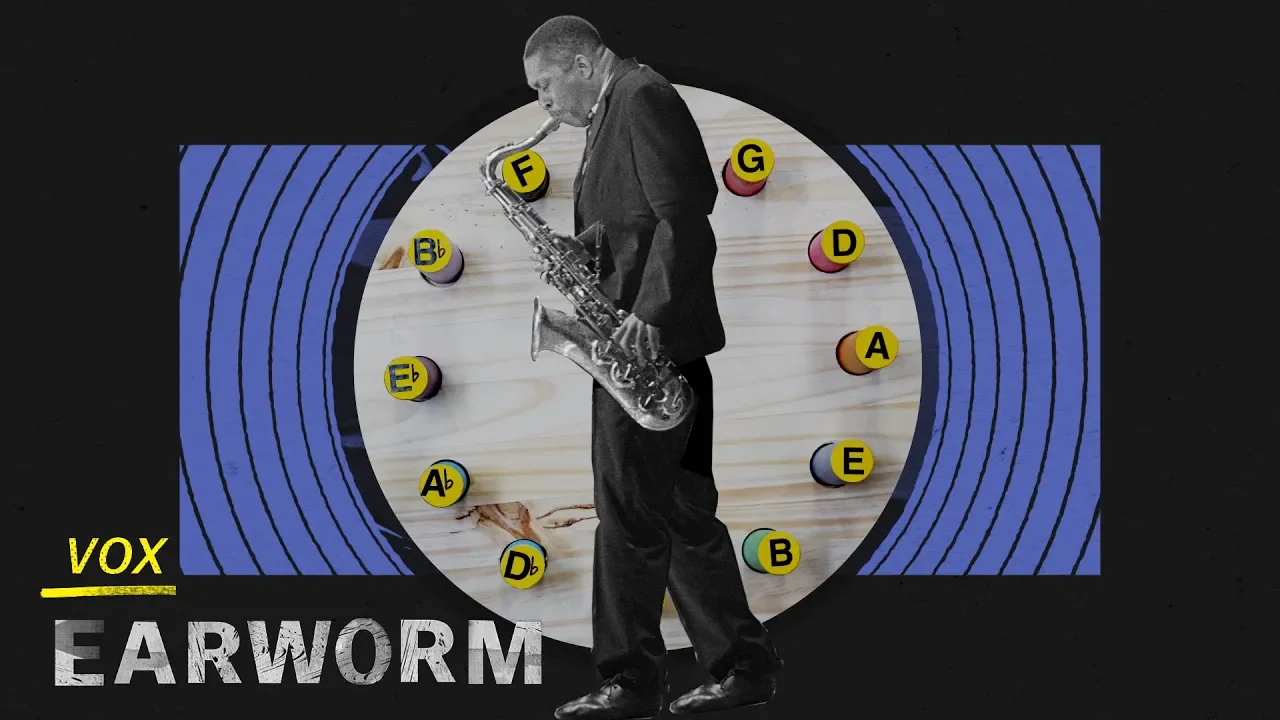
The most feared song in jazz, explained — Vox

Vox

Giant Steps achieves its extreme difficulty by chaining standard resolutions across three equidistant tonal centers at breakneck speed, forcing improvisers to translate between unrelated musical systems every two beats.

AI-assisted summary of The most feared song in jazz, explained — original source. Check the original for full context.

Source published:

Key ideas

  • John Coltrane's 1959 composition 'Giant Steps' introduced the 'Coltrane Changes,' an unconventional harmonic system that rapidly cycles through three keys separated by major thirds at nearly 300 beats per minute. (0:03)
  • The track's legendary difficulty was captured directly on the master recording, where pianist Tommy Flanagan, sight-reading the freshly written charts without prior practice, audibly struggled to navigate the shifting harmonies. (0:03)
  • The composition's harmonic framework maps onto the circle of fifths as an equilateral triangle (B, G, and E♭ major), dividing the 12-tone chromatic scale into three mathematically equal and distant tonal centers. (8:05)
  • Despite its disorienting speed and disparate key centers, 'Giant Steps' remains grounded in Western acoustic physics by linking each modulation with standard V–I and ii–V–I tension-and-resolution cadences. (4:40)

Detailed notes

## Background Published by Vox on YouTube on November 12, 2018, as part of the Earworm series hosted by Estelle Caswell, this video explores the musical complexity behind John Coltrane's 1959 jazz track "Giant Steps." According to the video description, the composition is widely feared as one of the hardest tunes to improvise over due to its extreme tempo and cycling through three keys, prompting a music theory crash course featuring saxophonist Braxton Cook and bassist Adam Neely.

## TL;DR John Coltrane's 1959 recording of "Giant Steps" remains an intimidating rite of passage in jazz, famously immortalized by pianist Tommy Flanagan's struggle to keep up on the unedited master take. The breakdown demonstrates how Coltrane took the traditional ii-V-I jazz cadence—rooted in acoustic overtones and the circle of fifths—and applied it across an equilateral triangle of three distant key centers: B, G, and E♭ major. Moving through chords every two beats at nearly 300 beats per minute, the progression forces soloists to rapidly switch musical "languages" without losing melodic coherence. By anchoring these disorienting harmonic leaps with familiar V-I resolutions, Coltrane created a virtuosic puzzle that continues to serve as the ultimate technical benchmark for improvisers.

## Atmosphere & style The presentation carries an energetic, puzzle-solving momentum that transforms intimidating harmonic theory into an accessible and entertaining musical investigation. Estelle Caswell's curious narration is balanced by Adam Neely's articulate, academic breakdowns and Braxton Cook's empathetic, humorous performer perspective as he reflects on the sheer terror of surviving the changes. Blending clean visual graphics and acoustic demonstrations with accessible pop culture comparisons, the video captures both the dizzying cerebral mechanics of Coltrane’s design and the visceral panic of trying to play it at full speed.

## Bulletin - [00:03](https://www.youtube.com/watch?v=62tIvfP9A2w&t=3s) John Coltrane's 1959 composition 'Giant Steps' introduced the 'Coltrane Changes,' an unconventional harmonic system that rapidly cycles through three keys separated by major thirds at nearly 300 beats per minute. - [00:03](https://www.youtube.com/watch?v=62tIvfP9A2w&t=3s) The track's legendary difficulty was captured directly on the master recording, where pianist Tommy Flanagan, sight-reading the freshly written charts without prior practice, audibly struggled to navigate the shifting harmonies. - [08:05](https://www.youtube.com/watch?v=62tIvfP9A2w&t=485s) The composition's harmonic framework maps onto the circle of fifths as an equilateral triangle (B, G, and E♭ major), dividing the 12-tone chromatic scale into three mathematically equal and distant tonal centers. - [04:40](https://www.youtube.com/watch?v=62tIvfP9A2w&t=280s) Despite its disorienting speed and disparate key centers, 'Giant Steps' remains grounded in Western acoustic physics by linking each modulation with standard V–I and ii–V–I tension-and-resolution cadences.

## Key takeaways - [00:03](https://www.youtube.com/watch?v=62tIvfP9A2w&t=3s) Released in 1959, John Coltrane's 'Giant Steps' established a complex harmonic progression that became an undisputed rite of passage for jazz improvisers. - [00:03](https://www.youtube.com/watch?v=62tIvfP9A2w&t=3s) Tommy Flanagan's halting piano solo on the master take immortalized the song's difficulty, contrasting sharply with Coltrane's fluid re-entry after months of practicing the changes. - [02:35](https://www.youtube.com/watch?v=62tIvfP9A2w&t=155s) The circle of fifths organizes the chromatic scale into intervals of five scale steps, creating an arrangement that feels naturally balanced and resonant across the keyboard. - [02:35](https://www.youtube.com/watch?v=62tIvfP9A2w&t=155s) Acoustic science explains the resonance of the fifth: in the harmonic overtone series, the musical fifth is the third loudest frequency produced when a fundamental note vibrates. - [04:40](https://www.youtube.com/watch?v=62tIvfP9A2w&t=280s) Western harmony relies on the fifth scale degree (dominant) to generate tension that seeks resolution back to the root (tonic) home chord. - [04:40](https://www.youtube.com/watch?v=62tIvfP9A2w&t=280s) The ii–V–I progression functions as the foundational backbone of standard jazz harmony, providing a familiar cycle of tension and release. - [04:40](https://www.youtube.com/watch?v=62tIvfP9A2w&t=280s) Coltrane did not abandon traditional cadences; he retained V–I movements while continually redirecting their target tonal centers across multiple keys. - [05:54](https://www.youtube.com/watch?v=62tIvfP9A2w&t=354s) Harmonic relationships mirror linguistic fluency: neighboring keys share common notes like closely related dialects, while distant keys on the circle share almost no common notes. - [05:54](https://www.youtube.com/watch?v=62tIvfP9A2w&t=354s) Coltrane spent the late 1950s filling notebooks with geometric studies of the circle of fifths, pushing harmonic modulation to mathematical extremes. - [08:05](https://www.youtube.com/watch?v=62tIvfP9A2w&t=485s) The tonal centers of 'Giant Steps'—B major, G major, and E♭ major—divide the octave by major thirds, forming an equilateral triangle of harmonically distant keys. - [08:05](https://www.youtube.com/watch?v=62tIvfP9A2w&t=485s) Soloing over 'Giant Steps' requires rapid cognitive switching, as chords change every two beats at an explosive tempo of nearly 300 beats per minute. - [08:05](https://www.youtube.com/watch?v=62tIvfP9A2w&t=485s) The central musical paradox of the piece is that disorienting modulations are made coherent by continually resolving into the most stable cadence in music.

## Detailed walkthrough ### [00:03](https://www.youtube.com/watch?v=62tIvfP9A2w&t=3s) The Rite of Passage and Tommy Flanagan's Struggle

Released in 1959, John Coltrane’s *Giant Steps* stands as one of the most revered and foundational albums in jazz history, cementing Coltrane as a legendary saxophonist and composer. Its title track introduces a rapid, unconventional set of chord changes that Coltrane not only pioneered on this record but later mapped onto standard jazz repertoire. Known within the jazz community as the "Coltrane Changes," mastering the ability to solo over these shifting harmonies has become an undisputed rite of passage for aspiring musicians. For casual listeners and those without formal music theory training, however, the daunting complexity of the tune is not immediately obvious just from listening. To deconstruct the mechanics behind the composition, host Estelle Caswell enlists two musicians: saxophonist Braxton Cook and bassist and music theorist Adam Neely.

The sheer difficulty of the song is immortalized right on the original master take during the piano solo of Tommy Flanagan. Coltrane had arrived at the studio with the complex charts freshly written and immediately called the tune at a blistering tempo. While Coltrane had spent months developing and practicing the changes, Flanagan was reading through them with little preparation. On the recording, Flanagan's playing visibly hesitates; his solo becomes halting and tentative as he struggles to outline the chords passing by at breakneck speed. As Braxton Cook puts it: “And Tommy Flanagan's just holding on for dear life.” The contrast becomes stark when Flanagan abruptly drops out and Coltrane re-enters, tearing through the changes at lightning speed without a moment's hesitation. Reflecting on Flanagan's unenviable studio predicament, Braxton Cook laughs: “And then it goes down as like one of the most legendary recordings of all time. That’s messed up. I’d want another shot. I’d be like bro, don’t put that recording out.”

- **Release Year**: 1959 - **Personnel Featured in the Discussion**: John Coltrane (tenor saxophone, composer), Tommy Flanagan (piano) - **Key Terminology**: The Coltrane Changes (the specific cyclical chord progression introduced on the track)

---

[02:35](https://www.youtube.com/watch?v=62tIvfP9A2w&t=155s) The Circle of Fifths and the Physics of Overtones

To demystify why even a world-class pianist struggled on the track, the breakdown turns to foundational music theory, starting with the circle of fifths. Often compared to an artist's color wheel, the circle arranges all twelve notes of the chromatic scale not by their step-by-step pitch order, but by intervals of a musical fifth (such as counting five scale degrees from C up to G: C, D, E, F, G). Progressing note-by-note around the entire circle spans the complete keyboard from the lowest C to the highest C, producing a sequence that feels naturally balanced and resonant to the human ear rather than chaotic.

The acoustic foundation for why the fifth sounds so satisfying lies in the physical properties of sound waves and the harmonic overtone series. Whenever a fundamental pitch is sung or played on an instrument, additional acoustic frequencies vibrate simultaneously alongside it. Playing a low C produces the fundamental pitch as the loudest tone, followed closely by a second C an octave higher. The third loudest frequency produced naturally by the vibrating air is a G—an exact musical fifth above the tonic. In a historic 1973 Harvard lecture, conductor and composer Leonard Bernstein demonstrated this phenomenon on a grand piano, striking a deep fundamental note and letting the subtle, ringing overtone of the fifth chime out clearly across the hall. Explaining this acoustic reality, Adam Neely observes: “These overtones are kind of like subliminal tones that you're hearing alongside a regular note.”

```mermaid flowchart TD accTitle: The Harmonic Overtone Series for C accDescr: Diagram showing the fundamental C tone and its primary acoustic overtones.

subgraph OvertoneSeries["Acoustic Resonance of Pitch C"] F0["Fundamental: C (Lowest Pitch)"] O1["Second Loudest: C (1 Octave Above)"] O2["Third Loudest: G (Perfect 5th Above C)"]

F0 --> O1 O1 --> O2 end ```

- **Core Musical Concept**: Circle of Fifths (twelve pitches organized by intervals of five scale steps) - **Acoustic Principle**: Harmonic overtone series (the third most prominent acoustic tone generated by a fundamental note is its fifth) - **Historical Demonstration**: Leonard Bernstein’s 1973 Norton Lectures at Harvard University

---

[04:40](https://www.youtube.com/watch?v=62tIvfP9A2w&t=280s) Tension, Resolution, and the Jazz 2-5-1

Because of the physical pull between the fifth and the root note, Western harmony relies heavily on the fifth scale degree to create dramatic momentum that resolves back to the home chord. In the key of C major, a G major chord acts as the "5" (dominant) chord, creating harmonic expectation. When G resolves into C, it releases that musical pressure. Adam Neely explains this dynamic: “And if you’re thinking about what the G chord represents, it represents kind of tension. You want this to resolve.” That resolution provides an unmistakable feeling of finality and arrival.

This five-to-one (V-I) cadence forms the foundation of jazz's primary engine: the ii-V-I (two-five-one) progression. In C major, this sequence moves from D minor to G dominant, resolving cleanly to C major. As Braxton Cook summarizes: “The 2-5-1 essentially is like the backbone of most jazz music.” Coltrane did not abandon this standard cadence on "Giant Steps"; in fact, the composition is packed with V-I and ii-V-I movements. The critical complication that destabilized Flanagan is that Coltrane did not keep the piece anchored in a single tonal center. Instead, he engineered the piece across three distinct key centers, rapidly cycling between them like a musical M.C. Escher staircase.

- **Fundamental Jazz Cadence**: ii–V–I (e.g., Dm7 – G7 – Cmaj7 in the key of C) - **Harmonic Function**: Tension built on the V (dominant) resolving to stability on the I (tonic) - **Coltrane's Twist**: Retaining standard V-I resolutions while continually changing the target key centers

---

[05:54](https://www.youtube.com/watch?v=62tIvfP9A2w&t=354s) Key Centers as Languages and Coltrane's Triangle

Each step around the circle of fifths represents a possible key center. Adjacent keys share nearly all the same notes; for instance, C major and G major differ by only one sharp (F♯). To explain how the human brain processes these relationships during improvisation, Adam Neely offers a linguistic metaphor: “So the way that I like to think about keys is kind of like languages that you have to learn as a jazz improviser.” In this analogy, closely related keys like C and G are like Spanish and Portuguese—mutually intelligible dialects where musical phrases translate smoothly. Conversely, opposite keys on the circle, like C and B, share almost no notes and resemble Spanish and Japanese; attempting to play lines from one over the other results in immediate, jarring dissonance.

While conventional pop tracks remain firmly anchored inside one key—such as Carly Rae Jepsen’s "Cut to the Feeling" residing entirely in A major—some pop arrangements deploy key changes for heightened emotional impact. A prime example is Beyoncé’s "Love on Top," which transposes its chorus upward four separate times. Each leap moves to a distant position on the circle of fifths, establishing an elevated, unexpected sense of home. Coltrane spent the late 1950s filling notebooks with geometric studies of the circle of fifths, seeking to push harmonic modulation to its mathematical limit. Braxton Cook notes the historic significance of this ambition: “I think what makes Giant Steps really special is that it really just, it just documented an artist doing something super unique, super stylistic, and virtuosic at the same time.”

```mermaid flowchart TD accTitle: Coltrane Changes Key Centers accDescr: The three equidistant key centers of Giant Steps separated by major thirds.

subgraph ColtraneTriangle["The Equilateral Triangle of Giant Steps"] direction TB B["Key Center 1: B Major"] G["Key Center 2: G Major"] Eb["Key Center 3: E♭ Major"]

B -->|"Major 3rd Down"| G G -->|"Major 3rd Down"| Eb Eb -->|"Major 3rd Down"| B end ```

- **Pop Comparison**: Carly Rae Jepsen’s “Cut to the Feeling” (static A major) vs. Beyoncé’s “Love on Top” (four successive modulations around distant keys) - **Linguistic Analogy**: Close keys on the circle = Spanish and Portuguese; distant keys = Spanish and Japanese - **Mathematical Structure**: Dividing the 12-tone octave into three equal parts (major thirds apart: B, G, and E♭)

---

[08:05](https://www.youtube.com/watch?v=62tIvfP9A2w&t=485s) Navigating Giant Steps at 300 BPM

When the opening sixteen bars of "Giant Steps" are plotted against the circle of fifths, the key centers do not move gradually between neighbors. Instead, the progression bounces between three keys—B major, G major, and E♭ major—which sit separated by major thirds (four semitones). Because three major thirds divide the twelve-tone octave into three equal pieces, charting them on the circle forms an equilateral triangle whose points are as geometrically and harmonically distant from one another as possible. Adam Neely illustrates the mental challenge of soloing over this framework: “Giant Steps is kind of like you're shifting from Spanish to Arabic to Japanese very quickly.”

The speed intensifies the difficulty: the chords shift every two beats at an explosive tempo approaching 300 beats per minute. A soloist cannot simply repeat pre-learned patterns or toss out isolated vocabulary words; they must formulate coherent, expressive musical ideas in one tonal system and instantly pivot to the next. Coltrane ties these disparate keys together by prefacing each arrival with a traditional V-I cadence. This anchors the dizzying modulation with familiar harmonic gravity, creating the musical illusion of being perpetually turned upside-down while landing securely on one's feet.

Today, running the Coltrane Changes across all twelve keys has become a universal benchmark of technical mastery for jazz musicians. Neely notes the song's lasting legacy: “Now, generations of jazz musicians are approaching Giant Steps as the sort of pinnacle of improvisation.” Caswell suggests that mastering the changes is akin to being a seasoned cab driver who knows every obscure back alley in the city rather than sticking to a single highway. Concurring with the metaphor, Braxton Cook reflects that while discovering those harmonic detours is thrilling, the heart of the music never loses its connection to human ears: “But ultimately I still think the music boils down to 5 1. People want to come back home.”

- **Tempo**: Nearly 300 beats per minute (BPM) - **Harmonic Rhythm**: Chord changes occurring every two beats - **Tonal Centers**: B major, G major, E♭ major (equilateral triangle on the circle of fifths) - **Core Musical Paradox**: Disorienting, high-speed multi-key modulations glued together by the most comforting cadence in music (V–I)

## Notable quotes > [08:05](https://www.youtube.com/watch?v=62tIvfP9A2w&t=485s) Giant Steps is kind of like you're shifting from Spanish to Arabic to Japanese very quickly. — Adam Neely

> [04:40](https://www.youtube.com/watch?v=62tIvfP9A2w&t=280s) The 2-5-1 essentially is like the backbone of most jazz music. — Braxton Cook

> [08:05](https://www.youtube.com/watch?v=62tIvfP9A2w&t=485s) Generations of jazz musicians are approaching Giant Steps as the sort of pinnacle of improvisation. — Adam Neely

## Mentioned John Coltrane, Tommy Flanagan, Braxton Cook, Adam Neely, Estelle Caswell, Leonard Bernstein, Carly Rae Jepsen, Beyoncé, Giant Steps, Love on Top, Cut to the Feeling, Vox Earworm, Harvard University

## Video description Making sense of John Coltrane's "Giant Steps."

Follow Vox Earworm on Facebook for more: http://www.facebook.com/VoxEarworm

And be sure to check out Earworm's complete first season here: http://bit.ly/2QCwhMH

John Coltrane, one of jazz history’s most revered saxophonists, released “Giant Steps” in 1959. It’s known across the jazz world as one of the most challenging compositions to improvise over for two reasons - it’s fast and it’s in three keys. Braxton Cook and Adam Neely give me a crash course in music theory to help me understand this notoriously difficult song, and I’m bringing you along for the ride. Even if you don’t understand a lick of music theory, you’ll likely walk away with an appreciation for this musical puzzle.

Braxton Cook: https://www.braxtoncook.com/ Adam Neely: https://www.youtube.com/adamneely

Note: The headline for this video has been updated since publishing. Previous headline: Jazz Deconstructed: John Coltrane's "Giant Steps"

Some songs don't just stick in your head, they change the music world forever. Join Estelle Caswell on a musical journey to discover the stories behind your favorite songs.

Vox.com is a news website that helps you cut through the noise and understand what's really driving the events in the headlines. Check out http://www.vox.com.

Watch our full video catalog: http://goo.gl/IZONyE Follow Vox on Facebook: http://goo.gl/U2g06o Or Twitter: http://goo.gl/XFrZ5H

[Source](https://www.youtube.com/watch?v=62tIvfP9A2w)

中文简报

柯川以300BPM循环三个遥远调性考验爵士独奏者 《Giant Steps》以极快速度将标准解决连接在三个等距调性中心之间,迫使即兴演奏者每两拍就在无关的音乐系统间切换,从而达到了极高的难度。 约翰·柯川1959年录制的《Giant Steps》至今仍是爵士乐界令人望而生畏的“成年礼”,钢琴家汤米·弗拉纳根在未经剪辑的母带中难以跟上的表现更是让这首曲子闻名遐迩。这一解析展示了柯川如何将植根于声学泛音和五度圈的传统ii-V-I爵士乐终止式,应用在由B大调、G大调和降E大调这三个遥远调性中心构成的等边三角形上。由于以接近每分钟300拍的速度每两拍变换一次和弦,这一进行迫使独奏者在不丧失旋律连贯性的情况下快速切换音乐“语言”。通过用熟悉的V-I解决来锚定这些令人迷惑的和声跳跃,柯川创造了一个高难度的音乐谜题,至今仍是即兴演奏者的终极技巧基准。 约翰·柯川1959年的作品《Giant Steps》引入了“柯川和弦进行”,这是一种非传统的和声系统,以接近每分钟300拍的速度在三个相差大三度的调之间快速循环。 (0:03) 该曲目传奇般的难度被直接记录在母带录音中,钢琴家汤米·弗拉纳根在没有提前练习的情况下视奏刚写好的乐谱,能明显听出他在应对这些变换的和声时感到吃力。 (0:03) 该作品的和声构架在五度圈上映射为一个等边三角形(B大调、G大调和降E大调),将十二平均律半音阶划分为三个数学上均等且相距遥远的调性中心。 (8:05) 尽管速度令人眼花缭乱且调性中心各不相同,《Giant Steps》仍通过标准的V–I和ii–V–I紧张与解决终止式来连接每一次转调,从而扎根于西方声学物理之中。 (4:40)

Reading summary

John Coltrane’s 1959 recording 'Giant Steps' remains one of the most revered and technically demanding milestones in jazz, largely due to a rapid harmonic framework known as the 'Coltrane Changes.' As deconstructed by musicians Braxton Cook and Adam Neely, the piece destabilizes conventional improvisation by forcing soloists to navigate three harmonically distant key centers at nearly 300 beats per minute. A Studio Rite of Passage (0:03) The technical difficulty of 'Giant Steps' is captured directly on the 1959 master recording during pianist Tommy Flanagan’s solo. While Coltrane had spent months developing and practicing the composition's complex chord progression, Flanagan was handed freshly written charts in the studio and asked to perform them at a blistering tempo. The recording captures Flanagan hesitating and struggling to outline the rapidly passing chords before dropping out, immediately followed by Coltrane executing the progression at full speed. Saxophonist Braxton Cook notes that Flanagan was essentially 'holding on for dear life,' cementing the track as an enduring rite of passage that aspiring jazz musicians must master. Acoustic Physics and the 2-5-1 Cadence (2:35) To explain the internal mechanics of the track, music theorist Adam Neely points to the circle of fifths and the acoustic overtone series. When an instrument sounds a fundamental note, physical overtones vibrate alongside it; the third loudest frequency produced is an interval of a fifth above the root, as demonstrated by Leonard Bernstein in his 1973 Harvard lectures. This acoustic relationship makes the movement from the fifth scale degree to the tonic (V–I) the primary tool for creating musical tension and resolution in Western harmony. In jazz, this resolution is typically expanded into the ii–V–I progression, which Cook characterizes as the backbone of the genre. Coltrane did not discard this fundamental tension-and-release engine in 'Giant Steps'; rather, he retained standard V–I and ii–V–I cadences while continually and unpredictably shifting the destination key. Coltrane’s Triangle and Distant Tonal Centers (5:54) Neely compares keys on the circle of fifths to languages: adjacent keys share most pitches and function like mutually intelligible dialects, whereas opposing keys share almost no notes and sound completely foreign to one another. While standard popular music often remains in a single key or uses simple upward modulations, Coltrane used geometric studies of the circle of fifths to divide the twelve-tone octave into three equidistant parts separated by major thirds: B major, G major, and E♭ major. Plotted visually on the circle of fifths, these three keys form an equilateral triangle. Soloing over these changes requires an improviser to rapidly pivot between entirely disparate tonal systems, a challenge Neely likens to switching spontaneously between Spanish, Arabic, and Japanese. High-Speed Execution and Lasting Influence (8:05) The primary difficulty of 'Giant Steps' lies in its execution speed: the chords shift every two beats at a tempo approaching 300 beats per minute. At this velocity, soloists cannot rely on standard memorized patterns or isolated chord tones; they must instantly formulate coherent musical sentences within one key and immediately translate them into the next. Coltrane anchors these abrupt shifts by preceding each key arrival with a traditional V–I cadence, producing an effect where the listener feels harmonically upended yet repeatedly lands on solid ground. Running the Coltrane Changes across all twelve keys has since become a standard benchmark of technical fluency in jazz education. Neely observes that generations of players continue to treat the piece as a pinnacle test of improvisational skill, demanding complete command over the instrument's harmonic geography. While 'Giant Steps' is widely feared for its mathematical design and extreme tempo, Braxton Cook emphasizes that its lasting power still rests on standard harmonic resolution: despite the rapid detours through distant keys, the music ultimately succeeds because its V–I cadences continually bring the listener back home.

精炼阅读摘要

John Coltrane 于 1959 年推出的作品《Giant Steps》以突破传统的复杂和弦进行与极高演奏速度,创立了被称为“柯川进行”(Coltrane Changes)的爵士乐终极技术试金石;该曲表面上极其反常,实则建立在声学泛音列规律与传统五度解决的基础上,通过对调性空间的数学化分割构建了前所未有的即兴挑战。 录音室的极限试炼与即兴演奏试金石 (0:03) 1959 年发布的同名专辑《Giant Steps》奠定了 John Coltrane 作为爵士乐传奇萨克斯手与作曲家的历史地位,其标题曲引入了被称为“柯川进行”的快速非常规和弦序列。曲目难度不仅在乐理层面上极其苛刻,更直接印证在原始母带录音中:Coltrane 带着刚写好的乐谱进棚并直接以极快速度开跑,而钢琴家 Tommy Flanagan 在几乎没有准备的情况下视奏。萨克斯演奏家 Braxton Cook 指出,录音中 Flanagan 的独奏迟疑且停顿明显,甚至在极速和弦冲击下不得不中途放弃,随后 Coltrane 重新切入并无缝完成高速即兴,使这首曲目成为爵士乐手必经的技术洗礼与试金石。 五度循环与泛音列的物理张力 (2:35) 为了解释该曲调性转换在听觉上的冲击力,音乐理论家 Adam Neely 追溯了五度循环(Circle of Fifths)与声学泛音列的物理本质。西方和声中由 12 个半音构成的五度循环类似于调色盘,其自然和谐感源自声音振动的物理规律:当演奏一个低音 C 时,其自然泛音中最先清晰共振的是高八度的 C,紧随其后的第三大声波频率便是纯五度音 G。正如指挥家 Leonard Bernstein 在 1973 年哈佛大学演讲中所演示,泛音列构成了人类听觉对五度音产生心理共振的声学基础。 正是基于根音与五度音之间的自然拉力,西方和声系统依赖五级(属)到一级(主)的“属到主”(V-I)解决来创造张力与释放感,并构成了爵士乐最核心的基础进行 ii-V-I。Braxton Cook 强调,ii-V-I 是绝大多数爵士乐的骨架;Coltrane 在《Giant Steps》中并未抛弃这一解决模式,反而大量密集成组地使用 V-I 与 ii-V-I,但关键差异在于他并未将这些解决锚定在一个固定调性内,而是让调性目标高速且连续地变动。 语言类比与柯川三角形的几何重构 (5:54) Adam Neely 提出将调性中心比作即兴演奏者掌握的“语言”。在五度循环上相邻的调(如 C 大调与 G 大调)仅相差一个音,犹如西班牙语与葡萄牙语般可以高度互通;而在圆环对立两端的调(如 C 与 B)则共享音极少,犹如西班牙语与日语般难以直接转换。普通流行乐通常保持单调性(如 Carly Rae Jepsen 的《Cut to the Feeling》全程位于 A 大调),即便像 Beyoncé 的《Love on Top》通过连续升调产生情绪推动,也是分段逐步推进。 Coltrane 在 1950 年代末通过笔记本对五度循环进行了大量几何化研究,将 12 个半音组成的八度音程均分为三等份,选取了彼此相隔大三度(4 个半音)的三个调中心:B 大调、G 大调与 E♭ 大调。在五度循环图谱上,这三个互不相邻、共享音极少的远关系调中心构成了一个完美的正三角形,从几何与和声结构上推到了极端。 300 拍高速下的迷宫穿梭与归宿感 (8:05) 在《Giant Steps》前 16 小节的实际演奏中,乐曲以接近每分钟 300 拍(BPM)的极速推进,和弦通常每两拍变换一次。演奏者面临的挑战类似于以极高语速在西班牙语、阿拉伯语与日语之间瞬间无缝切换,既不能机械套用现成音阶套路,也不能仅抛出零散音符,必须在每一个调性建立即兴逻辑后即刻转向下一个远关系调。 Coltrane 维持音乐连贯性的关键在于,他在每一次跳跃至新调中心前均嵌入了传统的 V-I 解决。这种做法如同在令人眩晕的失重变调中施加熟悉的重力锚点,使听众在被调性颠转的同时又能稳妥“着地”。尽管当代爵士乐界普遍将征服这套进行视为即兴技艺的巅峰,Braxton Cook 总结认为,音乐的底色最终依然回归于 5 到 1 的和声引力——听众的耳朵始终渴望回到那个能够确认方位的家。 《Giant Steps》展现了爵士乐在严密数学构思与声学物理法则下达到的高度:Coltrane 并非摧毁传统功能和声,而是通过将经典 V-I 解决投射在极速旋转的三大等距调性中心上,实现了复杂性与听觉重力之间的独特平衡。

Detailed notes — zh

## Background 该视频由 Vox 旗下的音乐科普栏目 Earworm(主持人 Estelle Caswell)于 2018 年 11 月 12 日发布在 YouTube 平台上。视频简介指出,节目邀请了萨克斯风演奏家 Braxton Cook 和音乐科普博主 Adam Neely,共同解析传奇萨克斯风大师约翰·柯川(John Coltrane)于 1959 年推出的名作《Giant Steps》,为完全不懂乐理的观众拆解这首以极高速度和三大调性交错而闻名、堪称爵士乐界最令人望而生畏的音乐谜题。 ## TL;DR 节目围绕约翰·柯川的传奇名作《Giant Steps》及其标志性的“柯川进行”(Coltrane Changes)展开乐理剖析,从原版录音中钢琴手托米·弗拉纳根(Tommy Flanagan)面对突击极速和弦时的艰难独奏切入,生动呈现其恐怖的即兴门槛。两位音乐嘉宾借助五度圈、声学泛音列以及爵士核心“2-5-1”和弦解决机制,阐明了音乐张力与“回家”感的基础。视频通过语言切换的生动类比,揭示了该曲在接近 300 BPM 的狂飙速度下,利用大三度将八度等分并在三个遥远调性间高速切换的几何迷宫本质,展现出柯川如何在混沌和声中融合传统解决之道,将其锻造成当代爵士乐手终极成人礼的过程。 ## Atmosphere & style 全片洋溢着 Vox 标志性的生动视觉化科普质感,节奏明快、充满好奇心且极富感染力。主讲人以通俗视角穿针引线,与两位专业音乐人之间既有严谨硬核的乐理拆解,又充满轻松幽默的行话调侃——特别是谈及录音棚“惨案”时的会心一笑,拉近了高深理论与普通观众的距离。伴随着从基础声学原理层层递进到几何迷宫般的和声解析,观众的情绪从最初对技术难度的敬畏,转变为对柯川超绝构思的震撼与审美共鸣,整场体验宛如解开了一道精妙绝伦的现代艺术谜题。 ## Bulletin - [00:03](https://www.youtube.com/watch?v=62tIvfP9A2w&t=3s) 约翰·柯川(John Coltrane)于 1959 年推出的《Giant Steps》奠定了其传奇地位,其首创的“柯川进行”(Coltrane Changes)成为爵士乐界公认最困难的即兴试金石与成人礼。 - [01:29](https://www.youtube.com/watch?v=62tIvfP9A2w&t=89s) 原版录音中钢琴手托米·弗拉纳根(Tommy Flanagan)面对突袭般的和弦转换与超高速度极度挣扎、即兴停顿,与柯川随后爆发出的疾速萨克斯独奏形成鲜明对比。 - [07:35](https://www.youtube.com/watch?v=62tIvfP9A2w&t=455s) 《Giant Steps》的和声骨架打破传统单一调性,以前所未有的大三度音程将八度三等分,在五度圈上画出等边三角形并串联三个距离极其遥远的调性中心。 - [08:40](https://www.youtube.com/watch?v=62tIvfP9A2w&t=520s) 在接近 300 BPM 的极限速度下和弦每两拍切换一次,乐手如同在三种截然不同的语言间高速组织完整语法,但柯川巧妙依托五级到一级的张力解决化解了潜在的听觉混乱。 ## Key takeaways - [00:03](https://www.youtube.com/watch?v=62tIvfP9A2w&t=3s) 《Giant Steps》是爵士乐史上最具革命性与威慑力的作品,能够在“柯川进行”上自如即兴被视作爵士乐手的关键成人礼。 - [01:29](https://www.youtube.com/watch?v=62tIvfP9A2w&t=89s) 钢琴手托米·弗拉纳根在 1959 年录制现场因和弦极速掠过而表现受挫,这段窘迫的独奏与柯川极具统治力的爆发共同构成了传奇录音。 - [02:35](https://www.youtube.com/watch?v=62tIvfP9A2w&t=155s) 五度圈是西方调性音乐的核心工具,其内在的纯五度关系直接植根于人类声学物理中的自然泛音列(overtone series)。 - [04:40](https://www.youtube.com/watch?v=62tIvfP9A2w&t=280s) 在调性音乐中,五度音与主和弦之间天然存在张力与解决的关系,给听觉带来从期待释然回归“家”的终局感。 - [04:40](https://www.youtube.com/watch?v=62tIvfP9A2w&t=280s) 以二级、五级到一级(ii - V - I)推进的和声走向是绝大多数传统爵士乐的核心脊梁骨。 - [05:54](https://www.youtube.com/watch?v=62tIvfP9A2w&t=354s) 调性中心可以类比为不同的语言:五度圈上邻近的调如同语法互通的语族,而距离遥远的调性则如同完全不相关的异国语言。 - [05:54](https://www.youtube.com/watch?v=62tIvfP9A2w&t=354s) 流行音乐通常立足于单一调性以维持稳定,但在关键高潮处(如碧昂丝《Love on Top》)跨越五度圈大幅转调能激发强烈的情感兴奋与新重心的建立。 - [07:35](https://www.youtube.com/watch?v=62tIvfP9A2w&t=455s) 柯川通过深入的数理探究,将《Giant Steps》前 16 小节的三个调性中心以大三度等分八度,在五度圈上构筑出极致对立的等边三角形几何结构。 - [07:35](https://www.youtube.com/watch?v=62tIvfP9A2w&t=455s) 在接近 300 BPM 的疾风骤雨下,乐手不仅要承受两拍一换的调性跳跃,更需要在不同调性语言中无缝构建符合逻辑的旋律句子。 - [08:40](https://www.youtube.com/watch?v=62tIvfP9A2w&t=520s) 柯川用传统的“五到一”(V - I)和弦解决作为粘合剂,将混沌跳跃的三重调性拉回秩序,使听众在惊奇中持续重温回归家的熟悉感。 - [08:40](https://www.youtube.com/watch?v=62tIvfP9A2w&t=520s) 当代爵士乐界已将《Giant Steps》推崇为即兴演奏的最高巅峰,甚至要求乐手能在全部 12 个调性中自由掌控该曲。 ## Detailed walkthrough ### [00:03](https://www.youtube.com/watch?v=62tIvfP9A2w&t=3s) 爵士乐界最令人敬畏与恐惧的作品 《Giant Steps》(巨人的脚步)由约翰·柯川(John Coltrane)于 1959 年推出,被公认为史上最重要的爵士乐专辑之一。它不仅奠定了柯川在爵士萨克斯风演奏家与作曲家中不可动摇的传奇地位,更诞生了爵士历史上最受推崇、同时也最令人闻风丧胆的经典同名曲目。这首歌之所以如此标志性,从开头的短短几秒钟便能听出端倪。柯川为这首曲子编写了极为独特的和弦进行,随后更是将其运用到传统的爵士标准曲(jazz standards)之中。 这些和弦进行后来被称为“柯川进行”(Coltrane Changes)。能够在这套和弦之上完成即兴演奏,被爵士乐界视为一种不可或缺的成人礼(rite of passage)。然而,对于完全不懂乐理的普通听众来说,很难直观理解它到底神圣在何处。为了解开这个音乐谜题,主讲人邀请了两位音乐人来进行乐理解读:萨克斯风演奏家布拉克斯顿·库克(Braxton Cook)以及贝斯手兼音乐科普视频博主亚当·尼利(Adam Neely)。 - **作品地位**:1959 年发行的《Giant Steps》是柯川奠定传奇地位的核心里程碑。 - **柯川进行(Coltrane Changes)**:柯川首创的和弦替代体系,彻底革新了爵士和声语言。 --- ### [01:29](https://www.youtube.com/watch?v=62tIvfP9A2w&t=89s) 录音棚里的“惨案”:托米·弗拉纳根的艰难独奏 在《Giant Steps》的原版录音中,有一个极具戏剧性的瞬间直观体现了这首曲子的难度门槛——那就是专辑钢琴手托米·弗拉纳根(Tommy Flanagan)开始即兴独奏(solo)的段落。关于这次录音有一段广为人知的轶事:柯川带着刚写好的谱子走进录音棚,准备就绪后直接喊出了一个令人窒息的超快速度。 当弗拉纳根切入独奏时,他在面对飞速掠过的和弦转换时显得极为被动。Adam Neely 评价道:“If you hear on the recording, Tommy Flanagan just cannot handle the chord progressions as they're going by. His improvisation is very halted.”(如果你听录音就会发现,托米·弗拉纳根完全招架不住迎面飞驰而来的和弦进行。他的即兴显得非常犹疑停顿。)Braxton Cook 则形象地描述当时的窘迫情境:“And Tommy Flanagan's just holding on for dear life.”(托米·弗拉纳根当时简直就是在拼命苟延残喘。)当弗拉纳根艰难地结束独奏后,柯川接棒以雷霆万钧之势与极速展开萨克斯风独奏,两者对比极为惨烈。Braxton Cook 笑着调侃:“And then it goes down as like one of the most legendary recordings of all time. That’s messed up. I’d want another shot. I’d be like bro, don’t put that recording out.”(然后这版录音就成了史上最传奇的经典录音之一。这太惨了。换成我肯定想再录一次,我会说:兄弟,千万别把这段发出去。) ```mermaid flowchart LR accTitle: Tommy Flanagan Solo Contrast accDescr: 展现托米·弗拉纳根停滞艰难的独奏与约翰·柯川闪电般极速独奏的强烈对比 subgraph SoloDynamics["独奏段落对比"] direction LR TF["托米·弗拉纳根 (Tommy Flanagan)<br>和弦极速掠过 / 即兴磕绊停滞<br>拼命挣扎求生"] JC["约翰·柯川 (John Coltrane)<br>瞬间无缝接盘 / 闪电般爆发<br>展示绝对的统治力与技巧"] TF -->|"独奏结束立即交接"| JC end ``` --- ### [02:35](https://www.youtube.com/watch?v=62tIvfP9A2w&t=155s) 五度圈与声学基石:为什么五度音如此特殊 要理解为何即便是顶尖钢琴家也会在这些和弦前受挫,首先必须理解西方乐理的基础工具——五度圈(Circle of Fifths)。五度圈好比音乐领域的“色轮”,它囊括了西方音乐音阶中的全部 12 个音,但排列顺序并非按琴键线性排布,而是由一个核心音程——五度(Fifth)组织而成。 如果以 C 大调音阶为例,从 C 往上数五度依次是 C、D、E、F、G(1、2、3、4、5),从 C 到 G 是五度,从 G 到 D 同样是五度。沿着五度圈顺次弹奏,音乐家能从键盘最低端的 C 一路向上跨越并最终回到最高端的 C。这种听感远比机械地按半音阶顺次弹奏全部音符要和谐得多。 之所以人类的耳朵本能地偏爱五度音,根本原因在于声音的声学泛音列(overtone series)。Adam Neely 解释道:“Whenever we're hearing people play music, we're hearing these other notes, these overtones alongside the pitches that they're playing.”(无论何时我们在听人演奏音乐,除了他们演奏的基础音高之外,我们同时都在听到其他音,也就是伴随而来的泛音。)当在钢琴上弹下一个低音 C 时,在空气中传播的第一响亮和第二响亮的音都是 C(只是高了一个八度);而紧随其后的第三响亮的声音正是 G,它恰好是 C 上方的纯五度。 - **伯恩斯坦的现场演示**:1973 年,莱昂纳德·伯恩斯坦(Leonard Bernstein)在哈佛大学的讲座中,曾在三角钢琴上现场展示了这一自然声学现象——在重击琴键后让观众仔细聆听余音中浮现出的明晰泛音。 - **泛音的作用**:Adam Neely 指出:“These overtones are kind of like subliminal tones that you're hearing alongside a regular note.”(这些泛音就像是你伴随常规音符听到的潜意识音调。)它们无处不在,构成了西方调性音乐的基础。 --- ### [04:40](https://www.youtube.com/watch?v=62tIvfP9A2w&t=280s) 调性张力与爵士乐的脊梁骨:2-5-1 和弦进行 在西方音乐体系中,绝大多数和声逻辑都依托于五度音与“主和弦”(home chord)之间强大的引力牵引。在 C 大调的语境下,五级和弦 G 会自然地解决(resolve)回到主和弦 C。关于这种张力机制,Adam Neely 阐述道:“In the case of the key of C major we have the G chord resolving to C. And if you’re thinking about what the G chord represents, it represents kind of tension. You want this to resolve.”(在 C 大调的情形中,我们有 G 和弦解决到 C 和弦。如果你思考 G 和弦代表什么,它代表着一种张力,你迫切希望它得到解决。)当最终完成解决时,Adam Neely 补充说:“It creates this feeling of finality, it creates a feeling of home.”(它营造出一种终局感,带来一种回到了‘家’的感觉。) 这种由 5 级引向 1 级的核心关系(V - I)贯穿了无数经典和弦进行,其中演化出的“二-五-一”(ii - V - I)更构成了爵士乐的核心支柱。Braxton Cook 直言:“The 2-5-1 essentially is like the backbone of most jazz music.”(2-5-1 从本质上说就是绝大部分爵士音乐的脊梁骨。)即便以最质朴的形式弹奏,2-5-1 也能散发出浓郁纯正的爵士味。既然柯川进行中充斥着爵士乐手烂熟于心的 2-5-1,为何弗拉纳根依然措手不及?核心原因在于这首曲子绝非停留在单一调性中,它同时穿梭于三个调性之中,构成了一幅音乐层面的“埃舍尔(M.C. Escher)不可能空间画作”。 ```mermaid flowchart TD accTitle: Tension and Resolution of 2-5-1 accDescr: 展示爵士乐核心2-5-1进行的张力建立与解决过程 subgraph Cadence["爵士乐脊梁:2-5-1 解决结构"] direction TB Two["二级和弦 (ii)<br>准备阶段 / 铺垫张力"] Five["五级属和弦 (V)<br>极强张力 / 渴望解决"] One["一级主和弦 (I)<br>终局感 / 释然回'家'"] Two --> Five Five -->|"核心 5-1 解决"| One end ``` --- ### [05:54](https://www.youtube.com/watch?v=62tIvfP9A2w&t=354s) 语言隐喻与流行乐中的转调对比 在五度圈上,每一个刻度代表一个可能的调性中心(key center)。两个调在五度圈上的距离越近,它们共享的音符就越多。例如 C 大调与 G 大调仅仅相差一个升号音(F#)。为了让非专业人士理解调性距离,Adam Neely 提出了一个贴切的语言学类比:Adam Neely 说明道:“So the way that I like to think about keys is kind of like languages that you have to learn as a jazz improviser. You have to be able to be fluent in a key.”(我习惯把各个调性看作是爵士即兴乐手必须掌握的语言。你必须能够熟练流利地使用某种调性进行表达。)在这一设定下,C 大调就像西班牙语,而与其邻近的 G 大调就像葡萄牙语,两者语法与词汇高度互通;但如果遇到圈上相距甚远的调性(如 B 大调),就像完全不相干的日语,缺乏共通点,将两者的音阶叠加弹奏就会产生极为刺耳的不协和感。 绝大部分流行音乐都以单一调性中心为主轴。例如卡莉·蕾·吉普森(Carly Rae Jepsen)的《Cut to the Feeling》整首曲子通篇构建在 A 大调之上。然而,也有部分曲目会为了戏剧张力而大幅度转调(modulate),最具代表性的例子莫过于碧昂丝(Beyoncé)的《Love on Top》。Adam Neely 解析道:“Part of the reason why it's really exciting is because you're going to a place that's really distant on the circle of fifths. And you’re creating a new sense of home.”(它之所以令人热血沸腾,部分原因在于你直接跳跃到了五度圈上非常遥远的位置,从而建立起了一个全新的‘家’的归宿感。)《Love on Top》在尾声的高潮段落中,每重复一次副歌便经历一次大幅转调,五度圈上的路径随之显现出规整的几何轨迹。 - **单一调性范例**:流行歌曲通常全曲定位于一个调中心,保持听觉稳定。 - **高戏剧性转调**:通过跳跃至五度圈远端调性,在听觉上创造突如其来的兴奋感与全新的重心。 --- ### [07:35](https://www.youtube.com/watch?v=62tIvfP9A2w&t=455s) 三调交错与 300 BPM:柯川进行的几何迷宫 在 1950 年代末至 1960 年代初,约翰·柯川对五度圈进行了极为深入的数理探究,渴望将爵士和声推向极限,甚至留下了亲手绘制的五度圈几何手稿。Braxton Cook 评价这首杰作时指出:“I think what makes Giant Steps really special is that it really just, it just documented an artist doing something super unique, super stylistic, and virtuosic at the same time.”(我认为《Giant Steps》之所以极其特别,是因为它真实记录了一位艺术家在完成一件既极度独特、极具风格化,同时又兼备超绝技巧的大师之作。) 若将《Giant Steps》前 16 小节的调中心变化投影在五度圈上,会浮现出一个极其惊艳的等边三角形。曲子包含的三个调性中心彼此由大三度(Major Thirds)音程均等分割,将一个八度三等分。在五度圈的几何分布中,这三个调性相互处在彼此距离最遥远的极限位置。 为了生动描绘即兴演奏的恐怖难度,Adam Neely 拓展了此前的语言类比:Adam Neely 形容道:“Giant Steps is kind of like you're shifting from Spanish to Arabic to Japanese very quickly.”(《Giant Steps》就像是你必须在西班牙语、阿拉伯语和日语之间以极高的速度无缝切换。)更致命的是,在这首速度接近 300 BPM(每分钟 300 拍)的疾风骤雨般的曲子里,和弦几乎每两拍就会切换一次。Adam Neely 进一步强调:“It's not only just like you're saying one word per language, you're having to construct a sentence out of the language.”(这不仅仅是让你用每种语言吐出一个单词那么简单,你必须在每种语言里完整构建出一个合乎语法的句子。) ```mermaid flowchart TD accTitle: Giant Steps Coltrane Matrix accDescr: 展示巨人的脚步中三个调性以大三度等分八度并在五度圈上形成极限遥远三角形的结构 subgraph CircleGeometry["五度圈上的等边三角形 (大三度均分)"] direction TB KeyA["调性中心 A<br>(类比:西班牙语)"] KeyB["调性中心 B<br>(类比:阿拉伯语)"] KeyC["调性中心 C<br>(类比:日语)"] KeyA ---|"大三度间隔"| KeyB KeyB ---|"大三度间隔"| KeyC KeyC ---|"大三度间隔"| KeyA end ``` --- ### [08:40](https://www.youtube.com/watch?v=62tIvfP9A2w&t=520s) 混沌中的归途:当代即兴演奏的终极试金石 尽管柯川将三个相隔千里的调性强行压缩在同一首作品里,但他化解混乱的粘合剂,依然是爵士乐中最普遍的“五-一”(V - I)解决机制。Adam Neely 阐明了其核心手法:“What he's doing is taking some of the conventional ideas of tonal harmony, the conventional relationships between the five chord and the one chord and applying it to this very chaotic circling, sort of chord progression that is the Coltrane Changes.”(他所做的事情,是提取了调性传统和声中关于五级和弦与一级和弦的最常规概念,并将其应用到了这套如同混沌旋涡般盘旋的柯川进行当中。)这使得听众在经历不断被抛入未知维度的惊奇感的同时,又能隐约感到某种熟悉的安稳,仿佛在全新视角下不断重返“家园”。 回到 1959 年的录音室现场,当托米·弗拉纳根拿到乐谱时,他不仅需要按部就班地弹奏这套复杂的和弦,更需要在这种极限速度下即兴编织旋律线,其措手不及可想而知。时至今日,这首曲子已经演变成为衡量当代爵士乐手基本功的终极标尺。Adam Neely 指出:“It is a bit of a rite of passage to say that you not only can improvise on Giant Steps, but you can also improvise in all 12 keys.”(能够宣布自己不仅可以在《Giant Steps》上自由即兴,而且能在全部 12 个调上随意即兴演奏这首歌,这已经成了一种爵士成人礼。)Adam Neely 更是直言:“Now, generations of jazz musicians are approaching Giant Steps as the sort of pinnacle of improvisation.”(如今,一代又一代的爵士音乐家都将《Giant Steps》视为即兴演奏的最高巅峰。) 主讲人提出了另一个通俗的生活比喻:演奏这首歌就像一名出租车司机,不是只认得一条直达的干道,而是必须在脑海中熟记每一条背街小巷与岔道,以备不时之需。Braxton Cook 对此高度认同,并道出了乐理背后的情感本质:“It's essentially like that. You still get to the same location, but it’s really interesting and you might see some really cool stuff in the neighborhood. But ultimately I still think the music boils down to 5 1. People want to come back home.”(本质上就是如此。你最终还是抵达了同一个目的地,但这趟旅途非常有趣,你会在沿途街区看到很棒的风景。但归根结底,我认为音乐万变不离其宗依然归结为 5 到 1。人们内心始终渴望能够回到家。) ## Notable quotes > [04:40](https://www.youtube.com/watch?v=62tIvfP9A2w&t=280s) The 2-5-1 essentially is like the backbone of most jazz music. — Braxton Cook > [08:40](https://www.youtube.com/watch?v=62tIvfP9A2w&t=520s) Now, generations of jazz musicians are approaching Giant Steps as the sort of pinnacle of improvisation. — Adam Neely > [07:35](https://www.youtube.com/watch?v=62tIvfP9A2w&t=455s) Giant Steps is kind of like you're shifting from Spanish to Arabic to Japanese very quickly. — Adam Neely > [08:40](https://www.youtube.com/watch?v=62tIvfP9A2w&t=520s) It is a bit of a rite of passage to say that you not only can improvise on Giant Steps, but you can also improvise in all 12 keys. — Adam Neely > [07:35](https://www.youtube.com/watch?v=62tIvfP9A2w&t=455s) I think what makes Giant Steps really special is that it really just, it just documented an artist doing something super unique, super stylistic, and virtuosic at the same time. — Braxton Cook > [08:40](https://www.youtube.com/watch?v=62tIvfP9A2w&t=520s) But ultimately I still think the music boils down to 5 1. People want to come back home. — Braxton Cook ## Mentioned John Coltrane, Giant Steps, Braxton Cook, Adam Neely, Tommy Flanagan, Leonard Bernstein, Carly Rae Jepsen, Cut to the Feeling, Beyoncé, Love on Top, M.C. Escher, Vox, Estelle Caswell ## Video description Making sense of John Coltrane's "Giant Steps." Follow Vox Earworm on Facebook for more: http://www.facebook.com/VoxEarworm And be sure to check out Earworm's complete first season here: http://bit.ly/2QCwhMH John Coltrane, one of jazz history’s most revered saxophonists, released “Giant Steps” in 1959. It’s known across the jazz world as one of the most challenging compositions to improvise over for two reasons - it’s fast and it’s in three keys. Braxton Cook and Adam Neely give me a crash course in music theory to help me understand this notoriously difficult song, and I’m bringing you along for the ride. Even if you don’t understand a lick of music theory, you’ll likely walk away with an appreciation for this musical puzzle. Braxton Cook: https://www.braxtoncook.com/ Adam Neely: https://www.youtube.com/adamneely Note: The headline for this video has been updated since publishing. Previous headline: Jazz Deconstructed: John Coltrane's "Giant Steps" Some songs don't just stick in your head, they change the music world forever. Join Estelle Caswell on a musical journey to discover the stories behind your favorite songs. Vox.com is a news website that helps you cut through the noise and understand what's really driving the events in the headlines. Check out http://www.vox.com. Watch our full video catalog: http://goo.gl/IZONyE Follow Vox on Facebook: http://goo.gl/U2g06o Or Twitter: http://goo.gl/XFrZ5H [Source](https://www.youtube.com/watch?v=62tIvfP9A2w)

Source quotes

[4:40] Braxton Cook: The 2-5-1 essentially is like the backbone of most jazz music. [8:40] Adam Neely: Now, generations of jazz musicians are approaching Giant Steps as the sort of pinnacle of improvisation. [7:35] Adam Neely: Giant Steps is kind of like you're shifting from Spanish to Arabic to Japanese very quickly. [8:40] Adam Neely: It is a bit of a rite of passage to say that you not only can improvise on Giant Steps, but you can also improvise in all 12 keys. [7:35] Braxton Cook: I think what makes Giant Steps really special is that it really just, it just documented an artist doing something super unique, super stylistic, and virtuosic at the same time. [8:40] Braxton Cook: But ultimately I still think the music boils down to 5 1. People want to come back home.

Source quotes

[8:05] Adam Neely: Giant Steps is kind of like you're shifting from Spanish to Arabic to Japanese very quickly. [4:40] Braxton Cook: The 2-5-1 essentially is like the backbone of most jazz music. [8:05] Adam Neely: Generations of jazz musicians are approaching Giant Steps as the sort of pinnacle of improvisation.

Original transcript

[0:03] This is John Coltrane’s Giant Steps. It’s considered one of the most important [0:08] jazz albums of all time, it cemented John Coltrane as a legend among [0:12] jazz saxophonists and composers, and it’s home to one of the most one of [0:16] the most revered and feared compositions in jazz history. [0:20] The reason why the album's title track is so iconic can be heard in its first few seconds. [0:40] Coltrane wrote these unique chord changes for Giant Steps, and later went on to use [0:45] them over traditional jazz standards. [0:48] These chords [0:49] came to be known as the Coltrane Changes -- and improvising over them is considered a rite [0:54] of passage for jazz musicians. [0:57] But, if you don’t understand a lick of music theory like me, it’s really hard to see [1:01] how this [1:03] is so legendary. [1:04] Lucky for me, I know two people that can explain why… [1:08] Braxton Cook [1:09] Braxton: Okay you caught me off guard there! [1:12] And Adam Neely [1:13] Adam: Should I get into the, like, technical jargony stuff? [1:16] Let’s cut to the logo first. [1:29] So there’s a moment in the Giant Steps recording that really illustrates just how demanding [1:33] this song is. [1:35] It happens when Tommy Flanagan, the pianist on the record, starts his solo. [1:47] Braxton: The story goes that John Coltrane brought in the music, he shows up ready to [1:52] go and then calls he this really fast tempo. [1:57] Adam: If you hear on the recording, Tommy Flanagan just cannot handle [2:01] the chord progressions as they're going by. His [2:03] improvisation is very halted. [2:09] Braxton: And Tommy Flannagan's just holding on for dear life. [2:12] It really becomes apparent how much he struggled, when you hear Coltrane take off at lightning [2:17] speed the second Flanagan stops. [2:28] Braxton: And then it goes down as like one of the most legendary recordings of all time. That’s [2:31] messed up. I’d want another shot. I’d be like bro, don’t put that recording out. [2:35] To understand why this was so difficult for even a highly trained pianist, we need to know [2:40] three basic concepts and it all starts with this: the circle of fifths - it’s kind of like [2:47] a color wheel for music. [2:49] Braxton: Okay, awesome, you glued this stuff and everything. This is fire. [2:52] All twelve notes of the western musical scale are on it, [2:55] but you might notice they’re a little mixed up [2:58] That’s because they’re organized by a very special number in music... [3:02] a fifth. [3:04] What’s a fifth? [3:05] Braxton: It's like if you're in the C-major scale, [3:06] you go C, D, E, F, G - right? 1,2,3,4,5. [3:11] From C to G is five notes, from G to D is five notes and… well you get the idea. [3:18] If you play through the circle you’ll traverse the entire keyboard starting on the lowest [3:22] C [3:27] and ending up on the highest C. [3:29] It sounds much more harmonious than just playing all the notes in order. [3:35] That’s because... [3:36] Adam: The fifth is a sound that our ears just like. [3:41] Uh... please explain. [3:42] Adam: Whenever we're hearing anything, whenever we're hearing people sing... [3:45] Adam: Whenever we're hearing people play music, we're hearing these other notes, these overtones [3:50] alongside the pitches that they're playing. [3:52] When I play this C, the first two loudest tones that are pushed through the air are both C, [3:59] one is just an octave higher. [4:01] But other tones travel to our ears as well. [4:05] The third loudest is a G, which happens to be a fifth above C. [4:10] In 1973, Leonard Bernstein demonstrated this phenomenon live on a grand piano at Harvard. [4:17] Listen closely after he hits that note. [4:22] Bernstein: What do we hear now? That G, right? A new tone. [4:26] Again, clear as a bell. You want to hear it again? [4:31] Adam: These overtones are kind of like subliminal tones that you're hearing alongside a regular note. [4:37] Adam: And you're hearing these overtones everywhere. [4:40] A lot of western music is based on the power [4:43] of the fifth, especially how it relates so strongly back to its home chord. [4:48] Adam: In the case of the key of C major we have the G chord resolving to C. [4:53] Adam: And if you’re thinking about what the G chord represents, it represents kind [4:56] of tension. You want this to resolve. [5:00] When it finally does resolve, [5:02] Adam: it creates this feeling of finality, it creates a feeling of home. [5:06] That five to one relationship is present in a lot of chord progressions, including the [5:10] most common one found in jazz. [5:13] The 2-5-1 [5:15] Braxton:] The 2-5-1 essentially is like the backbone of most jazz music. [5:20] Even in its most basic form it sounds super jazzy. [5:29] So it comes as no surprise the Coltrane Changes are just chock full of them. [5:34] Which might raise the question: Why was Tommy Flanagan caught off guard when he had [5:39] to improvise over them? [5:41] Well, the Coltrane Changes aren’t in one key, they’re in three keys. [5:47] They’re basically a musical MC Escher painting. [5:54] So each one of these rungs on the circle of fifths represents every possible key center. [6:00] The closer a key is to another, the more notes they have in common. [6:04] Like the C major and G major scale - they’re only different by one note, an F#. [6:10] Okay, we need an analogy to describe this. [6:12] Adam: So the way that I like to think about keys [6:15] is kind of like languages that you have to learn as a jazz improviser. [6:18] You have to be able to be fluent in a key. [6:20] Like maybe C is Spanish and G is Portuguese. [6:24] Those are very similar languages. [6:28] Adam: If that's the case, like okay maybe C is Spanish and you have a distantly [6:32] related language like maybe Japanese. [6:35] Let’s say Japanese is B. There’s not much in common with those two languages. And it’s [6:40] the same with keys. If you play those scales over each other... [6:45] It sounds a lot more discordant. [6:47] Adam: For the most part, most pop music is based around one of these key centers. [6:52] For instance, Carly Rae Jepsen's “Cut to the Feeling” is in A major. [7:01] But some songs modulate to another key for dramatic effect. [7:05] Like Beyonce’s “Love on Top.” [7:14] Adam: Part of the reason why it's really exciting is because you're going [7:16] to a place that's really distant [7:18] on the circle of fifths. [7:19] And you’re creating a new sense of home. Which is exactly what “Love on Top” does. [7:25] But, it doesn’t just happen once, it happens every time she repeats the chorus towards the [7:29] end of the song. [7:30] Adam: And when you chart that sort of thing along the circle of fifths, patterns emerge. [7:35] These types of patterns are what fascinated John Coltrane in the late 1950s and '60s as [7:41] he was trying to push jazz harmony to its limits. [7:45] This is his study of the circle of fifths. [7:48] Braxton: I think what makes Giant Steps really [7:49] special is that it really just, it just documented an artist doing something super unique, [7:55] super stylistic, and virtuosic at the same time. [7:59] Here’s the first 16 bars of Giant Steps again, with just the key changes highlighted. [8:05] If you chart those changes on the circle of fifths it comes out as a pretty dramatic pattern. [8:10] That’s because these keys are separated by major thirds, which divide an octave into [8:16] 3 equal parts. [8:18] On the circle of fifths these three keys are as far apart as possible from each other. [8:22] Adam: Giant Steps is kind of like you're shifting from Spanish to Arabic to Japanese [8:28] very quickly. [8:29] By quickly, he means like every two beats in a song that’s nearly 300 bpm. [8:33] Adam: It's not only just like you're saying one word per language, you're having to construct [8:38] a sentence out of the language. [8:40] And how does Coltrane make those disparate languages connect? With one of the most ubiquitous [8:45] phrases in jazz, the five one. [8:49] Adam: What he's doing [8:49] is taking some of the conventional ideas of tonal harmony, [8:53] the conventional relationships between the five chord and the one chord and [8:57] applying it to this very chaotic circling, [9:00] sort of chord progression that is the Coltrane Changes. [9:03] Adam: So if we were all in the same key, it would sound like this. [9:10] Adam: But because we're going from key center to key center, it sounds very different. [9:19] This is why the Coltrane Changes are like this picture here. [9:23] Even though you’re seeing things from a completely new perspective you still feel [9:27] like you’ve made it home somehow. [9:30] When Tommy Flanagan saw the charts for Giant Steps he knew he wasn’t going to just have [9:34] to play this chord progression - he was going to have to improvise over it. [9:38] very quickly. [9:39] Braxton: That was probably so funny, he was probably like, "What?!" [9:41] Adam: It is a bit of a rite of passage to say that you not only can improvise on Giant Steps, [9:46] but you can also improvise in all 12 keys. [9:50] Adam: Now, generations of jazz musicians are approaching Giant Steps [9:52] as the sort of pinnacle of improvisation. [9:56] Wait. I think I’ve got an analogy for this. It’s like you’re a cab driver and instead [10:02] of only knowing one way to get somewhere, you have to know every back alley and side [10:06] street just in case. [10:09] Braxton: It's essentially like that. You still get to the same location, [10:11] but it’s really interesting and you might see [10:13] some really cool stuff in the neighborhood. [10:15] Braxton: But ultimately I still think the music boils down to 5 1. People want to come [10:20] back home. [10:28] Thanks so much for watching the first of three videos [10:31] I'm going to release in the next couple of weeks on Jazz. [10:33] I want to give a special thanks to Braxton Cook and Adam Neely. [10:37] Between the time that I interviewed Braxton and now, he's released a full album. [10:41] Please check it out below and of course [10:44] special, special thanks to Adam Neely. [10:45] You can check out his YouTube channel below. [10:48] Until next time!