Power Grids Rely on Pumped Hydro to Counter Solar Duck Curves
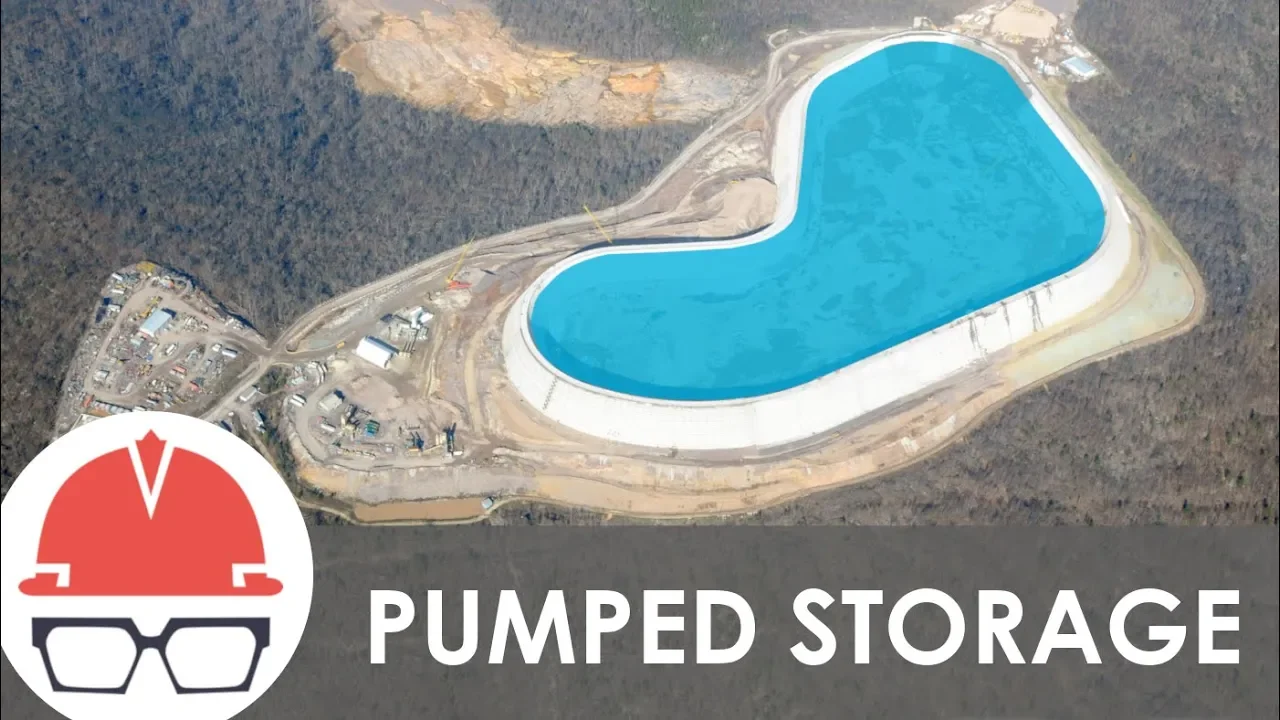
World's Largest Batteries - (Pumped Storage) — Practical Engineering

Practical Engineering

While pumped storage acts as a net energy consumer with poor volumetric density, utility-scale operations achieve the 70% round-trip efficiency needed to profitably absorb renewable supply mismatches.

AI-assisted summary of World's Largest Batteries - (Pumped Storage) — original source. Check the original for full context.

Source published:

Key ideas

  • Electrical grids require real-time balance between generation and demand, a challenge exacerbated by the 'duck curve' where solar output plummets just as evening residential demand spikes. (0:00)
  • Pumped storage hydroelectricity (PSH) constitutes the vast majority of deployed grid-scale energy storage, functioning as a gravitational battery between two elevation-separated reservoirs. (3:03)
  • Elevated water suffers from exceptionally low volumetric energy density compared to chemical batteries, requiring enormous geographic footprints and hydraulic head to store practical amounts of energy. (4:50)
  • While small-scale physical models suffer severe thermodynamic penalties, utility-scale pumped hydro plants achieve round-trip efficiencies of 70% or higher, profiting via electricity price arbitrage despite being net energy consumers. (6:19)

Detailed notes

## Background Published on YouTube by Grady Hillhouse on the channel Practical Engineering on October 31, 2019, this video explores grid-scale energy storage. The show notes highlight that storing electricity on demand is a major engineering hurdle, explaining that the vast majority of our current grid-scale capacity relies on pumped storage hydroelectricity.

## TL;DR Electrical grids require real-time balance between supply and demand, a challenge magnified by the intermittent 'duck curve' created by solar power and fluctuating consumer habits. To prevent reliance on inefficient fossil-fueled peaking plants, grid operators use pumped storage hydroelectricity, treating gravitational potential energy like a mechanical spring to bank cheap off-peak power and dispatch it during high-demand peaks. Through a desktop demonstration involving plastic buckets on a stepladder, an aquarium pump, and a micro-turbine, Grady contrasts water's extremely low volumetric energy density and micro-scale efficiency losses against utility-scale facilities. At industrial scale, pumped hydro overcomes these physical constraints to achieve round-trip efficiencies of 70% or more, serving as the world's most dominant battery technology.

## Atmosphere & style The presentation is analytical, approachable, and classic Practical Engineering—grounded in pragmatic curiosity and clear, visual analogies. Grady delivers his explanations with calm, measured authority, balancing macro-level grid diagrams with the charming DIY aesthetic of a desktop stepladder experiment. The tone transitions seamlessly from high-level infrastructure realities to playful engineering self-deprecation as his miniature turbine yields comically microscopic amounts of power, making complex fluid dynamics and thermodynamics both tactile and intuitive.

## Bulletin - [00:00](https://www.youtube.com/watch?v=66YRCjkxIcg&t=0s) Electrical grids require real-time balance between generation and demand, a challenge exacerbated by the 'duck curve' where solar output plummets just as evening residential demand spikes. - [03:03](https://www.youtube.com/watch?v=66YRCjkxIcg&t=183s) Pumped storage hydroelectricity (PSH) constitutes the vast majority of deployed grid-scale energy storage, functioning as a gravitational battery between two elevation-separated reservoirs. - [04:50](https://www.youtube.com/watch?v=66YRCjkxIcg&t=290s) Elevated water suffers from exceptionally low volumetric energy density compared to chemical batteries, requiring enormous geographic footprints and hydraulic head to store practical amounts of energy. - [06:19](https://www.youtube.com/watch?v=66YRCjkxIcg&t=379s) While small-scale physical models suffer severe thermodynamic penalties, utility-scale pumped hydro plants achieve round-trip efficiencies of 70% or higher, profiting via electricity price arbitrage despite being net energy consumers.

## Key takeaways - [00:00](https://www.youtube.com/watch?v=66YRCjkxIcg&t=0s) Unlike retail goods or municipal water, bulk electricity cannot be easily buffered in standard storage, forcing electrical grids to operate as instantaneous balancing networks. - [01:00](https://www.youtube.com/watch?v=66YRCjkxIcg&t=60s) Baseload generation plants run most efficiently at steady output, making it difficult to match natural daily demand peaks occurring in the morning and evening. - [01:45](https://www.youtube.com/watch?v=66YRCjkxIcg&t=105s) Solar energy suppresses daytime net electricity demand but creates a steep evening ramp rate when generation falls off at sunset just as household consumption rises. - [02:15](https://www.youtube.com/watch?v=66YRCjkxIcg&t=135s) Grid operators frequently rely on expensive, fossil-fueled peaking plants to navigate steep demand ramps, producing significant pollution during brief operational runs. - [03:03](https://www.youtube.com/watch?v=66YRCjkxIcg&t=183s) Pumped storage hydroelectricity uses earth's gravity like a spring, pumping water into an upper reservoir using cheap off-peak power and releasing it through turbines during peak hours. - [04:10](https://www.youtube.com/watch?v=66YRCjkxIcg&t=250s) Beyond energy arbitrage, pumped hydro facilities provide crucial spinning reserves, rapid frequency response, black-start power, and grid stabilization for isolated island networks. - [04:50](https://www.youtube.com/watch?v=66YRCjkxIcg&t=290s) The energy density of elevated water is remarkably poor; a full bucket of water atop a stepladder holds roughly the same gravitational potential energy as a car key fob battery (0.1 Wh). - [05:40](https://www.youtube.com/watch?v=66YRCjkxIcg&t=340s) Matching the localized energy density of a standard lithium-ion battery would theoretically require lifting an equivalent volume of water out of Earth's atmosphere. - [06:00](https://www.youtube.com/watch?v=66YRCjkxIcg&t=360s) Developing pumped hydro requires rare topography where two massive reservoirs can be built close horizontally but separated by substantial vertical drop. - [06:19](https://www.youtube.com/watch?v=66YRCjkxIcg&t=379s) Desktop-scale hydraulic models reveal severe scale inefficiencies, yielding round-trip efficiencies as low as 0.3% due to high relative friction and low pressure. - [07:40](https://www.youtube.com/watch?v=66YRCjkxIcg&t=460s) Utility-scale pumped hydro installations overcome micro-scale losses, consistently achieving round-trip thermodynamic efficiencies of 70% or greater. - [07:55](https://www.youtube.com/watch?v=66YRCjkxIcg&t=475s) Every pumped hydro facility is a net consumer of electricity, but operators sustain commercial viability by buying low-cost surplus power and discharging during high-value peak price windows. - [08:30](https://www.youtube.com/watch?v=66YRCjkxIcg&t=510s) Future pumped storage concepts explore seawater systems utilizing the ocean as a lower reservoir to bypass freshwater availability constraints.

## Detailed walkthrough ### [00:00](https://www.youtube.com/watch?v=66YRCjkxIcg&t=0s) The Grid-Scale Energy Mismatch and the Duck Curve

Electricity is an exceptionally convenient form of energy to produce, transmit, and consume, but it poses a fundamental supply-and-demand mismatch: our capacity to generate bulk power rarely aligns cleanly with the exact moments consumers need it. While conventional retailers rely on physical warehouses to hold inventory between manufacturing and sales, and municipal water utilities depend on distribution tanks and open reservoirs to buffer supply, storing bulk electrical energy presents a vastly more complicated engineering challenge. Consequently, electrical grids operate primarily as real-time balancing systems where power plant generation must instantly ramp up or down to mirror instantaneous shifts in user demand. Although intermittent renewable resources like wind and solar are becoming significantly more cost-effective, their output remains inherently weather-dependent and unpredictable.

```mermaid flowchart TD accTitle: The Duck Curve and Grid Balancing Dynamics accDescr: Diagram illustrating solar output dropping during evening peak demand while baseload generation remains steady, forcing rapid dispatch of peaking plants. subgraph SupplyDemand ["Demand vs Generation Dynamics"] Solar["Midday Solar Influx"] -->|"Suppresses net daytime demand"| Duck["Duck Curve Belly"] Sunset["Evening Sunset"] -->|"Solar generation collapses"| NetDemand["Steep Net Demand Ramp"] EveningPeak["Evening Household Peak"] --> NetDemand end subgraph GridResponse ["Grid Operators' Balancing Options"] NetDemand -->|"Fast response needed"| Peakers["Peaking Plants (Fossil, Inefficient)"] NetDemand -->|"Alternative approach"| DemandMgmt["Demand Management (Peak Shifting)"] NetDemand -->|"Ideal solution"| BulkStorage["Bulk Energy Storage (Pumped Hydro)"] end ```

The severity of this imbalance is illustrated by the daily demand profile, which features two distinct peaks—one in the morning and a secondary, larger peak in the evening. Traditional fossil-fueled and nuclear baseload stations operate at maximum efficiency when running at a steady, fixed output, pausing only periodically for maintenance cycles. Adding variable renewables creates the phenomenon known as the "duck curve," which tracks overall consumer electrical demand minus the power contributed by solar arrays. Grady summarizes the unintended operational friction caused by this curve: “So, solar power is meeting some of our electricity needs, but it’s not necessarily eliminating the need for other sources of electricity.” Because solar output falls away precisely when household evening consumption surges, grid dispatchers face an aggressively steep net demand ramp. To prevent collapse, operators are forced to rapidly spin up load-following peaking plants—smaller, expensive-to-run generating units that burn fossil fuels for only a few hours per day and act as heavy polluters. While demand management strategies attempt to reshape user habits—ranging from public messaging campaigns advocating higher summer thermostat settings to automated home systems scheduling overnight electric vehicle charging—the ultimate engineering objective remains grid-scale energy storage.

[03:03](https://www.youtube.com/watch?v=66YRCjkxIcg&t=183s) Gravitational Storage and the Water Battery

The gold standard for modern grid management is allowing supply and demand curves to naturally fluctuate, capturing surplus generation during low-demand periods and discharging that banked power during high-demand peaks. While speculative and emerging storage concepts span molten salt systems to compressed air in abandoned subterranean mines, the overwhelming majority of deployed grid-scale capacity exploits earth's gravitational field. As Grady points out, “That is: use excess energy to lift something up, then use that thing to generate electricity as it falls back down, essentially treating earth’s gravity as a spring.” In practice, this mechanical conversion is realized as pumped storage hydroelectricity (PSH).

```mermaid flowchart LR accTitle: Pumped Hydroelectric Storage Cycle accDescr: Operating cycle showing pumping water uphill using cheap off-peak power and releasing it downhill through turbines to capture peak electricity prices. subgraph OffPeak ["Off-Peak / Excess Generation Phase"] CheapPower["Low-Cost Off-Peak Power"] --> Pumps["Pumps / Reversible Turbines"] LowPool["Lower Reservoir"] --> Pumps Pumps -->|"Elevate water uphill"| HighPool["Upper Reservoir"] end subgraph PeakDemand ["Peak Demand Phase"] HighPool -->|"Hydraulic Head / Gravity"| Turbines["Hydro Turbines"] Turbines -->|"Rapid dispatch generation"| Grid["Electrical Grid at Peak Prices"] Turbines --> LowPool end ```

A pumped storage facility functions around two geographically proximate bodies of water separated by a large vertical differential in elevation. During night-time off-peak hours when electricity prices drop, low-cost baseline power drives high-volume pumps to elevate water from the lower body into the upper reservoir. Conversely, when peak hours arrive and wholesale spot prices spike, the operators release the elevated water through penstocks down into hydro turbines, returning power to the transmission network. Beyond simple energy arbitrage and load shifting, these systems offer critical ancillary grid benefits: - Hydropower provides rapid, highly agile frequency and spinning-reserve response, giving grid control centers the agility to balance sudden variations in load. - Facilities serve as robust black-start and emergency assets capable of feeding prompt power to local networks if other central generation stations unexpectedly trip offline. - Pumped hydro provides vital grid-stabilization support for isolated or insular power grids, such as island networks that lack diversified regional interconnects.

[04:50](https://www.youtube.com/watch?v=66YRCjkxIcg&t=290s) The Energy Density Deficit: The Two-Bucket Demonstration

Despite their prevalence, pumped storage schemes are hamstrung by low volumetric energy density—the metric measuring the quantity of raw energy packed within a given unit volume. When contrasted directly against chemical options like refined gasoline or modern lithium-ion cells, the energy storage density of elevated water is remarkably poor. Gravitational potential energy depends strictly on the physical mass of the liquid, the acceleration due to gravity, and the hydraulic head (the vertical distance between the two bodies).

To demonstrate these scale constraints, Grady constructed a desktop-scale hydraulic circuit composed of two plastic buckets separated by a common household stepladder, an aquarium pump, and a compact micro-hydroelectric turbine. When the top bucket on the ladder is completely full, its total stored potential energy measures only about one-tenth of a watt-hour (0.1 Wh). Grady contextualizes the staggering physical scale needed to match modern chemical energy systems: “The water in this bucket has about the same gravitational potential energy as the battery in your car’s key fob.” To equal the localized energy density of an ordinary lithium-ion cell, a body of water would theoretically need to be elevated to an altitude reaching outside Earth's atmosphere.

Because of this limitation, pumped hydro cannot be fabricated inside compact manufacturing plants and shipped out. Developing a plant requires finding an exceptional natural landform that accommodates two giant surface reservoirs spaced closely together horizontally, yet segregated by as much vertical drop as possible. Developing these projects requires massive civil infrastructure undertakings consisting of massive earthworks, expansive dams, and high-pressure subsurface penstocks.

[06:19](https://www.youtube.com/watch?v=66YRCjkxIcg&t=379s) Micro-Scale Thermodynamic Losses vs. Full-Scale Utility Efficiency

The second fundamental barrier to pumped storage is round-trip thermodynamic efficiency—the exact percentage of input pumping energy recovered when running the water back through the discharge turbines. The laws of thermodynamics dictate that system losses are inevitable. In Grady's small-scale stepladder setup, the aquarium pump required 0.7 watt-hours of electrical energy from the benchtop power supply to elevate 0.1 watt-hours of potential energy to the top bucket, representing an initial pump efficiency of roughly 15%.

```mermaid flowchart TD accTitle: Round-Trip Efficiency Comparison accDescr: Comparison of severe efficiency losses in Grady's micro-scale desktop model versus utility-scale pumped storage operations. subgraph ModelScale ["Desktop Stepladder Model"] InM["0.7 Wh Electric Input"] --> PumpM["Aquarium Pump (15% Eff.)"] PumpM --> StoredM["0.1 Wh Gravitational Potential"] StoredM --> TurbM["Mini Turbine (Severe Scale Losses)"] TurbM --> OutM["0.002 Wh (2 mWh) Output\n(~0.3% Round-Trip)"] end subgraph GridScale ["Utility-Scale Pumped Hydro"] InG["Off-Peak Energy Input (100%)"] --> PumpsG["High-Efficiency Pumping Machinery"] PumpsG --> HydroHead["Elevated Deep Reservoirs"] HydroHead --> TurbG["Large Industrial Francis/Reversible Turbines"] TurbG --> OutG["70%+ Round-Trip Recovery\n(Profitable Economic Arbitrage)"] end ```

Discharging that water through the miniature turbine completed the demonstration's losses. Connected to an inline power resistor as a dummy load alongside current and voltage monitoring instruments, the tiny turbine suffered from severe friction, fluid turbulence, and minimal water pressure. Grady observed the micro-scale results: “My best estimate is that I was able to generate 2 milliwatt-hours from the full bucket.” This total recovery equated to an abysmal 0.3% round-trip efficiency, clearly explaining why consumer electronics rely on chemical cells instead of water tanks.

At utility scale, however, fluid dynamics and turbomachinery scale up favorably: - Industrial installations manage friction, piping turbulence, reservoir seepage, and surface evaporation, routinely capturing round-trip efficiencies of 70% or higher. - Even though every pumped hydro installation operates as a net consumer of total electrical energy, the economic spread allows them to maintain profitability by consuming inexpensive power during off-peak windows and selling output when demand peaks. - Many utility-scale pumped hydro installations already operate across the country, tracked online by the U.S. Energy Information Administration (EIA). - Emerging facility designs are looking beyond freshwater limitations by engineering seawater-based pumped hydro systems that draw straight from the ocean to support grid stability as renewable penetration accelerates.

## Notable quotes > [00:00](https://www.youtube.com/watch?v=66YRCjkxIcg&t=0s) solar power is meeting some of our electricity needs, but it’s not necessarily eliminating the need for other sources of electricity. — Grady Hillhouse

## Mentioned Grady Hillhouse, Wesley Crump, Practical Engineering, Nebula, Patreon, U.S. Energy Information Administration (EIA)

## Video description The vast majority of our grid-scale storage of electricity uses this clever method.

Electricity faces a fundamental problem that comes with pretty much any product that’s provided on-demand: our ability to generate large amounts of it doesn’t match up that closely with when we need it. The storage of electricity for later use, especially on a large scale, is quite challenging. That’s not to say that we don’t store energy at grid scale though, and there’s one type of storage that makes up the vast majority of our current capacity.

Watch this video and the entire Practical Engineering catalog ad-free on Nebula: https://go.nebula.tv/practical-engineering

-Patreon: http://patreon.com/PracticalEngineering -Website: http://practical.engineering

Tonic and Energy by Elexive is licensed under a Creative Commons Attribution License Source: https://www.youtube.com/watch?v=U6fBPdu8w9U

Writing/Editing/Production: Grady Hillhouse Director: Wesley Crump

[Source](https://www.youtube.com/watch?v=66YRCjkxIcg)

中文简报

电网依托抽水蓄能应对光伏“鸭子曲线” 尽管抽水蓄能属于净能源消耗方且体积能量密度较低,但公用事业级项目可实现70%的往返效率,足以通过消纳可再生能源的供需错配实现盈利。 电网需要维持供需的实时平衡,而太阳能发电造成的间歇性“鸭子曲线”以及不断波动的用电习惯加剧了这一挑战。为避免依赖低效的化石燃料调峰电厂,电网运营商采用抽水蓄能技术,将重力势能视为机械弹簧,在低谷期储存廉价电力并在用电高峰时调度输出。通过利用人字梯上的塑料水桶、水族箱水泵和微型水轮机进行的桌面演示,格雷迪将水极低的体积能量密度和微观层面的效率损失与公用事业级设施进行了对比。在工业规模下,抽水蓄能克服了这些物理限制,实现了70%或更高的往返效率,成为全球最主要的储能技术。 电网需要维持发电与用电的实时平衡,而光伏出力骤降适逢晚间居民用电高峰所形成的“鸭子曲线”加剧了这一挑战。 (0:00) 抽水蓄能电站(PSH)构成了已部署电网级储能的绝大部分,其运作方式相当于处于两个不同海拔水库之间的重力电池。 (3:03) 与化学电池相比,高处蓄水的体积能量密度极低,需要巨大的地理占地面积和水头高度才能储存具有实用价值的能量。 (4:50) 尽管小规模物理模型面临严重的热力学损耗,但公用事业级抽水蓄能电站可实现70%或更高的往返效率,即使作为净能源消耗方,也能通过电价套利实现盈利。 (6:19)

Reading summary

Pumped storage hydroelectricity serves as the primary mechanism for utility-scale energy storage by exploiting gravity as a mechanical buffer against grid imbalances, despite suffering from exceptionally low volumetric energy density. Grid Balancing and the Duck Curve (0:00) Electrical grids require continuous, real-time balancing between power generation and instantaneous consumer demand. Unlike municipal water utilities that can rely on physical distribution reservoirs to buffer supply, power systems lack simple storage mechanisms. While cost-effective, intermittent renewable sources like solar introduce severe balancing challenges by suppressing daytime net demand, creating the operational profile known as the 'duck curve.' Because solar output collapses precisely as evening household demand peaks, grid operators face a steep net demand ramp. Baselines such as coal and nuclear stations run most efficiently at fixed outputs, forcing utilities to dispatch fast-acting, fossil-fueled peaking plants. These peakers operate for only a few hours per day, incurring high operating costs and generating significant emissions. While demand-side management—such as scheduling overnight electric vehicle charging—mitigates some load, bulk energy storage remains the primary long-term engineering solution. Gravitational Storage Mechanics and Ancillary Services (3:03) The vast majority of existing utility-scale storage relies on pumped storage hydroelectricity (PSH), which treats gravity like a mechanical spring. A typical facility pairs two proximate reservoirs across a steep vertical elevation differential. Operators consume low-cost power during off-peak periods to pump water into an upper reservoir, releasing it downhill through hydro turbines when wholesale power prices spike during peak demand hours. Beyond basic price arbitrage and load shifting, pumped hydro facilities provide critical ancillary grid support. Their hydro turbines offer rapid, agile spinning reserves and frequency response to absorb abrupt fluctuations in electrical load. Additionally, pumped storage sites serve as black-start emergency assets capable of re-energizing local transmission lines if central stations trip offline, which makes them particularly vital for stabilizing isolated island networks that lack regional interconnects. The Volumetric Energy Density Deficit (4:50) The primary physical drawback of pumped hydro is its exceptionally low volumetric energy density when compared to chemical storage like gasoline or lithium-ion batteries. Gravitational potential energy is strictly constrained by fluid mass, the acceleration of gravity, and available hydraulic head. Consequently, massive volumes of elevated water are required to generate meaningful amounts of electricity. Grady demonstrates this limitation using a tabletop stepladder model: a full bucket elevated several feet holds roughly 0.1 watt-hours of potential energy, which Grady notes is equivalent to the capacity of a standard car key fob battery. To achieve the localized energy density of an ordinary lithium-ion cell, water would theoretically need to be elevated past Earth's atmosphere. As a result, pumped storage cannot be manufactured into modular products; it requires specialized geographic features where two vast reservoirs can be constructed with substantial vertical separation. Scale-Dependent Thermodynamic Efficiency (6:19) Thermodynamic losses also impose practical constraints on pumped storage systems. In Grady's benchtop stepladder experiment, an aquarium pump consumed 0.7 watt-hours of electrical energy to store 0.1 watt-hours of gravitational energy, yielding an initial pump efficiency of roughly 15%. Discharging the water through a miniature turbine produced merely 2 milliwatt-hours (0.002 Wh) across a load resistor due to extreme fluid turbulence and friction, leading to a negligible round-trip efficiency of approximately 0.3%. Industrial installations, however, benefit from favorable scaling dynamics. Commercial plants overcome turbulence, pipe friction, evaporation, and seepage to regularly achieve round-trip efficiencies of 70% or greater. Even though every installation is a net consumer of electricity, the price difference between cheap off-peak pumping power and expensive peak generation ensures commercial viability. According to the U.S. Energy Information Administration (EIA), multiple facilities operate domestically, with newer project proposals exploring seawater-fed configurations to overcome freshwater site constraints. While pumped hydro remains the only proven technology capable of delivering massive bulk storage to counter the duck curve, its deployment is severely constrained by site geography and low energy density, prompting ongoing exploration into alternative designs like seawater-based systems.

精炼阅读摘要

《Practical Engineering》指出,现代电网面临严重的实时供需错配与可再生能源带来的“鸭子曲线”冲击,促使行业高度依赖以地球重力为储能介质的抽水蓄能技术;尽管 elevated water(提升水体)的能量密度极低且系统在热力学上属于净电力消耗者,但公用事业级装置能够实现70%以上的往返效率,并依靠峰谷电价差与辅助电网服务实现经济运行。 电网实时供需错配与“鸭子曲线”挑战 (0:00) 电力具有即发即用的物理特性,与传统商业依托实体仓库储备库存、市政供水系统依靠水塔和水库调节不同,电网长期以来必须维持发电机组输出与瞬时用户负荷的严苛动态平衡。虽然风能和太阳能等间歇性可再生能源的发电成本显著降低,但其输出完全受制于天气状况与昼夜更替,无法主动跟随消费曲线。常规火电与核电等基荷电站最适宜在恒定负荷下平稳运行,频繁调峰会严重削弱其经济性与设备寿命。 当大量光伏发电并网后,便形成了著名的“鸭子曲线”——即总负荷扣除太阳能出力后的净负荷曲线。日间光伏发电高峰人为压低了净负荷需求,而傍晚太阳落山恰逢居民用电高峰,光伏出力骤降导致净负荷曲线形成极度陡峭的上扬爬坡。Grady指出,太阳能虽然分担了一部分发电量,但并没有免除电网保留其他常规电源备用容量的需求。为了防止电网崩溃,调度机构被迫在短时间内迅速启动高污染、高成本的化石燃料尖峰调峰电厂。尽管需求侧管理尝试通过调节恒温器或夜间错峰充电改变负荷形态,但工程层面的终极解法依然是大规模长时储能。 重力储能机制与抽水蓄能的电网支撑功能 (3:03) 电网储能的核心理念是在低电价或发电富余阶段吸收过剩电力,并在高负荷用电尖峰时重新释放。虽然行业内存在熔盐储能、废弃矿井压缩空气储能等前沿构想,但目前已商业化部署的绝大多数大规模储能设施均利用地球引力场。Grady将其概括为“利用多余的能量将物体提升,再利用该物体下落时的重力势能发电”,本质上是将地球重力视为一个可压缩并回弹的机械弹簧,其实际工程载体即为抽水蓄能电站(PSH)。 抽水蓄能电站通常依托地理位置邻近但具备显著垂直高差的上下两个水库。在夜间电价低廉的低谷时段,系统利用基荷电站富余电力驱动高扬程水泵,将下水库的水提升至上水库;在白天电网负荷高峰与批发日前电价飙升时,上水库高水头水流经压力管道倾泻而下,冲击水轮发电机组并网发电。除了基本的峰谷电能套利,抽水蓄能还为电网提供不可替代的辅助服务:它具备极快的调频与旋转备用响应速度,能平抑瞬间负荷突变;同时具备黑启动能力,可在主电网故障瘫痪时迅速自启动并恢复局部电力网络;此外,它也是孤岛等缺乏大区互联互通电网不可或缺的稳定基石。 体积能量密度缺陷与双水桶模型验证 (4:50) 抽水蓄能技术最显著的物理制约在于极低的体积能量密度。与车用汽油或现代锂离子电池等化学储能介质相比,水体单位体积所蕴藏的重力势能极其匮乏。根据物理定律,重力势能严格取决于流体质量、重力加速度与两水库之间的净垂直落差(水头)。这意味着要储存具备电网价值的电能,工程上必须调动超乎寻常的巨大水体体积与落差高度。 为了直观展示这一尺度矛盾,Grady利用一把家用梯子、两个塑料水桶、小型水族泵和微型水轮机搭建了一套桌面级循环演示装置。实验测得,梯顶满装塑料桶内积蓄的水体引力势能仅约为0.1瓦时(Wh)。Grady形象地对比指出,该水桶内全部水量的重力势能仅仅等同于一枚汽车钥匙遥控器纽扣电池的电量。理论上,若要让水体达到与普通锂离子电池同等的空间能量密度,必须将水体提升至穿透地球大气层的高空。这种能量密度的先天缺陷决定了抽水蓄能无法像电池一样在工厂流水线标准化制造后模块化交付,而必须依赖特殊的天然地质地貌,且伴随庞大的大坝、水库土石方工程以及深埋地底的承压引水隧洞施工。 微观热力学损耗对比工业级规模效益 (6:19) 抽水蓄能面临的另一技术门槛是往返热力学效率,即放电阶段水轮机回收的电能占抽水阶段总输入电能的百分比。受热力学第二定律制约,管壁阻力、流体湍流与机械摩擦必然导致能量损失。在Grady搭建的阶梯桌面模型中,水族水泵从稳压电源消耗了0.7瓦时电能,却仅转化出0.1瓦时的上水库重力势能,泵送转化效率仅约15%;而在放电阶段,微型水轮机在管道摩擦阻力、湍流耗散与微弱水压等多重限制下,最终仅测得2毫瓦时(0.002 Wh)的电力输出,全周期往返效率低至令人咋舌的0.3%。 然而,流体力学与大型透平机械具备极为显著的正向规模效应。在公用事业级实际电站中,巨型高压管道与大型可逆式混流机组能够有效抑制管道壁面摩擦损耗,将水库渗漏与蒸发损失降到最低,从而常规化实现70%以上的全生命周期往返效率。虽然这代表抽水蓄能电站在纯能量物理统计上始终是一个“净消耗者”,但在电力市场中,其利用廉价低谷电甚至弃风弃光负电价抽水、在数倍于成本的高电价峰段放电,在经济层面上能够获得稳固且可观的跨期套利收益。目前美国能源信息署(EIA)系统跟踪着境内运行的多座公用事业级设施,且行业正在探索利用海洋直接作为下水库的海水抽水蓄能方案,以突破淡水与土地资源的制约。 抽水蓄能电站虽然受限于极低的能量密度、苛刻的地质选址与热力学上的电能净损耗,但其在工业尺度下展现出的规模效应能够保证70%以上的能量回收率与强劲的经济套利表现。随着电网对快速调频、黑启动及长时备用容量需求的提升,该技术仍是当前平抑高比例新能源间歇性最可靠的成熟基石;探索摆脱淡水限制的海水抽水蓄能,将是其未来打破地理局限的重要方向。

Detailed notes — zh

## Background 本内容由频道 Practical Engineering(主讲人兼制作人 Grady Hillhouse)于 2019 年 10 月 31 日发布在 YouTube 平台上。视频简介指出,电力面临即发即用的基本供需矛盾,在大规模储能极具挑战的背景下,抽水蓄能作为一种巧妙的工程方案构成了当前电网级储能绝大部分的容量。 ## TL;DR 视频深入探讨了电网级储能的物理挑战与工程实践,重点解析了占据全球主导地位的“水电池”——抽水蓄能系统。主讲人通过引入鸭子曲线与调峰电站的局限,揭示了电网在风光等间歇性可再生能源接入时面临的实时平衡难题。随后,视频结合工作室内搭建的微型水桶与水轮机实验,直观展现了抽水蓄能极低的能量密度与桌面模型惨淡的往返效率(约 0.3%)。最后,节目阐明了工业级设施依靠巨大的规模效应如何将全周期效率提升至 70% 以上,并剖析了利用昼夜峰谷电价差实现经济套利、平抑电网波动以及向海水抽水蓄能拓展的现实路径。 ## Atmosphere & style 视频洋溢着严谨、生动且极富探索欲的硬核工程科普氛围。Grady Hillhouse 以平实稳健、条理分明的口吻娓娓道来,既有对电网物理运行机制的宏观阐释,又有亲手在工作室架设梯子与水桶的趣味 DIY 实验。实测中微型模型仅有 0.3% 极低效率的“翻车”数据与工业级电站超过 70% 效率的鲜明反差,带给观众极具冲击力的工程直觉,整期节目在严密的物理逻辑中透着工程师特有的务实与求真气质。 ## Bulletin - [00:00](https://www.youtube.com/watch?v=66YRCjkxIcg&t=0s) 抽水蓄能是目前全球电网级储能中占据绝大多数容量的工程方案,主要通过利用低谷电能将水抽至高位水库储存重力势能,在负荷高峰时放水发电。 - [01:07](https://www.youtube.com/watch?v=66YRCjkxIcg&t=67s) 太阳能发电与傍晚用电高峰重叠导致的“鸭子曲线”加剧了电网爬坡压力,迫使电网频繁调用成本高且污染更重的调峰电站。 - [04:50](https://www.youtube.com/watch?v=66YRCjkxIcg&t=290s) 抽水蓄能的重力势能能量密度极低,同等体积水需提升至大气层外才能匹配锂电池密度,因此严重依赖大库容与大高差的特殊地质选址。 - [07:51](https://www.youtube.com/watch?v=66YRCjkxIcg&t=471s) 工业级抽水蓄能电站即便计入蒸发、渗漏及水力摩擦损耗,往返效率仍可达 70% 以上,能够通过日夜峰谷电价差实现经济套利。 ## Key takeaways - [00:00](https://www.youtube.com/watch?v=66YRCjkxIcg&t=0s) 电网本质上是即发即用的实时平衡系统,供需时间窗口的错位使得大规模储能成为整合风光等间歇性能源的必要支撑。 - [01:07](https://www.youtube.com/watch?v=66YRCjkxIcg&t=67s) 光伏出力在日落时骤降与傍晚用电尖峰重合形成“鸭子曲线”,要求电网发电机组具备极高的快速爬坡能力。 - [01:07](https://www.youtube.com/watch?v=66YRCjkxIcg&t=67s) 调峰电站启停迅速但造价昂贵、利用率低且碳排污染重,过度依赖调峰机组反而可能降低电网整体运行效率。 - [01:07](https://www.youtube.com/watch?v=66YRCjkxIcg&t=67s) 需求侧响应管理能通过智能调度缓解部分压力,但无法彻底替代物理储能在电网调峰中的核心地位。 - [03:16](https://www.youtube.com/watch?v=66YRCjkxIcg&t=196s) 抽水蓄能将地球重力视为机械弹簧,是目前电网级储能中技术最成熟、规模最大的重力势能应用形式。 - [03:16](https://www.youtube.com/watch?v=66YRCjkxIcg&t=196s) 除了削峰填谷,水电机组毫秒至秒级的启停与调节响应速度,使其在平抑电网频压波动和应急黑启动中具有极高价值。 - [04:50](https://www.youtube.com/watch?v=66YRCjkxIcg&t=290s) 抽水蓄能的致命短板是能量密度极低,单桶储水的重力势能仅相当于一枚汽车遥控钥匙纽扣电池的电量。 - [04:50](https://www.youtube.com/watch?v=66YRCjkxIcg&t=290s) 极低的能量密度要求工程选址必须同时满足垂直落差极大、水平距离极近与库容庞大等苛刻地质条件,无法流水线标准化建造。 - [06:19](https://www.youtube.com/watch?v=66YRCjkxIcg&t=379s) 微型水力机械由于摩擦和流体阻力占比过高,模型实测往返效率仅为 0.3%,证明流体储能无法小型化或用于消费级设备。 - [07:51](https://www.youtube.com/watch?v=66YRCjkxIcg&t=471s) 得益于规模效应,大型工业级抽水蓄能系统的综合往返效率可稳定达到 70% 或更高。 - [07:51](https://www.youtube.com/watch?v=66YRCjkxIcg&t=471s) 尽管热力学上存在约 30% 的净能量损耗,但抽水蓄能凭借高峰售电与低谷购电的时间差价实现了稳健的商业盈利。 - [07:51](https://www.youtube.com/watch?v=66YRCjkxIcg&t=471s) 为克服内陆淡水与地理空间限制,利用海洋作为下水库的海水抽水蓄能技术已成为该领域的重要前沿方向。 ## Detailed walkthrough ### [00:00](https://www.youtube.com/watch?v=66YRCjkxIcg&t=0s) 电力供需的实时失衡与“水电池”的登场 电力作为现代社会随需而用的能源形态,面临着供应链上极其特殊的物理现实:人类大规模发电的能力,与现实中消耗电力的时间窗口往往极不吻合。传统零售商依靠仓储在制造与销售环节间缓冲货物,自来水供应系统依靠蓄水池和水库调节管网水压;但电力的规模化存储却面临严峻的技术挑战。现代电网本质上是一套“即发即用”的实时平衡系统,发电端必须随时根据负荷波动进行加减出力的调整。尽管风能和太阳能等可再生能源日益具备经济性,但它们天生具有间歇性与不稳定性。为了消纳这些波动,电网级储能技术至关重要,而目前构成了全球绝大多数储能容量的工程解决方案正是——抽水蓄能(Pumped Storage Hydroelectricity)。 ```mermaid flowchart TD accTitle: 传统电网平衡与抽水蓄能对比 accDescr: 对比传统实时加减出力调节与通过重力势能储能的水电池系统 subgraph RealTime["实时平衡电网面临的瓶颈"] A["间歇性发电<br>(风能 / 太阳能)"] --> B["实时电网调度"] C["剧烈负荷波动<br>(早晚双高峰)"] --> B B --> D["调峰电站迅速启停<br>(高成本 / 重污染)"] end subgraph PumpedStorage["抽水蓄能系统机制"] E["夜间/谷电期低价电"] -->|水泵提水| F["高位上水库<br>(储存重力势能)"] F -->|日间高峰放水发电| G["水轮发电机组"] G --> H["并网支持负荷高峰"] end ``` - 电力存储难点:电网要求发电机组根据波动负荷瞬时上下调整功率。 - 储能核心主体:抽水蓄能在当前的电网级储能容量中占据了绝大多数份额。 --- ### [01:07](https://www.youtube.com/watch?v=66YRCjkxIcg&t=67s) 负荷曲线、“鸭子曲线”与调峰电站的代价 用电需求通常在清晨和傍晚出现两次明显的尖峰,而电网基荷机组(如化石燃料和核电站)通常只有在特定额定出力下才能维持最高效率,期间还需停机检修。与此同时,光伏发电完全依赖日照变化并受云层遮挡扰动,风力发电则依循天气系统的剧烈波动。当把总负荷曲线扣除光伏出力后,就会形成著名的“鸭子曲线”(Duck Curve)。这条形态奇特的净负荷曲线揭示了一个严峻现实:傍晚用电尖峰到来之际,恰好是太阳能出力断崖式下跌之时。 这一剪刀差不仅没有消除对传统电力的依赖,反而导致净负荷曲线的攀升斜率异常陡峭,迫使电网调度员必须在极短时间内拉升其他发电机组。Grady Hillhouse 指出:“在某些情况下,它甚至可能因加剧电网不稳定性,并迫使使用通常污染更为严重的调峰电站,从而让整个电网的效率变低。”(“And in some cases, it may actually be making the grid less efficient by contributing to instability and requiring the use of peaking plants that are generally heavier polluters.”)调峰电站(Peaking Plants)虽然响应迅速,但造价昂贵且单日往往仅运转数小时。此外,电网也采用“需求侧响应管理”(Demand Management),通过营销宣传调节温控器温度,或利用智能系统控制电动汽车错峰充电。但在电网规模的能源传输中,真正的终极理想仍然是放任供需曲线自然演变,在发电过剩时储存能量并在高峰时释放。 - 鸭子曲线挑战:光伏发电消退与傍晚负荷高峰重叠,导致电网需要极高的爬坡速率。 - 调峰电站短板:单位发电成本高,日均运行时间仅数小时,污染排放更重。 - 需求管理局限:涵盖宣传教育到智能有序充电,但无法完全消除储能刚需。 --- ### [03:16](https://www.youtube.com/watch?v=66YRCjkxIcg&t=196s) 抽水蓄能原理与模型演示 在压缩空气储能、熔盐储热等众多储能设想中,目前电网级应用最成熟的物理机制依然是“重力势能”——利用多余电能将重物提升,需要时让其在重力作用下跌落发电,相当于把地球重力视作一根机械弹簧。抽水蓄能正是将水作为工质来实现这一循环。系统通常由空间距离很近但具有显著落差(Head)的上、下两个水库构成。Grady 在工作室内搭建了一个缩比模型:用梯子拉开高度差,两端各放置一只塑料水桶,并配备水泵与微型水轮机。 ```mermaid flowchart LR accTitle: 抽水蓄能双向运作流向 accDescr: 展示抽水蓄能系统在电价低谷储能与电价高峰放电的循环逻辑 subgraph Night["低谷充电期(夜间)"] N1["低成本富余电能"] --> N2["水泵机组 / 可逆式机组"] N2 -->|提升扬程| N3["上水库蓄水"] end subgraph Day["尖峰放电期(日间)"] N3 -->|重力水头泄流| D1["水轮机组运转"] D1 --> D2["高价清洁水电"] D2 --> D3["下水库蓄水待命"] end ``` 这种“巨型水电池”不仅能执行削峰填谷(Peak Shaving),还因水电机组启停迅速而成为电网调节中响应最快的手段之一,能迅捷平抑频率与电压的瞬时波动。在重大电网事故中,抽水蓄能可作为可靠的应急电源;对于缺乏多样化发电结构的海岛等孤立电网(Insular Grids),其系统支撑价值尤为显著。 - 经济逻辑:夜间电价低廉时抽水充能,日间电价高昂时放水发电赚取峰谷价差。 - 关键优势:毫秒至秒级的快速调节性能、黑启动/应急备用能力、增强孤立微网韧性。 --- ### [04:50](https://www.youtube.com/watch?v=66YRCjkxIcg&t=290s) 能量密度瓶颈与选址的地质工程限制 然而,抽水蓄能存在致命的物理劣势——极低的能量密度(Energy Density,即单位体积所能储存的能量)。相较于汽油的化学能和锂离子电池的电化学能,架在梯子上的水桶所具有的重力势能微不足道。Grady 指出,塑料桶内全部储水的重力势能,仅仅相当于汽车遥控钥匙纽扣电池里的电量。 若要让同等体积的水达到常规锂电池的能量密度,必须将水库修建到大约地球大气层外的高度,这显然无法应用于便携设备或交通工具。正因能量密度极低,抽水蓄能系统的总储能量完全受制于净水头高度与蓄水容积两个变量。这给土木工程带来了极度严苛的选址约束:工程必须找到两个水平距离极近、垂直高差极大的库址,且需要开挖、筑坝构建体积极为庞大的水库。这类设施动辄成为超级土木工程,无法像工业电池那样在工厂内标准化流水线生产。 | 储能介质 / 设备 | 相对能量密度表现 | 应用特征与工程约束 | |:--- |:--- |:--- | | **汽油** | 极高(化学能) | 适合移动交通工具,高污染、高碳排 | | **锂离子电池** | 高(电化学能) | 紧凑灵活,可工厂预制,用于数码与电动汽车 | | **抽水蓄能水体** | 极低(重力势能) | 需同时满足“大高差、近水平距、大库容”,重度依赖土木基建 | --- ### [06:19](https://www.youtube.com/watch?v=66YRCjkxIcg&t=379s) 往返效率核算与工程现实 抽水蓄能面临的另一挑战是“往返效率”(Round-trip Efficiency),即投入的电能最终能回收多少。由于热力学第二定律的限制,能量不可能实现百分之百回收。Grady 在微型实验台上进行了数据测算:塑料桶内蓄积的重力势能约为 0.1 瓦时(Wh)。然而,在利用小型水族箱水泵向桶内泵水时,电源监测数据显示总共消耗了约 0.7 瓦时的电能,水泵机械与电机效率仅有约 15%。 随后,Grady 利用功率电阻作为虚拟负载,并接入仪表监测微型水轮机发电时的电压与电流。由于水头压力太低,微型水轮机几乎无法正常旋转,最终从满桶水中仅提取到了约 2 毫瓦时(mWh)的电能,换算下来的系统全周期效率低至惨淡的 0.3%。这一惨烈结果解释了为何小型流体机械无法用于消费级储能设备。 ```mermaid flowchart LR accTitle: 小型演示模型与大型工程设施的效率损耗比对 accDescr: 展现从电网输入电能经提升、储存再到水轮机发电回收过程中的能量损耗 subgraph SmallScale["微型桌面模型实测(总效率 ~0.3%)"] S1["输入: 0.7 Wh"] -->|水泵效率 15%| S2["势能: 0.1 Wh"] S2 -->|水轮机极低水头阻力| S3["产出: 0.002 Wh (2 mWh)"] end subgraph GridScale["大型电网工程实际(总效率 ≥70%)"] G1["输入电网谷电 (100%)"] -->|大型水泵/管损/蒸发渗漏| G2["高位势能储存"] G2 -->|大型可逆式机组发电| G3["回馈电网峰电 (≥70%)"] end ``` - 模型实测数据:输入 0.7 Wh 电能,储蓄约 0.1 Wh 势能,水轮机最终回收 2 mWh,系统总效率 0.3%。 - 尺度效应:微型泵和小型水轮机的流体阻力与机械摩擦占比过大,小规模流体储能完全不可行。 --- ### [07:51](https://www.youtube.com/watch?v=66YRCjkxIcg&t=471s) 规模效应、经济套利与海水蓄能未来 一旦把物理尺度放大到真实工业级工程,流体机械的效率会发生质的飞跃。即便计入水库水面蒸发、坝体地基渗漏、管道水力摩擦以及发电设备湍流带来的能量损耗,工业级抽水蓄能电站的往返效率依然可以达到 70% 甚至更高。虽然全过程能量净亏损意味着它们在物理层面是净能源消耗者,但凭借电力市场的“时间套利”,这种模式获得了强大的商业生命力:只要高峰期卖出 70% 电能的收益高于低谷期抽取 100% 电能的购电成本,电站就能持续盈利。 根据美国能源信息署(EIA)的地理数据,全球范围内已有大量抽水蓄能设施在运转。为了克服内陆淡水资源的短缺,利用取之不尽的海水进行蓄能的海水抽水蓄能技术也已成为前沿方向。关于储能技术的战略定位,Grady 总结道:“就像需求响应管理一样,随着我们努力引入更多可再生与可持续的电力来源,储能只是提升电网效率和稳定性的关键一环。”(“Like demand management, storage is just one part of improving the efficiency and stability of the power grid as we work to implement more renewable and sustainable sources of electricity.”) - 工业级系统效率:大型抽水蓄能电站实际综合效率通常稳定在 70% 以上。 - 盈利核心机制:利用日夜峰谷电价差实现经济套利,弥补 30% 左右的热力学损耗。 - 技术演进方向:从传统淡水河流/水库向海水抽水蓄能拓展,打破淡水资源制约。 ## Notable quotes > [07:51](https://www.youtube.com/watch?v=66YRCjkxIcg&t=471s) Like demand management, storage is just one part of improving the efficiency and stability of the power grid as we work to implement more renewable and sustainable sources of electricity. — Grady Hillhouse ## Mentioned Practical Engineering, Grady Hillhouse, Wesley Crump, Nebula, YouTube, Patreon, EIA ## Video description The vast majority of our grid-scale storage of electricity uses this clever method. Electricity faces a fundamental problem that comes with pretty much any product that’s provided on-demand: our ability to generate large amounts of it doesn’t match up that closely with when we need it. The storage of electricity for later use, especially on a large scale, is quite challenging. That’s not to say that we don’t store energy at grid scale though, and there’s one type of storage that makes up the vast majority of our current capacity. Watch this video and the entire Practical Engineering catalog ad-free on Nebula: https://go.nebula.tv/practical-engineering -Patreon: http://patreon.com/PracticalEngineering -Website: http://practical.engineering Tonic and Energy by Elexive is licensed under a Creative Commons Attribution License Source: https://www.youtube.com/watch?v=U6fBPdu8w9U Writing/Editing/Production: Grady Hillhouse Director: Wesley Crump [Source](https://www.youtube.com/watch?v=66YRCjkxIcg)

Source quotes

[7:51] Grady Hillhouse: Like demand management, storage is just one part of improving the efficiency and stability of the power grid as we work to implement more renewable and sustainable sources of electricity.

Source quotes

[0:00] Grady Hillhouse: solar power is meeting some of our electricity needs, but it’s not necessarily eliminating the need for other sources of electricity.

Original transcript

[0:00] Electricity faces a fundamental problem that comes with pretty much any product that’s [0:05] provided on-demand: our ability to generate large amounts of it doesn’t match up that [0:09] closely with when we need it. [0:12] Wind and solar power are becoming more cost effective, but they’ll always be unreliable [0:16] and intermittent sources of energy. [0:18] Retailers use warehouses to store goods between manufacturer and sale. [0:22] Water utilities use tanks and reservoirs. [0:25] But the storage of electricity for later use, especially on a large scale, is quite a bit [0:29] more challenging. [0:30] That’s why power grids are mostly real time systems with generation ramped up or down [0:35] to meet fluctuating demands instantaneously. [0:38] That’s not to say that we don’t store energy at grid scale though, and there’s [0:42] one type of storage that makes up the vast majority of our current capacity. [0:45] Hey I’m Grady and this is Practical Engineering. [0:48] On today’s episode, we’re talking about pumped hydroelectric storage. [1:07] Although it’s a very convenient form of energy to produce, transmit, and use, electricity [1:13] has some disadvantages. [1:14] We’ve talked a little bit about variability in demand and generation capacity in previous [1:19] videos of this series, but I’ll summarize again here. [1:22] The fundamental problem is that we use electricity like this, with peaks in the morning and evening. [1:27] But, we generate electricity differently. [1:30] Fossil fuel and nuclear plants generally have a single capacity at which they run most efficiently [1:35] with occasional need to go offline for maintenance. [1:38] Solar, of course, follows the amount of sunlight with some variability due to clouds. [1:43] And wind follows weather patterns with potential for lots of variability. [1:47] You may have heard of the duck curve, which is the name given to our electricity demand [1:51] minus the contribution from solar. [1:53] You end up with this funky curve representing the need for other sources of electricity. [1:58] This creates a challenge because not only does solar power start to die away right when [2:02] we need it most during peak demands in the evening, it also creates a much steeper demand [2:07] curve, requiring grid operators to spin up other types of generation more quickly. [2:12] So, solar power is meeting some of our electricity needs, but it’s not necessarily eliminating [2:17] the need for other sources of electricity. [2:19] And in some cases, it may actually be making the grid less efficient by contributing to [2:24] instability and requiring the use of peaking plants that are generally heavier polluters. [2:28] In fact, peaking plants are the go-to solution for load following on the grid. [2:33] These are smaller, more expensive sources of electricity that only run for a few hours [2:37] per day to make up the difference between the base power load and the evening peaks. [2:42] Another interesting solution to this problem is called demand management, which is influencing [2:47] the demand for electricity to reduce or shift peaks and match generation capacity better. [2:54] This can be as simple as marketing campaigns encouraging you to set your thermostat a few [2:58] degrees higher to sophisticated systems that can tell your electric car when to start charging. [3:03] But, the holy grail in grid-scale power delivery is simply to let the demand and generation [3:08] curves be what they’ll be, storing energy when generation exceeds demand and using that [3:14] stored energy during demand peaks. [3:16] There are a wide variety of fascinating ideas for storing large amounts of energy, from [3:21] molten salt to pressurizing the air in old mines, but most of the current grid-scale [3:27] storage relies on gravitational potential. [3:30] That is: use excess energy to lift something up, then use that thing to generate electricity [3:36] as it falls back down, essentially treating earth’s gravity as a spring. [3:40] And the vast majority of current grid-scale storage does this using water, in a scheme [3:45] called pumped storage hydroelectricity. [3:48] And I’ve built a little mini-scale version of this as a demonstration. [3:52] In most cases, the way this works is to have two reservoirs nearby but separated by a large [3:58] difference in elevation, in this case two buckets separated by a ladder. [4:02] At night, when electricity prices are low, you use that cheap power and pumps to fill [4:07] the upper reservoir. [4:09] During the day, when energy prices are high, you use the water in the upper reservoir to [4:13] spin turbines and generate hydropower. [4:16] It’s essentially a giant water battery, and storing energy in this way has a lot of [4:21] benefits, besides just shaving off the peaks of the demand curve. [4:25] Hydropower is one of the most responsive ways to generate electricity, so pumped storage [4:30] allows grid operators to handle fluctuation in demands quickly. [4:34] Pumped storage is also valuable in an emergency, providing quick access to power when other [4:38] sources may be out of commission. [4:40] Finally, these systems can provide a lot of benefit on small, insular power grids (like [4:45] on islands) where you don’t have as much diversification in the generation portfolio. [4:50] But, pumped storage has several major challenges as well, and I’ll use this demo to illustrate [4:55] the big ones. [4:57] First is energy density, which is the term to describe how much energy can fit into a [5:03] unit volume. [5:04] And this is not a pumped storage facility’s finest feature. [5:08] Just for some reference here is the energy density of gasoline, a lithium ion battery, [5:12] and the water in a typical pumped storage reservoir. [5:15] I say typical because but the total energy storage is both a function of height and volume. [5:21] The greater the head above the turbines, the more the generating capacity for a given volume [5:26] of water. [5:27] I’m using a little aquarium pump to fill up my upper reservoir on top of this ladder. [5:31] It’s pretty easy to see the difference in energy density between a battery and the stored [5:36] water. [5:37] The water in this bucket has about the same gravitational potential energy as the battery [5:41] in your car’s key fob. [5:43] In fact, to reach the same density as a typical lithium-ion battery, you’d have to have [5:48] the water stored at a height of approximately outside earth’s atmosphere, which wouldn’t [5:52] be very convenient for an electric vehicle. [5:54] In fact, this is one of the main disadvantages of pumped storage facilities is that they [5:59] require a very specific type of site where you can locate two pools near each other while [6:04] also separating them by as much vertical distance as possible. [6:08] And even then, because of the low energy density, these are often massive reservoirs that are [6:13] major civil engineering projects as compared to something like a battery that can be manufactured [6:18] in a factory. [6:19] The other major challenge of pumped storage is getting the energy back out once you’ve [6:23] stored it. [6:24] Efficiency is the ratio of how much energy you put in versus how much of it you can get [6:28] out. [6:29] You never get it all. [6:30] That’s the second law of thermodynamics. [6:32] But you hope to get most of it, otherwise you’ve built a very big and very expensive [6:36] battery that doesn’t work. [6:38] As I mentioned, my model reservoir is holding about a tenth of a watt-hour, but that’s [6:42] not how much energy it took to get it there. [6:45] I kept an eye on the power supply while the bucket filled, and it took about 0.7 watt-hours [6:49] of electricity. [6:51] That means my pump’s efficiency was about 15%. [6:54] So, the most energy I can even hope to recover is a lot less than I’ve put in. [6:59] Some pumped storage facilities can use reversible pumps that act as turbines, but in my case [7:04] I’m using a dedicated unit. [7:06] I’ve got a power resistor as dummy loads, and I’m measuring the voltage and current [7:10] produced by the turbine to estimate the total recovery of energy. [7:14] And… the numbers don’t look good. [7:16] In fact, with the small amount of pressure, my little mini hydro turbine could barely [7:20] even spin at all. [7:21] My best estimate is that I was able to generate 2 milliwatt-hours from the full bucket. [7:26] That’s a whopping 0.3% efficiency and this is the other reason we’re not hooking up [7:32] tanks of water to our portable electronic devices. [7:35] At a small scale, this just isn’t a feasible way to store power. [7:39] Little pumps and turbines just aren’t very efficient. [7:42] But things look a little better on a larger scale. [7:51] Even considering all the potential losses of energy from evaporation or leakage of water [7:55] to friction and turbulence within the machinery, many pumped storage facilities achieve efficiencies [8:00] of 70 percent and higher. [8:03] Of course that means they are net energy consumers, since (as we mentioned) you can’t recover [8:08] all the power used to pump the water to the top, but if the cost of the energy consumed [8:13] is lower than the price they can get out of that energy (minus inefficiencies) during [8:18] peak demand, they can still turn a profit. [8:20] In fact, you might be surprised how many pumped storage facilities already exist. [8:25] In the U.S. the Energy Information Administration has a nice online map where you can look around [8:31] and see if there’s one near that you can go visit. [8:34] Of course, I’ve only had time to go into the basics of pumped storage, and there are [8:37] a lot of interesting advancements on the horizon, like using abundantly available seawater instead [8:43] of sometimes limited sources of freshwater. [8:46] Like demand management, storage is just one part of improving the efficiency and stability [8:52] of the power grid as we work to implement more renewable and sustainable sources of [8:57] electricity.