Volcanic Ash, Broken Supply Chains Topple Bronze Age Mediterranean
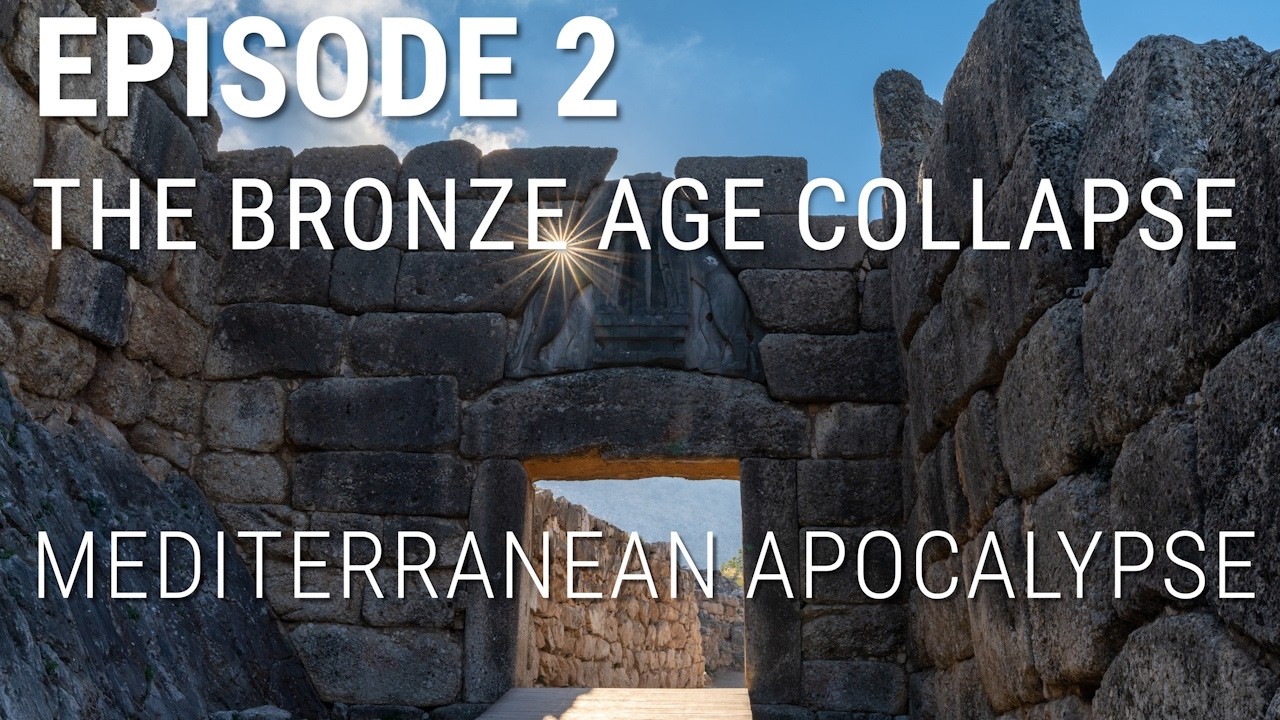
Fall of Civilizations
Hyper-interconnected trade networks transformed volcanic crop failures, tin shortages, and cheap iron weaponry into a cascading systemic collapse that extinguished ancient superpowers.
AI-assisted summary of 2. The Bronze Age Collapse - Mediterranean Apocalypse — original source. Check the original for full context.
Source published:
Key ideas
- Between 1200 and 1100 BC, an interconnected network of Eastern Mediterranean powers—including the Hittites, Mycenaeans, and Ugarit—collapsed within a span of roughly 40 to 50 years, leaving continuous burn layers across a thousand-kilometer expanse. (0:21)
- The highly globalized Bronze Age economy depended on a fragile, thousands-of-miles-long supply chain for Afghan tin, which was essential to alloy with Cypriot copper to cast bronze weapons and tools. (15:17)
- Modern climate proxies, including fossil pollen and speleothem data alongside tree-ring anomalies tied to Iceland's Hekla 3 eruption, indicate that prolonged multi-decade droughts and volcanic cooling induced severe regional famines. (50:40)
- Rather than an unstoppable invading armada, the enigmatic Sea Peoples are increasingly understood as desperate climate refugees displaced by crop failure, whose raids formed part of a systemic cascade rather than the sole catalyst of collapse. (56:29)
Detailed notes
## Background Published by Paul Cooper on the Fall of Civilizations YouTube channel on April 8, 2020, this documentary examines the catastrophic Late Bronze Age Collapse around 1100 BC. The program explores how a violent wave of destruction extinguished major civilizations across the Eastern Mediterranean almost simultaneously, drawing lessons for our modern, interconnected world.
## TL;DR Between 1200 and 1100 BC, an interconnected geopolitical web comprising Mycenaean Greece, the Hittite Empire, New Kingdom Egypt, Kassite Babylon, and Ugarit abruptly disintegrated within a matter of decades. While ancient records like those of Pharaoh Ramesses III prominently blame invading maritime coalitions known as the Sea Peoples, archaeological evidence reveals a vastly more complex, multifaceted crisis. The breakdown of fragile, long-distance tin supply lines collided with the democratizing military disruption of iron weapons, catastrophic multi-decade droughts, and volcanic climatic cooling triggered by Iceland's Mount Hekla. Ultimately, the hyper-interdependent trade networks that fueled Late Bronze Age prosperity acted as a systemic multiplier, turning localized regional disruptions into a totalizing civilizational collapse.
## Atmosphere & style The presentation carries a somber, melancholic, and deeply immersive tone, weaving poetic narration with haunting literary readings and ambient musical textures. Paul Cooper delivers an evocative, reflective commentary that bridges deep archaeological forensic detail with tragic human drama, quoting ancient desperation directly from baked clay tablets and royal stone reliefs. The listening experience feels like wandering through the smoking, sun-bleached ruins of a lost golden age, leaving the audience with an unsettling, cautionary awareness of how fragile modern global systems remain in the face of compounded shocks.
## Bulletin - [00:21](https://www.youtube.com/watch?v=B965f8AcNbw&t=21s) Between 1200 and 1100 BC, an interconnected network of Eastern Mediterranean powers—including the Hittites, Mycenaeans, and Ugarit—collapsed within a span of roughly 40 to 50 years, leaving continuous burn layers across a thousand-kilometer expanse. - [15:17](https://www.youtube.com/watch?v=B965f8AcNbw&t=917s) The highly globalized Bronze Age economy depended on a fragile, thousands-of-miles-long supply chain for Afghan tin, which was essential to alloy with Cypriot copper to cast bronze weapons and tools. - [50:40](https://www.youtube.com/watch?v=B965f8AcNbw&t=3040s) Modern climate proxies, including fossil pollen and speleothem data alongside tree-ring anomalies tied to Iceland's Hekla 3 eruption, indicate that prolonged multi-decade droughts and volcanic cooling induced severe regional famines. - [56:29](https://www.youtube.com/watch?v=B965f8AcNbw&t=3389s) Rather than an unstoppable invading armada, the enigmatic Sea Peoples are increasingly understood as desperate climate refugees displaced by crop failure, whose raids formed part of a systemic cascade rather than the sole catalyst of collapse.
## Key takeaways - [00:21](https://www.youtube.com/watch?v=B965f8AcNbw&t=21s) Extensive continuous destruction layers dating to around 1200 BC span Hattusa, Alaca Höyük, Karagolan, Troy, Ugarit, and Megiddo, extinguishing major civilizations in a matter of decades. - [11:38](https://www.youtube.com/watch?v=B965f8AcNbw&t=698s) The Late Bronze Age world functioned as an early globalized web bound together by maritime trade routes, royal diplomacy, mutual defense treaties, and elite gift exchanges. - [13:08](https://www.youtube.com/watch?v=B965f8AcNbw&t=788s) The discovery of the Uluburun shipwreck highlights the sophisticated trade networks of the era, carrying raw copper, glass, ivory, and exotic luxury items from at least seven regions. - [15:17](https://www.youtube.com/watch?v=B965f8AcNbw&t=917s) Bronze metallurgy relied on an acute strategic bottleneck: while copper was abundant in Cyprus, tin had to be transported via donkey caravans thousands of miles from northeastern Afghanistan. - [19:58](https://www.youtube.com/watch?v=B965f8AcNbw&t=1198s) Surviving epigraphic records at Medinet Habu describe the advance of the confederated Sea Peoples, who overran Anatolia, Syria, and Cyprus. - [21:50](https://www.youtube.com/watch?v=B965f8AcNbw&t=1310s) Unsent clay tablets found in the kilns of Ugarit demonstrate the fatal operational breakdown of regional alliances, as Ugarit's troops and ships were deployed elsewhere when maritime raiders struck. - [25:40](https://www.youtube.com/watch?v=B965f8AcNbw&t=1540s) Emergency hoards of silver, gold, and bronze tools buried across sites like Kokkinokremos indicate sudden flights and populations unable to return for their valuables. - [34:24](https://www.youtube.com/watch?v=B965f8AcNbw&t=2064s) Pharaoh Ramses III successfully repelled the Sea Peoples through a coordinated tactical ambush in the Nile Delta waterways, but the victory proved economically ruinous. - [40:18](https://www.youtube.com/watch?v=B965f8AcNbw&t=2418s) Economic exhaustion and disrupted trade in post-collapse Egypt led to the first recorded labor strike at Deir el-Medina and the steady fragmentation of the New Kingdom. - [42:33](https://www.youtube.com/watch?v=B965f8AcNbw&t=2553s) Attributing the entire collapse to the Sea Peoples oversimplifies the archaeological record; inland powers collapsed due to external migrations such as the Dorians and Phrygians, as well as Elamite invasions. - [47:03](https://www.youtube.com/watch?v=B965f8AcNbw&t=2823s) The spread of iron metallurgy democratized warfare by allowing peripheral populations to forge cheap, lethal weapons from common ores, neutralizing the costly chariot-based monopoly of ruling elites. - [50:40](https://www.youtube.com/watch?v=B965f8AcNbw&t=3040s) Environmental evidence from cave speleothems, pollen samples, and tree rings points to acute climate shifts and multi-decade droughts, corroborated by desperate royal pleas for grain from Hatti and Ugarit. - [53:09](https://www.youtube.com/watch?v=B965f8AcNbw&t=3189s) The volcanic eruption of Hekla 3 in Iceland introduced atmospheric haze that stunted crop growth across the Northern Hemisphere, likely sparking domestic rebellions against palatial centers. - [56:29](https://www.youtube.com/watch?v=B965f8AcNbw&t=3389s) The Sea Peoples represent a symptom rather than the primary cause of collapse, functioning as displaced populations forced into piracy and migration, with groups like the Peleset eventually settling in Canaan. - [01:00:19](https://www.youtube.com/watch?v=B965f8AcNbw&t=3619s) The Late Bronze Age catastrophe provides a cautionary case study on systemic fragility, demonstrating how hyper-interdependent societies can collapse abruptly when exposed to compound ecological and supply-chain shocks.
## Detailed walkthrough ### [00:21](https://www.youtube.com/watch?v=B965f8AcNbw&t=21s) The Ruin Layer: Hattusa, Alaca Höyük, and Karagolan
Overlooking a bend in the Kızılırmak River on a rocky outcrop in central Turkey sit the ruins of Hattusa, the ancient capital of the Hittite Empire. Its crumbling grey limestone double walls—originally fortified with over a hundred defensive towers and entrance gates bearing stone lion sculptures—contrast sharply with the surrounding tawny yellow grassland. For centuries during the Bronze Age, this fortified imperial center controlled much of Anatolia, sustained by fields of wheat, barley, and lentils, alongside herds of sheep grazed on the hilltops.
```mermaid flowchart TD accTitle: Regional Destruction Horizon c. 1200 BC accDescr: Visual mapping of catastrophic burn layers found across Bronze Age Anatolia.
subgraph Anatolia["Anatolian Destruction Sites"] H["Hattusa Capital<br/>Collapsed roofs & melted bricks"] A["Alaca Höyük<br/>Royal tombs under ash & rubble"] K["Karagolan Fortress<br/>Arrowheads & unburied skeletons"] end
H --- A --- K Anatolia ==> R["Regional Catastrophe Layer<br/>1200–1100 BC Across 1,000+ km"] ```
Excavations reveal a sinister horizon: just above the ancient floors rests a uniform, carbonized layer of ash, charred timber, and heat-shattered debris dating to roughly 1200 BC. The structural devastation was extreme—walls caved in, mud bricks melted under sustained infernos, and the capital was subsequently abandoned to occasional scavengers.
This footprint of total annihilation was not an isolated event: - **Alaca Höyük**, situated 20 kilometers to the north, where royal Hittite kings lay buried in lavish tombs, was found blanketed by an identical burn horizon. - **Karagolan**, a fortified Hittite stronghold 100 kilometers eastward, contained thousands of bronze arrowheads carpeting the dirt like autumn leaves, with the skeletal remains of men, women, and children lying dead in the open streets where they were struck down. - **Eastern Mediterranean scale**: A continuous burn and destruction stratum stretches across more than 1,000 kilometers, wiping out civilizations such as the Hittites, Mycenaean Greeks, Minoans, and the coastal kingdom of Ugarit between 1200 and 1100 BC, plunging the region into centuries of darkness.
---
[03:37](https://www.youtube.com/watch?v=B965f8AcNbw&t=217s) The Puzzle of the Late Bronze Age Collapse
Historian and podcast host Paul Cooper introduces the mystery of the Late Bronze Age Collapse, pointing out that history usually tracks the fall of a single state, whereas this episode examines an interconnected world vanishing simultaneously. Within several decades, a multi-ethnic network of sovereign powers fell so completely that some locations required nearly a millennium to achieve comparable levels of urbanization and literacy again.
Historian Robert Drews underscores the sheer speed and finality of this disaster, writing:
> “Within a period of 40 to 50 years, almost every significant city in the Eastern Mediterranean world was destroyed, many of them never to be occupied again. For a long time after the Year 1200, it is safe to say that there were no cities in the eastern Mediterranean area.”
Cooper explains that investigating this sudden break is not just an archaeological curiosity, but an inquiry into systemic vulnerability with clear warnings for our own tightly bound modern world:
> “I want to explore how so many societies could collapse all at once and seemingly without warning. I want to look at the conditions that led up to this collapse and examine the lessons it might teach us in our increasingly globalized and interconnected world.”
---
[05:54](https://www.youtube.com/watch?v=B965f8AcNbw&t=354s) Mycenae, the Trojan War, and the Memory of Apocalypse
A faint cultural memory of this collapse survived through Homeric oral epics like the *Iliad* and the *Odyssey*. Kept alive during the impoverished Greek Dark Ages through generations of performing bards, these stories were not codified into written Greek until the 8th century BC. At the center of the narrative stands King Agamemnon of Mycenae, a citadel dominating southern Greece around 90 kilometers southwest of Athens, which housed upwards of 30,000 residents and bore stone lion gates strikingly similar to those of Hattusa.
```mermaid flowchart LR accTitle: Transmission of Collapse Memory accDescr: Path of historical catastrophe preserved through oral verse to classical myth.
C["Late Bronze Age Cataclysm<br/>c. 1200 BC"] --> D["Greek Dark Ages<br/>Centuries of oral bards"] D --> E["Homeric Epics Transcribed<br/>c. 8th Century BC"] E --> F["Classical Myth & Pausanias<br/>Cyclopean attribution"] ```
The engineering of Mycenae's fortifications was so monumental that later Classical Greeks could not reconcile it with ancestral human handiwork. In the 2nd century AD, the travel writer Pausanias recorded his astonishment:
> “The wall, which is the only part of the ruin still remaining, is a work of the Cyclopes made of unwrought stones, each stone being so big that a pair of mules could not move the smallest from its place to the slightest degree.”
Cooper likens this ancient disbelief to modern fringe television theories:
> “It's a second century version of The History Channel's *Ancient Aliens* conspiracy theories today. Even then, people found it hard to believe that people so distant to them could have possessed such ingenuity and skill and then disappeared forever.”
The historical validity of Troy shifted drastically in the late 19th century when archaeologists unearthed the remains of a fortified Anatolian city matching Homer's descriptions, likely a Hittite coastal dependency: - **Massive Fortifications**: Nine-meter-high stone walls anchored by towers rising up to 18 meters, reinforced by an extensive outer curtain wall. - **Physical Evidence of Siege**: Traces of intense structural burning, weapon scars, unburied skeletons in residential streets, and floors scattered with bronze arrowheads. - **Double Destruction**: Archaeologists identified two separate fire destruction layers dating to the late 13th and early 12th centuries BC—placing Troy's fall squarely within the regional collapse horizon. - **Literary Reflections**: Later epic accounts, such as Quintus Smyrnaeus's *The Fall of Troy*, captured the brutal reality of the era's violence:
> “Blood ran in torrents, drenched was all the earth, as Trojans and her alien helpers died. Here were men lying quelled by bitter death, all up and down the city in their blood. Others on them were falling, gasping forth their life strength, others clutching in their hands their bowels that looked through hideous gashes forth, wandered in wretched plight around their homes.”
---
[11:38](https://www.youtube.com/watch?v=B965f8AcNbw&t=698s) The Interdependent Bronze Age World
Modern audiences often imagine ancient states as isolated, insular kingdoms, but the Eastern Mediterranean around 1200 BC operated as an early globalized web. The known boundaries ran from the Greek mainland across the Aegean, through Anatolia, down to Egypt, and east toward the edge of western Iran. Far from being disconnected, these civilizations were deeply bound together through statecraft, dynastic marriages, treaties, and especially resource trade:
- **Mycenaean Greece**: A loose network of militarized palatial citadels dominating southern Greece and the Aegean. - **New Kingdom Egypt**: An established empire in the south recovering from recent internal civil wars. - **Hittite Empire**: An Anatolian power holding central Turkey down into northern Syria. - **Kassite Babylon**: An ancient urban kingdom based in the agricultural marshes of southern Iraq. - **Assyrian Empire**: A rising, martial society controlling the plains of northern Mesopotamia. - **Levantine Hubs**: Islands like Cyprus and Crete alongside wealthy mercantile city-states like Ugarit, which bridged maritime sea lanes with land routes.
While these rulers often clashed or regarded each other with mutual suspicion, trade across the Mediterranean—acting as a vast inland highway—served as their shared lifeblood, binding their survival to a complex web of mutual dependence.
[13:08](https://www.youtube.com/watch?v=B965f8AcNbw&t=788s) The Uluburun Shipwreck and the Interconnected Mediterranean
Compared to the tempestuous open waters of the Atlantic, the Mediterranean Sea offered a relatively calm surface that nurtured an unprecedented boom in maritime commerce. The sheer scale and luxury of this interconnected world is illuminated by the late 14th-century BC shipwreck discovered off the rocky promontory of Uluburun in southwestern Turkey. Built of sturdy Lebanese cedar around 1300 BC, this merchant vessel carried a cross-cultural hoard drawn from at least seven distinct regions. Divers and archaeologists recovered ten tons of copper ingots alongside a single ton of tin, dark logs of African ebony, hippopotamus teeth, and elephant tusks. Nestled alongside jars packed with glass beads, olives, almonds, figs, pomegranates, and terebinth resin were luxury items such as raw glass ingots dyed deep cobalt blue and lavender, ostrich eggshells, turtle shells, Cypriot pottery, bronze weapons, and a diminutive gold scarab bearing the cartouche of Queen Nefertiti.
This thriving commerce was not merely an exchange of raw materials and luxury goods; it was accompanied by a continuous movement of people, skills, and diplomatic ties across borders. Minoan painters from Crete traveled to the Nile Delta to paint vibrant frescoes on the walls of Egyptian royal palaces at Peru-Nefer. Monarchs constantly wrote to their peers requesting the dispatch of skilled physicians, master weavers, sculptors, and court singers to grace foreign capitals. Diplomatic marriages tied these dynasties together, though they could also create messy international entanglements; King Ammurapi, the final ruler of Ugarit, endured protracted and bitter legal proceedings through the courts for years following his divorce from an elite Hittite noblewoman.
- **Vessel origin and date:** Built of Lebanese cedar wood, dated to approximately 1300 BC, wrecked off the coast of Uluburun in southwestern Turkey. - **Raw metals cargo:** Ten tons of copper ingots and one ton of tin ingots (the exact 10:1 ratio needed to produce eleven tons of bronze). - **Exotic and agricultural cargo:** Ebony logs, elephant and hippopotamus tusks, more than a dozen hippo teeth, ostrich eggshells, raw cobalt blue and lavender glass blocks, Cypriot oil lamps, almonds, figs, pistachios, coriander, and jars of terebinth resin. - **Royal artifact:** A solid gold scarab beetle engraved with the name of the Egyptian queen Nefertiti. - **Cultural exchange:** Minoan artisans working at the Egyptian naval center and palace complex of Peru-Nefer, alongside widespread intermarriage among royal houses.
```mermaid flowchart TD accTitle: Uluburun Trade Network accDescr: Diagram illustrating goods and raw materials converging on the Uluburun merchant vessel from across the Mediterranean and Near East.
subgraph Sources["Regional Origins"] CY["Cyprus"] -->|"Pottery & Copper"| SHIP LEV["Levant"] -->|"Cedar, Resin & Wine"| SHIP EGY["Egypt & Nubia"] -->|"Gold, Ebony & Ivory"| SHIP AFG["Central Asia"] -->|"Tin via Overland Routes"| SHIP AEG["Aegean"] -->|"Glass & Luxury Crafts"| SHIP end
SHIP["Uluburun Merchant Ship<br/>(11 Tons Bronze Capacity)"] ```
[15:17](https://www.youtube.com/watch?v=B965f8AcNbw&t=917s) Bronze, the Tin Pipeline, and Ancient Interdependence
While elite gift exchanges circulated jewelry and cosmetics, the ultimate foundation of Late Bronze Age geopolitical power lay in the strategic metal that defined the era. Bronze—a durable alloy made by smelting roughly ten parts copper with one part tin—served the identical civilizational function that steel and aluminum perform in modern industry. Without an uninterrupted flow of bronze, armies could neither cast swords nor tip their spears, chariot wheels could not be bound in metal rims, and stonemasons and carpenters were left without tools. While copper was relatively abundant and readily quarried on the island of Cyprus, tin was exceptionally scarce across the Near East. The primary operational tin deposits known to the region lay thousands of perilous miles away in the Badakhshan mountains of northeastern Afghanistan.
From these remote highland mines, precious tin was loaded onto donkey caravans, traversing mountains, deserts, and rivers along the prehistoric trails that preceded the Silk Road. Once these caravans reached the great trading emporia of Mesopotamia, the metal was routed westward into the Levant, Egypt, Anatolia, and across the Aegean to mainland Greece. The entire military apparatus of the Eastern Mediterranean superpowers—the Hittite Empire, New Kingdom Egypt, Assyria, Babylon, Ugarit, and the Mycenaean palaces—hung entirely upon this tenuous, elongated supply chain. Reflecting on this vital vulnerability, British archaeologist Carol Bell observed: “The strategic importance of tin in the Late Bronze Age was probably not far different from that of crude oil today.” Bell pointed out that ensuring adequate supplies to produce weapons-grade metal consumed the thoughts of the Hittite Great King in Hattusa and the Egyptian Pharaoh in Thebes just as maintaining the supply of motor fuel dominates modern international politics.
- **Alloy composition:** Approximately 90% copper and 10% tin, matching the proportions found aboard the Uluburun wreck. - **Geographic source of tin:** The remote mines of the Badakhshan region in modern-day northeastern Afghanistan. - **Transit route:** Overland donkey caravans crossing Central Asia and the Iranian plateau into Mesopotamia, before redistribution across Mediterranean shipping lanes. - **Strategic exposure:** A supply chain as fragile as a cobweb that linked every major regional empire into a single fragile, mutually dependent economic system.
[18:11](https://www.youtube.com/watch?v=B965f8AcNbw&t=1091s) The Fragility of Historical Evidence: Stones and Scribes
Reconstructing the cataclysm that ended this golden age requires navigating severe limitations in the surviving historical record. The era cannot be treated with modern scientific certainty; it remains an evolving mosaic of competing hypotheses, revised dates, and intense academic debates. Historians rely primarily on two disparate, flawed categories of evidence: archaeological material and surviving epigraphic texts. Excavating charred foundations and shattered masonry demonstrates that destruction occurred, yet inert stones and strata cannot explain intent, politics, or causation without subjective human interpretation.
At the same time, the surviving clay tablets, stone stelae, and papyri are frequently fragmentary, reticent on the exact matters modern historians wish to clarify, and heavily warped by royal vanity. Bronze Age inscriptions were almost exclusively commissioned by autocratic rulers determined to project absolute power and divine favor. Trying to reconstruct the complexities of the collapse exclusively from such royal proclamations poses the same epistemic hazard as attempting to understand the nuances of modern world events solely by reading an executive's social media feed. Untangling the end of the Bronze Age therefore requires peering through court propaganda to measure rhetoric against the ash layers uncovered by the spade.
- **Nature of the discipline:** History operates as a fluid debate of interpretations and models rather than an exact experimental science. - **The archaeological limitation:** Physical destruction layers reveal *that* a site was destroyed, but cannot inherently explain *who* attacked or *why*. - **The epigraphic limitation:** Royal archives and monumental inscriptions reflect official self-congratulation and state propaganda, often omitting tactical setbacks or socioeconomic strains.
[19:58](https://www.youtube.com/watch?v=B965f8AcNbw&t=1198s) The Enigma of the Sea Peoples
When modern historians search for the immediate shock that shattered this globalized network, they invariably confront the enigmatic phenomenon known as the Sea Peoples. The name conjures up an almost cinematic menace—predatory, otherworldly seaborne raiders appearing from deep waters to devastate coastal civilizations without warning. Their exact ethnic identities, linguistic origins, and home ports remain an unsolved mystery; scholarly speculation has pointed variably to Sardinia, Sicily, the western Mediterranean, Libya, or displaced populations within the Aegean basin itself. Whatever their origins, their arrival along the Levantine and Anatolian shores took the form of a coordinated, relentless wave of violence.
On the walls of his mortuary temple at Medinet Habu, Pharaoh Ramses III carved a grim chronicle of this sudden onslaught, writing: “No lands could stand before their arms, from Khatte, Qode, Carchemish, Arzawa, and Alashiya on, all were cut off. They desolated its people and its land was like that which has never come into being.” In ancient commemorative inscriptions, these invaders read like an apocalyptic, unstoppable force straight out of science-fiction invasion narratives, sweeping over established kingdoms with total tactical surprise and absolute destructive finality.
- **Putative origins:** Hypothesized homelands include Sardinia (Shardana), Sicily (Shekelesh), the Aegean, Anatolia, or the North African coast. - **Egyptian documentation:** Inscriptions and high-relief battle scenes carved into the temple walls of Ramses III at Medinet Habu near the Valley of the Kings. - **Sacked territories listed by Ramses III:** Hatti (the Hittites), Qode (Cilicia), Carchemish, Arzawa (western Anatolia), and Alashiya (Cyprus).
[21:50](https://www.youtube.com/watch?v=B965f8AcNbw&t=1310s) The Cataclysm at Ugarit and the Coastal Destruction
One of the clearest case studies of this abrupt devastation is the coastal Syrian kingdom of Ugarit. For more than six centuries, Ugarit had prospered as an elite cosmopolitan hub where the overland trails of the Silk Road terminated at the Mediterranean shore. The city taxed every shipment of grain, bronze, and exotic luxury entering its harbor, using that revenue to build multi-story residences, grand administrative palaces, and scholarly libraries. Ugarit’s administrative records incorporated at least seven different languages, and its literate elite maintained extensive private scriptoria, including the library of the diplomat Rapanu. The city also bequeathed to history the oldest known complete musical notation, a lyrical Hurrian hymn composed in honor of the moon goddess Nikkal.
This cosmopolitan splendor ended abruptly in fire. Within the ruins of the royal palace, excavators unearthed an unfired clay tablet written by the kingdom's final ruler, King Ammurapi, pleading for military intervention from the king of Alashiya in Cyprus: “My father, now ships of the enemy have come. They've been setting fire to my cities and have done evil in my land. Doesn't my father know that all of my troops and chariots are stationed in Hatti, but all of my ships are in the land of Lukka? They have not arrived back yet so the land is abandoned.”
The desperate appeal was never dispatched. It remained inside the royal kiln where it had been placed to dry, baked solid by the catastrophic conflagration that leveled the capital. Archaeologists excavating Ugarit discovered an ash and rubble destruction layer reaching two meters in depth, collapsed roofs, heat-cracked masonry, and street cobbles strewn with bronze arrowheads. Citizens had buried their gold, silver, and heirloom possessions under floorboards in frantic expectation of return, but none ever came back to retrieve them. A companion tablet, likewise trapped forever in the kiln, pleaded with a neighboring monarch to send 150 warships to repel the armada. With its armed forces committed abroad defending Hittite interests, Ugarit was utterly defenceless against the hit-and-run maritime tactics of the raiders, who sacked the port and vanished over the horizon. The same wave of fire consumed neighboring cities across the Levant, reducing Aleppo, Megiddo, and Emar on the Euphrates to ash, where scribes recorded only that their walls were overrun by unnamed, unidentified hordes.
- **Ugarit's cultural heritage:** Over six centuries of maritime dominance, seven written languages in common administrative use, the private archival library of the diplomat Rapanu, and the Hurrian Hymn to Nikkal (the oldest known transcribed music). - **Tactical vulnerability:** Ugarit’s ground infantry and war chariots were deployed far inland defending the Hittite heartland, while its fleet was patrolling off the coast of Lukka (southwestern Anatolia). - **Physical archaeological evidence:** A destruction horizon up to two meters thick composed of charred brick, collapsed beams, calcined stone, and arrowheads, alongside numerous unrecovered domestic treasure hoards. - **Unsent palace correspondence:** Ammurapi's kiln tablets requesting Cypriot reinforcements and demanding 150 warships to confront the seaborne host. - **Contemporary inland destruction:** Sacking of major administrative and trade centers across the northern Levant, including Aleppo, Emar on the Euphrates bend, and Megiddo in the Jezreel Valley.
[25:40](https://www.youtube.com/watch?v=B965f8AcNbw&t=1540s) Ash, Abandonment, and the Trail of Destruction
Across the Levant and the Aegean, archaeological excavations reveal the sheer physical violence that accompanied the end of the Bronze Age. Megiddo held out longer than any other urban center in its region, but when it finally fell, the destruction was so catastrophic that later Israelite settlers could not even clear the debris; instead, they simply packed the ruined structures with rubble and built their own dwellings directly on top of the devastation. A parallel scene of terror played out on Cyprus, where the desperate pleas for aid from Ugarit had gone unanswered. At the settlement of Kokkinokremos, archaeologists uncovered poignant traces of a population fleeing in sudden panic: a bronze smith buried his metalworking tools beneath the courtyard of his workshop, a silversmith wedged his silver between two stone slabs of a bench, and a goldsmith concealed sheets of gold inside a pit. None of them ever returned to claim their hidden wealth.
For generations, modern historians were content to treat the mysterious invaders known as the Sea Peoples as the sole agents of this sweeping ruin, viewing them as a convenient explanation for a widespread civilizational breakdown. Popular imagination conceived of them as an unstoppable, predatory horde reminiscent of Viking raiders blended with the forces of Attila the Hun. As the narrator emphasizes regarding the undeniable trail of ruin left in their wake, “One thing is for certain; wherever the Sea Peoples went, destruction followed.”
- **Megiddo:** Endured the longest resistance in the Levant before suffering complete structural devastation, forcing subsequent Israelite inhabitants to build over debris rather than clear it. - **Kokkinokremos (Cyprus):** Abandoned abruptly, leaving untouched emergency caches belonging to a bronze smith (buried tools), silversmith (concealed bench cache), and goldsmith (sheet gold pit).
---
[26:44](https://www.youtube.com/watch?v=B965f8AcNbw&t=1604s) Faces in the Stone: Unmasking the Sea Peoples
Because the Sea Peoples left behind no written records and almost no distinct material culture that can be traced to a specific homeland, they never have the opportunity to speak in their own voice. Nevertheless, modern historians have a remarkably clear picture of their physical appearance thanks to the colossal low-relief carvings that Pharaoh Ramses III commissioned on the exterior walls of his mortuary temple at Medinet Habu. Depicting captured prisoners from Egypt's naval engagements, these reliefs do not portray monstrous barbarians, but distinctive warriors wearing kilts and prominent headdresses crafted from feathers or reeds anchored by chinstraps. Other figures appear in skullcaps or horned helmets, confirming that the attackers were not a uniform national army under a single sovereign, but rather an assorted coalition banded together under a common cause. As the narrator explains, “Together with Egyptian sources of the time, this points to them not being one cohesive army, but a loose confederation of different peoples choosing to sail under the same banner.”
Egyptian texts record several distinct tribal names among this maritime confederacy, including the Danuna, Tjekker, Peleset, Shardana, and Weshesh. These groups were not entirely alien to Egypt; diplomatic ties had existed with some of them for centuries, and specific factions had previously served as elite mercenaries in Egyptian forces. The Shardana, for instance, had been incorporated into the personal bodyguard and armies of Ramses II nearly a century earlier. Despite this familiarity, no central commander or monarch is ever recorded in surviving texts, leaving them as an enigmatic, sea-borne force that raided coastal cities, launched inland assaults, and destabilized entire geopolitical networks.
- **Identified Sea Peoples Coalitions:** Danuna, Tjekker, Peleset, Shardana, and Weshesh. - **Distinctive Regalia at Medinet Habu:** Reed- or feather-sheaf headdresses with chinstraps, skullcaps, and horned helmets. - **Historical Precedents:** Decades of mercenary service in Egyptian campaigns, notably the Shardana serving under Pharaoh Ramses II.
---
[29:46](https://www.youtube.com/watch?v=B965f8AcNbw&t=1786s) The Divergent Fates of Empires and the Rise of Ramses III
The geopolitical map of the Eastern Mediterranean cleaved into two distinct camps during the crisis: civilizations that collapsed entirely and those that managed to endure in a reduced state. Powers such as Mycenae, the Hittite Empire, and the kingdom of Ugarit vanished completely, leaving little behind except burnt ruins. By contrast, the Assyrian Empire survived by abandoning its vulnerable borderlands and pulling its forces inward to its imperial heartland around Nineveh between the Tigris and Euphrates rivers, retreating into its defensive core like a tortoise withdrawing into its shell. Egypt faced a far more complex challenge, as its economy depended on maritime trade across an exposed Mediterranean coastline that made defensive isolation impossible.
```mermaid flowchart TD accTitle: Fate of Eastern Mediterranean Powers During the Collapse accDescr: Diagram illustrating the division between collapsed civilizations and surviving empires. subgraph Collapsed["Utter Collapse"] C1["Mycenae"] C2["Hittite Empire"] C3["Ugarit"] end subgraph Survived["Diminished Survival"] S1["Assyria<br/>(Withdrawal to Nineveh heartland)"] S2["Egypt<br/>(Coastal defense under Ramses III)"] end ```
The burden of Egypt's defense fell upon Ramses III, a ruler who assumed the throne at roughly thirty-one years of age under immense political pressure. His father, Setnakhte, had founded the Twentieth Dynasty by seizing power in a violent civil war, but ruled for only four years before dying. Seeking legitimacy, the young pharaoh adopted the regnal name of Ramses the Great, who had overseen Egypt's New Kingdom golden age nearly a century earlier. Physical examinations of Ramses III's preserved mummy show high, narrow cheekbones and an expansive forehead that evoke the look of a calculated strategist. Surviving administrative inscriptions record that he planted shade trees along scorching desert highways, protected women so they could travel without fear, permitted soldiers to return home during peaceful seasons, and funded vast temple construction projects alongside mining expeditions to Yemen that yielded copper reserves and exotic botanical specimens. As the narrator reflects upon his legacy, “By all of this, it seems in another time he might have been one of Egypt's great rulers, but his destiny was to preside over one of the longest and deepest declines in Egypt's history, the twilight of its Empire.”
- **The Two Categories of Collapse:** - *Extinct Empires:* Mycenae, Hatti (Hittites), Ugarit. - *Diminished Survivors:* Assyria (consolidated along the Tigris and Euphrates) and Egypt. - **Ramses III's Domestic Policies:** Roadside arboriculture, civic protections for women, demobilization of peacetime troops, and botanical and copper-mining expeditions across the Red Sea to Yemen.
---
[34:24](https://www.youtube.com/watch?v=B965f8AcNbw&t=2064s) Ambush in the Reeds: The Battle of the Delta
Recognizing that the Egyptian military favored land battles fought across wide expanses—employing disciplined infantry formations, archers, and rapid chariot maneuvers to shatter opposing lines—the Sea Peoples chose to strike Egypt where those tactics were useless: the waterways of the Nile. Egyptian naval forces historically held a poor reputation compared to regional seafaring cultures, and the Nile represented the arterial lifeblood connecting Egypt's greatest cities. If the river defenses collapsed, the kingdom would be exposed to total plunder. Ramses III, aware that previous mercenary service had given the invaders intimate knowledge of Egypt's operational limitations, formulated a plan to trap the enemy fleet within the treacherous shallows and branching channels of the Nile Delta.
The Delta was an intricate labyrinth bordered by papyrus thickets, blooming autumn lotuses, and waters inhabited by wild hippopotamuses and crocodiles. Ramses positioned thousands of Egyptian spearmen and archers deep inside the reeds, maintaining absolute silence as the invading armada rowed inland from the sea. When the leading vessels rounded the river bend—accompanied by the rhythmic pulse of rowing drums, the creak of thousands of oars, and the commands of enemy helmsmen—the trap closed around them. As recorded in the inscriptions of Medinet Habu: “Those who reached my frontier, those who came forward to give on the sea, the full flame was in front of them at the river mouths, while a stockade of lances surrounded them on the shore.” Concealed archers opened a relentless, continuous barrage into the crowded ships, turning the river mouth into an inescapable kill zone.
[38:06](https://www.youtube.com/watch?v=B965f8AcNbw&t=2286s) The Battle of the Delta and the Great Harris Papyrus
When the Sea Peoples' fleet entered the mouth of the Nile, they found themselves lured into a catastrophic trap. Confined within the narrow river channels, the invaders panicked and desperately attempted to ground their vessels on the riverbanks. As they reached the shore, Egyptian spearmen charged out of the reeds to cut them down. Trapped, crowded, and exposed on the water, the invaders were then assailed by a squadron of Egyptian warships. Egyptian crews hurled grappling hooks to drag the enemy ships into boarding range, unleashing a melee of vicious, close-quarters combat. Reliefs carved into stone depict men clambering desperately up the gunwales, dodging flurries of arrows, and being impaled on spears, while overturned ships dumped fighters into frothing waters choked with floating corpses. The surviving invaders were dragged ashore and bound in heaps along the beach. Reflecting on this total rout, the inscriptions boast of the pharaoh's crushing psychological impact: “I have made them turn back from even mentioning Egypt, for when they pronounced my name in their land, they are burnt up with fear.”
Ramesses III had achieved what no other ruler in the ancient Mediterranean had managed: he successfully repelled the invaders and halted their southward wave of destruction. A primary historical record detailing this epic defense is the Great Harris Papyrus, discovered near the mortuary temple of Medinet Habu. Measuring an astonishing 41 meters in length—longer than the wingspan of a commercial Boeing 737 airliner—it stands as the longest known papyrus roll ever recovered from ancient Egypt. Within its text, Ramesses III catalogs his triumphs over the specific confederations of invaders who had laid waste to neighboring realms, declaring that he burned the Peleset and Tjekker to ashes, slew the Danuna on their islands, and took tens of thousands of captive warriors into Egyptian servitude.
- Ramesses III proclaimed of his seafaring adversaries: “The Shardana and the Weshesh of the sea were made as those that exist not.” - Captives taken from the defeated maritime tribes were brought to Egypt in numbers described as being as vast as the sand on the seashore. - The Great Harris Papyrus remains the most complete contemporary administrative and historical account of Ramesses III's military and civil achievements.
```mermaid flowchart TD accTitle: Ambush of the Sea Peoples at the Nile Delta accDescr: Diagram illustrating Ramesses III's ambush of the invading fleet. subgraph Ambush["River Ambush"] A["Invading Fleet Enters Delta Channels"] --> B["Egyptian Shore Archers & Lancers Attack"] A --> C["Egyptian Warships Deploy Grappling Hooks"] end subgraph Defeat["Rout and Capture"] B --> D["Overturned Ships & Melee in Reeds"] C --> D D --> E["Captives Taken & Fleet Annihilated"] end ```
[40:18](https://www.youtube.com/watch?v=B965f8AcNbw&t=2418s) Egypt's Pyrrhic Victory and Imperial Decline
Although Egypt succeeded in turning back the invasion, military triumph could not insulate the kingdom from the geopolitical catastrophe unfolding around it. Egypt found itself standing entirely alone in an obliterated world, resembling the lone survivor at the conclusion of a cataclysmic disaster film. Every major power across the Near East had been razed: the Mycenaean palaces had fallen, the Hittite Empire had shattered, the merchant metropolis of Ugarit had vanished, and the Kassite dynasty of Babylon was collapsing. Describing this sudden regional void, the narrator observes, “All of these venerable societies had collapsed utterly and civil order had given way to chaos.”
The intricate, hyper-connected trade networks that had sustained Bronze Age royal economies were severed overnight. Without international commerce to fuel state coffers, Egypt went into an irreversible economic tailspin. Even as the kingdom managed to repel subsequent incursions along its desert borders, the pharaonic treasury was steadily drained. In the 29th year of the reign of Ramesses III, the state could no longer afford grain rations for the master craftsmen and royal tomb builders stationed at the village of Deir el-Medina, triggering the first recorded labor strike in human history.
Ramesses III died after a 31-year reign, leaving behind a throne contested by squabbling dynastic heirs; three of his sons ruled in rapid, unstable succession as Ramesses IV, Ramesses VI, and Ramesses VIII. Compounding this palace dysfunction, prolonged regional droughts and the failure of annual Nile floods provoked crippling famines, social unrest, and runaway administrative corruption. As central authority decayed, the high priests of Amun at Thebes consolidated independent economic and political dominance over Upper Egypt. By the reign of Ramesses XI, the pharaoh was little more than a figurehead, and less than eighty years after the victory of Ramesses III, the New Kingdom fractured and collapsed.
- The strike at Deir el-Medina in Year 29 of Ramesses III is recognized as the earliest documented industrial action in history. - Successive successions among the sons of Ramesses III undermined royal prestige and depleted crown reserves. - Growing domestic crises included repeated failures of the Nile inundation, widespread starvation, and systemic bureaucratic venality. - Within eight decades of the Delta naval victory, the unified Egyptian Empire dissolved, leaving southern Egypt under the de facto theocratic rule of the Amun priesthood.
[42:33](https://www.youtube.com/watch?v=B965f8AcNbw&t=2553s) Rethinking the Scapegoat: Dorians and Phrygians
The dramatic fall of coastal cities like Ugarit has long fostered an assumption that the Sea Peoples functioned as a singular, extraterrestrial-style invasion force responsible for wiping out Late Bronze Age civilization wholesale. Yet the archaeological record reveals that attributing every fallen capital to seaborne raiders is an oversimplification. Mycenae, the powerhouse of the Homeric epics, was indeed burned and abandoned alongside its neighboring citadels around the end of the 13th century BC, but modern scholars generally attribute this devastation to the Mycenaeans' northern neighbors, the Dorians, rather than maritime invaders. While coastal raids certainly strained Mycenaean defenses, the threat from the sea likely distracted palace garrisons, allowing northern invaders to breach the frontier.
A comparable dynamic sealed the fate of Hattusa, the mountainous inland capital of the Hittite Empire in central Anatolia. Located deep inside modern Turkey, Hattusa was far beyond the operational reach of coastal sea raiders. Archaeological evidence points instead to the Phrygians, migrating tribes from the Balkans who pushed southward into Anatolia. These regional opportunists struck when the Hittite crown was already reeling from crop shortages, trade embargoes, and famine caused by maritime chaos.
The interconnected security architecture of the Late Bronze Age relied heavily on mutual defense pacts and allied troop deployments. When widespread crises hit simultaneously, every major king was forced to keep his armies at home, dismantling the collective security networks that had kept individual states alive. Emphasizing this fatal vulnerability, the narrator notes: “Alliances that had previously kept everyone safe would suddenly become ineffective.”
- Mycenae's final destruction is widely linked to Dorian incursions from the north rather than direct coastal assaults by the Sea Peoples. - The Hittite citadel of Hattusa was razed by inland adversaries, primarily Balkan migrants and regional rival tribes. - Disruptions to maritime grain supply routes starved Anatolian urban centers before their defenses were breached. - Regional collapse turned mutual aid agreements into dead letters as every kingdom fought for its own survival.
[44:34](https://www.youtube.com/watch?v=B965f8AcNbw&t=2674s) The Elamite Sacking of Kassite Babylon
The cascading failure of regional alliances is dramatically illustrated by the fate of Babylon, situated roughly one hundred kilometers south of modern Baghdad. Babylon had been governed for five centuries by the Kassite dynasty, who had maintained their security by relying on defensive alliances with the Assyrian Empire and coastal Levant states. When those borderlands became consumed with their own existential defense against raiders and destabilization, Babylon found itself isolated and exposed to its historical rival to the east: the kingdom of Elam in the highlands and plains of southern Iran.
The ambitious Elamite monarch Kutir-Nahhunte laid claim to the Babylonian throne, viewing the ancient Mesopotamian seat of power as his rightful inheritance. Delivering an uncompromising ultimatum steeped in bloodthirsty rhetoric, Kutir-Nahhunte boasted of his royal lineage and warned that Babylon would be utterly crushed: “I will destroy your cities, demolish your fortresses, cut down your orchards. You may flee up to heaven but I'll pull you back down. You may flee down to hell, but I'll pull you up by your hair.”
In 1158 BC, Kutir-Nahhunte marched into Babylonia unopposed by any foreign coalition. The Elamite forces sacked the capital, leveled its fortifications, and dragged the last Kassite monarch away to Elam in iron chains. Alongside the king, the conquerors looted the sacred cult statue of Marduk, the patron deity of Babylon, an act of spiritual desecration that shocked the Babylonian populace far more than the fall of the royal dynasty itself. A later Babylonian chronicle, the text of Nebuchadnezzar I (*Nabu-kudurri-usur*), mourns the catastrophic Elamite onslaught, recording that the invader swept over the land like a devastating deluge, laying low the people of Akkad and reducing its historic cities to smoldering ash.
- The Kassites had governed Babylonia for roughly 500 years prior to their overthrow in 1158 BC. - Kutir-Nahhunte took both the Kassite ruler and the divine effigy of Marduk back to Elam as trophies of war. - The loss of the Marduk statue was commemorated in Mesopotamian literature as a defining spiritual and political trauma. - The fall of Babylon demonstrates how peripheral powers took advantage of systemic paralysis among the imperial superpowers.
[47:03](https://www.youtube.com/watch?v=B965f8AcNbw&t=2823s) The Democratization of War: Iron and the End of Bronze Monopoly
Popular modern storytelling often frames catastrophic collapses around a heroic world uniting against a shared extraterrestrial enemy, but historical reality reveals a much darker dynamic: external chaos frequently invites internal predation and opportunistic expansion. Throughout the Bronze Age, superpowers like Egypt, Hatti, and Mycenae held imperial monopolies over advanced military resources. Complex central bureaucracies were needed to coordinate the importation of tin and copper for bronze armor, breed elite war horses, and build high-tech composite chariots—barriers to entry that kept smaller neighboring tribes and peripheral states permanently subordinate.
This structural military monopoly collapsed with the spread of iron technology. While iron working had existed on a minimal scale since roughly 3000 BC—often utilizing rare meteoric iron that was revered as sacred—turning terrestrial iron into practical weapons presented enormous engineering challenges. Copper and tin melt at relatively accessible temperatures, with tin melting at a modest 232 degrees Celsius, easily achievable over a rudimentary hearth fire. By contrast, smelting iron requires sustained heat exceeding 1,500 degrees Celsius, requiring specialized furnace ventilation and bloomery methods that took centuries to master. Crucially, early smelted iron was brittle; only by forging it with carbon to create steel could metallurgists yield weapons as durable and lethal as elite bronze.
Once the secret of carbonized steel spread across the Near East, the balance of power altered permanently. Iron deposits were ubiquitous and cheap compared to rare imports like Afghan tin and Cypriot copper, allowing small tribes and impoverished frontier realms to mass-equip large infantry forces with state-of-the-art armaments. Drawing an analogy to modern conflicts, the narrator observes, “It acted a little like the introduction of cheap assault rifles like the AK-47 in our time, a great leveler that destabilized whole regions.”
The proliferation of inexpensive iron weaponry shattered the battlefield supremacy of the royal chariot corps, transforming warfare into a contest of massed foot soldiers. Armed with new weapons, inland tribes and coastal Sea Peoples struck at weakened administrative centers, while historic rivals exploited regional fragility to wage predatory land wars. Together, these compounding crises severed the fragile economic interdependencies that had sustained Bronze Age civilization for over a thousand years.
- Tin melts at 232°C, whereas melting iron demands temperatures in excess of 1,500°C. - Early meteoric iron was prized for ornamental and ritual uses, partly due to its natural magnetic properties. - Carburizing iron into steel produced cutting blades equal or superior to bronze at a fraction of the procurement cost. - The transition from aristocratic chariot tactics to cheap, iron-bearing massed infantry permanently leveled the military playing field against centralized imperial states.
[50:40](https://www.youtube.com/watch?v=B965f8AcNbw&t=3040s) Climate Shift and the Famines of the Late Bronze Age
Rather than viewing the Sea Peoples solely as bloodthirsty conquerors who dismantled Bronze Age civilization from the outside, Paul Cooper proposes a fundamental shift in perspective: “What if they weren't the perpetrators in the collapse of civilization but another set of victims?” Scientific data confirms that at the end of the 13th century BC, the Eastern Mediterranean underwent a sudden, catastrophic climatic shift. Landscapes that had long overflowed with lush vegetation turned dry and arid. Analysis of ancient fossilized pollen shows desert-adapted vegetation rapidly supplanting earlier flora, while sediment cores and oxygen isotope levels retrieved from cave mineral deposits across Israel indicate a sharp, prolonged drop in regional rainfall. As fields dried up, the crops communities relied upon failed year after year.
This climatic crisis is corroborated by panic-stricken cuneiform correspondence uncovered across the region. The Hittite Empire, perched high on the arid, rocky Anatolian plateau, was devastated by the drought. Clay tablets discovered in the coastal city of Ugarit reveal desperate emergency grain shipments sent up into the mountain roads to sustain inland imperial centers like Hattusa. In the mid-13th century BC, a Hittite queen dispatched an urgent appeal to the Pharaoh of Egypt, stating plainly: “I have no grain in my lands.” Another Hittite tablet indignantly demands of its recipient: “Did you not know there was a famine in my lands?” Further inland, tablets from the Syrian city of Emar, written just before its fall, record a servant writing frantically to his merchant master: “There is a famine in your house. We will all die of hunger. If you do not quickly arrive here, you will not see a living soul from your land.” While drought had always been an intermittent danger in the Bronze Age, the speed and scale of this environmental transformation forced modern scientists to look far beyond the Mediterranean for an underlying trigger.
- Ancient pollen records confirm desert-adapted flora rapidly displaced traditional vegetation across the Eastern Mediterranean. - Speleothem oxygen isotope data and sediment cores in Israel show sustained, historically low rainfall during the 13th and 12th centuries BC. - Diplomatic archives demonstrate that major powers, particularly the Hittites, were reduced to begging coastal neighbors and Egypt for emergency grain supplies.
---
[53:09](https://www.youtube.com/watch?v=B965f8AcNbw&t=3189s) The Shadow of Hekla 3 and Internal Uprisings
```mermaid flowchart TD accTitle: Environmental and Social Feedback Loop of the Bronze Age Collapse accDescr: A flowchart showing how the eruption of Hekla 3 triggered global cooling, agricultural failure, civil unrest, and societal collapse.
subgraph EnvironmentalImpact["Climatic Trigger"] A["Hekla 3 Eruption (c. 1100 BC)"] -->|"7.5 km³ ejecta & dust"| B["Global Volcanic Winter"] B -->|"Two decades of dim sun"| C["Severe Drought & Crop Failure"] end
subgraph SocialUpheaval["Societal Unraveling"] C --> D["Widespread Famine & Starvation"] D --> E["Loss of Faith in Kings & Gods"] E --> F["Internal Rebellions & Civil Violence"] F --> G["Proliferation of Cheap Iron Weapons"] end
subgraph Catastrophe["Systemic Fall"] G --> H["Destruction of Palaces & Cities"] end ```
The search for a global cause leads nearly 4,000 kilometers north to the windswept volcanic tundra of southern Iceland, where the stratovolcano Mount Hekla dominates the horizon. In medieval Europe, Hekla was infamous as the mouth of hell and the prison of Judas Iscariot; Herbert of Clairvaux once wrote that Mount Etna in Sicily, nicknamed “Hell's Chimney,” was a mere furnace compared to Hekla’s infernal cauldron. Sometime around 1100 BC, at the absolute climax of the Bronze Age collapse, the volcano detonated in an enormous VEI-6 event designated Hekla 3. The eruption ejected an estimated 7.5 cubic kilometers of tephra and volcanic ash into the upper atmosphere, cloaking the hemisphere in a dense aerosol veil that chilled global weather patterns for years.
Dendrochronological research provides stark evidence of this volcanic winter: half-fossilized Irish bog oaks show almost zero ring growth for 18 consecutive years following the event, while ancient bristlecone pines in the mountains of North America bear tree-ring scars recording two decades of abnormal cold and dimmed sunlight. In the Mediterranean, where crops withered in dust bowls and the sun hung pale and ghostlike behind perpetual volcanic haze, societies interpreted the darkened skies as divine judgment. When people looked upon the dim sun, they wondered why their deities had forsaken them and why their divine monarchs were powerless to help. Paul Cooper argues that many charred ruin layers from this era may not be the work of outside invaders, but of starving populations revolting against their rulers: “I don't want to do too much speculation but with famine, drought, and disease spreading, I think there's a good chance that the citizens of some of these ancient empires simply rose up and burned their own cities to the ground.” The democratization of metallurgy further fueled these insurrections, as newly available iron weapons allowed ordinary agrarian mobs to easily overpower elite chariot aristocracies.
- The Hekla 3 eruption threw roughly 7.5 cubic kilometers of volcanic rock and ash into the sky, creating atmospheric obscuration that lasted for years. - Irish bog oak tree-ring records show near-zero growth for 18 years post-eruption. - North American bristlecone pines record around two decades of global cooling and diminished sunlight. - Widespread domestic rebellions, aided by accessible iron armaments, likely explain destruction layers previously blamed entirely on foreign pillagers.
---
[56:29](https://www.youtube.com/watch?v=B965f8AcNbw&t=3389s) The Sea Peoples as Desperate Climate Refugees
Revisiting the crisis through the lens of climatic disaster transforms our understanding of the Sea Peoples from an organized army of conquest into a sprawling, anarchic refugee migration. Cooper invites the listener to imagine life on a Mediterranean island like Sardinia or Sicily during this twilight: the sun dims to a pale white disc, rains fail, food riots erupt, and elders lament that the earth is dying. When successive years bring only further starvation alongside desperate, freezing migrants arriving from northern Europe, staying behind means certain death. The only viable path forward is to board ships and navigate toward sunnier, fertile horizons in a desperate bid for survival.
As these seafaring flotillas migrated across the Mediterranean basin, they found neighboring kingdoms in the same state of collapse. Driven by raw hunger, displaced groups banded together, turning to piracy, raiding coastal settlements, capturing supplies, and absorbing new recruits from among the destitute populations they encountered. Cooper emphasizes: “I find this portrait of the Sea Peoples the most convincing.” This dynamic explains why contemporary accounts depict a chaotic, diverse coalition moving without an apparent unified command or king. When their desperate fleet finally washed into the marshes of the Nile Delta, seeking rich farmland in Egypt, they were systematically ambushed and slaughtered by the forces of Ramses III. Yet not all met their end in the Nile: one prominent faction within this confederation, the Peleset, successfully settled the coastal strip around Gaza in southern Canaan. Known to the Hebrews as the Peleshet and to modern history as the Philistines, this surviving remnant established roots, became the enduring rivals of the Kingdom of Israel, and bequeathed their name to the modern region of Palestine.
- The Sea Peoples are best understood as an evolving maritime refugee movement compelled by environmental catastrophe, rather than a planned imperial invasion. - The lack of a centralized command structure or consistent leadership reflects a heterogeneous population driven by mixed motives of survival, relocation, and opportunism. - The defeated Peleset contingency permanently established themselves in the southern Levant, evolving into the biblical Philistines and giving the geographical region of Palestine its namesake.
---
[01:00:19](https://www.youtube.com/watch?v=B965f8AcNbw&t=3619s) Systems Collapse and Modern Warnings
The Late Bronze Age catastrophe illustrates the profound vulnerability of an intricately entangled international system. The great powers of the era had woven an elaborate, interdependent web: they stabilized each other with reciprocal emergency aid during localized crop failures, dispatched royal artisans and sculptors to decorate each other’s palaces, and protected merchant caravans moving valuable raw materials and luxury goods across state boundaries. While this deep integration created unprecedented prosperity, it simultaneously functioned as a fatal vulnerability. When environmental catastrophe struck and key trading corridors fractured, the entire system unraveled in a domino-like cascade of systemic collapse.
Cooper reflects on the enduring historical resonance of this ancient disaster for the contemporary era: “The events of the Late Bronze Age remind us just how fragile a thing civilization is.” The modern world mirrors the Late Bronze Age in its deep, complex interdependence, meaning systemic shocks cannot be isolated within individual borders. Once large-scale instability, ecological disruption, and violence are unleashed, their ultimate consequences become impossible to control. Cooper leaves the audience to ponder the terrifying subjective experience of an individual watching an entire golden age of stability, commerce, and palatial culture disintegrate into rubble and ash within a single generation, before closing with acknowledgments to listeners, directing them to his Twitter accounts (@PaulMMCooper and @Fall_of_Civs_Pod), and expressing gratitude to the show’s Patreon supporters.
- Interdependent Late Bronze Age networks relied on continuous exchanges of grain, elite goods, and metallurgical resources, making them uniquely fragile to systemic shocks. - The arrival of cheap iron weapons undermined elite chariot forces, enabling low-status infantry forces to destabilize complex palatial administrations. - The Late Bronze Age stands as a historical warning that hyper-globalized, interdependent civilizational systems remain acutely vulnerable to environmental shifts and unchecked cascading crises.
[01:03:00](https://www.youtube.com/watch?v=B965f8AcNbw&t=3780s) Supporting the Podcast and Closing Remarks
The host concludes the episode by speaking directly to the listeners about how community patronage keeps the series running. He explains that audience support directly helps cover production costs, allowing him the freedom to dedicate substantially more time to the demanding process of researching, writing, recording, and editing. This investment of time is what makes it possible to release episodes more quickly while breathing as much narrative life, historical texture, and granular detail into the collapse of ancient civilizations as possible.
Extending his sincere gratitude to everyone already backing the series, the host asks listeners who value the project to consider contributing if they are able. As the host tells his audience, “If you think you can spare anything, please do head over to Patreon and support the podcast today.” He signs off with warm wishes and thanks everyone for listening.
- Listener contributions offset production expenses and fund the time-intensive tasks of research, audio editing, and scripting. - Support is organized through the podcast's Patreon campaign, which sustains independent, long-form historical storytelling.
## Notable quotes > [15:17](https://www.youtube.com/watch?v=B965f8AcNbw&t=917s) The strategic importance of tin in the Late Bronze Age was probably not far different from that of crude oil today. — Carol Bell
> [01:00:19](https://www.youtube.com/watch?v=B965f8AcNbw&t=3619s) The events of the Late Bronze Age remind us just how fragile a thing civilization is. — Paul Cooper
## Mentioned Hattusa, Alaca Höyük, Karagolan, Paul Cooper, Robert Drews, Homer, Iliad, Odyssey, Agamemnon, Mycenae, Pausanias, Troy, Quintus Smyrnaeus, The Fall of Troy, Uluburun shipwreck, Nefertiti, Peru-Nefer, Ammurapi, Carol Bell, Badakhshan, Ramses III, Medinet Habu, Ugarit, Rapanu, Hurrian Hymn to Nikkal, Alashiya, Lukka, Aleppo, Megiddo, Emar, Kokkinokremos, Danuna, Tjekker, Peleset, Shardana, Weshesh, Ramses II, Nineveh, Setnakhte, Great Harris Papyrus, Deir el-Medina, Ramesses IV, Ramesses VI, Ramesses VIII, Ramesses XI, Amun, Dorians, Phrygians, Kassites, Kutir-Nahhunte, Marduk, Nebuchadnezzar I, Mount Hekla, Herbert of Clairvaux, Mount Etna, Hekla 3, Philistines, Patreon
## Video description SUPPORT THE SHOW AND WATCH AD-FREE: https://www.patreon.com/fallofcivilizations_podcast
Sometime around the year 1100 BC, right at the end of the Bronze Age, a wave of destruction washed over the Eastern Mediterranean. It wiped whole civilizations off the map, and left only ash and ruin in its wake.
This catastrophe, known as “the Late Bronze Age Collapse”, has become one of the enduring puzzles of archaeology. I want to explore how so many societies could collapse all at once, and seemingly without warning, as well as examine the lessons it might teach us in our increasingly globalised and interconnected world.
** Fall of Civilizations the book is now available to pre-order: linktr.ee/fallofcivilizations **
Books on the Bronze Age Collapse: UK: https://uk.bookshop.org/shop/fallofcivilizations US: https://bookshop.org/shop/fallofcivilizations Affiliate links, purchases support the show.
Follow the podcast on Twitter: http://twitter.com/Fall_of_Civ_Pod
Credits:
Voice Actors:
Shem Jacobs Jacob Rollinson Jake Barrett-Mills Bryan Tshiobi Helena Bacon
Music by Kevin MacLeod is licensed under a Creative Commons Attribution license (creativecommons.org/licenses/by/4.0/) Source: incompetech.com/music/royalty-fre…isrc=USUAN1100209 Artist: incompetech.com/
Title theme: Home At Last by John Bartmann. https://johnbartmann.com/
Chapters:
0:00 Intro: The Ruins of Hattusa 2:40 The Mysterious Wave of Destruction 3:37 Introduction and Welcome 5:54 The Iliad, Odyssey, and The City of Troy 11:38 Mediterranean Civilizations 13:00 Trade between City States 15:17 Bronze 18:11 The two main sources of information from this era 19:58 First Theory of Decline: The Sea Peoples 21:50 Ugarit 30:47 Egypt and Ramses III 42:33 The Decline of Mycenae, Hattusa, Elam, Babylon 44:34 Babylon 48:03 Second Theory: The Growth of Iron Use 50:30 Final Theory: Climate Change 53:09 Eruption of Hekla 3 56:29 An Alternative View of the Sea Peoples 1:00:19 Closing Thoughts
Sources:
Baker, Andy; et al. (1995). ‘The Hekla 3 volcanic eruption recorded in a Scottish speleothem?’. The Holocene. 5 (3): 336–342. doi:10.1177/095968369500500309
Bell, Carol. The merchants of Ugarit: oligarchs of the Late Bronze Age trade in metals? EASTERN MEDITERRANEAN METALLURGY AND METALWORK, 180. 2012.
Bietak, Manfred. ‘Minoan Presence in the Pharaonic Naval Base of ‘Peru-Nefer.’’ British School at Athens Studies, vol. 18, 2010, pp. 11–24. JSTOR, http://www.jstor.org/stable/23276759. Accessed 10 July 2023.
Breated, James Henry. Ancient Records of Egypt: The twentieth to the twenty-sixth dynasties. United States, University of Illinois Press, 2001.
Bryce, Trevor, and Bryce, Trevor Robert. The kingdom of the Hittites. United Kingdom, Oxford University Press, 2005.
---------- Warriors of Anatolia: A Concise History of the Hittites. United Kingdom, Bloomsbury Publishing, 2018.
Cemal Pulak, The Uluburun shipwreck: an overview. The International Journal of Nautical Archaeology, Volume 27, Issue 3, 1998, Pages 188-224,ISSN 1057-2414, https://doi.org/10.1016/S1057-2414(98)80031-9.
Cline, Eric H.. 1177 B.C.: The Year Civilisation Collapsed. United Kingdom, Princeton University Press, 2014.
Cohen, Yoram. The ‘Hunger Years’ and the ‘Sea Peoples’: Preliminary Observations on the Recently Published Letters from the ‘House of Urtenu’ Archive at Ugarit. 2021, SBL: Atlanta.
Collapse and Transformation: The Late Bronze Age to Early Iron Age in the Aegean. United Kingdom, Oxbow Books, 2020.
Collins, Billie Jean. The Hittites and Their World. United States, SBL Press, 2007.
Drews, Robert. The End of the Bronze Age: Changes in Warfare and the Catastrophe Ca. 1200 B.C. - Third Edition. United Kingdom, Princeton University Press, 1993.
Grattan; Gilbertson (2000). ‘Prehistoric 'settlement crisis', environmental changes in the British Isles, and volcanic eruptions in Iceland: An explorarion of plausible linkages’.
Historical Records of Ramesses III.: The Texts in Medinet Habu Volumes I and II. United States, University of Chicago Press, 1936.
Homerus. The Iliad, rendered into Engl. blank verse, by Edward earl of Derby. To which are appended translations of poems ancient and modern. United Kingdom, n.p, 1867.
Megadrought and Collapse: From Early Agriculture to Angkor. United States, Oxford University Press, 2017.
Nougayrol, Jean; Laroche, Emmanuel; Virolleaud, Charles (1968). Ugaritica. V: nouveaux textes accadiens, hourrites et ugaritiques des archives et bibliothèques privées d'Ugarit. Stony Brook University.
Pritchard, James B., editor. Ancient Near Eastern Texts Relating to the Old Testament with Supplement. Princeton University Press, 1978. JSTOR, http://www.jstor.org/stable/j.ctt19wccw4. Accessed 10 July 2023.
Tainter, Joseph. The Collapse of Complex Societies. United Kingdom, Cambridge University Press, 1988.
Yon, Marguerite. The City of Ugarit at Tell Ras Shamra. United States, Pennsylvania State University Press, 2006.
[Source](https://www.youtube.com/watch?v=B965f8AcNbw)