Harley-Davidson Masks Sales Drop With Buybacks as Riders Age Out
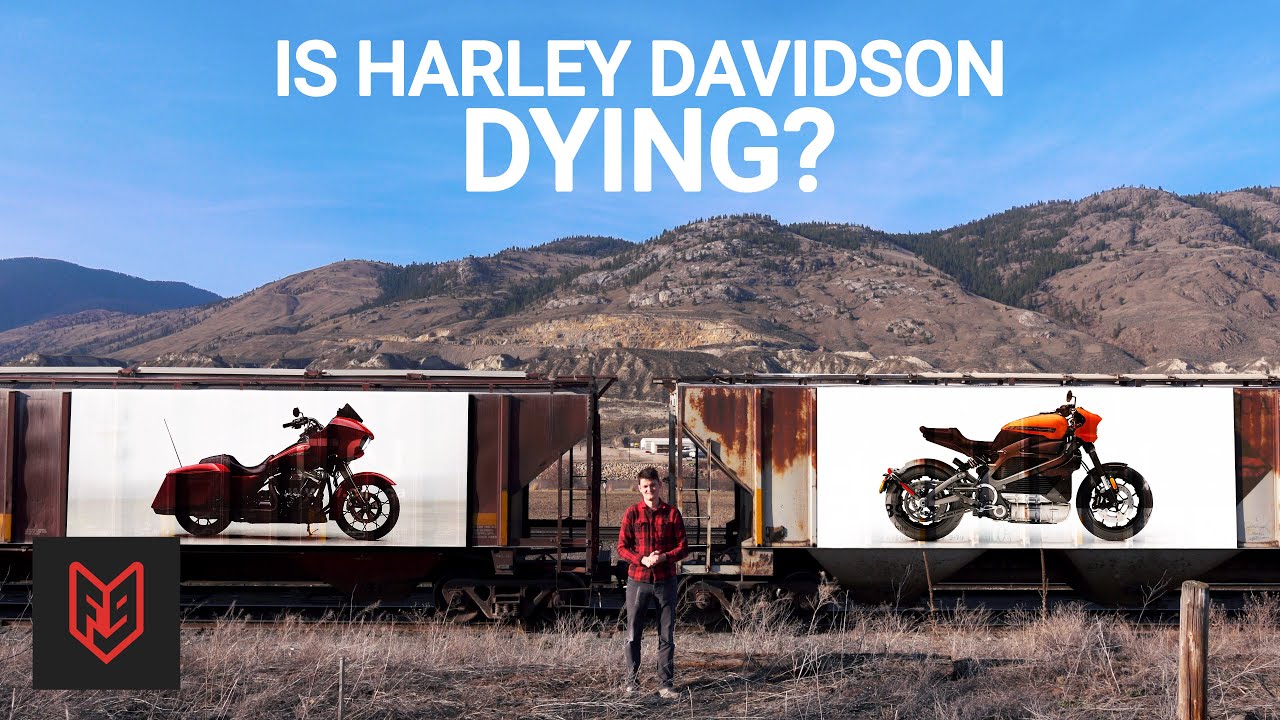
How Harley-Davidson Killed Itself — FortNine

FortNine

Decades of protectionism and financial engineering failed to solve Harley-Davidson's demographic collapse, forcing the company to abandon non-rider expansion and retreat to its dying cruiser base.

AI-assisted summary of How Harley-Davidson Killed Itself — original source. Check the original for full context.

Source published:

Key ideas

  • Harley-Davidson used aggressive share buybacks to artificially pump earnings per share from $1.50 to $1.69 in 2019 despite zero real operational profit growth, depleting vital cash reserves ahead of economic shocks. (0:00)
  • The slump in US motorcycle sales is predominantly concentrated in heavyweight cruisers, meaning Harley's falling sales are actively dragging industry metrics down rather than being collateral damage from broader trends. (1:49)
  • Following a 49% import tariff granted by Ronald Reagan in 1983, Harley locked itself into an aging Baby Boomer demographic whose average rider age reached 48 by 2008 before the company ceased publishing demographic data. (5:27)
  • Retaliatory European Union tariffs hit Harley with a $2,200 penalty per exported bike, and shifting production to Thailand and India severely damaged the brand's patriotic 'Made in the USA' domestic image. (8:17)
  • Former CEO Matt Levatich was ousted with an $11 million severance package after his 'More Roads to Harley-Davidson' campaign struggled by attempting to teach non-riders to ride while simultaneously selling them premium bikes. (10:32)

Detailed notes

## Background Published by the FortNine channel on YouTube on May 17, 2020, this video examines Harley-Davidson's deepening financial and demographic crisis. The channel's description compares the company to the Titanic facing an iceberg, questioning whether Harley-Davidson is doomed after suffering from structural flaws and sputtering sales long before the pandemic hit.

## TL;DR Host Ryan F9 breaks down how Harley-Davidson's collapse was engineered from within, beginning with deceptive stock buybacks that masked cratering sales to inflate executive pay. Rather than being a victim of an ailing industry, Harley trapped itself by cultivating a rigid, hyper-masculine outlaw image, relying on 1983 federal tariffs, and hitching its business model entirely to an aging Baby Boomer demographic. Attempted course corrections—such as offshoring production, entering trade wars, and launching the desperate 'More Roads to Harley-Davidson' initiative—alienated loyalists without attracting younger riders. The essay concludes that the brand's only viable path forward is to abandon misguided diversification, refocus on core heavyweight cruisers, and ride out its twilight alongside its faithful base.

## Atmosphere & style The presentation blends sharp investigative journalism with dry wit, biting cynicism, and cinematic storytelling. Ryan delivers his critique with theatrical flair and analytical precision, moving effortlessly from financial breakdowns of corporate balance sheets to philosophical reflections on biker counterculture. The tone shifts from sardonic amusement over aging weekend outlaws to a somber, Dylan Thomas–invoking eulogy for an American icon, ultimately punctuated by deadpan comedic banter.

## Bulletin - [00:00](https://www.youtube.com/watch?v=EOwxxsPaogY&t=0s) Harley-Davidson used aggressive share buybacks to artificially pump earnings per share from $1.50 to $1.69 in 2019 despite zero real operational profit growth, depleting vital cash reserves ahead of economic shocks. - [01:49](https://www.youtube.com/watch?v=EOwxxsPaogY&t=109s) The slump in US motorcycle sales is predominantly concentrated in heavyweight cruisers, meaning Harley's falling sales are actively dragging industry metrics down rather than being collateral damage from broader trends. - [05:27](https://www.youtube.com/watch?v=EOwxxsPaogY&t=327s) Following a 49% import tariff granted by Ronald Reagan in 1983, Harley locked itself into an aging Baby Boomer demographic whose average rider age reached 48 by 2008 before the company ceased publishing demographic data. - [08:17](https://www.youtube.com/watch?v=EOwxxsPaogY&t=497s) Retaliatory European Union tariffs hit Harley with a $2,200 penalty per exported bike, and shifting production to Thailand and India severely damaged the brand's patriotic 'Made in the USA' domestic image. - [10:32](https://www.youtube.com/watch?v=EOwxxsPaogY&t=632s) Former CEO Matt Levatich was ousted with an $11 million severance package after his 'More Roads to Harley-Davidson' campaign struggled by attempting to teach non-riders to ride while simultaneously selling them premium bikes.

## Key takeaways - [00:00](https://www.youtube.com/watch?v=EOwxxsPaogY&t=0s) Harley-Davidson masks its declining operational revenue through massive stock repurchases that artificially inflate earnings per share for executive compensation. - [01:00](https://www.youtube.com/watch?v=EOwxxsPaogY&t=60s) Heavy buybacks funded by debt or cash depletion stripped the company of liquidity needed to absorb macroeconomic crises like the pandemic. - [01:49](https://www.youtube.com/watch?v=EOwxxsPaogY&t=109s) Unlike the automotive sector, dirt bikes, or European premium manufacturers, the US powersports slump is isolated almost entirely to heavyweight cruisers. - [03:20](https://www.youtube.com/watch?v=EOwxxsPaogY&t=200s) Post-WWII veterans coping with trauma stripped surplus military bikes and inadvertently established an aggressive, hyper-individualistic outlaw identity for Harley. - [04:40](https://www.youtube.com/watch?v=EOwxxsPaogY&t=280s) Harley's violent, alienated branding abandoned the broader commuter market, which Honda capitalized on with welcoming campaigns aimed at ordinary citizens. - [05:27](https://www.youtube.com/watch?v=EOwxxsPaogY&t=327s) The 1983 Reagan administration's 49% tariff on foreign motorcycles over 750cc gave Harley breathing room but created long-term reliance on a single aging generation. - [06:50](https://www.youtube.com/watch?v=EOwxxsPaogY&t=410s) Harley's customer base aged out of riding without a replacement pipeline, rendering forward-looking products like the flat-track inspired XR1200 commercial failures. - [07:41](https://www.youtube.com/watch?v=EOwxxsPaogY&t=461s) The brand's outlaw persona devolved into a middle-aged weekend caricature, triggering generational backlash and an 'Okay, Boomer' dismissal from younger consumers. - [08:17](https://www.youtube.com/watch?v=EOwxxsPaogY&t=497s) Retaliatory steel and aluminum tariffs from the European Union cost Harley $2,200 per bike, forcing an overseas manufacturing pivot to Brazil, India, and Thailand. - [09:15](https://www.youtube.com/watch?v=EOwxxsPaogY&t=555s) Offshoring international motorcycle assembly triggered domestic accusations of hypocrisy and calls for boycotts, dismantling decades of patriotic branding. - [10:32](https://www.youtube.com/watch?v=EOwxxsPaogY&t=632s) The 'More Roads to Harley-Davidson' initiative violated basic marketing logic by attempting to convince non-riders to take up the sport while simultaneously pitching them Harley products. - [11:20](https://www.youtube.com/watch?v=EOwxxsPaogY&t=680s) Diversification into electric LiveWire bikes, e-bicycles, and lifestyle apparel failed to reverse losses, leading to CEO Matt Levatich's departure. - [12:29](https://www.youtube.com/watch?v=EOwxxsPaogY&t=749s) Rather than chasing incompatible demographic pivots forty years too late, Harley's most viable survival strategy is refocusing on its core cruiser heritage. - [12:55](https://www.youtube.com/watch?v=EOwxxsPaogY&t=775s) Harley's incoming leadership moved quickly to de-emphasize overextended global expansion campaigns and cut executive pay to stabilize the business.

## Detailed walkthrough ### [00:00](https://www.youtube.com/watch?v=EOwxxsPaogY&t=0s) Financial Engineering: Share Buybacks Masking a Bleeding Brand

Harley-Davidson opens its narrative on the edge of disaster, suffering through quarter after quarter of plummeting sales and hemorrhaging revenue. Despite this downward spiral, brand loyalists and "orange-blooded" apologists maintain that the financial reality is far from catastrophic, pointing directly to rising earnings per share (EPS) that seem to outperform market competition. However, this apparent fiscal health is entirely manufactured. Harley has been buying up its own stock in massive quantities, pulling off financial sleight of hand to artificially juice its metrics.

In 2019, Harley's EPS was $1.50 across 154.3 million outstanding shares, translating to roughly $230 million available for payout. The board of directors then engineered a buyback of 18.2 million shares, shrinking the total pool to approximately 136 million shares and artificially bumping the EPS up to $1.69. This engineered leap makes dividends appear to pull off an impressive five-year jump without the company actually earning a dime of new operational profit. This cosmetic fix conveniently enriches board members whose executive compensation is pegged to share price performance, masking year-end realities at the cost of the company's financial resilience.

```mermaid flowchart TD accTitle: Harley-Davidson Share Buyback Financial Engineering accDescr: Diagram showing how cash reserves or debt fund buybacks to reduce share counts and artificially boost EPS despite zero real profit growth. subgraph Capital["Capital Drainage"] A["Cash Reserves / Incurred Debt"] end subgraph Manipulation["Stock Manipulation"] B["154.3M Shares ($1.50 EPS)"] C["Board Repurchases 18.2M Shares"] D["136M Shares Left"] end subgraph Outcome["Artificial Metric"] E["Inflated $1.69 EPS"] F["Vulnerable in Economic Downturns"] end A --> C B --> C C --> D D --> E E --> F ```

- Buybacks are financed by taking on heavy debt or severely depleting liquid cash reserves. - Depleting those cash reserves strips the company of a financial safety net when macroeconomic shocks hit, such as an unexpected pandemic. - As the host notes: “All Harley has been building is a taller and taller cliff to ride off.”

[01:49](https://www.youtube.com/watch?v=EOwxxsPaogY&t=109s) Industry Scapegoats vs. Big Cruiser Stagnation

Harley's sales declines outpace the broader downturn in the United States, raising the question of whether Harley is simply a victim of a declining overall motorcycle market. While it is true that US powersports sales flatlined following the Great Recession, broader economic sectors bounced back forcefully. The automotive industry mounted a robust rebound, and even within the two-wheeled sphere, dirt bikes and small-displacement motorcycles experienced strong, vibrant demand.

The weakness in the market is isolated almost entirely to heavy, large-displacement highway cruisers. Premium pricing cannot explain the slump, given that upscale European manufacturers like BMW, Ducati, Triumph, and KTM have all posted gains across the same timeframe. Because Harley-Davidson manufactures the vast majority of big highway cruisers sold on American soil, their sluggish sales distort the market statistics. Harley is not suffering collateral damage from an ailing motorcycle industry; rather, Harley's plummeting numbers are actively dragging the rest of the industry down.

- Blaming Millennials for refusing to purchase heavyweight machinery ignores deep-seated product and brand issues. - The host clarifies the real dynamic: “It isn't that the poor motorcycle industry is dragging Harley down as the poor Harley sales are dragging the industry down.” - The underlying structural poison killing Harley was ingested roughly four decades ago, long before modern younger buyers arrived.

[03:20](https://www.youtube.com/watch?v=EOwxxsPaogY&t=200s) World War II and the Birth of Outlaw Counterculture

The brand's modern persona traces directly back to World War II, when Harley-Davidson shipped 62,000 military motorcycles overseas. When those bikes returned home battered from the battlefields alongside the GI troops who operated them, returning soldiers bought surplus army bikes for cheap. Veterans stripped and chopped away the ruined, unnecessary hardware, took off on the highway to escape quiet suburban routines, and channeled their war trauma into a new riding lifestyle.

This post-war subculture gave rise to the chopper, indelibly linking the brand to roaming, wild, alienated outcasts. By aligning its corporate image with a violent, hyper-individualistic, red-white-and-blue outlaw identity—symbolized by Peter Fonda riding a chopper while his sister Jane Fonda embraced anti-establishment counterculture—Harley cemented a rigid archetype for what it meant to ride their machinery. In doing so, the company completely abandoned the vast remainder of the motorcycling public, leaving peaceable, everyday commuting riders totally unaddressed.

- Outlaw chopper culture was born out of combat veterans customizing surplus military-spec machinery to cope with PTSD. - Harley's hyper-focus on aggressive, masculine outcasts permanently alienated the communal, broad-appeal consumer base. - The host captures this self-inflicted polarization: “As Harley solidified their image of the biker, individualistic, tri-colored and violent, they left the rest of the market wide open.”

[04:40](https://www.youtube.com/watch?v=EOwxxsPaogY&t=280s) "You Meet the Nicest People": The Honda Inversion

While Harley cultivated an image of rough, crude riders ready to throw punches in a bar, Honda entered the United States with a radically different, welcoming marketing approach. Honda promoted the idea that riding was a sunny, approachable pastime accessible to ordinary citizens, launching their landmark campaign: "You meet the nicest people on a Honda." They showcased women, children, students, and tennis players, airing advertisements at the Academy Awards and translating sales copy into multiple languages.

Honda systematically proved that two wheels could appeal to people who had never previously considered themselves "bikers." By selling economical, quiet, dependable small-displacement bikes that could cruise at 45 mph all day long on pocket change, Honda brought thousands of brand-new riders into the sport. Rather than responding to this disruption by diversifying its lineup and modernizing its brand, Harley dug into its single, narrow identity, setting up an existential vulnerability once its demographic ran its course.

- Honda broke unprecedented ground by actively pitching motorcycles to non-bikers, housewives, and everyday suburbanites. - The host contrasts the two philosophies directly: “While Harley is introducing bikers that fart and punch you in the teeth, Honda comes along with women and children and tennis players.”

[05:27](https://www.youtube.com/watch?v=EOwxxsPaogY&t=327s) The 1983 Reagan Tariffs and the Boomer Demographic Trap

Harley-Davidson's pivotal crossroad arrived when the company lobbied the federal government for protection from Japanese competition. Harley appealed to President Ronald Reagan, who stepped in to impose an aggressive 49% import tariff on foreign motorcycles featuring engine displacements greater than 750cc. This protectionist tariff wall shielded Harley’s heavyweight displacement lineup from outside market pressure, artificially isolating its domestic sales territory.

This breathing room catalyzed an explosive, lucrative run through the late 1990s and mid-2000s as the core Baby Boomer demographic hit peak earning years, netting the manufacturer over $1 billion in profit in 2006. However, relying on this aging demographic proved fatal. The average Harley rider was 43 years old in 1999, 46 in 2004, and 48 by 2008, before the company stopped publishing age demographics altogether. As its customer base aged into retirement and began needing three-wheeled mobility trikes, Harley faced the harsh reality of an evaporating customer base.

- In 1983, Ronald Reagan granted Harley temporary protection via a punishing 49% tariff on imported bikes over 750cc to give the company time to regroup. - The aging rider demographic created an inescapable wall, as the host emphasizes: “I don't care how faithful your faithful are, senior citizens statistically buy few bikes, but even fewer once they're dead.” - In an attempt to stem the bleeding during the 2008 financial crash, Harley released the XR1200—a flat-track styled, retro-modern machine honoring the legendary XR750. - Despite exceptional handling and racing heritage, the XR1200 was priced steeply at $10,000, beat the successful Ducati Scrambler wave to market by seven years, went ignored by traditionalists, and was quietly phased out.

[07:41](https://www.youtube.com/watch?v=EOwxxsPaogY&t=461s) Cultural Backlash: "Okay, Boomer" and the Trap of Rebel Irony

By doubling down on a single customer demographic, Harley-Davidson watched its once-edgy outlaws transform into "Wild Hogs"—middle-aged, weekend-cosplay riders parodying their former youth. The tough anti-hero branding had hardened into a cartoonish cliché of suburban dads dressing up in leather vests to play the rebel on weekends.

This one-dimensional brand loyalty ultimately created a toxic wall of brand prejudice among younger generations. To post-Boomer generations, the aesthetic was not merely uninteresting; it had become an emblem of generational self-indulgence. When younger consumers look at a capable, high-heritage cruiser bearing the Harley bar-and-shield badge, their instinctive reaction is to dismiss it out of hand.

- The host articulates the generational divide sharply: “Tomorrow's customers will look at a brilliant motorcycle and say, 'Okay, Boomer.'” - By clinging exclusively to an aging cohort, Harley transformed its rebellious spirit into an aesthetic that younger generations find actively uncool.

[08:17](https://www.youtube.com/watch?v=EOwxxsPaogY&t=497s) Trade Wars, Offshoring, and the Backfiring Global Strategy

Harley sought to escape domestic stagnation by growing its overseas sales, specifically targeting Europe. However, its historic reliance on government protectionism resurfaced to haunt it. When the Trump administration slapped tariffs on imported global steel and aluminum, the European Union retaliated by striking iconic, highly visible American products: Kentucky bourbon, Levi's jeans, and Harley-Davidson motorcycles.

Because motorcycles require immense amounts of raw metal, Harley was forced to absorb a crippling $2,200 tariff hit on every motorcycle exported to the European market. To protect its razor-thin margins overseas, Harley shifted international production to plants in Brazil, India, and Thailand. This pragmatic offshore pivot alienated the brand's fiercely patriotic domestic base, which felt betrayed by a manufacturer that had traded on "Made in the USA" jingoism for decades. When Harley leadership claimed to be entirely apolitical in navigating the dispute, critics pointed out that their reliance on patriotic trade barriers had made them political from the start.

- Retaliatory EU duties penalized Harley far worse than whiskey or denim producers due to the high metal content of motorcycles. - Offshoring assembly to Thailand and India created immediate friction with domestic buyers, prompting public backlash and calls for boycotts from Donald Trump. - Explaining the company's compromised position, the host notes: “Harley, sell your soul for exclusive access to a target market at the neglect of other markets, and when you finally need new riders, internationals, guess what it costs.”

[10:32](https://www.youtube.com/watch?v=EOwxxsPaogY&t=632s) The "Long March" Pivot to Non-Riders and Levatich's Exit

Backed into a corner, Harley-Davidson found itself attempting the exact play Honda had made sixty years earlier: courting non-riders. Through its "More Roads to Harley-Davidson" initiative, the company pivoted away from merely building heavy machinery to manufacturing new motorcyclists from scratch. The company introduced the fully electric LiveWire, invested in lightweight e-bicycles, launched casual urban clothing boutiques across Asia, bought product placements with Hollywood stars like Scarlett Johansson, and founded regional riding academies targeting women.

This dual-front pivot violated basic marketing rules by attempting to convince an aloof demographic to take up motorcycling, while simultaneously attempting to convince them to pick Harley-Davidson. Former CEO Matt Levatich dubbed this painful restructuring a "Long March"—an ominous historical nod to the Chinese Red Army's military retreat, where 100,000 soldiers set off and fewer than 7,000 made it home alive. Levatich was ultimately ousted with an $11 million severance payout, leaving behind an enterprise fighting for survival as a viable motorcycle manufacturer.

- Selling non-riders on the concept of motorcycling before selling them on a premium Harley-Davidson motorcycle doubled the company's marketing difficulty. - Outgoing CEO Matt Levatich left the company with an $11 million retirement package amidst steep workforce layoffs and leadership shakeups. - Wrapping up the brand's existential crisis, the host observes: “Will HD disappear as a brand? Probably not. As a motorcycle? Maybe.”

[12:29](https://www.youtube.com/watch?v=EOwxxsPaogY&t=749s) Raging Against the Dying of the Light

Ryan concludes that after decades of miscalculated decisions, Harley-Davidson finds itself roughly forty years too late to pursue gentle paths of retreat, turning their current diversification efforts into paths of doom. Rather than desperately chasing foreign markets or alienating their identity, Ryan argues that the Motor Company's best strategic move is to embrace who they actually are: refocus completely on traditional cruisers and ride out their twilight years alongside the faithful demographic that built them. Pointing out the Dylan Thomas parallel, Ryan states: “I think Harley's best hope is to accept that their good run has waned into a good night focus back on cruisers and rage with your customers against the dying of the light.”

There is a sliver of hope found in Harley-Davidson's changing of the guard. The replacement CEO stepped into command and immediately began walking back the aggressive expansion strategy, deprioritizing the ambitious "More Roads to Harley-Davidson" initiative while dramatically slashing his own executive salary until the company stabilizes and recovers its footing. To illustrate what riding a Harley was originally meant to represent, the video closes with a cinematic homage to outlaw biker culture. An older rider questions the shallow posturing and corporate commodification of the scene, challenging his listener: “Why do you think I don't wear the colors jack why do they go right all alone you don't know about it anymore but I think you all want to get back on your bikes and go out and riding the highway until you remember what riding is all about.” The serious, reflective mood is promptly punctured by deadpan comedic banter when the recipient simply mutters, “Okay pop,” prompting the father to sigh that the kid takes after his mother.

- **Strategic Course Correction:** Scrapping the frantic pursuit of unproven segments to double down on core cruisers and re-engage traditional brand loyalists. - **Executive Realignment:** Harley-Davidson's interim leadership immediately de-emphasized the sprawling "More Roads" campaign and forfeited personal compensation until the company rights its course. - **The Core Essence:** A closing reminder that the brand's enduring power never came from branded merchandise or boardroom corporate pivots, but from the raw freedom of riding on the open highway.

## Notable quotes > [01:49](https://www.youtube.com/watch?v=EOwxxsPaogY&t=109s) It isn't that the poor motorcycle industry is dragging Harley down as the poor Harley sales are dragging the industry down. — Ryan

> [03:20](https://www.youtube.com/watch?v=EOwxxsPaogY&t=200s) As Harley solidified their image of the biker, individualistic, tri-colored and violent, they left the rest of the market wide open. — Ryan

> [05:27](https://www.youtube.com/watch?v=EOwxxsPaogY&t=327s) I don't care how faithful your faithful are, senior citizens statistically buy few bikes, but even fewer once they're dead. — Ryan

## Mentioned Harley-Davidson, Honda, BMW, Ducati, Triumph, KTM, Ronald Reagan, Donald Trump, Matt Levatich, Peter Fonda, Jane Fonda, Scarlett Johansson, XR1200, XR750, LiveWire, More Roads to Harley-Davidson, Wild Hogs

## Video description If Harley Davidson is the Titanic, the pandemic might just be that one big iceberg. Worse still, it had a hole in the hull and sputtering engines before all this even began. Damn. Is HD done for? [Details below]

LINKS: Dreamcycle Motorcycle Museum: http://www.dreamcycle.ca/ Biltwell Gringo S ECE Helmet: https://frt9.co/7p3enm Icon Raiden Jacket: https://frt9.co/jsjvg4 Revit Bison Riding Shirt: https://frt9.co/6n9kie Five Stunt EVO Gloves: https://frt9.co/7bhtnc Revit Sand 4 H2O Pants: https://frt9.co/90god7 TCX Street Ace Waterproof Shoes: https://frt9.co/7qvtgh

Support us by shopping motorcycle gear with this link: https://frt9.co/aeu0mn

Or anything with this Amazon link: https://frt9.co/30l4bi

Cinematographer & Editor : Aneesh Shivanekar (findaneesh.com)

Thanks to Dreamcycle Motorcycle Museum

Gear up for your next adventure at fortnine.ca: https://frt9.co/98au9e

Bike in the shop? Traveling? Rent your next ride with Riders Share: https://riders-share.com/welcome/fortnine

Connect with us: http://facebook.com/fortnine http://instagram.com/fortnine http://twitter.com/fortninecanada

[Source](https://www.youtube.com/watch?v=EOwxxsPaogY)

中文简报

哈雷戴维森在骑手老龄化之际以回购掩盖销量下滑 数十年的保护主义和金融手段未能解决哈雷戴维森的人口结构崩溃问题,迫使该公司放弃向非骑手群体的扩张,退守其日渐式微的巡航车基本盘。 主持人 Ryan F9 剖析了哈雷戴维森的衰落是如何由内部造成的,首先是利用虚假诱导性的股票回购来掩盖暴跌的销量,以此推高高管薪酬。哈雷并非行业衰退的受害者,而是自我设限:塑造刻板、极度硬汉的法外狂徒形象,依赖1983年的联邦关税,并将商业模式完全押注在老龄化的婴儿潮一代身上。随后的纠偏尝试——如将生产线外迁、卷入贸易战以及推出孤注一掷的“更多通往哈雷戴维森之路”计划——既疏远了忠实拥趸,又未能吸引年轻骑手。该评论总结道,该品牌唯一可行的出路是放弃错误的多元化战略,重新聚焦于核心重型巡航车,与其忠实基本盘一同走过暮年。 哈雷戴维森在2019年实际营业利润零增长的情况下,通过激进的股票回购人为地将每股收益从1.50美元推高至1.69美元,在经济冲击来临前耗尽了至关重要的现金储备。 (0:00) 美国摩托车销量的下滑主要集中在重型巡航车领域,这意味着哈雷销量的下滑正在直接拉低整个行业的数据,而非仅仅是更广泛行业趋势下的附带受害者。 (1:49) 在罗纳德·里根于1983年批准49%的进口关税后,哈雷便将自己困在了不断老龄化的婴儿潮一代客户群体中;到2008年,其骑手的平均年龄已达48岁,此后该公司停止公布人口结构数据。 (5:27) 欧盟的反制性关税导致哈雷每辆出口摩托车面临2200美元的罚款,而将生产转移至泰国和印度则严重损害了其爱国主义的“美国制造”本土形象。 (8:17) 前首席执行官马特·莱瓦蒂奇在获得1100万美元离职补偿金后被免职,此前他推行的“更多通往哈雷戴维森之路”计划举步维艰,该计划试图在向非骑手群体教学骑车的同时向他们兜售高档摩托车。 (10:32)

Detailed notes — zh

## Background 该视频由知名摩托车评测频道 FortNine 于 2020 年 5 月 17 日在 YouTube 平台发布。视频简介将当时的哈雷戴维森(Harley-Davidson)比作已然船身破损、引擎失灵的“泰坦尼克号”,直指突如其来的疫情更像是一座致命冰山,并由此深入探讨该品牌是否已陷入不可挽回的灭顶之灾。 ## TL;DR 视频深入剖析了哈雷戴维森走向衰落的深层商业与文化诱因。哈雷近年来依靠激进的股票回购人为制造每股收益(EPS)繁荣的假象,在危机来临前掏空了现金储备,而其销量暴跌更直接拖累了全美大排量巡航车市场。追溯历史,哈雷早在数十年前通过拥抱反主流文化、依赖里根时期的保护性关税政策建立起安逸的垄断温室,却因此错失了吸引年轻一代的黄金期并深陷用户老龄化泥潭;随后遭遇的关税反噬、海外建厂公关灾难以及盲目转型的“长征”计划更令其雪上加霜。最终,视频指出新管理层唯有壮士断腕、放弃浮夸符号并重新聚焦核心巡航车业务,才可能在这场生存之战中守住最后的阵地。 ## Atmosphere & style FortNine 展现了标志性的冷峻、犀利与黑色幽默风格,整部视频叙事节奏明快且极富张力。主播 Ryan F9 以冷静却不留情面的剖析开场,用“腹泻囤厕纸”等辛辣比喻层层剥开企业的财务包装与神话伪装,字里行间充斥着对资本短视的嘲弄与对经典机车文化衰败的苍凉感。伴随着对《逍遥骑士》等文化符号的深情回溯,全片在辛辣批判与商业警示中融入了一丝对老派骑士精神的悲壮挽歌氛围,既发人深省又带有一种痛定思痛后的沉静。 ## Bulletin - [00:00](https://www.youtube.com/watch?v=EOwxxsPaogY&t=0s) 哈雷戴维森通过激进的股票回购人为虚增每股收益(EPS),例如2019年回购1820万股将EPS从1.50美元推高至1.69美元,却在突发危机前耗尽了关键现金储备。 - [01:49](https://www.youtube.com/watch?v=EOwxxsPaogY&t=109s) 尽管宝马、杜卡迪等欧洲高端品牌销量走强,哈雷核心的重型巡航车市场却因老龄化急剧萎缩,其骑手平均年龄早在2008年就已升至48岁。 - [08:08](https://www.youtube.com/watch?v=EOwxxsPaogY&t=488s) 2018年因美国钢铝关税引发的欧盟报复性制裁,导致哈雷每出口一辆车损失2200美元利润,被迫将产线迁往海外并引发本土忠实用户的抵制。 - [10:32](https://www.youtube.com/watch?v=EOwxxsPaogY&t=632s) 激进的年轻化战略“条条大路通哈雷”未能挽救颓势,导致时任CEO离职;新任CEO约亨·蔡茨紧急叫停扩张计划并自愿放弃薪酬以重组核心巡航车业务。 ## Key takeaways - [00:00](https://www.youtube.com/watch?v=EOwxxsPaogY&t=0s) 哈雷管理层利用债务和现金储备疯狂回购股票以粉饰财务报表,在实际未创造业务价值的情况下迎合高管薪酬与短期股价表现。 - [01:49](https://www.youtube.com/watch?v=EOwxxsPaogY&t=109s) 大萧条后摩托车行业整体低迷的借口不成立,欧美高端品牌及小排量越野车普遍反弹,唯独哈雷主导的大排量巡航车板块严重拖垮了行业数据。 - [03:20](https://www.youtube.com/watch?v=EOwxxsPaogY&t=200s) 二战后军余车辆造就了哈雷与边缘反叛文化的强力绑定,但这一形象使哈雷主动将主流大众市场拱手相让。 - [03:20](https://www.youtube.com/watch?v=EOwxxsPaogY&t=200s) 本田凭借“在路上你会遇到最友善的人”战役开辟了非传统骑手的广阔蓝海,对哈雷构成了生活方式维度的降维打击。 - [05:27](https://www.youtube.com/watch?v=EOwxxsPaogY&t=327s) 里根政府在1983年对大排量进口机车征收的49%保护性关税为哈雷构筑了短期温室,但也使其错失了年轻化转型的关键窗口期。 - [05:27](https://www.youtube.com/watch?v=EOwxxsPaogY&t=327s) 哈雷曾凭借XR1200提前布局了利润丰厚的高端复古运动街车风口,却因品牌长期固化在老年巡航车形象上而导致产品暴死。 - [08:08](https://www.youtube.com/watch?v=EOwxxsPaogY&t=488s) 哈雷将自身捆绑为“美国制造”国家图腾的做法遭遇关税反噬,在中美与美欧贸易战中沦为首当其冲的靶子。 - [08:08](https://www.youtube.com/watch?v=EOwxxsPaogY&t=488s) 为规避高昂关税将生产转移至泰国、印度等海外工厂,彻底打破了哈雷宣扬的纯正美国血统神话,遭遇本土死忠与政界的双重背叛指责。 - [10:32](https://www.youtube.com/watch?v=EOwxxsPaogY&t=632s) “条条大路通哈雷”战略试图同时完成“让非骑手骑车”和“让非骑手买哈雷”两重营销壁垒,违背了商业营销的基本规律。 - [10:32](https://www.youtube.com/watch?v=EOwxxsPaogY&t=632s) 哈雷戴维森可能作为服装和文化品牌长期留存,但作为一家具备持续竞争力的摩托车制造商正面临生存危机。 - [12:29](https://www.youtube.com/watch?v=EOwxxsPaogY&t=749s) 面对四十年累积的系统性溃败,哈雷眼下最务实的出路是放弃盲目讨好年轻群体,退守巡航车基本盘与忠实受众共度暮年。 - [12:29](https://www.youtube.com/watch?v=EOwxxsPaogY&t=749s) 新任CEO约亨·蔡茨叫停多元化冒进扩张并主动放弃个人薪俸,显示出品牌断腕重构核心立足点的决心。 ## Detailed walkthrough ### [00:00](https://www.youtube.com/watch?v=EOwxxsPaogY&t=0s) 假象繁荣:股票回购与财务迷局 哈雷戴维森(Harley-Davidson)的销量已经连续数个季度持续滑坡,公司正在急速失血。然而,那些狂热的“橙血”拥护者却依旧坚称情况并未像表面看起来那样灾难深重,理由是哈雷的每股收益(EPS)依然坚挺,甚至在账面上跑赢了竞争对手。FortNine 指出,这完全是欺骗性的账面数字游戏:哈雷管理层囤积并回购股票的疯狂劲头,“就像腹泻患者囤积厕纸一样”。 以 2019 年为例,当时的每股收益为 1.50 美元,公司共有 1.543 亿股流通股,总分红资金池约为 2.3 亿美元。董事会通过暗箱操作回购了 1,820 万股,使流通股减少到 1.36 亿股。在总利润没有实际增长的情况下,每股收益被生生拔高到了 1.69 美元。这种财技在不创造任何实际业务价值的前提下,凭空让股东分红完成了“五年的跨越”,更顺理成章地让那些薪酬与股价表现挂钩的董事会高管大发横财。 ```mermaid flowchart LR accTitle: 哈雷回购股票提升EPS示意图 accDescr: 展示哈雷如何通过债务回购减少流通股以虚增每股收益 subgraph 财务手段 A["2019年原状<br>1.543亿股<br>EPS: $1.50"] --> B["耗尽现金/举债<br>回购1820万股"] B --> C["股本缩减至<br>1.36亿股"] C --> D["账面EPS提升至<br>$1.69"] end D -.-> E["掏空现金储备<br>无力抵御黑天鹅"] ``` 然而,股票回购并非没有代价,它要么依赖债务融资,要么直接掏空公司的现金储备。在经济下行乃至突发疫情等极端黑天鹅事件降临时,这些现金储备本应是维持生存的救命稻草。FortNine 严厉批评这种自掘坟墓的行径: > “All Harley has been building is a taller and taller cliff to ride off.”(哈雷一直以来所建造的,不过是一座越来越高、好让自己骑着车冲下去的悬崖。) - 2019 年实际分红池:约 2.3 亿美元(1.543 亿股,每股 1.50 美元)。 - 回购股票数量:1,820 万股,将分母缩小至约 1.36 亿股,硬生生造出每股 1.69 美元的新数据。 - 致命后果:在危机爆发前夕掏空现金流储备,埋下流动性崩盘的祸根。 --- ### [01:49](https://www.youtube.com/watch?v=EOwxxsPaogY&t=109s) 行业诊断:谁拖垮了谁? 表面上看,摩托车行业整体销量在后金融危机时代都呈现疲软态势,因此有人将哈雷的滑坡归咎于全行业的整体低迷。但数据揭示了一个截然相反的残酷现实:大萧条之后,美国汽车市场迅速反弹,两轮领域中的越野车(off-road)以及小排量摩托车同样生机盎然。唯独大排量公路巡航车(big highway bikes)长期一蹶不振。 与此同时,宝马(BMW)、杜卡迪(Ducati)、凯旋(Triumph)和 KTM 等欧洲高端品牌在价格高昂的情况下销量却全线飘红。这就彻底粉碎了“溢价导致哈雷滞销”或“市场环境拖垮哈雷”的借口。在美国重型公路巡航车市场中,哈雷占据了绝大多数份额。FortNine 直击痛点: > “It isn't that the poor motorcycle industry is dragging Harley down, it's that poor Harley sales are dragging the industry down.”(并不是可怜的摩托车行业拖垮了哈雷,而是哈雷惨淡的销量把整个行业都拉下了水。) 千禧一代常被外界指责为扼杀哈雷的凶手,外界指责年轻人不买账哈雷做出的更小、更便宜、更环保的妥协。但 FortNine 反驳称,哈雷如今脑死亡般的休克状态是自己造成的,甚至不能怪罪这代旁观者,因为那颗毒药早在四十年前就已被哈雷自己咽下。 --- ### [03:20](https://www.youtube.com/watch?v=EOwxxsPaogY&t=200s) 反主流文化的绑定与本田的降维打击 哈雷戴维森始于 1903 年,但真正蜕变为国家级图腾是在第二次世界大战期间。哈雷向战场输送了 6.2 万辆战车,战后身心受创的退伍老兵低价买下军余摩托,拆掉多余部件(Chopper 风格的起源),将战争创伤带上公路,骑车逃离沉闷的郊区生活。哈雷从此与狂野游荡的边缘人、反叛者紧紧捆绑在一起,成为反主流文化的代名词。 然而,这种反叛者形象将庞大的主流大众市场完全拱手让人。当彼得·方达(Peter Fonda)在电影《逍遥骑士》中跨着大哈雷演绎反叛象征时,大洋彼岸的本田(Honda)携带着清新、健康的形象大举杀入。本田打出了划时代的广告语:“在路上你会遇到最友善的人(You meet the nicest people on a Honda)”,把摩托车推销给女性、儿童和网球运动员,将广告投放在奥斯卡颁奖典礼和多国主流媒体上。 | 品牌定位对比 | 哈雷戴维森 (Harley-Davidson) | 本田 (Honda) | |:--- |:--- |:--- | | **文化形象** | 狂野、反主流、独行、带暴力倾向的边缘骑手 | 亲和、阳光、注重家庭与社群的普通大众 | | **产品属性** | 笨重、轰鸣震耳、大排量巡航车 | 经济耐用(5美分骑一天)、操控轻盈 | | **受众定位** | 纯粹的传统“摩托骑手”(硬核Biker) | 以前从未骑过车的普通消费者(Non-bikers) | 哈雷强化了自己“留着胡子、挥舞拳头”的硬汉刻板印象,而本田则证明了摩托车可以是现代生活方式的一部分,彻底开辟了非传统骑手的蓝海。 --- ### [05:27](https://www.youtube.com/watch?v=EOwxxsPaogY&t=327s) 保护关税的毒丸与人口老龄化倒计时 面对本田等日系品牌的降维打击,哈雷走向了致命的转折点。它向里根政府哭诉,要求保护这家“美国制造”的标志性企业。里根政府在 1983 年对 750cc 以上的进口摩托车征收了高达 49% 的惩罚性关税。这道贸易壁垒筑起了一座温室,将哈雷的核心市场隔绝开来,让其免受外敌竞争。 这一保护措施在短期内效果显著,随着婴儿潮一代步入消费能力顶峰,哈雷在 2006 年创下了超过 10 亿美元的净利润纪录。然而,FortNine 强调保护政策掩盖了人口结构的灰犀牛: > “Senior citizens statistically buy few bikes, but even fewer once they're dead.”(统计数据显示,老年人买的摩托车本来就少,而一旦他们去世,买的就更少了。) ```mermaid flowchart TD accTitle: 哈雷骑手平均年龄变迁 accDescr: 显示哈雷骑手平均年龄随时间持续推移 Y1999["1999年: 43岁"] --> Y2004["2004年: 46岁"] Y2004 --> Y2008["2008年: 48岁"] Y2008 --> Future["随后停止公布数据<br>主力车型转向三轮代步级别"] ``` 哈雷骑手的平均年龄从 1999 年的 43 岁一路攀升至 2008 年的 48 岁,随后哈雷便因数据难堪而停止公布该指标。在 2008 年金融危机爆发时,哈雷曾试图自救,推出了 XR1200 这一具有现代复古风格的运动街车。它向历史上最成功的传奇越野滑胎赛车 XR750 致敬,操控极其优异。但在当时该车售价高达 1 万美元且无人问津。它比杜卡迪自游(Ducati Scrambler)早了七年,比印第安 FTR 拥有更厚重的历史传承,哈雷原本提前占领了后来最赚钱的复古机车风口,却因自身品牌固化而无法将其变现,最终草草停产。曾经的反叛者老成了《荒野大飚客(Wild Hogs)》里的中产滑稽大叔,哈雷在年轻一代眼里不仅不再酷炫,甚至成了“老古董(Boomer)”的象征。 --- ### [08:08](https://www.youtube.com/watch?v=EOwxxsPaogY&t=488s) 关税反噬与逃离美国的公关灾难 哈雷将重心押注于国际市场特别是欧洲市场,但这恰恰触发了其四十年前种下的关税恶果。当初寻求里根政府保护,确立了哈雷作为“值得政府庇护的国家象征”的政治地位。2018 年,特朗普政府对进口钢铁和铝材加征关税,欧盟随即发动精准报复,直接打击最具美国代表性的核心象征:肯塔基波本威士忌、李维斯(Levi's)牛仔裤以及哈雷戴维森。 波本威士忌和牛仔裤不需要消耗多少金属,但摩托车却极度依赖钢铝原料。哈雷陷入了两头受气的不利境地:在美国本土承担更高的制造成本,在海外又面临重税惩罚,每向欧盟出口一辆车就要被吞噬高达 2,200 美元的利润。这种流血不可持续,哈雷只能效仿跨国企业,将面向国际市场的生产线转移到巴西、印度和泰国。 然而,哈雷戴维森并不是普通企业,它长期自我包装为“美国制造”的绝对旗手。这一海外设厂举措激怒了美国本土最忠实的消费群体,也招致了特朗普总统的愤怒炮轰。面对来自华盛顿的抵制呼吁,时任管理层试图以“我们不是政治组织,一直努力保持非政治化”进行苍白的辩解。FortNine 直斥这种说法极其虚伪: > “The only reason Trump's call to the boycott aren't empty is because they fulfill your deal with the devil: partly sell your soul for exclusive access to a target market at the neglect of other markets, and when you finally need new riders, internationals, guess what? It costs.”(特朗普的抵制呼吁之所以不是虚张声势,恰恰是因为它兑现了你当初与魔鬼立下的契约:你出卖灵魂以换取对某一特定目标市场的垄断,同时忽视了其他所有市场;而当你终于需要新的国际骑手时,你猜怎么着?代价来了。) - 欧盟报复性关税导致哈雷每辆出口欧洲的摩托车利润损失达 2,200 美元。 - 哈雷被迫加速将出口车辆的制造转往泰国、印度和巴西,彻底击碎“100% Made in America”的神话。 --- ### [10:32](https://www.youtube.com/watch?v=EOwxxsPaogY&t=632s) “条条大路通哈雷”与撤退的长征 面对内外交困,哈雷在 2018 年前后不得不启动了他们最后的底牌——复刻本田当年的策略,将目标对准“非骑手”。他们推出了雄心勃勃的“条条大路通哈雷(More Roads to Harley-Davidson)”计划。该战略将公司的核心目标从“制造伟大的摩托车”公然转向为“培养忠诚的骑手”: - 推出 LiveWire 电动摩托车与电动自行车系列,宣传“拧动油门即走,比自行车还容易骑”。 - 在亚洲开设数十家品牌服装店、天猫官方旗舰店,将品牌符号商品化。 - 将车型植入漫威电影中黑寡妇(斯嘉丽·约翰逊饰)的胯下,并设立专门针对女性骑手的驾校学院。 ```mermaid flowchart TD accTitle: 营销学挑战对比 accDescr: 比较常规摩托车营销与哈雷面临的双重营销难题 subgraph 常规摩托车品牌营销 A1["现有摩托车骑手"] -->|"说服选择本店品牌"| B1["购买车辆"] end subgraph 哈雷面临的双重挑战 A2["完全不骑车的非骑手"] -->|"第一步:说服其尝试摩托车运动"| B2["新晋骑手"] B2 -->|"第二步:说服其购买高价哈雷品牌"| C2["哈雷买家"] end ``` 营销学最基础的原则是避免在同一时间克服重重壁垒。将哈雷卖给现有的成熟骑手已经十分不易,而要先将普通人转化为摩托车爱好者,再让他们掏钱买哈雷,难度呈指数级增加。长期漠视小排量和廉价车型市场的哈雷,根本不具备这种基因。 主持这一庞大转型计划的首席执行官马特·莱瓦蒂奇(Matt Levatich)将这项工程沉重地比作“长征(Long March)”。FortNine 引用历史冷峻地讽刺道,当年红军长征出发时有十万人,最终抵达根据地的幸存者不足七千人;如今面临自身恶疾爆发的哈雷,究竟还能剩下几成?最终,耗尽董事会耐心的马特·莱瓦蒂奇被勒令下课,带着 1,100 万美元的巨额遣散补偿离职。FortNine 总结道: > “Will HD disappear as a brand? Probably not. As a motorcycle? Maybe.”(哈雷戴维森会作为一个品牌彻底消亡吗?大概不会。但作为一个摩托车制造商呢?也许真的会。) ### [12:29](https://www.youtube.com/watch?v=EOwxxsPaogY&t=749s) 绝地求生:重回巡航车与新掌舵者的断腕决心 面对哈雷戴维森(Harley-Davidson)当下的泥潭,如今再去构想那些漫长而迟缓的撤退与转型路线,显然已经晚了整整四十年;在残酷的市场现实面前,这些所谓的挽救路线无异于通往毁灭的歧途。Ryan F9 尖锐地指出,哈雷目前最好的出路并不是盲目迎合并不青睐自己的全新客群,而是坦然认清现实,与其在不擅长的新兴领域狼狈挣扎,不如退回自己赖以成名的老本行巡航车(Cruisers)阵地,陪同这批忠诚却正在老去的拥趸战至最后一刻。正如 Ryan 所主张的:“I think Harley's best hope is to accept that their good run has waned into a good night, focus back on cruisers and rage with your customers against the dying of the light.”(我认为哈雷最好的希望就是接受属于他们的辉煌时代已然入夜的现实,将焦点重新放回巡航车上,与你的拥趸们一同怒斥这光明的消逝。) 即便局面凶险,哈雷的命运也并非全无转机。新上任的临危受命者——接任首席执行官的约亨·蔡茨(Jochen Zeitz)行事作风强悍不羁,甫一接手大权便立即叫停并淡化了前任激进推行的“More Roads to Harley-Davidson”(通往哈雷戴维森的更多道路)战略,甚至果断取消了自己的薪酬,立誓在哈雷这帮骑手骨干重新找回自身定位与稳固立足点之前不领薪俸。在品牌迷失自我、盲目扩张导致溃败的时刻,这种大刀阔斧削减冗余、重构核心基本盘的断腕之举,恰恰才是哈雷如今最迫切需要的强硬手段。 紧接着,视频借由电影《荒野大飙客》(Wild Hogs)中《逍遥骑士》(Easy Rider)传奇影星彼得·方达(Peter Fonda)饰演的达米安·布雷德(Damien Blade)的一段经典台词,直击哈雷文化深处的精神症结。彼得·方达在片中质问帮派头目杰克:“Why do you think I don't wear the colors, Jack? Why do I ride all alone? You don't know about it anymore, but I think you all want to get back on your bikes and go out and ride in the highway until you remember what riding is all about.”(你以为我为什么不穿帮派背心,杰克?为什么我总是独自一人骑行?你们已经不懂了,但我觉得你们都该重新跨上机车,冲上公路去骑个痛快,直到你们重新记起骑行的真谛究竟是什么。)这番话不仅讽刺了哈雷过度依赖帮派符号与身份消费的虚浮泡沫,也呼吁所有骑士脱下浮夸的伪装,回归纯粹的机车内核。视频在耐人寻味的余韵与幽默的生活化调侃中收尾,随着一句对家庭代际特征的打趣,给这篇关于哈雷商业兴衰的深刻反思画上了句号。 - 战略反思:哈雷在数十年未能成功完成年轻化转型的背景下,贸然铺开过多边缘产品线反成拖累,重新专注于核心巡航车型才是止血关键。 - 管理层剧变:新任 CEO 迅速降温此前的“More Roads”扩张计划,并选择停领个人薪酬,展现出带领品牌重新寻找立足点的强硬姿态。 - 文化本质呼唤:通过对《逍遥骑士》精神象征的致敬与引用,点出哈雷若想自救,必须剥离虚荣的帮派消费符号,找回纯粹而质朴的公路骑行本义。 ## Notable quotes > [01:49](https://www.youtube.com/watch?v=EOwxxsPaogY&t=109s) It isn't that the poor motorcycle industry is dragging Harley down, it's that poor Harley sales are dragging the industry down. — FortNine > [10:32](https://www.youtube.com/watch?v=EOwxxsPaogY&t=632s) Will HD disappear as a brand? Probably not. As a motorcycle? Maybe. — FortNine > [12:29](https://www.youtube.com/watch?v=EOwxxsPaogY&t=749s) I think Harley's best hope is to accept that their good run has waned into a good night, focus back on cruisers and rage with your customers against the dying of the light. — Ryan F9 ## Mentioned 哈雷戴维森 (Harley-Davidson), FortNine, Ryan F9, 本田 (Honda), 宝马 (BMW), 杜卡迪 (Ducati), 凯旋 (Triumph), KTM, 马特·莱瓦蒂奇 (Matt Levatich), 约亨·蔡茨 (Jochen Zeitz), 彼得·方达 (Peter Fonda), 里根 (Ronald Reagan), 特朗普 (Donald Trump), XR1200, XR750, LiveWire, 《逍遥骑士》 (Easy Rider), 《荒野大飙客》 (Wild Hogs), 李维斯 (Levi's), 杜卡迪自游 (Ducati Scrambler), 印第安 FTR (Indian FTR) ## Video description If Harley Davidson is the Titanic, the pandemic might just be that one big iceberg. Worse still, it had a hole in the hull and sputtering engines before all this even began. Damn. Is HD done for? [Details below] LINKS: Dreamcycle Motorcycle Museum: http://www.dreamcycle.ca/ Biltwell Gringo S ECE Helmet: https://frt9.co/7p3enm Icon Raiden Jacket: https://frt9.co/jsjvg4 Revit Bison Riding Shirt: https://frt9.co/6n9kie Five Stunt EVO Gloves: https://frt9.co/7bhtnc Revit Sand 4 H2O Pants: https://frt9.co/90god7 TCX Street Ace Waterproof Shoes: https://frt9.co/7qvtgh Support us by shopping motorcycle gear with this link: https://frt9.co/aeu0mn Or anything with this Amazon link: https://frt9.co/30l4bi Cinematographer & Editor : Aneesh Shivanekar (findaneesh.com) Thanks to Dreamcycle Motorcycle Museum Gear up for your next adventure at fortnine.ca: https://frt9.co/98au9e Bike in the shop? Traveling? Rent your next ride with Riders Share: https://riders-share.com/welcome/fortnine Connect with us: http://facebook.com/fortnine http://instagram.com/fortnine http://twitter.com/fortninecanada [Source](https://www.youtube.com/watch?v=EOwxxsPaogY)

Source quotes

[1:49] FortNine: It isn't that the poor motorcycle industry is dragging Harley down, it's that poor Harley sales are dragging the industry down. [10:32] FortNine: Will HD disappear as a brand? Probably not. As a motorcycle? Maybe. [12:29] Ryan F9: I think Harley's best hope is to accept that their good run has waned into a good night, focus back on cruisers and rage with your customers against the dying of the light.

Source quotes

[1:49] Ryan: It isn't that the poor motorcycle industry is dragging Harley down as the poor Harley sales are dragging the industry down. [3:20] Ryan: As Harley solidified their image of the biker, individualistic, tri-colored and violent, they left the rest of the market wide open. [5:27] Ryan: I don't care how faithful your faithful are, senior citizens statistically buy few bikes, but even fewer once they're dead.

Original transcript

[0:00] guys thanks for inviting me to the [0:02] official Harley Davidson kickoff meeting [0:04] now we've all been involved with new [0:06] products before and maybe every single [0:09] time it hasn't been you know quite [0:11] perfect I think you know what I mean [0:13] but this time this time it's going to be [0:14] different oh here it comes [0:20] Harley sales are down quarter after [0:23] quarter after quarter after quarter [0:25] they're bleeding out somehow the orange [0:28] blooded will tell you this is not as [0:30] catastrophic as it looks [0:31] earnings per share are up outperforming [0:34] the competition [ __ ] Harley's [0:37] hoarding shares like a toilet paper [0:39] prepper with diarrhea say EPS was a buck [0:42] 50 in 2019 which it was they had 154 [0:46] point 3 million outstanding shares so [0:48] about 230 million dollars to payout but [0:51] now the board has connived to buy back [0:53] 18 point two million of these so the PI [0:56] might only be split 136 billion ways for [0:59] a buck 69 per share oh hey I just made [1:03] how these dividends do a five-year jump [1:05] never mind that the company didn't [1:07] actually earn anything never mind that [1:09] it conveniently benefits and board [1:10] members who are paid by share [1:12] performance and certainly never mind [1:14] that it's an artificial sweetener for [1:16] the year-end books we should only want [1:18] to get away with once or twice or three [1:23] times or four it's the craziest thing [1:29] I've ever seen [1:29] see buybacks are financed with debt or [1:32] the otherwise draining of cash reserves [1:34] reserves that are desperately needed [1:36] should the economy dry up say oh I don't [1:40] know during a pandemic all harley has [1:43] been building is a taller and taller [1:45] cliff to ride off what's up with Harley [1:49] Davidson Harley's declines are certainly [1:50] worse than the overall US industry but [1:53] if motorcycle sales in general are down [1:55] this year as well is Harley down because [1:59] motorcycling is down US sales indeed [2:02] went flaccid after the Great Recession [2:04] weird thing though they stayed limp [2:07] meanwhile the economy took viagra [2:09] automotive sales hit the rebound even [2:12] within the two-wheeled [2:13] segment off-road in small displacement [2:15] bikes or veer I'll so it's really only [2:18] big highway bikes that stayed lane and [2:21] overpricing doesn't seem to contribute [2:23] as BMW Ducati triumph KTM are all up so [2:27] who to blame for this aberration who [2:30] accounts for the majority of large [2:32] highway motorcycles sold in America it [2:37] isn't that the poor motorcycle industry [2:39] is dragging Harley down as the poor [2:41] Harley sales are dragging the industry [2:43] down so yes [2:45] Harley Davidson is flatlined [2:47] unresponsive damn near dead why most [2:55] people blame me [2:56] millennial Harley selling their soul to [2:59] make smaller cheaper greener bikes and [3:02] you still ain't buying them blah blah [3:04] way away and the truth is that Harley [3:07] killed themselves I wasn't me that stood [3:11] by and let it happen because that poison [3:12] was ingested 40 years ago [3:17] [Music] [3:20] our 1903 icon didn't really ikana PHY [3:24] until World War two [3:25] Hurley sent sixty-two thousand [3:27] motorcycles up Hitler's ass most of [3:29] which came home as battered as the [3:31] troops that Rota veterans could buy [3:37] their ex-army bikes for cheap chop off [3:40] the Foo Bart stuff go AWOL on suburban [3:42] life and take their PTSD on the road [3:49] hence shoppers hardly became synonymous [3:53] with wild roaming outcasts a [3:55] counterculture [4:03] [Music] [4:03] [Applause] [4:06] but counterculture belies the other half [4:09] while peter Fonda's gumming Donald on [4:12] his hog sister Jane is in Hanoi hugging [4:14] the Vietcong I couldn't write a better [4:17] personification of America has hardly [4:20] solidified their image of the biker [4:23] individualistic tri-colored and violent [4:26] they left the rest of the market wide [4:28] open [4:28] communal bright-colored piece of it [4:37] [Music] [4:40] you'll have a lot of fun riding a Honda [4:43] it can hold 45 miles an hour all day [4:46] without complaint and you can run around [4:48] all day on a nickels worth of gas you [4:50] must admit you meet the nicest people on [4:53] a Honda the world's biggest seller [4:56] ooh well Harley is introducing bikers [4:59] that fart and punch you in the teeth [5:00] Honda comes along with women and [5:03] children and tennis players my ads [5:05] written in multiple languages ads shown [5:08] at the Academy Awards never before had a [5:11] company really sold bikes to non bikers [5:17] of course you put more in than you get [5:19] out by replacing muscle power with power [5:23] you can ride a Honda eventually comes [5:27] our critical moment Harley runs to [5:30] Ronald Reagan crying save us we're a [5:33] great made in America company protect us [5:35] you asked us to give you breathing room [5:39] so you could finish getting into shape [5:41] to meet unexpectedly strong foreign [5:43] competition that breathing room amounts [5:46] to a 49% tariff on imported bikes over [5:50] 750 cc s it fences off Harley's core [5:53] market keeps it uncontested remember [5:57] this Reagan's protection sparks an [5:59] upward trend by 2006 as Harley's buyer [6:03] reaches peak purchasing age the company [6:05] Nets over 1 billion in profit but time [6:08] is a relentless [ __ ] if the average [6:10] Harley rider of his 43 in 1999 and 46 in [6:14] 2004 and 48 in 2008 where are they now [6:18] out to pasture Harley can speak Lluis [6:21] least opt releasing these numbers so all [6:23] we know for sure is that one of their [6:24] best-selling models is a giant mobility [6:26] scooter hey guys [6:29] I'm not worried used anything you want [6:31] me to tell him [6:34] I don't care how faithful your faithful [6:37] our senior citizens statistically by few [6:40] bikes but even fewer once they're dead [6:42] so in 2008 when the recession hit [6:44] Harley releases their parachute the XR [6:47] 1200 the retro-modern designed to seduce [6:56] younger riders styled after the [6:58] winningest bike in history the XR 750 [7:01] flat tracker legend it rides [7:03] phenomenally it prices excessively at [7:05] 10k and no one bought it well this is an [7:14] Indian FTR with better heritage and [7:17] timing as the Ducati scrambler seven [7:19] years before the scrambler and Harley [7:21] preempted the biggest hipster cash cows [7:23] and motorcycling but for them it was [7:25] just a count unsold and quietly [7:28] discontinued remember when Honda offered [7:31] a challenge for Harley to diversify [7:34] their image and instead Harley doubled [7:37] down on their Hill to die on [7:41] while Wild Ones age into wild hogs a [7:45] parody of their former selves silly dad [7:48] playing the rebel one-dimensional [7:52] branding is short-sighted because what's [7:54] cool to the previous generation isn't [7:55] just not cool to the next it's actively [7:58] uncool brand loyalty belies brand [8:01] prejudice tomorrow's customers will look [8:02] at a brilliant motorcycle and say okay [8:05] boomer just look at the POS on the wall [8:08] we've got 50 different pieces to use [8:10] wasn't the whole emphasis with Harley I [8:12] thought that we were no longer in the [8:13] United States their largest market the [8:15] emphasis was on Europe does this issue [8:17] of baby boomers versus younger people [8:19] apply overseas well nevermind the [8:21] branding bed Harley made 40 years ago [8:23] what's important to international sales [8:25] is how they made it but my bet on you [8:28] and on American tariffs remember this [8:31] and by seeking Reagan's help Harley set [8:33] a fatal precedent that of a national [8:36] treasure worth protecting [8:38] another move from US president Donald [8:40] Trump that antagonizes his trading [8:42] partners this time he targeted the [8:44] global steel and aluminum industries so [8:48] when Trump taxes imported steel and [8:50] aluminum the EU responds by keeping [8:52] America and the family jewels [8:54] Kentucky Bourbon Levi's jeans and a [8:57] littler company that had over drawn [8:59] attention to itself Harley Davidson only [9:03] whiskey and denim don't require much [9:06] metal motorcycles do so now Harley is [9:09] paying bigger money to make bikes that [9:11] sell for smaller margins overseas [9:13] eating 2,200 on every EU bike is [9:17] untenable so HD does what most companies [9:20] do ramp up production in Brazil India [9:22] and Thailand so international models can [9:24] dodge international taxes but hold on [9:28] well harley-davidson is not most [9:30] companies Harley Davidson decided to be [9:33] a made in America sweetheart of the US [9:35] government [9:35] so naturally the people that ride [9:37] Harley's are not happy with Harley David [9:39] and I wouldn't be either bill does [9:42] beautiful motorcycles in the USA please [9:44] okay don't get cute with us he's not [9:47] wrong [9:47] nevermind tax dollars built hardly a [9:49] house to live in I'd be pissed when they [9:52] moved out - were you surprised by [9:54] President Trump's reaction the anger as [9:57] a business we just deal with what we [10:00] have to deal with we are not a political [10:02] organization we've worked very hard to [10:04] be apolitical in how we approach our [10:07] business and our consumers oh that is [10:09] getting cute the only reason Trump's [10:12] call it the boycott aren't empty is [10:13] because they fulfill your deal with the [10:16] devil partly sell your soul for [10:19] exclusive access to a target market at [10:22] the neglect of other markets and when [10:25] you finally need new riders [10:26] internationals guess what it costs [10:32] harley-davidson is really dying a long [10:35] term side effect of that pill they took [10:36] in 1983 the aftertaste is sweetly ironic [10:40] because Harley's last resort was their [10:44] first opportunity do what Honda did to [10:47] them target non bikers and we're [10:51] creating more new products that are [10:52] easier to ride than a bicycle just twist [10:55] the throttle and go [10:58] livewires went to electric bicycles [11:00] point to new riders dozens of clothing [11:03] stores opened in Asia point to it team [11:06] all storefront point to new riders [11:08] placements under Scarlett Johansson [11:10] points to a new rider Academy for women [11:12] point to new riders the more roads to [11:16] Harley initiative razón lee shifts the [11:18] company aim from building great [11:20] motorcycles to building committed riders [11:23] that's the plan now marketing 101 says [11:26] avoid multiple challenges selling more [11:29] existing riders on Harley's as possible [11:32] selling non riders on motorcycling then [11:34] selling them on Harley's Wow the person [11:38] tasked was solving these issues is [11:40] Harley CEO Matt leva touch it was the [11:43] most difficult job in the world it's one [11:46] thing for Honda to do it but Harley with [11:48] their practiced ignorant of all things [11:51] small and cheap [11:52] it's no wonder Leavitt egde described a [11:54] project has a long march the name [11:57] borrowed from that famous retreat where [12:00] the Red Army fled with 100,000 soldiers [12:02] and made it home with fewer than 7,000 [12:05] what fraction of Harley Davidson will [12:09] survive leva touch was just sacked with [12:12] 11 million retirement gifts how many [12:14] salaries will that erase will HD [12:16] disappear as a brand probably not as a [12:20] motorcycle maybe [12:29] it's 40 years too late for these long [12:32] paths of retreat these now paths of doom [12:35] I think Harley's best hope is to accept [12:40] that their good run has waned into a [12:42] good night focus back on cruisers and [12:45] rage with your customers against the [12:46] dying of the light and there is hope in [12:49] hd's replacements CEO is a rogue who [12:51] took command immediately de-emphasized [12:54] poor roads then axed his own salary [12:56] until the gang finds its ribs the easy [13:00] routers showed up now that's exactly [13:02] what they do [13:09] why do you think I don't wear the colors [13:12] jack why do they go right all alone you [13:15] don't know about it anymore but I think [13:17] you all want to get back on your bikes [13:18] and go out and riding the highway until [13:20] you remember what riding is all about [13:23] [Music] [13:33] okay pop [13:36] takes after his mom [13:45] [Music]