De Waal Finds Primates Enforce Fairness, Upending Human Moral Dogma
TED
Human morality is not a cultural veneer or religious invention, but an evolved bottom-up framework built on empathy and reciprocity shared across mammals.
AI-assisted summary of Moral behavior in animals | Frans de Waal — original source. Check the original for full context.
Source published:
Key ideas
- Human morality is fundamentally grounded in two evolutionary pillars shared with other mammals: reciprocity (fairness and justice) and empathy (compassion). (3:08)
- Cooperation experiments demonstrate that chimpanzees and Asian elephants understand the necessity of partners to complete tasks and will voluntarily share work or act based on anticipated reciprocity. (3:39)
- Token-choice experiments show chimpanzees systematically make pro-social decisions to feed group members alongside themselves, disproving the dogma that genuine concern for others is uniquely human. (11:00)
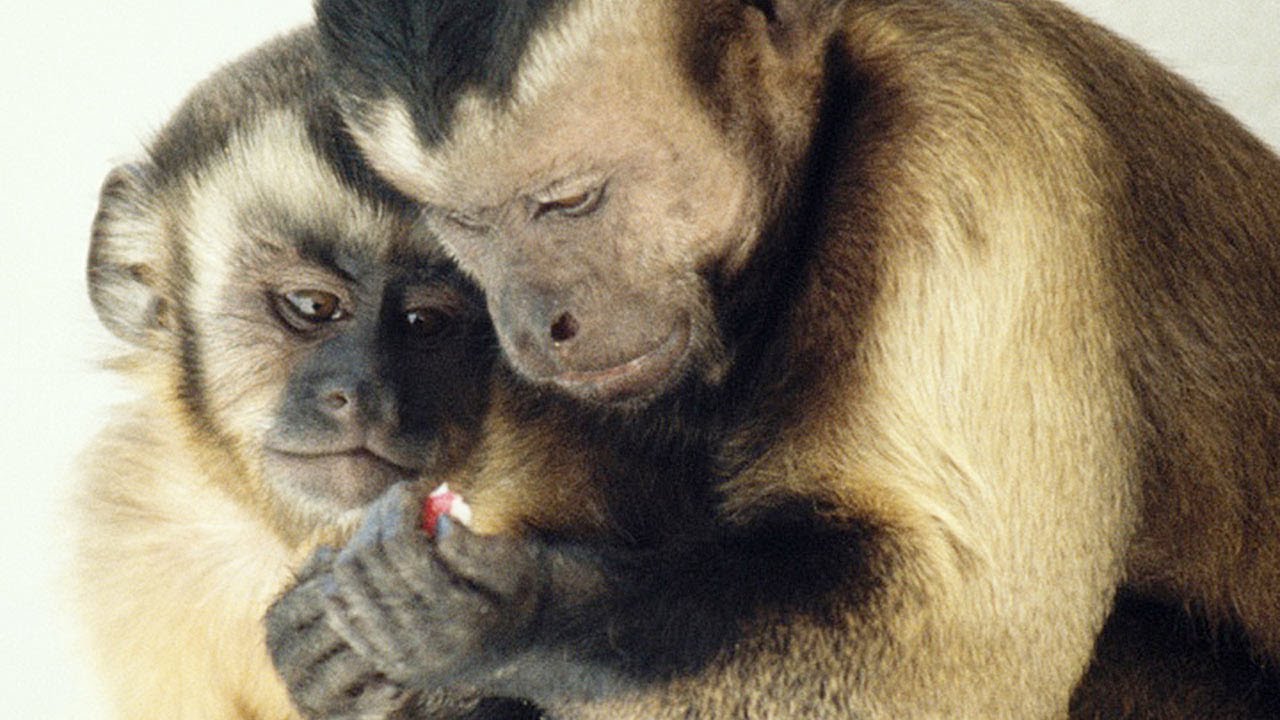
- Capuchin monkey experiments reveal an innate aversion to inequity, as monkeys vehemently reject inferior food rewards like cucumber when a peer receives grapes for the same task. (12:31)
Detailed notes
## Background Published on YouTube by TED on April 10, 2012, this talk features primatologist Frans de Waal presenting research on the evolutionary roots of morality. According to the page description, de Waal shares behavioral experiments in primates and other mammals demonstrating that foundational moral traits like empathy, cooperation, fairness, and reciprocity are shared across species rather than being uniquely human.
## TL;DR Frans de Waal challenges the historical assumption that nature is strictly ruthless and selfish, arguing instead that human morality is an evolved biological trait built on two core pillars: reciprocity (fairness) and empathy (compassion). Through archival and contemporary laboratory experiments, he showcases coordinated cooperation and partner-awareness in chimpanzees and elephants, as well as contagious yawning, consoling gestures, and unselfish token-sharing. The presentation highlights his famous capuchin monkey study, in which individuals revolt against unequal pay when awarded cucumbers instead of grapes, demonstrating that an aversion to inequity exists outside human culture. Ultimately, de Waal concludes that morality develops from the bottom up through deep evolutionary continuity rather than solely from top-down human institutions or divine mandate.
## Atmosphere & style The talk combines academic rigor with an easygoing, wry wit that consistently delights the live audience, eliciting loud bursts of laughter during video clips of clever elephant freeloading and furious monkey food-flinging. De Waal delivers his arguments with warm, understated authority, moving seamlessly from 15th-century art history into behavioral primatology while gently puncturing rigid philosophical dogmas. The presentation has the feel of an illuminating and accessible masterclass that transforms profound, long-debated ethical questions into immediate, tangible, and emotionally relatable moments of animal life.
## Bulletin - [03:08](https://www.youtube.com/watch?v=GcJxRqTs5nk&t=188s) Human morality is fundamentally grounded in two evolutionary pillars shared with other mammals: reciprocity (fairness and justice) and empathy (compassion). - [03:39](https://www.youtube.com/watch?v=GcJxRqTs5nk&t=219s) Cooperation experiments demonstrate that chimpanzees and Asian elephants understand the necessity of partners to complete tasks and will voluntarily share work or act based on anticipated reciprocity. - [11:00](https://www.youtube.com/watch?v=GcJxRqTs5nk&t=660s) Token-choice experiments show chimpanzees systematically make pro-social decisions to feed group members alongside themselves, disproving the dogma that genuine concern for others is uniquely human. - [12:31](https://www.youtube.com/watch?v=GcJxRqTs5nk&t=751s) Capuchin monkey experiments reveal an innate aversion to inequity, as monkeys vehemently reject inferior food rewards like cucumber when a peer receives grapes for the same task.
## Key takeaways - [00:15](https://www.youtube.com/watch?v=GcJxRqTs5nk&t=15s) Hieronymus Bosch's 'The Garden of Earthly Delights' raises the foundational question of what morality would look like without religious influence or divine mandate. - [01:45](https://www.youtube.com/watch?v=GcJxRqTs5nk&t=105s) The discovery of post-conflict reconciliation in chimpanzees and bonobos overturned the long-held dogma that animal behavior is governed entirely by selfish aggression and competition. - [02:45](https://www.youtube.com/watch?v=GcJxRqTs5nk&t=165s) The proverb 'homo homini lupus' ('man is a wolf to man') is inaccurate to both wolves, which are intensely cooperative, and humans, who are deeply empathetic. - [03:08](https://www.youtube.com/watch?v=GcJxRqTs5nk&t=188s) All moral systems depend on two indispensable pillars: reciprocity (associated with justice) and empathy (associated with compassion). - [04:15](https://www.youtube.com/watch?v=GcJxRqTs5nk&t=255s) Chimpanzees will expend effort to haul food platforms to assist hungry partners even when already satiated, anticipating future reciprocity. - [05:39](https://www.youtube.com/watch?v=GcJxRqTs5nk&t=339s) Asian elephants intuitively understand joint-action mechanics with continuous ropes, with some spontaneously anchoring the rope with a foot to freeload while a partner pulls. - [08:03](https://www.youtube.com/watch?v=GcJxRqTs5nk&t=483s) Empathy operates across two evolutionary levels: the somatic body channel (emotional contagion) and the cognitive channel (perspective-taking). - [08:55](https://www.youtube.com/watch?v=GcJxRqTs5nk&t=535s) Contagious yawning across humans and chimpanzees provides biological evidence of involuntary emotional synchronization rooted in mirror networks. - [09:40](https://www.youtube.com/watch?v=GcJxRqTs5nk&t=580s) Apes exhibit consolation behaviors toward defeated rivals that mirror the comforting actions observed in human toddlers reacting to distressed family members. - [11:00](https://www.youtube.com/watch?v=GcJxRqTs5nk&t=660s) Token experiments demonstrate that chimpanzees deliberately prefer pro-social choices over selfish ones, particularly when interacting with well-behaved group members. - [12:31](https://www.youtube.com/watch?v=GcJxRqTs5nk&t=751s) Capuchin monkeys display acute inequity aversion, violently refusing cucumber rewards and flinging them at researchers when observing peers receiving grapes. - [15:09](https://www.youtube.com/watch?v=GcJxRqTs5nk&t=909s) Follow-up studies with chimpanzees revealed privileged individuals refusing grapes until disadvantaged partners received equal treatment, satisfying strict philosophical definitions of fairness. - [15:30](https://www.youtube.com/watch?v=GcJxRqTs5nk&t=930s) Human morality is not a top-down cultural invention or religious dictate, but a bottom-up evolutionary adaptation built from traits shared widely across social mammals.
## Detailed walkthrough ### [00:15](https://www.youtube.com/watch?v=GcJxRqTs5nk&t=15s) Origins, Hieronymus Bosch, and the Discovery of Reconciliation
Frans de Waal opens his talk by tracing his intellectual roots back to his birthplace of 's-Hertogenbosch (Den Bosch), the Dutch town from which the 15th-century painter Hieronymus Bosch took his name. De Waal shares his longstanding fascination with the painter, who lived during an era when the authority of religion was beginning to wane. Pondering Bosch's mindset, de Waal suggests the artist was exploring what might happen to human society if religion lost its sway. This curiosity yielded Bosch's masterwork, *The Garden of Earthly Delights*, which many art historians interpret as depicting humanity before the biblical Fall, or perhaps a vision of humanity without any Fall at all. For de Waal, the triptych raises a fundamental question: what sort of morality would we possess if humanity had never tasted the fruit of knowledge?
Years later, as a student, de Waal traded the artistic garden of Bosch for a zoological garden in Arnhem, home to a colony of chimpanzees. There, he took early photographs with infant chimps and observed power struggles that would become the subject of his first major book, *Chimpanzee Politics*. At the time, animal behavior research was thoroughly dominated by models of aggression, dominance, and unyielding competition. Science painted a bleak portrait of the natural world—one that extended directly into views of human nature—suggesting that deep down, living creatures are aggressive competitors relentlessly pursuing selfish gain. De Waal humorously shows a slide of his book launch, joking that while he was not sure how well the chimpanzees could actually read it, they certainly appeared engrossed by the pages.
While immersed in studies of power and aggression, de Waal made an observation that shattered the conventional paradigm: chimpanzees routinely reconcile after conflicts. He illustrates this with an image of two male chimps who had fought violently and fled into a tree canopy. One male reached his hand out toward his rival; within a second, both met in the fork of the tree, embracing and kissing. In a scientific landscape where only winning or losing mattered, peacemaking appeared nonsensical. Yet de Waal observed the same drive in bonobos, who notoriously navigate tension through sexual contact rather than fighting. In both species, the underlying principle is identical: conflict threatens a valuable relationship, compelling the animals to repair the bond.
This insight overturned the entrenched belief—found throughout political science, economics, philosophy, and the humanities—summarized by the Latin proverb *homo homini lupus* ("man is a wolf to man"). De Waal rejects this depiction as deeply misguided on both counts: “I think it's a very unfair image for the wolf,” de Waal argues, noting that wolves are intensely cooperative animals, which explains why humans share their homes with domestic dogs. Furthermore, “it's really unfair to humanity, because humanity is actually much more cooperative and empathic than given credit for.”
```mermaid flowchart TD accTitle: The Shift in Evolutionary Perspectives on Animal Behavior accDescr: Diagram illustrating the shift from a competition-only view of nature to a model incorporating social reconciliation and morality.
subgraph OldView["Traditional Competitiveness View"] A["Dominance & Aggression"] --> B["Conflict / Fight"] B --> C["Win or Lose Outcome"] end
subgraph NewView["Valued Relationship Model"] D["Social Bonds & Cooperation"] --> E["Conflict Occurs"] E --> F["Reconciliation (Kiss, Embrace, Sex)"] F --> G["Relationship Repaired"] end
OldView -.->|"Challenged by Reconciliation Data"| NewView ```
- Hieronymus Bosch worked in 15th-century Den Bosch, painting *The Garden of Earthly Delights* amid waning religious authority. - Early behavioral research in Arnhem focused on chimpanzee power dynamics, dominance hierarchies, and aggression. - Post-conflict reconciliation was documented in chimpanzees via grooming, hand-reaching, embraces, and kisses, and in bonobos through socio-sexual behavior.
---
[03:08](https://www.youtube.com/watch?v=GcJxRqTs5nk&t=188s) The Two Pillars of Morality and Cooperation in Chimpanzees
De Waal identifies two foundational pillars that underpin any human moral system: reciprocity (inextricably tied to a sense of justice and fairness) and empathy (tied to compassion). While human moral philosophy incorporates additional complexities, de Waal maintains that stripped of these two core supports, human morality would largely collapse. To investigate whether these building blocks exist beyond our species, researchers look to cooperation experiments across different taxa.
```mermaid flowchart LR accTitle: The Two Pillars of Morality accDescr: Diagram showing the two foundational pillars of morality identified by Frans de Waal.
Morality["Foundations of Morality"] Pillar1["Reciprocity & Fairness\n(Justice, Favor-Trading)"] Pillar2["Empathy & Compassion\n(Emotional & Cognitive Channels)"]
Morality --> Pillar1 Morality --> Pillar2 ```
De Waal displays archival black-and-white film from the Yerkes Primate Center, showing experiments conducted nearly a century ago on chimpanzee cooperative problem-solving. In the footage, two juvenile chimps are presented with an apparatus featuring a heavily weighted box loaded with food. Because the box is too cumbersome for a single animal to haul in alone, the apes must coordinate their actions. The video demonstrates remarkable synchronization as the two pull the ropes in unison to bring the food within reach.
The test is then made significantly more complex: researchers feed one chimp beforehand, eliminating its hunger and intrinsic motivation to pull. Despite having zero interest in the food on the box, the satiated partner responds to the gestures and solicitations of the hungry chimp, stepping up to help haul the apparatus across the floor. Once the box arrives, the hungry partner consumes virtually the entire reward. De Waal points out two crucial cognitive elements in this exchange: first, the hungry chimp clearly grasps the necessity of a partner to achieve the goal; second, the partner voluntarily expends effort without an immediate payoff. De Waal attributes this willingness to long-term reciprocity, noting: “He will get a return favor at some point in the future.”
---
[05:39](https://www.youtube.com/watch?v=GcJxRqTs5nk&t=339s) Elephant Cooperation and Intelligent Freeloading
To determine whether cooperative problem-solving extends beyond primates, de Waal’s collaborator Josh Plotnik adapted the joint-pulling paradigm for Asian elephants in Thailand. Working with elephants presents severe experimental challenges: safety concerns are paramount, and building an apparatus too heavy for an animal that weighs several tons would require an absurdly unwieldy contraption. The team resolved this by threading a single continuous rope through a platform holding food bowls. If one elephant pulls its end prematurely, the rope slips through the apparatus and spools away, leaving both animals empty-handed. Success requires simultaneous coordination.
When released together, the elephant pair easily synchronizes their movements, walking forward in lockstep, grasping their respective rope ends with their trunks, and reeling the food platform toward them. To test whether the elephants genuinely understood the cooperative mechanics—rather than merely reacting to the presence of food—the researchers altered the conditions by staggering the release, letting one elephant enter the testing enclosure before the second.
The single elephant understood immediately that pulling alone would ruin the trial. Instead of tugging prematurely, the elephant innovated an unscripted shortcut: it calmly stepped onto the rope with its massive foot, anchoring it securely, and waited for its partner to amble over. Once the partner arrived and began pulling, the first elephant simply let the other do all the heavy physical lifting while keeping its foot planted, casually grabbing its share of the food when the tray arrived. The audience reacts with laughter as de Waal highlights this clever act of freeloading, emphasizing that such unprompted, illicit solutions demonstrate high-level physical and social cognition that researchers had never explicitly trained.
- The elephant cooperation studies were led by Josh Plotnik in Thailand using a continuous single-rope apparatus. - Premature pulling results in the unthreaded rope unraveling entirely, forcing the elephants to comprehend the necessity of joint action. - Individual elephants independently discovered freeloading tactics, anchoring the rope with a foot to allow the late-arriving partner to do all the mechanical pulling.
---
[08:03](https://www.youtube.com/watch?v=GcJxRqTs5nk&t=483s) The Two Channels of Empathy: Contagion and Consolation
Turning to empathy—his primary research focus—de Waal defines it standardly as the capacity to understand and share the emotional state of another individual. He divides empathy into two operational pathways: 1. **The Body Channel (Emotional Contagion):** An ancient, somatic pathway where observing another’s emotional posture triggers mimicry. When interacting with someone who is visibly sorrowful, observers adopt subdued facial expressions and postures, swiftly experiencing feelings of sadness themselves. This bodily synchronization is widespread across mammals—which explains why humans keep dogs and cats as companions rather than emotionally detached reptiles like turtles or snakes. 2. **The Cognitive Channel (Perspective-Taking):** A higher-order ability to adopt the subjective viewpoint of another individual. This trait is much rarer in the animal kingdom, documented primarily in large-brained mammals like apes and elephants.
Synchronization is an evolutionary foundation of empathy, easily demonstrated in humans through contagious yawning. When humans witness someone yawning, their brains activate mirror networks associated with empathy. Individuals exhibiting strong yawn contagion test higher on empathy scales, whereas populations with empathy deficits, such as autistic children, show no susceptibility to contagious yawning. To test this in primates, de Waal’s team exposed chimpanzees to an animated chimpanzee head programmed to yawn on a computer screen. The chimps regularly yawned in response, proving that involuntary bodily synchronization is shared deeply across the mammalian lineage.
Moving from low-level contagion to targeted empathy, de Waal describes consolation behavior. He shows a photograph of an adult male chimp that has just lost an aggressive brawl; screaming in agitation, the defeated ape is approached by an uninvolved juvenile chimp, who puts an arm around his shoulder to calm him down. This gesture directly parallels human consolation. De Waal points out that developmental psychologists study empathy in toddlers in an identical manner, instructing a family member to feign distress to measure whether the child approaches with comforting gestures. In both apes and humans, reassurance is an empathy-driven response designed to alleviate another's stress.
---
[10:25](https://www.youtube.com/watch?v=GcJxRqTs5nk&t=625s) Testing Altruism: Caring About the Welfare of Others
De Waal addresses a long-held dogma in the behavioral sciences: the assertion that genuine altruism and concern for the well-being of unrelated others are uniquely human capabilities. For decades, the dominant academic consensus held that non-human animals are fundamentally indifferent to the welfare of their peers, motivated solely by direct, immediate self-interest.
To challenge this assumption, de Waal and his colleagues designed a simple token-choice experiment conducted at the Yerkes National Primate Research Center field station in Lawrenceville, Georgia. The chimpanzees live in rich social groups in spacious outdoor enclosures and are periodically invited indoors to participate in voluntary cognitive tests. In this setup, two chimpanzees are placed side-by-side in adjacent testing compartments separated by a transparent partition, allowing them full visual contact. One chimpanzee is presented with a bucket filled with colored tokens, where each token represents a distinct social and nutritional outcome for the chooser and its partner.
[11:00](https://www.youtube.com/watch?v=GcJxRqTs5nk&t=660s) Pro-Social Choices in Chimpanzees
Frans de Waal describes an experiment conducted alongside Vicki Horner to investigate whether chimpanzees display unselfish, pro-social tendencies. The chimpanzee making the decision is presented with a bucket containing two differently colored tokens. One token represents a selfish choice: when handed to the experimenters, food rewards are placed on a table, but only the chooser receives food while the partner receives nothing. In a video demonstrating this, the observer chimp immediately walks away upon seeing the selfish red token chosen, knowing well that the trial yields no reward for her. The other token is pro-social: when handed over, both chimpanzees receive food. Crucially, the choosing chimpanzee receives a food reward regardless of which token she selects, meaning that purely self-interested calculation would predict random, 50-50 selection between the two colors.
Instead of choosing blindly, the chimpanzees demonstrate a clear preference for the pro-social token, systematically opting to feed their partner alongside themselves. This pro-social behavior increases when the partner chimpanzee draws gentle attention to herself. However, if the partner becomes pushy or attempts intimidation—such as spitting water into the enclosure—the chooser's willingness to select the pro-social option drops sharply. De Waal jokes that the chimp's attitude shifts to: “If you're not behaving, I'm not going to be pro-social today.” When tested in an empty setup with no partner present, their preference for the sharing token drops back to baseline. De Waal emphasizes: “So we found that the chimpanzees do care about the well-being of somebody else -- especially, these are other members of their own group.”
- **Setup**: One bucket with two colors of tokens; choosing chimp always receives food, but only the pro-social token delivers food to the partner as well. - **Baseline**: At random, choices should sit on the 50 percent line, but chimps reliably choose the pro-social option above chance. - **Social dynamics**: Mild reminders and attention from the partner elevate sharing, whereas overt intimidation or spitting reduces pro-social choices.
---
[12:31](https://www.youtube.com/watch?v=GcJxRqTs5nk&t=751s) The Inequity Experiment: Cucumbers and Grapes
De Waal turns to his famous fairness study, originally conducted roughly a decade earlier with Sarah Brosnan using capuchin monkeys and subsequently replicated in dogs, birds, and chimpanzees. Pairs of capuchin monkeys who live together in a social group are placed side-by-side in adjacent testing chambers. Their task is straightforward: pick up a small rock and hand it to the experimenter. When both monkeys receive a slice of cucumber as a reward, they are perfectly content to repeat the task 25 times in a row. Though De Waal remarks that cucumber is essentially “only really water in my opinion,” the monkeys happily accept it under equal conditions.
Inequity is introduced when the researchers vary the reward quality. As De Waal quips, “the food preferences of my capuchin monkeys correspond exactly with the prices in the supermarket,” making grapes vastly superior to cucumber. Demonstrating video footage with naive monkeys who had never performed the task before—heightening their emotional reactions—the monkey on the left hands over a rock and receives cucumber, which she readily consumes. But when she watches her neighbor on the right receive and eat a grape for performing the identical rock exchange, the dynamic shatters. When handed another rock, the left monkey hands it over, receives another piece of cucumber, and promptly flings the cucumber back at the researcher in disgust. She repeatedly rattles the enclosure, tests a rock against the clear wall, and hands it over again, only to violently reject the second cucumber slice. The audience erupts in laughter and applause as De Waal remarks: “So this is basically the Wall Street protest that you see here.”
```mermaid flowchart TD accTitle: Capuchin Monkey Inequity Experiment accDescr: Flowchart showing the unequal rewards given to two monkeys performing the same task and the resulting rejection. subgraph EqualRewards["Equal Condition"] E1["Monkey A trades rock"] --> R1["Receives cucumber"] E2["Monkey B trades rock"] --> R2["Receives cucumber"] R1 & R2 --> OK["Both happily repeat task up to 25 times"] end subgraph UnequalRewards["Inequity Condition"] U1["Monkey A trades rock"] --> R3["Receives cucumber"] U2["Monkey B trades rock"] --> R4["Receives grape"] R3 & R4 --> REJ["Monkey A rejects cucumber and throws it at experimenter"] end ```
---
[15:09](https://www.youtube.com/watch?v=GcJxRqTs5nk&t=909s) Academic Skepticism and the Evolution of Morality
The fairness study attracted substantial pushback from human-centric disciplines. De Waal recounts that anthropologists, economists, and philosophers resisted the findings because they had long assumed that a concept as intricate as fairness belonged strictly to the human domain. One philosopher went so far as to write that monkeys could not possibly possess a sense of fairness because fairness had been invented during the French Revolution. Another scholar published a full chapter asserting he would only accept the findings as evidence of fairness if the privileged individual receiving grapes voluntarily refused them until the disadvantaged partner received one too. De Waal notes that Sarah Brosnan later ran the experiment with chimpanzees and found pairs where the recipient of the grape did precisely that, refusing to eat until the other chimp also received a grape. To this, De Waal wryly adds: “And I think philosophers need to rethink their philosophy for a while.”
Concluding the talk, De Waal argues that human morality is not an artificial cultural veneer imposed from above, but rather the product of deep evolutionary continuity. While full human morality encompasses complexities beyond the scope of his talk, it rests entirely on evolutionary building blocks present across other social animals: empathy, consolation, pro-social sharing, reciprocity, and an aversion to unfairness. Summarizing his thesis, De Waal declares: “I believe there's an evolved morality.” By investigating these elemental behaviors in non-human primates, science can construct a bottom-up framework for moral behavior that does not depend on divine mandate or organized religion.
## Notable quotes > [00:15](https://www.youtube.com/watch?v=GcJxRqTs5nk&t=15s) humanity is actually much more cooperative and empathic than given credit for. — Frans de Waal
> [15:09](https://www.youtube.com/watch?v=GcJxRqTs5nk&t=909s) I believe there's an evolved morality. — Frans de Waal
## Mentioned Frans de Waal, Hieronymus Bosch, The Garden of Earthly Delights, Chimpanzee Politics, Yerkes National Primate Research Center, Josh Plotnik, Vicki Horner, Sarah Brosnan
## Video description http://www.ted.com Empathy, cooperation, fairness and reciprocity -- caring about the well-being of others seems like a very human trait. But Frans de Waal shares some surprising videos of behavioral tests, on primates and other mammals, that show how many of these moral traits all of us share.
TEDTalks is a daily video podcast of the best talks and performances from the TED Conference, where the world's leading thinkers and doers give the talk of their lives in 18 minutes. Featured speakers have included Al Gore on climate change, Philippe Starck on design, Jill Bolte Taylor on observing her own stroke, Nicholas Negroponte on One Laptop per Child, Jane Goodall on chimpanzees, Bill Gates on malaria and mosquitoes, Pattie Maes on the "Sixth Sense" wearable tech, and "Lost" producer JJ Abrams on the allure of mystery. TED stands for Technology, Entertainment, Design, and TEDTalks cover these topics as well as science, business, development and the arts. Closed captions and translated subtitles in a variety of languages are now available on TED.com, at http://www.ted.com/translate
If you have questions or comments about this or other TED videos, please go to http://support.ted.com
[Source](https://www.youtube.com/watch?v=GcJxRqTs5nk)