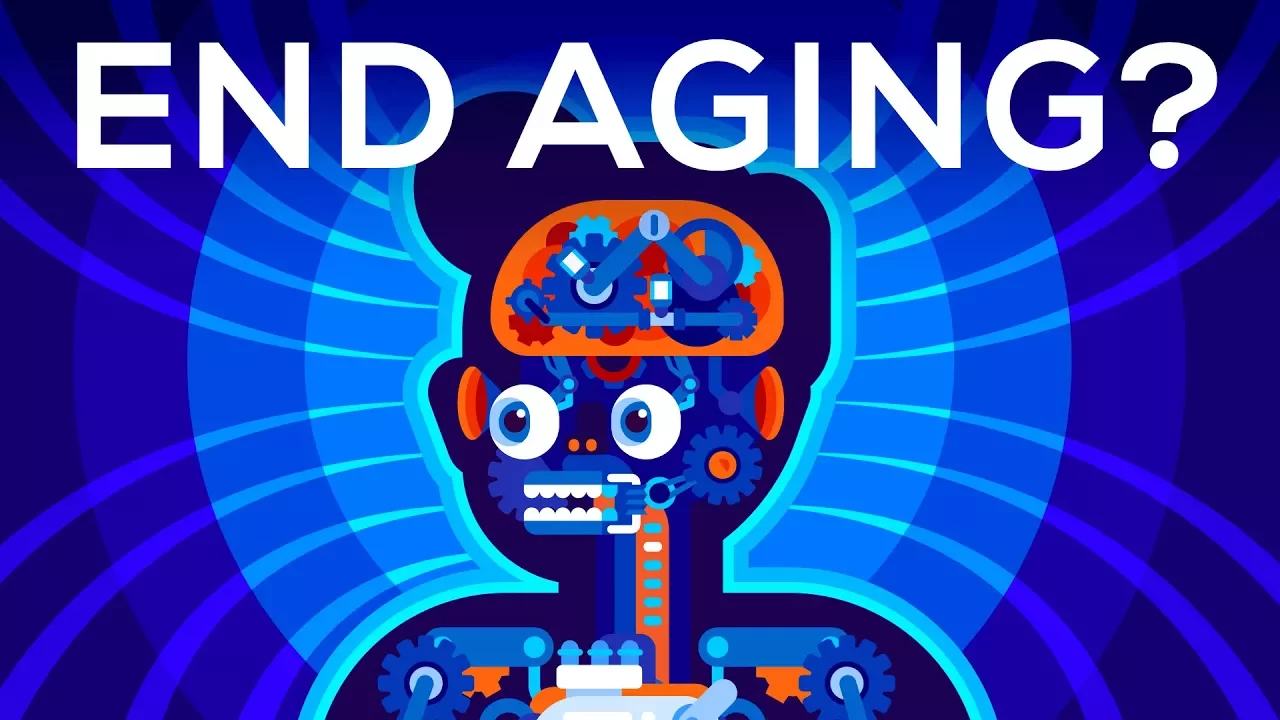
Why Age? Should We End Aging Forever?
Kurzgesagt – In a Nutshell
AI-assisted summary of Why Age? Should We End Aging Forever? — original source. Check the original for full context.
Source published:
Key ideas
- While human life expectancy has reached record highs, individuals now spend an increasingly large portion of their lives chronically ill and dependent on intensive healthcare. (0:00)
- Aging is fundamentally a physical process of cellular wear and tear driven by oxidation, radiation, and metabolic byproducts that eventually overwhelm endogenous repair systems. (1:20)
- Nearly 50% of an individual's lifetime healthcare expenditure is incurred during their senior years, reflecting reactive rather than preventative treatment of biological decline. (4:06)
- True life extension aims to arrest or reverse cellular decay early rather than prolonging decrepitude, directly challenging the mythical trap of Tithonus. (3:05)
Detailed notes
## Background Published on YouTube by Kurzgesagt – In a Nutshell on October 20, 2017, this video investigates the science and ethics of defeating biological aging. The description highlights a collaboration with Lifespan.io to support research into age-related diseases and directs viewers to a companion second part produced by CGP Grey.
## TL;DR Although modern civilization has dramatically extended human life expectancy, it has unintentionally prolonged the period of late-life chronic illness and infirmity. Kurzgesagt demonstrates that aging is fundamentally a mechanical and physical breakdown of cellular repair systems, arguing that treating the root cause is far more rational than managing diseases after organs fail. Addressing cultural fears via the cautionary Greek myth of Tithonus, the video emphasizes that true longevity focuses on preserving youthful vitality rather than stretching out decrepitude. Reframing the desire for extended life through the lens of wanting to play outside on a warm summer evening until truly tired, the piece speculates on how a vastly extended healthy lifespan could fundamentally transform personal development and environmental stewardship.
## Atmosphere & style The presentation carries Kurzgesagt's signature blend of existential gravity, lucid scientific explanation, and imaginative optimism, guided by Steve Taylor's calm, measured voiceover. The mood shifts from the sobering reality of hospital beds, worn-out joints, and ancient Greek tragedy into a warm, evocative contemplation of what an unhurried human life could look like. It feels both intellectually grounded and emotionally resonant, culminating in a sharp, urgent cameo by CGP Grey warning viewers against submitting to the personified whisper of mortality.
## Bulletin - [00:00](https://www.youtube.com/watch?v=GoJsr4IwCm4&t=0s) While human life expectancy has reached record highs, individuals now spend an increasingly large portion of their lives chronically ill and dependent on intensive healthcare. - [01:20](https://www.youtube.com/watch?v=GoJsr4IwCm4&t=80s) Aging is fundamentally a physical process of cellular wear and tear driven by oxidation, radiation, and metabolic byproducts that eventually overwhelm endogenous repair systems. - [04:06](https://www.youtube.com/watch?v=GoJsr4IwCm4&t=246s) Nearly 50% of an individual's lifetime healthcare expenditure is incurred during their senior years, reflecting reactive rather than preventative treatment of biological decline. - [03:05](https://www.youtube.com/watch?v=GoJsr4IwCm4&t=185s) True life extension aims to arrest or reverse cellular decay early rather than prolonging decrepitude, directly challenging the mythical trap of Tithonus.
## Key takeaways - [00:00](https://www.youtube.com/watch?v=GoJsr4IwCm4&t=0s) Advancements in medicine have significantly lengthened lifespans since prehistoric times, but this success has inadvertently prolonged periods of chronic illness in late life. - [01:00](https://www.youtube.com/watch?v=GoJsr4IwCm4&t=60s) Preventative medicine targeting root causes saves vastly more lives than downstream reactive treatments, just as smoking cessation saves more lives than chemotherapy. - [01:20](https://www.youtube.com/watch?v=GoJsr4IwCm4&t=80s) Aging is an issue of physics: mechanical wear, oxidation, solar radiation, and metabolic byproducts continuously damage the body's machinery. - [01:55](https://www.youtube.com/watch?v=GoJsr4IwCm4&t=115s) There is no biological mechanism known as dying of old age; death occurs when accumulated damage causes an essential physiological component to fail. - [02:21](https://www.youtube.com/watch?v=GoJsr4IwCm4&t=141s) Cultural celebrations of aging mask a core societal contradiction: everyone wants to reach old age, but nobody wants to experience physical decrepitude. - [02:38](https://www.youtube.com/watch?v=GoJsr4IwCm4&t=158s) The Greek myth of Tithonus warns against immortality without eternal youth, but modern longevity science does not advocate for freezing people in a state of advanced decay. - [03:15](https://www.youtube.com/watch?v=GoJsr4IwCm4&t=195s) Halting aging in a 90-year-old offers minimal benefit because cumulative structural damage leaves too many vulnerabilities for fatal diseases to exploit. - [03:38](https://www.youtube.com/watch?v=GoJsr4IwCm4&t=218s) Longevity research aims either to compress morbidity up to an accepted natural ceiling of around 120 years or to halt biological decay entirely. - [04:06](https://www.youtube.com/watch?v=GoJsr4IwCm4&t=246s) Current healthcare systems already seek to extend life, but do so inefficiently by spending roughly half of all lifetime medical budgets on reactive senior care. - [04:32](https://www.youtube.com/watch?v=GoJsr4IwCm4&t=272s) Halting biological aging is no less natural than standard medical interventions like organ transplants, antibiotics, vaccines, or chemotherapy. - [04:46](https://www.youtube.com/watch?v=GoJsr4IwCm4&t=286s) Curing aging is not the abolition of death, as environmental hazards, fatal accidents, and personal choice would still persist. - [05:31](https://www.youtube.com/watch?v=GoJsr4IwCm4&t=331s) Radically extended healthspans could transform societal psychology, encouraging greater environmental responsibility and allowing multidecade careers across various disciplines. - [06:06](https://www.youtube.com/watch?v=GoJsr4IwCm4&t=366s) CGP Grey warns that instinctive revulsion toward curing aging represents an irrational capitulation to mortality rather than sound logic.
## Detailed walkthrough ### [00:00](https://www.youtube.com/watch?v=GoJsr4IwCm4&t=0s) The Unforeseen Cost of Longevity and the Physics of Aging
Kurzgesagt opens by posing a personal dilemma: if forced to choose right now, exactly how long would you want to live? Would the answer be 80 years, 90, 120, or even longer, and would that target shift once you actually arrived at that milestone? Fifty thousand years ago, human life was brutally brief, with most individuals dying very young. Over millennia, humanity learned to harness surrounding resources to heal and treat ailments, steadily driving life expectancy upward. Today, people enjoy longer and healthier lives than at any point in history. However, this triumph carries a dark and unintended side effect: humans now spend an ever-increasing portion of their lives chronically sick, infirm, and reliant on intensive care. The grim reality is that most people will die in a hospital bed, forced not only to experience this slow decline themselves but also to watch their loved ones deteriorate in identical fashion.
The video contends that this trajectory does not have to be inevitable. Just as preventing a million people from smoking saves vastly more lives than developing incrementally better chemotherapies, the most effective medical strategy is stopping illness before it starts. The ultimate preventative measure would be tackling the fundamental root cause behind nearly all fatal conditions: biological aging itself. While aging is culturally viewed as an unalterable biological fate, it is fundamentally an issue of physics. The narrator illustrates this by comparing the human body to an automobile: mechanical parts inevitably wear down from rubbing and grinding friction, metal oxidizes into rust, filters become clogged with debris, and rubber components dry out and crack.
In precisely the same manner, trillions of micro-scale physical processes wear down the human machine every second. Exposure to oxygen, solar radiation, and the inescapable byproduct of our own metabolic processes inflict continuous wear and tear. Although the body possesses an intricate suite of repair mechanisms designed to fix cellular damage, these self-healing systems gradually degrade and lose their efficiency over time. The outward manifestations of this breakdown are familiar: bones and skeletal muscles lose their density and strength, skin loses elasticity and wrinkles, the immune system weakens, memory fades, and sensory acuity dulls. As the narrator explains, “There's no such thing as dying of old age. We all die because one of our important parts breaks.” As bodies become progressively more fragile, one or several catastrophic diseases ultimately take over to deliver the fatal blow. Longevity science, however, has recently crossed a crucial threshold, beginning to unravel and manipulate the specific cellular mechanisms driving this decay.
```mermaid flowchart TD accTitle: The Mechanics of Biological Aging accDescr: Flowchart illustrating how physical damage leads to disease and death, contrasting current reactive medicine with preventative anti-aging therapy.
subgraph WearAndTear["Physical Wear & Tear"] A["Environmental & Metabolic Stress<br/>(Oxygen, Solar Radiation, Metabolism)"] B["Trillions of Tiny Physical Processes"] A --> B end
subgraph Degradation["Biological Breakdown"] C["Endogenous Repair Mechanisms"] D["Systemic Decline<br/>(Weakened Bones, Wrinkled Skin, Memory Loss)"] B -->|"Overwhelms over time"| C C -->|"Declining efficiency"| D end
subgraph Outcomes["Failure & Intervention"] E["Internal Machinery Breaks<br/>(Vulnerability to Fatal Disease)"] F["Current Medicine:<br/>Reactive Treatment in Old Age"] G["Proposed Longevity:<br/>Prevent Damage & Halt Aging"] D --> E E -->|"Conventional path"| F B -.->|"Target root cause"| G end ```
- **Evolutionary contrast**: 50,000 years ago, life expectancy was extremely short, whereas modern humans live longer than ever before. - **The prevention paradigm**: Public health interventions like smoking cessation demonstrate that preventing the root cause preserves exponentially more life than downstream interventions like chemotherapy. - **The physics of decline**: Cellular aging is driven by mechanical rubbing, oxidation, solar radiation, and metabolic byproducts that gradually outpace the body's internal repair tools.
[02:21](https://www.youtube.com/watch?v=GoJsr4IwCm4&t=141s) The Tithonus Myth and Redefining Life Extension
The prospect of defeating aging or radically extending life provokes deep unease in many people. The sequence of being born, growing up, entering old age, and ultimately dying has been the universal rhythm of human existence across the entirety of recorded history. Society actively rationalizes this cycle, framing aging as a positive achievement and branding later life as the "golden years." Yet this cultural celebration masks a fundamental contradiction: as the narrator puts it, “But the reality is that everybody wants to become old, but nobody wants to be old.”
This terror of inescapable decrepitude is ancient, epitomized by the classical Greek myth of Tithonus. Tithonus was the mortal lover of Eos, the goddess of the dawn. Desperate to spend eternity together, Eos begged Zeus to bestow immortality upon him, but in her excitement, she neglected to ask for eternal youth. Granted endless life without protection from physical decay, Tithonus continued to age indefinitely; after hundreds of years of relentless physical deterioration, he withered to the size of a grape, trapped in eternal decrepitude and babbling incoherently for all time.
Kurzgesagt clarifies that modern biogerontology does not advocate for the curse of Tithonus. Stopping aging does not mean freezing someone in an advanced state of decay or dragging out physical weakness indefinitely. Halting biological aging in a 90-year-old would offer little benefit; their internal machinery is already catastrophically damaged, leaving far too many vulnerabilities for lethal diseases to exploit, leading to death within a few short years regardless. Instead, true life extension focuses on stopping biological decay early, thereby eliminating the diseases of senescence and erasing an arbitrary, fixed expiration date. While science cannot yet predict whether interventions will simply allow everyone to reach the accepted ceiling of roughly 120 years in pristine health, or eliminate biological aging and age-related disease entirely, the frontier of possibilities remains wide open.
- **The Myth of Tithonus**: Eos asked Zeus for immortality for her mortal lover but forgot eternal youth, leaving Tithonus to age for centuries until he shriveled into the size of a grape. - **Why late intervention fails**: A 90-year-old whose aging process is frozen would still die shortly thereafter because cumulative structural damage and biological failure points are already too severe. - **Scope of longevity goals**: Objectives range from compressing morbidity so humans remain robust up to a maximum lifespan of roughly 120 years, to halting biological aging indefinitely.
[04:06](https://www.youtube.com/watch?v=GoJsr4IwCm4&t=246s) Medicine, Inevitability, and the Summer Evening Analogy
When addressing whether society ought to pursue life extension, Kurzgesagt argues that the concept is merely a continuation of existing medical practice under a different name. The core mandate of physicians has always been to minimize physical suffering and extend human life. At present, modern societies allocate the vast majority of their healthcare budgets directly to managing the catastrophic bodily failures brought on by old age: roughly half of an individual's lifetime healthcare expenses occur during their senior years, with another third consumed during middle age. As the narrator observes, “We are actually already trying to prolong life with our current medicine. We're just doing it very inefficiently.” Modern medicine passively waits until the biological machine is in the middle of total failure, then expends immense resources attempting to patch the system up while it collapses further. Halting aging is fundamentally no less "natural" than performing heart transplants, administering chemotherapy, or deploying vaccines and antibiotics.
Despite these medical parallels, the desire to abolish aging often triggers accusations of hubris, rooted in the widespread assumption that death is necessary or that one will naturally want to die after reaching a certain age. However, curing biological aging is not synonymous with the total elimination of death; accidental trauma, environmental hazards, and chosen endings would remain. The narrator reframes the psychology of life extension through the lens of a childhood memory: on a warm summer evening, your mother calls you inside to go to bed, but you plead to stay out just a little longer to keep playing during the sunset. The desire is not to play outside endlessly without interruption, but simply to enjoy the game until you genuinely feel tired enough to stop.
Eliminating age-related disease opens profound speculative questions about human behavior and society. If people and their families could count on living in prime health for an additional 100 or 200 years, humanity's relationship with long-term problems might fundamentally shift. People might treat the Earth with significantly greater care knowing they will personally be around to experience ecological consequences centuries later. A 150-year career could give people ample breathing room to explore talents, acquire new skills, and pursue multiple educations without feeling rushed. It remains an open question whether the pervasive pressure and stress of modern life would dissolve or intensify under such a timeline.
In a closing guest cameo, CGP Grey challenges viewers who still experience an instinctive revulsion toward eliminating aging. Grey warns that this unease is merely the personification of mortality clouding reason: “That is the Reaper whispering into your brain. Watch my video to hear what he says, and why you shouldn't listen. Your eternal future may depend on it.” Kurzgesagt concludes by urging the audience to reflect on their own ideal lifespan in good health and to view part two of the collaboration on CGP Grey's channel.
- **Healthcare resource distribution**: Nearly 50% of lifetime healthcare spending is concentrated in senior years, with approximately 33% spent during middle age. - **Philosophical questions of prolonged vitality**: - *Environmental stewardship*: Would longer lifespans encourage sustainable ecological habits? - *Self-actualization*: How would 150 years of potential career time alter personal development, education, and skill mastery? - *Psychological stress*: Would societal pacing relieve chronic modern anxieties or exacerbate them?
## Notable quotes > [00:00](https://www.youtube.com/watch?v=GoJsr4IwCm4&t=0s) There's no such thing as dying of old age. We all die because one of our important parts breaks. — Narrator
> [04:06](https://www.youtube.com/watch?v=GoJsr4IwCm4&t=246s) We are actually already trying to prolong life with our current medicine. We're just doing it very inefficiently. — Narrator
## Mentioned Kurzgesagt – In a Nutshell, CGP Grey, Lifespan.io, Steve Taylor, Epic Mountain, Tithonus, Eos, Zeus
## Video description Watch part 2 by CGPGrey: https://www.youtube.com/watch?v=C25qzDhGLx8
If you could decide today... how long do you want to live?
Thanks so much for help with the video to https://www.lifespan.io/hero – they are working to cure age-related diseases. Check them out!
Sources and further reading: https://sites.google.com/view/sources-aging-part-i/
OUR CHANNELS ▀▀▀▀▀▀▀▀▀▀▀▀▀▀▀▀▀▀▀▀▀▀▀▀▀▀ German Channel: https://kgs.link/youtubeDE Spanish Channel: https://kgs.link/youtubeES
HOW CAN YOU SUPPORT US? ▀▀▀▀▀▀▀▀▀▀▀▀▀▀▀▀▀▀▀▀▀▀▀▀▀▀ This is how we make our living and it would be a pleasure if you support us!
Get Merch designed with ❤ from https://kgs.link/shop Join the Patreon Bird Army 🐧 https://kgs.link/patreon
DISCUSSIONS & SOCIAL MEDIA ▀▀▀▀▀▀▀▀▀▀▀▀▀▀▀▀▀▀▀▀▀▀▀▀▀▀ Reddit: https://kgs.link/reddit Instagram: https://kgs.link/instagram Twitter: https://kgs.link/twitter Facebook: https://kgs.link/facebook Discord: https://kgs.link/discord Newsletter: https://kgs.link/newsletter
OUR VOICE ▀▀▀▀▀▀▀▀▀▀▀▀▀▀▀▀▀▀▀▀▀▀▀▀▀▀ The Kurzgesagt voice is from Steve Taylor: https://kgs.link/youtube-voice
OUR MUSIC ♬♪ ▀▀▀▀▀▀▀▀▀▀▀▀▀▀▀▀▀▀▀▀▀▀▀▀▀▀ 700+ minutes of Kurzgesagt Soundtracks by Epic Mountain:
Spotify: https://kgs.link/music-spotify Soundcloud: https://kgs.link/music-soundcloud Bandcamp: https://kgs.link/music-bandcamp Youtube: https://kgs.link/music-youtube Facebook: https://kgs.link/music-facebook
The Soundtrack of this video:
Soundcloud: http://bit.ly/2xSQ4gN Bandcamp: http://bit.ly/2zCNjlP Facebook: http://bit.ly/2qW6bY4
🐦🐧🐤 PATREON BIRD ARMY 🐤🐧🐦 ▀▀▀▀▀▀▀▀▀▀▀▀▀▀▀▀▀▀▀▀▀▀▀▀▀▀ Many Thanks to our wonderful Patreons from http://kgs.link/patreon who support us every month and made this video possible:
Brittany Mackinnon, Frank Ziems, Rami Rahal, Dinler Amaral Antunes, Janet Rothers, David Metzger, Luke Zehrung, Malcolm Bruce, Sebastián Schiavinato, MikeSkowron, Justin Benavides, Jayant Sahewal, Marty Otzenberger, Lor (aka FigmentForms on Tumblr), Nicu Farmache, Stan Mertens, Haakon T Nordli, Jacob, Shpend A. Mustafa, John Clendenin, Issam Rachidi, Rafael Pereira, carey armstrong, marscmd, Alexander Edlin, Andrew Walker, Jeffrey Pugh, Daniel Cecil, Ayur Pulle, Floyd T Pollard, Wesley De Cocq van Delwijnen, Georgios Zacharopoulos, thylakoide, AG HAbraken, Marc Bartscht, Tarald Sponnich, Nicole Matthews, Adam Simons, Nicole Hobday, Jack Macqueen, Maximilian Fink, Henoch Argaw, Joshua Phoenix, Peter Fintl, Hoang Viet, Richard Emerson, Nick Hofmeister, Zotin, Heron Cortizo, Hannah Beth, John, Aleksa Bjelogrlic, Fabio Palamedi, JessicaKim Danh, James Vilcek, Igor Vaisman, ilia, Flatag, Alex Leighton, Rebecca Percz, Fatima Chairez, James Buchanan, Sarah Spath, Hugo James Ludlow Brooks,Bulbul A Rajon
Help us caption & translate this video!
http://www.youtube.com/timedtext_cs_panel?c=UCsXVk37bltHxD1rDPwtNM8Q&tab=2
Why Age? Should We Try To End Aging and Live Forever?
[Source](https://www.youtube.com/watch?v=GoJsr4IwCm4)