NSA Whistleblowers Say Agency Dumped Privacy Tools to Fuel Dragnet
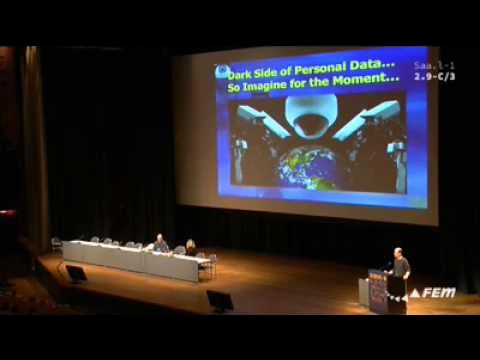
29C3 Panel: Jesselyn Radack, Thomas Drake, William Binney on whistleblowing and surveillance — thisdayinwikileaks

thisdayinwikileaks

The U.S. intelligence apparatus abandoned targeted collection with built-in privacy safeguards to justify billions in contractor funding and construct an unconstitutional domestic surveillance dragnet.

AI-assisted summary of 29C3 Panel: Jesselyn Radack, Thomas Drake, William Binney on whistleblowing and surveillance — original source. Check the original for full context.

Source published:

Key ideas

  • Former DOJ ethics adviser Jesselyn Radack revealed how agency leadership purged internal emails opposing the unconstitutional interrogation and torture of John Walker Lindh, later subjecting her to criminal investigation, career blacklisting, and no-fly lists after she disclosed the records to the press. (7:30)
  • Whistleblowers Thomas Drake and William Binney disclosed that the NSA rejected ThinThread—a $3.2 million targeted analysis system with built-in constitutional privacy safeguards—in favor of multi-billion-dollar contractor initiatives like Trailblazer and Stellar Wind to enable warrantless domestic dragnet surveillance. (57:48)
  • Telecommunications carriers surrendered direct access to domestic fiber-optic trunks, funneling roughly 320 million daily communication records from AT&T into NSA databases without warrants under secret White House authorizations. (68:11)
  • The executive branch aggressively weaponized the 1917 Espionage Act against national security whistleblowers, deploying armed FBI dawn raids and retroactively stamping unclassified documents as classified to threaten sources with life imprisonment. (14:49)

Detailed notes

## Background This panel video was published on YouTube by the channel thisdayinwikileaks on December 28, 2012. Recorded at the 29th Chaos Communication Congress (29C3) on December 27, 2012, under the title 'Enemies of the State: What Happens When Telling the Truth about Secret US Government Power Becomes a Crime', the event features whistleblowers Jesselyn Radack, Thomas Drake, and William Binney speaking on domestic surveillance, official deception, and government retaliation in the digital era.

## TL;DR The panel details how the U.S. government systematically retaliated against civil servants who exposed constitutional violations, executive deception, and domestic mass surveillance following September 11. Former DOJ ethics attorney Jesselyn Radack recounts the suppression of her legal advice regarding the torture of John Walker Lindh and the aggressive campaign to destroy her career. Former NSA senior executive Thomas Drake and intelligence architect William Binney break down how agency leadership intentionally discarded ThinThread—a low-cost, privacy-protective filtering architecture—in favor of multi-billion-dollar contractor boondoggles and indiscriminate, unconstitutional dragnets under Stellar Wind. Together, they demonstrate how federal agencies weaponized the Espionage Act, armed FBI raids, and retroactive classification to punish truth-tellers while building a pervasive digital panopticon.

## Atmosphere & style The presentation carries a somber, urgent, and fiercely defiant atmosphere, grounded in the lived trauma of three insiders who faced the full retaliatory weight of the national security state. The narrative moves between personal, harrowing accounts of armed dawn raids and systemic blacklisting to rigorous, impassioned technical and constitutional critiques. Watching the panel feels like attending a clandestine debriefing where whistleblowers lay bare the inner machinery of institutional corruption, blending righteous indignation with sober warnings about the death of democracy behind closed doors.

## Bulletin - [07:30](https://www.youtube.com/watch?v=XDM3MqHln8U&t=450s) Former DOJ ethics adviser Jesselyn Radack revealed how agency leadership purged internal emails opposing the unconstitutional interrogation and torture of John Walker Lindh, later subjecting her to criminal investigation, career blacklisting, and no-fly lists after she disclosed the records to the press. - [57:48](https://www.youtube.com/watch?v=XDM3MqHln8U&t=3468s) Whistleblowers Thomas Drake and William Binney disclosed that the NSA rejected ThinThread—a $3.2 million targeted analysis system with built-in constitutional privacy safeguards—in favor of multi-billion-dollar contractor initiatives like Trailblazer and Stellar Wind to enable warrantless domestic dragnet surveillance. - [01:08:11](https://www.youtube.com/watch?v=XDM3MqHln8U&t=4091s) Telecommunications carriers surrendered direct access to domestic fiber-optic trunks, funneling roughly 320 million daily communication records from AT&T into NSA databases without warrants under secret White House authorizations. - [14:49](https://www.youtube.com/watch?v=XDM3MqHln8U&t=889s) The executive branch aggressively weaponized the 1917 Espionage Act against national security whistleblowers, deploying armed FBI dawn raids and retroactively stamping unclassified documents as classified to threaten sources with life imprisonment.

## Key takeaways - [00:00](https://www.youtube.com/watch?v=XDM3MqHln8U&t=0s) Digital technology has transformed whistleblowing by providing irrefutable digital audit trails and secure dissemination channels like WikiLeaks to counter state secrecy. - [02:07](https://www.youtube.com/watch?v=XDM3MqHln8U&t=127s) The interrogation and torture of John Walker Lindh marked the executive branch's initial breach of constitutional norms during the War on Terror, which agency leadership attempted to conceal through false public statements. - [07:30](https://www.youtube.com/watch?v=XDM3MqHln8U&t=450s) Department of Justice management suppressed court-ordered discovery in the Lindh case and purged internal ethical objections from official files to protect unlawful interrogations. - [14:49](https://www.youtube.com/watch?v=XDM3MqHln8U&t=889s) The Espionage Act was systematically repurposed under the Obama administration to prosecute internal whistleblowers and civil servants at a rate exceeding all prior administrations combined. - [17:35](https://www.youtube.com/watch?v=XDM3MqHln8U&t=1055s) Forensic evidence exposed that the government retroactively applied classified stamps to unclassified files in order to manufacture felony Espionage Act charges against whistleblowers. - [21:23](https://www.youtube.com/watch?v=XDM3MqHln8U&t=1283s) The post-9/11 political framing demanding that citizens sacrifice civil liberties for national security is a false dichotomy used to justify executive overreach. - [31:12](https://www.youtube.com/watch?v=XDM3MqHln8U&t=1872s) Universal digital surveillance transforms the basic exercise of privacy into an automated marker of suspicion, eroding democratic governance and the presumption of innocence. - [36:58](https://www.youtube.com/watch?v=XDM3MqHln8U&t=2218s) Immediately following September 11, NSA foreign intelligence collection capabilities were redirected inward toward domestic networks under executive authorizations that bypassed the FISA Court. - [41:24](https://www.youtube.com/watch?v=XDM3MqHln8U&t=2484s) Internal algorithm testing proved that actionable intelligence regarding the 9/11 hijackers already existed unanalyzed within NSA databases prior to the attacks, demonstrating analytical failure rather than a need for broader data collection. - [58:43](https://www.youtube.com/watch?v=XDM3MqHln8U&t=3523s) NSA leadership and revolving-door defense contractors discarded ThinThread's low-cost, privacy-scrambled framework to secure billions of dollars in private contractor funding for Trailblazer. - [01:03:07](https://www.youtube.com/watch?v=XDM3MqHln8U&t=3787s) Bipartisan congressional intelligence committee leadership secretly consented to unconstitutional domestic surveillance, effectively dismantling legislative checks and balances. - [01:03:07](https://www.youtube.com/watch?v=XDM3MqHln8U&t=3787s) The establishment of a domestic bulk data repository creates an electronic panopticon with unprecedented political leverage over public officials, judges, and citizens. - [01:08:11](https://www.youtube.com/watch?v=XDM3MqHln8U&t=4091s) Domestic telecommunications providers installed hardware splitters directly on fiber-optic trunk lines, feeding hundreds of millions of domestic records daily into government databases. - [01:16:58](https://www.youtube.com/watch?v=XDM3MqHln8U&t=4618s) A targeted two-degree analytical framework can reliably isolate genuine national security threats while completely excluding the vast majority of the global population from surveillance data retention.

## Detailed walkthrough ### [00:00](https://www.youtube.com/watch?v=XDM3MqHln8U&t=0s) Introduction to the Panel and Defining Whistleblowing

The panel opens at 29C3 with an introduction framing speakers Jesselyn Radack, Thomas Drake, and William Binney. The moderator notes that Radack is an attorney representing Drake and Binney, and introduces the session as an examination of what transpires inside the "Heart of Darkness" when the state exercises its monopoly of force behind claims of benevolence. Jesselyn Radack takes the podium, thanking the organizers of 29C3 and noting how whistleblowing—an act defined as government or private-sector workers exposing fraud, waste, abuse, and illegality—has undergone a massive transformation in the digital era. She emphasizes that digital tools and computer technology have largely served to help whistleblowers, recalling Jacob Appelbaum's references earlier that morning and reflecting on how digital records saved her own career and conscience over a decade earlier.

Radack clarifies that she never intended to become an activist or public figure: “I am a whistleblower I didn't go to work saying gee I want to become a whistleblower today.” Instead, she served as an ethics attorney within the Department of Justice (DOJ), the primary law enforcement agency of the United States. Her quiet career path shifted abruptly in the immediate aftermath of September 11, 2001.

[02:07](https://www.youtube.com/watch?v=XDM3MqHln8U&t=127s) The Capture of John Walker Lindh and the Ethics Inquiry

On December 7, 2001, just months after 9/11, Radack received a call from a fellow DOJ attorney in the Criminal Division regarding John Walker Lindh. Lindh, widely publicized across global media as the "American Taliban," had traveled to Pakistan on a personal quest prior to 9/11, finding himself in the wrong place at the wrong time when American foreign policy pivoted from subsidizing the Taliban to declaring war on them. Lindh became the first capture and prisoner in the War in Afghanistan, as well as the first individual subjected to torture by the United States during the War on Terror.

The Criminal Division attorney inquired whether FBI agents in Pakistan could interrogate Lindh in the absence of his defense counsel. Under United States constitutional law, suspects must be apprised of their rights and provided legal representation. Radack rendered clear ethical advice: agents could not interrogate him without his lawyer. The advice was delivered on a Friday. Over the following weekend, the FBI ignored her guidance and interrogated him regardless, while disturbing photographs circulated globally depicting Lindh bound and visibly abused.

```mermaid flowchart TD accTitle: Lindh Interrogation Ethics Timeline accDescr: Chronology of Radack's ethical advice, FBI disobedience, and Ashcroft's public statements regarding John Walker Lindh.

subgraph Advice["DOJ Ethics Inquiry"] A["Dec 7, 2001: Criminal Division queries Radack"] --> B["Radack advises: Interrogation requires defense counsel"] end

subgraph Breach["FBI Action & Triage"] B --> C["Weekend: FBI disregards advice and interrogates Lindh"] C --> D["Monday: Radack advises sealing interview for intelligence only, not prosecution"] end

subgraph Concealment["Executive Response"] D --> E["Jan 2002: AG Ashcroft files complaint, claiming Lindh chose no lawyer"] E --> F["Indictment: Ashcroft asserts rights were 'carefully scrupulously guarded'"] end ```

- Lindh was captured early in the War in Afghanistan, quickly becoming the central public face of enemy combatants. - When the Criminal Division returned the following Monday to confess they had interrogated him anyway, Radack advised building an ethical wall: seal the interrogation strictly for intelligence gathering and national security, ensuring it would not be introduced into a criminal prosecution.

[05:09](https://www.youtube.com/watch?v=XDM3MqHln8U&t=309s) Official Lies and Evidence Concealment

Radack expected the department to handle the matter cleanly, but the situation deteriorated in January 2002. Attorney General John Ashcroft held a press conference announcing a formal criminal complaint against Lindh, publicly claiming that Lindh was entitled to counsel but had not chosen one. Radack knew this statement was a deliberate falsehood. Three weeks later, Ashcroft announced the formal indictment, brazenly proclaiming that Lindh's constitutional rights had been “carefully scrupulously guarded.”

Radack contrasts Ashcroft’s claims against the reality of Lindh's physical custody: he was discovered nearly dead, suffering an untreated bullet wound in his leg, stripped naked, blindfolded, gagged, and duct-taped to a board. Radack remarks on the public apathy: “John Walker Lind was our first glimpse of torture in the United States and nobody flinched.” She underscores that if the government could abuse a white, middle-class American citizen from Marin County, California, the implications for Arab, Muslim, immigrant, and disenfranchised detainees were far more terrifying. Top political figures in Congress and the presidency declared Lindh guilty long before trial, drawing a direct historical comparison to the treatment of Julian Assange.

- Lindh suffered severe physical abuse while detained in harsh military conditions prior to formal arraignment. - The Justice Department maintained a public posture that constitutional safeguards were observed, despite knowing an ethics attorney had barred the unrepresented interrogation.

[07:30](https://www.youtube.com/watch?v=XDM3MqHln8U&t=450s) The Purged Files and Recovery via Archives

Radack initially held her tongue, believing executive management held the prerogative to shape public statements. However, a critical discovery transformed her stance. The federal judge presiding over Lindh's criminal case issued a discovery order mandating that the DOJ turn over all internal communications, emails, and correspondence concerning Lindh's interrogation. Despite these court orders routinely being blasted across the entire 10,000-person department, the directive was intentionally withheld from Radack.

She discovered the order only when the lead trial prosecutor contacted her directly to double-check discovery records, saying he had two of her emails and wanted to confirm nothing was missed. Knowing she had written an extensive paper trail, Radack immediately went to review the department's hard-copy files, which at the time served as the official repository of agency records:

> “I went to check the file and my email containing the assessment that the FBI had committed an Ethics violation in its interrogation of John Walker Lind and parenthetically in the torture of John Walker Lind those emails were missing my heart sank I literally felt sick someone they were seeking death penalty for this person and the relevant evidence had not made it to the court evidence that would have a bearing on whether or not his confession would be admissible against him a confession that was tortured out of him”

Working alongside internal technical staff, Radack retrieved the purged correspondence directly from the system archives. Joking about contemporary scandals, she quips that this was an early lesson General David Petraeus failed to grasp: deleting or emptying a desktop trash bin does not permanently erase digital data. Armed with the retrieved records proving ethical breaches and torture, Radack wrote an internal memo documenting the emails to her supervisor, printed copies to take home for safekeeping, and promptly resigned.

[11:32](https://www.youtube.com/watch?v=XDM3MqHln8U&t=692s) Whistleblowing to Newsweek and Government Retaliation

Months after her resignation, the DOJ continued asserting in court that it had never believed Lindh possessed or requested counsel at the time of his questioning. Unable to live with the reality that an individual faced the death penalty due to suppressed evidence, Radack blew the whistle by disclosing the recovered emails to *Newsweek* magazine. She believed she was operating under the provisions of the Whistleblower Protection Act, though she soon learned the statute offered no meaningful shielding.

Radack's leak shattered the government’s case against Lindh. Faced with the disclosed records, the prosecution collapsed, and the government offered a plea deal. Lindh pled guilty to two minor offenses, receiving a 20-year prison sentence. Radack reflects that while heavy-handed for an individual who had not taken up arms against the U.S., the plea spare him the death penalty.

Once the criminal case closed, Radack believed the ordeal was behind her, only to face aggressive retaliation from the executive branch:

> “I thought thank God it's over with but little did I know in blowing the whistle in making those emails public those emails that had been destroyed public that I unleashed the full force of the entire executive branch of the United States government”

The retaliatory campaign struck across every facet of her professional and personal life: - **Employment Sabotage:** The DOJ pressured her newly joined private law firm into forcing her out, and subsequently contacted another employer to have her dismissed by labeling her a criminal. - **Unspecified Criminal Inquiries:** She was placed under a sprawling federal criminal investigation without ever being formally indicted or informed of specific statutory allegations. - **Bar Referral via Classified Dossier:** The DOJ referred her to the State Bar for disbarment using a secret report that was withheld from her, leaving her unable to examine or contest the charges—an ordeal she characterizes as straight out of a Franz Kafka novel. - **Travel Restrictions and Humiliation:** She was placed on the federal No-Fly / Selectee list, forcing her through intensive secondary body searches whenever she flew, which resulted in missed flights and public humiliation, even while traveling as a new mother with an infant.

[14:49](https://www.youtube.com/watch?v=XDM3MqHln8U&t=889s) Jesselyn Radack on the Espionage Act and the War on Whistleblowers

After enduring years of professional exile—what she euphemistically terms her “time in the wilderness”—Jesselyn Radack resolved to dedicate her life to representing other whistleblowers. Reflecting on her experience, she notes that the painful ordeal yielded crucial lessons she now brings to defending people like Thomas Drake, who found himself confronted by a reality far worse than anything she had imagined. Drake became the target of a federal criminal leak investigation and was indicted under the Espionage Act, a World War I–era statute conceived to prosecute spies rather than civil-service truth-tellers.

```mermaid flowchart TD accTitle: The Espionage Act Pipeline Against Whistleblowers accDescr: Flowchart illustrating how internal disclosures trigger Espionage Act prosecutions against sources and publishers.

subgraph Disclosures ["Truth-Telling Actions"] A["Whistleblower Identifies Waste, Fraud, or Constitutional Abuse"] B["Evidence Disclosed via Secure / Public Channels"] end

subgraph StateReaction ["Government Retaliation"] C["Criminal Leak Investigation"] D["Espionage Act Indictment (1917 Statute)"] E["Retroactive Classification of Evidence"] end

A --> B B --> C C --> D D --> E ```

Radack identifies Drake’s prosecution as the catalyst for an alarming trend within American governance: transforming whistleblowers into criminals. Radack emphasizes her own political background to preempt partisan accusations, stating that she personally campaigned for, donated to, and cast her vote for Barack Obama. Yet, as she bluntly assesses the administration’s record: “The Obama Administration has brought more prosecutions against whistleblowers than any previous president and then all previous presidents of the United States combined.” Radack asks the audience who else is targeted under the statute, prompting calls from the room before pointing out that Julian Assange faces a sealed Espionage Act investigation, while Bradley Manning is being tried under the military counterpart of the same law. Having recently sat through Manning’s pretrial torture hearings in the United States, Radack stresses that the abusive conditions of Manning's confinement alone warrant dismissing the charges entirely, even if the court is unlikely to take that step.

- The Espionage Act was enacted during World War I specifically to target foreign espionage, not public-interest whistleblowers. - Under the Obama administration, Espionage Act leak prosecutions outpaced the tallies of all prior presidential administrations combined. - Radack attended Bradley Manning’s military hearing regarding his treatment in detention, arguing the documented abuse should legally terminate the case.

---

[17:35](https://www.youtube.com/watch?v=XDM3MqHln8U&t=1055s) The Dual Nature of Technology: Exoneration, Surveillance, and WikiLeaks

Radack frames technology as an inherently powerful asset for whistleblowers, while acknowledging its capacity for state abuse. Digital records proved indispensable in her own case: DOJ internal emails demonstrated that while the Department of Justice was prosecuting Enron for obstruction of justice and destroying records, senior officials were committing those exact same acts internally. Similarly, computer forensics played a decisive role in exonerating Thomas Drake. The forensic review revealed that, contrary to the prosecutors’ claims, Drake never held classified material; he possessed unclassified files that the government subsequently and improperly stamped classified. Conversely, the state actively deploys software to suppress oversight. In a recent case at the Food and Drug Administration (FDA), federal authorities used spyware to track seven whistleblower scientists, intercepting their correspondence with both journalists and sitting members of Congress.

Despite such abuses, Radack maintains that digital platforms have permanently elevated public transparency, presenting WikiLeaks as primary evidence. Recounting an in-person meeting with Julian Assange at the Ecuadorian Embassy in London on her way to the congress, Radack underscores the organization's unique global utility: “Julian Assange solidified my belief as a whistleblower myself and as a lawyer for whistleblowers that WikiLeaks is one of the only safe ways in the world to get large amounts of information out to the public anonymously on a mass scale.”

The state’s reaction reflects how deeply it fears this capability. Radack contrasts the government’s priorities, observing that rather than sustaining an exhaustive manhunt for Osama bin Laden, authorities mobilized global resources against Assange—whom she characterizes as a publisher with a website. When financial blockades attempted to starve the organization of funding, initiatives like the Freedom of the Press Foundation stepped in to allow anonymous, tax-deductible donations. Addressing Assange's refuge in the Ecuadorian Embassy, Radack points out that under international human rights law, political asylum requires a well-founded fear of political persecution alongside a host government unwilling or unable to protect the individual—criteria she insists Assange squarely satisfies.

- The DOJ attempted to delete emails in Radack's case while simultaneously bringing criminal obstruction charges against Enron executives for document destruction. - Drake’s computer records showed that documents used to allege Espionage Act violations were unclassified when he held them and only classified retroactively. - The FDA targeted seven internal scientists using spyware, intercepting communications that reached members of the U.S. Congress. - The Freedom of the Press Foundation (`press.org`) was established to route financial support around banking blockades to WikiLeaks and investigative journalism entities.

---

[21:23](https://www.youtube.com/watch?v=XDM3MqHln8U&t=1283s) Rejecting the False Dilemma of Liberty vs. Security

Radack closes her presentation by rejecting the foundational premise of post-9/11 national security policy: the claim that citizens must surrender basic civil liberties to obtain safety. She denounces this trade-off as an artificial construct designed to justify unchecked executive overreach. In her view, the war against terrorism has mutated into an institutional campaign targeting internal integrity, technology, and basic legal constraints.

“The notion that we have to make a choice between civil liberties and National Security is a false dichotomy that has driven much of the war on terrorism,” Radack declares. She condemns an unchecked executive branch that grants itself the power to act simultaneously as prosecutor, judge, jury, and executioner across the globe. Whistleblowers who flag illegal electronic surveillance, state-sanctioned torture, and targeted assassinations are treated as public enemies rather than public servants. Radack expresses her solidarity with the hackers, activists, and digital innovators gathered at 29C3, praising them for demonstrating that code and digital literacy serve as vital bulwarks against authoritarian regimes. She concludes by formally presenting her clients, Thomas Drake and William Binney, calling them living proof that public servants must never be forced to sacrifice their conscience and liberty just to keep their jobs.

- Post-9/11 national security doctrine relies on a false dichotomy between civil liberties and public safety. - Executive branch overreach has consolidated unilateral authorities over electronic surveillance, indefinite detention, and extrajudicial killings. - Radack identifies technical literacy and digital transparency as critical defensive weapons against state despotism.

---

[24:18](https://www.youtube.com/watch?v=XDM3MqHln8U&t=1458s) Thomas Drake: From Cold War Cryptolinguist to the Surveillance Frontier

Thomas Drake takes the stage, greeting the German audience in their native language—*“Guten Abend, ich bin Thomas Drake, Staatsfeind”* (“Good evening, I am Thomas Drake, enemy of the state”)—drawing warm applause. Drake warns that his account of falling into the gears of the American surveillance state is deeply sobering, and he anchors his background in early personal computing and military intelligence.

```mermaid flowchart LR accTitle: Thomas Drake Career Trajectory accDescr: Timeline tracing Drake's path from early Cold War signals intelligence to witnessing the modern surveillance state.

subgraph EarlyEra ["Cold War Intelligence (1980s)"] A["8-bit Computing / Hardware Modding (Atari 800)"] B["Airborne Cryptolinguist on RC-135s (RAF Mildenhall)"] C["Monitoring Warsaw Pact & East Germany (Stasi Surveillance)"] end

subgraph Post911 ["Post-9/11 Transformation"] D["Rise of Vast Domestic Surveillance in the U.S."] E["Whistleblowing on Waste & Constitutional Violations"] F["Espionage Act Indictment (Facing 35 Years)"] end

A --> B B --> C C --> D D --> E E --> F ```

Holding up a picture of an Atari 800, Drake looks back fondly on the golden era of 8-bit computing. He recalls learning to program on a machine driven by a 6502C processor, fitted with 48 kilobytes of RAM and a 10-kilobyte operating system—a device he still preserves. He bought that first computer while stationed at RAF Mildenhall in the United Kingdom, flying surveillance missions aboard Boeing RC-135 reconnaissance aircraft during the Cold War. In England, Drake directed the Atari branch of a local computer club, connected with early iterations of the Chaos Computer Club, joined demo scene exchanges, swapped software via sneakernet, and dialed into bulletin board systems using 300-baud acoustic coupler modems. Drake was an active hardware tinkerer, hand-soldering electrically erasable PROMs (EEPROMs) into 810 5.25-inch floppy drives to equip them with page-six memory expansion.

Alongside this hacker hobbyism, Drake worked as an airborne cryptolinguist tracking the Warsaw Pact, specializing specifically in East Germany. Flying along the Iron Curtain, his crew intercepted military and government transmissions, giving him direct insight into the pervasive surveillance network operated by the East German Ministry for State Security (Stasi). Drake explains that the Stasi operated with cold, monstrous efficiency, driven by a simple institutional doctrine: to know everything about everyone. Every citizen was presumed suspect. Reflecting on that history, Drake explains that he never could have imagined that twenty-six years later, he would witness that very same model of ubiquitous surveillance replicated on an enormous domestic scale within the United States.

- Drake began his computing experience on an Atari 800 featuring a MOS 6502C processor, 48 KB RAM, and a 10 KB OS. - He modified hardware directly, installing custom EEPROMs on Atari 810 floppy drives to achieve page-six memory expansion. - As a military cryptolinguist, Drake flew RC-135 missions monitoring Warsaw Pact communications, with a specialty in the German Democratic Republic. - The operational mandate of the Stasi—*alles zu wissen* (“to know everything”)—has been functionally adopted by modern surveillance agencies.

---

[28:46](https://www.youtube.com/watch?v=XDM3MqHln8U&t=1726s) The Anatomy of Secrecy, Orwellian Doublespeak, and a State in Distress

Examining the friction between freedom and state control, Drake poses a fundamental question: how can a transparent, vibrant constitutional democracy survive beside an expansive, secret security apparatus? After September 11, 2001, the system broke, and it was basic constitutional liberties that were surrendered in the name of security. To dissect this dynamic, Drake cites the late U.S. Senator Daniel Patrick Moynihan’s maxim: “Secrecy is for losers.” Moynihan identified secrecy as the compulsory withholding of information, enforced by the threat of criminal penalties for unauthorized disclosure—a mechanism that feeds preemptive profiling and the state's drive for total awareness.

Drake dismantles the standard public defense commonly voiced by citizens: *“I’ve done nothing wrong, I have nothing to hide.”* He counters that under a secret security apparatus, ordinary individuals do not have the power to define what is innocent or what constitutes a secret. Instead, that power belongs entirely to unaccountable government officials operating behind closed doors. He characterizes this system as classic Orwellian doublespeak, where government officials inhabit a hall of mirrors and churn out state propaganda to manipulate the public.

Concluding this portion of his remarks, Drake draws attention to an image of an upside-down American flag displayed behind him. He reminds the audience that in maritime and military tradition, inverting the national flag is the universal signal of distress. Drake makes his indictment plain: “The United States is under distress because what's giving is its constitutional form of government.” That breakdown poses a pressing question to modern societies: what actually happens when a free people trades its liberty away?

- Senator Daniel Patrick Moynihan’s definition frames state secrecy as compulsory suppression backed by punitive legal sanctions. - The common rationalization *“I have nothing to hide”* collapses in an authoritarian system, because the state retains the exclusive authority to determine what is suspicious. - Flying the American flag upside down serves as the official national signal of acute distress, reflecting the ongoing erosion of constitutional rule.

[31:12](https://www.youtube.com/watch?v=XDM3MqHln8U&t=1872s) The False Dichotomy and the Mechanics of the Surveillance State

Thomas Drake takes the stage by addressing the pervasive framing that citizens must inevitably surrender civil liberties in exchange for national security. Echoing Jesselyn Radack, Drake rejects this trade-off as a manufactured, false dichotomy. He reaches back to the constitutional convention of 1787, recounting the famous exchange where a woman asked Benjamin Franklin what form of government the delegates had created, to which Franklin answered that they had established a republic, if the people could keep it. Drake invokes Franklin’s observation that democracy operates like two wolves and a lamb voting on lunch, while true liberty represents a well-armed lamb contesting the outcome, alongside Franklin’s warning that sacrificing essential liberty for temporary safety results in having neither.

Drake argues that in a fully realized surveillance state, the fundamental presumption of innocence is inverted into universal suspicion. When mass surveillance becomes institutional policy, ordinary citizens seeking privacy on the internet find their basic digital hygiene treated as an automatic red flag. To illustrate how state secrecy enables this erosion, Drake quotes federal judge Damon Keith’s landmark August 2002 ruling concerning secret deportation hearings carried out by the Bush administration. As Drake reminds the audience of Judge Keith's words: “Democracies die behind closed doors.” Keith had warned that once the state selectively hoards and controls information that rightfully belongs to the public, selective information becomes pure misinformation—a dynamic that Drake experienced firsthand when the federal government chose to manufacture its own narrative to brand him a traitor.

- In 1787, Benjamin Franklin cautioned that the newly formed American system was “a republic, if you can keep it.” - In August 2002, Sixth Circuit Court of Appeals Judge Damon Keith ruled against secret Bush administration deportation hearings, declaring that selective government secrecy produces state misinformation. - Within modern mass surveillance architectures, implementing everyday privacy safeguards on internet communications is automatically categorized by security agencies as suspicious behavior.

---

[33:43](https://www.youtube.com/watch?v=XDM3MqHln8U&t=2023s) Indictment Under the Espionage Act and the Ordeal of Truth-Telling

Drake recounts the sheer personal and legal weight of being targeted by the Department of Justice under the Espionage Act of 1917, traditionally reserved for spies and traitors. Reflecting on his survival as a free man, he describes the terror of early prosecutorial threats. Long before formal indictments were handed down, the government attempted to intimidate him into a guilty plea. Drake directly recalls a confrontation in 2008 when the lead prosecutor leaned on him with the ultimate ultimatum: “Mr. Drake, how would you like to spend the rest of your natural life in prison?” Facing life imprisonment for telling the truth about state surveillance brought him face-to-face with the reality of an emerging dystopian future.

Drake frames himself, along with fellow whistleblowers like Jesselyn Radack and William Binney, as canaries in the coal mine alerting the public to systemic overreach. He explains that his actions were centered entirely on exposing high crimes, constitutional violations, and gross mismanagement within the intelligence community. Instead of addressing the illegality, the federal government weaponized its investigative apparatus to isolate him and transform him into an enemy of the state. He credits Jesselyn Radack with saving his life and liberty by stepping into the public arena, lending him a voice when he was silenced, and aggressively dismantling the government's claims in the court of public opinion.

- In 2008, federal prosecutors explicitly threatened Drake with spending the rest of his natural life behind bars if he refused to cooperate and plead guilty. - The Espionage Act of 1917 was used by the Department of Justice to transform lawful whistleblowing on constitutional violations into a serious felony offense. - Jesselyn Radack served as Drake’s public advocate, offering legal and media defense that helped keep him out of federal prison.

---

[36:58](https://www.youtube.com/watch?v=XDM3MqHln8U&t=2218s) Day One at the NSA and the Illegal Pivot Inward

Delivering an accelerated account of his tenure, Drake explains what it feels like to live directly under the boot of the surveillance state. Following September 11, constitutional safeguards were cast aside, turning all private digital data into fair game under the pretense of wartime necessity. Invoking George Orwell’s maxim, Drake reflects: “Truth is treason in the empire of lies.” Drake’s very first day on the job at NSA headquarters was September 11, 2001, where he reported directly to the third-highest official at the agency, overseeing the Signals Intelligence Directorate (SID)—the agency's largest core component.

Within days of 9/11, intelligence personnel approached Drake in absolute secrecy and deep distress. They alerted him that signals intelligence hardware and monitoring systems—historically restricted by law and the Fourth Amendment to targeting foreign adversaries abroad—were being redirected inward and installed directly onto domestic American communications networks. When Drake pressed a lead attorney at the NSA on the blatant illegality and Fourth Amendment violations of bypassing the Foreign Intelligence Surveillance Court (FISC) warrant process, the lawyer admitted that the NSA was serving as the executive agent for a covert surveillance regime authorized directly by the White House. To Drake, this mirrored Richard Nixon’s infamous rationale that if the president approves an act, it cannot be illegal.

```mermaid flowchart TD accTitle: Internal NSA Post-9/11 Domestic Pivot Flow accDescr: Flowchart showing the shift of NSA foreign surveillance assets to domestic networks and the resulting whistleblower actions. subgraph Post911["Post-9/11 Executive Decisions"] A["Sept 11, 2001:<br>Drake begins work at SID"] --> B["White House Authorizes<br>Secret Domestic Spying"] B --> C["Foreign Surveillance Tools<br>Redirected to Domestic Networks"] end

subgraph LegalBreach["Constitutional Bypass"] C --> D["Bypasses FISA Court &<br>4th Amendment Warrants"] D --> E["Lead NSA Attorney Confirms:<br>NSA is Executive Agent for White House"] end

subgraph Whistleblowing["Oversight & Whistleblowing"] E --> F["Early 2002:<br>Drake Reports to Congressional Inquiries"] F --> G["Material Witness on Waste,<br>Fraud, and Illegalities"] end ```

- Drake began his assignment at the NSA’s Signals Intelligence Directorate on September 11, 2001. - Longstanding statutory barriers enacted after the Church Committee hearings of the 1970s prohibited domestic spying without judicial warrants based on probable cause. - NSA legal counsel acknowledged that the agency had become the direct operational instrument of an unconstitutional White House surveillance mandate. - In early 2002, Drake acted as a material witness and whistleblower, reporting the unlawful surveillance alongside widespread fraud, waste, and abuse to two congressional 9/11 investigations.

---

[41:24](https://www.youtube.com/watch?v=XDM3MqHln8U&t=2484s) ThinThread Sidelined, Congressional Defiance, and the FBI Dawn Raid

Following the retirement of William Binney and his team in October 2001 over the agency's unconstitutional turn, Drake took over as executive program manager for ThinThread—an innovative, legally compliant intelligence collection and analysis platform designed with built-in privacy safeguards. When ThinThread’s algorithms were tested against the NSA's massive intelligence databases, Drake and his colleagues discovered that critical intelligence which could have intercepted and prevented the 9/11 attacks had been sitting inside NSA systems all along, unanalyzed and unshared. Despite Congress subsequently passing legislation signed by President Bush mandating that the NSA deploy ThinThread across its key sites, agency leadership outright defied the congressional statute.

The public silence broke in December 2005 when James Risen and Eric Lichtblau published their front-page investigative report in *The New York Times*, exposing the Bush administration’s warrantless wiretapping program (publicly dubbed the Terrorist Surveillance Program). In response, the Justice Department initiated a fierce criminal leak probe. In the summer of 2006, the FBI raided the homes of William Binney and several former intelligence colleagues. Four months later, Drake looked out his bedroom window before work to see a dozen armed FBI agents swarming across his lawn.

Following a two-and-a-half-year pressure campaign designed to coerce a false guilty plea, Drake was indicted on ten felony counts: five counts under the Espionage Act, one count of obstruction of justice, and four counts of making false statements—charges Drake notes were themselves entirely fabricated by the state. While Drake defeated the felony charges without prison time or fines, the national security apparatus had already chosen lucrative corporate contracts over constitutional compliance. Drake closes this chapter by cautioning how the state twists evidence: “Data absent context is data with no meaning.” The vast bulk of the documents seized from his home were unclassified records retained to support legitimate congressional and Department of Defense Inspector General investigations, yet the government stripped away the context to frame routine whistleblowing as espionage.

- ThinThread possessed the technical capability to uncover pre-9/11 terrorist data already residing in NSA databases, but agency leadership suppressed the program. - NSA leadership deliberately refused to comply with federal legislation that ordered ThinThread deployed to critical intelligence centers. - The December 2005 *New York Times* article by Eric Lichtblau and James Risen triggered the massive leak investigation that targeted former and active intelligence personnel. - Drake’s home was raided by a dozen FBI agents, culminating in a 10-count felony indictment that collapsed before trial. - The material seized by the FBI consisted primarily of unclassified documentation compiled for official oversight bodies, including congressional committees and the DoD Inspector General.

[45:30](https://www.youtube.com/watch?v=XDM3MqHln8U&t=2730s) Knowledge as Control and the Post-9/11 Windfall

Thomas Drake addresses the mechanics of power within an unchecked surveillance state, explaining how controlling information allows entrenched institutions to eliminate competition and consolidate authority. Data is treated as the supreme “coin of the realm,” hoarded to preserve institutional leverage. Drake recounts how, in the immediate aftermath of September 11, senior National Security Agency leadership brushed off his constitutional and operational objections with bureaucratic rationalizations. As Drake recalls: “As I confronted my own senior executives in the leadership NSA, they said, ‘Tom, you don’t understand, we live in exigent conditions that requires exigent means to deal with the threat so be it if we collect all the data in Americans hey if you’ve done nothing wrong it won’t matter.’”

Beneath the patriotic rhetoric of emergency response lay a massive financial incentive. Drake emphasizes that the post-9/11 period triggered a gold rush within the multi-billion-dollar military-industrial complex, creating a class of millionaires and multi-millionaires virtually overnight inside the intelligence community and among private defense contractors. Rather than viewing the tragedy solely as a catastrophic failure of intelligence, agency leadership saw unprecedented opportunity. As Drake reveals: “In fact one senior executive said that 9/11 was a gift to NSA.” This mindset, Drake argues, led directly to a devastating breakdown in real intelligence analysis, squandering what could have been achieved with targeted, lawful approaches.

- Post-9/11 rationale among NSA leadership: National emergencies justify blanket collection across American domestic communications under the premise that innocent people have nothing to fear. - Profiteering: A lucrative expansion of private contractors and intelligence executives who capitalized financially on massive intelligence spending spikes.

---

[47:01](https://www.youtube.com/watch?v=XDM3MqHln8U&t=2821s) The Surveillance Leviathan and the Digital Panopticon

Drake shifts focus to the constitutional and philosophical dimensions of the expanding National Security State. Privacy, he insists, is not a luxury or an administrative concession, but the very core of individual human identity and social connection. He ties modern surveillance authorities—specifically Section 215 of the USA PATRIOT Act and Section 702 of the FISA Amendments Act—directly back to the abuses that provoked the American Revolution. These provisions grant the government a permanent backdoor into the private communications of U.S. persons, effectively reviving the colonial-era “writs of assistance” and general warrants that the Fourth Amendment was specifically written to outlaw.

The technological capacity to secretly ingest and analyze population-scale data creates an intoxicating, unilateral instrument of coercion. Drake warns that centralized government power combined with high-tech data collection creates a digital equivalent of George Orwell’s *1984*, rendering citizens virtual inmates within an invisible enclosure. As Drake explains: “The power to collect and analyze data especially on people is seductively powerful especially when done without the person’s permission and particularly when done in secret it is the ultimate form of control.” Without active resistance, society risks sleepwalking into an inescapable digital panopticon where technology enables the creation of an all-encompassing police state.

```mermaid flowchart TD accTitle: Evolution of State Surveillance accDescr: Diagram tracing the historical trajectory from colonial general warrants to modern digital collection regimes.

subgraph HistoricalContext["Constitutional Foundations"] GW["Writs of Assistance & General Warrants"] -->|"Sparks revolution & Fourth Amendment"| CONST["Constitutional Protections"] end

subgraph ModernRegime["Statutory Expansion"] PAT["Patriot Act Section 215"] FAA["FISA Amendments Act Section 702"] PAT & FAA -->|"Enables secret backdoor access"| COLL["Universal Bulk Collection"] end

subgraph SocietalOutcome["Modern Architecture"] COLL --> PANO["Virtual Digital Panopticon"] end ```

---

[49:46](https://www.youtube.com/watch?v=XDM3MqHln8U&t=2986s) Defensive Countermeasures and the Spectre of the Stasi

Turning to the audience of technologists and security researchers, Drake insists that ordinary citizens must defend themselves by denying the state easy access to their communications. In a mature surveillance state, the mere act of seeking anonymity or encrypting personal data is treated by security services as an inherent anomaly and a potential threat. Because of this, privacy through obscurity requires critical mass: everyday users must flood the network with encrypted traffic so that secure communication ceases to be a red flag. Drake issues an impassioned call to arms: “We need more Asher Wolfs in the world moving spirit guide and agitator behind the CryptoParty phenomena for the rest of the people.” He urges the development and widespread adoption of accessible virtual private networks (VPNs), non-logging servers, anonymizing proxies, and Tor.

Reflecting on the personal cost of his whistleblowing, Drake remarks on the harrowing six-year government retaliation campaign waged against him, declaring: “It’s been a very difficult six years for me and I just want to tell you that they’ve been the most challenging in my life but I refuse to remain silent in the face of a surveillance state that did everything it could to shut me up.” Looking to the future, he warns of an architecture capable of establishing a permanent, universal wiretap record of every human life—tracking individual movements via mobile phones and profiling anyone on demand. Drake concludes his remarks in German with a stark historical comparison: “I can only imagine how the Stasi would simply drool if the Deutsche Demokratische Republik had had the technical equipment of the NSA today.”

- Core defensive necessities highlighted: Tor deployment, non-logging server infrastructure, anonymizing proxies, accessible VPNs, and grassroots CryptoParty education. - Modern surveillance capabilities: Persistent location tracking via cellular handsets, permanent archival of electronic transactions, and on-demand retrospective profiling.

---

[53:46](https://www.youtube.com/watch?v=XDM3MqHln8U&t=3226s) William Binney on Intellectual Property and the SARC Innovation

Former NSA Technical Director William Binney takes the podium, thanking the hacker community for its longstanding hospitality and outlining his intent to explain both the operational mechanics of mass data collection and his confrontations with the FBI and the Department of Justice. Binney recounts that when preparing to leave the agency, he and his colleagues consulted NSA intellectual property and ethics attorneys to ensure they complied fully with conflict-of-interest regulations. The legal counsel confirmed that any methodology or knowledge they carried out in their heads remained their own intellectual property. Leveraging this, Binney helped design a vendor-independent commercial data-analysis architecture based on principles he developed at the agency.

Although the government later blacklisted their company and drove them out of business after labeling them suspects in national security investigations, the underlying technology remains legally protected and accessible. As Binney notes: “It lays out in architectural framework the entire process of how to automate an analysis business process across the entire process whatever you’re looking at whatever kind of data you’re doing because this applies to everything.” The documentation is formally copyrighted and on file with the U.S. Library of Congress—available publicly for a forty-five-dollar fee—and Binney brought copies directly to the conference to share openly with the hacker community.

- Professional role: Technical Director of the World Geopolitical and Military Analysis and Reporting Group, responsible for driving technical problem-solving globally across agency operations. - Operational philosophy: Serving as an organizational catalyst for cultural and technical disruption, deliberately challenging entrenched bureaucratic habits. - Architectural blueprint: A universal analytical model applicable to financial networks, travel logs, telecommunications metadata, emails, Facebook, and cloud platforms.

---

[57:48](https://www.youtube.com/watch?v=XDM3MqHln8U&t=3468s) ThinThread Versus the Trailblazer Boondoggle

Binney details the operational origins of modern signals intelligence automation, beginning with his role as co-founder of the SIGINT Automation Research Center (SARC) in the mid-1990s. SARC was a lean, elite research unit consisting of roughly sixteen individuals tasked with running four to five complex initiatives concurrently. The secret to the center's extraordinary output lay in assembling a cross-disciplinary team that unified operational know-how with cutting-edge academic research. The unit integrated software programmers, electrical engineers, crypto-mathematicians, cryptanalysts, traffic analysts, language specialists, data analysts, and consulting physicists to solve the emerging crisis of internet-scale mass communications.

Through SARC, Binney and his team designed the ThinThread system, successfully solving the automated data analysis problem while incorporating built-in cryptographic safeguards to shield the communications of innocent citizens. Despite its demonstrated success, NSA leadership abandoned the program for financial and bureaucratic reasons. As Binney reveals: “Tom mentioned the program ThinThread that cost us a little over three, about 3,200,000 to do, and what we came into conflict with and the reason it was rejected by the agency and thrown away was because we were in conflict with a four plus billion dollar program called Trailblazer that would start from scratch and was going to be spending a lot of money with a lot of contractors.” The agency prioritized a multi-billion-dollar corporate windfall over a cheap, operational, and constitutionally compliant solution.

```mermaid flowchart LR accTitle: Comparison of ThinThread and Trailblazer Projects accDescr: A structural comparison between the lean, low-cost ThinThread program and the multi-billion-dollar Trailblazer project.

subgraph SARC["ThinThread (Internal SARC Project)"] TT_COST["Cost: ~$3.2 Million"] TT_TEAM["Lean Team: ~16 Specialists"] TT_FEAT["Automated Sorting & Built-in Privacy Protections"] TT_STATUS["Scrapped by Leadership"] TT_COST --- TT_TEAM --- TT_FEAT --- TT_STATUS end

subgraph TB["Trailblazer (Contractor Program)"] TB_COST["Cost: $4+ Billion"] TB_TEAM["Massive Defense Contractor Base"] TB_FEAT["Built from Scratch with High Overhead"] TB_STATUS["Prioritized Despite Waste"] TB_COST --- TB_TEAM --- TB_FEAT --- TB_STATUS end ```

[58:43](https://www.youtube.com/watch?v=XDM3MqHln8U&t=3523s) Institutional Corruption, SAIC, and the Destruction of SARC

William Binney explains that while the National Security Agency kept the back-end processing system he helped design—simply because it was the only engine capable of processing massive volumes of data—the rest of their architecture was gutted. Sickened by pervasive institutional corruption, Binney informed the Deputy Director and the Signals Intelligence Directorate (SID) Director in June 2001 that he was retiring, intending simply to get out. He withheld his specific grievances from management because the rot went to the core of the agency’s contracting practices. Private contractors were routinely hired into high-level government management roles, where they steered lucrative contracts straight back to their former corporate employers in an incestuous revolving-door relationship. An Executive Vice President brought in from Science Applications International Corporation (SAIC), for example, would oversee multi-billion-dollar transformation initiatives and funnel hundreds of millions of taxpayer dollars right back to SAIC.

Binney emphasizes that this corporate self-dealing directly endangered public safety, leaving the intelligence apparatus functionally blind despite enormous expenditures. By killing off the SARC (Signals Intelligence Automation Research Center) and discarding its front-end filtering and privacy-protection mechanisms, the agency crippled its own capabilities and disbanded the interdisciplinary teams that knew how to make the technology function. More than a decade later, the agency was still floundering to reinvent those discarded solutions under the banner of new “big data” initiatives and automated algorithm research.

As Binney bluntly summarizes:

> “I referred to that as a conscious decision of the government of the United States to trade the security of the people of the United States and also of the Free World by the way this is you were involved in this because we came across anything you were protected also so they traded your security as well as ours for money that was what they did and they still don't have the solutions that we were working on 12 years ago that's why they're big and data initiative is coming out and you know they're asking for automated algorithms to figure out what we were working on 12 years ago but because they destroyed the SARC right in our whole process they threw the whole process away except for that backend part they made themselves incapable of of readdressing that same those same issues they have to relearn and redo everything but they didn't have the skill mix to make it work in other words they didn't have the people who would who would work together to make that happen so they killed that entire structure to make that work.”

[01:00:45](https://www.youtube.com/watch?v=XDM3MqHln8U&t=3645s) The $9.5 Million Rejection and the Launch of Stellar Wind

The agency turned to wholesale domestic surveillance, pulling in telecommunications billing records on entire populations so analysts could map social networks, identify communities of association, and monitor interactions. Binney quips that the telecommunications companies eventually required retroactive legal immunity from President George W. Bush, whom he jokes was essentially “the replacement for George III,” substituting the tyrannical British monarch ousted in the American Revolution with an imperial American president. Prior to his departure, Binney had actively attempted to solve the counterterrorism targeting dilemma using their efficient software model. He asked the terrorism target division to assemble a comprehensive list of all collection sites across the world that yielded actionable intelligence on terrorist targets. Deploying their solution across that entire target list would have cost a mere $9.5 million.

The NSA leadership rejected the $9.5 million operational deployment precisely because it worked. Implementing an effective, low-cost fix would have solved the problem immediately, destroying the agency’s justification for requesting more than $4 billion to pursue sprawling, unproven mega-projects. When the post-9/11 domestic spying program—later known as Stellar Wind—was launched, agency leadership was forced to bring in Binney’s former software contractors because they were the only engineers who understood the code well enough to deploy it. Appalled by what they were being instructed to do, those contractors approached Binney in secret to alert him that the software was being configured to spy indiscriminately on the American public.

```mermaid flowchart TD accTitle: Targeted Solution versus Stellar Wind Mass Dragnet accDescr: Chart contrasting Binney's 9.5 million dollar targeted solution with the NSA's 4 billion dollar mass collection program known as Stellar Wind.

subgraph Rejected["Targeted Counterterrorism (Binney's Model)"] A["Terrorist Target List<br/>(Prioritized Sites)"] --> B["SARC ThinThread Front-End<br/>& Targeted Collection"] B --> C["Total Cost: $9.5 Million<br/>(Problem Solved, Constitutional)"] end

subgraph Implemented["Mass Dragnet (Stellar Wind)"] D["$4+ Billion Budget Request<br/>(Contractor Windfall)"] --> E["Domestic Telecom Billing & Wire Ingestion"] E --> F["Dragnet Social Graphing<br/>(Fourth Amendment Violated)"] end ```

- Binney calculated the complete deployment cost across all designated global terrorist target sites at exactly $9.5 million. - Management rejected the low-cost deployment because it threatened their ability to secure $4+ billion in congressional funding for outside contractors. - The software contractors enlisted to configure the domestic collection program alerted Binney directly, knowing the operation crossed fundamental legal lines.

[01:03:07](https://www.youtube.com/watch?v=XDM3MqHln8U&t=3787s) Failed Congressional Oversight and the 'Super J. Edgar Hoover'

Knowing agency leadership—including Michael Hayden, Keith Alexander, James Clapper, and Mike McConnell—intimately, Binney understood that internal complaints were an “absolute lost cause.” Instead, he took the evidence directly to the House Permanent Select Committee on Intelligence (HPSCI), which carried the legal mandate under the 1947 National Security Act, the Foreign Intelligence Surveillance Act of 1978, and post-Church Committee reforms to prevent domestic spying on U.S. citizens. Binney delivered the details of the domestic collection to the chief committee staff member assigned to oversee NSA operations (Diane Roark). However, when the staffer approached HPSCI Chairman Porter Goss and Ranking Member Nancy Pelosi, she discovered that congressional leadership was already fully complicit. Goss and Pelosi had quietly signed off on the illegal programs.

Binney notes that during a retrospective interview on the tenth anniversary of 9/11, Vice President Dick Cheney publicly thanked Michael Hayden's personnel at the NSA for creating the surveillance framework—adding with dry humor, “I never got the thank you note.” To evade statutory oversight, the Bush administration labeled the surveillance a covert program and restricted knowledge to the chair and ranking members of the House and Senate intelligence panels, bypassing the full committees and the standard Gang of Eight leadership. When the HPSCI staffer confronted NSA Director Michael Hayden, Hayden dismissed constitutional objections out of hand, warning her that the program was classified at the highest levels and ordering her to keep silent. Binney observes that Pelosi's complicity in approving both NSA wiretapping and CIA black-site programs was the real reason she declared Bush’s impeachment “off the table” when Democrats regained Congress, because impeaching the President would have exposed her own legal vulnerability.

Reflecting on the dangerous political leverage this mass surveillance created over elected officials and private citizens alike, Binney warns:

> “It's like they were creating a super on steroid J. Edgar Hoover because they would have leverage on everybody in the country by doing this so no one was safe.”

[01:06:27](https://www.youtube.com/watch?v=XDM3MqHln8U&t=3987s) The Backdoor Appeal to Chief Justice Rehnquist and Telecom Wiretaps

Recognizing that congressional leadership had surrendered its oversight role and that administrative remedies were non-existent, Binney pursued an unorthodox channel to reach the judiciary. While working on a separate subcontract for another government agency, Binney collaborated with a colleague who happened to have attended high school with the daughter of the Chief Justice of the United States, William Rehnquist. Because the Chief Justice is the ultimate guardian of constitutional protections and presides over the federal court system—including the Foreign Intelligence Surveillance Court (FISC)—Binney’s group drafted a detailed memorandum documenting the wholesale violations of the Fourth and Fifth Amendments. They arranged for the colleague to give the note to Rehnquist’s daughter to hand directly to the Chief Justice, seeking an off-the-record meeting to bypass the agency-vetted gatekeepers who filtered his communications.

The backchannel appeal ultimately went nowhere. Binney assesses that Rehnquist likely had an inkling of the surveillance program's existence and deliberately avoided the briefing to preserve plausible deniability. Had the Chief Justice officially received documented proof from senior agency technicians, he could no longer pretend the judiciary was unaware of systemic executive branch lawbreaking. Binney draws a direct parallel to the congressional hearings debating retroactive immunity for major telecommunications carriers. Telecom executives and lawmakers feigned ignorance about how customer information was exploited, even though telecommunications providers control only two assets: customer billing databases and direct physical access to the transmission cables. Both had been completely co-opted, as demonstrated by AT&T technician Mark Klein’s public revelations in San Francisco exposing the installation of Narus hardware splitter devices tapped directly into domestic fiber-optic trunks.

- Whistleblowers attempted to route an emergency constitutional memorandum to Chief Justice William Rehnquist via his daughter to circumvent intelligence agency filtering. - Plausible deniability served as the primary defense for judicial and legislative leadership unwilling to confront executive branch illegality. - Telecommunications companies handed over both customer transactional records and physical access to domestic communications switches. - Mark Klein’s public disclosures revealed hardware splitters tapped into domestic fiber-optic cables inside AT&T's San Francisco switching facilities.

[01:08:11](https://www.youtube.com/watch?v=XDM3MqHln8U&t=4091s) Domestic Data Harvest and Exhausting Internal Oversight

William Binney details the sheer scale of the domestic metadata collection taking place under the secret surveillance apparatus. He highlights AT&T as one specific telecom provider that was handing over records on the order of 320 million transactions a day representing US citizens communicating with other US citizens. With that volume of data, the NSA could effortlessly construct social networks and mapping communities across the entire American populace, a model that was inherently borderless and easily extended to everyone worldwide.

Faced with these mass violations, Binney and his colleagues attempted to push for accountability across several institutional channels, only to meet complete institutional failure. They engaged with members of the House and Senate, hoping to trigger oversight, but achieved nothing. After Barack Obama took office, they brought the full scope of the Stellar Wind program—its architecture, key participants, massive data volumes, and legal and constitutional violations—directly to the Department of Justice Office of the Inspector General (DOJ OIG). Their hope that a new administration would handle matters differently evaporated when the joint Inspector General report on surveillance in mid-2009 merely recommended increased monitoring and oversight of the system rather than halting unlawful behavior. As Binney reflects on the failure of the system to correct course:

> “So our entire government was failing internally it wouldn't face their own problem you know they were violating making violating laws in the Constitution they wouldn't face up to it and correct their actions that we were working internally to try to make that happen it just didn't work at all.”

- AT&T provided around 320 million call and communication records daily of domestic US citizen interactions. - Binney, Drake, and their cohort presented the complete mechanics of Stellar Wind to the DOJ Inspector General, documenting severe statutory and Fourth Amendment breaches. - The resulting mid-2009 Joint IG report proposed mild administrative monitoring rather than accountability or cessation of illegal mass surveillance.

---

[01:09:56](https://www.youtube.com/watch?v=XDM3MqHln8U&t=4196s) The FBI Raids and Coercion at Gunpoint

Tensions peaked shortly after former Attorney General Alberto Gonzales testified before the Senate Judiciary Committee regarding surveillance programs in mid-2007. Roughly two days later, armed federal agents executed coordinated raids. The whistleblowers had previously filed a formal complaint with the Department of Defense Office of the Inspector General (DOD OIG) detailing fraud, waste, abuse, and corruption within the NSA—strictly following the internal reporting mechanisms mandated by government regulations. Binney dryly observes the bitter lesson learned: reporting massive waste, crimes, and fraud to official internal hotlines made them targets for armed retaliation rather than protected whistleblowers.

The raid on Binney's home unfolded with overwhelming force. About a dozen FBI agents breached the house with drawn weapons after Binney’s son answered the door and was forced aside at gunpoint. Agents swept upstairs, confronting Binney’s wife at gunpoint as she was getting dressed, and entered the bathroom to pull a naked Binney out of the shower with a gun pointed at him. Although Binney had cooperated with investigators for three months and signed an affidavit confirming he had never spoken to the press, the clear objective was intimidation. Interrogated on his back porch, agents pressured him to implicate targets of agency grudges—specifically Thomas Drake and House Intelligence Committee staffer Diane Roark. Instead, Binney turned the accusation around:

> “George Bush Dick Cheney Tenet and Hayden violated the Constitution any number of laws and here's how they did it the programs called Stellar Wind they're taking data in on everybody in the country and they're mapping it out all our community and their monitoring as that that come in and millions of records every day.”

Binney notes that out of all the agents present on the back porch, only the agent who had signed the search warrant was actually cleared for Stellar Wind. As Binney laid out the criminal architecture of the program, that agent simply stared at the floor, unable to look up because he knew the raid was fundamentally an effort to silence witnesses and cover up executive wrongdoing.

---

[01:12:37](https://www.youtube.com/watch?v=XDM3MqHln8U&t=4357s) Fabricated Indictments and Foiling Malicious Prosecution

Following the raids, the government attempted to assemble criminal charges against the whistleblowers. However, Binney had retained backups of critical exculpatory records that mirrored the files seized on his computer. Aware that Thomas Drake's telephone lines were wiretapped, Binney turned the government's surveillance infrastructure against the prosecutors. When legal counsel warned that an indictment alleging a criminal conspiracy was imminent, Binney deliberately placed a phone call to Drake:

> “Tom this is evidence of malicious prosecution tell your lawyer about this so you can bring it up in court.”

Hearing Binney outline the exact documentation disproving their claims over their own wiretap, the prosecution abruptly abandoned that line of charges. Binney cites the fraudulent nature of the case against Drake, where the government took unclassified internal NSA documents, drew lines through the "UNCLASSIFIED" markings, hand-stamped them "TOP SECRET," and charged Drake with unlawful retention of classified national defense information.

This fabrication collapsed through an ironic Freedom of Information Act (FOIA) twist: investigative author James Bamford filed a FOIA request with the NSA for the exact documents cited in Drake's indictment. Due to bureaucratic disorganization, the FOIA office processed and released the materials to Bamford completely unclassified. Bamford submitted them as an amicus submission directly to Judge Richard D. Bennett, demonstrating that the Justice Department was prosecuting Drake over documents that the agency itself publicly released, exposing prosecutorial misconduct that amounted to framing a defendant. Observing these abuses convinced Binney that remaining quiet was no longer an option, leading him to speak out publicly under his own name.

---

[01:14:56](https://www.youtube.com/watch?v=XDM3MqHln8U&t=4496s) The Technical Architecture: Automated Processing, Anonymization, and Graph Analysis

Transitioning to the technical architecture he helped architect for bulk data processing, Binney explains how high-volume networks could be analyzed responsibly and effectively. The intake system was designed to handle high-speed feeds from devices like NarusInsight hardware running deep packet inspection (DPI) and sessionization on 10-gigabit links. Similar to cryptanalytic validation where continuity across a device is established to analyze an underlying cryptosystem, raw network data requires strict front-end validation followed by reliable event recognition to parse meaningful signals out of the noise.

```mermaid flowchart TD accTitle: NSA Data Processing and Graph Analysis Architecture accDescr: Pipeline showing data ingestion, cryptographic validation, privacy scrambling, and graph generation across domains.

subgraph INTAKE["1. High-Speed Ingestion & Validation"] A["Network Feeds / NarusInsight 10Gbps"] --> B["Data & Cryptosystem Validation"] B --> C["Reliable Event Recognition"] end

subgraph PRIVACY["2. Privacy & Storage Layer"] C --> D["Scrambling & Cryptographic Privacy Filter"] D --> E["Distributed Storage & Content Indexing"] end

subgraph GRAPH["3. Graph Analytics & Multi-Domain Fusion"] E --> F["Activity Graph: Social Networks & Content Mapping"] G["External Agency & Domain Feeds"] --> H["Central Multi-Domain Graph Profile"] F --> H end ```

Crucially, the architecture Binney proposed incorporated privacy protections directly at the processing level for all communications worldwide, not just US persons. The design utilized an encryption mechanism that dynamically scrambled data positions to prevent force-cribbing and brute-force recoveries, ensuring personal identities remained shielded unless targeted under appropriate authority. The system combined distributed storage, transaction-level indexing, and an activity graph mapping network relationships, node interactions, and associated content. By ingesting disparate feeds across intelligence domains into a centralized multi-domain graph, the system could identify targets efficiently without subjecting innocent communications to warrantless mass surveillance. Binney emphasizes that their team proposed deploying this superior, privacy-protecting analytical framework to the NSA for an unclassified bid of just $250,000.

[01:16:58](https://www.youtube.com/watch?v=XDM3MqHln8U&t=4618s) Two-Degree Filtering and the Rejection of Privacy-First Architecture

William Binney details the targeted data filtering architecture he and his team proposed to handle massive streams of intelligence data without trampling on civil liberties. The concept rested on starting exclusively with known, verified targets and expanding analysis outward by strictly two degrees of separation. By applying latent semantic indexing to the communications and data shared within that two-degree perimeter, analysts could evaluate whether an unmonitored individual shared reliable semantic patterns with known bad actors. Only then would an analyst decide whether that individual warranted being designated as a new target. The underlying motivation was volume control and constitutional privacy: the remaining seven billion people on Earth were completely excluded from collection and storage. As Binney stresses:

> “And that was how we would protect everybody in the world: we would not have your data.”

The National Security Agency deliberately rejected this approach. Binney explains that agency leadership understood his privacy-centric perspective and refused to fund their lean $250,000 proposal, choosing instead to pour hundreds of millions of dollars into boundless Big Data collection—spending $250 million annually in the Department of Defense alone alongside hundreds of millions across other agencies. While Binney’s team had also developed networking algorithms capable of identifying suspicious communities within broader networks, they withheld those methods from NSA leadership because the agency intended to deploy automated profiling to mark individuals for lethal action. Reflecting on the government’s push to weaponize metadata for extrajudicial drone strikes, Binney condemns the practice directly:

> “They were talking about using this kind of material to use targeting to kill people—I mean, that's insane.”

```mermaid flowchart TD accTitle: Two-Degree Target Filtering Architecture accDescr: Diagram contrasting Binney's two-degree targeted indexing model against discarded bulk population data.

subgraph Targets ["Targeted Discovery"] A["Known Targets"] -->|"1st degree"| B["Direct Contacts"] B -->|"2nd degree"| C["Two-Degree Contacts"] C --> D["Latent Semantic Indexing"] D -->|"Reliable match"| E["Evaluate as New Target"] end

subgraph Discarded ["Excluded World Data"] F["Global Population (7+ Billion)"] --> G["Immediate Discard / Zero Retention"] end ```

[01:19:02](https://www.youtube.com/watch?v=XDM3MqHln8U&t=4742s) Graph Timelines, Automated Code, and the 9/11 Intelligence Study

Binney presents an analytical graph timeline generated by indexing communication attributes and metadata directly to community interaction maps. Illustrating this capability, he points to research his team conducted on the 9/11 hijackers, plotting all their interactions and activities prior to and leading directly up to September 2001. The objective was to reconstruct interaction profiles across communities to understand and potentially disrupt the adversaries' intents and capabilities. Binney underscores that the system processed every data point programmatically rather than manually:

> “But this is done by the code on everybody input to the system; it's not done by people, it's done by the code.”

While intelligence managers sought automated algorithms to continuously scour timelines and isolate "profiles of interest," Binney notes that the visual timelines displayed on his slides were created specifically for human evaluation and commercial software packaging. In a fully automated operational environment, the underlying system processed raw list structures directly without needing visual user interfaces.

- **Data Attributes**: Timelines extracted attributes and linked data mapped across community interaction graphs. - **Pre-9/11 Analysis**: Applied historically to map the movements, contacts, and preparatory communications of the 9/11 hijackers up to September 2001. - **Automated Profiling**: Programmed algorithms identified emerging community profiles and behavioral shifts without human manual data entry.

[01:20:26](https://www.youtube.com/watch?v=XDM3MqHln8U&t=4826s) Government Raids, "Soviet" Centralization, and the Threat of Incompetence

The commercial deployment of their analytical software was abruptly cut short when federal authorities targeted the whistleblowers. Federal agents raided their homes, broke apart their business coalition, and blacklisted them from securing contracts across both public and private sectors. Binney warns that the immense surveillance apparatus built by the United States mirrors a totalitarian regime:

> “That's the real problem, because this kind of knowledge centralized in what I call the central government, run by the Central Committee—true Soviet terms—okay, that's very dangerous.”

Binney highlights the operational failure inherent in blanket surveillance, recalling how the NSA flooded the FBI with thousands of bogus leads in the aftermath of 9/11 due to flawed graph models. He notes scathingly:

> “Well, incompetence on this scale is exceedingly dangerous.”

Binney calls for the senior government officials who authorized and executed these illegal programs to be prosecuted in open court and forced to explain their actions under oath. To applause and an audience member calling out "Amen," Binney concludes his presentation by noting that the underlying graph technology and Enterprise architectural framework diagrams remain versatile far beyond defense intelligence—with direct commercial utility in rooting out Medicare and Medicaid fraud or tracking systemic irregularities in the stock market—before inviting attendees to review and distribute copies of the architectural slides.

## Notable quotes > [31:12](https://www.youtube.com/watch?v=XDM3MqHln8U&t=1872s) Democracies die behind closed doors. — Thomas Drake

> [21:23](https://www.youtube.com/watch?v=XDM3MqHln8U&t=1283s) The notion that we have to make a choice between civil liberties and National Security is a false dichotomy that has driven much of the war on terrorism. — Jesselyn Radack

> [41:24](https://www.youtube.com/watch?v=XDM3MqHln8U&t=2484s) Data absent context is data with no meaning. — Thomas Drake

> [47:01](https://www.youtube.com/watch?v=XDM3MqHln8U&t=2821s) The power to collect and analyze data especially on people is seductively powerful especially when done without the person’s permission and particularly when done in secret it is the ultimate form of control. — Thomas Drake

> [28:46](https://www.youtube.com/watch?v=XDM3MqHln8U&t=1726s) The United States is under distress because what's giving is its constitutional form of government. — Thomas Drake

> [17:35](https://www.youtube.com/watch?v=XDM3MqHln8U&t=1055s) Julian Assange solidified my belief as a whistleblower myself and as a lawyer for whistleblowers that WikiLeaks is one of the only safe ways in the world to get large amounts of information out to the public anonymously on a mass scale. — Jesselyn Radack

## Mentioned Jesselyn Radack, Thomas Drake, William Binney, Jacob Appelbaum, John Walker Lindh, John Ashcroft, David Petraeus, Julian Assange, Bradley Manning, Daniel Patrick Moynihan, Benjamin Franklin, Damon Keith, Richard Nixon, George Orwell, James Risen, Eric Lichtblau, Asher Wolf, Michael Hayden, Keith Alexander, James Clapper, Mike McConnell, Porter Goss, Nancy Pelosi, Dick Cheney, George W. Bush, Diane Roark, William Rehnquist, Alberto Gonzales, Mark Klein, James Bamford, Richard D. Bennett, Department of Justice (DOJ), Federal Bureau of Investigation (FBI), Newsweek, Food and Drug Administration (FDA), WikiLeaks, Freedom of the Press Foundation, Chaos Computer Club, National Security Agency (NSA), Foreign Intelligence Surveillance Court (FISC), Signals Intelligence Directorate (SID), Ministry for State Security (Stasi), Enron, Science Applications International Corporation (SAIC), AT&T, Narus, Department of Defense (DoD), Department of Defense Office of the Inspector General (DOD OIG), Department of Justice Office of the Inspector General (DOJ OIG), House Permanent Select Committee on Intelligence (HPSCI), Library of Congress, ThinThread, Trailblazer, Stellar Wind, Signals Intelligence Automation Research Center (SARC), Espionage Act of 1917, Whistleblower Protection Act, USA PATRIOT Act, FISA Amendments Act, Freedom of Information Act (FOIA), Tor, CryptoParty, NarusInsight

## Video description Enemies of the State: What Happens When Telling the Truth about Secret US Government Power Becomes a Crime Blowing the Whistle on Spying, Lying & Illegalities in the Digital Era

Panel presented at 29C3 (29th Chaos Communication Congress), 27 December 2012. Speakers are Jesselyn Radack, Thomas Drake, and William Binney. Q&A afterward is not included in this video.

[Source](https://www.youtube.com/watch?v=XDM3MqHln8U)

中文简报

NSA吹哨人称该机构为推进全面监控而弃用隐私保护工具 美国情报机构放弃了具备内置隐私保障的针对性采集技术,以此为数十亿美元的承包商资金提供借口,并构建违宪的国内全面监控网络。 专家小组详细揭露了美国政府如何在“9·11”事件后,系统性报复那些揭露违宪行为、行政欺瞒和国内大规模监控的公职人员。前司法部伦理律师Jesselyn Radack讲述了她针对John Walker Lindh遭酷刑一事所提法律建议被压制,以及当局对其职业生涯展开毁灭性打压的经历。前NSA高管Thomas Drake与情报架构师William Binney剖析了该机构领导层如何蓄意弃用低成本、保护隐私的过滤架构ThinThread,转而选择耗资数十亿美元且徒劳无功的承包商项目,并在“斯特拉风”(Stellar Wind)计划下展开无差别的违宪全面监控。他们共同表明,联邦机构如何将《间谍法》、FBI武装突袭和事后秘密定级手段武器化,在惩罚说出真相者的同时构建起无处不在的数字全景式监控。 前司法部伦理顾问Jesselyn Radack透露,机构领导层清除了反对对John Walker Lindh实施违宪审讯与酷刑的内部电子邮件;在她向媒体披露这些记录后,她遭到了刑事调查、行业封杀并被列入禁飞名单。 (7:30) 吹哨人Thomas Drake与William Binney透露,NSA否决了耗资320万美元、内置宪法隐私保护的针对性分析系统ThinThread,转而推行如Trailblazer和Stellar Wind等耗资数十亿美元的承包商项目,以实现无需手令的国内全面监控。 (57:48) 电信运营商交出了对国内光纤主干网络的直接访问权,在白宫秘密授权下,每天将来自AT&T的约3.2亿条通信记录在无手令的情况下输送至NSA数据库。 (68:11) 行政部门将1917年的《间谍法》作为针对国家安全吹哨人的强力武器,动用FBI全副武装展开黎明突袭,并将未定级文件追溯标记为机密,以终身监禁威胁消息源。 (14:49)

Reading summary

Former national security and legal officials Jesselyn Radack, Thomas Drake, and William Binney argue that the post-9/11 expansion of the U.S. surveillance state systematically dismantled constitutional protections in favor of indiscriminate bulk data collection, while the federal government criminalized internal whistleblowers who exposed its illegal programs and corporate self-dealing. Criminalizing Truth-Telling Under the Espionage Act (14:49) Jesselyn Radack recounts her tenure as a Department of Justice ethics advisor during the capture of John Walker Lindh, where her official advice barring an unrepresented interrogation was ignored by the FBI. After discovering that her internal ethics memos had been purged from department files while officials falsely claimed Lindh's constitutional rights were respected, Radack recovered the deleted records and disclosed them to Newsweek. Rather than shielding her, the federal government initiated a multi-year campaign of professional blacklisting, secret criminal inquiries, and state bar complaints. Radack notes that this retaliatory framework escalated significantly under the Obama administration, which she reports prosecuted more whistleblowers under the 1917 Espionage Act than all previous presidential administrations combined. Thomas Drake faced ten felony charges—including five under the Espionage Act—after exposing widespread mismanagement and domestic surveillance at the NSA. Prosecutors threatened Drake with spending the rest of his life in prison for disclosing unclassified information, illustrating how an anti-spy statute was weaponized against civil servants alerting the public to constitutional violations. ThinThread's Rejection for Indiscriminate Mass Surveillance (57:48) Former NSA Technical Director William Binney explains that his team at the SIGINT Automation Research Center (SARC) developed ThinThread for approximately $3.2 million. The system used automated data analysis, graph indexing, and cryptographic scrambling to process network metadata while excluding innocent global populations, limiting deeper analytical inspection strictly to two degrees of separation from validated foreign targets. Furthermore, an agency-wide deployment capable of covering actionable counterterrorism targets worldwide would have cost only $9.5 million. According to Binney and Drake, NSA leadership deliberately scrapped ThinThread in favor of the multi-billion-dollar Trailblazer project and the post-9/11 Stellar Wind domestic dragnet. Drake and Binney state that agency executives prioritized lucrative relationships with private defense contractors—such as SAIC—over effective, lawful intelligence solutions. Under Stellar Wind, foreign signals intelligence tools were routed directly into domestic communication backbones, with telecom providers like AT&T supplying an estimated 320 million domestic records per day to map the social networks of ordinary American citizens. The Collapse of Oversight and Weaponized Prosecution (63:07) Efforts by whistleblowers to seek redress through mandated statutory oversight channels were met with uniform resistance. When intelligence staffer Diane Roark approached House Intelligence Committee leaders Porter Goss and Nancy Pelosi regarding warrantless domestic wiretapping, she discovered that congressional leadership had already secretly approved the covert surveillance regime. A private memorandum delivered to Chief Justice William Rehnquist's office regarding Fourth and Fifth Amendment breaches similarly went unaddressed, while the Department of Justice Inspector General’s 2009 report failed to halt the underlying illegality. Institutional reporting through the Department of Defense Inspector General resulted in armed retaliation. In mid-2007, the FBI conducted coordinated dawn raids, forcibly extracting Binney from his shower at gunpoint and targeting Drake and Roark. When prosecutors pursued criminal charges against Drake, they retroactively hand-stamped unclassified NSA documents as "TOP SECRET." This prosecution ultimately collapsed after investigative author James Bamford obtained and submitted the exact same records via a standard Freedom of Information Act (FOIA) release, demonstrating that the materials had never been legally classified. The Surveillance Panopticon and Defensive Countermeasures (47:01) Drake contends that statutory authorities like Section 215 of the USA PATRIOT Act and Section 702 of the FISA Amendments Act operate as digital equivalents of colonial general warrants, establishing an invisible panopticon that treats basic privacy as an anomaly. Remarking that East Germany's Stasi would have envied modern NSA technology, Drake urges ordinary computer users and researchers to deploy Tor, non-logging proxies, VPNs, and CryptoParty education en masse to normalize encrypted traffic and deny the state effortless population profiling. Binney adds that indiscriminate data hoarding produced institutional incompetence, overwhelming federal law enforcement with thousands of false analytical leads following 9/11. Furthermore, Binney's team withheld advanced network clustering algorithms from NSA leadership upon learning that officials intended to weaponize automated metadata profiles to execute targeted drone strikes, a practice Binney condemns as lethal and lawless. The panelists conclude that technologists must treat code, decentralized cryptography, and digital literacy as vital checks against unchecked executive authority. Binney and Drake maintain that automated graph analysis has immense public value when bounded by ethical standards—such as detecting corporate fraud—while asserting that senior officials who authorized warrantless domestic surveillance must be held legally accountable in open court.

精炼阅读摘要

在前司法部伦理律师 Jesselyn Radack、前 NSA 高级官员 Thomas Drake 和 William Binney 看来,“9·11”后美国政府以国家安全为借口,系统性建立违宪的境内大规模监控体系,并残酷打压揭露内部违法与腐败的吹哨人。 国家安全名义下的虚假取舍与程序颠覆 (2:07) Radack 与 Drake 一致驳斥了“公民必须牺牲公民自由以换取国家安全”的论调,将其定性为行政权力扩张制造的虚假二分法。在实践中,这种逻辑直接导致了对宪法程序的践踏。Radack 回忆 2001 年底针对首位受审被俘者 John Walker Lindh 的伦理咨询,明确告知 FBI 不得在无辩护律师在场的情况下进行审讯,但联邦特工不仅公然违规审讯,还对其施加严重虐待。时任司法部长 John Ashcroft 随后公开谎称其宪法权利得到“严格保护”。当法院下令调阅相关内部记录时,司法部刻意对 Radack 隐瞒法院指令,甚至从官方纸质档案中清除了记录该伦理评估的关键邮件。这一系列举措暴露了行政部门在免受司法监督的同时,不惜以伪造陈述和隐匿证据来维护既定叙事。 针对吹哨人的法律武器化与国家报复 (11:32) 体制内部对曝光违宪行为与欺瞒公众的吹哨人采取了激烈的惩罚手段。Radack 在发现证据被销毁后向《新闻周刊》披露邮件,成功打破政府控诉促成认罪协议、免除了当事人的死刑风险,但她随即遭到全方位的行政报复:司法部施压其后续供职的私立律所逼迫其离职、将其列入范围不明的联邦刑事调查,并依据保密报告试图吊销其律师执照。Drake 同样成为法律武器化的受害者,在指出情报系统内部管理混乱和监控违宪后,联邦检察官于 2008 年威胁要让他“在监狱度过余生”,并依据一战时期的《间谍法》(Espionage Act)等罪名对其提起十项重罪起诉。Radack 指出,奥巴马政府时期对吹哨人启动的《间谍法》起诉案数量超过了以往所有总统任期的总和,将合法披露欺诈、浪费与违宪滥权行为的技术人员与公务员直接构陷为国家公敌。 大规模监控对宪法边界的侵蚀与技术替代 (36:58) Drake 与 Binney 揭露,“9·11”后 NSA 在未经外国情报监视法院(FISC)许可的情况下,执行白宫秘密授权,将原本对外收集信号情报的设备和监控体系非法转向美国国内通信网络。Binney 披露,AT&T 每天向 NSA 提供约 3.2 亿条美国公民之间的国内通信记录,以此绘制全美乃至全球范围的社会关系图谱与关联网络。Drake 强调,《爱国者法案》第 215 条与《外国情报监视法修正案》第 702 条复活了美国宪法第四修正案旨在废除的殖民时代“搜查协助令”,确立了永久性的数据后门。由于缺乏前端过滤与宪法约束,普通公民的日常通信隐私彻底被国家机器全盘吞噬。 内部利益集团驱动与定向保护方案的废弃 (57:48) 根据 Binney 与 Drake 的分析,大规模监控的推行不仅出于情报考量,更受到国家安全机构与私营承包商构成的庞大军工复合体驱动。Binney 指出,自己曾带领由大约 16 人组成的情报自动化研究中心(SARC),仅以约 320 万美元研发出具备加密匿名保护、符合宪法规范的 ThinThread 智能分析系统;若将该系统部署至全球所有可产出行动情报的恐怖分子站点,也仅需 950 万美元。然而,NSA 高层否决并废弃了这一低成本方案,转而推动耗资逾 40 亿美元的 Trailblazer 项目,并在高层官员与 SAIC 等私营承包商的利益旋转门中巨额套现。ThinThread 内置的隐私防护机制被彻底剥离,导致后来用于 Stellar Wind 计划的代码变成了无底线搜集本国公民海量数据的全景监视工具。 监督失效、武装搜查与技术抵御路径 (69:56) 在体制内部纠偏的尝试完全归于无效。Binney 指出,众议院情报委员会领导层(包括 Porter Goss 与 Nancy Pelosi)早已暗中批准违宪监控;他们通过私人渠道向首席大法官 William Rehnquist 转交违宪证据备忘录的尝试石沉大海;向国防部督察长正式投诉后,迎来的反而是武装 FBI 特工在 2007 年的联合突袭。Binney 家中被持枪闯入,其本人甚至在淋浴时被拔枪相向。检方随后甚至将非机密内部文件手动划掉并盖上“绝密”印章以构陷 Drake,直到作家 James Bamford 通过《信息自由法》公开相同文件才戳破伪证。鉴于监督体系的彻底失灵,Drake 与 Radack 强调,民间技术人员必须主动反击,依托 Tor、无日志服务器、端到端加密和 CryptoParty 运动普及数字自卫手段,以代码作为抵御全景监控与极权化倾向的核心屏障。 本场研讨展现了美国国家安全机制在“9·11”后逐步演化为免受宪法制约的监视机器的过程,吹哨人系统性的维权遭遇证明行政监督机制已无法从内部自我纠偏。发言人呼吁对授权和执行非法监控的高级官员进行公开司法追责,但如何在庞大的国家垄断权力和承包商利益阻碍下打破保密体制、恢复宪法制约,依然是悬而未决的现实困境。

Detailed notes — zh

## Background 该视频由 YouTube 频道 thisdayinwikileaks 于 2012 年 12 月 28 日发布。视频内容为 2012 年 12 月 27 日在第 29 届混沌通信大会(29C3)上举行的一场专题座谈会,题为《国家公敌:当讲述美国政府秘密权力的真相沦为犯罪》,由 Jesselyn Radack、Thomas Drake 和 William Binney 三位吹哨人及其代理律师共同主讲。 ## TL;DR 座谈会深入揭露了“9·11”事件后美国政府打着国家安全旗号所建立的庞大违宪监控机器与打压异见者的黑幕。前司法部伦理律师 Jesselyn Radack 讲述了自己因反对在无律师在场时刑讯逼供 John Walker Lindh 且阻止销毁关键证据而遭到政府残酷报复的经历,并指出《间谍法》已被滥用于封杀讲真话的人。前国安局(NSA)高级官员 Thomas Drake 与 William Binney 则详细披露了局方如何违背宪法第四修正案、将监控探头全面对准国内公民,以及高层如何为了军工复合体的巨额利益而蓄意扼杀高效且保护隐私的 ThinThread 项目,转而推进耗资数十亿美元的外包计划。最后,三位嘉宾呼吁公众运用加密技术进行数字自卫,并强烈要求对滥用公权力的当权者展开司法问责。 ## Atmosphere & style 现场氛围沉重、肃穆却又充满了反抗的激昂力量。从早年黑客历史的怀旧叙事,骤然跌入被 FBI 持枪突袭、遭受重罪构陷的生死绝境,整个讲述过程极具冲击力与压迫感。台上三位吹哨人以冷静克制却字字诛心的专业语调直面国家机器的暴虐,台下黑客观众报以阵阵掌声与共鸣,整场座谈宛如一场撕破极权暗室的公开审判,散发着向死而生的清醒与悲壮。 ## Bulletin - [14:49](https://www.youtube.com/watch?v=XDM3MqHln8U&t=889s) 前美国司法部伦理律师杰瑟琳·拉达克指出,奥巴马政府动用一战时期的《间谍法》起诉吹哨人的案件总数,超过了以往历届美国总统任期的总和。 - [01:08:11](https://www.youtube.com/watch?v=XDM3MqHln8U&t=4091s) 前国安局技术总监威廉·宾尼披露,仅 AT&T 一家电信运营商每天就向 NSA 违规输送约 3.2 亿条美国本土公民的通话记录,被用于重建全美公民的社交关系网络。 - [53:55](https://www.youtube.com/watch?v=XDM3MqHln8U&t=3235s) NSA 曾蓄意扼杀仅耗资约 320 万至 950 万美元且具备隐私加密保护的 ThinThread 监控项目,转而斥资逾 40 亿美元推进外包给防务巨头的 Trailblazer 计划以谋取预算分肥。 - [41:00](https://www.youtube.com/watch?v=XDM3MqHln8U&t=2460s) 前国安局高官托马斯·德雷克因依法向国会调查作证,遭到联邦调查局突击搜查并面临 10 项重罪起诉(含 5 项《间谍法》指控),但检方证据后被证实系通过事后非法追溯定密伪造而成。 ## Key takeaways - [17:35](https://www.youtube.com/watch?v=XDM3MqHln8U&t=1055s) 数字技术是吹哨人的双刃剑:电子归档和技术取证能推翻官方伪证,但政府同样可滥用间谍软件对吹哨科学家、记者与国会议员展开全方位窃听报复。 - [07:30](https://www.youtube.com/watch?v=XDM3MqHln8U&t=450s) 司法部与高层在 John Walker Lindh 审判中蓄意隐匿并抽走证明其口供系通过酷刑获得的伦理评估邮件,试图对当事人谋求死刑判决。 - [19:35](https://www.youtube.com/watch?v=XDM3MqHln8U&t=1175s) 维基解密等去中心化平台打破了传统媒体受制于政治与金融封锁的局面,使公众能够在保障匿名性的前提下获取关键真相。 - [28:46](https://www.youtube.com/watch?v=XDM3MqHln8U&t=1726s) 将国家安全与公民自由对立起来是一种“虚假二分法”,现代监控国家的运作本质上消灭了无罪推定原则,使所有守法公民都沦为被预设审查的嫌疑人。 - [37:00](https://www.youtube.com/watch?v=XDM3MqHln8U&t=2220s) 9·11 事件后 NSA 违背《第四修正案》,绕过法定法院搜查令程序,依白宫绝密行政指令将原本针对外国情报的监听设备直接架设在本土通信网络上。 - [45:30](https://www.youtube.com/watch?v=XDM3MqHln8U&t=2730s) 9·11 事件后爆发式增长的数据监控催生了庞大的军工复合体旋转门腐败,高管在情报机构与私营承包商之间往复任职,将监控反恐变为掠夺预算的工具。 - [47:04](https://www.youtube.com/watch?v=XDM3MqHln8U&t=2824s) 《爱国者法案》第 215 条与 FISA 第 702 条的大规模全量抓取实质上是殖民时代“普遍搜查令”在数字时代的死灰复燃,将公民生活推入虚拟全景敞视监狱。 - [01:02:35](https://www.youtube.com/watch?v=XDM3MqHln8U&t=3755s) 国会情报监督机制在“恒星风”(Stellar Wind)项目面前彻底失效,两党领袖早已被拉下水签字背书,导致合谋瘫痪而无法启动真正的宪政纠错与弹劾程序。 - [01:12:37](https://www.youtube.com/watch?v=XDM3MqHln8U&t=4357s) 针对体制内吹哨人的司法打压手段极其低劣,检方甚至用铅笔划掉文件的“非机密”标签并加盖“绝密”印章来罗织重罪罪名,后在法庭上被当场戳穿。 - [01:16:58](https://www.youtube.com/watch?v=XDM3MqHln8U&t=4618s) ThinThread 方案在技术底层引入了哈希打乱和严格的“两跳(two degrees)”定向筛选机制,直接丢弃全球 70 亿无辜民众的数据以确保合宪合规,但因阻碍情报军费扩张而被高层弃用。 - [01:20:49](https://www.youtube.com/watch?v=XDM3MqHln8U&t=4849s) 情报体系的高度中央集权与技术垄断伴随着严重的系统性无能,9·11 之后向 FBI 输送了数以千计的错误图谱线索,构成了重大的公共安全隐患。 ## Detailed walkthrough ### [00:00](https://www.youtube.com/watch?v=XDM3MqHln8U&t=0s) 会议开场与吹哨人概念引入 主持人向 29C3(第 29 届混沌通信大会)的观众介绍了 Jesselyn Radack,指出她是一名律师,并且代理了 Thomas Drake 与 William Binney 两位吹哨人。主持人犀利地评论道,国家总是声称自己是“民众意志的仁慈化身”,但由于国家垄断了暴力机器,民众根本无从知晓背后发生了什么;而台上的这三位嘉宾,将向大家揭示深居于这片“黑暗之心(Heart of Darkness)”中的真相。 在全场掌声中,Jesselyn Radack 接过麦克风发言。她指出,“吹哨(Whistleblowing)”指的是政府雇员或私营部门员工揭露欺诈、浪费、滥用职权和非法行为的举动,尽管这个词在许多语言中难以找到精准对应的翻译。Radack 强调,在数字时代,吹哨行为发生了翻天覆地的变化。总体而言,计算机技术为吹哨人提供了巨大的助力,正如它在 2001 年帮助了她自己一样。 ```mermaid flowchart LR accTitle: 吹哨行为机制示意 accDescr: 展示政府或私营部门内部员工发现不公并向外界揭露的过程 subgraph Internal["体制内部"] A["政府 / 私企内部运作"] --> B["发现欺诈、浪费与违法行为"] end subgraph Action["吹哨行动"] B --> C["数字取证与留存证据"] C --> D["向公众 / 媒体曝光真相"] end Internal --> Action ``` - Radack 明确指出自己并非刻意成为吹哨人:“我成为了一名吹哨人,我当初去上班时并没有说‘哎呀,我今天想当个吹哨人’。” - 2001 年时,Radack 的职务是美国司法部(Department of Justice)的伦理道德律师(ethics attorney),司法部是美国最高的执法机构。 --- ### [02:07](https://www.youtube.com/watch?v=XDM3MqHln8U&t=127s) “美国塔利班”与司法部践踏宪法权利 2001 年 12 月 7 日,即 9/11 事件发生几个月后,Radack 接到了司法部刑事司(Criminal Division)另一位律师的电话。对方咨询的问题是:在没有辩护律师在场的情况下审讯“美国塔利班”(American Taliban)是否符合职业伦理规范。所谓“美国塔利班”指的是 John Walker Lindh。他早前前往巴基斯坦经历某种“精神追寻”(Vision Quest),却在错误的时间、地点遇上了错误的人。Radack 讽刺地指出,当年美国曾向塔利班提供资金并与其交好,9/11 之后双方沦为死敌,而如今又变成了“亦敌亦友(Frenemies)”的微妙关系。 John Walker Lindh 成为反恐战争中被俘虏的第一人,也是阿富汗战争中的第一名囚犯,更是美国在反恐战争中实施酷刑虐待的第一人。针对刑事司的询问,Radack 给出明确指导:在美国,执法人员绝不能在无律师陪同下擅自审问嫌疑人,必须依法告知其权利(即米兰达权利),因此联邦调查局(FBI)必须允许其辩护律师介入。 然而,联邦调查局在接下来的周末完全无视她的伦理法律建议,依然强行审讯了 Lindh。与此同时,全球媒体开始流传 Lindh 被捕后的照片,其惨状与遭受严重酷刑无异。周一,刑事司律师找到 Radack 承认他们抛开了她的建议,并询问后续补救措施。Radack 建议将那次非法审讯的笔录完全封存隔离,仅供国家安全与情报收集使用,坚决不能作为刑事起诉的证据。 数周后的 2002 年 1 月,美国司法部长 John Ashcroft 公开宣布对 Lindh 提起刑事指控,并在发布会上撒谎称嫌疑人有权挑选律师、但据司法部所知 Lindh 当时并未选择聘请律师;三周后,Ashcroft 再次高调宣布正式起诉 Lindh,并宣称其合法权利“得到了周密、一丝不苟的保障(carefully, scrupulously guarded)”。 - Lindh 遭受酷刑的惨状触目惊心:赤身裸体、被蒙住双眼、嘴里塞着封口物、整个人被强力胶带紧紧绑在担架板上,腿部中弹却得不到任何医疗救治,被发现时几乎濒临死亡。 - Radack 严厉谴责对美国公民实施酷刑所带来的恶劣先例:“这是我们对待一名美国人的方式,这足以让你窥见在这个国家里,那些不幸身为阿拉伯人或穆斯林的人会遭到怎样的对待。因为如果这种事能发生在一个来自加州马林县的白人小伙 John Walker Lindh 身上,你完全可以想象其他阿拉伯人、移民、穷人、不会讲英语或信仰‘错误’宗教的人的命运。” - 司法部高层与国会要员在 Lindh 尚未受到正式指控与审判之前,就公然在媒体前将其定罪,这种舆论定罪模式与后来对 Julian Assange 的打压如出一辙。 --- ### [07:30](https://www.youtube.com/watch?v=XDM3MqHln8U&t=450s) 证据遭隐匿与通过数字归档完成自救 起初几周,Radack 选择了保持沉默,认为司法部长公开撒谎属于部门领导的特权行为。但随后发生的一起关键转折事件彻底促成了她的吹哨抉择。在该案的刑事审理过程中,Radack 偶然得知负责该案的主审法官已下达法庭命令,要求司法部提交所有与 John Walker Lindh 审讯相关的内部往来信件。 在拥有上万名员工的司法部,此类司法调卷令本应常规传达到全体相关人员,然而作为直接参与该案伦理审查的律师,这份命令却被部门蓄意对她隐瞒。直到该案的主控检察官主动联系 Radack 并询问:“我手里有你的两封电子邮件,我想确认一下我是不是拿到了所有的相关邮件。”Radack 瞬间意识到事态严重,因为她针对该事件撰写的邮件数量远不止两封。 Radack 随即调阅了当时的纸质硬拷贝档案(当时政府部门主要依赖纸质文件归档)。不出所料,她所撰写的核心法律评估——即认定 FBI 审讯 Lindh 构成了严重的职业伦理违规并涉及虐待的邮件——全部在纸质卷宗中被人为抽走销毁。检方当时正在对 Lindh 寻求死刑判决,而能够证明其所谓“口供”系通过酷刑逼供获得、从而决定口供是否具备法律证据能力的核心材料,竟然被司法部故意扣押。 ```mermaid flowchart TD accTitle: 司法部掩盖证据与恢复流程 accDescr: 展示司法部隐匿纸质档案及吹哨人通过计算机备份恢复证据的经过 subgraph Suppression["体制内掩盖"] O["主审法官下达证据调卷令"] --> H["对 Radack 蓄意隐匿法庭命令"] H --> Del["从纸质卷宗中抽走/销毁伦理审查邮件"] end subgraph Recovery["技术自救与吹哨"] Del --> Rec["从内部电脑邮件归档中成功恢复原始信件"] Rec --> Memo["向主管提交备忘录并备份拷贝留存"] Memo --> Public["辞职并将证据提供给《新闻周刊》曝光"] end Suppression --> Recovery ``` - Radack 描述当时的极度震惊:“我的心猛地一沉,我整个人胃里直犯恶心。有人试图对这个人判处死刑,而决定性的证据却没有提交给法庭——这份证据直接关系到从他身上用酷刑拷问出的供词能否被采纳为指控他的证据。” - 当时司法部内部刚刚接入互联网,得益于电脑专家的协助,Radack 成功从自己的计算机本地归档系统中恢复了所有被删除隐匿的往来邮件。 - 借此案例,Radack 调侃道:“这也是彼得雷乌斯将军(General Petraeus)本该吸取的教训:电子邮件是不会消失的,就算你删除了它,它依然还在那里。”司法部销毁罪证的技术手段在计算机专业人员面前显得拙劣不堪。 - 恢复邮件后,Radack 在写给上级主管的内部备忘录中对这些被销毁的往来证据进行了详尽记录,并私下备份拷贝带回家中以防资料彻底被抹除,随后递交了辞呈。 --- ### [11:32](https://www.youtube.com/watch?v=XDM3MqHln8U&t=692s) 曝光真相与国家机器的严酷报复 辞职数月之后,司法部对外仍公然宣称在审讯时完全不知道 John Walker Lindh 拥有代理律师。Radack 深知自己不能坐视一个人因自己掌握的关键证据被体制压制而被处以极刑。依据美国表面的《吹哨人保护法》(Whistleblower Protection Act),她将全部邮件证据交给了《新闻周刊》(*Newsweek*)杂志——但她事后痛感该法案在现实中根本无法对吹哨人提供丝毫实际保护。 随着媒体曝光,针对 Lindh 的死刑指控轰然倒塌,Lindh 最终仅就两项极轻的罪名认罪并被判处 20 年监禁。尽管 20 年对于一个从未真正对美国举起武器的人来说依然是极度严苛的重刑,但他至少保住了性命,并能在服刑期满后重获新生。Radack 原本以为恶梦已经就此结束,却未曾预料自己已成为整个美国国家行政权力机器的清算目标。 国家行政部门动用了一切公权力手段对她展开系统性的围剿与迫害: - **剥夺工作**:在政府的直接施压下,Radack 被迫从新就职的私人律师事务所离职;随后入职的另一家单位也在政府将其污蔑为“罪犯”的干涉下将她解雇。 - **秘密刑事调查**:司法部对她启动了长期的刑事调查,却从未正式告知调查的具体由头,也从未正式提起公诉,使她长期处于法律威胁的阴影之下。 - **秘密吊销执照程序**:政府依据一份对 Radack 本人严格保密的秘密调查报告,将她移送至负责律师执业资格认证的州律师协会(State Bar)接受惩戒审查。Radack 愤怒地斥责:“如果这听起来像卡夫卡小说里的情节,那你的感觉完全没错。” - **列入禁飞黑名单**:最荒谬的报复是将她列入了恐怖分子观察名单及禁飞名单(No-Fly List)。她每次搭乘飞机都会被强制拦截进行极尽羞辱的二次全身搜身(secondary screening),导致她多次延误航班。 针对吹哨后的惨痛遭遇,Radack 总结道:“在公开那些遭到销毁的电子邮件、揭露真相的那一刻,我释放出了整个美国联邦政府行政部门的全部怒火。”在她刚生下孩子不久后,安检人员甚至在全身体检时对她提出了极其荒唐羞辱的要求。 ### [14:49](https://www.youtube.com/watch?v=XDM3MqHln8U&t=889s) 吹哨人的代价与奥巴马政府对《间谍法》的滥用 杰瑟琳·拉达克(Jesselyn Radack)回顾了自己揭发政府不端行为后所付出的惨痛个人代价。她将漫长的职业流放期委婉地称为“在荒野中度过的岁月”。然而,这段炼狱般的经历促使她下定决心,将余生投入到为其他吹哨人提供法律辩护的事业中。拉达克指出,自己的遭遇虽然可怕,却教会了她宝贵的经验,使她能够用来援助那些处境远比她当年更为凶险的吹哨人,例如托马斯·德雷克(Thomas Drake)。德雷克不仅遭遇了联邦刑事泄密调查,更遭到了《间谍法》(Espionage Act)的起诉。拉达克强调,这部制定于第一次世界大战期间的法律原本旨在打击外国间谍,而非针对揭露真相的吹哨人。 ```mermaid flowchart TD accTitle: 吹哨人与刑事打压演变 accDescr: 展示吹哨人面临从泄密调查到间谍罪指控,再到涉及维基解密与军方人员的扩展路径。 subgraph S1["行政打压手段"] A["揭发政府内部违法"] --> B["联邦刑事泄密调查"] B --> C["动用一战《间谍法》起诉"] end subgraph S2["典型打压案例"] C --> D["Thomas Drake: 面临重罪指控"] C --> E["Julian Assange: 秘密封存起诉"] C --> F["Bradley Manning: 军事版间谍法审判"] end ``` 拉达克特别强调,德雷克案标志着美国司法走向一个极其危险的趋势:将讲真话的人直接定性为罪犯。拉达克声明自己曾为贝拉克·奥巴马(Barack Obama)竞选站台、捐款并投票,以此反驳任何指责她是出于党派偏见的论调。然而现实是冷酷的:奥巴马政府任内动用《间谍法》起诉吹哨人的案件数量,超过了以往历届美国总统的总和。拉达克向全场发问是否知道还有谁正在遭受该法的刑事调查,台下随即提到了朱利安·阿桑奇(Julian Assange,正处于秘密起诉中)和布拉德利·曼宁(Bradley Manning,即切尔西·曼宁,正遭受军法版《间谍法》起诉)。拉达克提到自己刚旁听了曼宁关于遭受虐待与酷刑的听证会,并直言: > “I just attended Bradley Manning's torture hearing in the United States and based on that alone and what was done to him the case should be dismissed though I doubt that it will be.” —— 杰瑟琳·拉达克 - 奥巴马政府起诉吹哨人的案件数量超过了美国历任所有总统的总和。 - 德雷克与阿桑奇均被列入《间谍法》的打击目标,曼宁则面临军事法庭指控。 - 拉达克认为仅凭对曼宁实施的酷刑和虐待,法庭就应当直接撤销对曼宁的指控。 --- ### [17:35](https://www.youtube.com/watch?v=XDM3MqHln8U&t=1055s) 技术的两面性:洗冤工具与迫害机器 拉达克认为,从总体来看,技术最终站在了吹哨人这一边。正是电子邮件等电子证据,揭露了司法部在起诉安然(Enron)公司隐匿毁灭证据、妨碍司法公正的同时,自己内部却在干着完全一模一样的违法勾当。对于托马斯·德雷克而言,技术同样成为了洗清冤屈的关键:辩方最终通过计算机取证与文件记录彻底推翻了检方的控诉。事实证明,德雷克从未持有任何机密文件;他所持有的完全是非机密材料,而政府为了罗织罪名,在事后违反程序强行将这些文件打上了机密标签。 然而,正如雅各布·阿佩尔鲍姆(Jacob Appelbaum,昵称 Jake)当天早晨所言,技术既可向善,亦可为恶。美国政府对技术的恶意滥用同样令人触目惊心。拉达克举出了美国食品药品监督管理局(FDA)的丑闻:当该机构内部的七名科学家挺身揭露违规问题时,政府部门竟动用了间谍软件(spyware)和极具侵入性的监视手段对他们实施报复。为了抓捕并整肃这七名吹哨人科学家,政府对科学家本人、相关追踪报道的记者,甚至介入调查的国会议员展开了全方位窃听与监控。 - 德雷克电脑中的文件证明他并未持有涉密信息,政府指控的文件属于事后非法追溯定密。 - FDA 滥用商业间谍软件,同时对吹哨科学家、新闻记者及美国国会议员展开非法监听。 --- ### [19:35](https://www.youtube.com/watch?v=XDM3MqHln8U&t=1175s) 维基解密、虚假二分法与捍卫宪政 在数字化时代,以维基解密(WikiLeaks)为代表的新兴平台彻底改变了吹哨监督的面貌。拉达克透露自己在赶赴汉堡参会途中刚刚会晤了朱利安·阿桑奇。作为一名吹哨人兼吹哨人代理律师,这次会面让她更加坚信,维基解密是当今世界上为数不多能够让公众在保护匿名性的前提下、大规模安全获取关键真相的渠道之一。美国政府正是意识到了这种穿透力,才会感受到巨大威胁。当局没有把全力追捕奥萨马·本·拉登的劲头用在正轨上,反而对一名运营网站的博主阿桑奇发起了全球搜捕,试图通过金融封锁切断维基解密的资金链,并逼迫阿桑奇困守在厄瓜多尔驻英大使馆内。拉达克以人权律师的专业身份指出,国际法授予庇护权的标准在于当事人具有遭受政治迫害的合理恐惧,而原籍国无法或不愿阻止此类迫害,阿桑奇完全符合这一标准。 拉达克深刻剖析了后 9/11 时代所谓“安全与公民自由二选一”的逻辑谎言。她严正指出反恐战争绝不能演变成一场对道德伦理、个人诚信、开放技术和法治精神的战争: > “Stopping terrorism should not include terrorizing whistleblowers and truth tellers who raise concern when the government cuts corners to electronically surveil, torture and assassinate its own people and it is not okay for a president to grant himself the power to play prosecutor judge jury and executioner of anyone on the entire planet.” —— 杰瑟琳·拉达克 拉达克最后向在座的混沌电脑俱乐部(CCC)成员、黑客行动主义者(hacktivists)以及博主们致谢,感谢他们用数字手段筑起反抗专制的防线。她正式将讲台交由两位当事人兼委托人——托马斯·德雷克与威廉·宾尼(William Binney)。 - 为绕过针对维基解密的跨国金融封锁,技术人员与活动家联合成立了新闻自由基金会(Freedom of the Press Foundation,freedom.press),支持匿名捐赠。 - 拉达克驳斥国家安全与公民自由之间的对立,称其为驱动反恐战争走入歧途的“虚假二分法”(false dichotomy)。 --- ### [24:18](https://www.youtube.com/watch?v=XDM3MqHln8U&t=1458s) 托马斯·德雷克的黑客渊源与冷战监听岁月 在全场热烈的掌声中,托马斯·德雷克走上讲台。他先用简短的德语向观众问候,并直言今晚将向大家讲述一个令人清醒甚至沉重的经历——自己如何落入国家监控机器之手。为了讲清脉络,德雷克将时间倒回至计算机的“黄金时代”。他展示了自己拥有的第一台电脑:一台基于 MOS 6502 处理器、拥有 48 KB 内存和 10 KB 操作系统的 8 位计算机(Atari 800),并透露自己至今依然保留着这台机器。 ```mermaid flowchart LR accTitle: 德雷克的个人技术与职业演进 accDescr: 描绘德雷克从早年硬件黑客到冷战密码语言学家,再到目睹监控国家崛起的历程。 A["Atari 800 硬件改装<br/>(EEPROM/软驱/Page 6 扩展)"] --> B["早期黑客文化<br/>(CCC 演示聚会 / 300波特拨号)"] B --> C["冷战空军加密语言学家<br/>(RC-135 侦察机 / 监听东德与华约)"] C --> D["9/11 后直面美国监控国家<br/>(史塔西模式在美国复活)"] ``` 德雷克回忆,这台电脑是他早年在英国米尔登霍尔皇家空军基地(RAF Mildenhall)服役、跟随 RC-135 侦察机执行冷战任务期间购买的。在英国期间,他不仅负责当地计算机俱乐部的雅达利分部,还接触到了混沌电脑俱乐部(CCC)早期的活动与 Demo party。那时大家依靠“走路上网”(sneakernet,即人工传递软盘)、BBS 电子公告牌以及 300 波特率的声学耦合调制解调器(acoustic coupler)来传输数据。他热爱硬件改造,曾亲手改装电路板,在 Atari 810 5.25 英寸软盘驱动器中焊接电可擦可编程只读存储器(EEPROM),实现“Page 6”内存扩展。 而在另一面,他的正职是一名机载加密语言学家(crypto-linguist),在高度机密的 RC-135 等军用电子侦察机上执行任务,专门负责监听东德、华约国家以及苏联的电子通讯。正是在那段岁月里,德雷克深刻见识了东德国家安全部(史塔西,Stasi)庞大且极度严密的监控体系。史塔西秉持着“无所不知”(to know everything)的信条,把每一个人都视作嫌疑犯。德雷克感慨道,自己当年绝未料到,在短短 26 年之后,类似的庞大监控国家机器竟会在美利坚合众国的土地上死灰复燃。 - 德雷克的第一台计算机为 Atari 800,配备 6502 处理器、48KB RAM 与 10KB ROM。 - 冷战期间他在英国 RAF Mildenhall 服役,作为空军机组人员在 RC-135 侦察机上担任专攻东德方向的机载加密语言学家。 - 德雷克指出东德史塔西的信条就是“掌握一切(to know everything)”,将全体民众置于严密监视之下。 --- ### [28:46](https://www.youtube.com/watch?v=XDM3MqHln8U&t=1726s) 倒挂的国旗:国家陷入危难与奥威尔式极权借口 站在冷战结束后的历史节点,德雷克提出了一个尖锐的宪政问题:一个开放而充满活力的民主政体,如何能够与一个秘密安全国家并存?二者必然无法兼容。而 9/11 事件后美国所牺牲的,恰恰是宪法赋予人民的自由与权利。德雷克引用了已故联邦参议员丹尼尔·帕特里克·莫伊尼汉(Daniel Patrick Moynihan)的名言——“保密是给失败者准备的”(Secrecy is for losers)。根据莫伊尼汉的定义,国家保密的本质就是“强制隐匿信息,并以披露将面临严惩作为后盾威胁”,这实际上成为了一种预先定罪式的侧写(pre-crime profiling),为国家掌控一切提供了借口。 德雷克指出,在自己遭遇调查、起诉并面临最高 35 年监禁的重刑威胁期间,他听到了太多来自外界的盲目辩解:“我没做错事,我没有什么可隐瞒的”(I've done nothing wrong, I have nothing to hide)。德雷克直斥这完全是一种奥威尔式的“双重思想”: > “In a secret surveillance state, you don't get to define what's wrong or hidden, it's the government that does, in secret.” —— 托马斯·德雷克 在那个他曾工作多年的影子世界里,一切公开的言辞不过是掩人耳目的哈哈镜甚至是宣传工具(agitprop)。德雷克在演讲屏幕上打出了一面上下颠倒倒挂的美国国旗。他向在场观众解释,在美国传统中,倒挂国旗拥有唯一的特定含义:它代表着国家正处于极度危难(in distress)之中。德雷克断言,当下的美国正处于深重危机,因为整个国家正在动摇其宪政立国之本;当人们选择用自由去换取虚幻的安全时,灾难便已然降临。 - 莫伊尼汉参议员对保密的定义:强制扣留信息,并以对泄密施加惩罚相威胁。 - 德雷克驳斥“身正不怕影子斜/我没有秘密”论调:在秘密监视国家中,判定对错与隐私的权力完全被政府秘密垄断。 - 倒挂美国国旗象征国家陷入紧急危难(distress),直指后 9/11 时代对美国宪政体系的侵蚀。 ### [31:12](https://www.youtube.com/watch?v=XDM3MqHln8U&t=1872s) 监控国家的本质:消灭无罪推定与暗室政治 托马斯·德雷克(Thomas Drake)在演讲中指出,安全与自由之间并非简单的二选一,正如杰斯琳·拉达克(Jesselyn Radack)所强调的,这是一种“虚假的两难对立”(false dichotomy)。他回顾了 1787 年美利坚合众国宪法草案交由最初十三州批准的历史:当时一位女士询问本杰明·富兰克林他们到底创造了什么,富兰克林回答道:“一个共和国,如果你能守住它的话。”德雷克引述富兰克林关于民主与自由的名言,并特别提到另一句警告:“那些为了换取少许暂时安全而放弃基本自由的人,既不配得到自由,也不配得到安全。”他直言,在现代监控国家的机器下,“所有人都成了嫌疑人”。 ```mermaid flowchart TD accTitle: 监控国家运作逻辑 accDescr: 展示监控国家如何推翻无罪推定并将公民正当权利与吹哨行为定罪化 subgraph Logic["监控国家逻辑颠覆"] A["预设公民无罪"] -->|颠覆| B["推导:所有人皆有嫌疑"] B --> C["使用互联网隐私工具 = 触发红旗警报"] end subgraph Secrecy["暗室政治与信息控制"] D["关起门来进行秘密裁决/驱逐"] --> E["政府选择性控制信息"] E --> F["制造谎言,定罪吹哨人"] end Logic --> Secrecy ``` 德雷克进一步引用了联邦法官达蒙·基斯(Damon Keith)在 2002 年 8 月针对布什政府秘密举行非法驱逐听证会所作的裁决:“民主在暗室中消亡。”当政府关起门来,选择性地控制本属于公众的信息时,选择性信息本身就成了虚假信息。德雷克发现,在政府眼里事实早已无关紧要,官方为了自身利益随意罗织真相,最终将他定性为国家的叛徒,并根据一战时期的《间谍法》(Espionage Act)对他提起重罪指控。 - 本杰明·富兰克林的比喻:“民主是两只狼和一只羊投票决定午餐吃什么,而自由是一只武装完备的羊在对投票结果提出抗议。” - 在监控逻辑中,完全不存在无罪推定;只要你在互联网上使用隐私保护技术,就会被系统判定为“可疑红旗”。 - 达蒙·基斯法官裁定,关门遮蔽公众视线即是对民主根基的摧毁。 --- ### [34:00](https://www.youtube.com/watch?v=XDM3MqHln8U&t=2040s) 以《间谍法》构陷吹哨人与杰斯琳·拉达克的援助 德雷克感慨地表示,自己今晚能作为一个自由人站在这里,背后是常人难以想象的残酷折磨。在被正式起诉之前,联邦首席检察官曾在 2008 年当面对他发出直白的威胁,逼迫他配合认罪。作为吹哨人,他所做的一切不过是对掌权者说出真相,揭露政府内部的违法行径与重罪,但体制的回应却是调动一切国家机器调查他,把他塑造成“国家公敌”。 > “Mr. Drake, how would you like to spend the rest of your natural life in prison? Maybe better start cooperating.” > —— 联邦首席检察官(2008年)对托马斯·德雷克施压时的原话 在这种悬殊的绝境中,德雷克被指控犯下了美国公民所能面临的最严重罪名之一。他把自己、杰斯琳·拉达克以及威廉·宾尼(William Binney)等人比作矿井里的金丝雀,向世人预警即将到来的反乌托邦未来。在体制剥夺他的发声权利、企图将揭露违法行为定义为刑事犯罪时,是杰斯琳·拉达克站了出来,在公众舆论的法庭上全力捍卫他,为他争取到了生机与自由。 - 德雷克直言,在《美国宪法》框架下揭露高官严重罪行与轻罪(High crimes and misdemeanors)的行为,在当权者手中已被彻底扭曲为犯罪行为。 - 他引用乔治·奥威尔的名言:“在谎言的帝国里,说出真相就是叛国。”(Truth is treason in the empire of lies.) --- ### [37:00](https://www.youtube.com/watch?v=XDM3MqHln8U&t=2220s) “9·11”后的宪法颠覆:NSA 枪口对内与白宫非法授权 德雷克以快节奏叙述了他在美国国家安全局(NSA)的亲身经历。他的入职第一天恰好就是 2001 年 9 月 11 日,当时他直接向 NSA 的第三号人物——信号情报局(Signals Intelligence Directorate)主管汇报工作。然而短短几天之内,局内便有数名同事在私下极度不安地找到他:“汤姆,为什么他们把通常用来监控外国的设备,重新对准了我们自己的国民?为什么这些设备被直接架设在国内网络上?”历经 20 世纪 50 至 70 年代尼克松时期的种种丑闻后,NSA 的铁律本是不允许侵犯法律、绝不能刺探美国本土公民。 ```mermaid flowchart LR accTitle: 宪法第四修正案法定程序 vs 白宫秘密监听 accDescr: 对比正当司法审查程序与白宫绕过法庭的非法监控流程 subgraph LegalPath["宪法第四修正案法定程序"] L1["合理根据宣誓书"] --> L2["提交法院审查"] L2 --> L3["法官签署搜查令"] L3 --> L4["依法执行送达"] end subgraph IllegalPath["911后白宫秘密计划"] I1["白宫秘密批准"] --> I2["NSA 执行特工计划"] I2 --> I3["直接绕过法院与搜查令"] I3 --> I4["全面截获国内通信"] end ``` 德雷克当时被强行移出了一个合法且符合现行法律框架的正常监控项目。察觉到异常后,他在 2001 年 10 月的第一周直接质问了 NSA 的首席律师之一。德雷克当面指出,NSA 的所作所为已公然违背了《宪法第四修正案》所保障的隐私权和不受无理搜查的权利——政府若想搜查,必须向法院提交合理根据宣誓书(affidavit of probable cause),经法官批准并签署搜查令才能执行。然而,该首席律师却冷冷地告知他:NSA 是白宫批准的绝密监控计划的“执行代理”(executive agent)。这让德雷克立刻想起了理查德·尼克松当年的恶名昭彰之言:“当总统这么做时,这就意味着它是合法的。” - 德雷克在 2001 年 10 月初即已确认,NSA 对国内公民的大规模监控已构成对第四修正案的严重违宪。 - 局方首席律师明确承认,该项目由白宫直接拍板绕过司法程序,使行政权力凌驾于宪法之上。 --- ### [41:00](https://www.youtube.com/watch?v=XDM3MqHln8U&t=2460s) ThinThread 遭封杀、媒体曝光与 FBI 的拂晓突袭 发现真相后,德雷克在 2002 年初成为两项国会“9·11”调查的核心吹哨人与关键证人,如实举报了秘密监控项目以及 NSA 内部巨额的欺诈、浪费、滥用职权与违法行径。在此期间,威廉·宾尼等高级技术骨干因目睹宪法遭到践踏而选择于 2001 年 10 月辞职抗议。德雷克随后接管了革命性的合法监控系统 ThinThread。当他们利用 ThinThread 对 NSA 最庞大的历史数据库进行检索时惊人地发现:数据库中早已躺着足以在事前阻止“9·11”恐怖袭击的关键情报,但官僚体制从未共享或挖掘出这些数据。尽管国会随后立法并由布什总统签署,命令 NSA 将保护隐私的 ThinThread 部署至核心情报站点,NSA 领导层却公然违抗了国会的法令,彻底扼杀了该项目。 ```mermaid flowchart TD accTitle: 吹哨事件与司法打压时间线 accDescr: 从2001年ThinThread遭封杀到2010年被控10项重罪的时间线发展 T1["2001年10月: 宾尼等人辞职,ThinThread被封杀并违抗国会部署令"] --> T2["2002年初: 德雷克向国会两项调查如实作证,披露违法内幕"] T2 --> T3["2005年12月: 《纽约时报》头版曝光无令监听计划"] T3 --> T4["2006年夏: FBI 突击搜查威廉·宾尼等人家中"] T4 --> T5["2006年11月: 十余名特工突袭德雷克住宅"] T5 --> T6["2008-2010年: 历经2年半施压,德雷克被控10项重罪(含5项《间谍法》指控)"] ``` 2005 年 12 月,《纽约时报》记者詹姆斯·赖森(James Risen)与埃里克·利希特布劳(Eric Lichtblau)发表重磅独家报道,首次向公众揭发了“无令监听计划”(后被政府粉饰为“恐怖分子监控计划”)。报道引发白宫震怒,两周后政府启动了大规模的刑事泄密调查。2006 年夏天,威廉·宾尼等前官员的住所遭到 FBI 持枪突击搜查;四个月后的一个清晨,正准备上班的德雷克透过卧室窗户,看到十几名 FBI 特工穿过前院,急促暴力的敲门声随之响起。 此后长达两年半的时间里,联邦政府通过调查其亲属、同事和朋友向他施加极限压力,逼迫他认罪协议。最终,联邦大陪审团在 2010 年正式起诉他 10 项重罪: - 5 项涉及《间谍法》(Espionage Act)的未经授权保留国防信息罪; - 1 项妨碍司法公正罪; - 4 项虚假陈述罪(德雷克强调,这些指控本身就是莫须有的谎言)。 德雷克总结道,尽管他最终击碎了重罪指控、没有入狱也未缴纳罚款,但他个人及整个国家付出的代价无比惨痛:国家安全被出卖给了大型军工承包商,宪法遭到践踏。正如前副总统切尼在“9·11”五天后宣称必须“走向阴暗面”一样,政府走上了一条毫无必要的违法歧途。讽刺的是,FBI 从他家中和电脑中搜出并用以罗织罪名的所谓“机密”,绝大部分原本就是用于支持国会调查和国防部监察长(DoD IG)审计的非机密材料,却被检方通过刻意抽离语境(context)硬生生编造成了“犯罪证据”。 ### [45:30](https://www.youtube.com/watch?v=XDM3MqHln8U&t=2730s) 监控国家的控制逻辑与军工复合体的狂欢 托马斯·德雷克(Thomas Drake)深入剖析了数据控制与权力之间的本质联系。在监控国家(surveillance state)的框架下,“知识就是控制”,谁掌握了数据,谁就能避免竞争、巩固既得权力。9·11 事件发生后,德雷克曾直接当面质问美国国家安全局(NSA)的高层领导,换来的却是一套功利主义的说辞。管理层对他宣称:“汤姆,你不明白,我们生活在紧急状况(exigent conditions)之下,需要非常规的手段来应对威胁。就算我们把美国人所有的数据都收集了又如何?如果你没做错事,那对你根本无所谓。” 这一逻辑不仅导致了宪政层面的崩溃,还滋生出极其庞大的利益链条。德雷克指出,9·11 之后催生出了数以十亿美元计的军工复合体,NSA 内部涌现了无数靠外包项目暴富的百万富翁甚至亿万富翁。德雷克揭露道:“事实上,一位高级主管曾公开宣称,9·11 是送给 NSA 的一份大礼。”(“In fact one senior executive said that 9/11 was a gift to NSA.”)这种利益驱动直接导致了情报系统的严重失能、不可估量的情报损失,以及一场原本可以避免的历史悲剧。 - **借口机制**:以“应对紧急威胁”为借口,全面践踏第四修正案保护的美国公民隐私权。 - **利益分肥**:9·11 成为 NSA 及私营防务承包商牟取暴利的黄金契机。 - **体制失能**:追求数据垄断与预算膨胀,反而导致真正关键的威胁分析遭到破坏与忽视。 --- ### [47:04](https://www.youtube.com/watch?v=XDM3MqHln8U&t=2824s) 普遍搜查令的死灰复燃与数字全景监狱 德雷克回顾了自由与政府权力博弈的历史。他指出,隐私定义了我们作为人类的本质,但随着国家安全机器的膨胀,法律沦为大规模监控的掩护。无论是《爱国者法案》(Patriot Act)第 215 条,还是《涉外情报监视法修正案》(FISA Amendments Act)第 702 条,都在实质上为政府提供了一个获取所有美国公民信息的后门。这种做法本质上就是“普遍搜查令”(general warrants)和“协助搜查令”(writs of assistance)的死灰复燃,而这正是当年美国人民反抗英国国王、发动独立革命的核心诱因。 当大规模数据收集在暗中进行且未经个体同意时,它构成了终极的控制形式。德雷克警示大众,乔治·奥威尔在《1984》中描绘的阴影不仅真实存在,而且在虚拟空间中已然逼近现实。“技术只是工具,唯有政府才能打造警察国家;但技术赋予了它实现的手段。”公众正不知不觉地生活在一个由政府掌控数字围栏的“虚拟公共监狱”之中,这正是整个互联网架构当下最致命的脆弱点。 > “在监控国家面前,对控制互联网的政治诉求没有任何妥协空间。”——托马斯·德雷克(“Remember this: with the surveillance state, there is no compromise with respect to the political imperative of controlling the internet.”) ```mermaid flowchart TD accTitle: 监控国家的权力扩展逻辑 accDescr: 展示从紧急状态立法演变为数字全景监狱的完整链条 subgraph Leg [法制层面的侵蚀] A["9·11 紧急事态借口"] --> B["爱国者法案 §215 / FISA §702"] B --> C["违宪的普遍搜查令 (General Warrants)"] end subgraph Tech [技术层面的收拢] C --> D["无差别秘密全量抓取"] D --> E["跨数据库实时画像与全生命记录"] end subgraph Out [终极社会形态] E --> F["数字全景敞视监狱 (Panopticon)"] end ``` --- ### [49:47](https://www.youtube.com/watch?v=XDM3MqHln8U&t=2987s) 加密自卫、吹哨代价与“斯塔西”的噩梦 在监控国家眼中,任何保护个人隐私和匿名性的行为都会被自动标记为“威胁警报”。德雷克呼吁公众主动发起数字自卫,通过提高噪声和混淆度让自己“淹没在海量数据中”(getting lost in the data)。他盛赞了倡导“加密聚会”(CryptoParty)运动的阿舍·沃尔夫(Asher Wolf)等人,呼吁社会大众广泛采用强匿名工具,包括非日志记录服务器(non-logging servers)、匿名代理以及更易用的隐私保护软件。 德雷克深情回顾了自己过去六年间经历的残酷迫害与艰难岁月。作为一名拒绝向体制妥协的吹哨人,他遭到了政府全方位的围剿与禁言,但他斩钉截铁地表示:“面对一个千方百计想让我闭嘴的监控国家,我拒绝保持沉默。”(“But I refuse to remain silent in the face of a surveillance state that did everything it could to shut me up.”) 德雷克最后切换至德语表达了自己的深层担忧。他最恐惧的是政府建立起针对每个普通人的“通用监听档案”(universal wiretap record),利用 GPS 和几乎充当全天候追踪器的手机,实时对任何人进行画像。德雷克留下了一句震撼全场的结束语:“回顾这一切的起点,我只能想象,如果当年的德意志民主共和国(东德)拥有当今 NSA 的技术装备,斯塔西(Stasi)恐怕会兴奋得口水直流。” - **密码朋克反抗工具**:普及 VPN、无日志服务器(non-logging servers)、强加密与易用性隐私工具。 - **无处不在的追踪**:每部现代手机在事实上都是全天候的 GPS 追踪发射器。 - **历史镜像**:东德秘密警察斯塔西的极权构想在现代 NSA 的软硬件体系下已成为现实。 --- ### [53:55](https://www.youtube.com/watch?v=XDM3MqHln8U&t=3235s) 威廉·宾尼登场:ThinThread 对抗 40 亿美元的 Trailblazer 在全场热烈的掌声中,NSA 前技术总监威廉·宾尼(William Binney)接替发言。宾尼首先调侃了自己来到 29C3 受到黑客社区的热烈欢迎,随后阐述了他与美国司法部(DOJ)、NSA 及 FBI 的长期周旋。宾尼在离开 NSA 前,曾与机构内的知识产权与利益冲突律师进行正式交涉。军方律师明确确认:凡是装在他脑子里带出大门的知识都属于个人智力资产,完全可以转化为商业产品。因此,作为当年全球监听监控系统的主构架师,宾尼离职后创立了商业公司,开发出用于自动化跨域分析业务的架构;然而,美国政府随后动用黑名单和司法手段切断其一切商业合作,强行将其公司逼入绝境。宾尼透露,这套系统完整的技术架构流程已在国会图书馆版权归档,现场黑客亦可公开获取这份针对所有数据流(股票、资金、电邮、通话、Twitter 等)的自动化全流程分析设计。 宾尼回顾了自己在 NSA 的核心生涯。作为“全球地缘政治与军事分析及报告组”(World Geopolitical and Military Analysis and Reporting Group)的技术总监,他的职责就是充当解决各类全球性技术顽疾的“搅局者”(irritant),强推体制创新。90 年代中期,宾尼共同创立了“信号情报自动化研究中心”(SARC),带领一支仅 16 人的跨学科精英小队——汇集了计算机程序员、系统工程师、密码数学家、流量分析员、语言分析师以及研究部门的顶级专家。面对 90 年代初席卷全球的互联网海量数据洪流,这支团队以仅约 320 万美元的惊人超低预算,成功开发并交付了能够兼顾情报筛选与宪法隐私加密的监控系统——ThinThread。 然而,ThinThread 方案却在 NSA 高层遭到了无情的打压与抛弃。其根本原因并非技术不行,而是触碰了庞大官僚体系的利益蛋糕。NSA 官僚机构当时正全力推进一个名为“开拓者”(Trailblazer)的巨型外包项目。Trailblazer 耗资超过 40 亿美元,完全从零开始建设,旨在为外包防务承包商提供源源不断的巨额政府预算。宾尼直言不讳地指出,320 万美元就能解决问题的 ThinThread 砸了太多人的饭碗:“这就是为什么存在巨大的既得利益要干掉我们,而他们也确确实实做到了。”(“So there was a lot of vested interest to get rid of us, which is exactly what they did.”)高层抹杀了 ThinThread 的前端隐私保护模块,仅仅挪用了后端的监控数据处理架构。 - **SARC 团队编制**:16 名跨学科专才同时负责 4 至 5 个重大突破性项目。 - **成本悬殊对比**:仅耗资约 320 万美元的自主研发方案 ThinThread,直接遭遇了预算高达 40 亿美元以上的外包灾难项目 Trailblazer 的政治扼杀。 - **利益冲突本质**:高效廉价的隐私兼容技术威胁了由 NSA 高层与私营军火承包商构建的分肥机制。 ### [58:43](https://www.youtube.com/watch?v=XDM3MqHln8U&t=3523s) 旋转门腐败与国家安全的利益交换 William Binney 解释了国安局(NSA)当时的技术局限:他们自研的后端处理系统是唯一能够吞吐海量大规模数据的流程。然而,NSA 内部体制性的腐败让他深恶痛绝,促使他在 2001 年 6 月左右决定辞职。他向副局长以及信号情报总监(SID Director)递交辞呈,当时并未明说真正原因,只是下定决心要彻底离开那个充斥着承包商利益勾结的泥潭。国安局与大型承包商之间存在严重的“近亲繁殖”关系:局里会特意聘请来自 SAIC 等防务巨头的高级副总裁等高管,让他们来掌管价值数十亿美元的业务转型项目;随后,这些高管又会大笔一挥,将数以亿计的政府合同直接回拨给自己原来的母公司。 在 Binney 看来,这种制度性自肥不仅是贪腐,更构成了对公众安全的背叛。NSA 为了谋求高额预算,故意抛弃了他们历时多年研发的高效方案,摧毁了运作良好的 SARC 架构,只保留了纯粹用于海量吸纳数据的后端部分,导致整个情报界陷入无法有效处理信息的技术瘫痪。Binney 尖锐地谴责道:“我称这是美国政府做出的一个清醒决定:拿美国人民以及整个自由世界的安全来换取金钱,这就是他们的所作所为。”如今国安局启动所谓的“大数据倡议”,悬赏寻找自动化分析算法,企图重新解决 12 年前他们早已搞定的问题,但由于当年的专业团队与协作构架已被亲手拆毁,他们缺乏必要的技能组合,只能从零开始重走弯路。 - 辞职时间节点:William Binney 于 2001 年 6 月左右向 NSA 副局长和 SID 总监正式提出退休意向。 - 利益输送模式:承包商高层被直接招募进 NSA 负责主管数十亿美元的系统级项目,转手将巨额预算派包给老东家。 - 技术体系的断代:除后端大规模数据接收系统外,SARC 的前端合规过滤与分析组件被全盘废弃。 ### [01:00:45](https://www.youtube.com/watch?v=XDM3MqHln8U&t=3645s) 950万美元与40多亿:被蓄意扼杀的替代方案 9·11 事件后,NSA 开始全盘接入国内电信公司的通信记录。Binney 讽刺小布什(George W. Bush)为现代版“乔治三世”——当年美国打独立战争推翻了英王乔治三世,如今却迎来了一个行使君主特权、给予电信运营商“溯及既往豁免权”的 George W.。电信运营商移交的核心资源包括所有客户的账单详情(Billing Data),NSA 借此重建每个公民的社交关系网络、行为轨迹与社群交互。 在此之前,Binney 曾试图留在体系内帮助解决恐怖主义威胁。国会原本批准推进的部署计划所采用的站点,全部出自 Binney 亲自向反恐一线业务部门摸排出的关键目标清单。然而,这套能彻底覆盖高价值反恐情报的系统,预算仅仅需要 950 万美元。NSA 高层断然拒绝部署它,因为这触动了庞大的军工复合体利益。Binney 直指体制内“养寇自重”的荒谬逻辑:“他们没有这么做,因为如果他们做了,就等于宣布问题已经被解决了,这样他们就拿不到声称解决那个早已被解决的问题所需的 40 多亿美元了。” ```mermaid flowchart TD accTitle: Binney反恐技术方案与NSA腐败决策对比 accDescr: 展现低成本方案被NSA为了索取数十亿政府预算而故意搁置的过程 subgraph Solved["Binney 提出的技术方案"] A["一线反恐业务组提供核心目标清单"] --> B["覆盖全球关键恐怖情报节点"] B --> C["仅需 950 万美元预算即可解决问题"] end subgraph Corrupt["NSA 官僚机构的实际决策"] D["否决 950 万美元方案"] --> E["宣称恐怖主义数据难题尚未攻克"] E --> F["向国会索要 40 多亿美元系统转型预算"] F --> G["将数十亿资金输入 SAIC 等防务承包商体系"] end C -.->|"被故意搁置以维持项目预算"| D ``` ### [01:02:35](https://www.youtube.com/watch?v=XDM3MqHln8U&t=3755s) “恒星风”曝光与失控的政治共谋 NSA 启动全方位国内间谍行动时,由于局内缺乏懂得底层代码的技术人员,高层不得不调用原来跟随 Binney 开发系统的承包商工程师去搭建代码。这些工程师在配置系统时震惊地发现了背后的勾当,私下找到 Binney 通报真相:“你意识到他们在干什么吗?他们正在这么做。”Binney 就此得知了名为“恒星风”(Stellar Wind)的绝密监控计划。他深知 Keith Alexander、Michael Hayden、James Clapper、John McConnell 等军情头目的底细,明白在 NSA 内部走申诉通道毫无意义,于是直接前往众议院情报委员会举报。根据 1947 年《国家安全法》、1978 年《外国情报监视法》(FISA)以及丘奇委员会(Church Committee)确立的权力制衡规则,该委员会负有监督情报界严防针对本土公民间谍活动的法定职责。 Binney 向主管 NSA 监督事务的首席幕僚做了详细汇报,但监督机制早已被彻底瓦解。当时的众议院情报委员会主席 Porter Goss 和领袖成员 Nancy Pelosi(南希·佩洛西)早已双双接受了该计划的洗脑和背书。当监督幕僚去找 Hayden 对质时,Hayden 只冷硬地警告她闭嘴,称该项目高度涉密。甚至副总统 Dick Cheney 在 9·11 十周年访谈中洋洋得意地回顾反恐监听计划时,还公开感谢“NSA 局长 Hayden 手下的小伙子们”,Binney 对此讽刺道:“我可从没收到过感谢信。” 行政部门将大规模监视定义为“秘密行动”(Covert Action),以此为借口规避向整个“八人帮”(Gang of Eight)进行法定通报,而是仅仅通报给情报委员会的正副主席共 4 人。而真正具备监督核查能力的专业幕僚团队完全被排斥在外。Pelosi 等政客从早期便签署知情并卷入其中,导致体制彻底丧失了纠错机制。Binney 剖析道:“这就是为什么南希·佩洛西声称弹劾乔治·W·布什是不予考虑的;在他们制定该项目的过程中她就被拉下了水,并且签了字同意。”如果她弹劾布什,就等于同时将知情合谋的自己送上审判台,这构成了布什政府对国会领袖的绝对政治绑架。这种对所有公民私密数据的全面掌握,在 Binney 看来无异于“制造了一个打了超级类固醇的 J. Edgar Hoover(胡佛局长)”,任何人都会被行政权力抓住把柄,无人能够幸免。 - 践踏的法律框架:违反了《电子通信隐私法》(ECPA)、联邦安全法规以及 1947 年《国家安全法》。 - “恒星风”绝密程序:规避了对完整国会班子的知情汇报,仅向两院情报委员会正副主席等 4 人进行形式通报。 - 权力勾结与制衡失效:由于两党高层均对非法监控及 CIA 秘密项目提前知情并签字,弹劾总统等宪政纠错手段在制度内部被彻底封死。 ### [01:06:27](https://www.youtube.com/watch?v=XDM3MqHln8U&t=3987s) 绝望的体制求助:绕道最高法院的失败尝试 在国会监督通道被证明完全失灵、委员会高层与 Hayden 沆瀣一气之后,Binney 与同僚试图寻找最后的宪政救济渠道。当时,他们正为另一个非 NSA 的政府机构执行分包任务,碰巧牵头该项目的一位联系人与时任美国最高法院首席大法官 William Rehnquist(威廉·伦奎斯特)的女儿曾是高中同学。作为最高法院的掌门人,首席大法官本应是捍卫美国宪法、制止行政部门肆意撕毁第四修正案与第五修正案的最高责任人。 为了绕过已被情报机构完全渗透和过滤的常规官僚渠道,他们拟定了一份揭露政府践踏宪法行为的机密备忘便条,试图通过 Rehnquist 女儿的私人关系建立一条直通首席大法官的“后门暗道”。然而,这次努力同样石沉大海。Binney 事后推断,首席大法官很可能早已察觉到了行政部门在国家安全名义下的越轨行为,出于自保本能渴望维持一种“合理推诿”(Plausible Deniability)的立场——一旦正式从举报人手中接下书面材料,最高法院就无法再在法律上假装对此一无所知。 这种虚伪推诿与国会司法委员会及情报委员会在审议电信公司“溯及既往豁免权”时的态度如出一辙。议员们嘴上声称对电信商如何配合监控“毫不知情”,但实际上电信运营商能给政府提供的无非就是两样东西: 1. 涉及全体客户的详细账单元数据; 2. 接入底层物理通信光缆管线的直接权限。 这两项无一例外全都在遭受肆无忌惮的宪政侵犯。正如 AT&T 技术人员 Mark Klein 在旧金山机房所揭发的那样,NSA 早就通过安装在全美境内光纤骨干网上的分光与侦测设备,把境内每一根物理线路上的数据全面截流吸纳。整个宪政监督网络在全方位的监控面前,陷入了合谋与装聋作哑的瘫痪状态。 ### [01:08:11](https://www.youtube.com/watch?v=XDM3MqHln8U&t=4091s) 监控规模与内部举报机制的彻底失效 William Binney 详细披露了电信巨头参与国内大规模监听的惊人量级。他指出,仅 AT&T 一家公司,每天就向国家安全局(NSA)提供约 3.2 亿条美国公民相互通话的通信记录。依托这种无上限的系统处理能力,情报部门不仅能在短时间内构建出全美几乎每个人的社交关系网络,甚至能轻而易举地将其延伸至全世界的所有人。 在试图通过游说国会参众两院情报委员会成员无果后,举报团队在奥巴马上任后转向司法部监察长办公室(DOJ OIG)。他们满怀希望新政府能纠正前朝错误,详尽地向监察官员梳理了代号为“恒星风”(Stellar Wind)的项目架构、参与机构与厂商、庞大的数据体量及其对宪法和法律的明目张胆侵犯。然而,这次努力换来的仅仅是一份毫无作为的联合调查报告,通篇只是无关痛痒地建议“加强监管与流程审查”。 内部反馈渠道的全面失灵让 Binney 感到彻骨的寒意。政府在面对自身违法侵宪行为时选择装聋作哑,所有制度内的纠错机制全部化为泡影。Binney 愤慨地总结道:“我们的整个政府在内部彻底失灵了,它根本不愿正视自身的问题。”(“...so our entire government was failing internally it wouldn't face their own problem...”) - AT&T 每日向 NSA 输送约 3.2 亿条美国本土公民间的通话记录。 - 司法部等部门在 2009 年中发布的联合监察长(Joint IG)报告对核心违法事实避重就轻。 - 在司法部长 Alberto Gonzales 于 2007 年夏前往参议院司法委员会作证后仅两天,联邦调查局(FBI)便展开了全面突袭搜查。 --- ### [01:10:16](https://www.youtube.com/watch?v=XDM3MqHln8U&t=4216s) 枪口下的突袭搜查与当面揭露 此前,Binney 等人严格按照政府公开政策,向国防部监察长办公室(DoD IG)实名举报 NSA 内部的腐败、欺诈、资金浪费与权力滥用。但这一依规行事的举动却为他们招来了灭顶之灾。大约 12 名 FBI 探员全副武装强行闯入 Binney 的住宅,粗暴推开开门的儿子,持枪冲入卧室并用枪对准正在穿衣服的妻子。彼时 Binney 正在浴室洗澡,探员们甚至用枪指着赤身裸体的他将其强行拽出浴室。 在此次突袭前,Binney 已经全力配合官方调查长达三个月,并签署宣誓书保证从未向媒体泄密。突袭的真正目的根本不是取证,而是通过武力恐吓迫使他们封口。探员将 Binney 押到后门走廊,企图逼迫他供出罪证以陷害 Thomas Drake 或负责监督 NSA 的众议院情报委员会资深幕僚 Diane Roark。面对探员“说出一些能证明某人犯罪的事”的逼问,Binney 毫无畏惧,当场严正揭发:布什(George Bush)、切尼(Dick Cheney)、特内特(George Tenet)和海登(Michael Hayden)才是真正的罪犯,他们通过“恒星风”项目违反宪法、践踏法律,对全体国民实施全面监控。 当时后廊上只有一名拥有该项目涉密权限并签署了搜查令的 FBI 探员。在 Binney 条分缕析地指出该计划如何践踏公民权利时,那名探员羞愧得自始至终低头死盯着地板,根本不敢抬眼直视。用枪指着 Binney 全家的粗暴行径,彻底暴露了司法系统参与掩盖最高层犯罪的丑陋本质。 ```mermaid flowchart TD accTitle: Whistleblower Reporting and Retaliation Flow accDescr: Diagram showing the path from reporting NSA waste and illegality to armed retaliation by the FBI. subgraph Internal_Reporting ["制度内举报途径"] A["向国防部监察长 (DoD IG) 提交违规报告"] --> B["反映 NSA 贪腐、浪费与'恒星风'侵宪内幕"] end subgraph Retaliation ["政府武力打压与搜查"] B --> C["FBI 实施持枪破门突击搜查 (2007年)"] C --> D["威逼 Binney 陷害 Thomas Drake 与 Diane Roark"] end subgraph Confrontation ["后廊对峙"] D --> E["Binney 当场直斥 Bush、Cheney 等高层违宪犯罪"] E --> F["涉案签字探员全程低头不敢直视"] end ``` --- ### [01:12:37](https://www.youtube.com/watch?v=XDM3MqHln8U&t=4357s) 伪造机密与恶意起诉的破产 突袭过后,检方开始罗织罪名企图起诉。然而 Binney 早有防备,完好保留了足以自证清白的所有免责证据(exculpatory data)。深知 Thomas Drake 的电话已被联邦探员全天候窃听,Binney 故意用常规电话打给 Drake,在被窃听的通话中逐项念出自己掌握的免责材料,并高声告知 Drake:“汤姆,这是恶意起诉的铁证,告诉你律师在法庭上公开拿出来。”这记明目张胆的实锤反击让检方乱了阵脚,这一针对他们的阴谋指控随即无疾而终。 不仅如此,官方栽赃 Drake 的手段极其低劣:他们将原本标为“非机密”(UNCLASSIFIED)的文件用铅笔划掉原标记,加盖“绝密”(TOP SECRET)印章,倒打一耙指控 Drake 非法持有国家机密。知名作家 James Bamford 依据《信息自由法》(FOIA)向庞大官僚且各自为政的 NSA 提交调阅申请,结果 NSA 档案室阴差阳错地将一模一样的文件以非机密形式寄给了 Bamford。Bamford 随即作为“法庭之友”将文件呈交主审法官 Richard Bennett。 法官 Bennett 阅后当庭指出,检方的指控完全建立在伪造证据的基础之上。Binney 痛斥这帮办案人员的无耻下作:“那实际上是一项重罪,他们是在栽赃陷害他,这属于重罪,他们本该被指控犯有重罪。”(“...they're actually a that was a felony they're framing him that's a felony they should have been charged with a felony...”)经历这出闹剧后,Binney 决心彻底公开自己的身份,堂堂正正站出来揭露黑幕,因为他深谙核心机密,政府根本不敢公开与他对质。 --- ### [01:14:56](https://www.youtube.com/watch?v=XDM3MqHln8U&t=4496s) ThinThread 核心架构与数据流技术解析 在演讲的尾声部分,Binney 迅速切入其自主设计的监控系统底层架构。该架构前端能够对接成百上千乃至数万台配备 10 Gbps 会话处理器的 Narus Insight 深层数据包检测(DPI)设备。在系统入口处,首要任务是数据校验,这与密码分析系统同理——必须映射设备状态以保持会话连续性,随后执行事件识别,从海量杂讯中筛选出可靠事件。 为避免滑向极权监控,该系统在设计之初就强制植入了世界范围内适用的隐私保护机制。系统采用专门的加密散列程序打乱数据排列位置,彻底杜绝强行套用已知明文(known-plaintext attack / force crib)破译隐私内容。随后,系统利用分布式存储与内容索引技术生成动态“活动图”(Activity Graph)。该图谱能够自动绘制人际社交关系网络,将拦截的内容精准映射至各节点,并能横向吸纳其他情报部门的多源数据,最终合成跨维度的全球情报全景。讽刺的是,当年他们向 NSA 提交这套兼具高效与合宪保护的完整技术方案时,预算报价仅为 25 万美元,却被高层断然弃用。 ```mermaid flowchart LR accTitle: Architecture of Binney's Proposed Surveillance and Privacy System accDescr: Data flow from network capture devices through validation, encryption scrambling, and graph generation. subgraph Ingestion ["前端摄取与校验"] A["Narus Insight 设备 (10Gbps DPI)"] --> B["数据连续性验证"] B --> C["可靠事件识别"] end subgraph Privacy_Engine ["隐私保护与存储"] C --> D["数据位置混淆加密 (防暴力破译)"] D --> E["分布式存储与内容索引"] end subgraph Analytics ["关联分析与图谱构建"] E --> F["生成活动图谱 (社交关系网络)"] F --> G["关联内容映射至节点"] G --> H["跨部门多源数据融合"] end ``` - 该方案前端依托 Narus Insight 等具备 10 Gbps 处理能力的硬件实施深层数据包检测(DPI)。 - 系统内置位置打乱加密机制,有效阻止无授权分析员通过 cribbing 破解敏感元数据。 - 该系统能够以 250,000 美元的低廉预算,在保护宪法隐私的前提下完成全套活动图谱分析与海量数据提取。 ### [01:16:58](https://www.youtube.com/watch?v=XDM3MqHln8U&t=4618s) 目标发现方法与隐私保护:两跳分析与潜在语义分析 威廉·宾尼(William Binney)详细解释了他们最初向情报机构提出的数据处理方案。该方案的核心逻辑是从已知目标出发,沿着通信网络向外延伸分析两度(two degrees)范围内的关联对象。他们利用潜在语义索引(Latent Semantic Indexing)技术,比对两度范围内所传输数据的共有特征,以检验这些关联是否可靠、是否高度匹配。只有在这种情况下,分析人员才会做出判断,确定某个人是否应该被列为需要密切监视的新目标。 宾尼强调,采用“两跳”原则的真正目的是从根本上控制并削减数据规模。全球其余约 70 亿普通人的通信数据完全不在采集和保留范围内,直接被丢弃。他特别指出,这些无关数据既不被捕获,也不被存储在任何地方,从而在制度和技术上实现了对全球无辜民众隐私的保护。然而,美国国家安全局(NSA)心知肚明宾尼的立场是严格保护隐私,因此直接拒绝了他提出的仅需 25 万美元的方案,转而在国防部(DoD)每年砸下 2.5 亿美元、在其他政府部门花费数亿美元大搞所谓的“大数据计划”(Big Data Initiative)。 ```mermaid flowchart LR accTitle: Two-degree targeted filtering flow accDescr: Pipeline showing data filtering from known targets through two-degree latent semantic analysis while discarding all external population data. subgraph S1["定向筛选流程"] A["已知监控目标"] --> B["向外延展两跳"] B --> C["潜在语义索引匹配"] C --> D{"是否可靠匹配?"} D -- "是" --> E["判定为潜在新目标"] end subgraph S2["数据淘汰机制"] D -- "否" --> F["彻底丢弃数据"] G["全球其余 70 亿人数据"] --> F end ``` - 宾尼明确指出该方案的数据处理态度:“And that was how we would protect everybody in the world: we would not have your data.”(这就是我们保护全世界所有人的方式:我们根本不拿你的数据。) - 宾尼与团队虽然研发了用于识别网络中可疑社群的高级算法,但并未向 NSA 透露,因为 NSA 极度渴望部署全自动化算法来锁定目标。 - 宾尼对政府利用元数据进行致命打击的趋势表达了极大的震惊与批判:“They were talking about using this kind of material to use targeting to kill people, I mean that's insane.”(他们居然在讨论利用这种材料来锁定目标杀人,这简直是疯了。) --- ### [01:19:06](https://www.youtube.com/watch?v=XDM3MqHln8U&t=4746s) 时间线图谱构建与政府打压联盟 宾尼接着展示了如何将关联网络中的所有属性与索引数据提取出来,构建随时间推进的活动图谱。他举例说明了他们曾针对“9·11”事件展开的研究:系统将所有涉案恐怖分子在 2001 年 9 月袭击发生前及直至案发期间的活动,全部精准绘制成了时间线。通过对社群互动配置文件的分析,系统能够评估并尝试影响这些人员的意图与行动能力。宾尼强调,这一切都是由系统底层的自动化代码完成的,根本不需要人工干预。 尽管这套可视化界面是为了向人类决策者演示并推动商业化而制作的,但整个项目的商业前景很快遭到毁灭性打击。联邦执法机构突袭了宾尼等人的住所,彻底瓦解了他们的合作联盟。政府利用公权力切断了他们的一切工作机会,使他们无法再向任何客户推广这项技术。宾尼警告说,这种以公权力打压异见的手段不仅落在了他们身上,实际上政府有能力对全世界的任何一个人施加同样的报复。 - 整个图谱时间线与社群交互分析完全由代码在数据录入时自动运行,而非依靠人工手动绘制。 - 自动处理模块在后台直接采用列表形式高效运算,图形界面仅为方便人类观察及进行商业演示而设计。 - 突击搜查(FBI raid)与政府层面的全面封杀,导致团队的商业联盟彻底解体,使团队成员无法在任何地方获取工作合同。 --- ### [01:20:49](https://www.youtube.com/watch?v=XDM3MqHln8U&t=4849s) 权力集中、系统性无能与问责呼吁 面对情报体系极度膨胀的权力,宾尼发出了严厉的警示。他将这种中央集权式的控制模式比作由“中央委员会”(Central Committee)统治的苏维埃体制。他指出,权力的高度集中加上技术的滥用极其危险;在“9·11”之后,由于情报机构根本不懂如何正确分析图谱,向联邦调查局(FBI)输送了数以千计的错误线索(false tips),造成严重的资源浪费和误判。宾尼直言,如此庞大规模的体制性无能本身就是巨大的安全隐患。 在演讲行将结束之际,现场观众对宾尼的发言报以热烈掌声与支持。宾尼最后补充道,这一整套自动化企业架构不仅能用于情报工作,还能够推广到民用领域,例如侦测联邦医疗保险与医疗补助(Medicare/Medicaid)欺诈,或是分析股票市场的违规交易。他表示自己准备了详尽的架构图纸和补充幻灯片,非常乐意分享给在场的所有听众与研究者。 - 宾尼严厉批评体制内的严重失职与专断权力:“Well, incompetence on this scale is exceedingly dangerous.”(这种规模的无能极其危险。) - 宾尼呼吁将参与非法监视和滥用权力的当权者推上法庭:“I really think they should all be taken into court and tried and given their chance to speak in court as to what they did and why.”(我真的认为应该把他们全都送上法庭受审,让他们在法庭上有机会解释自己到底做了什么、为什么这么做。) - 该技术架构不仅适用于网络监视,还可以直接迁移至打击医疗保险欺诈以及金融证券市场违规监控等领域。 ## Notable quotes > [28:46](https://www.youtube.com/watch?v=XDM3MqHln8U&t=1726s) In a secret surveillance state, you don't get to define what's wrong or hidden, it's the government that does, in secret. — Thomas Drake > [47:04](https://www.youtube.com/watch?v=XDM3MqHln8U&t=2824s) Remember this: with the surveillance state, there is no compromise with respect to the political imperative of controlling the internet. — Thomas Drake > [01:16:58](https://www.youtube.com/watch?v=XDM3MqHln8U&t=4618s) And that was how we would protect everybody in the world: we would not have your data. — William Binney > [49:47](https://www.youtube.com/watch?v=XDM3MqHln8U&t=2987s) But I refuse to remain silent in the face of a surveillance state that did everything it could to shut me up. — Thomas Drake ## Mentioned Jesselyn Radack, Thomas Drake, William Binney, Julian Assange, Bradley Manning, John Walker Lindh, John Ashcroft, Barack Obama, George W. Bush, Dick Cheney, Keith Alexander, Michael Hayden, James Clapper, John McConnell, Porter Goss, Nancy Pelosi, William Rehnquist, Alberto Gonzales, Damon Keith, Daniel Patrick Moynihan, David Petraeus, Jacob Appelbaum, Asher Wolf, James Risen, Eric Lichtblau, James Bamford, Richard Bennett, Diane Roark, Mark Klein, National Security Agency (NSA), Department of Justice (DOJ), Federal Bureau of Investigation (FBI), Central Intelligence Agency (CIA), Food and Drug Administration (FDA), Science Applications International Corporation (SAIC), AT&T, WikiLeaks, Freedom of the Press Foundation, Chaos Computer Club (CCC), 29C3, ThinThread, Trailblazer, Stellar Wind, Narus Insight, Espionage Act, Foreign Intelligence Surveillance Act (FISA), Patriot Act, Electronic Communications Privacy Act (ECPA), Church Committee ## Video description Enemies of the State: What Happens When Telling the Truth about Secret US Government Power Becomes a Crime Blowing the Whistle on Spying, Lying & Illegalities in the Digital Era Panel presented at 29C3 (29th Chaos Communication Congress), 27 December 2012. Speakers are Jesselyn Radack, Thomas Drake, and William Binney. Q&A afterward is not included in this video. [Source](https://www.youtube.com/watch?v=XDM3MqHln8U)

Source quotes

[28:46] Thomas Drake: In a secret surveillance state, you don't get to define what's wrong or hidden, it's the government that does, in secret. [47:04] Thomas Drake: Remember this: with the surveillance state, there is no compromise with respect to the political imperative of controlling the internet. [76:58] William Binney: And that was how we would protect everybody in the world: we would not have your data. [49:47] Thomas Drake: But I refuse to remain silent in the face of a surveillance state that did everything it could to shut me up.

Source quotes

[31:12] Thomas Drake: Democracies die behind closed doors. [21:23] Jesselyn Radack: The notion that we have to make a choice between civil liberties and National Security is a false dichotomy that has driven much of the war on terrorism. [41:24] Thomas Drake: Data absent context is data with no meaning. [47:01] Thomas Drake: The power to collect and analyze data especially on people is seductively powerful especially when done without the person’s permission and particularly when done in secret it is the ultimate form of control. [28:46] Thomas Drake: The United States is under distress because what's giving is its constitutional form of government. [17:35] Jesselyn Radack: Julian Assange solidified my belief as a whistleblower myself and as a lawyer for whistleblowers that WikiLeaks is one of the only safe ways in the world to get large amounts of information out to the public anonymously on a mass scale.

Original transcript

[0:00] okay we have Justin rck she's an [0:03] attorney and represents Thomas break and [0:05] William Bard bny [0:09] yeah yay it's about whistleblowing um [0:13] the state itself claims to be the [0:15] benevolent incarnation of the will of [0:18] others but since you have a monopoly of [0:20] force you don't know what's going on and [0:23] these three people will tell you what's [0:24] going on in the Heart of Darkness so one [0:27] welcome [0:28] [Applause] [0:46] we start [0:48] well hello everybody I'm so glad to be [0:52] here with you and I want to thank [0:55] everyone from 29 C3 for inviting me [1:00] can you hear me [1:02] okay yes okay [1:05] good um I am a whistleblower and I know [1:08] that doesn't translate easily to a lot [1:11] of [1:12] languages but [1:14] whistleblowing which entails government [1:17] employees and private sector employees [1:20] exposing fraud waste abuse and [1:24] illegality whistleblowing has changed [1:28] drastically in the the digital age by [1:32] and far I think computer technology has [1:35] helped [1:36] whistleblowers it helped me back in [1:41] 2001 I'm one of those cases Jake [1:44] referred to this [1:47] morning I am a whistleblower I didn't go [1:50] to work saying gee I want to become a [1:52] whistleblower today um I was actually [1:56] the ethics attorney for the justice [1:59] department [2:00] which is the nation's highest law [2:02] enforcement [2:03] agency um in the United [2:07] States and on December 7th of 2001 this [2:11] is a couple months after [2:13] 911 I received a phone call from another [2:17] attorney in the Criminal Division and he [2:20] wanted to know about the ethical [2:23] propriety of interrogating the American [2:27] Taliban without his lawyer do you [2:31] remember what what I mean by the [2:33] American [2:35] Taliban no you were all [2:39] babies no no I'm kidding I'm it's a [2:42] reflection on my age but basically [2:46] um uh basically John Walker Lind uh had [2:50] gone on a Vision Quest and found himself [2:54] in the wrong place at the wrong time [2:56] hanging out with the wrong people of of [3:00] course back when he went to Pakistan he [3:04] the America America was friends with the [3:06] Taliban we gave the Taliban money and [3:10] even now after 9/11 they became enemies [3:13] but now we're sort of Frenemies again um [3:17] with the Taliban so anyway John Walker [3:20] Lind became the first capture in the war [3:24] on terrorism he also became the first [3:28] prisoner in the war on [3:30] Afghanistan and he was also the first [3:33] person tortured by the United States in [3:36] the war on [3:38] terrorism so I had received a call about [3:41] whether or not the FBI on the ground in [3:45] Pakistan could question him without his [3:48] lawyer in the United States you can't do [3:52] that you have to make people aware of [3:55] what their rights [3:57] are accordingly being the ethics [4:00] attorney for the Department I advised [4:04] that they had to allow him his [4:08] attorney that was on a [4:11] Friday over the weekend the FBI [4:14] interrogated him [4:17] anyway in addition to that there were [4:20] photos [4:21] circulating um around the world of John [4:25] Walker Lind and it looked a lot like he [4:27] was being tortured [4:30] so they come back on Monday the Criminal [4:32] Division attorney says uh yeah we [4:36] basically blew off your advice and [4:38] questioned him anyway what do we do now [4:42] and I said not to worry there are ways [4:45] we can take care of this and basically [4:48] we can seal off that interview and use [4:51] it only for National Security and [4:53] intelligence gathering just don't use it [4:56] for criminal prosecution [5:00] that was how we dealt with it sometimes [5:01] people make ethical mistakes and you can [5:03] still clean up from [5:05] that so that was my advice and then I [5:09] strangely didn't hear anything for a [5:11] couple of [5:12] weeks and then in [5:15] January attorney general Ashcroft [5:18] meaning the highest lawyer in the [5:21] country who ran the justice department [5:24] announced that a criminal complaint was [5:27] being filed against John Walker Lynn [5:30] and he said the subject here is entitled [5:35] to choose his own [5:37] lawyer and to our knowledge he has not [5:41] chosen a lawyer at this time I knew that [5:44] was a complete [5:48] lie 3 weeks later Ashcroft announced the [5:52] formal indictment of John Walker Lind [5:55] and said his rights have been carefully [5:58] scrupulously [6:02] guarded I don't know if that looks like [6:04] someone whose rights have been carefully [6:08] scrupulously [6:10] guarded John Walker Lind was our first [6:14] glimpse of torture in the United States [6:17] and nobody [6:18] flinched he was naked blindfolded gagged [6:23] duct taped to a board he had a bullet in [6:27] his leg no medical treatment [6:30] he was found nearly [6:32] dead and this is how we treated an [6:36] American which can give you a little [6:38] insight into how we treat people who [6:40] have The Misfortune of Being Arab or [6:43] Muslim in our country because if this [6:45] can happen to John Walker Lind who's a [6:48] white guy from maren County California [6:51] then you can only imagine the fate of [6:53] other people who are Arab or immigrant [6:57] or poor or don't speak English or happen [7:00] to be the wrong [7:04] religion anyway Ashcraft and the [7:06] Department of Justice continued to lie [7:09] about the conditions of John Walker [7:11] Lynn's interrogation how he was found [7:15] and meanwhile as we see with Julian [7:18] Assange top people in Congress and the [7:21] president pronounced him guilty before [7:24] ever being tried or ever even being [7:27] charged [7:30] I kept my mouth shut in those beginning [7:34] weeks while I knew the Attorney General [7:37] was [7:39] lying I it was a prerogative of the [7:42] leader of the department to say what he [7:46] wanted but in terms of how I decided to [7:48] blow the whistle there was a pivotal [7:52] event as a criminal case continued to [7:55] proceed I inadvertently learned that the [7:59] judge the judge in the case had ordered [8:02] all Justice Department correspondents [8:05] related to the interrogation of John [8:08] Walker [8:09] Lind such orders routinely go to [8:12] everybody in the Justice Department [8:15] there are 10,000 people in the [8:18] Department of [8:20] Justice I worked directly on the case [8:23] and the order was concealed from [8:26] me but there was more [8:29] I learned about it only because the [8:31] prosecutor contacted me directly and I [8:34] found out there's this order and then [8:37] the prosecutor says I have two of your [8:40] emails I wanted to make sure that I had [8:47] everything I knew there was a problem I [8:50] had no idea about this court order and I [8:53] knew I had written way more than two [8:58] emails I went and checked the hard copy [9:01] file back then we used to print [9:04] everything on paper and store it [9:06] primarily not electronically but in hard [9:10] copy um I went to check the file and my [9:15] email containing the assessment that the [9:17] FBI had committed an Ethics violation in [9:21] its interrogation of John Walker Lind [9:24] and parenthetically in the torture of [9:27] John Walker Lind those emails were [9:33] missing my heart sank I literally felt [9:37] sick someone they were seeking death [9:40] penalty for this person and the relevant [9:43] evidence had not made it to the court [9:46] evidence that would have a bearing on [9:48] whether or not his confession would be [9:51] admissible against him a confession that [9:54] was tortured out of [9:57] him with the help of Compu computer [9:59] experts like [10:01] you we had just gotten the internet at [10:04] the department so this is back in the [10:06] Dark Ages um of computer help at the at [10:10] the US government but with the help of [10:12] computer experts like you I was able to [10:15] recover the missing emails from my [10:18] computer archives so that was another [10:20] important lesson that General pet petrea [10:23] should have learned that email doesn't [10:25] disappear even if you delete it it's [10:28] still there um you can delete it you can [10:32] trash it you can empty your trash but [10:35] it's still there um I I'm sure you guys [10:38] are sophisticated enough to know how to [10:40] actually get rid of it but surely the [10:42] people at the department were not um not [10:45] that schooled in their Doc in their um [10:48] evidence destruction techniques so [10:51] anyway I was able to recover all these [10:54] missing emails it so some pretty damning [10:57] things I documented did the emails in a [11:00] boss to my memo in a memo to my boss [11:03] excuse me and I made copies of the [11:07] emails to take home with me in case they [11:11] disappeared disappeared again which I [11:14] was worried about and then I resigned [11:20] [Applause] [11:32] months [11:33] later the department continued to claim [11:38] that it never believed at the time of [11:40] his [11:41] interrogation that John Walker Lind had [11:43] a [11:44] lawyer I was no longer working there but [11:48] I knew the truth and I couldn't live [11:52] with myself I couldn't live with the [11:53] idea that someone's life might be taken [11:57] because I sat on [12:00] evidence that I knew I had [12:03] created I gave the emails to Newsweek [12:07] magazine in accordance with a law we [12:10] have called The Whistleblower protection [12:12] act which I later found doesn't protect [12:15] you at [12:17] all the lind case promptly fell apart he [12:21] ended up pleading guilty to two very [12:24] minor charges unfortunately he got a [12:27] stiff 20-year sentence so he is in still [12:31] in jail I think he's done with the [12:33] first 10 years but he'll get out when [12:37] he's about my age now um and at least [12:42] he'll have a life in front of him but [12:45] still it's a very [12:47] heavy-handed sentence for someone who [12:49] didn't really do anything and never [12:51] raised arms against the United [12:55] States after the case was over I thought [12:58] my nightmare [12:59] was [13:00] ended I thought thank God it's over with [13:04] but little did I know in blowing the [13:06] whistle in making those emails public [13:09] those emails that had been destroyed [13:11] public that I unleashed the full force [13:15] of the entire executive branch of the [13:17] United States [13:20] government as a result of what I did I [13:24] was forced out of my new job at a [13:26] private Law Firm at the government's urg [13:29] in I was fired from another job again at [13:33] the government telling my employer that [13:35] I was a [13:36] criminal I was placed under criminal [13:39] investigation though I was never told [13:42] what for and no charges were ever [13:45] brought against me I was referred to the [13:49] State Bar which in the United States [13:52] licenses attorneys I was referred based [13:55] on a secret report that I didn't have [13:58] access access to making it very hard if [14:03] not impossible to fight the secret [14:06] charges if it sounds like something out [14:08] of a Kafka novel you're [14:12] right the icing on the cake was being [14:16] put on the no fly list it's a terrorist [14:19] watch list that prohibits you from [14:22] boarding a plane without undergoing [14:26] secondary security screening so I missed [14:29] a lot of flights um because of that and [14:33] it was also humiliating to have to [14:37] undergo full screen body searches every [14:40] single time I [14:43] flew I had also recently had a baby so [14:47] the icing on the cake was being asked to [14:49] drink my own breast [14:53] milk after years of professional Exile I [14:59] called them euphemistically my time in [15:01] the wilderness but after going through [15:04] this I decided to dedicate my life to [15:07] representing other [15:10] whistleblowers as horrible thank [15:20] you as horrible as my ordeal was it [15:25] taught me important lessons that I've [15:28] been able to bring to bear in helping [15:31] other people who have bravely blown the [15:34] whistle people like Tom [15:37] Drake who were facing something far [15:40] worse than I ever could have [15:44] imagined like me Tom Drake was a target [15:49] of a Federal Criminal leak [15:56] investigation to make matters worse he [15:58] was charged under the Espionage [16:01] Act the Espionage Act is a little known [16:05] World War One law meant to go after [16:10] spies not [16:13] whistleblowers his case was the [16:15] beginning of a very disturbing Trend in [16:18] the United States trying to turn [16:21] whistleblowers and Truth tellers into [16:24] criminals the Obama [16:26] Administration and I can't campaigned [16:29] for I contributed to and I voted for [16:31] Obama before anyone accuses me of being [16:34] anti-obama but the Obama Administration [16:37] has brought more prosecutions against [16:39] whistleblowers than any previous [16:41] president and then all previous [16:44] presidents of the United States [16:47] combined you know who else is being [16:49] criminally investigated under the [16:51] Espionage Act [16:54] anyone [16:56] seal under seal a thange is being [17:01] investigated under the Espionage Act and [17:04] then I heard someone say the other name [17:07] Bradley Manning who is actually being [17:10] prosecuted under the military version of [17:13] the Espionage Act I just attended [17:17] Bradley Manning's torture Hearing in the [17:21] United States and based on that alone [17:24] and what was done to him the case should [17:28] be dismissed [17:29] though I doubt that it will [17:35] be I feel that [17:38] overall technology ends up helping [17:41] whistleblowers I mean it certainly [17:42] helped me get the emails that were the [17:45] proof that the department which was [17:47] Prosecuting Enron for destruction of [17:50] evidence and obstruction of justice the [17:53] emails proved that they were doing the [17:56] exact same thing on their own they were [17:59] committing criminal acts Tom who will'll [18:03] talk to you in a minute was exonerated [18:06] in large part because of what his [18:08] computer files did and did not [18:12] show it turned out that contrary to the [18:16] government's [18:17] assertions he never possessed classified [18:22] information he actually had unclassified [18:26] information that the government later St [18:29] classified [18:32] improperly now sometimes technology as [18:36] Jake talked about this morning you can [18:38] use it for good or you can use it for [18:40] bad the technology that our government [18:44] has abused includes for example using it [18:48] to retaliate against whistleblowers some [18:51] scientists in the Food and Drug [18:54] Administration recently the government [18:57] used um spy wear and other invasive [19:00] surveillance techniques against the [19:02] scientists who were blowing the whistle [19:04] and it surveyed the scientists it [19:07] surveyed reporters and it even surveyed [19:10] members of Congress in order to Target [19:14] seven whistleblower [19:16] scientists that obviously well obviously [19:19] to me and to you is an unethical abuse [19:23] of [19:24] Technology but by and large computers [19:28] and technology have changed the face of [19:31] whistleblowing for [19:32] good exhibit number one is [19:35] WikiLeaks on my way here I met with [19:38] Julian [19:40] Assange he solidified my belief as a [19:44] whistleblower myself and as a lawyer for [19:47] whistleblowers that Wikileaks is one of [19:50] the only safe ways in the world to get [19:54] large amounts of information out to the [19:58] public [19:59] anonymously on a mass [20:02] scale the government realizes this and [20:06] is therefore very threatened by [20:09] Wikileaks instead of launching a [20:12] worldwide Manhunt for Osama Bin Laden [20:15] they launched a worldwide Manhunt for [20:17] Julian [20:18] Assange a blogger someone who has a [20:21] website they tried to shut down [20:24] Wikileaks by choking off funding an [20:27] effort that's recently been thwarted by [20:29] a number of creative people coming up [20:32] with freedom of the press you can go to [20:34] freedom of the press freedom of [20:36] press.org and contribute anonymously to [20:40] WikiLeaks and a number of other open [20:42] government [20:44] channels and they've tried to force [20:47] Julian Assange to remain in the [20:50] Ecuadorian Embassy even though he's been [20:52] granted Asylum now I'm not going to get [20:56] into Asylum law but as a human rights [21:00] attorney I can tell you that the [21:02] granting of Asylum is because you have a [21:05] valid fear of political persecution and [21:09] the government to which you may turned [21:10] over is unable or unwilling to stop it [21:16] that's the international standard [21:19] Assange meets that [21:23] standard we don't need to jettison [21:27] ethics human rights and the rule of law [21:31] to achieve [21:33] security the notion that we have to make [21:35] a choice between civil liberties and [21:38] National Security is a false dichotomy [21:41] that has driven much of the war on [21:44] terrorism the war on terrorism should [21:47] not be a war on ethics Integrity [21:51] technology and the rule of [21:54] law stopping terrorism should not [21:57] include thank [22:06] you stopping terrorism should not [22:09] include terrorizing whistleblowers and [22:12] Truth tellers who raise concern when the [22:15] government Cuts Corners to [22:18] electronically surveil torture and [22:22] assassinate its own people and it is not [22:26] okay for a president to Grant himself [22:29] the power to play prosecutor judge jury [22:33] and executioner of anyone on the entire [22:48] planet the war on whistleblowers is a [22:51] toxic Trend and I hope our stories will [22:54] help deprive it of [22:56] oxygen in respon responding to terrorism [22:59] we must not trample on the very freedoms [23:02] for which we are supposedly [23:04] fighting I offer my thanks to all of you [23:09] my computer chaos compatriots and to all [23:12] the bloggers and hacktivists who prove [23:16] every day that going digital is one of [23:18] the weapons against [23:20] despotism who know that there is a [23:22] difference between privacy and [23:25] patriotism and who know that technology [23:28] prevents [23:30] tyranny it is my honor and privilege to [23:34] introduce my clients Thomas Drake and [23:37] Bill Benny who are the best evidence [23:40] that employees should never have to [23:42] choose their conscience over their [23:44] careers and especially their very [23:47] Freedom thank you [24:18] good [24:22] is I have a number of things to share [24:24] with you this evening it's going to be [24:26] quite sobering as I relate the story of [24:29] what happened to [24:30] me as I was placed in the hands of the [24:34] surveillance [24:37] State it's important for you to know [24:39] right up [24:41] front I going to say this in German [24:49] [Applause] [24:59] let me take you back a few [25:09] years my first [25:12] computer it's where I learned a [25:14] program is I was introduced the [25:17] fascinating World during what I call the [25:19] golden ER of computing to 8bit [25:21] age 652c processor had all of 48k of [25:27] RAM and a 10K operating [25:31] system I still have this [25:40] computer initially [25:43] enough this computer was purchased by me [25:47] when I was stationed in England at Raf [25:49] milen [25:50] Hall flying on RC [25:53] 135s during the Cold [25:56] War and it was during the time that I [25:59] was in England I was a member of a [26:01] computer Club I ran the Atari [26:05] section that was also introduced to the [26:08] earlier phases of the chaos Computer [26:11] Club and demo parties things being [26:15] passed around by sneakernet and through [26:18] bbs's acoustic modems waiting for that [26:21] special signal so he could connect 300 [26:25] bod no less [26:30] I also did a lot in this space now this [26:32] is the inside of the Atari [26:35] 800 there used to be a [26:37] day I could actually modify these [26:41] boards put a electrically erasable prom [26:44] inside the 810 5 and a/4 inch floppy [26:48] disc and give it page six expansion [26:53] memory it it was the days and in some [26:56] ways it was quite innocent how however [26:58] what was my day job or sometimes my [27:01] night [27:03] job it was this [27:06] airplane incredible technology for its [27:08] day [27:11] phenomenal it was during this period [27:13] that I was an air crew member I was a [27:15] crypto [27:16] linguist the country I specialized [27:20] in was East [27:23] Germany I never imagined ever imagined [27:28] that I'd find [27:30] myself some 30 not even 30 years [27:34] later 26 years to be [27:37] exact find myself seeing the rise of the [27:40] surveillance [27:41] State on an extraordinarily vast scale [27:45] within the United States of [27:51] America I also flew on this [27:55] plane and so when I served on these [27:57] aircraft [27:59] we did monitor the electronic [28:01] communications from Warsaw pack [28:02] countries including the Soviet Union we [28:05] flew many different [28:10] routes and what I became aware [28:14] of was the extraordinary secrecy and [28:18] surveillance that was employed in East [28:20] Germany by the staty secret [28:23] police and they become monstrously [28:26] efficient they knew knew almost [28:29] everything about the [28:31] population to know everything was their [28:35] motto I repeat to know [28:40] everything everything was [28:43] suspect and today in the postc Cold War [28:46] era I do find [28:49] myself asking [28:51] myself and others how can an open and [28:54] vibrant [28:56] democracy exist next to secret Security [29:00] State something has to give as I found [29:04] after [29:05] 911 what gave were their precious [29:08] freedoms and [29:09] Liberties they're granted to the people [29:12] but given up for the sake of [29:18] security secrecy is for [29:23] losers this is a quote from Daniel [29:26] moan former Senator passed away some [29:29] years ago note the quote the compulsory [29:33] withholding of information this what [29:35] defined secrecy reinforc by the prospect [29:38] of sanctions for [29:42] disclosure one could call it pre- crime [29:45] profiling but again the basis the [29:48] foundation for the state needing to know [29:53] everything I have heard this especially [29:56] since my case [29:59] investigation the prosecution indictment [30:02] and facing 35 years in prison went so [30:06] public I've done nothing wrong I have [30:08] nothing to [30:10] hide in a secret surveillance State you [30:13] don't get to Define what's wrong or [30:15] hidden it's the government that does in [30:19] secret but this is classic orwellian [30:21] double speak because in the land of the [30:24] Shadows a land that I operate in for a [30:26] number of years [30:28] only the Mirage of mirror is sometimes a [30:30] prop or maybe even an agit [30:38] prop the configuration of this flag has [30:41] a particular meaning for those in the [30:43] United States and there's no doubt some [30:45] of you in the audience who understand [30:46] when you see the flag the United States [30:48] flying upside down what does that [30:52] mean it means you're in distress [31:00] the United States is under [31:03] distress because what's giving is its [31:05] constitutional form of [31:08] government so what happens when you [31:10] trade Liberty for [31:12] security as if that's the [31:16] choice as Jin said it's a false [31:24] dichotomy 1787 [31:28] when that grand experiment was [31:30] launched went out to the states original [31:33] 13 colonies for [31:35] ratification a [31:37] woman reportedly asked Benjamin Franklin [31:41] what did you guys do in [31:43] there what did you create and he [31:46] purportedly said a republic if you can [31:48] keep [31:50] it so in the infamous words of Benjamin [31:52] Franklin a democracy is two wolves and a [31:54] lamb voting and what to have for [31:56] lunch and Liberty is a well-armed lamb [31:59] contesting the [32:02] vote so what expired on [32:07] 9/11 a lot of questions are raised [32:10] particularly with concern the concerns [32:13] of the government's response but notice [32:16] what he also says in the next quote [32:18] those who give it up give up essential [32:20] Liberty to purchase a little temporary [32:23] safety deserve neither Liberty nor [32:26] safety [32:28] and in the context of this [32:31] Congress is data free or the precursor [32:34] for taking away Freedom it does work [32:37] both [32:38] ways so in a surveillance State [32:41] everybody is [32:44] suspicious I repeat in a surveillance [32:47] State everybody is [32:50] suspicious there is no Assumption of [32:53] Innocence there's actually an assumption [32:55] that may be up to no good and and if [32:58] you're employing techniques involving [33:00] privacy on internet that's a red [33:04] flag and [33:06] yet another quote from a judge Damon [33:10] Keith democracies die behind closed [33:16] doors this is in a ruling declared back [33:18] in August of 2002 when the Bush [33:21] Administration acted unlawfully in [33:23] holding deportation hearings in secret [33:28] he further went on to say the [33:31] following When government begins closing [33:33] doors it selectively controls [33:35] information rightfully belonging to the [33:38] people selective information is [33:43] misinformation but as I found out in my [33:45] case it didn't matter what the truth was [33:47] to the government they're going to make [33:50] up what was the truth for their own [33:53] ends and so I became a traitor in the [33:56] eyes [33:58] of the United States government and I [34:00] was charged under the esage [34:04] ACT I stand before you tonight as a free [34:09] man but from [34:19] two but I can't even begin to tell [34:22] you given the egregious ordeal that I [34:25] went through for the past number of of [34:27] years what Freedom really [34:38] means when you're facing the prospect as [34:41] I did early [34:42] on before I was officially indicted when [34:46] the chief prosecutor at the [34:48] time in [34:51] 2008 said Mr Drake how would you like to [34:55] spend the rest of your natural life in [34:57] prison [35:00] maybe better start [35:04] cooperating being charged with the espon [35:06] is actually one of the most egregious [35:07] things you can be charged with as an [35:12] American so what are we looking at a [35:15] dystopian [35:16] future I'm a canary in the coal mine as [35:19] I am with jessyn and Bill Benny and [35:22] other colleagues and any number of [35:24] others you will not see in the news [35:30] they wanted to put me in prison for [35:33] telling the truth as a [35:35] whistleblower but what was I telling the [35:37] truth [35:39] on yes I was telling truth to power but [35:43] I was exposing government wrongdoing [35:49] illegalities and the government then [35:51] decided to find out everything they [35:54] could find out about me and turn me into [35:57] an Enemy of the [35:59] State so you blow the whistle on secret [36:03] power you expose High crimes and [36:05] misdemeanors as defined under the [36:08] Constitution of the United States of [36:11] America that's now defined as a criminal [36:16] act and [36:19] yet it was a truth that kept me free [36:27] and one of those people that kept me [36:31] free gave me the voice I did not [36:34] have defended me in the court of public [36:37] opinion was jelyn [36:41] [Applause] [36:55] radic let me go back a little bit [36:58] and you're going to get what I call the [37:00] internet version of my [37:02] story internet time is four times [37:05] regular time because I see a 15minute [37:08] warning in front of me but this is on [37:11] purpose because I want you to get a [37:13] sense of what it's like to live under [37:16] the thumb and boot of the surveillance [37:21] State what did 911 open up subversion of [37:25] the Constitution [37:27] privacy and all data became fair [37:31] game Truth was the first casualty in the [37:34] undeclared [37:35] war propaganda became the pretense of [37:38] the [37:39] powerful and one of my favorite quotes [37:41] from George Orwell truth is treason in [37:44] the Empire of [37:46] Lies so here's the Dark Side of [37:49] truth I was Data [37:52] framed remember this [37:56] character recognize this [37:59] place no such agency never say anything [38:03] no secrets anymore except the ones we [38:07] keep so dark side of personal data [38:11] imagine for the moment my first day in [38:13] the job is 911 I'm reporting to the [38:15] number three person at the National [38:16] Security Agency in charge of the single [38:19] largest element of NSA called the [38:20] signals intelligence [38:22] directorate little did I know little did [38:25] I know what 911 would un [38:30] leash and so in a few short days after [38:34] 9/11 I had people coming to me in [38:37] private extremely concerned saying Tom [38:40] why are they taking equipment that we [38:41] normally use to monitor foreign Nations [38:43] we're now redirecting against our own [38:45] people we're placing on internal [38:48] domestic [38:49] networks I thought there were rules [38:51] against that I thought the first [38:54] commandment the prime director of NSA [38:57] particular particularly out of all of [39:00] the problems in the surveillance and the [39:03] violation of law during the 50s 60s [39:04] and70s coming to height in the Nixon [39:06] Administration we had rules against [39:09] that we're not supposed to violate those [39:13] rules were not supposed to spy on [39:18] Americans well it became clear because [39:22] of an effort that I was involved with [39:23] that I can't go into detail here there [39:25] are some Secrets I still need to keep [39:28] however because I was taken off that [39:29] effort which was a lawful effort [39:31] involving current law involving [39:33] surveillance in the United States of [39:34] America and elsewhere against us persons [39:39] alarm Bells began to rise in my mind as [39:41] I found out from others clearly [39:44] something was happening and then I had a [39:46] very interesting conversation with one [39:47] of the lead Attorneys at the National [39:49] Security [39:50] Agency when I pressed him hard because I [39:53] recognized at that point in time the [39:55] very first week in October that NSA was [39:57] an abject violation of the Constitution [39:59] and was violating the Fourth [40:02] Amendment the the amendment that [40:05] guarantees the right to privacy the [40:08] right to be left alone and if the [40:09] government wants to violate that they [40:11] have to go to the court with an [40:13] Affidavit of probable cause and then [40:15] they have to get the judge to accept it [40:17] and the judge has to sign a warrant and [40:20] that warrant has to be served on [40:22] you they were just bypassing that entire [40:25] mechanism [40:28] and he told me in that conversation that [40:30] NSA was the executive agent for the [40:33] secret surveillance program approved by [40:35] the White House and as soon as you said [40:37] approved by the White House I remember [40:39] what Richard Nixon [40:41] said the President says it's okay it's [40:44] legal that's precisely what had [40:48] happened and [40:51] so the next few [40:54] months as I discovered even more about [40:57] this program I ended up becoming a [41:01] whistleblower and a material witness for [41:03] two Congressional 911 investigations in [41:06] which I reported everything I knew in [41:08] early 2002 about this secret [41:10] surveillance program and massive fraud [41:12] waste and abuse and illegalities [41:13] conducted by [41:24] NSA of course as a quick side note [41:28] after Bill Benny and his colleagues [41:30] seeing the subversion of our own [41:32] Constitution retired in October 2001 I [41:34] became the executive program for an [41:35] incredible Innovative legal program [41:38] called thin [41:39] thread and we discovered when we [41:42] actually used it to go against the [41:43] largest database NSA that there was [41:46] things in that database that could have [41:48] stopped [41:50] 911 but they didn't share it didn't know [41:52] it hadn't discovered it of course that [41:55] effort got shut down too then Congress [41:57] in early 2002 passed [42:01] legislation that was signed by the by [42:03] President Bush directing [42:06] NSA to deploy thin thread to the most [42:09] critical intelligence sites that NSA had [42:13] and they defied congressional [42:16] orders that all took place within the [42:19] first few months [42:20] after 2001 accelerate forward December [42:25] 2005 first public inkling Blockbuster [42:29] article written in the New York Times [42:31] Eric lick Blau James ryzen revealing for [42:33] the first time public existence of the [42:34] so-call warrantless wire tapping program [42:36] and what the government labeled as a [42:38] terrorist surveillance [42:41] program it's fair to say that all hell [42:44] broke loose within the government and [42:46] two weeks later they launched a massive [42:48] criminal leak [42:52] investigation in the summer of 2006 Bill [42:55] Benny is as well as other colleagues of [42:59] mine were raided by the FBI four months [43:03] later as I was getting ready to go to [43:06] work I'm looking out my bedroom window a [43:09] dozen FBI agents streaming across the [43:11] front yard there's a very loud knock on [43:13] the door and my heart is in my [43:17] throat the nightmare had [43:22] begun for two and a half years the [43:26] government did everything anything they [43:27] could to get me to plead out put [43:30] extraordinary pressure on me family [43:34] colleagues and [43:37] Associates took two and a half years [43:39] before they actually decided to indict [43:41] me 10 felony counts five are in the espe [43:44] act one for obstruction of justice four [43:47] for making false statements which in [43:49] themselves were false [43:53] statements but there is a bottom line [43:57] yes I stand here as a free man so [43:59] obviously I didn't up in prison I paid [44:01] no [44:04] fine but the cost was extraordinarily [44:08] high but the cost to the United States [44:11] was even [44:13] higher sold out National Security to Big [44:16] mes violated the Constitution the very [44:20] best of American [44:21] Ingenuity and the Constitution were [44:24] quite sufficient to protect and defend [44:27] the country with the best we had under [44:30] the law there was no I repeat no need to [44:35] go to the dark side as former vice [44:37] president Cheney said 5 days after [44:43] 911 so let me leave you with some [44:47] thoughts data absent context is data [44:49] with no [44:50] meaning I can't begin to tell you how [44:54] much they took data that they found at [44:56] my house and on my computers and in my [44:58] accounts out of [45:02] context ironically [45:06] enough the vast bulk of what they [45:09] found was unclassified information that [45:13] was used to support the 911 [45:15] Congressional investigations and a [45:17] subsequent Department of Defense [45:18] Inspector General audit investigation at [45:24] NSA lose context make up the meaning [45:28] it's incredibly seductive to manage and [45:30] manipulate data and for other ends so [45:33] what do you do with your data how do you [45:36] frame your [45:39] data more challenges regarding [45:42] information sharing knowledge is control [45:45] for some particularly in the [45:46] surveillance [45:47] State you can control the data in [45:50] controlling your data you avoid [45:52] potential competition and loss of power [45:55] what I know data that you don't know no [45:57] data coin of the realm after 911 as I [46:01] confronted my own senior Executives in [46:03] the leadership NSA they said Tom you [46:05] don't understand we live in exent [46:08] conditions that requires [46:10] exent means to deal with the threat so [46:14] be it if we collect all the data in [46:16] Americans hey if youve done nothing [46:18] wrong it won't [46:20] matter [46:24] really so there's a dark side [46:29] there is the multi-billion dollar [46:30] military-industrial complex I cannot [46:32] begin to tell you the number of [46:34] multi-millionaires and millionaires they [46:36] were made at NSA as a result of 911 in [46:38] fact one senior executive said that 911 [46:40] was a gift to [46:43] NSA either way same [46:46] result either way critical breakdown in [46:49] it and [46:51] Security in calculate loss of [46:54] intelligence and the great historical [46:56] tragedy what could have [46:59] been but remember the history of Liberty [47:02] is also the history of government power [47:04] so what about the future of Internet [47:07] what about losing privacy privacy is who [47:11] we are as people it's who we are with [47:14] and for each other and yet we have this [47:17] rise of the National Security State you [47:19] ever wonder is mentioned earlier section [47:21] 215 the Patriot [47:23] Act how about section [47:25] 702 of the fisa Amendments act basically [47:30] given the NSA and the government a back [47:33] door to all [47:35] information on us [47:39] persons under a general warrant which is [47:41] actually forbidden by the way in our [47:43] constitution you never have General [47:45] warrants rits of assistance anybody [47:47] knows US history I was the thing why we [47:49] revolted against the [47:51] king so we need to free the future one [47:54] bit at a time [47:58] what Global Commons do we want to keep [48:01] what do we [48:04] do consider this the power to collect [48:08] and analyze data especially on people is [48:12] seductively [48:14] powerful especially when done without [48:16] the person's permission and particularly [48:19] when done in secret it is the ultimate [48:22] form of [48:23] control but here's the real problem [48:27] centralized government in this space no [48:30] matter what its [48:32] policies so what internet do you want to [48:35] keep what technology can we use to [48:38] ensure our [48:39] privacy given my own experience and [48:42] others George Orwell's 1984 is quite [48:45] real and now already screaming [48:47] irrelevant particularly in the virtual [48:50] space remember it's only the government [48:52] can create a police state it's [48:55] technology that makes that happen [48:57] it enables [49:00] it as I did for many [49:03] years how many want to live inside a [49:06] virtual public prison surrounded by a [49:08] digital fence that's controlled by the [49:11] government it's one of the [49:13] vulnerabilities of Internet I've had [49:15] significant [49:16] detailed deep te technical [49:20] conversations with people in this space [49:22] about the vulnerability of Internet [49:28] so points to [49:34] ponder with the cloud and all the other [49:36] data out there the more the data the [49:38] more it enables the Leviathan State when [49:40] placed in the wrong hands so what taale [49:42] do you want to tell to Future [49:45] Generations remember this with the [49:47] surveillance State there is no [49:50] compromise with respect to the political [49:52] imperative of controlling the internet [49:57] protection of personal privacy and [49:59] anonymity masking becomes a red flag [50:08] threat personal online security through [50:12] obscurity we need to enable getting lost [50:14] in the [50:16] data we [50:18] need more tourist [50:22] [Applause] [50:35] we need more Asher wolves in the [50:38] world moving spirit guide and agitator [50:41] behind the crypto party phenomena for [50:43] the rest of the [50:53] people personal privacy and [50:55] Communications [50:56] deserve anonymized [51:04] encryption we need [51:06] VPN we need non- logging [51:10] servers that's crucial anonymize proxies [51:14] and we need more people using privacy [51:16] protecting [51:17] packages that are easier to [51:20] use there's the challenge [51:27] it's been a very difficult six years for [51:32] me and I just want to tell [51:36] you that they've been the most [51:37] challenging in my [51:39] life but I refuse to remain silent in [51:43] the face of a surveillance state that [51:45] did everything it could to shut me up [51:49] [Applause] [52:01] Alf [52:02] Deutch [52:07] F what do I fear for the [52:12] future besides fearing for the future of [52:15] the United States's constitutional [52:17] republic I do fear the creation of a [52:20] universal wiretap record of a person's [52:22] life the ability to have vast access to [52:25] databases [52:27] and on the Fly be able to profile [52:30] anybody at any time [52:34] anywhere George Orwell's 1984 the [52:37] permanent saving and retention of all [52:40] electronic transactions through a secret [52:43] overarching all- knowing surveillance [52:47] regime surveillance of citizens through [52:49] GPS positioning and tracking the fact [52:52] that every single cell phone with rare [52:54] exception is a tracking device [52:57] device this is the kind of [53:01] dystopia it's [53:04] persistent it's growing I refer to it as [53:07] a panopticon and it raises the [53:10] prospect of a truly Draconian digital [53:12] surveillance fence all around us and [53:16] makes us all virtual captives of the [53:19] state and so I leave you with this [53:22] thought given where I [53:24] started I Can Only Imagine [53:27] how the statti would simply [53:29] drool if the Deutsche democra Republic [53:33] had had the technical equipment of the [53:35] NSA [53:46] today Bill [53:55] Benny well good evening uh I'd like to [53:57] thank the 29 C3 committee selecting [54:00] committee for selecting me to come here [54:01] because I always find it a very [54:03] hospitable reception among [54:05] hackers [54:10] uh so what I'd like to do I only have [54:13] half an hour here but what I'd like to [54:14] do is give you an idea of some of the [54:15] experience I had with the Department of [54:17] Justice and a conflict of terms there [54:20] but uh and also the uh NSA and uh the [54:24] FBI especially [54:26] uh so uh I'd like to go through that and [54:29] also then get into the technology um I [54:32] can get into this technology because we [54:35] had before we left NSA we had to go to [54:38] the uh intellectual Capital lawyers and [54:40] the property rights lawyers and all the [54:42] uh legal people in in in NSA and talk to [54:46] them about uh conflicts of interest and [54:49] things like that we didn't we didn't [54:50] want to be involved in a conflict [54:52] interest they said okay well anything [54:54] that you walk out the door with in your [54:56] head is your intellectual capital and [54:59] yes you can make a con a commercial [55:01] product out of any of that knowledge [55:02] that you have so uh since I was [55:05] designing the system that's monitoring [55:07] the world I decided to uh do a [55:10] commercial [55:11] product okay so I now have a commercial [55:14] product that they put me out of business [55:16] for [55:17] so and they blackballed us for doing any [55:20] business with anyone uh since we all [55:22] into this cloud of being you know [55:25] criminals in their minds anyway uh so I [55:29] have that technology it's on file [55:31] basically uh with the Library of [55:33] Congress we have a copyright on it so [55:34] it's open to anybody for $45 you can get [55:37] a copy or you can go to the people here [55:39] at the conference they have I gave them [55:41] copies you can get copies from them so [55:44] it lays out in architectural framework [55:46] the entire process of how to automate an [55:48] analysis business process across the [55:51] entire uh process whatever you're [55:52] looking at whatever kind of data you're [55:54] doing because this applies to everything [55:56] stock market exchange bunny money [55:58] exchange U you know travel uh uh phone [56:03] calls emails uh Twitter uh Cloud uh [56:07] Facebook uh whatever so the point is [56:10] that this is the kind of uh this will [56:12] give you this whole process will give [56:14] you an idea of what's really going on [56:16] and the scale of what's [56:18] happening so but first let me go through [56:20] some of my experiences I mean I was at [56:23] NSA I was the U technical director of [56:27] the world geopolitical and Military [56:29] analysis and Reporting Group which meant [56:32] all the technical aspects of everything [56:33] in the world was something I was [56:35] supposed to work on if we had a problem [56:36] okay so I was the kind of guy that we [56:38] were supposed to go around and create [56:40] new ways of looking at things and [56:41] solving problems and generally stir up [56:43] stuff and change the culture and [56:45] everything you know so become an [56:46] irritant to everybody because I was [56:48] changing their ways and change is [56:49] something that everybody resists okay so [56:53] um so as a part of that in the in the [56:56] mid 90s I also had a was the co-founder [56:58] of a a sigon automation Research Center [57:00] was a small group of people about 16 [57:02] total and we were working four or five [57:05] project at a time so so I had to divide [57:07] those 16 people among all those projects [57:11] so uh but we had mixed skills and that [57:12] was the beauty of it because we had [57:15] computer programmers engineers and we [57:17] had access to physicists we didn't have [57:19] one normally but we could get them if we [57:21] needed and had a physics problem we had [57:23] Crypt analysts we had we had crypto [57:25] mathem Ians uh an traffic analysts uh [57:29] systems and data analysts and language [57:31] analysis so we had all the skills [57:33] together the other my other partner that [57:35] was co-founder was up from the research [57:37] division so he brought all the skills [57:38] that were in the Technologies and I [57:40] brought all the stuff out of operations [57:42] so we had them all there and we would [57:44] all work together at developing how to [57:46] how to solve a problem whatever that [57:47] problem was in this case it was the [57:48] internet and mass communications that [57:50] was populating the world in this [57:52] starting in the early '90s so that was [57:55] our major thrust in their focus um and [57:58] uh we actually solved that problem and [58:01] of course our commercial product here we [58:02] show you how that worked and uh we did [58:05] it with three a little over $3 [58:09] million now Tom mentioned the the [58:12] program thin thread that cost us three a [58:14] little over three about 3,200,000 to do [58:17] uh and what we came into conflict with [58:19] and the reason it was rejected by the [58:21] agency and thrown away was because we [58:22] were in conflict with a four plus [58:24] billion doll program called [58:27] Trailblazer that would start from [58:29] scratch and was in that was going to be [58:31] spending a lot of money with a lot of [58:33] contractors so there was a lot of vested [58:34] interest to get rid of us okay which is [58:37] exactly what they [58:38] did so uh they did got rid of everything [58:42] except the back part because they didn't [58:43] have the back processing that we had was [58:46] the only process they had that would [58:48] handle large massive volumes of [58:50] data okay so that they used okay and in [58:55] U uh [58:56] I was I was sick of the corruption so I [58:58] decided to retire in about June of 2001 [59:01] so I told the the deputy director and [59:04] the Sid director that I was going to [59:06] retire and it was my intention to get [59:08] the hell out of there uh I didn't tell [59:10] him why because it was all the [59:11] corruption and stuff that they were [59:12] involved with the money exchange with [59:14] contractors hiring contractors in to [59:17] manage programs to would send contracts [59:19] back to the contracted organizations [59:21] they came from it was like an incestuous [59:23] relationship you know so literally you [59:26] know it was uh you know I need somebody [59:28] to management so let me hire this [59:31] Executive Vice President over the saic [59:33] or something to come in and manage all [59:34] these transformation programs billions [59:36] of dollars worth of programs and of [59:38] course hundreds of millions of program [59:40] dollars went off to the place where they [59:42] came from so you know they were earning [59:43] their money but not for the people so I [59:46] referred to that as a conscious decision [59:50] of the government of the United States [59:51] to trade the security of the people of [59:52] the United States and also of the Free [59:54] World by the way this is you were [59:55] involved in this because we came across [59:56] anything you were protected also so they [60:00] traded your security as well as ours for [60:04] money that was what they did and they [60:07] still don't have the solutions that we [60:08] were working on 12 years ago that's why [60:11] they're big and data initiative is [60:13] coming out and you know they're asking [60:15] for automated algorithms to figure out [60:17] what we were working on 12 years [60:19] ago but because they destroyed the Sark [60:22] right in our whole process they threw [60:24] the whole process away except for that [60:26] backend part they made themselves [60:29] incapable of of readdressing that same [60:31] those same issues they have to relearn [60:33] and redo everything but they didn't have [60:35] the skill mix to make it work in other [60:37] words they didn't have the people who [60:38] would who would work together to make [60:40] that happen so they killed that entire [60:42] structure to make that work so as a part [60:45] of that when they started taking in the [60:47] the Telecommunications data which the [60:50] telcoms eventually had to get uh [60:52] retroactive immunity from George W I [60:55] referred to George W as the replacement [60:57] for George [60:58] III you know which was uh King of [61:01] England when we when it had a re [61:03] Revolution so we got rid of him and [61:05] ended up with George the W so uh so that [61:10] meant uh they were taking in all the [61:12] data about everybody that the [61:14] Telecommunications had record of in [61:16] other words the billing data that was [61:18] how you could build communities and and [61:20] uh re reconstruct all of the people [61:23] you're working with your social network [61:24] and everything and and how you were [61:26] reacting or acting with this community [61:28] that you had so that was the whole [61:31] objective of that that that particular [61:32] process so when I found out about [61:35] that I said g you know I was at one time [61:39] considering sticking around to try to [61:40] help solve the terrorist problem uh [61:43] because the sites that were picked to [61:44] originally deploy and and ordered by [61:46] Congress were the sites I picked which [61:48] were the terrorist Target sites I went [61:50] to the terrorist group and said give me [61:52] all the sites that you had because it [61:53] was under me so I you know it was the [61:55] world so so I went and I said give me [61:58] all the all the sites that produce any [62:00] information that's valuable to you in [62:01] analyzing terrorist targets so they gave [62:03] me a list so I said okay this is the [62:05] target list right was you know pretty [62:08] simple and uh so I put that up as the [62:10] list and it was going to cost $9.5 [62:12] million do to do those sites 9.5 [62:16] million and they didn't do [62:19] it because if they did that would [62:21] declare the problem was solved and they [62:24] wouldn't need the need the four plus [62:25] billion [62:26] that they said they needed to solve the [62:28] problem that was already [62:30] solved so they didn't do that but I'll [62:32] get into some of that technology here so [62:35] uh so after that when I found out the [62:38] because the the contractors they had to [62:40] use were my contractors they had to use [62:42] them to set up the code they were the [62:43] only ones that knew the code and how to [62:45] set it up and make it work so they had [62:47] to use them to set it up so when they [62:49] did that and started taking data and [62:50] they came to me and said you realize [62:52] what they're doing they're doing this [62:53] you know I wasn't supposed to know about [62:55] the program it's it's called Stellar [62:57] Wind all right that was their that was [62:59] their program to spy on everybody so [63:03] uh they came to me and told me that and [63:05] I said well immediately I you know I [63:07] knew all the people I knew Al I knew I [63:08] know Alexander I know I know Hayden I [63:11] know Clapper I know all these McConnell [63:14] I know McConnell I know them all right [63:16] so and I and I knew it was pointless to [63:18] do anything inside the agency it's an [63:20] absolute lost [63:21] cause so I went directly to the house [63:24] intelligence committee who is they are [63:27] responsible under the fisa laws and and [63:29] the intelligence acts of 47 and 78 to [63:32] monitor the intelligence community and [63:34] any spying they were doing on US [63:36] citizens that was their Prime that was a [63:38] Fallout of the church committee hearings [63:40] so um I went there because it was their [63:43] responsibility to do that monitoring and [63:45] I knew the the chief staff officer who [63:47] was in charge of the mon monitoring NSA [63:50] so I went in and said hey here's the [63:52] program that they're doing all this I [63:53] didn't know the name of it at the time [63:54] but uh she went to talk to Hayden and [63:57] she talked to porteros who was the [63:58] chairman of that committee and the point [64:01] was they all bought into it she also [64:03] talked to uh Nancy Pelosi well Nancy was [64:06] the uh ranking member of the House [64:08] intelligence committee at the time and [64:10] if you looked at the Cheney's uh U [64:14] interview in reviewing the U uh in the [64:17] 10th anniversary of 9/11 he talked about [64:19] how the program was formed terrorist [64:21] surveillance he said they have to thank [64:22] the guys at NSA Hayden's guys at NSA [64:26] I never got the thank you note [64:28] so but the point was they're now in [64:32] violation of all the of any number of [64:34] laws Electronic Privacy Act electronic [64:37] SEC act the the intelligence Act of 47 [64:40] they called it a covert program and uh [64:43] limited it to knowledge of four people [64:45] in Congress that was the the chairman [64:48] and ranking members of the House and [64:49] Senate intelligence committees now those [64:52] people don't monitor anything there the [64:53] staff that does that okay if they call [64:56] it a covert program they could limit [64:58] knowledge of it they're supposed to tell [65:00] the gang of eight which is the majority [65:02] minority leaders the House and Senate El [65:04] in addition uh but they didn't do that [65:07] uh but that's why Nancy Pelosi said that [65:11] impeaching George W bush is off the [65:13] table she was Co she was co-opted into [65:17] the program as they developed it and she [65:19] signed up to it so and also the CIA [65:22] programs so if if she was going to [65:25] authorize the impeachment of George Bush [65:28] she'd be impeaching herself too and that [65:29] was the leverage that George had on her [65:31] it's like they were creating a super uh [65:36] steroid uh uh Jay Edgar [65:38] Hoover because they would have leverage [65:40] on everybody in the country by doing [65:43] this so no one was safe okay so that's [65:48] why I went directly to the committee I [65:50] just wrote off all NSA management and [65:52] the entire Administration they were all [65:54] they were all culpable in this [65:56] um [65:58] so uh the uh the talk with the or the [66:03] attempts to talk to the house [66:04] intelligence committee Goss and and [66:06] Pelosi failed I mean they were going to [66:08] do nothing all they did was say you need [66:10] to talk to Hayden so they sent uh the [66:12] staff out to talk to Hayden and she he [66:14] just basically said you better keep [66:16] quiet because it's highly classified you [66:19] know never mind it's against our [66:21] constitution all the laws we had right [66:25] so so she came back and said that so I [66:27] tried to I had a sub we're working on a [66:30] subcontract for for another agency not [66:32] the [66:34] NSA and uh the guy we were setting it up [66:38] with was uh went to high school with the [66:40] daughter of Chief Justice of the Supreme [66:42] Court [66:43] winquest so it's really his job to [66:46] oversee all of this violation of the [66:47] Constitution I mean he's the supposed to [66:50] be this the staff holder of that [66:52] responsibility so uh we wrote a note to [66:55] give to him to give to ranquist daughter [66:57] to pass the ranquist so we could get a [66:59] meeting with the Chief Justice of the [67:01] Supreme Court because if we went through [67:03] the regular channels you know they'd all [67:05] filtered out so we tried to set up a [67:08] back door approach to do that so we [67:10] could inform of all the violations the [67:11] Constitution they scra the Fourth [67:13] Amendment they scrap the Fifth Amendment [67:15] all that all that's used against [67:17] everybody so uh after [67:21] that uh that failed and I figured that [67:24] failed because he probably had an [67:26] inkling of what was going on and wanted [67:28] deniable plausible [67:30] deniability so if we informed him of [67:32] that he couldn't he couldn't deny that [67:34] he knew about it right it was just like [67:36] the House and Senate intelligence [67:38] committees or the Judiciary committees [67:40] when they were reviewing uh uh when they [67:43] were reviewing retroactive immunity for [67:45] all the [67:46] telcoms uh the reason they were they [67:48] were claiming they didn't know what was [67:49] going on well the telecoms only have two [67:51] things to offer one is the billing data [67:53] about their customers and the other is [67:54] access to the wires [67:56] run both of which were being [67:58] violated Mark Klein you know laid that [68:01] out in San Francisco with all the nest [68:03] devices on the fiber optic lines running [68:05] inside the United [68:07] States um so uh and I knew that the the [68:11] one company I knew that that was [68:13] producing data was AT&T and they were [68:15] providing um on the order of 320 million [68:19] records a day of US citizens talking to [68:22] other US [68:23] citizens so you can imagine you could [68:26] you can quickly build the communities on [68:27] virtually everybody in the country now [68:30] you can imagine this extended to [68:31] everybody in the world also because [68:33] there was no limit on the capabilities [68:35] that I we put [68:37] together so after that [68:40] um uh the then [68:45] see Gonzalez we we tried to do uh work [68:48] with other committee members and House [68:50] and Senate members to see if we couldn't [68:51] influence them that way but that didn't [68:53] work so we ended up going to [68:56] to the Department of Justice inspector [68:59] General's office this was after uh after [69:03] Obama came into office we had hoped that [69:04] he might do something different and of [69:07] course he didn't okay we we took him [69:09] through the entire Stellar Wind program [69:11] what it was doing and all the all the [69:12] participants that we knew about at the [69:14] time and how much data was involved and [69:16] the violations that they were they were [69:18] performing so we we we uh we failed to [69:21] impress him to do anything either okay [69:24] because they published a joint IDE G [69:25] report on surveillance in U mid 2009 [69:29] that basically said well you need to [69:31] monitor it more closely and have more uh [69:34] more observation of the system but so so [69:38] so that did absolutely nothing so our [69:39] entire government was failing internally [69:41] it wouldn't face their own problem you [69:43] know they were violating making [69:45] violating laws in the Constitution they [69:46] wouldn't face up to it and correct their [69:48] actions that we were working internally [69:51] to try to make that happen it just [69:52] didn't work at all so uh [69:56] so then uh after Gonzalez was testifying [69:58] in the Judiciary Committee in the Senate [70:00] Judiciary Committee about all the [70:01] surveillance programs in June or July of [70:04] uh uh 2007 and two days after that they [70:08] raided everybody we also complained by [70:10] the way to the dodig uh we filed a [70:13] complaint that got us all into trouble [70:15] and that's the reason we got raided [70:16] because we said here's all the [70:17] corruption fraud waste and abuse at NSA [70:20] and that's by regulation what we were [70:21] supposed to do they you the government [70:23] policy was to report that and they gave [70:24] you the phone number to call in so we [70:26] did you know that was a big mistake [70:29] don't tell the government where they're [70:31] wasting money or where they're where [70:33] there's crimes or [70:34] fraud so they sent the FBI to us and to [70:38] make story short on the FBI raid they [70:41] came uh pushing through the door my son [70:43] opened the door to them there were like [70:44] 12 of them and they came in with a guns [70:46] drawn and they pushed him out of the way [70:48] at gunpoint came upstairs I was in the [70:50] shower my wife was putting her clothes [70:52] on they were came into the bedroom was [70:53] putting pointing guns at my wife [70:55] and they came to the shower and pointed [70:57] a gun at me and said I'm you know put [70:58] drew me out of the [71:00] shower so i' had been cooperating with [71:02] these people for three months before [71:03] that telling him everything I knew [71:05] because I signed an affidavit that I [71:06] never talked to anybody in in in the [71:08] news so so I I thought they would [71:11] understand that that was uh that I [71:13] didn't do that but that wasn't the point [71:15] of the raid the point was to keep my me [71:18] quiet well the same time you see when [71:20] they were on the back they tried to get [71:21] me to implicate somebody in a crime they [71:23] said tell me something that will that [71:24] will implicate some crime they were [71:26] actually after Tom Drake and also uh [71:28] Diane roor who was the house [71:30] intelligence oversight Committee Member [71:31] that oversaw the NSA account those their [71:34] grudges so they hold grudges so when he [71:38] put it that way tell me something that [71:39] we didn't play some m in a crime I only [71:41] knew of one crime so I said okay George [71:44] Bush Dick Cheney tenant and Hayden [71:47] violated the Constitution any number of [71:49] laws and here's how they did it the [71:50] programs called Stellar Wind they're [71:51] taking data in on everybody in the [71:53] country and they're mapping it out all [71:54] our community and their monitoring as [71:56] that that come in and millions of [71:57] records every [72:05] day now now I should say there was only [72:08] one agent on the back porch when I was [72:10] doing this on that back porch there was [72:12] only one agent that was cleared for that [72:14] program he was the guy who signed the [72:15] warrant okay and all he could do when I [72:18] was saying all this and explaining this [72:20] program the violations of all the rights [72:22] and laws and stuff was look at the floor [72:25] he couldn't look up because he knew he [72:26] was participating in in covering up all [72:29] the crimes they were committing he was [72:31] trying to keep me quiet they put the [72:32] guns on us because and my family too [72:35] because they wanted us to stay quiet [72:37] well you know that was a red flag to me [72:39] I mean that was the first thing and then [72:41] they started fabricating uh charges [72:43] against us and I every time I found [72:45] exculpatory data that they had but I [72:47] also had so I was backed up you know so [72:49] they took my computer and everything but [72:51] they didn't get any data I mean I I also [72:52] had all that but so I had that so I [72:55] called Tom and this this is the funny [72:57] part because I knew Tom's phone was [72:59] tapped I didn't know about mine I wasn't [73:01] sure about that but I knew his was so I [73:04] called Tom and I said Tom you know uh [73:06] this latest indictment that our lawyer [73:08] was telling they were going to indict it [73:09] so the latest indictment they had was [73:10] was going to address us in a conspiracy [73:13] and here's the data they had that they [73:15] were going to charge with comp so I went [73:16] down the line of all the exculpatory [73:18] data I had and I said Tom this is [73:20] evidence of malicious prosecution tell [73:23] your lawyer about this so you can bring [73:25] it up in court well we never heard about [73:27] it again okay that was the end of that [73:29] that charge went [73:30] away [73:33] [Music] [73:37] so but I mean it shows you the shallow [73:40] fake character of these people when [73:43] they're framing people like the material [73:45] they framed they were trying to frame [73:46] tongue with was marked unclassified well [73:49] they drew a pencil line through the [73:50] unclassified and stamped at top secret [73:52] and said they charged him when in a [73:54] review they charge him with having [73:57] unclassified material that they [73:58] reclassified so they could charge him [73:59] with having classified [74:01] material well Jim Bamford did a foyer on [74:04] that to NSA and you know they don't know [74:06] what they're doing at the foyer office [74:07] because it's such a big place left hand [74:09] doesn't know what the right does so they [74:10] gave him some copies of the stuff he [74:12] asked for it and they gave it to him [74:14] unclassified so he took it into judge [74:17] Bennett and said you know hey look at [74:19] this they're charging with these as [74:20] classified they're giving it to me in a [74:21] four-year request unclassified so he [74:24] said as a as a as a friend of the court [74:26] he gave it to judge Bennett and then [74:28] judge Bennett said Gee this really says [74:30] they're fabricating everything so [74:32] they're they're actually a that was a [74:34] felony they're framing him that's a [74:36] felony they should have been charged [74:37] with a felony at any rate so that really [74:40] that was the icing on to take then i' [74:41] said I have to go public with all this [74:43] and I and I need to have my name on it [74:45] so that I'm not hiding I'm no I'm no you [74:48] know secret Informer I'm out there [74:51] saying because I nobody's challenging me [74:53] by the way because I know too much okay [74:56] any rate uh I need to get into the [74:57] technology I have a short period of time [74:59] here left so let me do that so you have [75:01] a so you have an idea what the [75:02] technology is all about uh what this is [75:05] this is a design we had for input from a [75:08] um from any Source like take several [75:10] hundred or several thousand Nars device [75:13] Nars Insight devices where you have 10 [75:16] gbit sessionization processors with deep [75:18] packet manage it running so you have to [75:20] take that as an input and the front end [75:22] and you have to validate the data this [75:24] this is most important also with cryp [75:26] system you have to validate the cryp [75:27] system and actually map through the [75:29] device you have to map and equal the [75:30] device you have to get all the [75:32] continuity of that device so then you [75:34] can attack that cryp system it's and you [75:36] have to do the same thing with data it's [75:38] the same thing for with data so when you [75:40] do validation then you do event [75:42] recognition you're going through looking [75:44] for Reliable events to allow you to [75:46] assess what's going on in that [75:48] data okay and once you do that then you [75:51] want to put privacy Protections in this [75:53] can be for everybody or anybody in the [75:55] world it didn't it wasn't restricted to [75:57] US citizens you could even you could in [75:59] we had a an encryption process that [76:01] scrambled all the data so it wasn't in [76:03] the proper position you have to ensure [76:05] that so they couldn't Force crib [76:07] it you get a false result so but that's [76:12] uh that was uh that was built into that [76:14] we also had distributed storage and also [76:16] indexed the content to that to all these [76:18] transactions going on then you build the [76:20] activity graph this is where you put the [76:22] relationships together and build the U [76:24] build the the social networks and you [76:26] also at the same time if you have [76:28] content you keep it mapped to that to [76:30] that graph and to the nodes in the graph [76:33] and then you take in other domains other [76:35] from other either other agencies or [76:37] other kinds of information input that [76:39] into a central graph where you're really [76:41] building the large profile of everybody [76:43] in the world okay so and how you do that [76:47] is now you get into the the graph this [76:49] was the way we wanted to select data and [76:52] we proposed this for $250,000 we would [76:54] do this for the NSA we made this [76:56] proposal to NSA it's an unclassified [76:58] proposal we wanted we wanted to go [77:00] through all the collection and look at [77:02] all the targets that you had known [77:03] targets and then look out two degrees as [77:06] possibly associated with that activity [77:08] and look at uh Laten centic indexing of [77:11] the data that's in common two degrees [77:13] out within any data they're passing here [77:14] to see if it's reliably matching and [77:16] therefore you you you you then would [77:19] start to say well this guy might be a [77:20] new Target we need to look closely at [77:22] him and then and just make that decision [77:24] at that point [77:25] but what the point of this twood degree [77:27] thing was was to manage the volume of [77:30] data right the other seven billion [77:33] people are out here we were throwing all [77:36] that data [77:37] away okay that was not cap that was not [77:40] collected stored anywhere okay so that [77:42] was just thrown [77:44] away and that was how we would protect [77:46] everybody in the [77:48] world we would not have your data [77:58] well see the NSA knew what I was all [78:00] about and they knew that was my [78:01] perspective so they didn't accept our [78:02] 2ou $250,000 [78:05] proposal I mean so they're now trying to [78:07] do big data Initiative for 250 million [78:10] in the dod every year and you know a few [78:13] hundred million in other [78:15] agencies anyway so that's the idea and [78:18] that's how we would select the data and [78:21] because you'd have to have relationships [78:22] that made you close to something we also [78:24] had algorithms we could look at in terms [78:26] of the networking to see if there might [78:28] be some suspicious Network or Community [78:30] out there in the in the other network [78:32] but we didn't share that with NSA so [78:36] because that's another thing they want [78:37] they want to be able to do that okay [78:39] that's all the automated algorithms they [78:40] want [78:41] running so [78:43] uh uh but we didn't we didn't do that [78:46] and all it would do was raise suspicion [78:48] meaning you had to look closer at it not [78:50] make them a Target immediately but they [78:52] were talking about doing that with [78:54] metadata meant they were talking about [78:55] using this kind of material to use [78:57] targeting to kill [78:59] people I mean that's [79:02] insane anyway all that data is indexed [79:06] to the graph and this is basically the [79:09] timeline you take all the attributes [79:11] that you're mapping in the community [79:12] pull them out and all the index data [79:14] that comes with it so now you can build [79:16] a timeline over time this is the [79:19] research we did on 911 all the [79:21] terrorists and their activity during n [79:23] just before and up to 2 911 right here [79:26] September 2001 but this is the idea you [79:29] want these timelines and then you want [79:31] to look at the interactions in the [79:32] community to see what kind of [79:34] interaction profiles could you use to [79:37] influence the intents and capabilities [79:39] of these of these [79:40] people but this is done by the code on [79:44] everybody input to the [79:46] system it's not done by people it's done [79:49] by the [79:50] code so and also they want algorithms to [79:53] go through these timelining [79:55] process through the timeline process on [79:57] all the communities to to figure out [79:59] Prof what we call profiles of interest [80:01] of of communities of interest and and [80:04] new profiles from other uh communities [80:07] so the idea was to do this this was done [80:11] so that people could look at it actually [80:13] for the automated process we wouldn't we [80:15] simply take it in list form and do the [80:16] processing that way we didn't have to [80:18] see a a picture of it but this was done [80:20] for [80:21] people um that's how you commercially [80:23] sell things right [80:26] but uh we of course were uh raid and [80:28] stopped and so we we aren't we aren't [80:31] marketing this at all plus they busted [80:33] up our coalition to do it so and they [80:36] made it impossible for us to get any [80:37] anything any work anywhere so that's [80:40] what our government has done to us and [80:43] what in fact they are able to do with [80:45] everybody in the [80:49] world that's the real problem because [80:52] this kind of knowledge centralized in [80:54] what I call the central government run [80:57] by the Central Committee true Soviet [80:59] terms [81:02] okay that's very dangerous because they [81:04] can they you know they can they [81:07] initially after 9911 they made so many [81:09] mistakes in the graph and tipping off [81:10] things to the FBI they said they got [81:12] thousands of false tips that's because [81:14] they don't know what they're doing well [81:16] incompetence on this scale is [81:18] exceedingly [81:23] dangerous l [81:30] and um I'm not sure that uh with the [81:32] people in place right now that I mean I [81:34] really think they should all be put [81:35] taken into court and tried and given [81:38] their chance to speak in court as to [81:40] what they did and [81:43] why [81:45] yeah [81:48] amen so but that's uh that's the [81:51] technology and there's a lot more to it [81:53] I've got a lot of more slides if you [81:55] wanted if you want copies they're [81:56] available here somewhere and you're [81:59] you're welcome to them and also I've got [82:01] all those architectural framework [82:02] diagram showing how to automate at least [82:05] the what to do and dependencies on the [82:07] flow of that kind of information through [82:08] an entire Enterprise no matter what the [82:10] Enterprise is we were going to use it to [82:12] do Medicare Medicaid fraud H you could [82:14] also use it for the stock market for or [82:17] any that kind of approach so so it's [82:20] here and if you uh are interested you [82:23] can I'm sure they'll be glad to get you [82:24] your [82:25] copies thanks [82:29] [Music]