Jorge Luis Borges: This Craft of Verse Lectures - thepostarchive
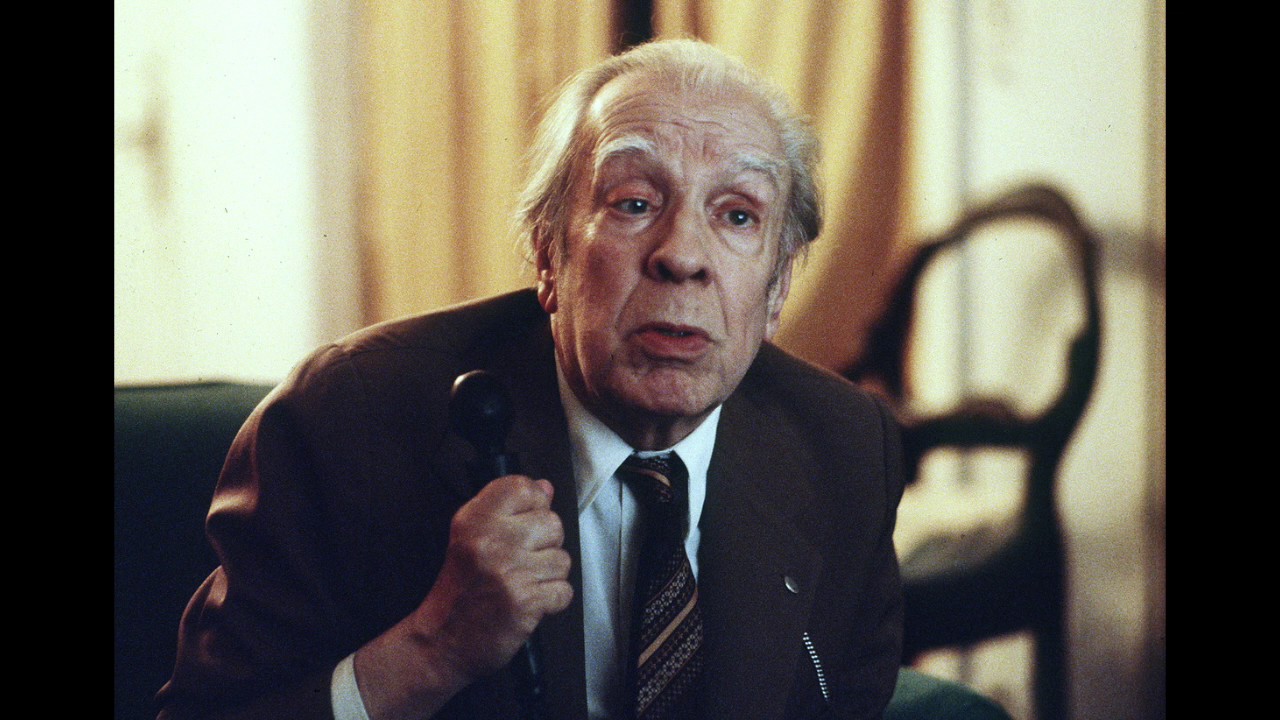
thepostarchive
AI-assisted summary of Jorge Luis Borges: This Craft of Verse Lectures - thepostarchive — original source. Check the original for full context.
Source published:
Key ideas
- Jorge Luis Borges delivered Harvard's 1967–1968 Norton Lectures entirely from memory due to near-total blindness, presenting a comprehensive poetic theory across six lectures on metaphor, epic narrative, translation, and aesthetics. (0:00)
- Borges argues that physical books are inert objects until activated by a reader, defining poetry not as a static arrangement of words but as an aesthetic event that occurs anew upon every reading. (6:43)
- World literature relies on a limited set of essential metaphor patterns—such as time and rivers, life and dreams, death and sleep, and eyes and stars—which admit infinite variations while resisting pedantic reduction. (71:15)
- Verse translation is examined as a creative art where literalism often introduces accidental poetic beauty, and translations can at times surpass original texts in verbal craftsmanship despite reader bias. (120:46)
- Reflecting on his personal craft, Borges champions allusion over exhaustive expression, warns that self-consciousness and striving to be modern hinder literature, and places the passive joy of reading above writing. (244:03)
Detailed notes
## Background Published on YouTube by thepostarchive on July 16, 2017, this archival recording presents Jorge Luis Borges delivering the six Charles Eliot Norton Lectures at Harvard University during the 1967–1968 academic year. According to the video description, the series spans six installments—'The Riddle of Poetry', 'The Metaphor', 'The Telling of the Tale', 'Word-Music and Translation', 'Thought and Poetry', and 'A Poet's Creed'—offering the celebrated Argentine author's expansive reflections on literature, philosophy, and the craft of writing.
## TL;DR Across six wide-ranging lectures delivered entirely from memory, Borges investigates the elusive essence of poetry, defining it not as an academic exercise or inert text, but as an immediate, living encounter between the book and the reader. He analyzes the enduring archetypal patterns of metaphor, laments modern literature's abandonment of epic heroism in favor of psychological degeneration, and champions translation as an art form that often enriches the original through rhythm and imaginative strangeness. Rejecting rigid aesthetic treatises and excessive self-consciousness, Borges argues that poetic conviction relies on genuine emotional urgency rather than literal truth or intellectual complexity. He concludes with his personal literary creed, tracing his evolution from youthful baroque pretension toward a modest aesthetic of allusion, while affirming that the happiness of reading far surpasses the anxieties of authorship.
## Atmosphere & style Listening to the lectures feels like sitting in an intimate room with a gentle, profoundly learned conversationalist whose complete blindness gives his recitations from memory an almost mythic aura. Borges speaks with an effortless, wandering grace, punctuating dense literary scholarship across Old English, Norse, Persian, and Latin with charming self-deprecating humor and humble pauses. The tone remains reverent toward the mystery of beauty while deflating academic pomposity, creating a deeply warm, contemplative atmosphere that culminates in a touching, affectionate farewell to his Harvard audience.
## Bulletin - [00:00](https://www.youtube.com/watch?v=YSLV7t9DvN8&t=0s) Jorge Luis Borges delivered Harvard's 1967–1968 Norton Lectures entirely from memory due to near-total blindness, presenting a comprehensive poetic theory across six lectures on metaphor, epic narrative, translation, and aesthetics. - [06:43](https://www.youtube.com/watch?v=YSLV7t9DvN8&t=403s) Borges argues that physical books are inert objects until activated by a reader, defining poetry not as a static arrangement of words but as an aesthetic event that occurs anew upon every reading. - [01:11:15](https://www.youtube.com/watch?v=YSLV7t9DvN8&t=4275s) World literature relies on a limited set of essential metaphor patterns—such as time and rivers, life and dreams, death and sleep, and eyes and stars—which admit infinite variations while resisting pedantic reduction. - [02:00:46](https://www.youtube.com/watch?v=YSLV7t9DvN8&t=7246s) Verse translation is examined as a creative art where literalism often introduces accidental poetic beauty, and translations can at times surpass original texts in verbal craftsmanship despite reader bias. - [04:04:03](https://www.youtube.com/watch?v=YSLV7t9DvN8&t=14643s) Reflecting on his personal craft, Borges champions allusion over exhaustive expression, warns that self-consciousness and striving to be modern hinder literature, and places the passive joy of reading above writing.
## Key takeaways - [37:03](https://www.youtube.com/watch?v=YSLV7t9DvN8&t=2223s) Poetry cannot be reduced to theoretical definitions or academic treatises; like primary sensory experiences such as the taste of coffee or the color red, it is an intuitive passion known directly through experience. - [06:43](https://www.youtube.com/watch?v=YSLV7t9DvN8&t=403s) A book remains a collection of dead symbols until an imaginative reader brings it to life, making reading an active collaboration and resurrection of the text. - [14:09](https://www.youtube.com/watch?v=YSLV7t9DvN8&t=849s) Ancient intellectual traditions—exemplified by Pythagoras, the Buddha, Socrates, and Jesus Christ—were strictly oral, treating the written word as an imperfect, silent substitute for living speech. - [23:47](https://www.youtube.com/watch?v=YSLV7t9DvN8&t=1427s) The meaning and emotional resonance of words continually mutate over historical time, allowing classical texts like the Homeric epics and Don Quixote to acquire richer layers of meaning than their authors initially intended. - [01:11:15](https://www.youtube.com/watch?v=YSLV7t9DvN8&t=4275s) Despite mathematical possibilities for metaphor, global literature consistently returns to a dozen archetypal patterns, including the pairing of women and flowers, death and sleep, and life and dreams. - [01:05:23](https://www.youtube.com/watch?v=YSLV7t9DvN8&t=3923s) Poetic suggestion and delicate hints consistently outshine didactic argument and philosophical declarations because the human imagination welcomes hints while actively resisting formal proofs. - [01:40:15](https://www.youtube.com/watch?v=YSLV7t9DvN8&t=6015s) Western storytelling is anchored predominantly in three master narratives: the tragic defense of Troy, the wandering journey home in the Odyssey, and the sacrificial passion of Christ. - [01:43:31](https://www.youtube.com/watch?v=YSLV7t9DvN8&t=6211s) The modern novel represents a degeneration of the ancient epic; where the epic celebrated courage, attainability, and archetypal virtues, modern fiction has lost the capacity to believe in victory and happy endings. - [01:56:31](https://www.youtube.com/watch?v=YSLV7t9DvN8&t=6991s) The modern hunger for epic narrative, largely abandoned by experimental literary fiction, found widespread revival through the American Hollywood Western. - [02:22:39](https://www.youtube.com/watch?v=YSLV7t9DvN8&t=8559s) Rigid literal translation is a myth, yet translating texts strictly word-for-word out of theological reverence for sacred scripture historically generated new, accidental poetic registers in vernacular languages. - [02:54:33](https://www.youtube.com/watch?v=YSLV7t9DvN8&t=10473s) In poetry, as in music, form and substance are fundamentally indivisible; words originated as concrete physical magic rather than abstract counters, giving aesthetic cadence precedence over logical meaning. - [03:14:53](https://www.youtube.com/watch?v=YSLV7t9DvN8&t=11693s) Narrative conviction relies on Coleridge's 'willing suspension of disbelief', which stems from absolute faith in the essential truth of characters—like Don Quixote or Sherlock Holmes—rather than plot plausibility. - [03:30:32](https://www.youtube.com/watch?v=YSLV7t9DvN8&t=12632s) Enduring literary works like The Arabian Nights and Huckleberry Finn generate an atmosphere of boundless imaginative freedom through simple frameworks, archetypes, and narrative scale. - [03:47:06](https://www.youtube.com/watch?v=YSLV7t9DvN8&t=13626s) Writing in regular classical meters is inherently easier than genuine free verse, because traditional forms offer established frameworks that assist artistic selection. - [03:52:02](https://www.youtube.com/watch?v=YSLV7t9DvN8&t=13922s) Consciously striving to be modern is a futile aesthetic trap; authors inevitably reflect their historical epoch regardless of setting, while genuine artistic beauty transcends time. - [04:04:03](https://www.youtube.com/watch?v=YSLV7t9DvN8&t=14643s) Literary creation should aim for allusion rather than total expression, allowing writers to subordinate ego, stylistic ornament, and intellectual vanity to the dim, intuitive dream of the work.
## Detailed walkthrough ### [00:00](https://www.youtube.com/watch?v=YSLV7t9DvN8&t=0s) Introduction to the Norton Lectures
In the archival prologue to the lecture series, an introductory narrator explains the provenance of the recordings. Jorge Luis Borges delivered these six Charles Eliot Norton Lectures at Harvard University across the fall of 1967 and the spring of 1968. Born in 1899, Borges was by that period almost completely blind, obliging him to speak to his audiences entirely without the assistance of written notes.
The narrator notes that Borges's command of fluent English stemmed from his early childhood in Buenos Aires, where he learned the language from his paternal grandmother, an immigrant from Staffordshire, England. His bilingual home environment was reinforced by his mother, who worked as a translator, and his father, who taught psychology and modern languages and was equally versed in English. These tape recordings, rediscovered in the Harvard University archives decades after their recording, preserve Borges’s wit, vast erudition, and distinctive literary sensibility prior to his death in 1986.
- **Speaker:** Jorge Luis Borges - **Event:** The Charles Eliot Norton Lectures (1967–1968), Lecture 1: *The Riddle of Poetry* - **Context:** Delivered extemporaneously from memory due to his advanced blindness
---
[00:57](https://www.youtube.com/watch?v=YSLV7t9DvN8&t=57s) The Riddle of Poetry and the Offering of Perplexities
Taking the podium, Borges begins with self-deprecating warmth, remarking that he feels overwhelmed by the “very generous injustice” of the introduction delivered by Professor Juan Marichal. He immediately issues a warning regarding what listeners should—and should not—expect from his address. He confesses to an error embedded in the lecture's announced title, *The Riddle of Poetry*, observing that placing emphasis on the word "riddle" might falsely suggest that solving the mystery is all that matters, or that he has succumbed to the delusion of having discovered its definitive answer.
```mermaid flowchart TD accTitle: The Search for Poetic Meaning accDescr: Borges's journey from reading and perplexity to encountering the blank page anew. subgraph LifelongEngagement ["Lifelong Engagement"] A["Reading & Analyzing"] --> B["Drinking in Poetry"] B --> C["Attempting to Write"] end subgraph EpistemologicalStance ["Epistemological Stance"] C --> D["No Final Conclusions"] D --> E["Facing the Blank Page"] E --> F["Rediscovering Literature Anew"] end ```
Borges insists that he has spent his life reading, analyzing, writing, and, above all, enjoying and "drinking in poetry," yet has arrived at no definitive solutions. Facing each new blank page, he finds that past literary experience provides no protection or ready-made formulas: every composition demands that one rediscover literature entirely from scratch. Nearing his seventieth year, he clarifies that he has spent the greater part of his life in the company of books only to emerge with uncertainties. Invoking Thomas De Quincey's remark from his fourteen volumes of essays—that discovering a new problem is just as valuable as finding the solution to an old one—Borges ruefully admits he cannot even offer an original problem, but only time-honored perplexities. Yet he comforts himself with the thought that the entire history of philosophy is merely the collective perplexities of the Hindus, the Chinese, the Greeks, the medieval Schoolmen, Bishop Berkeley, David Hume, and Arthur Schopenhauer.
> “The truth is that I have no revelations to offer.” — Jorge Luis Borges
---
[04:30](https://www.youtube.com/watch?v=YSLV7t9DvN8&t=270s) Aesthetics, Benedetto Croce, and Poetry in Life
Borges turns his attention to formal theories of art, noting his chronic disappointment whenever he has dipped into academic treatises on aesthetics. Such reading, he explains, consistently leaves him with the unsettling impression of reading treatises written by astronomers who have never actually looked up at the stars. System-builders treat poetry as if it were a dry, mechanical obligation or task, entirely ignoring that it is fundamentally an immediate passion and a joy.
He cites the philosopher Benedetto Croce's treatise on aesthetics, which formulates the famous proposition that language and poetry are essentially "expression." Borges dismantles this abstraction: if expression is taken to mean the expression *of something*, one is instantly thrown back into the antiquated dichotomy of form versus matter; if it means the expression *of nothing in particular*, it leaves the inquirer with empty air. Borges suggests that while one might respectfully accept such definitions on paper, the reader inevitably abandons them to return to poetry itself and to life. Poetry, he asserts, is not an artificial or alien entity sequestered in textbooks; rather, it is woven into everyday living, waiting around the next corner and liable to spring upon us at any moment.
> “I mean that they were writing about poetry as if poetry were a task and not a—it really is a passion and a joy.” — Jorge Luis Borges
---
[06:43](https://www.youtube.com/watch?v=YSLV7t9DvN8&t=403s) The Book as a Dead Object and the Magic of the Reader
Addressing the common confusion that equates the study of physical texts—such as Homer, Dante’s *Divine Comedy*, Racine, or *Macbeth*—with the direct study of poetry, Borges argues that material books are merely occasions for the poetic event. Recalling Ralph Waldo Emerson’s image of a library as a "magic cabinet" filled with slumbering spirits of the dead who can be summoned back into life whenever a reader opens their leaves, Borges invokes George Berkeley’s epistemological insight: the taste of an apple exists neither inside the apple itself (which cannot taste itself) nor purely in the mouth of the eater, but solely in the contact between the two.
In identical fashion, a physical volume resting upon a shelf is merely an inert object composed of dead, arbitrary symbols. It only transforms into poetry when the proper reader arrives to encounter it. At that instant of contact, the symbols ignite, and poetry brings about a literal resurrection of the word.
> “What is a book in itself? A book is a physical object in a world of physical objects; it is a set of dead symbols; and then the reader, the right reader comes along, and the words—or rather the poetry behind the words, for the words themselves are mere symbols—spring into life, and we have a resurrection of the word.” — Jorge Luis Borges
---
[08:43](https://www.youtube.com/watch?v=YSLV7t9DvN8&t=523s) Keats, Chapman's Homer, and the First Reading
To illustrate how poetry functions as an instantaneous psychological event, Borges turns to John Keats’s sonnet "On First Looking into Chapman’s Homer." He observes that because supreme works of art appear completely inevitable to posterity, readers frequently take them for granted and fail to register just how extraordinary they are. Keats’s sonnet is peculiar because it is a poem composed entirely about the immediate aesthetic thrill of reading another poet—George Chapman, the Elizabethan translator and contemporary of Shakespeare.
Borges recites from memory the poem’s famous closing sestet:
> “Then felt I like some watcher of the skies > When a new planet swims into his ken; > Or like stout Cortez when with eagle eyes > He star’d at the Pacific—and all his men > Look’d at each other with a wild surmise— > Silent, upon a peak in Darien.”
Reflecting on the word "first" in Keats's title, Borges wonders whether he himself was reacting to Keats’s verse directly or simply indulging in a nostalgic loyalty to his own memory. He recalls the childhood evening in Buenos Aires when he first heard his father read those exact lines aloud. Although he was too young to understand the meaning of the words intellectually, the auditory experience shook his entire physical being, demonstrating to him that language could transcend communicative utility to become pure emotion. Borges speculates whether Keats himself continued to feel that identical surge of wonder once he had plowed through all the subsequent books of the *Iliad* and the *Odyssey*, concluding that subsequent readings are often an illusion where readers confuse the passion they once experienced with mere habits of memory.
> “I think the first reading of a poem is the true one, and after that we delude ourselves into the belief that the sensation, that the impression is repeated; but as I say, it may be a mere loyalty, a mere trick of the memory, a mere confusion between our passion and the passion we once felt.” — Jorge Luis Borges
---
[14:09](https://www.youtube.com/watch?v=YSLV7t9DvN8&t=849s) "Art Happens" and the Oral Tradition of the Ancients
Extending his insight on the freshness of reading, Borges defines poetry not as a static artifact, but as an occurrence that must happen anew every time a line of verse is engaged. He recalls an anecdote concerning the American painter James Abbott McNeill Whistler, who, while listening to patrons in a Parisian café theorize about the deterministic influences of heredity, physical environment, and political eras on the artist, cut through the debate with two words: "Art happens." Borges adopts Whistler's phrase, applying it to the reading experience: poetry is not an object embedded in ink, but an event that takes place whenever verse strikes an active consciousness.
This perspective challenges the conventional concept of "classics" as perpetual monuments of beauty. Looking back across the history of books, Borges reminds the audience that ancient civilizations possessed little reverence for the written word. The preeminent spiritual and intellectual guides of humanity—Pythagoras, Jesus Christ, Socrates, and the Buddha—were exclusively oral teachers who deliberately chose not to write down their teachings.
> “Whistler said, ‘Art happens’—that is to say, there is something mysterious about art; and I would like to take his words, but to take them in a new sense: I should say art happens every time we read a poem.” — Jorge Luis Borges
---
[16:03](https://www.youtube.com/watch?v=YSLV7t9DvN8&t=963s) Plato, the Deadness of Written Words, and the Living Socrates
Borges examines Plato’s complicated relationship with writing, citing George Bernard Shaw’s quip that Plato was the dramatist who invented Socrates, just as the four evangelists were the dramatists who invented Jesus. In the *Phaedrus*, Plato expresses an explicit skepticism toward books: a written text, like a painting, appears to be an animate, living creature, yet when one poses a question to it, it maintains an obstinate, lifeless silence.
```mermaid flowchart LR accTitle: Plato's Invention of the Dialogue accDescr: Progression from Plato's critique of static texts to his dynamic dramatic dialogues. A["Static Book / Painting"] -->|"Cannot answer doubts"| B["Dead Object"] B -->|"Desire to resurrect Socrates"| C["Platonic Dialogue"] C -->|"Anticipates objections"| D["Living Voice"] ```
To rescue thought from this static deadness, Plato devised the dialogue form, which anticipates the reader’s objections and internal debates. Borges suggests an even deeper psychological motivation behind the dialogues: Plato was profoundly wistful following the execution of Socrates. Longing to hear his master's voice once more, Plato used dramatic writing to discover what Socrates might have said to address each emerging doubt. In doing so, Plato allowed his characters to follow unexpected paths, often concluding without dogmatic answers because Plato was actively thinking on the page. The dialogues served as an artistic resurrection: an elaborate illusion that Socrates had not actually drunk the hemlock, but remained alive, conversing with his disciple.
> “In one of the dialogues of Plato he speaks about books in a rather disparaging way, and he says: ‘What is a book? A book seems, like a picture, to be a living being, and yet if we ask it something it does not answer, and then we see it is dead.’” — Jorge Luis Borges
[18:44](https://www.youtube.com/watch?v=YSLV7t9DvN8&t=1124s) The Voices of Masters and the Ancient View of Books
Jorge Luis Borges reflects upon the masters who shaped his thinking: his father, the Spanish Jewish writer Rafael Cansinos Assens, and the eccentric Argentine philosopher Macedonio Fernández. He confesses that he longs to hear their voices again, sometimes deliberately adopting their vocal mannerisms so that he might recover their ways of thinking, remarking that they remain ever-present companions. Contrasting his personal reverence with the skepticism of antiquity, Borges recalls an early Church Father who warned that placing a book in the hands of an ignorant man was as perilous as handing a sword to a child. To the ancients, the written volume was never an idol but a mere makeshift or substitute for living speech.
This ancient reserve toward accumulating texts echoes down through later thinkers. Seneca warned against the vanity of excessive libraries, and Arthur Schopenhauer observed that people routinely mistake the purchase of a book for the purchase of its actual contents. Borges wryly confesses that he shares this very human frailty. Surrounded by shelves in his own home, he often realizes he will die long before reading through them all, yet he remains powerless against the urge to acquire more. He describes wandering through a library, stumbling upon a volume on one of his passions—Old English or Old Norse poetry—and catching himself lamenting: “What a pity I can’t buy that book, because I already have a copy at home.”
- The living voice was prized by the ancients above written letters, which were regarded as pale imitations of dialogue. - Seneca cautioned his correspondents against collecting unwieldy personal libraries. - Schopenhauer observed that buyers confuse the acquisition of physical paper and binding with the mastery of the thoughts printed upon them.
[20:46](https://www.youtube.com/watch?v=YSLV7t9DvN8&t=1246s) Holy Writ, the Muse, and the Subconscious Mind
A radically different understanding of the book entered Europe from the East: the concept of Holy Writ, or books dictated directly by divinity. Citing Oswald Spengler’s *The Decline of the West* (*Der Untergang des Abendlandes*), Borges examines the Islamic theological doctrine of the Qur'an. In orthodox Muslim theology, the Qur'an is regarded not merely as a historical book composed in Arabic, but as an eternal reality existing prior to the creation of the cosmos and prior to language itself. It is understood not as an ordinary created artifact of God, but as an uncreated, co-eternal divine attribute, comparable to His absolute justice, mercy, or wisdom.
Borges finds that this concept of sacred literature holds profound truth when expanded beyond narrow sectarian boundaries. He cites George Bernard Shaw, who, when asked whether he believed the Bible was written by the Holy Ghost, delivered a characteristically subversive reply: “I think the Holy Ghost has written not only the Bible, but all books.” Borges accepts Shaw’s verdict with the gentle qualification that it applies to “all books worth rereading.” In Borges’s view, Shaw’s invocation of the Holy Ghost matches what Homer meant when calling upon the Muse, or what John Milton meant when invoking the Spirit whose temple is the upright and pure human heart. While modern secular discourse prefers clumsy psychological jargon, Borges concludes: “Of course those words are rather uncouth if we compare them with the Muses or with the Holy Ghost, but still we have to put up with the mythology of our time, for the words mean essentially the same thing.”
```mermaid flowchart LR accTitle: Historical Conceptions of Inspiration accDescr: Diagram illustrating how classical, religious, and modern terms describe the same creative source. subgraph Classical["Ancient Greece"] A["The Muse"] end subgraph Religious["Abrahamic Tradition"] B["The Holy Ghost / Holy Writ"] end subgraph Modern["20th-Century Psychology"] C["The Subliminal Self / Subconscious"] end A --> D["The Poetic Source"] B --> D C --> D ```
[23:47](https://www.youtube.com/watch?v=YSLV7t9DvN8&t=1427s) The Shifting Nature of Words and Contextual Beauty
Turning to the idea of the classics, Borges rejects the notion that a masterpiece is a rigid monument meant to be placed on a pedestal and passively venerated. Instead, a book serves as an ongoing occasion for beauty whose resonance is constantly renewed because language itself refuses to stay still. Drawing on his delight in etymology, Borges points out how drastically word meanings mutate over time. The playful English verb *to tease* derives from the Old English *tǣsan*, which originally meant to wound or pierce with a sword (analogous to the archaic French *navrer*). Similarly, the noun *threat* originally denoted an angry troop or crowd in the opening verses of *Beowulf*, designating the physical source of peril before narrowing into an abstract warning of harm.
Because vocabulary undergoes continuous sea-changes, poetic effect is frequently generated not by isolated words, but by their aesthetic context. Borges observes that words like *quietus* and *bodkin* sound somewhat clumsy or uncouth on their own. Yet when Hamlet contemplates self-slaughter, asking “when he himself might his quietus make / With a bare bodkin,” the lines become unforgettable poetry. The tragic context transfigures the harsh vocabulary into art, rendering the phrasing so indelible that no modern author could use them without sounding like a deliberate quotation.
[26:44](https://www.youtube.com/watch?v=YSLV7t9DvN8&t=1604s) How Don Quixote and Rossetti Evolve Over Time
Borges illustrates this linguistic transfiguration through the title of Miguel de Cervantes’s masterpiece, *El ingenioso hidalgo Don Quijote de la Mancha*. When Cervantes wrote, *hidalgo* conveyed the modest standing of an ordinary country gentleman rather than romantic nobility, while *Quijote* was a comically ridiculous surname akin to the caricature names of Charles Dickens—Pickwick, Swiveller, Chuzzlewit, Twist, Squeers, or Quilp. Naming the knight *de la Mancha* was intended as provincial satire, much as if an American author today had introduced a hero as “Don Quixote of Kansas City” or Peoria. Yet across centuries of reading, Cervantes’s gentle mockery has ennobled the landscape, transforming *La Mancha* into an evocative, enduring symbol of heroic idealism.
A parallel evolution occurs in poetic perception through technological and cultural shifts. Quoting Dante Gabriel Rossetti’s sonnet “Inclusiveness,” Borges recites: “What man has bent o’er his son’s sleep, to brood / How that face shall watch his when cold it lies? — / Or thought, as his own mother kiss’d his eyes, / Of what her kiss was when his father woo’d?” He suggests these lines strike modern readers with a vividness Rossetti could scarcely have anticipated. The rise of cinema has trained our eyes to grasp rapid visual reversals—first the living father bending over the sleeping child, followed instantly by the grown son gazing down at the dead father’s face. Furthermore, modern psychology enhances the erotic and emotional depth of the son imagining his mother being wooed, while the soft English vowels in *brood* and the absolute use of *woo’d* leave the sound reverberating in the ear.
- Cervantes intended *Don Quixote* as everyday satire, but centuries of reverence transformed modest satire into sublime myth. - Rossetti's sonnet anticipates the cinematic cut and reverse-angle shot long before film was invented. - The solitary cadence of the verb *woo'd* without an explicit object allows the vowel sound to ring out indefinitely.
[31:07](https://www.youtube.com/watch?v=YSLV7t9DvN8&t=1867s) The Wine-Dark Sea and Heraclitus’s Flowing River
Even established formulas alter their meaning across time. When Homer or the ancient rhapsodes used the epithet *oinopa ponton*—conventionally rendered in English as “the wine-dark sea”—it was likely a straightforward, everyday description of water. But when a modern poet repeats the phrase today, it ceases to be a simple image. It becomes a resonant gesture of tradition, summoning three millennia of Western literature and the vast historical distance separating modern readers from Homeric Greece. The words may be identical, but the reading experience is fundamentally transformed.
This fluid relationship between text and reader brings Borges back to Heraclitus’s ancient dictum that no man steps into the same river twice. Initially, one thinks only of the water rushing past, but this realization soon gives way to a deeper existential awe: the reader too is slipping away. As Borges observes: “And then with a beginning sense of awe, we feel that we also are changing, that we are as shifting and as evanescent as the river is.”
[34:00](https://www.youtube.com/watch?v=YSLV7t9DvN8&t=2040s) The Omnipresence of Beauty and the Nameless Poet
Despite the ceaseless flux of time, Borges insists that we need not despair over the fate of the classics, because beauty is an ever-present reality that takes care of itself. Quoting Robert Browning, he notes: “Just when we’re safest, there’s a sunset-touch, / A chorus-ending from Euripides…” Beauty lies in wait, liable to strike unannounced through the title of a film, a line in a popular song, or a forgotten page of classical literature. He recalls a prose poem by his old master Rafael Cansinos Assens, who once prayed that God might protect him from beauty because the world held far too much of it for a mortal soul to bear.
At the age of sixty-seven, Borges echoes this gratitude, professing that beauty surrounds us at every turn. Whether a verse was crafted by a renowned genius matters only to literary historians; to the reader, the experience is immediate and anonymous. Even if an author happens to compose a remarkable line, they have no claim to personal pride, since the gift was either granted by the subconscious Muse or remembered from some long-forgotten reading. For Borges, true poetry remains a collective rediscovery, leading him to conclude: “Perhaps it is better that a poet should be nameless.”
- Browning’s verses capture how beauty ambushes us in ordinary moments, regardless of our defenses. - Rafael Cansinos Assens composed a prayer begging God for deliverance from the unbearable abundance of beauty in the world. - Borges considers personal authorship an illusion, viewing the poet as a mere conduit or transcriber of an ancient, communal memory.
[37:03](https://www.youtube.com/watch?v=YSLV7t9DvN8&t=2223s) Old English and the Enrichment of Time
Jorge Luis Borges recites lines from an Old English poem, first rendering them into modern English: "It snowed from the north, rime bound the fields, hail fell on earth, the coldest of seeds." He then recites the stark ninth-century original: *"Norþan sniwde, hrim hrusan bond, hægl feol on eorþan, corna caldast."* Connecting this to his earlier remarks on Homer, he explains that when the ninth-century poet composed those lines, he was merely recording direct observations of everyday reality. In an age dominated by mythology and allegorical images, simply telling commonplace things was unusual. Yet when modern readers encounter these verses, an added dimension emerges: the poetry of an unnamed Saxon writing beside the shores of the North Sea in Northumberland, reaching through the centuries in a manner both plain and pathetic.
While some poetry suffers as time passes and words lose their luster, Borges emphasizes that time can also enrich rather than debase verse. Turning to the challenge of definitions, Borges warns against the common assumption that inability to define a concept implies ignorance of it. Adopting what he calls a "Chestertonian mood," he suggests that one can only formulate a definition when knowing nothing whatever about a subject. Attempting to define poetry in conventional terms—such as "the expression of the beautiful through the medium of words artfully woven together"—might suffice for a dictionary, but it remains feeble. Instead, our true understanding of poetry mirrors our grasp of primary experiences that resist definition:
> “And that is that we know what poetry is; we know it so well that we cannot define it in other words, even as we cannot define the taste of coffee, the color of red or of yellow, or the meaning of anger, of love, of hatred, of the sunrise, of the sunset, of our love for our country.”
[41:46](https://www.youtube.com/watch?v=YSLV7t9DvN8&t=2506s) The Touch of Poetry and St. Augustine’s Paradox
Borges reflects that listeners need not agree with his specific literary examples, whether drawn from Homer, Anglo-Saxon poets, or Dante Gabriel Rossetti, because everyone instinctively knows where to seek verse: “Everyone knows where to find poetry, and when it comes, he feels the touch of poetry, he feels that particular tingling of poetry.” To illustrate this intuitive certainty, he quotes Saint Augustine’s famous paradox regarding time:
> “Saint Augustine said, ‘What is time? If people do not ask me what time is, I know; if they ask me what it is, then I do not know.’ And I feel in the same way about poetry.”
Conceding that his opening lecture was somewhat abstract because he is "no good at all at abstract thinking," Borges outlines the concrete subjects planned for his upcoming Norton Lectures: - **Lecture 2:** The Metaphor - **Lecture 3:** The Telling of a Tale (epic poetry, the oldest and bravest kind of poetry) - **Lecture 4:** Word-Music and Translation (the possibility or impossibility of verse translation) - **Lecture 5:** Thought and Poetry - **Lecture 6:** A Poet's Creed (an attempt to justify his own life and literary calling)
[44:24](https://www.youtube.com/watch?v=YSLV7t9DvN8&t=2664s) Lecture II: The Metaphor and Combinatorial Arithmetic
Opening his second lecture, Borges begins with a metaphor drawn from ancient China, where the world is known as "the ten thousand things" or "the ten thousand beings." Accepting this modest estimate of 10,000 components of the universe, Borges observes that if metaphors are formed by linking two distinct things, combinatorial algebra yields an immense number of potential comparisons (such as $10,000 \times 9,999$ and so forth). Though finite, the sum staggers the imagination, raising a fundamental question: why have poets across all ages and cultures consistently relied on a handful of recurring stock metaphors instead of exhausting this vast combinatorial field?
```mermaid flowchart TD accTitle: The Scope of Metaphor accDescr: Diagram illustrating the contrast between theoretical combinatorial metaphors and living poetic patterns.
subgraph Combinatorial["Combinatorial Scale"] A["The World: '10,000 Things'"] --> B["Potential Pairs: 10,000 × 9,999..."] B --> C["Vast Array of Possible Metaphors"] end
subgraph Linguistic["Linguistic Reality"] D["Etymology / Dead Metaphors\n(king, threat, consider)"] E["Living Metaphors\n(Felt by Reader / Hearer)"] end
Combinatorial -->|"Poets converge on"| E ```
Borges recalls that in 1909, Argentine poet Leopoldo Lugones prefaced his collection *Lunario sentimental* with the claim that poets invariably repeat identical metaphors, prompting Lugones to invent hundreds of novel comparisons for the moon. Lugones also declared that every word is a dead metaphor. Borges examines this linguistic phenomenon through Walter William Skeat's etymological dictionary: - *Threat* originally denoted an angry crowd or mob (in the opening lines of *Beowulf*), shifting over time from cause to effect. - *King* (*cyning*) referred to someone standing for his kin or people, meaning *king*, *kinsman*, and *gentleman* share a common root. - *Consider* contains an astrological trace, literally relating to observing stars or casting a horoscope.
Yet Borges notes that ordinary speech requires forgetting these historical origins: when reciting the nursery rhyme "the king sat in his counting house," no one perceives *king* as figurative. For poetry, what matters is whether an expression is genuinely experienced by the reader or listener as a living metaphor rather than a fossilized word.
[49:59](https://www.youtube.com/watch?v=YSLV7t9DvN8&t=2999s) Metaphorical Patterns: Eyes, Stars, and Flowing Time
Focusing on metaphors actively felt by the reader, Borges explores how broad conceptual patterns or "equations" produce radically different emotional responses depending on their poetic execution. He takes the ancient comparison between eyes and stars to show how one underlying formula yields distinct imaginative realities:
* **Plato (attributed in the *Greek Anthology*):** "I wish I were the night, so that I might watch your sleep with a thousand eyes." Here, Borges notes, the image conveys lover-like tenderness, vulnerability, and the yearning to behold the beloved from every vantage at once. * **A. J. Cronin's title / popular idiom (*The Stars Look Down*):** The same comparison evokes generations of men toiling on earth under the gaze of a lofty, indifferent cosmos. * **G. K. Chesterton (*A Second Childhood*):** "But I shall not be too old to see enormous night arise, / A cloud that is larger than the world and a monster made of eyes." Borges emphasizes that Chesterton does not merely describe a creature *full* of eyes (like the beasts of the Book of Revelation), but an appalling "monster *made* of eyes," transforming familiar night into an absolute nightmare.
Moving to a second archetypal pattern—the flow of time compared to a river—Borges cites a single line from a poem written by Alfred, Lord Tennyson at age thirteen or fourteen. Though Tennyson later destroyed the manuscript, the line was preserved in Andrew Lang's biography: "Time flowing in the middle of the night." Borges observes that Tennyson chose his setting wisely, situating the silent, unstoppable passage of time when humanity sleeps.
[55:54](https://www.youtube.com/watch?v=YSLV7t9DvN8&t=3354s) Time and Rivers: Heraclitus and Jorge Manrique
Reflecting on the metaphor of time as flowing water, Borges notes that time moves forward noiselessly, an association so natural that simply placing the words together evokes the image: “the putting together of the two words suggests the metaphor time and the river they both flow on.” This connection is embodied in Thomas Wolfe's novel *Of Time and the River*, but its most famous ancient formulation remains Heraclitus's dictum that no man can step twice into the same river. Borges observes that this ancient insight carries an undercurrent of existential dread: while we initially imagine the river flowing past with ever-changing drops of water, we quickly realize that we ourselves are the river, just as fugitive and impermanent as the running current.
```mermaid flowchart LR accTitle: The Evolution of the River Metaphor accDescr: Diagram tracing the shift from observing an external river to realizing that human existence itself is fleeting and moving toward death. A["External River Flowing"] --> B["Changing Drops of Water"] B --> C["Existential Terror: We Are the River"] C --> D["Jorge Manrique: Rivers Flowing to the Sea of Death"] ```
He links this dread to Jorge Manrique’s celebrated stanza from *Coplas por la muerte de su padre*: *“Nuestras vidas son los ríos / que van a dar en la mar, / qu’es el morir…”* (“Our lives are the rivers that flow into that sea, death”). Borges remarks that translating this literal statement into English renders it somewhat unimpressive, though he wishes he could recall how Henry Wadsworth Longfellow rendered it in his own translation. He points out that beneath the familiar, stock metaphor lies the somber verbal music of the Spanish lines, demonstrating how cadence and tone transform a well-worn conceit into great poetry.
[58:05](https://www.youtube.com/watch?v=YSLV7t9DvN8&t=3485s) Women and Flowers: Stevenson's *Weir of Hermiston*
Borges moves next to what he calls an almost trite poetic comparison that may cause listeners to smile: the association of women with flowers and flowers with women. Rather than dwelling on the countless easy examples scattered throughout all tongues and literatures, he recalls a striking, less obvious scene from Robert Louis Stevenson’s unfinished novel *Weir of Hermiston*. The protagonist enters a church in Scotland and catches sight of a beautiful young woman, immediately feeling the onset of love.
As he gazes at her, the young man ponders whether there is an immortal soul dwelling within that beautiful frame, or whether she is merely an animal, “the color of flowers.” Borges points out the delicate artistry of Stevenson's phrase: the harshness and potential brutality of the word “animal” are instantly dissolved and redeemed by the gentle addition of the floral image.
[01:00:02](https://www.youtube.com/watch?v=YSLV7t9DvN8&t=3602s) Life as a Dream: Shakespeare, Walther von der Vogelweide, and Zhuangzi
Another essential metaphor is the intuitive sensation that life is a dream. The most celebrated English expression is Prospero’s line from William Shakespeare's *The Tempest*: “We are such stuff as dreams are made on.” Borges confesses that while it may sound blasphemous, he loves Shakespeare too much to avoid examining it critically:
> “I think there is a slight a very slight contradiction between the fact of Our Lives being dreamlike or having a dreamlike Essence in them and the rather sweeping statement we are such stuff as dreams are made on because if we are really dreams or if we are merely dreamers of Dreams then I wonder if we can make such sweeping statements”
To Borges, Shakespeare’s definitive assertion belongs more properly to philosophy or metaphysics than to genuine poetic sentiment, even if the surrounding context elevates it into poetry.
By contrast, Borges finds a truer poetic rendering in Middle High German verse by Walther von der Vogelweide (*“Ist mir mîn leben getroumet, oder ist ez wâr?”*—"Have I dreamed my life, or was it true?"). By phrasing the thought as a hesitant question rather than a dogmatic declaration, Walther captures the fragile, doubtful essence of human experience that everyone has felt.
Borges then turns to what he considers the finest expression of the motif: the parable of the ancient Chinese philosopher Zhuangzi (Chuang Tzu), who dreamed he was a butterfly and, upon waking, could not tell whether he was a man who had dreamed he was a butterfly, or a butterfly now dreaming he was a man. Borges highlights two strokes of genius in the tale: - Zhuangzi begins with the dream itself, so that ordinary waking reality permanently retains an elusive, dreamlike quality. - The butterfly is chosen with miraculous precision; had Zhuangzi dreamed of a tiger, a whale, or a typewriter, the evanescent and delicate quality essential to the illusion of dreaming would have been destroyed.
[01:05:23](https://www.youtube.com/watch?v=YSLV7t9DvN8&t=3923s) Sleep and Death: Homer and Robert Frost
Borges explores another ubiquitous pairing: sleep and death. Homer captures the severity of death by describing it as an "iron sleep," an arresting oxymoron that unites the gentleness of slumber with the unyielding, unbroken hardness of metal. Moving closer to his Norton audience, Borges recites the final stanza of Robert Frost’s “Stopping by Woods on a Snowy Evening”:
> “The woods are lovely, dark and deep, > But I have promises to keep, > And miles to go before I sleep, > And miles to go before I sleep.”
Borges notes that while all literature is composed of devices or "tricks" that risk growing stale once discovered, Frost’s device here is executed with supreme subtlety. The repetition of the identical line shifts the meaning entirely: the first iteration refers literally to physical miles across New England and ordinary physical sleep, whereas the second iteration broadens into the journey of mortal time and the final sleep of death or rest.
Had Frost explicitly spelled out this comparison, the poem would have lost its power. Borges explains the psychological mechanism behind poetic suggestion:
> “Arguments convince nobody they convince nobody because they are presented as arguments and then we look at them we weigh them with turn them over and we may decide against them but when something is merely said or better still hinted that then there's a kind of hospitality in our imagination we are ready to accept it”
He recalls reading the works of Martin Buber thirty years earlier in Buenos Aires, loving them as magnificent poems. Only later, upon reading a study by his friend León Dujovne, did he discover with astonishment that Buber was considered a systematic philosopher; Borges had embraced his ideas precisely because they entered his mind through poetic suggestion and verbal music rather than argumentative force. He finds this same sentiment echoed in Walt Whitman, who declared the night air and large stars far more convincing than formal reasons.
[01:11:15](https://www.youtube.com/watch?v=YSLV7t9DvN8&t=4275s) Fire and Battle, and the Endless Variations of Essential Metaphors
Borges touches upon a slightly less common metaphor: comparing battle to fire. In Homer’s *Iliad*, combat is repeatedly described as blazing like a flame. Similarly, in the Old English heroic fragment *The Fight at Finnsburg*, the clash of shields and swords between Danes and Frisians is described so fiercely that the narrator remarks it seemed as though all of Finn's castle were burning.
Reviewing the fundamental patterns analyzed in the lecture, Borges tallies them: - Eyes and stars - Women and flowers - Time and rivers - Life and dreams - Death and sleep - Fire and battles
He suggests that with sufficient learning, one might identify perhaps half a dozen more foundational patterns, which together account for the vast majority of metaphors in world literature. The true marvel of poetry, Borges concludes, is not the small number of basic archetypes, but the fact that these few patterns admit endless variations, allowing a reader devoted to poetic experience rather than mere theory to discover fresh wonder in every reimagining.
[01:13:31](https://www.youtube.com/watch?v=YSLV7t9DvN8&t=4411s) Metaphor Patterns and the Cummings Stanza
Borges reflects on how vast numbers of poetic metaphors—such as those comparing eyes to stars looking down—can ultimately be traced back to a single underlying pattern. He admits self-deprecatingly that he is not a bold thinker: “Now if I were a daring thinker—but I am not, I'm a very timid thinker, I'm groping my way along—I could of course say that only a dozen or so patterns exist and that the rest of metaphors are mere arbitrary games.” Such a view would mean that across the proverbial "ten thousand things" of Chinese philosophy, only around a dozen essential affinities genuinely exist. Other inventions provide merely a flash of astonishment, and astonishment rarely lasts more than an instant.
```mermaid flowchart TD accTitle: Borges's Conception of Metaphor Types accDescr: Diagram showing essential affinities versus arbitrary combinations of metaphor. subgraph Essential["Essential Affinities (~12 Patterns)"] A["Deep, archetypal patterns"] --> B["Enduring poetic resonance"] end subgraph Arbitrary["Arbitrary Inventions"] C["Surprising combinations"] --> D["Astonishment (fleeting)"] end ```
He then remembers an example linking life and dreams from the American poet E. E. Cummings, cautioning the audience about its opening line: “Evidently it was written by a young man writing for young men, and I can no longer claim that privilege; I think I'm far too old for that kind of game.” The full stanza runs:
> *God's terrible face brighter than a spoon* > *collects the image of one fatal word,* > *so that my life (which liked the sun and the moon)* > *resembles something that has not occurred.*
Borges finds the initial mention of a "spoon" regrettable, imagining the poet originally thought of something shining traditionally—a sword, a candle, the sun, or a shield—before consciously choosing a spoon merely to appear modern. However, after his friend pointed out that a curved spoon gathers distorted reflections, Borges conceded the second line improves it. Ultimately, he finds the closing image—a life that “resembles something that has not occurred”—achieves a haunting simplicity that captures the dreamlike essence of existence even more potently than Shakespeare or Walther von der Vogelweide.
---
[01:17:13](https://www.youtube.com/watch?v=YSLV7t9DvN8&t=4633s) The Moon as the Mirror of Time and Magical Precision
Anticipating that listeners will remember countless metaphors he failed to mention, Borges jokes that after every lecture he feels a wave of remorse about the beautiful images he omitted, expecting people to ask why he skipped their favorites. He then turns to metaphors outside standard patterns, introducing a Persian line found in Edward Granville Browne's *A Literary History of Persia* (perhaps from Farid al-Din Attar, Omar Khayyam, or Hafiz) describing the moon as the "mirror of time." While astronomy may treat the moon as a reflective body, Borges dismisses this scientific coincidence: “The fact of the moon being or not being a mirror has no importance whatever, since poetry talks to the imagination.” The mirror conveys both luminosity and fragility, while yoking it to time evokes the ancient, mythical antiquity of the orb gazing down upon human history.
This notion of immemorial age brings to Borges's mind a celebrated phrase from John William Burgon, quoted in Rudyard Kipling's travel book *From Sea to Sea*: "A rose-red city half as old as time" (describing Petra). Borges argues that had the line simply read "as old as time," it would have been utterly flat and ineffective. The qualifier "half as old as time" confers a "magic precision." He compares this imaginative trick to other enduring expressions: - The English vow *"I will love you forever and a day,"* which rescues the abstract idea of "forever" by adding an extra day for the imagination to grasp. - The title *The Thousand and One Nights*, where adding a single night transforms a conventional symbol for multitude into an evocative mystery. - The archaic English use of the number forty to signify an indefinite crowd, seen in Shakespeare's Sonnet 2 ("When forty winters shall besiege thy brow") and the colloquial idiom "forty winks."
---
[01:21:42](https://www.youtube.com/watch?v=YSLV7t9DvN8&t=4902s) Kennings, the Web of Men, and Góngora
Borges turns to Old English and Old Norse poetry, returning to his beloved Anglo-Saxon kennings. He cites the common kenning calling the sea the "whale-road" (*ron-rād*), wondering whether the scop who invented it consciously understood how the creature's colossal scale magnified the vastness of the ocean itself. In Norse skaldic poetry, blood is described as the "water of the serpent," a phrase implying that the sword was an animate, sinister serpent lapping human life.
Metaphors for warfare provide a stark spectrum of feeling: - *Meeting of men* — suggesting a tragic world where men gather only to slaughter one another. - *The dance of swords*, *the clash of banners*, and *the clash of shields* — vivid formulas seen in the poem *The Battle of Brunanburh*. - *Tor-mōt* (a meeting of anger) — deriving its strength from the bitter clash between the communal warmth implied by "meeting" and the fury of war.
Towering over these is a Norse-Irish metaphor recorded during the Battle of Clontarf: calling battle the "web of men" (*vefr darradar*). This image captures both the tactical geometry of interlocked spears and shields and the visceral horror of a tapestry woven out of dying human flesh.
Borges contrasts this dread image with a passage by Luis de Góngora describing a traveler entering an inhospitable hamlet, where the inhabitants let loose their hounds:
$$\text{"un villano soto le teje cuerda de perros"}$$
While both poets arrive at the concept of a living rope or weave, their poetic atmospheres diverge completely: Góngora's "rope of dogs" is grotesque and baroque, whereas the Norse "web of men" carries an aura of terrible, tragic majesty.
---
[01:26:25](https://www.youtube.com/watch?v=YSLV7t9DvN8&t=5185s) Byron’s Double Metaphor and the Two Broad Conclusions
Concluding his survey, Borges examines Lord Byron's famous lyric: "She walks in beauty, like the night." Because the line feels effortless, readers easily take it for granted and assume anyone could have composed it. Yet Borges highlights its concealed structural complexity.
```mermaid flowchart LR accTitle: Byron's Bidirectional Metaphor accDescr: The reciprocal dynamic between the woman and the night in Byron's line. Woman["Lovely Woman"] <-->|"Mutual Likeness"| Night["Starry Night"] ```
The line does not merely compare a graceful lady to the starry firmament; for the comparison to work poetically, the night itself must be intuitively personified as a graceful woman. Borges notes the subtle, almost French cadence of the syntax (*marche en beauté*), emphasizing that the power of the phrase rests on a reciprocal transformation: “So within those very simple words we have a double metaphor: a woman is likened to the night, but the night is likened to a woman.” Whether Byron planned this consciously matters little, as Borges suspects discovering the mechanic beforehand might have harmed its unstudied perfection.
This brings Borges to the core conclusions of his lecture on metaphor: while thousands of individual metaphors exist across world literature, almost all of them can be grouped under a surprisingly small handful of archetypal patterns.
[01:29:24](https://www.youtube.com/watch?v=YSLV7t9DvN8&t=5364s) The Outlook for the Metaphor
Concluding his previous lecture on metaphor, Jorge Luis Borges reflects on the two principal conclusions of his inquiry: first, that many metaphors may be traced back to a handful of simple, essential patterns; and second, that certain metaphors—such as the Old Norse "web of men" for battle or the Old English "whale-road" for the sea—refuse to be reduced to these standard archetypes. He reassures the audience that reducing figures of speech to a small set of patterns should not cause despair, because every time a pattern is employed, the individual variations remain unique and fresh.
Borges expresses great optimism for the future of poetry and figurative language. Poets can continue to produce beautiful variations on ancient themes—pairing eyes with stars, or comparing time to a river—and only a handful of pedantic critics will care to classify them under traditional tropes. At the same time, poets retain the capacity to discover entirely new images that do not yet fit into accepted traditions:
> “Outlook even after my lecture is quite good for the metaphor, because if we like we may try our hands at new variations of the major trends, and the variations will be very beautiful, and only a few critics like myself will take the trouble to say, well, there we have eyes and stars, there we have time on the river, over and over again the metaphors will strike the imagination; but it is also given to us, and why not hope for that also, it may also be given to us to invent metaphors that do not belong, or that do not yet belong, to accepted patterns.”
```mermaid flowchart TD accTitle: The Two Paths of Metaphorical Invention accDescr: Diagram illustrating the two approaches Borges describes for creating poetic metaphors. A["The Craft of Metaphor"] --> B["Variations on Universal Patterns"] A --> C["Invention of Unpatterned Metaphors"] B --> D["Eyes and stars, time and the river"] C --> E["Singular visions: web of men, whale-road"] ```
---
[01:31:04](https://www.youtube.com/watch?v=YSLV7t9DvN8&t=5464s) Lecture Three: The Telling of the Tale and the Split of Poetry
Borges begins his third lecture, titled *The Telling of the Tale*, with an appreciation of verbal distinctions, acknowledging that differences in vocabulary often correspond to subtle mental and intellectual distinctions. Even so, he laments that the once-comprehensive concept of the "poet" has fractured in the modern era. Today, a poet is imagined exclusively as a creator of fragile, solitary, birdlike lyric lines—such as William Wordsworth's description of ships sprinkled across the sea like stars in heaven, or William Shakespeare's sonnet line on music and sadness (*"Music to hear, why hear'st thou music sadly? / Sweets with sweets war not, joy delights in joy"*).
In antiquity, by contrast, the poet was understood as a "maker" (a word William Dunbar used in his poems). The poet was not merely an author of delicate lyric sentiments, but fundamentally a teller of tales whose work embraced every voice of humanity, uniting the wistful and melancholy with the epic registers of courage, duty, and hope:
> “And yet one feels that it is somehow a pity that the word poet should have been split; for nowadays, when we speak of a poet, we think, we only think of the author of such lyric, birdlike notes... while the ancients, when they spoke of a poet, a maker, as Dunbar has it, thought of him not only as the author of those high lyric notes, but also as the teller of a tale, a tale wherein all the voices of mankind might be found—not only the lyric, the wistful, the melancholy, but also the voices of courage and of hope.”
---
[01:33:15](https://www.youtube.com/watch?v=YSLV7t9DvN8&t=5595s) The Tale of Troy and the Dignity of Defeat
Turning to the earliest surviving epic traditions, Borges examines Homer's *Iliad*, using Andrew Lang's phrase "the tale of Troy." He notes the opening invocation to the Muse concerning the anger of Achilles (rendered straightforwardly by translator W. H. D. Rouse as *"An angry man—that is my subject"*). The Latins held anger to be *furor brevis*—a brief madness—and to a modern reader, the declared plot of the *Iliad* can appear quite petty or odd: an enraged warrior sulking in his tent over wounded pride, returning to combat solely to pursue a private blood feud after the death of Patroclus, and ultimately ransoming the corpse of the enemy he slaughtered back to the grieving father.
Yet Borges argues that an author's stated intention matters far less than what the work ultimately achieves. Beyond the wrath of Achilles, the true, enduring subject of the *Iliad* is tragic grandeur: the tale of a champion assaulting a fortress he knows he will never live to see fall, and the even more stirring story of men fighting valiantly in defense of a city that is doomed and already metaphorically in flames:
> “What is important nowadays is that though Homer may have thought he was telling that story, he was telling something far finer than that: the story of a man, the hero, who is attacking a city he knows he will never conquer, he knows that he will die before the fall of Troy, and the still more stirring tale of men defending a city whose doom is already known to them, a city that is already in flames.”
Borges points out that throughout world literature, human sympathy has almost universally sided with the defeated Trojans rather than the conquering Achaeans. Virgil traced Rome's origins back to the Trojan exile Aeneas, and Snorri Sturluson went so far in the *Prose Edda* as to make Odin an descendant of Priam and brother to Hector:
> “So that men have sought kinship with the defeated Trojans and not with the victorious Greeks, perhaps because there is a dignity in defeat that hardly belongs to victory.”
---
[01:37:40](https://www.youtube.com/watch?v=YSLV7t9DvN8&t=5860s) The Odyssey: Homecoming and the Sea-Tale
Borges turns next to the *Odyssey*, observing that the poem can be read on two distinct registers. The original author (whether Homer or, as Samuel Butler famously contended, a woman) wove together two narrative impulses: the story of Odysseus's homecoming and the catalog of marvels across perilous seas. When read as a story of homecoming, the *Odyssey* speaks directly to a universal human condition: the persistent sensation that we live in exile, that our true home exists elsewhere—whether in the past, in paradise, or beyond reach:
> “If we take the Odyssey in the first sense, then we have that idea of homecoming, the idea that we are in banishment, that our true home is in the past or in heaven or somewhere else, that we are never at home.”
To keep the journey engaging, the narrative accumulated sea-monsters, enchantresses, and supernatural perils. When translated into the Arabic tradition in *The Thousand and One Nights*, the Seven Voyages of Sinbad the Sailor discarded the longing for home altogether, surviving purely as episodic tales of wanderlust and peril. When readers return to the *Odyssey*, Borges suggests, they are enthralled by the mystery and enchantment of the ocean itself, much like the Anglo-Saxon speaker of *The Seafarer* who has no heart for harp-playing, treasure, or women, but yearns ceaselessly for the deep waters.
---
[01:40:15](https://www.youtube.com/watch?v=YSLV7t9DvN8&t=6015s) The Gospels: The Divine Epic
Looming above the classical epics, Borges introduces a third narrative pillar of human culture: the four Gospels. The story of Jesus Christ also invites a dual reading: - **The perspective of faith:** For believers, it is the awe-inspiring story of God becoming flesh to atone for the transgressions of humanity, voluntarily submitting to agony and crucifixion—*"the bitter cross,"* as Shakespeare phrased it. Borges recalls a theological insight from William Langland's *Piers Plowman*, which suggests that it was not enough for God to understand human suffering purely as an omniscient intellect; He chose to experience it from within the frail, agonizing boundaries of mortal flesh. - **The secular or skeptical reading:** For the non-believer, the Gospel remains a poignant human tragedy—the chronicle of an extraordinary man of genius who believed he was divine, only to discover at the moment of death on the cross that he was purely mortal and that his God had forsaken him.
Borges observes that across centuries, Western culture has relied almost entirely on these three core narratives: the siege of Troy, the wanderings of Ulysses, and the passion of Jesus. Generations of artists have rewritten, painted, and set them to music without exhausting their resonance. Yet between the three, the Gospel accounts possess a unique perfection:
> “The story of Christ, I think, cannot be told better; it has been told many times over, and yet I think that the few verses where we read, for example, of Christ being tempted by the—by Satan, are stronger than the four books of Paradise Regained; perhaps one feels that Milton had no inkling of what kind of a man Christ was.”
---
[01:43:31](https://www.youtube.com/watch?v=YSLV7t9DvN8&t=6211s) Epic and Novel: The Fragmentation of Storytelling
Ancient and medieval writers saw no urgent need to invent wholly new plots. Geoffrey Chaucer, for example, rarely fabricated an original storyline; audiences and poets alike preferred known legends so they could appreciate the author's subtle shadings, variations, and nuances of tone. The ancient epic stood as a total work containing every human experience.
In modern literature, however, this unity has shattered. Poetic verse has retreated into lyric introspection and elegy, while narrative storytelling has been relegated to prose—the modern novel. Borges questions whether the rise of the novel represents an evolutionary advance or an aesthetic decline:
> “One is almost tempted to think of the novel as a degeneration of the epic, in spite of such writers as Joseph Conrad, for example, or Herman Melville, where the novel goes back to the dignity of the epic.”
The critical distinction between the epic and the novel does not rest merely on the formal technicality of verse versus prose, or singing versus stating. The essential divergence lies in their moral and psychological architecture: - The **epic** centers upon a heroic figure who serves as an archetype and moral pattern for all mankind. - The **novel**, as critics have pointed out, is fundamentally concerned with the inner breakdown of a man and the slow degeneration of character.
Finally, Borges links this transition to shifting cultural attitudes toward victory and happiness. Modern sensibilities dismiss happy endings as artificial concessions to commercial taste or simplistic pandering to crowds. In earlier ages, however, people possessed an authentic belief in triumph, joy, and the attainment of the quest (such as the voyage for the Golden Fleece), even while holding a profound reverence for the tragic dignity of defeat.
[01:47:21](https://www.youtube.com/watch?v=YSLV7t9DvN8&t=6441s) Modern Disbelief in Success and the Rise of the Trick Story
Borges reflects on how contemporary audiences have lost the capacity to believe in a triumphant outcome. In ancient times, readers and listeners were made to feel from the outset that the treasure sought would ultimately be found at the end of the quest. Nowadays, when an adventure is attempted in literature, readers expect it to end in failure. Citing examples he admires, Borges notes that when reading Henry James's *The Aspern Papers*, the reader knows the papers will never be recovered; when reading Franz Kafka's *The Castle*, the reader knows K. will never enter the castle. As Borges observes: “that is to say we cannot really believe in happiness and in success and this may be one of the poverties of our time.” He suggests that Kafka likely felt this limitation keenly when he asked for his manuscripts to be burned; Kafka longed to write a happy, victorious book, but understood that had he produced it, readers would have felt he was lying—not against factual truth, but against the deeper truth of his dreams.
```mermaid flowchart LR accTitle: Evolution of Storytelling Mindsets accDescr: Diagram tracing the historical shift from ancient epic quests ending in victory to modern narratives characterized by inevitable failure and clever trick plots. subgraph Ancient["Ancient Epics"] A["Audience expectation:<br/>Treasure will be found"] --> B["Belief in happiness<br/>and success"] end subgraph Modern["Modern Fiction"] C["Audience expectation:<br/>Adventure ends in failure"] --> D["Disbelief in happy outcomes<br/>(Kafka, Henry James)"] D --> E["Clever 'trick plots'<br/>invented for the final line"] end Ancient -.->|"historical decline"| Modern ```
Borges then turns to how the nature of plotting changed at the end of the eighteenth or beginning of the nineteenth century, when writers began inventing elaborate stories. Although nobody is an absolute beginning—referencing Rubén Darío's remark that nobody is a "literary Adam"—this impulse gained strength with Nathaniel Hawthorne and Edgar Allan Poe. Poe famously argued that a short story should be constructed entirely for the sake of its final sentence, and a poem for the sake of its final line. Over time, this doctrine degenerated into the "trick story." Nineteenth- and twentieth-century authors concoct plots that are vastly cleverer than the simple story lines of ancient epics, yet modern audiences sense an artificiality and triviality behind them. Comparing Robert Louis Stevenson's *Strange Case of Dr Jekyll and Mr Hyde* with a modern psychological thriller like *Psycho*, Borges remarks that while the latter may possess a cleverer plot, Stevenson's tale carries far more depth and resonance behind its surface.
- Poe argued that a story must be written backward for the sake of its final sentence, and a poem for its final verse. - While modern plots outdo epics in surface cleverness, they often feel artificial or trivial compared to older narrative archetypes.
---
[01:50:54](https://www.youtube.com/watch?v=YSLV7t9DvN8&t=6654s) The Few Essential Plots and the Split Between Tale and Verse
Returning to the idea that literature relies on only a handful of essential plots—a parallel to his previous lecture's thesis that all metaphors derive from a few elemental patterns—Borges suggests expanding the list. He proposes including narratives where the pleasure lies in shifting and multiplying plots rather than resolving a single arc, as seen in *The Arabian Nights* (*One Thousand and One Nights*) or Ludovico Ariosto's *Orlando Furioso*. Another recurring pattern is the curse of the evil treasure, found in the *Völsunga saga* and at the close of *Beowulf*, where gold inevitably brings destruction upon its discoverers. Borges muses that the modern explosion of hyper-inventive plots may eventually flicker out, revealing once more that all stories are merely variations of a few foundational patterns.
Borges laments that modern poets have forgotten an ancient unity: telling a tale and uttering verse were once indivisible. The ancient bard sang a tale, and the audience did not imagine him undertaking two distinct arts, but rather a single essential act with two faces. Since the separation of poetry from storytelling, literature has lost something vital. Examining the twentieth century, Borges observes the strange fact that two catastrophic World Wars produced almost no epic literature. T. E. Lawrence's *Seven Pillars of Wisdom* contains epic qualities, but it is crippled because the narrator is also the hero; to remain credible, Lawrence must employ the self-deprecating psychological tricks of a novelist. Borges also recalls Henri Barbusse's 1915 anti-war novel *Le Feu* (*Under Fire*), where epic grandeur forcefully thrusts itself through the pacifist narrative, particularly in a memorable bayonet charge. Rudyard Kipling likewise possessed an instinctive epic sensibility, visible in masterpieces like "A Sahibs' War," yet Kipling never attempted an epic poem—just as he avoided the sonnet—out of fear of alienating his broad readership.
- G. K. Chesterton attempted the form in *The Ballad of the White Horse* (depicting King Alfred's wars with the Danes), deploying striking metaphors: marble compared to "solid moonlight" and gold to a "frozen fire." - Chesterton's poem received favorable reviews, but contemporary readers largely ignored it, remembering him instead for the Father Brown detective stories.
---
[01:56:31](https://www.youtube.com/watch?v=YSLV7t9DvN8&t=6991s) The Hollywood Western and the Hope for an Epic Revival
Humanity, Borges contends, is fundamentally hungering and thirsting for the epic because it fulfills an innate human need. In an unexpected twist, he points out that this hunger has been satisfied from an unlikely source: Hollywood. Through the cinematic genre of the Western, audiences across the globe behold the epic mythos of the desert, the lone rider, the sheriff, justice, and gunfights, experiencing authentic epic emotions regardless of whether they consciously recognize the form.
Looking forward, Borges expresses hope that the singing of verse and the telling of tales will reunite. He speculates that such a renaissance might arise from America, where he senses an overt, pervasive ethical conviction of right and wrong that is far more conspicuous than in other nations. Although Borges acknowledges that at his age he cannot undertake an epic himself—having only managed a few isolated lines in his life—he entrusts the task to younger writers. He argues that the psychological novel is visibly breaking down through extreme structural experiments with fractured time and multiple viewpoints. In James Joyce's *Ulysses*, for instance, the reader is told thousands of microscopic facts about the characters yet never truly knows them, whereas figures in Shakespeare or Dante live, breathe, and die indelibly within a handful of lines. As Borges insists: “I think that the novel is breaking down [...] but there is something about a tale, a story that will always be going on.” He declares himself an old-fashioned man of the nineteenth century who remains optimistic that the future will restore the poet as a "maker"—a singer who tells a grand tale, just as Homer and Virgil once did.
---
[02:02:46](https://www.youtube.com/watch?v=YSLV7t9DvN8&t=7366s) Lecture 4: Word-Music and Translation — The Superstition of Treason
Borges opens his fourth lecture, titled "Word-Music and Translation," by announcing that he will focus specifically on verse translation as a stepping stone toward the broader subject of word-music, word-magic, and the harmony of sense and sound in poetry. He tackles the widespread assumption that every translation inevitably corrupts or betrays the original work.
This skepticism is encapsulated in the celebrated Italian pun *traduttore, traditore* ("translator, traitor"), which is commonly treated as an unanswerable verdict. Borges remarks that because this pun enjoys such enduring popularity, there must be a core of truth hidden within it. Rather than accepting the proverb dogmatically, he intends to examine the concrete possibilities, limits, and successes of translating verse. In keeping with his usual method, he declines to stay in the realm of pure abstract theory and prepares to anchor the discussion in specific literary examples.
[02:04:24](https://www.youtube.com/watch?v=YSLV7t9DvN8&t=7464s) Alfred Tennyson’s Translation of "The Battle of Brunanburh"
Jorge Luis Borges opens by apologizing for the brevity of his examples, wryly remarking that his memory is often “quite akin to oblivion” and that time and capacity prevent him from parsing entire stanzas or longer poems. He turns directly to the tenth-century Old English poem celebrating the Battle of Brunanburh (composed around 937 AD), an engagement where the West Saxons routed the Dublin Vikings, the Scots, and the Welsh. Borges cites a verse from the original text describing the morning sun as a famous star and as *godes condel beorht*—the bright candle of God.
```mermaid flowchart LR accTitle: Transmission of Brunanburh into Modern Verse accDescr: Flow showing how the Old English original was rendered into prose and then into modern verse by Tennyson. subgraph S1["Original"] OE["Old English Poem<br/>'The Battle of Brunanburh'"] end subgraph S2["Intermediate"] Hallam["Hallam Tennyson's<br/>Prose Translation"] end subgraph S3["Poetic Adaptation"] Alfred["Alfred Tennyson's<br/>Metrical Experiment"] end OE --> Hallam --> Alfred ```
Borges recounts how the poem made its way into Alfred, Lord Tennyson’s hands through a prose translation published in a magazine by Tennyson’s son, Hallam. Hallam likely briefed his father on the mechanics of Anglo-Saxon versification—its heavy accentual beat and alliterative patterns in lieu of end rhyme. Tennyson, ever eager to experiment with form, took up the challenge of recreating Old English meter in Modern English. Borges observes that while Tennyson’s experiment proved immensely successful, he never repeated it, leaving his rendering of Brunanburh as an isolated monument in his oeuvre. Borges marvels at how Tennyson elevated the phrasing: the sun is rendered as “when first the great sun-star of morningtide,” a striking compound that Borges considers “even more Saxon than the Saxon.” The phrase suggests not merely the hour of the day, but the dawn overflowing the sky like an actual tide. A few lines later, Tennyson transforms the “bright candle of God” into the austere phrase “where the lamp of the Lord.”
- The Battle of Brunanburh was fought in the early 10th century by the West Saxons against King Olaf's Dublin Vikings, Scots, and Welsh forces. - Hallam Tennyson provided the initial English prose translation that sparked his father's interest. - Old English poetry relies on an alliterative four-beat line rather than end rhyme. - Tennyson rendered *mære tungol* and *godes condel beorht* into "sun-star of morningtide" and "the lamp of the Lord."
---
[02:08:53](https://www.youtube.com/watch?v=YSLV7t9DvN8&t=7733s) San Juan de la Cruz and Roy Campbell’s "Dark Night of the Soul"
Borges moves to an examination of fine verse translation from the Spanish tradition, specifically the sixteenth-century mystic San Juan de la Cruz, whom he identifies as “one of the greatest—we may safely say the greatest—of Spanish poets.” Examining the opening stanza of *Noche oscura del alma* (*Dark Night of the Soul*), Borges focuses on its concluding line: *estando ya mi casa sosegada*. Taken in total isolation from the rest of the lyric, Borges points out that the verse is rather undistinguished: the phrasing is plain, the three sibilants create a slightly hissing texture (*mi casa sosegada*), and *sosegada* itself is an ordinary word.
Arthur Symons attempted an English translation toward the end of the nineteenth century—which Borges dismisses as poor, despite its inclusion in W. B. Yeats’s *Oxford Book of Modern Verse*. Borges contrasts this with the translation by the South African-born Scottish poet Roy Campbell. Campbell translated *estando ya mi casa sosegada* as “When all my house was hushed.” Borges praises Campbell's stroke of genius: the addition of “all” introduces an immediate feeling of vastness and space, while the word “hushed” captures “the very music of silence.”
---
[02:12:17](https://www.youtube.com/watch?v=YSLV7t9DvN8&t=7937s) Chaucer and the Transformation of Latin Aphorism into Poetry
To illustrate how a translator can elevate plain source material into lasting poetry, Borges steps outside verse-to-verse translation to consider how prose statement becomes song. He examines the familiar Latin aphorism derived from the Greek of Hippocrates: *ars longa, vita brevis* (“art is long, life is short”). Borges pokes gentle fun at the schoolroom pronunciation of Latin, preferring *vita brevis* and the classical dignity of "Virgil" over modern phonetics like "Vergilius." He describes the original maxim as an unadorned, flat statement of opinion that rings like a common tweet or newspaper squib: it is straightforward, plain sailing, and strikes no deep chords.
That utilitarian formula changed entirely in the fourteenth century when Geoffrey Chaucer incorporated it into English. Borges notes that Chaucer was likely thinking of love or poetry rather than medicine when he penned the opening of *The Parliament of Fowls*: “The lyf so short, the craft so long to lerne.” By introducing the humble, monosyllabic word “so,” Chaucer transformed an intellectual adage into pure lyric feeling. As Borges explains, “There we get not only the statement, but we also get the very music of wistfulness.” The poet is no longer just reporting the brevity of life and the difficulty of craft; he is actively suffering it.
---
[02:14:57](https://www.youtube.com/watch?v=YSLV7t9DvN8&t=8097s) Original Emotion versus Literary Craft: Why Translation Feels Different
Returning to his two primary case studies—Tennyson's *Brunanburh* and Roy Campbell's St. John of the Cross—Borges addresses a fundamental paradox: both English translations are verbally equal to, if not superior to, the originals, yet readers instinctively value the originals more deeply. The difference lies not in any technical defect on the translator's part, but in the psychological context and emotional origin of the poetry. The original *Battle of Brunanburh* was born of raw, historical passion. After repeated, humiliating defeats by the Danes, the West Saxons felt an explosive joy upon crushing Olaf and his confederates.
The original Saxon scop—perhaps a monk—did not offer orthodox piety; instead of crediting God, he sang that the princes secured the field *sweorda ecgum* (“by the edge of the sword”). The poem is charged with savage mockery, detailing how the victors rode home to Wessex “glad of the war,” and concludes with a rare historical consciousness tracing their lineage back to Hengist and Horsa. Tennyson’s rendition, masterful as it is, remains an admirable aesthetic exercise in an archaic style. Similarly, Campbell’s line “When all my house was hushed” is verbally superior to *mi casa sosegada*, yet San Juan de la Cruz was attempting to report an almost incommunicable mystical ecstasy:
> “We think that he reached somehow the highest experience of which the soul of a man is capable—the experience of ecstasis, the blending together of a human soul to the soul of divinity, to the soul of the godhead, of God.”
Having endured that unutterable union, the saint had to rely on the allegorical language of the Song of Songs, using earthly erotic love as a vessel for mystical communion. When reading the original, the audience overhears the genuine gasp of spiritual ecstasy, whereas the translation, no matter how exquisite its verbal music, is fundamentally an act of literature.
[02:20:42](https://www.youtube.com/watch?v=YSLV7t9DvN8&t=8442s) The Translator's Dilemma and the Bias of the Original
Borges examines the psychological prejudice that taints how translations are received. Reflecting on Roy Campbell's rendering of Saint John of the Cross, Borges notes that even when an English translation is remarkably executed, readers instinctively hedge their praise, muttering that the translator “made after all quite a good job of it” while preserving the conviction that the original remains superior. Borges argues that this perceived gap does not truly originate in the texts themselves: if readers encountered two versions without knowing which was the source and which was the rendering, they would judge fairly, but knowing the status of each blinds them. As Borges observes: “And so the translator's work is always supposed to inferior or what is worse is felt to be inferior even though verbally one may be the the rendering may be as good as a text.”
Turning to the concept of a literal translation, Borges remarks with dry irony that the very phrase is “a wild metaphor,” because if a translator cannot be faithful word-for-word across two distinct languages, they can be still less true letter-for-letter.
[02:22:04](https://www.youtube.com/watch?v=YSLV7t9DvN8&t=8524s) The Homer Debate: Francis William Newman vs. Matthew Arnold
Borges traces the Victorian debate on literalism through the clash between Francis William Newman and Matthew Arnold over translating Homer. In the nineteenth century, Newman—an almost forgotten classical scholar—set out to translate Homer into English hexameters, explicitly intending his version to counter Alexander Pope's eighteenth-century translation. Newman championed archaic, direct diction like “wet waves” and “wine-dark sea,” believing that rigorous literalism represented the only true fidelity to the source. Matthew Arnold reviewed Newman’s volume critically, Newman replied, and Arnold countered again in a series of essays that Borges praises as a remarkably lively and intelligent exchange.
Arnold argued that Homer was fundamentally defined by qualities such as clarity, nobility, and simplicity. In Arnold's view, the translator must always evoke these overarching virtues, even when an uncompromisingly literal rendering would lose them. Arnold pointed out that slavish literalism inevitably creates grotesque oddities and uncouthness rather than true fidelity.
```mermaid flowchart TD accTitle: Newman vs. Arnold Translation Philosophies accDescr: A diagram contrasting Francis Newman's literal approach to Homer with Matthew Arnold's noble aesthetic approach.
subgraph NewmanApproach ["Newman's Literalism"] N1["Literal word-for-word rendering"] --> N2["Archaic & rugged phrasing<br/>('wet waves', 'wine-dark sea')"] N2 --> N3["Intended reaction to Pope"] end
subgraph ArnoldApproach ["Arnold's Aesthetic Fidelity"] A1["Essential Homeric qualities:<br/>Clarity, Nobility, Simplicity"] --> A2["Preserve nobility above slavish detail"] A2 --> A3["Avoid grotesque uncouthness<br/>and false emphasis"] end
NewmanApproach --- vs["Intellectual Debate (1860s)"] --- ArnoldApproach ```
[02:23:44](https://www.youtube.com/watch?v=YSLV7t9DvN8&t=8624s) Literalism, Idioms, and Unintended Emphases
To illustrate how literal translations distort meaning, Borges draws examples from everyday language. Romance languages do not say “it is cold”; they use the construction “it makes cold” (*hace frío* or *il fait froid*). Translating this literally into English would be absurd. Likewise, English speakers greet one another with “good morning,” whereas Spanish speakers say *buenos días* (“good days”); rendering “good morning” as *buena mañana* would be strictly literal, but manifestly unnatural and false.
Arnold’s chief insight was that literalness introduces false emphasis by making ordinary phrasing appear eccentric. Borges illustrates this by looking at Captain Sir Richard Francis Burton's translation of the *Arabian Nights*, where the title *Alf Layla wa-Layla* is rendered as the *Book of the Thousand Nights and a Night* rather than *The Thousand and One Nights*. While Burton is word-for-word literal to the Arabic, his phrasing introduces a strange emphasis that did not exist for an Arab reader: “Now this translation is a literal one it is true word by word to the Arabic but yet it is false in the sense that the words book of the Thousand Nights and the night are common form in Arabic while in English they while in English we have a slight a slight shock of surprise and this of course has not been intended by the original.”
[02:25:56](https://www.youtube.com/watch?v=YSLV7t9DvN8&t=8756s) The Beauty Born of Literalism: Biblical Hebrew and German
Although Matthew Arnold advised prospective translators of Homer to keep the King James Bible at their elbow as a standard of elevated English, Borges notes a historical irony that Arnold overlooked: the English Bible itself is saturated with literal renderings of ancient idioms, and much of its enduring poetic beauty arises from those very literalisms. For instance, the phrase “a tower of strength” enters English directly from Hebrew metaphor, while Martin Luther rendered the same concept in German as *ein' feste Burg* (“a firm stronghold”).
Similarly, Borges recalls reading in Fray Luis de León that ancient Hebrew lacked grammatical superlatives. Unable to say “the highest song” or “the greatest song,” Hebrew authors paired nouns to form an intensifier: “Song of Songs,” “King of Kings,” or “the night of nights.” Luther, concerned strictly with didactic clarity and making his Germans understand the text without caring for exotic beauty, rendered the title simply as *Das Hohelied* (“The High Lay”). By contrast, the English literalism preserved the strange Semitic structure, creating a poetic resonance all its own. As Borges reflects: “In fact it might be said that literal translations make not only as Matthew Arnold pointed out for uncouthness and oddity but also for strangeness and beauty and this I think is felt by all of us for if we look into a literal version of some outlandish poem then we expect something strange if we do not find it we feel somehow disappointed.”
[02:28:33](https://www.youtube.com/watch?v=YSLV7t9DvN8&t=8913s) FitzGerald’s Rubáiyát: The Invention of Persian Splendor
Borges turns to Edward FitzGerald's celebrated 1859 translation of *The Rubáiyát of Omar Khayyám*. FitzGerald had been an obscure man of letters whose previous translations—such as his versions of Pedro Calderón de la Barca and Farid ud-Din Attar’s *The Conference of the Birds* (*Parliament of Birds*)—had failed to achieve distinction. Yet when Algernon Charles Swinburne and Dante Gabriel Rossetti stumbled across the remaindered copies of his *Rubáiyát* in a bookstall, they were completely overwhelmed by its magnificence.
Borges examines FitzGerald's opening lines: > “Awake! for Morning in the Bowl of Night > Has flung the Stone that puts the Stars to Flight: > And Lo! the Hunter of the East has caught > The Sultán's Turret in a Noose of Light.”
Borges wonders whether Victorian readers would have tolerated these daring images had FitzGerald published them as an original English poem without an explanatory footnote explaining that flinging a stone into a bowl was the desert signal for a caravan's departure.
Focusing on a subsequent stanza— > “Dreaming when Dawn's Left Hand was in the sky > I heard a voice within the Tavern cry, > 'Awake, my Little ones, and fill the Cup > Before Life's Liquor in its Cup be dry.'”
Borges stresses how a single word creates the atmosphere. The adjective “left” introduces a subtle, ominous undercurrent, rooted in the ancient sinister connotations of the left hand (recalling the Spanish *siniestro* and *zurdo*). The reader feels an impending dread: “If the person was dreaming when Dawn's left hand was in the sky then his dream may become a nightmare at any moment and of this we're slightly aware we don't have to dwell on the word left for the word left makes all the difference so delicate and so mysterious is the art of verse.” Readers gladly accept this magical invention because they assume a Persian original stands behind it, even though Omar Khayyám never wrote such a line.
[02:32:39](https://www.youtube.com/watch?v=YSLV7t9DvN8&t=9159s) The Theological Origin of Literal Translation
Reflecting on the history of translation, Borges explains that until the modern era, writers were never concerned with literal equivalence. Renaissance and medieval translators—such as Juan de Jáuregui rendering Lucan’s *Pharsalia* into Spanish, or Alexander Pope rendering Homer into English—would have considered a modern literal translation nothing more than a crude “crib” or pony. Their ambition was far nobler: to prove that their vernacular tongue was just as capable of producing a grand epic as the classical original. They recreated the text out of their own literary might and did not haggle over petty verbal trifles.
Borges argues that literal translation did not arise from modern linguistic scholarship or fastidious literary scruples, but from Christian theology. When ancient or Renaissance translators handled Homer, they knew he was merely human (*quandoque bonus dormitat Homerus*—even good Homer nods), and therefore felt free to polish or reshape his verses. The Scriptures, however, posed a terrifying constraint: they were dictated directly by the Holy Spirit. If God Himself undertakes a literary work, no word can be accidental: “If we think of the Holy Ghost if we think of the infinite intelligence of God undertaking a literary task then we're not allowed to think of any chance elements of any haphazard elements in his work no if God writes a book if God condescends to literature then every word every letter of the cabalist said...” The sacred text demanded absolute, word-for-word, and even letter-for-letter fidelity, giving birth to the practice of literal translation.
- **Historical translator cited**: Juan de Jáuregui (*Don Juan de Jáuregui*), who rendered Lucan's Latin epic *Pharsalia* into Spanish. - **Classical Latin adage quoted**: *Quandoque bonus dormitat Homerus* (Horace's phrase in *Ars Poetica*: "sometimes even good Homer nods"). - **Contrast between translation models**: Classical/humanist recreations aimed at competing with the original versus theological word-for-word transcriptions demanded by divine revelation.
[02:35:49](https://www.youtube.com/watch?v=YSLV7t9DvN8&t=9349s) Literal Translation and the Disguise of Authorship
The modern demand for literal translation likely owes its origin to encounters with sacred texts. In scripture, every syllable and word is presumed to be chosen by divine intent:
> “most have been thought out and it might be blasphemy to tamper with a text written by an endless by an eternal intelligence and thus I think the idea of a literal translation came from the translations of the Bible this is merely my guess I suppose there are many scholars here who can who may correct me if I make a mistake but I think that this is PR and then when very fine translation of the Bible were undertaken men began to discover began to feel that there was a beauty in Alien ways of expression and now everybody likes everybody's fond of literal translations because a literal translation always gives us those small jolts of surprise that we expect and in fact it might be said that perhaps no original is needed perhaps a time will come when a translation will be considered as something in itself we may think of Elizabeth Barrett Browning's sonnets from the Portuguese”
Readers today welcome the slight oddities and unexpected phrasing of literal translations because they introduce refreshing jolts of strangeness. In time, a translation may stand entirely on its own merit, much like Elizabeth Barrett Browning presented her original love poems under the fictional disguise of *Sonnets from the Portuguese*.
This dynamic reveals how prestige and antiquity govern aesthetic reception. When attempting an unusually daring metaphor in his own work, friends and readers routinely dismissed it coming from a mere contemporary; yet when the very same metaphor was falsely attributed to an obscure Persian poet or an ancient Norse skald, those same acquaintances immediately praised it as magnificent. Borges admitted he never disabused them of the trick: he loved the metaphor, and in any case, the Persians or the Northmen had probably invented it or something far superior long ago.
---
[02:37:48](https://www.youtube.com/watch?v=YSLV7t9DvN8&t=9468s) Stefan George, Baudelaire, and the Burden of the Historical Sense
Translations are almost never judged strictly on their verbal and poetic values, though they should be. Comparing Charles Baudelaire’s *Les Fleurs du mal* with Stefan George’s German version (*Die Blumen des Bösen*) reveals this bias. Baudelaire was undoubtedly the greater poet, but Stefan George was a more consummate, rigorous craftsman. German vocabulary itself distinguishes the layers of this art:
- *Umdichtung* — a poem woven afresh around another poem - *Nachdichtung* — an "after-poem" or free re-creation - *Übersetzung* — a literal translation
If examined line by line, George’s renderings often surpass Baudelaire’s original verses in sheer craftsmanship. Yet this verbal superiority wins George little acclaim, because readers read Baudelaire through the romanticized, tragic context of his lived experience, whereas George is perceived merely as an efficient, somewhat priggish twentieth-century poet transposing another man’s life into an alien tongue.
Modern readers remain heavily burdened by what can be called an excessive historical sense. Unlike the readers of the Middle Ages, the Renaissance, or the eighteenth century, moderns fret endlessly over the exact biographical and physical circumstances of a text—worrying, for instance, about what Homer literally meant by the formulaic “wine-dark sea.”
By contrast, classical Indian culture views philosophy without this chronological obsession; Indian thinkers treat all systems of thought as contemporary inquiries into the riddle of the universe, ignoring who studied under whom or who influenced whom. A future may arrive where Western readers likewise shed biographical accidents and care solely for beauty itself. When that occurs, translations will once more achieve the lasting fame and independent stature enjoyed by George Chapman’s Homer, Sir Thomas Urquhart’s Rabelais, or Alexander Pope’s Homer:
> “I think that this is a consummation devoutly to be wished for.”
---
[02:42:24](https://www.youtube.com/watch?v=YSLV7t9DvN8&t=9744s) Lecture V: Thought and Poetry — Music, Prose, and Stevenson's Web
Opening his fifth lecture, titled “Thought and Poetry,” Borges turns to Walter Pater’s famous dictum that all art constantly aspires toward the condition of music. The underlying reason for this aspiration lies in the fact that, in music, form and substance are inseparable:
```mermaid flowchart TD accTitle: Music versus Literature on Form and Substance accDescr: A comparison showing music having unified form and substance, while literature is mistakenly viewed as separating message from pattern. subgraph Music["Music (Unified Art)"] M1["Form and Substance Inseparable"] M2["Pattern of Sounds and Pauses"] M3["Untranslatable Language (Hanslick)"] M1 --- M2 --- M3 end subgraph Literature["Literature (Supposed Bastard/Mongrel Art)"] L1["Separable Substance (Plots can be summarized)"] L2["Everyday Counters (Stevenson's dialect of life)"] L3["Artifice of the 'Web'"] L1 --- L2 --- L3 end ```
A musical melody is an unspooling pattern of sounds and pauses whose emotional core cannot be retold in an alternative medium. The Austrian music critic Eduard Hanslick similarly observed that music is a language that human beings can speak and understand, yet cannot translate.
Literature, by contrast, is often regarded as a mongrel or bastard art because its content seems easily divorced from its form. A reader can readily outline the plot of Nathaniel Hawthorne’s *The Scarlet Letter* or recount the structural argument of a Shakespearean sonnet to someone who has never read them.
Robert Louis Stevenson analyzed this perceived duality by observing that the poet works with words—the very currency of common, humdrum life and street commerce. Stevenson marvelled at how a writer could take these rigid, everyday blocks and weave them into an intricate aesthetic fabric:
> “words say Stevenson are meant for the common everyday Commerce of life and the poet takes them and somehow he makes of them something it a magic”
---
[02:46:26](https://www.youtube.com/watch?v=YSLV7t9DvN8&t=9986s) The Concrete Origins of Language and Whitehead's Fallacy
Although Stevenson's view is persuasive, history and philology prove it fundamentally mistaken. Poetry is not a late, artificial trick played upon utilitarian counters; historically, poetry came before abstract prose. The Anglo-Saxon poets who composed elegies such as *The Wanderer* and *The Seafarer* communicated profound loneliness, courage, loyalty, and the bleakness of gray seas and winter moors with enduring freshness, even though those same men would have been hard-pressed to conduct a sustained abstract argument in prose. Even the prose of King Alfred the Great, while direct and serviceable for chronicle storytelling, strikes no deep emotional chords compared to the vibrant Old English verse of his era.
Philological evidence confirms that words did not start as abstract counters that poets later elevated; they began as intense, concrete, physical images:
- *Dreary* (*drēorig*) originally signified "blood-stained" or "gory." - *Glad* (*glæd*) originally signified "smooth" or "polished." - *Threat* (*þrēat*) originally meant a physical, pressing crowd of hostile people.
A parallel case is the word *thunder* and the Anglo-Saxon deity *Thunor* (cognate with the Norse *Thor*). If an early warrior arriving in Britain with Hengist had been asked whether *thunor* referred to the acoustic rumble echoing after a lightning flash or to the angry god himself, he would not have recognized any division. The word encapsulated both the atmospheric physical sound and the divine presence at once, charged with intrinsic magic.
Poetry does not take cold logical counters and strain to turn them into art; rather, poetry returns language to its original, evocative, and mythic state. This exposes what Alfred North Whitehead called the "fallacy of the perfect dictionary"—the erroneous belief that an exact verbal equivalent exists for every sensory impression and abstract thought. The sheer divergence between tongues disproves this illusion, as seen in Scots dialect words like *eerie* and *uncanny*, which possess rich, untranslatable nuances that resist tidy lexical definitions.
[02:51:19](https://www.youtube.com/watch?v=YSLV7t9DvN8&t=10279s) The Origins and Magic of Words
Borges observes that certain terms exist only in particular tongues—such as the German *unheimlich*—because other cultures simply lacked the need for them: “I suppose a nation evolves the words it needs.” Echoing an observation made by G. K. Chesterton in his book on G. F. Watts, he reminds the audience that dictionaries mislead us into thinking language is manufactured by academicians and philologists. Instead, language was shaped over centuries by peasants, fishermen, hunters, and riders. It did not originate in libraries, but arose directly from fields, seas, rivers, darkness, and dawn.
Because of this organic origin, Borges argues that words initially functioned as magic. There was once an era when the word *light* seemed to physically flash, and the word *night* carried actual darkness, menace, and the glimmer of stars. Only through immense stretches of time did *night* dry up into an abstract measurement: the span between what the Hebrews called the “twilight of the raven” and the “twilight of the dove.” He cites Jewish mysticism and the Kabbalah, where words possess primal power, just like the talismans and abracadabras of the *Arabian Nights*. When Genesis opens with God speaking light into existence, it reflects the deep-seated belief that the word itself contained enough latent force to cause light to break across the cosmos.
- Language is shaped by everyday laborers (peasants, hunters, riders), not scholars or lexicographers. - Ancient words possessed sensory and magical immediacy before fading into abstract definitions. - Hebrew mysticism and Kabbalistic thought trace creative divine power directly to spoken language.
---
[02:54:33](https://www.youtube.com/watch?v=YSLV7t9DvN8&t=10473s) Thought, Meaning, and Poetic Divergence
Turning to the unsolved problem of thought versus meaning, Borges recalls that in music, form and substance are indivisible, and suggests the same principle holds true for verse. To demonstrate how abstract thought differs from poetic reality, he sets parallel passages side by side. First, he cites William Butler Yeats:
> “Bodily decrepitude is wisdom; > Young we loved each other and were ignorant.”
Borges notes that the opening claim must be read with irony, as Yeats understood that decrepitude by no means guarantees wisdom. Next, he quotes George Meredith:
> “Not till the fire is dying in the grate > Look we for any kingship with the stars.”
Taken literally, Meredith's assertion that we turn to philosophy only when bodily lusts abandon us is demonstrably false—as proven by passionate young thinkers such as George Berkeley, Baruch Spinoza, and Arthur Schopenhauer. Yet factual truth is completely beside the point. While both Yeats and Meredith share the identical abstract concept, they resonate in entirely distinct ways: “When we are told—or now when I tell you—that they mean the same thing, you all feel, you all instinctively and rightly feel, that this is irrelevant, that the verses are really different.”
```mermaid flowchart TD accTitle: Abstract Meaning versus Poetic Resonance accDescr: Diagram illustrating how two different poetic expressions of the same abstract thought produce distinct aesthetic effects.
subgraph CoreThought["Abstract Concept: Age, Passion, and Wisdom"] direction TB C["Wisdom arrives as youth and physical passions fade"] end
subgraph Expressions["Poetic Realizations"] direction TB Y["Yeats:<br/>'Bodily decrepitude is wisdom;<br/>Young we loved each other and were ignorant.'"] M["Meredith:<br/>'Not till the fire is dying in the grate<br/>Look we for any kingship with the stars.'"] end
subgraph Effect["Aesthetic Resonance"] direction TB R1["Irony, grief over lost love, bitter resignation"] R2["Somber contemplation, cosmic grandeur, quiet surrender"] end
CoreThought --> Y CoreThought --> M Y --> R1 M --> R2 ```
---
[02:58:02](https://www.youtube.com/watch?v=YSLV7t9DvN8&t=10682s) Beauty Beyond Meaning: Shakespeare, Morris, and Jaimes Freyre
Borges posits that meaning is merely an accessory attached to verse, insisting that we perceive aesthetic beauty long before we begin to decipher sense. He quotes Shakespeare’s Sonnet 107:
> “The mortal moon hath her eclipse endured, > And the sad augurs mock their own presage; > Incertainties now crown themselves assured, > And peace proclaims olives of endless age.”
Scholarly footnotes routinely identify the “mortal moon” as an allusion to Queen Elizabeth I, whom court poets linked to Diana. Yet Borges maintains that Shakespeare was surely thinking of both Elizabeth and the literal celestial moon at once. More crucially, the reader need not settle upon either explanation to experience the lines: “We feel the verses before we adopt one, the other, or both those hypotheses.”
He explores poems that enchant through pure phonetic and imaginative power rather than logical coherence. He mentions the phrase “two red roses across the moon,” where no concrete picture forms, yet a singular joy arises from the word-music. Similarly, William Morris’s lines—such as “Fair Yolande of the flowers” from *The Tune of Seven Towers*—work powerfully outside their narrative context. Yielding to his native Spanish, Borges confesses that while he adores English, his mother tongue calls out to him. He recites lines from the late 19th-century Bolivian poet Ricardo Jaimes Freyre (a contemporary of Rubén Darío and Leopoldo Lugones). Borges remarks with warm humor: “If you do not understand them, you may console yourselves by thinking that I do not understand them either, and that they are meaningless; they are in a quite lovely way meaningless.” The sonic splendor stands self-sufficient and inexhaustible.
---
[03:03:06](https://www.youtube.com/watch?v=YSLV7t9DvN8&t=10986s) The Swan and the Alexandria Riddle
Borges returns to Meredith for an instance where verse carries deep, felt experience rather than mere music, even if the origin of that experience remains beyond analysis:
> “Love that had robbed us of immortal things > This little moment mercifully gave: > For I have seen across the twilight wave > The swan sail with her young beneath her wings.”
He lingers on the paradoxical phrasing: love has *robbed* the lovers of immortality rather than bestowed it, yet compensates them with a single fleeting moment. Borges evokes the aesthetic philosopher Eduard Hanslick's thoughts on music to describe the passage: “I can understand it not with the mere reason, but with a deeper imagination; but I cannot translate it, and I do not think it needs any translation.”
By contrast, Borges laments how intellectual explanations often diminish poetic wonder. He recalls reading a phrase by an Alexandrian Greek poet (Lycophron) invoking “the lion of the three-fold night.” Encountering it initially, it seemed like a magnificent, mysterious beast. Upon reading the commentary, however, he discovered the line referred to Hercules, whose father, Jupiter, prolonged the night of conception to threefold length to prolong his pleasure. For Borges, this pedestrian backstory shatters the riddle's majesty: “He provides us with a small anecdote, and I think it takes away something from that wonderful riddle: the lion of a three-fold night. That should be enough; the riddle is there, we have no need to read it.”
[03:07:01](https://www.youtube.com/watch?v=YSLV7t9DvN8&t=11221s) The Magic of Elaborate and Plain Styles
Reflecting on how primitive language arose, Jorge Luis Borges recalls imagining that the word "thunder" was originally not merely an imitation of a sound but the deity itself, just as the word "night" once possessed its own primal power. Speaking of night reminds him immediately of the famous winding close to the washerwomen chapter in James Joyce’s *Finnegans Wake*, where Joyce invokes “the rivering waters of, the hitherandthithering waters of night.” Borges marvels at this line as an extreme pinnacle of an elaborate, highly crafted style—a sentence that feels as though it could only exist after centuries of accumulated literary tradition, resembling what Robert Louis Stevenson described as a complex verbal web. Yet Borges suspects that in the dawn of speech, the single primitive word “night” struck early humans with the exact same awe, strangeness, and mystery as Joyce’s intricate modern music.
This contrast illustrates two opposing ways a poet can handle language: crafting elaborate inventions or drawing unexpected magic from common speech. To demonstrate the power of understatement and plain words, Borges cites an English poem by Edward Shanks that reworks a biblical sentiment: “I have been young and now am not too old, and I have seen the righteous forsaken, his health, his honor, and his quality taken; this is not what we were formerly told.” Here, the vocabulary is thoroughly ordinary and transparent, yet it carries an immediate emotional weight precisely because the words do not call attention to themselves.
By contrast, Borges returns to Joyce to show how verbal invention can produce a sudden shock of beauty through just three words: “glittergates of elfinbone.” Joyce invented “glittergates” and adapted “elfinbone” from the German term for ivory, *Elfenbein*. While *Elfenbein* is an ancient distortion of elephant bone (*Elefantenbein*), Joyce recognized the latent enchantment within the syllables and translated it into English. Because hearing *Elfenbein* in German carries no novelty for native speakers, Joyce’s coinage renews the linguistic material. Borges reflects on this stylistic dichotomy:
> “Now this is and this is an extreme example of an elaborate style we feel that such a line could only have been written after centuries of literature we feel that that line is an invention it's a poem it's a very complex web as Stevenson would have had it and yet I suspect that there was a moment when the word night was quite as impressive was quite as strange was quite as all striking as this beautiful winding sentence the rivering Waters of the heathering and the hither and withering Waters of nature of course there are two ways of using poetry at least two opposite ways ways there are many others of course and one of the ways of the poet is to use common words and somehow to make them uncommmon somehow to use to evolve Magic from them and I suppose quite a good example would be that very English poem made of understatement of Edward London I have been young and now I'm not too old and I have seen the righteous forsaken his health his honor and his quality taken this is not what we were formerly told here we have plain words we have I do a plain meaning or at least a plain feeling and this is more important but the words do not stand out as they did and that's last the example of joice and in this one this will be a mere quotation it will be three words and they run thus glitter Gates of Elf in bone now glitter Gates is Joy's gift to us and then you have Elfin bone of course when Jo wrote this he was thinking of the German for ivory elf and Bine elf and Bine is of course a distortion of elephant and Bine elephant bone but joy saw the possibilities of that word and he translated it into English and then you have Elfin Bor and I think that Elin is more beautiful than Elfin and besides as we have heard elant times elant Vine so many times over they do not come to us with that shock of surprise with a shock of Amazement that we find in that new and delicate word Elin bone so that we have two ways of writing poetry people speak generally of a plain style and of an elaborate style now I think this is wrong because what is important what is all meaning is the fact that poetry should be living or dead not that the style should be plain or be elaborate that depends on the poet we may have for example very striking poetry written plainly and that poetry is to me no less admirable in fact I sometimes think it is more admirable than the other for example when Stevenson and as I have disagreed with Stevenson I want to worship him now when Stevenson wrote his Rec under the white and star Sky dig the grave and Let Me Lie glad did I live and gladly die and I laid me down with a will here lies here he lies where he long to be no let this world be gra written for me here he lies where he long to be home is a sailor home from the sea and the hunter home from the hill this verse is plain language but of course it is not it is plain and living but also I suppose the poet must have worked very hard to get it I do not think that such lines as glad did I live and gladly die come except in those moments those very rare moments when the Muse is generous”
[03:11:04](https://www.youtube.com/watch?v=YSLV7t9DvN8&t=11464s) Living Language, Dictionaries, and Stevenson’s "Requiem"
Continuing his critique of the conventional division between plain and elaborate verse, Borges insists that the true distinction lies not in ornamentation, but in whether the language is living or dead. Plain poetry is fully as difficult to achieve and just as striking as ornate writing. Having earlier expressed disagreement with Stevenson, Borges pauses to revere him, quoting from Stevenson's epitaph, "Requiem": "Under the wide and starry sky, / Dig the grave and let me lie. / Glad did I live and gladly die, / And I laid me down with a will." He marvels at the deception of such apparent simplicity; achieving lines like "Glad did I live and gladly die" requires grueling poetic labor and those exceedingly rare moments when the Muse is generous.
Borges warns that modern readers often mistakenly treat words as mere algebraic counters or interchangeable symbols—an illusion fostered by reading dictionaries. Though he confesses an affectionate passion for lexicographers, naming Samuel Johnson, Walter William Skeat, and that "composite author" the Shorter Oxford English Dictionary as favorite reading, he cautions that dictionary entries create the false impression that definitions exhaust a term. In reality, every word in poetry stands entirely alone, endowed with unique vitality. To illustrate this, Borges recalls how the rare and somewhat faded adjective "sedulous" instantly springs to vivid life when Stevenson confesses in an essay that he "played the sedulous ape to Hazlitt."
> “I think that our idea of words being a mere algebra of words being an algebra of symbols comes from the dictionaries I do not want to be ungrateful to dictionaries my favorite reading would be Dr Johnson Dr SK the and that comp opposite author the short roord and yet I think that the fact of having long cataloges of words and explanations make us think that explanations exhaust the words that any one of those kinds the words can be changed for another but I think we know and the poet should feel that every word that every word stands by itself that every word is unique and we get that feeling when a writer uses a little known word for example we think of the word sedulous as being a rather faret but in a sense an interesting word And yet when Stevenson I greet Robert Lu Stevenson again when Stevenson wrote that he played the sedulous ape to hassle it then suddenly the word comes into life so in this Theory the theory is not mine of course I suppose it may be I'm sure it is to be found in other authors so this idea of words beginning as magic and being brought back to Magic by poetry is I think a true one and now we will come to another question and this is quite important the question of conviction when we read an author and we may be thinking of verse we may thinking of Pros it is all one I think it is essential that we should believe in him or rather that we should attain that willing suspension of disbelief of which kerage spoke when I spoke of elaborate verses of words standing out I should have remembered of course weave a circle around him Thrice and close your eyes with holy dread for he un honeyed you ha fed and drunk the milk of paradise but let us go and this will be the last subject I should speak of today let us speak about this conviction that is needed it is a need of Aesthetics of poetry both of poetry in Pros or in verse”
- Lexicographical favorites cited: Dr. Samuel Johnson, the etymologist Walter William Skeat, and the collective editors of the *Shorter Oxford English Dictionary*. - The transformation of language: Words began as magical realities, hardened into utilitarian counters through conceptual abstraction, and are restored to magic through poetry.
[03:14:53](https://www.youtube.com/watch?v=YSLV7t9DvN8&t=11693s) Conviction, Characters, and the Reality of Fiction
Turning to the final topic of the lecture, Borges addresses aesthetic conviction—the necessity for a reader to believe in a literary work, or at least to experience Samuel Taylor Coleridge’s famous “willing suspension of disbelief.” Before fully entering the discussion of belief, Borges chides himself for forgetting to cite Coleridge earlier when discussing elaborate verse that stands out, quoting the incantatory lines from *Kubla Khan*: “Weave a circle round him thrice, / And close your eyes with holy dread, / For he on honey-dew hath fed, / And drunk the milk of Paradise.”
In narrative prose, Borges argues, conviction does not depend upon the literal plausibility of the plot, but entirely upon our belief in the reality of the central characters. Uttering what he playfully acknowledges might sound like heresy, Borges confesses that he often disbelieves the specific episodic adventures of *Don Quixote*; he finds many incidents exaggerated and doubts that the knight actually delivered elaborate, set rhetorical speeches to Sancho Panza while riding across La Mancha. Yet these factual doubts are completely inconsequential, because Quixote himself is indisputably real. Critical volumes like Azorín's *La ruta de Don Quijote* or Miguel de Unamuno's *Vida de Don Quijote y Sancho* miss the point whenever they treat the Knight of the Mournful Countenance's exterior exploits too literally:
> “I think that in the case of a novel the our conviction lies in the fact that we believe in the central character if we believe in him all is well I am and I hope this will not come as a heresy to you I am not quite sure about the Adventures of donot I may disbel in some of them I think that some some of them maybe exaggerated I I feel quite sure that when the night spoke to Squire he was he was not weaving those long set speeches and yet those things are not important what is really important set speeches and yet those things are not important what is really important is the fact that I believe in donot himself that is why books such as Amin such as aorin lot or even unamuno vot Sano strike me as somehow relevant for they take the adventures too much in Earnest while I really believe in the night himself even if somebody told me that those things had never happened I would still go on believing in donot as I believe in the character of a friend”
Borges relates this aesthetic reality to his personal relationships. Having enjoyed the companionship of many remarkable friends, he admits with mixed pride and guilt that he has personally invented several anecdotes about them. Yet such anecdotes are never essentially false; they are merely what Thomas De Quincey meant when noting that all anecdotes are apocryphal. Expanding on De Quincey, Borges suggests anecdotes are historically apocryphal but psychologically true—mirrors and attributes that accurately reflect a person's essence. This holds true for the literary figures he counts among his dearest companions:
- Don Quixote - Mr. Pickwick - Mr. Sherlock Holmes and Dr. Watson - Huckleberry Finn - Peer Gynt
Because the reader has absolute faith in the character of Sherlock Holmes, Arthur Conan Doyle can exaggerate the plot; readers tolerate the supernatural terror of *The Hound of the Baskervilles* without genuine fear because Holmes anchors the world in truth.
```mermaid flowchart TD accTitle: Character Belief and Reader Conviction accDescr: Flowchart illustrating how deep belief in a character sustains the willing suspension of disbelief despite plot exaggerations.
subgraph Core ["The Anchor of Conviction"] Char["Deep Belief in Central Character\n(e.g., Don Quixote, Sherlock Holmes)"] end
subgraph Plot ["Surface Narrative Elements"] Adv["Exaggerated Adventures & Set Speeches\n(Historically Apocryphal Details)"] end
subgraph Result ["Aesthetic Experience"] Sus["Willing Suspension of Disbelief\n(Essential Truth & Poetic Faith)"] end
Char -->|"transcends"| Adv Adv -->|"accepted through"| Sus Char -->|"guarantees"| Sus ```
[03:19:38](https://www.youtube.com/watch?v=YSLV7t9DvN8&t=11978s) Truth of Emotion in Poetic Metaphor
When moving from novels to verse, poetic conviction operates on a related but distinct principle. While prose depends on faith in a character, poetry relies on metaphors that need not be literally believed or intellectually credible. What is paramount is that the reader believes the metaphor corresponds to a genuine, deeply felt emotion in the author. Borges illustrates this by citing Argentine poet Leopoldo Lugones, who once compared a sunset to a green peacock. Readers need not spend energy debating the visual likeness or unlikeness between the evening sky and a peacock's feathers; conviction is achieved if the reader feels Lugones was genuinely stirred by the sky and required that specific bold image to convey his wonder.
Just as with narrative prose, this emotional authenticity has nothing to do with whether the language is superficially plain or ornate. To demonstrate this, Borges contrasts two examples from John Milton. At the conclusion of *Paradise Regained*, Milton writes plainly: “unobserved / Home to his mother's house private return'd.” While the phrasing is unadorned, Borges considers it completely flat and dead. Conversely, the opening of Milton’s sonnet on his blindness—beginning “When I consider how my light is spent / Ere half my days in this dark world and wide”—is syntactically and verbally elaborate, yet it vibrates with unmistakable life.
Difficult or extravagant writers are fully justified whenever authentic emotional urgency drives their stylistic experiments. Even when their lines seem bizarre or far-fetched, poets who convey true feeling earn our complete admiration:
> “Now the metaphors need not be believed in what is really important is the fact that we should think that they correspond to the writer's emotion that is I should say quite it is efficient for example when well for example when lues wrote about a sunset being there is no need to worry about the likeness or rather the UN likeness of the sunset to a green peacock what is important is that we should be made to feel that he felt that that he was stirred by the sunset that he needed that metaphor to convey his feelings to us this is what I mean by conviction in poetry this has of course little to do with plain or what is called elaborate language when Milton writes for example and I'm sorry to say perhaps to reveal to you that these are the last verses of paradise regained when Milton wrote unobserved he to his mother's house private return the language is plain enough but the same time it is dead well when he wrote when I consider how my light is spent year half my days in this dark world and wide and so on the language may be elaborate but it is a living language and in that sense I think that writers let us say writers like gong writers like John dun like William Butler Yates like like James Joyce those writers are Justified their their words their stances may be far-fetched we may find strange things in them but we are made to feel that the emotion behind those words is a true one and this should be sufficient this should be sufficient for us to Tender them our admiration”
- Complex writers vindicated by emotional conviction: Luis de Góngora, John Donne, William Butler Yeats, and James Joyce. - Plain language can fail into lifeless reportage when emotion is absent (as in the conclusion of *Paradise Regained*). - Elaborate baroque language succeeds entirely when sustained by a living voice (as in Milton's reflections on his blindness).
[03:22:23](https://www.youtube.com/watch?v=YSLV7t9DvN8&t=12143s) Introducing "A Poet's Creed" and the Primacy of the Reader
At the close of his fifth lecture, Jorge Luis Borges prepares his Harvard audience for an intimate shift in tone as he turns toward the sixth and final talk of the series. Smiling at the rapport developed over the preceding weeks, he remarks that because the audience and he are now friends, he must turn to an admittedly lesser subject. “In the last lecture I shall have to speak of a lesser poet, a poet whose words I never read, but a poet whose works I have to write: I shall speak of myself and I hope that you will forgive me this quite affectionate anticlimax.”
```mermaid flowchart LR accTitle: Borges' Conception of Reading and Writing accDescr: Diagram illustrating Borges' belief that reading is voluntary and joyful while writing is limited by necessity. subgraph Reader ["The Reader"] R1["Seeks pure happiness"] --> R2["Reads what one likes"] R2 --> R3["Free from anxiety"] end subgraph Writer ["The Writer"] W1["Faces struggle & craft"] --> W2["Writes only what one is able"] W2 --> W3["Creeds as mere tools"] end Reader -.->|"Vastly superior to"| Writer ```
Taking up the podium for "A Poet's Creed," Borges confesses that looking into himself reveals no grand dogma, only a "faltering kind of creed" that may assist him in composing a line of verse but holds little universal authority for anyone else. Poetical theories, in his eyes, are merely practical instruments meant to get a poem written, which implies that there ought to be as many creeds as there are poets. Rather than laying out dogmatic pronouncements, he chooses to ground his creed in memory—not merely as a practitioner, but foremost as a consumer of literature. He insists that his identity as a reader vastly outshines his achievements as an author. As Borges explains: “I think that what I have read is of course far more important than what I have written, for one reads what one likes, and one writes not what one would like to write, but what one is able to write.”
[03:24:45](https://www.youtube.com/watch?v=YSLV7t9DvN8&t=12285s) Keats in the Buenos Aires Library: The Revelation of Poetry
Borges transports his listeners back some sixty years to his father's library in Buenos Aires. Though the room itself no longer exists, his sensory memory remains intact: the warm glow of the gaslight, the familiar rows of books, and the exact spots where Richard Francis Burton's translation of *The Arabian Nights* and William H. Prescott's *History of the Conquest of Peru* rested on the shelves. In this room, his father read English verse aloud to him—lines the young Borges could not intellectually comprehend, yet felt deeply in his blood.
Invoking his father's memory—remarking that it might please his ghost if he happens to be listening—Borges recites the haunting stanzas from John Keats's "Ode to a Nightingale": > “Thou wast not born for death, immortal Bird! / No hungry generations tread thee down; / The voice I hear this passing night was heard / In ancient days by emperor and clown: / Perhaps the self-same song that found a path / Through the sad heart of Ruth, when, sick for home, / She stood in tears amid the alien corn...”
Up to that moment, the young Borges had assumed language was merely a utilitarian vehicle designed to express complaints, state basic facts, or announce whether one felt glad or sad. He was too young to understand Keats's metaphysical meditation on animal immortality—the notion that animals are timeless because they exist solely in an eternal present, whereas human beings are mortal because memory and anticipation trap them between a forgotten past and a dreaded future. Yet the lines struck him with an overwhelming musical force. Reflecting on that transformative awakening, Borges recalls: “Then when I heard those lines—and I've been hearing them in a sense ever since—I knew that language could also be a music and a passion, and thus was poetry revealed to me.”
[03:28:03](https://www.youtube.com/watch?v=YSLV7t9DvN8&t=12483s) The Defining Moment and the Happiness of Reading
Reflecting on the course of an entire life, Borges toys with the idea that while a human existence consists of thousands of disparate days and millions of fleeting instances, all those scattered moments can ultimately be reduced to a single defining flash: the instant when a person finally discovers who they truly are. He suggests that when Judas kissed Christ in Gethsemane, he understood that being a traitor was his terrible destiny and that he was fulfilling it. Similarly, he cites Stephen Crane’s *The Red Badge of Courage*, in which a soldier spends his days agonized by self-doubt until the crucible of combat reveals whether he is a coward or a brave man. For Borges, listening to his father recite Keats was that exact moment of revelation; from that evening onward, he understood himself to be fundamentally literary.
Borges clarifies that literature has not closed him off from ordinary human pleasures. He has known the simple joys of swimming, horseback riding, watching sunrises and sunsets, and falling in love. Nevertheless, the central and organizing fact of his reality has always been the reality of words and the challenge of weaving them into poetry. Before discussing his own compositions, he insists once more on the ethical and spiritual superiority of reading over writing: - “I think that the happiness of a reader is beyond that of a writer, for a reader need feel no trouble, he need feel no anxiety: he's merely out for happiness, and happiness, when you're a reader, is frequent.” - Lists of favorite books inevitably suffer from glaring omissions, and making such lists always exposes the speaker to accusations of being insensitive or narrow-minded.
[03:30:32](https://www.youtube.com/watch?v=YSLV7t9DvN8&t=12632s) Enduring Books and Mythic Characters: From The Arabian Nights to Don Quixote and Sherlock Holmes
Turning to the books that shaped his mind, Borges recalls that while he grew up seeing Burton's hefty volumes on his father's shelves, the "true" *Arabian Nights* for him will always be the versions by Antoine Galland and Edward William Lane. Borges notes with gratitude that he has done the greater part of his reading in English. What he loves about *The Arabian Nights* is its atmosphere of boundless freedom, paradoxically achieved through a rigid, limited set of conventions: recurrent groupings of three, flat characters (with the memorable exception of the silent barber), sharp divisions between good and evil, and an abundance of talismans and magic rings. Although people often equate massive length with artistic heaviness, Borges argues that the very length of the work is essential to its magic: knowing that the tale continues through a thousand and one evenings creates a sense of wild, uncharted space where marvels and beautiful sisters are perpetually waiting just out of sight.
```mermaid flowchart TD accTitle: The Independent Life of Mythic Characters accDescr: Flowchart illustrating how great fictional characters detach from their plots and endure independently in cultural memory. subgraph Origin ["The Core Framework"] CF["Pleasing to the Imagination<br/>(e.g., raft, river, boy & runaway slave)"] end subgraph Invention ["Plot Invention"] P["Adventures & Episodes<br/>(Created merely as mirrors to display character)"] end subgraph Immortality ["Mythic Survival"] C["Independent Characters<br/>(Don Quixote & Sancho, Holmes & Watson)"] F["Survives plot oblivion; future generations<br/>invent new tales to fit the archetypes"] end Origin --> Invention --> Immortality ```
Examining what elevates narrative art, Borges turns to Mark Twain's *Adventures of Huckleberry Finn*, alongside *Roughing It* and *Life on the Mississippi*. He observes that producing a masterpiece often requires only a single imaginative premise that resonates effortlessly with the human mind: - In *Huckleberry Finn*, the entire narrative magic rests on a simple framework: a raft, a boy, a runaway slave, the sweeping Mississippi River, and long, quiet nights. - In Miguel de Cervantes' *Don Quixote*, Borges initially believed his enjoyment came from the archaic prose and chivalric adventures. In hindsight, he realized the adventures and dialogue were merely devices constructed by Cervantes to illuminate Don Quixote's character. - The same dynamic governs Arthur Conan Doyle's Sherlock Holmes stories: Borges admits he finds the plot of *The Hound of the Baskervilles* implausible—refusing to believe anyone could truly be terrified by a dog daubed in luminous paint—yet the living reality of Holmes and his peculiar friendship with Dr. Watson remains unshakeable.
Borges imagines a future wherein the specific plotlines of *Don Quixote* and *Sherlock Holmes* are entirely forgotten, yet the figures of the knight, the squire, the detective, and the doctor continue to walk through world literature, prompting future writers in foreign tongues to invent fresh adventures tailored to fit those enduring archetypes.
[03:36:52](https://www.youtube.com/watch?v=YSLV7t9DvN8&t=13012s) Geneva and the Encounter with Walt Whitman
Fast-forwarding to the years of the First World War, Borges recalls his youth in Geneva around 1916. He describes himself during this period as a profoundly miserable young man, indulging in the melancholy typical of youth. Borges notes with dry humor that young people seem enamored of misery: they go out of their way to cultivate unhappiness, and almost invariably they succeed in achieving it.
His self-indulgent gloom was suddenly shattered when he encountered an author whose exuberant celebration of existence stood in direct contrast to his own posturing. “It must have been 1916 that I came to Walt Whitman, and then I felt ashamed of my unhappiness; I felt ashamed of having tried to be still more unhappy by the reading of...” Discovering Whitman’s joyful embrace of life delivered a profound moral shock, making Borges blush at how diligently he had been feeding his own youthful despair.
[03:37:38](https://www.youtube.com/watch?v=YSLV7t9DvN8&t=13058s) Walt Whitman, Thomas Carlyle, and the Quest for Germanic Literature
Reflecting on his reading and rereading of Walt Whitman and his biographies, Jorge Luis Borges suggests a psychological gap between the actual poet and the literary persona he invented. Borges imagines that Whitman, upon opening *Leaves of Grass*, might well have wished, “Oh, if only I were Walt Whitman, a cosmos, of Manhattan the son!”—because the real man was likely quite different and had projected an idealized, fantastic version of himself into his work. Around the same time, Borges encountered an author of a wholly different temper: Thomas Carlyle. Borges read *Sartor Resartus* until he knew many of its pages by heart, an overwhelming experience that directly prompted him to study the German language.
Borges bought Heinrich Heine's *Lyrisches Intermezzo* along with a German-English dictionary, discovering after a while that he could dispense with the dictionary altogether and simply read along, following Heine's recurrent motifs of nightingales, moons, pine trees, and love. Yet Carlyle had instilled in him a craving for a specific Germanic spirit that Heine could not satisfy. Borges remarks that this notion of “Germanism” was probably conceived less by the Germanic people themselves than by the Roman historian Tacitus. Although Carlyle rewardingly introduced Borges to Arthur Schopenhauer, Friedrich Hölderlin, and Gotthold Ephraim Lessing, Borges remained hungry for a heroic ethos—men not primarily intellectual, but devoted to loyalty, bravery, and a manly submission to fate. Finding the *Nibelungenlied* too romantic for his taste, Borges finally discovered that harsh and noble spirit decades later in Old English poetry and the Norse sagas:
> “I found in Old English a harsh language, but a language whose harshness made for a certain kind of beauty, and also very deep feeling, and perhaps no very deep thinking; but of course, in poetry I suppose feeling is enough—if a feeling comes through to you, that should be, it is sufficient.”
- Borges was driven to study Old English in part by his preoccupation with metaphor, influenced by Leopoldo Lugones’s claim that metaphor is the essential element of literature. - He notes the validity of Lugones’s idea that all words were originally metaphors, but points out that ordinary comprehension demands forgetting those etymologies: if one says “style should be plain,” recalling that *stylus* was a writing instrument and *plain* meant flat only obstructs understanding.
---
[03:41:43](https://www.youtube.com/watch?v=YSLV7t9DvN8&t=13303s) Writers for Boys and the Subtlety of Metaphor in Frost
Turning back to his boyhood, Borges wonders whether Edgar Allan Poe and Oscar Wilde are fundamentally writers for boys. While Poe's tales enchanted him during his youth, Borges confesses that he now finds it difficult to reread them without squirming at Poe's stylistic flaws, sympathizing with Ralph Waldo Emerson's biting dismissal of Poe as "the jingle man." By contrast, while Robert Louis Stevenson and Rudyard Kipling write for boys, Borges insists they write for grown men as well. Certain romantic or melodramatic writers must be experienced when one is young; coming to them when one is “old and gray and full of days” makes genuine enjoyment nearly impossible, requiring too many concessions to history and taste.
Borges then deepens his view of metaphor, arguing that it is far more delicate than the simple, explicit comparison of one physical object to another (such as likening something to the moon). To demonstrate this, he examines the closing lines of Robert Frost's "Stopping by Woods on a Snowy Evening":
> “And miles to go before I sleep, > And miles to go before I sleep.”
```mermaid flowchart TD accTitle: Frost's Repetition of Line as Metaphoric Transformation accDescr: Diagram illustrating how Frost's first line functions literally as a physical journey while the repeated line transforms into an existential metaphor. subgraph Literal["Literal Statement"] L1["'And miles to go before I sleep' (Line 1)"] L1 --> L2["Physical distance (miles)"] L1 --> L3["Physical rest (sleep)"] end subgraph Metaphoric["Metaphoric Implication"] M1["'And miles to go before I sleep' (Line 2)"] M1 --> M2["Days, years, time remaining"] M1 --> M3["Death"] end Literal -->|"Repetition transforms meaning"| Metaphoric ```
Borges notes that the first line functions as a direct statement about physical distance and fatigue, but its exact repetition operates as a metaphor, where "miles" implies the remaining days or years of a life, and "sleep" stands for death. He cautions, however, that poetry's pleasure does not lie in mechanically decoding these terms, but in subtly feeling their implications. He finds a parallel effect in Frost’s "Acquainted with the Night," where the opening declaration seems purely literal, but after the line "one luminary clock against the sky / Proclaimed the time was neither wrong nor right," the nocturnal setting shifts into an evocative image of moral or sexual darkness.
---
[03:45:30](https://www.youtube.com/watch?v=YSLV7t9DvN8&t=13530s) Parable and Belief: From *Moby-Dick* to the Gnostics
Borges returns to his distinction regarding narrative belief: while one can easily believe in characters like Don Quixote or Sherlock Holmes without fully believing in their adventures or the exact words assigned to them, he asks whether the reverse ever occurs—a book where the reader disbelieves the characters yet fully believes the story. He finds this exact condition in Herman Melville's *Moby-Dick*:
> “I’m not sure that I believe in Captain Ahab, I’m not sure that I believe in his feud with the white whale, I can hardly tell the other characters apart, and yet I believe in the story—that is to say, believe in it as a kind of parable, though I don’t know exactly a parable of what.”
Borges suggests *Moby-Dick* may be read as a parable of the struggle against evil, or perhaps of fighting evil in the wrong way. In John Bunyan's *The Pilgrim's Progress*, by contrast, Borges finds that one manages to believe equally in the allegory and in the flesh-and-blood nature of the characters.
---
[03:47:06](https://www.youtube.com/watch?v=YSLV7t9DvN8&t=13626s) Free Verse, Classic Forms, and the Vanity of Disguise
Connecting literary learning to ancient heresy, Borges recalls the Gnostic proposition that the only way to be rid of a sin is to commit it and repent. He believes this applies directly to a writer's craft: reaching the point of producing "four or five tolerable pages" out of fifteen volumes was possible only through trial, error, and committing nearly every possible artistic mistake. The chief error of his youth—common to most beginners—was assuming that free verse is easier than regular, classic forms.
Literature historically begins with verse rather than prose, Borges observes, because a formal pattern—rhyme, assonance, alliteration, syllable length—provides a structure that need only be repeated. Prose, emerging much later, requires what Stevenson termed a far more subtle pattern, where the ear is led to expect one cadence, receives another, and finds both surprise and satisfaction in that mild frustration. Consequently, Borges argues, “Unless you take the precaution of being Walt Whitman or Carl Sandburg, then free verse is more difficult.” Classic meters restrict choice beneficially: accepting an opening line commits the writer to a limited pool of rhymes, simplifying the technical task.
When he first set out to write, Borges harbored a profound insecurity about his own intellect:
> “When I began writing, I always said to myself that my ideas were very shallow, that if a reader saw through them he would despise me; and so I disguised myself.”
Initially, he believed that Carlyle's prose and Whitman's verse were the only two possible models of perfection, never bothering to reconcile their stark contradictions. Terrified of being seen as ordinary, he attempted to pose as a seventeenth-century Spanish prose master steeped in Latin—despite possessing only a slight knowledge of Latin—attempting to become a Spanish Sir Thomas Browne. While this masquerade produced perhaps a dozen ringing lines, Borges now regards such hunting after “purple patches” as a grave artistic error, warning that readers instantly detect the underlying vanity and conclude that the author suffers from a moral defect.
[03:52:02](https://www.youtube.com/watch?v=YSLV7t9DvN8&t=13922s) The Fallacy of Striving to Be Modern
Borges reflects on an early, common mistake in his writing life: striving above all else to be modern. To illustrate the absurdity of this impulse, he cites a character from Johann Wolfgang von Goethe’s novel *Wilhelm Meisters Lehrjahre* who remarks, "Well, you may say of me what you like, but nobody will deny that I am a contemporary." Borges finds no difference between that ridiculous figure and any writer actively trying to be modern. Striving for modernity is completely unnecessary because it is unavoidable; it is never merely a matter of subject matter or stylistic posturing.
To demonstrate that time inevitably stamps a text regardless of its setting, Borges points to historical fiction. Anyone reading Sir Walter Scott’s *Ivanhoe* or Gustave Flaubert’s *Salammbô* can discern immediately when those books were written. Even though Flaubert claimed to write *Salammbô* as a Roman Carthaginian novel, any perceptive reader realizes on the very first page that it was produced by an intelligent nineteenth-century Frenchman. Readers of *Ivanhoe* are likewise not deceived by the castles, knights, and Saxon swineherds into believing it was written in the Middle Ages. Human beings are inherently modern simply by virtue of living in the present: nobody has yet learned the art of living in the past, nor have the Futurists uncovered the secret of living in the future. As Borges playfully concludes:
> “We are modern whether we want it or not, and perhaps the very fact of my attacking modernity now is in a way, I suppose, a way of being modern.”
[03:54:19](https://www.youtube.com/watch?v=YSLV7t9DvN8&t=14059s) The Trap of Style and "The Immortal"
Looking back at his early fiction, Borges confesses that he labored excessively over style and attempted to trick out his plots, burying the core ideas beneath elaborate surface ornamentation. He offers his short story "The Immortal" (*El inmortal*) as a prime example. The central premise of that story—which may surprise many readers because of how encumbered the final text became—is that if a man were truly immortal, over the course of endless time he would inevitably say all things, do all things, and write all things.
Applying this idea to Homer, Borges imagined the ancient poet living on through changing generations, eventually forgetting his Greek, forgetting his own identity as Homer, and finally reading Alexander Pope's eighteenth-century translation and regarding it not only as a great work of art, but as entirely true to the original. When Borges reread "The Immortal" decades later, however, he was struck by how heavily that concept had been obscured:
> “I had to go back to my old plan to see that the story would have been quite good had I been content to write it down simply and not to permit so many purple patches and so many strange adjectives and metaphors.”
- Borges defines his mature calling as a writer as simply being true to his imagination rather than to mere historical facts, which he describes as an accidental web of circumstances. - He insists that writing a story requires believing in it not as factual history, but in the deeper manner that one believes in a dream or an ideal.
[03:57:31](https://www.youtube.com/watch?v=YSLV7t9DvN8&t=14251s) History as Skepticism and the Eternity of Beauty
Borges questions whether an excessive awareness of the history of literature—a discipline he otherwise deeply values—might actually be a subtle form of unbelief and skepticism. Framing poets such as William Wordsworth or Paul Verlaine strictly as great "nineteenth-century poets" invites the danger of assuming time has somehow degraded or destroyed their worth. In contrast, Borges praises the ancient Indian tradition found in histories of Indian philosophy, where thinkers from vastly different eras are treated as contemporaries and translated freely into current philosophical idioms. Rather than a defect of historical sense, this reflects an unshakeable faith that what was once beautiful or true remains beautiful and true.
While acknowledging that word meanings and connotations evolve historically, Borges asserts that certain poetic lines genuinely transcend time, citing Virgil, Old English poetry, William Shakespeare's Sonnet 8 ("Music to hear, why hear'st thou music sadly? / Sweets with sweets war not, joy delights in joy"), and John Keats's famous opening to *Endymion*. He observes that people routinely accept Keats's words as a mere formula, yet he retains the courage and hope to treat them as an absolute reality:
> “I think that somehow we are beyond time; I think that there is an eternity in beauty, and this, of course, is what Keats had in mind when he wrote, ‘A thing of beauty is a joy forever.’”
```mermaid flowchart TD accTitle: Historical Skepticism versus the Timelessness of Art accDescr: A comparison showing how historicizing literature leads to skepticism, whereas treating beauty as timeless preserves its eternal power. subgraph Historicist["The Historical Approach"] H1["Treating poets solely as products of their era"] --> H2["Focus on dates and changing contexts"] H2 --> H3["Skepticism: Time has diminished their power"] end subgraph Timeless["The Ancient / Aesthetic Approach"] T1["Treating thinkers and poets as contemporaries"] --> T2["Indian philosophy model: faith in the idea"] T2 --> T3["Keatsian principle: 'A thing of beauty is a joy forever'"] end ```
[04:01:15](https://www.youtube.com/watch?v=YSLV7t9DvN8&t=14475s) Imaginative History, Gibbon, and Advice to Writers
Returning to the mechanics of storytelling, Borges explains why factual events must always be transformed through imagination. Retelling an event precisely as it occurred yields no artistic satisfaction; an author must introduce deliberate untruths and alterations, or else risk functioning as a mere journalist rather than an artist. He notes that the greatest historians have always shared this imaginative gift with novelists. Edward Gibbon, for instance, knew very little intimate detail about his historical figures and had to invent and imagine the circumstances, effectively creating *The History of the Decline and Fall of the Roman Empire* as a monumental work of narrative art.
When considering what counsel he would offer to fellow authors, Borges cautions that every writer must discover their own path. Nevertheless, he emphasizes the danger of overworking and meddling with one's draft once the initial rhythm has taken shape:
> “Had I to give advice to writers—and I do not think they need it, because everyone has to find all things by himself—I would give them simply this one: I would ask them to tamper as little as they can with their own work.”
- Tinkering and slight emendations are generally useless once a writer has discovered their natural voice and cadence. - Borges notes that he writes without thinking of the reader or even of himself, since both may well be imaginary characters; his only duty is conveying the idea without spoiling it.
[04:04:03](https://www.youtube.com/watch?v=YSLV7t9DvN8&t=14643s) From Expression to Allusion, and the Rejection of the Novel
Reflecting on the evolution of his aesthetic philosophy, Borges recalls how in his youth he was heavily influenced by Benedetto Croce and believed intensely in absolute expression. Back then, he assumed that depicting a sunset required discovering the single, perfect, surprising metaphor to capture it completely. In his maturity, he has abandoned that ideal in favor of allusion, recognizing the inherent nature of language:
> “Now I have come to a conclusion, and this conclusion may sound sad: the conclusion is that I no longer believe in expression; I only believe in allusion, because after all, what are words? Words are symbols for shared memories.”
Because words only hold meaning if the listener has already experienced what they signify, a writer can never fully represent an object; they can only drop hints and invite the reader's imagination to complete the picture. This reliance on suggestion rather than exhaustive description achieves efficiency—and, as Borges self-deprecatingly confesses, indulges his personal laziness.
This same distaste for unnecessary padding explains why Borges never attempted to write a novel. He reveals that he has never read a novel without experiencing a sense of weariness, suspecting that filler is an unavoidable requirement of the long form. By contrast, he frequently rereads the short stories of Henry James and Rudyard Kipling, finding in their concise narratives all the complexity and richness of a full-length novel, delivered with far greater pleasure. In closing this reflection on his creed, Borges remarks with self-deprecating humor on his initial expectation that delivering the Norton Lectures would systematically crystallize his beliefs, realizing how credulous he had been to think that five lectures would automatically produce a tidy doctrine.
[04:06:36](https://www.youtube.com/watch?v=YSLV7t9DvN8&t=14796s) The Writer's Creed and the Fallacy of Self-Consciousness
Reflecting on the title of his final lecture, Jorge Luis Borges clarifies that he holds no particular formal artistic doctrine, other than the modest precautions and misgivings he has shared throughout his series. In his view, rational intellect plays very little part in creative work, and an overactive analytical mind can actually hinder the artist. Borges singles out excessive self-consciousness as one of the primary vices of contemporary literature. He cites French literature—a tradition he admires without hesitation as one of the finest in world history—as an example of this trap. In his estimation, French authors often begin by defining their political, religious, and historical posture long before they understand the story they want to tell. They bind themselves with self-imposed, ideological dilemmas—such as how a Catholic provincial socialist ought to express himself, or what form literature must take after the Second World War—which Borges regards as largely illusory burdens.
```mermaid flowchart TD accTitle: The Two Writing Approaches accDescr: Diagram contrasting modern self-conscious writing with Borges's dream-focused approach. subgraph SelfConscious["The Modern / Self-Conscious Method"] A["Define identity, politics & context"] --> B["Worry about historical/social duties"] B --> C["Intellectualized, burdened text"] end subgraph DreamCentered["Borges's Intuitive Method"] D["Forget personal circumstances & identity"] --> E["Attend directly to the dim dream"] E --> F["Reader collaborates & enriches meaning"] end ```
By contrast, Borges presents his own practice—not as an absolute model, but perhaps as "an awful warning." When composing, he strives to erase all awareness of his personal circumstances, his ego, and even his early ambition to be distinctly known as a South American writer. His only goal is to convey the underlying dream as faithfully as possible. If that dream is vague or dim, as it usually is in his experience, he refrains from trying to polish, elevate, or intellectually master it. As Borges explains:
> “I think that one of the sins of modern literature is a fact that it is too self-conscious.”
[04:08:43](https://www.youtube.com/watch?v=YSLV7t9DvN8&t=14923s) Literature as Collaboration and Borges’s Reception in America
Borges notes with gentle humor that his unpretentious approach has served him remarkably well. Whenever he reads critical essays analyzing his work, he is surprised and deeply touched by the profound philosophical depths scholars unearth in what he considers his haphazard scribbles. This dynamic reinforces his belief that literature is fundamentally a collaborative venture: an author supplies the rough sketch, but the reader completes and elevates the work by interpreting it. He extends this same principle to public speaking, generously telling his audience that if any of his Norton Lectures felt insightful, the credit belongs to the listeners whose attentive presence elevated the delivery.
Contrasting his life in Argentina with his experience in the United States over the previous six months, Borges alludes to H. G. Wells's famous novel, remarking that in Buenos Aires he is essentially "The Invisible Man." In America, however, he found himself remarkably visible and subjected to enthusiastic scrutiny by readers who know his texts far better than he does. He recounts how interviewers frequently cross-examine him about obscure details in stories he has long forgotten—inquiring, for example, into the deep psychological motivation behind why a particular character was silent before speaking. Borges confesses that in those moments he struggles to recall who the character even was or what the conversation concerned. Reluctant to disappoint them with his ignorance, he often deadpans the simplest physiological truth: the character paused because people normally pause before answering a question.
> “I think of writing as being a kind of a collaboration that is to say the reader does his part of the word of the the work he's enriching the book and the same thing happens as oppose when one is lecturing.”
- In his home country of Argentina, Borges lived largely unbothered, viewing himself as effectively invisible to the broader public. - In the United States, readers cross-examined him on forgotten narrative minutiae, expecting complex symbolic motives behind everyday actions. - Borges views any admiration directed toward his writings as a "generous mistake," expressing that it is better to place faith in things even if they ultimately fall short.
[04:11:33](https://www.youtube.com/watch?v=YSLV7t9DvN8&t=15093s) Farewell and Recitation of the Spinoza Sonnet
As the lecture draws to its conclusion, Borges drops his self-deprecating humor to address the emotion of the moment. He explains that his lightheartedness is merely a defense mechanism to manage the overwhelming gratitude he feels for his audience and for the months he spent teaching at Harvard. Acknowledging that in the future he will look back and regret not having found the perfect words to thank these "unknown friends," he trusts that the genuine warmth of his feeling will nonetheless cross the divide between speaker and listener.
To conclude his final lecture, Borges recites one of his own Spanish sonnets dedicated to the philosopher Baruch Spinoza. With his characteristic wit, he reassures the non-Spanish speakers in the hall that their lack of familiarity with the language will likely make the poem sound far more magnificent than it actually is. Reiterating his lifelong conviction that intellectual meaning is secondary to the cadence, rhythm, and acoustic texture of verse, he invites the audience to invent the musicality if they find it missing, concluding his Norton series to sustained applause.
> “And as I have said that meaning is not important that what is important is a certain music a certain way of saying things maybe though the music may not be there you will feel it or rather since I know that you're very kind you will invent it for me.”
## Notable quotes > [01:17:13](https://www.youtube.com/watch?v=YSLV7t9DvN8&t=4633s) The fact of the moon being or not being a mirror has no importance whatever, since poetry talks to the imagination. — Jorge Luis Borges
> [01:33:15](https://www.youtube.com/watch?v=YSLV7t9DvN8&t=5595s) So that men have sought kinship with the defeated Trojans and not with the victorious Greeks, perhaps because there is a dignity in defeat that hardly belongs to victory. — Jorge Luis Borges
> [01:43:31](https://www.youtube.com/watch?v=YSLV7t9DvN8&t=6211s) One is almost tempted to think of the novel as a degeneration of the epic, in spite of such writers as Joseph Conrad, for example, or Herman Melville, where the novel goes back to the dignity of the epic. — Jorge Luis Borges
> [03:22:23](https://www.youtube.com/watch?v=YSLV7t9DvN8&t=12143s) I think that what I have read is of course far more important than what I have written, for one reads what one likes, and one writes not what one would like to write, but what one is able to write. — Jorge Luis Borges
> [03:30:32](https://www.youtube.com/watch?v=YSLV7t9DvN8&t=12632s) I think that the happiness of a reader is beyond that of a writer, for a reader need feel no trouble, he need feel no anxiety: he's merely out for happiness, and happiness, when you're a reader, is frequent. — Jorge Luis Borges
> [03:52:02](https://www.youtube.com/watch?v=YSLV7t9DvN8&t=13922s) We are modern whether we want it or not, and perhaps the very fact of my attacking modernity now is in a way, I suppose, a way of being modern. — Jorge Luis Borges
> [04:06:36](https://www.youtube.com/watch?v=YSLV7t9DvN8&t=14796s) I think that one of the sins of modern literature is a fact that it is too self-conscious. — Jorge Luis Borges
> [03:57:31](https://www.youtube.com/watch?v=YSLV7t9DvN8&t=14251s) I think that somehow we are beyond time; I think that there is an eternity in beauty, and this, of course, is what Keats had in mind when he wrote, ‘A thing of beauty is a joy forever. — Jorge Luis Borges
## Mentioned Jorge Luis Borges, Thomas De Quincey, Benedetto Croce, Ralph Waldo Emerson, George Berkeley, John Keats, James Abbott McNeill Whistler, Socrates, Plato, Rafael Cansinos Assens, Macedonio Fernández, Arthur Schopenhauer, George Bernard Shaw, John Milton, Miguel de Cervantes, Dante Gabriel Rossetti, Robert Browning, Saint Augustine, Leopoldo Lugones, G. K. Chesterton, Alfred, Lord Tennyson, Heraclitus, Robert Louis Stevenson, Walther von der Vogelweide, Zhuangzi, Homer, Robert Frost, Martin Buber, Walt Whitman, E. E. Cummings, Omar Khayyam, Rudyard Kipling, Luis de Góngora, Lord Byron, Virgil, Snorri Sturluson, William Langland, Geoffrey Chaucer, Joseph Conrad, Herman Melville, Henry James, Franz Kafka, Edgar Allan Poe, James Joyce, Dante Alighieri, San Juan de la Cruz, Roy Campbell, Matthew Arnold, Alexander Pope, Richard Francis Burton, Edward FitzGerald, Charles Baudelaire, Stefan George, Walter Pater, Eduard Hanslick, W. B. Yeats, George Meredith, Baruch Spinoza, William Morris, Arthur Conan Doyle, John Donne, Mark Twain, Thomas Carlyle, Heinrich Heine, Oscar Wilde, John Bunyan, Carl Sandburg, Sir Walter Scott, Gustave Flaubert, Edward Gibbon, Harvard University
## Video description Jorge Luis Borges giving his 6 Norton Lectures in fall 1967 and spring 1968. 1. The Riddle of Poetry 2. The Metaphor 3. The Telling of the Tale 4. Word-Music and Translation 5. Thought and Poetry 6. A Poet's Creed
Jorge Francisco Isidoro Luis Borges Acevedo was an Argentine short-story writer, essayist, poet and translator, and a key figure in Spanish-language literature. His best-known books, Ficciones (Fictions) and El Aleph (The Aleph), published in the 1940s, are compilations of short stories interconnected by common themes, including dreams, labyrinths, libraries, mirrors, fictional writers, philosophy, and religion.
Copyright Disclaimer Under Section 107 of the Copyright Act 1976, allowance is made for "fair use" for purposes such as criticism, comment, news reporting, teaching, scholarship, and research. Fair use is a use permitted by copyright statute that might otherwise be infringing. Non-profit, educational or personal use tips the balance in favor of fair use.
[Source](https://www.youtube.com/watch?v=YSLV7t9DvN8)