Brooker Lampoons TV News Formats That Rely on Empty Visual Padding
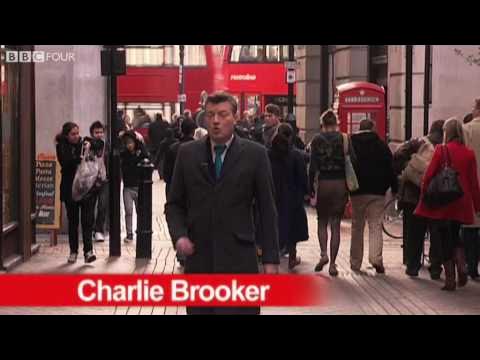
Charlie Brooker's How to Report the News - Newswipe - BBC — BBC

BBC

Television news packages deploy standardized visual tropes and pointless vox pops to pad airtime while audiences actively tune out the commentary.

AI-assisted summary of Charlie Brooker's How to Report the News - Newswipe - BBC — original source. Check the original for full context.

Source published:

Key ideas

  • Charlie Brooker deconstructs the rigid, formulaic visual language of modern television news reporting by demonstrating its tropes in real time. (0:00)
  • Television packages rely heavily on standard visual padding, including headless B-roll of pedestrians, monochrome graphics for statistics, and walking pieces to camera. (0:00)
  • Street vox pops and kitchen-table human-interest case studies are shown to add no informational value, with interviewees ironically admitting they ignore news commentary entirely. (0:42)
  • Broadcast packages mask dull personal narratives with flashy animated graphics before wrapping up with location-based puns and standard reporter sign-offs. (0:42)

Detailed notes

## Background Published on YouTube by the BBC on February 5, 2010, this clip is taken from the second episode of the second series of Charlie Brooker's Newswipe. The show notes describe the programme as offering its signature mix of contributors, reviews, and jokes aimed at the continuous stream of rubbish provided by modern news channels.

## TL;DR Charlie Brooker deconstructs the formulaic visual and editorial language of modern television news reporting by executing each production cliché in real time. Beginning with a generic establishing shot and an exaggerated walking piece to camera, Brooker demonstrates standard broadcast padding, including monochrome statistical graphics and headless B-roll of overweight pedestrians. The report highlights hollow street vox pops where interviewees complain about sound bites, followed by a mundane kitchen-table human-interest case study with a disengaged citizen. To keep viewers from switching off, the piece abruptly deploys absurd infographics and random street shots before wrapping up with a location-based visual pun and a wry final sign-off.

## Atmosphere & style The segment delivers a sharply cynical, deadpan meta-parody that exposes the hollow theatricality of broadcast journalism. Brooker mimics the self-important gravitas and physical mannerisms of a roving correspondent while actively narrating his own visual contrivances, creating a fourth-wall-breaking tension between serious reporting and blatant filler. The tone seamlessly shifts between clinical deconstruction and surreal humor, leaving the viewer amused yet acutely aware of the formulaic artifice behind everyday news packages.

## Bulletin - [00:00](https://www.youtube.com/watch?v=aHun58mz3vI&t=0s) Charlie Brooker deconstructs the rigid, formulaic visual language of modern television news reporting by demonstrating its tropes in real time. - [00:00](https://www.youtube.com/watch?v=aHun58mz3vI&t=0s) Television packages rely heavily on standard visual padding, including headless B-roll of pedestrians, monochrome graphics for statistics, and walking pieces to camera. - [00:42](https://www.youtube.com/watch?v=aHun58mz3vI&t=42s) Street vox pops and kitchen-table human-interest case studies are shown to add no informational value, with interviewees ironically admitting they ignore news commentary entirely. - [00:42](https://www.youtube.com/watch?v=aHun58mz3vI&t=42s) Broadcast packages mask dull personal narratives with flashy animated graphics before wrapping up with location-based puns and standard reporter sign-offs.

## Key takeaways - [00:00](https://www.youtube.com/watch?v=aHun58mz3vI&t=0s) Television news reporting relies on an instantly recognizable, highly standardized visual formula across channels. - [00:00](https://www.youtube.com/watch?v=aHun58mz3vI&t=0s) Reports routinely open with a lackluster establishing shot of a supposedly important location. - [00:00](https://www.youtube.com/watch?v=aHun58mz3vI&t=0s) The standard piece to camera features a reporter deliberately pacing toward the lens while delivering exaggerated hand gestures. - [00:00](https://www.youtube.com/watch?v=aHun58mz3vI&t=0s) Reporters purposefully ignore passing pedestrians to create an illusion of aloof authority before posing a rhetorical question. - [00:00](https://www.youtube.com/watch?v=aHun58mz3vI&t=0s) Generic B-roll footage is used as visual filler to give viewers something to look at while statistics are recited in voiceover. - [00:00](https://www.youtube.com/watch?v=aHun58mz3vI&t=0s) Editors slow pacing and convert footage to monochrome to emphasize bullet points and on-screen figures. - [00:42](https://www.youtube.com/watch?v=aHun58mz3vI&t=42s) Lifestyle B-roll frequently relies on clichéd, headless framing of overweight pedestrians on city streets. - [00:42](https://www.youtube.com/watch?v=aHun58mz3vI&t=42s) Street vox pops serve primarily to pad airtime while offering zero informative substance to the viewer. - [00:42](https://www.youtube.com/watch?v=aHun58mz3vI&t=42s) Interviewees in vox pops ironically voice frustration with repetitive media sound bites and hearing other punters' opinions. - [00:42](https://www.youtube.com/watch?v=aHun58mz3vI&t=42s) Human-interest segments formulaically place an ordinary person at a kitchen table opening mail to represent serious headline issues. - [00:42](https://www.youtube.com/watch?v=aHun58mz3vI&t=42s) Case study subjects illustrate widespread viewer disinterest by admitting on camera that they tune out the news. - [00:42](https://www.youtube.com/watch?v=aHun58mz3vI&t=42s) Broadcasts deploy bizarre animated graphics, such as a lighthouse keeper decapitated by a laser, to keep audience attention during dull reports. - [00:42](https://www.youtube.com/watch?v=aHun58mz3vI&t=42s) News reports typically wind down through random street furniture B-roll, a whimsical local pun, and a predictable formal sign-off.

## Detailed walkthrough ### [00:00](https://www.youtube.com/watch?v=aHun58mz3vI&t=0s) The Anatomy of a Standard Television News Package

Television news reporting has developed an instantly recognizable, highly standardized visual language that relies on ubiquitous tropes and repetitive production habits. Charlie Brooker dissects this formula by acting it out in real time. The broadcast begins with an uninspired, lackluster establishing shot of a supposedly significant location before cutting immediately to a piece to camera. In this setup, the reporter acts as the roving auteur, pacing deliberately and steadily toward the camera lens while delivering an introductory monologue. The presenter punctuates every other phrase with exaggerated hand gestures and consciously ignores the ordinary pedestrians walking past, giving the illusion of effortlessly navigating another dimension before stopping dead in his tracks to confront the audience with a rhetorical question: “What comes next?”

The report then pivots to visual padding, deploying generic B-roll footage specifically constructed to give viewers something visual to rest their eyes on while the voiceover continues reciting statistics and factual context. To emphasize weightier points, the pacing of the edit slows to a complete halt, draining the footage into stark monochrome so bullet points and figures can pop up sequentially on the screen.

```mermaid flowchart TD accTitle: Anatomy of a TV News Report accDescr: Step-by-step breakdown of visual clichés used in a standard TV news package. subgraph INTRO ["Introduction & Preamble"] A["Lackluster Establishing Shot"] --> B["Walking Piece to Camera with Hand Gestures"] B --> C["Posed Rhetorical Question"] end subgraph PADDING ["Information & Vox Pops"] C --> D["Filler B-Roll & Monochrome Text Graphics"] D --> E["Headless Shots of Overweight Pedestrians"] E --> F["Pointless Street Vox Pops"] end subgraph CONCLUSION ["Case Study & Sign-Off"] F --> G["Human Interest Kitchen Case Study"] G --> H["Absurd Infographics & Street B-Roll"] H --> I["Whimsical Visual Pun & Wry Sign-Off"] end ```

[00:42](https://www.youtube.com/watch?v=aHun58mz3vI&t=42s) Faceless Pedestrians, Pointless Vox Pops, and Human Interest

Having established the core premise, the segment shifts toward traditional padding techniques. The camera captures the obligatory, clichéd lifestyle B-roll: headless framing of overweight people wandering down the street, intentionally shot to conceal their faces. This footage is followed immediately by the requisite street vox pops, which are assembled to create the appearance of public opinion while offering zero informative substance. The irony peaks as members of the public explicitly complain about the format itself. One interviewee remarks: “I think what we want to hear is actually what's happening and not what other people think of it.” Another interviewee shares the exact same irritation with media commentary: “I hate the same sound bites... they're... I don't want some punter's opinion usually... no.”

Following another piece of vague, abstract visual filler to paper over the edit, the piece transitions into a standard human-interest case study. This invariably takes the form of an ordinary, dowdy individual sitting at a kitchen table opening mail while explaining the personal toll of the headline issue. The interviewee candidly admits to his own disinterest in broadcast journalism: “When I'm watching the news, I don't really, you know, there's a person talking to me telling me what's going on, and I don't really listen to what they're saying.”

Because this personal story proves dull, the broadcast abruptly shifts visual gears to keep the audience awake, deploying animated charts, a silhouette intended to represent the average family, and an absurd graphic depicting a lighthouse keeper being decapitated by a laser beam. The report winds down through a montage of random pedestrian shots, street furniture, and a pipe against a window, culminating in a whimsical local sight gag and a pun-laden final sign-off: “Charlie Brooker, *Newswipe*, London.”

- Obligatory B-roll includes anonymously framed, headless shots of overweight people on city sidewalks. - Street vox pops serve primarily to pad running time while subjects complain about hearing the opinions of other punters. - The human-interest kitchen interview features a man opening envelopes while confessing he tunes out news broadcasts entirely because “it's just news.” - Graphics packages rely on animated silhouettes of typical families alongside intentionally surreal visual disruptions, such as a lighthouse keeper being beheaded by a laser. - The piece concludes with a location-based pun (“fit for a king or in other words, a regent's treat”) outside Regent's Park before the final signature sign-off.

## Notable quotes > [00:42](https://www.youtube.com/watch?v=aHun58mz3vI&t=42s) I think what we want to hear is actually what's happening and not what other people think of it.

## Mentioned BBC, Charlie Brooker, Newswipe, Regent's Park, London

## Video description Subscribe and 🔔 to the BBC 👉 https://bit.ly/BBCYouTubeSub Watch the BBC first on iPlayer 👉 https://bbc.in/iPlayer-Home More about the programme: http://www.bbc.co.uk/programmes/b00qbyth

It's the second episode of the second series and there's the usual mix of contributors, reviews and jokes as the news channels continue to provide enough rubbish to make a show out of.

#bbc

[Source](https://www.youtube.com/watch?v=aHun58mz3vI)

中文简报

布鲁克讽刺电视新闻依赖空洞画面填充内容 电视新闻专题报道利用标准化的视觉套路和毫无意义的街访来拉长播出时间,而受众往往对此类解说置之不理。 查理·布鲁克通过实时演练每一个制作陈词滥调,解构了现代电视新闻报道公式化的视觉与编辑语言。布鲁克从通用的全景定位镜头以及夸张的边走边说出镜开始,展示了常见的播出画面填充手法,包括单色统计图表和无头超重行人的空镜头。报道突出了毫无实质内容的街头随机采访——受访者还在其中抱怨声音片段的泛滥,随后展示了一则与心不在焉的市民在餐桌旁进行的平淡人情味案例。为了防止观众换台,该片段又突然插入荒诞的信息图表和随意的街景镜头,最后以一个基于拍摄地点的视觉双关语和一句讽刺性的结语收尾。 查理·布鲁克通过实时展示现代电视新闻报道的各种套路,解构了其刻板、公式化的视觉语言。 (0:00) 电视新闻专题极大程度地依赖标准化的画面填充,包括行人无头空镜头、用于呈现统计数据的单色图表,以及记者边走边说的出镜解说。 (0:00) 街头随机采访和餐桌旁的人情味案例分析被证明毫无信息价值,受访者还讽刺地承认自己完全无视新闻解说。 (0:42) 电视播报专题通过华丽的动态图表来掩盖乏味的个人叙述,最后以基于现场的文字游戏和标准的记者签名结语收尾。 (0:42)

Reading summary

In a deconstruction on BBC's <em>Newswipe</em>, Charlie Brooker illustrates that television news packages rely on an intensely standardized visual vocabulary and empty production habits rather than substantive reporting. Choreographed Presenter Tropes and Stylized Padding (0:00) Brooker demonstrates how television news relies on an uninspired establishing shot before cutting directly to a reporter piece to camera. In this routine, the journalist paces toward the camera, uses exaggerated hand gestures to punctuate statements, and ignores passersby to project aloof authority before halting abruptly to pose a rhetorical question. To sustain momentum during informational segments, packages introduce generic B-roll filler that gives viewers visual resting points while a voiceover recites statistics. Pacing is periodically slowed to a complete halt, shifting the picture into monochrome so that bullet points and numbers can pop onto the screen sequentially. Superficial Vox Pops and Domestic Case Studies (0:42) The reporting formula regularly deploys lifestyle clichés, such as anonymously framed, headless footage of overweight pedestrians on city sidewalks. Street vox pops are then edited into the report to simulate public opinion, despite providing no real insight. Brooker highlights the emptiness of this device through interviewees who explicitly criticize the medium, noting that they want objective facts rather than sound bites and other punters' opinions. This is mirrored in the standard human-interest case study, where an individual sits at a kitchen table sorting through mail while describing a personal hardship. In Brooker's parody, the subject candidly admits to tuning out television news altogether, regarding the presenter as background noise. Graphic Disruptions and Whimsical Closings (0:42) To counteract dull personal narratives and keep the audience engaged, packages rapidly switch visual modes. Brooker notes the transition from standard infographics—such as animated silhouettes representing typical families—to intentionally absurd visual devices, including an animation of a lighthouse keeper decapitated by a laser beam. The report concludes through a montage of random pedestrians and street fixtures, wrapping up with a whimsical sight gag and a location-based pun outside Regent's Park before delivering the reporter's formal sign-off. Brooker's satirical report highlights how the structural conventions of television journalism—from contrived B-roll to formulaic sign-offs—have solidified into predictable clichés that frequently obscure the underlying news.

精炼阅读摘要

Charlie Brooker 在 BBC 节目《Newswipe》中解构了电视新闻高度模式化的制作套路,指出当代电视报道过度依赖套路化的视觉语言、缺乏实质内容的街头采访与形式主义的叙事技巧来填充时间。 程式化的出镜调度与背景视觉填充 (0:00) 电视新闻报道已演化出一套极其刻板且容易辨识的视觉公式。Brooker 通过实时表演拆解了这一机制:报道通常始于一个缺乏亮点的现场全景空镜,紧接着切入记者的移动出镜口播(piece to camera)。在此环节中,记者以漫步姿态匀速走向镜头,伴随夸张的手势强调语调,并刻意无视身旁经过的行人,最后停步抛出形式化的修辞性反问。为了配合画外音罗列的统计数据与背景信息,制作团队会大量插入通用的 B-roll 填充画面供观众视线停留;当强调关键数据时,画面节奏骤停并抽离色彩为单色调,以便依次弹出文字与图表。此外,拍摄街头肥胖行人腰部以下、刻意避开面部的无头特写,也构成了此类报道滥用的刻板素材。 形式主义的街头采访与典型人物呈现 (0:42) 电视报道中不可或缺的街头采访(vox pops)往往流于形式,制造出反映民意的假象却不包含任何信息增量。讽刺的是,Brooker 片中的受访公众直接对这种新闻模式表达了厌烦:有受访者指出观众真正需要的是获知客观事实而非听取他人看法,另一位受访者也直言反感媒体充斥着普通路人的零碎言论。随后切入的“典型人物个案”(human interest case study)同样遵循僵化模版,通常安排普通人在厨房餐桌旁一边机械地拆信件一边讲述事件影响;而该受访者则坦承自己在看新闻时根本不会认真听记者讲话,揭示出此类煽情范式在传播上的无效。 转移乏味感的动态视觉与固定双关结语 (0:42) 当人物案例显露乏味时,电视新闻会突兀地切换视觉风格以维持观众注意力。报道通常会调动动态图表或代表“典型家庭”的人物剪影,甚至插入极具荒谬感的离奇图画(如灯塔看守人被激光斩首的动画)。在报道结尾阶段,镜头转向随机的街道设施、窗户管道等零散空镜蒙太奇,最终以一个结合地理位置的轻浮双关语(如利用摄政公园进行的谐音双关)作为包袱,并以标准化的记者署名收尾。Brooker 借此证明,此类报道最终依赖的是工业化视听噱头与固定程式,而非对新闻事实本身的深入探究。 Brooker 的讽刺性重演展示了电视新闻工业中形式严重压倒内容的结构性弊端。尽管节目尖锐地揭露了视听套路与受访者的真实冷漠,但该片段并未探讨电视台应如何重构新闻叙事以提供更有实质价值的报道形态。

Detailed notes — zh

## Background 该视频由 BBC 于 2010 年 2 月 5 日发布在 YouTube 平台上。视频选自查理·布鲁克(Charlie Brooker)主持的节目《Newswipe》第二季第二集,简介称本集一如既往地结合了嘉宾评论、回顾与讽刺笑料,针对各大新闻频道产出的海量平庸内容展开辛辣吐槽。 ## TL;DR 查理·布鲁克通过亲自制作一段示范报道,逐帧拆解并戏仿了现代电视新闻高度公式化的视听套路。短片从记者的“边走边说”与定景镜头切入,直白揭示了无意义填充画面、刻板数据定格以及故意切掉面部的胖人街拍等惯用伎俩。随后,视频嘲讽了言之无物的凑数街采,以及普通人在厨房拆信的摆拍“人情味”故事。最后,报道以强行提神的荒诞动效图表、零碎街景转场,以及记者标志性的俏皮双关语和署名报幕完美收尾,将电视新闻缺乏实质内容的平庸本质展现得淋漓尽致。 ## Atmosphere & style 全片充斥着查理·布鲁克标志性的冷幽默与尖刻讽刺,采用“打破第四面墙”的元叙事手法直面观众。出镜记者的肢体语言在专业假象与荒诞表演之间自如切换,语调刻意维持着传统广播电视那种故作深沉、胸有成竹的权威感。观感既滑稽又极具解构性,精准击中了观众长期以来对主流电视新闻套路化表达的审美疲劳。 ## Bulletin - [00:00](https://www.youtube.com/watch?v=aHun58mz3vI&t=0s) 查理·布鲁克(Charlie Brooker)解构了电视新闻高度套路化的视听语言,指出报道普遍依赖公式化的“边走边说”和戏剧化提问来营造虚假的专业感。 - [00:28](https://www.youtube.com/watch?v=aHun58mz3vI&t=28s) 新闻常通过无关痛痒的慢动作空镜、隐去面部的肥胖人群素材及言之无物的街头随机采访来机械填充报道篇幅。 - [00:55](https://www.youtube.com/watch?v=aHun58mz3vI&t=55s) 针对民生议题,报道常滥用“厨房拆信”模板强行人情化,并在内容乏味时以突兀的动态图表和荒诞动画抓回观众注意力。 - [01:30](https://www.youtube.com/watch?v=aHun58mz3vI&t=90s) 报道的标准收尾模式由拼贴随机街景细节、故作机智的双关语总结以及格式化的记者署名签出构成。 ## Key takeaways - [00:00](https://www.youtube.com/watch?v=aHun58mz3vI&t=0s) 电视新闻报道已演变出一套极易被看穿的标准视听公式与结构流程。 - [00:07](https://www.youtube.com/watch?v=aHun58mz3vI&t=7s) 报道开场通常采用缺乏生气的宏观地点定景镜头来交代背景环境。 - [00:12](https://www.youtube.com/watch?v=aHun58mz3vI&t=12s) 记者标志性的“边走边说”(walk-and-talk)配以夸张手势,旨在虚张声势地树立戏剧张力与权威感。 - [00:22](https://www.youtube.com/watch?v=aHun58mz3vI&t=22s) 开场段落的终点通常是记者停步抛出一个悬念性问题,随后切入填充画面。 - [00:33](https://www.youtube.com/watch?v=aHun58mz3vI&t=33s) 黑白单色定格与慢动作运镜被频繁用作呈现冷冰冰数据和文字事实的视觉填料。 - [00:40](https://www.youtube.com/watch?v=aHun58mz3vI&t=40s) 故意避开面部、只拍躯干的肥胖人群过街镜头,已沦为反映社会或健康问题的廉价刻板素材。 - [00:46](https://www.youtube.com/watch?v=aHun58mz3vI&t=46s) 街头随机采访(Vox pops)往往言之无物,甚至受访者本身也在吐槽新闻充斥着废话套话。 - [01:08](https://www.youtube.com/watch?v=aHun58mz3vI&t=68s) 当事人坐在普通家庭厨房里机械拆账单信件,构成了电视新闻强行制造人情味故事的通用模板。 - [01:16](https://www.youtube.com/watch?v=aHun58mz3vI&t=76s) 人情味受访者往往表现木讷,直言观众看新闻时根本不会认真听记者或当事人究竟在说什么。 - [01:30](https://www.youtube.com/watch?v=aHun58mz3vI&t=90s) 为防止观众打瞌睡,新闻会在节奏放缓时强行插入动态折线图、黑影剪影乃至荒诞动画等视觉特效。 - [01:41](https://www.youtube.com/watch?v=aHun58mz3vI&t=101s) 在收尾过渡阶段,镜头会随意拼贴路人脚步、招牌或排水管等缺乏叙事关联的杂乱街景。 - [01:50](https://www.youtube.com/watch?v=aHun58mz3vI&t=110s) 报道总结往往依赖冷面幽默与故作深沉的双关语文字游戏,借此展现记者的机智。 - [01:58](https://www.youtube.com/watch?v=aHun58mz3vI&t=118s) 电视新闻最终以“姓名 + 节目/媒体名 + 地点”的固定语调报幕签出,完成整套格式化流程。 ## Detailed walkthrough ### [00:00](https://www.youtube.com/watch?v=aHun58mz3vI&t=0s) 电视新闻的标准视听公式:空镜与“边走边说”开场 查理·布鲁克(Charlie Brooker)开门见山地指出,不知不觉间,电视新闻报道已经形成了一套任何人都能一眼看穿的标准视听语言。为了直接解构这种公式化的套路,他亲自用这套模板制作了这段示范报道。画面首先始于一个“缺乏活力的重要地点定景镜头”,用来交代事件发生的背景环境。紧接着,身为“主创”的记者便开始了标志性的“边走边说”(walk-and-talk)前奏。 记者一边稳步朝镜头走来,一边夸张地每隔一句话就配上一次手势。布鲁克讽刺地形容出镜记者那种故作深沉的姿态:“隔一句就配上一个手势,对身边走来走去的混蛋们视若无睹,仿佛自己正像在《黑客帝国》里那样穿梭,最后停下脚步抛出一个问题:接下来会发生什么?”整个开场通过高度程序化的肢体动作与运镜,迅速树立起一种虚张声势的专业感与戏剧张力。 ```mermaid flowchart TD accTitle: 电视新闻报道的标准结构流程 accDescr: 展示查理·布鲁克解构的新闻报道各个典型环节,从开场定景到结尾双关语签出。 subgraph Phase1["开场铺垫"] A["平庸的地点定景镜头"] --> B["边走边说的记者出镜"] B --> C["停步抛出悬念问题"] end subgraph Phase2["信息填充与街采"] C --> D["无关痛痒的空镜与数据定格"] D --> E["切掉头部的胖人素材"] E --> F["敷衍凑数的街头随机采访"] end subgraph Phase3["人情故事与收尾"] F --> G["厨房拆信的人情味受访者"] G --> H["荒诞的醒脑信息图表"] H --> I["随意抓取的街景空镜"] I --> J["俏皮双关语与记者署名签出"] end ``` ### [00:28](https://www.youtube.com/watch?v=aHun58mz3vI&t=28s) 凑时长的填充空镜、无意义街采与人情味故事 抛出问题之后,新闻往往会无缝切入各种纯粹用来“凑时长”的填充画面。布鲁克直白地解释道,这些画面的存在只是为了“让观众的眼睛有点东西可看,而记者的画外音则在喋喋不休地念叨事实”。在特定节奏下,画面会突然定格放慢并转为黑白单色,屏幕上随之逐条弹出冷冰冰的数字或文字事实。紧随其后的,则是电视新闻中最典型的刻板镜头——镜头微妙地避开面部、只拍摄躯干的肥胖人群过街画面;随后便是用来拉长报道篇幅的无聊街头采访(Vox pops)。 路人采访环节完美展现了言之无物的平庸:受访者们对着话筒抱怨现在的报道充斥着太多废话,一名路人直接吐槽道:“我讨厌千篇一律的套话……我通常根本不想听什么普通赌徒看客的意见……不想。”在街采结束后,报道又插入一段极其沉闷的抽象视觉空镜作为转场垫片,随后“优雅地”过渡到所谓的人情味故事——画面里出现一个衣着邋遢的普通男子坐在厨房里拆账单信件,讲述自己如何深受该问题的影响。男子对着镜头木讷地坦白:“我看新闻的时候,其实根本不会,你知道的,有个人在对我说正在发生什么,但我其实根本没听他们说的是什么。那不过就是新闻罢了,就只是新闻。” - 视觉填料:通过毫无叙事意义的空镜占满画面,在慢动作与单色调定格中机械式罗列数据。 - 刻板素材:拍摄超重人群时故意切掉面部,沦为健康或社会议题的廉价背景板。 - 空洞街采:受访者一边在街采中贡献毫无价值的碎碎念,一边抱怨自己不想在新闻里听别人的闲聊。 - 人情味模板:利用受害者或当事人在家庭厨房机械拆信的摆拍动作,强行营造贴近民生的情感共鸣。 ### [01:30](https://www.youtube.com/watch?v=aHun58mz3vI&t=90s) 视觉图表狂欢、随机剪辑与标志性双关结语 由于厨房拆信的当事人实在过于沉闷乏味,为了把昏昏欲睡的观众叫醒,新闻立刻切换到快节奏的视觉特效环节。屏幕上瞬间闪过动效折线图、代表“普通家庭”的一组黑影剪影,甚至极其荒诞地闪过一段“灯塔看守人被激光束斩首”的离奇动画。紧接着,在报道接近尾声之际,镜头开始快速拼贴各种毫无关联但看似寓意深远的街景符号:匆匆走过的路人脚部、路边招牌、以及窗户旁的一截排水管。 在最后陈词阶段,画面定格在附近某个略带俏皮意味的空镜景物上,出镜记者以一段故作机智、略带讽刺的双关语进行收尾。布鲁克带着一脸冷幽默打趣说,运气好的话观众还能听到一句皇家级别的文字游戏,接着他顺水推舟地抖包袱:“换句话说,这真是一场‘摄政王般的盛宴’(a regent's treat)。”最终,他以无缝契合BBC驻外报道语调的经典报幕结束了整场戏仿:“查理·布鲁克,Newswipe节目,伦敦报道。” - 提神图表:在内容陷入枯燥时,强行插入动态图表与极具视觉冲击力的荒诞动画抓回观众注意力。 - 杂乱空镜:利用路牌、管道、行人等琐碎细节画面,掩盖报道实质内容的贫瘠。 - 格式化签出:以记者冷面幽默的俏皮双关语作结,并以标准的“记者姓名 + 节目/媒体名 + 地点”口吻收尾。 ## Mentioned 查理·布鲁克, Newswipe, BBC, BBC iPlayer, 《黑客帝国》, 伦敦 ## Video description Subscribe and 🔔 to the BBC 👉 https://bit.ly/BBCYouTubeSub Watch the BBC first on iPlayer 👉 https://bbc.in/iPlayer-Home More about the programme: http://www.bbc.co.uk/programmes/b00qbyth It's the second episode of the second series and there's the usual mix of contributors, reviews and jokes as the news channels continue to provide enough rubbish to make a show out of. #bbc [Source](https://www.youtube.com/watch?v=aHun58mz3vI)

Source quotes

[0:42] I think what we want to hear is actually what's happening and not what other people think of it.

Original transcript

[0:00] Before long a standard news report visual language established itself, one that's immediately recognizable to anyone. Me has this report [0:08] It starts here with a lackluster establishing shot of a significant location. Next, a walkie talkie preamble from the auteur [0:17] pacing steadily towards the lens [0:19] punctuating every other sentence with a hand gesture and ignoring all the pricks milling around him [like] [he's] gliding through the fucking Matrix before coming [0:26] to a halt and posing a question: [0:28] What comes next? [0:30] Often, something like this: a filler shot designed to give your eyes something to look at while my voice babbles on about facts. Sometimes [0:37] it'll slow down to a halt, turn monochrome, and some of those facts will appear one by one on the screen. [0:42] This is followed by the obligatory shots of overweight people with their faces [0:46] subtly framed out, after which the report is padded out with the selection of lazy and pointless vox pops. [0:53] Usually get some inane chatter from people. I think they do have too much; [0:56] I think what we want to hear is actually what's happening and not what other people [think] of it [1:01] I hate the same sound bites...they're... I don't want some [1:06] punter's opinion usually...no. [1:08] Another bit of dull visual abstraction to plug another gap now before the report segues gracefully into a bit of human interest courtesy of some [1:15] Dowdy man opening letters in a kitchen and explaining how he's been affected by the issue. [1:20] When I'm watching the news, I don't really, you know, there's a person talking to me telling me what's going on, [1:24] and [I] don't really listen to what they're saying. [1:26] It's just news. It's just news [1:30] He, unfortunately ,was boring, so to wake you up, this is an animated chart, [1:33] this is a silhouette representing the average family, and this is [a] lighthouse keeper [1:36] Being beheaded by a laser beam. As we near the end of the report, [1:40] illustrative shots of pedestrians and signs and a pipe at a window, and then the final summary ending on a whimsical shot of something nearby, [1:48] accompanied by a wry sign-off: if you're lucky, a bit of wordplay fit for a king or in other words, a regent's treat. [1:55] Charlie Brooker news wipe London