Chinese Invisibility Cloak Hoax DESTROYED!!!
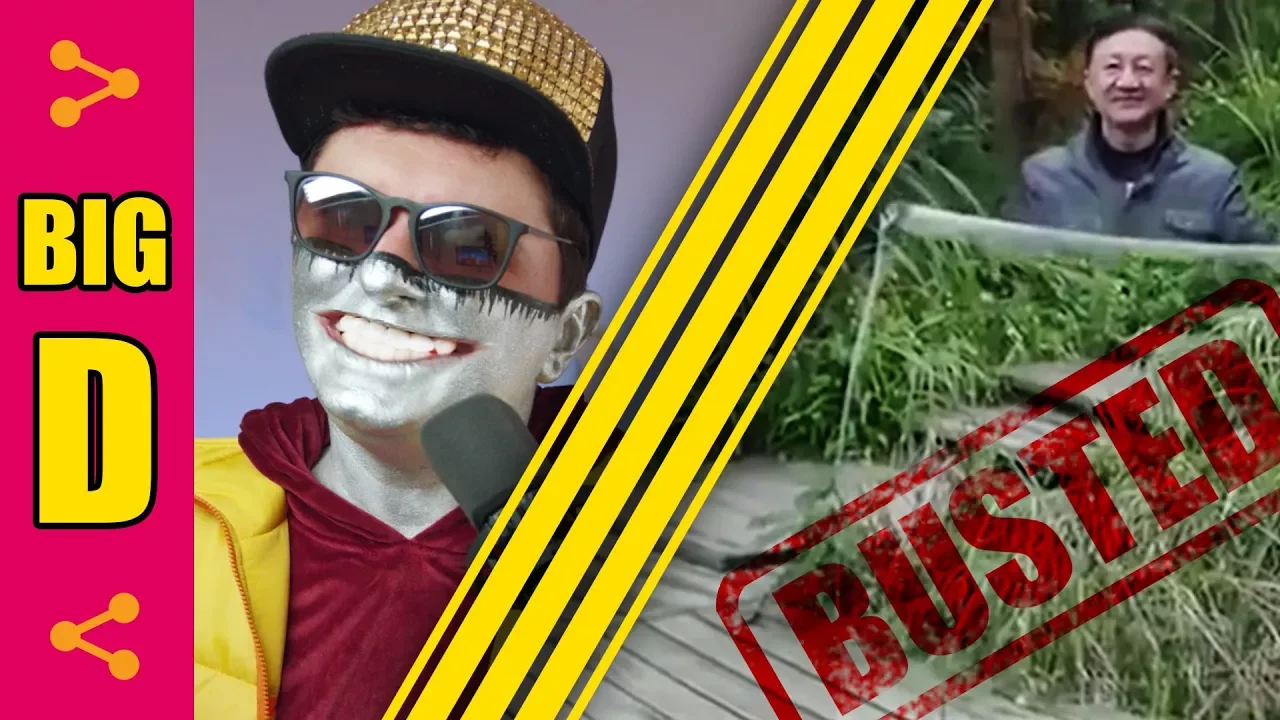
Chinese Invisibility Cloak Hoax DESTROYED!!! — Captain Disillusion

Captain Disillusion

AI-assisted summary of Chinese Invisibility Cloak Hoax DESTROYED!!! — original source. Check the original for full context.

Source published:

Key ideas

  • Viral "invisibility cloaks" rely on standard traveling matte compositing over clean background plates, typically using blue screen fabrics when shot in foliage-dense outdoor environments. (0:00)
  • Digital sensors shifted from blue to green screens due to the Bayer filter array, which allocates 50% of photosensors to green to exploit human evolutionary sensitivity to luminance, yielding superior spatial resolution and lower noise. (4:00)
  • Mathematical demosaicing creates gray fringing along sharp contrasting boundaries, which creators can bypass using separate lighting setups, wide dynamic range sensors, or desaturated wardrobe graded in post-production. (5:53)
  • Challenging chroma key subjects like fine hair are best solved with a two-pass workflow that separates an aggressive core matte from an eroded, delicate edge matte. (7:35)
  • Vectorscope analysis reveals that daylight-balanced green screen backdrops require independent lighting separation from tungsten foreground illumination to prevent cyan skewing and edge contamination. (10:17)

Detailed notes

## Background Published on YouTube by Captain Disillusion on March 16, 2018, this video features the creator attempting to rebrand himself with mixed results. The description highlights homages to several prominent educational YouTube channels—including Periodic Videos, Bill Wurtz, CGP Grey, Tom Scott, Vsauce, and Smarter Every Day—which he humorously notes perform their educational craft much better than he does.

## TL;DR Framed around a viral hoax claiming to show a Chinese "invisibility cloak," Captain Disillusion attempts to pivot his channel into a shallow, fast-paced vlogger persona called "The Big 'D'" to chase algorithmic success. However, his involuntary urge to educate violently hijacks the presentation, resulting in brilliant parodies of prominent science communicators that unpack the technical and historical reasons behind green screen compositing. Across these vignettes, he breaks down photochemical film, Petro Vlahos's traveling mattes, human retinal biology, Bayer sensor arrays, debayering fringe artifacts, and iterative core-and-edge keying techniques. Ultimately, the Captain accepts the intrinsic educational value of visual literacy, though not before spiraling into a desperate, satirical pitch for social media engagement, Patreon tiers, and absurd merchandise.

## Atmosphere & style The presentation is a chaotic, meta-comedic tour de force that constantly careens between hyperactive vlogger satire and deeply articulate technical lectures. Watching the video feels like witnessing a manic existential identity crisis, as the host desperately tries to keep his content superficial only to suffer involuntary, seizure-like "glitches" into pitch-perfect impressions of fellow YouTube educators. The tone oscillates wildly from neon-soaked absurdity and deadpan technical precision to melancholic philosophical breakdowns, creating a brilliant, high-energy deconstruction of modern internet creator culture.

## Bulletin - [00:00](https://www.youtube.com/watch?v=aO3JgPUJ6iQ&t=0s) Viral "invisibility cloaks" rely on standard traveling matte compositing over clean background plates, typically using blue screen fabrics when shot in foliage-dense outdoor environments. - [04:00](https://www.youtube.com/watch?v=aO3JgPUJ6iQ&t=240s) Digital sensors shifted from blue to green screens due to the Bayer filter array, which allocates 50% of photosensors to green to exploit human evolutionary sensitivity to luminance, yielding superior spatial resolution and lower noise. - [05:53](https://www.youtube.com/watch?v=aO3JgPUJ6iQ&t=353s) Mathematical demosaicing creates gray fringing along sharp contrasting boundaries, which creators can bypass using separate lighting setups, wide dynamic range sensors, or desaturated wardrobe graded in post-production. - [07:35](https://www.youtube.com/watch?v=aO3JgPUJ6iQ&t=455s) Challenging chroma key subjects like fine hair are best solved with a two-pass workflow that separates an aggressive core matte from an eroded, delicate edge matte. - [10:17](https://www.youtube.com/watch?v=aO3JgPUJ6iQ&t=617s) Vectorscope analysis reveals that daylight-balanced green screen backdrops require independent lighting separation from tungsten foreground illumination to prevent cyan skewing and edge contamination.

## Key takeaways - [00:00](https://www.youtube.com/watch?v=aO3JgPUJ6iQ&t=0s) Captain Disillusion parodies hyperactive YouTube vlogger tropes to dismantle the viral Chinese "invisibility cloak" hoax. - [00:00](https://www.youtube.com/watch?v=aO3JgPUJ6iQ&t=0s) The viral cloak illusion simply keys out colored fabric over a pre-recorded clean background plate. - [01:50](https://www.youtube.com/watch?v=aO3JgPUJ6iQ&t=110s) Technicolor and analog optical compositing favored blue backdrops due to fine emulsion grain and strong separation from human skin tones. - [01:50](https://www.youtube.com/watch?v=aO3JgPUJ6iQ&t=110s) Petro Vlahos formalized the mathematical foundations of optical color difference keying in analog cinema. - [04:00](https://www.youtube.com/watch?v=aO3JgPUJ6iQ&t=240s) Human retinas evolved to prioritize luminance and green wavelengths over chrominance to detect predators in foliage. - [04:00](https://www.youtube.com/watch?v=aO3JgPUJ6iQ&t=240s) Bryce Bayer's filter array mimics human vision by assigning 50% of photosensor sites to green and 25% each to red and blue. - [04:00](https://www.youtube.com/watch?v=aO3JgPUJ6iQ&t=240s) The digital green channel carries double the spatial resolution and significantly less electronic noise than red or blue channels. - [05:53](https://www.youtube.com/watch?v=aO3JgPUJ6iQ&t=353s) Debayering algorithms calculate missing color data via interpolation, which causes sharp complementary edges to pass through neutral gray. - [05:53](https://www.youtube.com/watch?v=aO3JgPUJ6iQ&t=353s) Lossy compression formats like 4:2:0 subsampling cement demosaicing gray fringes into footage, spoiling clean matte extractions. - [05:53](https://www.youtube.com/watch?v=aO3JgPUJ6iQ&t=353s) Talent can wear desaturated clothing, such as a pale pink shirt graded back to red in post, to mitigate edge interpolation artifacts. - [07:35](https://www.youtube.com/watch?v=aO3JgPUJ6iQ&t=455s) Single-instance keyers create an unresolvable trade-off between eliminating noisy backgrounds and preserving semi-transparent foregrounds. - [07:35](https://www.youtube.com/watch?v=aO3JgPUJ6iQ&t=455s) A two-pass core-and-edge keying pipeline isolates subject interiors with an aggressive matte while preserving delicate borders with a soft matte. - [10:17](https://www.youtube.com/watch?v=aO3JgPUJ6iQ&t=617s) Vectorscopes locate the ideal pure green target at the 8 o'clock radial position on the chrominance wheel. - [10:17](https://www.youtube.com/watch?v=aO3JgPUJ6iQ&t=617s) Backdrops formulated for 5,600K daylight skew toward cyan under tungsten settings, requiring foreground and background lighting to be decoupled. - [11:37](https://www.youtube.com/watch?v=aO3JgPUJ6iQ&t=697s) The narrative frames technical visual effects education within affectionate parodies of prominent educational creators and creator burnout.

## Detailed walkthrough ### [00:00](https://www.youtube.com/watch?v=aO3JgPUJ6iQ&t=0s) Rebranding as "The Big 'D'" and the Chinese Invisibility Cloak

After experiencing a sudden bump in viewership following a recent publicity stint, Captain Disillusion decides it is time to pivot his online identity. Repackaged as a hyperactive, hat-wearing modern vlogger named “The Big 'D'”, he declares that it is time to embrace the modern YouTube meta by cutting faster, speaking quicker, uploading daily, chasing broad appeal, and leaning heavily into fan engagement. As Captain Disillusion puts it when justifying the abrupt pivot: “It's become clear that I got to get a little more professional about this whole YouTube thing... You know talk a little bit faster, cut a little bit sooner... I'm talking daily videos, broader topics, and above all, fan engagement...” Turning to his audience mailbag, however, he is quickly frustrated by the bland and reverent submissions—like a fan named Kyle waxing poetic about discovering the skeptic mindset at fifteen, or users simply dumping links without a single word of context.

One such link leads to a viral sensation: a video purporting to show a man in a park disappearing behind an "invisibility cloak." The illusion is blindingly mundane. A tiny watermark right on the clip even reads "not real," which the Captain notes with dripping sarcasm spared him from having to dial the CIA. Tim and the rest of the internet seemingly want him to analyze what every visually literate viewer already understands: the subject is simply holding a colored fabric keyed out over a clean background plate recorded beforehand. Because the outdoor park is drenched in lush green foliage, the Captain observes that the fabric could not have been green without accidentally keying the landscape, meaning it was almost certainly a traditional blue screen. Yet the moment he wonders aloud why anyone would care about the historical minutiae of blue vs. green, a glitch violently wrests control of his presentation.

[01:50](https://www.youtube.com/watch?v=aO3JgPUJ6iQ&t=110s) The Celluloid Past: Silver Halide, Technicolor, and Petro Vlahos

The video suddenly slips into an affectionate homage to Sir Martyn Poliakoff and the educational style of *Periodic Videos*. Speaking with an academic cadence and wild silver hair, the Captain dives into the photochemical foundations of cinema. Early motion pictures relied on celluloid coated in silver halide ($AgX$), an emulsion of light-sensitive crystals that would essentially burn when struck by photons through a camera lens. A chemical bath washed away the unexposed particles, leaving a photographic negative. While early black-and-white filming offered little spectral flexibility, the three-strip Technicolor process captured incoming light across separate black-and-white film records filtered into red, green, and blue.

Filmmakers soon discovered that the blue separation record was the optimal choice for optical traveling mattes. Blue was the furthest color on the spectrum from human flesh tones—regardless of whether one was filming a "Black Panther or White Asian Lady"—and the emulsion used for the blue record inherently possessed the finest grain, providing the highest relative resolving power for edge reproduction. Early optical composites were nonetheless crude, prompting Hollywood studios to commission engineer Petro Vlahos to elevate the process. Vlahos famously cracked the math behind optical color difference keying, an achievement the Captain humorously reimagines as a moment of bathroom inspiration where Vlahos watched waste drop into water and proclaimed: “I shall make it more complex!”

The tone abruptly shifts again, this time into the distinct, fast-paced neon aesthetic and pitched vocal delivery of Bill Wurtz. Humanity eventually realized that manufacturing toxic chemicals and mountains of plastic was expensive and environmentally destructive, leading to the digital cinema revolution. While traditionalist directors insisted on analog film—protesting, “I love the crappy look of film, and I'm going to keep using it. Also, vinyl records sound better”—the rest of the medium moved on to solid-state image sensors, sending legacy film titans like Eastman Kodak spiraling toward bankruptcy.

[04:00](https://www.youtube.com/watch?v=aO3JgPUJ6iQ&t=240s) Digital Primates and the Bayer Filter

Snapping out of the educational seizure, the Captain tries to reclaim his shallow internet personality. He insists that he is purely an entertainment channel shooting on an Apple Watch and using a one-tap smartphone app called "Background Boo!" to strip his background. He begs the audience not to ask why digital cameras abandoned blue screens in favor of green screens—only to glitch out again, this time morphing into the voice and graphical iconography of CGP Grey.

The CGP Grey persona explains that imaging technology was never engineered to capture objective reality; it was engineered specifically to deceive human primates. Having evolved to spot predators lurking in the bush, ape retinas dedicate significantly more neurological bandwidth and retinal cells to perceiving luminance (brightness) rather than chrominance (color). Because detecting a charging lion matters far more than appreciating its color palette, and because ancestral environments were overwhelmingly filled with foliage, human vision developed an intense bias toward green light.

To take commercial advantage of this biological quirk, Kodak scientist Bryce Bayer developed and patented the Bayer filter:

```mermaid flowchart TD accTitle: Bayer Filter Color Distribution accDescr: How the Bayer filter allocates 50 percent of its photosensor array to green to match human vision. subgraph BF["Bayer Color Filter Array (2x2 Grid)"] G1["Green (Luminance detail)"] R1["Red"] B1["Blue"] G2["Green (Luminance detail)"] end

BF -->|"Demosaicing / Interpolation"| PROC["Camera Processor"] PROC --> CH_G["Green Channel: 2x Resolution & Low Noise"] PROC --> CH_RB["Red & Blue Channels: Lower Spatial Resolution & Higher Noise"] ```

By dedicating 50% of the photosensor sites on a CMOS chip to green, and splitting the remaining 50% equally between red and blue, camera sensors match the human eye's luminance acuity without needing three separate full-resolution chips. The Captain summarizes the economic calculus: “Why bother imitating reality, when you can simply imitate an ape's perception of reality at one third of the cost?” Because the green channel collects twice the light samples, it features significantly higher spatial resolution and far lower electronic noise than the blue channel. This makes green the obvious modern backdrop for pulling clean matte keys, even if the illusion of choice merely cocoons our brains until the heat death of the universe.

[05:53](https://www.youtube.com/watch?v=aO3JgPUJ6iQ&t=353s) Debayering Artifacts, Gray Edges, and the Pink Shirt Trick

Snapping back to reality in a cold sweat, the Captain desperately attempts to salvage the mood by hosting a generic react segment: "green screen fails." He targets Ethan and Hila Klein of the H3 Podcast, mocking an on-air stunt where they attempted to fake an authentic set using a green backdrop. The trick failed within five seconds because of a thick, muddy border haloing their silhouettes.

Mid-sentence, the Captain glitches into a pitch-perfect Tom Scott impression, standing outdoors in a trademark red T-shirt to deliver an articulate technical breakdown. The halo issue traces directly back to the Bayer filter. Because photosensors record alternating color pixels, the missing color data must be reconstructed through a mathematical process known as demosaicing or debayering: - **Simple Interpolation**: Averages neighboring pixel values to estimate missing RGB data; functions smoothly across flat textures or soft gradients. - **Edge Failure**: When two complementary colors meet along a sharp spatial edge, the mathematical midpoint between those colors passes through a neutral gray. - **Matte Pollution**: If the background color is extracted during keying, the interpolated gray transition zone is left stranded around the subject's border as a muddy fringe. - **Compression Degradation**: Lossy video codecs (like 4:2:0 chroma subsampling) compress this transition even further, cementing the discoloration into the pixels.

While camera manufacturers constantly refine debayering algorithms to distinguish true edges from noise, creators can bypass the problem using practical lighting and wardrobe setups. Filmmakers can use softer lighting, shoot on wide dynamic range sensors, or dress their talent in desaturated clothing that can be color-corrected back to full vibrancy in post-production. Stripping away his own color grade for a split second, the Captain proves the concept by demonstrating that his iconic red shirt is actually pale pink on set: “You might even realize my trademark red shirt is in fact, light pink.”

[07:35](https://www.youtube.com/watch?v=aO3JgPUJ6iQ&t=455s) Two-Pass Core Keying and the Vsauce Epiphany

Returning to his vlogger persona, the Captain attempts to brag about attending a yacht party, but is immediately distracted by another abysmal green screen used by a self-described "CGI guru." The guru's edges appear as if carved out with safety scissors, his hands repeatedly slam into the edge of frame, and a massive background spill shadow lingers on the wall behind him. The Captain snaps once more, shifting into a Michael Stevens (*Vsauce*) parody complete with ambient jazz, raised eyebrows, and philosophical rhetoric.

When compositing difficult footage—such as a fine-haired rabbit filmed against an unevenly lit green wall—artists tend to exhaust themselves adjusting the knobs of a single keyer plugin, inevitably balancing between a noisy background and a semi-transparent subject. Quoting British educational writer William Edward Hickson's timeless maxim, "If at first you don't succeed, try, try again," the Captain reveals that compositors are not restricted to a single instance of a chroma keyer. Instead, they can divide the problem by chaining iterative keys:

```mermaid flowchart TD accTitle: Multi-Instance Core and Edge Keying Architecture accDescr: Flowchart showing raw footage split into an aggressive core matte and a fine-tuned edge matte. A["Raw Green Screen Footage"] --> B["Keyer Instance 1: Core Matte"] B --> C["Aggressive Key: Strip background & solidify subject interior"] C --> D["Inflate / Erode Matte to isolate edge border"] D --> E["Keyer Instance 2: Edge Matte"] E --> F["Subtle Key: Tuned strictly for fine hair & semi-transparent edge detail"] F --> G["Final Composite"] ```

By allowing the first keyer to ruthlessly clean the interior and exterior while inflating the boundary, the second keyer only has to evaluate the delicate fringe pixels. This iterative mindset, the Captain waxing cosmic notes, mirrors nature itself: celestial orbits are merely iterations of gravitational freefall, and atomic matter behaves as iterative electron wave functions. In an existential climax, he stares into the lens and muses: “In a very real way, We are the green screen. Why shouldn't we be able to key anything we want?”

Coming to his senses in tears, the Captain breaks down at his desk. Bewildered and exasperated, he cries out about why his audience has to be so insatiably curious when all he wanted to do was mess around and make people laugh. Desperately trying to resist another involuntary technical lecture, he starts stuttering as his voice begins to slip once again toward an impending discovery about his own studio green screen.

[10:17](https://www.youtube.com/watch?v=aO3JgPUJ6iQ&t=617s) Vectorscopes, White Balance, and the Smarter Every Day Parody

Channeling the down-to-earth, scientific persona of Destin Sandlin from *Smarter Every Day*, Captain Disillusion addresses an issue he has had with his studio backdrop. While he has used it forever without catastrophic failure, he confesses that it frankly was not very green. To evaluate its color scientifically, he brings up a vectorscope—a video monitoring tool that maps hues and color saturation along circular axes. The designated target box sitting at the eight o'clock position represents where ideal pure green ought to register. When checking his footage, he discovers the signal is missing the mark entirely and skewing heavily toward cyan.

Even though his lights and camera were both matched to a standard tungsten balance, the reading refused to line up. Testing alternatives just for kicks, he flips the camera's internal white balance from tungsten to daylight (5,600 Kelvin). Instantly, the trace snaps straight into the targeted green vector. However, this fix introduces an immediate photographic dilemma: with the camera dialed to daylight, shooting the foreground subject under tungsten lighting makes everything in front turn completely orange. To resolve this, he realizes he must light the background and foreground independently using a dedicated set of daylight-balanced fixtures.

```mermaid flowchart TD accTitle: Chroma Key Lighting Setup accDescr: Diagram showing how switching camera white balance to daylight forces separate foreground and background illumination.

subgraph Problem["Initial Tungsten Configuration"] TungstenLights["Tungsten Lights (Warm)"] --> CameraTungsten["Camera set to Tungsten"] CameraTungsten --> ScopeCyan["Vectorscope skews Cyan (Fails Target)"] end

subgraph Solution["Daylight Background Separation"] CameraDaylight["Switch Camera to Daylight (5600K)"] CameraDaylight --> ScopeGreen["Vectorscope hits Green Vector Target"] CameraDaylight --> IssueForeground["Foreground lights turn harsh orange"] DaylightSeparate["Add separate Daylight lights for screen"] --> ScopeGreen end

Problem --> Solution ```

The realization dawns that this behavior enforces proper studio technique: green screen work fundamentally requires isolating the lighting of the foreground from the backdrop. He marvels that the backdrop manufacturers managed an ingenious method of forcing creators into doing it the right way. Highlighting the moment with an exaggerated high-speed slow-motion shot and audio of his brain cracking, the Captain puts on a humble Southern cadence: “Now I may be just a simple rocket engineer, but this inanimate object was able to teach me something, to make me smarter yet again.”

- Vectorscopes place ideal standard green targets at approximately the 8 o'clock position on the color wheel. - Setting the camera to 5,600 Kelvin (daylight) properly centered the green screen chroma on the vectorscope. - Proper chroma key compositing requires lighting separation between foreground and background layers to avoid spill and cross-color contamination.

---

[11:37](https://www.youtube.com/watch?v=aO3JgPUJ6iQ&t=697s) Existential YouTube Crisis, Shameless Promotion, and Bloopers

The parody suddenly collapses into genuine emotional exhaustion as the Captain breaks down in tears over his failed rebranding efforts across various creator formats. Staring into the camera, he tries to console himself with the high-minded mission of online educators: “Maybe all good entertainment contains a little bit of truth, and little bit of wisdom.” He ponders whether creating sincere, educational content might ultimately be the thing that can dare to change the world.

Panicking instantly at the thought of abandoning commercial viability, he snaps out of the philosophical reverie and desperately pitches himself to the algorithmic zeitgeist. He pleads with viewers to follow his Instagram and Twitter, like his Facebook page, and check his Snapchat—an app he insists he totally understands and uses all the time. Pushing his creator monetization to an absurd degree, he announces seven separate reward tiers on his Patreon that he can barely manage, begs kids to harass their parents to buy his merchandise, and promotes a pop track called *Troll Face Girl*. He belts out the cheesy, auto-tuned lyrics before the video cuts to end-credit gags:

> “Troll face girl... Your body makes me do things, I never thought I'd do. For a troll face girl...”

The video closes on behind-the-scenes bloopers, showing the Captain fumbling lines about waste dropping into water, debating digital technology, complaining about an intolerable physical itch while dressed in full face paint, and stumbling over the phrase "career." A closing series of satirical corporate title cards from "Amelik Entertainment, LLC" delivers the final punchline, announcing that the release of *Troll Face Girl* has been cancelled indefinitely following intense negative press, while thanking fans for their continued brand loyalty.

## Notable quotes > [04:00](https://www.youtube.com/watch?v=aO3JgPUJ6iQ&t=240s) Why bother imitating reality, when you can simply imitate an ape's perception of reality at one third of the cost? — Captain Disillusion

> [11:37](https://www.youtube.com/watch?v=aO3JgPUJ6iQ&t=697s) Maybe all good entertainment contains a little bit of truth, and little bit of wisdom. — Captain Disillusion

## Mentioned Amelik Entertainment, LLC, Apple Watch, Background Boo!, Bayer filter, Bill Wurtz, Bryce Bayer, Captain Disillusion, Casey Neistat, CGP Grey, Christopher Nolan, Destin Sandlin, Eastman Kodak, Elephants Dream, Ethan Klein, Facebook, H3 Podcast, Hila Klein, Instagram, Michael Stevens, Patreon, Paul Thomas Anderson, Periodic Videos, Petro Vlahos, Quentin Tarantino, Sir Martyn Poliakoff, Smarter Every Day, Snapchat, Steven Spielberg, Tom Scott, Troll Face Girl, Twitter, Vsauce, William Edward Hickson

## Video description Please consider supporting my work: http://www.patreon.com/CaptainDisillusion

The Captain attempts to rebrand himself... with mixed results.

-----

Educational YouTube channels parodied in this video, which do things much better than me:

http://www.youtube.com/periodicvideos http://www.youtube.com/billwurtz http://www.youtube.com/cgpgrey http://www.youtube.com/tomscottgo http://www.youtube.com/Vsauce http://www.youtube.com/SmarterEveryDay

-----

Creative Commons image attributions (in order of appearance):

Petro Vlahos receiving award - by Cristo Vlahos Steven Spielberg at Tintin Premiere - by Georges Biard Christopher Nolan at WonderCon - by BrokenSphere Paul Thomas Anderson in NY - by Jürgen Fauth Quentin Tarantino at Grindhouse Premiere - by Jeff Balke CMOS Image Sensor - by Filya1 Corner of Photosensor Array - by Natural Philo Lenslet Array Illustration - Hamamatsu Learning Center Microlenses - by Eastman Kodak Frame From Elephants Dream - by Ton Roosendaal et al. Casey Neistat at TechCrunch Disrupt - by TechCrunch

[Source](https://www.youtube.com/watch?v=aO3JgPUJ6iQ)

中文简报

中国“隐形斗篷”骗局彻底粉碎!!! 以一段声称展示中国“隐形斗篷”的网络热传虚假视频为切入点,Captain Disillusion试图将自己的频道转向一个名为“The Big 'D'”的肤浅且快节奏的Vlogger形象,以迎合算法博取关注。然而,他想要科普的冲动不受控地主导了整期节目,通过对多位知名科学传播者的精彩戏仿,深入剖析了绿幕合成背后的技术与历史演变。在这些片段中,他详细讲解了光化胶片、佩特罗·弗拉霍斯(Petro Vlahos)的活动遮罩、人类视网膜生物学特性、拜耳传感器阵列、去马赛克边缘瑕疵,以及迭代式核心与边缘抠像技术。最终,队长认可了视觉素养的内在教育价值,但在此之前,他也陷入了一场绝望且极具讽刺意味的拉票戏码,疯狂推销社交媒体互动、Patreon赞助档位以及荒诞的周边商品。 网络热传的“隐形斗篷”依赖于在纯净背景底板上使用标准活动遮罩合成技术,在植物茂密的户外环境中拍摄时通常采用蓝幕布料。 (0:00) 数字传感器从蓝幕转向绿幕,是因为拜耳滤镜阵列将50%的光敏元件分配给了绿色,以利用人类进化对亮度的敏感性,从而提供更优的空间分辨率和更低的噪点。 (4:00) 数学去马赛克算法会在高对比度边缘处产生灰色杂边瑕疵,创作者可通过独立布光方案、宽动态范围传感器或在后期调色中降低服装饱和度来规避此问题。 (5:53) 细小毛发等具有挑战性的色度抠像对象,最适合采用双通道工作流解决,即把激进的核心遮罩与经腐蚀处理的精细边缘遮罩分离开来。 (7:35) 矢量示波器分析表明,日光平衡的绿幕背景需要与钨丝灯前景照明保持独立的布光分离,以防止色彩偏青以及边缘污染。 (10:17)

Reading summary

Captain Disillusion uses the debunking of a viral "invisibility cloak" hoax to examine the technical evolution of chroma keying, explaining how the medium shifted from analog blue screen to digital green screen due to human biology, sensor architecture, and optical mathematics. From Celluloid Blue to Digital Green Screens (1:50) The viral "invisibility cloak" video—depicting a man disappearing behind fabric in an outdoor park—is identified as a basic optical key over a previously recorded clean background plate. Because the surrounding park is dominated by green foliage, the effect relied on blue fabric rather than green to prevent the landscape from keying out. This mirrors early cinematic history, where celluloid coated in light-sensitive silver halide crystals ($AgX$) and three-strip Technicolor used blue separation records for traveling mattes. Blue was historically chosen because it is the furthest hue on the spectrum from human flesh tones and its film emulsion featured the finest chemical grain, offering sharper edge resolution before engineer Petro Vlahos formalized the mathematical formulas behind optical color-difference keying. Human Eye Biology and the Bayer Filter (4:00) The broader entertainment industry abandoned blue screens for green screens during the transition from analog film to solid-state digital sensors. Imaging technology was designed around human primate biology, which evolved to detect luminance and foliage-tinted movement rather than uniform chrominance. Because ape retinas dedicate significantly more bandwidth to green light, Kodak scientist Bryce Bayer developed the Bayer filter array, allocating 50 percent of a sensor's photosites to green and splitting the remaining 50 percent between red and blue. Dedicating half the sensor array to green provides double the spatial resolution and significantly lower electronic noise in the green channel compared to the blue channel, making green the optimal backdrop for digital keying. Debayering Artifacts and Multi-Pass Matte Keying (5:53) Digital chroma keying often suffers from edge failures caused by demosaicing, the algorithmic interpolation used to calculate missing RGB values from the Bayer sensor grid. When contrasting edges meet, basic pixel averaging generates a neutral gray transition zone. Extracting the background leaves this discolored boundary stranded as a muddy halo around the subject, an artifact worsened by lossy 4:2:0 chroma compression. Creators can counteract edge pollution by employing softer lighting, using wide dynamic range cameras, or dressing talent in desaturated clothing—such as a pale pink shirt that can be digitally color-corrected to red in post-production. For intricate borders like fine hair, attempting to pull a clean matte with a single chroma keyer forces an unworkable compromise between background noise and subject opacity. Compositors overcome this by chaining iterative keys: an aggressive initial keyer isolates an opaque core matte to solidify the subject's interior and clear the background, while an inflated edge matte passes into a second, delicate keyer tuned specifically for semi-transparent boundary details. Vectorscope Calibration and Lighting Separation (10:17) Scientific evaluation of studio backdrops on a vectorscope—which maps color hues and saturation onto circular coordinates—requires the green signal to align with the standard target box located at the eight o'clock position. Studio footage lit with tungsten-balanced fixtures can fail to hit this target by skewing heavily toward cyan. Shifting the camera's internal white balance to 5,600 Kelvin (daylight) snaps the backdrop's reading directly into the green target box, but turns any foreground subject illuminated by tungsten lights stark orange. To resolve this discrepancy, filmmakers must separate the lighting setups entirely, illuminating the green screen with dedicated daylight sources while lighting the subject independently. Grounded in parodies of prominent science communicators, the presentation demonstrates that clean visual compositing relies on isolating foreground lighting, compensating for sensor demosaicing artifacts, and respecting the physics of digital sensors, while highlighting the creator economy's persistent tension between rigorous education and algorithmic self-promotion.

精炼阅读摘要

科普创作者 Captain Disillusion 借剖析一则病毒式传播的中国“隐形斗篷”网络骗局为切入点,系统梳理了从胶片时代到数字传感器时期色度键抠像技术的物理、生物与数学演变逻辑。 网络骗局拆解与蓝幕胶片史 (0:00) 一则声称展示公园男子身披“隐形斗篷”凭空消失的网络片段引发广泛关注,其实质仅是基础的抠像特效:拍摄者手持特定色彩织物,在后期处理中扣除对应色度并叠加预先录制的干净背景。由于拍摄现场处于充满浓密绿植的户外公园,若使用绿幕会破坏背景植被,因此实际道具极可能是传统的蓝色织物。该视频画面角落甚至标有“not real”的水印,完全属于低成本的后期合成。 在传统胶片电影时代,蓝幕是遮罩抠像的首选方案。早期电影采用涂覆卤化银(AgX)晶体的明胶胶片,三胶卷 Technicolor 工艺则通过红、绿、蓝三块独立的黑白底片分色记录光线。电影制作者发现,光谱上蓝色与人类各种肤色之间的差异最为显著,且用于记录蓝光的感光乳剂具有最细腻的颗粒度,能提供最高边缘分辨率。随后,工程师 Petro Vlahos 通过数学推导建立了光学色差抠像算法,极大提升了模拟时代光学合成的边缘质量。 拜耳滤镜与绿幕主导地位的形成 (4:00) 随着电影摄制向固态图像传感器转型,数码相机彻底改变了抠像背景色的选择逻辑。人类视网膜由于在演化过程中形成了对灌木中猎食者的警戒需求,对明度(亮度)的神经带宽与感光细胞分配远高于色度(色彩),并且对绿光具有高度敏感性。柯达科学家 Bryce Bayer 依据该生理特性发明了拜耳滤镜阵列(Bayer Filter Array)。 拜耳阵列在 2×2 传感器网格中将 50% 的光电感应单元分配给绿色,红、蓝两色各仅占 25%。这种设计以三分之一的硬件成本模拟出灵长类动物的视觉敏锐度。因为绿色通道采集了双倍的光线采样数据,数码相机输出的绿通道具有高出两倍的空间分辨率与显著偏低的电子噪点。这一数字传感器的硬件优势,最终确立了现代绿幕取代蓝幕成为行业主流抠像背景的技术基础。 去马赛克伪影与现场布光控色技巧 (5:53) 数码绿幕抠像经常在人物轮廓边缘产生灰浊瑕疵或光晕,例如播客主持人实拍绿幕时出现的边缘剥离失效。该现象源于去马赛克(debayering/demosaicing)算法的插值机制:传感器各像素点交替记录单一颜色,算法通过相邻像素均值重构完整的 RGB 数据。当锐利边缘两侧出现互补色时,数学均值过渡会落入中性灰色区间;一旦绿幕背景被键控扣除,这层由算法插值计算出的灰色过渡带便会滞留在边缘,并被有损视频编码(如 4:2:0 色度抽样)进一步固化。 创作者可通过前期拍摄策略规避此类伪影。具体手段包括采用宽动态范围摄影机、打散边缘直射光,以及降低前景主体服装的高饱和度。例如 Captain Disillusion 在现场穿着低饱和度的浅粉色衬衫,借此降低红绿边缘交界处的插值灰边,待后期制作阶段再通过调色将衣物矫正为纯正红色。 多遍核心抠像与矢量示波器校准 (7:35) 面对毛发边缘或光照不均等复杂素材时,单一插件的单次运算往往难以兼顾消除背景噪点与维持主体半透明细节。依据模块化思路,合成师可构建多遍分层抠像架构:第一级键控采用激进算法剥离主体核心(Core Matte),生成不透明的实心区域并适当向外收缩;第二级键控(Edge Matte)则专门针对边缘轮廓的微细毛发与半透明像素进行细调,最后将两层通道融合以获得干净边缘。 在演播室工程实践中,绿幕本身的色度纯度需要依赖专业监测工具进行校正。矢量示波器(Vectorscope)上理想的纯绿目标框位于圆盘约 8 点钟方位。若在常规钨丝灯色温下绿幕信号严重偏向青色,将摄影机白平衡切换为日光平衡(5,600 开尔文)即可促使绿色矢量信号精准落入 8 点钟标靶。但该白平衡设置会导致钨丝灯照明下的前景人物严重偏橙,这迫使制作者必须对前景人物与背景幕布实施独立布光,从而有效杜绝漏光与色彩串扰。 本节目表面上反讽了短视频创作者追逐算法指标、每日更新与快剪风格的流量焦虑,但其核心证明了视觉特效的底层原理建立在卤化银颗粒、灵长类视网膜演化、拜耳传感器数学插值及矢量示波器等具体科学机制之上,而非一键式软件滤镜。

Detailed notes — zh

## Background 本视频由知名影视特效解密创作者 Captain Disillusion 于 2018 年 3 月 16 日发布在 YouTube 平台上。视频简介自嘲队长正试图对自己进行一次“效果参半”的个人品牌重塑,并致敬了多位在片中被戏仿的优秀 YouTube 科普频道。 ## TL;DR 视频以辟谣网络疯传的“中国隐形斗篷”低劣特效为引子,层层拆解了电影与数字视频中色度键控(Chroma Key)的底层技术逻辑。Captain 深入溯源了胶片时代的技术突破,对比了 Technicolor 蓝幕与现代拜尔滤色镜(Bayer Filter)CMOS 传感器的工作原理,并透彻剖析了数字去马赛克算法导致的抠像脏边成因。随后,他示范了多层迭代抠像法、实拍控光防溢色策略以及利用矢量示波器校准色温等专业影视技巧。全片巧妙穿插在对 Periodic Videos、CGP Grey、Vsauce 及 Smarter Every Day 等顶流科普博主的惟妙惟肖戏仿中,以精神错乱式的黑色幽默完成了硬核科普。 ## Atmosphere & style 全片充斥着一种令人捧腹却又神经质的后现代元幽默感,节奏极快且张力拉满。Captain 在竭力逢迎算法的浮躁网红“Big D”人格与严谨冰冷的科普学者状态之间频繁发生系统故障般的跳切切换,让观众在爆笑之余不断经受硬核物理与视效知识的头脑风暴。从一本正经的哲学升华到歇斯底里的崩溃哭号,再到最后对低俗恰饭套路的癫狂讽刺,整部视频呈现出一种高智商、自嘲拉满且极具视听冲击力的荒诞剧质感。 ## Bulletin - [00:00](https://www.youtube.com/watch?v=aO3JgPUJ6iQ&t=0s) Captain Disillusion 尝试重塑网红人设以迎合算法,但在面对网络疯传的“中国隐形斗篷”视频时,意外频频陷入故障,接连化身多家知名科普频道风格深究背后的技术底细。 - [04:01](https://www.youtube.com/watch?v=aO3JgPUJ6iQ&t=241s) 胶片电影时代因卤化银颗粒细腻且与肤色反差最大而偏好蓝幕,而在数字时代,拜尔滤色镜(Bayer Filter)赋予绿色通道两倍于红蓝的采样率与高信噪比,使绿幕成为主流。 - [05:47](https://www.youtube.com/watch?v=aO3JgPUJ6iQ&t=347s) 抠像边缘常见脏边源于去马赛克(Debayering)算法在硬边缘的插值误差及视频压缩损失,可通过降低实拍饱和度、柔光布光以及多层迭代色度键(Chroma Key)等方案化解。 - [10:17](https://www.youtube.com/watch?v=aO3JgPUJ6iQ&t=617s) 绿幕布光必须与前景人物彻底隔离,若矢量示波器显示色温偏青,需将白平衡与背景光源校准至 5600K 日光模式,并单独为人物配置独立色温灯具。 ## Key takeaways - [00:00](https://www.youtube.com/watch?v=aO3JgPUJ6iQ&t=0s) Captain Disillusion 试图迎合流量逻辑,采用日更、密集跳切和快语速等手段进行个人品牌重塑,却因观众发来的低质素材而产生心理落差。 - [01:21](https://www.youtube.com/watch?v=aO3JgPUJ6iQ&t=81s) 网络疯传的“隐形斗篷”仅是极为基础的蓝幕抠像与背景贴片合成,因拍摄地背景多为植被,采用蓝布能有效避免环境背景被一同穿透。 - [01:21](https://www.youtube.com/watch?v=aO3JgPUJ6iQ&t=81s) 胶片摄影依托卤化银感光乳剂,Technicolor 三色分离工艺选择蓝色通道抠像是因其远离人脸暖肤色且拥有最高的物理微粒分辨率。 - [01:21](https://www.youtube.com/watch?v=aO3JgPUJ6iQ&t=81s) 传奇特效工程师 Petro Vlahos 发明了紫外光与双色分离抠像法,为好莱坞解决了早期抠像画面的粗糙边缘瓶颈。 - [01:21](https://www.youtube.com/watch?v=aO3JgPUJ6iQ&t=81s) 数字电影革命终结了传统胶片时代,更导致感光材料行业先驱柯达公司陷入破产重组。 - [04:01](https://www.youtube.com/watch?v=aO3JgPUJ6iQ&t=241s) 人类视网膜优先感知亮度并高度偏向绿光波段,Bryce Bayer 发明的拜尔滤色镜(Bayer Filter)据此分配了 50% 的绿色像素与各 25% 的红蓝像素。 - [04:01](https://www.youtube.com/watch?v=aO3JgPUJ6iQ&t=241s) 现代 CMOS 芯片由于拜尔阵列结构,使绿色通道天然具备双倍的有效分辨率与极低热噪点,确立了绿幕在数字时代的统治地位。 - [05:47](https://www.youtube.com/watch?v=aO3JgPUJ6iQ&t=347s) 去马赛克(Debayering)算法在互补色硬边缘插值时容易产生灰色过渡杂色,在扣除绿色背景后会留下顽固的脏边白圈。 - [05:47](https://www.youtube.com/watch?v=aO3JgPUJ6iQ&t=347s) 专业视频拍摄常采用现场低饱和服饰以减轻抠像边缘污染,并在后期合成后再单独提升前景色彩饱和度。 - [07:32](https://www.youtube.com/watch?v=aO3JgPUJ6iQ&t=452s) 面对光照不均或毛发等复杂边缘,应采用分治策略的多层迭代抠像法:先用粗抠建立不透明核心,再通过羽化扩张单独对边缘细节精修。 - [10:17](https://www.youtube.com/watch?v=aO3JgPUJ6iQ&t=617s) 利用矢量示波器(Vectorscope)校准绿幕时,只有在 5600K 日光白平衡下才能精准命中八点钟绿色标靶,这在物理上强制了前景与背景光源的彻底解耦。 - [11:37](https://www.youtube.com/watch?v=aO3JgPUJ6iQ&t=697s) 在深奥的科普论述与存在主义哲思崩溃后,队长再次狂躁地展示出当下低幼向博主乞求关注、狂推周边与 Patreon 的商业变现套路。 - [12:44](https://www.youtube.com/watch?v=aO3JgPUJ6iQ&t=764s) 片尾花絮结合虚构公关声明,以单曲遭差评被撤档为由,讽刺了现代网红虚伪的公关话术与粗制滥造的内容生产机制。 ## Detailed walkthrough ### [00:00](https://www.youtube.com/watch?v=aO3JgPUJ6iQ&t=0s) 品牌重塑与“隐形斗篷”骗局的来信 视频开头,Captain Disillusion 试图迎合当下的流行趋势,进行一场彻底的“个人品牌重塑”。他剪着时髦的发型,戴着墨镜,宣称自己不再是以前那个 Captain Disillusion,今后请称呼他为“Big D”。他甚至玩起了突兀的跳切(jump cut),解释说随着近期曝光率增加、播放量大涨,他必须让自己的 YouTube 事业“显得更加职业化”——讲话语速更快、剪辑节奏更碎、开启日更模式、涉猎更广泛的话题,而最核心的指标则是“粉丝互动”(fan engagement)。然而,当他打开观众私信寻找创作素材时,却被粉丝们寄来的毫无营养的内容所劝退。 ```mermaid flowchart LR accTitle: YouTube 创作者品牌重塑逻辑 accDescr: 展示创作者为追求流量与算法推荐而采取的一系列形式主义策略 subgraph Operations["运营策略"] A["日更模式\n(Daily Videos)"] B["扩大选题范围\n(Broader Topics)"] end subgraph Style["表现形式"] C["极速语速与密集跳切\n(Jump Cuts)"] D["强化粉丝互动\n(Fan Engagement)"] end Operations --> D Style --> D ``` 有观众发来漫长且莫名其妙的心路历程故事,有的干脆连文字说明都懒得打,只甩过来一个网络热门视频链接,附带着“赶紧辟谣这个,打假男孩”的居高临下态度。其中被反复提及的,正是一段风靡全网的所谓“中国隐形斗篷”视频:一名男子在野外草丛中展开一块半透明的布,身体瞬间与背景融为一体。Captain 感到既无语又烦躁,因为视频上方早已印着明晃晃的“虚构伪造(not real)”字样,结果依旧有一堆人信以为真并催促他出面打假。 - 观众私信风格截然不同:既有像 Kyle 那样长篇大论倾诉自己 15 岁时如何“爱上怀疑论者心态”的情怀粉,也有连一句话都不留、直接甩视频链接的伸手党。 - 面对弱智辟谣请求,Captain 忍不住反讽道:“我真庆幸你提醒了我那是假的,不然我刚才都打算报警打给中情局(CIA)了。” --- ### [01:21](https://www.youtube.com/watch?v=aO3JgPUJ6iQ&t=81s) 胶片时代的蓝幕与化学抠像原理 面对观众提问这到底是不是绿幕,Captain 指出这属于常识:男子手中拿着的必然是用于抠像的布料,通过后期扣除该颜色并垫入一开始拍下的空镜头背景来实现隐形。但因为视频拍摄地周围满是绿色植被,若使用绿布会导致背景一并被穿透,所以实际拍摄使用的极大概率是蓝布(Blue Screen)。顺着“为什么要用蓝色”这个话题,Captain 的画风突变,他原本轻浮的“网红”人格突然遭遇系统故障(Glitch),不由自主地化身为严肃科普博主(模仿 Periodic Videos 风格),深入讲述起电影胶片时代的化学抠像历史。 ```mermaid flowchart TD accTitle: 经典彩色胶片三色分离与蓝幕选择逻辑 accDescr: 解释 Technicolor 三色胶片系统中蓝幕工艺的优势 Light["入射光线"] --> Filter{"分色棱镜 / 滤镜"} Filter --> Red["红色胶片层 (接近肤色)"] Filter --> Green["绿色胶片层 (中间色调)"] Filter --> Blue["蓝色胶片层"] subgraph BlueAdvantage["蓝幕工艺的两大物理优势"] Adv1["与人类肤色距离最远\n(远离红/黄光谱)"] Adv2["感光卤化银颗粒最细腻\n(提供最高画面解析度)"] end Blue --> Adv1 Blue --> Adv2 ``` 在胶片电影时代,胶卷表面涂覆着一层对光极其敏感的卤化银(Silver Halide, AgX)感光乳剂。曝光时,受光照的卤化银发生光化学变化,未曝光的微粒则在后续化学冲洗中被洗去,从而留下黑白负片。到了彩色时代,特艺彩色(Technicolor)技术采用三条独立的黑白胶片同时拍摄,分别对应红、绿、蓝三种光谱,最终合成全彩画面。电影制作人之所以选择利用蓝色胶片条进行抠像,主要有两个关键原因:其一,在可见光谱上,蓝色与人类的肤色相差最远(无论何种人种的肤色都偏暖色调);其二,蓝色乳剂层的银盐颗粒最为细腻,能提供当时胶片所能达到的最高物理分辨率。 后来,好莱坞制片厂为了摆脱粗糙边缘的困扰,施压要求技术革新。传奇特效工程师 Petro Vlahos 由此发明了著名的紫外光与双色分离抠像法(Color Difference Method)。随后视频风格再度切换(模仿 Bill Wurtz 风格配以 Autotune 电音),讲述电影工业逐渐抛弃成本高昂且充满化学污染的胶片,迈入微型感光芯片主导的数字电影革命,柯达公司(Eastman Kodak)也因此走向破产。 - 卤化银(AgX)微粒感光后经显影定影,未曝光颗粒被冲洗掉,形成物理负片。 - 特艺彩色(Technicolor)采用三色分离技术,蓝色通道因颗粒极细,成为天然的高清晰度边缘遮罩来源。 - 面对好莱坞的苛刻画质要求,“后来一位名叫 Petro Vlahos 的天才受好莱坞制片厂所迫,开发出了更好的方法。” - 数字化浪潮重创传统感光材料巨头,直接导致伊士曼柯达公司在数字技术转型期申请破产保护。 --- ### [04:01](https://www.youtube.com/watch?v=aO3JgPUJ6iQ&t=241s) 为什么数字时代变成了绿幕?(CMOS与拜尔滤色镜) 电音风格骤停,Captain 惊慌失措地试图摆脱严肃科普状态,自嘲道自己明明是个戴着 Apple Watch 拍 Vlog、在手机 App 上按个“一键背景消除”按键的娱乐网红,根本不想解答任何枯燥问题。然而故障再次发生,他的人格瞬间被“CGP Grey 风格”的冷峻理性思维接管,开始从人类演化生物学与现代电子传感器的底层物理机制,剖析“为什么数字时代绿幕彻底取代了蓝幕”。 ```mermaid flowchart TD accTitle: 拜尔滤色镜传感器阵列排布 accDescr: 展示 Bayer 阵列中绿色像素占比一半的像素排列架构 subgraph SensorArray["Bayer Filter 2x2 最小单元"] direction TB R1["G (绿色 50%)"] --- R2["R (红色 25%)"] R3["B (蓝色 25%)"] --- R4["G (绿色 50%)"] end HumanEye["灵长类视网膜特征\n对亮度及绿色最敏感"] --> SensorArray SensorArray --> Output["绿色通道噪点极低、等效分辨率翻倍\n成为数字合成抠像首选"] ``` 人眼的视网膜是在漫长的灵长类生存竞争中进化而来的,对明暗亮度(Luminance)的敏感度远高于对色彩的敏感度(看清扑面而来的猛兽远比欣赏它的鬃毛重要得多)。同时,人类对色彩的微弱感知也极度向绿色波段倾斜。20 世纪 70 年代,科学家 Bryce Bayer 在设计如何将有限的微型光敏元件分配给红、绿、蓝光波时,发明并迅速专利化了“拜尔滤色镜”(Bayer Filter)。该阵列将整整一半(50%)的像素分配给绿色,而红色和蓝色各仅占四分之一(25%)。 现代几乎所有搭载 CMOS 感光芯片的数字摄影设备——从人手一部的智能手机,到拍摄了长达 474 分钟《霍比特人》三部曲的专业级 Red Epic 双机 3D 摄影系统——内部都沿用了拜尔阵列。这意味着数字摄影机输出的原始画面中,绿色通道天然拥有整整两倍于红蓝通道的采样率与有效分辨率,画面纯净锐利、噪点极低;相比之下,蓝色通道往往充斥着严重的电子热噪点。因此,在数字时代,绿幕理所当然地成为了色度键控(Chroma Key)的绝对行业首选。 - 人眼视网膜生理结构优先保证边缘与亮度侦测,且绿色感受器在色觉中占统治地位。 - Bryce Bayer 发明的拜尔滤色镜采用递归模式排布,以低成本模拟灵长类动物对现实的感知机制。 - 拜尔阵列导致数字摄影机的蓝色通道信噪比极低且画面充满杂点,绿色通道则拥有等效两倍于蓝色的高清晰度。 - Captain 借由冰冷虚无的机械语气总结道:“这就让绿色成为了色度键控工作的必然之选;而我所说的‘选择’,当然只是自由意志那脆弱蛛网所铺展出的虚幻假象。” --- ### [05:47](https://www.youtube.com/watch?v=aO3JgPUJ6iQ&t=347s) 去马赛克边缘缺陷与专业调色技巧 Captain 再次强行中断冷酷的说教,试图重新营造轻松活泼的气氛。他调出了一些著名网络博主的绿幕翻车案例,首当其冲的就是 H3 Podcast 的 Ethan 和 Hila。他们曾在直播中用拙劣的绿幕背景恶作剧,结果开播不到 5 秒就被所有观众识破,原因在于主播身体边缘包裹着一圈明显的“肥大脏边缘”。Captain 借题发挥,解释了造成这种抠像边缘瑕疵的核心技术瓶颈:拜尔阵列的去马赛克(Demosaicing / Debayering)算法误差。 ```mermaid flowchart LR accTitle: 去马赛克插值导致抠像白边的形成机制 accDescr: 展示互补色在硬边缘插值过渡时产生灰色像素并被抠像工具残留的过程 RawBayer["Bayer 原始马赛克像素"] --> Interp["去马赛克邻近插值\n(RGB 平均化)"] Interp --> Edge["锐利硬边缘过渡\n(红绿之间生成灰色混色点)"] Edge --> Compression["视频压缩算法介入\n(色度抽样损失)"] Compression --> KeyingFail["色度键扣除纯绿背景\n留下孤立灰色描边"] ``` 由于拜尔芯片上的每个像素点本质上只记录了单色信息,必须通过算法“去马赛克”——即通过对相邻像素的 RGB 数值进行插值平均计算,来脑补出缺失的颜色。在纯色块或平滑渐变区域,线性插值表现完美;但在对比强烈的物体硬边缘处,插值算法会产生假色与过渡伪影。当两个互补色(例如红与绿)在硬边界交界时,算法算出的最短过渡色往往是灰色。在完整画面中这种过渡看似自然,可一旦后期的色度键将大面积绿色抽离,这些夹在边缘的混色中间像素就会被赤裸裸地留在主体轮廓外,形成一圈突兀扎眼的脏边。随后的视频压缩编码更会让情况雪上加霜。 为了在实拍中对抗这一缺陷,专业影视创作者通常会采取一系列反制技巧:使用更柔和的布光来淡化死硬边缘、选用超高动态范围(HDR)的摄影机,或者在现场故意使用低饱和度的服饰道具,等抠像合成完毕后再在后期软件中单独调高色彩饱和度。Captain 更是当场解密,指出自己在镜头前穿着的标志性“鲜红上衣”,在未处理的原始实拍中其实只是一件颜色很浅的粉红色衣服。 - 拜尔阵列必须经过去马赛克(Debayering)算法插值还原色彩,其在硬边缘计算出的过渡像素会导致边缘污染。 - 视频编码的高压缩比会进一步破坏边缘色度信息,加剧边缘杂边。 - 创作者避免抠像瑕疵的实战策略包括:采用柔光照明、选用宽容度更高的机身、实拍时降低前景饱和度以便后期提色。 - Captain 现场展示了自己的服装调色内幕:“你甚至可能会惊讶地发现,我标志性的红衬衫在实拍时其实只是一件浅粉色衬衫。” --- ### [07:32](https://www.youtube.com/watch?v=aO3JgPUJ6iQ&t=452s) 多重迭代抠像法与哲学升华 Captain 刚说完自己一镜到底(One take)完成长篇科普,便再次失控喘息,抱怨这种不由自主的风格转变非常糟糕。为了拉回话题,他开始点评另一个网民吐槽案例:某位号称计算机图形学(CG)大神的创作者,其抠像画面边缘犬牙交错,就像是用儿童安全剪刀从少女杂志上剪下来的一样粗糙,手部动作还不断穿帮撞击画框边缘,背景甚至拖着巨大的投射阴影。Captain 吐槽对方与其扣得这么烂还不如直接用画中画,同时指出这种巨大的阴影完全可以用程序化流程去除。 话音未落,背景音乐转变为优雅平缓的爵士乐,Captain 瞬间变身为 Vsauce 的宿命论与启发式主持风格。他拿出一只毛茸茸的玩具白兔作为案例,深入探讨当绿幕本身照明极差、没有任何单一滤镜参数能完美分离前景与背景时的根本解决方案: ```mermaid flowchart TD accTitle: 双重色度键控分离流程 accDescr: 展示粗抠与精细边缘两阶段迭代抠像工作流 RawFootage["原始素材\n(边缘毛糙 / 绿幕光照不均)"] --> Pass1["第一层 Chroma Key\n(宽泛粗抠)"] subgraph Iteration["多层迭代核心逻辑"] Pass1 --> MaskCore["彻底镂空背景\n保留前景绝对不透明核心"] MaskCore --> Dilate["扩大/羽化边缘选区\n(Inflate Border)"] Dilate --> Pass2["第二层 Chroma Key\n(边缘独立微调)"] end Pass2 --> Result["完美毛发边缘细节\n无多余杂边残留"] ``` 当单次调整参数失效时,剪辑师不应陷入用钢笔工具死板转描(Rotoscoping)或绘制垃圾遮罩的苦役中。引用 19 世纪英国教育作家 William Edward Hickson 的名言“一次不行,再试一次”,Captain 指出视频合成软件完全允许对同一个素材施加多次色度键效果: 1. **第一层抠像(宏观处理)**:参数拉满,用于大面积切除画面中必须完全透明的背景,并确保主体核心区域完全不透明。随后向外微调扩张边缘。 2. **第二层抠像(微观处理)**:该层滤镜无需顾忌画面的全局光影,影响范围被严格限制在刚才展开的狭窄边缘过渡带内,从而可以极其细腻地单独调节半透明发丝与边缘柔和度。如果依然不够完美,还可以叠加第三层、第四层继续迭代。 在解构完技术之后,叙述再度走向哲理狂想:这种迭代法不仅存在于后期制作,也存在于艺术创作、工程建筑与教育体系中。甚至天体的引力运行轨道,也不过是自由落体的一次次数学迭代;构成宇宙万物的电子与原子的波粒二象性,同样是一轮轮迭代循环。Captain 凝视镜头深沉宣称,从存在主义角度来看,人类自身就是那块绿幕,理应有能力抠去生活中的任何背景。 讲到动情之处,Captain 突然崩溃抱头痛哭,失声质问观众为什么非要探索这些深奥枯燥的底层原理。他只想扮演一个小丑逗大家开心,哀求大家能否放松下来单纯找乐子。就在情绪平复之际,他神情一变,神秘地告诉观众,他其实要展示一个关于自己绿幕的惊人秘密。 - 引用 19 世纪英国作家 William Edward Hickson 的经典格言:“一次不成功,那就再试一次(If at first you don't succeed, try try again)。” - 核心技术突破在于分治思想:将色度键控特效(Chroma Key)叠加两遍以上,第一遍处理全局黑白透明分布并扩张边缘,第二遍单独针对边缘细节精修。 - 面对观众无休止的求知欲,Captain 在情绪崩溃中哭诉:“为什么你们总是这么好奇?我只是想胡闹一下让你们开心而已,难道我们大家就不能放松下来找点乐子吗?” ### [10:17](https://www.youtube.com/watch?v=aO3JgPUJ6iQ&t=617s) 矢量示波器与绿幕色温之谜(致敬 Smarter Every Day) 在模仿知名科普频道 *Smarter Every Day* 的德斯汀·桑德林(Destin Sandlin)时,幻象队长(Captain Disillusion)操着标志性的美国南部口音,分享起自己长久以来的绿幕布光困惑。他坦言自己虽然一直用这块绿幕且效果尚可,但总觉得它“不够绿”。为了追根究底,他动用了视频工程中用来分析色彩与饱和度的矢量示波器(Vectorscope)。在示波器屏幕上,理想的高纯度绿色标靶本应稳稳落在八点钟方位的方框内,然而实际读数却严重偏向青色(Cyan)。这一反常现象让他百思不得其解:现场灯具明明经过了精确的钨丝灯(Tungsten)色温校准,摄像机的白平衡同样设定在钨丝灯模式,绿幕读数怎么可能跑偏? 带着好奇,队长将摄像机的白平衡调到了 5600K 的日光模式(Daylight)。奇迹瞬间发生,矢量示波器上的绿色指针“啪”地一声精准命中八点钟方位的正绿色。但这也引发了新的技术连环套:如果摄像机设为日光白平衡,而在钨丝灯光下拍摄前景人物,人物就会变成难看的蜡黄大橙脸。解决之道唯有对前景人物额外布置一套日光色温灯具。队长借此点出绿幕合成的核心铁律——前景与背景的打光必须严格分离,而这块幕布的制造商正是用这种奇妙的物理特性“逼迫”拍摄者遵循规范。队长宣称在领悟这一点的瞬间脑袋里仿佛打通了关节,并配合高速摄影机拍下的脑内“咔嗒”声与慢镜头特写,以标志性的自嘲做结:“我也许只是个普普通通的火箭工程师,但这件没有生命的物体却给我上了一课,让我再次变得更聪明了一点。” ```mermaid flowchart TD accTitle: 绿幕白平衡与布光调整逻辑 accDescr: 展示摄像机白平衡与光源色温对矢量示波器及人物成色的联动影响 subgraph Initial["初始状态(钨丝灯平衡)"] A["摄像机:钨丝灯模式<br/>背景灯:钨丝灯光源"] --> B["矢量示波器检测:<br/>偏向青色 (Cyan)"] end subgraph Adjusted["调整白平衡至日光模式"] B -->|"切换白平衡至 5600K"| C["矢量示波器精准命中绿色标靶"] C --> D["副作用:前景人物严重偏橙"] end subgraph Solution["最终布光隔离方案"] D -->|"前景引入独立日光灯具"| E["实现前景与绿幕背景彻底分离"] end ``` - **矢量示波器(Vectorscope)机制**:沿两轴映射视频信号的色相与饱和度,标准纯绿色参考点位于表盘上的八点钟位置方框。 - **色温冲突点**:钨丝灯模式下绿幕读数偏青;切换至 5600K 日光色温后绿幕达标,但要求前景与背景实行独立色温布光以避免肤色失真。 - 幻象队长在段落结尾化用德斯汀的经典名句总结道:“我也许只是个普普通通的火箭工程师,但这件没有生命的物体却给我上了一课,让我再次变得更聪明了一点。”(“Now I may be just a simple rocket engineer, but this inanimate object was able to teach me something, to make me smarter yet again.”) --- ### [11:37](https://www.youtube.com/watch?v=aO3JgPUJ6iQ&t=697s) 身份危机与商业网红化崩溃 随着画面伴随着故障音效猛烈抽搐,队长彻底破防哭泣,从深沉的科普博主幻觉中跌落回现实。他瘫在镜头前喃喃自语,试图寻找教育类博主的崇高使命感以慰藉自己:“也许这也没那么糟;也许 YouTube 知识科普圈才是我的归宿;也许所有优秀的娱乐作品都包含着一丝真理与一点智慧;也许正是这种内容最终能够……恕我直言……改变世界!”然而,这股崇高的理想主义感召仅仅维持了数秒,便被恐慌与生存焦虑撕得粉碎。 队长画风突变,瞬间切换成粗暴迎合算法的焦躁网红嘴脸,拼命向观众证明自己具备无与伦比的商业变现价值。他语速飞快地连珠炮式报出各大社交平台账号,声嘶力竭地哀求大家去 Instagram 和 Twitter 关注他,去 Facebook 给他的主页点赞,甚至强撑着表示自己完全懂 Snapchat 怎么玩且天天泡在上面。随后,他端出全网创作者最烂俗的招数,请求大家做一件“以前绝没有任何人提过的要求”——成为他的 Patreon 赞助人,并声称自己设了七档赞助门槛,忙得焦头烂额。最后,他模仿低幼向顶流网红的语调,歇斯底里地怂恿小观众去死缠烂打求父母“买!那!件!周!边!”(Buy. That. Merch!),还打起软广预热自己次日即将上线的洗脑单曲《暴走脸女孩》(Troll Face Girl),并在刺耳的伴奏中神情扭曲地高声鬼叫了几句极其油腻尴尬的副歌歌词。 - 幻象队长在理想破灭边缘极度抗拒被边缘化,神情焦虑地辩解道:“我具备商业价值,听着,去 Instagram 和 Twitter 上关注我吧。”(“I'm commercially viable. Listen, follow me on Instagram and on Twitter.”) - 他还抛出了嘲讽全网博主的众筹金句:“有一件从未有人求过你们的重要事情,我想请大家做:在 Patreon 上成为我的赞助人。”(“One important thing I want to ask you to do that no one has ever asked you before: become my patron on Patreon.”) --- ### [12:44](https://www.youtube.com/watch?v=aO3JgPUJ6iQ&t=764s) 幕后花絮与单曲夭折声明 在恶搞歌曲戛然而止后,视频进入了制作幕后花絮与废镜头集锦。队长在镜头前频频吃螺丝:有时是念到“排泄物落入下方的水中”时忍不住扑哧笑场;有时在讨论数字电影技术与胶片摄影的深层哲学时卡壳,抓耳挠腮地长叹“天呐,我身上好痒”;有时则把台词串成了“我们把影响限制在……某某某东西上”;甚至连自我介绍与事业感悟都会说秃噜嘴,当场抓狂地对着镜头直呼“我根本不会说话了”。这些未经雕琢的真实失误与片中一本正经的特效拆解形成了滑稽的对照。 花絮放映期间,屏幕底部缓缓升起一段由虚构出品方“Amelik Entertainment, LLC”发布的严肃公关免责字幕。声明煞有介事地通告:鉴于社会各界对这首新歌展现出的压倒性负面舆论与媒体差评,公司决定取消原定于近期发行的队长热单《暴走脸女孩》,该单曲不会在不久的将来面世。声明最后还不忘挂出官方公关腔调:“感谢大家一如既往忠实于幻象队长这一品牌,并希望未来你们能继续支持我们。”这一自导自演的取消声明,为整场对网红生态圈的辛辣讽刺画上了圆满的句号。 ## Mentioned Captain Disillusion, Petro Vlahos, Bryce Bayer, Ethan, Hila, H3 Podcast, William Edward Hickson, Destin Sandlin, Smarter Every Day, Periodic Videos, Bill Wurtz, CGP Grey, Vsauce, Amelik Entertainment, LLC, Eastman Kodak, Red Epic, 霍比特人, Instagram, Twitter, Facebook, Snapchat, Patreon ## Video description Please consider supporting my work: http://www.patreon.com/CaptainDisillusion The Captain attempts to rebrand himself... with mixed results. ----- Educational YouTube channels parodied in this video, which do things much better than me: http://www.youtube.com/periodicvideos http://www.youtube.com/billwurtz http://www.youtube.com/cgpgrey http://www.youtube.com/tomscottgo http://www.youtube.com/Vsauce http://www.youtube.com/SmarterEveryDay ----- Creative Commons image attributions (in order of appearance): Petro Vlahos receiving award - by Cristo Vlahos Steven Spielberg at Tintin Premiere - by Georges Biard Christopher Nolan at WonderCon - by BrokenSphere Paul Thomas Anderson in NY - by Jürgen Fauth Quentin Tarantino at Grindhouse Premiere - by Jeff Balke CMOS Image Sensor - by Filya1 Corner of Photosensor Array - by Natural Philo Lenslet Array Illustration - Hamamatsu Learning Center Microlenses - by Eastman Kodak Frame From Elephants Dream - by Ton Roosendaal et al. Casey Neistat at TechCrunch Disrupt - by TechCrunch [Source](https://www.youtube.com/watch?v=aO3JgPUJ6iQ)

Source quotes

[4:00] Captain Disillusion: Why bother imitating reality, when you can simply imitate an ape's perception of reality at one third of the cost? [11:37] Captain Disillusion: Maybe all good entertainment contains a little bit of truth, and little bit of wisdom.

Original transcript

[0:00] Well, well, well. Look who's come crawling back for another episode. [0:05] It's the people who love me: the artist, formerly known as Captain Disillusion, heretofore to be referred to as [0:12] The Big 'D' [0:14] That's right. That's called a jump cut! Oof! Hat hair... [0:17] After my recent publicity stint, and views bump, [0:20] It's become clear that I got to get a little more professional about this whole YouTube thing... [0:24] You know talk a little bit faster, cut a little bit sooner... [0:27] I'm talking daily videos, broader topics, and above all, [0:31] fan engagement... [0:32] So what do you guys got for me? [0:33] 'Hey Captain, I recently saw this video online, and being naturally skeptical, thought you might find it interesting.' [0:42] What the hell is wrong with you... Kyle? [0:44] 'When I was like 15 years old, I fell in love with the skeptic...' [0:48] whoah [0:49] Oh, '...Mindset.' [0:51] Come on give me something to work with. Oh, here's one. There's not even the message. [0:54] It's just a video. Like, 'do this one debunk boy.' Okay, I would-- [0:59] *sigh* Geez... [1:00] Are we really-- Is this really what's gonna happen, is this what we're doing? [1:04] I'm gonna have to--okay, Let's, Let's do it. That's fine. [1:06] [Sarcasm] Well look at the crazy Chinese man with the blanket of invisibility. [1:12] How could this possibly be possible?-- Oh wait. There's a disclaimer right there 'not real.' [1:16] [Sarcasm] I'm so glad you told me that, because I was about to... call the CIA. [1:21] Tim, what do you want me to say about this? [1:23] That we all, all of us, in the entire world, know that this is a green screen? [1:27] Like he's holding a green cloth, and then it's keyed out with the empty background [1:31] from the beginning? Except of course, [1:32] It's probably not green... cloth because everything else around him is green? [1:37] This is probably blue? Blue screen, like we've been using for a million years? [1:42] Which is another thing, people always on my case about why do they use blue. [1:45] Which I don't know why you even care about little historical details like that. [1:49] I mean yeah, when I was a s-small-- [Glitch sounds] [1:50] [Imitation] When I was a small boy, motion pictures were shot on film. [1:55] Which was covered with a compound called [1:58] Silver Halide (AgX). [1:59] These silver halide particles were extremely photosensitive, [2:04] and when exposed to light by the camera, they would burn. Like witches. [2:08] Then the unexposed particles would be washed away through a chemical process, [2:13] leaving behind a negative image. [2:16] And this is how it worked in black and white [2:19] The Technicolor version of this would employ three strips of film, [2:23] each sensitive to one part of the spectrum, [2:26] red, green, or blue, [2:28] and then combine them together for a full-color picture. [2:31] [Music from clip] But the filmmakers realized they could use the blue strip for the blue screen process because [2:37] not only is it farthest from human flesh tones, [2:41] be they a Black Panther or White Asian Lady. [2:44] But the blue strip also happened to have the finest grain. [2:48] Which in today's terms we might think of as resolution. [2:52] Of course all this was a rather primitive approach which did not look very good. [2:56] Later a brilliant man called Petrov Vlahos [2:59] was pressured by Hollywood studios to develop a better method. [3:03] There's a famous story about Mr. Vlahos [3:06] sitting on the toilet, pondering this technical challenge, [3:11] And as a piece of waste fell into the water beneath him, [3:15] he exclaimed, 'I shall make it more complex!' [3:18] [Imitation of Brady Haran] Wow! Is that really true, professor? [3:21] Well that is the story, [3:23] But--but--but [3:24] [Immitation] But then humanity said, 'hey, polluting our planet with tons of plastic and chemicals [3:28] seems lame and expensive.' [3:29] How about instead we make movies using-- [3:31] [Autotune] digital technology! [3:33] A few guys were like, 'no way Jose!' [3:35] 'I love the crappy look of film, and I'm going to keep using it. Also,' [3:38] [Autotune] 'vinyl records sound better.' [3:41] The rest of the world said, 'Okay, you do you, grandpas.' [3:44] We're gonna stick silicon chips in our cameras that have microscopic photo sensors [3:47] and make the Eastman Kodak company file for [3:49] [Autotune] bankruptcy. [3:50] This was called the digital cinema revolution. [3:53] A change so monumental, we're still [3:55] [Autotune] experiencing its After Effects (CC 2018). [3:58] [Glitch sounds] Whoa-- [3:59] What just happened there? [4:01] It got a little too... Educational. [4:03] I'm an entertainment channel, I shoot my vlog on an Apple watch! [4:07] I do the chroma key by pressing a button in my app labelled, 'Background Boo!' [4:11] So don't come to me with wack questions like, 'how come in the digital age, [4:15] we now mostly use green screen instead of blue?' [4:18] [Chuckling] T-to understand that you would-- [4:20] [Glitch sounds] Fir--fir-- [4:21] first need to ask yourself a simple question. [4:23] Whom is this technology for? [4:25] And the answer almost always is: apes. [4:28] Descendants of apes whose retinas evolved much more sensitivity to luminance than to color. [4:33] Being able to detect a lion leaping at your face [4:36] takes precedence over being able to admire its majestic mane. [4:39] A nd what little color sensitivity our retinas have [4:42] is extremely biased toward green. [4:44] Probably because of all the green. [4:45] So when devising a way to distribute red, green, and blue [4:49] wavelengths of light onto a limited number of elements on a photo sensor array, [4:54] a scientist named Bryce Bayer [4:56] invented, and swiftly patented, the Bayer filter. [4:59] A recursive pattern that dedicates half the sensors to green, [5:02] and splits the other half between red and blue. [5:04] Why bother imitating reality, when you can simply imitate [5:08] an ape's perception of reality at one third of the cost? [5:11] A version of the Bayer filter is present in every camera using a CMOS chip, [5:15] from the phone in your pocket, to the Red Epic stereo rigs that filmed all four hundred and seventy four [5:21] excruciating minutes of The Hobbit trilogy. [5:23] Each gives us a decent red, channel and abysmally noisy blue channel, [5:27] and a crisp clean green channel with effectively double the resolution [5:31] Making green the obvious choice for chroma key work. [5:34] And by choice I of course mean the illusion of choice, [5:37] spread like wispy strands of a fragile web of free will, [5:41] pathetically cocooning our ape brains until they die. [5:44] Followed closely by the heat death of the universe. [5:47] Stop it. Stop it! Stop this!!! Stop it! What is that? [5:50] *panting* I'm trying to have a party here [5:53] Hey, I know, let's check out some green screen fails, huh? [5:56] Because it doesn't matter how good the tools are, YouTubers are gonna find a way to [6:00] *explicit* it up. [6:02] Let's check 'em out, and we don't have to go far. [6:04] How about these guys, huh? [6:06] They tried to fool me on their podcast with their little stunt, but you didn't fool me, [6:10] did you, Ethan? Hila? I knew! [6:13] And so did everyone else in the livestream in the first five seconds! [6:16] Maybe because the little fat borderlines like that one. You know why those happen? Do you? [6:21] It's because as--as-a-a-a-a-- [6:22] as brilliant as the bear pattern is, it is after all a pattern, [6:27] it needs to be demosaiced, or 'debayered,' to look like a normal image. [6:30] Now, simple interpolation, where RGB values of neighboring pixels [6:34] are averaged to fill in the missing information, [6:36] works fine. [6:38] ...for solid colors and smooth gradients, but across hard edges can introduce [6:43] artifacts. And these, [6:45] are green-screen killers. [6:46] When the shortest path between two complementary colors is gray, [6:50] it may look natural in context. [6:51] But take one of the colors away, and you're left with a big fat [6:55] glaring edge. [6:56] And then video compression comes along, and knackers things up even further. [7:00] The solution of course is an algorithm [7:03] that attempts to make decisions about where to interpolate, and where not to. [7:06] And while designing better algorithms is best left to the camera manufacturers, [7:10] we content creators have our own set of tricks, whether using softer lighting, [7:15] wider dynamic range cameras, or filling our scenes with less saturated colors that we can enhance after keying. [7:23] You might even realize my trademark red shirt is in fact, [7:27] light pink. [7:29] [Out of character] One take! Haha! [7:32] Okay, whatever's causing that is seriously uncool! *panting* [7:36] I tell you what is cool though. I was at a party in a friend's yacht last night, [7:40] and there was this girl [7:41] she was so f--oh my God look at this friggin guy! [7:45] Look at that green screen! [7:47] He's supposed to be this CGI guru, right? [7:50] so how come his matte edges look like he's been cut out of a page of teen magazine [7:54] with safety scissors? [7:55] And his hands constantly crashing into the edge of frame. [7:58] Dude, what did you even key this for? [8:00] Just keep it as picture in picture! [8:02] And the ginormous background shadow? [8:04] You know he can get rid of that procedurally, right? [8:06] I mean it all comes down to--oh no! Not aga-a-ain! [8:08] If we're tasked with keying something on green screen, [8:11] like this fluffy bunny, [8:13] [Jazzy background music] our natural inclination is to adjust all of the effects parameters until it looks right, [8:18] until we've achieved an optimal result. [8:22] But what if the green screen itself is lit sub-optimally? [8:26] What if no combination of sliders and knobs gives us the perfect key? [8:31] Are we doomed to brute-force our way with garbage masks and rotoscoping? [8:35] Well, not necessarily. [8:38] 19th century British educational writer, William Edward Hickson, is credited with popularizing the proverb, [8:45] 'If at first you don't succeed, try try again.' [8:49] And I'll try to use that here as a loose dot connect to the idea that we are in fact allowed [8:54] to use the chroma key effect more than once. [8:58] This opens up interesting possibilities. [9:00] We can dedicate the first instance of the effect to broadly cut away all parts of the background [9:05] that must be transparent, and fill all parts of the foreground that must be opaque. [9:10] Then, inflate the border. This way, a second instance of the effect no longer needs to [9:15] deal with the image as a whole. [9:17] We've limited its influence to the area immediately around the edge, [9:21] so we're free to adjust its settings more finely. [9:23] And if that doesn't do it, we can keep adding iterations, until it's perfect. [9:28] This iterative approach works for more than just green screen. [9:31] We see it in art, in construction, and education. [9:35] The very orbits of celestial bodies are iterations of freefall. [9:39] [Uplifting music] As is the wave-like behavior of electrons and atoms that make up all matter in the universe [9:44] In a very real way, [9:46] We are [9:47] the green screen. [9:50] Why shouldn't we be able to key anything we want? [9:56] *crying* [9:58] Why does this keep happening? [10:01] Why you guys so curious? [10:03] I just want to fool around and make you laugh. [10:06] Can't we all just relax and have fun? I just I want to show yo-- [10:10] I wa--I wa-- [10:11] Wanna sh--No. No! [10:13] I want--I wanna-- [10:14] I want to show you guys something I figured out about my green screen. [10:17] See I've been using it forever, and it's working fine, but to be honest, [10:21] it just--it wasn't very green. [10:23] So I decided to measure just how green it is with a tool called a Vectorscope, [10:27] which maps a video signal's hues and saturation along two axes. [10:32] Now that eight o'clock square right there is where the [10:34] ideal colored green is supposed to live. [10:37] And you can see it's not pointing there. It's skewing towards cyan! [10:41] This just about did my head in. I couldn't understand it. [10:44] My lights are properly tungsten-balanced, and so is my camera. [10:47] What's going on? [10:48] So just for kicks, I switched the camera's white balance to daylight, to 56 Kelvins. [10:53] And bam, just like that, it pointed straight to the green vector [10:57] Great, but now I've got another problem: my foreground is gonna look all orange! [11:01] I'm filming tungsten light on a daylight setting, [11:04] so now I have to light it with a separate set of [11:06] Daylight balance lights. Which makes sense if you think about it. [11:09] you're supposed to have separation between your background, and foreground on green screen. [11:13] And basically the manufacturers of this one found a genius way to make sure you do it. [11:18] Something just clicked in my head when I realized that. [11:21] Luckily, I had my high-speed camera rolling and we captured the moment: [11:25] [CC note: this is a beautiful sound] [11:28] Now I may be just a simple rocket engineer, [11:31] but this inanimate object was able to teach me something, [11:35] to make me smarter yet again. [11:37] [Glitch sounds] [11:38] *crying* [11:39] Maybe this is not so bad. [11:41] Maybe the YouTube educational space is the place to be. [11:44] Maybe all good entertainment contains a little bit of truth, [11:49] and little bit of wisdom. [11:50] Maybe that's the kind of content that can ultimately... [11:54] Dare, I say it... [11:56] Change the world! [11:57] No, no! [11:59] [Anxiously] I'm commercially viable. Listen, follow me on Instagram and on Twitter. [12:02] Like my page on Facebook. [12:04] Snapchat! [12:05] I totally understand how it works, and I am on there all the time! [12:08] One important thing I want to ask you to do that no one has ever asked you before: [12:11] become my patron on Patreon. [12:13] I have seven reward tiers, and I can barely keep up. [12:17] And of course, badger your parents until they, [12:19] say it with me, [12:20] Buy. That. Merch! [12:22] And don't forget my new hit single, Troll Face Girl drops tomorrow! [12:26] [Singing] Troll face girl... (owawaooo...) [12:29] Your body makes me do things, I never [12:33] thought I'd do. For a troll face girl... (owawaooo...) [12:43] [Music] [12:44] [Outtake] As a piece of waste fell into the water beneath-- *chuckles* him [12:50] [Editing] How about instead we make movies using digital technology? [13:01] [Outtake] Because as prudent-- [13:04] *sigh* God. I have such an itch. [13:06] [Outtake] With the image as a whole. We've limited its influence to... ssssomething something. [13:15] [Outtake] I want to show you guys something that figured out about my caree.. I cannot talk [13:20] [Unfortunately, the release of Captain D's new hit single, Troll Face Girl, will not be released in the near future] [13:25] [In response to negative press about this new release, Amelik Entertainment, LLC, will not premiere it] [13:29] [We thank you for staying loyal to the Captain Disillusion brand, and we hope you stay with us going forward] [13:34] [Subtitles by SWinxyTheCat]