Flibe Energy Revives Thorium Reactor Nixon Shelved for Plutonium
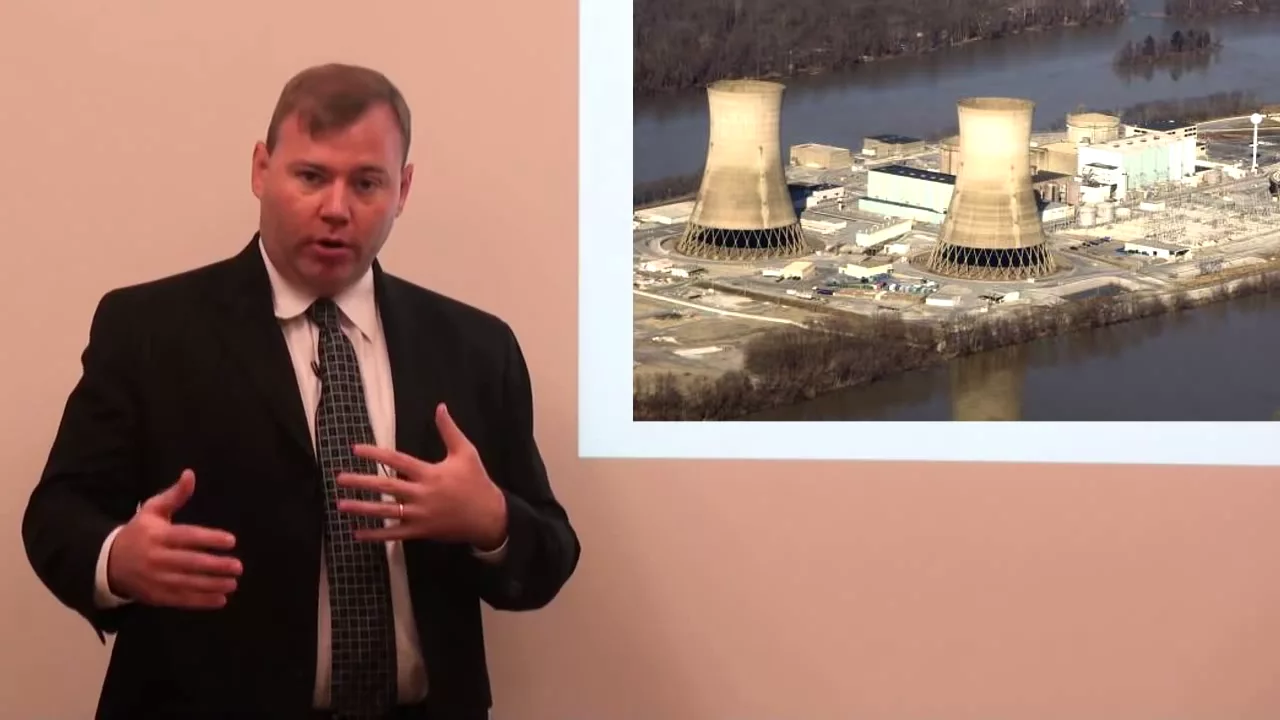
Google TechTalks
Federal backing for fast breeders collapsed under non-proliferation bans after political horse-trading sidelined Alvin Weinberg's safer molten-salt technology.
AI-assisted summary of The Thorium Molten-Salt Reactor: Why Didn't This Happen (and why is now the right time?) — original source. Check the original for full context.
Source published:
Key ideas
- The United States prioritized the liquid-metal fast breeder reactor over Alvin Weinberg's molten-salt breeder primarily due to domestic political deal-making and regional job creation rather than technical merit. (11:40)
- While Plutonium-239 requires unmoderated fast neutrons to exceed the critical breeding threshold of two, Thorium-derived Uranium-233 can sustain net breeding in a safer, thermal-neutron spectrum. (2:14)
- The federal ban on commercial fuel reprocessing in the late 1970s crippled the fast breeder reactor's fuel supply, yet policymakers neglected to revive the thermal molten-salt alternative. (24:23)
- Liquid Fluoride Thorium Reactors (LFTR) combine atmospheric low-pressure operation with high thermodynamic temperatures, utilizing passive freeze-plug drains to inherently prevent core meltdowns. (33:47)
Detailed notes
## Background This Google TechTalk was presented by Kirk Sorensen on December 16, 2011, and published to YouTube by the Google TechTalks channel on December 22, 2011. The presentation explores the history of the thorium molten-salt reactor, examining why the technology was historically abandoned and making the case for why modern energy demands make it the right time for its revival.
## TL;DR Nuclear engineer and Flibe Energy founder Kirk Sorensen investigates why the United States abandoned Alvin Weinberg's promising molten-salt thorium breeder reactor in the early 1970s. Sorensen details how Cold War politics, bureaucratic inertia, and backroom economic deals led federal leadership to channel hundreds of millions of dollars exclusively into plutonium-fueled liquid-metal fast breeders, only for that track to stall permanently after the 1970s non-proliferation bans on commercial reprocessing. Contending with contemporary post-Fukushima safety concerns and the immense baseload power required by modern digital infrastructure, Sorensen argues that liquid fluoride thorium reactors (LFTR) offer a safe, low-pressure, proliferation-resistant alternative to both fossil fuels and conventional light-water reactors.
## Atmosphere & style The presentation carries the measured, intellectually rigorous tone of an engineering lecture blended with an undercurrent of historical tragedy. Sorensen speaks with quiet conviction and dry irony, illustrating technical trade-offs with archival recordings and physics diagrams that underscore how short-sighted political bargaining derailed transformative science. Watching the talk feels like uncovering an alternative technological timeline, balancing deep frustration over decades of institutional neglect with earnest optimism for reviving Weinberg's liquid-fuel vision.
## Bulletin - [11:40](https://www.youtube.com/watch?v=bbyr7jZOllI&t=700s) The United States prioritized the liquid-metal fast breeder reactor over Alvin Weinberg's molten-salt breeder primarily due to domestic political deal-making and regional job creation rather than technical merit. - [02:14](https://www.youtube.com/watch?v=bbyr7jZOllI&t=134s) While Plutonium-239 requires unmoderated fast neutrons to exceed the critical breeding threshold of two, Thorium-derived Uranium-233 can sustain net breeding in a safer, thermal-neutron spectrum. - [24:23](https://www.youtube.com/watch?v=bbyr7jZOllI&t=1463s) The federal ban on commercial fuel reprocessing in the late 1970s crippled the fast breeder reactor's fuel supply, yet policymakers neglected to revive the thermal molten-salt alternative. - [33:47](https://www.youtube.com/watch?v=bbyr7jZOllI&t=2027s) Liquid Fluoride Thorium Reactors (LFTR) combine atmospheric low-pressure operation with high thermodynamic temperatures, utilizing passive freeze-plug drains to inherently prevent core meltdowns.
## Key takeaways - [00:00](https://www.youtube.com/watch?v=bbyr7jZOllI&t=0s) Alvin Weinberg envisioned thorium molten-salt reactors as an abundant, clean power source capable of transforming global development through large-scale desalination and agriculture. - [02:14](https://www.youtube.com/watch?v=bbyr7jZOllI&t=134s) Continuous nuclear breeding requires a fissile material to exceed the 'Threshold of Two' net neutrons produced per neutron absorbed after accounting for non-fission captures. - [02:14](https://www.youtube.com/watch?v=bbyr7jZOllI&t=134s) Uranium-233 bred from Thorium is unique among nuclear fuels in its ability to cross the Threshold of Two in both thermal (slow) and fast neutron spectrums. - [04:50](https://www.youtube.com/watch?v=bbyr7jZOllI&t=290s) Plutonium-239 suffers excessive parasitic capture in a thermal spectrum, forcing American nuclear planners into developing fast-neutron reactors with high fissile inventories. - [07:20](https://www.youtube.com/watch?v=bbyr7jZOllI&t=440s) Solid-fuel fast breeders face a massive operational bottleneck in having to repeatedly remove, cool, reprocess, and refabricate highly radioactive solid fuel elements. - [10:42](https://www.youtube.com/watch?v=bbyr7jZOllI&t=642s) Federal funding was disproportionately skewed toward fast breeders, which received tens of millions annually while molten-salt development received negligible financial backing. - [11:40](https://www.youtube.com/watch?v=bbyr7jZOllI&t=700s) White House recordings reveal President Nixon pushed the fast breeder reactor largely to direct federal contracts and jobs to aerospace workers in Southern California. - [17:07](https://www.youtube.com/watch?v=bbyr7jZOllI&t=1027s) AEC document WASH-1222 downplayed the safety advantages of molten salt, and Alvin Weinberg was ousted from Oak Ridge for persistently raising safety concerns about high-pressure light-water reactors. - [22:02](https://www.youtube.com/watch?v=bbyr7jZOllI&t=1322s) India's 1974 nuclear test accelerated global non-proliferation concerns regarding plutonium separation, prompting Presidents Ford and Carter to ban domestic commercial reprocessing. - [27:00](https://www.youtube.com/watch?v=bbyr7jZOllI&t=1620s) The light water breeder core at Shippingport successfully demonstrated a 1% net gain in fissile inventory, conclusively proving that thorium breeding in a thermal spectrum is physically viable. - [30:53](https://www.youtube.com/watch?v=bbyr7jZOllI&t=1853s) Capital-intensive and intermittent renewables like solar struggle to economically match the dense, baseload power demands of modern infrastructure, leading society to default to coal. - [33:47](https://www.youtube.com/watch?v=bbyr7jZOllI&t=2027s) Molten fluoride salt operates simultaneously at high temperatures and atmospheric low pressure, providing passive drain safety and immunity to radiation damage. - [33:47](https://www.youtube.com/watch?v=bbyr7jZOllI&t=2027s) Commercializing the LFTR faces primary hurdles not in fundamental physics, but in managing material corrosion and navigating a regulatory framework built strictly for solid-fuel water reactors.
## Detailed walkthrough ### [00:00](https://www.youtube.com/watch?v=bbyr7jZOllI&t=0s) Introduction and Alvin Weinberg's Vision
A host named Chris introduces Kirk Sorensen, founder of Flibe Energy and long-time champion of thorium power through his work with energyfromthorium.com, a global community of experts and enthusiasts collaborating to determine the optimal thorium-based nuclear reactor. Chris notes that while thorium technology originated shortly after World War II and matured through the early 1970s, it was abruptly abandoned in favor of the liquid-metal fast breeder reactor (LMFBR)—which itself was eventually canceled. Kirk Sorensen begins by addressing the central question he encounters at nearly every speaking engagement: “Kirk, Thorium sounds like a great idea. It sounds like it's a good technology, why didn’t this happen?”
Sorensen explains that Flibe Energy was established to develop liquid fluoride thorium reactor (LFTR) technology based on the pioneering work of Dr. Alvin Weinberg, the director of Oak Ridge National Laboratory from 1955 to the early 1970s. Weinberg envisioned thorium as a pathway to liberate humanity from the constraints of fossil fuels, finite hydroelectric resources, and standard solid-fuel nuclear reactors. In Weinberg’s broader humanitarian outlook, cheap and abundant thorium energy would transform global economies—particularly resource-constrained regions lacking fresh water or arable land—by enabling large-scale seawater desalination and desert agriculture, effectively terraforming parts of the Earth. However, Weinberg's program was terminated in the early 1970s, setting up the central historical and technical puzzle of the presentation.
[02:14](https://www.youtube.com/watch?v=bbyr7jZOllI&t=134s) The Three Nuclear Fuels and the Threshold of Two
Sorensen traces the dilemma back to the dawn of the atomic age, when nuclear physicists evaluated three primary fuel options: Uranium-235, Uranium-238, and Thorium-232. Of these, only Uranium-235 is fissile in nature and capable of being directly split to sustain a chain reaction. Uranium-238 and Thorium-232 are fertile materials that cannot fission directly; each must absorb a neutron to transmute into a fissile isotope—Plutonium-239 and Uranium-233, respectively. Because breeding requires one neutron to convert the fertile atom and a second neutron to induce fission in the bred atom, any continuous breeding cycle demands that each fission event produce strictly more than two neutrons.
```mermaid flowchart TD accTitle: Nuclear Fuel Breeding and Fission Cycles accDescr: Diagram contrasting the transmutation and fission pathways of Uranium-238 and Thorium-232.
subgraph UraniumCycle["Uranium-Plutonium Cycle"] U238["Uranium-238 (Fertile)"] -->|"+ 1st Neutron"| Pu239["Plutonium-239 (Fissile)"] Pu239 -->|"+ 2nd Neutron"| FissPu["Fission (~3.0 Neutrons Emitted)"] FissPu -.->|"Only Fast Neutrons Cross Threshold"| U238 end
subgraph ThoriumCycle["Thorium-Uranium Cycle"] Th232["Thorium-232 (Fertile)"] -->|"+ 1st Neutron"| U233["Uranium-233 (Fissile)"] U233 -->|"+ 2nd Neutron"| FissU["Fission (~2.5 Neutrons Emitted)"] FissU -.->|"Both Thermal & Fast Cross Threshold"| Th232 end ```
All three fissile fuels nominally meet this baseline: Uranium-235 emits roughly 2.4 neutrons per fission, Uranium-233 emits approximately 2.5, and Plutonium-239 emits nearly 3.0 neutrons per fission. However, raw neutron emission does not account for parasitic absorption (neutrons absorbed by the fuel without causing fission). When accounting for non-fission captures, Sorensen defines what he terms the "Threshold of Two"—the net yield of neutrons produced per neutron absorbed:
- In a thermal (moderated, slow-neutron) spectrum, Plutonium-239 drops below the Threshold of Two because it frequently absorbs thermal neutrons without fissioning. - Plutonium-239 can only exceed the Threshold of Two when struck by unmoderated, high-energy fast neutrons. - In contrast, Uranium-233 derived from Thorium crosses the Threshold of Two in both thermal and fast neutron spectrums, offering the unique possibility of breeding fuel using slow neutrons.
[04:50](https://www.youtube.com/watch?v=bbyr7jZOllI&t=290s) Neutron Cross-Sections and the Fast vs. Thermal Dilemma
Sorensen explains why crossing the Threshold of Two in a thermal spectrum matters so profoundly by examining nuclear cross-sections—the mathematical probability that a given nuclear interaction will occur, measured in barns ($10^{-24}\text{ cm}^2$). Across almost all nuclear materials, cross-sections are orders of magnitude larger for slow thermal neutrons than for fast neutrons. A thermal neutron sees an enormous target area when approaching a Uranium-233 or Plutonium-239 nucleus, making a reaction far more likely to occur than with a fast neutron, where the interaction cross-section shrinks dramatically.
This physical reality initially creates a strong bias toward thermal reactors. However, parasitic capture complicates the picture: in the thermal spectrum, Plutonium-239 absorbs a neutron without fissioning roughly one-third of the time, effectively wasting the neutron and preventing sustainable breeding. By contrast, Uranium-233 undergoes non-fission capture only about 10% of the time in the thermal range. In the fast spectrum, parasitic capture drops to near zero for both fuels; if a fast neutron strikes either nucleus and is absorbed, it almost invariably triggers fission. Because Plutonium-239 cannot sustain a breeding cycle in a thermal spectrum, American nuclear planners concluded that breeding fuel from abundant Uranium-238 strictly mandated the development of fast-neutron reactors.
- Cross-sections quantify reaction probability in units of barns ($10^{-24}\text{ cm}^2$). - Thermal neutrons provide vastly higher reaction probabilities, requiring substantially smaller fissile inventories to achieve criticality. - Fast reactors require significantly higher concentrations of fissile material in the core because the probability of interaction per pass is exceedingly low. - Plutonium-239 must be deployed in a fast spectrum to avoid parasitic capture, whereas Uranium-233 can sustain net breeding in a simple, well-moderated thermal spectrum.
[07:20](https://www.youtube.com/watch?v=bbyr7jZOllI&t=440s) The Fast Breeder Track and Weinberg's Liquid-Fuel Counter-Vision
Driven by the imperative to breed Plutonium from Uranium-238, the United States committed early and heavily to the fast breeder reactor. In 1951, the Experimental Breeder Reactor I (EBR-I) in Idaho achieved criticality, becoming the first reactor to generate usable electricity by lighting four lightbulbs and eventually producing several hundred kilowatts. This was succeeded by the 62-megawatt thermal Experimental Breeder Reactor II (EBR-II). Commercial industry embraced the concept, culminating in the construction of the Enrico Fermi Fast Breeder Reactor in Monroe, Michigan, which began development in 1957 and went critical in 1966. However, Fermi 1 suffered a partial core meltdown shortly after startup due to a coolant blockage, forcing a prolonged shutdown and dealing a severe blow to commercial fast breeder momentum.
During this same era, Alvin Weinberg and his team at Oak Ridge National Laboratory were quietly pursuing the Molten-Salt Reactor Experiment (MSRE), relying on thermal-spectrum neutrons and the Thorium/Uranium-233 cycle. In his 1969 introductory preface to a dedicated series of papers in *Nuclear Applications and Technology*, Weinberg highlighted the fundamental pitfall of solid-fuel fast breeders:
> “The prevailing view holds that the liquid-metal fast breeder reactor is the proper path to ubiquitous permanent energy. It is no secret that I, as well many of my colleagues at Oak Ridge, have always felt differently. When the idea of the breeder was first suggested in 1943, the rapid and the efficient recycle of the partially spent core was regarded as the main problem. Nothing that has happened in the ensuing quarter century has fundamentally changed this.”
Weinberg argued that solid-fuel fast breeder reactors faced an insurmountable bottleneck in having to remove, cool, chemically reprocess, and refabricate highly radioactive solid fuel elements after only a fraction of the fuel had burned. To overcome this, Weinberg asserted: “The successful breeder will be the one that can deal with the spent fuel or the spent core most rationally either by achieving extremely long burn up or by greatly simplifying the entire recycle step.” Sorensen emphasizes that this logic guided Oak Ridge away from solid fuel rods toward liquid-fueled systems: “We at Oak Ridge, have always been intrigued by this latter possibility. It explains our long commitment to liquid fuel reactors, first, the Aqueous Homogeneous and now the Molten-salt.”
[10:42](https://www.youtube.com/watch?v=bbyr7jZOllI&t=642s) Federal Budget Disparities: Fast Breeder vs. Molten-Salt Breeder
Kirk Sorensen explains that the research appropriations allocated to the different breeder reactor concepts paint a stark picture. Drawing data from a historical book digitized through Google Books—a project initiated by his friend Chris Yunkins—Sorensen converted the raw figures into a spreadsheet and plotted a comparative timeline. Starting around 1968, by which point the United States had already constructed several fast breeder reactors, expenditures on the fast breeder reactor were commanding between $75 million and nearly $100 million annually.
```mermaid flowchart LR accTitle: Federal Reactor Appropriations Contrast accDescr: Visual comparison between federal backing of the liquid metal fast breeder reactor versus the molten salt breeder reactor.
subgraph LMFBR["Liquid-Metal Fast Breeder (LMFBR)"] A["1968: $75M–$100M/year"] --> B["Major AEC & Congressional Priority"] B --> C["1972: Projected >$700M Dev Cost"] end
subgraph MSBR["Molten-Salt Breeder (MSBR)"] D["Barely visible funding"] --> E["Cancelled (Early 1970s)"] E --> F["Brief 1975 revival, then permanent cancellation"] end ```
By contrast, the molten-salt breeder reactor funding line is virtually invisible along the bottom axis of the chart. The molten-salt program received minuscule funding before being canceled outright, experiencing a brief resurrection in 1975, and then being canceled once again. On the scale of national nuclear appropriations, federal commitment was directed almost exclusively toward liquid-metal fast breeder reactors.
[11:40](https://www.youtube.com/watch?v=bbyr7jZOllI&t=700s) Nixon’s Backroom Deals and the Politics of the Fast Breeder
In June 1971, President Richard Nixon delivered an address designating the fast breeder reactor as a top national priority. Although no video footage of the speech survives, Nixon was captured on his White House taping system later that day in a private telephone discussion with Representative Craig Hosmer of California, a prominent member of the Joint Committee on Atomic Energy. Sorensen plays the original audio recording, in which Nixon reveals that his aggressive push for breeder reactor funding had far less to do with the comparative technical merits of different reactor types than with delivering jobs and economic patronage to Southern California's struggling aerospace workforce.
Nixon bluntly instructed Hosmer to coordinate with Representative Chet Holifield, also of California, to steer federal energy projects back to their home state: “The one thing I wanted to tell you too is that, I--Holifield was there last night at the [INDISTINCT] Club thing, and I--and I have told the people around here--now, this is got to be something we play very close to the vest, but I'm being ruthless on one thing, any activities that we possibly can, should be placed in southern California in this field.” Nixon told Hosmer to repeatedly pressure AEC leadership—including science adviser Edward David Jr. and AEC Chairman Glenn Seaborg—asking, "Where is this going to be?" to lock down California sites. When Hosmer expressed gratitude for a $16 million appropriation toward an enrichment facility that resolved a local political problem, Nixon responded in kind: "Well, they told me you were interested in it, and I said, 'Well, if Hosmer is for it, I'm for it.'"
- The primary political actors coordinating on the initiative were Californians: President Nixon, Representative Craig Hosmer, and Joint Committee on Atomic Energy leader Chet Holifield. - Nixon paired his breeder push with promises of saline water desalination plants targeted specifically to generate Southern California employment. - As Sorensen observes, the archival conversation reflects an administration focused strictly on electoral politics and local jobs rather than an objective technical assessment of alternative reactor chemistries.
[14:28](https://www.youtube.com/watch?v=bbyr7jZOllI&t=868s) Hanford Address and the Escalating National Commitment
A few months after the phone call with Hosmer, Nixon traveled to the Hanford nuclear reservation in Washington state—one of the earliest and most storied nuclear production sites in the nation—to deliver another speech on the breeder reactor. Sorensen notes the irony of the venue: Hanford was populated by some of the most scientifically literate nuclear specialists and PhDs in the country, yet Nixon framed the entire reactor initiative in simplistic economic terms while openly self-deprecating about his own scientific ignorance.
During the Hanford speech, Nixon placed the breeder initiative alongside the historic diplomatic opening to China and his domestic economic wage-and-price programs, admitting: “Now, don't ask me what a breeder reactor is, ask Dr. Schlesinger, but don't tell, I'm not to tell you because unless you're one of those PhDs, you won't understand it either.” He admitted that science had been one of his poorest academic subjects, having abandoned it as a college sophomore because it required too much effort, but insisted that the breakthrough represented by breeder technology meant "jobs, jobs for this area but jobs and power for hundreds from millions of people all over the world." Sorensen laments that the nation might have been far better served had its leadership understood the fundamental physical and safety differences among breeder designs before committing the country to a singular path.
- Nixon elevated the fast breeder reactor into his formal State of the Union address and subsequent messages to Congress. - By 1972, both the Democratic and Republican party platforms formally incorporated the fast breeder reactor as a paramount national priority. - By September 1972 congressional testimony, projected development costs for the liquid-metal fast breeder reactor had escalated past $700 million, on top of $200 million already committed by private industry. - Facing these steep projections, Representative Craig Hosmer signaled unconditional legislative backing, telling committee members: “If cost targets were missed, I for one don't intend to scream and holler about it.”
[17:07](https://www.youtube.com/watch?v=bbyr7jZOllI&t=1027s) WASH-1222, Milton Shaw, and the Ousting of Alvin Weinberg
The broader political and budgetary juggernaut behind the liquid-metal fast breeder reactor soon collided directly with Alvin Weinberg and his research team at Oak Ridge National Laboratory. In September 1972, the Atomic Energy Commission published document WASH-1222, an official technical evaluation of Weinberg’s molten-salt breeder concept. WASH-1222 offered sharp critiques of the unresolved engineering hurdles associated with molten salt, while systematically downplaying or omitting the enormous safety and economic benefits that the fluid-fuel, low-pressure system possessed over high-pressure water and liquid-metal systems.
Inside the AEC, the Division of Reactor Development and Technology was led by Milton Shaw, a hard-charging protégé of Admiral Hyman Rickover. In his autobiography, *The First Nuclear Era*, Weinberg recalled the escalating friction between Oak Ridge and Shaw's office: “Milt tackled the LMFBR project with Rickoverian dedication: woe unto any who stood in his way.” Backed by unassailable support from the Joint Committee on Atomic Energy, Shaw harbored little patience for Oak Ridge's advocacy of thorium and molten salt. More critically, Weinberg had begun vocally raising reactor safety issues concerning pressurized light-water reactors—which he had originally invented—arguing that molten-salt reactors offered far superior intrinsic safety because they did not store massive amounts of energy under high pressure.
```mermaid flowchart TD accTitle: Weinberg AEC Conflict Flowchart accDescr: Progression of political and administrative resistance leading to Alvin Weinberg being pushed out of nuclear energy.
subgraph Bureaucracy["Washington Nuclear Power Base"] Nixon["President Richard Nixon<br>(Prioritizes California Jobs)"] Holifield["Rep. Chet Holifield<br>(Joint Committee on Atomic Energy)"] Shaw["Milton Shaw<br>(AEC Reactor Division / LMFBR Champion)"] end
subgraph OakRidge["Oak Ridge National Laboratory"] Weinberg["Alvin Weinberg"] Safety["Concerns over High-Pressure LWRs"] MSBR["Promotion of Low-Pressure Molten-Salt"] end
Nixon --> Holifield Holifield --> Shaw Safety -.->|"Challenges Status Quo"| Holifield MSBR -.->|"Competes for Funding"| Shaw Holifield -->|"Ouster: 'Leave Nuclear Energy'"| Weinberg ```
This persistent safety advocacy broke Weinberg's standing with congressional leadership. During a closed meeting in 1972 between Weinberg, Milton Shaw, and Joint Committee leader Chet Holifield, Holifield’s patience ran out entirely. Weinberg recorded the confrontation: “Congressman Chet Holifield was clearly exasperated with me and he finally blurted out, 'Alvin, if you're so concerned about the safety of reactors, then I think it might be time for you to leave nuclear energy.'” Weinberg was left stunned, realizing his vision for reactor safety and thorium technology had made him an outcast among the officials steering the nation's nuclear trajectory—a turning point Sorensen describes as a tragic missed opportunity for American energy history.
[20:29](https://www.youtube.com/watch?v=bbyr7jZOllI&t=1229s) The Ouster of Alvin Weinberg and Cancellation of the Molten-Salt Program
Alvin Weinberg’s dismissal from his post as director of the Oak Ridge National Laboratory culminated from an escalating friction with influential leaders inside the Atomic Energy Commission (AEC) and Congress, most notably the formidable Representative Chet Holifield. In his 1994 autobiography, Weinberg reflected on his removal with philosophical poise rather than bitterness. As Kirk Sorensen recounts, Weinberg wrote: “I look back in these events, I realize that leaving Oak Ridge was the best thing that could have happened to me. My views about nuclear energy were at variance with those of the AEC congressional leadership. After all, it was I who had called nuclear energy a Faustian bargain, who continued to promote the molten-salt breeder.” Weinberg’s championing of thorium had directly collided with a well-entrenched, well-funded political and industrial coalition committed entirely to the plutonium-fueled liquid metal fast breeder reactor (LMFBR).
Faced with Weinberg’s stubborn advocacy for an alternative path, the establishment moved decisively to terminate the competing concept. In January 1973, the AEC officially ordered Oak Ridge to shut down all development of the molten-salt reactor. Just months later, in April 1973, President Richard Nixon reaffirmed his administration’s absolute devotion to the fast breeder, announcing that it could harvest thirty times more energy from uranium than conventional light water reactors and designating it the nation’s highest-priority nuclear energy research initiative. Adding pressure to the American program, international rivals were moving rapidly; in August 1973, France’s Phénix fast breeder reactor went critical. The achievement fueled an intense American desire to dominate the fast breeder sector, eclipsing any appetite for unconventional designs like the molten-salt reactor.
- In January 1973, the Atomic Energy Commission formally ordered Oak Ridge National Laboratory to terminate molten-salt reactor development. - In April 1973, Richard Nixon publicly highlighted the fast breeder as the number-one nuclear research priority, emphasizing its potential to extract thirty times more energy from uranium. - In August 1973, France reached criticality with its Phénix liquid metal fast breeder reactor, intensifying geopolitical pressure on the United States to stay ahead.
---
[22:02](https://www.youtube.com/watch?v=bbyr7jZOllI&t=1322s) The 1973 Oil Crisis, Project Independence, and the Indian Nuclear Test
Later in 1973, global geopolitics upended the American energy conversation when the Yom Kippur War broke out, triggering the OPEC oil embargo. The sudden curtailment of crude oil supplies produced economic shockwaves throughout the United States: motorists queued for hours in serpentine lines at filling stations, local regulations forced drivers to alternate fuel purchases based on odd or even license plate numbers, workers found themselves unable to commute, and major swaths of commercial activity ground to an abrupt halt. Under severe public and political pressure, Nixon launched Project Independence, an aggressive national blueprint intended to achieve complete energy self-sufficiency by 1980. The proposal called for an unprecedented domestic construction blitz of fast breeder reactors, light water reactors, oil drilling operations, refineries, and coal mines. However, when the embargo lifted in March 1974, political urgency evaporated, and the sweeping mandates of Project Independence quietly stalled.
Shortly after the embargo subsided, another geopolitical shock reshuffled American nuclear policy: in May 1974, India detonated an explosive nuclear device fabricated using plutonium that had been chemically separated from natural uranium irradiated inside an imported heavy-water research reactor. The blast triggered widespread alarm across the United States government regarding the proliferation vulnerabilities of fuel reprocessing plants, which separated weapons-usable plutonium from irradiated reactor fuel. While technical arguments maintained that reactor-grade plutonium from standard commercial light water reactors was ill-suited for reliable weapons manufacture compared to weapons-grade plutonium, the fear of diversion hardened. This presented an existential dilemma for the fast breeder reactor, whose entire operational concept relied upon chemical reprocessing to extract spent fuel plutonium from light water reactors to manufacture its initial fissile cores. Because the fission cross-section for plutonium is dramatically smaller in a fast-neutron spectrum than in a thermal-neutron spectrum, a fast breeder requires an enormous physical inventory of fissile fuel simply to reach criticality and begin operating, making its commercial viability completely dependent on an active civilian reprocessing industry.
```mermaid flowchart TD accTitle: Fast Breeder Reliance on Fuel Reprocessing accDescr: Chart illustrating how light water reactor spent fuel feeds fast breeder startup cores and how the non-proliferation ban severed that fuel cycle.
subgraph LWR ["Light Water Reactor Fleet"] A["Uranium Fuel"] --> B["Spent LWR Fuel"] end
subgraph Reprocess ["Chemical Reprocessing Facility"] B --> C["Plutonium Separation"] end
subgraph Breeder ["Fast Breeder Reactor"] C -->|"Large Fissile Mass (Low Fast Cross-Section)"| D["FBR Startup Core"] D --> E["Breeds New Fuel"] end
subgraph Policy ["1970s Non-Proliferation Shift"] F["1974 Indian Nuclear Test"] -.->|"Triggers Proliferation Fears"| G["Reprocessing Ban (Ford / Carter)"] G -.->|"Severed Feedstock Supply"| C end ```
---
[24:23](https://www.youtube.com/watch?v=bbyr7jZOllI&t=1463s) Political Realignment, the Reprocessing Ban, and the Carter Presidency
Following Nixon's resignation in August 1974, Gerald Ford assumed the presidency and restructured the atomic bureaucracy, breaking up the Atomic Energy Commission into the Nuclear Regulatory Commission (NRC) and the Energy Research and Development Administration (ERDA), which would later become the Department of Energy. Simultaneously, Congress abolished the once-omnipotent Joint Committee on Atomic Energy, ending Chet Holifield’s era of unchallenged oversight. Ford nevertheless maintained robust backing for the fast breeder reactor, defending it in State of the Union addresses, expanding its R&D budgets, and arguing that fast breeders could unlock centuries of energy from domestic uranium reserves.
As the razor-thin presidential election of 1976 approached, Democratic nominee Jimmy Carter campaigned aggressively against domestic nuclear reprocessing, citing global non-proliferation concerns. In a bid to defang Carter's platform barely a week before Election Day, on October 28, 1976, President Ford made a dramatic policy reversal and adopted his opponent's stance. Ford announced: “We are not going to reprocess Uranium anymore. We're not going to separate Plutonium,” grounding his sudden prohibition directly in the hazards of international nuclear proliferation.
When Carter assumed office in 1977, the centerpiece of the nation’s nuclear expansion was a planned demonstration fast breeder reactor slated for construction along the Clinch River in Tennessee, adjacent to Oak Ridge. Carter opposed the project, arguing that institutional fixation on the fast breeder had drained capital and intellectual bandwidth away from alternative clean technologies like solar power. Denouncing the trajectory that would transform America into a hazardous “plutonium society,” Carter confirmed Ford’s reprocessing ban as enduring federal policy and moved to cut funding for the Clinch River Breeder Reactor, declaring: “There's no need to enter the Plutonium age by licensing or building a fast breeder reactor such as the proposed demonstration plan at Clinch River.”
- Gerald Ford split the AEC into the Nuclear Regulatory Commission (NRC) and the Energy Research and Development Administration (ERDA, the forerunner to the DOE). - The Joint Committee on Atomic Energy, long chaired and directed by Chet Holifield, was abolished during the Ford presidency. - On October 28, 1976, Ford preempted Carter’s campaign message by ordering a halt to domestic commercial reprocessing and plutonium extraction. - In 1977, Jimmy Carter upheld the commercial reprocessing moratorium, sought budget cuts for the Clinch River Breeder Reactor, and redirected national energy priorities toward coal and solar.
---
[27:00](https://www.youtube.com/watch?v=bbyr7jZOllI&t=1620s) The Shippingport Success, Three Mile Island, and the Forgotten MSR Legacy
Despite his skepticism toward plutonium fast breeders, Jimmy Carter harbored a unique appreciation for thorium breeding, stemming from his early career in the nuclear navy under Admiral Hyman Rickover. At that very moment, Rickover’s Naval Reactors branch was completing an experimental conversion of the Shippingport Atomic Power Station in Pennsylvania, retrofitting its core with thorium dioxide and uranium-233 dioxide ($ThO_2 / {}^{233}UO_2$). President Carter was given the honor of flipping the switch that energized the first and only thorium breeder reactor in United States history, openly expressing his desire to explore uranium-thorium breeding cycles as a proliferation-resistant alternative to plutonium.
Shippingport operated for five years until its scheduled shutdown in 1982. Post-operation core examinations revealed that it contained 1% more fissile material at the end of its life than when it had started. While Shippingport was a solid-fueled light water breeder rather than a molten-salt liquid-fueled design, it conclusively validated the underlying physics: breeding fuel with thorium in a thermal-neutron spectrum was an accomplished, physical fact.
``` +--------------------------------------------------------------------------------------------------+ | Chronology of US Breeder Reactor Policy | +------+-------------------------------------------------------------------------------------------+ | Year | Event | +------+-------------------------------------------------------------------------------------------+ | 1973 | AEC cancels the Molten-Salt Reactor Experiment; Nixon recommits heavily to fast breeders. | | 1974 | India's test prompts proliferation panic; Ford divides the AEC into NRC and ERDA. | | 1976 | Ford bans commercial fuel reprocessing and plutonium separation right before election. | | 1977 | Carter reinforces reprocessing ban, attacks the "Plutonium society" and Clinch River. | | 1977 | Carter switches on the Thorium/U-233 Light Water Breeder Reactor at Shippingport. | | 1979 | Three Mile Island partial meltdown cripples public confidence in commercial nuclear power.| | 1982 | Shippingport core harvested, demonstrating a 1% net gain in fissile material. | | 1982 | Reagan signs Nuclear Waste Policy Act, cementing the once-through geologic disposal path.| +------+-------------------------------------------------------------------------------------------+ ```
The broader commercial nuclear industry, however, faced catastrophic headwinds. The 1979 partial meltdown at Three Mile Island decimated public trust in light water reactors. Even after Ronald Reagan took office in 1981 and overturned the federal prohibition on commercial reprocessing, private industry declined to risk capital building commercial reprocessing plants. Because the fast breeder had been legally divorced from its fuel supply, a new strategy was required for spent commercial fuel; Reagan subsequently signed the Nuclear Waste Policy Act of 1982, locking the nation into a once-through fuel cycle and setting up long-term geologic storage at repositories like Yucca Mountain.
Curiously, federal funding for fast breeder research had peaked between 1976 and 1980 under Carter, persisting through sheer bureaucratic momentum long after the underlying fuel cycle had been banned. The AEC had originally bet on plutonium because its fast-spectrum neutron yield safely surpassed the threshold of two, making it seem a guaranteed breeding success compared to thorium's narrower thermal margins. But once the reprocessing ban destroyed the fast breeder's rationale, Washington policymakers never stopped to reconsider the abandoned alternative. Nobody asked if canceling the molten-salt reactor had been a profound mistake or whether the nation should pivot to Weinberg's thermal-spectrum molten-salt breeder. Instead, the seasoned Oak Ridge team disbanded, their facilities were shuttered, and the institutional knowledge built over decades was gradually forgotten.
---
[30:15](https://www.youtube.com/watch?v=bbyr7jZOllI&t=1815s) Reassessing the Liquid Fluoride Thorium Reactor for the Modern Era
Kirk Sorensen brings the narrative to 2011 to examine why the modern embodiment of the molten-salt concept—the Liquid Fluoride Thorium Reactor (LFTR)—is urgently needed today. Humanity confronts an unprecedented dual challenge: supplying vast quantities of cheap, abundant energy to support human flourishing while simultaneously curtailing environmental destruction. The acute threats of global climate change, melting polar glaciers, rising sea levels, and destabilized weather patterns demand rapid, drastic reductions in greenhouse gas emissions. Yet, legacy nuclear technology remains stalled by persistent public distrust and entrenched safety anxieties, making a fundamental re-evaluation of thorium molten-salt technology more imperative than ever before.
[30:53](https://www.youtube.com/watch?v=bbyr7jZOllI&t=1853s) The High-Density Energy Challenge: Data Centers, Solar Limits, and the Coal Default
Following the Fukushima Daiichi disaster, public perception of nuclear power shifted dramatically despite the fact that no direct fatalities occurred from radiation at the site. Kirk Sorensen observes that media coverage and prevailing public sentiment have forced people to question conventional light-water reactors, underscoring the urgent need for an alternative reactor design that avoids high-pressure fluids and eliminates the risk of catastrophic meltdowns. At the same time, relying entirely on fossil fuels causes immense ecological damage across extraction, processing, atmospheric emissions, and fuel transportation, while building long-distance electrical transmission lines remains prohibitively expensive.
```mermaid flowchart TD accTitle: Modern Energy Demand vs Generation Options accDescr: Diagram contrasting data center power requirements with solar limitations and the default coal fallback. subgraph Demand["Modern Concentrated Demand"] A["Facebook Data Center<br/>(Luleå, Sweden)"] A --- DemandSpec["Needs: 120 MW continuous<br/>14 diesel backups (40 MW)"] end
subgraph GreenSupply["Diffuse Renewable Alternative"] B["Spanish Solar Farm<br/>(185 hectares)"] B --- SolarSpec["Produces: 20 MW peak (15 hrs/day)<br/>Cost: $420M (~$33/watt)"] B -.->|"Requires 10+ sites & intercontinental grid"| A end
subgraph CoalDefault["Current Economic Fallback"] C["German Lignite Coal Plant<br/>(1600 MW continuous)"] C ==>|"Easily powers 13 data centers (Cheap, dirty, reliable)"| A end ```
To illustrate the immense, highly concentrated appetite of modern digital society, Sorensen points to Facebook’s massive data center built roughly one hundred miles south of the Arctic Circle in Sweden. The facility consumes 120 megawatts of continuous hydropower, backed by 14 emergency diesel generators delivering 40 megawatts, at a construction cost of $760 million. By contrast, one of the world’s largest solar installations in Spain spans 185 hectares, cost $420 million, and generates just 20 megawatts of peak power for 15 hours a day—equating to roughly $33 per watt, which is six to seven times the capital expense of conventional generation. Powering that single Swedish data center on solar alone would demand at least ten such Spanish facilities alongside transcontinental transmission links crossing Europe from sunny Spain to frozen Sweden.
Because such diffuse renewable schemes face severe physical and economic hurdles, Sorensen argues that society inevitably defaults to dense, dispatchable fossil generation. Highlighting a massive 1,600-megawatt lignite-burning facility in Germany, he quips with dry irony that it is the prettiest coal plant he has ever seen, noting that a single such plant could power thirteen of those Swedish data centers effortlessly. Yet for the global environment, this fallback is catastrophic. As Sorensen emphasizes:
> “If we try to use expensive intermittent and alternative energy, it's not going to be the answer.”
- **Facebook Swedish Data Center**: Located 100 miles south of the Arctic Circle; draws 120 MW continuously; utilizes 14 backup diesel generators producing 40 MW emergency power; capital cost of $760 million. - **Spanish Solar Facility**: Spans 185 hectares; yields 20 MW peak power for 15 hours per day; capital cost of $420 million (~$33/watt peak), requiring at least 10 equivalent installations plus long-distance transmission to match a single modern server facility. - **German Lignite Coal Plant**: Produces 1,600 MW of reliable, baseload power—enough to run 13 hyper-scale data centers, illustrating why developing and industrial nations default to cheap fossil generation over unsubsidized renewables.
---
[33:47](https://www.youtube.com/watch?v=bbyr7jZOllI&t=2027s) The Molten-Salt Solution, Technical Merits, and Key Challenges
The fundamental dilemma facing the globe is that most populations cannot afford unsubsidized, intermittent energy; without an alternative, they will inevitably select cheap, dirty, and reliable coal. Sorensen contends that natural, abundant, and energy-dense thorium offers the genuine solution to this crisis, provided the right machine is built to harness it. Molten fluoride salt serves as the ideal reactor medium because it is the only coolant option among the four classic reactor cooling classes capable of running simultaneously at atmospheric low pressure and elevated high temperatures, which maximizes thermodynamic conversion efficiency.
```mermaid flowchart LR accTitle: Passive Safety and Core Attributes of LFTR accDescr: Flow diagram showing how molten fluoride salt enables passive drain safety, high efficiency, and proliferation resistance. subgraph CoreAttributes["Fluid Fuel & Fluoride Matrix"] A["Liquid Fluoride Salt<br/>(LiF-BeF2-ThF4-UF4)"] --> B["Low Pressure Operation<br/>& High Temp Heat"] A --> C["Radiation Impervious &<br/>No Fuel Fabrication"] end
subgraph Operation["Safety & Fuel Cycle"] B --> D["Passive Freeze-Plug Drain<br/>to Subcritical Tanks"] B --> E["High Thermodynamic<br/>Efficiency"] C --> F["Unlimited Burnup &<br/>Core-to-Blanket Reprocessing"] end
subgraph Safeguards["Proliferation Resistance"] F --> G["U-233 contaminated with U-232<br/>(Hard gamma emitter, easy down-blending)"] end ```
Liquid fuel architectures also introduce self-acting safety mechanisms entirely unavailable to solid-fueled reactors. In any power outage or emergency excursion, the molten salt simply thaws a freeze plug and drains by gravity into passive, passively cooled holding tanks beneath the vessel, preventing meltdowns by design. Fluoride chemistry forms a near-perfect union with the thorium fuel cycle: the salts remain chemically stable under intense bombardment, suffer zero radiation-induced structural swelling, eliminate fuel fabrication and cladding expenses, and permit continuous processing between the active core and fertile blanket. Furthermore, the bred Uranium-233 is inherently protected against weapons proliferation due to co-produced Uranium-232, whose energetic gamma daughters render the material dangerous to handle and straightforward to detect or down-blend.
Sorensen candidly addresses the remaining engineering obstacles, notably the corrosive aggressiveness of hot salts against conventional metals, which requires specialized nickel-base alloys like Hastelloy-N. However, the most formidable barriers are regulatory and institutional rather than physical. Because reactor technology has stagnated around solid-fuel, high-pressure light-water reactors for over four decades, the existing nuclear establishment and regulatory frameworks are built around paradigms foreign to liquid-fluoride systems. Overcoming this inertia demands broad public and industry education. In closing, Sorensen states that his company, Flibe Energy, is dedicated to overcoming these hurdles and commercializing liquid fluoride thorium reactors (LFTR) worldwide. As Sorensen reflects on the unique nature of the reactor's primary coolant:
> “Because molten-salt is the only one of the four potential coolants in the reactor that can run at both high temperature and low pressure.”
- **Passive Drain Safety**: In emergencies, freeze valves melt without external power or operator intervention, draining the liquid core into subcritical, naturally convecting dump tanks. - **Fuel Cycle Economics**: Completely bypasses solid fuel element manufacturing, fuel enrichment, and high-pressure containment vessels while enabling near-complete consumption of fertile thorium through continuous online processing. - **Nonproliferation Attributes**: Breeding yields Uranium-233 tainted with trace Uranium-232; the high-energy 2.6 MeV gamma emissions from daughter isotope Thallium-208 make diversion and weapons fabrication exceptionally difficult. - **Key Developmental Hurdles**: Addressing metal corrosion and high-temperature stress through specialized materials, reviving technical know-how lost after 40 years of stagnation, and adapting a regulatory environment designed exclusively for light-water reactors.
## Notable quotes > [07:20](https://www.youtube.com/watch?v=bbyr7jZOllI&t=440s) The successful breeder will be the one that can deal with the spent fuel or the spent core most rationally either by achieving extremely long burn up or by greatly simplifying the entire recycle step. — Alvin Weinberg
> [30:53](https://www.youtube.com/watch?v=bbyr7jZOllI&t=1853s) If we try to use expensive intermittent and alternative energy, it's not going to be the answer. — Kirk Sorensen
> [24:23](https://www.youtube.com/watch?v=bbyr7jZOllI&t=1463s) There's no need to enter the Plutonium age by licensing or building a fast breeder reactor such as the proposed demonstration plan at Clinch River. — Jimmy Carter
## Mentioned Kirk Sorensen, Alvin Weinberg, Flibe Energy, energyfromthorium.com, Oak Ridge National Laboratory, Liquid Fluoride Thorium Reactor (LFTR), Liquid-Metal Fast Breeder Reactor (LMFBR), Experimental Breeder Reactor I (EBR-I), Experimental Breeder Reactor II (EBR-II), Enrico Fermi Fast Breeder Reactor, Molten-Salt Reactor Experiment (MSRE), Nuclear Applications and Technology, Richard Nixon, Craig Hosmer, Chet Holifield, Joint Committee on Atomic Energy, Atomic Energy Commission (AEC), Edward David Jr., Glenn Seaborg, Hanford Site, James R. Schlesinger, WASH-1222, Milton Shaw, Hyman Rickover, The First Nuclear Era, Phénix, Project Independence, Gerald Ford, Nuclear Regulatory Commission (NRC), Energy Research and Development Administration (ERDA), Department of Energy, Jimmy Carter, Clinch River Breeder Reactor, Shippingport Atomic Power Station, Ronald Reagan, Nuclear Waste Policy Act of 1982, Yucca Mountain, Facebook, Hastelloy-N
## Video description Google Tech Talk December 16, 2011
Presented by Kirk Sorensen
[Source](https://www.youtube.com/watch?v=bbyr7jZOllI)