Ilulissat Glacier Sheds Mile of Ice as Loss Outpaces 20th Century
Exposure Labs
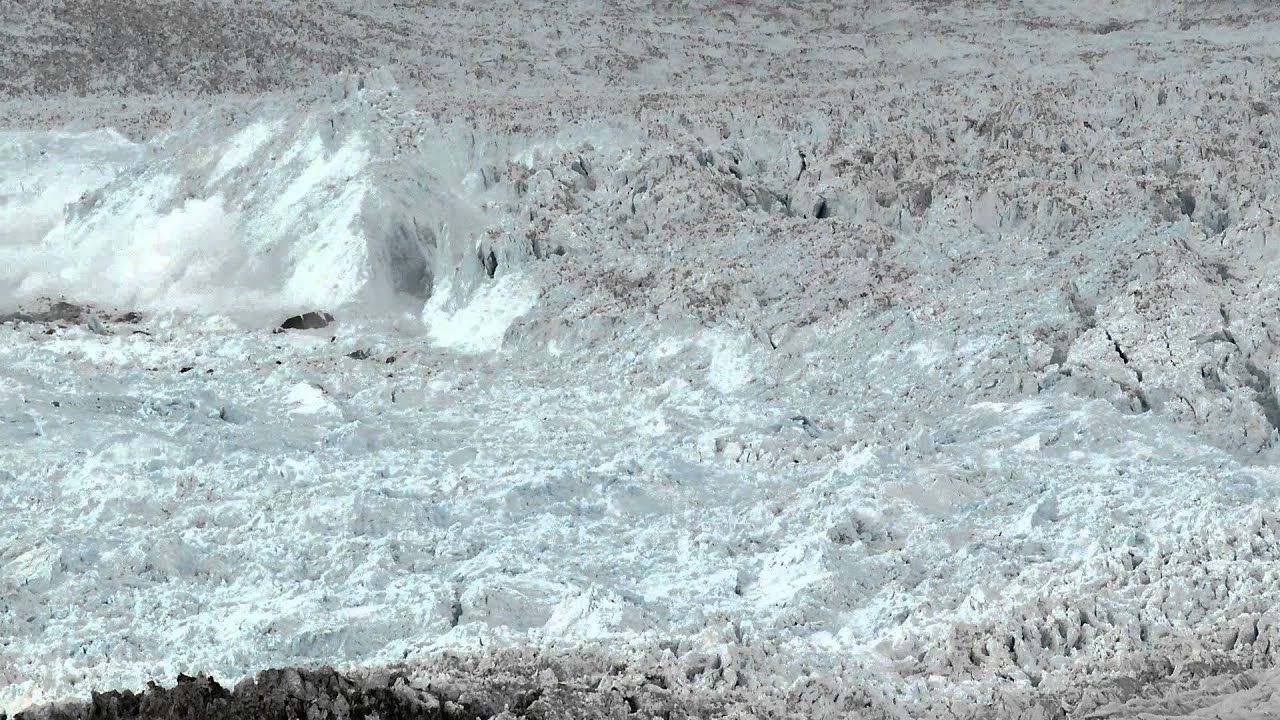
The unprecedented 75-minute collapse of a Lower Manhattan-sized ice shelf documents an accelerating retreat that saw the glacier lose more ice in a single decade than across the entire preceding century.
AI-assisted summary of "CHASING ICE" captures largest glacier calving ever filmed - OFFICIAL VIDEO — original source. Check the original for full context.
Source published:
Key ideas
- On May 28, 2008, the Extreme Ice Survey captured a historic 75-minute calving event at Greenland's Ilulissat Glacier, recognized as the largest ground-recorded calving event in history. (0:02)
- The glacier retreated about a mile across a three-mile-wide face, shedding an ice mass equivalent to 3,000 U.S. Capitol Buildings in less than an hour and a half. (0:02)
- Subsurface pressure during the collapse propelled massive ice chunks up to 600 feet out of the water, far exceeding the 300-to-400-foot height of the visible calving face. (0:02)
- Data reveals a massive acceleration in glacier retreat, with the Ilulissat Glacier receding 9 miles between 2000 and 2010—more in a single decade than the 8 miles it retreated during the entire 20th century. (2:46)
Detailed notes
## Background Published on YouTube in 2012 by the channel Exposure Labs, this video presents rare footage captured by the Extreme Ice Survey team led by James Balog. The content showcases what the 2016 Guinness Book of World Records officially designated as the largest and longest-lasting glacier calving event ever recorded by ground-based observers.
## TL;DR On May 28, 2008, filmmakers Adam LeWinter and Jeff Orlowski-Yang documented a massive, 75-minute calving event at Greenland's Ilulissat Glacier. The footage captures a three-mile-wide section of the glacier breaking apart, losing a volume of ice equivalent to 3,000 U.S. Capitol Buildings. The event highlights a staggering acceleration in glacier retreat, noting that the ice shelf lost more ground in the decade between 2000 and 2010 than it had throughout the entire preceding century.
## Atmosphere & style The atmosphere is one of profound awe mixed with existential dread as the filmmakers witness an event of overwhelming physical scale. The tone shifts from the casual, mundane nature of a field report to stunned disbelief, punctuated by the observers' frantic reactions as the landscape fractures. It creates a visceral sense of human insignificance, framed by an analogy that likens the collapsing glacier to the destruction of an entire city, ultimately leaving the viewer with a feeling of both miracle and horror.
## Bulletin - [00:02](https://www.youtube.com/watch?v=hC3VTgIPoGU&t=2s) On May 28, 2008, the Extreme Ice Survey captured a historic 75-minute calving event at Greenland's Ilulissat Glacier, recognized as the largest ground-recorded calving event in history. - [00:02](https://www.youtube.com/watch?v=hC3VTgIPoGU&t=2s) The glacier retreated about a mile across a three-mile-wide face, shedding an ice mass equivalent to 3,000 U.S. Capitol Buildings in less than an hour and a half. - [00:02](https://www.youtube.com/watch?v=hC3VTgIPoGU&t=2s) Subsurface pressure during the collapse propelled massive ice chunks up to 600 feet out of the water, far exceeding the 300-to-400-foot height of the visible calving face. - [02:46](https://www.youtube.com/watch?v=hC3VTgIPoGU&t=166s) Data reveals a massive acceleration in glacier retreat, with the Ilulissat Glacier receding 9 miles between 2000 and 2010—more in a single decade than the 8 miles it retreated during the entire 20th century.
## Key takeaways - [00:02](https://www.youtube.com/watch?v=hC3VTgIPoGU&t=2s) The Extreme Ice Survey team maintained a 24/7 vigil at Greenland's Ilulissat Glacier to document a major calving event. - [00:02](https://www.youtube.com/watch?v=hC3VTgIPoGU&t=2s) Observers Adam LeWinter and Jeff Orlowski-Yang captured the historic 75-minute calving event on May 28, 2008. - [00:02](https://www.youtube.com/watch?v=hC3VTgIPoGU&t=2s) The event is recognized by the Guinness Book of World Records as the largest glacier calving ever captured on film by ground-based observers. - [00:02](https://www.youtube.com/watch?v=hC3VTgIPoGU&t=2s) The calving event was unexpectedly triggered and caught on camera during a routine satellite phone check-in with director James Balog. - [00:02](https://www.youtube.com/watch?v=hC3VTgIPoGU&t=2s) The glacier's calving face spanned three miles wide, with visible ice heights standing 300 to 400 feet above the water line. - [00:02](https://www.youtube.com/watch?v=hC3VTgIPoGU&t=2s) Subsurface pressure forced massive chunks of ice to shoot 600 feet straight up out of the ocean before collapsing. - [00:02](https://www.youtube.com/watch?v=hC3VTgIPoGU&t=2s) The total height of the ice face approached 3,000 feet, with the vast majority of the glacier's mass submerged below the water's surface. - [02:46](https://www.youtube.com/watch?v=hC3VTgIPoGU&t=166s) In less than 90 minutes, the glacier lost a piece of ice equivalent in size to 3,000 U.S. Capitol Buildings. - [02:46](https://www.youtube.com/watch?v=hC3VTgIPoGU&t=166s) To convey the scale, observers compared the event to watching the entire lower tip of Manhattan break apart and collapse. - [02:46](https://www.youtube.com/watch?v=hC3VTgIPoGU&t=166s) The thickness of the calving ice shelf was estimated to be 2.5 to 3 times taller than the skyscrapers of New York City. - [02:46](https://www.youtube.com/watch?v=hC3VTgIPoGU&t=166s) James Balog described the event as a 'magical miraculous horrible scary thing,' representing both a miracle and a horror of nature. - [02:46](https://www.youtube.com/watch?v=hC3VTgIPoGU&t=166s) The Ilulissat Glacier's rate of retreat has accelerated dramatically in the 21st century. - [02:46](https://www.youtube.com/watch?v=hC3VTgIPoGU&t=166s) Between 1900 and 2000, the glacier retreated a total of 8 miles over the course of a full century. - [02:46](https://www.youtube.com/watch?v=hC3VTgIPoGU&t=166s) Between 2000 and 2010, the glacier retreated 9 miles, shedding more ice in a single decade than in the preceding 100 years.
## Detailed walkthrough ### [00:02](https://www.youtube.com/watch?v=hC3VTgIPoGU&t=2s) The Outbreak of the Massive Calving Event
During a routine satellite phone check-in from their camp overlooking the Ilulissat Glacier, an observer reports back to Extreme Ice Survey director James Balog that camp conditions are stable despite harsh weather. The observer tells him, “Jim, just nothing's happening, it's going well, we had some serious bouts of wind, but other than that, things are fairly well set up.” Mid-sentence, the landscape abruptly begins to fracture. Catching sight of the ice shifting, he urgently interrupts himself to alert his camp partner, Adam LeWinter: “It's starting, Adam, I think—hang on, it's starting. Let me call you back, okay, bye!”
Rushing to the cameras, the team begins filming the colossal rupture unfolding across the fjord. They watch in awe and disbelief as massive spires and towers collapse into the water, shouting out real-time observations of the catastrophic breakup: “Holy shit, look at that!” Huge pinnacles and bergs roll over, destabilizing adjacent fields of ice across a vast front. As the face shatters, giant slabs surge upward from below the waterline before crashing down into the churning sea. The observers note that while the visible calving face stands roughly 300 to 400 feet above the ocean surface, submerged pressure forces colossal chunks of ice to breach and rocket 600 feet straight up out of the water before toppling into the fjord.
- The survey crew witnessed and recorded what became the largest glacier calving event ever captured on tape by ground-based observers. - The exposed wall of ice along the calving face reached heights of 300 to 400 feet above the water line. - Subsurface ice masses were propelled upward out of the ocean to heights reaching 600 feet before collapsing.
[02:46](https://www.youtube.com/watch?v=hC3VTgIPoGU&t=166s) Human Scale and the Manhattan Comparison
To convey the sheer physical magnitude of the event, the observers search for an analogy grounded in human architecture. The only conceivable comparison is envisioning an entire metropolis collapsing at once: “The only way that you can really try to put it into scale with human references is if you imagine Manhattan, and all of a sudden all of those buildings just start to rumble and quake and peel off, and just fall over and fall over and roll around—this whole massive city just breaking apart in front of your eyes.” Perched on the adjacent mountainside, the filmmakers realized their own insignificance against the landscape, describing themselves as just two tiny dots watching an unprecedented spectacle of natural destruction.
Visual illustrations reinforce the comparison to New York City. The chunk of ice lost in this single event is comparable to the entire lower tip of Manhattan breaking away, with the crucial difference that the glacier’s ice shelf is two-and-a-half to three times the height of the skyscrapers themselves. Reflecting on the profound psychological and environmental weight of the footage, James Balog observes: “That's a magical miraculous horrible scary thing. I don't know that anybody's really seeing the miracle and horror of that.” This dramatic collapse underscores an unprecedented acceleration in glacier retreat: between 1900 and 2000, the glacier receded 8 miles over the course of a century; between 2000 and 2010, it retreated 9 miles, shedding more ice in a single decade than it had in the preceding 100 years.
```mermaid flowchart TD accTitle: Ilulissat Glacier Retreat Timeline accDescr: Comparison of Ilulissat Glacier retreat between the 20th century and the first decade of the 21st century.
subgraph Century["1900–2000 (100 Years)"] A["Total retreat: 8 miles"] end
subgraph Decade["2000–2010 (10 Years)"] B["Total retreat: 9 miles"] end
Century -.->|"Rate of retreat accelerates dramatically"| Decade ```
- **Scale of Disintegration:** Equivalent to the entire lower tip of Manhattan shearing off, with ice thickness measuring 2.5 to 3 times taller than the skyline's buildings. - **Century-Long Retreat (1900–2000):** The glacier retreated 8 miles across 100 years. - **Decadal Acceleration (2000–2010):** The glacier retreated 9 miles in just 10 years, surpassing a century's worth of retreat in a single decade.
## Mentioned Chasing Ice, Extreme Ice Survey, James Balog, Ilulissat Glacier, Adam LeWinter, Jeff Orlowski-Yang, Greenland, Manhattan, New York City, U.S. Capitol Building, Guinness Book of World Records, Sundance Film Festival, Emmy Award, J. Ralph, Scarlett Johansson, Joshua Bell
## Video description This rare footage has gone on record as the longest-lasting and largest glacier calving event ever captured on film by ground-based observers by the 2016 Guinness Book of World Records.
In May 2008, the Extreme Ice Survey, led by James Balog, maintained a 24/7 cinematic vigil at the Ilulissat Glacier on Greenland’s west coast, hoping to document a major calving event.
On May 28, 2008, Adam LeWinter and Jeff Orlowski-Yang recorded a 75-minute calving moment—the largest glacier calving event ever captured on film by ground-based observers. The glacier retreated about a mile across a calving face three miles wide, with ice heights approaching 3,000 feet, roughly 300–400 feet above water and the remainder below the surface. In less than an hour and a half, the glacier lost a piece of ice equivalent in size to 3,000 U.S. Capitol Buildings.
Footage produced by James Balog (http://jamesbalog.com) and the Extreme Ice Survey (http://extremeicesurvey.org)
Chasing Ice won the award for Excellence in Cinematography at the 2012 Sundance Film Festival and a 2013 Emmy Award for Outstanding Nature Programming. It has won over 40 awards at festivals worldwide, and was also nominated for an Academy Award for Best Original Song, "Before My Time" by J. Ralph featuring Scarlett Johansson and Joshua Bell.
Listen to the song: http://www.youtube.com/watch?v=qB4UEQzUmWc And watch the trailer: http://www.youtube.com/watch?v=eIZTMVNBjc4
[Source](https://www.youtube.com/watch?v=hC3VTgIPoGU)