Apple and GM Limit Product Lifespans to Force Repeat Purchases
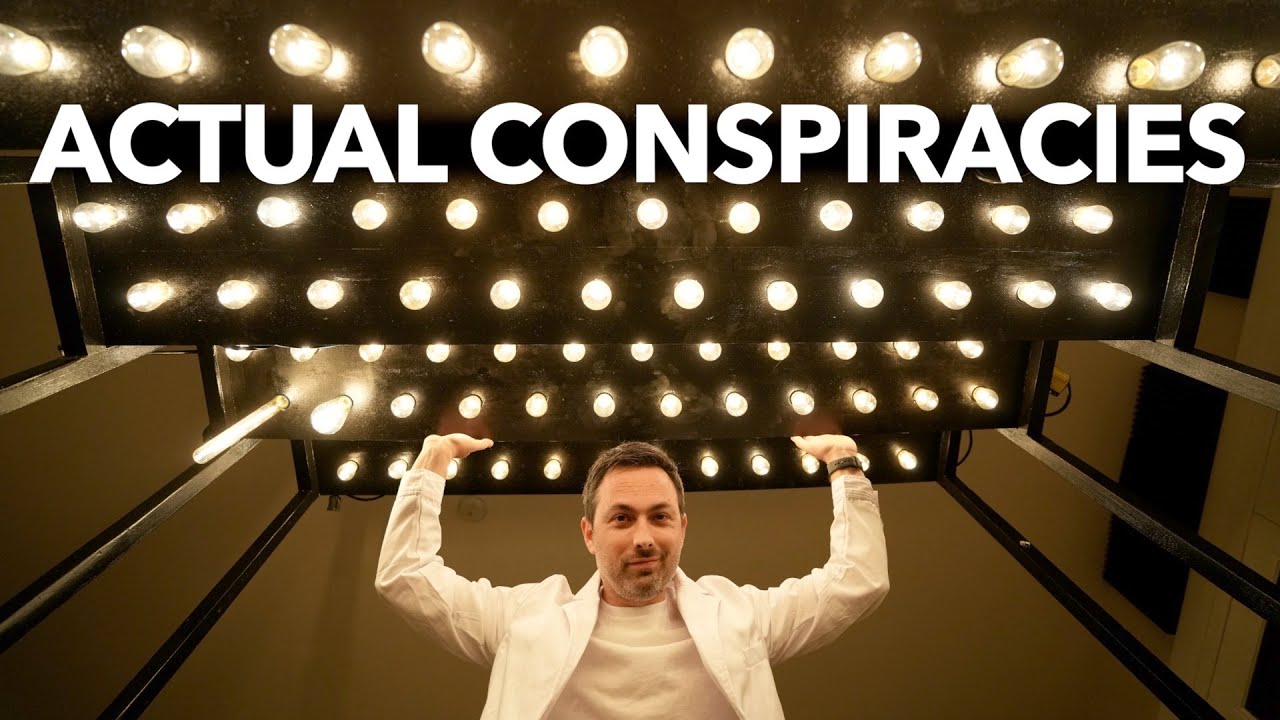
Veritasium
From the Phoebus Cartel to modern smartphones, manufacturers intentionally shorten product lifespans and manipulate design trends to guarantee continuous consumer demand.
AI-assisted summary of This is why we can't have nice things — original source. Check the original for full context.
Source published:
Key ideas
- The 1924 Phoebus Cartel systematically forced lightbulb lifespans down from over 2,000 hours to exactly 1,000 hours, imposing heavy financial fines on manufacturers who produced longer-lasting bulbs. (3:01)
- During the Great Depression, planned obsolescence was advocated as an economic salvation measure, with proposals urging governments to legally destroy expired goods to sustain manufacturing jobs. (8:42)
- General Motors pioneered dynamic obsolescence in the 1920s through annual cosmetic and color changes, reducing average American car ownership lifespans from five years in 1934 to two years by 1955. (12:08)
- Modern consumer electronics rely on sealed hardware and psychological styling cycles to drive repeat purchases, though modern solid-state LEDs demonstrate that true technological breakthroughs can overcome artificial durability limits. (14:07)
Detailed notes
## Background Published on March 26, 2021, by Derek Muller on the YouTube channel Veritasium, this video examines why everyday goods such as light bulbs, printers, and smartphones are not built to last. According to the page description, the piece investigates planned obsolescence and why consumer products seem intentionally degraded rather than made better.
## TL;DR Starting at California's Centennial Light—an incandescent bulb that has burned for over 120 years—Derek Muller unpacks how the Phoebus Cartel secretly conspired in 1924 to cut bulb lifespans down to 1,000 hours to protect recurring sales. The narrative traces this deliberate engineering sabotage from historical cartel fines to modern consumer frustrations, including sealed iPod batteries, throttled iPhone performance, and nylon stockings engineered to ladder. Muller examines how planned obsolescence evolved from an economic recovery proposal during the Great Depression into General Motors' psychological model of annual cosmetic restyling, before concluding that solid-state LEDs finally broke the cycle by delivering genuinely long-lasting, efficient illumination.
## Atmosphere & style The presentation blends an investigative documentary feel with Muller's trademark curiosity and analytical candor, beginning with a personal admission of skepticism that gives way to historical proof. It carries an undercurrent of wry consumer disillusionment, using archival film clips, patent records, and corporate quotes to expose deliberate industrial sabotage. The pacing moves smoothly from mechanical physics to corporate history and modern product design, leaving the viewer feeling enlightened, mildly indignant about commercial manipulation, and appreciative of genuine technological breakthroughs like the LED.
## Bulletin - [03:01](https://www.youtube.com/watch?v=j5v8D-alAKE&t=181s) The 1924 Phoebus Cartel systematically forced lightbulb lifespans down from over 2,000 hours to exactly 1,000 hours, imposing heavy financial fines on manufacturers who produced longer-lasting bulbs. - [08:42](https://www.youtube.com/watch?v=j5v8D-alAKE&t=522s) During the Great Depression, planned obsolescence was advocated as an economic salvation measure, with proposals urging governments to legally destroy expired goods to sustain manufacturing jobs. - [12:08](https://www.youtube.com/watch?v=j5v8D-alAKE&t=728s) General Motors pioneered dynamic obsolescence in the 1920s through annual cosmetic and color changes, reducing average American car ownership lifespans from five years in 1934 to two years by 1955. - [14:07](https://www.youtube.com/watch?v=j5v8D-alAKE&t=847s) Modern consumer electronics rely on sealed hardware and psychological styling cycles to drive repeat purchases, though modern solid-state LEDs demonstrate that true technological breakthroughs can overcome artificial durability limits.
## Key takeaways - [00:02](https://www.youtube.com/watch?v=j5v8D-alAKE&t=2s) The Centennial Light in California has burned continuously for over 120 years and more than a million hours, disproving the idea that long-lasting incandescent bulbs were purely mythical. - [01:39](https://www.youtube.com/watch?v=j5v8D-alAKE&t=99s) Standard incandescent bulbs operate inefficiently as heat radiators, converting less than 5% of electrical energy into visible light while generating temperatures up to 2,800 Kelvin. - [02:38](https://www.youtube.com/watch?v=j5v8D-alAKE&t=158s) By the early 1920s, tungsten filament improvements enabled standard commercial bulbs to last 2,000 to 2,500 hours, threatening lamp manufacturers with falling replacement demand. - [03:01](https://www.youtube.com/watch?v=j5v8D-alAKE&t=181s) In December 1924, major international lighting manufacturers met in Geneva to establish the Phoebus Cartel, standardizing bulb lifespans to a mandatory maximum of 1,000 hours. - [03:45](https://www.youtube.com/watch?v=j5v8D-alAKE&t=225s) The Phoebus Cartel enforced compliance through centralized test facilities, fining members up to 200 Swiss Francs per 1,000 units if their bulbs exceeded 3,000 hours. - [04:17](https://www.youtube.com/watch?v=j5v8D-alAKE&t=257s) Cartel-mandated engineering sabotage successfully reduced average bulb lifespans to 1,205 hours by 1934, resulting in a 25% sales spike between 1926 and 1930. - [07:07](https://www.youtube.com/watch?v=j5v8D-alAKE&t=427s) Early twentieth-century cartel practices laid the foundation for modern hardware obsolescence, exemplified by Apple's non-replaceable iPod batteries and subsequent iPhone processor throttling. - [08:42](https://www.youtube.com/watch?v=j5v8D-alAKE&t=522s) Bernard London's 1932 pamphlet proposed government-mandated expiration dates and destruction for manufactured goods to fight Great Depression unemployment. - [09:45](https://www.youtube.com/watch?v=j5v8D-alAKE&t=585s) The 1951 film 'The Man in the White Suit' reflected societal fears that truly indestructible consumer goods would destroy industrial jobs and entire manufacturing sectors. - [10:55](https://www.youtube.com/watch?v=j5v8D-alAKE&t=655s) Manufacturers deliberately degraded early nylon stockings after their extreme initial durability threatened repeat retail purchases. - [11:26](https://www.youtube.com/watch?v=j5v8D-alAKE&t=686s) Right-to-repair legislation across the US and EU attempts to counter artificial hardware obsolescence by requiring accessible parts and diagnostic manuals for independent repair. - [12:08](https://www.youtube.com/watch?v=j5v8D-alAKE&t=728s) Henry Ford's durable, unchanging Model T saturated the automobile market by 1920, leaving over 55% of American households with cars and stalling vehicle sales. - [13:02](https://www.youtube.com/watch?v=j5v8D-alAKE&t=782s) DuPont and General Motors countered market saturation by introducing yearly styling and paint updates, creating 'dynamic obsolescence' to make older vehicles appear socially out-of-date. - [14:07](https://www.youtube.com/watch?v=j5v8D-alAKE&t=847s) Modern tech companies emulate fashion industry cycles by oscillating between aesthetic form factors to trigger psychological obsolescence rather than substantive utility gains. - [15:13](https://www.youtube.com/watch?v=j5v8D-alAKE&t=913s) Solid-state LED lighting represents genuine technological obsolescence, reducing power consumption by 90% and outlasting incandescent bulbs by up to 50 times.
## Detailed walkthrough ### [00:02](https://www.youtube.com/watch?v=j5v8D-alAKE&t=2s) The Longest-Burning Bulb in the World
Standing outside Livermore Fire Station No. 6 in California, Derek Muller introduces a classic consumer myth that turned out to have real historical truth behind it. Inside the station hangs the Centennial Light, the longest continuously burning incandescent light bulb in the world. Manufactured by hand around 1901, soon after commercial electric lighting emerged, it has been running almost non-stop for over 120 years, clocking more than a million hours of operation. It lacks a conventional light switch and relies on a dedicated backup battery and generator so that it never shuts off.
```mermaid flowchart TD accTitle: Centennial Light Operational Factors accDescr: Factors that contributed to the Centennial Light lasting over 120 years. subgraph Design["Bulb Attributes"] A["Handmade pre-cartel design"] B["Thick carbon filament"] end subgraph Conditions["Operating Environment"] C["Low power draw: 4 to 5 Watts"] D["Always left on: no thermal cycling"] end subgraph Outcome["Result"] E["1,000,000+ hours of continuous operation"] end Design --> Outcome Conditions --> Outcome ```
For years, Muller had dismissed rumors of early, everlasting light bulbs as an absurd urban legend. A friend had insisted someone invented an eternal bulb decades ago but was suppressed because an everlasting light bulb makes for an unviable business model with zero repeat customers. Muller initially reasoned that free market incentives would drive any company with an everlasting bulb to undercut competitors, command exorbitant premium prices, and reap immense profits. Reflecting on his past skepticism, Muller admits: “I just couldn't imagine that we had better light bulbs in the past and then intentionally made them worse, but it turns out I was wrong.”
- **Location:** Livermore Fire Station No. 6, California - **Service run:** Continuous operation since 1901 (over 120 years and 1,000,000+ hours) - **Power setup:** No wall switch, wired to a backup battery and generator
---
[01:39](https://www.youtube.com/watch?v=j5v8D-alAKE&t=99s) The Physics of Incandescence and the Race for Longevity
Making a viable electric light was an engineering ordeal. Standard incandescent bulbs work by passing an electrical current through a filament until it gets hot enough to glow. Thermodynamically, they are terrible at producing illumination: less than 5% of the electrical energy is converted into visible light, while the remaining 95% is emitted as radiant heat. Consequently, these devices function far more like heat lamps that generate light purely as an incidental byproduct. Operating temperatures reach up to 2,800 Kelvin—roughly half the temperature of the surface of the sun—hot enough that most engineering materials will instantly melt or spontaneously combust in the presence of air.
To overcome this, Warren De la Rue conceived placing the filament inside an evacuated vacuum glass envelope in the 1840s to strip away reactive oxygen. Thomas Edison built on this in 1879 with a carbonized cotton thread filament that managed to burn for 14 hours. Other inventors experimented with platinum and various carbonized organic fibers, gradually pushing durability upward. The critical breakthrough arrived with tungsten filaments, whose exceptionally high melting point enabled greater stability and brightness. By the early 1920s, ordinary commercial bulb lifespans reached roughly 2,000 hours, with premium models running upwards of 2,500 hours. Yet right at the moment when materials science was poised to deliver even longer-lasting bulbs, the engineering direction reversed.
- **Efficiency:** Less than 5% light, over 95% waste heat - **Filament temperature:** Up to 2,800 K (approx. half the surface temperature of the sun) - **1840s:** Warren De la Rue develops the vacuum-bulb concept - **1879:** Thomas Edison creates a 14-hour carbonized cotton filament - **Early 1920s:** Tungsten bulbs routinely achieve lifespans between 2,000 and 2,500 hours
---
[03:01](https://www.youtube.com/watch?v=j5v8D-alAKE&t=181s) The Phoebus Cartel and the 1,000-Hour Limit
Just before Christmas in December 1924, senior executives from the world's dominant lighting manufacturers gathered for a secret meeting in Geneva, Switzerland. The attendees included delegates from Philips (the Netherlands), Osram (Germany), Tokyo Electric (Japan), International General Electric (United States), and Associated Electrical Industries (United Kingdom). Together, they established the Phoebus Cartel, christened after Phoebus, the Greek god of light. By the 1920s, consolidation had swallowed hundreds of smaller lighting workshops, leaving these giant corporations dominant in their respective geographical spheres. However, the companies faced an existential threat: their own durable engineering. In 1923, Osram had shipped 63 million bulbs, but in 1924 sales cratered to 28 million because existing bulbs simply did not burn out fast enough.
```mermaid flowchart LR accTitle: Phoebus Cartel Enforcement Loop accDescr: Process of testing bulbs and assessing fines under the Phoebus Cartel. subgraph Testing["Compliance Testing"] A["Cartel member factories"] -->|"Submit samples"| B["Standard test stands"] B -->|"Evaluate burn time"| C{"Lifespan check"} end subgraph Penalties["Enforcement"] C -->|"> 1,000 hours"| D["Progressive fines"] C -->|"> 3,000 hours"| E["Fine: 200 Swiss Francs per 1,000 bulbs"] end ```
To rescue falling sales volumes, the cartel members signed an agreement to slash standard incandescent lifespans down to exactly 1,000 hours, effectively cutting life expectancy in half. To ensure no member cheated by quietly producing longer-lasting, superior products to win market share, the cartel enforced mandatory compliance testing. Member factories had to mail production samples to a central testing facility where rows of bulbs were burned on massive test stands. If a factory’s bulbs significantly exceeded 1,000 hours, the company was penalized on a sliding scale. When lifespans passed 3,000 hours, the cartel slapped the offending manufacturer with a fine of 200 Swiss Francs for every 1,000 units sold.
Cartel engineers were tasked with actively degrading bulb durability: modifying filament geometries, employing thinner leads, and adopting materials prone to quicker failure. The sabotage succeeded. Between 1926 and 1930, cartel members saw aggregate sales surge by 25%, and by 1934 the average lifespan of their light bulbs was pulled down to 1,205 hours. Manufacturing costs dropped, yet retail prices remained stationary, widening corporate profit margins. Publicly, the cartel disguised the conspiracy under the guise of technical standardization and energy efficiency—creating the standardized screw thread (Edison base) still found in light sockets worldwide. Derek Muller cuts through their justification: “But all evidence points to the cartels being motivated by profits and increased sales, not by what was best for consumers.”
The Centennial Light avoided this artificial degradation because it was manufactured decades before the 1924 cartel was formed. Furthermore, it operates under very gentle electrical stress: drawing only 4 to 5 watts as a firehouse nightlight to stop firefighters from tripping in the dark, and running continuously, which shields it from the damaging thermal shock of repeated cooling, warming, expansion, and contraction. The Phoebus Cartel had planned to govern the lighting industry until at least 1955, but external competition, internal cheating, and ultimately the disruptions of World War II tore the cartel apart in the late 1930s.
- **Founding:** Geneva, Switzerland, December 1924 - **Members:** Philips, Osram, Tokyo Electric, International General Electric, Associated Electrical Industries - **Mandate:** Cut bulb lifespan to 1,000 hours - **Penalties:** Up to 200 Swiss Francs per 1,000 units for bulbs lasting >3,000 hours - **Outcome:** Sales jumped 25% within four years; lifespans dropped to 1,205 hours by 1934 - **Cartel demise:** Fractured in the late 1930s and terminated by World War II
---
[07:07](https://www.youtube.com/watch?v=j5v8D-alAKE&t=427s) Modern Planned Obsolescence: From iPods to iPhones
Though the Phoebus Cartel dissolved, its commercial blueprint was institutionalized across twentieth- and twenty-first-century consumer electronics as planned obsolescence. Derek Muller points to Casey Neistat’s breakthrough viral stunt in 2003 as a landmark moment that brought modern planned obsolescence into public awareness. Neistat called Apple customer support after the battery in his 18-month-old first-generation iPod died. Because Apple had sealed the battery inside the device and offered no official replacement parts, customer service representative Ryan informed him: “18 months, okay, it's past it year, which basically means there'll be a charge of $255 plus a mailing fee to send it to us to refurbish, to correct it. But at that price, you might as well go get a new one.” Neistat stenciled protest messages across New York City billboards, sparking widespread outrage and a class-action lawsuit that Apple settled out of court.
The practice did not stop there. In 2017, Apple introduced an iOS software update that caused older iPhones to throttle processor clock speeds, resulting in sluggish app launches and unexpected system shutdowns. Apple defended the throttling as an engineering measure to prevent aging lithium-ion batteries from triggering sudden power cutoffs, arguing it extended overall device longevity. However, critics pointed out that throttling would be completely unnecessary if users were given access to inexpensive, user-replaceable batteries. A series of legal actions culminating in 2020 resulted in Apple paying hundreds of millions of dollars in regulatory fines and class-action settlements—amounts that are nonetheless eclipsed by the immense recurring hardware revenues generated by shortening device life cycles.
- **2003:** Casey Neistat’s viral campaign against the non-replaceable iPod battery ($255 repair quote on an out-of-warranty device) - **2017:** Apple rolls out iOS power-management update that throttles CPU speeds on older iPhones - **2020:** Apple concludes multi-hundred-million-dollar legal settlements regarding device throttling
---
[08:42](https://www.youtube.com/watch?v=j5v8D-alAKE&t=522s) Obsolescence as Economic Salvation: Bernard London and "The Man in the White Suit"
```mermaid flowchart TD accTitle: Concept of Mandatory Planned Obsolescence accDescr: Flow of Bernard London's proposed government-enforced obsolescence cycle. A["Government sets mandatory product lifespan"] --> B["Consumer purchases and uses good within legal term"] B --> C["Allotted expiration date reached"] C --> D["Product declared 'legally dead'"] D --> E["Product seized and destroyed by government agency"] E --> F["Factories manufacture replacements, creating continuous employment"] ```
During the depth of the Great Depression in the 1930s, when approximately one out of every four American workers was unemployed, planned obsolescence was framed not as corporate greed, but as an economic duty. Real estate broker Bernard London published a 1932 pamphlet titled *Ending the Depression Through Planned Obsolescence*, arguing that the only way to restart stagnant industrial production was to legally forbid products from lasting too long. London proposed:
> “I would have the government assign a lease of life to shoes, and homes, and machines when they are first created and they would be sold and used within the term of their existence, definitely known by the consumer. After the allotted time had expired, these things would be legally dead and would be controlled by the duly appointed governmental agency and destroyed if there is widespread unemployment.”
The pervasive societal dread that technological efficiency and overly durable products would eliminate human jobs was captured in the Oscar-nominated 1951 British satirical film *The Man in the White Suit*. In the movie, an idealistic laboratory scientist develops an indestructible polymer thread that resists all dirt, tearing, and mechanical wear:
> “I think I've succeeded in the copolymerization of amino acid residues and carbohydrate molecules, both containing ionic groups. It's really perfectly simple.”
The fabric cannot even absorb dye, forcing the inventor to tailor it into a bright, luminous white suit. While celebrated initially, his scientific triumph turns into an industrial nightmare. Factory owners realize demand for textiles will vanish forever once every citizen owns a single suit, while textile workers realize perpetual clothing will eliminate their livelihoods. An elderly washerwoman confronts the scientist, asking: “Why can't you scientists leave things alone? What about my better washing when there's no washing to do?” In the film's climax, management and labor join forces in a mob to hunt down the scientist and destroy both him and his eternal fabric—a narrative, Muller notes, that drew inspiration from actual historical events.
- **1930s context:** Approximately 25% unemployment rate during the Great Depression - **1932:** Bernard London publishes *Ending the Depression Through Planned Obsolescence* proposing mandatory, legally enforced destruction dates for manufactured goods - **1951 film:** *The Man in the White Suit* (nominated for Best Screenplay Academy Award), satirizing industrial panic over an indestructible, unstainable fiber
[10:55](https://www.youtube.com/watch?v=j5v8D-alAKE&t=655s) Fragile Nylon, Right to Repair, and Psychological Obsolescence
When the synthetic fiber nylon emerged in the 1940s to replace silk in stockings, it proved astonishingly tough. The product was so durable that it triggered an immediate consumer sensation, leading to literal riots as women scrambled to buy pairs. However, manufacturers soon realized they had engineered something that lasted far too long for a sustainable repeat-purchase business. Taking inspiration directly from the playbook of the Phoebus Cartel, the companies ordered their scientists and engineers to intentionally weaken the material and degrade its lifespan, ensuring that stockings would run and force women back to store counters.
In recent years, consumers have mounted a legislative counter-offensive against such deliberate engineering failures. Across the European Union and in more than 25 American states, lawmakers have introduced right-to-repair bills aimed at forcing manufacturers to design accessible hardware. These laws would require companies to supply repair manuals, diagnostic tools, and authentic replacement components to the public, allowing consumers to swap out worn batteries or cracked screens at independent third-party shops without voiding original warranties. Yet even if right-to-repair statutes succeed everywhere, Derek Muller warns that artificial obsolescence will not disappear: “Sadly, no, because there is one last thing manufacturers can use to make their products obsolete, which is you.”
- In the 1940s, nylon stockings were an overnight hit because of their durability, sparking riots among eager shoppers before manufacturers intentionally compromised the fiber. - Right-to-repair proposals in the EU and over 25 US states seek to mandate parts availability and third-party repair access without penalty to warranties.
[12:08](https://www.youtube.com/watch?v=j5v8D-alAKE&t=728s) Henry Ford, General Motors, and the Invention of Dynamic Obsolescence
When Henry Ford introduced the Model T in 1908, he treated it as an unpretentious, utilitarian workhorse designed to endure indefinitely without unnecessary cosmetic meddling. Ford championed the philosophy of long-lasting, uniform production, declaring in 1922: “We want the man who buys one of our cars never to have to buy another, we never make an improvement that renders any previous model obsolete.” But that durability created an inevitable business bottleneck. By 1920, roughly 55% of American households owned an automobile, essentially saturating the pool of buyers who could afford one. An economic downturn that same year compounded the problem, sending sales plunging across both Ford and its primary competitor, General Motors.
```mermaid flowchart TD accTitle: The Shift from Utilitarian Manufacturing to Dynamic Obsolescence accDescr: Diagram tracing Ford's durable Model T market saturation to DuPont and GM's invention of yearly cosmetic changes.
subgraph Saturation ["Market Saturation (1908–1920)"] A["Ford Model T Launched (1908)"] --> B["Built to last & black only"] B --> C["55% of US families own a car by 1920"] C --> D["Market saturates; sales plummet"] end
subgraph DynamicObsolescence ["Dynamic Obsolescence (1921–1955)"] E["DuPont acquires GM stake (1921)"] --> F["Annual color & styling revisions (1924)"] F --> G["Old models look visibly outdated"] G --> H["Ownership cycle shrinks from 5 years to 2"] end
D --> E ```
Change arrived in 1921 when the chemical and paint manufacturer DuPont acquired a controlling stake in General Motors and began experimenting with colorful automotive finishes. Ford had famously remarked that customers could have any color they liked as long as it was black; GM broke that mold by releasing multi-colored vehicles in 1924. GM quickly turned this novelty into an institutional strategy by introducing new exterior colors and minor styling tweaks every single model year. The goal was twofold: make the utilitarian Model T look antique by comparison, and deliberately make older GM cars look out of fashion so owners felt compelled to trade up.
Harley Earl, GM’s influential head of design, was remarkably blunt about this psychological strategy, calling it dynamic obsolescence. Looking back on the shift, Earl said: “Our big job is to hasten obsolescence. In 1934, the average car ownership span was five years. Now, which was 1955, it is two years. When it is one year, we will have a perfect score.” By orchestrating continuous aesthetic dissatisfaction, General Motors rose to become the most valuable corporation on the planet, capturing half of all annual vehicle purchases in the United States.
- Henry Ford's Model T was intended as an everlasting, unchanging machine, but high adoption saturated the market by 1920. - In 1921, DuPont took control of GM and introduced automotive paint colors, rolling out colored production lines in 1924. - Harley Earl's design strategy successfully shrank the average American car ownership span from five years in 1934 to two years by 1955.
[14:07](https://www.youtube.com/watch?v=j5v8D-alAKE&t=847s) Apple, Fashion Cycles, and Genuine Technological Progress (The LED)
Today, modern tech titans rely heavily on GM's playbook. Apple, the world’s most valuable enterprise, continually recycles the same formula of cosmetic reinvention: rolling out new case colors, minor casing modifications, and incremental tech upgrades every autumn. This approach borrows wholesale from the fashion industry, where functional innovation is scarce and designers must fabricate artificial urgency by generating seasonal trends that expire within months. Once designers exhaust their cosmetic variations, they inevitably cycle back to styles from decades prior.
The iPhone exhibits this identical circularity: early generations featured curved borders, followed by sharp squared-off edges, which gave way to rounded perimeters once more, before returning to flat, squared edges. Derek highlights the psychological trick driving this treadmill: “I think the point is that with design and styling, there is no best, there's only different, which is apparently enough to remind us that we don't have the latest and greatest, and so we have to rush out and keep buying.”
Amid these manufactured cycles, genuine technological obsolescence stands out as the only kind worth championing, and lighting provides the ultimate demonstration. For nearly a century, incandescent technology stagnated with minimal improvement. Over the past two decades, however, lighting leaped forward to compact fluorescents and subsequently to solid-state LEDs. Modern LED bulbs consume just one-tenth the power of their incandescent ancestors while lasting 10 to 50 times longer. Because an LED bulb can outlive a typical family's tenure in a home, consumer technology has finally delivered what is practically an everlasting light bulb.
- Apple follows automotive and fashion playbooks by pairing incremental performance changes with annual aesthetic updates and color shifts. - The iPhone has repeatedly rotated between squared-off and rounded edge designs across different product generations. - LEDs consume 90% less energy than traditional incandescent bulbs and operate between 10 and 50 times longer, making bulb replacement a rarity.
[16:05](https://www.youtube.com/watch?v=j5v8D-alAKE&t=965s) Sponsor: Overcoming Geo-Restrictions with NordVPN
Closing the episode, Derek Muller introduces the video's sponsor, NordVPN, drawing a comparison between artificial market barriers and outdated television licensing. Derek mentions his appearance on the British panel show *QI*, noting that while the program streams on Netflix, licensing agreements limit viewing strictly to United Kingdom IP addresses. He argues that regional broadcasting borders represent an antiquated distribution model that clashes with the seamless, borderless reality of the internet.
NordVPN allows users to bypass these geographic roadblocks by routing their web traffic through UK-based servers or locations across the globe. Alongside access to international streaming libraries, the service provides security tools such as double IP masking and maintains a strict no-logs policy, preventing internet service providers and data brokers from tracking, harvesting, or selling user activity. Viewers can claim a discounted two-year subscription with an additional month free using the code `VERITASIUM` at nordvpn.com/veritasium, backed by a 30-day money-back guarantee.
## Notable quotes > [12:08](https://www.youtube.com/watch?v=j5v8D-alAKE&t=728s) We want the man who buys one of our cars never to have to buy another, we never make an improvement that renders any previous model obsolete. — Henry Ford
> [14:07](https://www.youtube.com/watch?v=j5v8D-alAKE&t=847s) I think the point is that with design and styling, there is no best, there's only different, which is apparently enough to remind us that we don't have the latest and greatest, and so we have to rush out and keep buying. — Derek Muller
> [12:08](https://www.youtube.com/watch?v=j5v8D-alAKE&t=728s) Our big job is to hasten obsolescence. In 1934, the average car ownership span was five years. Now, which was 1955, it is two years. When it is one year, we will have a perfect score. — Harley Earl
## Mentioned Apple, Associated Electrical Industries, Bernard London, Casey Neistat, Centennial Light, Derek Muller, DuPont, General Motors, Harley Earl, Henry Ford, International General Electric, Model T, NordVPN, Osram, Petr Lebedev, Philips, Phoebus Cartel, QI, The Man in the White Suit, Thomas Edison, Tokyo Electric, Warren De la Rue
## Video description This video is about stuff: light bulbs, printers, phones and why they aren't better. Go to https://NordVPN.com/veritasium and use code VERITASIUM to get a 2-year plan plus 1 additional month with a huge discount. It’s risk free with Nord’s 30 day money-back guarantee!
References: The Man in the White Suit — https://ve42.co/Suit
London, B. (1932). Ending the depression through planned obsolescence. — https://ve42.co/London32
Slade, G. (2009). Made to break: Technology and obsolescence in America. Harvard University Press — https://ve42.co/madetobreak
Krajewski, M. (2014). The great lightbulb conspiracy. IEEE spectrum, 51(10), 56-61. — https://ve42.co/Phoebus
Planet Money, The Phoebus Cartel - https://ve42.co/PMobs
The Light Bulb Conspiracy - https://youtu.be/e9xmn228HM0
Special thanks to Patreon supporters: Mac Malkawi, Oleksii Leonov, Michael Schneider, Jim Osmun, Tyson McDowell, Ludovic Robillard, jim buckmaster, fanime96, Juan Benet, Ruslan Khroma, Robert Blum, Richard Sundvall, Lee Redden, Vincent, Lyvann Ferrusca, Alfred Wallace, Arjun Chakroborty, Joar Wandborg, Clayton Greenwell, Pindex, Michael Krugman, Cy 'kkm' K'Nelson, Sam Lutfi, Ron Neal
Written by Derek Muller and Petr Lebedev Animation by Ivy Tello Filmed by Derek Muller and Raquel Nuno Edited by Derek Muller Video supplied by Getty Images
Music by Jonny Hyman and from https://epidemicsound.com"Aquatic Planet", "Rhythm of Dreams", "Tread Lightly", "Unexpected Visitors", "Curved Mirrors" "Drunken Lullaby" "Fluorescent Lights"
Thumbnail by Raquel Nuno and Karri Denise
[Source](https://www.youtube.com/watch?v=j5v8D-alAKE)