Flying Dream
Gary Garrett
AI-assisted summary of Flying Dream — original source. Check the original for full context.
Source published:
Key ideas
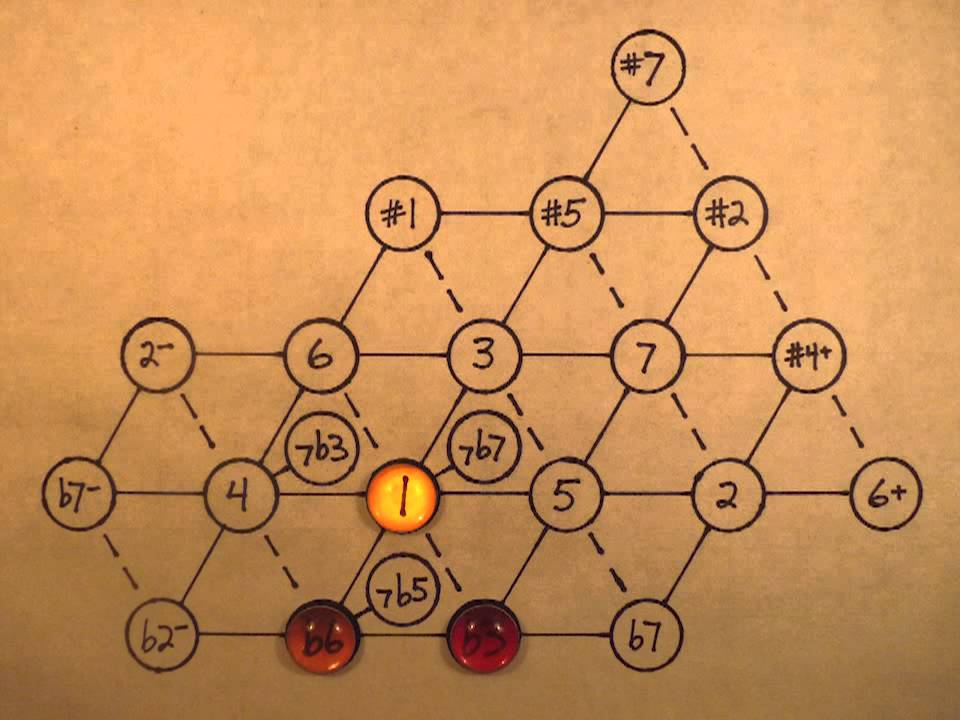
- Gary Garrett's stop-motion animation for 'Flying Dream' maps musical notes onto a harmonic lattice based on W.A. Mathieu's book 'Harmonic Experience', using an east-west axis for fifths and a northeast-southwest axis for major thirds.
- The visual representation utilizes a specific color code to trace musical layers: red indicates bass, yellow represents melody, and orange denotes harmony.
- Narratively, the song contrasts the weightlessness of dreaming with the grounded constraints of waking life, treating flight as an intrinsic human ability forgotten upon waking. (1:48)
Detailed notes
## Background Published on YouTube by Gary Garrett on October 28, 2012, this video features a stop-motion animation set to his original song, "Flying Dream." According to the video description, the visual arrangement maps the song's musical notes onto a harmonic lattice inspired by W.A. Mathieu's book *Harmonic Experience*, using colored nodes to represent bass, melody, and harmony across intervals of fifths and major thirds.
## TL;DR The song opens on a quiet nighttime scene where Gary Garrett warms milk and honey, gazes at the stars, and expresses a deep longing to experience flight in his dreams. As sleep takes over, he enters an airborne dreamscape, effortlessly gliding down the street and maneuvering past power lines and mountains before gently drifting back down at dawn. Awakening to the smell of bacon and music on the radio, he laments becoming a "prisoner of gravity" yet holds onto the conviction that flight is an innate ability he merely needs to remember. Drawing comfort from the hope of flying again, he finds the strength to face the waking day until night returns.
## Atmosphere & style The piece carries an intimate, contemplative, and gently whimsical mood that shifts fluidly between grounded domesticity and ethereal escapism. Lyrically and emotionally, it moves from a cozy, nocturnal solitude into the weightless exhilaration of flight, followed by the bittersweet return of morning gravity. Listening feels comforting and bittersweet, evoking a tender sense of childlike wonder, yearning, and quiet resilience against the mundane pull of daily life.
## Bulletin - Gary Garrett's stop-motion animation for 'Flying Dream' maps musical notes onto a harmonic lattice based on W.A. Mathieu's book 'Harmonic Experience', using an east-west axis for fifths and a northeast-southwest axis for major thirds. - The visual representation utilizes a specific color code to trace musical layers: red indicates bass, yellow represents melody, and orange denotes harmony. - [01:48](https://www.youtube.com/watch?v=jA1C9VFqJKo&t=108s) Narratively, the song contrasts the weightlessness of dreaming with the grounded constraints of waking life, treating flight as an intrinsic human ability forgotten upon waking.
## Key takeaways - The video visualizes music through a stop-motion animated lattice where movement by fifths and major thirds corresponds directly to musical sound. - Visual parts are distinguished by color: red for the bass line, yellow for the melody, and orange for harmony notes. - [00:07](https://www.youtube.com/watch?v=jA1C9VFqJKo&t=7s) The piece opens with a quiet nocturnal scene featuring milk and honey on the stove and big band music on the radio. - [00:07](https://www.youtube.com/watch?v=jA1C9VFqJKo&t=7s) Contemplation of the night sky introduces the central longing and query of whether Garrett will ever learn to fly. - [00:07](https://www.youtube.com/watch?v=jA1C9VFqJKo&t=7s) The chorus characterizes flight as an intuitive, gentle ascension above city lights, framing the wish to experience a flying dream. - [01:08](https://www.youtube.com/watch?v=jA1C9VFqJKo&t=68s) Entering the dream state, flight is experienced as an effortless release from pavement, maneuvering past obstacles like power lines and mountains. - [01:08](https://www.youtube.com/watch?v=jA1C9VFqJKo&t=68s) The freedom of flight is tempered by the awareness of time, knowing the release only lasts until morning. - [01:48](https://www.youtube.com/watch?v=jA1C9VFqJKo&t=108s) Morning brings terrestrial sensory reality, marked by cooking bacon and The Beatles playing on the radio. - [01:48](https://www.youtube.com/watch?v=jA1C9VFqJKo&t=108s) Awakening prompts philosophical reflection on physical heaviness and being a 'prisoner of gravity.' - [01:48](https://www.youtube.com/watch?v=jA1C9VFqJKo&t=108s) Garrett expresses the conviction that flying is an inherent capability that is merely forgotten during waking hours. - [01:48](https://www.youtube.com/watch?v=jA1C9VFqJKo&t=108s) The hope of returning to the flying dream at night provides the endurance needed to navigate daily waking life.
## Detailed walkthrough ### [00:07](https://www.youtube.com/watch?v=jA1C9VFqJKo&t=7s) Stargazing and Longing for the Flying Dream
The song opens in a quiet, comforting nocturnal atmosphere, setting the scene with milk and honey warming on the stove while a big band broadcast plays on the radio. Gary Garrett pulls back the curtains to gaze up at the sky, pours a drink into his cup, switches off the room light, and takes in the quiet beauty of the starry night. As he looks out into the vast darkness, a sense of wonder and longing takes hold: “I wonder if I'll ever learn to fly.”
This quiet contemplation lifts into the first chorus, where the sensation of airborne weightlessness is described as intuitive, gentle, and utterly natural. Ascending into the open air above the glowing urban sprawl feels effortless, leading into the song's central wish: “I hope I have my flying dream tonight.” He lingers on the thought, repeating the line as he surrenders to sleep in hopes of taking flight.
[01:08](https://www.youtube.com/watch?v=jA1C9VFqJKo&t=68s) Gliding Above the Power Lines and Mountains
The music transitions into the dream itself, where Garrett realizes that the intuitive mechanics of flight have clicked into place. Finding himself gliding effortlessly down the street, he feels his physical body detach and lift smoothly from the pavement. The flight requires him to weave through the landscape, maneuvering in the air while “dodging all the power lines and mountains that I meet.”
The dream offers complete emotional release and uninhibited movement, detached from everyday terrestrial limits. Yet even within the thrill of soaring, there is an awareness of the dream's temporary nature: “I'm free until the morning comes around.” As the night begins to fade, the airborne journey gently concludes, and he feels himself slowly drifting back down to earth.
[01:48](https://www.youtube.com/watch?v=jA1C9VFqJKo&t=108s) The Morning Light and Gravity's Hold
Waking life returns with a shift in sights and sounds: the smell of bacon cooking on the stove, The Beatles playing on the radio, and a daytime view of blue skies with clouds drifting lazily by. Re-anchored to the floor, Garrett reflects on how alien physical heaviness feels after experiencing effortless flight: “I wonder how I got to be a prisoner of gravity.” Even while bound to the earth, he remains confident that there is untapped potential beyond ordinary perception: “I know there's more to me than meets the eye.”
Garrett maintains that flying is an intrinsic ability rather than an impossibility, reflecting, “I know that I could fly right now if I could just remember how.” That belief provides him with the endurance needed to face the daily grind, knowing that the constraints of the waking day are bearable as long as the night promises another escape: “I know I'll make it through the day all right if I can have my flying dream tonight.” The song swells back into the chorus, celebrating the ease of rising above the city lights before softly fading out on the repeated yearning for that soaring, nocturnal release.
## Mentioned Gary Garrett, Flying Dream, W.A. Mathieu, Harmonic Experience, The Beatles
## Video description This is a stop-motion animation of my song Flying Dream. The notes are arranged on a lattice, rather than a scale. The east-west axis represents movement by fifths. The northeast-southwest axis shows movement by major thirds.
Red is the bass, yellow is the melody and orange is the harmony.
There is a profound connection between the way music looks on this lattice, and the way it sounds. I found out about the lattice, and its use as a tool for understanding music, from W.A. Mathieu's amazing book, Harmonic Experience. More at http://garygarrett.me
[Source](https://www.youtube.com/watch?v=jA1C9VFqJKo)