US Tribes Defend 'Indian' Label as Outsiders Push Replacement Terms
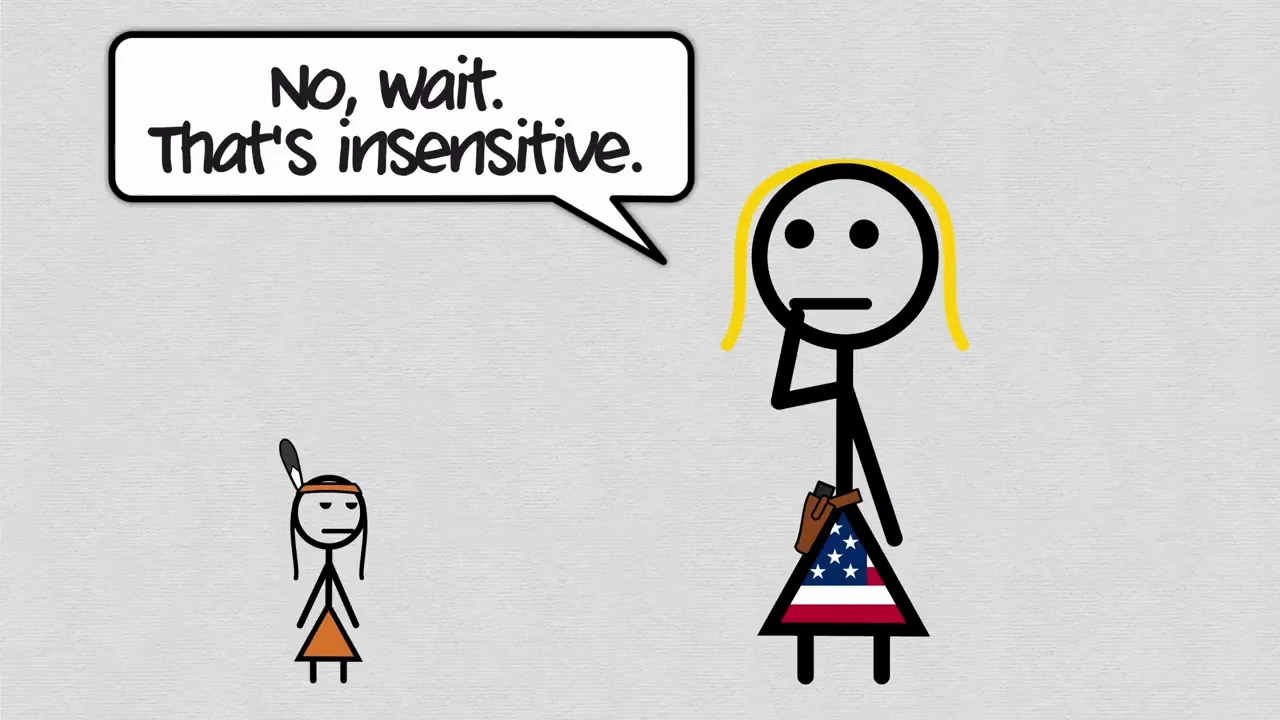
The US Has More Tribes Than the World Has Countries — CGP Grey

CGP Grey

External campaigns to replace 'Indian' with 'Native American' undermine indigenous sovereignty by erasing the specific legal identity tribes adopted to defend federal treaties.

AI-assisted summary of The US Has More Tribes Than the World Has Countries — original source. Check the original for full context.

Source published:

Key ideas

  • The United States contains more than 300 reservations and over 500 federally recognized tribes, exceeding the total number of sovereign nations worldwide. (0:00)
  • While outside populations often avoid the term 'Indian' out of concern for political correctness, the label remains widely used and embraced as an everyday self-identifier on reservations. (2:25)
  • Reservation residents criticize 'Native American' for overinclusivity, noting that grouping all indigenous peoples across North and South America together erases the specific shared history and legal standing of continental U.S. tribes. (2:25)
  • CGP Grey adopts 'Indian' and 'American Indian' based on three criteria: historical precision, alignment with federal law and tribal institutions like the Bureau of Indian Affairs, and respect for current reservation self-identification. (4:50)

Detailed notes

## Background This video was created and published by educational creator CGP Grey on YouTube on November 24, 2019. The video's description is dedicated to thanking his Patreon supporters and crediting original music by David Rees.

## TL;DR CGP Grey addresses the complex linguistic and historical question of why he uses the term "Indian" or "American Indian" rather than "Native American" in his series on tribal sovereignty. He explains that while pre-contact indigenous societies had no universal continental name, colonial displacement and reservation life forced hundreds of distinct nations to unite under a shared political identity. Drawing on his research across reservations, Grey contrasts the preferred internal self-identification of indigenous communities with the well-meaning linguistic preferences of outside observers. Ultimately, he justifies his terminology based on geographic precision, legal consistency with federal and tribal institutions, and respecting how reservation communities identify themselves.

## Atmosphere & style The presentation is analytical, deliberate, and intellectually provocative, delivered with CGP Grey's signature brisk, dry wit and measured cadence. While tackling a socially fraught and sensitive topic, the narrative maintains an objective, philosophical distance, examining how language shifts across power dynamics. It feels like an earnest, meta-level academic preface—simultaneously humorous about the absurdity of semantic debates and deeply respectful of the legal realities facing indigenous populations.

## Bulletin - [00:00](https://www.youtube.com/watch?v=kh88fVP2FWQ&t=0s) The United States contains more than 300 reservations and over 500 federally recognized tribes, exceeding the total number of sovereign nations worldwide. - [02:25](https://www.youtube.com/watch?v=kh88fVP2FWQ&t=145s) While outside populations often avoid the term 'Indian' out of concern for political correctness, the label remains widely used and embraced as an everyday self-identifier on reservations. - [02:25](https://www.youtube.com/watch?v=kh88fVP2FWQ&t=145s) Reservation residents criticize 'Native American' for overinclusivity, noting that grouping all indigenous peoples across North and South America together erases the specific shared history and legal standing of continental U.S. tribes. - [04:50](https://www.youtube.com/watch?v=kh88fVP2FWQ&t=290s) CGP Grey adopts 'Indian' and 'American Indian' based on three criteria: historical precision, alignment with federal law and tribal institutions like the Bureau of Indian Affairs, and respect for current reservation self-identification.

## Key takeaways - [00:00](https://www.youtube.com/watch?v=kh88fVP2FWQ&t=0s) Prior to European arrival, indigenous groups possessed no collective continental name, instead naming themselves in hundreds of distinct languages typically translating to 'people' or 'First People'. - [00:00](https://www.youtube.com/watch?v=kh88fVP2FWQ&t=0s) Europeans introduced the collective label 'Indians', grouping together hundreds of disparate indigenous populations. - [00:00](https://www.youtube.com/watch?v=kh88fVP2FWQ&t=0s) Forced relocation to reservations compelled diverse bands to unite under a shared identity simply to survive and defend their remaining sovereignty. - [00:00](https://www.youtube.com/watch?v=kh88fVP2FWQ&t=0s) As the struggle shifted from military conflict to legal and civil rights arenas, a single recognizable term like 'American Indian' was necessary to rally public and legislative support. - [00:00](https://www.youtube.com/watch?v=kh88fVP2FWQ&t=0s) With over 500 tribes and 300 reservations in the U.S. compared to roughly 200 sovereign nations globally, presenting individual tribal names was politically impractical for national advocacy. - [02:25](https://www.youtube.com/watch?v=kh88fVP2FWQ&t=145s) On reservations, 'Indian' remains commonly used without hesitation, whereas 'Native American' is primarily pushed by well-meaning outsiders. - [02:25](https://www.youtube.com/watch?v=kh88fVP2FWQ&t=145s) An observed geographic correlation shows that individuals living closer to reservations use 'Indian' more routinely, while those living farther away insist on 'Native American'. - [02:25](https://www.youtube.com/watch?v=kh88fVP2FWQ&t=145s) The phrase 'Native American' is criticized for overinclusivity because it encompasses disparate cultures across two entire continents, akin to grouping all inhabitants of Europe, Asia, and Africa as 'Native Afro-Eurasians'. - [02:25](https://www.youtube.com/watch?v=kh88fVP2FWQ&t=145s) The term 'Indian' specifically denotes the First People of the continental U.S. bound by a distinct history of treaties, conflict, and reservation life. - [04:50](https://www.youtube.com/watch?v=kh88fVP2FWQ&t=290s) Because indigenous populations represent a small demographic minority, external majority discomfort threatens to override their internal linguistic self-identification. - [04:50](https://www.youtube.com/watch?v=kh88fVP2FWQ&t=290s) Major legal frameworks, treaties, and governing bodies—including the Bureau of Indian Affairs—continue to formally use 'Indian' in official and administrative capacities. - [04:50](https://www.youtube.com/watch?v=kh88fVP2FWQ&t=290s) External efforts to phase out 'Indian' echo a painful history where indigenous groups adapt to assigned boundaries and identities only to have them redefined by outside forces.

## Detailed walkthrough ### [00:00](https://www.youtube.com/watch?v=kh88fVP2FWQ&t=0s) The Origins of Naming and the Need for a Collective Word

Before European contact, the original inhabitants of the North American continent named themselves in hundreds of distinct languages, almost universally using their own word for "people" or "the First People." While neighboring groups traded, communicated, and fought with one another, the continent was far too vast and travel far too slow—with horses absent from the landscape for millennia—for any single society to know all the others. Consequently, no universal, collective name existed among them. That changed when newcomers arrived from across the sea, bringing unfamiliar technology and devastating disruption, along with a singular collective label for all the indigenous populations they encountered: "Indians." Recognizing that contemporary audiences often recoil at the term, CGP Grey emphasizes that language is defined entirely by human convention: “Words are what we make them. Without the words surrounding them, without brains to interpret them, words are but whispers of wind.”

As the British and American empires expanded westward, devastating armed conflicts, epidemics, and forced displacements decimated the First People. Many were relocated to reservations—unfamiliar territories where disparate bands were compelled to live alongside strangers and organize as unified entities simply to survive and defend what remained of their sovereignty. As technological eras shifted from horsepower to steam and electricity, the nature of this struggle transformed as well, shifting away from guns and germs toward legal battles and public persuasion. Yet the First People faced severe structural disadvantages: they were a tiny minority fractured into hundreds of separate sovereign entities. To rally public support and pass protective legislation, presenting hundreds of unfamiliar tribal names was politically ineffective, making a single, broadly recognized collective title essential for building national solidarity.

```mermaid flowchart TD accTitle: The Shift in Native American Collective Identity accDescr: Diagram tracing indigenous identity from pre-contact self-naming through European arrival, reservation displacement, and political organizing.

subgraph PreContact["Pre-Contact Era"] A["Hundreds of Distinct Languages"] --> B["Self-named 'The People' / 'First People'"] B --> C["No Single Universal Continental Name"] end

subgraph Colonization["Colonial & Reservation Era"] D["European Arrival"] -->|"Labels All Groups"| E["'Indians'"] E --> F["Decimation & Forced Relocation to Reservations"] F --> G["Diverse Groups Forced to Unite for Survival"] end

subgraph CivilRights["Civil Rights & Legal Sovereignty Era"] G --> H["Shift: Armed Conflict to Minds & Laws"] H --> I["Need Clear Collective Name for Majority Coalition"] I --> J["'American Indian' / 'Indian' Adopted for Political Unity"] end

PreContact --> Colonization Colonization --> CivilRights ```

- The global community contains roughly 200 sovereign countries, whereas within the United States alone there are more than 300 reservations. - Across and outside those reservation boundaries, there are more than 500 federally recognized tribes, each bearing its own unique name. - During the Civil Rights movement, the phrase "American Indians"—frequently shortened to "Indians"—became the pragmatic vehicle for political unity and legal recognition, despite the historical confusion behind its origin.

---

[02:25](https://www.youtube.com/watch?v=kh88fVP2FWQ&t=145s) On Reservations vs. the Outside: The Debate Over "Overinclusivity"

Looking ahead, CGP Grey acknowledges the likelihood that future generations may discard "Indian" entirely in favor of "Native American" or an alternative descriptor. However, his firsthand research across numerous reservations revealed a stark contrast between outside expectations and internal reality: on reservations, the word "Indian" remains widespread, used without hesitation or negative connotation as an everyday marker of personal identity. While some individuals do prefer "Native American," others harbor an intense dislike and resentment toward the phrase. The core objection relayed to Grey centers on what critics call "overinclusivity"—a term he introduces with deliberate comic hesitation to brace his audience.

The problem with "Native American," as explained by those living on reservations, is its loss of historical and geographic precision. For over three centuries, "Indian" has specifically denoted the indigenous peoples of what became the continental United States who were bound together by a shared history of treaties, conflict, and reservation life. By contrast, "Native American" encompasses every indigenous population across both North and South America, spanning vastly disparate cultures whose historical trajectories diverge as widely as those of Europe, Asia, and Africa. Grey notes that grouping this entire hemisphere under one label makes as little sense as calling someone a "Native Afro-Eurasian" and expecting them to forge a coherent identity around it. Furthermore, many perceive the label as an artificial imposition dictated by well-meaning outsiders rather than something organically chosen by the community.

- A five-year informal correlation noted during the project: the closer an individual lives to an actual Indian reservation, the more routinely they use "Indian"; the further away they live, the more likely they are to insist on "Native American." - Outsiders typically default to "Native American" out of caution and a desire to signal cultural sensitivity, operating under the assumption that "Indian" might be offensive while "Native American" is safely unobjectionable. - CGP Grey summarizes the grassroots adoption of the old colonial term bluntly: “Words are what we make them. And Indians have made the word theirs.”

---

[04:50](https://www.youtube.com/watch?v=kh88fVP2FWQ&t=290s) Linguistic Power Dynamics and the Three Reasons for Terminology Choice

The divergence between insider and outsider usage creates an unstable linguistic feedback loop. When the broader public develops discomfort with a word, their collective hesitation quickly converts that word into a taboo. Because indigenous tribes form a small minority of the overall population, their ability to control their own self-designation is frequently overwhelmed by the linguistic habits of the surrounding majority. Grey points out a painful historical parallel: just as the First People were repeatedly granted lands, rights, and treaties only to have them stripped away once they adapted to them, the term "Indian"—which they adopted, organized around, and made their own—is now being phased out by external cultural pressure.

| Justification | Rationale for Using "Indian" / "American Indian" in the Series | |:--- |:--- | | **1. Historical & Geographic Precision** | The phrase clearly refers specifically to the First People of what is now the continental United States, rather than encompassing two entire continents. | | **2. Legal & Institutional Consistency** | Tribal governments, United States federal law, and mediating agencies such as the Bureau of Indian Affairs (which is staffed by Indians) all formally use the word "Indian." Using alternative phrasing when discussing official institutions creates needless legal confusion. | | **3. Community Self-Identification** | At the time of production, "Indian" remains the actual word used by Indians living on Indian reservations to describe themselves. |

As Grey outlines these criteria, he reflects on the sheer linguistic oddity of repeating a single controversial label dozens of times in quick succession. “The word used to describe themselves, outsiders, through sheer numbers, redefine,” he observes regarding the shifting consensus. He notes that hearing a word repeated until it loses all meaning is known as "semantic satiation"—a delightfully alliterative concept that inevitably triggers itself when discussed. Ultimately, Grey concludes that spending roughly 1,300 words of script just to justify and contextualize a single word was a necessary prerequisite before delving into the legal and tribal mechanics of the rest of the series.

## Notable quotes > [00:00](https://www.youtube.com/watch?v=kh88fVP2FWQ&t=0s) Words are what we make them. Without the words surrounding them, without brains to interpret them, words are but whispers of wind. — CGP Grey

## Mentioned CGP Grey, Bureau of Indian Affairs, United States

## Video description Thank you to my patrons for making this video possible: https://www.patreon.com/bePatron?u=227816

Special thanks: Amelia Grant, Andrea Di Biagio, Awoo, Bear, Ben Schwab, Bob Kunz, Bobby, Carlin, Chris Amaris, Chris Chapin, Christian Cooper, chrysilis, Colin Millions, Dag Viggo Lokøen, Darcy Morrissey, David F Watson, David Palomares, David Tyler, Derek Bonner, Derek Jackson, Donal Botkin, Elizabeth Keathley, Elliot Lepley, Emil, emptymachine, Erik Parasiuk, Esteban Santana Santana, Everett Knag, Freddi Hørlyck, Fuesu, George Lin, Guillermo, Henry Ng, Hunter S Zimmerman, iulus, James Hoskins, Jason Lewandowski, Jeffrey Podis, John Buchan, John Lee, John Rogers, Jordan Earls, Joshua Jamison, ken mcfarlane, Kermit Norlund, Kevin Costello, Kevin McLain, Kodi, Leon, Maarten van der Blij, Marco Arment, Martin, Maxime Zielony, Michael Mrozek, Michael Reilly, Michael Williams, Mikko, MJ, Nevin Spoljaric, Nick Fish, Nick Gibson, NotGac, سليمان العقل, Orbit_Junkie, Peter Lomax, Phil Gardner, Rhys Parry, Richard Barthel, Richard Jenkins, rictic, Robert Webb, Ron Bowes, Saki Comandao, Shallon Brown, Shantanu Raj, ShiroiYami, Stephen Drollinger, Steven Grimm, Steven Snow, Tómas Ãrni Jónasson, Tex Simon, Thunda Plum, Tijmen van Dien, Tristan Watts-Willis, Tyler Bryant, Veronica Peshterianu

Music by: http://www.davidreesmusic.com

[Source](https://www.youtube.com/watch?v=kh88fVP2FWQ)

中文简报

外界推行替代称谓之际,美洲原住民部落捍卫“印第安人”标签 外界试图以“美洲原住民”取代“印第安人”的运动削弱了土著主权,抹杀了部落为捍卫联邦条约而采用的特定法律身份。 CGP Grey在其关于部落主权的系列视频中,探讨了为何使用“印第安人”或“美洲印第安人”而非“美洲原住民”这一复杂的语言与历史问题。他解释称,尽管前哥伦布时期的土著社会没有一个大陆通用的名称,但殖民流离失所与保留地生活迫使数百个不同的民族在共同的政治身份下联合起来。借鉴在各保留地的调研,Grey将土著社区内部偏好的自我认同与外界观察者出于善意的语言偏好进行了对比。最终,他基于地理精确性、与联邦及部落机构的法律一致性,以及尊重保留地社区自身的认同方式,阐明了其用词依据。 美国拥有300多个保留地和500多个联邦认可的部落,这一数量超过了全球主权国家的总和。 (0:00) 尽管外界群体常出于政治正确的顾虑而避免使用“印第安人”一词,但在保留地内,该标签仍被广泛使用并被欣然接受为日常自我认同。 (2:25) 保留地居民批评“美洲原住民”一词范围过宽,指出将北美洲和南美洲的所有土著人群归为一类,抹杀了美国本土部落特有的共同历史与法律地位。 (2:25) CGP Grey基于三项标准采用“印第安人”和“美洲印第安人”:历史精确性、与联邦法律及印第安事务局等部落机构保持一致,以及尊重当前保留地的自我认同。 (4:50)

Reading summary

CGP Grey argues that while the term "Indian" originated as a colonial misnomer, indigenous populations within the United States pragmatically adopted and internalized it for political unity and self-identification, creating a persistent divide between reservation usage and outsider preferences for "Native American." The Political Need for a Collective Name (0:00) Before European contact, the inhabitants of North America lacked a universal continental name, speaking hundreds of distinct languages and typically identifying themselves with their own word for "people" or "the First People." European arrival introduced catastrophic disruption alongside the collective label "Indians." As armed conflicts and epidemics gave way to forced relocation on reservations, the nature of indigenous survival shifted from physical warfare to legal battles and public persuasion. Faced with the challenge of navigating the American political system as a fractured minority, individual groups required a unified voice. With more than 500 federally recognized tribes and over 300 reservations—exceeding the roughly 200 sovereign countries in the world—lobbying under hundreds of distinct tribal names was politically ineffective. Consequently, during the Civil Rights movement, "American Indian" became the pragmatic vehicle for building national solidarity and pursuing legal recognition. Reservation Reality Versus Outsider Etiquette (2:25) Grey highlights a divergence between external assumptions and reservation reality: while well-meaning outsiders frequently default to "Native American" to avoid causing offense, "Indian" remains widely used without negative connotation among people living on reservations. Based on five years of observation, Grey notes an informal correlation where proximity to reservations corresponds with routine use of "Indian," whereas greater distance correlates with insistence on "Native American." A primary objection to "Native American" raised by reservation residents is what they describe as "overinclusivity." For over three centuries, "Indian" specifically denoted the indigenous peoples of what became the continental United States who shared a distinct history of treaties, conflict, and reservation life. In contrast, "Native American" encompasses all indigenous populations across North and South America. Grey compares grouping these disparate cultures under one umbrella to labeling someone a "Native Afro-Eurasian," noting that many view the term as an artificial label imposed by external observers. Institutional Consistency and Linguistic Displacement (4:50) Grey defends using "Indian" and "American Indian" in his series based on three core criteria: historical and geographic precision regarding the continental United States, consistency with tribal governments and federal institutions such as the Bureau of Indian Affairs, and alignment with how reservation communities currently self-identify. This terminology debate reflects an asymmetric linguistic power dynamic. Because indigenous populations form a demographic minority, their internal terminology is vulnerable to being overridden when the surrounding majority develops discomfort with a word and converts it into a taboo. Grey points to the historical irony that after adapting to, organizing around, and claiming the colonial term "Indian" as their own, the First People face having their self-designation dismantled once again by outside cultural pressure. Grey anticipates that future generations may eventually replace "Indian" with alternative terms, but concludes that clarifying this linguistic history is an essential prerequisite for accurately discussing the modern legal and sovereign structures of American tribes.

精炼阅读摘要

CGP Grey 探讨了美国原住民集体称谓的历史演变与当代争议,指出尽管外界出于文化敏感倾向使用“Native American”,但由于政治抗争历程、法律制度连贯性以及保留地居民的日常自我认同,“Indian”(印第安人)一词在探讨相关议题时仍具有独特的精确性与现实依据。 政治维权与集体称谓的历史形成 (0:00) 在欧洲殖民者到来之前,北美大陆的原住民分布于数百个互不相识的部落中,使用各自的语言自称“人”或“最早的人”,因地域辽阔且缺乏马匹等高速交通工具,从未产生全大陆层面的统一统称。随着殖民扩张、疫病蔓延与强制迁移,大量原住民被迫迁入保留地,与陌生部落共同生活。面对武装冲突转向法律与舆论诉求的时代变迁,原住民群体处于极度的人口劣势——当今世界仅有约200个主权国家,而仅美国境内就有超过300个保留地和500多个获联邦承认的部落。在民权运动时期,为了克服数百个孤立部落名称带来的传播与政治阻碍,原住群体将殖民者最初强加的“Indian”或“American Indian”转化为争取法律地位与公众支持的务实政治工具。 保留地内外视角与过度包容争议 (2:25) Grey 根据其对多个保留地的调研指出,外界预设与保留地内部现状存在明显温差:在保留地内部,“Indian”依然是居民日常普遍使用且不带负面色彩的自我身份标识,反而对“Native American”存在诸多排斥与反感。保留地居民批评“Native American”具有“过度包容性”(overinclusivity),彻底失去了历史与地理定位的精确性。“Indian”在三百余年间特指经历相同条约、武装冲突和保留地生活的美国本土大陆原住民;而“Native American”则将整个南北美洲所有文化迥异的本土群体混为一谈,其宽泛程度无异于强行使用“原生亚非欧人”(Native Afro-Eurasian)来构建认同。Grey 观察到一种非正式关联:个体生活距离印第安保留地越近,越习惯使用“Indian”;而距离越远的人,则越倾向出于谨慎和避免冒犯的心理坚持使用“Native American”。 语言权力博弈与选用该词的三大理据 (4:50) 外部社会对“Indian”一词的避讳,使得该词在主流群体中逐渐演变为禁忌,形成了原住少数族裔自决权被多数群体语言习惯所压制的反馈循环。Grey 指出,正如原住民在历史上多次被赋予土地和权利后又被剥夺一样,他们经由抗争内化为自身标识的词汇,如今正面临被外部文化力量单方面重构并淘汰的困境。Grey 明确了在探讨相关制度时继续采用“Indian”的三大理由:其一为历史与地理的精确性,它精准对应当前美国本土大陆的原住民;其二为法律与建制的统一性,包括印第安事务局(Bureau of Indian Affairs)等由印第安人运作的机构、部族政府及美国联邦法律均正式沿用该词,改用他词会引发法律指代混乱;其三则是社群当前的自我认同,即保留地原住民当下在日常中仍以此自称。 Grey 预测未来的代际更迭或许最终会淘汰“Indian”并确立新名称,但强调在探讨复杂的部族运作和法律管辖权之前,必须先理清该词汇背后的历史流变与现实语境,避免被脱离保留地现实的外部语言偏好所误导。

Detailed notes — zh

## Background 该视频由知名知识科普创作者 CGP Grey 于 2019 年 11 月 24 日发布在 YouTube 平台,时长约为 6 分 46 秒。视频简介主要对支持其创作的 Patreon 赞助者表达了感谢,并附上了赞助名单与背景音乐的出处链接。 ## TL;DR 视频深入探讨了为何在涉及美国本土原住民的主题探讨中,选用“印第安人”(Indians)而非外界看似更政治正确的“美洲原住民”(Native Americans)。CGP Grey 指出,早期北美大陆各部落因缺乏长途交通而未形成统称,后在殖民压迫与保留地隔离中被迫联合,并接纳了“印第安人”这一共同政治标签。相比之下,“美洲原住民”因涵盖整个南北美洲而陷入“过度包容性”的悖论,反被不少当地人视为外界强加的模糊标签。基于地理历史的精确性、法律与官方机构(如印第安事务局)的一致性,以及保留地居民广泛的自我认同现状,CGP Grey 论证了继续沿用“印第安人”一词的合理性与必要性。 ## Atmosphere & style 整期视频呈现出 CGP Grey 标志性的理性克制与层层递进的思辨风格,在严谨的历史法理剖析中穿插着恰到好处的冷幽默。面对具有争议且极易引发公众情绪的称谓话题,主讲人并未采取说教姿态,而是通过走访保留地的第一手观察与形象比喻,耐心地带领观众抽丝剥茧。在结尾处,主讲人拍手打破严肃氛围并调侃“语义饱和”现象,既消解了词汇背后的敏感与沉重,又让整个科普论证过程显得格外真诚且引人深思。 ## Bulletin - [01:32](https://www.youtube.com/watch?v=kh88fVP2FWQ&t=92s) 美国境内的印第安保留地超过300处,联邦政府承认的独立部落超过500个,其主权实体数量远超全球现存国家总数。 - [03:06](https://www.youtube.com/watch?v=kh88fVP2FWQ&t=186s) 相较于外界主流社会对政治正确的敏感推崇,“美洲原住民”(Native American)一词在保留地内部常因“过度包容性”而遭到反感,因其模糊了北美原住民独特的历史与政治边界。 - [03:06](https://www.youtube.com/watch?v=kh88fVP2FWQ&t=186s) 现实用词存在明显的距离悖论:生活经验或地理距离上离保留地越近的人越倾向于使用“印第安人”,而距离越远的局外人越倾向于使用“美洲原住民”。 - [05:33](https://www.youtube.com/watch?v=kh88fVP2FWQ&t=333s) 视频系列决定采用“印第安人”是基于三大考量:历史地理的精确性、法律与官方机构(如印第安事务局)的名词一致性,以及保留地居民当下的实际自我认同。 ## Key takeaways - [00:00](https://www.youtube.com/watch?v=kh88fVP2FWQ&t=0s) 殖民时代前的北美大陆存在数百种独立语言,部落通常自称为各自语言中的“人”或“最早的人”,因交通限制并未产生统称整片大陆所有人的集体名称。 - [00:00](https://www.youtube.com/watch?v=kh88fVP2FWQ&t=0s) 欧洲殖民者的入侵与后来的美国扩张带来了“印第安人”这一统称标签,词汇在残酷的历史语境下被赋予了现实意义。 - [00:00](https://www.youtube.com/watch?v=kh88fVP2FWQ&t=0s) 暴力驱逐与强制迁入保留地的历史进程,迫使原本互不相通的各个部落形成跨部落政治共同体,共同捍卫残存的主权。 - [01:32](https://www.youtube.com/watch?v=kh88fVP2FWQ&t=92s) 美国境内的保留地超过300个,联邦承认的部落超过500个,而全球总共仅约200个国家,展现出极高的内部多元性与分散性。 - [01:32](https://www.youtube.com/watch?v=kh88fVP2FWQ&t=92s) 现代维权斗争的核心转向法律和公共政治博弈,使用数百个互不相同的部落名称会分散影响力,促使原住民在民权时代采纳“美洲印第安人”作为统一的政治标识。 - [01:32](https://www.youtube.com/watch?v=kh88fVP2FWQ&t=92s) 实地调研显示,印第安保留地内部的居民普遍且自然地使用“印第安人”指代自身,并未带有外界设想的负面或冒犯性情绪。 - [03:06](https://www.youtube.com/watch?v=kh88fVP2FWQ&t=186s) “美洲原住民”一词因“过度包容性”在保留地遭遇抵触,该词将整个南北美洲的原住民生硬合并,其宽泛程度如同用“亚欧非原住民”统称欧亚非大陆人口一样荒谬。 - [03:06](https://www.youtube.com/watch?v=kh88fVP2FWQ&t=186s) 地理与生活经验的亲疏直接影响词汇偏好:距离保留地越近越习惯称“印第安人”,距离越远的局外人出于礼貌反而越偏向“美洲原住民”。 - [03:06](https://www.youtube.com/watch?v=kh88fVP2FWQ&t=186s) 命名权存在严重的权力不对等,人口占压倒性优势的主流群体往往依据自身的情感偏好,单方面剥夺并重塑少数族群已经适应并接纳的自称。 - [05:33](https://www.youtube.com/watch?v=kh88fVP2FWQ&t=333s) 采用“印第安人”具有历史与地理维度的明确限定性,专指美国本土大陆的第一批居民及其后裔,界限清晰不模糊。 - [05:33](https://www.youtube.com/watch?v=kh88fVP2FWQ&t=333s) 官方建制与法律文本均沿用“印第安人”,如协调部落自治政府与联邦政府关系的“印第安事务局”,脱离法定用词只会造成行政与法律层面的混乱。 - [05:33](https://www.youtube.com/watch?v=kh88fVP2FWQ&t=333s) 高频重复与深入辨析能够打破由于主流话语刻板印象带来的心理不适,帮助观众通过跨越“语义饱和”重新客观看待词汇背后的现实历史。 ## Detailed walkthrough ### [00:00](https://www.youtube.com/watch?v=kh88fVP2FWQ&t=0s) 名字的起源与帝国的集合称谓 在北美大陆的最早定居者眼中,他们最初是用各自的语言为自己命名的。整片大陆上存在着成百上千种语言,而这些群体对自己部落的称谓往往就是本语言中代表“人”或“最早的人类”(First People)的词汇。虽然当时也存在其他群体可以进行贸易、交流甚至战争,但由于大陆极其辽阔,且在数千年的时间里都没有马匹代步,各群体之间的出行极其缓慢,没有任何一个部落能够知晓所有其他群体的存在,因此当时根本不存在一个能够统称整片大陆所有人的单一名字。 随后,大洋彼岸驶来了全新的外来者,带来了既伟大又可怕的事物。这些外来者用自己的语言称呼自己,同时也为这片土地上的原住民带来了一个统一的标签——“印第安人”(Indians)。CGP Grey 指出,当身处未来的观众听到这个词时,可能会下意识地感到不适,但词语的本质完全取决于人类如何赋予其意义。正如 CGP Grey 所言:“没有周围语境的烘托,没有大脑对其进行解读,词语不过是阵阵微风的私语。”早期英帝国与后来的美国在扩张过程中,迫切需要一个词汇来统称这片土地上的第一批居民,尽管其起源充满误解,“印第安人”依然成为了那个历史性的统称。 随着殖民帝国不断扩张并爆发惨烈冲突,原住民群体遭受了毁灭性打击与离散,大量人口被强行迁往保留地。置身于陌生的土地与素不相识的其他群体之间,为了生存并捍卫残存的主权,这些原本互不相通的人群不得不作为一个新的整体共同行动。 - **早期的地理与交通限制**:北美大陆原住民由于缺乏马匹和长途交通工具,各部落之间无法形成全大陆范围的统一认知与集体名称。 - **词汇的生命周期**:一个词语之所以诞生、延续或消亡,核心在于它对说话者的实用性以及听话者所产生的反应。 - **被迫形成的共同体**:面对暴力驱逐与保留地隔离,互不相识的部落被迫联合为一个新的整体以争取主权。 ```mermaid flowchart TD accTitle: 印第安人称谓的历史演变 accDescr: 展示北美原住民从各自独立命名到被迫形成政治共同体并接纳印第安人统称的历史路径。 subgraph Origin["早期历史状态"] A["分散部落(无全大陆统一名称)"] -->|"数百种独立语言"| B["各自自称为'人'或'最早的人'"] end subgraph Expansion["帝国扩张与冲突"] C["欧洲殖民者引入标签'印第安人'"] --> D["人口锐减与强制迁入保留地"] B -.-> D end subgraph Unity["现代政治生存"] D --> E["跨部落联合以维护主权"] E --> F["采纳'印第安人'作为争取权益的政治统一标识"] end ``` ### [01:32](https://www.youtube.com/watch?v=kh88fVP2FWQ&t=92s) 主权斗争、部落规模与民权时代的统一标识 随着人类社会从马匹时代步入蒸汽机与电气时代,冲突的形式也发生了剧烈转变——枪炮与病菌的物理杀戮减少,取而代之的是关于观念与法律层面的博弈。此时的原住民在整片国土中已沦为极少数群体,但其内部却展现出惊人的多元性与分散性。相比之下,当今全世界大约只有 200 个国家,但仅在美国境内,印第安保留地就超过 300 个;在这些享有特殊主权的区域内外,联邦政府承认的部落更是超过了 500 个,且每一个部落都拥有独一无二的名称。 要在现代社会中赢得占绝大多数的公众支持、推动确立保障部落主权的法案,使用数百个互不相同的部落名称只会分散力量、削弱影响力。原住民群体必须拥有一个能让多数人群体清晰理解、且有利于内部团结的集体统称。因此,在民权运动风起云涌的时代,“美洲印第安人”(American Indians,常简称为“印第安人”)便承担起了这一政治与法律联合的历史重任。 CGP Grey 坦言,语言是可以被解构与重塑的,未来历史或许最终会用“美洲原住民”(Native American)或其他词汇彻底取代“印第安人”。然而,在他为制作本系列视频而亲自走访诸多保留地、与当地居民面对面交流时,却发现了一个令外界意外的现实:保留地内部的人们依然极其普遍且毫不犹豫地使用“印第安人”一词,完全不带有任何负面情绪。对此,CGP Grey 总结道:“词语的意义由我们塑造,而印第安人已经将这个词变成了属于他们自己的名字。” - **部落与国家的数量对比**:全世界约有 200 个国家,而美国境内的印第安保留地超过 300 处,获得联邦政府承认的部落超过 500 个。 - **斗争维度的转变**:原住民与主流社会的对抗已从单纯的武装冲突转变为法律、政治主权以及公共观念上的博弈。 - **保留地内部的语感**:与外界普遍认为该词具有冒犯性相反,“印第安人”在保留地内部被广泛视作日常且不带偏见的自我身份认同。 ### [03:06](https://www.youtube.com/watch?v=kh88fVP2FWQ&t=186s) “美洲原住民”引发的反感与“过度包容性”的悖论 尽管“美洲原住民”(Native American)受到了一部分人的青睐,但在另一部分群体中,这个词却遭遇了强烈的反感与抵触。CGP Grey 解释说,在保留地调研期间,有人向他传达了一个专门用来解释这种厌恶感的概念——“过度包容性”(overinclusivity)。讲到此处,Grey 幽默地深吸了一口气,并对观众预料之中的震惊反应连呼“我知道,我知道”,随即引导大家理性剖析该词背后的深层含义。 在过去至少 300 年的时间里,“印第安人”所指代的对象是极其具体且鲜明的:他们是北美这片特定地理区域中、最初彼此分离但最终被卷入同一段共同历史的最早居民。相反,“美洲原住民”这个词汇的界限却极其模糊,它几乎涵盖了从北美洲最北端到南美洲最南端的所有原住民。然而,北美洲、中美洲与南美洲各自的历史轨迹与文化差异,其复杂多元程度完全不亚于亚洲、欧洲与非洲之间的区别。CGP Grey 形象地比喻道,如果把来自不同大洲的人笼统地称为“亚欧非原住民”(Native Afro-Eurasian),其概念将宽泛到没有任何人能够对其产生强烈的身份认同,更无法借此团结彼此;“美洲原住民”同样面临这种过度泛化的问题,甚至常被当地人视作外部势力自上而下强加的又一个新标签。 在这项历时五年的视频调研项目中,CGP Grey 观察到了一个非常显著的规律:一个人在物理或生活经验上距离保留地越近,就越倾向于使用“印第安人”;反之,距离越远,就越倾向于使用“美洲原住民”。局外人出于敏感和礼貌,倾向于选择一个看似绝对不会犯错的词汇,但这导致了局内人与局外人在用词上产生了不稳定的断层。正如 CGP Grey 所指出的:“各个群体理应拥有为自己命名的权利,但当他们人数处于劣势时,往往无法做到这一点。”主流群体往往仅凭人口数量的压倒性优势,就单方面重新定义少数族群用来指代自身的词汇。这就像历史上赋予原住民的条约承诺、法定权利和土地一样,一旦被原住民接纳并适应,转眼又会被外界强行剥夺。 - **过度包容性的困境**:“美洲原住民”将两片庞大大陆上具有截然不同历史诉求的成百上千种文化强行捏合在一起,稀释了特定历史群体的政治诉求。 - **地理距离与用词倾向**:对保留地的亲疏程度与词汇选择呈高度强相关,距离保留地越近越习惯称“印第安人”,距离越远越习惯称“美洲原住民”。 - **命名权的权力不对等**:少数族群建立的自我认同词汇,极易被人数占优的主流群体因自身的情感偏好而强制替换。 ### [05:33](https://www.youtube.com/watch?v=kh88fVP2FWQ&t=333s) 视频系列选择“印第安人”的三大基准与“语义饱和” 基于上述严谨的调研与现实考量,CGP Grey 宣布在本系列视频中将统一采用“美洲印第安人”或“印第安人”,并列出了三大支撑理由: 第一,该词在地理和历史层面上具有极高的清晰度,精确限定于当今美国本土大陆的原住民族群; 第二,无论是部落自治政府还是美国联邦政府,在官方层面都沿用“印第安人”这一表述,负责在两大政府实体之间进行沟通协调且全员由原住民任职的机构也正式定名为“印第安事务局”(Bureau of Indian Affairs),正如 CGP Grey 所言:“如果不用政府机构和法律本身的正式名称去称呼它们,只会造成毫无意义的混乱”; 第三,截至撰写脚本之时,生活在印第安保留地上的印第安人依然普遍使用“印第安人”来称呼自己。 在完成了这番详尽的逻辑论证后,CGP Grey 拍了拍手,打破了严肃的学术氛围,打趣道听众此时可能已经因为高频听到“印第安人”这个词而产生了“语义饱和”(semantic satiation)现象——即一个词被重复过多遍之后,大脑会暂时失去对其意义的感知。他调侃这个心理学名词本身兼具迷人的押头韵美感,其自身就会引发这种心理反应,不过他打算将这种体验作为课后练习留给观众自行琢磨。最后,Grey 总结称,自己整整用了 1300 个单词来详细拆解并正名这“1 个单词”的选用逻辑,随着这一基础共识的建立,整个系列终于可以正式迈入核心正题。 - **选用“印第安人”的三大理由**: 1. **地理与历史精准性**:特指美国本土大陆的第一批居民及其后裔,界限分明。 2. **法理与机构一致性**:部落政府、美国联邦政府及印第安事务局等官方建制和法律条文均以此为法定名词。 3. **社群自我认同现状**:保留地内的原住民日常仍以该词进行自我指代。 - **语义饱和现象**:Grey 用了 1300 个词的脚本篇幅来澄清单个词汇的合理性,消解了主流话语体系对该词的刻板不适感。 ## Notable quotes > [03:06](https://www.youtube.com/watch?v=kh88fVP2FWQ&t=186s) 各个群体理应拥有为自己命名的权利,但当他们人数处于劣势时,往往无法做到这一点。 — CGP Grey > [00:00](https://www.youtube.com/watch?v=kh88fVP2FWQ&t=0s) 没有周围语境的烘托,没有大脑对其进行解读,词语不过是阵阵微风的私语。 — CGP Grey > [01:32](https://www.youtube.com/watch?v=kh88fVP2FWQ&t=92s) 词语的意义由我们塑造,而印第安人已经将这个词变成了属于他们自己的名字。 — CGP Grey ## Mentioned CGP Grey, 印第安事务局, 美国联邦政府, 英帝国 ## Video description Thank you to my patrons for making this video possible: https://www.patreon.com/bePatron?u=227816 Special thanks: Amelia Grant, Andrea Di Biagio, Awoo, Bear, Ben Schwab, Bob Kunz, Bobby, Carlin, Chris Amaris, Chris Chapin, Christian Cooper, chrysilis, Colin Millions, Dag Viggo Lokøen, Darcy Morrissey, David F Watson, David Palomares, David Tyler, Derek Bonner, Derek Jackson, Donal Botkin, Elizabeth Keathley, Elliot Lepley, Emil, emptymachine, Erik Parasiuk, Esteban Santana Santana, Everett Knag, Freddi Hørlyck, Fuesu, George Lin, Guillermo, Henry Ng, Hunter S Zimmerman, iulus, James Hoskins, Jason Lewandowski, Jeffrey Podis, John Buchan, John Lee, John Rogers, Jordan Earls, Joshua Jamison, ken mcfarlane, Kermit Norlund, Kevin Costello, Kevin McLain, Kodi, Leon, Maarten van der Blij, Marco Arment, Martin, Maxime Zielony, Michael Mrozek, Michael Reilly, Michael Williams, Mikko, MJ, Nevin Spoljaric, Nick Fish, Nick Gibson, NotGac, سليمان العقل, Orbit_Junkie, Peter Lomax, Phil Gardner, Rhys Parry, Richard Barthel, Richard Jenkins, rictic, Robert Webb, Ron Bowes, Saki Comandao, Shallon Brown, Shantanu Raj, ShiroiYami, Stephen Drollinger, Steven Grimm, Steven Snow, Tómas Ãrni Jónasson, Tex Simon, Thunda Plum, Tijmen van Dien, Tristan Watts-Willis, Tyler Bryant, Veronica Peshterianu Music by: http://www.davidreesmusic.com [Source](https://www.youtube.com/watch?v=kh88fVP2FWQ)

Source quotes

[3:06] CGP Grey: 各个群体理应拥有为自己命名的权利,但当他们人数处于劣势时,往往无法做到这一点。 [0:00] CGP Grey: 没有周围语境的烘托,没有大脑对其进行解读,词语不过是阵阵微风的私语。 [1:32] CGP Grey: 词语的意义由我们塑造,而印第安人已经将这个词变成了属于他们自己的名字。

Source quotes

[0:00] CGP Grey: Words are what we make them. Without the words surrounding them, without brains to interpret them, words are but whispers of wind.

Original transcript

[0:00] The first people who lived here named themselves. [0:03] Across the continent, in hundreds of languages. [0:05] The word for people - or the First People - was what they used. [0:09] Other people existed, to trade and talk and fight with. [0:12] But the continent was vast and travel slow. [0:15] There were no horses and wouldn't be for millennia. [0:18] No group could know all the others. [0:20] So there was no single name for all. [0:23] Then, from across the sea, came a new other people. [0:26] Who brought with them great and terrible things. [0:29] They too had a name for themselves in their own language. [0:32] But they also brought a name for the First People: Indians. [0:36] We are in the future from this past. [0:38] And you in the future from my present (possibly the far future). [0:42] And the word 'Indian' may have just made you uncomfortable. [0:45] So let’s talk about words. [0:46] Words are what we make them. [0:48] Without the words surrounding them, [0:50] without brains to interpret them, [0:51] words are but whispers of wind. [0:53] It’s a word’s utility to the speaker [0:56] and the reaction of the listener [0:57] that causes words to be born and to live and to die. [1:01] Long after its first use in the New World, [1:04] the early British and American Empires needed a word [1:07] to collectively describe the First People. [1:10] And 'Indian', despite its confused origins, was that word. [1:14] As the Empires expanded, there was terrible conflict. [1:18] The First People found themselves decimated and scattered. [1:21] Many forcibly moved to reservations. [1:23] Land unknown with others unknown. [1:26] Needing to act as one new group to survive. [1:29] To hold onto any sovereignty. [1:32] As the world progressed from horses, to steam, to electricity, [1:35] the nature of conflict changed. [1:37] Fewer guns and germs. [1:39] More minds and laws. [1:41] But the First People were now a tiny minority in the land [1:44] While also a multiplicity of groups. [1:47] For comparison, there are about 200 countries in the world. [1:50] Within the United States, the reservations number more than 300. [1:55] Within and without those areas of special sovereignty, [1:58] there are more than 500 federally recognized tribes. [2:02] Each with a different name. [2:04] To win the minds of the majority, [2:06] to get laws securing sovereignty, [2:08] hundreds of different names for different groups is not helpful. [2:12] A collective name - one clear in the minds of the majority - is needed. [2:16] A name useful for unity. [2:18] In the time of Civil Rights, 'American Indians', [2:21] shortened to 'Indians', [2:22] was (despite its confused origins) that name. [2:25] For words are what we make them. [2:27] And we can unmake them. [2:28] As I write this script looking at the past, [2:31] and toward you in the future, [2:32] I will bet that future history will unmake 'Indian' [2:36] in favor of 'Native American', or something else. [2:39] You know if this has happened. [2:41] But here, as part of working on this series, [2:43] I've traveled to many reservations to see them [2:46] and to talk to the people who live in them. [2:48] On reservations, the word 'Indian' is still used [2:51] without hesitation or negative connotation. [2:54] Used as identity, not universally, but near it. [2:57] You, like me, may be surprised to hear that, [3:00] given the word’s confused origins. [3:02] But words are what we make them. [3:03] And Indians have made the word theirs. [3:06] Now, as for 'Native American', while preferred by some, [3:09] there exists in others a strong dislike [3:12] and resentment of the name. [3:13] The word created to explain [3:15] this dislike was passed on to me. [3:17] And the only way to explain fully is to pass it on to you. [3:22] [Grey takes deep breath] So, the dislike comes from… 'overinclusivity' [3:27] [audience gasps] I know. I know. [3:31] *I know.* [3:33] But let’s stay thoughtful and examine [3:34] what this word was created to communicate. [3:37] For at least 300 years, [3:39] 'Indian' has meant the first people in this part of the world. [3:42] Separated at first but thrust into a shared history. [3:46] It is clear. It is sharp. [3:48] The word 'Native American', less so. [3:50] It can include everyone from the top to bottom of two continents. [3:55] A vast number of different cultures [3:57] and current-day goals and concerns. [4:00] The histories of North, Central, and South America [4:02] are as divergent as the histories of Asia, Europe, and Africa. [4:06] To call a person from here, here, or here [4:09] a 'Native Afro-Eurasian' would be so over-inclusive [4:13] as to make it difficult for that human to strongly [4:15] identify with or rally others under. [4:18] So it goes for 'Native American'. [4:20] Additionally, it can feel like yet another thing forced from the outside. [4:25] Talking to people about this project over the last… [4:27] [Grey sighs] Five years… revealed a strong correlation. [4:31] The closer a person had ever been to a reservation, [4:34] the more likely they would use 'Indian'. [4:35] The farther, the more likely they would use the word 'Native American'. [4:39] And that's understandable. [4:40] Is 'Indian' okay? [4:42] *Maybe.* [4:43] But 'Native American' won't be wrong. [4:45] And it's useful to express concern and sensitivity as an outsider. [4:49] But this creates an unstable balance [4:51] between insider and outsider use of a word. [4:54] If the majority hesitates over a word, [4:56] it slides into uncomfortability or worse. [4:59] If the majority decides a word is unacceptable, [5:01] so it becomes. [5:03] Groups should be able to name themselves, [5:05] but when they’re small, they often can't. [5:07] The word used to describe themselves, [5:09] outsiders, through sheer numbers, redefine. [5:12] At the time of writing, this is happening to 'Indian' [5:16] but the leading replacement is not as universally well-regarded [5:19] inside reservations as those outside may expect. [5:23] As we will talk about, many things have been given to the First People. [5:26] Promises. And rights. And lands. [5:28] Only once used and adopted by them to be taken away. [5:32] So it may go again. [5:33] Thus, this series will use 'American Indian' or 'Indian' for three main reasons. [5:38] One. The word is clear in geography and history. [5:41] Limited to the first people of what is now the continental United States. [5:45] Two. The tribal governments and the United States government use 'Indian'. [5:49] The Bureau of Indian Affairs, staffed by Indians, which mediates [5:53] between the two governments also uses 'Indian'. [5:56] To call governments and departments and laws by names [5:59] other than what they are would be pointlessly confusing. [6:02] Three. At the time of writing, 'Indian' is used by Indians [6:06] on Indian reservations to describe themselves. [6:09] Ok. [hands clap] We're well past that point where you hear a word [6:12] so many times it starts to become meaningless. [6:14] Fun fact. There's a word for that: semantic satiation. [6:17] Delightfully alliterative and will cause itself, [6:20] but I leave that as an exercise to the viewer. [6:22] This has been 1300 words in an attempt to explain 1. [6:27] That complete we can now move on to the next part. [6:30] [gentle campfire folk fiddle music fades slowly]