Bret Victor Pitches Sensorized Rooms to Shift Makers Beyond Tinkering
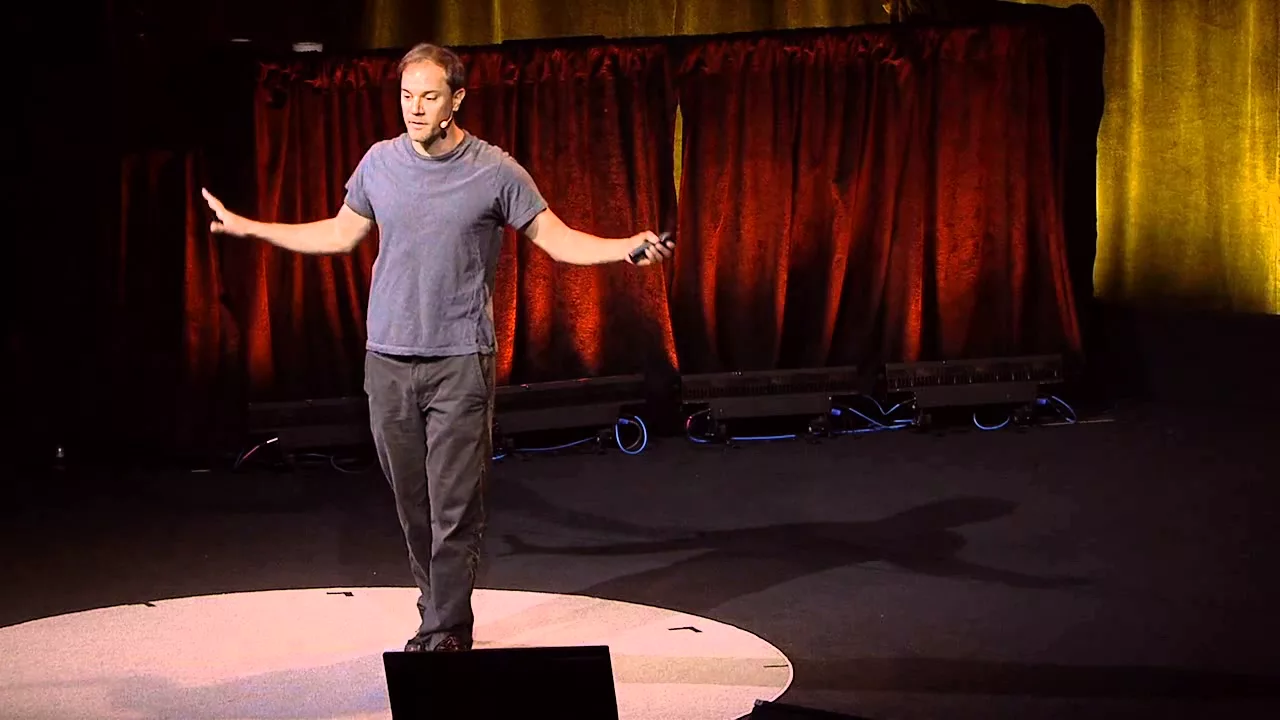
Bret Victor - Seeing Spaces — Colin McDonnell

Colin McDonnell

Workshops focused solely on construction trap creators in blind trial-and-error, requiring sensor-instrumented spatial environments that make internal system behaviors visible to enable true engineering and scientific discovery.

AI-assisted summary of Bret Victor - Seeing Spaces — original source. Check the original for full context.

Source published:

Key ideas

  • Current maker spaces are limited to construction tools like 3D printers and laser cutters, leaving creators blind when troubleshooting dynamic behaviors in embedded software and robotics. (2:30)
  • Victor proposes transforming workshops into 'seeing spaces' inspired by NASA and CERN control rooms, using ambient displays, smart materials, and full-room telemetry to make invisible system states immediately apparent. (4:40)
  • A seeing space operates across three dimensions: seeing inside component telemetry, seeing across time through automated scrubbing and logging, and seeing across possibilities via automated parameter sweep exploration. (6:16)
  • Making spans a spectrum from tinkering to engineering to science; while construction tools confine builders to tinkering, seeing tools are required to advance to scientific discovery and principled creation. (12:17)

Detailed notes

## Background Published on YouTube by Colin McDonnell on June 17, 2015, this video documents a presentation delivered by Bret Victor at the EG conference on May 2, 2014, accompanied by artwork from David Hellman. The video description proposes redesigning maker spaces from places merely meant for assembling pieces into environments designed to help creators see inside their projects, across time, and across possibilities to foster genuine scientific understanding.

## TL;DR Bret Victor critiques modern maker spaces for over-indexing on physical construction tools while offering virtually no visibility into the dynamic, software-driven behaviors of complex modern projects. Drawing inspiration from mission-critical control rooms at NASA and CERN, he proposes the concept of a 'seeing space' equipped with smart materials, ambient room displays, historical time-scrubbing, and automated parameter exploration. By expanding a workshop's infrastructure to illuminate internal system states and systematically test ranges of possibilities, creators are liberated from ad-hoc guesswork. Victor concludes that providing powerful seeing tools elevates creators across the spectrum of making, moving them past blind tinkering and established engineering into true scientific discovery.

## Atmosphere & style The presentation possesses a measured, visionary cadence, blending sharp critique of modern tech habits with an inspiring, design-led manifesto for human thought. Victor speaks with quiet, deliberate conviction, systematically dissecting the invisible blind spots of contemporary workshops before building toward a richer, more humane alternative. Watching the talk feels intellectually expansive and grounded, inviting the audience to step back from screens and imagine physical rooms functioning as macro-tools for the human mind.

## Bulletin - [02:30](https://www.youtube.com/watch?v=klTjiXjqHrQ&t=150s) Current maker spaces are limited to construction tools like 3D printers and laser cutters, leaving creators blind when troubleshooting dynamic behaviors in embedded software and robotics. - [04:40](https://www.youtube.com/watch?v=klTjiXjqHrQ&t=280s) Victor proposes transforming workshops into 'seeing spaces' inspired by NASA and CERN control rooms, using ambient displays, smart materials, and full-room telemetry to make invisible system states immediately apparent. - [06:16](https://www.youtube.com/watch?v=klTjiXjqHrQ&t=376s) A seeing space operates across three dimensions: seeing inside component telemetry, seeing across time through automated scrubbing and logging, and seeing across possibilities via automated parameter sweep exploration. - [12:17](https://www.youtube.com/watch?v=klTjiXjqHrQ&t=737s) Making spans a spectrum from tinkering to engineering to science; while construction tools confine builders to tinkering, seeing tools are required to advance to scientific discovery and principled creation.

## Key takeaways - [00:06](https://www.youtube.com/watch?v=klTjiXjqHrQ&t=6s) Traditional artisans used dedicated spatial environments as macro-tools that extended the body, an advantage lost when modern complex tool design became confined to desktop computer screens. - [01:00](https://www.youtube.com/watch?v=klTjiXjqHrQ&t=60s) The maker movement successfully provides communal access to expensive hardware and encourages active creation, but its environments focus exclusively on assembling physical parts. - [02:30](https://www.youtube.com/watch?v=klTjiXjqHrQ&t=150s) Modern projects like autonomous robots and interactive clothing are defined by internal dynamic behavior rather than static physical structures. - [02:30](https://www.youtube.com/watch?v=klTjiXjqHrQ&t=150s) Construction tools offer no assistance when an embedded device malfunctions, because the primary bottleneck is understanding what the system is doing and why. - [04:40](https://www.youtube.com/watch?v=klTjiXjqHrQ&t=280s) Mission-critical environments like NASA launch rooms, particle accelerators, and electrical grid centers prioritize massive spatial dashboards to make complex real-time dynamics legible at a glance. - [04:40](https://www.youtube.com/watch?v=klTjiXjqHrQ&t=280s) A 'seeing space' acts as an immersive microscope around the builder, dedicated to illuminating the internal logic and physical states of prototypes. - [06:16](https://www.youtube.com/watch?v=klTjiXjqHrQ&t=376s) Prototypes suffer from minimal telemetry and weak sensors; components and wires should be made inherently smart so they continually broadcast their operational state to the room. - [06:16](https://www.youtube.com/watch?v=klTjiXjqHrQ&t=376s) Synchronized camera tracking and pervasive data logging allow creators to scrub backward across time, tracing physical trajectories and correlating them with sensor histories. - [10:14](https://www.youtube.com/watch?v=klTjiXjqHrQ&t=614s) Conventional parameter tuning relies on ad-hoc trial and error, adjusting a single knob repeatedly without systemic visibility. - [10:14](https://www.youtube.com/watch?v=klTjiXjqHrQ&t=614s) Seeing spaces can automate parameter sweeps across entire ranges, gathering comprehensive data to show not just which configuration works best, but why. - [12:17](https://www.youtube.com/watch?v=klTjiXjqHrQ&t=737s) Tinkering relies on trial and error without theory, engineering utilizes established models and textbooks, and science discovers and formalizes new principles where textbooks do not yet exist. - [12:17](https://www.youtube.com/watch?v=klTjiXjqHrQ&t=737s) Construction tools enable tinkering and conceptual tools enable engineering, but powerful seeing tools are necessary to empower people across the entire spectrum up through scientific discovery. - [12:17](https://www.youtube.com/watch?v=klTjiXjqHrQ&t=737s) Providing deep visual and temporal access moves makers away from superstition, recipes, and rules of thumb, fostering true understanding and contributions to human knowledge.

## Detailed walkthrough ### [00:06](https://www.youtube.com/watch?v=klTjiXjqHrQ&t=6s) Designing Tools as Spatial Environments

Bret Victor introduces his craft as a tool designer. He builds tools for people creating software, electronics, music, animation, and working with mathematical equations—domains focused on creating things that exhibit complex behavior. Historically, his central obsession has been enabling creators to clearly see what their creations are doing and discovering powerful ways of seeing to understand that dynamic behavior. However, because these tools have predominantly been software-based, modern practice traps them inside a tiny rectangle sitting on a desk, forcing workers to spend their days staring into a screen. Victor finds this deeply frustrating compared to traditional craftsmanship, where an artisan works inside a dedicated spatial environment—a physical room shaped around the craft where one walks around, uses hands and body, and thinks spatially, effectively turning the room itself into a macro-tool that acts as an extension of the body.

This realization prompted Victor to explore designing tools in the form of entire rooms or physical spaces. His thoughts naturally turned toward maker spaces—communal workshops that have surged in popularity by letting people gather in shared social environments to build things with expensive, high-end equipment they could never individually afford. Victor strongly admires the social camaraderie, access to advanced machinery, and core philosophical ethos of the maker movement, which encourages making one's own objects rather than passively consuming mass-produced goods. However, he argues that the maker vision needs to reach the next level: creators require an entirely new kind of physical environment that empowers them in ways current maker spaces completely overlook.

- Tool focus domains: software engineering, electronics design, music composition, animation, mathematical modeling. - Traditional craftsmanship leverages bodily movement, hand manipulation, spatial memory, and rooms configured as macro-tools. - Maker spaces excel at shared social work and communal access to high-end equipment, yet still lack critical capabilities for complex behavior.

[02:30](https://www.youtube.com/watch?v=klTjiXjqHrQ&t=150s) The Blind Spot of Today's Maker Spaces: Construction vs. Seeing

A standard modern maker space is filled with heavy machinery: laser cutters, 3D printers, welding rigs, plastic vacuum-forming gear, lathes, milling machines, drill presses, saws, sewing machines, and soldering stations. Victor points out that these are entirely *construction tools* intended strictly for joining raw materials together. While construction tools are perfect for building furniture or simple mechanical contraptions, contemporary creators are increasingly building projects with high internal complexity and embedded software: rolling or flying autonomous robots, garden-tending bots, conversational devices, responsive interactive clothing that lights up based on movement or nearby people, digital musical instruments, bicycle heads-up displays, book-scanning machines, and self-balancing vehicles.

```mermaid flowchart LR accTitle: Construction Tools Versus Seeing Tools accDescr: Contrasting construction-only workflows with interactive behavior workflows that require seeing tools.

subgraph Construction["Current Maker Space Paradigm"] C1["Raw Materials"] --> C2["Construction Tools\n(Laser cutters, 3D printers, lathes)"] C2 --> C3["Static Artifacts\n(Furniture, passive mechanisms)"] end

subgraph Behavior["Modern Interactive Projects"] B1["Embedded Software & Sensors"] --> B2["Complex Behavior\n(Robots, smart clothing)"] B2 --> B3{"Malfunction / Unexpected State"} B3 --> B4["Seeing Tools Needed\n(Internal state, tracking, history)"] end ```

When building these behavior-rich artifacts, assembling the hardware is no longer the primary hurdle. Victor emphasizes: “When you're making a project of this sort, the primary challenge is not putting the pieces together the primary challenge is understanding what the thing is doing and why it's doing that and how you can get it to do what you actually want it to do.” If an engineer places a phototropic robot on the floor, turns on a lamp, and the robot refuses to drive toward the light, construction tools offer zero assistance. The creator must get inside the robot's head, observe its sensory inputs and internal logic, and deduce why it behaves unexpectedly. Such troubleshooting requires seeing tools, which are practically nonexistent today outside of primitive, miniaturized displays.

[04:40](https://www.youtube.com/watch?v=klTjiXjqHrQ&t=280s) Industrial Control Rooms and the Vision of the Seeing Space

Large-scale, mission-critical operations treat visibility as an absolute priority. When NASA launches a space shuttle, engineers monitor and manage every aspect of the intricate system by constructing an extensive spatial environment packed with continuous sensor readouts. Victor highlights similar environments built specifically for instantaneous system comprehension: - The control room at Fermilab's particle accelerator in Illinois. - Regional electrical grid management centers for the California and Canadian power grids. - Industrial waste treatment facilities. - Broadcast television network control stations. - The control center for CERN's Large Hadron Collider in Switzerland, where the Higgs boson was discovered.

Engineers at these facilities recognize that managing complex real-time dynamics requires an entire room designed to reveal everything happening at a glance. Victor proposes bringing this exact paradigm into mainstream engineering and personal creation. Rather than remaining a mere construction site, a workshop must become a “seeing space”—shifting focus away from merely sticking parts together toward profound, immediate comprehension. Victor envisions the seeing space functioning like a giant, immersive microscope within which the builder is embedded, focused entirely on illuminating the internal states of their project.

[06:16](https://www.youtube.com/watch?v=klTjiXjqHrQ&t=376s) Levels of Seeing: Data Capture, Smart Materials, and Displaying the Invisible

To realize a seeing space, Victor outlines three progressive levels of visibility, starting with basic data collection and display. Modern hobbyist and prototyping projects frequently suffer from what Victor terms “a kind of last century stinginess,” provisioning microcontrollers with bare-minimum sensor suites, anemic compute, and negligible telemetry. As a consequence, builders cannot access the very data they need when debugging. Victor notes how often electronics projects fail simply because a physical connection wiggles free: “I've seen so many projects fail at some point because some wire came loose and the conventional thinking is oh that's the fault of the Builder for not attaching the wire strongly enough the way I see it is it's the fault of the wire for being too dumb to know whether it's attached right.”

In an era where microcontrollers and sensors are inexpensive, materials should be fundamentally smart. Components should log data about environmental conditions and their own internal states, continually streaming telemetry into the room. The room then reflects that data back to the engineer using walls, ceiling projectors, and interactive workbenches so that every parameter is visible with a glance. Once data capture and ambient displays are established, developers can focus on the next level: seeing across time. Humans naturally perceive reality moment-to-moment, which obscures long-range systemic causes. If a prototype robot behaves erratically for a split second across the room, the engineer needs to pull time backward. In a room instrumented with synchronized tracking cameras and continuous logging, the builder can literally grab past time, rewind the event, trace the exact physical path traveled, inspect sensor graphs, inspect internal variables, and compare current runs to prior attempts. Because storage is virtually free, every build session automatically generates an indexed, searchable historical notebook where past behaviors and sensor spikes can be referenced instantly, requiring no manual setup or tedious instrumentation from the builder. With visibility across time unlocked, Victor prepares to move into an even higher tier: visualizing alternative designs simultaneously.

- Telemetry infrastructure: sensorized hardware feeds state information out of the enclosure and into the room. - Ambient spatial interfaces: project state histories, graphs, and component telemetry across walls and tabletops. - Time-scrubbing capabilities: full camera tracking and data logging let makers scrub through past physical trials like video playback. - Zero-friction instrumentation: continuous recording and indexing are ambiently built into the space, freeing builders from configuring logging tools manually.

[10:14](https://www.youtube.com/watch?v=klTjiXjqHrQ&t=614s) Exploring Possibilities and the Vision of a Seeing Space

Bret Victor contrasts the current trial-and-error approach to parameter tuning with a systematic, automated exploration of possibilities. In typical projects today, if a builder needs to configure how a robot responds to an environment—such as how sensitive it should be to a light source—they manually adjust a knob or setting. They run a test, realize it is not performing well, tweak the dial slightly, and try again. Victor characterizes this conventional routine as “very ad hoc, very unsystematic.” Instead, he envisions an environment where the maker does not have to hand-pick individual values in isolation. The user simply specifies an entire range of parameters, tells the system to “go,” and lets the room and the material collaborate to run through the test conditions automatically.

```mermaid flowchart TD accTitle: Parameter Exploration in Seeing Spaces accDescr: Comparison between manual ad-hoc testing and automated range exploration in a seeing space. subgraph Manual["Current Approach: Ad-hoc"] A["Set Knob Value"] --> B["Test Run"] B --> C{"Check Result"} C -->|"Doesn't work"| A end

subgraph Seeing["Seeing Space Approach"] D["Define Parameter Range"] --> E["Room & Material Run Test"] E --> F["Collect & Reduce Data"] F --> G["Advance to Next Setting"] G -->|"Iterate entire range"| E F --> H["Inspect Global Context & Optimal Solution"] end ```

In this envisioned setup, the room executes a run at the first setting, gathers the experimental data, steps to the next setting, and systematically traverses the complete range without manual intervention. When the runs conclude, the builder has access to all recorded data, enabling precise measurements, data reduction, and a thorough assessment of what actually took place across every variation. This allows the maker to uncover not only which choice performs best, but fundamentally *why* it is the best, grounded in comprehensive contextual visibility. Victor stresses that the defining mission of a "seeing space" is shifting the cultural focus away from simply assembling materials and toward deeply seeing and understanding what complex systems are doing. Acknowledging that the necessary infrastructure might sound expensive or technically challenging, he points out that shared access to expensive tools is already the founding logic of maker spaces, and society routinely conquers complex engineering feats like 3D printers and space shuttles when it values them.

- “And really kind of the main thing that’s needed here is the recognition of how important seeing is, and the will to do something about it.” — Bret Victor

[12:17](https://www.youtube.com/watch?v=klTjiXjqHrQ&t=737s) The Spectrum of Making: Tinkering, Engineering, and Science

Victor frames the broader concept of making as a spectrum encompassing three distinct modes of thought: tinkering, engineering, and science. On the far left of the spectrum sits tinkering, where a person experiments hands-on to find something that functions, even if they lack a formal mental model or grasp of the underlying principles. Victor emphasizes that tinkering is a vital starting point for everyone. Moving along the spectrum toward the center brings one to engineering, where work is grounded in established principles and formal theories—frequently captured in textbooks through mathematical equations that model and predict how systems behave.

```mermaid flowchart LR accTitle: Spectrum of Making and Corresponding Toolsets accDescr: The three cognitive modes of making mapped against the tools required to unlock them. subgraph Spectrum["The Spectrum of Making"] T["Tinkering<br/>(Trial & Error)"] --- E["Engineering<br/>(Theory & Models)"] E --- S["Science<br/>(Discovery & Codification)"] end

subgraph Tools["Required Tools"] C["Construction Tools"] -.->|"Enables"| T M["Conceptual Tools (Theory)"] -.->|"Expands to"| E V["Seeing Tools"] -.->|"Unlocks Entire Range"| S end ```

The limit of engineering arises when creators venture into domains where reference materials and textbooks have not yet been written. In those frontier spaces, work must advance to the right side of the spectrum: scientific thinking. Here, creators discover, codify, and formalize new principles from scratch, generating the very theoretical models that future engineers will rely upon. Victor explains how toolsets correlate directly to these three cognitive stages: - Supplying only **construction tools** confines people to tinkering. - Supplying **conceptual tools** (theory and math) enables them to span tinkering and engineering. - Supplying powerful **seeing tools** is the only way to empower people across the entire spectrum, giving them the perceptual foundation required to observe novel phenomena, map uncharted territory, and build robust systems.

Victor closes by articulating his overarching motivation for designing seeing spaces: moving creators away from blindness and superstition toward genuine discovery.

- “I think people need to work in a space that moves them away from the kinds of non-scientific thinking that you do when you can't see what you're doing -- moves them away from blindly following recipes, from superstitions and rules of thumb -- and moves them towards deeply understanding what they're doing, inventing new things, discovering new things, contributing back to the global pool of human knowledge.” — Bret Victor

## Mentioned Bret Victor, Colin McDonnell, David Hellman, EG conference, Fermilab, Large Hadron Collider, CERN, NASA

## Video description Read the poster: http://worrydream.com/SeeingSpaces

What if we designed a new kind of "maker space" -- a space that isn't just for putting pieces together, but also for seeing and understanding a project's behavior in powerful ways? - seeing inside - seeing across time - seeing across possibilities "I think people need to work in a space that moves them away from the kinds of non-scientific thinking that you do when you can't see what you're doing -- moves them away from blindly following recipes, from superstitions and rules of thumb -- and moves them towards deeply understanding what they're doing, inventing new things, discovering new things, contributing back to the global pool of human knowledge."

Presented at the EG conference on May 2, 2014. Art by David Hellman.

[Source](https://www.youtube.com/watch?v=klTjiXjqHrQ)

中文简报

布雷特·维克多提议构建传感空间,助创客摆脱盲目摸索 仅专注于物理制造的工作空间会让创作者陷入盲目的试错困境,因而需要配备传感仪器的空间环境来呈现系统内部行为,从而实现真正的工程设计与科学发现。 布雷特·维克多批评现代创客空间过度侧重物理制造工具,却几乎无法让人看清复杂现代项目中由软件驱动的动态行为。受美国国家航空航天局(NASA)和欧洲核子研究组织(CERN)关键任务控制室的启发,他提出了“可视空间”(seeing space)的概念,该空间配备了智能材料、环绕式房间显示器、历史时间轴回溯以及自动化参数探索功能。通过扩展工作空间的基础设施来显化系统内部状态并系统性测试各种可能性,创作者得以摆脱盲目的胡乱猜测。维克多总结道,提供强大的观测工具有助于在整个创造光谱上提升创作者的水平,使他们超越盲目摸索和常规工程,迈向真正的科学发现。 目前的创客空间仅局限于3D打印机和激光切割机等制造工具,导致创作者在对嵌入式软件和机器人技术的动态行为进行故障排查时无从下手。 (2:30) 维克多提议借鉴NASA和CERN控制室的经验,将工作空间转变为“可视空间”,利用环绕式显示器、智能材料和全室遥测技术,让不可见的系统状态一目了然。 (4:40) 可视空间在三个维度上运行:通过组件遥测洞察内部、通过自动化回溯和日志记录纵观时间,以及通过自动化参数扫描探索洞悉各种可能性。 (6:16) 创造涵盖了从摸索、工程到科学的光谱;制造工具把构建者局限在摸索阶段,而可视工具则是进阶到科学发现和原则性创造的必备条件。 (12:17)

Reading summary

Tool designer Bret Victor argues that modern maker spaces focus excessively on physical construction while neglecting the dynamic behavior of complex systems. He advocates creating 'seeing spaces'—instrumented rooms that function as perceptual tools to reveal the internal states, histories, and parameter variations of behavior-rich projects. The Blind Spot of Construction Tools (2:30) Modern maker spaces are stocked with fabrication equipment like 3D printers, laser cutters, lathes, milling machines, and soldering rigs. Victor points out that these are strictly construction tools suited for joining materials and building passive physical objects like furniture. In contrast, contemporary makers frequently design software-rich, dynamic artifacts, including autonomous robots, interactive clothing, smart garden monitors, and self-balancing vehicles. For behavior-rich artifacts, hardware assembly is rarely the main obstacle. When an autonomous phototropic robot fails to navigate toward a light source, construction tools provide no diagnostic utility. Victor argues that the primary hurdle is understanding what a system is doing internally and why, which requires dedicated seeing tools rather than additional fabrication machinery. Designing the Workshop as a Control Room (4:40) To handle complex dynamics, Victor points to industrial control centers that prioritize immediate situational awareness, including facilities at Fermilab, CERN's Large Hadron Collider, NASA launch rooms, and regional electrical grid stations. These environments use dedicated rooms covered in telemetry readouts to render invisible system states legible at a glance. Victor envisions bringing this model to general creative workshops, transforming them into immersive microscopes that surround the builder. Rather than trapping diagnostics in small screen displays, seeing spaces embed telemetry into the physical environment. Inexpensive microcontrollers and smart components continuously broadcast their internal logic, connection health, and sensor readings to wall and workbench projections. Victor criticizes the conventional habit of blaming human error for disconnected wires, suggesting that components should instead be smart enough to detect and report their own connection states. Visualizing Time and Automating Exploration (6:16) A critical capability of seeing spaces is time-scrubbing. Because moment-to-moment human perception obscures systemic causes, Victor proposes using synchronized tracking cameras and continuous background logging to let builders physically rewind events. When a prototype exhibits an unexpected behavior, the maker can step backward in time, trace its trajectory, inspect synchronized sensor graphs, and compare the current run to historical data stored in an automatically generated, searchable notebook. Beyond replaying past runs, seeing spaces streamline parameter tuning. Instead of making unsystematic, ad-hoc manual adjustments to knobs or threshold values, makers can specify an entire parameter range. The room and the smart materials coordinate to execute runs across the sweep, log performance data, and display the complete contextual landscape, enabling builders to understand not just which configuration functions best, but why. Spanning Tinkering, Engineering, and Science (12:17) Victor maps creative work across a spectrum containing three cognitive modes: tinkering (trial-and-error experimentation), engineering (applying established principles and formal models), and science (discovering and codifying new principles where no prior literature exists). Supplying only construction tools traps makers on the tinkering end of this spectrum, while conceptual tools like mathematical models expand their work into engineering. To move across the entire spectrum into scientific discovery, makers require powerful seeing tools. Victor argues that giving creators the ability to observe dynamic phenomena directly reduces reliance on blind recipes, heuristics, and superstitions, thereby empowering them to discover new principles and contribute original knowledge. Victor acknowledges that building seeing spaces requires overcoming technical and cost hurdles. However, he maintains that the primary barrier is recognizing the necessity of perceptual visibility, noting that maker spaces already exist to pool expensive equipment, and society routinely organizes resources to solve complex engineering challenges when it deems them important.

精炼阅读摘要

工具设计师 Bret Victor 认为,当代创客空间与工程原型制作过度局限于物理装配的“制造工具”,却忽视了让创作者洞察复杂行为的“洞察工具”;他主张将工作坊重塑为沉浸式的“洞察空间”(Seeing Spaces),通过环境遥测与空间计算实现对系统运行逻辑的深度理解。 从局限的屏幕走向空间化工具环境 (0:06) Victor 指出,传统的软件、电子、音乐、动画与数学建模工具往往被困在桌面的小型矩形屏幕内,导致创作者整天只能盯着显示器工作。与此形成鲜明对比的是传统手工艺:工匠在一个围绕特定技艺构建的实体房间内活动,充分调用手部操作、身体移动与空间感知,使整个房间成为身体延伸的“宏观工具”。虽然当前的创客空间(maker spaces)通过社交氛围与昂贵设备共享激发了自主制作的热情,但其物理交互与行为表达模式仍未突破根本限制。 当前创客空间的盲区:制造工具与洞察工具的脱节 (2:30) 当今创客空间配备了激光切割机、3D 打印机、电焊机、车床、铣床与缝纫机等重型设备,但这些本质上都只是用于将原材料拼接成型的“制造工具”。对于家具或简单机械结构,制造工具足以胜任;然而现代创作者正在开发越来越多具备高度内部复杂性与嵌入式软件的系统,如自主机器人、交互式智能服饰、对话设备、数字乐器与自平衡车。在这些场景中,拼装物理硬件不再是最大瓶颈。Victor 强调,当趋光机器人无法按预期朝光源行驶时,制造工具无法提供任何诊断帮助;创作者必须观察机器人的传感器输入与内部逻辑状态,而目前的物理环境几乎完全缺乏此类能够透视系统内部行为的洞察工具。 工业级控制室的启示与洞察空间架构 (4:40) 在面临任务关键型挑战的大型系统中,全面可见性始终被置于首位。例如 NASA 航天飞机发射中心、加拿大与加州区域电网管理中心、费米实验室粒子加速器控制室以及 CERN 大型强子对撞机控制台,均构建了通过全景传感器读数瞬时展现复杂系统状态的空间环境。Victor 提议将这一范式普及至主流工程与个人创作领域,将作坊转变为功能类似“沉浸式显微镜”的洞察空间。 实现洞察空间需要多层可见性支持:首先,破除微控制器资源极度压缩的陈旧习惯,让材料本身具备感知能力与环境遥测功能,当导线脱落或连接失效时硬件能够主动上报;其次,利用墙面、投影仪与交互式工作台实时呈现数据,使参数一目了然;更重要的是跨越时间维度的洞察能力,依托空间内的同步追踪摄像头与持续日志,创作者能够随时“拖动时间滑块”回放测试过程、核对传感器曲线与历史版本,系统更可自动生成带索引的历史记录本,免去繁琐的手动调试设置。 从随机构建到自动化参数全景探索 (10:14) 在常规开发中,创作者通常依赖手动微调旋钮并观察单次运行效果,这种试错法被 Victor 归结为“非常即兴且缺乏系统性”。洞察空间则支持自动化探索:创作者只需指定一系列参数范围,房间与智能材料便会自动协同遍历所有测试条件并采集数据。测试结束后,创作者不仅能拿到全面的记录与对比结果,还能在全局上下文中直观理解某个参数之所以最优的内在机理。针对技术复杂性与成本的质疑,Victor 认为创客空间本就建立在共享昂贵设备的基础之上,只要社会意识到洞察力的核心价值,就有能力克服相应的基础设施挑战。 制作的三重光谱:修补、工程与科学思维 (12:17) Victor 将广义的“制作”划分为三个认知阶段:修补(tinkering)、工程(engineering)与科学(science)。修补是基于双手试错的入门途径;工程依赖教科书中的成熟理论与数学模型预测系统行为;而当探索延伸至未知前沿时,则必须借助科学思维去独立发现并提炼全新原理。 不同的工具配置直接决定了创作者能达到的认知高度:制造工具只能将人限制在修补阶段;概念与数学工具可支撑从修补跃升至工程;而强大的洞察工具则是贯穿整个光谱的先决条件。Victor 强调,构建洞察空间的根本目的,是帮助创作者摆脱看不清事物本质时的盲目经验与迷信法则,真正走向深度理解与科学创新。 Victor 倡导的洞察空间旨在将制作从单纯的物理拼接升级为对复杂动态行为的深度认知;但他指出的高成本传感网络、空间投影交互以及全量遥测架构,仍依赖于创客社群在工具价值认知上的根本转变与工程协作意愿。

Detailed notes — zh

## Background 该视频由 Colin McDonnell 于 2015 年 6 月 17 日在 YouTube 平台发布,记录了 Bret Victor 于 2014 年 5 月 2 日在 EG 大会上的演讲,插画由 David Hellman 绘制。视频简介指出,本场演讲探讨了如何设计一种超越简单零件拼装的全新“创客空间”——通过内部透视、跨时间审视与跨可能性遍历,让创造者深度理解造物的复杂行为并推动科学发现。 ## TL;DR Bret Victor 针对当下软件与硬件创作者被困在狭小矩形屏幕与仅关注“零件拼装”的物理工具这一现状,提出了革新性的“看见空间”(Seeing Spaces)构想。他通过 NASA、大型强子对撞机等专业控制室的范例,主张将整个工作房间打造成可感知、可投射的宏观洞察工具,实现内部数据全量透视、历史时间无缝回溯以及参数方案的自动化遍历对比。在认知哲学层面,他将创造划分为修补、工程与科学思维三个阶段,指出唯有赋予人们强大的“看见工具”,才能打破凭直觉乱试与盲从经验的局限,让创作者在深刻理解中开拓人类知识的全新疆界。 ## Atmosphere & style 整场演讲沉稳深邃且极具思辨张力,Bret Victor 凭借清晰严密的逻辑与对创造者处境的敏锐共情,将观众从对现有工具的习以为常中抽离出来。伴随着生动的现实案例与层层递进的认知模型剖析,现场氛围逐渐从对工具形态的理性反思,升华为一种呼唤人类摆脱盲目摸索、投身科学探索的宏大情怀,观感既充满前沿未来感又带有发人深省的启蒙力量。 ## Bulletin - [01:36](https://www.youtube.com/watch?v=klTjiXjqHrQ&t=96s) 当下的创客空间充斥着3D打印机、激光切割机等建造工具,但随着项目普遍转向包含嵌入式软件的复杂系统,核心挑战已从物理组装变为理解与调试系统内部的动态行为。 - [04:40](https://www.youtube.com/watch?v=klTjiXjqHrQ&t=280s) 借鉴 NASA、CERN 与电网调度控制室的模式,Bret Victor 提出构建“看见空间”(Seeing Space),利用智能材料、环境投射与空间传感器,在三个层级上实现洞察内部、回溯时间与自动化遍历设计可能。 - [12:17](https://www.youtube.com/watch?v=klTjiXjqHrQ&t=737s) 制造的认知光谱涵盖修补(Tinkering)、工程(Engineering)到科学思维(Scientific thinking);建造工具仅能支撑修补,唯有透彻的“看见工具”能将创作者从盲从配方和迷信中解放出来,进入科学探索的前沿。 ## Key takeaways - [00:06](https://www.youtube.com/watch?v=klTjiXjqHrQ&t=6s) 现行基于软件的创作工具被困在桌面矩形屏幕中,剥夺了传统工坊中调动身体、双手与空间思维的潜能,工具应当被构想为房间与空间本身。 - [01:36](https://www.youtube.com/watch?v=klTjiXjqHrQ&t=96s) 创客空间目前提供的几乎全为“建造工具”(Construction Tools),只解决拼接材料的问题,无法应对机器人或智能硬件等具备复杂交互与嵌入式行为的系统。 - [01:36](https://www.youtube.com/watch?v=klTjiXjqHrQ&t=96s) 复杂硬件系统最缺乏的是“洞察工具”(Seeing Tools),当作品失效时,创作者必须能够进入系统“大脑”内部看其所见、弄清行为成因。 - [04:40](https://www.youtube.com/watch?v=klTjiXjqHrQ&t=280s) 前沿科研与工业机构(如 NASA、CERN、电网调度)早已证明,必须通过专门建造的空间控制室来驾驭极其复杂的系统。 - [06:16](https://www.youtube.com/watch?v=klTjiXjqHrQ&t=376s) 看见空间的第一层级是“看见内部”:淘汰过去吝啬分配传感器的做法,使用智能材料并在工作台和墙面环境化投射内部状态数据。 - [07:52](https://www.youtube.com/watch?v=klTjiXjqHrQ&t=472s) 看见空间的第二层级是“跨越时间洞察”:利用极低成本的数字化存储全量捕获运行状态,支持时间轴回放、运动轨迹与传感器读数并置比对及历史检索。 - [10:14](https://www.youtube.com/watch?v=klTjiXjqHrQ&t=614s) 看见空间的第三层级是“跨越可能性洞察”:告别传统单点拨钮的盲目试错,由空间与材料协同完成全范围自动化参数扫描(parameter sweeps)。 - [10:14](https://www.youtube.com/watch?v=klTjiXjqHrQ&t=614s) 自动化测试与数据归约不仅能帮助找出最佳参数设定,更能完整呈现全局上下文,揭示其为何是最优解。 - [11:39](https://www.youtube.com/watch?v=klTjiXjqHrQ&t=699s) 昂贵的高精密测试与洞察设备不应成为阻碍,这恰恰构成了创客空间作为社群共享资源存在的最强理由。 - [11:39](https://www.youtube.com/watch?v=klTjiXjqHrQ&t=699s) 实现看见空间的最大瓶颈并非技术可行性,而是文化层面对“看见”之重要性的认知匮乏与行动意志缺失。 - [12:17](https://www.youtube.com/watch?v=klTjiXjqHrQ&t=737s) 创造思维分布在从修补(凭直觉试错)、工程(依赖既有教科书与数学模型)到科学(提炼未知领域底层规律)的光谱之上。 - [13:56](https://www.youtube.com/watch?v=klTjiXjqHrQ&t=836s) 建造工具仅覆盖修补,理论工具可拓展至工程,而唯有强大的洞察工具才能支撑创作者跨越至科学思维,自如应对未知疆界。 - [13:56](https://www.youtube.com/watch?v=klTjiXjqHrQ&t=836s) 看不清造物的深层行为会导致创作者陷入依赖经验公式、迷信与粗浅法则的非科学思维,看见工具是通向深刻理解并回馈人类知识库的关键途径。 ## Detailed walkthrough ### [00:06](https://www.youtube.com/watch?v=klTjiXjqHrQ&t=6s) 突破桌面上的小矩形:将工具构建为空间 Bret Victor 开场阐述了自己的工作核心:设计工具。这些工具涵盖软件开发、电子工程、音乐制作、动画制作以及数学公式推导等众多领域。这些领域的共同特质在于,人们在创造具有“复杂行为”的事物,而他的关注焦点始终是:创造者如何看到这种行为?怎样才能看清正在构建的东西真正在做什么?有哪些强有力的洞察方式,能让人们理解那种行为? ```mermaid flowchart LR accTitle: 工具载体的演进对比 accDescr: 对比传统桌面软件受限在矩形屏幕,与空间化环境将整个房间作为延伸工具的差异。 subgraph Desk["当下的局限"] direction TB A["桌面小矩形屏幕"] --> B["身体受限 / 枯坐凝视"] B --> C["无法直观理解复杂行为"] end subgraph Space["理想的工坊"] direction TB D["空间化环境 / 房间"] --> E["调用身体、双手与空间思维"] E --> F["房间即宏观工具 / 身体的延伸"] end ``` 然而,现今基于软件的工具大多被困在一个摆在桌上的微小矩形里。人们整天坐在桌前盯着这个小屏幕做工,这让他深感挫败。对比传统手工艺,工匠往往在专为该目的设计的空间环境中工作,四周环绕着各类工具,能够来回走动,运用身体、双手以及空间思维。在这样的环境下,整个房间本身演变为了一个宏观工具,成为工匠身体的延伸。基于这种反思,Bret Victor 提出要将工具本身设计成“房间”与空间环境,这促使他进一步审视当下的创客空间(Maker Space)。 - 桌面软件形态将创作者禁锢在狭小的屏幕之内,剥夺了传统工艺中调动身体、空间知觉与多维直觉的可能。 - 空间化环境(Spatial Environments)的目标是让房间本身变成创造者嵌入其中的“宏观工具”(Macro Tool)。 ### [01:36](https://www.youtube.com/watch?v=klTjiXjqHrQ&t=96s) 创客空间的局限:建造工具与“看不见的行为” 谈及创客空间,Bret Victor 肯定了其社会价值与理念基础:它让人们在共享的社交环境中共同创造,获得个人难以负担的尖端精密设备;其背后倡导“亲手制作而非消费量产商品”的哲学动机也极具价值。但他指出,当下的创客空间需要迈向下一个台阶。现有的创客空间充斥着激光切割机、3D 打印机、焊接设备、塑料成型机、车床、铣床、钻床以及锯切、缝纫与焊接器材。这些全都是“建造工具”(Construction Tools)——其目的仅是将材料拼接在一起。 建造工具非常适合用来打造家具或简单的机械构件,但越来越多的项目展现出完全不同的属性:在地面滚动或在空中飞行的机器人、能与人对话的园艺管家、带发光或互动响应功能的智能服装、新型乐器、自行车显示屏、扫描书籍的机械装置、甚至自平衡载具。这些作品具备极高的内部复杂度,依赖嵌入式软件,与外部世界互动并产生复杂的响应。面对这类作品,核心挑战早已不再是“把零件组装起来”,而是“理解它正在做什么、为何这样做,以及如何让它达到预期”。Bret Victor 强调: > “The primary challenge is not putting the pieces together, the primary challenge is understanding what the thing is doing and why it's doing that and how you can get it to do what you actually want it to do.” 如果做了一个寻光机器人,放在地上打开灯后它纹丝不动,建造工具在此毫无用武之地。创造者必须深入机器人的“脑子”内部,看其所见、看其所想,弄清它为何表现出这种行为。此时最急需的是“洞察工具”(Seeing Tools),然而市面上的洞察工具匮乏且简陋,依然只是摆在桌上的一小块矩形屏幕。 ### [04:40](https://www.youtube.com/watch?v=klTjiXjqHrQ&t=280s) 从控制室到“看见空间”:迈向主流工程 与消费级创客环境形成鲜明对比的是,某些前沿大型机构早已把“洞察”(Seeing)提升到了极高的高度。Bret Victor 展示了一系列真实世界的专业控制室: - **NASA**:在航天飞机发射时,为了全面掌握超复杂系统的实时状态,传感器遍布各处,工程师坐在专为此设计的空间环境中,监控并掌控系统的每一处细微脉动。 - **费米实验室(Fermilab)**:位于伊利诺伊州的粒子加速器控制室。 - **能源电网**:加利福尼亚州与加拿大的电力调度控制大厅。 - **市政与公用设施**:大型废水处理设施及电视台转播控制中心。 - **欧洲核子研究中心(CERN)的大型强子对撞机(LHC)**:发现希格斯玻色子的科研团队正是身处这种空间控制室中。 在这些前沿领域,面对极具复杂度的系统,人们深知必须依靠专门建造的房间来完成实时理解与控制。Bret Victor 主张将这种控制室思维引入主流工程与创客实践中,将“创客空间”(Maker Space)转变为“看见空间”(Seeing Space)。它将核心重心从“拼接构件”彻底转移到“深度理解”,其形态“就像是一个你身处其中的巨型显微镜,完全聚焦于你正在建造的事物上”。 ### [06:16](https://www.youtube.com/watch?v=klTjiXjqHrQ&t=376s) 第一层级:看见内部(全面感知与环境投射) 在构想看见空间时,Bret Victor 将洞察拆解为三个层层递进、威力逐步放大的层级。首要基础是“拥有可看的数据”,即如何采集数据并进行展示。 当下的许多硬件与嵌入式项目普遍存在一种源自“上个世纪的吝啬心态”(Last century stinginess):仅装配最低限度的传感器、算力与通信能力。结果是,关键信息在源头上就从未被采集或访问。项目中常见的故障往往是一根导线松落,人们习惯责备制作者焊接或固定不牢,但 Bret Victor 给出了截然不同的视角: > “The conventional thinking is oh that's the fault of the Builder for not attaching the wire strongly enough, the way I see it is it's the fault of the wire for being too dumb to know whether it's attached right.” 随着传感器、处理器的大幅降价,人们必须转向使用“智能材料”(Smarter Materials)。这些材料能够全面监测外部环境以及黑盒子内部的运行状况,并将数据无线回传到整个房间。与此同时,房间本身被设计成一种反馈界面——数据不仅可以投射在墙壁上,还能直接投射在工作台面上。其核心在于将数据从密闭的黑盒里释放到物理环境中,让制作者仅凭一瞥就能洞察任何想知道的信息。 ### [07:52](https://www.youtube.com/watch?v=klTjiXjqHrQ&t=472s) 第二层级:跨越时间洞察(时间回溯与全量记录) 在具备数据采集与呈现能力后,更高级的方式是改变信息的呈现维度,其中最核心的维度便是“时间”。人类通常只能从当下瞬间感知事物,唯有退后一步、同时审视一整段时间跨度时,才能识别出潜在的规律与系统性成因。 ```mermaid flowchart TD accTitle: 跨时间洞察与全息回溯流程 accDescr: 从实时运行异常、环境摄像头捕获、时间轴回溯到历史大数据搜索与对比分析的完整链路。 subgraph Execution["现场运行与采集"] A["机器人出现瞬时异常行为"] --> B["空间摄像头与传感器全量捕获"] end subgraph Analysis["时间回溯与洞察"] B --> C["抓取时间轴并回退重放"] C --> D["叠加运动轨迹与内外传感器数据"] D --> E["测量对比各次改动的系统影响"] end subgraph Storage["全数字存储与检索"] B --> F["数字化历史笔记"] F --> G["按异常条件搜索历史运行会话"] end ``` 若机器人行进中在数秒前出现了异常动作,常态下这个瞬间稍纵即逝;但在看见空间中,整个环境布满摄像头与追踪传感器,系统记录并标记一切。制作者可以“伸手抓住时间、拉回进度”,重放刚才的瞬间。更进一步,系统能够将整条运动轨迹、期间采集的全部内部传感器读数并置展示,供人浏览、测量并对比上一次修改带来的变化。 鉴于当前数字存储成本近乎为零,项目的整个生命周期会自动转化为一本全息“笔记本”: - 制作者可以随时检索历史录像、数据流与笔记。 - 若发现某个传感器数值异常偏高,可以直接在系统中搜索“历史上是否有过类似高读数”,迅速调出匹配的历史会话进行溯源。 - 这一套极其强大的洞察机制不需要制作者额外分心配置,而是“内建在材料与房间本身之中”,制作者一踏入空间动工,这些基础设施便触手可及。 在打通了跨越时间洞察的能力之后,还有一种更加强大的洞察方式——跨越不同设计方案(Design Alternatives)进行对比洞察。 ### [10:14](https://www.youtube.com/watch?v=klTjiXjqHrQ&t=614s) 跨越可能性的探索:从试错拨钮到自动化参数遍历 Bret Victor 详细阐述了在“看见空间”(Seeing Space)中探索不同行为可能性的革命性方式。在当今的创客或硬件制作流程中,如果想要让一个机器人趋光移动,创作者通常需要调节它对光线的灵敏度。现行做法往往非常原始且带有很大的随意性:创作者通常依赖一个旋钮或滑块,随手拧到一个数值试一下,发现效果不佳;接着再拧到另一个位置试一试,感觉好像好了一点。Bret Victor 批评这种做法完全是“毫无系统性地到处乱捅”(poking around, very ad hoc, very unsystematic)。 相比之下,一个真正的 Seeing Space 提供的是全自动化的全范围测试环境。创作者不需要孤立地尝试某个特定的单一设定,而是可以设定一整个参数范围,然后直接下达运行指令。此时,整个房间和实验材料将协同工作:自动在第一种设定下运行测试、记录全部传感器与运动数据;紧接着自动递增到下一个设定、再到下一个设定,直到遍历整个参数区间。测试完成后,所有数据都被完整采集,创作者可以直观对比每一个案例,进行量化测量与数据归约,从而找出真正最优的解。 更重要的是,这种环境不仅告诉你哪个结果最优,还揭示了它为什么最优。Bret Victor 强调:“You can figure out which is the actual best possibility and not just which one is the best, but why it's the best — you can see all the context.” 整个空间的核心使命,就是把传统创客空间“把物理零件拼凑在一起”的重心,彻底转移到“以极其强大的方式去看见和理解这个复杂造物的真实行为”。 - 传统硬件调试依赖旋钮逐个试错,过程零散、盲目且缺乏系统性。 - Seeing Space 实现全范围自动化遍历测试(automated parameter sweeps),软硬件与物理环境协同采集全量运行数据。 - 创作者摆脱单点试错,获得全局上下文(Context),不仅知其然,更能知其所以然。 ```mermaid flowchart LR accTitle: 从试错调试到 Seeing Space 自动化参数扫描 accDescr: 对比传统手动调试旋钮的孤立试错与 Seeing Space 中空间协同自动遍历参数并呈现全局上下文的流程差异。 subgraph Legacy["传统模式: 手工乱撞 (Ad Hoc)"] A["调节旋钮单一设定"] --> B["手动试跑"] B --> C{"效果不好?"} C -->|"换个数值再试"| A end subgraph Space["Seeing Space: 自动化遍历与理解"] D["设定完整参数区间"] --> E["房间与材料协同运行"] E --> F["自动逐项测试并全量采数"] F --> G["对比数据/度量归约"] G --> H["洞察全局上下文与最优解原因"] end ``` --- ### [11:39](https://www.youtube.com/watch?v=klTjiXjqHrQ&t=699s) 创客空间的真正意义:共享昂贵与复杂的“看见工具” Bret Victor 预见到人们会对这种空间的成本和工程实现提出质疑。他坦承,自己所构想的许多设施与技术可能造价昂贵,但这也正是“创客空间”(Maker Space)从诞生之日起存在的根本意义:让社群共同享有那些个人难以负担的昂贵工具。正是昂贵的成本,构成了将其建设为“共享空间”的最强理由。 在工程实现方面,打造这样的环境无疑极具挑战性。然而,Bret Victor 拿 3D 打印机和航天飞机(Space Shuttle)作为类比:它们同样面临着极高的工程技术挑战,但人类社会与文化判定这些东西至关重要,因此全力将其实现。在 Victor 看来,阻碍 Seeing Space 诞生的最大障碍不是工程技术本身,而是文化层面上的认知匮乏:“And so really kind of the main thing that's needed here is the recognition of how important seeing is and the will to do something about it.” 只要人们认识到“看见”有多么关键,并拥有付诸行动的意志,这些工程挑战完全可以被攻克。 - 昂贵的造价恰恰印证了建设共享“创客空间”的必要性,即共享昂贵、先进的研发工具。 - 航天飞机和 3D 打印机证明了只要文化上认定其价值,任何工程难关都能被攻克。 - 核心缺失的并非技术可行性,而是对“看见”之价值的深刻认知与行动意志。 --- ### [12:17](https://www.youtube.com/watch?v=klTjiXjqHrQ&t=737s) 创造的光谱:修补、工程与科学思维的递进 在演讲的总结部分,Bret Victor 阐述了构建这种空间背后的深层哲学驱动力。他提出,当今人们热烈讨论的“创造”(Making),本质上分布在一个思维方式的光谱之上。人类在不同时期、面对不同挑战时,会调动光谱上不同思维方式的组合。 在这条光谱的最左端是**修补思维(Tinkering)**。这种思维的特点是随手尝试,不断摸索直到碰巧做出能跑通的东西;但修补者并不清楚底层工作的物理原理,脑海中也没有清晰的心智模型来解释为什么这样行而那样不行。Bret Victor 指出,修补思维非常宝贵,尤其是对初学者而言,所有人几乎都必须从这里起步。然而,光谱必须向中间延伸,那就是**工程思维(Engineering)**。在工程阶段,创作者掌握了底层原理,拥有明确的心智模型,往往还能用数学方程来描述系统的行为,凭借坚实的理论知识指导设计决策。 工程思维极为强大,但当面对未知领域时就会碰壁。那些工程所依赖的理论知识,通常源于前人写在教科书里的结论;可如果置身于一个连教科书都还没来得及写出的全新领域,工程理论便无从谈起。这时,创造必须迈向光谱最右端的**科学思维(Scientific thinking)**。在科学思维中,人的工作是去发现、提炼底层的客观规律,去创造工程学所需的全新理论。这是人类探索并绘制未知疆域地图的方式,唯有深入理解全新事物的运作规律,才能可靠、稳健地创造出前所未见的事物。 | 思维维度 | 修补思维 (Tinkering) | 工程思维 (Engineering) | 科学思维 (Scientific Thinking) | |:--- |:--- |:--- |:--- | | **认知机制** | 缺乏底层心智模型,凭直觉反复试探 | 依赖理论与数学模型指导设计决策 | 探索未知、提炼并确立底层规律 | | **知识来源** | 试错中偶得的经验规则与秘方 | 既有教科书与成熟工程理论 | 通过观察与实证主动生成全新理论 | | **适用阶段** | 探索初期、新手入门阶段 | 规则明确、已有理论支撑的领域 | 开辟未知疆界、构建新体系的前沿 | ```mermaid flowchart LR accTitle: 创造思维的光谱与工具支撑 accDescr: 展现从修补到工程再到科学的三重认知光谱,以及制造工具、概念理论与看见工具分别赋予创作者的赋能范围。 subgraph Spectrum["创造的光谱 (The Spectrum of Making)"] direction LR T["修补思维<br/>(Tinkering)"] --> E["工程思维<br/>(Engineering)"] E --> S["科学思维<br/>(Scientific Thinking)"] end subgraph Tools["赋能工具的层级覆盖"] direction TB T1["制造工具 (Construction Tools)"] -.->|"覆盖"| T T2["概念理论 (Conceptual Tools / Theory)"] -.->|"覆盖"| T & E T3["看见工具 (Seeing Tools)"] ==>|"横跨覆盖全光谱"| Spectrum end ``` --- ### [13:56](https://www.youtube.com/watch?v=klTjiXjqHrQ&t=836s) 工具重塑认知:告别迷信盲从,拥抱人类知识共同体 Bret Victor 将这一认知光谱与工具体系进行了深刻的映射连接:如果只给一个人物理制造工具(Construction tools)并教会他使用,他的能力上限只能被困在修补思维的区间内;如果进一步赋予他概念工具与理论知识(Conceptual tools / Theory),他的能力可以拓宽并覆盖到工程思维的领域;但如果希望一个人能够自如地跨越整条认知光谱,自由调用从修补、工程到科学的所有思维力量,他就必须能够看清自己在做什么。这正是为何必须提供强大而深刻的“看见工具”(Seeing tools)。 在演讲的最末,Bret Victor 动情地揭示了他倾尽心力构想这种空间的真正宿愿:我们必须将人类从盲目状态中解救出来。当人看不清自己的造物正在发生什么时,就不可避免地陷入非科学的盲目摸索。正如他所宣告的那样: > “I think people need to work in a space that moves them away from the kinds of non-scientific thinking that you do when you can't see what you're doing — moves them away from blindly following recipes, from superstitions and rules of thumb — and moves them towards deeply understanding what they're doing, inventing new things, discovering new things, contributing back to the global pool of human knowledge.” 只有摆脱了对经验公式(Recipes)的盲从、对迷信(Superstitions)和粗浅经验法则(Rules of thumb)的依赖,人们才能真正建立起对复杂造物的透彻理解,在发明新事物、发现新规律的过程中,将自己的洞见回馈给全人类的知识宝库。 - 单纯的制造工具仅能支持修补;理论工具支持工程;唯有看见工具能支撑跨越全光谱的科学创造。 - 缺乏看见能力会导致人在未知面前陷入迷信、经验主义和盲从配方的非科学思维。 - Seeing Space 的终极目标是推动创作者深度理解物理与计算现实,持续为全球人类知识库贡献全新发现。 ## Notable quotes > [01:36](https://www.youtube.com/watch?v=klTjiXjqHrQ&t=96s) The primary challenge is not putting the pieces together, the primary challenge is understanding what the thing is doing and why it's doing that and how you can get it to do what you actually want it to do. — Bret Victor > [10:14](https://www.youtube.com/watch?v=klTjiXjqHrQ&t=614s) You can figure out which is the actual best possibility and not just which one is the best, but why it's the best — you can see all the context. — Bret Victor ## Mentioned Bret Victor, Colin McDonnell, David Hellman, EG conference, Seeing Spaces, NASA, Fermilab, CERN, Large Hadron Collider (LHC) ## Video description Read the poster: http://worrydream.com/SeeingSpaces What if we designed a new kind of "maker space" -- a space that isn't just for putting pieces together, but also for seeing and understanding a project's behavior in powerful ways? - seeing inside - seeing across time - seeing across possibilities "I think people need to work in a space that moves them away from the kinds of non-scientific thinking that you do when you can't see what you're doing -- moves them away from blindly following recipes, from superstitions and rules of thumb -- and moves them towards deeply understanding what they're doing, inventing new things, discovering new things, contributing back to the global pool of human knowledge." Presented at the EG conference on May 2, 2014. Art by David Hellman. [Source](https://www.youtube.com/watch?v=klTjiXjqHrQ)

Source quotes

[1:36] Bret Victor: The primary challenge is not putting the pieces together, the primary challenge is understanding what the thing is doing and why it's doing that and how you can get it to do what you actually want it to do. [10:14] Bret Victor: You can figure out which is the actual best possibility and not just which one is the best, but why it's the best — you can see all the context.

Original transcript

[0:06] so I designed tools and um this is what [0:08] some of them look [0:09] like so these are tools for people [0:12] making software making Electronics [0:15] making music animation working with [0:17] mathematical equations these areas where [0:19] you're making something that that does [0:21] stuff so you're making something that [0:23] has complex behavior and my focus has [0:25] always been on how can the Creator see [0:28] that behavior how can they see [0:30] what the thing they're building is [0:31] actually doing and what are powerful [0:34] ways of seeing so they can understand [0:36] what that thing is [0:38] doing now these have generally been [0:40] software-based tools and what software [0:43] based means today is that these tools [0:46] are trapped inside a tiny rectangle that [0:47] sits on your desk and do your work you [0:50] sit your desk and you stare at this tiny [0:52] little rectangle and that frustrates me [0:55] because if you think about a lot of the [0:57] traditional forms of craftsmanship they [0:59] take place in a spatial environment a [1:02] room that's designed for that purpose [1:04] where the worker is surrounded by [1:06] tools where they can walk around use [1:09] their body use their hands think [1:12] spatially the room itself kind of [1:14] becomes a macro tool they're embedded [1:15] inside it's like an extension of their [1:18] body so I've been taken with this idea [1:21] of Designing tools in the form of rooms [1:25] in the form of spatial environments and [1:28] so I was thinking about this and um [1:30] thinking about spaces for making things [1:32] and that led to thinking a little bit [1:34] about maker [1:36] spaces so maker spaces are these [1:38] communal workshops that are becoming [1:40] popular nowadays where people come [1:42] together to create in a shared social [1:45] environment and they have access to [1:48] powerful high-end equipment that they [1:49] wouldn't be able to afford as [1:52] individuals and I really like these two [1:55] aspects of maker spaces I like um [1:58] creating in a shared environment I like [2:00] um access to powerful tools and I like [2:03] the philosophical motivations behind [2:06] this maker movement that instead of [2:08] consuming mass-produced products people [2:09] should make their own things and so what [2:12] I wanted to share with you today was [2:15] this idea for how to take these maker [2:16] goals to the next level so what I'd like [2:19] to do is I'd like to design a new kind [2:21] of space that enables and empowers [2:24] creators in ways that today's maker [2:26] spaces don't really support [2:30] so if you go into a maker space today [2:33] you'll probably see a laser cutter and [2:36] you might see a 3D printer and welding [2:39] equipment and plastic forming equipment [2:41] and lathes and Mills and drills and [2:45] sawing and sewing and soldering and [2:48] these are all wonderful tools but these [2:50] are all construction tools these are all [2:52] tools for taking material and sticking [2:55] it together right and those are [2:57] precisely the tools you need if you're [2:59] making something like furniture or if [3:01] you're making simple mechanical [3:03] Contraptions but more and more we're [3:05] seeing people making a different kind of [3:08] project more and more people are making [3:10] things like robots that roll around [3:13] robots that fly around robots you can [3:15] talk to that tend your garden clothing [3:18] that lights up clothing that responds to [3:20] how you move or responds to people [3:22] around you musical instruments bike [3:26] displays machines that scan books [3:29] through 3D printers self-balancing [3:32] Vehicles so all of these kinds of [3:34] projects have a high amount of internal [3:36] complexity often with embedded software [3:39] and that give rise to complex Behavior [3:42] they're often taking an input from the [3:44] outside world and then responding to [3:45] that world in um complex [3:49] ways and when you're making a project of [3:52] this sort the primary challenge is not [3:54] putting the pieces together the primary [3:56] challenge is understanding what the [3:58] thing is doing and why it's doing that [4:00] and how you can get it to do what you [4:02] actually want it to do so for example if [4:04] you're making a little robot and that [4:06] robot's supposed to move towards the [4:07] light you put down your robot and you [4:09] turn on the light and it does not move [4:11] towards the light what do you do well [4:15] you have to get in there you have to get [4:16] inside that robot's head and see what [4:18] it's seeing and see what it's thinking [4:21] and come to understand why it's behaving [4:23] the way it's behaving and the [4:25] construction tools aren't going to help [4:27] you here what you need here are seeing [4:29] tools [4:30] and we don't really have many of those [4:32] and the few seeing tools that we have [4:35] tend to be very primitive tiny [4:37] rectangles that sit on your [4:40] desk on the other hand there are a few [4:43] people out there that take seeing really [4:45] seriously so for example here's how NASA [4:49] does it so if you're launching a space [4:51] shuttle you need to understand [4:52] everything that's going on in this very [4:54] complex system so they have sensors [4:56] everywhere and they design this room the [4:59] space environment where you can sit [5:02] there and you can see and understand and [5:05] control every last little bit of that [5:09] system this is fmy lab control room at [5:12] fmy lab the particle accelerat in [5:14] Illinois this is the California power [5:16] grid and this is a Canadian power [5:19] grid this is a waste treatment [5:23] facility this is a TV [5:26] station and this is the large hatron [5:28] collider at Ser where they recently [5:30] found the higs BOS on these people know [5:32] that if you're trying to design a system [5:34] of this complexity that you have to [5:36] understand a real time you have to build [5:38] a room you have to build a room where [5:40] you can go in there and understand that [5:42] everything that's going on and that's [5:44] the kind of thinking that I'd like to [5:46] bring to mainstream engineering and [5:49] making what I'd like to do is take this [5:52] idea of a maker space and transition it [5:54] to the seeing space create a environment [5:59] that that's entirely around seeing and [6:01] understanding what the project that [6:03] you're building is actually doing [6:05] Shifting the focus from putting the [6:07] pieces together to deep understanding so [6:09] it's almost like a a giant microscope [6:11] that you're embedded inside that's [6:14] focused on what you're [6:16] building now when I think about a seeing [6:19] space like this I think on I think about [6:20] seeing on three different levels three [6:23] progressively more powerful ways of [6:25] seeing the first step before you can see [6:28] anything is you need something to see so [6:31] you need a way of collecting data a way [6:33] of displaying that data so you're Mak [6:35] this little robot the way many of these [6:38] projects are done today is with a kind [6:40] of last century stinginess where you put [6:43] on just the bare minimum sensors and the [6:46] bare minimum processing power the bare [6:48] minimum communication capabilities and [6:50] so as a result most of the information [6:51] you'd actually want to see is never [6:53] collected or accessible in the first [6:56] place I've seen so many projects fail at [7:00] some point because some wire came loose [7:03] and the conventional thinking is oh [7:05] that's the fault of the Builder for not [7:06] attaching the wire strongly enough the [7:08] way I see it is it's the fault of the [7:10] wire for being too dumb to know whether [7:12] it's attached right um we now live in a [7:15] world where sensing sensors are cheap [7:17] processing is cheap we need to start [7:19] working with smarter materials that [7:21] collect a lot of data about what's going [7:23] on out there collect a lot of data about [7:25] what's happening inside the box and then [7:27] can transmit that data up into the room [7:31] and then we design the room in such a [7:33] way that it reflects all that [7:35] information back to the maker and so you [7:38] can put information on walls you can [7:41] project onto the workbench there's many [7:44] ways of displaying information the point [7:46] is you have to get that stuff out of the [7:48] box and into the environment where [7:50] anything that you would want to know is [7:51] just kind of a glance [7:52] away and then once you have the means of [7:56] collecting data and the means of [7:57] displaying data now you can start to [7:59] think about about how should we display [8:01] that data what are powerful ways of [8:03] representing this kind of information [8:05] and one of the most powerful ways is [8:07] time so we tend to think moment to [8:11] moment see things moment to moment and [8:13] it's not until you step back from those [8:15] moments and look across a range of time [8:17] at once that you can start to see [8:19] patterns that you can start to think [8:21] about systemic [8:22] causes so if you have your little robot [8:25] and you let it [8:26] go and it did something weird back there [8:29] like a few seconds ago it did something [8:32] that moment went past but what did it do [8:33] back there right you want to be able to [8:34] grab it and run it back and why not you [8:38] know why not work in a space where [8:39] there's video cameras everywhere [8:40] everything's being recorded everything's [8:42] being marked and tracked you just look [8:43] up and bring it up grab time run it back [8:48] see what happened right take time and [8:51] put it into the Maker's hands and then [8:54] think about ways of seeing across time [8:56] so look at the path that the robot [8:58] followed look at all the data that was [9:00] collected during that run be able to [9:01] browse through it see what was going on [9:03] with the external sensors see what's [9:05] happening Inside the Box take [9:06] measurements on that data compare what [9:10] happened this time to what happened last [9:11] time understand the effects that your [9:13] changes are [9:15] having and all of this data is being [9:18] collected and stored because today [9:20] digital storage is free and so your [9:22] entire history of what you've done with [9:24] this project automatically becomes a [9:26] kind of notebook where you can just [9:28] browse through everything you've done [9:29] you can see all the video you can see [9:31] all the data you can see any notes you [9:33] took and you can search so if you notice [9:36] that a sensor reading is kind of high [9:39] you wonder like was it ever that high in [9:41] the past you just search for that you [9:42] find sessions in the past that meet that [9:44] condition you just go in there and you [9:45] figure out what was going [9:47] on and the most critical thing here is [9:50] that all this just is taken for granted [9:52] right it's just built into the material [9:54] it's built into the room the maker [9:55] doesn't have to think of think about it [9:57] they don't need to like do anything [9:58] special they show up and start building [10:00] stuff and all these tools are just at [10:02] their [10:04] disposal so once you're able to see [10:06] across time now there's an even more [10:08] powerful way of seeing which is seeing [10:10] across different design Alternatives so [10:13] should we make the robot behave like [10:14] this or behave like that well you do it [10:16] both ways and you see which one works if [10:19] you have a robot that's supposed to go [10:20] towards the light you might need to give [10:22] it a setting to say like how sensitive [10:24] it should be to the light and the way [10:25] that's done today is often with a kind [10:27] of Knob where you try it out in the [10:28] setting that doesn't work too well so we [10:30] try it on this setting maybe that works [10:32] better you're kind of poking around it's [10:34] very ad hoc very [10:36] unsystematic and I'm talking about an [10:39] environment where instead of choosing [10:42] one particular setting you can just go [10:44] across an entire range and you just say [10:48] go and the room and the material work [10:51] together to do a test run at that [10:53] setting try it out collect that data and [10:56] then automatically try the next one and [10:59] try the next one go through that entire [11:01] range try them all out collect all the [11:03] data and then you can just look at it [11:06] and see what actually happened in all [11:07] those cases you have all the data you [11:09] can take measurements you can reduce the [11:11] data you can figure out which is the [11:13] actual best possibility and not just [11:16] which one is the best but why it's the [11:18] best you can see all the [11:22] context so designing this kind of seeing [11:27] space where the entire focus is being [11:29] being able to see and understand what [11:30] this complex thing you're building is [11:32] actually doing Shifting the emphasis [11:35] from putting material together to seeing [11:37] and understanding in powerful [11:39] ways and some of what I'm talking about [11:42] is um probably going to be expensive but [11:45] that's the entire point of a maker space [11:47] is shared access to expensive tools [11:50] that's the reason to think of this as a [11:52] shared [11:52] space and um some of this might be a bit [11:56] of an engineering challenge to build but [11:59] um 3D printers and space shuttles are [12:02] also engineering challenges and we as a [12:04] culture have decided those are important [12:05] things that we want to have and so [12:08] really kind of the main thing that's [12:09] needed here is the recognition of how [12:12] important seeing is in the will to do [12:15] something about [12:17] it I want to um I want to close by [12:20] explaining why I feel this is so [12:23] important um we talk a lot about making [12:26] nowadays but the way I see it is making [12:29] exists on a spectrum there's these [12:31] different ways of thinking that we draw [12:33] on in different combinations at [12:35] different times so on the left I've put [12:38] tinkering which is where you're trying [12:40] stuff out you're trying to find [12:41] something that works you don't really [12:43] understand the underlying principles by [12:45] which it works you don't really have a [12:46] clear mental model for why this works [12:48] and that doesn't but you find something [12:50] that works and you go with it and this [12:51] is a very important way of thinking [12:54] especially for beginners this is where [12:56] we all have to start but it's also [12:58] important that on the Spectrum it kind [13:00] of Fades over into engineering which is [13:03] where you do understand the underlying [13:05] principles you do have a clear model of [13:07] why this thing works it's often a [13:09] mathematical model you can write a few [13:10] equations that describes how the thing [13:12] behaves so you have this theoretical [13:15] knowledge that's guiding Your Design [13:16] decisions and that's incredibly powerful [13:19] but what do you do um when you don't [13:23] have that theoretical knowledge so this [13:25] theoretical knowledge often comes from [13:26] something like a textbook what about [13:28] when you're working in a domain where [13:29] the textbooks haven't been written yet [13:30] and that's when we start moving over to [13:33] the right side towards the more [13:34] scientific way of thinking where you're [13:36] discovering and [13:37] codifying those underlying principles or [13:40] you're generating that theory that [13:41] engineering relies on and this is [13:44] incredibly powerful because this is how [13:46] we explore and map out new territory [13:50] this is how you build new kinds of [13:51] things and understand them deeply enough [13:53] to build them reliably and [13:56] robustly so where all this fits in with [13:59] tools is if you just give somebody [14:01] construction tools and teach them how to [14:04] use it they can work in this [14:07] range if you then also give somebody [14:09] conceptual tools if you give them Theory [14:12] now they can work across this [14:14] range but if you want somebody to span [14:17] that entire space to be able to draw on [14:19] all those ways of [14:21] thinking they need to be able to see [14:22] what they're doing they need powerful [14:24] seeing tools so they can see what's [14:26] going on and understand it really [14:30] deeply and so that's the real reason why [14:34] I'm interested in building a space like [14:37] this is because I think people need to [14:39] work in a space that moves them away [14:42] from the kinds of non-scientific [14:43] thinking that you do when you can't see [14:45] what you're doing moves them away from [14:47] blindly following recipes from [14:50] superstitions and rules of thumb and [14:52] moves them [14:54] towards deeply understanding what [14:56] they're [14:56] doing inventing new things discovering [14:59] new things contributing back to the [15:01] global pool of human [15:02] knowledge thank you