Vancouver Trades On-Screen Identity for Hollywood Production Dollars
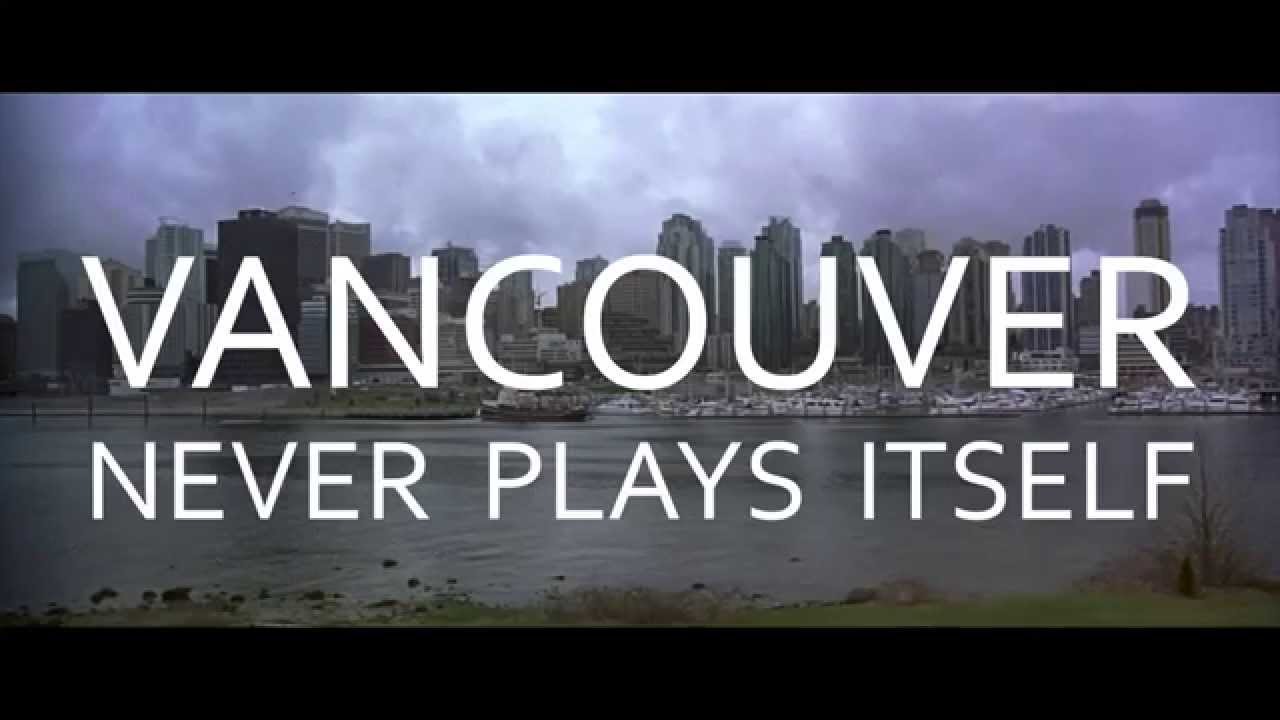
Every Frame a Painting
Independent filmmakers must actively portray Vancouver as itself to reclaim the city's authentic cultural identity from Hollywood's reliance on it as a generic, tax-incentivized backlot.
AI-assisted summary of Vancouver Never Plays Itself — original source. Check the original for full context.
Source published:
Key ideas
- Despite ranking as the third-largest film production city in North America behind Los Angeles and New York, Vancouver almost never appears as itself on screen. (0:08)
- Filmmakers disguise Vancouver using art department dressing, night shoots, shallow depth of field, and composited landmarks like the Space Needle or Transamerica Pyramid. (2:32)
- Prominent educational institutions are repeatedly typecast, with Arthur Erickson's concrete Simon Fraser University campus routinely serving as high-security compounds or corporate fortresses instead of a school. (4:33)
- Grassroots independent cinema offers an alternative to Hollywood's backlot approach by treating Vancouver as an authentic setting and archiving its lived reality. (6:15)
Detailed notes
## Background Created by Tony Zhou and co-written with Taylor Ramos, this video essay was published on the YouTube channel Every Frame a Painting on September 13, 2015. The video explores how Vancouver has become the third largest film production city in North America while remaining thoroughly concealed on screen, focusing on how the city is perpetually hidden in the background rather than showcased as itself.
## TL;DR Despite ranking as North America's third biggest film production hub, Vancouver almost never portrays itself on screen, instead serving as a cinematic chameleon for cities like Seattle, San Francisco, and New York. Hollywood productions mask the metropolis through art department tricks, night cinematography, selective framing, and digital skyline compositing, which ultimately subjects local architectural landmarks to rigid typecasting. Tony Zhou critiques the studio system for treating Vancouver merely as a tax-incentivized backlot location rather than an authentic narrative setting. Contrasting this erasure with the city's rich underground independent film history, the essay concludes with a call for local filmmakers to reclaim Vancouver and project genuine reflections of their home.
## Atmosphere & style The essay combines sharp, observational film analysis with deep, personal civic affection, propelled by Tony Zhou's dry wit and rhythmic editing. Viewers experience an engaging investigative journey that playfully exposes Hollywood's geographic sleights of hand before evolving into a poignant critique of cultural erasure. The emotional arc moves effortlessly from lighthearted amusement over continuity errors to a reflective, stirring plea for creative self-determination.
## Bulletin - [00:08](https://www.youtube.com/watch?v=ojm74VGsZBU&t=8s) Despite ranking as the third-largest film production city in North America behind Los Angeles and New York, Vancouver almost never appears as itself on screen. - [02:32](https://www.youtube.com/watch?v=ojm74VGsZBU&t=152s) Filmmakers disguise Vancouver using art department dressing, night shoots, shallow depth of field, and composited landmarks like the Space Needle or Transamerica Pyramid. - [04:33](https://www.youtube.com/watch?v=ojm74VGsZBU&t=273s) Prominent educational institutions are repeatedly typecast, with Arthur Erickson's concrete Simon Fraser University campus routinely serving as high-security compounds or corporate fortresses instead of a school. - [06:15](https://www.youtube.com/watch?v=ojm74VGsZBU&t=375s) Grassroots independent cinema offers an alternative to Hollywood's backlot approach by treating Vancouver as an authentic setting and archiving its lived reality.
## Key takeaways - [00:08](https://www.youtube.com/watch?v=ojm74VGsZBU&t=8s) Vancouver operates as one of North America's premier production centers, yet modern blockbusters virtually always disguise it as foreign locations like Seattle, the Bronx, or North Korea. - [00:08](https://www.youtube.com/watch?v=ojm74VGsZBU&t=8s) Filmmakers exploit geographic proximity and generic architecture, allowing locations within a 15-minute radius in Vancouver to double for disparate global settings. - [00:08](https://www.youtube.com/watch?v=ojm74VGsZBU&t=8s) Audiences rarely question establishing shots accompanied by authoritative location title cards, enabling seamless cuts between second-unit footage of real cities and Vancouver streets. - [02:32](https://www.youtube.com/watch?v=ojm74VGsZBU&t=152s) The art department overwrites the city's identity through props such as American flags, city-specific emergency decals, and USA Today vending boxes. - [02:32](https://www.youtube.com/watch?v=ojm74VGsZBU&t=152s) Cinematographers disguise the city using night photography, shallow focus, and tactical camera angles to obscure distinct geography like coastal mountain ranges. - [02:32](https://www.youtube.com/watch?v=ojm74VGsZBU&t=152s) Visual effects departments paste famous architectural landmarks or use digital matte extensions onto Vancouver streets to mimic other global skylines. - [04:33](https://www.youtube.com/watch?v=ojm74VGsZBU&t=273s) Over-reliance on Burrard Street's glass towers and Gastown's historic alleys has turned Vancouver into a generic, anonymous open-air backlot. - [04:33](https://www.youtube.com/watch?v=ojm74VGsZBU&t=273s) Local landmarks face rigid typecasting, such as the BCIT Aerospace Campus constantly doubling as an oppressive government compound. - [04:33](https://www.youtube.com/watch?v=ojm74VGsZBU&t=273s) Simon Fraser University is rarely depicted as an academic institution, instead routinely appearing as an ominous corporate headquarters or military base. - [04:33](https://www.youtube.com/watch?v=ojm74VGsZBU&t=273s) The University of British Columbia was once cast as Washington State University, reducing Vancouver, BC to playing Vancouver, Washington. - [06:15](https://www.youtube.com/watch?v=ojm74VGsZBU&t=375s) Hollywood treats Vancouver strictly as a cost-effective location with tax incentives and skilled crews, denying it an authentic cinematic narrative setting. - [06:15](https://www.youtube.com/watch?v=ojm74VGsZBU&t=375s) A 50-year-old DIY underground filmmaking tradition demonstrates how local cinema can archive real geography and portray the city's authentic lived experience. - [06:15](https://www.youtube.com/watch?v=ojm74VGsZBU&t=375s) Local filmmakers are urged to push forward and create original cinematic images of Vancouver rather than waiting for external studios to grant it an identity.
## Detailed walkthrough ### [00:08](https://www.youtube.com/watch?v=ojm74VGsZBU&t=8s) The Chameleon City and the Illusion of Elsewhere
Tony Zhou begins by sharing the very first time he felt deceived by a film: he was eight years old watching *Homeward Bound II: Lost in San Francisco*, only to realize that the setting on screen was not San Francisco at all, but his own hometown of Vancouver. Anyone who consumes mainstream blockbusters and television has likely watched Vancouver disguised as Santa Barbara, Seattle, or even the Bronx. In fact, despite being the third biggest film production hub in North America, Vancouver almost never appears as itself—it is always standing in for somewhere else. In *The Interview*, downtown's Robson Square is redressed to depict North Korea. The city's absence from screen identity is so profound that local productions even make self-referential jokes about it; one featured clip has a character deadpan, “My specialty is disguising Vancouver so it looks like an American city.”
Vancouver acts as a cinematic chameleon because of its geographical and architectural adaptability. In *Mission: Impossible – Ghost Protocol*, areas situated within a mere 15-minute drive of one another played Seattle, Eastern Europe, and India. Pulling off this sleight of hand begins with basic editorial framing. Audiences seldom challenge establishing shots, meaning filmmakers can simply shoot a fitting structure and slap an authoritative location title card across the bottom. Another common technique is capturing second-unit footage of the actual city and cutting directly to Vancouver streets. This tactic works particularly well when doubling for Seattle, as both Pacific Northwest hubs share remarkably similar architectural traits.
[02:32](https://www.youtube.com/watch?v=ojm74VGsZBU&t=152s) The Tools of Disguise: Art Department, Lighting, and VFX
```mermaid flowchart LR accTitle: Techniques for Disguising Vancouver accDescr: Pipeline of practical and digital methods used to turn Vancouver into other cities. subgraph Practical["Practical Disguise"] A["Art Dept Dressing<br>(Flags, Decals, USA Today Boxes)"] B["Cinematography<br>(Night Shoots, Shallow Focus, Framing)"] end subgraph Post["Post-Production"] C["VFX Compositing<br>(Skyline Landmarks & Matte Extensions)"] D["Seamless Edit<br>(Cross-City Geography Cut)"] end A --> B B --> C C --> D ```
Convincing the audience that Vancouver is an American metropolis requires heavy lifting across three key film departments:
- **The Art Department:** Crew members manipulate background details to overwrite local identity. They apply specific city decals to emergency vehicles, erect new business signs, unfurl American flags, and position *USA Today* newspaper vending boxes throughout exterior sets. As Zhou quips, “Because nothing says America like USA Today.” - **Cinematography & Lighting:** Directors of photography obscure the city's telltale landmarks by shooting primarily at night with shallow depth of field. This careful framing prevents errors like the notorious gaffe in Jackie Chan's *Rumble in the Bronx*, where the camera tilted north toward the Bronx and inadvertently captured Vancouver's prominent coastal mountain ranges. Changing camera height and movement also reimagines spaces; a high-angle, tripod-mounted shot transforms the Orpheum Theatre entryway into an elegant venue, while a handheld low-angle pass makes the identical location feel tense and gritty. - **Visual Effects (VFX):** Digital artists paste recognizable skyline icons—such as the Space Needle, the Transamerica Pyramid, or Alcatraz—onto Vancouver backgrounds. At times, the entire canvas is replaced: Front Street in New Westminster is reshaped with digital extensions to depict Japan in one sequence and a futuristic Chicago in another.
Through these combined efforts, an actor can throw themselves out of an upper-story window in downtown Vancouver and seamlessly land on pavement in San Francisco in the very next cut.
[04:33](https://www.youtube.com/watch?v=ojm74VGsZBU&t=273s) The Backlot Effect and Location Typecasting
Constantly substituting for foreign locations strips Vancouver of an authentic visual identity, reducing its screen representation to generic, anonymous architecture. Most films restrict their lens to the glass high-rises along Burrard Street or the historic cobblestone alleys off Cambie Street in Gastown, treating the municipality as little more than a sprawling open-air studio backlot.
When productions venture outside the standard downtown circuit, they fall into rigid location typecasting: - **BCIT Aerospace Campus:** Despite its distinctive modern architecture, the facility is perpetually cast as an oppressive, vaguely dystopian government compound where security personnel wave badges and fail to maintain order. - **Simon Fraser University (SFU):** Defined by Arthur Erickson's stark concrete steps and Brutalist courtyards, SFU is never permitted to play an actual academic institution; it is invariably relegated to serving as a high-security military base or an ominous corporate headquarters. - **University of British Columbia (UBC):** UBC routinely portrays universities, but only ever those outside of Canada. In one egregious instance, UBC was cast as Washington State University—meaning Vancouver, British Columbia, finally got the chance to play Vancouver, Washington. Tony Zhou laments this indignity, declaring, “For me, this is the single worst moment in local film history. I will never forgive this.”
[06:15](https://www.youtube.com/watch?v=ojm74VGsZBU&t=375s) Reclaiming the City as Setting, Not Just Location
Zhou questions the modern studio system's obsession with recycling a tiny handful of American cities. He asks why global cinema insists on repeating the exact same narratives simply to blow up the same four iconic landmarks over and over, while quietly shooting all four destructive spectacles within Vancouver. The dynamic exposes how Hollywood views the territory: “To Hollywood, Vancouver is a location but not a setting. It’s a place with talent and scenery and tax incentives but almost no film identity of its own.” He wonders if local crew members deliberately leave recognizable Vancouver details in the background as subtle acts of resistance.
Yet there is another cinematic legacy. For half a century, an independent underground film movement has actively let Vancouver play itself. Pioneers reflect on this DIY spirit: “We had no idea how to make a film,” followed by the recollection, “We had no idea. We just went ahead and made the film.”
These grassroots, independent stories capture an authentic lived reality—particularly resonant for the children of immigrants who navigated the metropolis on foot—treating Vancouver as an authentic setting rather than a rented studio space. Because fictional filmmaking possesses the power to archive a genuine era and physical geography, Zhou argues that the city deserves far more than cheap punchlines about its rainy climate. While Vancouver remains ubiquitous yet invisible across global screens, unfilmed perspectives still wait to be highlighted: “And I think it’s time we made a push to create new images of ourselves. Because honestly, it’s our city. Who else is going to do it?”
## Notable quotes > [06:15](https://www.youtube.com/watch?v=ojm74VGsZBU&t=375s) To Hollywood, Vancouver is a location but not a setting. It’s a place with talent and scenery and tax incentives but almost no film identity of its own. — Tony Zhou
## Mentioned Vancouver, Tony Zhou, Taylor Ramos, Homeward Bound II: Lost in San Francisco, The Interview, Robson Square, Mission: Impossible – Ghost Protocol, Seattle, San Francisco, USA Today, Jackie Chan, Rumble in the Bronx, Orpheum Theatre, Space Needle, Transamerica Pyramid, Alcatraz, Front Street (New Westminster), Burrard Street, Cambie Street, Gastown, BCIT Aerospace Campus, Simon Fraser University (SFU), Arthur Erickson, University of British Columbia (UBC), Washington State University, Thom Andersen, David Spaner, Douglas Coupland, Larry Kent, Terry Boake, Alex Yu
## Video description Perhaps no other city has been as thoroughly hidden from modern filmmaking as Vancouver, my hometown. Today, it’s the third biggest film production city in North America, behind Los Angeles and New York. And yet for all the movies and TV shows that are shot there, we hardly ever see the city itself. So today, let’s focus less on the movies and more on the city in the background. Press the CC button to see movie names and locations.
For educational purposes only. You can donate to support the channel at Patreon: http://www.patreon.com/everyframeapainting
This video was co-written with Taylor Ramos. Follow her on: Instagram: https://instagram.com/taylor.ramos/ Tumblr: http://taylorkramos.tumblr.com/
And follow me on: Twitter: https://twitter.com/tonyszhou Facebook: https://www.facebook.com/everyframeapainting
Music: Destroyer - Savage Night at the Opera http://bit.ly/1JJXG8f Rascalz - Northern Touch http://apple.co/1JUSUkR Rapsure Risin - Zoom Zoom http://bit.ly/1hRR51f D.O.A. - New Age http://apple.co/1EP7rSt The Ballantynes - PMA http://bit.ly/1N7VMAV The New Pornographers - The Bleeding Heart Show http://bit.ly/1IYWDfk
Special Thanks to: Alex Yu - Footage of The Interview from Robson Square: http://youtu.be/Kfip0ZmXlI0 Alex Yu’s Channel: https://www.youtube.com/user/darthsamurai Alex Yu’s Twitter: https://twitter.com/raginroninpro Terry Boake - A Bitter High (Larry Kent Documentary): http://youtu.be/sasukhIeqD4 Terry Boake’s Channel: https://www.youtube.com/channel/UC-gWj3LEJ8LuhlO5_4NoCKA
Recommended Reading & Viewing: Thom Andersen - "Los Angeles Plays Itself” http://amzn.com/B00LOMGG06 David Spaner - "Dreaming in the Rain” http://amzn.com/1551521296 Douglas Coupland - “City of Glass” http://amzn.com/1553653599
Help us caption & translate this video!
http://amara.org/v/HFWK/
[Source](https://www.youtube.com/watch?v=ojm74VGsZBU)