The Power of belief -- mindset and success | Eduardo Briceno | TEDxManhattanBeach
TEDx Talks
AI-assisted summary of The Power of belief -- mindset and success | Eduardo Briceno | TEDxManhattanBeach — original source. Check the original for full context.
Source published:
Key ideas
- Longitudinal research by Carol Dweck and Lisa Blackwell shows that seventh graders with a growth mindset steadily improve their grades over two years, while the academic achievement of peers with a fixed mindset stagnates. (0:00)
- Subtle phrasing in praise heavily influences risk tolerance; children praised for being smart chose easier puzzles and lied about their scores more than three times as often as those praised for effort. (5:32)
- Neuroscience indicates the brain functions like a muscle, with neuroplasticity physically rewiring cognitive capacity when individuals engage in deliberate, challenging practice. (3:07)
- Interventions demonstrating that groups can change have improved attitudes and willingness to compromise even in entrenched geopolitical conflicts, such as between Israelis and Palestinians. (7:43)
Detailed notes
## Background Published on YouTube by TEDx Talks on November 19, 2012, this presentation features Eduardo Briceño, Co-Founder and CEO of Mindset Works, speaking at TEDxManhattanBeach. The description highlights how our beliefs about intelligence and abilities shape our achievements, explaining how shifting from a fixed mindset to a growth mindset enables grit, deliberate practice, and lifelong success.
## TL;DR Drawing on neuroscience and the research of Dr. Carol Dweck, Eduardo Briceño explains that our underlying beliefs about intelligence—distinguished as either a fixed or a growth mindset—dictate how we handle challenges, effort, and failure. While viewing abilities as static breeds fragility and risk aversion, embracing a growth mindset rewires brain responses toward diagnostic learning and sustained achievement. Groundbreaking experiments demonstrate that praising effort rather than innate talent dramatically improves resilience, while fixed-mindset praise encourages cheating and withdrawal. These mindset shifts yield profound real-world benefits across classrooms, corporate management, and international diplomacy. Briceño concludes with three practical steps for personal transformation: grounding belief in neuroplasticity, committing to deliberate practice, and countering self-limiting self-talk with the word 'yet.'
## Atmosphere & style Briceño delivers a measured, articulate, and intellectually empowering talk that seamlessly bridges empirical social science with relatable human experiences. The pacing is deliberate and clear, carrying the audience from fascinating real-world examples like Josh Waitzkin's multi-disciplinary mastery into the revelatory dynamics of childhood praise experiments. Watching the presentation feels both enlightening and urgent, culminating in an uplifting call to dismantle self-imposed limitations and build a culture of potential.
## Bulletin - [00:00](https://www.youtube.com/watch?v=pN34FNbOKXc&t=0s) Longitudinal research by Carol Dweck and Lisa Blackwell shows that seventh graders with a growth mindset steadily improve their grades over two years, while the academic achievement of peers with a fixed mindset stagnates. - [05:32](https://www.youtube.com/watch?v=pN34FNbOKXc&t=332s) Subtle phrasing in praise heavily influences risk tolerance; children praised for being smart chose easier puzzles and lied about their scores more than three times as often as those praised for effort. - [03:07](https://www.youtube.com/watch?v=pN34FNbOKXc&t=187s) Neuroscience indicates the brain functions like a muscle, with neuroplasticity physically rewiring cognitive capacity when individuals engage in deliberate, challenging practice. - [07:43](https://www.youtube.com/watch?v=pN34FNbOKXc&t=463s) Interventions demonstrating that groups can change have improved attitudes and willingness to compromise even in entrenched geopolitical conflicts, such as between Israelis and Palestinians.
## Key takeaways - [00:00](https://www.youtube.com/watch?v=pN34FNbOKXc&t=0s) Foundational beliefs about ability drive qualities like perseverance, focus, and grit rather than the reverse. - [00:00](https://www.youtube.com/watch?v=pN34FNbOKXc&t=0s) Josh Waitzkin leveraged the principles of growth mindset to transition from national chess champion to world champion in Tai Chi Chuan. - [00:00](https://www.youtube.com/watch?v=pN34FNbOKXc&t=0s) Viewing success as an innate trait breeds fragility in the face of adversity, whereas embracing effort fosters resilience. - [03:07](https://www.youtube.com/watch?v=pN34FNbOKXc&t=187s) Historical figures like Charles Darwin, Lucille Ball, and Marcel Proust were dismissed as untalented early in life before systematically building mastery. - [03:07](https://www.youtube.com/watch?v=pN34FNbOKXc&t=187s) Brain scans reveal fixed-mindset individuals react most strongly to evaluative status feedback, while growth-mindset individuals activate most around diagnostic feedback on how to improve. - [03:07](https://www.youtube.com/watch?v=pN34FNbOKXc&t=187s) Effort is viewed by fixed-mindset individuals as an embarrassing indicator of low ability, but treated by growth-mindset individuals as the primary engine of intellectual growth. - [05:32](https://www.youtube.com/watch?v=pN34FNbOKXc&t=332s) Praising innate intelligence inadvertently encourages risk aversion, diminished resilience following setbacks, and dishonesty regarding performance. - [05:32](https://www.youtube.com/watch?v=pN34FNbOKXc&t=332s) Praising effort, strategies, and progress encourages children to embrace difficult challenges and bounce back from failure. - [07:43](https://www.youtube.com/watch?v=pN34FNbOKXc&t=463s) Growth-mindset interventions particularly narrow societal achievement gaps for groups facing negative cultural stereotypes, such as girls in mathematics. - [07:43](https://www.youtube.com/watch?v=pN34FNbOKXc&t=463s) Corporate leaders with a fixed mindset are more prone to reject critical feedback and neglect employee development. - [07:43](https://www.youtube.com/watch?v=pN34FNbOKXc&t=463s) Educational curricula frequently emphasize rote information and isolated critical thinking while ignoring the psychological mindset necessary to handle failure. - [09:19](https://www.youtube.com/watch?v=pN34FNbOKXc&t=559s) Cultivating a growth mindset begins with understanding the empirical neuroscience of brain malleability. - [09:19](https://www.youtube.com/watch?v=pN34FNbOKXc&t=559s) Mastery requires mastering the science of deliberate practice rather than relying on unguided repetition. - [09:19](https://www.youtube.com/watch?v=pN34FNbOKXc&t=559s) Individuals can actively reshape internal limitations by reframing thoughts like 'I can't do it' with the addition of 'yet.'
## Detailed walkthrough ### [00:00](https://www.youtube.com/watch?v=pN34FNbOKXc&t=0s) The Hidden Driver of Success: Josh Waitzkin and Mindset
Eduardo Briceño opens by asking what truly drives our success and enables us to reach our goals. While common answers point to hard work, focus, or persistence, scientific research demonstrates that these qualities are merely by-products of a deeper, more foundational belief that anyone can cultivate. To illustrate this, Briceño highlights the trajectory of Josh Waitzkin, an International Master in chess and the central subject of the book and film *Searching for Bobby Fischer*. Waitzkin accomplished an unprecedented sweep of national chess championships, yet upon turning 21, he chose to step away from chess entirely to master a radically unfamiliar domain: martial arts.
Because Waitzkin understood the core mechanics of personal growth and mastery, he was able to transfer those principles across disciplines. Throwing himself into Tai Chi Chuan through grueling work, repeated setbacks, and even broken joints, he went on to win two world championships before moving on to Brazilian Jiu-Jitsu. When asked what he considers the single greatest event in his life, Waitzkin surprisingly points to losing his very first national chess championship. That early loss saved him from falling into the psychological trap of believing he was uniquely gifted or exempt from effort. As Josh Waitzkin observed: “The moment we believe that success is determined by an ingrained level of ability, we will be brittle in the face of adversity.”
Waitzkin's insight reflects the pioneering research of Stanford professor Carol Dweck, who identified two distinct frameworks through which people view their capabilities: a "fixed mindset" (the belief that intelligence and talents are static, pre-determined traits) and a "growth mindset" (the belief that abilities are malleable qualities that can be cultivated). In a landmark longitudinal study conducted by Dr. Carol Dweck and Dr. Lisa Blackwell, researchers assessed the mindsets of several hundred incoming seventh graders and tracked their academic trajectories across two years. The findings revealed that students holding a growth mindset steadily improved their grades over time, whereas the academic performance of students with a fixed mindset stagnated, causing the achievement gap between the two cohorts to widen continuously based solely on their underlying beliefs about intelligence.
- Many people default to self-limiting labels, assuming they are simply "not a math person," not creative, not athletic, or, on the flip side, that they are effortless "naturals." - Trying to cultivate grit, resilience, or focus directly is far less effective than targeting the underlying growth mindset that generates those behaviors. - The link between mindset and performance extends well beyond academics into problem-solving, athletic performance, interpersonal management, and everyday skills.
[03:07](https://www.youtube.com/watch?v=pN34FNbOKXc&t=187s) Neuroplasticity, Brain Activity, and Responses to Effort
Modern neuroscience confirms that human capability is dynamic rather than fixed; the brain exhibits profound malleability, meaning individuals can actively reshape their capacity to think, reason, and perform. History is filled with luminaries whom contemporary experts dismissed as untalented: Charles Darwin, Lucille Ball, and Marcel Proust were all viewed early in their lives as lacking a future, yet alongside figures like Wolfgang Amadeus Mozart and Albert Einstein, they systematically built their abilities over time. Embracing a growth mindset allows individuals to unlock these higher levels of achievement because mindset produces measurable physiological changes in how the brain processes information.
Brain scans reveal that when individuals with a fixed mindset complete tasks, their neural activity spikes primarily in response to evaluative feedback that measures their status—such as an exam grade, a score, or an explicit judgment of their performance. In contrast, the brains of individuals with a growth mindset activate most intensely when presented with diagnostic feedback that explains how they can improve on future attempts. People with a fixed mindset become preoccupied with protecting their image and how they are judged, viewing effort as an embarrassing indicator of low innate ability. Conversely, people with a growth mindset treat effort as the very vehicle of growth that makes them smarter. When setbacks occur, fixed-mindset individuals interpret failure as proof of incompetence and disengage to protect their egos—a reaction frequently misdiagnosed by observers as a mere "lack of motivation"—while growth-mindset individuals view failure as an informative part of the learning cycle.
```mermaid flowchart TD accTitle: Fixed Mindset vs Growth Mindset Response Patterns accDescr: A comparison showing how fixed and growth mindsets diverge in their brain focus, view of effort, and reaction to failure.
subgraph Fixed["Fixed Mindset Framework"] F1["Focus: Evaluative Feedback (Grades, Scores)"] --> F2["Effort: Sign of Low Innate Ability"] F2 --> F3["Setback: Proof of Incompetence"] F3 --> F4["Outcome: Evasive Withdrawal & Stagnation"] end
subgraph Growth["Growth Mindset Framework"] G1["Focus: Diagnostic Feedback (Strategies to Improve)"] --> G2["Effort: Mechanism for Brain Growth"] G2 --> G3["Setback: Natural Part of Learning"] G3 --> G4["Outcome: Persistence & Skill Progression"] end ```
[05:32](https://www.youtube.com/watch?v=pN34FNbOKXc&t=332s) The Praise Dilemma: The Puzzle Experiment
To determine how readily mindsets are shaped by external cues, Dr. Carol Dweck and Dr. Claudia Mueller conducted an experiment where school children worked on an initial battery of puzzles and received one of two subtle variations in praise. One group received fixed-mindset praise centered on innate ability: "Wow, that's a really good score, you must be smart at this." The second group received growth-mindset praise targeted at effort and strategy: "Wow, that's a really good score, you must have tried really hard."
Following this single sentence of feedback, the children were asked whether they wanted to tackle an easy puzzle or a challenging puzzle for their next task. The majority of the children praised for being "smart" opted for the easy puzzle to safeguard their success, whereas the vast majority of children praised for their effort chose the challenging puzzle. The researchers then subjected all children to a deliberately difficult set of problems to gauge their resilience under strain. When returned to a final set of easy puzzles matching the difficulty of the opening round, the children who had received fixed-mindset praise scored significantly worse than they had initially, having lost confidence and cognitive composure. Those praised for effort improved their baseline performance.
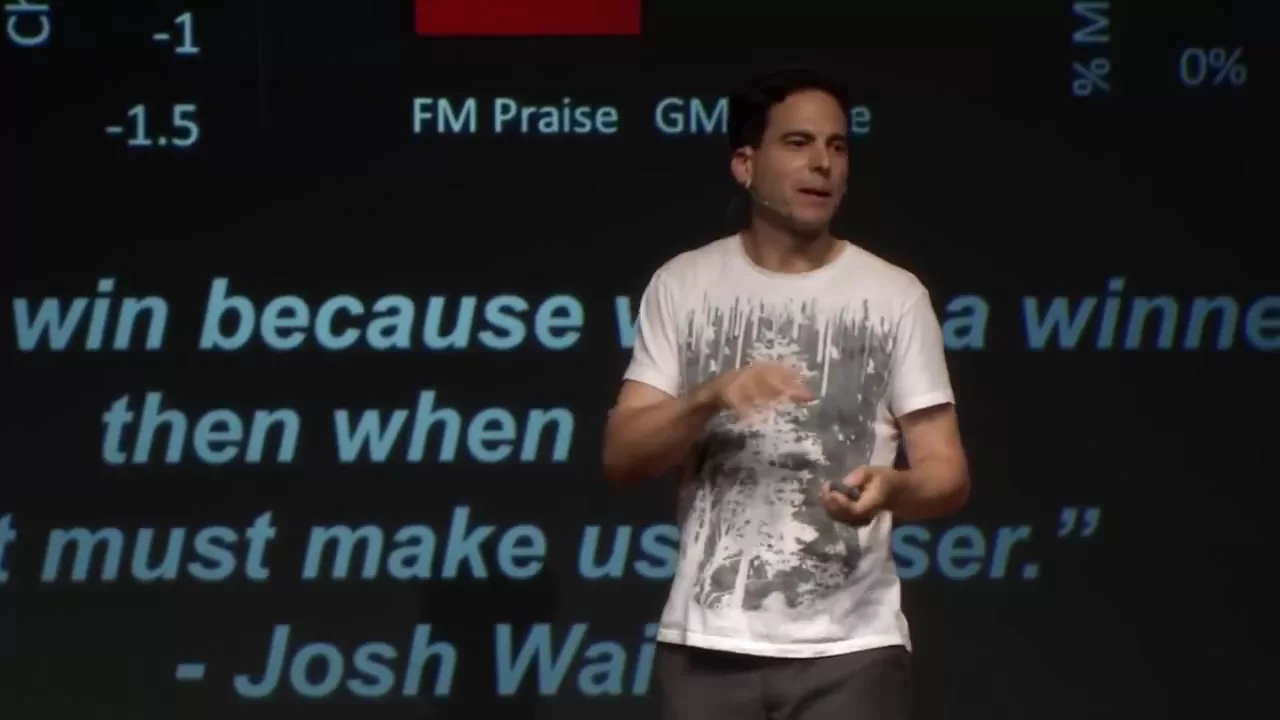
Finally, when asked to privately report their scores, the children praised for intelligence lied about their results more than three times as often as those praised for effort, having developed no healthy psychological mechanism to cope with perceived inadequacy. While adults often praise innate intelligence under the mistaken assumption that it builds self-esteem, it inadvertently fosters fragility and risk aversion. As Josh Waitzkin observed: “If we win because we are winners, then when we lose, it must make us losers.”
| Metric / Observed Reaction | Fixed-Mindset Praise ("You must be smart") | Growth-Mindset Praise ("You must have tried hard") | |:--- |:--- |:--- | | **Next Task Selection** | Majority chose easy puzzles to avoid failing | Great majority chose challenging puzzles | | **Performance After Failure** | Dropped significantly below baseline | Outperformed initial baseline scores | | **Misreporting Scores** | Falsified results >3x more frequently | Reported results honestly | | **Emotional Response to Difficulty** | Loss of confidence; withdrawal to preserve ego | Maintained engagement; treated difficulty as part of process |
[07:43](https://www.youtube.com/watch?v=pN34FNbOKXc&t=463s) Malleability of Mindset Across Schools, Workplaces, and Geopolitics
Mindsets are not permanently fixed traits; they can be systematically taught and revised. In a follow-up intervention by Dweck and Blackwell, seventh-grade students attended a targeted workshop designed to teach them that the brain acts like a muscle that grows stronger with exertion. Post-workshop tracking revealed that these students developed a genuine interest in learning, exerted greater effort, and achieved significant grade increases. Furthermore, growth-mindset interventions consistently narrow societal achievement gaps, generating the strongest positive gains among cohorts burdened by negative cultural stereotypes, such as underrepresented minorities and young girls in mathematics.
The influence of mindset operates across every sphere of adult life: - In corporate environments, managers with a fixed mindset routinely dismiss critical feedback and neglect employee mentoring, whereas professionals who view competencies like negotiation as learnable rapidly outperform peers who regard negotiation as an inborn talent. - In international conflict resolution, research indicates that when Israeli and Palestinian participants are exposed to empirical evidence demonstrating that cultural and political groups have the capacity to change, their mutual attitudes improve, and they exhibit a markedly higher willingness to compromise and pursue peaceful solutions. - Mindsets similarly alter the trajectory of interpersonal relationships, athletic development, and long-term physical health.
Briceño questions why educational systems remain hyper-focused on rote memorization, standardized concepts, and isolated critical thinking skills while neglecting the core psychological beliefs required to deploy those tools. Teaching facts without cultivating a growth mindset leaves students structurally ill-equipped to handle future failure.
[09:19](https://www.youtube.com/watch?v=pN34FNbOKXc&t=559s) Three Practical Steps to Cultivate a Growth Mindset
To close the presentation, Briceño outlines three practical, actionable steps that anyone can implement to nurture a growth mindset in themselves, their families, and their communities:
First, anchor the belief in empirical science. Recognizing that the brain physically adapts, generates new neural connections, and increases its operational capacity when subjected to rigorous challenges eliminates the myth that talent is predetermined.
Second, demystify the process of skill acquisition by learning and teaching the science of deliberate practice. Growth does not occur through random or passive repetition; it requires focused, effective effort, strategic adjustments, and targeted coaching. Grasping the actual mechanics of skill acquisition reinforces personal agency and the realization that individuals have direct control over their capabilities.
Third, cultivate self-awareness by actively listening for one's internal "fixed-mindset voice." Whenever that inner voice declares an absolute limitation, individuals must immediately counter it using the language of growth. As Eduardo Briceño instructs: “If you hear, 'I can't do it,' add, 'Yet.'” He concludes with an urgent appeal for attendees to carry this understanding into their households, workplaces, and local school boards so that society can help every individual realize their latent human potential.
## Notable quotes > [00:00](https://www.youtube.com/watch?v=pN34FNbOKXc&t=0s) The moment we believe that success is determined by an ingrained level of ability, we will be brittle in the face of adversity. — Josh Waitzkin
> [05:32](https://www.youtube.com/watch?v=pN34FNbOKXc&t=332s) If we win because we are winners, then when we lose, it must make us losers. — Josh Waitzkin
## Mentioned Eduardo Briceño, Josh Waitzkin, Carol Dweck, Lisa Blackwell, Claudia Mueller, Charles Darwin, Lucille Ball, Marcel Proust, Wolfgang Amadeus Mozart, Albert Einstein, Searching for Bobby Fischer, Mindset: The New Psychology of Success, Mindset Works, Brainology, TEDxManhattanBeach
## Video description The way we understand our intelligence and abilities deeply impacts our success. Based on social science research and real life examples, Eduardo Briceño articulates how mindset, or the understanding of intelligence and abilities, is key. When students or adults see their abilities as fixed, whether they think they're naturals or just not built for a certain domain, they avoid challenge and lose interest when things get hard. Conversely, when they understand that abilities are developed, they more readily adopt learning-oriented behaviors such as deliberate practice and grit that enable them to achieve their goals. But this belief is itself malleable, and there are clear actions we can all take to establish a growth mindset and enable success for our children, our peers and ourselves.
Eduardo Briceño is the Co-Founder and CEO of Mindset Works (http://www.mindsetworks.com), an organization that helps schools and other organizations cultivate a growth mindset culture. The growth mindset was discovered by Stanford professor and Mindset Works co-founder Carol Dweck, Ph.D., and is described in her book Mindset: The New Psychology of Success (http://www.mindsetonline.com). Mindset Works offers Brainology, an innovative blended learning program to teach a growth mindset to students, teachers and schools, as well as teacher professional development and tools (http://www.mindsetworks.com/brainology/).
About TEDx, x = independently organized event
In the spirit of ideas worth spreading, TEDx is a program of local, self-organized events that bring people together to share a TED-like experience. At a TEDx event, TEDTalks video and live speakers combine to spark deep discussion and connection in a small group. These local, self-organized events are branded TEDx, where x = independently organized TED event. The TED Conference provides general guidance for the TEDx program, but individual TEDx events are self-organized. (Subject to certain rules and regulations.)
[Source](https://www.youtube.com/watch?v=pN34FNbOKXc)