UK Grid Defuses 3-GW Surge After French Interconnector Fails
fiddyschmitt
Britain's unique post-television surges require split-second deployment of domestic hydroelectric reserves to prevent grid collapse when international power links fail.
AI-assisted summary of Britain peak power demand (from BBC TV series: Britain from Above) — original source. Check the original for full context.
Source published:
Key ideas
- Britain's synchronized TV pickups create sudden surges of roughly 3 GW within five minutes, equivalent to turning on 1.5 million to 1.75 million electric kettles simultaneously at the end of popular broadcasts like EastEnders. (0:00)
- To offset rapid spikes, National Grid relies on fast-reacting pumped-storage hydroelectric plants in Snowdonia and Scotland, alongside a 600 MW subsea HVDC link with France ramping at 100 MW per minute. (1:35)
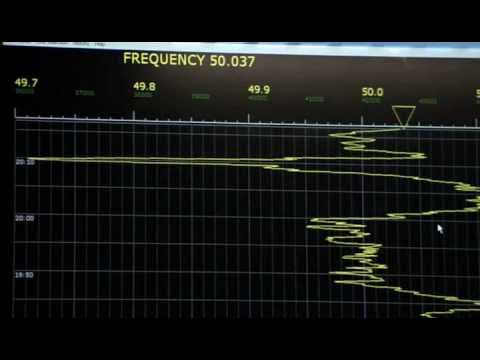
- A sudden trip on the cross-Channel French interconnector caused grid frequency to drop through 49.8 Hz, forcing control engineers to execute emergency dispatches of standby hydro reserves to avert grid instability. (3:06)
- Beyond evening domestic peaks, the transmission network maintains continuous baseload power for over 8 million streetlights and round-the-clock financial operations across Britain. (4:47)
Detailed notes
## Background Published on YouTube by user fiddyschmitt on August 2, 2010, this video features an excerpt from the landmark BBC documentary series Britain from Above, hosted by Andrew Marr. The series utilizes high-definition aerial footage and data visualization to uncover the hidden patterns, infrastructures, and daily rhythms interconnecting modern Britain.
## TL;DR At the National Grid Control Centre, balancing engineer Simon Jeffcoat monitors television programming to brace for a sudden 'TV pickup'—a synchronized 3-gigawatt surge driven by up to 1.75 million electric kettles switching on after EastEnders ends. To prevent frequency collapse, engineers coordinate rapid-response pumped-storage hydroelectric plants in Snowdonia and Scotland alongside a cross-Channel link from France. When the French interconnector suddenly trips offline and drops the frequency through 49.8 hertz, a split-second dispatch of reserve hydro stabilizes the system. The segment concludes by showcasing how this delicately balanced electrical network powers Britain's night, from eight million streetlights to 24-hour commercial centers.
## Atmosphere & style The clip pairs sweeping, majestic aerial panoramas with the quiet, ticking-clock tension of the National Grid control room. The drama turns a quintessentially mundane British domestic habit—making a cup of tea—into a thrilling high-stakes logistical challenge, amplified by sudden control-room alarms when cross-Channel power unexpectedly cuts out. It feels both technically precise and culturally affectionate, celebrating the invisible human coordination keeping everyday life running.
## Bulletin - [00:00](https://www.youtube.com/watch?v=slDAvewWfrA&t=0s) Britain's synchronized TV pickups create sudden surges of roughly 3 GW within five minutes, equivalent to turning on 1.5 million to 1.75 million electric kettles simultaneously at the end of popular broadcasts like EastEnders. - [01:35](https://www.youtube.com/watch?v=slDAvewWfrA&t=95s) To offset rapid spikes, National Grid relies on fast-reacting pumped-storage hydroelectric plants in Snowdonia and Scotland, alongside a 600 MW subsea HVDC link with France ramping at 100 MW per minute. - [03:06](https://www.youtube.com/watch?v=slDAvewWfrA&t=186s) A sudden trip on the cross-Channel French interconnector caused grid frequency to drop through 49.8 Hz, forcing control engineers to execute emergency dispatches of standby hydro reserves to avert grid instability. - [04:47](https://www.youtube.com/watch?v=slDAvewWfrA&t=287s) Beyond evening domestic peaks, the transmission network maintains continuous baseload power for over 8 million streetlights and round-the-clock financial operations across Britain.
## Key takeaways - [00:00](https://www.youtube.com/watch?v=slDAvewWfrA&t=0s) Evening electricity demand naturally rises at 7:00 p.m. as millions switch on cookers, heaters, and televisions across Britain. - [00:00](https://www.youtube.com/watch?v=slDAvewWfrA&t=0s) The TV pickup phenomenon generates a concentrated spike of approximately 3,000 MW within a narrow five-minute window. - [00:00](https://www.youtube.com/watch?v=slDAvewWfrA&t=0s) The scale and suddenness of the kettle-induced TV pickup is culturally and structurally unique to the British electrical grid. - [01:35](https://www.youtube.com/watch?v=slDAvewWfrA&t=95s) National Balancing Engineers monitor live television programming directly to anticipate exact transmission ends rather than relying solely on fixed timetables. - [01:35](https://www.youtube.com/watch?v=slDAvewWfrA&t=95s) Thermal generation plants are too slow to respond to five-minute spikes, making rapid-response pumped-storage hydroelectricity indispensable. - [01:35](https://www.youtube.com/watch?v=slDAvewWfrA&t=95s) High mountain reservoirs in Snowdonia and Scotland can unleash thousands of tons of water into underground turbines to generate hundreds of megawatts in seconds. - [01:35](https://www.youtube.com/watch?v=slDAvewWfrA&t=95s) Cross-border HVDC interconnectors provide flexible balancing capacity, such as importing 600 MW from France ramping at 100 MW per minute. - [01:35](https://www.youtube.com/watch?v=slDAvewWfrA&t=95s) National Grid engineers must constantly balance generation against demand to maintain electrical frequency as close as possible to exactly 50 Hz. - [03:06](https://www.youtube.com/watch?v=slDAvewWfrA&t=186s) During the EastEnders credits, Dinorwig hydro was quickly ramped to 300 MW alongside Scottish hydro running at full 90 MW capacity. - [03:06](https://www.youtube.com/watch?v=slDAvewWfrA&t=186s) An unexpected electrical trip on the French interconnector during peak ramp rapidly drained supply and caused frequency to plunge toward critical levels. - [03:06](https://www.youtube.com/watch?v=slDAvewWfrA&t=186s) When frequency breached the 49.8 Hz threshold, balancing engineers made an immediate emergency dispatch to bring secondary standby hydro units onto the bars. - [04:47](https://www.youtube.com/watch?v=slDAvewWfrA&t=287s) Following domestic evening surges, Britain's infrastructure sustains night baseloads, including powering 8 million streetlights and 24-hour financial institutions.
## Detailed walkthrough ### [00:00](https://www.youtube.com/watch?v=slDAvewWfrA&t=0s) The National Grid and the Phenomenon of the TV Pickup
At 7:00 p.m., millions of people across Britain are turning on cookers, electric heaters, and television sets, placing a mounting load on the nation's electrical network. Inside the National Grid Control Centre, National Balancing Engineer Simon Jeffcoat sits on duty beneath a massive display that functions as his bird’s-eye view of Britain. The entire island map is tilted on its side, tracing every high-voltage transmission route from the northern tip of Scotland down to Cornwall in exhaustive detail. Rather than monitoring just dials and schematics, Simon braces for the single most difficult moment of his shift by tuning his television to the BBC soap opera *EastEnders*.
When the soap’s closing credits begin to roll, Simon must confront a staggering surge in electrical consumption known in the industry as a "TV pickup." The sudden end of the broadcast prompts millions of viewers to step away from their sets simultaneously and switch on their appliances. As Simon Jeffcoat explains: “We're expecting uh a pickup of around about uh 3 GW, which is 3,000 million watts or equivalent to 1 and a half to 1 and 3/4 million kettles going on.” This colossal jump in demand does not happen gradually; it hits the grid over a narrow window of roughly five minutes. Surges of this magnitude and suddenness are entirely unique to Britain, as no other population on the planet turns on so many electric kettles in such a compressed space of time.
- **Anticipated surge:** Approximately 3 gigawatts (3,000 MW or 3,000,000,000 watts) arriving within a 5-minute window. - **Domestic equivalent:** Equal to between 1.5 million and 1.75 million electric kettles being turned on simultaneously. - **National pattern:** The phenomenon represents a synchronized cultural habit unmatched anywhere else in the world.
[01:35](https://www.youtube.com/watch?v=slDAvewWfrA&t=95s) Preparing Rapid Reserves: Pumped Storage and the French Interconnector
To absorb the violent jolt to the system, Simon cannot rely on slow-starting thermal generation. Instead, he must place specialized pumped-storage hydroelectric power stations on alert hundreds of miles away in Snowdonia and Scotland. These plants hold vast bodies of water in high mountain reservoirs, ready to unleash thousands of tons of water down steep pipes into subterranean turbines at a moment's notice to produce massive amounts of electricity in mere seconds. In addition to domestic hydro reserves, the National Grid turns to mainland Europe for assistance via the subsea cross-Channel HVDC link. Simon notes: “We have uh the French uh link picking up and they are picking up um 600 megawatt at 100 megawatt a minute. So that's again a very rapid response.”
```mermaid flowchart TD accTitle: Grid Balancing Response during EastEnders Pickup accDescr: Flow diagram showing demand surge managed by rapid reserves to stabilize 50 Hertz frequency.
subgraph Demand["Demand Surge"] EE["EastEnders Credits Roll"] -->|"~3 GW in 5 minutes"| PU["Domestic TV Pickup\n1.5M - 1.75M kettles"] end
subgraph Response["Rapid Reserve Dispatch"] PU --> NGB["National Grid Balancing"] NGB -->|"Hydro response"| DYN["Dinorwig & Scottish Hydro"] NGB -->|"Cross-Channel imports"| FR["French Interconnector\n(600 MW at 100 MW/min)"] end
subgraph Target["Grid Frequency Target"] DYN --> FREQ["Target: Exactly 50.0 Hz"] FR --> FREQ end ```
Managing this balance requires unwavering attention to the grid's flickering frequency needle, which must be maintained as close as humanly possible to 50 hertz. If power generation falls short of electrical load, the frequency sags toward dangerous lows; if generation outstrips demand, the frequency climbs out of tolerance. Precision timing is everything, yet balancing engineers are constantly at the mercy of unpredictable television programming schedules. A broadcast running even a minute ahead of or behind its scheduled billing can throw the engineer's calculations into jeopardy before the surge even arrives.
- **Pumped storage stations:** Water reserves in Snowdonia (Dinorwig) and Scotland capable of delivering hundreds of megawatts within seconds. - **French HVDC Interconnector:** Scheduled to deliver 600 megawatts ramping up at a rate of 100 megawatts per minute. - **Frequency stability threshold:** The grid must be held precisely around 50 Hz; under-frequency signals a shortage, while over-frequency signals an oversupply.
[03:06](https://www.youtube.com/watch?v=slDAvewWfrA&t=186s) The EastEnders Surge and the French Interconnector Trip
The moment the credits trigger the surge, Simon dispatches commands across the network from his control keyboard, instantly spinning up massive hydro turbines in remote corners of the country. Dinorwig is ramped up first to 150 megawatts and immediately instructed up to 300 megawatts, while northern hydro units ramp to their full 90-megawatt capacity. With power from the French interconnector flowing in alongside domestic generation, the first two minutes of the pickup appear manageable, indicating that supply will easily meet the national spike.
Suddenly, an alarm rings out across the control room as the cross-Channel feed trips offline. The abrupt failure of the additional import causes the national grid frequency to tumble toward critical territory. With only seconds before the shortage causes cascading instability, Simon makes an emergency call to bring another standby hydroelectric plant onto the bars. The immediate hydro injection stems the collapse and steers the frequency back into the safe operating band. Describing the split-second intervention, Simon Jeffcoat states: “Uh it was immediate decision. The as soon as the frequency dropped through 49.8 I had to react.” The fine equilibrium of the national network is preserved, allowing households across Britain to boil their water undisturbed.
- **Initial dispatches:** Dinorwig ramped to 300 MW; Scottish pumped-storage station brought to full 90 MW output. - **Crisis:** Sudden electrical trip on the French link cut unexpected supply during peak ramp. - **Critical threshold:** Frequency plunged through 49.8 Hz, triggering emergency dispatch of reserve hydro capacity.
[04:47](https://www.youtube.com/watch?v=slDAvewWfrA&t=287s) Powering the Modern British Night
With the TV pickup managed and the evening progressing, Britain's daytime rhythms wind down while its nighttime electrical life expands. From the air, the nation's towns and transit corridors are fully revealed by the invisible flow of energy managed by the National Grid controllers. Eight million streetlights blaze into action along roads and motorways across England, Wales, and Scotland. Towering office buildings in city centers remain lit from within, sustaining the global financial networks and high-speed information economy that work uninterrupted straight through the night.
- **Infrastructure scale:** Over 8 million streetlights activated simultaneously at nightfall. - **Economic continuation:** Power grids support 24-hour operations for the national information economy and commercial sectors.
## Mentioned Britain from Above, BBC, Andrew Marr, National Grid, National Grid Control Centre, Simon Jeffcoat, EastEnders, Dinorwig Power Station, Snowdonia, French Interconnector
## Video description I was blown away by this clip from the show called "Britain from Above". I recommend you catch it on a BBC channel near you.
An epic journey revealing the secrets, patterns and hidden rhythms of our lives from a striking new perspective.
Join host Andrew Marr as he discovers how each and every one of us is interconnecting making Britain what it is today.
Britain looks very different from the skies. From a bird's eye view of the nation, its workings, cities, landscapes and peoples are revealed and re-discovered in new and extraordinary ways.
Cutting edge technology allows you to see through cloud cover, navigate the landscape and witness familiar sights as never seen before.
This landmark series of documentaries was filmed in High Definition and aired on BBC One, Two and Four for three weeks starting August 10, 2008. See On TV for details of repeat broadcasts.
[Source](https://www.youtube.com/watch?v=slDAvewWfrA)