Jobs Defends OpenDoc Cut as Apple Pivots to Customer-Led Strategy
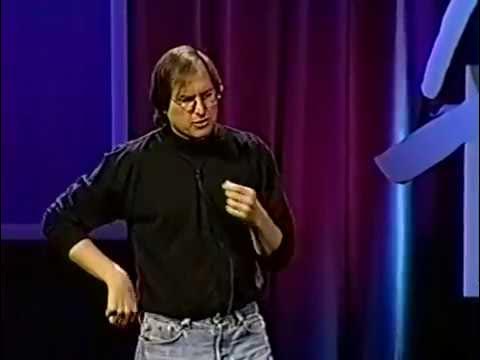
Steve Jobs Insult Response - Highest Quality — Jonathan Field

Jonathan Field

Technology companies must start with the customer experience and work backward to the engineering rather than building complex features and searching for a market.

AI-assisted summary of Steve Jobs Insult Response - Highest Quality — original source. Check the original for full context.

Source published:

Key ideas

  • At WWDC 1997, Steve Jobs answered an aggressive audience challenge regarding Apple's cancellation of OpenDoc and his own technical credentials following his return to the company. (0:01)
  • Jobs articulated his core product development philosophy: companies must start with the customer experience and work backwards to the technology, rather than engineering products and subsequently searching for a market. (1:43)
  • Recalling the 1985 LaserWriter launch, Jobs illustrated how marketing tangible end-user value matters far more than explaining complex underlying technical architectures to buyers. (2:44)
  • Jobs publicly defended Apple's turnaround leadership and engineering team, emphasizing that decisive action will naturally produce mistakes, but decisiveness is essential to save the company. (3:47)

Detailed notes

## Background Published on YouTube by Jonathan Field on December 1, 2016, this video captures Steve Jobs handling a hostile question during the 1997 Worldwide Developer Conference (WWDC). According to the description, Jobs had just returned to Apple as an advisor and was navigating sweeping structural changes across the company.

## TL;DR When an audience member bluntly challenges Jobs's technical competence over the cancellation of OpenDoc and questions his accomplishments during his seven-year absence, Jobs pauses calmly before delivering a masterclass on product strategy. He concedes that niche technical features can be valid, but argues that sustainable business success requires starting with the customer experience and working backwards to the technology, citing the 1985 LaserWriter launch as proof. Jobs takes personal responsibility for having made technology-first errors in the past, apologizes for OpenDoc being a necessary casualty, and passionately defends Apple's exhausted engineers and executives who are working tirelessly to turn the company around.

## Atmosphere & style The exchange opens with palpable, electric tension as the questioner launches a direct personal insult, greeted by an uneasy quiet across the room while Jobs takes a measured sip of water. Rather than becoming defensive, Jobs disarms the confrontation with quiet poise and self-deprecating humor, shifting the room's mood from friction to rapt attention. As he pivots from high-level product philosophy to an impassioned, loyal defense of his team burning the midnight oil, the atmosphere builds into a resonant, inspiring call to action for the developer community.

## Bulletin - [00:01](https://www.youtube.com/watch?v=oeqPrUmVz-o&t=1s) At WWDC 1997, Steve Jobs answered an aggressive audience challenge regarding Apple's cancellation of OpenDoc and his own technical credentials following his return to the company. - [01:43](https://www.youtube.com/watch?v=oeqPrUmVz-o&t=103s) Jobs articulated his core product development philosophy: companies must start with the customer experience and work backwards to the technology, rather than engineering products and subsequently searching for a market. - [02:44](https://www.youtube.com/watch?v=oeqPrUmVz-o&t=164s) Recalling the 1985 LaserWriter launch, Jobs illustrated how marketing tangible end-user value matters far more than explaining complex underlying technical architectures to buyers. - [03:47](https://www.youtube.com/watch?v=oeqPrUmVz-o&t=227s) Jobs publicly defended Apple's turnaround leadership and engineering team, emphasizing that decisive action will naturally produce mistakes, but decisiveness is essential to save the company.

## Key takeaways - [00:01](https://www.youtube.com/watch?v=oeqPrUmVz-o&t=1s) An attendee confronted Steve Jobs directly, claiming he was uninformed on multiple technical topics and questioning what he had accomplished over the previous seven years. - [00:23](https://www.youtube.com/watch?v=oeqPrUmVz-o&t=23s) The critic specifically pressed Jobs on how Java could replace the concepts of OpenDoc, criticizing Apple's decision to discontinue the framework. - [00:43](https://www.youtube.com/watch?v=oeqPrUmVz-o&t=43s) Jobs acknowledged that critics often make valid technical points and conceded that OpenDoc possessed unique capabilities unmatched elsewhere. - [01:25](https://www.youtube.com/watch?v=oeqPrUmVz-o&t=85s) A niche or impressive technical demo is insufficient unless it integrates into a cohesive vision capable of generating $8 billion to $10 billion in annual sales. - [01:43](https://www.youtube.com/watch?v=oeqPrUmVz-o&t=103s) Product development must always begin with the customer experience and work backward to the technology, rather than starting with engineering. - [02:01](https://www.youtube.com/watch?v=oeqPrUmVz-o&t=121s) Jobs admitted to personally making the mistake of leading with technology rather than customer experience earlier in his career, noting he has 'the scar tissue to prove it.' - [02:44](https://www.youtube.com/watch?v=oeqPrUmVz-o&t=164s) The 1985 LaserWriter succeeded commercially because the end result was instantly compelling to customers, eliminating the need to explain its complex hardware and software stack. - [03:47](https://www.youtube.com/watch?v=oeqPrUmVz-o&t=227s) Jobs apologized for OpenDoc becoming a casualty of Apple's restructuring and readily conceded that he does not know everything. - [04:02](https://www.youtube.com/watch?v=oeqPrUmVz-o&t=242s) Apple's turnaround leadership—including Avie Tevanian, Jon Rubinstein, Guerrino De Luca, and Fred Anderson—was praised for working grueling hours to stabilize the company. - [04:20](https://www.youtube.com/watch?v=oeqPrUmVz-o&t=260s) Making rapid decisions inevitably results in mistakes, but making decisions and correcting errors is preferable to organizational paralysis. - [04:32](https://www.youtube.com/watch?v=oeqPrUmVz-o&t=272s) Key Apple engineers and leaders remained committed to the company despite receiving offers of triple their compensation from other Silicon Valley competitors. - [04:44](https://www.youtube.com/watch?v=oeqPrUmVz-o&t=284s) Jobs urged third-party developers to support Apple's engineering staff by building high-quality applications for the platform during the turnaround.

## Detailed walkthrough ### [00:01](https://www.youtube.com/watch?v=oeqPrUmVz-o&t=1s) The Confrontation: A Direct Challenge to Jobs's Technical Competence

During an open Q&A session, an audience member stands up to deliver a pointed, sharp personal critique aimed directly at Steve Jobs. The questioner begins by offering backhanded praise before leveling his attack: “Yes, Mr. Jobs, you're a bright and influential man.” Sensing what is about to happen, Jobs murmurs under his breath, “Here it comes,” eliciting an anticipatory reaction from the audience. The attendee presses on without hesitation, stating bluntly: “It's sad and clear that on several accounts you've discussed you don't know what you're talking about.”

The questioner challenges Jobs on concrete technical decisions, focusing on Apple's abandonment of OpenDoc. He demands: “I would like, for example, for you to express in clear terms how say Java in any of its incarnations addresses the ideas embodied in OpenDoc, and when you're finished with that, perhaps you could tell us what you personally have been doing for the last seven years?” The direct jab references Jobs's period away from Apple (founding NeXT and running Pixar) and questions his grasp of modern developer frameworks. Following the jab, the room falls into an awkward, expectant silence as Jobs pauses, takes a drink of water, and prepares his response.

[00:43](https://www.youtube.com/watch?v=oeqPrUmVz-o&t=43s) Customer Experience Before Technology: The LaserWriter Philosophy

Jobs breaks the silence with a rueful chuckle and a classic adage: “You know, you can please some of the people some of the time, but...” He explains that the most difficult part of driving transformation within an organization is recognizing that critics often make valid technical points. He concedes that the questioner is correct about OpenDoc having unique capabilities: “One of the hardest things when you're trying to affect change is that people like this gentleman are right in some areas.” Jobs acknowledges that OpenDoc likely has features—and probably even more that he is not personally familiar with—that no other competing software replicates, and that one could build compelling technical demos or even a niche commercial application around them.

However, Jobs argues that the fundamental challenge is figuring out how isolated technical capabilities integrate into a comprehensive commercial strategy capable of driving an enterprise: “The hardest thing is, what, how does that fit in to a cohesive larger vision that's going to allow you to sell $8 billion, $10 billion of product a year?” He outlines his central philosophy for product development, declaring: “And one of the things I've always found is that you've got to start with the customer experience and work backwards to the technology.” He cautions against the traditional engineer-led approach: “You can't start with the technology and try to figure out where you're going to try to sell it.” Jobs takes personal accountability for this trap, remarking, “And I've made this mistake probably more than anybody else in this room, and I've got the scar tissue to prove it.”

```mermaid flowchart LR accTitle: Product Development Strategy Comparison accDescr: Flowchart contrasting the flawed technology-first approach against Steve Jobs's customer-first approach.

subgraph Flawed["Flawed Approach"] direction LR T1["Awesome Technology"] --> T2["Engineer-Led Solutions"] T2 --> T3["Struggle to Find Market/Sales"] end

subgraph JobsModel["Jobs's Customer-First Model"] direction LR C1["Customer Experience & Benefits"] --> C2["Cohesive Larger Vision"] C2 --> C3["Work Backwards to Technology"] C3 --> C4["High-Volume Sales ($8B–$10B)"] end ```

To illustrate the point, Jobs recalls the launch of the original LaserWriter printer in 1985. The device was packed with complex, bleeding-edge engineering, including the first affordable Canon laser engine imported into the United States, an Apple-designed custom controller, Adobe PostScript software, and AppleTalk networking. Yet the success of the LaserWriter was not won by explaining the inner mechanics to customers. Jobs recounts holding the very first printout coming out of the machine and instantly realizing: “You know, we can sell this, because you don't have to know anything about what's in that box; all we have to do is hold this up and go, 'Do you want this?'” In 1984, before laser printing existed, the sheer visual output was startling, prompting customers to immediately react with enthusiasm. That tangible end-user value, Jobs insists, is where Apple must return.

[03:47](https://www.youtube.com/watch?v=oeqPrUmVz-o&t=227s) Defending the Team, Making Decisions, and Looking Ahead

Addressing the sting of the canceled project directly, Jobs expresses genuine regret: “I'm sorry that OpenDoc is a casualty along the way.” He leans into self-deprecation, adding: “I readily admit there are many things in life that I don't have the faintest idea what I'm talking about, so I apologize for that too.”

From there, Jobs turns his attention to the human effort taking place inside Apple's restructuring. He passionately defends the leadership and engineering corps—calling out leaders by name such as Avie Tevanian, Jon Rubinstein, Guerrino De Luca, and Fred Anderson—who are putting in grueling hours to execute the company's turnaround: “There's a whole lot of people working super, super hard right now at Apple—you know, Avie, Jon, Guerrino, Fred—I mean, the whole team is working, burning the midnight oil, trying to... and hundreds of people below them to execute on some of these things, and they're doing their best.”

Jobs emphasizes that an aggressive turnaround requires rapid decision-making, which inevitably brings missteps: “Some mistakes will be made along the way—that's good, because at least some decisions are being made along the way, and we'll find the mistakes, we'll fix them.” He highlights the loyalty and dedication of the staff, noting that despite an overheated Silicon Valley market where competitors are trying to poach Apple employees with offers of triple their current compensation, the team is staying put: “They're all getting calls being offered three times as much money to go do this, do that—the Valley's hot—and none of them are leaving.” He urges the developer community to rally behind the engineers and build great software for the platform:

- The team needs developer backing: “I think what we need to do is support that team going through this very important stage as they work their butts off.” - A call to action for third-party developers: developers must “see them through this and write some damn good applications to support Apple out in the market.” - A realistic appraisal of the turnaround: “Mistakes will be made, some people will be pissed off, some people will not know what they're talking about, but it's—I think it is so much better than where things were not very long ago, and I think we're going to get there.”

## Notable quotes > [00:43](https://www.youtube.com/watch?v=oeqPrUmVz-o&t=43s) And one of the things I've always found is that you've got to start with the customer experience and work backwards to the technology. — Steve Jobs

> [03:47](https://www.youtube.com/watch?v=oeqPrUmVz-o&t=227s) Some mistakes will be made along the way—that's good, because at least some decisions are being made along the way, and we'll find the mistakes, we'll fix them. — Steve Jobs

## Mentioned Adobe PostScript, Apple, AppleTalk, Avie Tevanian, Canon, Fred Anderson, Guerrino De Luca, Java, Jon Rubinstein, LaserWriter, NeXT, OpenDoc, Pixar, Steve Jobs, Worldwide Developer Conference

## Video description Steve Jobs handling a tough question at the 1997 Worldwide Developer Conference. He had just returned to Apple as an advisor and was guiding sweeping change at the company. The full video is here - https://www.youtube.com/watch?v=6iACK-LNnzM - this interactions is at 50:25.

[Source](https://www.youtube.com/watch?v=oeqPrUmVz-o)

中文简报

乔布斯为砍掉OpenDoc辩护,苹果转向以客户为导向的战略 科技公司必须从客户体验出发,再倒推至工程研发,而不是先打造复杂的功能再去寻找市场。 当一位现场观众就OpenDoc的取消直言不讳地质疑乔布斯的技术能力,并质问他在离开苹果的七年间有何建树时,乔布斯冷静停顿,随后奉上了一堂精彩绝伦的产品战略课。他承认小众的技术特性可能确有价值,但指出持久的商业成功必须从客户体验出发,再反推至技术层面,并以1985年LaserWriter的发布为例予以证明。乔布斯主动承担了过去曾犯下“技术优先”错误的责任,为OpenDoc成为必要的牺牲品表示歉意,并激情捍卫了苹果那些精疲力竭、为扭转公司局面而不分昼夜工作的工程师与管理团队。 在1997年苹果全球开发者大会(WWDC)上,史蒂夫·乔布斯回应了现场观众对于苹果取消OpenDoc以及他重返公司后技术资历的尖锐质疑。 (0:01) 乔布斯阐述了他的核心产品开发理念:企业必须从客户体验出发,再倒推至技术实现,而不是先研发出产品再去寻找市场。 (1:43) 回顾1985年LaserWriter的发布,乔布斯阐明了向买家宣传切实可见的最终用户价值,远比解释复杂的底层技术架构重要得多。 (2:44) 乔布斯公开捍卫了苹果负责扭亏为盈的领导层和工程团队,强调果断的行动固然难免产生错误,但果断决策对挽救公司至关重要。 (3:47)

Reading summary

Responding to a sharp public critique over the cancellation of OpenDoc, Steve Jobs argued that successful products must originate from the desired customer experience and work backward to the engineering, rather than attempting to commercialize isolated technical feats. Working Backward from Customer Experience (0:43) When challenged on abandoning OpenDoc's technical architecture, Jobs conceded that critics often raise valid points regarding isolated features that competitors cannot match. However, he maintained that the fundamental executive challenge is integrating capabilities into a cohesive vision capable of selling $8 billion to $10 billion of product annually. Jobs stressed that product teams must start with the customer experience and work backward to the technology, acknowledging that he had acquired substantial "scar tissue" from making the reverse mistake earlier in his career. To illustrate this principle, Jobs highlighted the 1985 introduction of the LaserWriter printer. While the device integrated complex engineering—including an imported Canon laser engine, a custom Apple controller, Adobe PostScript software, and AppleTalk networking—its market success relied on demonstrating immediate end-user value. Customers bought the hardware because the visual quality of the output spoke for itself, without needing to understand the underlying mechanics. Strategic Focus and Decisive Execution (3:47) Addressing the discontinuation of OpenDoc directly, Jobs expressed regret over the project becoming a casualty of Apple's restructuring while readily admitting personal limits in specific technical domains. However, he argued that executing an aggressive turnaround requires swift, clear decisions. In his view, making decisions that produce occasional missteps is vastly superior to organizational paralysis, because errors can be identified and corrected along the way. Defending Turnaround Staff and Enlisting Developers (3:47) Jobs passionately defended Apple's operational team, singling out leaders such as Avie Tevanian, Jon Rubinstein, Guerrino De Luca, and Fred Anderson alongside hundreds of engineers working grueling hours. He pointed out that despite an overheated Silicon Valley labor market where rival firms routinely offered triple compensation to poach staff, Apple's core team chose to stay. Rather than fixating on discontinued initiatives, Jobs urged the third-party developer community to rally behind the remaining workforce. He framed the company's survival as a shared endeavor, asking developers to support Apple's transition by writing high-quality applications for the platform. Jobs concluded that while Apple's restructuring would inevitably anger some stakeholders and cause missteps, the company was in a far better operating position than in its recent past, with ultimate success depending on focused execution and external developer support.

精炼阅读摘要

在面对参会者关于放弃OpenDoc软件架构及个人技术能力的尖锐质问时,Steve Jobs阐述了其核心商业哲学:产品开发必须以最终用户体验为起点反推技术实现,而非从纯工程能力出发寻找销路。他指出,苹果公司的企业转型要求必须有服务于百亿美元级年销售额的连贯宏观愿景,在激进重组中承担决断、犯错与舍弃特定技术的必然代价。 现场对技术路线与管理能力的尖锐质疑 (0:01) 在一次公开问答环节中,一名参会者对Steve Jobs的技术素养发起直接攻击。提问者首先给出表面赞誉,随即直言Jobs在多个讨论议题上“显然不知道自己在说些什么”。他以苹果公司决定放弃OpenDoc软件架构为例,要求Jobs明确解释Java的各种形态究竟如何实现OpenDoc所蕴含的核心理念;紧接着,提问者追问Jobs在离开苹果创办NeXT与执掌Pixar的过去七年间究竟从事了何种技术工作,以此质疑其对现代开发者框架的实际掌控力。面对这一触及技术路线与个人履历的正面发难,全场陷入期待回应的沉默之中。 Jobs在短暂停顿并饮水后打破了沉默。他并未直接展开防御性技术辩解,而是借用俗语坦言无法取悦所有人,并承认推动组织变革时最困难的环节之一,恰恰在于批评者在特定技术局部往往持有正确观点。Jobs明确认可OpenDoc具有独特的技术特性,开发者完全能以此制作出令人惊艳的演示或细分商业应用,从而将论辩焦点从单纯的技术优劣转向更高维度的商业整合逻辑。 用户体验优先哲学与LaserWriter实证 (0:43) Jobs反驳了传统的工程师主导模式,强调企业的核心难题在于如何将孤立的技术能力融合进一个具有凝聚力的宏观愿景,以支撑每年80亿至100亿美元的产品销售规模。他提出了一贯遵循的产品开发准则:必须从客户体验出发反推技术选型,决不能先制造技术再去寻找买家。Jobs以自省态度表示,自己在以往经历中比在场任何人都更频繁地陷入过技术先行的陷阱,并付出了沉重的教训代价(“留下了伤痕来证明这一点”)。 为佐证这一观点,Jobs回顾了1985年苹果推出初代LaserWriter打印机的历程。该设备凝聚了当时极度复杂的尖端工程,包含首次引入美国的平价佳能(Canon)激光引擎、苹果自研定制控制器、Adobe PostScript软件以及AppleTalk网络架构。然而Jobs指出,LaserWriter的市场成功绝非靠向客户解说机箱内部的精密机制;早在1984年激光打印尚属罕见时,他手持机器吐出的第一份样张便意识到,只要向客户展示成品并询问其是否需要,其震撼的直观视觉价值就足以促成交易。他强调,苹果的当务之急正是回归这种直击终端价值的路径。 转型决断与代价:捍卫团队并寻求生态支持 (3:47) 对于终止OpenDoc引发的震荡,Jobs公开表达了歉意,承认该项目是公司转型道路上的“牺牲品”,并以自嘲姿态承认自己在许多领域确实缺乏了解。但他着重强调,陷入困境的企业要实现迅速扭亏,就必须加快决策节奏,期间不可避免会出现失误;只要保持决策推进,团队就能发现并纠正错误,这种状态远胜于过去停滞不前的僵局。 在此背景下,Jobs极力捍卫了正在竭力执行转型的苹果管理层与研发队伍,点名感谢了Avie Tevanian、Jon Rubinstein、Guerrino De Luca以及Fred Anderson等核心骨干。他透露,尽管当时硅谷就业市场极度过热,外部竞争对手开出三倍薪酬试图挖角,但团队核心成员依然坚守岗位加班加点。Jobs最后向第三方开发者发出呼吁,希望生态伙伴能够在关键转型阶段给予这支团队全力支持,为苹果平台编写出优质的应用程序,共同推动公司重返市场正轨。 本内容展示了Steve Jobs在企业危局中通过重构战略优先级来化解技术攻击的沟通范例。虽然该论证有效阐明了以用户为中心的反推逻辑,但Jobs并未在具体技术层面上正面解答Java如何替代OpenDoc架构,而是将技术争端升格为企业商业生存与规模化战略的权衡抉择。

Detailed notes — zh

## Background 该视频由 Jonathan Field 于 2016 年 12 月 1 日发布在 YouTube 平台。视频简介说明,内容记录了史蒂夫·乔布斯在 1997 年苹果全球开发者大会(WWDC)上巧妙应对尖锐提问的经典瞬间,当时他刚以顾问身份回归苹果并正主导激进的公司变革。 ## TL;DR 在 1997 年 WWDC 上,一名开发者当面质疑乔布斯的技术能力并指责其不懂业务,同时为人身攻击发难。乔布斯冷静沉思后展开回应,阐释了著名的“必须从客户体验出发倒推技术,而非先搞技术再去推销”的核心产品哲学,并以 LaserWriter 激光打印机为例说明宏大商业愿景的重要性。随后,他诚恳承认砍掉 OpenDoc 等决策带来的阵痛,坦然接受自身局限与犯错的必然性,并力挺正在日夜奋战的苹果团队,呼吁在场开发者共同支持苹果的重塑与未来。 ## Atmosphere & style 现场开局极具戏剧张力与火药味,面对突如其来且尖锐的人身攻击,全场陷入窒息般的沉默与凝重。然而,乔布斯从容不迫地饮水、静默沉思,随后以极具感染力的幽默自嘲与深邃哲思化被动为主动,将一场公开难堪巧妙转化为一堂震撼人心的商业领袖大师课。随着他动情地为坚守团队发声并展望愿景,整个氛围从最初的剑拔弩张与尴尬迅速蜕变为肃然起敬与共鸣鼓舞。 ## Bulletin - [00:00](https://www.youtube.com/watch?v=oeqPrUmVz-o&t=0s) 在 1997 年 WWDC 上,史蒂夫·乔布斯遭遇开发者针对技术能力与个人经历的公开挑衅,质疑其砍掉 OpenDoc 等决策。 - [00:43](https://www.youtube.com/watch?v=oeqPrUmVz-o&t=43s) 乔布斯提出了著名的产品核心哲学:产品研发必须从客户体验出发倒推技术,而非拿着现有技术苦思如何推销。 - [00:43](https://www.youtube.com/watch?v=oeqPrUmVz-o&t=43s) 以 LaserWriter 的成功为例,乔布斯强调产品战略必须契合能够支撑起苹果 80 亿至 100 亿美元年销售规模的宏大商业愿景。 - [03:47](https://www.youtube.com/watch?v=oeqPrUmVz-o&t=227s) 乔布斯力挺面临三倍高薪挖角仍坚守苹果的管理团队与工程师,指出敢于犯错纠偏远胜于在犹豫中停滞不前。 ## Key takeaways - [00:00](https://www.youtube.com/watch?v=oeqPrUmVz-o&t=0s) WWDC 现场开发者公开发难,尖锐指责乔布斯不懂技术并要求其交代过去七年的所作所为。 - [00:43](https://www.youtube.com/watch?v=oeqPrUmVz-o&t=43s) 面对人身攻击与挑衅,乔布斯保持冷静并以“无法满足所有人”作为回应的开端。 - [00:43](https://www.youtube.com/watch?v=oeqPrUmVz-o&t=43s) 乔布斯承认 OpenDoc 等被放弃的技术在某些局部特性上有其独特价值,且开发者能在特定小场景中发挥其优势。 - [00:43](https://www.youtube.com/watch?v=oeqPrUmVz-o&t=43s) 局部优秀的技术若无法融入连贯且庞大的商业大愿景,就无法支撑苹果年销售额 80 亿至 100 亿美元的生存规模。 - [00:43](https://www.youtube.com/watch?v=oeqPrUmVz-o&t=43s) 核心产品哲学在于必须“从客户体验出发,再倒推所需技术”,绝不能倒置这一流程。 - [00:43](https://www.youtube.com/watch?v=oeqPrUmVz-o&t=43s) 乔布斯坦白自己过去也犯过先造技术再找市场的严重错误,身上的失败“伤疤”让他深刻理解了这一原则。 - [00:43](https://www.youtube.com/watch?v=oeqPrUmVz-o&t=43s) 以 LaserWriter 为例,苹果整合佳能引擎、自研控制器、Adobe PostScript 与 AppleTalk,仅凭极致打印体验就征服了市场。 - [03:47](https://www.youtube.com/watch?v=oeqPrUmVz-o&t=227s) 乔布斯就 OpenDoc 的牺牲以及自身对许多领域的无知公开致歉,巧妙化解了技术细节上的对抗情绪。 - [03:47](https://www.youtube.com/watch?v=oeqPrUmVz-o&t=227s) 公开赞誉 Avie Tevanian、Jon Rubinstein 等核心高管与数百名员工在变革时期日以继夜的拼搏与付出。 - [03:47](https://www.youtube.com/watch?v=oeqPrUmVz-o&t=227s) 强调在当时硅谷猎头开出三倍薪资诱惑的火热环境下,苹果关键骨干无一人选择离职。 - [03:47](https://www.youtube.com/watch?v=oeqPrUmVz-o&t=227s) 阐述容错与决策哲学:变革期犯错是好事,因为犯错意味着团队在果断行动并有机会纠偏,远好过停滞不前。 - [03:47](https://www.youtube.com/watch?v=oeqPrUmVz-o&t=227s) 呼吁开发者放眼大局支持正在重回正轨的苹果团队,通过编写优秀软件共同开拓未来。 ## Detailed walkthrough ### [00:00](https://www.youtube.com/watch?v=oeqPrUmVz-o&t=0s) 现场提问:质疑技术能力与人身发难 在 1997 年苹果全球开发者大会(WWDC)的问答环节中,一名参会者站起来向史蒂夫·乔布斯(Steve Jobs)提出了一段火药味极浓的质问。提问者首先反讽乔布斯是个“聪明且有影响力的人”,乔布斯随即笑着对观众低语“它来了”(here it comes),预料到对方意图不善。接着,提问者直截了当地批评乔布斯:“It's sad and clear that on several accounts you've discussed you don't know what you're talking about.” 随后该提问者抛出具体的尖锐问题,要求乔布斯用清晰的语言解释,比如 Java 的任何具体形态如何能涵盖 OpenDoc 所体现的技术理念;不仅如此,提问者还将矛头直接对准乔布斯个人,要求他顺便讲清楚自己“过去七年里究竟都在干些什么”。面对台下开发者突然的尖锐发难与人身攻击,会场气氛瞬间凝固,随后陷入了数秒的沉默。 ### [00:43](https://www.youtube.com/watch?v=oeqPrUmVz-o&t=43s) 转变视角:从客户体验出发,而非倒推技术 ```mermaid flowchart TD accTitle: 乔布斯的产品哲学路径对比 accDescr: 对比从技术出发的错误模式与从客户体验倒推的正确模式。 subgraph Wrong["错误路径:技术驱动"] W1["坐下来与工程师探讨<br/>现有前沿技术"] --> W2["拼凑功能与小Demo"] W2 --> W3["苦思冥想如何推向市场销售"] end subgraph Right["正确路径:体验驱动"] R1["探索能带给客户的<br/>难以置信的价值与体验"] --> R2["构思契合统一大愿景的产品"] R2 --> R3["倒推并整合所需技术<br/>(如 LaserWriter)"] end ``` 乔布斯并未动怒,他喝了口水,静静沉思了几秒后缓缓开口,引用谚语说:“你可以满足一部分人于一时,但无法满足所有人于永远。”乔布斯坦承,在推动组织变革时,最艰难的一点在于提问者这类开发者在某些技术细节上确实是对的。他承认 OpenDoc 具备某些独特之处,甚至是目前市面上其他技术做不到的功能,开发者也完全可以拿它制作小演示或小商业软件。然而,最核心的问题是这些技术如何融入一个连贯且宏大的商业愿景中,去支撑起苹果年销售额 80 亿至 100 亿美元的产品规模。乔布斯借此分享了他最深刻的产品理念:“One of the things I've always found is that you've got to start with the customer experience and work backwards to the technology.” 他直言自己犯过比在场任何人都多的此类错误,身上的“伤疤”足以证明这一点。在重新确立苹果的战略时,必须先问能给客户带来何种不可思议的收益,绝不能先跟工程师坐在一起研究有什么酷炫技术再去想要怎么推销。 - 乔布斯以 LaserWriter(激光打印机)作为成功范例:当年苹果整合了佳能(Canon)廉价激光打印引擎、苹果设计的打印控制器、Adobe 的 PostScript 软件以及 AppleTalk 网络。 - 当第一张打印样张出来时,乔布斯拿起它便确信这能大卖,因为用户根本不需要理解机器内部多么复杂,只要展示打印效果问一句“你想要这个吗?”,在 1984 年前打印机尚不普及的年代,震撼的体验瞬间就能征服客户。 - 乔布斯强调,这才是苹果必须重新回归的核心轨道。 ### [03:47](https://www.youtube.com/watch?v=oeqPrUmVz-o&t=227s) 团队担当:承担决策阵痛与呼吁开发者支持 谈到技术路线调整的代价,乔布斯坦然致歉,并幽默地自嘲:“I'm sorry that OpenDoc's a casualty along the way and I readily admit there are many things in life that I don't have the faintest idea what I'm talking about so I apologize for that too.” 随后他将话题聚焦到正在奋战的苹果团队身上。他提到 Avie Tevanian、Jon Rubinstein、Guerrino De Luca、Fred Anderson 等高管以及麾下数百名员工正夜以继日地拼命工作执行变革,他们正付出最大的努力。乔布斯指出在变革途中难免会犯错,但犯错反而是好事,因为这说明团队终于在做决策,犯了错可以再修正。尽管当下硅谷极其火热,外部猎头纷纷开出三倍的高薪挖人,但苹果的核心骨干无一人跳槽离职。最后乔布斯坚定地总结道,虽然一些人会被激怒、一些人依旧会指责,但苹果目前的状态远胜不久前的泥潭,呼吁开发者给予这支团队全力支持,编写优秀的应用程序,共同迎接苹果的未来。 - 乔布斯当面点名感谢并力挺管理层骨干:Avie Tevanian、Jon Rubinstein、Guerrino De Luca、Fred Anderson 以及数百名基层工程师。 - 面对激烈的行业竞争,硅谷环境极为火爆,但团队面临三倍薪资诱惑依然选择坚守,乔布斯呼吁开发者理解并支持这支正在全力以赴的团队。 - 决策与容错哲学:“Some mistakes will be made along the way that's good because at least some decisions are being made along the way and we'll find the mistakes we'll fix them.” 乔布斯认为做出决定并纠偏远比停滞不前更加重要。 ## Notable quotes > [00:43](https://www.youtube.com/watch?v=oeqPrUmVz-o&t=43s) One of the things I've always found is that you've got to start with the customer experience and work backwards to the technology. — Steve Jobs > [03:47](https://www.youtube.com/watch?v=oeqPrUmVz-o&t=227s) Some mistakes will be made along the way that's good because at least some decisions are being made along the way and we'll find the mistakes we'll fix them. — Steve Jobs ## Mentioned Steve Jobs, OpenDoc, Java, LaserWriter, Canon, Adobe, PostScript, AppleTalk, Avie Tevanian, Jon Rubinstein, Guerrino De Luca, Fred Anderson, Apple, WWDC ## Video description Steve Jobs handling a tough question at the 1997 Worldwide Developer Conference. He had just returned to Apple as an advisor and was guiding sweeping change at the company. The full video is here - https://www.youtube.com/watch?v=6iACK-LNnzM - this interactions is at 50:25. [Source](https://www.youtube.com/watch?v=oeqPrUmVz-o)

Source quotes

[0:43] Steve Jobs: One of the things I've always found is that you've got to start with the customer experience and work backwards to the technology. [3:47] Steve Jobs: Some mistakes will be made along the way that's good because at least some decisions are being made along the way and we'll find the mistakes we'll fix them.

Source quotes

[0:43] Steve Jobs: And one of the things I've always found is that you've got to start with the customer experience and work backwards to the technology. [3:47] Steve Jobs: Some mistakes will be made along the way—that's good, because at least some decisions are being made along the way, and we'll find the mistakes, we'll fix them.

Original transcript

[0:01] yes Mr jobs you're a bright and [0:04] influential [0:06] man here it [0:09] comes it's sad and clear that on several [0:12] accounts you've discussed you don't know [0:13] what you're talking [0:15] about I would like for example for you [0:18] to express in clear terms how say Java [0:22] in any of its incarnations addresses the [0:25] ideas embodied in open duck and when [0:27] you're finished with that perhaps you [0:29] could tell us with you personally have [0:30] been doing for the last seven [0:36] years [0:43] uh you [0:45] know you can please some of the [0:48] people some of the time [0:57] but one of the hardest things when [1:00] you're trying to affect [1:02] change is [1:04] that people like this gentleman are [1:07] right in some [1:09] areas I'm sure that there are some [1:11] things opoc does probably even more that [1:14] I'm not familiar with that nothing else [1:16] out there [1:18] does and I'm sure that you can make some [1:22] demos maybe a small commercial app that [1:25] demonstrates those things the hardest [1:29] thing is [1:30] what how does that fit in to a cohesive [1:34] larger Vision that's going to allow you [1:37] to [1:38] sell um $8 billion1 billion a product a [1:44] year and one of the things I've always [1:48] found is [1:53] that you've got to start with the [1:55] customer experience and work backwards [1:58] to the technology [2:00] you can't start with the technology and [2:03] try to figure out where you're going to [2:05] try to sell it and I've made this [2:07] mistake probably more than anybody else [2:08] in this room and I've got the scar [2:10] tissue to prove it and I know that it's [2:12] the case and as we have tried [2:16] to come up with a [2:19] strategy and a vision for [2:22] Apple [2:24] um it started with what incredible [2:29] benefits come we give to the customer [2:31] where can we take the customer not not [2:35] starting with let's sit down with the [2:37] engineers and and figure out what [2:40] awesome technology we have and then how [2:42] are we going to Market that [2:45] um and I think that's the right path to [2:49] take uh I remember with the laser [2:54] writer we built the world's first small [2:58] Laser Printers you know and there was [3:00] awesome technology in that box we had [3:02] the first Canon Laser printing cheap [3:04] laser printing engine in the world in [3:06] the United States here at Apple we had a [3:09] very wonderful printer controller that [3:10] we designed we had adobe's postcript [3:13] software in there we had Apple talk in [3:14] there just awesome technology in the box [3:16] and I [3:18] remember seeing the first uh printout [3:21] come out of [3:23] it and just picking it up and looking at [3:26] it and thinking you know we can sell [3:28] this cuz you don't have to know anything [3:31] about what's in that box all we have to [3:32] do is hold this up and go do you want [3:33] this and if you can remember back to [3:35] 1984 before Laser Printers it was pretty [3:38] startling to see that people went whoow [3:43] yes and that's that's where Apple's got [3:47] to get back to and you know I'm sorry [3:51] that open Do's a casualty along the way [3:53] and I readily admit there are many [3:55] things in life that I don't have the [3:56] faintest idea what I'm talking about so [3:58] I apologize for that too but there's a [4:00] whole lot of people working super super [4:04] hard right now at Apple you know AI John [4:07] Gino Fred I mean the whole team is [4:10] working burning the midnight oil trying [4:13] to and and and people you know hundreds [4:15] of people below them to execute uh on [4:20] some of these things and they're they're [4:21] doing their best and I think that what [4:24] we need to do and some mistakes will be [4:26] made by the way some mistakes will be [4:28] made along the way that's good because [4:30] at least some decisions are being made [4:32] along the way and we'll find the [4:33] mistakes we'll fix [4:36] them and I think what we need to do is [4:38] support that team going through this [4:41] very important stage as they work their [4:43] butts off they're all getting calls [4:45] being offered three times as much money [4:46] to go do this do that the Valley's hot [4:48] and none of them are [4:49] leaving and I think we need to support [4:51] them and see them through this and write [4:54] some damn good [4:55] applications uh to support apple out in [4:58] the market that's my own point of view [5:00] mistakes we made some people will be [5:02] pissed off some people will not know [5:04] what they're talking about but it's I [5:07] think it is so much better than where [5:10] things were not very long ago and I [5:12] think we're going to get there