The Future of War, and How It Affects YOU (Multi-Domain Operations) - Smarter Every Day 211
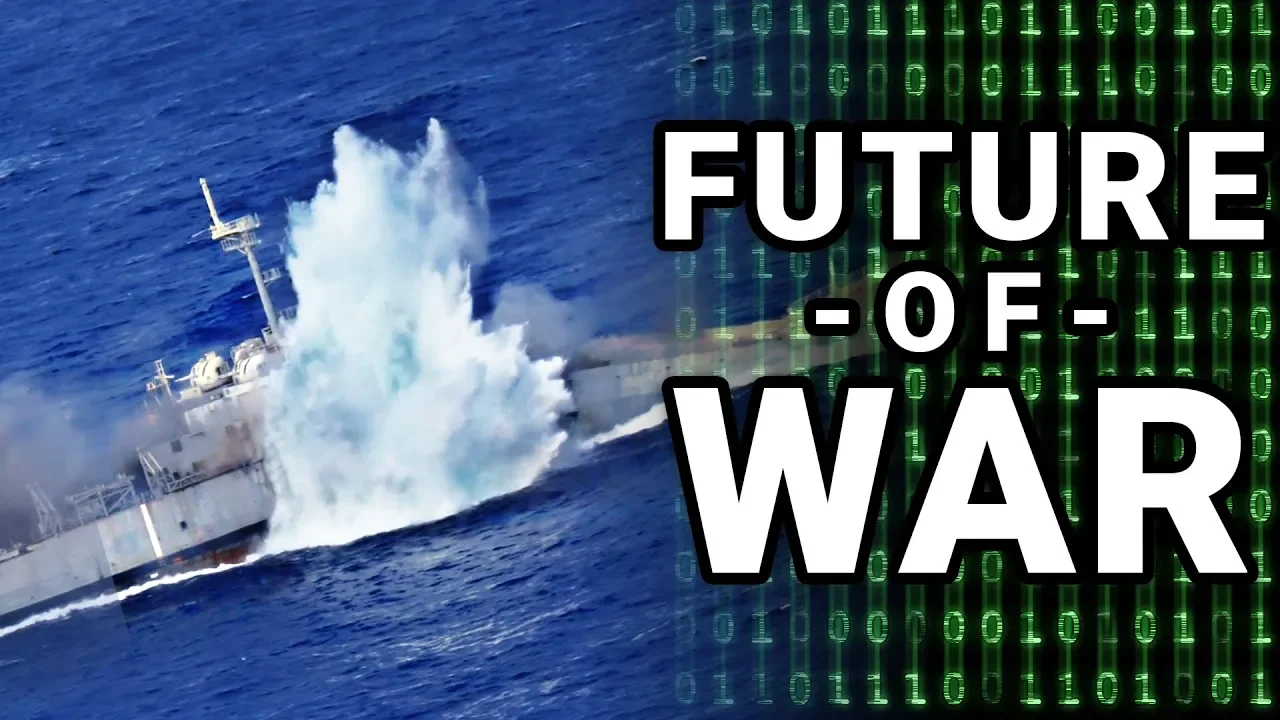
The Future of War, and How It Affects YOU (Multi-Domain Operations) - Smarter Every Day 211 — SmarterEveryDay

SmarterEveryDay

AI-assisted summary of The Future of War, and How It Affects YOU (Multi-Domain Operations) - Smarter Every Day 211 — original source. Check the original for full context.

Source published:

Key ideas

  • Destin declassifies his 15-year career as a civilian missile flight test engineer at the U.S. Army Test and Evaluation Command, revealing a strategic shift from counter-insurgency to peer competition. (0:04)
  • During RIMPAC 2018, multinational forces executed a live-fire SINKEX against the decommissioned USS Racine, coordinating land-based missiles, submarines, drones, and aircraft across multiple national militaries. (4:09)
  • U.S. military doctrine is pivoting to Multi-Domain Operations, expanding beyond traditional land, sea, and air theaters to simultaneously coordinate space, cyber, and human domains. (8:03)
  • General Robert Brown highlights the weaponization of the 'gray zone' and cyber domain, warning that disinformation campaigns target civilian polarization to secure a fait accompli before kinetic shots are fired. (13:01)

Detailed notes

## Background Published on March 3, 2019, on YouTube by Destin Sandlin of the channel SmarterEveryDay, this video reveals his 15-year career as a Department of Defense missile flight test engineer at the Redstone Test Center. The description explains that Destin was invited to film his final operational mission during RIMPAC 2018 at the Pacific Missile Range Facility to declassify and explain the concept of Multi-Domain Operations—particularly in the cyber domain—to the public.

## TL;DR Destin Sandlin documents his participation in a live-fire sinking exercise (SINKEX) during RIMPAC 2018, capturing high-speed missile and torpedo impacts against the decommissioned USS Racine. Alongside operational advisors and General Robert Brown, commander of U.S. Army Pacific, Destin explores Multi-Domain Operations, which integrates traditional land, sea, and air domains with orbital space and cyberspace to present layered dilemmas to adversaries. General Brown highlights how modern gray-zone warfare targets the human domain through digital subversion long before kinetic weapons are deployed. Concluding the episode, Destin connects these strategic doctrines to everyday civilian life, urging viewers to recognize social media as an active battlespace and counter division by practicing political grace.

## Atmosphere & style The video blends personal, reflective vulnerability with the visceral tension of high-stakes military telemetry, shifting smoothly from cockpit high-speed camera footage to high-level strategic discussion. Destin approaches the senior military leadership with genuine humility and curiosity, framing complex military doctrine in relatable analogies like multi-dimensional chess. The atmosphere carries an urgent, sober weight as the conversation moves from explosive kinetic impacts to the insidious nature of cyber warfare, leaving the viewer with a contemplative and empowering call to personal vigilance and societal unity.

## Bulletin - [00:04](https://www.youtube.com/watch?v=qOTYgcdNrXE&t=4s) Destin declassifies his 15-year career as a civilian missile flight test engineer at the U.S. Army Test and Evaluation Command, revealing a strategic shift from counter-insurgency to peer competition. - [04:09](https://www.youtube.com/watch?v=qOTYgcdNrXE&t=249s) During RIMPAC 2018, multinational forces executed a live-fire SINKEX against the decommissioned USS Racine, coordinating land-based missiles, submarines, drones, and aircraft across multiple national militaries. - [08:03](https://www.youtube.com/watch?v=qOTYgcdNrXE&t=483s) U.S. military doctrine is pivoting to Multi-Domain Operations, expanding beyond traditional land, sea, and air theaters to simultaneously coordinate space, cyber, and human domains. - [13:01](https://www.youtube.com/watch?v=qOTYgcdNrXE&t=781s) General Robert Brown highlights the weaponization of the 'gray zone' and cyber domain, warning that disinformation campaigns target civilian polarization to secure a fait accompli before kinetic shots are fired.

## Key takeaways - [00:04](https://www.youtube.com/watch?v=qOTYgcdNrXE&t=4s) Destin worked for 15 years as a Department of the Army federal civil servant at Redstone Test Center evaluating weapons systems under ATEC's motto of 'Truth'. - [04:09](https://www.youtube.com/watch?v=qOTYgcdNrXE&t=249s) The 2018 RIMPAC SINKEX on the USS Racine demonstrated joint, multinational anti-ship strike capabilities utilizing land, air, surface, and subsurface assets. - [04:09](https://www.youtube.com/watch?v=qOTYgcdNrXE&t=249s) Capturing high-speed optical telemetry from a hovering helicopter required passing underwater egress training and relying on pilot impact calls under strict focal limits. - [08:03](https://www.youtube.com/watch?v=qOTYgcdNrXE&t=483s) Modern doctrine is outgrowing linear combined arms, adding orbital space and cyberspace to traditional land, sea, and air operational environments. - [10:09](https://www.youtube.com/watch?v=qOTYgcdNrXE&t=609s) Cross-domain maneuver enables an asset in one theater, such as land-based artillery, to engage targets in another domain like the maritime battlespace using space-fed targeting data. - [11:22](https://www.youtube.com/watch?v=qOTYgcdNrXE&t=682s) General Robert Brown emphasizes that failing to innovate toward Multi-Domain Operations risks catastrophic defeat against peer and near-peer adversaries. - [13:01](https://www.youtube.com/watch?v=qOTYgcdNrXE&t=781s) The human domain remains the primary center of gravity in modern warfare, as conflict is fundamentally a contest of wills rather than autonomous machines fighting alone. - [13:01](https://www.youtube.com/watch?v=qOTYgcdNrXE&t=781s) Adversaries leverage the 'gray zone' via cyber attacks, plausible deniability, and disinformation to achieve a fait accompli before conventional combat is declared. - [13:01](https://www.youtube.com/watch?v=qOTYgcdNrXE&t=781s) Rapid information diffusion means individual battlefield actions or single social media posts can instantly create global strategic consequences. - [16:27](https://www.youtube.com/watch?v=qOTYgcdNrXE&t=987s) Multi-Domain Operations transition military strategy from linear service interdependence into seamless joint integration designed to present adversaries with multiple simultaneous dilemmas. - [20:04](https://www.youtube.com/watch?v=qOTYgcdNrXE&t=1204s) Decentralized mission command empowers junior leaders to solve complex problems within ambiguity rather than adhering to rigid procedural instructions. - [23:33](https://www.youtube.com/watch?v=qOTYgcdNrXE&t=1413s) Coalition warfare and allied cultural willingness to delegate authority to individual soldiers provide a strategic asymmetric advantage over authoritarian competitors. - [25:09](https://www.youtube.com/watch?v=qOTYgcdNrXE&t=1509s) The cyber domain acts as an invisible battlespace targeting everyday civilians to induce cultural tribalism and domestic polarization. - [25:09](https://www.youtube.com/watch?v=qOTYgcdNrXE&t=1509s) Practicing 'political grace' and learning to disagree constructively serves as a vital societal countermeasure against foreign online subversion.

## Detailed walkthrough ### [00:04](https://www.youtube.com/watch?v=qOTYgcdNrXE&t=4s) Destin's Hidden Career: 15 Years as an Army Flight Test Engineer

Destin introduces a side of his life that he kept concealed from his online audience for fifteen years: his career as a Department of Defense federal civil servant. Having taken an oath to defend the Constitution against all threats foreign and domestic, he applied mathematics and engineering as a missile flight test engineer for the U.S. Army Test and Evaluation Command (ATEC). The command’s core mission is to safeguard soldiers by rigorously testing military hardware, which requires engineers to master offensive enemy weapons in order to design and evaluate effective defensive countermeasures.

To demonstrate the reality of this work, Destin shares archival footage of himself operating various combat systems. Rather than casual target shooting, every exercise served as an engineering assessment of capabilities, limitations, mechanical jam clearing, and critical failure modes. His responsibilities spanned crew-served weapons like mortars, firing an aircraft minigun out of a maneuvering helicopter, manning the M242 25mm Bushmaster autocannon aboard an M2 Bradley Infantry Fighting Vehicle, and executing firing tests of anti-tank weaponry such as the FGM-148 Javelin guided missile.

Reflecting on his decade and a half at Redstone Test Center, Destin describes the professional tension of tackling high-stakes national security problems without being able to speak about his daily work. Over his career, he witnessed an overarching strategic pivot: while defense priorities in 2003 centered almost exclusively on counter-terrorism and counter-insurgency, recent years shifted military planning toward peer and near-peer competition with major state actors. As he prepared to leave civil service to pursue graduate studies, an unexpected phone call from a four-star general gave him the opportunity to document his final mission and declassify the operational concepts behind modern warfare for the public.

- Destin served 15 years as a Department of the Army federal civil servant at Redstone Test Center within the Army Test and Evaluation Command (ATEC). - ATEC's official motto is simply "Truth." - Weapons evaluated in Destin's operational testing include mortars, helicopter-mounted miniguns, Bradley Fighting Vehicles with 25mm chain guns, and Javelin missile systems.

---

[04:09](https://www.youtube.com/watch?v=qOTYgcdNrXE&t=249s) Operation RIMPAC: The SINKEX Mission of the USS Racine

Destin's final assignment took him to the Pacific Missile Range Facility (PMRF) off the coast of Kauai, Hawaii, during Rim of the Pacific (RIMPAC) 2018. As the world's largest biennial multinational maritime exercise, RIMPAC convenes partner nations to hone combined interoperability. The specific exercise Destin was tasked to film was a live-fire sinking exercise, known as a SINKEX, targeting the decommissioned amphibious transport dock USS *Racine* (LST-1191). Because his mission required hovering dozens of miles out to sea in a helicopter to capture high-speed impact telemetry, he first had to pass the U.S. Marine Corps underwater egress "dunker" survival training in the event of an open-ocean ditching.

Capturing scientific data from the air presented severe technical obstacles. The helicopter loitered at 10,000 feet, which forced Destin and a camera technician from Barking Sands to use extreme telephoto lenses. Destin described the sensation as looking through a narrow soda straw while battling helicopter vibrations and roll to keep the ship in frame and in sharp focus. Because exact detonation times could not be predicted to the second, the camera operators could not look away from their viewfinders, relying entirely on the pilot to call out "impact, impact, impact" the second smoke blossomed on the horizon so they could trigger the high-speed image buffers.

The exercise tested international joint targeting chains. The opening shot was a Norwegian Naval Strike Missile (NSM) fired from a land-based launcher operated by the U.S. Army, utilizing sensor targeting data fed from external platforms. The strikes continued throughout the day: an MQ-1C Gray Eagle drone maintained overhead surveillance while the Royal Australian Navy and the Los Angeles-class submarine USS *Olympia* hit the hulk with Harpoon anti-ship missiles. The Japanese Ground Self-Defense Force (JGSDF) followed up with a shore-launched Type 12 surface-to-ship missile. Destin managed to trigger his high-speed camera less than a hundred milliseconds before the Japanese missile struck the hull, capturing the required warhead detonation data.

The barrage concluded with U.S. Army AH-64 Apache attack helicopters flying offshore to strafe the vessel's superstructure with Hydra rockets and 30mm chain guns. The coup de grâce was delivered by a submarine-launched Mark 48 heavy torpedo. Flying lower due to reduced clearance fan restrictions, Destin tracked the torpedo impact in 4K: a catastrophic explosive gas bubble detonated beneath the hull, lifting the vessel and snapping its keel before the broken ship sank into the Pacific depths.

```mermaid flowchart TD accTitle: Multinational SINKEX Strike Sequence on USS Racine accDescr: Sequence of joint and partner weapons engaging the USS Racine during RIMPAC 2018

subgraph Targeting ["Reconnaissance & Targeting"] GE["US Army MQ-1C Gray Eagle"] PMRF["Range Sensors & Data Links"] end

subgraph LandSeaAir ["Surface & Subsurface Strikes"] NSM["US Army / Norwegian NSM<br>(Land-to-Ship)"] HRP["Australian Navy & USS Olympia<br>(Harpoon Missiles)"] JGSDF["Japanese Self-Defense Force<br>(Type 12 SSM)"] APA["AH-64 Apaches<br>(Rockets & 30mm Mike-Mike)"] end

subgraph FinalBlow ["Terminal Engagement"] MK48["Mark 48 Torpedo<br>(US Submarine Keel Strike)"] SINK["USS Racine Sinks"] end

Targeting --> LandSeaAir LandSeaAir --> FinalBlow ```

---

[08:03](https://www.youtube.com/watch?v=qOTYgcdNrXE&t=483s) Multi-Domain Operations: Moving Beyond Traditional Battlespaces

While confident in technical missile physics, Destin admits that large-scale military command and control is far outside his expertise: “I speak rocket, I speak missile, and I'm not intimidated by those things. This was an intimidating exercise for me personally, because I don't understand how to coordinate battlefield maneuvers.” To unpack the strategy behind joint land-to-sea missile operations, his colleague Captain Mackenzie Harp introduced him to Lieutenant Colonel Davis of the Asymmetric Warfare Group, an operational advisory arm within the U.S. Army Training and Doctrine Command (TRADOC).

Lieutenant Colonel Davis explains that modern warfare has outgrown the historical mental model of two-dimensional chess pieces sliding across a physical terrain map. Drawing an analogy to the holographic three-dimensional chess game seen in *Star Wars*, Davis argues that military planners must now maneuver simultaneously through layered, non-linear environments. While militaries historically organized their services around physical geography—the Navy dominating sea, the Army fighting on land, and the Air Force commanding the air—technological parity has forced modern armed forces to integrate two newer operating environments: space and cyber.

Destin questions whether classic combined-arms doctrines centered on Abrams tanks, naval vessels, and combat aircraft are becoming secondary. LTC Davis clarifies that physical platforms remain essential, but global telecommunications, satellite navigation, and internet-connected digital infrastructure now link every domain directly to one another. An effect initiated in cyberspace or orbital space can neutralize or enable kinetic maneuvers on land or at sea within fractions of a second. As LTC Davis puts it: “The operational space has changed, just like the world has changed.”

- Traditional warfare domains: Sea (Navy), Land (Army), and Air (Air Force). - Modern operational domains added to doctrine: Space and Cyber. - TRADOC (U.S. Army Training and Doctrine Command) designs doctrine to address complex, non-traditional threats across all five simultaneous domains.

[10:09](https://www.youtube.com/watch?v=qOTYgcdNrXE&t=609s) Cross-Domain Maneuver and the Modern Battlespace

In the modern battlespace, a single operator may be fighting a cyber battle to his left, managing a naval confrontation to his right, and tracking an ongoing air battle overhead—all within the exact same conflict. Destin identifies this concept as Multi-Domain Operations, which fundamentally relies on what military doctrine calls "cross-domain maneuver." In traditional military terms, a maneuver means the ability to shoot and move, with communication necessarily attached because one cannot shoot and move effectively without maintaining contact. A traditional cross-domain maneuver involves shooting from the sea through the air to hit a target on land.

Today, that paradigm has expanded dramatically. A soldier can now look through the cyber domain, leverage the space domain via an orbital satellite, and use that real-time intelligence to execute ground movement inside a dense city. Destin realizes that while he understands how individual personnel interact with these distinct domains, he needs to talk to the strategist setting the overall board—the leader playing the ultimate chess game. That search leads him directly to the commander of U.S. Army Pacific.

```mermaid flowchart LR accTitle: Cross-Domain Maneuver Architecture accDescr: Diagram showing how space and cyber domains feed operational data to execute land, air, and sea strikes.

subgraph NonPhysical["Virtual & Orbital Domains"] Space["Space Domain<br/>(Satellites / Comms)"] Cyber["Cyber Domain<br/>(Networks / ISR)"] end

subgraph Physical["Physical Domains & Strike Assets"] Land["Land Domain<br/>(Ground Maneuver / Launchers)"] Sea["Sea Domain<br/>(Naval Targets & Vessels)"] Air["Air Domain<br/>(Munitions Trajectory / Air Cover)"] end

Space -->|"Targeting Data"| Cyber Cyber -->|"Actionable Track"| Land Land -->|"Naval Strike Missile via Air"| Sea Air -.->|"Flight Path"| Sea ```

---

[11:22](https://www.youtube.com/watch?v=qOTYgcdNrXE&t=682s) Meeting General Robert Brown: The Imperative of Multi-Domain Operations

Destin sits down with four-star General Robert Brown, commander of U.S. Army Pacific. Destin expresses genuine humility and gratitude, noting that when his own career as a civilian tester began 15 years prior, the military was primarily geared toward fighting insurgencies and counter-terrorism, but the landscape has clearly shifted toward Multi-Domain Operations. General Brown responds with complete conviction about where modern warfare is heading:

> “So multi-domain operations, I will tell you it's a, I am positive, one thing I am positive, it's the way of the future and in warfare and we're either going to do like we are now, innovate and move towards multi-domain operations, to either win a conflict in the future or prevent it because nobody'd be stupid enough to fight against us, or we're gonna be forced to do it because we lose someday pretty badly and we're going to have to do it and I hope that's not the case.”

General Brown stresses that the military must get ahead of the curve rather than fight the last fight, building capabilities so formidable that adversaries are deterred from fighting at all. He traces this back as an evolutionary process rather than an unprecedented bolt from the blue: during the American Civil War at the Battle of Vicksburg, General Ulysses S. Grant had to coordinate Army forces with Navy gunboats on the Mississippi River—and even dug Grant's Canal to divert the river itself—blending the land and maritime domains. Yet today's world has introduced entirely new operational dimensions: cyber, space, and what Brown considers the foundational domain of all: the human domain.

- **Evolutionary foundation:** Combining domains traces back through U.S. history, such as joint Army-Navy riverine operations during the Civil War Siege of Vicksburg. - **Core domains in play:** Land, sea, air, space, cyber, and the overarching human domain. - **Strategic intent:** Innovate to build deterrent overmatch, avoiding the catastrophic alternative of adapting only after suffering a disastrous defeat.

---

[13:01](https://www.youtube.com/watch?v=qOTYgcdNrXE&t=781s) The Human Domain, Gray Zones, and the Fait Accompli

When Destin asks him to elaborate on the human domain, General Brown dismisses the popular assumption that future warfare will simply be an autonomous AI clash where machines fight machines without people. Because conflict is inherently a contest of wills between human beings, influence over people remains the central objective. In the modern era, that contest starts long before any kinetic weapon is fired, exploiting the boundaryless nature of space and cyber.

Destin asks the General to break it down simply, bringing up the pervasive social media manipulation campaigns reported in the news. Brown affirms that this dynamic constitutes the "gray zone"—an arena of continuous competition where adversaries like Russia and China operate below the traditional threshold of armed conflict:

> “What happens is, it's a fait accompli, that before we even fire a bullet they've already won.”

Brown points to Russia's 2014 operations in Ukraine and Crimea as a textbook case. Russian forces deployed "little green men"—troops stripped of identifying national insignia to manufacture plausible deniability—and paired them with targeted cyber disruptions and disinformation. By staying just beneath the threshold of open international conflict, they paralyzed Western decision-making until the territory was fully seized: once open combat was recognized, the fight was already over.

Furthermore, General Brown notes that the diffusion velocity of human information has shattered historical precedent. While a Civil War commander could transmit information quickly via telegraph, that information could not diffuse outward to an entire civilization in seconds. Today, a single private among the 106,000 soldiers under Brown's command in the Pacific can do something that lands on CNN that evening, exerting instantaneous worldwide impact. A single tweet can reach billions across the globe. This reality transforms business, sports, politics, and armed conflict alike.

---

[16:27](https://www.youtube.com/watch?v=qOTYgcdNrXE&t=987s) Joint Integration over Interdependence: Presenting Multiple Dilemmas

General Brown brings the discussion back from broad philosophy to operational mechanics, describing multi-domain operations as maneuvering across every domain into a position of relative advantage. While the U.S. military is already the most joint military force in the world, Brown insists it is still not joint enough. The goal is to move past historical service stovepipes and simple "joint interdependence" to genuine "joint integration," where cross-service cooperation is seamless and routine rather than an engineered exception.

Destin reflects on what he witnessed during the exercise: an allied foreign land unit engaged an offshore maritime target by consuming satellite intelligence provided over a different service branch's tactical network. Destin remarks that as a missile tester, he usually feels like a pawn staring closely at his own square, unable to view the broader board. Brown explains that this integrated menu of capabilities completely overturns linear warfare:

> “It allows you to present multiple dilemmas to an adversary instead of a linear, here comes the land force, here's the maritime forces, here's the air, we're working together, it's very linear and predictable, It's very unpredictable, multi-domain operations.”

Brown illustrates this synergy through a concrete tactical dilemma: if an adversarial warship attempts to skirt into shallow coastal littorals to escape the overwhelming open-ocean combat power of the U.S. Navy, land-based Army missile units can target and destroy that vessel from shore. If the ship turns back to the open sea to escape shore batteries, it sails directly into the Navy's engagement envelope.

Crucially, General Brown insists that this complex, non-linear warfare is impossible without extreme decentralization and empowerment through "mission command." If junior personnel are merely directed to perform rote, rigid tasks, the entire system collapses under the weight of real-time friction. Instead, leaders specify the desired commander's intent and ultimate objective, trusting highly trained non-commissioned officers and junior officers to improvise solutions, thriving within ambiguity and chaos.

[20:04](https://www.youtube.com/watch?v=qOTYgcdNrXE&t=1204s) 4D Chess and Breaking Down Stovepipes

Destin explores an analogy about modern operations, noting that while people often talk about commanders playing 4D chess, in this environment the chess pieces are alive and thinking on their own to determine the best move. General Robert Brooks Brown agrees enthusiastically with the comparison. In rapid modern warfare, a single centralized figure can no longer manually direct every move because events unfold too quickly. Instead, individual pieces are empowered to act independently while remaining tightly synchronized through continuous practice. Operating this way creates an unpredictable web of options across every domain to keep adversaries off balance.

```mermaid flowchart TD accTitle: Multi-Domain Operational Web accDescr: Interconnected domains converging on an adversary to present multiple dilemmas. subgraph Domains["Operational Domains"] Land["Land"] Sea["Maritime"] Air["Air"] Cyber["Cyber"] Space["Space"] end Land --> Dilemma["Multiple Dilemmas Web"] Sea --> Dilemma Air --> Dilemma Cyber --> Dilemma Space --> Dilemma Dilemma --> Adversary["Off-Guard Adversary"] ```

Achieving this requires breaking away from deeply ingrained organizational habits. General Brown points out that military leaders naturally grow up inside institutional silos: “37 years I've been Army, trained in Army schools. I did joint time, I was on the Joint Staff and stuff but I think of an Army solution first.” True multi-domain integration demands setting aside those default instincts to consider whether an air, maritime, or cyber option offers a better tactical answer. When Destin points out that General Brown, as head of U.S. Army Pacific, essentially oversees this multi-dimensional board, Brown humbly notes he commands only portions of it. Destin then asks whether making this explanatory video constitutes creating a weapon. General Brown validates the idea, stating: “Well, if it can help folks understand number one, if it can deter those that would do us harm, it's a hell of a weapon and if it can help those who are working this understand it a little better, support it a little better, then it's a heck of a weapon.”

[22:01](https://www.youtube.com/watch?v=qOTYgcdNrXE&t=1321s) The Changing Character of War and the Modern Soldier

General Brown explains that warfare is at a profound historical inflection point. While the underlying geopolitical reasons nations fight might endure, technology is drastically reshaping the character of conflict. Destin reflects on how public perceptions have evolved from the old stereotype of an American soldier—a muscular fighter built primarily to run far and carry heavy gear—toward an expectation of hyper-intelligent operators. General Brown clarifies that physical fitness remains non-negotiable; soldiers still face grueling physical demands, which is why the Army instituted a rigorous new Combat Fitness Test.

However, modern soldiering requires far more than brute strength or rote memorization. Rather than pure academic brilliance, the modern battlefield demands holistic thinkers who can navigate uncertainty: “I'd say it's the ability to solve a complex problem in a timely manner with a creative solution, the ability to thrive in ambiguity and chaos, that's not necessarily hyper-intelligence.” Leadership doctrine must mirror that shift. Instead of dictating a rigid sequence of procedural steps, commanders must outline the desired end state and trust personnel to determine the path forward. Brown summarizes the shift directly: “Here's the outcome I want, you figure out how to get there. That's the difference.”

[23:33](https://www.youtube.com/watch?v=qOTYgcdNrXE&t=1413s) Deterrence, Coalitions, and Empowering the American Spirit

Reflecting on his role, General Brown rejects the notion of being a "game master," stressing that war is deadly serious. The ultimate goal of multi-domain readiness is credible deterrence so that armed conflict never occurs in the first place. Central to this posture is coalition warfare; the United States will not act alone, making international allies like the Japan Ground Self-Defense Force vital participants in live exercises.

Furthermore, General Brown identifies cultural philosophy as a decisive strategic edge over authoritarian rivals. Opposing regimes often lack the structural willingness or cultural ability to decentralize control down to the lowest ranks. By trusting and empowering individuals, the military harnesses what Brown terms the "American Spirit," giving allied forces a decisive advantage. He commends Destin for the courage to fly in a helicopter directly above live missile firings to witness the concept firsthand, expressing pride in how the U.S. Army is spearheading multi-domain integration across services and partners.

[25:09](https://www.youtube.com/watch?v=qOTYgcdNrXE&t=1509s) The Cyber Domain, Subversive Warfare, and Political Grace

Transitioning from his conversation with General Brown, Destin addresses the civilian implications of what he learned, hoping the video serves as an active countermeasure. He notes how striking it is that a four-star combat commander repeatedly emphasized the cyber domain and its direct effect on ordinary civilians. Unlike land or naval actions—where an arriving warship makes obvious noise and combatants wear identifying uniforms—the cyber domain operates through quiet subversion: “This type of conflict is based on deception and the most important deception is to convince you that you're not at conflict.” Online adversaries like anonymous screen names do not signal their hostile intentions, and users often dismiss digital influence operations as harmless fun or paranoid conspiracy theories.

Destin points out that digital maneuvers bypass conventional defenses to target the human mind, driving polarization and tribalism. Recognizing that the cyber domain is an active battlespace represents only half the fight; the remaining challenge is resisting societal fragmentation. Hostile actors seek out internal cultural divisions to inflame them against one another. To counter this bombardment, Destin advocates for intentional, proactive unity and greater personal awareness of the content individuals consume, like, and share:

- Online combatants mask their operations because internet activities lack visible uniforms and physical noise. - Digital platforms cultivate an "us versus them" mentality that ensnares even intelligent, well-meaning people. - Awareness that individual web users operate directly within a designated military domain fulfills the old adage that "knowing is half the battle." - The primary strategic countermeasure against online destabilization is extending patience and "political grace"—defined as the art of disagreeing well with opponents—depriving adversaries of the division they seek to exploit.

## Notable quotes > [25:09](https://www.youtube.com/watch?v=qOTYgcdNrXE&t=1509s) This type of conflict is based on deception and the most important deception is to convince you that you're not at conflict. — Destin Sandlin

> [08:03](https://www.youtube.com/watch?v=qOTYgcdNrXE&t=483s) The operational space has changed, just like the world has changed. — Lieutenant Colonel Davis

## Mentioned Destin Sandlin, General Robert Brooks Brown, Lieutenant Colonel Davis, Captain Mackenzie Harp, General Ulysses S. Grant, U.S. Army Test and Evaluation Command, Redstone Test Center, U.S. Army Training and Doctrine Command, Asymmetric Warfare Group, U.S. Army Pacific, Royal Australian Navy, Japan Ground Self-Defense Force, U.S. Marine Corps, Pacific Missile Range Facility, RIMPAC, USS Racine (LST-1191), USS Olympia, Naval Strike Missile, Harpoon missile, Type 12 surface-to-ship missile, Mark 48 torpedo, MQ-1C Gray Eagle, AH-64 Apache, M2 Bradley, M242 Bushmaster, FGM-148 Javelin, M1 Abrams, CNN

## Video description It's a strange feeling to share this aspect of my life. I'm taking a break to go back to school, but here's a peek into the part of my life I've kept hidden from the internet for many years. I was asked if I wanted to film my last mission and use it as an opportunity to explain "Multi-Domain Operations" to the public. After much consideration, I decided that this topic (especially the cyber-domain issue) was important and chose to help inform the public.

My mission was to participate in a missile and torpedo engagement exercise at Pacific Missile Range Facility as part of RIMPAC 2018. RIMPAC (Rim of the Pacific Exercise) is the largest naval exercise in the world. It's used to test interoperability and the ability to work as an international force.

Click here if you're interested in subscribing: http://bit.ly/Subscribe2SED ⇊ Click below for more links! ⇊ ~~~~~~~~~~~~~~~~~~~~~~~~~~~~ GET SMARTER SECTION

I was invited to discuss multi-domain operations with General Brown: https://en.wikipedia.org/wiki/Robert_Brooks_Brown

Exercise RIMPAC https://en.wikipedia.org/wiki/Exercise_RIMPAC

Where we performed the exercise https://en.wikipedia.org/wiki/Pacific_Missile_Range_Facility

We fired the Norwegian Naval Strike Missile https://en.wikipedia.org/wiki/Naval_Strike_Missile

JGSDF Fires Surface-to-Ship Missile during RIMPAC SINKEX https://www.dvidshub.net/image/4557687/jgsdf-fires-surface-ship-missile-during-rimpac-sinkex

For the last 15 years I have worked for the Army Test Evaluation Command. My favorite thing about ATEC is that our motto is simply "Truth". https://en.wikipedia.org/wiki/United_States_Army_Test_and_Evaluation_Command

I served for 15 years as a Department of the Army Federal Civil Servant at The Redstone Test Center.

Multi-Domain Operations U.S. Army Training and Doctrine Command https://www.tradoc.army.mil/

I coordinated this mission with U.S. Army Pacific Command https://en.wikipedia.org/wiki/United_States_Army_Pacific

~~~~~~~~~~~~~~~~~~~~~

GET STUFF SECTION: (If I did this right these should be working Amazon affiliate links to purchase the stuff I like to use. When people purchase from these links it will support Smarter Every Day.)

❓Mystery Item (just for fun): https://amzn.to/2SjFwEo

Things I use and like:

📷Camera I use : https://amzn.to/2VSiruw Favorite Lens: https://amzn.to/2KPDQ1a Wide-angle: https://amzn.to/2SlPchR On-camera Mic: https://amzn.to/2SJulF4 Lav Mic: https://amzn.to/3aRek6r Hot shoe mount for Lav Receiver: https://amzn.to/35m6uAo My Tripod: https://amzn.to/2Yl6RtJ My Multi-tool: https://amzn.to/2zGm5Pz Favorite SD Card: https://amzn.to/2KQ3Edz 💾How I get footage off my phone: https://amzn.to/2KMem4K Travel Tripod: https://amzn.to/2zEa9Oi My Backpack: https://amzn.to/35jveJL My Headlamp: https://amzn.to/3deYmVt Favorite Bidet: https://amzn.to/2xnMG3b World Map: https://amzn.to/3aTFCZT Favorite Shoes: https://amzn.to/3f5trfV Everyone needs a snatchblock: https://amzn.to/2DMR4s8 🥽Goggle Up! : https://amzn.to/2zG754g

Also, if you’re interested in a Smarter Every Day shirt etc. they’re really soft and you can get there here: https://www.smartereveryday.com/store ~~~~~~~~~~~~~~~~~~~~~~~~~~

Footage contained in this video has been reviewed and is approved for public release in accordance with DoD Directive 5230.09. The views and opinions of the narrator do not necessarily represent the views of the U.S. Army. Filmed at RIMPAC 2018, Edited 2019

Tweet Ideas to me at: http://twitter.com/smartereveryday

Smarter Every Day On Instagram http://www.instagram.com/smartereveryday

Smarter Every Day SubReddit http://www.reddit.com/r/smartereveryday

The thought is it my efforts making videos will help educate the world as a whole. Until then if you appreciate what you've learned in this video and the effort that went in to it, please share the video.

Warm Regards,

Destin

[Source](https://www.youtube.com/watch?v=qOTYgcdNrXE)

中文简报

战争的未来及其对你的影响(多域作战)- Smarter Every Day 211 Destin Sandlin 记录了自己参与 2018 年环太平洋军演(RIMPAC 2018)实弹击沉演习(SINKEX)的经历,拍摄了导弹和鱼雷对已退役的拉辛号(USS Racine)的高速撞击。在作战顾问和美国太平洋陆军司令 Robert Brown 上将的陪同下,Destin 探讨了多域作战,该作战将传统的陆、海、空域与轨道空间和网络空间相整合,从而给对手造成多重困境。Brown 上将强调了现代灰色地带战争如何在动能武器部署之前很久,就通过数字颠覆手段以人类领域为目标。在剧集结尾,Destin 将这些战略条令与普通平民的日常生活联系起来,敦促观众将社交媒体视为一个活跃的交战空间,并通过展现政治包容来抵御分裂。 Destin 解密了他在美国陆军测试与评估司令部担任民职导弹飞行测试工程师的 15 年职业生涯,揭示了从反叛乱向同等对手竞争的战略转变。 (0:04) 在 2018 年环太平洋军演期间,多国部队针对已退役的拉辛号实施了实弹击沉演习,跨多个国家军队协同运用了陆基导弹、潜艇、无人机和飞机。 (4:09) 美军条令正在转向多域作战,从传统的陆、海、空战区拓展到同时协同太空、网络和人类领域。 (8:03) Robert Brown 上将强调了“灰色地带”与网络领域的武器化,警告称虚假信息行动以平民极化为目标,以便在动能交火发生之前造成既成事实。 (13:01)

Reading summary

Former Army flight test engineer Destin Sandlin and U.S. Army Pacific Commander General Robert Brown argue that modern warfare has evolved into Multi-Domain Operations, where land, sea, and air combat are integrated with space, cyber, and human influence. They contend that effective deterrence depends on presenting adversaries with unpredictable cross-domain dilemmas while countering non-kinetic subversion aimed at civilian society. Expanding the Battlespace Beyond Physical Domains (8:03) Traditional military doctrine divided operations among geographic services: land for the Army, sea for the Navy, and air for the Air Force. Lieutenant Colonel Davis of the Asymmetric Warfare Group explains that technological parity and global digital connectivity have forced planners to integrate two non-physical operating environments: space and cyber. In this framework, an operational effect launched via orbital satellites or digital networks can neutralize or enable kinetic maneuvers on land or sea within fractions of a second. This cross-domain maneuver was demonstrated during the 2018 Rim of the Pacific (RIMPAC) sinking exercise targeting the decommissioned amphibious transport dock USS Racine. Rather than relying on a single service branch, targeting data gathered by an MQ-1C Gray Eagle drone and range sensors coordinated strikes across services and partner nations. The engagement combined land-based Norwegian Naval Strike Missiles operated by the U.S. Army, shore-launched Type 12 missiles from the Japan Ground Self-Defense Force, air- and submarine-launched Harpoon missiles, Apache helicopter fire, and a terminal Mark 48 torpedo strike, validating how digital data links synchronize multi-domain attacks. Presenting Multiple Dilemmas Through Decentralized Command (16:27) General Robert Brown describes multi-domain operations as maneuvering across every domain into positions of relative advantage to present adversaries with multiple, simultaneous dilemmas. In contrast to linear, predictable service maneuvers, cross-domain capabilities eliminate safe havens. For instance, an adversarial warship attempting to evade naval forces by moving into coastal shallows can be targeted by shore-based ground missile units, while maneuvering away from shore exposes it to maritime strikes. Brown emphasizes that this complexity requires dismantling traditional service stovepipes in favor of true joint integration. Because operations unfold too quickly for centralized management, the doctrine relies heavily on decentralized "mission command." Instead of issuing rigid, procedural instructions, senior commanders establish the overarching intent and empower junior officers and non-commissioned officers to improvise solutions. Brown identifies this cultural willingness to trust lower ranks as a core strategic advantage over authoritarian competitors that rely on strict hierarchy. Gray Zones and Subversion in the Human Domain (13:01) General Brown dismisses assumptions that future conflict will be purely machine-driven, arguing that war remains fundamentally a human contest of wills. Because of this, competition begins long before kinetic weapons are deployed, often taking place in the "gray zone"—an arena below the threshold of open international conflict where adversaries pursue a *fait accompli* to achieve their objectives before an opponent can respond. Brown cites Russia's 2014 operations in Crimea as a prime example, where unmarked forces paired with cyber disruptions and disinformation paralyzed Western decision-making until the territory was secured. He notes that the global diffusion speed of information has altered the human domain: while historic commanders communicated through isolated telegraph lines, modern digital networks enable a single event or message to reach billions of people instantaneously, transforming societal perception into an active battlespace. Cyber Weaponry and Domestic Societal Defense (25:09) Sandlin highlights that while conventional combat is marked by visible uniforms and physical destruction, cyber conflict is inherently deceptive and designed to obscure the fact that conflict is occurring. Adversaries exploit open digital platforms to bypass traditional military defenses, targeting civilian populations through algorithms and online influence operations that heighten political polarization and domestic tribalism. To counter this quiet subversion, Sandlin argues that public awareness of digital influence is an essential first step. Because hostile campaigns target existing societal fractures, he contends that the primary civilian countermeasure against digital destabilization is intentional unity and "political grace"—the practice of disagreeing constructively with domestic opponents to deny adversaries the cultural polarization they seek to exploit. While multi-domain doctrine provides an operational framework to deter near-peer military rivals through decentralized, joint firepower, it simultaneously demonstrates that conventional armed forces cannot protect against subversion directed at civilian networks. The ultimate challenge highlighted by the program is maintaining resilient societal cohesion within the human and cyber domains, where traditional military defenses do not apply.

精炼阅读摘要

前美国陆军飞行测试工程师Destin通过记录环太平洋军演实弹演习指出,现代战争已演变为涵盖陆、海、空、太空、网络及人类领域的“多域作战”;美军太平洋陆军司令Robert Brown上将强调,通过跨域整合与分散授权制造威慑是未来战争的关键,而网络与认知领域的交锋更直接将普通平民卷入无形的灰色地带。 多域作战概念与联合实弹打击演练 (4:09) 在美军测试与评估司令部(ATEC)红石测试中心担任15年文职导弹飞行测试工程师后,Destin记录了其最后一项任务:2018年环太平洋演习(RIMPAC)中针对退役两栖运输舰“拉辛号”(USS Racine)的沉没实弹演习(SINKEX)。演习展示了超越传统单一军种边界的作战链条,由MQ-1C Gray Eagle无人机提供持续高空侦察,陆基发射装置射出挪威“海军打击导弹”(NSM),澳大利亚海军与洛杉矶级核潜艇“奥林匹亚号”发射“鱼叉”反舰导弹,日本陆上自卫队发射12式岸舰导弹,最后由AH-64阿帕奇直升机扫射,并由美军潜艇发射Mark 48重型鱼雷实施龙骨爆破致其沉没。 陆军非对称作战群的Davis中校解释,战争已脱离传统的二维战术地图,如同三维全息投影般复杂。随着太空轨道卫星与网络数字基础设施的深度接入,军方将传统的陆、海、空三维地理战场扩展为涵盖太空和网络空间的五维体系。各物理平台依然关键,但在网络与太空的支持下,跨域机动(cross-domain maneuver)让数据与火力能够在不同维度间近乎实时地联动打击。 打破军种孤岛与制造多重战术困境 (11:22) 美军太平洋陆军司令Robert Brown上将指出,多域作战是未来战争的必然趋势,其核心理念在于打破陆军、海军和空军原有的军种条块分割与孤岛思维,从简单的“联合相互依赖”升级为“联合深度整合”。通过在多个领域同时机动并建立相对优势,美军旨在让敌方陷入非线性的多重困境:例如,若敌方舰艇为规避美国海军的远洋压倒性火力而退入浅水近海区域,陆军岸基导弹即可实施打击;而一旦敌舰试图驶向远海避险,又将进入海军的打击包线。 Brown上将强调,面对以极快速度展开的非线性战争,任何中央指挥官都无法实时操控每一个战术棋步。因此,美军依赖“任务指挥”(mission command)理念,在指挥层仅明确战略意图和最终目标,赋予下级军官与士官根据混乱多变的战场环境自行裁量、临机决断的权限,这种高度去中心化的信任机制与文化灵活性被视为抗衡威权体制对手的关键优势。 灰色地带竞争与既成事实战略 (13:01) 除了陆、海、空、天、网五大领域,Brown上将认为战争归根结底是人与人之间的意志较量,“人类领域”是所有军事行动的根本基础,未来的冲突绝不仅是AI与机器的自动化互博。现代大国竞争往往在动能武器开火前就已经打响,对手通常在传统武装冲突阈值之下的“灰色地带”展开持续行动,企图在未发一枪一弹的情况下达成“既成事实”(fait accompli)。 Brown上将以2014年克里米亚事件为例,指出俄方派遣剥离官方标识的“小绿人”混编部队,结合精准的网络干扰与虚假信息战,让西方决策层陷入迟疑与瘫痪,待外界确认处于公开战斗状态时领土已被完全控制。此外,现代信息扩散速度呈现爆炸性增长,一名士兵的单点行为可能当晚便登上CNN,一条社交媒体推文即可迅速触及数十亿受众,彻底改变了公众意识和地缘政治的互动格局。 网络认知领域的隐蔽战与社会韧性 (25:09) Destin在总结中强调,最高军事指挥官对网络和人类领域的极高重视,直接揭示了现代战争与普通公民息息相关的本质。与军舰开火或军机突袭等具备巨大轰鸣和明晰制服标志的传统战术不同,网络空间的攻击高度依赖欺骗,其最核心的策略在于使目标群体确信自己并未身处冲突之中。各类匿名网络推手掩盖其敌意,避开常规物理防线,直指公众心智。 这种数字化操弄刻意放大并利用社会现有的文化与政治裂痕,催生极端部落主义与对立思维。Destin提出,普通公众必须意识到个人日常消费与传播的内容已处于交火的数字领域内;除了建立信息防范意识外,抵御外部认知战的关键在于社会内部重拾宽容与“政治风度”(political grace)——即学会体面地对待分歧,从而剥夺对手利用分裂削弱社会凝聚力的机会。 该访谈展现了美军将作战边界从传统物理空间拓展至网络、太空和认知维度的战略转向,并视盟友协同、去中心化指挥与多域威慑为核心支柱;然而,面对隐蔽的灰色地带舆论颠覆与数字化渗透,民主社会能否在信息高度撕裂的环境下有效维系内部共识与认知防线,仍是一个未决的现实挑战。

Detailed notes — zh

## Background 本内容由 YouTube 知名科普频道 SmarterEveryDay(创作者 Destin Sandlin)于 2019 年 3 月 3 日发布。视频简介透露,Destin 在重返校园前首次公开了自己隐瞒 15 年的美国陆军测试与评估司令部(ATEC)联邦文职工程师身份,并记录了自己在 2018 年环太平洋军演(RIMPAC)中执行的最后一次实弹测试任务,旨在向公众科普“多域作战”(Multi-Domain Operations)的概念。 ## TL;DR 视频记录了 Destin 乘直升机在万米高空用高速摄影机抓拍多国联军在环太平洋军演中击沉退役舰艇的实况,展示了陆军发射挪威“海军打击导弹”、潜艇鱼雷等跨域打击装备的测试细节。随后,Destin 深入采访了美军专家与四星上将罗伯特·布朗,系统解析了现代战争如何从传统海、陆、空物理领域裂变至太空、网络与“人类领域”的多维棋局,阐明了跨域机动、任务指挥与多重困境策略的核心逻辑。最后,Destin 深刻剖析了网络空间作为新型战场的隐蔽性与杀伤力,呼吁公众警惕算法放大的社会撕裂,通过保持思辨、践行“政治宽容”与主动团结来构筑公民层面的认知防御。 ## Atmosphere & style 全片在硬核的工程军事纪实与深沉的战略哲学思辨之间自如切换,前期高空抓拍导弹的镜头张力十足、节奏紧迫,伴随飞行员的倒计时与引擎轰鸣极具临场感。与四星上将的对谈则沉稳严谨、视野宏大,将晦涩的军事条令拆解为生动形象的博弈比喻。尾声处 Destin 面对镜头的独白真挚而充满警示意味,从一名国防工程师退居普通公民的视角,流露出对网络信息撕裂现实社会的深切担忧与呼唤理性的温情力量。 ## Bulletin - [00:04](https://www.youtube.com/watch?v=qOTYgcdNrXE&t=4s) 科普创作者 Destin 公开了其过去 15 年作为美国陆军测试与评估司令部(ATEC)导弹飞行测试工程师的隐秘身份,并在离职深造前获批记录了 2018 年环太平洋军演(RIMPAC)的实弹击沉演习。 - [08:03](https://www.youtube.com/watch?v=qOTYgcdNrXE&t=483s) 现代军事作战已从传统的海、陆、空三维地理战场,全面延伸扩展到太空(Space)与网络(Cyber)共五大领域,战争形态正由中心化指令向去中心化、跨维度的“多域作战”演进。 - [13:01](https://www.youtube.com/watch?v=qOTYgcdNrXE&t=781s) 美军四星上将罗伯特·布朗指出,战争的本质是意志的较量,所有作战域中最核心的是“人类领域”;现代冲突在未开一枪之前,就已经在灰色地带通过网络和舆论认知战全面打响。 - [25:09](https://www.youtube.com/watch?v=qOTYgcdNrXE&t=1509s) 网络战最致命的危险在于其隐蔽性与潜伏欺骗性,敌对势力的核心手段是放大内部裂痕制造极化,公众需通过主动团结与“体面保留分歧”的政治宽容来构筑反制防线。 ## Key takeaways - [00:04](https://www.youtube.com/watch?v=qOTYgcdNrXE&t=4s) 测试工程师的核心使命不是简单试射武器,而是摸透武器系统的极限、故障模式与排除手段,以工程真理保障士兵安全。 - [00:04](https://www.youtube.com/watch?v=qOTYgcdNrXE&t=4s) 美军战略关注重点已从 2003 年以反恐和打击叛乱为主,深刻转向应对大国竞争(Major State Actors)。 - [04:09](https://www.youtube.com/watch?v=qOTYgcdNrXE&t=249s) 2018 年环太平洋军演实弹击沉演习中,陆军发射海军打击导弹、潜艇与战机协同打击靶舰,展示了跨军种与跨国互操作性的实战验证。 - [08:03](https://www.youtube.com/watch?v=qOTYgcdNrXE&t=483s) 现代战场已被重塑为海、陆、空、天、网五大领域构成的立体棋局,传统单一平面的战术思维已无法应对当前复杂环境。 - [10:09](https://www.youtube.com/watch?v=qOTYgcdNrXE&t=609s) “跨域机动”是多域作战的关键战术,指跨越不同维度进行射击、移动与通信,例如借助太空卫星与网络链路指引地面部队跨域摧毁海上舰艇。 - [11:22](https://www.youtube.com/watch?v=qOTYgcdNrXE&t=682s) 美军高层强调多域作战是不可逆的未来趋势,主动推动创新演进旨在形成绝对压倒性优势,以实现“不战而屈人之兵”的战略威慑。 - [13:01](https://www.youtube.com/watch?v=qOTYgcdNrXE&t=781s) 无论技术和人工智能如何演进,“人类领域”(Human Domain)始终是战争的核心,现代冲突的终极目标是对人的认知施加决定性影响。 - [13:01](https://www.youtube.com/watch?v=qOTYgcdNrXE&t=781s) 在未发生实体交火的“灰色地带”冲突中,敌对势力利用极速扩散的网络信息与假旗手段制造既成事实,已成为常态化竞争形态。 - [16:27](https://www.youtube.com/watch?v=qOTYgcdNrXE&t=987s) 多域作战的核心机制是打破军种“烟囱效应”,让敌人在各个维度面临两难抉择(Multiple Dilemmas),从而彻底丧失反应空间。 - [19:26](https://www.youtube.com/watch?v=qOTYgcdNrXE&t=1166s) “任务指挥”(Mission Command)理念放弃了微观管理,高层指挥官仅明确最终期望结果,将具体行动裁量权充分下放给一线年轻军官与士官。 - [20:04](https://www.youtube.com/watch?v=qOTYgcdNrXE&t=1204s) 多域作战将作战单元视作拥有自主思考能力的“活棋子”,依赖基层人员在模糊、混乱与高度不确定的战局中果断自决。 - [21:28](https://www.youtube.com/watch?v=qOTYgcdNrXE&t=1288s) 向大众普及多域作战本质的科普内容本身也是一种威慑武器,有助于向外界展示防御决心并让全社会理解新型战争形态。 - [23:35](https://www.youtube.com/watch?v=qOTYgcdNrXE&t=1415s) 国际盟友的深度融入是多域作战体系的重要支柱,多国力量在感知与火力上的无缝互操作性构成了长期和平的基石。 - [25:09](https://www.youtube.com/watch?v=qOTYgcdNrXE&t=1509s) 网络作战缺乏物理硝烟与显性特征,最危险的策略是让目标社会陷入“根本未处于交火之中”的麻痹状态,从而被隐秘分化。 - [27:03](https://www.youtube.com/watch?v=qOTYgcdNrXE&t=1623s) 抵御网络认知战的终极公民防线在于警惕二极管对立思维,审慎对待社交媒体消费,并以体面保留分歧的“政治宽容”消除社会撕裂。 ## Detailed walkthrough ### [00:04](https://www.youtube.com/watch?v=qOTYgcdNrXE&t=4s) 隐藏的身份:15年的导弹试射工程师生涯 Destin 开门见山地指出,每个人的世界观都由各自的视角塑造,而视角则取决于把时间投入到了何处。过去 15 年来,他一直保持着一个从未在互联网上公开的身份——美国国防部(Department of Defense)的联邦文职公务员。作为美国陆军测试与评估司令部(Army Test and Evaluation Command,ATEC)的导弹飞行测试工程师(Missile Flight Test Engineer),他曾宣誓保卫宪法免受一切国内外威胁,并利用数学和科学付诸实践。该司令部的职责是通过严谨的武器装备测试保护士兵:若想确保己方装备能防范敌方进攻,就必须首先彻底摸透那些攻击性系统。 展示测试画面的同时,Destin 解释这绝非简单的“开火射击”。无论是操作迫击炮、在直升机上射击加特林机枪(Minigun),还是坐在布雷德利步兵战车(Bradley Fighting Vehicle)里操作 M242 25毫米机炮,工程师的核心任务是摸清系统的故障模式、性能极限、操作方法以及常见卡壳的排除手段。不过,他投入精力最多的还是各类导弹与火箭弹系统(例如“标枪”反坦克导弹 / Javelin)。Destin 感叹能从事这份工作是一种幸运,并极度敬佩同组那些绝顶聪明的同事。然而,日复一日地处理关乎重大国家利益的难题却无法向任何人倾诉,这种保密状态十分煎熬。直到他决定重返校园深造前夕,一位四星上将主动致电邀请他拍摄最后一次任务,并同意在任务后进行专访,探讨这项工程如何在宏观战略中发挥作用,最终促成了这部获准公开发布的视频。 - 在过去 15 年的发展轨迹中,美军关注的战略重点发生了深刻转移:2003 年的核心关切是恐怖主义,而近年已转向大国竞争(Major State Actors)。 - 视频素材均通过了美国国防部 Directive 5230.09 审查并获准公开发布。 ### [04:09](https://www.youtube.com/watch?v=qOTYgcdNrXE&t=249s) 环太平洋军演(RIMPAC)与“击沉演习”实况记录 Destin 的告别任务发生在夏威夷考艾岛(Kauai)外海的太平洋导弹靶区(Pacific Missile Range Facility, PMRF),正值全球规模最大的国际海上军事演习——2018 年环太平洋军演(RIMPAC)。演习包含实船击沉科目(SINKEX),靶舰为退役的美国海军“拉辛号”坦克登陆舰(USS Racine, LST-1191)。Destin 的任务是搭乘直升机飞往距离海岸数十英里的公海上空,用高速摄影机捕捉各类弹药命中舰体的关键瞬间。由于在茫茫大海上坠机绝无陆上生还空间,他行前还专门接受了美国海军陆战队严苛的水下逃生逃生桶(Dunker)训练。 直升机在空中整整飞行了一个小时才抵达靶舰空域。现场拍摄遇到了极大的技术考验:直升机必须在 10,000 英尺的高空盘旋,超长焦镜头导致拍摄视野狭窄得如同“透过吸管看世界”,机身的剧烈颠簸极易造成画面脱焦失焦;更棘手的是,他们只知道攻击窗口期,却不知道精确的命中秒数。Destin 负责操作高速摄像机,左侧来自太平洋导弹靶区的操作员则控制增稳云台,两人眼睛都贴着目镜紧盯靶舰而无法用肉眼观察天空,完全依赖直升机飞行员在目击烟迹的瞬间大喊“撞击!撞击!撞击!”(Impact, impact, impact!)来触发录制。尽管配合极为惊险,他们最终依然成功记录到了工程测试所需的弹头杀伤毁伤数据。 - **陆军发射海军打击导弹**:演习首先测试了由美国陆军发射挪威研制的“海军打击导弹”(Naval Strike Missile, NSM)。该系统依赖其他作战平台提供的目标引导数据,是一次极为关键的跨军种与跨国互操作性(Interoperability)测试。 - **轮番重击**:美军“灰鹰”无人机(Gray Eagle)在空中持续监控,澳大利亚军方发射“鱼叉”反舰导弹(Harpoon),美军“奥林匹亚号”核潜艇(USS Olympia, SSN-717)也发射“鱼叉”导弹命中目标,随后日本陆上自卫队(JGSDF)发射岸舰导弹实施打击。Destin 在拍摄日本岸舰导弹时险些错过,“幸好在不到 100 毫秒的边缘极限内抓取到了底线工程数据”。 - **终结一击**:随后阿帕奇直升机从岸上飞抵,用火箭弹和 30 毫米机炮扫射甲板;最终,美军潜艇发射了一枚 Mk 48 重型鱼雷。鱼雷在舰底起爆形成巨大的水下空泡,当场折断了“拉辛号”的龙骨,彻底将其送入海底。 ### [08:03](https://www.youtube.com/watch?v=qOTYgcdNrXE&t=483s) 现代战争维度的裂变:五大领域与三维立体棋局 完成拍摄后 Destin 坦言,自己虽然精通火箭和导弹工程技术,但对于庞大的战场战术协调完全是门外汉。为了弄懂多兵种如何协同运作,他在麦肯齐·哈普上尉(Captain Mackenzie Harp)的引荐下,采访了美国陆军训练与条令司令部(TRADOC)旗下非对称作战大队(Asymmetric Warfare Group)的戴维斯中校(Lieutenant Colonel Davis)。 戴维斯中校用电影《星球大战》中出现的全息怪兽棋局打比方,指出传统战场就像在二维地图上移动棋子,而当代战争已经彻底转变为多维立体空间: ```mermaid flowchart TD accTitle: 现代作战五大领域演进图 accDescr: 展示从海陆空传统三大物理领域向太空与网络虚拟/高边疆领域扩展的多域作战框架 subgraph Traditional["传统物理作战领域"] direction LR Sea["海 (Sea)<br/>海军主导"] Land["陆 (Land)<br/>陆军主导"] Air["空 (Air)<br/>空军主导"] end subgraph Modern["新兴扩展作战领域"] direction LR Space["太空 (Space)<br/>高边疆支援"] Cyber["网络 (Cyber)<br/>信息与环境交互"] end Traditional --> Modern ``` 戴维斯中校系统地由低至高梳理了目前公认的五大作战领域(Domain):传统的**海(Sea)**、**陆(Land)**、**空(Air)**,以及近年战略地位急剧上升的**太空(Space)**与**网络(Cyber)**。他指出,互联网彻底重塑了全球的物理与信息联通方式,也改变了人类与环境交互的形式,战场绝不再局限于地面的 M1 艾布拉姆斯坦克、海里的军舰或天上的战机。面对 Destin 关于“战场形态是否已经完全颠覆”的疑问,戴维斯中校总结道:“The operational space has changed, just like the world has changed.”(作战空间已经改变,正如整个世界已经改变一样。)现代军事指挥官必须跳出单一地理平面的思维桎梏,以立体多维的角度去把握整个作战态势。 ### [10:09](https://www.youtube.com/watch?v=qOTYgcdNrXE&t=609s) 跨域机动与多域作战的概念 现代战场上的指挥员或作战人员可能面临左翼正发生网络战、右翼正在进行海战,同时头顶还在进行空战的极端复杂局面。在同一场冲突中同时应对多个维度的交火,正是现代军事所称的“多域作战”(Multi-Domain Operations),而在该作战体系内实施的具体战术动作则是“跨域机动”(Cross-Domain Maneuver)。 军方将传统的“机动”定义为射击和移动的能力,通常还会加上通信,因为无法通信就无法协调移动与射击。跨域机动是指跨越陆、海、空、天、网多个维度进行“射击、移动与通信”的能力。传统意义上的海陆空联合作战,例如从海上舰艇向陆地目标发射防区外导弹穿过空中,就是一种跨域机动。而在信息化时代的当下,跨域机动已经演进到士兵可以利用太空维度的卫星感知网络空间,进而指导城市内部复杂地面部队的战术调动。 ```mermaid flowchart TD accTitle: 跨域机动示意图 accDescr: 展示从太空域、网络域到陆地、海洋维度的跨域信息与打击协同流程。 subgraph Sense["感知与通信域"] Space["太空域 (军用卫星)"] Cyber["网络与电磁域 (情报与数据链路)"] end subgraph Strike["物理交战域"] Land["陆地部队 (岸基发射/地面调动)"] Sea["海洋/水面目标 (敌方舰艇)"] Air["空中通道 (导弹飞行剖面)"] end Space -->|"中继与侦察数据"| Cyber Cyber -->|"协同与火控指令"| Land Land -->|"跨域打击"| Air Air -->|"精确摧毁"| Sea ``` --- ### [11:22](https://www.youtube.com/watch?v=qOTYgcdNrXE&t=682s) 对话四星上将罗伯特·布朗:为何多域作战是未来战争的核心 为了探寻统筹整个战略“棋局”的决策视角,Destin 采访了时任美国太平洋陆军司令的四星上将罗伯特·布朗(General Robert Brown)。Destin 回忆起自己 15 年前刚入行时,美军主要聚焦于打击叛乱和反恐作战,而如今大国对抗格局正发生深刻变化。 布朗上将明确指出,多域作战是未来战争的必然方向。军方必须主动创新并向多域作战演进,以便在未来的冲突中取胜,或者通过展示无懈可击的威慑力来彻底遏制战争爆发。布朗上将断言:“I am positive, one thing I am positive, it's the way of the future and in warfare and we're either going to do like we are now, innovate and move towards multi-domain operations, to either win a conflict in the future or prevent it because nobody'd be stupid enough to fight against us, or we're gonna be forced to do it because we lose someday pretty badly and we're going to have to do it and I hope that's not the case.” 他强调必须走在发展曲线的前沿,绝不能用打上一场战争的思维来筹备未来的战争。 多域协同在历史上并非凭空出现,而是一个演进过程。例如在南北战争时期的维克斯堡战役中,尤利西斯·格兰特将军率领陆军通过开凿运河(即著名的格兰特运河)改变河道水流,与海军内河舰队协同作战,成功将陆地与水面维度结合。然而现代世界的复杂度已发生质的飞跃,网络与太空已成为全新的独立作战领域。 --- ### [13:01](https://www.youtube.com/watch?v=qOTYgcdNrXE&t=781s) 人类领域、灰色地带冲突与信息传播的速度 除了陆、海、空、天、网之外,布朗上将特别强调“人类领域”(Human Domain)是所有领域中最为关键、最为复杂的核心。尽管外界常有人预言未来的战争将完全由人工智能(AI)和自主无人武器主导,但布朗上将坚决反对这种纯粹机器对抗的技术决定论:“It's a contest of wills and people are involved.” 战争本质上是意志的较量,机器只是工具,冲突的终极目标永远是对人的认知施加影响。 在现代战争中,敌对双方在实体冲突爆发前,就已经通过网络和太空领域对目标人群的思想展开渗透。Destin 提到了现代战事打响前夕普遍出现的复杂社交媒体宣传攻势。布朗上将解释,这就是所谓的“灰色地带”(Gray Zone)效应。在过去被称为“零阶段”(Phase Zero,即冲突爆发前阶段)的竞争中,大国竞争从未停歇,当前处于一种常态化的超竞争状态。对手会通过精心策划的认知塑造,力求在美军打出第一枪之前达成既成事实(fait accompli)。 - **乌克兰危机与“小绿人”现象**:俄罗斯在行动中派出了摘掉国籍徽章的军事人员(“小绿人”),坚决否认其俄军身份,制造出刚刚低于冲突门槛的模糊怀疑与混乱,配合网络攻击,在外界尚未做出明确反应时便占领了既定目标。 - **信息扩散速度的剧增**:过去南北战争即使有电报通信,信息也无法大规模快速扩散。如今通过一条推文或一段视频,瞬间就能在全球范围内触及数十亿受众。太平洋陆军麾下拥有一名士兵在海外做出的任何举动,当晚就可能登上 CNN,引发全球范围的战略性后果。 --- ### [16:27](https://www.youtube.com/watch?v=qOTYgcdNrXE&t=987s) 联合整合与制造多重困境:多域作战的实战逻辑 布朗上将指出,多域作战的革命性在于各军兵种在所有领域共同机动,以夺取“相对优势地位”(position of relative advantage)。美军虽然拥有全球最强的联合行动能力,但过去往往停留在“联合相互依赖”(Joint Interdependence)而非深度的“联合整合”(Joint Integration),各军种之间仍存在烟囱式的信息壁垒。 Destin 提到他在环太平洋军演(RIMPAC)现场亲眼目睹的科目:某外国防卫力量使用岸基反舰导弹攻击海上目标,其目标指引数据由美国太空军用卫星提供,并通过异构通信网络实时分发到火控系统。布朗上将以此为例解释,当陆军能够调用海军、空军、海军陆战队以及国家级卫星资源构成的全谱能力清单时,指挥官便拥有了前所未有的战术弹性。 多域作战彻底打破了以往陆力推前、海军游弋、空军掩护的线性(linear)和可预测模式。其核心目标是对敌方制造多重困境(multiple dilemmas): - **迫使敌舰面临两难选择**:敌方战舰原本试图驶入近海浅水区,借此规避美军全球最强的远洋海军舰队打击; - **陆军岸基火力补位**:此时部署在陆地的陆军岸基导弹具备远程打击能力,可直接锁定并摧毁该舰艇; - **落入预设杀伤区**:如果敌舰为了躲避陆军导弹而被迫退回深海,便直接暴露在守候已久的海军战舰交战区域之内,陷入两面受敌的绝境。 --- ### [19:26](https://www.youtube.com/watch?v=qOTYgcdNrXE&t=1166s) 任务指挥与赋能:在混乱与模糊中取胜的人类优势 所有先进武器系统和跨域协同网络,最终都必须依赖一线人员的决断才能发挥效能。布朗上将直言,如果体制只能训练出只会死板执行特定任务、缺乏主动性的机械化人员,多域作战就绝对无法运转。 这就需要陆军所提倡的“任务指挥”(Mission Command)理念:高级指挥官只给出最终期望达成的战略或战术成果(desired outcome),而将具体达成途径的裁量权完全下放给基层的年轻指挥员和士官。布朗上将充满自豪地评价前线队伍:“Talented young leaders, our people, are our advantage. The best non-commissioned officers in the world. The best leaders that are taught to thrive in ambiguity and chaos.” 正是这群被培养在模糊与混乱环境中迅速决断的基层骨干,构成了美军应对多域复杂战场的最核心优势。 ### [20:04](https://www.youtube.com/watch?v=qOTYgcdNrXE&t=1204s) 自主棋子与打破烟囱式壁垒:多域作战的联合作战哲学 Destin 提出了一个生动的比喻:多域作战(Multi-Domain Operations)就像在下四维象棋(4-D chess),但这盘棋的特殊之处在于,棋子本身仿佛拥有生命,能够自主思考并决定哪一步棋才是最佳选择。美国陆军太平洋司令部(US Army Pacific)司令罗伯特·布朗上将(General Robert Brooks Brown)深表赞同,并指出指挥模式已经发生根本性变革:“不再是由一个核心人物去移动棋子,战局变化实在太快了。”前线的作战单元获得了全面赋权,能够自主机动并实时协同;而这种默契来自于日常高度融合的实战演练,就如同他们在环太平洋军演(RIMPAC)中跨国别、跨军种的实弹打靶一样。通过这种持续磨合,美军建立起一个由多重选择交织而成的网络,让对手完全摸不着头脑、无从预测,从而在所有领域和角度向对手施加重重困境。 ```mermaid flowchart TD accTitle: 多域作战赋权与联合网络 accDescr: 展示从传统的中心化指令到去中心化棋子自主决策及全域整合的演进 subgraph Legacy["传统模式:烟囱式指挥"] A["中心指挥官"] -->|"下达死板步骤"| B["陆军单一领域行动"] end subgraph MDO["多域作战:自主赋权网络"] C["作战意图 / 最终目标"] --> D["自主赋权作战单元<br/>(有生命力的棋子)"] D <-->|"全域联通"| E["空域 / 网络 / 海洋 / 太空"] E --> F["向对手施加多重困境<br/>(保持绝对不可预测性)"] end ``` 这种作战模式的关键难点在于打破军种内部根深蒂固的“烟囱效应”(stove pipes)。布朗上将坦言,自己在陆军服役了 37 年,在陆军院校受训,即便在参谋长联席会议(Joint Staff)等联合机构工作过,遇到问题的第一反应依然是寻找陆军的解决方案。然而真正的多域作战要求指挥官必须跳出惯性思维:“也许存在一个更好的空中解决方案,也许是一个更好的网络解决方案,又或者是一个更好的海上解决方案。” - 布朗上将强调,作战行动必须呈现“多重困境”(multiple dilemmas),彻底剥夺对手的反应空间。 - 37 年的陆军生涯让上将深刻认识到,打破部门壁垒绝非自然而然的事情,必须靠严密、常态化的联合训练才能克服心理惯性。 --- ### [21:28](https://www.youtube.com/watch?v=qOTYgcdNrXE&t=1288s) 科普视频化身威慑武器与战场角色的重塑 当 Destin 梳理出陆、海、空、太空与网络这五大作战领域后,他半开玩笑地询问布朗上将:“这个视频算是一种武器吗?”上将毫不犹豫地回答:“绝对是。”面对 Destin 惊讶的追问,布朗上将严肃地解释道,这不仅是一件武器,更是一件强大的威慑武器:“如果它能帮助大家理解(多域作战),首先,如果它能威慑那些企图伤害我们的人,那它就是一件极具威力的武器。”此外,视频若能让正在攻关这项事业的官兵更好地理解并支持这一方向,它所产生的战略效能丝毫不亚于传统兵器。 在谈及战争的演变时,布朗上将指出人类社会正处于一个历史性的转折点。虽然发动战争的根本原因可能从未改变,但在科技的剧烈催化下,战争的形态与特征正在发生颠覆性的改变。 ```mermaid flowchart LR accTitle: 现代士兵核心能力模型 accDescr: 对比传统体能模型与现代全面发展复合型作战人才模型 subgraph Past["传统士兵画像"] P1["高大强壮"] P2["长跑负重"] P3["机械执行既定步骤"] end subgraph Present["现代多域作战人员"] M1["优秀的身体机能<br/>(全新陆军作战体能测试)"] M2["混沌与模糊中生存"] M3["适时果断决策"] M4["自主寻找达成目标的途径"] end Past -.->|"转型演进"| Present ``` Destin 提到,在老一辈人的固有观念里,美国大兵的典型形象是身材魁梧、能扛重物、能跑长途的肌肉硬汉;而如今在多域作战体系下,士兵是否必须转型为超高智商的智力型人才?布朗上将澄清说,体能训练不仅没有被抛弃,反而推出了针对实战的全新陆军作战体能测试(Army Combat Fitness Test),士兵必须是一个身心健全的全面发展者。但这并不等同于狭义的超高智商,其核心在于在复杂、混乱与信息不确定中解决问题的能力。布朗上将深刻总结了这种培育模式的转变:“过去我们可能会对某人说:‘这是你的任务,这是你完成它需要采取的具体步骤。’现在绝不能这样做了。‘这是我想要的结果,你自己去想办法搞定。’这就是差别所在。” - 现代士兵的核心素质是在模糊和混沌(ambiguity and chaos)中蓬勃生存,清楚何时拥有足够信息、何时缺乏信息,并能迅速作出创造性决策。 - 指挥哲学从微观管理(Micromanagement)全面转向任务型指挥(Mission Command),即只规定期望结果(outcome),将过程手段完全交由前线自主裁量。 --- ### [23:35](https://www.youtube.com/watch?v=qOTYgcdNrXE&t=1415s) 国际盟友的支柱作用与不战而屈人之兵的威慑真谛 布朗上将强调,多域作战的最终成功绝对无法由美军单打独斗实现,盟友是不可或缺的基石。在当天的实弹演习中,日本陆上自卫队(JGSDF)就参与了岸舰导弹试射。如果美军能与遍布全球的盟友在多域体系中实现真正的联合与一体化,这将成为维护未来和平与稳定的终极关键。 上将指出,许多潜在对手国家的体制根本无法像美军这样对基层个体进行充分赋权,而这种敢于放权给前线官兵的特质正是根植于深厚的美国精神。绝不能用死板的条条框框去束缚官兵,而必须给他们赋能。当这种赋权体系运转成熟时,其威慑力将让任何对手都不敢轻举妄动:“最理想的境界依然是威慑,让我们永远不必真正开战,因为没有人会愚蠢到敢与我们为敌。” 回顾 Destin 乘直升机悬停在导弹试射航道上空拍摄的勇敢举动,布朗上将称赞他非常有魄力。虽然要将这庞大体系的所有拼图严密拼合还有海量的工作要做,但他坚信由美国陆军引领的多域作战必将奠定未来的安全格局。 - 环太平洋军演(RIMPAC)中,日本陆上自卫队展现了盟军力量的深度融合。 - 多域作战最核心的威慑哲学在于通过无可匹敌的系统整合与个体能动性,实现“不战而屈人之兵”。 --- ### [25:09](https://www.youtube.com/watch?v=qOTYgcdNrXE&t=1509s) 网络领域的隐秘战线:虚假感知与分化危机 在与将军对话后,Destin 面对镜头分享了他最震撼的心得。一位统领浩大武装力量的陆军四星上将,在通篇对话中反复展现出对网络领域(cyber domain)以及网络对“人”这一要素之影响的极度忧虑。Destin 剖析了网络领域与其他物理战场的根本区别:如果一艘战舰驶入港湾开火射击,所有人都会瞬间察觉;然而网络领域的机动却极其阴险潜伏。在网络上,没有人身着统一军装,代号为“Surfninja385”的用户在发动攻击前绝不会提前宣示敌意,这里的行动毫无巨大的轰鸣声。 Destin 强调,网络冲突的本质完全建立在欺骗之上,而其中最致命的欺骗,莫过于“让你深信自己根本没有处于冲突之中”。就在几天前,Destin 在 Twitter 上发帖探讨相关话题时,还迅速被网友扣上了“戴锡纸帽”(tinfoil hattery,意为阴谋论狂想)的帽子。人们太习惯把互联网视作一个发点赞、顶贴、评论、点订阅且完全无需承担后果的娱乐游乐场,却对正在蔓延的阵营对抗视而不见。Destin 坦言,即便是自己和身边极度聪明的友人,也经常身不由己地陷入“非我即敌”(us versus them)的对立情绪中。 - 物理领域的攻击具有显性特征(轰鸣、伤亡、明确军装),而网络机动具有高度隐蔽性与潜伏颠覆性。 - 现代网络战最危险的战术是消解公众的危机感,使整个社会在毫无戒备中被渗透与操纵。 --- ### [27:03](https://www.youtube.com/watch?v=qOTYgcdNrXE&t=1623s) 终极对抗手段:以主动团结与“政治宽容”瓦解撕裂 “知道问题所在,便已赢了一半”(Knowing is half the battle)。Destin 指出,当人们意识到网络空间本质上就是一个作战疆域(battle space),并且自己正身处其中时,就已经迈出了关键的一步。那么决定胜负的另一半是什么? Destin 深刻剖析道,对手在网络战中最核心的策略就是“制造与放大分化”(division):敌对力量会精准定位社会内部早已存在的裂痕,然后利用算法和社交情绪竭尽全力去激化这些矛盾。针对这种新型轰炸,Destin 提出了普通公民所能采取的终极反制措施(countermeasure)——“前瞻性且深思熟虑的主动团结”(proactive, intentional unity)。 ```mermaid flowchart TD accTitle: 网络对抗与公民反制闭环 accDescr: 展示对手如何利用网络制造社会分裂,以及公民通过主动团结和政治宽容进行反制的路径 A["敌对网络机动<br/>(算法操纵 / 放大裂痕)"] --> B["诱发社会群体极化<br/>('非我即敌' 心理对抗)"] B --> C{"公民反制路径"} C --> D["审视个人网络消费<br/>(点赞 / 转发 / 评论)"] C --> E["实践政治宽容<br/>(体面地保留分歧)"] D & E --> F["消解网络分化攻势<br/>(主动团结抵御认知战)"] ``` 每个人都必须极度自觉地审视自己在网络上消费、点赞和分享的内容,反思这些信息如何潜移默化地影响自己的心智,以及是否扭曲了自己在线上和现实中对待他人的方式。Destin 呼吁大家不仅要对自己喜欢的人保持善意,更要向那些政见相左的人展现耐心与“政治宽容”(political grace)。所谓政治宽容,本质上就是“体面保留分歧的艺术”(the art of disagreeing well)。只有当公众学会理性、宽容地面对应有的分歧时,敌对势力企图撕裂社会的网络机动才会彻底失效。 - 敌方网络战的核心攻势逻辑:寻找既有社会矛盾 $\rightarrow$ 利用网络放大情绪 $\rightarrow$ 造成全民意识形态内耗与撕裂。 - 公民的终极防御策略: 1. 培养数字媒介素养,审慎对待点赞与转发行为; 2. 保持清醒自决,警惕“非我即敌”的二极管思维; 3. 践行政治宽容(Political Grace),学会体面、理智地与不同观点者共处。 ## Notable quotes > [23:35](https://www.youtube.com/watch?v=qOTYgcdNrXE&t=1415s) 最理想的境界依然是威慑,让我们永远不必真正开战,因为没有人会愚蠢到敢与我们为敌。 — 罗伯特·布朗上将 (General Robert Brooks Brown) > [21:28](https://www.youtube.com/watch?v=qOTYgcdNrXE&t=1288s) 过去我们可能会对某人说:‘这是你的任务,这是你完成它需要采取的具体步骤。’现在绝不能这样做了。‘这是我想要的结果,你自己去想办法搞定。’这就是差别所在。 — 罗伯特·布朗上将 (General Robert Brooks Brown) ## Mentioned Destin Sandlin, 罗伯特·布朗 (General Robert Brooks Brown), 戴维斯中校 (Lieutenant Colonel Davis), 麦肯齐·哈普上尉 (Captain Mackenzie Harp), 尤利西斯·格兰特 (General Ulysses S. Grant), 美国陆军测试与评估司令部 (ATEC), 美国陆军训练与条令司令部 (TRADOC), 非对称作战大队 (Asymmetric Warfare Group), 美国陆军太平洋司令部 (US Army Pacific), 美国海军陆战队, 澳大利亚国防军, 日本陆上自卫队 (JGSDF), 环太平洋军演 (RIMPAC), 太平洋导弹靶区 (PMRF), 拉辛号坦克登陆舰 (USS Racine, LST-1191), 奥林匹亚号核潜艇 (USS Olympia, SSN-717), 海军打击导弹 (Naval Strike Missile, NSM), 鱼叉反舰导弹 (Harpoon), Mk 48 重型鱼雷, 灰鹰无人机 (Gray Eagle), 阿帕奇直升机 (AH-64 Apache), 标枪反坦克导弹 (Javelin), 布雷德利步兵战车 (Bradley Fighting Vehicle), M242 25毫米机炮, CNN, Twitter ## Video description It's a strange feeling to share this aspect of my life. I'm taking a break to go back to school, but here's a peek into the part of my life I've kept hidden from the internet for many years. I was asked if I wanted to film my last mission and use it as an opportunity to explain "Multi-Domain Operations" to the public. After much consideration, I decided that this topic (especially the cyber-domain issue) was important and chose to help inform the public. My mission was to participate in a missile and torpedo engagement exercise at Pacific Missile Range Facility as part of RIMPAC 2018. RIMPAC (Rim of the Pacific Exercise) is the largest naval exercise in the world. It's used to test interoperability and the ability to work as an international force. Click here if you're interested in subscribing: http://bit.ly/Subscribe2SED ⇊ Click below for more links! ⇊ ~~~~~~~~~~~~~~~~~~~~~~~~~~~~ GET SMARTER SECTION I was invited to discuss multi-domain operations with General Brown: https://en.wikipedia.org/wiki/Robert_Brooks_Brown Exercise RIMPAC https://en.wikipedia.org/wiki/Exercise_RIMPAC Where we performed the exercise https://en.wikipedia.org/wiki/Pacific_Missile_Range_Facility We fired the Norwegian Naval Strike Missile https://en.wikipedia.org/wiki/Naval_Strike_Missile JGSDF Fires Surface-to-Ship Missile during RIMPAC SINKEX https://www.dvidshub.net/image/4557687/jgsdf-fires-surface-ship-missile-during-rimpac-sinkex For the last 15 years I have worked for the Army Test Evaluation Command. My favorite thing about ATEC is that our motto is simply "Truth". https://en.wikipedia.org/wiki/United_States_Army_Test_and_Evaluation_Command I served for 15 years as a Department of the Army Federal Civil Servant at The Redstone Test Center. Multi-Domain Operations U.S. Army Training and Doctrine Command https://www.tradoc.army.mil/ I coordinated this mission with U.S. Army Pacific Command https://en.wikipedia.org/wiki/United_States_Army_Pacific ~~~~~~~~~~~~~~~~~~~~~ GET STUFF SECTION: (If I did this right these should be working Amazon affiliate links to purchase the stuff I like to use. When people purchase from these links it will support Smarter Every Day.) ❓Mystery Item (just for fun): https://amzn.to/2SjFwEo Things I use and like: 📷Camera I use : https://amzn.to/2VSiruw Favorite Lens: https://amzn.to/2KPDQ1a Wide-angle: https://amzn.to/2SlPchR On-camera Mic: https://amzn.to/2SJulF4 Lav Mic: https://amzn.to/3aRek6r Hot shoe mount for Lav Receiver: https://amzn.to/35m6uAo My Tripod: https://amzn.to/2Yl6RtJ My Multi-tool: https://amzn.to/2zGm5Pz Favorite SD Card: https://amzn.to/2KQ3Edz 💾How I get footage off my phone: https://amzn.to/2KMem4K Travel Tripod: https://amzn.to/2zEa9Oi My Backpack: https://amzn.to/35jveJL My Headlamp: https://amzn.to/3deYmVt Favorite Bidet: https://amzn.to/2xnMG3b World Map: https://amzn.to/3aTFCZT Favorite Shoes: https://amzn.to/3f5trfV Everyone needs a snatchblock: https://amzn.to/2DMR4s8 🥽Goggle Up! : https://amzn.to/2zG754g Also, if you’re interested in a Smarter Every Day shirt etc. they’re really soft and you can get there here: https://www.smartereveryday.com/store ~~~~~~~~~~~~~~~~~~~~~~~~~~ Footage contained in this video has been reviewed and is approved for public release in accordance with DoD Directive 5230.09. The views and opinions of the narrator do not necessarily represent the views of the U.S. Army. Filmed at RIMPAC 2018, Edited 2019 Tweet Ideas to me at: http://twitter.com/smartereveryday Smarter Every Day On Instagram http://www.instagram.com/smartereveryday Smarter Every Day SubReddit http://www.reddit.com/r/smartereveryday The thought is it my efforts making videos will help educate the world as a whole. Until then if you appreciate what you've learned in this video and the effort that went in to it, please share the video. Warm Regards, Destin [Source](https://www.youtube.com/watch?v=qOTYgcdNrXE)

Source quotes

[23:35] 罗伯特·布朗上将 (General Robert Brooks Brown): 最理想的境界依然是威慑,让我们永远不必真正开战,因为没有人会愚蠢到敢与我们为敌。 [21:28] 罗伯特·布朗上将 (General Robert Brooks Brown): 过去我们可能会对某人说:‘这是你的任务,这是你完成它需要采取的具体步骤。’现在绝不能这样做了。‘这是我想要的结果,你自己去想办法搞定。’这就是差别所在。

Source quotes

[25:09] Destin Sandlin: This type of conflict is based on deception and the most important deception is to convince you that you're not at conflict. [8:03] Lieutenant Colonel Davis: The operational space has changed, just like the world has changed.

Original transcript

[0:04] - Hey it me, Destin. [0:06] This is hard to explain. [0:08] So lemme just start here. [0:10] Everyone has a unique world view, [0:13] and that world view is shaped by different perspectives. [0:17] Perspectives are shaped by how [0:19] you choose to spend your time. [0:21] For the past 15 years, I have been a federal employee, [0:25] specifically something called a [0:26] Department of Defense civil servant and [0:29] as part of that, I took an oath [0:31] to defend the Constitution against [0:32] all threats foreign and domestic [0:34] and I've been using math and science to do just that. [0:37] I've been doing that in the role of [0:39] something called a Missile Flight Test Engineer [0:42] for the Army Test Evaluation Command. [0:44] We, the men and women of the Army Test Evaluation Command [0:46] have been tasked with a job of protecting soldiers [0:49] by testing their equipment to make sure that [0:52] if someone's gonna use an offensive system against them, [0:55] they can defend themselves and [0:57] in order to do that, you must first become an expert [1:00] on the offensive systems. [1:01] Does that make sense? [1:02] This is the part that's hard to explain but, [1:05] for the last however long, [1:07] I've been learning how to use these systems. [1:11] For example, this is me, operating a mortar and [1:15] I have to learn everything about this thing. [1:17] This is me operating a mini gun. [1:19] Now, it looks like you're just shooting but [1:21] that's not what's happening here. [1:23] This is me learning failure modes, [1:26] how to operate it, [1:27] the capabilities and limitations of the system. [1:30] This is me learning common jams that happen, [1:33] how to clear those jams. [1:34] There's a lot of stuff going on here. [1:36] It's not just shooting out of a helicopter. [1:38] (machine gun firing) [1:45] This is me in a Bradley infantry Fighting Vehicle, [1:48] firing the M242 25 millimeter cannon. [1:51] That's something I spent a lot of time doing. [1:53] The thing that I spent the most time on was [1:54] missles and rockets. [1:55] This is me participating in a test [1:58] of a javelin missile system. [2:05] - [Soldier] Windows open. [2:06] 3-2-1 FIRE! [2:11] (missile hissing) [2:15] (missile exploding) [2:21] (missile exploding) [2:26] - Footage like this goes on forever [2:29] and it's hard to believe that I was [2:31] blessed enough to do this job. [2:32] I took it very seriously and [2:34] my teammates who are still doing it are [2:37] some of the most amazing people I've ever worked with. [2:38] The men and women there are brilliant. [2:40] Now you know me. [2:41] The world is interesting and amazing and [2:43] one of my favorite things to do is [2:45] to be handed a complex question [2:47] and work with a team of competent individuals [2:49] to arrive at a solution to that [2:51] and then afterwards, I love sharing [2:54] that path of discovery with others. [2:56] I was talking about perspective earlier and this is why. [2:59] Over 15 years you can kind of understand [3:02] major trends and shifts that are happening. [3:04] For example, in 2003 the main issues were terrorism, okay? [3:09] Slowly, that started to shift and [3:12] I noticed that over time, [3:15] here in the last couple years especially, [3:17] the US is mostly concerned about major state actors. [3:21] You can imagine how difficult it's been, [3:23] going into work everyday, [3:25] working on huge problems that matter [3:28] and that have huge implications [3:29] and then not being able to talk about it with anyone. [3:32] Well, this video changes that. [3:34] I'm going back to school, right? [3:36] On my way out the door, [3:37] I get this call from a four-star general and he said, [3:39] Destin, would you like to film your last mission and [3:44] after your mission come to my office and interview me, [3:48] a four-star general, and we'll just talk about [3:51] what you've been doing all this time [3:52] and how your little piece of the puzzle [3:54] fits into the overall bigger picture? [3:57] And then he told me that we can [3:59] make that a publicly releasable video. [4:03] So yes, I'm excited about this. [4:05] Let's go to Hawaii and let me share with you [4:08] my last mission. [4:09] For my last mission, [4:10] I was told I'd be filming a mission in the Pacific, [4:13] off the coast of Kauai as a part of RIMPAC. [4:15] RIMPAC is the Rim of the Pacific exercise. [4:18] It is the largest naval exercise in the world [4:20] and it happens every two years in Hawaii [4:22] and involves countries from all over the world. [4:24] Often with RIMPAC, they'll do what they call a sink ex. [4:27] It's an exercise which involves actually sinking a ship. [4:30] In this case, the USS Racine. [4:32] My job was to fly out in a helicopter, [4:34] over the Pacific, dozens of miles away from shore, [4:37] as they're hitting this thing with missles and rockets [4:40] and bombs and torpedoes and all that stuff. [4:42] I'm gonna be in the helicopter up top [4:43] and my job is to get footage of impact. [4:45] So, that's why I had to go through dunker training [4:49] with the Marines because that helicopter, [4:51] if it goes down in the ocean, there's nowhere to land, [4:54] so you have to be able to figure out [4:55] how to get out and survive. [4:56] It took us about an hour to get out to the ship. [4:58] We flew out over the water, which felt like forever [5:01] and we finally got there and [5:03] we realized that we have some challenges. [5:06] Number one, we had to loiter at 10,000 feet, [5:09] which meant we were like looking through a soda straw [5:12] 'cause we had our lenses zoomed all the in [5:14] and with the rocking of the helicopter, [5:16] that made it really hard to focus on the ship. [5:18] So I was really concerned that [5:20] my shot would be out of focus. [5:22] Another issue is we didn't know exactly [5:24] when the impact was going to take place. [5:26] We knew that there was this window of time, [5:28] which meant that me, on the high speed camera, [5:31] and the Barking Sands Missile Range guy to my left, [5:34] who was operating a stabilized camera, [5:36] we had to just focus on the ship the entire time, [5:40] but we couldn't look at it with our naked eyes. [5:42] So we didn't know when impact was gonna happen. [5:44] We had to rely on the pilot to cry out, [5:46] impact, impact, impact, whenever he saw smoke. [5:50] So thankfully, he was very attentive, [5:52] he did his job well, we did our job well [5:54] and we were able to capture the images [5:57] and get the engineers data that they needed. [6:00] They wanted to know what the warhead effects were, [6:02] they were trying to do a specific thing [6:04] with this specific Norwegian strike missile. [6:07] It's a Norwegian missile that was operated by the US Army, [6:11] which in itself, is a fascinating thing, [6:14] using targeting data from other systems. [6:16] So this is really a big interoperability test. [6:19] It was fascinating. [6:21] That was the first thing that happened [6:22] and then over the course of the day, [6:24] the Racine just got walloped. [6:26] It was monitored by a US Army Gray Eagle. [6:28] The Australians hit it with a Harpoon. [6:30] The USS Olympia, a submarine, they hit it with a Harpoon [6:34] and then the Japanese Defense Forces, [6:37] they hit it with a surface to ship missile, [6:41] so I had another opportunity to film that [6:44] in slow motion as well and that was hard [6:46] because again, we had the same problems. [6:49] We didn't know exactly when it was gonna hit [6:51] because it was so far from shore. [6:52] I almost missed it. [6:53] We got it right as it approached the ship but [6:57] I was very thankful we got the data that we needed. [7:01] I wish I had triggered it just [7:03] not even a hundred milliseconds earlier, [7:05] but thankfully, we did get the bare-bones [7:08] data requirement that we needed. [7:10] The USS Racine had a really bad day. [7:12] After we hit it with all these missiles and stuff, [7:15] some Apaches came all the way out from shore [7:18] and they did some work on the deck with rockets [7:20] and 30 mike-mike and then after that the grand finale, [7:23] a Mark 48 torpedo fired from a US sub and [7:27] this is something I will never forget. [7:29] In a helicopter, over the USS Racine, [7:32] was can get down closer because there's not [7:34] a huge safety fan issue like there was [7:37] with missiles flying at you. [7:39] You can be right there on it. [7:40] I chose to get the 4k camera and just get right on that ship [7:44] and just hold it as best I could and boom. [7:47] You can see it happen. [7:48] The cool thing to me is you can see that [7:50] big air bubble form under the ship [7:52] and then it just breaks the keel. [7:54] It's like breaking the spine of the ship [7:56] and that thing is done. [7:58] Later it was finished off buy some aerial stuff, [8:00] but the USS Racine is no more. [8:03] I'm gonna level with you here. [8:04] I speak rocket, I speak missile, [8:06] and I'm not intimidated by those things. [8:08] This was an intimidating exercise for me personally, [8:11] because I don't understand how to [8:13] coordinate battlefield maneuvers. [8:15] Now I understand that people in the military [8:17] do know these things. [8:18] I don't. [8:19] I asked my friend Captain Mackenzie Harp [8:21] to help me get smarter on the topic. [8:22] So she took me to speak with someone [8:24] from the Asymmetric Warfare Group, [8:25] which is a part of TRADOC. [8:27] Alright this is Lieutenant Colonel Davis with TRADOC, [8:29] Training and Doctrine Command, right? [8:30] - That's correct. [8:31] - How does the battlefield work these days? [8:34] - So right now, when you think about the modern battlefield, [8:36] what you're thinking about is [8:39] your thinking about chess pieces moving on a map. [8:41] Could we create new version of that, [8:45] that is three dimensional? [8:47] Some of us grew up on Star Wars, [8:49] even my kids grew up on Star Wars. [8:50] There's a famous scene that keeps getting repeated [8:52] where they are playing chess with [8:55] these little creatures on a map [8:57] and they're in three dimensions and [8:58] they're playing this three dimensional chess. [8:59] Well when I was a kid, I always wanted to play [9:01] three dimensional chess. [9:02] That's what we're trying to do now with this battle space. [9:05] So there are five acknowledged domains right now [9:08] and arguably there's sixth [9:10] but the five domains and just go [9:12] from lowest to highest 'cause it's [9:14] typically easiest that way. [9:15] There's sea, [9:18] there's the land, [9:20] there's the air, which are our traditional domains [9:23] which is why we have Navy for the sea domain, [9:26] the Army for the land domain [9:27] and then the Air Force for the air domain. [9:30] And what we've realized in the last couple of years [9:32] is that there's also the space domain [9:35] and then we also have the cyber domain. [9:37] Because as we all know, [9:38] the internet has changed the connectivity of our planet [9:41] and it's also changed not only [9:43] the way we exchange information, [9:44] but the way that we are going to [9:46] interact with our environment. [9:48] - [Destin] So you're saying the battlefield is not [9:50] land, with Abrams tanks or [9:53] sea with a ship or something like that [9:56] or an airplane flying overhead. [9:58] You're saying it's more than than now. [10:00] - Yes. [10:01] - [Destin] The battlefield is different? [10:02] - The operational space has changed, [10:04] just like the world has changed. [10:05] - Like a futuristic commander, [10:09] he could be fighting a cyber war or cyber battle to his left [10:15] and he can have a naval battle to his right [10:17] and he's also thinking about the air battle. [10:19] So he could be fighting multiple battles [10:22] at once in the same conflict. [10:23] - Absolutely. [10:24] - [Destin] And that's called what? [10:25] - Multi-domain operations and then you [10:27] would be doing cross-domain maneuver, [10:30] within that multi-domain operation. [10:32] - [Destin] Explain a cross-domain maneuver. [10:34] - We in the military would define a maneuver as [10:36] the ability to shoot and move, [10:39] and often we add communicate to that [10:40] because you can't do one without the other. [10:42] The ability to shoot, move and communicate [10:45] within multiple domains. [10:48] Air, land, sea battles, our traditional way [10:50] of thinking of warfare, [10:51] is a cross-domain maneuver when we are [10:53] shooting from the sea through the air to the land. [10:57] That is a cross-domain maneuver. [10:59] Now we have soldiers who have the ability to [11:02] see through the cyber domain, [11:06] by using the space domain, i.e. a satellite, [11:10] in order to conduct a ground movement [11:13] inside of a city. [11:14] - You are working with how people [11:16] interact with each of these domains. [11:18] I need to find the person who [11:19] is basically playing the chess game. [11:21] And who would that be? [11:22] - So, this is Four Star General Robert Brown, [11:25] which is a really big deal, [11:27] Sir, thank you. [11:28] - Well I don't know about that but, yeah. [11:29] - For even considering talking to me. [11:30] What I've noticed, when I started 15 years ago, [11:34] we were fighting insurgencies, [11:36] - Right. [11:36] - Terrorism, things like that. [11:37] - Right. [11:38] - It's changing. [11:39] - Yeah, sure. [11:40] - [Destin] So from your perspective, [11:41] what I've learned about talking to all these other [11:44] folks that work for you is [11:45] something called multi-domain [11:47] - Operations. [11:48] - [Destin] Operations. [11:49] - Yeah. [11:50] - [Destin] And can you explain that to me? [11:51] - So multi-domain operations, I will tell you it's a, [11:54] I am positive, one thing I am positive, [11:56] it's the way of the future and in warfare [11:59] and we're either going to do like we are now, [12:02] innovate and move towards multi-domain operations, [12:05] to either win a conflict in the future or prevent it [12:09] because nobody'd be stupid enough to fight against us, [12:11] or we're gonna be forced to do it because [12:14] we lose someday pretty badly and [12:16] we're going to have to do it [12:17] and I hope that's not the case. [12:18] - [Destin] You're trying to get ahead of the curve. [12:19] - Get ahead of the curve, not fight last fight [12:21] but fight the future fight [12:23] and in fact, maybe not have to fight [12:24] because we're so darn good nobody can match us. [12:27] So this is an evolutionary thing. [12:29] You go back to the Civil War, the Battle of Vicksburg, [12:32] the Army had to work with the Navy in a river in that case, [12:35] to win at Vicksburg. [12:36] - [Destin] Grant actually diverted the river. [12:38] - There you go. [12:39] Exactly. [12:40] - [Destin] Grant's Canal. [12:41] - And so you got domains in play there, [12:42] a little bit of maritime and land. [12:46] However, things have changed as you know as well as anybody. [12:50] The world's gotten so complex and [12:51] now there're these other domain out there. [12:53] Cyber, space, I would also count the human domain as well, [12:59] I think is the most important. [13:01] - [Destin] What do you mean by that? [13:02] - What I mean by the human domain is [13:06] that when you look at conflict, [13:08] it's a contest of wills and people are involved. [13:12] It's about people. [13:13] I mean, there maybe machines going against each other [13:17] some people say, oh it'll all be autonomous, AI [13:22] and all machines in the future. [13:23] I certainly don't believe that. [13:24] There'll be autonomous vehicles, there'll be a lot [13:27] that's done but people are always gonna have to be [13:30] involved, that's the nature of conflict [13:32] and so it's influence over those people. [13:35] What we're seeing today is, [13:38] you can influence someone before [13:39] you're even at conflict with them [13:41] and you can influence them in the cyber [13:45] domain and you can influence them in the space domain [13:48] and you can influence and there are no boundaries [13:50] in these domains. [13:54] - Forgive me Sir. [13:55] You're four-star General, [13:56] - Yeah. [13:57] - You're a very important individual [13:58] (General laughing) [13:58] but I'm a simple man and so I need it broken down for me. [14:01] - Okay. [14:02] - For example, I've been keeping up with the news [14:04] and I know that there's huge social media campaigns [14:07] that occur before an actual battle ever occurs now. [14:10] - Right. [14:11] - Is that true? [14:12] - Well they call it the gray zone effect. [14:13] You look at what some nations are doing. [14:16] Russia's pretty darn good at it. [14:18] China as well where, [14:19] in what we used to call Phase Zero, pre-conflict. [14:22] I don't like that term at all. [14:25] There's always gonna be competition [14:29] and we're in a hyper-competition now, always. [14:32] You're exactly right. [14:33] They will be working to shape and influence [14:36] people's perceptions before a conflict even occurs. [14:42] What happens is, it's a fait accompli, [14:45] that before we even fire a bullet they've already won. [14:48] If you look at Russia and Ukraine. [14:50] Little bit of that. [14:51] We call them little green men. [14:52] They took off their patches, [14:54] claimed they weren't Russians, [14:55] just to put just enough doubt, cyber stuff happening, [14:59] events happening and it wasn't quite, [15:01] just staying right below the threshold of conflict but yet [15:05] - [Destin] And then as soon as it was time to turn conflict, [15:07] it was already over. [15:08] - Already over. [15:09] They already had the territory, [15:10] they already had what they wanted, [15:11] now they hold onto it. [15:13] So this is new. [15:15] There are other aspects that are new. [15:16] I would tell you that the [15:19] the speed of human velocity, of human interaction, [15:23] is that a rate never before seen. [15:25] You can put out a video and millions look at it. [15:28] When I was your age, there was no way [15:30] I could get millions of people look at anything. [15:32] I have a private that does something in, [15:35] I have 106,000 people in the US Army in the Pacific. [15:38] I have a private that does something that's on CNN tonight, [15:41] worldwide impact, influence. [15:43] Good or bad. [15:45] That's changed. [15:46] The speed of perception. [15:49] I was talking this one time and someone confronted me [15:51] and said, well things moved fast in the Civil War, [15:53] by telegraph, things moved fast. [15:55] They might have moved fast, [15:56] they didn't diffuse rapidly. [15:58] Now you can diffuse. [16:02] Send a tweet and halfway around the world, [16:04] billions of people are paying attention to it, right? [16:07] So this has an impact in conflict, [16:09] it has an impact in everything in our society. [16:12] Business, sports, military conflict, [16:15] it's a huge impact. [16:17] So you've got all the domains, air, land, sea, space, [16:19] and I think around the all of them [16:21] is this human domain, that is the most complex, [16:25] the most important. [16:27] Let's get back to multi-domain operations, [16:29] we're going all over the place. [16:30] I wanna try and simplify it best I can for you. [16:32] It's an evolutionary process. [16:34] Over time we've had air land, air land sea. [16:37] We're evolving but it's a revolutionary impact, [16:41] where you're maneuvering in all domains [16:45] to a position of relative advantage. [16:47] So what we were just talking about [16:49] was maneuvering in cyber to a position [16:50] of relative advantage pre-conflict, [16:53] maneuvering in space to a position of relative advantage [16:56] and to take advantage of multi-domain operations, [17:00] if you truly work together, one of our strengths, [17:03] we're more joint than any force in the world, [17:06] the US Military. [17:07] We're still not joint enpugh. [17:09] We've got to work where it's not the exception [17:11] where we're working really well together, [17:14] not a joint integration, [17:18] I'm sorry joint interdependence, [17:20] but joint integration. [17:21] - Lemme ask you this. [17:23] So yesterday I was over the water, [17:26] watching an engagement by a foreign nation, [17:29] engaging a target with information from [17:33] US satellites provided on a different [17:36] type of communication network. [17:39] I just see the engagement. [17:40] I'm a missile tester. [17:41] I test the missile [17:43] but I don't get to see the chess games. [17:45] I'm a little too close to the board, [17:46] I'm the pawn. [17:47] - So think about in the past [17:50] if the services are in stove pipes [17:53] and you can do things in your service pretty well [17:56] but if you have a menu of options [17:57] of all the service capabilities, [17:59] like you saw yesterday. [18:01] There was a missile that launched from the land, [18:05] can destroy a ship at sea [18:08] and it was controlled by an Army element, [18:10] but using Navy, Air Force, Marine and as you mentioned, [18:14] some national satellite means [18:16] things never before used to pull it together [18:19] and enable it to talk and work together, [18:21] that gives you more options against an adversary. [18:25] Anybody would want more options. [18:26] It allows you to present multiple dilemmas [18:29] to an adversary instead of a linear, [18:32] here comes the land force, [18:33] here's the maritime forces, [18:36] here's the air, we're working together, [18:37] it's very linear and predictable, [18:38] It's very unpredictable, multi-domain operations. [18:41] - [Destin] So that's the goal, is to be unpredictable. [18:42] - Unpredictable, present multiple dilemmas [18:45] to you adversary that they have to deal with [18:48] and then multiple options to your leadership [18:51] and that's what you saw a little taste of yesterday, [18:53] now picture if that ship [18:55] is trying to skirt into the littorals to avoid [18:59] our strength at sea that our Navy, [19:00] the best in the world has, [19:02] so they're trying to skirt around it. [19:04] Well the Army can engage that ship now and destroy it [19:06] so now it has to go back out to sea and be right in our [19:11] engagement area, where we're going to destroy them. [19:14] So you're your pairing up together, all domains, [19:17] maneuvering to a position of relative advantage [19:19] and each domain working together [19:21] to create those windows of opportunity [19:23] where you can dominate your adversary. [19:26] The other good thing is, [19:27] and the reason I talk about the human dimension, [19:29] the human domain in all this, [19:32] you can't do this if you can't empower people. [19:34] - [Destin] What do you mean? [19:35] - If you've got someone that you tell them a task [19:37] and that's all they can do, this would never work. [19:40] You have to have the ability to empower, [19:42] what we call in the Army mission command, [19:44] but the other services have similar versions, [19:46] where I can give someone an outcome I want. [19:48] They figure out how to get there, [19:50] they'll amaze you with what they do. [19:52] Talented young leaders, our people, are our advantage. [19:55] The best non-commissioned officers in the world. [19:57] The best leaders that are taught to [19:59] thrive in ambiguity and chaos. [20:01] - Multi-domain battle, we have multiple layers [20:04] are playing 4-D chess, [20:06] but you're saying it's like [20:08] the chess pieces are alive themselves. [20:10] - Yeah. [20:11] - and they can think on their own. [20:12] - Good analogy. [20:13] - [Destin] What move is best. [20:15] - Yeah it's not you. [20:16] There's no longer the central figure moving that piece, [20:19] it moves too rapidly. [20:20] Those pieces are empowered and can move themselves [20:23] but work together and know how to work [20:24] so they're integrated [20:25] because they practice together all the time, [20:27] just like we were doing yesterday [20:28] and just like you saw, historically for the first time, [20:31] doing that on a regular basis. [20:33] You really develop a web of options [20:37] that you can use to keep an adversary [20:39] completely off guard and you're completely [20:42] unpredictable on that. [20:43] So you're using all domains, all angles you can, [20:46] to present those multiple dilemmas [20:48] and that requires incredible joint integration. [20:51] That's not natural 'cause we all grow up in stove pipes, [20:55] 37 years I've been Army, trained in Army schools. [20:57] I did joint time, I was on the Joint Staff and stuff but [20:59] I think of an Army solution first. [21:02] So you gotta get out of those stove pipes. [21:04] Maybe there's a better air solution. [21:05] Maybe a better cyber solution. [21:07] Maybe a better maritime solution. [21:08] - I think I see what's happening right here Sir. [21:12] This is US Army Pacific. [21:13] - Right. [21:14] - You're the guy in charge of the 4D chess board [21:16] - Yeah. [21:17] Well, portions of it maybe. [21:19] - Portions of it. [21:22] If multi-domain operations, we've got land, sea, space, air, [21:26] cyber. [21:28] Is this video a weapon? [21:30] - Absolutely. [21:31] - What? [21:32] So I just made a weapon? [21:33] - Yeah pretty much. [21:35] Well, if it can help folks understand number one, [21:38] if it can deter those that would do us harm, [21:40] it's a hell of a weapon [21:42] and if it can help those who are working this [21:46] understand it a little better, support it a little better, [21:48] then it's a heck of a weapon. [21:50] Yeah I guess you could almost say that, [21:53] that's why you're doing this. [21:54] Pretty clever with these analogies here, yeah. [21:58] - I don't know what to do with this information now. [22:00] That's pretty amazing. [22:01] So war is changing. [22:04] - Yeah, there's no question, we're at an inflection point [22:07] and some of the things, the reasons we go to war, [22:11] maybe not changing, but the character of war, [22:13] with technology, [22:14] I mean, significantly changing. [22:16] - I'll be honest, when I was growing up, [22:18] a soldier, the stereotype of an American soldier, [22:22] was a tough person with big muscles that could run far [22:24] and pick up big things. [22:25] - Yeah. [22:26] - Now it's a hyper-intelligent individual? [22:29] - I wouldn't go away, physical [22:33] prowess is key for a soldier, [22:35] 'cause it's still tough work [22:36] and I would say in all the services, [22:38] being physically fit is still key. [22:40] In fact, we just developed a new [22:42] Army combat physical fitness test that's excellent. [22:45] It help you prepare you for what you will face in combat. [22:48] So you still have to be physically fit, [22:49] you gotta be more of a holistic person, [22:51] but you got to learn [22:52] and I wouldn't say it's hyper-intelligence, [22:55] I'd say it's the ability to solve a complex problem [22:59] in a timely manner with a creative solution, [23:01] the ability to thrive in ambiguity and chaos, [23:04] that's not necessarily hyper-intelligence. [23:07] That's the ability to make the right decision, [23:09] know when you have enough information, [23:11] know when you don't have enough information. [23:13] It's common sense, it is intelligence, [23:16] but it's training education that we have to do [23:19] and we're doing different than we did in the past. [23:22] We might have told somebody in the past, [23:23] here's your task, here are the exact steps [23:25] you need to take to accomplish it. [23:27] Shouldn't do that anymore. [23:28] Here's the outcome I want, [23:29] you figure out how to get there. [23:31] That's the difference. [23:33] - War is changing. [23:35] Thank you very much for your time. [23:36] - [ General] Absolutely. [23:37] - I feel like you're the game master or something. [23:40] - I don't know about that. [23:41] - There's a huge, not a game, war is not a game. [23:44] - One thing I am positive though, [23:46] is if we do this right, [23:47] if we truly come together and integrate in a joint manner, [23:51] as the United States along with our International, [23:54] our allies are so key that's why as you saw, [23:56] we had a Japanese ground self-defense force involved [23:59] and our great allies around the world are critical. [24:01] We're not gonna do anything alone. [24:02] But if we come together and we truly get [24:04] multi-domain operations right, [24:06] it'll be an absolute key to peace and stability [24:09] in the future, 'cause no one would be foolish enough, [24:12] and some of these nations we've been talking about, [24:14] many out there, [24:16] they don't have the people, [24:18] the ability to empower people, [24:20] the way we do [24:21] and it's that American Spirit, [24:23] that is a huge advantage. [24:25] It has been for a long time. [24:26] We can't handcuff those folks. [24:28] We gotta empower them and that's what [24:30] multi-domain operations is all about and [24:33] I sure wouldn't want to go against us [24:34] when we do it right. [24:35] Nobody wants to fight. [24:37] The best thing would be again, the deterrence [24:38] where we never have to fight, [24:39] because nobody'd be foolish enough to go against us. [24:42] So that's the best thing. [24:44] I thank you for interested in this, [24:46] flying around in a helicopter, [24:47] above a missile being fired, [24:49] several missles being fired. [24:50] - [Destin] It was awesome. [24:50] - Pretty gutsy [24:51] and coming out and seeing some of these things, [24:53] just a small taste of it, [24:55] got a lot to connect, a lot of work to do, [24:58] pull all the pieces together but if anybody can do it, [25:01] the United States military can. [25:02] I feel very confident and I'm very proud United States Army [25:05] leading the way with multi-domain operations. [25:09] - The General mentioned that this video could be a weapon [25:11] and I hope it is. [25:12] I hope it's a countermeasure. [25:13] The one thing I want you to take away from this video [25:15] is that multi-domain operations are the future of warfare. [25:19] I find it fascinating that General Brown, [25:21] a four-star General, a person who wields [25:24] incredible military might, [25:26] is concerned about the cyber domain. [25:28] You heard him say it, right? [25:29] Several times. [25:30] The cyber domain and the human element [25:32] affected by the cyber domain. [25:34] Let's think about what's different about the cyber domain. [25:36] If you roll up into a bay in a a ship [25:38] and you start shooting stuff, [25:39] people are gonna notice, right? [25:41] But how do maneuvers take place in the cyber domain? [25:44] They're more subversive than that, right? [25:46] People don't wear uniforms on the internet. [25:49] Surfninja385 is not declaring his intent [25:52] to be hostile before he does something. [25:54] Maneuvers and actions in the cyber domain [25:56] don't make loud noises. [25:58] This type of conflict is based on deception [26:00] and the most important deception [26:03] is to convince you that you're not at conflict. [26:05] Heck, even a couple days ago, [26:06] I was tweeting something asking about this stuff [26:09] and I was accused pretty quickly of tinfoil hattery. [26:12] I think the reason that is, [26:14] is because we like to think about this place that we gather, [26:16] the internet place here, [26:18] as just a fun, consequence-free place [26:21] where we can like and up vote and comment [26:23] and subscribe and all that kind of stuff, [26:26] but come on. [26:27] We can all feel it, we just don't know how to say it. [26:30] I feel this us versus them thing and [26:33] I've seen really smart friends fall into it [26:36] and I'm guilty myself. [26:38] Something's happening. [26:39] I just had a four-star General tell me that [26:41] the cyber domain and specifically, the human elements, us, [26:45] affected within that cyber domain, [26:47] is one of the five most important components [26:49] to modern warfare. [26:51] There's an old saying from when I was a kid. [26:52] Knowing is half the battle and it totally applies here. [26:56] Think about it. [26:57] Just knowing that the cyber domain is a battle space [27:01] and I'm in it, is huge. [27:03] So what about the other half of the battle? [27:05] Straight-up. [27:06] I believe the biggest threat right now [27:08] is division. [27:09] They're gonna find the division within our society [27:11] and they're gonna try to amplify it. [27:13] I would like to submit for your consideration, [27:15] a countermeasure. [27:17] A way to get through this modern bombardment, [27:19] in this new battle space that we haven't experienced before. [27:23] If they're trying to divide us, [27:24] I think the way to get around this is proactive, [27:28] intentional unity. [27:29] We can all do this. [27:30] We all need to be more conscious of what types [27:33] of content we're consuming online. [27:35] What are we liking? [27:35] What are we sharing? [27:37] How is that affecting our minds? [27:39] Is it affecting the way we treat people, [27:41] both online and offline? [27:43] If we extend patience and political grace, [27:46] not just to those people we like, [27:47] but also to those with whom we disagree, [27:49] these maneuvers in the cyber domain meant to divide us, [27:53] simply will not work. [27:54] Political grace. [27:56] Basically the art of disagreeing well. [27:59] This is the ultimate countermeasure [28:01] to this kind of attack. [28:03] Thanks for watching this video.