Stephen Fry Says Swearing Shows Broad Vocabulary, Denounces Critics
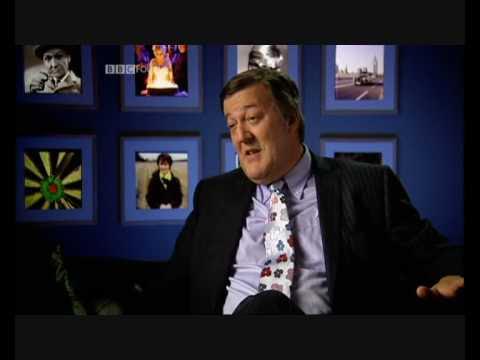
gsmokeyjoe
Profanity signals linguistic richness rather than ignorance, while moral objections merely reflect performative outrage staged on behalf of hypothetical third parties.
AI-assisted summary of Stephen Fry on the Joys of Swearing — original source. Check the original for full context.
Source published:
Key ideas
- Stephen Fry rejects the belief that swearing stems from a limited vocabulary, arguing that individuals with rich verbal range are often the most inventive with profanity. (0:00)
- Fry contends that moral outrage against vulgarity is almost entirely vicarious, as critics claim to be offended on behalf of hypothetical third parties rather than themselves. (1:23)
- Dismissing the argument that profanity is gratuitous, Fry notes that non-essential additions—like decorative cushions or colored socks—are precisely the extras that make life interesting. (1:23)
Detailed notes
## Background This video was uploaded to YouTube by the channel gsmokeyjoe on December 6, 2007. According to the page description, the clip features Stephen Fry discussing the joys of swearing as part of the celebrations for his 50th birthday.
## TL;DR In this short segment, Stephen Fry defends profanity as a vital, expressive, and enjoyable facet of human language. He rejects the puritanical notion that vulgarity signals a deficient vocabulary or education, arguing that linguistically adept individuals often swear with great inventiveness. Fry also critiques the tendency of people to take vicarious offense on behalf of others, as well as the utilitarian complaint that swearing is unnecessary, countering that the non-essential extras are precisely what make life rich and interesting. Throughout the monologue, comedic sketches parody prudish attitudes with absurd, escalating pseudo-profanities.
## Atmosphere & style The presentation blends intellectual eloquence with sharp, irreverent humor, creating an entertaining contrast between Fry's cultured delivery and his unabashed embrace of profanity. Intercut with deadpan, satirical courtroom and interview sketches, the piece carries a playful and subversive mood. It feels witty, delightfully provocative, and celebratory of linguistic freedom.
## Bulletin - [00:00](https://www.youtube.com/watch?v=s_osQvkeNRM&t=0s) Stephen Fry rejects the belief that swearing stems from a limited vocabulary, arguing that individuals with rich verbal range are often the most inventive with profanity. - [01:23](https://www.youtube.com/watch?v=s_osQvkeNRM&t=83s) Fry contends that moral outrage against vulgarity is almost entirely vicarious, as critics claim to be offended on behalf of hypothetical third parties rather than themselves. - [01:23](https://www.youtube.com/watch?v=s_osQvkeNRM&t=83s) Dismissing the argument that profanity is gratuitous, Fry notes that non-essential additions—like decorative cushions or colored socks—are precisely the extras that make life interesting.
## Key takeaways - [00:00](https://www.youtube.com/watch?v=s_osQvkeNRM&t=0s) Swearing is an indispensable and deeply enjoyable component of human communication and daily life. - [00:00](https://www.youtube.com/watch?v=s_osQvkeNRM&t=0s) The belief that profanity indicates poor education or lack of linguistic interest is fundamentally mistaken. - [00:00](https://www.youtube.com/watch?v=s_osQvkeNRM&t=0s) People who command the widest vocabularies are often the ones who swear most creatively and effectively. - [00:00](https://www.youtube.com/watch?v=s_osQvkeNRM&t=0s) Critics who complain about vulgar language frequently exhibit a more limited verbal range than those they condemn. - [00:00](https://www.youtube.com/watch?v=s_osQvkeNRM&t=0s) Puritanical media outrage is satirized through comedic sketches depicting individuals taking offense on behalf of children who have not yet been born. - [01:23](https://www.youtube.com/watch?v=s_osQvkeNRM&t=83s) Public complaints about swearing are largely performative, driven by vicarious shock on behalf of others rather than genuine personal offense. - [01:23](https://www.youtube.com/watch?v=s_osQvkeNRM&t=83s) The utilitarian objection that swearing is 'not necessary' is an invalid standard for determining whether an expressive behavior has value. - [01:23](https://www.youtube.com/watch?v=s_osQvkeNRM&t=83s) Unnecessary flourishes, from colored socks to decorative cushions, illustrate that non-essential elements are what make human existence rich and delightful. - [01:23](https://www.youtube.com/watch?v=s_osQvkeNRM&t=83s) A comedic courtroom sketch illustrates the absurdity of linguistic propriety by contrasting surreal invective with a prim request to 'mind your language.'
## Detailed walkthrough ### [00:00](https://www.youtube.com/watch?v=s_osQvkeNRM&t=0s) Debunking the Myth of the Limited Vocabulary
Stephen Fry reflects on the cultural value and expressive pleasure of swearing, framing it as an indispensable component of human expression. He rejects the traditional, prudish critique that profanity stems from an inadequate grasp of language, calling out the hypocrisy of those who complain about it. Interspersed with comedic sketches mocking puritanical television programming and absurd pseudo-profanities, Fry makes the case that linguistic richness and profanity frequently go hand in hand.
Fry argues that those who look down on swearing are severely misguided about how language operates. As Stephen Fry explains: “The sort of twee person who thinks swearing is in any way a sign of a lack of education or of a lack of verbal interest or is just a fucking lunatic.” In reality, the people with the most expansive vocabularies often swear the most inventively, while those who complain about coarse language typically possess a limited verbal range themselves.
- Fry opens by asserting that swearing is a vital part of existence: “Swearing is a really important part of one's life. It would be impossible to imagine going through life without swearing and without enjoying swearing.” - In an accompanying comedic sketch parodying public propriety, an interlocutor asks whether someone's children witnessed an objectionable broadcast, to which the man replies that they did not, but solely due to the fact that they have not yet been born. - In a courtroom sketch, a police officer consulting his notes recounts the explicit insults leveled at him during an arrest: “Why don't you ram it up your pimp hole, you fusking cloth prunker?”
---
[01:23](https://www.youtube.com/watch?v=s_osQvkeNRM&t=83s) Vicarious Offense and the Beauty of the Unnecessary
Moving to the psychology behind complaints about vulgarity, Fry addresses the common objection that profanity is merely gratuitous. He observes that very few people are genuinely offended on their own account; rather, they almost always claim to be offended on behalf of hypothetical, sensitive third parties. Fry dismisses the notion that something should be banned or avoided simply because it is not strictly required.
To illustrate this, Fry points out that many of the details that make human life rich and delightful—such as wearing colored socks or placing a decorative cushion on a sofa—are completely non-essential, yet nobody writes furious letters demanding their removal. As Stephen Fry observes: “The things not being necessary is what makes life interesting. The little extras in life.”
- Fry highlights the performative nature of moral indignation: “I haven't met anybody who's truly shocked at swearing. Really? They're only shocked on behalf of other people.” - Fry dismantles the utilitarian argument against vulgarity: “They or they say it's not necessary. As if that should stop one doing it.” - The sketch concludes with the police officer reciting an escalating barrage of surreal invective from the accused: “Skank off, you cloing cuck. You're all a load of choke bag fuskers. So, prunk that up your prime ministering pimp hole.” When asked how he responded to this tirade, the officer deadpans that he told the suspect to “mind his language.”
## Notable quotes > [00:00](https://www.youtube.com/watch?v=s_osQvkeNRM&t=0s) Swearing is a really important part of one's life. It would be impossible to imagine going through life without swearing and without enjoying swearing. — Stephen Fry
## Mentioned Stephen Fry
## Video description Stephen Fry on the Joys of Swearing From celebrations of Fry's 50th birthday. Please see Slang blogs related to this here: www.myspace.com/gsmokeyjoe
[Source](https://www.youtube.com/watch?v=s_osQvkeNRM)