Don Draper Sways Kodak Executives With Carousel Emotional Pitch
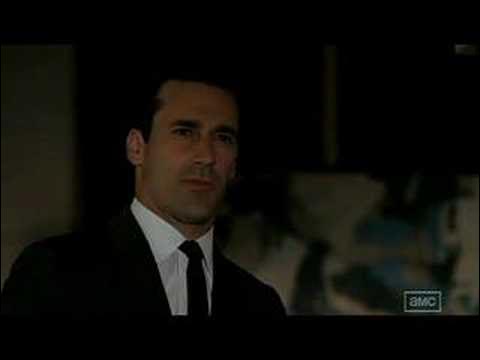
TomR35
By reframing technical hardware as a vessel for nostalgia, advertisers can convert consumer emotional pain into a powerful, involuntary product connection.
AI-assisted summary of Mad Men - The Carousel (Higher Quality) — original source. Check the original for full context.
Source published:
Key ideas
- Kodak presents a branding challenge regarding how to market their slide projector's circular tray, fearing the concept of 'the wheel' lacks technological excitement. (0:00)
- Don Draper contrasts the power of 'new'—which creates an itch products must soothe—with nostalgia, defining it as a delicate yet immensely potent emotional bond. (1:10)
- Reframing the circular mechanism as 'the carousel' rather than 'the wheel', Draper positions the projector as an emotional time machine that takes consumers back home. (1:45)
- The deeply personal pitch leaves the Kodak executives emotionally stunned, securing the account without considering competitors. (3:15)
Detailed notes
## Background Published on YouTube by TomR35 on May 16, 2008, this video features an excerpt from the season finale of the television drama Mad Men. In the description, the uploader highlights the clip as arguably the finest few minutes from that season of television and the pinnacle of the series itself.
## TL;DR During a pitch meeting, Kodak executives challenge the agency to market their circular slide projector despite the difficulty of making a basic wheel seem exciting to modern consumers. Don Draper reframes the presentation away from technological novelty and the lure of the word 'new,' focusing instead on nostalgia as an ache directly in the heart. Projecting personal slides of his own family, Don reveals that the device is not an interplanetary gadget but a time machine that travels back and forth through memory. He re-christens the product as 'the carousel,' convincing the moved executives that it offers consumers a comforting journey back to a place where they are unconditionally loved.
## Atmosphere & style The presentation begins with polite, dry corporate humor before softening into an intensely intimate, spellbinding reverie as the lights go down. Don Draper's steady, reflective delivery and the hypnotic clicking of the slide projector cast a quiet, melancholic hush over the pitch room. The emotional arc builds from intellectual marketing theory into profound personal vulnerability, culminating in a heavy, reverent silence that leaves the clients visibly shaken.
## Bulletin - [00:00](https://www.youtube.com/watch?v=suRDUFpsHus&t=0s) Kodak presents a branding challenge regarding how to market their slide projector's circular tray, fearing the concept of 'the wheel' lacks technological excitement. - [01:10](https://www.youtube.com/watch?v=suRDUFpsHus&t=70s) Don Draper contrasts the power of 'new'—which creates an itch products must soothe—with nostalgia, defining it as a delicate yet immensely potent emotional bond. - [01:45](https://www.youtube.com/watch?v=suRDUFpsHus&t=105s) Reframing the circular mechanism as 'the carousel' rather than 'the wheel', Draper positions the projector as an emotional time machine that takes consumers back home. - [03:15](https://www.youtube.com/watch?v=suRDUFpsHus&t=195s) The deeply personal pitch leaves the Kodak executives emotionally stunned, securing the account without considering competitors.
## Key takeaways - [00:00](https://www.youtube.com/watch?v=suRDUFpsHus&t=0s) Kodak executives Joe Harriman and Lynn Taylor task the agency with marketing a circular slide mechanism, worried that 'the wheel' is perceived as outdated technology. - [00:35](https://www.youtube.com/watch?v=suRDUFpsHus&t=35s) Don Draper acknowledges that technology acts as a glittering lure, but stresses that true consumer connection requires a deeper sentimental bond. - [00:55](https://www.youtube.com/watch?v=suRDUFpsHus&t=55s) Don recalls his former Greek copywriter colleague Teddy, who taught him that 'new' is the most powerful word in advertising because it creates an itch the product soothes. - [01:30](https://www.youtube.com/watch?v=suRDUFpsHus&t=90s) Teddy also taught that nostalgia offers an even deeper connection than novelty, characterized as fragile, delicate, and potent. - [01:45](https://www.youtube.com/watch?v=suRDUFpsHus&t=105s) Nostalgia is defined by its Greek etymology as 'the pain from an old wound,' functioning as an involuntary twinge directly in the heart. - [02:10](https://www.youtube.com/watch?v=suRDUFpsHus&t=130s) Don argues that Kodak's device should not be sold as a spaceship or a piece of space-age engineering, but as a time machine. - [02:20](https://www.youtube.com/watch?v=suRDUFpsHus&t=140s) Using personal slides of his family life, Don demonstrates the device's ability to travel backwards and forwards through human experience. - [02:40](https://www.youtube.com/watch?v=suRDUFpsHus&t=160s) Don re-christens the slide tray as 'the carousel,' likening it to a ride that lets adults travel the way children do: around and around, safely back home where they are loved. - [03:15](https://www.youtube.com/watch?v=suRDUFpsHus&t=195s) The presentation concludes in stunned silence, leading the clients to completely bypass competing agencies.
## Detailed walkthrough ### [00:00](https://www.youtube.com/watch?v=suRDUFpsHus&t=0s) The Pitch: Beyond the Glittering Lure of Technology
The pitch meeting with Kodak opens with introductions for executives Joe Harriman and Lynn Taylor, while noting with dry humor that no members of the Eastman family could make it today because they are all back in the laboratory—an admittedly wonderful facility, though its researchers never seem to take vacations. Turning to the business at hand, the Kodak executives pose the central dilemma of their campaign: they ask if the agency has managed to figure out a way to incorporate the concept of "the wheel" into the pitch. As the executives admit, positioning a wheel is inherently difficult because wheels are rarely perceived as exciting, cutting-edge technology by modern consumers, even though they represent the very first technological innovation.
Taking the floor, Don Draper pauses to reframe the entire conversation away from mere mechanics. He acknowledges the natural appeal of technical innovation, noting that “Technology is a glittering lure.” However, Don explains that on rare occasions, an advertiser can connect with the public on a much deeper level than superficial flash, provided consumers share an authentic sentimental bond with the product. To illustrate this philosophy, he reflects on his very first advertising job working in-house at a fur company alongside an experienced Greek copywriter named Teddy. As Don recounts, Teddy taught him that the single most powerful word and concept in advertising is "new," because novelty inevitably creates an emotional itch in the consumer, allowing the marketer to apply their product like a soothing bottle of calamine lotion. Yet Teddy also spoke of an even profounder connection: nostalgia, a quality Don characterizes as fragile, delicate, and immensely potent.
[01:45](https://www.youtube.com/watch?v=suRDUFpsHus&t=105s) The Kodak Carousel: A Time Machine Back Home
Projecting intimate personal slides of his own family life onto the screen in the darkened room, Don unpacks the emotional weight behind the Greek origin of Teddy's favorite concept. He explains that “Teddy told me that in Greek, nostalgia literally means the pain from an old wound.” Far stronger than straightforward memory, this ache functions as an involuntary twinge directly in the heart. Don argues that Kodak's new slide projector must not be understood or sold merely as an advanced piece of space-age engineering. Rather than treating it as an interplanetary gadget, he reframes the circular slide tray entirely: “This device isn't a spaceship; it's a time machine.”
Don explains that the machine possesses the miraculous ability to travel both backwards and forwards through human experience, transporting viewers directly to the places and memories they ache to visit once more. Rejecting Kodak's mechanical label of "the wheel," Don re-christens the product as "the carousel." Like an amusement park ride, it allows adults to travel through time the exact way a child travels through space: looping around and around, only to return safely back home to a place where they are unconditionally loved. As the projector clicks through the poignant images and Don concludes his presentation with a quiet word of thanks, the room is left in stunned, emotional silence, prompting the client to abruptly pass on considering any competitors as the meeting ends.
```mermaid flowchart TD accTitle: Don Draper's Kodak Pitch Evolution accDescr: Flowchart tracing the conceptual shift from mechanical novelty to emotional nostalgia in Don Draper's presentation.
subgraph Problem["The Client's Dilemma"] A["The Wheel"] -->|"Viewed as outdated"| B["Lack of technological novelty"] end
subgraph ConventionalApproach["Standard Advertising"] B -.->|"Typical fix"| C["The Glittering Lure of 'New'"] C --> D["Creates an itch"] D --> E["Product acts as calamine lotion"] end
subgraph DraperPitch["Don Draper's Reframe"] B ==>|"Deeper bond"| F["Nostalgia: Pain from an old wound"] F --> G["The Time Machine"] G --> H["The Carousel: A voyage back home to love"] end ```
- **Key Advertising Principles Discussed:** - Novelty ("New"): Serves as an artificial irritant or itch that the advertised product promises to soothe. - Nostalgia: Originates from the ancient Greek etymology signifying the ache or pain felt from an unhealed wound. - Emotional Reframing: Shifting a mechanical consumer product from a sterile optical projector into an intimate emotional vessel of family memory.
## Mentioned Mad Men, Kodak, Don Draper, Teddy, Joe Harriman, Lynn Taylor, Eastman family, The Carousel
## Video description Arguably the best few minutes of the last season of television, and certainly the best of Mad Men. From the season finale.
[Source](https://www.youtube.com/watch?v=suRDUFpsHus)