Sun Engineer Shows Shouting at Storage Disks Spikes Latency Past 500ms
Bryan Cantrill
Acoustic vibrations from shouting disrupt hard drive mechanics, triggering write delays that push storage latency above 500 milliseconds.
AI-assisted summary of Shouting in the Datacenter — original source. Check the original for full context.
Source published:
Key ideas
- Brendan Gregg demonstrates inside Sun Microsystems' Fishworks Lab that shouting directly into JBOD storage arrays induces mechanical vibration that dramatically spikes disk write latency. (0:00)
- Using DTrace-powered Fishworks analytics, the team isolates and displays per-disk I/O operations exceeding 500 milliseconds immediately following acoustic disturbances. (1:09)
- The experiment highlights physical acoustic interference and vibration as tangible operational hazards capable of disrupting sensitive disk head mechanics during active workloads. (1:09)
Detailed notes
## Background Published on YouTube by Bryan Cantrill on December 31, 2008, this video showcases Brendan Gregg from Sun Microsystems' Fishworks team exploring an unexpected phenomenon in storage systems. According to the video description, Gregg demonstrates how acoustic vibration can induce disk latency, accompanied by a link to a circa-2020 retrospective on the experiment.
## TL;DR Inside Sun's Fishworks Lab, Brendan Gregg runs an active write workload across two JBOD storage arrays while monitoring real-time I/O latency with DTrace analytics. After issuing a deadpan warning not to try the experiment at home, he bends down and shouts directly into the drive enclosures. The live monitoring graphs immediately display severe write latency spikes exceeding 500 milliseconds, demonstrating that acoustic vibrations physically disrupt mechanical disk heads and highlighting the power of granular storage observability.
## Atmosphere & style The video carries an authentic, spontaneous 'mad science' energy, underscored by the loud, relentless ambient roar of datacenter cooling equipment. Brendan Gregg presents the experiment with dry, deadpan humor, creating an amusing contrast between his technical rigor and the absurd act of screaming into a server rack. The handheld camera perspective and casual banter between Gregg and the operator make the viewer feel like an accomplice witnessing a startling, unscripted hardware revelation.
## Bulletin - [00:00](https://www.youtube.com/watch?v=tDacjrSCeq4&t=0s) Brendan Gregg demonstrates inside Sun Microsystems' Fishworks Lab that shouting directly into JBOD storage arrays induces mechanical vibration that dramatically spikes disk write latency. - [01:09](https://www.youtube.com/watch?v=tDacjrSCeq4&t=69s) Using DTrace-powered Fishworks analytics, the team isolates and displays per-disk I/O operations exceeding 500 milliseconds immediately following acoustic disturbances. - [01:09](https://www.youtube.com/watch?v=tDacjrSCeq4&t=69s) The experiment highlights physical acoustic interference and vibration as tangible operational hazards capable of disrupting sensitive disk head mechanics during active workloads.
## Key takeaways - [00:00](https://www.youtube.com/watch?v=tDacjrSCeq4&t=0s) The experiment takes place in Sun Microsystems' Fishworks Lab under normal datacenter ambient noise conditions. - [00:00](https://www.youtube.com/watch?v=tDacjrSCeq4&t=0s) A continuous write workload is executed across two active JBOD ('Just a Bunch of Disks') storage arrays. - [00:00](https://www.youtube.com/watch?v=tDacjrSCeq4&t=0s) Fishworks telemetry utilizes DTrace to track disk I/O latency distributions in real time. - [00:00](https://www.youtube.com/watch?v=tDacjrSCeq4&t=0s) Monitoring is specifically filtered to isolate I/O transactions exceeding 520 milliseconds segmented by individual drives. - [00:00](https://www.youtube.com/watch?v=tDacjrSCeq4&t=0s) Brendan issues a humorous disclaimer before shouting directly into the open bays of the active storage arrays. - [01:09](https://www.youtube.com/watch?v=tDacjrSCeq4&t=69s) Real-time telemetry displays immediate, massive spikes in write latency following the acoustic outburst. - [01:09](https://www.youtube.com/watch?v=tDacjrSCeq4&t=69s) Brendan confirms the phenomenon is an authentic physical interaction rather than a visual or software trick. - [01:09](https://www.youtube.com/watch?v=tDacjrSCeq4&t=69s) The latency spikes correlate specifically to the individual JBOD enclosures that were shouted at. - [01:09](https://www.youtube.com/watch?v=tDacjrSCeq4&t=69s) Mechanical vibration from loud sound waves physically perturbs disk heads, causing latency to exceed 500 milliseconds. - [01:09](https://www.youtube.com/watch?v=tDacjrSCeq4&t=69s) Advanced real-time analytics provided by Sun Fishworks reveal granular latency patterns that were previously unobservable. - [01:09](https://www.youtube.com/watch?v=tDacjrSCeq4&t=69s) The video concludes with the lighthearted operational rule: 'Don't shout at your JBODs. They don't like it.'
## Detailed walkthrough ### [00:00](https://www.youtube.com/watch?v=tDacjrSCeq4&t=0s) Setting Up the Experiment in the Fishworks Lab
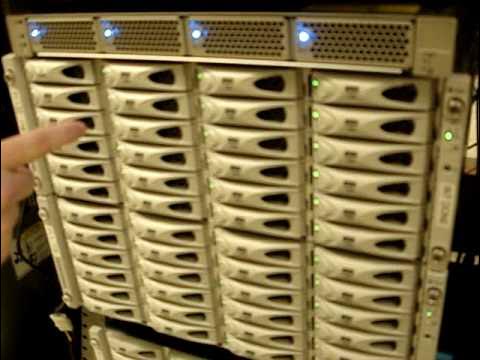
Standing amid the loud ambient roar of cooling equipment and servers inside Sun Microsystems' Fishworks Lab, Brendan Gregg introduces an unexpected finding he and the team have just uncovered. To explain the baseline setup before demonstrating the anomaly, Brendan points to a live monitoring screen where he is tracking disk I/O operations broken down by latency using DTrace to perform real-time storage performance analysis. He has configured the tooling to drill down specifically into disk I/O operations taking at least 520 milliseconds, segmented by individual disk drives.
```mermaid flowchart TD accTitle: Acoustic Vibration Experiment Flow accDescr: Diagram illustrating how acoustic shouting induces disk vibration and increases I/O latency observed in DTrace analytics.
subgraph Workload ["Active Workload"] JBOD["Two JBOD Storage Arrays<br/>(Handling active write operations)"] end
subgraph Disturbance ["Acoustic Disturbance"] Shout["Brendan Gregg Shouting Directly at JBOD Enclosures"] end
subgraph Telemetry ["Fishworks Analytics (DTrace)"] Sensors["Disk Vibration Induced"] Latency["I/O Latency Spikes Exceeding 500ms"] end
JBOD --> Sensors Shout --> Sensors Sensors --> Latency ```
Brendan explains that he is actively applying a continuous write workload across two JBOD ("Just a Bunch of Disks") storage chassis located on the rack next to him, pointing out that the activity lights across the arrays are flashing because they are processing transactions. Before executing the demonstration, Brendan issues a humorous deadpan safety disclaimer to the camera: “What I'm going to do is not recommended. This is not supported. Do not try this at home.” He then bends down right in front of the active drives and lets out several loud, forceful shouts directly into the drive bays.
- Location: Fishworks Lab, featuring heavy background noise from air conditioning units and running server hardware. - Workload: Concurrent write operations targeted across two JBOD storage arrays with visible activity lights. - Telemetry: Real-time DTrace instrumentation monitoring I/O latency distributions and isolating operations exceeding 520 milliseconds by drive.
[01:09](https://www.youtube.com/watch?v=tDacjrSCeq4&t=69s) Acoustic Vibration and Disk Latency Spikes
Immediately following the screaming, Brendan and the camera operator turn back to the DTrace analytics dashboard to examine the real-time telemetry graphs, revealing sudden, massive spikes in write latency. Addressing the viewer directly, Brendan emphasizes that this is an authentic physical phenomenon rather than a camera trick: “This is not special effects. This is real.” He notes that mechanical vibration is a severe operational hazard for storage systems, showing that the latency for the disks handling the active write stream immediately escalated. By inspecting the filtered view of transactions taking longer than 500 milliseconds, Brendan observes that the impacted disks correlate directly to the JBOD enclosures he was shouting at.
Brendan credits the Sun Fishworks analytics instrumentation for revealing disk latency patterns at a granular level that previously could not be diagnosed or observed. The demonstration concludes with banter between the camera operator and Brendan about protecting datacenter hardware from acoustic interference. The camera operator warns viewers, “Just don't let Brendan shout at your disks,” prompting Brendan to agree and close out the demonstration with practical operational advice: “That's right. Don't shout at your JBODs. They don't like it.”
- Key finding: High acoustic vibrations directly disrupt disk head mechanics, causing write retries and pushing I/O latency above 500 milliseconds. - System observability: Fishworks analytics provide granular visibility into previously invisible per-disk vibration and latency anomalies.
## Notable quotes > [01:09](https://www.youtube.com/watch?v=tDacjrSCeq4&t=69s) Don't shout at your JBODs. They don't like it. — Brendan Gregg
## Mentioned Brendan Gregg, Bryan Cantrill, Sun Microsystems, Fishworks, DTrace, JBOD
## Video description Brendan Gregg from Sun's Fishworks team makes an interesting discovery about inducing disk latency. For a ca. 2020 retrospective on this 2008 video: https://www.youtube.com/watch?v=_IYzD_NR0W4#t=28m47s
[Source](https://www.youtube.com/watch?v=tDacjrSCeq4)