Farbrausch Wins Breakpoint Contest With 177-Kilobyte Real-Time Demo
kb
Algorithmic formulas and runtime synthesis eliminate the need for video files by generating complex 3D visuals and music directly on graphics hardware under 200 kilobytes.
AI-assisted summary of Farbrausch - fr-041: debris. [HD] — original source. Check the original for full context.
Source published:
Key ideas
- Farbrausch's demoscene production 'fr-041: debris.' secured first place at the Breakpoint 2007 demo competition, rendering a full 7-minute 3D audiovisual show entirely from a 177 KB executable. (0:47)
- The project bypasses pre-rendered video and sampled audio entirely, using mathematical formulas and recipes to generate procedural 3D meshes, textures, and synthesized music at runtime. (0:47)
- Creation of the demo required over two years of hobbyist authoring by the Farbrausch team on top of five years of foundational engine and toolchain development. (2:50)
- The custom procedural engine (.werkkzeug3) and synthesizer (V2) pushed 2007 GPU rendering boundaries with real-time volumetric lighting, depth of field, and refractive shaders. (5:12)
Detailed notes
## Background Published on YouTube by channel kb on February 22, 2009, this video captures Farbrausch's demoscene production "fr-041: debris.", the winning demo competition entry from Breakpoint 2007 in Bingen, Germany. According to the description, the entire audiovisual presentation runs out of an executable file of just 177 kilobytes, powered by procedural content generation via .werkkzeug3 and the V2 synthesizer system.
## TL;DR The video presents an expansive real-time procedural demo created by Farbrausch, weaving together complex algorithmic 3D visuals by fiver2 and an evolving electronic soundtrack by rp. Generating its geometry, textures, and audio entirely on the fly from compact mathematical instructions rather than pre-rendered assets, the production moves through sweeping vistas of suspended architectural lattices, mutating organic structures, and particulate debris fields. The presentation builds in geometric density and dynamic lighting alongside soaring synthesizer melodies, drawing audible cheers from the live Breakpoint audience before resolving in a climactic visual crescendo and a contemplative, fading outro.
## Atmosphere & style The piece possesses a mesmerizing, cinematic, and technically awe-inspiring atmosphere, pairing expansive cosmic melancholia with bursts of driving electronic energy. Watching the live party capture evokes a palpable sense of shared community excitement, punctuated by spontaneous cheers and applause from the audience during dramatic musical drops and visual reveals. It feels both algorithmic and profoundly expressive, carrying the viewer through an emotional arc from quiet, suspended contemplation to soaring geometric chaos.
## Bulletin - [00:47](https://www.youtube.com/watch?v=wqu_IpkOYBg&t=47s) Farbrausch's demoscene production 'fr-041: debris.' secured first place at the Breakpoint 2007 demo competition, rendering a full 7-minute 3D audiovisual show entirely from a 177 KB executable. - [00:47](https://www.youtube.com/watch?v=wqu_IpkOYBg&t=47s) The project bypasses pre-rendered video and sampled audio entirely, using mathematical formulas and recipes to generate procedural 3D meshes, textures, and synthesized music at runtime. - [02:50](https://www.youtube.com/watch?v=wqu_IpkOYBg&t=170s) Creation of the demo required over two years of hobbyist authoring by the Farbrausch team on top of five years of foundational engine and toolchain development. - [05:12](https://www.youtube.com/watch?v=wqu_IpkOYBg&t=312s) The custom procedural engine (.werkkzeug3) and synthesizer (V2) pushed 2007 GPU rendering boundaries with real-time volumetric lighting, depth of field, and refractive shaders.
## Key takeaways - [00:47](https://www.youtube.com/watch?v=wqu_IpkOYBg&t=47s) 'fr-041: debris.' debuted at the Breakpoint 2007 demo party in Bingen, Germany, winning the primary demo competition. - [00:47](https://www.youtube.com/watch?v=wqu_IpkOYBg&t=47s) The entire real-time audiovisual experience is packaged inside a standalone executable of only 177 kilobytes. - [00:47](https://www.youtube.com/watch?v=wqu_IpkOYBg&t=47s) Visual concepts and assets were authored by fiver2, paired with an original electronic soundtrack composed by rp. - [00:47](https://www.youtube.com/watch?v=wqu_IpkOYBg&t=47s) The production was built using Farbrausch's proprietary .werkkzeug3 authoring tool alongside kb's V2 synthesizer system. - [00:47](https://www.youtube.com/watch?v=wqu_IpkOYBg&t=47s) Instead of pre-recorded media, the executable stores compact algorithmic recipes and mathematical formulas that generate assets dynamically on the user's hardware. - [00:47](https://www.youtube.com/watch?v=wqu_IpkOYBg&t=47s) Textures, 3D meshes, and complex lighting passes are synthesized and rendered in real time through DirectX on the GPU. - [02:50](https://www.youtube.com/watch?v=wqu_IpkOYBg&t=170s) Authoring the demo took more than two years of part-time work, preceded by five years of developing the procedural tools and underlying technology. - [02:50](https://www.youtube.com/watch?v=wqu_IpkOYBg&t=170s) The audio recording captures spontaneous cheers and applause from the Breakpoint party hall audience during dynamic scene shifts. - [02:50](https://www.youtube.com/watch?v=wqu_IpkOYBg&t=170s) Visual sequences heavily utilize volumetric glows, depth-of-field effects, and post-processing filters across sprawling urban and organic debris fields. - [02:50](https://www.youtube.com/watch?v=wqu_IpkOYBg&t=170s) Camera paths, structural mutations, and lighting pulses are tightly synchronized with the percussion and melodic progressions of the synth score. - [05:12](https://www.youtube.com/watch?v=wqu_IpkOYBg&t=312s) The production reaches its climax with dense lattice frameworks, refractive surface shaders, and dynamic reflections calculated at fluid frame rates. - [05:12](https://www.youtube.com/watch?v=wqu_IpkOYBg&t=312s) The closing sequence pulls back from chaotic geometry into stark vistas, fading on quiet chords punctuated by a final voice sample. - Farbrausch subsequently released the complete source code and project data files to the public on GitHub.
## Detailed walkthrough ### [00:47](https://www.youtube.com/watch?v=wqu_IpkOYBg&t=47s) Visual Construction and Electronic Soundtrack Progression
Farbrausch’s milestone demoscene production, *fr-041: debris.*, opens with an expansive procedural audiovisual journey presented at the Breakpoint 2007 demo party in Bingen, Germany. Designed entirely within a standalone executable weighing just 177 kilobytes, the presentation relies on procedural generation authored via the custom tool.werkkzeug3 (developed by chaos, fiver2, gizmo, and ryg) combined with audio generated on kb’s V2 synthesizer system. Visual artist fiver2 shapes complex organic and architectural forms, setting mutating geometry against an evolving, melancholic electronic soundtrack composed by rp.
Rather than playing back pre-rendered video or sampled audio streams, the engine relies on compact mathematical recipes and instructions executed at runtime. Procedural textures, meshes, and lighting passes are computed and assembled dynamically on the user's graphics card, demonstrating how high-density 3D environments can emerge from compact algorithmic routines. The slow-building introductory passages establish the piece's mood, layering floating particulate matter, crystalline structural grids, and sweeping camera perspectives that sync tightly with the rhythm and melodic motifs of the synthesizer score.
```mermaid flowchart TD accTitle: Procedural Generation Pipeline of fr-041: debris accDescr: Diagram illustrating how math formulas and recipes generate 3D visuals and synthesized audio in real time.
subgraph Executable ["177 KB Executable Package"] A["Math Formulas & Recipes"] B["V2 Synth Patch Data"] C["Compressed Scene Graphs"] end
subgraph Engines [".werkkzeug3 & V2 Runtime"] D["Procedural Texture & Mesh Generation"] E["V2 Synthesizer Engine"] end
subgraph Output ["Real-Time Output"] F["DirectX GPU Rendering"] G["Synthesized Soundtrack"] end
A --> D C --> D B --> E D --> F E --> G ```
[02:50](https://www.youtube.com/watch?v=wqu_IpkOYBg&t=170s) Mid-Demo Peaks and Audience Reaction
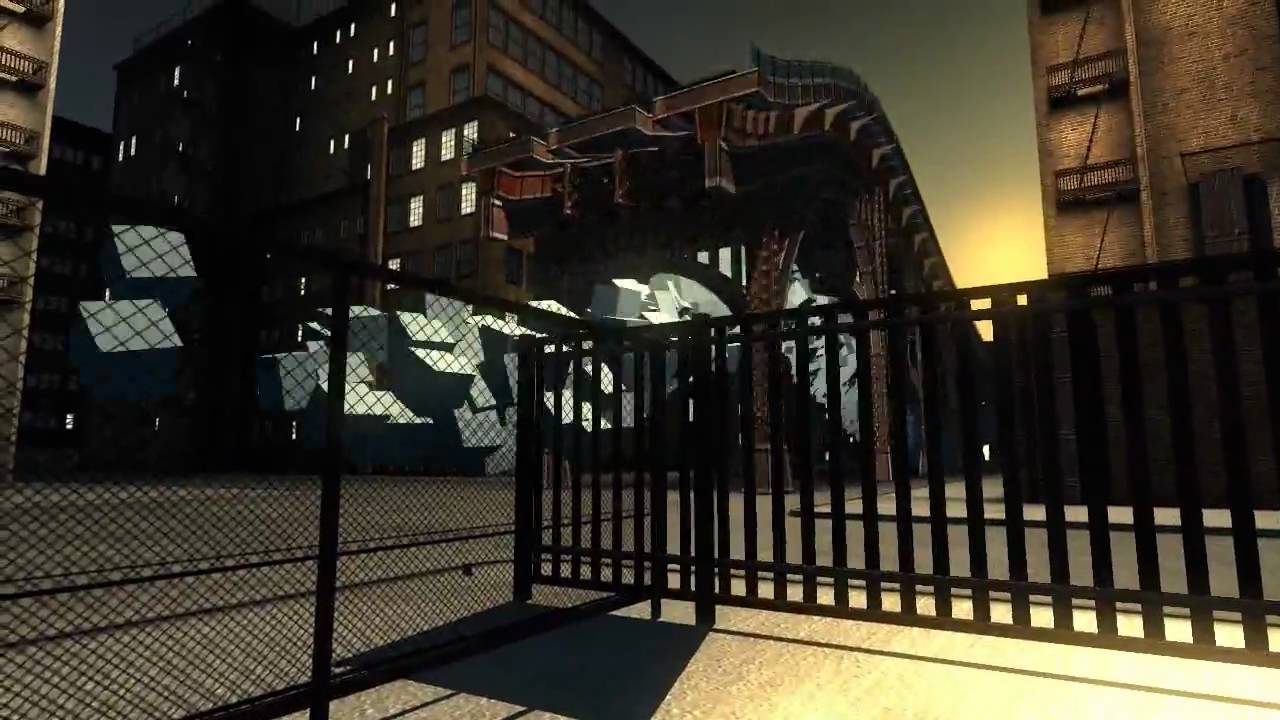
As the demo transitions between scenes, the complexity of the geometry and lighting multiplies, driving enthusiastic applause from the Breakpoint audience gathered in the party hall. Sweeping vistas of fractured, suspended cityscapes and organic debris fields morph continuously, lit by volumetric glows, post-processing filters, and depth-of-field effects that push the boundaries of real-time DirectX rendering contemporary to 2007.
The musical composition shifts into driving melodic sequences, alternating between ambient atmospheric pauses and high-energy percussion. Brief breaks in the audio trigger spontaneous cheers and applause from spectators watching the live party projection, followed immediately by soaring synth leads and rapid camera cuts that showcase tumbling monolithic slabs, metallic meshes, and synchronized light flashes.
- The production won 1st place in the Breakpoint 2007 demo competition. - All 3D assets, procedural textures, camera choreographies, and animations were authored over two years of part-time hobby work following five prior years of engine and toolchain development.
[05:12](https://www.youtube.com/watch?v=wqu_IpkOYBg&t=312s) Crescendo, Dense Geometry, and Concluding Sequence
The closing phase of the production escalates into dense, layered visual compositions. Swarms of procedural fragments, complex lattice frameworks, and illuminated debris fields fill the screen, moving in intricate harmonic coordination with rp's energetic synthesizer progression. Shaders simulate refractive surfaces, depth maps, and dynamic reflections across geometric surfaces, maintaining fluid frame rates despite the visual density.
As the tempo reaches its final climax, the chaotic structures pull back into stark, contemplative vistas before settling into the fading chords of the outro. The audio and imagery dissolve toward the final silence, punctuated in the closing seconds by a soft concluding voice sample at the cutoff.
## Mentioned Farbrausch, fr-041: debris., Breakpoint 2007, Bingen, Germany, fiver2, rp, .werkkzeug3, chaos, gizmo, ryg, V2 synthesizer system, kb, DirectX
## Video description "Debris." by Farbrausch, winner of the demo competition at Breakpoint 2007 in Bingen, Germany.
Concept and visuals by fiver2, soundtrack by rp, created using .werkkzeug3 by chaos, fiver2, gizmo and ryg, as well as the V2 synthesizer system by kb
more: http://www.pouet.net/prod.php?which=30244
A few words more: Yes, everything you're seeing comes out of an executable of only 177 kilobytes size. Download it here: http://www.scene.org/file.php?file=/parties/2007/breakpoint07/demo/fr-041_debris.zip&fileinfo
UPDATE: We released source code and data files for everything. So if you want the full inside scoop, look at https://github.com/farbrausch/fr_public :)
The secret behind all this is procedural content generation. in a nutshell, instead of storing a movie as-is we're storing a certain number of mathematical formulas for image and audio manipulation as well as the "recipe" how to apply those small bits of code in a way that what you see comes out. And while it's running your computer's graphics card cares for the actual displaying ot the world, just like in modern 3D games. Formulas+recipe are of course way smaller than the end result, and with a few additional sprinkles of magic compression fairy dust we get down to under 200 kilobytes, which is way less than one single high quality image of this show would take.
This of course means, no, we don't have any magic technology that can compress videos down to that size, but the video has to be authored in the way described above. Manually. With, like, lots of work involved. Making this gem took us all more than two years of hobby part time work _after_ we had five years of experience with this kind of technology.
Still not satisfied? try http://llg.cubic.org/docs/farbrauschDemos/
[Source](https://www.youtube.com/watch?v=wqu_IpkOYBg)