Yuri Bezmenov: Psychological Warfare Subversion & Control of Western Society (Complete)
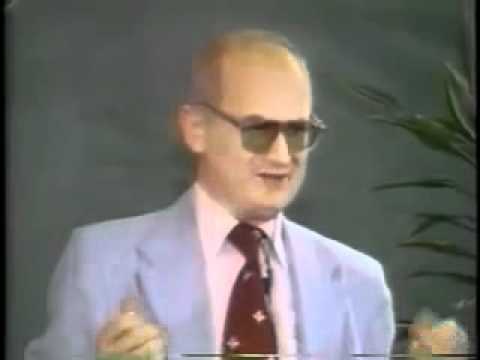
Yuri Bezmenov: Psychological Warfare Subversion & Control of Western Society (Complete) — GBPPR2

GBPPR2

AI-assisted summary of Yuri Bezmenov: Psychological Warfare Subversion & Control of Western Society (Complete) — original source. Check the original for full context.

Source published:

Key ideas

  • Classical espionage represents only 10 to 15 percent of Soviet KGB overseas budget, time, and manpower, while the remaining 85 percent is dedicated to ideological subversion conducted overtly and legally. (0:00)
  • Ideological subversion follows a structured four-stage process spanning decades: demoralization (15 to 20 years), destabilization, crisis, and cynical 'normalization'. (8:40)
  • Following crisis, regimes physically liquidate the revolutionary sleeper agents, intellectuals, and activists whose agitation brought them to power, as seen in historical purges in Bangladesh, Afghanistan, and Grenada. (42:45)
  • Bezmenov argues that the ultimate civilizational defense against psychological warfare is not military hardware or pure rationalism, but spiritual revival, self-restraint, and religious faith. (58:20)

Detailed notes

## Background Published on YouTube by the channel GBPPR2 on February 23, 2011, this recording features a 1983 lecture delivered in Los Angeles by Yuri Bezmenov (alias Tomas Schuman), a former KGB propagandist who defected to the West in 1970. The video description details Bezmenov's background and training, explaining how Soviet psychological warfare systematically subverts teachers, politicians, and institutions to make target nations receptive to Soviet ideology through a four-stage process of societal takeover.

## TL;DR Bezmenov reveals that contrary to Hollywood portrayals of espionage, 85 percent of KGB resources are dedicated to overt psychological subversion designed to dismantle enemy societies from within. He outlines the four sequential stages of this process: demoralization (a 15-to-20-year cycle targeting religion, education, media, and social structures), destabilization (radicalizing labor, law, and politics to eliminate compromise), crisis (a societal breakdown inviting a false savior), and normalization (forceful consolidation and the physical elimination of initial activists). To halt and reverse this descent, Bezmenov urges open societies to reject hostile propaganda platforms, practice conscious material self-restraint, and restore foundational moral and religious values rather than relying on technical or military measures alone.

## Atmosphere & style The lecture carries an urgent, biting, and darkly humorous tone, driven by Bezmenov's sharp delivery, personal anecdotes, and unsparing contempt for both Soviet apparatchiks and complacent Western elites. His presentation feels less like a dry academic seminar and more like a candid insider debriefing, puncturing romanticized James Bond myths with uncomfortable observations about media compliance, hyper-consumerism, and cultural degradation. Watching the address creates an unsettling sense of prescience, moving from analytical explanations of psychological warfare to a passionate moral plea for civilizational self-discipline and spiritual conviction.

## Bulletin - [00:00](https://www.youtube.com/watch?v=5gnpCqsXE8g&t=0s) Classical espionage represents only 10 to 15 percent of Soviet KGB overseas budget, time, and manpower, while the remaining 85 percent is dedicated to ideological subversion conducted overtly and legally. - [08:40](https://www.youtube.com/watch?v=5gnpCqsXE8g&t=520s) Ideological subversion follows a structured four-stage process spanning decades: demoralization (15 to 20 years), destabilization, crisis, and cynical 'normalization'. - [42:45](https://www.youtube.com/watch?v=5gnpCqsXE8g&t=2565s) Following crisis, regimes physically liquidate the revolutionary sleeper agents, intellectuals, and activists whose agitation brought them to power, as seen in historical purges in Bangladesh, Afghanistan, and Grenada. - [58:20](https://www.youtube.com/watch?v=5gnpCqsXE8g&t=3500s) Bezmenov argues that the ultimate civilizational defense against psychological warfare is not military hardware or pure rationalism, but spiritual revival, self-restraint, and religious faith.

## Key takeaways - [00:00](https://www.youtube.com/watch?v=5gnpCqsXE8g&t=0s) Soviet intelligence operations abroad allocate 85% of their resources to subversion rather than Hollywood-style classical espionage, using overt actors like exchange students, diplomats, artists, and journalists. - [03:28](https://www.youtube.com/watch?v=5gnpCqsXE8g&t=208s) Subversion functions as a two-way street that requires an open, receptive target society; closed societies like historical Japan or the USSR cannot be subverted because incoming influence is blocked. - [05:38](https://www.youtube.com/watch?v=5gnpCqsXE8g&t=338s) The doctrine originates from Sun Tzu's principle that the highest art of warfare is avoiding physical clash by systematically corrupting an enemy's values until their perception of reality is distorted. - [08:40](https://www.youtube.com/watch?v=5gnpCqsXE8g&t=520s) The first phase, demoralization, takes 15 to 20 years—the exact timeframe required to educate and condition one generation of schoolchildren and university students. - [08:40](https://www.youtube.com/watch?v=5gnpCqsXE8g&t=520s) Subversion employs the judo principle, declining to push head-on against an adversary and instead exploiting natural domestic grievances, contrarians, and criminals to accelerate societal collapse. - [13:58](https://www.youtube.com/watch?v=5gnpCqsXE8g&t=838s) Demoralization systematically attacks core social pillars, eroding traditional religion into eccentric cults, replacing rigorous education with trendy distractions, and replacing natural community bonds with state bureaucrats. - [16:02](https://www.youtube.com/watch?v=5gnpCqsXE8g&t=962s) Legitimate administrative authority is increasingly subordinated to unelected media monopolies and bureaucracies that reward conformity and mediocrity over excellence. - [18:09](https://www.youtube.com/watch?v=5gnpCqsXE8g&t=1089s) Popular culture inverts law and order by romanticizing criminals as misunderstood victims while depicting law enforcement personnel as paranoid and brutal. - [20:18](https://www.youtube.com/watch?v=5gnpCqsXE8g&t=1218s) Trade unions have transformed from protective bodies into rigid ideological monopolies that paralyze natural market bargaining and enforce destructive strikes. - [26:33](https://www.youtube.com/watch?v=5gnpCqsXE8g&t=1593s) Soviet ideological warfare weaponizes consumerism and the Western myth of forced equality, disguising destructive division under the banner of egalitarianism and social justice. - [32:02](https://www.youtube.com/watch?v=5gnpCqsXE8g&t=1922s) The destabilization phase narrows its assault to four critical pillars: labor relations, the legal system, the military, and the media, systematically eliminating constructive compromise from public life. - [37:48](https://www.youtube.com/watch?v=5gnpCqsXE8g&t=2268s) Sleeper assets cultivated over 15 to 20 years are activated during destabilization to polarize private differences into militant, confrontational political movements. - [39:41](https://www.youtube.com/watch?v=5gnpCqsXE8g&t=2381s) As institutional authority collapses, exhausted populations willingly surrender liberty and demand a strongman savior to restore basic order and economic survival. - [42:45](https://www.youtube.com/watch?v=5gnpCqsXE8g&t=2565s) The 'normalization' phase consolidates power through violent force, leading to the immediate physical elimination of useful idiots, activists, and radical professors who facilitated the takeover. - [46:43](https://www.youtube.com/watch?v=5gnpCqsXE8g&t=2803s) Halting subversion becomes progressively more bloody over time, progressing from cultural self-restraint during demoralization to covert action in destabilization and armed conflict in crisis. - [54:16](https://www.youtube.com/watch?v=5gnpCqsXE8g&t=3256s) Democratic nations must practice common sense by refusing equal broadcast platforms to foreign ideological agitators and filtering harmful cultural exports. - [58:20](https://www.youtube.com/watch?v=5gnpCqsXE8g&t=3500s) Purely materialist knowledge and military strength cannot sustain civilizational survival; societal resilience ultimately depends on spiritual renewal, moral conviction, and religious faith.

## Detailed walkthrough ### [00:00](https://www.youtube.com/watch?v=5gnpCqsXE8g&t=0s) The Misconception of Espionage vs. KGB Subversion

In Western dictionaries and criminal codes, subversion is traditionally defined as an effort to destroy a nation's religion, political system, or economic structure, but public perception invariably ties it to romanticized espionage. Popular culture, Hollywood filmmakers, academic political scientists, and self-styled “Kremlinologists” obsess over cloak-and-dagger thrillers, imagining that the primary ambition of Yuri Andropov and the KGB is to steal blueprints for supersonic jets, smuggle microfilms in Coca-Cola cans, and blow up bridges or sidetrack trains. Yuri Bezmenov clarifies that this James Bond caricature represents a fundamental misunderstanding of Soviet intelligence work.

In reality, classical espionage accounts for only a minor fraction of Soviet overseas operations. If one calculates the total time, money, and manpower expended by the Soviet Union and the KGB abroad, only 10 to 15 percent is allocated to classic espionage and intelligence gathering. The remaining 85 percent is devoted entirely to subversion. Unlike Western definitions, Soviet doctrine understands subversion strictly as an aggressive, destructive campaign designed to dismantle the enemy nation, culture, or geographical territory from within.

Far from operating in the shadows with poisoned umbrellas or dramatic sabotage, most subversive activity is completely overt, legal, and easily observable to anyone who takes the time and trouble to look. Western legal systems do not classify this process as a crime precisely because of this semantic confusion; authorities are on the lookout for saboteurs intent on detonating physical bridges, blind to the fact that the real agents of influence operate in plain sight. As Bezmenov explains:

> “Subverter is a student who come for exchange, a diplomat, an actor, an artist, a journalist like myself was 10 years ago.”

- Espionage share of KGB foreign budget, time, and manpower: approximately 10% to 15% - Subversion share of KGB foreign budget, time, and manpower: approximately 85% - Primary agents of subversion: exchange students, accredited diplomats, visiting actors and artists, and foreign correspondents/journalists

---

[03:28](https://www.youtube.com/watch?v=5gnpCqsXE8g&t=208s) Subversion as a Two-Way Traffic: Closed Societies vs. Receptive Targets

Subversion cannot function in a vacuum; it is fundamentally a two-way traffic that requires a responsive, receptive target. A society that refuses foreign infiltration cannot be subverted. Bezmenov illustrates this through the history of pre-modern Japan, which preserved its traditions, ideology, and internal values by operating as a closed society. Whenever foreign vessels approached Japanese shores, the Imperial Japanese authorities politely instructed them to leave—and if an unwanted foreign merchant or salesman insisted on peddling goods, the Japanese would shoot them rather than permit foreign values to erode their societal foundation.

Similarly, the Soviet Union cannot be subverted by Western influence because its borders are locked, internal media is thoroughly censored, and the population is under constant surveillance by the KGB and internal security police. Even though the United States Embassy in Moscow published the glossy magazine *Amerika* and Western publications like *Time* featured vivid images of Western prosperity, these materials never reached ordinary Soviet citizens; they were routinely intercepted from newsstands and thrown straight into the garbage.

By contrast, the United States presents a uniquely open, receptive target where foreign ideological influence flows unimpeded, while counter-messaging from the West into the USSR stops halfway and never reaches the Soviet populace.

> “You cannot subvert an enemy which doesn't want to be subverted.”

---

[05:38](https://www.youtube.com/watch?v=5gnpCqsXE8g&t=338s) Sun Tzu and the Philosophy of Warfare Without Fighting

The tactical doctrine of subversion is not a modern Soviet invention; its strategic foundation was laid approximately 2,500 years ago by the ancient Chinese military philosopher Sun Tzu. Serving as an adviser to imperial courts in ancient China, Sun Tzu concluded after deep reflection that pursuing state policy through direct battlefield clash is the most barbaric, counterproductive, and inefficient method of waging war. If war is the continuation of politics by other means, engaging in bloody physical fighting represents the most foolish way to accomplish foreign policy objectives.

Instead, the ultimate art of warfare is to avoid armed conflict altogether by systematically undermining and subverting everything of value in the enemy's country. The objective is to manipulate and distort the adversary's perception of reality to the point where they no longer recognize the subverter as an enemy, viewing the aggressor's political model and civilizational values as a viable—if not desirable—alternative. This psychological transformation produces defeatist slogans such as “better red than dead,” allowing the conquering power to take over the target nation without firing a single shot.

Bezmenov points out that while Sun Tzu's classic text is mandatory reading for every Soviet KGB recruit and military academy cadet, it remains neglected in the West. During his time in North America, Bezmenov found it difficult to locate an English translation of Sun Tzu in university libraries in Toronto and Los Angeles, noting that Western political science students and military officers are rarely exposed to these strategic principles.

> “The highest art of warfare is not to fight at all, but to subvert anything of value in the country of your enemy, until such time that the perception of reality of your enemy is screwed up to such an extent that he does not perceive you as an enemy, and that your system, your civilization, and your ambitions look to your enemy as an alternative, if not desirable, then at least feasible.”

```mermaid flowchart TD accTitle: Sun Tzu Strategic Subversion Flow accDescr: Diagram illustrating the progression from subversion of core values to non-military capitulation. subgraph Phase1["Targeting Values"] A["Subvert enemy values & institutions"] --> B["Distort perception of reality"] end subgraph Phase2["Psychological Shift"] B --> C["Enemy no longer perceives aggressor as hostile"] C --> D["Aggressor system seen as feasible or desirable<br>('Better red than dead')"] end subgraph Phase3["Victory"] D --> E["Total takeover achieved without a single shot fired"] end ```

---

[08:40](https://www.youtube.com/watch?v=5gnpCqsXE8g&t=520s) Stage One of Subversion: Demoralization and the Judo Principle

Strategic subversion is executed across four distinct, sequential stages over time, the first of which is demoralization. Demoralization requires between 15 to 20 years to accomplish within a target country. This timeframe is neither arbitrary nor accidental: it corresponds precisely to the time needed to educate and condition one generation of schoolchildren and university students, molding their worldview, outlook, and core moral personality during their most formative years.

When listeners ask whether destructive social trends in the West are solely the result of Soviet plots, Bezmenov clarifies that the KGB does not need to engineer every social ill from scratch. Instead, subversion operates on the principles of Japanese martial arts, specifically judo. In judo, if an opponent is larger and heavier, attempting to block their direct punch head-on is painful, naive, and counterproductive. The proper technique is to sidestep the blow, grab the attacker’s outstretched fist, and pull in the same direction, using the opponent's own forward momentum to crash them into the wall.

Every open, pluralistic society naturally contains internal factions moving against traditional moral values: career criminals, ideological dissidents, neurotics, and contrarians who oppose state policy on principle, alongside a small cadre of recruited foreign agents. The role of the subversive apparatus is to identify these preexisting organic grievances, align them, and propel them forward in one direction until the accumulated momentum pushes the entire society into systemic crisis and collapse.

> “We don't stop an enemy. We let him go. We help him to go in the direction we want them to go.”

- Duration of Demoralization: 15 to 20 years (the developmental cycle of a single generation) - Core mechanism: Judo principle of exploiting and redirecting the target’s natural momentum - Target demographics for exploitation: ideological dissidents, criminals, neurotics, and paid foreign agents of influence

---

[13:17](https://www.youtube.com/watch?v=5gnpCqsXE8g&t=797s) Targeting the Pillars of Society: Religion and Culture

Demoralization focuses its efforts across the core functional pillars where public opinion and cultural identity are shaped. Bezmenov identifies six interconnected arenas of societal application: religion, the educational system, social life, the administrative power structure, labor-employer relations and trade unions, and law and order.

In the sphere of religion, the objective is to systematically degrade and ridicule traditional faiths that anchor the target culture. Rather than attempting to impose state atheism outright, the strategy seeks to erode conventional theological foundations and replace them with eccentric sects, cults, and commercialized spiritual movements. It matters little whether these surrogate beliefs are primitive or naive; so long as they fracture traditional religious consensus and distract the public's moral attention, the social cohesion of the target society is successfully degraded.

> “In case of religion, destroy it. Ridicule it. Replace it with various sects, cults, which bring people's attention, faith, whether it is naive, primitive, doesn't really matter.”

[13:58](https://www.youtube.com/watch?v=5gnpCqsXE8g&t=838s) Subverting Religion, Education, and Social Life

Yuri Bezmenov details how the first stage of ideological subversion systematically dismantles the core pillars of a target society. In religion, the strategy is not necessarily to ban faith outright, but to erode traditional religious dogma so that people lose touch with the supreme purpose of religion—connecting with a supreme being. Established, respected religious bodies are actively replaced with fake organizations, distracting believers from authentic spiritual faith and drawing them toward manufactured alternatives.

In education, students are diverted away from pragmatic, constructive, and efficient subjects. Instead of mastering rigorous disciplines like mathematics, physics, foreign languages, and chemistry, curricula are diluted with trendy, non-constructive distractions. Bezmenov observes that students are instead taught the history of urban warfare, natural foods, home economics, and sexuality—anything that leads them away from actual, effective learning.

Similarly, traditional social links are stripped away. Naturally established community relationships and mutual individual responsibilities are usurped by artificially, bureaucratically controlled organizations. Rather than fostering genuine neighborly social life and friendships, society installs professional social workers. Bezmenov emphasizes that these workers serve the bureaucracy that issues their paychecks rather than the families they supposedly assist:

> “The main concern of social workers is not your family, not you, not social relations between groups of people. The main concern is to get the paycheck from the government.”

- Respected religious organizations are substituted with manufactured or splinter faiths to dissolve genuine spiritual grounding. - Pragmatic academic subjects (mathematics, physics, chemistry, languages) are sidelined in favor of social topics like urban warfare, natural food, and sexuality. - Natural neighborhood initiative and community bonds are supplanted by salaried state bureaucrats whose primary loyalty is their government paycheck.

[16:02](https://www.youtube.com/watch?v=5gnpCqsXE8g&t=962s) The Erosion of Power Structures and the Rise of Mediocre Media

Turning to governance, Bezmenov explains how natural, legitimate bodies of administration—those elected directly by the public or appointed by elected leaders—are steadily subordinated to unelected, artificial bodies. Chief among these unelected forces is the mainstream media establishment. Bezmenov expresses outrage at the immense psychological influence wielded by media corporations:

> “How come they have so much power? Almost monopolistic power on your mind. They can rape your mind.”

He questions by what right unelected media figures pass moral judgment on an administration chosen by the electorate, invoking former Vice President Spiro Agnew's description of them as an enfeebled elite. Bezmenov remarks that major news organizations like *The New York Times*, the *Los Angeles Times*, and the dominant television networks actively reward mediocrity over excellence. A journalist does not need superior talent to thrive; survival and a comfortable six-figure income depend on conforming, smiling at the camera, and avoiding genuine competition. In this manner, constitutional governing structures are eroded by unaccountable groups lacking both qualifications and a democratic mandate.

[18:09](https://www.youtube.com/watch?v=5gnpCqsXE8g&t=1089s) Undermining Law and Order and Moral Relativity

A parallel subversion unfolds in the justice system and popular culture, eroding public confidence in law enforcement. Bezmenov notes a sharp cultural inversion across film and television over the preceding two decades: American police officers and military personnel are routinely depicted as stupid, paranoid, brutal, or psychotic war maniacs, while criminals and drug users are romanticized as creative, misunderstood, and inherently gentle souls whose wrongdoing is merely the fault of an oppressive society.

This manufactured mistrust leads directly to crippling moral relativism. Bezmenov references the two-year trial of Angelo Buono (the "Hillside Strangler") in Los Angeles, pointing out how defense figures and sympathetic witnesses attempted to paint a brutal serial killer as a decent man simply because he had once declined to burn an enemy's house down. Under this distorted worldview, clear concepts of guilt dissolve: a proven killer is shielded as an eternal victim-defendant. Bezmenov clarifies the moral distinction by stressing that the biblical injunction should be properly understood as prohibiting murder rather than disarming society's moral right to execute justice:

> “Thou shall not murder. That should be the presumption, not thou shall not kill.”

```mermaid flowchart TD accTitle: Subversion of Moral and Institutional Authority accDescr: Diagram illustrating the shift from traditional legitimacy to subverted institutions across media, law, and culture.

subgraph Legitimate["Traditional Authority"] A["Elected Officials & Citizens"] B["Law Enforcement & Military"] C["Objective Moral Law"] end

subgraph Subverted["Subverted Substitutes"] D["Unelected Media Monopolies"] E["Criminals Rebranded as Victims"] F["Moral Relativism & Bureaucracy"] end

A -->|"displaced by"| D B -->|"villified and replaced by"| E C -->|"eroded into"| F ```

[20:18](https://www.youtube.com/watch?v=5gnpCqsXE8g&t=1218s) Labor Relations and the Destruction of Natural Bargaining

Bezmenov examines how labor relations are poisoned over a fifteen- to twenty-year span, dismantling natural economic bargaining between employers and employees. He uses a basic barter example to illustrate Marxist-Leninist economic distortion: if Person A has five sacks of grain and Person B has five pairs of shoes, they naturally negotiate an exchange. But when an outside third party—Force C—intervenes and insists on confiscating and redistributing both commodities, the natural market mechanism is destroyed.

While labor unions initially served a legitimate, constructive purpose a century prior by shielding vulnerable workers from predatory employers, modern trade unions have mutated into rigid, ideological monopolies. In a modern, highly interconnected economy, prolonged strikes no longer result in genuine compromises or real wage gains; they damage everyone. Even if strikers win a nominal 10 percent wage hike, inflation and months of lost income wipe out any benefit:

> “What is the motivation for strike? Improving of workers' condition? No, obviously it's not. Then what is it? Ideology.”

Bezmenov recalls his firsthand observations in Canada as a CBC International correspondent in Montreal, watching aircraft factory strikes descend into violent industrial sabotage: workers smashed complex factory machinery, torched strike-breakers' vehicles, burned homes, and terrorized families. Similarly, during an electrical workers' strike in Quebec during the dead of winter, the public was left to freeze while union bosses pursued ideological leverage rather than the genuine welfare of the working class.

- Classical exchange between two parties is paralyzed when an outside bureaucratic entity steps in to command distribution. - Strikes in deeply interdependent municipal systems (such as sanitation workers or winter power utility employees) inflict mass collateral damage on ordinary citizens. - Striking workers consistently fail to recoup lost wages due to strike duration and concurrent inflation. - Rank-and-file workers are coerced into lockstep conformity through picketer violence, intimidation, property destruction, and shootings.

[24:03](https://www.youtube.com/watch?v=5gnpCqsXE8g&t=1443s) Exploiting Consumerism and Ideological Dissemination

While these cultural and economic fractures occur partly through indigenous societal flaws, Bezmenov stresses that Soviet propaganda systematically accelerates and weaponizes them. Whenever a major union strike breaks out, Soviet channels flood media networks with slogans about the sacred rights of the working class. Yet in reality, an individual laborer’s freedom to negotiate his own compensation is confiscated by union bosses. If an individual wishes to offer his labor for $2.00 an hour instead of $2.50 to outcompete a lazier worker, union rules prohibit it.

At the same time, commercial consumer culture continually feeds this discontent by telling citizens they must unceasingly consume and purchase more, conflating rampant spending with thrift. Recalling a local Los Angeles radio ad he heard while driving to the lecture, Bezmenov mocks the commercial announcer who excitedly urged listeners to save money by rushing out to buy more real estate:

> “Save by buying more.”

Bezmenov clarifies that the KGB does not need to script commercial advertising agencies to foster this frenzy. Instead, apparatuses like the Novosti Press Agency systematically "snowplow" university campuses, editorial offices, and church groups with tracts championing class struggle and egalitarianism. They exploit genuine aspirations for betterment by cloaking destructive ideological division under high-minded appeals to absolute equality.

[26:33](https://www.youtube.com/watch?v=5gnpCqsXE8g&t=1593s) The Myth of Equality and Soviet Exploitation of Social Ideals

Yuri Bezmenov challenges the foundational modern American belief that all individuals are created equal, characterizing the concept of forced egalitarianism as a fabricated and dangerous premise. He directs listeners to examine the Bible and other holy scriptures, pointing out that religious texts never promise natural equality, but rather emphasize individual merit, personal character, and divine judgment based on one's deeds. Attempting to force equal outcomes through legislation or to structure a civilization around literal equality is, in his words, akin to building a house upon sand. People possess fundamentally divergent attributes—some are tall and foolish, while others are short, bald, and clever—and denying these innate differences leads directly to structural collapse. Bezmenov notes that Soviet propagandists intentionally leverage this existing Western obsession, reinforcing the myth of universal equality to steer democratic societies toward their own unraveling.

He illustrates the absurdity of absolute equality through personal economic reality and government policies. Having lived in the West for thirteen years, Bezmenov shares that he took every available job—working as a taxi driver, a security guard, and a journalist—while his Filipina wife worked exhausting hours as a hospital laboratory technician. He sharply contrasts their relentless work ethic with individuals who arrive in the country and immediately collect public welfare benefits, as well as the Carter administration's acceptance of thousands of Cuban criminals during the Mariel boatlift. For Bezmenov, equal opportunity should provide the chance to excel through personal labor and competition, rather than guaranteed equal status imposed by bureaucratic decree from Washington, D.C. In the Soviet Union, by contrast, total equality exists only in misery: all citizens are equal in squalor, while the ruling elite in the Politburo enjoy absolute privilege. Once demoralization blinds a society to fundamental distinctions between good and evil, church leaders and intellectuals begin making excuses for violence in places like Nicaragua, El Salvador, or Rhodesia under the banner of Marxist "social justice."

As Yuri Bezmenov argued, “If we make them equal by force, if we put the principle of equality in the basis of our social political structure, it's the same thing as building a house on sand.” He further observed, “Democracy as it was established by fathers of this country of this system in the last century is is not equality.”

- Bezmenov notes that despite thirteen years of working diverse blue-collar and professional jobs, he applied for welfare only once, objecting to an economic structure where productive laborers carry those who refuse to work. - The Soviet model represents the grim reality of forced egalitarianism, where the populace shares uniform poverty while Politburo officials remain insulated and powerful. - Demoralization reaches its peak when respected cultural authorities, including religious leaders, endorse political violence under the guise of socialist liberation.

[32:02](https://www.youtube.com/watch?v=5gnpCqsXE8g&t=1922s) Transition to Destabilization: Radicalization of Society and Labor

```mermaid flowchart TD accTitle: Subversion Transition from Demoralization to Destabilization accDescr: Diagram illustrating the shift from broad social demoralization to focused destabilization across economy, law, military, and media. subgraph S1["Phase 1: Demoralization"] D1["Erosion of Moral & Religious Standards"] D2["Promotion of Artificial Equality"] D3["Acceptance of Ideological Subversion"] end

subgraph S2["Phase 2: Destabilization Focus"] E["Economy & Labor Relations"] L["Law and Order"] M["Military & Media"] end

subgraph S3["Societal Outcomes"] R1["Refusal to Compromise"] R2["Hyper-Litigation & Antagonism"] R3["Glorification of Conflict"] end

S1 --> S2 E --> R1 L --> R2 M --> R3 ```

Once a target nation is thoroughly demoralized, subversion advances to its second major phase: destabilization. Bezmenov explains that this stage requires no overt military sabotage or KGB commandos blowing up critical infrastructure; the subverted society dismantles its own foundations. The subversion operates completely openly and legally within the host country. If an American college professor visits the Soviet Union and returns to California to teach courses on Marxism-Leninism, law enforcement cannot arrest him, nor does the culture treat his actions as a moral transgression. Destabilization narrows its tactical focus to key institutional pillars: the economy and labor relations, the legal system and law enforcement, the military, and the mass media.

The core objective of destabilization is the total elimination of constructive compromise across all human relationships. Instead of resolving disputes through calm deliberation or neutral arbitration, every disagreement escalates into an intractable fight. Bezmenov uses everyday domestic life to demonstrate this breakdown, describing husbands and wives battling bitterly over how to feed their children, or neighbors suing each other in civil court over lawn sprinklers disturbing pet routines. This chronic friction spreads directly into industrial relations. Unlike the Japanese corporate model known as Theory Z, where laborers participate in management decisions and feel invested in business success, the American industrial landscape encourages bitter, confrontational strikes. During the Greyhound bus strike, television networks lionized striking drivers camping in the woods as folk heroes, framing violent clashes between picketers and passengers as normal civic engagement rather than dangerous social breakdown. Law and order disintegrates as the public turns to the legal system to fight over trivial grievances, and the media alienates itself from the nation by constantly agitating internal divisions.

Yuri Bezmenov warned, “On the stage of destabilization, we cannot come to compromise even within a family.” He also insisted, “You don't have to send up a battalion of KGB agents to blow up bridges. No, you let them do it themselves.”

- Destabilization concentrates subversion onto four sensitive sectors: domestic economic bargaining, law and order, military capabilities, and mass communications. - The media shifts from reporting news to glorifying labor hostility and civil unrest, presenting social polarization and violent picketing as noble, standard behavior. - Traditional mechanisms for legitimate dispute resolution are replaced by hyper-litigious civil conflict and immediate appeals to the courts for minor personal disputes.

[37:48](https://www.youtube.com/watch?v=5gnpCqsXE8g&t=2268s) Activation of Sleeper Agents and Escalation of Antagonistic Clashes

In the destabilization phase, foreign influence networks activate long-term assets known as sleepers. Bezmenov recounts how foreign students brought to Moscow to study at institutions such as Patrice Lumumba University—as well as domestic recruits who were ideologically cultivated years earlier—are mobilized into public life after lying dormant for fifteen to twenty years. These individuals rapidly assume influential positions as community organizers, political leaders, prominent clergymen, and media figures. They do not arrive as mysterious operatives directly dispatched across the border by Yuri Andropov; rather, they are already deeply embedded, respected citizens operating openly within their own towns and cities.

Their primary mission is to transform personal grievances and cultural differences into volatile political movements. Bezmenov observes that social issues and sexual identities that were once treated as private matters are suddenly recast into aggressive political crusades demanding institutional recognition and special protections. The resulting friction inevitably triggers violent street demonstrations and clashes with local police and traditional civic groups. The subversion apparatus is entirely indifferent to the specific ideology or demographic fault lines involved—whether pitched as black against white or yellow against green—as long as opposing factions abandon civil dialogue in favor of militancy, firearms, and irreconcilable hatred.

Yuri Bezmenov stated, “The sleepers, many of whom are simply KGB agents, become leaders of the process of destabilization.” He emphasized, “Doesn't mean that Comrade Andropov sends Comrade Ivanov to the United States. The person who takes care is already here.”

- Sleeper agents are cultivated over a decade and a half before being guided into positions of community leadership, politics, and religious authority. - Subversion strategists deliberately inflame identity lines and minority grievances to ensure that social factions engage in open physical and legal conflict. - The ultimate purpose of sleeper activation is not to champion a particular social cause, but to foster unbridgeable hostility that renders self-governance impossible.

[39:41](https://www.youtube.com/watch?v=5gnpCqsXE8g&t=2381s) Destabilization and the Slide into Crisis

The subverter operating within a target society does not work in a vacuum; sympathetic domestic donors and established foundations regularly funnel money to him under the guise of legitimate advocacy for human rights, women's liberation, children's rights, or prison reform. Bezmenov points out that this ongoing destabilization phase moves inexorably toward a state of full societal crisis. Speaking from his own operational background in developing nations, he describes crisis as the stage where the legitimate organs of power and established social structures completely break down and can no longer govern or function.

```mermaid flowchart TD accTitle: Subversion Stages to Crisis accDescr: Diagram illustrating the transition from destabilization through structural collapse to crisis and revolutionary takeover. subgraph Destabilization ["Destabilization Phase"] A["External Funding & Agitation"] --> B["Erosion of Legitimate Institutions"] end subgraph StructuralCollapse ["Structural Collapse"] B --> C["Artificial Bodies Emerge<br>(Media, Unelected Committees)"] C --> D["Paralysis of Social Structures"] end subgraph CrisisPhase ["Crisis & Power Grab"] D --> E["Population Exhaustion & Demand for Savior"] E --> F["Violent Power Grab or Coup"] end ```

In the vacuum left by this institutional collapse, artificial, unelected bodies push their way into society. These include non-elected community committees, activist social workers, and media figures who act as self-appointed arbiters of public opinion. Bezmenov observes that these groups claim to understand how to guide society, but in truth they care only about collecting donations and peddling concocted ideological brews of religion and political dogma. If legitimate authorities refuse to surrender power to these self-appointed bodies, they seize it by force:

> “All of them combined in one person who is half-baked intellectual sometimes graduated from Harvard University or Berkeley. He comes back to his country and then he thinks that he knows the answer to all the social economical problems.”

- Unelected bodies usurp administrative, legislative, judicial, and penal powers all at once, as witnessed in Iran when revolutionary committees emerged to hand down executions and decrees before any formal revolution had even settled. - When an economy and society collapse into non-productivity, the broad public reaches a breaking point of exhaustion, losing patience with rolling strikes, lost overtime, and instability. - Weary citizens and religious factions begin clamoring for a savior, a Messiah, or a strongman government—even an authoritarian socialist regime—simply to force employers into line, restore basic order, and let people feed their families.

---

[42:45](https://www.youtube.com/watch?v=5gnpCqsXE8g&t=2565s) The False Savior: Civil War, Invasion, and Normalization

Once a destabilized nation is starved for order, a savior invariably steps forward to seize control. This savior may arrive in the form of an invading foreign power, or as a homegrown cadre of leftists and Marxists brandishing whatever title is locally convenient—be it a Sandinista militant or a cleric like Bishop Abel Muzorewa in Zimbabwe. Bezmenov explains that the crisis stage resolves along one of two violent paths: artificial civil war (instanced by Lebanon, where conflict was injected from the outside via the introduction of the PLO) or outright military invasion (as in Afghanistan or across Soviet-occupied Eastern Europe).

Regardless of whether the resolution takes the form of civil war or external invasion, the resulting stage is what Soviet nomenclature cynically labels "normalization." Bezmenov notes that this term was drawn directly from the 1968 Warsaw Pact suppression of Czechoslovakia: once Soviet tanks rolled into Prague, crushing the Prague Spring and eliminating all political volatility, Soviet propaganda and *The New York Times* alike reported that conditions had been "normalized."

```mermaid flowchart LR accTitle: Crisis Resolution to Normalization accDescr: Flow showing the two paths out of crisis—civil war or invasion—leading to cynical normalization and purges. A["National Crisis"] --> B["Civil War<br>(e.g., Lebanon & PLO)"] A --> C["Foreign Invasion<br>(e.g., Afghanistan, Czechoslovakia)"] B --> D["'Normalization'"] C --> D D --> E["Physical Elimination of Useful Idiots & Radicals"] D --> F["Forced Consolidation of State Power"] ```

At this juncture, radicalism and revolutionary agitation become liabilities to the new regime. The destabilization process is thrown into reverse, enforcing rigid social stability at gunpoint so the new masters can exploit the country unhindered. The very people who made the revolution possible—the sleeper agents, progressive activists, radical professors, liberals, homosexuals, and committed Marxists—find that their utility has ended:

> “At that stage the self-appointed rulers of the society don't need any revolution anymore. They don't need any radicalism anymore. So, this is the reverse from destabilization. Basically, it is stabilizing the country by force. So, all these sleepers and activists and social workers and liberals and homosexuals and professors and Marxists and Leninists are being eliminated physically sometimes. They done their job already. Okay? They are not needed anymore.”

- In Bangladesh, Sheikh Mujibur Rahman led the Awami League in 1971 with strong Soviet backing, only to be assassinated five years later by his own Marxist associates once his transitional utility had expired. - In Afghanistan, successive leaders were eliminated as each stage wrapped up: Nur Muhammad Taraki oversaw demoralization, Hafizullah Amin carried out destabilization, and when crisis peaked, Amin was eliminated so Moscow could install Babrak Karmal directly into power. - In Grenada, Marxist prime minister Maurice Bishop seized power in a coup, only to be murdered shortly afterward by fellow Marxist General Hudson Austin before the regime cemented control. - Under the post-crisis regime, all activist sub-movements—women's liberation, children's liberation, gay rights, and wildcat strikes—are eliminated, replaced by what the regime terms "democratic proletarian freedom."

---

[46:43](https://www.youtube.com/watch?v=5gnpCqsXE8g&t=2803s) Reversing Subversion: Military Force, Covert Action, and Legal Deterrence

Reversing subversion becomes exponentially more difficult, costly, and violent the longer an open society waits to act. When the United States intervened militarily in Grenada, critics protested that invading a sovereign island was wrong, ignoring that Maurice Bishop had seized power illegitimately and turned the island into a Soviet military stronghold. Bezmenov laments that nineteen American servicemen died during an operation that would never have been necessary had the subversion process been confronted early, before the crisis arrived. Domestic Western intellectuals, he argues, maintain a hypocritical double standard: they cry foul over American involvement in Latin America while turning a blind eye to Soviet interventionism.

| Stage of Subversion | Level of Action Required to Reverse It | Tool / Mechanism | |:--- |:--- |:--- | | **Crisis / Normalization** | Maximum, unavoidable bloodshed | Direct military invasion and armed force (e.g., Grenada) | | **Late Destabilization** | Medium-to-high, covert force | Decisive covert operations to back anti-communist allies (e.g., Chile) | | **Early Destabilization** | Low, bloodless legal and political measures | Revoking platforms, denying political power to subversive actors | | **Demoralization** | Cultural and spiritual reorientation | Religious renewal, self-restraint, curtailing aggressive consumerism |

Once a country enters the crisis phase, nothing short of military force can roll it back. At the earlier destabilization stage, military invasions are unnecessary; what is required is decisive, covert intervention—such as the CIA backing right-wing conservative factions in Chile—to stabilize the state before it degenerates into civil war or foreign invasion. Yet Western liberals and congressional committees routinely block such intelligence funding on constitutional grounds, an attitude Bezmenov mocks as willfully blind:

> “Should we wait till the normalization come and Soviet tanks land in Los Angeles airport?”

If a society acts even earlier, during the initial onset of destabilization, reversing subversion requires no military action and no CIA intervention at all. It requires only the will to limit the political power of hostile elements:

> “It has to be beaten in the heads of American voters that a person like that in the seats of power is an enemy. Do not be afraid of this word. It is an enemy. If he is not an enemy here, he will be here. Later on, he will be shot, of course. But at this point, he is an enemy.”

- Halting subversion at destabilization does not mean rounding up fringe groups or placing San Francisco homosexuals into concentration camps; it means keeping them out of elected offices at municipal, state, and federal levels. - Denying anti-social and subversive actors the legitimacy of high office prevents them from leveraging power to accelerate the crisis. - To prevent total economic collapse, a nation must curb the monopolistic, strike-happy overreach of radicalized trade union leadership. - Bezmenov proposes legal curbs on commercial advertising that manipulates the public into hyper-consumerism, banning marketing formulas that badger citizens into buying products under false promises of saving money. - Historically, the duty of instilling individual self-restraint fell on the church and clergy, who reminded society that while material goods are useful, material accumulation is not the ultimate purpose of human existence.

[52:29](https://www.youtube.com/watch?v=5gnpCqsXE8g&t=3149s) Consumerism, Self-Restraint, and Halting Destabilization

Bezmenov reflects on the deeper meaning of human life, arguing that human beings were never designed simply to consume more deodorants. With an instrument as remarkably complex as the human body, there must be a far higher purpose than functioning as mere economic throughput. He contends that society can readily stave off destabilization by denying corporations the unrestrained liberty to turn ordinary citizens into mindless processors of unwanted goods—reducing people to biological machines, like a simple worm that possesses only an inlet and an outlet. He laments the modern decline in craftsmanship, noting that household appliances now last less than a year because corporate manufacturers merely want the public to constantly purchase replacements.

Overcoming the destabilization phase requires society, either through its own collective will or through the persuasive leadership of its statesmen, to embrace the difficult virtue of self-restraint. Bezmenov underscores the danger of runaway material desires by invoking a well-known Russian joke: “Unless you will come to this stage, when as we say in Russia, if Sahara desert ever becomes a communist state, there'll be shortages of sand.” To prevent such an outcome, people must proactively curb their consumer expectations before economic realities collapse entirely around them.

- Modern consumer society reduces humans to processors of unwanted goods, much like a worm with only an inlet and an outlet. - Average appliances break down in under a year due to planned obsolescence and a lack of true workmanship. - Self-restraint and conscious limits on material consumption are the primary remedies against economic destabilization.

[54:16](https://www.youtube.com/watch?v=5gnpCqsXE8g&t=3256s) Stopping Demoralization: Media Complicity and Cultural Junk

The demoralization process, Bezmenov explains, is actually the easiest stage to reverse if a nation exercises common sense by restricting the importation of subversive propaganda. Rather than granting unrestrained entry to Soviet literature and Soviet journalists, Western nations must stop providing hostile ideological agitators equal broadcast time on major television networks. Far from being offended by such restrictions, Soviet apparatchiks would actually respect America more for displaying resolve. To illustrate the absurdity of the current dynamic, Bezmenov calls out his former colleague Vladimir Posner appearing on ABC’s *Nightline*, where host Ted Koppel earnestly solicited his opinions: “He thinks what what what comrade Andropov tells him to think. He is just a nice, articulate mouthpiece of the Soviet subversion system.”

```mermaid flowchart TD accTitle: Halting the Process of Subversion accDescr: Flowchart illustrating the mechanisms to reverse ideological demoralization and destabilization.

subgraph Defense ["Cultural & Ideological Defense"] A["Unrestricted Import of Propaganda"] -->|"Enforce Limits"| B["Filter Foreign Agitation"] B --> C["Preserve Indigenous Values"] end

subgraph Spirit ["Spiritual & Economic Foundation"] D["Hyper-Consumerism"] -->|"Practice"| E["Self-Restraint"] F["Pure Materialism ('2 x 2 = 4')"] -->|"Replace With"| G["Faith & Moral Superiority"] end

C --> H["Resilient Sovereign Society"] E --> H G --> H ```

Bezmenov emphasizes that America does not need to adopt the isolationist posture of ancient Japan by violently repelling every outsider who approaches its shores. However, when an adversary offers intellectual junk packaged in a shiny veneer, the host nation must have the self-respect to refuse it. This cultural erosion works both ways: Bezmenov describes his shock during a trip to Manila in the Philippines, where a melodious society with centuries of rich Spanish-influenced musical traditions had abandoned its heritage to blast deafening American pop garbage on radios at full volume. Similarly, he spent years in India watching locals walk out of movie theaters following Hollywood screenings, bewildered by scenes of Americans smashing shiny cars every five minutes, killing one another for half a million dollars, and displaying casual copulation every few minutes on screen. While Indian viewers might pay five rupees to see the spectacle, they walk away instructing their children never to respect or emulate Americans.

- Ted Koppel and American networks mistakenly treat state propagandists like Vladimir Posner as independent thinkers rather than mouthpieces of Yuri Andropov's KGB. - A healthy culture must possess the courage to say, “No, we have our own junk,” when foreign subversives attempt to export harmful ideas. - American cultural exports depicting extreme violence, consumer waste, and gratuitous sex actively undermine global respect for the United States across traditional societies like India and Pakistan.

[58:20](https://www.youtube.com/watch?v=5gnpCqsXE8g&t=3500s) The Ultimate Defense: Faith, Moral Superiority, and Spiritual Revival

The definitive antidote to ideological subversion does not require hunting down and expelling every KGB operative in Washington, D.C., nor does it depend on pointing Pershing and cruise missiles at Yuri Andropov’s headquarters in the Kremlin. The true remedy is both the most demanding and the simplest: restoring society's grounding in religion. Bezmenov cites the work of Soviet mathematician and computer scientist Igor Shafarevich, who analyzed civilizations with centralized economies and pyramidal power structures—such as Mohenjo-Daro along the Indus River, ancient Egypt, the Maya, the Incas, and Babylon. Shafarevich observed that these monumental civilizations inevitably collapsed and disintegrated the moment they abandoned their religious foundations.

Bezmenov stresses that purely material facts, advanced computers, and technical knowledge cannot prevent a civilization from decaying. Cold logic alone does not inspire self-sacrifice: nobody lays down their life or freedom simply to defend the proposition that two plus two equals four. Yet millions throughout history have willingly sacrificed everything for God and Jesus Christ, including Christian martyrs who died in Soviet concentration camps with serene inner peace, unlike the terrified party loyalists who went to their deaths frantically shouting praises to Stalin. To defeat subversion, the West cannot fight like an unthinking judo combatant who charges recklessly into an opponent's grip; it must meet the ideological challenge through moral conviction, spiritual strength, and faith.

> “Don't strike like that. Strike with power of spirit and moral superiority. If you don't have that power, it's high time to develop it.” — *Yuri Bezmenov*

- Igor Shafarevich’s historical research demonstrated that socialist and pyramidally organized empires collapsed once their spiritual foundation eroded. - Purely rational, materialist propositions (“two by two is four”) cannot sustain civilizational survival or inspire ultimate sacrifice the way religious faith does. - Spiritual fortitude and moral superiority, rather than military hardware alone, are the essential safeguards against ideological subversion.

## Notable quotes > [03:28](https://www.youtube.com/watch?v=5gnpCqsXE8g&t=208s) You cannot subvert an enemy which doesn't want to be subverted. — Yuri Bezmenov

> [05:38](https://www.youtube.com/watch?v=5gnpCqsXE8g&t=338s) The highest art of warfare is not to fight at all, but to subvert anything of value in the country of your enemy, until such time that the perception of reality of your enemy is screwed up to such an extent that he does not perceive you as an enemy. — Yuri Bezmenov

> [58:20](https://www.youtube.com/watch?v=5gnpCqsXE8g&t=3500s) Strike with power of spirit and moral superiority. If you don't have that power, it's high time to develop it. — Yuri Bezmenov

> [13:58](https://www.youtube.com/watch?v=5gnpCqsXE8g&t=838s) The main concern of social workers is not your family, not you, not social relations between groups of people. The main concern is to get the paycheck from the government. — Yuri Bezmenov

> [32:02](https://www.youtube.com/watch?v=5gnpCqsXE8g&t=1922s) On the stage of destabilization, we cannot come to compromise even within a family. — Yuri Bezmenov

> [37:48](https://www.youtube.com/watch?v=5gnpCqsXE8g&t=2268s) The sleepers, many of whom are simply KGB agents, become leaders of the process of destabilization. — Yuri Bezmenov

## Mentioned Yuri Bezmenov, KGB, Sun Tzu, Yuri Andropov, Spiro Agnew, Angelo Buono, The New York Times, Los Angeles Times, CBC, Novosti Press Agency, Patrice Lumumba University, Sheikh Mujibur Rahman, Nur Muhammad Taraki, Hafizullah Amin, Babrak Karmal, Maurice Bishop, Hudson Austin, Abel Muzorewa, Vladimir Posner, Ted Koppel, ABC, Igor Shafarevich, Greyhound

## Video description Yuri Bezmenov (alias Tomas Schuman), a Soviet KGB defector, explains in detail his scheme for the KGB process of subversion and takeover of target societies at a lecture in Los Angeles, 1983.

Yuri Bezmenov was a former KGB propagandist who was assigned to New Dehli, India - and defected to the West in 1970.

Bezmenov explains his background, some of his training, and exactly how Soviet propaganda is spread in other countries in order to subvert their teachers, politicians, and other policy makers to a mindset receptive to the Soviet ideology.

He also explains in detail the goal of Soviet propaganda as total subversion of another country and the four-step formula for achieving this goal.

He recalls the details of how he escaped India, defected to the West, and settled in Montreal as an announcer for the CBC.

Note the segments starting at around 14 and 24 minutes into the video.

Please mirror this video! Thank you.

[Source](https://www.youtube.com/watch?v=5gnpCqsXE8g)

中文简报

尤里·贝兹梅诺夫:心理战颠覆与对西方社会的控制(完整版) 贝兹梅诺夫透露,与好莱坞对间谍活动的描绘相反,克格勃85%的资源都用于公开的心理颠覆,旨在从内部瓦解敌对社会。他概述了这一过程的四个相继阶段:士气瓦解(针对宗教、教育、媒体和社会结构的15至20年周期)、局势动荡(激化劳工、法律和政治以消除妥协)、危机(引发社会崩溃并引来虚假的救世主)以及正常化(强制巩固政权并对最初的积极分子进行肉体消灭)。为了阻止并扭转这种滑坡,贝兹梅诺夫敦促开放社会拒绝敌对宣传平台,践行自觉的物质节制,并恢复根本的道德与宗教价值观,而不是仅仅依赖技术或军事手段。 传统间谍活动仅占苏联克格勃海外预算、时间和人力的10%到15%,而其余85%则专门用于公开且合法开展的意识形态颠覆。 (0:00) 意识形态颠覆遵循一个跨越数十年的结构化四阶段过程:士气瓦解(15至20年)、局势动荡、危机以及冷酷的“正常化”。 (8:40) 危机过后,政权会从肉体上消灭那些通过煽动助其夺权的革命潜伏特工、知识分子和积极分子,正如在孟加拉国、阿富汗和格林纳达的历史清洗中所见。 (42:45) 贝兹梅诺夫认为,抵御心理战的终极文明防御手段不是军事装备或纯粹的理性主义,而是精神复兴、自我克制和宗教信仰。 (58:20)

Reading summary

Former Soviet informant Yuri Bezmenov argues that the vast majority of KGB foreign operations focus on overt ideological subversion rather than romanticized espionage, aiming to collapse open societies from within by distorting their core values. Espionage Versus the Mechanics of Subversion (0:00) Bezmenov asserts that classical espionage—such as stealing blueprints, microfilming documents, or sabotaging rail lines—accounts for only 10 to 15 percent of Soviet foreign resources, time, and manpower. The remaining 85 percent is devoted to subversion, which operates legally and in plain view through exchange students, diplomats, artists, and journalists. The Four Stages: Demoralization to Destabilization (8:40) Rooted in Sun Tzu's concept of psychological victory without combat, subversion leverages a society's own momentum—akin to martial arts judo. The first stage, demoralization, requires 15 to 20 years to educate a generation, eroding traditional religion, rigorous school curricula, and objective legal norms while elevating moral relativism, consumerism, and bureaucratic dependence. Destabilization follows, focusing on polarizing labor relations, media, and the justice system so that civic compromise collapses into civil litigation and hostility. Crisis, Normalization, and the Elimination of Radicals (39:41) Destabilization culminates in a national crisis where legitimate administrative functions collapse and unelected activist committees seize authority. In the resulting chaos, the exhausted populace demands order, opening the door to an artificial savior through civil war or foreign military intervention. Bezmenov notes that once this forced consolidation—termed 'normalization'—occurs, the new regime typically purges the very sleeper agents, leftists, and progressive activists who enabled the revolution, as their ongoing radicalism poses a threat to the established state authority. Countermeasures Across Subversive Stages (46:43) Reversing subversion grows exponentially more difficult over time: a late crisis demands armed military intervention, while late destabilization requires covert intelligence action. If addressed early during demoralization, a nation can thwart subversion without military violence by denying political office to subversive actors, restricting hostile foreign propaganda on broadcast networks, practicing material self-restraint, and reviving spiritual and religious foundations rather than relying strictly on rationalism or military firepower. Bezmenov concludes that an open society cannot be subverted unless it is receptive to hostile foreign influence, warning that technical prowess and material wealth alone cannot prevent societal collapse without spiritual and moral fortitude.

精炼阅读摘要

前克格勃(KGB)叛逃特工尤里·贝兹梅诺夫(Yuri Bezmenov)指出,苏联对西方的主要颠覆并非好莱坞式的间谍偷窃,而是长期的心理与意识形态颠覆;其最终防线并非单纯依赖军事武力,而是需要依托社会的精神信仰、道德优越性与自我约束。 颠覆的核心:柔道原则与认知操控 (0:00) 贝兹梅诺夫指出,西方将情报工作浪漫化为偷取图纸或炸毁桥梁的传统间谍行为,但事实上,经典间谍活动仅占苏联海外预算、时间和人力的10%到15%,其余85%全部投入于颠覆行动。颠覆者多为交换生、外交官、演员或外媒记者,在公开、合法的掩护下运作。这种战略源于《孙子兵法》中不战而屈人之兵的哲学,其目标是扭曲敌人的现实认知,使对方不再将侵略者视为敌人,甚至认为对方的制度更具吸引力,最终在不费一枪一弹的情况下达成接管。颠覆是一条“双向道”,只有目标社会主动开放接纳时才能奏效,封闭社会如前现代日本或苏联自身则难以被外部渗透。 贝兹梅诺夫强调,克格勃并不需要凭空制造社会矛盾,而是采用日本柔道的借力打力原则。面对体量巨大的对手,盲目正面对抗是无效的;颠覆者寻找目标社会中天然存在的异见人士、罪犯、神经质者或心怀不满的边缘群体,顺应并加速其原有的破坏势头,最终将整个社会引向系统性危机。 第一阶段:十五至二十年的士气瓦解 (8:40) 士气瓦解(Demoralization)是颠覆的第一阶段,通常耗时15至20年,这恰好是培育新一代学生形成世界观所需的时间。该阶段系统性地渗透社会的六大核心支柱:宗教、教育、社会结构、行政权威、劳资关系以及法律与秩序。在宗教领域,颠覆者无须直接推行无神论,而是通过嘲弄传统信仰并扶植各类奇特教派来削弱核心道德纽带;在教育领域,学生被引开严谨的数理化与语言学科,转向城市游击战史、自然食品及性议题等分散精力的内容;自然的邻里互助则被依靠政府薪水的社工官僚体制所取代。 在行政与法律层面,缺乏民意授权的媒体机构逐渐凌驾于民选政府之上,贝兹梅诺夫批评主流媒体扼杀卓越、奖励平庸,并不受约束地操纵公众心智。大众文化中开始出现将军警塑造成残暴偏执者、将罪犯与瘾君子浪漫化为体制受害者的道德相对主义倾斜。在劳资关系上,工会从最初保护工人的组织异化为意识形态垄断工具,挑起旷日持久且破坏经济的罢工。此外,苏联宣传机构大肆利用西方对“绝对平等”的执念,贝兹梅诺夫认为强推结果平等犹如将房屋建在沙滩上,不仅违背自然差异,还摧毁了凭个人勤奋竞争的机会。 第二至四阶段:去稳定化、危机与常态化 (32:02) 当社会彻底士气低落后,颠覆进入去稳定化(Destabilization)阶段。这一阶段将矛盾集中于经济、法律、军事与媒体四大枢纽,其核心目标是消灭人际关系与社会交往中的一切建设性妥协。夫妻反目、邻里为细微琐事诉诸公堂、劳资摩擦升级为暴力罢工。此时,沉睡15至20年的“潜伏特工”(包括在莫斯科卢蒙巴大学等机构接受培训的外籍学生及本土培养的精英)被激活,迅速占据社区组织、政界、宗教界与媒体的领导地位,将私人领域的分歧转化为激进的政治对抗。 去稳定化随后引发社会危机(Crisis),合法权力机构瘫痪,由半生不熟的激进知识分子或非民选委员会填补权力真空。生产力崩溃和连绵动荡使精疲力竭的公众开始渴望强人或救世主出面恢复秩序。危机最终通过内战或外部入侵的方式走向第四阶段——所谓“常态化”(Normalization,该词借自1968年华沙条约军队镇压捷克斯洛伐克“布拉格之春”)。新政权一旦通过武力稳固统治,便不再需要任何激进主义,昔日被用作工具的激进教授、潜伏特工、自由派、马克思主义者和少数群体维权人士往往会遭到肉体清洗,如孟加拉国、阿富汗和格林纳达政变后的残酷清洗所示。 防御之道:及早干预、自律与精神信仰 (46:43) 逆转颠覆的难度和代价随时间推移呈指数级上升。进入危机或常态化阶段后,必须付出流血甚至直接军事介入的代价(如美国出兵格林纳达);若在去稳定化晚期,则需通过果断的隐蔽行动支持反共盟友(如智利);而在去稳定化初期,只需选民展现坚定意志,剥夺颠覆分子的政治舞台与民选职位,并限制激进工会与煽动性商业广告。在最早的士气瓦解阶段,扭转局势最为容易,仅需行使常识限制敌对意识形态宣传输入,停止在主流电视网为外国宣传喉舌提供平等辩论平台,同时遏制过度消费主义对人性的异化。 贝兹梅诺夫强调,对抗意识形态颠覆的终极武器并非部署导弹或搜捕间谍,而是重构宗教信仰与道德优越性。他援引苏联学者伊戈尔·沙法列维奇(Igor Shafarevich)的历史研究指出,无论是古埃及、因加、巴比伦还是印度河流域的古文明,一旦丧失精神支柱便不可避免地走向分崩离析。冷冰冰的物质主义与纯理性逻辑无法激发人们为国家与文明做出牺牲,唯有精神层面的坚定信念与道德力量,才能使社会在面对长期的心理战进攻时免遭解体。 贝兹梅诺夫基于其叛逃前的克格勃工作经历与对西方社会的观察,系统勾勒了苏联心理颠覆的四阶段模型。但他对西方社会诸多本土社会运动、平权诉求及媒体生态的批评,高度杂糅了其冷战意识形态立场与个人保守主义价值观;其将几乎所有社会摩擦与进步主义议题皆归因于颠覆机制的论断,在归因广度与现实复杂性之间留下了显著的求证争议。

Detailed notes — zh

## Background 本内容由 YouTube 频道 GBPPR2 于 2011 年 2 月 23 日发布。视频记录了前苏联克格勃宣传员尤里·贝兹梅诺夫(化名托马斯·舒曼)于 1983 年在洛杉矶发表的完整演讲,他在演讲中系统揭露了克格勃颠覆西方社会的完整运作机制与四步公式。 ## TL;DR 贝兹梅诺夫指出,公众对克格勃搜集图纸等传统间谍战存在巨大误解,克格勃实际将 85% 的资源用于破坏敌对文明的系统性心理战与意识形态颠覆。颠覆遵循孙子兵法与柔道哲学的借力打力原则,分为“士气瓦解”、“去稳定化”、“危机”及“正常化”四个递进阶段,通过侵蚀宗教、教育、法律秩序与劳资关系来激化社会对立。在危机爆发后,激进分子和所谓的“有用白痴”将被新极权政权迅速肉体消灭。他警示西方社会,单纯依靠军事对抗或物质主义无法取胜,唯有遏制过度消费、停止为敌对宣传提供平台,并重塑超验的精神信仰与道德优越感,才能彻底抵御这一自我毁灭进程。 ## Atmosphere & style 整场演讲呈现出一种冷峻、刺痛且充满讽刺意味的警示氛围。贝兹梅诺夫以叛逃特工的独到视角,将孙子兵法、柔道哲学与荒诞的现实案例娓娓道来,语调中兼具黑色幽默与深沉的悲剧感。现场听众在面对自身文明漏洞被层层剥开时感受到强烈的冲击,讲座最终在呼唤超越物质主义、重归超验信仰与道德力量的肃穆高潮中落下帷幕。 ## Bulletin - [00:00](https://www.youtube.com/watch?v=5gnpCqsXE8g&t=0s) 前克格勃宣传员尤里·贝兹梅诺夫揭露,苏联海外情报资源仅有10%至15%用于传统间谍刺探,其余85%均投入到以心理战和意识形态颠覆为主的系统工程中。 - [05:38](https://www.youtube.com/watch?v=5gnpCqsXE8g&t=338s) 颠覆战术遵循柔道原理与孙子兵法,分为士气瓦解(15-20年)、去稳定化、危机爆发及‘正常化’四个阶段,旨在利用目标社会内部固有撕裂实现不战而胜。 - [44:25](https://www.youtube.com/watch?v=5gnpCqsXE8g&t=2665s) 在政权更迭后的‘正常化’终局,极权力量将全面消灭此前为其充当急先锋的左翼激进分子与同路人,彻底剥夺一切抗议和罢工自由。 - [46:43](https://www.youtube.com/watch?v=5gnpCqsXE8g&t=2803s) 抵御颠覆的逆转成本随阶段推移呈指数级上升,终极解法在于摆脱过度消费主义的绑架,重塑社会的超验信仰与道德优越感。 ## Key takeaways - [00:00](https://www.youtube.com/watch?v=5gnpCqsXE8g&t=0s) 西方公众普遍误将克格勃行动等同于好莱坞式的偷取蓝图或暗杀,而现实中克格勃85%的资源投向了合法公开的系统性颠覆工程。 - [03:28](https://www.youtube.com/watch?v=5gnpCqsXE8g&t=208s) 颠覆是‘双向交通’,外部势力无法强行颠覆闭关锁国或文化防御严密的社会,开放且缺乏心智防御的美国成为了极易受感染的宿主。 - [05:38](https://www.youtube.com/watch?v=5gnpCqsXE8g&t=338s) 现代心理战继承了孙子‘不战而屈人之兵’的精髓,核心目标是彻底扭曲敌国对现实的认知,使其丧失敌意并主动接纳敌方制度。 - [08:40](https://www.youtube.com/watch?v=5gnpCqsXE8g&t=520s) 颠覆第一阶段为耗时15至20年的‘士气瓦解’,恰好对应重塑整整一代人世界观与价值取向的完整教育周期。 - [08:40](https://www.youtube.com/watch?v=5gnpCqsXE8g&t=520s) 颠覆机制运用柔道战术,不与强大对手正面抗衡,而是顺势推波助澜,借目标社会内部边缘群体与矛盾之势加速其自毁。 - [13:58](https://www.youtube.com/watch?v=5gnpCqsXE8g&t=838s) 在宗教与教育领域,颠覆策略通过伪冒信仰取代传统信仰,并用非核心偏门议题替代硬核自然科学教育以转移大众注意力。 - [14:58](https://www.youtube.com/watch?v=5gnpCqsXE8g&t=898s) 人造官僚机构和非民选的大众媒体逐步篡夺自然邻里纽带与合法民选权力,形成话语垄断并加剧道德相对主义泛滥。 - [20:18](https://www.youtube.com/watch?v=5gnpCqsXE8g&t=1218s) 劳资关系被严重异化,工会领导层借由破坏性的罢工绑架社会运转以谋取意识形态与权力私利,剥夺了工人自由出卖劳动的本意。 - [26:33](https://www.youtube.com/watch?v=5gnpCqsXE8g&t=1593s) 绝对平等的概念被苏联宣传机构用作瓦解西方社会的认知陷阱,颠覆了西方基于个人品德、行为与竞争的立国之本。 - [31:11](https://www.youtube.com/watch?v=5gnpCqsXE8g&t=1871s) 第二阶段‘去稳定化’聚焦破坏经济、法律与媒体,激化一切社会矛盾,导致家庭内部到宏观阶层的妥协与仲裁机制全面瘫痪。 - [37:48](https://www.youtube.com/watch?v=5gnpCqsXE8g&t=2268s) 潜伏15至20年的‘沉睡者’特工被全面唤醒,摇身一变成为社会运动领袖,将私人生活领域议题高度政治化以制造族群分裂与冲突。 - [41:56](https://www.youtube.com/watch?v=5gnpCqsXE8g&t=2516s) 社会陷入危机后,筋疲力尽的民众因渴望生存秩序而寄希望于‘救世主’强权降临,从而滑向内战分裂或外国军事入侵的深渊。 - [44:25](https://www.youtube.com/watch?v=5gnpCqsXE8g&t=2665s) 进入‘正常化’阶段后,新掌权的统治者会无情清洗此前的自由派、激进学生及同路人(‘有用白痴’),强行建立铁腕压迫体制。 - [46:43](https://www.youtube.com/watch?v=5gnpCqsXE8g&t=2803s) 颠覆后期的逆转代价极其高昂,前期仅需依法限制颠覆代理人的政治权力,后期则不得不动用极其残酷的军事行动强行清场。 - [52:29](https://www.youtube.com/watch?v=5gnpCqsXE8g&t=3149s) 现代商业社会将大众异化为无休止消费的‘处理器’,逆转去稳定化必须从公众自我克制欲望、降低过度物质预期开始。 - [54:16](https://www.youtube.com/watch?v=5gnpCqsXE8g&t=3256s) 美国媒体在所谓‘平衡公正’的幌子下为敌对势力的体制传声筒提供平台,是对外国意识形态渗透的极度麻木与妥协。 - [58:30](https://www.youtube.com/watch?v=5gnpCqsXE8g&t=3510s) 西方单纯依靠物质主义和技术理性无法抵御系统性颠覆,唯有重塑超验的宗教信仰与道德优越感,才能从根本上粉碎心理战侵蚀。 ## Detailed walkthrough ### [00:00](https://www.youtube.com/watch?v=5gnpCqsXE8g&t=0s) 颠覆的定义与公众对克格勃的重大误解 尤里·贝兹梅诺夫(Yuri Bezmenov)从词典和刑法对“颠覆”(subversion)的传统定义切入。在常规认知中,颠覆通常被解释为摧毁一个国家的宗教、政权体制、政治或经济制度的活动,并往往与间谍活动、炸毁桥梁、使火车脱轨、好莱坞式的斗篷与匕首(cloak-and-dagger)暗杀等充满浪漫主义色彩的情节绑定在一起。然而,贝兹梅诺夫指出,他所要揭示的实质与这种搜集情报或好莱坞大片式的陈词滥调完全无关。 从好莱坞制片人到政治学教授,再到自诩为“克里姆林宫学专家”的苏联事务权威,西方社会普遍存在一个巨大的认知误区,即认为以安德罗波夫为首的克格勃最渴望做的事,就是窃取超音速战斗机的设计图纸并带回苏联卖给军工复合体。贝兹梅诺夫澄清,如果统计苏联及克格勃在境外耗费的所有金钱、时间和人力,间谍刺探活动仅占总资源的 10% 到 15%,而其余整整 85% 始终用于“颠覆”。 在苏联的术语中,颠覆是一项具有攻击性和破坏性的系统工程,目的在于彻底摧毁敌方国家、民族或特定地理区域。这项活动毫无特工浪漫可言,既不用可口可乐罐藏缩微胶卷,也没有詹姆斯·邦德式的传奇,它绝大部分是公开、合法且极易观察到的。但在西方文明的法律体系中,这并不构成犯罪;西方人以为颠覆分子是炸桥的暴徒,而现实中的颠覆分子却是交换生、外交官、演员、艺术家,甚至是十年前作为宣传记者的贝兹梅诺夫本人。 - 传统误区认为颠覆是炸桥、让列车出轨或窃取尖端蓝图的好莱坞式间谍战。 - 克格勃在境外投入的时间、金钱与人力配比为:传统间谍活动仅占 10%–15%,系统性颠覆活动占 85%。 - 颠覆的主体多为合法公开身份:留学生、外交官、文艺工作者及记者。 ### [03:28](https://www.youtube.com/watch?v=5gnpCqsXE8g&t=208s) 颠覆的双向性:为何美国成为脆弱的目标 贝兹梅诺夫强调,颠覆绝非单方面的强加,而是一种“双向交通”(two-way traffic)。如果一个目标对象自身拒绝被颠覆,外部力量是无法得逞的。他以 20 世纪以前的日本为例:当时的日本是一个完全闭关锁国的封闭社会,每当外国船只靠岸,日本军队就会礼貌地请他们离开;如果几十年前有美国推销员带着性能优异且分期付款划算的吸尘器强行上岸推销,日本人若劝阻无果便会直接开枪击毙对方,以绝对手段捍卫其本土文化、意识形态、传统与价值内核。 同样的逻辑也适用于苏联。西方无法通过常规文化手段颠覆苏联,因为苏联边界严密封锁,媒体受到国家严厉审查,民众处于克格勃和国内警察的绝对控制之下。美国驻莫斯科大使馆发行的《时代周刊》或《美国》杂志印刷得再精美,苏联普通公民也根本看不到,它们刚出现在报摊上就会被集中收缴并扔进垃圾桶。 因此,颠覆要想取得成功,发起者必须面对一个具有响应意愿和接纳土壤的目标。贝兹梅诺夫直言不讳地指责道:“美国就是颠覆活动极其容易渗透的受体。”(“United States is a receptive target of subversion.”)相比之下,美国向苏联输出文化影响的任何尝试都在半途被截断,根本无法抵达苏联社会深处。 ### [05:38](https://www.youtube.com/watch?v=5gnpCqsXE8g&t=338s) 孙子兵法与现代心理战的战略内核 现代颠覆理论的历史根源可追溯至 2500 年前的中国古代军事思想家孙子(Sun Tzu)。孙子曾任多位中国诸侯国君主的谋臣,他在兵法中深刻阐明:通过血腥战场的正面交锋来推行国家意志,是最原始、野蛮且低效的手段。既然战争是国家政策的延续,那么诉诸正面武力就是最愚蠢的策略。 战胜敌人的最高境界是不战而屈人之兵。颠覆的核心就在于系统性瓦解敌国内部一切有价值的事物,彻底扭曲其对现实的感知力,直至其不再将发起国视为威胁,甚至将敌方的文明、制度和野心视为可行乃至向往的替代方案。正如西方当年流行的绥靖口号“宁红勿死”(Better red than dead)所体现的那样,一旦敌国思想被侵蚀至此,颠覆者无需耗费一枪一弹便能将其全盘接管。 ```mermaid flowchart TD accTitle: 战略颠覆理论模型 accDescr: 展现从孙子不战而屈人之兵的战略逻辑,经由扭曲目标社会现实认知,最终实现不战而胜的接管路径。 subgraph SUN_TZU["古代军事战略思想(孙子)"] A["正面战场交锋<br/>(低效、野蛮、代价高昂)"] -.->|"摒弃"| B["最高战争艺术:不战而屈人之兵"] end subgraph MECHANISM["心理战机制"] B --> C["瓦解敌国一切核心价值"] C --> D["彻底扭曲目标国对现实的认知"] end subgraph OUTCOME["最终接管阶段"] D --> E["敌方丧失敌意<br/>视敌对制度为合理替代"] E --> F["不发一枪一弹<br/>彻底接管目标国家"] end ``` 贝兹梅诺夫指出,这些颠覆原理在苏联被列为所有克格勃学院学员及军事院校军官的必修课,凡是未来职业涉及与外国人打交道的人员都必须精通。反观西方,不仅普通政治学学生对此一无所知,就连军官的必读书目中恐怕也难觅其踪。他回忆自己在多伦多大学和洛杉矶的图书馆中,费了极大周折才找到《孙子兵法》的英译本,西方学术界对这种终极战争形式的忽视令人震惊。 > “战争的最高境界根本不是作战,而是颠覆你敌人国家内一切有价值的事物,直到你敌人的现实感知被扭曲到如此程度,以至于他不再将你视为敌人。” > —— 尤里·贝兹梅诺夫引述孙子战略思想(“The highest art of warfare is not to fight at all, but to subvert anything of value in the country of your enemy, until such time that the perception of reality of your enemy is screwed up to such an extent that he does not perceive you as an enemy...”) ### [08:40](https://www.youtube.com/watch?v=5gnpCqsXE8g&t=520s) 第一阶段“士气瓦解”与柔道战术 颠覆在时间轴上被拆解为四个连续阶段,其首要阶段便是“士气瓦解”(Demoralization)。完成这一过程通常需要 15 到 20 年。之所以需要这个时间跨度,是因为这恰好是培育整整一代人所需的时间周期——从幼儿、学生到走向社会,足以彻底塑造一个人的世界观、性格与意识形态取向。 针对学生常提出的“这些社会乱象难道都是苏联在幕后操纵吗”的疑问,贝兹梅诺夫做出了否定回答,并用日本柔道(Judo)的技术哲学来解释颠覆的核心机理。如果面对一个体型比自己更庞大、力量更沉重的对手,试图硬接对方直拳是极其愚蠢且徒劳的。柔道的法则要求人们避开正面锋芒,顺势抓住对方的拳头,沿着其原本发力的方向进一步顺水推舟,直到对手借自己的冲力撞死在墙壁上。 自由民主社会内部天然存在着各种自发的多元诉求与矛盾。任何社会都免不了存在对立面:普通罪犯、意识形态异见者、持良知立场的反叛者、逢社会必反的精神病态者,以及极少数被外国收买、腐蚀和招募的间谍网络。颠覆者的任务绝不是凭空制造破坏力量,而是找到这些偏离传统道德底线的自发趋势,将其全部扭合并推向同一方向,加速社会的内部撕裂与失衡,直至系统走向危机与崩溃。 ```mermaid flowchart LR accTitle: 颠覆机制的柔道战术模型 accDescr: 描绘颠覆者如何利用自由社会内部的矛盾力量,像柔道一样顺水推舟,最终导致社会系统崩溃。 subgraph INTERNAL["目标社会内部矛盾倾向"] I1["刑事犯罪分子"] I2["意识形态异见人士"] I3["无政府及极端病态心理者"] I4["敌对势力招募的少数代理人"] end subgraph SUBVERSION["颠覆战术干预(柔道原理)"] S1["不直接正面对抗"] S2["借力打力:顺应固有破坏趋势"] S3["整合各方撕裂力量朝同一方向发力"] end subgraph COLLAPSE["终局状态"] C1["社会传统价值解体"] C2["系统性危机与全面崩溃"] end INTERNAL --> SUBVERSION SUBVERSION --> COLLAPSE ``` - 士气瓦解周期为 15 至 20 年,契合重塑一代人思维认知的完整教育周期。 - 颠覆策略遵循柔道哲学:不与目标社会的体量正面对抗,而是顺势推波助澜,利用其内部矛盾摧毁自身。 - 颠覆者重点利用六大核心领域实施侵蚀:宗教、教育、社会生活、权力架构、劳资关系(工会)以及法律与秩序。 - 在宗教领域的具体手段是极尽嘲弄并摧毁传统信仰,代之以各类光怪陆离的教派与狂热崇拜,以分散社会注意力并瓦解共同信念。 ### [13:58](https://www.youtube.com/watch?v=5gnpCqsXE8g&t=838s) 宗教与教育领域的意识形态颠覆 尤里·贝兹梅诺夫(Yuri Bezmenov)继续深入剖析心理战与颠覆战略对社会支柱的瓦解方式。首先是宗教领域:传统的宗教教条正被逐步侵蚀,人们逐渐背离了宗教的核心最高目的——使人与至高无上的造物主保持联系。颠覆的策略是用伪冒机构取代那些受人尊敬、已被广泛认可的正统宗教组织,以此转移大众对真正信仰的专注,诱导他们投向各种五花八门的新兴或虚假信仰。 其次是教育体系的偏离。教育本应专注于传授具有建设性、务实且高效的硬核知识,如数学、物理、外语和化学。然而,颠覆行动使教学内容发生严重偏移,转而向学生灌输城市战历史、天然食品、家政经济学甚至是性取向相关的内容。贝兹梅诺夫直言不讳地指出,只要能把人们从真正有用的科学知识中引开,“教什么都行,只要能让你偏离正轨”。 ### [14:58](https://www.youtube.com/watch?v=5gnpCqsXE8g&t=898s) 社会生活与权力结构的官僚替代 在社会生活层面,自然的邻里纽带与自发建立的传统机构正被虚假、人造的组织取代。个人的自主性被剥夺,原本存在于个体、群体与社会整体之间的自然责任纽带,被人工制造、官僚控制的机构全盘接收。邻里间的互助友谊被职业化的“社工机构”所取代。贝兹梅诺夫发问道:这些社工领谁的薪水?他们不是为社会服务,而是依附于官僚体制;他们的首要任务不是关心你的家庭或社区关系,而是确保能按时领到政府支票,他们不断炮制各种概念,仅为了向政府和公众证明自己存在所谓“价值”。 这种替代现象同样发生在国家权力结构中。由人民普遍选举或民选领袖任命的传统行政实体,正被无人选举的人造群体所篡夺,其中最典型的代表就是大众媒体。贝兹梅诺夫愤怒地质问:究竟是谁选了这些媒体人?他们凭什么享有几乎垄断精神世界、肆意“强奸你的头脑”的巨大权力?又凭什么有胆量对民选总统及其政府的施政妄加定夺? ```mermaid flowchart TD accTitle: 社会传统结构的官僚替代 accDescr: 展示自然社会纽带与民选权力结构如何被人造官僚机构和非民选群体篡夺。 subgraph 原生结构["传统 / 自然体系"] A["自然纽带:邻里情谊与自发互助"] B["合法行政:民选领袖与法定任命"] end subgraph 替代机构["颠覆 / 人造体系"] C["官僚社工:依附政府支票与人造概念"] D["垄断媒体:非民选群体掌控精神话语"] end A -->|"行政渗透与瓦解"| C B -->|"权力篡夺与舆论绑架"| D ``` 他援引了当时被自由派左翼深恶痛绝的副总统斯皮罗·阿格纽(Spiro Agnew)的评价,称媒体界是一群“无能的势利小人(enfeebled snobs)”,并指出《纽约时报》、《洛杉矶时报》及各大主流电视网弥漫着令人窒息的平庸——记者根本不需要卓越的专业素养,只需随波逐流保持平庸,年薪就能稳拿十万美元;只要对着镜头保持微笑,缺乏竞争的体制便能保其安枕无忧。贝兹梅诺夫总结道: > “权力结构正慢慢被那些既无资质、亦无民众意愿支持其掌权,却偏偏大权在握的群体所侵蚀。” ### [18:09](https://www.youtube.com/watch?v=5gnpCqsXE8g&t=1089s) 法律与秩序的瓦解及道德相对主义 法律和秩序的执法架构在过去20到25年间同样遭到了系统性颠覆。贝兹梅诺夫对比了新旧电影的叙事风格:在当今的影视作品中,美国陆军军官或警察往往被刻画成愚蠢、狂暴、精神失常且偏执的形象,五角大楼的将军必然是好战狂,警察则被污名化为滥用职权的“猪”;相反,犯罪分子却被美化成和蔼可亲的形象——哪怕吸食大麻、注射毒品,本质上仍是“善良而富有创造力的人”,其无法生产建设完全被归咎于“社会的压迫”。这种普遍的刻板印象在公众心目中埋下了对自己守护者的仇恨与不信任。 这种颠覆还催生了极端的道德相对主义。他以洛杉矶审理长达两年的“山坡扼杀者”安杰洛·布诺(Angelo Buono Jr.)连环杀人案为例:在法庭上,仍有辩护律师乃至具有犯罪背景的证人试图证明其“本质是个好人”,理由居然是“某天我托他去烧仇家的房子,他拒绝了”。贝兹梅诺夫指出,基础道德原则正被偷换,凶手哪怕罪证确凿也不再被视为罪犯,而被包装为享有诸多疑点的“被告”。在关于死刑的讨论中,“不可杀人(Thou shall not kill)”被绝对化滥用,掩盖了其真正经文诫命的本意应是“不可谋杀(Thou shall not murder)”。 - **影视角色形象倒错**:军队军官被描绘成妄想狂,警察被污名化为暴力狂,而吸毒犯罪分子则被塑造成被社会体制压迫的无辜创作者。 - **司法审判中的荒谬辩白**:在轰动全美的连环杀人案中,拒绝纵火竟能被用作证明凶手“善良”的法庭论据。 - **戒律本义的曲解**:用绝对化的“不可杀人”混淆正当惩治与恶性杀戮,架空对谋杀犯的严正惩处。 ### [20:18](https://www.youtube.com/watch?v=5gnpCqsXE8g&t=1218s) 劳资关系瓦解与工会意识形态化 劳资关系的破坏是颠覆方案在15至20年周期内的又一关键手段。贝兹梅诺夫借助经典的马克思列宁主义商品交换理论来剖析自然契约的消亡:甲拥有五袋谷物,乙拥有五双鞋,双方直接协商即为自然的自由交换;一旦第三方力量介入并强势规定“将谷物和鞋子交由我来统一调配”,自由议价便走向死亡。现代工会虽然在百年前建立之初曾有效保护工人免受资本滥权,但如今的集体谈判机制早已变质,不再以达成改善待遇的妥协为导向。 每一次旷日持久的罢工最终都以普通工人的惨败收场:即便名义上争取到10%的加薪,其所得也会迅速被通货膨胀以及罢工期间停工停薪的损失抵消。此外,现代经济高度休戚与共,环环相扣:百年前钢铁工人罢工波及有限,而如今环卫工人罢工就会导致数百万人口的城市垃圾恶臭泛滥;在魁北克,电力工人甚至在严冬时节发起断电罢工,让无数市民在严寒中受冻。罢工的真实目的根本不是为了工人福祉,工人们成了受意识形态驱使的羊群。倘若有人拒绝服从,罢工纠察队就会动用暴力手段——贝兹梅诺夫回忆在加拿大广播公司(CBC)国际部担任记者期间亲眼所见,蒙特利尔一家飞机制造厂的罢工工人捣毁了工厂的电脑与设备,甚至将破工入厂者的车辆掀翻焚毁、纵火烧房并恐吓其家属。工会首脑借此攫取了至高无上的权力,却彻底剥夺了工人自主出售劳动力的基本自由。 ```mermaid flowchart LR accTitle: 现代工会罢工异化逻辑 accDescr: 描摹现代工会罢工如何偏离最初改善待遇的目标,最终演变为意识形态驱动的社会破坏。 A["工会发起长期罢工"] --> B["经济损失:通胀冲销加薪 / 停工损失"] A --> C["社会绑架:公共服务中断(严冬断电/垃圾堆积)"] A --> D["暴力强迫:纠察队打压违抗工人"] B & C & D --> E["工会首脑权力膨胀 & 意识形态操纵"] ``` 贝兹梅诺夫强调,尽管西方社会内部本就存在自发的消费主义偏执——比如媒体和广告狂轰滥炸地诱导人们盲目借贷“以买得更多来省钱(save by buying more)”——但这恰恰给苏联情报部门提供了绝佳的放大载体。克格勃不需要亲自去策划具体的商业广告,但在他曾任职的诺沃斯蒂新闻社(Novosti Press Agency)期间,苏方系统性地向西方报社编辑部、学生组织与宗教团体倾倒数以吨计的阶级斗争宣传品。即便不直接宣传马列主义原教旨,也会借由“改善工人阶级生活”、“争取工人权益”以及“平等”等崇高旗号,对西方社会开展深层的意识形态催眠。贝兹梅诺夫就工人的真实权利被工会剥夺这一现状指出: > “工人根据自身意愿和意志出卖劳动的唯一自由,已被工会头子彻底剥夺。” ### [26:33](https://www.youtube.com/watch?v=5gnpCqsXE8g&t=1593s) “生而平等”的神话与苏联对西方价值观的利用 尤里·别兹梅诺夫(Yuri Bezmenov)从审视西方社会根深蒂固的“平等”信念切入。他直接向观众发问:人真的是生而平等的吗?无论是《圣经》还是任何其他宗教的圣典,如果去图书馆查阅,都找不到任何关于人人生而平等的字眼。相反,宗教经典强调的是上帝将根据你的行为和作为(deeds)来评判你,重要的是个人的品德与价值。他强调,平等是无法通过立法来实现的;一个人如果想要获得平等,就必须靠自己的努力去配得上它。别兹梅诺夫严厉批判将平等确立为社会政治结构基石的做法,认为这如同将房屋建造在沙滩之上,迟早会轰然倒塌。 别兹梅诺夫解释道,苏联宣传机构在推行颠覆策略时,本质上是在顺水推舟,将西方推向其自行选择的盲目道路,不断强化“人人平等”、“机会均等之国”的说辞。他结合自己在西方生活13年的亲身经历指出,所谓的“机会均等”已经被扭曲:他在这13年里干过保安、记者、出租车司机等各种脏活累活,除了一次例外,几乎从未申请过福利救济;而一些刚刚入境的外来者却立刻注册领取福利。在吉米·卡特(Jimmy Carter)执政时期,美国甚至接纳了数千名来自古巴的罪犯。别兹梅诺夫质问,他与他在医院像牛马一样辛勤工作的菲律宾裔妻子,凭什么要和一个来自古巴的罪犯享有完全相同的权利?真正的美国民主由国父们奠定,其核心并非追求绝对的平均,而是让不同能力、不平等的人在持续的竞争与自我完善中生存并互相扶持,而不是由华盛顿特区的政客强加平等。在苏联,所谓的平等不过是“人人都在烂泥中平等,只有政治局里的某些人比其他人更平等”。 别兹梅诺夫在此总结了意识形态颠覆对平等观念的歪曲: “如果我们在社会政治结构的基础中强行确立平等的原则,那就等于把房子建在沙滩上。” - 《圣经》及各大正统宗教经典中强调的是以行为论断人(merit and deeds),而非先天结果均等。 - 别兹梅诺夫赴西方后从事过出租车司机、记者、安保等基层工作,抵触滥用福利制度的现象。 - 卡特政府时期接收马列尔德运(Mariel boatlift)中的古巴罪犯,被别兹梅诺夫视为法律与社会公平被侵蚀的典型案例。 --- ### [31:11](https://www.youtube.com/watch?v=5gnpCqsXE8g&t=1871s) 走向第二阶段:从道德败坏到社会动荡(去稳定化) 当一个国家被推向几乎彻底的“道德败坏”(Demoralization)时,整个社会机制便陷入停摆。人们丧失了明辨是非、区分善恶的能力,甚至连教会领袖也开始附和荒谬的言论,宣称“为了尼加拉瓜、萨尔瓦多或罗得西亚的社会正义,暴力是合理的”。别兹梅诺夫驳斥了这种为暴力开脱的说辞,指出以马克思列宁主义者(如他此前供职的苏联诺沃斯蒂新闻社的前同事们)定义的所谓“社会正义”为名施加暴力,绝对是错误的。 当道德底线被彻底瓦解后,颠覆行动便顺理成章地进入第二阶段——“去稳定化”(Destabilization)。这个词的字面含义非常明确:瓦解敌对国家所有既定的社会关系、公认的制度与组织架构。别兹梅诺夫强调,克格勃根本不需要派遣一个营的特工潜入去炸毁桥梁,他们只需坐视目标社会的内部群体自行拆毁一切。相比道德败坏阶段那种润物细无声、耗时十数年的大范围渗透,去稳定化阶段的波及面明显收窄,克格勃的公开活动痕迹更加隐蔽。例如,一位访问过苏联的高校教授回国后在加利福尼亚州的大学开设马克思列宁主义课程,在法律上完全合法,甚至连道德层面的叛国都算不上,没有任何执法部门能够上门逮捕他。去稳定化的主要打击目标高度集中在三个核心领域:经济(劳资关系)、法律与秩序(包含军事),以及发生异化的媒体。 别兹梅诺夫直指去稳定化阶段的核心逻辑: “去稳定化所有既定的关系、敌国所有公认的制度和组织。怎么做?你根本不需要派出一个营的克格勃特工去炸毁桥梁。不,你让他们自己动手。” --- ### [33:38](https://www.youtube.com/watch?v=5gnpCqsXE8g&t=2018s) 妥协机制的崩溃与全方位的激化对立 在去稳定化阶段,各领域的正常运作被“激化”(Radicalization)全面取代。如果说在上一阶段,劳资双方或对立利益集团还能通过仲裁机构和客观第三方达成某种建设性妥协,那么到了去稳定化阶段,妥协机制荡然无存,激化走向极端。别兹梅诺夫幽默而尖锐地指出,这种无法妥协的状态甚至蔓延到了微观生活与家庭内部:夫妻之间无法就育儿达成一致,丈夫想让孩子规矩地坐在餐桌旁吃饭,妻子却任由孩子在房间到处乱跑、把食物撒满地板,双方除了争吵无法解决;邻里之间也会因为草坪浇水时间与遛狗排便的冲突而撕破脸皮,直接对簿公堂。传统的调解与容忍彻底消失,剩下的只有无休止的争斗。 在宏观经济领域,劳资博弈进一步被激化,工人诉求的合理妥协空间被彻底封死。别兹梅诺夫将美国的现状与日本的管理模式进行了对比:日本企业推行“Z理论”(Theory Z),让工人深度参与决策过程,因此员工在道德上缺乏与管理层死磕的动机;而在美国,劳资对抗被严重激化,斗争越惨烈,罢工者就显得越英勇。他以当时美国灰狗巴士(Greyhound)大罢工为例:全美各地的电视台记者竞相采访罢工者,将他们描绘成悲壮的英雄;一名身为巴士司机的丈夫带着全家在森林里露营抗议,媒体便将其包装成正面典范;罢工工人与购票乘客之间的暴力冲突竟然被舆论当作司空见惯的常态。放在十五至二十年前,社会公众会对此类充满仇恨的行为感到出离愤怒,而如今大众早已麻木不仁。不仅如此,法律系统被海量微不足道的诉讼所瘫痪,整个社会陷入个人对个人、群体对群体、群体对全社会的全面对抗;媒体更是将自身置于整个社会的对立面,变得彻底孤立与异化。 别兹梅诺夫以此剖析人际与社会关系的变质: “在去稳定化阶段,甚至在家庭内部都无法达成妥协。” ```mermaid flowchart TD accTitle: 去稳定化阶段的社会瓦解机制 accDescr: 展示从道德败坏向去稳定化转变后,经济、法律与微观关系中妥协机制崩溃的连锁反应。 subgraph Phase1["前期铺垫"] A["道德败坏完成<br/>(是非善恶标准混乱)"] end subgraph Phase2["去稳定化核心领域"] B["经济与劳资激化<br/>(对抗取代协作,如灰狗罢工)"] C["微观关系崩溃<br/>(家庭争吵、邻里滥诉)"] D["法律与秩序失衡<br/>(琐碎诉讼瘫痪司法)"] E["媒体异化<br/>(与主流社会全面对立)"] end subgraph Result["阶段终局"] F["全面对抗与暴力常态化<br/>(社会丧失自我修复能力)"] end A --> B A --> C A --> D A --> E B --> F C --> F D --> F E --> F ``` - 激化(Radicalization)彻底摧毁了社会不同阶层和组织间的协商与仲裁机制。 - 媒体对暴力罢工的美化(如灰狗巴士罢工案)折射出公众对仇恨与冲突的耐受度大幅提高。 - 日本“Z理论”模式被作为劳资协作的正面例证,与美国的对抗性劳资体系形成鲜明对比。 --- ### [37:48](https://www.youtube.com/watch?v=5gnpCqsXE8g&t=2268s) “沉睡者”特工的苏醒与身份政治撕裂 去稳定化阶段之所以能迅速成势,关键在于潜伏已久的“沉睡者”(Sleepers)集体被唤醒。别兹梅诺夫回忆起此前谈到的克格勃人才培养网络:无论是从莫斯科卢蒙巴大学等机构培训后送回本土的外国留学生,还是原本就潜伏在目标国境内的暗线人员,在长达15到20年的潜伏期(即道德败坏阶段)过后,此时全部奉命出动。这些沉睡者摇身一变,迅速成为各类社运团体的领袖、知名传道人或极具声望的公众人物,极其积极地渗透并介入政治进程。 别兹梅诺夫举例说明这种人为制造的激化现象:十五年前,一个同性恋者私下行事,根本无人过问;但在去稳定化阶段,沉睡者和激进分子将私生活强行转变为严重的政治议题(political issue)。他们借此要求政治承认、社会特权和人权立案,纠集大批人群走上街头,进而与警察和普通民众爆发激烈的暴力冲突。别兹梅诺夫指出,无论是黑人对白人,还是所谓的“黄种人对绿种人”,分界线划在哪里根本不重要;颠覆的核心目的就是让这些社会群体陷入针锋相对的仇恨与对抗,甚至是武装暴力冲突。在这一阶段,许多沉睡者——其中不少就是受过训练的克格勃特工——成为了去稳定化浪潮的实际带头人。他特别警示西方观众,这绝不意味着苏联领导人安德罗波夫临时派了某个代号“伊万诺夫同志”的人潜入美国实施破坏,主持这项颠覆大局的人早已生活在美国本土,并且顶着受人尊敬的美国公民头衔。 别兹梅诺夫揭示了去稳定化背后的人事运作本质: “这并不意味着安德罗波夫同志派了伊万诺夫同志来美国。负责具体操盘的人早就已经在这里了,他是受人尊敬的美国公民。” - 莫斯科卢蒙巴大学(Patrice Lumumba University)是苏联为第三世界及西方国家培训颠覆骨干与“沉睡者”的重要基地。 - 潜伏特工的潜伏周期通常与一代人的成长周期吻合(15至20年),待去稳定化阶段开启时直接出任各类组织的意见领袖。 - 身份政治、种族纷争与性取向议题被特意政治化,其战略价值在于诱发暴力冲突,瓦解社会共识。 ### [39:41](https://www.youtube.com/watch?v=5gnpCqsXE8g&t=2381s) 动荡向危机的过渡:社会结构的崩溃与非民选权力的僭越 动荡阶段的颠覆分子往往能从美国本土的各种基金会中获取资金,打着人权、女权、儿童权利或囚犯权益等各种貌似合法的旗号募集捐款,许多富有同情心的美国人甚至主动解囊资助这些颠覆力量。尤里·贝兹梅诺夫指出:“动荡进程通常会直接导致危机的爆发。”在发展中国家——也就是贝兹梅诺夫此前实际操盘的区域——当合法的国家权力机构和社会结构彻底瘫痪、无法再维持正常运转时,危机便正式降临。 取而代之的是被强行注入社会的各种非民选人为机构,比如形形色色的委员会、非经选举产生的社会工作者,以及自命为公众舆论仲裁者的媒体。一些奇怪的边缘团体自称掌握引领社会的终极答案,其实他们根本不知如何建设国家,真正在乎的只是敛财并推销自己拼凑的宗教与意识形态杂烩。当这些人为实体觊觎统治权力而遭到拒绝时,他们便会诉诸武力夺权。以伊朗为例,革命尚未真正爆发,街头就已经冒出了各类“革命委员会”;这些委员会将司法权、立法权、执法权乃至处决权集于一身,而把持这些大权的往往是从哈佛大学或加州大学伯克利分校毕业的半吊子知识分子,他们自以为能够解决母国所有复杂的社会经济难题。 - **非民选机构的夺权**:危机初期,合法职能部门瘫痪,非选举产生的委员会、激进团体与自封的舆论领袖强行接管立法、司法与处刑大权。 - **海外知识分子的破坏性**:受西方激进思潮浸润的高学历精英回国后,自命掌握社会经济解药,成为激进化夺权的核心推手。 ### [41:56](https://www.youtube.com/watch?v=5gnpCqsXE8g&t=2516s) 危机爆发与“救世主”降临:内战、入侵与所谓“正常化” ```mermaid flowchart TD accTitle: 颠覆演变周期与逆转干涉机制 accDescr: 展示动荡、危机、内战与入侵、正常化阶段的发展路径以及各阶段所需的逆转手段 subgraph S1["危机升级路径"] A["动荡阶段"] --> B["危机爆发<br/>(社会机能崩溃)"] B --> C1["内部路径:内战<br/>(如黎巴嫩)"] B --> C2["外部路径:军事入侵<br/>(如阿富汗/东欧)"] C1 --> D["‘正常化’阶段<br/>(武力强行维稳)"] C2 --> D end subgraph S2["对应干预与逆转代价"] R1["限制颠覆组织政治权利<br/>遏制消费主义与工会垄断"] -.->|"低成本防范"| A R2["CIA秘密行动/扶持保守力量<br/>(如智利模式)"] -.->|"中等代价遏制"| B R3["全面军事干预/直接作战<br/>(如格林纳达撤离)"] -.->|"极高代价逆转"| D end ``` 当整个社会彻底陷入瘫痪、无法维持生产生活时,危机便达到了顶点。此时,筋疲力尽的普通大众开始迫切渴望一个“救世主”的降临。宗教信徒期盼弥赛亚,普通工人则因为厌倦了没完没了的罢工与动乱而高呼:“我们需要养家糊口,干脆来一个强权政府,哪怕是中央集权的社会主义政府也行,只要能管住资方并让我们恢复工作。”当全社会对动荡感到极度厌烦与绝望时,拯救者的幻影就会应运而生——这要么来自外部势力的强权介入,要么来自打着各色旗号的本土左翼激进力量,例如尼加拉瓜的桑地诺民族解放阵线或津巴布韦的穆佐雷瓦主教。 随后社会便走向两个分支:内战或外部入侵。内战的典型代表是黎巴嫩,外部通过强行注入巴勒斯坦解放组织的武力,人为制造了持久撕裂;外部入侵的例子则遍及阿富汗及被苏军坦克踏平的各个东欧国家。然而无论走向哪条分支,最终的收场阶段如出一辙,那就是“正常化”。尤里·贝兹梅诺夫语带讽刺地解释,这个词源自1968年捷克斯洛伐克的布拉格之春——当苏军坦克开进布拉格街头碾碎所有抵抗后,苏联宣传机器和《纽约时报》便心领神会地对外宣称该国局势已经“恢复正常”。 - **救世主心态的滋生**:公众在持久混乱中丧失对自由的坚持,宁愿出卖自由换取强权带来的基本秩序与生存保障。 - **“正常化”的本质**:绝非生活回归安宁,而是通过残酷的外来或本地强权武力粉碎一切异质声音,建立起铁腕压迫体制。 ### [44:25](https://www.youtube.com/watch?v=5gnpCqsXE8g&t=2665s) 清算“有用白痴”:正常化阶段对激进分子与同路人的肉体消灭 进入“正常化”阶段后,新掌权的统治集团彻底调转了枪头。尤里·贝兹梅诺夫评价道:“在那个阶段,社会的自封统治者不再需要任何革命,也不再需要任何激进主义。”这一阶段实际上是动荡期的彻底逆反,即通过极权武力强行维持稳定,以便掠夺胜利果实并对社会进行残酷榨取。此前充当前锋的潜伏分子、社会活动家、自由派人士、同性恋群体、大学教授以及马列主义信徒,此时已失去利用价值;为了消除任何潜在的不稳定隐患,他们往往会遭到新政权的成批肉体消灭。 贝兹梅诺夫列举了大量残酷的历史案例: - **孟加拉国**:1971年,留着斯大林式胡子、频繁出访苏联的人民联盟领袖谢赫·穆吉布·拉赫曼被推上权力前台;短短五年之后,他便被曾经的马克思主义同僚残忍枪杀。 - **阿富汗**:颠覆流程上演了三次接力清洗——塔拉基负责前期的意识形态瓦解,阿明负责引发社会动荡,随后的政变激化了危机;每名傀儡在完成破坏使命后便立即被下一任同僚处死,直到莫斯科直接派来巴布拉克·卡尔迈勒接管残局。 - **格林纳达**:马克思主义领导人莫里斯·毕晓普夺权后,随即被更加极端的马克思主义军官哈德逊·奥斯汀将军杀害。 新政权绝不会容忍任何无休止的抗议或平权运动。随着“正常化”落地,所有的罢工游行、女权主义、儿童解放或同性恋运动全部被严厉取缔,社会最终换来的只有铁幕之下所谓的“无产阶级民主自由”。 ### [46:43](https://www.youtube.com/watch?v=5gnpCqsXE8g&t=2803s) 颠覆周期的逆转成本:从武力干涉到制度性自我约束 逆转颠覆进程的代价会随着阶段推移呈几何级数攀升。如果放任颠覆走向终局,就必须付出像美国入侵格林纳达那样的巨大军事代价。格林纳达当初被左翼势力蚕食时,西方社会未予制止,反而任由政变上台的莫里斯·毕晓普将全岛打造成苏联的军事前哨基地;直到局势不可收拾,美军才不得不派海军陆战队付出十余名士兵阵亡的鲜血代价强行拔除据点。即便如此,西方知识分子依然在大肆抗议美国“干涉他国内政”,却对苏联在此前长年累月的深度干预视若无睹。尤里·贝兹梅诺夫强调:“在这个节点上,要逆转这一进程,唯一且始终适用的手段就是军事力量。” 但在危机彻底失控之前,逆转本可以通过更低的代价实现: 1. **危机前期的定点遏制**:在社会滑入内战或外敌入侵前,通过类似智利模式的中央情报局秘密行动,全力支持本土右翼保守力量,就能以有限代价稳定局势、防范外部“救世主”趁虚而入;然而美国的自由派和国会往往会以“违法”为由阻断经费。 2. **动荡阶段的政治设防**:在动荡阶段逆转局势完全不需要军事介入,只需依法限制那些公然与国家为敌的极端组织的政治特权。尤里·贝兹梅诺夫解释道:“我不是说要把旧金山所有的同性恋者都关进集中营,而是绝不能允许他们掌握政治权力。”选民必须认清其危害,切断其通过地方、州或联邦选举进入权力中枢的上升通道。 3. **经济与文化领域的防线**:遏制工会无休止的垄断性权力以防止经济崩溃;出台法律限制私营企业对公众心智的肆意操纵,禁止铺天盖地的“先消费后付款”等过度消费主义洗脑。他感慨,在颠覆开始之前,这种对物质欲望的自我节制原本是由宗教与教会所承担的精神防线,提醒人们物质虽好,但绝非人类生存的唯一终极目标。 ### [52:29](https://www.youtube.com/watch?v=5gnpCqsXE8g&t=3149s) 克服去稳定化:克制消费主义与贪婪 尤里·贝兹梅诺夫(Yuri Bezmenov)强调,人生的终极设计绝不仅仅是消耗更多的止汗剂或日用品,人体这样精密的造物必然承载着更高的使命与意义。然而,现代商业社会中贪婪的企业通过不断剥夺人们的一点点自由,将公众塑造成无用商品的被动“处理器”。贝兹梅诺夫打了一个极其生动刺耳的比方:消费者正被系统化地改造成一台台只有“进食口”和“排泄口”的肉体机器,就像一条简单的蠕虫一样。如今一般的家用电器寿命甚至撑不过一年,其根本原因并非工匠技艺失传,而是厂商为了迫使大众频繁更换、掏钱消费。 要逆转和抵御“去稳定化”(Destabilization)阶段,关键在于全社会主动唤醒克制意识。贝兹梅诺夫引述了一句经典的俄罗斯政治笑话:“如果撒哈拉沙漠变成了共产主义国家,那里迟早连沙子都会短缺。”如果民众不能在危机全面爆发前通过自主意志或领导者的规劝来克制无节制的欲望与过高的物质预期,整个社会终将滑向短缺与瓦解的深渊。正如贝兹梅诺夫所断言:“Unless you will come to this stage, when as we say in Russia, if Sahara desert ever becomes a communist state, there'll be shortages of sand.” ```mermaid flowchart TD accTitle: 抵御颠覆阶段的关键手段 accDescr: 展示从遏制去稳定化到逆转士气沦丧的逻辑链条与精神防线 subgraph Destab["抵御去稳定化 (Destabilization)"] D1["抵制消费主义机器化"] --> D2["自我克制 (Self-restraint)"] D2 --> D3["降低过度物质预期"] end subgraph Demoral["逆转士气沦丧 (Demoralization)"] M1["切断外来宣传输入"] --> M2["停止给予宣传代理人媒体平台"] M2 --> M3["警惕文化垃圾双向输出"] end subgraph Ultimate["终极防线"] R1["重塑超验信仰与宗教"] --> R2["道德优越感与精神力量"] end Destab --> Demoral Demoral --> Ultimate ``` --- ### [54:16](https://www.youtube.com/watch?v=5gnpCqsXE8g&t=3256s) 逆转士气沦丧:截断苏联宣传与媒体的虚伪平衡 谈及“士气沦丧”(Demoralization)的逆转,贝兹梅诺夫指出这在操作层面上其实最容易做到——那就是立即限制敌对意识形态宣传品与特工记者的无限制输入。美国媒体当前的做法极为荒谬:在电视网络上给予苏联宣传机构和意识形态煽动者同等的播出时间。贝兹梅诺夫直言,美国完全不必担心对方会因此动怒;相反,如果美国展现出坚决捍卫自身立场的原则性,莫斯科反而会更加尊重美国。 为了说明这种荒唐现状,贝兹梅诺夫提到了他的前同事、著名苏联宣传员弗拉基米尔·波兹纳尔(Vladimir Posner)。当波兹纳尔出现在美国广播公司(ABC)的《夜线》(Nightline)节目上时,主持人泰德·科佩尔(Ted Koppel)总是郑重其事地向他提问:“弗拉基米尔,你对此事有何看法?”贝兹梅诺夫毫不留情地揭穿道,作为苏联颠覆体系精心包装的传声筒,波兹纳尔根本没有个人思想,他脑子里想的完全是安德罗波夫同志命令他去想的内容。然而,美国主流媒体却引导观众相信这样一个体制木偶拥有独立思考能力。防范外国意识形态的入侵并不意味着要退回到古代日本闭关锁国、开枪射杀靠近海岸的每一个外国人的极端状态;但当对方披着光鲜亮丽的外衣向你倾销毒害心智的垃圾时,一个健全、勇敢且有良知的社会必须有底气当面说“不”。正如贝兹梅诺夫所批评的那样:“Ted Koppel makes you believe that my friend Vladimir Posner thinks.” --- ### [56:36](https://www.youtube.com/watch?v=5gnpCqsXE8g&t=3396s) 文化垃圾的双向倾销:从马尼拉到宝莱坞的反思 贝兹梅诺夫不仅批评了来自外部的意识形态渗透,也深刻反思了美国自身向世界输出的精神毒素。他以近期访问菲律宾的经历为例:在马尼拉这样的大城市,年轻一代整天将收音机开到最大音量,震耳欲聋地播放毫无营养的流行音乐垃圾。这个曾拥有两三百年优美民族音乐传统的国度,其审美根基正被彻底破坏。 同样,贝兹梅诺夫在印度工作多年期间,常常观察印度普通观众看完好莱坞电影后走出影院的神情。他们完全无法理解电影中展示的美国社会逻辑:为什么美国人如此铺张浪费?为什么每隔五分钟就要撞烂一辆崭新的豪车?为什么仅仅为了五十万美元就要持枪互相残杀?为什么银幕上充满了每隔几分钟就出现一次的赤裸交配与性痴迷?对于印度、巴基斯坦这样在私人生活领域拥有深厚传统保守礼制和敬畏之心的国家,美国向其输出这种文化垃圾只会招致极度鄙视。印度观众即便花上五卢比看完了电影,走出剧场后也只会严厉警告自己的孩子:“绝对不要尊敬美国人,千万别学美国人。”这种双向的文化与道德退化,恰恰印证了抵御士气沦丧必须在文化进出口两端同时设立防线。 --- ### [58:30](https://www.youtube.com/watch?v=5gnpCqsXE8g&t=3510s) 终极解法:重归信仰、道德优越与精神生存 在讲座的最高潮,贝兹梅诺夫提出了对抗意识形态颠覆的终极解决方案。他指出,解决问题并不需要把驻华盛顿特区的所有克格勃特工逐一驱逐,更不需要向克里姆林宫或安德罗波夫发射“潘兴”导弹或巡航导弹;最艰难却又最简单的答案,是让整个社会重新回归宗教与精神信仰。这种超越物质、不可触摸、不可下咽的超验力量,才是维系人类社会运转与存续的真正基石。 他援引了苏联数学家兼计算机科学家伊戈尔·沙法列维奇(Igor Shafarevich)的历史研究。沙法列维奇在考察中央集权与金字塔式权力结构的古代文明时发现,无论是印度河流域的摩亨佐-达罗(Mohenjo-Daro),还是古埃及、玛雅、印加与巴比伦文明,它们从地球表面彻底崩溃消亡的根本原因,都是因为失去了宗教信仰的纽带。纯粹的科学事实、技术、计算机或“二加二等于四”的理性逻辑,无法拯救一个精神解体的文明。贝兹梅诺夫感慨道,世界上从未有人愿意为了“二加二等于四”这样的客观数字真理去献出生命,但在苏联古拉格集中营里,数以百万计的烈士却能平静坦然地为上帝和耶稣基督牺牲一切——反观那些高呼“斯大林万岁”的人,内心却充满了对死亡的恐惧。在柔道对抗中,鲁莽发力往往会被对手借力打力借机反制;面对克格勃式颠覆,唯有重塑社会的道德优越感与强大的精神力量,才是立于不败之地的唯一法则。贝兹梅诺夫在演讲尾声发出了最后的呼吁:“Don't strike like that. Strike with power of spirit and moral superiority.” - **沙法列维奇的文明兴衰论**:摩亨佐-达罗、埃及、玛雅、印加及巴比伦等古代高度集权文明,均在精神信仰崩塌后迅速走向解体。 - **牺牲的本质动力**:客观事实或技术算力无法唤起人类舍生忘死的崇高牺牲,维系社会延续的是超越物质的精神信念。 - **精神反制的终极策略**:放弃单纯依赖军事武器对轰的被动思维,转而通过精神信仰的复兴,在道德与意识形态根基上彻底粉碎敌方颠覆意图。 ## Notable quotes > [26:33](https://www.youtube.com/watch?v=5gnpCqsXE8g&t=1593s) 如果我们在社会政治结构的基础中强行确立平等的原则,那就等于把房子建在沙滩上。 — 尤里·别兹梅诺夫 > [14:58](https://www.youtube.com/watch?v=5gnpCqsXE8g&t=898s) 权力结构正慢慢被那些既无资质、亦无民众意愿支持其掌权,却偏偏大权在握的群体所侵蚀。 — 尤里·贝兹梅诺夫 > [31:11](https://www.youtube.com/watch?v=5gnpCqsXE8g&t=1871s) 去稳定化所有既定的关系、敌国所有公认的制度和组织。怎么做?你根本不需要派出一个营的克格勃特工去炸毁桥梁。不,你让他们自己动手。 — 尤里·别兹梅诺夫 > [20:18](https://www.youtube.com/watch?v=5gnpCqsXE8g&t=1218s) 工人根据自身意愿和意志出卖劳动的唯一自由,已被工会头子彻底剥夺。 — 尤里·贝兹梅诺夫 > [33:38](https://www.youtube.com/watch?v=5gnpCqsXE8g&t=2018s) 在去稳定化阶段,甚至在家庭内部都无法达成妥协。 — 尤里·别兹梅诺夫 ## Mentioned 尤里·贝兹梅诺夫, 克格勃, 安德罗波夫, 孙子, 《孙子兵法》, 斯皮罗·阿格纽, 《纽约时报》, 《洛杉矶时报》, 安杰洛·布诺, 加拿大广播公司, 诺沃斯蒂新闻社, 吉米·卡特, 灰狗巴士, 莫斯科卢蒙巴大学, 哈佛大学, 加州大学伯克利分校, 桑地诺民族解放阵线, 巴勒斯坦解放组织, 谢赫·穆吉布·拉赫曼, 塔拉基, 阿明, 巴布拉克·卡尔迈勒, 莫里斯·毕晓普, 哈德逊·奥斯汀, 弗拉基米尔·波兹纳尔, 美国广播公司, 泰德·科佩尔, 《夜线》, 伊戈尔·沙法列维奇 ## Video description Yuri Bezmenov (alias Tomas Schuman), a Soviet KGB defector, explains in detail his scheme for the KGB process of subversion and takeover of target societies at a lecture in Los Angeles, 1983. Yuri Bezmenov was a former KGB propagandist who was assigned to New Dehli, India - and defected to the West in 1970. Bezmenov explains his background, some of his training, and exactly how Soviet propaganda is spread in other countries in order to subvert their teachers, politicians, and other policy makers to a mindset receptive to the Soviet ideology. He also explains in detail the goal of Soviet propaganda as total subversion of another country and the four-step formula for achieving this goal. He recalls the details of how he escaped India, defected to the West, and settled in Montreal as an announcer for the CBC. Note the segments starting at around 14 and 24 minutes into the video. Please mirror this video! Thank you. [Source](https://www.youtube.com/watch?v=5gnpCqsXE8g)

Source quotes

[26:33] 尤里·别兹梅诺夫: 如果我们在社会政治结构的基础中强行确立平等的原则,那就等于把房子建在沙滩上。 [14:58] 尤里·贝兹梅诺夫: 权力结构正慢慢被那些既无资质、亦无民众意愿支持其掌权,却偏偏大权在握的群体所侵蚀。 [31:11] 尤里·别兹梅诺夫: 去稳定化所有既定的关系、敌国所有公认的制度和组织。怎么做?你根本不需要派出一个营的克格勃特工去炸毁桥梁。不,你让他们自己动手。 [20:18] 尤里·贝兹梅诺夫: 工人根据自身意愿和意志出卖劳动的唯一自由,已被工会头子彻底剥夺。 [33:38] 尤里·别兹梅诺夫: 在去稳定化阶段,甚至在家庭内部都无法达成妥协。

Source quotes

[3:28] Yuri Bezmenov: You cannot subvert an enemy which doesn't want to be subverted. [5:38] Yuri Bezmenov: The highest art of warfare is not to fight at all, but to subvert anything of value in the country of your enemy, until such time that the perception of reality of your enemy is screwed up to such an extent that he does not perceive you as an enemy. [58:20] Yuri Bezmenov: Strike with power of spirit and moral superiority. If you don't have that power, it's high time to develop it. [13:58] Yuri Bezmenov: The main concern of social workers is not your family, not you, not social relations between groups of people. The main concern is to get the paycheck from the government. [32:02] Yuri Bezmenov: On the stage of destabilization, we cannot come to compromise even within a family. [37:48] Yuri Bezmenov: The sleepers, many of whom are simply KGB agents, become leaders of the process of destabilization.

Original transcript

[0:00] Subversion is the term, if if you look [0:03] in the in the dictionary or criminal [0:05] code to that matter, [0:07] usually is ex- is explained as a part of [0:11] activity to [0:13] destroy [0:15] things like uh religion, government [0:18] system, political econ- economical [0:21] system of a country. [0:22] And usually it's linked to espionage and [0:26] such romantic things as blowing up [0:27] bridges, sidetracking trains, [0:30] um cloak and dagger activity in [0:33] Hollywood style. [0:35] Uh [0:36] when [0:37] what I'm going to talk about now has [0:40] absolutely nothing to do with the cliche [0:43] of espionage [0:45] or KGB activity of collecting [0:47] information. [0:49] So, the greatest mistake [0:51] or mis- mis- misconception, I think, [0:55] is that uh whenever you are talking [0:57] about KGB for some strange reason, [1:00] uh starting from Hollywood movie makers [1:03] to professors of political science and [1:06] quote unquote experts on on Soviet [1:09] affairs uh Kremlinologists, as they call [1:11] themselves, [1:13] they think that [1:14] the most desirable thing for Andropov [1:16] and the whole KGB is to steal blueprints [1:19] of some supersonic jet, [1:22] bring it back to Soviet Union and [1:25] sell it to the Soviet military [1:27] industrial complex. [1:30] This only partly true. If if if we take [1:33] the whole time, money, [1:37] and [1:38] manpower that the Soviet Union and KGB [1:41] in particular spends [1:43] outside of USSR border, [1:46] we will discover, of course, there are [1:48] no official statistics unlike with CIA [1:51] or FBI, [1:52] that the espionage as such [1:56] occupies only 10 to 15% [2:01] of money, time, [2:03] and manpower. 15% [2:07] of the activity of KGB. [2:10] The rest 85% [2:12] is always [2:14] subversion. [2:16] And unlike a dictionary of English, [2:19] Oxford dictionary, subversion in Soviet [2:22] terminology means always a destructive, [2:25] aggressive activity aimed to destroy [2:29] the country, nation, or geographical [2:32] area of your enemy. [2:35] So, there's no romantics in there. [2:36] Absolutely. No blowing up bridges, no [2:38] microfilms in Coca-Cola cans, nothing of [2:41] that sort. [2:42] No James Bond nonsense. [2:45] It's most of the this activity is overt, [2:49] legitimate, [2:51] and easily observable if you give [2:53] yourself time and trouble to observe it. [2:57] But, according to the law and and law [3:01] enforcement systems of the Western [3:02] civilization, it's not a crime [3:06] exactly because of misconception, [3:08] manipulation of terms. We think that [3:10] subverter is a person who is going to [3:13] blow up our beautiful bridges. [3:16] No. Subverter is a student who come for [3:19] exchange, a diplomat, an actor, an [3:22] artist, a journalist like myself was 10 [3:25] years ago. [3:28] Now, subversion [3:31] is an activity which is a two-way [3:36] traffic. [3:37] You cannot subvert an enemy which [3:40] doesn't want to be subverted. [3:43] If you know history of Japan, for [3:45] example, [3:46] before uh [3:47] 20th century, Japan was a closed [3:50] society. [3:51] The moment a foreign boat comes to the [3:54] shores of Japan, [3:55] the Imperial Japanese Army politely tell [3:58] them to get lost. [4:01] And if American salesman comes to the [4:03] shore of Japan, let's say 60 or 70 years [4:06] from now back, [4:08] and says, "Oh, I have a very beautiful [4:09] vacuum cleaner for you, you know, with [4:11] the good financing." [4:14] Please leave us. We don't need your [4:16] vacuum cleaner. [4:18] If they don't leave, they shoot them. [4:21] To preserve their culture, ideology, [4:24] traditions, [4:25] values, in fact. [4:29] You were not able to subvert Japan. [4:32] You cannot subvert Soviet Union because [4:34] the borders are closed. [4:36] The media is censored by the government. [4:39] The population is controlled by the KGB [4:42] and internal police. [4:44] With all the beautiful glossy pictures [4:46] of Time magazine and magazine America, [4:48] which is published by by the [4:51] uh American Embassy in Moscow, you [4:53] cannot subvert Soviet citizens because [4:55] the magazine never reaches Soviet [4:57] citizens. [4:59] It's collected from the newsstands and [5:01] thrown to garbage can. [5:04] Subversion can be only successful when [5:07] the [5:08] initiator, the actor, the act the agent [5:12] of subversion [5:13] has [5:15] a responsive target. [5:18] It's a two-way traffic. [5:20] United States is a receptive target of [5:22] subversion. [5:27] There is no response [5:29] similar to that one from United States [5:32] to the Soviet Union. [5:34] It stops halfway somewhere. It never [5:36] reaches here. [5:38] The theory of subversion goes all the [5:41] way back 2,500 [5:43] years ago. [5:45] The first human being [5:48] who formulated the tactics of subversion [5:50] was a Chinese philosopher by the name of [5:53] Sun Tzu. [6:00] To 2,500 years BC. [6:05] He was an advisor [6:07] for several imperial courts in in [6:09] ancient China. [6:11] And he said, after long meditation, [6:15] that [6:16] to implement [6:18] foreign to implement state policy [6:21] in a warlike manner, [6:24] it's the most [6:25] counterproductive, barbaric, and [6:27] inefficient to fight on a battlefield. [6:32] You know that war is continuation of [6:34] state policy, right? So, if you want [6:36] successfully to implement your state [6:37] policy, [6:39] and you start fighting, this is the most [6:41] idiotic way to do it. [6:43] The highest art of warfare is not to [6:47] fight at all, [6:50] but to subvert anything of value in the [6:53] country of your enemy, [6:55] until such time [6:56] that the perception of reality of your [6:58] enemy is screwed up to such an extent [7:00] that he does not perceive you as an [7:03] enemy, [7:04] and that your system, [7:06] your civilization, and your for [7:09] ambitions [7:11] look to your enemy as an alternative, [7:14] if not desirable, then at least [7:17] feasible. [7:19] Better red than dead. [7:23] That's the ultimate purpose, [7:25] the final stage of subversion, after [7:27] which you can simply take your enemy [7:28] without a single shot being fired. [7:32] If the subversion is successful, this is [7:34] basically what subversion is. [7:37] As you see, not a single mentioning of [7:40] blowing up bridges. Of course, Sun Tzu [7:42] did not about blowing up bridges. but [7:44] Maybe there were not that many bridges [7:46] at that time. [7:48] But, [7:50] the basics [7:52] of subversion is being taught to every [7:55] student of KGB school in USSR and to [7:59] officers of of military academies. [8:02] I'm not sure if the same author is [8:04] included in the list of reading for [8:07] American officers [8:10] to say nothing about ordinary students [8:12] of political science. [8:14] I had difficulty to find the translation [8:16] of Sun Tzu in [8:18] in the library of of a university in [8:21] Toronto and later on here in in Los [8:23] Angeles. [8:24] But, it's a it's a book which is not [8:27] available. [8:29] It is forced to every student in USSR. [8:32] Every student who is who is taught to be [8:35] dealing further in in in his future [8:37] career with foreigners. [8:40] What subversion is? Basically, it [8:42] consists of four periods [8:46] time-wise. If we start from here and go [8:50] this way time, right? This is the [8:51] beginning point. The first stage of [8:53] subversion is the process which is [8:55] called basically demoralization. [8:59] Says for itself what it is. [9:08] It takes from [9:10] um [9:11] say 15 [9:13] to 20 years to demoralize a society. [9:18] Why Why 15 or 20 years? [9:21] This is the time [9:23] sufficient to educate one generation [9:28] of students or children. One generation. [9:32] One lifetime span of a person, a human [9:35] being, [9:37] which is dedicated to study, [9:39] to shaping up the outlook, ideology, [9:43] personality. [9:45] No more, no less. [9:47] Usually, it takes from 15 to 20 years. [9:50] What it includes? It includes [9:53] influencing or [9:55] by various methods, infiltration, [9:58] uh propaganda methods, direct contacts, [10:01] doesn't really matter. I will describe [10:03] them later. [10:05] of various areas where public opinion is [10:08] formulated or shaped. [10:11] Religion, [10:12] educational system, [10:15] social life, [10:17] administration, [10:18] law enforcement system, [10:21] military, of course, [10:24] and labor and employer relations. [10:29] Economy. Okay? [10:31] Five areas. [10:33] Uh I will not write them down because we [10:35] will not have enough space. [10:38] Some Sometimes when I describe all the [10:41] methods, uh students ask me question, [10:44] "Are you sure this is the result of the [10:47] Soviet influence?" Not necessarily. [10:51] You see, the tactic of subversion about [10:53] which I'm talking is similar to the [10:56] martial art, the Japanese martial art. [10:59] If you're If some of you familiar with [11:01] that tactic, probably you will remember [11:03] that if an enemy is bigger heavier than [11:05] yourself, it would be very painful to [11:08] resist his direct strike. [11:12] If a heavier person wants to strike me [11:14] in the face, [11:15] it would be very naive and [11:17] counterproductive to stop his blow. [11:21] The Chinese and Japanese [11:24] judo art tells us what to do. First, to [11:28] avoid the strike, then to grab the fist, [11:31] and continue his movement [11:34] in the direction where it was before. [11:37] Right? Until the enemy crashes in the [11:40] wall. [11:41] You see? So, what happens here? [11:45] The target country [11:47] obviously does something wrong. [11:49] If it's a free democratic society, there [11:52] are many different movements within the [11:54] society. [11:57] There obviously in every society [12:00] there are people who are against the [12:02] society. They may be simple criminals, [12:04] ideologically in disagreement with the [12:06] with the state policy, [12:08] conscientious enemies, simply psychotic [12:11] personalities who are against anything. [12:14] Right? And finally, there are small [12:16] group of agents of a foreign nation, [12:19] bought, [12:20] subverted, [12:22] recruited. Right? [12:25] The moment all these movements [12:28] will be directed in one direction. [12:30] Right? [12:31] This is the time to catch that movement [12:33] and to continue it [12:36] until the movement [12:37] forces the whole society into collapse, [12:40] into crisis. Right? So, that's exactly [12:43] the martial art tactic. [12:45] We don't stop an enemy. We let him go. [12:48] We help him to go in the direction we [12:51] want them to go. [12:52] Okay? [12:55] So, on the stage of demoralization, [12:57] obviously there are tendencies in each [12:59] society, in each country, [13:02] which are going [13:04] to opposite direction from the basic [13:06] moral values and principles. To take [13:09] advantage of these movements, [13:11] to capitalize on them, is the main [13:14] purpose of the originator of subversion. [13:17] So, we have religion, we have education, [13:21] we have uh social life, [13:23] we have power structure, [13:26] we have labor relations, [13:28] uh [13:28] unions, and finally we have law and [13:31] order. [13:32] 1 2 3 4 5 6. [13:34] Okay? These are the areas of application [13:37] of subversion. What it means exactly? [13:41] In case of religion, destroy it. [13:43] Ridicule it. [13:45] Replace it with various sects, cults, [13:49] which bring people's attention, [13:51] faith, whether it is naive, primitive, [13:53] doesn't really matter. [13:55] As long as the basically accepted [13:58] religious dogma [14:00] is being slowly eroded [14:03] and taken away from the [14:05] supreme purpose of religion to keep [14:07] people [14:08] in touch with with the supreme being. [14:10] That serves the purpose. Therefore, [14:13] replace it accepted, respected [14:16] religious organizations with fake [14:19] organizations. [14:21] Distract people attention from the real [14:24] faith and [14:26] attract them to various different [14:27] faiths. [14:29] Education. [14:31] Distract them from learning something [14:33] which is constructive, [14:34] pragmatic, [14:36] efficient. [14:37] Instead of mathematics, physics, foreign [14:40] languages, [14:41] chemistry, teach them history of urban [14:44] warfare, [14:45] natural food, [14:47] uh [14:49] home economy, [14:51] your sexuality, [14:53] anything, long as it takes you away. [14:57] Okay? [14:58] Uh social life. [15:00] Replace traditionally established [15:03] institutions and organizations with fake [15:06] organizations. [15:08] Take away the initiative from people. [15:10] Take away the responsibility from [15:12] naturally established links between [15:14] individuals, group of individuals, and [15:15] society at large, and replace them with [15:18] artificially, bureaucratically [15:19] controlled bodies. [15:22] Instead of social life and friendship [15:25] between neighbors, [15:27] establish social workers [15:30] institutions. The people who are on [15:32] payroll of whom? [15:34] Society? No. Bureaucracy. [15:37] The main concern of social workers is [15:39] not your family, not you, not social [15:41] relations between groups of people. The [15:43] main concern is to get the paycheck [15:46] from the government. [15:48] What will be the result of their social [15:50] work? Doesn't really matter. [15:52] They can develop all kind of concepts [15:54] and [15:56] to show them to show to the government [15:58] and to the people that they're useful. [16:00] Okay. [16:02] Away from the natural links, power [16:04] structure. Okay. [16:06] The natural [16:08] bodies of administration, [16:11] which are traditionally either elected [16:14] by [16:15] by people at large or appointed by [16:17] elected leaders of society, are being [16:20] actively substituted by artificial [16:22] bodies. [16:25] The bodies of people, groups of people [16:26] who nobody elected. [16:29] Never. As a matter of fact, most of the [16:31] people [16:33] don't like them at all, and yet they [16:34] exist. [16:36] One of such group is media. [16:38] Who elected them? [16:41] How come How come they they face they [16:44] have so much power? Almost monopolistic [16:47] power on your mind. They can rape your [16:50] mind. [16:51] But who elected them? How come they are [16:54] They have a nerve to decide what is good [16:56] and what is bad for for the elected by [16:59] you president and and his [17:00] administration? Who the hell are they? [17:04] Uh [17:05] Spiro Agnew, [17:06] who was hated by the liberal left, [17:09] called them a bunch of enfeebled snobs, [17:12] and that's exactly what they are. [17:16] They think they know. They don't. [17:19] The level of mediocrity [17:22] in a big establishment like New York [17:24] Times, Los Angeles Times, major [17:26] television network. You don't have to be [17:28] excellent journalist. [17:31] You have to be exactly a mediocre [17:33] journalist. That's easier to survive. [17:34] There's no competition anymore. You have [17:37] your good nice income, $100,000 [17:40] a year. That's it. Whether you're better [17:43] or worse doesn't really matter anymore [17:44] as long as you're smiling to the camera [17:47] and do your job. [17:49] That's it. No more No more competition. [17:53] Power structure [17:55] slowly is eroded by the bodies and [17:58] groups of people who do not have neither [18:01] qualification nor the will of people [18:04] to keep them in power and yet they do [18:06] have power. [18:08] Okay. [18:09] Together with that there's another [18:10] process. [18:12] Law enforcement, law and order [18:14] organization and structure is being [18:16] eroded. [18:18] For the last 20, 25 years, you you if if [18:21] you see old movies and new movies, you [18:23] can see that [18:24] in new movies, a policeman, an officer [18:27] of the United States Army looks dumb, [18:31] angry, psychotic, paranoid. [18:34] A criminal looks nice, kind of well, he [18:37] smokes hash and and shoots the uh [18:40] whatever drug, [18:41] but basically he's a nice human being. [18:44] He's creative. [18:46] And he's unproductive only because [18:48] society oppresses him. Whereby a general [18:51] of Pentagon is always by definition a [18:53] dumb a war maniac. [18:56] A policeman is a pig, [18:58] rude policeman. He abuses his power. [19:02] You know? A generality, generalization [19:04] like that. [19:06] The hatred, the mistrust [19:09] to the people who supposed to protect [19:12] you and enforce law and order. Moral [19:14] relativity. The Angela Buono process [19:17] lasted 2 years in Los Angeles. [19:19] Relativity. The Angela Buono process [19:22] lasted 2 years in Los Angeles. [19:24] And yet there are still some lawyers who [19:26] say, "Look, [19:27] he's a nice character, as a matter of [19:29] fact." There was some witness who said, [19:31] "Also a criminal." [19:32] Who said, "Well, he's a nice guy. I [19:34] asked him one day to burn a house of my [19:37] enemy and he wouldn't do it." [19:40] Nice fellow. [19:42] I was you. [19:46] A slow substitution of basic moral [19:49] principles, [19:51] whereby a criminal is not a criminal [19:53] actually. He's a defendant, [19:56] even if his guilt is proven. [19:59] There is still a doubt [20:01] to kill or not to kill, to be or not to [20:04] be. Thou shall not kill. Yes, [20:06] but [20:07] this uh line may not necessarily be [20:10] applicable to a murderer. [20:12] Thou shall not murder. That should be [20:14] the the the presumption, not not the [20:16] thou shall not kill. [20:18] Okay. Labor relations. [20:21] At this stage, within 15 to 20 years, [20:25] we destroy the [20:28] traditionally established links of [20:30] bargaining between employer and [20:32] employee. [20:34] The classical Marxist-Leninist [20:37] uh theory of natural exchange of goods. [20:40] Uh [20:42] A person A has five sacks of grain and [20:45] person B has five pairs of shoes. [20:49] And the natural exchange without money [20:51] is when they [20:53] bargain between each other. [20:55] And only with the introduction of the [20:57] third force C, [21:00] uh an entirely third [21:02] foreign stranger who says, "No, don't [21:04] give him five sacks of grain, give it to [21:06] me. [21:07] And you give me your five pairs of [21:09] shoes, and I will distribute it [21:10] accordingly. [21:12] So, the the economy will go. [21:15] This is [21:17] the death of natural exchange, and death [21:19] death of natural bargaining. Well, trade [21:21] unions were established 100 years ago. [21:24] The objective was to improve working [21:27] conditions and to protect the rights of [21:29] workers from those employers who were [21:32] abusing [21:34] their [21:35] their right because they had more money. [21:38] Objectively, at that time, initially, [21:41] the trade union movement did work. What [21:43] we see now [21:44] is that the bargaining pro- process is [21:47] no longer resulting into [21:49] in the compromise, [21:52] which is leading objectively to [21:54] betterment of working conditions and [21:57] increase of salary. What we see [21:59] is that after each prolonged strike, the [22:03] workers lose. [22:05] Even if they have 10% increase of their [22:07] salaries, they cannot catch up due to [22:09] inflation and due to missed time. [22:12] More than that, millions of people [22:14] suffer from that strike [22:17] because economy now is interdependent. [22:20] It's intertwined like one body. [22:23] If previously, uh steel workers, say 100 [22:26] years ago, could strike and nobody would [22:28] suffer, [22:29] now it's impossible anymore. If a [22:32] garbage collector strikes today, the [22:34] rest of the multi-million city is [22:36] stinking. I mean, the the there's no [22:39] more service. [22:41] Uh in Quebec, for example, we had the [22:43] electricians who were on strike in the [22:44] middle of winter. [22:47] You can freeze your bottom, and they [22:49] still were on strike. [22:51] Did they catch up with the salary? No, [22:53] they lost. [22:54] Who benefited? The leaders of trade [22:56] union. [22:57] What is the motivation for strike? [23:00] Improving improving of work workers' [23:02] condition? No, obviously it's not. [23:06] Then what is it? [23:08] Ideology. [23:10] To prove to these capitalists [23:13] and the obedient horde of workers like [23:15] sheep follow these people and they [23:17] cannot disobey. Why? [23:19] Because if they do, you know what [23:21] happens to them. Picketers, [23:23] murders, shooting truck drivers by [23:26] picketers. [23:28] In Montreal for example, I saw with my [23:30] own eyes when I was corresponding of CBC [23:32] International Canadian Broadcasting [23:34] Corporation. [23:35] When the workers of aircraft factory [23:38] destroyed computers and and and the [23:40] equipment in the factory. [23:42] And they the administration employed [23:45] strike breakers, their cars were turned [23:47] upside down and burned. [23:51] Their houses were burned, their kids [23:52] were intimidated and some victims were [23:55] there. Of that you can be sure. [23:58] Why? [23:59] To improve conditions of workers? No. [24:02] Ideology. [24:03] Okay, so this is what happens basically. [24:07] It may or may not happen without the [24:09] help of the Soviet Union. [24:11] But the natural tendencies [24:14] are being greatly taken advantage of and [24:17] capitalized by the Soviet propaganda [24:19] systems. How? [24:21] Whenever trade union strikes, we have [24:24] influx of propaganda, mass media, [24:26] ideological dissemination. The workers [24:29] right and we repeat it like parrots. [24:32] Yes, workers right. Whose rights? [24:33] Workers? No. The The only freedom of [24:37] worker to sell his labor according to [24:39] his own desire and will is taken away [24:42] from him. By whom? By trade union boss. [24:45] Unlimited power is given. [24:47] Responsibility. I want to sell my labor [24:49] not for $2.50 an hour, but for $2. I [24:52] don't have right. [24:54] My freedom is denied to me. [24:56] I know that if I sell my work for two [24:58] for $2 an hour, not for $3 an hour, [25:01] I will compete better with the with the [25:03] other guy who is lazy and more greedy. I [25:06] don't need to $3. I need only $2. No, I [25:10] was made to believe by media, by [25:12] business, by advertising agencies that I [25:14] need more and more and more. Have you [25:16] ever heard any advertising on TV to [25:19] consume less? [25:21] No. [25:22] No way. [25:24] Whether you need a a six-cylinder car or [25:27] not, you have to buy it. And hurry up. [25:32] When I was driving here, [25:34] on the local radio station, [25:36] an excited announcer said, "You Hurry [25:39] up. Rush and save, save, save. There is [25:42] a plenty houses sale." [25:46] Save [25:48] by buying more. [25:52] Of course, of course. It It would be too [25:55] naive to expect that KGB makes that [25:57] advertising agency to to do such a crazy [26:00] commercial. No, of course not. [26:03] But what we did when I was working for [26:05] Novosti Press, we would snow plow [26:08] editorial offices, student [26:11] organizations, religious group with [26:12] literature of class struggle. [26:16] May if if not directly Marxism-Leninism [26:18] propaganda, then [26:21] a propaganda of of a legitimate [26:23] aspirations of working class, betterment [26:26] of life, equality, equality, [26:29] mind you. [26:31] President Kennedy once said, "Peop- We [26:33] will make America to believe that people [26:35] are born equal." [26:36] Are people born equal? [26:39] Is there any mentioning in the Bible or [26:41] any other holy scripture in any [26:44] religion, [26:45] any religion, if you don't believe me, [26:47] go to library and check it, there is not [26:49] a single word about equality. [26:53] Just the opposite. [26:55] By your deeds, God will judge you. [26:58] What you do is important. The merit [27:02] of your personality. [27:04] You cannot legislate equality. If you [27:06] want to be equal, you have to be equal. [27:09] You have to deserve it. [27:12] And yet we built our society on the [27:15] principle of equality. We say people are [27:17] equal. We know it is false. It's a lie. [27:22] Some people are tall and stupid. Others [27:25] are short, bold, and clever. [27:38] If we make them [27:44] If we make them equal by force, [27:50] if we put the principle of equality in [27:53] the basis of our social political [27:55] structure, [27:56] it's the same thing as building a house [27:59] on sand. [28:01] Sooner or later, it will collapse. And [28:03] that's exactly what happens. [28:06] And we, as Soviet propaganda makers, are [28:08] trying to push you in the direction [28:11] which you go yourself. Equality. Yes, [28:13] equality. People are equal. [28:15] Land of equal opportunities. [28:19] Is it true or not? [28:21] Think about it. [28:23] Equal opportunities. Should there be [28:25] equal opportunities for me [28:28] and for a lazy bastard who comes here [28:30] from some other country and immediately [28:32] registers as as a welfare [28:34] recipient benefits? [28:36] I never received a single da- No, sorry. [28:38] I did receive once. [28:40] But I never applied for welfare. For the [28:42] 13 years, I took any job. [28:45] Security guard, [28:47] journalist, taxi driver, anything. [28:53] Well, I was restless, but some people [28:55] don't like it. [28:56] They immediate So, why should we be Why [28:59] should we have equal opportunities? [29:02] Why? [29:02] The equal opportunity to excel. [29:06] Equal opportunity in equal [29:08] circumstances. Yes, but you know people [29:10] are different. To excel, yes. [29:12] Provided we reach the same level of [29:15] excellency, [29:16] perfection, [29:18] which is hypothetical distant future. [29:20] Yes, maybe. [29:22] But we know perfectly well that [29:24] even with the best intentions, people [29:27] could not be equal. [29:30] Why should we have equality in [29:33] in in the [29:34] say legal system? Myself, [29:37] I'm I'm considering myself a law-abiding [29:39] citizen. [29:40] And a person who comes here to rob and [29:43] shoot, say [29:44] in the United States administration [29:46] under Carter, imported thousands of [29:49] Cuban criminals. [29:51] They were non-criminal. [29:54] Yet they were accepted. [29:56] Do you think it's fair if myself and my [29:58] wife from Philippines who work like uh [30:01] excuse me, horse as a lab technician in [30:04] a hospital should have the same rights [30:07] as a criminal from Cuba? [30:11] Why? [30:12] And yet we repeat as parrots equality [30:15] the equality equality. [30:17] And the Soviet propaganda system helps [30:19] us to believe that equality is something [30:21] which is desirable. Democracy as it was [30:23] established by fathers of this country [30:26] of this system in the last century [30:29] is is not equality. [30:32] Is the system where different people, [30:34] unequal people, have a chance to survive [30:37] and help each other [30:39] in constant competition, [30:41] in constant perfection. [30:44] Not in equality which is superimposed [30:47] from from a [30:48] godfather or nice person [30:50] in Washington, D.C. [30:53] And the absolute equality exists in [30:56] Soviet Union, quote-unquote equality. [30:59] Everybody is equal in in dirt. [31:03] Except some people are more equal than [31:05] the others in Politburo. [31:10] So, [31:11] the moment you you bring a country to [31:14] the point of almost total demoralization [31:17] when nothing works anymore, when you are [31:20] not sure whether it is right or or [31:22] wrong, [31:23] good and bad, [31:24] but there's no division between evil and [31:27] good, when even the leaders of church [31:30] sometimes say, "Well, violence for the [31:32] sake of justice, especially social [31:34] justice, is justified in the countries [31:37] like Nicaragua and El Salvador, [31:40] well, maybe Rhodesia." [31:42] And we listen to them and say, "Yeah, [31:44] probably it's true." Is it true? No, it [31:47] is not true. Violence is not justified, [31:50] especially for the sake of quote-unquote [31:52] social justice introduced by [31:55] Marxist-Leninists, that is my former [31:57] colleagues [31:58] from Novosti Press Agency. Okay. So, [32:00] where is that point? The next step is [32:02] destabilization. [32:10] Again, this word says for itself what it [32:12] is. To destabilize all the relations, [32:15] all the accepted [32:17] institutions [32:18] and organizations in a country of your [32:20] enemy. How you do it? [32:22] You don't have to send up a battalion of [32:25] KGB agents to blow up bridges. No, you [32:28] let them do it themselves. [32:31] The area of application is again, it's [32:34] it's it's narrower now, [32:36] not like the previous case. The overt [32:39] legitimate [32:41] of the of the KGB in this case [32:44] would be hardly noticeable. There is no [32:47] crime if a professor who recently went [32:49] to USSR introduces a course of [32:51] Marxism-Leninism in in a [32:53] Californian college, for example. [32:55] Nobody's going to to come to his [32:56] doorstep and say, "Okay, [32:58] Mister, come [33:00] you're under arrest." No, it's not a [33:01] crime. It's not even considered a moral [33:03] crime against your country. [33:06] So, the area of application here is [33:08] narrowing down [33:10] to economy, [33:12] again labor relations, right? [33:15] To law and order. [33:21] Plus military. [33:24] And uh [33:26] economy, law and order. Yes, and again [33:29] the media, but [33:31] uh [33:31] wider scope, little bit [33:33] different. I'll explain later. [33:36] Okay, basically three areas. [33:38] Economy. [33:40] The [33:41] radicalization of bargaining process. [33:45] If on that stage [33:48] we still could achieve, theoretically, [33:50] some positive compromise between the [33:53] negotiating sides with with [33:56] uh say [33:57] uh the arbitrary in- introduction of [34:00] arbitrary judges, a [34:02] third side objectively judging the [34:05] the demands of both [34:06] sides. Here it's radicalization. [34:10] On this on the stage of destabilization, [34:12] we cannot come to compromise even within [34:15] a family. The husband and wife couldn't [34:17] figure out which is better. [34:20] Husband wants his kids to eat at the [34:21] table and wife wants him a child to roam [34:25] around the room and and drop food all [34:27] over the floor. They cannot come to [34:29] compromise unless they start a fight. [34:33] It's impossible to reach a compromise, [34:35] constructive compromise between [34:36] neighbors. [34:37] Some people say, "I don't like you to [34:39] watering your lawn at that time because [34:41] exactly at that time I'm walking my dog [34:44] and he's getting nervous and [34:46] he cannot uh pass his bowels, you know?" [34:48] So, [34:49] they cannot compromise. They go to [34:53] uh a a civil court or something like [34:55] that. [34:56] Radicalization of human relations. [35:00] No more compromise. Fight, fight, fight. [35:03] The normal traditionally accepted [35:05] relations are destabilized. [35:07] The relations between teachers and [35:09] students [35:11] in schools and colleges. Fight. [35:14] The The relations between in economical [35:17] sphere between [35:18] laborers and and employers are further [35:22] radicalized. [35:24] No more acceptance of the [35:27] legitimacy of demands of workers. [35:30] Unlike Japanese with the theory Z, if [35:32] you if you ever heard about it, [35:34] where the workers are involved in [35:36] decision-making process. Therefore, they [35:37] don't have [35:39] moral incentive to to fight their [35:42] their bosses. In the United States, it's [35:44] just the opposite. The harder is the the [35:46] fight, the better. The more heroic they [35:49] look. When the Greyhound uh [35:51] network was on strike recently, the [35:55] correspondents of local TV networks uh [35:59] all over the United States [36:01] were approaching the strikers and they [36:03] say, "Oh, yes, we are doing something [36:05] nice." They look like heroes and they [36:06] were proud. There was some family [36:09] uh the husband was uh bus driver. Now, [36:13] they decided in in in in the protest [36:15] against the uh [36:17] bosses to camp somewhere in the forest. [36:21] And they were presented to the to the [36:22] audience as as a heroic nice people. [36:27] You see? [36:28] The violent clashes between passengers, [36:30] ticket and the strikers are presented as [36:33] something normal. [36:37] 10, 15, 20 years ago, we would we would [36:39] be [36:41] we would be angry. Say, "Why? Why? Why [36:43] so much hatred?" [36:46] Today we are not. We say, "Well, [36:48] common place. Radicalization, [36:50] militarization sometimes." As I [36:53] explained [36:54] on that stage, I [36:55] took a step little bit further. [36:58] Shooting people. Okay. Law and order now [37:02] also [37:03] is [37:05] uh pushed into the area [37:08] where previously people settled their [37:10] differences [37:11] uh peacefully and legitimately. [37:14] Now, [37:16] we are getting with this uh [37:18] court cases in the in the smallest [37:22] irrelevant cases, [37:23] we cannot solve our problems anymore. [37:26] The society at large becomes more and [37:29] more antagonistic [37:31] between individuals, between groups of [37:33] individuals, and the society at large. [37:36] The media [37:38] puts himself in the opposition to the [37:40] society in general, at large. [37:44] Separate, alienated. [37:47] Okay? [37:48] On that stage, you remember I was [37:50] talking uh [37:52] couple of hours ago about the sleepers. [37:55] That's when the students from, say, [37:58] United States, if they are trained in in [38:00] Lumumba University, or developing [38:02] nations, that's the students I was [38:04] dealing with, are being sent back [38:07] from the Soviet Union here. [38:09] Or if they were already in the United [38:12] States in the country, which is [38:14] the object of of subversion, they spring [38:16] to action. The sleepers go up. [38:21] They slept for 15 to 20 years. [38:24] Now they become leaders of groups, [38:28] preachers, [38:29] uh [38:31] I don't know, public public figures. [38:33] Prominently, they act in They actively [38:36] include themselves in the political [38:38] process. All of a sudden we see a [38:40] homosexual. [38:42] 15 years ago he did his dirty job and [38:46] nobody cared. Now he makes it a [38:48] political issue. A political issue. [38:52] He demands recognition, respect, human [38:54] rights, and he rallies a large group of [38:57] people. And there are violent clashes [39:00] between him and police, his group, and [39:02] and ordinary people. No matter what. [39:05] It's black against white, yellows [39:07] against green, doesn't matter where the [39:09] vision line goes. As long as this group [39:12] come into antagonistic clash, sometimes [39:14] militantly, sometimes with firearms, [39:18] that is destabilization process. The [39:21] sleepers, many of whom are simply KGB [39:24] agents, become leaders [39:28] of the process of destabilization. [39:30] Doesn't mean that Comrade Andropov sends [39:32] Comrade Ivanov to the United States. [39:35] The person who takes care is already [39:36] here. [39:39] He's a respected citizen of United [39:41] States. Sometimes he he gets money from [39:44] various foundations for for his [39:46] legitimate uh struggle for [39:49] I don't know, human rights, women [39:51] rights, kid lib, prison lib, whatever. [39:54] There are sympathetic Americans who [39:56] donate their money to him. [39:59] Destabilization [40:01] process usually leads directly to the [40:03] process of crisis. [40:05] In case of developing nations, [40:08] that's the area where I I was active, [40:11] the process [40:13] starts. [40:19] When [40:21] when the legitimate [40:25] bodies of power [40:28] the social structure collapse it's it [40:29] cannot function anymore. [40:32] So instead we have artificial body [40:35] injected into society such as [40:37] non-elected committees. [40:40] You remember I was talking about them [40:41] here. Social workers who are not elected [40:45] by people, media who self who are [40:47] self-appointed rulers of your opinion. [40:49] Uh some strange groups [40:52] uh which claim that they know how to [40:55] lead society forward. They don't [40:57] usually. All they care is how to collect [40:59] the nations and and and sell their own [41:03] concocted ideology mixture of religion [41:05] and ideology. [41:07] Here we have all these artificial body [41:10] claiming power. [41:13] If the power is denied to them, they [41:15] take it by force. [41:18] In case of Iran for example, all of a [41:20] sudden we have revolutionary committees. [41:22] Who What What kind of revolution? There [41:24] was no revolution yet and yet they had a [41:26] committees. [41:28] They were taking power of of judgment. [41:30] They had They had the power of [41:32] execution. They had the power of of [41:35] legislation and that they had the power [41:38] of of judicial. [41:40] All of them combined in one person who [41:42] is half-baked intellectual sometimes [41:44] graduated from Harvard University or or [41:47] Berkeley. [41:49] He comes back to his country and then he [41:51] he thinks that he he knows the answer to [41:53] all the social economical problems. [41:56] Okay. Crisis is [41:59] when society cannot function anymore [42:01] productively. It collapses. Obviously, [42:03] that's the the word for crisis. [42:05] So therefore the population at large [42:09] is looking for a savior. [42:12] The religious groups are expecting a [42:14] Messiah to come. [42:16] The workers say, "We have family to [42:18] feed. [42:19] Let's have a strong government, maybe [42:21] socialist government, centralized when [42:23] when somebody put [42:25] put their employers on their place and [42:28] and [42:28] let us work. We are sick and tired of [42:30] going to strike and and missing overtime [42:33] and all that stuff. We need some strong [42:35] man, strong government, a leader, [42:40] a savior is needed. Population is sick [42:43] and tired already. [42:45] And here we are. We have a savior. [42:48] Either a foreign nation comes in [42:51] or the local group of of leftists, [42:54] Marxists, no matter what they call [42:56] themselves, Sandinista, [42:58] a reverend or some sort, [43:01] Bishop Muzorewa, [43:03] like in in Zimbabwe. [43:05] Doesn't matter. [43:06] A savior comes and says, "I will lead [43:09] you." So, we have two alternatives here. [43:15] Civil war [43:18] and invasion. [43:23] Okay? [43:24] See how it goes? [43:26] Civil war, we know what it is. Lebanon [43:28] is is the best example. [43:30] The civil war [43:31] which was artificially implanted in [43:34] Lebanon by injection of force of PLO, [43:38] Palestinian Liberation Organization. [43:40] Invasion, we have in many other [43:42] countries like Afghanistan, [43:45] uh [43:45] and [43:46] name any East European country, it was [43:49] invaded by the Soviet Army. [43:52] But the result is the same. The next [43:54] stage is normalization. [43:58] Normalization is a very ironic word, of [44:01] course. [44:07] It is from 1968 situation in [44:10] Czechoslovakia when the Soviet [44:11] propaganda and after them New York Times [44:14] declared the country is normalized. The [44:16] tanks moved into Prague, so there's no [44:18] more Prague Spring, there's no more [44:20] violence, normal normalization. [44:25] At that stage [44:27] the [44:29] self-appointed rulers of the society [44:32] don't need any revolution anymore. They [44:34] don't need any radicalism anymore. So, [44:37] this is the reverse from [44:39] destabilization. Basically, it is [44:41] stabilizing the country by force. [44:45] So, all these sleepers and activists and [44:47] social workers and liberals [44:50] and homosexuals and professors and [44:53] Marxists and Leninists [44:55] are being eliminated [44:57] physically sometimes. [44:59] They done their job already. [45:01] Okay? They are not needed anymore. [45:06] The new rulers need stability to exploit [45:09] the nation, to exploit the country, to [45:11] take advantages [45:13] of the victory. [45:14] Okay? So, no more revolutionaries, [45:16] please. [45:17] And that's exactly what happens in [45:19] number of countries. You remember [45:21] Bangladesh? This is the crisis in which [45:23] I was instrumental. First, they had [45:24] Mujibur Rahman. [45:27] In 1971, he was the leader of of [45:29] People's Party, Awami League, [45:31] with mustache like Stalin, who was in in [45:34] in Russia many times. [45:36] In 5 years, he was shot by his former [45:39] colleagues, Marxists. [45:42] He fulfilled his function. In [45:43] Afghanistan, it happened three times. [45:46] First, there was Taraki, then there was [45:47] Amin, now there's Babrak Karmal. They [45:49] killed each other successively, [45:52] one after another. The moment he [45:53] fulfilled his duty, the first one [45:56] demoralized country, the second [45:57] destabilized, the third one brought it [45:59] to crisis. [46:01] Goodbye, comrade. [46:03] Babrak Kamal comes from Moscow and put [46:05] him into the seat of power. [46:08] Same thing happened in Grenada recently. [46:10] Maurice Bishop, Marxist, was killed by [46:13] Austin, what's his name, General [46:15] something. He was also a Marxist. [46:18] Right? [46:19] So, no more revolutions, please. [46:21] Normalization now. From now on, no more [46:25] strikes, no more homosexual sexuals, no [46:28] more women lib, no more kid lib, [46:31] no more lib, period. [46:34] Good, solid [46:36] democratic proletarian freedom. [46:43] Now, to reverse this process [46:46] takes enormous effort. [46:49] When today [46:50] United States had to invade Grenada to [46:54] reverse the process of subversion. Some [46:57] people say, "Boy, this is not good. It's [46:59] not kosher to invade a beautiful [47:01] country, island of Grenada." [47:04] Well, why didn't you stop the process [47:06] here when Grenada was just approached by [47:09] leftists? [47:10] Why not to prevent Maurice Bishop to [47:12] come in power in the first place? Did [47:14] Grenadians want him? [47:15] Very questionable. They didn't know who [47:17] was Maurice Bishop in the first place. [47:19] He came to power by coup d'état himself. [47:23] Okay? No, we let the situation develop [47:26] further and further and further until [47:27] the crisis [47:29] and normalization very soon. [47:33] And then United States decided to invade [47:35] country, discovering that the the [47:36] country was absolutely a military base [47:39] for the Soviet Union. [47:41] Of course, it's a drastic measure. Of [47:43] course, it's it's a pity that uh Marine [47:45] Corps had to to lose what, 17 lives? [47:47] Very bad. [47:49] Why not to stop the process before it [47:51] comes to crisis? [47:52] Oh, no, intellectuals will not let you. [47:55] It's interference into into domestic [47:56] affairs. [47:58] They're very careful not to not not to [48:00] let American administration to interfere [48:03] in domestic affairs of Latin American [48:04] countries. They don't mind Soviet Union [48:07] interfering in this affair. [48:09] Okay. So, to reverse this process from [48:12] here, it takes only and always military [48:16] force. No other force on earth can [48:19] reverse this process at this point. [48:22] At this point, it does not take military [48:25] invasion of United States Army. [48:28] It takes a strong action like in Chile. [48:32] A CIA covert involvement [48:36] to prevent the savior from outside to [48:38] come into power [48:40] and to stabilize the country before it [48:42] erupts into civil war. [48:45] As country before it erupts into civil [48:47] war. [48:49] Okay? Support [48:51] the right-wing conservative forces by [48:53] money, by crooks, or by blood, doesn't [48:55] matter. Stabilize the country. Don't let [48:57] the crisis develop into into civil war [48:59] or invasion. [49:01] Oh, no, your liberals will say it's it's [49:03] against the law. [49:05] The Congress will not appropriate money [49:08] for covert actions of CIA. Why not? [49:12] Should we wait till the normalization [49:14] come and Soviet tanks land in in in Los [49:16] Angeles airport? [49:19] Now, at that point, at the point of [49:21] destabilization, also the process could [49:24] be reversed. Again, easily than this. No [49:26] CIA involvement at this point. [49:29] You know what it takes here? [49:32] Restriction of some liberties for small [49:35] groups which are self-declared enemies [49:38] of the society. As simple as that. [49:41] Oh, no, the media and liberals will tell [49:43] you this is against the American [49:44] Constitution. [49:46] How can we [49:50] uh by force deny the civil rights to [49:53] criminals, for example? It's It's not [49:55] good. [49:57] Okay? So, we allow them to Okay, if you [49:59] allow the criminals to have civil [50:01] rights, go on and bring the country to [50:03] the crisis. This is a bloodless way to [50:05] do. [50:07] Curb the rights. I mean, not to put them [50:09] in prison. No, no, I'm not talking about [50:11] putting all the gays from San Francisco [50:12] in the concentration camp. [50:14] Do not allow them [50:16] to take political force. [50:20] Do not elect them to the seats of power. [50:23] Whether it is municipality level, state [50:26] level, or federal level. [50:28] It has to be beaten in the heads of [50:31] American voters that a person like that [50:34] in the seats of power is an enemy. [50:37] Do not be afraid of this word. It is an [50:39] enemy. [50:40] If he is not an enemy here, he will be [50:42] here. [50:44] Later on, he will be shot, of course. [50:47] But at this point, he is an enemy. [50:51] Okay? [50:52] You are doing great service by denying [50:54] him a right [50:56] to capitalize on his own crazy ideas and [51:00] become [51:02] a powerful man, a man who uses the seat [51:05] of power. [51:08] Restriction of certain freedoms and [51:10] permissiveness at that point [51:12] would prevent [51:15] sliding into crisis and probably will [51:17] return the process of destabilization. [51:20] To curb unlimited power, monopolistic [51:22] power of trade unions here at that point [51:25] would save economy from collapsing. [51:28] To introduce a law [51:31] to stop private companies of [51:34] rating public opinions' mind [51:37] in in the in the direction of [51:39] consumerism. [51:41] No company must have a right [51:44] to force you into buying more unless you [51:47] want it. [51:50] There must be a law. [51:52] You want to advertise your your car? [51:54] Okay. [51:55] But not a single mentioning of buying it [51:58] now and saving money. [52:03] It must be against the law to force [52:05] people to consume more. [52:09] Self-restraint [52:11] Previously, before this process started, [52:14] the self-restraint [52:16] was the business of church, religion. [52:19] Because our preachers, the fathers of [52:21] church, would tell us, [52:23] "Material values are good, but it's not [52:26] the prime function of human being [52:29] because you have to live with something [52:32] Obviously, the design for our life is [52:34] not to consume more deodorants. [52:38] There must be something greater. [52:40] If such a complicated instrument as [52:43] human body was created, [52:45] obviously, there must be some higher [52:47] purpose for that. [52:50] And it's very easy to avoid [52:51] destabilization by denying the greedy [52:55] companies one little freedom, one little [52:58] liberty, forcing you into turning [53:01] yourself into processors of unwanted [53:04] products and goods. [53:07] They turn you into machines. [53:10] Like a [53:12] the worm who has inlet and outlet. [53:17] How long an average appliance last these [53:20] days? [53:21] Less than a year. Why? [53:25] Where's workmanship? [53:27] Well, we want you to buy more. Okay. [53:29] Destabilization process [53:31] could be easily overcome if, as I say, [53:35] the society, [53:36] by its own will or after persuasion by [53:39] the leaders, [53:41] will come to the idea of self-restraint. [53:45] It's so hard we want to consume more, [53:47] but you have to. [53:49] Unless you will come to this stage, when [53:52] as we say in Russia, if Sahara desert [53:54] ever becomes a communist state, there'll [53:56] be shortages of sand. [54:00] So, you have to curb your [54:06] You have to [54:07] You have to curb your [54:09] expectations at this point [54:12] before it's too late. But no, we don't [54:15] want to do it. [54:16] Demoralization process, again, it's the [54:19] easiest thing to reverse. [54:22] First of all, [54:23] by restricting import of propaganda. [54:26] The easiest thing to do. [54:29] Unlimited, [54:31] unrestrained import of Soviet [54:33] literature, Soviet journalists. [54:36] Uh giving Soviet [54:38] propaganda and ideological agitators [54:41] equal time on American TV network. [54:44] It has to be stopped. [54:46] And it's easy. They won't They won't be [54:49] offended, mind it. [54:50] As a matter of fact, they will respect [54:52] America more. [54:55] But then my former colleague Vladimir [54:56] Posner appears on Nightline, and Ted [54:59] Koppel asks him, "Well, Vladimir, what [55:01] do you think about this and that?" What [55:02] can he think? He is an instrument of [55:05] propaganda. He thinks what what what [55:07] comrade Andropov tells him to think. [55:10] He is just a nice, articulate mouthpiece [55:13] of the Soviet [55:14] subversion system. [55:16] And Ted Koppel makes you believe that my [55:18] friend Vladimir Posner thinks. [55:29] The process of demoralization may not [55:31] have started at all if at that point [55:36] the country [55:38] which is a recipient of subversion, [55:41] actively, [55:42] not violently, but actively, prevents [55:45] importation of foreign ideology. [55:49] I don't want America to follow the [55:51] pattern of ancient Japan. You don't have [55:53] to shoot every foreigner when it [55:55] approaches the sacred borders of the [55:57] United States. [55:59] But when he offers you a junk in the [56:02] disguise of very shiny something, [56:05] you have to tell him, "No, we have our [56:08] own junk." [56:17] If at that point [56:20] the society is strong, brave, and [56:23] conscientious enough [56:25] to stop importation of ideas which are [56:28] foreign, [56:31] then the whole chain of events could be [56:34] prevented. [56:36] Recently I've been to Philippines, [56:38] and I was shocked [56:41] how in big cities like Manila children [56:44] listen to deafening music. [56:47] A melodious [56:49] nation with long traditions of of good, [56:52] nice ethnic music [56:55] introduced by Spanish long time ago, [56:57] maybe [56:58] two centuries, three centuries ago, I [57:00] don't remember how. [57:01] All of the sudden listen to musical [57:03] garbage. [57:05] Blasting their radios at at full blast [57:08] at the [57:09] full volume. Why? [57:12] In India, I spent many years [57:15] watching the reactions of Indians [57:18] walking out of movie theaters after [57:21] seeing Hollywood production. [57:24] They they couldn't figure out why [57:27] Americans are so wasteful. They smash [57:29] their cars, their shiny cars every 5 [57:31] minutes. [57:33] How come they shoot each other for half [57:35] million dollars? Dollars. [57:38] Is it true that they are so sex sex [57:42] I mean obsessed with sex? [57:44] Can you imagine showing a movie [57:46] where each 5 minutes there's a [57:49] copulation on the screen to a country [57:51] like India with long traditions [57:53] tradition of of respect to this private [57:57] matters? Or to Pakistan? [58:02] And United States expect these people to [58:05] respect you? [58:06] No way. Oh yes, they will see the movie. [58:09] They'll pay 5 rupees to see that [58:11] garbage. But they walk out and will tell [58:13] their kids don't [58:15] respect Americans. Don't be like [58:17] Americans. [58:19] See? So, [58:20] the process of demoralization [58:24] could be stopped right here. [58:27] Both as an expert and as an import. [58:30] And that takes one step. One very [58:34] important thing to do. [58:35] You don't have to expel all the KGB [58:37] agents from Washington D.C. [58:40] The most difficult and at the same time [58:42] the simplest answer [58:44] to the subversion is to start it here [58:47] and even before. [58:51] By bringing back the society to [58:54] religion. Something that you cannot [58:57] touch and eat and put on yourself. [59:00] But something that rules society and [59:02] makes it move and preserve it. [59:05] A Soviet scientist [59:07] Shafarevich who has nothing to do with [59:09] religion [59:10] is a computer scientist. [59:13] Did a very intensive research on the [59:15] history of socialist countries. [59:18] He calls socialist or communist any [59:20] country with a centralized economy [59:23] and a pyramidal style of power [59:25] structure. [59:26] And he discovered [59:28] actually, he didn't discover it. He just [59:30] brought to attention of of his readers [59:33] that civilizations like Mohenjo-Daro [59:36] in the River Indus area, [59:40] like Egypt, like Maya, Incas, [59:44] like Babylonia Babylonian culture [59:47] collapsed and disappeared from the [59:49] surface of Earth [59:50] the moment they lost religion. [59:54] As simple as that. They disintegrated. [59:56] Nobody remembers about them anymore. [59:58] Well, distantly. [60:01] So, [60:03] the ideas are moving society and keeping [60:07] mankind as as a society of human beings [60:11] intelligent [60:13] moral agents of God. [60:17] The facts, the truth, [60:19] the exact knowledge may not. [60:22] All the sophisticated technology and [60:24] computers will not prevent society from [60:26] disintegrating and eventually dying out. [60:31] Have you ever met a person who would [60:32] sacrifice his life, freedom [60:36] for the truth like that? [60:39] This is truth. [60:41] I never met a person who said, "This is [60:43] truth and I'm ready to shoot me." [60:49] To defend the truth. [60:51] Right? [60:53] But millions sacrificed their life, [60:56] freedom, comfort, [60:59] everything [61:01] for things like [61:02] God. [61:06] Like Jesus Christ. [61:08] It's an honor. [61:10] Some martyrs in in the Soviet [61:11] concentration camp died. [61:14] And they died in peace, [61:17] unlike those who shouted, "Long live [61:19] Stalin." Knowing perfectly well that he [61:22] may not live long. [61:25] Something which is [61:28] Something which is [61:30] not material [61:32] moves society and helps it to survive. [61:37] And the other way around, the moment we [61:39] turn into 2 by 2 is 4 [61:42] and make it a guiding principle of our [61:44] life, our existence [61:47] we die. [61:49] Even though this is true [61:51] and this we cannot prove. [61:53] We only can feel and have faith in it. [61:56] So, the answer to ideological subversion [61:59] strangely enough is very simple. You [62:02] don't have to shoot people, you don't [62:04] have [62:05] to aim missiles and [62:07] Pershings and cruise missiles at [62:10] Andropov's headquarters. [62:12] You simply have to have faith. [62:15] And prevent subversion. [62:18] In other words [62:19] not to be a victim of subversion. [62:22] Don't try to be a person who in judo [62:26] is trying to smash your enemy [62:28] and being caught by your hand. [62:31] Don't strike like that. Strike with [62:35] power of spirit and moral superiority. [62:38] If you don't have that power, it's high [62:40] time to develop it. [62:42] And that's the only answer. [62:45] That's it. [62:46] Thank you.