"Energy Revolution? More like a Crawl" - Dr. Vaclav Smil
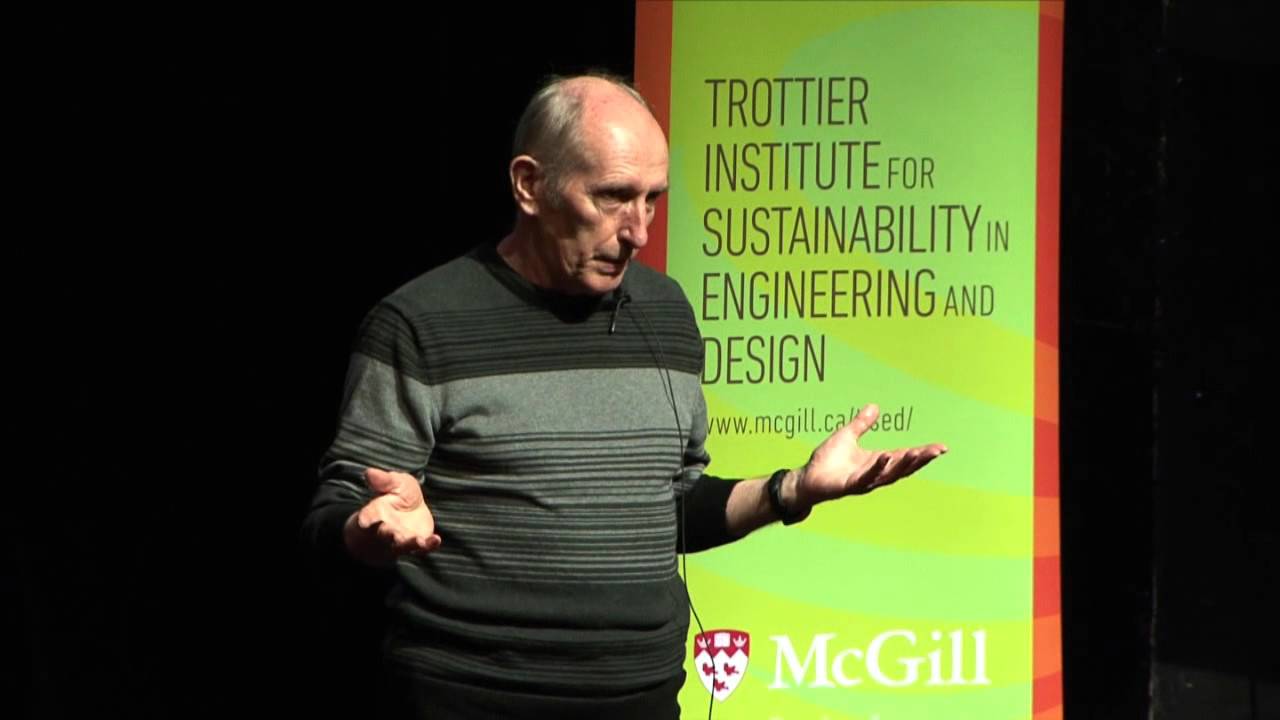
Trottier Institute for Sustainability in Engineering and Design
AI-assisted summary of "Energy Revolution? More like a Crawl" - Dr. Vaclav Smil — original source. Check the original for full context.
Source published:
Key ideas
- Global energy transition remains sluggish: between 1990 and 2015, the share of fossil fuels in world primary energy declined by only 3% (from roughly 90% to 87%), with new renewables accounting for only 2.5% in 2015. (8:34)
- Historical structural energy shifts require multi-decadal timeframes; moving from a 5% to a 25% global market share took 35 years for coal, 40 years for oil, and 55 years for natural gas. (12:55)
- Western nations squander roughly 40% of their food supply and drive oversized multi-ton vehicles, creating a massive cushion of waste that would allow a country like Canada to operate on one-third of its current energy use without compromising standard of living. (65:19)
- Carbon capture and sequestration faces severe physical scaling constraints: storing even 13% to 15% of annual global CO2 emissions underground would necessitate building an industrial infrastructure equal to the entire global oil industry. (75:55)
Detailed notes
## Background Published on YouTube by the Trottier Institute for Sustainability in Engineering and Design on September 20, 2015, this recording features Dr. Vaclav Smil speaking at a joint TISED and Fondation 3E event titled "Energy Revolution? More like a Crawl." The lecture examines the true state of global and national energy dependencies, critiques arbitrary transition timelines, and argues that meaningful progress requires confronting the unaddressed necessity of using vastly less energy.
## TL;DR Dr. Vaclav Smil presents an empirical, quantitatively rigorous assessment of the global energy system, demonstrating that modern civilization remains fundamentally fossil-fueled and cannot execute a rapid, friction-free transformation. He illustrates how energy transitions take many decades due to infrastructure scale, low renewable power densities, intermittency hurdles, and the immense embodied fossil energy required to manufacture materials like steel, concrete, and plastics. Highlighting foundational sectors like blast furnace iron smelting and Haber-Bosch nitrogen synthesis, Smil explains why these pillars of civilization cannot be simply electrified away. Instead of placing faith in silver-bullet technologies or carbon capture, he maintains that the only pragmatic solution lies in the rational use of energy and drastically reducing the enormous cushions of waste built into Western lifestyles.
## Atmosphere & style Delivered entirely without slides or digital devices, Smil’s presentation feels like an unapologetic masterclass in physical reality, blending acerbic wit, vast historical memory, and relentless numeracy. The atmosphere is quiet, sober, and intellectually intense as he systematically dismantles Silicon Valley technological optimism and political green targets with dry, unvarnished pragmatism. The lecture avoids fatalism, concluding on a steady note of grounded hope by illustrating how society can easily pull back its vast material waste without sacrificing modern welfare.
## Bulletin - [08:34](https://www.youtube.com/watch?v=5guXaWwQpe4&t=514s) Global energy transition remains sluggish: between 1990 and 2015, the share of fossil fuels in world primary energy declined by only 3% (from roughly 90% to 87%), with new renewables accounting for only 2.5% in 2015. - [12:55](https://www.youtube.com/watch?v=5guXaWwQpe4&t=775s) Historical structural energy shifts require multi-decadal timeframes; moving from a 5% to a 25% global market share took 35 years for coal, 40 years for oil, and 55 years for natural gas. - [01:05:19](https://www.youtube.com/watch?v=5guXaWwQpe4&t=3919s) Western nations squander roughly 40% of their food supply and drive oversized multi-ton vehicles, creating a massive cushion of waste that would allow a country like Canada to operate on one-third of its current energy use without compromising standard of living. - [01:15:55](https://www.youtube.com/watch?v=5guXaWwQpe4&t=4555s) Carbon capture and sequestration faces severe physical scaling constraints: storing even 13% to 15% of annual global CO2 emissions underground would necessitate building an industrial infrastructure equal to the entire global oil industry.
## Key takeaways - [06:38](https://www.youtube.com/watch?v=5guXaWwQpe4&t=398s) Modern civilization remains fundamentally anchored to fossil fuels, and transitioning global supply is constrained by immense physical scale and decades of infrastructure inertia. - [11:25](https://www.youtube.com/watch?v=5guXaWwQpe4&t=685s) Rapid historical energy shifts in small nations like the Netherlands cannot be scaled to continental powers like China or the United States. - [15:12](https://www.youtube.com/watch?v=5guXaWwQpe4&t=912s) Energy density dictates technological adoption; coal, oil, and gas expanded because each step offered superior energy density over traditional wood biomass. - [28:34](https://www.youtube.com/watch?v=5guXaWwQpe4&t=1714s) Automotive efficiency gains achieved through superior engine engineering have been completely offset by escalating vehicle mass and discretionary size. - [32:00](https://www.youtube.com/watch?v=5guXaWwQpe4&t=1920s) Renewable sources like wind and solar suffer from low capacity factors (25% to 30%) and embody massive fossil fuel inputs through concrete, steel, and plastics. - [38:33](https://www.youtube.com/watch?v=5guXaWwQpe4&t=2313s) Intermittent renewable generation requires equivalent backup baseload capacity, typically gas-fired turbines, due to the absence of scalable, affordable electricity storage. - [43:45](https://www.youtube.com/watch?v=5guXaWwQpe4&t=2625s) Foundational civilizational infrastructure—including steam turbines, electric grids, and internal combustion engines—remains grounded entirely in breakthroughs from the 1880s. - [48:49](https://www.youtube.com/watch?v=5guXaWwQpe4&t=2929s) Nearly half the world population survives solely due to synthetic nitrogen fertilizers produced via the Haber-Bosch process, which relies directly on fossil fuel feedstocks. - [53:50](https://www.youtube.com/watch?v=5guXaWwQpe4&t=3230s) Low power densities make mass biofuels energetically unviable, requiring vast land areas and competing directly with food production and tropical ecosystems. - [01:01:38](https://www.youtube.com/watch?v=5guXaWwQpe4&t=3698s) Dense megacities exhibit continuous power demand densities of around 100 W/m², making self-sufficiency via rooftop solar and micro-wind physically impossible. - [01:13:02](https://www.youtube.com/watch?v=5guXaWwQpe4&t=4382s) Emissions reduction efforts must be viewed globally rather than nationally, as localized cuts in small countries are quickly eclipsed by economic growth in China and India. - [01:28:13](https://www.youtube.com/watch?v=5guXaWwQpe4&t=5293s) Western nuclear power construction has largely stagnated due to exorbitant costs and political opposition, shifting new reactor development predominantly to authoritarian or developing states. - [01:40:45](https://www.youtube.com/watch?v=5guXaWwQpe4&t=6045s) Depletion of critical groundwater aquifers in regions like the North China Plain and Northern India poses an absolute physical threat far more pressing than the depletion of mineral resources. - [01:46:05](https://www.youtube.com/watch?v=5guXaWwQpe4&t=6365s) The vast cushion of discretionary consumption and structural waste in advanced economies provides an opportunity to significantly reduce energy demand without diminishing human well-being.
## Detailed walkthrough ### [00:09](https://www.youtube.com/watch?v=5guXaWwQpe4&t=9s) Welcoming Remarks and the TISED–Fondation 3E Partnership
Professor Subhasis Ghoshal from McGill University’s Faculty of Engineering, Director of the Trottier Institute for Sustainability in Engineering and Design (TISED), opens the evening seminar titled *“Energy Revolution? More like a Crawl.”* Addressing a crowded room with attendees from across Montreal's universities—including Concordia University, HEC Montréal, Polytechnique Montréal, Université de Montréal, and UQAM—he highlights the collaborative effort behind the event.
The lecture is hosted as part of the Fondation 3E speaker program in partnership with TISED. Ghoshal notes that McGill’s relationship with Fondation 3E began approximately five years earlier and has grown steadily, directly bolstering TISED's core educational and research mission. He explains that both institutions share central values: treating energy literacy as a core pillar of sustainable engineering, fostering integrative teamwork among engineers, architects, and urban planners to curtail demand across the urban built environment, and confronting the urgent imperative to transition away from carbon-emitting energy supplies. Ghoshal then welcomes the board members of Fondation 3E and introduces its president, Michel Gélinas, highlighting Gélinas's background—from completing a master's degree at HEC Montréal to serving on a diplomatic posting in Trinidad and Tobago in the 1980s, where he was exposed to major oil and gas operations, through his work as an energy analyst and adviser since 2004 for Foreign Affairs and other governmental departments.
[02:58](https://www.youtube.com/watch?v=5guXaWwQpe4&t=178s) Fondation 3E's Perspective on Demand Reduction and Energy Literacy
Michel Gélinas addresses the audience on behalf of the Board of Directors of Fondation 3E, offering a special greeting to the university students in the hall, specifically singling out the cohort from course CIVE 546: “We place much hope on your shoulders.” He outlines the core philosophy guiding Fondation 3E, emphasizing that sustainability must be engineered on both the supply side and the demand side, though the foundation concentrates heavily on curbing absolute energy consumption.
Gélinas details three fundamental tenets anchoring their strategy: 1. **Energy literacy and numeracy:** “We cannot manage what we cannot frame and understand ends our singular focus on energy literacy and energy numeracy.” 2. **Integrated urban design:** Energy-literate engineers, architects, and urban planners working collaboratively have the capacity to design buildings and urban environments that radically cut inhabitants' absolute energy footprints. 3. **Alternative resources:** The transition toward non-emitting supplies is imperative, and both passive approaches and opportunistic energy sources must be aggressively harnessed.
Reflecting on the evening’s guest, Gélinas recalls meeting Dr. Vaclav Smil nearly a decade prior after reading his book *Energy at a Crossroads*. He recounts an academic review of the book published in *The Energy Journal* by economist Richard Gordon. While Gordon gave the book a very favorable review, he concluded with skepticism, arguing that Smil's vision of the energy future was idiosyncratic because it was grounded in the premise that humanity should simply consume less energy. Gélinas firmly counters this critique, telling the audience that Fondation 3E directly rejects Gordon's view and stands entirely with Smil’s conviction on energy reduction, before handing the podium back to Ghoshal for the formal introduction.
[05:33](https://www.youtube.com/watch?v=5guXaWwQpe4&t=333s) Introduction of Dr. Vaclav Smil
Professor Ghoshal returns to introduce keynote speaker Dr. Vaclav Smil, Distinguished Professor Emeritus at the University of Manitoba and a Fellow of the Royal Society of Canada. Ghoshal summarizes Smil’s interdisciplinary scholarship, spanning the global energy system, environmental change, population dynamics, technological history, risk assessment, and public policy.
Ghoshal recaps several of Smil's notable honors: - Listed in 2010 by *Foreign Policy* magazine among the Top 100 Global Thinkers. - Appointed as a Member of the Order of Canada for his foundational contributions toward understanding how human energy use impacts the biosphere. - Recipient of the OPEC Award for Research for outstanding achievements in oil and energy research.
Expressing his delight at having Smil visit Montreal, Ghoshal invites him to the lectern to deliver his address.
[06:38](https://www.youtube.com/watch?v=5guXaWwQpe4&t=398s) Seven Grounding Realities of Global Energy
Vaclav Smil begins his address with characteristic modesty and dry humor, expressing gratitude to the crowd for turning out on a late Tuesday afternoon to hear an “old-fashioned professor” lecture entirely without slides or digital crutches: “I don't even have a cell phone.” He outlines his preference for an unscripted, organic discussion guided by audience reactions, but commits to imparting seven foundational didactic points that define the physical realities of world energy:
```mermaid flowchart TD accTitle: Seven Foundational Energy Realities accDescr: Diagram listing the seven principles outlined by Vaclav Smil regarding fossil fuels, transitions, scale, and efficiency.
subgraph CoreRealities["Civilizational Realities"] P1["1. Fossil Fueled Civilization"] P2["2. Long-Term Fossil Reliance"] end
subgraph TransitionDynamics["System Dynamics"] P3["3. Transitions Take Decades"] P4["4. Scale Matters"] P5["5. Power Density Constraints"] end
subgraph StrategyAndTech["Rational Use & Technology"] P6["6. Rational Use Beats New Supply"] P7["7. Innovation is Overvalued (1880s Tech)"] end
P1 --> P2 P2 --> P3 P3 --> P4 P4 --> P5 P5 --> P6 P6 --> P7 ```
Smil explicitly enumerates the principles: 1. “We are a fossil fueled civilization.” 2. “We shall remain so for a long time to come.” 3. Energy transitions inherently take a very long time. 4. Scale matters immensely. 5. Power density dictates technical limits. 6. “It's always better to use energy rationally than to come up with new ways how to use it,” despite society choosing the exact opposite course. 7. Innovation is a heavily overhyped and exaggerated concept: modern civilization still fundamentally rests upon the core engineering and infrastructural breakthroughs of the 1880s.
Smil emphasizes that quantitative literacy is non-negotiable when discussing energy transitions, inviting the audience to check his arithmetic and correct any slip-up as he begins diving into the raw figures.
[08:34](https://www.youtube.com/watch?v=5guXaWwQpe4&t=514s) The 25-Year Stagnation of the Renewable Transition
Smil tests the room's energy literacy by looking back across a generation—a 25-year interval from 1990 to 2015. He asks the audience to estimate the share of global primary energy supplied by fossil fuels in 1990, confirming that it stood at approximately 90%. When he asks what the fossil fuel share is in 2015, an audience member suggests 87%. Smil seizes on this figure to illustrate the sluggish reality of global progress: “So in 25 years we traveled 3% this renewable route.”
Smil deconstructs the remaining 13% of non-fossil primary energy to show where carbon-free energy actually originates: - **Nuclear energy:** Accounts for close to 7% of primary supply. - **Hydroelectricity:** Represents the second largest slice of non-fossil primary power. - **Old renewables:** Traditional biomass (fuelwood and agricultural residues), which remains widely burned in rural China, Ethiopia, and other developing regions, alongside legacy hydro. - **New renewables:** Modern installations consisting almost entirely of wind, solar, and commercial liquid biofuels (ethanol and biodiesel).
All new renewables combined account for merely 2.5% of total world primary energy supply in 2015. Furthermore, Smil attacks the biofuel slice of that 2.5%, calling it an artificial legislative distortion driven by the U.S. Congress rather than sound energy policy: “One third of U.S. corn now goes into making ethanol, one third of U.S. farmland devoted to corn is eroding and putting all that nitrate into the Gulf of Mexico so we could put few percent into gasoline cars.”
He projects that even if global deployment of new renewables doubles over the next 25 years, their share will merely rise from 2.5% to 5%. Even under an aggressive scenario where deployment triples through massive state subsidies and mandates, new renewables would reach only 7.5% to 8% of primary energy supply.
[11:25](https://www.youtube.com/watch?v=5guXaWwQpe4&t=685s) National Speed vs. Global Scale in Energy History
Smil notes that his historical findings on energy transitions—compiled in his book analyzing global trends alongside major economies like the United States, the Soviet Union/Russia, China, France, the United Kingdom, and Japan—demonstrate that individual small nations can sometimes execute rapid structural shifts, but large continental powers cannot.
To illustrate rapid national transitions, Smil points to the Netherlands: - During the Dutch Golden Age in the 17th century, the economy ran predominantly on local peat. - As quality peat deposits were depleted, the country supplemented with wind power and imported coal, eventually developing its own domestic coal-mining industry. - Following the discovery of the massive onshore Groningen natural gas field in 1959, the Dutch completely phased out their domestic coal mining within a single decade.
In stark contrast, large nations face physical, geographical, and industrial constraints that prevent such agility: - **China:** China remains a coal-dominated economy and will continue to be for the foreseeable future; it cannot replicate the fast gas transition that the Netherlands achieved in the 1960s. - **United States:** The U.S. cannot replicate France’s rapid nuclear buildup carried out during the 1970s and 1980s. - **Global scale:** At the global level, energy transitions become progressively harder over time as the absolute volume of energy consumed increases, dismantling the popular misconception that the 18th-century shift away from wood was instantaneous.
[12:55](https://www.youtube.com/watch?v=5guXaWwQpe4&t=775s) Historical Tipping Points: From Wood to Coal and Beyond
Dr. Vaclav Smil opens by debunking common historical generalizations regarding energy epochs. Popular narrative holds that the eighteenth century belonged to wood, the nineteenth century to coal and steam engines—an “Industrial Revolution which really never happened, but that's another story”—and the twentieth century to oil. Dr. Smil points out that nearly all of this is historically inaccurate: the nineteenth century remained overwhelmingly dominated by wood and traditional biomass across most of the world.
Except for England, which crossed the tipping point from wood to coal around 1640, the transition occurred much later for the rest of the world. France reached a 50-50 split between wood and coal around 1870, coinciding with the Franco-Prussian War. The United States, endowed with vastly larger forest reserves than Europe, did not tip to coal until 1884. Japan crossed the threshold around 1901, Russia between 1925 and 1930, and China not until approximately 1965 to 1970. As Dr. Smil emphasizes, global civilization was fundamentally powered by wood, straw, and biomass until very recently.
To measure energy transitions systematically, Dr. Smil tracks the time required for a resource to grow from a 5% share of the global market—the point at which an energy source begins to truly matter—to 25%, where it becomes a commanding market force:
- **Biomass to Coal:** 35 years - **Oil:** 40 years - **Natural Gas:** 55 years
Explaining why these transitions take progressively longer, Dr. Smil remarks: “There will never be a global market where one source of energy will be 90% right, so going from 5% to 25% from biomass to coal, it took us 35 years globally; going from 5% of oil to 25% of oil took us 40 years; going from 5% of natural gas to 25% natural gas has taken us 55 years.”
```mermaid flowchart LR accTitle: Timeline of National Coal Tipping Points accDescr: Chronological progression of when major nations crossed the 50 percent coal consumption threshold from wood. subgraph Early["17th to 19th Century"] UK["England<br/>(~1640)"] --> FR["France<br/>(~1870)"] FR --> US["United States<br/>(1884)"] end subgraph Modern["20th Century"] US --> JP["Japan<br/>(~1901)"] JP --> RU["Russia<br/>(1925–1930)"] RU --> CN["China<br/>(1965–1970)"] end ```
[15:12](https://www.youtube.com/watch?v=5guXaWwQpe4&t=912s) Energy Density, Infrastructure, and Technological Sophistication
The primary reason transitions take longer is sheer scale: adding an extra 5% of global market share in 1850 required roughly 10 million tons of fuel, whereas today an additional 5% demands half a billion tons. Furthermore, the fuels and conversion technologies become significantly more complex. Coal was a straightforward substitute for wood because it provided nearly double the energy density—rising from 15–18 gigajoules per ton (GJ/t) for air-dry wood to 28–30 GJ/t for high-grade nineteenth-century coal. Oil offered another leap in energy density to 42 GJ/t (compared to 22–24 GJ/t for typical bituminous steam coal) while being liquid and portable.
However, oil and gas introduced major supply and manufacturing hurdles. Out of approximately 200 countries in the world, roughly 160 are net oil importers, creating acute dependencies on foreign exchange. Liquid and gaseous fuels cannot simply be burned openly like lump coal; they require knowledge-intensive, high-precision prime movers such as internal combustion engines and gas turbines. Deploying these systems globally takes generations; after Henry Ford established the Model T in October 1908, it took about a century for the world to amass one billion motor vehicles.
High-performance conversion machines also face severe supply-chain bottlenecks. Large aviation and stationary power gas turbines operate with failure rates as low as 0.01%, but only five manufacturers in the world possess the capability to build them at scale—specifically General Electric, Rolls-Royce, Pratt & Whitney, and CFM. Consequently, even an abundant supply of cheap natural gas cannot be turned into electricity overnight. Addressing the physical constraints of deployment, Dr. Smil underscores: “You cannot simply say, ‘I want to convert, suppose I have infinite amount of natural gas right now, but I have to convert it using gas turbines—I cannot say let's have 10 gigawatts of gas turbines per week; I cannot, there are only five manufacturers to make it.’”
- **Energy Density Comparison:** - Air-dry wood: 15–18 GJ/t - Power plant bituminous coal: 22–24 GJ/t - High-quality 19th-century coal: 28–30 GJ/t - Crude oil: ~42 GJ/t - Natural gas is unlikely to reach a 33% global share for another 10 to 15 years despite its low price and high availability.
[18:30](https://www.youtube.com/watch?v=5guXaWwQpe4&t=1110s) The Triad of Fossil Fuels and Infrastructure Inertia
Dr. Smil observes that for the first time in history, the global energy system is anchored by three fossil fuels of roughly equal standing: crude oil at roughly 33% and falling, coal at approximately 30% and holding steady or rising, and natural gas at 25% and rising. Although oil reached well above 40% before declining after the 1970s OPEC price shocks, the fastest-growing fuel over the past two to three decades in absolute energy terms has been coal, driven primarily by China expanding its coal production from 1 billion tons per year to nearly 4 billion tons.
Because trillions of dollars are sunk into extraction, transport, and combustion systems, existing infrastructure changes only over generational timescales. In the United States, retirements of coal-fired power plants are frequently attributed to cheap shale gas, but Dr. Smil clarifies that plant age is the real driver. The US built hundreds of large power stations (200 MW to over 1 GW) during the 1950s and 1960s to meet annual demand growth of 7% to 10%; these plants are now 45 to 55 years old and naturally reaching the end of their operational lives.
Dr. Smil rejects claims from Silicon Valley and technophiles that computerized systems, artificial intelligence, and digital devices allow society to bypass physical laws and transition overnight. Pointing to the misapplication of the word "technology" (historically the study of technique) to refer narrowly to computers, Dr. Smil delivers a sharp assessment: “People say now it's different, we have silicon, we are electronic, we are sophisticated, artificial intelligence, no boundary is given, we can transit from this to that in no time, the old truths don't apply—absolute hogwash.”
Nowhere is physical inertia clearer than in China. Western nations like France, the United Kingdom, and Germany (with populations between 60 and 80 million) each have on the order of 60 GW of total installed electrical capacity, which took a century to construct. Between 2005 and 2007, China installed 60 GW of capacity *every single year*, roughly 80% of it coal-fired. At a cost of around $1.5 billion per 1.5 GW facility, these brand-new assets cannot simply be abandoned before completing their 35- to 40-year amortization cycles. While China's blistering rate of coal expansion is finally moderating, Dr. Smil notes that India is rapidly moving into the exact same trajectory, constructing massive coal infrastructure to drive its own industrialization.
[23:20](https://www.youtube.com/watch?v=5guXaWwQpe4&t=1400s) Coal Realities in India and China
India continues building coal-fired power plants as fast as possible across the country out of sheer domestic necessity. Dr. Vaclav Smil emphasizes that India is neither sitting on a large reservoir of natural gas nor bursting with crude oil; while imports may be cheaper at times, nations rely primarily on what they have domestically. However, Indian coal is fundamentally different from Chinese coal. Chinese coal is generally good-quality bituminous coal (unlike German lignite or brown coal), whereas Indian coal is of exceptionally poor quality: roughly 30% to 40% of its content is ash. As a result, generating a single useful kilowatt-hour requires burning significantly more material and capturing vast quantities of fly ash. The only mitigating factor is that Indian coal is not exceedingly high in sulfur, which spares operators from installing additional hundred-million-dollar desulfurization units per plant.
```mermaid flowchart TD accTitle: Comparison of Coal Quality and Constraints accDescr: Contrasts Chinese bituminous coal with low-grade Indian coal and its operational burdens.
subgraph China["China: High Economic Growth"] C1["Good bituminous coal"] --> C2["Higher energy yield per ton"] end
subgraph India["India: Future Economic Growth"] I1["High ash content (30–40%)"] --> I2["Burn more tonnage per kWh"] I2 --> I3["Catch large volumes of fly ash"] I1 --> I4["Low sulfur avoids $100M scrubbers"] end
China --> R["Dominant coal reliance driven by domestic resource limits"] India --> R ```
Smil underscores that these infrastructural dependencies are deeply embedded. Countries turn to coal because they have no realistic alternative, and the two major engines of global economic growth—China historically, and India going forward—are fundamentally coal-reliant nations. He rejects wishful energy transition projections that ignore these baseline physical realities:
> “So these are the embedded things and countries will do them because that’s the only thing they do really and unfortunately these two big countries where most of the global economic growth has come from in China and will come from India are the coal countries and they have no other choice right so you know to just project some graphs whatever what will happen you know that’s neither here nor there reality is is is what matters.”
[24:39](https://www.youtube.com/watch?v=5guXaWwQpe4&t=1479s) Oil, Aviation, and the Explosion of Mass Mobility
Smil shifts to crude oil, pointing out that it provided modern humanity with an unprecedented gift: hyper-mobility. Because oil is the densest practical fuel available—surpassed only by liquid hydrogen, which is exceptionally difficult and costly to produce and handle—it remains dominant. Smil recounts that when he was growing up in Europe, flying was essentially a fantasy seen only in movies. When he left Europe in 1969, perhaps two out of a hundred people had ever flown in their lifetime, and into the late 1970s, a German businessman traveling from Cologne to Munich would instinctively take a train.
Today, European buses display advertisements for €20 discount flights from Amsterdam to Cyprus, and Europeans fly more per capita than Americans. Unlike North America's hub-and-spoke model (where flying from Winnipeg requires routing through Toronto or Vancouver), Europe features direct point-to-point routes between peripheral cities like Riga to Zagreb or Aberdeen to Thessaloniki. Smil notes that a prominent discount airline even patented a proposal for standing-room-only passenger compartments with hanging straps to cut fares even further. Meanwhile, domestic European vacationers routinely spend weekends in Cyprus or travel to Thailand, Australia, and Alaska.
Smil warns that this mobility surge is only beginning as China enters international tourism. By 2020, the European Union expects 200 million Chinese tourists, heavily concentrated in six major gateway cities. He quips that anyone wanting to see Venice, Paris, or London should do so immediately, noting that these 200 million tourists represent merely the emerging middle class out of a population of 1.35 billion:
> “So you know if Chinese would travel like Japanese right then you couldn’t move in in European cities right and this is all subscribed by crude oil.”
- Even modern, efficient airliners such as the Boeing 787 Dreamliner—which uses roughly 15% less fuel than the Boeing 777, which was itself 15% better than predecessors—still consume substantial amounts of petroleum fuel. - Smil criticizes proponents of rapid renewable transitions who fail to address aviation: solar electricity cannot power commercial airliners, except for fragile experimental planes carrying a single pilot flying at the speed of a moth, nor can natural gas or wind electricity support heavy passenger flights.
[28:34](https://www.youtube.com/watch?v=5guXaWwQpe4&t=1714s) The Paradox of Vehicle Weight and Embedded Energy
Smil notes that nearly one-third of global primary energy is now consumed solely for transportation. Although internal combustion engines have grown substantially more fuel-efficient, automakers have completely undermined these efficiency gains by building significantly heavier and more massive vehicles. Observing a massive Infiniti SUV at the Toronto airport that appeared larger than a Hummer, Smil shares his own personal buying habits: he drove Honda Accords for decades but eventually switched to a Honda Civic because the modern Civic became longer, wider, and heavier than his older Accords. Over the past 25 years, Japanese cars have increased their average mass by approximately 50%.
The shift across global automotive design shows a sharp upward march in total vehicle weight:
| Vehicle Class / Era | Approximate Mass | |:--- |:--- | | Classic European (e.g., Citroën 2CV / "Deux Chevaux") | ~650 kg | | Modern Average European Car | ~1,400 kg | | Modern Average American Car | ~1,750 kg | | Full-size Luxury SUV (e.g., Cadillac Escalade) | ~3,000 kg (approx. 3 tons) |
Smil argues that this escalation totally negates the efficiency gains of the engines:
> “Notice that thing too we are making engines which are more fuel efficient but putting them into vehicles which are much more massive which totally negates all that thing right okay and then you have to think about embedded energy.”
Making vehicles lighter to meet environmental regulations introduces another paradox: substituting materials sharply increases embedded energy costs. Replacing standard structural steel with lighter alternatives requires far more energy during manufacturing:
- High-quality structural steel costs roughly 30 to 35 gigajoules (GJ) of primary energy per ton. - Primary aluminum requires close to 200 GJ per ton (nearly six times as much as steel). - Automotive plastics require roughly 80 to 140 GJ per ton, tripling or quadrupling the embedded energy per ton relative to steel. - Advanced composites (such as carbon fibers on the Boeing 787) and titanium are five to eight times more energy-intensive than conventional metals. - Electronics now account for about one-third of the total monetary value of a modern American car; electronic-grade silicon requires an order of magnitude more energy per ton than conventional materials.
[32:00](https://www.youtube.com/watch?v=5guXaWwQpe4&t=1920s) Capacity Factors: Renewables vs. Baseload Generation
Smil connects the issue of high embedded manufacturing energy directly to renewable generation technologies, specifically industrial wind turbines. Across countries like Denmark, Sweden, and Germany, wind turbines dominate the landscape, yet Smil points out that for the vast majority of the time, they are not producing power.
Addressing the engineering-minded audience, Smil compares the typical capacity factor (the percentage of full theoretical annual output actually generated) across different power systems: - Conventional coal-fired power plants easily achieve a 75% capacity factor under normal operation (running as high as 90% in China during periods of power shortages). - Nuclear power plants in the United States and Canada lead global performance, operating at capacity factors of 92.5% to 95%, despite few new plants being built in recent decades. - European wind turbines achieve an average capacity factor of roughly 25%, meaning they produce nothing 75% of the time. - American wind turbines on the windy Great Plains perform slightly better, averaging a capacity factor of about 30%, remaining idle or unproductive 70% of the time.
Smil recounts flying across France or Switzerland and looking down from the jetliner to see massive wind turbines whose blades—each individually larger than a Boeing 747—stand completely motionless across the countryside.
[33:46](https://www.youtube.com/watch?v=5guXaWwQpe4&t=2026s) The Embodied Fossil Fuels and Finite Lifespan of Wind Turbines
Dr. Vaclav Smil challenges the conventional perception of wind turbines as purely "green" machines. While politicians point to massive wind farms as symbols of a clean energy future, Smil approaches them through the lens of an engineer and physical scientist, cataloging the immense quantities of fossil energy required to create and install them. Constructing wind farms on remote mountain ridges requires fleets of diesel-fueled bulldozers and graders to clear and stabilize heavy-duty access roads. Transporting individual 80-meter composite blades demands specialized heavy diesel transport trucks.
The physical structure itself relies heavily on energy-intensive industrial materials: the massive foundation requires tons of concrete produced in coal-fired kilns, the tower is built from structural steel to prevent the structure from collapsing in high winds, and the blades themselves are plastics requiring significant energy inputs. Looking at these installations, Smil remarks: “So I look at this and I see concrete and steel and diesel fuel and plastics. I don't see any renewable energy there really, right?”
Furthermore, Smil highlights the comparatively short operational lifespans of wind turbines—typically lasting only 15 to 20 years—and questions how the composite materials will ever be recycled. He points to Europe's ongoing wave of "repowering," where early subsidized turbines installed in the 1990s and early 2000s (rated at 200 to 500 kilowatts) were decommissioned after only a decade of service to make room for newer units rated between 2 and 5 megawatts. By contrast, conventional thermal infrastructure exhibits immense durability; Smil cites an Iowa power plant that operated continuously from 1924 until its recent retirement, as well as nuclear reactors being recertified to run safely for 50 to 60 years. He asserts that neither wind turbines nor photovoltaic cells will ever match that longevity, particularly in harsh environments like the Sahara where solar panels are mercilessly abraded by blowing sand.
- Modern wind turbine blades measure up to 80 meters and weigh around 120 kilograms per ton of plastic composite. - Foundations require extensive concrete and heavy steel towers to anchor against extreme wind forces. - Early European turbines rated at 200–500 kW were dismantled after just 10 years for repowering with 2–5 MW models. - Traditional thermal boilers and recertified nuclear power plants regularly run for 50 to 60+ years.
---
[36:13](https://www.youtube.com/watch?v=5guXaWwQpe4&t=2173s) The Misallocation of European Solar and Sub-Optimal Capacity Factors
Smil critiques the geographic allocation of renewable capacity, pointing specifically to Germany's aggressive push into solar photovoltaics despite its northern climate. Drawing a comparison to the Pacific Northwest of the United States, he notes that Germany receives about as much sunlight as Seattle. He cites a retrospective study conducted by Siemens revealing that if the solar capacity installed across Germany had instead been deployed in sunny southern climates like Spain and Italy—even accounting for the cost of building long-distance high-voltage transmission lines to wheel the power north—it would have saved €40 billion. Smil recalls being phoned by *The New York Times* in the early 2000s at the start of the German *Energiewende* to comment on the world’s largest solar PV plant near Nuremberg; having grown up only 50 kilometers from that region, he knew firsthand that weather systems rolling in off the Atlantic bring persistent cloud cover and rain every three days.
```mermaid flowchart TD accTitle: Solar Allocation Efficiency Comparison accDescr: Diagram contrasting Germany's solar investment and low capacity factor against high-insolation alternatives in Southern Europe.
subgraph North["Germany (Actual Policy)"] A["Capital Invested in German Solar"] --> B["Insolation Equivalent to Seattle"] B --> C["Average Load Factor: 11% - 12%"] end
subgraph South["Southern Europe (Siemens Counterfactual)"] D["Install Same Solar in Spain & Italy"] --> E["Build High-Voltage Lines to the North"] E --> F["Higher Capacity Factor (16% - 17%+)"] F --> G["Net Savings: €40 Billion"] end ```
The resulting average load factor for German solar installations languishes at a meager 11% to 12%, despite tens of billions of dollars in subsidies. Even in sunny Spain, typical solar capacity factors only reach 16% to 17%. While southwestern American installations in Arizona can hit 25%, Smil points out that large utility-scale facilities remain acutely vulnerable to weather variability. The Ivanpah solar electric generating system in the California/Nevada desert underperformed significantly in its inaugural year due to unexpectedly persistent regional cloud cover. Smil notes: “And you are spending billions of dollars and telling this is the green future, you know?”
- German solar power operates at an average load factor of only 11% to 12%. - Spanish solar capacity operates around a 16% to 17% load factor. - Desert solar in Arizona can reach roughly 25% load factor. - A Siemens study found relocating German solar capacity to Southern Europe and building HVDC grid links would have saved €40 billion.
---
[38:33](https://www.youtube.com/watch?v=5guXaWwQpe4&t=2313s) Intermittency, Forecasting Limits, and Regional Grid Mismatches
Smil examines the operational challenges created by intermittency. While modern meteorological models can reliably forecast wind and solar production 24 to 48 hours in advance to manage day-to-day loads, they are incapable of predicting output across seasonal or annual scales. In 2015, U.S. wind generation capacity expanded by approximately 6%, yet actual total generation fell by roughly 30% due to an unusually calm, windless year across North America. Because seasonal predictions are impossible, grid operators running intermittent sources must maintain vast duplicate backup capacity, typically in the form of fast-ramping natural gas turbines.
To illustrate the geographic disconnect, Smil describes his home city of Winnipeg, Manitoba. Despite local jokes about mosquitoes and harsh winters, Smil explains that Winnipeg is one of the windiest cities on Earth, situated at the tail end of the continental wind corridor running from the Gulf of Mexico up through the Great Plains. Manitoba Hydro added wind generation for political appearance even though the provincial grid was already 100% clean hydroelectricity.
However, electricity demand in Manitoba peaks severely in January during dark, freezing periods driven by the "Canadian High"—a meteorological high-pressure system characterized by clear skies, plunging temperatures (daily highs around -30°C), and complete calm that can last for three consecutive weeks. Without wind, the province must either rely on fossil backup or purchase imported power from elsewhere.
Smil emphasizes the structural deficit of the North American grid: - There is virtually no east-to-west electrical transmission capacity across Canada or the United States; existing lines run strictly north-to-south (e.g., Manitoba exporting south to Nebraska, Quebec to New York, and British Columbia to California). - The modest east-west grid tie in Texas is roughly 250 megawatts, which Smil describes as negligible. - In contrast, European nations feature extensive multilateral interconnectors; Switzerland acts as a central transmission and pumped-hydro storage battery, constantly importing and re-exporting power. - Denmark’s wind penetration (often cited as supplying 80% of domestic power on windy days) is feasible only because it balances its system by importing Norwegian hydropower and German coal and nuclear electricity whenever Danish winds die down.
Smil concludes that until low-cost, gigawatt-scale energy storage becomes a reality, societies cannot transition away from fossil backup: “We shouldn't even be talking about energy problem as soon as you give me a gigawatt-scale storage for reasonable price, right? Okay, then it doesn't matter what capacity my solar is.”
[43:45](https://www.youtube.com/watch?v=5guXaWwQpe4&t=2625s) The Myth of Modern Innovation and the Primacy of the 1880s
Smil questions whether electricity storage is genuinely further ahead today than it was 10, 50, or 100 years ago, answering flatly: “answer is no of course we are not are certain physical limits for good reason some things do not happen”. He dismisses the widespread belief that technological innovation can conquer every physical hurdle, emphasizing that the truly fundamental pillars of modern material existence were not devised in Silicon Valley. He takes direct aim at Silicon Valley celebrity culture, mocking the media's lionization of figures like Elon Musk as inventors greater than Thomas Edison.
Musk, Smil points out, simply buys Panasonic batteries from Japan, puts them under a plastic cover emblazoned with a giant "T", and sells them to consumers. Similarly, when the Space Shuttle program was cancelled, Musk merely hired unemployed NASA engineers into SpaceX. The fundamental world we inhabit was not created by Steve Jobs, Elon Musk, or modern tech founders:
> “The world you live in was invented by some young but mostly middle-aged white men in 1880s Thomas Alva Edison William Stanley George Westinghouse Nicola Tesla these people invented electricity generation steam turbo generator Transformer electric motor without this nothing would happen without this you couldn't hold your cell phone right without this you couldn't hit your house without this you couldn't travel on the airplane without this there would be no Western Civilization internal combustion engine right okay Daimler Maybach 1884 it's all the 1880s we've been just simply deriving secondary tertiary quaternary derivation from that basis of 1880s right so before you tell me how impossibly accelerating Innovation is moving us all know I tell you read your history right and learn what is there right”.
[45:49](https://www.youtube.com/watch?v=5guXaWwQpe4&t=2749s) The Seven Levels of Technical Derivation: From Maxwell to the Smartphone
Smil recounts speaking to a Silicon Valley company where he told the audience that their work operates at roughly a seventh-level remove from foundational science and engineering. Modern communication begins in the 1860s with James Clerk Maxwell, who conceived of invisible electromagnetic radiation without knowing how to prove or harness it. Heinrich Hertz then proved the existence of Maxwellian waves by transmitting a signal from point A to point B. Subsequent engineers, including Guglielmo Marconi and Lee de Forest (who invented the vacuum tube), enabled long-distance wireless communication. By 1906–1907, the basic vacuum tube technology existed to build television, though progress was interrupted by the First World War.
From thermionic vacuum tubes ("hot glass Electronics"), science advanced to solid-state physics. Smil notes that although John Bardeen, Walter Brattain, and William Shockley receive credit for the transistor, the original patent for a solid-state amplifier was filed by Julius Edgar Lilienfeld as early as 1925. Decades later, Robert Noyce and Jack Kilby developed the integrated circuit in the late 1950s, which Intel synthesized into the microprocessor in the 1970s. Only after this progressive chain of physical inventions was someone able to build a personal computer, assemble a smartphone, and write software applications for it. Smil compares modern tech consumers and developers to people standing in a vast, fully matured garden who merely brush pollen off a flower, smell it, and marvel at their own brilliance. Despite the obsession with digital gadgets, our civilization still relies primarily on 19th-century prime movers:
> “It still depends on your steam turbine this is still the number one Primal on this planet is a steam turbine right it still depends on electric motors it still depends on all these things so I'm not all that smitten it's just simply you know it's pictures and you know we are visual creatures and we are also social creatures so it's pictures putting us together in touch with other people that's why we think it's such a fundamental invention but let me tell you that this civilization could live quite well without cell phones and and uh any computer actually”.
```mermaid flowchart TD accTitle: The Seven Levels of Electronics Derivation accDescr: Seven sequential technological milestones leading from Maxwell's theory to modern smartphone software. subgraph S1["Foundational Physics & Early Transmission"] L1["Level 1: Maxwell's Equations (1860s)"] --> L2["Level 2: Hertz's Transmission Experiments"] L2 --> L3["Level 3: Long-Distance Waves & Vacuum Tubes<br>(Marconi, De Forest, 1906)"] end
subgraph S2["Solid-State & Microelectronics"] L3 --> L4["Level 4: Solid-State Transistor<br>(Lilienfeld 1925 patent; Bell Labs)"] L4 --> L5["Level 5: Integrated Circuit<br>(Noyce & Kilby, late 1950s)"] L5 --> L6["Level 6: Microprocessor<br>(Intel, 1970s)"] end
subgraph S3["End Products"] L6 --> L7["Level 7: Computers, Smartphones & Software Apps"] end ```
[48:49](https://www.youtube.com/watch?v=5guXaWwQpe4&t=2929s) Haber-Bosch Ammonia Synthesis: The True Bedrock of Global Survival
Smil asks the audience to identify the single most critical technological breakthrough on Earth, without which 45% of the global population would not even be alive today. The answer is the Haber-Bosch synthesis of ammonia. Natural agricultural inputs—such as straw (which contains about 0.5% nitrogen), urine (which is mostly water with a tiny fraction of nitrogen), and animal manure—could never yield sufficient nitrogen to support today's 7 billion humans, even if every scrap of organic waste were gathered by millions of laborers. Chilean sodium nitrate deposits and tropical bird guano were temporary, depleting stopgaps.
In the summer of 1909, Fritz Haber successfully demonstrated bench-scale ammonia synthesis under high pressure and temperature, combining atmospheric nitrogen with hydrogen (initially derived from coal gas, now from natural gas). Carl Bosch of BASF then translated that delicate bench experiment into a full industrial-scale operation by October 1913. Smil contrasts this staggering four-year engineering triumph with contemporary venture-backed startups that absorb billions in capital only to collapse:
> “There is absolutely you see before you do anything you have to be alive right you know all the cell phones and mention and 45% of people on this planet wouldn't be alive and 70% of Chinese and 60% of Indians if it wouldn't be for Haber-Bosch synthesis of ammonia because your bar to grow what is the grow it's protein right what is protein amino acids what is amino acids nitrogen I mean it's a kindergarten science but most people apparently don't know kindergarten science these days so they think the greatest invention is iPhone right I mean what a joke really right”.
- Without Haber-Bosch ammonia, an estimated 45% of the world's population, 70% of Chinese citizens, and 60% of Indians would not be alive. - China is the world's largest producer of synthetic ammonia ($NH_3$), compelled by extreme arable land scarcity to fertilize intensively, followed by India. - Bosch transformed Haber's laboratory setup into a functioning industrial chemical plant at BASF between the summer of 1909 and October 1913.
[51:17](https://www.youtube.com/watch?v=5guXaWwQpe4&t=3077s) The Unavoidable Primacy of Steel and the Limits of Green Electricity
Smil discusses his book on steel, recalling that he had to persuade his publishers that steel is fundamentally more important than microchips or iPhones. Modern civilization remains utterly dependent on steel: textile looms, industrial saws, stamping presses, extrusion dies, turbine towers, and photovoltaic mounting frames are all built of steel. Even advanced composite-heavy aircraft like the Boeing 787 rely on high-strength steel for the punishing impact loads of landing gear undercarriages.
The production of virgin steel requires pig iron smelted in blast furnaces, which consume metallurgical coke. Smil highlights that approximately 1 billion metric tons of coal are consumed every year solely to produce coke for iron smelting, and no alternative industrial method exists to produce virgin iron at the required scale. While direct reduced iron (DRI) exists, the scale discrepancy is overwhelming: the world makes 1.2 billion tons of blast furnace pig iron compared to only about 50 million tons of direct reduced iron. Smil emphasizes that even if wind or solar energy were provided completely free of charge, it would not solve the problem of producing 1.2 billion tons of iron without carbon reduction agents. As he prepares to address transport fuels, he notes how regular flights across the Canadian Prairies have shifted in crop appearance from an unbroken expanse of wheat toward other crops like canola.
> “We make now about 1.2 billion tons of pig iron and we make about 50 million tons of direct reduction iron right you see the scale again really right so suppose you know if if somebody gives you infinite amount of not cheap but free wind or solar electricity right how do you make 1.2 billion tons of pig iron right I ask you right we just cannot make it if it's totally cheap and free electricity”.
[53:50](https://www.youtube.com/watch?v=5guXaWwQpe4&t=3230s) The Neglected Metric: Power Density and the Folly of Biofuels
Smil turns to the agricultural transformation of the Canadian Prairies, pointing out that while wheat once dominated, flying over the region now reveals endless fields of yellow. Canola (rapeseed) has taken over as the number one crop by value. Yet, rapeseed is minuscule, containing only about 20% oil, making it an absurd candidate to crush for biojet fuel once realistic calculations are applied. This leads into the core thesis of his book *Power Density*, a concept he describes as universally neglected yet utterly indispensable for evaluating energy systems.
```mermaid flowchart TD accTitle: Power Density Comparison of Energy Sources accDescr: Diagram contrasting low power density biomass with high power density fossil wells and solar potential.
subgraph LowDensity["Low Power Density (Diffuse Land Use)"] A["Corn Ethanol: ~0.5 W/m²"] B["Wind Farms: ~1.0 W/m²"] end
subgraph MidDensity["Intermediate Power Density"] C["Current Solar: 20–30 W/m²"] D["Theoretical High-Efficiency Solar: 40–50 W/m²"] end
subgraph HighDensity["High Power Density (Concentrated Footprint)"] E["Saudi Oil Wellhead: ~10,000 W/m²"] end
LowDensity -->|"Requires 100x–300x city footprint"| MegaCity["Modern Mega City Demand: ~100 W/m²"] MidDensity -->|"Requires 2x–4x city footprint"| MegaCity HighDensity -->|"Fuels civilization from tiny footprint"| MegaCity ```
To demonstrate, Smil asks the audience to calculate along with him the power density of corn ethanol in the United States. The American Corn Belt in Iowa represents the highest-yielding farmland on Earth—averaging 10 to 12 tons per hectare, compared to 6 tons in Europe or 3 tons in Asia. At 10 tons per hectare and 15 gigajoules (GJ) per ton, one annual harvest yields 150 GJ. Dividing 150 GJ by the roughly $3.15 \times 10^7$ seconds in a year, and then dividing by the 10,000 square meters in a hectare, yields a meager power density of approximately 0.5 watts per square meter ($0.5\text{ W/m}^2$).
In sharp contrast, an oil well sunk in Saudi Arabia occupies an area no larger than a lecture room yet operates at a power density of 10,000 watts per square meter ($10,000\text{ W/m}^2$). Consequently, a few thousand wellheads in the Middle East can fuel most of the world, whereas fueling a single Boeing 787 to fly to Asia on biofuels requires planting endless hectares of Prairie land year after year. While palm oil achieves higher energy yields per hectare than rapeseed, pursuing it at scale accelerates tropical deforestation and the destruction of global ecosystems.
Smil highlights this glaring environmental hypocrisy: “So you see, on one hand we have green people telling us we have to preserve biodiversity, we have to preserve tropical rainforest, and on the other hand they are telling us we will fly on biofuels.”
- Iowa yields 10 to 12 tons of corn per hectare, compared to ~6 tons in Europe and ~3 tons in Asia. - 10 tons of corn yields 150 GJ of gross energy once per year, which equates to roughly $0.5\text{ W/m}^2$. - A typical Middle Eastern oil well produces energy at roughly $10,000\text{ W/m}^2$. - Running all American transport on 100% domestic corn ethanol would require dedicating every single acre of US cropland exclusively to corn, completely eliminating the food and livestock feed supply.
---
[57:28](https://www.youtube.com/watch?v=5guXaWwQpe4&t=3448s) Solar Potential versus Transmission Bottlenecks
Evaluating renewables strictly through the lens of power density, Smil identifies solar photovoltaic power as far superior to other alternatives. Earth receives an average solar flux of about 170 watts per square meter ($170\text{ W/m}^2$). Operating at 10% efficiency provides $20\text{ W/m}^2$; raising that to 20% delivers $40\text{ to }50\text{ W/m}^2$. Conversely, he dismisses ocean wave and tidal energy devices (such as the Pelamis wave machines) as financial and thermodynamic dead ends, noting that the pioneer wave firm in Scotland went bankrupt after producing barely enough energy to brew coffee. Wind is viable in prime corridors, but solar remains the most scalable prospect if efficiencies reach 40% in high-insolation desert regions like Arizona or Algeria, where capacity factors approach 25%.
However, high-density solar generation in deserts collides with geographic reality. In both the United States and Canada, populations are concentrated on the coasts, leaving the interior sparsely inhabited. There are no high-voltage direct current (HVDC) "juice lines" crossing the continent to transmit solar power from Arizona to New York, or wind power from Manitoba and North Dakota to Toronto or Vancouver. Building a single kilometer of high-voltage transmission costs between $1 million and $5 million depending on terrain, but the true barrier is social opposition: NIMBY resistance routinely stretches project approval times to a decade.
Germany encountered this exact dilemma during its *Energiewende*. After saturating terrestrial wind sites in the north, developers moved into the North Sea with giant offshore turbines, only to discover that the industrial load centers lie in central and southern Germany. Running undersea cables from wind farms 50 kilometers offshore to the coastline proved as expensive as building the offshore wind installations themselves, before even factoring in the multi-billion-euro north-south onshore grid links.
Furthermore, intermittent surpluses create severe grid operational strains. On exceptionally sunny days, German legislation mandates that grid operators take 100% of available solar power, forcing baseload coal and natural gas turbines to idle at noon—when solar provides over 50% of the nation's electricity—only to abruptly ramp them back up after 5:00 PM as the sun dips. Smil emphasizes that short bursts of high renewable penetration mask the massive, costly fossil-fuel reserve capacities required to survive extended windless, overcast periods.
As Smil argues regarding capital allocation: “If I would be running the show—not that I want to, but if I would be running the show and asked me where to put my money into—I would put money... above all, solar.”
- Average incident solar radiation on the rotating planet: $\approx 170\text{ W/m}^2$. - High-voltage transmission line costs: typically $1\text{ to }1.5\text{ million per kilometer}$, escalating up to $5\text{ million/km}$ under difficult conditions. - Approval and permitting timelines for major interstate/interprovincial transmission corridors average 10 years. - German offshore transmission: the electrical grid link from 50 km offshore to the coast roughly equals the capital cost of the entire offshore wind farm.
---
[01:01:38](https://www.youtube.com/watch?v=5guXaWwQpe4&t=3698s) Mega-Cities and the Need for Rational Use
Smil pivots to the demographic reality of global energy consumption. Since 2007, more than half of humanity resides in urban environments, increasingly concentrated in dense megacities such as Tokyo, Shanghai, and Mumbai. These urban areas exhibit immense continuous energy demand densities, averaging roughly 100 watts per square meter ($100\text{ W/m}^2$) across their entire geographic footprint, including parks and roads.
Meeting that concentrated urban demand with diffuse renewable energy requires vast territorial collection footprints outside the city: - **Solar PV** ($20\text{--}30\text{ W/m}^2$): requires an external gathering area 3 to 4 times the size of the city. - **Wind power** ($\approx 1\text{ W/m}^2$): requires an external area 100 times the size of the city. - **Biomass energy** ($\approx 0.5\text{ W/m}^2$): requires an external collection footprint 200 to 300 times larger than the city.
Under our current system, fossil fuels extracted from tiny, highly concentrated footprints are gathered and piped into urban centers. Smil dismisses naive notions of urban decentralization: “So if you tell me how decentralized energy with your little wind turbine on your roof and little solar panel on your roof will work in 70-story houses in megacities of the world, then I say welcome to the green world, but otherwise it's a very difficult thing.”
Because supply-side substitution faces such steep thermodynamic and spatial constraints, Smil insists the focus must shift to demand: the "rational use of energy." He rejects the traditional phrase *energy conservation* as scientifically illiterate, observing that physics dictates energy is always conserved under the first law of thermodynamics.
True rational use means eliminating glaring inefficiencies, such as using three-ton sport utility vehicles for routine single-occupant trips. Smil observes wryly that in his home city of Winnipeg, massive SUVs are almost invariably piloted by petite 60-kilogram women running errands to Safeway, while their primary commuter car sits at an office. Fueling a three-ton passenger vehicle with resource-intensive corn ethanol represents the height of absurdity, compounding severe soil erosion and excessive nitrogen fertilizer runoff for an irrational end use.
[01:03:55](https://www.youtube.com/watch?v=5guXaWwQpe4&t=3835s) The Gross Irrationality of Energy Consumption
Smil shifts his focus from technical energy supply metrics to the sheer waste embedded in modern consumer culture. He begins by criticizing vehicle choices: while high-efficiency vehicles might achieve 100 miles per gallon, people instead pour fuel into three-ton vehicles getting barely 11 miles per gallon, which he characterizes as completely absurd. He points out a similar paradox with residential lighting: while solid-state LED bulbs are hailed as ultra-efficient, homeowners respond by installing dozens of outdoor LED fixtures—more than Smil has inside his entire house—and leave them burning all night simply because power in places like Montreal is dirt cheap. He also mocks ultra-cheap European budget tourism, such as flying from Amsterdam to Cyprus for €20.
He illustrates the absurdity of global travel by recounting the aftermath of the 2004 Indian Ocean tsunami in Thailand. One of the largest victim groups among foreign tourists was Norwegian babies whose parents had flown them halfway across the globe to sit in the tropical sun. Smil scoffs at the necessity of such journeys, asking why a parent would not simply fly to Italy instead, noting sarcastically that it is the exact same sun causing the exact same skin cancer. To Smil, mild complaints about waste understate reality: modern society's relationship with energy is thoroughly and structurally broken.
> “Our energy system is grossly irrational, grossly irrational.” — Dr. Vaclav Smil
[01:05:19](https://www.youtube.com/watch?v=5guXaWwQpe4&t=3919s) Food Waste, Triple-Pane Windows, and the "Dark Ages"
Turning to the food system—the topic of his current writing—Smil underscores that food is embodied energy, encompassing Haber-Bosch ammonia synthesis, intensive irrigation, synthetic pesticides requiring roughly 150 grams of energy equivalent per ton, heavy tractors, combines, steel, and plastics. Despite this massive investment of energy, Western countries in North America and the European Union systematically discard 40% of the food they produce. Smil observes that the principal outcome of this caloric excess is an epidemic of obesity unprecedented in the evolutionary history of *Homo sapiens*.
Addressing the McGill audience directly, Smil asks for a show of hands to see how many people have triple-pane windows installed in their homes. Seeing no hands raised, he declares that Canada is effectively living in the pre-medieval era in energy terms, drawing an unflattering parallel to the 6th century AD before the medieval monastic awakenings. Smil explains that his own home features triple-pane windows filled with argon gas and low-emissivity reflective coatings. He argues that if he were tasked with re-engineering national infrastructure, Canada could maintain its exact standard of living on just one-third of its current energy use. Achieving this would not require hardship, but simply eliminating mindless excesses—such as flying babies to Thailand, commuting in three-ton cars, and illuminating suburban lawns all night.
- Embodied agricultural inputs wasted include Haber-Bosch nitrogen fertilizer, tractor diesel, combine manufacturing, and pesticide synthesis. - Western nations (US, Canada, EU) discard approximately 40% of all food produced. - Smil's personal standard for home efficiency: argon-filled, low-e, triple-glazed windows.
> “If I ran the things, I could design a system then you could run Canada on one-third of the energy which you are using, and our standard of living would be pretty much the same.” — Dr. Vaclav Smil
[01:07:40](https://www.youtube.com/watch?v=5guXaWwQpe4&t=4060s) High-Speed Rail: Canada’s Glaring Transportation Failure
Smil turns to what he describes as one of the greatest national embarrassments in Canadian history, located right in Quebec. The Montreal-based company Bombardier manufactures world-class high-speed electric trainsets (as well as commercial planes, though Smil remarks their regional jets have had mixed success). Yet, none of Bombardier's rapid electric trains operate on Canadian soil. Canada possesses the world’s cheapest, abundant hydroelectric power through Hydro-Québec and Manitoba Hydro, making it the ideal geographic setting for an electrified corridor.
Instead, Smil recounts his morning flight, lamenting the wasteful aviation shuttles that depart every hour between Toronto, Ottawa, and Montreal. Contrasting this with his travels in Japan riding the 300 km/h Shinkansen past Mount Fuji in comfort, he notes that a downtown-to-downtown high-speed rail run between Montreal and Toronto would take just 1 hour and 20 minutes. He laments that Canada remains an energy-primitive outlier alongside the United States, lacking high-speed electric intercity rail despite Chinese and European networks expanding aggressively. While acknowledging a transcontinental high-speed line through the empty Canadian Shield to Vancouver makes no demographic sense, the Windsor–Quebec City corridor has ample density, where a single train carrying 1,500 to 2,000 passengers could easily replace dozens of 100-to-150-seat shuttle planes.
```mermaid flowchart TD accTitle: Comparison of High-Speed Rail and Hourly Air Shuttles accDescr: Contrasts the current Toronto-Montreal aviation corridor with an electrified rail alternative.
subgraph StatusQuo["Current Reality: Air Shuttles"] direction TB SQ1["Hourly Shuttle Flights<br>(Toronto-Ottawa-Montreal)"] --> SQ2["Small Capacity<br>(100-150 seats per plane)"] SQ2 --> SQ3["Aviation Jet Fuel Burn<br>+ Airport Transfers"] end
subgraph ProposedAlternative["Rational Alternative: High-Speed Rail"] direction TB PR1["300 km/h Electrified Train<br>(Bombardier Technology)"] --> PR2["Mass Capacity<br>(1,500-2,000 seats per train)"] PR2 --> PR3["Downtown to Downtown<br>(Toronto to Montreal in 1h 20m)"] PR3 --> PR4["Zero-Carbon Hydro Power<br>(Hydro-Québec / Manitoba Hydro)"] end ```
- Bombardier manufactures high-speed passenger trainsets in Quebec, but exports them abroad rather than deploying them domestically. - Hourly air shuttles between Toronto Pearson, Billy Bishop Island Airport, Ottawa, and Montreal carry only 100–150 passengers per departure. - A 300 km/h downtown-to-downtown high-speed train could link Montreal and Toronto in approximately 80 minutes, carrying up to 2,000 travelers per trip.
> “We are the last civilized country—except for the US, of course, which is not civilized—which do not have a rapid electricity-powered train, although we have the cheap hydroelectricity and although we make those trains.” — Dr. Vaclav Smil
[01:11:17](https://www.youtube.com/watch?v=5guXaWwQpe4&t=4277s) Q&A: Global Warming and Limits of Rationality
Opening the floor to questions, an audience member challenges Smil, asking why his talk did not center directly on global warming and greenhouse gas abatement targets. Smil counters that if society adopted genuine energy rationality, the climate crisis would largely solve itself, reiterating that Canadian energy consumption could be cut by two-thirds without sacrificing quality of life. The questioner pushes back, noting that while Canada consumes roughly three times more energy per capita than many other developed nations, the real drivers of future global demand growth are developing nations like China and India, where baseline per capita use is still low and conservation offers smaller absolute reductions.
Smil agrees with the distinction between theoretical potential and geopolitical reality: his role as an analyst is to define the physical boundary conditions of what is possible, rather than predict what political systems will actually execute. He notes that answering such challenges often provokes dismissive accusations of fatalism. To illustrate the nuances of public debate, Smil brings up a calculation he conducted on the Canadian oil sands. While acknowledging that bitumen extraction—whether surface mining or steam-assisted gravity drainage (SAGD)—requires significantly more energy per barrel than conventional crude oil production, he notes that critics often exaggerate how much dirtier it is relative to standard global supplies.
> “I said I know, but if you use energy more rationally, the problem will almost disappear, because I told you I could design Canadian system using one-third as much energy as we are using now—and that is the solution: rational use of energy.” — Dr. Vaclav Smil
[01:13:02](https://www.youtube.com/watch?v=5guXaWwQpe4&t=4382s) The Fallacy of National Reductions and the Montreal Protocol Myth
Vaclav Smil underscores that analyzing carbon dioxide emissions through a purely national lens fundamentally misunderstands atmospheric physics. Carbon dioxide is a well-mixed greenhouse gas in a single planetary reservoir. Smil recounts a calculation he performed regarding Canadian emissions: if Canada were to shut down the entirety of its oil sands operations to eliminate those emissions, China’s rapid energy growth at the time would have offset the entire savings in just seventeen days. For a nation of 35 million people, adopting complete rationality accomplishes little on a global scale when another billion people are being added across Asia and Africa—populations that must urgently consume whatever energy sources they can access to survive and develop. As Smil puts it, “People have to realize that talking about CO2, you shouldn't talk about nations; you have to talk globally.”
```mermaid flowchart TD accTitle: The Asymmetry of Carbon Emissions accDescr: Flowchart illustrating how small-nation emissions cuts are rapidly offset by growth in developing economies.
subgraph Developed["Developed World Action"] A["Canada shuts down oil sands /<br/>Denmark cuts fossil fuels"] --> B["Marginal global reduction"] end
subgraph Developing["Global Realities"] C["1 billion new people in Asia & Africa"] --> D["Industrial & basic energy demand"] D --> E["Emissions growth offsets cuts in days or hours"] end
B -.->|"Overwhelmed by scale"| E ```
Smil strongly dismisses the common belief that the climate crisis can be resolved the same way the world solved the depletion of the ozone layer through the Montreal Protocol. Eliminating chlorofluorocarbons (CFCs) was straightforward because only a handful of wealthy nations and major chemical manufacturers—such as DuPont, Imperial Chemical Industries (ICI), and a Russian state enterprise—were producing them. These companies readily agreed to phase out CFCs in favor of hydrochlorofluorocarbons (HCFCs), on which they made higher profits, while rich nations agreed to pay off developing countries to accelerate their transition. In contrast, carbon dioxide is deeply woven into every facet of modern civilization, from basic heat and electricity to agricultural production, where clearing tropical rainforest for oil palm biofuels generates immense amounts of carbon.
- Smil calculated that China’s expanding energy consumption would have eclipsed the total emissions saved by closing Canada’s oil sands in a mere 17 days. - Small European countries like Denmark (with approximately four to five million people, equivalent to a modest Chinese county town) could abandon fossil fuels entirely, and the savings would be absorbed by Indian and Chinese growth in hours or days. - Tropical deforestation for land use and agriculture remains the second largest source of anthropogenic carbon dioxide emissions after the direct combustion of fossil fuels.
---
[01:15:55](https://www.youtube.com/watch?v=5guXaWwQpe4&t=4555s) The Scaling Trap of Carbon Capture and the Math of Planetary Consumption
Examining technical proposals for atmospheric mitigation, Smil argues that humanity has already passed the 400 parts per million (PPM) threshold and has virtually no chance of halting atmospheric concentrations at 450 PPM. Even stabilizing atmospheric concentrations at 500 PPM would require the developed world to make immense reductions in living standards to accommodate developing nations rising out of poverty. Addressing claims that direct air capture (DAC) or carbon capture and sequestration (CCS) will solve the issue, Smil focuses entirely on the sheer physical scale of the energy system. Global petroleum extraction amounts to roughly four billion metric tons per year, supported by vast pipelines, tankers, refineries, and drilling infrastructure built over more than a century.
```mermaid flowchart LR accTitle: Physical Scale Comparison of Oil Extraction vs CO2 Emissions accDescr: Diagram contrasting annual global oil extraction with global CO2 generation to show the impracticality of complete carbon capture.
subgraph Extraction["Global Oil Extraction"] Oil["~4 Billion Tons / Year<br/>(Massive Global Industry)"] end
subgraph Emissions["Global CO2 Emissions"] CO2["> 30 Billion Tons / Year<br/>(Total Human Output)"] end
Oil -.->|"Reversing oil industry handles ~13% of total"| CO2 ```
Smil points out that generating an equivalent underground sequestration apparatus handling four billion tons of carbon dioxide—effectively building the entire global petroleum infrastructure in reverse—would sequester only a fraction of annual emissions, given that humanity emits more than 30 billion tons of carbon dioxide every year. Because the required scale is so astronomically large, Smil argues that relying on carbon capture from ambient air or underground storage is fundamentally unrealistic. As Smil summarizes: “There is no simple engineering solution because of the scale, so forget about the capture from the air, forget about the storage underground—that cannot work really.”
- Global annual oil extraction stands at roughly 4 billion metric tons. - Annual human emissions of carbon dioxide exceed 30 billion metric tons, meaning an underground sequestration system equal in size to the entire global oil industry would manage only around 13 to 15 percent of emissions. - India and China will not curtail basic human modernization for Western emissions targets; in negotiations like the Paris Agreement, India has affirmed its intent to burn available energy, while China pledged only that emissions would peak before 2030 without defining the absolute peak level.
---
[01:18:04](https://www.youtube.com/watch?v=5guXaWwQpe4&t=4684s) Per Capita Disparities, Historical Debt, and the Limits of Efficiency
Smil frames the climate dilemma as a fundamentally moral and behavioral issue rather than an engineering challenge. Primary energy consumption in Canada sits at roughly 360 gigajoules (GJ) per capita, compared to China at roughly 90 GJ per capita—a fourfold difference today. However, under Mao Zedong until the late 1970s, China’s primary energy consumption lingered near 15 GJ per capita. When viewed in terms of cumulative historical emissions over the past 150 years, the Western advantage expands to roughly fifty times that of developing countries on a per capita basis. Developing nations therefore operate with an unassailable moral argument to pursue modernization, leaving Western nations with no standing to dictate consumption limits to them.
During the subsequent exchange, an audience member challenges Smil on this dynamic, pointing out an institutional paradox:
> “Now you've presented us with a rather interesting paradox. You're suggesting the solution to our energy problems is not technical, but obviously is political and economic, but those very same political and economic forces are pushing the technical argument because it's easier for them to do so than it is to change the system. So how are we going to change this system in the direction that you think we ought to go?”
Smil responds by clarifying that while society is entirely suffused with technology, the solution cannot be *primarily* technical because modern machinery is already bumping against thermodynamic limits:
> “So you see, I should have I should have been more careful. I should have said the solutions are not primarily technical. Of course, everything is technical. The society is just suffused with la technique, everything—so to do anything without mucking with the current arrangement, current tech, is impossible.”
To illustrate these thermodynamic ceilings, Smil points to residential heating. His own home uses a natural gas condensing furnace running at 97 percent efficiency with no traditional chimney, while modern Canadian building codes mandate mid-efficiency units of around 78 percent. Moving from 78 percent to 97 percent captures an incremental 15 to 20 percent efficiency improvement, leaving almost zero room for future thermodynamic gains. The same constraints apply across aviation and transport: replacing entire fleets with state-of-the-art aircraft like the Boeing 787 Dreamliner yields at best a 15 to 18 percent fuel burn improvement. Smil concludes that replacing every motor, engine, and turbine worldwide with the most efficient model available would save only 15 to 25 percent overall. With world population expanding from 7.3 billion toward 9 billion, and with developing populations like India seeking to increase their per capita consumption from 15–20 GJ up toward China's 90 GJ, efficiency improvements are swiftly overwhelmed by demographic and economic growth.
- Primary energy per capita: Canada consumes ~360 GJ per capita, China consumes ~90 GJ per capita (having risen from ~15 GJ prior to 1980), and India consumes roughly 15 to 20 GJ per capita. - State-of-the-art condensing natural gas furnaces operate at 97% thermal efficiency, leaving virtually no physical headroom for further efficiency gains over the code-mandated 78% standard. - Upgrading the entire global fleet of aircraft to advanced models like the Boeing 787 yields an efficiency gain of approximately 15 to 18 percent. - Universally adopting the most efficient modern energy converters across all applications would reduce total primary energy use by only 15 to 25 percent, an amount easily surpassed by population growth from 7.3 to 9 billion alongside rising global living standards.
[01:22:03](https://www.youtube.com/watch?v=5guXaWwQpe4&t=4923s) Pricing Energy and the Myth of Costly Consumption
An audience member asks how society can convince people to make more intelligent use of energy if technical fixes alone cannot solve the crisis. Dr. Vaclav Smil responds without hesitation: “People very—there is no secret to it: hit them in their pocket, make them pay, is very simple as that, really.” He challenges the room to guess what proportion of disposable income the mythical, non-existent American middle-class family beloved by politicians actually devotes to energy. The answer is merely 9 percent, with an additional 9 percent spent on food—the most essential energy form of all. Consequently, the typical North American household spends under 20 percent of its disposable income on the core essentials of life: light, heat, mobility, and sustenance. The remaining 80 percent is dissipated on mortgages for homes people cannot afford and disposable junk manufactured in China.
Smil contrasts this extreme modern affluence with his youth in postwar Europe, where households routinely spent 50 to 60 percent of their disposable income on food alone. Rationing persisted in Great Britain until 1954, and across much of the developing world—and historically in Maoist China—food still claims 40 to 60 percent of household earnings. Even modern Europe spends roughly 20 percent (and up to 22 percent in Switzerland). In North America, by contrast, society practically gives away electricity, gasoline, and food for free. Because prices do not remotely reflect the embedded energetic costs of production, systemic waste becomes inevitable. As Smil observes, “We are living in a society which is the cheapest food and energy prices in history of mankind, period.”
- North American middle-class households allocate approximately 9% of disposable income to energy and 9% to food. - Post-WWII European households spent 50% to 60% of disposable income on food; modern European families still spend around 20% to 22%. - Developing nations continue to spend between 40% and 60% of household income on basic nutrition. - Smil notes that a consumer can buy 1.5 kilograms of pork on sale at a supermarket for just $7, a price disconnected from the thermodynamic input required to produce it. - Feed conversion ratios highlight this disconnect: warm-blooded livestock require vast feed inputs simply to maintain body temperature and basal metabolism, demanding roughly 7 units of feed per unit of pork, and up to 20 units of feed per unit of beef in fenced feedlots, after which society wastes roughly 40% of the edible meat. - Smil argues that if prices reflected the full embodied energy in apparel, footwear, meat, or vegetables, consumer goods would cost two to three times more, compelling immediate conservation.
[01:26:16](https://www.youtube.com/watch?v=5guXaWwQpe4&t=5176s) Ecological Limits of Agriculture and the Promise of Synthetic Genomics
Looking ahead, Smil warns that food and energy will inevitably become far more expensive because the planetary biosphere is under acute degradation. Global food security hinges directly on ecological stability, yet crop yields for staples like rice, wheat, and corn, which soared during the Green Revolution of the 1960s, have largely plateaued over the past two decades. Breaking past these yield ceilings would demand vastly higher inputs of synthetic nitrogen fertilizers and energy-intensive irrigation, or alternatively, radical biological redesign.
While Smil views synthetic genomics as humanity's most plausible long-term hope, he cautions against the breathless hype peddled by biotechnology promoters. Researchers frequently hold press conferences in white lab coats announcing miraculous cancer cures or breakthrough organisms, only to append that practical deployment remains decades away. He cites Craig Venter’s promise a decade earlier to engineer bacteria that would secrete liquid hydrocarbons on demand, a goal that remains completely unrealized. While precise genome-editing tools like CRISPR represent significant scientific milestones, Smil notes an inherent danger: once humanity masters the genetic engineering of metabolic organisms, society will inevitably attempt the wholesale engineering of human beings—a future he views with deep foreboding.
```mermaid flowchart TD accTitle: Limits of Agricultural Yields and Genetic Solutions accDescr: Flowchart illustrating the historical yield growth, the current plateau, and future biotechnology hurdles described by Vaclav Smil.
subgraph Historical["Green Revolution (1960s–1990s)"] A["High-Yield Crop Varieties"] --> B["Dramatic Yield Expansion"] end
subgraph Present["Current Agronomic Reality"] B --> C["Yield Growth Plateaus for Corn, Rice & Wheat"] C --> D["Higher Chemical & Water Inputs Required"] D --> E["Accelerating Ecological Stress"] end
subgraph Future["Biotechnological Frontiers"] C --> F["Synthetic Genomics & CRISPR Editing"] F -.->|"Hype vs. Decadal Lag"| G["Engineered Hydrocarbons / Cultured Meat"] G -.->|"Unintended Consequences"| H["Widespread Human Genetic Engineering"] end ```
- Major grain yields have flattened over the past 20 years, resisting simple linear improvements. - Further yield increases under conventional methods require disproportionate infusions of energy-intensive inputs, particularly Haber-Bosch nitrogen fertilizers and pumped irrigation. - “This is our great hope, you know, that most of our problems we can eventually solve by synthetic genomics, but we are not there yet really,” Smil explains, noting that commercialized organisms secreting transport fuels remain years off. - Smil cautions that technological capability will inevitably expand from microbes to people: “We won't stop at engineering gasoline-spitting bacteria, right? We'll start engineering people on a big scale.”
[01:28:13](https://www.youtube.com/watch?v=5guXaWwQpe4&t=5293s) The Stagnation and Shifting Geography of Nuclear Power
Prompted by an audience member to assess the prospects of nuclear power and its historical rollout in France, Smil intervenes with an unsparing diagnosis: “If I would be flippant I would say, you know, why are we talking about nuclear energy, it's dead.” Clarifying the remark, he points out that nuclear power has essentially halted across the Western industrialized nations that pioneered it. Canada has not built a new commercial reactor in twenty-five years, and the United States operates roughly 100 aging reactors from an initial 1960s–1980s buildout while only constructing a handful of replacement units. In Europe, only two reactors are under construction, highlighted by the Olkiluoto plant in Finland, which has suffered catastrophic delays and massive cost overruns. Meanwhile, Japan, which formerly derived 30 percent of its electricity from nuclear reactors, will never return to that baseline following the Fukushima Daiichi disaster.
The locus of nuclear construction has shifted entirely to authoritarian or developing states: China, South Korea, North Korea, Iran, and to a limited degree, India. Smil emphasizes that this shift dramatically elevates operational and catastrophic risks. In Japan, the Fukushima disaster unfolded in the relatively sparsely populated Tohoku region, requiring the evacuation of roughly 100,000 residents. In China, however, commercial reactors are not situated in the remote interior of Tibet, but are clustered in coastal provinces like Zhejiang and Jiangsu, directly adjacent to megacities like Shanghai. Smil points out that eastern China is seismically vulnerable—recalling the 1976 Tangshan earthquake that killed over 700,000 people—meaning a major accident could imperil up to 100 million individuals in the densest urban corridors on earth.
- There are approximately 440 commercial nuclear reactors operating globally, with roughly 100 located in the United States. - The United States is constructing merely two and a half to three and a half replacement reactors, while Western Europe has only two underway. - Finland's showcase EPR reactor at Olkiluoto has taken nearly double the projected construction time and more than double its original budget. - Japan has permanently retreated from its pre-2011 standard of generating 30% of national electricity from nuclear fission. - Active nuclear construction programs are now largely concentrated in China, South Korea, North Korea, Iran, and India. - High demographic density along China’s eastern seaboard magnifies accident consequences by orders of magnitude compared to Japan's 100,000-person evacuation: “In China, similar accident will affect 100 million people, right, given the density.” - Smil underlines eastern China's seismic hazards by citing the Tangshan earthquake of September 1976, less than 150 kilometers from Beijing, which claimed an estimated 700,000 lives.
[01:31:39](https://www.youtube.com/watch?v=5guXaWwQpe4&t=5499s) The Troubled Geopolitics and Stagnation of Nuclear Power
Dr. Vaclav Smil surveys the current global landscape of nuclear power construction, pointing out that Western nations have largely exited the arena. The remaining builders form a geopolitically volatile cohort: China, South Korea, India, Iran, and Russia. While South Korea may appear friendly and stable, Smil emphasizes that it sits directly within the strike range of everything North Korea can launch, including strikes targeting South Korea's extensive fleet of nuclear reactors. In India, stability is challenged by bordering a nuclear-armed Pakistan. Meanwhile, Russia's nuclear industry traces its lineage back to the design of the Chernobyl reactor, an engineering disaster built without a containment building, operated by personnel who were casually experimenting in the middle of the night. In contrast, when the Three Mile Island accident occurred in the United States, proper containment ensured that everything remained trapped within the concrete structure. Smil questions whether the world should feel comfortable leaving all future reactor construction exclusively to this group of nations, noting with resignation that while they are building, the Western world has completely stepped away.
```mermaid flowchart TD accTitle: Nuclear Power Trajectory accDescr: Flowchart contrasting the past success of nuclear power with its current geopolitical risks and western abandonment.
subgraph Legacy ["Historical Accomplishments"] Success["'Successful Failure'<br/>Generates more TWh than hydro & new renewables<br/>Supplies 70% in France, 30% in Japan"] end
subgraph Bottlenecks ["Unresolved Problems"] Waste["No Permanent Repository<br/>(US, Russia, China, France lack deep storage)"] Economics["Cost-Prohibitive<br/>$13B per 1 GW vs. $40/bbl oil"] BreederFail["Breeder Reactor Cancellation<br/>GE 1974 forecast failed: 0 operating in West"] end
subgraph Geography ["Active Builders vs. Western Exit"] Builders["Active Builders<br/>China, Russia, South Korea, India, Iran"] Exit["Western Retreat<br/>France cutting share, Flamanville delays, US stalls"] end
Legacy --> Bottlenecks Bottlenecks --> Geography ```
Looking back at his long study of the sector, Smil explains how he coined a concise phrase to describe atomic energy: “I came up with oh it's right it's simple it's primitive but nevertheless I'm proud of it because you know in two words it encapsulates nuclear electricity: it's been a successful failure.” It is successful because it supplies more electricity globally than all hydroelectric dams and all modern renewables combined, representing the largest non-fossil chunk of power, providing 70% of France’s supply and historically 30% of Japan’s. Yet it remains a failure because Western society grew terrified of it, abandoned it, and never resolved the ultimate NIMBY problem: deep geological repositories for long-lived radioactive waste. Neither the United States, Russia, China, France, nor Japan has an operational permanent depository. Furthermore, the economics have become prohibitive; spending $13 billion to construct a single gigawatt of capacity makes little sense in an era of $40-per-barrel oil. Even France, the world’s preeminent nuclear pioneer, has committed to reducing its nuclear share, bogged down by troubles at projects like the Flamanville EPR. Smil contrasts today's reality with a 1974 General Electric forecast in his possession, which had projected that by the year 2000 fossil-fueled power plants would be entirely obsolete and 80% of all generation would come from fast breeder reactors. Today, after billions poured into prototypes across the US, France, and Japan, there is not a single commercial fast breeder reactor operating anywhere in the Western world.
- South Korea possesses one of the world's most extensive nuclear construction programs despite lying entirely within North Korean military range. - The Chernobyl RBMK reactor lacked a secondary containment structure, whereas the Three Mile Island containment building successfully prevented widespread environmental contamination. - France generates roughly 70% of its electricity from nuclear energy, but government policy now targets a contraction of this share rather than expansion. - General Electric’s 1974 long-range energy forecast predicted the complete phaseout of coal, oil, and gas by 2000, alongside the widespread adoption of liquid-metal fast breeder reactors.
---
[01:35:40](https://www.youtube.com/watch?v=5guXaWwQpe4&t=5740s) Hubris, Historical Surprises, and the Collapse of Peak Oil
A student from the McGill Faculty of Engineering asks the final question, jokingly praising Smil for telling the engineering faculty that the "emperor has no clothes." Smil quips back that the emperor has clothes, but they are exceptionally skimpy. The student then asks what role engineers should have if technological innovation cannot magically rescue civilization, whether society is flying toward catastrophic Icarus-like hubris, and what ultimately gives Smil hope. Smil responds that across long-term historical horizons, human beings are consistently terrible at anticipating their true crises: the disasters society worries about most obsessively often end up being solved or avoided, while the threats that blindsided civilization come from matters nobody paid attention to.
To illustrate grounds for optimism, Smil points to the peaceful dissolution of the Soviet Union. As a former citizen who fled behind the Iron Curtain, he finds it extraordinary that a superpower possessing 11,000 active nuclear warheads simply dismantled its empire on a Sunday without triggering global thermonuclear war. While border skirmishes in Ukraine and Chechnya followed, the central disaster everyone feared throughout the Cold War—a global nuclear exchange—never materialized. By comparison, China represents a less hopeful sociopolitical picture; despite lifting its population out of poverty and introducing elements of a market economy after Mao's death, it remains an authoritarian regime governed by an omnipresent Communist Party that expends vast resources employing armies of censors merely to police citizens' private messages.
Turning back to resources, Smil targets the apocalyptic hysteria surrounding "peak oil" that peaked around 2005. At the time, doom-laden bestsellers predicted immediate civilizational collapse due to oil exhaustion, prompting Smil to publish detailed rebuttals arguing that the Earth held vast untapped hydrocarbons. Ten years later, the public narrative had reversed 180 degrees: instead of panicking about imminent shortages, market analysts were complaining that energy was far too cheap and that low oil prices were destabilizing producers. Smil underscores that the world is not running out of minerals or fossil fuel deposits. The hydraulic fracturing revolution has granted North America an estimated 100-year supply of low-cost natural gas. Here, Smil notes, engineers proved their value: early fracking was inefficient, wasting massive volumes of water and proppants. Over time, engineers optimized horizontal drilling, pumping vastly higher volumes of inexpensive sand to prop open the fractures in tight shale formations, driving down production costs per well. While Saudi Arabia initially assumed that sustained $50 or $60 prices would wipe out US tight-oil drillers in the Bakken and Eagle Ford, engineering learning curves enabled several operators to remain viable down toward $25 per barrel, debunking the narrative of physical depletion. However, Smil cautions that humanity is exhausting other vital resources that receive virtually no attention, the foremost being water.
- The peaceful dissolution of the Soviet Union occurred despite the state holding an arsenal of approximately 11,000 nuclear warheads. - Predictions in 2005 warned that imminent global peak oil would trigger irreversible collapse; by 2015, markets faced a glut, with crude falling toward $40 per barrel. - Fracking and horizontal drilling techniques unlocked an estimated century-long reserve of natural gas for the United States and Canada. - Enhanced sand proppant loading drastically improved output per shale well, allowing US shale plays like the Bakken and Eagle Ford to withstand oil prices far lower than Saudi Arabia had anticipated.
[01:40:45](https://www.youtube.com/watch?v=5guXaWwQpe4&t=6045s) Depleting the World's Water: Groundwater Subsidence and Population Pressures
Vaclav Smil identifies water scarcity as a far more imminent crisis than running out of oil or bauxite. Citing a landmark paper published in *Nature*, he explains that high-precision satellites can detect millimeter-scale shifts in ground elevation, revealing that both the North China Plain and the Gangetic Plain are physically sinking due to the aggressive extraction of underground aquifers. The water table depletion in India is especially concerning given the rapid demographic surge; Smil notes that recent projections anticipate India surpassing China as the world's most populous country around 2035—roughly fifteen years earlier than prior estimates of 2050—adding half a billion people to an already stressed environment.
Smil emphasizes that water vulnerabilities are not confined to Asia. Significant portions of Europe, including Germany and Poland, are fundamentally dry and rely heavily on river flows. While humanity has historically overcome severe resource constraints through technical innovation and survived immense political upheavals—such as China after Mao Zedong or Russia following the collapse of the Soviet Union—water depletion presents an inescapable physical limit. As Smil argues:
> “If I would worry about something really you know I wouldn't worry about oil or bauxite or whatever right you know I would worry about water in large parts of the world including China India and including large parts of Europe.”
- Satellite observations can detect surface subsidence down to a few millimeters caused by aquifer depletion beneath major agricultural basins. - India is projected to become the world's most populous nation by around 2035 rather than 2050. - Key European nations such as Germany and Poland are comparatively dry and heavily reliant on river systems.
---
[01:42:25](https://www.youtube.com/watch?v=5guXaWwQpe4&t=6145s) Fictional Economies, Quantitative Easing, and California's Exceptional Drought
Moving beyond ecological limits, Smil criticizes modern macroeconomics, which he characterizes as lacking the rigors of an actual physical science. He expresses bewilderment at central bank policies in the United States, pointing to the printing of roughly one trillion dollars annually under the euphemism of "quantitative easing" while anchoring interest rates at near zero. He argues that this paper wealth creates a pure mirage (*fata morgana*) where individuals borrow cheaply for houses they cannot fundamentally afford. Combined with an economic landscape where 25% of European youth aged 18 to 25 are unemployed, Smil warns that physical and social realities must inevitably catch up with the system.
Turning to regional environmental mismanagement, Smil points to the historic drought in California. Tree-ring data indicates that a comparable dry spell has not occurred in 1,200 years, back when the region supported roughly 10,000 Indigenous people hunting deer and gathering acorns. Today, California represents the seventh largest economy in the world, with zero snowpack remaining in the Sierra Nevada mountains to feed its rivers. The situation deteriorated past "severe" into an officially designated "exceptional drought." Smil recounts visiting Stanford University just ten days earlier and observing irrigation systems running at 11:00 a.m. under peak transpiration conditions:
> “Stanford University just watering lawns at 11:00 a.m. at the time of the highest transpiration haven't these people taken a course in basic biology right you know can if they are so stupid cannot they water at least at 4:00 a.m. really instead of watering at 11:00 a.m. really.”
When university personnel excused the practice by claiming the water came from an on-campus lagoon, Smil pointed out the absurdity of treating it as separate from the regional hydrological balance. The underlying motive, he remarks, is preserving green grass for returning alumni who donate billions to the university endowment.
```mermaid flowchart TD accTitle: Systemic Risks to Global Stability accDescr: Diagram illustrating three major global pressures identified by Vaclav Smil: macroeconomic imbalances, social crises, and environmental water stress.
subgraph Macroeconomics["Macroeconomic Vulnerabilities"] A["Quantitative Easing: ~$1T/year printed"] B["Near-zero interest rates & artificial asset inflation"] end
subgraph Social["Socioeconomic Fragility"] C["EU youth unemployment at ~25%"] D["Mounting risk of structural social unrest"] end
subgraph Hydrology["Hydrological Depletion"] E["California Exceptional Drought: 1,200-year tree-ring anomaly"] F["Disappearing Sierra snowpack vs. wasteful landscaping"] end
A --> B C --> D E --> F ```
- Dendrochronological records show California's dry spell was unmatched in 1,200 years. - California's drought scale required creating the category "exceptional drought" beyond "severe." - Sierra Nevada snowpack was completely exhausted, eliminating run-off reserves for the state's massive economy.
---
[01:46:05](https://www.youtube.com/watch?v=5guXaWwQpe4&t=6365s) The Cushion of Waste: Finding Hope in Material Retraction
Addressing what provides him genuine optimism, Smil points to the staggering margin of modern wastefulness. Because contemporary society discards roughly 40% of its food and squanders vast quantities of energy on non-essential luxuries, civilization possesses a wide buffer that could be curtailed in hard times without destroying human welfare. People could pull back into their shell, eliminating discretionary activities like spontaneous weekend flights to Amsterdam, while maintaining high living standards.
Smil reminds the audience that the dramatic surge in energy consumption across Western societies occurred very recently. Rather than a gradual doubling over two centuries, primary energy use doubled since the 1960s alone. French historical records show that as late as the late 1950s, the majority of French households lacked indoor toilets, bathrooms, refrigerators, or private automobiles—conveniences that only generalized in the early 1960s. He asks whether quality of life was intolerable in Bordeaux in 1960 or Tokyo in 1975, when energy consumption was half of present levels. The immense room between essential need and gratuitous consumption represents our best defense:
> “This is what gives me hope that we are living so much beyond our means we can pull back and still live nice productive life without wasting as much as we do.”
Following loud applause for Smil's remarks, the event organizer steps up to close the session. Speaking on behalf of the Trottier Institute for Sustainability in Engineering and Design (TISED), Fondation 3E, and McGill University, the host thanks Dr. Smil for a thought-provoking evening, expresses gratitude to the audience, and invites attendees to follow TISED's website for upcoming events.
- Roughly 40% of food produced in the developed world is squandered, illustrating modern society's huge margin of inefficiency. - Energy consumption across Western countries doubled in the period following 1960 rather than across the whole Industrial Revolution. - Well into the late 1950s, a majority of French households functioned without indoor bathrooms or passenger cars.
## Notable quotes > [06:38](https://www.youtube.com/watch?v=5guXaWwQpe4&t=398s) We are a fossil fueled civilization. — Dr. Vaclav Smil
> [01:13:02](https://www.youtube.com/watch?v=5guXaWwQpe4&t=4382s) People have to realize that talking about CO2, you shouldn't talk about nations; you have to talk globally. — Dr. Vaclav Smil
> [01:15:55](https://www.youtube.com/watch?v=5guXaWwQpe4&t=4555s) There is no simple engineering solution because of the scale, so forget about the capture from the air, forget about the storage underground—that cannot work really. — Dr. Vaclav Smil
> [01:05:19](https://www.youtube.com/watch?v=5guXaWwQpe4&t=3919s) If I ran the things, I could design a system then you could run Canada on one-third of the energy which you are using, and our standard of living would be pretty much the same. — Dr. Vaclav Smil
## Mentioned Dr. Vaclav Smil, Michel Gélinas, Professor Subhasis Ghoshal, Richard Gordon, Henry Ford, Elon Musk, Thomas Alva Edison, William Stanley, George Westinghouse, Nikola Tesla, Gottlieb Daimler, Wilhelm Maybach, James Clerk Maxwell, Heinrich Hertz, Guglielmo Marconi, Lee de Forest, Julius Edgar Lilienfeld, John Bardeen, Walter Brattain, William Shockley, Robert Noyce, Jack Kilby, Steve Jobs, Fritz Haber, Carl Bosch, Craig Venter, Mao Zedong, Trottier Institute for Sustainability in Engineering and Design (TISED), Fondation 3E, McGill University, University of Manitoba, Royal Society of Canada, Foreign Policy, The Energy Journal, The New York Times, Nature (journal), Siemens, General Electric, Rolls-Royce, Pratt & Whitney, CFM, Bombardier, BASF, DuPont, Imperial Chemical Industries (ICI), Panasonic, SpaceX, Intel, Manitoba Hydro, Hydro-Québec, Stanford University, Boeing 787 Dreamliner, Boeing 777, Boeing 747, Model T, Honda Accord, Honda Civic, Citroën 2CV, Cadillac Escalade, Infiniti SUV, Shinkansen, Pelamis Wave Power, Groningen natural gas field, Bakken shale formation, Eagle Ford shale play, Olkiluoto nuclear power plant, Flamanville EPR, Fukushima Daiichi, Chernobyl, Three Mile Island, Montreal Protocol, Paris Agreement
## Video description Dr. Vaclav Smil was the speaker at a TISED and Fondation 3E event in September 2015 called "Energy Revolution? More like a Crawl". He explored the current state of global and major national energy dependencies and appraised the likely speed of their transformation. In his words, "The desirable development of new renewables should not be guided by wishful preferences and arbitrary targets. Using more energy, albeit more efficiently and with lower specific environmental effects, is unlikely to change our fortunes — yet no serious consideration has been given to how to use less, much less."
To learn more, please visit https://www.mcgill.ca/tised/public-events/past-events/energy-revolution-more-crawl
Smil is a Distinguished Professor Emeritus at the University of Manitoba, a Fellow of the Royal Society of Canada (Science Academy), and the Member of the Order of Canada; in 2010 he was listed by Foreign Policy among the top 100 global thinkers.
[Source](https://www.youtube.com/watch?v=5guXaWwQpe4)