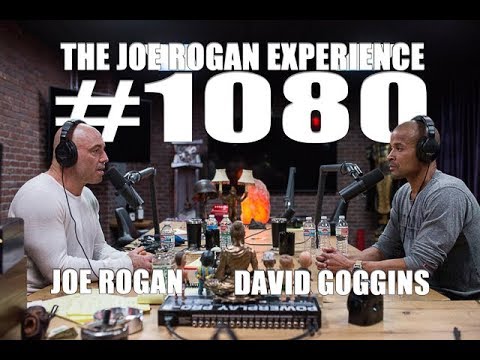
David Goggins Beats Heart Defects and Obesity to Set World Records
PowerfulJRE
The human brain acts as a governor that limits performance to forty percent of capacity, requiring individuals to systematically seek discomfort to unlock their true potential.
David Goggins transformed from an insecure, 297-pound exterminator with severe learning disabilities into a Navy SEAL, losing 106 pounds in under three months to qualify for training. (13:36)
Pushing through severe physical breakdown, Goggins set the 24-hour pull-up world record on his third attempt, completing 4,030 repetitions in 17 hours despite torn tendons and friction burns. (77:58)
Surviving multiple multi-day endurance events and two heart surgeries led Goggins to formulate the 40% Rule, which argues the human brain's protective governor forces people to stop when only a fraction of true capacity is reached. (111:46)
Decades of extreme physical grinding and three BUD/S Hell Weeks in a single year caused total endocrine collapse and frozen hip flexors, which Goggins rehabilitated through daily two-hour stretching routines without pharmaceuticals. (60:51)
Detailed notes
## Background
Published on YouTube by the PowerfulJRE channel on February 19, 2018, this episode of the Joe Rogan Experience features retired Navy SEAL and former USAF Tactical Air Control Party member David Goggins. The show notes highlight Goggins's military service in Iraq and Afghanistan, alongside his accomplishments as an ultramarathon runner, ultra-distance cyclist, triathlete, and world-record holder for completing the most pull-ups in 24 hours.
## TL;DR
David Goggins recounts his journey from enduring severe childhood abuse, systemic racism, and learning disabilities to overcoming obesity and transforming into an elite Navy SEAL and world-class ultra-endurance athlete. He details the grueling physical toll of surviving three Hell Weeks, running brutal 100-mile races on broken bones, recovering from congenital heart defect surgeries, and setting the 24-hour pull-up world record through sheer mental resilience. Throughout the discussion, Goggins breaks down his core mental frameworks—including the 'Calloused Mind,' the 'Cookie Jar,' and the '40% Rule'—arguing that true personal transformation requires rejecting fragile motivation, embracing intentional suffering, and taking absolute self-accountability.
## Atmosphere & style
The conversation is intensely raw, confrontational, and charged with an unyielding, visceral energy as Goggins speaks with urgent, profane passion about his personal struggles. Joe Rogan acts primarily as an engaged and fascinated sounding board, stepping back to let Goggins deliver an unflinching, emotionally charged testimony of suffering, physical breakdown, and self-mastery. Listening to the exchange feels demanding and galvanizing, stripped completely of platitudes in favor of an uncompromising, stark examination of human resilience.
## Bulletin
- [13:36](https://www.youtube.com/watch?v=5tSTk1083VY&t=816s) David Goggins transformed from an insecure, 297-pound exterminator with severe learning disabilities into a Navy SEAL, losing 106 pounds in under three months to qualify for training.
- [01:17:58](https://www.youtube.com/watch?v=5tSTk1083VY&t=4678s) Pushing through severe physical breakdown, Goggins set the 24-hour pull-up world record on his third attempt, completing 4,030 repetitions in 17 hours despite torn tendons and friction burns.
- [01:51:46](https://www.youtube.com/watch?v=5tSTk1083VY&t=6706s) Surviving multiple multi-day endurance events and two heart surgeries led Goggins to formulate the 40% Rule, which argues the human brain's protective governor forces people to stop when only a fraction of true capacity is reached.
- [01:00:51](https://www.youtube.com/watch?v=5tSTk1083VY&t=3651s) Decades of extreme physical grinding and three BUD/S Hell Weeks in a single year caused total endocrine collapse and frozen hip flexors, which Goggins rehabilitated through daily two-hour stretching routines without pharmaceuticals.
## Key takeaways
- [02:27](https://www.youtube.com/watch?v=5tSTk1083VY&t=147s) Goggins's relentless physical discipline originated as a defense mechanism to mask childhood domestic trauma, severe learning disabilities, and racial hostility in Indiana.
- [13:36](https://www.youtube.com/watch?v=5tSTk1083VY&t=816s) Faced with a dead-end job spraying kitchens at Ecolab, Goggins shed 106 pounds in under three months to meet Navy SEAL recruitment standards.
- [15:08](https://www.youtube.com/watch?v=5tSTk1083VY&t=908s) To overcome physical inadequacy and fear, Goggins forged an alter ego and a 'calloused mind' by systematically seeking out discomfort, freezing conditions, and pain.
- [29:38](https://www.youtube.com/watch?v=5tSTk1083VY&t=1778s) Completing three Navy SEAL Hell Weeks within a single calendar year led to severe bilateral stress fractures, which Goggins managed by duct-taping his shins daily.
- [32:15](https://www.youtube.com/watch?v=5tSTk1083VY&t=1935s) Twenty-one years of military service and relentless physical strain triggered a catastrophic endocrine system collapse and chronic adrenal failure.
- [40:24](https://www.youtube.com/watch?v=5tSTk1083VY&t=2424s) Entering the San Diego One Day race with bodybuilder training and no endurance base, Goggins completed 101 miles in 18 hours and 56 minutes while suffering acute rhabdomyolysis.
- [40:24](https://www.youtube.com/watch?v=5tSTk1083VY&t=2424s) The 'Cookie Jar' concept serves as a mental reserve of past suffering and endured trials, utilized to overcome panic and despair during acute physical crises.
- [01:08:11](https://www.youtube.com/watch?v=5tSTk1083VY&t=4091s) An undiagnosed quarter-sized congenital atrial septal defect was discovered in 2009, requiring two heart surgeries and temporarily sidelining Goggins from active SEAL duty.
- [01:17:58](https://www.youtube.com/watch?v=5tSTk1083VY&t=4678s) After two failed attempts and roughly 67,000 pull-ups during training, Goggins achieved the 24-hour pull-up world record by logging 4,030 reps in 17 hours.
- [01:22:56](https://www.youtube.com/watch?v=5tSTk1083VY&t=4976s) Goggins rejects academic theories that mental toughness is constrained by genetics, arguing such concepts offer an intellectual excuse for accepting mediocrity.
- [01:30:20](https://www.youtube.com/watch?v=5tSTk1083VY&t=5420s) To avoid the comfort and complacency of active SEAL life, Goggins repeatedly volunteered for extreme selection courses, including Army Ranger School and Delta Force.
- [01:34:09](https://www.youtube.com/watch?v=5tSTk1083VY&t=5649s) Conventional self-help advice on focusing on natural strengths is rejected in favor of 'tripling down' on personal weaknesses to survive unavoidable life struggles.
- [01:40:21](https://www.youtube.com/watch?v=5tSTk1083VY&t=6021s) True resilience requires radical self-accountability and solitude, avoiding reliance on trainers, accountability partners, or social media validation.
- [01:45:19](https://www.youtube.com/watch?v=5tSTk1083VY&t=6319s) Motivation is dismissed as a fragile and temporary emotional state; enduring accomplishment requires transition into disciplined drive and sustained obsession.
- [01:51:46](https://www.youtube.com/watch?v=5tSTk1083VY&t=6706s) The 40% Rule posits that when an individual feels completely exhausted and ready to quit, the mind's protective governor has only tapped roughly 40% of their actual capacity.
## Detailed walkthrough
### [00:01](https://www.youtube.com/watch?v=5tSTk1083VY&t=1s) Arrival at the Studio and the Perception of Hardening the Mind
Joe Rogan opens the podcast by expressing his gratitude to David Goggins for coming on the show, noting a first in the studio's history: Rogan walked in to find Goggins already working out, shirtless and knocking out chin-ups. Goggins laughs, explaining that he arrived an hour early and that training is simply his way of living: “That's what I do, man. That's my life.” Rogan remarks that he regrets not getting his phone out in time to take a picture of the scene.
Rogan observes that for many people, Goggins has come to embody the concept of mental callousness and pushing through barriers that most consider impossible. He notes that Goggins's feats have been discussed frequently on the podcast. When Rogan asks how he managed to become that kind of individual, Goggins clarifies that the public sees the current end product rather than the origin story. People see a man who completed 4,030 pull-ups in 17 hours or ran 205 miles in 39 hours, but Goggins explains that he started out as the polar opposite:
> “I was that guy who ran away from absolutely everything that got in front of me.”
He reveals that beneath the tough exterior he projected to the world, he was an insecure, stuttering child terrified of his abusive father. To survive and avoid facing his reality, he constructed a fake persona, though he eventually recognized that he was lying to both himself and everyone around him.
---
[02:27](https://www.youtube.com/watch?v=5tSTk1083VY&t=147s) Childhood Abuse on Paradise Road and Working the Family Business
Goggins explains that his transformation was a long and agonizing process rooted in early trauma. Born as the first Black baby at Millard Fillmore Hospital in Buffalo, New York, he grew up under a severely abusive, domineering father. He describes his father as a big-time hustler and pimp who owned bars and roller-skating rinks while running prostitutes between Buffalo and Canada, likening the atmosphere of his father's operation to Denzel Washington's character in *American Gangster*. Both Goggins and his mother endured relentless beatings. He recalls a horrific moment when his father knocked his mother unconscious at the top of the stairs and dragged her down by her hair. Even at six years old, despite being petrified, Goggins experienced an internal voice telling him to intervene, leading him to try fighting his father, only to be beaten himself.
Compounding the abuse was the absence of regular schooling. Goggins's father prioritized free child labor for his businesses over education. Starting around age four or five, Goggins worked at the skating rink beginning around 7:00 PM until it closed at 10:00 PM, spending late nights scraping chewing gum off the floors and cleaning. Afterward, he and his brother slept on the floor in his father's office while his mother worked upstairs in the bar until 3:00 AM. Because the work stretched into the early morning hours, Goggins rarely attended school, which caused him to develop a severe learning disability alongside intense social anxiety. The abuse remained completely hidden from the public: they lived in an affluent, all-white neighborhood at 201 Paradise Road while commuting to work in the Buffalo ghetto, creating a deceptive contrast where outsiders had no inkling of the horrors occurring inside the home.
```mermaid
flowchart TD
accTitle: Double Life of the Goggins Family
accDescr: Diagram illustrating the public facade versus the night-shift reality and hidden domestic abuse.
subgraph Facade ["Public Facade"]
Home["201 Paradise Road\n(All-white neighborhood)"]
end
subgraph NightRoutine ["Skating Rink & Bar Operations"]
Rink["Skating Rink (7:00 PM - 10:00 PM)\nChild labor: scraping gum, cleaning"]
Office["Father's Office (After 10:00 PM)\nDavid & brother sleep"]
Bar["Upstairs Bar (Until 3:00 AM)\nMother works & cleans"]
end
Home -.->|"Commute to ghetto"| Rink
Rink --> Office
Rink --> Bar
NightRoutine --> Abuse
NightRoutine --> Education
```
- **Birthplace**: Millard Fillmore Hospital in Buffalo, New York.
- **Childhood address**: 201 Paradise Road.
- **Night schedule**: Rink shift 7:00 PM–10:00 PM; cleaning afterward; brother and David slept in the office while mother ran the bar until 3:00 AM.
---
[04:48](https://www.youtube.com/watch?v=5tSTk1083VY&t=288s) Moving to Brazil, Indiana and Escaping Through Academic Deception
When Goggins was roughly eight years old, his mother gathered the courage to leave his father, moving the family to the small town of Brazil, Indiana. While Goggins clarifies that the town contained many kind, good people, he describes the move as the moment the "real war" began due to racial hostility. Brazil had only about 10 Black families in a population of roughly 10,000, and as late as 1995, the Ku Klux Klan openly marched in the local Fourth of July parade. Throughout the early 1990s, Goggins faced blatant racism; classmates wrote death threats and racial slurs on his Spanish notebook and vandalized his car with messages stating, "Nigger, we're going to kill you."
Although he masked the pain, the harassment amplified his deep-seated insecurities. In school, his severe learning deficit left him desperate, leading him to cheat on virtually every assignment from the fourth grade until his junior year of high school. As Goggins reflects on this period, he admits the shame it brings:
> “And it's it's kind of humbling to talk about my story sometimes and it's um it's it's also embarrassing. But um it's real. It's who the [expletive] I am.”
When he resolved to escape his circumstances by joining the military to become an Air Force Pararescueman—special operators tasked with jumping into hostile zones to rescue downed pilots—he ran into the Armed Services Vocational Aptitude Battery (ASVAB). Because adjacent applicants received different test versions (Tests A, B, and C), Goggins could not cheat and scored a dismal 20 out of 99. A second attempt yielded an even lower score of 18, far below the required qualifying score of 50. Surviving on food stamps and living with his mother in subsidized apartments—paying $7 a month before scraping enough together to move into a $230-a-month unit—his mother sacrificed what little money she had to hire a tutor for one hour a week. Facing a limit of three attempts and a six-month window, Goggins studied relentlessly and finally passed the exam.
---
[07:23](https://www.youtube.com/watch?v=5tSTk1083VY&t=443s) Air Force Special Operations Training and the Sickle Cell Dilemma
Entering the Air Force, Goggins encountered an immediate hurdle: a paralyzing fear of water. Although he managed basic swimming, the training demanded intense water confidence drills designed to break candidates under simulated drowning conditions. Goggins points out that African Americans made up only about 1% of special operations forces and notes that, due to high bone density, he was negatively buoyant and sank easily. Despite never sleeping properly during the grueling regimen, he persevered through six weeks of training, surviving the culling until only about 25 of the original 150 candidates remained. He pushed himself to stay because quitting had been the pattern of his life, and he wanted to prove people wrong.
Six weeks into the program, a routine medical blood screening altered everything when doctors revealed he carried the sickle cell trait. The instructors pulled him from training for a full week of evaluation. Stepping out of the intense, high-stress aquatic drills caused his fear to return with full force; watching from the poolside while other candidates struggled in the water destroyed whatever momentum he had built. When summoned back by medical staff, Goggins felt torn between his internal shame and the tempting hope that the doctors would medically disqualify him, which would give him an honorable exit without the stigma of quitting on his own accord.
[09:05](https://www.youtube.com/watch?v=5tSTk1083VY&t=545s) Quitting Pararescue and Seeking Comfort in TACP
After missing a week of training due to his medical diagnosis, David Goggins initially hoped he could rejoin his class since there were only three weeks left. However, when the commanding officer and the sergeant informed him that he would have to restart the grueling program from day one, Goggins broke mentally. He could not fathom repeating the misery, so he seized on an excuse. Feigning health concerns, he told his superiors that the sickle cell diagnosis frightened him too much to continue. In truth, the sickle cell trait was merely an exit ramp; what actually terrified him was the water. Though the military formally granted him a medical discharge from the pipeline, Goggins recognized it for what it truly was: “Even though they gave me a medical, it—I quit.”
Between the ages of 19 and 22, Goggins transferred into Tactical Air Control Party (TACP), an Air Force specialty tasked with calling in close air support behind enemy lines. While he respected the work, the critical factor for him was that the job involved zero water operations. Goggins intentionally sought comfort to insulate himself from his deep-seated fears, but that avoidance took a massive physical and mental toll. Over those three years, his weight ballooned by 125 pounds, shooting from a lean 175 up to 297 pounds at his heaviest. Finding comfort in everyday routines provided no true peace; instead, his inner voice constantly reminded him of his cowardice. He desperately wanted to escape his own conscience, but the persistent sense that he was running away from who he was supposed to be gave him no rest.
- Weight gain: Went from 175 pounds to 297 pounds (a 125-pound increase) between ages 19 and 22.
- USAF Role: Tactical Air Control Party (TACP), controlling airstrikes and fast movers behind enemy lines.
- Motivation for choosing TACP: Completely avoiding any water-based training or operations.
---
[10:26](https://www.youtube.com/watch?v=5tSTk1083VY&t=626s) The Ecolab Graveyard Shift and BUD/S Class 224
```mermaid
flowchart TD
accTitle: The Turning Point from Exterminator to SEAL Candidate
accDescr: Diagram illustrating Goggins' shift from avoidance and self-loathing to deciding to become a Navy SEAL.
subgraph Routine ["The Downward Spiral"]
A["Night shift at Ecolab<br/>Spraying roaches for $1,000/mo"] --> B["Bingeing late-night food<br/>42-oz shake & 7-Eleven donuts"]
B --> C["Mental torment & self-loathing<br/>Haunted by conscience at 297 lbs"]
end
subgraph Epiphany ["The Catalyst"]
C --> D["Watches Discovery Channel<br/>BUD/S Class 224 Hell Week"]
D --> E["Realizes he has blamed others<br/>Decides to face all fears alone"]
end
subgraph Action ["The Reckoning"]
E --> F["Hits 'mother lode' of roaches<br/>Quits Ecolab on the spot"]
F --> G["Commits to losing 106 lbs in <3 months<br/>to enter Navy SEAL training"]
end
```
After leaving the active-duty Air Force, Goggins took a graveyard-shift job with Ecolab at age 24, spraying commercial kitchens for cockroaches and rodents from 11:00 PM to 7:00 AM for roughly a thousand dollars a month. His nightly stops included Steak 'n Shake and Red Lobster. At the end of every shift, he made a habit of ordering a 42-ounce chocolate shake at Steak 'n Shake, crossing the street to grab a box of mini donuts from 7-Eleven, and driving forty-five minutes back home. Although he still lifted weights in the gym, he did no cardio or physical training, existing as an obese, insecure man coasting through life in an unhealthy daze.
Everything changed one morning when he stepped out of the shower and caught a Discovery Channel documentary chronicling Navy SEAL Class 224 going through Hell Week. Watching trainees push through freezing water, carry logs, and face unrelenting misery while others quit and rang the brass bell held up an unforgiving mirror to Goggins' own existence. He recognized that while others were conquering unimaginable adversity, he had spent his life accumulating excuses—blaming his abusive father, his mother's absence, the tragic murder of his prospective stepfather when he was 14, moving back to Brazil, Indiana, his learning disabilities, and the racism he suffered. Confronting the harsh reality of his situation, Goggins realized that salvation would never arrive from the outside world: “No one's going to fucking come to help me. It's—it's fucking me against me, period.”
---
[13:36](https://www.youtube.com/watch?v=5tSTk1083VY&t=816s) Steven Salge and the 106-Pound Deadline
Driven by an urgent need to stop avoiding his fears, Goggins resolved to become a Navy SEAL. He began calling recruiter after recruiter, but each conversation hit a brick wall the moment he revealed his measurements. Standing 6 feet 1 inch and weighing 297 pounds, combined with his prior military service, recruiters repeatedly dismissed him, telling him he was far beyond the physical standards and advising him to look into the reserves instead. Eventually, he connected with a Navy recruiter named Steven Salge, who invited him to the office to measure him against the official height and weight limits. The evaluation was brutal: to qualify for an upcoming class, Goggins needed to drop 106 pounds in under three months.
Overwhelmed by the near-impossible requirement, Goggins initially retreated to what was comfortable. He figured he could not pull it off, picked up a chocolate milkshake, and reported back to his Ecolab route. But that very shift became his breaking point. While inspecting a restaurant kitchen, he uncovered a massive swarm—the "mother lode"—of cockroaches and vermin crawling across the room. Disgusted by the filth and suddenly sickened by the trajectory of his entire existence, Goggins refused to accept this fate any longer. He set his chemical canister down on the floor, walked out to his company truck, quit on the spot, and went home to begin training like a man possessed.
- Physical stats at the time: 6'1" tall, 297 pounds, roughly 32% body fat.
- Navy weight requirement: Required shedding 106 pounds in less than 90 days.
- The catalyst event: Walking out on his Ecolab job mid-shift after hitting an extreme cockroach infestation.
---
[15:08](https://www.youtube.com/watch?v=5tSTk1083VY&t=908s) Creating "Goggins" and Callousing the Mind
To survive the sheer physical and psychological torment ahead, David Goggins realized that his existing self was wholly inadequate. He needed an alter ego that could absorb infinite punishment, endure cold, embrace racial slurs, and withstand total isolation without breaking. “I had to invent a guy that didn't exist. I had to invent a guy that can [take] any pain, any suffering, any kind of judgment,” Goggins explained. He began forging what he describes as a "calloused mind" entirely through intentional suffering. If he woke up at 3:00 AM to freezing rain or snow and his brain pleaded with him to stay warm indoors, his newly forged instinct compelled him to walk out into the storm. By deliberately running toward everything he hated, he broke through mental barriers he previously thought impenetrable.
Against all odds, Goggins dropped the weight, secured his spot, and shipped out to BUD/S, eventually enduring three Hell Weeks in a single calendar year—a feat virtually unheard of in Naval Special Warfare history. Although he failed to complete the first Hell Week, he pushed through and survived the next two, fully transforming David Goggins the exterminator into the hardened persona known simply as "Goggins." Addressing questions about whether this grueling existence brings him happiness, Goggins clarified that what people mistake for anger or misery on his face is relentless obsession and earned self-respect. Joe Rogan noted how deeply this journey resonates with ordinary people who feel paralyzed in their circumstances, prompting Goggins to explain how the transformation truly began—starting with a clumsy, agonizing attempt at running four miles while carrying nearly 300 pounds of weight.
- BUD/S milestone: Went through three Navy SEAL Hell Weeks in a single year, completing two.
- Mental framework: Transforming the timid "David Goggins" into the unyielding warrior persona "Goggins."
- Initial training run: Attempted to run 4 miles right out of the gate at 297 pounds and 32% body fat.
[18:21](https://www.youtube.com/watch?v=5tSTk1083VY&t=1101s) The Quarter-Mile Breakdown and the Rocky Inspiration
Goggins recalls the absolute despair of his first attempt to run when he was still severely overweight. Having run before he got heavy, he confidently thought, "Fuck it, I can do this." Instead, he barely made it a quarter of a mile before his body gave out, forcing him to walk back home. Defeated, he sat on his couch and cried. He then drove twenty minutes to his mother's house just to cry on her couch too, completely overwhelmed by the monumental task ahead. At the time, his life was in shambles: he was earning only $1,000 a month, his rent was $810, he had just gotten someone pregnant, and his mind was constantly torturing him with thoughts of inadequacy, telling him he wasn't good enough to compete with the best athletes on Earth.
To cope, Goggins turned to a childhood obsession: the original *Rocky* movie. As a kid, he would come home every day, pop the VHS tape in, and fast-forward straight to Round 14. The music from that scene had a profound impact on him—so much so that when he later broke the 24-hour pull-up world record, he listened to that same 2-minute and 13-second song on repeat for 17 hours straight. What captivated Goggins wasn't Rocky winning, but the moment Apollo Creed, believing he had won, turns around to see a battered, illiterate, "punchy" Rocky dragging himself back up. Seeing the look of sheer disbelief and soul-crushing defeat on Apollo's face changed Goggins' life. He realized he didn't want to be Rocky the victor; he wanted to be the guy who simply refuses to stay down, taking his opponent's soul through sheer, relentless persistence. As David Goggins said, "I want to be the guy that people looked at. I don't care if you liked me or didn't like—I don't care. But this motherfucker is going to keep coming after whatever the fuck is in front of him."
- **Monthly Income:** $1,000
- **Monthly Rent:** $810
- **Rocky Soundtrack Song Duration:** 2 minutes and 13 seconds (listened to for 17 hours during his pull-up record)
- **Starting Weight:** 297 lbs
[21:15](https://www.youtube.com/watch?v=5tSTk1083VY&t=1275s) The "What If" Mentality and Detesting Mediocrity
After his disastrous quarter-mile run, Goggins initially gave up, consoling himself with a chocolate milkshake and concluding that losing 106 pounds was an impossible dream. However, he began to find a strange happiness in absorbing negative feedback and developed what he calls the "What If" mentality. When a recruiter pointed out how rare Black Navy SEALs were—Goggins would eventually become only the 36th African-American SEAL in history—it only fueled his fire. He began asking himself what it would feel like if a fat, uneducated, insecure guy like him could actually overcome the odds and graduate. As David Goggins said, "What story would it be if my fucking fat, dumb, lying to be friends with people, insecure ass can overcome this shit?"
This drive was further cemented when he watched a video of BUD/S Class 224's graduation. He recalls the commanding officer telling the eighteen graduating men, "We live in a society where mediocrity is often rewarded," and noting that these select few detested mediocrity. Goggins desperately wanted to be a man who detests mediocrity, though he admits this extreme mindset later caused him trouble in the SEAL teams because he began looking down on anyone who didn't train as hard as he did. Joe Rogan points out that this anger toward others' perceived laziness often stems from a fear of seeing those same weak traits in oneself. Goggins agrees wholeheartedly, acknowledging that his anger was a direct reflection of his own deepest insecurities.
```mermaid
flowchart TD
accTitle: David Goggins' Mental Reframing Loop
accDescr: A flowchart showing how Goggins transforms physical failure and negative self-talk into motivation through visualization and the "What If" mindset.
A["Physical Failure <br>(e.g., Running 0.25 miles)"] --> B["Negative Self-Talk & <br>Desire to Give Up"]
B --> C["Visualization of Struggle <br>(Rocky I & Platoon)"]
C --> D["The 'What If' Mindset <br>('What if I can overcome this?')"]
D --> E["Aggressive Self-Talk <br>& Reframed Identity"]
E --> F["Return to Training <br>(Bike, Pool, Running)"]
F --> A
```
- **African-American Navy SEALs:** David Goggins was the 36th in history.
- **BUD/S Class 224 Graduation:** Only 18 candidates graduated out of the original class.
- **Weight Loss Goal:** 106 lbs
[24:00](https://www.youtube.com/watch?v=5tSTk1083VY&t=1440s) Finding Strength in the Sufferfest of Platoon
To regroup after his initial failure, Goggins sat on his couch, drank his milkshake, and immersed himself in *Rocky* and Oliver Stone's *Platoon*. He was drawn to stories of people getting beaten down but refusing to quit. During his three grueling Hell Weeks in Navy SEAL training, Goggins would famously hum and sing these movie soundtracks to himself while his classmates were freezing and quitting. He was particularly obsessed with the scene in *Platoon* where Willem Dafoe's character, Elias, is betrayed and shot in the back by Viet Cong soldiers. Despite being repeatedly shot, Elias keeps struggling to his feet, desperately trying to reach the evacuating helicopter.
Goggins used these violent, dramatic images to completely reframe his internal dialogue. His self-talk became "nasty and dirty," transforming his quarter-mile failure into a badge of honor. He began to take pride in the sheer audacity of a 297-pound man who couldn't swim and was terrified of the water quitting his job to pursue the hardest military training on earth. By telling himself he was the toughest motherfucker alive, he turned his self-pity into an aggressive, unstoppable drive that pushed him to return to the road the very next day. As David Goggins said, "This journey is going to take something that is going to be incomprehensible to most people."
[26:42](https://www.youtube.com/watch?v=5tSTk1083VY&t=1602s) Transitioning to the Bike and the Pool
On the second day of his transformation, Goggins went right back to work, but he quickly realized his body could not handle the impact of running long distances yet. To protect his aching bones and broken body, he turned to cycling, putting in so many miles on a stationary bike while watching television that he became "damn near a professional cyclist." He also forced himself to spend hours in the swimming pool. Because he was terrified of the water, he knew he had to "live in the water" to conquer his fear.
Using swim fins to help keep his heavy, negatively buoyant body afloat, Goggins spent hours getting comfortable in the pool. Over time, his conditioning improved, and the training on the bike made running easier. He gradually built up his running distance, celebrating the milestone of completing a single mile, then pushing to two, three, and eventually six miles. This systematic immersion and refusal to quit laid the physical foundation for the ultra-endurance athlete he would eventually become.
[27:50](https://www.youtube.com/watch?v=5tSTk1083VY&t=1670s) Making Myself Good Enough: The High-Volume Grinding Routine
To prepare for BUD/S, Goggins followed the official Navy warning order, which required running six miles a day, five days a week. Coming off the couch at nearly three hundred pounds, he routinely fell short, but he completely rewired how he interpreted failure. In the past, coming up short meant quitting and telling himself he lacked the natural ability. He flipped that defeatist narrative entirely, telling Rogan: “I had to realize this is part of my process versus just saying like I used to, I'm just not good enough.” Instead of walking away, he adopted the obsession that became his signature trademark: “I'm going to fucking make myself good enough.”
Whenever he could only manage a quarter of a mile, the shortcoming would eat away at him. He would wait a couple of hours, let the disappointment burn, and then head back out the same day to force out a half-mile, doing whatever it took—walking or shuffling—to log the distance. When his legs gave out from running, he immediately transitioned to the stationary bike, jumped in the pool, or headed to the weight room. To shed weight without being left with mounds of loose skin, he developed an extreme lifting protocol based on sheer volume, pumping out two hundred, three hundred, and even four hundred reps of lightweight bench presses in a single exercise.
- BUD/S prep guideline: running 6 miles a day, 5 days a week.
- Used high-frequency "two-a-day" running sessions whenever he failed his mileage targets.
- Performed ultra-high-volume weightlifting (200 to 400 repetitions per movement) to burn calories and tighten loose skin.
---
[29:38](https://www.youtube.com/watch?v=5tSTk1083VY&t=1778s) Duct-Tape Casts and Physical Breakdown: The Cost of BUD/S
When Joe asks if he worried about repetitive stress injuries from forcing an abused, unconditioned body to train like an elite athlete, Goggins admits he had no understanding of the physiological consequences: “I didn't know that working out that hard would fuck you up.” The breakdown was already rooted in severe chronic stress from his traumatic childhood, which had manifested between third and seventh grade as a severe stutter and skin blotches. That lifelong trauma caused his psoas muscle—the primary hip flexor running from the lumbar spine and T12 vertebra down into the femur—to seize into an iron knot, literally compressing his 6'1" frame until his muscle length matched that of someone 5'9". The upward tension on his spinal column even caused a large, tumor-like protrusion to develop at the base of his skull.
This extreme muscular imbalance wrecked his lower kinetic chain, resulting in severe overpronation and extensive stress fractures throughout both shins during BUD/S. By his third and final attempt at Hell Week, his legs were compromised to the point of collapse. To survive inspection and the punishing evolution, Goggins developed a brutal daily ritual: at 4:00 AM, he pulled on black socks and wrapped rolls of duct tape tightly around his ankles and shins to create makeshift casts. The rigid tape ground directly into his skin, carving out quarter-sized open pressure ulcers where his ankles flexed against the shins. Every morning began with thirty to forty-five minutes of excruciating pain until his lower legs went completely numb, allowing him to endure the training.
```mermaid
flowchart TD
accTitle: Biomechanical breakdown from chronic stress to BUD/S injuries
accDescr: Diagram illustrating how childhood trauma and extreme training caused spinal compression and lower leg stress fractures.
subgraph StressOrigin["Roots of Tension"]
A["Childhood trauma & stress<br/>(stuttering, skin blotches)"] --> B["Severe psoas seizing & contraction"]
end
subgraph MuscularCompression["Spinal & Skeletal Compression"]
B --> C["T12 tension pulls spine downward<br/>(6'1 frame compressed to 5'9 musculature)"]
C --> D["Large tumor-like bump<br/>develops at base of skull"]
C --> E["Severe pronation & hip imbalance"]
end
subgraph StructuralFailure["BUD/S Overuse & Field Fixes"]
E --> F["Multiple bilateral shin stress fractures"]
F --> G["Rigid 4:00 AM duct-tape ankle casts"]
G --> H["Quarter-sized pressure ulcers<br/>& temporary numbness"]
end
```
- Psoas muscle seized under chronic psychological and physical stress, shortening his musculature by several inches.
- Suffered multiple stress fractures across both shins due to biomechanical misalignment and severe overpronation.
- Casted both feet and lower shins in duct tape over black socks every morning at 4:00 AM during his third Hell Week.
- Sustained quarter-sized open pressure ulcers on the anterior ankle joints from the shearing force of the tape.
---
[32:15](https://www.youtube.com/watch?v=5tSTk1083VY&t=1935s) Systemic Collapse: When the Endocrine System Shut Down
After twenty-one years of military service—spending his early career in the Air Force Tactical Air Control Party before serving roughly sixteen years as a Navy SEAL—Goggins's refusal to heed his body's warning signs caught up with him. Joe marvels at his youthful appearance at age forty-three, noting he looks thirty, but Goggins explains that he spent years operating in a state of catastrophic physiological breakdown. His body finally choked itself out from the inside. He went from an ultra-endurance athlete capable of running 205 miles in a single effort to a bedridden invalid who could not walk down the street or get out of bed.
His endocrine system collapsed completely, leaving him with profound adrenal fatigue, thyroid failure, and near organ shutdown. Doctors were baffled by his blood panels, suspecting PTSD or autoimmune disorders, and prescribed an exhaustive cocktail of medications, including thyroid hormones, cortisol, DHEA, and estrogen modulators. Instead of helping, the drugs aggravated his symptoms; his resting heart raced, a constant lump lodged in his throat, and chronic insomnia set in. Forced to lie motionless for months, Goggins found an unexpected silver lining in the stillness. Having spent decades chasing the next brutal milestone to outrun his past, the forced rest provided him with his very first opportunity to reflect on his transformation: “So, honestly, the time I wasn't working out it was the best time of life cuz I got a chance to really reflect back and be proud of who I became.”
- Served 21 total years in the military (Air Force TACP and Navy SEAL), retiring at age 38.
- Endocrine crash caused complete adrenal exhaustion, severe thyroid dysfunction, and chronic insomnia.
- Placed on a heavy pharmaceutical regimen (DHEA, thyroid medication, cortisol, and estrogen regulators) that worsened his symptoms.
- The sudden halt marked the first time in his adult life he stopped to reflect on his journey from an abused, illiterate kid to an elite warrior.
---
[34:50](https://www.youtube.com/watch?v=5tSTk1083VY&t=2090s) Unlocking the Psoas: Healing Through Relentless Stretching
With conventional medicine failing to pinpoint a diagnosis or cure, Goggins recalled a physician he had visited roughly eight years earlier. The doctor had examined him and remarked that he had never encountered a human being with such severe muscular tightness, estimating that Goggins needed fifty thousand hours of stretching to undo the damage. At the time, Goggins had completely brushed off the advice, believing stretching was counterproductive, having no interest in spending time on flexibility while running 150 miles a week, biking to work, and working full-time.
Desperate for a solution, he abandoned the pharmaceutical approach and attacked his mobility with the same obsessive intensity he had brought to ultra-running, refusing to settle for typical ten-minute routines. He committed to deep, agonizing stretching sessions lasting an hour to an hour and a half every single day, missing only two days over a five-year span. As the locked psoas muscle finally began to open and lengthen, Goggins noticed a direct correlation while shaving his head each morning: the large protrusion on the back of his skull began to shrink. The release of the hip flexor relieved the tension across his entire kinetic chain, allowing his endocrine system to normalize. He successfully eliminated nearly every medication, needing only a low-dose thyroid pill, and made yoga a permanent staple of his daily life. Reflecting on the root of his recovery, Goggins delivered his core insight: “If I were to tell somebody one thing right now, man, that psoas muscle and getting that hip flexor opened up cuz we're all stressed the fuck out.”
- Missed only 2 days of stretching over a 5-year period, dedicating 60 to 90 minutes or more daily.
- The physical bump on the back of his head shrank in direct proportion to the release of his psoas muscle.
- Successfully tapered off his extensive pharmaceutical cocktail down to a single low-dose thyroid medication.
- Regularly practices yoga to keep his hips open and counteract systemic physical and psychological stress.
[36:52](https://www.youtube.com/watch?v=5tSTk1083VY&t=2212s) Broken Bodies, Yoga, and the Fallout of Extreme Strain
Joe Rogan brings up a quote from a Greek Brazilian Jiu-Jitsu black belt based in England: “Yoga is a martial art you do against yourself.” Goggins agrees wholeheartedly with the sentiment, recognizing that battling one’s own resistance on the mat mirrors the internal friction of intense physical suffering. Rogan asks Goggins about the period roughly five years earlier when his body completely shut down, inquiring how long he was unable to train at all and whether he thought he had permanently broken himself by pushing past human limits.
Goggins explains that even during the worst of it, he attempted minimal activity, but his system had completely stopped functioning properly. If he tried to jog even half a mile, his heart would slip into atrial fibrillation (A-fib), forcing him to stop. He attempted pull-ups occasionally, but was drained of all energy. Reflecting on that collapse while confined to bed, Goggins felt a peculiar sense of peace and validation. He had driven himself far beyond conventional limits, and even if observers could not fathom why someone would inflict that level of punishment on themselves, he felt he had fulfilled a deeply personal obligation.
> “I sat back in that bed that night and I had a lot of time to reflect. I said, 'You know what? I was actually kind of proud of myself in a very sick, twisted way.'” — David Goggins
---
[38:05](https://www.youtube.com/watch?v=5tSTk1083VY&t=2285s) Operation Red Wings and the Discovery of Ultra Running
Goggins traces his foray into ultra-distance running back to military tragedy. During Operation Red Wings in Afghanistan—the mission chronicled in *Lone Survivor* where Marcus Luttrell was the sole survivor—multiple SEALs and service members were killed. Goggins had been through three Hell Weeks at BUD/S, knew Marcus Luttrell well, and was attending military freefall school with Luttrell's twin brother when the tragedy occurred. Distraught over the loss of his comrades, Goggins resolved to raise money for their families through the Special Operations Warrior Foundation.
At the time, Goggins was not a runner. Weighing upwards of 230 pounds, he trained like a bodybuilder, completely shunning cardio aside from a token 20-minute session on an elliptical trainer on Sundays. Looking for an extreme endeavor to draw attention and donations, he searched online for the ten hardest races in the world. The search yielded the Badwater 135, an infamous 135-mile ultramarathon through Death Valley in the middle of summer. Naive about the sport, Goggins initially assumed it was a multi-day stage race where competitors ran twenty miles at a time and camped out between legs.
On a Wednesday, Goggins called Badwater race director Chris Kostman to sign up. When Kostman asked if he was an ultra runner or had ever completed 100 miles within 24 hours, Goggins admitted he had not, citing instead his Navy SEAL, Army Ranger, and Hell Week credentials. Kostman was unimpressed by the military résumé and pointed out that Badwater strictly invited roughly ninety elite athletes annually. However, touched by Goggins's charitable cause, Kostman offered a conditional opportunity: with the entry deadline two months out, there was a 24-hour race that coming Saturday in San Diego—the San Diego One Day—consisting of a one-mile loop around a track. If Goggins could complete 100 miles in under 24 hours, Kostman would consider his application.
> “He said, 'There's two more races you can do to qualify and I might consider you in my race. We select top 90 athletes in the world and you're not even ultra runner, but I I like your cause, like what you're doing.'” — David Goggins quoting Chris Kostman
- **Target Charity**: Special Operations Warrior Foundation.
- **Previous running experience**: Longest single run was 20 miles; had run fewer than 50 total miles in the preceding year.
- **Physical condition**: Over 230 pounds of heavy muscular mass, tailored for lifting rather than endurance.
- **Race qualifying standard**: 100 miles in under 24 hours (a pace of roughly 14 minutes and 24 seconds per mile).
---
[40:24](https://www.youtube.com/watch?v=5tSTk1083VY&t=2424s) The San Diego One Day: Ritz Crackers and Total Physical Breakdown
Preparing for a 100-mile run with zero background in endurance nutrition, Goggins and his then-wife made a trip to Walmart. Their race day kit consisted of a folding blue lawn chair, boxes of Ritz crackers, and a bottle of Mylanta to settle his stomach. The San Diego event doubled as the American Ultrarunning Association (AUA) National Championship, drawing the country's most conditioned long-distance specialists. Into this field walked Goggins: shirtless, massively muscled, and completely out of place. To make matters worse, he had spent the Friday before the race in the gym doing heavy squats, deadlifts, and power cleans alongside Joe Burns, a respected SEAL instructor who had overseen Goggins's Hell Weeks and approved his race leave.
```mermaid
flowchart TD
accTitle: San Diego One Day Race Breakdown and Turnaround
accDescr: Step-by-step diagram showing Goggins's physical collapse at mile 70 and his mental resurgence to finish 101 miles.
subgraph Preparation["Race Entry & Prep"]
A["Walmart Kit:<br/>Blue Lawn Chair, Ritz Crackers, Mylanta"]
B["Friday Heavy Lift:<br/>Squats & Deadlifts with Joe Burns"]
A --> C["Start: 24-Hour 1-Mile Loop"]
B --> C
end
subgraph Collapse["Physical Collapse"]
C --> D["Miles 0–50:<br/>On Pace, Feeling Solid"]
D --> E["Mile 70 (Hour 12):<br/>Severe Dehydration, Seeing Triple"]
E --> F["Sitting in Blue Lawn Chair:<br/>Kidney Strain, Urinating Blood, Broken Feet"]
end
subgraph Resurgence["Mental Shift & Finish"]
F --> G["The Cookie Jar:<br/>Reflecting on Past Trauma & Resilience"]
G --> H["Mile 81 Click:<br/>Mind, Body, and Spirit Lock In"]
H --> I["Final 20 Miles at 10:30 Pace:<br/>101 Miles in 18h 56m"]
end
```
Pacing steadily, Goggins crossed 50 miles without disaster, covering 70 miles in roughly 12 hours. Shortly after mile 70, however, complete catastrophic failure struck. Because he had failed to hydrate properly, the Ritz crackers turned into dry, unswallowable balls of paste in his mouth, leaving him sipping Mylanta for sustenance. Dizzy, delirious, and seeing triple, he collapsed into his blue lawn chair. When he attempted to stand to walk the twenty feet to a portable restroom, his lower body refused to cooperate; he sat helpless in the chair, cramping across his back and urinating blood straight down his leg.
> “And once my body stopped, my mind just went off.” — David Goggins
---
[43:44](https://www.youtube.com/watch?v=5tSTk1083VY&t=2624s) The Cookie Jar and the Final Twenty Miles
Marooned in the lawn chair with 30 miles left to reach the 100-mile requirement, Goggins was confronted with the worst pain he had ever endured. Even after surviving Hell Weeks and Ranger School, nothing compared to the agony in his feet and lower back. Burns arrived at the track bringing a six-pack of mini powdered donuts—Goggins's former comfort food—to cheer him on. Knowing he could not quit, Goggins tapped into what he calls the "Cookie Jar"—a mental repository of past suffering, hard-won victories, and personal resilience that reminds an individual of their capabilities when panic sets in.
He stopped obsessing over the remaining 30 miles and broke the problem down into immediate physiological needs: taking in fluids, stabilizing his blood sugar, and clearing the dizziness. He dragged himself out of the chair and began walking laps around the one-mile track. As hours passed, his ex-wife warned him that his slow, agonizing limp would cause him to miss the 24-hour cutoff. At mile 81, facing mathematical failure, a profound psychological transformation occurred. He abandoned all concern for comfort, safety, or external recognition.
Goggins locked into an intense, uninterrupted rhythm, astonishing the track by running the final 20 miles at an aggressive 10:30-per-mile pace. He crossed the 101-mile mark in 18 hours and 56 minutes—well within the qualification window. The moment he sat back down in the Walmart chair, the temporary state of dissociation evaporated, and his body fully registered the immense trauma it had sustained.
> “At mile 81 something clicked that I'll never probably be able to do again where my mind, body, spirit, soul, everything just connected. And my mind knew I wasn't fucking around anymore.” — David Goggins
- **Official distance and time**: 101 miles completed in 18 hours, 56 minutes.
- **Closing pace**: Roughly 10 minutes and 30 seconds per mile over the final 20 miles.
- **Mindset takeaway**: Recalling past trials via the "Cookie Jar" prevents panic and converts mental despair into forward momentum.
[45:59](https://www.youtube.com/watch?v=5tSTk1083VY&t=2759s) The Horrific Aftermath and Savoring the Suffering
Immediately following the completion of his hundred-mile run in San Diego, David Goggins experienced an overwhelming mix of euphoria and the most excruciating physical agony of his life. His body completely shut down: he lost control of his bowels, defecating all over himself, and began urinating dark liquid that looked like dirt mixed with blood. His wife, who was a nurse, panicked at the sight of his condition. Unable to stand or bear his own weight, Goggins had to drape his arms around her neck as she backed their Toyota Camry onto the grass knoll where he lay. Wrapped in a military poncho liner against the November cold, he rode in the back seat with the windows rolled down due to the overpowering stench.
```mermaid
flowchart TD
accTitle: Post-Race Recovery Flow
accDescr: The sequence of events immediately following the 100-mile run to qualifying for Badwater.
subgraph S1["Immediate Aftermath"]
A["Finish 101 miles in 19 hours"] --> B["Severe physical breakdown & dark urine"]
B --> C["Tub recovery: refuses hospital & embraces pain"]
end
subgraph S2["Kostman's Rejection"]
C --> D["Chris Kostman doubts qualification"]
end
subgraph S3["The Next Challenges"]
D --> E["Las Vegas Marathon: 3:08 (Boston Qualifier)"]
E --> F["HURT 100 in Hawaii: 33 hrs (9th place)"]
F --> G["Accepted to Badwater: 5th place, then 3rd"]
end
```
Upon arriving at their second-floor San Diego apartment, Goggins collapsed on the first landing, his legs refusing to support him. He crawled and hoisted himself up the railings and around his wife's neck until he reached the front entryway, leaving a trail across the floor before she managed to get him into the bathtub. His mother, who was dating a physician at the time, called for medical guidance, and the doctor urged them to rush him to the emergency room immediately. Goggins flatly refused, preferring to sit in the running water and soak in the raw trauma. As Goggins explained: “I want people to give me drugs and to numb this fucking pain, I wanted to—I did this.” To him, enduring the unfiltered torment was the ultimate validation that a broken kid who used to mentally torture himself had conquered the impossible through sheer willpower.
- **Physical symptoms:** Severe kidney distress resulting in dark, dirt-colored, blood-filled urine (rhabdomyolysis), full bowel incontinence, and inability to support body weight.
- **Immediate perspective:** He rejected emergency room care and painkillers because he wanted to consciously experience every ounce of the agony he had just overcome.
---
[48:00](https://www.youtube.com/watch?v=5tSTk1083VY&t=2880s) Chris Kostman’s Rebuff and Doubling Down
Still sitting in the tub, Goggins’s primary focus was calling Chris Kostman, the race director of the Badwater 135, to announce that he had completed the qualifying run. Kostman was entirely unmoved by the dramatic feat. Unaware of how shattered Goggins was, Kostman delivered a blunt reality check: “The idea of a 24-hour race is to run 24 hours. You only ran 19.” That short exchange planted enough doubt in Goggins’s mind to realize that running 101 miles in 19 hours was still not enough to secure an entry into the world's toughest footrace.
To prove beyond any question that he belonged at Badwater, Goggins realized he needed another extreme test. He immediately turned his sights toward the HURT 100 in Hawaii, a notoriously punishing mountain trail race featuring roughly 26,000 feet of climbing. Despite being battered and broken from his first hundred-miler, Kostman’s dismissal served as fuel, pushing Goggins to seek out an even more brutal course to force the race committee's hand.
---
[49:58](https://www.youtube.com/watch?v=5tSTk1083VY&t=2998s) The Las Vegas Marathon: Qualifying for Boston on Broken Legs
Before Goggins could even think about Hawaii, an earlier commitment loomed. Prior to deploying to Iraq, he, his wife, and his mother had registered for the inaugural Las Vegas Marathon along the Las Vegas Strip, scheduled for December 5, 2005—just fourteen days after his 101-mile ordeal. In the days leading up to the race, Goggins could barely walk, let alone run. A brief attempt to jog on the grass near his apartment ended almost immediately due to the deep pain radiating through his damaged lower legs and feet. Resigning himself to the reality of his injuries, he planned simply to walk alongside his mother and cheer her across the finish line.
When the starting gun sounded on race day, something shifted entirely inside his mind. Instead of jogging conservatively or walking, Goggins locked into a race pace, rationalizing that twenty-six miles was nothing compared to the hundred and one miles of agony he had just survived two weeks earlier. Running on what were essentially fractured feet, he finished the race in 3:08:00, well under the 3:10:59 cutoff required to qualify for the prestigious Boston Marathon. Joe Rogan expressed utter astonishment at the timeline: Goggins had completed a 100-mile ultra before ever running a standard marathon, took two weeks off unable to walk, and then qualified for Boston on his first attempt without any targeted marathon training.
- **Marathon date:** December 5, 2005 (exactly 14 days after running 101 miles).
- **Finish time:** Approximately 3:08:00.
- **Boston Marathon qualifying standard:** 3:10:59 for his age bracket.
- **Goggins on the incredulity of his story:** “So, even when I tell my story, it almost sounds like some made-up shit.”
---
[52:13](https://www.youtube.com/watch?v=5tSTk1083VY&t=3133s) Conquering the HURT 100, Badwater Success, and Biomechanics
Following the Las Vegas Marathon, Goggins launched into a rapid training block for the HURT 100 in Oahu, Hawaii. He visited physical therapists who tightly wrapped his lower legs in compression tape to support his battered limbs. Over the next month, he steadily cranked his volume up to 70-, 80-, and 100-mile weeks. At the HURT 100—widely considered one of the five most grueling hundred-mile trail races in the world due to its slick roots, mud, and 26,000 feet of elevation gain—Goggins pushed through 33 brutal hours to finish ninth overall in a race where very few competitors reached the finish line. That finish cemented his entry into Badwater, where he subsequently placed fifth in his rookie year and returned the following year to take third.
To adapt from heavy bodybuilding to ultra-endurance running, Goggins dropped his weight from over 240 pounds down to roughly 190 to 195 pounds. He abandoned supplements like Nitro-Tech, curtailed heavy lifting, and transitioned completely into high-mileage running. The rapid transition took a heavy toll on his legs; years of undiagnosed severe overpronation and tight soleus muscles placed immense torque on his inner ankles. The tendons running along the lower fibula and ankle bones became severely inflamed, causing sharp pain whenever he flexed his feet, yet he kept running through the structural damage.
- **HURT 100 performance:** Finished in 33 hours, taking 9th place overall.
- **Badwater finishes:** Placed 5th overall in his first attempt, and 3rd overall the following year.
- **Running weight:** Dropped to approximately 190–195 lbs by cutting heavy weights and eliminating protein supplements.
- **Underlying injuries:** Chronic overpronation, tight soleus muscles, recurrent shin splints, stress fractures, and extreme peroneal/posterior tibial tendon inflammation along the ankle bones.
[55:30](https://www.youtube.com/watch?v=5tSTk1083VY&t=3330s) Running Badwater 2006, Overcoming Severe Pronation, and Courtney Dauwalter
David Goggins recounts the extreme physical modifications he had to use just to run races early on, particularly the 2006 Badwater 135. His foot pain was severe due to excessive pronation, leading him to cast his feet to lock them in place. In addition to rigid casting, he wore inserts in his shoes, added a wedge to the back heel of his left foot, and wrapped his ankles tightly in compression tape. Reviewing video footage of the 2006 Badwater finish line live in the studio, Goggins points out the frayed compression tape trailing behind him and shows his ex-wife cutting the tape off his swollen ankles immediately after the race. Despite needing to walk significant portions of the event, he finished in third place. Today, after years of dedicated stretching and restoring his physical alignment, he no longer needs any braces, wedges, or tape, running instead in ordinary shoes.
```mermaid
flowchart TD
accTitle: Biomechanical Issues and Adjustments for Badwater 2006
accDescr: Sequence showing how severe pronation was mechanically managed with tape and wedges, followed by long-term resolution through stretching.
subgraph Phase1["2006 Mechanical Adjustments"]
A["Severe foot pronation & lower back strain"] --> B["Foot casting & heel wedge on left foot"]
B --> C["Heavy compression ankle taping"]
C --> D["Badwater 135 finish (3rd Place)"]
end
subgraph Phase2["Long-Term Recovery"]
D --> E["Extensive daily stretching routine"]
E --> F["Restored bodily alignment & range of motion"]
F --> G["Runs in standard shoes without support"]
end
```
When Joe Rogan asks Goggins about the absolute furthest distance he has ever run in a single push, Goggins states he covered 205 miles non-stop in 39 hours. Rogan brings up ultrarunner Courtney Dauwalter, noting her historic victory at the Moab 240, where she beat the entire field—including every male competitor—by roughly 22 miles while casually eating candy, nachos, and drinking beer. While Dauwalter appears upbeat and cheerful on the surface, both Rogan and Goggins agree that extreme endurance feats require inner torment: “Everybody I know that that can do that has a demon,” Goggins insists. “A lot of us don't want to admit the shit, but we got them.”
- **Longest single run:** 205 miles in 39 hours non-stop.
- **Badwater 2006 outcome:** Finished in 3rd place while dealing with biomechanical collapse.
- **Moab 240 reference:** Courtney Dauwalter finished outright 1st, beating 2nd place by approximately 22 miles.
---
[58:18](https://www.youtube.com/watch?v=5tSTk1083VY&t=3498s) The Insane 2007 Race Schedule
Rogan asks how Goggins managed to qualify for Badwater so quickly after just beginning to run. Goggins reviews his late 2005 to early 2006 progression: his very first 100-mile race took place in November, followed by the Las Vegas Marathon in December, and the HURT 100 in Hawaii in January. Because people often find his athletic timeline unbelievable, Goggins has the studio pull up his official race history from 2007 to review the relentless frequency of his races.
Examining the dates on screen, Goggins and Rogan run through a schedule featuring back-to-back ultramarathons nearly every two to three weeks:
- **January:** HURT 100 (Hawaii)
- **February–May:** Multiple 50-mile and 50K races spaced 13 to 14 days apart
- **June:** 53-miler
- **July:** A 100-mile race, followed roughly a month later by the Badwater 135
- **August:** Leadville Trail 100 (less than a month after Badwater)
- **September:** The Plain 100 (three weeks after Leadville), followed 7 to 10 days later by the Angeles Crest 100
- **October:** The Bear 100 (13 days after Angeles Crest), followed by a 205-mile effort
- **Unlisted:** The McNaughton 150-miler, which Goggins also completed during that same 2007 calendar year
When Rogan stares at the screen in disbelief, Goggins remarks: “I know my story doesn't make any sense, but just look at the dates of these races.”
---
[01:00:51](https://www.youtube.com/watch?v=5tSTk1083VY&t=3651s) How BUD/S and Hell Week Destroyed His Hip Flexors
Rogan wonders whether that brutal 2007 ultra-racing calendar was the root cause of Goggins’s long-term physical destruction. Goggins clarifies that the running was not the primary culprit, because he still maintains comparable mileage today. The true source of his physical breakdown was enduring three Navy SEAL Hell Weeks within a single year during Basic Underwater Demolition/SEAL (BUD/S) training. In his third Hell Week, a fellow trainee named John Scolp died on Thursday from pulmonary edema. Goggins describes that week as relentlessly freezing, with non-stop rain and cold Pacific waters, explaining that the trainee essentially drowned in his own lung fluid after sinking to the bottom of the pool during a training evolution.
After finally graduating and moving into second phase (dive phase), Goggins, who had always loved heavy squatting, went to the gym and discovered he could not even squat an empty 45-pound barbell:
- Repeating the first phase of BUD/S three times meant doing triple the amount of log PT, surf torture, and carrying heavy inflatable boats on his head.
- The chronic hypothermia, high stress, and constant load caused his hip flexors to contract and freeze up completely.
- Because the psoas attaches up to the T12 vertebra, the shortened, hyper-tight muscles pulled continuously on his spine, locking his pelvis and preventing him from sinking into a squat without unbearable lower back pain.
Goggins endured this severe limitation for 12 years, attempting to tough it out while lifting with teammates like Joe Burns, without realizing his problem was fundamentally a loss of mobility and range of motion. Rogan brings up his friend Cameron Hanes, an accomplished ultrarunner (who completed the Moab 240 and Bigfoot 200) who can barely touch his toes and avoids stretching. Warning of the consequences of extreme training without mobility work, Goggins points out: “No, it comes back to hurt you inside pretty soon.” When Rogan jokes that Goggins must now be as flexible as a ballerina given his obsessive mindset, Goggins admits he is still working every day to reach full mobility.
[01:04:13](https://www.youtube.com/watch?v=5tSTk1083VY&t=3853s) The Myth of "Natural" Flexibility and the Discomfort of Yoga
David Goggins emphasizes that he stretches for two hours every single night. He expresses deep frustration with people—including medical professionals—who write off his mobility by claiming he is simply gifted with inherent flexibility. Goggins adamantly rejects the idea of a fixed physiological limit:
> “Like a doctor told me that. I go, ‘You don’t know what you’re talking about.’ I’m like, ‘You don’t know what you’re talking about cuz most people don’t push themselves past that pain that stretch pain.’”
Joe Rogan agrees that people label hard-earned traits as natural talent simply because it is easier than acknowledging the extreme work required: “People want to put a title on you, man. It's easy for them. Oh, you're just fucking natural.” Rogan recalls his friend Tom Rodogna, a massively muscular football player who started Taekwondo with terrible flexibility. By staying on the mat after everyone else finished and pushing through intense tightness, Rodogna managed to develop a full split purely through willpower.
Goggins admits that earlier in his life, he avoided stretching entirely because he mistakenly believed that maintaining tight muscles preserved raw strength. Rogan explains that while aggressive static stretching immediately prior to heavy lifting or explosive training can temporarily diminish output, full-body flexibility enhances overall function and fluid power, which is vital for martial arts striking. Rogan confesses that he often sounds like an overzealous convert when pitching yoga:
> “I’m one of those vegans. It’s like, you got to do it, man. Just try it. I get annoyed like a born-again Christian or something.”
Goggins confirms he has developed the exact same attitude because of how profoundly stretching saved his physical well-being.
- Rogan points out that hot yoga provides cardiovascular and restorative benefits that mimic saunas, including the induction of heat shock proteins.
- Goggins confirms he built a sauna in his home and uses it constantly, crediting consistent stretching, yoga, and heat exposure—not drugs or pharmaceuticals—with restoring his physical functionality.
- Rogan remarks that holding demanding static poses beside regular gym-goers is intensely humbling: placing an elite iron gym like CT Fletcher’s next to a yoga studio represents two completely different, equally brutal styles of hard work.
---
[01:08:11](https://www.youtube.com/watch?v=5tSTk1083VY&t=4091s) Discovering the Atrial Septal Defect
Transitioning from his recovery routine, Goggins reveals another major medical crisis that completely derailed his military career: he underwent two separate heart surgeries to repair an undiagnosed congenital defect. In 2009, while training for the Race Across America (RAAM) bicycle race, his physical capacity collapsed entirely. Medical testing revealed he had an atrial septal defect (ASD)—a large hole in his heart that had gone undetected throughout his entire youth and his grueling tours as an active-duty Navy SEAL.
```mermaid
flowchart TD
accTitle: Atrial Septal Defect Repair Procedure
accDescr: Visualizing the surgical process David Goggins underwent to repair his atrial septal defect via catheter.
A["Camera inserted down the throat"] --> B["Catheter guided up through femoral artery"]
B --> C["Helex septal occluder mesh deployed"]
C --> D["Patch expands over the hole in the heart"]
D --> E["Heart tissue naturally heals and closes around the mesh"]
```
Goggins describes the hole as being roughly the size of a quarter. To repair the opening without cracking his sternum, surgeons fed a transesophageal camera down his throat and threaded a catheter up through his femoral artery. They positioned an expanding mesh Helex septal occluder over the defect so heart tissue could regenerate across it. Six months later, imaging revealed the defect was not fully sealed, forcing Goggins to undergo a second surgery in 2010 to place a second patch.
- The heart surgeries and ensuing recovery kept Goggins sidelined from active Navy SEAL duty for three years, during which he was reassigned to recruiting duty while trying to get medically cleared.
- Following the second procedure, his heart fully healed, restoring cardiac function to 100%.
- Before the diagnosis, physicians routinely dismissed his fatigue because his baseline cardiovascular conditioning was extraordinary; even after running 205 miles, standard EKGs looked healthy.
- The defect was finally caught after a Navy doctor named Doc Shrek ordered an echocardiogram when Goggins complained that merely walking up stairs left him winded.
- Goggins recalls lying on the examination table while the technician scanned his chest with the ultrasound wand; the technician suddenly stopped joking around, grew dead silent, and left the room to fetch a doctor, who promptly called in a second doctor, leaving Goggins terrified before they broke the news.
[01:11:57](https://www.youtube.com/watch?v=5tSTk1083VY&t=4317s) Diagnosed with a Hole in the Heart and the First Surgery
During a routine echocardiogram, medical personnel abruptly halted the exam and called David Goggins out into the hallway to deliver startling news: he had a large congenital hole in his heart (an atrial septal defect). The medical staff member knew Goggins was in the Navy, but had not realized he was a Navy SEAL since very few African Americans serve in the teams. Once his occupation came up, the doctor was stunned that Goggins was still alive, explaining that any bubble or obstruction from military free-fall parachuting or combat diving could have easily proved fatal. In Goggins's eyes, surviving years of extreme underwater diving and high-altitude jumps with an undetected cardiac defect was sheer luck.
Repairing the defect required an initial surgical procedure, followed by an agonizing six-month waiting period to allow the heart tissue to heal around the patch before doctors could evaluate its success. To test the repair, physicians administered a bubble study by injecting agitated saline microbubbles into an IV while monitoring his heart via echocardiogram to see if any bubbles crossed the septum. Six months post-operation, the bubbles slipped straight through the patch. Because the surgical site required a full year to heal thoroughly before surgeons could attempt another intervention, Goggins was medically grounded from jumping and diving, effectively sidelining him from standard SEAL team duties and placing him on recruiting duty while he waited for a second procedure.
```mermaid
flowchart TD
accTitle: Cardiac Defect Diagnosis and Repair Flow
accDescr: Sequence of medical events from initial echocardiogram through surgeries and bubble studies.
subgraph S1["First Attempt"]
A["Routine Echocardiogram: Hole Discovered"] --> B["First Heart Surgery: Septal Patch"]
B --> C["6-Month Healing & First Bubble Study"]
C -->|"Bubble crosses: Patch failed"| D["One-Year Mandatory Recovery"]
end
subgraph S2["Second Attempt"]
D --> E["Second Heart Surgery"]
E --> F["6-Month Bubble Study: Failed Again"]
F --> G["Faced Open-Heart Chest Crack"]
G --> H["Additional 6-Month Wait"]
H -->|"Tissue closes around patch"| I["Bubble Blocked: Cleared"]
end
```
- When the doctor realized the scope of Goggins’s military duties, he warned him: “Man, you could have died jumping, you could have died diving, you could have died in all this stuff cuz basically, the hole in your heart, if it gets plugged with something, like anything, like, you know, let's say you get a bubble from diving or something like that, you're going to die.”
[01:13:38](https://www.youtube.com/watch?v=5tSTk1083VY&t=4418s) Delta Force Prep, Ruck Running Pre-Surgery, and the Second Recovery
Even while waiting for his second heart procedure with an active hole in his heart, Goggins refused to remain sedentary. Knowing the defect posed minimal immediate danger under routine exertion, he set his sights on joining Army Special Forces Operational Detachment-Delta (Delta Force) and began intense preparation. His training regimen centered on ruck running—running rather than walking or hiking—with a 50-to-60-pound weighted backpack. Determined not to waste a single day before being put out of commission by medical staff, Goggins went out and hammered a full ruck run the very morning of his second heart surgery.
Following the second surgery, physical limitations restricted him entirely to walking. He channeled his typical intensity into becoming what he called an ultra-walker, putting in immense mileage on foot while waiting for the new patch to take. Six months later, the subsequent bubble study delivered devastating news: microbubbles crossed the heart wall once more. His physician informed him that the catheter-based approaches had failed and that they would need to crack his chest wide open for an invasive open-heart surgery if it did not seal. They agreed to wait another six months as a last resort. When Goggins returned expecting open-heart surgery, the tissue had finally closed completely around the patch, trapping the bubbles and officially curing the defect.
- Despite having an unsealed hole in his heart on the day he was scheduled for cardiac surgery, Goggins refused to take time off: “I knew I was going to be out of commission for a while. So, fuck it, man. I got my last one in, dude.”
- Doctors initially believed the second procedure had failed when the six-month follow-up showed the defect was still open: “I'm sorry to inform you, man, we got to crack your chest open the next time to really get in there.”
[01:16:05](https://www.youtube.com/watch?v=5tSTk1083VY&t=4565s) Chasing the 24-Hour Pull-Up World Record
Having turned 43 years old on February 17, Goggins reflected on his current physical condition, asserting that he feels in the absolute best shape of his entire life. When Joe Rogan suggested people must seek him out for injury rehabilitation advice because he has survived virtually every physical trauma possible, Goggins brought up the brutal toll of his quest for the 24-hour pull-up world record. Rogan clarified the physical mechanics, distinguishing between palms-out pull-ups and palms-in chin-ups. Goggins had attempted the record three separate times before finally breaking it, suffering severe physical trauma along the way, including torn tendons in his forearm on the first attempt and catastrophic skin tears on the second.
Goggins showed Rogan a photo of his shredded hands from the second attempt, displaying severe third-degree friction burns and deep gouges in his palms that looked, in Rogan's words, like he had been bitten by a wolf. Unlike running, where impact is dispersed through massive leg muscles, pull-ups concentrate all friction and leverage entirely on the small, fragile contact points of the hands and fingers. Carrying 207 pounds of body weight at the time—more than twenty pounds heavier than his later running weight—placed immense mechanical load on his palms as he mounted and dismounted the bar thousands of times.
- Defying superstition about his health and longevity, Goggins stated: “I am in the best shape of my life. I'm not knocking on wood because life fuck it. Life comes at you, dude. So, fuck knocking on wood. Come at me.”
- Describing the unique pain of high-volume pull-up attempts versus running, Goggins pointed out the vulnerability of the hands: “When you have these little fragile, punk-ass hands touching the bar, imagine 4,030 pull-ups.”
[01:17:58](https://www.youtube.com/watch?v=5tSTk1083VY&t=4678s) 67,000 Pull-Ups, Multiple Failures, and Doing What You Hate
To claim the Guinness World Record, Goggins performed sets of five pull-ups under strict observation by official counters and cameras. The quest had begun in September with a highly publicized failure on national television on the *Today* show, where he completed 2,588 repetitions before his body broke down. He regrouped and attempted it again two months later in November, only to fail a second time. Over the course of nine months, Goggins completed an astonishing 67,000 pull-ups in training and attempts. Finally, on January 19, he broke the standing world record held by Stephen Hyland, completing 4,030 pull-ups and eclipsing the mark at the 17-hour mark of his 24-hour window.
On his final three repetitions, video footage captured Goggins viciously trash-talking Hyland to fuel his last drops of energy. When the record fell, however, he felt no overwhelming wave of joy or pride; his only sensation was pure relief that he would never have to touch a pull-up bar for a record again. Yet when Rogan pointed out that Goggins was doing pull-ups in the studio right before the podcast began, Goggins explained that doing things he despises has become an inseparable part of his identity. Just as someone who gets violently sick on whiskey or Jägermeister becomes nauseated by the mere smell, Goggins actively dislikes running and pull-ups, but intentionally pursues them every day to conquer his mind.
- Explaining his muted emotional state after breaking the world record, Goggins recalled: “So, after I got it, it wasn't like, 'I'm happy.' It was like, 'I ain't got to do more fuckin' pull-ups anymore. Roger that.'”
- When Rogan asked why he still knocks out pull-ups if he finds them miserable, Goggins summarized his driving philosophy: “I don't like doing them. So, we got to get some we got to get we got to knock some out.”
- Repetition and attempt timeline:
- First attempt: September (hit 2,588 reps before muscle failure).
- Second attempt: November (ended in severe burns and blistering).
- Third attempt: January 19 (broke record with 4,030 reps at the 17-hour mark).
- Total cumulative volume: approximately 67,000 pull-ups completed over a 9-month window.
[01:19:58](https://www.youtube.com/watch?v=5tSTk1083VY&t=4798s) The Reality of Suffering and the Cookie Jar
David Goggins dispels the misconception that he runs long distances because he enjoys it. Having been heavy twice in his life, he explains that running hurts, is brutal, and outright sucks, whether running for two hours or thirty-nine hours on a one-mile track. He emphasizes that he is not crazy and does not love the pain; rather, subjecting himself to it is the only way to callous his brain and cultivate genuine mental hardness. While people attend classes teaching visualization, positive self-talk, breathing control, or the metaphor of eating an elephant one bite at a time, Goggins argues that such theoretical training vanishes the moment one faces real agony, such as the freezing ocean waves during the first hour of a 130-hour Navy SEAL Hell Week. Under extreme distress, the natural impulse is to flee. Managing that fight-or-flight response requires daily immersion in discomfort so that one can stay calm and remember that the suffering will eventually end.
Goggins explains that he pushes through because he understands the bitter aftermath of quitting. Having walked away from things in the past, he knows the regret that lingers when taking a warm shower while watching the surviving recruits walk across the grinder on Friday: “It's a lifetime of thinking about why the fuck did I do that.” Joe Rogan remarks that many people attend self-help seminars searching for an easy mental trigger that will magically alter who they are. In contrast, Goggins stresses that permanent mental shifts require real suffering to be tattooed onto the brain. To push through moments of extreme doubt, he utilizes what he calls the "cookie jar"—a mental archive of past hardship and endured suffering that reminds him of his resilience.
```mermaid
flowchart TD
accTitle: The Cookie Jar Process
accDescr: Flowchart illustrating how daily exposure to suffering builds mental resilience and fuels the cookie jar method during crisis.
subgraph Preparation["Daily Discipline"]
A["Immerse in Daily Discomfort"] --> B["Callous the Mind"]
end
subgraph Crisis["Point of Crisis"]
C["Extreme Suffering & Panic"] --> D{"Reaction Choice"}
D -->|"Fight-or-Flight Impulse"| E["Quitting & Lasting Regret"]
D -->|"Access 'Cookie Jar'"| F["Recall Past Endured Hardships"]
end
subgraph Resolution["Breakthrough"]
F --> G["Regain Mental Control & Push Through"]
end
B --> Crisis
```
- Training protocols like visualization and breathing control only function if paired with a lifestyle of regular exposure to severe distress.
- Hell Week spans 130 hours, during which recruits must endure freezing water and immense sleep deprivation.
- The "cookie jar" serves as a mental reserve of personal trials and victories that an individual reflects upon to silence self-doubt in painful situations.
[01:22:56](https://www.youtube.com/watch?v=5tSTk1083VY&t=4976s) Academic Theory vs. Lived Experience at MIT
Goggins recounts being invited to MIT while serving as a Navy SEAL recruiter. Appearing on an expert panel alongside a prominent academic, Goggins watched the professor lecture on mental toughness and human limits purely through theory and literature. To Goggins, an academic writing in a comfortable office while sipping coffee cannot fathom the realities of psychological warfare experienced by someone living through hell and fighting the urge to quit. During the discussion, the academic asserted that an individual cannot transcend certain psychological limits unless they are born with specific genetic gifts or predispositions.
Recognizing his own background of childhood trauma and self-transformation, Goggins spoke up and directly countered the professor. He argues that people readily embrace theories about innate limitations because it pardons them from confronting their own demons. While exceptional genetic gifts define athletes like LeBron James or Jon Jones, Goggins maintains that pure willpower and guts are available to anyone willing to forgo the easy route. Instead of traveling down the crowded four-lane highway with road signs and rest stops, one must choose to pick up a shovel and carve their own rough path. As Goggins emphasizes: “Bottom line is most of us, even the people who have all these theories and shit, it's easier to accept the fact that I'm just not good enough.” Rogan agrees, noting that academics often base their limiting theories on average human performance, assuming extraordinary resilience is impossible simply because they themselves have never cultivated it.
- Goggins describes himself as a "knuckle dragger" who confronted academic orthodoxy with his lived experiences of enduring abuse, obesity, and grueling military training.
- The academic's theory asserted that mindset and resilience are largely predetermined by innate attributes rather than built through sheer grit.
- Rogan observes that observers naturally assume high achievers possess innate physical gifts because it reconciles their own unwillingness to endure extreme suffering.
[01:28:31](https://www.youtube.com/watch?v=5tSTk1083VY&t=5311s) The Trap of Becoming Civilized and "Uncommon Amongst Uncommon"
Joe Rogan and David Goggins critique how people use scientific explanations—like genetics, somatotypes, or fast-twitch muscle fibers—as excuses for not achieving peak physical condition. While those factors matter at the absolute pinnacle of elite performance, Rogan points out that average people use them to avoid the agony required to get there: they fail because they simply refuse to pick up the shovel and do the work. Goggins agrees, emphasizing that the journey is never a smoothly paved, well-lit road; it is an ugly grind filled with failure, self-doubt, and internal voices insisting you are not good enough.
The real challenge is resisting the creeping comfort that arrives with age and success. Goggins observes that as people reach their late thirties or forties, make money, and stock full refrigerators, society tells them to slow down, get soft, and retire from intense athletics. At 43, Goggins refuses to give in, continuing to log 100-mile running weeks and knock out thousands of pull-ups and push-ups because he sees comfort as a trap:
> “The worst thing that can happen to a man is become civilized.”
Goggins refuses to believe anyone ever truly "arrives" or finishes the work. His philosophy is built around a standard higher than merely standing out in ordinary society:
> “You want to be uncommon amongst uncommon people.”
[01:30:20](https://www.youtube.com/watch?v=5tSTk1083VY&t=5420s) Seeking Out Humiliation: Ranger School as a Navy SEAL
Goggins explains how this drive complicated his relationship with his peers in Naval Special Warfare. He fought ferociously to become a Navy SEAL because he viewed them as an elite, uncommon breed. Yet once he earned his Trident, he realized that in that environment, being a SEAL was merely ordinary. Determined to remain uncommon among the uncommon, he stopped caring about being liked or understood. To Goggins, being a warrior is not defined strictly by combat tours, but by a relentless commitment to keep showing up day after day regardless of age or difficulty.
He noticed a common pattern in the military: men endure brutal punishment during initial selection, but many quickly become complacent and civilized once settled into active team life. Craving that raw edge where suffering strips away ego, Goggins actively looked for training pipelines that would break him down again. While Navy SEALs almost never volunteer for U.S. Army Ranger School, Goggins submitted seven special request chits that were denied before his eighth was finally approved. He went through Ranger School at age 28 or 29:
> “I intentionally fall back down that shit to say, 'All right, man. Getting soft, dude. Getting soft. Kick your fucking ass again.'”
- In Ranger School, military rank vanishes entirely; whether an officer or an enlisted SEAL, everyone is stripped of status, deprived of sleep, starved, and reduced to an ordinary nobody.
- Goggins applied twice to Delta Force selection and pursued additional extreme training pipelines purely to counter the creeping complacency of military routine.
[01:32:37](https://www.youtube.com/watch?v=5tSTk1083VY&t=5557s) Alpha Males, Personal Sovereignty, and Ending the Need for Approval
Rogan asks whether Goggins faced friction from teammates who felt uncomfortable or diminished by someone who relentlessly outworked them. Goggins acknowledges that many people disliked him, noting that alpha male cultures naturally eat their own—a dynamic he actually relished. He intentionally rejected the military's "good old boy" network, having spent his youth lying and faking interests just to fit in with others.
Goggins recognized that early desperation to be liked was pure weakness. His transformation occurred entirely in isolation: no one paid his bills, no one ran his miles, and no one endured his suffering for him. Rogan terms this hard-won independence "personal sovereignty," contrasting it with the majority of people who shape-shift to appease external expectations.
```mermaid
flowchart TD
accTitle: Evolution from External Validation to Personal Sovereignty
accDescr: Diagram tracing David Goggins' shift from youth insecurity to finding self-identity through suffering.
subgraph EarlyLife ["Early Insecurity"]
A["Low Self-Esteem & Need to Belong"] --> B["Faking Interests & People-Pleasing"]
end
subgraph Transformation ["The Forge of Suffering"]
B --> C["Isolated Physical & Mental Agony"]
C --> D["Rejecting Handouts, Excuses & Accolades"]
end
subgraph Sovereignty ["Personal Sovereignty"]
D --> E["Uncompromising Self-Identity"]
E --> F["Indifference to Others' Dislike"]
end
```
[01:34:09](https://www.youtube.com/watch?v=5tSTk1083VY&t=5649s) Tripling Down on Weaknesses and Real Life Suffering
Addressing how individuals discover their true identity, Goggins argues that self-discovery is impossible through comfortable pursuits. If someone loves swimming or bench pressing, doing those activities reveals nothing new about their character. He dismisses popular self-help advice about leaning exclusively into natural talents:
> “No, triple down on your fucking weaknesses.”
Addressing social media followers who ask why he rarely posts about happy or easy times, Goggins states bluntly that nobody needs instruction on how to handle good times. Instead, he focuses on equipping people to survive the 90% of life that is difficult and painful. Even wealthy, outwardly successful men frequently live in internal torment because they have spent decades running from the unresolved demons that haunt them.
When criticized for his heavy profanity or questioned about his faith, Goggins explains that raw, aggressive language is the only authentic way to describe his journey. His transformation was not polished or pleasant; it was a violent, daily struggle against his own mind. Rogan suggests that enduring such severe self-imposed suffering is precisely what makes Goggins's eventual happiness so deep, a point Goggins agrees with completely.
[01:36:46](https://www.youtube.com/watch?v=5tSTk1083VY&t=5806s) The Warrior's Mentality and True Happiness
David Goggins explains that people often completely misunderstand his mindset and message. When weak people hear him recount his past as a soft, struggling kid and see the extreme suffering he puts himself through, they assume he must be miserable and wonder what is wrong with him. To Goggins, going through immense pain and overcoming immense obstacles is what actually gives him the ability to appreciate happiness and beautiful moments with intense clarity. He explains that overcoming his past acts like an indelible badge of honor tattooed into his brain, leaving him completely at peace with dying at any moment.
He emphasizes that listeners should never mistake the intense, relentless passion in his voice for an absence of joy. While he considers himself the happiest person alive, he refuses to adopt a relaxed, complacent attitude because his work is far from finished. Joe Rogan notes that this attitude reflects the true definition of a warrior's mentality—a disciplined way of living that keeps a person balanced, sane, and firmly grounded in who they are.
Goggins brings up a quote regarding the realities of combat to illustrate how people operate in everyday life: out of every hundred men sent into war, ten should never even be there, eighty are essentially just targets, nine do the majority of the actual fighting, and only one is a true warrior. He explains that whether in military training or in the civilian world, most people merely show up without contributing, while a tiny fraction does all the heavy lifting. His goal was always to be among the nine who do the work, while actively striving every single day to become that single true warrior.
> “Don't misunderstand the passion in which I speak for not being intensely happy. Happiest person in the world. But I'm not done.” — David Goggins
- Out of 100 men going into combat:
- 10 should not even be there.
- 80 are just targets.
- 9 do most of the fighting.
- 1 is a true warrior.
---
[01:38:37](https://www.youtube.com/watch?v=5tSTk1083VY&t=5917s) Daily Routine, Going Dark, and Leaving a Legacy
Rogan asks Goggins what his day-to-day life looks like currently. Goggins explains that he adheres to a strict, non-negotiable routine: waking up every morning to run, hitting the gym, and spending his evenings stretching. Outside of training, he is putting substantial personal money and effort into building his business. As a self-described introvert, he actively resists the culture of social media, smart cameras, and smartphones, arguing that constant connectivity pulls individuals away from the single most powerful tool in existence: the human mind.
He is constantly setting extreme physical targets to push his boundaries, including an ambition to set a speed record traversing from Death Valley to the summit of Mount Whitney. Yet his primary pursuit is internal rather than physical; he is driven to discover who he truly is beneath the surface. To accomplish that, he intentionally shuts out the noise of an increasingly frantic and accelerated modern world by putting his electronics away and "going dark."
Goggins reflects on mortality, stating his belief that the human spirit is far too powerful to simply cease to exist when a person dies. Because of this, he wants to look back from his pine box—whether death comes today, at age 80, 90, or 100—and be genuinely proud of the man he chose to become, leaving behind the insecure, dishonest person he once was.
> “I believe all these cameras and phones and shit, it takes you away from the most powerful thing in the world, which is your mind.” — David Goggins
- Daily routine components:
- Morning: Running.
- Midday: Gym workout.
- Evening: Thorough stretching routine.
- Upcoming athletic ambition: Attempting a record-setting crossing from Death Valley to the summit of Mount Whitney.
---
[01:40:21](https://www.youtube.com/watch?v=5tSTk1083VY&t=6021s) Self-Discipline, Accountability, and Cutting Through Fake Inspiration
Rogan asks whether Goggins's appreciation for discipline stems directly from the fact that he used to lack it entirely, just as his capacity for happiness comes from enduring misery. Goggins agrees wholeheartedly, highlighting that his transformation relied entirely on internal drive rather than outside assistance. Nobody was waking him up at 3:00 AM, and he had neither a personal trainer nor a nutritionist guiding him when he weighed 297 pounds and could barely read. Surviving and eventually thriving required pure self-discipline.
He rejects modern culture's reliance on external accountability partners, pointing out that waiting for someone else to step in and fix one's life is a trap. People constantly look left and right for a savior instead of building personal responsibility. Goggins clarifies that his message is not about self-centeredness or demanding that everyone run 205 miles; rather, it is about challenging every individual to uncover their own maximum potential, starting with something as simple as running a single mile.
Rogan observes that genuine examples of perseverance provide vital fuel for the public, just as watching the film *Rocky* or seeing documentaries on television once catalyzed Goggins. Rogan notes, however, that the modern internet is saturated with disingenuous influencers performing inspiration solely for "likes" and social validation. Goggins agrees, calling social media a curated canvas of fake lives, while he prefers to expose the raw, unvarnished truth of his existence. Rogan points out that listeners regularly use audio clips of Goggins speaking as direct fuel to power through grueling workouts.
> “We count on people too much to get us through shit. And we look to our right, we look to our left, we're looking for help. And if you can build that self, you can build that total accountability in oneself, and it's not about being selfish.” — David Goggins
```mermaid
flowchart TD
accTitle: The Trap of External Accountability vs Self-Discipline
accDescr: Diagram contrasting reliance on external help with developing internal self-discipline and accountability.
subgraph External["The External Trap"]
A["Waiting for Help / Accountability Partner"] --> B["Looking Left & Right for Answers"]
B --> C["Dependency & Stagnation"]
end
subgraph Internal["Total Self-Discipline"]
D["Ruthless Self-Accountability"] --> E["Silencing the Noise & Going Dark"]
E --> F["Maxing Out Individual Potential"]
end
```
---
[01:43:50](https://www.youtube.com/watch?v=5tSTk1083VY&t=6230s) Building Goggins LLC and Living the Message
Rogan asks for more details regarding the business Goggins is establishing. Goggins explains that he has formed Goggins LLC as a direct investment in his own journey, with the mission of using his personal story to change lives. He makes it clear that he does not want followers to idolize him or try to imitate him directly, because everyone is dealing with their own private suffering and pain. To connect meaningfully, he intentionally strips away all military accolades and elite fitness titles, openly discussing his insecurities, past dishonesty, and cognitive struggles to prove he was never naturally gifted—only relentless and driven.
He discusses his work in motivational speaking, emphasizing that making money is not his current priority. Instead, his entire focus is on building his brand with unshakeable authenticity. He refuses to scale rapidly or mass-produce slick inspirational quotes, knowing that audiences can instantly see through a fraud. For Goggins, any inspiring quote is completely meaningless unless the speaker is actually waking up every single morning and living out the difficult truth of those words.
> “I'm not the best at anything. I'm not gifted. I'm just driven. And it's all about trying to share that message with people.” — David Goggins
[01:45:19](https://www.youtube.com/watch?v=5tSTk1083VY&t=6319s) Moving from Motivated to Driven and Obsessed
David Goggins emphasizes that he never wants to become someone who merely speaks to motivate people without truly living what he preaches. He points out that many individuals make massive sums of money by presenting an unauthentic front, speaking hollow words, and disappearing when it comes time to put in real work. For Goggins, his intense speaking style is simply a product of reliving the visceral suffering and agony he has endured, including the friction he felt that very morning when getting out of bed. He notes that once the conversation finishes, he returns to a calm demeanor because he refuses to drag himself constantly back through the pain it took to become who he is today.
```mermaid
flowchart LR
accTitle: Progression of Mindset
accDescr: A progression illustrating the shift from fragile motivation to relentless drive and obsession.
A["Motivation<br>(Fleeting & Emotional)"] --> B["Driven<br>(Disciplined Duty)"]
B --> C["Obsessed<br>(Unstoppable Mindset)"]
```
Goggins explains that motivation is entirely fleeting and unreliable because it depends entirely on how someone feels—whether relationships are smooth, work is going well, or the weather outside is warm. True resilience occurs when everything is ruined yet a person still forces themselves forward regardless of circumstances. As David Goggins puts it: “I'm slowly trying to build this brand to the point where I can slowly hopefully make people from motivated to driven cuz motivation is crap.” Once an individual moves beyond cheap motivation into being driven and obsessed, they become truly unstoppable.
---
[01:47:03](https://www.youtube.com/watch?v=5tSTk1083VY&t=6423s) Authenticity, Duty, and the Minimalist Life
Joe Rogan points out that Goggins's refusal to rapidly scale a corporate business is precisely why listeners connect with his words so deeply. People intuitively detect when a speaker is reciting empty, pleasant-sounding phrases disconnected from genuine experience. Goggins replies that staying grounded is not a difficult fight for him because he has zero interest in money or prestige. Relying only on a small military pension, he approaches life with a minimalist mindset and extreme patience. As David Goggins states: “Give me a backpack, a fucking ground to sleep on, and a pull-up bar, and a fucking some running shoes, and a a Subway sandwich or some shit, and I'm fucking straight.” He likens his inner patience to watching grass grow for twenty years.
When Rogan asks what Goggins gains from helping others, Goggins clarifies that he sees himself simply as a tool and views sharing his journey strictly as an obligation. Having explored untouched limits of the human mind, he feels a duty to act like an explorer mapping an uncharted world:
- He considers it his job to pull people out of the weak mindset he once occupied, rather than seeking approval.
- Although he naturally prefers isolation and solitude, he forces himself to be uncomfortable by publicly recounting his deepest insecurities—stuttering, reading at a fourth-grade level in high school, and lying to gain acceptance.
- He insists people must stop softening reality with delicate language, arguing that if someone is called fat or dumb, they should face the cold truth and use the sting as fuel to change themselves.
---
[01:51:46](https://www.youtube.com/watch?v=5tSTk1083VY&t=6706s) The 40% Rule and Wrap-Up
Rogan highlights Goggins's concept that most individuals give up long before reaching their real capacity. Goggins details the development of his "40% Rule," which crystallized during his heart surgeries and the grueling experience of his first 100-mile ultramarathon, where he felt completely crushed at mile 70 yet still pushed another 31 miles. He compares the human brain to an automobile installed with a governor:
```mermaid
flowchart TD
accTitle: The 40 Percent Governor Concept
accDescr: How the mind prematurely caps performance and how gradual endurance expands capacity.
subgraph MindGovernor["Mental Governor Effect"]
G["Pain & Discomfort Arrive"] --> Stop["Mind Forces Stop at ~40%"]
end
subgraph Breakthrough["Overcoming the Cap"]
Stop -.-> Push["Push Through Barriers (2-5% jumps)"]
Push --> Expand["Expand Capacity: 60% -> 80% -> 90%+"]
end
```
As David Goggins describes it: “We put a governor on our brain. The second we feel pain, discomfort, suffering, all those words that we hate to say cuz we're in this happy, peaceful world we live in now, we stop.” By deliberately breaking through that mental restriction in small increments of two to five percent, an individual systematically expands their endurance from 40% to 60%, 80%, and beyond. Rogan muses that operating at 100% of capacity essentially means knocking on death's door, recalling Goggins lying wrecked in a bathtub after his first race. Goggins agrees, pointing out that because he survived that initial 101-mile ordeal, he knows he still did not reach true absolute physical limits. To close out the episode, Goggins mentions that people can find his written messages on Instagram and Facebook under the handle `@davidgoggins`. Rogan thanks him for his time, expressing deep gratitude for the conversation.
[01:54:03](https://www.youtube.com/watch?v=5tSTk1083VY&t=6843s) Closing Call to Action
Bringing the conversation to an explosive and energetic close, Joe Rogan signs off by presenting his guest with total awe and excitement: “David Goggins, ladies and gentlemen.” Electrified by the sheer intensity of Goggins’ story, mentality, and unyielding philosophy on suffering and personal accountability, Rogan unleashes an impassioned rallying cry to the audience: “Go after it, you motherfuckers, come on!” Marveling at the sheer motivational power of everything discussed over the course of the episode, Rogan sums up the undeniable impact of Goggins’ journey, exclaiming, “Dude, if that doesn't fire people up.”
## Notable quotes
> [01:28:31](https://www.youtube.com/watch?v=5tSTk1083VY&t=5311s) You want to be uncommon amongst uncommon people. — David Goggins
> [01:28:31](https://www.youtube.com/watch?v=5tSTk1083VY&t=5311s) The worst thing that can happen to a man is become civilized. — David Goggins
> [01:51:46](https://www.youtube.com/watch?v=5tSTk1083VY&t=6706s) We put a governor on our brain. The second we feel pain, discomfort, suffering, all those words that we hate to say cuz we're in this happy, peaceful world we live in now, we stop. — David Goggins
> [01:43:50](https://www.youtube.com/watch?v=5tSTk1083VY&t=6230s) I'm not the best at anything. I'm not gifted. I'm just driven. — David Goggins
> [01:38:37](https://www.youtube.com/watch?v=5tSTk1083VY&t=5917s) I believe all these cameras and phones and shit, it takes you away from the most powerful thing in the world, which is your mind. — David Goggins
## Mentioned
7-Eleven, Air Force Pararescue, American Gangster, American Ultrarunning Association (AUA), Angeles Crest 100, Apollo Creed, Armed Services Vocational Aptitude Battery (ASVAB), Badwater 135, Bear 100, Boston Marathon, BUD/S, Cameron Hanes, Chris Kostman, Courtney Dauwalter, CT Fletcher, David Goggins, Death Valley, Delta Force, Denzel Washington, Discovery Channel, Doc Shrek, Ecolab, Facebook, Goggins LLC, Helex septal occluder, HURT 100, Instagram, Joe Burns, Joe Rogan, John Scolp, Jon Jones, Ku Klux Klan, Las Vegas Marathon, LeBron James, Leadville Trail 100, Marcus Luttrell, McNaughton 150, Millard Fillmore Hospital, MIT, Moab 240, Mount Whitney, Mylanta, Navy SEALs, Nitro-Tech, Oliver Stone, Plain 100, Platoon, Race Across America (RAAM), Red Lobster, Ritz crackers, Rocky, San Diego One Day, Special Operations Warrior Foundation, Steak 'n Shake, Stephen Hyland, Steven Salge, Subway, Tactical Air Control Party (TACP), Today, Tom Rodogna, Toyota Camry, United States Army Ranger School, Willem Dafoe
## Video description
David Goggins is a retired Navy SEAL and former USAF Tactical Air Control Party member who served in Iraq and Afghanistan. He is an ultramarathon runner, ultra-distance cyclist, triathlete and world record holder for the most pull-ups done in 24 hours. http://davidgoggins.com/
Retired Navy SEAL and ultra-endurance athlete David Goggins argues that genuine mental resilience is forged through intentional discomfort and radical self-accountability rather than innate genetic gifts or theoretical self-help techniques.
Origins in Trauma and Constructing an Alter Ego (0:01)
Goggins explains that his public persona as an unyielding endurance athlete was not an innate trait, but a deliberate construction created to survive severe childhood abuse, pervasive racism, and deep personal insecurity. Growing up in Buffalo, New York, he endured physical violence from his father and performed late-night child labor before relocating to Brazil, Indiana, where he faced severe learning deficits and racial harassment. After dropping out of Air Force Pararescue training by using a sickle-cell diagnosis as an excuse to escape his fear of water, he transitioned to Tactical Air Control Party (TACP) and eventually worked as an Ecolab exterminator, gaining weight until he reached 297 pounds.
A pivotal turning point occurred when Goggins watched a television documentary on Navy SEAL BUD/S Class 224 and realized he had spent his life evading responsibility. Faced with a requirement by Navy recruiter Steven Salge to shed 106 pounds in under three months to qualify for training, Goggins recognized that his existing self was inadequate. He invented an alter ego—"Goggins"—specifically designed to absorb cold, pain, and judgment. Through extreme high-volume training and the "What If" mindset, he lost the weight, completed BUD/S Hell Week three times in a single year, and became the 36th African-American Navy SEAL in history.
The 40% Rule and the Mental Cookie Jar (43:44)
Goggins rejects academic theories suggesting that elite psychological resilience depends on genetic predispositions, arguing instead that individuals place an artificial "governor" on their minds that triggers surrender when only about 40% of their actual capacity is expended. To bypass this barrier, he advocates incremental breakthroughs of 2% to 5% by regularly confronting pain. He dismisses comfortable self-help routines such as positive self-talk or visualization, stating that such methods fail under extreme conditions unless reinforced by a habit of voluntary suffering.
During his first 100-mile race—the San Diego One Day event, undertaken with no ultra-endurance background to raise money for the Special Operations Warrior Foundation following Operation Red Wings—Goggins experienced acute physical collapse at mile 70, suffering broken bones in his feet, dehydration, and kidney distress. To push through the final 31 miles, he relied on what he calls the "Cookie Jar," an internal catalogue of past personal victories and endured hardships that counteracts panic and self-doubt. By abandoning concern for comfort and managing his immediate physiological needs, he completed 101 miles in 18 hours and 56 minutes, laying the foundation for dozens of subsequent ultra-endurance events.
Physical Breakdown and Kinetic Realignment (29:38)
The physiological toll of Goggins's extreme training regimen resulted in systemic collapse. During BUD/S, chronic childhood trauma and severe stress caused his psoas muscles to seize, compressing his 6-foot-1 frame and leading to severe overpronation, double shin splints, and stress fractures, which he held together with daily duct-tape casts. After 21 years of military service and ultra-racing across 2007—including events like the HURT 100, Badwater 135, and Leadville 100—his endocrine system shut down entirely, resulting in thyroid failure, adrenal exhaustion, and bed rest.
Concurrently, Goggins underwent two heart surgeries to correct a quarter-sized congenital atrial septal defect (ASD) that had gone undetected throughout his military career. Finding conventional medical treatments ineffective for his endocrine and muscular issues, he committed to stretching his hip flexors for one to two hours every night. Over five years, releasing the psoas relieved tension across his spine, shrank a stress-induced protrusion at the base of his skull, resolved his pronation, and restored his endocrine function, reinforcing his belief that rigorous physical maintenance can correct profound kinetic dysfunctions.
Personal Sovereignty and Authentic Accountability (92:37)
Goggins argues that modern society fosters weakness by encouraging people to become "civilized" and comfortable as they age and acquire wealth. He contends that individuals frequently seek external accountability partners or corporate self-help remedies to avoid confronting their own shortcomings. True transformation, in his view, requires "personal sovereignty"—a state achieved by working through isolation without seeking validation, sympathy, or social approval. He advises individuals to "triple down" on their weaknesses rather than focusing on natural talents.
To preserve this ethos, Goggins operates Goggins LLC without corporate scale or ghostwriters, insisting that any message he shares must reflect the daily discipline he lives out. Despite having broken the 24-hour pull-up world record with 4,030 repetitions after 67,000 training attempts, he maintains that he still actively dislikes running and pull-ups. Rather than finding leisure in retirement, he continues daily intense training and periodically disconnects from digital devices to focus on self-mastery, asserting that genuine inner peace comes solely from knowing one did not quit.
While Goggins frames his philosophy around unlocking universal human potential through self-imposed suffering, his journey entailed life-threatening physiological damage—including heart surgeries, acute renal failure, and endocrine collapse—leaving unresolved the extent to which average individuals can safely replicate his methods without comparable medical interventions or consequences.
精炼阅读摘要
前海豹突击队成员 David Goggins 在节目中提出,真正坚不可摧的心理韧性并非先天禀赋,而是个体主动置身于极端痛苦、克服创伤与自卑后锻造出的精神茧子。他认为大脑存在防止受创的自我保护机制,绝大多数人在遭遇不适时仅发挥了约40%的真实潜能,唯有通过绝对自律、直面弱点并拒绝舒适安逸,方能确立真正的个人主权与内在平静。
创伤逃避与人格重构:由自卑到蜕变 (2:27)
Goggins 的人生转变源于对童年深层创伤的反叛。他出生于纽约布法罗,幼年在父亲暴行与家庭虐待的阴影下生活,长期在溜冰场通宵从事刮口香糖等童工劳动;迁居印第安纳州巴西镇后,又面临三K党与当地严重的种族歧视,严重的学业脱节迫使他长期依赖作弊。为了逃避现实,他早年加入空军伞降救援队,但在水下严苛考核面前借镰状细胞病假象选择退训,转入没有涉水任务的战术空中管制党(TACP)。在逃避与纵容中,其体重一度飙升至297磅,沦落为时薪微薄、夜间在餐馆厨房喷杀蟑螂的消杀工人。
在观看海豹突击队第224期“地狱周”纪录片并遭遇成群蟑螂的精神崩溃点后,Goggins 决定彻底直面内心的懦弱。面对海军征兵官 Steven Salge 提出必须在不到三个月内减重106磅的严苛入伍底线,他意识到旧有的自己无法承担这种折磨,必须创造一个能够吸收无限痛苦、寒冷与偏见的替代人格“Goggins”。通过高强度骑行、泳池脱敏与超大容量举重训练,他在期限内减重达标,并克服重重阻碍,在一年内不可思议地熬过三次地狱周,完成了从怯懦肥胖者到特战精英的身份重塑。
极限耐力考验:百英里超马与饼干罐 (38:05)
2005年阿富汗“红翼行动”导致多名海豹战友牺牲,从未受过长跑训练、体重超过230磅的 Goggins 为给阵亡军人后代筹款,决定挑战号称世界最难的恶水135(Badwater 135)超级马拉松。为取得报名资格,他在零长跑营养常识的背景下,仅携带折叠椅、丽滋饼干(Ritz crackers)和胃药便踏上了圣地亚哥24小时百英里赛道。行至第70英里时,他遭遇了重度脱水、视力重影、失禁以及排出酱油色血尿的全身系统性衰竭。
在折叠椅上濒临弃赛的绝境中,Goggins 启用了他称之为“饼干罐”(Cookie Jar)的心智工具——调取大脑中过去战胜痛苦与绝境的记忆,以此打破当下的恐慌瘫痪。在确认面临关门超时的倒计时后,他抛开生理防御机制,在最后20英里跑出每英里10分30秒的惊人配速,以18小时56分跑完101英里。恶水赛事总监 Chris Kostman 的冷淡质疑进一步激发了他的反骨,促使他在足部骨折未愈的情况下以3小时08分跑完拉斯维加斯马拉松并达标波士顿马拉松,随后在2007年展开了密集的百英里级超级耐力赛季。
肉体反噬与筋膜重构:闭锁与心脏缺陷 (29:38)
长年超越生理极限的消耗带来了毁灭性的身体反噬。在海豹突击队选拔期间,严寒与高压曾导致同批学员肺水肿死亡,而 Goggins 胫骨出现严重应力性骨折,只能在清晨用医用胶带将双腿缠成自制硬支架强行参训。幼年创伤与高压应激导致其核心屈髋肌——髂腰肌(psoas)发生重度痉挛锁死,直接拉扯其胸椎与骨盆,使身高6英尺1英寸的身躯被肌肉张力压缩至5英尺9英寸的形态,并在后颅底形成类似肿瘤的筋膜凸起。服役21年后,他的内分泌系统全线停摆,陷入严重的肾上腺衰竭与甲状腺功能减退。
面对常规激素药物干预的失效,Goggins 拒绝了依赖药物的方案,将偏执的意志投入到每天1至2小时的深度筋膜拉伸中,并在五年内坚持不辍。随着髂腰肌被逐渐松解拉长,其颅底凸起缩小,动力链与内分泌指标奇迹般恢复平稳。此外,他在2009年备战自行车赛期间被确诊患有先天性心房中隔缺损(ASD),心脏存有一处硬币大小的孔洞,这意味着他此前数年的高空跳伞与战斗潜水完全是在猝死边缘游走;经过两次微创导管修补手术,他才彻底排除了这一致命隐患。
40%法则与个人主权:打破心智限速器 (82:56)
结合濒死体验、以4030次打破24小时引体向上世界纪录的过程,以及在麻省理工学院(MIT)与学者辩论的经历,Goggins 总结出了核心的“40%法则”。他强烈抨击将坚韧归因于先天遗传的宿命论,认为人类大脑在遭遇不适时就像安装了限速器,往往在释放40%潜能时就促使身体停滞;唯有通过日复一日主动涉足反感与痛苦的领域,以2%到5%的幅度逐步越界,才能系统性拓宽大脑的承受阈值。
在处世态度上,Goggins 警惕现代社会的“文明化陷阱”(becoming civilized),强调丰衣足食与安逸享乐极易销蚀人的斗志。即便步入43岁,他依然维持每周跑百英里、日复一日拉伸的高压自律,成立 Goggins LLC 进行演说并坚决抵制浮躁的互联网伪励志文化。他主张在弱点上加倍下注(triple down on weaknesses),摆脱对外部鼓励与认同的依赖,通过独自承受痛苦建立起不可动摇的“个人主权”(personal sovereignty),致力于在精英之中追求极致的卓越。
Goggins 的自述呈现了一套依靠自残式意志突破生理界限的极端心理范式,但这一方法高度依赖于其创伤对抗动力与非同寻常的身体耐受度。对话中未能深入探讨的是,在脱离生死存亡危机与极端特战环境后,这种长期将身心置于临界损耗状态的高压生活模式,对缺乏专业医学支持的普通人是否存在不可逆的健康风险,以及该哲学在更广泛社会实践中的适用边界。
Detailed notes — zh
## Background
本期节目由 YouTube 频道 PowerfulJRE 于 2018 年 2 月 19 日发布,属于《Joe Rogan Experience》第 1080 期播客。节目嘉宾 David Goggins 是一名退役美国海军海豹突击队(Navy SEAL)队员兼前空军战术空管(TACP)成员,曾服役于伊拉克与阿富汗战场;他同时也是超级马拉松跑者、超长距离自行车手、铁人三项运动员,并曾创下 24 小时内完成最多引体向上的世界纪录。
## TL;DR
David Goggins 毫无保留地剖析了自己如何从童年遭受家暴、严重种族歧视、学业欺瞒作弊以及体重近 300 磅的除虫工人,逆袭蜕变为钢铁硬汉的血泪史。他详细回顾了自己三度挑战海豹突击队“地狱周”、在毫无专业训练的情况下靠意志力跑完首场百英里超马、克服严重心房中隔缺损(ASD)与全身肌肉痉挛等生理极限的壮举。对话深入探讨了“磨出老茧的大脑”(Calloused Mind)、“心理饼干罐”(Cookie Jar)以及突破大脑限速器的“40%法则”,严厉批判了现代社会沉溺舒适与寻找借口的平庸文化,号召人们通过主动拥抱痛苦实现彻底的自我救赎。
## Atmosphere & style
整场对话充满原始、粗粝且极具压迫感的力量,充斥着军旅式的直白言辞与未加修饰的情绪释放。Joe Rogan 展现出极大的敬畏与共鸣,适时引导并提炼核心心理机制;Goggins 的陈述则宛如一次激烈的内心剖白,时而低沉回忆至暗创伤,时而爆发式怒吼宣誓战斗意志。现场气氛张力拉满,既沉重窒息又极其振奋人心,让听众在直面人性懦弱与生理极限的残酷震撼中,感受到直击灵魂的行动号召。
## Bulletin
- [10:26](https://www.youtube.com/watch?v=5tSTk1083VY&t=626s) 大卫·戈金斯(David Goggins)分享了从体重近300磅的夜班除虫工蜕变为海豹突击队员的历程,曾在一年内完成三次“地狱周”,并创下17小时内完成4030次引体向上的世界纪录。
- [01:51:46](https://www.youtube.com/watch?v=5tSTk1083VY&t=6706s) 提出“40%法则”心智模型,指出人类大脑内建了类似汽车的“限速器”,普通人在遭遇痛苦与不适时往往只发挥了40%的真实潜能就选择放弃。
- [34:50](https://www.youtube.com/watch?v=5tSTk1083VY&t=2090s) 长期极端带伤训练曾导致戈金斯全身内分泌崩溃与腰大肌死锁,最终依靠每日1至2小时的深度静态拉伸与瑜伽彻底恢复身体机能。
- [01:08:01](https://www.youtube.com/watch?v=5tSTk1083VY&t=4081s) 戈金斯曾带着一枚硬币大小的先天性心房中隔缺损(ASD)完成多项超长距离耐力赛与特种作战选拔,历经两次介入修补手术后彻底自愈。
## Key takeaways
- [00:01](https://www.youtube.com/watch?v=5tSTk1083VY&t=1s) 大卫·戈金斯并非天生强悍,童年饱受父亲严重家暴、种族歧视和认知障碍困扰,曾长期依靠虚荣和谎言维持自尊假象。
- [10:26](https://www.youtube.com/watch?v=5tSTk1083VY&t=626s) 在体重飙升至297磅且从事夜班消杀害虫工作时,电视上的海豹突击队纪录片让他彻底觉醒,意识到“没有任何人会来拯救自己”。
- [12:49](https://www.youtube.com/watch?v=5tSTk1083VY&t=769s) 面对征兵官给出的严苛入伍体检红线,戈金斯在不到三个月内高强度减重106磅,成功跨入海豹突击队选拔门槛。
- [18:57](https://www.youtube.com/watch?v=5tSTk1083VY&t=1137s) 首跑400米遭遇身体崩溃后,通过电影《洛奇》第14回合领悟到“夺走对手灵魂”的真谛,将精神动力转变为永不妥协地再次站起。
- [39:55](https://www.youtube.com/watch?v=5tSTk1083VY&t=2395s) 极端缺乏长跑储备的前提下,戈金斯依靠沃尔玛折叠椅、咸饼干与胃药,以18小时56分强行跑完101英里以获取恶水超级马拉松参赛资格。
- [49:53](https://www.youtube.com/watch?v=5tSTk1083VY&t=2993s) 首场百英里赛导致严重血尿与应力性骨折,但在完赛仅14天后,戈金斯再度以3小时08分的成绩通过拉斯维加斯马拉松达标波士顿马拉松。
- [14:19](https://www.youtube.com/watch?v=5tSTk1083VY&t=859s) 提出“磨出老茧的大脑”(Calloused Mind)与“心理饼干罐”(Cookie Jar)心法,主张在绝境中提取过往战胜苦难的真实记忆作为精神支柱。
- [29:40](https://www.youtube.com/watch?v=5tSTk1083VY&t=1780s) 长年高压训练导致其腰大肌极度痉挛并牵拉T12胸椎,身体被严重压缩,最终依靠五年如一日的高强度深度拉伸使肌骨功能重获新生。
- [01:08:01](https://www.youtube.com/watch?v=5tSTk1083VY&t=4081s) 曾身患如25美分硬币般巨大的先天性心房中隔缺损(ASD),在完成超马与特战选拔后才被确诊,历经两次微创介入手术才彻底封堵愈合。
- [01:16:32](https://www.youtube.com/watch?v=5tSTk1083VY&t=4592s) 在打破24小时引体向上吉尼斯纪录的过程中经历前两次手掌三度磨伤与肌肉撕裂的惨痛失败,最终在第三次尝试中以4030次成功打破纪录。
- [01:30:19](https://www.youtube.com/watch?v=5tSTk1083VY&t=5419s) 提出“在非凡之人中成为非凡者”,通过连续申请8次最终自愿前往陆军游骑兵学校重历断粮与睡眠剥夺,坚决抵御中年舒适与“文明化”退化。
- [01:45:19](https://www.youtube.com/watch?v=5tSTk1083VY&t=6319s) 痛斥将“外部动机”作为救命稻草的虚妄,主张将心智从容易受环境波动的“动机”阶段,跃迁至内在的“驱动”与“极度痴迷”状态。
- [01:51:46](https://www.youtube.com/watch?v=5tSTk1083VY&t=6706s) 阐述“40%法则”,指出大脑在遭遇痛苦时会像安装了限速器的车辆一样提前阻断输出,真正的极限远超常人痛苦时的第一本能判断。
## Detailed walkthrough
### [00:01](https://www.youtube.com/watch?v=5tSTk1083VY&t=1s) 录音室里的硬汉初印象与虚假面具
节目刚开场,Joe Rogan 对 David Goggins 的到来表示由衷感谢,并打趣道他是录音室有史以来唯一一个在主持人到场前就已经在挥汗锻炼的嘉宾。Goggins 提前约一个小时到达,脱掉上衣就在录音室里拉引体向上。在 Rogan 眼中,Goggins 是许多人心目中“磨砺心智”(hardening your mind)以及挑战常人眼中不可能之事的化身。然而,面对这一盛誉,Goggins 坦言自己并非生来如此,大众如今所看到的他——能够在 17 小时内完成 4,030 次引体向上、在 39 小时内狂奔 205 英里、光着膀子挑战极限的铁人,仅仅是他漫长蜕变的结果。
在聚光灯背后,曾经的 Goggins 是一个彻头彻尾的懦夫,遇到任何困难都会落荒而逃。他活在两个人格之中:真实的自己深陷恐惧、极度自卑、严重口吃,且常年遭受父亲的暴力虐待;为了生存,他给自己伪装了一层虚张声势的外壳,整天昂着头装出一副不可一世的样子。Goggins 解释说,自己也是经历了一段漫长的时间才猛然醒悟:他不仅一直在对身边的所有人说谎,更一直在欺骗自己。
- 录音室插曲:Goggins 提前一小时抵达录音现场,在 Rogan 进门前正赤膊苦练引体向上。
- 极限制霸数据:17 小时内完成 4,030 次引体向上;39 小时内完成 205 英里超长距离越野跑。
---
### [02:27](https://www.youtube.com/watch?v=5tSTk1083VY&t=147s) 水牛城的童年梦魇:暴力、奴役与被剥夺的童年
谈到性格形成的源头,Goggins 回忆起自己在纽约州水牛城(Buffalo)极其黑暗悲惨的童年。他是水牛城米勒德·菲尔莫尔医院(Millard Fillmore Hospital)出生的第一个黑人婴儿,但家庭生活却是一场噩梦。他的父亲是一个涉足酒吧、轮滑场并跨美加边境操纵卖淫的大皮条客兼投机分子,性格残暴,虐待成性。在家里,父亲对母子二人实施了常态化的毒打;有一次,母亲在楼梯顶端被父亲打昏,随后竟被拽着头发一路拖下楼梯。年仅 6 岁的 Goggins 每天生活在无尽的战栗中,但内心总有一个良知的声音在逼迫他反抗,正如 Goggins 回忆当时内心的剧烈挣扎时所说:“My whole life I was afraid but I had this fucking voice, this this conscience that would always be battling me saying, 'Hey, you got to get up and do something.'”尽管每次试图保护母亲都会招致父亲更残暴的毒打,那个声音却从未熄灭。
父亲根本不相信正规教育,只把孩子当成生意的廉价劳动力。轮滑场每晚 7 点营业,早在 Goggins 刚学会走路时(四五岁起),他就必须去轮滑场干活到晚上 10 点。关店后,他要跪在地上刮除地板上的口香糖并打扫整个场地,深夜与哥哥蜷缩在父亲冰冷的办公室里睡觉,而母亲则要在楼上酒吧持续工作到凌晨 3 点。全家人住在全白人中产社区天堂路 201 号(201 Paradise Road),白天在外人看来光鲜体面,夜晚却要穿行到水牛城的贫民区拼命劳作,邻里根本无人知晓那栋房子里发生的非人折磨。极度的创伤与长期的缺勤导致 Goggins 出现了严重的学习障碍与社交焦虑。
```mermaid
flowchart TD
accTitle: Goggins童年家庭生活循环
accDescr: 展示Goggins童年时期在水牛城的家庭劳作与受虐日常循环
subgraph Day["白天与生活表象"]
A["居住于全白人社区天堂路201号"] --> B["外表光鲜但深藏家庭暴力"]
end
subgraph Night["夜晚繁重劳作与虐待"]
C["晚7点至10点:水牛城贫民区轮滑场工作"] --> D["刮除地面口香糖并清理全场"]
D --> E["睡在父亲办公室 / 母亲打理酒吧至凌晨3点"]
end
subgraph Impact["身心后果"]
F["严重缺课与学业落后"]
G["学习障碍、口吃与社交焦虑"]
end
B --> C
E --> F
F --> G
```
---
### [04:46](https://www.youtube.com/watch?v=5tSTk1083VY&t=286s) 印第安纳小镇的种族阴霾与自我欺瞒的学业
在 Goggins 约 8 岁时,母亲终于积攒勇气带着他逃离了恶魔般的父亲,母子俩搬迁到了印第安纳州的巴西小镇(Brazil, Indiana)。原以为逃离了家暴,未料另一场残酷的心灵战役随即打响。这个约有一万人口的小镇仅有大约 10 户黑人家庭,甚至在 1995 年的独立日游行中,三K党(KKK)还公然上街游行。尽管镇上有不少善良淳朴的好人,但浓烈的种族仇恨给 Goggins 幼小的心灵留下了难以磨灭的烙印。他的西班牙语笔记本和个人汽车上频繁被白人写上“黑鬼,我们要杀了你”(Nigger, we're going to kill you)的死亡威胁。表面上他表现得云淡风轻、毫不在意,但内心深处的恐惧与童年留下的自卑却被无限放大。
内心的那个声音随着年龄增长越来越响亮,催促他直面人生,但他却迟迟拿不出实质行动。由于在水牛城打下的极其糟糕的学业基础,加上严重的认知障碍,Goggins 从小学四年级一路抄袭作弊到高中三年级。他坦言每次提及这段过往都感到极其难堪与羞愧,但正是这毫无掩饰的肮脏与落魄塑造了后来的自己:“It's who the fuck I am. It's it's it's what I am. It's it's it's what created me.”
- 巴西小镇环境:常住人口约 10,000 人,黑人家庭仅约 10 户,1995 年 7 月 4 日国庆游行仍有三K党参与。
- 学业欺瞒:从小学 4 年级到高中 11 年级(Junior year),几乎每一门作业和随堂测验全部依靠作弊蒙混过关。
---
### [06:17](https://www.youtube.com/watch?v=5tSTk1083VY&t=377s) 军旅起步受挫与空军特种救援队的“水下地狱”
高中后期,为了彻底改变惨淡的命运,Goggins 渴望参军加入美国空军,梦想成为一名空军特种空降救援队(Pararescue / PJ)队员——这是一群专门从飞机上跳伞空降敌后、在极端险境下拯救被击落飞行员的顶尖特种兵。然而,军方职业倾向测试(ASVAB)给了他当头一棒。由于考场桌次紧邻的考生考卷版本不同(A 卷、B 卷与 C 卷相隔),习惯作弊的他无法抄袭,初次考试仅考了 20 分;第二次重考更是跌落至 18 分,而入伍特种作战的标准分数是 99 分中的 50 分。
当时母子二人寄宿在每月仅需 7 美元的政府廉租房内,靠着微薄的救济食品券勉强糊口,后来境况稍好也不过搬入 230 美元一月的住所。母亲在极度拮据的生活中东拼西凑,为他挤出一笔辅导费,聘请了一位家庭教师每周辅导他 1 小时。在 ASVAB 每人最多只能考三次的硬性规则下,Goggins 迎来了仅剩的最后 6 个月。他赌上一切死磕复习,终于压线通过考试并成功进入空军。
然而进入特种训练营后,更大的噩梦接踵而至:Goggins 自幼对水怀有刻骨铭心的恐惧。空军救援队在训练中极其强调水下自信心考核(water confidence training),教官会运用极端的溺水式抗压手段逼迫学员濒临溺毙边缘。Goggins 作为骨骼密度极高、天生在水中下沉(negative buoyant)的黑人学员,在水中的每一秒都是煎熬。在为期 6 周的高压摧残下,原本约 150 人的大班仅淘汰剩下 25 人左右,Goggins 咬牙苦撑整整 6 周未曾睡过一个踏实觉。然而就在第六周,常规血液检查显示他携带镰刀型细胞贫血特征(Sickle cell trait)。医疗官为此强令他停训观察一周。脱离了水下窒息的梦魇,坐在岸边看着战友们继续在水里挣扎受虐,他潜意识里的懦弱与童年的创伤再度卷土重来,他甚至开始暗自庆幸,盼望军医直接将他以病退名义踢出军队,好让自己体面地逃脱这片致命的水域。
- 经济困境:最初与母亲居住在每月 7 美元的政府补贴住房内,依靠食品券生活;后搬入每月 230 美元的出租屋。
- 备战入伍:ASVAB 考试要求在 99 分中取得 50 分。前两次成绩分别为 20 分和 18 分;依靠母亲挤出资金聘请私人家教(每周 1 小时,每月 4 小时),在 6 个月的高强度补习后于最后一次机会中顺利通过。
- 特种训练筛选:空军特种空降救援队(Pararescue)初始参训人数约 150 人,经过 6 周水下与体能折磨后仅存约 25 人。特种部队内部非裔美国人比例极低,仅占约 1%。
### [09:05](https://www.youtube.com/watch?v=5tSTk1083VY&t=545s) 水的恐惧与妥协:从空降救援队逃离到体重飙升至近300磅
在空军空降救援队(Pararescue)选拔期间,大卫·戈金斯(David Goggins)因缺席了一周的训练而面临抉择。原本医生告诉他身体无大碍,完全可以重返集训,当时训练只剩最后三周,他心里还盘算着或许咬咬牙就能挺过去。然而,当他去见主管军士和项目指挥官时,教官却明确告知:由于缺席了整整一周,他必须从第一天重新开始。那一刻,戈金斯的心理防线彻底崩溃了,他根本无法想象自己再去重新忍受一遍那段残酷的折磨。
于是,他当场编造了一个借口,谎称自己的镰状细胞贫血特征令他感到十分恐惧。戈金斯坦白,这纯粹是个掩盖懦弱的谎言,真正让他吓破胆的其实是那片深水区。尽管部队最终给他开具了医疗理由退出,但在他自己内心深处,他清楚自己就是个逃兵。
离开救援队后,戈金斯在19岁至22岁期间转岗为战术空中管制组(TACP)成员。虽然这份在敌后呼叫并引导战斗机轰炸的任务很酷,但最吸引他的一点是:这项工作完全不需要下水。在规避水上科目的同时,他开始贪恋各种舒适的环境,暴饮暴食导致体重从原本精瘦的175磅(约79公斤)一路飙升到巅峰时期的297磅(约135公斤),暴增了120多磅。但他发现,外在环境越安逸,他脑海中的杂音就越折磨人。大卫·戈金斯回忆道:“我越是去寻找舒服的事情,我的内心就越是不安,因为我之前提到的那个心底的声音永远都在,我只是想逃避良心的审判,我渴望良心能放过我,但它根本不肯罢休。”
- **转岗选择**:从空军空降救援队(PJ)转为战术空管(TACP),核心动机是逃避涉水训练。
- **体重剧增**:退伍前后的几年内,体重从175磅暴涨至297磅(净增超120磅)。
- **心理状态**:通过寻找舒适感来麻痹自己,但内心的自我审判与愧疚感如影随形。
---
### [10:26](https://www.youtube.com/watch?v=5tSTk1083VY&t=626s) 凌晨的除虫喷雾、甜甜圈与探索频道224班的当头棒喝
退伍后,24岁的戈金斯在艺康(Ecolab)找到了一份消杀害虫的工作,专门在夜间为各类连锁餐厅喷洒药水灭蟑螂。每天夜里11点到次日清晨7点,他穿梭于 Steak 'n Shake 和红龙虾(Red Lobster)等餐厅后厨。每天凌晨工作快结束时,他习惯在最后一家 Steak 'n Shake 喷洒完药物后,买上一杯超大的42盎司巧克力奶昔,再走到对面的 7-Eleven 便利店买上一整盒迷你甜甜圈,一边吃喝一边开45分钟的车回家。那时的他虽然偶尔还会去健身房推推杠铃,但早已严重发福,完全不跑步,也不做任何体能体质训练。
改变命运的契机发生在一次下班洗澡后。戈金斯走出浴室,电视里正在播放探索频道(Discovery Channel)关于海豹突击队基础水下爆破/海豹训练(BUD/S)第224班的纪录片。看着电视里那些在刺骨海水中翻滚、经历“地狱周”(Hell Week)折磨的学员,有的受不了严寒和痛苦上前敲钟退出、放下头盔走人,而有的硬汉却依然在恶劣环境下咬牙坚守,戈金斯陷入了极度深刻的自我反思。他意识到自己彻底沦为了过去大家预言的那种一事无成的烂人。
在成长过程中,他总是习惯将自己的失败归咎于外部世界:残暴的生父、在他14岁那年原本要改嫁却惨遭杀害的母亲未婚夫、不得不迁回印第安纳州巴西镇的窘迫、严重的学习障碍以及因肤色遭受的种族歧视。但在那一瞬间,看着电视里的画面,戈金斯彻底清醒了。大卫·戈金斯断言:“根本不会有任何人跑过来帮我,绝对不会有人来救我,这彻头彻尾就是我自己和我自己的一场较量。”他意识到,如果想要改变,唯一的出路就是直面内心深处所有曾让他彻夜难眠的巨大恐惧。
```mermaid
flowchart TD
accTitle: 戈金斯觉醒过程图
accDescr: 戈金斯从夜班除虫与沉溺高糖饮食,到观看海豹纪录片唤醒内心自我对抗的过程。
subgraph S1["堕落日常"]
A["艺康(Ecolab)夜班灭蟑<br/>(23:00 - 07:00)"] --> B["高热量暴食<br/>(42盎司奶昔 + 7-Eleven甜甜圈)"]
B --> C["体重达297磅<br/>逃避现实与恐惧"]
end
subgraph S2["顿悟时刻"]
C --> D["观看探索频道 BUD/S 224班纪录片"]
D --> E["目睹学员在海水与地狱周中挣扎与坚守"]
E --> F["反思借口:童年创伤、谋杀案、种族歧视"]
end
subgraph S3["决断"]
F --> G["顿悟:'没有任何人会来救我'"]
G --> H["下定决心直面一切恐惧,申请加入海豹突击队"]
end
```
---
### [12:49](https://www.youtube.com/watch?v=5tSTk1083VY&t=769s) 绝境中的招生通牒:不到三个月必须减掉106磅
站在人生的十字路口,24岁的戈金斯眼前只有两条路:要么继续做一个月薪1000美元、体重近300磅的夜班灭蟑工人,直到50岁时哀叹自己一辈子庸碌无为;要么豁出一切去狠狠摔打自己,不断失败直到成功。他抓起电话,开始疯狂拨打海军征兵官的号码,宣称自己要成为一名海军海豹突击队员。
然而现实迎头泼了一盆冷水。当时戈金斯身高6英尺1英寸(约185厘米),体重高达297磅,而且他曾有其他军种服役经历(Prior Service),这使手续更加繁琐。几乎所有征兵办公室在电话里问到他的身高体重时,一听到“297磅”,立刻就把电话挂断了,有的甚至冷嘲热讽让他别做梦,顶多去试试陆军预备役。
几经周折,一位名叫史蒂文·塞尔奇(Steven Salge)的海军征兵官同意见他一面。戈金斯赶到征兵处接受身材测量和资质审核,最后征兵官给出了冷酷的入伍体检硬性标准:要想赶上下一批海豹集训班的选拔指标,戈金斯必须在不到3个月的时间内减掉整整106磅(约48公斤)。戈金斯当时心灰意冷,脱口而出觉得这根本不可能完成。他抓起巧克力奶昔扭头就回到了除虫的工作中,心想这辈子大概就只能当个除虫工了。
- **体能红线**:身高6英尺1英寸,当时体重297磅,体脂率约32%。
- **减重指标**:必须在不到90天内将体重降至191磅左右,净减106磅。
- **初次退缩**:面对如此严苛的减重门槛,戈金斯第一反应是现实太荒谬,选择买奶昔逃回舒适区。
---
### [14:19](https://www.youtube.com/watch?v=5tSTk1083VY&t=859s) 蟑螂巢穴前的决裂与“磨出老茧的大脑”
真正促成戈金斯与过去彻底决裂的,是随后的一个夜班。戈金斯本就十分厌恶蟑螂,而在那家餐厅的后厨,他意外捅了蟑螂的老巢。成千上万的蟑螂连同啮齿动物倾巢而出,在昏暗恶心的环境里四处乱爬。戈金斯提着喷药罐僵在原地,内心的屈辱感达到了顶点。他对自己说,如果继续留在这里,这就是他的一生,他就是这个烂摊子的一部分。
他当场做出决定,这绝不能成为他的结局。戈金斯直接把喷药罐扔在餐厅地上,连工也不打了,径直走出大门跳上艺康的工作车开回了家。从那一刻起,他彻底变成了一个偏执狂,开始用一种常人难以想象的残酷方式折磨自己。
戈金斯意识到,过去的那个“大卫·戈金斯”根本无法承受接下来的试炼,他必须在精神深处凭空塑造出一个全新的人格——一个能够承受任何痛苦、折磨、冷嘲热讽与种族侮辱,依然能挺起胸膛叫别人“滚蛋”的硬汉。他将这种心理机制称为“磨出老茧的大脑”(Calloused Mind)。如果凌晨3点外面下着暴雨或暴雪,他的第一本能通常是不想出门,但他会立刻强迫自己迎着暴风雪冲出去。凡是那些常人觉得毫无人性、令人痛不欲生的折磨,他都会毫不犹豫地扑上去做。大卫·戈金斯解释说:“我必须凭空捏造出一个原本不存在的人,一个能够承受任何痛苦、任何折磨和任何评判的家伙;我必须练就这颗磨出老茧的大脑,而我正是通过痛苦才把它锻造出来的。”
- **辞职现场**:在遭遇大规模蟑螂巢穴的极端恶心刺激下,将喷罐遗弃在餐厅现场,立刻辞职。
- **心智构建**:提出“磨出老茧的大脑”(Calloused Mind),通过刻意寻求极端恶劣环境(如凌晨3点风雪交加时外出训练)来摧毁软弱本能。
---
### [16:00](https://www.youtube.com/watch?v=5tSTk1083VY&t=960s) 从大卫·戈金斯到“戈金斯”:一年三度地狱周与第一场狼狈的奔跑
凭借这种近乎自虐的极致自律,戈金斯奇迹般地减掉了那106磅体重,通过了体能考核,成功踏入海豹突击队选拔集训。在接下来的军旅生涯中,他创下了在一年的时间里参加三次海豹“地狱周”的罕见纪录——第一次因故未通过,而随后两次全部硬生生扛了下来。不仅如此,他后来还接连完成了陆军游骑兵学校(Ranger School)训练以及三角洲部队(Delta Force)的选拔。
在这个脱胎换骨的过程中,他从那个软弱自卑的“大卫·戈金斯”,重塑出了坚不可摧的“戈金斯”(Goggins)。常常有人看着他紧绷严肃的面孔问他:“你现在快乐吗?你到底怎么了?”戈金斯回答,人们在脸上看到的并不是不快乐,而是一种纯粹的专注、执着与不加掩饰的自我驱动。回顾这一路走来的血泪蜕变,他内心充满了不需要向任何人证明的自豪。
乔·罗根(Joe Rogan)对此感同身受,并追问戈金斯在辞职后迈出的具体第一步到底是什么模样,整个减肥过程是否也是磕磕绊绊。戈金斯笑着坦承,一切绝非轻而易举的坦途。在下定决心减肥的第一天,体重高达297磅、体脂率超过32%的他,野心勃勃地计划出门跑上4英里(约6.4公里)。而此时的他对即将降临在自己肥胖身躯上的剧烈痛苦还一无所知。
- **军旅纪录**:在一年内先后经历三次海豹突击队“地狱周”(首次未过,后两次均顺利通过)。
- **后续履历**:后续接连完成陆军游骑兵学校及陆军特种部队第一特种作战分遣队(三角洲部队)选拔流程。
- **第一场训练起步**:以近300磅体重、32%体脂率的身体状态,计划首跑挑战4英里。
### [18:21](https://www.youtube.com/watch?v=5tSTk1083VY&t=1101s) 四分之一英里的溃败与绝望的沙发
大卫·戈金斯(David Goggins)迈出了减重训练的第一步,但这第一步几乎直接将他击垮。过去身材尚未走形时他也跑过步,心想这不算什么难事,然而现实却给了他一记响亮的耳光:他仅仅跑了四分之一英里(约 400 米)就彻底跑不动了,只能一路垂头丧气地走回家。回到家后,他瘫坐在沙发上失声痛哭;随后他开车去了大约 20 分钟车程外的母亲家,又倒在母亲的沙发上痛哭流涕,崩溃地喊着自己根本做不到,完全不知道接下来的路该怎么走。
当时的戈金斯正处于人生的绝对低谷:他刚刚让一个女孩怀了孕,经济状况捉襟见肘,每个月的收入只有 1000 美元,而房租就高达 810 美元。内心的消极声音无休止地折磨着他,脑海中不断回响着冷酷的自我否定:“You're not good enough, man. This isn't for you, man. These guys are best on the planet Earth. You're not that.”(你根本不够格,伙计。这不是你能干的。那些家伙是地球上最强的人,你根本不是那块料)。
- 首次尝试跑步距离:仅跑了 0.25 英里(约 400 米),随后被迫步行回家
- 经济与生活困境:月薪 1000 美元,房租 810 美元,同时面临未婚先孕的家庭压力
---
### [18:57](https://www.youtube.com/watch?v=5tSTk1083VY&t=1137s) 《洛奇》第14回合与“夺走对手灵魂”的执念
在绝望的煎熬中,戈金斯童年时期对电影《洛奇》(Rocky)第一部的痴迷重新浮现。小时候他每天放学回家都会看这部录像带,并且总是用 VHS 录像机快进到第 14 回合。这一回合对他的震撼深入骨髓——后来戈金斯在挑战 24 小时引体向上世界纪录时,把该场景时长 2 分 13 秒的背景音乐循环播放了整整 17 个小时。戈金斯表示自己拥有超乎寻常的想象力与具象化能力,能在脑海中构筑旁人难以企及的愿景。
在那段画面中,阿波罗·奎德(Apollo Creed)把洛奇打得皮开肉绽、惨不忍睹。洛奇就像戈金斯眼中的自己一样——大字不识、笨拙愚钝、满身挨揍。洛奇被打倒在角落里,所有人都劝他千万别再站起来;阿波罗举起双臂以为自己已经赢得了比赛,然而当阿波罗转过身,看到洛奇摇摇晃晃却执拗地重新站立起来时,阿波罗脸上的表情彻底变了。戈金斯说,阿波罗是无可匹敌的拳王,但洛奇仅仅凭借“再次站起来”这个举动,就彻底夺走了阿波罗的灵魂。戈金斯并不在乎自己能不能成为最终的赢家,他渴望成为像洛奇那样的人:“I want to be the guy that people looked at. I don't care if you liked me or didn't like I don't I don't care. But this motherfucker is going to keep coming after whatever the fuck is in front of him.”(我想成为那种让人看一眼就胆寒的人。我不在乎你喜不喜欢我,但我一定要成为那种不管眼前横亘着什么困难,都永远死咬着目标继续扑上去的混蛋)。
---
### [21:15](https://www.youtube.com/watch?v=5tSTk1083VY&t=1275s) “如果……会怎样?”与对平庸的痛恨
第一次跑步惨败后,戈金斯回到家喝了一杯巧克力奶昔,瘫坐在那里彻底认输,心想自己必须减掉 106 磅(约 48 公斤),却连四分之一英里都跑不完,这根本不可能实现。然而,一种近乎荒诞的思维方式拯救了他——那就是“如果……会怎样?”(What if)的心态。虽然听起来有些老套和脆弱,但这成了他最核心的精神燃料。招募官曾对他说,历史上几乎没有黑人海豹突击队员;事实上,在海豹突击队 70 多年的历史中,戈金斯如果通过,将是第 36 位非洲裔海豹队员。
戈金斯在脑海中审视那个肥胖、愚钝、为了迎合别人而满嘴谎言、极度缺乏安全感的自己,然后反问自己:如果这样一个无可救药的废物能够逆风翻盘,那将会是一个多么震撼人心的故事?他回想起自己看过的海豹突击队第 224 期 BUD/S 训练毕业典礼录像,当时上台发言的指挥官对着仅剩的 18 名结业学员说道:“We live in a society where mediocrity is often rewarded.”(我们生活在一个平庸往往能得到奖赏的社会里),并赞扬这些毕业队员是对平庸深恶痛绝的人。这句话深深烙印在戈金斯心中,他发誓要做一个痛恨平庸的人。这种性格在日后也给他在海豹突击队的生活带来了不少麻烦,因为他开始无法忍受并轻视那些不拼命的人。
乔·罗根(Joe Rogan)对此深表共鸣,指出许多拼命工作的人都会产生这种愤怒,甚至恨不得给那些偷懒的人一记耳光,其根本原因在于内心深处极度恐惧在自己身上看到平庸与懈怠的影子。戈金斯完全赞同这一心理剖析,承认自己对他人的愤怒本质上是对曾经那个软弱无能的自我的投射。
```mermaid
flowchart TD
accTitle: 戈金斯心智重塑与动力机制
accDescr: 展示戈金斯从现实溃败通过电影意象和反向思维重塑自我的心理闭环。
subgraph S1["现实绝境与认输"]
A["跑 0.25 英里惨败"] --> B["喝奶昔瘫坐认输"]
B --> C["沉重负债与未婚先孕"]
end
subgraph S2["核心精神支柱"]
D["《洛奇》第 14 回合<br>哪怕挨揍也要站起来"]
E["《野战排》伊莱亚斯<br>背部中弹仍疯狂奔跑"]
F["BUD/S 224 演讲<br>绝不接受平庸奖赏"]
end
subgraph S3["反向自我对话"]
G["'What if' 极度假设<br>胖子逆袭成第36位黑人海豹"]
H["重构失败体验<br>把痛苦与被虐转化为自豪燃料"]
end
S1 --> S2
S2 --> S3
S3 --> I["重回训练:骑行、潜泳与递增跑步"]
```
---
### [24:00](https://www.youtube.com/watch?v=5tSTk1083VY&t=1440s) 《野战排》与黑暗痛苦中的自我对话
为了重整旗鼓,戈金斯一边喝着奶昔,一边重温《洛奇》和电影《野战排》(Platoon)。他极其渴望看到那些被逼入绝境、被狠狠击垮却依然抗争到底的角色。在日后经历的三次地狱周(Hell Week)中,当其他学员因为极度严寒和痛苦纷纷退出时,戈金斯总是一个人在痛苦中神游,嘴里哼唱着电影里的配乐。他尤其痴迷《野战排》中的经典场景:威廉·达福(Willem Dafoe)饰演的伊莱亚斯(Elias)被巴恩斯冷血枪击并被丢在丛林,直升机即将升空之际,越共在身后疯狂追击伊莱亚斯,子弹一颗颗打穿他的后背,但他倒下后依然一次次爬起来拼命朝着直升机奔跑。
戈金斯用这些影像残酷地提醒自己:要想从一个体重接近 300 磅、内心充满恐惧的废柴蜕变为地球上最强悍的人,必须承受常人难以理解的折磨。他开始彻底转变与自己的对话方式,将原先的自卑挫败扭转为病态的自豪。他在沙发上质问自己:一个体重 297 磅、怕水且不擅游泳的人,能有种辞掉工作把整个人生押上去,还有谁能干出这种事?他对自己咆哮道:“No one would do this shit. You're the best ever lived.”(没人敢这么干,你就是最牛的)。通过这种极端的心理暗示,原先跑 0.25 英里的羞耻变成了第二天的动力,他告诉自己明天哪怕跑 0.75 英里也是迈向目标的一步。
---
### [26:42](https://www.youtube.com/watch?v=5tSTk1083VY&t=1602s) 改变训练策略:自行车、脚蹼与里程累加
第二天,戈金斯重新投入训练。由于体重过大,他的骨头和关节承受着撕心裂肺的剧痛,身体几乎处于散架边缘。戈金斯很快意识到单靠跑步行不通,于是迅速调整了策略,将重点转向室内自行车:
- **疯狂骑行减重**:为了保护受损的骨骼并消耗初始体重,戈金斯只要看电视就必须骑车,骑行里程多到几乎堪比职业自行车手。
- **高强度泳池脱敏**:因为极度怕水且天生浮力差,他戴上脚蹼以平衡身体浮力,每天在泳池里泡上数个小时。他泡在水里不是为了练习深潜,而是为了克服对水的恐惧,强迫自己与水融为一体。
- **阶梯式跑步突破**:随着骑车让体重有所下降、体能逐步恢复,跑步也变得不再遥不可及。他的跑步里程从最初艰难达成的 1 英里(约 1.6 公里),逐步累加到 2 英里、3 英里,随后直接跨越到了 6 英里(约 9.6 公里)。
### [27:50](https://www.youtube.com/watch?v=5tSTk1083VY&t=1670s) “我要让自己变得足够好”:BUD/S 备考期间的极端训练
为了通过海豹突击队的基础水下爆破/海豹训练(BUD/S),David Goggins 拿到了一份备考预警指南,核心指标是每周跑步 5 天、每次 6 英里。一开始他根本跑不到这个距离,每次失败就从头再来。他坦言自己也有过感到彻底被击败的日子,但他猛然意识到这些痛苦就是整个磨砺旅程的一部分,绝不能像过去那样轻易找借口自怨自艾。David Goggins 强调:“If I'm not good enough, we always say that shit I'm just not good enough. And then we try something else. I'm going to fucking make myself good enough.” 这种“逼自己变得足够好”的执念彻底主导了他的意志。
当跑步达不到预期时,他在第二周就开启了一天两练的极端模式:如果某天只跑了四分之一英里就跑不动了,他会先歇上两三个小时,但内心的挫败感会像鬼魅一样纠缠着他,逼他在同一天内再次出门尝试跑上半英里。走不动就硬走,跑完步立刻去骑车或游泳。为了在暴瘦期间不留死皮松皮,他自创了一套极端的高次数抗阻训练法:在健身房用极轻的重量做极其庞大的训练量,单是一个简单的平板卧推就会连推两百、三百甚至四百次,力竭了稍微放架子上一会儿又马上拿起来继续做,一心只想把热量燃烧到极致并维持肌肉量。
- 官方备考指标:每周 5 天,每天跑步 6 英里。
- 惩罚性一天两练:单次长跑未达标时,休息数小时后当天再次出发补足里程。
- 极致减脂增肌塑形法:单动作(如卧推)采用超低重量连续完成 200 到 400 次重复,避免减重后出现大量松弛皮肤。
---
### [29:40](https://www.youtube.com/watch?v=5tSTk1083VY&t=1780s) 身体压缩与胶带封腿:熬过第三次地狱周
Joe Rogan 询问他在如此摧残自己时,是否考虑过重复性劳损,或者身体根本承受不住这种从极度透支突然转入精英运动员强度的断崖式转变。Goggins 直言自己当时不仅不在乎,更是对此一无所知,而这种无知最终带来了毁灭性的肉体代价。童年时期长期遭受的重压早在三到七年级就让他出现口吃和皮肤白斑,而成年后高压训练更是诱发了严重的腰大肌(psoas)痉挛。他的腰大肌死死缩紧并牵扯到了第十二胸椎(T12),进而导致整个身体向内压缩卷缩——他原本身高 6 尺 1 寸,但全身紧绷的肌肉仿佛被硬生生压缩到了 5 尺 9 寸的框架里,甚至后脑勺还因为身体的过度压迫鼓起了一个如同巨大肿瘤般的硬包。
下半身严重失衡导致他在进入 BUD/S 时双腿布满了疲劳性骨折(stress fractures)。在面临职业生涯最后一次机会——第三次经历“地狱周”(Hell Week)时,由于严重的足内翻与骨折,他的双腿几乎报废。为了强行受训,他每天凌晨 4 点套上一双黑袜子,用大力胶带(duct tape)将脚踝和双脚层层死死缠住,以此作为一副人工石膏。脚踝骨与小腿在极度紧绷的胶带压迫和摩擦下,磨出了足足有 25 美分硬币大小的严重压力性溃疡。每天出操的前 30 到 45 分钟,伤口带来的剧痛极其剧烈,但只要强撑到神经彻底麻木,他就能像机械一样继续在泥泞和冰水中挺过严酷的选拔。
```mermaid
flowchart TD
accTitle: 身体代偿与地狱周硬抗逻辑
accDescr: 展示心理高压与极度训练如何导致肌肉锁死、骨骼损伤及最终的极端应对方式。
subgraph Pathology ["病理恶化链条"]
A["长年心理与身体压力"] --> B["腰大肌极度锁死并牵拉 T12"]
B --> C["肌肉压缩体态(6尺1压缩至5尺9)"]
C --> D["后脑压迫性肿块 + 严重下肢足内翻"]
D --> E["双腿弥漫性应力性骨折"]
end
subgraph Intervention ["极端应对与代价"]
E --> F["凌晨 4 点用大力胶带打石膏固化脚踝"]
F --> G["强行压迫产生 25 美分硬币大小溃疡"]
G --> H["忍受前 30-45 分钟剧痛至神经完全麻木"]
end
```
---
### [32:14](https://www.youtube.com/watch?v=5tSTk1083VY&t=1934s) 内分泌系统全面熄火与卧床时的灵魂审视
在服役 21 年(包括空军经历与海军海豹突击队约 16 年)并于 43 岁退役后,长期透支与带伤蛮干的恶果全面爆发。在过去五年多的时间里,他其实一直处于极度不健康的状态,器官几乎处于濒临衰竭的边缘。他的肾上腺功能严重透支,甲状腺与整体内分泌系统几乎完全停摆,心脏时刻处在高负荷狂跳中,喉咙产生硬块感,严重失眠。他从一个能够单次跑完 205 英里的超马硬汉,沦落为一个连从床上爬起来都无法做到的重症病人。
医生们对他的病情束手无策,各种实验室化验都找不出根源,甚至怀疑他患上了创伤后应激障碍(PTSD)。医生开出的激素与调理药物(包括 DHEA、雌激素调节剂、皮质醇以及各类甲状腺药物)反而产生了严重的相反效果,令他感觉自己正在慢慢走向死亡。然而,被迫卧床不起的至暗时刻却成了他人生的意外转折点。在此之前,他脑子里只有永无休止的“去死磕、去拼命”,从没有停下来审视过自己。正是在无法训练的日子里,他终于有机会回头审视自己从小时候那个自卑无助的孩子蜕变至钢铁意志男人的全过程,内心第一次由衷地为自己取得的成就感到自豪。
---
### [34:50](https://www.youtube.com/watch?v=5tSTk1083VY&t=2090s) 重新拉伸:解开腰大肌与重获新生
深陷绝境的 Goggins 想起了大约八年前遇到过的一位医生。那位医生曾断言他的身体紧绷程度前所未见,警告他需要做“五万个小时的拉伸”。当时 Goggins 沉迷于高强度训练,不仅要全职工作,还要每周跑 150 英里并骑车通勤,深信某些文章里宣传的“拉伸对身体有害且浪费时间”的论调,对医生的建议嗤之以鼻。走投无路之下,他决定死马当活马医,开始每天投入一到两个半小时进行深度拉伸。
```mermaid
flowchart LR
accTitle: 深度拉伸带来的生理康复过程
accDescr: 展示从极端紧绷到通过每日系统拉伸恢复健康的转变路径。
subgraph ChronicState ["多年紧绷与多重用药"]
A["腰大肌极度短缩"] --> B["后脑勺巨大压迫性隆起"]
B --> C["内分泌崩溃 / 依靠大剂量药物"]
end
subgraph Recovery ["拉伸疗愈突破"]
D["每日 1-1.5 小时深度拉伸与瑜伽"] --> E["腰大肌与屈髋肌群逐步舒展"]
E --> F["后脑勺肿块自然缩小直至消失"]
F --> G["仅需微量甲状腺素,重回巅峰体能"]
end
ChronicState ==>|"开启拉伸自救"| Recovery
```
在随后的五年里,他几乎做到了每天拉伸,五年间仅遗漏过两天。神奇的生理改变随之发生:几乎每天都要剃光头的他突然发现,伴随自己多年的后脑勺那个凸起肿块随着拉伸开始逐渐缩小;肿块缩得越小,他的身体健康与脏器机能就恢复得越好。拉伸彻底解开了死死锁住他骨盆与脊椎的腰大肌与屈髋肌群,他从原本不得不吞服大量内分泌药物的状态,彻底恢复到只需服用极低剂量的甲状腺药片,身体机能重回巅峰。David Goggins 对拉伸与瑜伽的疗愈力量深信不疑,郑重告诫大众:“If I were to tell somebody one thing right now, man, that psoas muscle and getting that hip flexor opened up cuz we're all stressed the fuck out. It changed my life.”
- 拉伸坚持度:在长达 5 年的系统康复中,仅缺席了 2 天拉伸。
- 单日投入时长:拒绝几分钟的敷衍形式,每天保持 1 小时至 1.5 小时以上的极深层拉伸与瑜伽。
- 药物削减对比:从涵盖肾上腺、皮质醇、性激素和甲状腺的繁杂药物清单,精简至仅需微量甲状腺药片。
### [036:52] 身体的彻底崩溃与“对抗自我的武术”
Joe Rogan 提起一位来自英国的希腊裔巴西柔术黑带选手对瑜伽的一句名言:“Yoga is a martial art you do against yourself.”(瑜伽是一门你用来对抗自我的武术)。David Goggins 对此深表赞同,认为置身其中时正是这种感觉。Rogan 随后询问大约五年前 Goggins 彻底瘫痪、无法进行任何训练的那段黑暗时期究竟持续了多久。Goggins 回忆道,当时他哪怕勉强尝试跑步,最多跑半英里心脏就会出现心房颤动(A-fib)等各种可怕的衰竭症状。他连做几个引体向上的力气都没有,身体的代谢与机能几乎全部停摆,只能靠拉伸度日。
面对 Rogan 提问是否觉得自己是因为过度逼迫肉体而彻底废掉了身体,Goggins 坦承自己当时确实百分之百这么认为。但躺在床上反思的那段漫长时光里,他内心深处反而滋生出一种病态而扭曲的自豪感。在常人无法理解的逻辑里,他觉得自己完成了常人不可企及的壮举,毫无保留地跨越了肉体极限。正是在这种极端意志的驱动下,才有了他最初踏入超级马拉松领域的荒诞而震撼的起点。
- 身体崩溃初期,Goggins 跑上半英里就会引发严重心律失常(A-fib)。
- 浑身能量耗竭,仅能靠极低强度的拉伸和零星的引体向上勉强维持活动。
- 面对肉体机能的全面停转,Goggins 在病榻上对自己摧毁式的付出感到一种“扭曲的骄傲”。
---
### [038:05] 红翼行动与挑战恶水超级马拉松的起源
Goggins 谈及自己踏入超马领域的导火索:在伊拉克服役期间,发生了惨烈的“红翼行动”(Operation Red Wings),也就是电影《孤独的幸存者》(*Lone Survivor*)所记录的战役。牺牲的队员中有许多是他的挚友,当时他正与唯一的幸存者 Marcus Luttrell 的双胞胎兄弟一起在自由落体伞降学校受训。为了给特种作战伤亡军人家庭筹款,Goggins 决定寻找特种作战勇士基金会(Special Operations Warrior Foundation),并直接在 Google 上搜索“世界上最艰难的十大耐力赛事”。
搜索结果排在首位的是恶水超级马拉松(Badwater 135)——一项在炎夏穿越死亡谷的 135 英里极限赛事。当时的 Goggins 对超马一无所知,单次最长只跑过 20 英里,甚至误以为恶水赛是分段赛(每天跑 20 英里,扎营休息,几天内累积完成 135 英里)。他打电话联系了恶水赛事的总监 Chris Kostman。当被问及是否是超马选手、能否在 24 小时内跑完 100 英里时,Goggins 自报家门搬出海豹突击队、三次地狱周以及游骑兵学校的资历,却被总监一口回绝:“I don't care. You got to qualify for my race.”(我不在乎,你必须通过我的比赛资格选拔)。
- **起因**:为红翼行动阵亡将士家庭筹款,选定特种作战勇士基金会。
- **误解**:此前单次跑步上限仅为 20 英里,误以为 Badwater 135 是分段扎营跑步比赛。
- **选拔硬指标**:Badwater 每年仅在全球挑选约 90 名顶级耐力运动员,报名截止期仅剩两个月,必须先拿出 24 小时完成 100 英里的达标认证。
---
### [039:55] 毫无准备的 100 英里资格赛与盲目的自信
赛事总监 Chris Kostman 欣赏 Goggins 筹款的初衷,告诉他周六在圣地亚哥就有一场全美超马协会(AUA)认证的 24 小时耐力赛(San Diego One Day)——选手需在一条 1 英里的环形赛道上不断奔跑,只要在 24 小时内跑满 100 英里便可考虑他的参赛申请。Goggins 迅速心算了一下,发现只需保持 14 分钟多跑 1 英里的配速即可,心想这简直轻而易举。但当时他的真实体态与耐力选手大相径庭:他体重超过 230 磅(约 104 公斤),浑身是硕大的健美块头,平时除了一周在椭圆机上练 20 分钟外基本不碰有氧,全年的跑步里程加起来甚至不足 50 英里。
没有任何专业补给经验的 Goggins 带着当时已是妻子的前妻直奔沃尔玛,仅采购了一张蓝色的折叠草坪椅、几盒 Ritz 咸饼干以及一瓶治胃酸胃胀的胃药 Mylanta,便赤膊站上了全美锦标赛的起跑线。更疯狂的是,就在比赛前一天周五,当年在“地狱周”折磨他的老牌强悍海豹突击队员 Joe Burns 在健身房狂练大重量深蹲、硬拉和高翻;为了证明自己的硬汉气概,Goggins 竟然陪着对方练满了一整套极度消耗下肢力量的高强度举重。
```mermaid
flowchart TD
accTitle: Goggins 首次百英里赛事的恶劣起始条件
accDescr: 展示 David Goggins 在参加圣地亚哥百英里资格赛前严重缺乏准备的各项负面因素
subgraph S1["生理与训练状态"]
A["体重 230+ 磅纯健美体型"]
B["全年跑步总量不足 50 英里"]
C["赛前前一天大重量深蹲与硬拉"]
end
subgraph S2["后勤与补给准备"]
D["沃尔玛购买的蓝色折叠椅"]
E["固态 Ritz 咸饼干(缺乏水分难以下咽)"]
F["药用液体胃药 Mylanta 充当能量液"]
end
subgraph S3["赛道挑战"]
G["1 英里平坦闭环赛道"]
H["24 小时内必须达成 100 英里"]
end
S1 --> G
S2 --> G
G --> H
```
- **体态数据**:体重超过 230 磅,大胸肌、健美块头,完全不同于传统超马选手的精瘦身材。
- **训练背景**:近一年未系统跑步,日常仅靠周日 20 分钟椭圆机应付有氧,整年跑步不超过 50 英里。
- **后勤配置**:一张沃尔玛简易草坪折叠椅、Ritz 饼干、液体胃药 Mylanta,无专业运动饮料或能量胶。
- **赛前消耗**:周五为了向长官 Joe Burns 证明自己,进行了大重量深蹲、硬拉和高翻力量训练。
---
### [041:11] 70 英里的肉体地狱与“饼干罐”心法
比赛进行到四五十英里时,Goggins 感觉尚可,但到了第 70 英里(耗时约 12 小时),极度脱水和严重缺乏营养彻底引爆了危机。由于缺乏水分,口中的 Ritz 饼干在第 20 英里后就嚼成了干硬的面团咽不下去,他只能靠猛灌胃药 Mylanta 补充热量。严重脱水导致他头晕目眩,甚至无法控制排泄。当他瘫坐在沃尔玛折叠椅上时,视线模糊重影,前妻在他眼里变成了三个影子。他连挪动 20 英尺去移动厕所的力气都没有,只能坐在椅子上,任由混合着红细胞的血尿顺着大腿流淌,后背发生剧烈抽搐,双脚骨骼多处应力性骨折。
在最绝望的时刻,前来看赛的 Joe Burns 带来了 Goggins 最爱的六个迷你巧克力甜甜圈,而 Goggins 已经痛不欲生。面对剩下 30 英里的缺口,Goggins 开启了他后来闻名于世的“心理饼干罐”(Cookie Jar)机制。他在脑海中搜寻过去熬过所有苦难、战胜绝境的记忆清单,提醒自己绝非等闲之辈:“I have a thing where I take a few seconds to reflect on: Hang on, man. You've been through this, you've been through that, you overcame this, overcame that.”(我会花几秒钟反思:等等,伙计,你经历过这个,经历过那个,你克服过这个,克服过那个)。他拒绝向绝望屈服,不再去想那难以承受的 30 英里总距离,而是将精力切碎,专注于眼下最微小的步骤:停止眩晕、补充基础能量、站立起来。
- **生理崩溃征兆**:70 英里后视线重影、下肢骨骼损伤、大面积严重肌肉痉挛。
- **内脏与代谢危机**:连续奔跑约 12 小时未排尿,最终在椅子上失禁排泄出血尿。
- **认知重构(饼干罐心法)**:在意识濒临涣散时,通过主动调取过往克服极端困境的“硬核战绩”来重塑精神支柱。
---
### [044:43] 81 英里的灵魂觉醒与 18 小时奇迹
尽管重新站立起来,但 Goggins 只能在 1 英里的环形赛道上一瘸一拐地拖着脚步走。前妻核算完耗时后明确告诉他:按目前的步行速度,他绝对无法在 24 小时限时内跑完 100 英里。就在第 81 英里这一刻,Goggins 经历了生命中前所未有的心流与精神觉醒:“And at that time at mile 81 something clicked that I'll never probably be able to do again where my mind, body, spirit, soul, everything just connected.”(在第 81 英里处,某种我可能再也无法复制的东西突然连通了,我的心智、肉体、精神与灵魂全都彻底融合在一起)。他潜意识中的退缩者被彻底埋葬,他做好了就算死在这条一英里跑道上也决不放弃的准备。
赛场周围没有欢呼的观众,没有荣誉奖杯,同行者甚至不知道他是谁,这场较量纯粹变成了“自己与自己的搏杀”。Goggins 挖掘出内心所有阴暗角落的痛苦与愤怒,将其淬炼成前行的动力燃料。不可思议的是,在经历双脚骨折和重度脱水后,他重新跑了起来,在最后 20 英里跑出了大约 10 分 30 秒每英里的惊人配速。最终,他不仅完成了 100 英里,更以 18 小时 56 分钟的总成绩跑完了整整 101 英里。当他重新瘫倒在那张从沃尔玛买来的蓝色折叠椅上时,他的肉体才终于意识到,这场残酷的战斗真正结束了。
- **转折里程**:第 81 英里打破心理防线,精神与意志全面接管失控的肉体。
- **最终后程配速**:在严重创伤状态下,最后 20 英里逆势跑出约 10 分 30 秒/英里(约 6 分 31 秒/公里)的高速。
- **完赛成绩**:历时 18 小时 56 分钟,总计跑完 101 英里,顺利拿下恶水超级马拉松的准入资格。
### [45:59](https://www.youtube.com/watch?v=5tSTk1083VY&t=2759s) 浴缸里的剧痛与精神觉醒
跑完 101 英里的那一刻,大卫·戈金斯(David Goggins)迎来了人生中最美妙的成就感,但紧随其后的却是撕心裂肺的剧痛。他的身体机能彻底崩溃,甚至当场失禁,排泄物顺着后背流淌,尿液中也混杂着大量深色的血液与杂质。当时戈金斯的妻子是一名护士,看到这一幕彻底吓坏了。由于戈金斯连站立都无法做到,妻子只能将丰田佳美(Toyota Camry)倒上草坡。所幸两人当时都有大重量举重训练的底子,妻子用尽力气支撑着把双臂搭在她颈部的戈金斯挪进后座,摇下车窗散发异味,并为他裹上一条雨披内衬。抵达圣迭戈的二楼公寓后,戈金斯在楼梯间再次瘫倒,几乎全靠抓着扶手和妻子的搀扶才勉强爬进家门,一路倒在厨房地板上,最后被抬进浴缸。
戈金斯在浴缸里冲水时,尿液中排出的浑浊物犹如泥浆,伴随着他此生从未体验过的极致痛苦。他的妻子心急如焚地给自己的母亲打电话,而当时岳母正与一位医生交往,医生在电话那头严厉警告必须立刻将戈金斯送往医院急救。然而戈金斯拒绝了,他只想给恶水超级马拉松(Badwater Ultramarathon)的赛事总监克里斯·科斯特曼(Chris Kostman)打电话报信,甚至恳求妻子让他坐在浴缸里慢慢享受这种痛苦。面对妻子的不解,戈金斯向她坦言,在跑完 70 英里时他以为自己已经发挥了 100% 的极限并濒临死亡,但他硬是在最糟糕的身体状态下多跑了 31 英里。他拒绝使用任何药物止痛,只想清醒地感受痛苦:“Over and as crazy as it sounds, it was the most amazing moment of my entire life.”(戈金斯说:“尽管这听起来极其疯狂,但那是我整个人生中最不可思议的时刻。”)
然而,当戈金斯满怀激动地致电克里斯·科斯特曼报告战果时,对方的反应却像一盆冷水浇了下来。科斯特曼冷淡地指出,24小时耐力赛的意义在于跑满 24 小时,而戈金斯只跑了 19 个小时就停下了,这让恶水马拉松的准入资格再次悬而未决。科斯特曼虽然态度强硬,但他完全不清楚戈金斯当时的身体伤残有多严重。这一番质疑没有击垮戈金斯,反而逼得他在心底发誓必须完成更多考验来证明自己。
- 戈金斯强调自己既不是受虐狂也不是疯子,只是一个从社会底层爬出来的普通人,他相信任何人都有潜力突破这种极限。
- 在经历幼年时期的心理折磨与人生低谷后,冲过百英里终点让他第一次体会到战胜绝境的尊严。
```mermaid
flowchart TD
accTitle: 戈金斯百英里后的极限挑战历程
accDescr: 展示戈金斯从首场百英里瘫痪到获取恶水马拉松资格的经历流程。
subgraph Phase1["身体崩溃与觉醒"]
A["19小时完成101英里<br/>严重便血与身体机能衰竭"] --> B["浴缸中拒绝止痛药<br/>直面痛苦确认精神蜕变"]
end
subgraph Phase2["遭遇质疑与极速参赛"]
B --> C["致电赛事总监 Chris Kostman<br/>被质疑未跑满24小时"]
C --> D["完赛仅14天后<br/>出战拉斯维加斯马拉松"]
D --> E["跑出 3小时08分<br/>达标波士顿马拉松"]
end
subgraph Phase3["终极通关"]
E --> F["出战夏威夷 HURT 100<br/>累计爬升26,000英尺"]
F --> G["耗时33小时完赛(第9名)<br/>正式斩获恶水超级马拉松入场券"]
end
```
### [49:53](https://www.youtube.com/watch?v=5tSTk1083VY&t=2993s) 14天后的奇迹:拉斯维加斯马拉松与波马达标
当乔·罗根(Joe Rogan)询问戈金斯在身体彻底报废后究竟花了多久才恢复时,戈金斯分享了一段鲜为人知却更加荒谬的往事。在此之前,他与妻子以及母亲共同报名了首届穿越拉斯维加斯大道的拉斯维加斯马拉松(Las Vegas Marathon),比赛日期定在 2005 年 12 月 5 日。这意味着,戈金斯在生平第一次跑完 100 英里超马之前,甚至连一场常规的 26.2 英里全程马拉松都未曾参加过。百英里完赛后的两周内,戈金斯连正常走路都极其艰难,双腿骨折般的剧痛让他根本无法跑步。
在赛前几天,戈金斯曾尝试在圣迭戈公寓外的草坡上试跑,结果刚跑几步双腿就剧烈抗议,完全失去功能。他原本打算放弃跑步,改为在赛道上陪母亲步行走完全程,或者单纯在场边充当亲友团加油助威。然而到了 12 月 5 日比赛当天,发令枪响起的瞬间,某种沉睡的本能突然在他的脑海中炸裂开来。戈金斯在重度伤病、完全没有后续训练的情况下,硬生生以 3 小时 08 分的成绩冲过终点,成功获得了波士顿马拉松(Boston Marathon)的参赛资格(当时的达标线为 3 小时 10 分 59 秒)。
连戈金斯自己也承认,这段经历听起来实在太假,如果换作他在电台里听到一个巴西黑人声称自己熬过三次地狱周、读过游骑兵学校、双腿骨折跑完百英里又在两周内跑进波马,他也会觉得对方是全世界最大的骗子。但正是因为刚跑完 101 英里,戈金斯的心态发生了彻底的质变:“What the [ __ ] is 26 miles to me now?”(戈金斯心想:“我现在刚跑了101英里,区区26英里对我来说算个屁?”)他将那次 101 英里的折磨转化为心理优势,彻底屏蔽了肉体的剧痛。
- 戈金斯原本全马的目标就是在一年内达标波士顿马拉松(资格线 3:10:59),但伊拉克部署期间的体能训练全都在进行大重量撸铁,几乎没有跑量储备。
- 发令枪响后,肾上腺素压制了神经痛感,但冲过终点线后全身伤痛随即疯狂反扑。
### [52:13](https://www.youtube.com/watch?v=5tSTk1083VY&t=3133s) 征服 HURT 100 与恶水超级马拉松资格
波士顿马拉松达标后,戈金斯只有大约四周时间为夏威夷的 HURT 100 耐力赛做准备。为了应对双脚严重的应力性骨折与软组织损伤,他频繁拜访物理治疗师,依靠紧绷的加压贴扎(compression tape)强行固定脚踝与足弓,随后直接拉升到每周 70、80 甚至 100 英里的惊人周跑量。夏威夷 HURT 100 被公认为全球难度排名前五的百英里越野赛之一,赛道累计爬升高达 26,000 英尺,充斥着复杂的雨林根系与泥泞山路。戈金斯自认当时根本不算一个真正的跑者,仅凭过去两个月突击堆积的硬撑里程就踏上了赛道。最终,在退赛率极高的那一届比赛中,他以 33 小时顽强完赛,名列全场第 9 名,毫无争议地拿下了恶水超级马拉松的准入资格。
为了备战接下来的恶水超级马拉松,戈金斯对自己的体型进行了大刀阔斧的改造。他彻底停掉了健美时期依赖的浓缩蛋白粉(如 NitroTech)并减少大重量卧推深蹲,将体重从巅峰时期的健美体格一路压减到 190 至 195 磅左右,戈金斯自嘲道:“And I just became uh a running fool. Became the black Forrest Gump man pretty much.”(戈金斯说:“我完全变成了一个跑步疯子,基本上成了黑人版的阿甘。”)这种极端转变取得了惊人回报:他在首次征战恶水时斩获第 5 名,次年再度参赛更是斩获季军。
在谈到当时足部的伤情时,戈金斯解释说由于自己严重的脚内翻(pronation)以及比目鱼肌(soleus)长期处于紧绷拉扯状态,导致双腿常年饱受骨膜炎(shin splints)与应力性骨折的困扰。巨大的压力全部集中在内踝与腓骨后侧的肌腱处,两条主要肌腱发生重度水肿和炎症,以至于当时哪怕仅仅做微小的足部屈曲动作,都会引发钻心的剧痛。
- 戈金斯从体重超两百多磅的纯力量型体格减至 190-195 磅,完全依靠严苛的有氧消耗与饮食控制实现脱水减重。
- 在恶水超级马拉松的战绩:第一年获得第 5 名,第二年获得第 3 名。
- 双脚长期处于应力性骨折与严重肌腱炎并存的状态,主要靠加压贴扎维持足踝关节稳定性以支撑高里程跑量。
### [55:30](https://www.youtube.com/watch?v=5tSTk1083VY&t=3330s) 胶带包裹的双脚与 2006 年恶水超级马拉松
David Goggins 描述了他早期跑步时双脚承受的巨大痛苦。为了纠正严重的足内翻并缓解剧痛,他必须用硬胶带将脚紧紧包裹固定,这种固定方式能锁死脚部结构,防止脚踝过度内翻。参加 2006 年恶水超级马拉松(Badwater 135)时,他的装备复杂到了极致:脚踝缠满了加压胶带(Compression Tape),鞋里垫着矫形鞋垫,左脚后跟处还特意垫了一个楔形垫片。录像中甚至能看到他冲过终点线时,脚踝上松脱的加压胶带在风中飘扬。
现场播放了当时的赛后录像,画面中 Goggins 的前妻正在帮他撕下脚踝上的加压胶带,Goggins 整个人痛苦地瘫倒在地,几乎无法站立。Goggins 感叹道:“So, as you see, the story may be kind of unbelievable, but there's some proof right there.”(所以你看,这故事可能听起来有点不可思议,但这就是铁证。)他强调,如今通过长年累月的拉伸,身体力线已经基本归位,他早已摆脱了矫形垫和胶带,只穿普通跑鞋跑步。当 Joe Rogan 询问他单次最长连续奔跑纪录时,Goggins 回答是连续 39 小时跑了 205 英里。
- **恶水 2006 装备组合**:脚踝加压胶带、特制鞋垫、左脚后跟纠偏楔形垫。
- **成绩与战况**:全程走走跑跑,但带伤拼下第三名。
- **单次奔跑极限**:39 小时连续不间断奔跑 205 英里。
---
### [57:20](https://www.youtube.com/watch?v=5tSTk1083VY&t=3440s) 超马选手的内心世界与心中的“心魔”
谈到超长距离耐力跑,Joe Rogan 提到了近年来在超马界声名鹊起的 Courtney Dauwalter。Dauwalter 曾在 Moab 240 越野赛中彻底击溃全场选手,以领先第二名(男子选手)整整 22 英里的绝对优势夺得总冠军。然而与 Goggins 这种充满战斗与对抗气息的气质不同,Dauwalter 在场下极其随和幽默,喜欢喝啤酒、吃玉米片和糖果,表面上看起来完全没有苦大仇深的心理阴暗面。
Rogan 困惑于支撑这种强悍表现的精神动力究竟来自何处,但 Goggins 与 Rogan 一致认为,任何能把自己推向那种极限境地的人,内心深处一定都潜藏着“心魔”(Demons)。Goggins 断言:“A lot of us don't want to admit the shit, we got them.”(我们很多人不愿意承认,但我们心里全都有心魔。)即便 Dauwalter 表现得再轻松平静,她内心也必然有一头安静但极度强大的心魔在驱动着她前行。
---
### [58:18](https://www.youtube.com/watch?v=5tSTk1083VY&t=3498s) 疯狂的 2007 年比赛日程表
在聊到如何获得恶水参赛资格时,Goggins 回顾了他在几个月内完成的非人跃升:11 月刚跑了人生首个百英里,12 月跑了拉斯维加斯马拉松,1月紧接着就跑了夏威夷 HURT 100 越野赛。为了向持怀疑态度的人证明事实,Goggins 让 Rogan 现场调出 UltraSignup 网站上他在 2007 年的参赛记录。这份密集的赛程表让 Rogan 震惊得连连惊呼。
在 2007 一整年里,Goggins 几乎每隔两到三周就会完成一场 50 英里、100 英里甚至更长距离的比赛。恶水 135 完赛不到一个月,他就去跑了海拔极高的莱德维尔 100(Leadville 100);三周后又完成了 Plain 100;紧接着 7 到 10 天后转战 Angeles Crest 100;再过 13 天又踏上了 The Bear 100 的赛道;同年他还跑了 205 英里的比赛以及官方记录漏掉的 150 英里 McNaughton 越野赛。
```mermaid
flowchart LR
accTitle: 2007年下半年百英里赛事密度链
accDescr: 展示 David Goggins 在 2007 年下半年连续参加五场高难度超级马拉松的极端时间间隔。
subgraph Phase1["盛夏严酷挑战"]
A["Badwater 135<br/>(7月/高温极端)"] -->|"间隔不到1个月"| B["Leadville 100<br/>(高海拔越野)"]
end
subgraph Phase2["秋季连续背靠背"]
B -->|"间隔约3周"| C["Plain 100<br/>(无标示无补给)"]
C -->|"仅隔7-10天"| D["Angeles Crest 100<br/>(山地越野)"]
D -->|"仅隔13天"| E["The Bear 100<br/>(崎岖山地)"]
end
```
- **初入超马时间线**:2005 年 11 月首场百英里 $\to$ 12 月拉斯维加斯马拉松 $\to$ 2006 年 1 月夏威夷 HURT 100。
- **2007 下半年连续赛程**:
- 7 月:Badwater 135(135 英里)
- 8 月(相隔不足 1 个月):Leadville Trail 100
- 9 月(相隔约 3 周):Plain 100
- 9 月(相隔约 7~10 天):Angeles Crest 100
- 9/10 月(相隔 13 天):The Bear 100
- **超长距离记录**:同年完成了 205 英里赛事以及未计入该表的 McNaughton 150 英里赛。
---
### [01:00:51](https://www.youtube.com/watch?v=5tSTk1083VY&t=3651s) 地狱周的真正摧残与严重受损的髋屈肌
Rogan 询问是不是这些疯狂的超马赛事彻底摧毁了他的身体,Goggins 坚决否认了这一点。他指出自己现在的跑量依然很大,真正将他身体彻底搞垮的,是在一年之内经历了三次海豹突击队基础水下爆破训练(BUD/S)的“地狱周”(Hell Week)。在第三次地狱周期间,由于太平洋水温刺骨且暴雨连绵,一名名叫 John Scob 的学员在周四因肺水肿不幸溺亡在训练池底。
三次承受原木体能训练(Log PT)、海浪冲刷折磨(Surf Torture)以及头顶橡皮艇等高压折磨,彻底摧毁了他的髋屈肌。BUD/S 毕业进入潜水阶段后,平时深蹲能力极强的 Goggins 突然发现自己连空杆都无法下蹲,甚至在后来的 12 年里都无法正常深蹲。连接在胸椎 T12 上的肌肉极度痉挛收缩,将髋关节死死锁住,只要下蹲屁股就沉不下去,并伴随巨大的牵拉剧痛。Rogan 感慨关节活动度(Range of Motion)和拉伸的重要性,并借此隔空喊话同样酷爱跑超马却从不拉伸的共同好友 Cameron Hanes,敦促他必须重视拉伸,否则身体必将付出惨重代价。
Goggins 总结那段身体锁死的状态时直言:“After BUD/S I couldn't I couldn't squat anymore.”(BUD/S 结束后,我连蹲都蹲不下去了。)面对 Rogan 调侃他如今是否已经拉伸得像个芭蕾舞演员,Goggins 笑称自己目前正全力朝着那个灵活性目标努力。
### [01:04:13](https://www.youtube.com/watch?v=5tSTk1083VY&t=3853s) 破除“天生柔韧”的迷思与拉伸训练
大卫·戈金斯(David Goggins)谈到自己现在每天晚上都会雷打不动地进行两个小时的拉伸。每当别人看到他身体柔韧度极佳而随口评价说“你这是天生柔韧、人都有先天的柔韧极限”时,他都感到极为恼火。甚至连医生也曾用这种理论来敷衍他,戈金斯当场就反驳说对方根本不懂自己在说什么,因为绝大多数人之所以僵硬,仅仅是因为他们从未迫使自己咬牙挺过拉伸时那种撕裂般的痛感。乔·罗根(Joe Rogan)对此深表赞同,直言人们总是喜欢给别人贴上“天生如此”的标签,因为这样他们就可以为自己的懈怠开脱,掩盖自己不愿下苦功的事实。
为了证明柔韧性完全可以通过后天的意志力练出来,罗根举了自己朋友汤姆·罗多尼亚(Tom Rodogna)的例子。汤姆以前是一名橄榄球运动员,肌肉极其粗壮厚实,起初身体僵硬无比,柔韧性极差。后来汤姆和罗根一起练习跆拳道,在所有人都结束训练离开后,汤姆依然独自留在垫子上疯狂拉伸。由于多年深蹲和大重量力量训练,汤姆的身体极度紧绷、充满爆发力,但他硬是凭借顽强的意念在两三年内练出了完整的一字马横叉。戈金斯直言自己过去正是因为一味追求纯粹的力量和紧绷的肌肉感,才常年拒绝拉伸,最终导致身体陷入严重故障。
罗根指出,虽然在进行大重量极限爆发运动前进行深度静态拉伸可能会暂时削弱肌肉的力量输出,但保持长期的全身柔韧性绝不会削弱力量。在格斗和武术运动中,关节的灵活性和双腿的柔韧度至关重要,只有消除身体动作的受限与阻滞,击打与踢腿才能流畅自如。
> “People want to put a title on you, man. It's easy for them. Oh, you're just fucking natural.” —— 乔·罗根
- 戈金斯目前的恢复日常:每晚坚持进行 2 个小时的深度拉伸。
- 柔韧性与肌肉力量的关系:长期的柔韧性并不会让人变弱,反而能赋予武术和格斗所需的击打流畅度与下肢灵活性。
---
### [01:05:46](https://www.youtube.com/watch?v=5tSTk1083VY&t=3946s) 瑜伽、高温瑜伽与桑拿的生理平衡
罗根坦言自己平时向周围人推销瑜伽的热情高得像个喋喋不休的传教士。对于经常从事举重、器械对抗或高强度格斗等纯爆发性训练的人来说,身体每天都在经历重负荷的推举与紧绷,而瑜伽的静态体式恰恰能够为这种失衡的肉体带来至关重要的对冲与平衡。市面上常有一些不屑一顾的文章将高温瑜伽贬为“转瞬即逝的流行伪科学”,但罗根指出,高温训练对心血管动脉具有显著的强化作用,更不用说人体在应对高温应激时所产生的热休克蛋白(heat shock proteins)。
罗根提到哈佛大学等机构当时正在开展相关研究,探索 90 分钟高温瑜伽与传统桑拿浴之间的相似效益。桑拿浴通过促进机体分泌热休克蛋白带来的抗衰与细胞修复已被科学证实,这也是为什么罗根在工作室特意安装了桑拿房并频繁使用。戈金斯对此产生强烈共鸣,他表示正是拉伸、瑜伽与蒸桑拿这一整套组合彻底扭转了自己濒临崩溃的身体,这绝非任何止痛药或药物所能替代。
两人笑谈,瑜伽练习往往极具挫败感和谦逊感。当你走过两扇门,一扇通往硬核健美名宿 C.T. 弗莱彻(C.T. Fletcher)那种充满铁血嘶吼的举铁健身房,另一扇通向平静的瑜伽馆,许多人误以为做完剧烈力量训练后去练瑜伽是一种轻松的放松。然而当你真正置身于一群家庭主妇身旁,拼尽全力咬牙坚持某种看似简单的静态姿势、汗如雨下却动弹不得时,才会明白那是完全不亚于举铁的另一种极度残酷的无声苦修。
> “No, there's two different kinds of hard work going on.” —— 乔·罗根
- 高温瑜伽与桑拿机制:诱导机体产生热休克蛋白(heat shock proteins),并能有效改善动脉血管弹性。
- 两种截然不同的“苦修”:一边是高负荷爆发力训练(如举重、格斗),另一边是通过静态姿势寻找身体平衡与柔韧的瑜伽拉伸,二者同等严酷但互为补充。
---
### [01:08:01](https://www.youtube.com/watch?v=5tSTk1083VY&t=4081s) 潜藏的心脏缺陷与两次修补手术
当罗根询问戈金斯在五年前身体彻底崩溃后是如何一步步康复时,戈金斯透露了一个鲜为人知的惊险经历:他曾经受过两次心脏开胸级的大手术。戈金斯患有先天性心脏病——心房中隔缺损(Atrial Septal Defect, ASD),其心脏内部原本存在一个如同一枚 25 美分硬币(quarter)般巨大的破洞。按常理,患有这种先天心脏缺陷的人根本不可能承受高强度负荷,更不用说成为一名历经地狱周考验的海豹突击队员。
这一隐患多年来完全未被检出。直到 2009 年,戈金斯正在全力备战横穿全美自行车赛(Race Across America, RAAM)时,他的身体彻底宕机,连几步台阶都爬得极为艰难。戈金斯也因此脱离海豹突击队一线战斗岗位长达三年,转而在征兵处从事后勤招募工作。医生最初通过股动脉置入导管,从喉部伸入内窥镜摄像头,在心脏破损处植入了名为 Helex 的镍钛合金中隔封堵伞(Helex patch),依靠心肌组织逐渐包裹封堵网来实现愈合。然而六个月后复查发现,由于破洞过大,单枚补丁并未完全闭合缺口;2010 年,医生不得不实施第二次手术植入第二枚封堵器。经过两次手术,戈金斯的心脏如今已经彻底恢复了百分之百的机能。
回忆起确诊那天的场景,戈金斯心有余悸。在他跑完一场 205 英里的极限超级马拉松后,身体出现严重异样,海军军医施雷克(Doc Schreck)在常规心电图(EKG)无法查明原因后,建议他去专科做超声心动图(echocardiogram)。戈金斯躺在诊疗床上,操作探头的技师起初还和他谈笑风生,然而看着屏幕上的图像,技师突然陷入了死一般的沉默。戈金斯意识到情况不妙,技师随即快步离开叫来了一名心内科医生;该医生查看后,神情凝重地又喊来了第三名专家。面对围聚在心电屏前的医生们,戈金斯感到一种从未有过的恐惧,他意识到自己的心脏出了大问题。
> “When people get quiet, that's fucking not good, man.” —— 大卫·戈金斯
```mermaid
flowchart TD
accTitle: 戈金斯先天性心房中隔缺损确诊与手术历程
accDescr: 展示戈金斯从极端耐力训练出现身体衰竭,到确诊心房中隔缺损并经历两次介入修补手术的完整经过。
subgraph Diagnosis ["异常爆发与确诊"]
A["备战横穿全美赛 (RAAM)<br/>爬楼梯出现严重呼吸困难"] --> B["超声心动图检查<br/>技师突然沉默并紧急会诊"]
B --> C["确诊先天性心房中隔缺损 (ASD)<br/>心脏缺损孔径达硬币大小"]
end
subgraph Surgeries ["微创介入修补手术"]
C --> D["2009年 第一次微创手术<br/>股动脉介入植入 Helex 封堵伞"]
D --> E["6个月后复查<br/>孔径过大,边缘仍未完全闭合"]
E --> F["2010年 第二次微创手术<br/>补入第二枚封堵器实现完全愈合"]
end
subgraph Recovery ["后续康复与回归"]
F --> G["脱离海豹一线战斗部队 3 年<br/>在征兵招募岗位坚持复健"]
G --> H["心脏功能 100% 恢复正常"]
end
```
- 疾病名称:心房中隔缺损(Atrial Septal Defect, ASD),先天性存在,孔径大小与一枚 25 美分硬币相当。
- 手术细节:经股动脉穿刺置入导管与 Helex 封堵伞,配合经食道超声/摄像头引导;因缺损过大,先后于 2009 年与 2010 年进行两次手术才彻底封堵。
- 职业影响:由于心脏大面积分流和血液含氧问题,戈金斯被迫暂停海豹突击队一线部署,调派至招募岗位长达三年。
### [01:11:57](https://www.youtube.com/watch?v=5tSTk1083VY&t=4317s) 心脏缺陷确诊与两次心脏修补手术
医生在做超声心动图时突然叫停,把 David Goggins 叫到走廊里,神情严肃地告诉他:“我们得停止超声心动图了,你心脏上有个洞。”当时医生虽然知道他在海军服役,但并不清楚他是海豹突击队(Navy SEAL)成员,因为黑人海豹队员极其罕见。在随后的交谈中得知他的真实身份后,医生惊恐地表示:“伙计,你本可能在跳伞时丧命,在潜水时丧命,在那些所有训练中丧命。”因为如果心脏上的孔洞被潜水气泡或任何杂质堵塞,都会直接致死。Goggins 将自己能活下来归结为单纯的运气。
随后他经历了两次心脏修补手术。第一次手术植入了修补补丁,为了验证孔洞是否封严,术后六个月需要进行“气泡试验”(bubble test)——通过静脉注射对人体无害的微气泡,配合超声心动图观察气泡是否会穿过心脏隔膜。不幸的是,六个月后气泡依然穿了过去,说明第一次手术并未完全封闭孔洞。由于补丁部位必须彻底愈合才能再次动刀,他不得不等待整整一年才能进行第二次手术。
```mermaid
flowchart TD
accTitle: 心脏诊断与手术康复历程
accDescr: 展示 David Goggins 从确诊心脏孔洞、经历两次手术与气泡试验,到最终心脏自愈的完整时间线与治疗阶段。
subgraph S1["首次手术阶段"]
A["超声心动图确诊心脏孔洞"] --> B["实施第 1 次心脏修补手术"]
B --> C["术后 6 个月气泡试验失败(气泡穿过)"]
end
subgraph S2["二次手术与自愈阶段"]
C --> D["等待 1 年组织完全愈合"]
D --> E["实施第 2 次心脏修补手术"]
E --> F["术后 6 个月气泡试验再次失败"]
F --> G["医生警告:下次需开胸手术"]
G --> H["再等 6 个月:心脏组织完美包裹,气泡试验通过"]
end
```
### [01:13:38](https://www.youtube.com/watch?v=5tSTk1083VY&t=4418s) 负重跑训练与开胸手术的阴影
在等待第二次手术期间,Goggins 的海豹队员资格被暂停,甚至被调去从事征兵工作。但他并未停止折腾身体,反而开始为选拔三角洲特种部队(Delta Force)进行极端训练。他开始疯狂进行负重跑(ruck running),背负 50 到 60 磅(约 23 至 27 公斤)的背包跑步,而不是常规的负重徒步(ruck humping)。他甚至在第二次心脏手术的当天早晨,还完成了一次重装负重跑,原因是:“我知道自己接下来会瘫痪休整很长时间,所以去他的,我必须把最后一次训练练完。”
第二次手术后,医生禁止他跑步,他便将自己变成了“超级徒步者”(ultra walker),通过长距离狂走来维持状态。然而手术 6 个月后的气泡测试中,气泡居然再次穿过了心脏。医生当面对他说:“我很遗憾地通知你,下次我们必须把你的胸膛完全锯开,才能彻底修好它。”Goggins 陷入了面临第三次开胸大手术的绝望中,但医生要求再等 6 个月看看组织是否会自动封闭。在随后 6 个月的漫长等待中,他凭借惊人的意志力进行精神观想。当他再次返回医院复查时,心脏周围的肌肉组织奇迹般地完全长好,彻底封死了孔洞,气泡最终被死死挡住,免除了开胸之灾。如今 43 岁的他身体处于人生巅峰,他从不迷信敲木头祈求好运,直言“生活总会迎面给你重击,所以去他的敲木头,尽管冲我来吧。”
- 核心金句:“I was training for Delta Force. I was I wanted to go to Delta. And I was rucking ruck running a lot.” —— David Goggins
- 核心金句:“I am in the best shape of my life. I'm not knocking on wood because life [ __ ] it. Life comes at you, dude. So, [ __ ] knocking on wood. Come at me.” —— David Goggins
### [01:16:32](https://www.youtube.com/watch?v=5tSTk1083VY&t=4592s) 打破引体向上吉尼斯世界纪录
在攻克心脏疾病后,Goggins 谈到了自己创造的引体向上(pull-ups)24小时吉尼斯世界纪录。他解释了正握引体向上(pull-ups,掌心朝外)与反握引体向上(chin-ups,掌心朝内)的区别。在他最终打破纪录之前,曾经历过两次惨痛的失败:
1. **第一次尝试(9月)**:公开在数百万人面前进行,前臂肌肉严重撕裂,在完成约 2,588 次后彻底崩溃失败。
2. **第二次尝试(11月)**:两个月后卷土重来,手掌皮肤被磨破导致深达三度的严重摩擦烧伤,整只手掌血肉模糊,如同被狼撕咬过一样,再次遗憾告负。
手部受力与跑步截然不同,跑步依靠强壮的双腿承受冲击,而引体向上全身重量完全压在脆弱的手掌上。当时 Goggins 体重达 207 磅(约 94 公斤,比后来的体重重了 20 多磅),每次以 5 个为一组(sets of five)反复上杠。在长达 9 个月的时间里,他累计完成了 67,000 次引体向上训练。
直到次年 1 月 19 日的第三次尝试,他在第 17 个小时终于打破了由 Stephen Hyland 保持的纪录,最终成绩定格在 4,030 次。在最后完成破纪录的三把引体向上时,Goggins 在录像里对着前纪录保持者疯狂喷垃圾话发泄情绪。但当真正完成的那一刻,他内心毫无狂喜,只有一种解脱感:“这并不意味着‘我很开心’,而是‘我终于不用再做该死的引体向上了,任务完成。’”然而讽刺的是,当天来到 Joe Rogan 的录音室前,他依然在做引体向上。面对 Rogan 的不解,Goggins 回应道:“我讨厌做这玩意儿,正因如此,我们才必须去干掉它——这就是我的整个人生。”
- 核心金句:“It wasn't like, 'I'm happy.' It was like, 'I ain't got to do more [ __ ] pull-ups anymore. Roger that.' That's all it was.” —— David Goggins
- 核心金句:“I don't like doing them. So, we got to get some we got to get we got to knock some out.” —— David Goggins
### [01:19:58](https://www.youtube.com/watch?v=5tSTk1083VY&t=4798s) 跑步的痛苦与地狱周的真实心理考验
David Goggins 坦言许多人误解了他,认为他一定是个沉迷于跑步的疯子,但他明确表示自己一生中有两次体型非常庞大,他打心底里极其讨厌跑步。在他看来,跑步痛苦至极、残酷无比,无论是在外跑上 2 小时,还是在 1 英里的环形跑道上没完没了地跑上 39 个小时,这件事本身都糟透了。然而,这恰恰是他坚持去做这项运动的原因——这是唯一能让大脑结茧(callous your brain)、在生活中变得真正坚强的方式。
谈到市面上各种关于“心理韧性”(mental toughness)的课程,Goggins 指出,即便是海豹突击队也会讲授诸如视觉化、积极自我对话、把大象一口一口吃掉(分解目标)以及呼吸控制等理论技巧。但这些理论训练在现实残酷的打击面前往往不堪一击。当一个人身处海豹突击队“地狱周”(Hell Week)的第一小时,面对接下来漫长的 130 个小时,刺骨的冰水扑面打在头上,浑身冻到极致时,大脑往往会瞬间从第一小时直接绝望地跳跃到第一百三十小时。在那种极度痛苦的情境下,所谓的自我对话全会被抛到九霄云外,脑子里唯一剩下的念头就是“逃跑”。
```mermaid
flowchart TD
accTitle: 面对极端压力的心理反应机制
accDescr: 对比理论技巧与日常自律在极端压力下的不同反应路径
subgraph Theory["理论应对方式"]
T1["书本技巧:视觉化 / 呼吸控制 / 积极自我对话"] --> T2["遭遇极端压力(如地狱周冰水)"]
T2 --> T3["本能恐惧占领大脑:只想逃离"]
end
subgraph DailyHabit["刻意受苦生活方式"]
D1["日常主动作茧(长期处于不适状态)"] --> D2["遭遇极端痛苦"]
D2 --> D3["克制战斗或逃跑本能:意识到痛苦终会结束"]
end
```
Goggins 强调,只有当你把主动面对不适变成一种日常生活方式,学会在痛楚中冷静下来,那些自我对话技巧才能真正发挥辅助作用。大多数人面对痛苦的第一反应就是逃避,而极少数人能够压制住“逃跑”的本能反应并告诉自己痛苦终将过去。正如 Goggins 总结道:“It's a lifestyle.”他通过了三次地狱周,每当身处苦难时,必须意识到眼前的一切都会结束,正如他此刻能安然坐在温暖的演播室里一样。最可怕的是放弃之后的代价——周五看着通过地狱周的十几个人在训练场上荣耀凯旋,自己冲着热水澡时只会终生懊悔“我当时到底为什么要放弃”。
- Goggins 自述一生中有两次体型庞大,极端厌恶跑步,曾连续在 1 英里环形跑道上奔跑达 39 小时。
- 海豹突击队地狱周全长约 130 小时,首轮冰浪拍击常使新兵心理崩溃并产生放弃念头。
- 最终能从地狱周坚持到周五结业的通常仅剩约 16 至 18 人。
- Goggins 谈到放弃的终极代价:“It's a lifetime of thinking about why the fuck did I do that.”(那是用一辈子的时间去反复追问:我当初到底他妈的为什么要放弃。)
---
### [01:22:13](https://www.youtube.com/watch?v=5tSTk1083VY&t=4933s) MIT 研讨会与拒绝“书斋里的理论”
Joe Rogan 评论道,许多人总渴望在对谈或励志大会中找到一句能瞬间打通认知的“神奇咒语”,指望听了一句话就能彻底转变人生,这也是成功学研讨会大受欢迎的原因。但现实是极其反讽的:一个人必须亲自去承受折磨、沉浸在苦难中并与之共处,外部的知识才可能起到一丝作用。
Goggins 分享了自己担任海豹突击队征兵官时受邀前往麻省理工学院(MIT)参加小组讨论的经历。台上有许多顶尖学者,其中一位德高望重的年长学者在高谈阔论关于大脑、压力与心理韧性的理论。Goggins 坐在旁边几乎没有发言,但他内心对那位学者依靠书本理论的泛泛之谈感到极其不以为然。Goggins 认为自己是个只懂实干的粗人(knuckle dragger),但他从童年起就一路在地狱般的苦难中摸爬滚打,他是用肉体和灵魂实地走过地狱的人。
在 Goggins 看来,那些坐在温暖舒适的办公室里、手里端着热咖啡写出理论书籍的人,根本不理解人在真正濒临崩溃时的绝望。真正有说服力的是那些亲自跳入深渊、内心经历过疯狂挣扎、想过放弃家庭与事业、追问这一切是否值得,却依然能够硬生生杀出一条血路的人。快速见效的捷径(比如“六分钟练出腹肌”)或许能带来短暂的改变,但永远无法形成持久的力量。真正的持久改变,必须在痛苦中深深刻在大脑上。
- Goggins 将自己在极端困境中提取力量的心理机制称为“饼干罐”(Cookie Jar):在撑不下去时,反思自己过去战胜苦难的真实战绩,提醒自己是个硬汉,以此重燃斗志。
- Goggins 尖锐批评了纯学院派的心理坚韧理论:“You can't read somebody else's book about some theory on how to do shit, some guy who sat up in their nice warm office and wrote some book with a nice cup of coffee in the fucking hand.”(你不能指望去读某个坐在温暖办公室里、手里端着热咖啡写出来的理论书来学会怎么做事。)
---
### [01:25:21](https://www.youtube.com/watch?v=5tSTk1083VY&t=5121s) 打破天赋宿命论:开辟属于自己的艰难之路
在 MIT 的研讨会上,那位老学者提出了一项令 Goggins 极为反感的观点:人如果生来处于某种恶劣状态,后天就无法逾越其局限,认为达到极高成就的人必须具有某种先天赋予的天赋或特殊基因。当台下观众提问时,Goggins 当场反驳了这一宿命论观点,直言一个人即便起点极其糟糕、人生一塌糊涂,只要建立起绝对硬核的心智,依然能够彻底重塑自我。
Goggins 解释说,重塑自我绝非嘴上说说那么容易,人们必须主动踏入那些常年尘封的黑暗内心角落,直面内心的恶魔并与之战斗。世上绝大多数人都习惯选择平坦的“四车道高速公路”——那里有路标、有舒适的餐厅;人们总是小心翼翼地绕开地上的铁锹。而 Goggins 所做的,就是弯腰捡起那把铁锹,在一片布满巨石的荒原中为自己硬生生铲出一条血路。走高速公路的人或许能轻松领先你 200 英里,但通过艰难劈砍荒野最终抵达彼岸所收获的蜕变与荣耀,是走捷径的人永远无法体会的。
谈话最后,Joe Rogan 补充道,学者的理论往往依赖统计结果,而大多数普通人在面对像勒布朗·詹姆斯(LeBron James)或综合格斗选手乔恩·琼斯(Jon Jones)这样的顶尖人物时,总倾向于将其成功归因于不可复制的先天肉体天赋。因为承认别人全靠天赋,才能心安理得地为自己的无能和放弃找借口。Goggins 承认某些顶级运动确实需要天赋,但他坚信在纯粹的胆识(guts)、毅力以及咬牙挺过苦难的能力上,人类拥有的潜能远超自身的想象。
- Goggins 痛斥借由“缺乏天赋”逃避努力的心态:“It's easier to accept the fact that I'm just not good enough.”(承认‘我就是不够好’反而容易得多。)
- 关于人类在坚毅层面的潜在力量,Goggins 强调:“When it comes to this pure guts and willpower and getting through shit, we have a lot more than we think we have.”(当谈到纯粹的胆识、意志力以及挺过困境的能力时,我们所拥有的底牌远比自己想象的要多得多。)
### [01:28:31](https://www.youtube.com/watch?v=5tSTk1083VY&t=5311s) 拒绝科学借口与“文明化”的陷阱
乔·罗根(Joe Rogan)和大卫·戈金斯(David Goggins)探讨了人们在面对身体蜕变时常用的借口。很多人看到肌肉瘦弱、肩膀单薄的人时,往往会用一套生物学说辞来进行自我安慰,大谈所谓“中胚型体质”(mesomorphic)或“快肌纤维”的先天差异。戈金斯和罗根指出,尽管这些生理特质在金字塔顶尖的赢家中确实存在,但这绝不意味着普通人无法通过后天努力改变自身。绝大多数人之所以无法脱胎换骨,纯粹是因为承受不了重塑自我的剧痛。正如戈金斯所说,看表面结果那些理论家或许是对的,但实际上他们全错了,因为他们根本不肯亲自“拿起铁锹去挖泥土”。通往卓越的路绝不是一条铺满平整柏油、亮着路灯的光明坦途,而是充斥着失败、心魔与“我不够优秀”的自我怀疑。
真正的挑战在于如何日复一日战胜内心的妥协声音。戈金斯强调,当人步入中年,往往容易掉入“文明化”(civilized)的安乐窝:冰箱逐渐被食物塞满,银行账户有了积蓄,身体便开始抗拒寒冷与劳苦,甚至理所当然地认为“我已经退休了”、“四十多岁的人不该再去打球或拼命”。戈金斯坚决抵制这种思想的侵蚀,即便到了43岁,他依然保持着单周跑步100英里、完成数千次引体向上和俯卧撑的严苛训练。在戈金斯看来,安于现状是意志被彻底消磨的开端,一个人一旦觉得自己“功成名就、可以高枕无忧”,他就已经丧失了战斗的核心动力。
戈金斯对这种陷入舒适的退化提出了极其严厉的警告,直言不讳地指出了这种心态的危害:“The worst thing that can happen to a man is become civilized.”
- 理论与实践的区别:所谓的基因与肌纤维差异常被拿来当作放弃努力的挡箭牌。
- 43岁依然维持极限训练量:单周跑步100英里,外加成千上万个引体向上与俯卧撑。
- 心态准则:“你永远没有真正‘到达’过终点”(You ain't never arrived),一旦松懈就会丧失斗志。
---
### [01:30:19](https://www.youtube.com/watch?v=5tSTk1083VY&t=5419s) 在非凡之人中成为非凡者:自愿重回炼狱
戈金斯提出了一个深刻的自我驱动法则:“在非凡之人中成为非凡者”(Uncommon amongst uncommon people)。他回顾了自己加入海豹突击队(Navy SEALs)的心路历程:他曾拼尽全力想要跻身这一顶尖群体,因为在他眼中海豹突击队员都是极为非凡的人;然而一旦自己真正成为其中一员,放眼望去所有人全都是海豹突击队员,曾经的非凡便瞬间再次沦为“平庸”。戈金斯并不在乎外界是否喜欢他或理解他,他将自己定义为一名纯粹的战士。对他而言,战士的意义并不只由上过多少次战场来决定,而是指一个人无论到了50岁还是更老,每天清晨依然能站在起点发起冲击,永不给自身潜能设限。
正是这种拒绝安逸的执念,让戈金斯在海豹突击队内部显得格格不入。他注意到许多军人在严酷的选拔训练中被折磨得脱皮掉肉,可一旦通过选拔退伍或进入常规服役,不少人也会迅速被舒适“文明化”。戈金斯渴望的是置身于那场残酷选拔的“战争”本身——在那种环境里,人会痛苦、会挣扎、会展露出最赤裸的本性。为此,他顶着海豹队员不需要去陆军游骑兵学校(Ranger School)的常规,连续提交了7次申请报告(chits)全部被拒,直到第8次终于获准成行。当时他已近30岁,去游骑兵学校完全是为了打破自己的自满情绪。在游骑兵学校,哪怕是少校军官也会被剥夺军衔,沦为毫不起眼的普通受训人员,经历长期的饥饿与睡眠剥夺。戈金斯习惯了故意把自己从高处推下深渊,以此狠狠惩罚那个逐渐变软弱的自己。
罗根高度赞赏这种极致的自律标准,在戈金斯阐述这一哲学时总结道:“Uncommon amongst uncommon people is one of the greatest ways to put it.”
- 游骑兵学校申请:前后提交8次申请报告,前7次均被否决,最终在28、29岁时成功入校。
- 剥夺身份的极值重置:游骑兵学校不认海豹突击队的光环与军官军衔,所有人一律在缺觉与饥饿中受训。
- 战士定义:不单纯取决于实战战斗次数,而在于无论年龄多大,每天都能直面痛苦、永不设限地自我挑战。
---
### [01:32:37](https://www.youtube.com/watch?v=5tSTk1083VY&t=5557s) 个人主权与痛苦中的自我追寻
罗根询问戈金斯,他在军中展现出的这种超常拼搏,是否激起了身边其他同僚的抵触与排挤,因为当有人工作比别人拼命得多时,人们往往会本能地试图贬低那个人。戈金斯大方承认确实有很多人不喜欢他,但他对此毫无所谓。他解释道,当一群雄性领袖(alpha males)聚集在一起时,往往会出现“同类相食”的惨烈内斗,而他甚至乐在其中。他绝不参与军中拉帮结派的“铁哥们网络”(good old boy network),而是坚定地做那个独一无二的戈金斯。他坦言自己年少时期曾经极度渴望被他人接纳,为了讨好别人不惜撒谎装模作样——比如别人喜欢 UFC 格斗,哪怕自己毫无兴趣也会附和着说喜欢,只为了能交上朋友。
这种毫无原则的软弱最终被漫长的苦修彻底洗刷。戈金斯在独自一人的绝境中找到了真正的自我:没有人在背后替他买单,没有人在跑道上替他分担里程,也没有人在减重时替他挨饿。客厅的壁炉架上没有任何实物奖杯,真正的胜利与战利品全部烙印在他的脑海里。罗根将这种在痛苦中淬炼出的独立人格称之为“个人主权”(personal sovereignty),并感慨绝大多数人终其一生都在困惑自己究竟是谁、真正热爱什么,往往只会随着周围环境的变化而不断改变自己的人格面具。戈金斯指出,认识自己的唯一方法就是把自己扔进糟糕的逆境中,而不是成天鼓吹“在优势上翻三倍”这种自欺欺人的陈词滥调。
戈金斯对时下流行的大众成功学嗤之以鼻,直接给出了他针锋相对的训练信条:“No, triple down on your [expletive] weaknesses.”
- 摆脱虚荣与讨好:摒弃成长过程中为了获得认同而撒谎迎合别人的软弱面具。
- 奖杯在脑海中:真正的成就源于无人注视时的独自减重、奔跑与抗争,无需外界的勋章肯定。
- 反向自我发现:反对一味沉溺于自己擅长的强项(如仅做擅长的卧推或游泳),强调必须死磕弱项才能看清本我。
---
### [01:35:11](https://www.youtube.com/watch?v=5tSTk1083VY&t=5711s) 直面90%的糟糕现实:粗粝言辞背后的救赎
针对社交媒体上的评论,戈金斯解释了自己为何从不在网上分享所谓的“美好时光”。他认为快乐和幸福的时光极为简单,任何人都不需要外界指导该如何度过顺境;他要分享的是在现实生活跌入谷底、日子极其难熬时该如何自救。在戈金斯的生命哲学里,现实人生有90%的时间是残酷痛苦的,真正的快乐只占大约10%。哪怕一个人坐拥巨额财富、身边伴随着绝色佳人,一旦关起门来一对一审视内心,他必定依然存在某种终生未敢直面、在心底不断啃噬他的精神缺憾。戈金斯表示自己并不特殊,区别只在于他不再逃避内心那个提醒他直面问题的声音。
这种极具冲击力的人生轨迹,直接塑造了戈金斯极具进攻性且粗口不断的表达方式。面对那些质疑他频繁爆粗口、询问他是否信神的人,戈金斯澄清说,自己说话毫无修饰不是为了粗鄙,而是为了最忠实地呈现内心的真实想法。如果把话说得文质彬彬、粉饰太平,那就是对过往那段血淋淋挣扎的背叛。他的脱胎换骨不是一趟愉快的旅程,直到今天也绝不轻松,但这种穿越极度痛苦后获得的平静,带来了无比纯粹的幸福感。罗根对此深表认同,指出戈金斯如今感受到的幸福峰值,正是由他此前所经受的巨大痛苦深渊所衬托和升华的。
面对过往沉重的生活历练,戈金斯毫不掩饰自己一路走来的残酷真实,斩钉截铁地总结道:“It was a violent violent struggle daily to get where I'm at today.”
- 现实法则:人生90%充斥着煎熬与挑战,快乐只占10%,逃避问题只会让心魔在体内持续啃噬。
- 表达风格的根源:使用粗粝尖锐的语言是为了原汁原味还原每日生存搏斗的惨烈,拒绝任何虚伪的粉饰。
- 苦痛与幸福的正相关:经受过极限磨难的人,其内心获得的幸福感与充实感往往更加深刻且纯粹。
### [01:36:46](https://www.youtube.com/watch?v=5tSTk1083VY&t=5806s) 痛苦带来的终极幸福与战士法则
Joe Rogan 指出,经历过极端的痛苦与磨难,才会让人以更加强烈的质感去珍惜幸福和生命中的美好瞬间。David Goggins 随即对此深表赞同,并愤怒地反驳了外界对他的常见误解:那些软弱的人听到他经历的折磨,总会以为他整天活在痛苦与抑郁中,甚至觉得他精神失常。Goggins 直言这些人根本没有听懂他的故事,没有看到他究竟克服了什么——如果从那种深渊中爬出来的经历,还不足以像荣誉勋章一样深深烙印在大脑里,让人哪怕今天和 Joe Rogan 聊完天就死去也毫无遗憾,那他们就完全错过了核心。针对别人经常问他“你快乐吗”,Goggins 激动地强调,不要把他说话时的狂热激情误认为是不快乐,相反,他是“全世界最快乐的人”,但他绝不会像普通人那样松懈地说“一切都很棒”,因为他的人生还没有结束,他还有太多事情必须去完成。
谈到这种心态,Rogan 认为这就是一种战士的生活方式,是保持内心平衡、神志清醒以及牢牢掌控自我的唯一途径。Goggins 顺势引用了一段关于战场的名言:当一百个人走上战场时,有十个人根本就不该出现在那里,有八十个人不过是活靶子,有九个人承担了绝大部分的战斗,而其中只有一个人是真正的战士。Goggins 表示这句话完美契合了现实人生:无论在海豹突击队训练营还是生活中的任何地方,绝大多数人只是混日子,真正干活的只有极少数。他从一开始就立志要成为那九个人之一,并且如今依然在朝着成为“那唯一的战士”而不断苦练。
```mermaid
flowchart TD
accTitle: 战场百人法则与人生层级
accDescr: 描述走上战场的100人不同层级分布:10人不该出现、80人是靶子、9人负责战斗、1人是真正的战士。
subgraph CombatLaw["战场百人法则 (The 100 Men in War)"]
A["10人:根本不该出现在战场"]
B["80人:仅仅是敌人的活靶子"]
C["9人:承担绝大多数战斗的主力"]
D["1人:真正的终极战士 (The Warrior)"]
end
A ~~~ B
B --> C
C --> D
```
- Goggins 驳斥外界对自己心理状态的臆断:“Don't misunderstand the passion in which I speak for not being intensely happy. Happiest person in the world. But I'm not done.”(不要误把我说话时的激情当成不快乐。我是世界上最快乐的人。但我还没完呢。)
- 战场百人分配法则:在踏入战场的 100 个人中,10 个人完全不配在那里,80 个人只是纯粹的目标,9 个人在真正厮杀,而仅有 1 个人是纯粹的战士。
---
### [01:38:37](https://www.youtube.com/watch?v=5tSTk1083VY&t=5917s) 日常纪律、“隐入黑暗”与直面灵魂
当 Rogan 询问 Goggins 目前的生活状态时,Goggins 表示自己依然过着极其严苛、高度规律的生活:每天早晨起床跑步,随后进健身房举铁训练,晚上则雷打不动地进行全身拉伸。与此同时,他正在自掏腰包投入重金摸索创立自己的事业。作为一个骨子里的内向者,他极度抗拒社交媒体和聚光灯,因为他坚信智能手机和泛滥的镜头正在剥夺人类最强大的武器——心智。为了不断突破极限,他眼下设定了新的体能目标,计划打破从死谷(Death Valley)穿越至惠特尼峰(Mount Whitney)峰顶的最快穿越纪录。
在 Goggins 看来,探索内心的唯一途径就是尽可能屏蔽外界的嘈杂。现代社会运转得越来越快、越来越吵,人们在信息的狂轰滥炸中彻底迷失了本心。因此,他经常主动选择“隐入黑暗”(go dark)——关掉手机,切断与外部世界的联系,将自己关在内心深处,独自面对自己的人生旅程。Goggins 动情地表示,人终有一死,但他相信人类的灵魂太过强大,绝不可能随着肉体消亡而灰飞烟灭。无论是现在离世,还是活到八九十岁甚至百岁,他只希望当自己躺进松木棺材、回望一生时,能够为自己彻底洗刷了曾经那个软弱、说谎、自卑的旧皮囊而感到无怨无悔,为自己顶天立地的一生感到由衷的骄傲。
- Goggins 目前的挑战目标:以最快速度完成从死谷(Death Valley)恶水盆地一路奔袭登顶惠特尼峰(Mount Whitney)的极限穿越。
- Goggins 谈数字时代对自己内心的守护:“I believe all these fucking cameras and phones and shit, it takes you away from the most powerful thing in the world, which is your fucking mind.”(我相信所有这些该死的镜头、手机和烂事,都在把你从世界上最强大的力量中拉走,而那股力量就是你该死的大脑。)
---
### [01:40:21](https://www.youtube.com/watch?v=5tSTk1083VY&t=6021s) 自律与绝对自我问责
Rogan 顺着之前的话题追问:正因为曾经深陷痛苦,所以才倍加珍惜纯粹的快乐;那么是否也正因为过去缺乏自律、极度软弱,如今才对自律与苦干有着刻骨铭心的推崇?Goggins 毫不犹豫地给出了肯定回答。他强调,世人对他的自律往往存在误解,事实是在他的整个蜕变过程中,从未有过任何人在凌晨三点把他从床上拽起来逼他训练,他从来没有专属体能教练,也没有营养师帮他规划食谱。当他体重高达 297 磅、毫无前途可言时,没有人走到他身边主动伸出援手拉他一把,所有的一切都必须靠他自己去硬生生抗下来。
正因如此,Goggins 极度看重“自我掌控”(Self-discipline)中的“自我”(Self)二字。他坦言自己对缺乏自律的人往往态度冷淡,因为他深知每个人身上都潜藏着远未开发的能力。他严厉抨击了现代人总喜欢向左看、向右看,寄希望于别人来监督自己、带着自己前行的依赖心理。真正的问责必须百分之百建立在自己内心深处。他指出,自己展示这一切绝非出于自私或炫耀,他的初衷是让听众明白:这不在于你必须跑完 205 英里,或是做四千个引体向上,甚至哪怕你只能跑完一英里也完全足够;最核心的目的,是逼自己看清自己的极限究竟能走多远。
- Goggins 强调绝对的内在动机与独立自救:“It's not discipline so much for me. It's all on you. The self part is what's big. We need someone to hold people accountable. Fuck that shit, man.”(对我来说这不仅是纪律,关键在于全得靠你自己。“自我”这一部分才是重中之重。我们总需要别人来监督自己、让我们负责,去他的吧。)
---
### [01:42:09](https://www.youtube.com/watch?v=5tSTk1083VY&t=6129s) 真实的灵感力量与拒绝虚伪商业化
Rogan 总结道,Goggins 的这种以身作则已经在实实在在地改变无数人。正如当年 Goggins 在电视上看到海豹突击队的地狱周选拔、在电影里看《洛奇》(Rocky)受到震撼而迈出改变人生的第一步一样,纯粹的灵感对绝望中的人至关重要。人们必须亲眼看到有血有肉的人做到了原本不可想象的事,才会鼓起勇气去变好。然而在如今的互联网上,充斥着大量虚伪的摆拍者和冒牌货,他们并不分享真实坦诚的经历,而是精心雕琢那些能博取点赞、收割社交信誉的空洞金句,把真正的鼓舞彻底稀释得廉价庸俗。
谈到自己成立的公司“Goggins LLC”,Goggins 解释说,这本质上是对自己的一场押注。他现在从事一些励志演讲,但他绝不急于靠这个赚大钱,更拒绝通过工业化量产鸡汤来快速变现。他最大的恐惧就是沦为一个虚伪的骗子,因为人们一眼就能看穿伪装。他之所以毫不避讳地在公众面前撕开自己的伤口,坦白过去的自卑、缺陷和不堪,正是因为他从来不是任何领域中最聪明或最有天赋的天才,他唯一的特质就是极度执着。如果一个人每天早晨根本没有在冰冷刺骨的现实里以身作则地去拼杀,那么写出再漂亮的名言金句也毫无意义。
- Goggins 谈社交媒体的本质谎言与自我品牌的真诚底线:“That's what social media is, man. I'm going to paint you the picture of my fake life. I'm going to give you a picture of my fucking real life. Period. Like it or not, man.”(这就是社交媒体的本质,哥们:‘我要给你描绘我虚假生活的画卷。’而我给你的是我该死的真实人生。就是这样,不管你喜不喜欢。)
- Goggins 警惕商业化与内容泛滥:“I do some motivational speaking, but you know, right now I'm not really trying to make a lot of fucking money. I'm just trying to build the brand as authentic as possible because I don't want to build it too fast cuz my my biggest fear in life is people can read right through a motherfucker that's not real.”(我确实做一些励志演讲,但你知道,我现在真的没打算赚大钱。我只是想尽可能真实地建立这个品牌,我不想扩张得太快,因为我人生最大的恐惧,就是被人们一眼看穿你是一个虚伪的冒牌货。)
### [01:45:19](https://www.youtube.com/watch?v=5tSTk1083VY&t=6319s) 动机是垃圾:从“有动力”走向“被驱动”与“极度痴迷”
David Goggins 直言不讳地痛批当下许多所谓的励志演说家。他指出,许多人靠在台上夸夸其谈赚取巨额财富,但一旦走下讲台,他们所说的那套东西就荡然无存,因为他们根本不具备任何真实性(authenticity)。Goggins 强调自己绝对不想成为那种人,自己说话之所以如此激烈且充满激情,是因为每一次开口,他都在脑海中重新经历一遍自己的人生,重新体会早晨起床时面对不想做之事的挣扎与痛苦。他不可能像别人那样云淡风轻地说话,因为那种蜕变过程极其痛苦、糟糕透顶。在播客结束后,人们会看到他恢复平静,但他绝不会重回过去那个软弱的自我,也不会回到当初为了重塑自我所忍受的折磨中。
Goggins 解释说,他正在极其缓慢地建立自己的个人品牌,目的是引导人们跨越盲目依赖“动机”(motivation)的阶段,进而转变为“被驱动”(driven)甚至是“极度痴迷”(obsessed)。在 Goggins 看来,动机会随着外部环境的变化而波动——如果天气舒适、家庭和睦、工作顺遂,人自然会有动机;但只要外头天寒地冻,大多数人就会缩回屋里关上门。Goggins 真正敬佩的是那些生活彻底崩塌、一无所有,却依然能咬牙说“我今天他妈的还是得去拼”的人。一旦你从动机跨越到被内心驱动,再进入极度痴迷的状态,整个人就会变得不可阻挡。
Joe Rogan 对此深表认同,指出 Goggins 对真实性的坚持正是人们与其产生深度共鸣的核心原因。Rogan 提到,大众见识过太多虚假的励志言论,那些人东拼西凑出听上去很开明的词句,自身却与这些话毫无灵魂连接。Goggins 正是因为极度恐惧在自己身上看到软弱,才格外警惕过度商业化和虚假包装。
```mermaid
flowchart LR
accTitle: 从动机构建不可阻挡心智的进阶阶段
accDescr: 展示从容易波动的外部动机,向内在驱动、极度痴迷逐步跃迁并最终达到不可阻挡状态的心智模型。
subgraph MindsetGrowth["心智跃迁阶段"]
A["动机 (Motivation)<br/>依赖外部舒适环境<br/>易受情绪与天气波动"] --> B["驱动 (Driven)<br/>生活崩塌时依然死磕<br/>不依赖情绪而行动"]
B --> C["痴迷 (Obsessed)<br/>将自律内化为本能<br/>达到不可阻挡状态"]
end
```
- Goggins 针对动机的虚妄发表断言:“动机是垃圾。它就是狗屎。”(“Motivation is crap. It's bullshit.”)
- 真正的心态跃迁路径:由表层的“动机”(Motivation)深化为内在的“驱动”(Driven),最终升华至“极度痴迷”(Obsessed),从而达到无坚不摧的境界。
---
### [01:47:52](https://www.youtube.com/watch?v=5tSTk1083VY&t=6472s) 极简生活与发现大脑未开发区域的使徒使命
面对商业化和扩充影响力的诱惑,Goggins 明确表示自己毫无压力,因为他完全不被商业利益所驱使。作为一名退役军人,他靠着部队微薄的退休俸禄生活,并且坚守极简主义:只要给他一个背包、一片能睡觉的地面、一个引体向上单杠、一双跑鞋,再加上一块赛百味(Subway)三明治,他就心满意足。他将自己比作拥有苦行僧心态(monk-like mentality)的人,极具耐心,甚至可以平心静气地看一根草生长二十年。他不在乎别人是否喜欢自己,也不在乎出名与暴富,只想用极其缓慢、扎实的方式去触及那些真正需要改变的人。
当 Rogan 追问“去影响他人能给你自己带来什么满足”时,Goggins 回答说自己并不图谋任何个人利益,只是将自己定位为一个“工具”。他将自己的责任比作一个发现了一颗新地球的探索者——在这颗星球上,他发现了水源、食物和未知的居民,而他自身所发现的,则是人类大脑中一个绝大多数人浑然不知的全新维度。因此,将这些经历分享给大众是他的职责(duty)。
Goggins 坦言,向世人坦白自己过往的软弱并不会带来任何快感。回首高一时只有小学四年级的阅读水平、患有严重口吃、为了讨好他人而撒谎等劣迹,这让他感到极其难堪。但为了让那些同样处于泥潭中的人清醒过来,他必须主动跨出舒适区。他厌恶现代社会为了让人感觉良好而使用的委婉辞藻,主张人们必须对自己说真话:如果有人骂你胖、骂你蠢,即使对方带有霸凌恶意,你也必须正视自己可能确实又胖又蠢的事实,并把这种难堪的屈辱感直接转化为改变自我的绝佳燃料。
- Goggins 将向世人传递真相视为一种无可推卸的责任:“如果我的成功故事能够影响某个人,那就是我的工作。分享这个故事是我的职责所在。”(“And if if my story of success can impact somebody, it is my job. It's my duty to share the story.”)
- Goggins 直白揭示直面残酷真相的重要性:“告诉自己真相。如果有人骂你他妈的胖,他们可能在霸凌你,但你可能真他妈的胖。”(“Tell yourself the truth. If someone calls you fucking fat, they may be bullying you, but you might be fucking fat.”)
---
### [01:51:46](https://www.youtube.com/watch?v=5tSTk1083VY&t=6706s) 40%法则:打破大脑限速器与突破生理极限
Rogan 提到了 Goggins 最为著名的理论之一——“大多数人在付出 40% 的时候就选择放弃”。Goggins 阐述道,这就是他的“40%法则”(40% Rule)。这一概念源自他所经历的心脏手术,以及他初次参加的 100 英里超级马拉松赛。在首场百英里比赛的第 70 英里处,他整个人瘫倒在折叠椅上,身体全面崩溃,当时他以为自己已经付出了 100% 的极限;但当他最终强撑着跑完剩下的 30 多英里时,他猛然领悟到,自己当时的付出距离真正的极限还差得太远。
Goggins 解释称,大脑就像被安装了限速器(governor)的汽车:一辆原本能跑到时速 130 英里的车,限速器可能在 91 英里时就强行干预,阻止你踩油门继续加速。人类的大脑也是如此,只要一感知到疼痛、不适和折磨,就会立刻发出制动信号让人停下脚步或减速。然而,只要你能跨越这些痛苦屏障,每次逼迫自己多压榨出 2%、3% 乃至 5%,原先以为的 40% 极限就会逐步扩展到 60%、70%、80% 甚至 90%。
Rogan 随后提出一个深刻的疑问:“真正的 100% 难道不是已经踏进鬼门关了吗?”Goggins 对此高度赞同,承认在自己那场 101 英里的极限奔跑中,虽然被折磨至濒死边缘、躺在浴缸里动弹不得,但他确实没有死掉,这意味着他当时付出的可能无限逼近极限(例如 99.9999%),但依然不算绝对的 100%。最后,Goggins 提供了自己的社交媒体账号(@davidgoggins),两人在相互的敬重与致谢中圆满结束了整场对话。
- 40%法则的核心隐喻:“人类的大脑就像被装了限速器的车辆,一旦感受到痛苦和折磨便强行阻断输出;只有通过反复打破心智壁垒,才能逐步解锁剩余的潜在潜能。”
- Rogan 对生命极限的犀利评注:“100% 难道不是已经站在死亡的大门前了吗?”(“Isn't 100 at death's door, though?”)
- Goggins 确认他在各大社交平台(Instagram、Facebook、Twitter)上的统一官方账号均为:`@davidgoggins`。
### [01:54:03](https://www.youtube.com/watch?v=5tSTk1083VY&t=6843s) 节目的激情收尾与行动号召
播客在极度亢奋与充满冲击力的氛围中迎来尾声。Joe Rogan 向全体听众隆重致意并介绍本期嘉宾,大声宣布:“David Goggins, ladies and gentlemen.” 整个对话过程中所积蓄的坚韧精神与意志力量在这一刻彻底爆发,David Goggins 随即爆发出极具感染力的战吼,用粗粝而直接的军旅风格向所有人发出不留退路的行动动员:“GO AFTER IT, YOU [motherfuckers] COME ON!”
面对这种直击灵魂、毫无矫饰的强悍气场,Joe Rogan 也不禁由衷感叹道:“DUDE, IF THAT DOESN'T FIRE PEOPLE UP.” 这种充满力量的结尾不仅为长达近两小时关于极限耐力、心理韧性与突破自我局限的对话画上了句号,也直接向每一位听众发出了不再找借口、立刻付诸行动的终极挑战。
## Notable quotes
> [01:28:31](https://www.youtube.com/watch?v=5tSTk1083VY&t=5311s) The worst thing that can happen to a man is become civilized. — 大卫·戈金斯
> [36:52](https://www.youtube.com/watch?v=5tSTk1083VY&t=2212s) Yoga is a martial art you do against yourself. — Joe Rogan
> [01:25:21](https://www.youtube.com/watch?v=5tSTk1083VY&t=5121s) When it comes to this pure guts and willpower and getting through shit, we have a lot more than we think we have. — David Goggins
> [01:47:52](https://www.youtube.com/watch?v=5tSTk1083VY&t=6472s) Tell yourself the truth. If someone calls you fucking fat, they may be bullying you, but you might be fucking fat. — David Goggins
> [10:26](https://www.youtube.com/watch?v=5tSTk1083VY&t=626s) 根本不会有任何人跑过来帮我,绝对不会有人来救我,这彻头彻尾就是我自己和我自己的一场较量。 — 大卫·戈金斯
> [01:40:17](https://www.youtube.com/watch?v=5tSTk1083VY&t=6017s) I believe all these fucking cameras and phones and shit, it takes you away from the most powerful thing in the world, which is your fucking mind. — David Goggins
## Mentioned
David Goggins, Joe Rogan, Navy SEALs, United States Air Force, Pararescue, Tactical Air Control Party, Ecolab, Discovery Channel, Rocky, Platoon, Badwater 135, Special Operations Warrior Foundation, Chris Kostman, Courtney Dauwalter, Leadville Trail 100, HURT 100, Ranger School, Delta Force, MIT, Tom Rodogna, C.T. Fletcher, Doc Schreck, Stephen Hyland, Cameron Hanes, LeBron James, Jon Jones
## Video description
David Goggins is a retired Navy SEAL and former USAF Tactical Air Control Party member who served in Iraq and Afghanistan. He is an ultramarathon runner, ultra-distance cyclist, triathlete and world record holder for the most pull-ups done in 24 hours. http://davidgoggins.com/
[Source](https://www.youtube.com/watch?v=5tSTk1083VY)
Source quotes
[88:31] 大卫·戈金斯: The worst thing that can happen to a man is become civilized.
[36:52] Joe Rogan: Yoga is a martial art you do against yourself.
[85:21] David Goggins: When it comes to this pure guts and willpower and getting through shit, we have a lot more than we think we have.
[107:52] David Goggins: Tell yourself the truth. If someone calls you fucking fat, they may be bullying you, but you might be fucking fat.
[10:26] 大卫·戈金斯: 根本不会有任何人跑过来帮我,绝对不会有人来救我,这彻头彻尾就是我自己和我自己的一场较量。
[100:17] David Goggins: I believe all these fucking cameras and phones and shit, it takes you away from the most powerful thing in the world, which is your fucking mind.
Source quotes
[88:31] David Goggins: You want to be uncommon amongst uncommon people.
[88:31] David Goggins: The worst thing that can happen to a man is become civilized.
[111:46] David Goggins: We put a governor on our brain. The second we feel pain, discomfort, suffering, all those words that we hate to say cuz we're in this happy, peaceful world we live in now, we stop.
[103:50] David Goggins: I'm not the best at anything. I'm not gifted. I'm just driven.
[98:37] David Goggins: I believe all these cameras and phones and shit, it takes you away from the most powerful thing in the world, which is your mind.
Original transcript
[0:01] 5 4 3 2
[0:04] 1
[0:07] Boom, and we're live. Thanks for doing
[0:09] this, man. I appreciate it.
[0:10] Hey, thank you for having me. I
[0:10] appreciate that.
[0:11] only guy I've ever had in the studio
[0:13] where when I showed up, you were working
[0:15] out.
[0:16] That's what I do, man. That's my life.
[0:18] That's my life.
[0:19] It's pretty crazy, though. I mean, how
[0:20] much time did you have when you got
[0:21] here?
[0:22] I got here about an hour early.
[0:23] Oh, okay. Okay.
[0:25] We got a little early, so
[0:26] So, I got here shirt off, doing
[0:27] chin-ups. It was hilarious. I didn't get
[0:29] my camera on time before you saw me. I
[0:30] wanted to take some pictures.
[0:32] Well, maybe next time.
[0:33] Next time. Well, I'll catch you after
[0:34] the show.
[0:35] Um
[0:36] you are a guy that
[0:39] for a lot of people, you sort of embody
[0:42] the idea
[0:44] of hardening your mind
[0:46] Right.
[0:47] and figuring out a way
[0:49] to do things that most people think are
[0:51] impossible.
[0:52] Right.
[0:52] That's you've sort of become that guy
[0:55] over your life, and you've become that
[0:57] guy for a lot of people, including me,
[0:58] online. We've talked about you on the
[1:00] podcast a ton of times.
[1:01] Right.
[1:02] So, having you in here has been uh it's
[1:04] very exciting to me.
[1:05] I appreciate that. Thank you.
[1:07] How'd you become that guy?
[1:09] You know what? I I grew up not that guy.
[1:11] Yeah.
[1:12] So, a lot of people put a title on me.
[1:15] They want to uh
[1:16] they see me now.
[1:18] They see me now as the guy that with his
[1:20] shirt off who can do 4,030 pull-ups in
[1:22] 17 hours, who can run 205 miles in 39
[1:26] hours,
[1:26] who can do all this crazy [ __ ] But,
[1:28] what they don't understand is they don't
[1:30] understand the journey that it took me
[1:32] to get to this point. And
[1:35] what got me to this point was I was just
[1:37] the opposite of what I am today.
[1:39] I was that guy who ran away from
[1:41] absolutely everything that got in front
[1:44] of me. But, not many people knew that. I
[1:46] had two people. Had the Had Had the Like
[1:49] the real me was like this very scared,
[1:51] insecure, stuttering, got beat up by his
[1:54] dad, all this kind of stuff.
[1:56] And then I I built this fake person that
[1:59] walked around like my [ __ ] didn't stink.
[2:01] You know? You know?
[2:02] Right.
[2:03] Yeah, so that was that's kind of how I
[2:04] did it. And I through a process of time
[2:07] I realized that I was lying to myself
[2:09] and lying to people.
[2:10] But that it's a fascinating journey
[2:12] though because you are that guy now. I
[2:14] mean you genuinely are a legit badass.
[2:18] But at one point in time you were a
[2:20] legit terrified person.
[2:22] Yes.
[2:22] So what was the process? Like how did
[2:24] how did you step forth?
[2:27] Well, it's a it's it's a long process.
[2:29] Right.
[2:30] Um I
[2:31] My dad beat the [ __ ] out of me when I
[2:32] was growing up. We I was the first black
[2:35] baby born in this hospital called
[2:37] Millard Fillmore in Buffalo, New York.
[2:40] My dad owned skating rinks, he owned
[2:41] bars, he ran prostitutes from Canada to
[2:44] Buffalo, New York. My dad was a big-time
[2:46] pimp, big-time anything bad about a
[2:49] person, big-time hustler. He was
[2:51] American, you know that that I'm with
[2:52] them Denzel Washington? He was that but
[2:55] not that bad.
[2:56] Right.
[2:56] he wasn't that big but that's what it
[2:58] reminds me of. He was that kind of guy.
[3:01] And um beat the [ __ ] out of me, beat the
[3:03] [ __ ] out of you know out of my mom.
[3:05] There was an incident one time when my
[3:06] mom got knocked out on top of the stairs
[3:08] and he dragged her down the stairs by
[3:09] her hair.
[3:10] And at 6 years old um I'll never forget
[3:12] this.
[3:13] In my mind I I was always afraid.
[3:16] My whole life I was afraid but I had
[3:17] this [ __ ] voice, this this conscience
[3:20] that would always be battling me saying,
[3:22] "Hey, you got to get up and do
[3:23] something." I didn't want to do [ __ ]
[3:26] You know, I could I was just afraid but
[3:28] I would that that voice would force me
[3:30] to get up and my dad, you know, I'd try
[3:32] to beat him up whatever at 6 and I'd get
[3:33] my ass kicked. So this went on for
[3:35] several years.
[3:36] And I have a big-time learning
[3:37] disability cuz my dad didn't believe in
[3:39] us going to school.
[3:40] So my dad it was about the business, the
[3:43] skating rink and the bar. So the skating
[3:45] rink opened about 7:00 at night and this
[3:48] is when time I was able to walk. So
[3:50] about five, you know, four, five, six
[3:51] years old, eight, nine,
[3:53] and I'd go to this, you know, skating
[3:55] rink at 7:00 at night, and I worked the
[3:57] skating rink until 10:00 at night. And
[3:59] then we would scrape the gum off the
[4:01] floors, and we'd clean the whole skating
[4:02] rink up. And then my dad had an office,
[4:05] and my brother and myself would sleep in
[4:06] the office, and my mom would go upstairs
[4:08] and work the bar until 3:00 in the
[4:10] morning. And then they'd clean the bar
[4:12] up. So, after all that [ __ ] was done
[4:14] with, going to school rarely happened.
[4:17] So, when I went to school, I was all
[4:19] kind of, you know, my my learning
[4:21] disability, I had social anxiety. I was
[4:24] just a jacked-up kid from living in this
[4:26] tortured home. From the outside looking
[4:28] in, we lived in the all-white
[4:30] neighborhood, and then we would travel
[4:32] to the ghetto of Buffalo, New York,
[4:33] where the skating rink was at. So, we,
[4:36] you know, we worked around mostly
[4:37] blacks, and I lived around mostly
[4:39] whites, but no one knew what was going
[4:41] on in that house at on 201 Paradise
[4:43] Road. You know, I mean, it's crazy. But,
[4:46] um, my mom got courage to finally leave
[4:48] him
[4:49] when I was about eight years old. We
[4:51] moved to a small town in Brazil,
[4:52] Indiana,
[4:53] and that's when the real war started for
[4:55] me.
[4:55] And Brazil, Indiana is a small town,
[4:57] great people, a lot of great people, and
[4:59] I say that because a lot of people get
[5:01] offended. And I'm I'm going to get to
[5:03] the point why they get offended.
[5:05] There was about maybe 10 black families
[5:07] out of about 10,000 people in the town.
[5:10] And in 1995, the KKK marched in the 4th
[5:13] of July parade.
[5:14] So, this was a Not everybody was racist.
[5:17] There was a lot of good people, some of
[5:18] the best people I knew was there, but
[5:19] there was also a lot of racism there.
[5:21] So, me being one of the few black kids
[5:23] in that, you know, in that area, you
[5:25] know, it it kind of haunts you. I had
[5:27] stuff on my notebook, you know, "Nigger,
[5:28] we're going to kill you." On my Spanish
[5:30] notebook, they had that on my car,
[5:32] "Nigger, we're going to kill you." This
[5:33] is early '90s.
[5:34] And, um, so,
[5:36] even though I showed it didn't hurt me,
[5:38] it was jacking me up. So, all the
[5:40] insecurities I had when I was a kid with
[5:42] my father, I moved into this area here,
[5:45] and it just got worse and worse and
[5:47] worse.
[5:48] And this [ __ ] haunted me. And that voice
[5:50] that I talked about, it kept talking
[5:52] louder and louder and louder, but I was
[5:54] doing nothing about it.
[5:56] And I decided to make moves.
[5:58] And I cheated all through school.
[6:01] And it's it's kind of humbling to talk
[6:02] about my story sometimes and it's um
[6:05] it's it's also embarrassing.
[6:07] But um it's real. It's who the [ __ ] I
[6:09] am. It's it's it's what I am. It's it's
[6:10] it's what created me.
[6:12] And copy from the fourth grade to the to
[6:15] to my junior year in high school on
[6:16] every assignment. And I want to get in
[6:19] the military. Want to join the Air Force
[6:21] and
[6:21] the guy gave me an ASVAB test. It's like
[6:23] a watered-down SAT.
[6:25] And I couldn't copy on it because the
[6:26] guy beside me had a test A, I had test
[6:28] B, the guy on my right had test C. So, I
[6:31] looked to copy on this test and I
[6:32] couldn't copy on it. So, I got like a
[6:33] 20.
[6:34] And I wanted to be a Air Force
[6:35] Pararescueman. It's guys that jump out
[6:37] of airplanes and save down pilots. It's
[6:39] a It's a special operator in the Air
[6:41] Force.
[6:42] And my score was so horribly low that he
[6:44] was like, "You need to take it again."
[6:46] And he said, "Hey, I got like a 18 the
[6:49] second time." Even worse. I needed to
[6:50] get a 50 out of a 99.
[6:53] And so, my mom and I for a while we
[6:55] lived in the government-subsidized
[6:56] apartments, $7 a month, and also food
[6:59] stamps. And we slowly moved up to a $230
[7:02] a month place. But at the time, you
[7:04] know, we were you know, pretty poor.
[7:06] But um
[7:07] my mom afforded enough money for me to
[7:09] go to see a tutor
[7:10] one one hour a week. So, for 4 hours a
[7:13] month, I had 6 months to study for my
[7:15] last test. I could only take the ASVAB
[7:17] you know, the ASVAB test three times.
[7:19] And I
[7:21] studied my ass off and passed it. And I
[7:23] got in the Air Force and realized there
[7:24] was more things in front of me. I was
[7:26] afraid of water.
[7:27] Terrified of water. And um
[7:30] I learned how to swim, but what gets
[7:32] everybody in this training in all
[7:33] special ops training is the water
[7:35] confidence where they try to pretty much
[7:37] drown your ass. You know, all of our
[7:39] lives we've been breathing.
[7:41] And they take that from you and then
[7:43] want to see how comfortable you are in
[7:44] the water.
[7:45] And there's only 1% African-Americans in
[7:47] special operations.
[7:49] And I didn't know anything about African
[7:50] like a lot of them are negative buoyant,
[7:52] which I am, because of the bone density.
[7:55] I don't I struggled.
[7:56] But um 6 weeks into the program, there
[7:58] was about 25 guys left out of about 150.
[8:01] I was there.
[8:02] And I was never I didn't go to sleep for
[8:04] 6 weeks of the program.
[8:06] And I wanted to quit so badly but I quit
[8:08] everything in my life. I quit school. I
[8:10] want to prove people wrong.
[8:13] And so here I am in this Air Force
[8:14] program starting to get a little more
[8:16] confidence, but this water was kicking
[8:18] my ass and 6 weeks into the program the
[8:20] doctor gave me a blood test. And was I
[8:22] have sickle cell.
[8:24] Sickle cell trait, not the anemia, but
[8:26] it still killed people.
[8:27] But so he they pulled me out of training
[8:29] for a week. And when you go from being
[8:31] very uncomfortable in that water
[8:33] situation and then now you're
[8:35] comfortable and I'm sitting back
[8:36] watching the guys drown cuz I'm not you
[8:37] know I'm not part of the activities
[8:39] anymore for this week.
[8:41] I don't want to get back in that damn
[8:42] water again.
[8:43] So the fear overcame me and all my
[8:45] insecurities from my dad, from this
[8:47] small town, from everything started
[8:48] coming back. And even though no one knew
[8:50] how [ __ ] up I was, got to create this
[8:52] other person who was tough.
[8:54] I live with this [ __ ] all the time.
[8:56] So me not wanting to go back in that
[8:58] water, the doctor called me back up. I
[9:00] thought I was going to get like a like a
[9:01] medical kick out of military. So no
[9:03] quitting for me, they'll kick me out so
[9:05] I can have some pride.
[9:07] The doctor said no man, we're you know
[9:08] we could put you back in the training.
[9:10] And I was like [ __ ] but after a week
[9:13] I'm like you know what? I missed one
[9:14] week. There's only 3 weeks left. There's
[9:16] a good chance you know I could tough
[9:18] this [ __ ] out and go on.
[9:20] But I went back to the CEO and the
[9:21] commanding officer of the program.
[9:24] And the sergeant said hey you got to
[9:26] start from day one because you missed
[9:28] you know that that week of training. And
[9:30] I broke.
[9:31] I broke. I
[9:32] I couldn't imagine going back through
[9:34] that again.
[9:35] So I made up a lie.
[9:37] And I said "Man, this sickle cell thing
[9:38] is really scaring me." It was the
[9:40] [ __ ] water. It wasn't sickle cell.
[9:42] And and I pretty much quit. Even though
[9:45] they gave me a medical, it
[9:47] I quit.
[9:48] So, um
[9:49] from the age of 19 to the age of 22,
[9:53] I went into the job called TAC P, where
[9:55] you control fast movers behind enemy
[9:56] lines. Cool job, but there's no water. I
[9:59] was afraid of water, so I avoided it.
[10:01] And I gained 125 lb in that time frame.
[10:04] I went from 175 to almost 300. To 297
[10:07] was my heaviest.
[10:09] And I started finding things that was
[10:10] comfortable.
[10:11] And the more things I found comfortable,
[10:14] the more uncomfortable my mind was. Cuz
[10:16] that voice I was telling you about, it
[10:18] always was there. I was just trying to
[10:20] avoid that conscience. I I wanted to be
[10:23] left alone from that conscience, and it
[10:25] wouldn't leave me alone.
[10:26] So, I got out of the Air Force.
[10:28] And I started working for a job called
[10:29] Ecolab, where you spray for cockroaches
[10:32] at 24. And um spraying at different
[10:35] Steak 'n Shakes, Red Lobster, whatever,
[10:37] from 11:00 at night to 7:00 in the
[10:39] morning.
[10:40] And what changed, I came home and
[10:42] watched this Discovery Channel show.
[10:44] Um Class 224. I came home from Steak 'n
[10:47] Shake. I'd spray it down last, get a big
[10:48] old large 42-oz shake, walk across the
[10:51] street, and get a box of mini donuts
[10:53] from 7-Eleven. And I would drive home
[10:56] for 45 minutes.
[10:58] This big old fat guy who yeah, I worked
[11:00] out, but I was fat.
[11:02] I didn't run, didn't PT. I I just hit
[11:04] the gym.
[11:05] So, um driving home, turn the TV on, and
[11:08] what comes on the Discovery Channel
[11:09] show, and
[11:10] that's where everything changed for me.
[11:12] I uh was taking a shower. I walked out,
[11:14] heard these guys, and
[11:16] I watched the show, and it made me
[11:17] reflect big time on the piece of [ __ ]
[11:20] that I am, and I'm exactly what people
[11:22] said I was going to be.
[11:24] So, so what was on this show that really
[11:26] struck home?
[11:27] It was um I saw these guys going in in
[11:30] water. So, I I was terrified of it. I
[11:31] mean, I can't even express Have you ever
[11:33] had a big fear?
[11:34] And I know a lot of fighters have fears
[11:36] and stuff like that, but they get over
[11:37] them.
[11:38] But a lot of us have these fears that
[11:40] you just don't want to [ __ ] face.
[11:42] And um
[11:44] I have a lot of them. I had a lot of
[11:45] them. And that's what created the person
[11:47] who's in front of you today, and we'll
[11:48] get into that.
[11:50] But um just a scared [ __ ] is what I
[11:52] was, and but I was watching these guys
[11:55] going through Hell Week, Class 224, and
[11:58] these guys ringing the bell, quitting,
[11:59] dropping their helmet down, rolling out.
[12:01] A lot of guys just leaving.
[12:03] And it made me reflect on my fears, my
[12:06] insecurities.
[12:08] And I saw
[12:09] real men, what I thought were real men,
[12:11] who were staying,
[12:12] who were overcoming adversity, who were
[12:14] overcoming all these different things
[12:15] that
[12:16] I had blamed so many [ __ ] people in
[12:18] my life, for my my dad, the my my mom
[12:21] for not being there.
[12:22] When I was 14 years old, my my mom was
[12:25] going to get remarried to this great
[12:26] guy. He got murdered.
[12:28] And then I moved back to that small town
[12:29] in Brazil, and and I
[12:32] everybody was to blame. My my learning
[12:33] disability, my my skin color, you know,
[12:36] me me being everything.
[12:38] And so I sat there for a while, and I
[12:40] was like, man, I got to [ __ ] I I've
[12:42] got it. No one's going to [ __ ] come
[12:44] to help me.
[12:45] No one's going to [ __ ] come to help
[12:46] me. It's It's [ __ ] me against me,
[12:48] period.
[12:49] And um so I had to man up. And I said,
[12:51] the first thing I got to start doing is
[12:52] facing every [ __ ] fear I have. No
[12:55] matter what the [ __ ] it is, man. And
[12:57] And these things would keep me up at
[12:58] night. No one People who are hearing
[13:00] this [ __ ] they they will never really
[13:02] understand and grasp
[13:04] when you face these things, and so many
[13:06] things, how they keep you up and haunt
[13:07] you at night.
[13:08] I think there's a lot of people out
[13:09] there that know what you're talking
[13:10] about.
[13:11] and um so that's what it did.
[13:13] And I I I two options, to either
[13:17] be that 300-lb guy who sprayed for
[13:19] cockroaches and made a thousand dollars
[13:21] a month,
[13:22] and at 24 years old knowing when I'm 50
[13:25] [ __ ] years old I can reflect on this
[13:27] and think about what guy I never became,
[13:29] or I can totally just sack it up and
[13:33] fail and fail and fail until I succeed.
[13:36] So, I started calling recruiters up. I
[13:38] said, "I'm going to be a [ __ ] Navy
[13:39] SEAL."
[13:40] And every recruiter said, "There's a
[13:41] weight and height this is so the weight
[13:43] weight and height limit to get in the
[13:45] military."
[13:46] And I was 6'1" and 297.
[13:49] And I had prior service, which was a big
[13:51] deal. So, I called all these recruiters
[13:53] up and all of them said, "Hey, how tall
[13:54] are you?" Blah blah blah. Blah blah.
[13:55] They got into conversations to see if I
[13:57] was even qualified.
[13:58] And by the time I got to my weight,
[14:00] phone would hang up pretty much. Like,
[14:01] "Hey, you know what? Call somebody else.
[14:03] You know, try to get in the reserves."
[14:05] So, I tried to get in the reserves. And
[14:07] I called this guy named Steven Salge, a
[14:08] recruiter up. And he said, "Hey, come on
[14:10] in."
[14:10] He saw me, put me through the weight
[14:12] standard, all this other stuff, and
[14:14] to get into the class I had to get into,
[14:16] I had to lose 106 lb in less than 3
[14:18] months.
[14:19] So, I was like, "Fuck that. I can't do
[14:21] that." I grabbed my chocolate milkshake
[14:23] and went back to Ecolab. I'm going to
[14:25] back to work, man. This is my life.
[14:27] So, in this job, you look you know,
[14:30] you're looking for cockroaches. You're
[14:31] looking for rodents and stuff like that.
[14:32] And this next morning or this next
[14:35] night, I went to work and I hit the I
[14:38] don't like cockroaches too much. I hit
[14:40] the mother lode of cockroaches. And this
[14:43] restaurant got full of cockroaches and
[14:45] rodents and everything else.
[14:47] And I sat there and I said, "This is my
[14:48] life."
[14:50] I said, "This is my life. You are
[14:51] exactly who the [ __ ] This is it."
[14:54] And I said, "This ain't going to be it
[14:56] for me."
[14:57] So, in that restaurant, I quit my job,
[15:00] left my canister in that restaurant, my
[15:02] my spray canister, got back in my Ecolab
[15:05] truck, and I went home. And I started
[15:08] working out like somebody I was I became
[15:10] the most obsessed person on the planet
[15:13] Earth. And I was basically
[15:16] I had to
[15:17] invent a guy that didn't exist. I had to
[15:20] invent a guy that can any pain, any
[15:22] suffering, any kind of judgment
[15:25] be called [ __ ] be called whatever the
[15:26] [ __ ] in the world and be able to stand
[15:27] in the [ __ ] room and say, "Go [ __ ]
[15:29] yourself." I had to build the I had to
[15:30] build this callous mind
[15:32] and I built it through suffering.
[15:34] I built it through downright [ __ ]
[15:36] just crushing myself. If If it was
[15:38] raining outside 3:00 in the [ __ ]
[15:39] morning, if it was snowing,
[15:41] the first thing I think is don't go out
[15:42] there and do [ __ ]
[15:44] My instinct was,
[15:45] "We got to [ __ ] go out there."
[15:47] Anything that was [ __ ] horrible in my
[15:49] life that I would normally say no,
[15:52] that was inhumane to most people, I had
[15:55] to go do it.
[15:56] And I started callousing my mind at this
[15:59] point in my life.
[16:00] And I lost the weight.
[16:02] I lost the weight and I went back to the
[16:04] recruiter, I got into that class,
[16:06] and I went through three Navy SEAL Hell
[16:09] Weeks in 1 year.
[16:10] Only guy to ever be in three Hell Weeks
[16:12] in 1 year to my knowledge. The first one
[16:14] I didn't make it through, the next two I
[16:15] did.
[16:17] And um that I just did it so I I I
[16:20] didn't stop anymore from there and I
[16:23] started realizing through this through
[16:24] this process
[16:26] that
[16:27] the [ __ ] mind is what you created.
[16:30] And I started opening different doors
[16:31] that I didn't think were even there,
[16:33] didn't think even existed. And the more
[16:35] doors I opened up, the more I started
[16:36] realizing that my potential is damn near
[16:39] endless.
[16:40] And And it changed my whole mindset. So,
[16:43] I went from David Goggins and I created
[16:45] Goggins.
[16:46] And that journey is a priceless journey
[16:50] that is hard for me to even explain to
[16:51] people cuz it sounds so quick and easy
[16:53] like I lost this weight and I went
[16:55] through three Hell Weeks, I went to
[16:56] Ranger School, I went to Delta Force
[16:57] selection, whatever it is.
[16:59] It was brutal.
[17:00] It's a brutal journey every [ __ ] day
[17:02] and if everybody else is, "Well, are you
[17:03] happy?"
[17:05] If anybody knows my life story and I'll
[17:07] try to give you a a just a snippet of
[17:08] it, where I'm at today is in front of
[17:10] Joe Rogan telling you my life. To get
[17:13] through where I became, to get through
[17:15] where I'm at now, there's nothing but
[17:17] pride I have for myself that I can't
[17:19] really I can't really show people. Cuz I
[17:21] have this face I have this face that
[17:23] they see like, "Are you happy? What's
[17:25] wrong with you?" I'm driven.
[17:27] I'm obsessed, and that's what you see.
[17:30] That's it.
[17:31] People need to hear the story. This is a
[17:33] This is an exciting story for people
[17:35] because there's a lot of people out
[17:36] there that feel trapped and they feel
[17:38] stuck and they feel like they can't do
[17:39] anything if this is who they are. You're
[17:41] a guy who felt that exact same way, but
[17:44] figured out how to not be that person
[17:47] and be a person that you would admire.
[17:49] How did you What were the first steps?
[17:51] Like you had some slips before, right?
[17:54] Because you you quit because of the
[17:55] water thing, but then when you went back
[17:57] the second time and you decided you're
[17:58] going to lose all that weight and you
[17:59] quit that job.
[18:01] Did Did you Was it just straightforward
[18:03] from there or were there some days where
[18:05] you just failed and then you picked it
[18:07] back up again?
[18:08] So, my first run when I decided to lose
[18:10] the weight, I was like I said 297.
[18:13] I was about 32% body fat. And I went my
[18:17] idea was to run 4 mi for my first run. I
[18:20] didn't know how bad it's going to
[18:21] [ __ ] hurt me. I used to run before I
[18:23] was fat and I was like, "Fuck it, I can
[18:24] do this." I ran a quarter mile and
[18:26] walked home.
[18:28] I walked home and sat on my couch and
[18:29] cried.
[18:30] I went to my mom's house who was about
[18:32] 40 about maybe 20 minutes down the road
[18:35] and cried again on her couch saying,
[18:36] "Man, I can't [ __ ] do this [ __ ] I I
[18:37] don't know what I'm going to do."
[18:39] I uh just got somebody pregnant. My life
[18:42] was this [ __ ] I was making a thousand
[18:44] dollars a month. My rent was 810 a
[18:46] month. And my mind just kept [ __ ]
[18:48] with me. It kept [ __ ] "You're not
[18:49] good enough, man. This isn't for you,
[18:51] man. These guys are best [ __ ]
[18:52] on the planet Earth. You're not that."
[18:55] And um
[18:57] what it was, and it's kind of funny, I
[18:59] was obsessed with Rocky.
[19:02] Rocky
[19:03] one in particular.
[19:05] And when I was a kid, I come home every
[19:07] day and I watch this [ __ ] show Rocky.
[19:09] And I would fast forward with the little
[19:11] VHS tapes to round 14.
[19:15] Round 14 [ __ ] me up like nobody's
[19:18] business. Why? This song came on. When I
[19:20] saw When I bought the pull-up record, I
[19:21] listened to the song for 17 hours. It's
[19:23] 2 minutes and 13 seconds.
[19:26] And
[19:27] I'm able to visualize
[19:29] and dream
[19:31] like nobody's business. And I know that
[19:34] I can create a vision that many people
[19:35] can't.
[19:37] And I work for it. So, the vision I had
[19:39] was when Apollo Creed beat the [ __ ]
[19:41] [ __ ] out of Rocky. Beat the [ __ ] out of
[19:43] him. He kept fighting. He was a dumb
[19:46] fighter. Couldn't read, couldn't [ __ ]
[19:48] That was me. Couldn't read, couldn't
[19:49] write. Just punchy, everything about
[19:52] him.
[19:53] And Rocky beat the [ __ ] or Apollo beat
[19:55] the [ __ ] out of him. He was in that
[19:56] corner and everybody was saying, "Stay
[19:57] the [ __ ] down."
[19:59] And him getting up
[20:01] him getting up, Apollo Creed raised his
[20:03] arms up in the [ __ ] air, turned
[20:04] around, thought he won the fight.
[20:06] He turns around and sees this guy
[20:07] getting up. And it was the face of
[20:09] Apollo Creed. That changed my life.
[20:12] The face of Apollo Creed. It was like
[20:15] just by that [ __ ] getting up.
[20:17] Not winning. Just by him getting the
[20:19] [ __ ] up. Apollo Creed was He was He was
[20:22] champ. He's the best.
[20:24] Rocky had taken his soul.
[20:26] Had literally taken his soul. His His
[20:28] head goes down. He looks at him like,
[20:29] "Who What the [ __ ] are you?"
[20:32] I wanted to be that. Not Rocky.
[20:35] I want to be the guy that people looked
[20:37] at. I don't care if you liked me or
[20:38] didn't like I don't I don't care. But
[20:39] this [ __ ] is going to keep
[20:41] coming after whatever the [ __ ] is in
[20:44] front of him. I wanted that. I wanted
[20:47] that. I wanted that worse than anything
[20:50] in the world. So, that is I kept
[20:53] picturing me falling down and getting
[20:57] up. And every [ __ ] that called
[20:58] me [ __ ] I would dump Even myself.
[21:01] Even myself, I wanted to feel something
[21:04] besides defeat.
[21:06] I wanted to just go the distance.
[21:08] And that going the distance pushed me to
[21:10] a point of
[21:12] where now I go way past the distance.
[21:15] So you go the first day, you you run a
[21:17] quarter mile and then you walk back home
[21:19] and you're you're you're upset. How do
[21:20] you How do you move forward?
[21:21] So basically what I did was I came home
[21:24] and I
[21:25] had a chocolate milkshake.
[21:27] I sat down and I gave up. I said this
[21:29] ain't going to [ __ ] happen, man. I
[21:30] got to lose 106 lbs and I can't even go
[21:32] a quarter [ __ ] mile.
[21:36] I started being able to take
[21:39] negative [ __ ]
[21:41] and be happy.
[21:43] And this whole I say what if a lot. It
[21:45] sounds corny and it sounds weak, but
[21:47] it's true.
[21:49] One of the recruiters said there's not
[21:51] many black Navy SEALs. As a matter of
[21:52] fact, I was the 36th African-American
[21:54] SEAL in history.
[21:55] Is it over 70 years?
[21:57] Because the [ __ ] water, you know. I
[21:59] mean people get mad at me. It's [ __ ]
[22:00] true. Just get over it.
[22:02] And
[22:03] so
[22:05] I was like, man,
[22:07] what story would it be if my [ __ ]
[22:09] fat, dumb,
[22:11] lying to be friends with people,
[22:13] insecure ass
[22:15] can overcome this [ __ ]
[22:17] And that what if mentality like
[22:19] that that that dreamer mentality just
[22:21] would always fuel me.
[22:23] It would just fuel me, man. What if I
[22:24] can be
[22:25] What if I can be a SEAL, man?
[22:27] What What if I can go from running a
[22:28] quarter of a [ __ ] mile? Now I Now I
[22:30] run 205 miles.
[22:32] What What What if I can go What just
[22:34] What if I can go and and and what if How
[22:36] would that feel if I'm graduating? Cuz I
[22:38] never forget at that graduation thing I
[22:40] was talking about 224 that like the
[22:41] video I sat down and watched.
[22:43] This commanding officer stood up and he
[22:45] said to to the graduation um guys who
[22:47] are graduating buds, like 18 of them,
[22:49] he said, "We live in a society where
[22:51] mediocrity is often rewarded."
[22:53] And he went on to say something about
[22:54] these men detest mediocrity.
[22:57] And I wanted to be a man that detests
[22:59] mediocrity.
[23:01] It all It It got me in lot of trouble
[23:03] in the SEAL teams and going forward in
[23:05] my life because I just I started looking
[23:07] down on people for not going hard as
[23:09] [ __ ] [ __ ]
[23:11] And I started to create different
[23:12] things, but that's for a different day.
[23:14] But I just believe that it you know, my
[23:16] whole mind changed.
[23:17] That is a problem that a lot of people
[23:19] who work hard do have. You get angry at
[23:21] people who don't work hard to the point
[23:23] where you you know, you want to insult
[23:25] them. You want to You want to smack
[23:27] them. And it's really because you're
[23:28] scared of seeing that in yourself.
[23:30] Yeah. That's probably the truth.
[23:32] That's probably the truth.
[23:34] So, I I guess a lot of times in my life
[23:36] I would see people
[23:37] and it probably was a direct reflection
[23:39] of who I was.
[23:39] Yeah.
[23:40] And I would get mad at them, but in
[23:42] reflection it's probably just me getting
[23:43] mad at myself.
[23:43] Yeah, that's for me 100%. When I when I
[23:46] see people that are half-assing things,
[23:47] I get terrified of seeing that in myself
[23:50] and I get mad at them.
[23:51] Right.
[23:51] And it's uh
[23:53] it's not a good way to handle it.
[23:54] No.
[23:55] You know, but it's it's natural cuz
[23:57] you're just terrified of seeing that
[23:58] trait.
[23:59] Right. And it cost
[24:00] So, you come back.
[24:01] Mhm.
[24:02] You do the quarter mile.
[24:03] Right.
[24:04] You walk back home. How do you regroup?
[24:06] So, what I did I sat down there and I
[24:07] put Rocky in.
[24:09] I got my milkshake, put Rocky. I said,
[24:11] "You know what? I was big-time in Rocky
[24:13] and Platoon."
[24:15] Why Platoon? I love to see people who
[24:18] were getting beat down. And this There's
[24:20] There's scenes. There's scenes that just
[24:22] drove me and people in my Hell Weeks,
[24:24] you know, I was in three of them. They'd
[24:25] always hear me singing these songs.
[24:28] These songs humming these songs in
[24:29] torturous situations when you're when
[24:31] everybody's quitting this [ __ ] cold,
[24:34] I would be somewhere gone. Somewhere
[24:37] [ __ ] gone and somewhere [ __ ] dark
[24:39] as [ __ ] There's a scene in Platoon when
[24:40] Elias when Barnes shoots Elias and you
[24:44] know, they think Elias is dead
[24:46] and the choppers are taking off and
[24:49] Charlie Sheen's asking, you know, Tom
[24:50] Berenger "Where's Elias? Where's Elias?"
[24:53] William Dafoe. "Oh, I found him back
[24:55] there dead somewhere.
[24:57] And
[24:58] through the woods, the Viet Cong is
[25:00] chasing Elias through the woods and
[25:01] they're shooting him in his [ __ ]
[25:02] back. And all he wants to do is get to
[25:03] the [ __ ] chopper. He's getting shot
[25:05] in his back, he's getting up, he's
[25:06] getting shot in his back, he's getting
[25:07] up.
[25:08] And you see this guy just fighting.
[25:10] I love the [ __ ] guy who just [ __ ]
[25:12] fights. And so I put these things in as
[25:14] reminders that you're going to have to
[25:17] [ __ ] suffer, man.
[25:19] This [ __ ] point 25, man, this is
[25:22] man, you're going to have to [ __ ]
[25:23] suffer to to to to go from this fat
[25:27] insecure [ __ ] to one of the best
[25:29] guys on the planet Earth.
[25:31] This journey is going to take something
[25:32] that is going to be incomprehensible to
[25:34] most people.
[25:36] And
[25:37] these different visualizations, how I
[25:40] visualize them in my self-talk, it
[25:42] became so nasty and dirty that I almost
[25:44] liked the fact that I went point 25.
[25:47] So it became from being defeated to
[25:50] like, man, all right, [ __ ]
[25:51] maybe you know, maybe tomorrow I'm going
[25:52] to go point 75.
[25:54] You know, it just became this different
[25:56] mindset. I turned negatives into
[25:57] positives.
[25:58] So I would I would take it like, who who
[26:00] would even think about doing this? So I
[26:02] would sit my couch saying, who at 297,
[26:04] who can't [ __ ] swim that great, who's
[26:06] scared of the [ __ ] water, would have
[26:08] the [ __ ] balls to have the balls to
[26:10] [ __ ] man up, quit a job, and go and
[26:14] just put everything on himself?
[26:16] So it's how I started talking to myself
[26:19] and putting myself in a whole different
[26:20] category and that would fuel me the next
[26:21] day. And I just kept using that as fuel
[26:23] and fuel. No one would do this [ __ ] No
[26:26] one would do this [ __ ] You're the best
[26:27] [ __ ] around. You're the best
[26:28] [ __ ] ever lived.
[26:30] And I had to I just kept fueling me with
[26:32] the with with the right kind of message
[26:34] that I needed to hear that I was never
[26:35] telling myself. And through time
[26:39] it became reality to myself.
[26:42] So you start out on the first day and
[26:44] then do you start running again the
[26:46] second day?
[26:47] Yeah, the second day went right back
[26:48] after it again, but I started realizing
[26:50] I can't run that far. Right? So what I
[26:52] did was I became damn near a
[26:53] professional cyclist with the miles I
[26:55] put on the bike. So, I never
[26:58] whenever I watched TV,
[27:00] I had to be doing something. So, I was
[27:01] riding the bike. I rode a bike a lot to
[27:04] to to lose the first initial kind of
[27:06] weight cuz it my bones were just hurting
[27:08] so bad. My body was just broken.
[27:10] I learned to get over that also. And I
[27:11] tried to swim a lot. I wasn't a great
[27:13] swimmer, but putting fins on kind of
[27:15] equalize my body. I wasn't so negative
[27:16] buoyant. So, I started finning a whole
[27:18] bunch. I spent hours in the pool. Hours
[27:21] in the pool trying to get more and more
[27:23] comfortable. Not because I was going
[27:24] underwater. I was so scared of the water
[27:26] that I had to live in the water.
[27:29] I had to become one with the water. So,
[27:31] going to the pool used to scare me.
[27:34] So, I went to the pool a awful awful
[27:36] lot.
[27:37] And then the bike got easier. I was able
[27:40] to run more. I went from like 1 mile. 1
[27:43] mile was a great accomplishment. 2
[27:45] miles. And then from 2 to 3 was a big
[27:47] one. Then I went from 3 to 6.
[27:50] And then like they have a warning order
[27:52] that they give people to get ready for
[27:53] buds. And the whole thing was running 6
[27:55] miles 5 days a week.
[27:57] And that was my goal.
[27:58] And so, I just kept I failed. I'd go
[28:01] back to scratch. I'd use some positive
[28:04] motivation. I had like one day where I
[28:05] felt like [ __ ] defeated.
[28:07] But I started realizing this is part of
[28:08] the process. This is part of the
[28:09] journey. I had to realize this is part
[28:11] of my process versus just saying
[28:13] like I used to, I'm just not good
[28:15] enough.
[28:16] If I'm not good enough, we always say
[28:17] that [ __ ] I'm just not good enough. And
[28:18] then we try something else.
[28:20] I'm going to [ __ ] make myself good
[28:21] enough.
[28:22] And that became my mentality. I'm going
[28:23] to
[28:24] I'm going to make myself good enough.
[28:26] And so, I misunderstood a lot.
[28:28] But that's that's all it came down to. I
[28:31] made myself good enough. And the days I
[28:33] couldn't run that far, the next week,
[28:36] I would do two-a-days.
[28:38] So,
[28:39] on the running. If I ran a quarter of a
[28:41] mile,
[28:42] I wait a [ __ ] couple hours. It haunt
[28:44] me, bother me. I try to run a half a
[28:45] mile the time, same day.
[28:48] You can do more than this. If I had to
[28:50] walk, I had to walk. It just became just
[28:51] a process of grinding and grinding and
[28:54] grinding is not even a good word for it.
[28:56] It's not even a good word for it. And
[28:59] just just going further and further and
[29:01] then when I got through running, I go to
[29:02] the bike. I go to the pool. If I got
[29:05] tired somewhere, my legs were tired, I I
[29:07] go to the gym and I developed this crazy
[29:09] workout where I was doing volume like
[29:12] two, 300 reps of like very lightweight.
[29:16] People always say, "How you know, how
[29:17] come you don't have any like loose
[29:18] skin?" My workout routine at the gym
[29:20] became sick. It became sick. I was just
[29:23] doing two, 300 reps, 400 reps on my
[29:26] chest just like for one simple exercise,
[29:29] the bench press.
[29:30] And I rack it, get back on it, just rep
[29:33] it out. Trying to burn as many calories
[29:34] as I can, build that muscle mass. And I
[29:37] just became just became obsessed with
[29:38] it. So, when you're doing this, are you
[29:40] worried at all about repetitive stress
[29:42] injuries or the fact that your body's
[29:44] not conditioned for this and you're
[29:45] basically taking your your body where
[29:47] you had abused it right and now you're
[29:49] you're forcing it to live like an elite
[29:51] athlete. Right. I didn't care. I didn't
[29:53] know any better.
[29:54] I didn't think about it.
[29:55] Wow.
[29:56] I didn't I I I didn't know
[29:58] that working out that hard would [ __ ]
[30:00] you up.
[30:00] Did Did it [ __ ] you up?
[30:02] Oh, yeah.
[30:02] Yeah?
[30:02] That's one reason I went through three
[30:03] hell weeks, so
[30:05] I don't talk about a lot, but um the
[30:07] stress in my life getting to 24 caused
[30:11] me to have some serious soas issues. I I
[30:13] didn't know anything about this [ __ ]
[30:14] The soas muscle is what we use. It's
[30:16] your hip flexor muscle. And basically
[30:18] under stress, it starts to tighten up.
[30:20] And I was I stuttered for from the time
[30:23] I was in third grade to the time I was
[30:24] in seventh grade, white blotches on my
[30:26] skin.
[30:27] I was just I was a nutcase. And so, the
[30:30] insides of me are are also getting
[30:32] [ __ ] up. So, in this process, um
[30:36] my soas muscle got real tight to my T12.
[30:39] I can show you the bump on the back of
[30:40] my head after the show is over, but I
[30:42] had I started growing this [ __ ] like
[30:44] large tumor looking bump on the back of
[30:46] my head from my body compressing. So,
[30:49] I'm 6'1, but my muscles were like 5'9.
[30:52] Because I just started just the muscle
[30:54] tightness from my soas
[30:56] going to my T12, I was just getting
[30:58] tighter, my quads, everything getting
[30:59] tight from the stress.
[31:01] Just stress in my life.
[31:03] So, the more I stress my body with the
[31:05] workouts
[31:06] my lower body became out of balance.
[31:09] So, I had a bunch of stress fractures,
[31:11] bunch of injuries going through Buds.
[31:13] And how I got through Buds was they gave
[31:16] me my third time was my last time going
[31:18] through Hell Week.
[31:19] I basically put a black sock on at 4:00
[31:21] in the morning and I would get duct
[31:23] taped. I had
[31:24] I had numerous stress fractures on both
[31:26] of my legs because my
[31:27] cuz my body was literally like coming in
[31:30] on itself and my legs were like I was I
[31:32] was I was pronating it really bad and
[31:34] putting stress on my stress on my shins.
[31:37] And so, I would put duct tape I would
[31:39] duct tape my feet and I would show you
[31:40] the top of them where I have pressure
[31:41] ulcers
[31:42] that were the size of quarters
[31:44] from you know how the ankle joint, so
[31:46] the foot goes to the shin
[31:48] and how you move this. With the tape was
[31:51] so tight it just created a nice ulcer
[31:54] right there. And
[31:57] I just just kept going through it.
[31:59] So, you just use that tape to just
[32:00] support your ankles.
[32:01] Right. So, I basically cast myself and
[32:03] for the first 30-45 minutes the pain was
[32:05] excruciating, but then it would go numb.
[32:09] And I would go numb and then that's how
[32:11] I got through.
[32:12] Wow.
[32:14] Did that do any long-term damage?
[32:16] Uh I
[32:17] Yeah, I've been out for 5 years. So, I
[32:20] retired from the I did 21 years in the
[32:21] military. I did time in the Air Force
[32:22] and I did about 16 years in the Navy.
[32:24] How old are you?
[32:25] 43.
[32:27] You look like you're 30.
[32:28] That's good. That's good.
[32:29] you look very young for your age.
[32:31] Whenever I'm stressed I get after it.
[32:34] I uh fix I fix whatever bothered me.
[32:36] So, I um
[32:38] basically or like 5 years, everything
[32:41] I've done in my life, I did it being
[32:42] very unhealthy. I I never talked about
[32:45] it. I was just kept going.
[32:47] And it cost me pretty much I was choking
[32:49] my insides out. Adrenal issues, tons of
[32:52] adrenal issues, thyroid issues, anything
[32:54] with the endocrine system pretty much
[32:55] shut down on me.
[32:57] Um a lot my organs were pretty much
[32:58] shutting down. And I went from a guy who
[33:00] could run 205 miles to guy who couldn't
[33:02] get out of bed.
[33:03] And the doctors were trying to search
[33:04] for what was wrong. That's where I
[33:05] figured out the psoas muscle. No one
[33:07] figured it out. And I I hit it by
[33:10] accident. So,
[33:12] I've I've missed 2 days of stretching
[33:14] out in 5 years.
[33:15] And so, what happened was all the [ __ ] I
[33:18] did to myself, the stress I was under,
[33:19] physical, mental, all kind of [ __ ] it
[33:22] just choked me out
[33:24] from the inside and
[33:26] doctors put me on kind of medication.
[33:28] And the medication started doing the
[33:29] exact opposite of what it was supposed
[33:30] to do. I was on um
[33:31] I was on um
[33:32] DHEA, I was on um some different things
[33:36] for my estrogen, different things for my
[33:39] um
[33:39] I was on anything to do with your with
[33:42] like like with your endocrine system. I
[33:43] thyroid medicine,
[33:45] um
[33:46] good god, I was on cortisol, all kind of
[33:49] [ __ ] to get my stuff in I I
[33:51] I had like this lump in my throat from
[33:53] like the heart was always I I couldn't
[33:55] run down the street. My body was just
[33:57] jacked up. Couldn't sleep. My whole body
[33:59] was just down, shutting down.
[34:01] I could give you a lot more than that,
[34:02] but just give you an example, I was
[34:03] [ __ ] dying.
[34:04] And so, I couldn't do anything. I went
[34:06] from a guy who was this guy to a guy who
[34:08] can't do [ __ ] And doctors like, "I
[34:10] don't know what's wrong with you, man.
[34:11] You You know, your labs are this. Is it
[34:13] PTSD? Is it What's What's going on?"
[34:16] I knew when any of that [ __ ]
[34:17] So, I sat in the bed one day and I
[34:19] realized, man, my life is over. This is
[34:21] it. But, I it gave me time to reflect on
[34:24] everything I had accomplished cuz I'd
[34:25] never taken time to reflect on the kid I
[34:28] was
[34:29] to the man I am now. So, honestly, the
[34:31] time I wasn't working out it was the
[34:34] best time of life cuz I got a chance to
[34:35] really reflect back and be proud of who
[34:37] I became. Cuz I never took time to do
[34:39] that. It was like one after another. Get
[34:42] the [ __ ] after it. Get after it. Get
[34:44] after it. You ain't good enough,
[34:44] [ __ ] Get after it. Get after
[34:46] it.
[34:47] And um
[34:48] I got halted.
[34:50] So, anyway, this process went on for a
[34:51] while. More medication. This isn't
[34:53] working. That's not working. No doctor
[34:54] can figure it out.
[34:56] I'm like, [ __ ] it. I saw this doc about
[34:59] 8 years before this happened. And he was
[35:01] like, "Hey, man, you're so [ __ ]
[35:03] tight. I've never seen anybody in my
[35:05] life as tight as you. You need 50,000
[35:08] hours of stretching." He threw out some
[35:09] crazy number.
[35:11] I was like, "Whatever. Stretching, you
[35:13] know, stretch. Stretching is bad for
[35:14] you."
[35:15] So, you thought stretching was bad for
[35:17] you?
[35:17] stretching was bad for you, man.
[35:18] you think that?
[35:19] I read some article, you know, I don't
[35:20] you know, I don't you know, man, [ __ ]
[35:21] it. [ __ ] stretching, man.
[35:23] You know, I worked out so hard, I didn't
[35:25] have time to stretch, man. I was I was
[35:26] running 150 miles a week. I was biking
[35:28] to work, man. I was I was getting after
[35:30] it, man. I was working a full-time job.
[35:32] And um stretching, I'm doing that. So,
[35:35] my body was literally getting tighter
[35:36] and tighter. Not just from what I was
[35:37] doing. Everybody thinks, "Oh, cuz you
[35:38] ran this." No, it wasn't that, man.
[35:41] And um so, I said, "You know what? I'm
[35:42] going to try and stretch out."
[35:44] So, I don't do anything for like 10
[35:46] minutes. Or, you know, I don't do no
[35:48] 6-minute ab of [ __ ] So, I started
[35:50] stretching out. 1 hour, hour and a half.
[35:53] Long story short, man, I shave my head
[35:55] almost every morning.
[35:56] And that bump that's in the back of my
[35:58] [ __ ] head, I started realizing it was
[36:00] shrinking. For some [ __ ] reason. I
[36:01] don't know why. Cuz I I shaved my head
[36:03] back and I was like, "It's getting
[36:05] smaller."
[36:06] Smaller that bump got, healthier I got.
[36:09] Smaller that bump got, I was like, "Oh,
[36:11] hold up, [ __ ] What What What's
[36:12] going on?" That's so as muscles started
[36:14] getting more and more stretched out,
[36:15] more and more relaxed,
[36:17] and over a period of 5 years, I'm in the
[36:18] best shape of my damn life right now
[36:20] from stretching out.
[36:22] Wow.
[36:23] That's all it was. I went from like I
[36:25] can't even count the medications I was
[36:26] on.
[36:27] Now I'm on a very low dose thyroid pill.
[36:30] Period. Do you ever do yoga?
[36:32] All the time, man. All the time. And I I
[36:36] If I were to tell somebody one thing
[36:37] right now, man, that that's soas muscle
[36:40] and getting that hip flexor opened up
[36:43] cuz we're all stressed the [ __ ] out. It
[36:45] was It's almost worse than others. It
[36:47] changed my life.
[36:48] Yeah, um what How do you say Nick
[36:50] Gregorious? How do you say his last
[36:52] name? The Brazilian Jiu-Jitsu black belt
[36:55] from uh
[36:56] England. The Greek fellow. He has a
[36:59] great quote about yoga.
[37:01] He said, "Yoga is a martial art you do
[37:02] against yourself."
[37:03] Yep.
[37:04] It's a great way of putting it.
[37:05] 100%.
[37:06] It's what it feels like when you're in
[37:07] there, right?
[37:08] 100%.
[37:09] And so
[37:10] you
[37:12] How many years ago was this? Was 5 years
[37:14] ago when you couldn't do anything? And
[37:15] how long was there a period where you
[37:17] couldn't work out at all?
[37:18] There was about So I always tried to do
[37:20] something, but I couldn't run hardly at
[37:22] all. I could run maybe half a mile and
[37:25] all that heart [ __ ] would happen and my
[37:26] heart would get A-fib and all all kind
[37:28] of stuff would happen.
[37:29] And I started just stretching and also I
[37:31] tried to do pull-ups every now and then.
[37:33] But everything was just I I didn't have
[37:34] the energy. I didn't have anything. I
[37:37] mean, nothing was processing right for
[37:38] me.
[37:39] So did did you think that you had just
[37:40] broken your body cuz you pushed it too
[37:42] hard?
[37:42] 100%. I I I sat back in that bed that
[37:45] night and I had a lot of time to
[37:47] reflect. I said, "You know what? I was
[37:48] actually kind of proud of myself in a
[37:50] very sick, twisted way.
[37:52] I I
[37:53] even though people wouldn't understand
[37:54] it, I had to do what I had to do.
[37:57] And you know,
[37:59] and I did it. Like I didn't tell you how
[38:00] I got into ultra running.
[38:02] You know, there's a lot of things that
[38:04] So
[38:05] I I I pushed it extremely hard. I I I
[38:07] went way beyond what I thought was
[38:10] capable. Like my first ultra race I did,
[38:12] I was uh I was heavier. I was in Iraq.
[38:15] You know, the Marcus the trail, lone
[38:17] survivor. I was in Buds. I was in three
[38:19] Hell Weeks as you You I said many times.
[38:21] And I knew a lot of guys that died in
[38:22] the operation. I was at free fall school
[38:25] with Marcus Luttrell who was his twin
[38:26] brother during the operation Red Wings
[38:28] where Marcus Luttrell was the only
[38:30] survivor.
[38:31] I knew Marcus Luttrell well
[38:33] and I was about 200 something pounds and
[38:36] I didn't run hardly at all at this time.
[38:38] I was a SEAL but I was like a
[38:39] bodybuilder and I did elliptical trainer
[38:42] 20 minutes on Sunday. That's all I did.
[38:45] That's all I did. I was [ __ ] that cardio
[38:46] stuff. I'm going to
[38:47] I was never about it until this
[38:49] happened.
[38:51] So, that happened and I was like, man, I
[38:52] got to find a way to raise money
[38:54] for these families. So, I Googled the
[38:57] I found a foundation, the Special
[38:58] Operations Warrior Foundation and I
[39:00] Googled the 10 hardest races in the
[39:02] world.
[39:03] I knew nothing about ultra running. The
[39:05] furthest I'd ever run was 20 miles at
[39:07] one time.
[39:08] And so, what came up was the Badwater
[39:09] 135.
[39:11] 135 mile run through Death Valley in the
[39:13] summertime.
[39:14] I thought it was a [ __ ] stage race. I
[39:16] had no people could run 135 miles at one
[39:18] time. I had no idea it was even
[39:19] possible.
[39:19] A stage race?
[39:20] Where you run like 20 miles, camp out
[39:23] and then run 20 more till you get 135
[39:25] miles.
[39:26] Right.
[39:27] So, I wouldn't know what ultra runner or
[39:28] what ultra runner was. I called the race
[39:29] director up, Chris Kostman of the
[39:31] Badwater.
[39:32] And he said,
[39:34] "Are you an ultra runner?"
[39:35] And I was like, I don't know what that
[39:37] is. He goes, "Have you run 100 miles in
[39:39] 24 hours or less?"
[39:40] I was like, no. But I said, "I'm a Navy
[39:42] SEAL. I was in three Hell Weeks. I was a
[39:44] Ranger." I gave him some resume. He
[39:45] didn't give a [ __ ] He said, "I don't
[39:48] care. You got to qualify for my race."
[39:50] And the deadline was up in 2 months for
[39:51] this Badwater race.
[39:53] And basically,
[39:55] he said, "There's two more races you can
[39:56] do to qualify and I might consider you
[39:58] in my race. We select top 90 athletes in
[40:00] the world and you're not even ultra
[40:02] runner, but I I like your cause, like
[40:04] what you're doing."
[40:05] He said, "I called him up on a
[40:06] Wednesday."
[40:08] And he goes, "There's a race on Saturday
[40:10] in San Diego, San Diego 1-Day, where you
[40:12] run around a 1-mile track for 24 hours.
[40:15] See how many miles you can get. If you
[40:16] get 100 in 24 hours, I will consider you
[40:18] in my race.
[40:20] I did the math. It's 14 something a
[40:22] mile. [ __ ] it. I can do that.
[40:25] Got my [ __ ] thinking. I'll tell you that
[40:27] right now. It was rough. Worst pain I've
[40:29] been in my entire life was this race.
[40:31] So, I have my wife at the time, she's
[40:33] now my ex-wife. We go to Walmart, get a
[40:35] blue lawn chair, Ritz crackers, and
[40:37] Mylanta.
[40:38] That's what I'm going to have for a
[40:39] 100-mile run.
[40:40] So, show up at the start line of this
[40:42] race.
[40:43] It was the AUA National Championships.
[40:46] It's like the best ultra runners compete
[40:48] against each other to see how many miles
[40:50] you can get in 24 hours. And I'm this
[40:52] big bodybuilder-looking guy with a shirt
[40:55] off.
[40:55] you weigh back then?
[40:57] I would say I was at least
[40:58] 230.
[41:00] At least. It may have been more.
[41:01] And jacked.
[41:02] Yeah, I would Yeah, I was ripped the
[41:03] [ __ ] up. I was I had a big old chest. I
[41:05] had a big I I I was I was jacked up.
[41:07] There's a picture of me.
[41:08] You definitely didn't look like someone
[41:09] who could run 100 miles.
[41:10] No. Not at all.
[41:11] So, basically, I start running and I get
[41:15] to about mile 40, mile 50, and I'm
[41:17] feeling pretty good.
[41:19] I get to mile 70 and
[41:22] it was uh the the worst pain of my life.
[41:25] I sat down in this blue lawn chair at
[41:27] mile 70
[41:28] and my the Ritz crackers after mile 20
[41:31] became Ritz cracker balls cuz I wasn't
[41:33] hydrating correctly. I didn't know what
[41:35] to do. I was drinking Mylanta for my
[41:37] nutrition cuz I couldn't eat these Ritz
[41:39] crackers. I had very minimal water, if
[41:41] any at all. And I was just dying. So, I
[41:44] sat down in this blue lawn chair as I
[41:46] was watching these runners go around in
[41:47] this circle. I was all dizzy and
[41:49] light-headed, hadn't gone to the
[41:50] bathroom. It's been about 12 hours. I
[41:51] went 70 miles in about 12 hours, which
[41:53] is good.
[41:54] And I looked at my ex-wife now and I was
[41:56] like, "I am fucked." I thought I was
[41:58] seeing like three of her.
[42:00] And once my body stopped, my mind just
[42:03] went off.
[42:04] And I had to go to the bathroom. And the
[42:07] bathroom was like It's like 20 ft away
[42:08] from me, if that. And I couldn't. And
[42:11] so, I sat there and peed blood my leg
[42:12] and started cramping up my back and with
[42:15] 30 miles to go.
[42:16] I and my feet were broken. I was just in
[42:19] the worst shape cuz once you stop
[42:21] running
[42:22] not running like that. I mean, I hadn't
[42:24] run in almost a year.
[42:25] I was just doing bodybuilding stuff and
[42:28] 20 minutes on an elliptical trainer.
[42:30] No running at all. I probably ran no
[42:32] [ __ ] no [ __ ]
[42:34] no more than 50 miles the whole year.
[42:38] That wasn't my thing. I wanted to be
[42:40] like Jack. You know, I
[42:41] I didn't want to be cardio guy. I wanted
[42:43] to be ripped big Navy SEAL guy.
[42:47] And um
[42:48] And the day before this race is funny.
[42:51] This guy named Joe Burns who put me
[42:52] through my Hell Weeks a SEAL guy is one
[42:54] of the hardest guys out there.
[42:56] He was in the gym the Friday before I
[42:58] did this race.
[42:59] And he was doing a full body squats,
[43:01] dead lifts, power cleans. I said, "Fuck
[43:03] it, man. I don't You know, he he's a guy
[43:04] that proved me to do this race." You
[43:06] know, he you know, he gave me the
[43:07] approval to go do this race and signed
[43:09] off on it. So, I'm in the gym.
[43:11] I went in there and did a full body
[43:13] hardcore squats, dead lifts, and
[43:15] everything with this guy.
[43:16] Cuz I knew he was going to come watch me
[43:19] in this race.
[43:20] So, I've always been about, "All right,
[43:22] man. You're going to see me coming here
[43:23] and jack this weight and then tomorrow
[43:24] you're going to watch me do a 100-mile
[43:25] run."
[43:27] What do you think about that? So,
[43:29] basically I paid for it. So, at my So,
[43:32] he came out there with my favorite thing
[43:34] chocolate, you know, mini donuts cuz he
[43:36] knew my story of of of my past life and
[43:38] brought six mini donuts out there and
[43:40] I'll have my hat pulled down and at mile
[43:42] 70, man, it was torturous.
[43:44] And with blood down my leg and 30 miles
[43:47] to go
[43:48] I uh
[43:50] I started reaching in the cookie jars,
[43:52] man. I started pulling off all kind of
[43:54] stuff. I reached in my mind and a lot of
[43:57] us when we have bad times in life even
[43:58] the hardest person in the world we
[43:59] forget how badass we are during that
[44:02] hard time.
[44:03] I have a thing where I take a a seconds
[44:05] to reflect on I hang on, man. You've
[44:07] been
[44:08] been through this, you've been through
[44:09] that, you overcame this, overcame that."
[44:11] I don't ever close my mind to the fact
[44:13] that this can't be done.
[44:15] And I knew I had to get up, I needed
[44:17] nutrition, I needed hydration, I needed
[44:18] to get stop being dizzy.
[44:21] So, that's the first thing I did. I
[44:22] didn't panic on I had 30 more miles to
[44:24] go to get 100. I start about the
[44:26] process.
[44:27] Slowly but surely I was able to stand up
[44:30] and I was literally hobbling around this
[44:32] track, just walking. No running at all.
[44:34] I couldn't run. My feet were in the
[44:36] worst pain. It's the worst pain I've
[44:37] been in my entire life. Nothing in any
[44:39] training is even a comparable to this
[44:41] last 30 miles.
[44:43] And what happened was
[44:46] my ex-wife looked at me and she's like,
[44:47] "Man, you're just We we agreed I'm not
[44:49] going to make the time." I was going way
[44:50] too slow.
[44:52] And at that time at mile 81
[44:54] something clicked that I'll never
[44:56] probably be able to do again where my
[44:58] mind, body, spirit, soul, everything
[45:00] just connected. And my mind knew I
[45:02] wasn't [ __ ] around anymore.
[45:04] It knew I wasn't going to quit. It knew
[45:06] that guy was dead and buried and gone.
[45:09] And I was going to die out here on this
[45:11] [ __ ] one mile for for whatever reason
[45:12] why
[45:13] I was going to get through this
[45:14] [ __ ] I didn't give a damn. It
[45:16] made no There was There was no [ __ ]
[45:17] crowds. There was no trophy at the end.
[45:19] There was I I wasn't even in a race in
[45:21] my mind. There was It was nothing. It
[45:24] wasn't about nothing. There was no
[45:25] nothing. It was a a bunch of people who
[45:27] didn't know who the [ __ ] I was.
[45:29] It was me against me.
[45:30] And I used all these different dark
[45:33] places to start bringing out light and
[45:34] just [ __ ] going deeper and deeper.
[45:36] Ended up running the next 20 miles I I
[45:38] ran 101 miles.
[45:40] And I ran the next 20 miles, ran at
[45:43] about a 10:30 pace.
[45:45] And I did 101 miles in 18 hours and 56
[45:48] minutes.
[45:49] Sat back down in that blue
[45:51] Porta Potty, now my chair that I got
[45:54] from Walmart. And that's when the body
[45:57] realized I was done.
[45:59] And this great feeling came over me, but
[46:01] also the worst pain in my life. I
[46:03] That's when I took a humongous [ __ ] on
[46:05] myself.
[46:06] Literally like I like a [ __ ] log up
[46:09] my [ __ ] back. Pissed so much blood
[46:11] down and my wife was She was a nurse.
[46:14] And she was freaked out. I couldn't get
[46:16] up. I couldn't stand up. She backed this
[46:18] Camry on the knoll of the grassy area I
[46:21] was at.
[46:22] And we were both lifters at the time.
[46:24] So, she was decently strong. I put my
[46:25] arms around her neck.
[46:27] She got me to the backseat of the car,
[46:28] let the windows down cuz I smelled like
[46:30] horrible [ __ ]
[46:31] And I had this poncho liner cuz it was
[46:33] November in San Diego. So, I'm sitting
[46:34] there jacket in the back of this car.
[46:36] And she was terrified. You need to get
[46:37] to the doctor. You need to get to the
[46:38] doctor.
[46:40] So, I said, "Just take me home." So, we
[46:41] lived in the second story or or the
[46:43] second deck of this uh apartment complex
[46:45] in in San Diego.
[46:47] I got to the first deck. So, I I get out
[46:49] of the car and I could stand up, but but
[46:51] with my arms around her neck. So, I was
[46:52] leaning down cuz I was going to pass
[46:54] out. Got to the second or I got to the
[46:56] first deck.
[46:57] Went down. Just couldn't stand up
[46:59] anymore.
[47:00] Got her around her neck, worked up my
[47:01] way up the uh railing. Got her around my
[47:04] No, no, got her around her neck again.
[47:06] Walked to the kitchen area, which is
[47:07] right in the front door. I was laying on
[47:09] the poncho liner. Crap was everywhere.
[47:12] I managed She helped me manage to get
[47:14] into the
[47:14] into the tub.
[47:16] And it was like dirt was coming out of
[47:18] my penis. Just looked horrible. Just
[47:19] Just the grossest thing in the world.
[47:22] It is the worst pain I can ever ever
[47:24] ever be in in my life.
[47:25] And the craziest thing I'll tell you the
[47:27] story because it's right now. I'm not
[47:28] sadistic. I'm not crazy. People may
[47:29] think that. They might They may want to
[47:31] put a title on me after hearing me
[47:32] because it makes them feel better.
[47:35] Because they think, "Wow, this guy must
[47:36] be some special or just [ __ ] up crazy
[47:39] dude." No.
[47:41] I'm a guy that came from nothing.
[47:42] Anybody's capable of doing [ __ ] like
[47:44] this. Anybody.
[47:46] And I sat in that tub.
[47:48] She put the water on me. She called my
[47:50] mom up. And my mom was dating a doctor
[47:52] at the time. The doctor The doctor said,
[47:53] "You need to get him to a hospital now."
[47:56] She came back in. All I wanted to do was
[47:57] call Chris Kostman on the phone, the
[47:58] race director of Badwater, and say, "I
[48:00] [ __ ] did it."
[48:01] So, she said, "I'm taking you to the
[48:02] doctor." I said, "No, let me sit here
[48:04] and enjoy this pain."
[48:06] She said, "What are you talking about?"
[48:08] I said, "You know, I go I need to go to
[48:10] the doctor, I realize that,
[48:12] but I never thought
[48:14] it was humanly possible
[48:16] to do what I did.
[48:18] I went 70 mi.
[48:20] And at 70 mi, I was
[48:22] dead.
[48:23] I was at 100%
[48:26] what I thought what I thought was 100%.
[48:29] I went 30 I I went 31 more miles after
[48:32] being in the worst physical shape I've
[48:35] ever been in in my life.
[48:37] And all the
[48:38] all that pain and suffering and thing
[48:40] was going through my [ __ ] body as I
[48:42] sat in that tub and the and the water
[48:43] was hitting me, and it was the most
[48:46] amazing feeling of accomplishment, and I
[48:49] want to be numb.
[48:50] I want people to give me drugs and the
[48:52] and the numb this [ __ ] pain. I wanted
[48:53] to I did this.
[48:55] Over and as as crazy as it sounds, it
[48:58] was the most amazing moment of my entire
[48:59] life.
[49:00] To overcome such to come from this kid
[49:04] who was mentally torturing himself and
[49:06] was tortured just all to this kid to
[49:08] this guy now
[49:10] who was able to overcome such amazing
[49:12] odds and obstacles.
[49:14] And I called Chris Kostman, the race
[49:15] director of Badwater, and he said, "The
[49:17] idea of a 24-hour race is to run 24
[49:20] hours.
[49:21] You only ran 19."
[49:23] And he put doubt in my mind that he
[49:24] would let me into Badwater.
[49:26] So, a month later or so, about a month
[49:28] and a half later, I went to this race
[49:29] called the Hurt 100. It's a 100-mi race
[49:32] in Hawaii, 26,000 ft of climbing.
[49:34] all he said?
[49:35] That's all he said.
[49:37] That's so crazy.
[49:38] I mean, he he he's a hardcore dude, but
[49:40] he didn't know how [ __ ] up I was.
[49:42] Right.
[49:42] And he said
[49:44] he didn't say he was going to let you
[49:45] know he like he didn't say no, "I'm not
[49:47] going to let you in." He put enough
[49:48] doubt in my mind to say, "Man, I got to
[49:50] do more."
[49:51] So,
[49:53] I was broken
[49:54] I was broken bad. And like
[49:57] How long did it take you to recover
[49:58] physically?
[49:59] The funniest thing about this, I don't
[50:00] tell the story very often. I had signed
[50:02] up for I'm getting to that answer is
[50:04] right now.
[50:06] I went on deployment and me and my wife
[50:07] and my mom signed up for the first Las
[50:09] Vegas Marathon down the strip of Las
[50:11] Vegas.
[50:13] And that incident happened. So,
[50:16] I ran 100 miles before I ran a marathon.
[50:21] Two weeks later, roughly, December 5th
[50:24] was this marathon that we all signed up
[50:26] for. I couldn't walk.
[50:28] I could not walk. I was
[50:30] [ __ ] up. So,
[50:32] 10 days or 2 weeks after this 100-mile
[50:35] in one race I did,
[50:37] um this marathon. December 5th in Las
[50:40] Vegas. I said, you know what, it's the
[50:41] first one, I can't run, maybe I can walk
[50:43] with my mom.
[50:45] So, I tried to go out to this little
[50:46] knoll around our grassy area in San
[50:48] Diego. I tried I tried to run. Legs were
[50:50] broken. I said, [ __ ] I can't even I'm
[50:52] jacked.
[50:53] Can't do [ __ ]
[50:54] So, I said, you know what, maybe I'll
[50:56] watch you guys do the marathon and I'll
[50:58] cheer you guys on, whatever. I said,
[51:00] I'll try to walk with my mom.
[51:02] December 5th happened.
[51:04] That gun went off, 2005,
[51:07] 14 days after I broke myself off,
[51:10] and I qualified for the Boston Marathon
[51:12] around 3:08.
[51:16] That's crazy.
[51:17] And what's funny about I know people
[51:18] might hear say this [ __ ] even
[51:19] when I tell you the story,
[51:21] I dropped I want to drop so many names,
[51:24] Google it, look it up, I don't give a
[51:25] [ __ ] like it almost seems like I'm
[51:28] making my own story up.
[51:30] It does.
[51:30] It almost seems like it to you?
[51:32] It it does. But like like like when I
[51:33] tell it if I were to hear somebody
[51:35] like let's say I listen to you, you
[51:35] know, listen to your Joe Rogan's
[51:37] podcast.
[51:38] I heard some black dude from [ __ ]
[51:40] Brazil and he's talking about I this
[51:41] happened, this happened, three hill
[51:43] weeks, Ranger school, ran 100 miles,
[51:45] broke my feet, broke my body. I'm like,
[51:47] this mother- he's the biggest [ __ ]
[51:48] liar on the planet. Ain't nobody doing
[51:50] that [ __ ] So, even when I tell my
[51:51] story,
[51:52] it almost sounds like um some made-up
[51:54] [ __ ] So, yeah, 14 days later,
[51:56] is you ran 100 miles before you ever ran
[51:58] a marathon. Then you didn't run again at
[52:00] all, and you still qualified for the
[52:02] Boston Marathon. So, you ran a 3:08
[52:06] Right.
[52:06] for the first marathon you ever did,
[52:08] ever did, 2 weeks after you ran 100
[52:10] miles with no training and nothing in
[52:12] between.
[52:13] But, it gets better than that.
[52:15] You can see my training log that I
[52:16] actually posted up. So, that's when I
[52:19] started training
[52:21] for
[52:22] the HURT 100.
[52:24] So, basically, what happened was after
[52:26] that, I had about 4 weeks.
[52:28] What did it feel like to run that 3:08
[52:30] if you could barely walk?
[52:32] When that gun went off,
[52:34] something went off in my head,
[52:36] and I didn't feel that much pain at all.
[52:39] Afterwards, I did,
[52:41] but something happened where I was like,
[52:43] the gun went off, and that thing came
[52:46] back. Like, all right, man.
[52:48] What if
[52:50] Cuz I
[52:50] I wanted to qualify for Boston. That was
[52:52] my goal. But, I was I was jacked up, you
[52:55] know, and I and I and I and I didn't run
[52:57] as much as I should have at all over my
[53:00] Iraq training. I hit the weights.
[53:03] And but my job but but my goal was when
[53:05] I signed up for it a year early,
[53:07] I want to qualify for Boston, which was
[53:09] a 3:10:59.
[53:11] And I was like,
[53:12] what if you can qualify for Boston, man?
[53:14] You just ran 100. So, what what help me
[53:16] out? I just ran 101 miles.
[53:19] What the [ __ ] is 26 miles to me now?
[53:21] So, the mindset going into it was like,
[53:24] I ran 75 more miles than this.
[53:27] So, I I used it to my advantage. So,
[53:29] after that happened, I ran with my feet
[53:32] pretty much broken. I I I would go to
[53:33] the uh physical therapist, and they had
[53:35] this compression tape.
[53:37] Compression tape helped cuz I'm my feet
[53:38] were pretty bad off.
[53:40] And I would run 70, 80, 100-mile weeks.
[53:43] And then I went to the Hurt 100, race in
[53:45] Hawaii.
[53:47] 26,000 ft of climbing over 100 miles.
[53:50] Probably one of the top five hardest 100
[53:51] mile races in the world.
[53:53] I wasn't even a
[53:55] a real runner. Yeah, I I had banked a
[53:56] lot of miles by the last in the last
[53:58] what? Two and a half about two months.
[54:01] But I wasn't a runner. Went out there
[54:02] and got through the race. Did in 33
[54:04] hours. Was a ninth place finisher. Not
[54:07] many people finished that that year.
[54:09] And I qualified for Badwater and got in.
[54:12] And I went on to lose weight and train
[54:14] hard and I got fifth my first year and
[54:16] went back my second year and got third.
[54:18] When you say you went you lost weight,
[54:19] like what were you eventually weighing?
[54:22] So, I went to the race about 190, 195.
[54:25] a bit from your bodybuilding time.
[54:27] Right.
[54:27] That's over a short period of time.
[54:29] Right.
[54:29] How did you lose all that weight?
[54:30] Once again, I I just worked out hard. I
[54:33] stopped taking my protein so much. I got
[54:36] off I was on this stuff called uh
[54:38] NitroTech.
[54:39] And I I got off all the protein stuff. I
[54:41] just started I stopped hitting the
[54:42] weights so hard.
[54:44] And I just became uh a running fool.
[54:48] Became the black forest Gump man pretty
[54:49] much.
[54:50] Pretty simple man. That's what happened.
[54:52] Now, when you say you were using
[54:53] compression tape on your feet and that
[54:55] your feet were jacked up, what was the
[54:56] extent of the injuries?
[54:58] So, basically
[54:59] because of my pronation that I never
[55:00] figured out because of my soleus muscles
[55:03] um
[55:05] I always had issues with stress
[55:06] fractures, shin splints. So, I put a lot
[55:08] of pressure on the inside of my ankles.
[55:11] And so that that there's this tendon
[55:12] that goes up the backside of your
[55:16] I don't know if it's your your your
[55:17] fibula.
[55:18] On the backside of that of that little
[55:19] bone on the backside of your foot. It
[55:21] goes right up beside that lot right
[55:23] alongside that bone.
[55:24] And that thing was just so flared up on
[55:27] both sides that even just flexing my
[55:30] foot was just killing me.
[55:31] So, I realized when you can you know,
[55:33] when you cast that thing up, casting my
[55:36] feet always helped me out cuz it it it
[55:38] locked my foot into a position that
[55:40] wouldn't make me pronate as much.
[55:42] So, between the casting of that and if
[55:44] if you watch the Badwater video of 2006,
[55:47] you'll see me crossing the finish line
[55:49] with this compression tape literally
[55:51] like flying on my ankles because I went
[55:54] to the race with compression tape on my
[55:55] ankles.
[55:57] And so, basically
[55:59] I'd have that on my you know, on my
[56:00] ankles. I had inserts in my you know, in
[56:03] my shoes and also this wedge
[56:06] on the back heel of my left foot. So,
[56:08] then it would keep me from pronating
[56:10] that heel so much. So, I I had all that
[56:11] on just to go run.
[56:13] And I ran my ass off and went to
[56:15] Badwater 2006 and
[56:18] with uh compression tape on my
[56:21] feet and
[56:22] walked a lot, but I got third place.
[56:24] Do you always run with regular running
[56:26] shoes?
[56:26] I do. Yeah, so now I don't have those
[56:28] issues anymore. All the stretching has
[56:30] opened my body up to where you know, how
[56:32] it should have been. So, my alignment is
[56:34] pretty good. It's not perfect. So, now I
[56:36] just run in regular running shoes now.
[56:38] You know, no more compression tape, no
[56:39] more none of that stuff. So, if you see
[56:41] now, if you look down there, you'll see
[56:43] the compression tape and you'll see my
[56:44] ex-wife here in a second taking
[56:47] the compression tape off of me. She's
[56:48] doing it right now.
[56:50] You see her right now?
[56:51] Yeah.
[56:51] You see the tape?
[56:52] Yeah.
[56:53] So, that's the tape right there that I
[56:54] had to wear every day of my life to run.
[56:55] Wow.
[56:56] So, as you see,
[56:58] the story may be kind of unbelievable,
[57:00] but there's some proof right there.
[57:02] [ __ ] man.
[57:03] So, that's how I
[57:04] so painful.
[57:05] Yeah, I was pretty [ __ ] up. As you see
[57:07] right now, me trying to get up.
[57:08] Oh, man.
[57:09] Yeah, I'm I'm pretty destroyed right
[57:10] there.
[57:11] What is the most amount of miles you've
[57:13] ever run?
[57:14] At one time?
[57:15] Yeah.
[57:15] 205 in 39 hours.
[57:17] Wow.
[57:18] Yep, non-stop.
[57:20] Woo. Yeah, I've had quite a few people
[57:23] on um I've met quite a few people now
[57:25] over the last year or so that have run
[57:27] uh ultras. Courtney Dauwalter, you know
[57:29] she is?
[57:30] She won the Moab 230.
[57:32] I heard her.
[57:33] 240 rather.
[57:33] Heard about her.
[57:34] Yeah, she uh she beat all the men by 22
[57:37] miles, something like that. Some crazy
[57:39] thing. She was first place winner. She
[57:41] beat everybody else. Second place
[57:42] winner, but
[57:43] and
[57:45] with her, I mean, you would never
[57:46] believe it. When you talk to her, she
[57:48] seems so normal.
[57:49] Right.
[57:50] She drinks beer and eats nachos and eats
[57:52] candy.
[57:53] runner, man.
[57:54] She's just silly and she's fun and
[57:57] there's no demon there. I'm like waiting
[57:59] to meet a demon.
[57:59] Right.
[58:00] You know, I'm like, "Where's your
[58:01] demon?" Like, "How are you getting
[58:02] through that?"
[58:03] But her demons are quiet demons.
[58:05] Right.
[58:06] It's it's there. It has to be there.
[58:08] Oh, yeah, there's something there.
[58:08] It has to be. There's something.
[58:09] No, other people that Everybody I know
[58:11] that that can do that has a demon.
[58:13] A lot of us don't want to admit the
[58:14] [ __ ]
[58:14] Yeah.
[58:15] We got them.
[58:16] Oh, 100%. It has to be.
[58:18] Yeah.
[58:18] So, when you do this and you you qualify
[58:23] and you you do that race in Hawaii,
[58:26] Right.
[58:26] they just let you in after that?
[58:28] No, so the race in Hawaii um yeah, I
[58:30] actually called the race director up and
[58:32] there wasn't like a big-time like I
[58:34] didn't have 100-mile race, I believe,
[58:35] which I had.
[58:37] And
[58:37] So, you had a 100-mile, you did the
[58:39] Boston mar- or you did the Vegas
[58:41] Marathon?
[58:42] Yeah, so I did 100-mile 100-mile miles,
[58:44] the the Vegas Marathon, went to Hurt
[58:46] 100, did that 100-miler.
[58:48] And all this is in a very short amount
[58:50] of time.
[58:50] Yeah, so November was the first
[58:52] 100-miler, December was the 26-miler in
[58:55] in um Las Vegas,
[58:56] January was the next 100-miler in
[59:00] Hawaii.
[59:00] [ __ ] crazy that is? Like, say, if I
[59:02] was your friend and I called you up on
[59:03] October 20th and I go, "Hey, man, how
[59:05] many times you run?" You're like, "Ah,
[59:06] run every now and then."
[59:07] something crazy? I don't know if you can
[59:08] pull it up or not, but if you can pull
[59:09] up my race schedule for 2007, just pull
[59:11] up David Goggins race results. You can
[59:13] see something real crazy in a second.
[59:15] This ain't This is good.
[59:17] And I got to show you proof cuz why?
[59:19] I know my story doesn't make any sense,
[59:21] but just look at the dates of these
[59:23] races and we're going to show it to you
[59:25] in a second. It's um
[59:27] And just look at the 100 miles and 50
[59:29] miles back-to-back weekends, how many
[59:31] weekends there were between races.
[59:33] So, if you look right here, you can't
[59:34] really see it. So, if you look at 2007,
[59:37] you have to go all the way down.
[59:39] Keep on going to the 2007. See all those
[59:41] races there?
[59:41] Mhm.
[59:42] Okay. Get to right there. So, 100 miler
[59:44] Hawaii.
[59:45] Oh, Jesus Christ.
[59:47] 2 weeks later, 3 weeks later, another
[59:49] one. That's 50 miler.
[59:51] A 50 miler
[59:52] um
[59:53] a month later. Then you're looking at a
[59:55] what? 14 days later, another 50k. 50
[59:58] miler
[59:59] a month later. Then you look at less
[60:01] than a month, another 50 miler.
[60:04] 53 miler in June. July was another 100
[60:07] miler. Badwater was literally
[60:09] Badwater was a month after I did that
[60:11] 100 miler, 135 miler. Leadville was less
[60:14] than a month after Badwater. The Plain
[60:17] 100 was
[60:19] 3 weeks after Leadville.
[60:21] Um Angeles Crest was two a 10 days a
[60:24] week after that 100 miler. The Bear 100
[60:27] was
[60:28] uh what? 13 days after that 100 miler?
[60:30] Jesus Christ.
[60:31] And then I ran the 200 and it says
[60:33] 203.5, but I didn't ran 200 It's 205
[60:36] miles. I ran there.
[60:38] But, what's not in there was that
[60:40] McNaughton race I did in 2007 So, that
[60:42] 150 mile race
[60:44] I also did in 2007 that wasn't listed.
[60:47] So, that was just my 2007 year.
[60:50] That's insane.
[60:51] Yeah, so
[60:52] Do you think that is what [ __ ] your
[60:53] body up?
[60:53] No.
[60:54] No?
[60:54] No, cuz I I still run the same mileage
[60:57] now.
[60:58] What [ __ ] my body up was Hell Week.
[61:00] Really?
[61:01] Oh, yeah. You don't go through three
[61:02] Hell Weeks in 1 year. So, I So, what
[61:04] happened was when I when I realized that
[61:05] my body was really jacked up
[61:07] was I went I was a big-time squatter.
[61:09] Loved squatting.
[61:11] And I went through the first Hell Week,
[61:13] got messed up. Second Hell Week I got
[61:15] all the way through. Then third Hell
[61:16] Week I got all the way through. In my
[61:17] third Hell Week we had we had a guy die
[61:18] on Thursday. And then that Hell Week
[61:21] ended and I graduated uh pulmonary
[61:23] edema.
[61:24] It was a cold name was John Scob.
[61:27] It cold as [ __ ] Hell Week.
[61:30] The Pacific Ocean is never warm. And it
[61:32] rained the whole time. The whole time it
[61:34] just rained, and he um pretty much just
[61:36] drowned in his own fluid pretty much. We
[61:38] were in the pool doing some evolution,
[61:40] he sunk to the bottom. Um his
[61:42] temperature was hot. He He missed a lot
[61:44] of Hell Week for getting pulled out for
[61:46] different stuff. He wouldn't give up
[61:47] quit.
[61:48] And um he ended up dying in Hell Week.
[61:49] But um Yeah, so anyway
[61:52] after Hell Week ended,
[61:54] um
[61:54] I wanted to go back to the gym. You
[61:56] know, so second phase happened, dive
[61:57] phase. Like I got to get back in the
[61:58] gym, start jacking my weight. I love
[62:00] jacking weight. And I realized I
[62:02] couldn't squat.
[62:04] So I went from squatting a lot to I
[62:05] couldn't even squat the bar cuz my lower
[62:07] back was all [ __ ] up. And I was like,
[62:08] "I don't know what's going on."
[62:10] It was cuz this this muscle so in Hell
[62:13] Week your hip flexors are so and I went
[62:16] through so many of them so fast. And so
[62:18] the hardest part of BUD/S I went through
[62:21] three times. Not not the Hell Week part.
[62:23] Yeah, that's one of the hardest parts,
[62:24] but it was the initial part of the where
[62:26] everybody sees on TV. The log PT, the
[62:29] surf torture, the dadgum boats over your
[62:32] head, log all that [ __ ] I went through
[62:34] that portion three times in 1 year.
[62:36] And um
[62:38] over a period of time my hip flexors got
[62:40] so tight
[62:42] that um it just jacked me up. It jacked
[62:44] me up from my hip flexors so so always
[62:46] being so cold and so stressed out and
[62:49] everything led up to it. But this really
[62:51] was the part that cuz I noticed I could
[62:53] squat before Hell Week or before my
[62:55] first time going to BUD/S.
[62:57] After after BUD/S
[62:59] I couldn't I couldn't squat anymore.
[63:02] Do you just think it might just have
[63:03] been cuz your body was exhausted?
[63:05] No, cuz I I for 12 years so I would I
[63:08] would go back and tough it out. Like
[63:10] like with Joe Burns, he was squatting so
[63:11] I said, "Fuck I'm going to I'm going to
[63:12] squat with Joe Burns."
[63:14] But I just couldn't squat cuz that that
[63:16] muscle was attached to your T12. So,
[63:18] what was it doing to you? Was it locking
[63:20] up or
[63:20] just It was just pulling.
[63:21] Mhm.
[63:21] So, it made my hips feel like I I I
[63:24] couldn't sink my ass.
[63:25] Oh, okay.
[63:25] I couldn't sink. So, it was just
[63:26] incredible pain. And then with the
[63:28] weight
[63:29] pushing me down and then trying to push
[63:32] up, the pain was just It was just too
[63:34] much. So, it was all This is all range
[63:35] of motion issues.
[63:36] All range of motion issues, yeah.
[63:37] Wow, that that's a important thing for
[63:39] my friend Cam Haynes who doesn't
[63:40] stretch.
[63:41] He's another friend of mine who runs
[63:44] ultra races. He ran that Moab 240.
[63:47] He's run the uh Bigfoot 205. He's run a
[63:49] few of those.
[63:50] Right.
[63:51] Um I know he's listening. Go stretch,
[63:53] dude.
[63:53] Yeah, it's important, man.
[63:54] was but especially if you're working
[63:55] that hard, right? If you're doing that
[63:57] much.
[63:58] Yeah, you're you're definitely locking
[63:59] up.
[63:59] He could barely touch his toes.
[64:01] Yeah, that's not a good thing.
[64:02] That's not good, right? No.
[64:03] No, it comes back to hurt you inside
[64:04] pretty soon.
[64:05] Now, how flexible are you now? Cuz I
[64:06] would imagine you're probably a [ __ ]
[64:07] ballerina at this point because knowing
[64:09] your brain
[64:11] I'm trying to get there. I'm trying to
[64:13] get there. So, I stretch every night for
[64:14] these 2 hours.
[64:15] There's a thing that people say that it
[64:16] always pissed me off. Like cuz I'm
[64:18] pretty flexible, they say, "Oh, you're
[64:20] naturally flexible. People have a
[64:21] natural threshold." Like, no, they
[64:23] don't. Like a doctor told me that. I go,
[64:25] "You don't know what you're talking
[64:26] about." I'm like, "You don't know what
[64:27] you're talking about cuz most people
[64:28] don't push themselves past that pain
[64:30] that stretch pain."
[64:31] Right. People want to put a title on
[64:33] you, man. It's easy for them. Oh, you're
[64:34] just [ __ ] natural.
[64:35] Exactly.
[64:36] Exactly.
[64:37] No, you don't work hard enough,
[64:38] [ __ ]
[64:38] Yeah, people built like champs aren't
[64:40] usually flexible. Just you have to you
[64:42] have to force yourself to do that.
[64:44] That's right.
[64:44] And uh I know it because I had a friend.
[64:46] My friend Tom Rodogna, he was a football
[64:48] player, jacked, big, thick dude.
[64:50] Terrible flexibility. He was taking
[64:51] Taekwondo with me. And over the course
[64:53] of a couple years, I saw that dude
[64:55] eventually develop a full split.
[64:57] There you go.
[64:57] And he just did it through his mind. He
[64:59] just was Everybody else was done
[65:00] training, that guy would be on the mat,
[65:02] constantly stretching, always working
[65:04] out cuz he had built his body up so
[65:06] strong from all those years of squatting
[65:08] and lifting that But just, you know, he
[65:11] was all tense. Everything was just like
[65:12] this. Super powerful.
[65:14] Right.
[65:14] But all like very tense.
[65:15] That's why I stopped
[65:17] That's why I never stretch cuz I wanted
[65:18] that strength.
[65:19] Yeah.
[65:19] Yeah, you want that tight muscle, but
[65:20] no.
[65:21] I don't think it is stupid.
[65:22] Yeah, I I think you're not supposed to
[65:24] stretch before you do big physical
[65:26] activities because I think it does like
[65:28] weaken you somewhat. But I don't think
[65:30] being flexible overall makes you weaker.
[65:32] Not at all.
[65:33] Yeah.
[65:34] Not at all.
[65:34] What certainly doesn't for martial arts
[65:35] because you need that flexibility to
[65:37] have leg dexterity to be able to kick.
[65:39] Right.
[65:40] It's got to be fluid where it's not
[65:42] tightened up by the restriction of the
[65:43] motion of your body.
[65:44] I get it. It's truth.
[65:46] I just think people are for whatever
[65:48] reason and I'm a I'm one of those I
[65:50] drone on too much about yoga. I'm like
[65:53] one of those vegans. It's like, you got
[65:54] to do it, man. Just try it. I get
[65:56] annoyed like a born-again Christian or
[65:58] something. It's like
[65:59] I'm getting that way now, man. I'm
[66:01] getting that way now.
[66:01] For anybody who does anything hard like,
[66:04] you know, if you do anything like with
[66:07] weightlifting type [ __ ] or martial arts
[66:09] type [ __ ] where it's just everything's
[66:11] explosion. It's lifting. It's heavy.
[66:13] It's push push push.
[66:15] Right.
[66:15] Yoga it just will balance your [ __ ] out,
[66:18] you know?
[66:18] will. Yeah, it will.
[66:19] will, man. And there's all these people
[66:20] that resist it. Like there was some
[66:22] article recently that was something
[66:24] along the lines of hot yoga is just
[66:26] trendy nonsense.
[66:28] I read that and then even in the article
[66:30] it talked about that there might be some
[66:31] benefits in terms of like the
[66:34] strengthening your arteries and they
[66:35] didn't even mention heat shock proteins.
[66:37] There's a study going on right now. I
[66:39] believe it's at Harvard.
[66:40] Right.
[66:41] Uh one of my friends was telling me
[66:42] about it where they're um they're trying
[66:44] to find the benefits of 90-minute hot
[66:46] yoga classes cuz they think it might
[66:48] mirror the observed benefits of sauna,
[66:51] which they already know for a fact um
[66:54] has big benefits because of your body
[66:56] producing heat shock proteins to deal
[66:57] with the heat.
[66:58] Right. That's why I put that sauna in
[66:59] here, man. I go in that [ __ ] all the
[67:01] time.
[67:01] one can tell me it doesn't work.
[67:03] It's big.
[67:03] It's proof positive. It changed my life.
[67:05] Yeah.
[67:05] It wasn't a medication or this or a drug
[67:08] it was stretching.
[67:09] Yeah.
[67:09] It was yoga stretching and all that
[67:10] stuff combined changed it.
[67:12] Well, I just think it balances out your
[67:13] body in those static poses where you're
[67:16] just holding the pose and it just and it
[67:19] works you out in a weird way that
[67:22] you just don't get lifting weights or
[67:24] hitting the bag or anything you're just
[67:25] not going to get that that kind of
[67:26] working out.
[67:27] agree with you more.
[67:28] so difficult. That's what's crazy.
[67:30] your ass off
[67:31] You're next to a bunch of housewives and
[67:32] [ __ ] and you're like this is like the
[67:34] silent struggle.
[67:35] It's humbling.
[67:35] That nobody knows.
[67:36] No, it's humbling.
[67:37] If you see like two doorways, right? And
[67:40] one of them is like [ __ ] CT Ali
[67:42] Fletcher's [ __ ] super pump iron
[67:46] addicts gym, which is hard work and then
[67:49] right next to it is the yoga studio.
[67:51] You're like well, once you get done with
[67:52] all that hard work, you'll go over to
[67:55] that yoga studio. No, there's two
[67:56] different kinds of hard work going on.
[67:58] It's no joke.
[67:59] Two different kinds of hard work.
[68:00] Yes, sir.
[68:01] So, what do you do now in terms of like
[68:04] you got over this
[68:06] 5 years ago, you're in this bad
[68:08] situation where your body's not working
[68:09] right. Now everything's working great
[68:10] again.
[68:11] Well, I had I had two heart surgeries
[68:13] also.
[68:13] Whoa.
[68:15] So, you know, it
[68:16] What was wrong with your heart?
[68:17] So, I had a hole in it.
[68:18] So, you know, you're not supposed to
[68:20] have a hole in your heart and be a seal.
[68:22] And it was
[68:23] born with it?
[68:24] I was born with it. It went undetected
[68:26] and me pushing so hard so in 2009,
[68:30] I was training for this race across
[68:31] America
[68:32] and
[68:33] I just couldn't go anymore. Another
[68:35] pitfall in my life was the hole.
[68:37] And I was pretty much off active duty
[68:39] seal for 3 years.
[68:41] You know, I had two heart surgeries they
[68:42] they were trying to fix so the hole was
[68:43] significantly large.
[68:44] Like how big?
[68:45] They they say it was as big as a
[68:47] quarter. I'm like how the hell is it big
[68:49] as a quarter? Yeah, that's that's a
[68:50] pretty big hole in your heart cuz they
[68:52] had two helix patches. I'm like that's
[68:53] impossible.
[68:55] The helix patches they're in my heart so
[68:56] the two stents
[68:57] What is a helix patch?
[68:58] It is like a a little mesh very
[69:02] Like what they do for hernias? Like
[69:03] something like that?
[69:03] Maybe something like that. So they went
[69:05] up through my femoral artery and they
[69:07] placed this patch, but they go through
[69:09] your artery.
[69:09] Yeah, they went through my femoral
[69:10] artery. Yeah, they went through my
[69:11] femoral artery.
[69:12] Yeah, with the So with with No, the
[69:14] camera was down through my throat.
[69:15] Woah.
[69:16] And they put this catheter through my
[69:18] femoral artery that went to my heart.
[69:20] They
[69:21] they went and they took this helix patch
[69:24] they they placed it in there and then
[69:26] they found out 6 months later that the
[69:28] hole wasn't covered up enough yet.
[69:31] Cuz the hole was just I mean and the
[69:32] helix patch was very damn big. So So
[69:34] they had to put and they go back in
[69:35] there in 2010.
[69:36] the
[69:37] How does the patch adhere to your heart?
[69:39] I guess your heart heals around the
[69:41] patch.
[69:42] So but how did they stick it in place? I
[69:44] I guess they put it where the hole's at.
[69:46] Uh-huh.
[69:47] And then it kind of like inflates.
[69:48] Oh, wow.
[69:49] hole is at.
[69:50] And then that that thing goes in there
[69:52] and then it kind of covers the hole and
[69:54] then the heart So there's two things in
[69:56] my heart right now that the heart is
[69:58] kind of covered up.
[69:59] Woah. Okay, so here's a Jamie image.
[70:02] Jamie's got a an image of it for us.
[70:05] Woah. So So it's attached to this little
[70:08] probe.
[70:09] Right.
[70:10] And then they put it over the area where
[70:11] the injury is.
[70:13] Wow, that's insane.
[70:15] Yeah, atrial septum defect is what I
[70:16] had. Atrial septal defect. So basically
[70:19] everything I had done I had done
[70:21] for medicine.
[70:22] Oh, [ __ ] It's crazy.
[70:23] do that?
[70:24] I'll be done.
[70:25] That's so crazy they could do that.
[70:26] Yeah, so I was out for I was off active
[70:29] duty for 3 years, so I was stuck I was
[70:30] in
[70:32] a recruiting area for 3 years trying to
[70:34] get back on active duty and
[70:36] that's that's that was my life for 3
[70:37] years, man.
[70:38] put that patch in and now your heart's
[70:41] 100%?
[70:42] It's 100% It's 100%
[70:44] Wow.
[70:45] Yeah.
[70:45] That's incredible.
[70:46] Yeah, I was losing,
[70:48] you know, blood and I was just I was a
[70:50] bad off.
[70:51] Which is amazing that you were able to
[70:52] do all that with a hole in your heart.
[70:54] That's what the doctors were saying, you
[70:55] know, cuz they didn't know I was a SEAL.
[70:56] So, when I went in
[70:58] and the doctor that found the hole or he
[71:00] like so they'd give me EKGs, all this
[71:02] stuff. Once again,
[71:04] man, you it's after I ran like 205 mi,
[71:06] you know?
[71:07] Right.
[71:07] "Man, you're in great shape." I'm like,
[71:09] "Man, I just don't feel good. Like
[71:12] walking up the stairs is making me
[71:13] jacked up." So,
[71:15] the doctor Doc Shrek, he's like, you
[71:17] know, gave me EKG. He goes, "Go to the
[71:18] doctor, get an echocardiogram."
[71:21] So, I'm in there getting echocardiogram,
[71:22] just chilling out in there and the guy's
[71:24] talking to me, has his little wand on my
[71:26] heart.
[71:27] We're bullshitting about stuff and he
[71:29] When people get quiet,
[71:31] that's [ __ ] not good, man.
[71:33] So, he's in there just had his wand on
[71:34] my heart, chilling out. Yeah, man, what
[71:36] you doing? Yeah, you know, what's going
[71:38] on?
[71:40] I'm like, and he says, "I'll be right
[71:42] back."
[71:43] He goes and gets a doctor.
[71:45] Doctor comes in, puts thing on my heart.
[71:48] The doctor gets another doctor.
[71:50] Now, I'm just freaking the [ __ ] out. I'm
[71:53] like, okay, cuz when it comes to your
[71:54] heart,
[71:54] Right.
[71:55] that was a big deal.
[71:56] So, they come back in, they say, "Hey,
[71:57] we can stop the echocardiogram. We need
[72:00] to talk to you in the hallway.
[72:02] You have a hole in your heart."
[72:03] And the guy didn't know that I was He
[72:06] knew I was a Navy guy, but I don't think
[72:07] he knew I was a SEAL cuz not many black
[72:09] guys are SEALs.
[72:10] And he we had a conversation about, you
[72:11] know,
[72:13] "We got to fix this real quick." I said,
[72:14] yeah, I mean, then I came up that I was
[72:16] a SEAL.
[72:17] He said, "Man, you could have died
[72:18] jumping, you could have died diving, you
[72:20] could have died in all this stuff cuz
[72:22] basically, the hole in your heart, if it
[72:24] gets plugged with something, like
[72:26] anything, like, you know, let's say you
[72:27] get a bubble
[72:28] from diving or something like that,
[72:30] you're going to die."
[72:31] Right.
[72:32] So, I I I call it luck.
[72:35] I call it luck.
[72:36] Wow.
[72:37] So, I I got through two surgeries. They
[72:39] put me back on. I I lost
[72:40] give you the first one and then how when
[72:42] do they realize that it's not done not
[72:43] good enough?
[72:44] So, they take you back in and you got to
[72:45] get a bubble study, a bubble test. So,
[72:47] they So, they like literally send
[72:49] bubbles that way, safe bubbles that way,
[72:52] to see if the bubble goes through your
[72:53] heart. So, they have this this um
[72:56] echocardiogram again
[72:58] and they hook you up I think to IV or
[72:59] something like that and they throw these
[73:01] bubbles through your heart.
[73:02] And they see if it goes through.
[73:05] After 6 months when it should have been
[73:06] healed up,
[73:07] the bubble went through.
[73:09] So, they had to tell me then, "Hey, we
[73:11] got to
[73:12] you know, you're not you're not good to
[73:14] go."
[73:15] So,
[73:16] I had to take a year
[73:18] before I could have another surgery.
[73:20] Because because that patch had to be
[73:22] completely completely healed before they
[73:25] can go back in.
[73:28] Right. So, so they knew I had a hole
[73:29] because of the heart surgery.
[73:30] Right, but all this time like when
[73:32] you're waiting for it to heal, you know
[73:33] you have an extra hole.
[73:34] Yes, I knew I had a hole.
[73:35] And what were you allowed to do with
[73:37] your body then?
[73:38] Well, at that time they go, you know, do
[73:39] how you feel comfortable.
[73:41] And so, you know, the the hole's not
[73:44] going to kill you right now,
[73:45] but you can't dive, you can't jump, you
[73:48] pretty much weren't in SEAL anymore. So,
[73:49] I was recruited here for a period of
[73:50] time.
[73:51] Um so, basically
[73:54] I was crazy about that is before my
[73:56] second surgery, I was actually training
[73:58] for Delta Force.
[74:00] I was
[74:01] I wanted to go to Delta. And I was
[74:04] rucking ruck running a lot. And before
[74:07] my second You know, ruck running mean
[74:08] you're running with a pack on?
[74:09] Yeah, a pack on my back with some weight
[74:10] on it.
[74:10] How heavy is the pack?
[74:11] 50-60 lb.
[74:12] And you run with that on?
[74:13] Well, you're supposed to hike or hump,
[74:16] like ruck humping.
[74:17] Right.
[74:17] I ran with it.
[74:19] Because I would cuz you know, I
[74:21] That's what I did.
[74:21] Right.
[74:22] So, the day before the day of the day of
[74:25] heart surgery,
[74:26] I did a ruck run.
[74:27] Jesus Christ.
[74:29] I knew I was going to be out of
[74:30] commission for a while. So, [ __ ] it,
[74:33] man. I got my last one in, dude.
[74:34] Jesus Christ.
[74:36] So, I could do I have my I have my
[74:37] training logs. After my second heart
[74:38] surgery, all I could do was walk.
[74:40] So, I became an ultra walker.
[74:42] I [ __ ] walked my [ __ ] ass off and
[74:45] I over a period of time it took a year
[74:47] for that thing to heal up and the heal
[74:49] you know, my first bubble study after my
[74:51] second heart surgery came back negative
[74:53] or or positive the bubble went through
[74:55] again.
[74:55] Oh, no.
[74:56] And they're going to have to crack me
[74:57] open.
[74:58] Oh, man.
[74:59] Over that period of time my heart healed
[75:01] around that thing nicely and I passed
[75:03] the second bubble test.
[75:04] So, the first bubble test was how long
[75:06] after? A year?
[75:07] It was So, the first bubble test after
[75:08] the first surgery was 6 months.
[75:10] And then you had to go through a full 6
[75:12] months after that for it to totally
[75:14] heal. Then you have the second heart
[75:15] surgery and when does the bubble test
[75:17] fail after the second heart surgery?
[75:19] It was about 6 months.
[75:20] Jesus Christ.
[75:21] said and the doctor looked at me and
[75:22] said, you know, I'm sorry to inform you,
[75:24] man, we got to crack your chest open the
[75:26] next time to really get in there.
[75:28] And so I sat back thinking there's going
[75:29] to be a third heart surgery.
[75:32] And then um
[75:33] That one.
[75:34] They said we have to wait for 6 months
[75:36] to see if this thing's going to close
[75:37] up.
[75:38] Right.
[75:38] And I came back thinking, man, I'm about
[75:40] to get cracked the [ __ ] open and
[75:42] that bubble
[75:44] got pinned up, man. Didn't it go
[75:45] through?
[75:46] Maybe force it through with your mind.
[75:47] I know, right?
[75:48] Pull that [ __ ] up.
[75:50] When you're visualizing.
[75:51] That's it, man.
[75:52] to visualize.
[75:53] Mhm.
[75:53] Holy [ __ ] man. That is crazy. It's
[75:56] crazy when on a ruck run with a hole in
[75:58] your heart, too.
[75:59] Well, I did it for several years, so I
[76:00] said, [ __ ] it. I might as well keep on
[76:02] going, man.
[76:05] That's amazing. Now, after all said and
[76:07] done, everything's good now?
[76:09] Yeah, everything's I mean, I'm sure
[76:10] something's going to pop up in my
[76:11] [ __ ] ass and I have to do that, you
[76:12] know. Everything's good right now. I'm
[76:14] always waiting for the next thing to pop
[76:16] up and I handle it the same way. I I
[76:17] just attack it. But yeah, as of right
[76:18] now I'm in the best shape of my 43 years
[76:20] old. Just turned 43 February 17th.
[76:23] I am in
[76:25] the best shape of my life. I'm not
[76:26] knocking on wood because life [ __ ] it.
[76:28] Life comes at you, dude. So, [ __ ]
[76:30] knocking on wood. Come at me.
[76:32] I mean, I would think that you would be
[76:33] a go-to guy for injuries.
[76:36] Yeah.
[76:36] Like if anybody's had
[76:37] dude. I've had them all.
[76:40] I've had them all. when
[76:41] the world record for chin-ups, didn't
[76:42] you rip your arm apart?
[76:43] Pull-ups, yeah. So, if you pull up the
[76:45] picture, man, there's a picture of my
[76:46] hand, you'll see I don't know
[76:48] What is it? Pull-ups are
[76:50] So, pull-ups are here.
[76:50] Hands out.
[76:52] out.
[76:52] And chin-ups are hands forward.
[76:53] Right, hands forward. So, I fell three
[76:55] ti- I fell twice before I found I got it
[76:57] the third time and um
[76:59] I The first time I ripped the [ __ ] out
[77:02] of my forearm.
[77:03] And then the second time, you'll see
[77:06] there's a picture of my hand and it it's
[77:09] a third-degree burn. So, that's my hand.
[77:12] Oh, Jesus, man. What in the [ __ ] is
[77:15] going It looks like you got bit by a
[77:17] wolf.
[77:17] So, what's funny about that is you see
[77:19] that uh that doesn't create after one
[77:21] pull-up. So, if you can imagine the pain
[77:24] of cuz I you know you have one contact
[77:25] point. That's it.
[77:26] Mhm.
[77:27] Like running, you can overcome it cuz
[77:29] you have these big giant legs and
[77:30] Right.
[77:31] it's it's different. When you have these
[77:32] little fragile, punk-ass hands touching
[77:35] the bar,
[77:36] Right. Right.
[77:37] imagine 4,030 pull-ups. How many times
[77:40] you're coming on that bar, coming off?
[77:42] Right.
[77:43] weighed 207 lb at the time. So, I was I
[77:45] was a bigger guy. I'm like 195 or 185
[77:47] now. So, I was almost I was 22 lb
[77:50] heavier. So, I was a lot bigger than I
[77:52] am right there. Bam.
[77:53] look pretty fit.
[77:54] Get that [ __ ] man.
[77:55] So, you were doing it in sets of five?
[77:58] Sets of five. So, and as you see, I have
[78:00] these different people who are
[78:01] witnessing you. You have to have your
[78:04] your your number there to make sure that
[78:06] you're um
[78:07] you know, qualify for the Guinness Book
[78:09] of World Records. That's 14, 50. I have
[78:11] I have a long way to go. I have another
[78:12] 4,015
[78:13] pull-ups to go right there.
[78:15] Jesus Christ.
[78:16] So, yeah.
[78:17] And how long did you do this over 24
[78:19] hours?
[78:19] It was seven. So, I broke it at 17.
[78:21] Wow.
[78:22] And I was [ __ ] over it.
[78:25] What did it feel like on the last
[78:26] chin-up?
[78:27] You know what? Actually, there's a video
[78:28] that we have and um I was chasing this
[78:31] guy named Stephen Hyland.
[78:34] So, this guy named Stephen Hyland had
[78:35] the record.
[78:36] And the video is on last three pulls
[78:38] before I broke the record. I'm talking
[78:40] so much [ __ ] to this [ __ ]
[78:42] I'm like, "Hey, [ __ ] you
[78:43] thought I wasn't going to get it, huh?
[78:45] I told you, [ __ ] ass [ __ ] I'm
[78:46] coming after you. I'm here now."
[78:48] It is just me talking [ __ ] So, it's a
[78:50] cool video, but I felt um I felt
[78:52] nothing.
[78:53] I was just happy I had to do any more I
[78:55] did 67,000 pull-ups in 9 months.
[78:58] Jeez.
[78:59] a record for 4,000.
[79:02] And the failures So, I did the first
[79:04] time in September, failed miserably on
[79:07] the day. So, I did 2,588 or something
[79:09] [ __ ] like that. Failed miserably in
[79:10] front of millions of people.
[79:12] 2 months later,
[79:14] November, tried again,
[79:16] failed again.
[79:17] 2 months later, in January 19th,
[79:20] I finally [ __ ] got it.
[79:22] So, after I got it, it wasn't like, "I'm
[79:24] happy." It was like, "I ain't got to do
[79:26] more [ __ ] pull-ups anymore. Roger
[79:27] that." That's all it was. I had to
[79:29] [ __ ] check that that [ __ ] off, man.
[79:32] But you were doing them when I got here
[79:33] today.
[79:34] You know why? Cuz now it's a part of me,
[79:35] dude. It's a part of me, man.
[79:38] I don't like doing them. So, we got to
[79:39] get some we got to get we got to knock
[79:40] some out.
[79:40] You don't like doing them, so you got to
[79:41] do them.
[79:42] That's my whole life.
[79:43] Isn't it like someone someone gets drunk
[79:44] on a certain whiskey? Like if they smell
[79:47] it, they'll get disgusted. Like it's
[79:49] like Jägermeister or something like
[79:50] that. If they smell it, they'll
[79:52] Right. Is that what it's like with you
[79:53] with chin-ups?
[79:54] With a lot of things. With a lot of
[79:55] things.
[79:56] of things now,
[79:57] I don't like running. I don't like And
[79:58] people don't believe it, but you know
[79:59] what? I was I was a big guy twice in my
[80:02] life.
[80:03] So, here's the reason why I just don't
[80:05] like running, man. It hurts. It's
[80:06] brutal. It sucks. Going out and I'm
[80:08] going to be gone for 2 hours or I am
[80:10] going to be gone for 39 hours.
[80:12] Right.
[80:12] Running on a 1-mi track.
[80:14] Who the [ __ ] I'm not crazy, man. That
[80:16] [ __ ] sucks.
[80:18] I mean, you know, people put me in this
[80:19] category of you must be some crazy guy
[80:21] who loves it. No, man.
[80:23] No. That's why I do it, though. That's
[80:25] the only way to couch your [ __ ]
[80:26] brain, man. That's the only way to get
[80:27] hard in life. People take these classes
[80:29] on mental toughness. Like even SEALs,
[80:31] you have a class about visualization,
[80:33] self-talk, eat an elephant one bite at a
[80:35] time, breathing control. Yeah, I roger
[80:37] that.
[80:38] You got to put yourself in a relation
[80:39] situation. It's a lifestyle.
[80:42] How are you going to react? How are you
[80:44] going to react? Like all that training
[80:46] goes out the [ __ ] door when you're in
[80:48] the [ __ ] cold water and you're
[80:50] [ __ ] miserable and it's the first
[80:51] hour of 130 hours of Hell Week and that
[80:54] first wave goes over your head and
[80:56] you're the coldest you've been in your
[80:57] life and your mind goes from hour one to
[80:59] hour one [ __ ] 30.
[81:01] All that [ __ ] self-talk and [ __ ]
[81:03] dude. You ain't thinking about that.
[81:04] You're thinking about getting the [ __ ]
[81:05] out of here. But if you live this [ __ ]
[81:08] on a daily basis and you know how to
[81:09] calm your mind down, the self-talk will
[81:12] help. All that stuff will help. But
[81:13] usually we react.
[81:15] We have pain, we have suffering, we
[81:17] react and we react about get the [ __ ]
[81:19] out of here.
[81:20] We got to go. It's those people who are
[81:22] able to control that [ __ ] feeling of
[81:24] [ __ ] flight and say, "No,
[81:26] [ __ ]
[81:27] There's a way through this.
[81:29] It's not going to be here forever. I'm
[81:30] not cold right now.
[81:32] I went through three of them. I'm not
[81:33] cold now. I'm in a nice warm studio with
[81:35] you. You got to think about that [ __ ]
[81:37] This shit's going to end.
[81:39] It's going to end, but we don't know
[81:40] that. We don't think that. At that time
[81:41] it feels like it's going to last
[81:42] forever. And then you get to sit back on
[81:43] Friday with everybody walking across the
[81:46] you know, back on the grinder all the
[81:47] 16, 17, 18 guys that graduated Hell Week
[81:50] and you get the a chance to watch these
[81:51] guys victorious.
[81:53] And then you get the chance to think
[81:54] about that. You take that hot warm
[81:56] shower,
[81:57] first thing that comes to your [ __ ]
[81:58] mind is why the [ __ ] did I quit? So,
[82:00] what keeps me going? I've quit several
[82:02] things.
[82:03] I know what's on the back end of [ __ ]
[82:05] quitting.
[82:06] It's a lifetime of thinking about why
[82:08] the [ __ ] did I do that.
[82:11] And I ain't [ __ ] doing that no more.
[82:13] There's something about talking to a guy
[82:15] like you that a lot of people hope that
[82:17] you're going to say some magic thing
[82:20] that's going to click in their brain and
[82:21] it can change who they are. Like what is
[82:24] it? What is the thing? That's why people
[82:25] go to these self-help conferences
[82:29] and they take these classes and they
[82:31] hope that someone's going to say
[82:33] something that changes the way their
[82:35] mind works.
[82:36] It's hilarious to me.
[82:37] It is it's kind of hilarious to me, too.
[82:39] But what what is also hilarious is that
[82:41] what you're saying is
[82:44] that you have to
[82:46] do those things. You have to suffer, you
[82:48] have to live in it, you have to be
[82:50] comfortable in it, and then maybe some
[82:53] of that [ __ ] will help you a little bit
[82:55] along the way.
[82:56] Period. And I went to I was a when I was
[82:59] a seal recruiter, I got invited to MIT.
[83:02] Smart-ass [ __ ] there, man. I'm
[83:04] not that. I'm just a gorilla animal. I'm
[83:06] a knuckle dragger.
[83:08] And um
[83:09] there was this guy there, I forget his
[83:11] name, but he was like the top head head
[83:12] guy.
[83:13] Old white guy, you know, all all
[83:15] genioused out. And we were on this
[83:17] panel, and they were asking us all these
[83:20] questions about the mind, mental
[83:22] toughness, and [ __ ] And he was
[83:22] answering them. And I wasn't answering
[83:24] many questions.
[83:25] I'll never forget he was just answering
[83:27] them off of theory. Mhm. He never put
[83:29] his [ __ ] ass in [ __ ] You read a
[83:31] bunch of [ __ ] books, and you think
[83:33] that you know how the [ __ ] mind works
[83:34] and [ __ ] I had gone through hell since
[83:36] a kid.
[83:37] And then all the way up until now.
[83:39] Right. So, I know
[83:41] So, that theory is [ __ ] Yeah,
[83:44] there's a lot of good stuff out there
[83:45] you can read from people,
[83:47] but I had lived hell.
[83:49] And when you put yourself in hell,
[83:51] that's the only time you can figure out
[83:53] how to [ __ ] to get through that
[83:54] [ __ ] You can't You can't read
[83:56] somebody else's book about some theory
[83:59] on how to do [ __ ] some guy who sat up
[84:00] in their nice warm office
[84:02] and read and and and wrote some book
[84:04] with a nice cup of coffee in the [ __ ]
[84:05] hand. No.
[84:06] I want to see that guy who immersed
[84:10] himself in [ __ ] hell.
[84:12] And he thought about quitting and
[84:13] leaving it and and his wife and his kids
[84:15] and why am I here? Is this Is it worth
[84:17] it? All this crazy [ __ ]
[84:19] And still said
[84:21] and found out a way to get through it.
[84:24] So, basically that's that's the bottom
[84:26] line of it all. We all want to read
[84:29] about how we can quickly get somewhere.
[84:32] That's why the 6-minute abs and all
[84:33] sorts of [ __ ] so powerful.
[84:35] You may get some results from it, but
[84:38] they're not permanent.
[84:39] The permanent result comes from you
[84:42] [ __ ] I say it all the time. You have
[84:44] to suffer.
[84:46] You have to make that a tattoo on your
[84:49] [ __ ] brain. So, when that hard time
[84:51] comes again,
[84:53] you don't forget it.
[84:55] You may forget it for a second, but you
[84:56] can go back in the cookie jar call it.
[84:58] It's a
[84:59] it's something that we've all endured. I
[85:01] call it the cookie jar and we often
[85:03] forget how hard we are, but you got to
[85:05] reflect back. Take a couple seconds
[85:06] reflect. I've been through this. I've
[85:08] been through that.
[85:09] And then remind yourself, I'm a bad
[85:11] [ __ ]
[85:13] And then you can get through that [ __ ]
[85:14] but if you don't believe it, you haven't
[85:16] endured [ __ ]
[85:18] you're just blowing smoke, man. And
[85:20] you're not going to get through
[85:20] anything.
[85:21] this guy saying? Like what what was his
[85:23] theories that he was throwing out there?
[85:24] His theories was about I forget exactly
[85:26] what it was, but it was something about
[85:27] what what the mind does under stress.
[85:30] And how we can't He said how we can't do
[85:34] something.
[85:35] And I did it.
[85:37] I did what he said we couldn't do.
[85:39] Like what was he saying you couldn't do?
[85:41] It was something about if you're born
[85:44] if you're born a certain way
[85:46] it's something about if you're born a
[85:47] certain way
[85:49] you can't become this way.
[85:52] It was totally
[85:53] saying that what who I am now, like I
[85:55] had to be born with some
[85:58] not genetic power or some some gift from
[86:01] God, but I had to have some kind of
[86:02] special gift.
[86:04] Had to have some kind of special gift.
[86:05] And I forget what set me off, but it was
[86:07] like we had to be
[86:08] to to to be somewhere, you had to be
[86:10] born with it. What was the concept? And
[86:13] I know what I was born with.
[86:15] And I know the battle that I had in my
[86:18] mind.
[86:19] So, when he said it, I just sat there
[86:21] looking at my face and somebody in the
[86:22] crowd asked me a question.
[86:24] And I totally contradicted everything he
[86:25] said. I was like, "No, man. I mean, I
[86:27] [ __ ] know for a fact that you can be
[86:31] this [ __ ] up dude,
[86:33] like really [ __ ] up dude,
[86:35] and with the right mindset and it it it
[86:38] it it it sounds so easy with the right
[86:40] mindset.
[86:41] Doesn't sound easy.
[86:42] It it it it's
[86:43] what you're saying. It sounds like a
[86:44] simplistic realistic answer.
[86:46] Right. You can.
[86:47] You can, but you have to go into those
[86:49] dark chambers that we often shut off,
[86:52] and you got to open them up. You got to
[86:54] open up and fight that [ __ ] demon.
[86:55] Get in there, talk to that [ __ ]
[86:57] say, "What's up?"
[86:59] And we often take the We all like to
[87:01] take this four-lane highway.
[87:03] The easy highway. Has has [ __ ] signs.
[87:06] It has restaurants. We all love that
[87:08] four-lane highway. We always step over
[87:10] the shovel.
[87:12] And all I did was I picked up that
[87:13] [ __ ] shovel, and that shovel I made
[87:16] my own path. And you may have big
[87:17] boulders and [ __ ] They may be getting
[87:19] 200 mi up the road faster than you,
[87:22] but going through this path of life,
[87:23] this journey over here that you make
[87:25] yourself that's incredibly difficult.
[87:28] What comes out the other end of that
[87:29] [ __ ] is some glorious [ __ ] that
[87:32] you can't even explain to people. And
[87:34] we're afraid.
[87:36] Bottom line is most of us, even the
[87:37] people who have all these theories and
[87:38] [ __ ]
[87:39] it's easier to accept the fact that I'm
[87:41] just not good enough.
[87:44] I wasn't made to do that. And yeah, some
[87:46] of us can't be LeBron [ __ ] James.
[87:49] But I tell you right now, man, we can do
[87:51] a lot of [ __ ] when it comes to this pure
[87:52] um guts and willpower and getting
[87:54] through [ __ ] we have a lot more with a
[87:56] lot more than we think we have.
[87:58] Yeah, the problem with a guy like that
[88:00] with his theory is that his theories are
[88:01] based on results. And those results are
[88:03] based on human beings, and most human
[88:05] beings There's certain people that are
[88:06] born with certain gifts, like a guy like
[88:08] LeBron James, obvious physical talent.
[88:11] You know, Jon Jones in MMA, obvious like
[88:13] physical talent. But, there's
[88:16] When you look at someone who's
[88:18] super successful, you always assume that
[88:22] it has to be because of some sort of
[88:23] physical gifts because people look at
[88:25] themselves, and I'm sure this doctor,
[88:28] this old dude probably had like a little
[88:30] gut and probably had
[88:31] exactly how he looked?
[88:32] little tiny arms and weak shoulders and
[88:35] probably thought, "Well, there's certain
[88:36] people that are just mesomorphic." And
[88:38] probably broke it down all these
[88:39] scientific terms and
[88:40] Right.
[88:40] you know, they they they just have
[88:42] fast-twitch muscle fibers and they'll
[88:44] say all this crazy [ __ ] that is true at
[88:47] the very highest levels of the winners.
[88:49] Right.
[88:50] But, it doesn't mean that you can't
[88:51] become that.
[88:52] No.
[88:53] It just means that it's too painful for
[88:54] most people to go through. So, very few
[88:56] people ever get there. So, if you look
[88:57] at the actual results, he would be
[88:59] correct. But, he's not correct cuz he
[89:02] doesn't take the shovel.
[89:03] Exactly. That's That's the moral of the
[89:05] story.
[89:06] It's not some easy lit-up street light
[89:08] path with nice smooth roads.
[89:11] It's a difficult [ __ ] where
[89:13] you're going to fail, and you're going
[89:14] to be in your head. You could be saying,
[89:16] "I'm not good enough."
[89:18] And it's how you get through that.
[89:20] It's how you get through that on a daily
[89:22] basis when that thing is saying, "Man,
[89:24] I'm 43. I've done so much." You start to
[89:27] become civilized. The refrigerator gets
[89:30] full. You start get making money and you
[89:32] start
[89:34] "I'm not getting cold anymore. I'm
[89:35] retired." Once you And at 40, people
[89:38] shouldn't be playing basketball or
[89:40] football or or being in You start to
[89:42] believe this [ __ ]
[89:44] And it becomes in your [ __ ] mind like
[89:46] there's people who are retiring, you
[89:47] know, at 40-something years old or
[89:49] 30-something years old. At 43, I'm still
[89:51] putting 100 mile weeks.
[89:52] Still doing thousands of pull-ups,
[89:54] thousands of push-ups.
[89:56] Cuz I'm not allowing myself to become
[89:58] civilized. The worst thing that can
[89:59] happen to a man is become civilized.
[90:01] You lose that [ __ ] fight. You you you
[90:03] you you you lose that "Why the [ __ ] am I
[90:05] doing this shit?"
[90:07] I'm good.
[90:08] You ain't good, man.
[90:09] You ain't never [ __ ] arrived.
[90:11] And that's just my mentality. You may
[90:12] have more, but you never [ __ ]
[90:14] arrived. You want to be uncommon amongst
[90:16] uncommon people.
[90:18] Period.
[90:19] Uncommon amongst uncommon people is one
[90:21] of the greatest ways to put it.
[90:23] That's it. Like if you're the if if if
[90:25] you're Like for me, what what got me in
[90:26] trouble with the Navy SEALs
[90:28] is I wanted to be one so bad.
[90:31] So bad. I fought my ass off. And I saw
[90:33] them as uncommon people.
[90:36] Very uncommon. But once you become a
[90:37] Navy SEAL, you're all Navy SEALs. So
[90:40] guess what happens? You're [ __ ]
[90:41] common again.
[90:43] I wanted to be uncommon amongst
[90:45] uncommon people.
[90:47] I wanted it to be the guy. I don't care
[90:49] if you [ __ ] like me. I don't care if
[90:50] you understand me. I didn't give a [ __ ]
[90:51] Once I went through this [ __ ]
[90:53] journey, this path of life, you ain't
[90:54] got to know a whole bunch of [ __ ]
[90:56] guys that don't [ __ ] like me. I don't
[90:58] give a [ __ ]
[90:59] I'm a warrior.
[91:00] Period. There's a lot of guys that have
[91:01] been in a lot more combat than me.
[91:03] A warrior is not always that.
[91:06] A warrior is a [ __ ] who says,
[91:08] "Hey, I'm here again today.
[91:10] I'm here again tomorrow. I'm going to be
[91:12] here the next day. I'm 50 years old, I'm
[91:14] still [ __ ] getting after it." It's a
[91:15] person that puts no [ __ ] limit on
[91:17] what's possible. And that's what got me
[91:20] in trouble a lot. That's why I went to
[91:21] Ranger School as a SEAL. That's why I
[91:23] tried to go to Delta Force twice, you
[91:24] know, I I've been I've been through all
[91:26] these different training programs cuz I
[91:28] was looking for
[91:30] in the military, what I saw is
[91:32] in the training,
[91:33] these people get their ass handed to
[91:35] them. After they get out, a lot of them
[91:37] get civilized.
[91:39] I always wanted to go back in the
[91:41] training.
[91:42] No matter where I was at, I wanted to go
[91:43] back to war. And the war was in that
[91:45] training program where you see guys who
[91:47] can quit, guys who are brutal, guys who
[91:49] are suffering, guys who are
[91:51] You go so As a SEAL, you don't volunteer
[91:53] for Ranger School.
[91:54] I did. I put in seven chits, got turned
[91:56] down. My eighth chit get, you know, got
[91:57] accepted. I went at 28, 29 years old.
[92:01] And
[92:02] they go, "Why did you go?" Cuz I started
[92:04] becoming civilized. I started becoming
[92:06] complacent. I I I needed to get my
[92:09] [ __ ] ass kicked again. And when you
[92:10] go as a SEAL going down to You have no
[92:12] rank in Ranger School. You could be a
[92:14] major. You're just [ __ ] Joe Brown.
[92:17] You're nobody. And you're not eating,
[92:20] you're not sleeping. So, I always would
[92:21] put myself I would immerse myself in
[92:23] [ __ ] like that. Even I would climb the
[92:25] ladder
[92:26] and I intentionally fall back down that
[92:28] [ __ ] to say, "All right, man.
[92:30] Getting soft, dude.
[92:32] Getting soft.
[92:33] Kick your [ __ ] ass again."
[92:35] And I You know, it's kind of a process.
[92:37] Did you find resistance from that
[92:39] amongst other guys? That that didn't
[92:41] like to make that you were making them
[92:43] uncomfortable because that is something
[92:44] that people
[92:45] there's a natural instinct that people
[92:47] have when someone's working harder than
[92:49] them to somehow or another diminish that
[92:51] person.
[92:52] Well, I know that a lot of guys don't
[92:53] like me for a lot of reasons.
[92:55] And I realize that. I am a guy that
[92:57] doesn't care if you like me or not. And
[92:59] um when you're an alpha male and you're
[93:01] against other alpha males
[93:03] and we eat our own. Alpha males eat
[93:05] their own. And I love that [ __ ]
[93:08] Let's [ __ ] go, man. I want to eat
[93:11] Hey, man. I'm all about that kind of
[93:12] mentality. But I would sometimes take it
[93:14] to another level.
[93:16] And I wasn't part of a of a good old boy
[93:18] network. I don't want to be part I I
[93:19] wanted to be David [ __ ] Goggins cuz I
[93:21] For for too long in my life
[93:23] and and it got me in trouble. For too
[93:24] long in my life I wanted to be accepted.
[93:26] Growing up, I lied, I [ __ ] did what I
[93:29] could for If you [ __ ] like UFC and I
[93:32] didn't, I love it.
[93:33] I love it, man. Let's go [ __ ] watch
[93:35] him, man. Be my friend. Be my buddy.
[93:37] That [ __ ] weak ass [ __ ] I found it
[93:39] out through this path of life, who is
[93:41] David Goggins?
[93:43] Who am I?
[93:45] To go and do all I did it alone.
[93:47] There was no [ __ ] trophy on the
[93:49] [ __ ] wall on the mantle. That
[93:50] trophy's in my [ __ ] brain.
[93:52] No one helped me get No one paid my
[93:53] [ __ ] bills. No one did [ __ ] for me.
[93:55] No No one ran those [ __ ] miles, lost
[93:56] that [ __ ] weight, went through the I
[93:57] suffered on my own and developed this
[93:59] man who said this is who I am, man.
[94:02] A very competitive, ultra-competitive
[94:04] dude that
[94:05] take it what you want, man.
[94:07] I call that personal sovereignty.
[94:09] Exactly.
[94:10] There's not a lot of people that have
[94:11] that.
[94:11] That's me.
[94:12] There's a lot of people that change who
[94:14] they are depending upon what people want
[94:16] from them.
[94:17] And that's that's me.
[94:18] Yeah. That's important, man. And most
[94:20] people struggle their whole life to find
[94:22] out who they are.
[94:24] Struggle their whole their whole life to
[94:25] find out what defines them, what they
[94:27] actually enjoy and what they don't.
[94:29] putting yourself in situations that
[94:30] suck, you'll find yourself.
[94:32] Yeah.
[94:33] You'll find it real quick.
[94:34] That is the thing, right? And that's one
[94:35] of the things that I've I've gotten from
[94:37] paying attention to you is that
[94:39] you you what you're preaching, what
[94:41] you're talking about is finding yourself
[94:44] through struggle.
[94:44] Is it? It's the only way to find
[94:46] yourself. You don't find yourself if you
[94:48] like bench pressing and you bench press
[94:49] all the [ __ ] time, what are you
[94:50] finding out?
[94:52] If you like to swim, that's all you want
[94:53] to do is swim,
[94:55] what are you finding out?
[94:57] Put that you know, people always
[94:59] people talk about triple down on your
[95:00] [ __ ] strengths.
[95:01] Right.
[95:02] That's the [ __ ] weakest [ __ ] in the
[95:03] world. No, triple down on your [ __ ]
[95:06] weaknesses.
[95:07] Yeah.
[95:07] Find out something about yourself. You
[95:08] already know that the good [ __ ] You
[95:10] already know the happy [ __ ]
[95:11] Right.
[95:11] That's why on my on my Facebook page
[95:13] people goes, "Why don't you talk about
[95:14] good times?" You know how to get through
[95:16] that [ __ ] [ __ ]
[95:19] YOU DON'T NEED A [ __ ] YOU YOU DON'T
[95:20] NEED NO ONE TO TELL you how to get
[95:21] through it's happy.
[95:22] Right.
[95:22] That's easy [ __ ]
[95:23] Right.
[95:24] I'm I'm going to tell you how you can
[95:26] help yourself get through the times that
[95:27] suck, real life.
[95:30] This is real life. 90% of your life will
[95:32] suck.
[95:34] 10% will be [ __ ] happy. You may be
[95:36] lucky guy and have a lot of [ __ ]
[95:38] money, have a great ass woman, all this
[95:39] [ __ ] trust me, one-on-one with that
[95:41] [ __ ] guy, he's missing something. His
[95:44] life still sucks cuz he hasn't faced
[95:46] something that bothered him his whole
[95:47] [ __ ] life.
[95:48] Something is still eating that
[95:49] [ __ ] up.
[95:51] Almost everybody.
[95:52] Everybody. Eating you the [ __ ] up, but
[95:54] maybe you found a good way
[95:56] how I did growing up on how to ignore
[95:58] that voice that's saying
[96:00] you ain't facing some [ __ ]
[96:02] Period, man. I'm not special. I just
[96:04] stopped listening. I I listened to that
[96:06] voice.
[96:07] It It's why I talk so [ __ ]
[96:09] aggressive. People say, "Man, do you
[96:11] believe in God? You curse so much."
[96:14] When I say [ __ ]
[96:15] it's it's it's letting you know what I'm
[96:18] thinking.
[96:20] If I try to make it all pretty and [ __ ]
[96:21] that's not what my life was.
[96:23] It was a violent violent struggle
[96:26] daily
[96:28] to get where I'm at today.
[96:29] I'm not going to water it down. I'm not
[96:31] going to water it down. [ __ ] wasn't fun.
[96:34] Ain't fun today.
[96:35] But I'm happy.
[96:37] Don't you think that your happiness is
[96:39] probably elevated by
[96:43] the amount of pain that you've gone
[96:44] through?
[96:45] 100%.
[96:46] So, the amount of suffering that you
[96:47] understand, the amount of pain that
[96:49] you've gone through makes you appreciate
[96:51] the happiness and the the beautiful
[96:53] moments with much more intensity.
[96:55] That's what weak people miss about my
[96:56] story.
[96:58] Weak people hear this soft kid. Oh my
[97:00] god, he must be miserable. Oh my god,
[97:01] what the hell's wrong with him? You're
[97:03] missing the [ __ ] story.
[97:05] You're not listening to the story, man.
[97:08] Look what I overcame.
[97:10] If that doesn't put some badge of honor
[97:12] tattooed in your [ __ ] brain for the
[97:14] rest of your life that you can die today
[97:16] talking to Joe Rogan,
[97:18] you're missing the story, man.
[97:20] Am I happy? What the [ __ ] do you think?
[97:22] Don't miss it Don't misunderstand the
[97:24] passion in which I speak for not being
[97:26] intensely happy. Happiest person in the
[97:29] world.
[97:30] But I'm not done.
[97:32] So, I'm not going to speak to you like,
[97:34] "Oh man, everything is great." No. I
[97:36] have a lot more [ __ ] to do.
[97:38] A lot more [ __ ] to do.
[97:40] Well, this is in the same use of the
[97:41] word that you used, the warrior's
[97:43] mentality, the warrior's life.
[97:45] Right.
[97:46] This is this is the way that you can
[97:48] keep balanced and sane and and keep
[97:52] a good grip on who you are.
[97:54] Period.
[97:55] And like there's a quote that was said,
[97:57] I don't know who said it, but it was a
[97:58] great quote.
[97:59] This guy said, um
[98:01] going into combat, going into war, out
[98:03] of the 100 men that go into war, 10
[98:06] shouldn't even [ __ ] be there.
[98:08] 80 of them are just targets.
[98:10] 10
[98:11] do most of or nine do most of the
[98:13] fighting.
[98:14] One is a warrior.
[98:17] And it's a true quote to life.
[98:20] I saw it going through training. I saw
[98:21] it everywhere I went. There's so many
[98:23] people who just show up to life. They
[98:26] shouldn't even [ __ ] be around.
[98:28] And there's a few people who do all the
[98:30] work. I wanted to be part of that nine
[98:32] and I've and I'm working towards being
[98:34] that one.
[98:35] And that's just how I live my life.
[98:37] Now, what are you doing with your life
[98:38] these days?
[98:39] Right now, I keep the same I have a I'm
[98:41] a very routine.
[98:43] I get up every morning, I run.
[98:45] I go to the gym and then at night time I
[98:47] stretch out.
[98:48] I am, um, just trying to develop a
[98:50] business. Costing me a lot of money
[98:52] trying to do that. I'm just getting out.
[98:54] I'm a I'm an introvert. So, I never want
[98:56] to get on social media. I I'm not big on
[98:59] that. I'm I'm I'm big on being
[99:02] with yourself. I believe all these
[99:05] [ __ ] cameras and phones and [ __ ] it
[99:07] takes you away from the most powerful
[99:09] thing in the world, which is your
[99:10] [ __ ] mind.
[99:12] So, I try hard to continue to grow that.
[99:14] I'm I'm trying to break a record again.
[99:16] I'm trying to cross Death Valley as fast
[99:18] as possible to top of Mount Whitney.
[99:20] And, um, I'm constantly trying to put
[99:22] goals in front of me, but the biggest
[99:23] thing is I'm trying to find more of
[99:24] myself.
[99:25] And the only way I can find more is to
[99:26] silence the world out as much as I can
[99:29] because it's it's it's getting busier
[99:30] every day.
[99:31] It's getting faster.
[99:33] And the faster it gets, the more you are
[99:35] missing who the [ __ ] you are.
[99:37] So, I trap my own mind a lot and say,
[99:39] "Look, man." I put my phone away. I put
[99:41] [ __ ] away and I go dark.
[99:43] I go dark a lot, and it's because I have
[99:45] to find out I'm on a journey of life.
[99:48] And we all have a different journey. And
[99:50] I want to be in my [ __ ] pine box, and
[99:52] I believe your spirit lives forever. It
[99:54] has to. It's too [ __ ] powerful. No
[99:56] way in hell that thing just dies when
[99:58] you die.
[99:59] I want to be able to look back on my
[100:00] life when I'm all dead and be so [ __ ]
[100:02] proud of myself
[100:03] forever.
[100:04] This is all temporary [ __ ] to me.
[100:06] I want to be forever proud of who I was
[100:08] as a man
[100:09] and change who I used to be.
[100:12] The liar, the insecure guy, the guy who
[100:14] can Whatever. I want to be proud when I
[100:16] If I die now, if I die at 80, if I die
[100:18] at 90, 100, I want to look at myself and
[100:19] say, "Proud of myself."
[100:21] Don't you think that also like we what
[100:23] we're saying that because you've gone
[100:25] through so much struggle, you appreciate
[100:27] happiness, true happiness? Do you think
[100:29] that you appreciate discipline because
[100:31] you weren't disciplined? Do you think
[100:32] you appreciate the hard work you put in
[100:34] because you used to be weak?
[100:35] Yes, I appreciate self-discipline.
[100:37] Yes.
[100:38] I never had And the crazy thing about
[100:40] what you know, you say that I didn't
[100:41] have a [ __ ] come wake me up
[100:44] at 3:00 in the [ __ ] morning and say,
[100:45] "Hey, you got to get your [ __ ] in." I
[100:46] had no trainer.
[100:48] I had a nutritionist.
[100:50] It was this self-discipline that I had
[100:52] to survive to not survive survive a week
[100:54] to to to to to thrive.
[100:57] No one said, "Hey man, you're 297 lbs,
[100:59] man. Um I'm going to help you out.
[101:02] I'll help you Hey Hey man, you're
[101:03] [ __ ] You're not smart. I'm going to
[101:05] I'm going to help you out."
[101:07] I I I had to work at all this [ __ ] I
[101:09] had to overcome and
[101:13] and it it it it it self-discipline's
[101:15] everything. If you don't have it, I I
[101:17] don't look at you right cuz I know
[101:18] you're capable of more.
[101:20] It's not discipline so much for me. It's
[101:22] all on you.
[101:24] It's all on you. The self part is what's
[101:26] big. We need someone to hold hold people
[101:29] accountable.
[101:31] [ __ ] that [ __ ] man.
[101:32] [ __ ] that [ __ ] We We count on people
[101:35] too much to get us through [ __ ]
[101:38] And we look to our right, we look to our
[101:39] left, we're looking for help. And if you
[101:41] can build that self, you can build that
[101:43] total accountability in oneself,
[101:46] and it's not about being selfish.
[101:49] I'm trying to create a better me, so
[101:50] hopefully people who are hearing this
[101:52] are taking it the right way can say,
[101:55] "I can run a mile. Ain't about running
[101:57] 205 [ __ ] miles, doing four being a
[101:59] Ain't about all that [ __ ] [ __ ] doesn't
[102:00] matter.
[102:02] I want you to see how [ __ ] far you
[102:04] can go."
[102:05] And that's all it's about, yourself.
[102:07] And that's where it all comes from.
[102:09] Well, listen, I guarantee you've already
[102:10] done that. What you experienced from
[102:12] watching that television show, and what
[102:15] what got you out the door, what got you
[102:17] to sort of take the first steps to
[102:19] change your life, what you experienced
[102:21] by watching Rocky, what you experienced
[102:23] Those those moments of inspiration,
[102:25] those are critical for people. They need
[102:27] to know that someone's done something,
[102:28] that someone's done something that's
[102:30] greater than they what they can imagine
[102:32] themselves doing, and they want to take
[102:33] a a step towards trying to be better.
[102:36] Right.
[102:37] That that that inspiration is gigantic,
[102:39] and sometimes it comes across as corny.
[102:41] You know, people read
[102:43] too much of it online, it it becomes it
[102:45] drowns out. You you lose the the meaning
[102:48] gets lost. I mean, there's and there's a
[102:50] lot of posers. There's a lot of people
[102:52] who are out there that are they're
[102:53] pretending that they're trying to offer
[102:55] up inspiration or a true honest account
[102:58] of their experiences, but really what
[103:00] they're trying to do is say something
[103:01] that's going to get likes.
[103:03] Right.
[103:03] they're trying to say things that they
[103:05] think people are going to go, "Yeah,
[103:07] double high five." You know, there's a
[103:08] thing that people are doing where
[103:10] they're just trying to just
[103:13] get social cred.
[103:14] That's it. That's what social media is,
[103:15] man. I'm going to I'm going to paint you
[103:17] the picture of my fake life.
[103:18] Right. Right. Right.
[103:20] you a picture of my [ __ ] real life.
[103:22] Yeah.
[103:22] Period. Like it or not, man.
[103:24] But that that real life is fuel for
[103:27] people. It's fuel for me. I mean, I
[103:30] I love that [ __ ] I live off of it.
[103:31] There's a lot of people that I follow
[103:33] online and you're one of them that I can
[103:36] get something out of that. I could watch
[103:38] a a short clip of you talking. I'm sure
[103:40] clips of this podcast, people going to
[103:42] play these clips and go for [ __ ]
[103:43] crazy runs afterwards.
[103:44] Right. Well, I hope so.
[103:46] [ __ ] yeah, they're going to. You don't
[103:47] even have to hope. It's going to happen.
[103:49] That's good. That's good.
[103:50] What is this business you're doing?
[103:52] Well, it's my own. Goggins LLC.
[103:55] Um, basically I I'm investing in myself.
[103:58] I'm investing in myself and I hope that
[104:01] this story is
[104:03] can change
[104:04] somebody's life.
[104:06] Not to be me, cuz ain't about me and I
[104:08] and I I I try to be as real as I can
[104:11] because we're all [ __ ] suffering in
[104:12] this world. We're all hurting and I try
[104:14] to
[104:15] take away all titles you want to give me
[104:17] and let you know that I did not come
[104:18] from that [ __ ] That's why I have to be
[104:20] so authentic and so real about my own
[104:22] insecurities, my own faults, my this
[104:24] being a [ __ ] up person. I'm I'm I'm
[104:26] not the best at anything. I'm not
[104:28] I'm not gifted.
[104:30] I'm just driven.
[104:31] And um, it's all about trying to share
[104:33] that message with people. This is all
[104:35] about, you know, I I speak to a lot of
[104:37] people
[104:38] and um, that's what that's what I do
[104:40] now.
[104:40] And how are you doing it as a business?
[104:42] I do some motivational speaking, but you
[104:45] know, right now I'm not really trying to
[104:46] make a lot of [ __ ] money. I'm just
[104:48] trying to build the brand as authentic
[104:49] as possible
[104:51] because I don't want to build it too
[104:52] fast cuz my my biggest fear in life is
[104:55] people can read right through a
[104:56] [ __ ] that's not real.
[104:58] I do it all the time. Like a lot of
[105:00] people have these great quotes and they
[105:02] and they and they mass produce.
[105:04] I can't mass produce something, man.
[105:06] Right.
[105:07] And they and they have these great
[105:08] quotes and [ __ ] but are you living that
[105:10] [ __ ]
[105:11] What you just quoted and how powerful it
[105:13] may sound, are you getting up every
[105:16] [ __ ] morning? I'm not working out,
[105:17] whatever. Are you really getting the
[105:19] [ __ ] after? Are you just talking to
[105:21] motivate people?
[105:22] Right.
[105:22] And I don't want to be that guy.
[105:24] Or you talking to pretend that you're
[105:25] really getting after it.
[105:26] A lot of people make this big money over
[105:28] here on the side, which is why I've been
[105:29] made a lot. And they they they talk this
[105:31] [ __ ]
[105:33] And they're off this and it's gone.
[105:35] Right.
[105:35] They're not authentic at all, man. You
[105:37] It's all this [ __ ]
[105:38] Right.
[105:39] And I I read all this and I'm like, man,
[105:40] this guy is [ __ ]
[105:41] Right.
[105:42] [ __ ] man. [ __ ] wake up, get
[105:44] after it, live what you're saying, and
[105:45] then it comes People can see
[105:48] when I talk, the reason I talk so
[105:49] [ __ ]
[105:50] just passionate cuz I'm reliving my
[105:53] [ __ ] life.
[105:54] I'm reliving this morning when I got up.
[105:56] I didn't want to do that [ __ ] I'm
[105:57] reliving everything I did and I can't
[105:59] speak to you like all calm and [ __ ]
[106:02] This [ __ ] sucks.
[106:03] It sucks, man. So, whenever I start
[106:04] talking about like after this podcast,
[106:06] you'll see, man. God, you're so calm
[106:08] right now.
[106:09] What the [ __ ] is wrong with you?
[106:11] I'm not going back through that [ __ ]
[106:12] man. I'm not I'm not going back through
[106:14] the the suffering and [ __ ] that it took
[106:16] to become who I am today. So, I'm slowly
[106:18] trying to build this brand to the point
[106:19] where I can slowly hopefully make people
[106:22] from motivated to driven cuz motivation
[106:24] is crap. It's [ __ ]
[106:26] People right now maybe listen to this
[106:28] [ __ ] they'll be motivated to go run. If
[106:30] it's cold somewhere where they're at, a
[106:32] lot of my friends will shut that door,
[106:33] go back inside. That's motivation. It
[106:35] comes and go as how you feel. If you and
[106:38] your wife are good, if you and your kids
[106:40] are good, if you're good at work,
[106:42] you're motivated.
[106:44] I like a [ __ ] whose life is
[106:45] imploded
[106:47] ain't got [ __ ] in life and says,
[106:50] I still got [ __ ] get after it today,
[106:52] man.
[106:53] It's what it's about. So, that's when
[106:54] you move from motivation to driven to
[106:56] obsessed.
[106:57] And I want people to realize once you
[106:58] get to this portion of over here, the
[107:00] driven obsessed part,
[107:02] you're unstoppable.
[107:03] This commitment that you have to
[107:04] authenticity is one of the reasons why
[107:07] people are connected to what your your
[107:08] message is. That's one of the reasons
[107:11] why what you're saying, you don't want
[107:12] to grow it too fast, you don't want it
[107:14] to be [ __ ] You're terrified of that
[107:15] thing, just like we were talking about
[107:17] with weak people. You're terrified of
[107:18] seeing that weakness in yourself.
[107:20] Right.
[107:20] You know, we all see that. We've all
[107:23] seen motivational things that are
[107:24] [ __ ] We've all talked to people
[107:26] that are talking and you realize there's
[107:28] nothing really that they're connected to
[107:30] they're not really connected to their
[107:31] words. Their words are just a bunch of
[107:33] words they've pieced together cuz they
[107:35] sound like something that someone who's
[107:37] you know, enlightened on the subject
[107:39] would say.
[107:40] Right.
[107:41] Yeah, it doesn't it doesn't it doesn't
[107:42] connect at all. So, your struggle now is
[107:45] to try to figure out how to stay you and
[107:48] get the message out but still be fully
[107:50] connected to that message.
[107:52] Right. That's You know what? And it's
[107:53] not so much a struggle because I'm not
[107:56] really about um
[108:01] I'm not driven by the business. I'm not
[108:02] I'm not driven by trying to be
[108:04] I I I make a very small salary from
[108:06] being retired from the military. That's
[108:08] all I need.
[108:09] So, I'm not fast to uh I'm a I'm a
[108:11] minimalist [ __ ]
[108:13] Give me a backpack, a [ __ ] ground to
[108:15] sleep on, and a pull-up bar, and a
[108:17] [ __ ] some running shoes, and a a
[108:19] Subway sandwich or some [ __ ] and I'm
[108:21] [ __ ] straight.
[108:22] So, it's um I believe in patience.
[108:26] I'm a patient dude. I can watch a piece
[108:28] of grass grow for 20 years.
[108:30] Cuz I know that
[108:33] it it's how you get somewhere in life.
[108:35] By being that muck-like mentality
[108:38] and being able to watch something grow
[108:41] very calmly, patiently, and that's all
[108:43] I'm doing right now. It's not about
[108:44] money. It's not about people knowing me.
[108:46] I don't care if you like me.
[108:47] Whoever wants to hear this, it's out
[108:48] there. It's out there.
[108:50] So, your your your goal is to grow this.
[108:52] Right. Slowly, very slowly.
[108:55] And your goal is to grow this in order
[108:57] to impact people.
[108:59] Period.
[109:00] That's it. It's not about me.
[109:02] Um
[109:03] What do you get out of impacting people?
[109:07] It's a good question. I don't I don't
[109:08] get anything out of it.
[109:10] I'm a tool.
[109:11] But you must get something. There must
[109:13] be personal satisfaction. There must be
[109:15] a connection to those people. There must
[109:17] be it must be enriching to you.
[109:18] It's hard to connect with people cuz
[109:20] there's there's quite a few now that are
[109:21] coming in.
[109:22] Right.
[109:23] It's It's my duty.
[109:25] It's my duty to share
[109:27] my It's kind of like It's somebody who
[109:30] um discovered a new Earth.
[109:32] You know, and and and and discovered the
[109:34] people on it and and and and and the
[109:35] water source and the food source.
[109:37] I've discovered
[109:39] a whole 'nother part of your [ __ ]
[109:40] brain
[109:42] that a lot of people don't even
[109:44] know about.
[109:45] It's my job of being on this journey and
[109:47] being a discovery person and being and
[109:49] being the person that Maybe I didn't
[109:50] discover this part. I discovered a very
[109:52] important part that I haven't met many
[109:54] people
[109:55] that have discovered this part. I'm sure
[109:57] there's a lot out there.
[109:59] But it's my job now to take these weak
[110:01] people in the category that I was in
[110:04] and say, "Uh-uh.
[110:05] Stop reading the [ __ ] Stop
[110:07] listening to the bullshit."
[110:09] And if if my story of success can impact
[110:12] somebody, it is my job. It's my duty
[110:14] to share the story. As much as I'm not
[110:16] really fond of it, I I I I'm not I'm not
[110:18] the kind of guy that wants to sit in the
[110:19] [ __ ] room and
[110:21] just be me.
[110:22] Just be me alone by myself.
[110:25] It's who I am.
[110:27] But I have to get uncomfortable and tell
[110:29] people all this [ __ ] Do you think it
[110:31] feels good to tell people how to how to
[110:32] fourth grade reading level in high
[110:33] school? I stuttered. I lied to people to
[110:36] be their [ __ ] friends.
[110:39] It didn't feel good. It doesn't feel
[110:40] good at all. But maybe
[110:43] somebody's doing the same [ __ ]
[110:45] And maybe they can realize, "Wow, that
[110:47] [ __ ] was a piece of [ __ ]
[110:49] And he [ __ ] now is a
[110:51] a Navy SEAL retired guy and runs these
[110:53] miles and was 297 lb and pathetic [ __ ]
[110:58] and wow."
[110:59] And people say, "Why are you talking so
[111:00] It's the [ __ ] truth.
[111:02] I was a [ __ ] pathetic [ __ ]
[111:05] man. People cannot say that to
[111:06] themselves. It's We have to choose these
[111:08] great [ __ ] magical words that that
[111:11] makes that that make people feel good.
[111:14] Tell yourself the truth.
[111:16] If someone calls you [ __ ] fat,
[111:18] they may be bullying you, but you might
[111:20] be [ __ ] fat.
[111:22] Someone calls you dumb, it's mean, but
[111:24] you might be [ __ ] dumb.
[111:27] It's life, man. Take it for what it's
[111:29] worth and change it.
[111:31] And that terrible feeling when someone
[111:32] does tell you that you're fat, you can
[111:35] use that as fuel.
[111:36] As fuel.
[111:37] Period. And that's all this is about and
[111:39] and and and where it goes,
[111:41] if it goes somewhere and and whatever,
[111:44] you know? I don't give a [ __ ]
[111:46] Well, you said something that I think of
[111:48] when I run.
[111:49] And it's that most people quit at 40%.
[111:51] That's it. That's my 40% rule, man.
[111:53] I love that quote.
[111:54] 40% rule, man. And I um
[111:56] I I really developed that through my
[111:58] heart surgeries and I developed that
[111:59] through that first 100-mile run
[112:01] is I thought I had given 100%. And I was
[112:04] on that chair at mile 70, I was [ __ ]
[112:06] up. I thought I'd given 100%. And to go
[112:09] that last I go, "Man,
[112:11] there has there's
[112:12] I wasn't even near 100%." So, I came up
[112:16] with this thing called the 40% rule.
[112:18] It's basically where you it's like a
[112:20] car. You put a governor on a car.
[112:23] And let's say the car can go 130, that
[112:25] governor stops the car at 91. And you're
[112:28] driving thinking, "Man, I want to
[112:29] [ __ ] floor it, but I can't go I I
[112:30] can't go any faster."
[112:32] What you have to our brain, we put a
[112:33] governor on our brain. The second we
[112:34] feel pain, discomfort, suffering, all
[112:37] those words that we hate to say cuz
[112:39] we're in this happy, peaceful world we
[112:40] live in now,
[112:42] we stop.
[112:43] We slow down. And if you can get through
[112:46] these different barriers and gain 5%,
[112:48] 2%, 3%, that 40% becomes 60. That 60
[112:52] becomes becomes 70 and 80 and 90. And
[112:55] then you're hopefully one day near 100.
[112:57] I don't I don't know many people who
[112:58] probably at 100. We I mean, we think
[113:00] we're there, but there's so much more.
[113:01] Isn't 100 at death's door, though?
[113:03] I really
[113:04] I love that. I think it's true. I think
[113:06] that's 100% true.
[113:08] I think when you were laying in that
[113:09] tub, you knocked on the door.
[113:10] That is that is 100% true. No one has
[113:13] ever That is 100% true. I didn't give
[113:16] 100% in that 101 mile run I did for the
[113:18] first time.
[113:20] So, that's the scary thing. That's the
[113:21] scariest thing in the world. I didn't
[113:23] die.
[113:24] You probably gave 99.99999
[113:27] and got out of there with your life.
[113:30] it.
[113:32] I guarantee it.
[113:33] Man, dude, I don't know how to end this
[113:35] any better than that. So, let's just
[113:36] wrap this up. Um if people want to find
[113:39] your stuff, uh what what's the best
[113:41] place to to go and look for it?
[113:43] I'm just @davidgoggins, man. Social
[113:45] media or on Instagram, Facebook. Um I
[113:48] don't tweet that much stuff out because
[113:49] I'm I write these
[113:52] I write messages.
[113:53] And I always link that, you know, on on
[113:55] Twitter to my Facebook and Instagram,
[113:57] but it's just @davidgoggins.
[113:59] It was an honor and privilege, brother.
[114:00] Thank you very very much, man. I really
[114:02] really really appreciate it.
[114:03] you.
[114:03] David Goggins, LADIES AND GENTLEMEN.
[114:06] GO AFTER IT, YOU [ __ ] COME ON!
[114:10] DUDE, IF THAT DOESN'T FIRE PEOPLE UP.